
A bridal langa, more often spelled lehenga, is a whole outfit built in layers: skirt, blouse, one or two dupattas, then jewelry, shoes, hair and makeup that all have to agree. When I dress a bride, the first question isn’t color. It’s whether she can walk, sit cross-legged or on a low stool, and get through hours of ceremony in it. The looks below run from red silk and jewel tones to pastels, monochrome, floral embroidery, structured blouses, jackets and capes. As you read, keep your venue, season, family customs and the amount of embellishment you can carry in mind. Skirt weight, blouse support, dupatta placement and footwear all need settling before the final alterations, not after.
Weighing the Skirt Before the Embroidery Wins You Over
Heavily worked bridal skirts can weigh several kilos, and almost all of it hangs from the waistband. Brides fall for the embroidery first and discover the weight at the ceremony. I’d rather you find out in the shop.
Lift it and wear it for a while
Ask to wear the skirt for ten minutes or so, not two. Walk, turn and sit on a low stool. If the waistband starts digging in, a wider, padded band or a slightly lighter fabric base will help far more than a looser fit, which just lets the skirt drop.
Ask about the inside
- Lining: a soft cotton or silk lining stops rough embroidery backs from scratching your legs.
- Can-can and flare: extra layers give volume but add heat and bulk. Ask whether they can be reduced for a summer date.
- Waist fastening: a drawstring with a hook is easier to adjust on the day than a zip alone.
- Hem: it should clear your shoes by a little when you stand, so you don’t step on it climbing stairs or a stage.
Custom bridal pieces often take a few months from order to final fitting, and the busy season stretches that. Order once the color and silhouette are decided, and leave room for at least two fittings in your actual shoes.
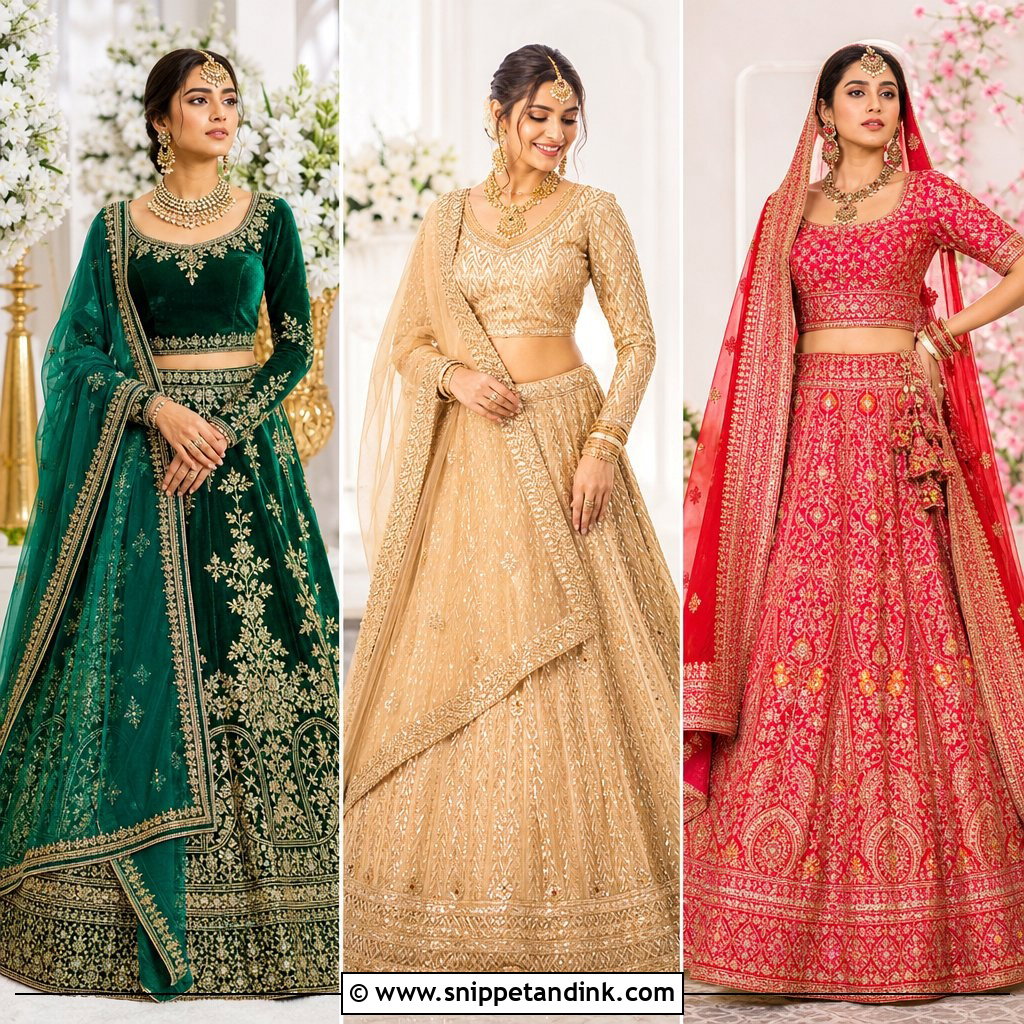
1. Red Bridal Langa With Double Dupatta
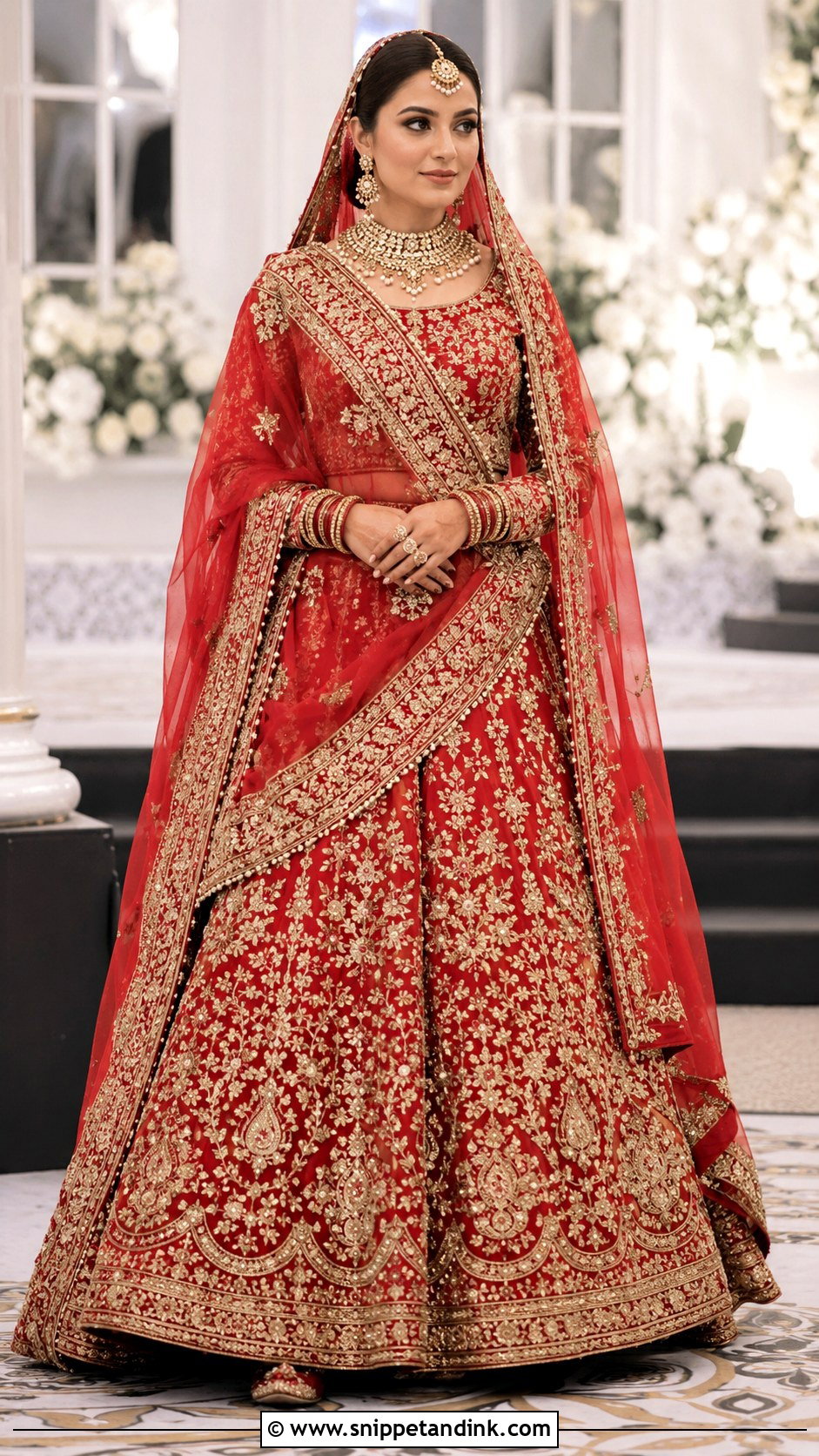
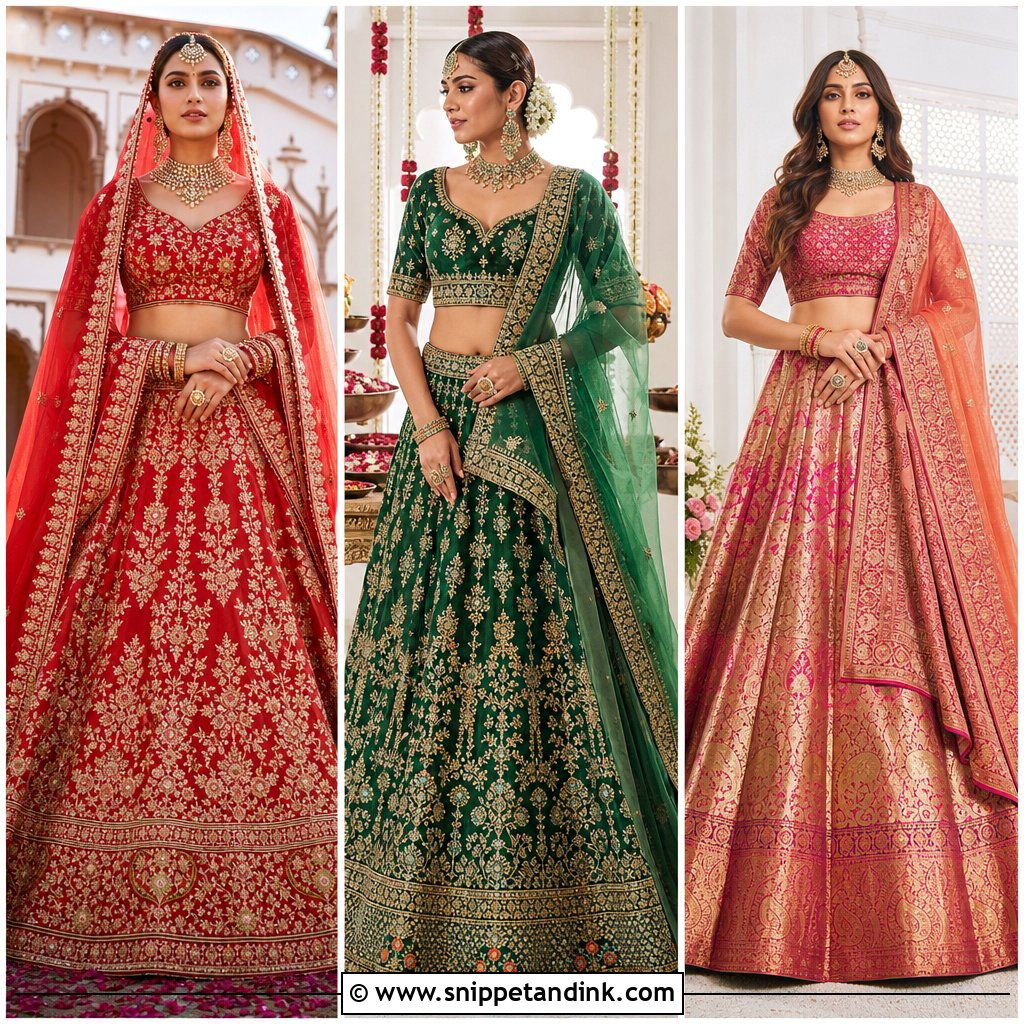
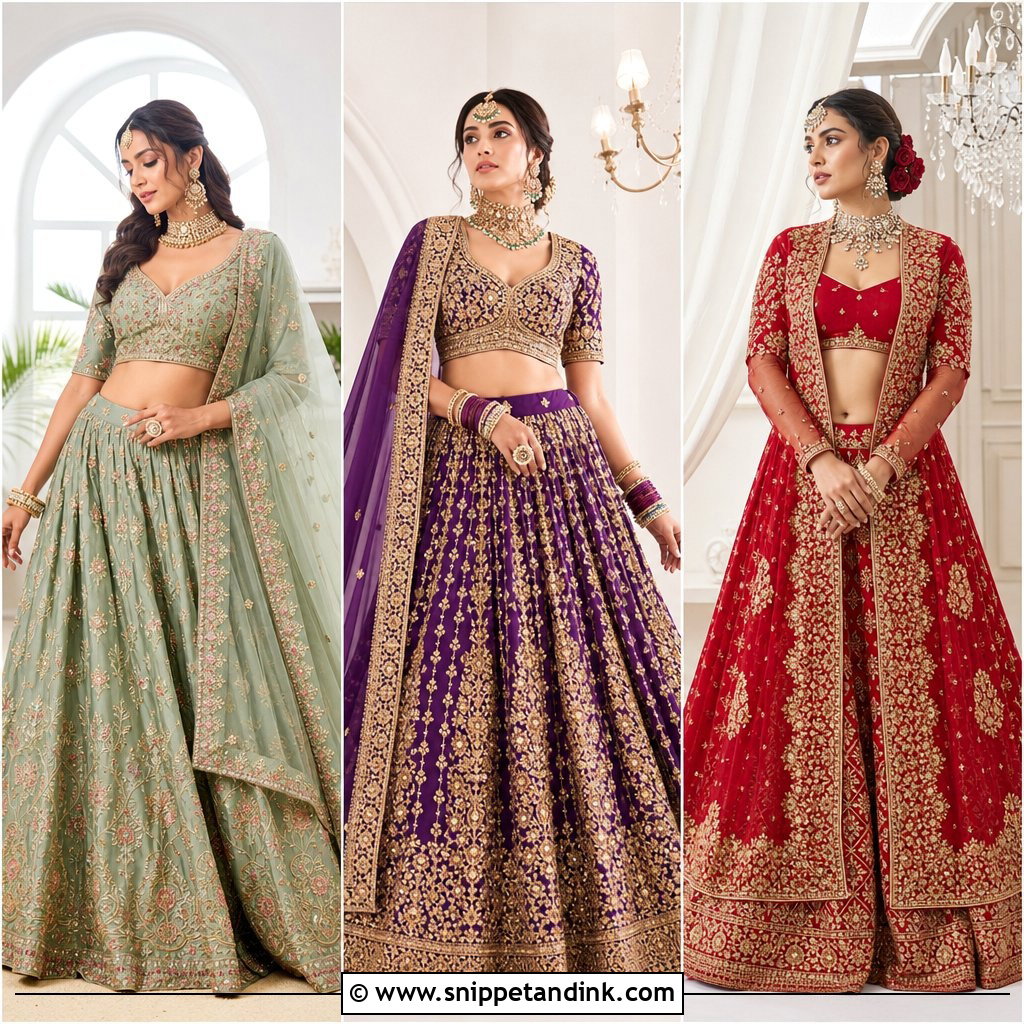
Red silk or velvet with gold zardozi, zari, sequins and floral motifs is the look many families still hope to see, and it carries the ceremony like nothing else. The blouse matters more than people expect here. I ask for built-in cups and a back closure you can actually reach help for, since a heavy skirt pulls down at the waist and the blouse has to hold its own shape above it. One light dupatta goes over the head; a second, more detailed one crosses the shoulder. Gold jhumkas, a layered necklace, bangles and a maang tikka keep the color story rich. Embroidered gold juttis under the hem, defined eyes, a soft red lip and a low bun with fresh flowers finish it.
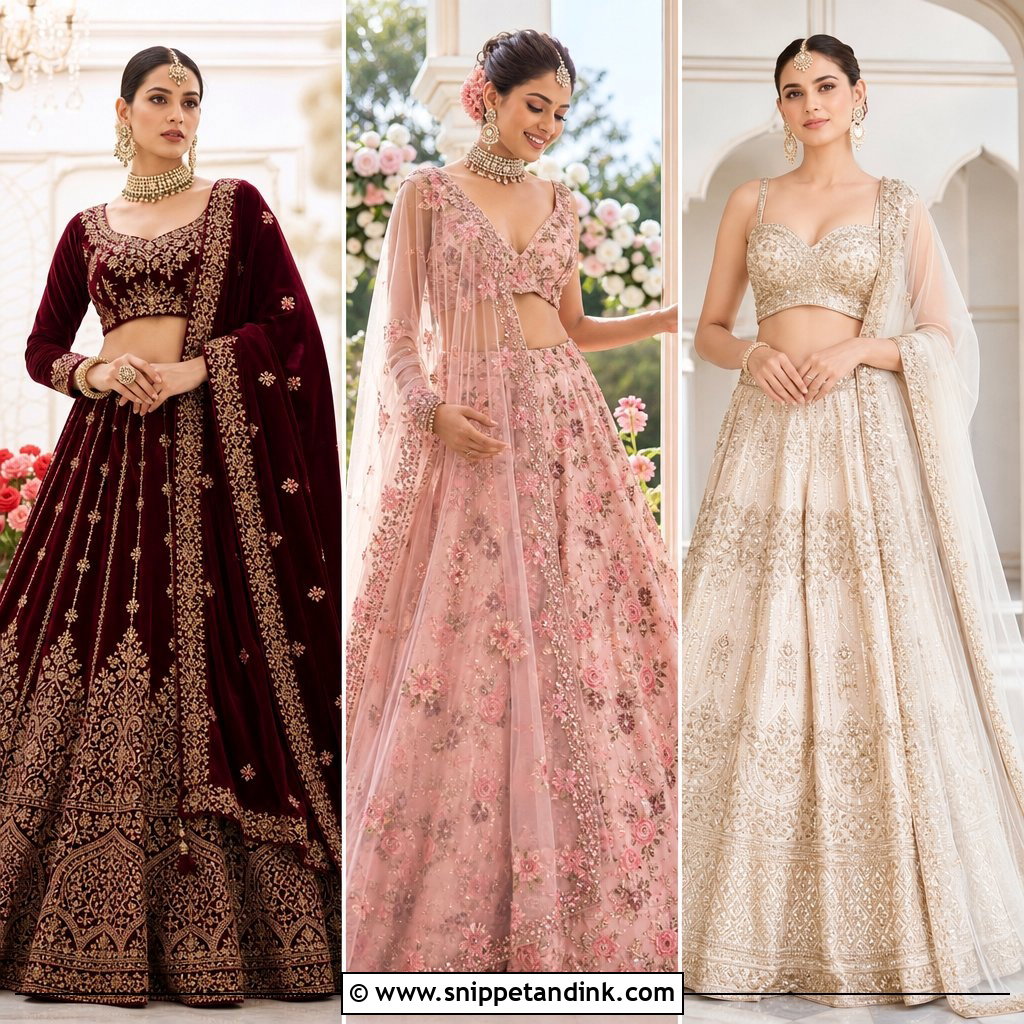
2. Maroon Velvet Bridal Langa With Gold Jewelry
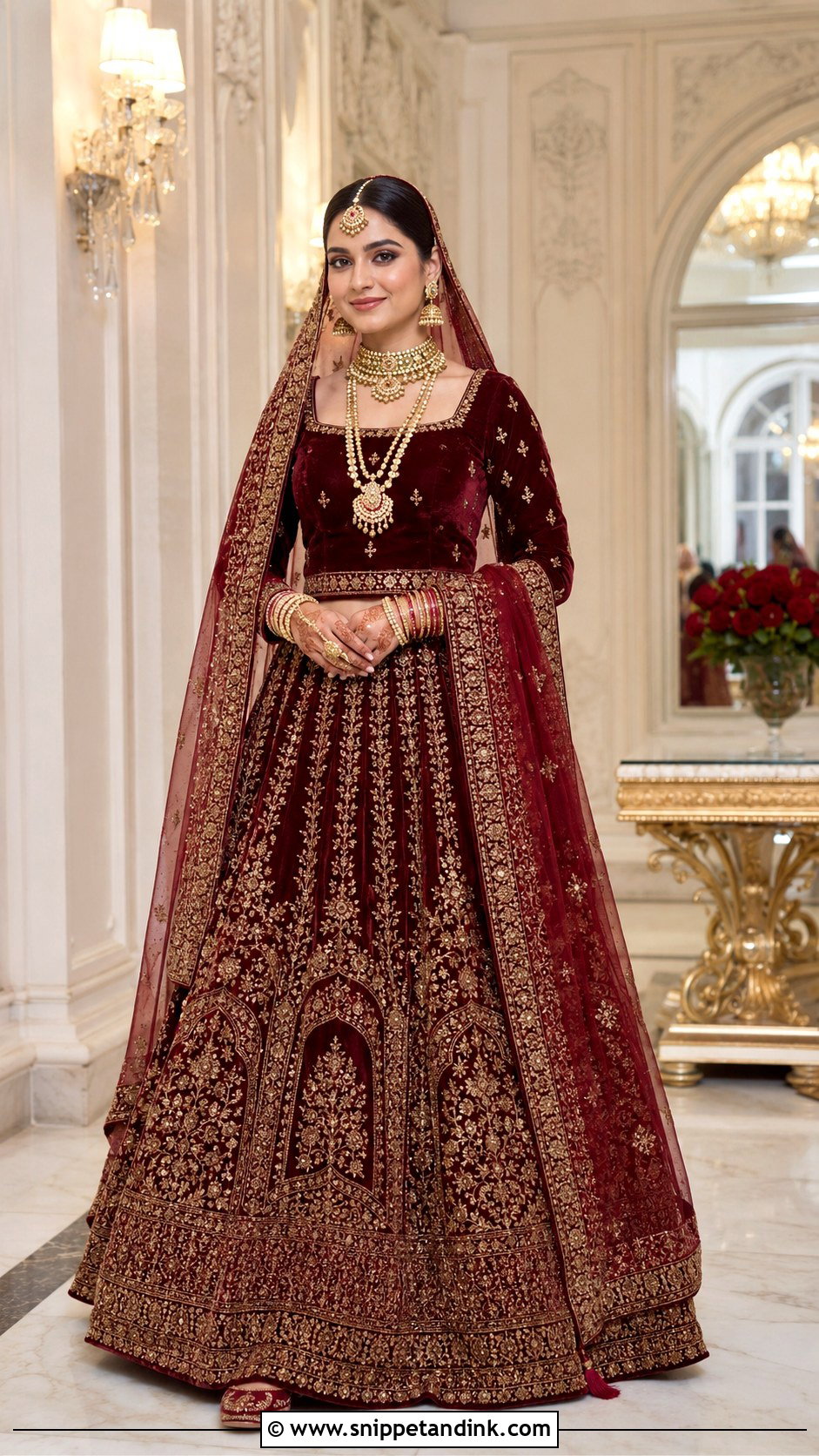
Maroon velvet already has depth, so the embroidery can be focused rather than everywhere. Antique-gold work on the hem and a few panels looks richer than a skirt covered edge to edge. Velvet is warm and heavy, which is why I only suggest it for evening or cool-season weddings; in a hot hall it becomes hard work by the second hour. A structured square or sweetheart blouse balances the skirt. Drape a sheer maroon dupatta over the head and lay a second one across one arm for photos. Antique-gold necklaces, earrings, a nath, stacked bangles and a centered tikka suit it, with cushioned juttis, a smooth bun, warm neutral makeup and a muted berry lip so the whole look doesn’t sink into darkness.
3. Blush Pink Bridal Langa With Floral Embroidery
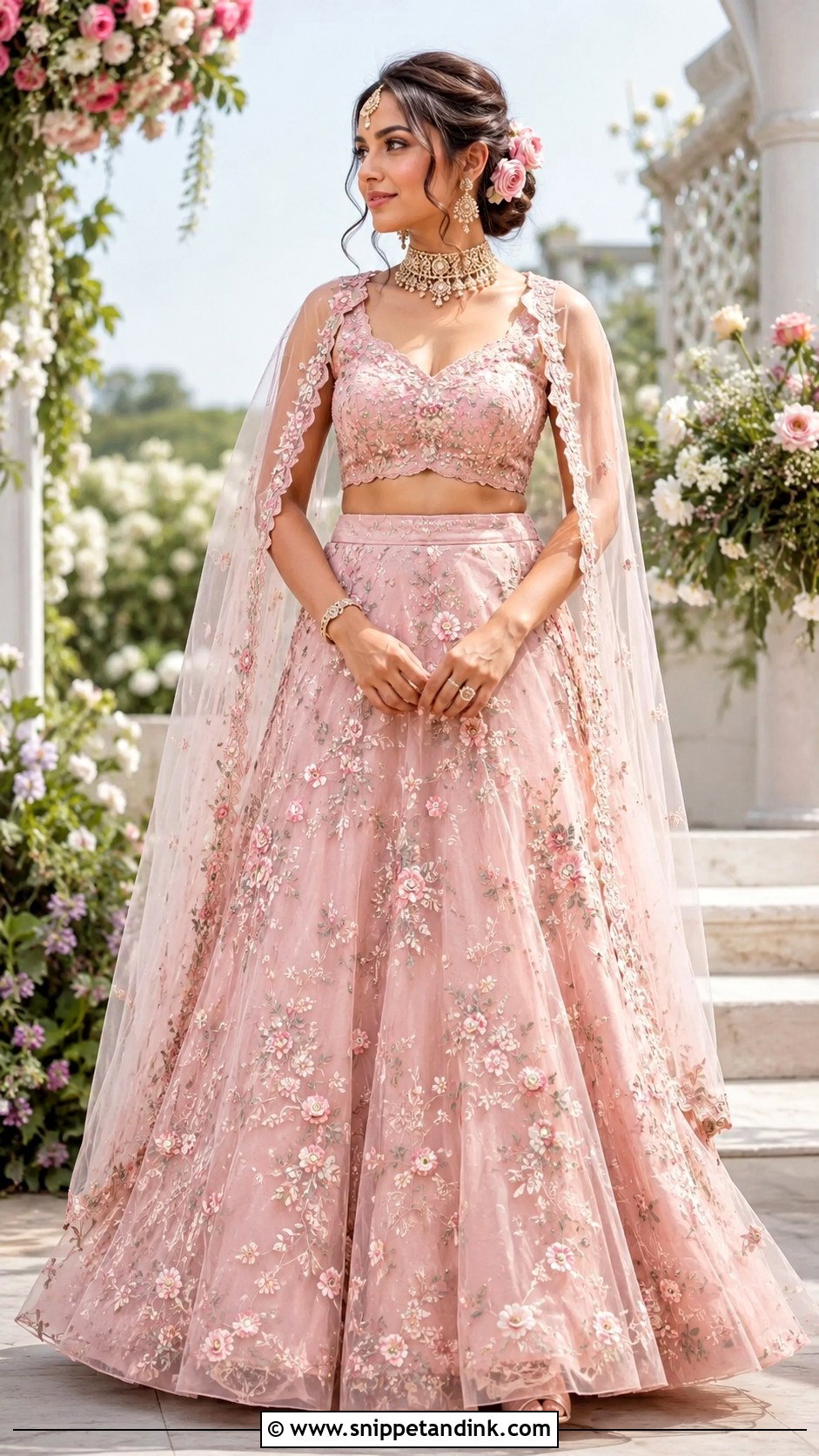
Blush pink comes alive in daylight. Choose silk, tulle or organza with delicate floral threadwork, pearls and small sequins, and a fitted blouse with short sleeves or a scalloped neckline. For an outdoor day ceremony, I like the embroidered dupatta over one shoulder with the head left uncovered, if your family is comfortable with that. Light fabrics show sweat and makeup at the neckline, so I keep a few tissues tucked in my kit for blotting the blouse edge. Rose-gold earrings, a light choker, slim bangles and a small tikka hold the soft palette. Champagne block heels or juttis, fresh pink flowers in a bun or braid, rosy cheeks and a soft lip complete it.
4. Ivory Bridal Langa With Pearl Details
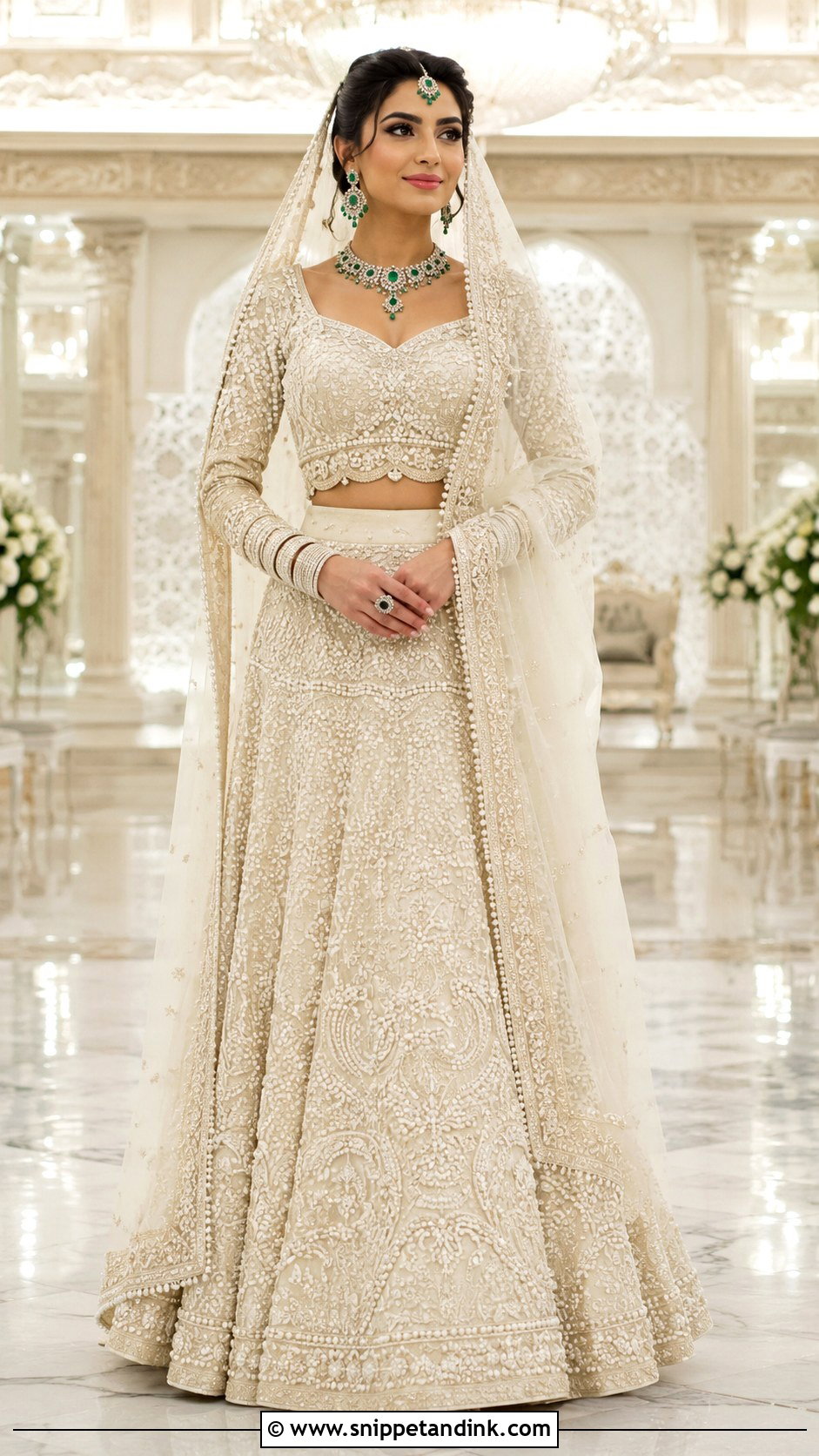
Ivory only works for a bride when texture does the talking: pearl embroidery, silver threadwork, crystals and tonal appliqué on silk or satin. Pair it with a clean-necked ivory blouse firm enough to carry your jewelry, a pearl-edged dupatta over the head and a sheer second layer from one shoulder. Emerald or ruby accents in the necklace and earrings stop the outfit from going flat. There’s a catch with ivory. Some shades turn yellowish under warm venue lighting and others go grey outdoors, so I check the fabric in both before anyone cuts it. Pearl bangles, a fine tikka, metallic heels or ivory juttis, a sleek bun and a rose-toned lip finish it.
5. Champagne Gold Bridal Langa With Tonal Embroidery
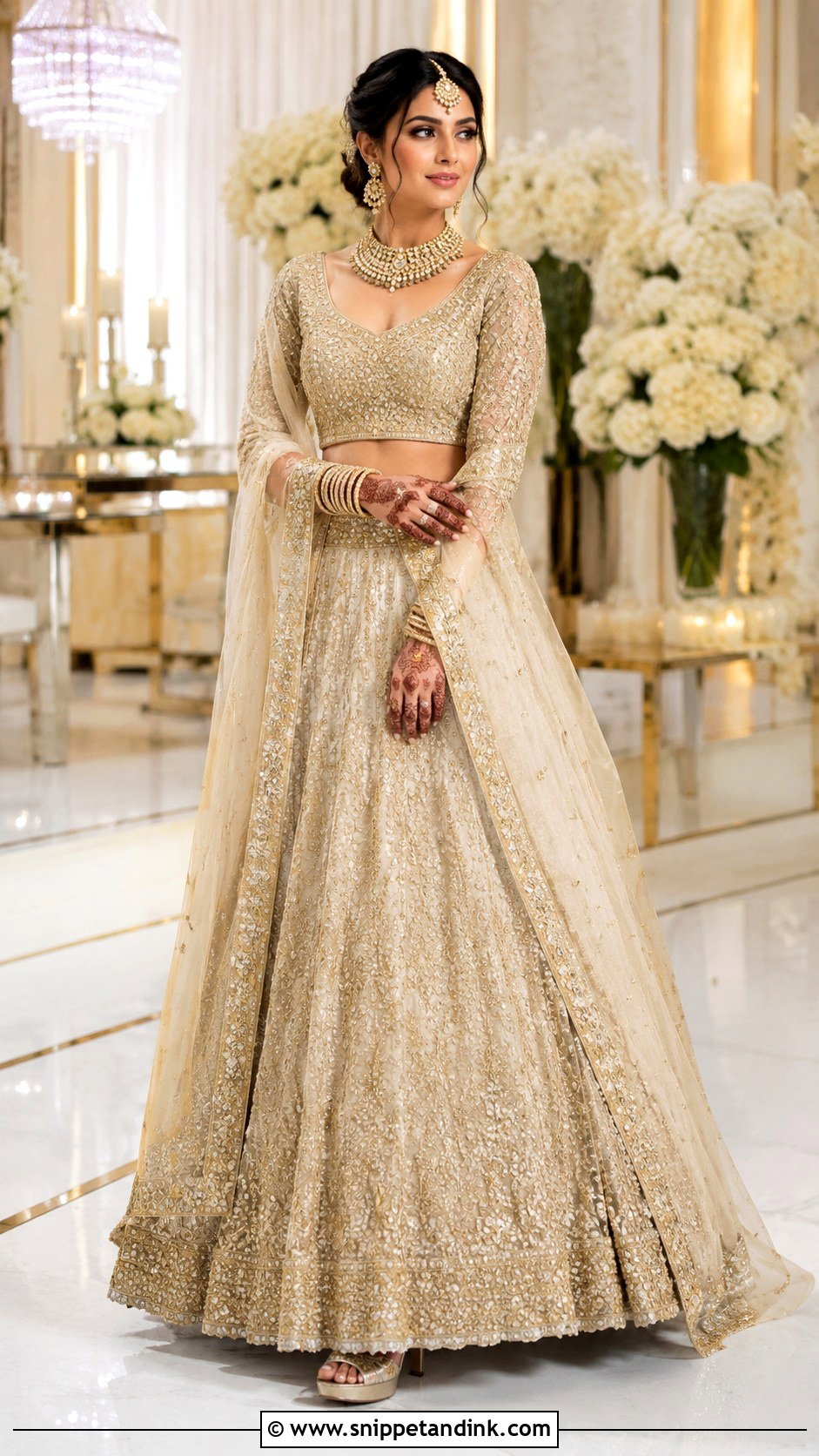
Champagne gold gives glamour without strong contrast, which means the textures have to vary or everything blurs together. Choose an A-line or circular skirt with tonal zari, crystals, beads and fine sequins, and a matching structured blouse. A sheer dupatta with a defined embroidered border separates blouse from skirt in photos. I’d mix a matte silk blouse with a shinier skirt, or the other way round, so the eye has somewhere to rest. Uncut diamond jewelry, a choker, statement earrings and bangles suit it. Gold platform heels add height and stay steady under a full skirt. A low bun, softly defined eyes, highlighted skin and a neutral rose lip complete it.
6. Emerald Green Bridal Langa With Kundan Jewelry
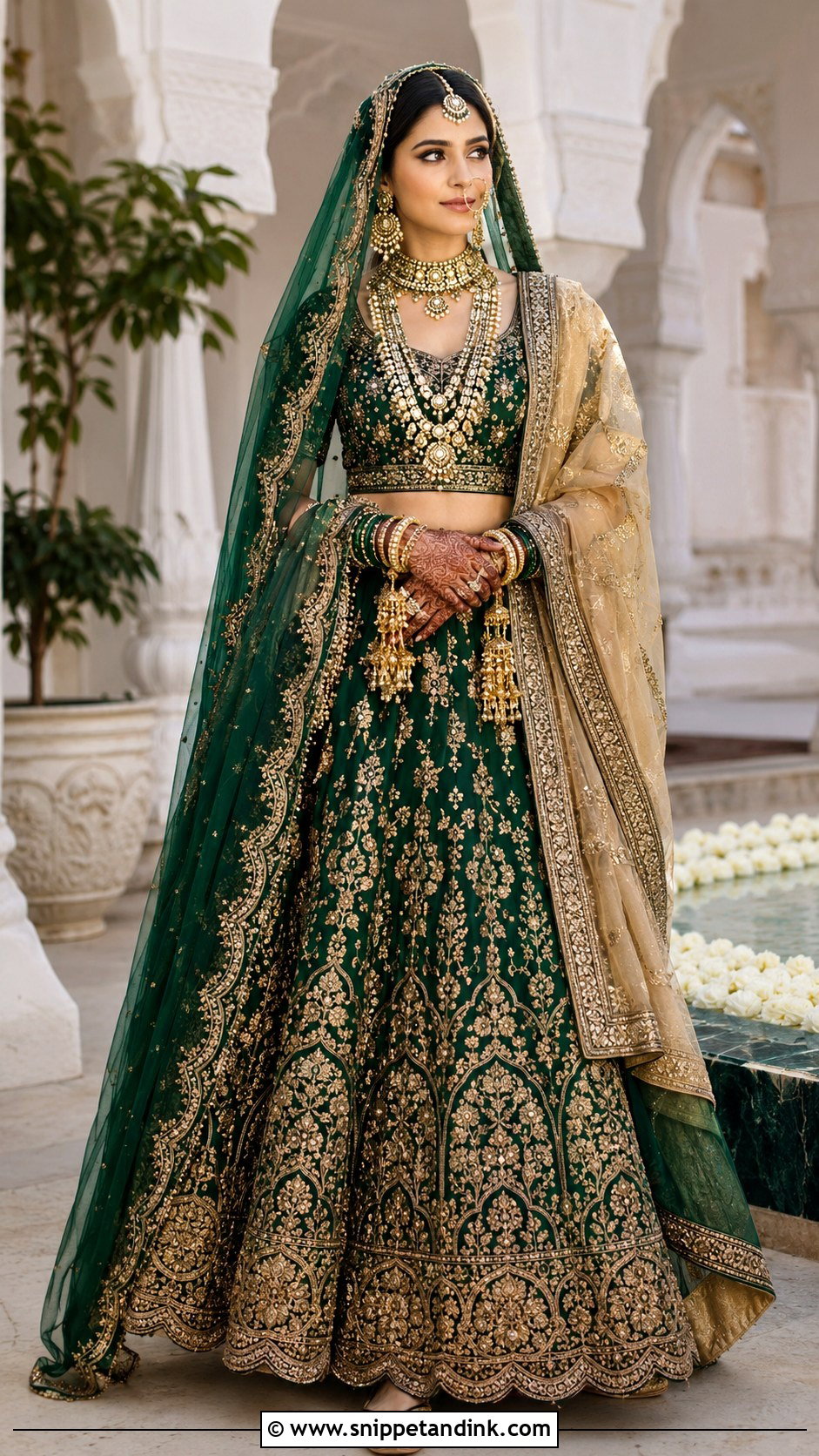
Emerald is the color I suggest most often to brides who don’t want red, because it reads just as ceremonial. Choose silk with antique-gold zardozi, traditional borders and floral or architectural motifs, and a fitted blouse with elbow-length sleeves. A sheer green dupatta goes over the head, with an optional muted-gold one across the torso. Kundan with pearl drops sits well against emerald. Wear a broad choker, earrings, bangles and a tikka, but leave clear skin around the neckline so each piece reads. Kundan collars are heavy and can press on the blouse edge, so I fit the blouse with the necklace on. Gold juttis, a sleek braid or bun, bronze eyes and a warm nude lip finish it.
7. Royal Blue Bridal Langa With Silver Embellishments
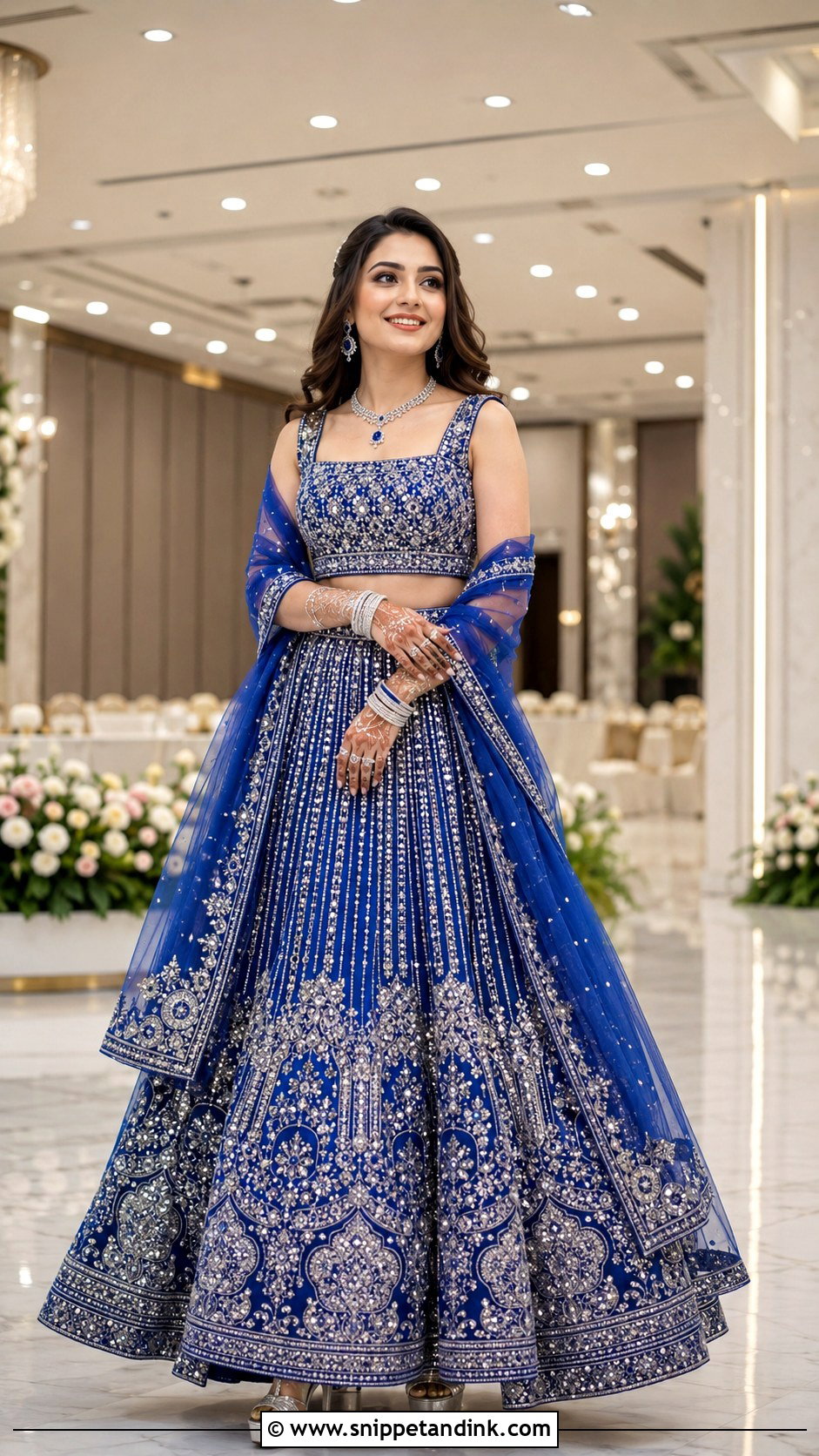
Royal blue with silver crystals, sequins and metallic thread is made for reception lights. Satin, silk or velvet all carry it. Pair the skirt with a matching square-neck or structured off-shoulder blouse, but only go off-shoulder if you’re comfortable raising your arms in it all night; that neckline rides up when you hug. Drape a light blue dupatta from one shoulder so the blouse stays visible. Diamond-style jewelry, silver bangles and sapphire accents match the cool palette. Silver platform heels or cushioned embellished flats, a smooth ponytail, braid or low bun, cool shimmer, clean liner and a soft mauve lip finish it without fighting the blue.
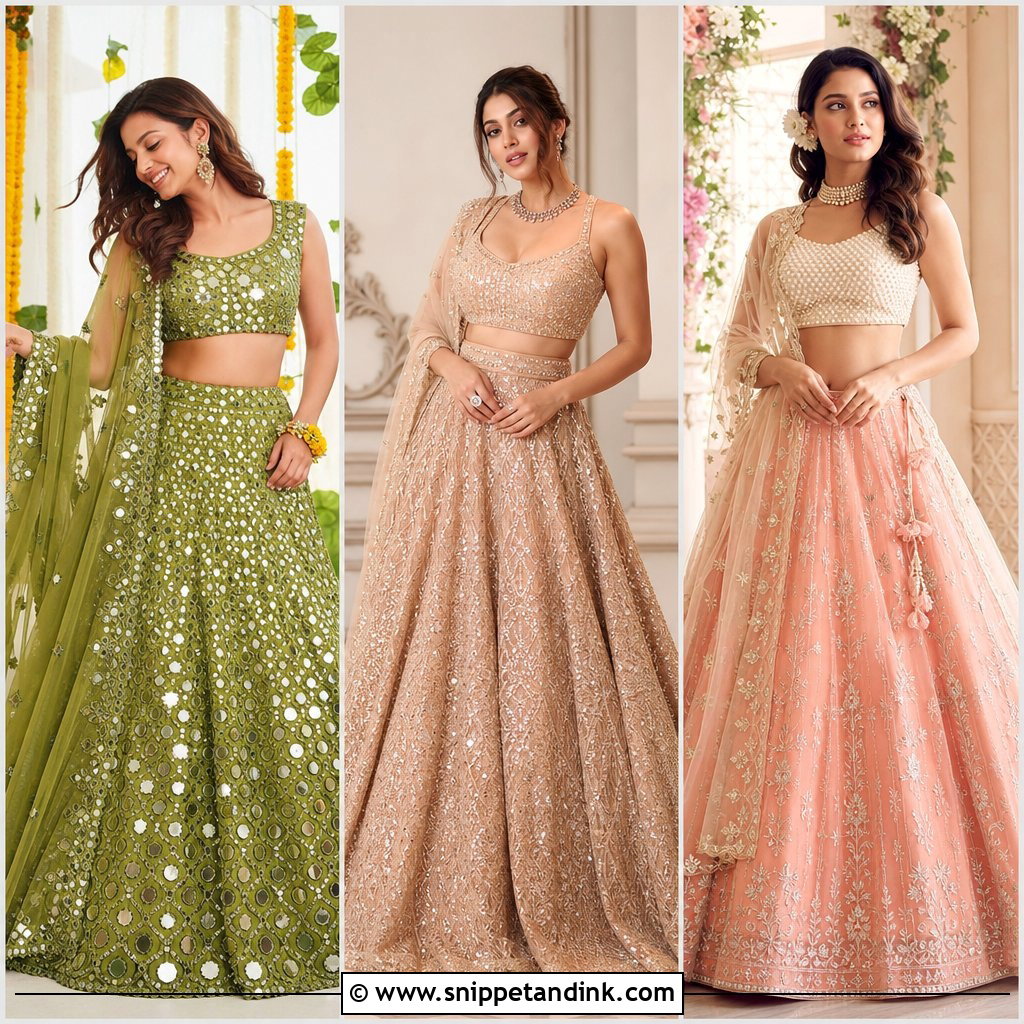
8. Lavender Bridal Langa With Crystal Work
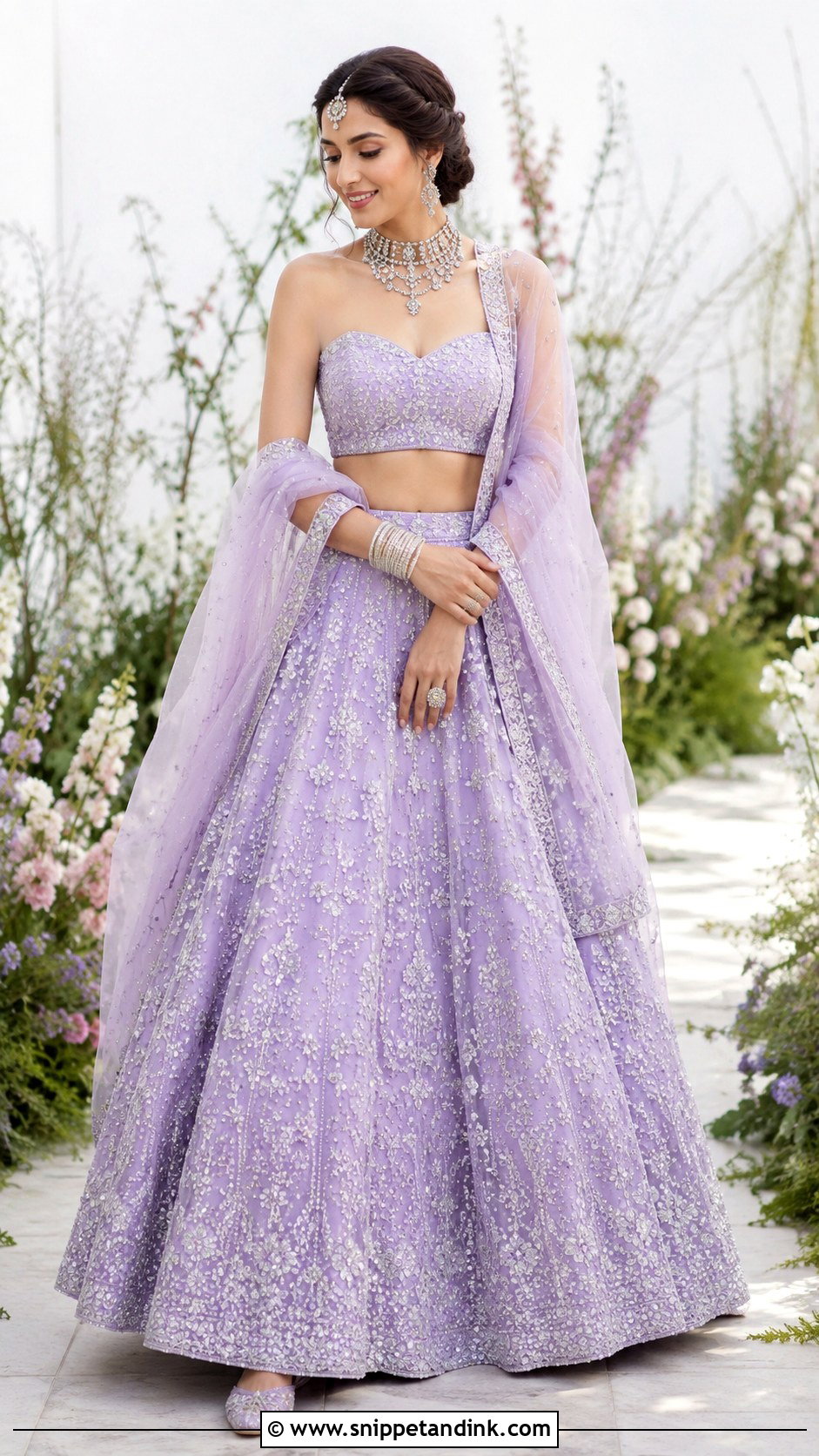
Lavender suits daytime and bright rooms; under warm evening lighting it can turn greyish. Choose net or organza with crystal work, silver embroidery and subtle florals, and a structured scoop or sweetheart blouse to anchor the light skirt. Net skirts need a proper can-can or a few layers underneath to keep their shape, so ask how yours is lined. Wear the sheer dupatta loosely across both arms or fix it to one shoulder if you want your hands free. Diamond-style earrings, a slim choker, a fine tikka and crystal bangles keep it cool-toned. Silver heels or lavender juttis, soft waves or a textured bun, lilac eyeshadow and a pink-nude lip suit the airy mood.
9. Peach Organza Bridal Langa With Sequin Work
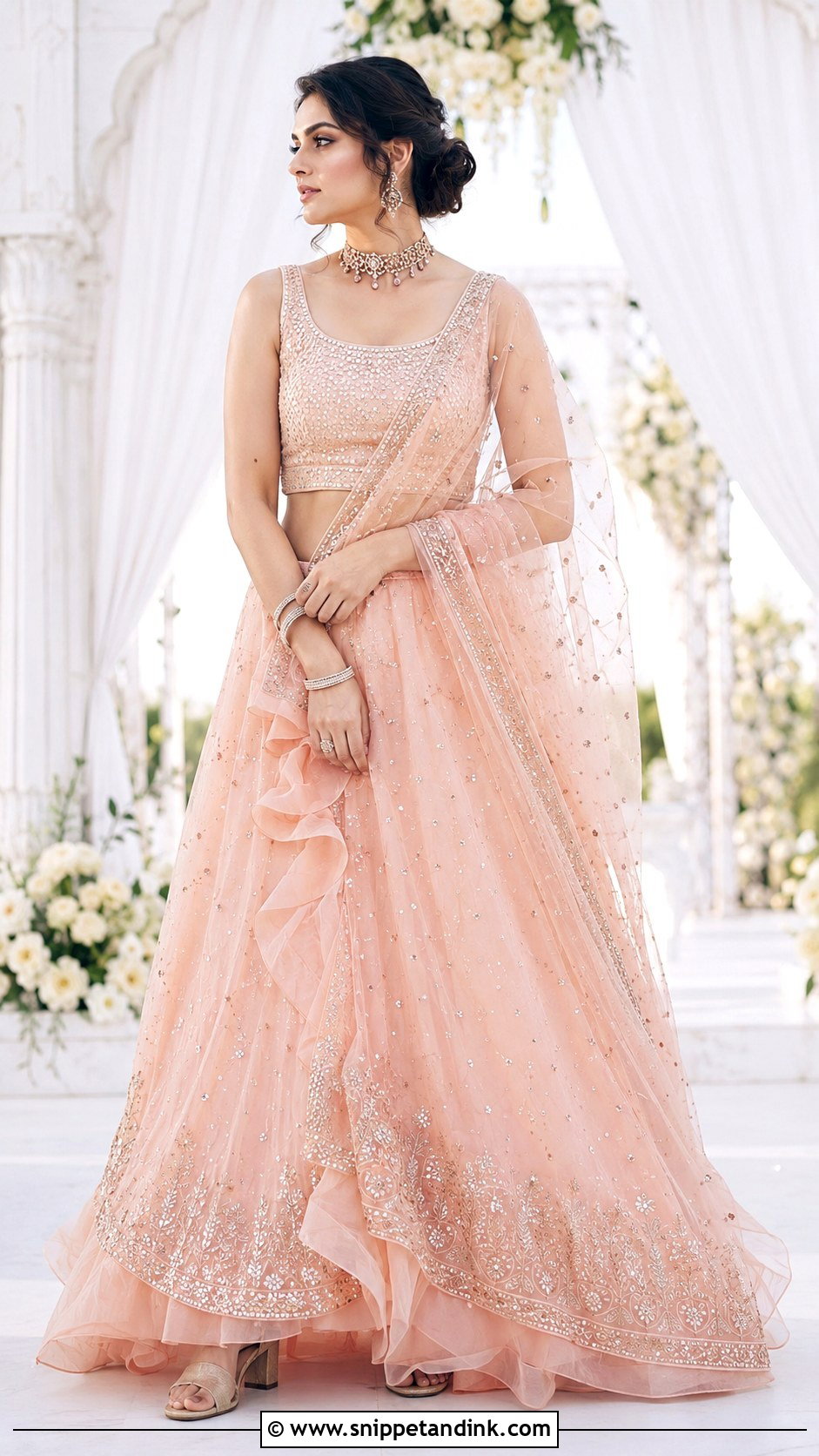
Organza gives a peach skirt volume without heaviness, and the decorated hem is what keeps all that transparency from looking unfinished. Look for scattered sequins and thread embroidery. The blouse can be customized for your coverage: pearl straps, short sleeves or a modest scoop. A diagonal organza dupatta across the torso needs securing at both shoulder and waist, because organza is slippery and slides off. Take the fabric outside in direct sun before ordering; it becomes noticeably more see-through there. Rose-gold jewelry, pearl drops, a delicate choker, matching bangles, supportive champagne block heels, a floral bun and fresh peach-toned makeup complete it.
10. Mustard Bridal Langa With Gota Patti Work
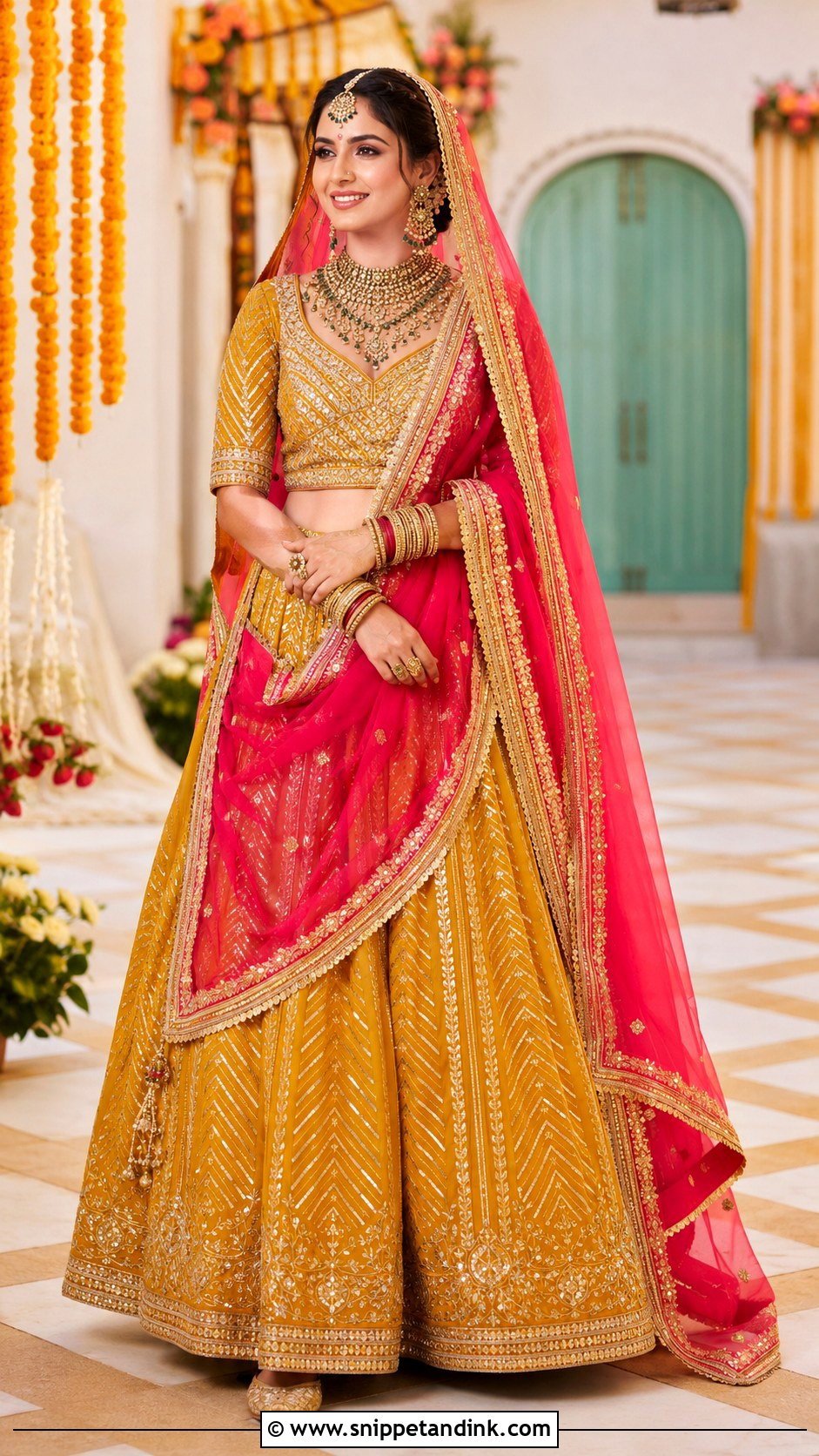
Mustard is warm and celebratory, and it suits brides who want traditional character without red. Choose silk or georgette with detailed gota patti, gold borders and small motifs. Gota patti is lighter than heavy zardozi, which makes this one of the easier outfits to wear for a long day. A fitted elbow-sleeve blouse gives balance and coverage. A contrast dupatta in red, pink or green over one shoulder adds festive color. Antique-gold earrings, layered necklaces, bangles and a small tikka suit it, with cushioned gold juttis. A braided bun with white flowers, bronze eyes, defined brows and a terracotta or warm rose lip finish it.
11. Red And Pink Bridal Langa With Contrast Dupatta
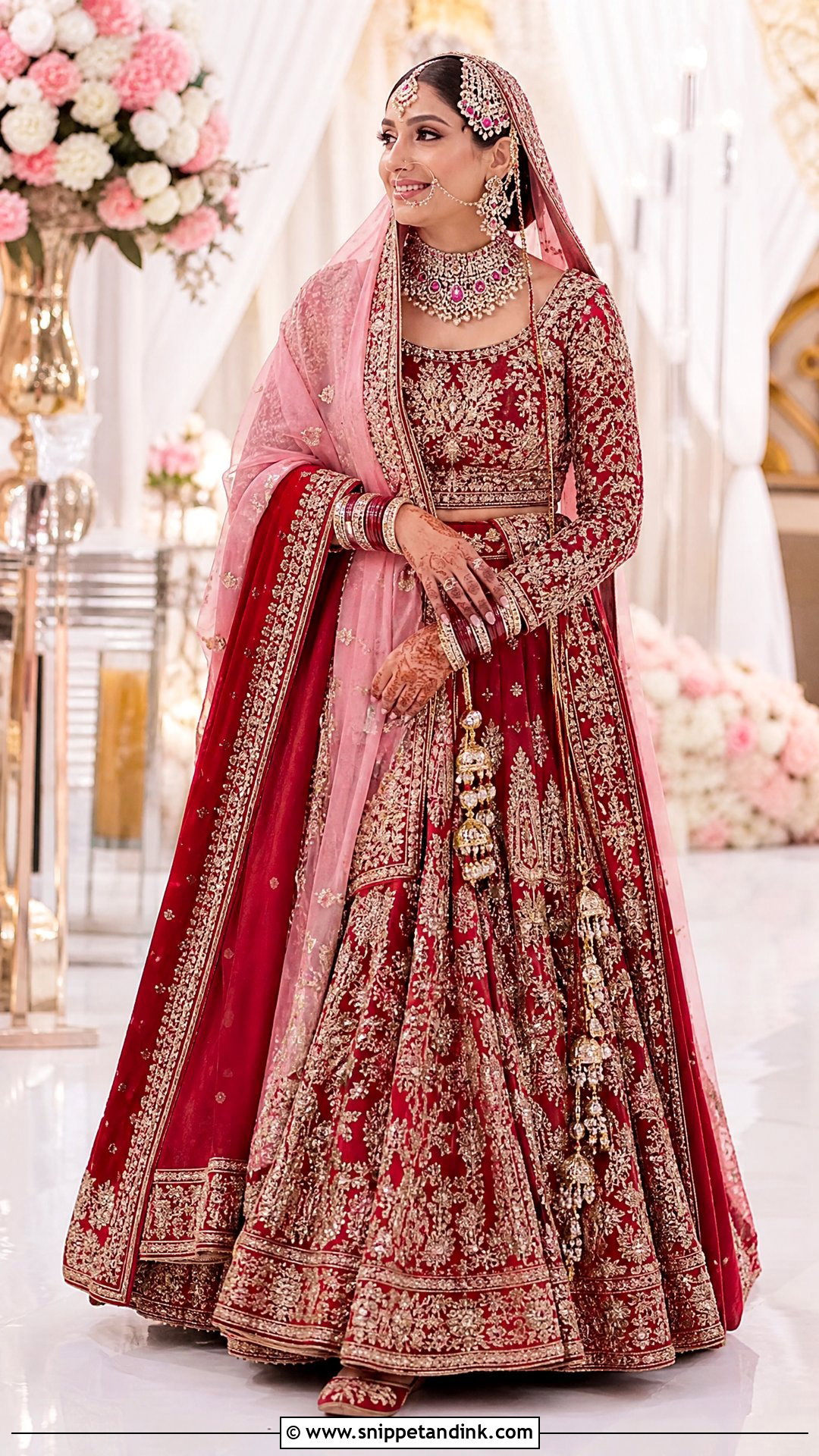
Red and pink together settle the debate between tradition and romance. Start with a deep red silk skirt with gold embroidery and a matching blouse, then bring pink in through a sheer head dupatta bordered in red and gold. A second red dupatta over the shoulder ties skirt and blouse back together. The detail that makes or breaks this is the gold. If the zari on the pink dupatta is a different tone from the skirt’s, the two pieces look bought separately, so I take the skirt to the dupatta fitting and compare them side by side. Kundan with subtle pink stones, bangles, a nath, a centered tikka, red juttis, a low floral bun and a rose-red lip complete it.
12. Ombre Bridal Langa With Matching Blouse
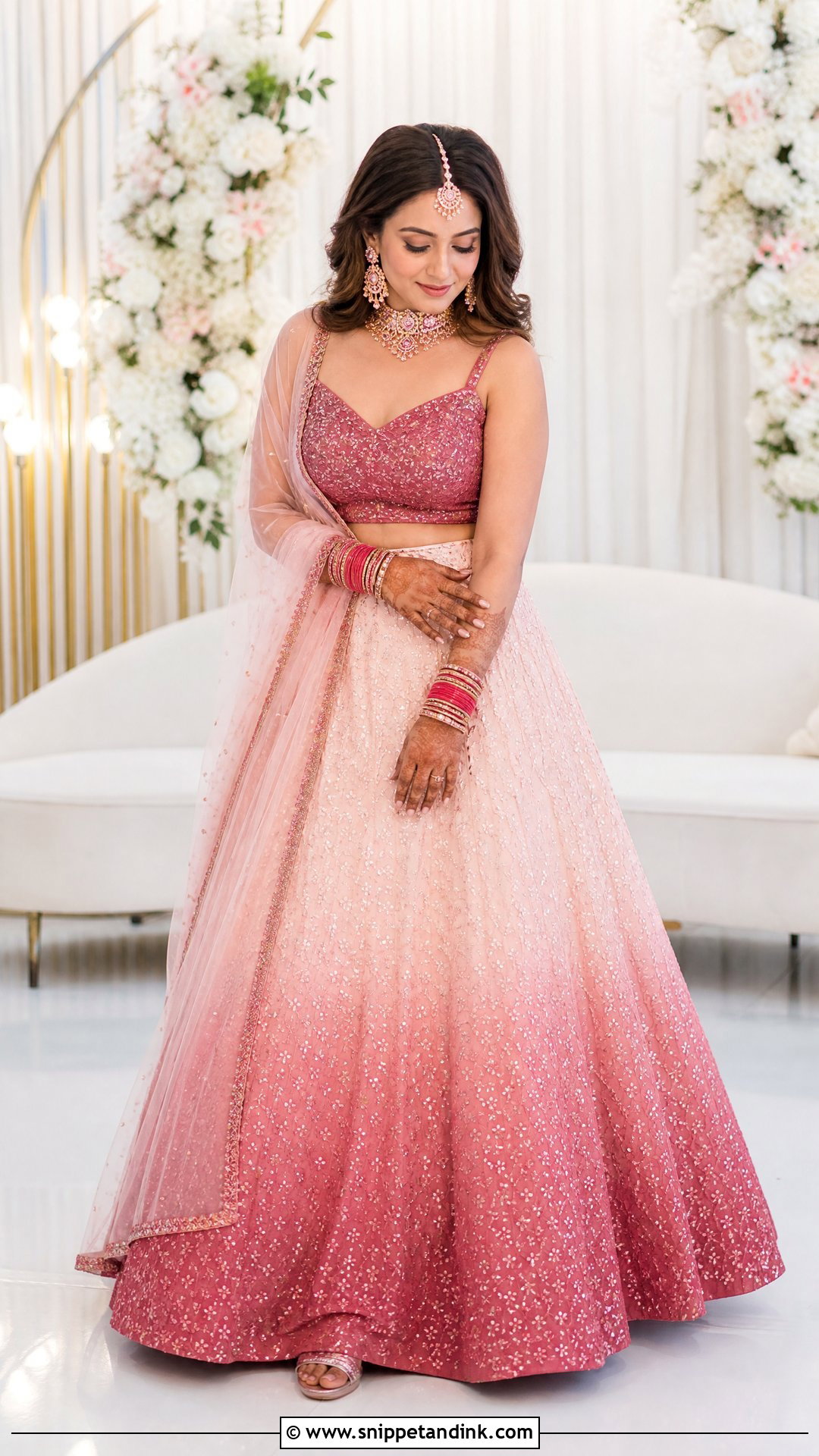
Ombre gives movement through color even when the silhouette stays classic. Choose a skirt that shades smoothly from blush to rose, peach to coral or ivory to champagne, and match the blouse to one of the deeper tones so the upper body has definition. Fine sequins and tonal embroidery should follow the gradient, not hide it. Dyed gradients vary from batch to batch, so I insist on seeing the actual skirt, not a sample photo, before choosing the blouse color. Drape the lightest shade as a dupatta. Match jewelry to the embellishment metal, keep heels neutral metallic and take the lip color from the middle tone of the skirt.
13. Mirror Work Bridal Langa With Minimal Jewelry
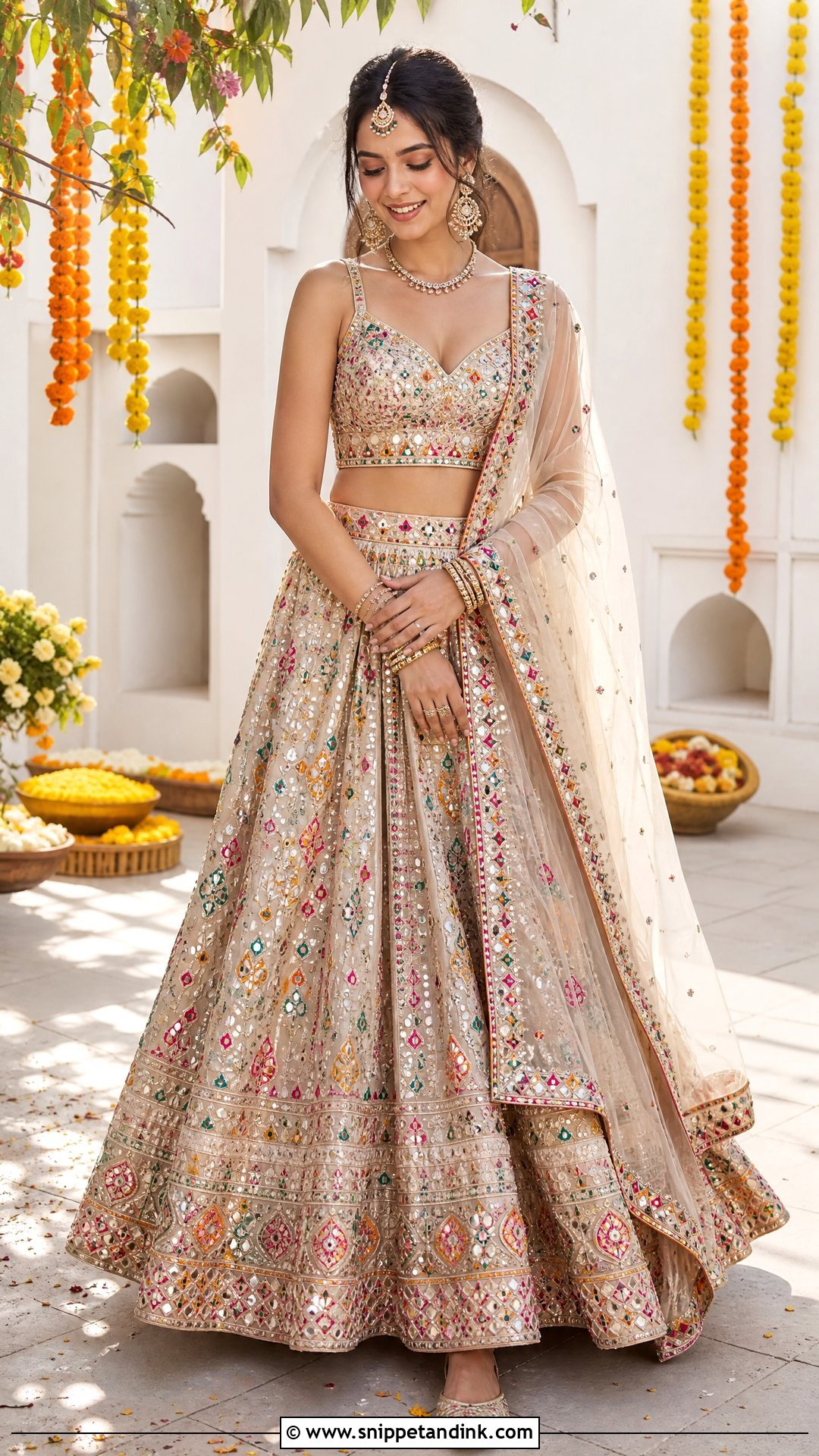
Mirror work brightens a langa instantly outdoors. Choose a design where mirrors sit among thread embroidery rather than covering the whole skirt. Pair it with a matching fitted blouse and a lightly worked dupatta, and keep jewelry focused: statement earrings, one simple necklace, bangles and a small tikka. Mirrors bounce flash straight back at the camera and can create hot spots, so do a quick test photo with flash at a fitting and tell your photographer what you’re wearing. They’re also heavier than they look on the hanger. Embroidered juttis or block heels, a neat braid or low bun, defined eyeliner and a rosy lip finish it.
14. Floral Bridal Langa With 3D Appliqué
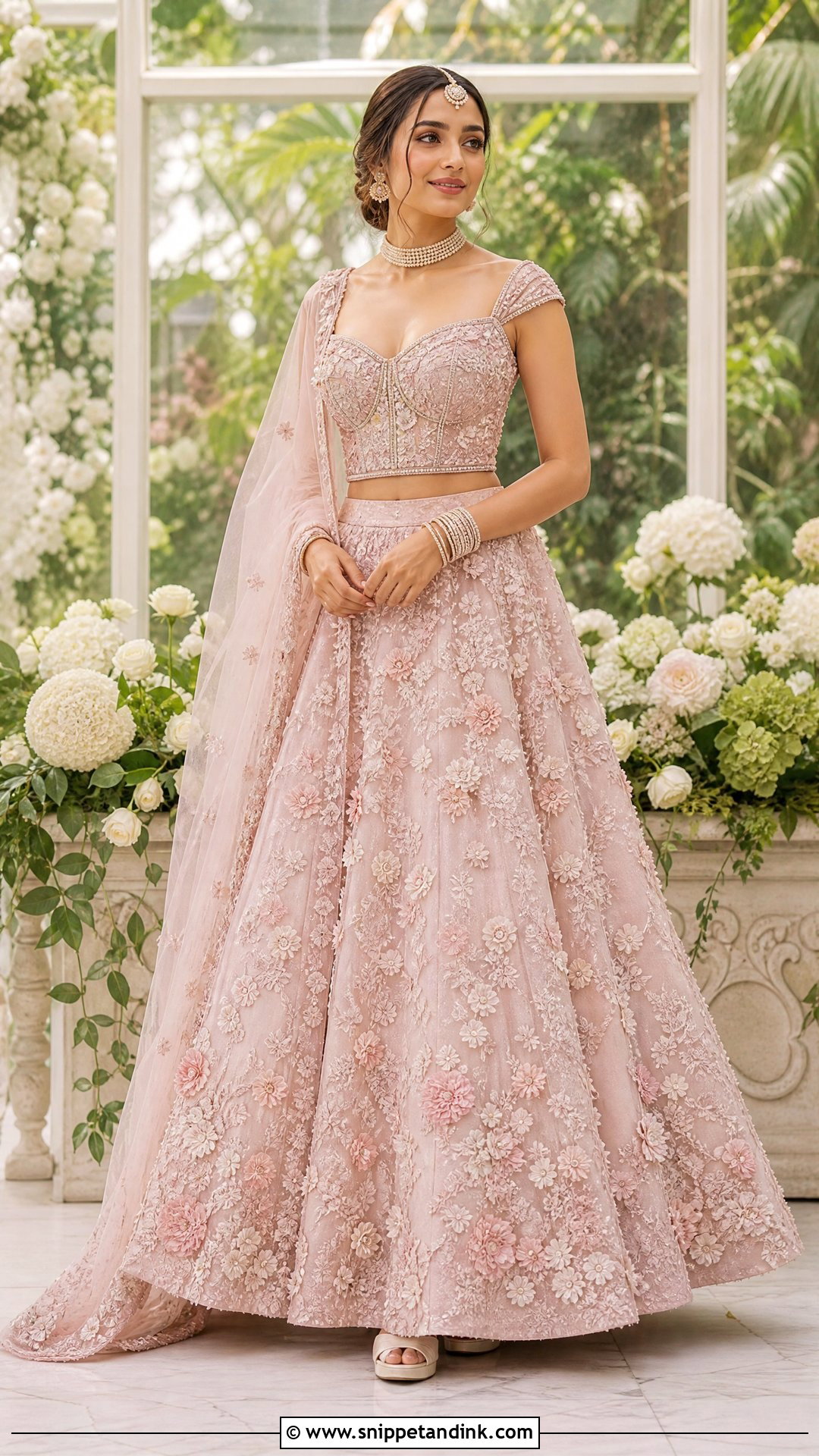
Three-dimensional flowers give the most texture of any skirt here. I want the appliqué concentrated around the hem and lower panels, in soft pink, ivory, sage or lavender, so the waist stays clean and the bulk doesn’t sit where you bend to sit. Pair it with a structured blouse with smaller florals and a simple neckline, and keep the dupatta sheer and lightly embroidered. Pearl earrings, a fine choker, slim bangles and a floral tikka echo the petals. Shoe choice matters: buckles and embellished heels catch on raised appliqué when you walk, so go for smooth block heels or flats. A soft bun with a few fresh flowers and luminous rosy makeup complete it.


15. Banarasi Silk Bridal Langa With Traditional Jewelry
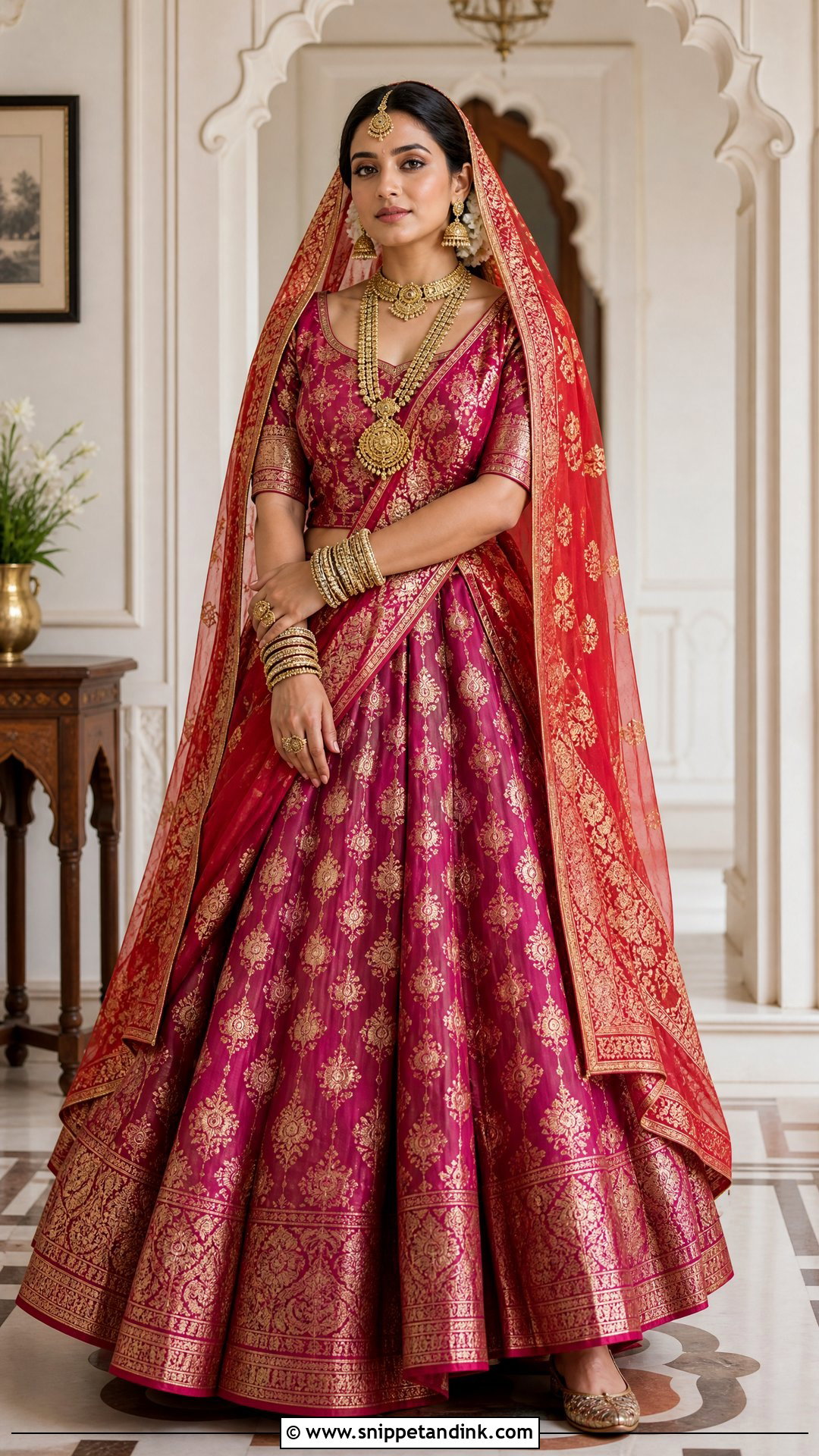
Banarasi silk gets its richness from weaving, not surface work, which gives you color, pattern and heritage-inspired detail in one fabric. Choose red, magenta, green or deep purple with gold zari motifs and a strong border. Woven silk has little give, so the blouse needs to fit smoothly at the waist and shoulders from the start; I don’t let brides rely on last-minute letting out. A contrasting dupatta in red, green or gold goes over the head. Temple or antique-gold jewelry, a substantial necklace, jhumkas, bangles and a tikka belong with it, plus traditional gold juttis. A center-parted bun with flowers, defined liner and a red or berry lip complete it.
16. Bridal Langa With Long Embroidered Jacket
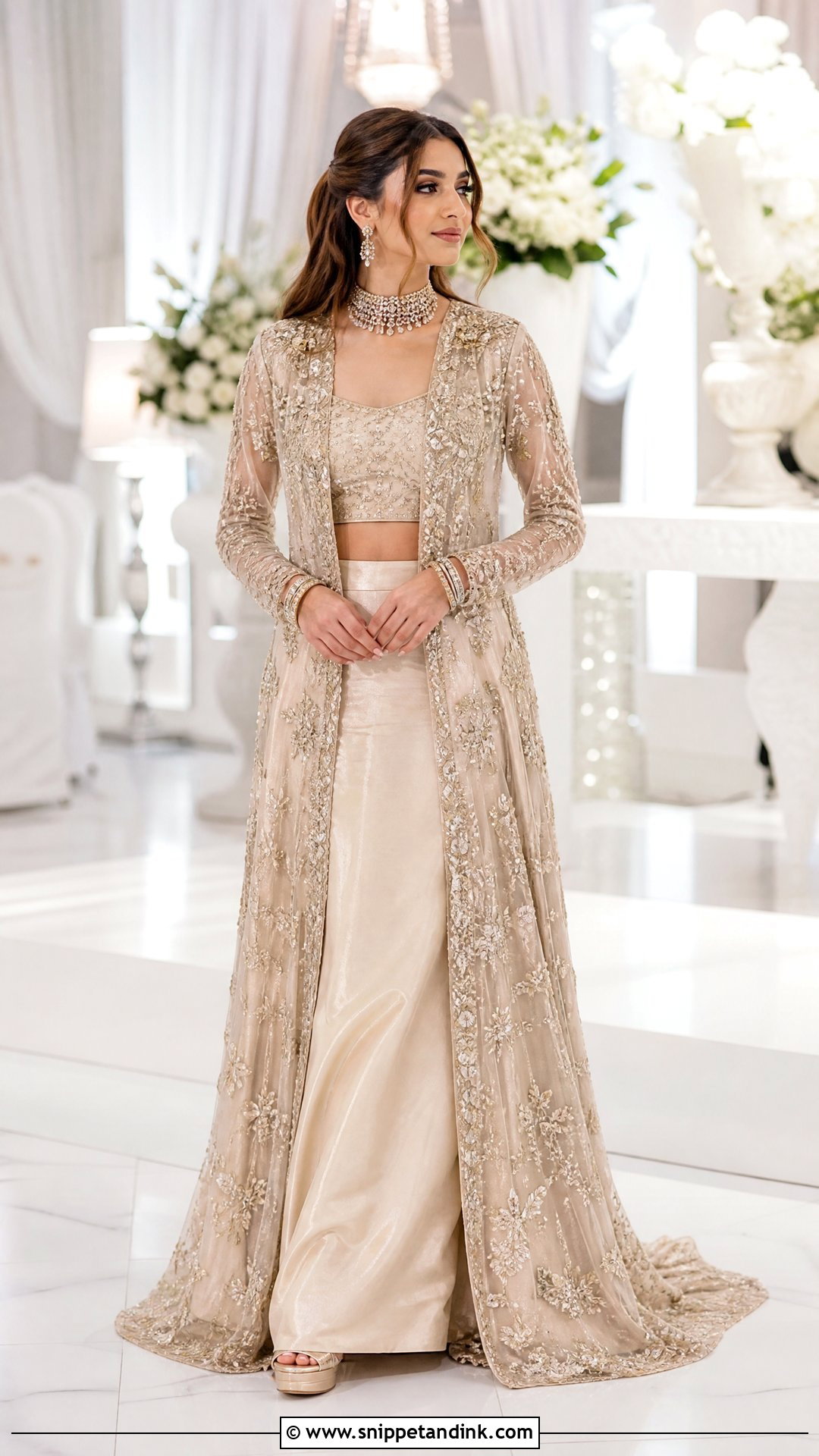
A long embroidered jacket adds coverage and a contemporary line. Start with a fairly streamlined silk or satin skirt, because a jacket over a huge flared skirt quickly turns into bulk. Wear a fitted blouse underneath and a floor-length sheer or structured jacket with zardozi, sequins or tonal threadwork, left open to show the waist. A light dupatta over one arm is optional. The jacket adds weight across the shoulders, so check the armholes when sitting. Choose a choker, statement earrings and a few bangles, metallic platforms to balance the length, a sleek bun or smooth waves and neutral makeup.
17. Bridal Langa With Sheer Cape
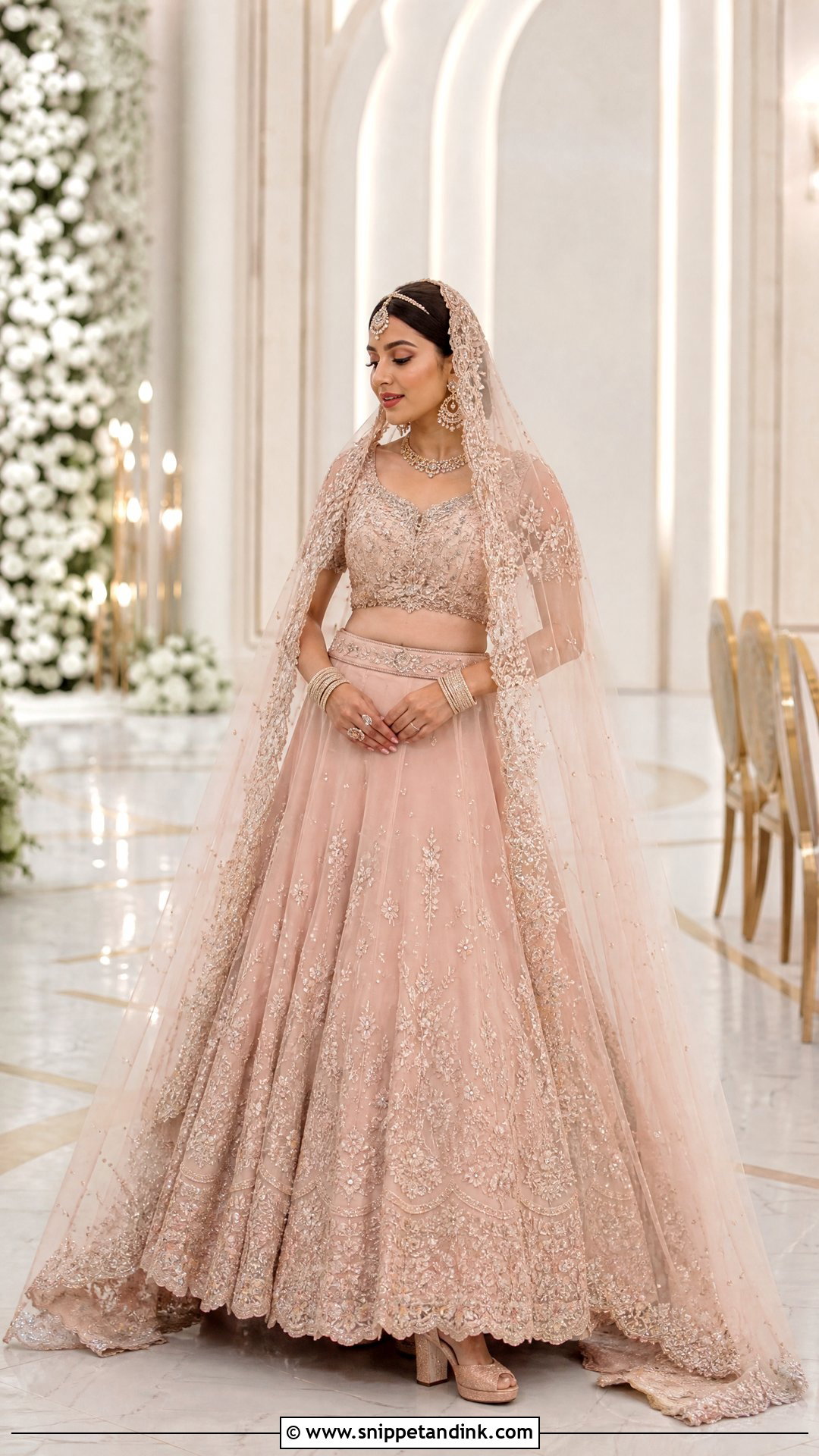
A sheer cape replaces the shoulder dupatta and frees both hands. Choose a circular skirt in ivory, blush, rose gold or deep red with a fitted blouse, and a cape that falls from the shoulders without hiding the whole waist. Fine edge embroidery, scattered crystals or light appliqué should repeat something from the skirt. If your ceremony requires a covered head, keep a separate lightweight head dupatta; I attach capes with small hooks at the blouse shoulder so the two don’t tug against each other. Chandelier earrings, a slim necklace, bangles, a fine tikka, comfortable block heels, a polished bun and luminous makeup finish it.
18. Bridal Langa With Corset Blouse
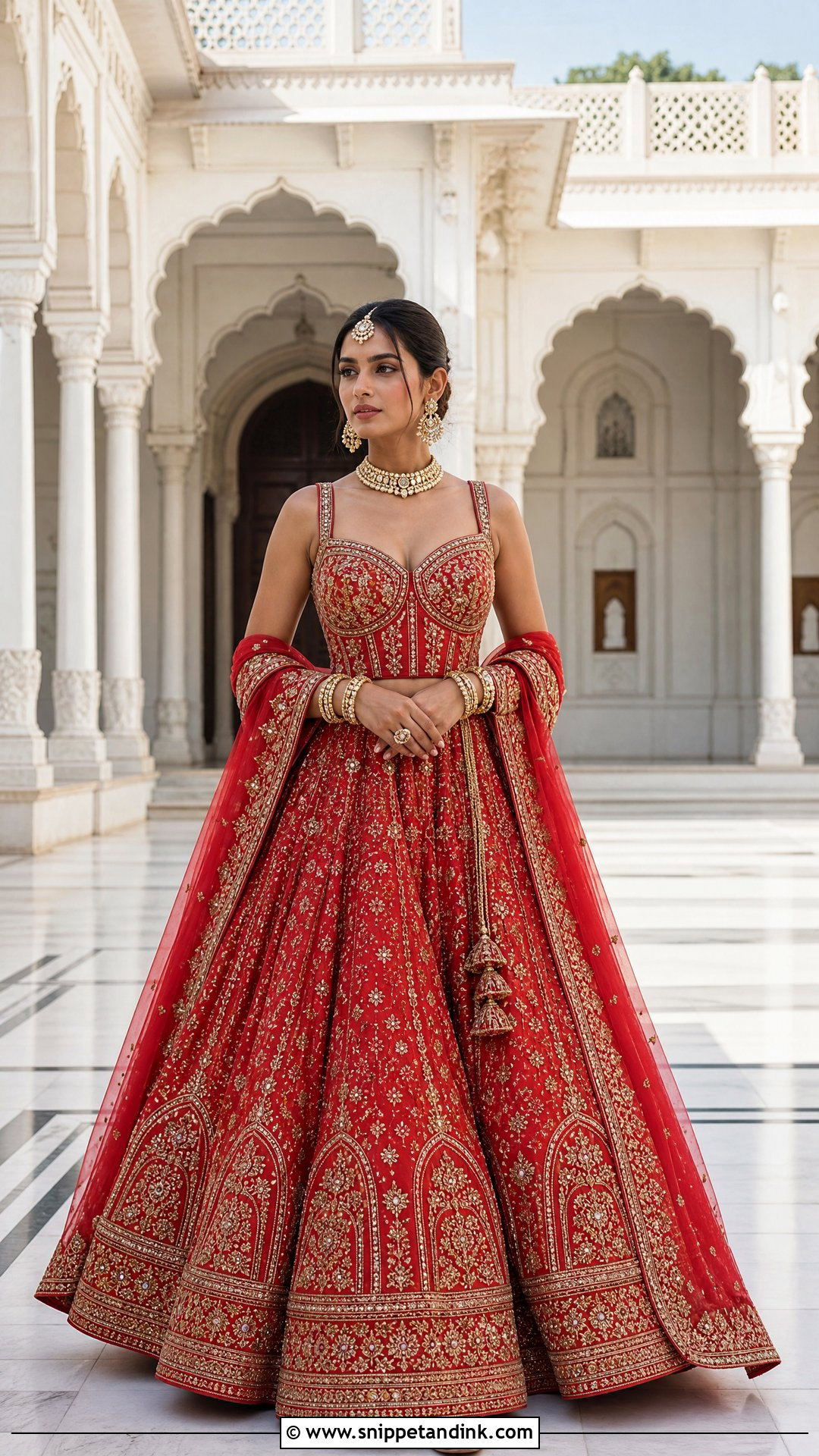
Corset blouses give the most fashion-led shape in this list, and they need the most careful fitting. Ask for internal boning, secure straps and enough coverage to move without adjusting. Pair it with a full circular skirt in red, champagne, pink or ivory, with matching embroidery linking the two. I book a sitting test during alterations: sit low, bend to touch an elder’s feet if that’s part of your ceremony, raise your arms. If the boning digs at the hip or the top edge gapes when you lean, it gets fixed then. Drape the dupatta from one shoulder or around the arms, add a short necklace that follows the neckline, earrings, bangles and a small tikka, platforms or juttis and a neat bun.
19. Bridal Langa With Long-Sleeve Blouse
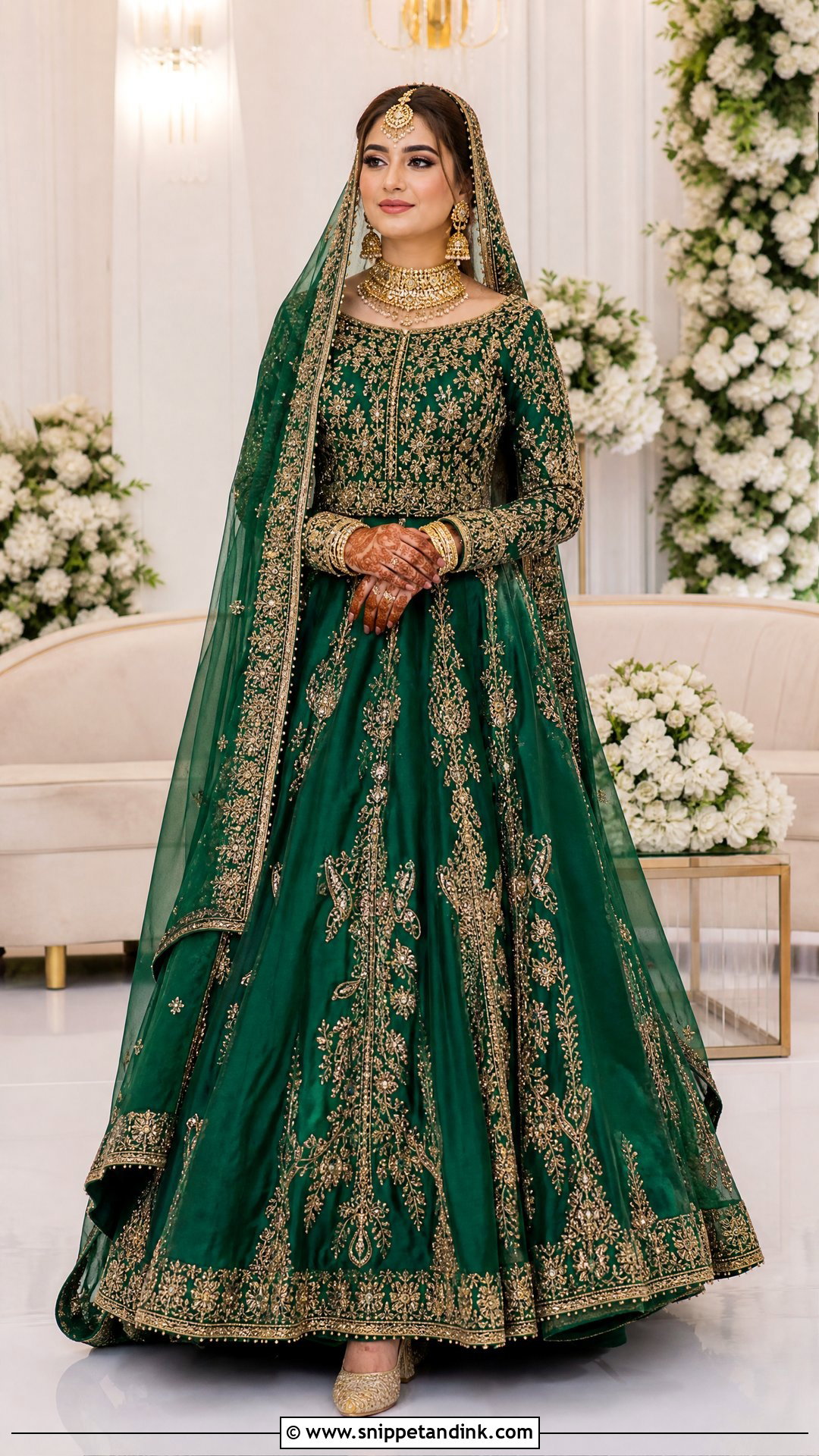
Long sleeves let embroidery run across the whole upper body and give graceful coverage. Choose silk, velvet or embroidered net depending on the season, and keep the neckline open enough to balance the sleeves and show your necklace. A full skirt in maroon, red, emerald, ivory or dusty pink pairs with a light dupatta over the head. With heavy sleeves, one focused choker beats several necklaces. Fitted embroidered sleeves have no stretch, so I have brides lift their hands above their heads and reach across a table before the last fitting. Embroidered juttis or platforms, a smooth low bun and softly defined makeup finish it.

20. Personalized Bridal Langa With Custom Embroidery
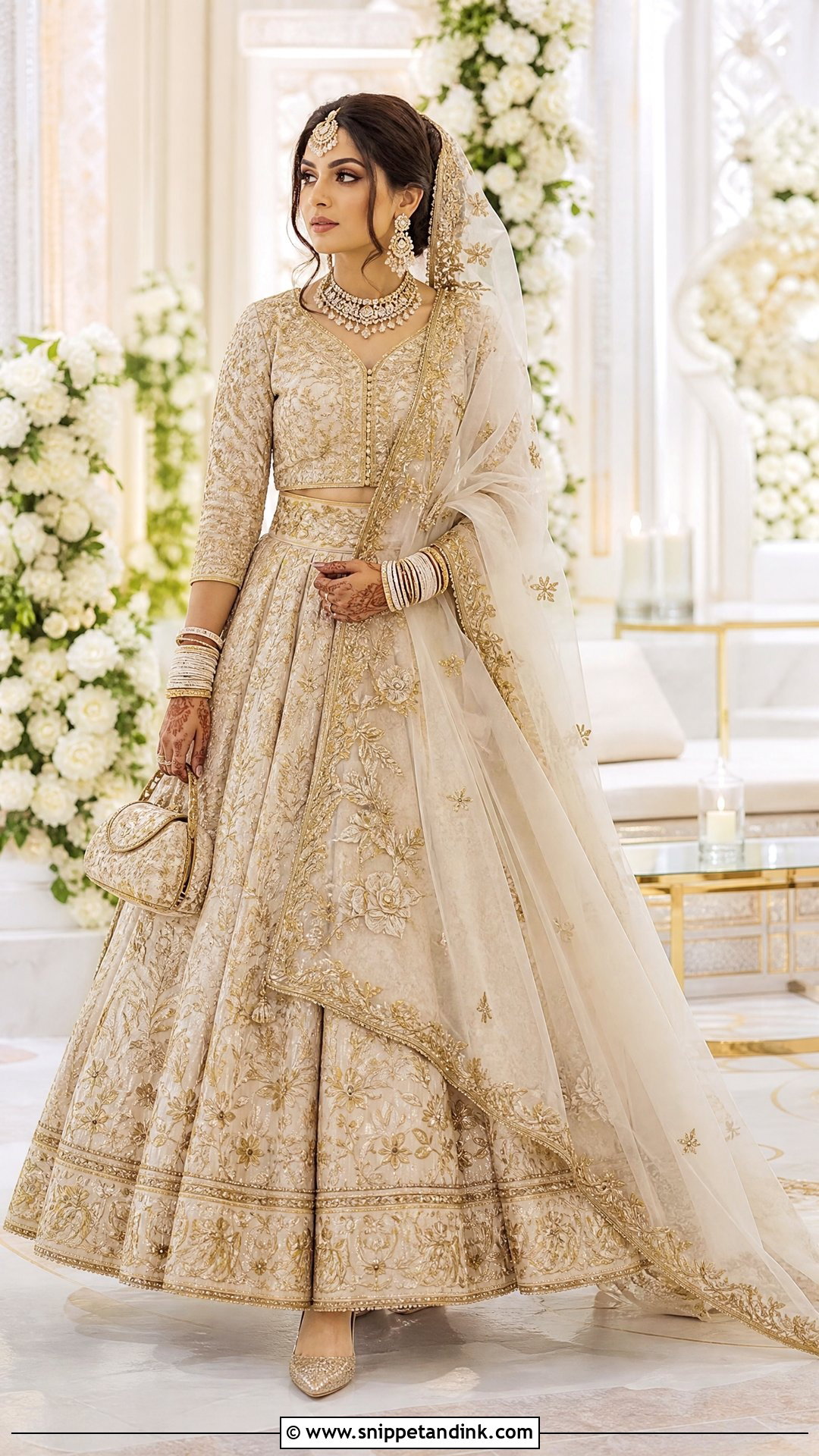
Custom embroidery is what makes a langa feel like yours alone: initials, a date, symbolic flowers, a building or motif that matters to the couple, worked into the skirt border or dupatta edge. Keep it woven into the main embroidery so it doesn’t look added on. Red, ivory, blush or gold make versatile bases, and smaller echoes of the motif can appear on the blouse and dupatta. Always ask for a stitched sample first to confirm scale, thread color, spelling and placement; a sample costs little time compared with unpicking a full border. Coordinated jewelry, comfortable embellished shoes, a practical bridal bag, a polished bun with a personalized accessory and balanced makeup finish it.
Draping Two Dupattas So Neither Slips Mid-Ceremony
Most of the looks above use two dupattas, and that’s where outfits come undone. The head dupatta is fixed to the hair, not the blouse: I pass a few U-pins through the fabric into the bun base so the weight sits on the hairstyle, not on your forehead. The shoulder dupatta gets small safety pins hidden in the blouse seam and, if it crosses the body, one more at the waist.
Practise sitting and standing with both on. If you’ll be seated on the floor or turning to greet guests often, a lighter net or organza head dupatta is far easier to manage than heavy silk. Give a friend a few spare pins and a small mirror, because something always needs a re-tuck after the first round of photos.
Refolding a Heavy Langa So the Zari Stays Bright
After the wedding, air the outfit for a day before packing it away, and have any stains handled by a cleaner who knows embroidered bridal wear. Wrap each piece in soft muslin or cotton, never plastic, which traps moisture. Metallic thread tarnishes faster around perfume, so keep it away from sprays and let perfume dry on your skin before you dress. Every few months, refold along different lines; zari and heavy embroidery can crack along a fold that stays in one place for years.
Walk, Sit and Raise Your Arms Before the Last Stitch
Your langa should suit your traditions, your comfort and the room you’ll be married in. Start with a color you feel confident in, then a fabric and silhouette that fit the season and the length of the schedule. Treat blouse, dupatta, jewelry, shoes, hair and makeup as one outfit, not separate purchases. At every fitting, walk, sit, raise your arms and practise handling each dupatta layer. Photograph the outfit indoors and outdoors before signing off. Classic red, soft florals, jewel tones or modern tailoring, the right one is the outfit you forget you’re wearing by the third ceremony.
You'll Like These Ideas:







Leave a Reply