
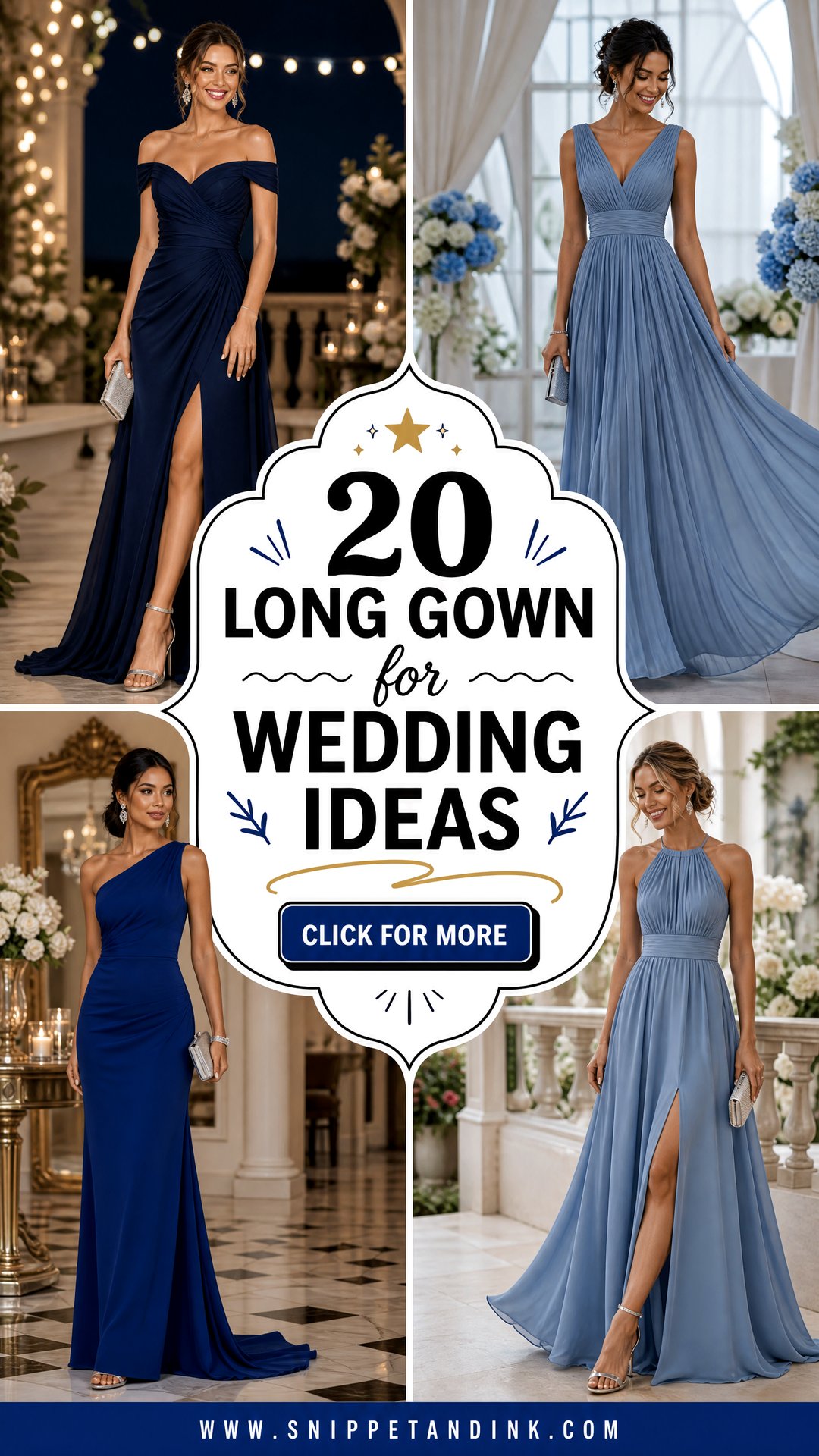
Most of the guests I dress start in the wrong place. They fall for a color, then try to make it fit the wedding, when the invitation, the season and the venue should have narrowed things first. The gowns below cover ballroom receptions, garden ceremonies, destination weekends and late formal evenings, each styled with shoes, jewelry, a bag and something for when the temperature drops. Before anything else, confirm the requested dress code, and stay away from white, ivory and any color the wedding party is wearing. After that, the fun part is choosing the fabric and shape you’ll still be comfortable in at midnight.
What Each Gown Fabric Does in Heat, Cold and Damp Air
Guests rarely ask me about fabric, but it decides more of the evening than color does. A gown that looks right in a shop can wilt, crease or cling once you’re three hours into a wedding.
- Satin: rich in candlelight and flash, but it shows sweat at the underarm and creases across the lap when you sit. Better for air-conditioned evenings than humid afternoons.
- Chiffon: breathes and moves, forgives a long day outdoors, and packs reasonably well. Check that it’s lined.
- Crepe: matte, drapes close to the body and barely creases. My usual pick for destination weddings and long travel days.
- Velvet: warm and heavy. Lovely in winter, too hot under summer marquees, and it marks where it’s pressed.
- Organza: holds volume and looks crisp in daylight, but it traps heat and can feel scratchy at the seams.
- Sequins and beading: add weight and need a soft lining. Evening only.
If the forecast says humid, I’d steer you toward chiffon or crepe whatever the dress code, and bring the formality back through shoes and jewelry instead.
1. Emerald Green Satin Wedding Guest Gown
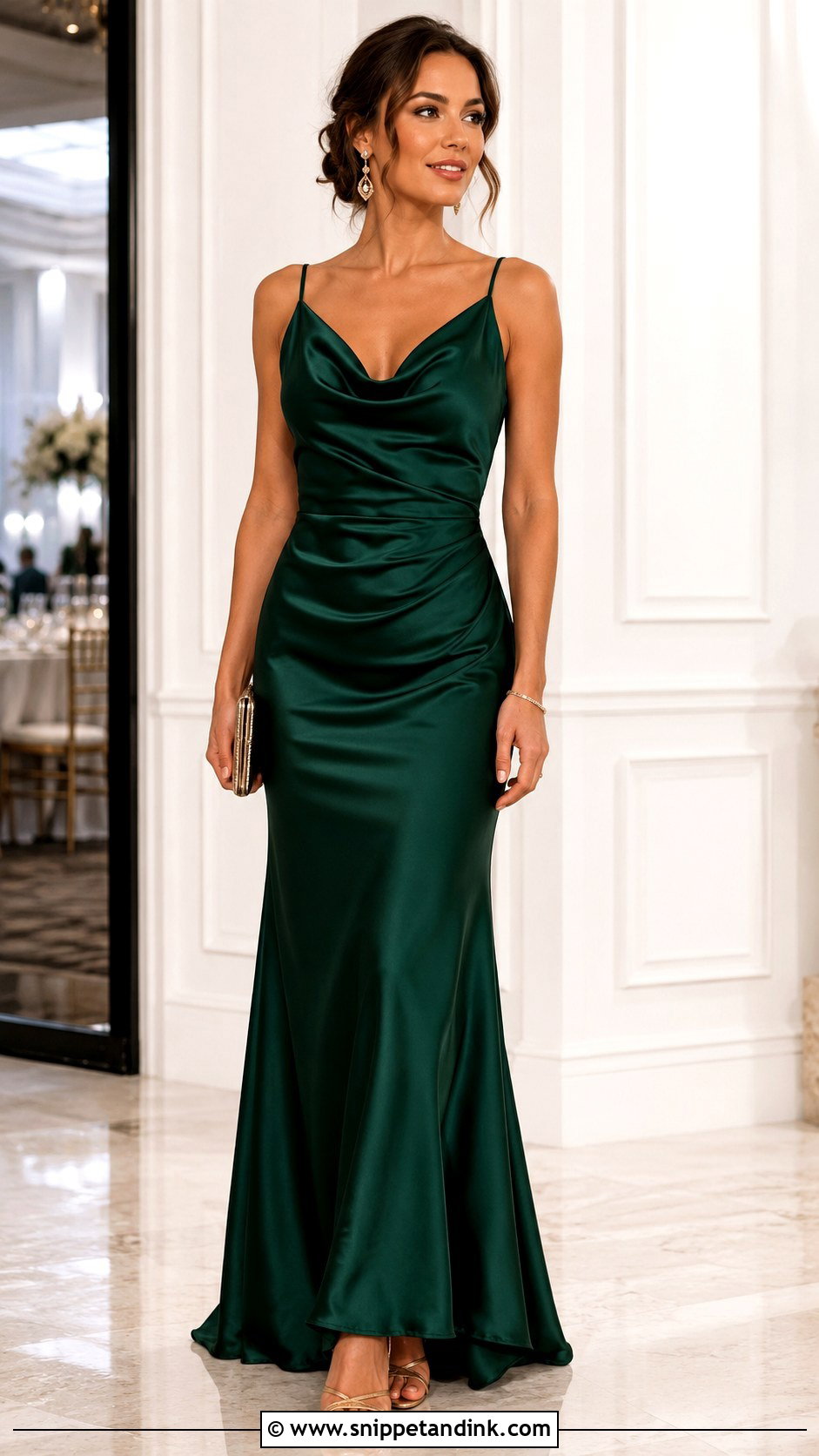
Satin reflects light in long ribbons, so a deep emerald turns almost liquid under ballroom chandeliers. I like a cowl or softly draped neckline with a defined waist; satin cut tight across the hips shows every crease once you’ve been seated for the speeches. Gold sandals, a compact gold clutch, small drops and one fine bracelet are plenty. If the back is low, try an adhesive or convertible bra at home before the day, not in the hotel room. A smooth low bun keeps the line clean, and in cold weather a black tailored coat sits over the gown without crushing it.
2. Navy Blue Off-Shoulder Wedding Gown
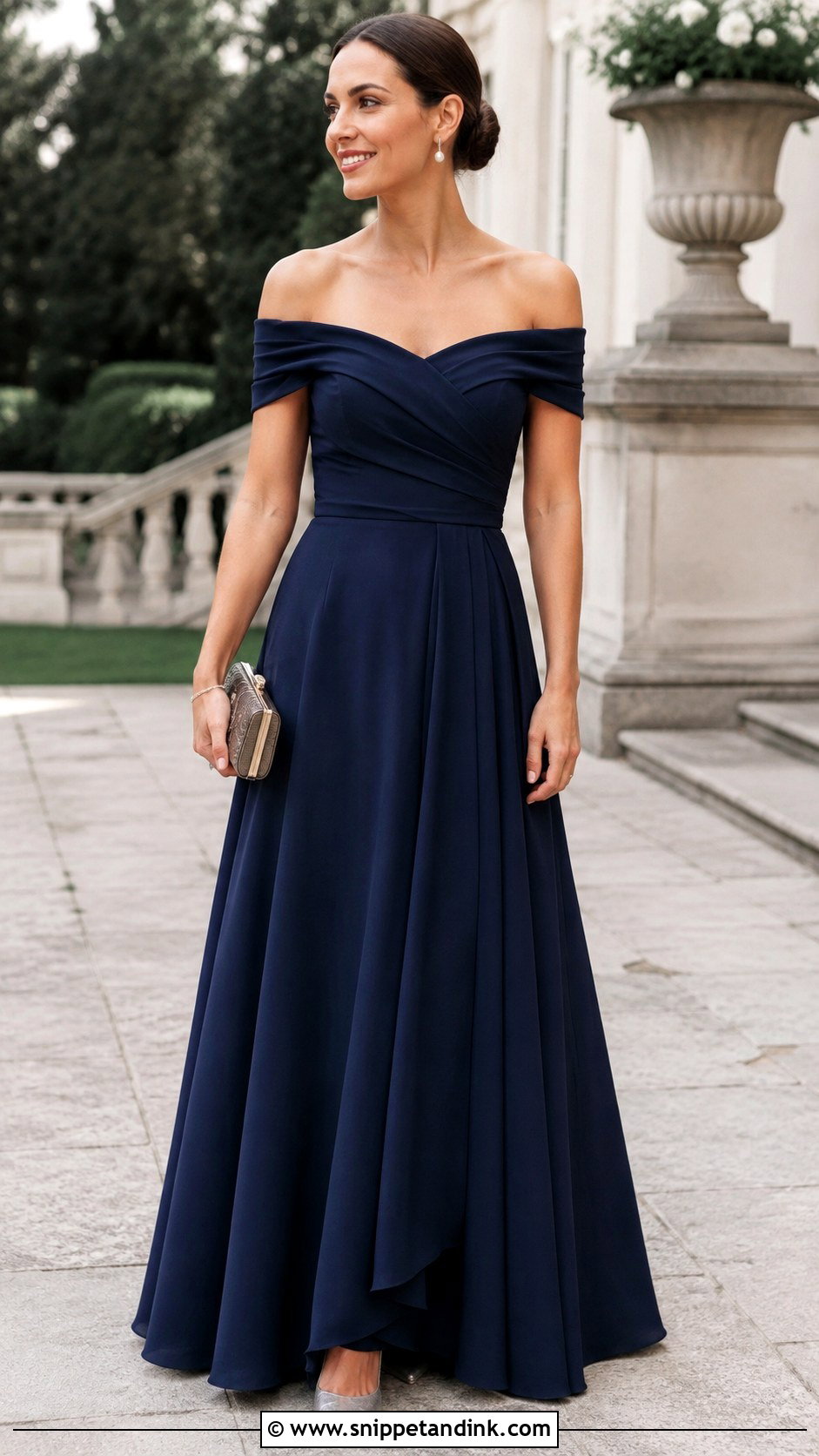
An off-shoulder neckline only works if the bodice has real structure inside, boning or a firm corset band, otherwise you’ll spend the night hitching it up. Navy keeps the look formal without the severity of black, which is why I suggest it so often for black-tie optional. Pick an A-line skirt for movement, pearl drops or slim silver earrings, and navy or soft gray pointed pumps. A polished updo gives the neckline room. For a religious ceremony first, carry a light navy shawl and put it away for the reception. A modest side slit makes stairs and dancing easier.
3. Burgundy Velvet Long-Sleeve Wedding Gown
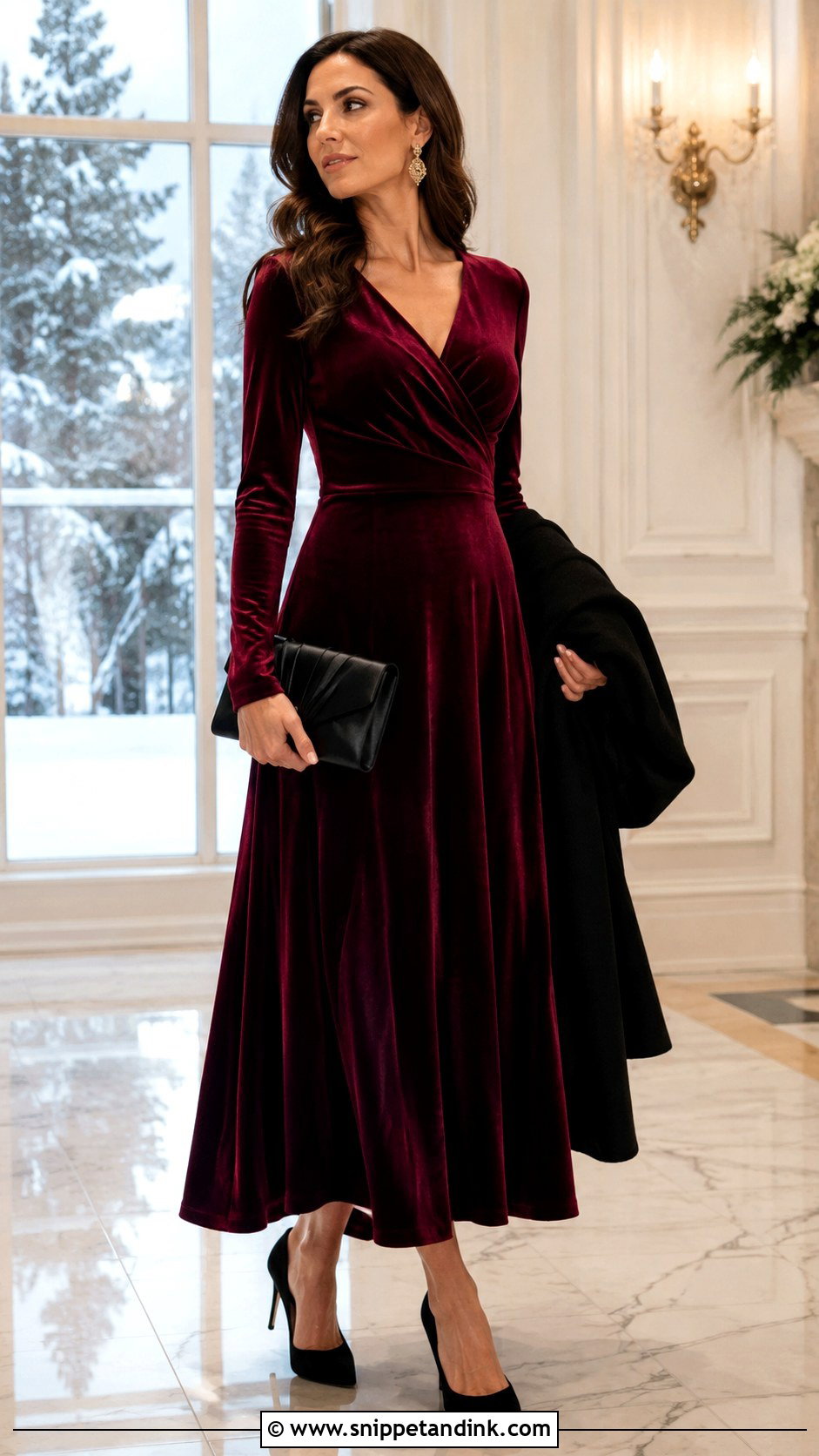
Velvet has its own depth, so a burgundy gown needs almost no beading. A V-neck, a gathered waist and a softly flared skirt balance the heavier fabric on most figures, and long sleeves make sense of it in winter. I pair it with black suede pumps, a black satin clutch and antique gold earrings. If you want sheer black tights for warmth, make sure the hem fully covers them. One thing I warn every client about: velvet crushes where you sit, so on a long drive, lay a coat over the seat and smooth the skirt flat. Skip bulky wraps; a tailored wool coat is cleaner.
4. Dusty Blue Pleated Chiffon Wedding Gown
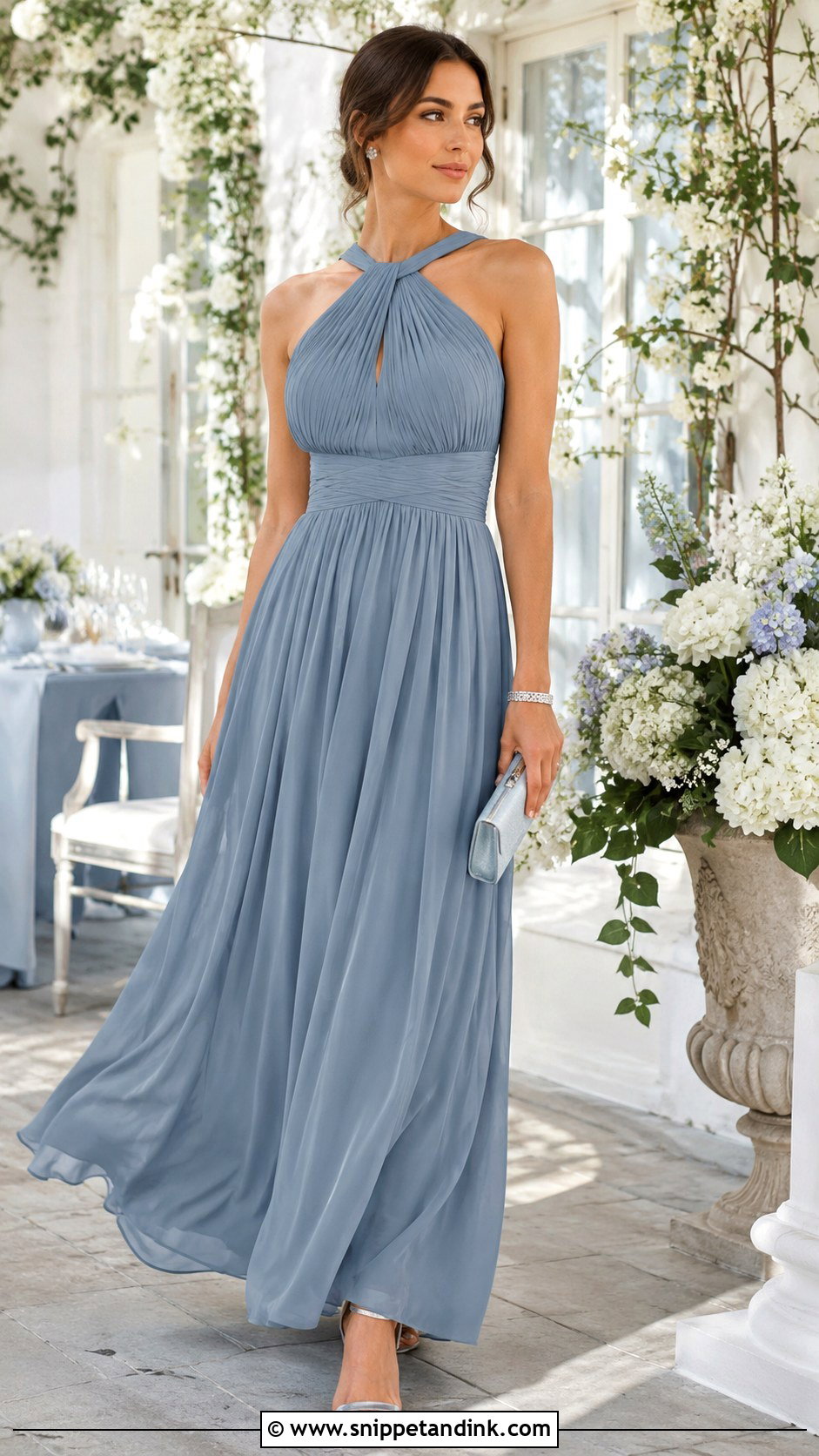
Pleated chiffon is the gown I’d choose for a spring or summer afternoon, because it moves with you and lets air through. Check the lining by a window in daylight before you commit; chiffon that looks opaque in a fitting room can turn sheer outdoors. A fitted waist and gathered bodice keep the pleats from looking shapeless. Silver ankle-strap sandals, crystal studs and a pale blue clutch suit the cool color. Soft curls or a loose low bun match its lightness, and a gray or blue wrap is worth having for a breezy ceremony.
5. Floral One-Shoulder Wedding Guest Gown
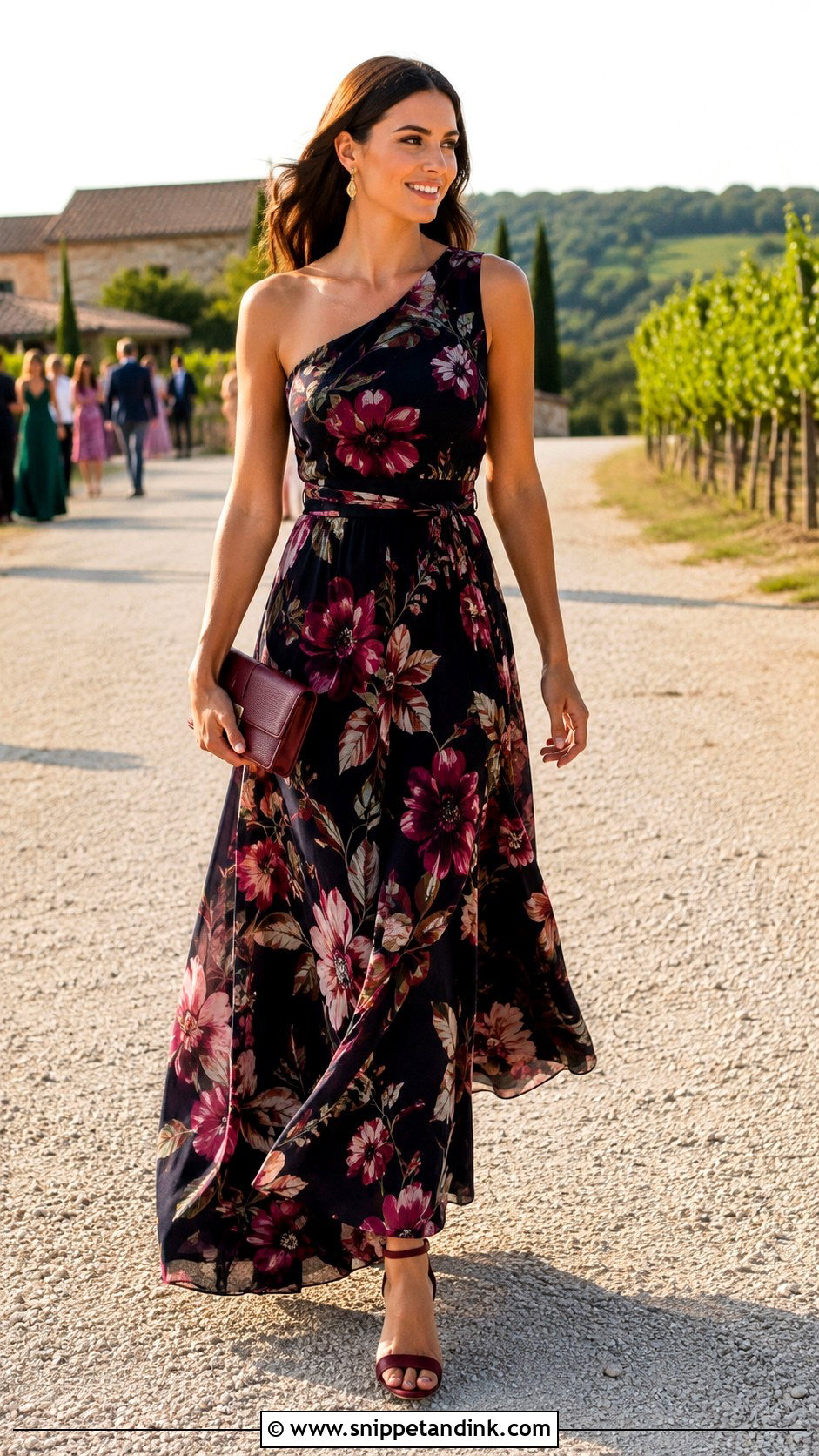
A floral print reads formal or casual depending on two things: the ground color and the size of the flowers. A darker base with medium-scale blooms holds its own at a vineyard or estate wedding, while tiny prints on pale grounds look like daywear. The one-shoulder neckline is the detail, so leave the necklace at home and wear simple earrings. Block heels are non-negotiable on grass. I pull one shade from the print for shoes or bag, never both, and keep hair to one side, away from the bare shoulder.
6. Black Halter-Neck Wedding Guest Gown
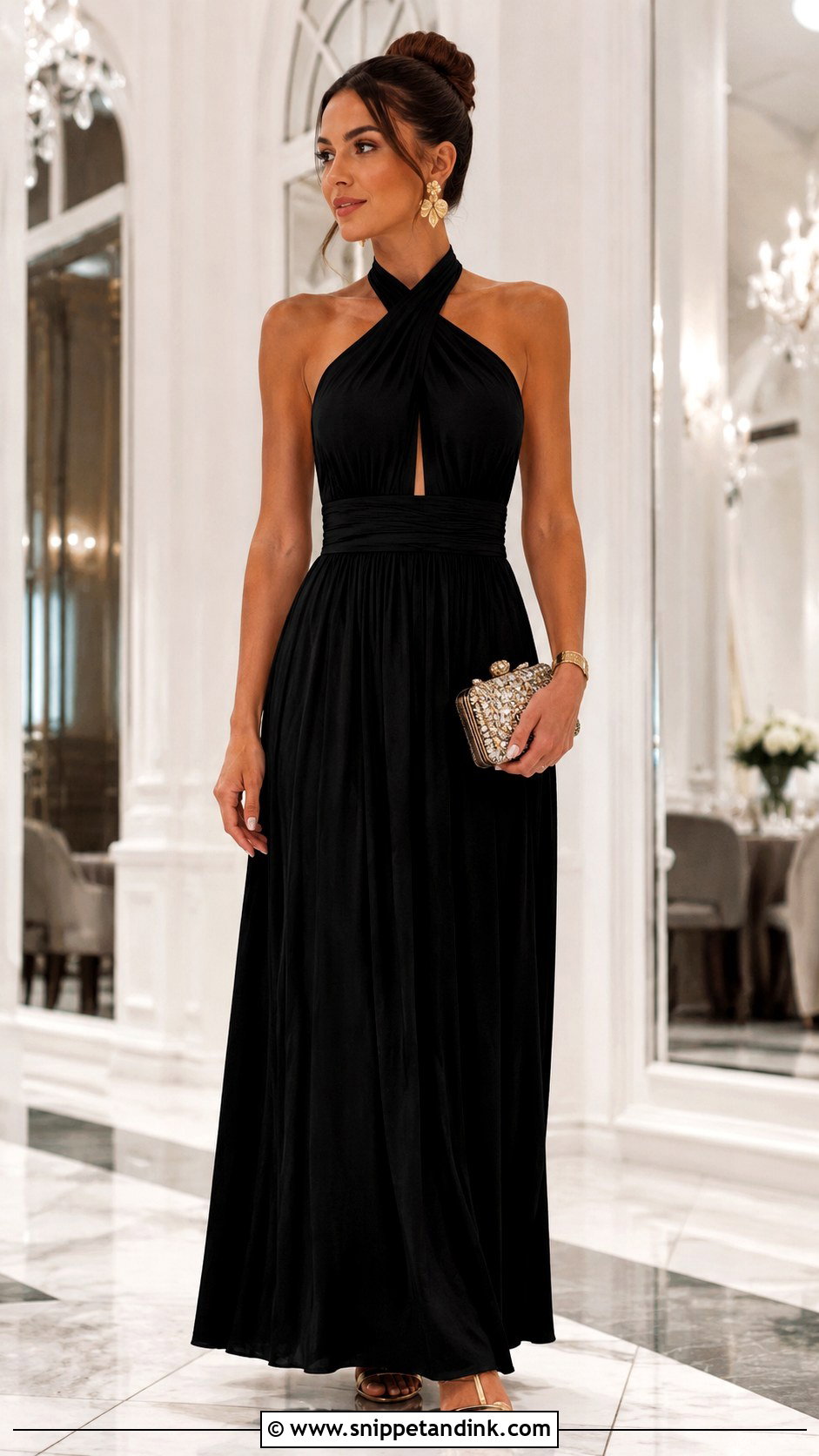
Before I put anyone in black, I ask whether the couple or their family would mind; most don’t, but some still do. If it’s welcome, a black halter gown with a defined waist and flowing skirt looks sleek rather than severe. The halter draws the eye to your shoulders, so skip the necklace and use sculptural gold earrings and a narrow cuff. Satin, crepe and chiffon keep black looking like eveningwear rather than office wear. Hair should go up or back so the neckline shows. A jewel-toned clutch softens the look if the room is bright.
7. Chocolate Brown Draped Wedding Gown
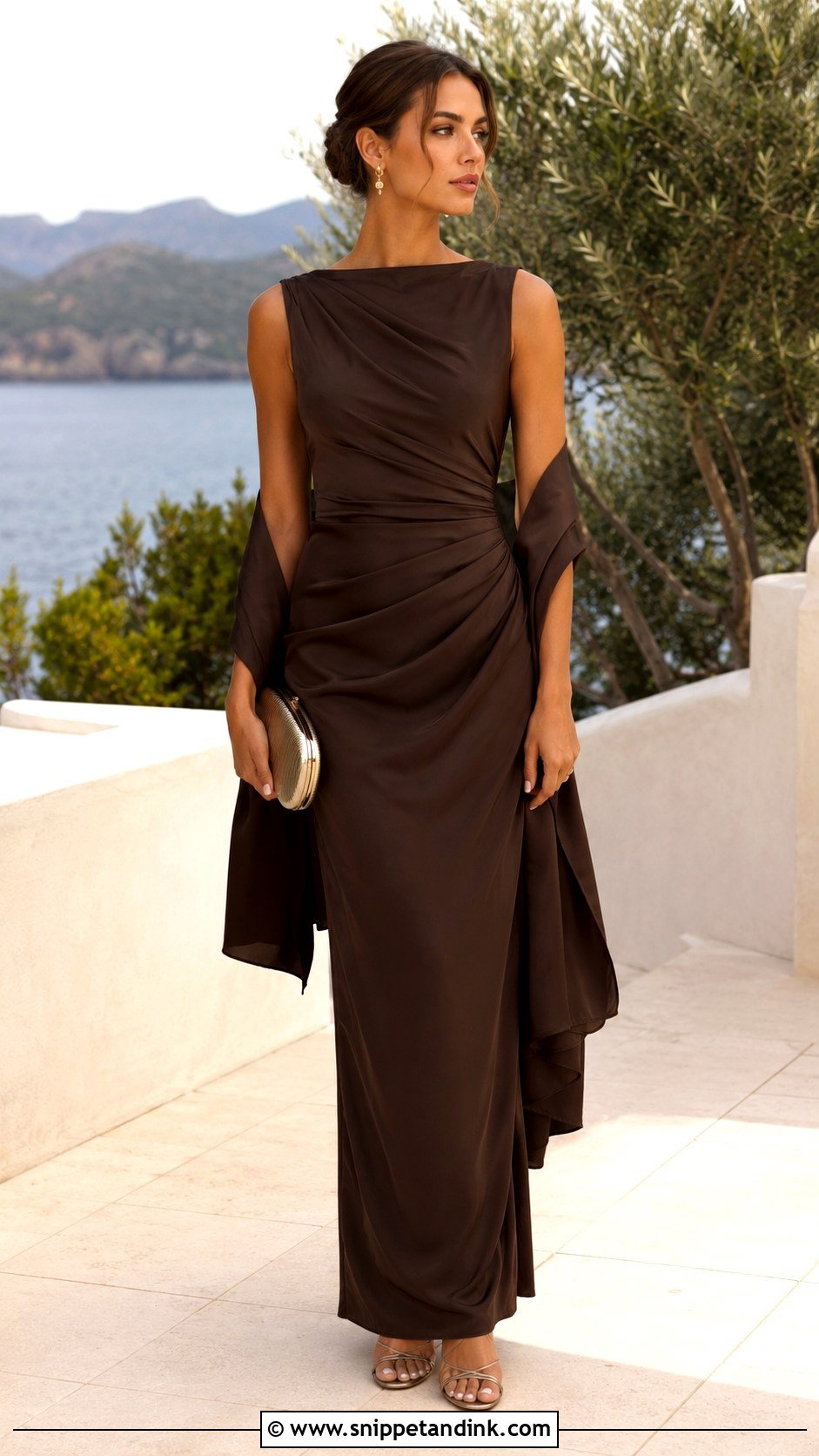
Chocolate brown is underused at weddings, and it glows under candlelight in a way black doesn’t. A gathered waist, folded neckline and fluid column skirt give shape without boning. Bronze sandals, a small metallic clutch, gold hoops and one ring keep the color story warm; pale beige accessories will look washed out beside it. If the gown has a high slit, keep the top more covered. For fall, a camel or espresso wrap matches far better than black.
8. Teal Cape-Sleeve Wedding Guest Gown
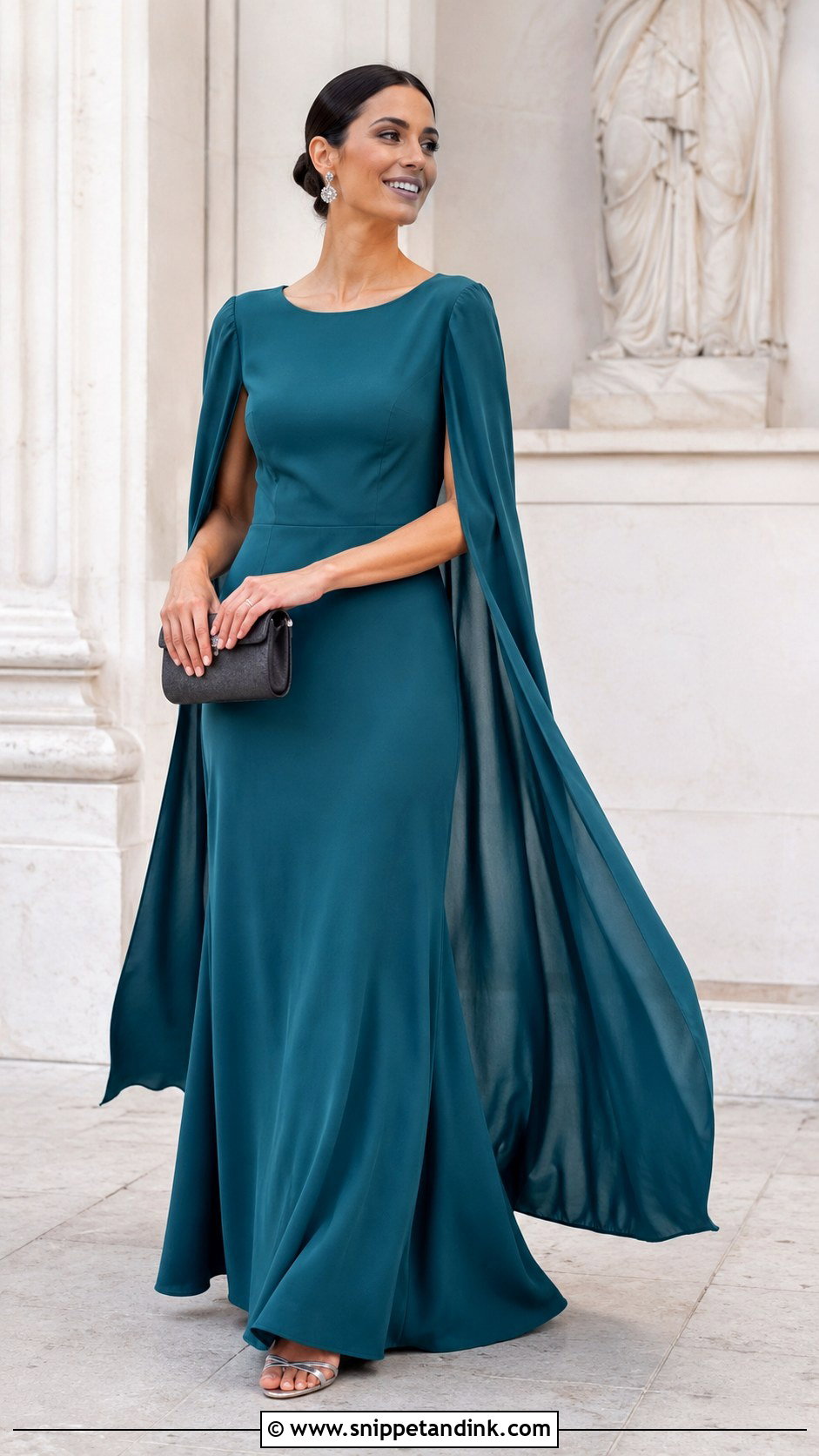
For coverage that still moves, I like a teal cape-sleeve wedding gown. The cape covers the upper arms and floats as you walk, so the bodice and skirt should be plain. Check the sleeve length while seated at a table: if it reaches your plate, have it shortened. Silver or pewter heels, a charcoal clutch and small crystal earrings are enough, and a low bun keeps long hair from tangling in the cape. It’s a strong pick for hotel, museum and ballroom venues.
9. Plum Wrap-Front Wedding Guest Gown
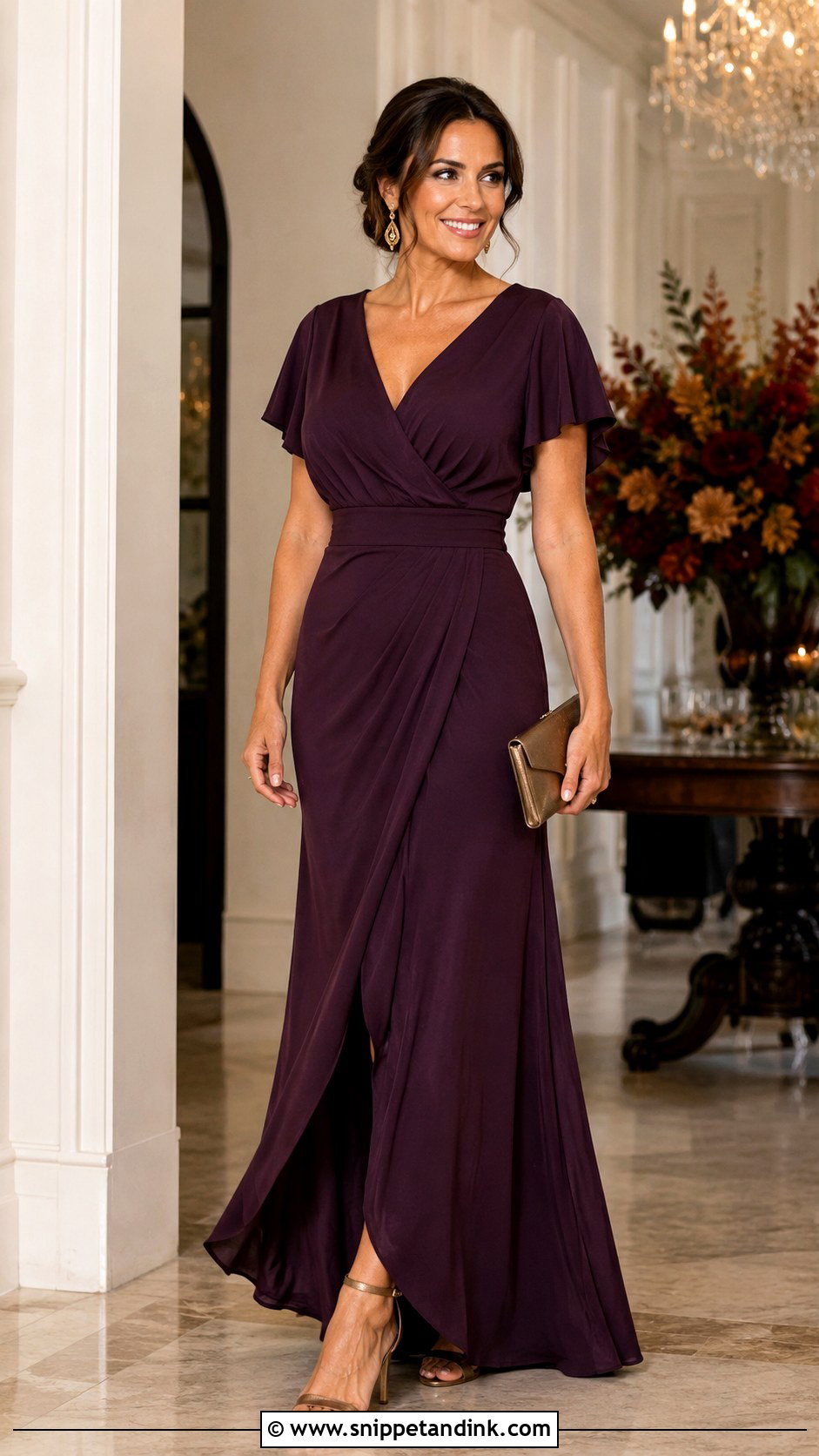
Wrap-front gowns gape. That’s the first thing I check, sitting down and leaning forward, because a crossover bodice that stays closed standing can open the moment you reach for a glass. Look for a secure wrap, a wide waistband and enough skirt fabric to overlap when you’re seated. Fashion tape and a smooth camisole solve most of it. Plum pairs with gold, bronze or black, and heeled sandals with a compact envelope clutch keep the rest simple. For an outdoor fall wedding, switch to closed-toe pumps and a dark shawl.
10. Rust One-Shoulder Wedding Guest Gown
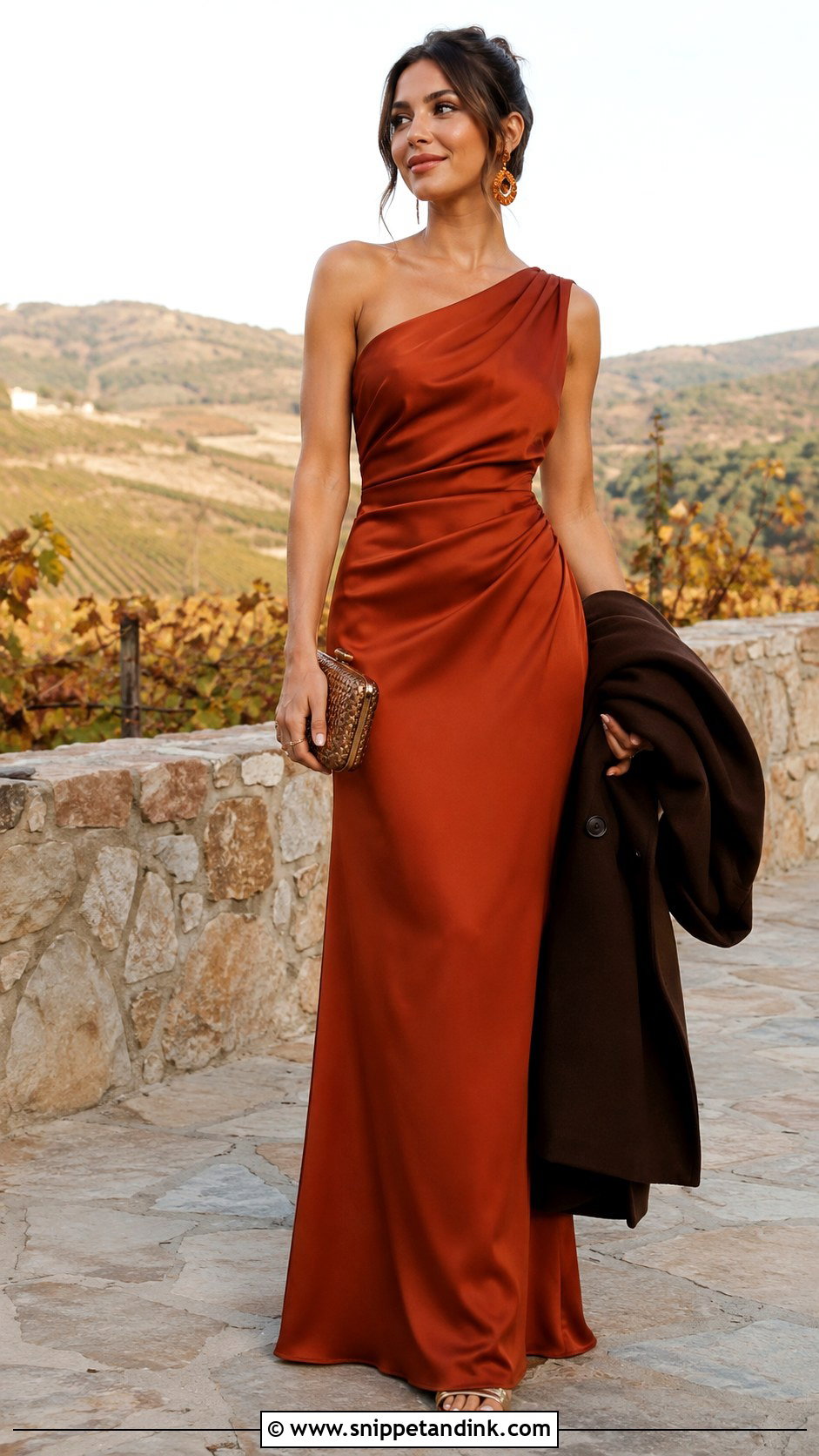
A rust one-shoulder gown gives autumn a warmer option than the usual navy and burgundy. Matte satin, crepe or chiffon with gentle gathering at the waist keeps it from looking shiny in flash photos. Gold sandals, a bronze clutch and amber-toned earrings carry the color, and the asymmetric neckline means no necklace. Rust can drain fair skin under cool lighting, so I hold the fabric to a client’s face in daylight before ordering. A deep brown coat suits outdoor portraits on a chilly evening.
11. Cobalt Blue Column Wedding Gown
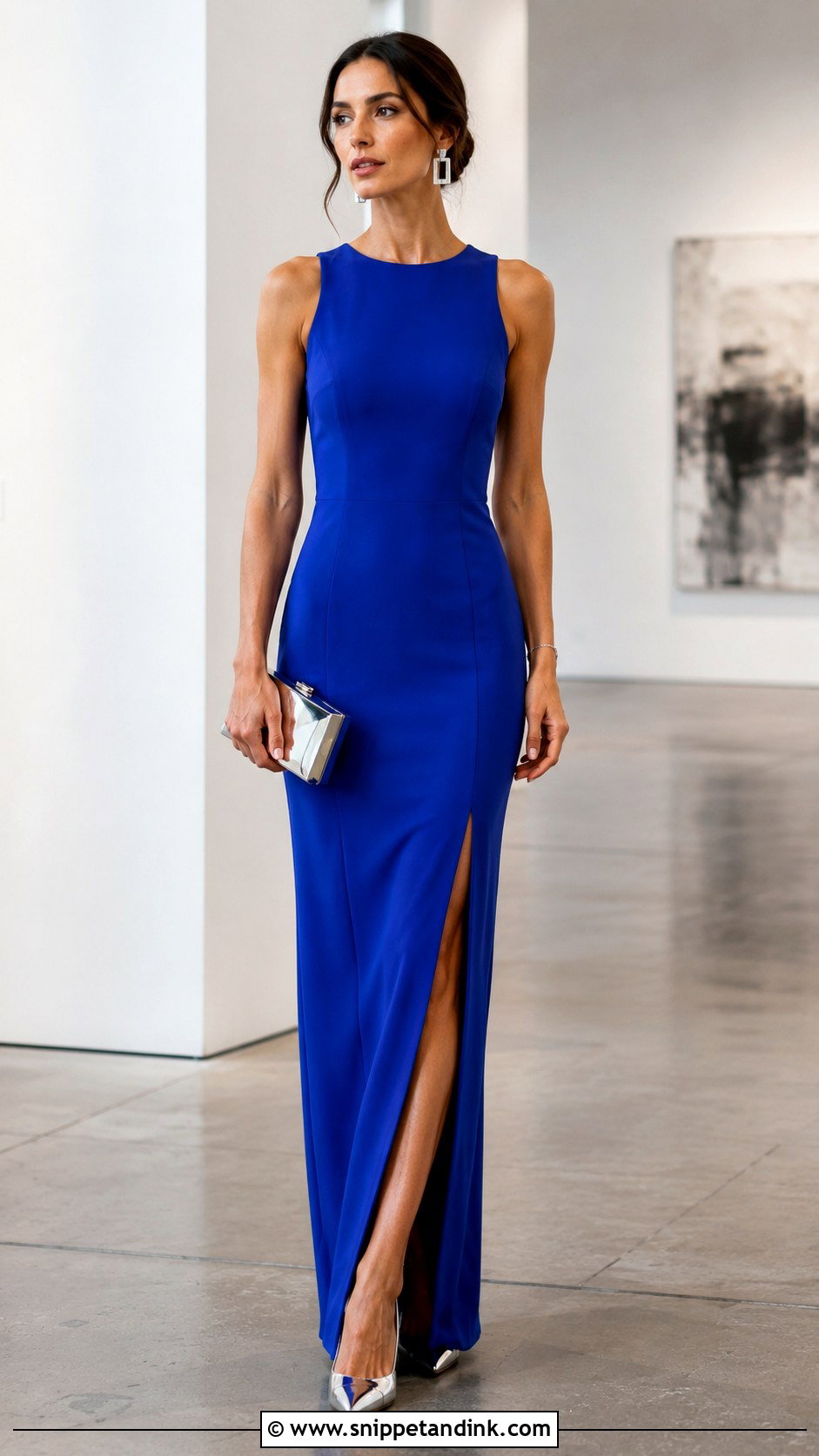
Cobalt is loud on its own, so the gown itself should be plain: a column with structured seams and a modest slit. Look for a little stretch in the fabric, because a rigid column won’t let you sit comfortably or climb into a car. Silver pumps, a mirrored clutch, geometric earrings and one bracelet keep it modern. Neutral eyes and a soft berry lip stop the face competing with the color. It suits city venues, rooftops and galleries far better than a rustic barn.
12. Sage Green Ruffle Wedding Guest Gown
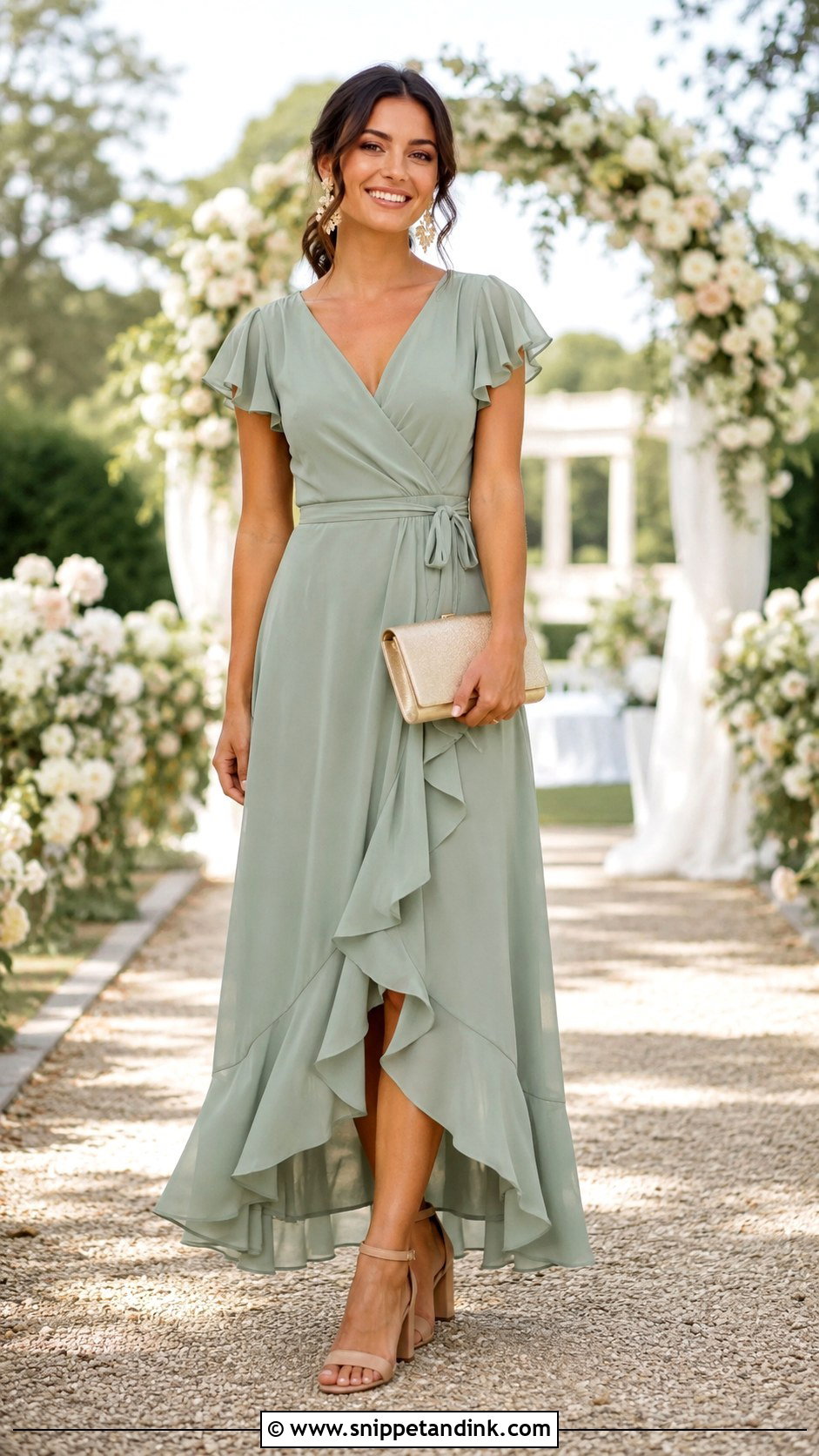
Sage is one of the most common bridesmaid colors right now, so check the wedding palette before you buy a green ruffle gown, or ask someone close to the couple. A wrap bodice, flutter sleeves and a gently ruffled skirt give movement in daylight. Ruffles in heavy fabric look fussy; in chiffon they behave. Nude block heels with heel protectors on grass, a pale gold clutch and small floral earrings work, and a structured woven bag is fine outdoors. Keep the invitation’s formality in mind so the ruffles don’t drift into sundress territory.
13. Mauve Lace-Sleeve Wedding Guest Gown
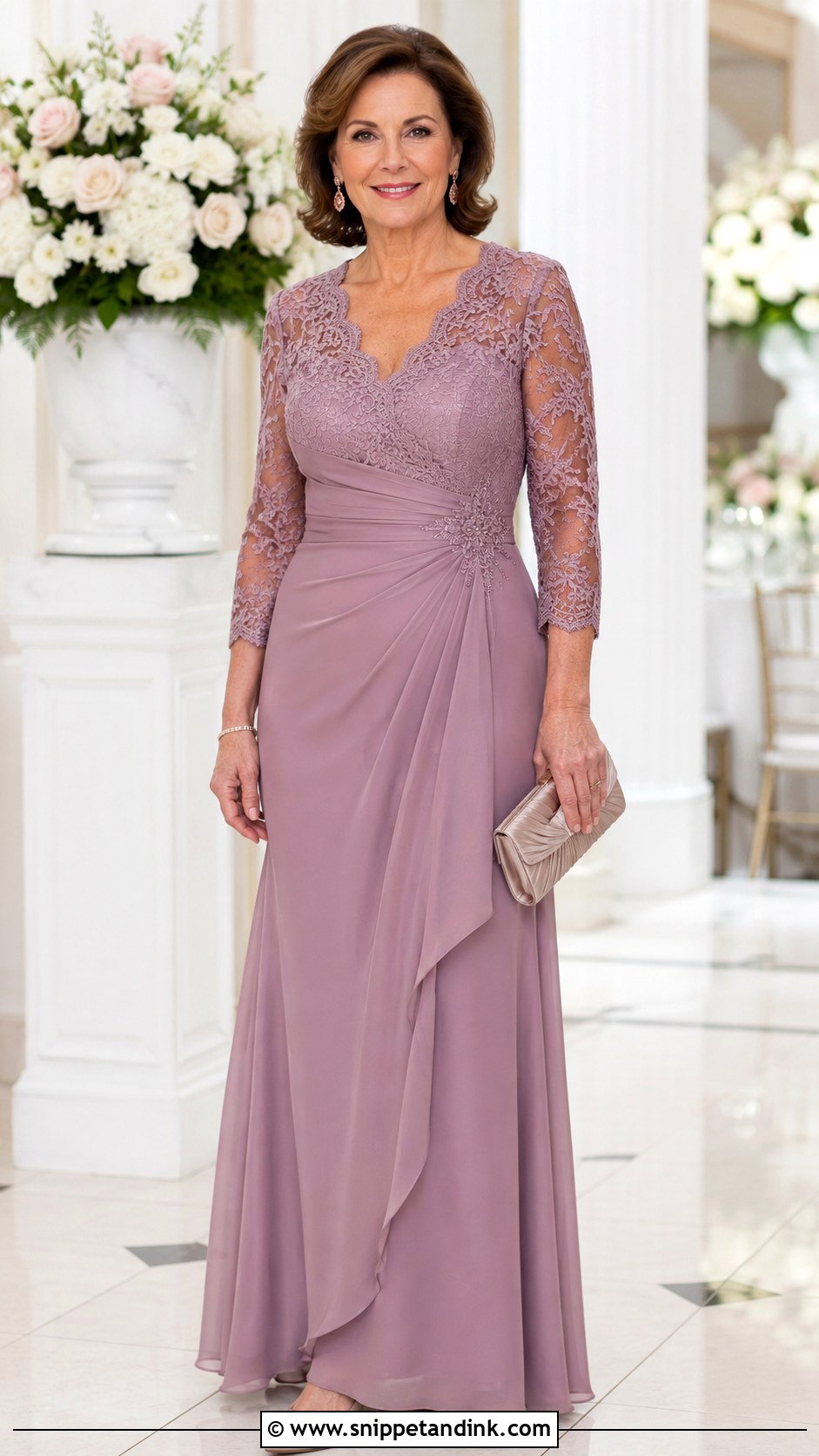
Mauve is my answer for guests who want something softer than pink but still clearly a color. Lace sleeves look most refined when the lace is tonal with the main fabric; sharp contrast cheapens the effect. A bateau or modest V-neck suits fitted or slightly flared sleeves. Taupe pumps, a satin clutch, rose gold earrings and one bracelet are enough when the lace is busy. Check the shade outdoors, since very pale mauve can look ivory in photos. It’s a cut I often suggest for mothers of the couple who want coverage without weight.
14. Bronze Sequin Wedding Guest Gown
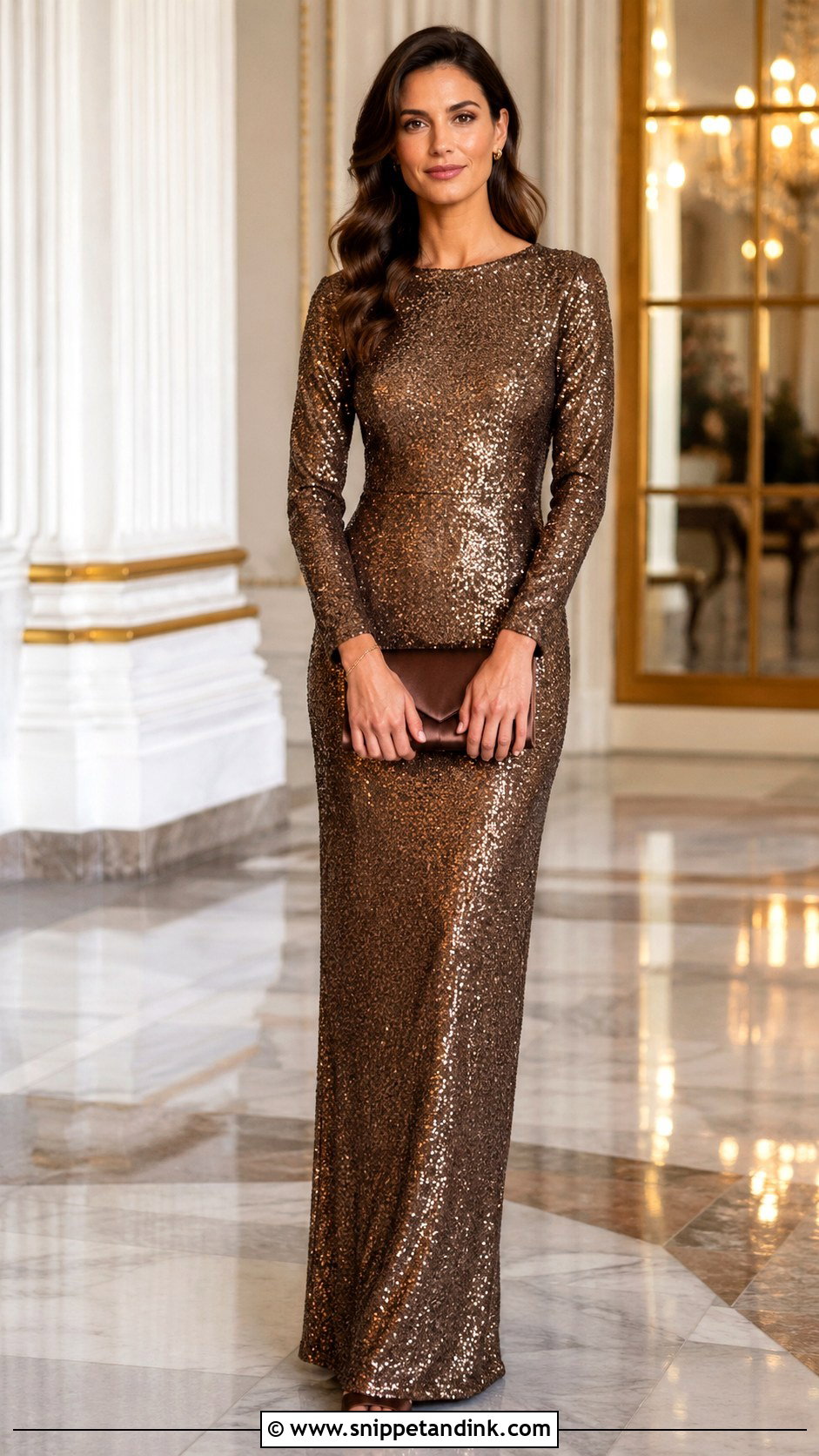
A bronze sequin gown belongs at an evening black-tie event, and it only looks expensive when the sequins are small and even. Large paillettes read costume under flash. Keep the shape simple, a column, wrap or long sleeve, and the accessories plain: dark heels, a satin clutch, gold studs. The detail people forget is the inside. Sequins sewn through the lining scratch at the underarm within an hour, so run your fingers along the armholes before you buy. Leave it at home for daytime or casual invitations.
15. Ruby Red Beaded Wedding Guest Gown
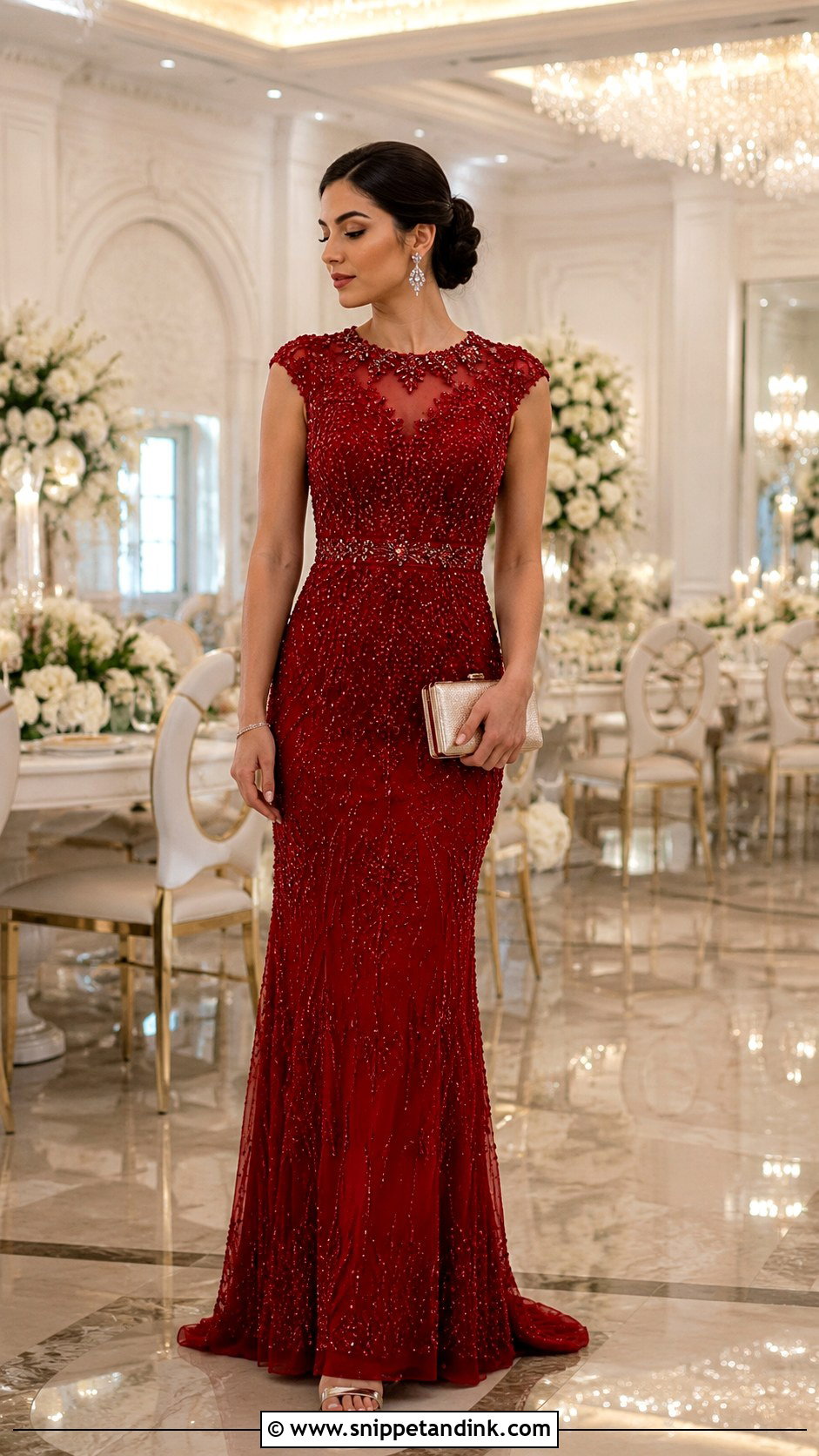
Beadwork is heavy, and how it’s placed changes how the gown hangs. On a ruby red gown I want the beading concentrated at the neckline, waist or shoulders, so the skirt stays fluid and the dress doesn’t drag forward at the bust. With an embellished neckline, skip the necklace and wear small crystal earrings with neutral metallic sandals and a box clutch. For lipstick, go muted red or rose; trying to match the dress exactly almost always misses. Winter evenings and grand hotels suit it.
16. Coral Organza Wedding Guest Gown
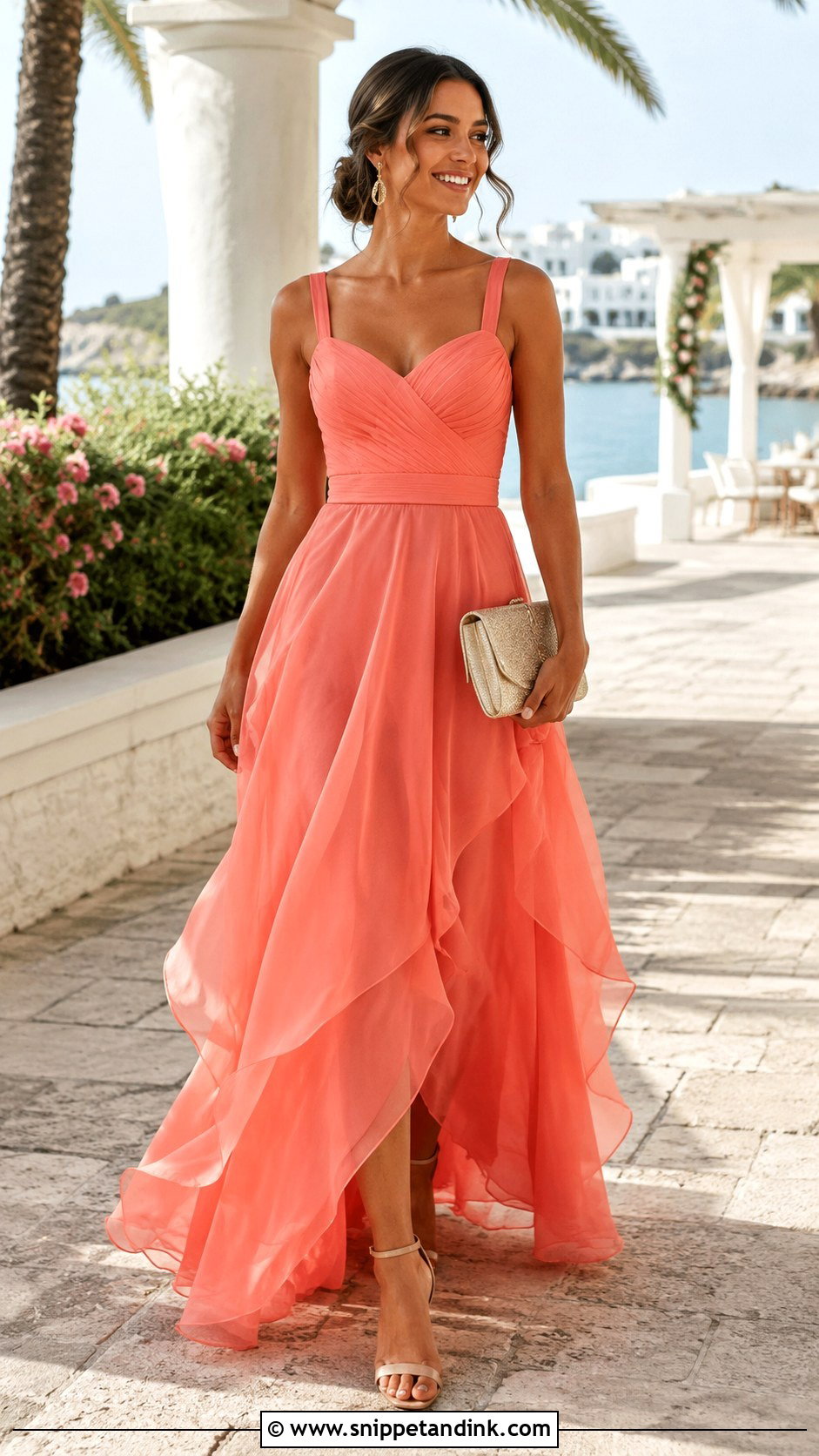
Organza holds its shape, which works in a coral skirt and less flattering when it puffs out at the hip. I look for a fitted bodice with wide straps or short sleeves, clean seams and restrained ruffles in the A-line skirt. A low block heel lifts the hem off sand or grass and keeps you steady. Neutral sandals, a soft gold clutch and small drops let the color lead, with peach blush and a loose updo. Organza doesn’t breathe much, so carry a light wrap for chilly air conditioning rather than counting on the fabric. It suits coastal, resort and formal daytime weddings.
17. Silver Gray Modest Wedding Gown
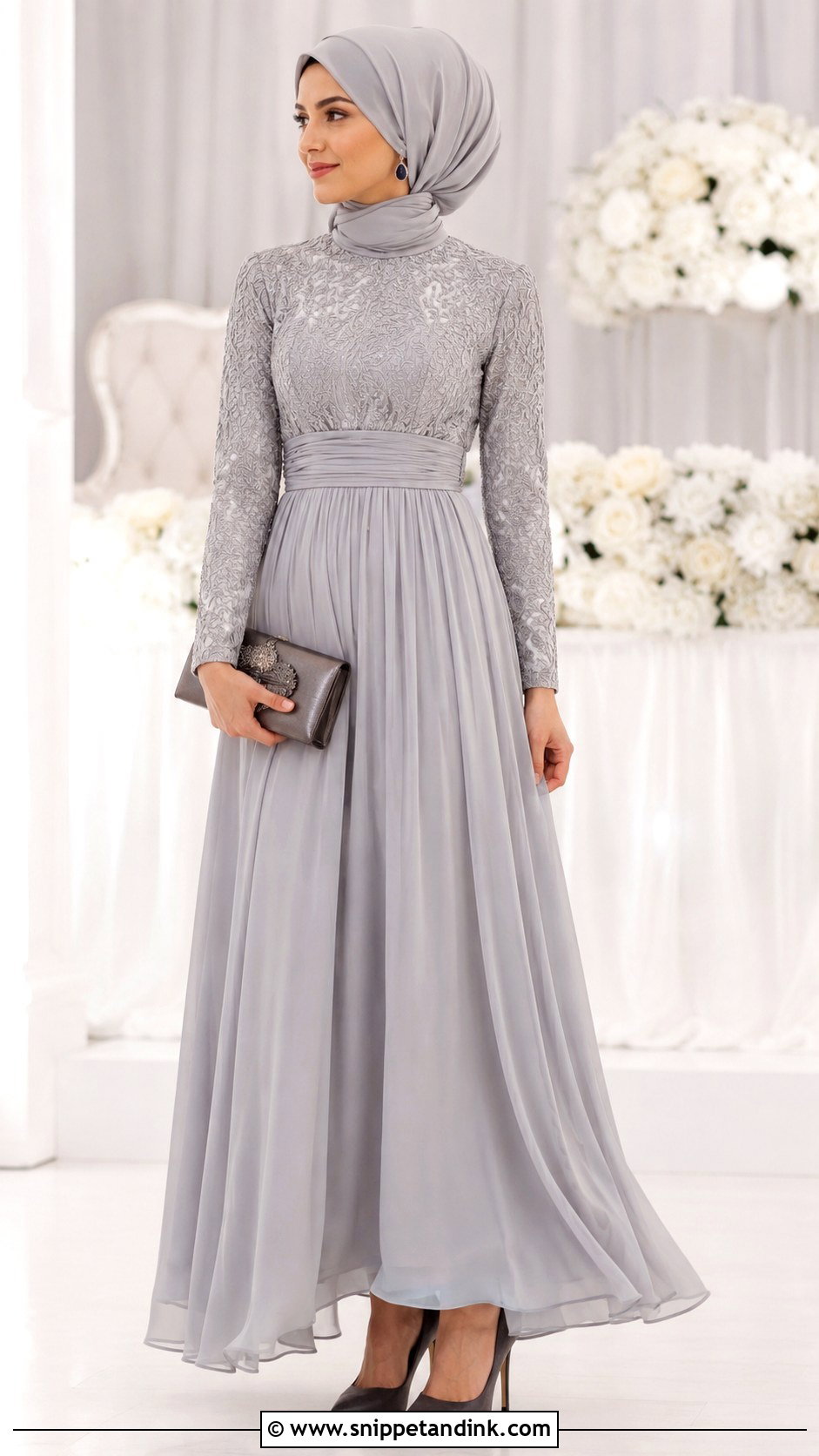
A silver gray gown with long sleeves and a high neck gives full coverage for formal and religious ceremonies. I always choose matte chiffon or crepe here; shiny silver satin under flash can photograph close to white. A defined waist and flowing skirt keep the shape graceful, and a little beadwork at the cuffs is all the embellishment it needs. Charcoal pumps, a pewter clutch and sapphire earrings add controlled color, and a draped headscarf coordinates easily when modest dressing matters. Sleek footwear suits it far better than platforms.
18. Dark Floral Maxi Wedding Guest Gown
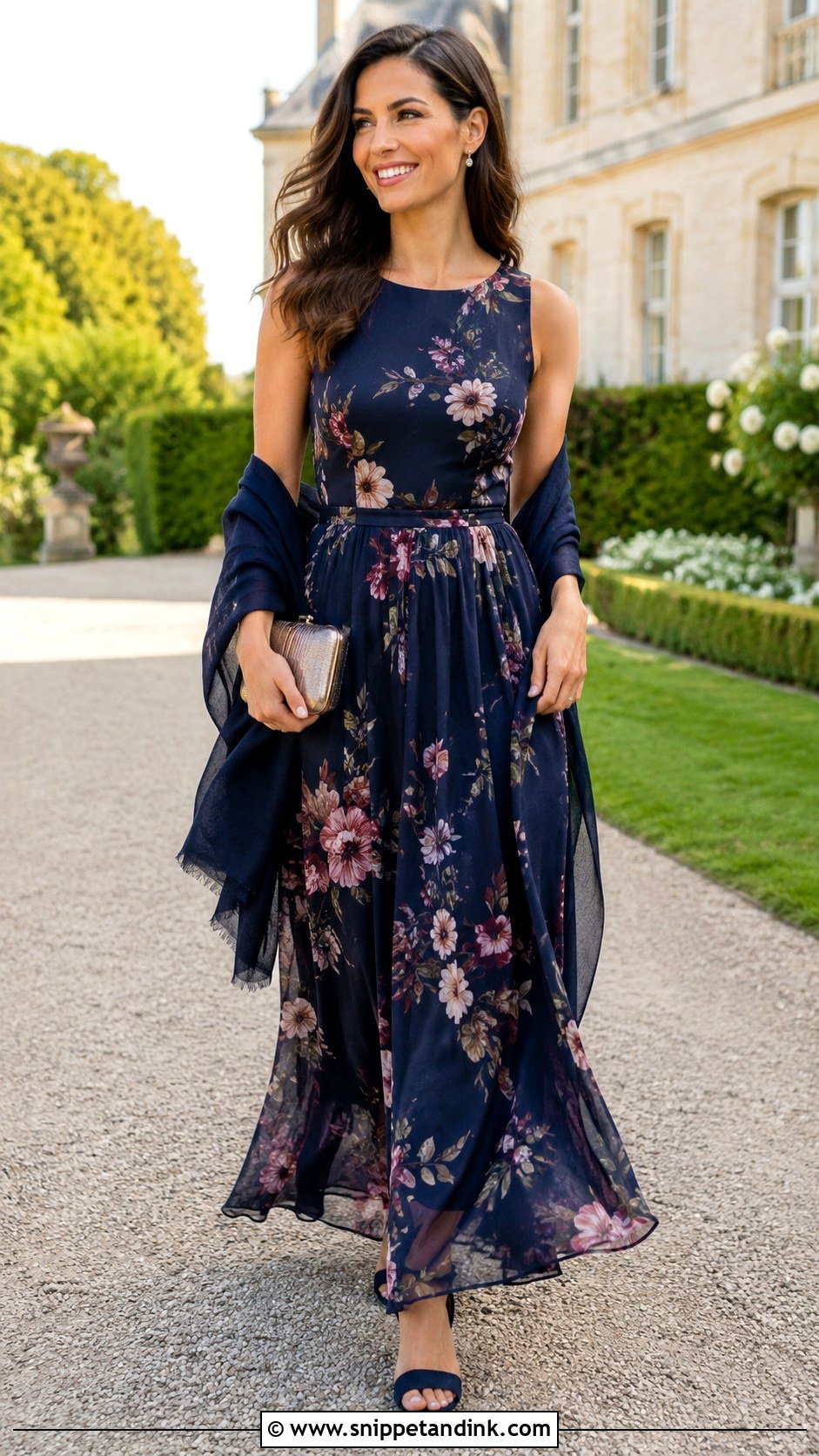
A dark floral maxi is the most adaptable gown in this list. It looks right at a three o’clock outdoor ceremony and still right at a nine o’clock reception. Navy, forest, burgundy or black grounds with clearly defined flowers keep it formal, especially in chiffon or satin. Take one deeper shade from the print for your shoes, carry a plain metallic clutch, and resist layering bold jewelry against the pattern. Block heels for lawns, and a wrap in the background color for warmth.
19. Plus-Size Empire-Waist Wedding Gown
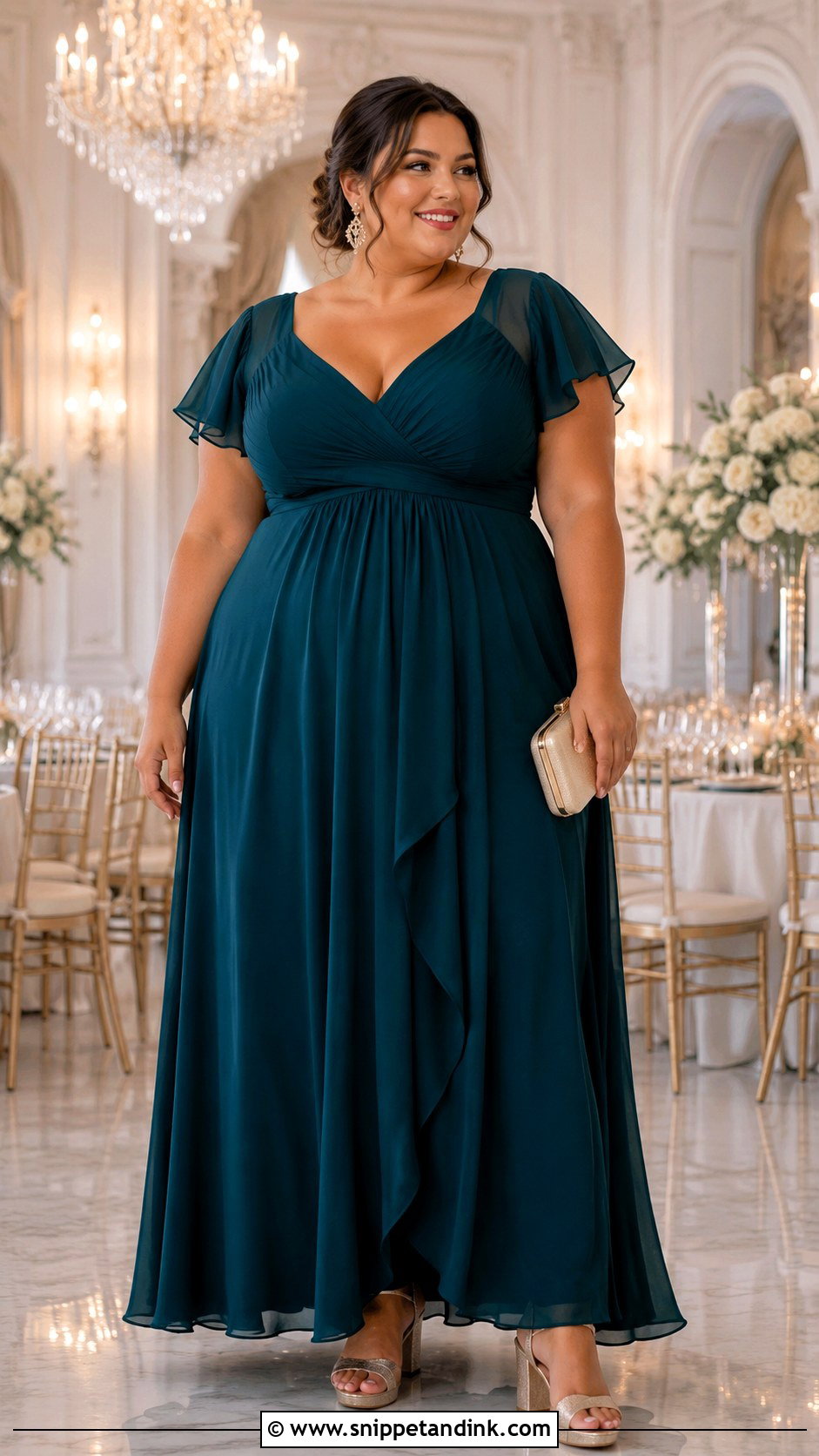
An empire-waist gown lets the skirt fall from just under the bust, so nothing clings at the midsection. The support has to come from the bodice: wider straps and a firm under-bust band that doesn’t roll after a few hours. Deep teal, plum, navy and berry carry well at formal weddings. If you want sleeves, choose flutter or sheer full-length ones built into the gown rather than layering a jacket over it. Cushioned block heels and statement earrings finish it. Hem it precisely, because extra fabric pooling at the floor breaks the long line.
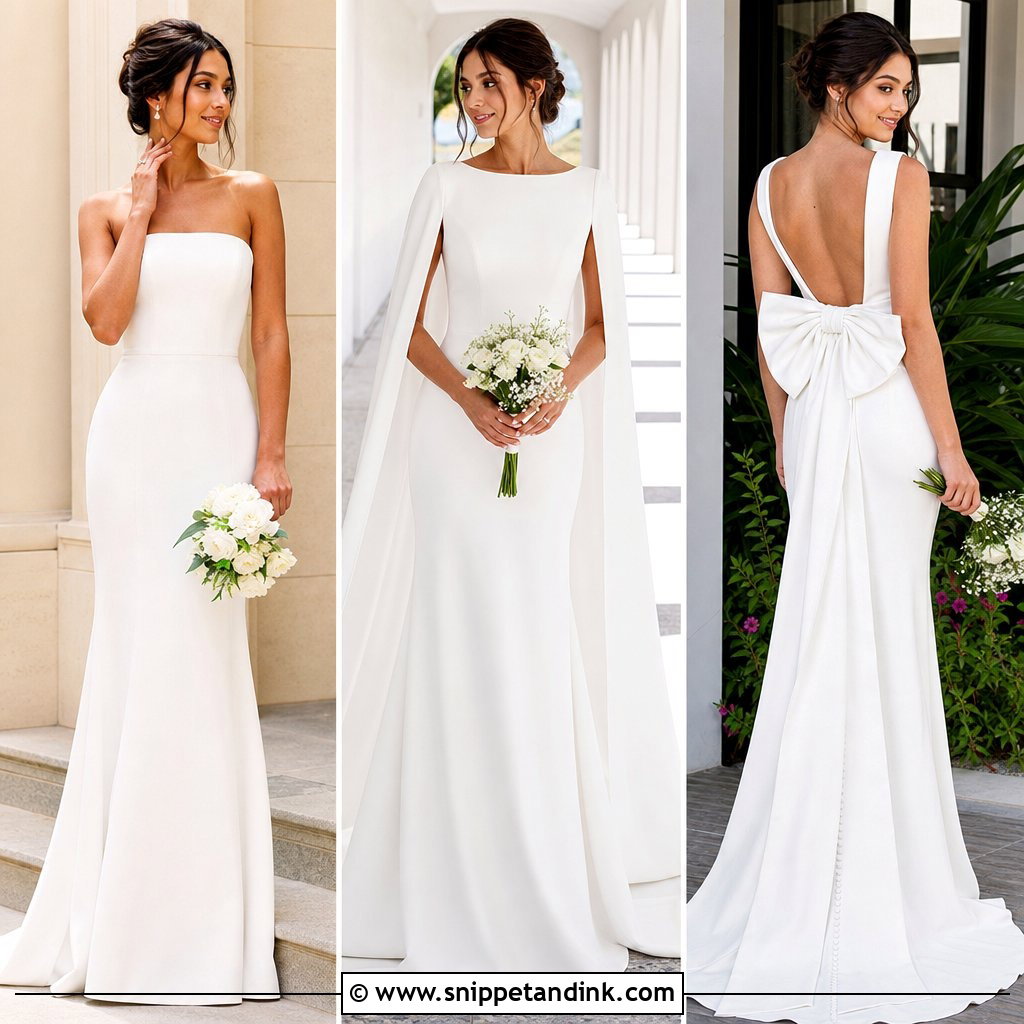
20. Petite High-Waist Wedding Guest Gown
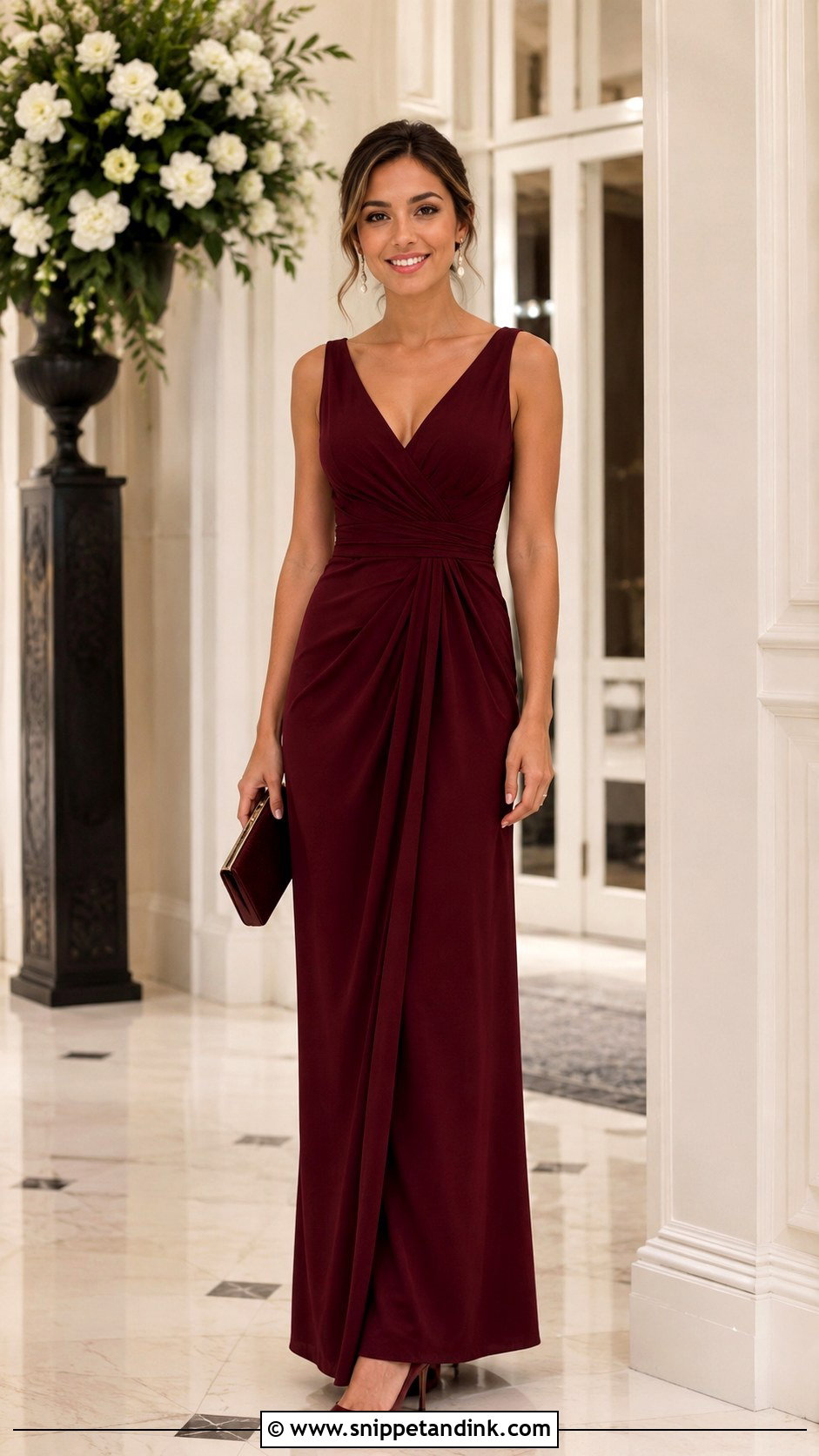
On a petite frame, a standard floor-length gown is usually too long in the bodice as well as the hem, so the waist lands too low. Petite sizing fixes that before a tailor has to. A high waist, a narrow skirt and a subtle V-neck lengthen the line without very high heels. Monochrome works: navy, burgundy, teal or cobalt head to toe, with pointed pumps, a small clutch and fine drop earrings. Oversized bags and wide belts cut you in half. Have the hem done wearing the exact shoes you’ll wear on the day.
Hemming a Floor-Length Gown With Time to Spare
Almost every long gown needs a hem adjustment, and plenty need the straps or waist taken in too. Book a tailor two to four weeks before the wedding, and longer in the spring and autumn rush when alteration diaries fill up. Bring the shoes you’ll actually wear, plus the bra or shapewear, because each one changes where the fabric falls.
For dancing, I hem a gown so the front just clears the floor in your heels and the back barely brushes it. Chiffon and multi-layer skirts take longer to hem than a single satin layer, since each layer is cut separately, so allow for that.
When a Strap Snaps or a Zip Splits at the Reception
Most wardrobe trouble happens after dinner, when you’ve sat for a long stretch and then stood up to dance. A few things in your clutch handle nearly all of it:
- Two or three safety pins, pinned inside the clutch lining so they don’t scratch your phone.
- Double-sided fashion tape for necklines and wrap fronts that start to gape.
- A clear elastic hair tie, which can hook a broken zip pull or bustle a dragging hem for a few hours.
- Blotting papers and a small stain wipe, since red wine and satin don’t forgive each other.
If a side seam opens, don’t keep dancing on it; a stressed seam keeps unravelling. Pin it from the inside, keep your arms down for photos, and change into a wrap if you brought one.
Dress for the Invitation First, Then for the Dance Floor
A formal gown has to match the dress code and still let you walk, sit, eat and dance. Satin and velvet carry evening receptions; chiffon, organza and florals belong in daylight and warm weather. Read the invitation closely, check the venue, and confirm whether any colors are reserved for the wedding party. Then test the gown with your real shoes and undergarments, and book alterations early. If you’re not fiddling with a strap or hem all night, you chose well.
You'll Like These Ideas:






Leave a Reply