
Pretty is easy to find in a bridal shop. What’s harder is a dress that suits the room you’re marrying in, moves the way you do, and still feels right at eleven at night. Right now brides are mixing classic shapes with modern touches: plain satin, dropped waists, sculpted necklines, appliqué, lace, bows and capes, and some very pared-back gowns. I’ve gathered 25 silhouettes and details below, and for each one I’ve added what I notice when a bride actually puts it on, plus the veil, shoes, jewellery and flowers I’d build around it.
Let the Fabric Settle Half the Shortlist
Brides usually start with neckline and silhouette. I start with fabric, because it decides how a gown behaves in heat, how it creases, how heavy it feels by evening and how it looks on camera. Once you know which fabrics suit your date and venue, about half the options rule themselves out.
- Satin and mikado hold structure and suit formal rooms and cooler months. Both are heavy, so a long train will need a sturdy bustle.
- Crepe and bias-cut silk drape close to the body. They look sleek but show every seam underneath, so plan your foundations early.
- Tulle and organza give volume with little weight and suit warm weather. Tulle snags; organza creases where you sit.
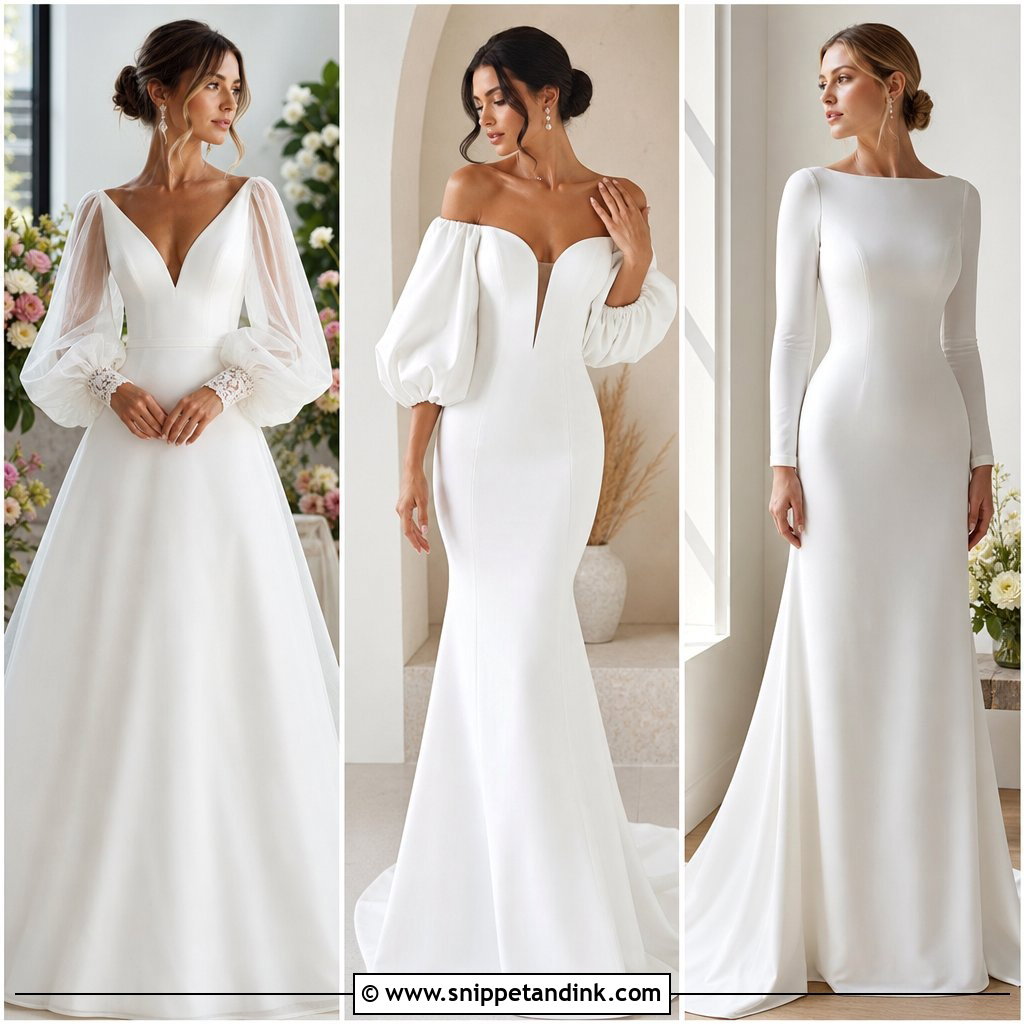
- Lace sits somewhere in between, and its weight varies hugely, from fine Chantilly to heavy corded lace.
In the shop, ask to feel a gown’s skirt with your hand underneath it to judge weight, and crush a corner of the fabric in your fist for a few seconds. How it recovers tells you how it’ll look after the ceremony.
1. Satin A Line Bridal Gown
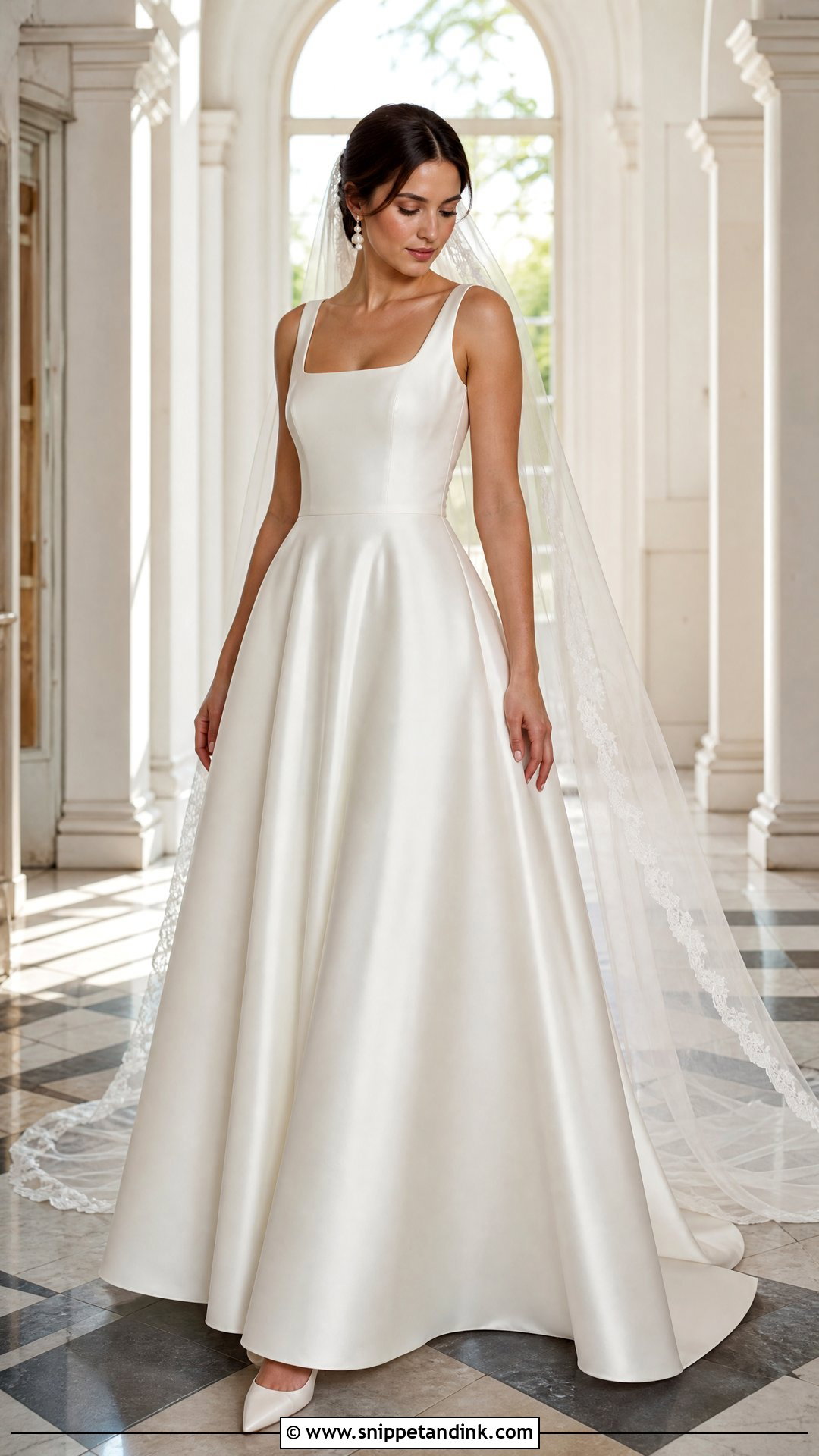
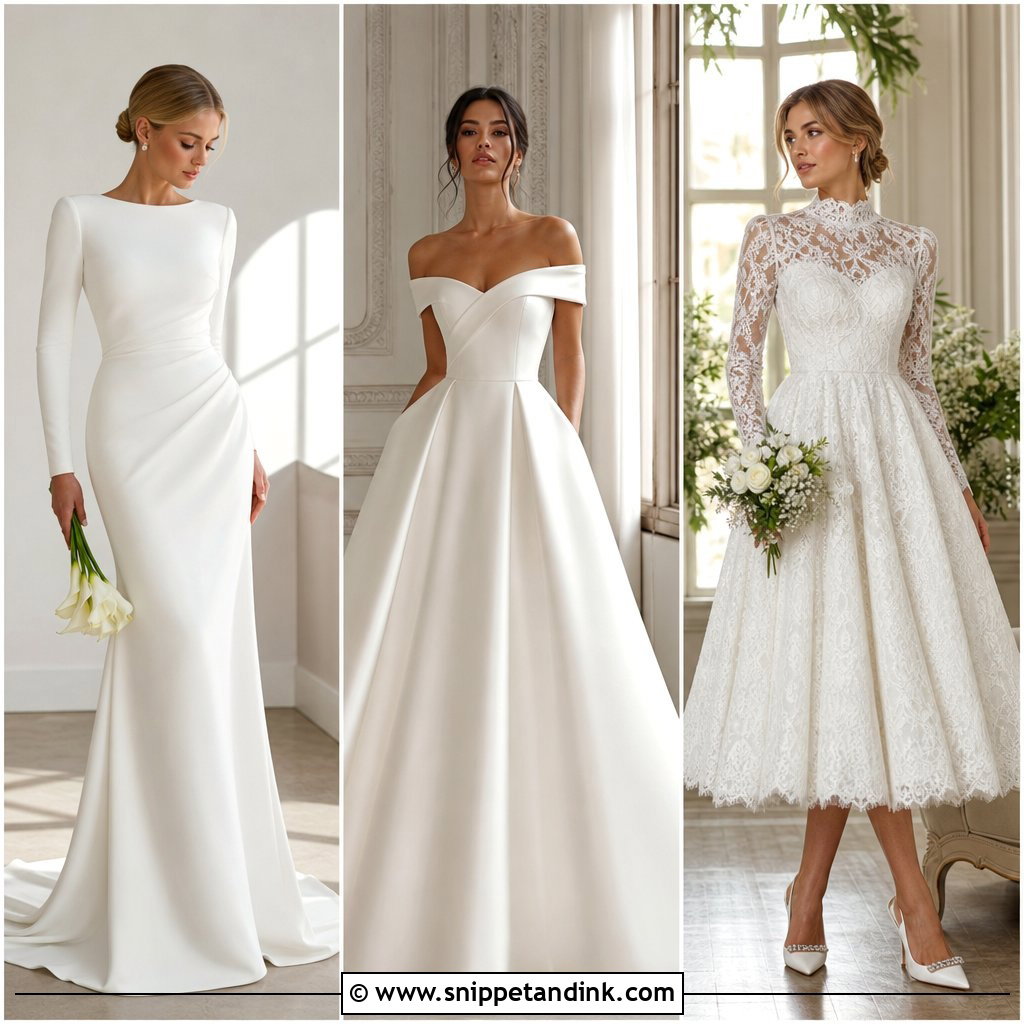
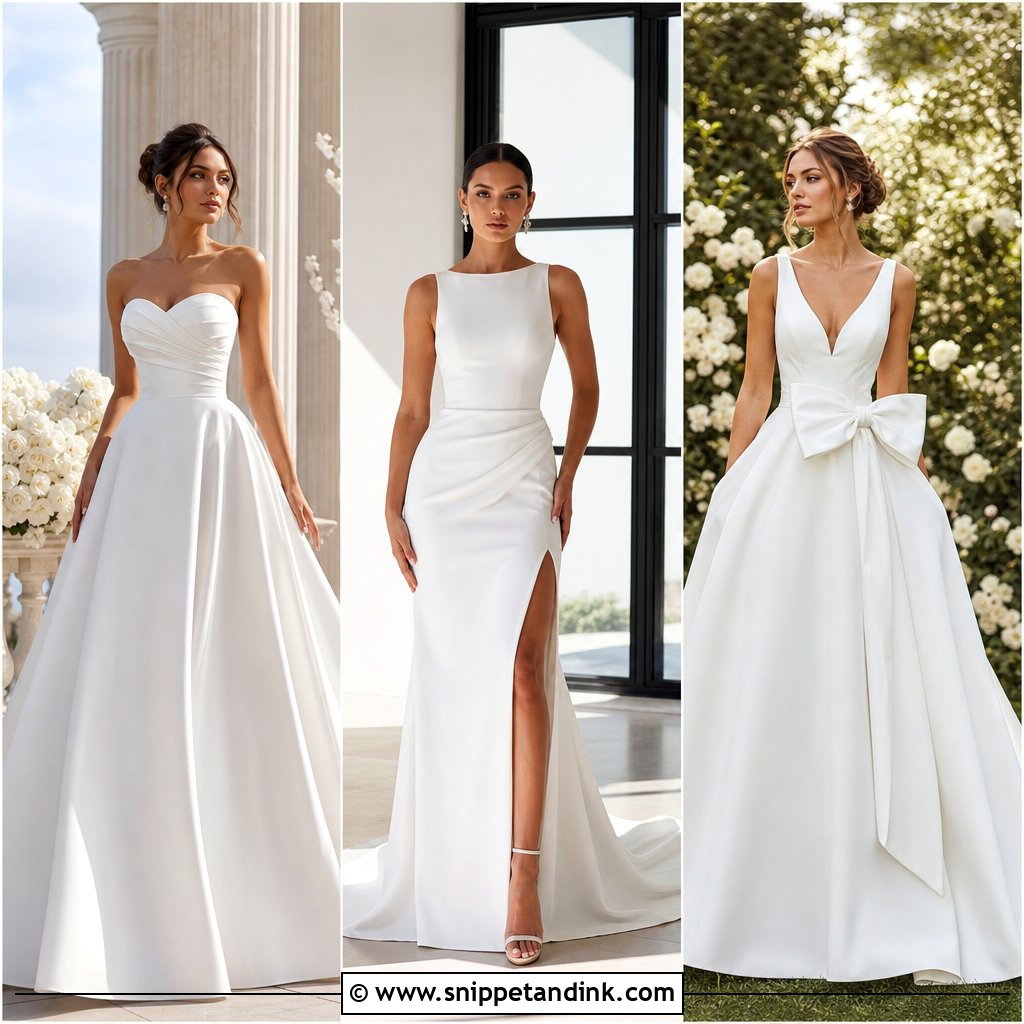
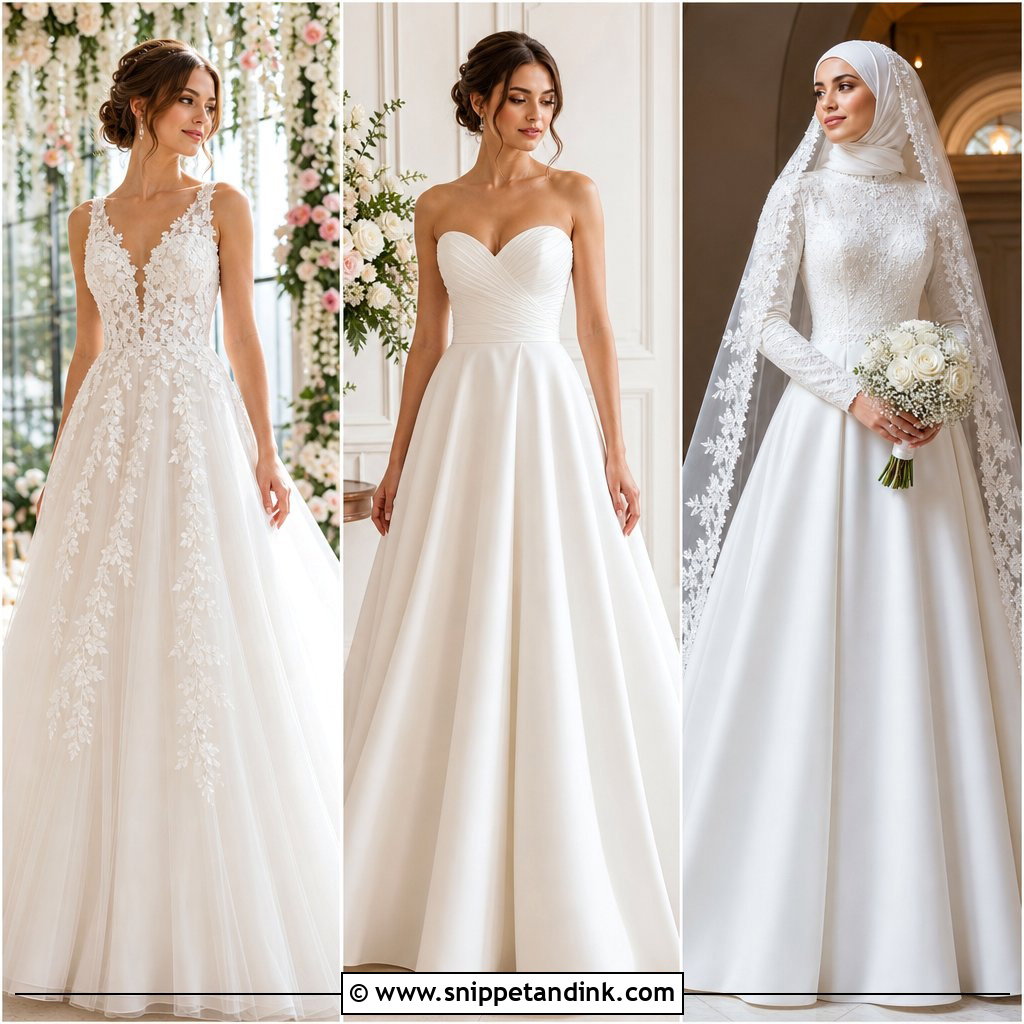
If a bride tells me she has no idea where to start, I hand her a satin A-line. The bodice gives shape and the skirt falls away from the waist, so it flatters most figures and lets you walk, sit and dance without thinking about it. Ivory or soft white satin has a gentle glow. A square neckline, pearl drop earrings, a low bun and pointed satin heels make it classic; a cathedral veil makes it formal, a fingertip veil keeps it light. It sits comfortably anywhere from a ballroom to a garden.
2. Lace Long Sleeve Bridal Gown
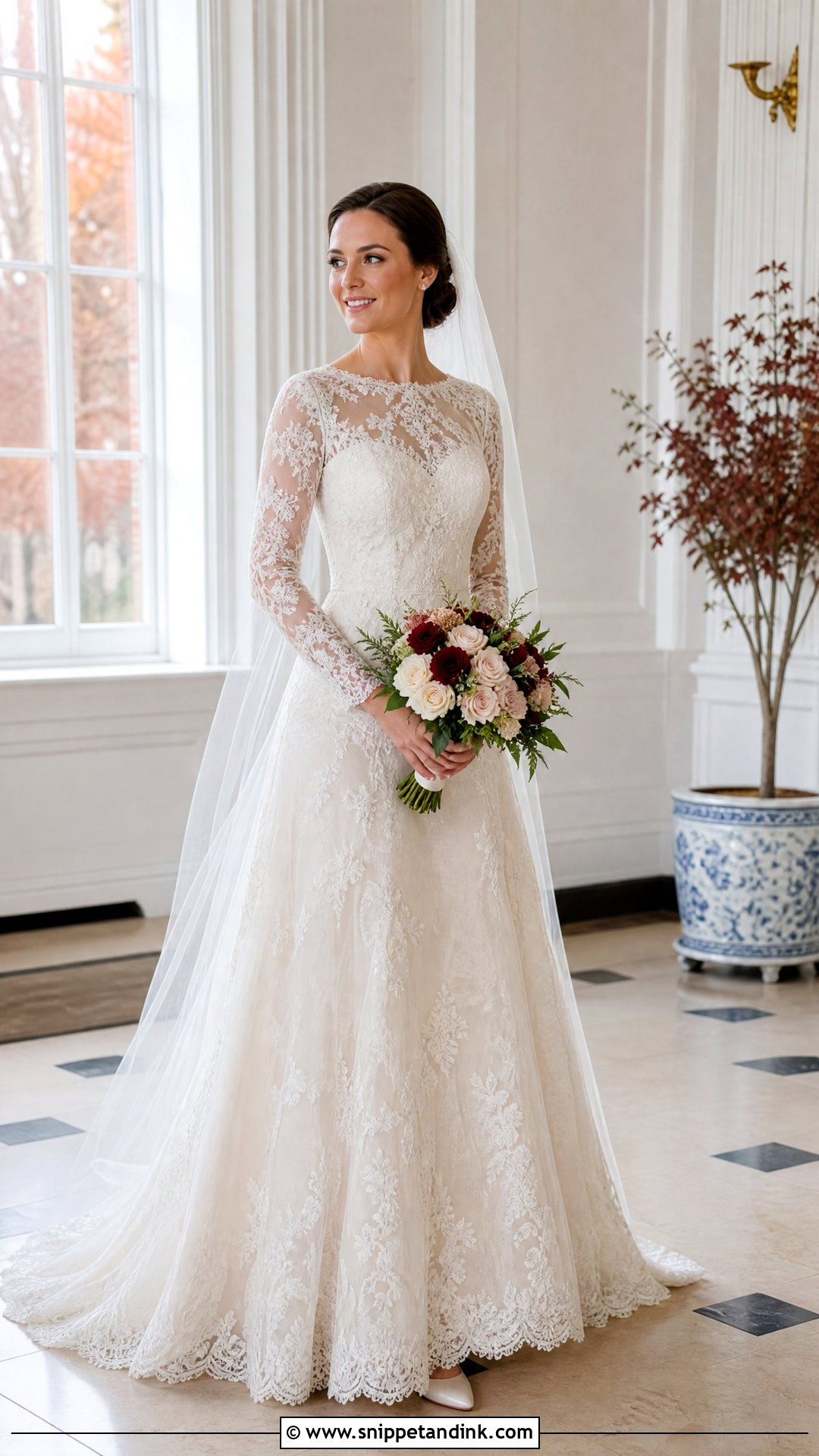
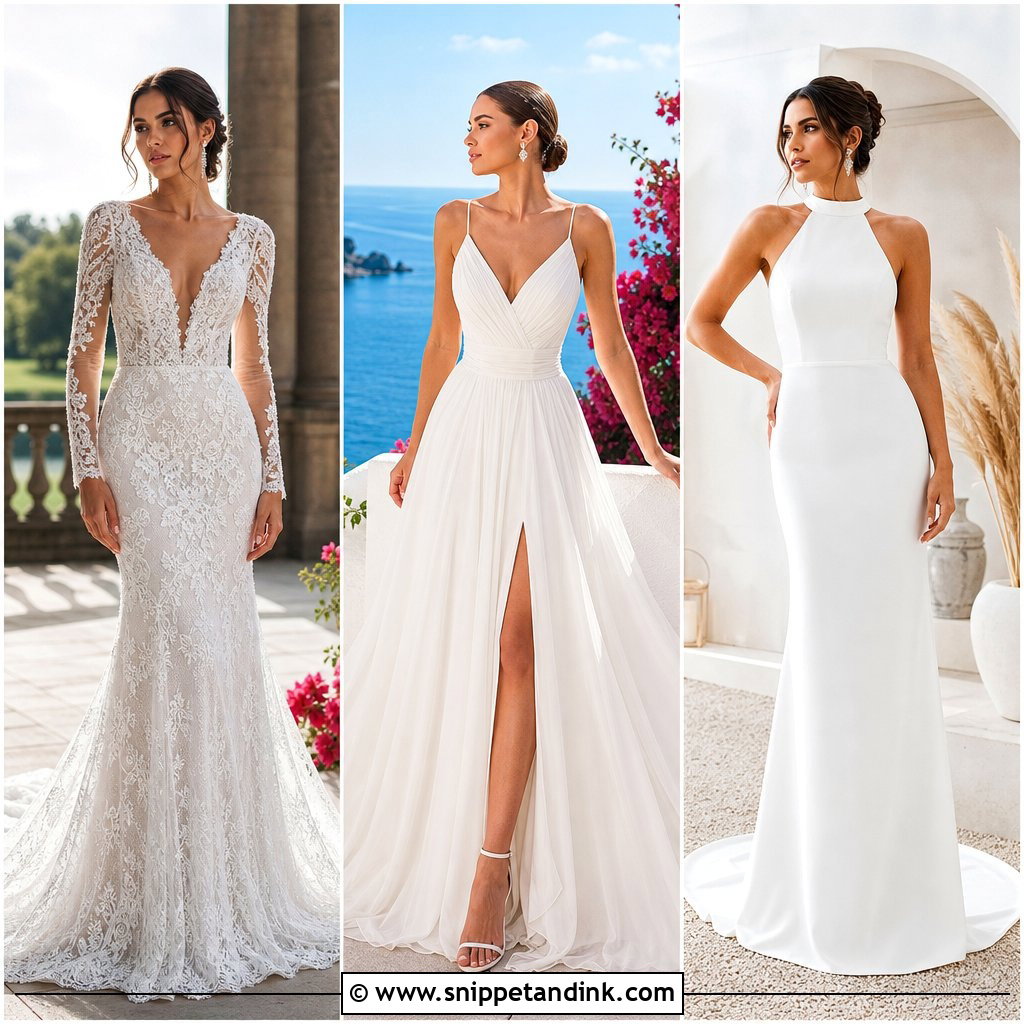
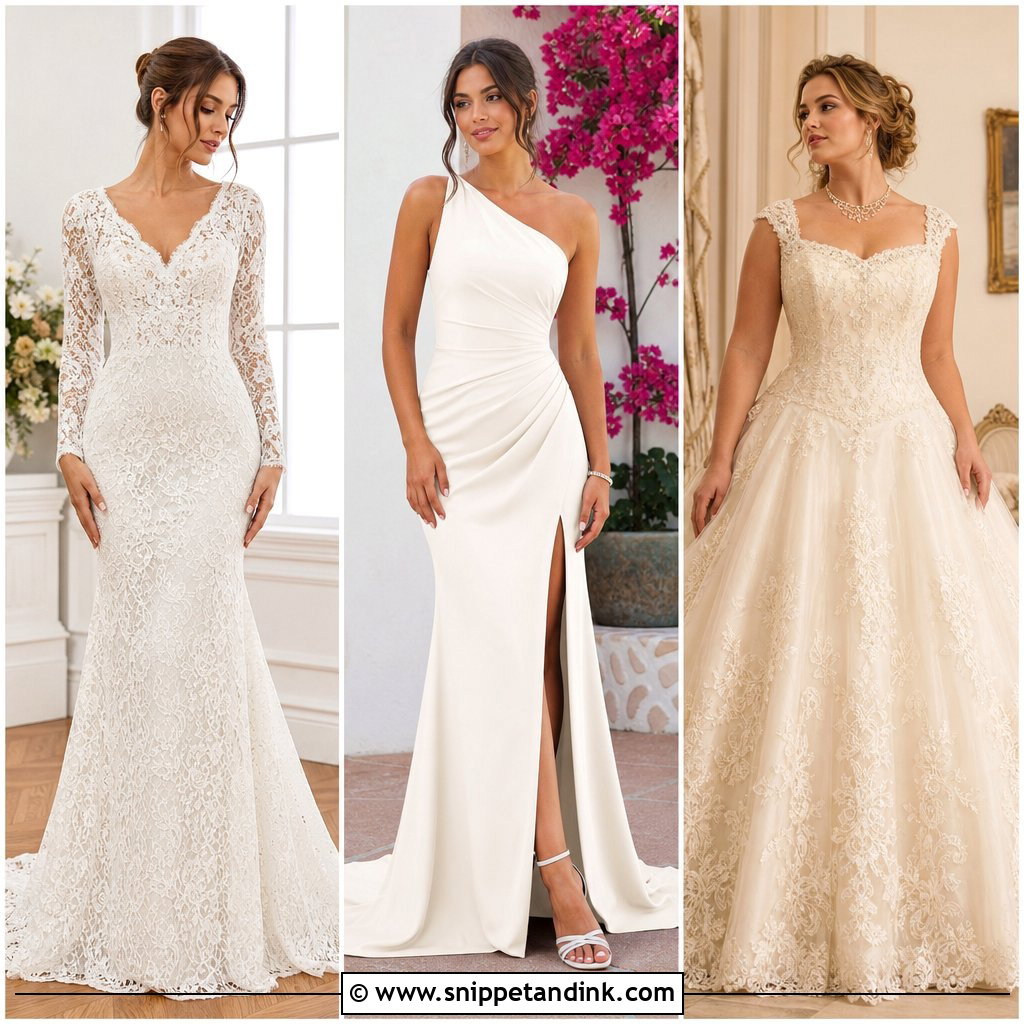
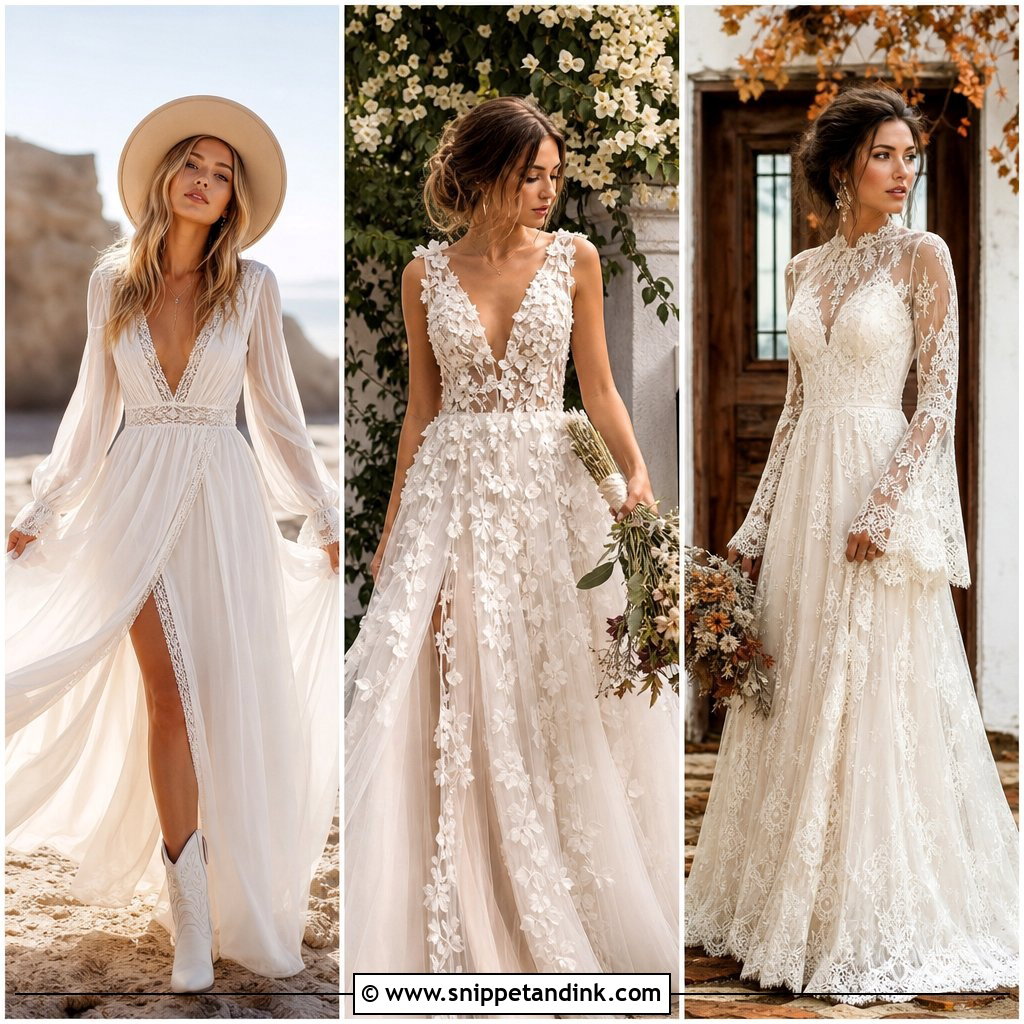
Sleeves change how a gown feels to wear more than people expect. A lace long sleeve bridal gown gives coverage while staying soft, especially in illusion lace, and it’s a natural fit for autumn, winter or a traditional indoor ceremony. A fitted bodice with an A-line or sheath skirt keeps it balanced. Floral lace, scalloped cuffs and a modest train add quiet detail. My fitting test is simple: arms up as if to hug, then out as if to dance. If the bodice lifts, the sleeve needs re-setting. Pearl studs, a soft veil, closed-toe heels, and loose waves or a low chignon.
3. Strapless Ball Gown Bridal Gown
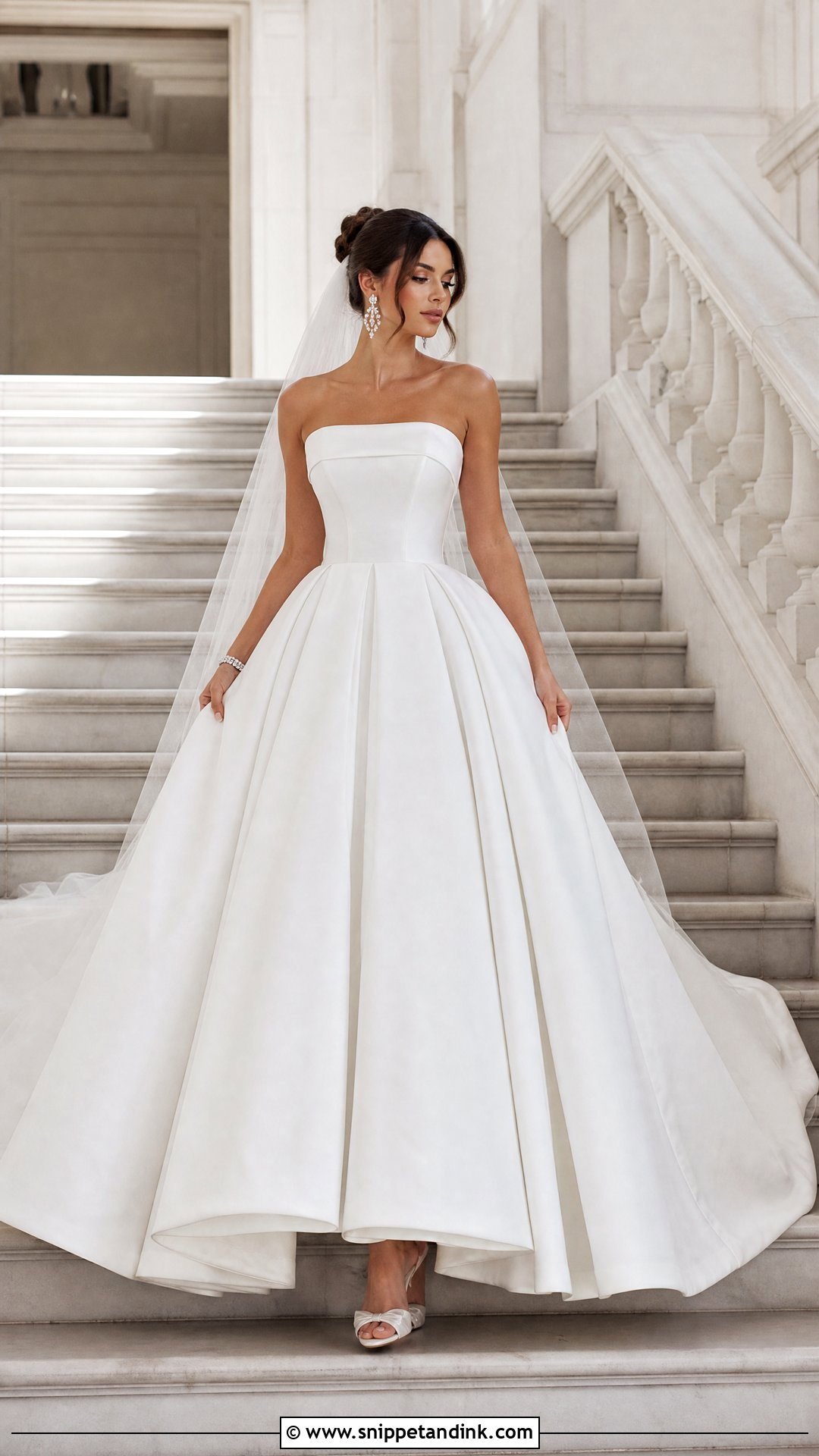
Few shapes say ceremony quite like a strapless ball gown bridal gown. The bodice defines the waist and the skirt brings real volume, in mikado, satin or layered tulle. A straight or gently curved neckline looks more refined than anything elaborate. Strapless means the bodice carries everything, so the fit at the top edge has to be snug enough that you never hitch it up. A tennis bracelet, simple drop earrings and a long veil are enough, and a soft rounded bouquet won’t fight the skirt. Grand staircases and hotel ballrooms were made for it.
4. Off Shoulder Bridal Gown
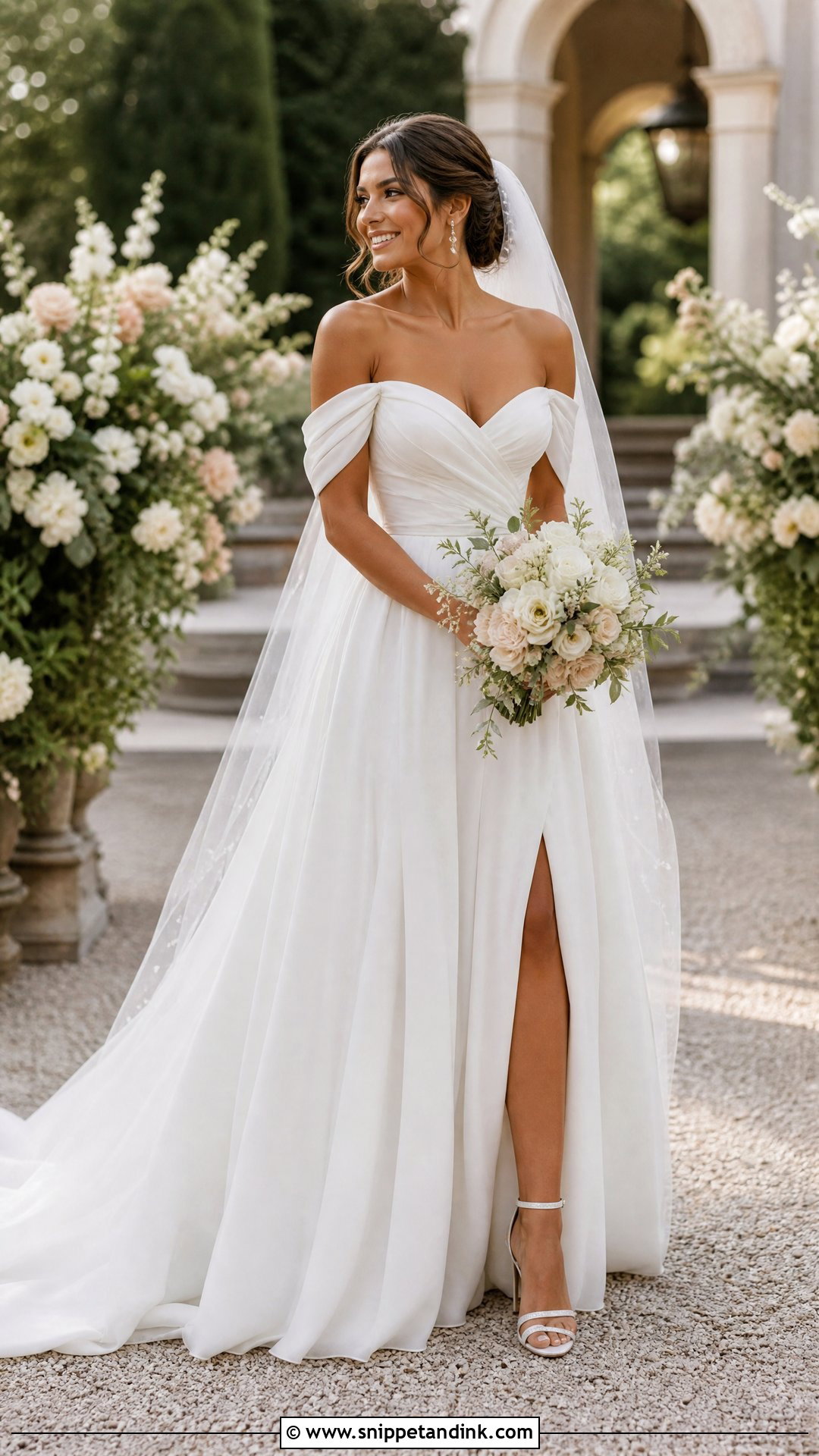
Off-shoulder necklines frame the collarbone without any help, which is why they need so little else. Satin, lace, crepe or tulle all work, with a fitted waist, soft skirt and a subtle train. The catch is arm movement: a band across the upper arm limits how high you can lift your hands. I’d try a slow dance hold in the fitting room before deciding. Choose a fine necklace or statement earrings, not both, and wear your hair swept back so the neckline shows. It suits garden weddings and evening receptions.
5. Square Neck Bridal Gown
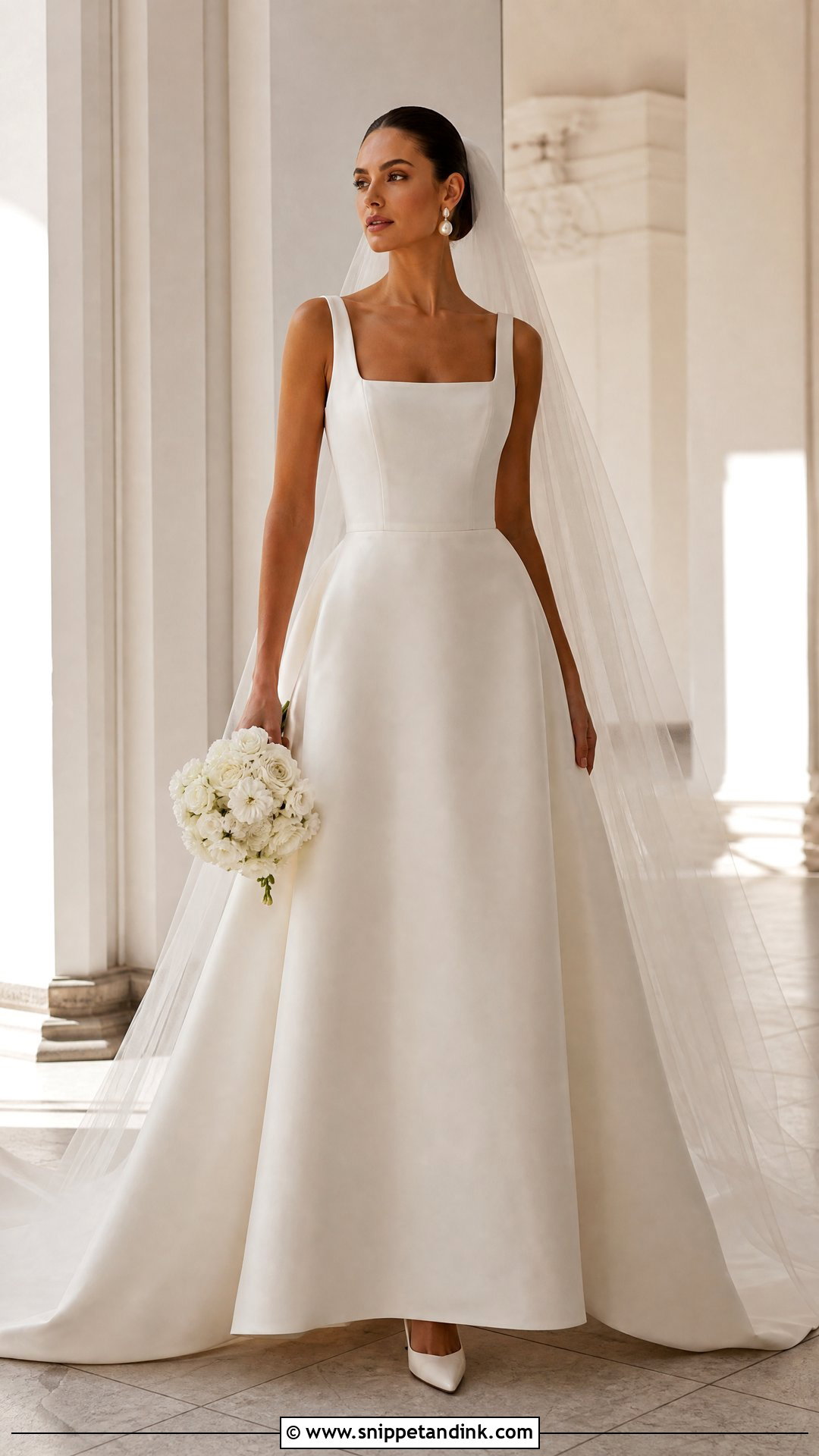
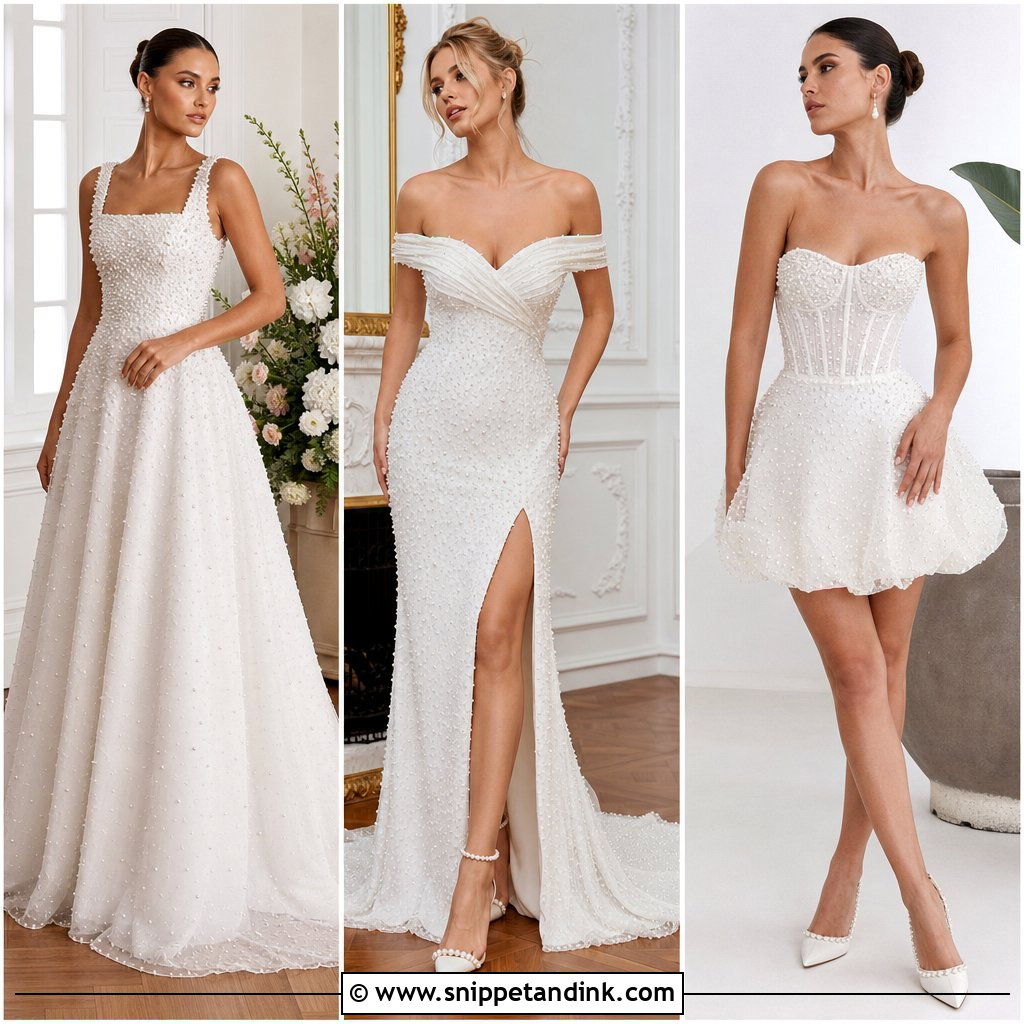
Clean and classic at once. A square neckline gives the upper body structure and works with slim or full skirts alike. Plain satin or crepe keeps it simple; lace trim or light beading softens it. I’d check the corners of the square at your fitting, since they should lie flat against the skin and not stand away when you breathe in. A sleek veil, pearl earrings and block heels or pointed pumps finish it, and a low bun, soft waves or half-up style all suit the shape. It lengthens the neck nicely.
6. Minimalist Crepe Bridal Gown
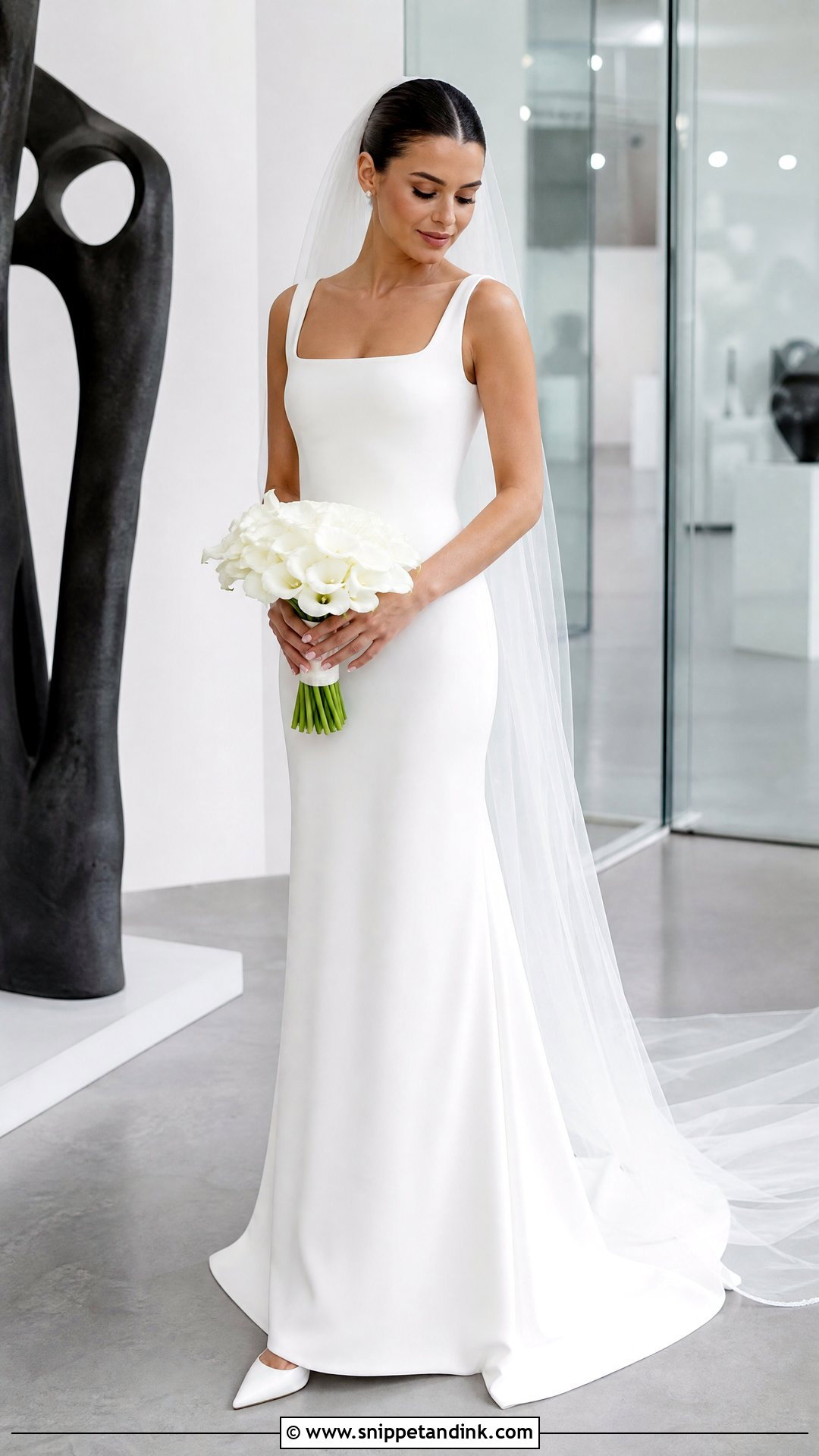
Crepe has no shine and no embellishment to hide behind, so it’s all cut. It skims the body gently, which looks wonderful when the tailoring is precise and unforgiving when it isn’t. Bust, waist and hip all need to fit closely, and I’d also plan your underwear before the first fitting, because crepe shows every line. A high, bateau or simple V neckline suits the fabric. Pearl studs, sleek heels, a structured bouquet and perhaps a long plain veil for contrast. City venues and small civil ceremonies suit it best.
7. Mermaid Bridal Gown
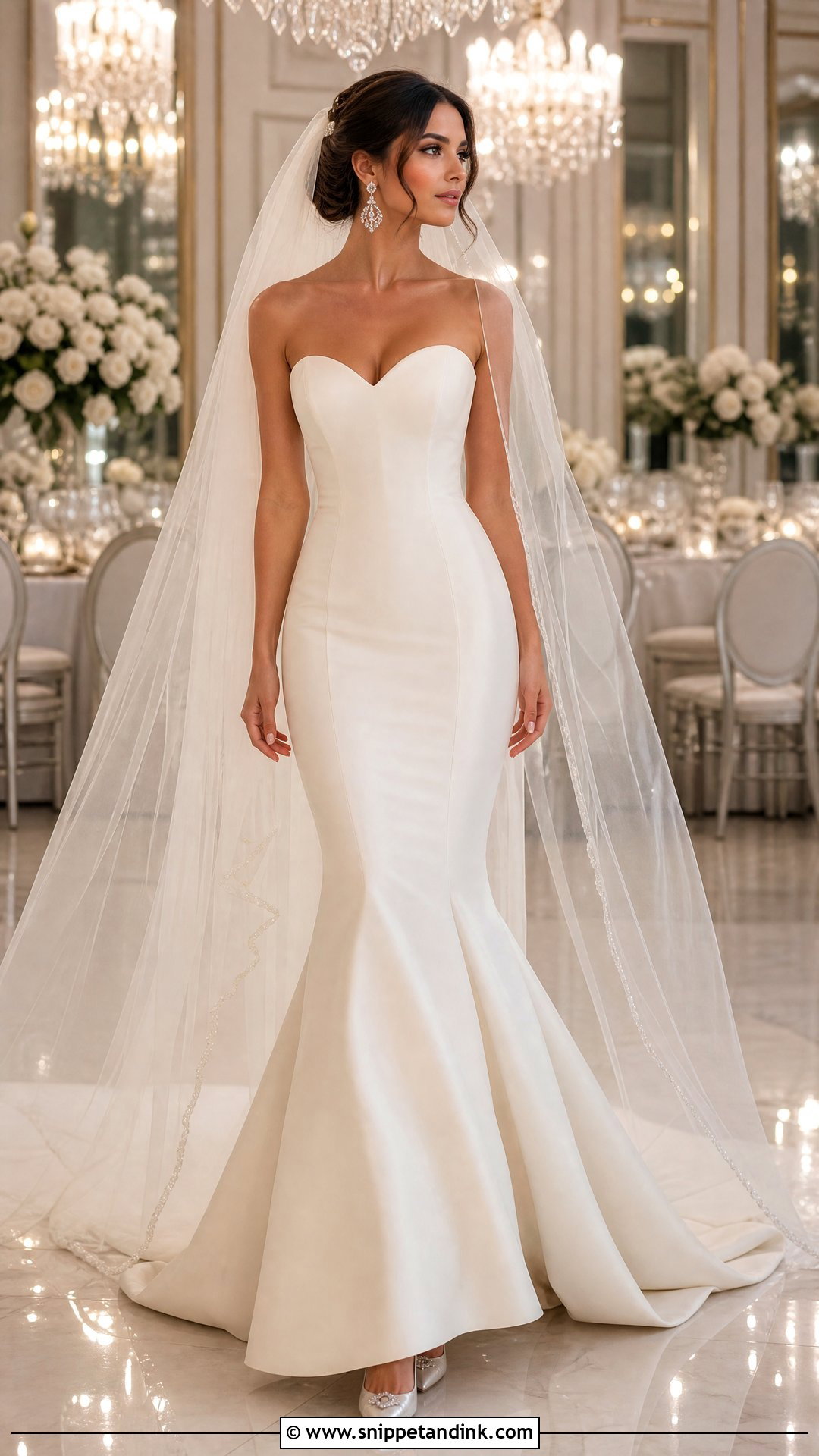
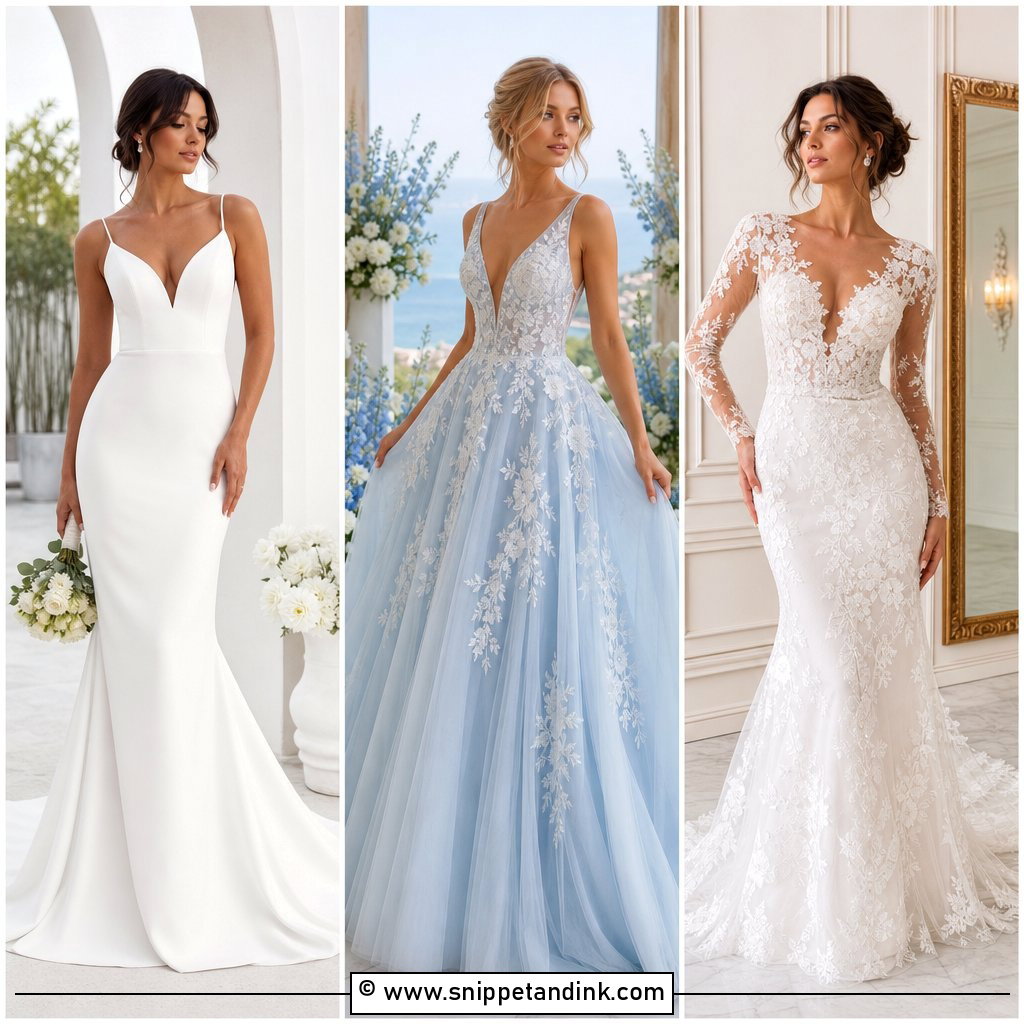
A mermaid follows the body through bodice, waist and hips and then flares near the knee. It’s glamorous, and it’s honest about what it asks of you: shorter steps, a careful walk on stairs and some planning for sitting. Smooth satin, lace appliqué or clean crepe keep it elegant; heavy embellishment on a fitted shape can look like too much. A sweetheart or off-shoulder neckline pairs well. I always ask mermaid brides to dance a few steps in the shop. Long veil, crystal earrings, sleek heels, and accessories kept simple.
8. Floral Applique Bridal Gown
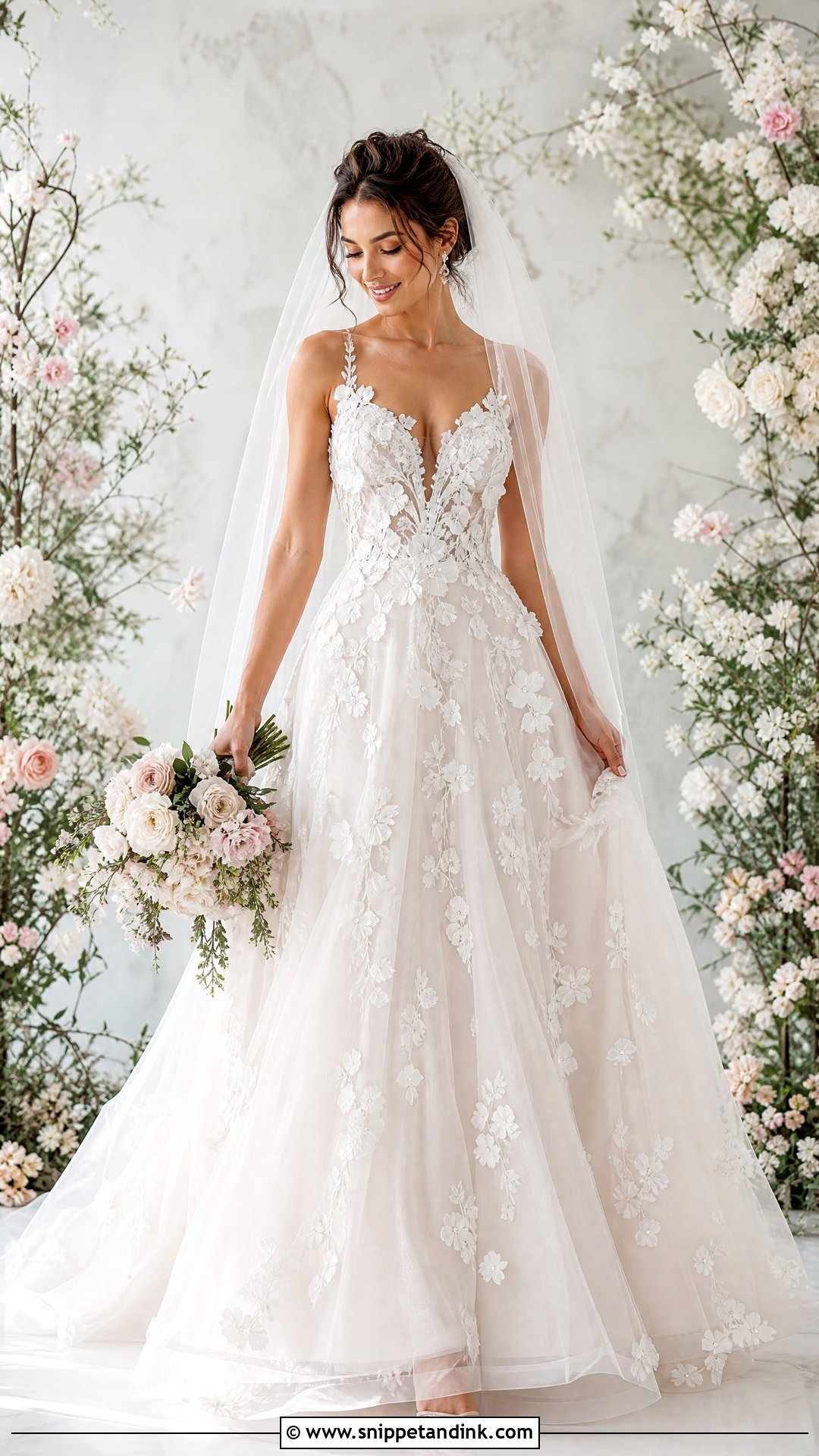
Appliqué adds texture you can feel. The flowers can be scattered and delicate or bold and three-dimensional, placed on the bodice, sleeves, skirt or train, and tulle or organza underneath keeps them light. Check how they’re attached: hand-stitched edges stay flat, while loosely tacked petals lift after hours of hugging. I’d choose a bouquet that echoes the flowers without matching them exactly, which can look forced. Simple earrings and a sheer veil. Garden weddings and spring ceremonies suit it.
9. High Neck Bridal Gown
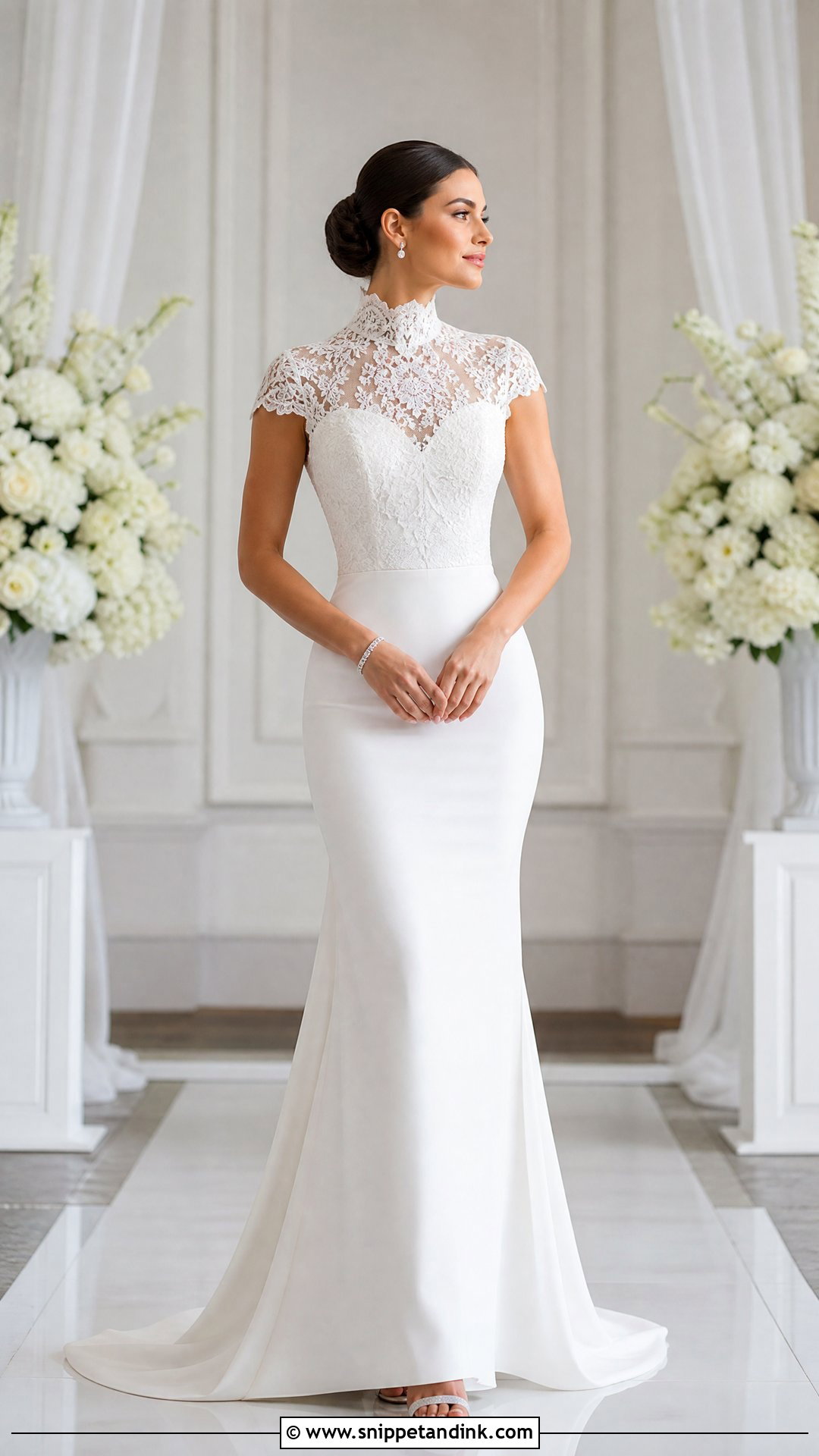
Covered necklines read modest and modern at the same time. A high neck works in lace, satin or crepe, with a slim skirt for a sleek line or an A-line for softness. Comfort is the thing to test. A collar that feels fine standing can press on the throat when you sit for a long dinner, so I fit it seated. Skip necklaces; put the attention on earrings, a bracelet or a detailed veil. A neat bun or tucked waves keep it tidy. It’s a strong choice for formal and winter weddings.
10. Drop Waist Bridal Gown
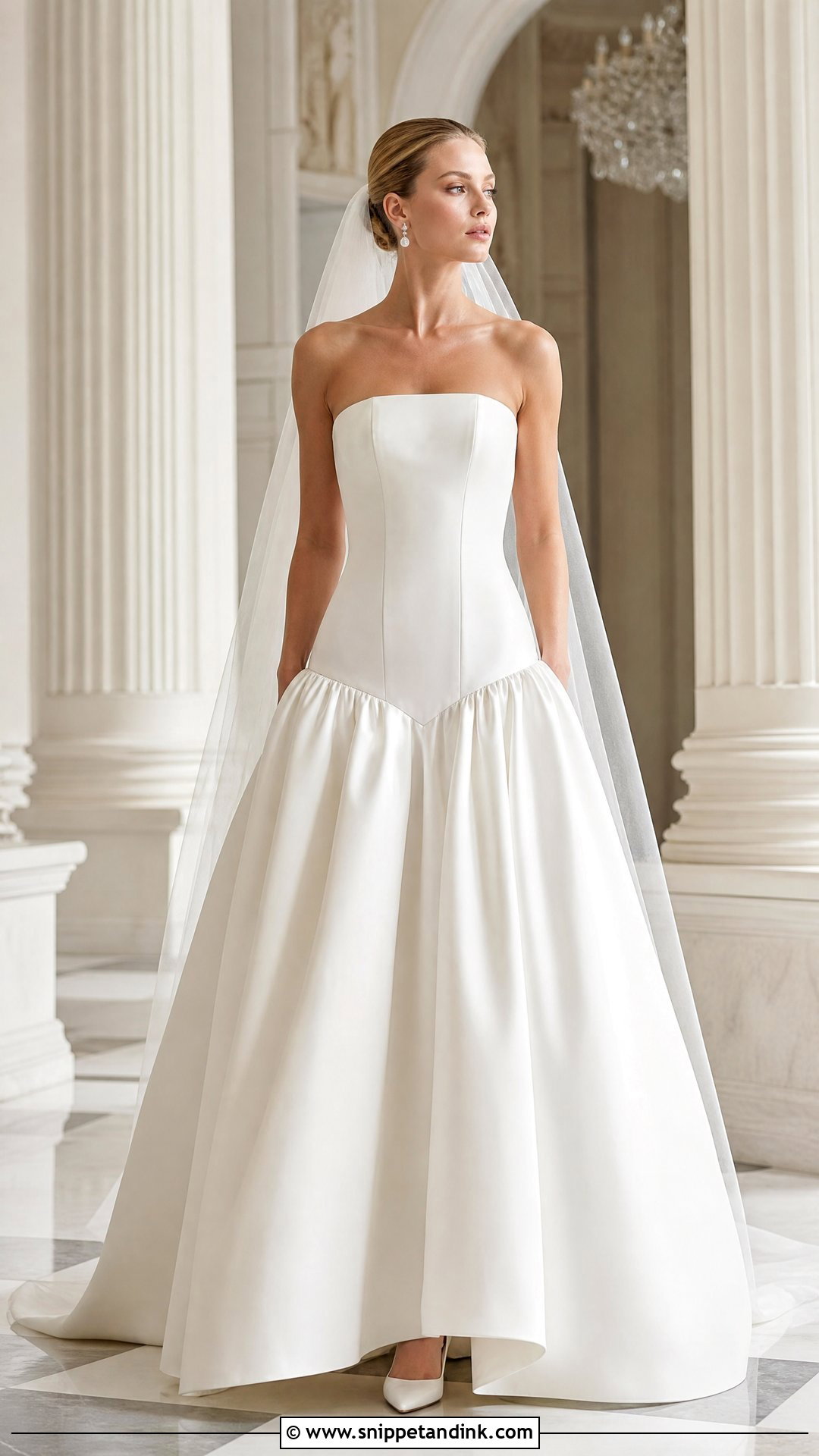
A drop waist bridal gown moves the seam down toward the upper hip, so the torso looks longer and more sculpted before the skirt begins. It pairs well with a full skirt, a basque point or a structured bodice, in satin, lace or tulle. The seam placement is everything. Too high and it looks like an ordinary gown; too low and it digs in when you sit. I check it standing and seated. Delicate earrings, pointed heels and a soft veil. It has presence in grand rooms without needing sparkle.
11. Corset Bodice Bridal Gown
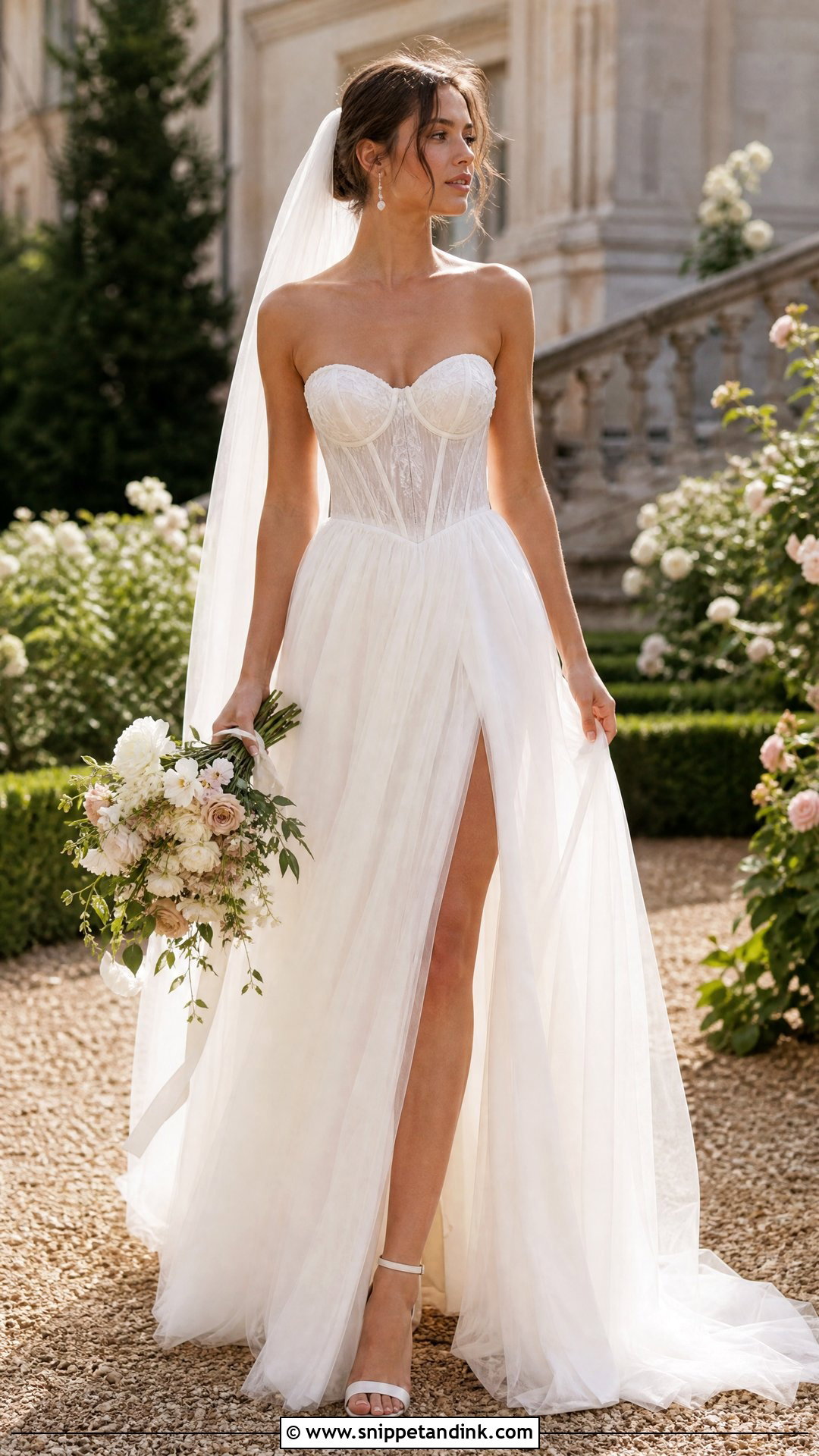
Structure with softness on top. A corset bodice uses seams or visible boning to shape the waist, a couture-inspired detail that also gives real support. Tulle, satin, lace or organza in the skirt balances the fitted top, and a soft neckline keeps it from looking severe. I’d wear the corset for an hour at a fitting; steel boning holds a crisp shape but feels firm by dinner. Simple jewellery, a sheer veil and a bouquet with soft movement. Estate weddings and classic architecture suit it.
12. Pearl Embellished Bridal Gown
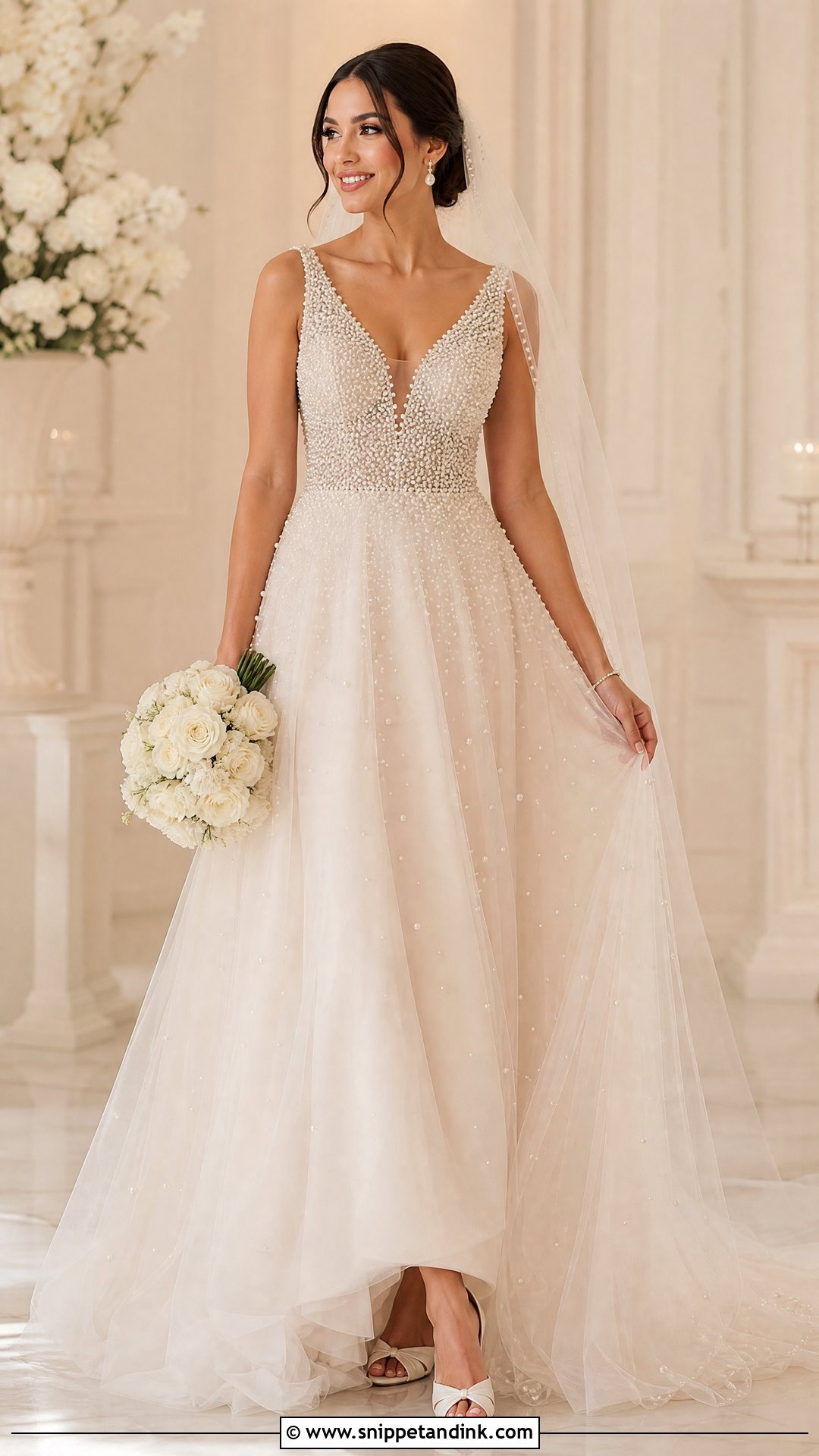
Pearls glow rather than sparkle. Scattered across tulle, along the neckline or on sleeves and bodice, they add texture without the sharp light of crystals. Keep the rest quiet: pearl earrings, satin heels, a sheer veil, and no competing accessories. Sewn pearls can work loose during a long day, so I always ask the shop for a few spares to tuck in the emergency kit. It suits indoor ceremonies, hotel weddings and coastal venues, anywhere the light is soft.
13. Bateau Neck Bridal Gown
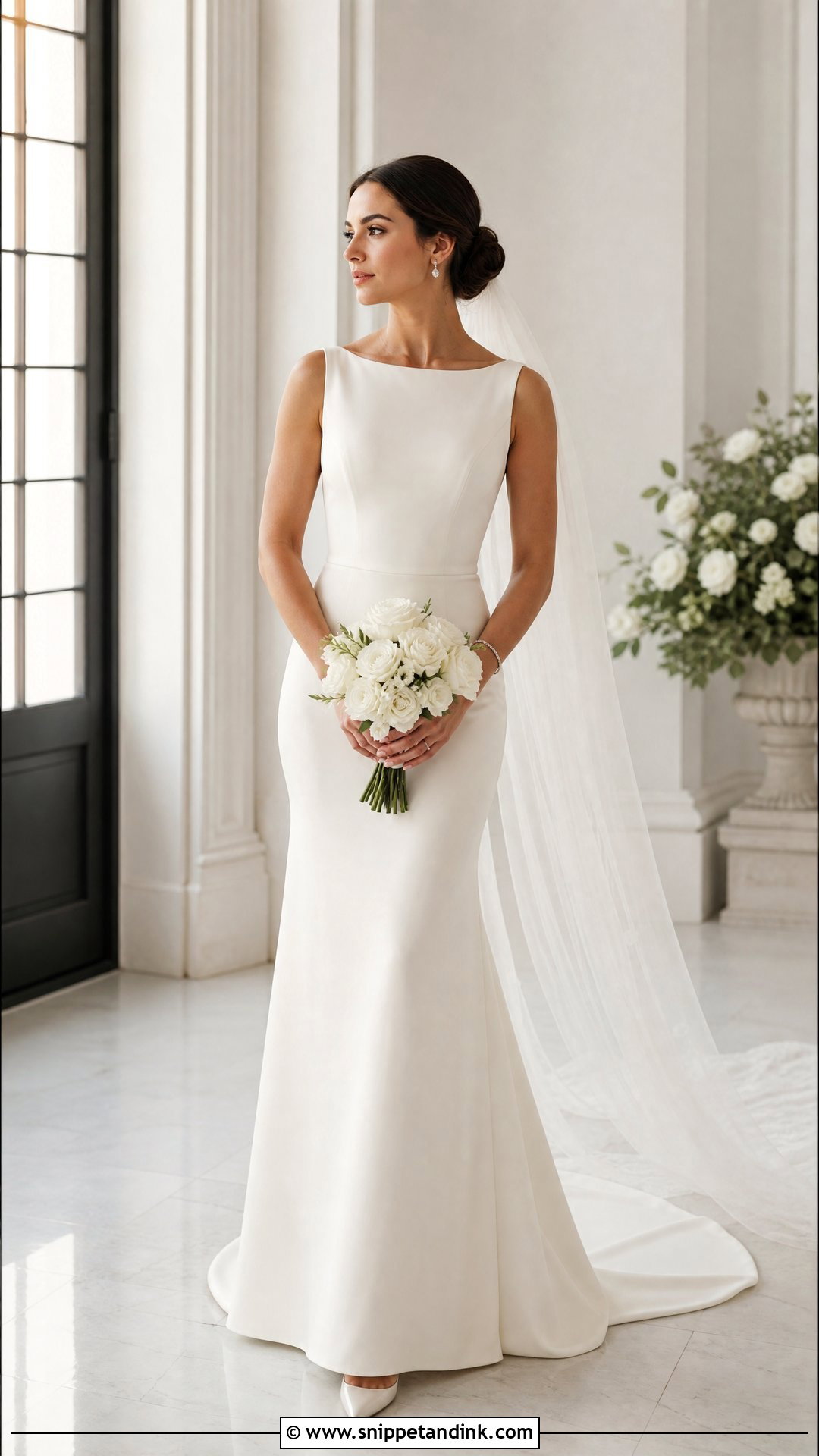
The bateau line runs gently from shoulder to shoulder just across the collarbone, so it covers more than a scoop and less than a high neck. It suits minimalist satin, lace and structured crepe, with a slim skirt for sleekness or an A-line for tradition. It flatters narrow shoulders particularly well because the horizontal line adds width. Small earrings, a clean bracelet and a soft veil are plenty; a low bun or smooth updo shows off the neckline. It dates very slowly.
14. Tulle Ball Gown Bridal Gown
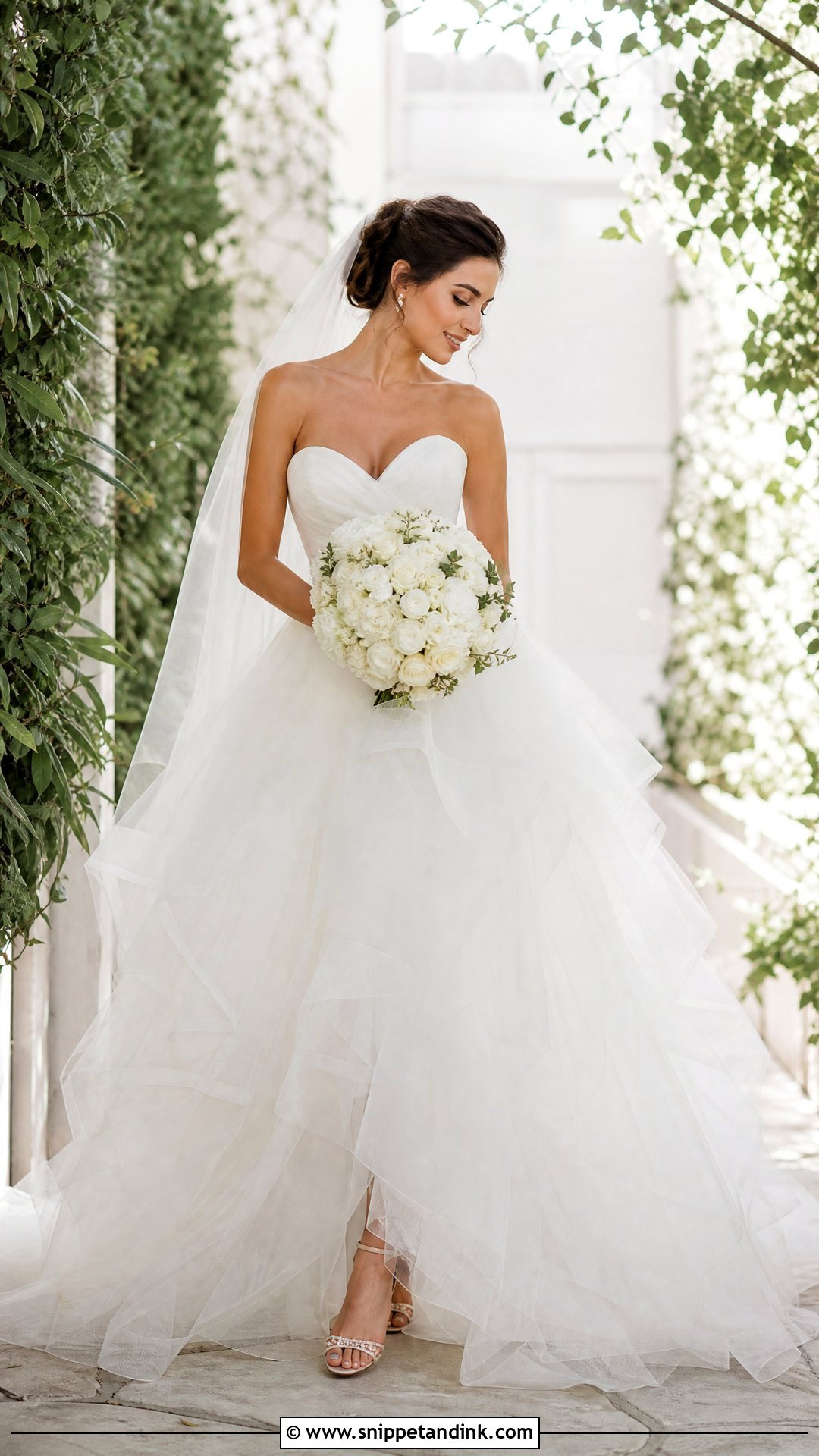
Tulle gives the most volume for the least weight. A tulle ball gown feels soft and floats, and with a fitted bodice, light lace or a simple satin waistband it stays refined rather than costume-like. The fabric does snag on beaded shoes, bracelet clasps and rough ground, so I’d keep jewellery smooth and bustle the skirt before going outside. Delicate heels, a sheer veil and soft makeup. Ask for walking shots; tulle looks its best in motion. Gardens and formal halls both suit it.
15. Halter Neck Bridal Gown
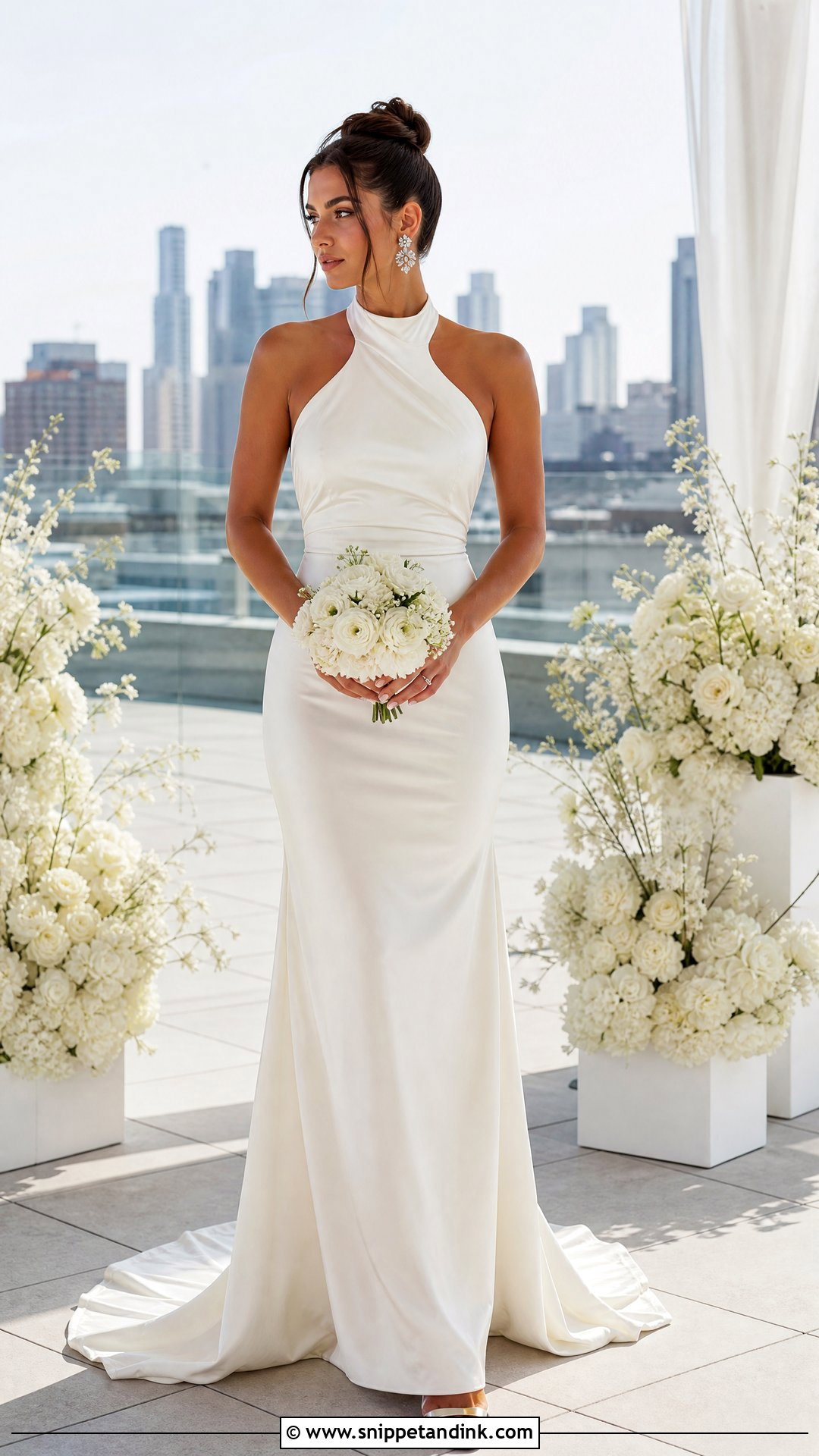
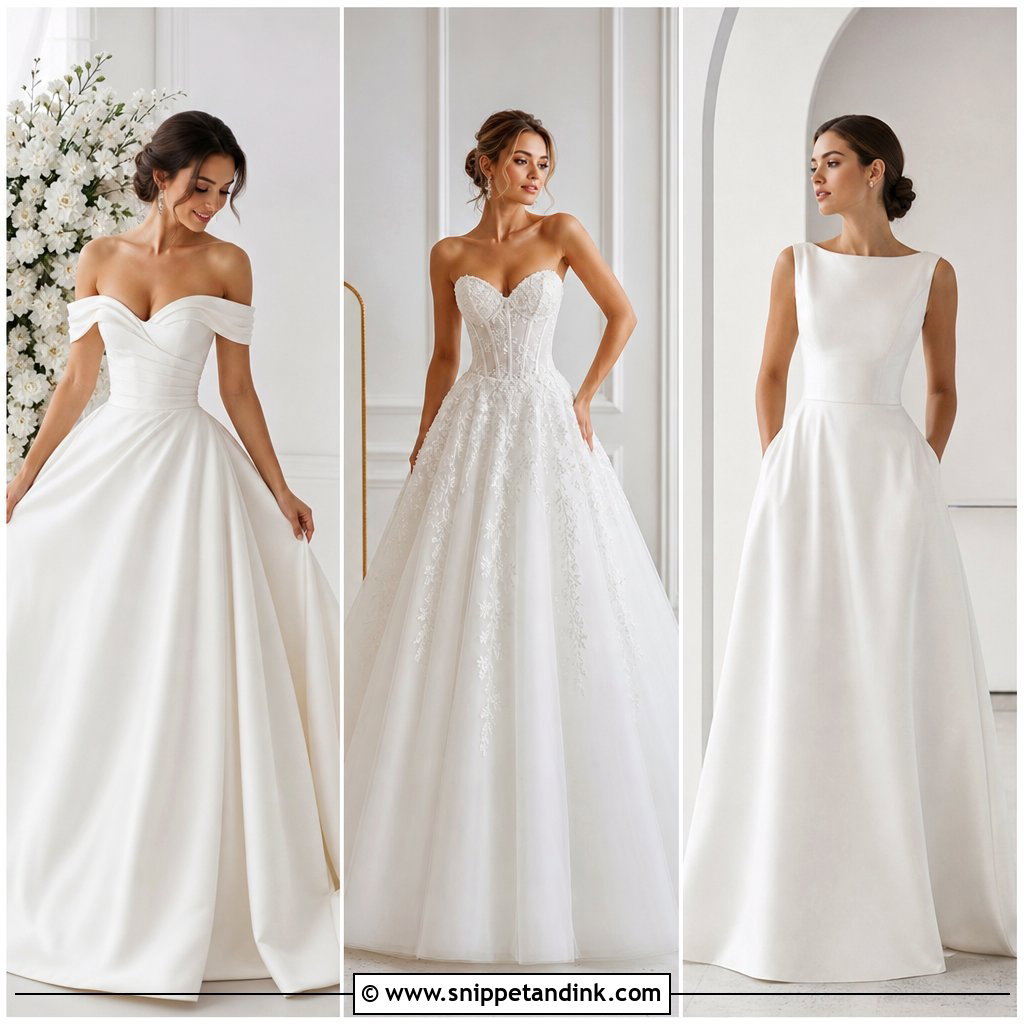
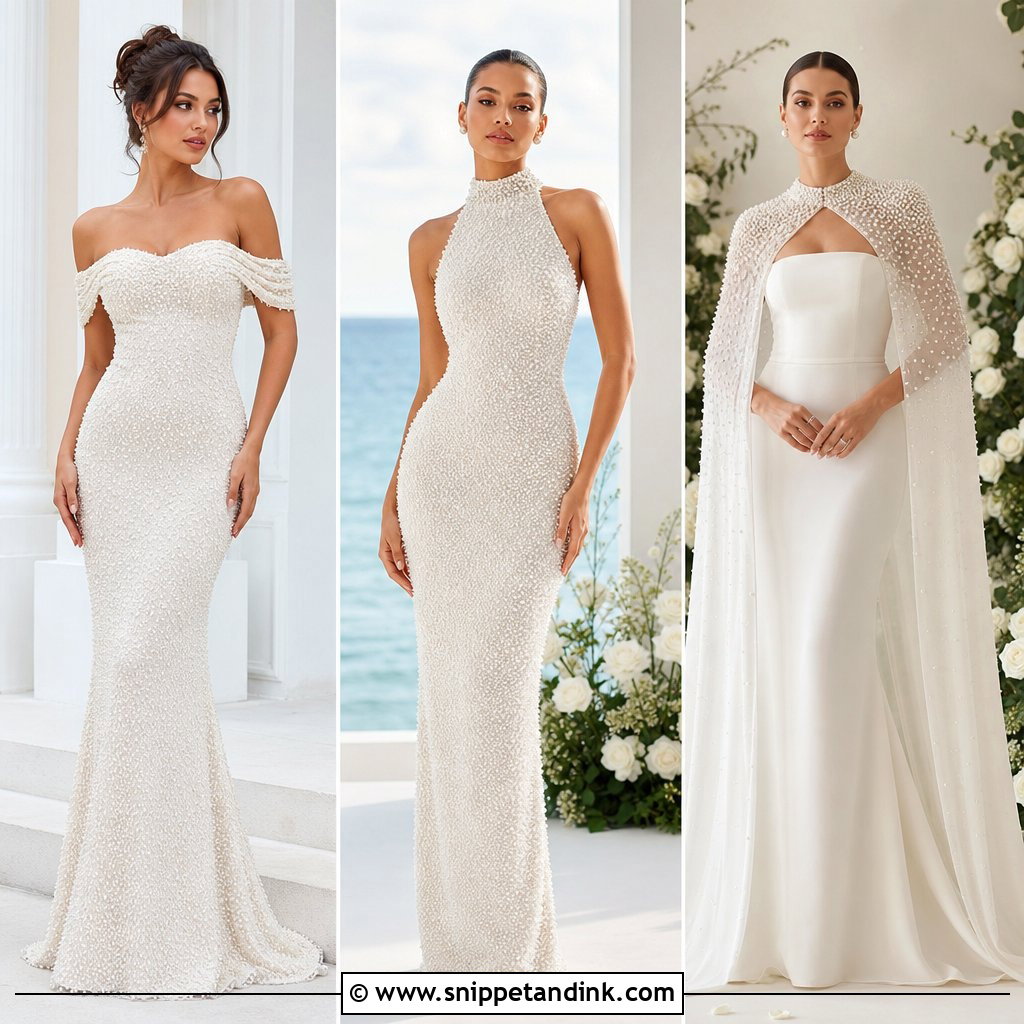
A halter highlights the shoulders and gives a clean line through the upper body. In crepe, satin or silk it looks modern; a slim skirt makes it a city look and a fuller skirt makes it formal. The strap around the neck carries part of the bodice’s weight, so check it after an hour of wear. A heavier skirt can make it dig in. No necklace, earrings that frame the face, and a high bun or sleek ponytail. Rooftops and destination weddings suit it well.
16. Silk Slip Bridal Gown
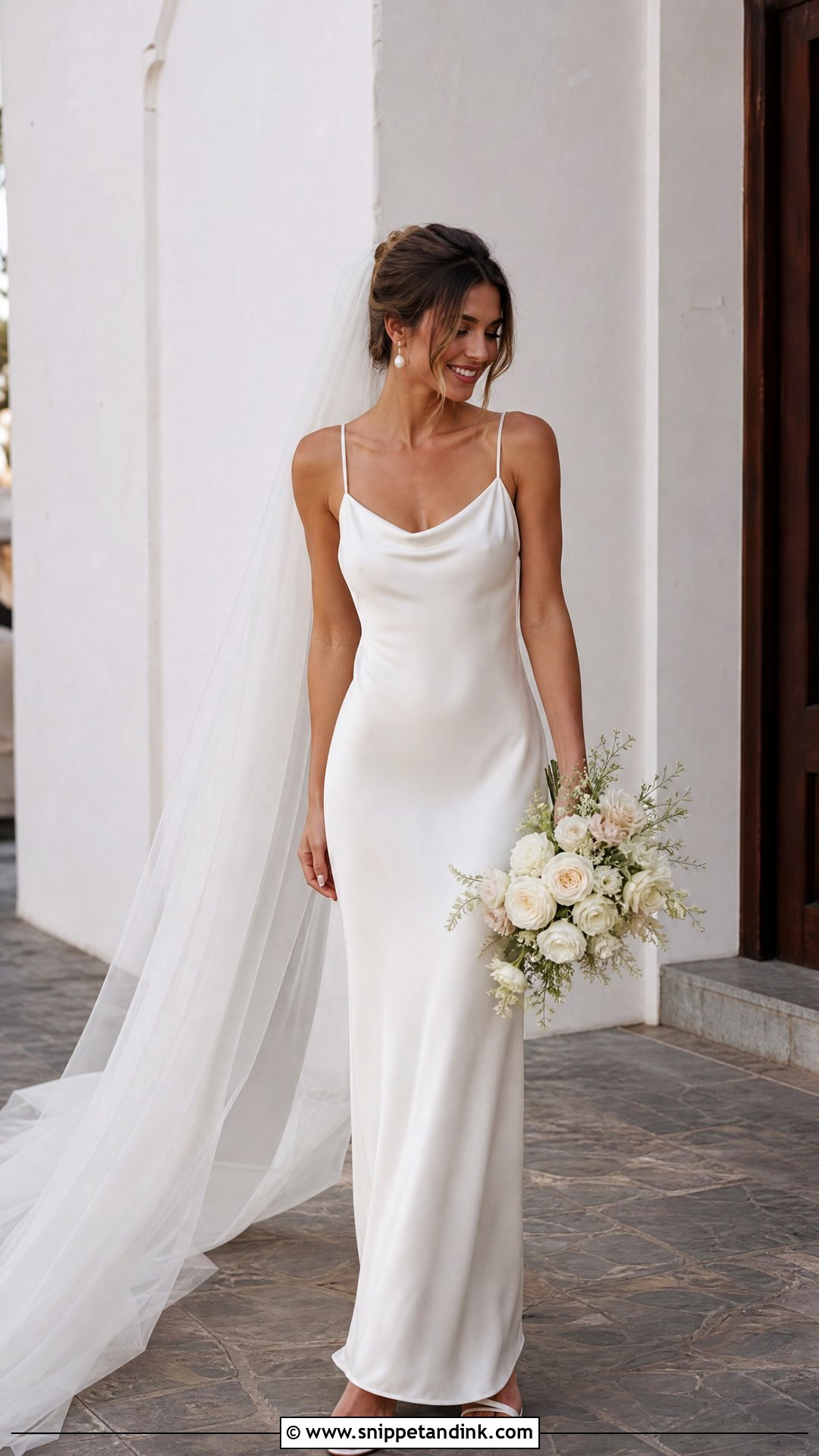
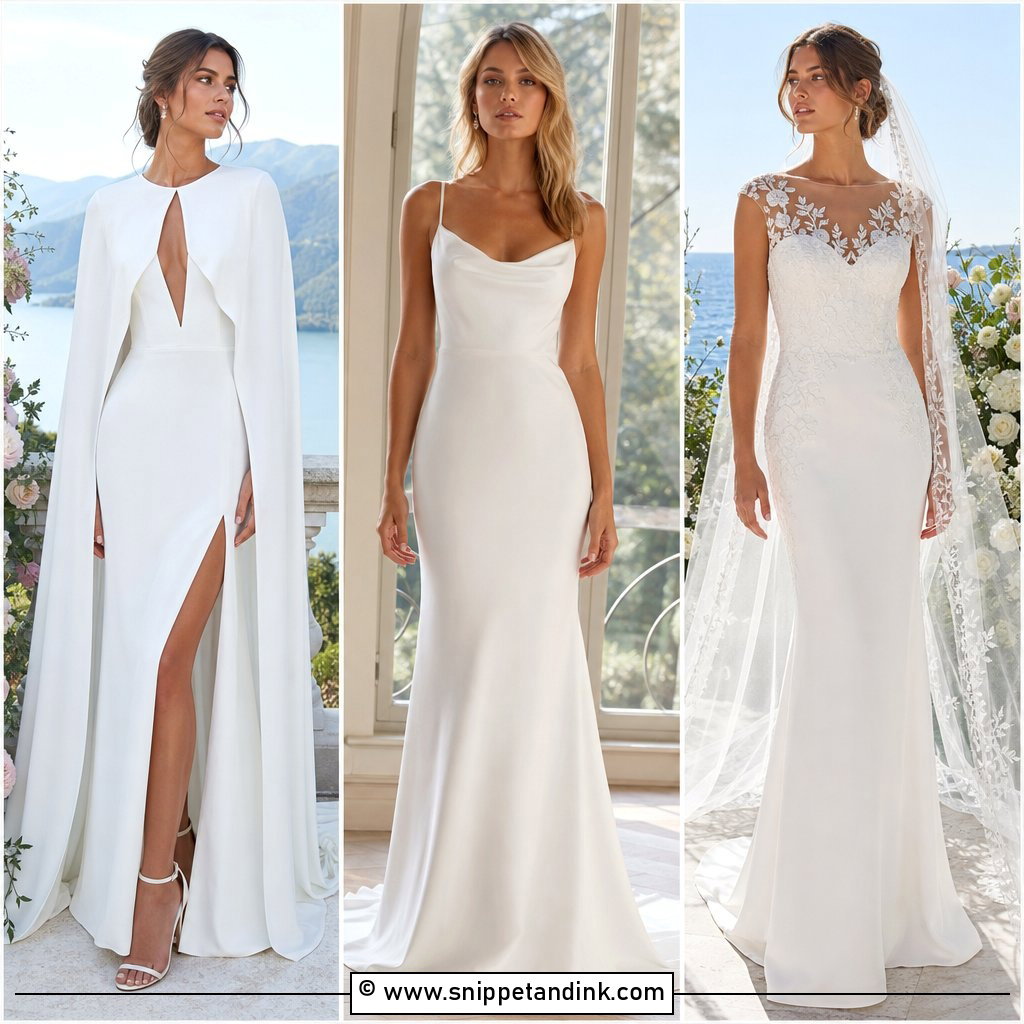
The slip is the simplest gown here and one of the hardest to fit. A bias-cut silk gown drapes and moves with the body, which means it also shows everything underneath, so I plan smooth, bonded underwear before the first fitting. A soft cowl, V-neck or straight neckline depends on how much support you need. Strappy heels, delicate earrings and a long veil for contrast; for cooler weather, add a cape, wrap or tailored coat. Intimate weddings, beaches and city celebrations suit it.
17. Bridal Gown With Cape
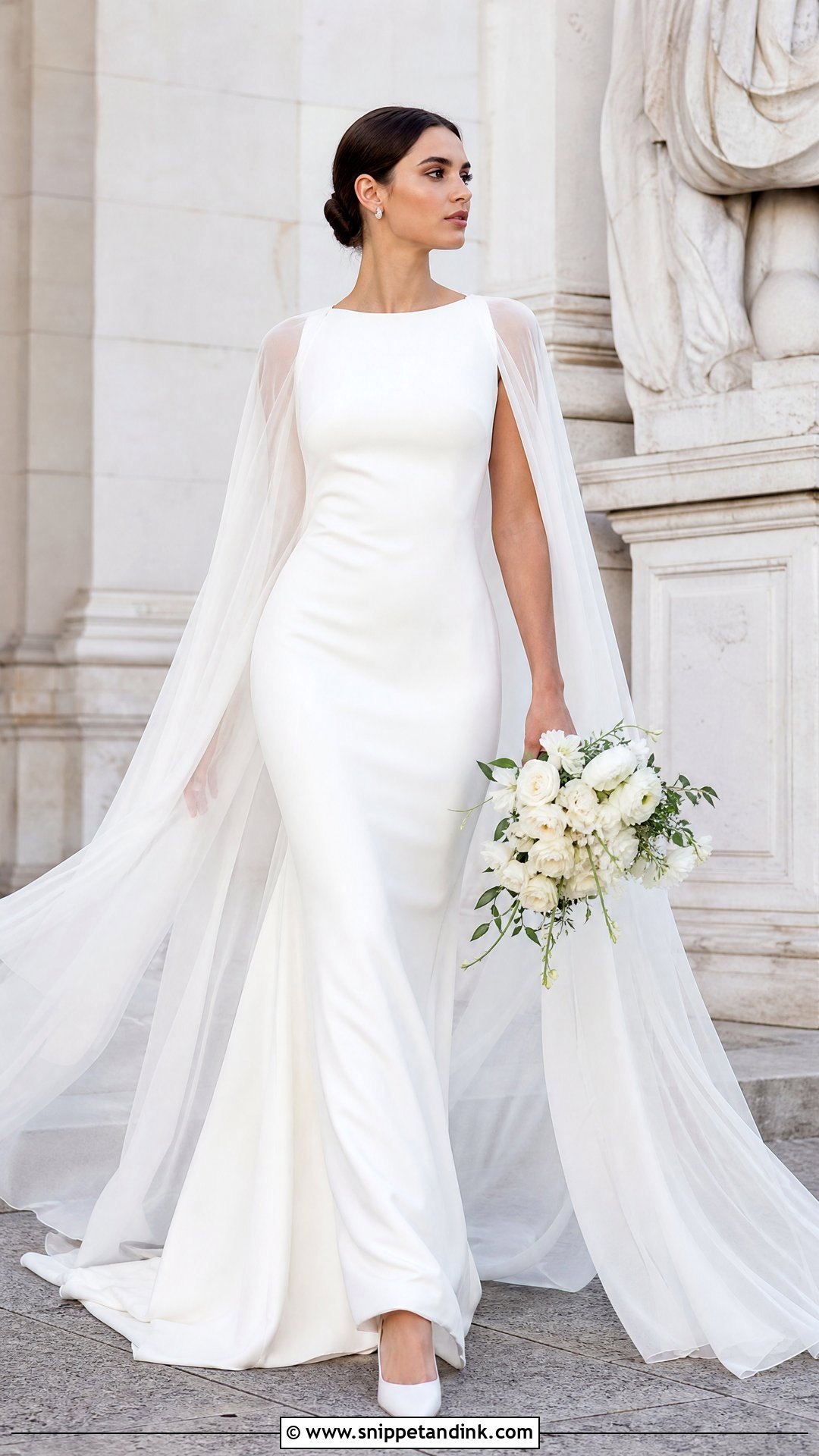
A cape can replace the veil or sit over one. Sheer tulle reads soft, lace reads romantic, structured satin reads modern. The gown underneath should stay fairly plain, a fitted crepe, satin sheath or simple A-line, so the cape stays the statement. Fastening is what I check: a cape attached at the shoulders with snaps comes off easily for dancing, while one sewn into the neckline stays for the night. Minimal jewellery and refined heels. Outdoor ceremonies show off the movement.
18. Bridal Gown With Bow
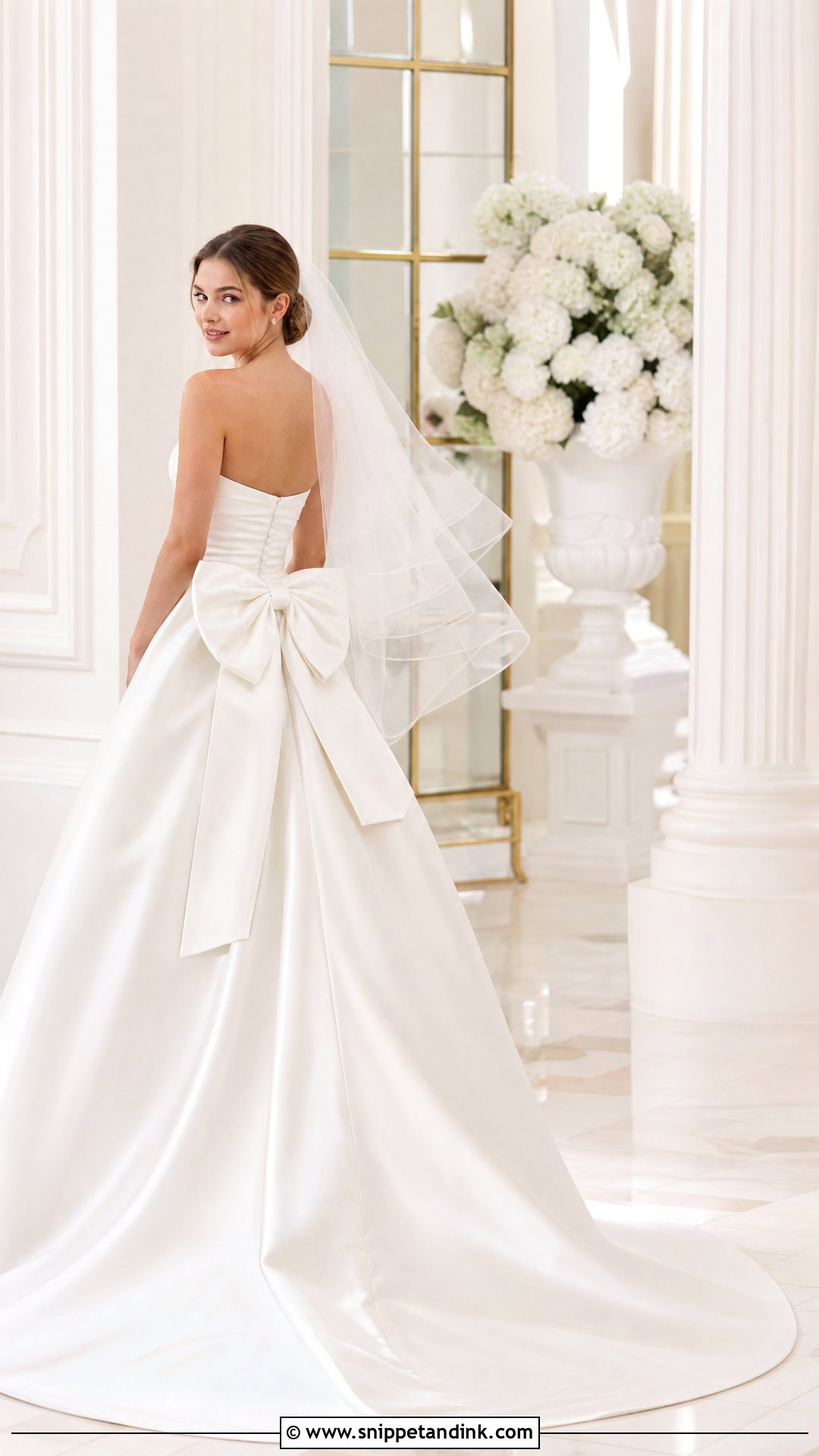
One bow, never several. A small bow at the waist looks polished; a large back bow makes a dramatic exit. Bows also sit well on shoulder straps, veils or trains. Satin, mikado and organza hold the shape, while softer fabrics droop as the night goes on. A big back bow can make sitting in a chair awkward, so I’d test it against a chair back in the shop. Clean heels, simple earrings and a smooth hairstyle. Romantic venues and formal receptions suit it.
19. Beaded Sheath Bridal Gown
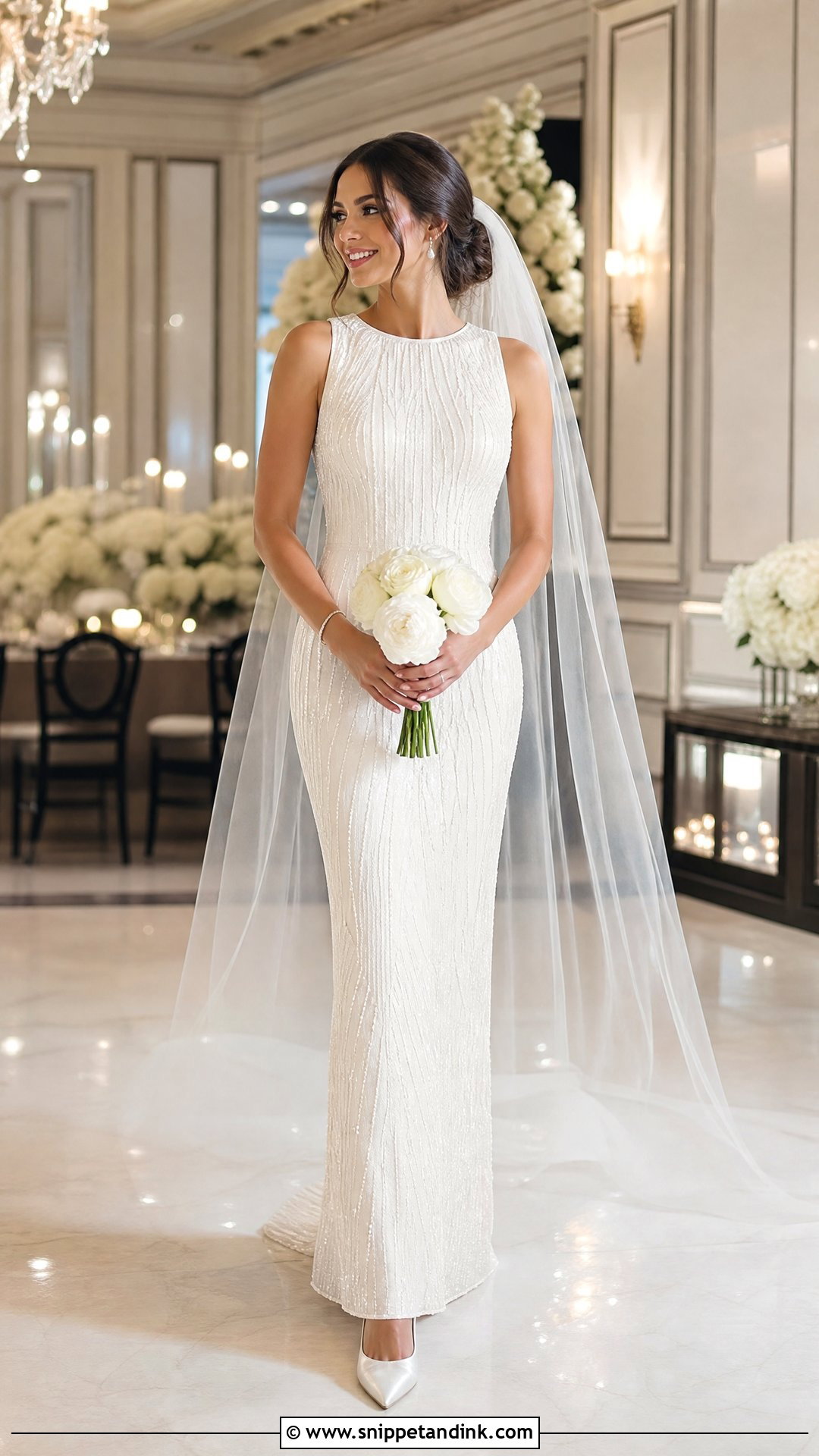
Sparkle without volume. A beaded sheath keeps the line slim while the beadwork adds light, whether vertical rows, soft florals or a light shimmer across bodice and skirt. Beading adds weight, and on a slim gown it pulls downward, so look for a firm lining and check that seams don’t drag. Accessories stay minimal: small earrings, satin heels, a simple veil. Evening weddings and hotel venues are its home, and anyone who finds a ball gown too much will feel at ease in it.


20. Tea Length Bridal Gown
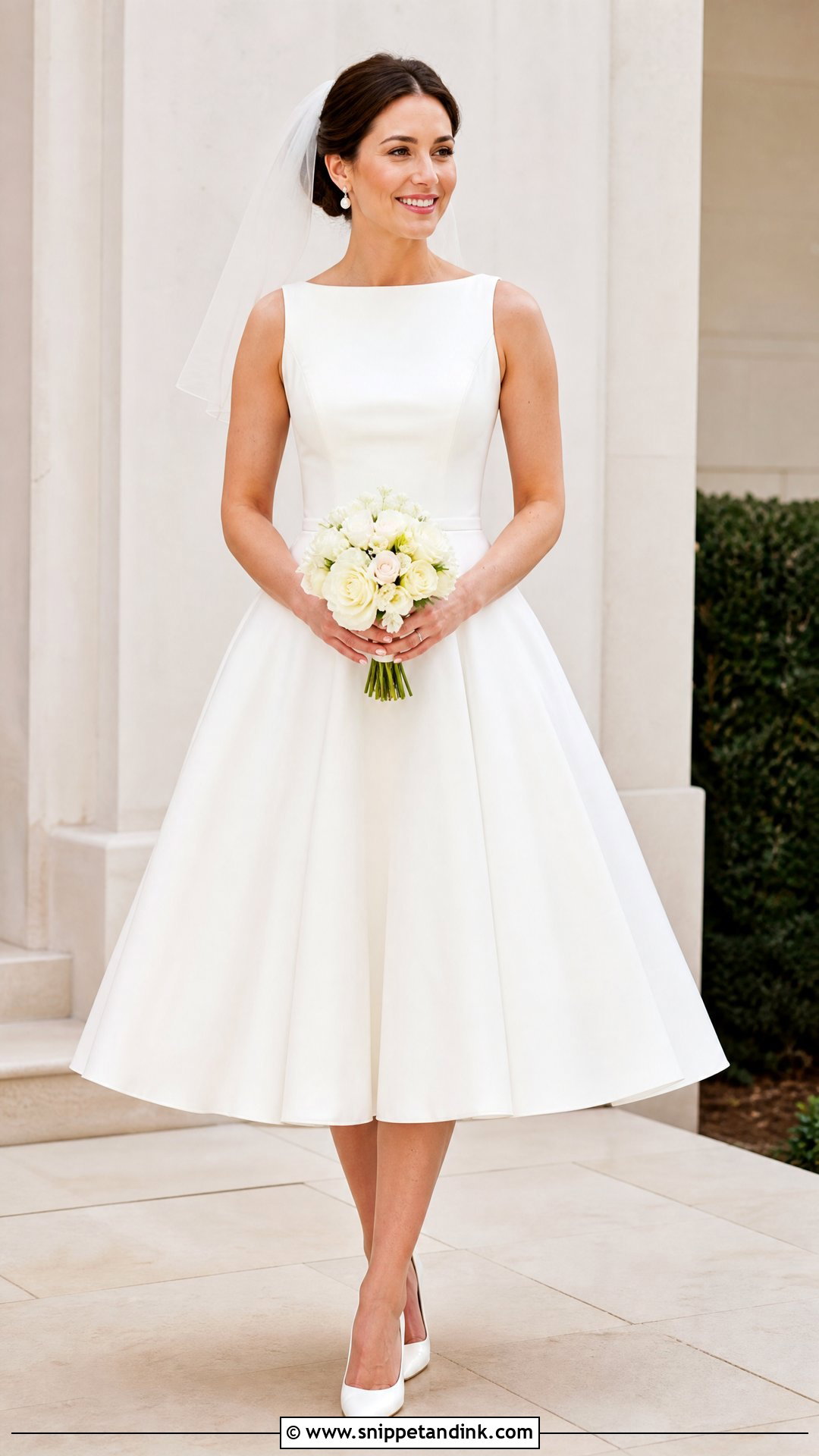
Tea length falls between knee and ankle, which makes it the most practical gown on this list and the one that shows off your shoes. Satin, lace, organza or tulle all work. A fitted bodice and full skirt look classic; a sheath feels modern. Hem length is the detail I fuss over, since it should end at a flattering point on the calf, usually just below the widest part. Pointed pumps, pearl earrings and a short veil or hair bow. Civil ceremonies, gardens and daytime receptions suit it.
21. One Shoulder Bridal Gown
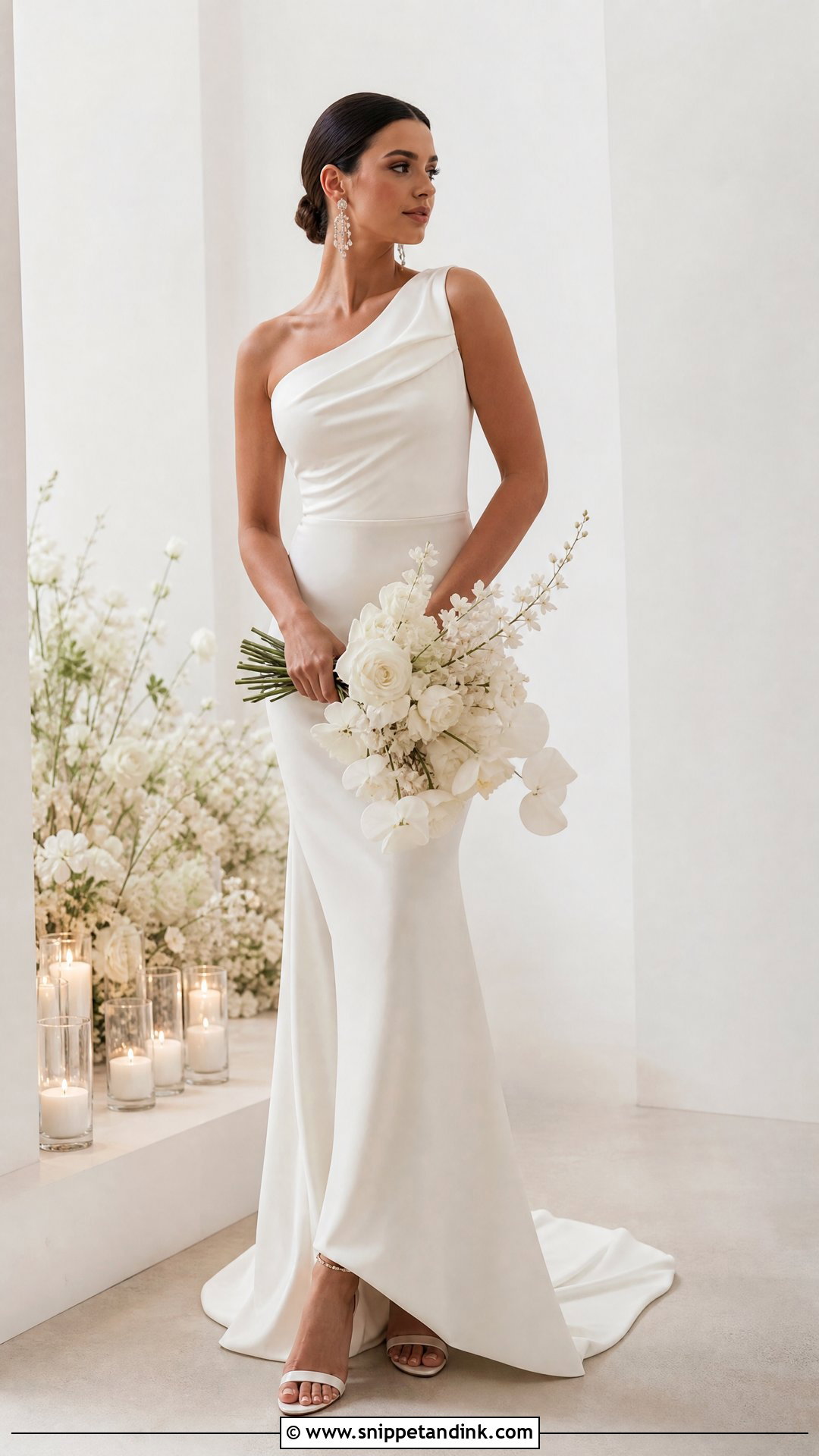
Asymmetry looks sculptural. A one-shoulder neckline draws the eye to the shoulders and face, so the gown needs little embellishment, and satin, crepe or mikado keeps the line clean. A fitted skirt is sleek and formal; a soft A-line is more romantic. The single strap has to be anchored by a firm bodice, or the dress twists toward the bare side as you move. I check this with the bride reaching across a table. Earrings rather than a necklace, smooth hair. Galleries and modern hotels suit it.
22. Embroidered Bridal Gown
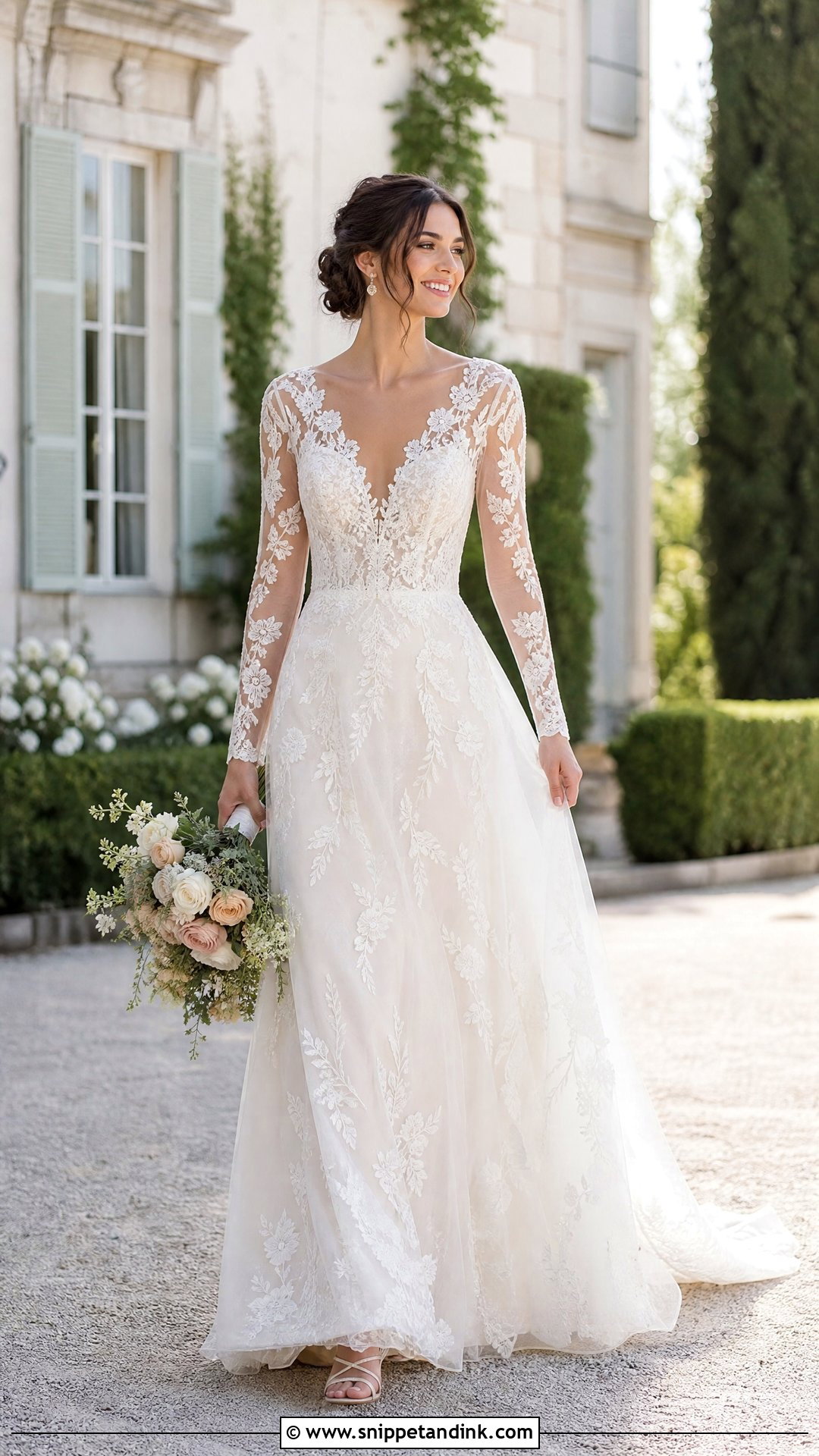
Embroidery makes a gown personal. Floral, botanical, vine-like or simply textured, it can run across bodice and skirt, in ivory, white, champagne or the palest blush. Sheer sleeves, a delicate train and a fitted waist keep it romantic without crowding it. If you’d like something private, many seamstresses will add initials or a date inside the lining for a small fee. Simple heels, small earrings and a loosely gathered bouquet. Garden and estate weddings suit it.
23. Basque Waist Bridal Gown
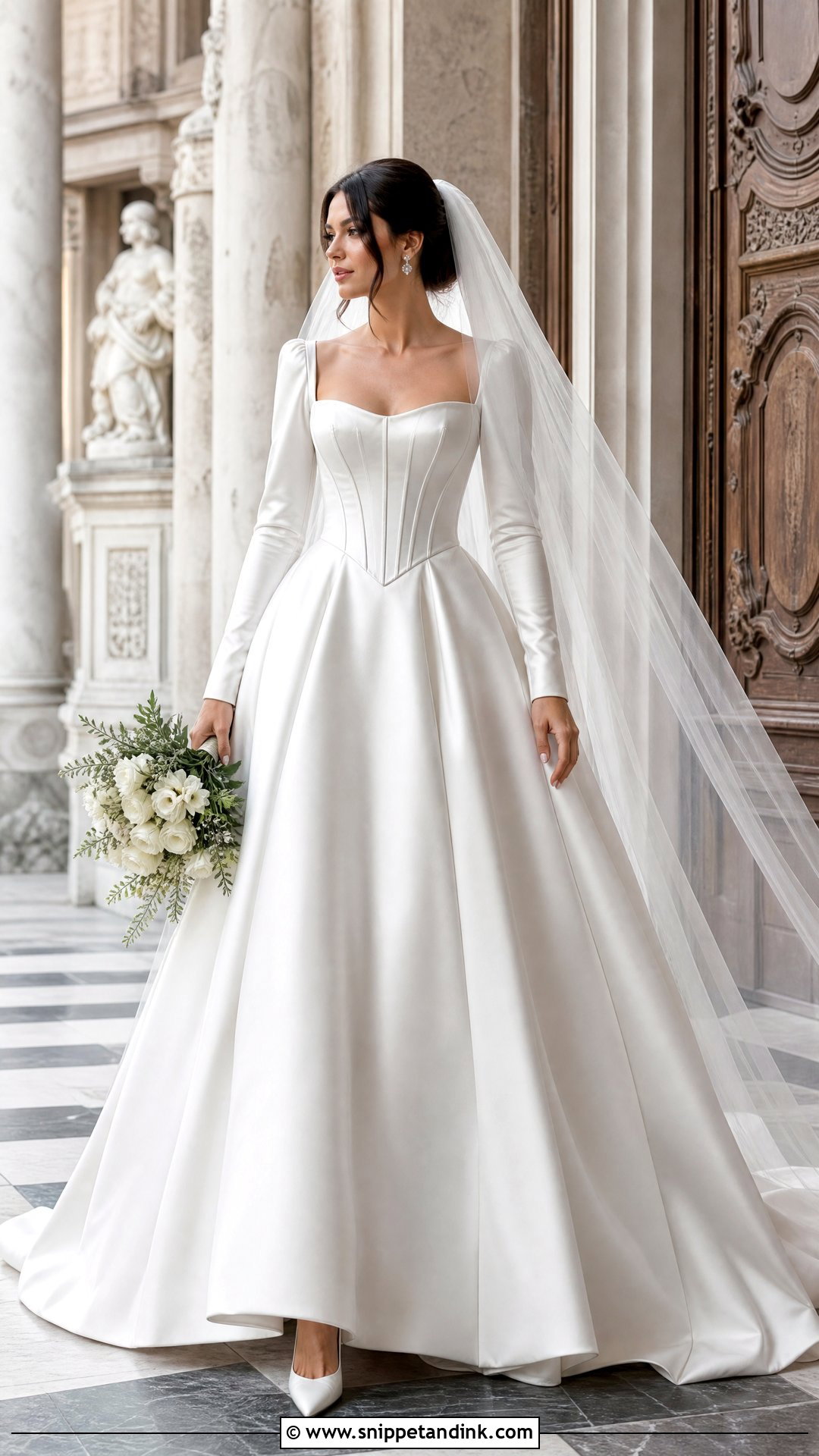
The basque waist dips into a gentle point at the centre front, which pulls the eye down and lengthens the torso. It sits well with a full skirt, a corset bodice or smooth satin. The point is also the fussiest part of the fit: if it lands too low, it presses into your lap when you sit and creases across the front. Sit and stand at every fitting and watch it. A long veil, delicate earrings and pointed heels, with a refined bouquet held high enough not to hide the waist. Formal weddings and historic venues suit it.
24. Organza Bridal Gown
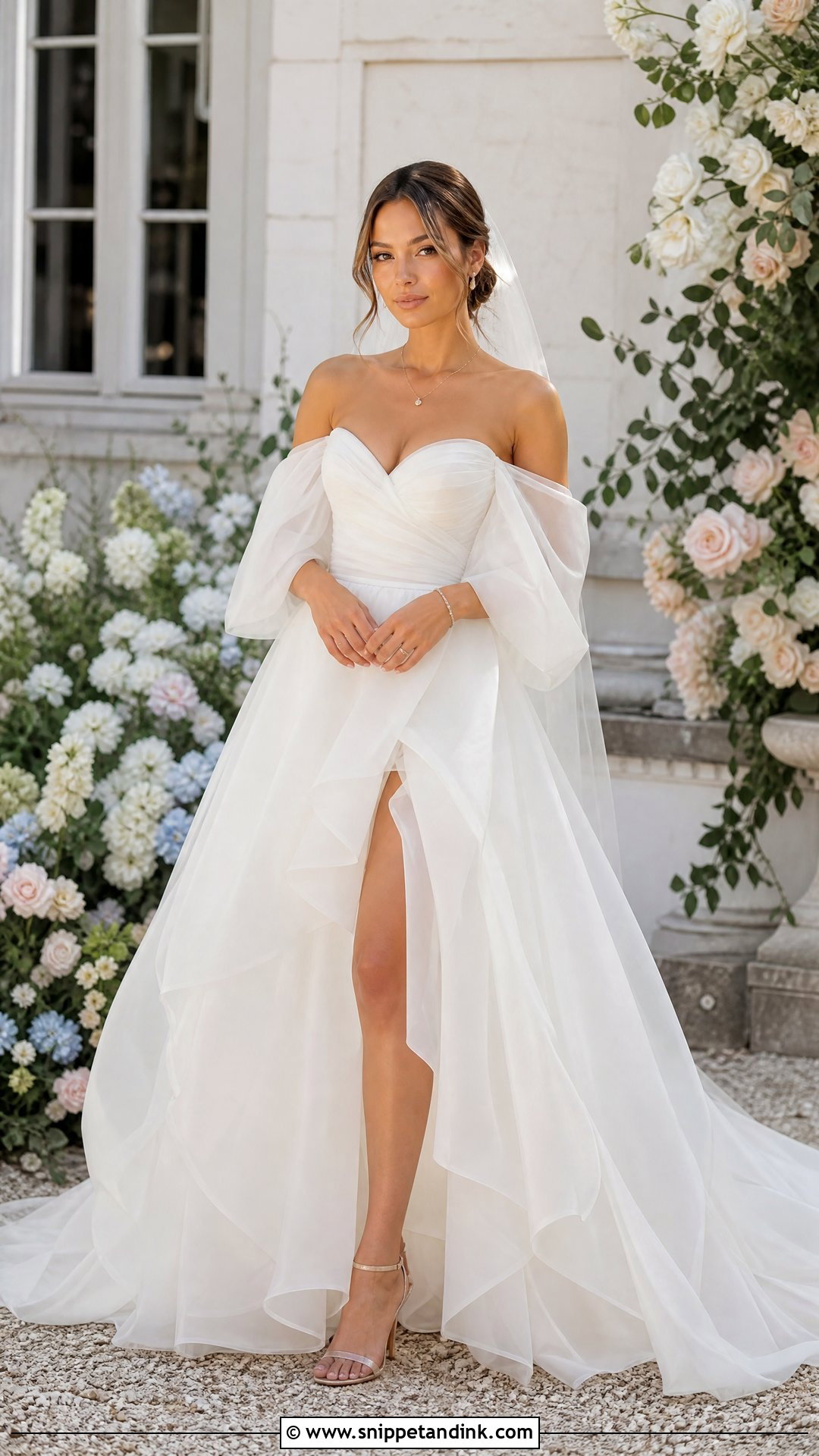
Organza is crisper and lighter than satin. It holds a shape on its own, so it suits soft ruffles, layered skirts and airy sleeves, and a clean fitted bodice keeps it polished. White, ivory or soft champagne catch light well. My warning about organza is creasing: it marks wherever you sit, and those marks show in daylight, so book a steam for the morning. Delicate jewellery, sheer heels and a veil that doesn’t swamp the texture. Spring and summer gardens and bright rooms suit it.


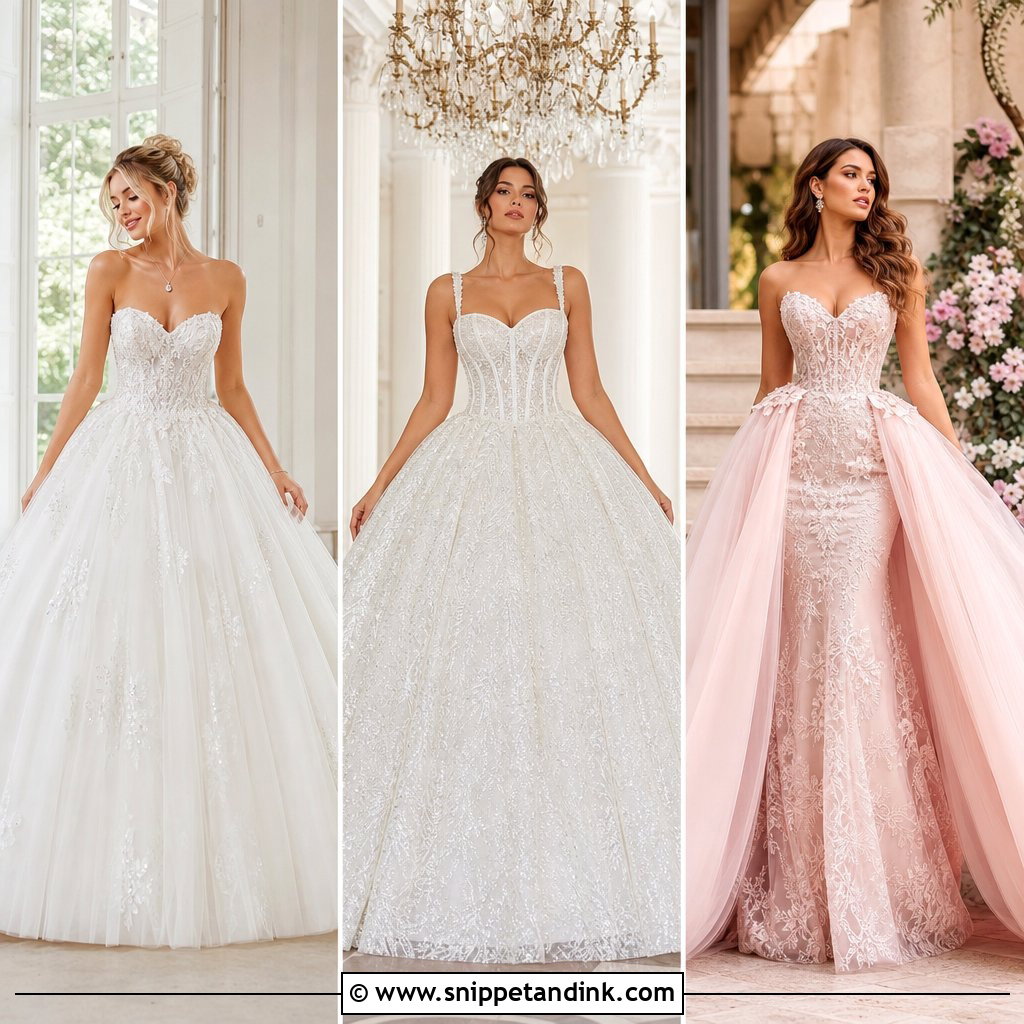

25. Vintage Inspired Bridal Gown
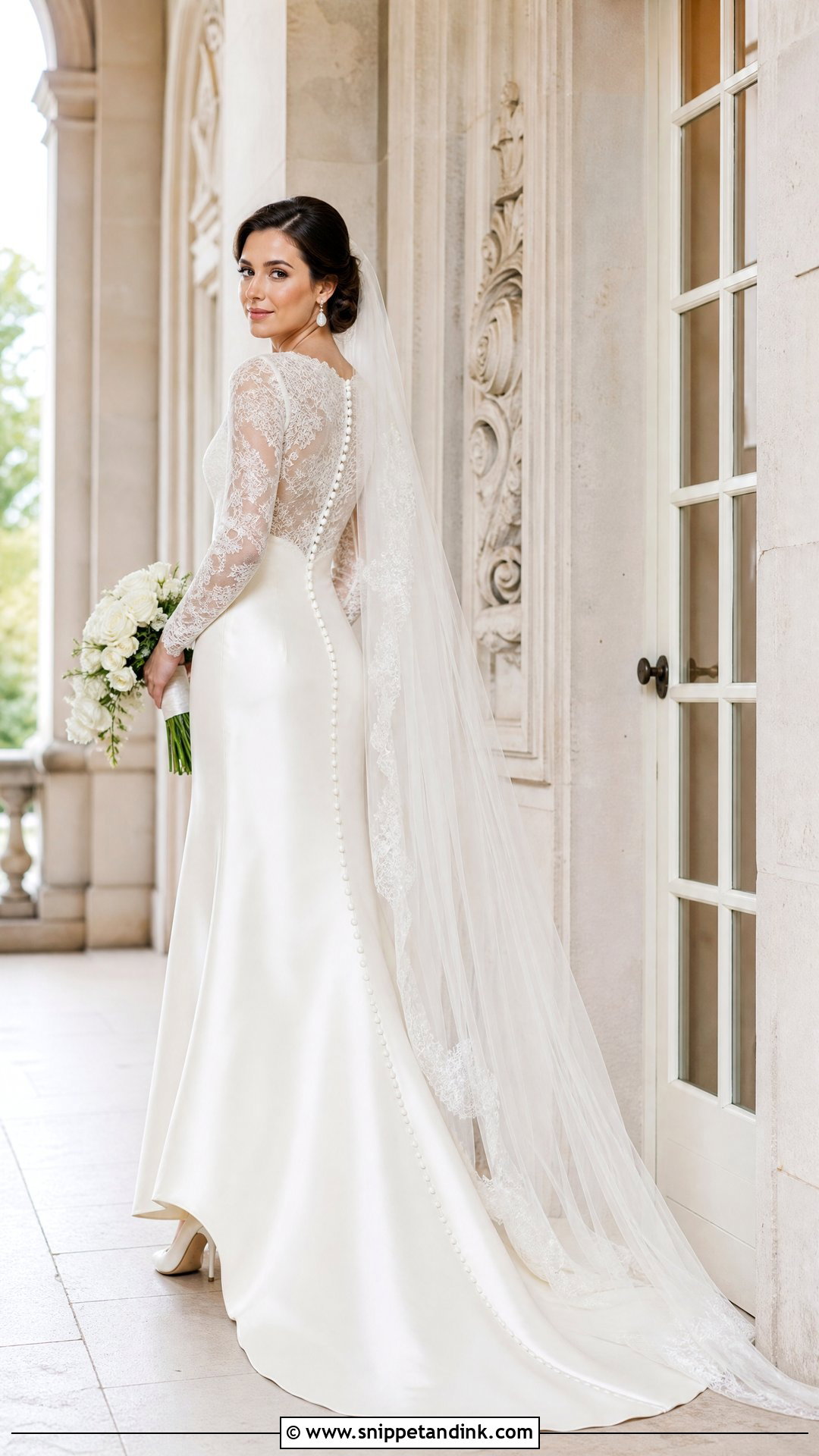
Pick one decade, not five. A vintage inspired bridal gown works when its details point the same way: lace sleeves, covered buttons, soft satin, a high neck, beaded accents or gentle draping. A 1930s-style silk gown is sleek; a 1950s full skirt is charming. Mix both and it starts to look like a costume rack. Pearl earrings, refined heels and a veil that matches the era. Historic venues and estate weddings bring out the character.
What Happens to the Dress the Morning After
Most brides spend months choosing a gown and no time at all planning what happens to it. A wedding dress comes home with grass at the hem, makeup at the neckline, and usually a splash of champagne or wine somewhere on the skirt.
On the night
Blot fresh spills with a clean white cloth and plain water, and stop there. Rubbing pushes stains into the weave, and stain-removal pens can leave rings on silk and satin. Hang the dress from its inner loops, not the shoulders, so the skirt’s weight doesn’t stretch the bodice.
In the following weeks
Take it to a cleaner who specialises in bridal wear, and do it soon. Sugary drinks often dry invisibly and then turn brown over months, so point out every spill you remember, even ones you can’t see. Beads, sequins and glued appliqué need careful handling, which general dry cleaners don’t always give.
Long-term storage
Store the gown folded in acid-free tissue inside an acid-free box, somewhere cool, dark and dry. Avoid plastic garment bags and attics, which trap moisture and heat. I’d open the box once a year and refold it slightly differently so the creases don’t become permanent.
Elegance Comes Down to Fit, Not Price
Some brides will feel most themselves in smooth satin, clean crepe or a slip. Others will want lace sleeves, appliqué, pearls or a cape. In my experience the most elegant dress in the room is rarely the most expensive or the most embellished; it’s the one that fits properly, suits the venue and lets the bride forget she’s wearing it. Think about how it moves, how it feels after hours of wear and how the whole look works head to toe, and the right gown narrows itself down.
You'll Like These Ideas:



Leave a Reply