
Most brides walk into their first appointment with a picture of a dress and walk out loving a different shape. That’s normal. Silhouette, fabric and venue all change how a gown behaves, and you only find out by trying them on. These 20 Marriage Gown Ideas run from satin ball gowns and corsets to modest sleeves, tea length and blush tulle, and right now I’m seeing plenty of dimensional lace, sculpted waists and very clean, undecorated fabric. For each one I’ve noted what I’d pair with it and what I’d check at a fitting, because a gown has to survive walking, sitting through dinner, hugging guests and dancing, not only the aisle.
Ordering Months Ahead: How a Gown Timeline Really Runs
Most bridal shops order your gown from the designer after you’ve chosen it, rather than handing you the sample. Production usually takes four to six months, sometimes longer for heavily beaded or made-to-measure pieces, and then alterations need their own window. That’s why I tell brides to start trying on around nine to twelve months out.
- Shopping and deciding: nine to twelve months before the wedding.
- Gown arrives at the shop: roughly two to four months before.
- First fitting: about two to three months before, with your shoes and underwear.
- Second fitting for refinements, then a final fitting two to three weeks out, when your weight and posture are settled.
If you’re shorter on time, ask for gowns available off the rack or in stock at the designer. Rush fees exist, but they vary widely by shop, and they don’t speed up a seamstress who’s already booked.
1. A-Line Lace Marriage Gown
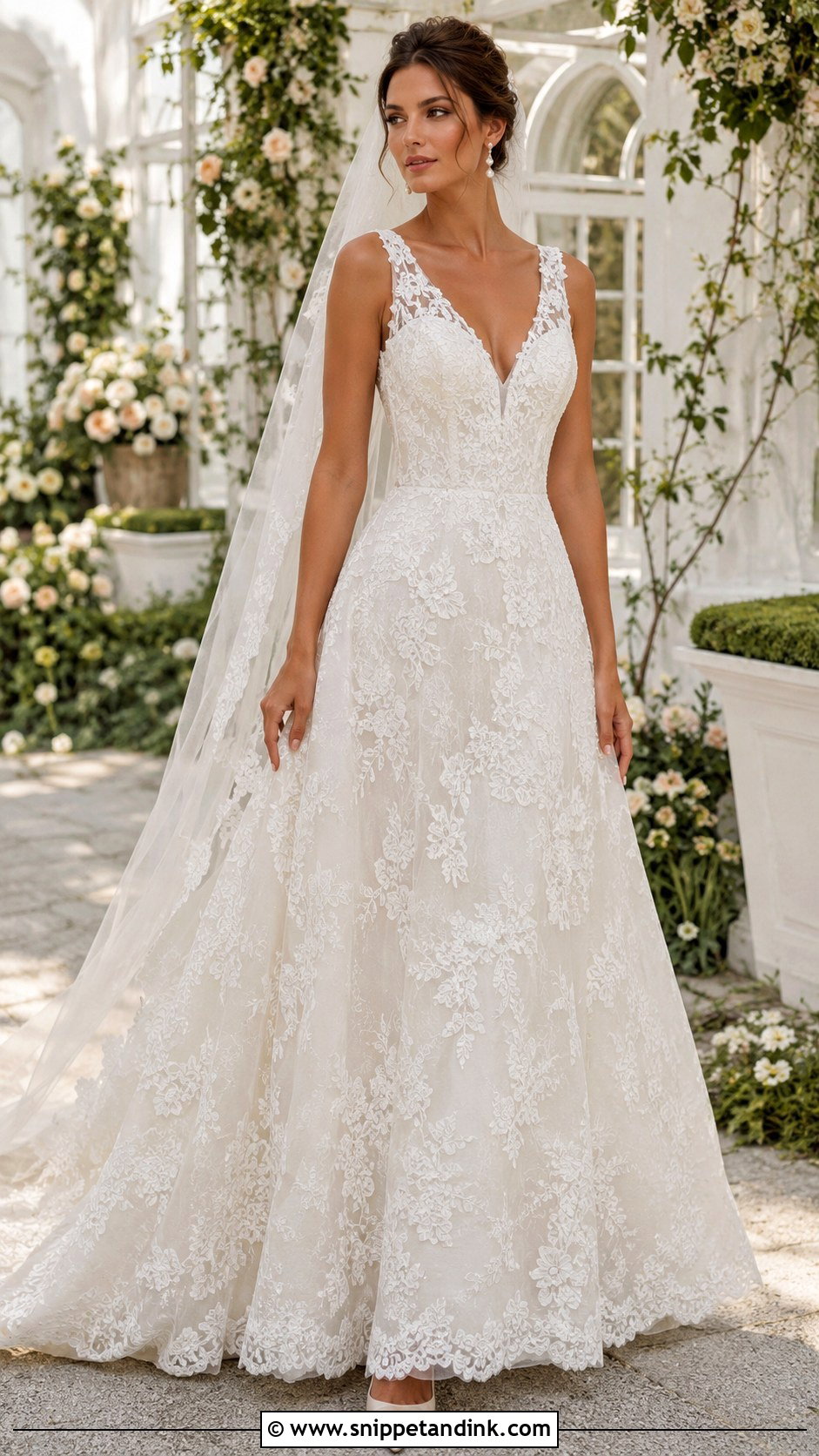
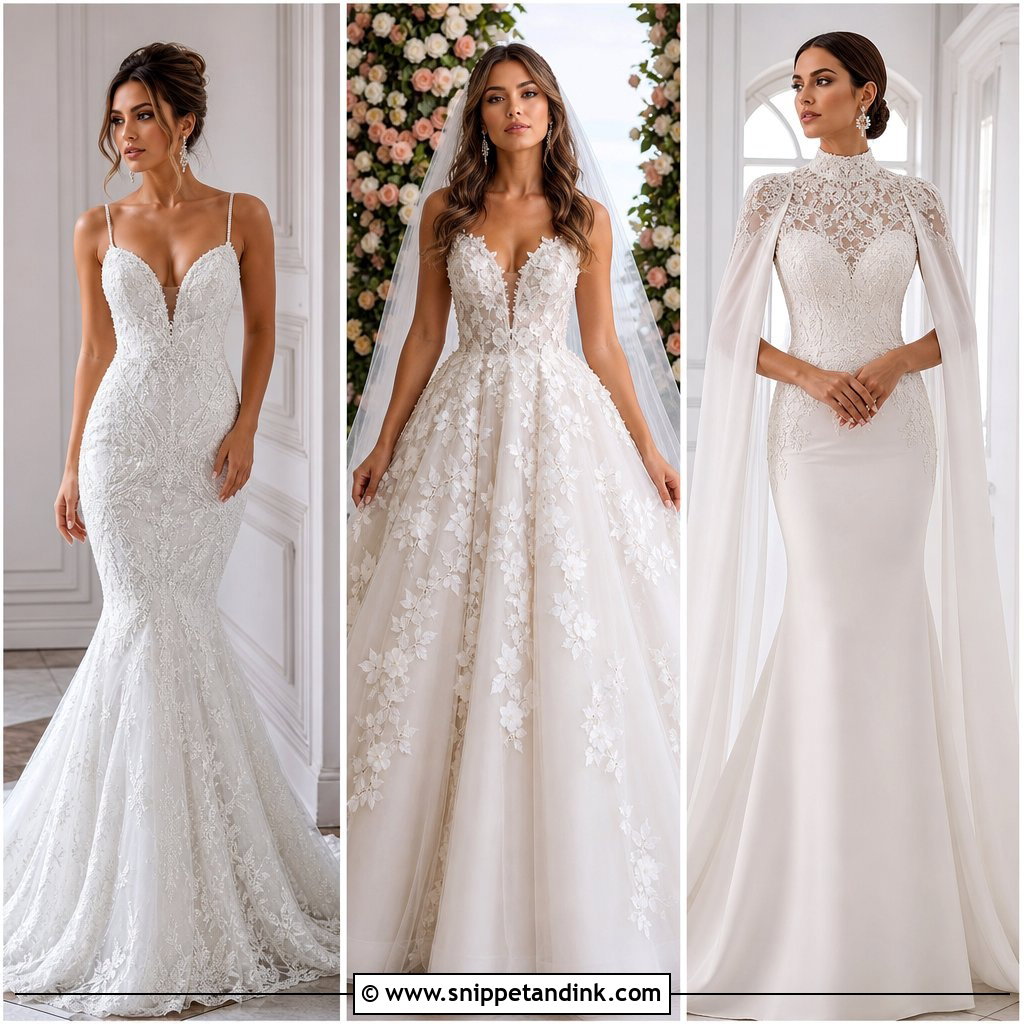
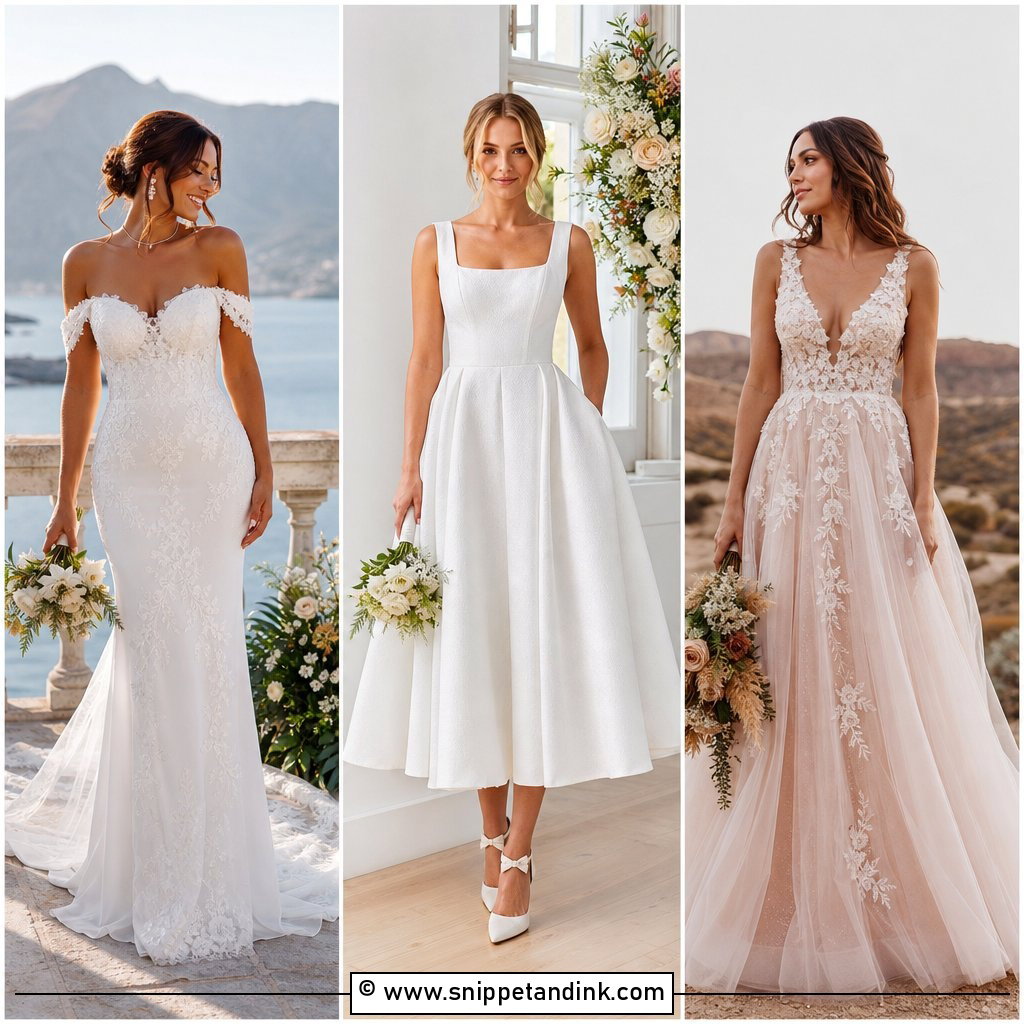
If a bride doesn’t know where to start, I put her in a lace A-line first. The bodice fits close, the skirt widens gently from the waist, and almost every body type moves comfortably in it. Floral lace over an ivory lining gives texture you can see in photos. A V-neck lengthens the torso; wider lace straps are kinder for a fuller bust. Pearl drops, a fingertip veil and ivory pointed pumps suit it, and a low textured bun leaves the neckline clear. Lace trains snag on gravel and grass, so ask for a simple bustle with sturdy hooks rather than delicate ribbon loops.
2. Satin Ball Gown Marriage Gown
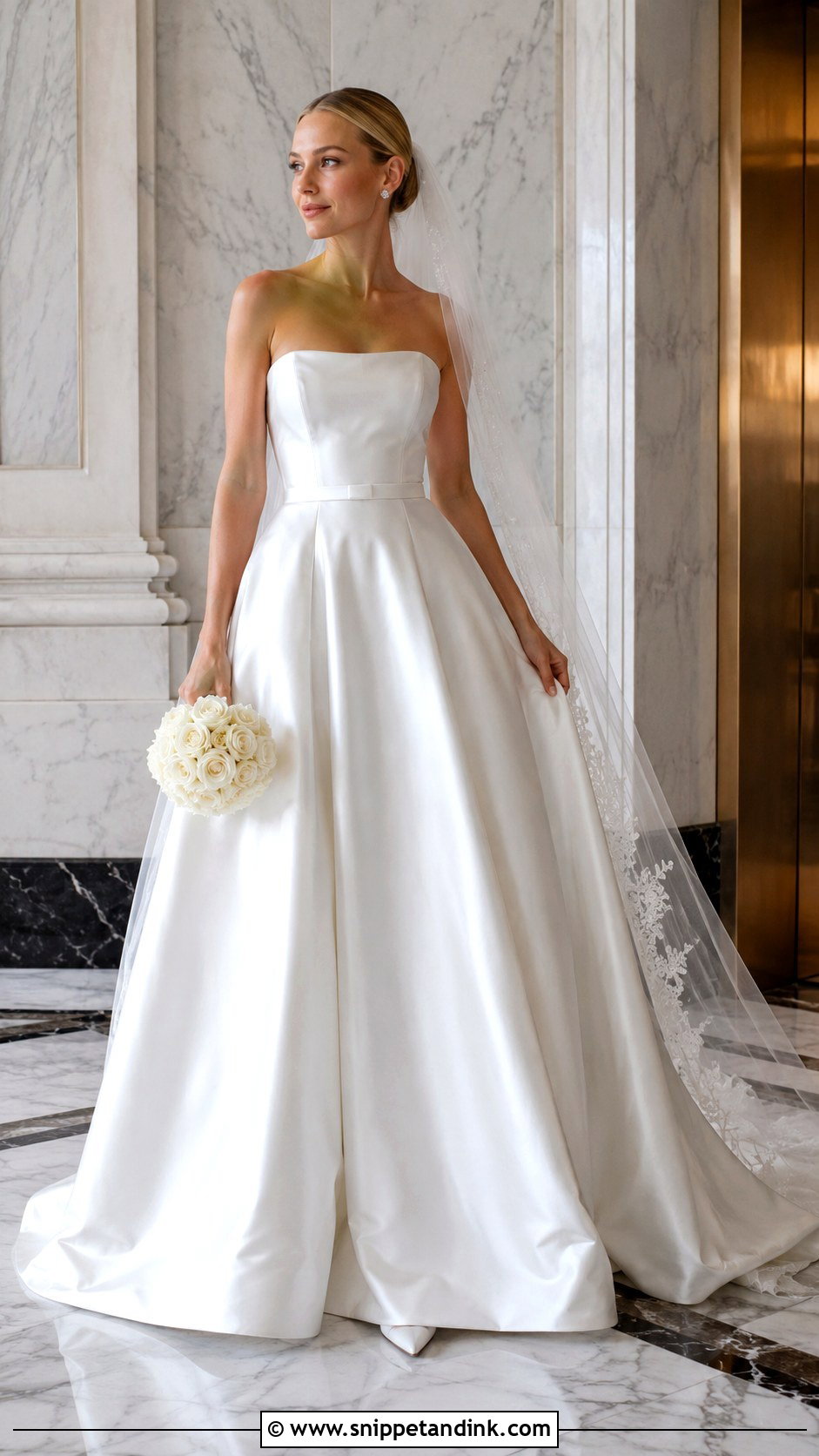
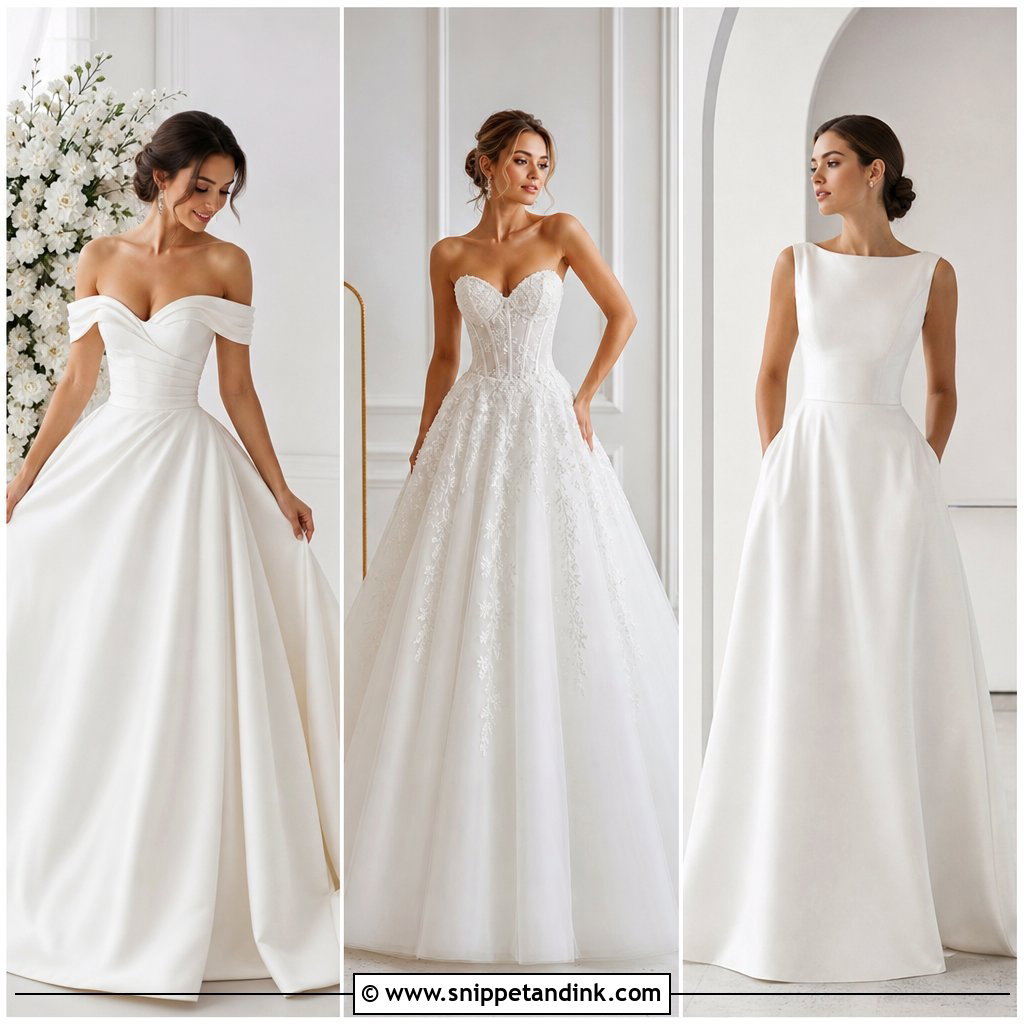
Satin ball gowns have the most presence in a big room, and the shine shows off every fold of the skirt. What I look for inside is an engineered bodice with boning and a waist stay, so the weight of the skirt hangs from your waist and not your shoulders. A strapless or softly scooped neckline keeps it refined. A sleek chignon, crystal studs and a long veil with a narrow satin edge complete it. Be honest with yourself about volume: practise sitting on a dining chair and going through a doorway during fittings. Satin also creases where you sit, which shows in the back of every late-night photo.
3. Long Sleeve Lace Marriage Gown
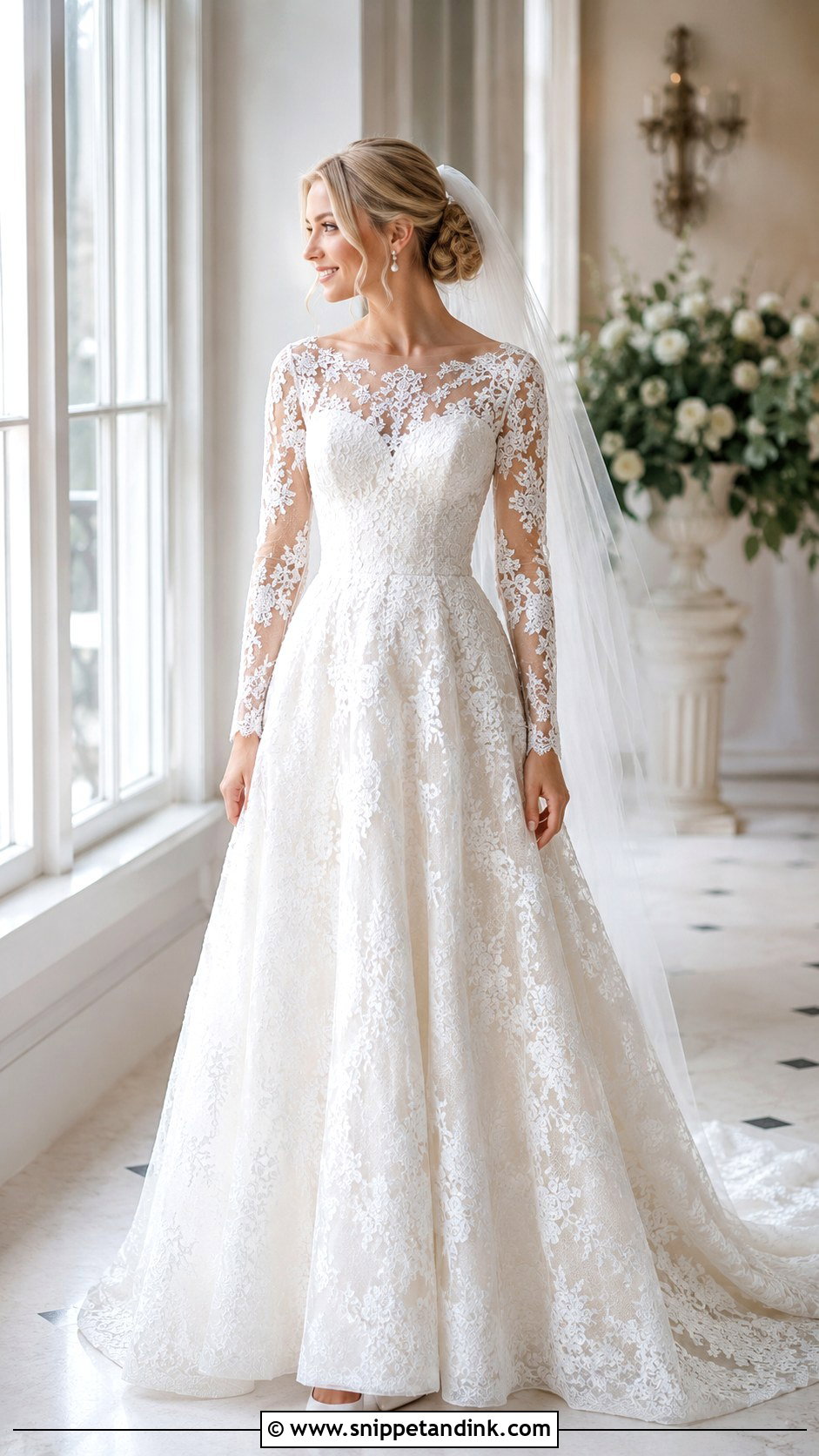
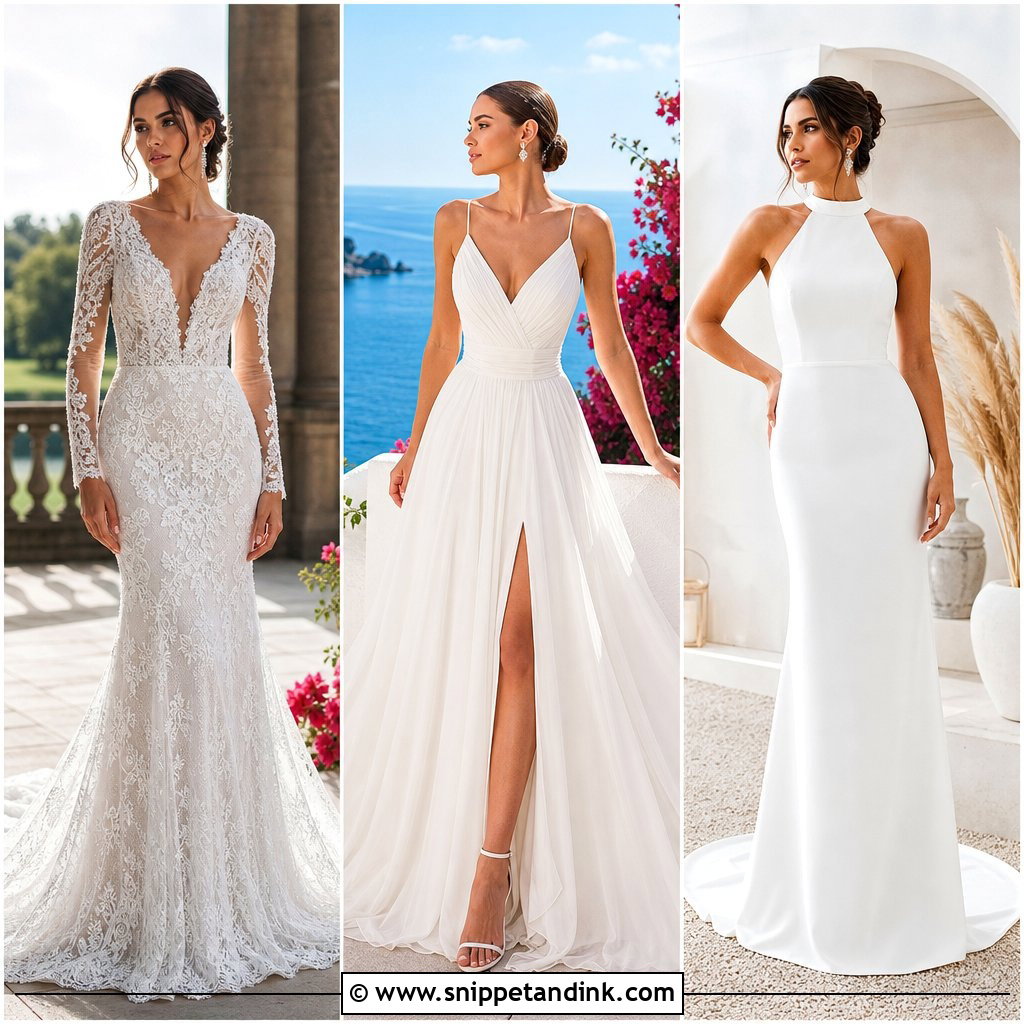
Sleeves are the reason many autumn and winter brides come to me. The lightest version uses illusion tulle with lace appliqués, which covers the arm without the warmth of a full lace sleeve. Pair it with a fitted bodice and an A-line or gentle flare. I like a chapel veil whose lace echoes the gown rather than copying it exactly, since an identical motif can flatten the two layers into one in pictures. Pearl earrings, a fine bracelet and closed satin heels keep it quiet. Hair worn in a low bun or smooth waves shows the sleeve work. My first test with sleeves: raise both arms as if hugging someone taller. If the armhole bites, it needs letting out.
4. Strapless Corset Marriage Gown
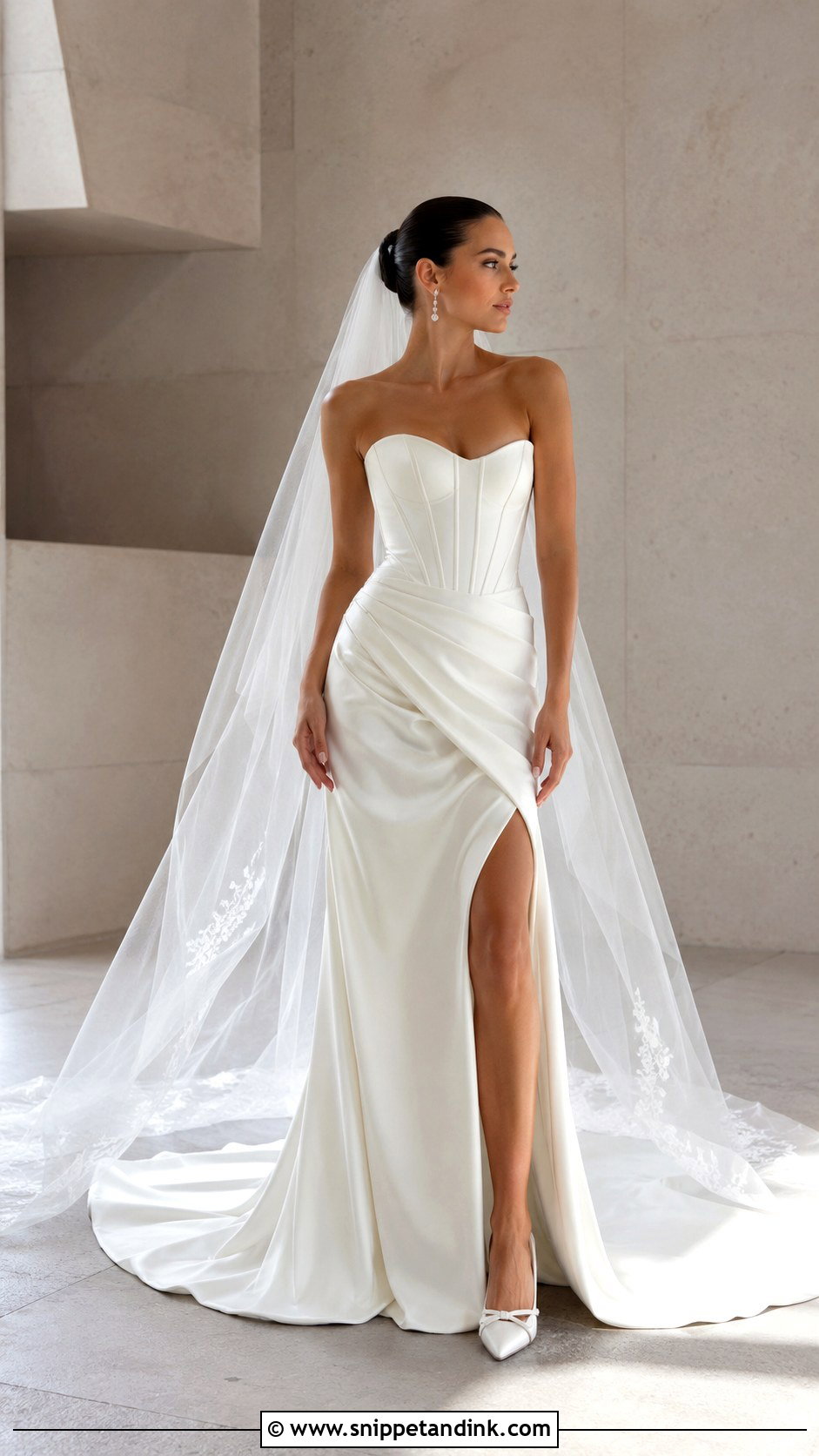
Visible corsetry is everywhere at the moment, and it does give real support when it’s built properly. I check three things: cups that sit flat against the ribs, boning firm enough not to buckle when you bend, and a back closure that holds without needing a tug every ten minutes. A draped satin skirt softens the structure. Wear a cathedral veil for the ceremony and take it off at the reception so the corset lines show. Crystal drops, a polished updo and satin slingbacks finish it, with no necklace. It should feel snug, but you must be able to take a full breath and eat dinner.
5. Minimalist Crepe Marriage Gown
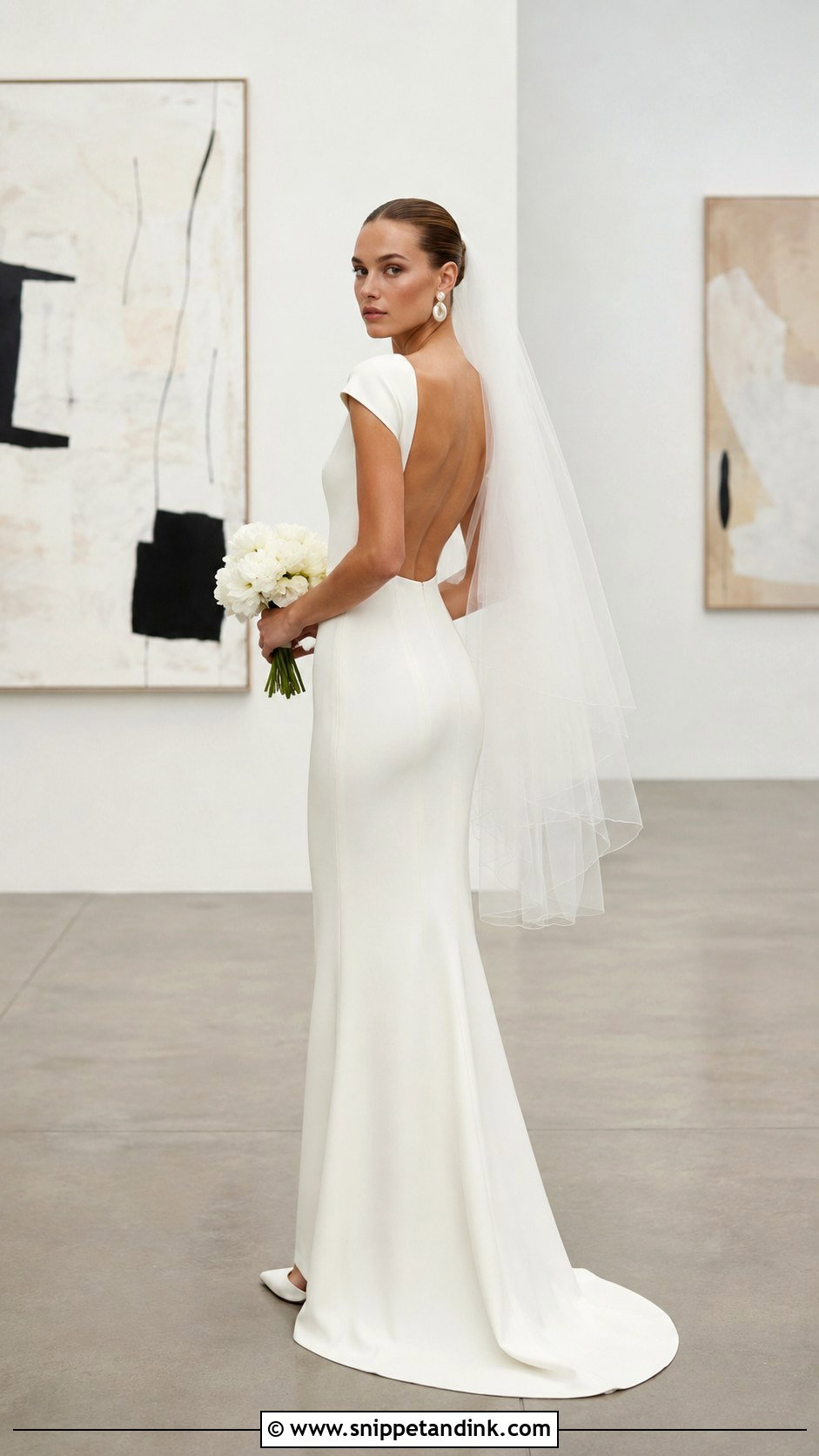
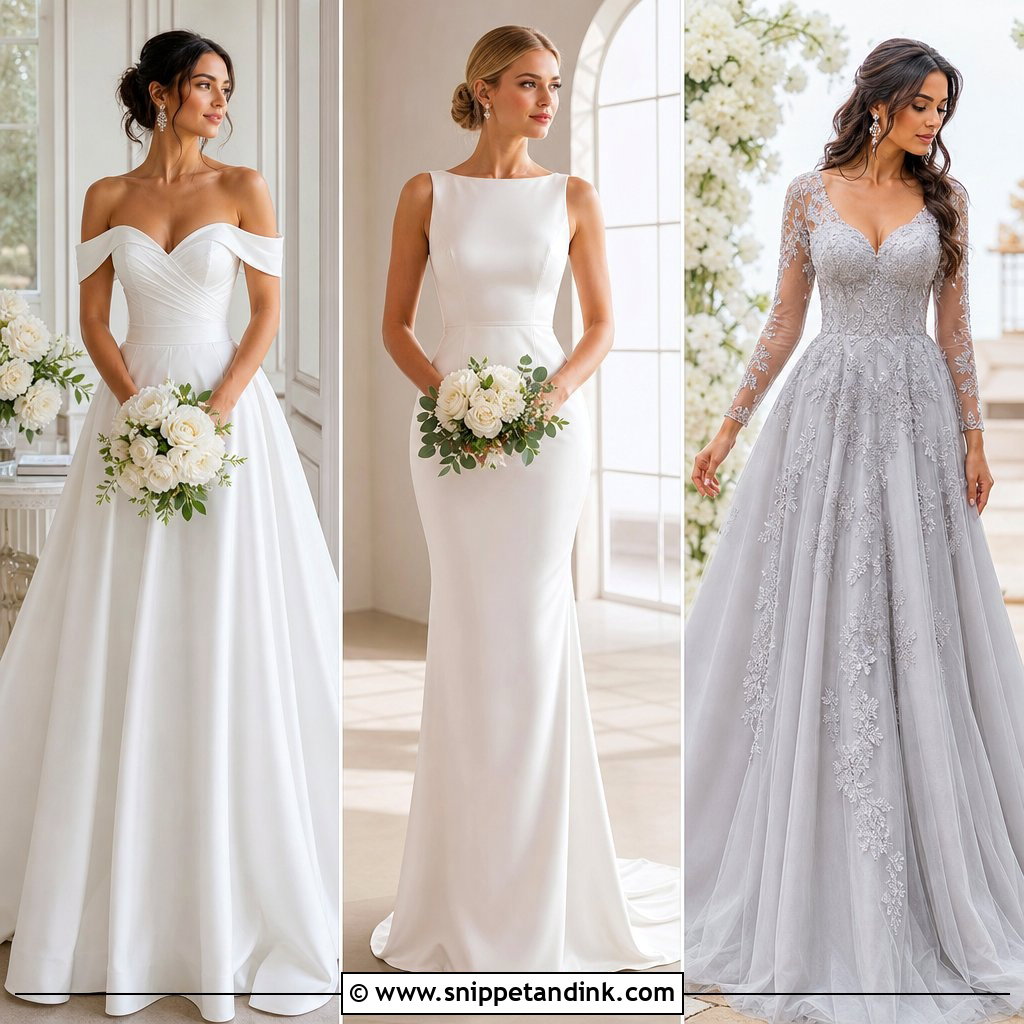
Crepe is honest fabric. It shows the cut, so the tailoring has to be precise, and it shows everything underneath, which is why I insist on wearing your actual wedding underwear at every fitting. A column or soft fit-and-flare, perhaps with a bateau front and a low back, keeps the design pared down. Sculptural earrings, ivory pointed heels and a plain tulle veil without lace suit it, and a sleek bun keeps everything uncluttered. A small bouquet adds colour. Brides who dress simply day to day tend to feel most like themselves in this one, especially at a gallery or a city ceremony.
6. Off Shoulder Mikado Marriage Gown
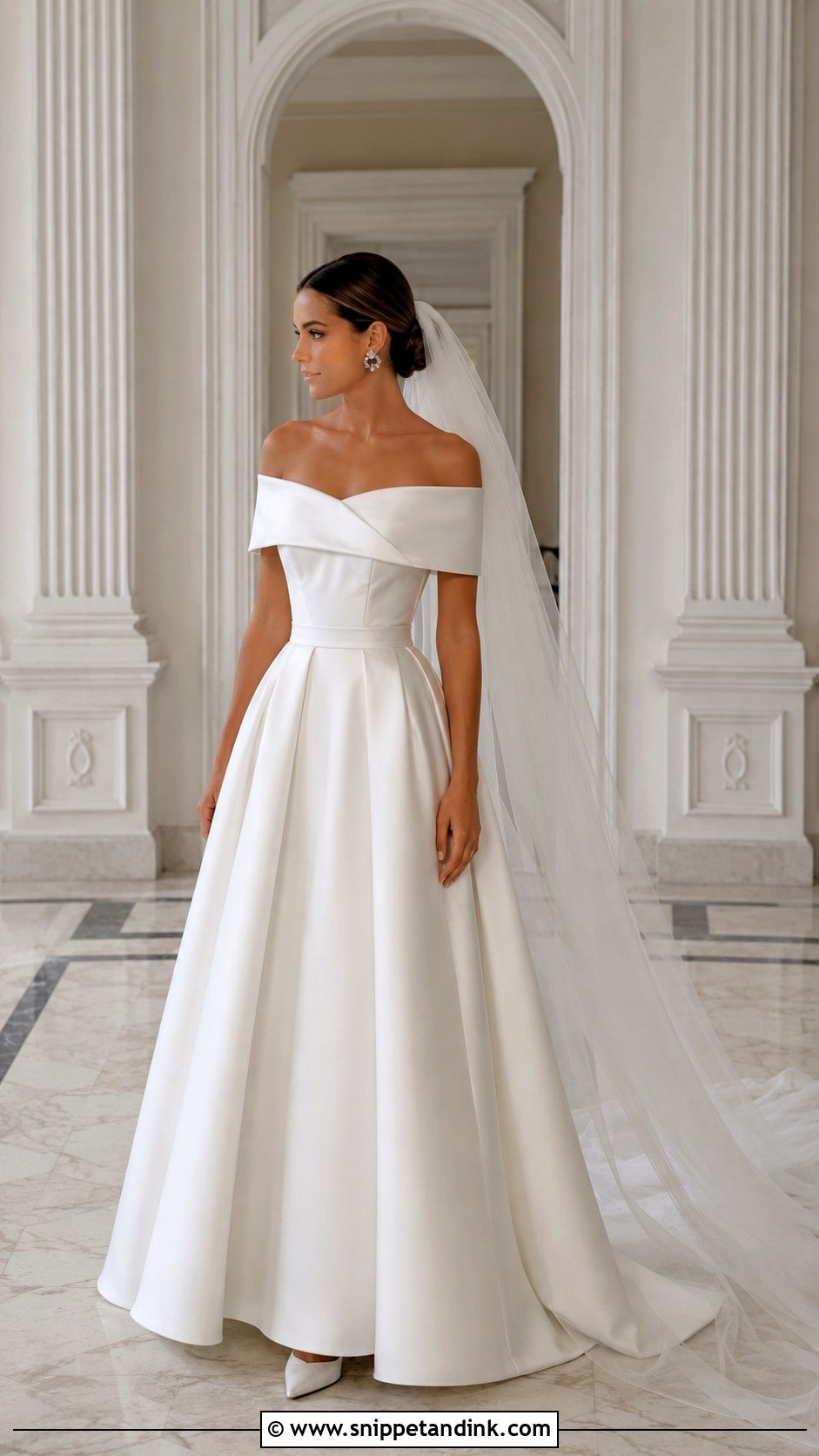
An off shoulder Mikado marriage gown gets its crisp shape from the fabric itself. Mikado is a heavy silk or silk-blend weave with enough body to hold a folded neckline and a pleated A-line skirt without layers of petticoat. The off-shoulder band is the part I fuss over: it has to sit securely on the upper arm and still let you lift a glass. A low bun, pearl clusters and a chapel veil tucked beneath the hair are all it needs, plus pointed satin pumps. The neckline is already the detail, so skip the necklace. Walk around the shop and wave at someone across the room before you sign off on the fit.
7. Square Neck Marriage Gown
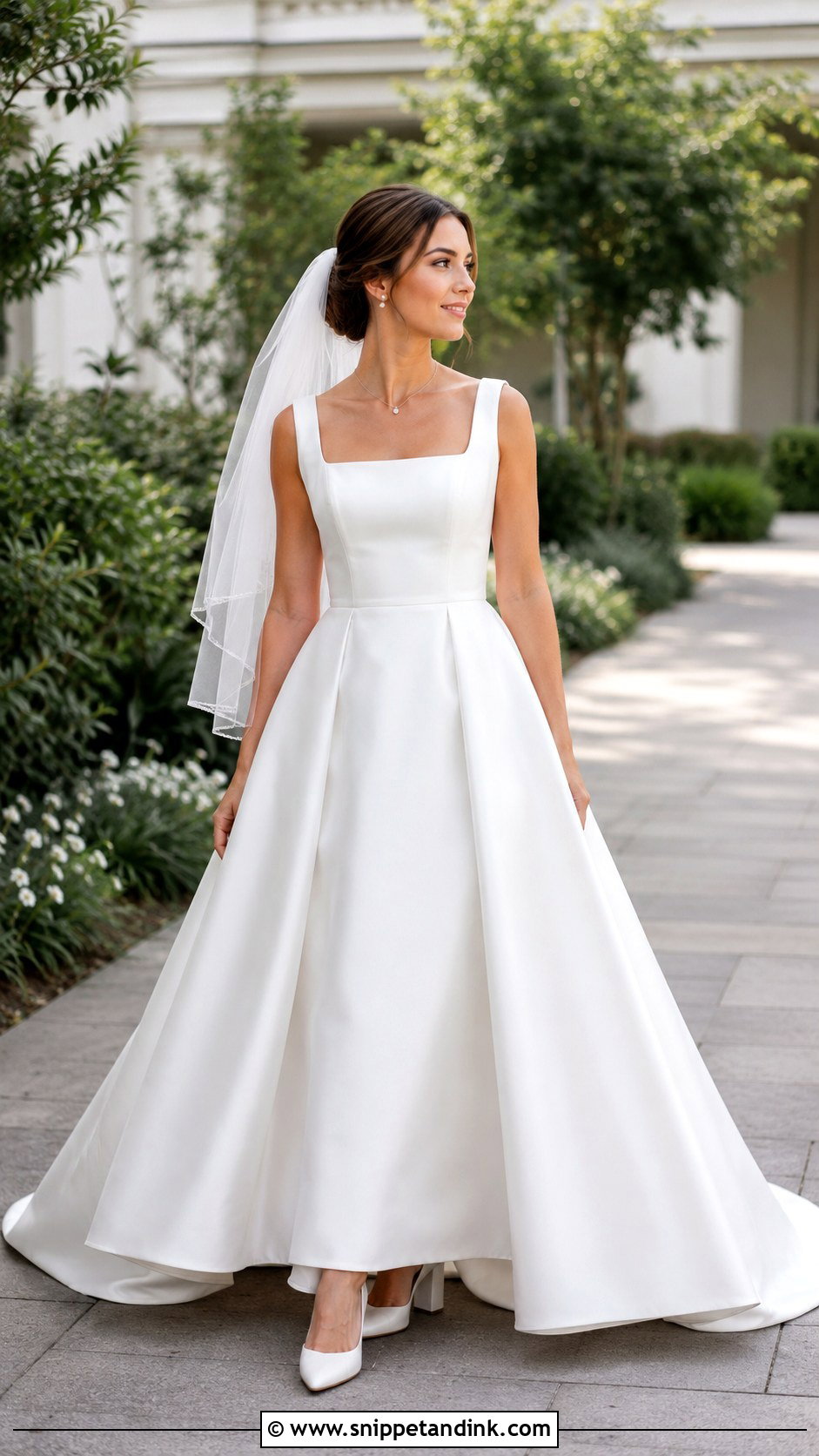
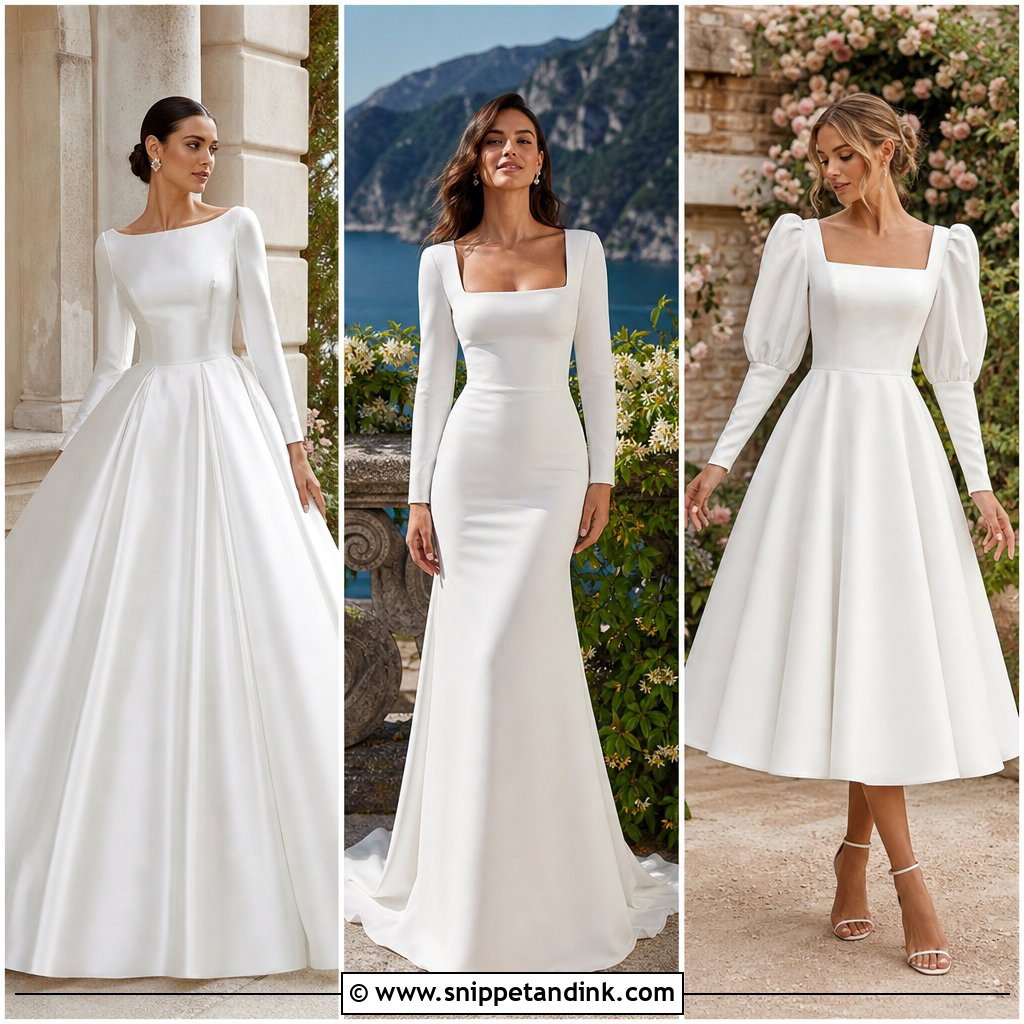
A square neckline draws clean lines across the collarbone and frames the face without much effort. It usually comes with wide straps or fitted sleeves, which makes it one of the more supportive necklines for a fuller bust. A structured bodice and a softly flowing A-line skirt in satin, crepe or matte silk keep it classic. When the back repeats the square, the gown looks considered from behind too. A delicate pendant, pearl studs and a soft veil on a low bun, plus block-heel pumps for garden paths. Ask your florist for a smaller bouquet so it doesn’t block the neckline in photos.
8. Sweetheart Mermaid Marriage Gown
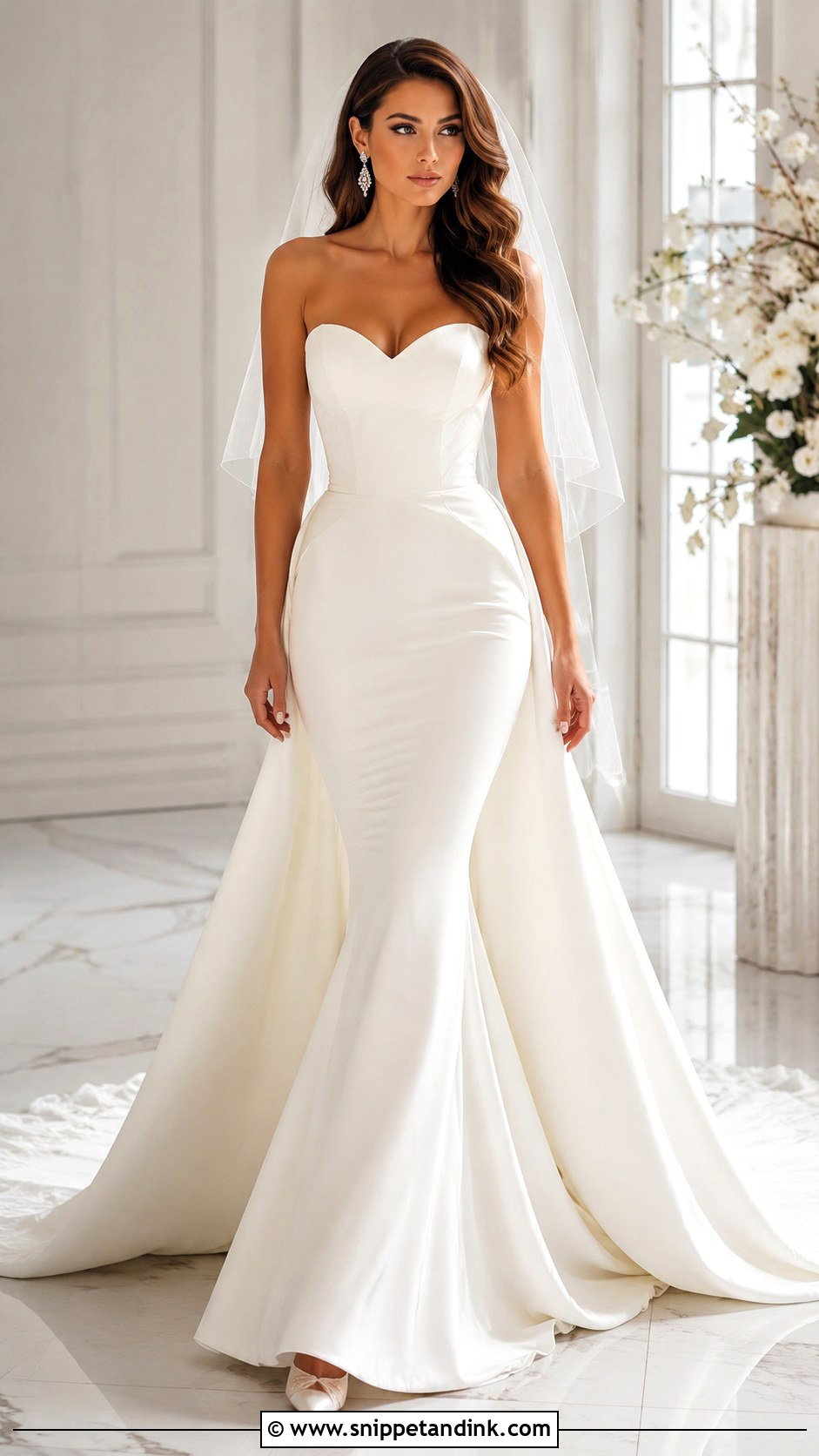
Mermaid gowns are the most unforgiving shape for movement, so where the flare starts matters more than how dramatic it is. If it begins too high on the thigh, you’ll shuffle; at or just above the knee, most brides can walk normally. Choose lined crepe or structured satin with a little give. The sweetheart neckline suits a short pendant, and side-swept waves, crystal earrings, pointed heels and a chapel veil complete it. A detachable train helps the reception look lighter. Request a bustle that keeps the flare’s shape when lifted, since a badly placed one makes the skirt bunch at the back.
9. Drop Waist Marriage Gown
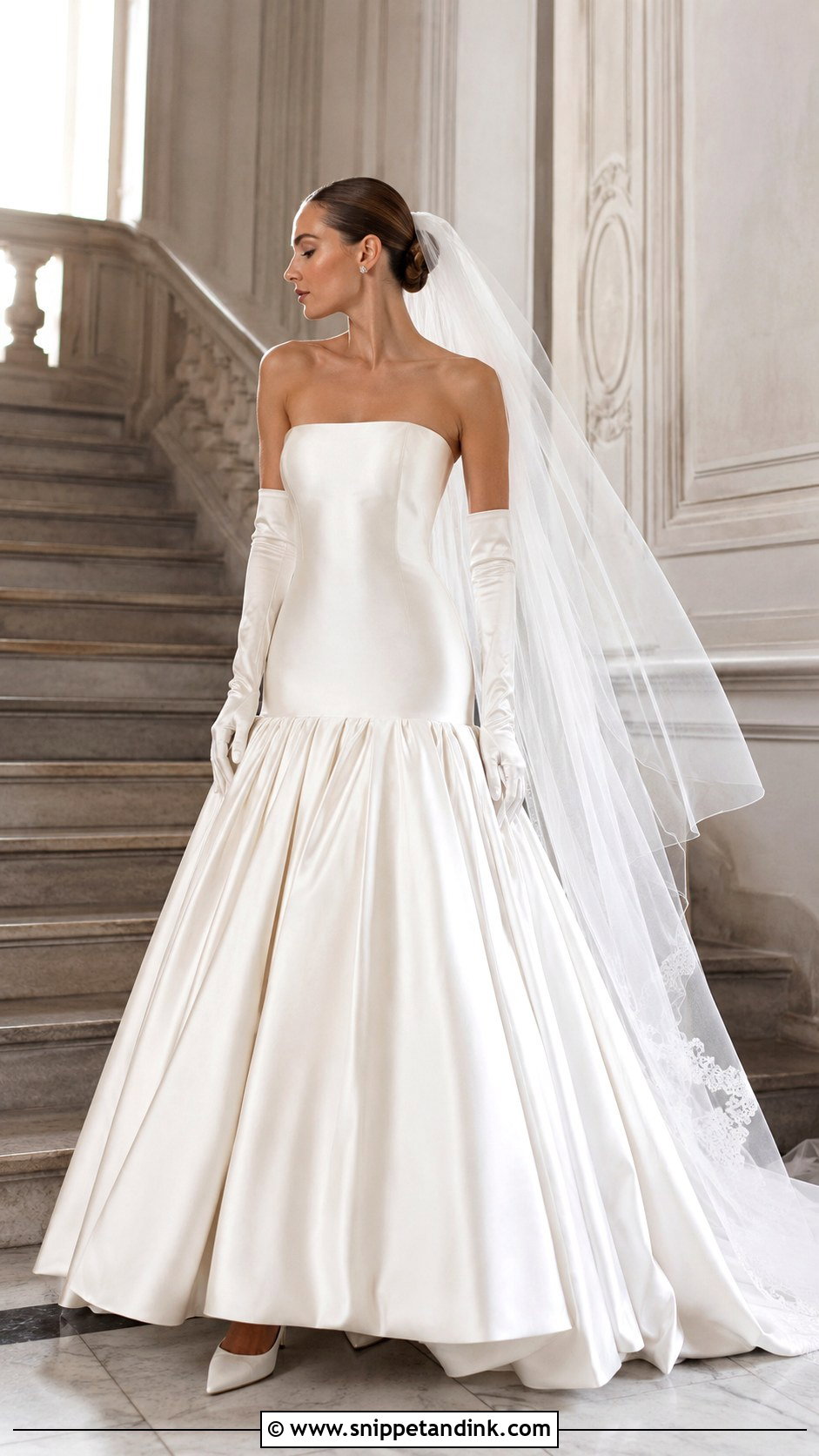
The drop waist carries the fitted bodice down past your natural waist before the skirt opens out, which gives a long, slightly old-Hollywood line. I’d use smooth satin with curved seams in the bodice and a gathered or pleated skirt so the contrast between structure and volume is obvious. Long gloves suit a strapless version. Keep the rest simple with crystal studs, a sleek bun, pointed pumps and a plain cathedral veil so the waistline is visible from the side. The seam must sit level all the way round, and a bodice that ends too low will dig in when you sit. Short-waisted brides may find it cuts them in half; it’s worth trying before committing.
10. High Neck Vintage Lace Marriage Gown
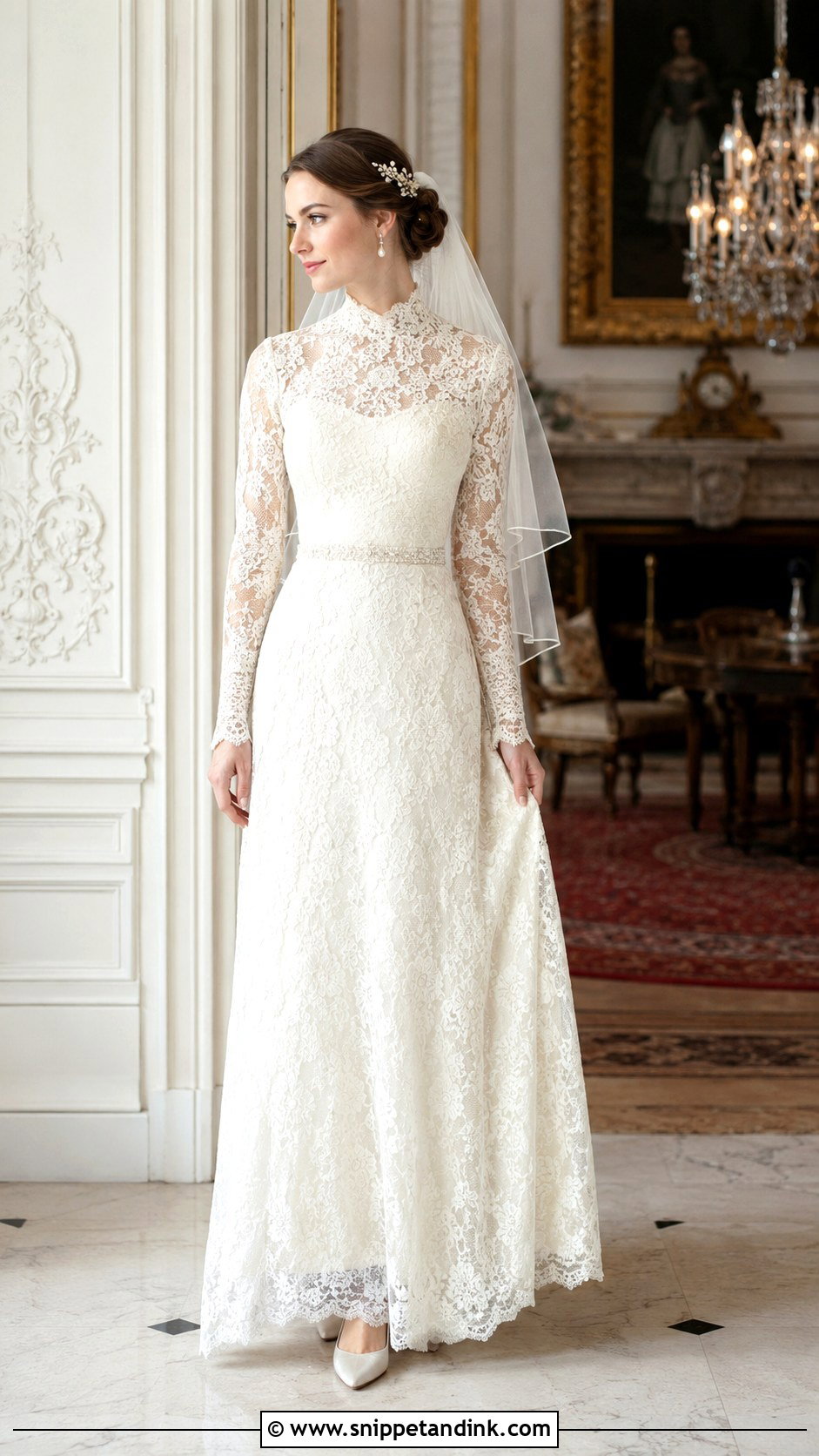
A high lace neck gives a vintage feeling and plenty of coverage, but it can make the upper body look busy if the rest of the gown is heavy too. I balance it with a lined bodice, sheer lace at the throat and sleeves, and a flowing chiffon or lace skirt. Pearl earrings, a low twisted bun and a fingertip veil placed below the hairstyle keep the neckline clear. Add closed ivory heels and one small floral pin. Stop at one or two vintage references; more than that tips into fancy dress. Turn your head side to side at the fitting, because a stiff lace collar can rub the neck raw over a long day.
11. Floral Appliqué Marriage Gown
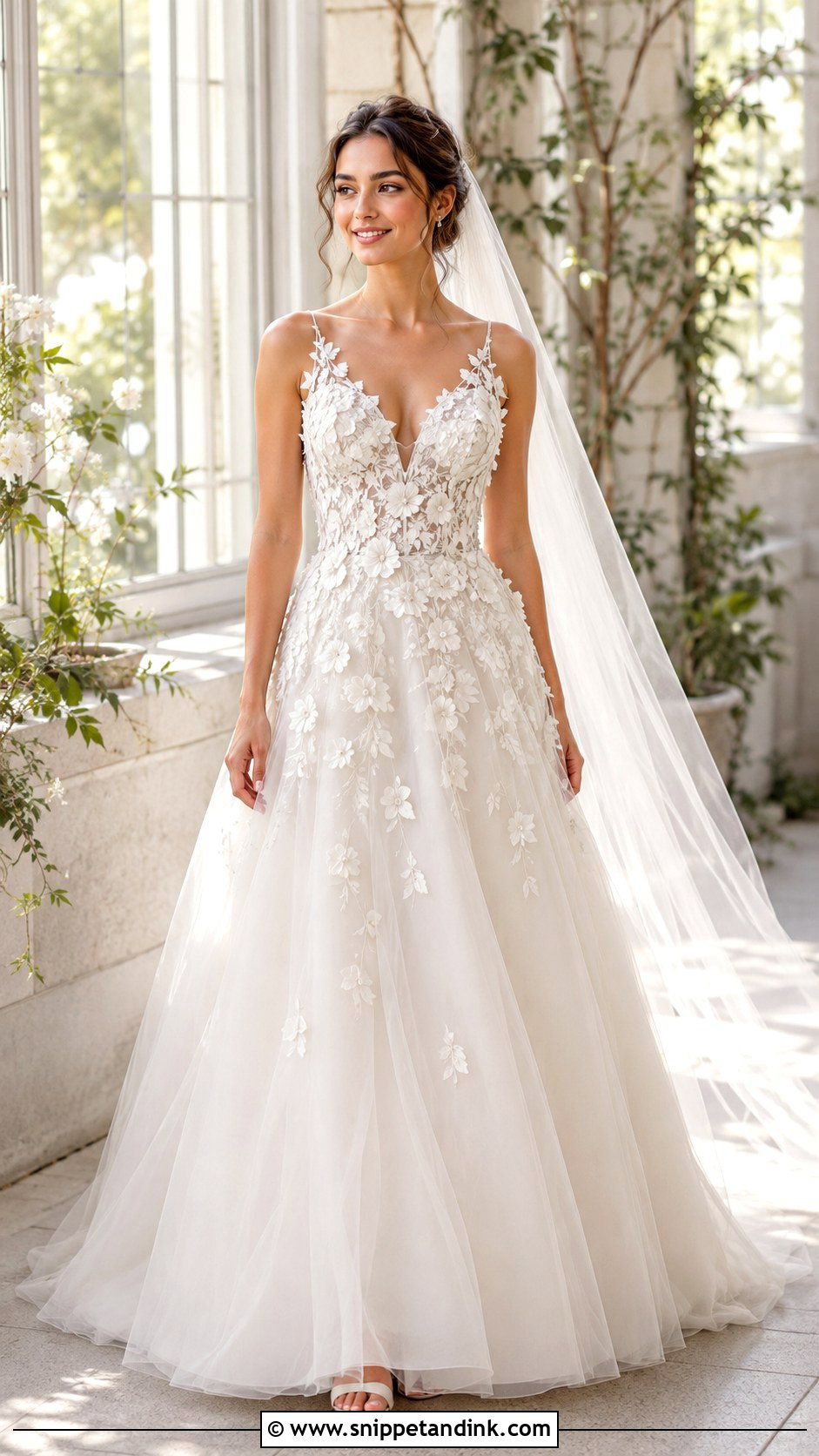
Three-dimensional flowers are the most romantic texture a gown can have, and the most fragile. I like them clustered across the neckline, waist and upper skirt, thinning out toward the hem so the eye travels down naturally. An A-line gives the appliqués room without needing a vast skirt. With this much texture, the accessories must be near-invisible: pearl studs, barely-there ivory sandals and a plain tulle veil. Loose waves or a soft pinned updo suit it, along with a compact bouquet. Before the final fitting, run your hand over the raised petals. Any loose edge will catch the veil’s tulle, and that’s a hard snag to fix on the day.
12. Chiffon Empire Waist Marriage Gown
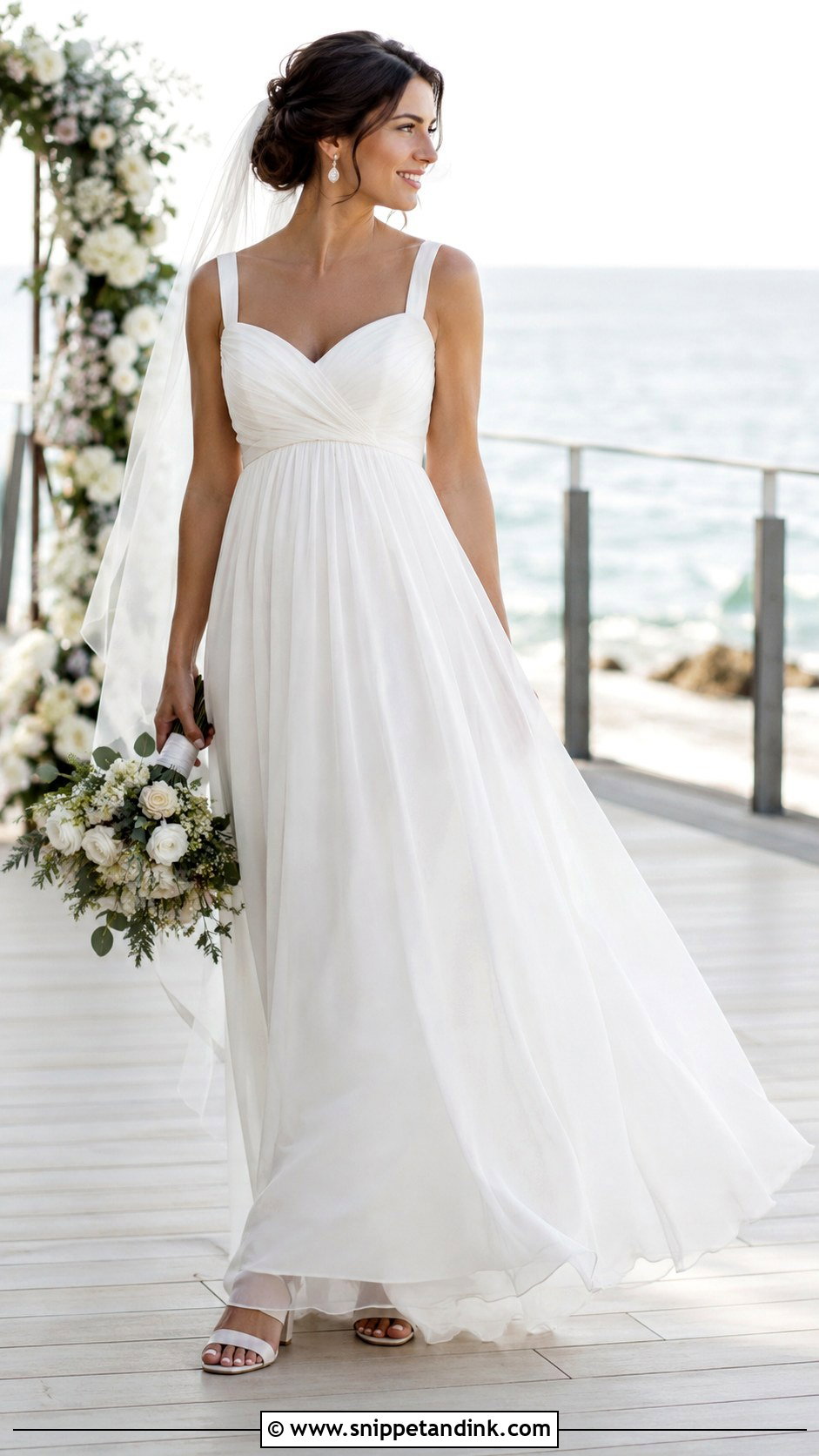
A chiffon empire waist marriage gown is my first suggestion for a hot destination wedding. The seam sits just under the bust and the skirt falls loose, so there’s no tight waistband in the heat. Gentle ruching or lace trim at the neckline gives shape without weight, and a properly fitted inner bodice with supportive straps keeps it secure. Low block-heel sandals sink less into sand and lawn than stilettos. Small drops, a flowing fingertip veil and soft curls suit the movement. Chiffon lifts in a sea breeze, so I sometimes add small weights inside the hem, and the lining must be opaque in bright sun.
13. Tea Length Marriage Gown
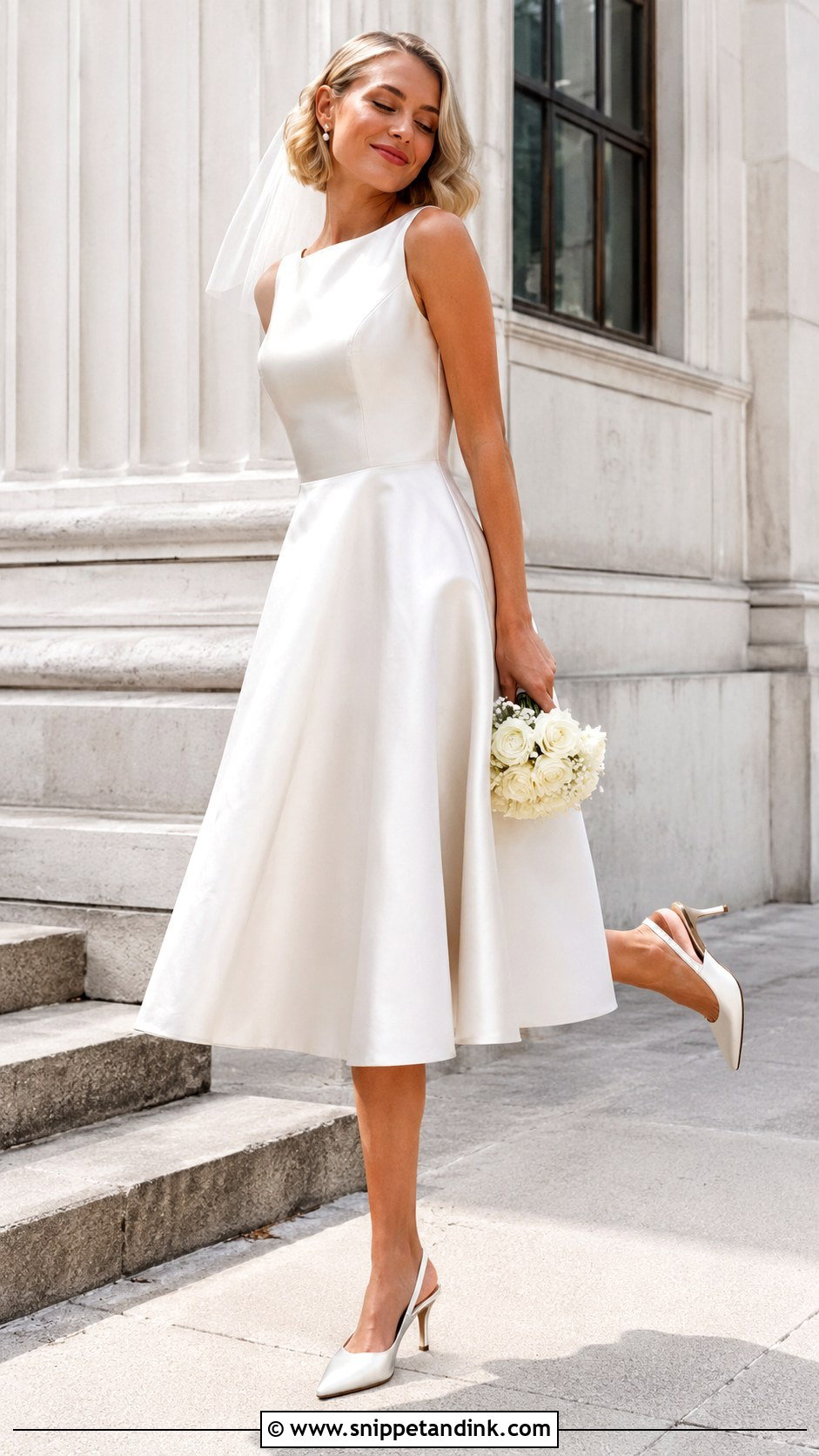
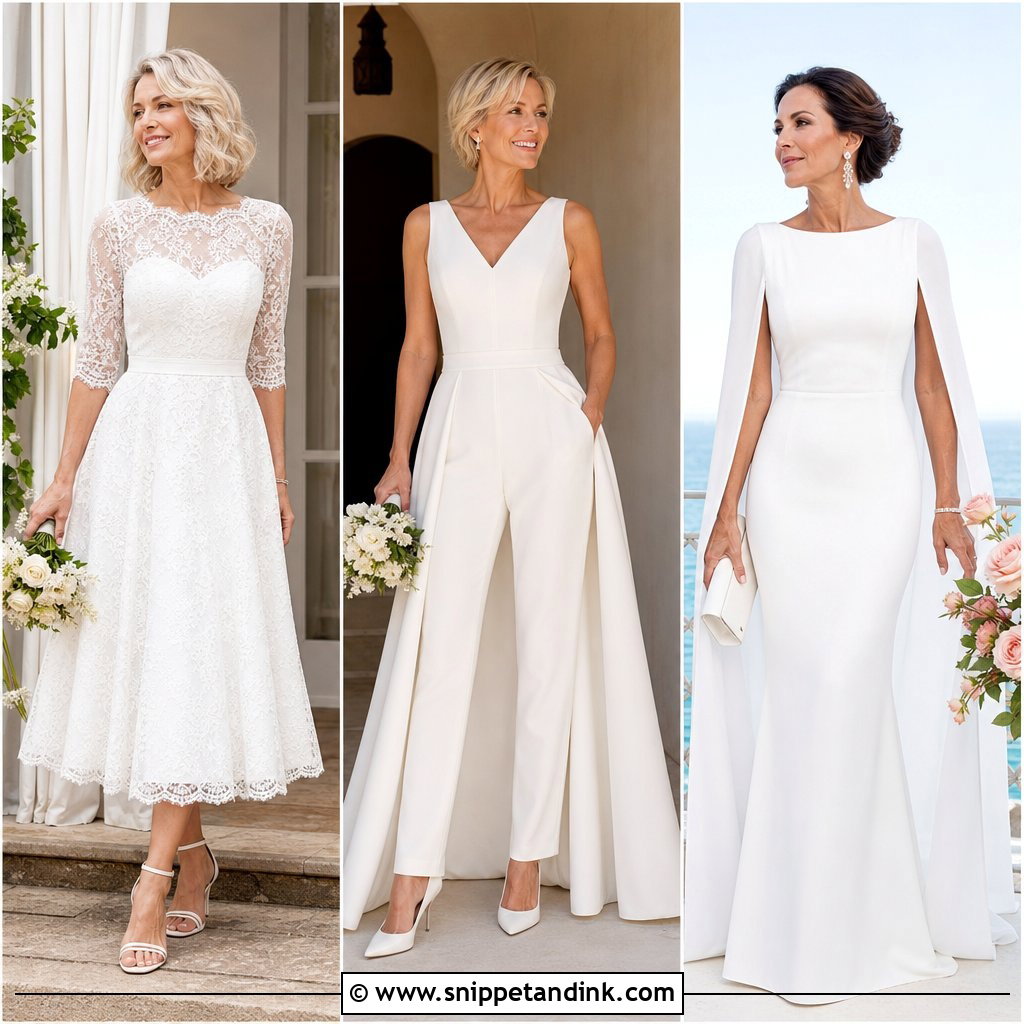
Tea length lands between knee and ankle, which puts your shoes on show, so choose them as carefully as the dress. A fitted bodice with a flared satin, lace or organza skirt holds the shape best. Pointed pumps, embellished slingbacks or neat block heels all work. Add pearl earrings, a short veil and a neat bun or waved bob. The hem placement is everything: I mark it just below the fullest part of the calf, never across it, since that point shortens the leg visually. Ideal for courthouse ceremonies and small daytime parties, and very easy to dance in.
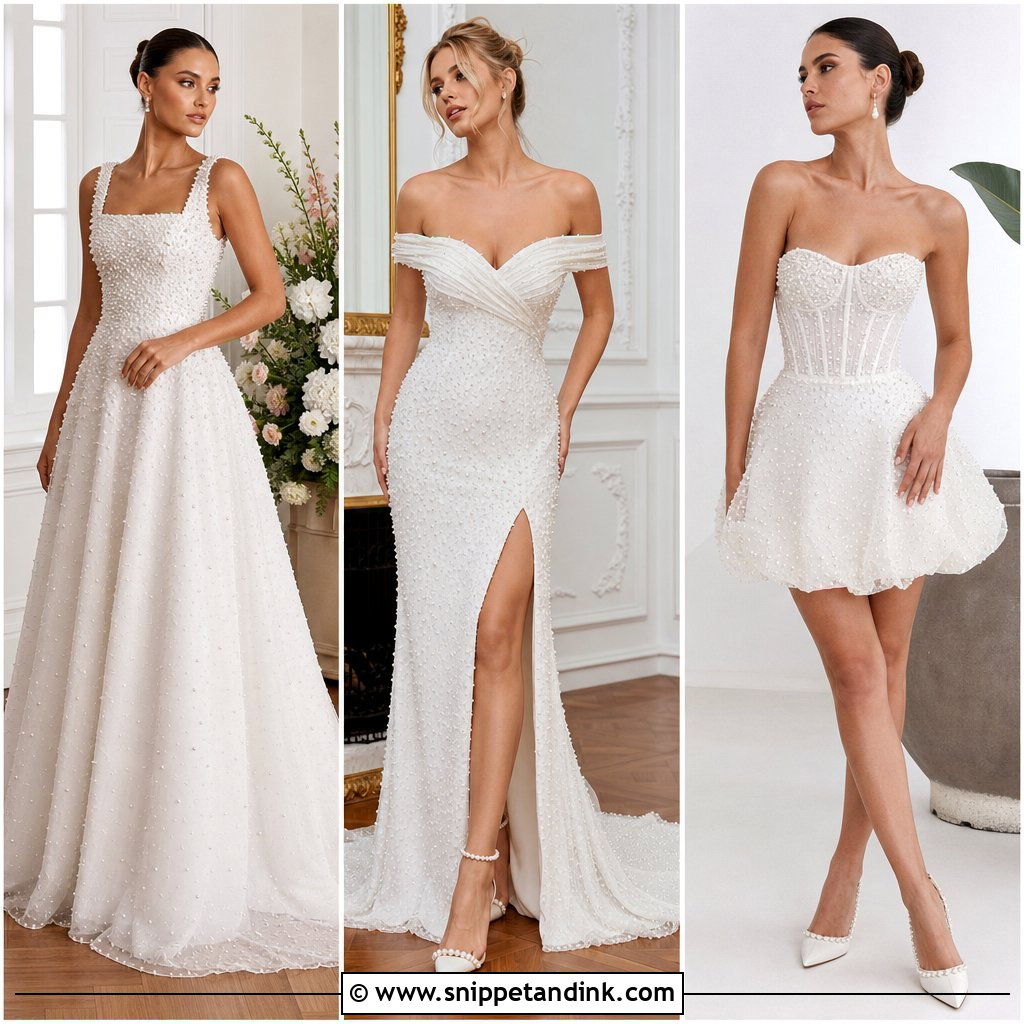
14. Pearl Embellished Marriage Gown
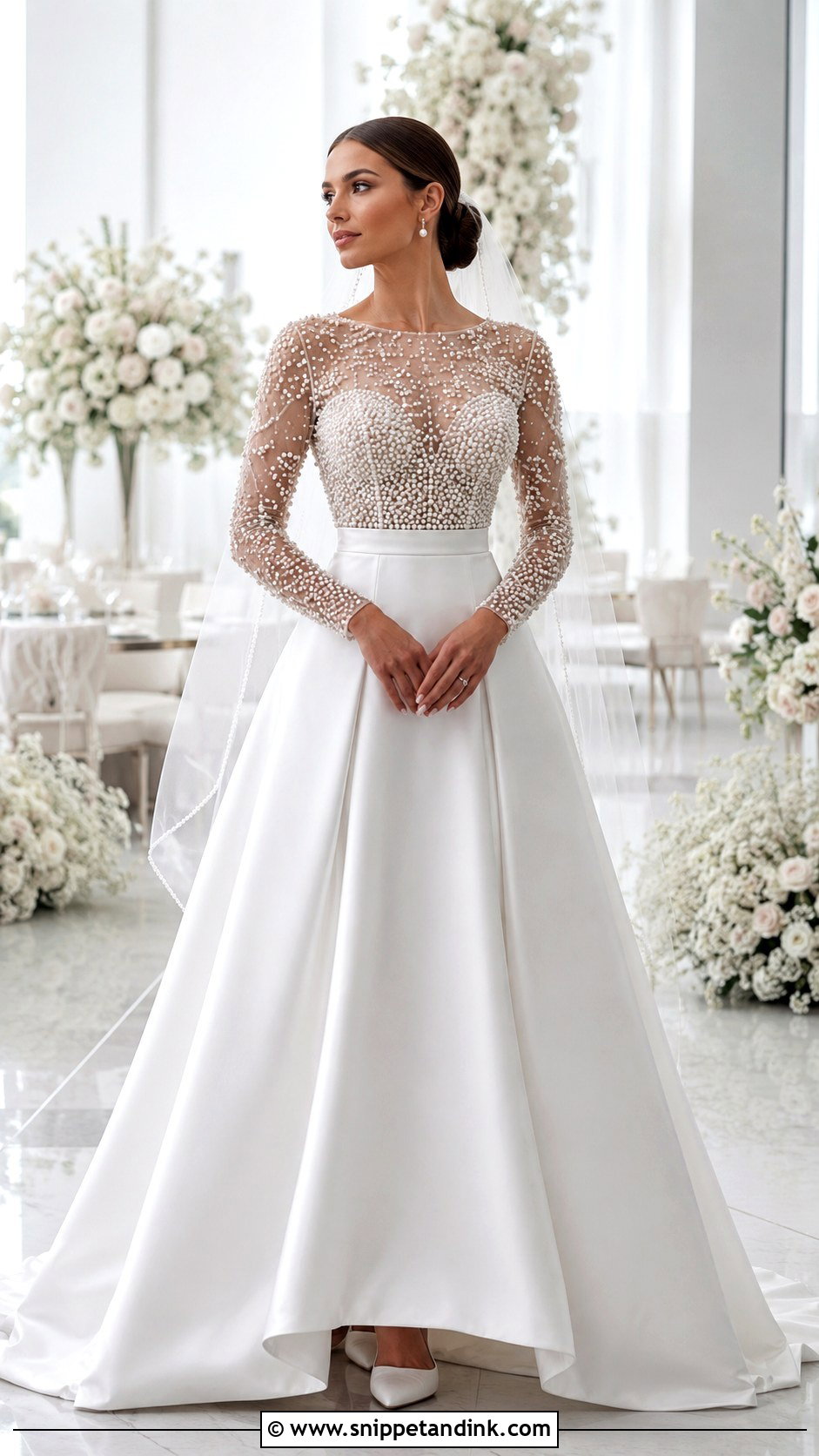
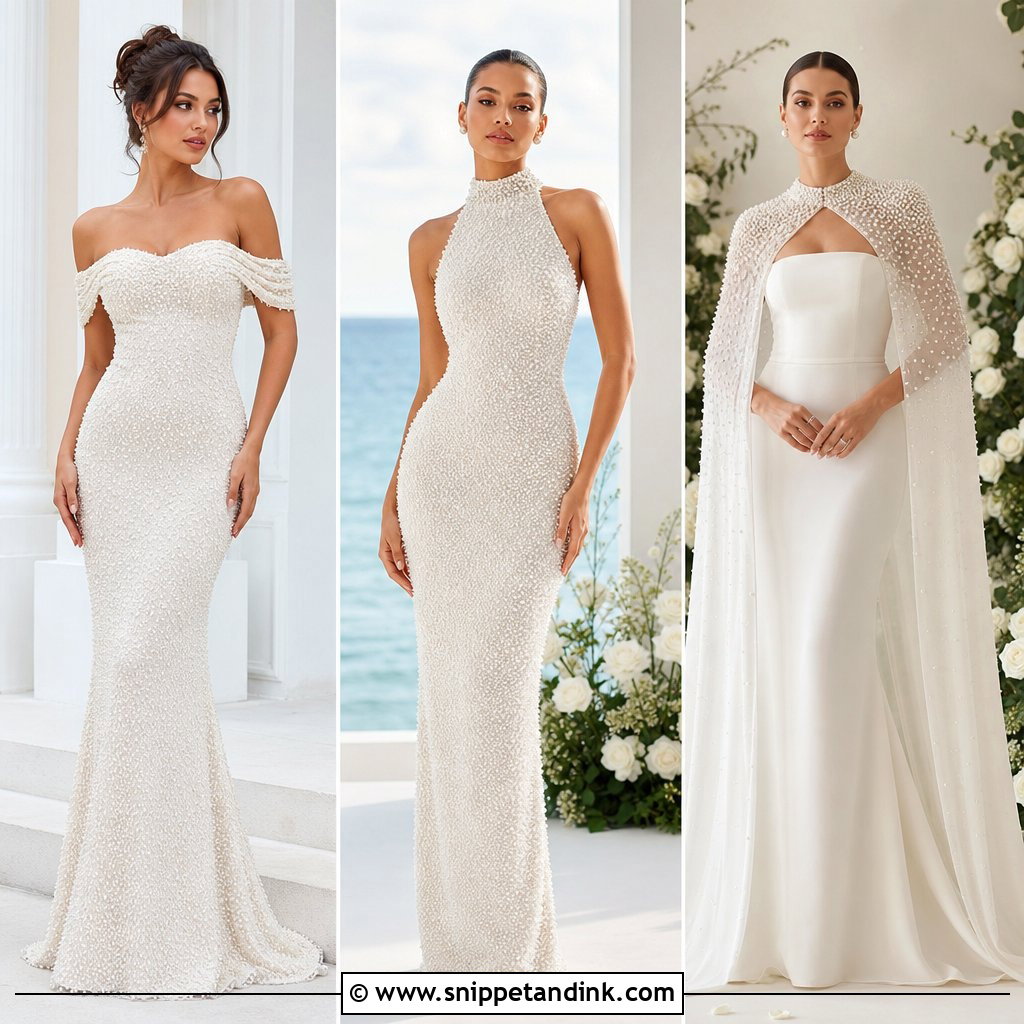
Pearls give a soft glow where crystals give sharp sparkle, and that difference shows clearly in daylight photos. A sheer pearl-covered bodice over a clean satin skirt keeps the embellishment from spreading everywhere; scattered pearls over tulle are a lighter alternative. With so much detail, I keep the rest restrained: small pearl earrings, satin pumps and a plain veil with only a narrow pearl edge. A smooth updo lets the shoulder beading show. Check the beadwork before the final fitting and ask the seamstress to secure loose threads. Heavily beaded sleeves can scratch the inner arm, so the lining against your skin needs to be soft.
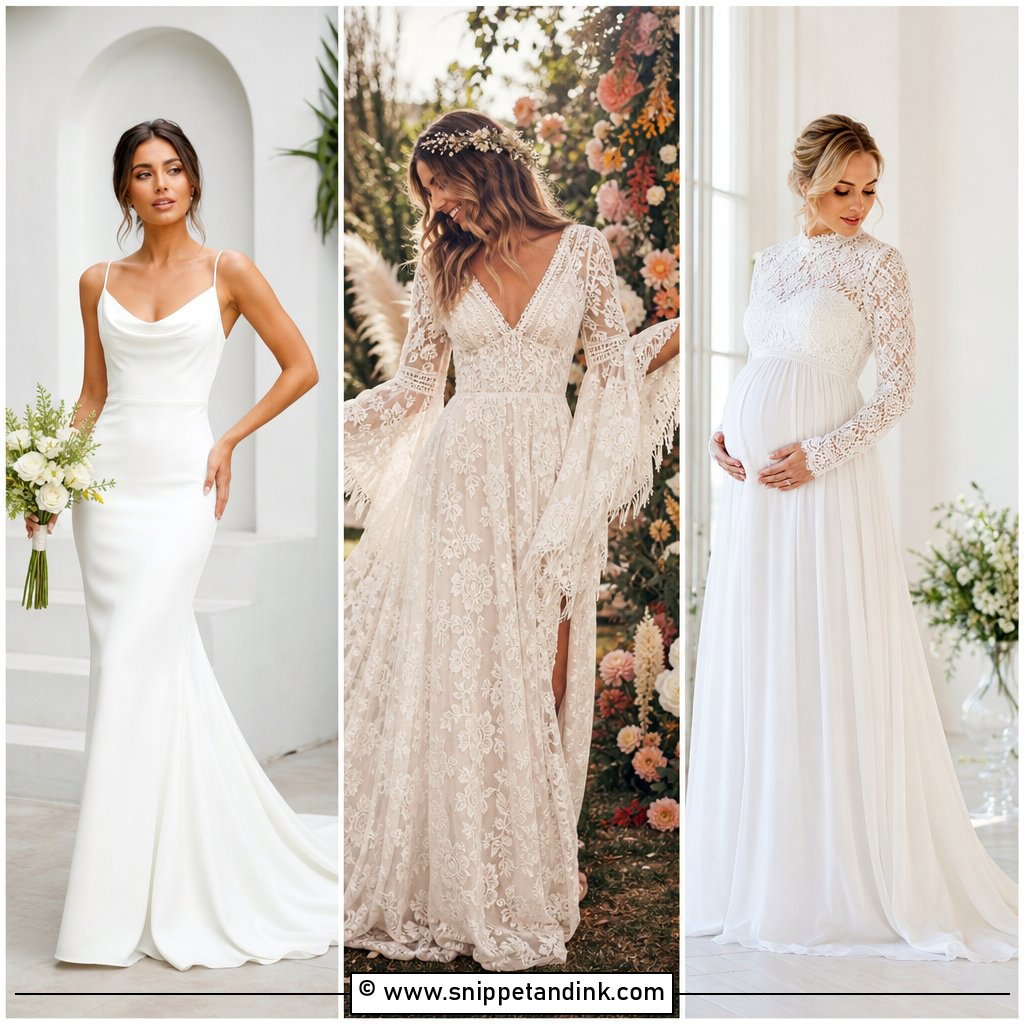

15. Basque Waist Marriage Gown
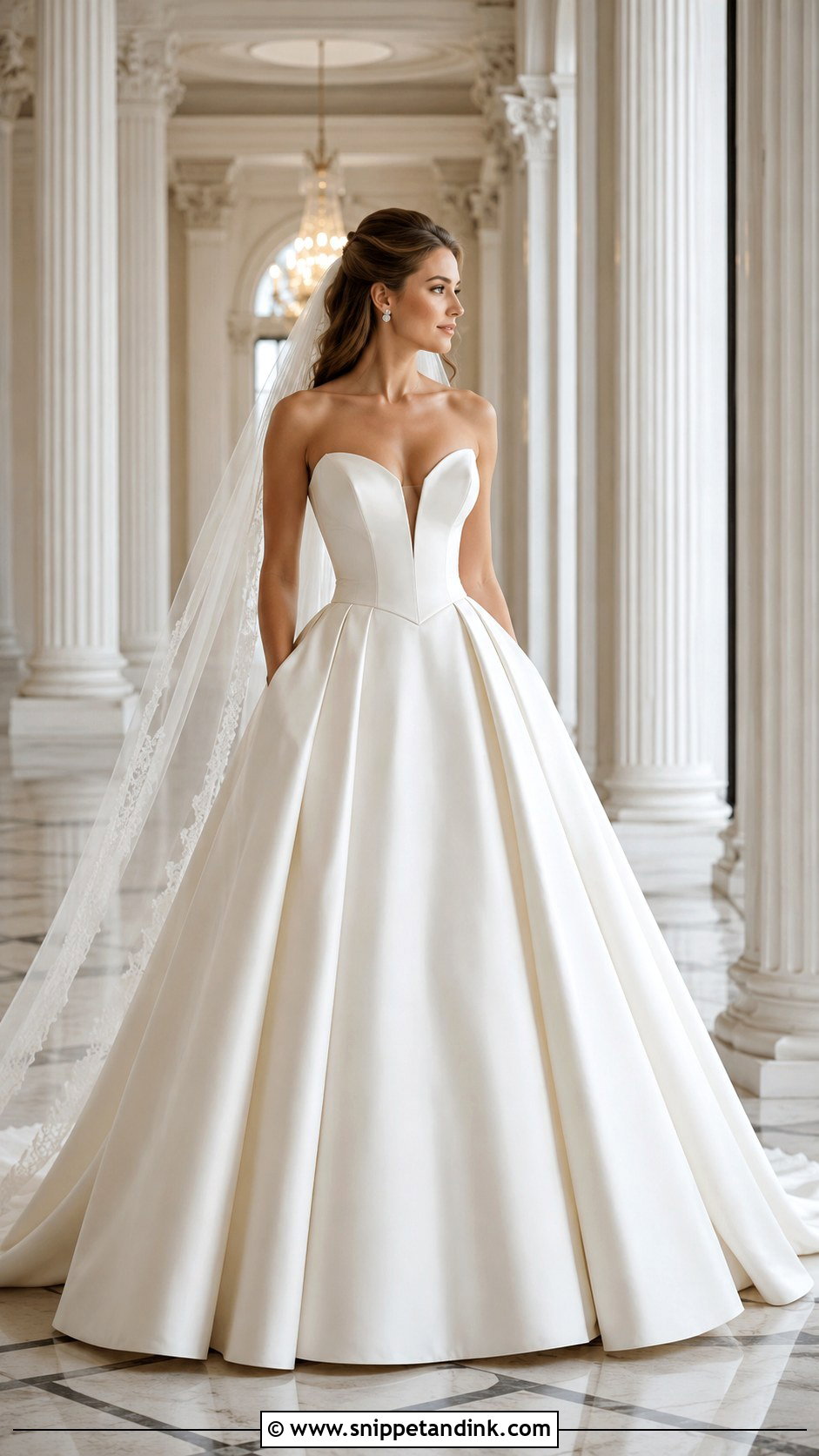
A basque waist marriage gown dips into a V or U below the natural waist, which narrows the midsection and makes a full skirt look even fuller. It needs structured satin, taffeta or Mikado to keep that seam crisp. Strapless reads ballroom; wide straps give more support. A cathedral veil, crystal studs, pointed pumps and a sleek bun or polished half-up style keep it regal. The point of the V must suit your torso length. Too low and it digs into your thighs when you sit, so I always ask brides to sit and cross their legs in this gown before alterations are finalised.
16. Cape Sleeve Marriage Gown
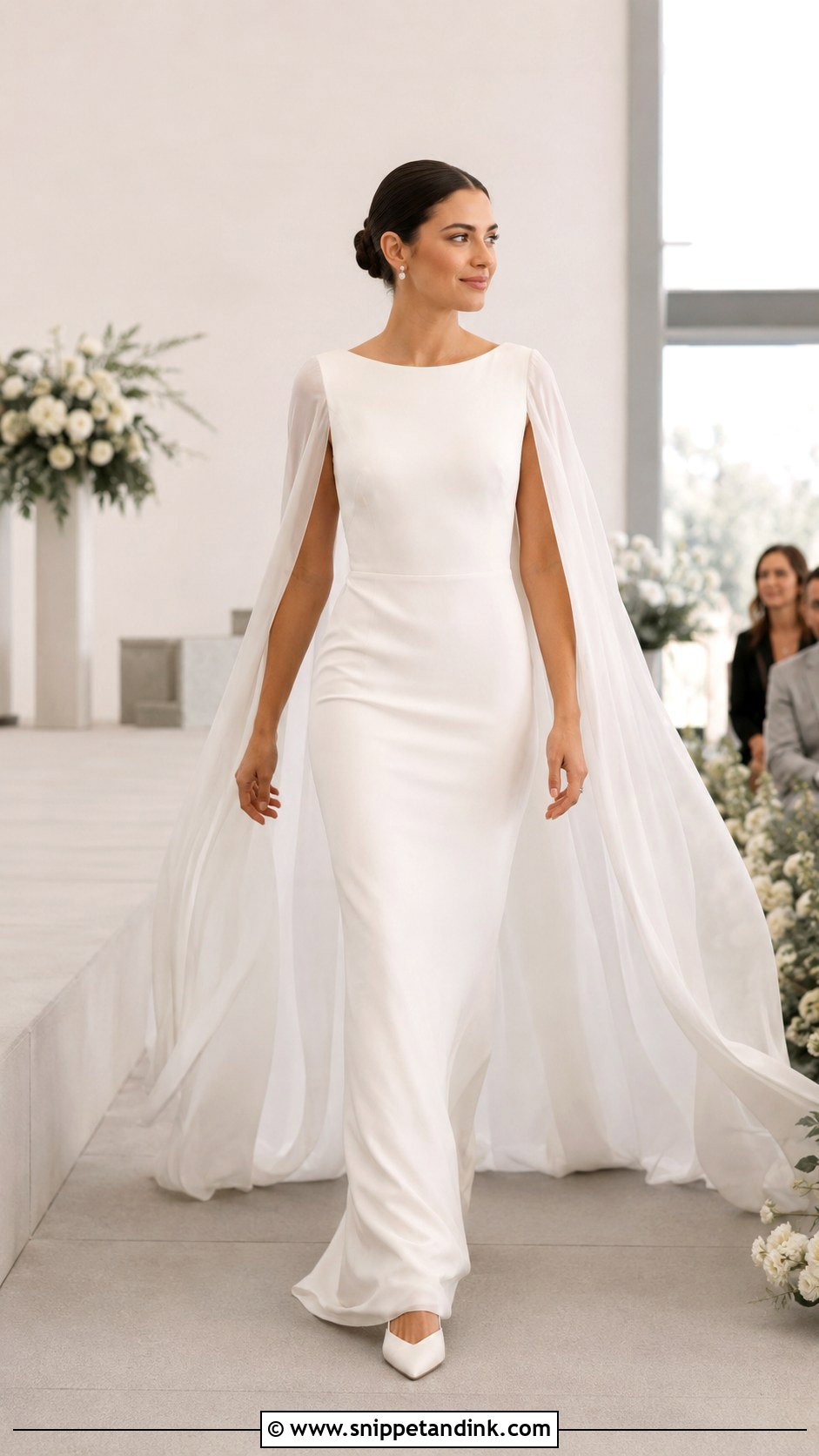
Cape sleeves give arm coverage without anything tight around the arm. Sheer panels fall from the shoulders and trail behind like a light train, over a clean column or A-line in crepe, satin or chiffon. Keep earrings small, hair sleek and heels pointed so the cape is the focus. Often a veil isn’t needed at all; if you want one, make it short and plain. Detachable capes give more freedom at the reception. Length is the thing I test most: walk, then turn quickly. A cape that’s too long tangles around your arms or gets stepped on by whoever is behind you.
17. Detachable Overskirt Marriage Gown
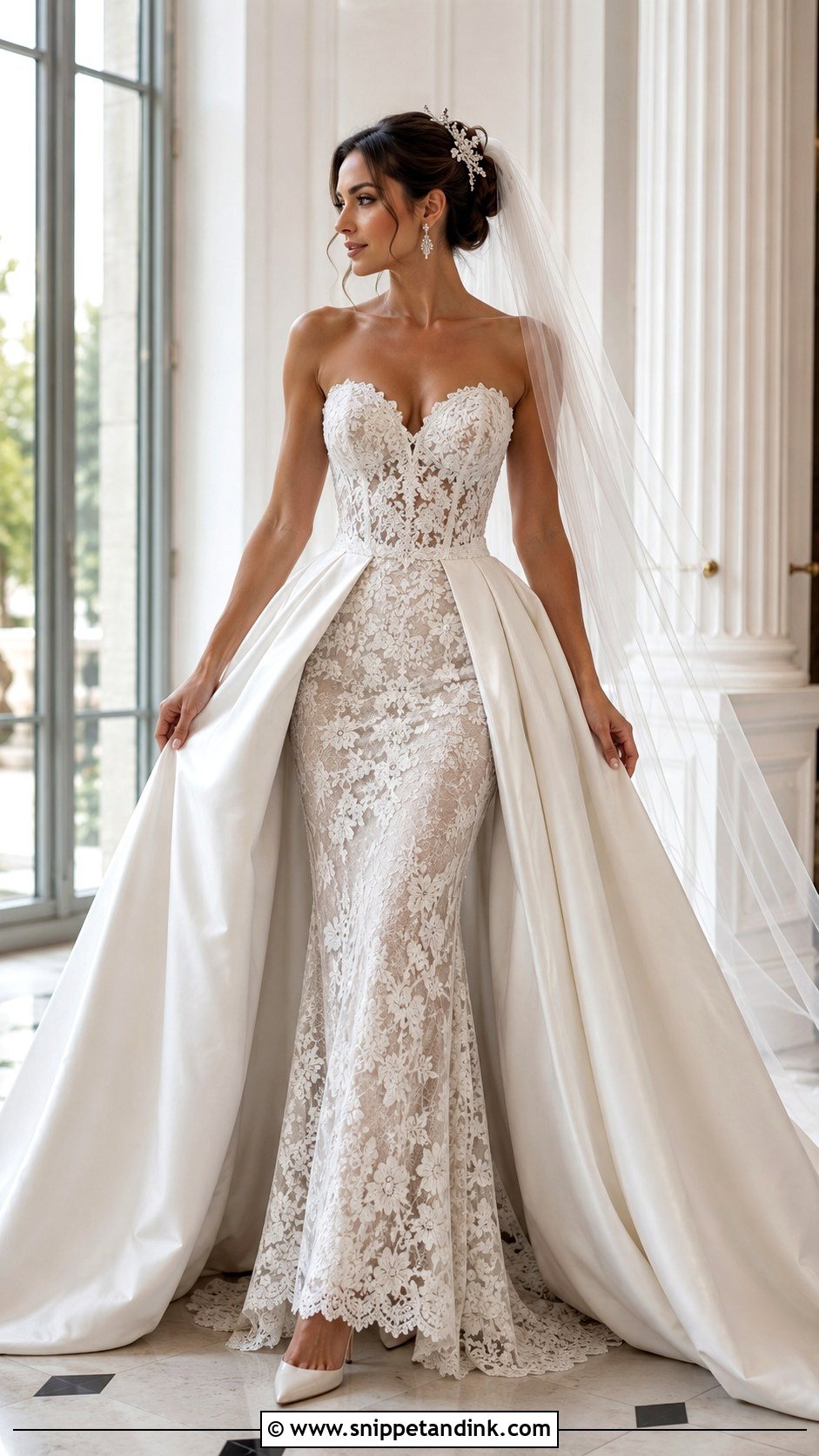
A detachable overskirt gives you a full ceremony silhouette and a slim reception dress without a second gown. Underneath, a fitted crepe, lace or satin column or mermaid; on top, a skirt with a waistband that blends into the bodice rather than looking like a belt. A long veil, crystal earrings and pointed satin heels suit the ceremony, then swap the veil for a jewelled comb once the skirt comes off. Hooks and snaps behind a placket are easier for a friend to manage than tiny buttons. Have your maid of honour practise taking it off at the final fitting, not on the day.
18. Blush Pink Marriage Gown
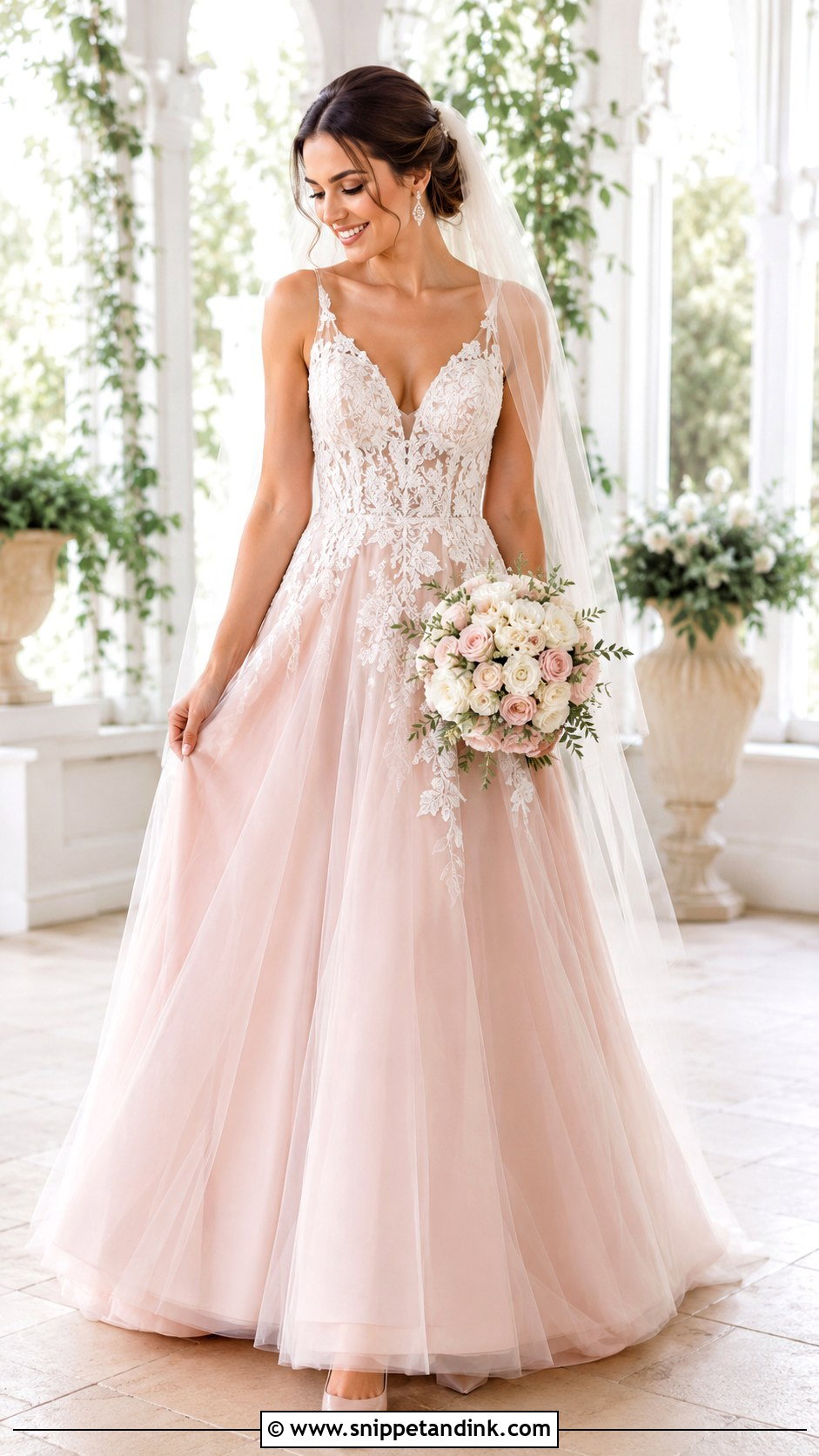
Blush works best as a lining under ivory lace or embroidered tulle, where it warms the white rather than replacing it. Pale rose and nude-pink are the most wearable tones. A clearly bridal shape such as an A-line or ball gown keeps the colour from looking like a prom dress. Ivory shoes and an ivory veil tie it back to tradition, rose-gold earrings suit the warmth, and a bouquet in cream, pink and green supports the tone without matching it exactly. I always take blush gowns to a window. Shop lighting is warm and flattering; daylight shows whether the pink complements your skin or disappears into it.
19. Plus Size Structured A-Line Marriage Gown
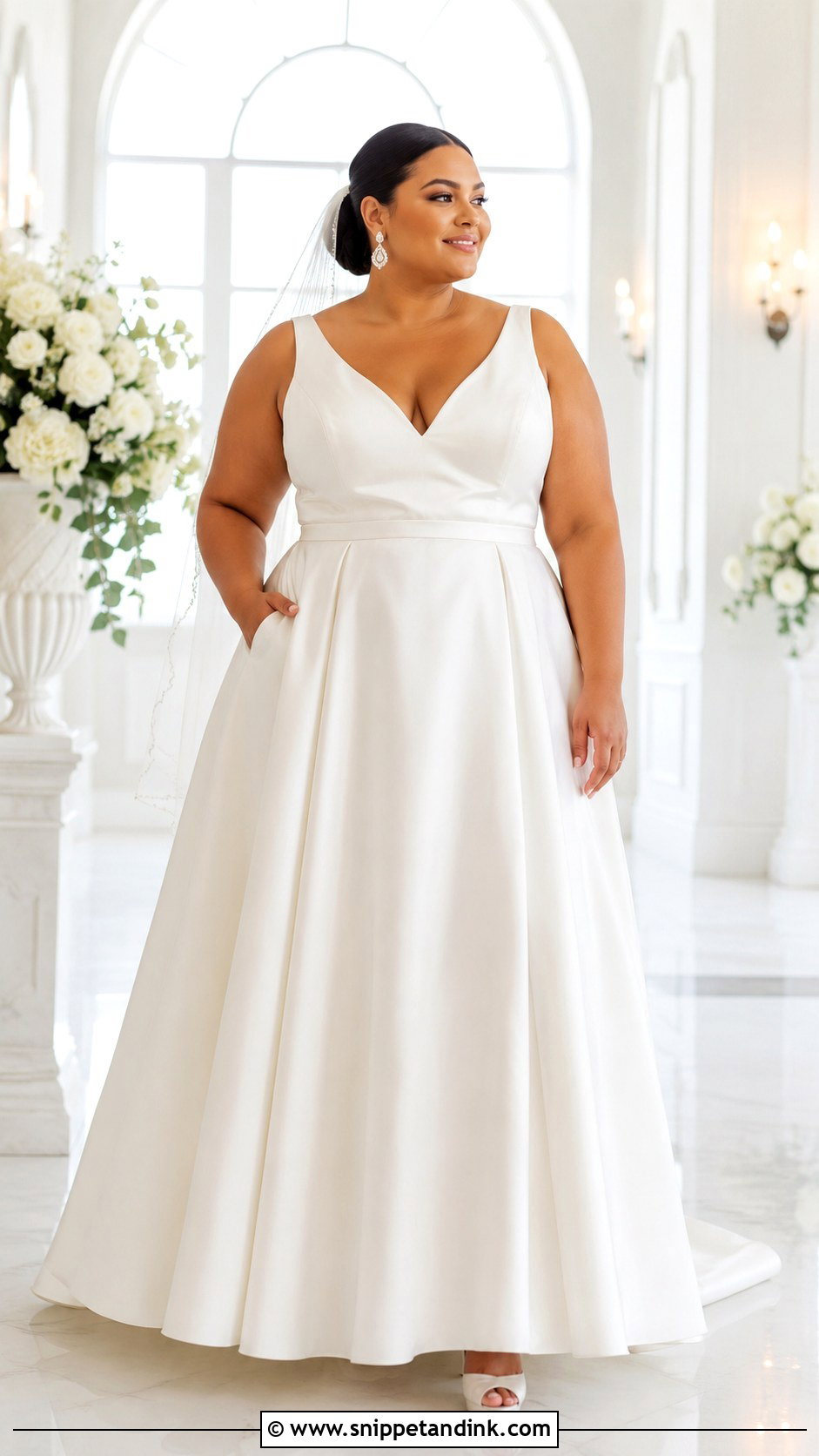
For plus-size brides, structure is about support, not hiding. I look for real boning, built-in cups and a waist seam sitting exactly at your natural waist, because a seam that drifts up or down is what makes a gown look ill-fitting. Wide straps, a V-neck or off-shoulder can all work depending on the coverage you want. Satin or lined lace skims rather than clings. Supportive block heels, statement earrings, a light fingertip veil and a polished updo complete it. Order to your largest measurement and let alterations take in the rest. Never order a smaller size as motivation; the dress should fit the body you have on the day.

20. Modest Satin Marriage Gown
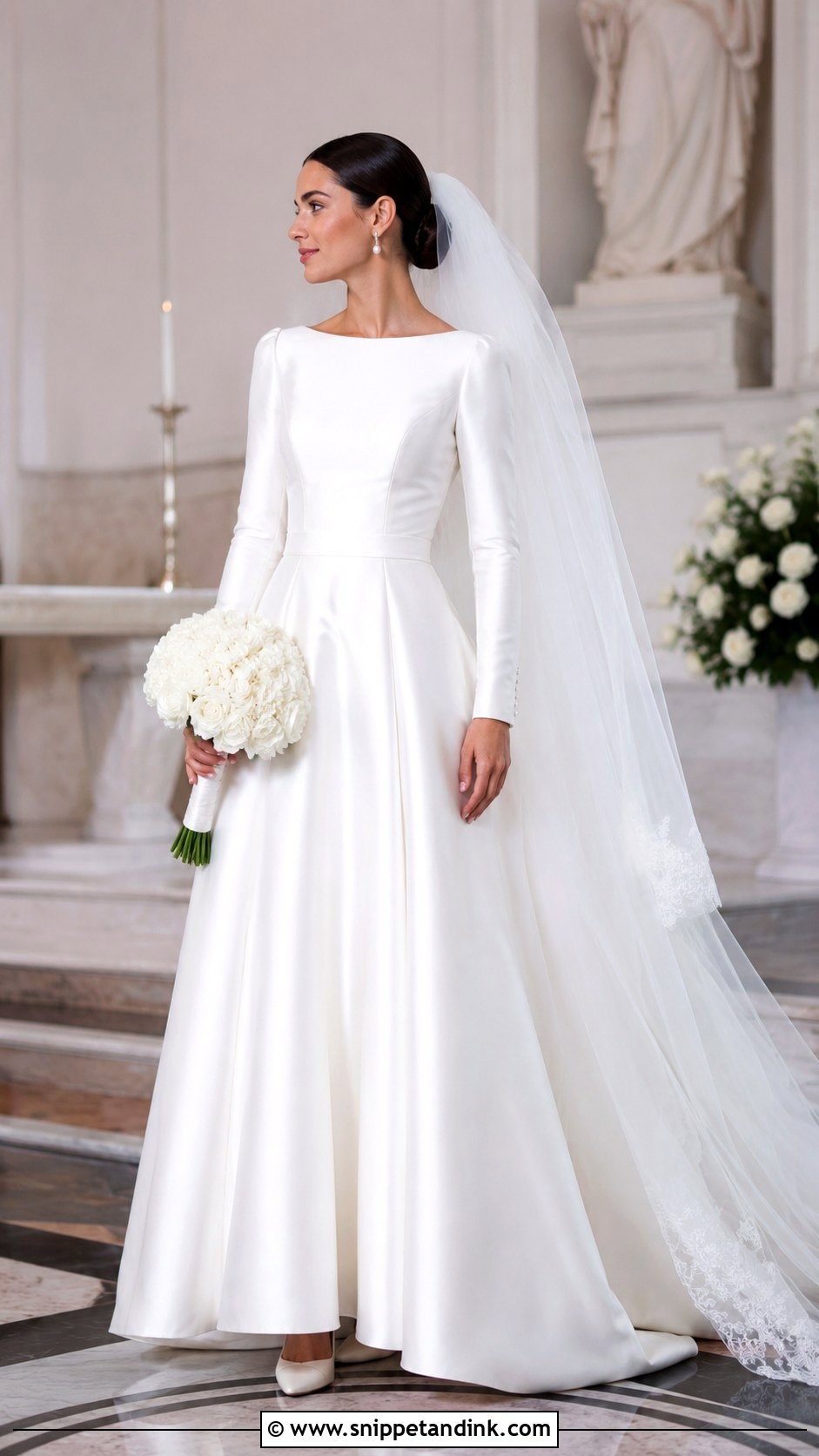
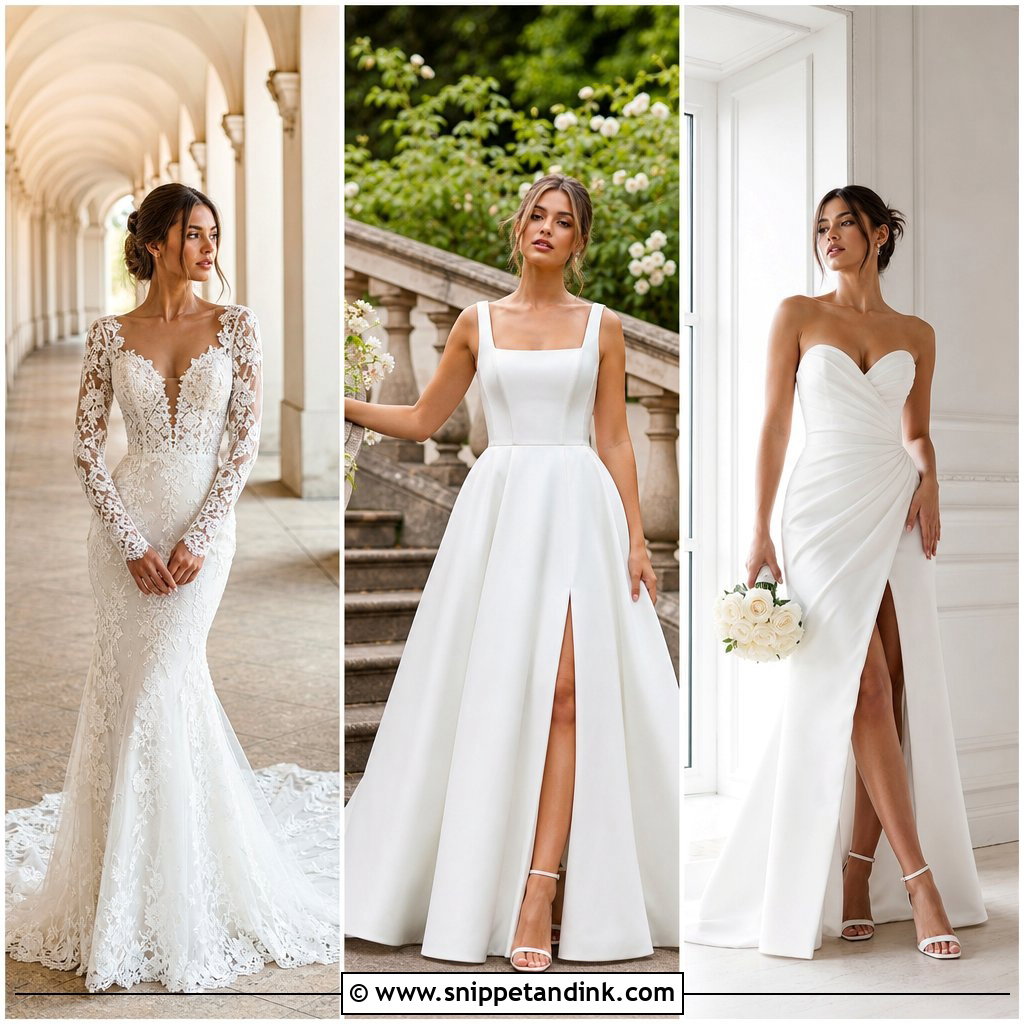
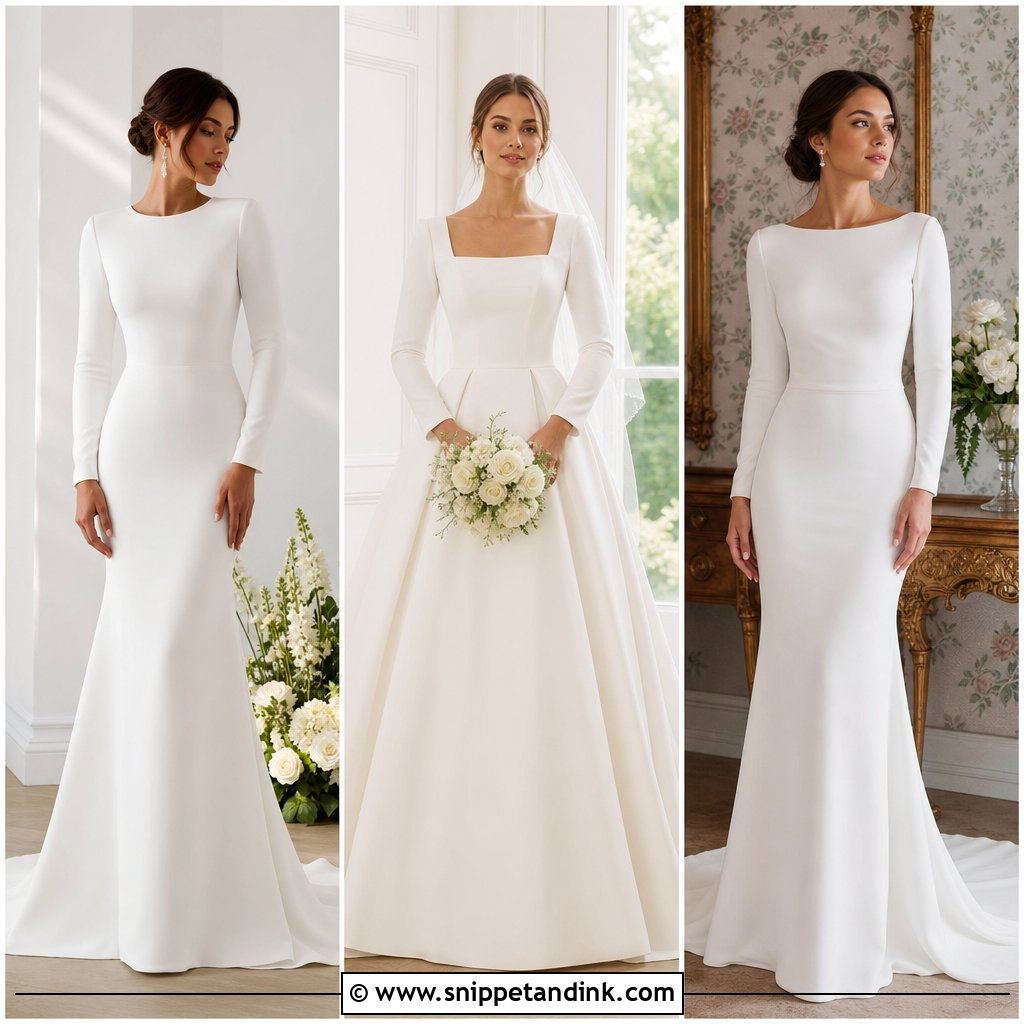
Modest bridal dressing has become much more modern, and satin suits it because it looks rich with no decoration at all. A bateau or soft jewel neck, fitted long sleeves and a defined waist over an A-line skirt give full coverage. Covered buttons down the back add tradition. Pearl earrings, closed pumps and a chapel veil under a neat low bun suit it. If it feels too plain, I’d add interest through cuff buttons, waist pleats or a removable bow, not lace. Satin sleeves have little give at the elbow, so make sure the lining has some stretch or you’ll feel it every time you bend your arm.
How These Fabrics Look at Hour Ten
Every fabric in this list behaves differently once you’ve sat in a car, through dinner and on a dance floor. I’d weigh this as much as the shape.
- Satin creases across the lap and the back of the skirt. A steamer at the venue fixes it before portraits, not after.
- Crepe barely creases but shows sweat and underwear lines, so good shapewear is worth it.
- Mikado and taffeta hold their shape all night, though taffeta rustles when you walk.
- Chiffon and tulle are light and cool, but they snag on bouquet wire, jewellery and chair backs.
- Lace hides small marks well, and the hem picks up dirt from outdoor paths fastest.
Where the Gown Should Go the Week After
Get it to a specialist cleaner within a few weeks. Spilled champagne, sugar and sweat can be invisible at first and then oxidise into yellow-brown stains months later, which are much harder to lift. Point out the hem and any marks you know about.
For storage, I’d use acid-free tissue and a breathable acid-free box, kept somewhere cool, dark and dry. Avoid the plastic bag it came home in, since it traps moisture. Heavy gowns shouldn’t hang for months on their straps, which stretch. Fold along tissue padding and refold every year or so to prevent permanent creases.
The Gown That Feels Like You
The dress brides remember most is rarely the most dramatic or expensive one. It’s the one they forgot they were wearing because it fit and moved with them. Across this list you have structured satin, delicate lace, corsets, modest sleeves, blush and convertible pieces. Treat them as a starting point. Try at least one shape you’d never have picked, wear your real shoes and underwear at fittings, and look at the back in a three-way mirror. With good alterations and restrained accessories, you’ll feel comfortable and like yourself all day.
You'll Like These Ideas:




Leave a Reply