
A ball gown is the one silhouette where the skirt does most of the talking: a fitted bodice, a defined waist, and then a lot of fabric that has to be carried, sat in and danced in for hours. In fittings I spend less time on whether a bride likes the shape and more on how the neckline, the fabric weight and the waist placement work on her particular frame. Below are twenty ball gowns I’d happily dress a bride in, from plain satin and crisp Mikado to petal appliqués, corsetry and drop waists, each with the veil, jewelry, shoes and flowers I’d pair with it. Ballroom, estate or a formal indoor ceremony, there’s a version here that suits the room.
What Satin, Mikado, Taffeta and Tulle Do Once You Start Moving
Two ball gowns can share a sketch and wear completely differently, and the fabric is usually why. Before a bride tries anything on, I tell her what each one will do after six hours of hugging, sitting and dancing.
- Satin: smooth and glossy, but it shows creases where you sit and every flaw in the fit. It needs the most precise tailoring.
- Mikado: heavier with a dry sheen. It holds pleats and folded necklines well and creases less, though it’s warm in summer.
- Taffeta: crisp, with a gentle rustle. Wonderful for pleats and volume, unforgiving once it’s been sat on for a long dinner.
- Tulle: light and floaty, and much of its volume comes from layers or a petticoat beneath. It snags on rough stone, gravel and bracelet clasps.
Ask what’s holding the skirt up
Some gowns build their volume into the skirt with layers of net; others rely on a separate petticoat or a hoop. A hoop gives the widest shape but swings when you walk and makes sitting awkward, so I’d only choose one for a ceremony-heavy day. Ask the shop which your gown uses, and bring the right undergarments and your actual shoes to the first fitting, because the hem is set to them.
1. Strapless Satin Ball Gown Wedding Dress
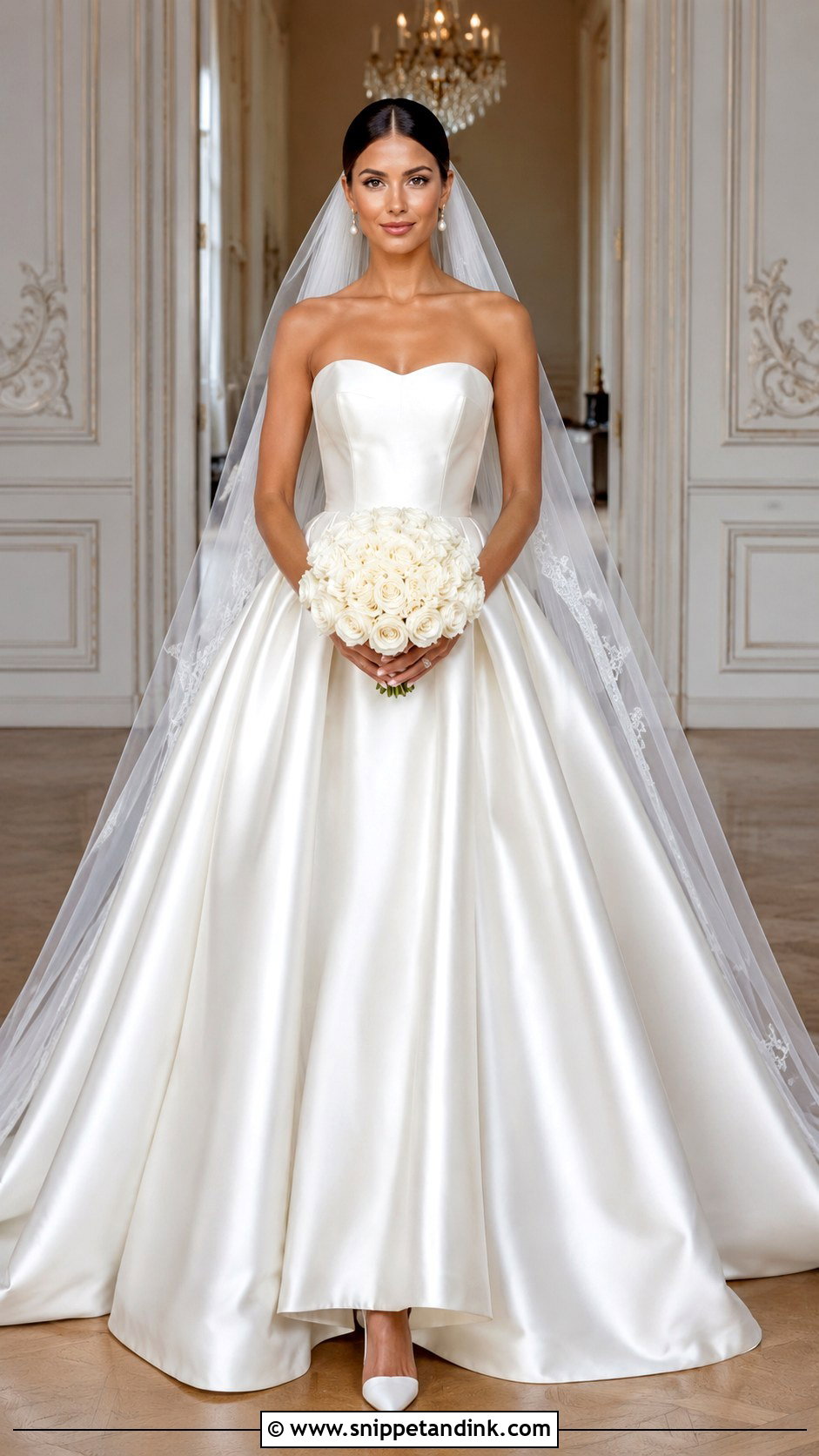
Strapless satin is the gown I reach for when a bride tells me she wants to look like herself, only more formal. The bodice has to be built properly: internal boning, a curved neckline that sits flat against the skin, and a grip strip at the top edge so you aren’t hitching it up all evening. Satin shows every crease and every ripple at the waist seam, so the natural waist needs a precise fit before anything else. Because the fabric already has a sheen, I keep the extras quiet: pearl drops, a thin tennis bracelet, pointed ivory pumps and a raw-edge cathedral veil. A low chignon shows off the neckline. White roses, ranunculus and some greenery in a round bouquet finish it, and it sits most comfortably in a ballroom or a historic house.
2. Off-the-Shoulder Mikado Ball Gown Wedding Dress
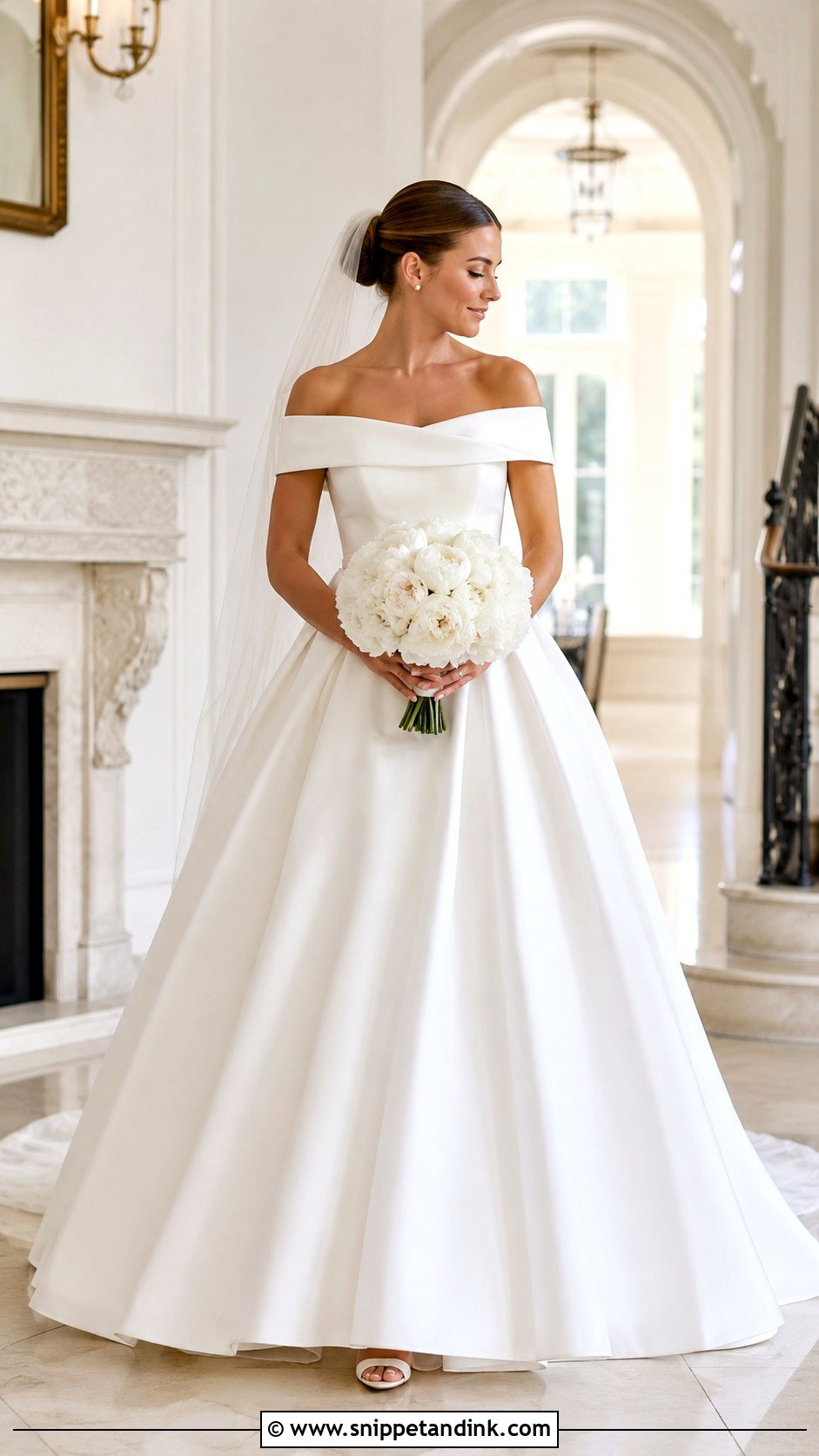
Mikado is my favorite fabric for an off-the-shoulder ball gown because it’s heavy enough to hold a folded neckline without collapsing. The fold frames the collarbones, the bodice narrows cleanly into the skirt, and in a big ceremony space the shape still reads from the back row. The catch with off-the-shoulder styles is arm movement: at the fitting, I ask the bride to hug me and raise a glass, because a band cut too tight pins the arms down. Skip the necklace and wear pearl studs or small sparkling earrings. Satin block heels help under all that weight, and a sleek bun with a fingertip veil leaves the shoulders clear. Peonies, roses and soft foliage keep the bouquet gentle against such a crisp fabric.
3. Long-Sleeve Lace Ball Gown Wedding Dress
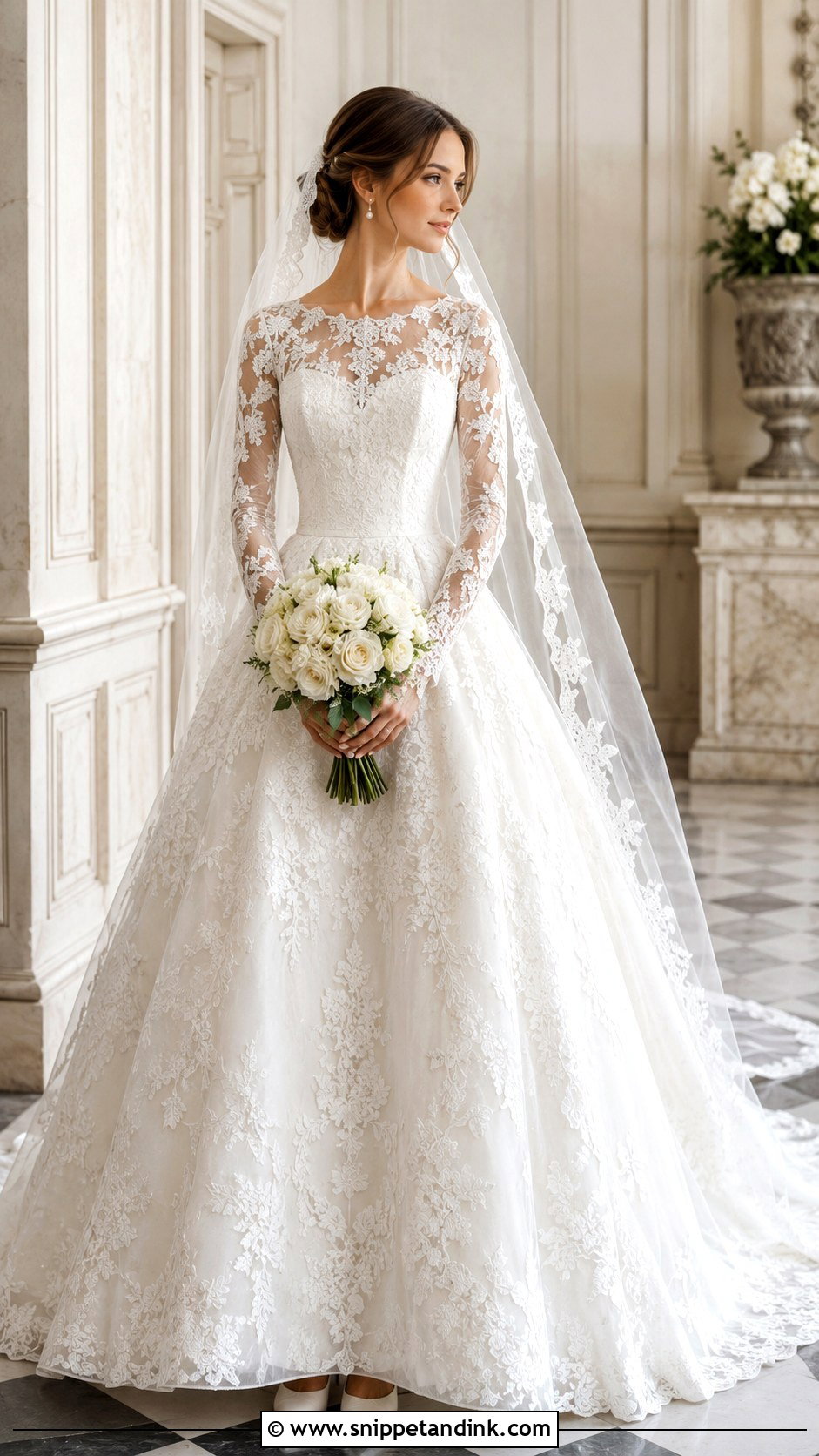
Lace sleeves give a ball gown coverage without making it feel buttoned-up, provided the lace is light. I look for appliqués that start on the bodice and drift down onto the skirt so the pattern feels planned, and for sheer sleeves finished with covered buttons at the wrist. Ask your seamstress to check the sleeve cap while you’re seated with your arms forward; lace sleeves pull at the shoulder seam when they’re cut for standing still. Choose a veil with a lace edge that complements the dress rather than matching it motif for motif, which tends to look busy in photos. A twisted updo keeps hair from tangling in the lace. Garden roses, lisianthus and a little greenery suit autumn, winter or any bride who wants modest coverage with a full skirt.
4. Square-Neck Ball Gown Wedding Dress
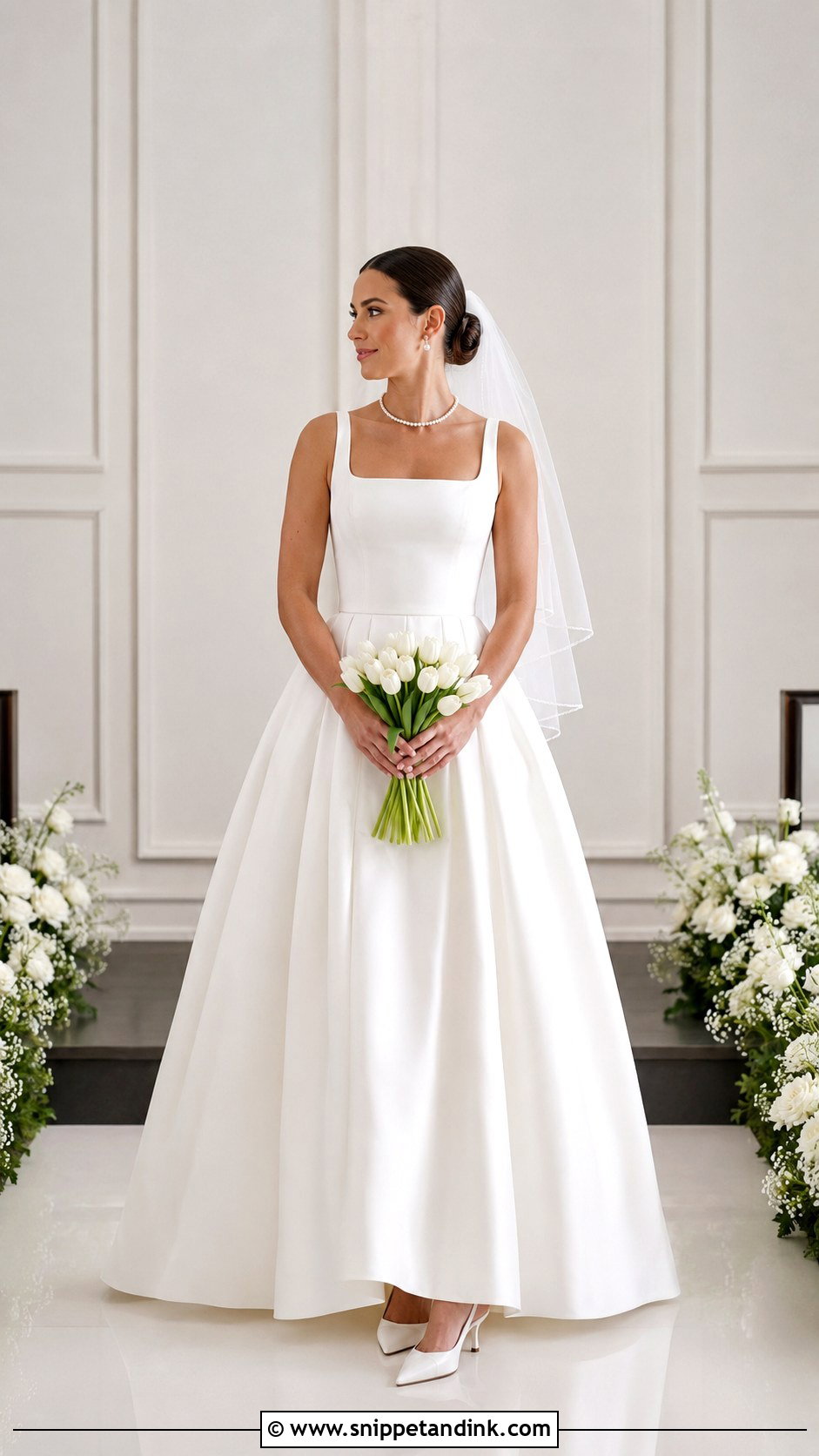
The square neck is the neckline I suggest to brides who find a sweetheart too sweet and a plunge too revealing. Its straight edge gives the shoulders a strong frame, and it’s very secure, which matters if you plan to dance. Wide straps or short fitted sleeves suit it, and smooth satin or Mikado keeps the lines crisp. A softly pleated skirt from a natural waist stops the look turning severe. I’d add a short pearl necklace that sits inside the square, matching earrings, pointed slingbacks and a mid-length veil to soften the shoulders. A polished low bun and a loose bouquet of white tulips and roses keep it modern and minimal.
5. Sweetheart Corset Ball Gown Wedding Dress
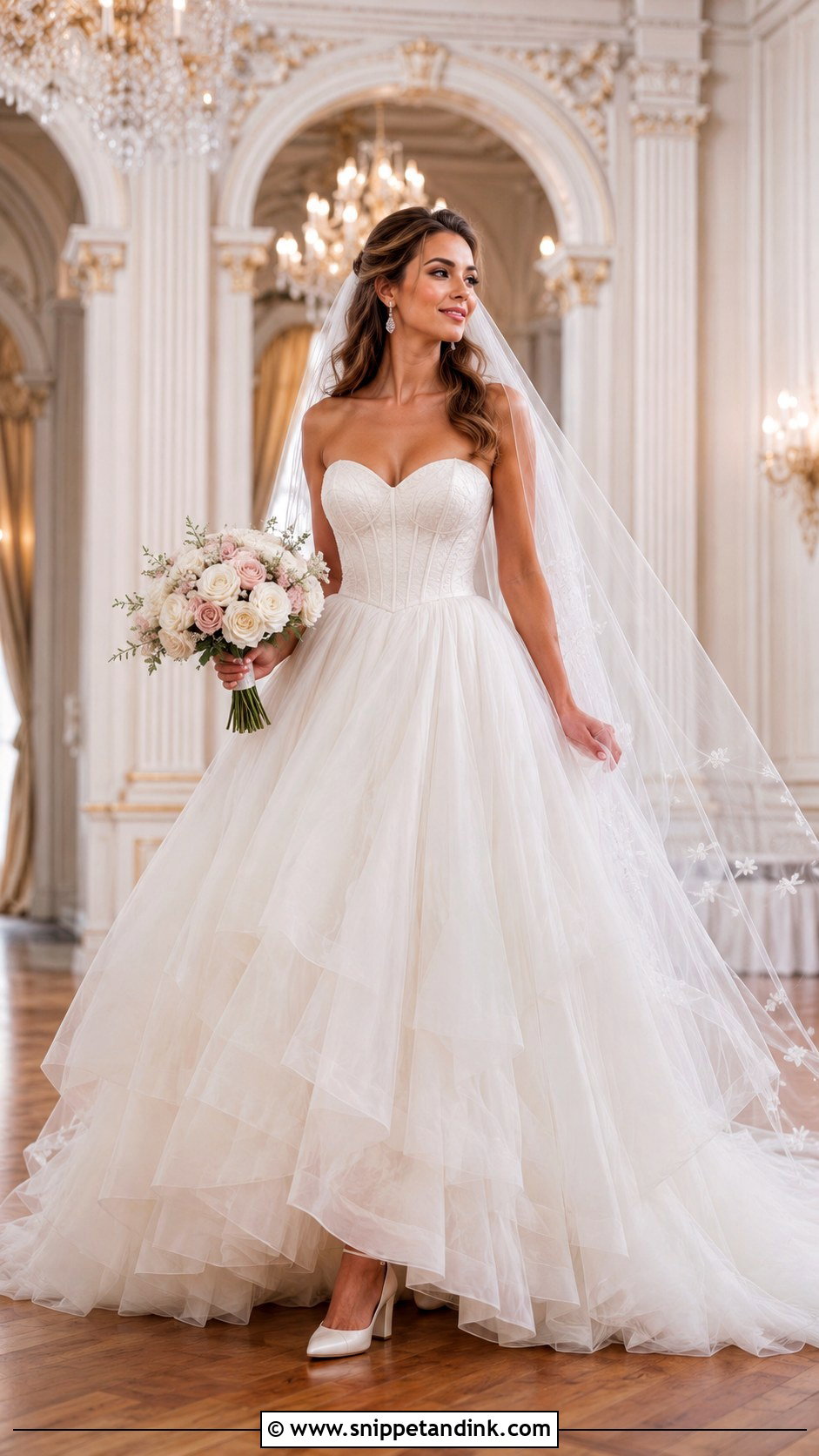
A sweetheart corset ball gown shows its structure on purpose, so the boning has to be placed with care and the lining has to be opaque. When a corset is laced well, the waist looks defined and you can still breathe through dinner; when it’s laced too tight on the morning, I see brides fade by the speeches. Layers of soft tulle balance the precise bodice and give the skirt some swing as you walk. Crystal drops, a fine bracelet and block-heel pumps keep it comfortable, and a cathedral veil with scattered appliqués adds drama without hiding the bodice. Wear soft waves pushed behind the shoulders or a loose updo, and carry white and blush roses.
6. Bateau Neck Satin Ball Gown Wedding Dress
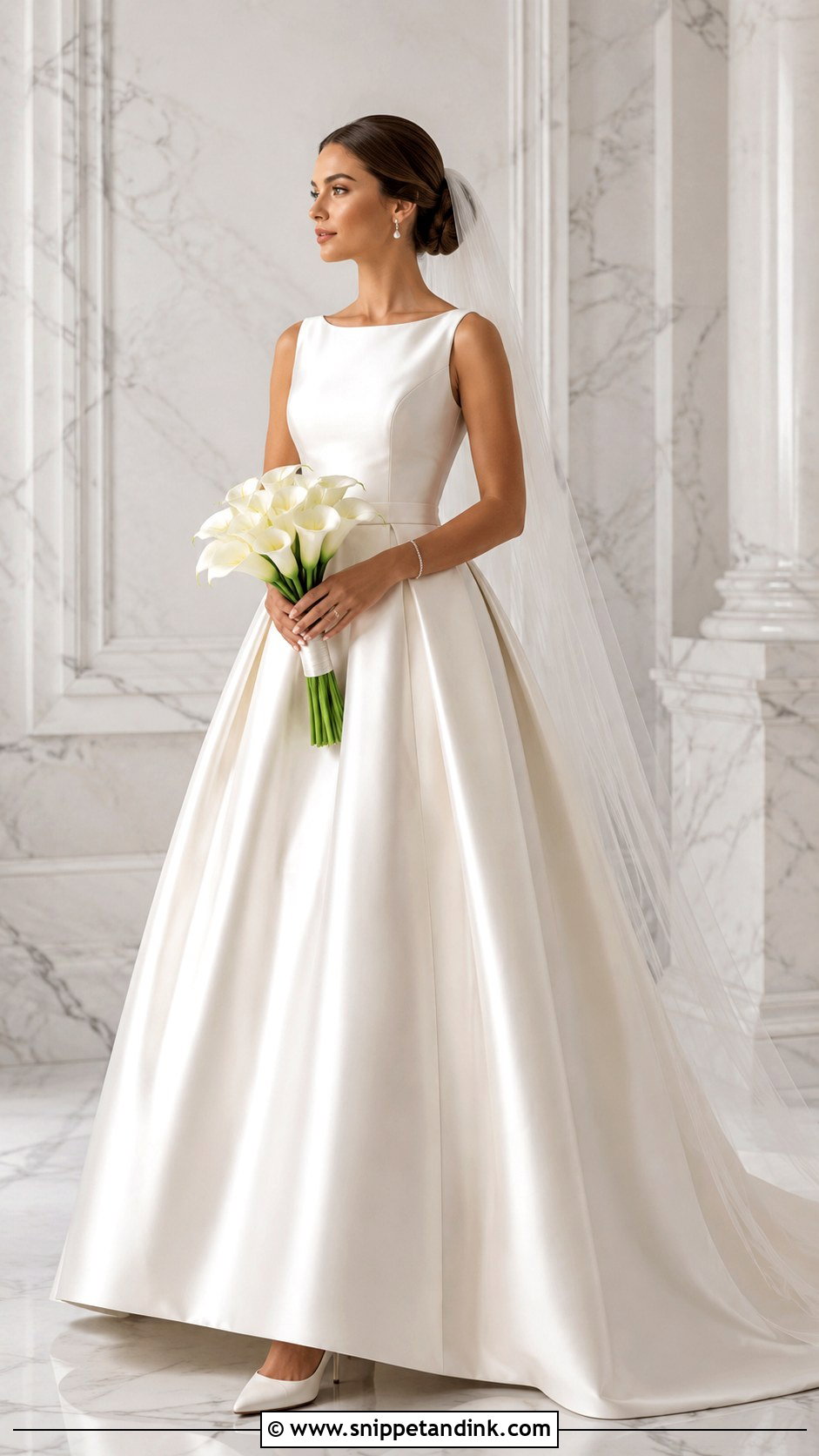
The bateau neckline runs along the collarbone in one horizontal line, which makes a satin ball gown look composed and calm. It flatters narrow and sloping shoulders, though on a very broad frame I’d lower it a touch or add slim three-quarter sleeves to break the width. A box-pleated skirt gives volume while keeping everything understated. Pearl button earrings, satin pumps and a narrow bracelet are all it needs. Place the veil low, under a smooth chignon, so the neckline and the back stay uncluttered. White calla lilies or long-stemmed roses echo the plain lines, and the clear silhouette suits a formal or minimalist ceremony.
7. Pearl Tulle Ball Gown Wedding Dress
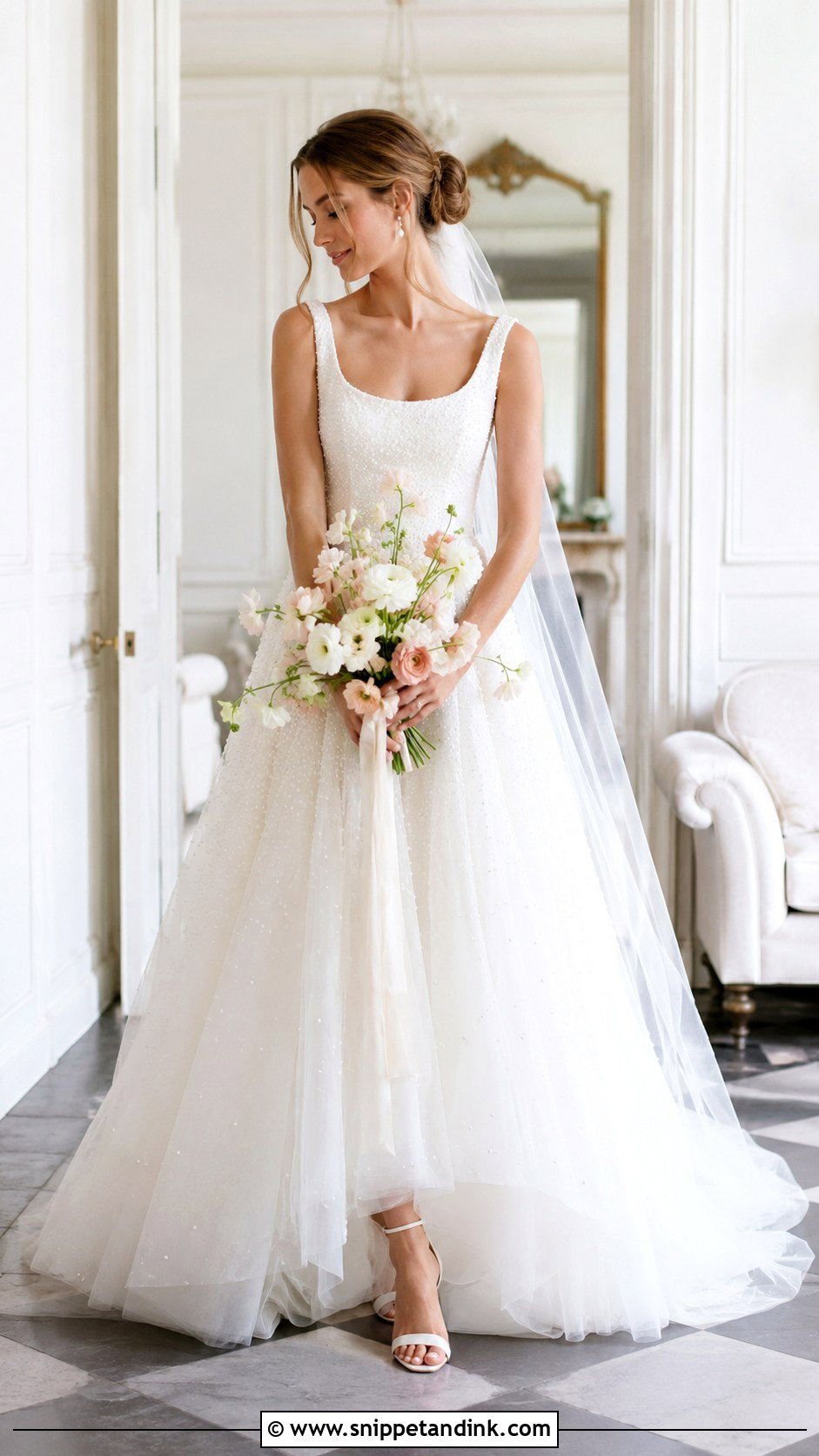
Pearl-scattered tulle catches light softly, so the dress has dimension without the glare that crystals sometimes throw back at a camera flash. I like the pearls densest on the bodice and thinning toward the hem; an even scatter all the way down can look like a pattern rather than a gown. Check the weight before you commit, because heavily pearled tulle drags on the waist seam by evening. A scoop or sweetheart neckline, pearl drops, one simple hairpin and ankle-strap heels hidden under the layers keep it wearable. Choose a plain fingertip veil so the embellishment still shows through. A textured low bun, luminous makeup and a bouquet of ranunculus, sweet peas and roses finish it.
8. 3D Floral Ball Gown Wedding Dress
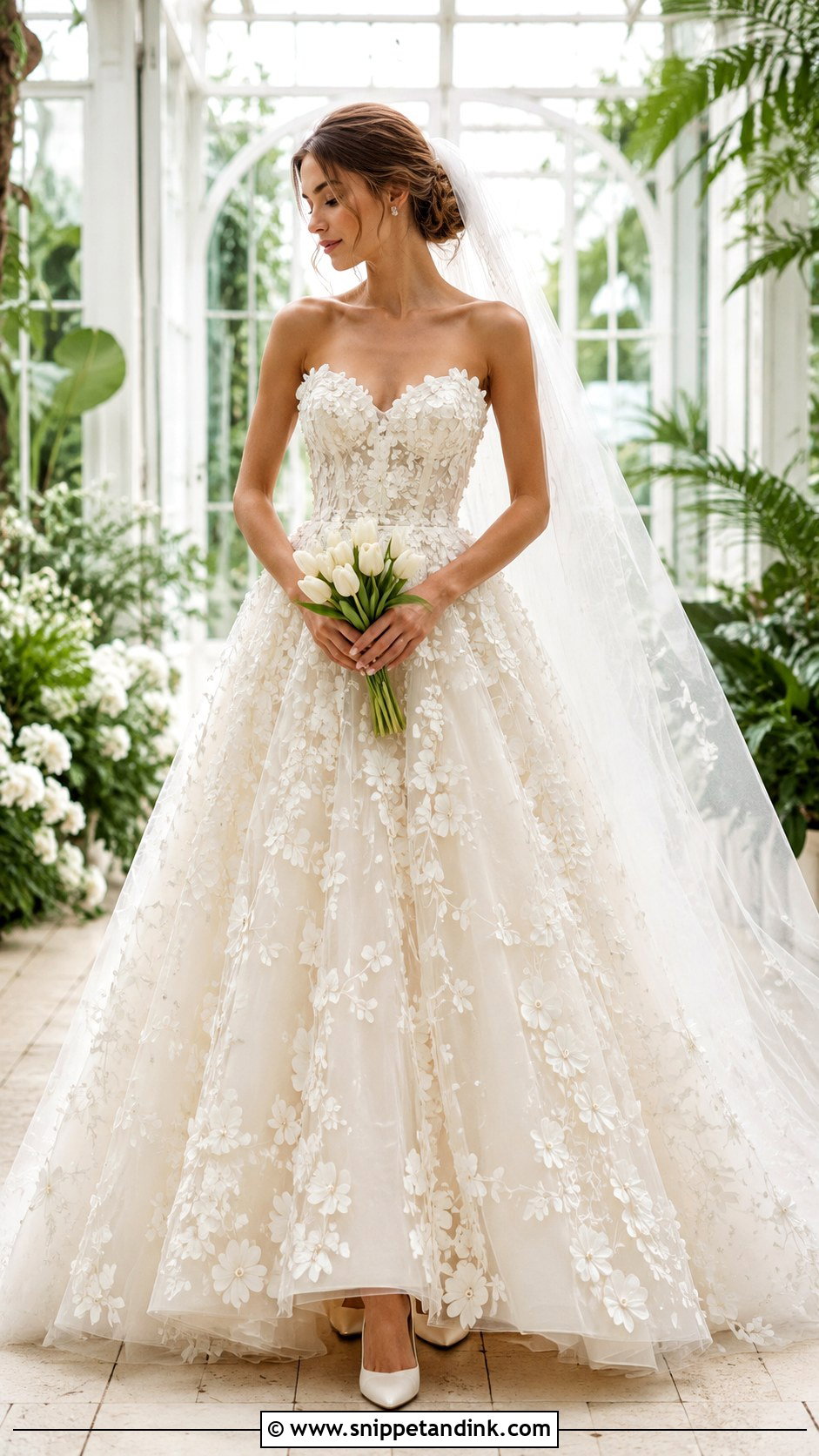
Petal appliqués make a ball gown interesting from every side, but placement decides whether it looks couture or crowded. I prefer the flowers concentrated at the waist and bodice, then thinning onto a soft tulle skirt, which defines the figure and gives the eye somewhere to rest. Dimensional petals do crush, so ask how the bridal shop packs the dress and plan to steam the skirt lightly on the morning. Small crystal earrings, ivory pumps and a sheer cathedral veil with minimal edging let the texture lead. A loose low bun with a few face-framing pieces suits the garden mood. Keep the bouquet plain, white tulips or callas, so it doesn’t compete; conservatories and botanical venues suit this one especially.
9. Basque Waist Ball Gown Wedding Dress
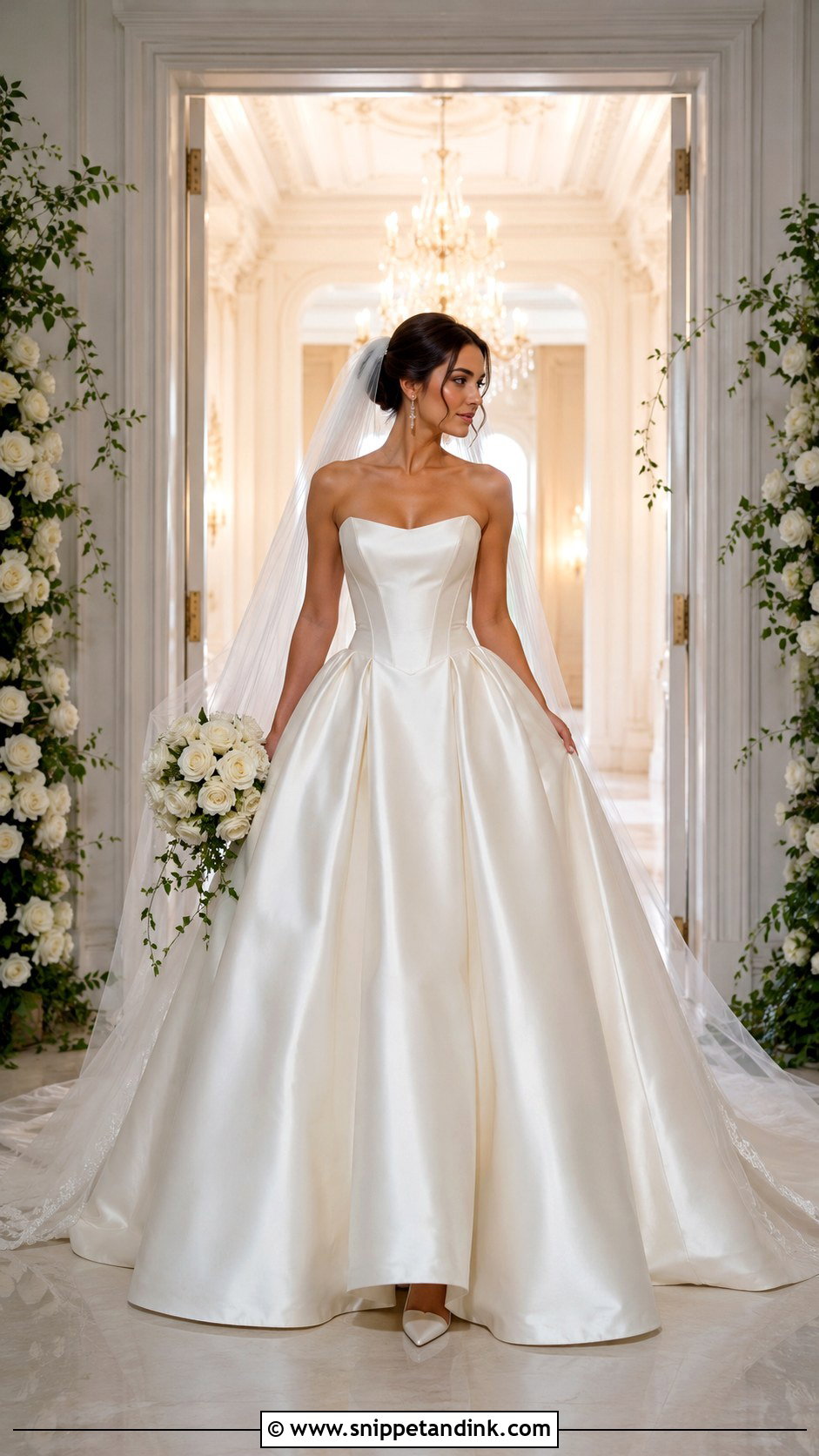
The Basque waist dips into a V at the front, which visually lengthens a short torso before the skirt opens out. I recommend it often to petite brides for exactly that reason. It needs structured satin or taffeta, since soft fabric lets the point wrinkle as you sit. A strapless curved neckline or off-the-shoulder drape balances the top half. Wear long pearl earrings, pointed satin heels and a cathedral veil anchored beneath a sculpted updo, and carry white roses with trailing greenery. Because the waistline is already the focal point, I steer brides away from oversized jewelry or heavily beaded gloves here. The shape reads strongly from the front and the side.
10. Drop-Waist Ball Gown Wedding Dress
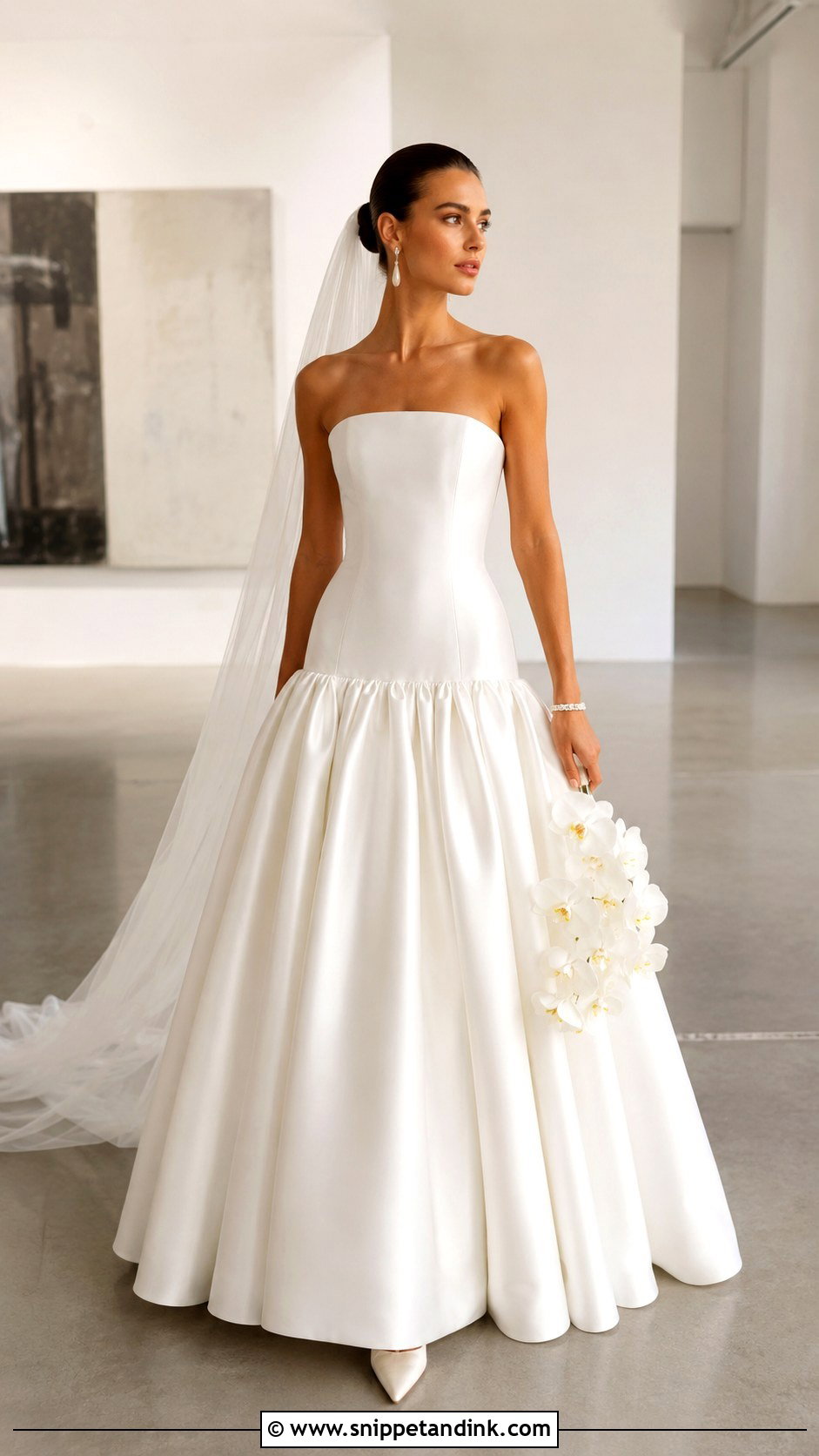
A drop waist carries the fitted bodice past the natural waist before the skirt releases, giving a long, sculpted line through the torso and a modern runway-inspired update on the classic shape. Honestly, it suits long-waisted brides best; on a short torso it can make the legs look shorter, so try it on before falling for the photo. Smooth satin, Mikado or silk faille shows the construction clearly. Sleek studs, a slim bracelet and pointed heels keep it sharp, with a long unembellished veil. Hair can go into a polished bun or smooth waves tucked behind the ears. A compact bouquet of orchids and roses suits someone who likes architectural clothes more than lace or beading.
11. High-Neck Lace Ball Gown Wedding Dress
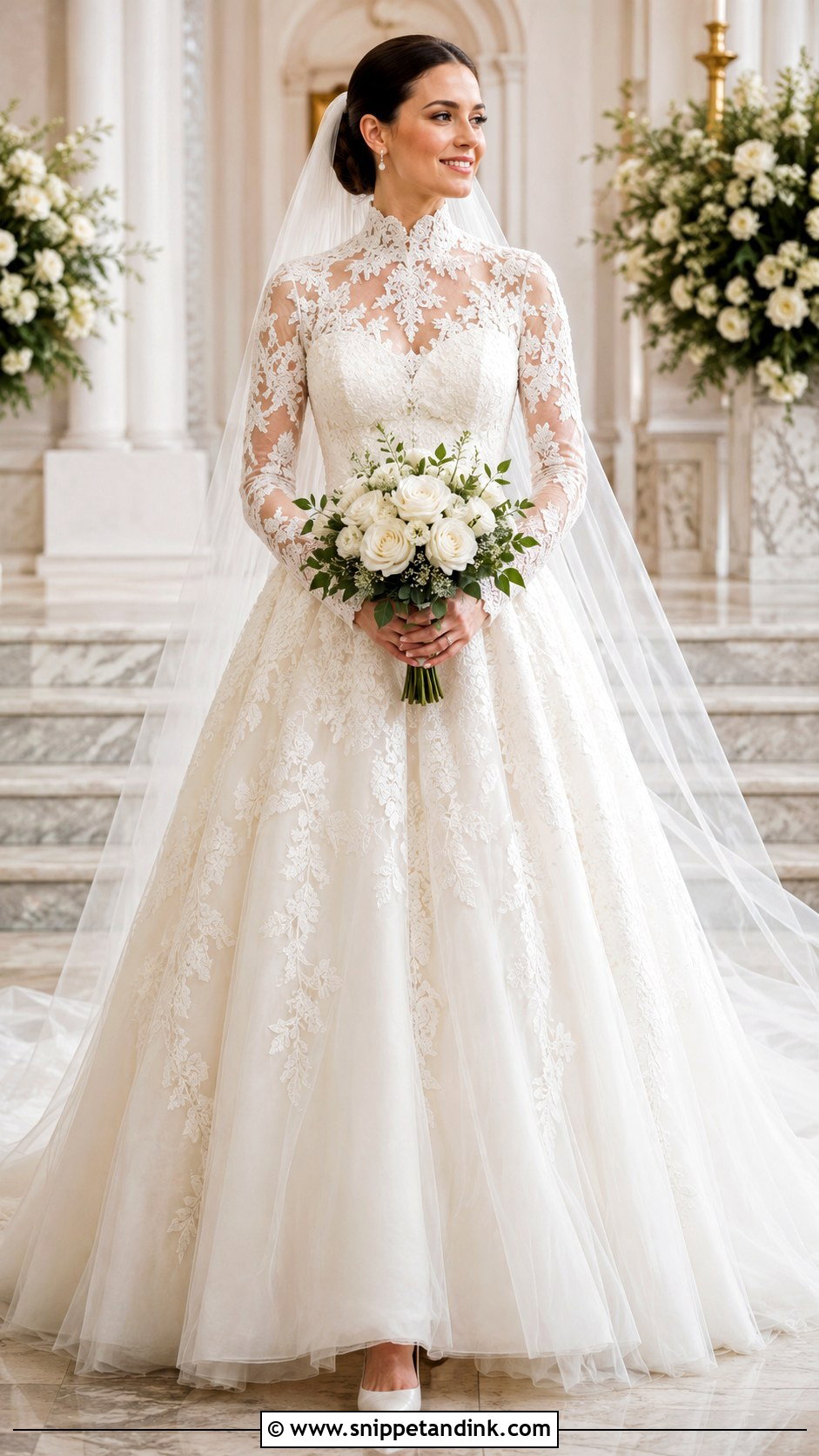
A high-neck lace gown gives coverage that still feels soft. Most are built on an illusion neckline, with appliqués placed over sheer tulle and a lined fitted bodice underneath, and long sleeves can carry the same lace down the arms. The fit at the throat is where I’m fussiest: if the neckline is even slightly tight, you’ll feel it every time you swallow, and it will pucker in close-ups. Skip a necklace entirely, wear small pearl or crystal earrings, and pin a plain cathedral veil under a classic chignon. Closed-toe pumps and white roses with anemones complete it. It suits cooler months and formal indoor ceremonies, and careful tailoring at the shoulders lets it move with you all day.
12. Illusion-Sleeve Ball Gown Wedding Dress
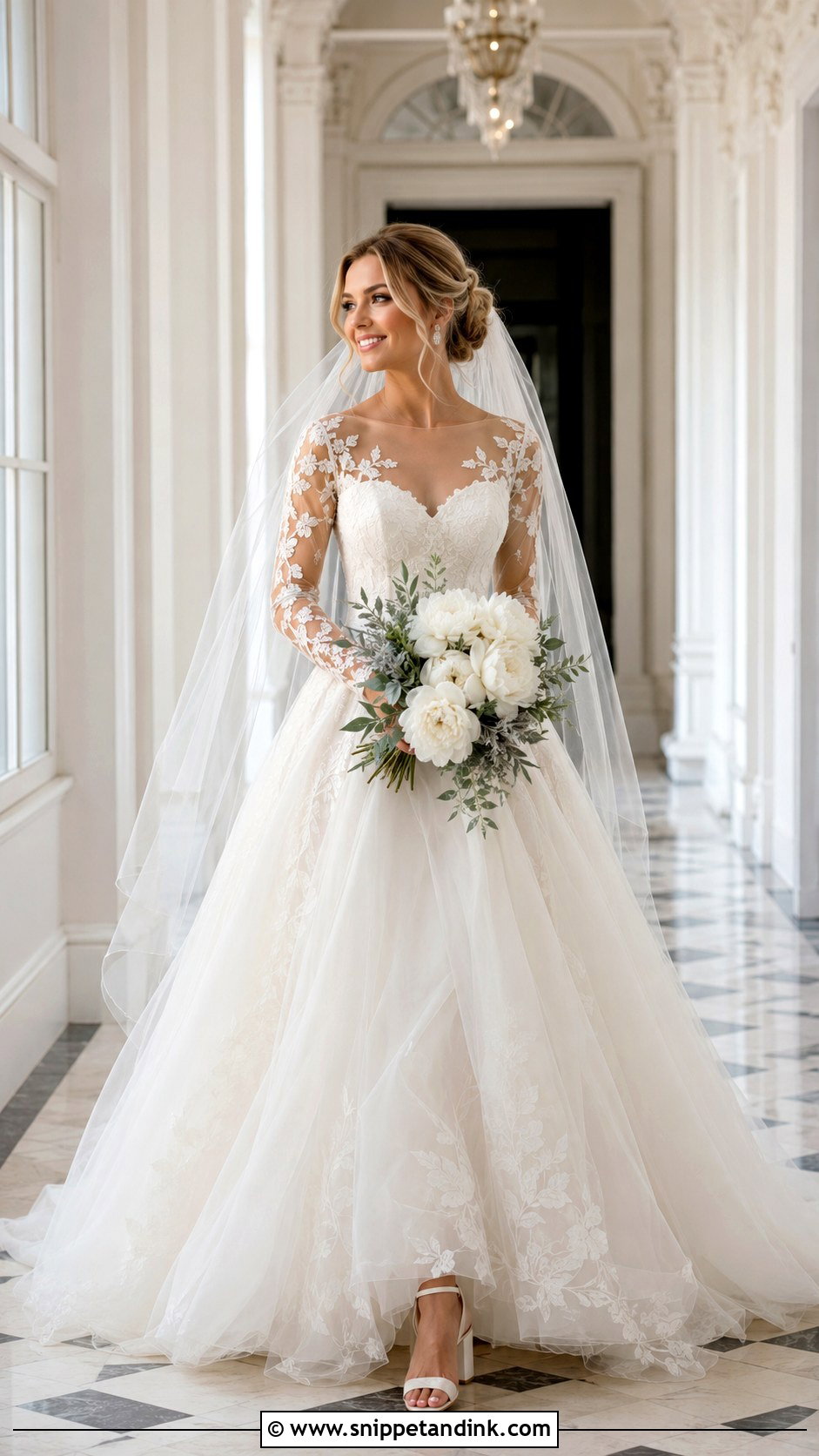
Illusion sleeves make lace look as though it’s floating on the arm, with only a light layer of tulle holding it in place. I always check the tulle shade against the bride’s skin in daylight, because a mismatch shows as a grey band in outdoor photos. A lined sweetheart bodice under the illusion layer does the real supporting work, and small covered buttons at the wrist keep the sleeves neat. Crystal studs, a slim bracelet and stable block heels suit it, with a sheer fingertip veil so the sleeve detail stays visible. A soft updo with some height at the crown and a bouquet of peonies, roses and silver-green foliage complete it, and it’s lighter to wear than full lace in spring or autumn.
13. Bow-Back Ball Gown Wedding Dress
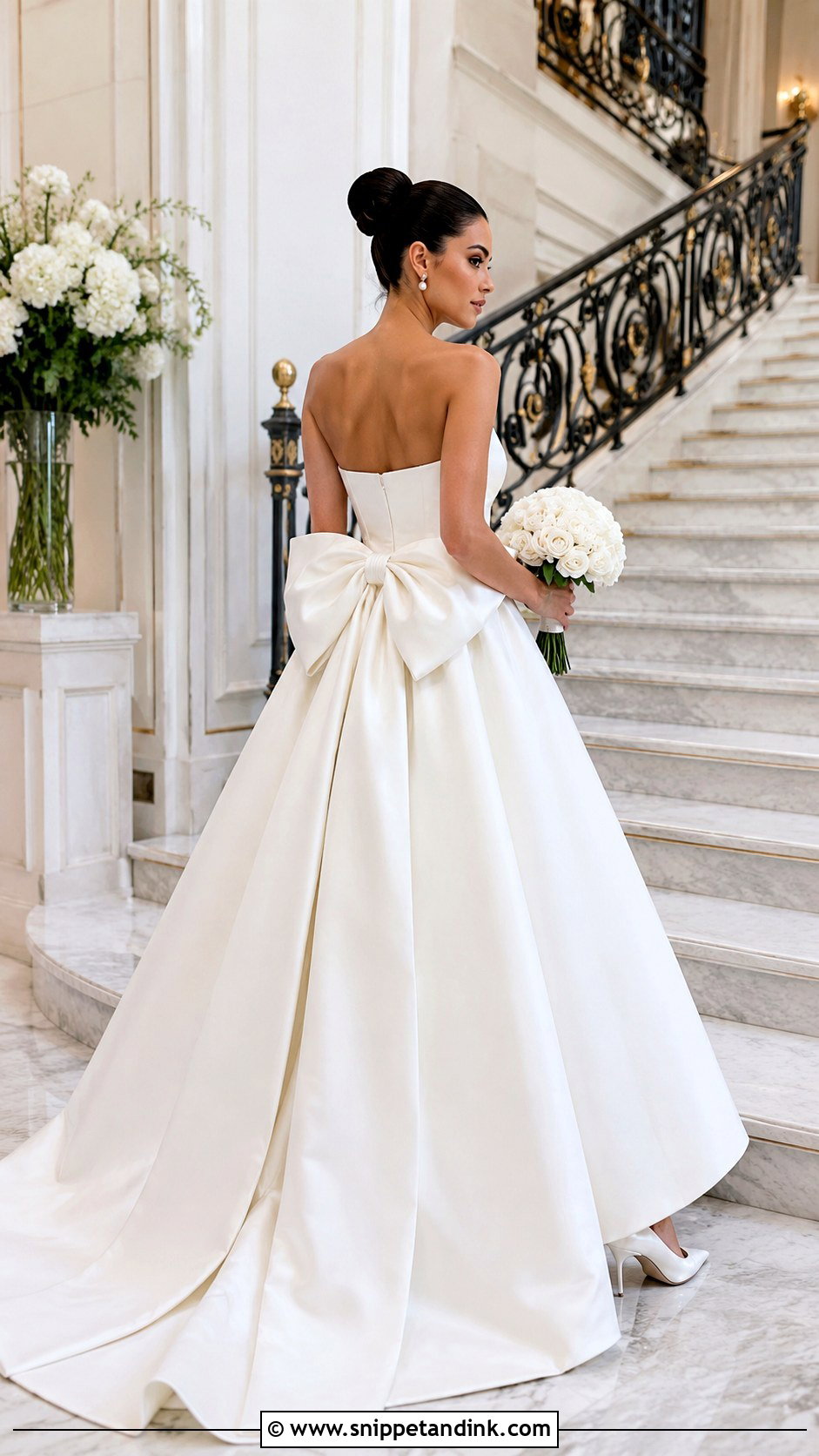
A bow-back gown puts the drama behind you, which is worth remembering: guests see your back for most of the ceremony. The bow should be structured, sitting just above where the skirt begins on a smooth satin or Mikado bodice, and I like it detachable so it doesn’t flatten when you sit at the top table. Pearl studs, a fine bracelet and pointed satin pumps keep the front simple. Wear a cathedral veil to walk in, then take it off after the ceremony to show the bow fully. A high bun gives a clean view of the neckline and the back. A round bouquet of roses and ranunculus finishes it, and it was made for a staircase entrance.
14. Detachable-Sleeve Ball Gown Wedding Dress
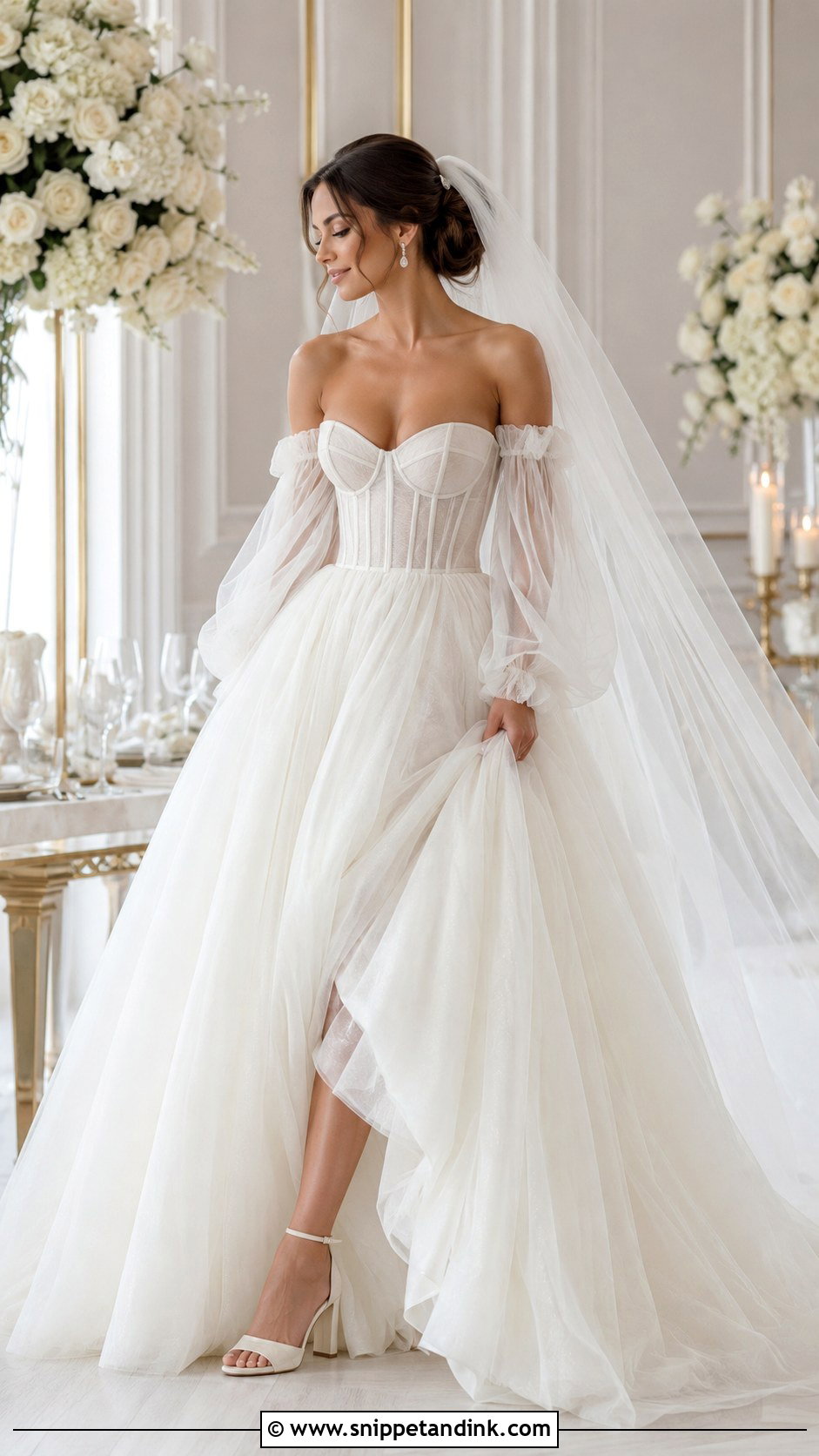
Detachable sleeves give you two looks from one gown. Start the ceremony in soft off-the-shoulder sleeves of satin, lace or gathered tulle, then remove them to reveal a clean strapless bodice for the reception. For that to work, the bodice must be fully self-supporting with a proper corset, because the sleeves can’t be helping to hold anything up. I ask brides to put the sleeves on and take them off themselves at the final fitting; hooks and snaps that need two people and five minutes won’t get used on the night. Drop earrings, ivory block heels and a simple cathedral veil work with both versions, as do soft waves or a textured low bun. Roses, hydrangeas and greenery complete it.

15. Cape-Sleeve Ball Gown Wedding Dress
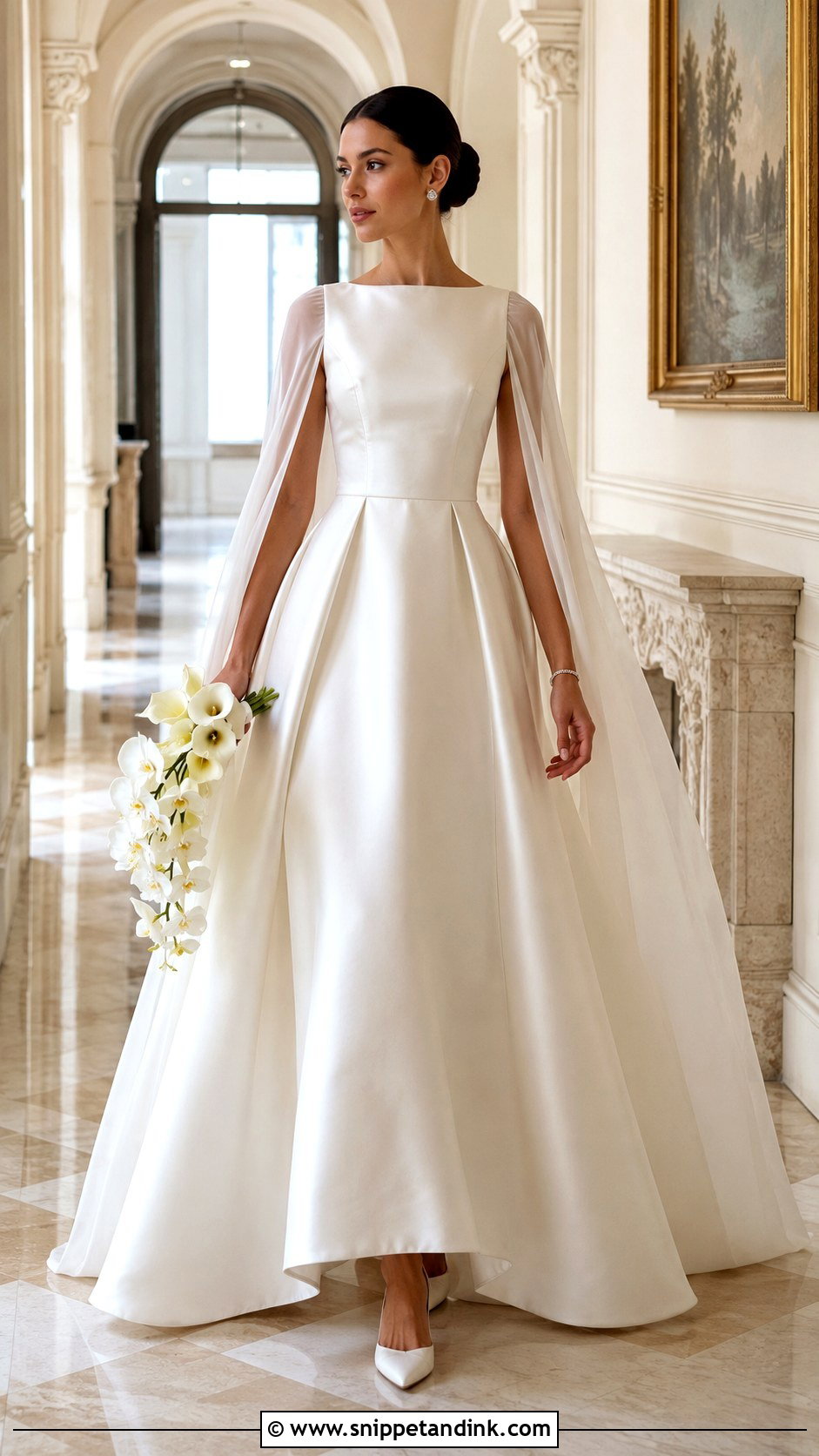
Cape sleeves add movement over the shoulders and arms without the weight of fabric pressing on the skin. Sheer chiffon or tulle panels attached at the neckline fall behind the dress, over a simple satin bodice and full skirt. My one rule here is about layering: a cape plus a long veil plus a train is too much fabric meeting at your back, so keep the veil short or skip it altogether. Crystal studs, a delicate bracelet and pointed pumps are enough. A sleek low bun lets the cape move freely. White callas and orchids keep the bouquet modern, and the whole look gives you drama that isn’t a veil.
16. Jacquard Ball Gown Wedding Dress
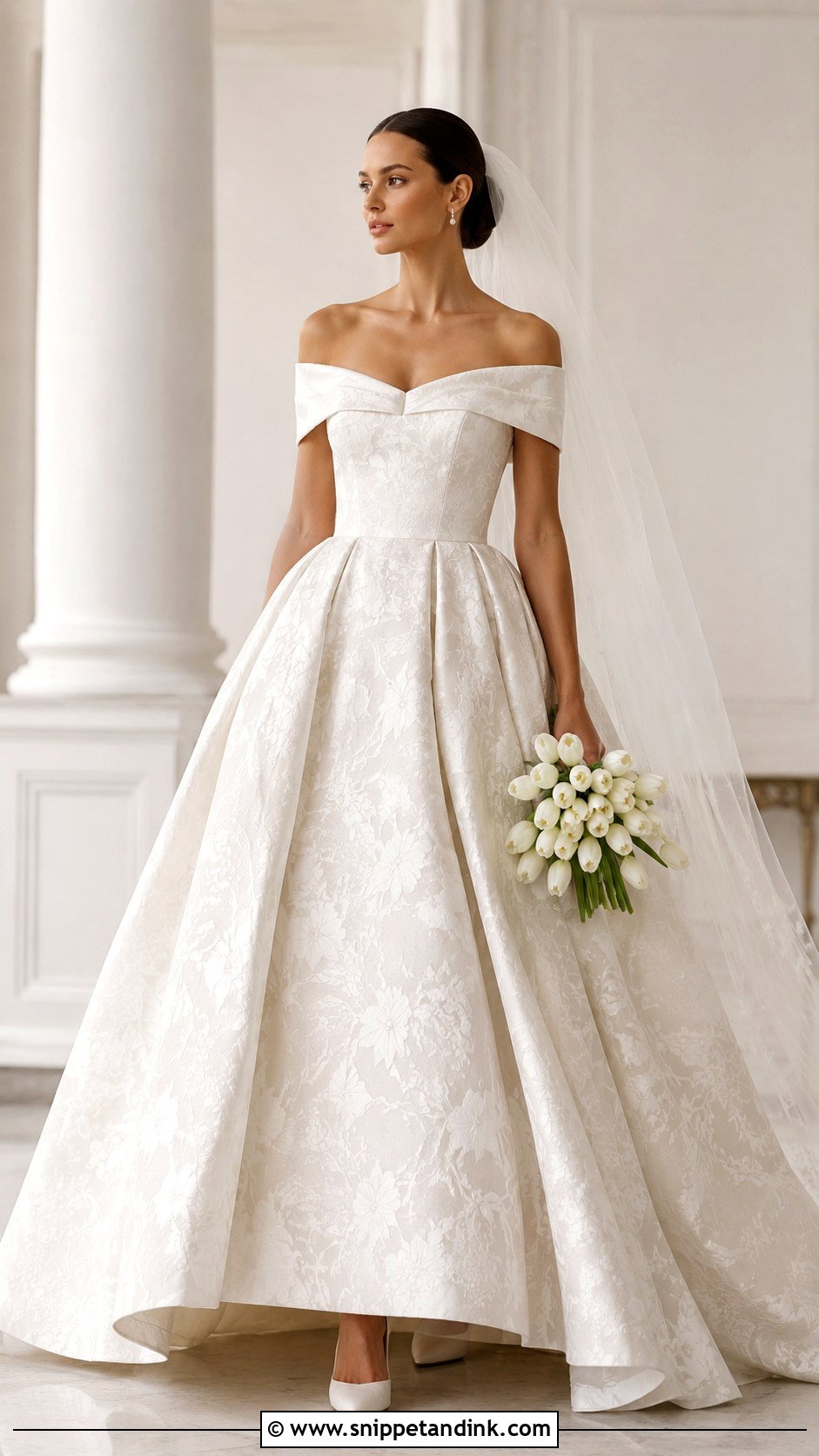
Jacquard gets its texture from the weave itself, so the pattern is part of the fabric rather than lace or beads stitched on top. That also makes it one of the more forgiving fabrics I fit: it hides small creases and doesn’t show seam stress the way satin does. Choose a subtle tonal floral in ivory or soft white, a structured bodice and a deep box-pleated skirt, with an off-the-shoulder or square neckline. Keep everything else plain: pearl earrings, satin pumps, a chapel-length veil and a sleek chignon. White tulips with a little greenery stop the styling from getting fussy. It’s warm to wear, which makes it a good match for autumn and winter in a grand room.
17. Pleated Taffeta Ball Gown Wedding Dress
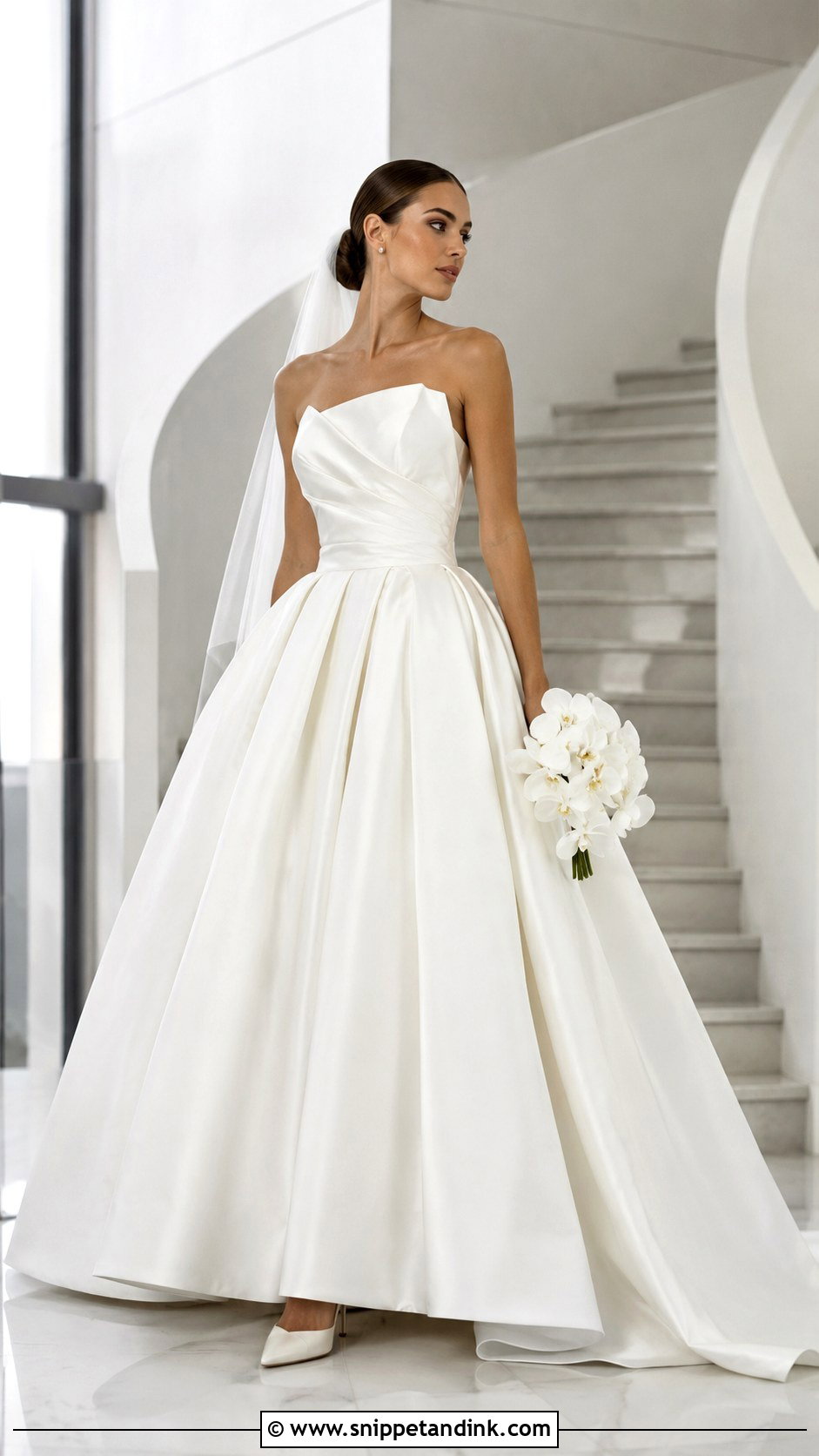
Taffeta has natural body and a faint rustle, so wide pleats give a taffeta ball gown real sculptural volume. I’d pair a fitted bodice that has asymmetrical draping or a folded neckline with pleats that start right at the waist. The trade-off: taffeta creases where you sit and holds the mark, so if the reception is long and seated, Mikado is more forgiving. It needs almost no embellishment. Refined studs, pointed pumps and a veil without lace or beading keep it sharp. A smooth bun with a couple of face-framing pieces stops it feeling rigid, and a compact bouquet of roses or orchids suits architectural venues.
18. Minimalist Silk Ball Gown Wedding Dress
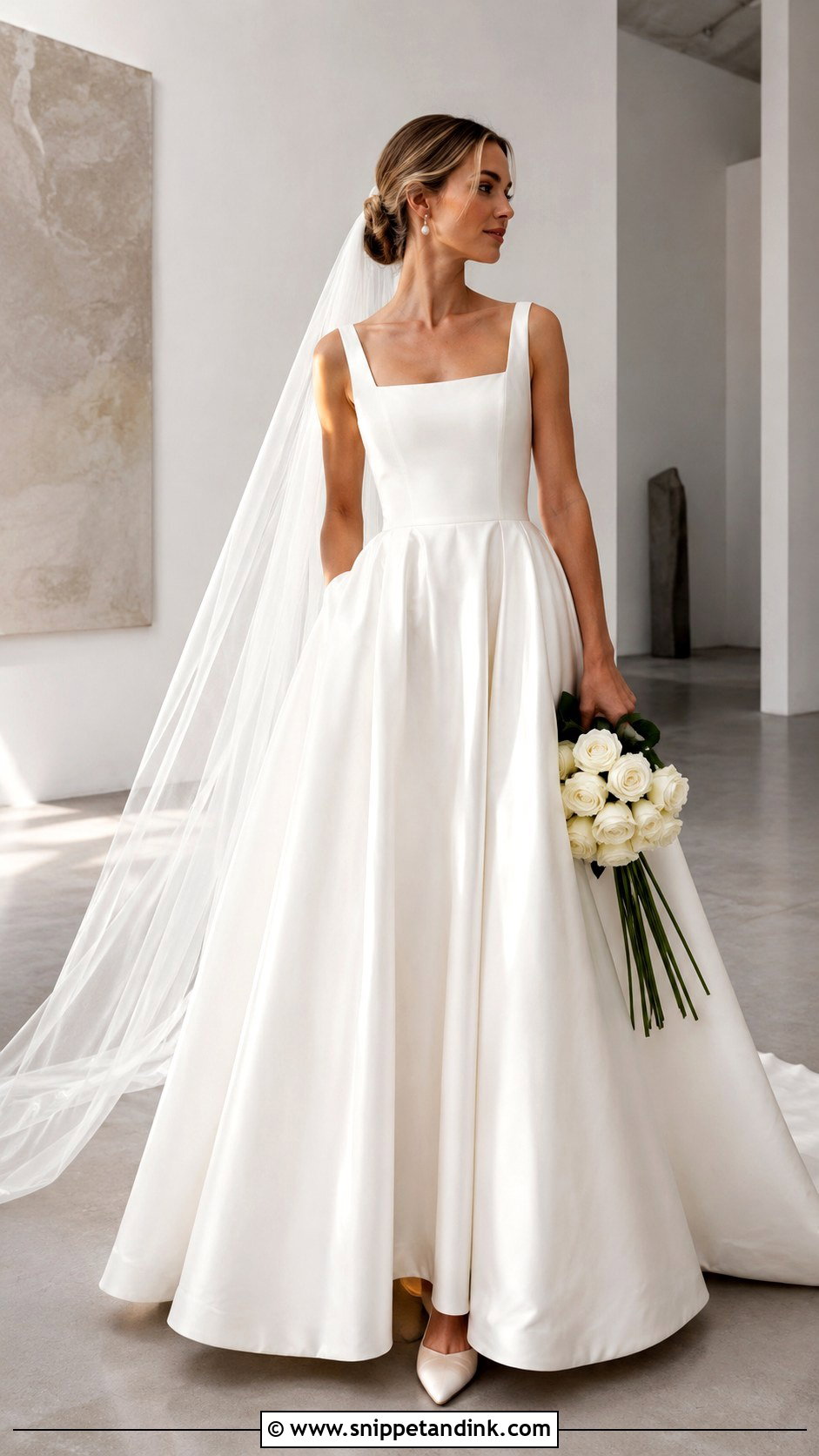
Silk gives a ball gown a fluid glow, and the quality shows most in plain designs where there’s nothing to hide behind. A scoop, square or strapless neckline, a fitted bodice and a softly gathered skirt are enough, and hidden pockets are a practical extra I always encourage. Silk does mark with water and sweat, so carry blotting papers and don’t let anyone hand you a full glass of red near the skirt. Pearl earrings, a slim bracelet and plain pumps work, with a raw-edge cathedral veil for ceremony drama. A low knot or polished waves, fresh skin and a neutral lip complete it, and white tulips or long-stemmed roses keep the minimal direction. Good fabric and precise tailoring carry it.
19. Sparkle Tulle Ball Gown Wedding Dress
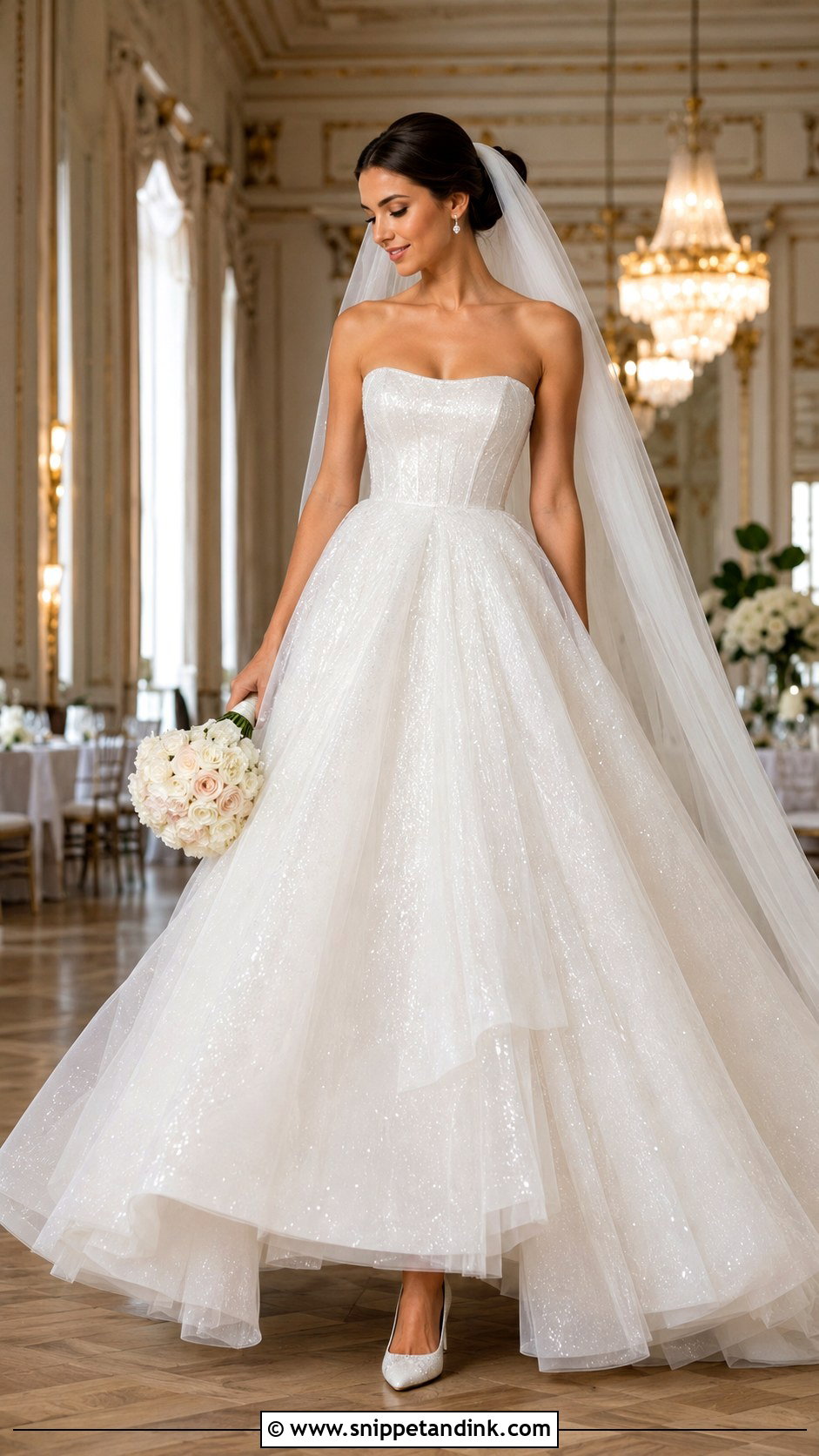
Shimmer tulle glows as the skirt moves, and it comes alive under evening lighting at a reception or formal indoor ceremony. The difference between refined and costume is the size of the sparkle: I look for fine shimmer woven into the net, not large glitter flakes that shed on the groom’s suit and the dance floor. A fitted corset bodice with a straight or sweetheart neckline balances the airy skirt. Keep the earrings small, the pumps ivory and the veil plain so the shimmer is the only sparkle in the picture. A smooth updo and soft luminous makeup suit it, with white roses and pale blush blooms for a little color.


20. Plus-Size Corset Ball Gown Wedding Dress
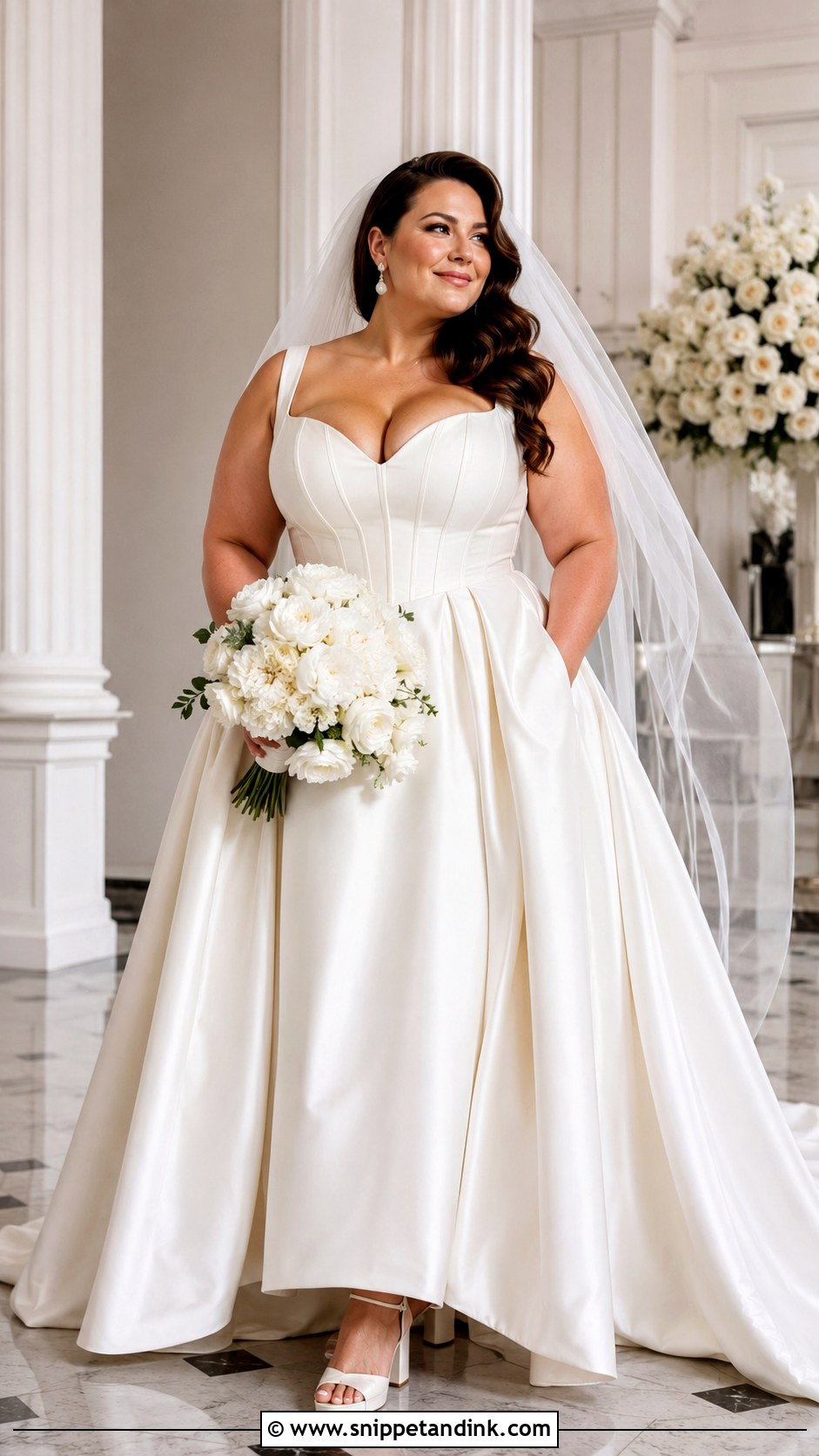
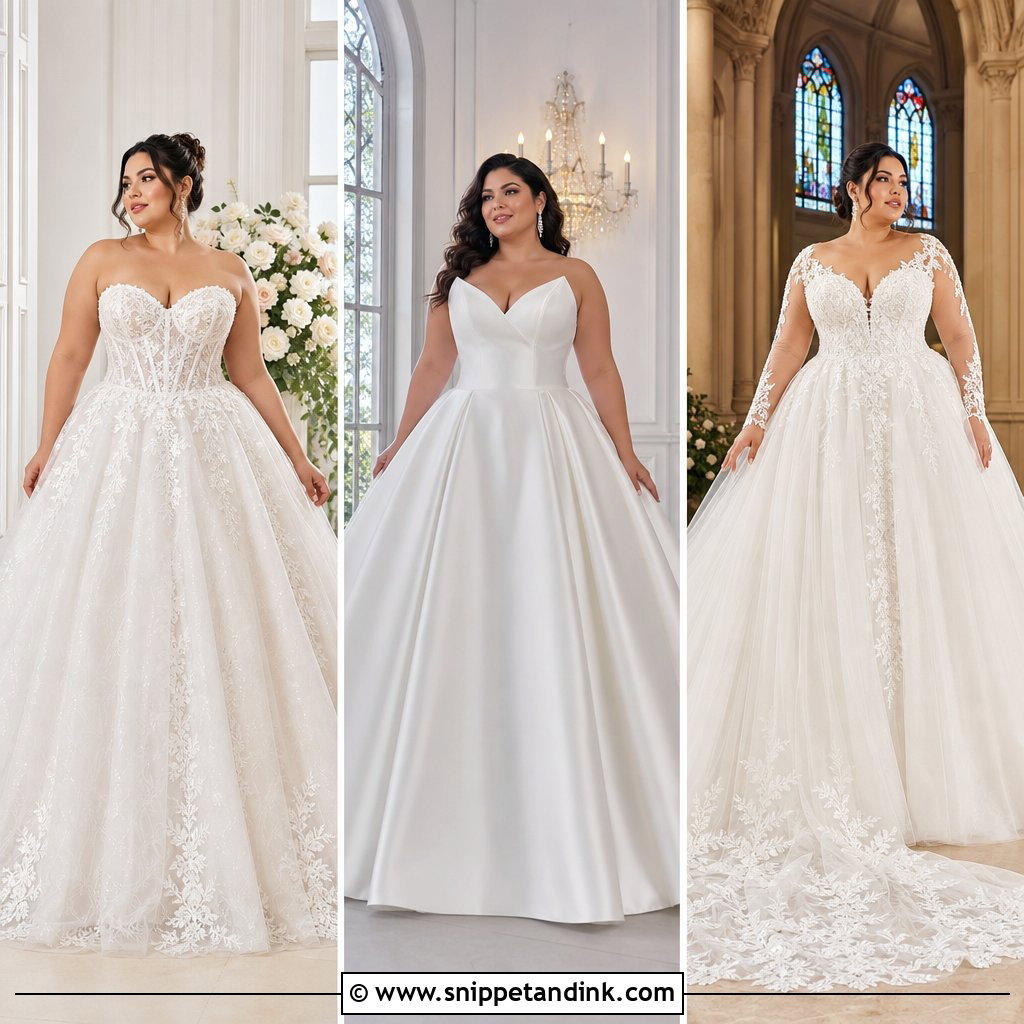
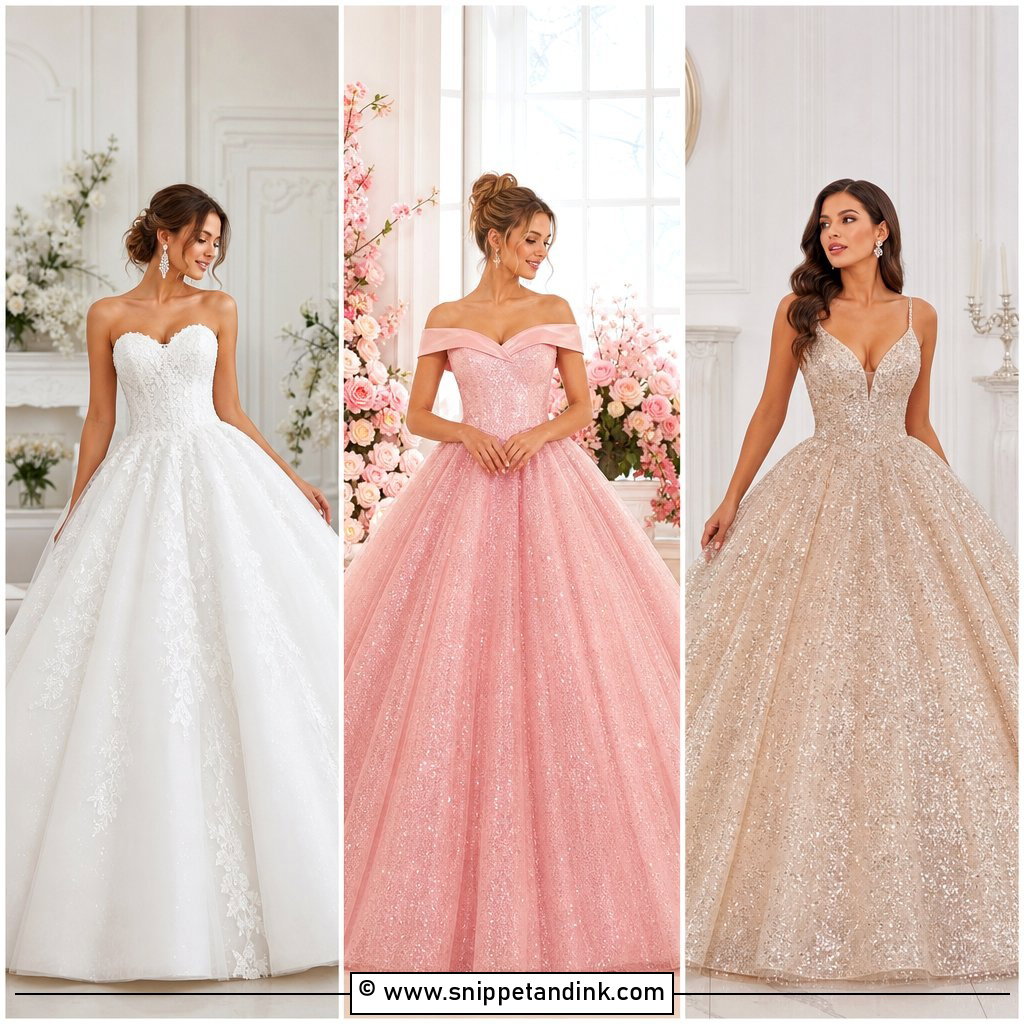
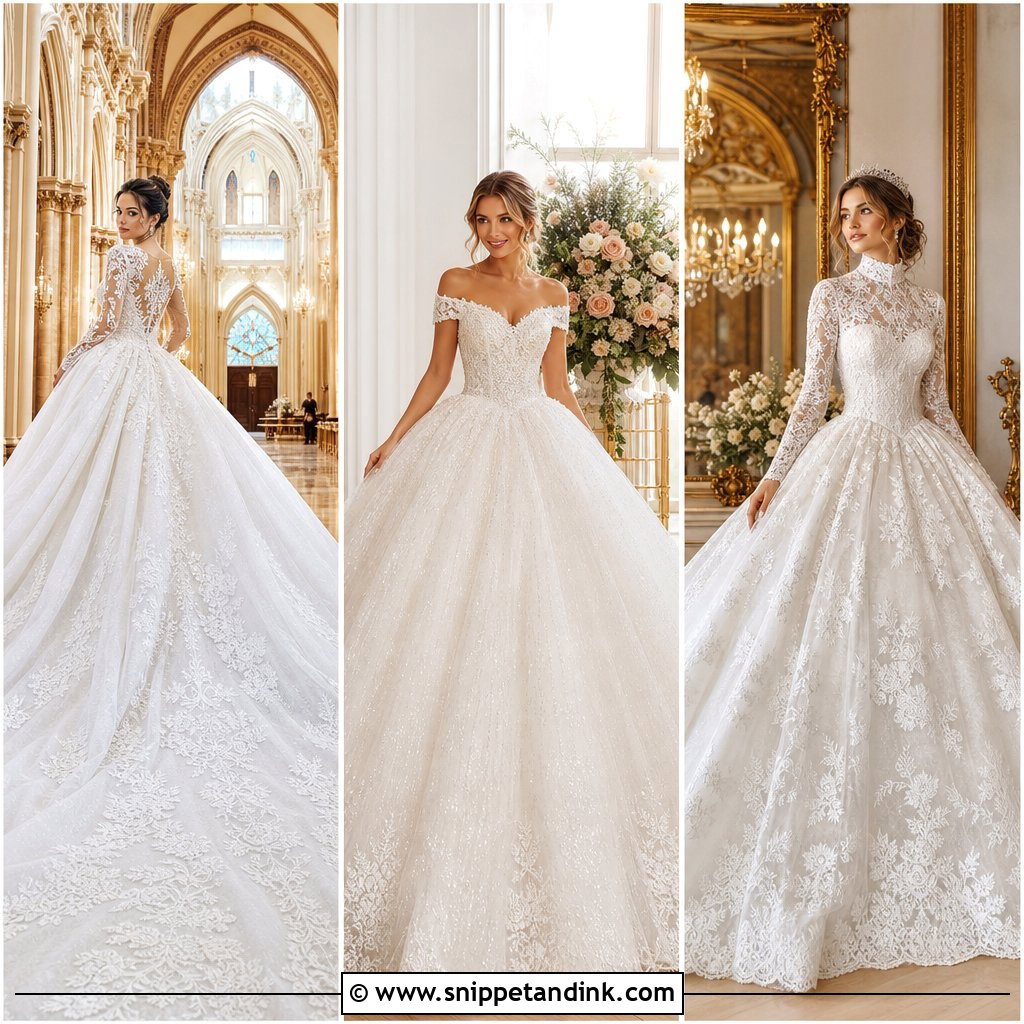
A properly fitted corset gives a plus-size bride the kind of support most off-the-rack bodices simply can’t. I look for secure boning, a comfortable lining and the option of straps or sleeves, which many of my brides choose for peace of mind rather than coverage. A defined natural or Basque waist lets the skirt fall smoothly instead of adding bulk at the middle, and satin, Mikado or layered tulle all work depending on how much structure you like. Statement pearl earrings, supportive block heels and a chapel-length veil suit it, with a soft updo or side-swept waves. Budget for expert alterations and buy your shapewear before the first fitting, since the dress will be cut around it.
Bustles, Car Rides and Bathroom Breaks in a Very Full Skirt
Nobody photographs this part of the day, yet it decides how comfortable you are by nine o’clock. A full skirt with a train is heavy, and it has to fit through doors, into cars and into a bathroom stall.
Pick the bustle at your fittings
An over bustle lifts the train with hooks and buttons onto the outside of the skirt; an under bustle (the French style) tucks it underneath with numbered ribbon ties. Heavy satin and Mikado often need several pick points so the weight doesn’t pull on one spot. I always ask one bridesmaid to come to the final fitting and practise the bustle herself, since the seamstress won’t be there at the reception.
Getting in, getting out
- Book a roomy car and sit in backwards first, then lift your feet and let someone fold the skirt in after you.
- For the bathroom, face the cistern and have a friend gather the skirt up from behind; a skirt-catching slip that ties at the waist makes this a one-person job.
- Walk through every doorway and staircase at the venue in your head. Narrow hallways are where tulle gets snagged and torn.
None of this is a reason to give up a ball gown. It just means the brides who rehearse it in the shop are the ones who forget the skirt is there once the music starts.
Ball Gowns That Still Feel Good at Midnight
A ball gown has to look right from every angle and still let you stand, walk, sit and dance. The fabric, the neckline, where the waist sits, the support inside the bodice and the amount of skirt all shape how it photographs and how it feels by evening. Let one feature lead: a detailed gown wants simple jewelry and a plain veil, while a plain gown can carry a dramatic veil or statement earrings. Order early, bring your wedding shoes to every fitting, and practise walking, sitting and turning in the finished dress. From structured satin to soft floral tulle, the gowns above give you plenty of room to find one that feels like yours.
You'll Like These Ideas:








Leave a Reply