
A Pakistani bridal suit is never just the shirt. The bottom, the dupatta, the jewelry, the shoes and even the hair have to agree with each other, and when one of them is off you notice it in every photograph. I’ve pulled together twenty complete outfits here: deep reds for the Barat, quiet Nikkah pieces, loud Mehndi colour and cooler Walima looks, built on lehengas, peshwas, shararas, ghararas, Anarkalis and contemporary trouser sets. For each one I’ve noted what I’d pair with it and where it tends to go wrong, so you can judge the look against your own venue, season and comfort, not just the picture.
What Zari, Dabka, Tilla and Gota Mean on a Bridal Quote
Most of the cost in a Pakistani bridal suit sits in the handwork, and designers describe it in terms brides aren’t always told the meaning of. I explain these at every first appointment, because each one wears differently over a long day.
- Zari: metallic thread, the umbrella term for gold and silver threadwork. Real metal zari is heavier and develops a soft patina over time; synthetic versions are lighter and keep their shine.
- Dabka: fine coiled wire stitched down in short lengths. It gives raised, textured detail and a lot of weight, so a fully dabka-worked shirt can feel stiff across the shoulders.
- Tilla: metallic thread laid on the surface and couched down. It’s flatter and more flexible than dabka, which makes it kinder on sleeves and necklines.
- Gota: woven metallic ribbon appliquéd in shapes. Light, bright and festive, the natural choice for Mehndi outfits.
- Resham: silk or silk-look thread embroidery. It brings colour rather than shine and keeps a garment soft.
When you look at samples, turn them over. Neat backing, a lining that covers the stitch ends and no loose wire tails tell you how the outfit will feel against your skin by the end of the night. I’d also ask where the heaviest work sits: concentrated at the hem and border, it hangs well; spread across the shoulders and sleeves, you’ll feel it by the second hour.
1. Red Pakistani Bridal Lehenga Suit
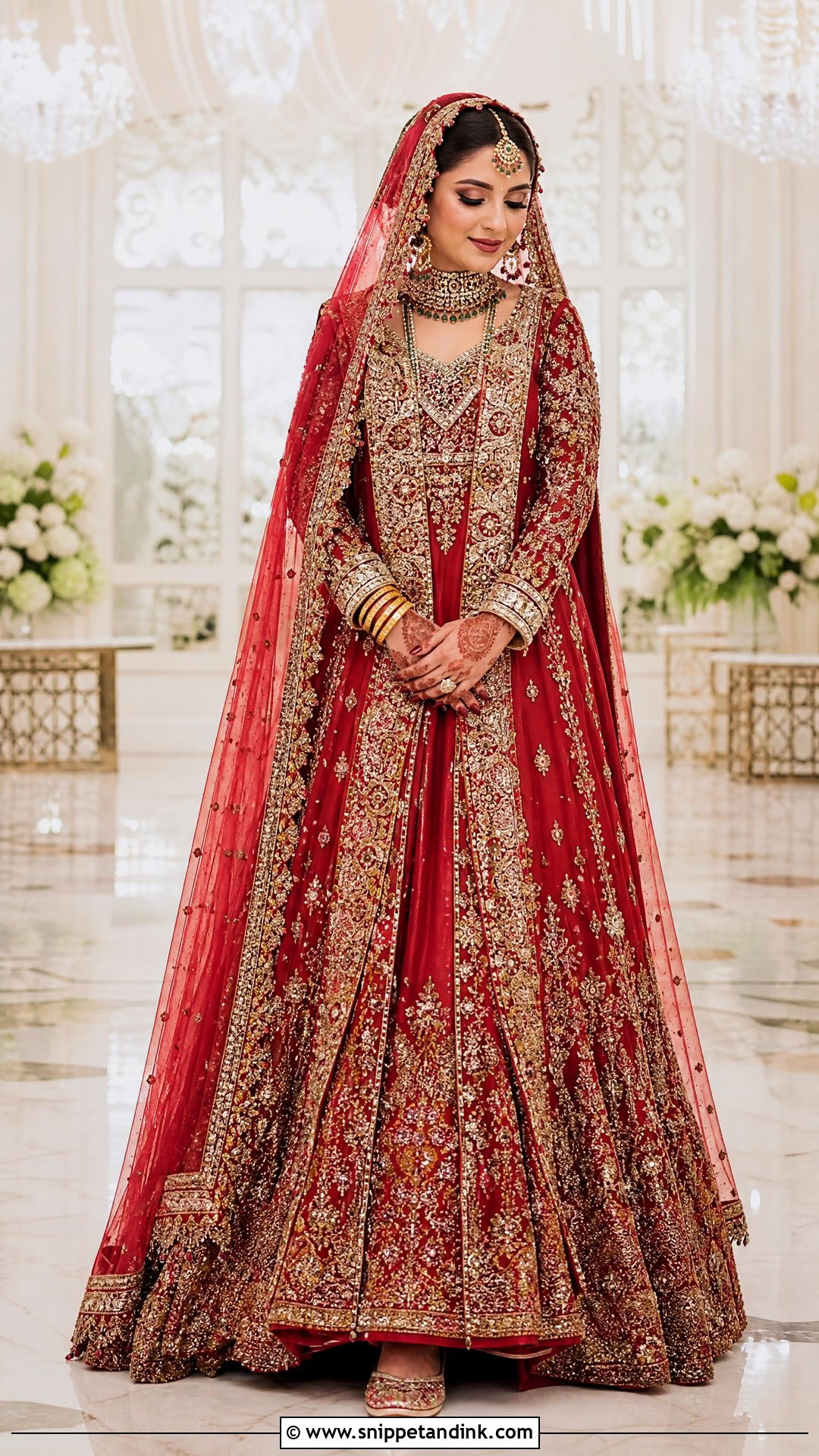
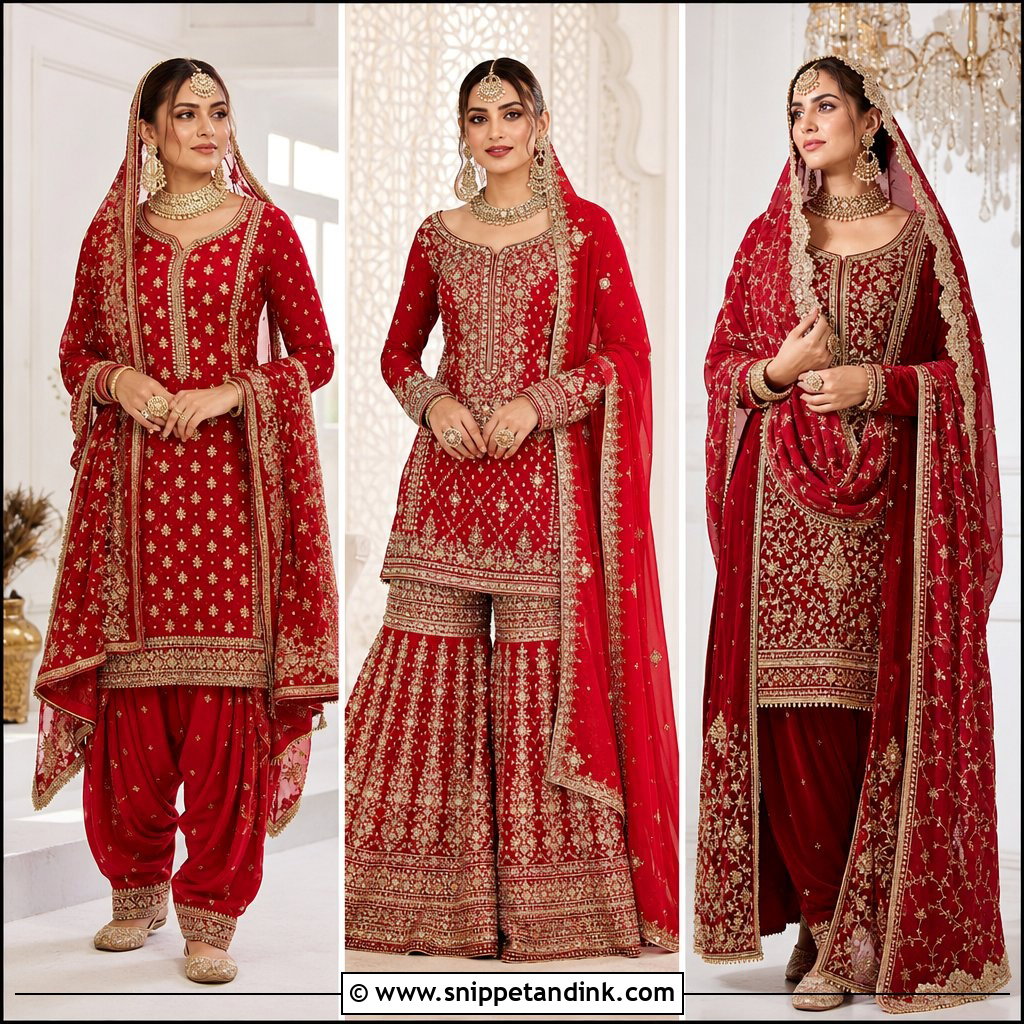
Deep red on the Barat day is still the outfit most families picture first. The long fitted shirt carries antique-gold zari, dabka, tilla and beads, and the raw-silk lehenga beneath it needs a real flare, which usually means a can-can layer stitched inside. A sheer red dupatta with a worked frame goes over the head; a second, lighter one across the shoulder gives the layered look. Here’s the catch: two dupattas plus a heavy lehenga is a lot of weight, so I have the head dupatta pinned to the hair at three points rather than resting on the bun. Choker, rani haar, matha patti, jhumkas and khussas complete it, with defined eyes, a red lip and a low bun.
2. Maroon Pakistani Bridal Gharara Suit
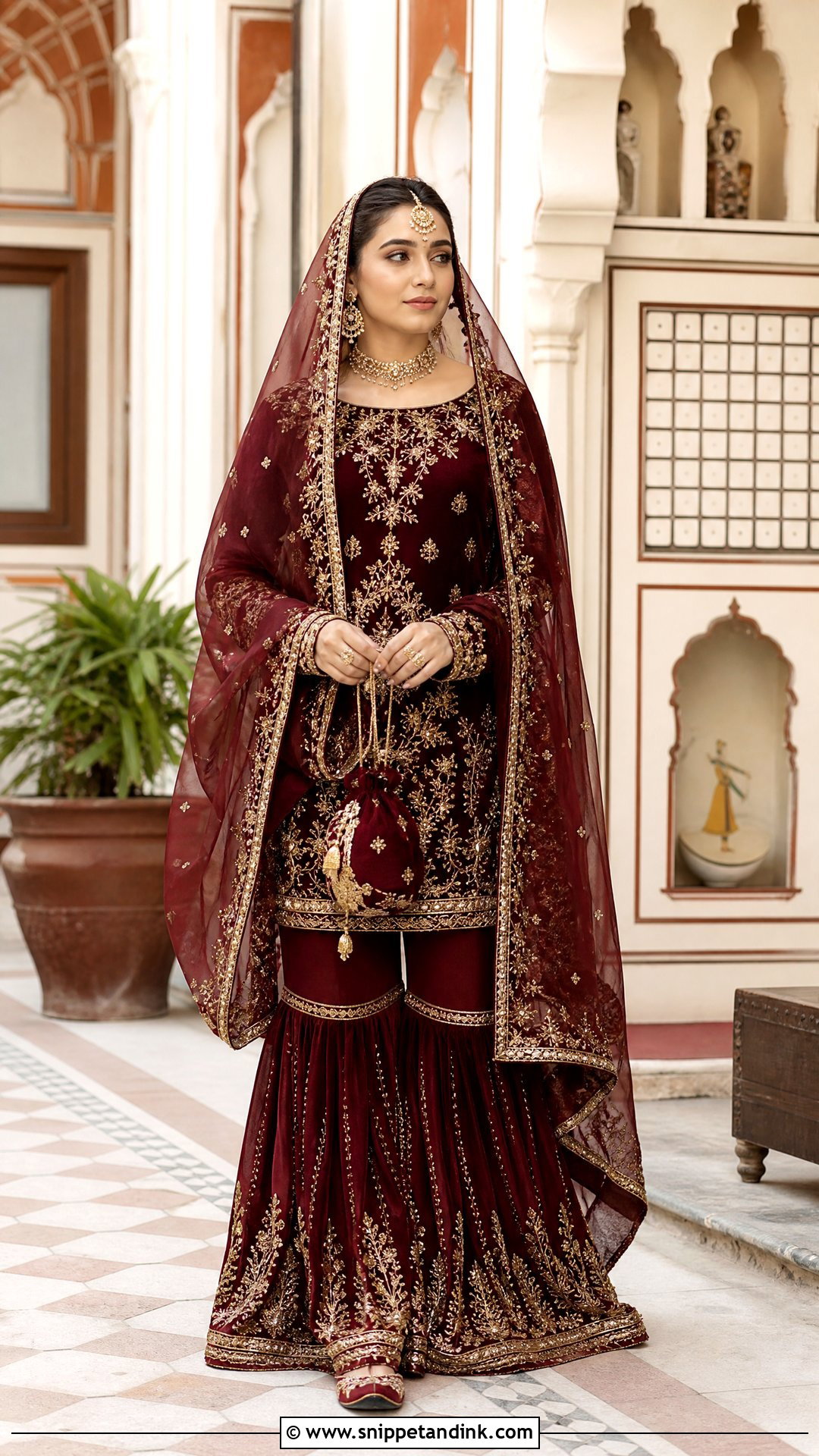
Maroon gives a gharara a regal feel without the brightness of red. A hip-length velvet or raw-silk shirt with a structured neck and gold work at the front, sleeves and hem sets it up. The gharara itself is all about the joint at the knee: it should sit neatly above it and break into the flare exactly there, so get your measurement taken while standing in the shoes you’ll wear. Drape a maroon net dupatta over the head with one worked edge down the arm. Antique-gold layered necklaces suit the depth of velvet better than bright yellow gold. Add maroon khussas, a small potli, a centre-parted bun, smoked eyes and muted rose lips.
3. Ivory Pakistani Bridal Sharara Suit
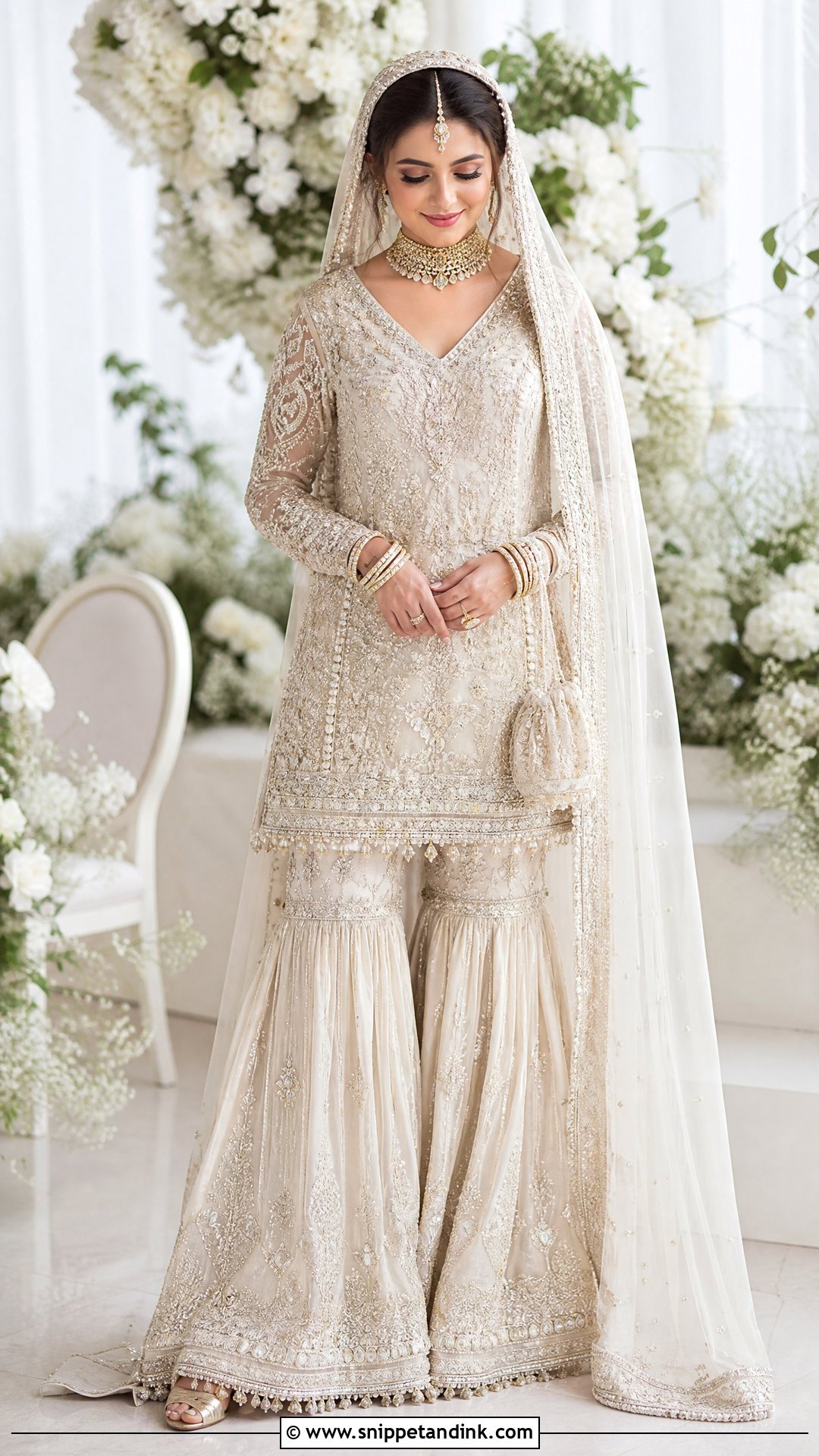
For a Nikkah, an ivory sharara suit is calm and modest. The shirt can be straight or slightly flared, with full sleeves and pearl, sequin and champagne-gold work. Silk, chiffon or light tissue all work for the sharara, but keep the heaviest embellishment near the hem so the fabric still moves. A pearl-edged ivory dupatta over the head can stay sheer enough to show the hair and tikka. Pearls catch on fine net, so I check every edge before the day and snip loose threads. A kundan choker, pearl earrings and metallic heels are enough jewelry. Luminous skin, soft liner and a rosy nude lip finish it, with white flowers in a low bun.
4. Blush Pink Pakistani Bridal Peshwas Suit
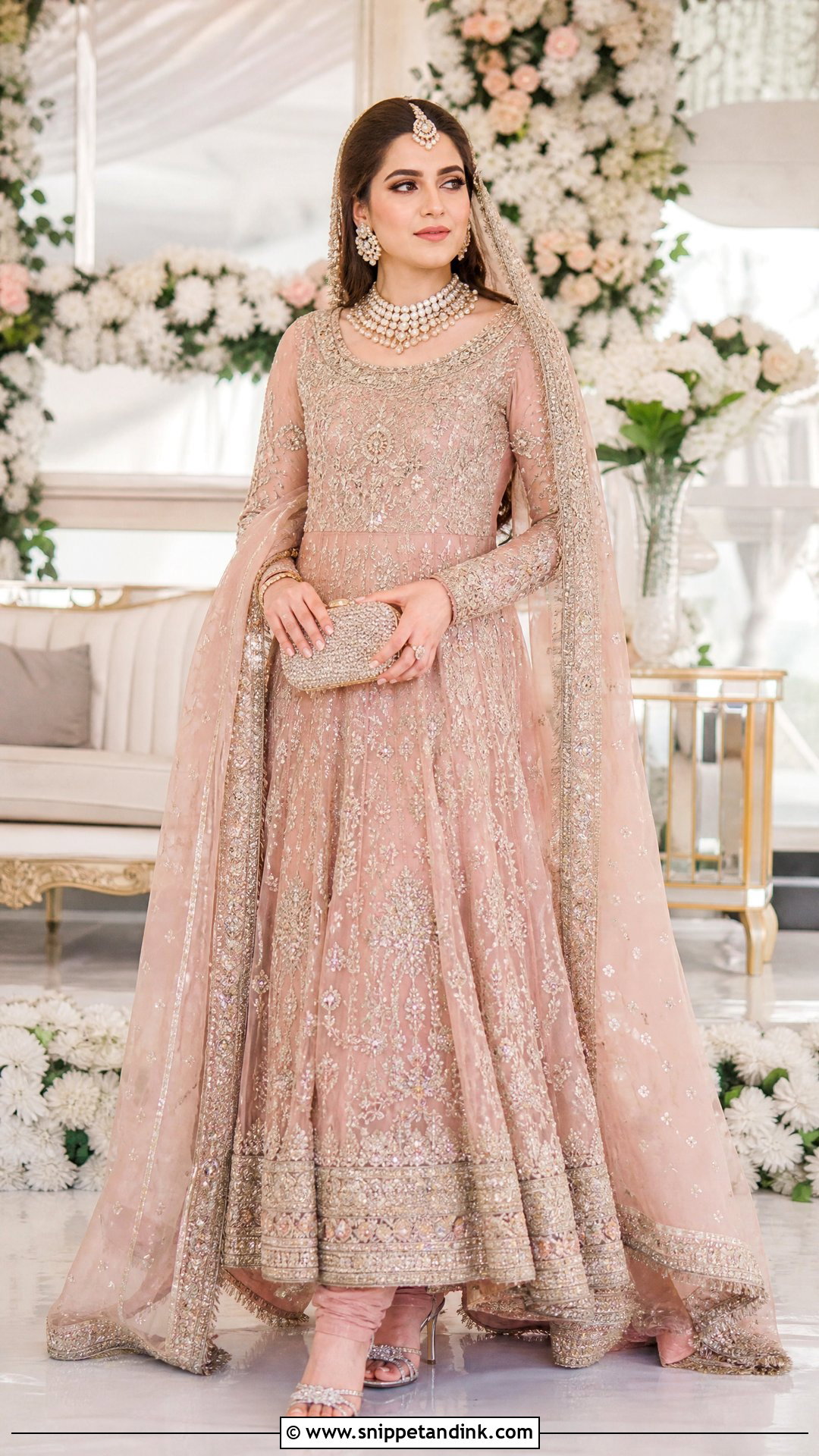
Blush pink peshwas suits a daytime ceremony or Walima where you’ll be standing to greet people for hours. The fitted bodice and full flare carry tonal resham, crystals, pearls and silver threadwork, and a churidar underneath keeps the shape clean. Pair it with an organza dupatta scattered with small motifs. Silver heels and a crystal clutch keep it light. I’d reach for pearl and kundan jewelry here: a medium necklace, earrings and a small forehead piece. Blush is delicate on camera, so keep the makeup warmer than you think; a very pale pink lip next to a pale pink outfit can flatten the whole face.
5. Gold Pakistani Bridal Anarkali Suit
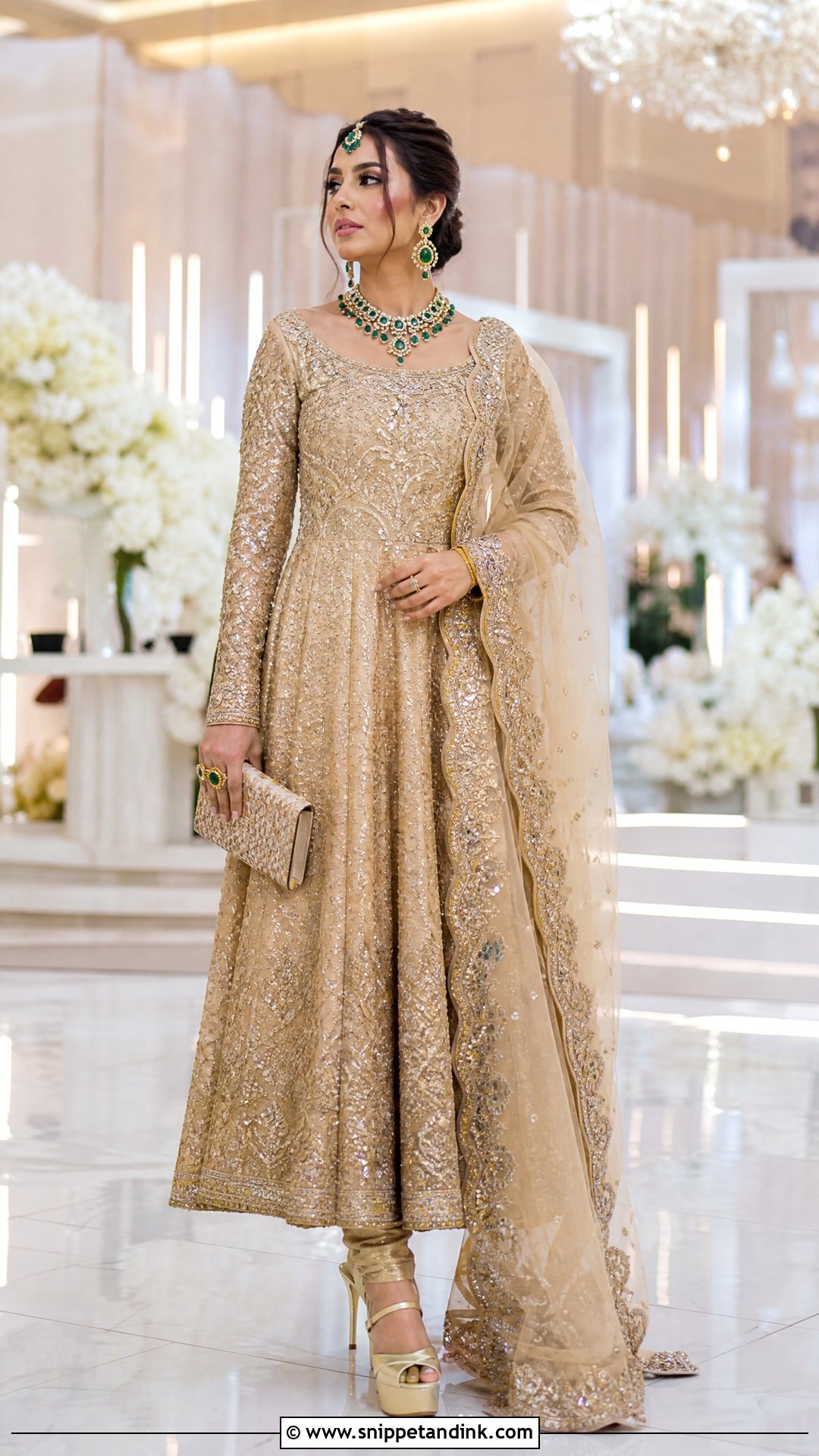
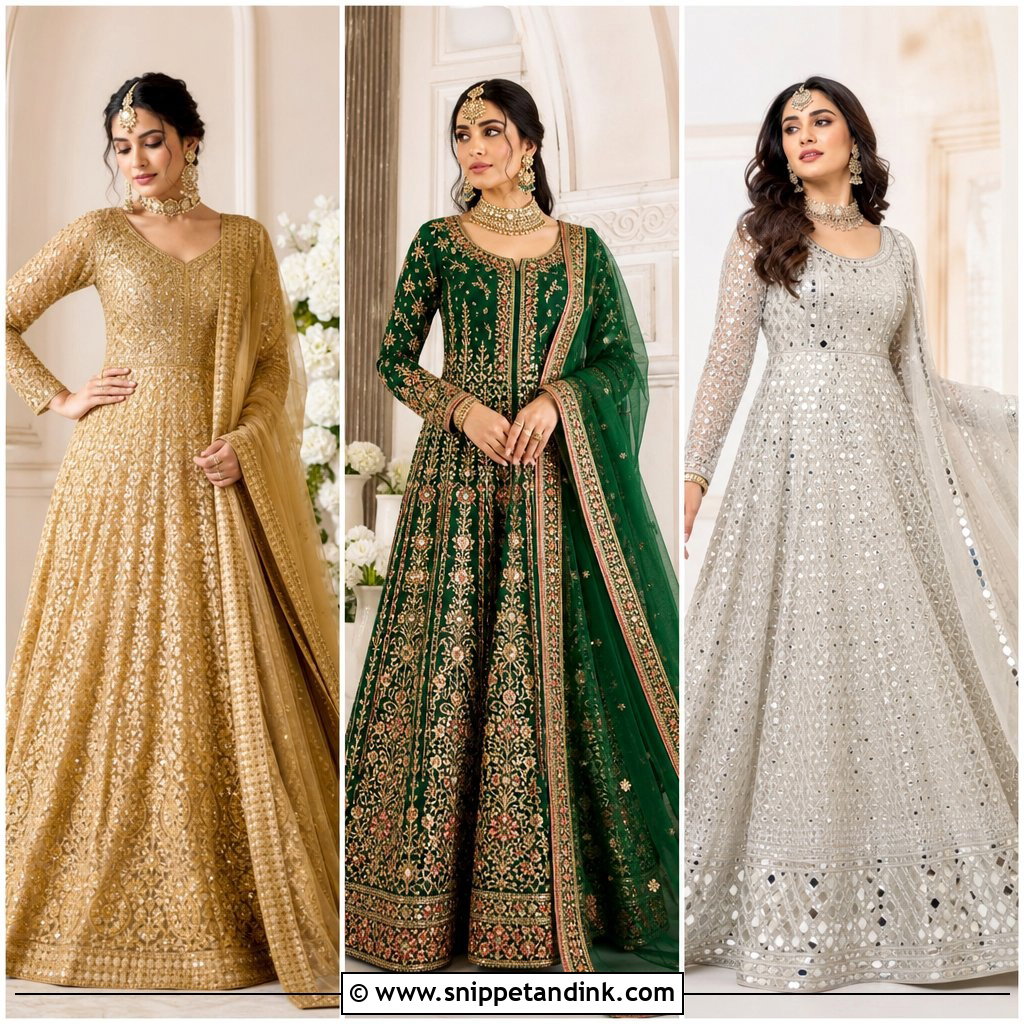
Gold Anarkalis come alive under evening lights. The trick is a fitted top with a wide but controlled flare, because too many panels make gold look bulky rather than rich. Antique-gold embroidery, crystals and fine beads add depth while staying in one colour. Wear slim churidar and a sheer scalloped dupatta draped on one shoulder so the neckline shows. Emerald or ruby jewelry gives contrast; kundan and pearls keep it tonal. Since an Anarkali is long, platform heels are the one place I’ll suggest height, and hem it to them. Smoked eyes, a warm nude lip, a sleek centre-parted bun and a gold clutch complete it.
6. Emerald Green Pakistani Bridal Velvet Suit
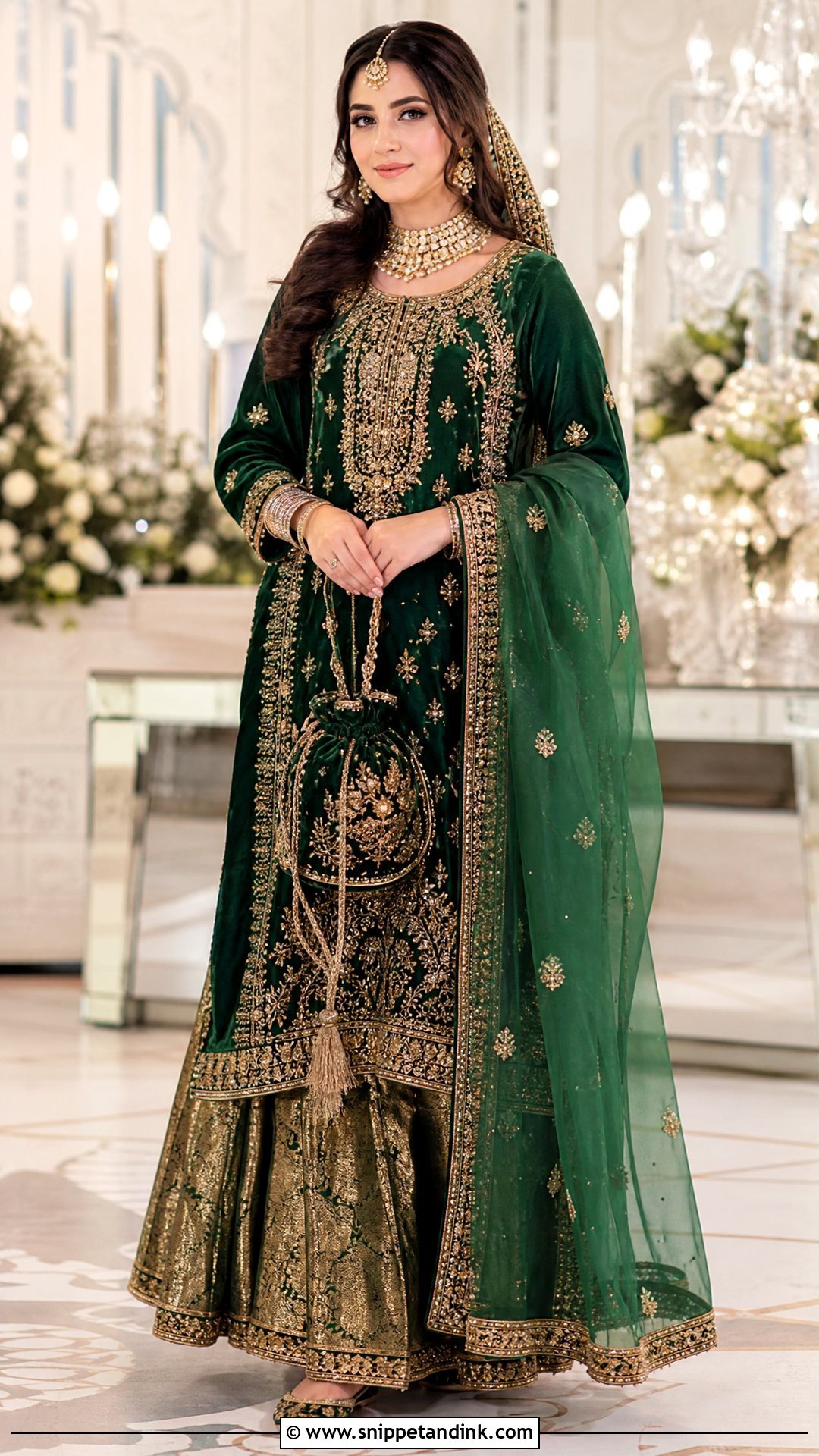
Emerald velvet is a winter-only outfit, and I mean that. A long velvet shirt with a straight cut, side slits and dense antique-gold work at the neck, cuffs and border gets heavy and warm quickly. Pair it with a brocade lehenga for drama or wide silk trousers if you’d rather move freely. Keep the dupatta light: organza with gold edging and small motifs stops the whole look from feeling weighed down. Polki jewelry, green and gold bangles, a potli and velvet khussas complete it. Velvet crushes when you sit, so I tell brides to smooth the back of the shirt before standing for portraits. Bronze eyes and a deep rose lip match the colour.
7. Yellow Pakistani Bridal Mehndi Gharara Suit
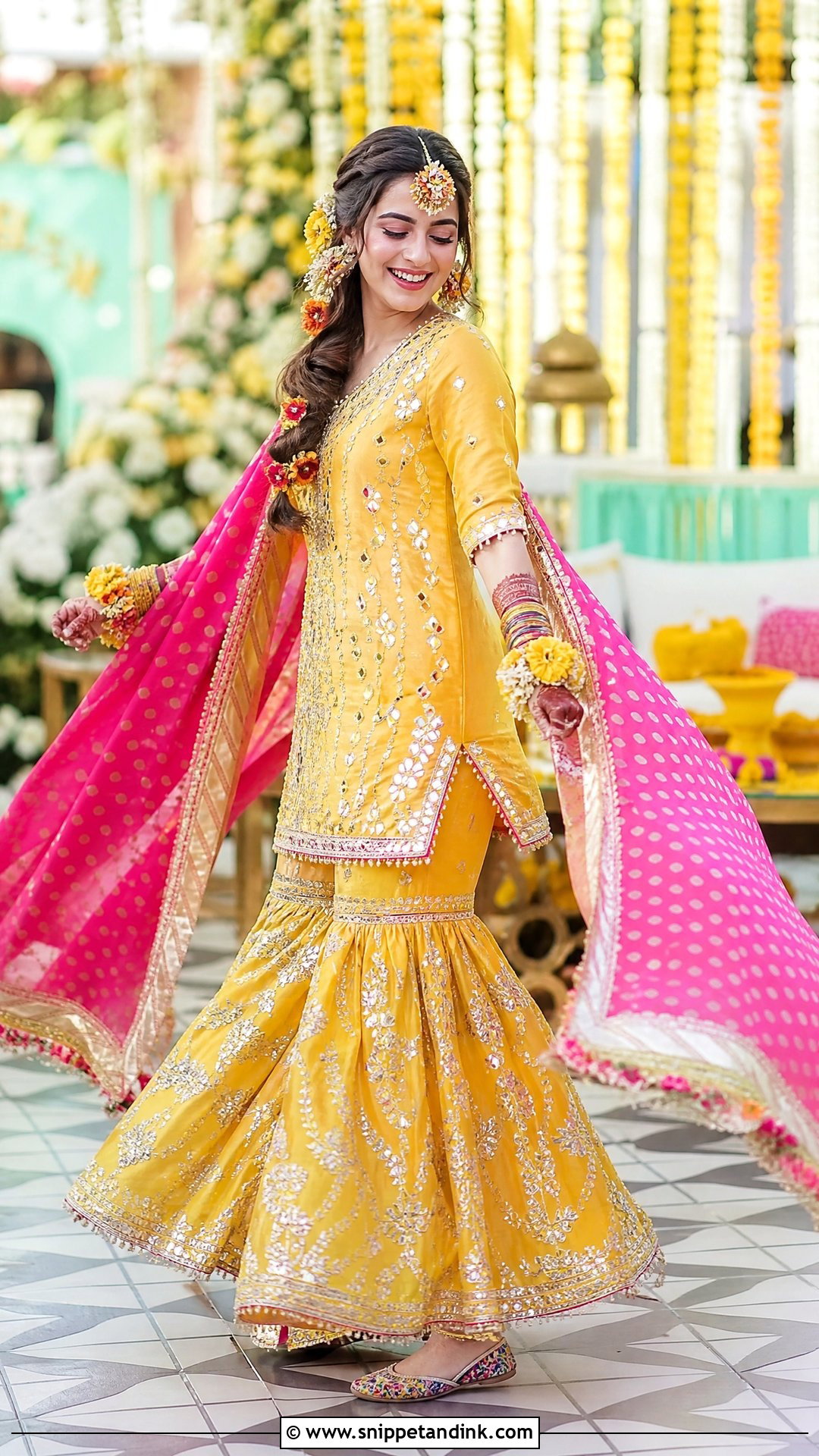
Yellow for the Mehndi needs no explanation. A traditional Mehndi gharara suit starts with a short kameez in mirror work, gota and thread, with flecks of pink, orange and green. The gharara gets knee bands and wide lower panels. Hot pink or green dupattas give the contrast. Mirror work has sharp edges, so check the inside of the kameez for any that could scratch during a long evening of dancing. Floral jewelry, jhumkas, bangles and flat khussas suit the night. A braid or flower-trimmed bun is practical. Use waterproof eye makeup; the Mehndi is hot, close and often emotional.
8. Pink And Orange Pakistani Bridal Lehenga Suit
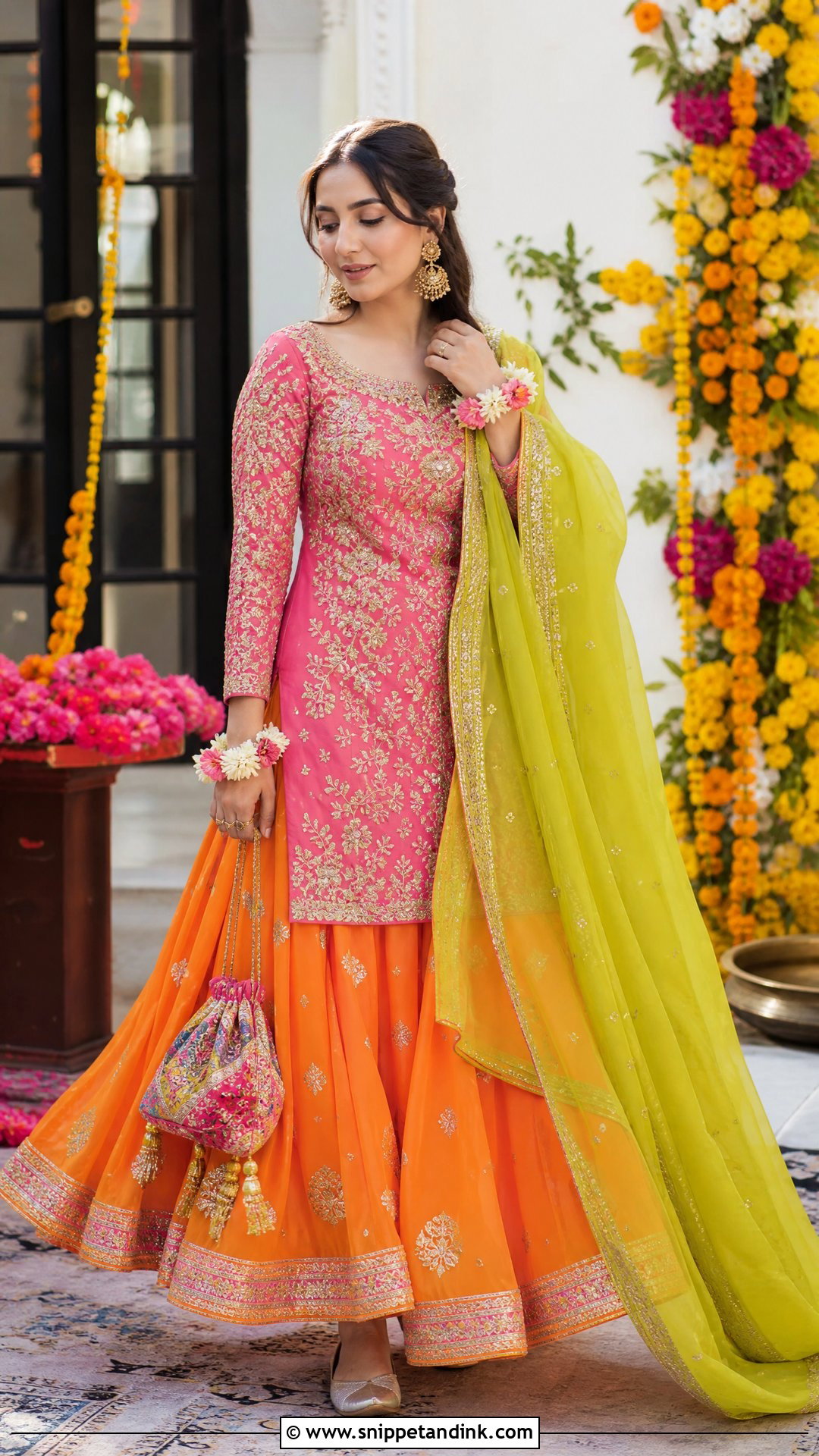
Can’t settle on one Mehndi colour? Pink and orange together have plenty of movement. A fitted pink shirt or modest choli with threadwork, gota, mirrors and sequins sits over a bright orange lehenga with pink panels. A lime or yellow dupatta adds a third shade, but only if the embroidery already contains it; otherwise it looks borrowed. Gold jhumkas, a light tikka, floral bangles and metallic flats keep it playful. A braid with fresh flowers suits the energy. Keep makeup bright yet controlled with gold lids and pink lips, and carry a potli in the suit’s main colours.
9. Mint Green Pakistani Bridal Sharara Suit
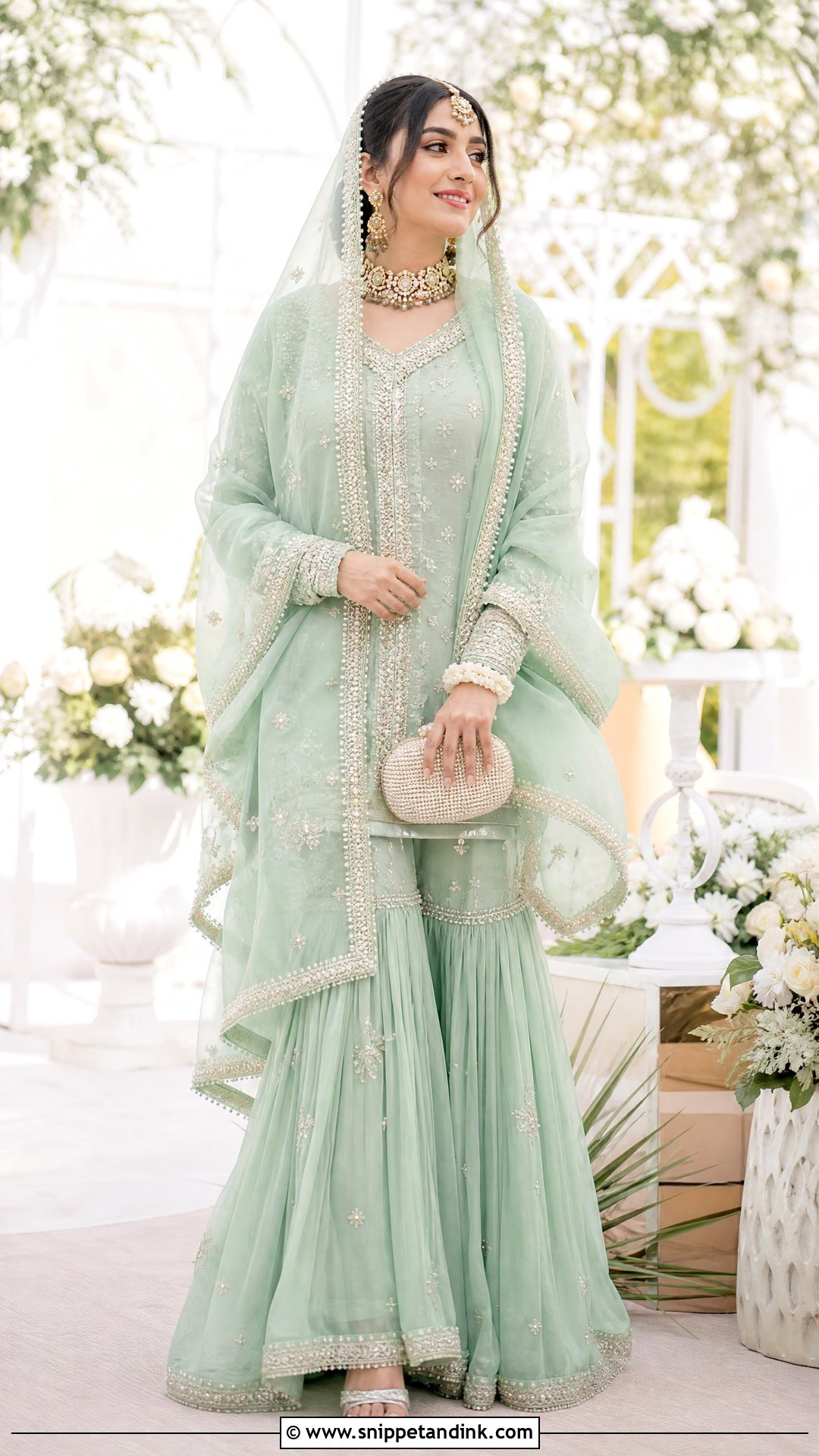
Mint green is fresh at a daytime Nikkah or a small reception. A long, lightly flared shirt with pearls, silver zari and tonal embroidery sits over a chiffon sharara that falls smoothly from the waist. A mint organza dupatta with a pearl border can go over the head or across both arms. Silver heels, a pearl clutch and diamond or kundan jewelry suit it. Full sleeves and a higher neck add coverage without losing the airy feel. I’d caution brides with very warm, golden undertones that mint can make skin look sallow in daylight, so hold the fabric to your face before ordering. Pale pink lips and tiny white flowers in a low bun finish it.
10. Ice Blue Pakistani Bridal Walima Suit
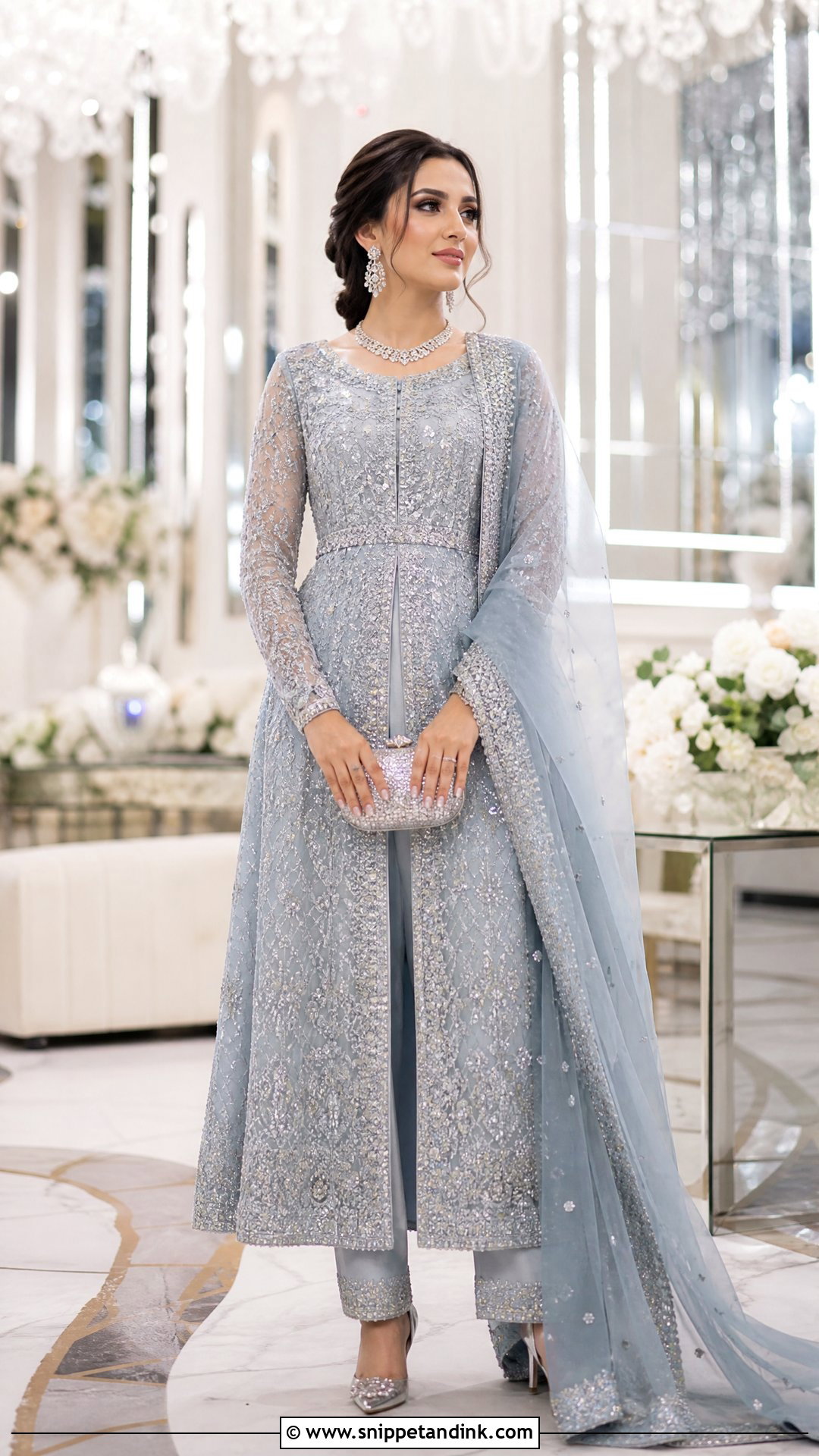
Ice blue makes a cool, current Walima outfit. The gown-style shirt needs a defined waist, a soft flare and silver crystal work across the bodice and sleeves, with matching straight pants or churidar underneath. A sheer blue-grey dupatta with a narrow worked edge adds tradition without hiding the shape. Silver pointed heels, a crystal clutch and diamond-style pieces complete it; skip the statement necklace if the neckline is already heavy. Pale blue can wash a bride out under flash, so I push for a little more blush and a mauve-pink lip than you’d wear normally. Polished waves or a low bun both suit it.
11. Champagne Pakistani Bridal Trouser Suit
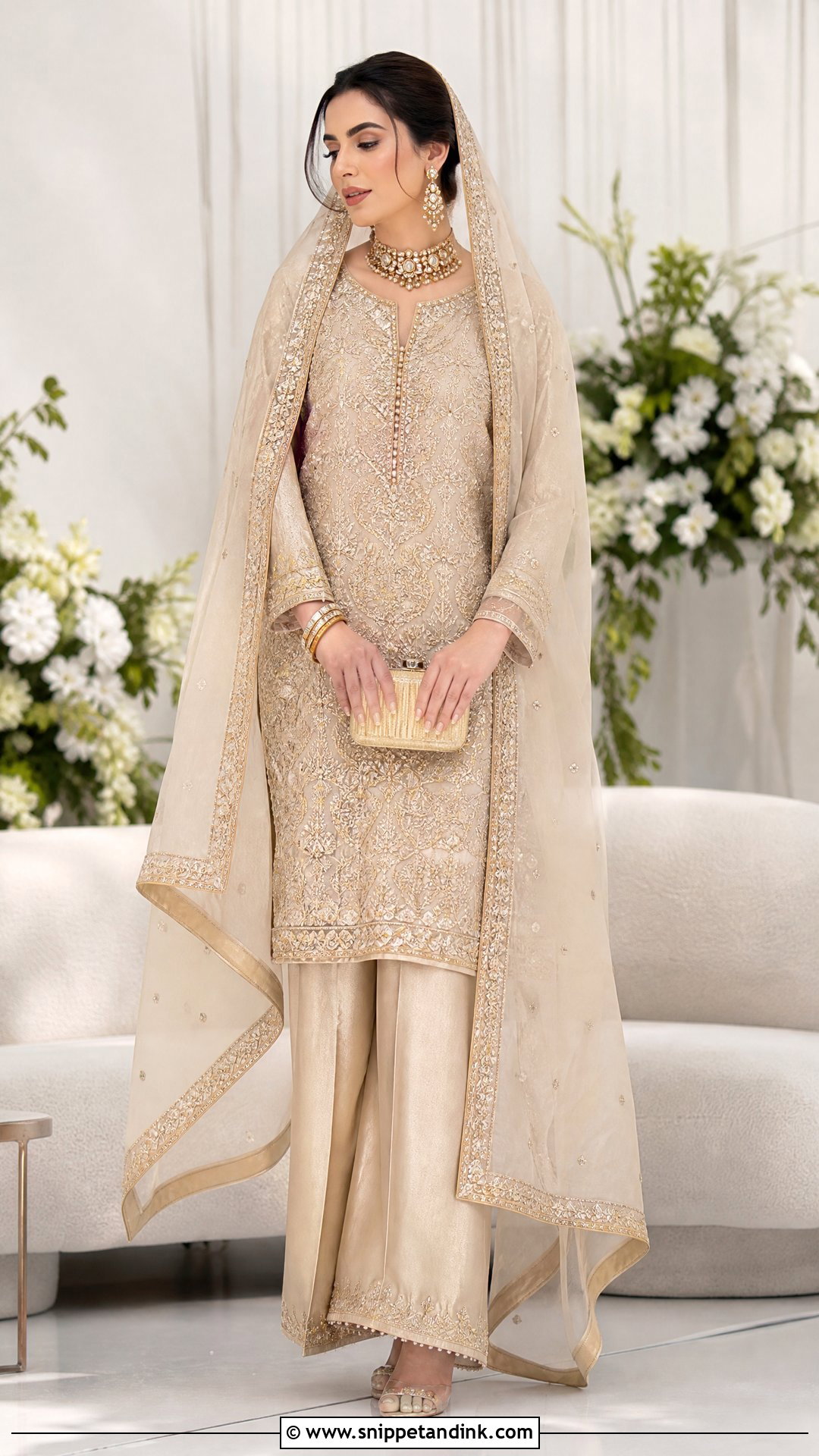
Clean tailoring can be just as bridal as a full skirt. A champagne long shirt with a structured shape, full sleeves and gold embroidery at the neck, side panels, cuffs and hem carries the look. The wide-leg silk trousers should skim rather than cling and break cleanly over the heel. An organza dupatta with a wide worked border goes over the head for the ceremony, then over one shoulder after. Kundan choker, long earrings, bangles and a box clutch finish it. This is my suggestion for brides who feel swamped by volume; the vertical line is far easier to sit, walk and eat in. A sleek centre-parted bun and caramel-nude lip suit it.
12. Silver Pakistani Bridal Tissue Peshwas Suit
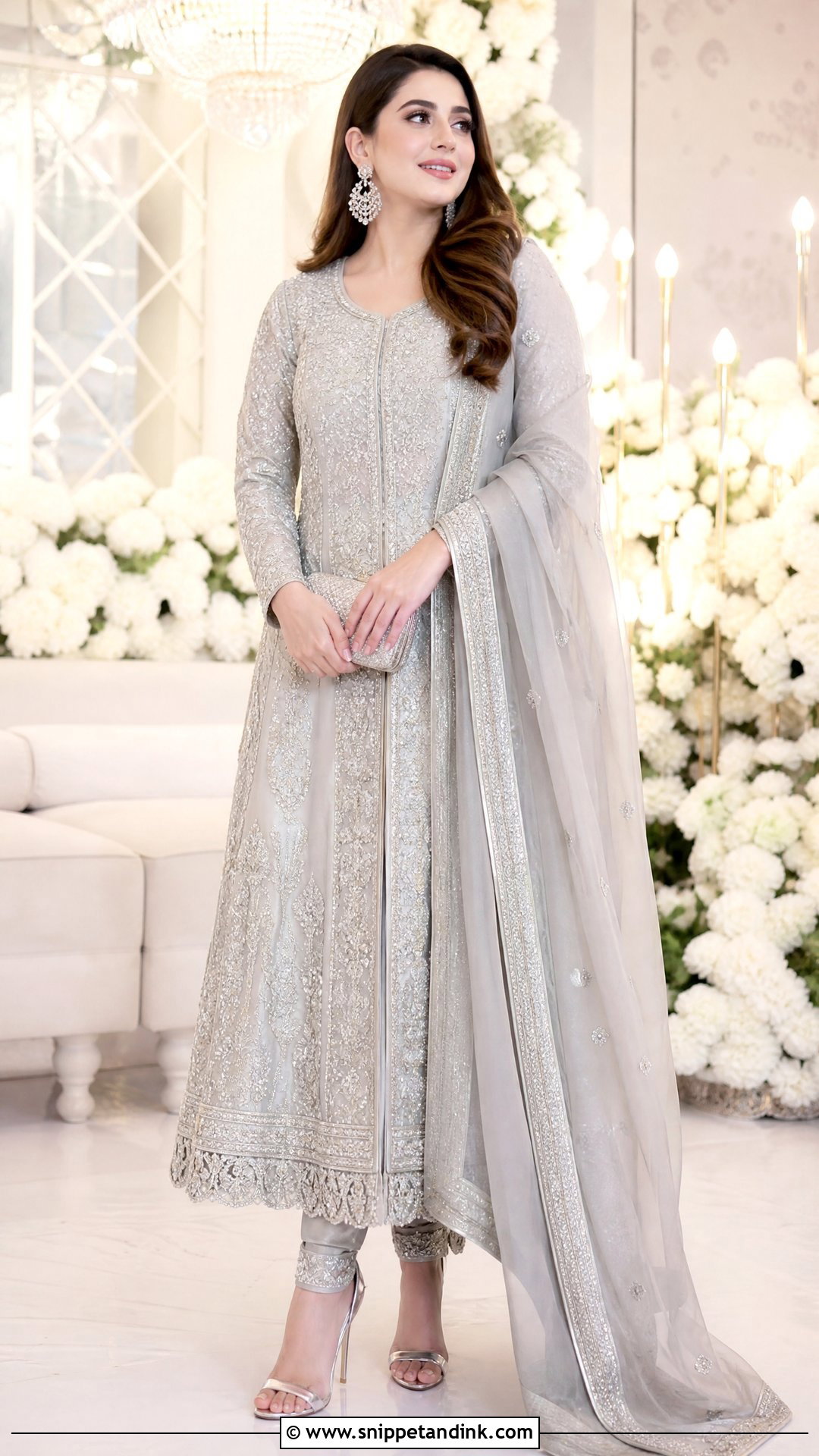
Silver tissue gives a peshwas suit a soft shimmer for a formal Walima. Tissue has natural body, so the bodice must fit closely before the skirt opens into controlled gathers; a loose bodice in tissue stands away from the body. Keep embroidery in silver, pearl, crystal and pale gold. A grey or silver organza dupatta is lighter than the tissue and balances it. Crystal earrings, a fine necklace, silver heels and a metallic clutch are enough. Tissue creases sharply and won’t forgive a hot iron, so I steam it from the inside the morning of. A smooth bun, cool brown shadow and dusty pink lipstick complete it.
13. Plum Pakistani Bridal Maxi Suit
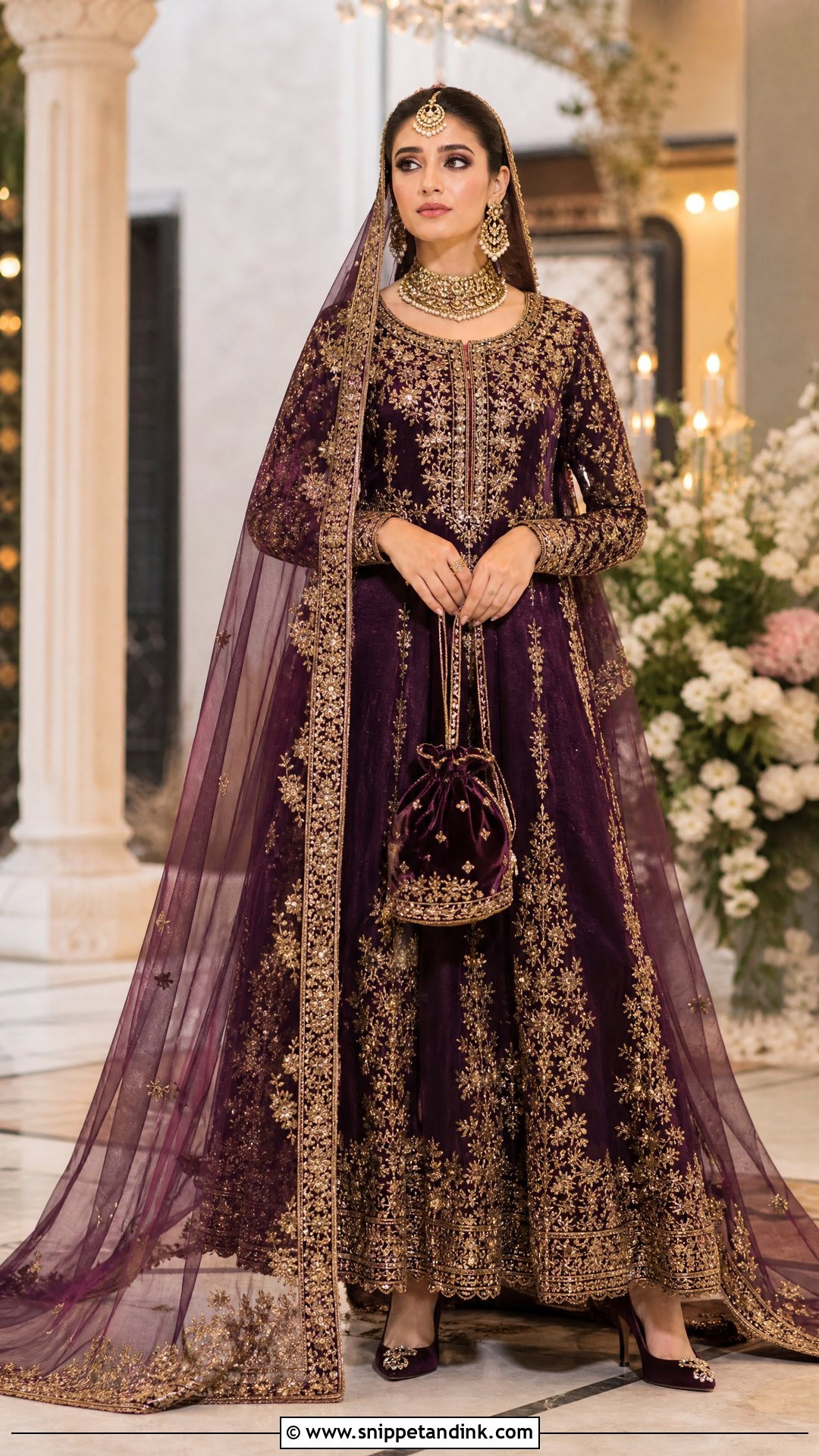
Plum is the colour I suggest to brides who want richness but feel red isn’t them. A floor-length maxi with a fitted bodice, defined waist and flowing skirt gives a long, flattering line. Antique gold, bronze or copper embellishment looks better on plum than bright yellow gold. Full sleeves and a higher neck read stately. A plum net dupatta with a worked frame goes over the head and one arm. Antique jewelry, velvet heels and a matching potli finish it. Bronze lids and a berry lip echo the fabric, and a sleek low bun keeps the neckline and earrings in view.
14. Rust Pakistani Bridal Angrakha Lehenga Suit
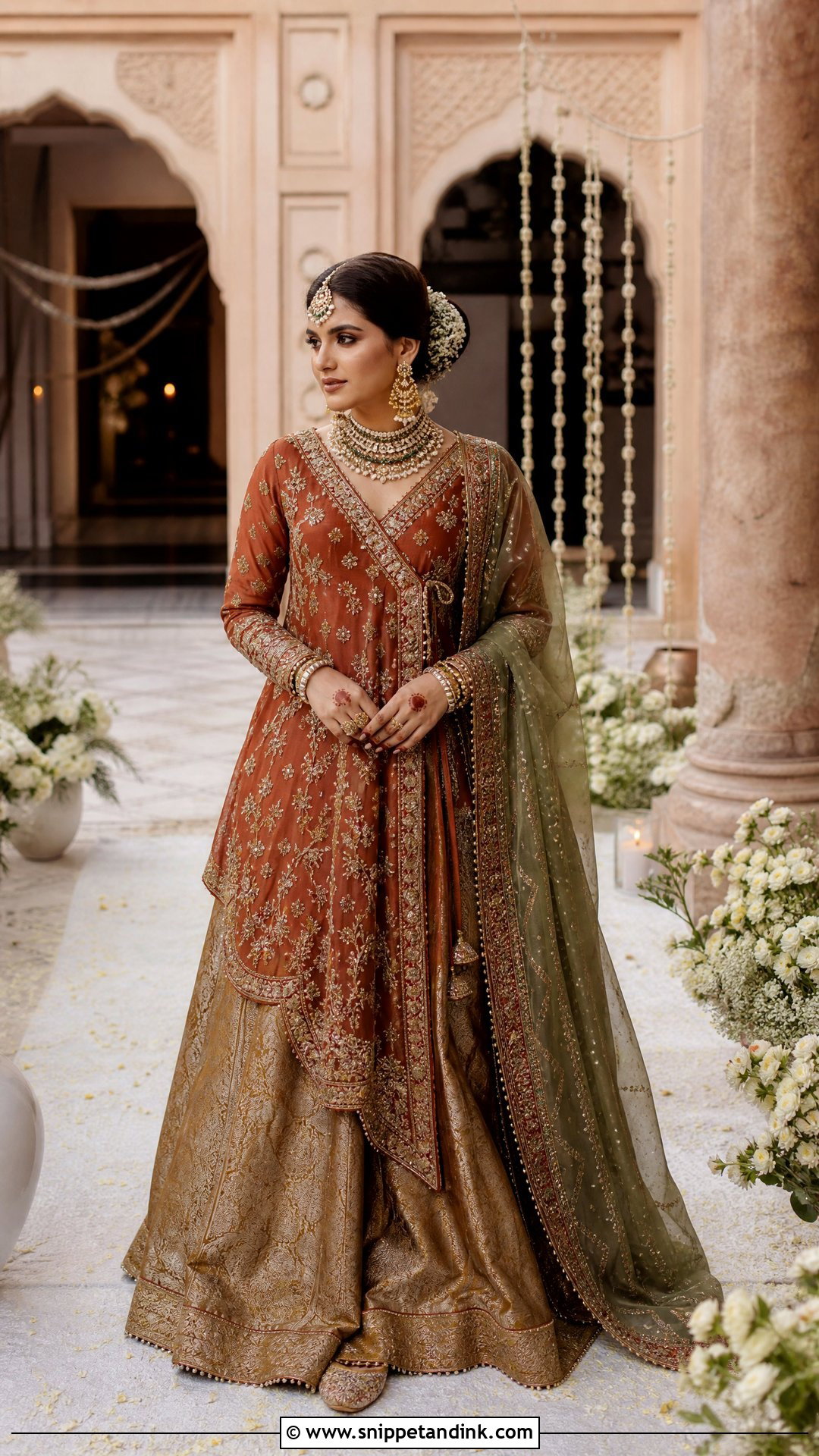
A rust angrakha lehenga suit pairs a heritage wrap shape with a full bridal skirt. The angrakha has a diagonal neckline, ties and fitted sleeves; tilla, dabka and resham should trace the wrap rather than cover everything. Over a rust or muted-gold lehenga with a wide worked hem, it reads rich and earthy. An olive, maroon or mustard dupatta gives dimension. Angrakha ties loosen with movement, so I always add a hidden hook under the wrap. Antique jhumkas, a layered necklace, bangles and khussas suit it, with a centre-parted bun, bronze eyes and a brick lip.
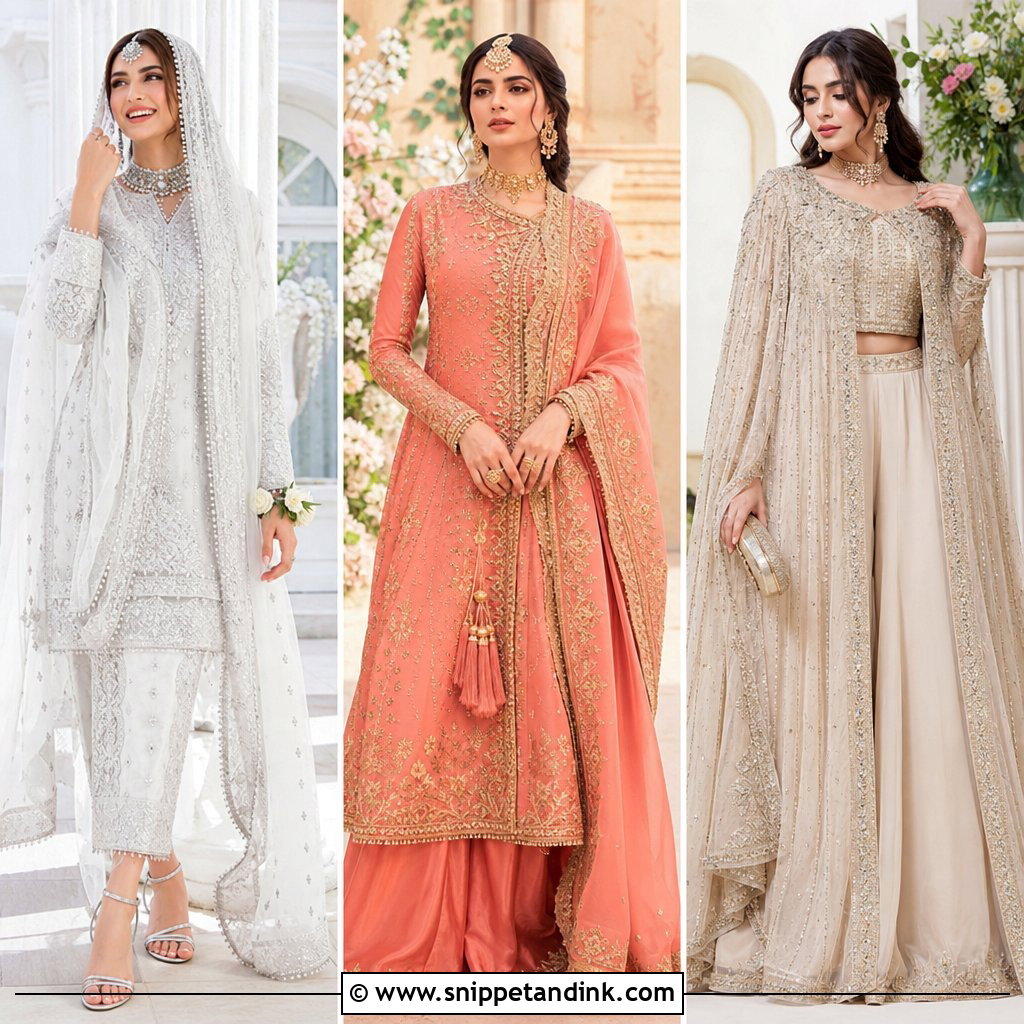

15. Teal Pakistani Bridal Peplum Sharara Suit
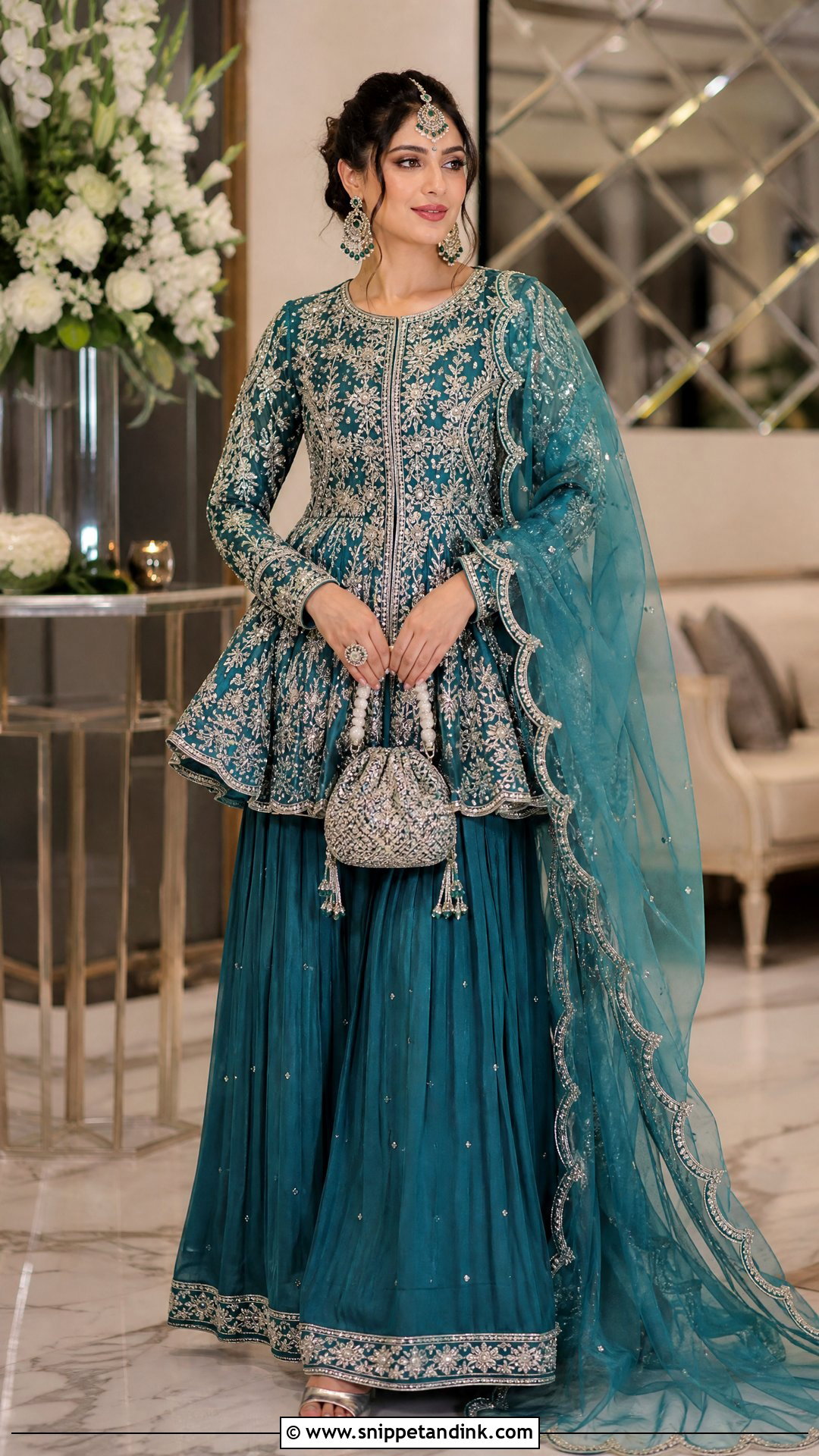
Teal with a peplum gives you a modern shape that still flows. The peplum top fits through the bodice and opens gently at the waist, and silver, antique gold or both can outline the neck, sleeves and hem. Keep the sharara plain or lightly worked so the top leads. A sheer teal dupatta with a metallic scalloped edge softens it. Statement earrings, a tikka, metallic heels and a small beaded bag complete it. A sleek bun or ponytail keeps the peplum visible. It suits an engagement or reception better than a Nikkah, where most families expect more coverage below the waist.
16. White And Gold Pakistani Bridal Farshi Shalwar Suit
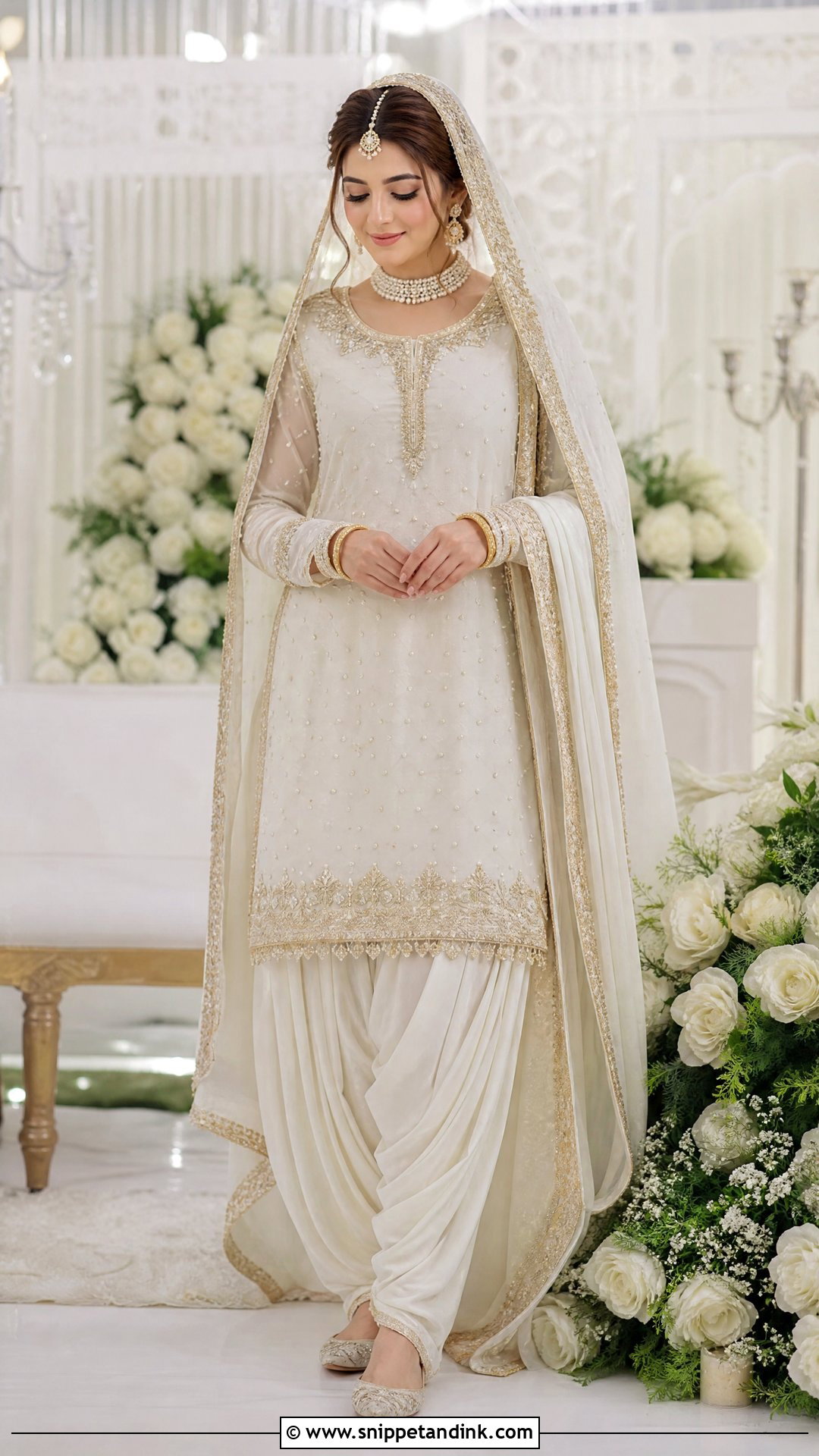
White and gold with a farshi shalwar is about as traditional as a Nikkah outfit gets. The kameez sits at or just below the knee with gold work, pearls and side slits. The farshi shalwar is cut generously, gathering at the ankle and trailing along the floor, and that train is a trip hazard if it’s even slightly too long. I insist on a fitting in the actual shoes, and someone assigned to help with stairs. An ivory organza dupatta bordered in gold and pearls goes over the head. A gold and pearl choker, bangles and pointed embroidered flats finish it, with glowing skin, a rose-nude lip and a low bun with small white flowers.
17. Red Pakistani Bridal Kurta And Gharara Suit
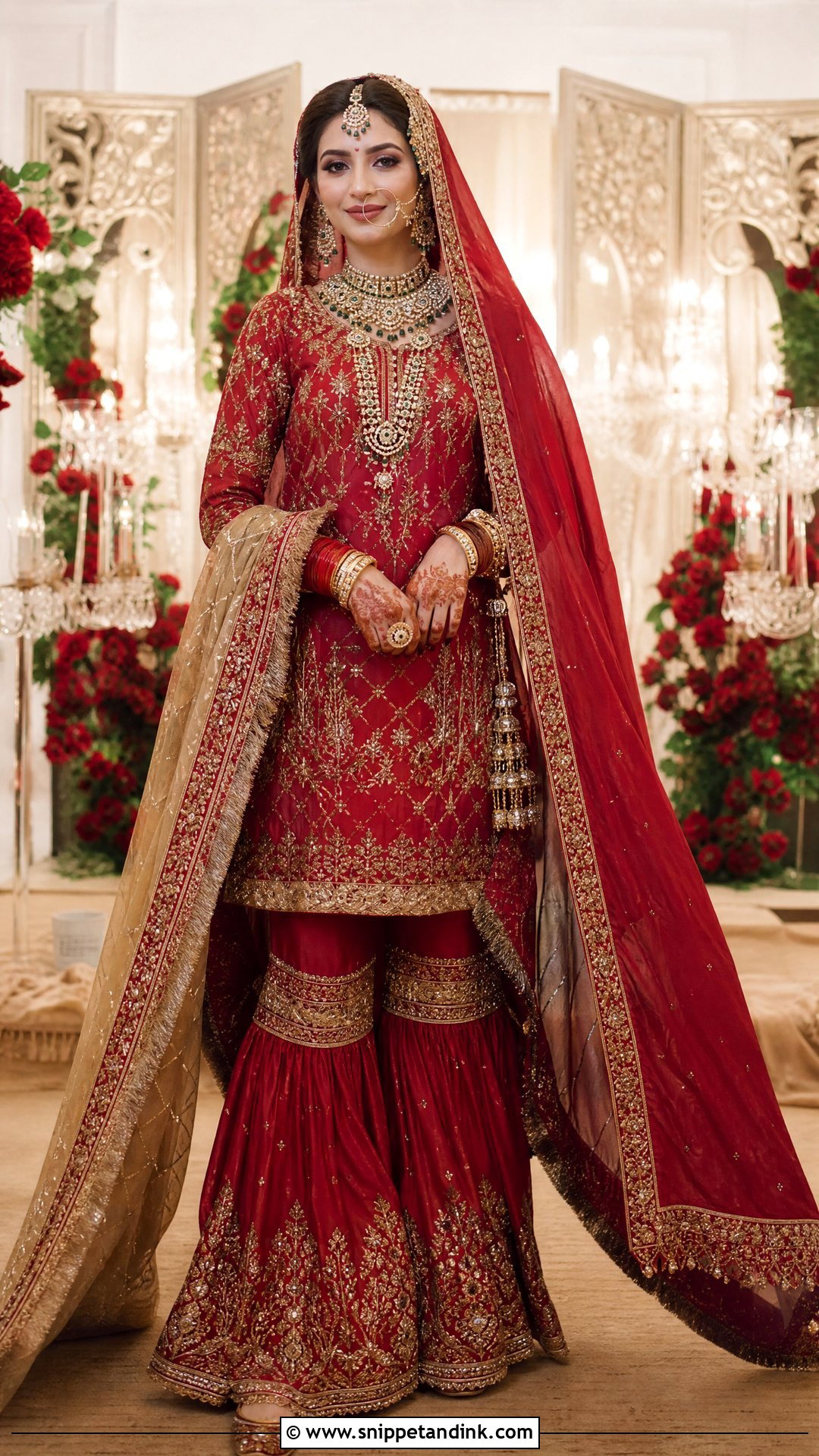
Pairing a red kurta with a gharara gives a traditional look with less skirt to manage. A long or mid-length raw-silk kurta with gold at the neck, front panel, sleeves and hem leads. The gharara has a fitted top section, worked knee bands and wide lower flares edged in velvet or brocade. A red net dupatta covers the head; add a lighter gold one on the shoulder for the layered effect. Kundan, a nath if you like, stacked bangles and red khussas complete it. With two dupattas, a polished bun is structural, not decorative: it’s what the pins anchor to. Defined eyes and a classic red lip finish the look.
18. Powder Blue Pakistani Bridal Long Shirt Suit
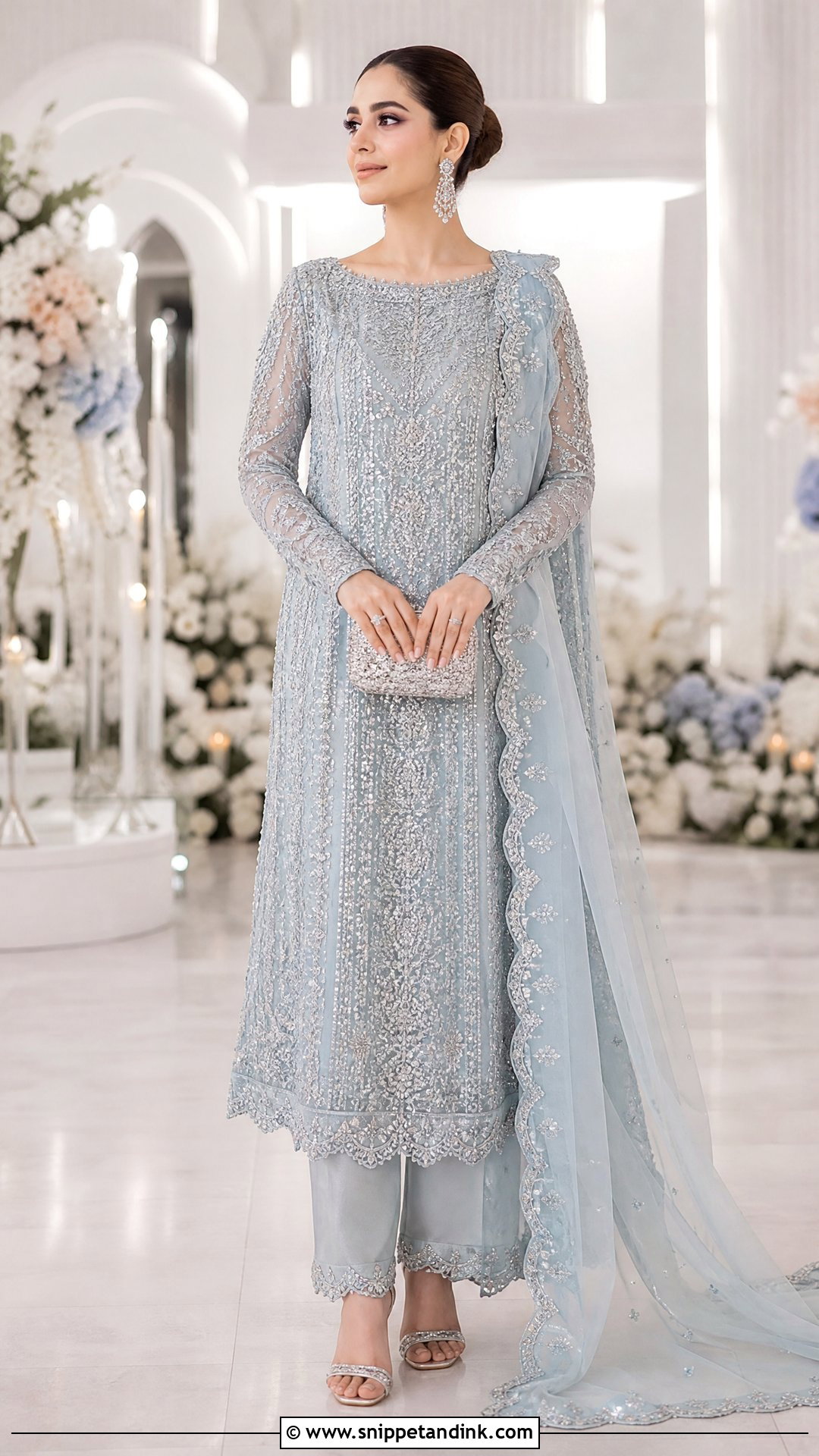
Powder blue suits a long, column-like shirt that falls to the floor with side openings and work at the neck, sleeves, front borders and hem. Straight silk pants or a light flare in the same shade sit under it. Silver thread, pearls and clear crystals keep the colour delicate. A pale blue organza dupatta with a scalloped border adds movement. Silver sandals, a beaded clutch, diamond-style earrings and a slim bracelet stack complete it. Pastels pick up colour from their surroundings, so I always check whether the hall’s lighting runs yellow; blue can shift greenish under it. Soft waves relax the look, a low bun formalises it, and mauve lips keep the face from fading.
19. Black And Gold Pakistani Bridal Anarkali Suit
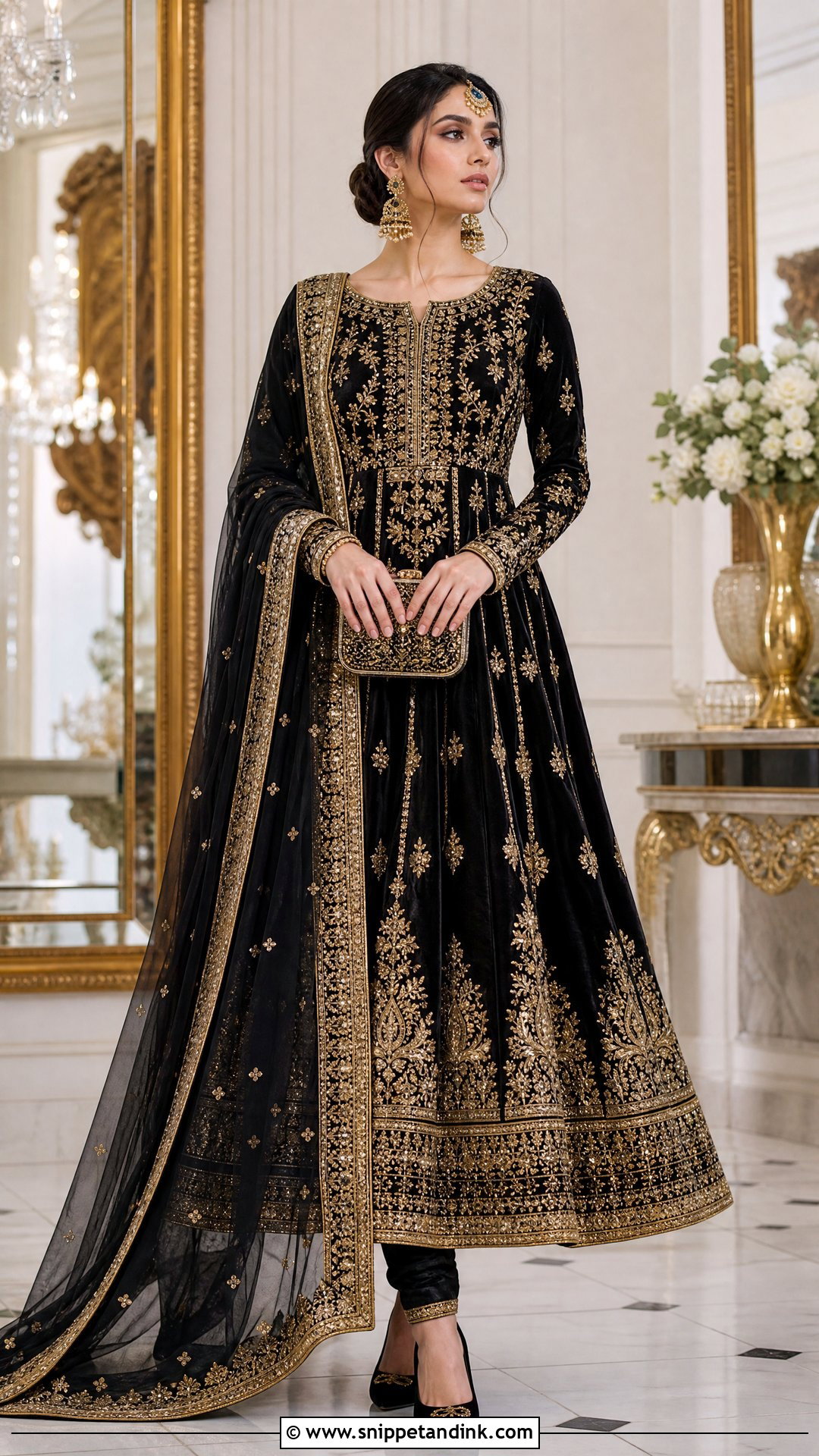
Black and gold is dramatic for a formal pre-wedding event or evening reception. Some families still avoid black at weddings, so I always ask before suggesting it. The Anarkali needs a fitted bodice, full sleeves and a broad skirt, with antique gold framing the neck, waist, cuffs and hem. Slim black churidar and a light black net dupatta with a gold border sit beneath. Gold jhumkas, one ring, an embellished clutch and black velvet heels complete it. A centre-parted bun or smooth ponytail keeps it sharp. Bronze shadow, precise liner and a muted red lip suit the contrast.
20. Peach Pakistani Bridal Palazzo Suit
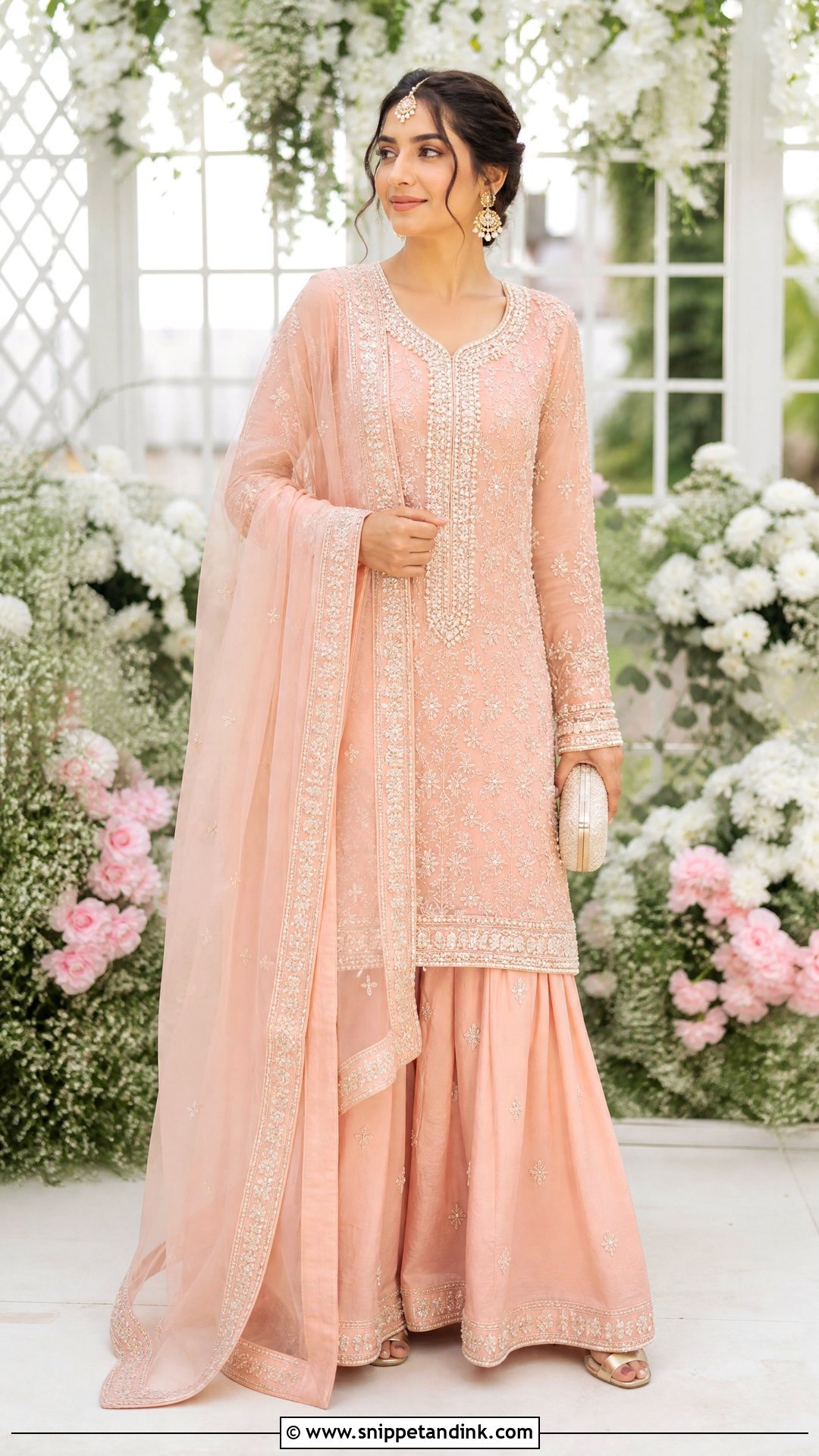
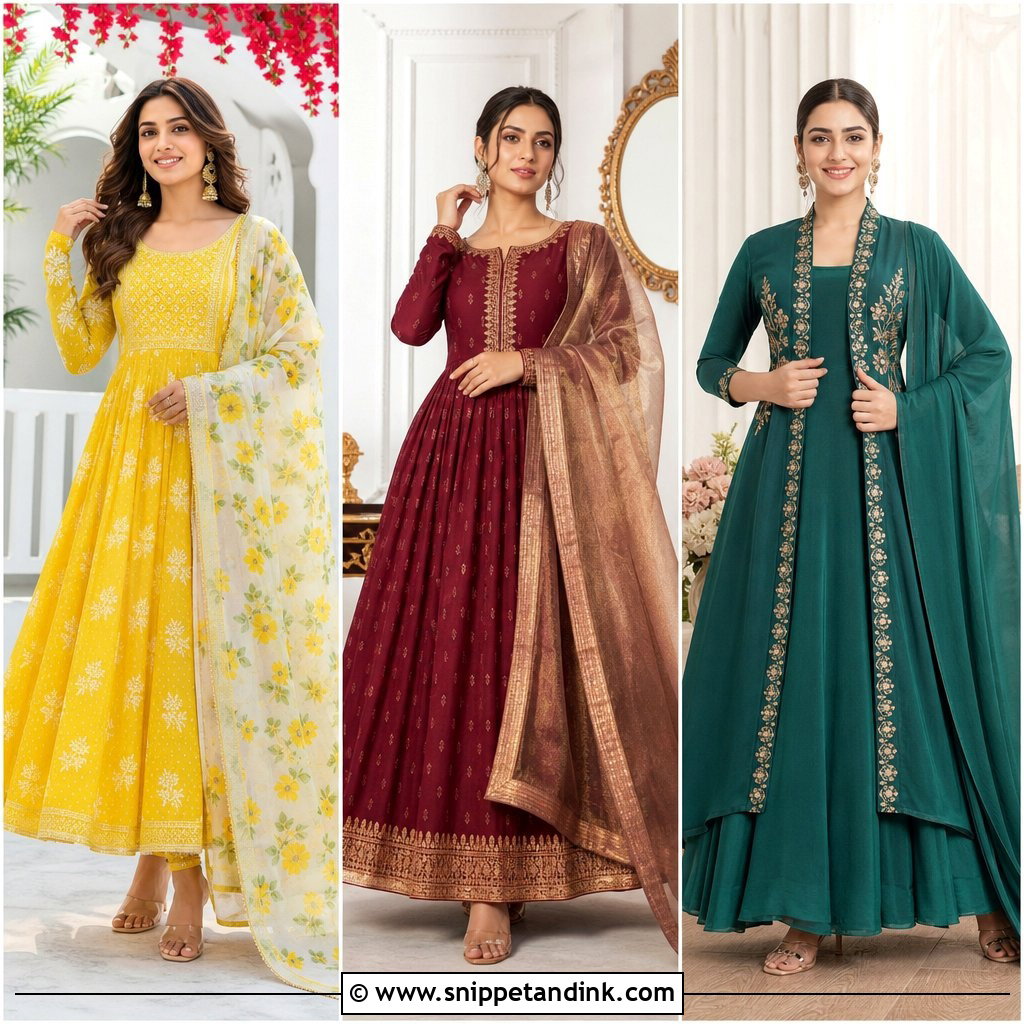
A peach palazzo suit is comfortable and light for a daytime Nikkah, an engagement or a small gathering. A long straight kameez with full sleeves and gold, pearl or ivory work leads. Wide palazzos fall from the waist and let you sit cross-legged on a stage without fuss, which matters more than people expect at a Nikkah. A sheer peach dupatta with a narrow border completes the three pieces. Pearl earrings, a delicate tikka, gold sandals and an ivory clutch finish it; a little emerald jewelry adds contrast if you want it. Curled hair or a floral bun, peach blush and a rose lip suit it.
Fittings, Weight and the Hours You’ll Actually Spend in It
Designers and tailors in peak wedding season run long queues, and handworked bridal pieces can take a couple of months or more. I plan for at least two fittings: one when the garment is assembled, and a final one close to the date, because weight changes before a wedding are normal and blouses and kameez bodices are the first thing to feel it.
At the final fitting, test it properly
- Wear the real shoes and walk a flight of stairs.
- Sit on a low sofa or stage seat for a few minutes, then stand up and check how the skirt falls.
- Lift both arms as if hugging someone taller than you.
- Put the head dupatta on with the jewelry you’ll wear and see if anything catches.
A Barat lehenga with a can-can and two dupattas is heavy, and brides are often on their feet or posing for hours. I suggest a padded, wide waistband inside the lehenga so the weight sits on your hips rather than biting at one line, and a short break mid-evening to sit with the dupatta lifted off. After the wedding, fold heavy pieces in muslin rather than hanging them; the waistband will stretch otherwise, and metal thread tarnishes faster in plastic covers.
Fit Over Embroidery, Every Time
A bridal outfit has to survive the whole day, not just the first photo. Across Mehndi ghararas, Barat lehengas and Walima peshwas, the ones that work are the ones chosen with the season, venue, fabric weight, embroidery placement and the day’s movement in mind. Jewelry, shoes, hair, makeup and dupatta draping should support the suit. Spend your money and time on tailoring and secure finishing; a fit that pinches or a dupatta that slips will bother you all night, however good the embroidery. Get those right and any of these can be yours.
You'll Like These Ideas:






Leave a Reply