
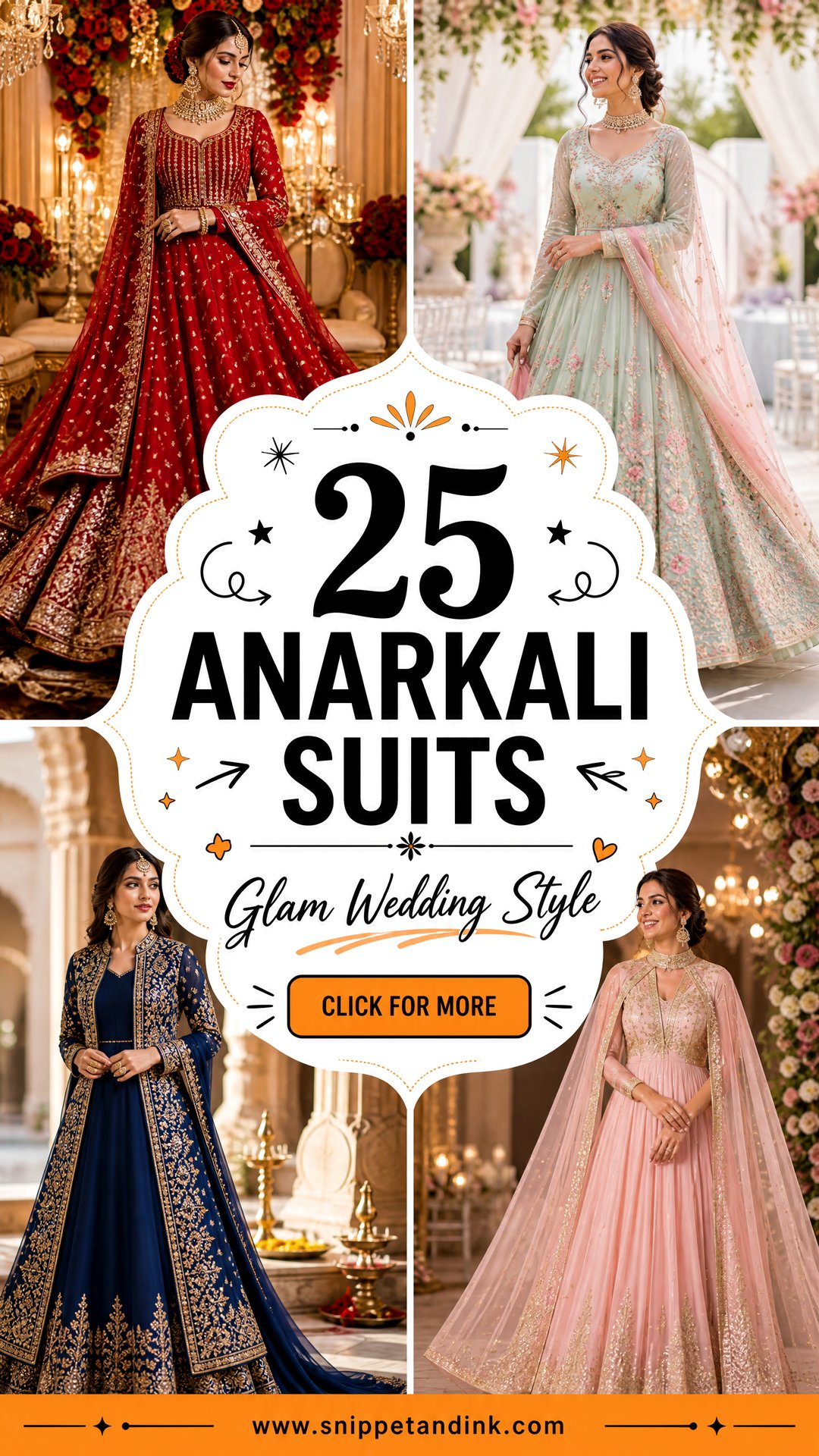
An Anarkali gives you the drama of a lehenga with half the weight and none of the skirt-and-blouse gap to manage, which is why I suggest one to so many guests heading into a three-day wedding. The fitted bodice and the long flare from just under the bust do most of the work, and you can still sit cross-legged at a mehndi without wrestling a skirt. Right now I’m seeing floor-length flares, jacket layers, cape dupattas, pastel embroidery and sharara pairings everywhere, along with georgette, silk and velvet in tone-on-tone work. Below are 25 Anarkali styles for guests and brides, with what I’d watch for in each one.
Measurements That Decide Whether an Anarkali Hangs Right
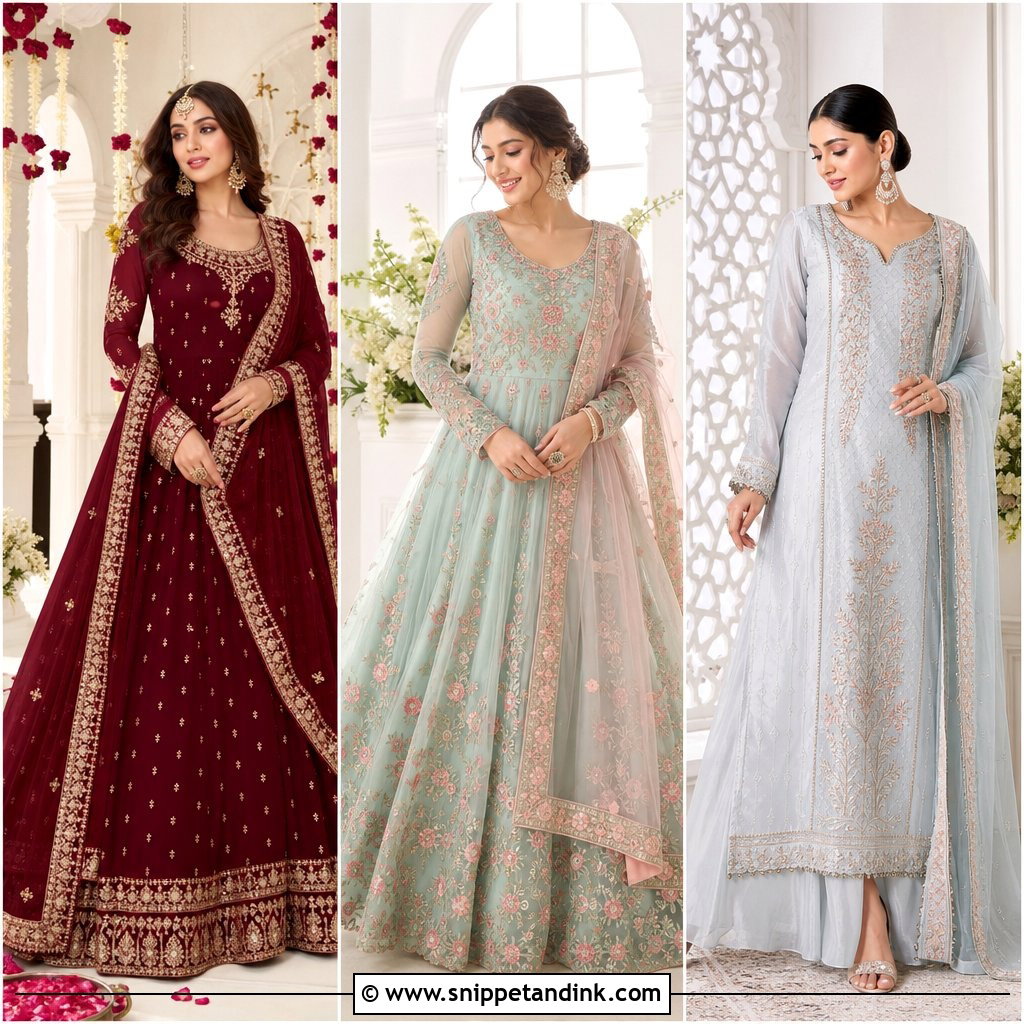
Most Anarkalis for weddings are bought semi-stitched or ordered online, and the flare only falls properly when three measurements are right. I’d take these with someone helping you, standing straight, in the shoes you’ll wear.
- Full length: from the top of the shoulder, next to the neck, down to the floor in your shoes. Subtract about an inch so the hem clears the ground.
- Under-bust: the flare starts here, so if this is too loose the whole dress drops and looks like a tent.
- Armhole and upper arm: tight sleeves on a fitted bodice are the most common complaint, especially in silk and brocade that don’t stretch. Measure with your arm relaxed, then add ease.
Churidar should be cut longer than your leg so it gathers in soft rings at the ankle. If you’re having it stitched, allow two to three weeks for the tailor and another week for a fix; in wedding season, tailors book up, so start earlier.
1. Floor Length Anarkali Suit For Wedding
The floor length Anarkali suit is the one I’d pack if you could only take one outfit, because it reads as formal with nothing more than earrings and a clutch. The hem should graze the top of your foot while you’re wearing your shoes; any shorter and the churidar shows, any longer and you’ll tread on it on stairs. Georgette, silk and net all flare well with embroidery on the yoke, hem and sleeves. Slim churidar keeps the flare clean. Wear block heels or embellished sandals, since you’ll be standing through the pheras or the reception line.
2. Red Anarkali Suit For Wedding
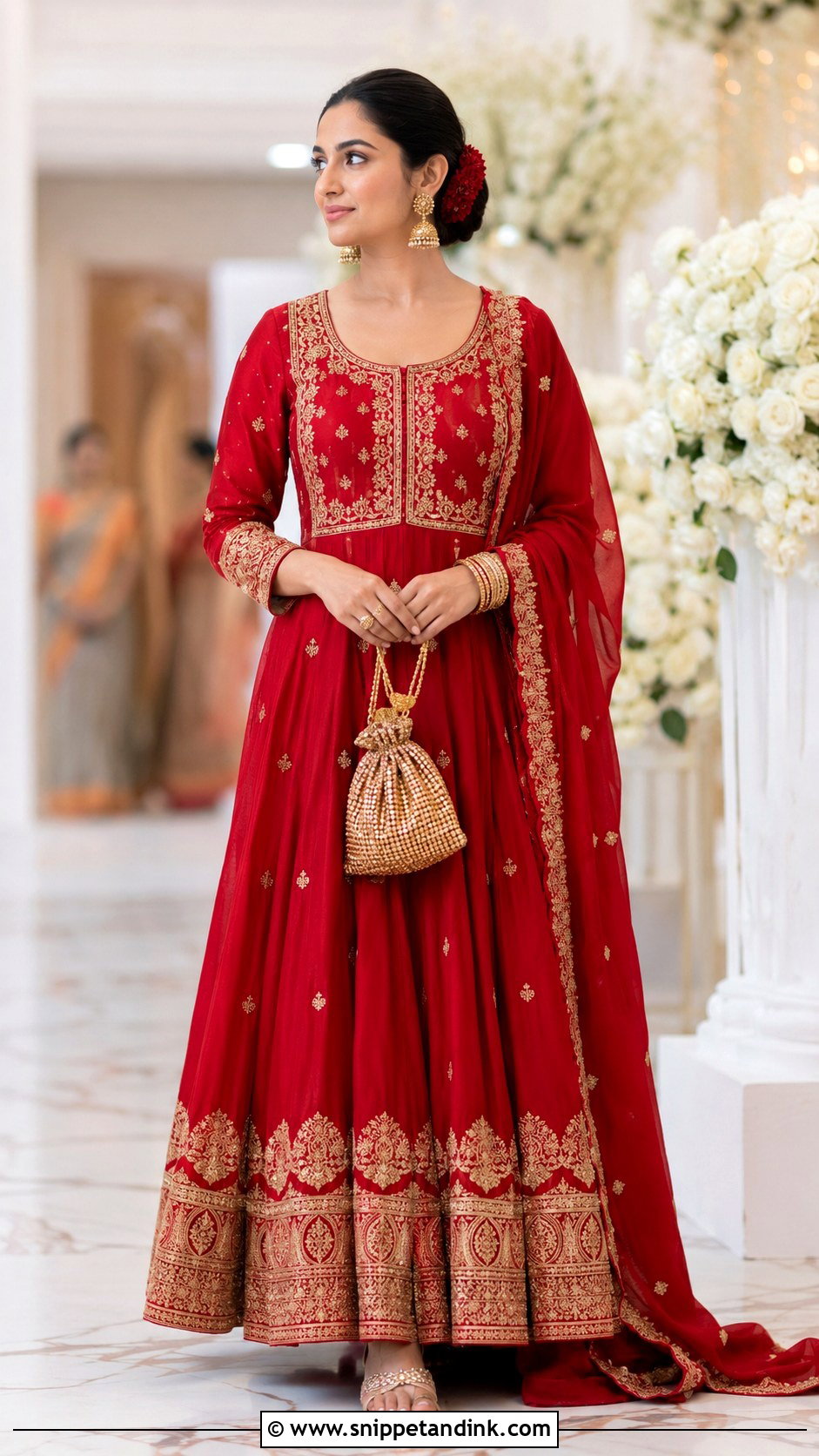
Red is a guest’s trickiest color. In many families it’s the bride’s color, so as a guest I keep the embroidery moderate and avoid the full heavy-zari red that might read as bridal from across the mandap. Deep red georgette or silk with gold detailing and a beige or champagne dupatta strikes the balance. Gold jhumkas, a potli bag and metallic heels finish it. Dewy makeup and a low bun keep the face soft against such a strong color.
3. Pastel Anarkali Suit For Day Wedding
Pastels come into their own in daylight, where mint, blush, powder blue, lavender and peach look clean instead of washed out. Under yellow evening bulbs the same shades can turn muddy, so I save them for day functions. Pearl, mirror, gota or thread embroidery suits them. A sheer dupatta and fine jewelry keep it light; nude heels, embroidered juttis or pearl sandals finish it. Pastels also suit bridesmaids, because a row of soft shades sits well together in group photos.
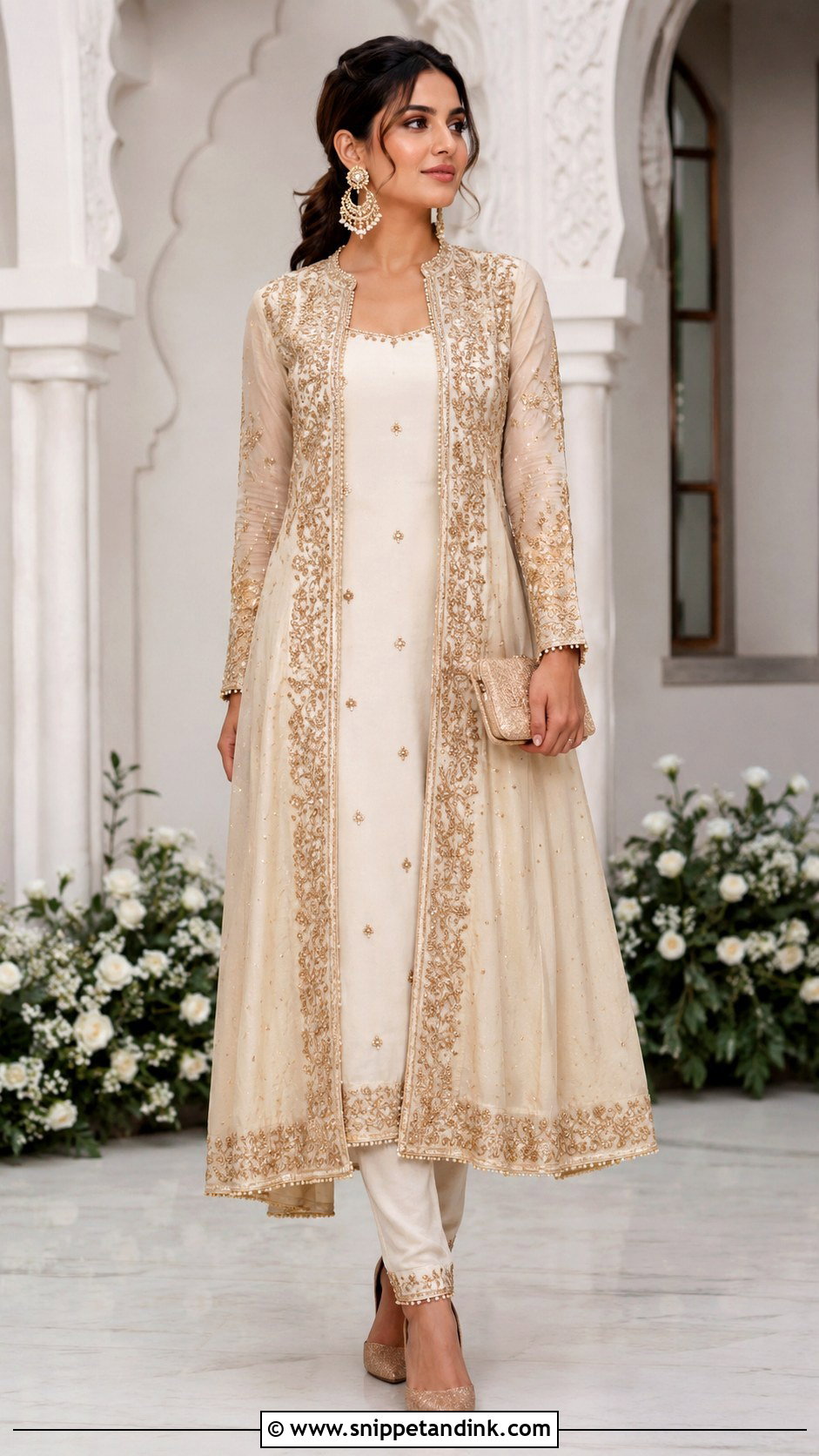
4. White Anarkali Suit With Dupatta
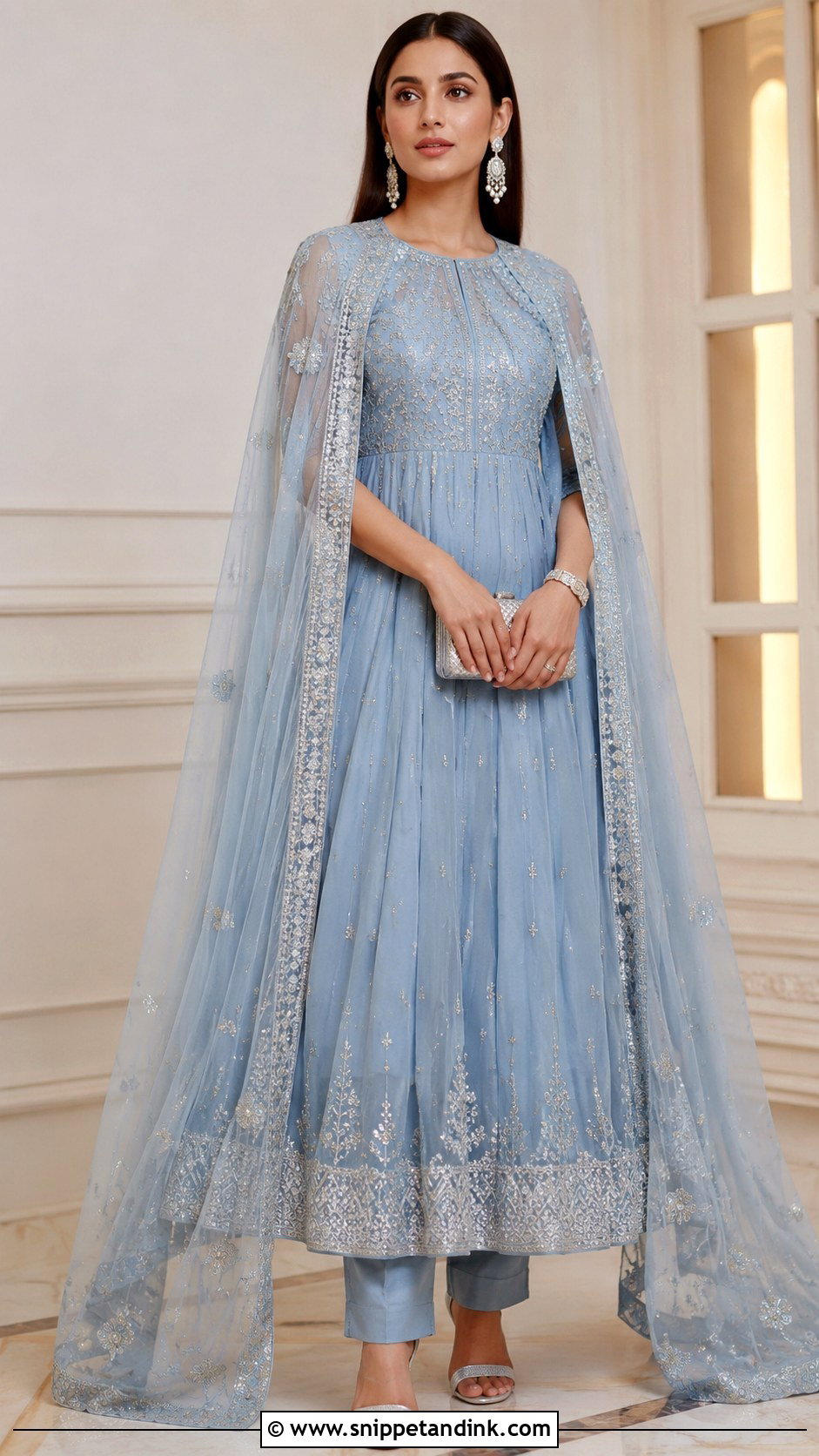
Ivory, cream or off-white looks richer than stark white, which can read as plain or even as a mourning color in some Hindu families, so ask before you wear it to a ceremony. With gold embroidery, chikankari, pearls or mirror work, it’s polished. Pair a net or organza dupatta with metallic sandals and kundan earrings, plus a pearl clutch or gold potli. It suits engagement events, day receptions and pre-wedding lunches. Give your face some warmth with a soft pink lip so the outfit doesn’t wash you out.
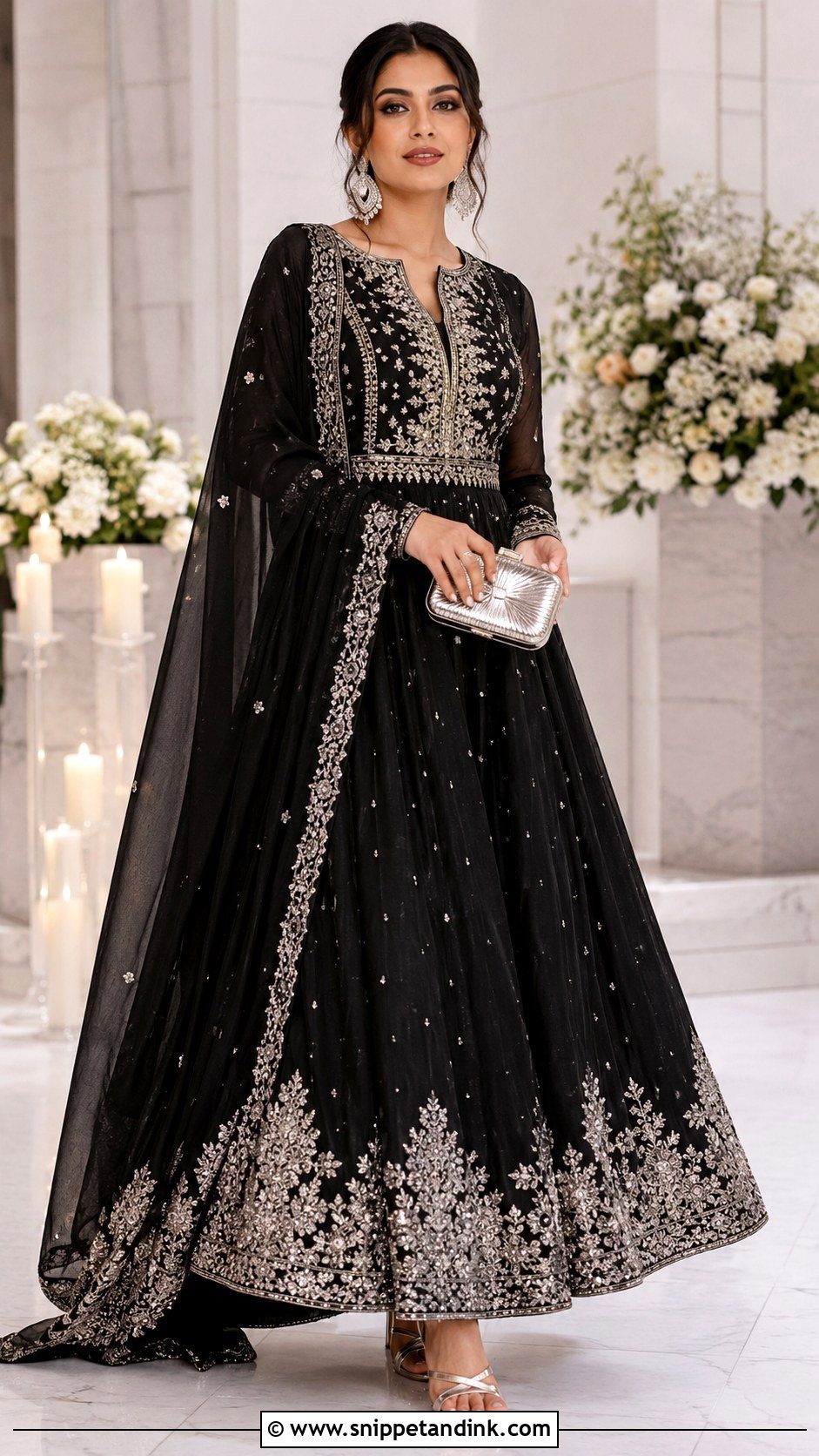
5. Black Anarkali Suit For Reception
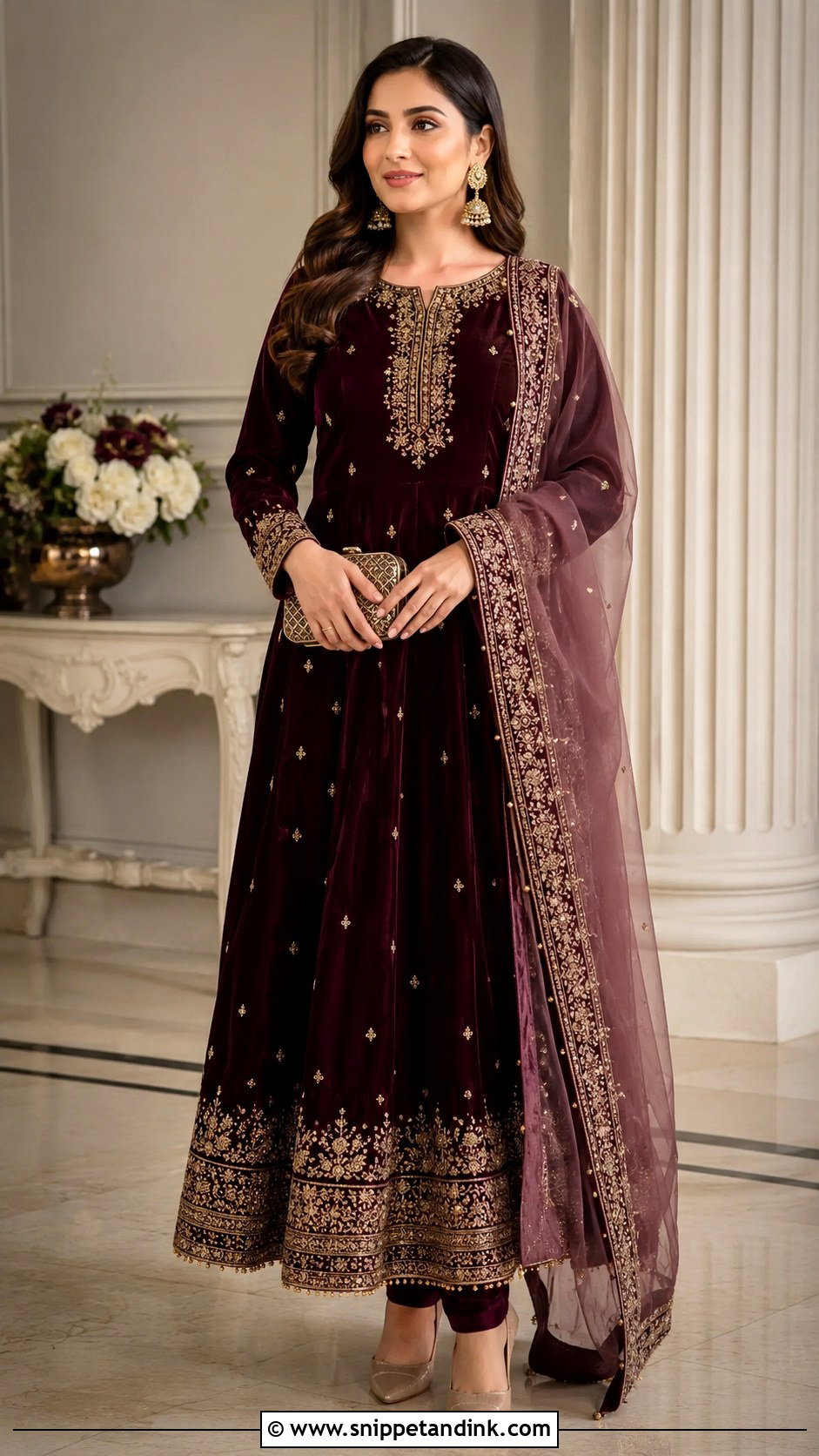
Black looks sharp at a reception, but some families avoid it at the religious ceremonies, so I keep it for the evening party unless the hosts are relaxed about it. A floor-length cut in velvet, georgette or a silk blend with gold, silver or tone-on-tone embroidery is the formal version. With a high neck, skip the necklace and lean on earrings and rings. A sheer black dupatta with an embroidered border adds movement. Statement earrings, a structured clutch and metallic heels complete it.
6. Velvet Anarkali Suit For Winter Wedding
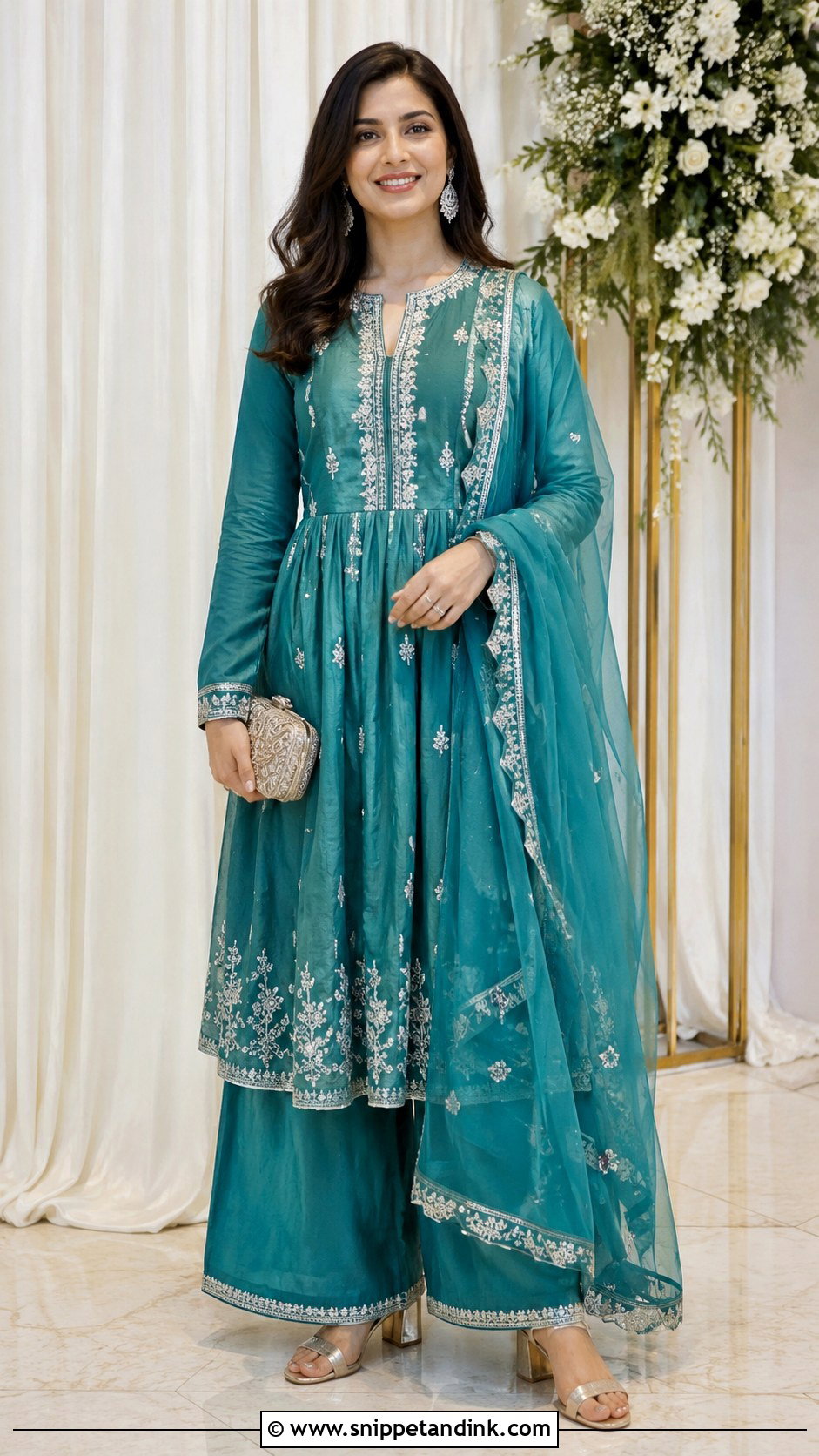
Velvet keeps you warm at an outdoor winter function and photographs with real depth, which is why I steer brides and guests towards a velvet Anarkali suit from December to February. Emerald, navy, maroon, plum and bottle green look richest. Velvet is heavy, though, and a full floor-length flare in it can pull on the shoulders over a long evening, so choose a lighter silk or net dupatta to balance the weight. Zari or zardozi on the neckline, sleeves and hem is enough decoration. Closed-toe heels, a box clutch and statement earrings finish it.
7. Jacket Anarkali Suit For Wedding
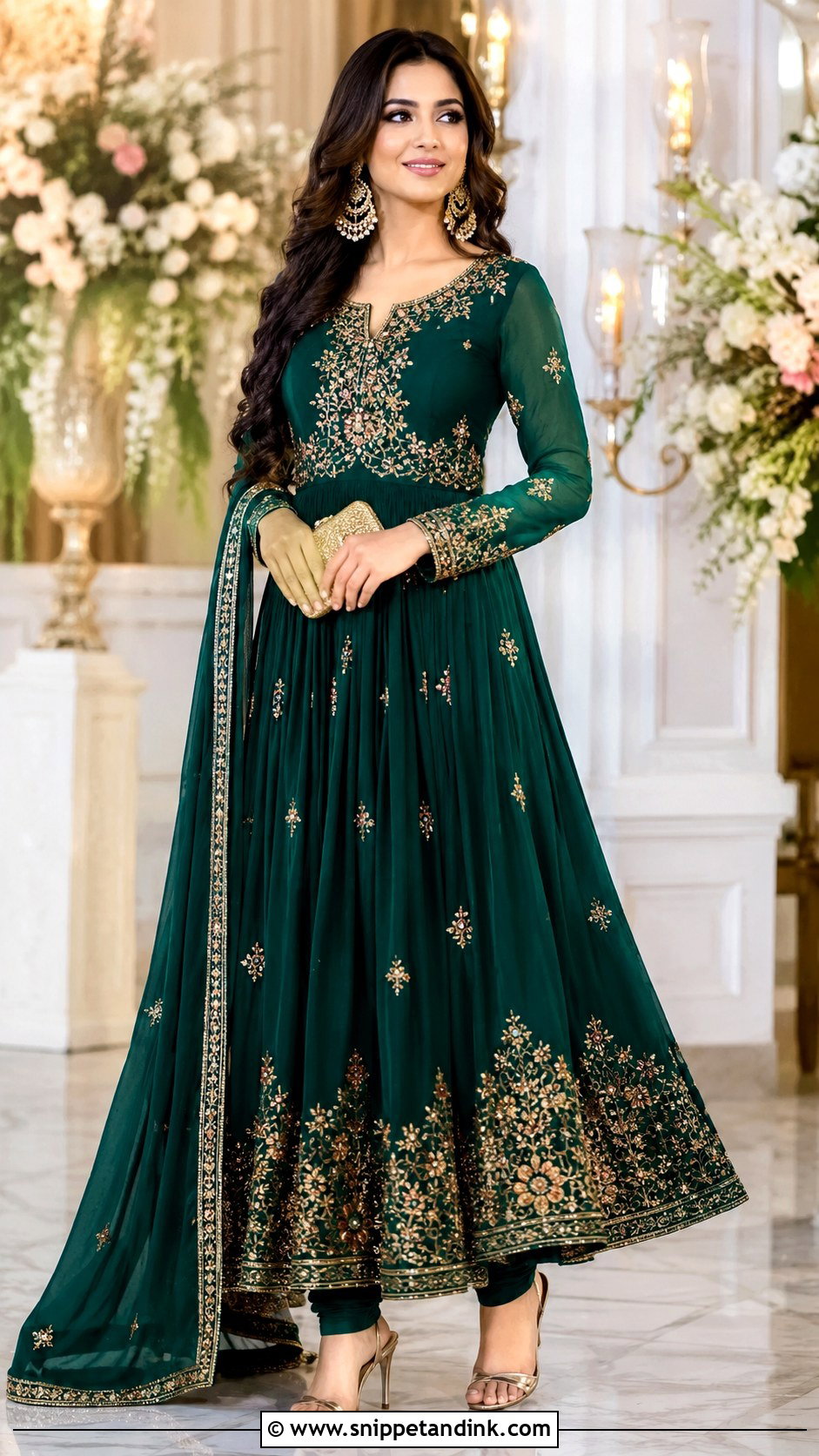
Jacket Anarkalis let you put all the embellishment in one removable layer. The base dress can be plain while the jacket carries mirror work, brocade or embroidery. Long jackets look regal; waist-length ones are lighter and better for dancing. That makes it the outfit I suggest when you’ll be at a reception, sangeet events and a formal dinner in the same weekend. Take the jacket off and the base becomes a second look. Slim pants, heels and earrings with one ring are enough when the jacket is busy.
8. Cape Anarkali Suit For Wedding
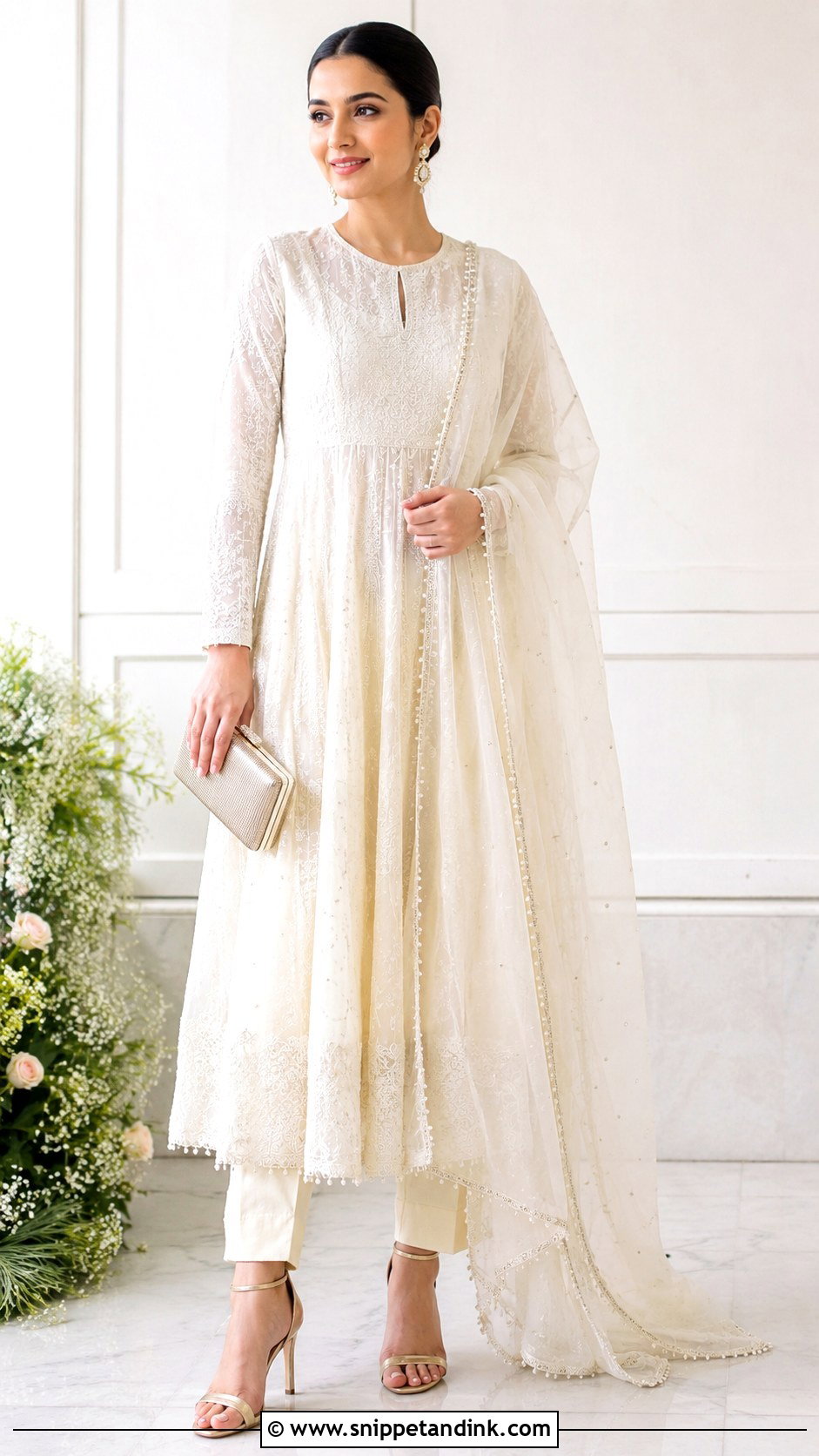
A cape replaces the dupatta, which means both hands are free for greeting relatives, eating and dancing. That alone makes it my first suggestion for guests who hate managing a dupatta all night. A soft georgette or net cape with an embroidered edge over a fitted, flared Anarkali gives coverage without fuss. Check the attachment at the shoulder; a cape stitched only at two points can twist sideways when you move. Statement earrings and heeled sandals suit it for cocktail evenings and sangeets.
9. Sharara Anarkali Suit For Wedding
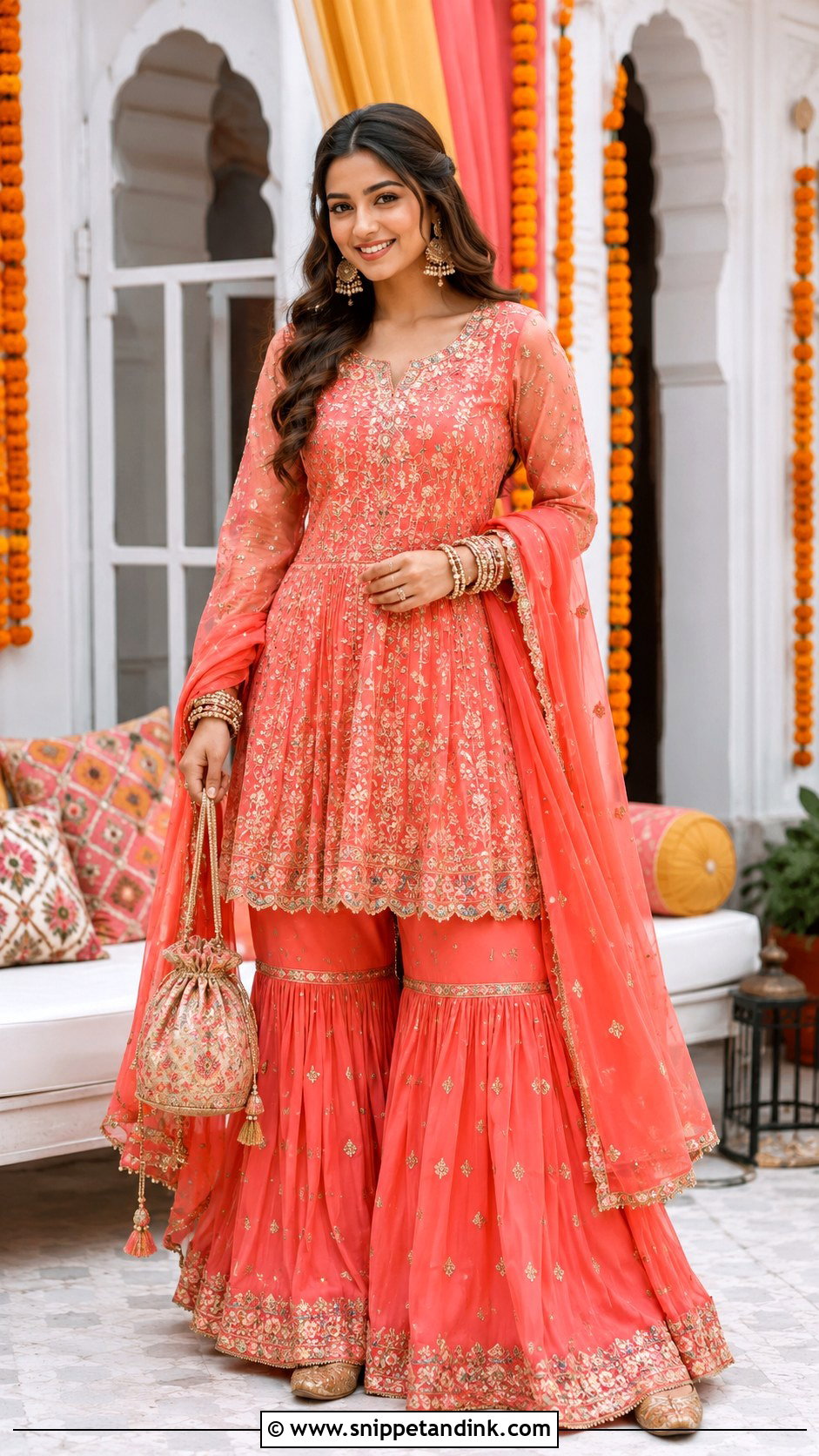
In a sharara Anarkali suit the top is usually cut shorter, mid-thigh to knee, so the flared sharara below can show. Getting the proportions right is the whole job; a long, full Anarkali over a full sharara becomes a lot of fabric. It suits mehndi, sangeet and family functions because you can dance and sit on the floor easily. Choose footwear by the floor: juttis on grass and dhurries, block heels on hard floors. Bangles, earrings and a potli bag finish it.
10. Anarkali Suit With Palazzo Pants
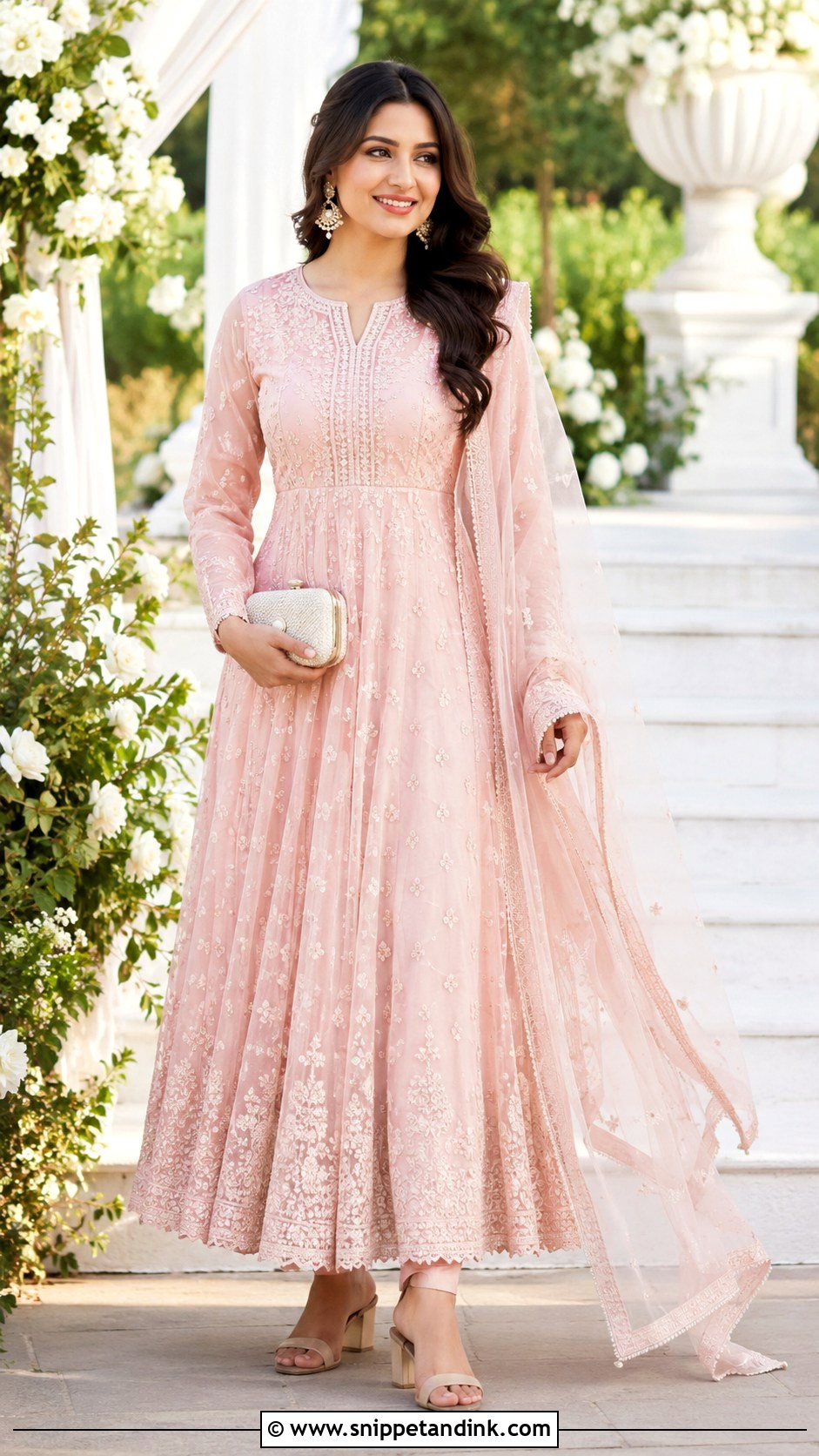
Palazzos are the comfortable alternative to churidar, and I suggest them to guests who travel to a wedding and will be in the outfit from noon till late. A knee- or calf-length Anarkali lets the palazzo shape show. Printed silk, embroidered borders or light sequin work keep it festive. One fit detail: the palazzo waistband should sit flat under the Anarkali, or it shows as a ridge through fine georgette. A soft dupatta, statement earrings and block heels suit it, and it’s kinder than churidar if you don’t like a fitted bottom.
11. Chikankari Anarkali Suit For Wedding
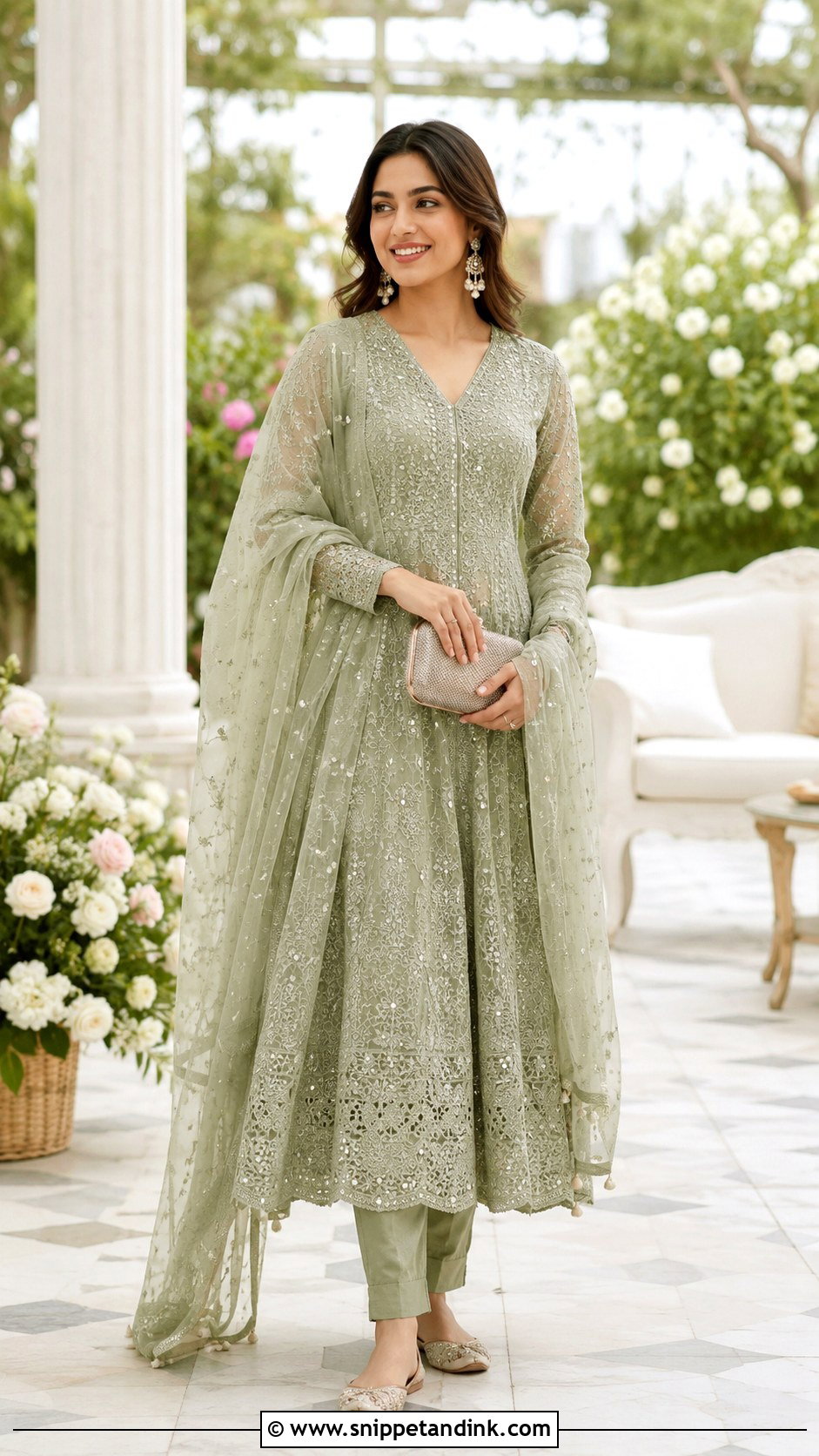
Chikankari is hand embroidery from Lucknow, and plain cotton chikan can look too casual for a wedding. The festive versions add mukaish (small metal work), sequins, pearls or light zari to the white thread, on georgette or silk. Ivory, blush, sage, powder blue and lemon yellow suit day functions. Pair it with a sheer dupatta, pearl earrings and embroidered juttis, plus a metallic clutch for a little shine. Washing matters here: hand-embroidered chikan should be dry cleaned or very gently hand washed, or the threads pucker.
12. Silk Anarkali Suit For Wedding
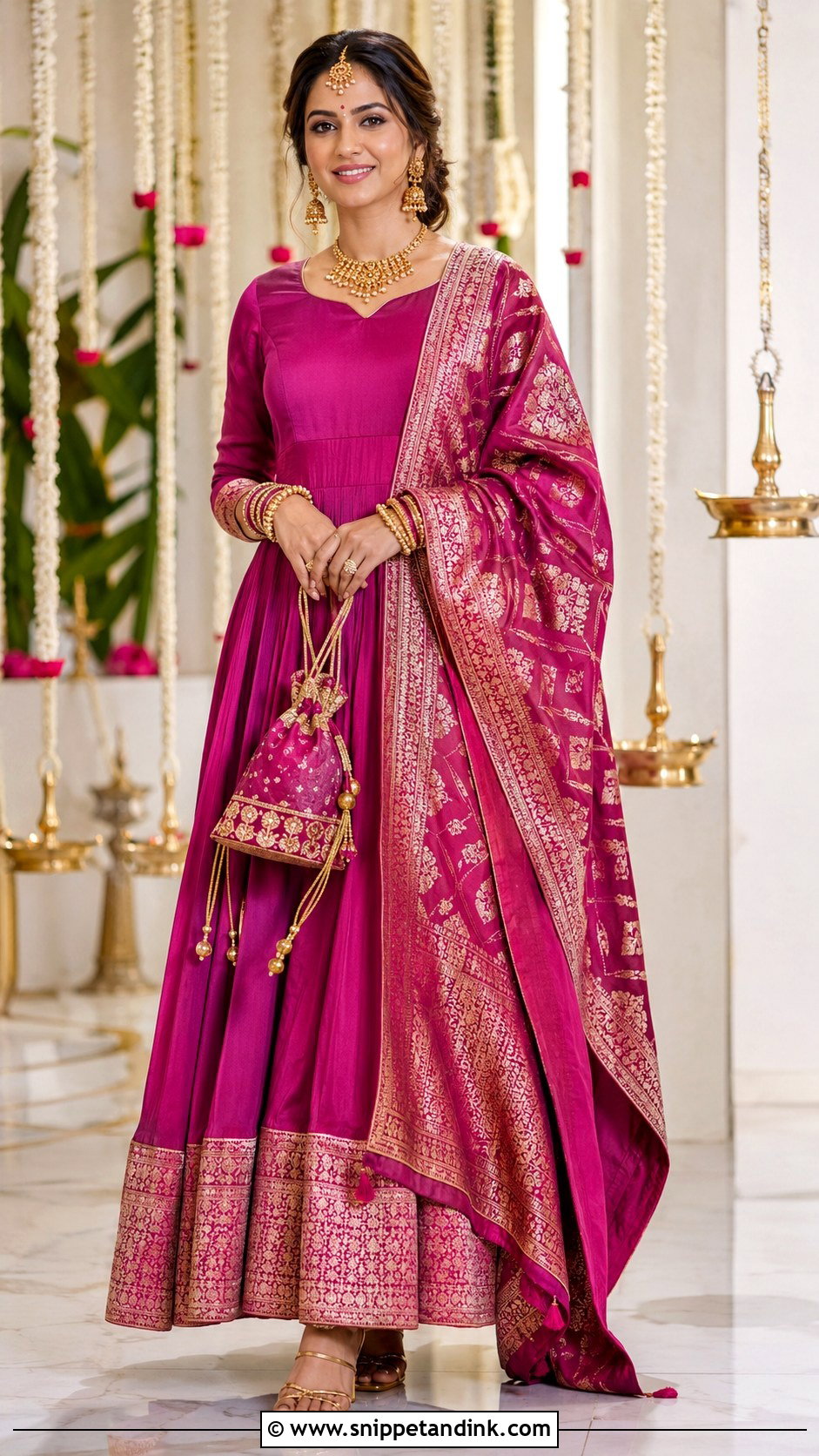
Silk holds the flare in crisp folds rather than letting it collapse, which is why a silk Anarkali looks so structured in ceremony photos. Raw silk has a textured, matte look; art silk is cheaper and shinier; blends sit in between. Jewel tones, soft gold, rust, teal and magenta read festive. Zari borders, woven motifs and embroidered sleeves give it richness without much weight. Temple jewelry, a silk dupatta and embellished heels suit family rituals. Keep the bun neat so the neckline isn’t hidden.
13. Georgette Anarkali Suit For Wedding
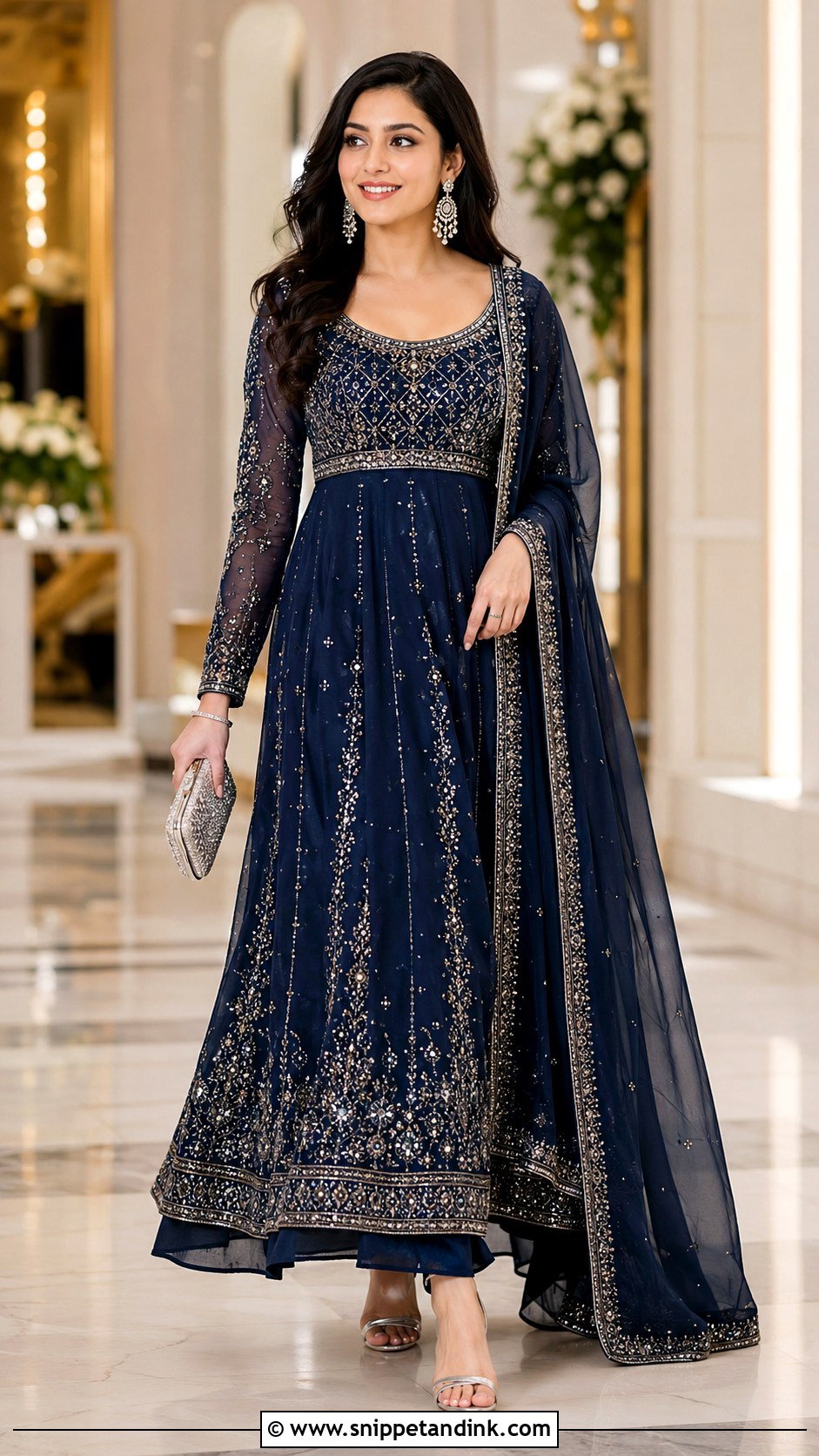
Georgette is the fabric I’d choose if you’re unsure, since it drapes softly, forgives a less than perfect fit, and stays comfortable over long hours. Its flare moves with every step. Embroidered georgette with sequins, thread or zari suits nearly every function, from sangeet to reception. A matching dupatta looks classic and a contrast one more striking. It does cling to static in dry winter halls; a light anti-static spray on the lining helps. Medium earrings and a clutch are plenty.
14. Net Anarkali Suit For Wedding
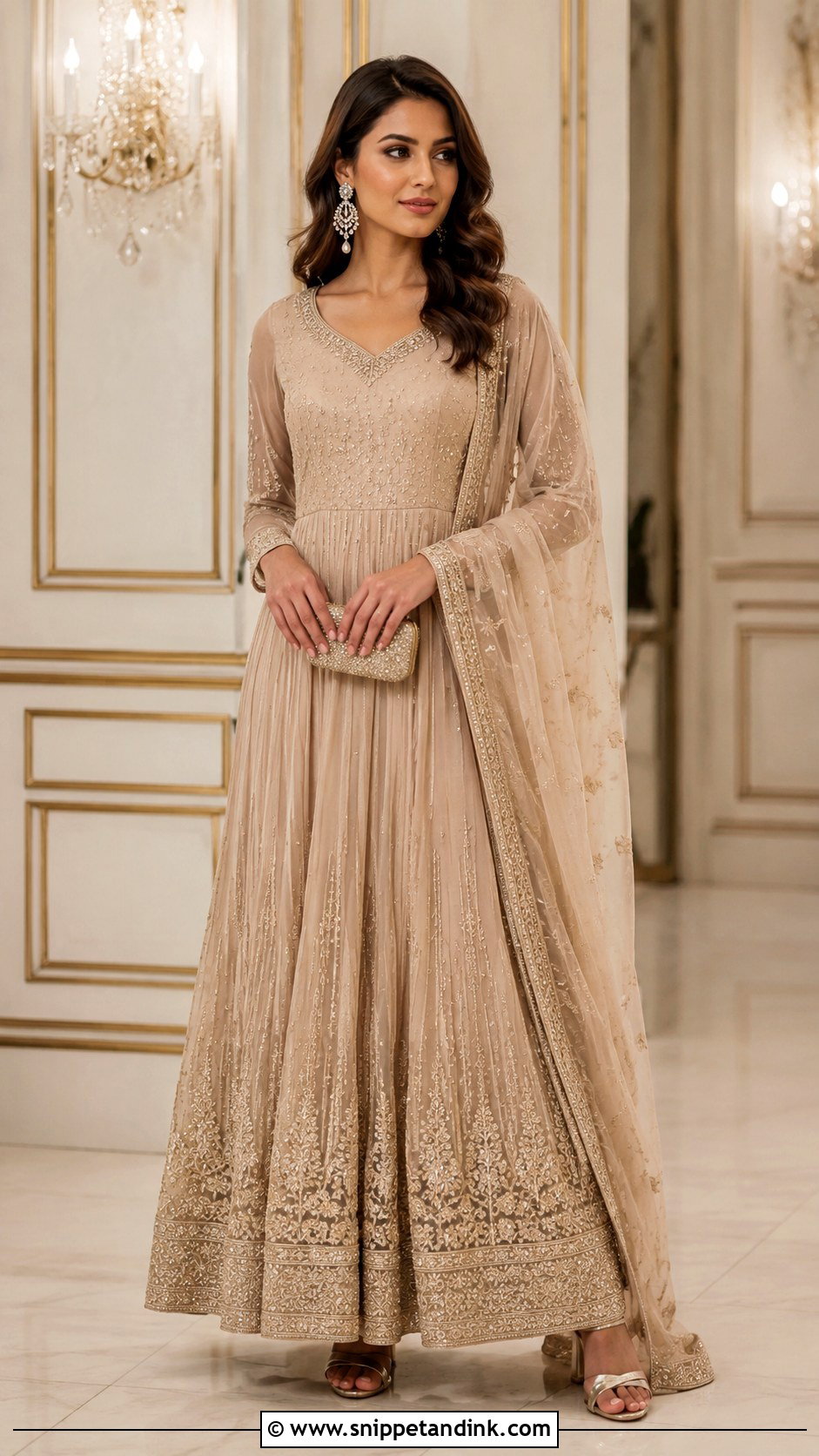
Net looks airy and dreamy, but only over a good lining in satin, silk or crepe. Unlined or cheaply lined net scratches at the underarms and shows everything in flash photography. Embroidery, sequins and lace borders add shine without much weight. A net dupatta with a scalloped border finishes it for evening. Since net snags easily, choose smooth jewelry; prong-set stones and rough bangles pull threads within minutes. Sleek heels, crystal earrings and a small clutch suit receptions.
15. Embroidered Anarkali Suit For Wedding
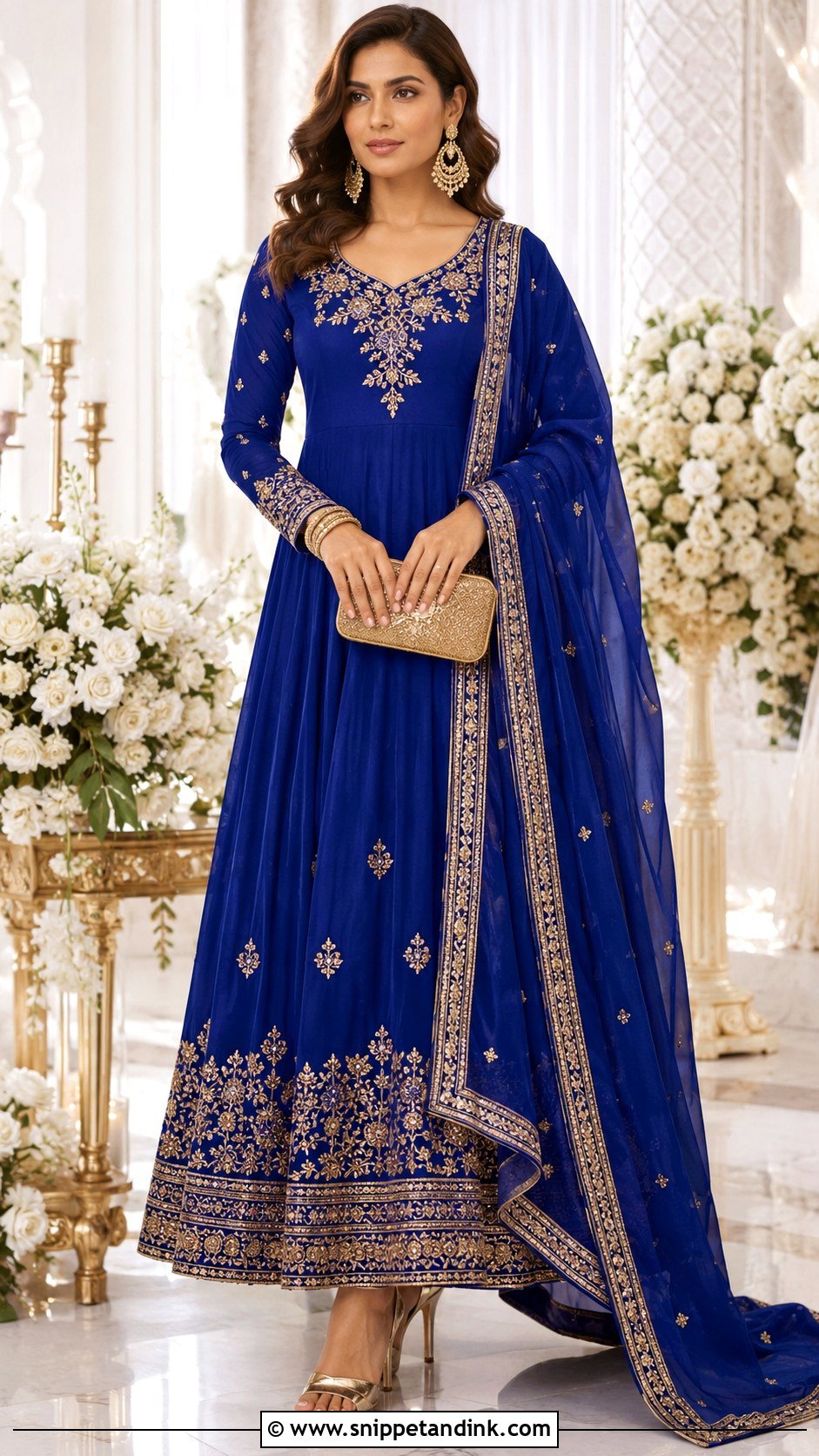
With good embroidery, the outfit is almost styled before you add a single piece of jewelry. The best placement is balanced across neckline, waist, sleeves and hem, so the eye travels down the whole flare. Zari, resham, mirror work, sequins and gota all fit different events. The jewelry rule is simple: heavy embroidery with light jewelry, light embroidery with a statement necklace. Shoes that pick up the embroidery color tie it together. Before buying, sit down in it; heavily worked hems can be stiff.
16. Mirror Work Anarkali Suit For Wedding
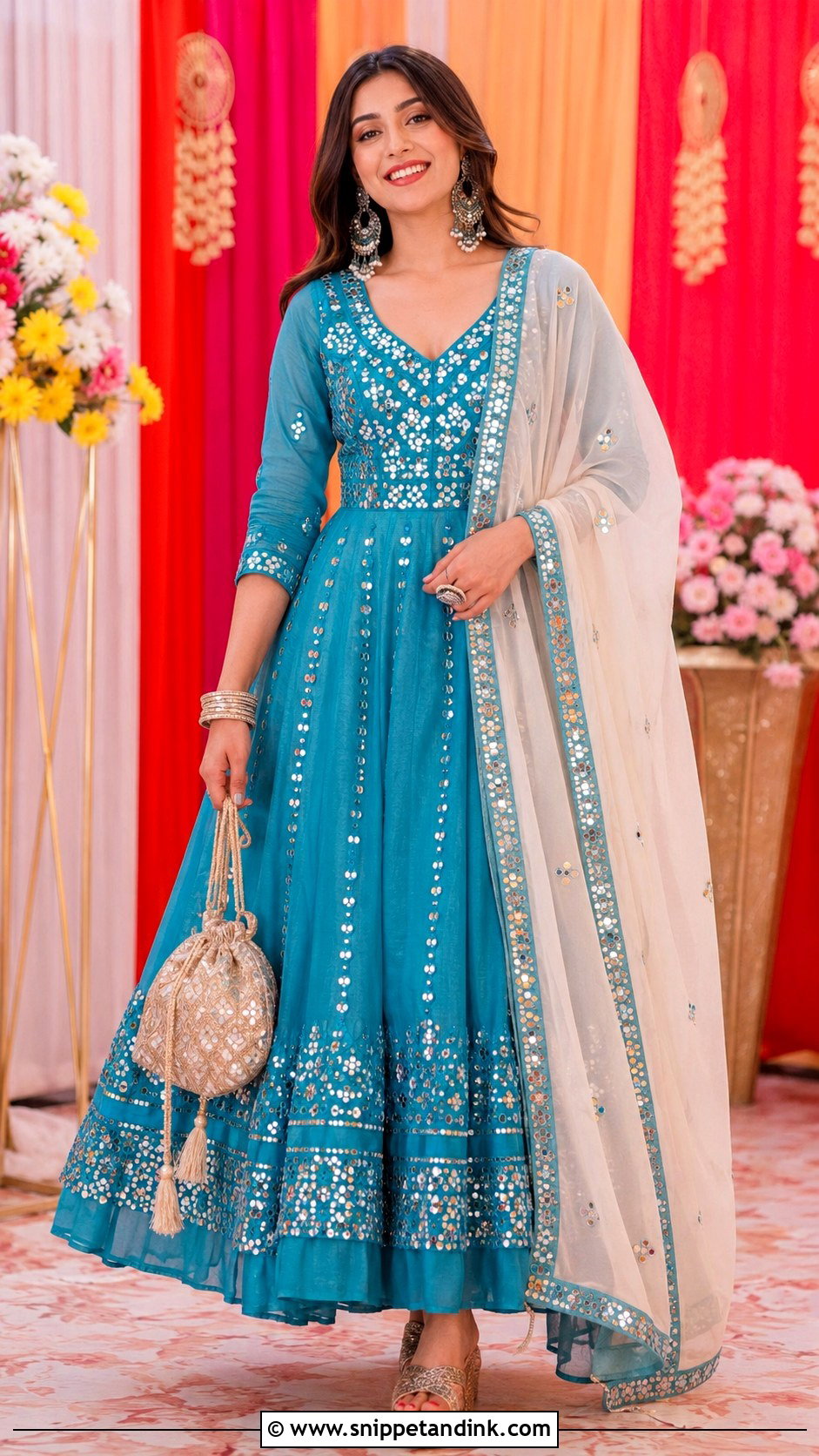
Mirror work catches every bit of daylight and every camera flash, so it’s at its best for mehndi, sangeet and day celebrations. Yellow, teal, pink, orange and green suit the reflective pieces. The weight is easy to underestimate; a fully mirrored flare is heavy and the edges of the little mirrors can catch on a dupatta. Keep the dupatta light and skip the heavy necklace. Oxidized earrings, bangles, embellished flats or wedges and a loose braid keep it young and comfortable for dancing.
17. Gota Patti Anarkali Suit For Wedding
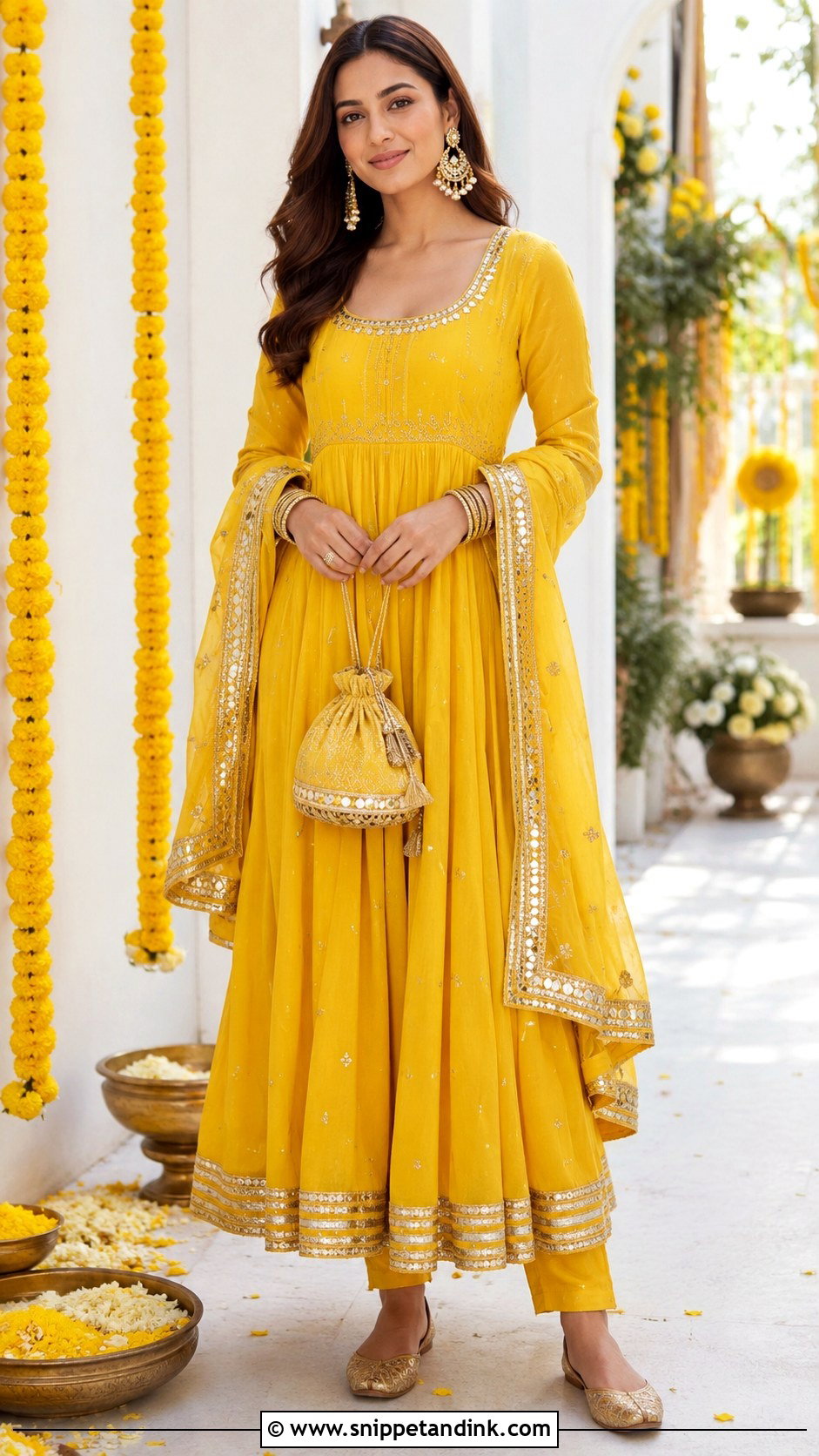
Gota patti is ribbon work in gold or silver laid onto fabric, from Rajasthan, and it gives sparkle at a fraction of the weight of zardozi. It shines in mustard, peach, coral, green, ivory and pink for mehndi, haldi and daytime functions. For evening, choose deeper colors or denser gota. Kundan earrings, bangles and gold heels or juttis suit it, with warm makeup that picks up the metal. One care note: real gota can tarnish if stored damp, so keep it in muslin, not plastic.
18. Sequin Anarkali Suit For Wedding
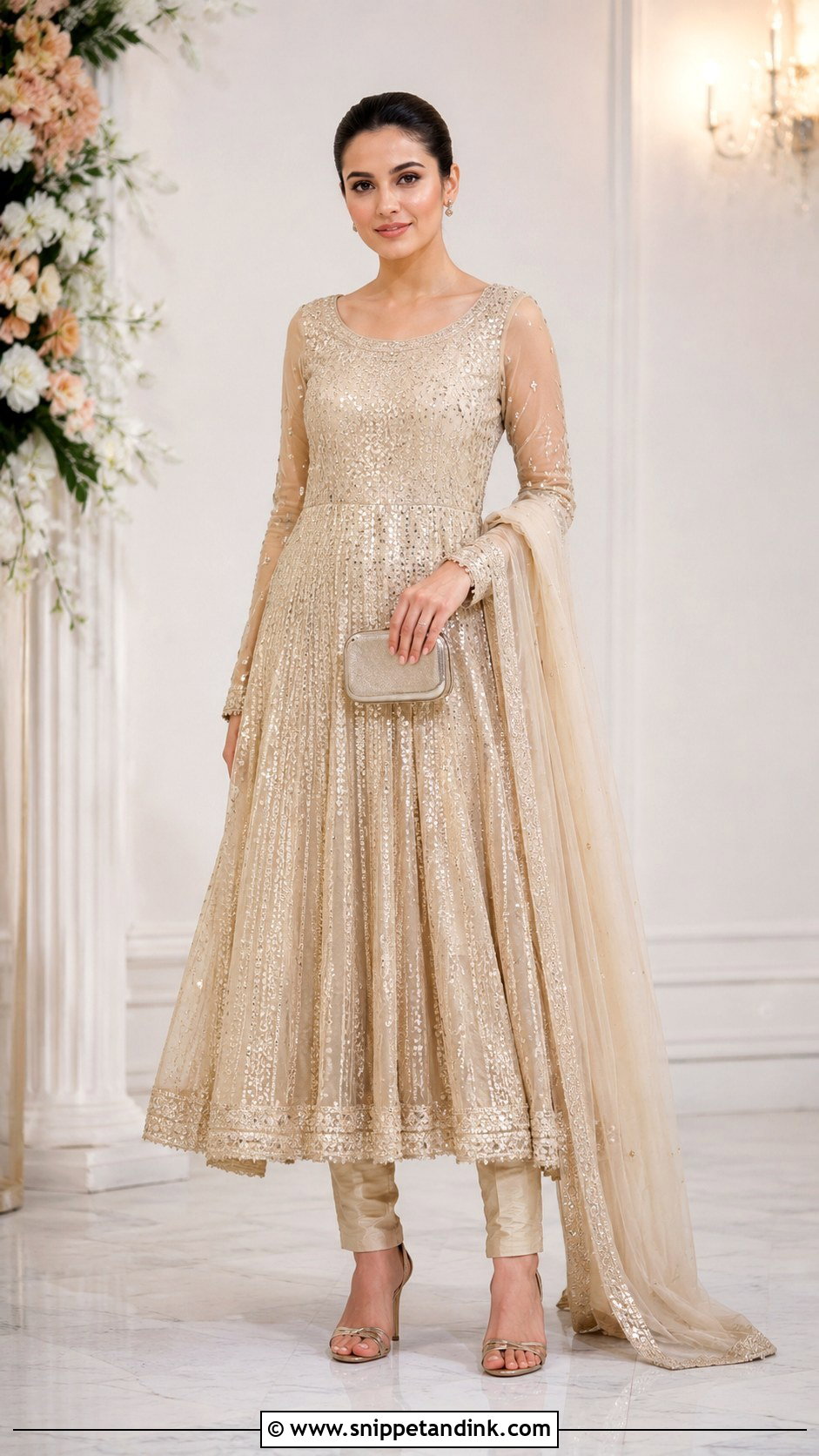
Fine sequins give a soft shimmer; big ones can look like a party dress rather than wedding wear. That’s the difference I look for. Champagne, silver, blush, navy, emerald and charcoal suit evening events. A flowy georgette or net Anarkali with scattered sequins photographs well under bright reception lighting. With all-over sparkle, wear simple earrings and skip heavy bangles, which can scratch and loosen sequins along the sleeve.
19. Layered Anarkali Suit For Wedding
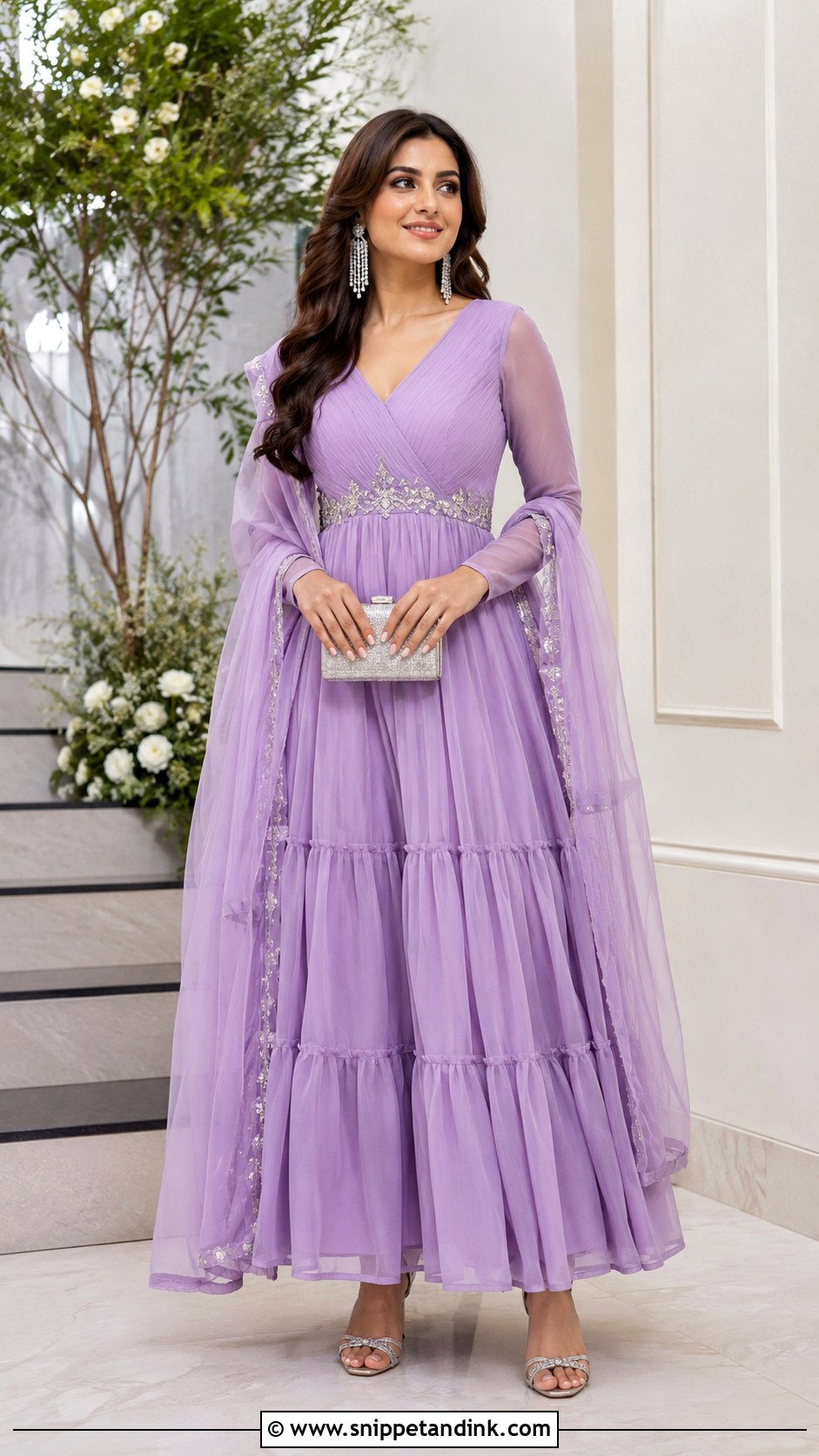
Layers build volume through tiers, an attached overskirt or a double flare. The fabric has to be light, so georgette, chiffon or net, or the outfit gets heavy fast. Layers look good in pastels, jewel tones and ombré. Every tier adds fabric at the waist, so try it with the dupatta on to check that the top half doesn’t disappear. A light dupatta, long earrings and comfortable heels suit receptions, engagements and sangeet nights.
20. Printed Anarkali Suit For Wedding
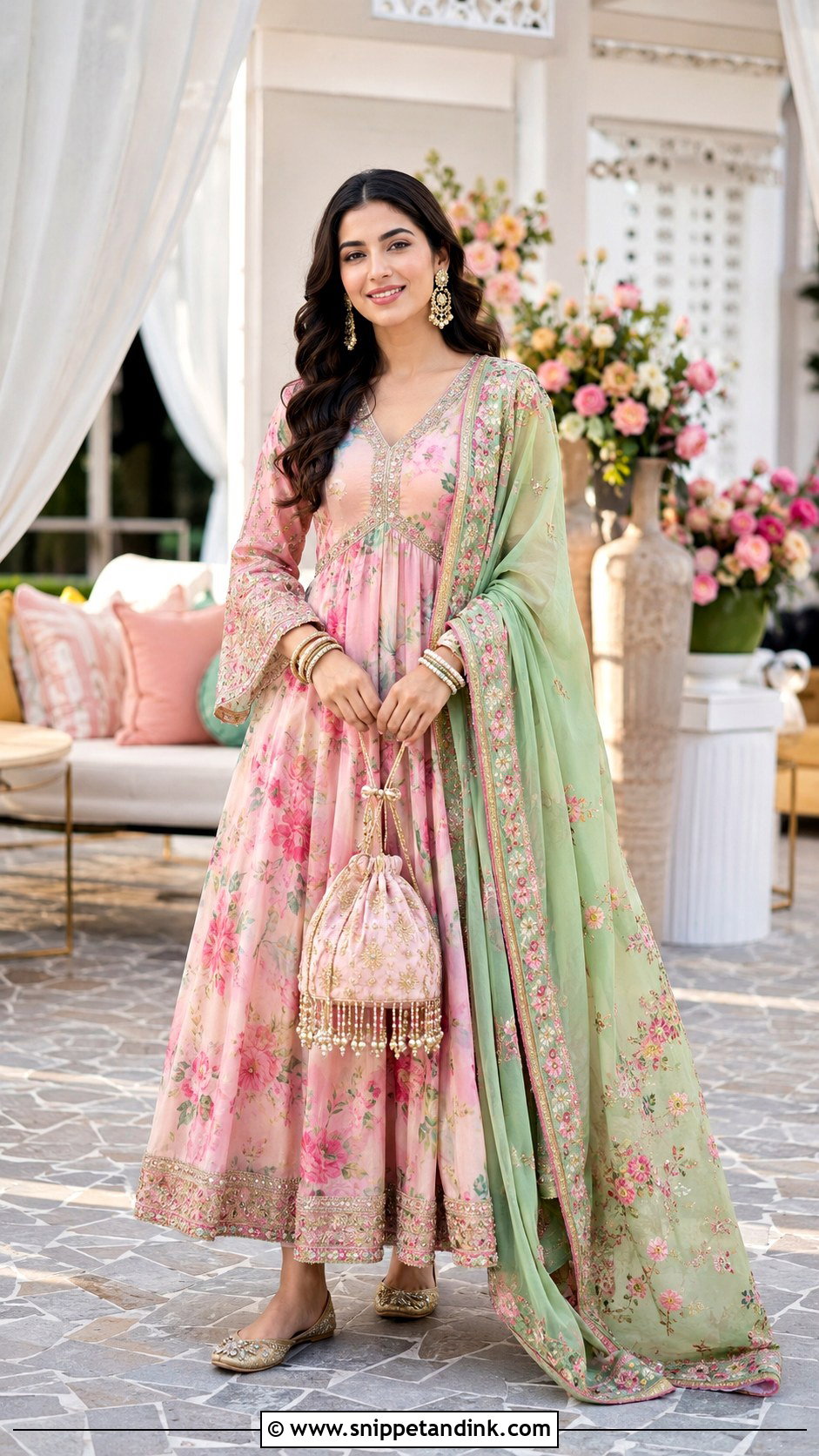
Prints can work for informal pre-wedding functions if the fabric is good. Floral, paisley, block or digital prints on silk, organza or a quality cotton blend look polished; thin, crisp cotton looks like daywear. An embroidered dupatta or a worked border brings it up to wedding level. Juttis, a potli bag and earrings that pick up a print color finish it. It’s the most rewearable outfit here, which makes it a sensible choice for a destination wedding with lots of events.
21. High Neck Anarkali Suit For Wedding
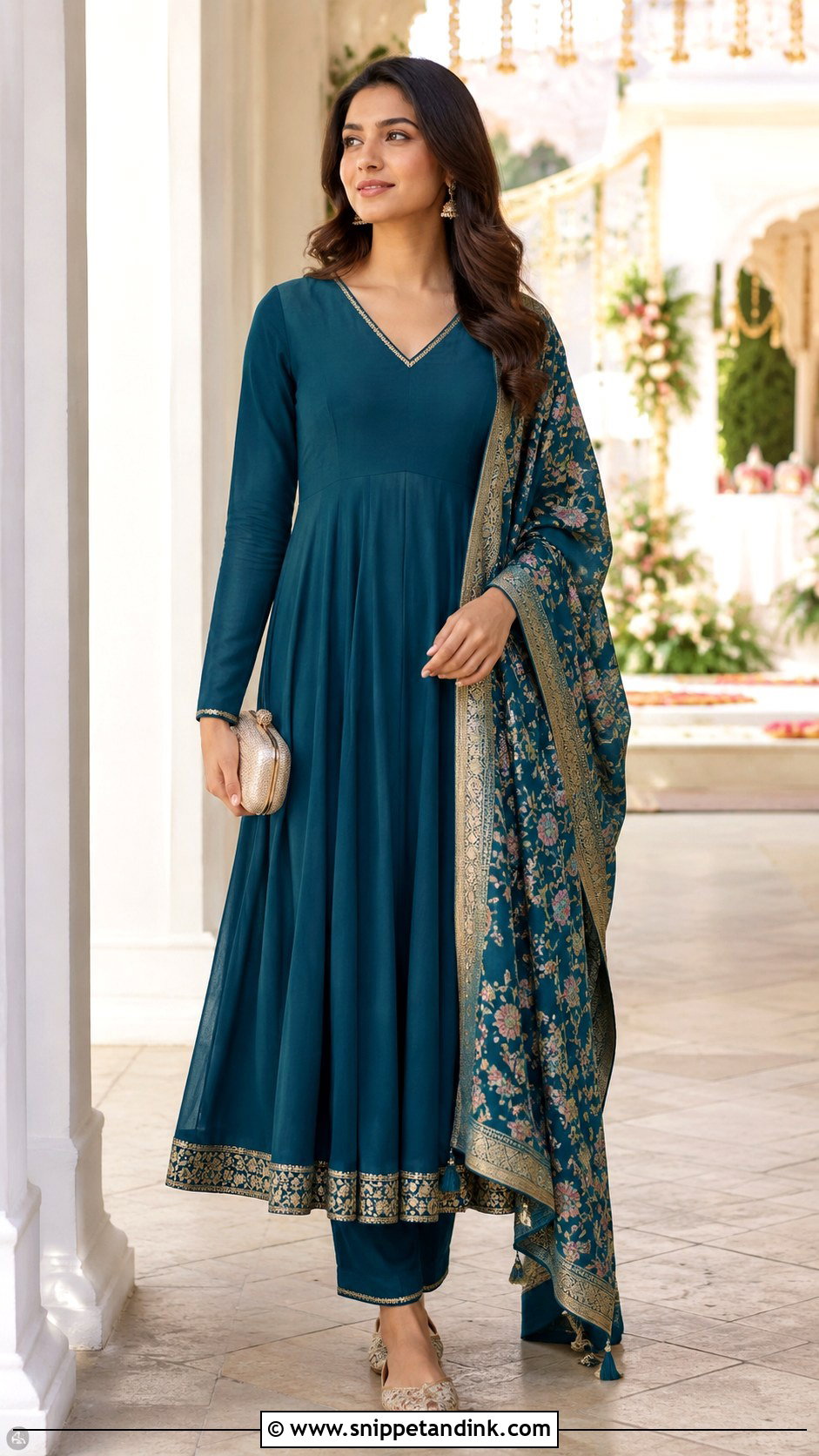
A high neck gives an Anarkali a regal, upright look, and embroidery, beadwork or zari at the collar puts the focus near your face. With the neck covered, bold earrings replace the necklace. Make sure you can turn your head and bend forward; a stiff collar that’s fine standing can press into the throat at dinner. Silk, velvet, georgette and brocade suit it. A sleek bun and churidar or slim trousers keep the line clean for formal portraits.
22. Front Slit Anarkali Suit For Wedding
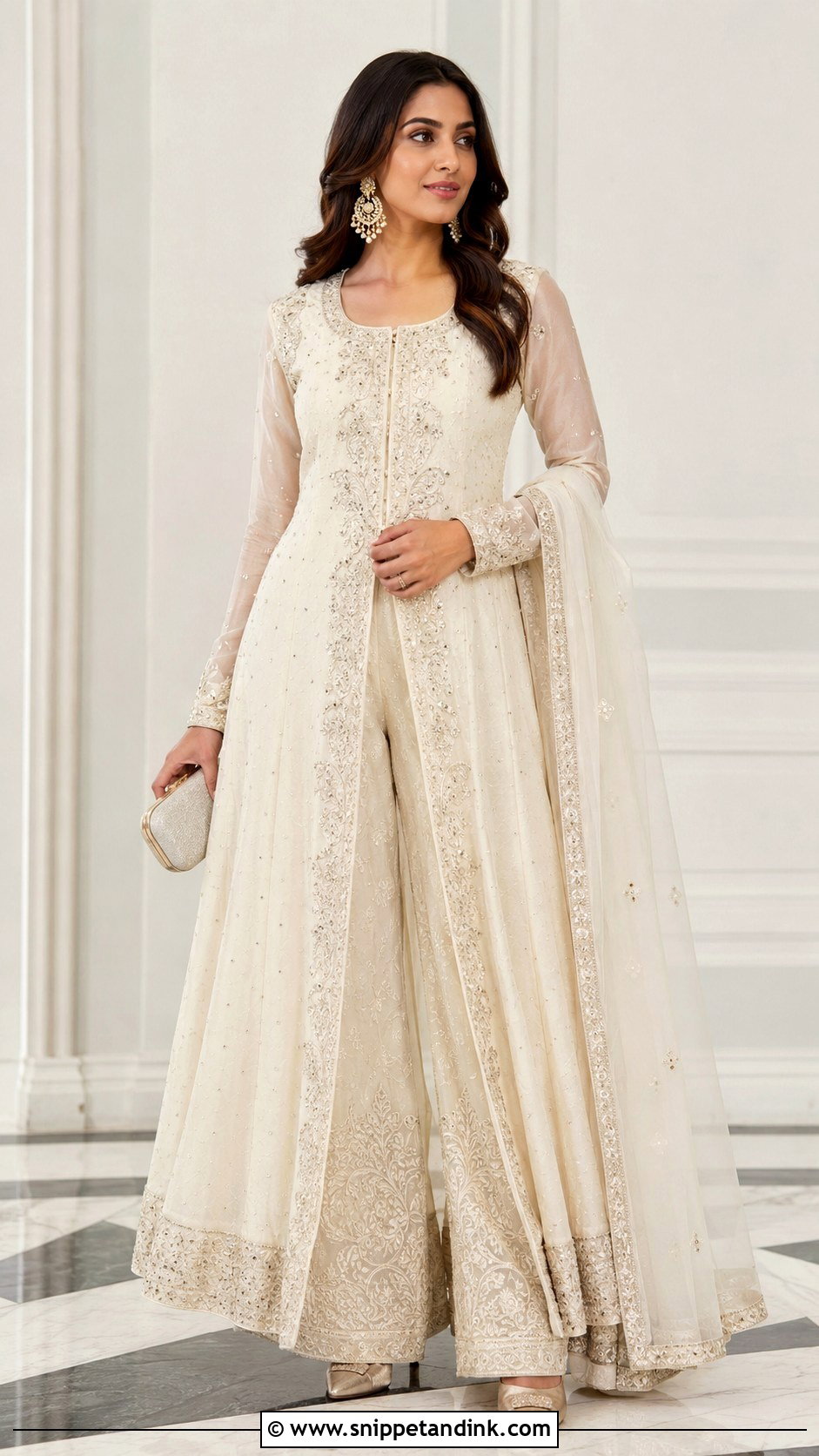
A front slit opens the Anarkali to show embroidered pants, palazzos or a skirt beneath, so you’re really wearing two coordinated pieces. The bottom has to be finished well, since it’s on show. A long Anarkali with a structured bodice and enough flare suits it. Make sure the slit starts high enough that it doesn’t flap open awkwardly when you sit. Matching or contrast bottoms, heels, a sleek dupatta and statement earrings suit sangeet nights and receptions.
23. Bridal Anarkali Suit For Wedding
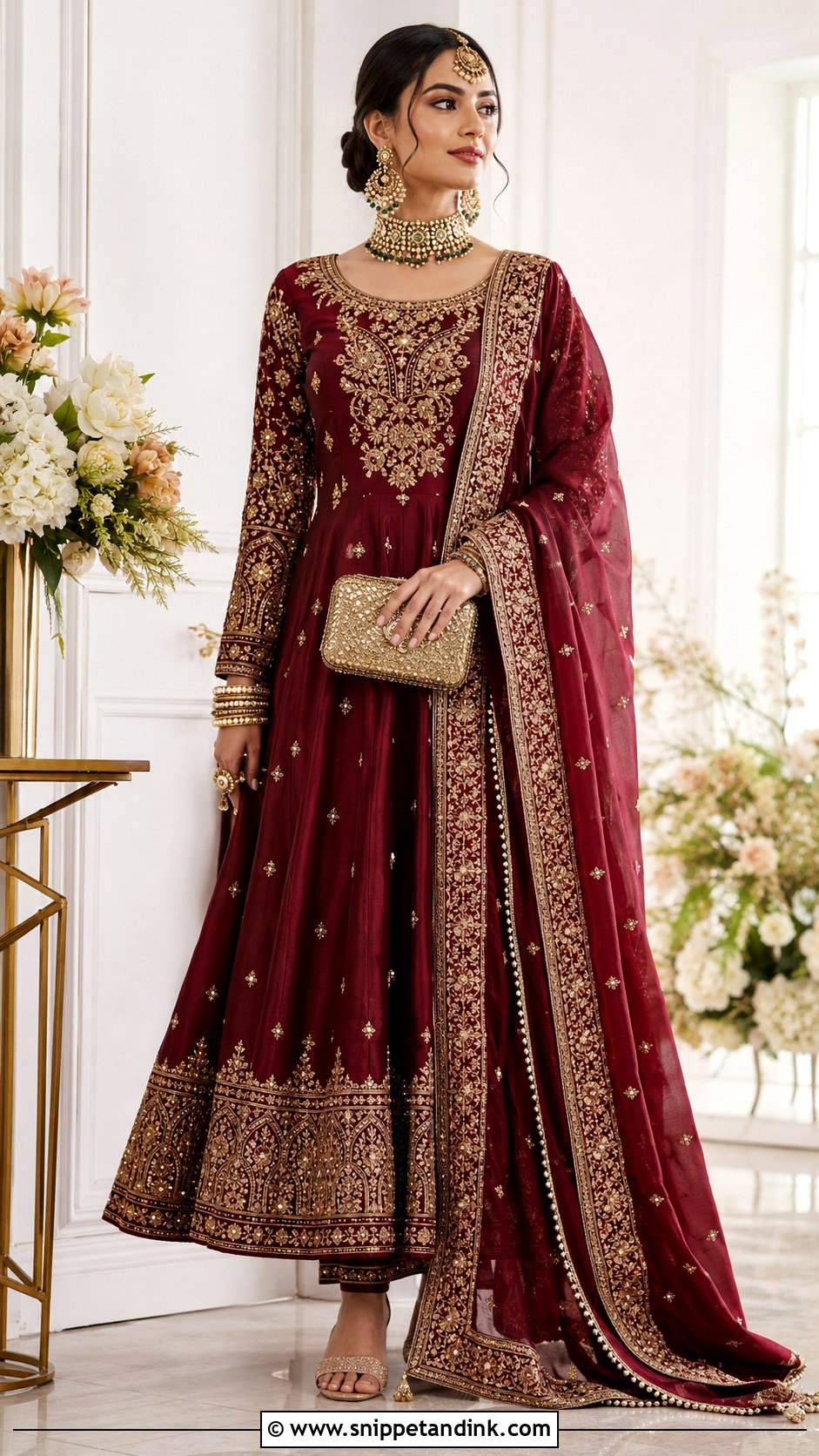
Some brides choose an Anarkali over a lehenga for comfort, and it’s a sound choice for a nikah, an engagement, a smaller wedding or a reception change. Silk, velvet, brocade or heavy georgette with zari, zardozi, resham or stone work give it bridal weight. Deep red, maroon, gold, emerald and ivory are the strong colors. A heavily bordered dupatta needs pinning at the shoulder and the head, so ask your stylist to plan that before the jewelry goes on. Traditional jewelry, bangles and embellished heels complete it. Ask for the flare to be cut generously; a bridal Anarkali with a skimpy flare looks like a kurta.
24. Bridesmaid Anarkali Suit For Wedding
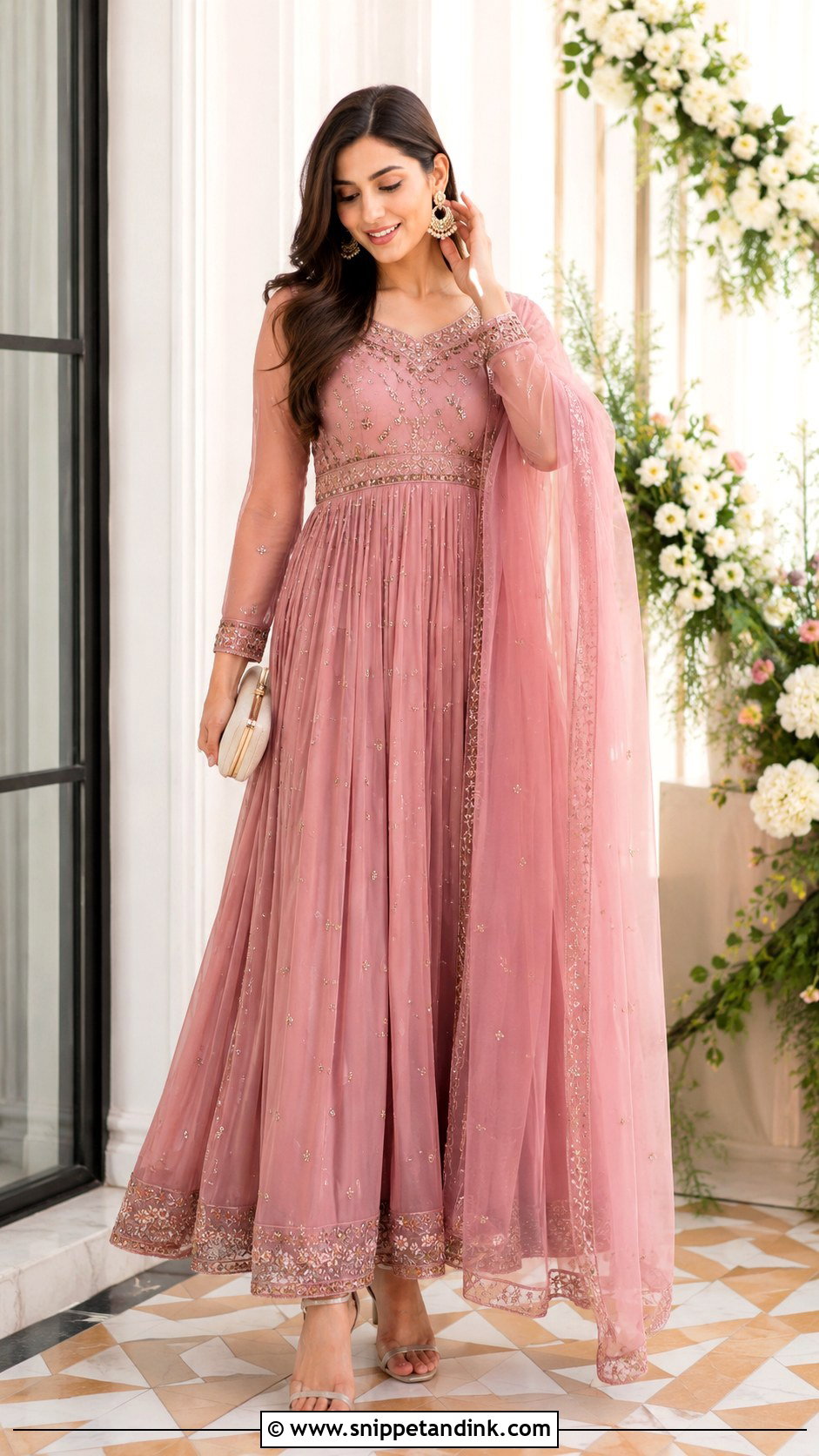
Bridesmaids in Anarkalis look coordinated without being identical, which suits mixed body types far better than matching lehengas. Agree on a color family or pastel range and similar embroidery, then let each person pick a cut. Lightweight georgette, silk blend or organza keeps everyone comfortable through photos and dancing. Matching dupattas, similar bags or the same earrings tie the group together. Keep the embroidery a notch below the bride’s so she stays the focus.

25. Simple Anarkali Suit For Wedding Guest
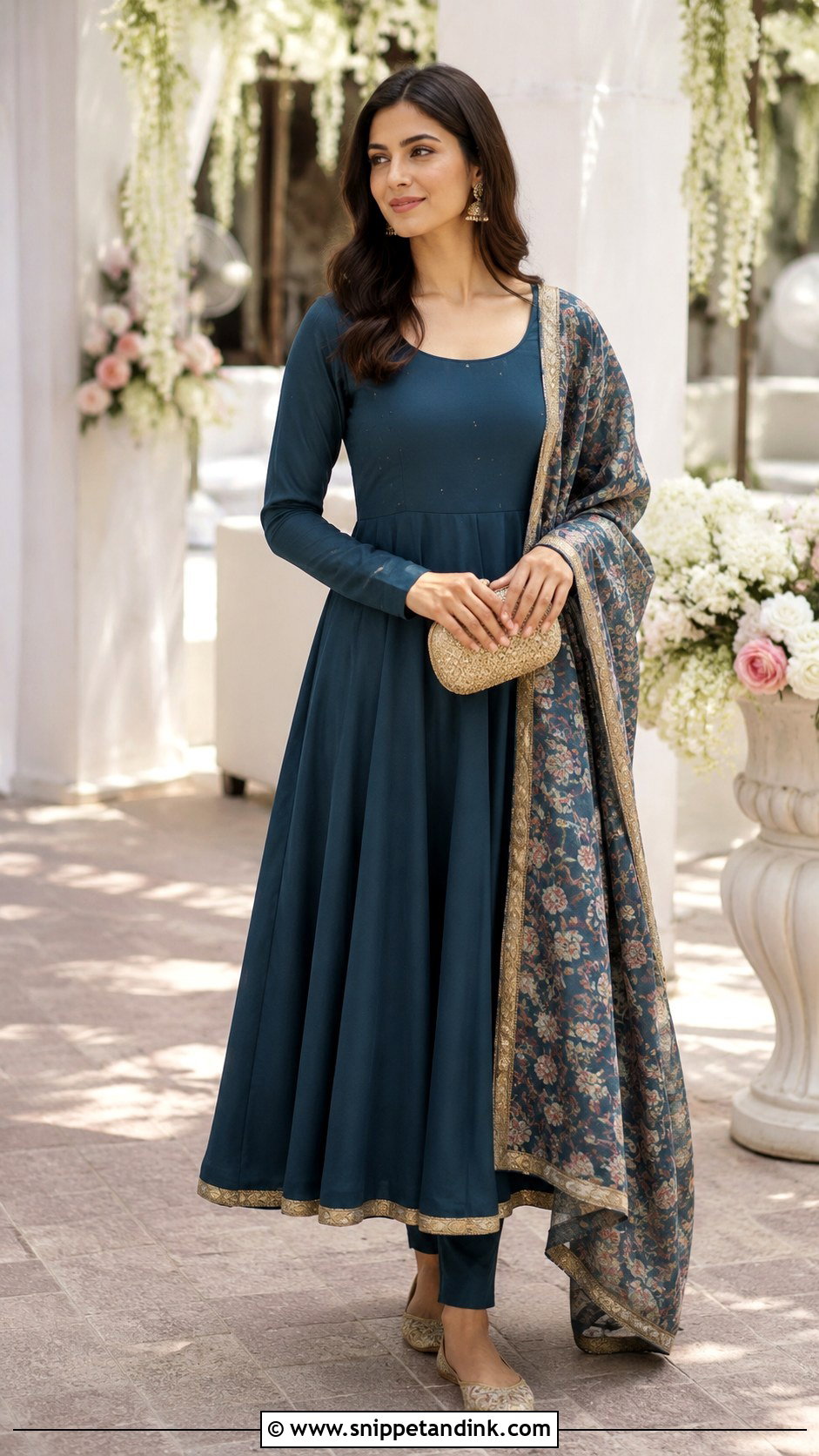
A simple Anarkali in a rich color and good fabric often looks more confident than a heavily worked one. A zari border, lace sleeves, small mirror accents or a printed dupatta bring it up to wedding level. Choose a color that suits your skin rather than whatever is trending, since a plain outfit relies on it. Earrings, a small clutch and heels or juttis are enough. It works for day weddings, small ceremonies and pre-wedding functions, and you’ll wear it again for festivals.
Colors and Coverage Hosts May Quietly Expect
Indian weddings span many communities, and their expectations differ. A few questions to the hosts avoid an awkward moment.
- Red and heavy maroon are bridal in many families. As a guest, choose another shade or keep it lightly worked.
- White and black are avoided at ceremonies by some families. Both are usually fine at a reception, but ask.
- Gurdwara or temple ceremonies need covered heads, so carry a dupatta even if your outfit has a cape.
- Mehndi and haldi get messy. Turmeric stains light fabric, so leave your best ivory at home for haldi.
Pinning a Dupatta So It Survives the Dance Floor
A loose dupatta slides off within the first song. I pleat it into narrow folds, pin it to the bra strap at the left shoulder from the inside so the pin never shows, then let it fall straight down the back. For a draped front, add a second pin at the waist under the flare. Use small brass safety pins, not big silver ones, and push them through the embroidered border where the fabric is strongest. Net and georgette tear if you pin through the thin centre.
Match the Fabric to the Hour of the Function
The right Anarkali depends on which function you’re dressing for, how long you’ll be in it, and how much weight you’re happy to carry. Floor-length cuts feel formal; sharara, palazzo, cape and jacket versions give you variety across a weekend. Pastels and chikankari belong in daylight. Velvet, black, jewel tones and sequins come alive in the evening. If you want to wear it again, choose prints, chikankari or light embroidery. If you want drama, go for layers or bridal-weight work, and plan your dupatta and shoes before the day.
You'll Like These Ideas:


Leave a Reply