
Full length is the one decision most brides make before they ever walk into a fitting room, and it narrows less than people expect. The same floor-skimming hem sits under a sculpted corset, a slip of crepe, a lace gown with sleeves and a skirt you can unclip halfway through the night. What separates them is fabric, structure and how much the dress asks of you while you wear it. Below I’ve gone through the silhouettes I pull most often for clients, with the shoes, veil and flowers I’d put with each, plus the fitting problems I watch for, so you can picture the whole outfit and not just the hanger.
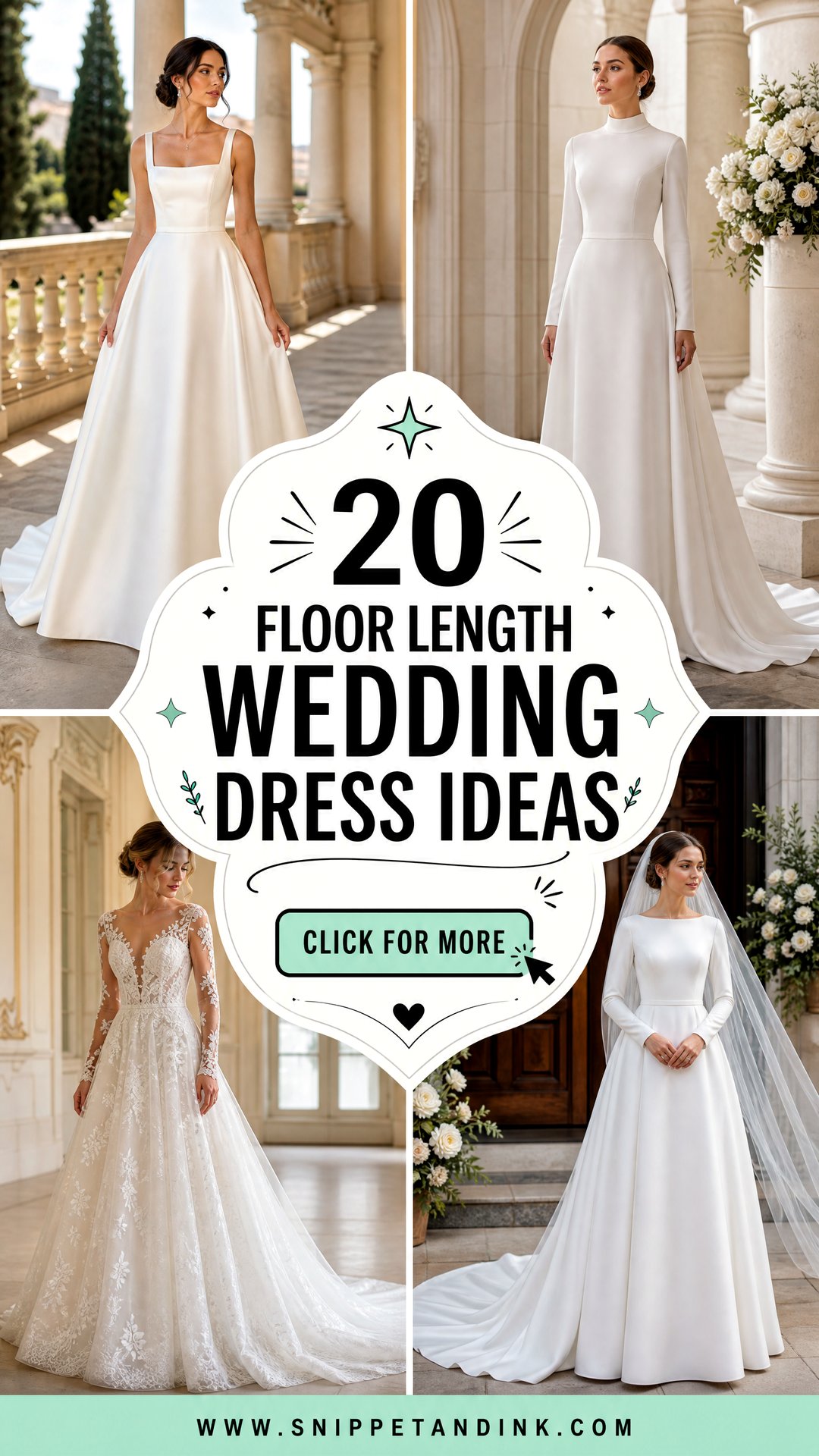
Where Should a Floor-Length Hem Actually Land?
Floor length is a target, not a measurement, and it’s set at alterations, not when you order. For most gowns I hem the front so it just clears the floor in your wedding shoes, roughly where the fabric skims the top of the toe, with the back allowed to touch. Any longer and you’ll step on it on every stair. Any shorter and the dress starts to look like it shrank.
- Buy your shoes before the first fitting and bring them every time. A heel change of even an inch moves the hem.
- For grass, sand or cobbles, I go slightly shorter at the front, since soft ground swallows heels and hems drag dirt.
- Tulle and chiffon hems are usually left raw or with a fine edge, so they can be shortened easily; lace or beaded hems take longer and cost more to alter.
- Most bridal shops suggest ordering six to nine months out and starting fittings about two to three months before the wedding, though lead times vary by designer.
1. A-Line Floor Length Wedding Dress
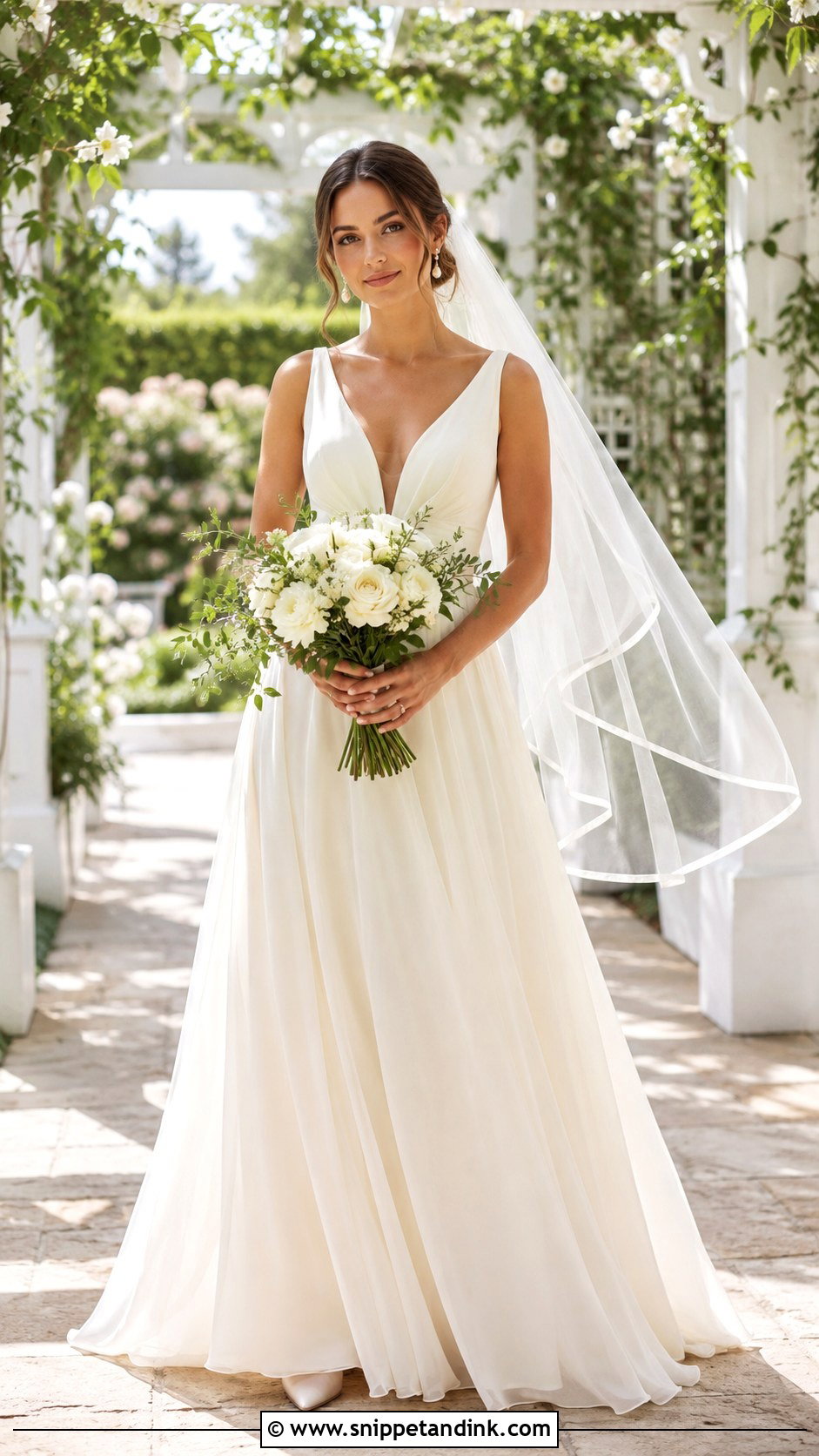
The A-line is the first dress I put on almost every bride, because it tells me so much. A fitted bodice and a skirt that widens gradually in chiffon, satin or tulle moves easily without much bulk, and it suits a wide range of figures. A V-neck lengthens a shorter torso; wider straps help if you want a regular bra-level of support. I’d style it with pointed ivory heels, pearl drops and a fingertip veil with a narrow satin edge, plus a loose low bun so the neckline stays clear. White roses with soft greenery keep it clean for garden ceremonies and traditional venues.
2. Satin Ball Gown Floor Length Wedding Dress
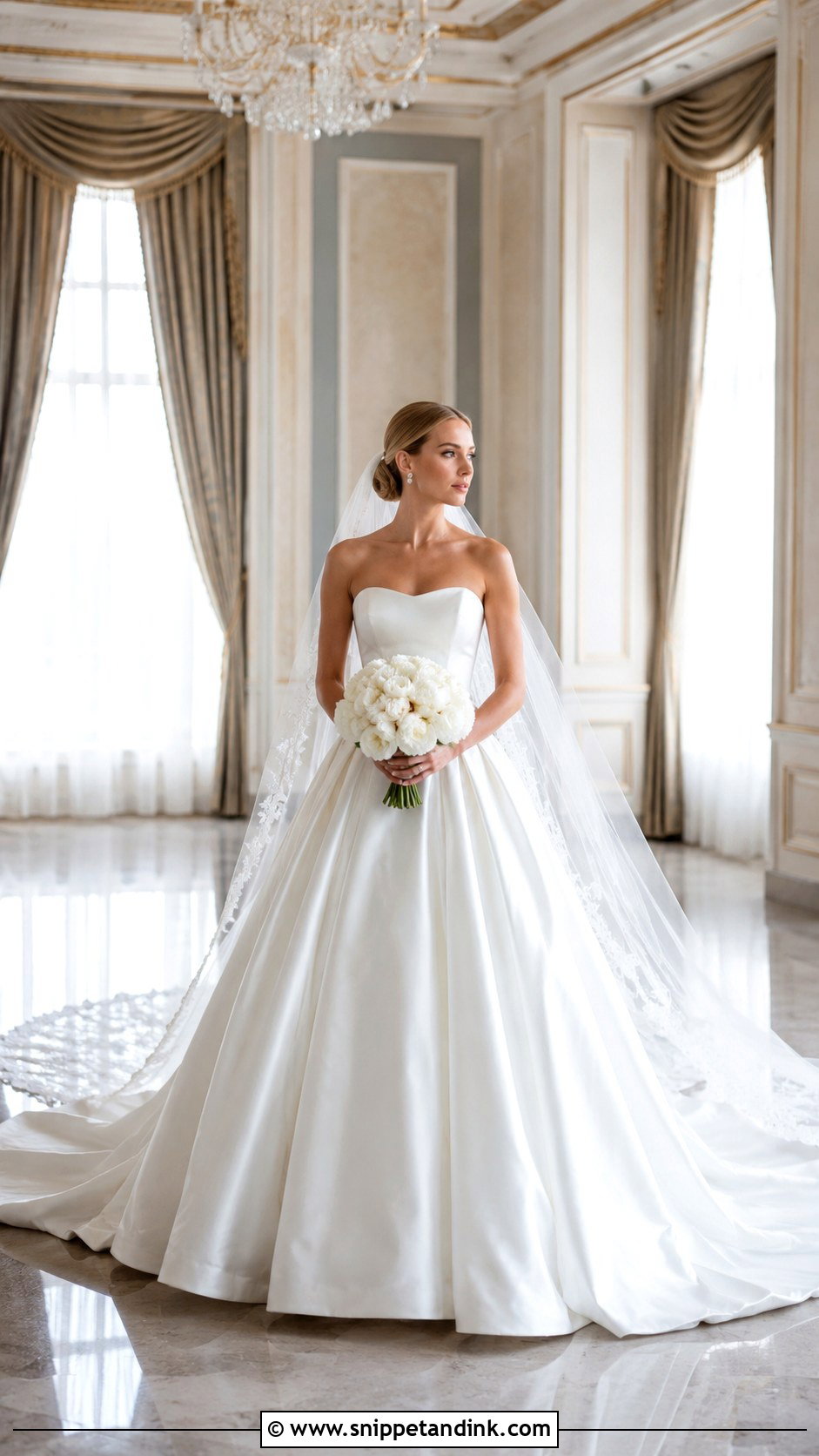
Satin ball gowns need almost no decoration, since the fabric’s sheen and the volume do the work. Look for a structured bodice, a defined waist and clean princess seams, which shape the bodice without darts breaking up the satin. Heavy duchess satin shows every pull, so the fit across the ribs has to be exact. A strapless or gently scooped neckline stays classic, and I always ask about pockets. A cathedral veil, crystal studs and closed satin pumps under the skirt, a sleek chignon and a round bouquet of peonies or garden roses suit a ballroom or evening ceremony. One honest caution: a full satin skirt is heavy, so plan seated breaks.
3. Long Sleeve Lace Floor Length Wedding Dress
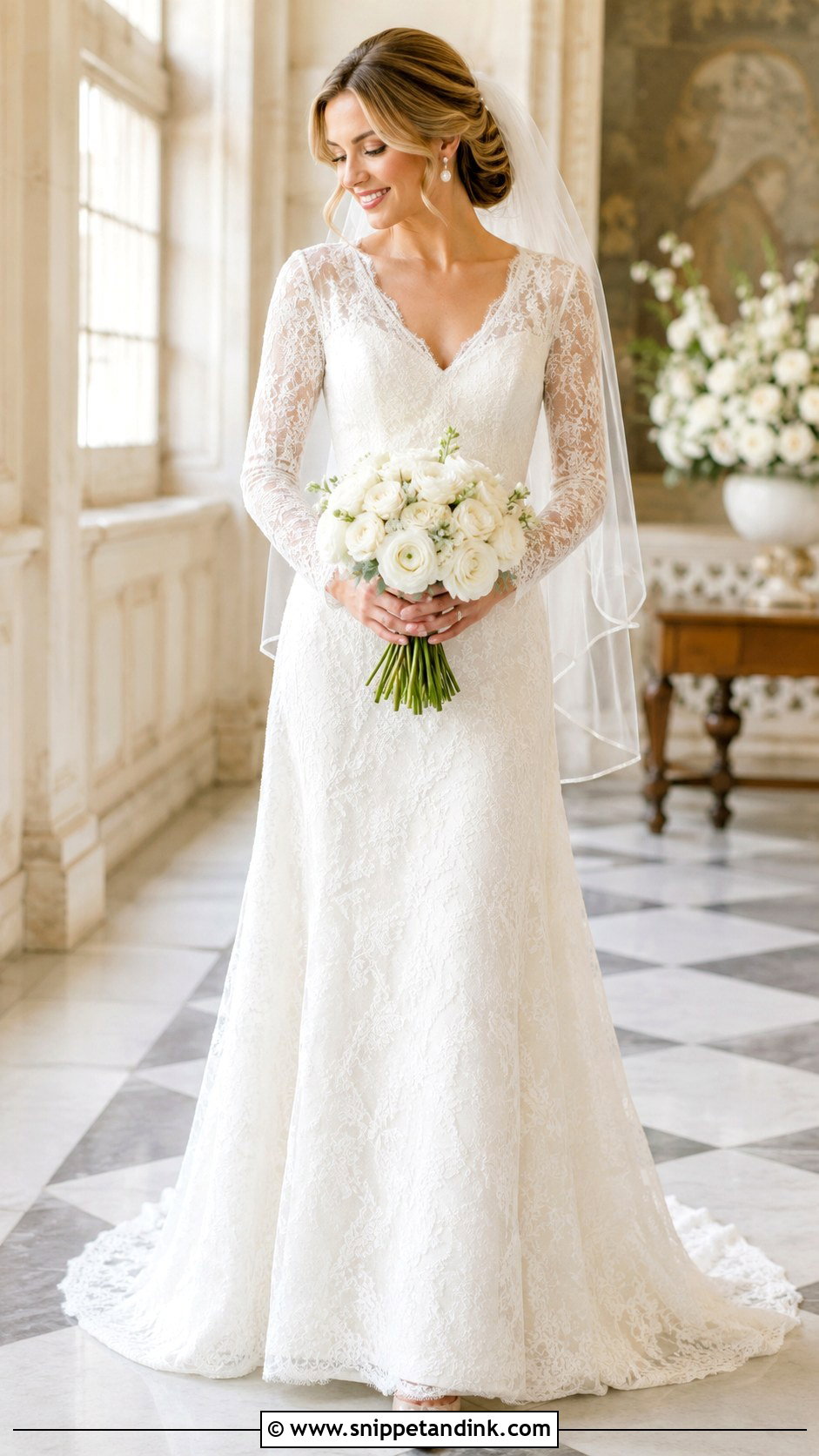
Lace sleeves give coverage and texture at once, and they’re my first suggestion for winter weddings or churches that ask for covered arms. Make sure the bodice is lined and the sleeves are fitted but not tight at the elbow; lace sleeves that pull when you bend your arm will split at the seam eventually. A bateau or modest illusion neckline frames the face without fighting the lace pattern. Keep the rest quiet: pearl studs, ivory pumps and a chapel veil with a plain edge. Waves pinned behind one ear and a bouquet of ranunculus, roses and trailing greenery suit historic venues.
4. Strapless Corset Floor Length Wedding Dress
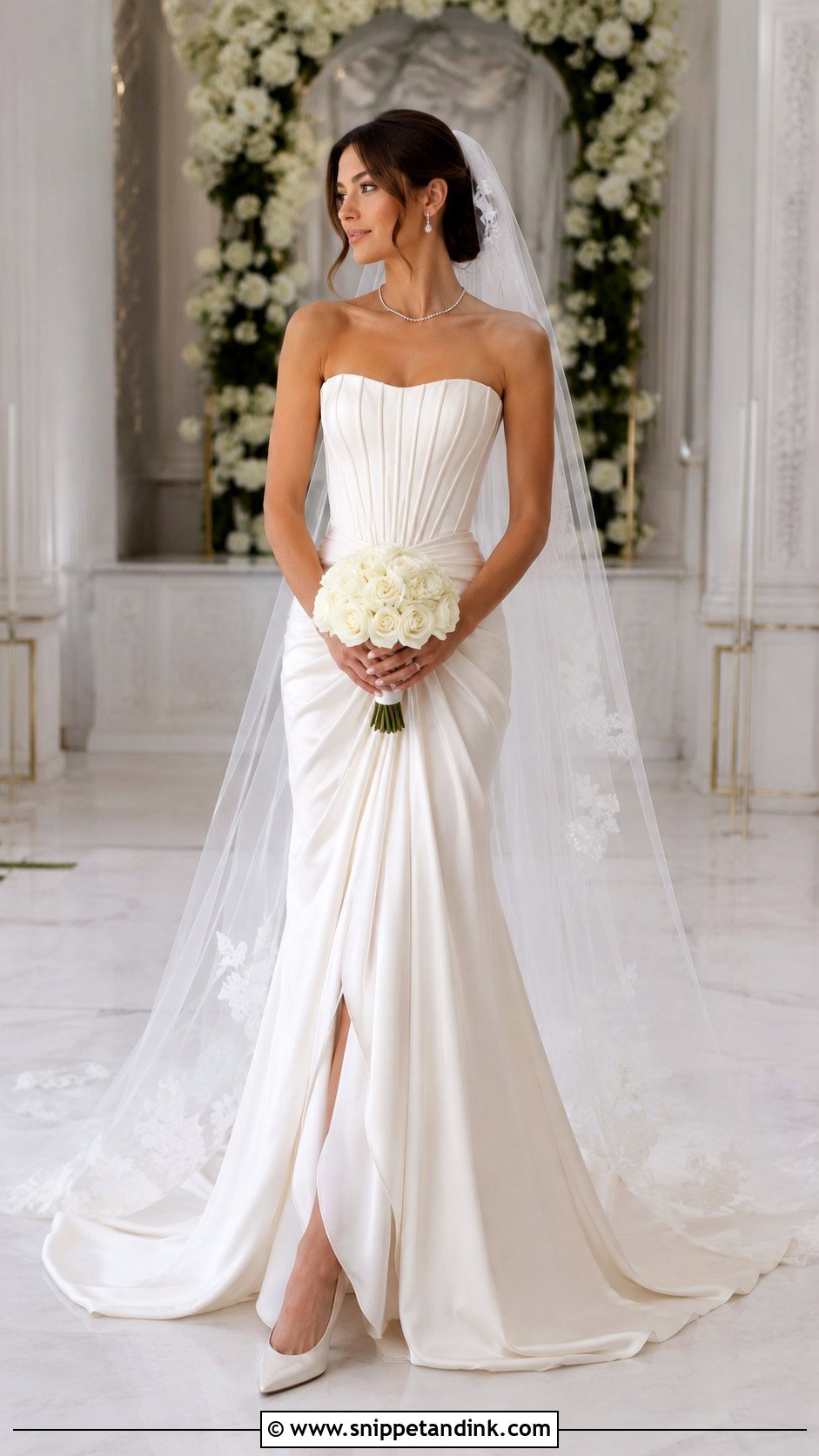
A corset bodice is only as good as its boning and its fit. Spiral steel bones bend with you; cheap plastic ones warp into the ribs by evening, so I always ask what’s inside. The neckline should sit securely without you hitching it up every few minutes. The skirt can be fitted, A-line or softly gathered depending on how much drama you want. I like a sheer cathedral veil for the ceremony, then taken off to show the bodice at the reception, with a tennis necklace, small drops and pointed satin heels. A smooth updo or side-parted waves suits it, with a compact bouquet of ivory roses. At alterations, take a deep breath and sit down: you should feel held, not squeezed.
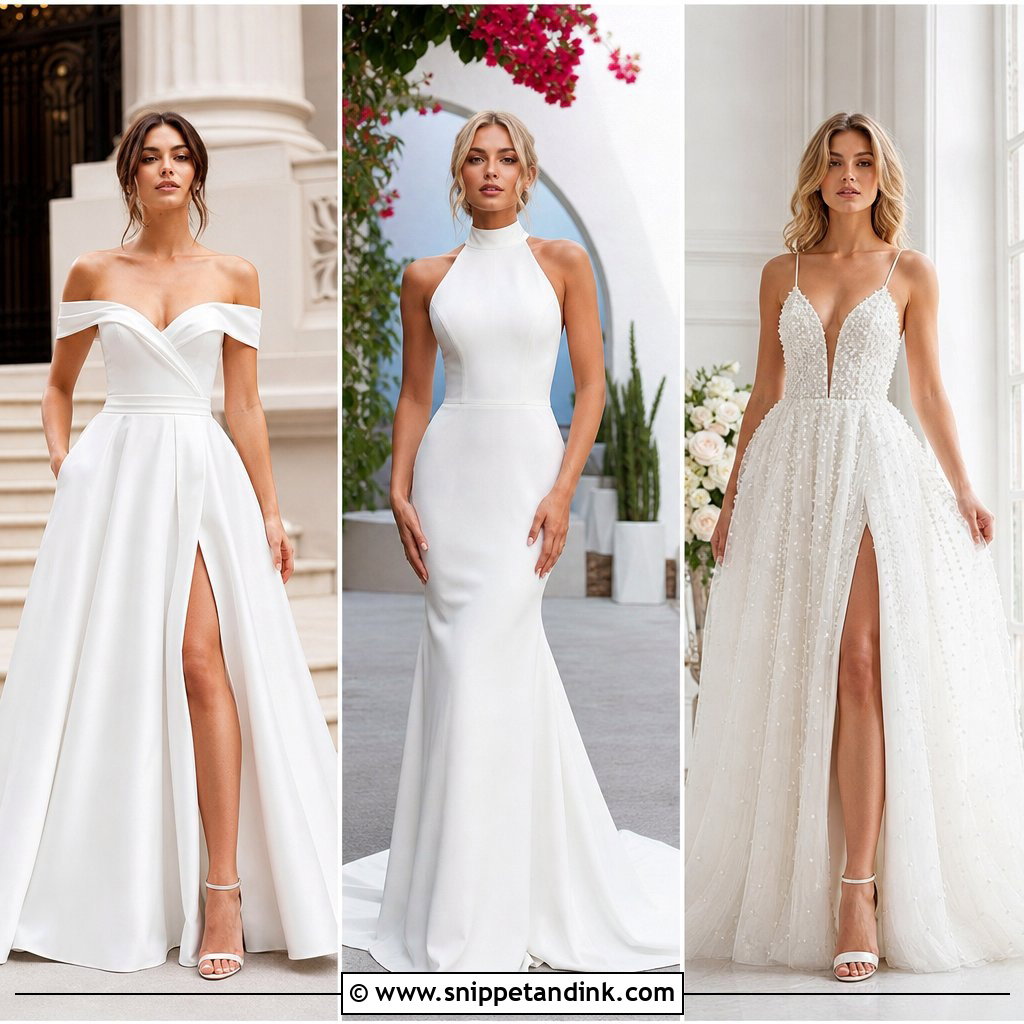
5. Off Shoulder Floor Length Wedding Dress
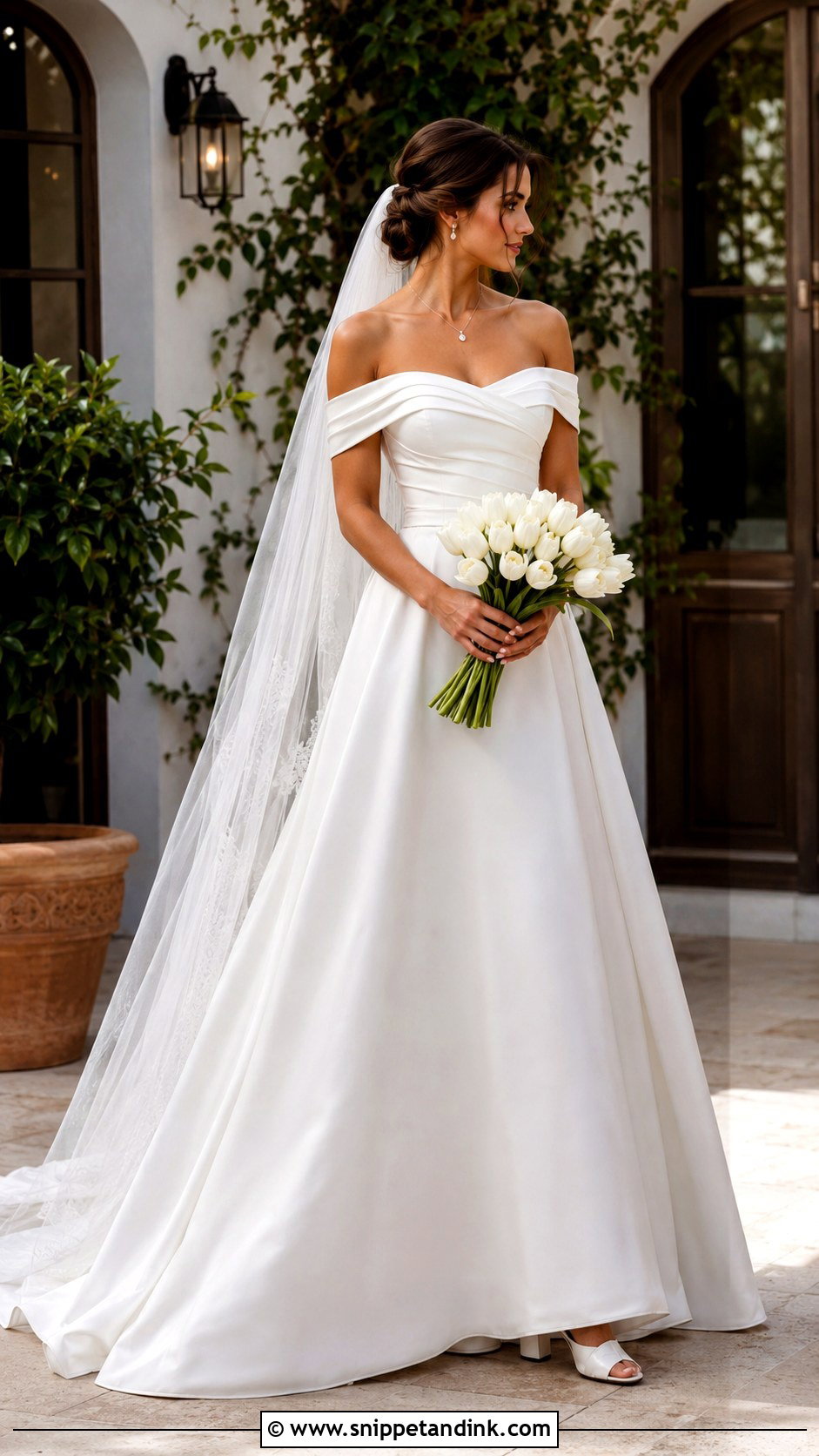
Off-shoulder necklines frame the collarbone gently, but they restrict how high you can lift your arms, which matters more than people think for the first dance and hugging guests. Draped satin bands look structured, while lace or tulle sleeves feel lighter. A fitted bodice with an A-line or ball gown skirt balances the open neckline. Pair a short pendant and matching earrings with low block heels. A low twisted bun keeps the shoulder line clear, and a chapel veil should attach below the style. White tulips or roses suit it. In the fitting room, raise your arms, reach forward and wave, then check whether the sleeves have crept up.
6. Mermaid Floor Length Wedding Dress
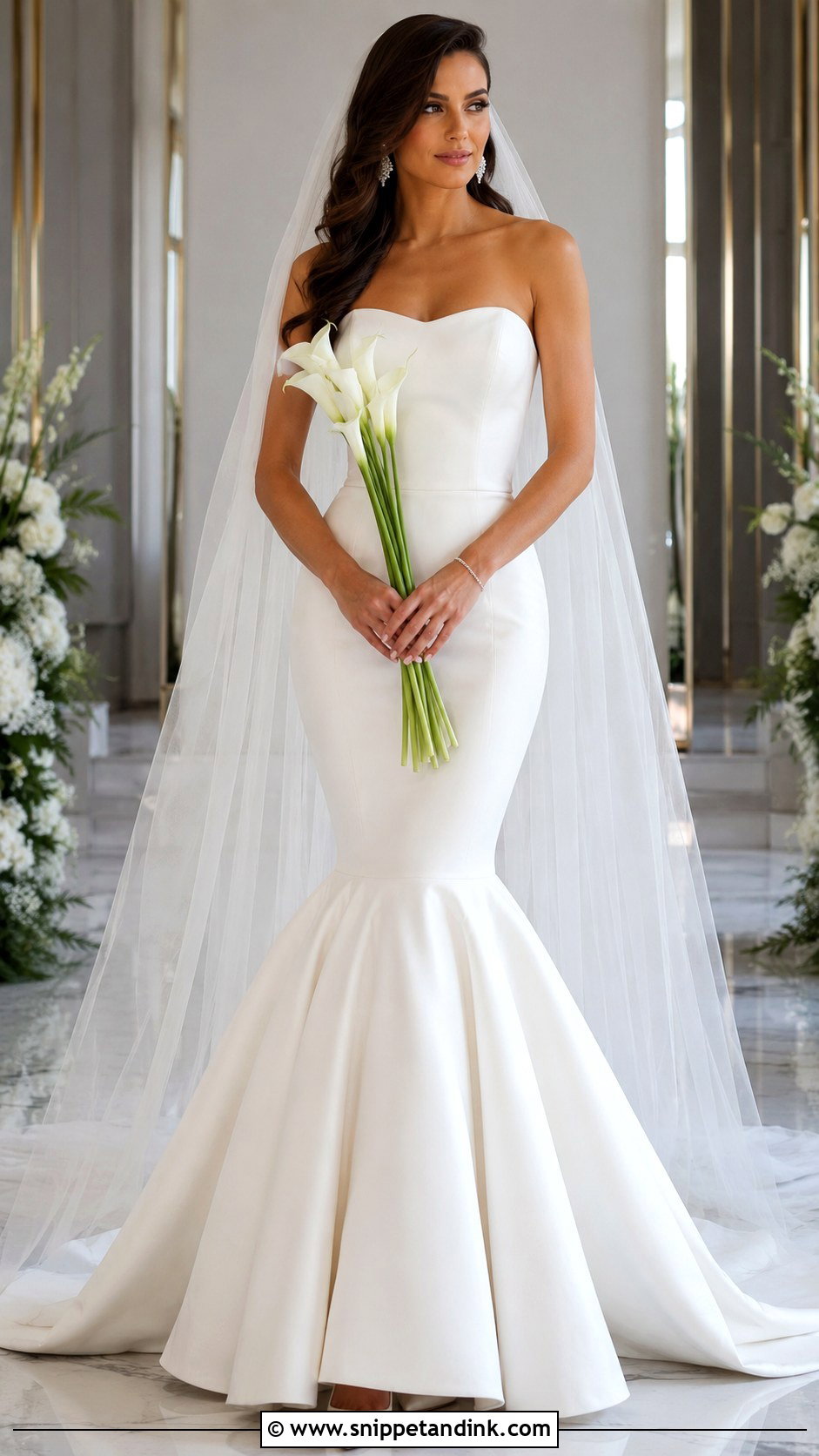
A mermaid follows the body to the knee before flaring, and where that flare starts decides whether you can walk. Crepe looks smooth and modern; lace adds more romantic texture. I look for stretch lining, secure boning and enough room around the knees to take a normal stride and sit down. Crystal earrings, a thin bracelet and pointed heels encourage good posture, and a long veil echoes the flare without adding bulk at the waist. Hollywood waves or a sleek ponytail depend on the neckline, and a slim bouquet of calla lilies follows the line. Practice turning in it, since mermaids need small pivoting steps rather than a quick spin.
7. Column Floor Length Wedding Dress
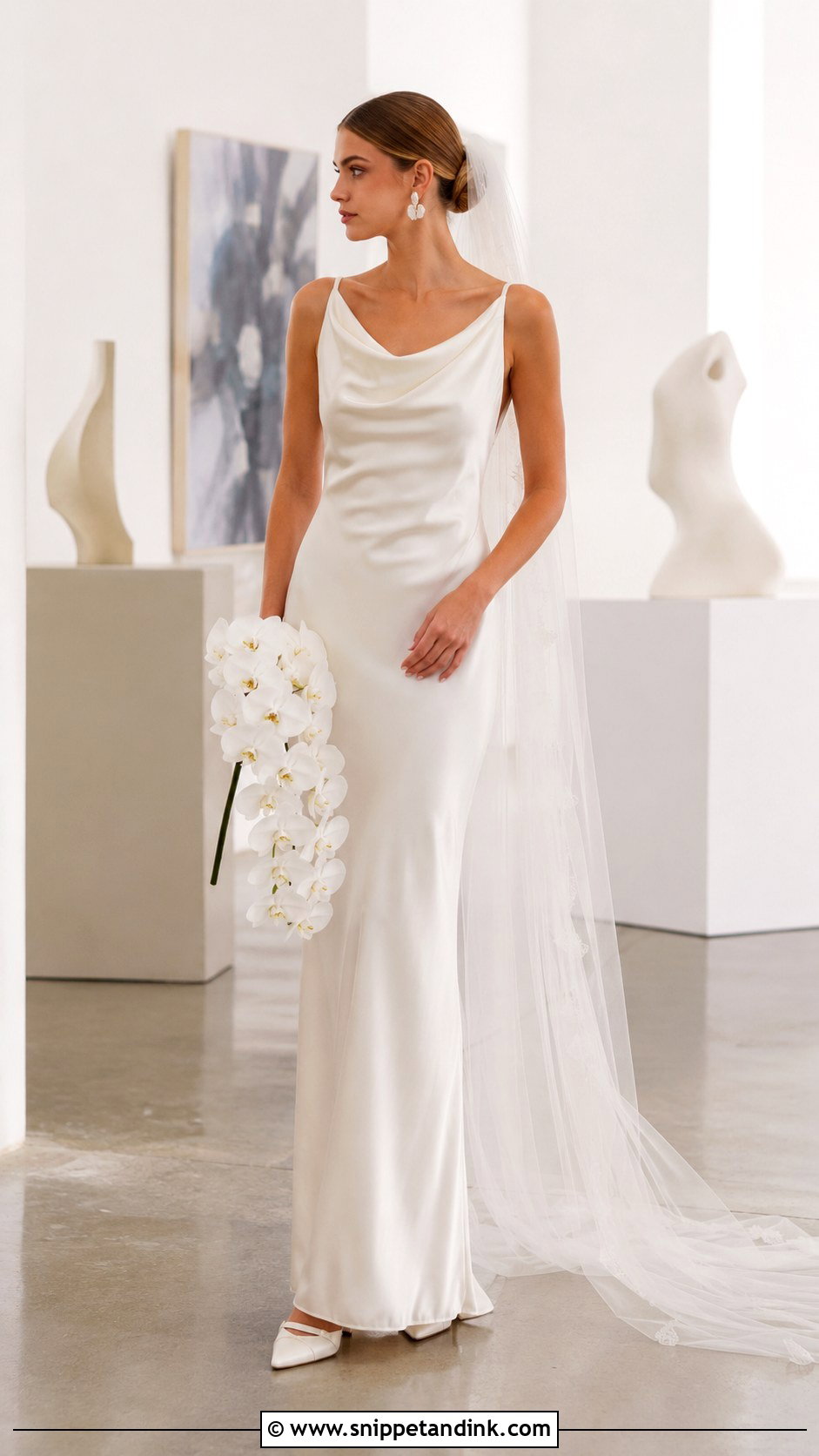
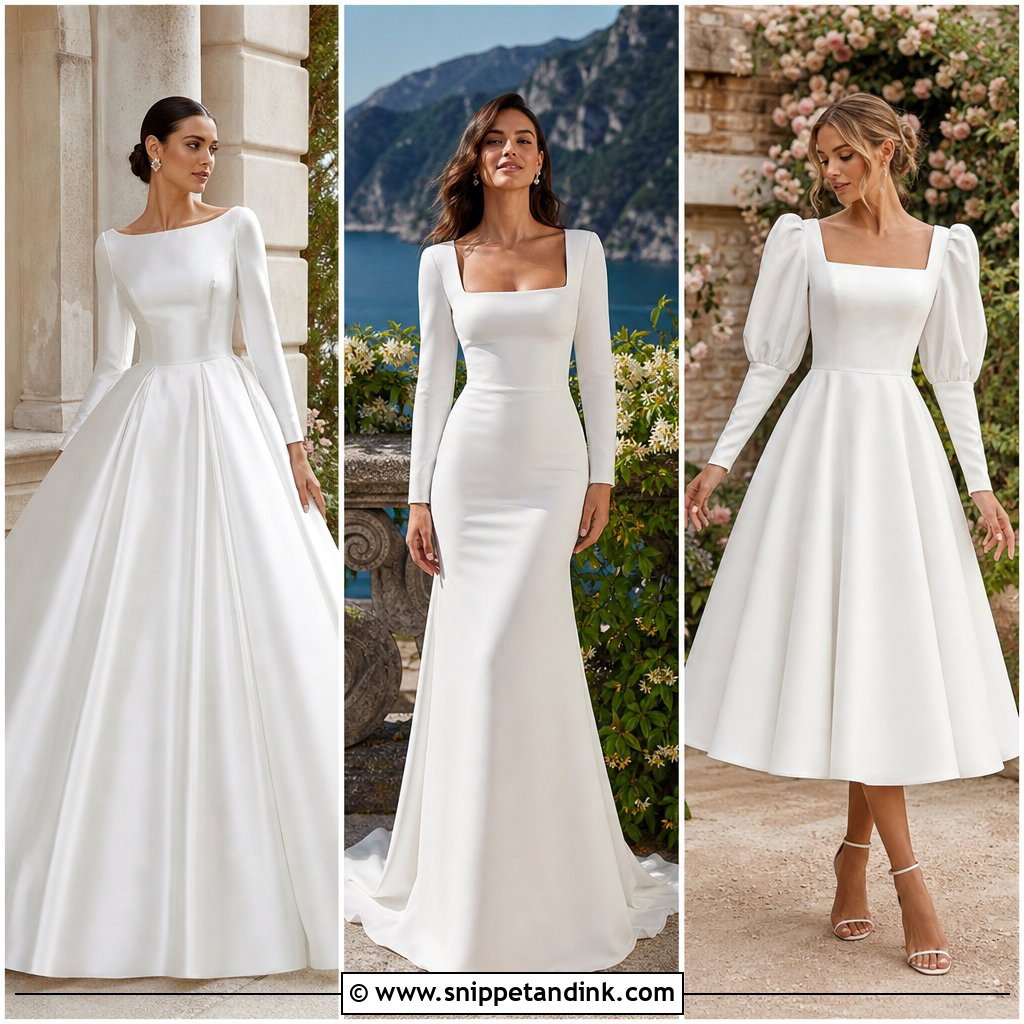
A column falls close to the body without the mermaid’s flare, so the fabric has to drape well on its own. Silk, satin and fluid crepe all work. I’d choose the neckline based on support: a cowl or square neck if you need a bra-friendly cut, strapless only if the bodice is properly boned. Sculptural earrings, pointed slingbacks and a small structured clutch keep it minimal, and a narrow veil or a sheer cape adds ceremony drama. A low bun or tucked waves and a single-variety bouquet of orchids or long-stem roses suit galleries, city venues and courthouse weddings. Columns show undergarment lines readily, so try it on with the exact shapewear you’ll wear.
8. Basque Waist Floor Length Wedding Dress
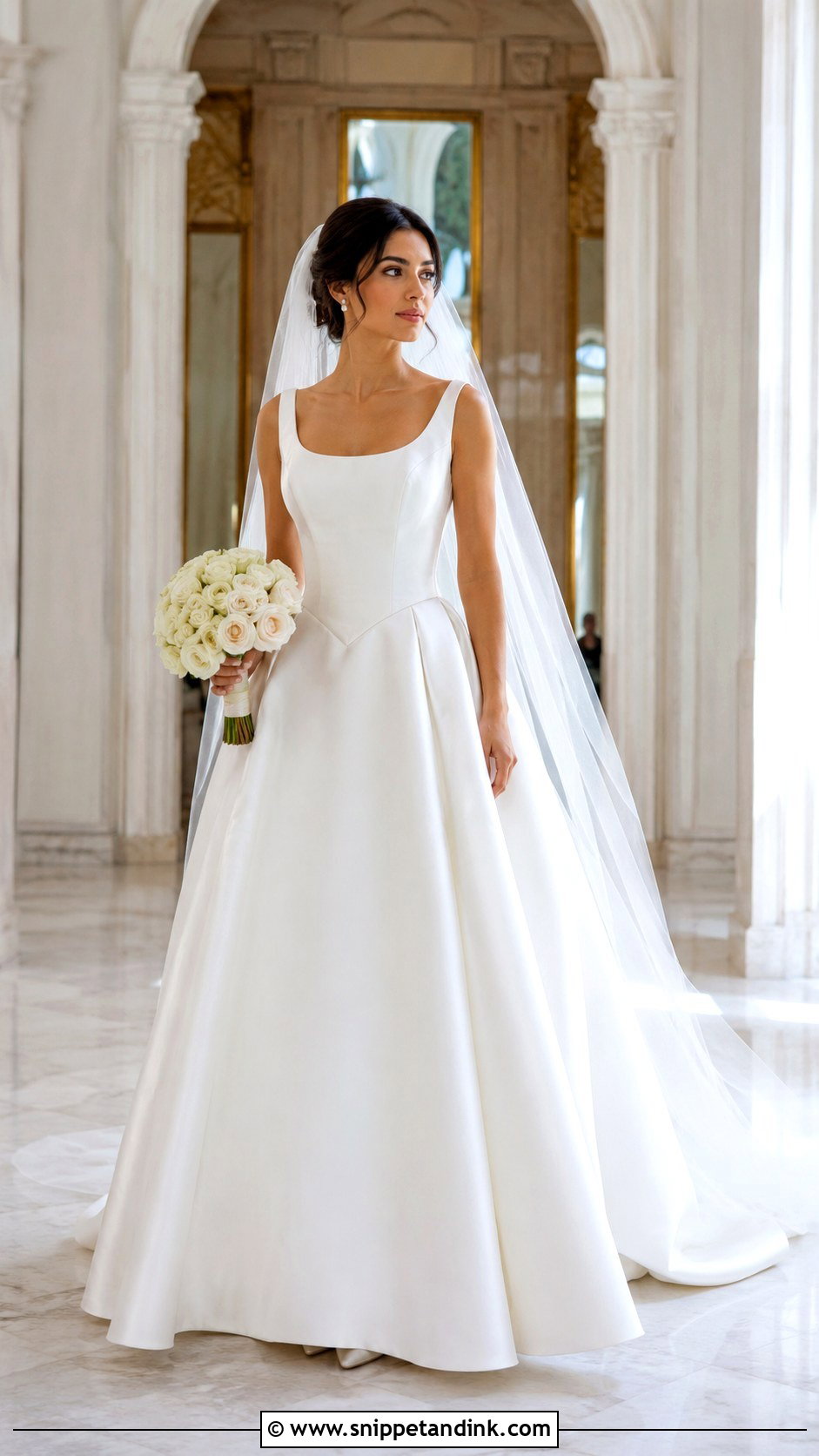
A basque waist floor-length wedding dress has a bodice that dips into a V below the natural waist, which lengthens the torso and looks quietly regal. It pairs best with a full satin or layered tulle skirt so the point stays easy to read. A scoop or strapless neckline balances the top. Pearl studs, satin pumps and a long veil set beneath a neat bun are plenty; skip the necklace if the bodice has visible seams or beading. White roses in a formal round bouquet keep things symmetrical. The point has to land centered on your body, so I ask for alterations through the torso and hips rather than letting someone take everything in at the zip.
9. Drop Waist Floor Length Wedding Dress
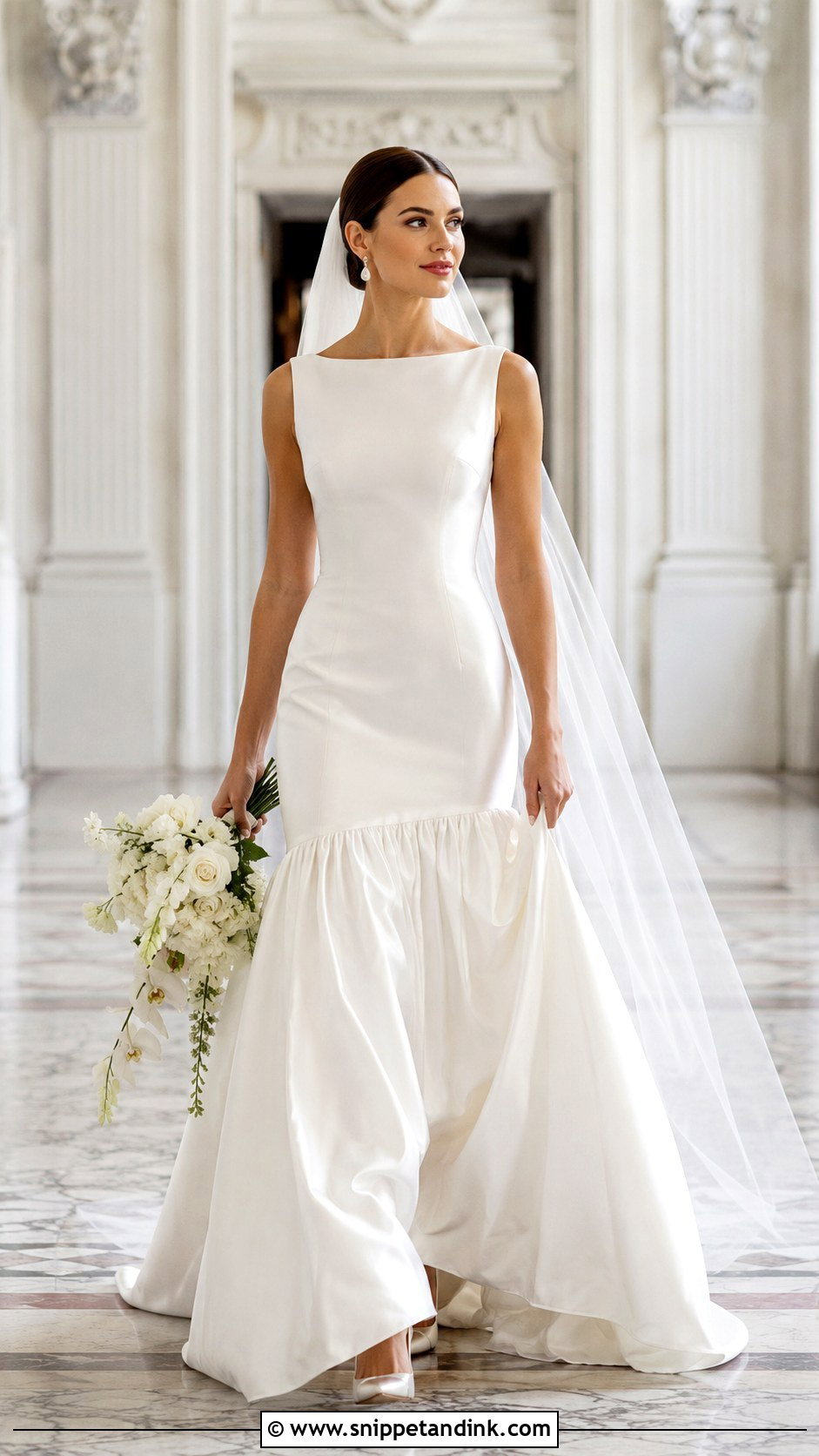
Drop waists look fashion-forward, and they’re less forgiving than they appear. The fitted bodice runs past the natural waist before the skirt opens, so wherever that seam lands is where the eye stops. On a shorter torso it can cut you in half. Satin gives a crisp finish, and tulle adds softer volume. I’d keep the styling simple with a chapel veil, teardrop earrings, low heels under the hem and a sleek center-parted bun. An asymmetrical bouquet of white flowers softens the construction. At fittings, sit, bend and walk to check the extended bodice doesn’t pinch or fold over the hips.
10. Square Neck Floor Length Wedding Dress
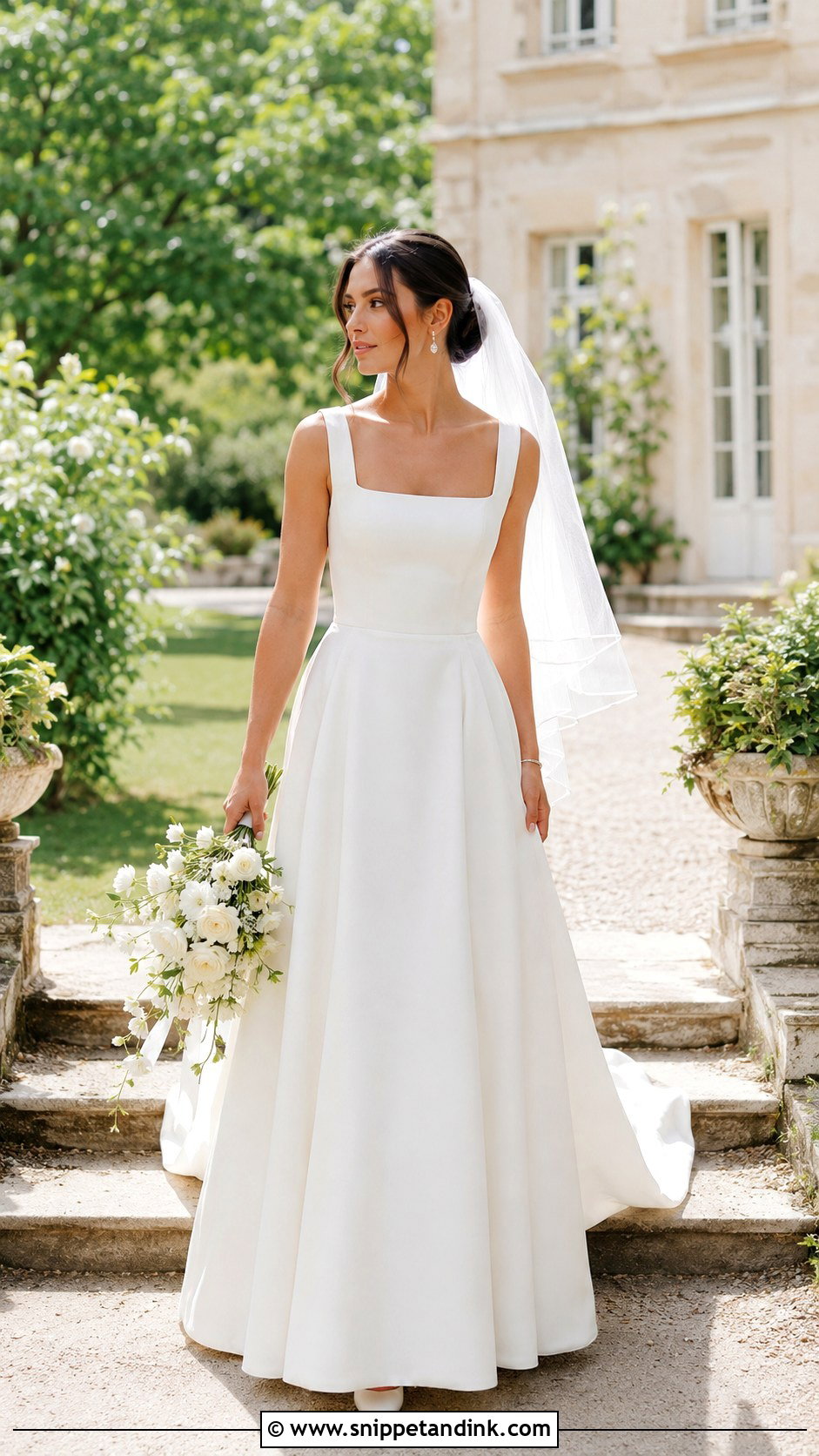
Square necks are reliable. The straight lines frame the collarbone, wide straps or fitted sleeves hold everything in place, and the shape works in an A-line skirt or a slim crepe one. Pearl drops, a fine bracelet and closed ivory heels suit it; a short delicate chain can echo the neckline if you want a necklace at all. A center-parted low bun and a fingertip veil at the back, with sweet peas and roses, finish the look. The one thing I check every time is the corners: the straight edge shows bra straps and the top of a strapless bra more than any other neckline, so bring your undergarments to the first fitting.
11. High Neck Floor Length Wedding Dress
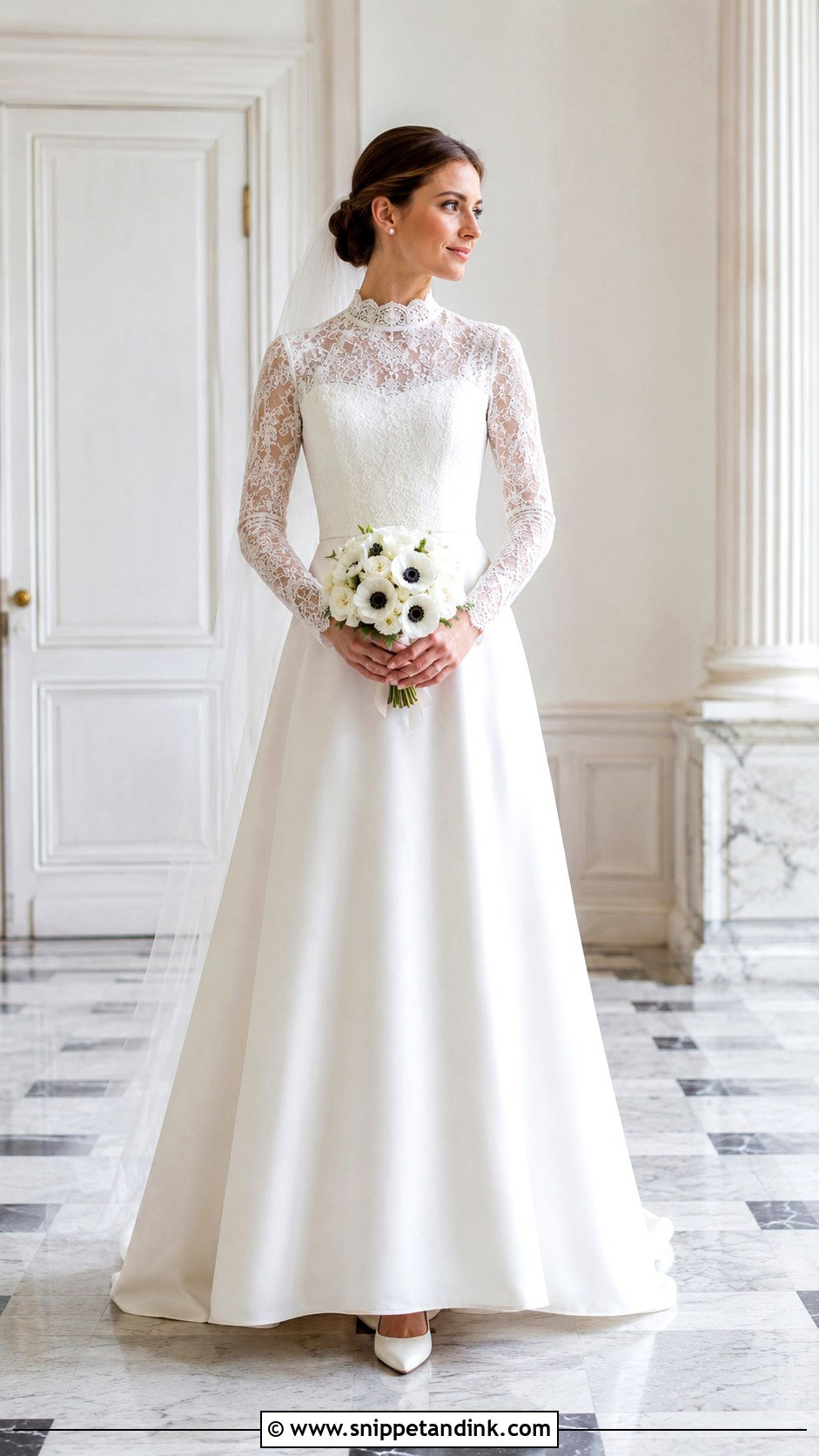
A high neck draws everything to your face, so I treat the earrings and hair as the real accessories here. Sheer lace looks romantic, smooth crepe minimal and lightly beaded tulle catches light without much sparkle. A fitted bodice with an A-line skirt keeps the covered top from feeling heavy. Small pearl or diamond-style studs, closed pumps, a neat bun and a veil secured below the style hold the vertical line. A compact bouquet of anemones or roses adds definition. Turn your head side to side in the fitting; a collar that rubs for five minutes will feel raw by the speeches.
12. Halter Floor Length Wedding Dress
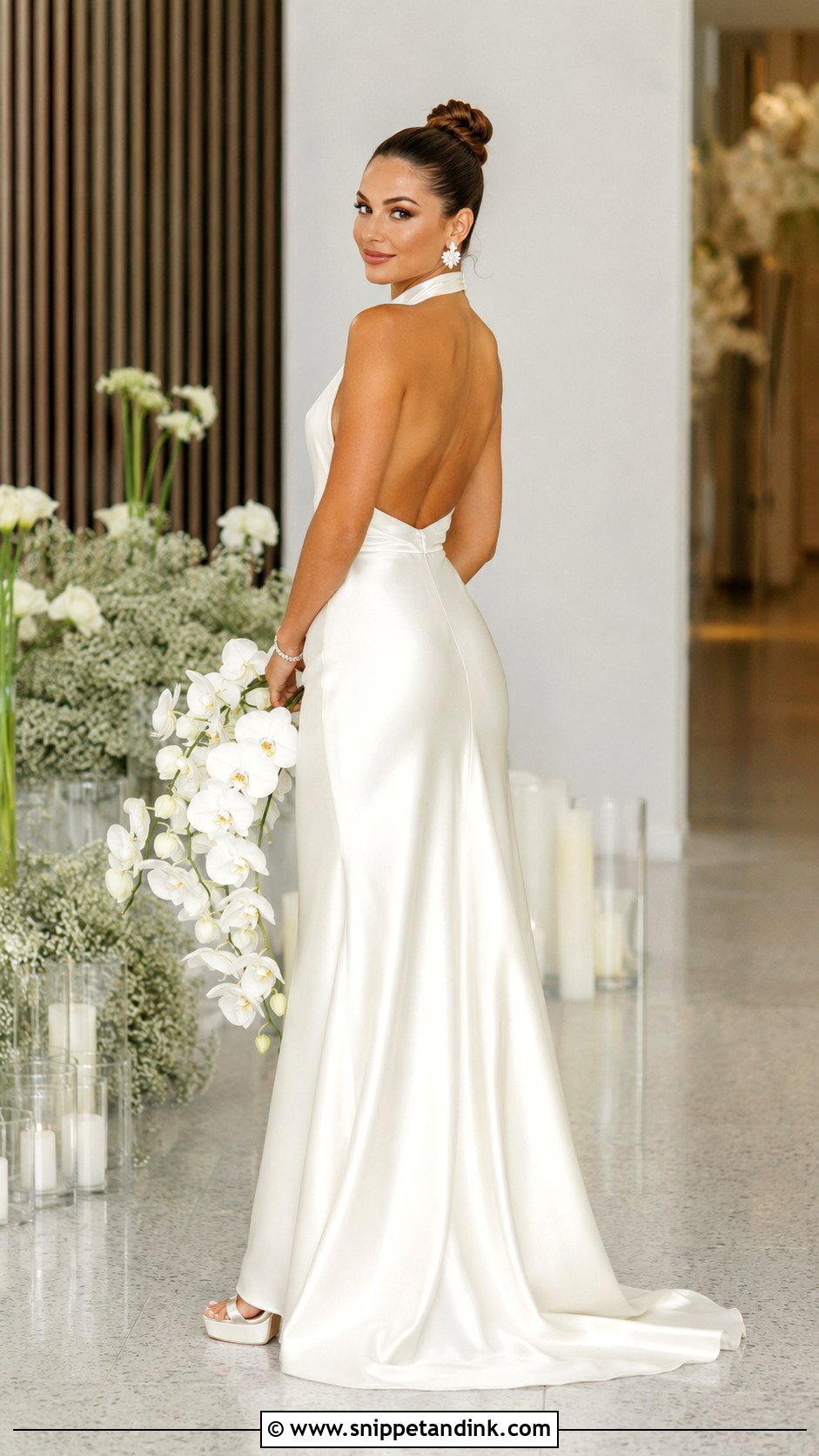
A halter floor-length wedding dress pulls the eye up to the shoulders and is a good match for athletic or broad shoulders. Soft satin reads fluid, while structured crepe looks sharper. An open back or keyhole adds interest without decorating the front. Statement earrings, a smooth bracelet and platform sandals or supportive heels suit it, and the necklace stays in the drawer. A high bun or polished ponytail shows the shape from behind, with a slim bouquet of white orchids. The weight of the bodice hangs from the back of your neck, so check during fittings that the strap isn’t digging in, especially in heavy fabric.
13. Illusion Sleeve Floor Length Wedding Dress
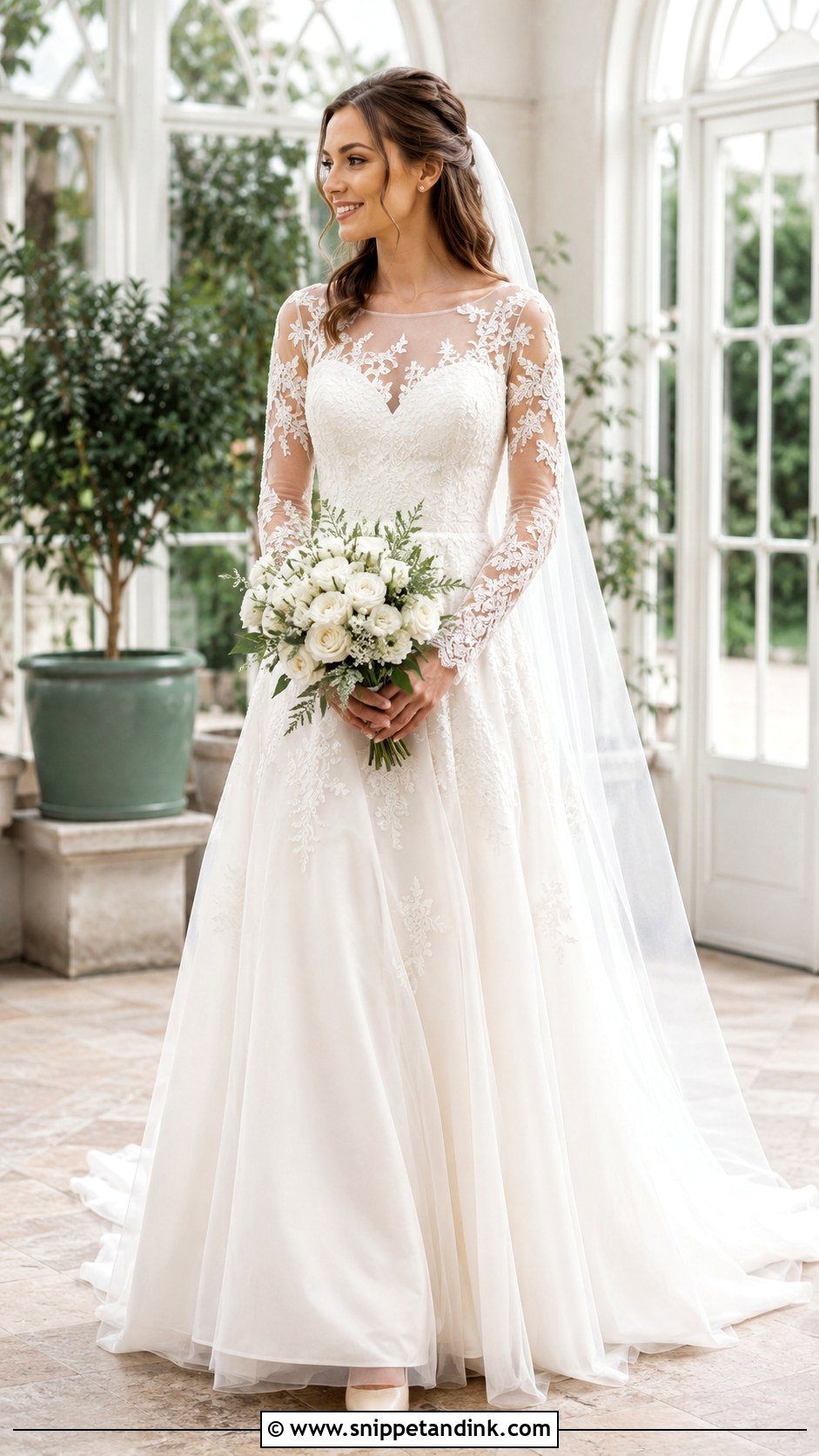
Illusion sleeves let lace, beading or appliqués look as if they sit straight on the skin. The mesh should match your skin tone closely in daylight, not just under shop lights, and the bodice should be lined. A soft A-line or fit-and-flare skirt keeps the gown light. Understated studs, ivory pumps and a plain chapel veil leave room for the embellishment. A low bun or half-up style shows the sleeves, and a loose bouquet of garden flowers suits it. I check the armholes, wrists and elbows closely: mesh has little give, so a sleeve that’s slightly short twists around the forearm when you reach.
14. 3D Floral Floor Length Wedding Dress
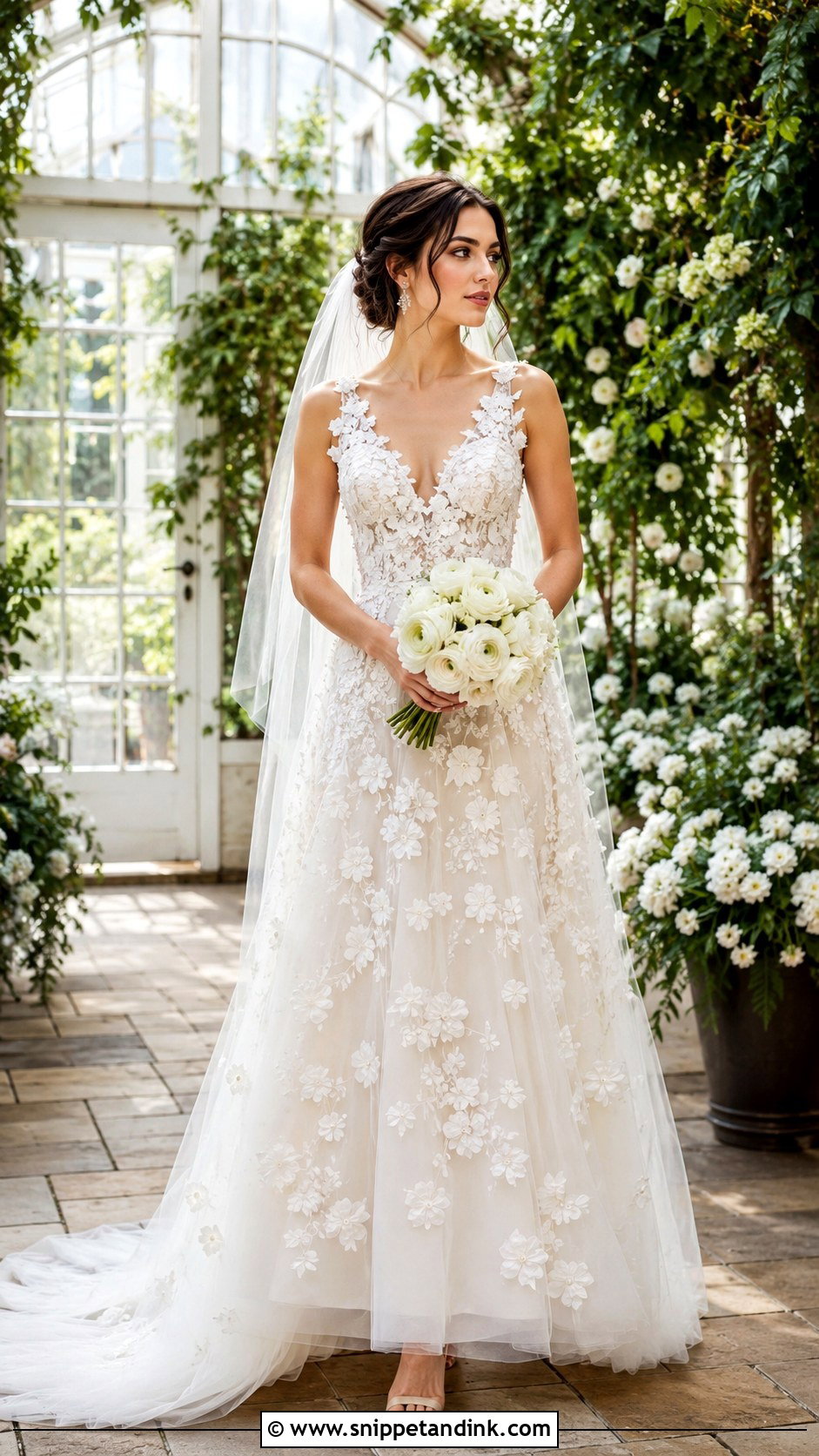
Three-dimensional flowers are best when they’re scattered, dense on the bodice and thinning down a tulle skirt, so the gown moves instead of reading like wallpaper. Keep accessories small: crystal studs, neutral ivory heels and a sheer veil with a clean edge. Loose waves or a textured low bun suit the organic detail without tipping into costume. Match the bouquet to the scale of the appliqués, with white roses, sweet peas or ranunculus. Garden and conservatory settings suit this gown best. I gently tug at a few flowers before anyone commits; loose appliqués catch on veils, bracelets and the next layer of tulle.
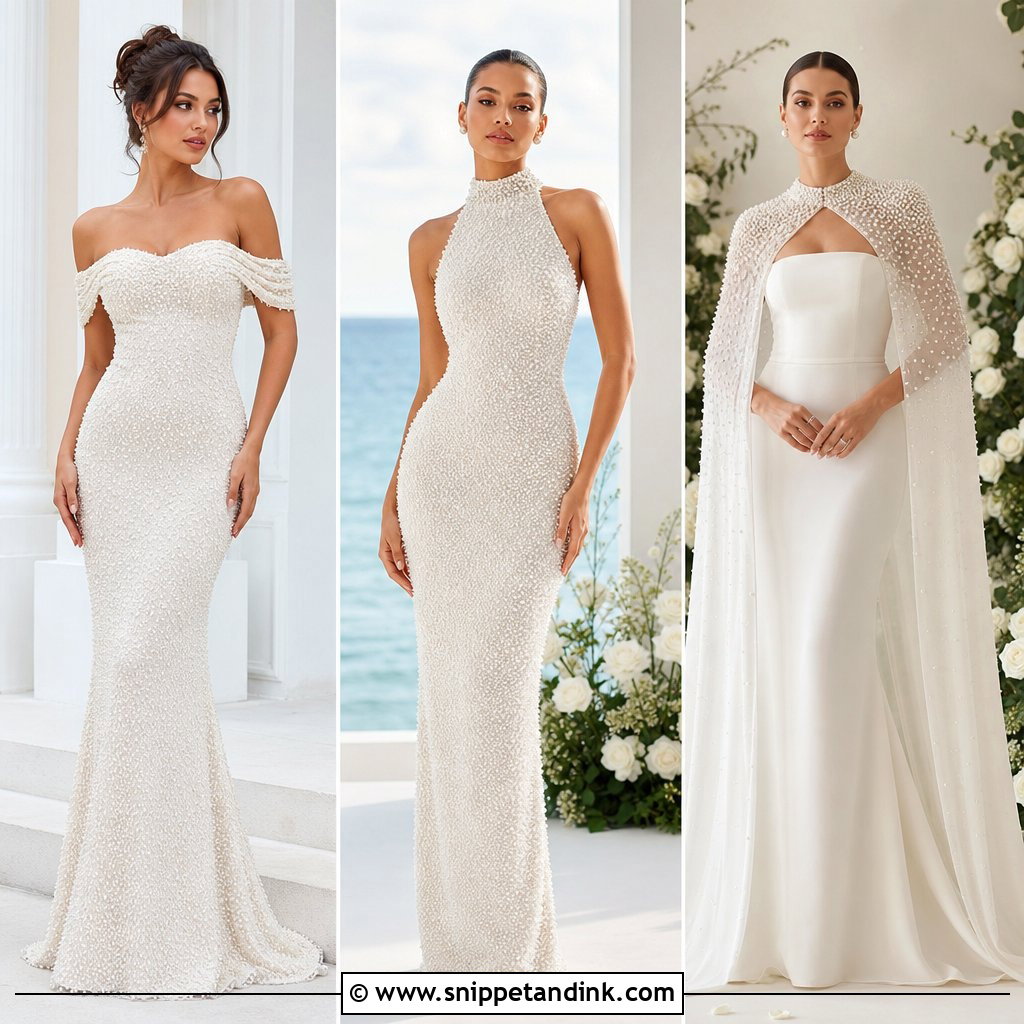
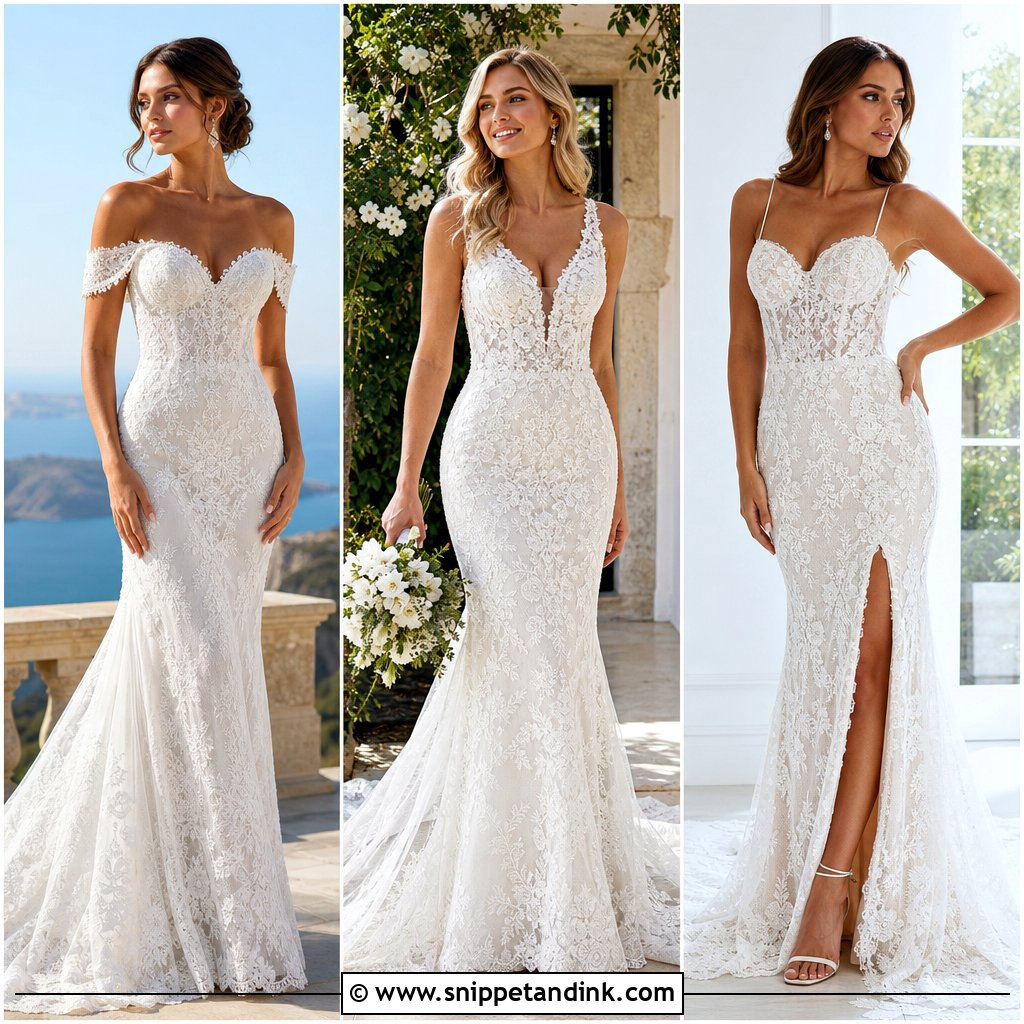

15. Beaded Floor Length Wedding Dress
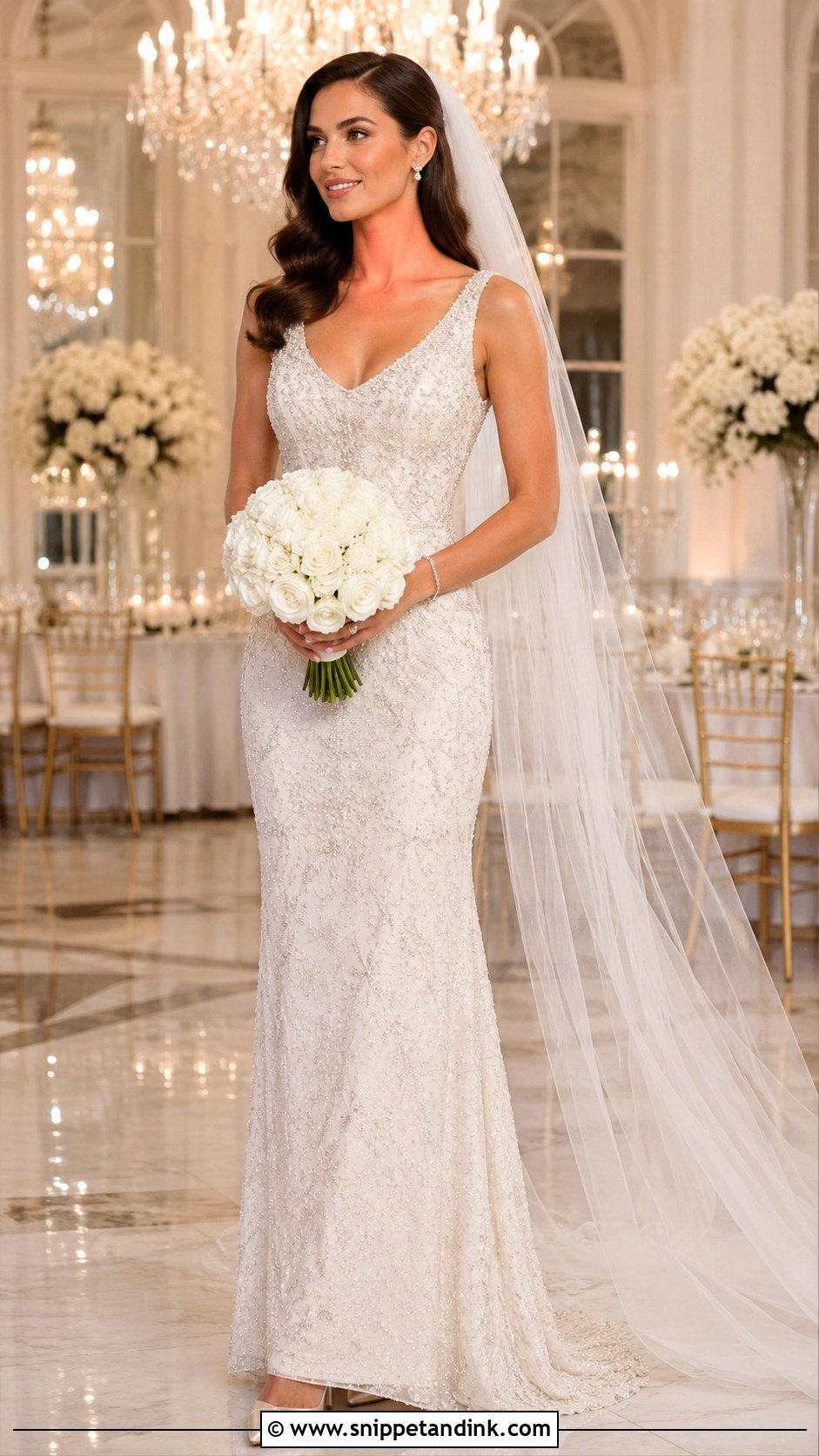
Beading glows under evening light, and it also adds real weight. Allover tonal beading gives even shimmer, while concentrated work at the bodice and waist feels lighter. A fitted sheath, gentle A-line or soft trumpet silhouette keeps heavy detailing from dragging the dress down. With this much sparkle, simple satin heels, studs and a narrow bracelet are plenty. Smooth waves or a low chignon and a plain veil, ideally one with a raw or narrow edge that won’t snag on the beads, keep it balanced, with a white rose bouquet. During fittings, ask how the weight is carried: straps, waist stay and lining all need to share it.
16. Minimalist Crepe Floor Length Wedding Dress
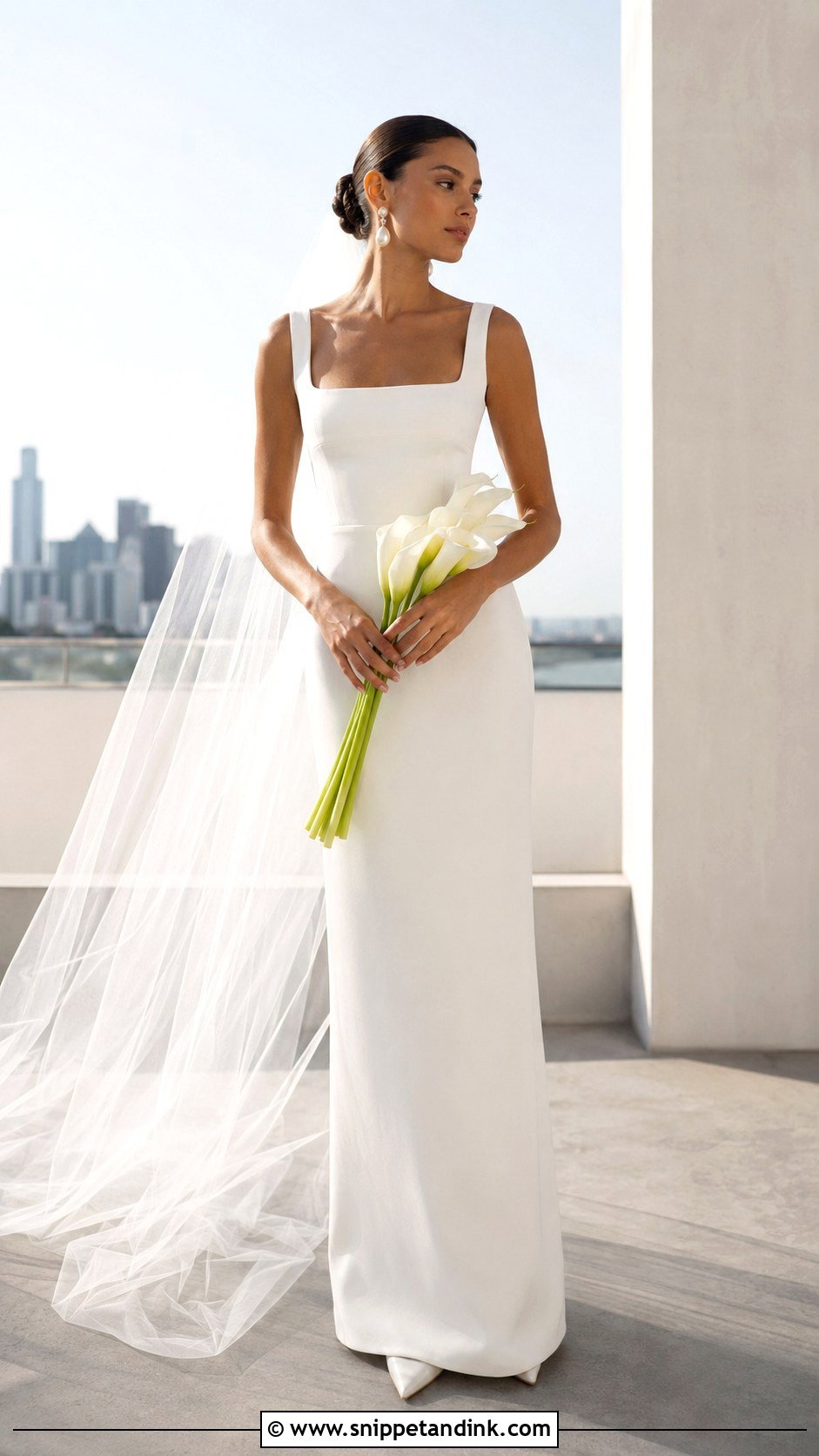
Plain crepe hides nothing. A minimalist gown depends entirely on precise seams, a well-cut neckline and a clean skirt, so I judge these on construction more than any other dress in this list. A bateau neck with sleeves looks sophisticated, and a deep V or square neck pushes it more modern. Sculptural gold or pearl earrings, pointed pumps and a sheer cathedral veil add contrast, while a sleek bun keeps attention on the shape. Narrow calla lilies or orchids suit it. Smooth, skin-tone undergarments and skilled alterations are not optional with crepe. It suits modern hotels, galleries and rooftop venues.
17. Layered Tulle Floor Length Wedding Dress
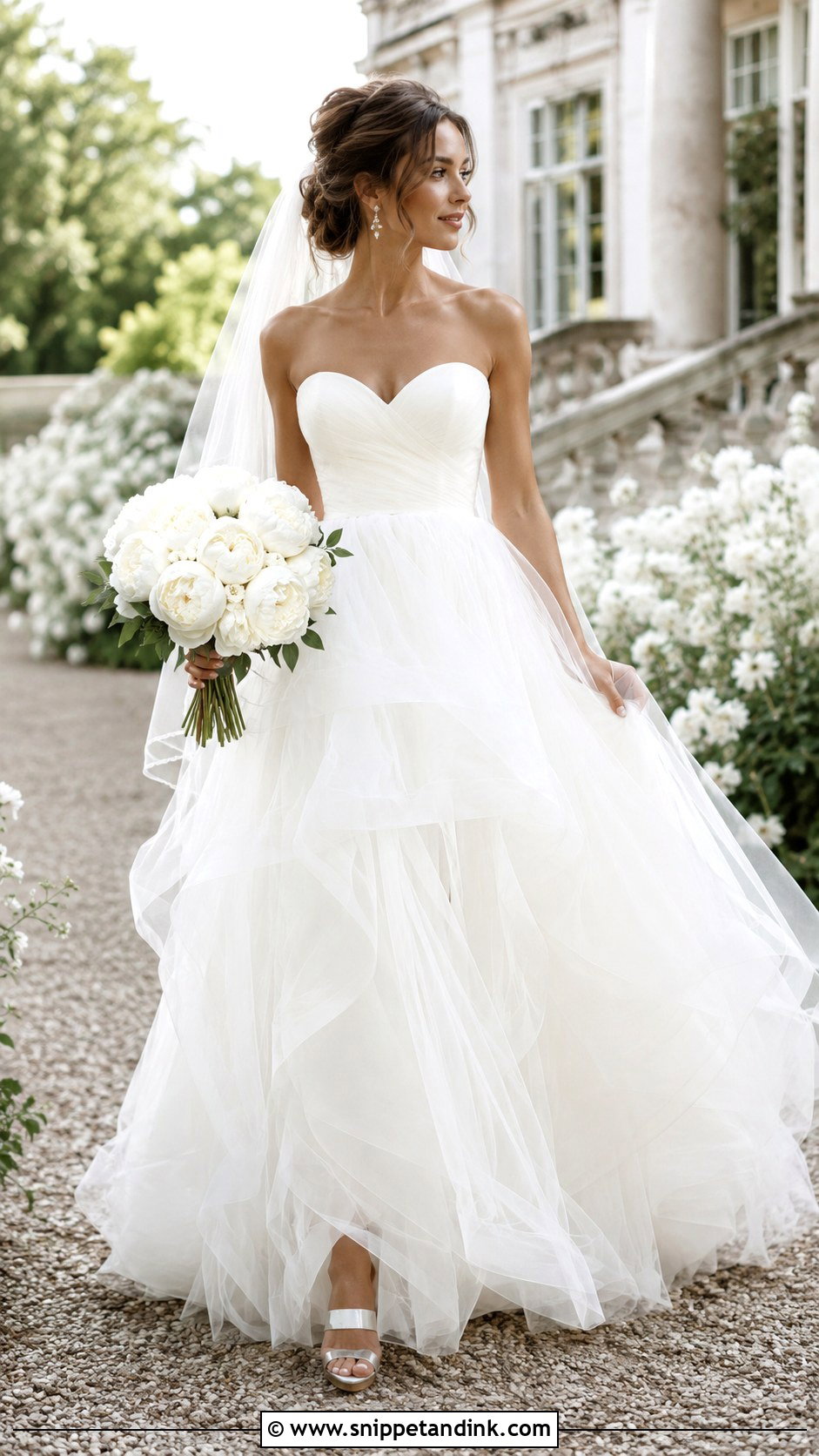
Layered tulle gives volume that looks weightless, but it’s still a lot of fabric to carry and bustle. Choose a supportive bodice and graduated layers that fall smoothly, not in stiff horizontal bands. A sweetheart or soft scoop neckline balances the skirt. Delicate drops, low satin heels and a lightweight chapel veil keep it airy, and a loose updo with face-framing strands keeps it relaxed. Peonies, roses and a little greenery match the softness for ballrooms, gardens and estates. Walk across carpet, stone and grass if you can when trying it on, and count the inner layers; too many make bustling slow.
18. Bow Back Floor Length Wedding Dress
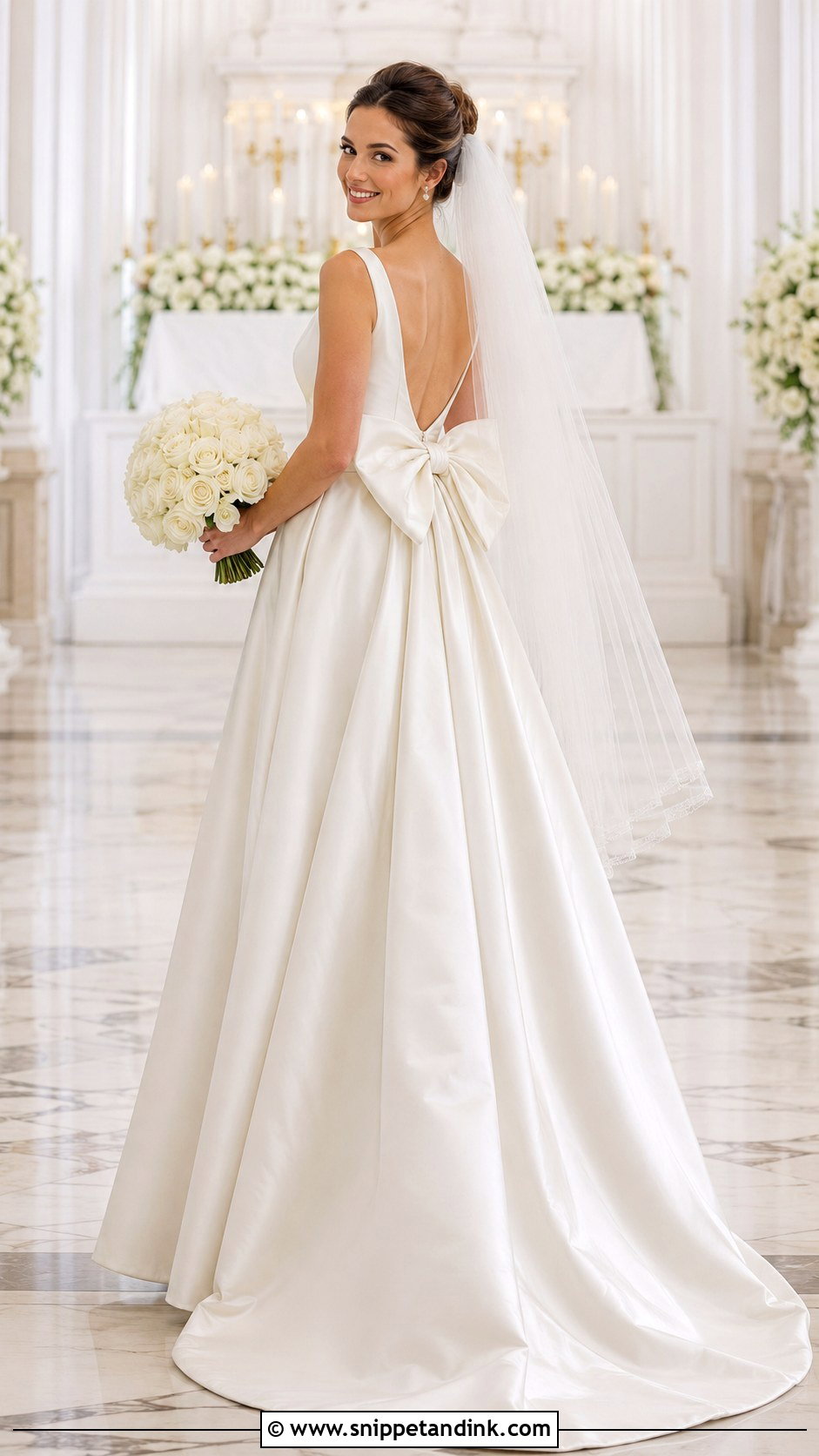
A bow at the back gives guests something to see during the whole walk up the aisle, which is the view they have longest. Structured satin with a removable bow is the more versatile choice, while a soft organza bow feels lighter. Keep the front simple so the back stays the focus. Pearl earrings, satin pumps and a sheer veil that ends clearly above or below the bow, never draped over it, suit the gown. An updo keeps the back visible, with a round white rose bouquet for the front. I check that the bow sits evenly and comes off or moves easily, because it often has to make way for the bustle.
19. Detachable Overskirt Floor Length Wedding Dress
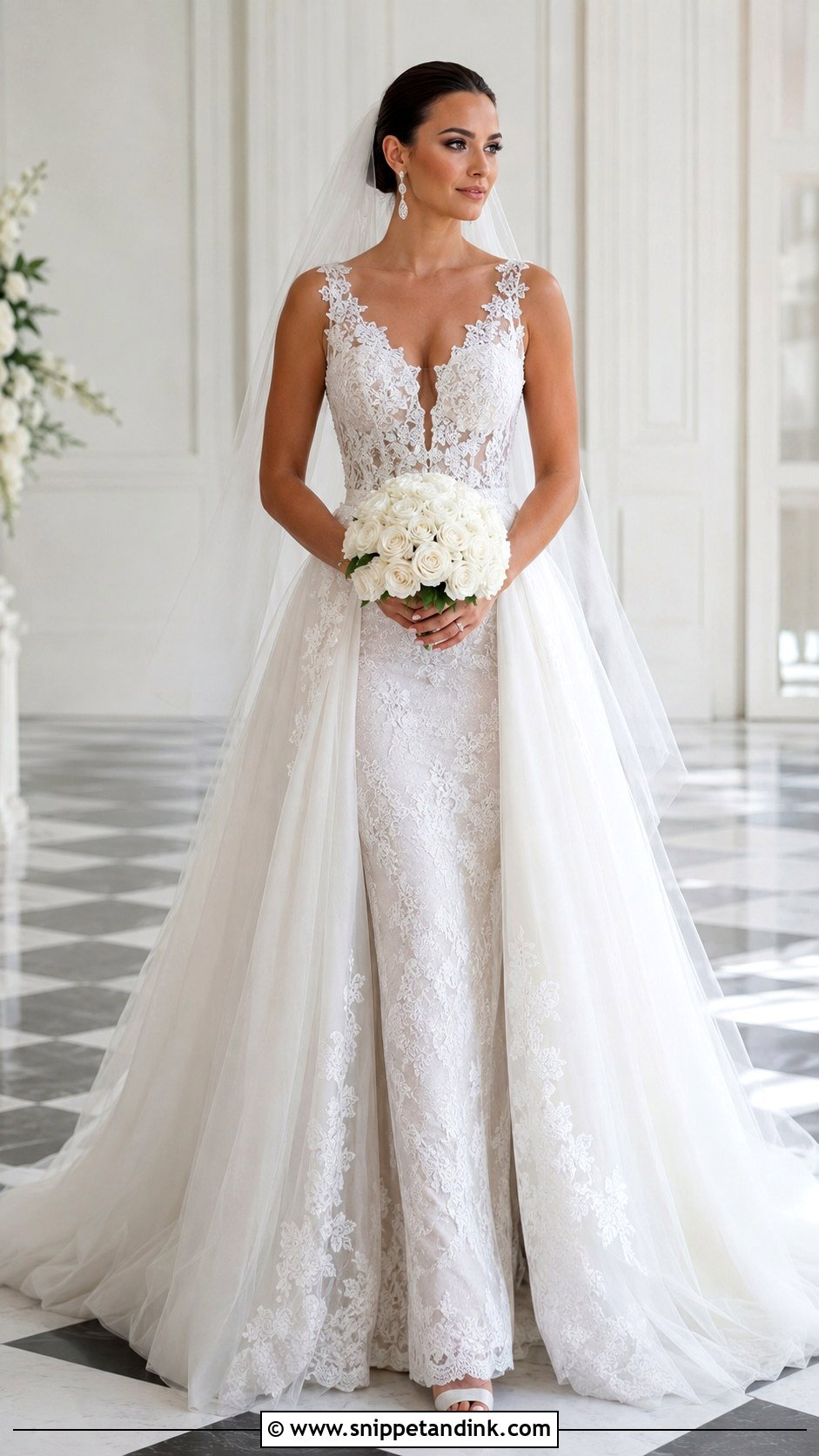
A detachable overskirt gives you two silhouettes from one dress: a full tulle, organza or satin layer for the ceremony, then a fitted crepe, lace or beaded gown for dancing. The attachment matters most. Hooks or snaps at the waist should lie flat and be manageable by one helper in a couple of minutes. Drop earrings, supportive heels and a veil that suits both versions work well, with a sleek bun that survives the change. Set the structured rose bouquet aside after photographs. Practice removing the overskirt before the day, and make sure the gown underneath has a finished waist and its own bustle.

20. Modest Floor Length Wedding Dress
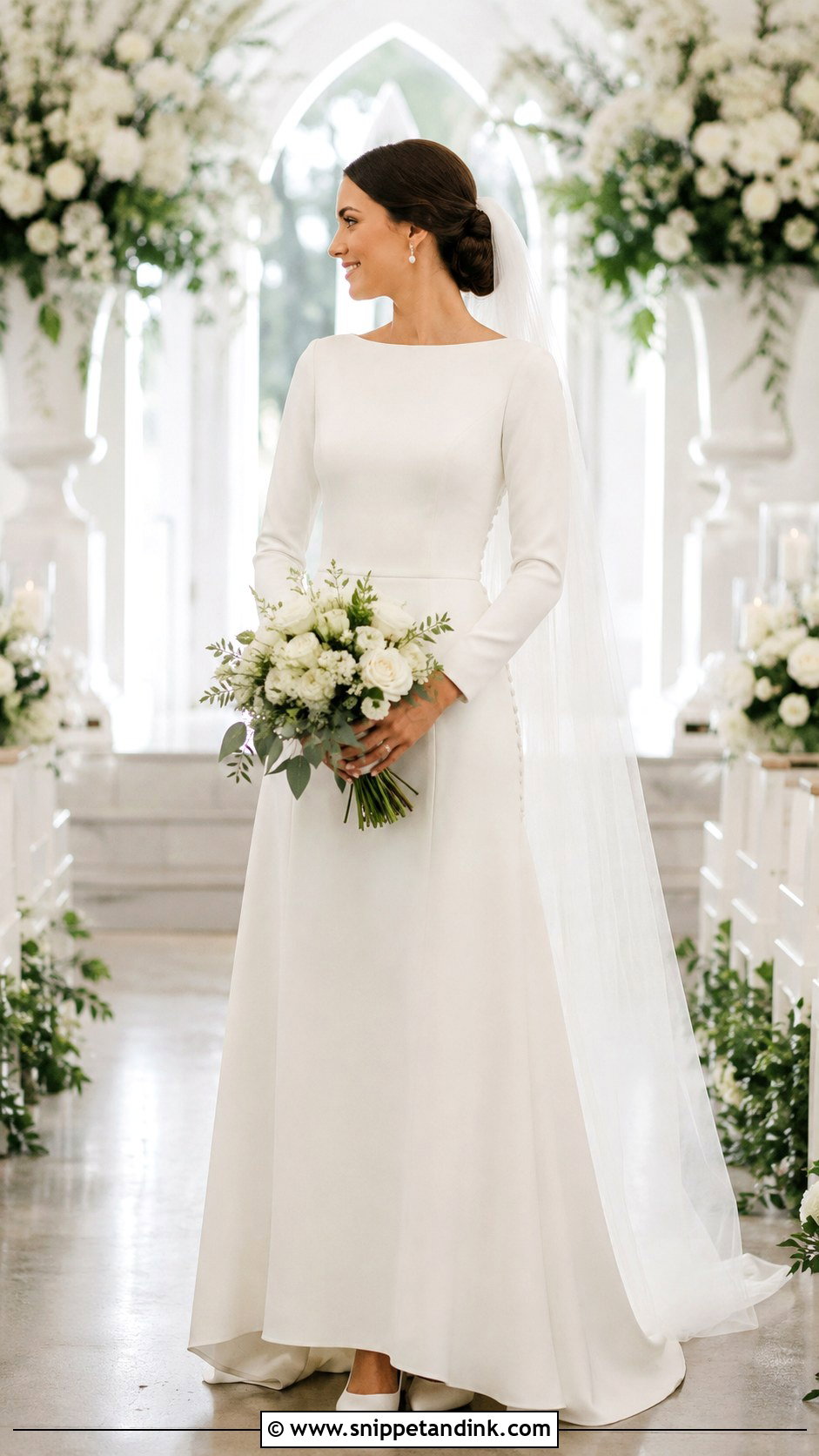
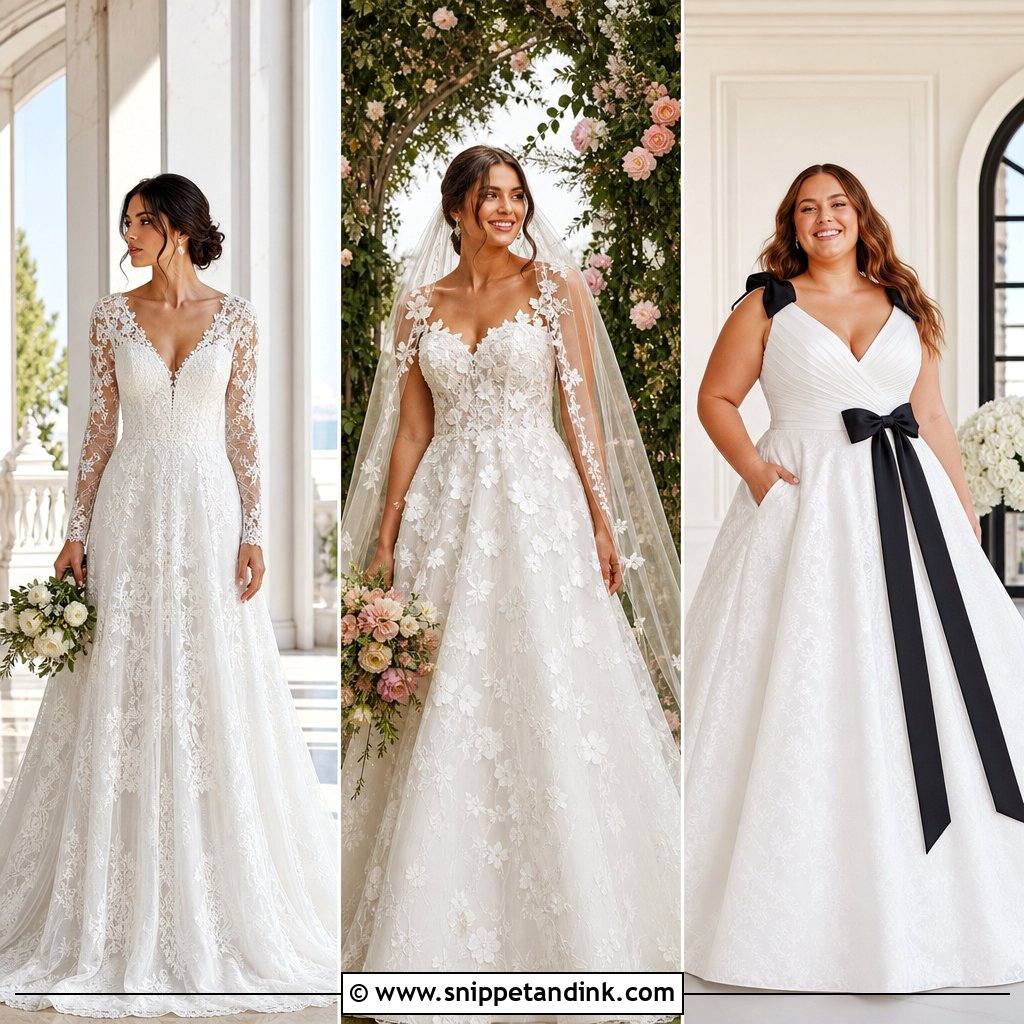
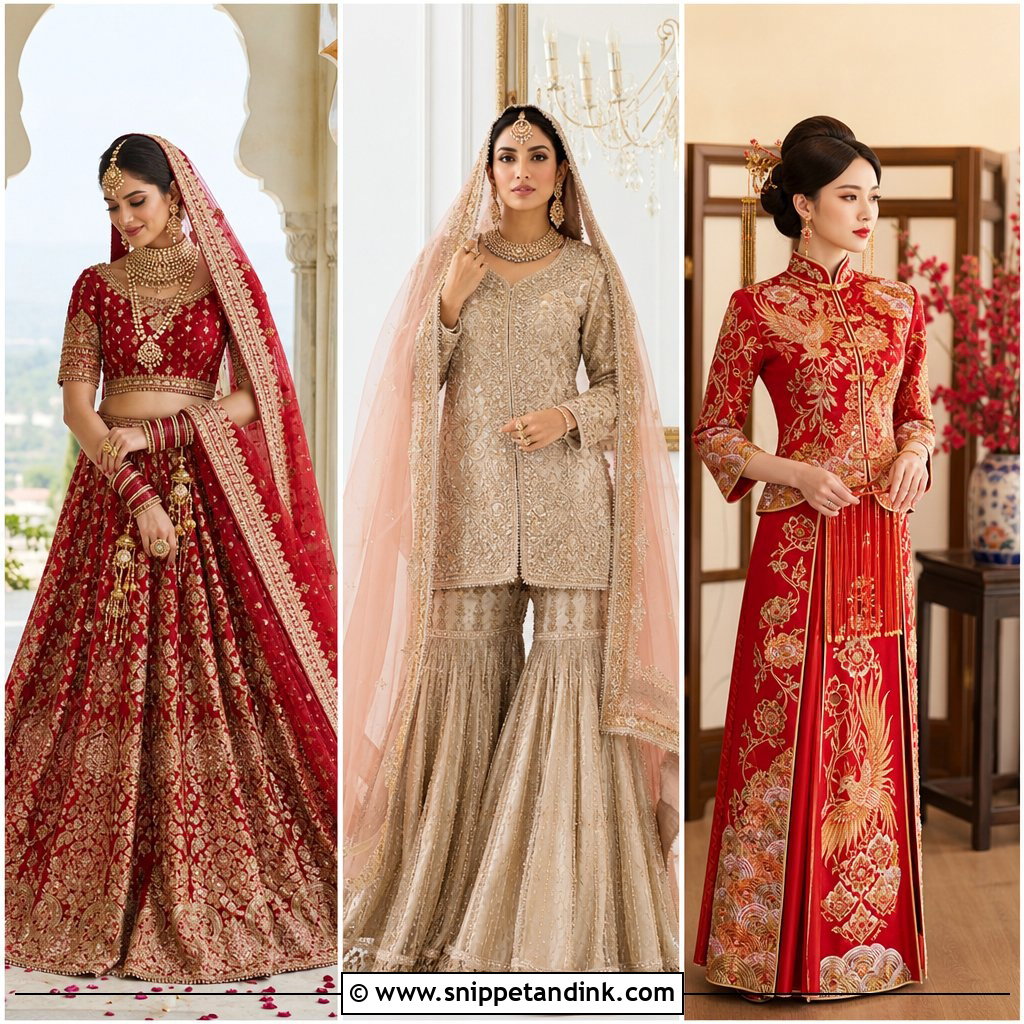
Modest doesn’t have to mean heavy. Long sleeves, an opaque bodice and a bateau, jewel or softly squared neckline give full coverage, and an A-line in satin, crepe or chiffon keeps it moving. Lace cuffs, covered buttons or tonal embroidery add detail quietly. Pearl earrings, closed pumps and a chapel veil beneath a smooth low bun complete it, with loose white roses and greenery. If coverage is a religious or family requirement, I check the gown in daylight and under strong indoor lights, because some linings that look opaque in a boutique turn sheer under a photographer’s flash. Then sit, bend and lift your arms to confirm nothing shifts.
Bustles, and Who Learns to Tie Yours
Almost every floor-length gown with a train needs a bustle for the reception, and the type changes how the back looks. An over bustle hooks the train up onto the outside of the skirt and suits satin and heavier gowns. A French or under bustle tucks it underneath with ribbons, which creates soft folds and works well with tulle and lace. A ballroom bustle lifts the train so the skirt looks even all round, close to a gown without a train.
I always ask the seamstress to color-code or number the ribbons, then have the person doing it on the day attend the final fitting and practice twice. Choose someone calm, not the busiest bridesmaid. Bustling usually happens right after the ceremony or before the first dance, and on a gown with many tie points it can take several minutes, so build that into the timeline.
If the hem picks up grass, wine or makeup
Don’t rub. Blot liquid with a clean white cloth and plain water, let mud dry completely before brushing it off, and leave anything oily for the cleaner. Most bridal cleaners prefer the dress brought in within a few weeks of the wedding, before marks set.
A Gown That Still Moves at the Last Song
A floor-length gown should match how you want to move through the day as much as how it looks standing still. Start with the silhouette you feel most at ease in, then narrow by fabric, neckline, support, venue and season, and keep accessories in proportion to the detail on the dress. Book alterations early, and at the last fitting, walk, sit, turn and dance in the finished gown. If it passes those tests, it will carry you from the aisle to the last song.
You'll Like These Ideas:







Leave a Reply