
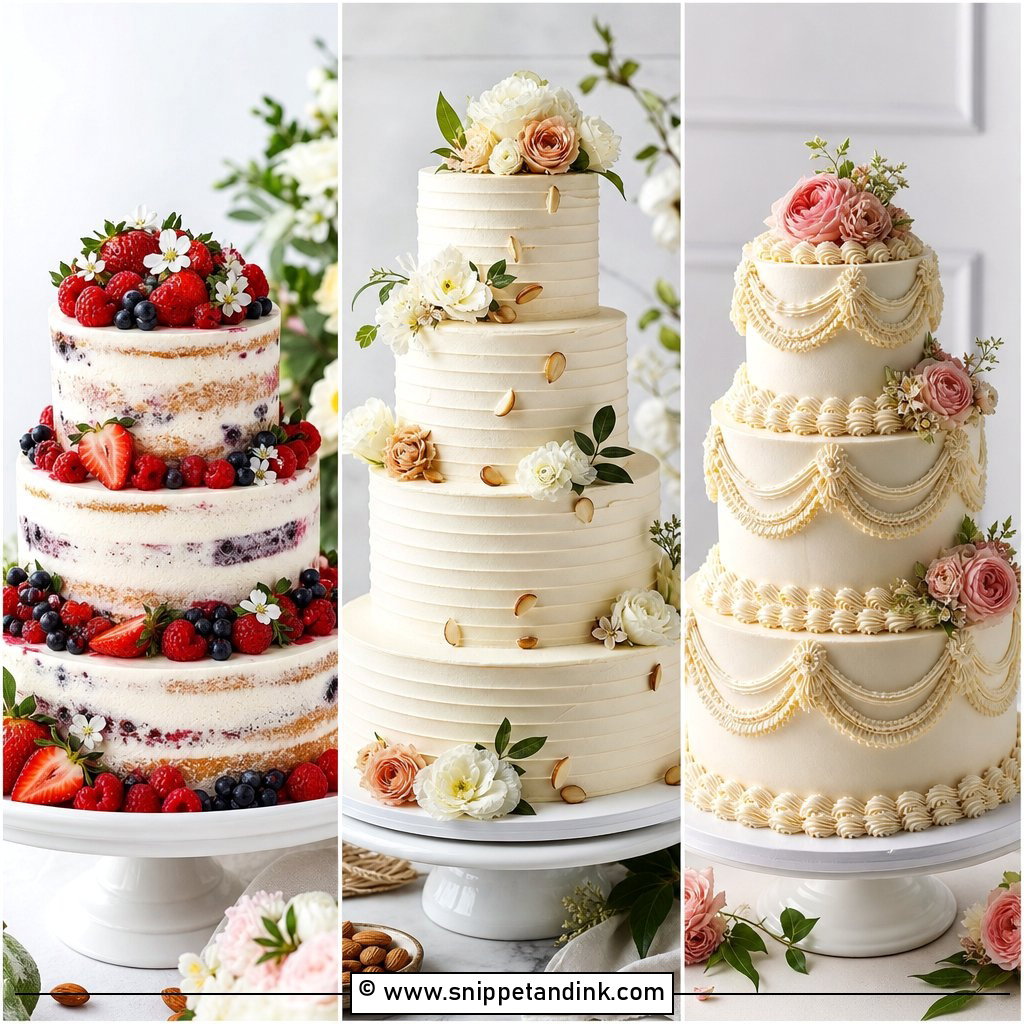
When I style a cake table, I’m building a small scene, and the cake is the lead character, not the whole set. The stand, the linen, the backdrop and whatever sits beside it decide whether the photos look like a reception or like a dessert left on a buffet. Right now couples are drawn to texture, sculptural shapes, fruit, vintage piping and clean tiers styled almost like editorial pieces. The images that people save and revisit tend to share three things: a whole cake in frame, a setting you can read, and one clear mood. These twenty looks are a starting point for your baker brief, your dessert table plan or your photographer’s shot list.
I Build a Cake Table From the Back Wall Forward
Couples usually plan the cake and forget the space behind it, which is what the camera sees most of. My order is always the same: backdrop, table, linen, stand, cake, then small props last.
Backdrop and table
A plain wall, a draped fabric panel, a greenery screen or a window to one side all work. A busy pattern, a bar or a doorway directly behind the cake does not. Round tables suit a cake that guests can walk around; a rectangular table against a wall gives the cake a clear front and room for a few props.
Linen and stand
- Floor-length linen hides table legs and storage boxes underneath. Steam it on site, since folded creases show in every photo.
- Choose a stand a little wider than the bottom tier so the cake doesn’t look perched on a plate.
- Height should suit the room: a tall stand lifts a small cake into view, while a tall cake on a tall stand can look precarious and is harder to cut.
- Keep props odd in number and low. Two or three items beside the cake, never in front of it.
1. White Tiered Wedding Cake
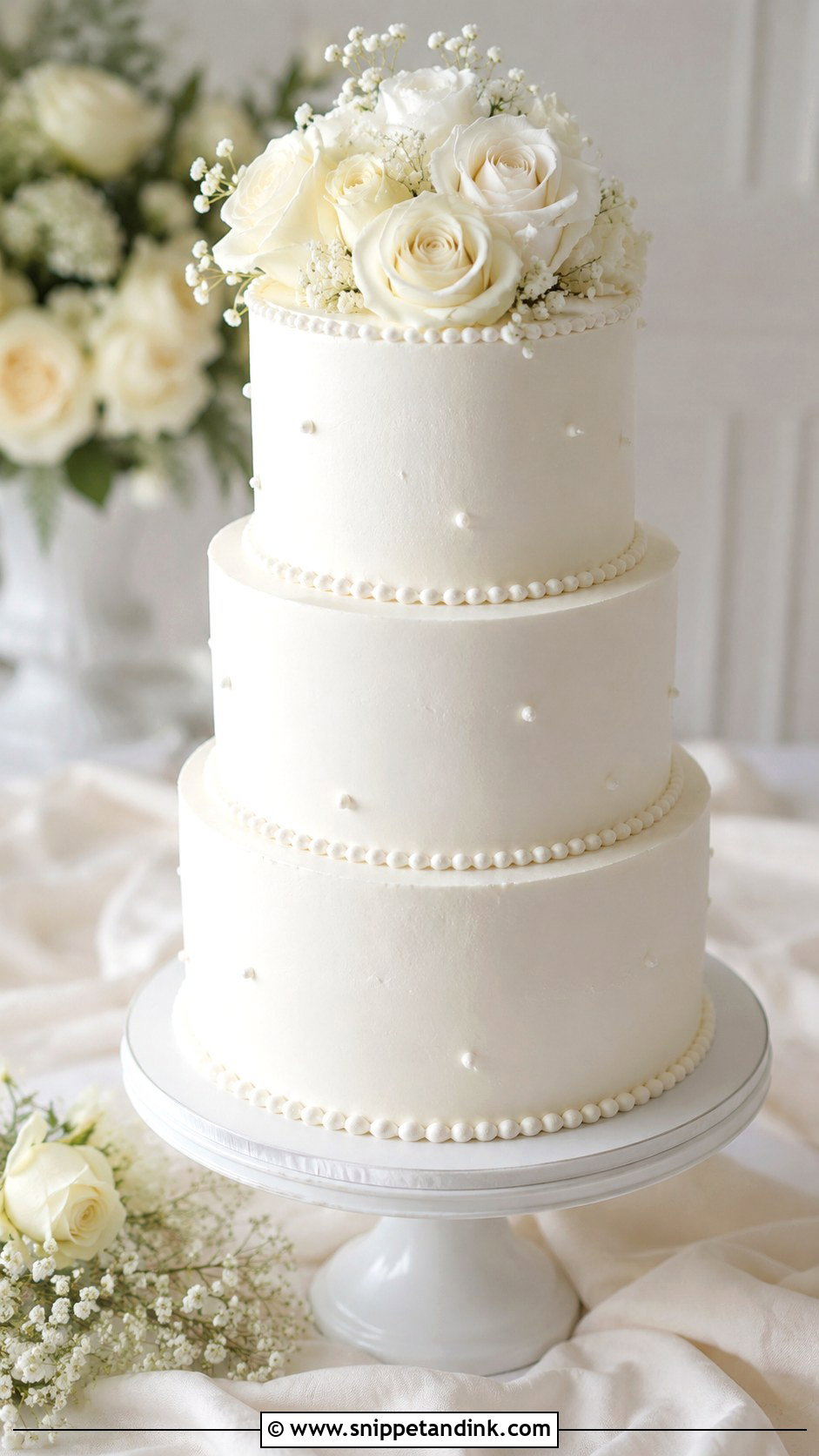
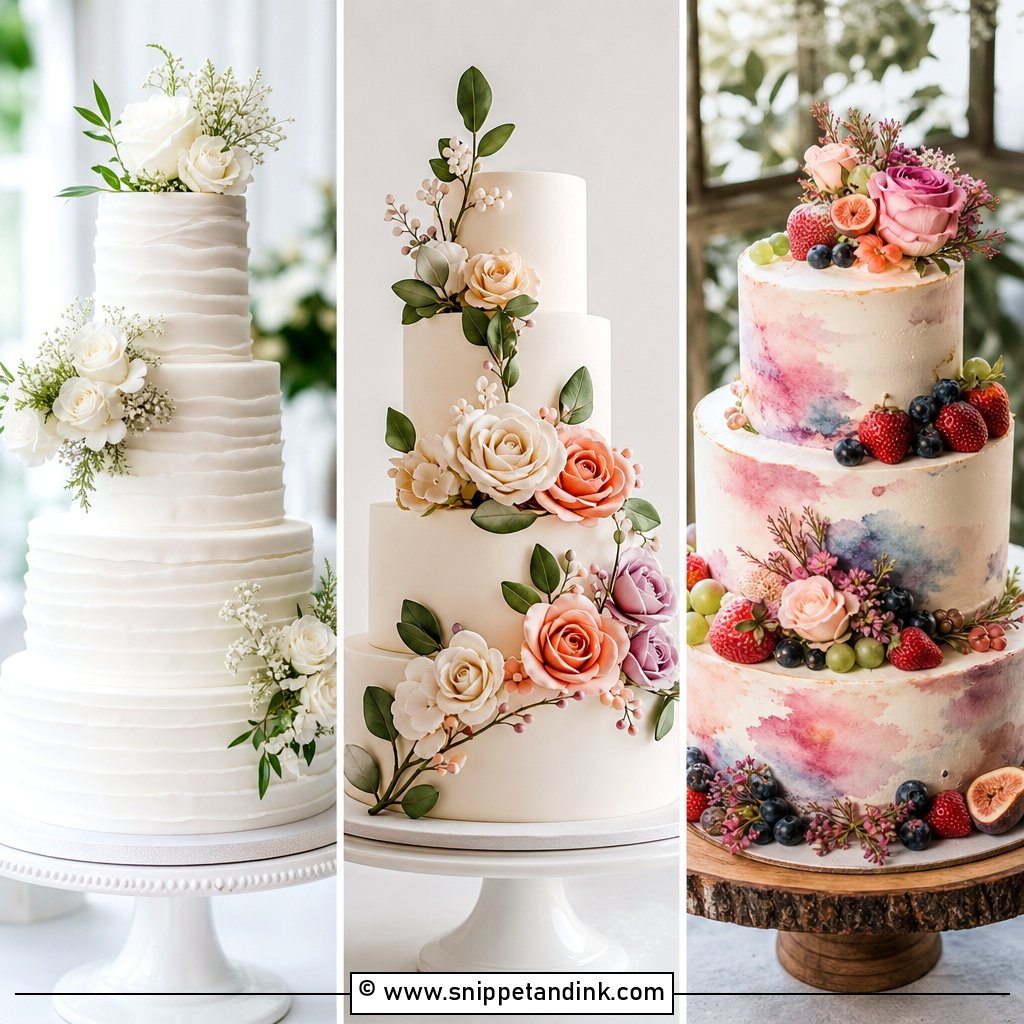
Plain white tiers are the easiest cake to style and the easiest to under-style. Because the cake itself is quiet, the stand and backdrop carry more of the look, so I’d choose a simple pedestal stand a little wider than the bottom tier and press the linen properly; creases show against white. One soft detail on the cake, such as pearl piping or a satin ribbon, is enough. Ask your photographer for a straight-on frame and one close detail.
2. Vintage Lambeth Wedding Cake
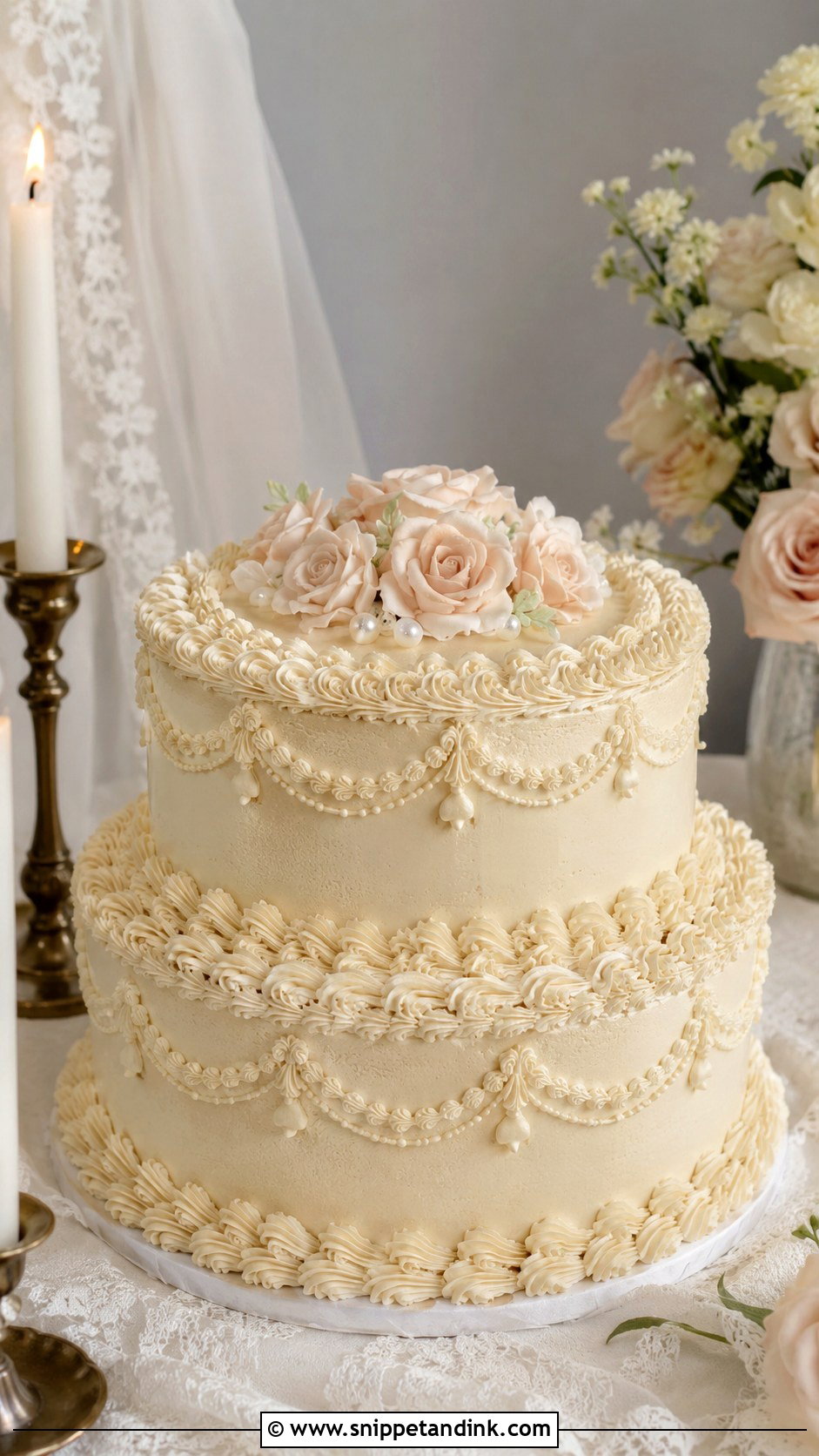
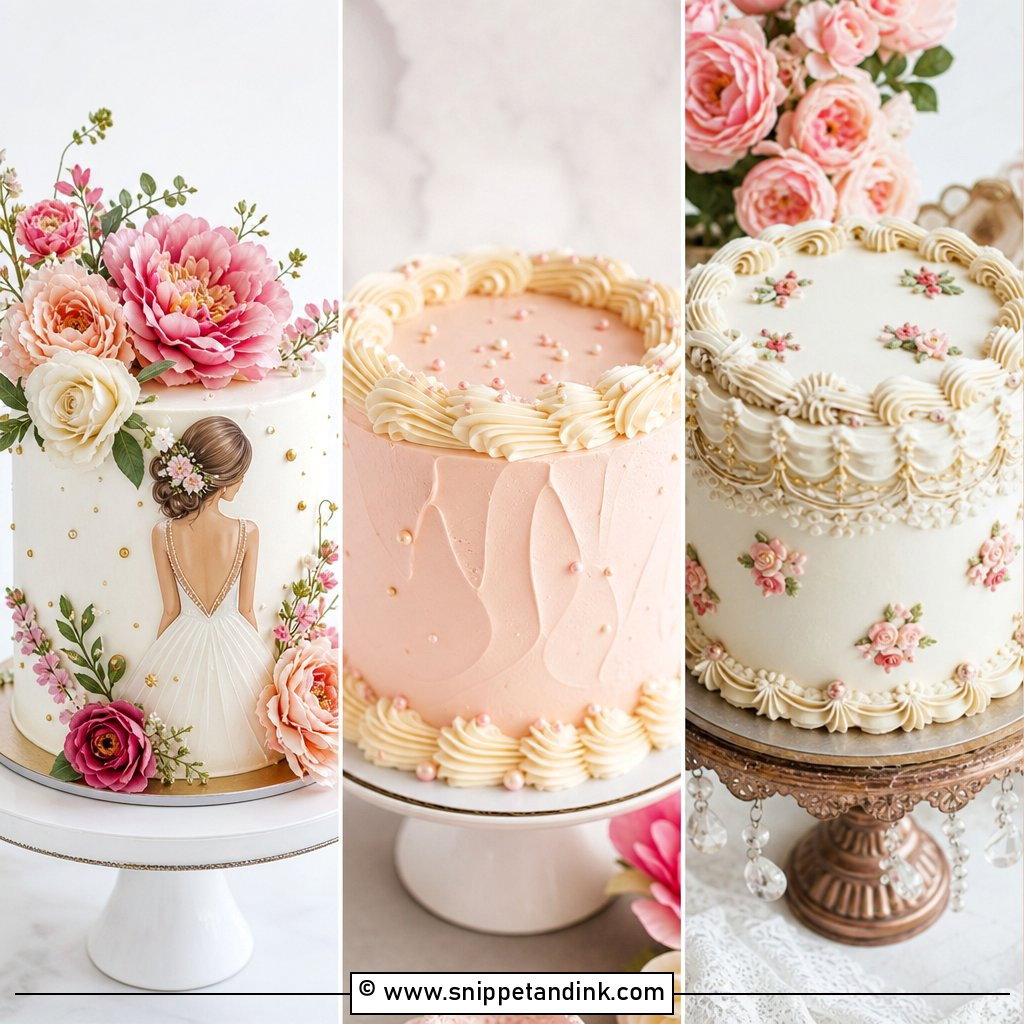
Lambeth piping already does a lot of talking, so I go quiet everywhere else. Lace linen, two or three taper candles set back from the cake, a few loose stems. Ivory, blush, butter yellow or pale blue keep all that layered piping looking fresh rather than heavy. A two or three tier version gives the scallops and shells enough room. Turn the cake slightly when photographing so the depth of the piping catches the light.
3. Pearl Wedding Cake
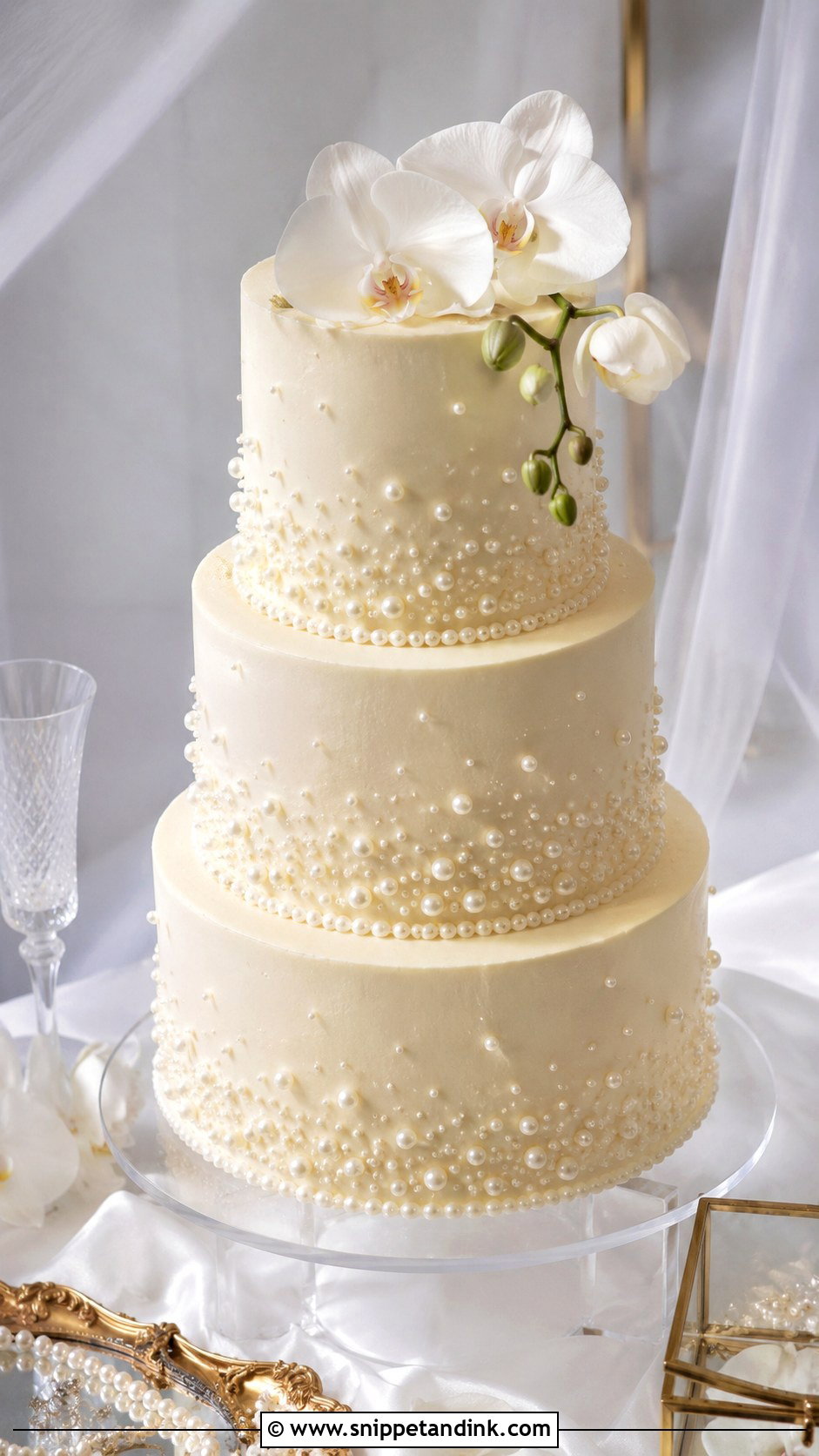
Pearls are a close-up detail, and that changes how I build the table. Guests and cameras need to get near, so I keep tall arrangements away from the front edge and use a clear or white pedestal that doesn’t compete. Tiny sugar pearls scattered over smooth buttercream, set in neat rows or outlining each tier all suit an ivory or warm white base. Pair them with light piping if you want more dimension. Plan at least one close-up in the shot list.
4. Floral Wedding Cake
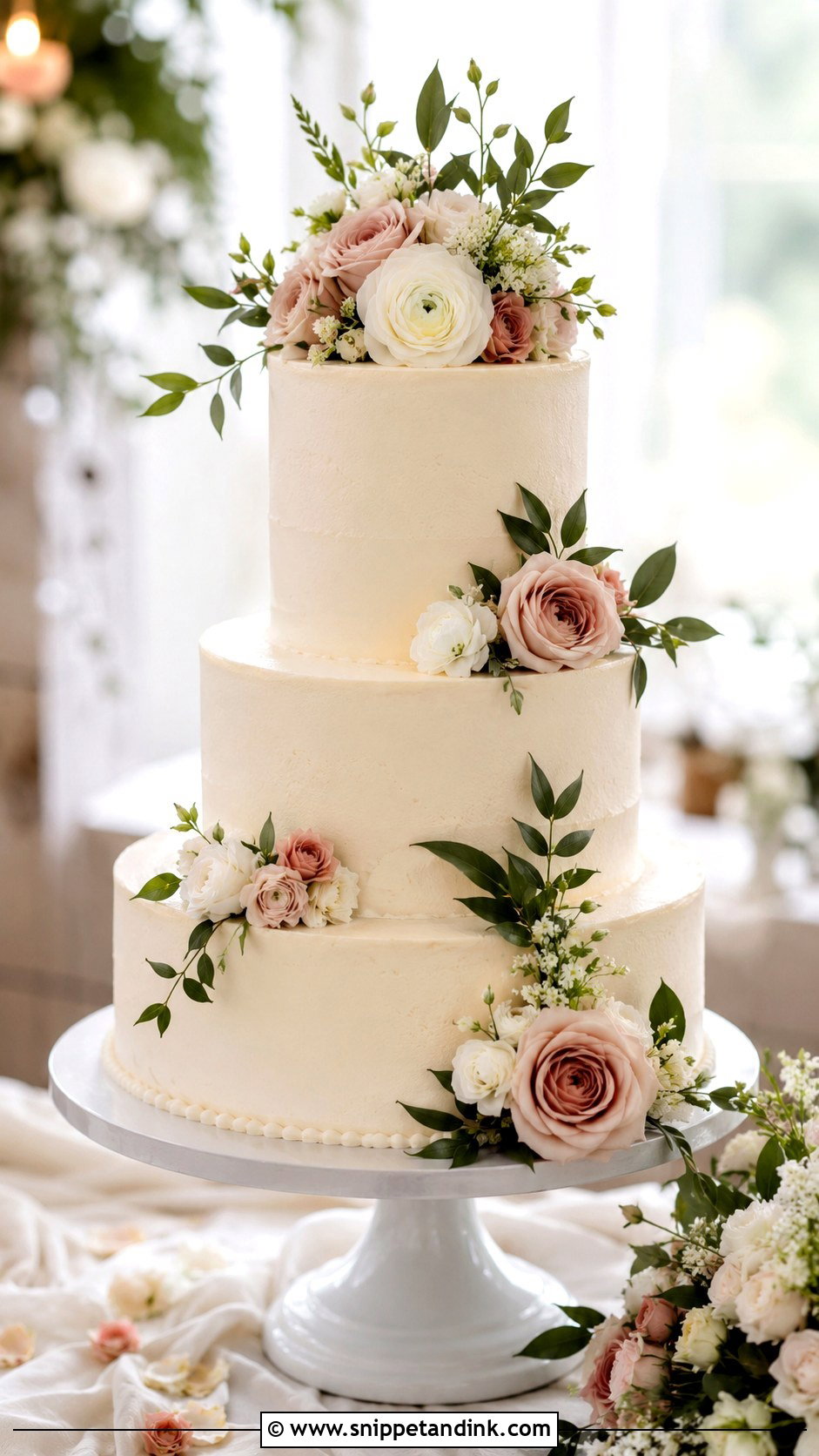
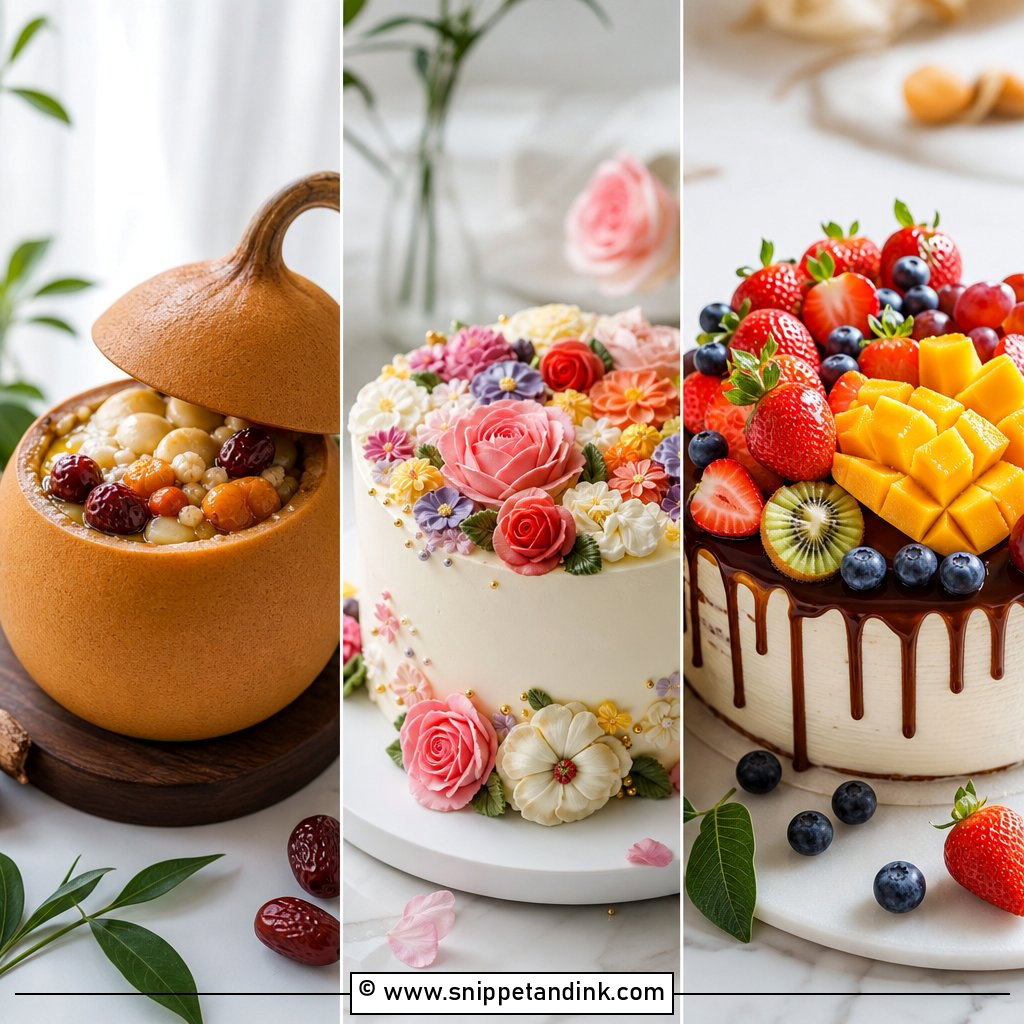
This is the cake I tie most directly to the bouquet. If the florist and baker work from the same flower list, I can repeat the cake blooms in a low arrangement on the table and the whole scene connects. Fresh, pressed or sugar flowers can all do it. Keep the frosting simple underneath: white, ivory or pale blush with roses, ranunculus or orchids. A few loose blooms around the stand base soften the edges. Do check with your baker that any fresh stems going on the cake are safe for food contact.
5. Garden Wedding Cake
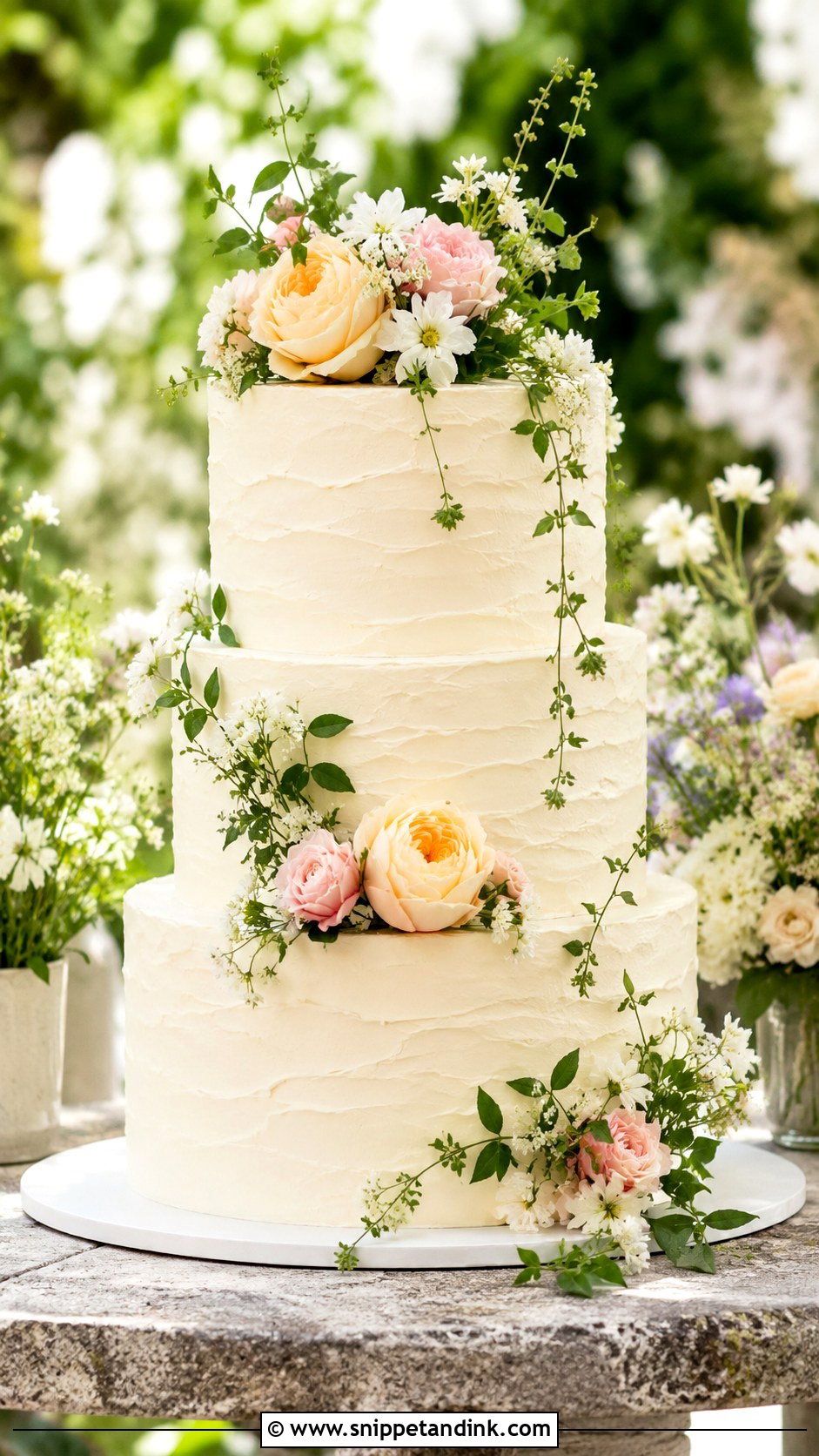
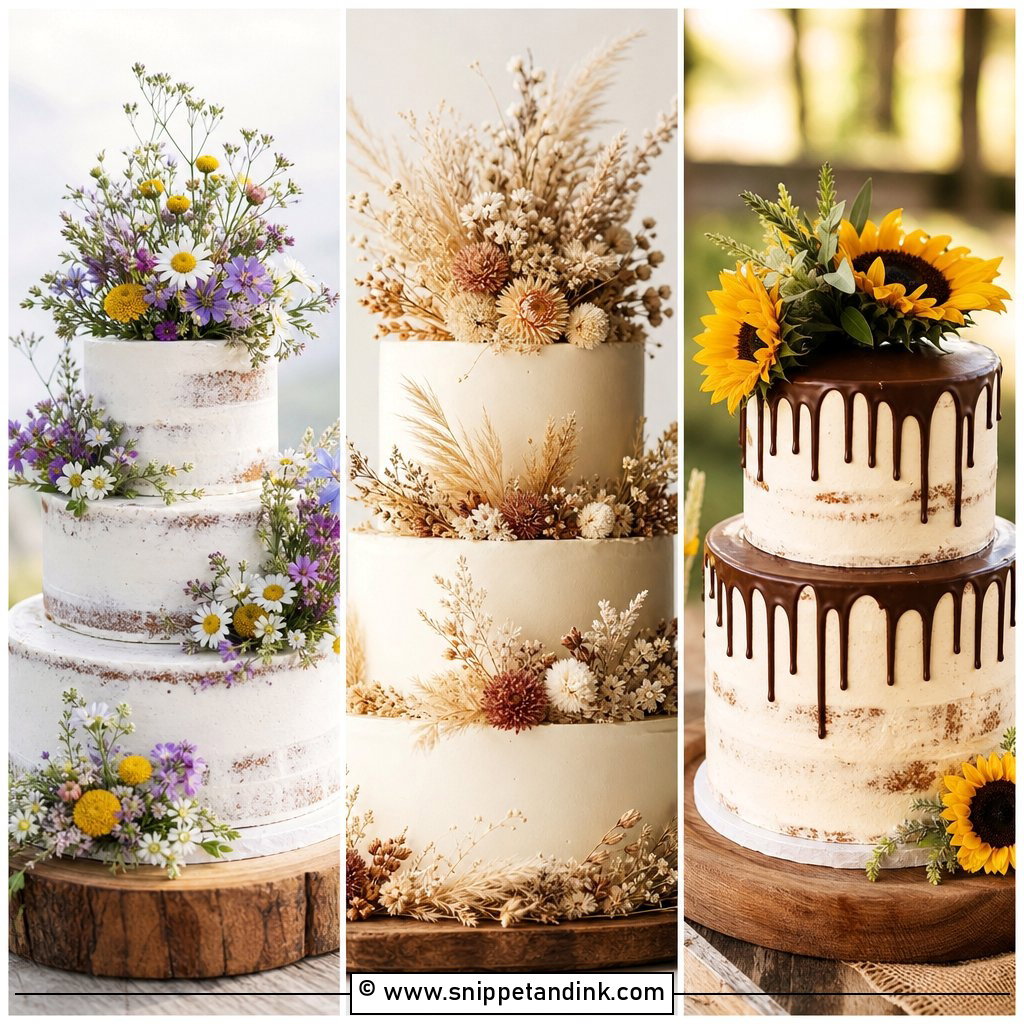
The mistake I see with garden cakes is overloading them, every tier stuffed with greenery until the cake disappears. A garden look needs gaps. Textured buttercream with uneven, airy floral placement on two or three tiers, a few herbs or trailing vines, and plenty of bare frosting between. Outdoors or in a greenhouse, I’d set the table near natural light but out of direct sun. Soft linen, low flowers and a simple stand make it look like it belongs to the garden rather than delivered to it.
6. Minimalist Wedding Cake
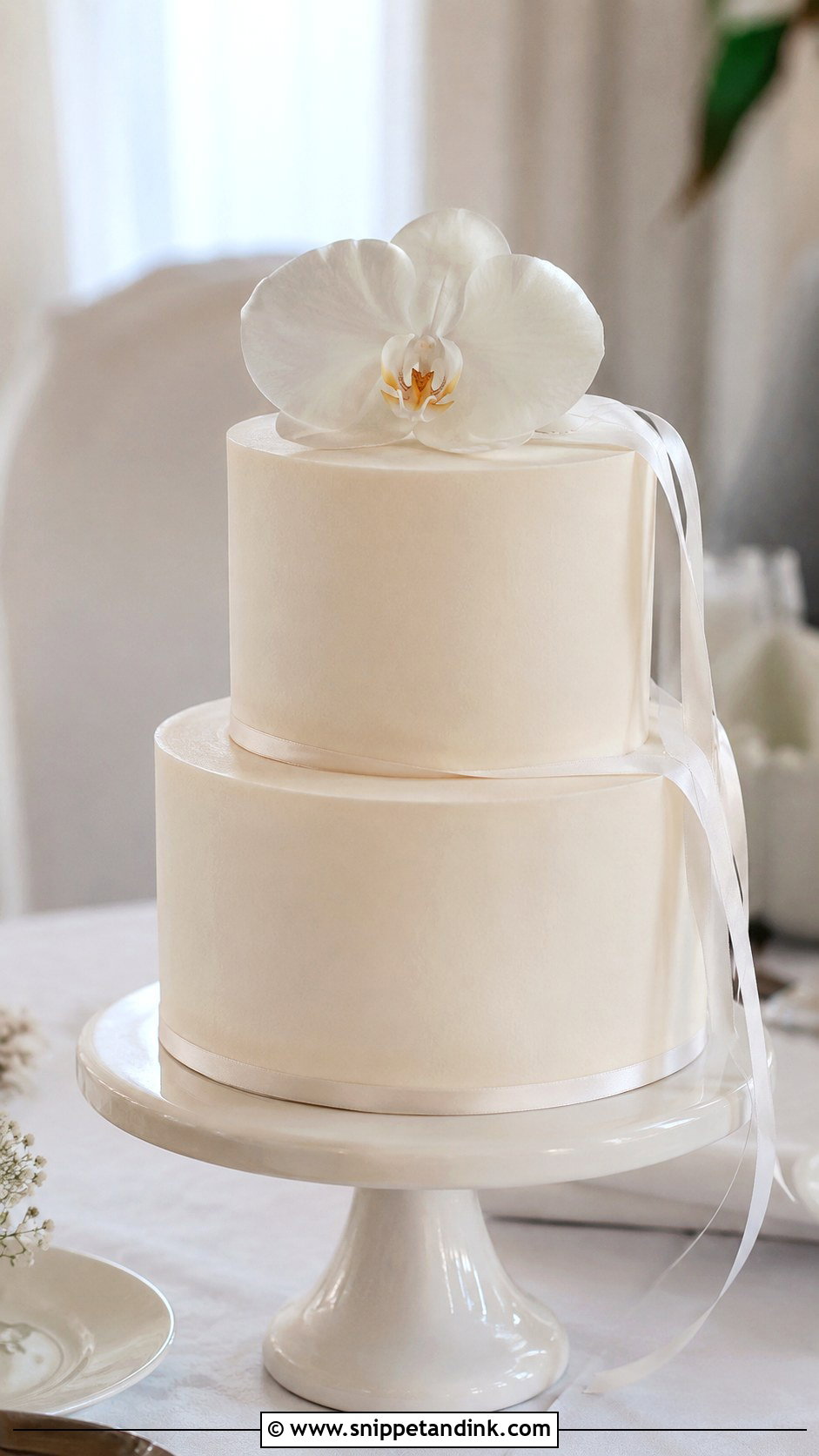
A minimalist wedding cake asks the most of the table around it. There’s no decoration to distract from a cluttered background, so I clear everything that isn’t intentional and use a plain backdrop, often just a smooth wall or a pressed panel of fabric. The cake needs a strong outline and a neat finish in ivory, white or soft beige, with one detail like a thin ribbon or a single orchid. Proportion matters: a slim stand under a tall cake looks elegant, a chunky one looks clumsy.
7. Black And White Wedding Cake
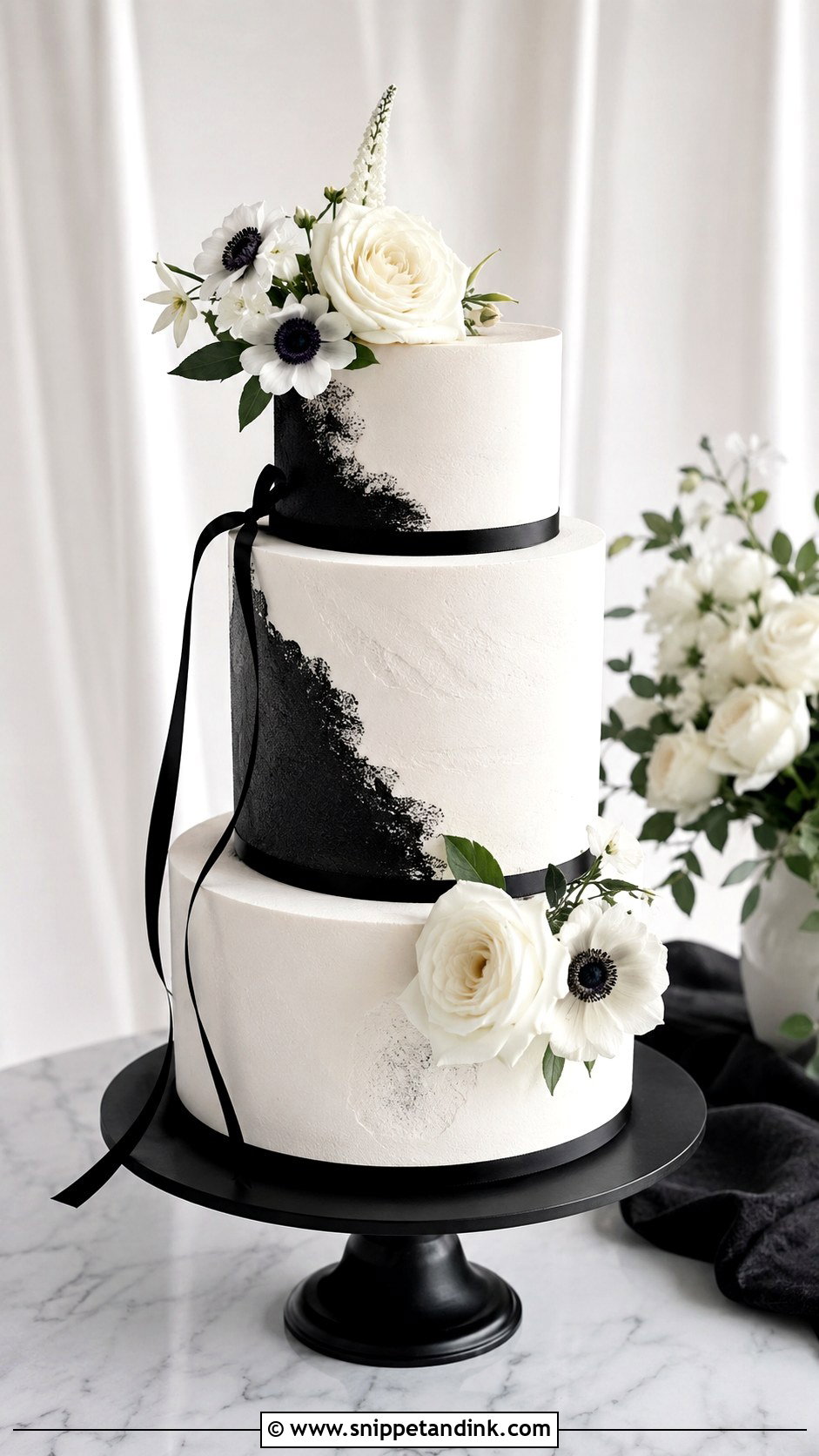
Black and white is the one cake where I’ll bring black onto the table too, a dark stand or a marble surface, so the cake doesn’t look like it wandered in from another wedding. The contrast on the cake can come from black and white wedding cake details like ribbon, piping, painted work or a black lower tier. White roses, anemones or a little greenery soften the edges. Keep the outline clean. It gives a gallery of soft pastel images one sharper, fashion-led moment.
8. Square Wedding Cake
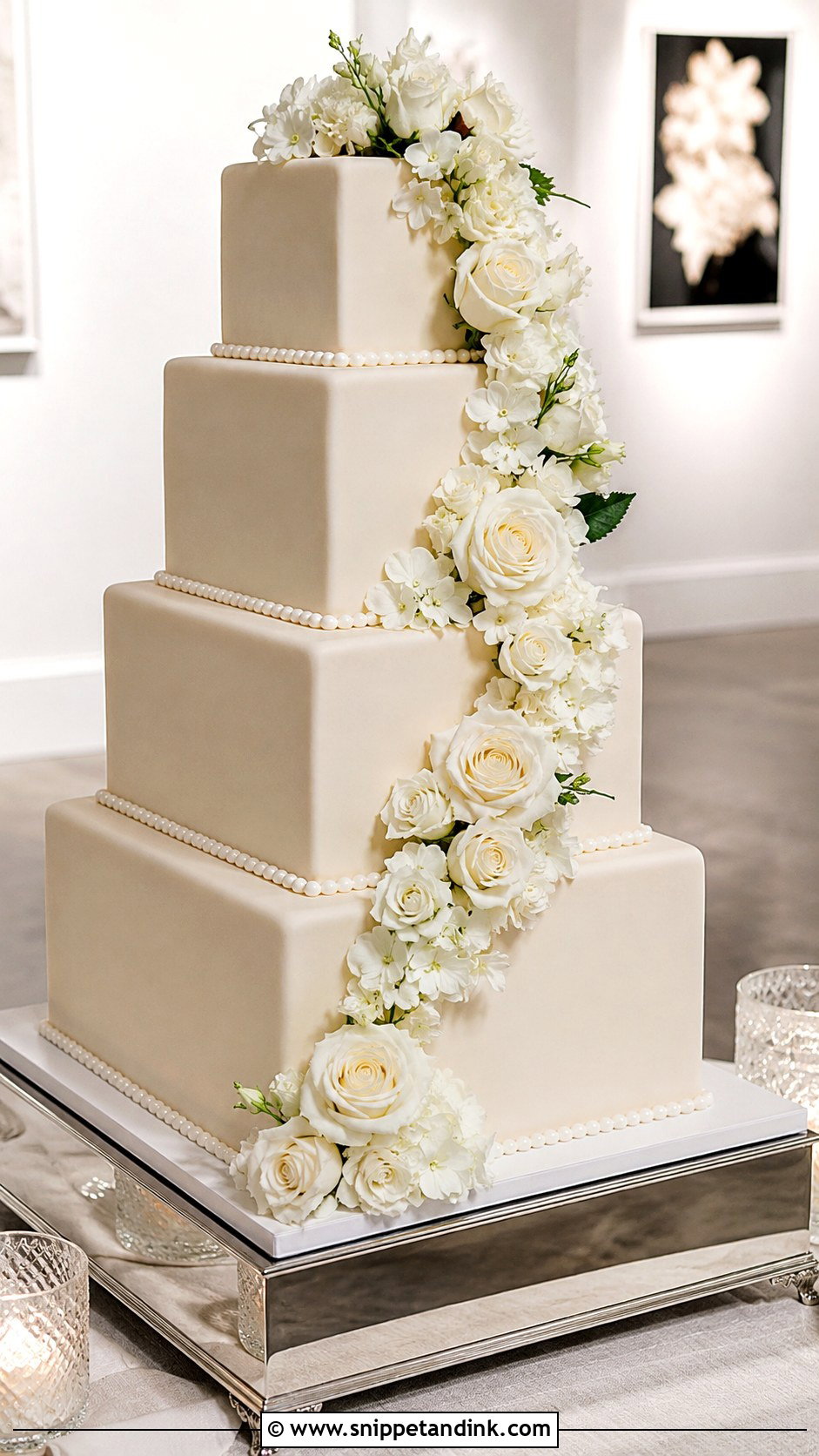
Square tiers read as architecture, so I style them with straight lines: a rectangular table, a low pedestal, maybe a mirrored or polished surface. Round props and frilly linens fight the shape. Sharp corners need a skilled baker, so ask to see their square work. Diagonal flowers or pearl borders can break up the lines if it feels too stark. It suits city venues and galleries, and it photographs well from both the front and the side.
9. Textured Buttercream Wedding Cake
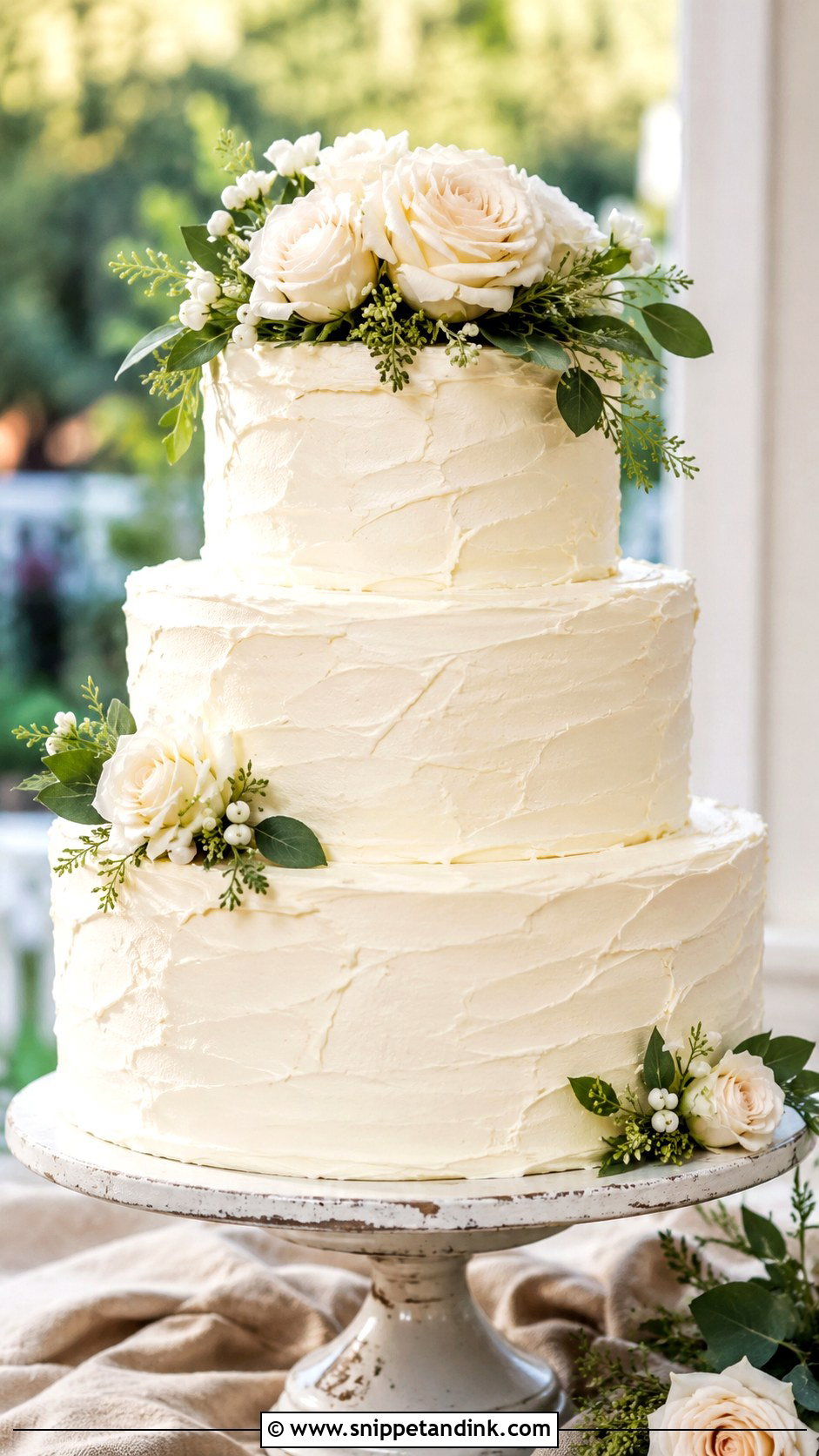
Texture is forgiving. Palette knife strokes, vertical ridges or gentle waves hide small imperfections that a smooth finish would show, and they catch light in a way that flat frosting never does. That makes textured buttercream a smart choice for a relaxed garden, coastal or barn wedding. Warm ivory looks especially lovely in daylight. Fresh flowers or a little fruit finish it. Make sure the shot list includes a close detail of the ridges.
10. Fruit Wedding Cake
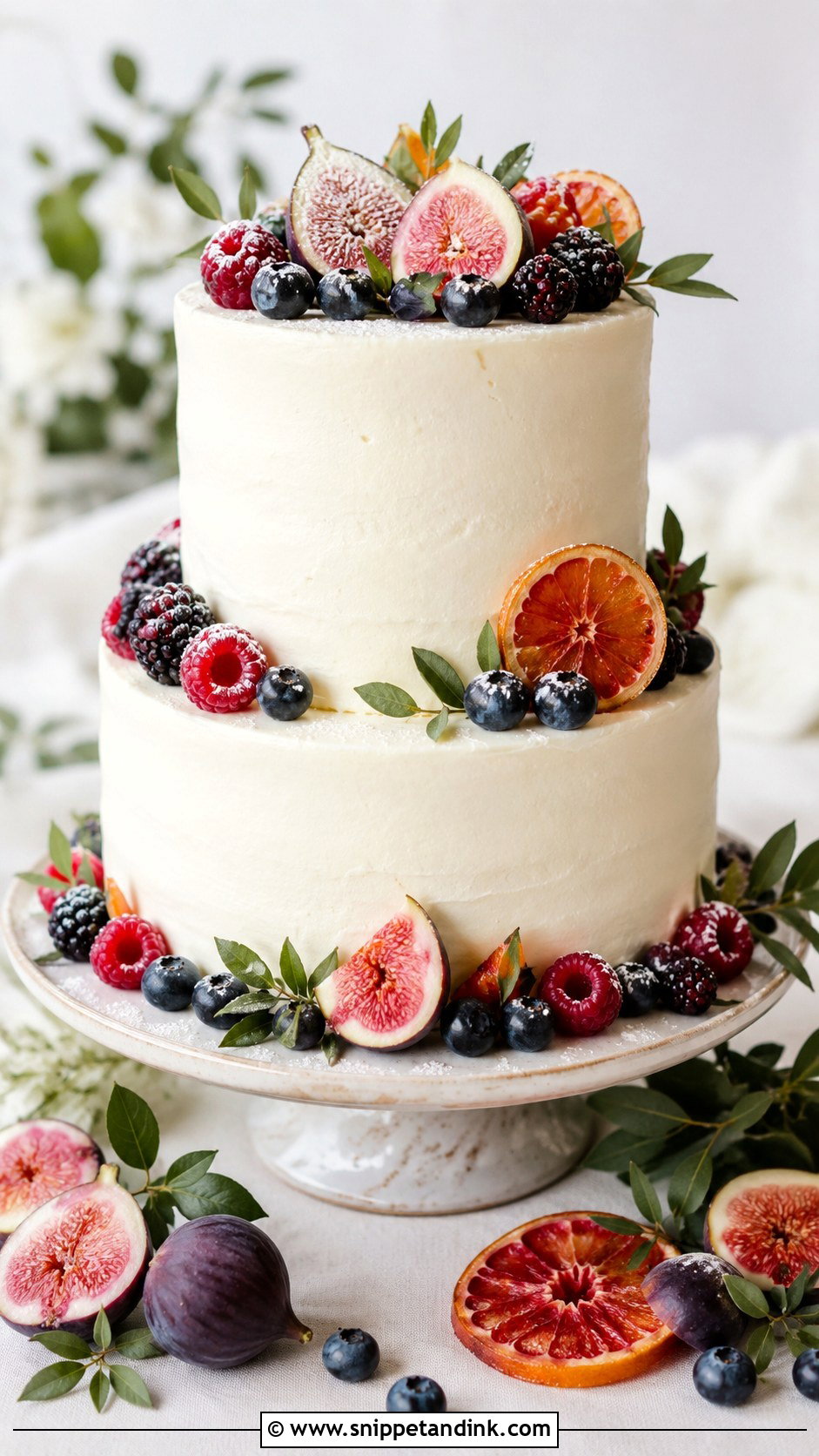
Fruit sets the season instantly: berries for early summer, citrus for brightness, figs for something moodier, pears for autumn. I build the table’s colour story from the fruit outward, picking linen and candle tones that match. A clean buttercream base keeps the fruit as the focus, and a light dusting of powdered sugar adds softness. A few matching pieces at the stand base work well, but I keep the rest of the table tidy. Cut fruit dries out, so style and photograph it early.
11. Pressed Flower Wedding Cake
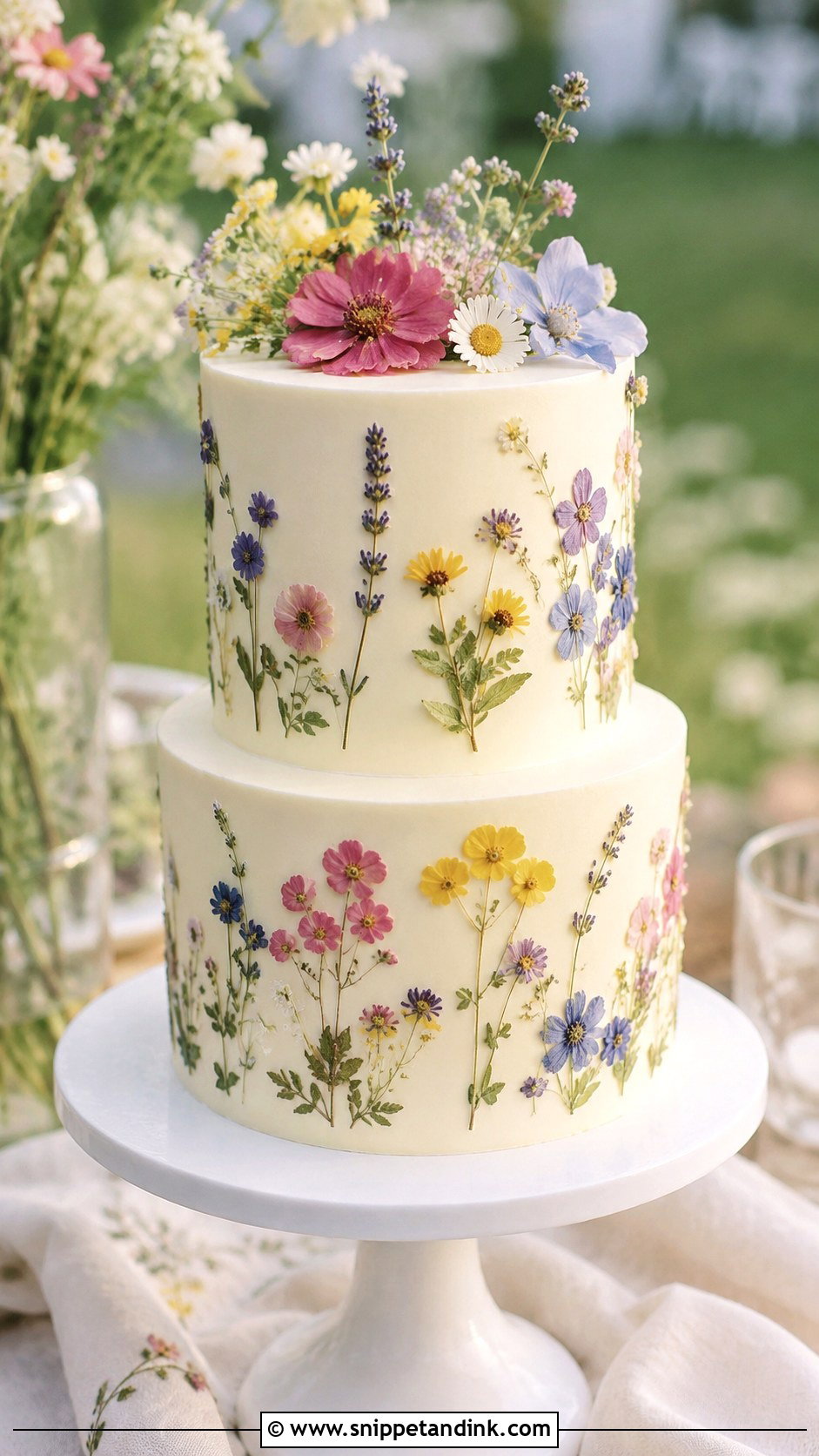
Pressed flowers are flat, so from more than a few steps away they read as a pattern rather than as flowers. That’s not a problem, but it does mean the table should invite people in close. A smooth white or ivory base, soft pink, lavender, yellow or blue petals, or all white for something quieter. Keep the stand simple and the light soft. Cottage and garden receptions suit it naturally.
12. Sculptural Wedding Cake
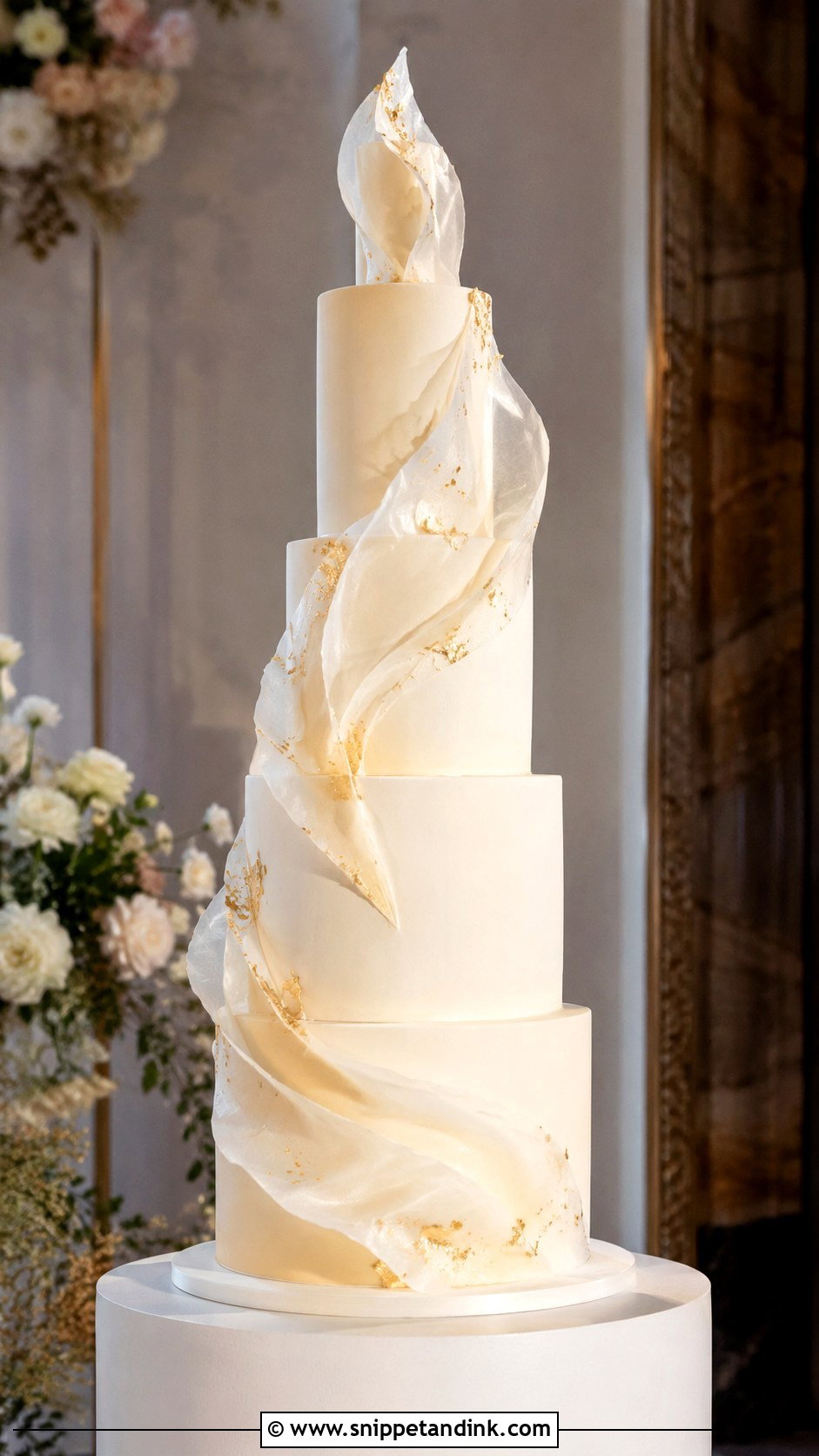
A sculptural cake needs empty space around it the way a sculpture in a gallery does. Folds, curves, ruffles or sugar shapes create their own shadows, and a busy backdrop flattens all of that. I give it a plain wall, a simple plinth-style stand and no competing centrepiece nearby. White, ivory or stone colours keep it refined, with one metallic accent at most. It turns the cake into a true focal point of the room.
13. Ruffle Wedding Cake
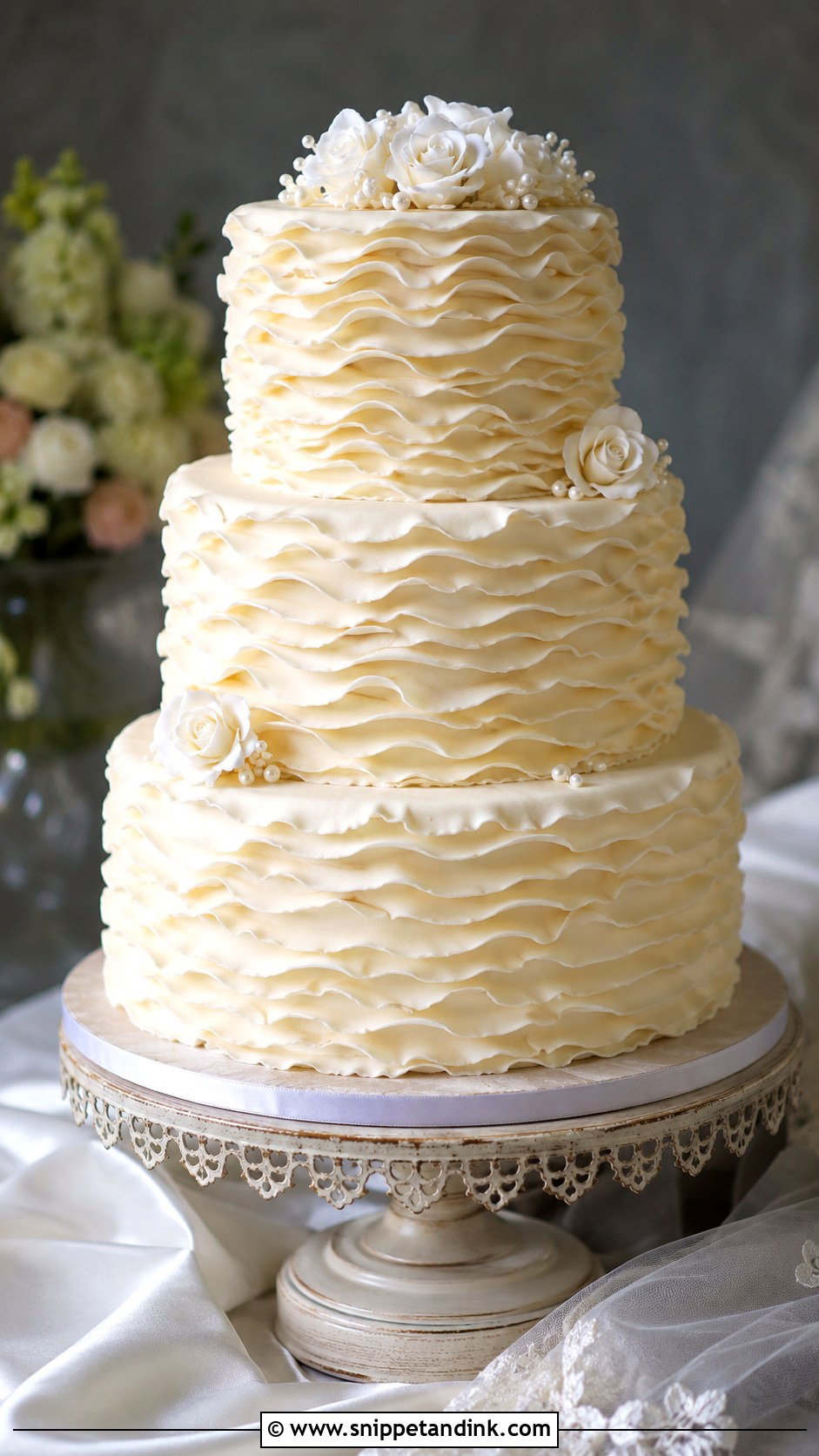
Ruffles echo fabric, so I like to pick up the dress or the veil in the table styling: a soft chiffon runner, a draped backdrop, nothing stiff. Fondant, wafer paper or buttercream ruffles can cover one tier or all of them. White feels classic; blush or champagne warms it up. A few fresh flowers or pearls are plenty. Side light shows the folds best, so I place the table where light comes across it.
14. Bow Wedding Cake
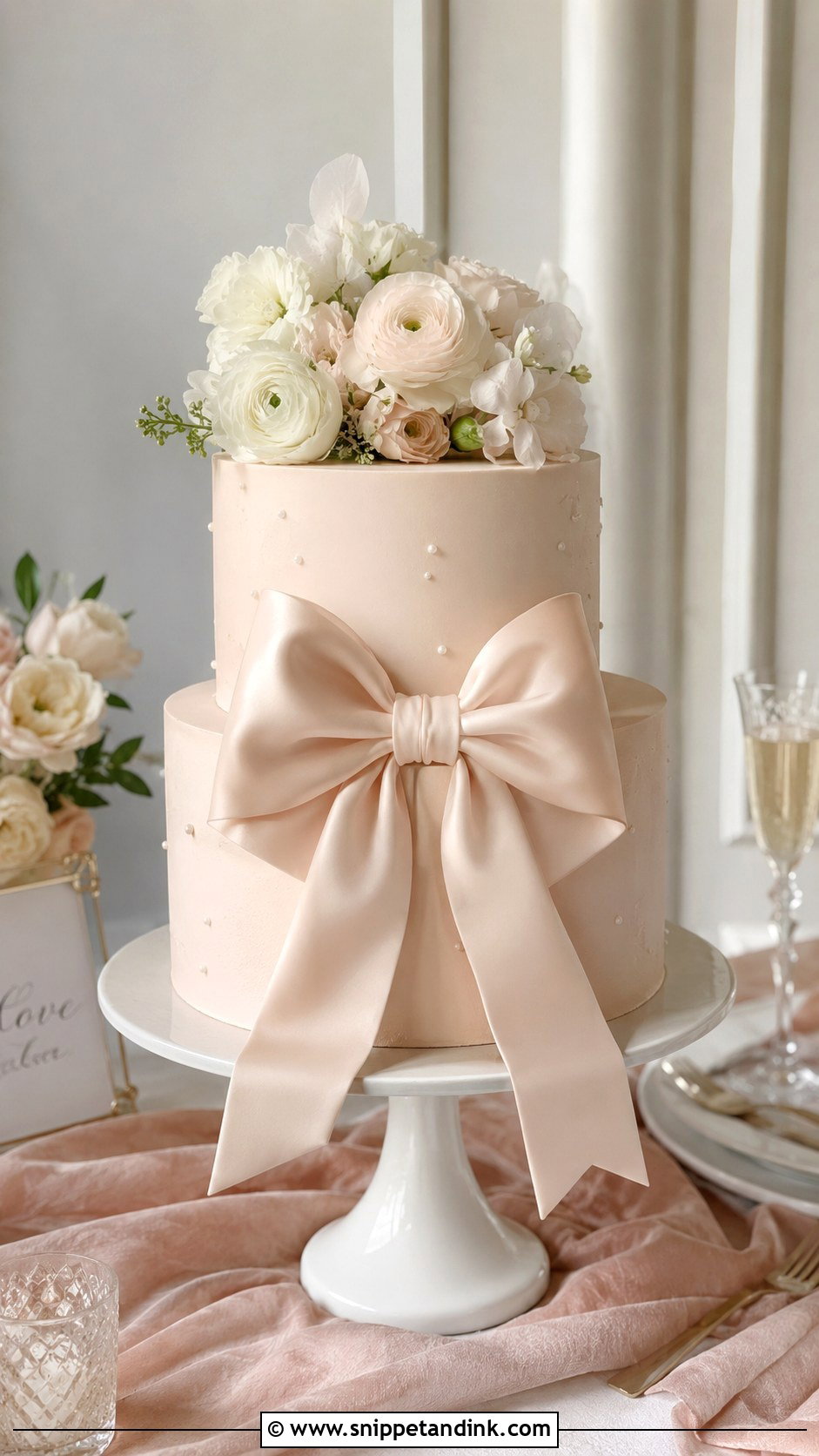
Bows look best when they repeat somewhere else at the reception, on chair backs, on the invitations, on the bouquet ribbon. On its own, a bow can look like an add-on. Satin ribbon, fondant, sugar paste or soft fabric all work; a bow on the top tier feels sweet, a wide band at the base feels classic. White, blush, champagne or pale blue with smooth buttercream, simple flowers and a clean stand.

15. Monogram Wedding Cake
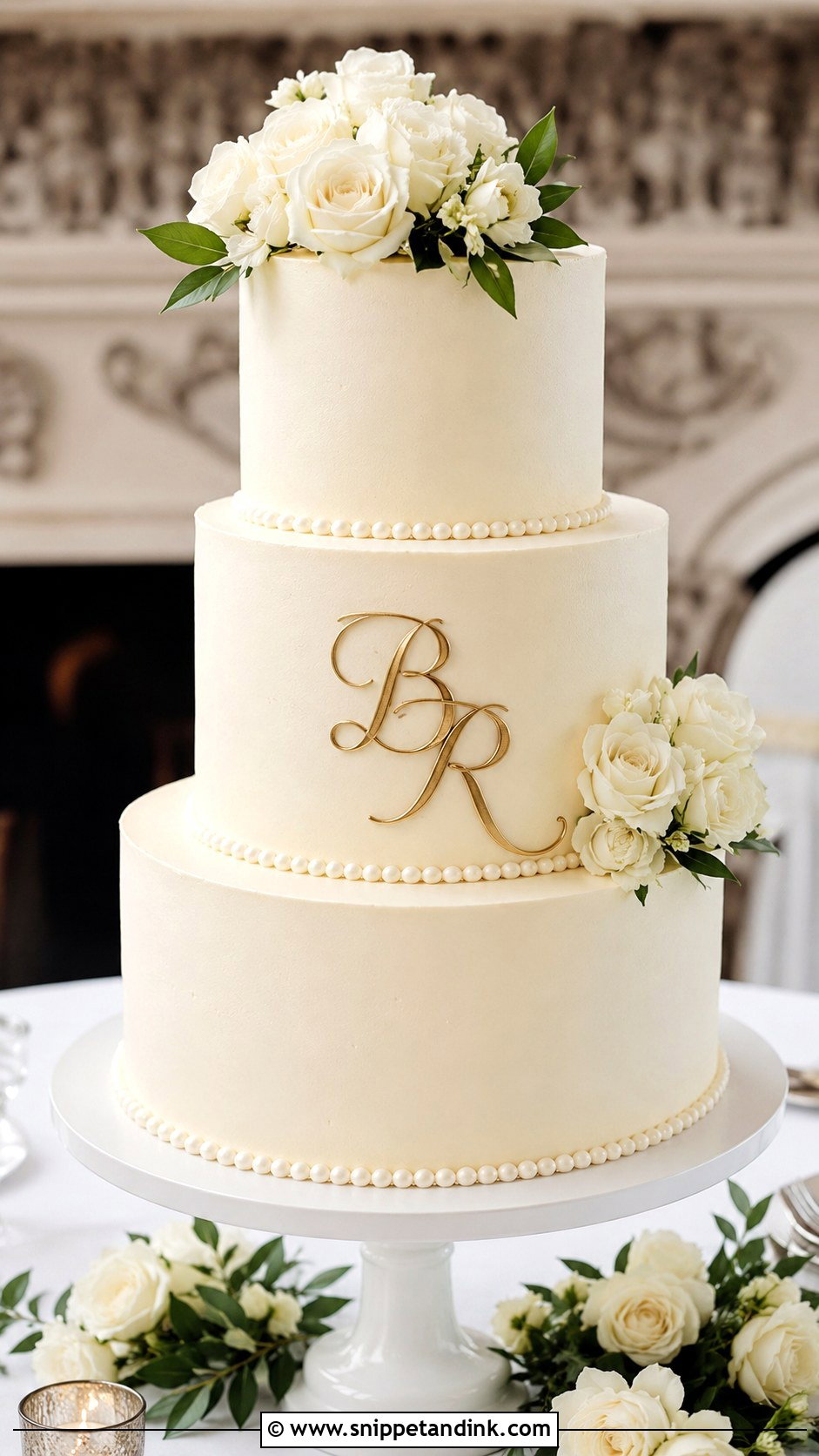
A monogram has a front, so the whole table has to be planned around which way the cake faces. I make sure the couple’s initials face the room and the main camera position, and I keep table decor low in front of them. A small topper, piped detail, embossed fondant or painted accent on the front tier all work. Ivory buttercream, a touch of gold and delicate florals suit formal venues. Keep the rest of the cake calm so the initials don’t feel crowded.
16. Single Tier Wedding Cake
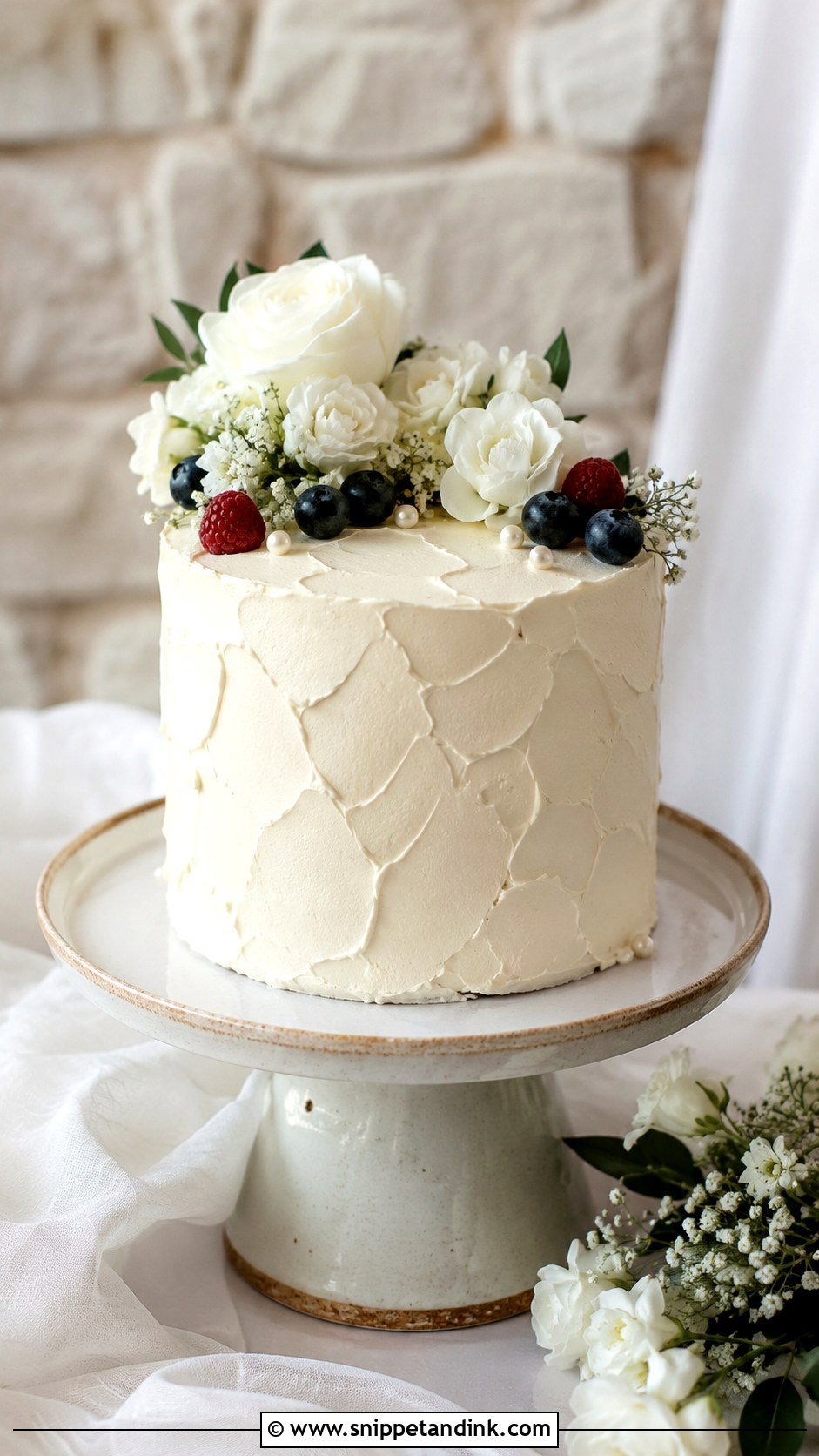
On a big table, a single tier can look lost. Scale is the fix: a smaller table, a taller stand, or a slightly taller tier, which gives more space for decoration and looks more substantial in photos. Textured buttercream, fresh flowers, fruit, pearls or a vintage border can all dress it. Add soft linen and a few matching details nearby. It suits elopements and intimate dinners where the cake is mainly for the cutting.
17. Dessert Table Wedding Cake
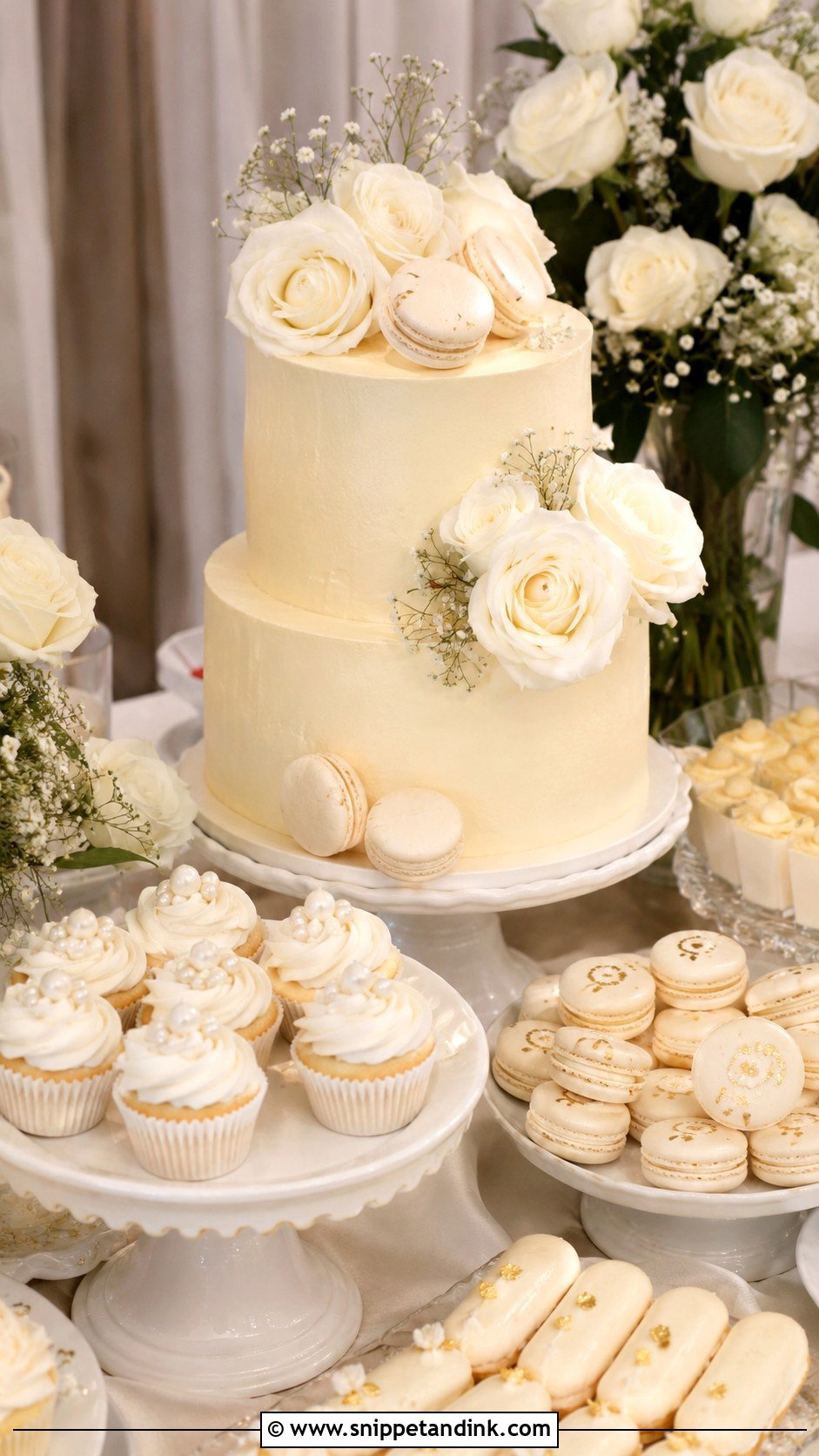
A dessert table wedding cake is a whole composition, and the rule I follow is that the cake stays the tallest piece. Cupcakes, macarons, mini cakes and cookies sit on stands at lower, varied heights so the eye moves across the table and back up to the cake. Repeat two or three colours across all the desserts so it looks planned. Wide shots matter most here, because they show the full layout. Florals, linens and candles finish it, but keep candles away from anything with buttercream.
18. Cake Meadow Wedding Cake
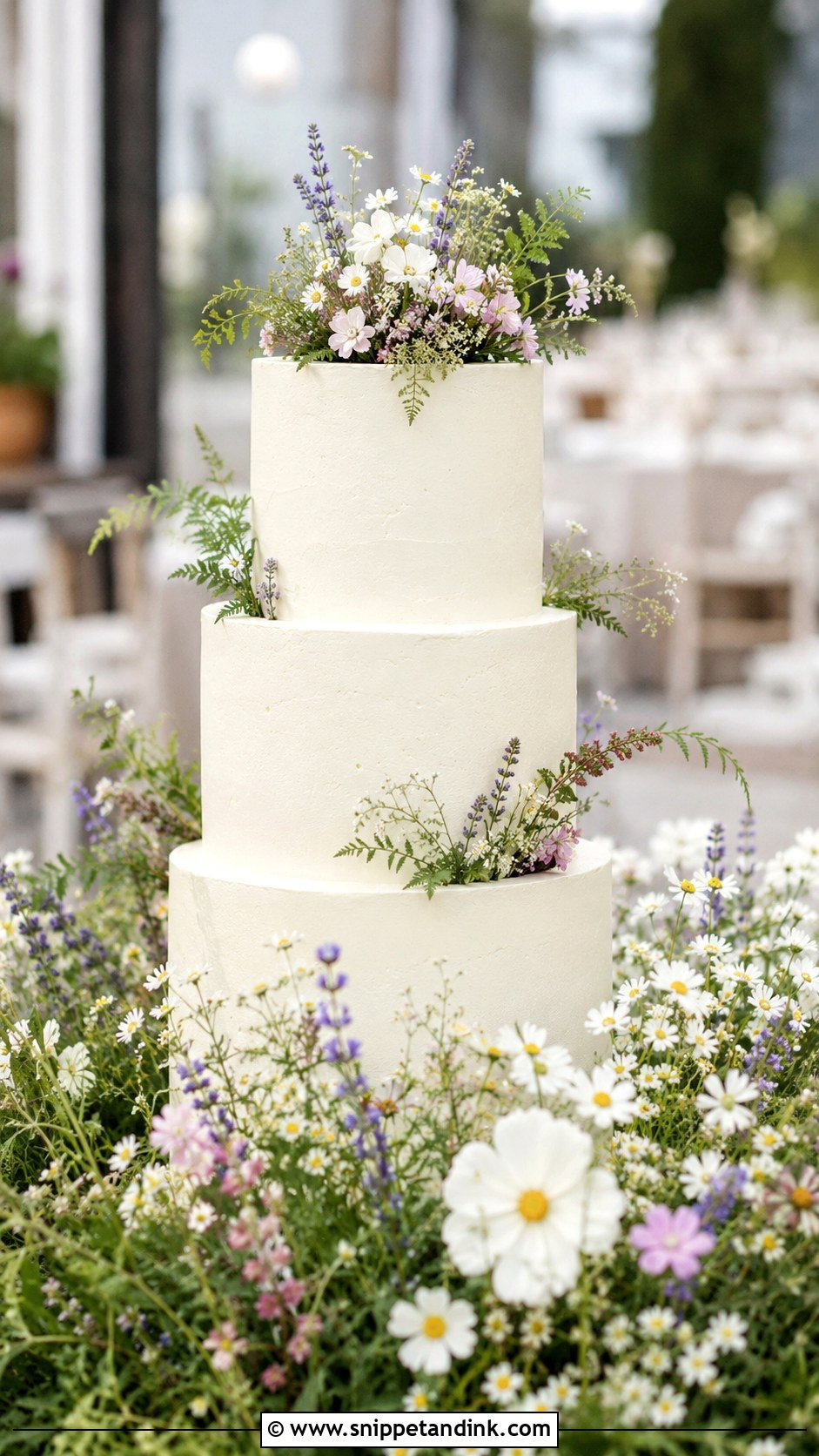
In a cake meadow, the flowers grow around the base of the cake rather than on it, so the cake looks like it’s sitting in a field. It’s one of my favourite styling ideas because the cake itself can stay simple, smooth ivory or soft texture, and the flowers never touch the frosting. Low arrangements built in water so they last the evening, flowers repeated from the aisle or centrepieces, and a stand tall enough that the cake sits clearly above them. Spring, summer and outdoor weddings suit it best.
19. Metallic Wedding Cake
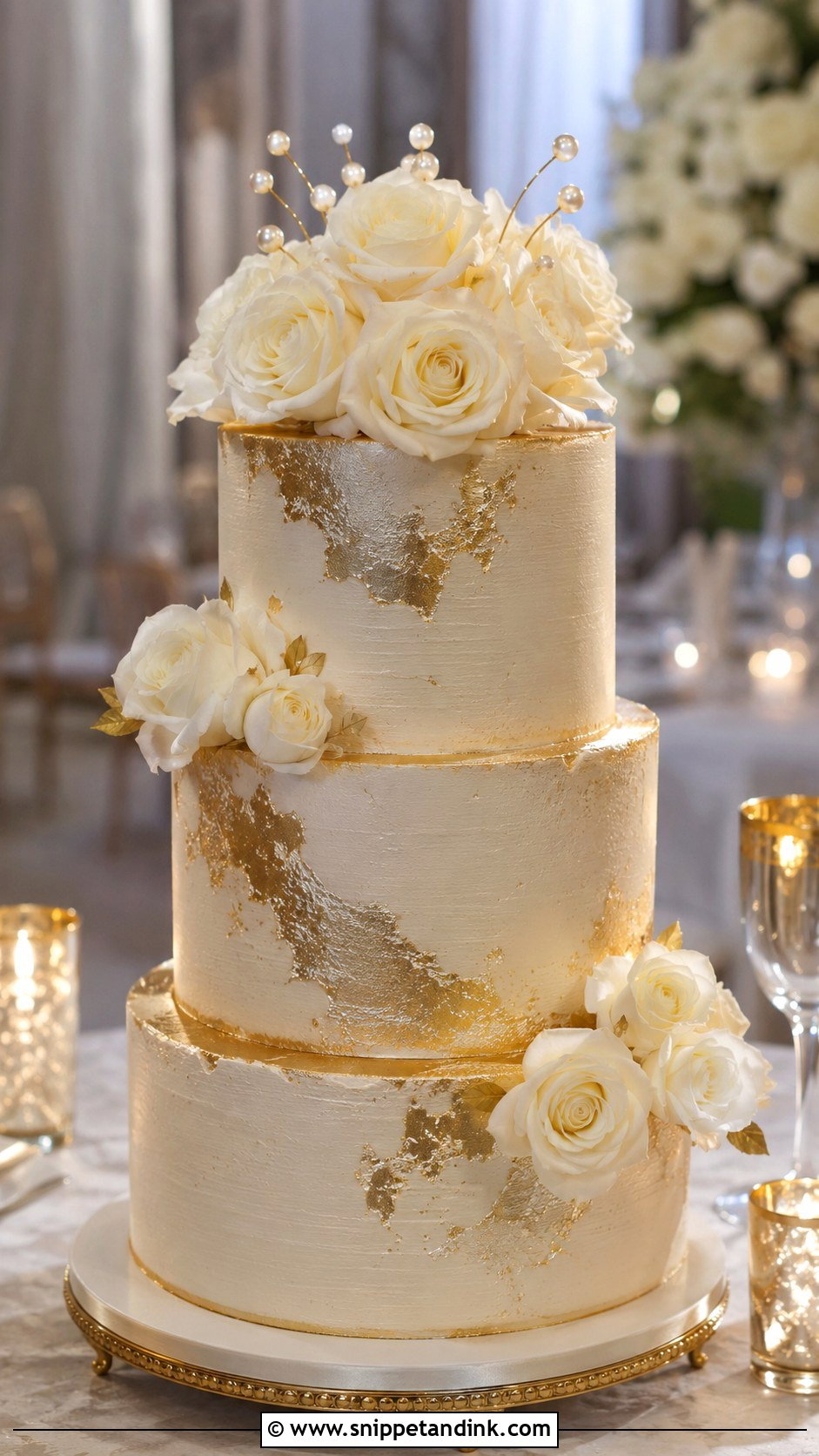
Metallic finishes reflect whatever is near them, which includes coloured linens, candles and uplighting. I keep the area around a metallic cake fairly neutral so the shine shows gold or silver, not a borrowed colour. One tier, one edge or one textured section is enough. Ivory frosting, white flowers or soft greenery balance it. Bright, gentle light gives soft highlights; very hard light can make metallic surfaces look patchy. It suits formal and evening receptions.
20. Watercolor Wedding Cake
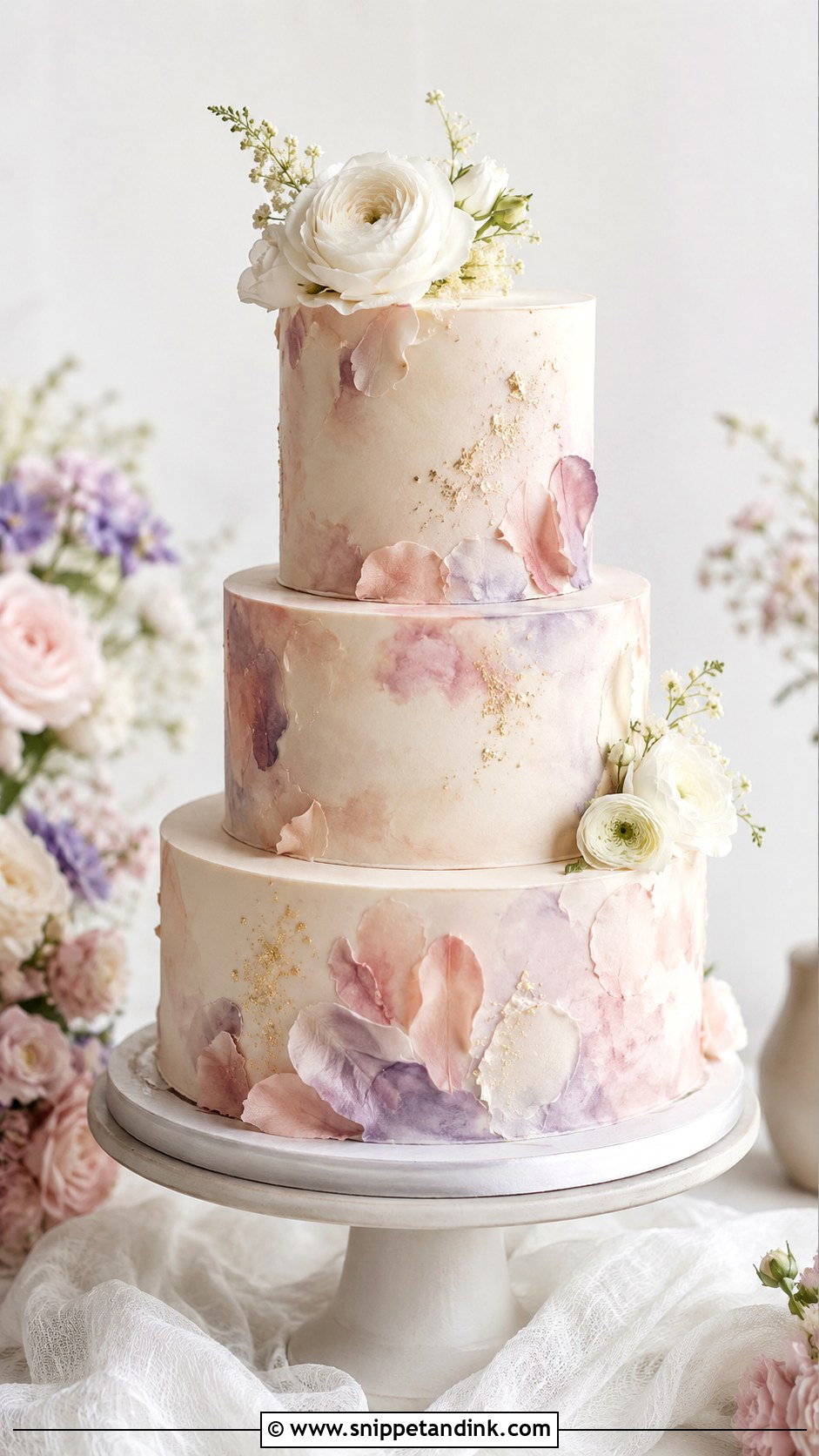
A watercolor wedding cake carries its own colour, so I pull the table palette from the painted washes rather than the other way around. Blush, blue, lavender or peach on smooth buttercream or fondant, with a few sugar petals or metallic flecks if you like. Keep linens pale and plain or the painting gets lost. A slightly angled photo shows the colour moving around the tiers.
Styled Shoots, Dummy Tiers and a Display That Must Last Five Hours
A styled photoshoot and a real reception ask different things of a cake. In a shoot, the cake only needs to look right for an hour. At a wedding, it may stand on display from the end of setup until well after dinner, in a room filling with people and warmth.
That’s why many of the tall, elaborate cakes you see in inspiration photos include dummy tiers: foam shapes iced to match the real ones. They add height without adding servings, they don’t soften in a warm room, and they’re often how styled shoots are done. If you love a five-tier look for fewer guests, ask your baker about one or two dummy tiers and a kitchen cake for serving.
For the real day, a few things keep the display looking as good at the cutting as it did at setup. Fresh flowers around the base need a water source or they’ll droop by evening. Candles should sit a safe distance from frosting, since their heat softens buttercream nearby. And the table is best placed away from heaters, kitchen doors and direct afternoon sun, all of which warm a cake faster than the room temperature suggests.
Let the Cake Lead and the Table Follow
Every cake on this list works best when the setting supports it instead of competing with it. White tiers want a pressed linen and a calm backdrop; Lambeth piping wants quiet; fruit, flowers, pearls, ruffles, bows and metallic finishes each set a mood the table can echo. Think about your venue, flowers, linens and dress before you finalise the cake, then plan the table around it. A well-styled cake looks good from across the room and even better up close, and it ends up as one of the images you keep.
You'll Like These Ideas:






Leave a Reply