
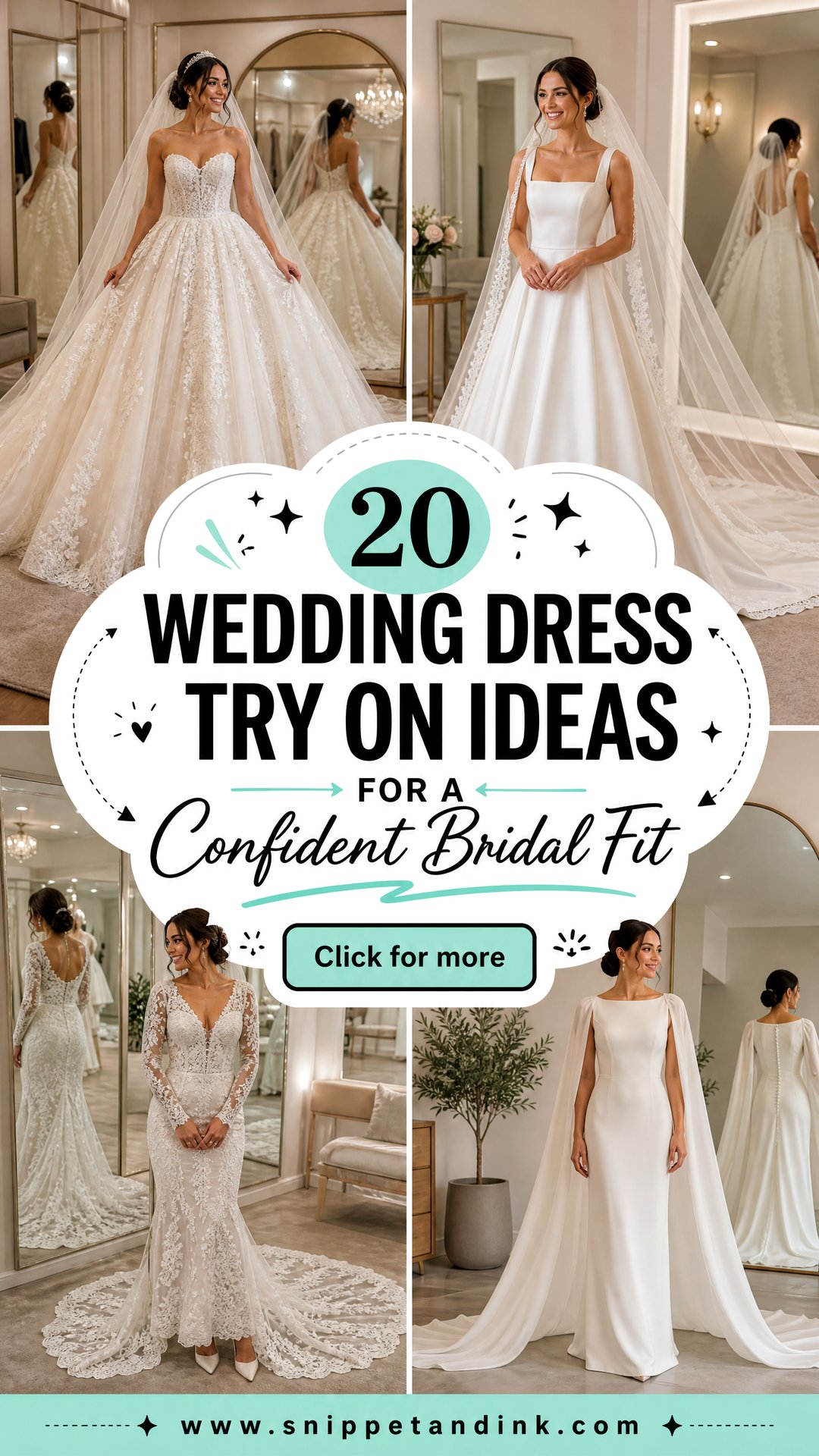
The brides who leave a fitting room happiest are the ones who treat it as an experiment. Try shapes you’d never pin, move around in them, and judge each one from the back and side as well as the front. Walk, sit, lift your arms. Bring shoes close to your wedding heel height, plain nude underwear and a hair tie, and keep accessories off until a dress earns them; then add a veil, jewellery or a removable layer. Dresses behave very differently on a body than on a hanger, so I always pull at least one wildcard. The twenty try-ons below are the lineup I’d build for an appointment, with what to check in each.
Setting Up the Appointment So You Can Actually Decide
Most bridal appointments last somewhere between an hour and ninety minutes, and in that time you can realistically try eight to ten gowns before they all start to blur. I’d plan your lineup with that limit in mind.
- Bring two or three people whose taste you trust. A big group means a lot of opinions and very little looking.
- Wear smooth nude underwear and bring a strapless bra if you own one. Shapewear can wait until you know the silhouette.
- Expect samples in a limited range of sizes. The consultant will clip larger samples or leave smaller ones open at the back. Judge the shape, not the fit.
- Ask before you film. Some salons limit photos of designer samples.
- Eat beforehand and skip heavy fake tan or self-tan on the day, which can mark ivory samples.
Timing matters too. Many gowns are made to order and can take several months to arrive, with alterations after that, so most salons recommend shopping many months before the wedding. If your date is close, ask straight away which designers can deliver in time or which samples are for sale.
1. A-Line Wedding Dress With Veil
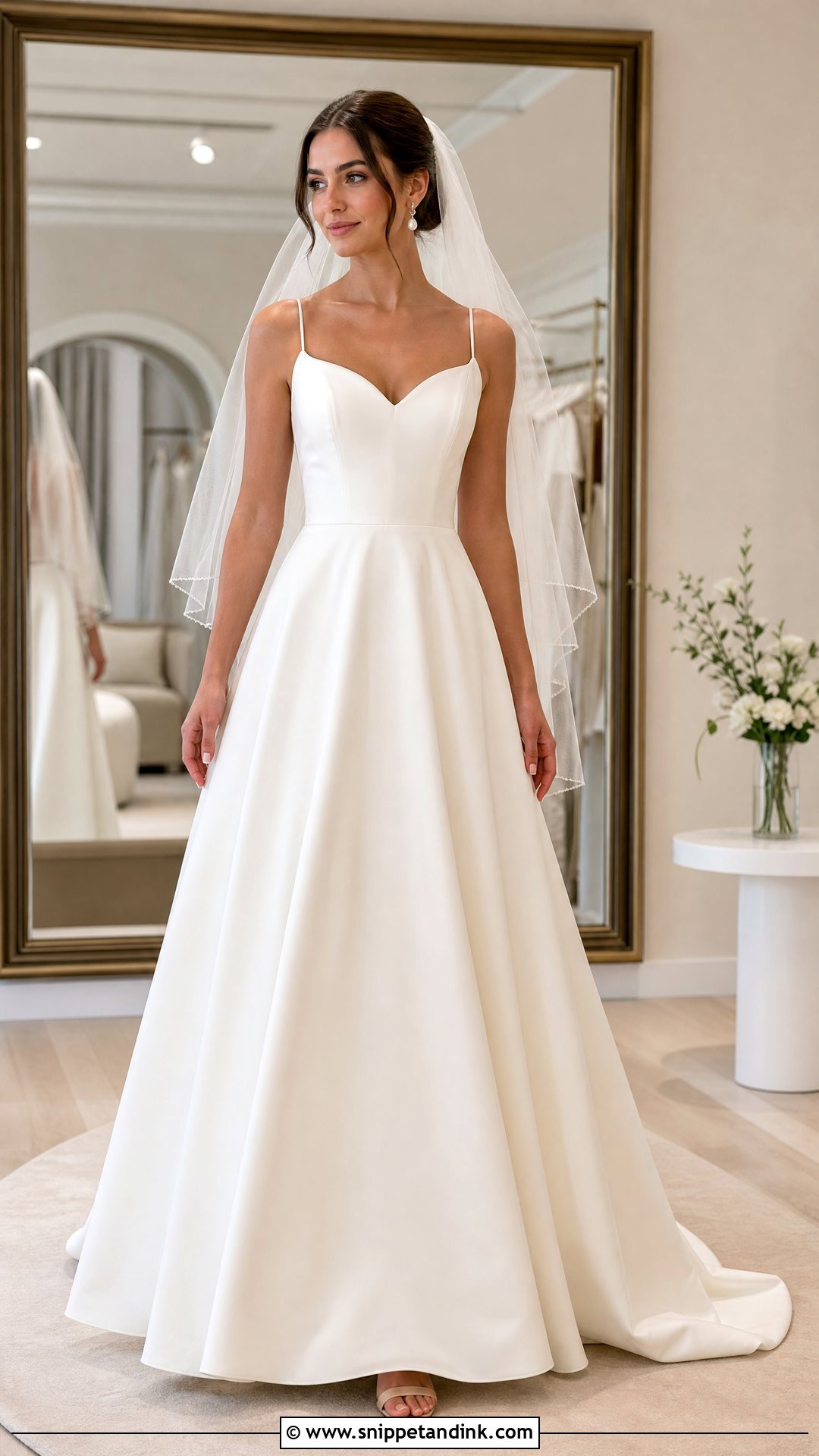
I start almost every appointment with an A-line, because it gives us a baseline to compare everything else against. A fitted bodice, a softly flowing skirt and a moderate train, with a fingertip veil, small pearl earrings and neutral heels, shows you the classic picture. Notice where the waist seam lands on you; a quarter inch high or low changes the whole proportion. Try two or three necklines on the same shape, V, scoop and sweetheart, since that alone can shift how the dress reads. Crepe feels clean and modern; lace or tulle adds detail. Ask your companion to take front, back and side photos.
2. Ball Gown Wedding Dress With Cathedral Veil
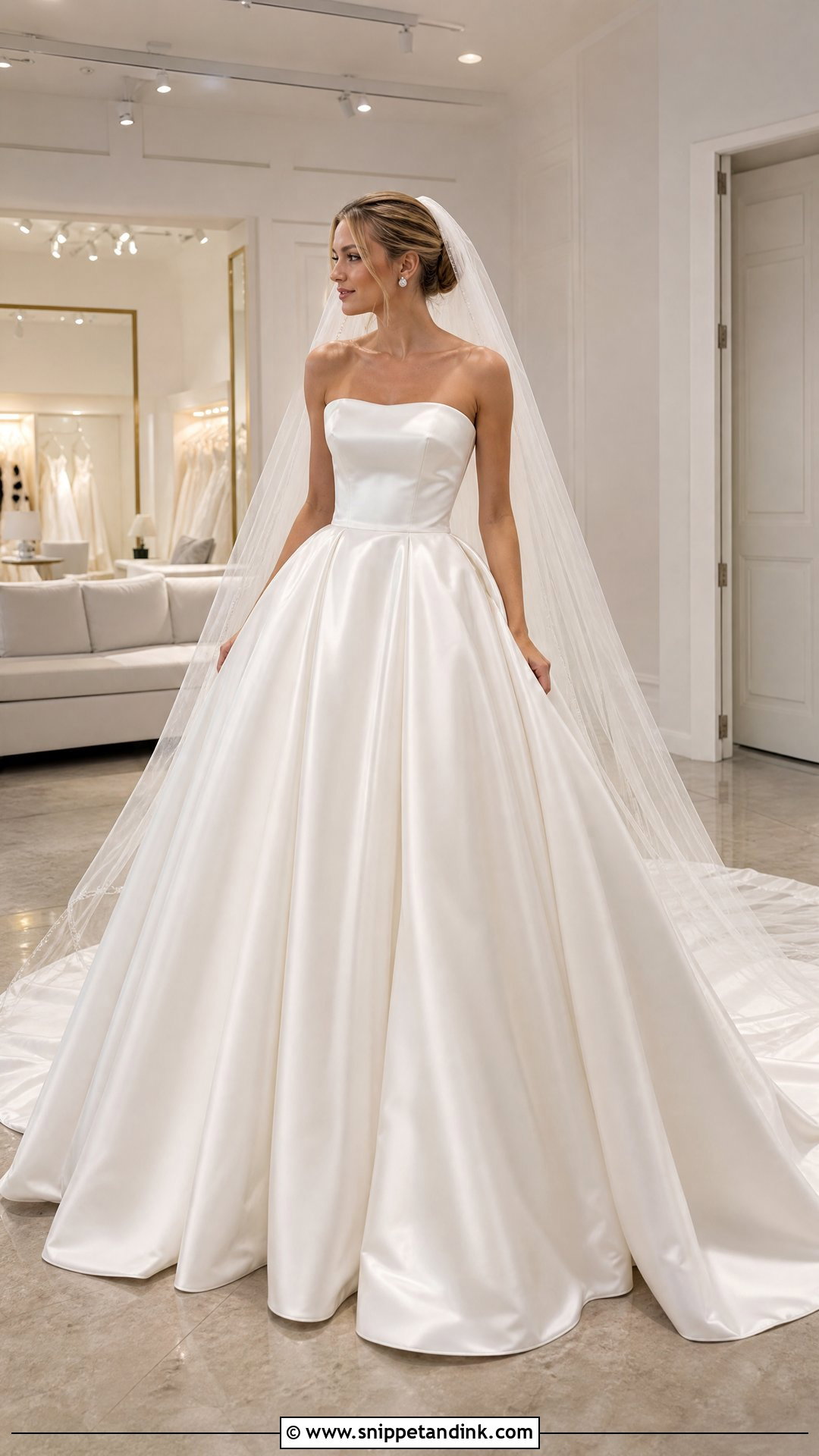
Try a ball gown even if you think it isn’t you, because nothing else gives you that volume and presence. A structured bodice over layers of tulle, satin or organza, with a cathedral veil, crystal studs and block heels hidden underneath, is the full experience. Walk the length of the salon to feel the weight and the space it takes up. Then sit; a full skirt bunches around you in a way that surprises a lot of brides. Compare a plain satin version with an embellished one to learn whether you love the shape or the decoration. Defined waists and architectural volume are very much current, so it’s worth a turn in the mirror.
3. Satin Slip Wedding Dress With Pearl Accessories
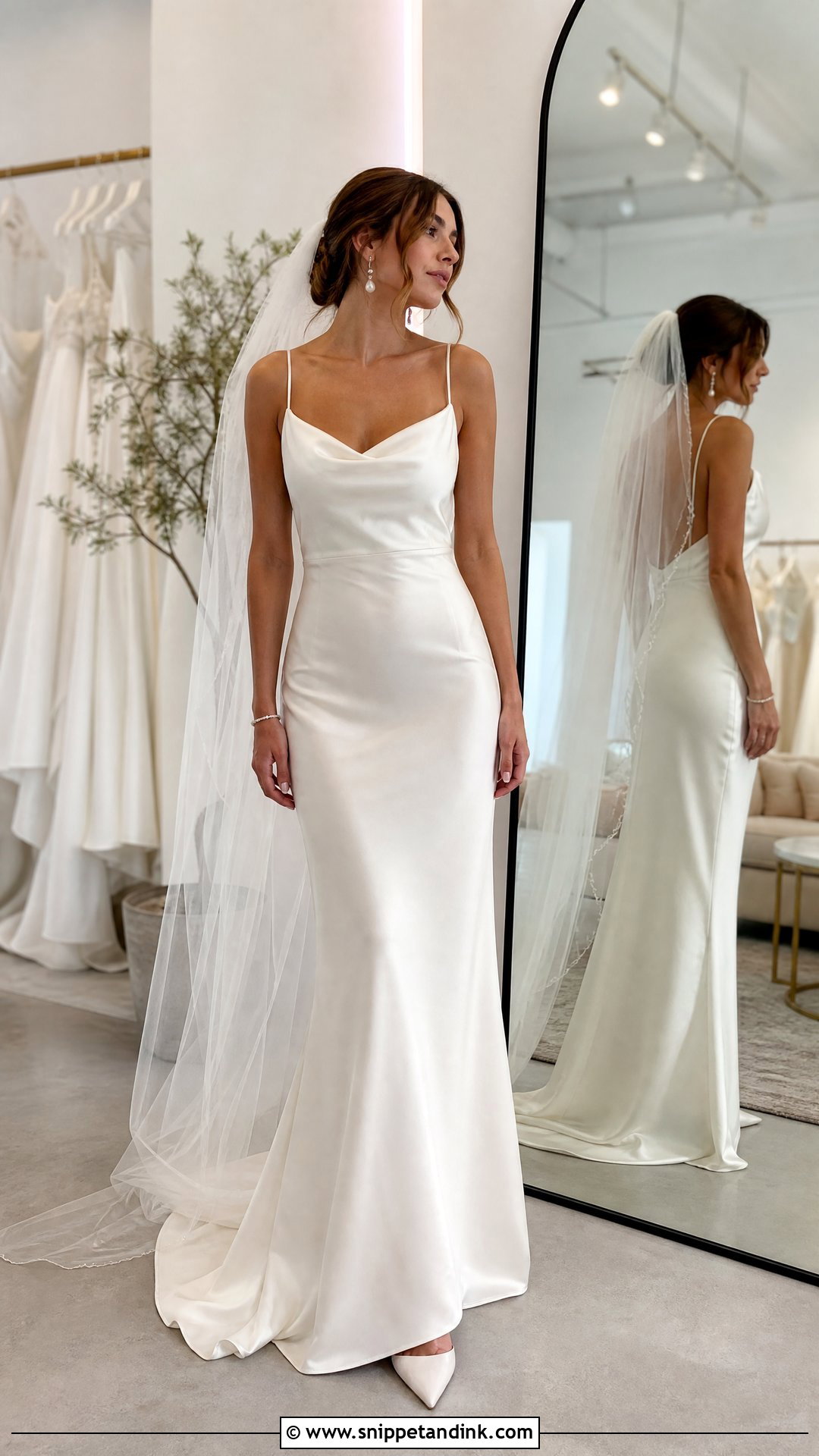
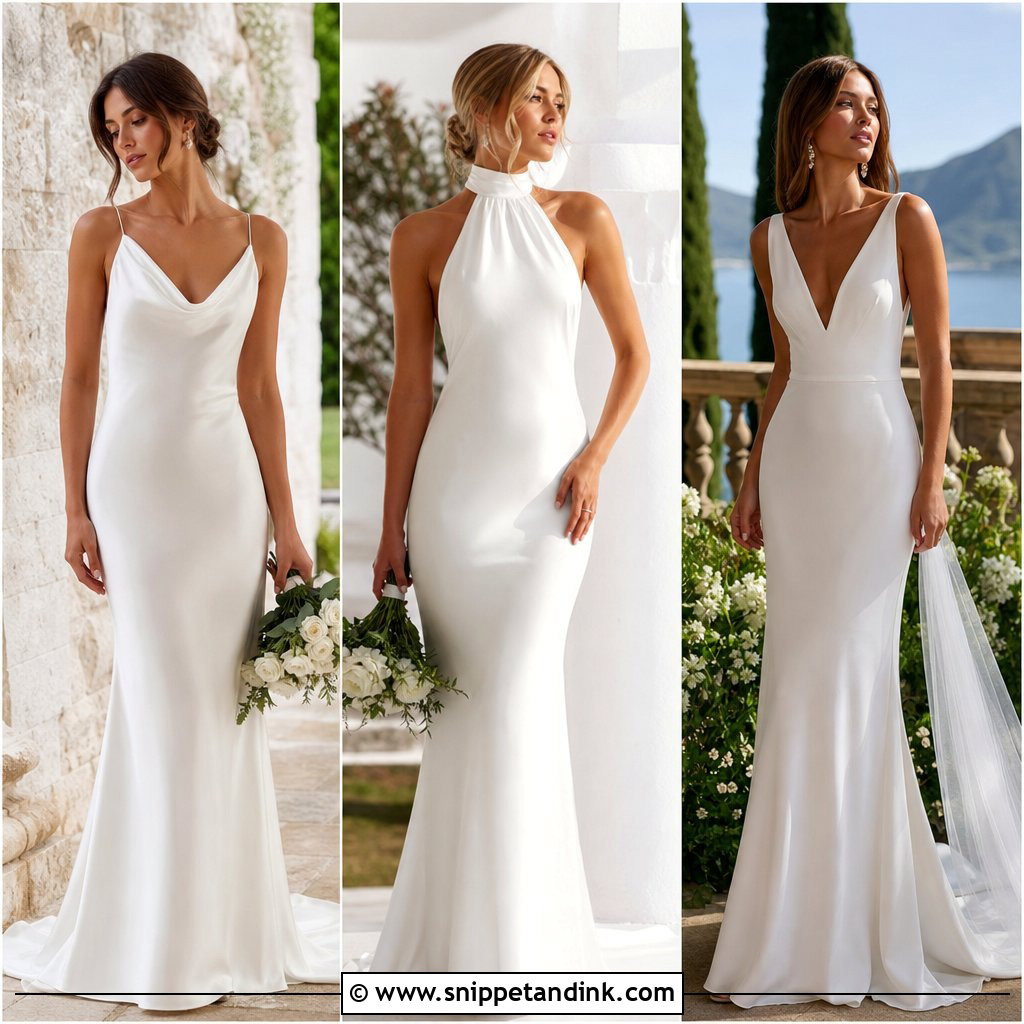
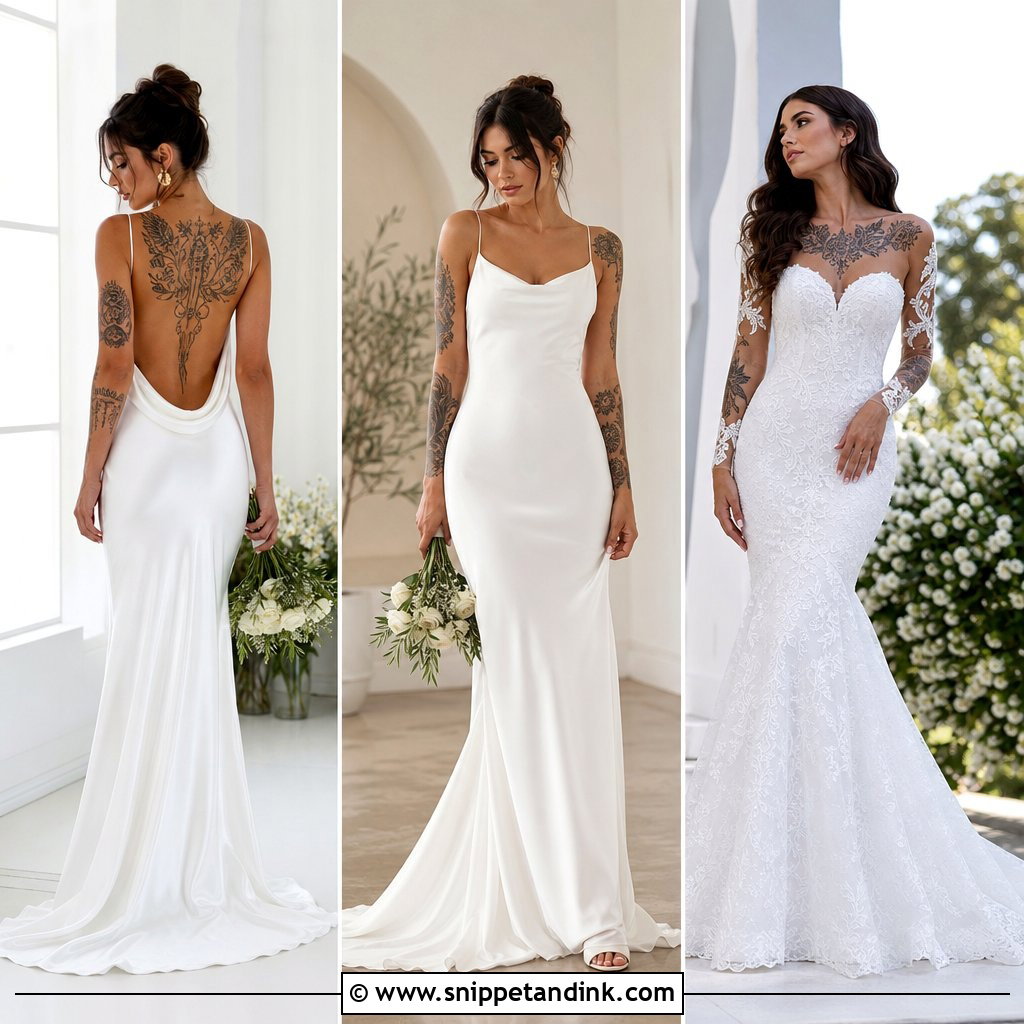
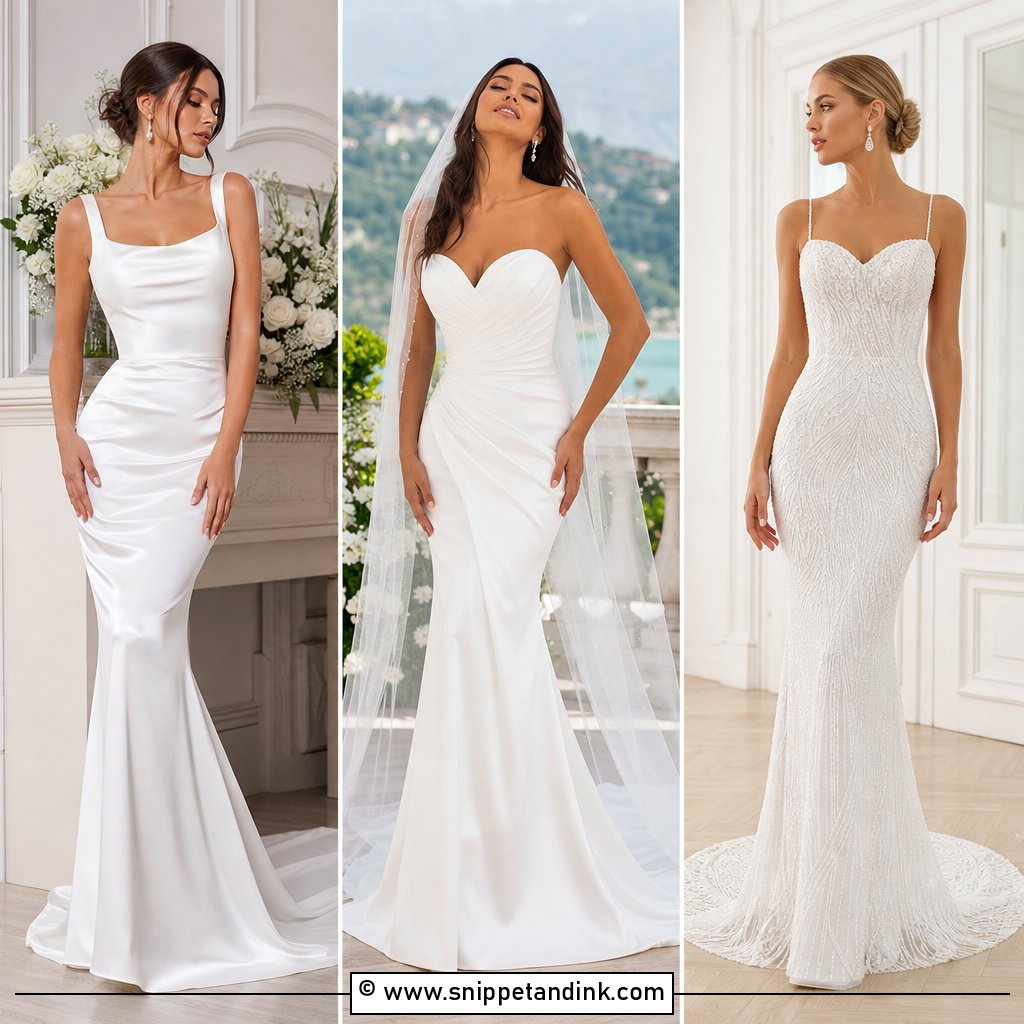
Satin catches light more than any other bridal fabric, which is the appeal of a slip wedding dress and also its challenge. A bias-cut gown with narrow straps, a draped neckline and a fluid skirt, styled with pearl drops, a fine bracelet, pointed heels and a sheer chapel veil, is the simplest look on this list. Because it follows the body closely, judge it in daylight as well as under the salon’s flattering bulbs. Smooth, no-line underwear makes a big difference here. Walk, sit and turn to check the straps stay put. If you’d like cover, try a satin wrap, a lace topper or a tailored blazer over it.
4. Lace Mermaid Wedding Dress With Long Veil
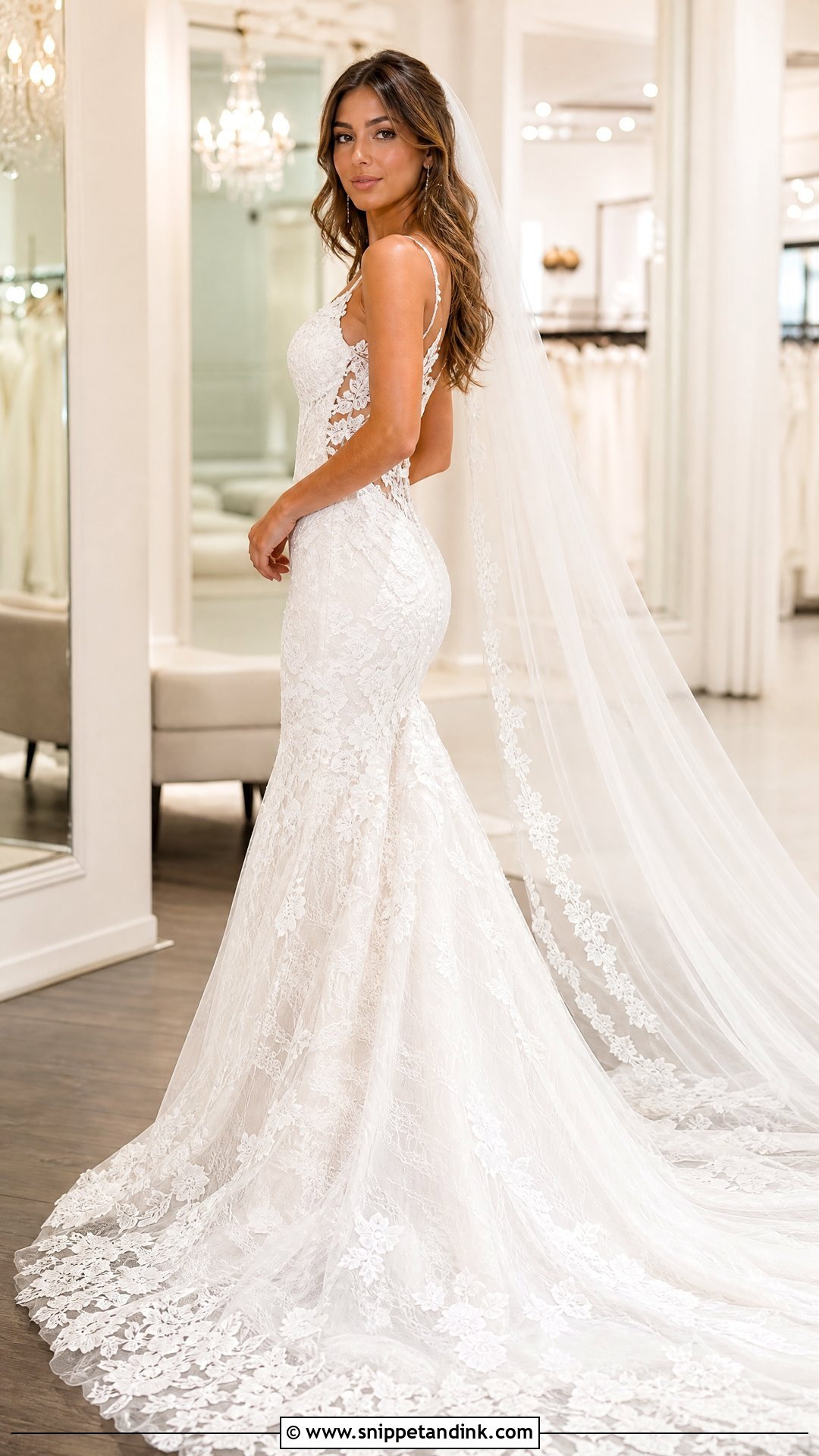
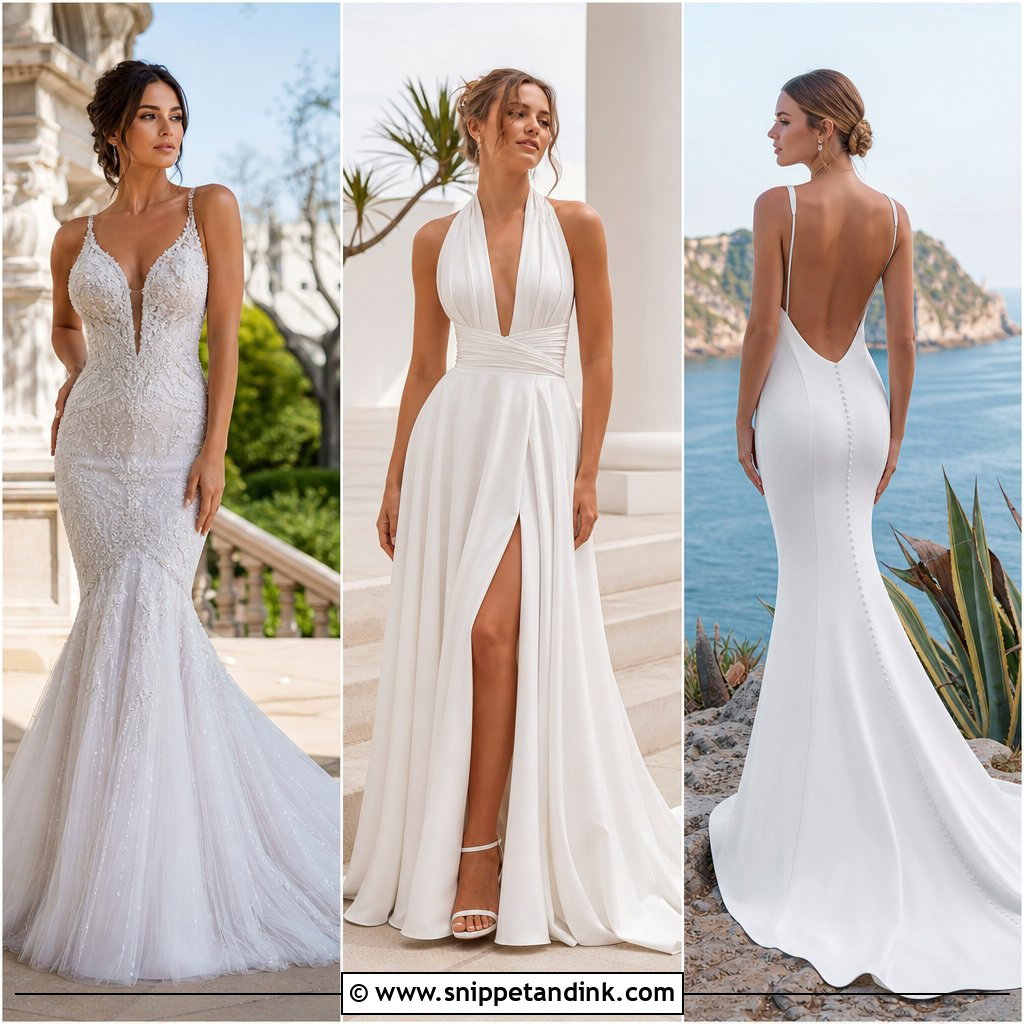
A lace mermaid fits through the bodice and hips and flares near the knee, and how freely you can move decides whether it’s the one. Try it with a long sheer veil, understated earrings and platform or block heels to support the hem. Take normal steps, sit and bend. If you have to shuffle, the flare point is too low for you. Compare fine botanical lace with bigger graphic motifs, because pattern scale changes the silhouette in photos. Look at how the appliqués cross the seams where alterations will happen. On a low back, see it with a plain veil and with a lace-edged one.
5. Square Neck Wedding Dress With Chapel Veil
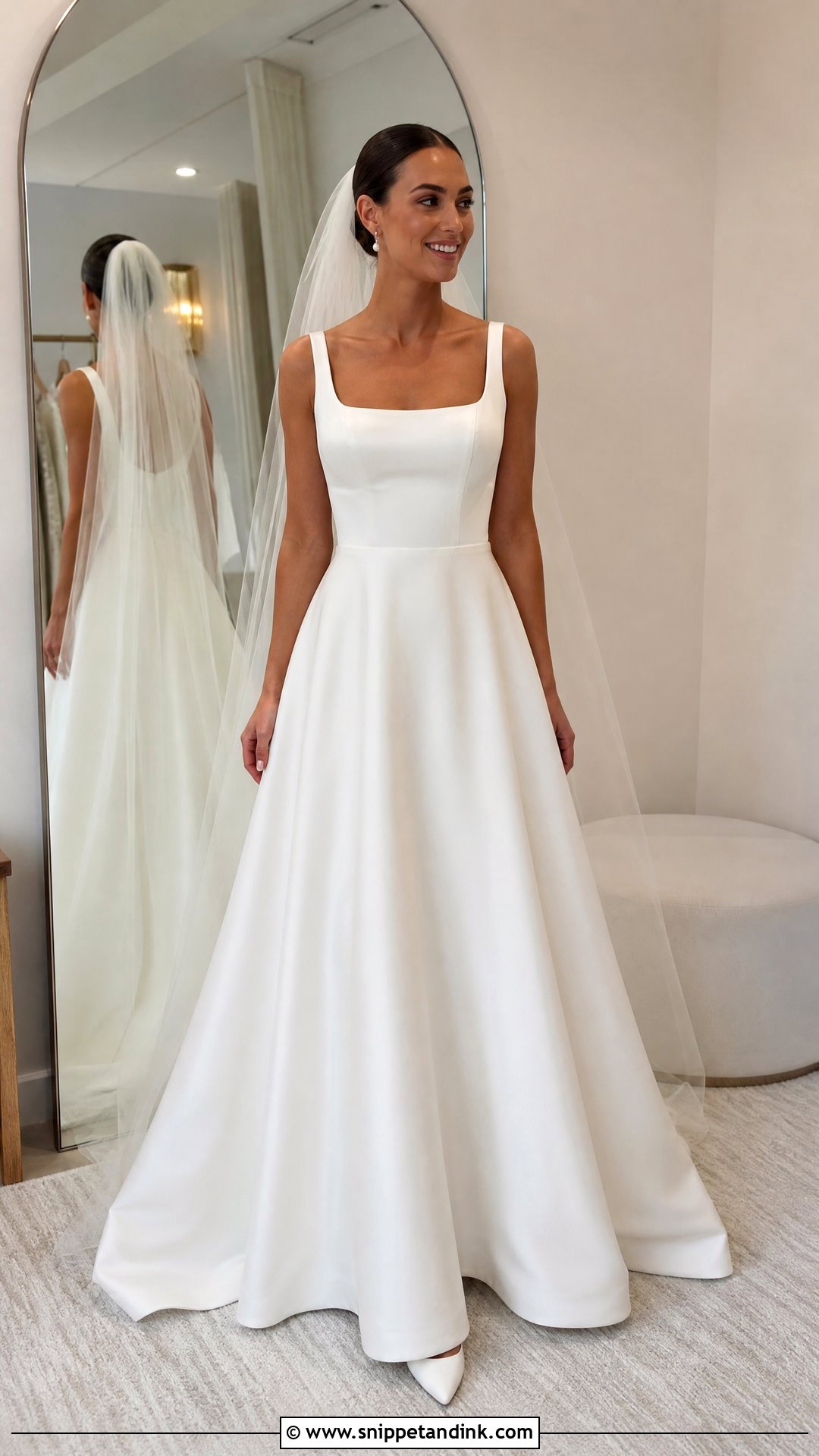
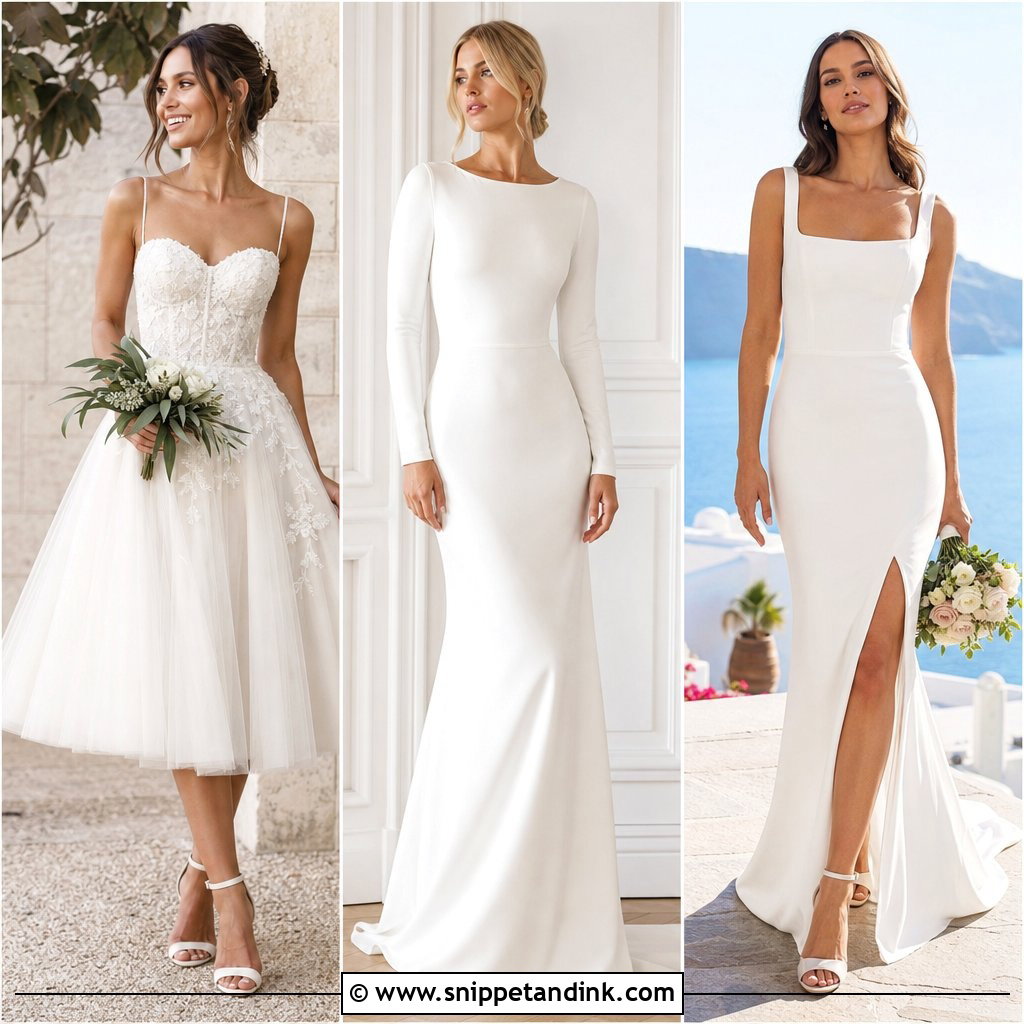
Square necklines frame the collarbones and give a crisp, architectural top line. Try one on an A-line or a fitted gown with wide straps, a defined waist and a chapel train, adding a sheer chapel veil, short drops and closed-toe heels. Roll your shoulders and lift your arms; wide straps can slide outward on narrow shoulders. From the side, the neckline should lie flat against the chest rather than standing away. Satin looks structured, lace softer. Put your hair up and then down. That one change tells you a lot about how the neckline works with your face and your planned hairstyle.
6. Off-the-Shoulder Wedding Dress With Drop Earrings
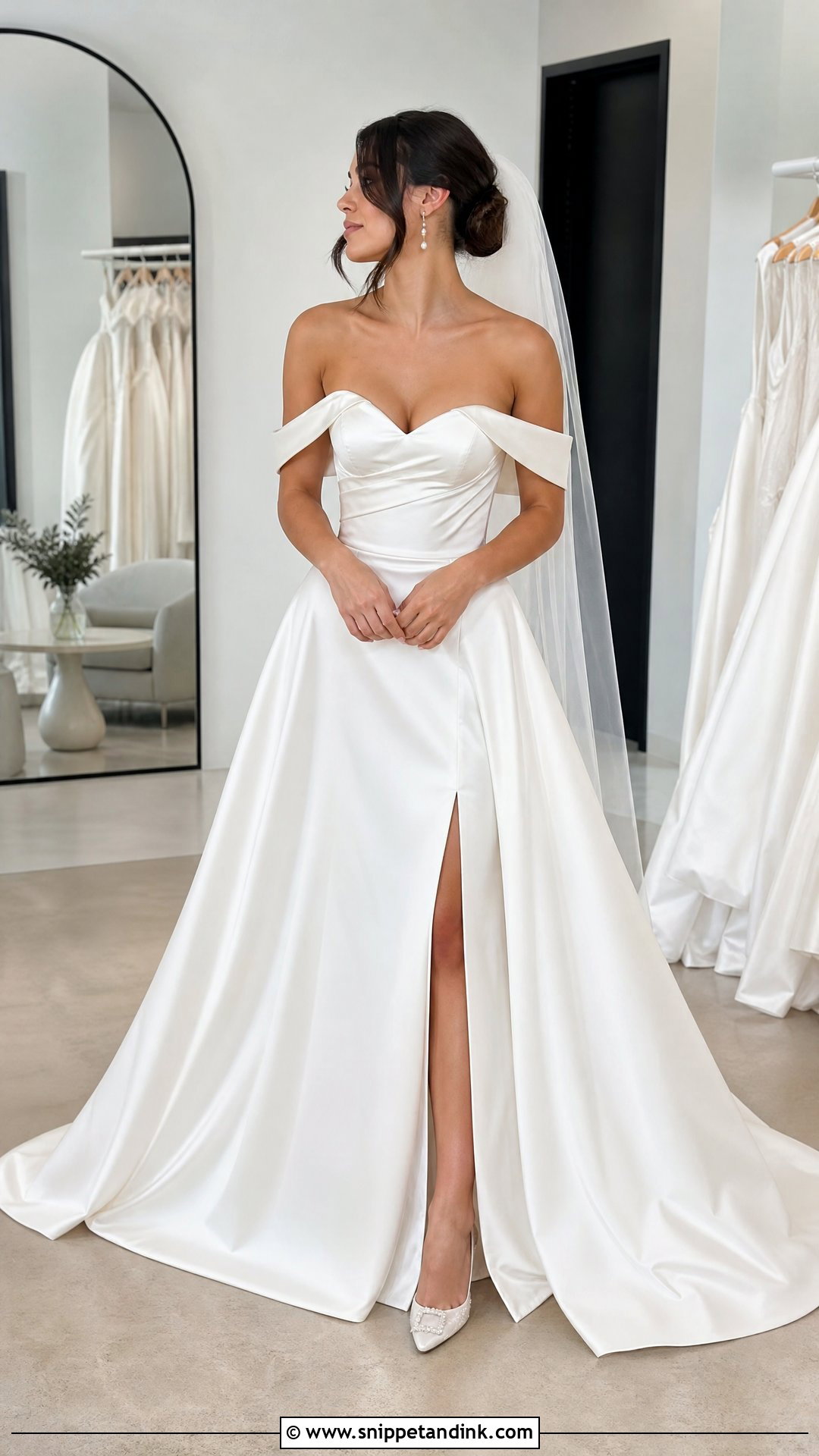
Off-the-shoulder dresses are all about the neckline and shoulders, and they’re the style I test hardest for movement. Try a fitted satin gown or a soft A-line with good internal structure, styled with drop earrings, a low bun, pointed heels and a light veil set below the hair. Raise your arms, hug your companion and sit down. If the band rides up or cuts into your upper arm, ask whether the sleeve placement can be adjusted. Skip the necklace. For a comparison, try detachable off-shoulder straps on a strapless gown, which gives you the look without committing to it.
7. Long Sleeve Lace Wedding Dress With Low Heels
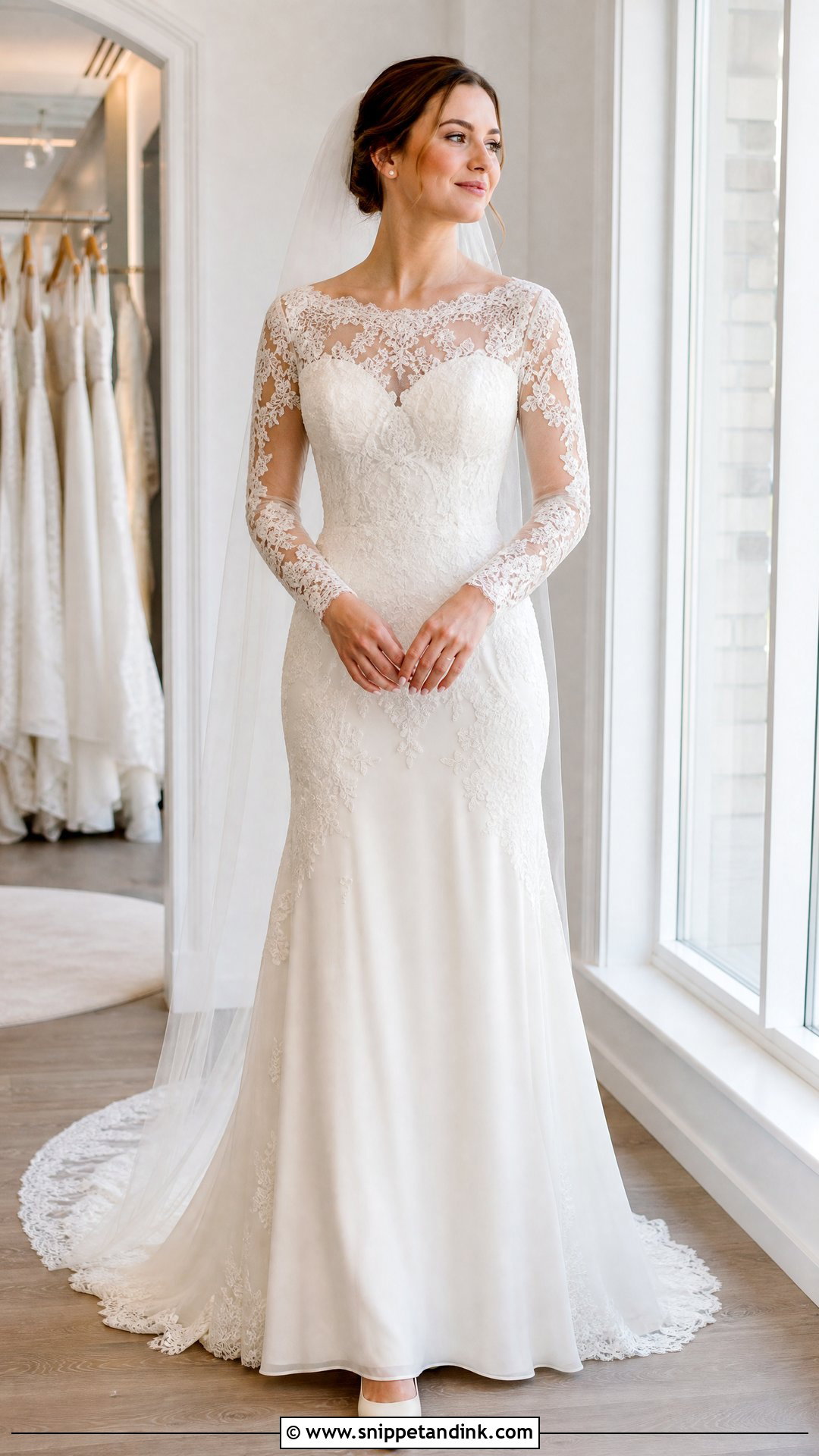
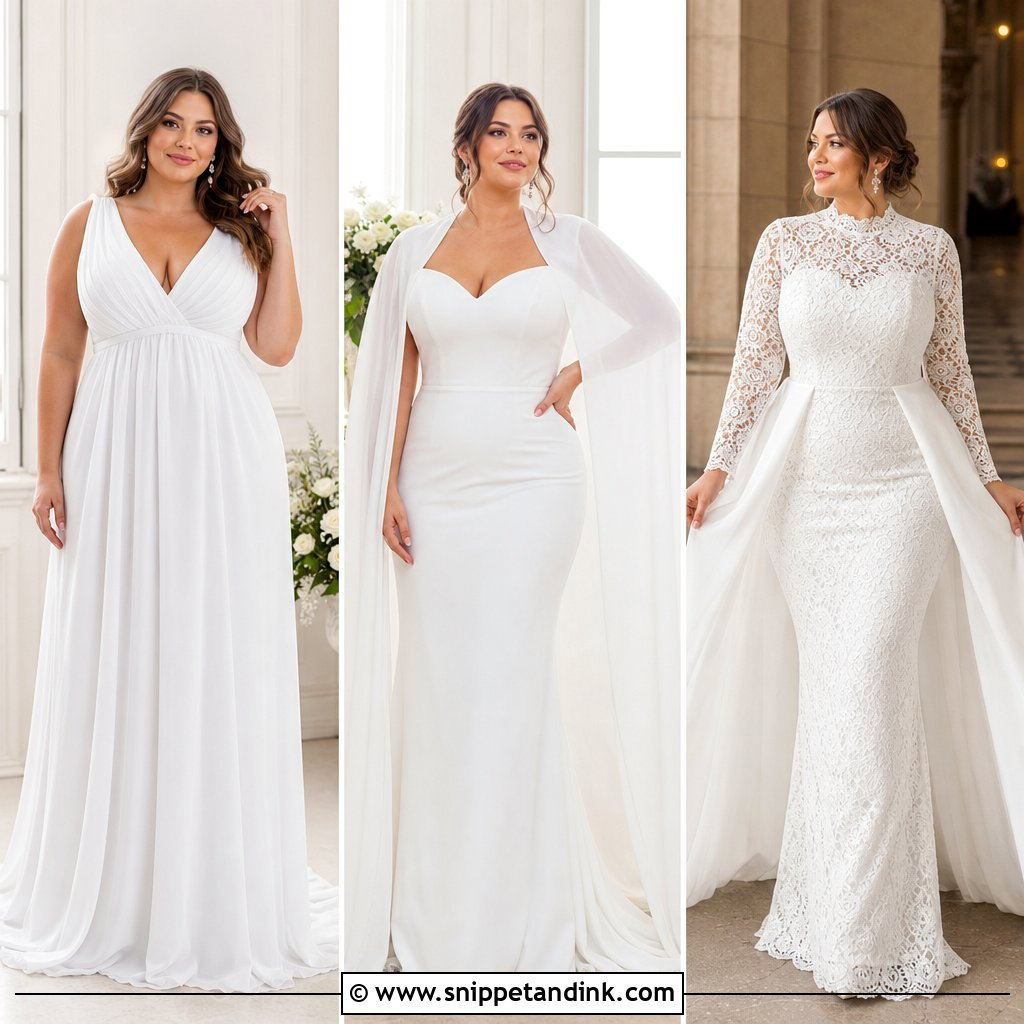
Long lace sleeves bring coverage without weighing down the whole look when the lace is light and the lining is soft. Try a fitted bodice with a natural waist, a flowing skirt and lined sleeves, with low heels, pearl studs and a plain tulle veil. Bend your elbows and lift your arms; the sleeve shouldn’t pull across the shoulder blades or underarm. Look closely at the cuffs, where buttons, scallops or illusion edges can scratch the wrist. For a cooler-season wedding, compare fully lined sleeves with sheer ones. Then take the veil off, because good sleeves often hold the look on their own.
8. Strapless Basque Waist Wedding Dress With Gloves
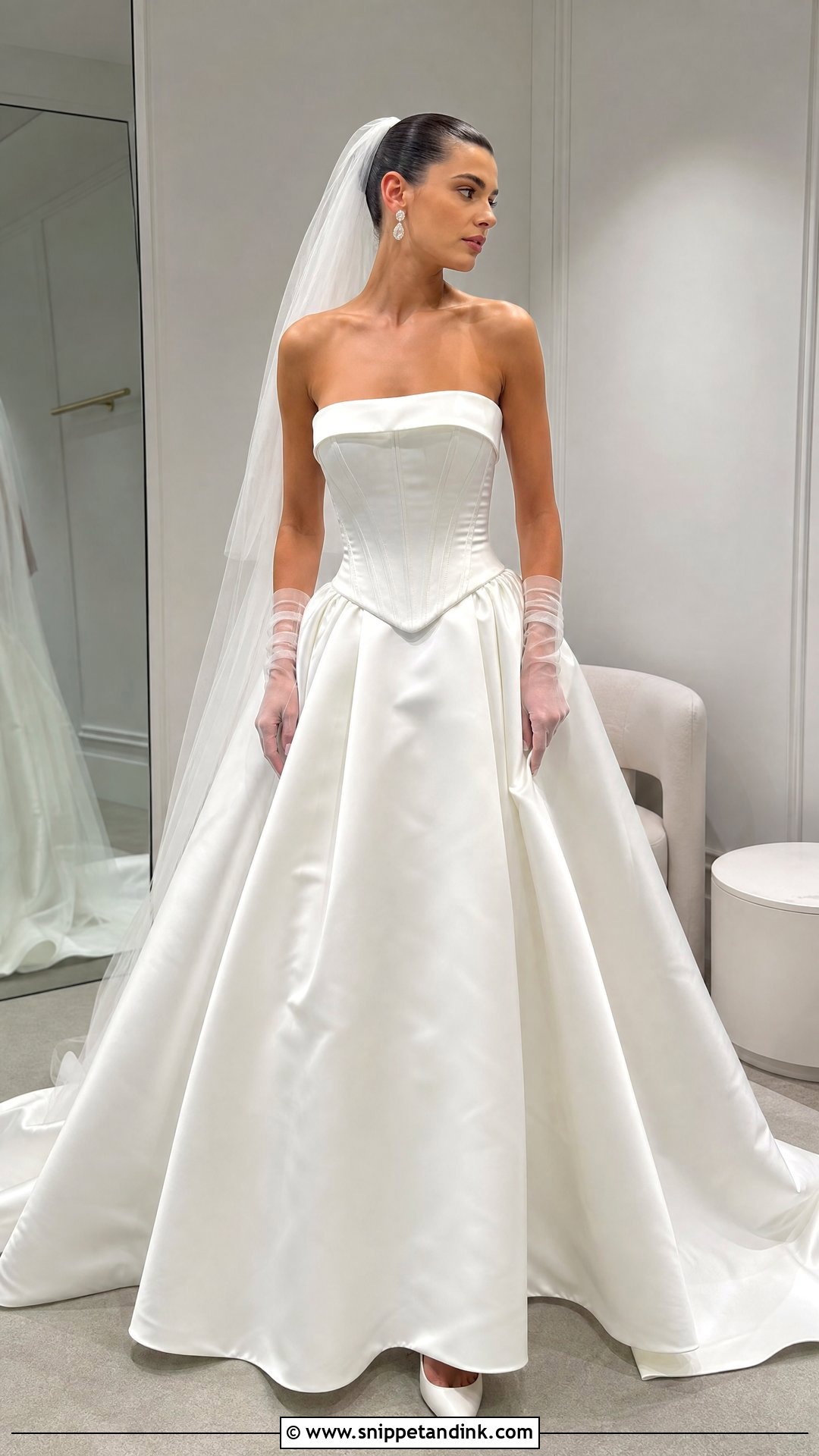
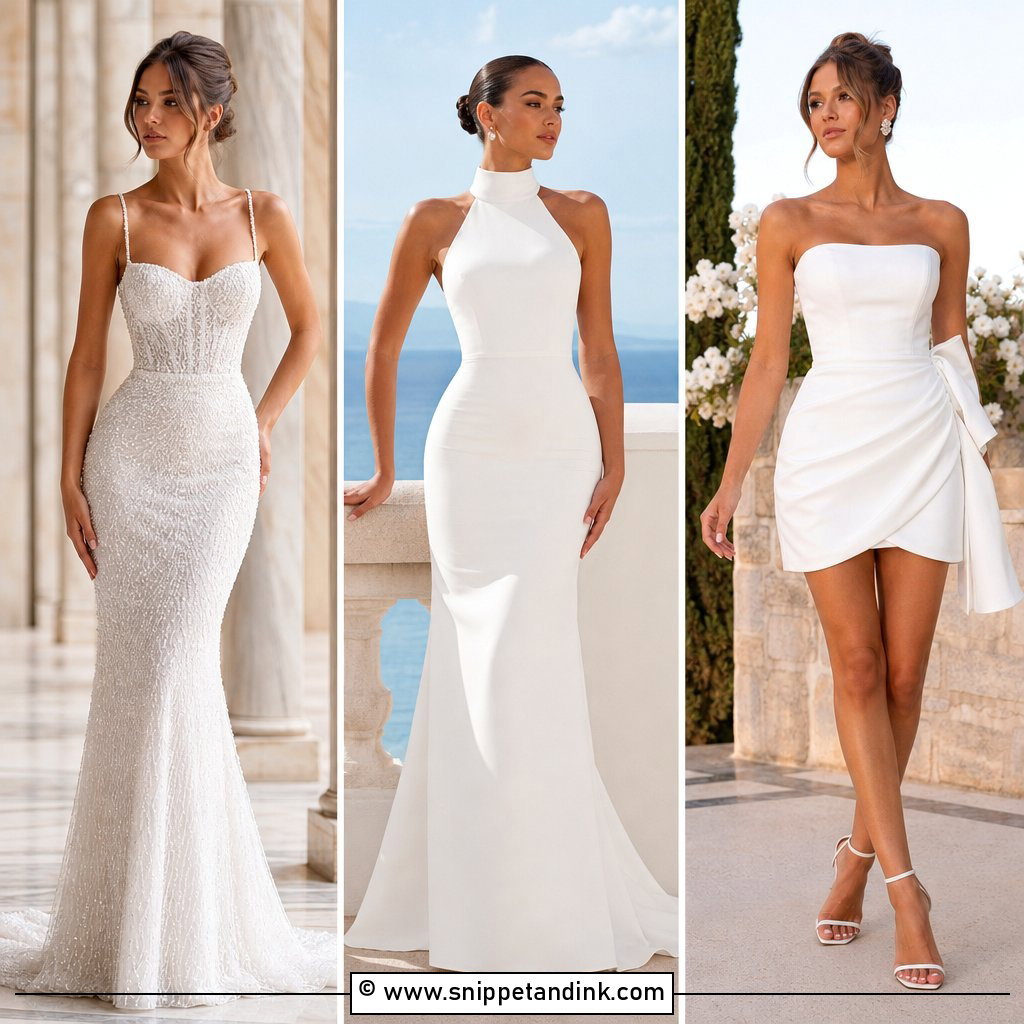
A basque waist dips into a soft V below the natural waistline, and on a strapless gown it gives a sculpted, slimming shape. It’s a strong current trend and worth trying even if you’re unsure. Pair it with sheer wrist-length gloves, crystal earrings, pointed heels and a plain cathedral veil. The bodice should support you without digging into your ribs or gaping at the neckline. Sit for a few minutes and take a full breath; a basque bodice that’s comfortable standing can bite when you’re seated. Compare a full ball gown skirt with a slimmer drop-waist version. If gloves feel too formal, try a thin ribbon or bracelet.
9. High Neck Wedding Dress With Sleek Bun
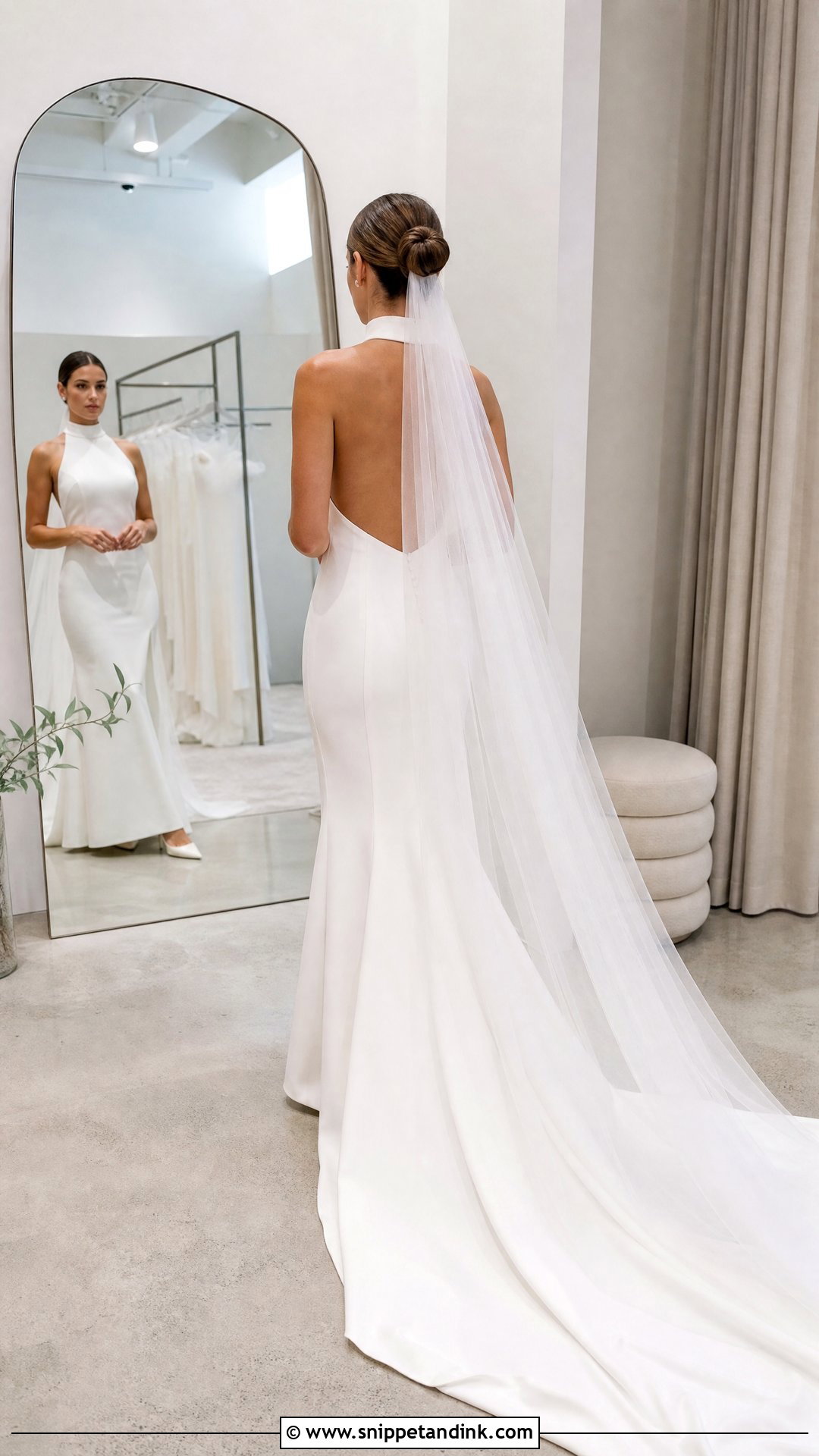
A high neck wedding dress covers the chest and puts all the attention on your face and shoulders. Try a fitted crepe, a lace A-line or an illusion neckline, with a sleek bun, studs, low pointed pumps and the veil set under the bun. Leave the necklace off at the first try-on and study the seaming, fabric and back instead. Turn your head and roll your shoulders, since a collar that rubs at the fitting will feel worse after ten hours. A soft mock neck and a structured stand collar feel very different, so compare both. An open or keyhole back balances the extra coverage at the front.
10. Tea Length Wedding Dress With Block Heels
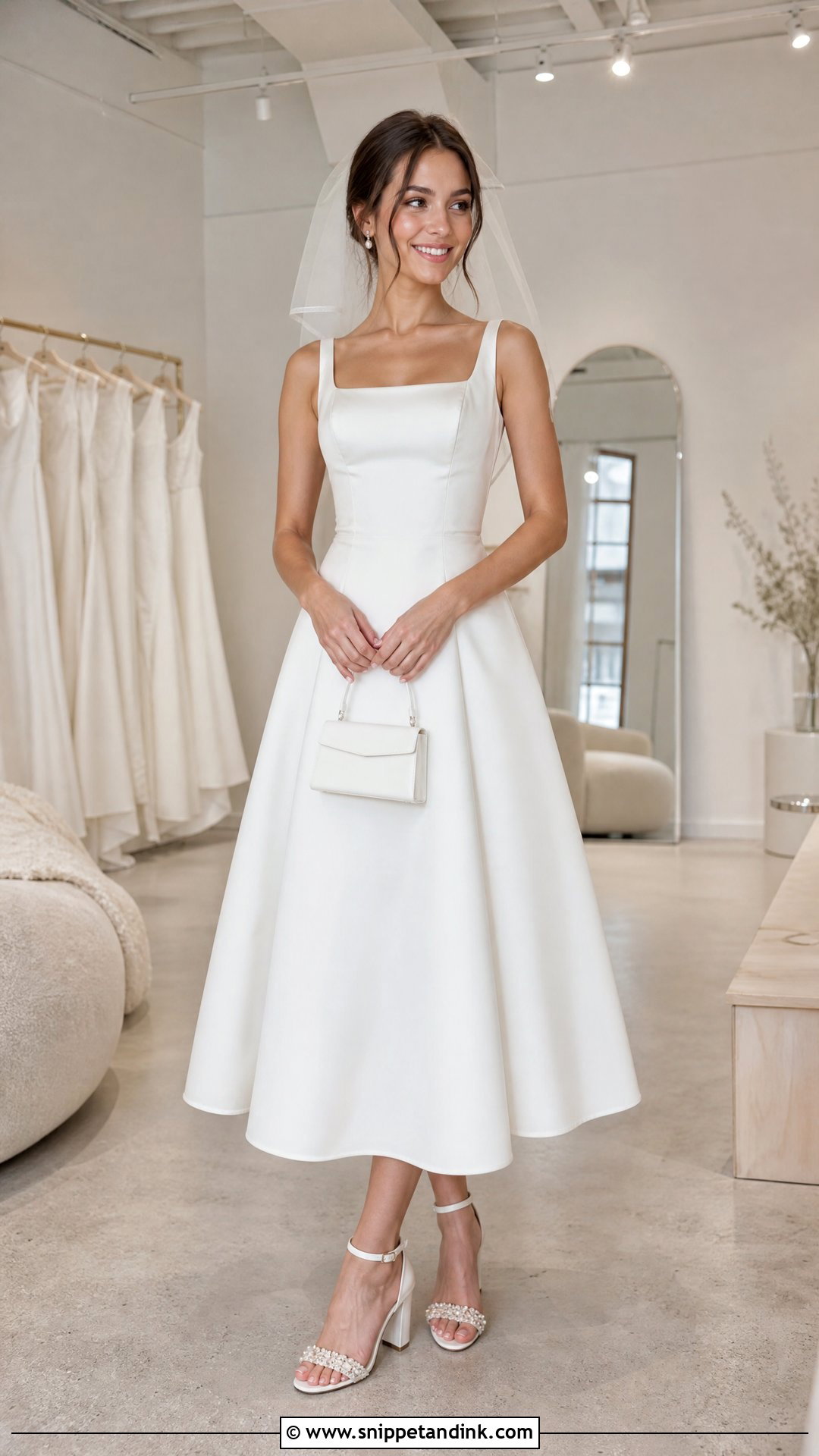
Tea length puts your shoes on show and keeps the whole look light. A fitted bodice and a skirt between knee and ankle, with embellished block heels, a short veil, pearl earrings and a small structured bag, is the classic version. Walk around and watch where the hem stops on your leg; an inch up or down can make it look intentional or accidental. Try pointed pumps, slingbacks and ankle straps, and keep the shoe simple if the dress is heavily embroidered. Satin reads classic, layered tulle fuller. It suits small venues, daytime weddings and a second outfit.
11. Minimalist Column Wedding Dress With Cape Veil
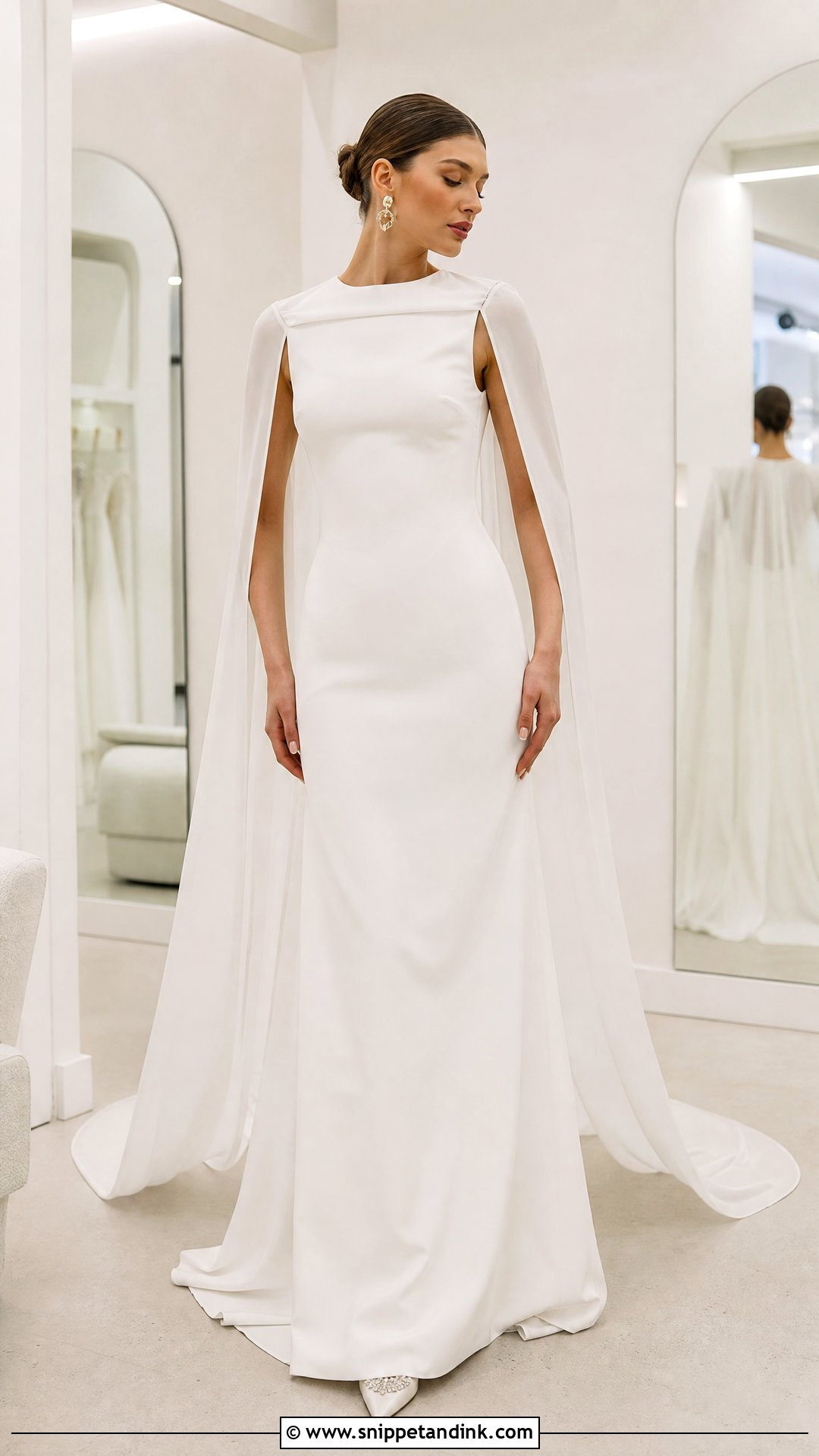
A minimal column has nowhere to hide, so I examine the construction more closely than on any other dress. Try straight crepe or matte satin with precise seaming, a floor-length hem and a small train, then add a cape veil, sculptural earrings and sleek pointed heels. The neckline, seams and drape are the whole design. Walk at your normal pace and sit; a narrow skirt can stop you mid-stride. Ask whether a back slit or hidden stretch panel is possible. Compare strapless, bateau and square necks. A detachable cape gives you ceremony drama and leaves the clean gown for later.
12. Corset Wedding Dress With Tulle Skirt
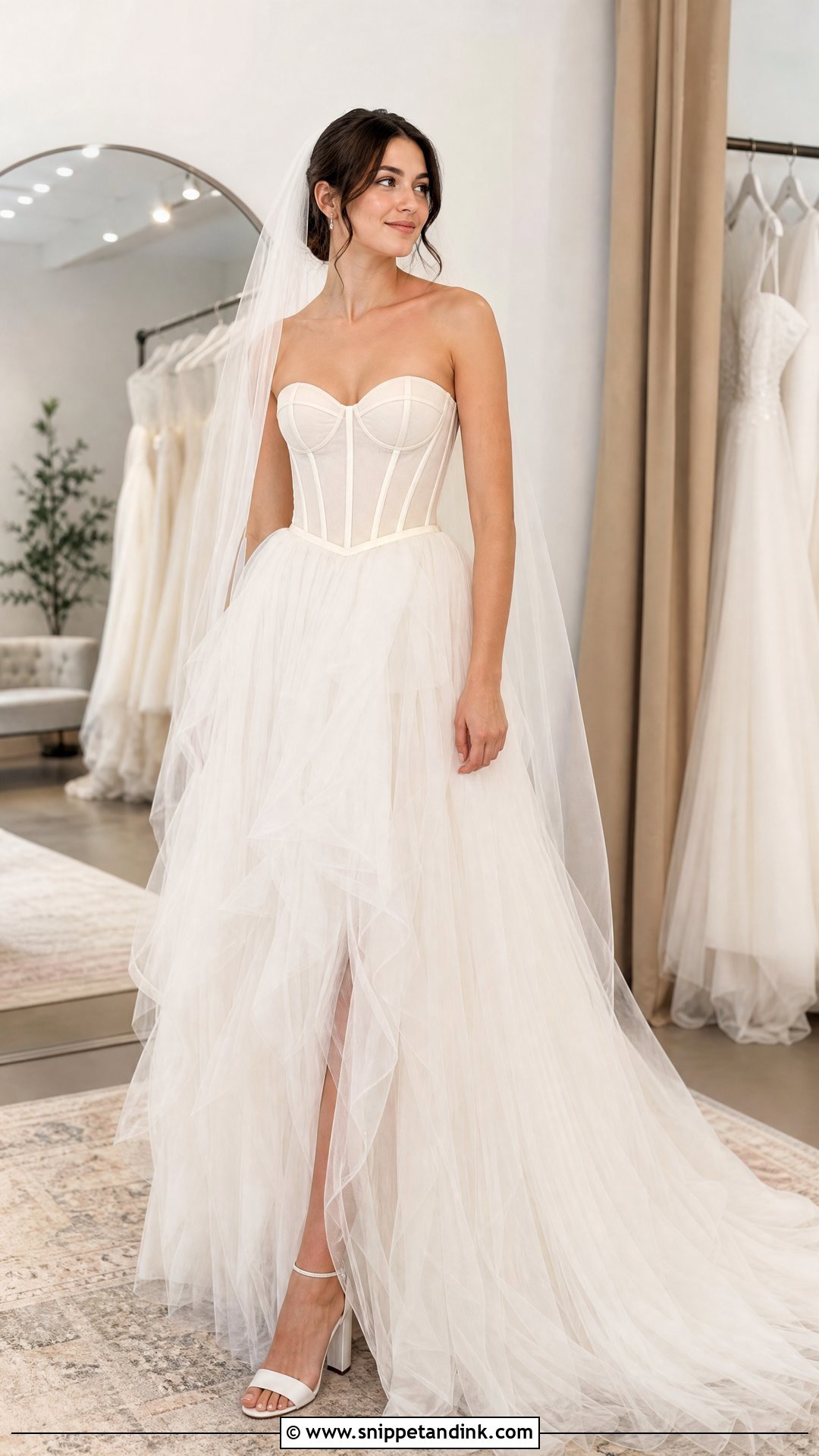
What happens when a structured corset meets a light, flowing skirt? You get a defined waist and a soft, comfortable lower half. Try visible or hidden corsetry over a layered tulle skirt, with supportive straps or detachable sleeves, a fingertip veil, small crystal earrings and steady block heels. Check it standing and sitting, and make sure you can breathe properly. Ask the consultant how the fit will change after alterations, since a sample is clipped and a finished corset is shaped to your ribcage. Bridal corsetry runs from exposed boning to subtle structure under draped fabric, so try both. Keep accessories simple.
13. Drop Waist Wedding Dress With Statement Earrings
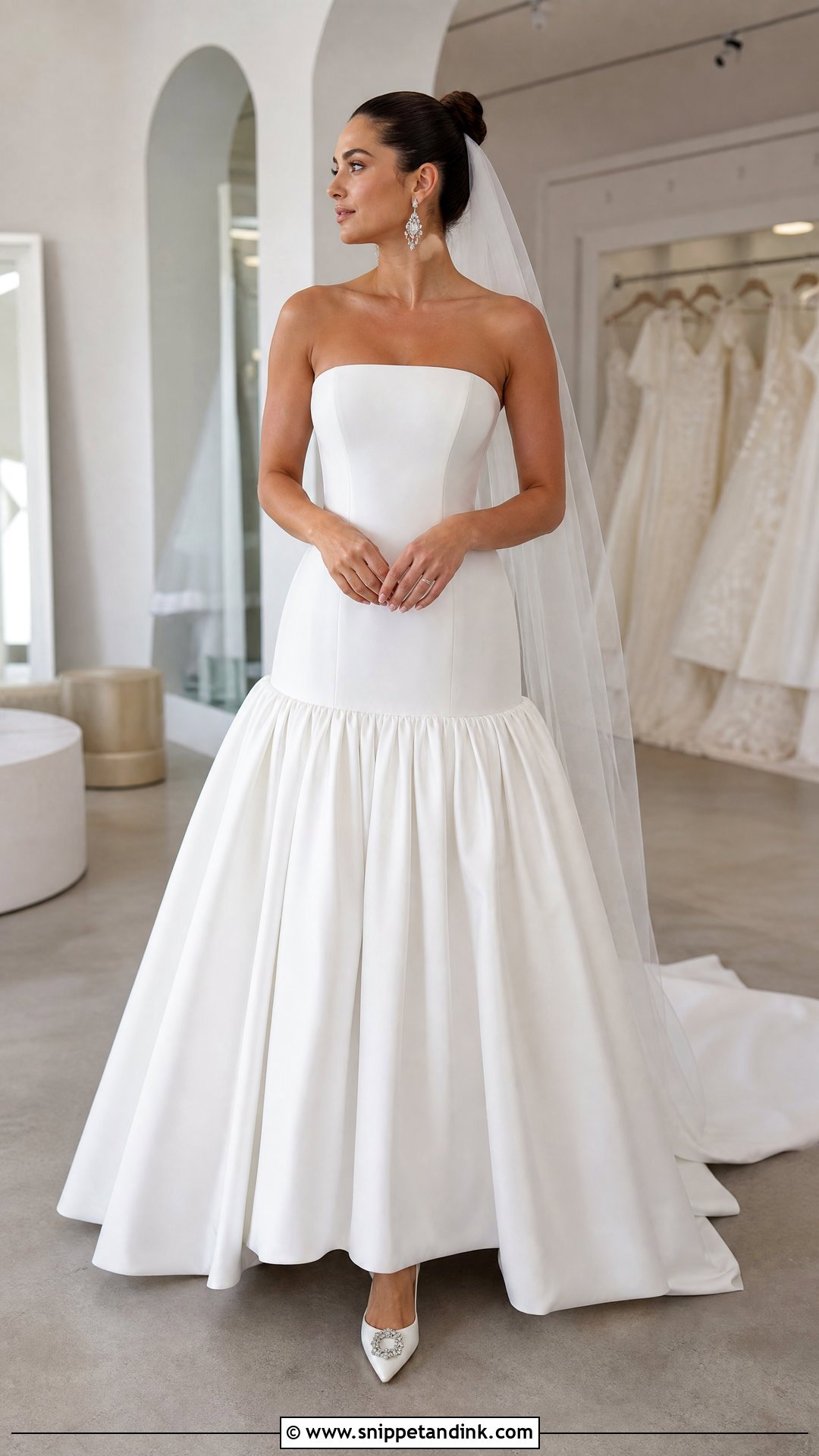
A drop waist wedding dress carries the bodice below the natural waist before the skirt opens. Try it in satin or mikado with a gathered, pleated or full skirt, plus statement earrings, a smooth bun, pointed heels and a plain veil. Check where the waist seam ends and how it looks from the side. A long bodice can shorten your stride if the skirt starts too low, so take a few steps. Compare a straight drop waist with a curved basque. This is the shape most distorted by sample sizing, so ask the consultant to pin the bodice to your torso before you judge it.
14. One Shoulder Wedding Dress With Simple Veil
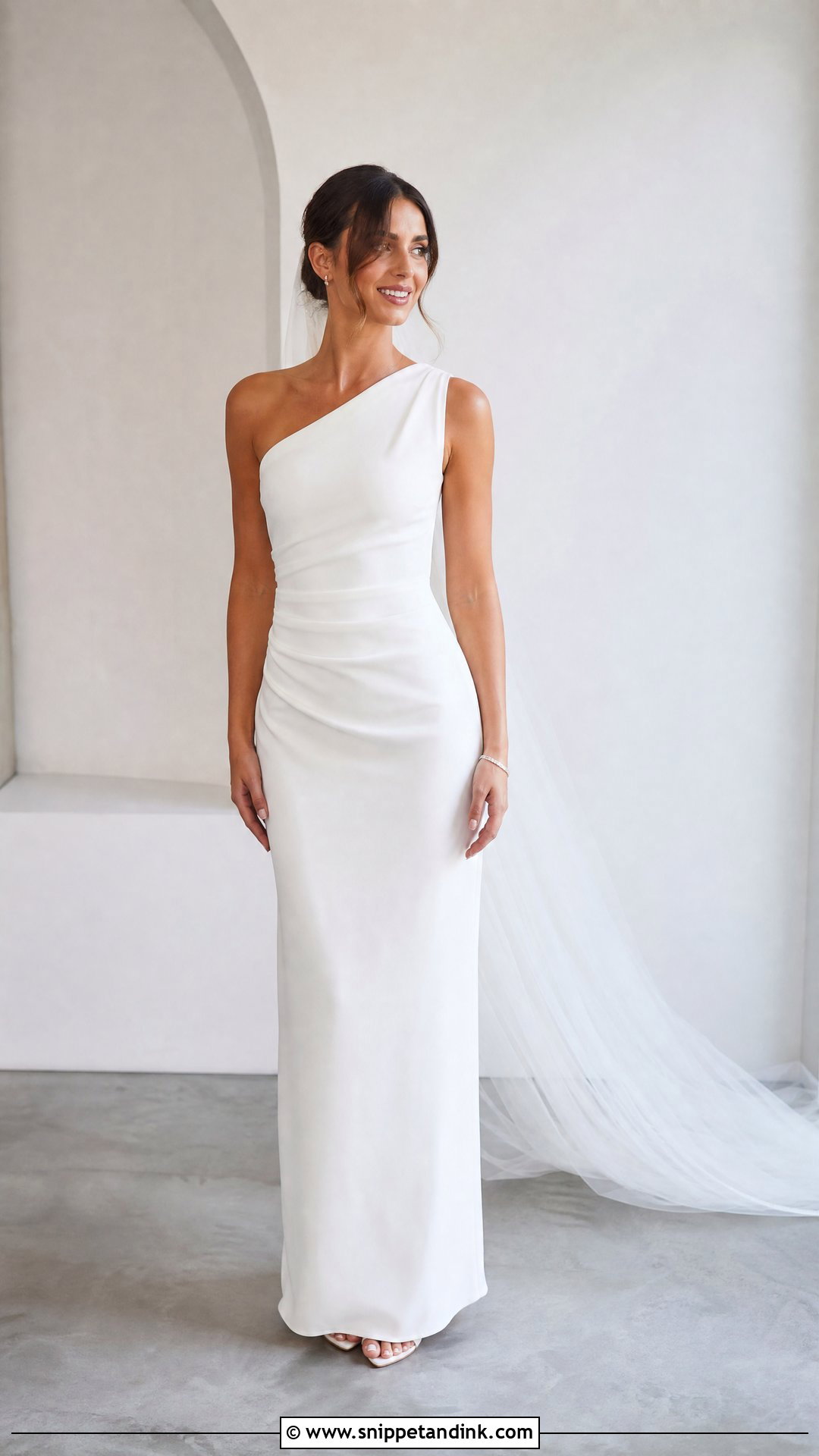
One-shoulder gowns add asymmetry and still feel wearable. Try a draped crepe, a fitted satin column or a chiffon A-line, with a simple veil, one bracelet, small earrings and low heels, and no necklace. Look at both profiles, which can be very different. Move the covered shoulder and lift both arms; the single strap carries more than you’d think and should feel secure. Check the back if the strap flows into a bow, drape or cape. Asymmetric necklines are a fresh alternative to strapless right now, and they suit brides who want something modern without much skin.
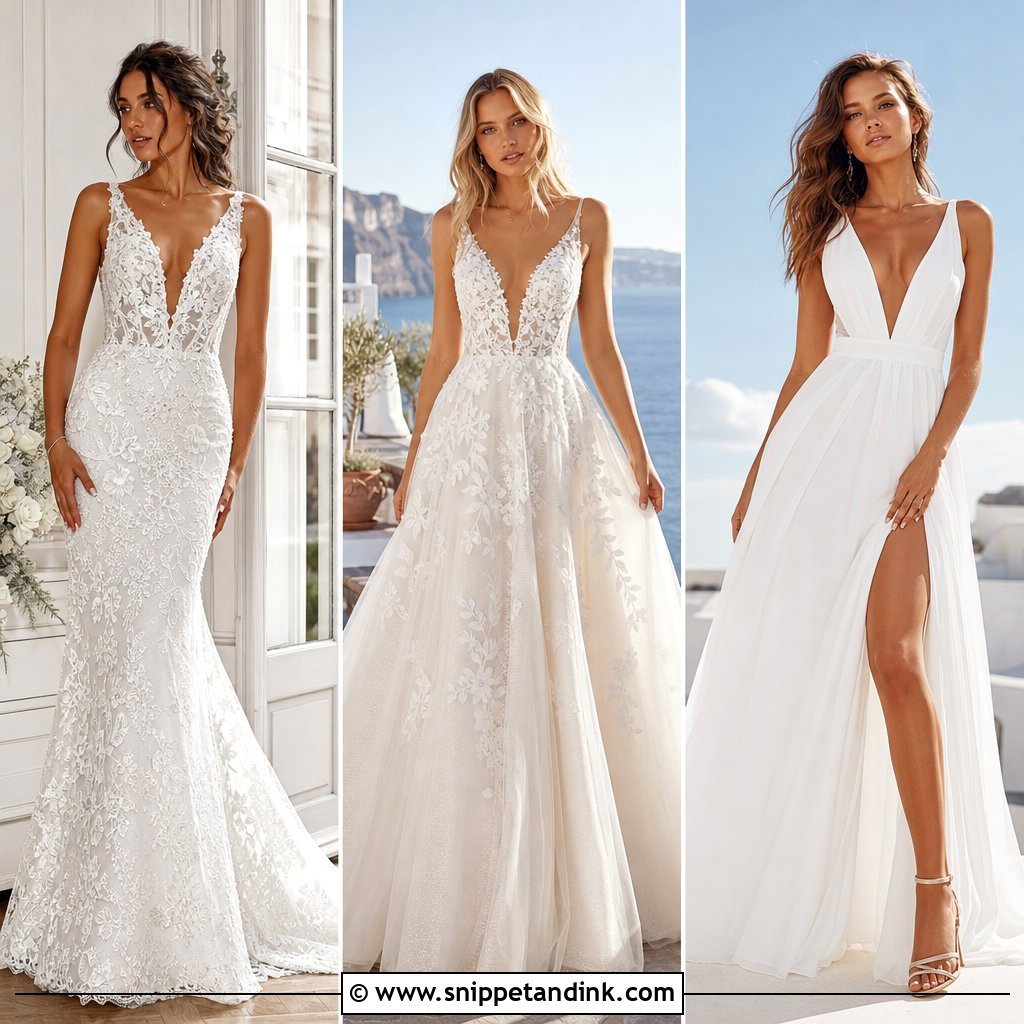
15. Floral Appliqué Wedding Dress With Sheer Veil
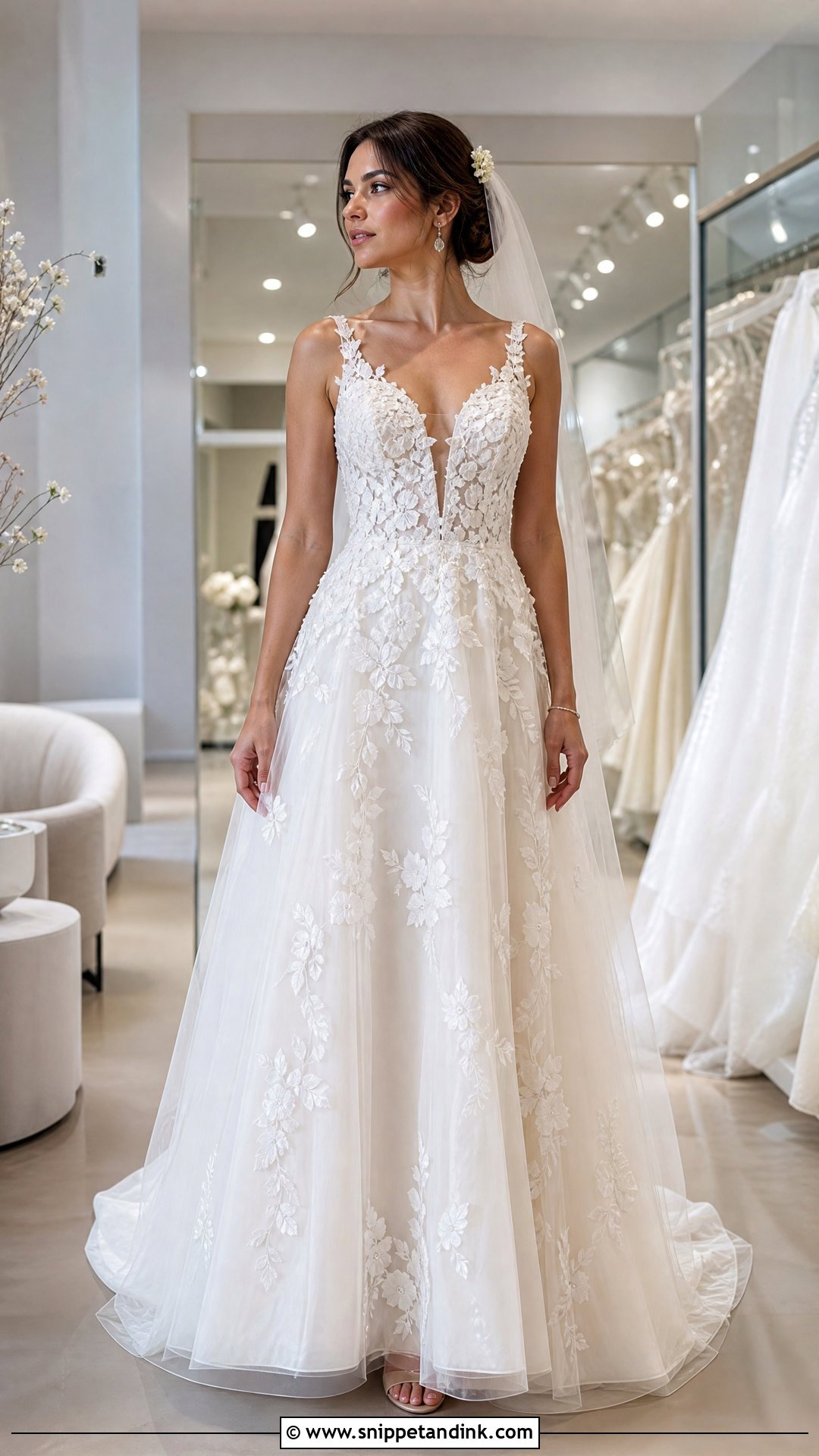
Raised floral appliqués turn a familiar silhouette into something textured. Try an A-line with a fitted bodice and light tulle layers, with a sheer plain veil, delicate earrings, neutral heels and a small floral hair pin. Keep accessories restrained or the look crowds. Study where the flowers sit at the neckline, waist and hem, since well-placed appliqués shape the body and dense clusters add bulk. Ask your companion to photograph you from across the room; 3D flowers flatten on camera at a distance. If white-on-white disappears, compare ivory or blush details.
16. Wedding Dress With Detachable Cape
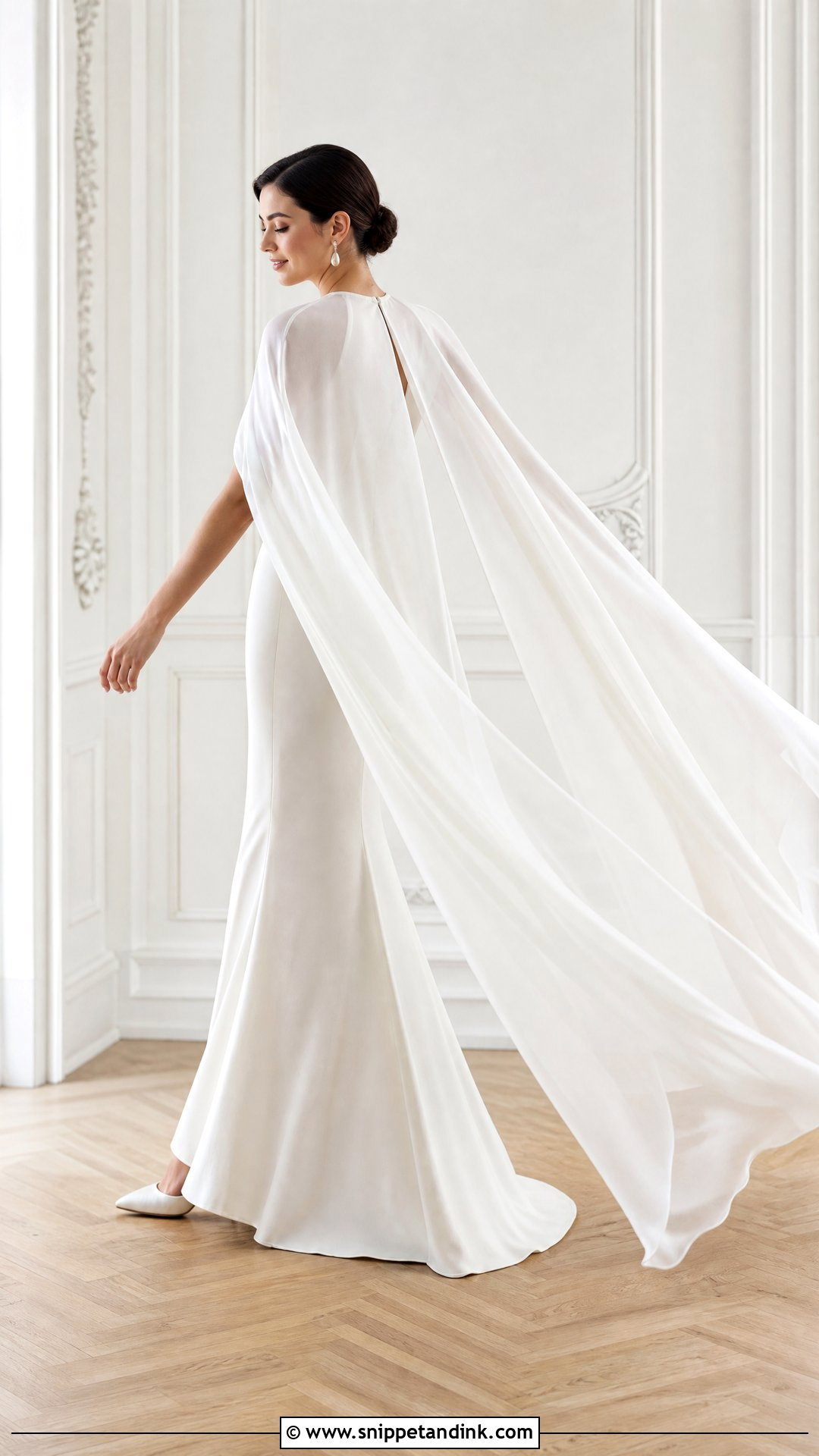
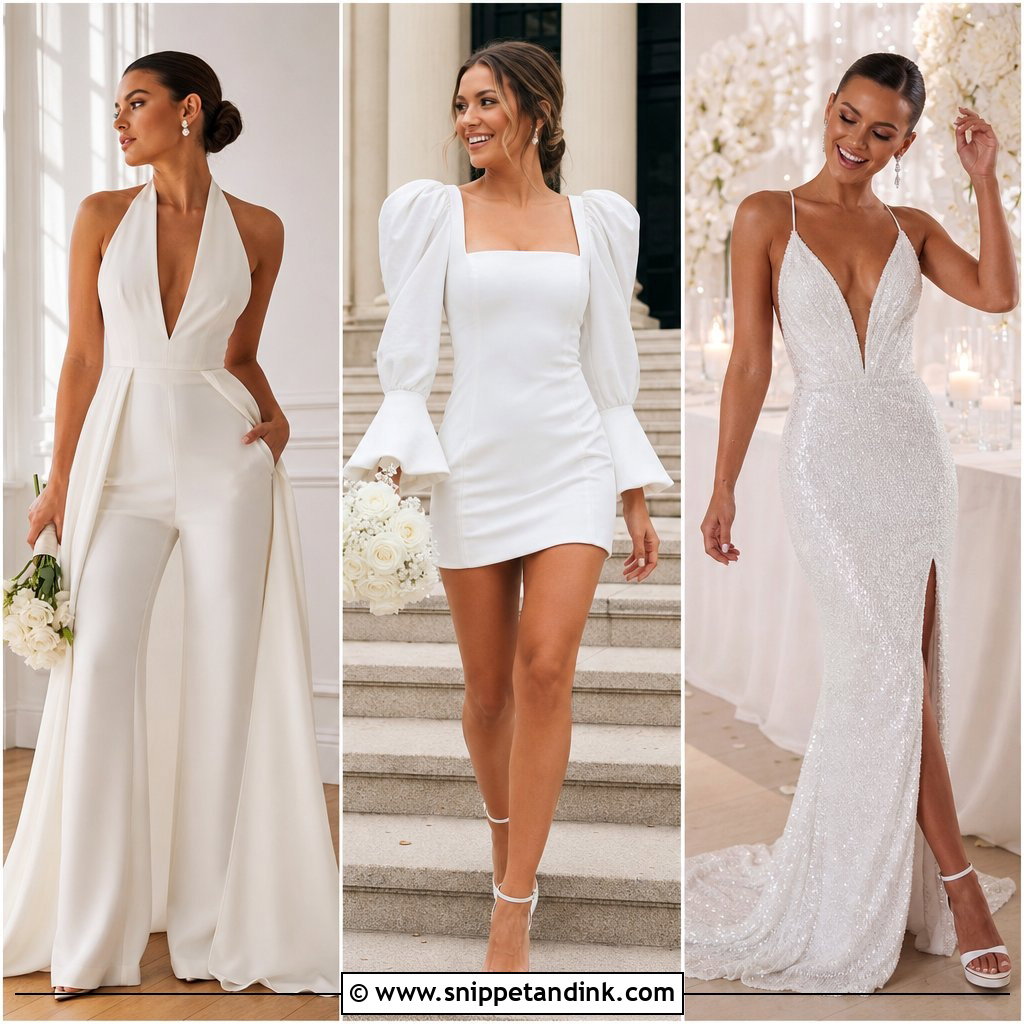
A detachable cape lets you test two looks on one gown. Start with a simple fitted or A-line dress, then add a sheer tulle, lace or satin cape fastened at the shoulders, with understated earrings, pointed heels and a low bun. Walk with it on to see how it moves and whether the fastenings feel firm. Stand by a window to judge transparency and length. Then remove it and photograph the gown from the same angles. If you love one version far more than the other, the cape may not be worth buying. It can also replace a veil, giving movement and back coverage without hiding your hair.
17. Wedding Dress With Detachable Overskirt
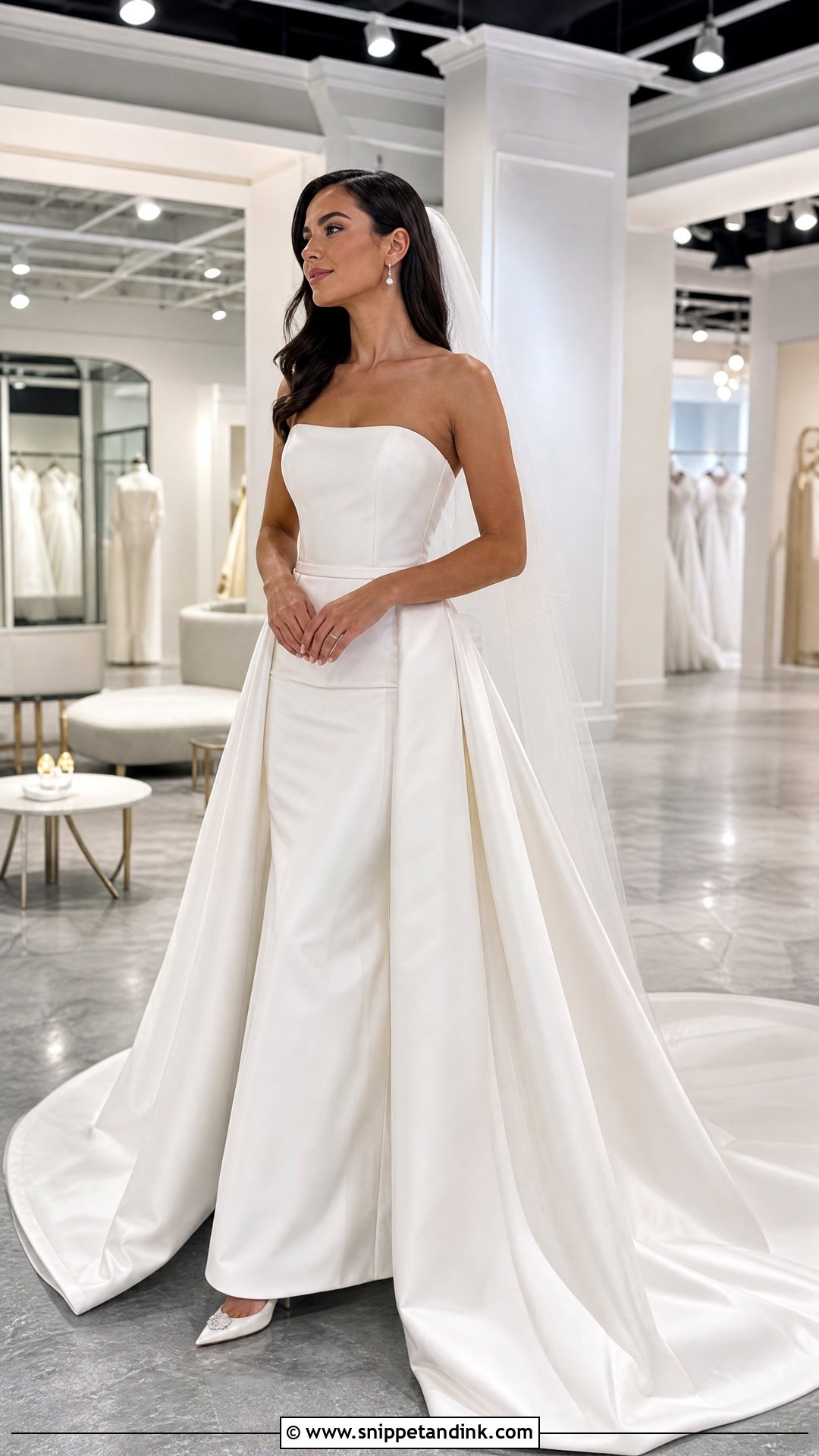
A detachable overskirt turns a fitted dress into a fuller ceremony look in moments. Try a crepe, lace or satin base with an overskirt that fastens neatly at the waist, plus a chapel veil, simple earrings and heels that suit both versions. Walk and sit in all the layers first, checking whether the waistband feels thick or hides details you liked. Then take it off and inspect the join. The base dress must look complete. Matching photos with and without the skirt make the comparison honest. This suits brides who love a ball gown entrance but want a narrower shape for the party.
18. Two Piece Wedding Dress With Low Heels
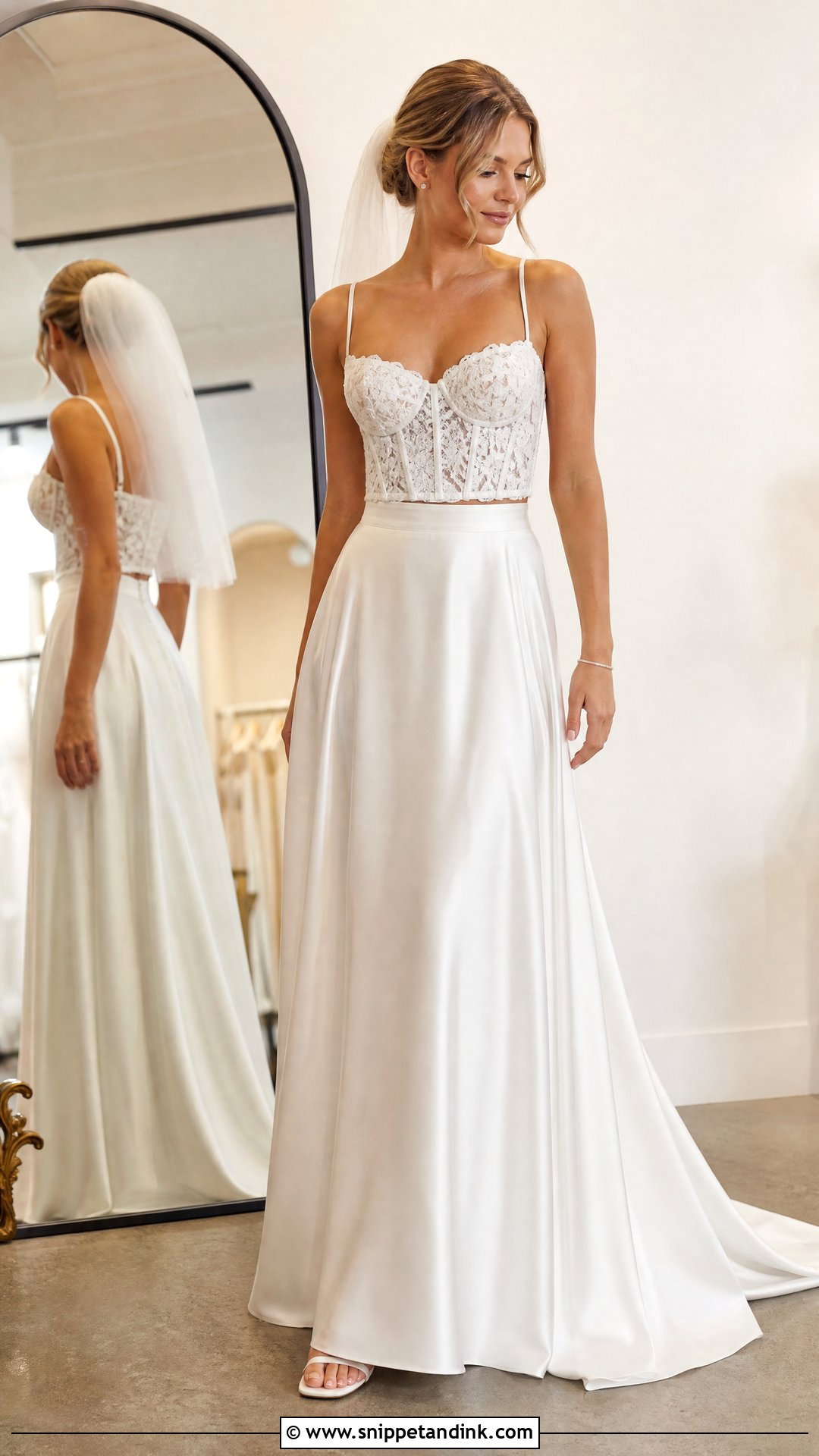
Two-piece dresses feel modern and give you more control over fit, because top and skirt can be sized separately. Try a fitted corset or structured top with a high-waisted satin, crepe or tulle skirt, plus low heels, a short veil, studs and a slim bracelet. Stand, sit and raise your arms; the gap between the pieces should stay where you want it. Ask whether they can be hooked together during alterations. Compare matching fabrics with mixed textures such as lace over satin, and try a topper or jacket over it too. Shown properly, it reads as one planned outfit.
19. Mini Wedding Dress With Bow Heels
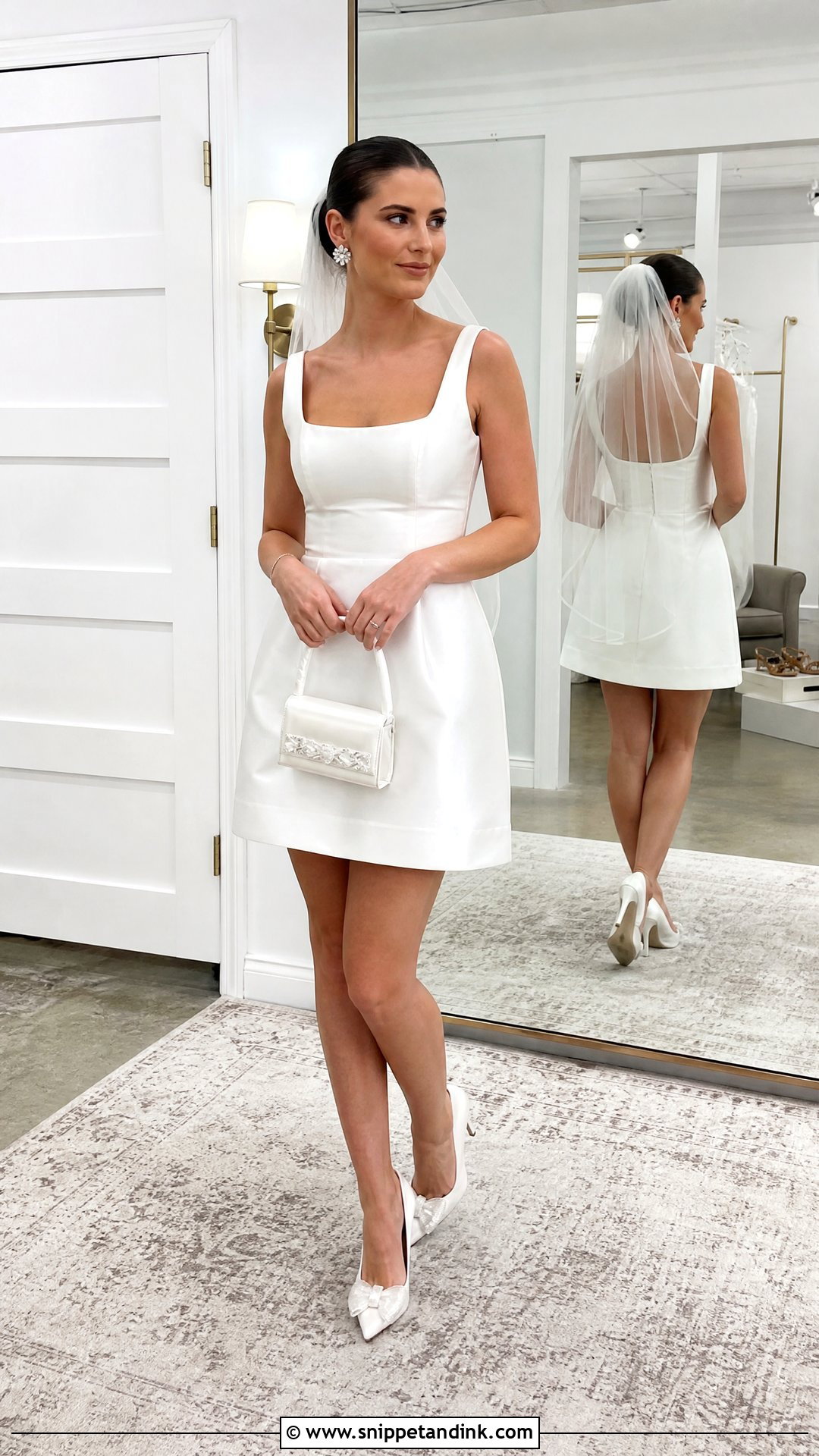
Minis cover a lot of ground: a register office outfit, a reception change or a playful second look. Try a structured satin mini with a square neck, a long-sleeve shift or a lightly embellished A-line, with bow heels, statement earrings, a short veil and a small bag. With legs and shoes fully visible, check the hem walking, sitting and stepping up onto a stair. A mini that is fine standing can ride up badly when you sit. If the dress has a big bow or textured fabric, keep accessories simple. For more cover, try sheer tights, a tailored jacket or a removable overskirt for the entrance.
20. Vintage Wedding Dress With Birdcage Veil
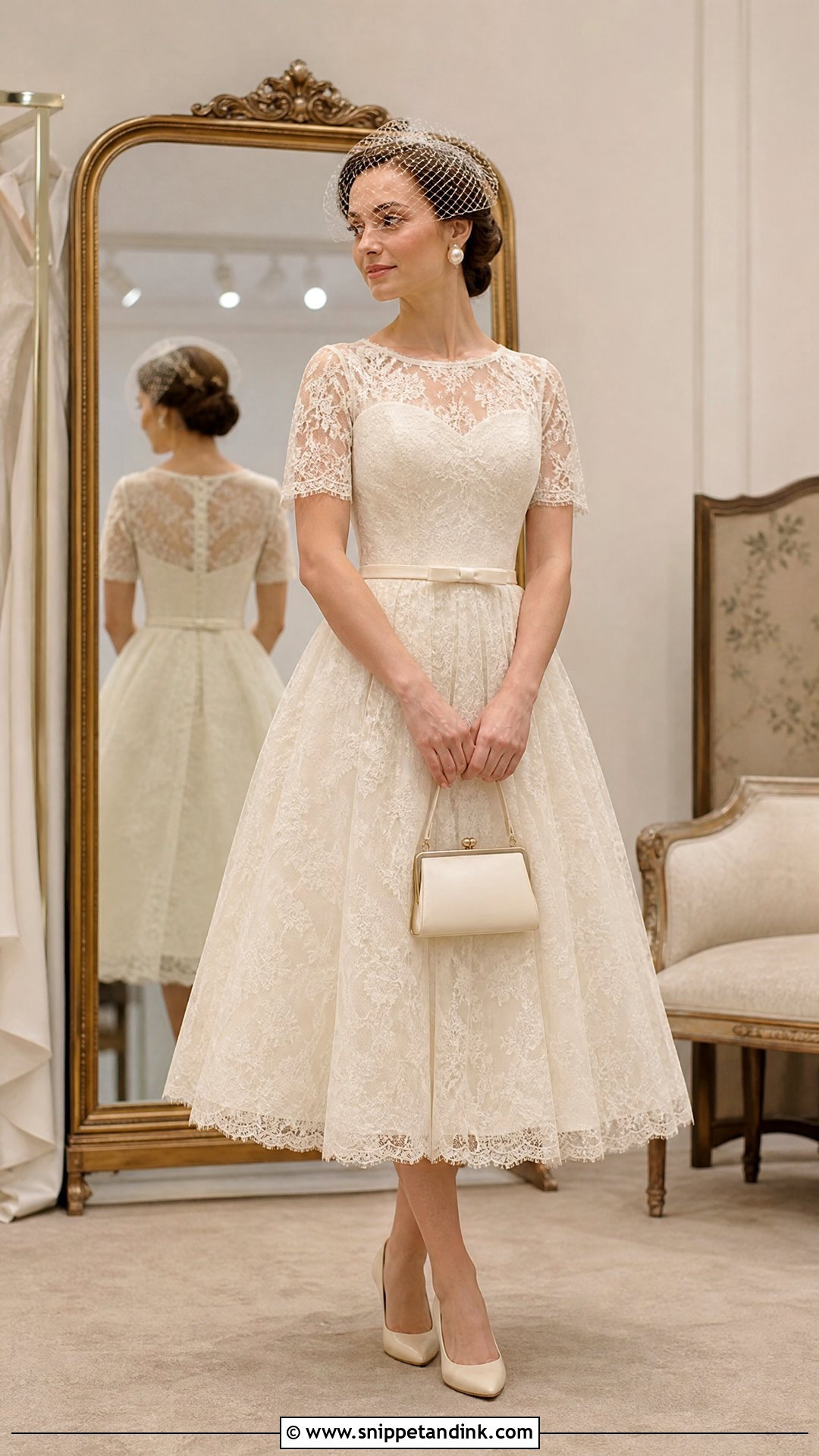
Try a vintage-inspired dress if you keep saving pictures from another era. A bias-cut satin gown, a tea-length lace dress or a fitted design with covered buttons and soft sleeves suits a birdcage veil, pearl earrings, classic pumps and a structured mini bag. Pick one or two period features and keep the rest clean; stacking references tips into costume. Preloved and genuinely vintage gowns are getting a lot of interest, and they’re a good way to give a dress another life. Examine older fabrics closely, because yellowed lining, weak seams or brittle lace need restoration and can limit alterations. Then try it with modern accessories to see which version feels like you.
Questions Worth Asking at the Order Desk
Saying yes is exciting, and it’s easy to sign without understanding what you’re agreeing to. I’d ask these out loud before handing over a deposit:
- What is the estimated delivery date, and what happens if it arrives late?
- Which size are you ordering, and from which measurements? Bridal sizing usually runs smaller than high-street sizing, so trust the tape, not the label.
- Are alterations included, done in house or referred elsewhere? Ask for a rough idea of typical costs, which vary a lot by gown.
- Can any changes be made at the factory, such as adding sleeves or straps?
- What is the deposit, when is the balance due, and is any of it refundable?
Write the answers down or ask for them on the order form. A clear record of size, colour and delivery date protects you if anything goes astray, and it saves a lot of anxious phone calls later.
The Dress You Didn’t Plan to Try
A good appointment isn’t about trying every dress in the shop. It’s about seeing enough shapes, fabrics, necklines and accessories to learn what makes you comfortable and confident. Use the list above as a loose checklist. Photograph each gown from several angles, walk normally, sit and test your movement. Look at the full styled look, but judge each dress bare as well. And give the unfamiliar shapes a fair turn, because the gown you end up loving often looks nothing like your saved pictures.
You'll Like These Ideas:


Leave a Reply