
Midsize brides often tell me they feel stuck between the sample rack and the plus-size section, and that the dresses they pull never look quite like the pictures. That’s a fitting issue, not a body issue. No shape rule decides your gown. What decides it is how the bodice is built, how heavy the fabric is, and whether the proportions sit right on you after alterations. A-lines, ball gowns and fit-and-flares are still the shapes I pull most, but drop waists, corsets, floral texture and plain modern crepe all deserve a try. Whatever you put on, sit in it, walk, lift your arms and turn round before deciding. Here are 20 beautiful Wedding Dresses for Midsize Brides, each with the alteration details I’d look at.
Bra, Shapewear or Nothing Underneath?
I ask about undergarments at the first appointment, because they change how every dress on this list fits. A bodice altered over one bra will sit differently over another, so decide early and bring the same pieces to every fitting.
- Built-in cups and boning: many structured bodices need nothing else. If the gown has them, try it without a bra first; you may be surprised.
- Longline strapless bra: good for sweetheart and strapless cuts when you want extra lift. It spreads the pressure over the ribs instead of the shoulders.
- Low-back or plunge bras: needed for open backs and deep Vs. If none works for you, a seamstress can sew cups into the dress instead.
- Shapewear: optional, never required. If you wear it, choose a smooth, bonded-edge style and make sure its edge won’t show through crepe or satin.
Buy undergarments before your first alteration appointment, not the week before the wedding. Changing them after the dress has been fitted can undo the work.
1. A-Line Wedding Dress With Lace Bodice
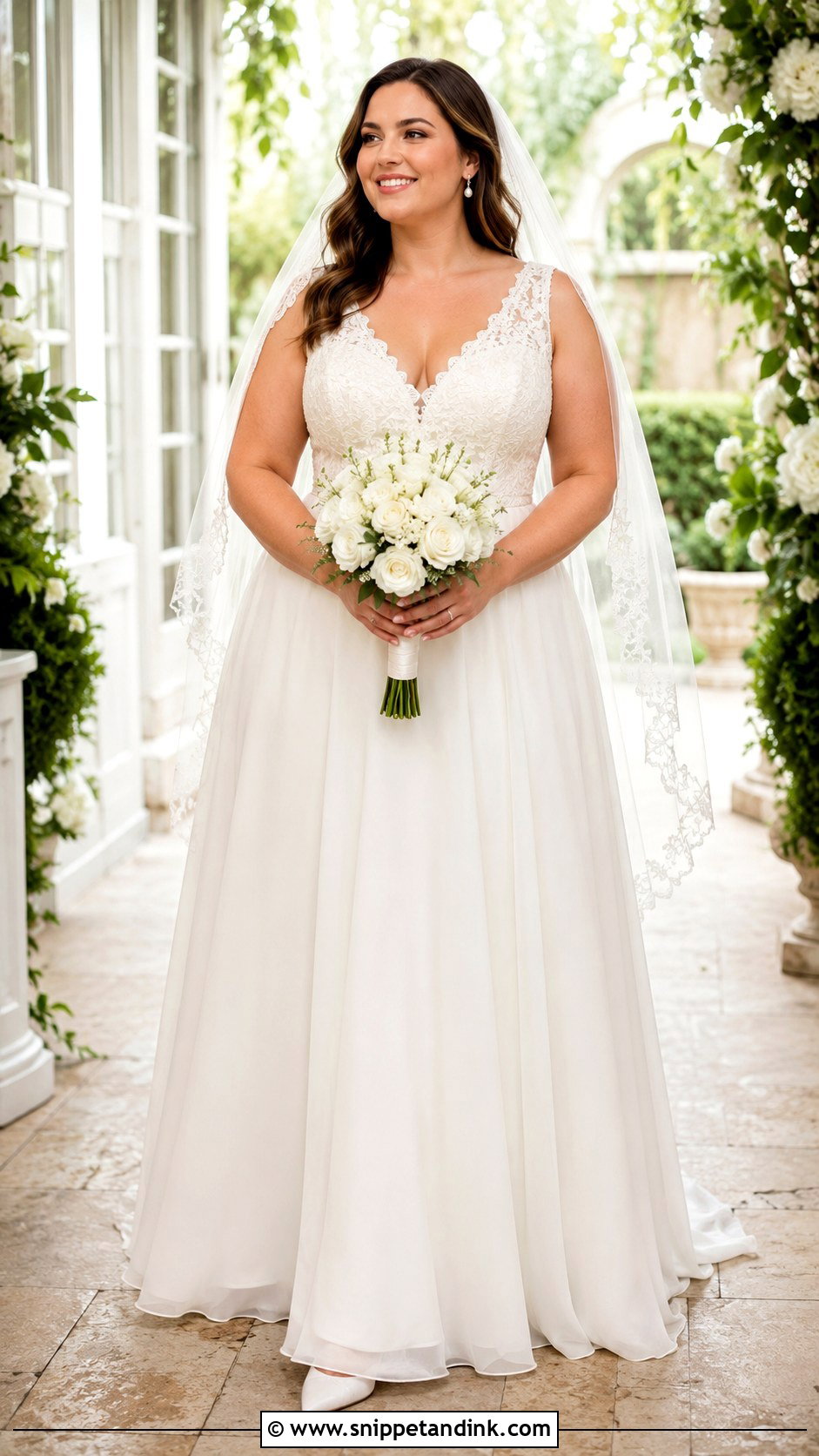
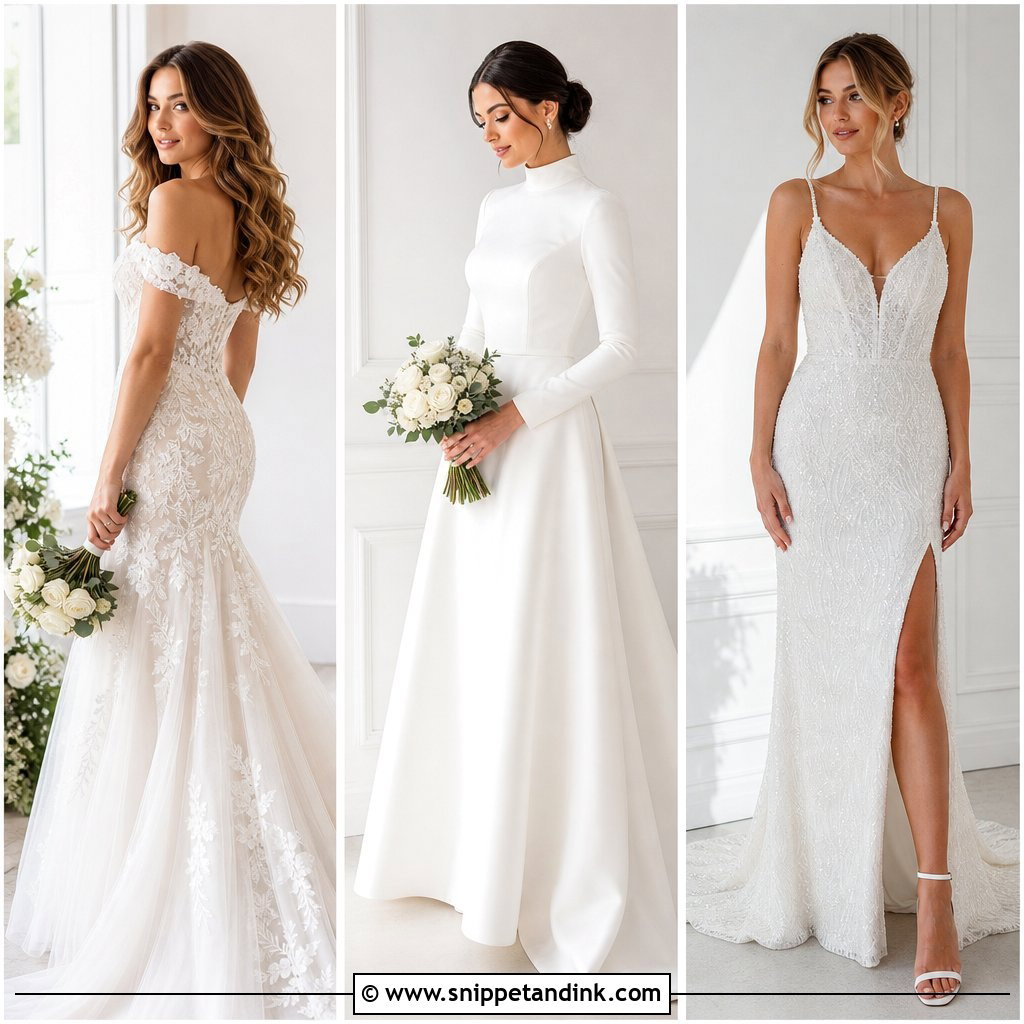
Start with this one at your first appointment. A fitted lace bodice into a soft chiffon or tulle skirt is easy to wear, and it shows quickly where your natural waist sits relative to the dress’s waist seam. That seam should land at your narrowest point; when it lands a little high or low, the whole dress looks off and nobody can say why. Wide straps, a scoop or a modest V leave room for a proper bra if you want one. A fingertip veil edged in lace and a low bun keep it light. At the fitting, watch the skirt over your hips. It should glide, not drag or puff.
2. Satin Ball Gown Wedding Dress
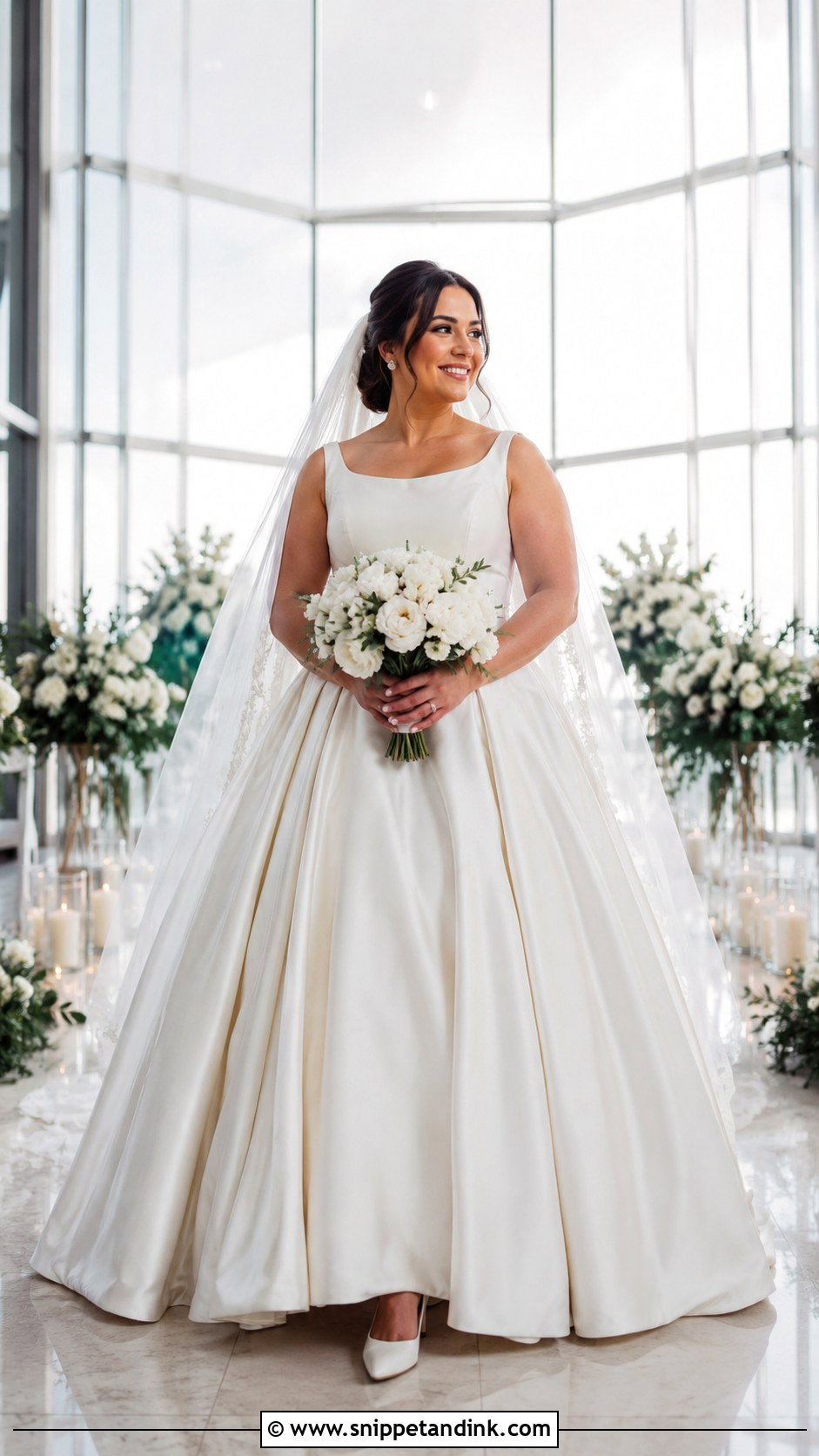
Satin ball gowns look like the wedding dresses most of us drew as children, and they’re surprisingly comfortable because the skirt stands away from the body. The bodice is the bit to get right: firm boning, interior hooks that hold, and a neckline that stays put without you hitching it up all evening. Square or softly curved necklines suit it best. I always raise the bustle early with this dress. A full satin skirt with a train needs one for the reception, and a bustle with too few points sags. Ask your seamstress for one that a bridesmaid can fasten in a couple of minutes.
3. Fit-And-Flare Wedding Dress With Sleeves
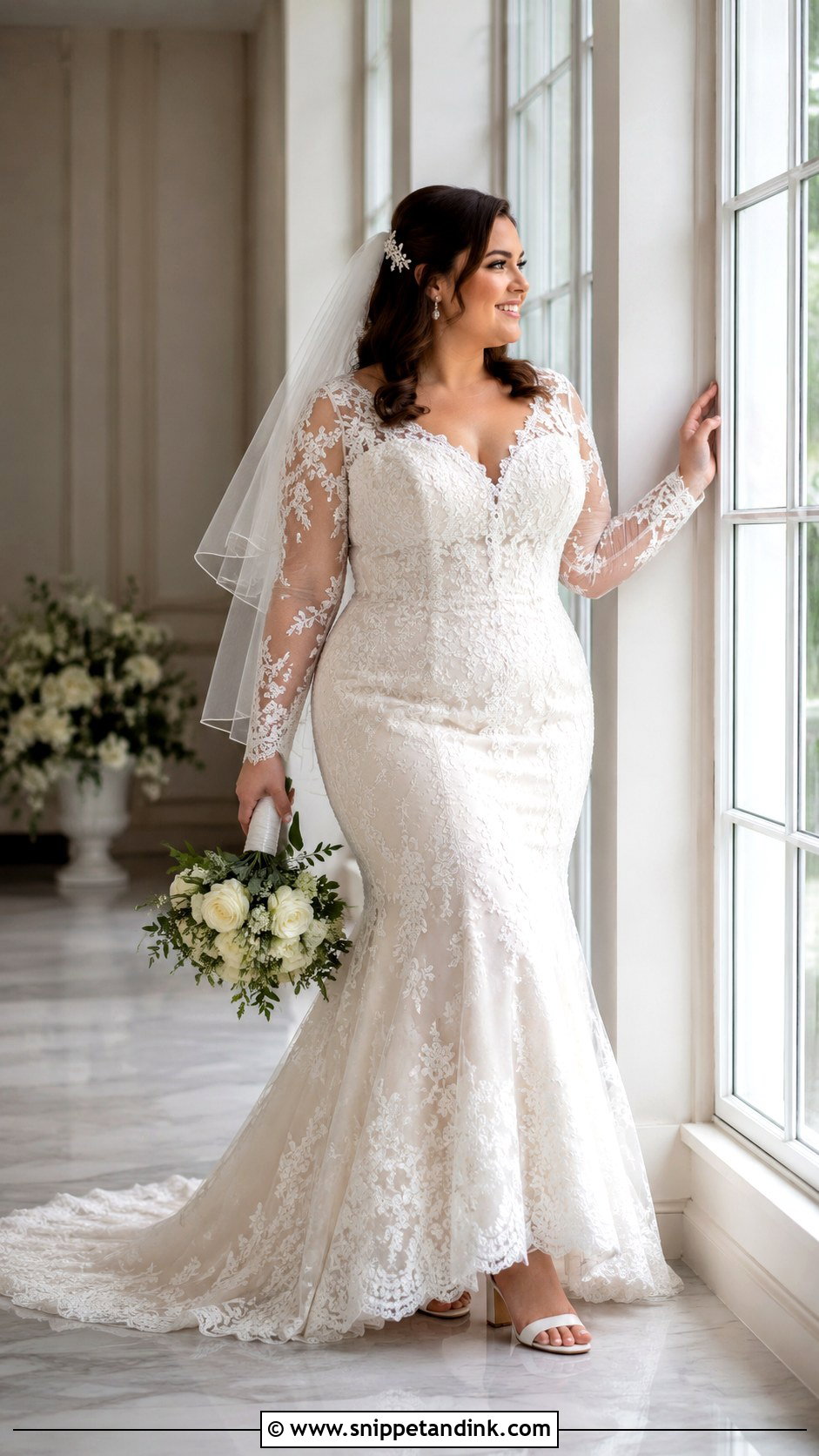
Here’s where fit-and-flare earns its place on a midsize figure: it shows the shape of bust, waist and hips but lets the skirt open around the lower thigh instead of clamping the knees. Stretch crepe, lined lace and flexible satin give the smoothest fit. Sheer lace sleeves add detail and a little coverage without bulk. Seam placement is what I study here, because a side seam that’s slightly off makes the hip line look uneven. Turn slowly in front of the mirror. Then sit for a few minutes and take a long stride, since the lining should stay comfortable and the skirt should never stop you mid-step.
4. Off-The-Shoulder Wedding Dress
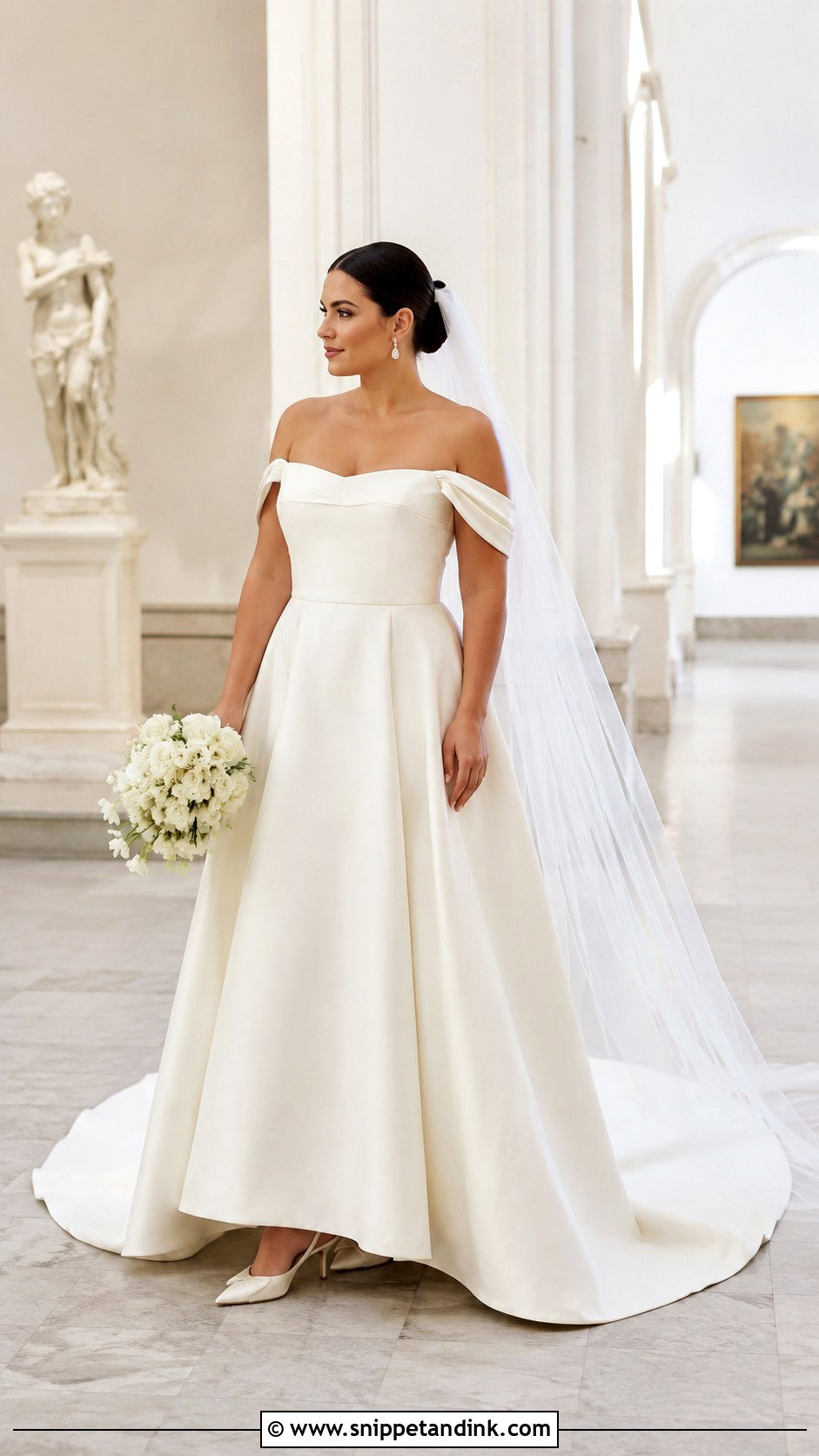
Off-the-shoulder is a romantic frame for shoulders and collarbones, but it relies entirely on what’s underneath it. I’d only choose one with an internal corset, so the neckline doesn’t have to hold anything up. The draped sleeves should rest on your arms, not grip them. Pair it with a structured A-line or ball gown, teardrop earrings and a sleek chignon. At fittings, hug someone, sit, and lift your bouquet to chest height. If the sleeves slide, the neckline usually needs taking in slightly at the back; if they pinch, they need letting out. Both are routine.
5. Long-Sleeve Lace Wedding Dress
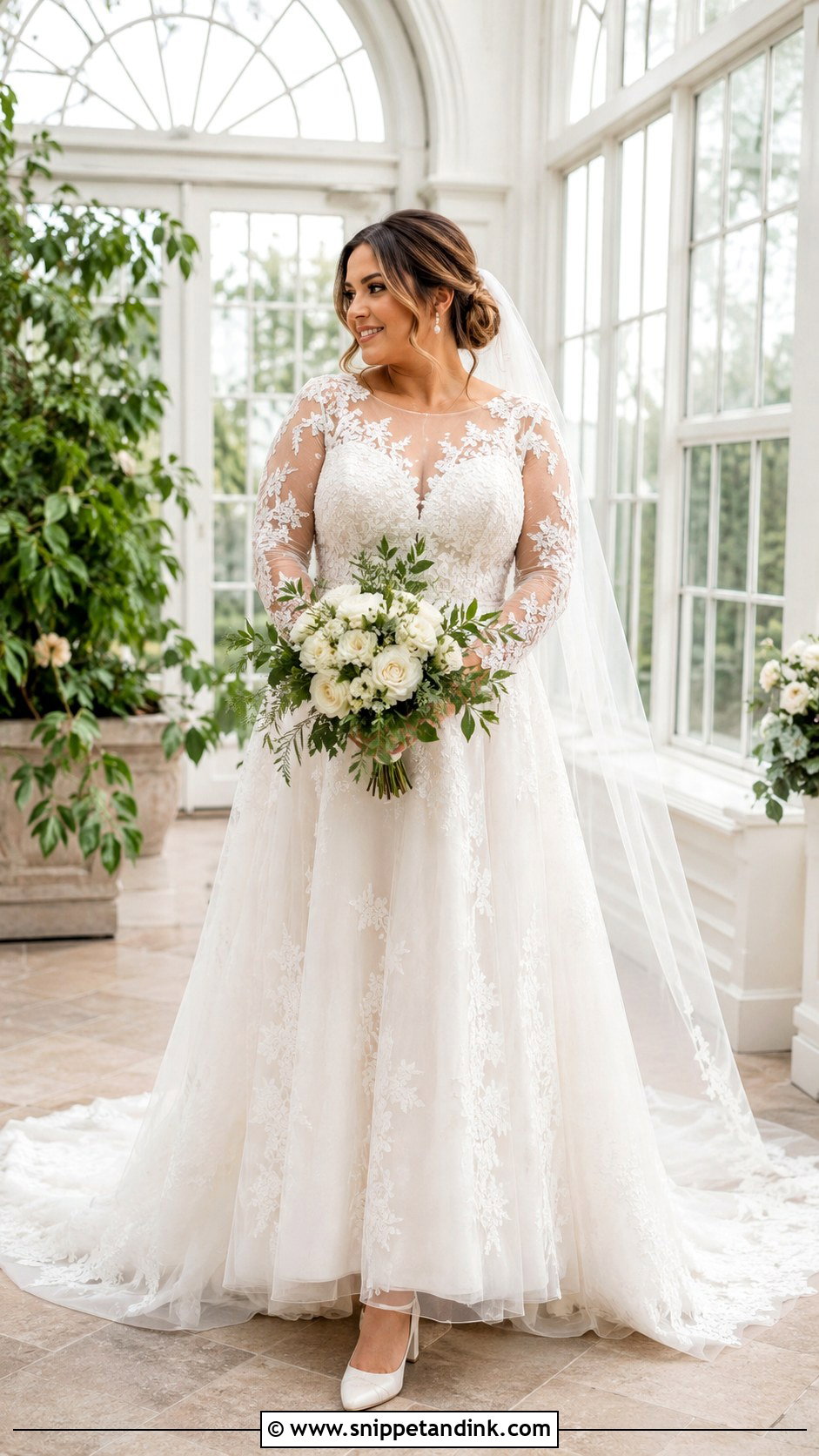
Autumn and winter brides often want sleeves, and a long-sleeve lace gown gives warmth without feeling buttoned up. A fitted bodice with an A-line skirt defines the waist, and illusion-lined sleeves keep the lace delicate. Look closely at the lace across the shoulders: on better gowns, motifs flow over the seams, while cheaper ones stop abruptly and look patched. A lining close to your skin tone makes the pattern stand out. Bend your elbows at the fitting. Sleeves cut too slim through the upper arm bunch at the elbow and pull the shoulder seam.
6. Square-Neck Wedding Dress
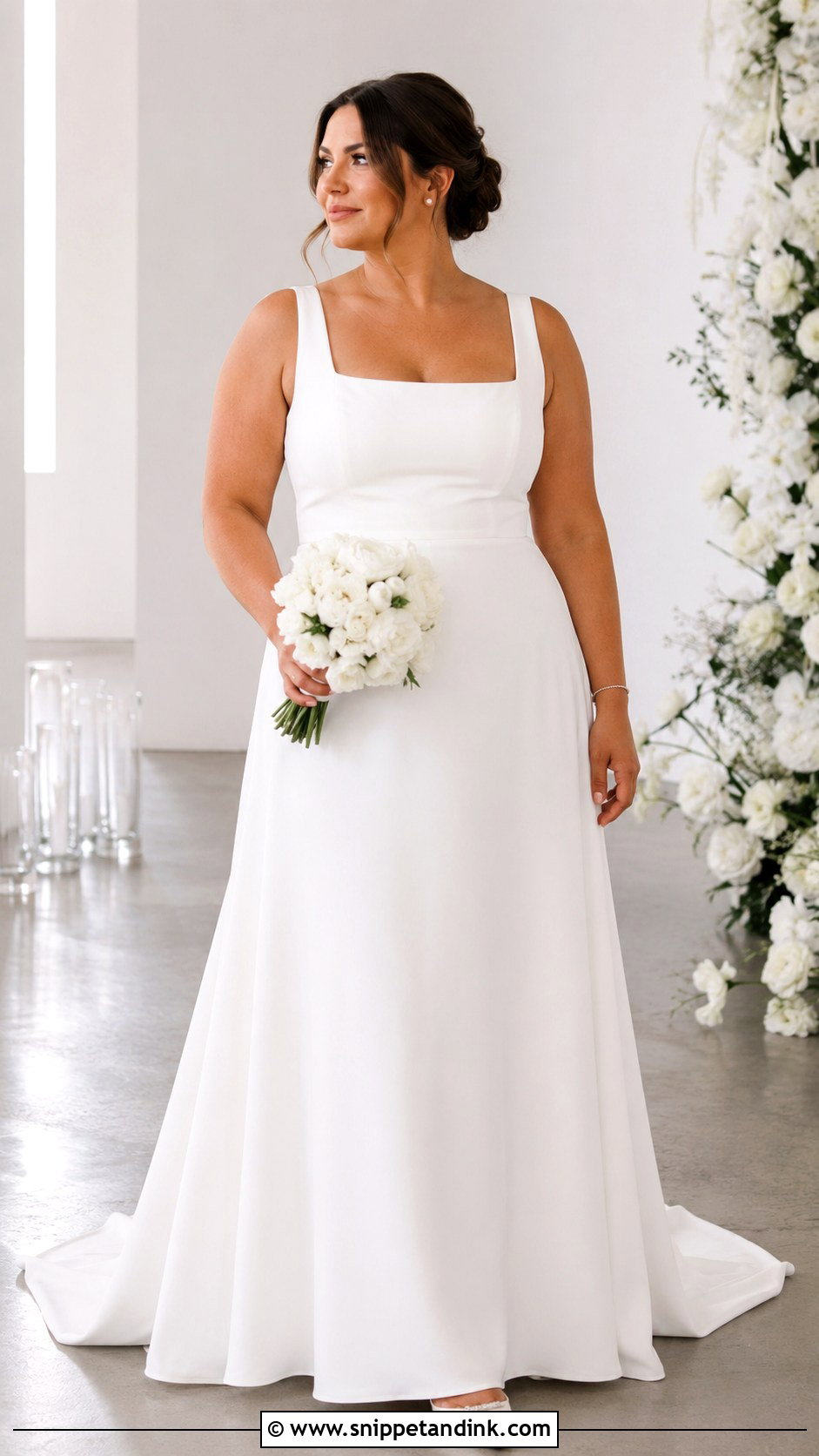
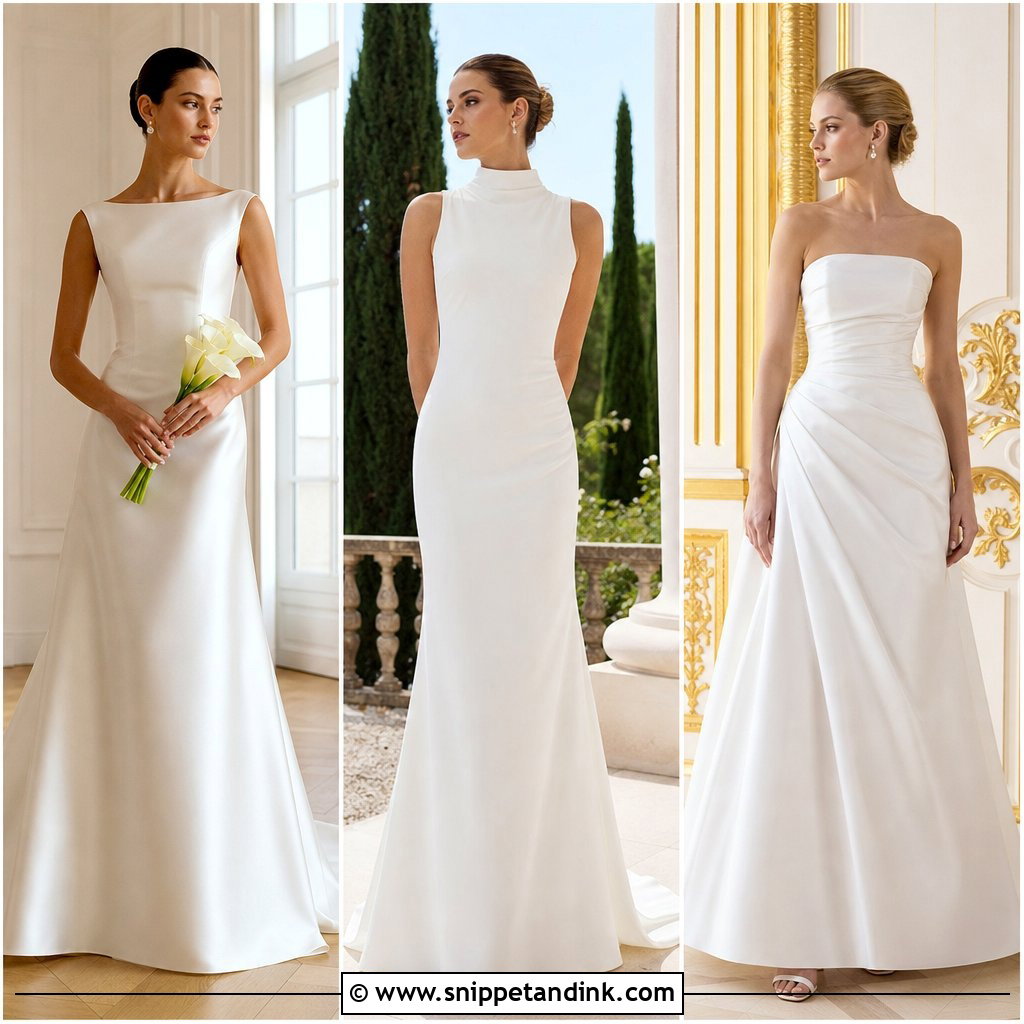
Simple and modern, a square neck frames the collarbones and pairs with wide straps, short sleeves or a sleeveless bodice. Matte crepe or structured satin with an A-line skirt keeps everything clean. Go light on accessories, since the neckline does the work: pearl studs, a narrow bracelet and low pointed pumps. The square neck’s weak spot is the front edge. It should lie flat when you lean forward to pick something up; if it stands away from your chest or gaps at the underarm, ask for it to be taken in at the straps. A good seamstress fixes it without changing the look.
7. Sweetheart Neckline Wedding Dress
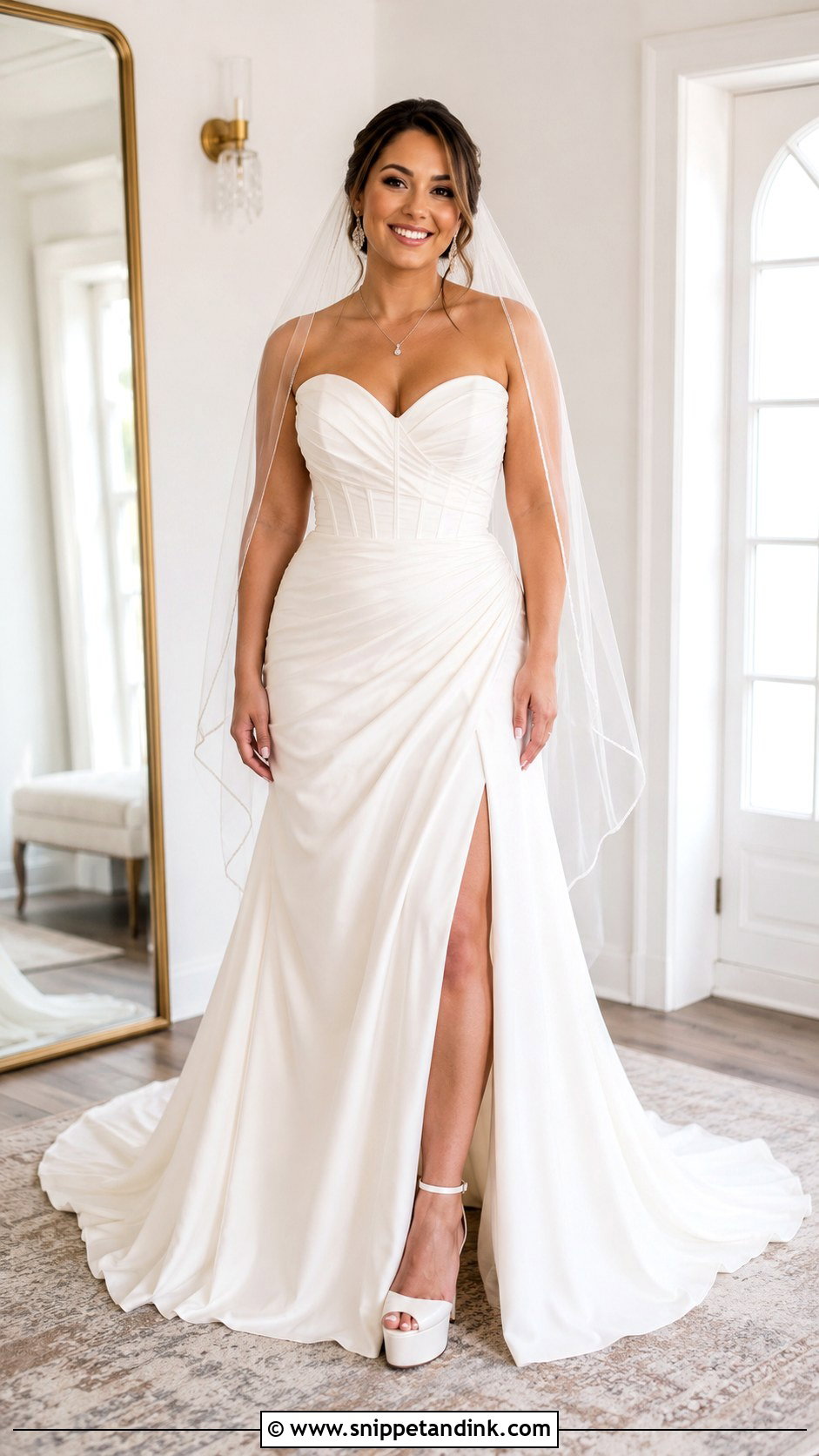
Sweetheart bodices curve around the bust and suit both full and slimmer skirts. I’d look for boning, moulded cups and a firm back closure rather than trusting a strapless bra to do the job, because a bra slips while a built-in bodice doesn’t. Soft ruching gives a little ease. An A-line skirt keeps it balanced, and a half-up hairstyle draws the eye toward the neckline. Sit in it for several minutes during your fitting, not just a few seconds. If the top edge starts dipping at the centre or digs in at the sides, the bodice needs adjusting before you commit.
8. V-Neck Wedding Dress With Chiffon Skirt
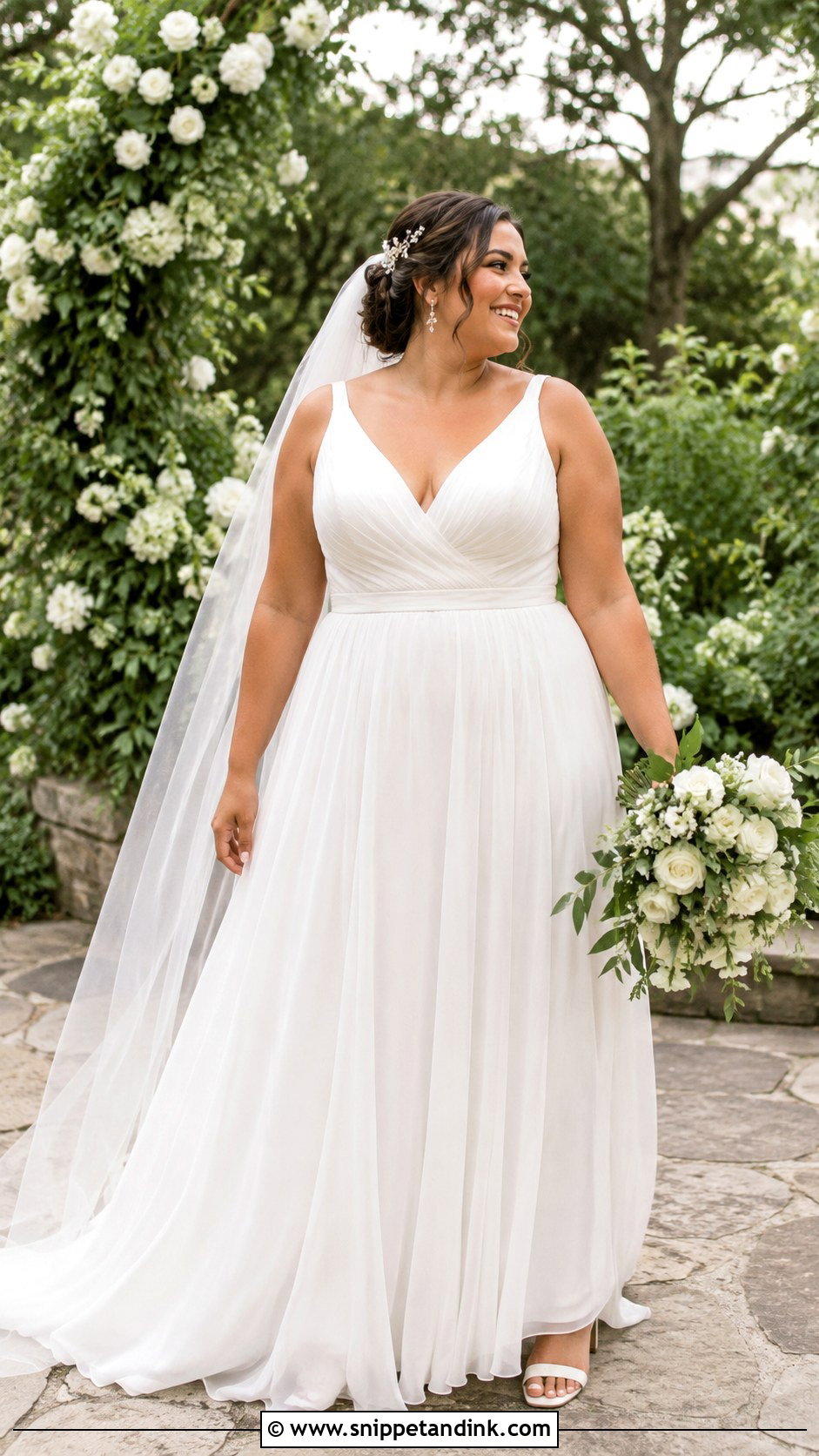
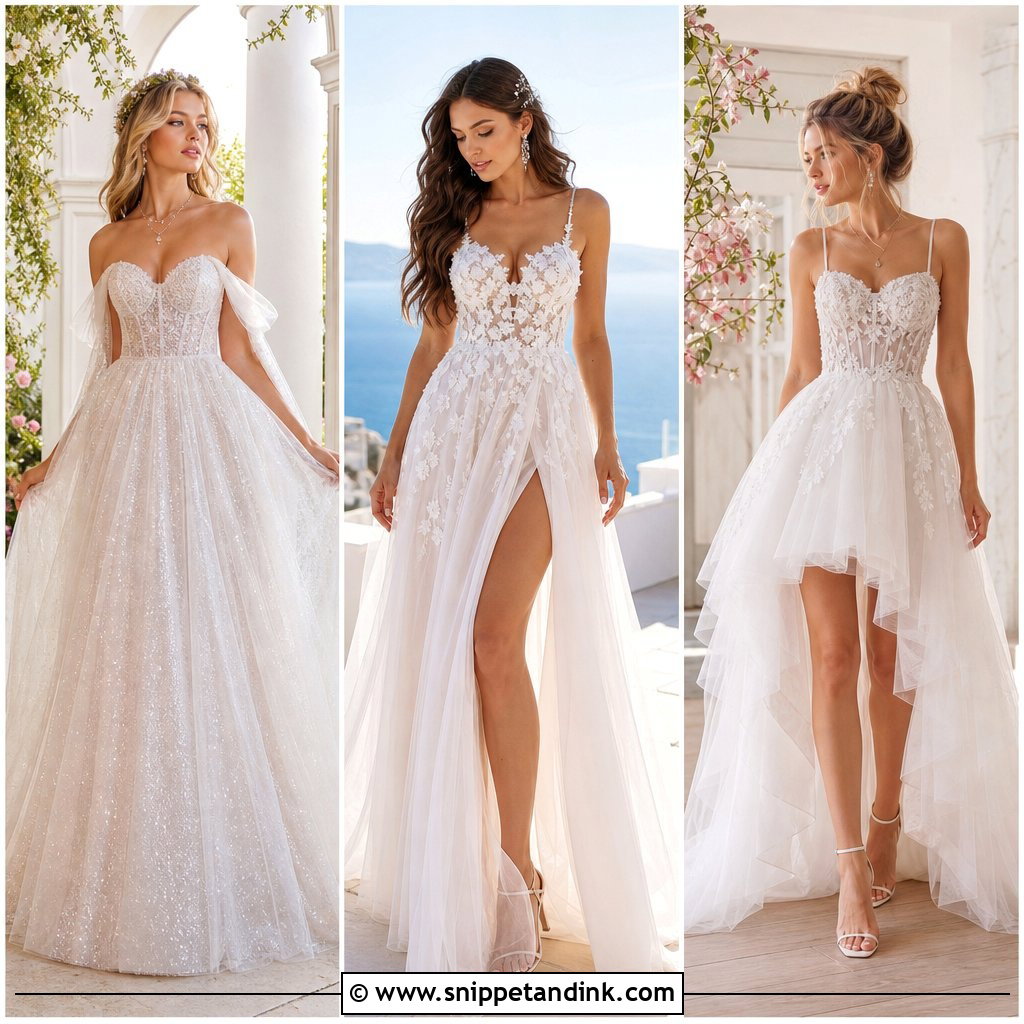
Chiffon makes a V-neck dress feel weightless, which is exactly what you want for a garden, beach or destination wedding. A lined bodice with supportive straps and a V at a depth you’re comfortable with is the base. The skirt can be gathered or panelled, as long as it falls without stiffness. My concern outdoors is the hem: chiffon picks up sand and grass, so keep it at a practical length, and think about heel protectors or bridal flats on lawns. Lean forward at the fitting. If the V opens, a hidden strip of mesh or a small modesty panel fixes it invisibly.
9. Boho Wedding Dress With Flutter Sleeves
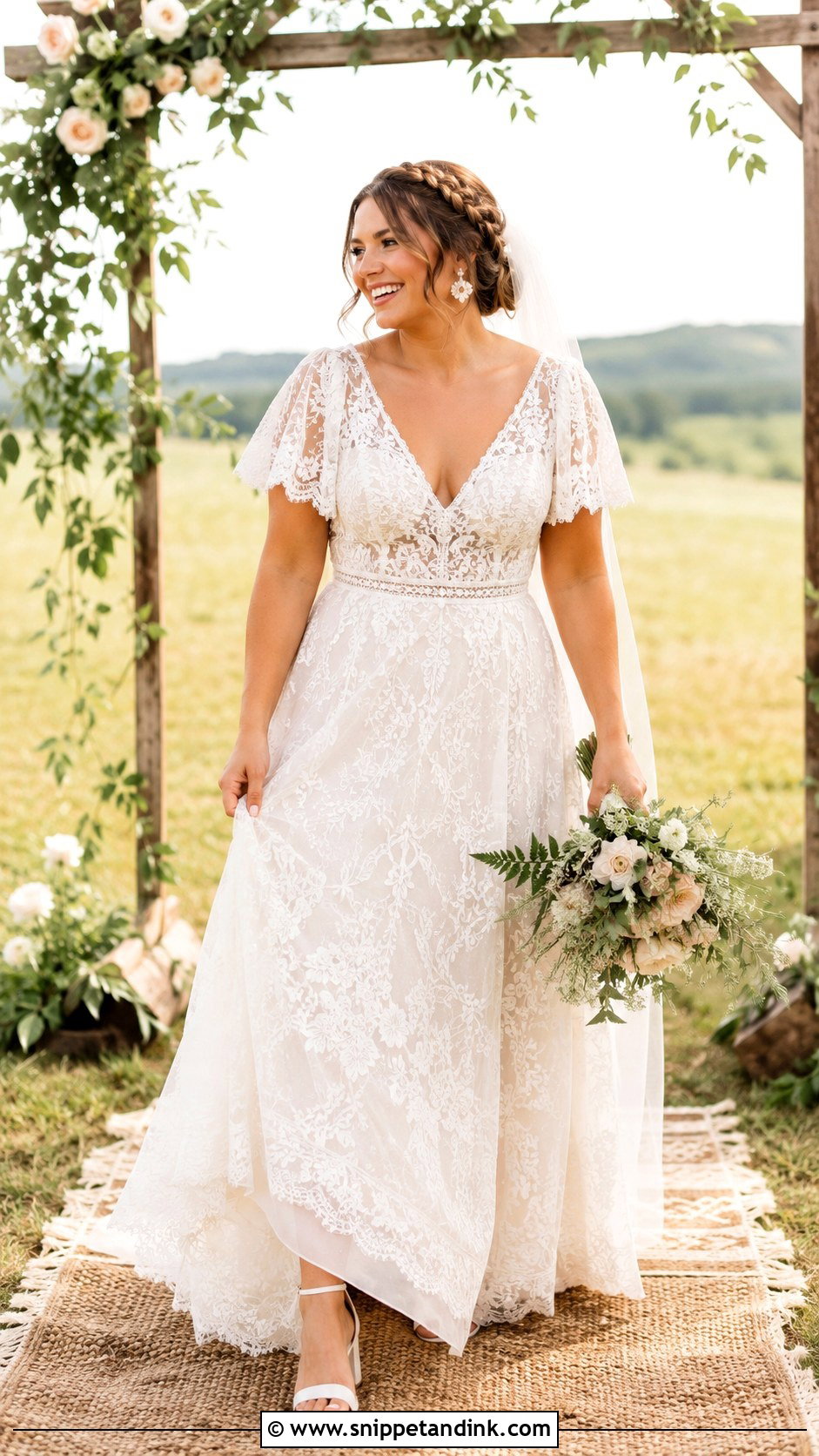
Flutter sleeves move with you and give light coverage at the shoulder without the restriction of a set-in sleeve, which makes this a relaxed choice for outdoor ceremonies. Soft lace or embroidered tulle over a breathable lining, a gently defined waist and an A-line skirt are the base. Pair it with a loose braid and a simple veil tucked under it. I’d hold back on rustic extras like wide hats and heavy leather, which quickly tip into costume. The two practical checks: the dress should skim rather than cling, and the lining must run long enough that the skirt isn’t see-through when you stand in sunlight.
10. Minimalist Crepe Wedding Dress
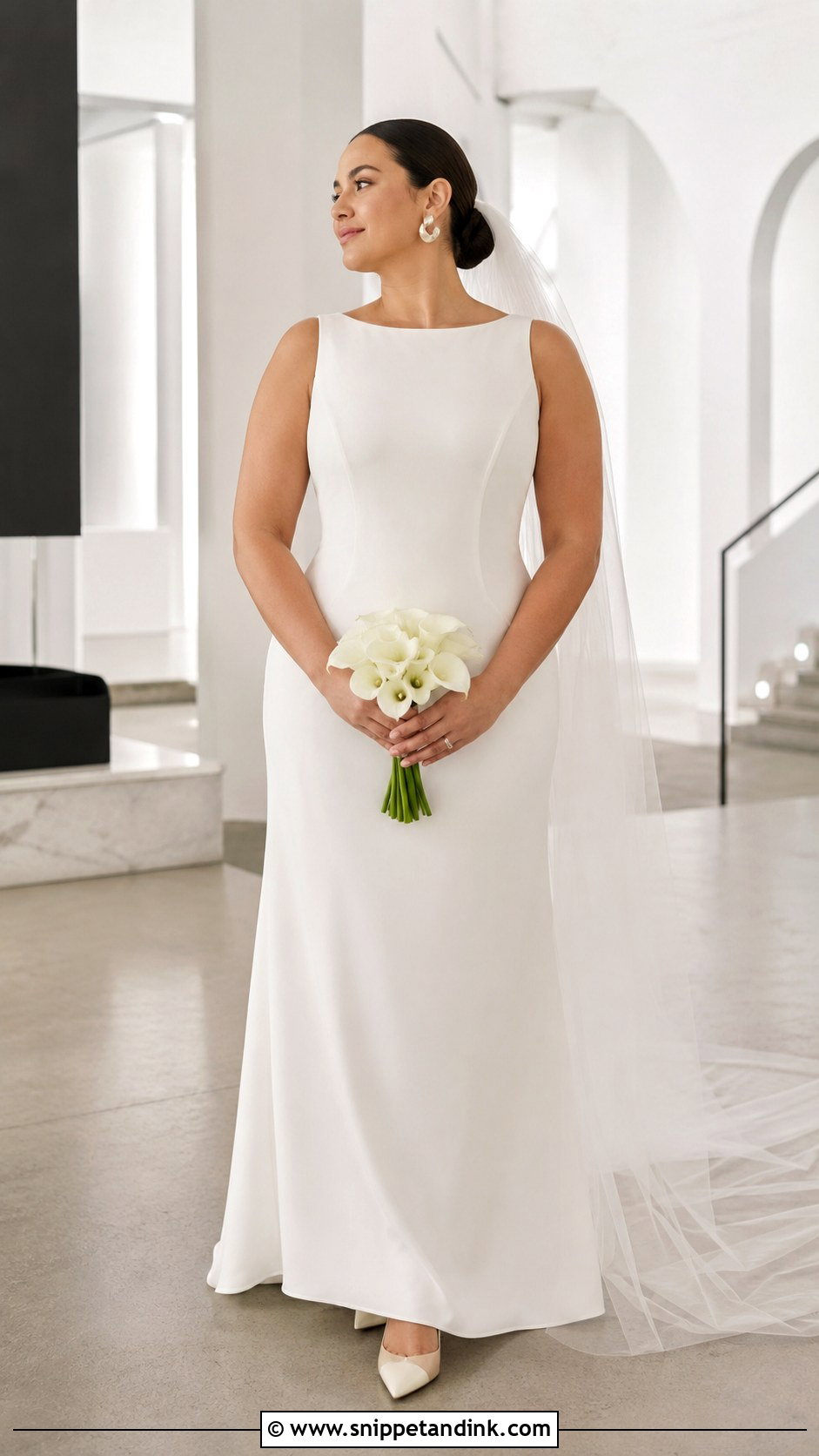
No lace, no sparkle, no tulle. A minimalist crepe dress relies on precise construction, and a midsize body shows off good tailoring well. Try a sleeveless column or a gently fitted A-line with a bateau, square or high scoop neckline. Lined crepe with some weight falls smoothly and feels secure. Because there’s nothing decorative to hide behind, I go over the side seams, the zip and the waist slowly. Darts placed correctly make the difference between a dress that looks expensive and one that looks plain. A long plain veil and sculptural earrings suit it.
11. Empire Waist Wedding Dress
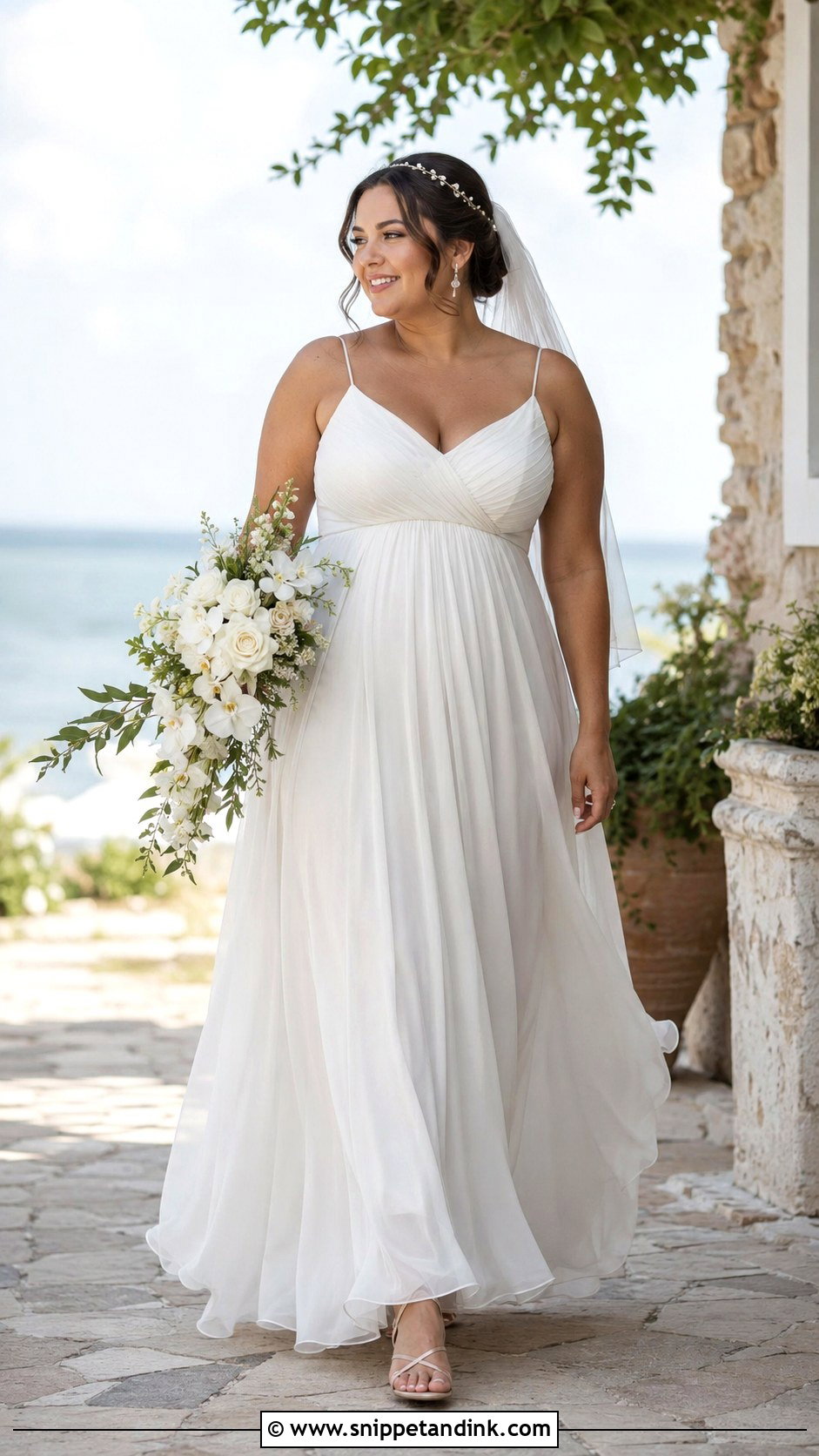
Empire waists feel light because the skirt starts just under the bust and floats over the torso. They suit chiffon, soft tulle and light satin. The risk is a loose bodice: without enough structure above that seam, the upper body loses definition and the proportions look blurry. When trying on the gown, check that the raised seam sits level all the way round and doesn’t press into your ribs when you breathe in. The skirt should drop cleanly rather than bunching in heavy gathers under the bust. A slim hair vine and narrow chapel veil echo the vertical line.
12. Tea-Length Wedding Dress
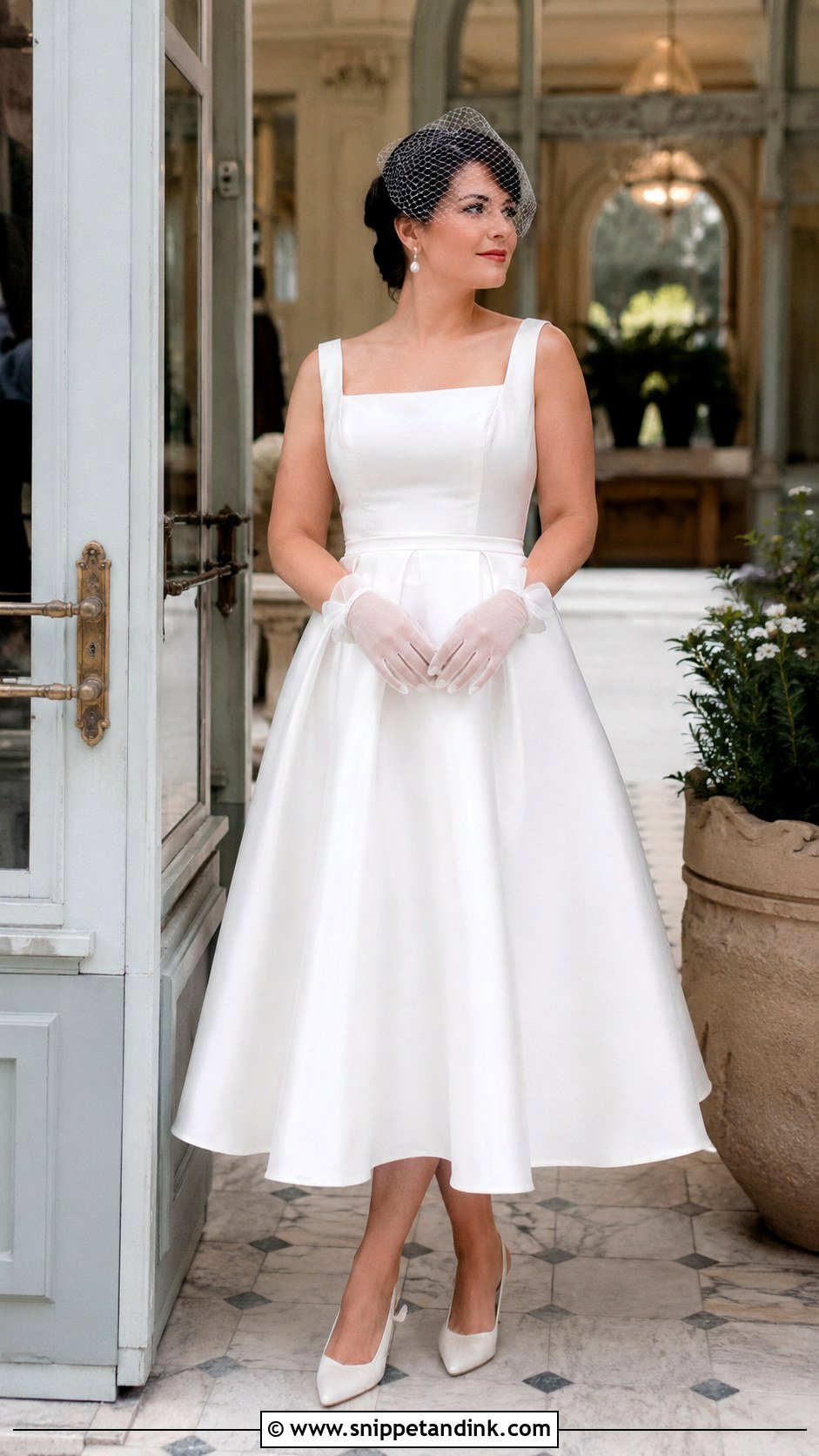
Tea length has a vintage feel and lets your shoes take a starring role. A fitted bodice at the natural waist with a skirt ending between lower calf and ankle is the classic version. Satin, mikado or layered organza hold their shape; tulle moves more softly. Short gloves and a birdcage veil lean vintage, so I’d keep other accessories modern to avoid looking theatrical. Hem placement makes or breaks this dress, as a few centimetres change the proportions of the leg. Wear your wedding shoes to every fitting, and look at the hem from the side as well as the front.
13. Floral Appliqué Wedding Dress
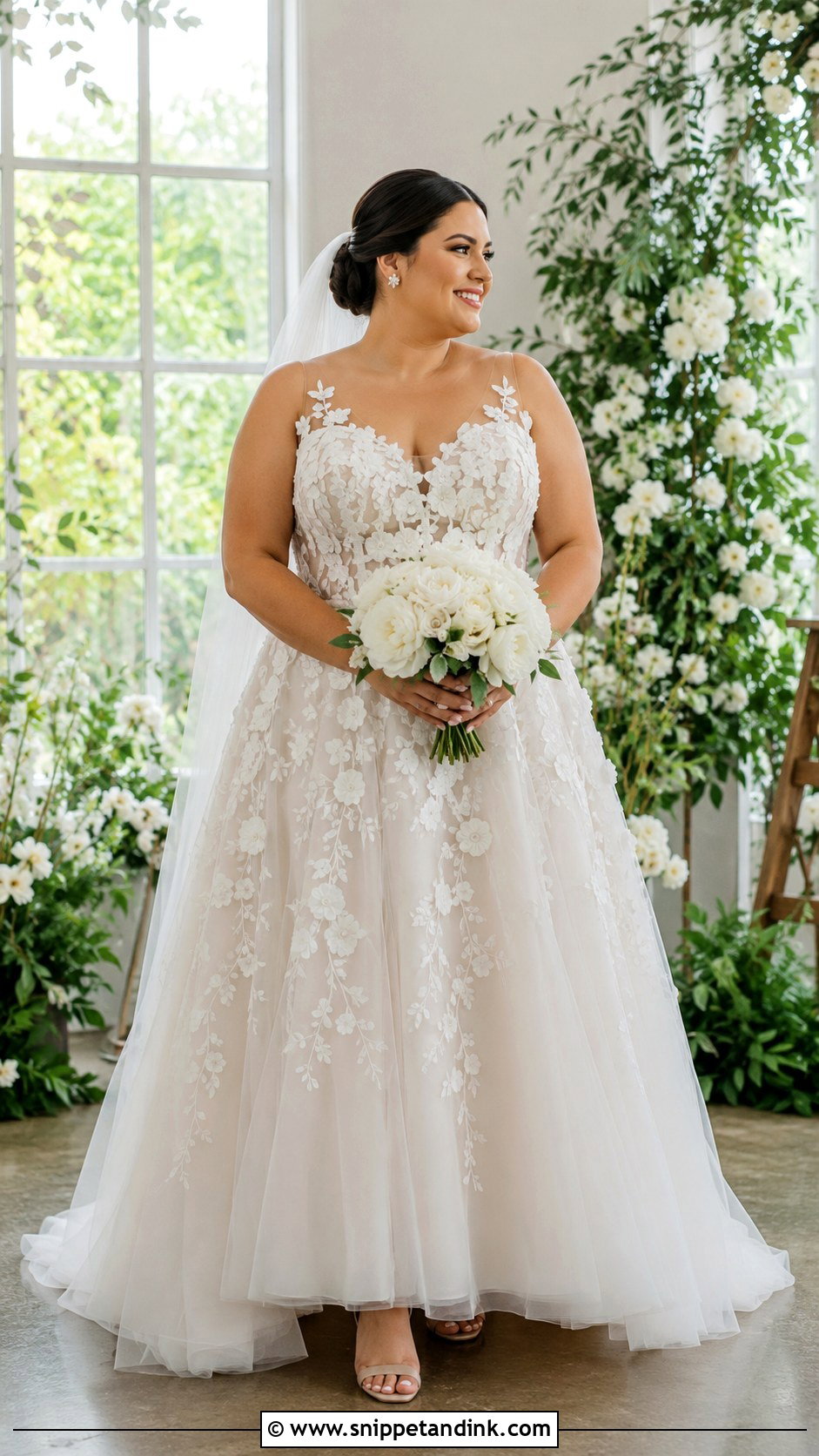
Floral appliqués turn a simple gown into something detailed. I prefer flowers concentrated on the bodice that scatter down onto the skirt, so the dress has texture without being covered head to toe. Check the lining under the appliqués, because the back of embroidery can scratch over a long day. Keep earrings small and the veil plain so the flowers stay visible. During alterations, look closely at the flowers around the waist, underarms and zip. Loose petals can be re-stitched, and a bulky motif sitting right on a seam can often be moved a little to give a cleaner line.
14. Corset Wedding Dress With Full Skirt
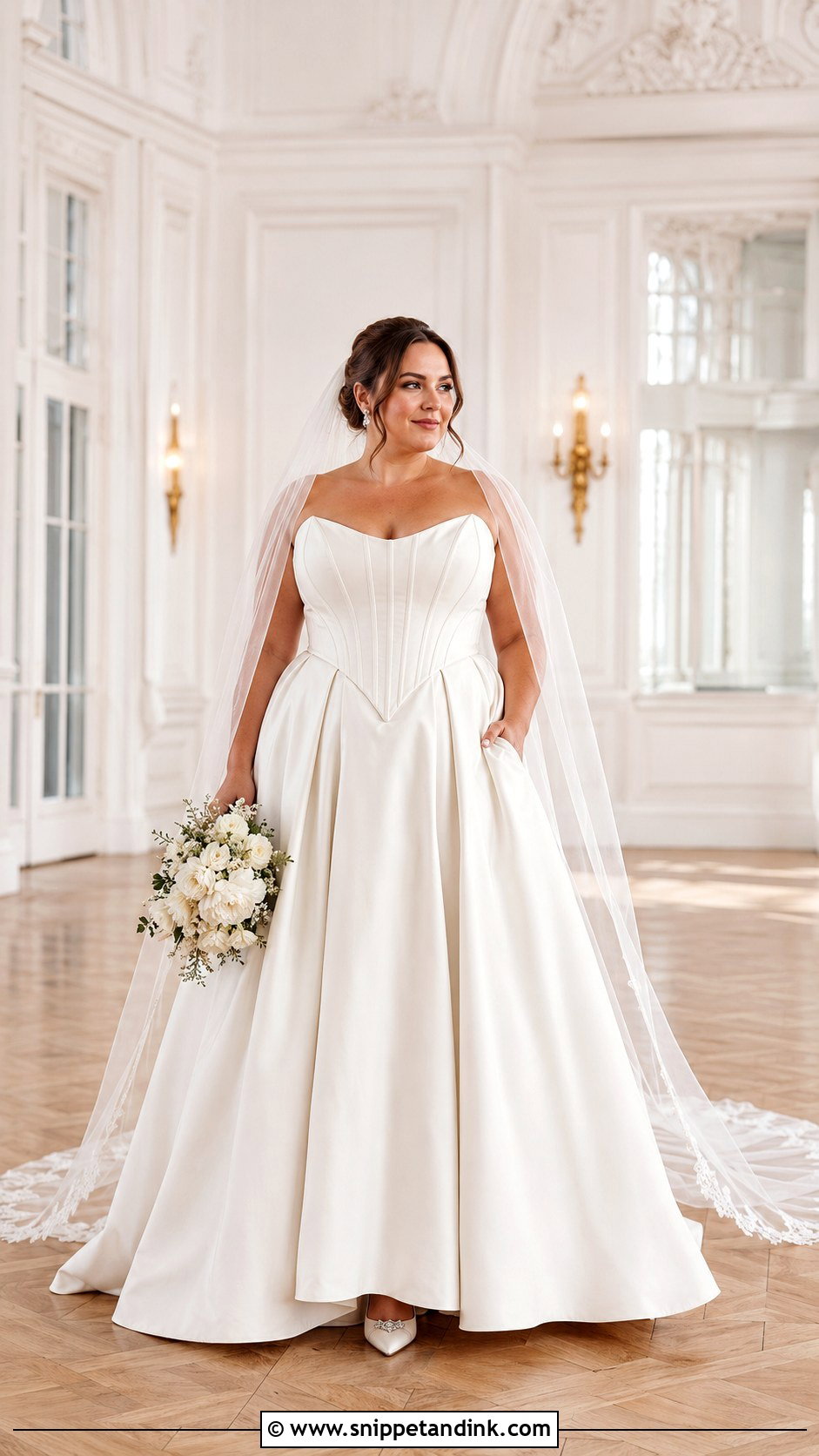
A properly fitted corset is one of the most comfortable bodices you can wear, which surprises a lot of brides. Look for a longline bodice with flexible boning, secure cups and either lacing or a well-tailored zip at the back, then a full satin or tulle skirt from the waist. The rule I give every bride: support comes from construction, never from pulling the laces tighter. At your appointment, sit, eat something, breathe deeply and raise your arms. If the boning digs into your hips or ribs, ask for adjustments; a corset that hurts at a fitting will hurt much more by the evening.

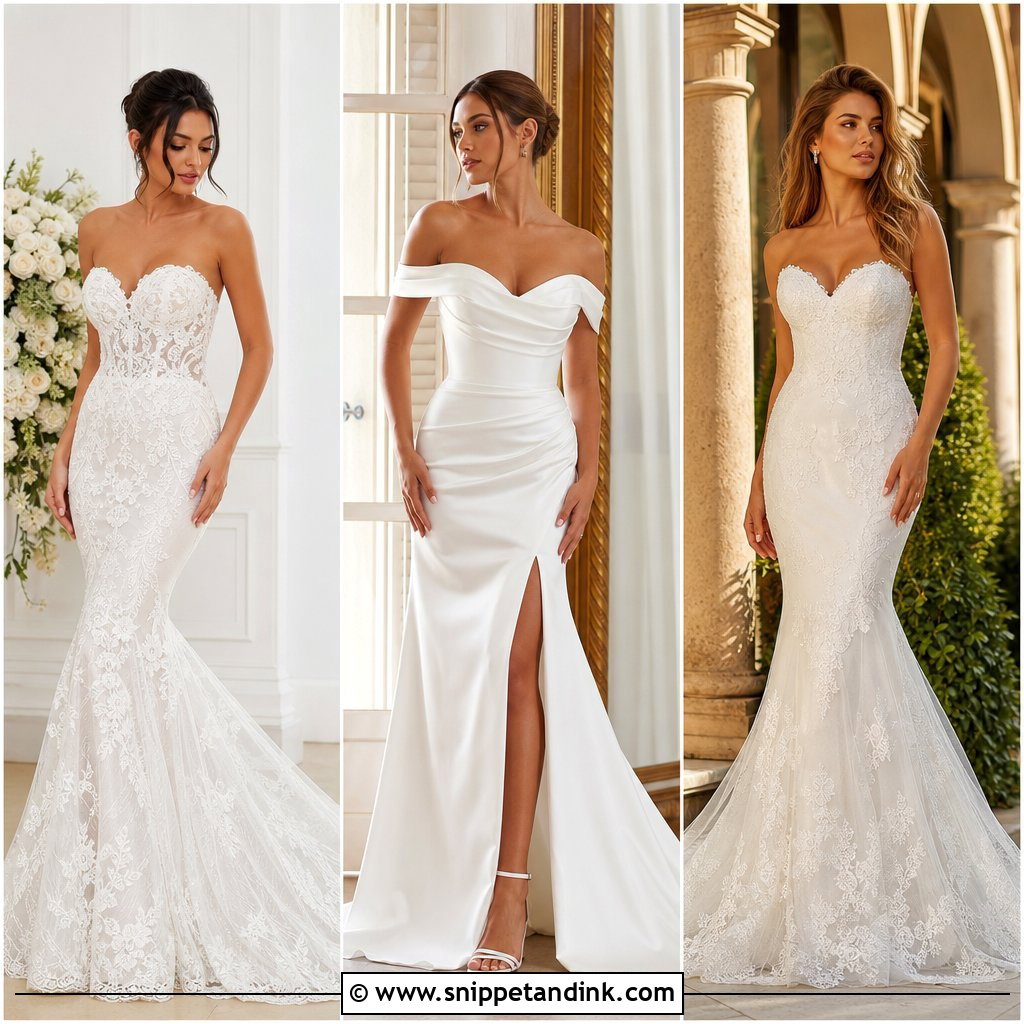

15. Wrap Wedding Dress With Draped Waist
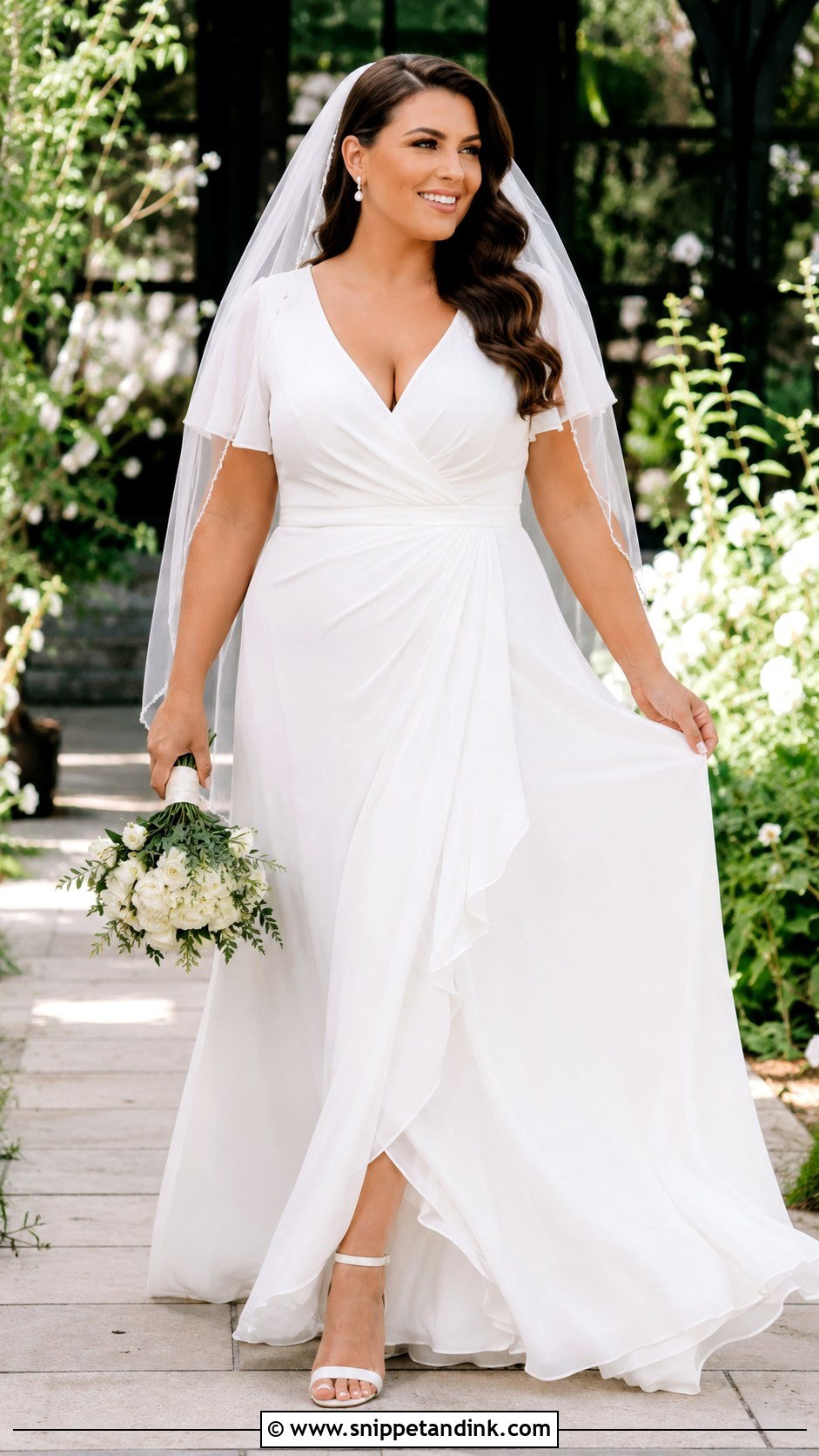
True wrap dresses shift as you move, so for a wedding I’d always choose a faux-wrap: the crossover is sewn down, with an internal closure and a supportive lining. A V-neck, a softly draped waist and a fluid A-line skirt give diagonal movement without stiffness. Keep the waist tie flat rather than a big bow, which adds bulk where you don’t want it. The test at alterations is simple. Sit down and lean forward. If the crossover opens, it needs a hidden snap or a few stitches, placed where they can’t be seen from the front or the side.
16. Drop-Waist Wedding Dress
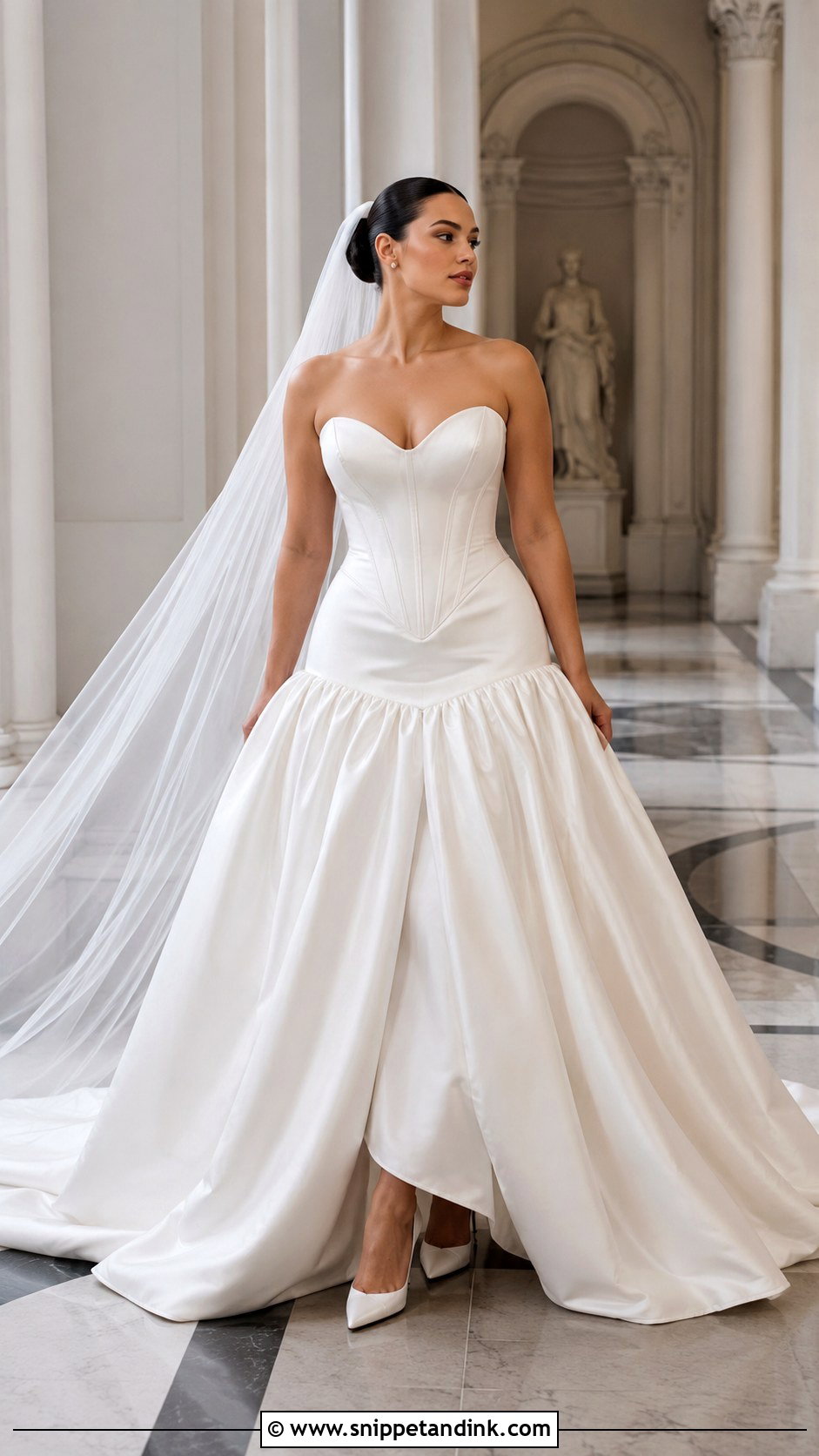
A drop-waist wedding dress lengthens the torso, with the bodice running down to the upper hips before the skirt opens. On a midsize body, I prefer a curved basque or softly dropped seam over a straight horizontal line, which can cut across the hips. A corseted interior keeps the bodice smooth. Since waist placement changes the proportions so much, alterations are important. My main check is sitting: the bodice shouldn’t ride up and crease when you sit, and the lower seam needs enough room through the hips to move comfortably.
17. High-Neck Wedding Dress With Open Back
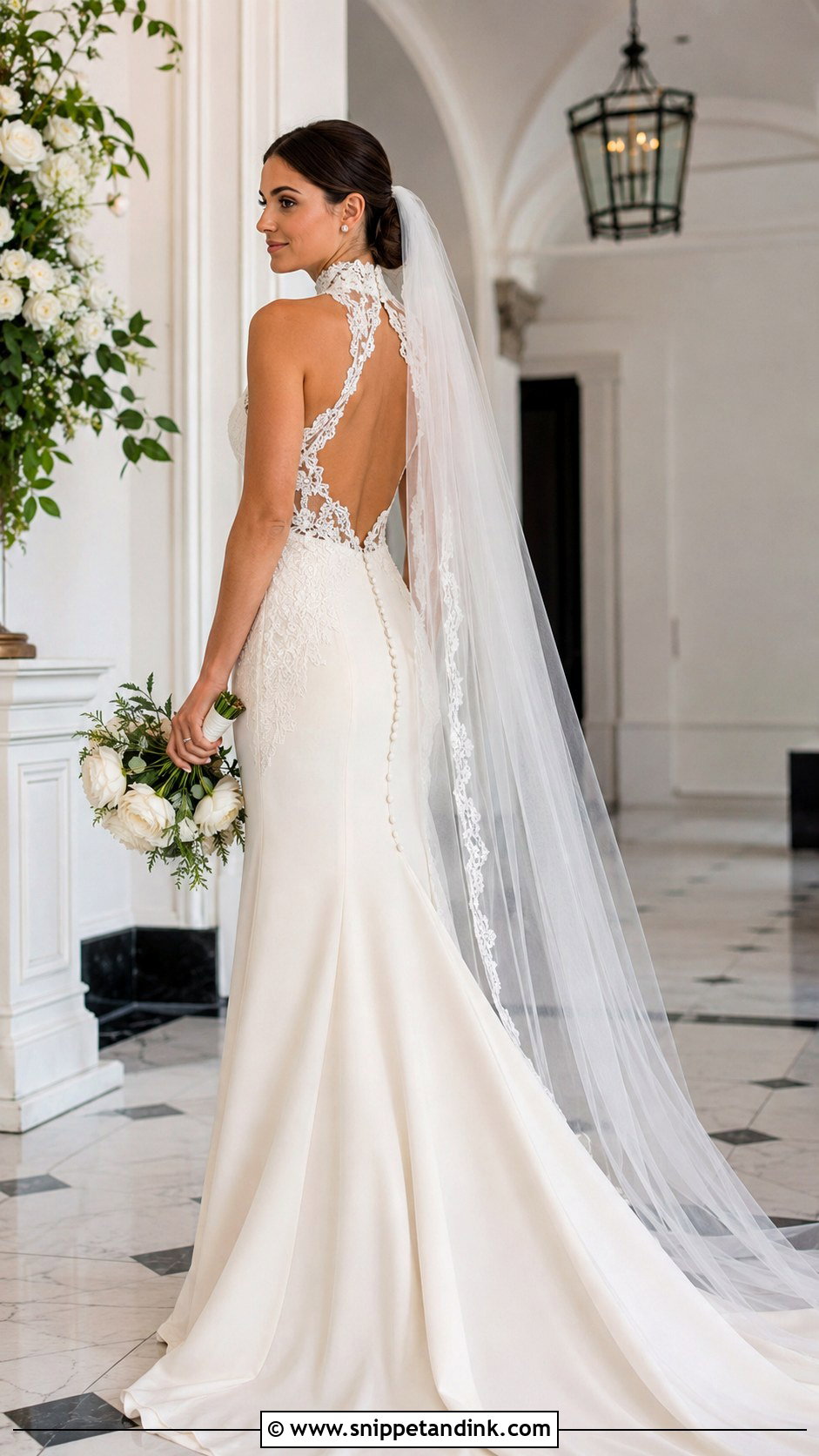
High necks feel refined and modern, particularly with an open or illusion back balancing the coverage at the front. Soft lace, crepe or satin with shaped seams defines the bodice rather than hiding it. Skip the necklace, and attach the veil beneath your hair so the back stays visible. Two things to raise early: first, the collar should not rub when you turn your head or sit; second, an open back rules out most standard bras. Ask whether the bodice has built-in support or whether a low-back undergarment will work, before alterations begin, since it affects how the dress is fitted.
18. One-Shoulder Wedding Dress
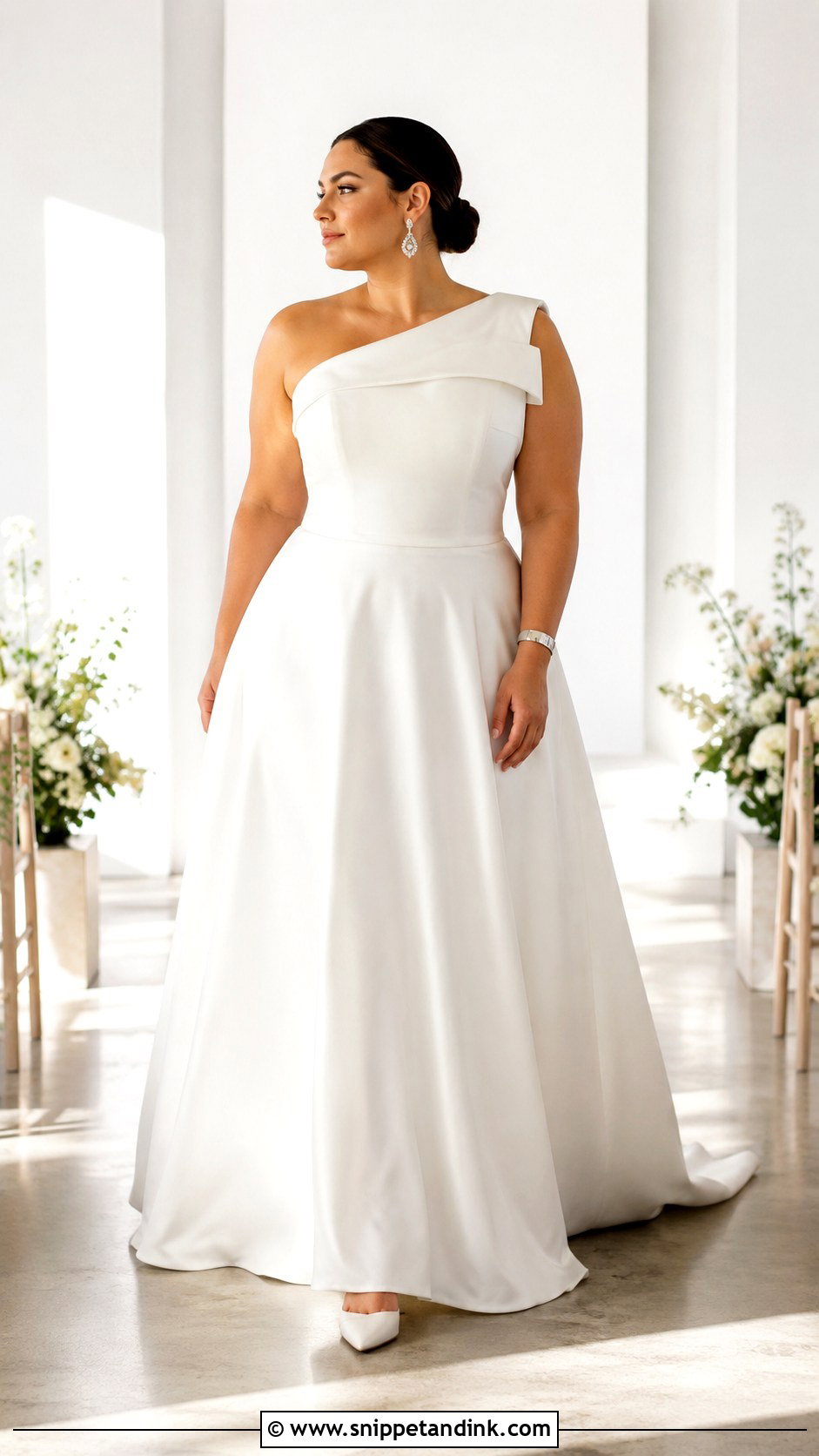
One-shoulder dresses give a modern asymmetric line without needing embellishment. A structured bodice with internal support and a wide strap that lies flat are essential, because a single strap carries more load than two. A flowing A-line skirt balances the angle. Wear one statement earring on the bare side and skip the veil if it fights the shoulder detail. At the fitting, watch whether the bodice twists toward the strap as you walk. That pull is the most common problem with this cut, and it’s usually solved by adjusting the underarm edge or adding a little boning on the open side.
19. Wedding Dress With Detachable Sleeves
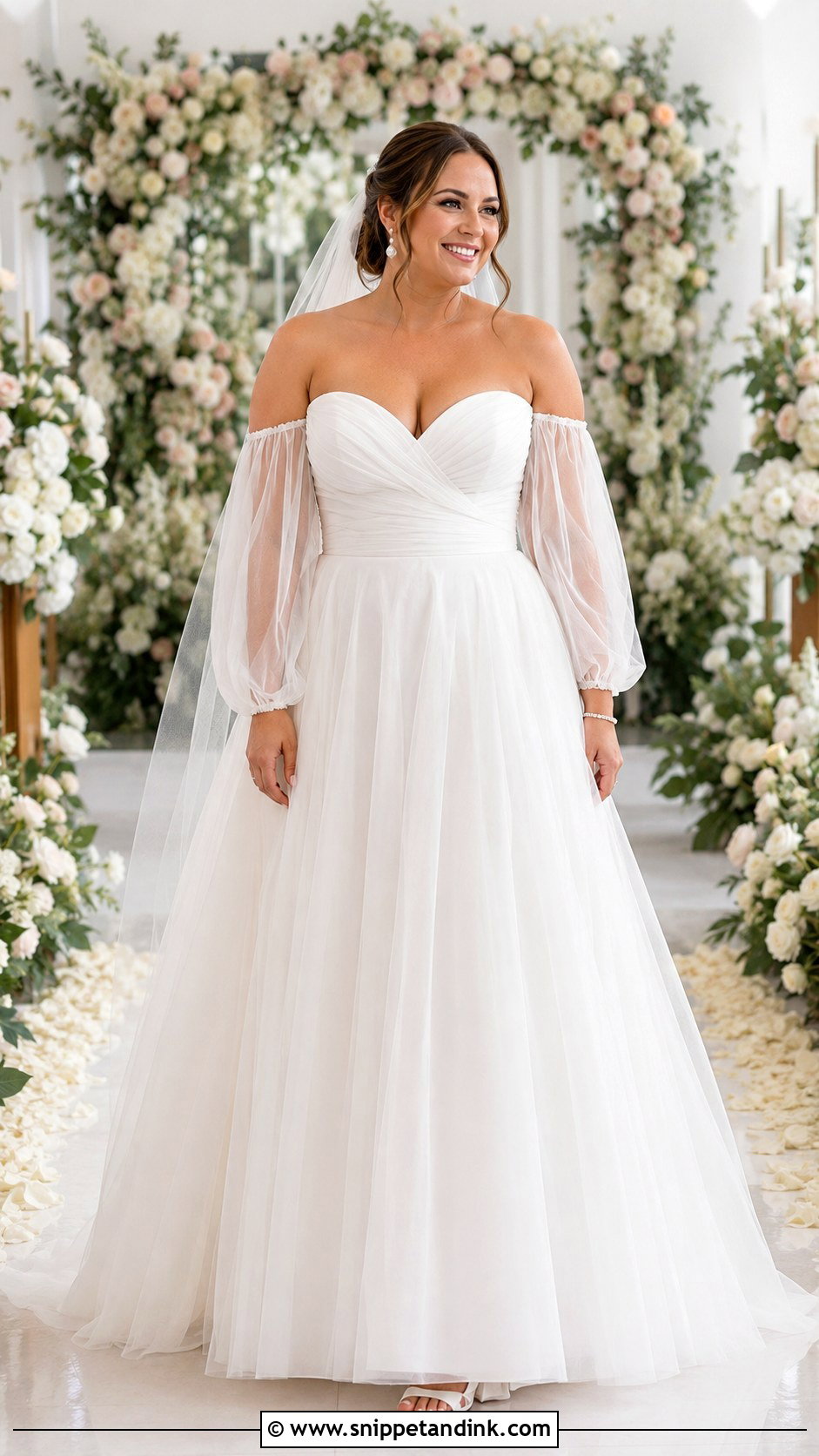
Detachable sleeves give you two looks with no full outfit change. Start with a supportive strapless or sleeveless A-line, then add off-the-shoulder tulle, fitted lace or softly puffed sleeves for the ceremony and take them off later. Ask how they attach before you buy. Snaps, buttons and hidden elastic each work, but they shouldn’t scratch, and elastic loses grip over a long day if it’s too light. Have a bridesmaid practise removing them at a fitting. The sleeves must match the dress fabric and colour closely, otherwise they look like an afterthought.



20. Wedding Dress With Overskirt
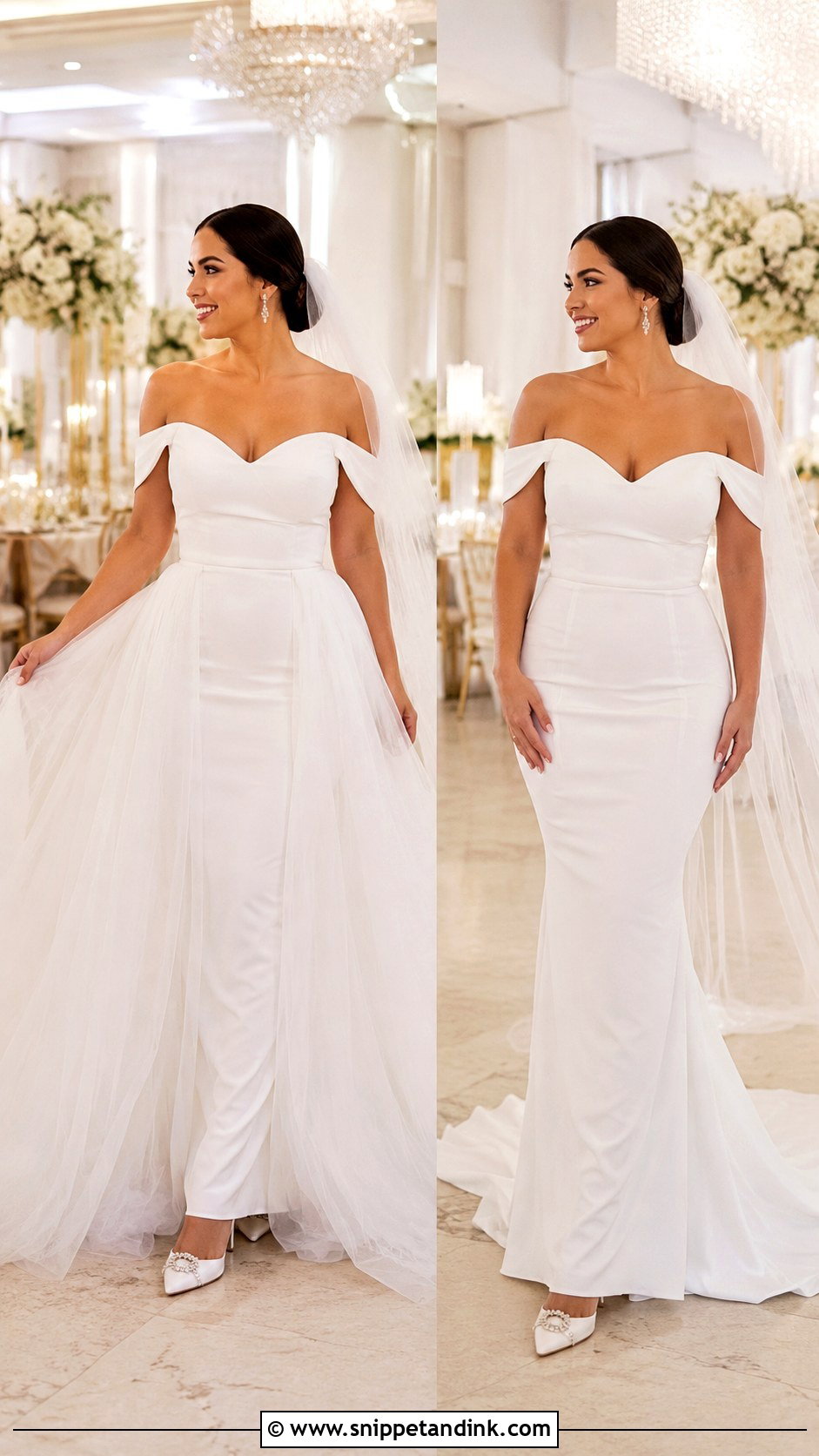
An overskirt turns a sleek dress into a ceremony gown. Start with a fitted crepe, satin or lace base that’s comfortable enough to wear for hours, then add a light tulle or organza overskirt at the waist for a ball-gown look. After the photos, take it off. My checks are the waistband and the colour. The band should close firmly and lie flat without a ridge, and the overskirt must match the base dress in daylight and under indoor lighting, as two whites bought separately rarely match. Practise putting it on and taking it off before the wedding, so the change is quick and the dress underneath stays smooth.
Bustles and the Reception Half of the Day
Most brides spend more hours dancing than walking down the aisle, so I always ask what happens to the train after the ceremony. Any dress with a skirt that touches the floor at the back needs a bustle, and the type changes how the gown looks for the rest of the night.
Over, under or ballroom
An over bustle lifts the train up with hooks or buttons at the waist, making soft drapes at the back; it suits satin and heavier fabrics. An under bustle, sometimes called a French bustle, tucks the train underneath with ribbon ties and gives a pleated, layered look that works well on tulle and lace. A ballroom bustle gathers the train all around the skirt so the hem sits level, which makes the dress look like it never had a train. More points mean a more secure bustle, especially for heavy skirts.
Making it work on the night
Ask your seamstress to colour-code or number the ribbons, and bring the person who’ll do it to your last fitting so they can practise. Getting it done right after the photos, before the first dance, saves your hem from being trodden on. If the bustle drops during the evening, a couple of safety pins in your emergency kit will hold it until someone can redo it.
Your Inspiration Board Is a Starting Point
The dresses that work best for midsize brides combine your own taste with real support and good tailoring. Try a few silhouettes that look nothing like the gowns on your board, because a neckline or waist placement you’d never have picked from a photo may turn out to be the one. Bring the right undergarments and shoes to every fitting, and walk, sit, hug and dance in the dress each time. Bridal sizing varies from designer to designer, so pay attention to construction, not the label. Lace, crepe, satin or a detachable overskirt, the right dress lets you forget you’re wearing it.
You'll Like These Ideas:




Leave a Reply