
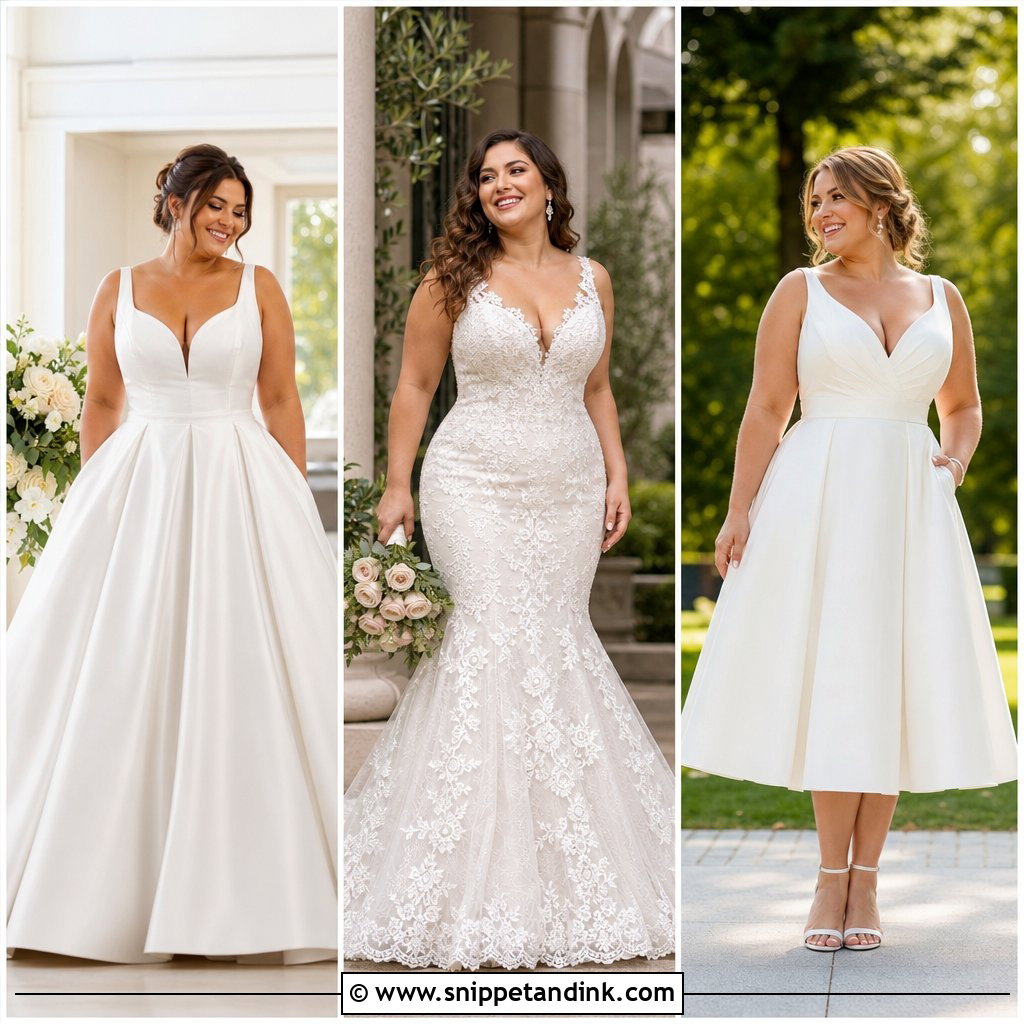
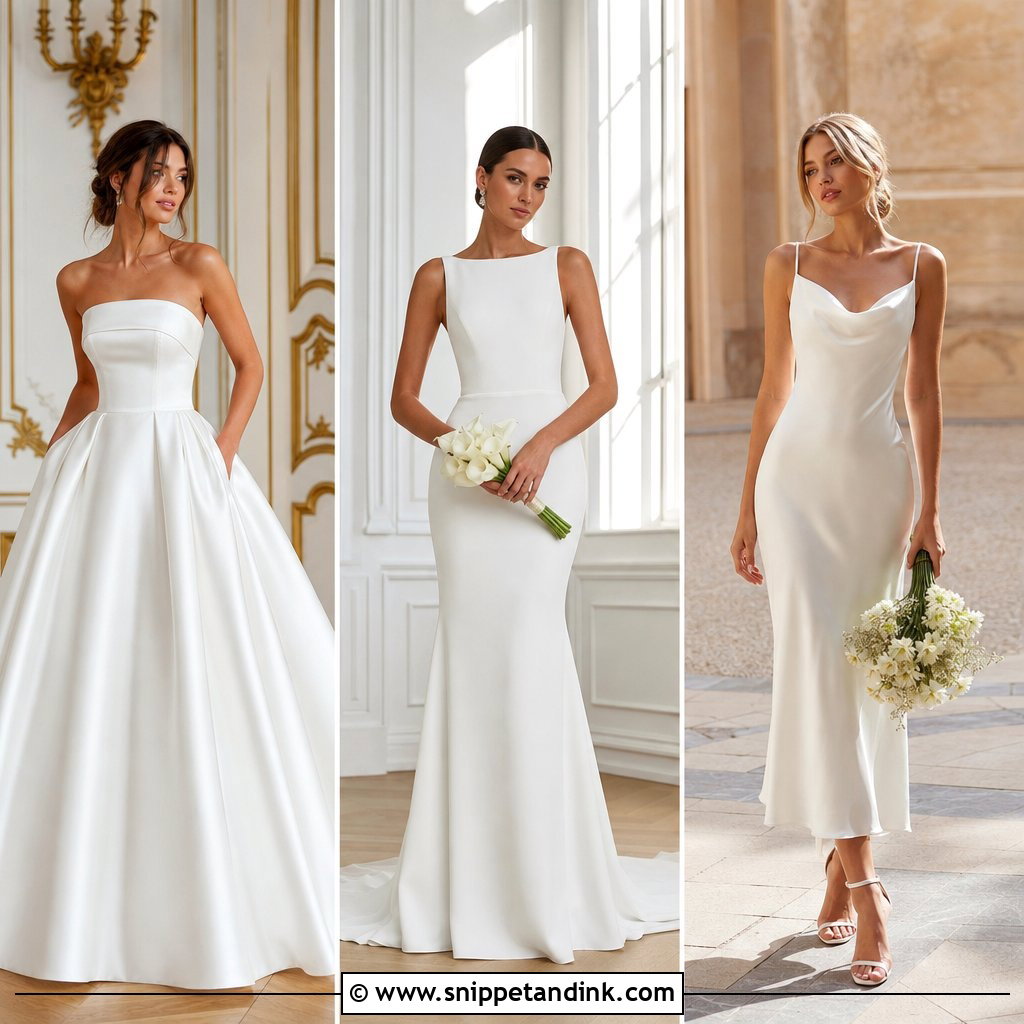
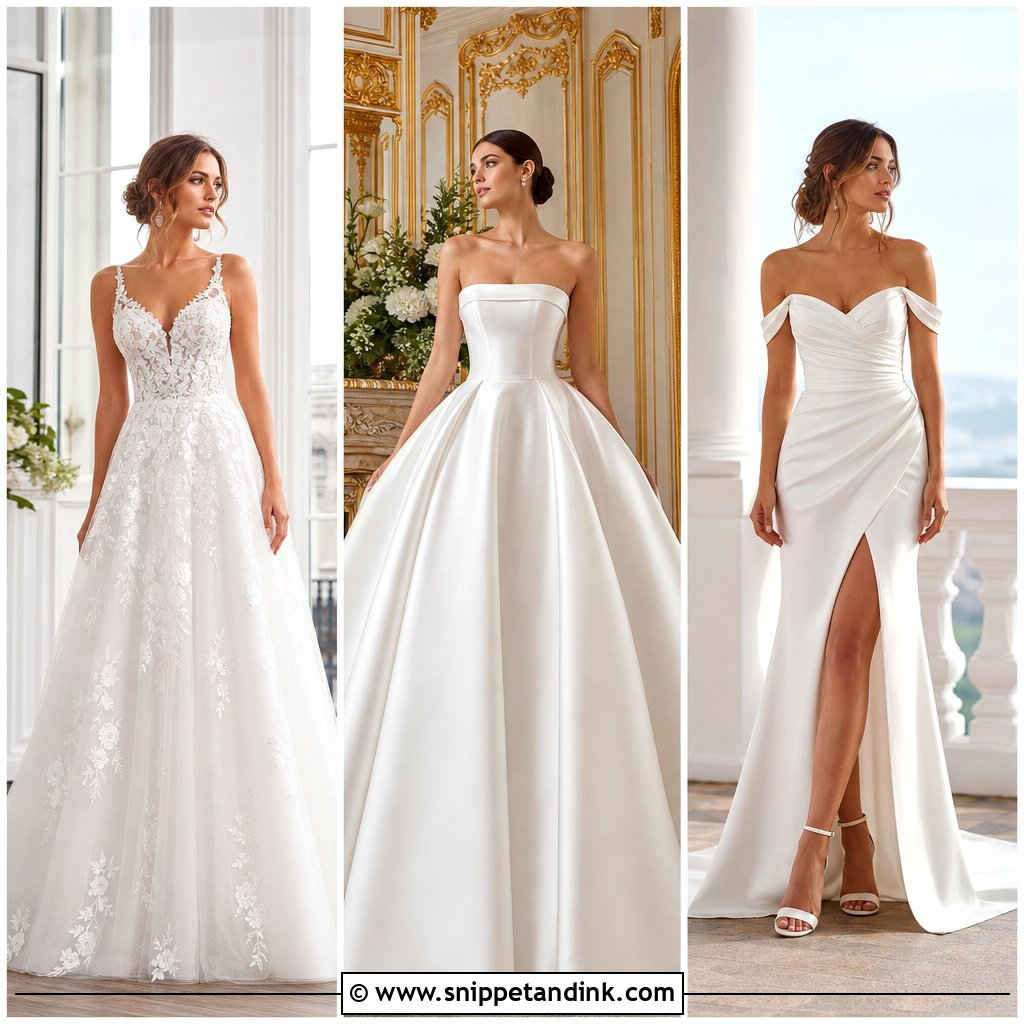
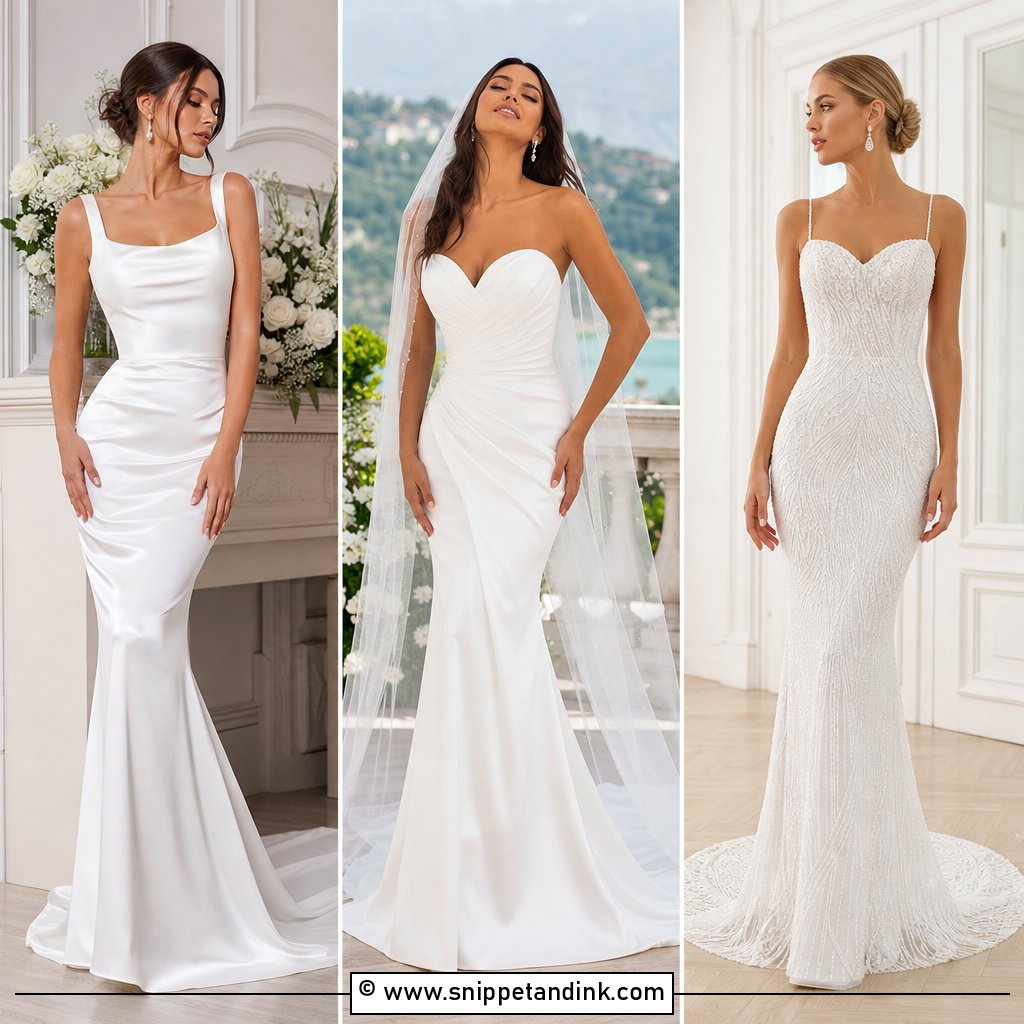
Most midsize brides walk into their first appointment expecting to hide something. I’d rather you walked in expecting to be fitted. The gowns that work best on a body between straight sizes and plus sizes are rarely the most forgiving ones on the rail; they are the ones built with real support in the bodice, enough ease through the hip, and a waist placed where yours actually sits. Below are thirty complete outfits, each with the dress, the accessories and the detail I’d check in the fitting room before saying yes.
Why Your Bridal Size Label Runs Higher Than Your Jeans
The first thing I tell a midsize bride is not to look at the number on the label. Bridal sizing runs small compared with high-street clothing, often by one or two sizes, and most designers make gowns to their own chart. A bride who wears a 12 in jeans is commonly ordered a 14 or 16 in bridal, and it says nothing about her body.
Shops order by your largest measurement on the designer’s chart, then alter the dress down to the others. It is far easier to take in a bodice than to let one out, because most bridal seams carry very little extra fabric. So when your bust is a 16 and your hips are a 14, expect a 16 and a seamstress who will shape the skirt to you.
Measurements I take before you try anything on
- Bust at the fullest point, wearing the bra you plan to marry in or one with the same shape.
- Natural waist, the narrowest point above the belly button, which is often higher than people expect.
- Hips at the widest point of the seat, standing with feet together.
- Hollow to hem: from the dip between the collarbones to the floor, in the shoes you’ll wear, so the length is ordered correctly.
Give yourself time. Many made-to-order gowns take several months to arrive, and alterations usually need two or three fittings starting around two months before the date. If your weight tends to shift under stress, plan the final fitting for the last two weeks, not earlier.
1. A Line Wedding Dress With Pearl Veil
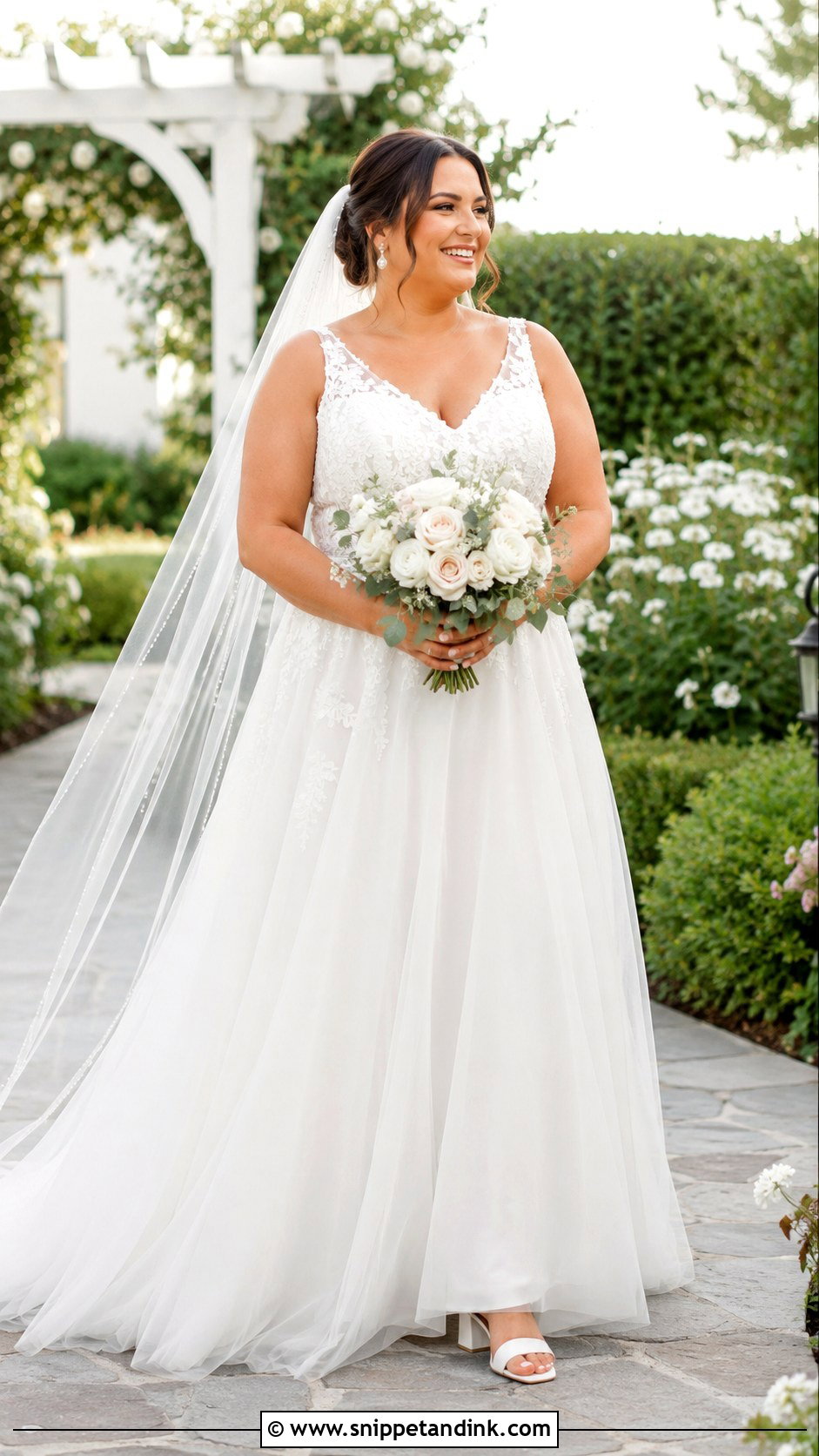
I pull an A-line first for almost every midsize bride, simply because it tells me so much. If the bodice gapes at the side seams or the waist seam sits above her natural waist, I know which measurements will drive her alterations. A good one floats off the hip rather than skimming it, and a pearl-edged veil adds finish without weight at the crown. Block heels or ivory pumps both suit it, so choose by your floor: grass and gravel want the block. Pearl drops and one slim bracelet are plenty, and the shape behaves itself in a garden, a ballroom or a church.
2. Satin Wedding Dress With Square Neckline
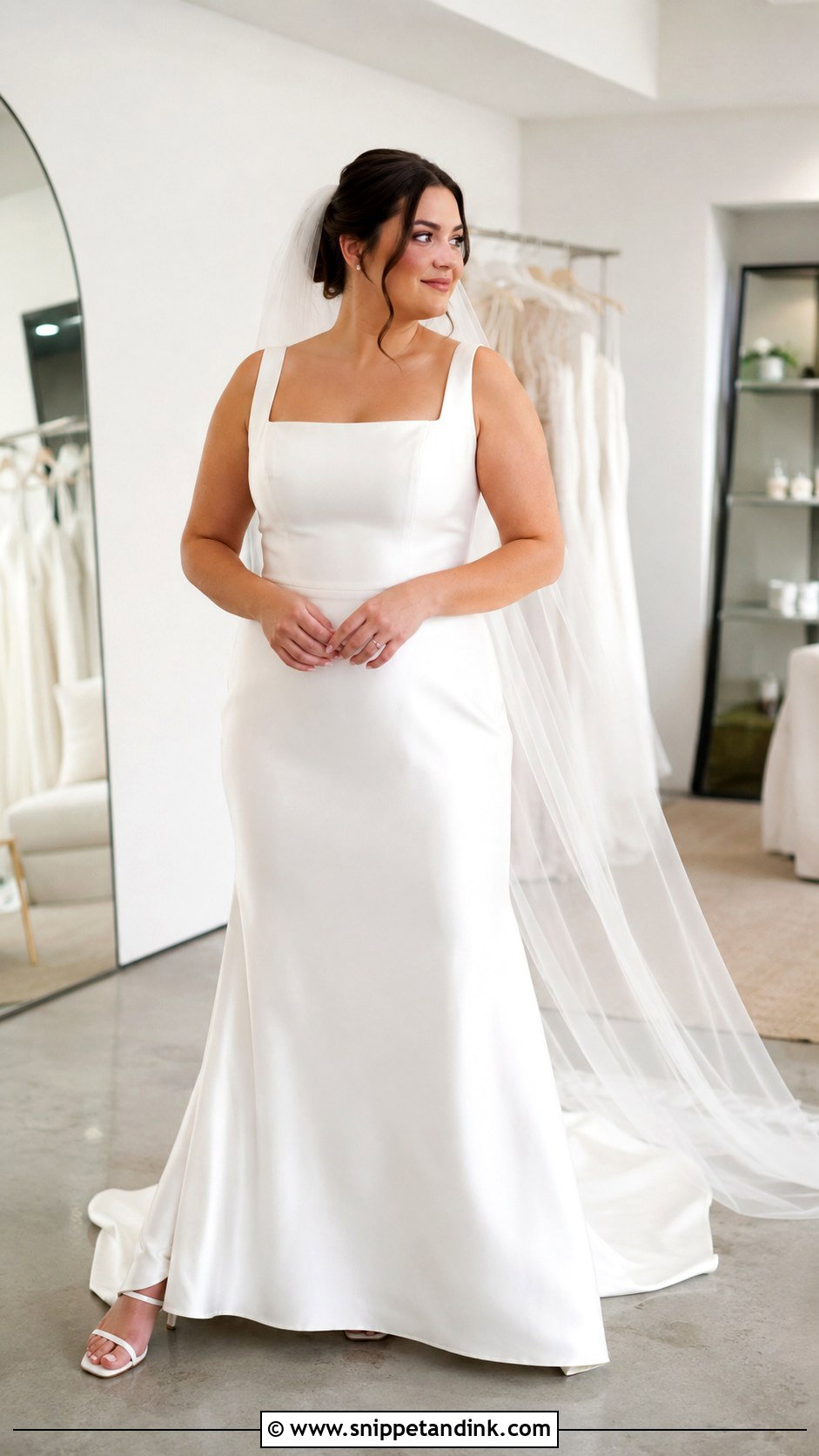
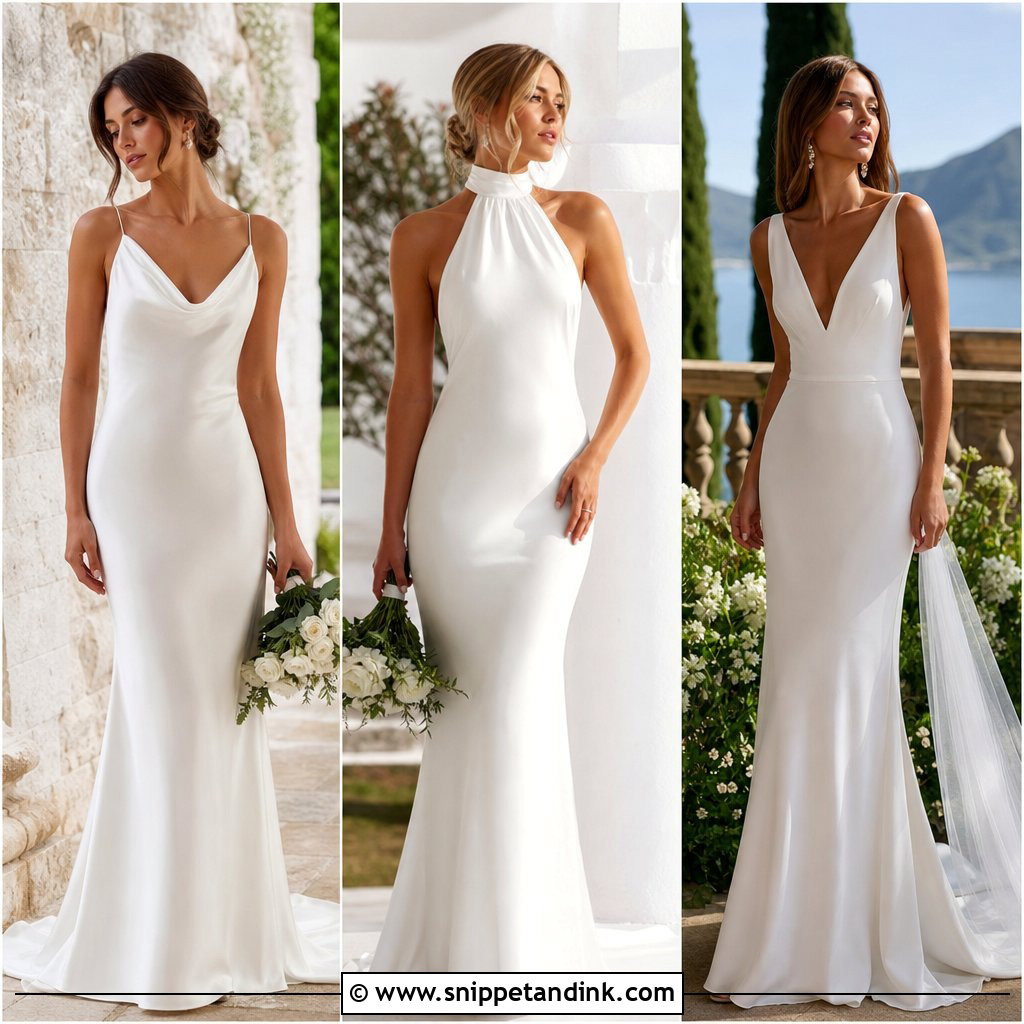
Satin is honest fabric. It shows every pull, so a square neckline in satin only works when the straps are wide enough to carry the bodice and the boning sits flat against your ribs. That is why I ask midsize brides to raise both arms in the mirror: if the neckline lifts away from the collarbone, the straps need shortening. Once the fit is right, keep everything else quiet. Slingbacks, pearl studs, a smooth low bun and a long plain veil let the sheen do its job.
3. Off Shoulder Wedding Dress With Soft Curls
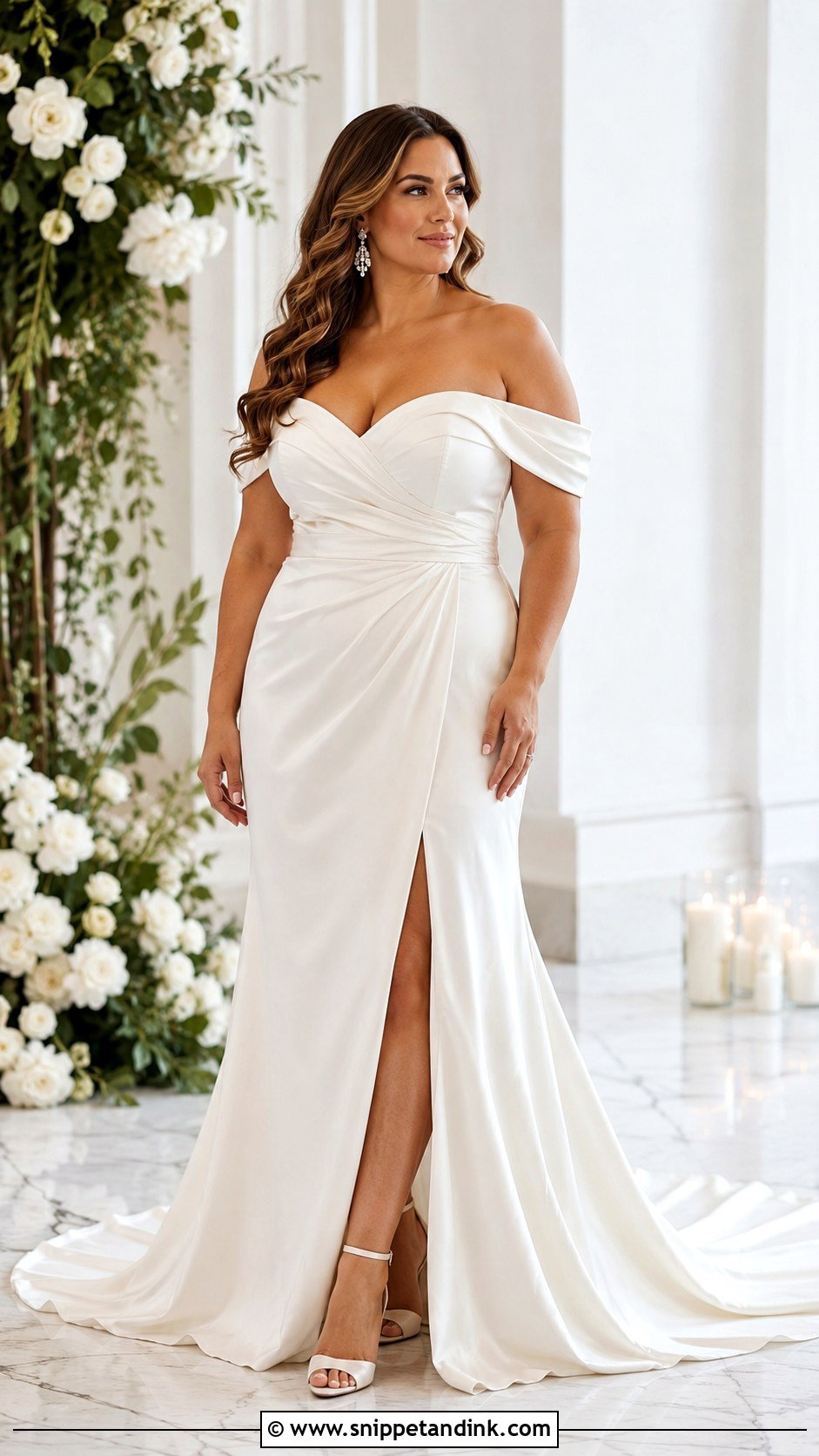
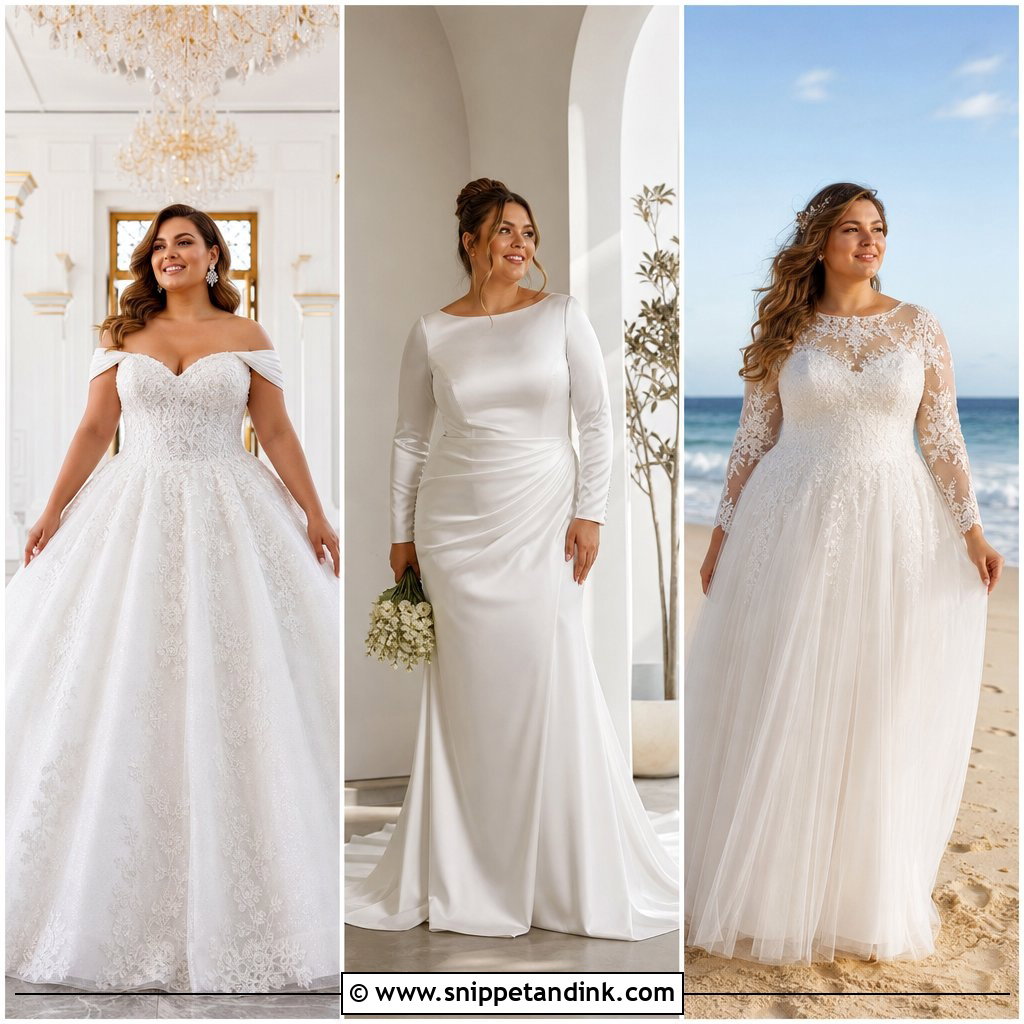
Off the shoulder is the neckline I fuss over most, because the band across the upper arm is what holds the whole dress up. On a midsize bride it needs to be structured and anchored to the bodice, not elasticated, or it rolls down the arm by the first dance. I look for soft folded or draped sleeves rather than a tight cuff. Add loose curls, crystal earrings and a mid-length veil, then finish with heeled sandals or ivory pumps. It reads romantic in the evening and is still comfortable after hours of hugging guests, provided you can lift your arms in the trial.
4. Long Sleeve Lace Wedding Dress
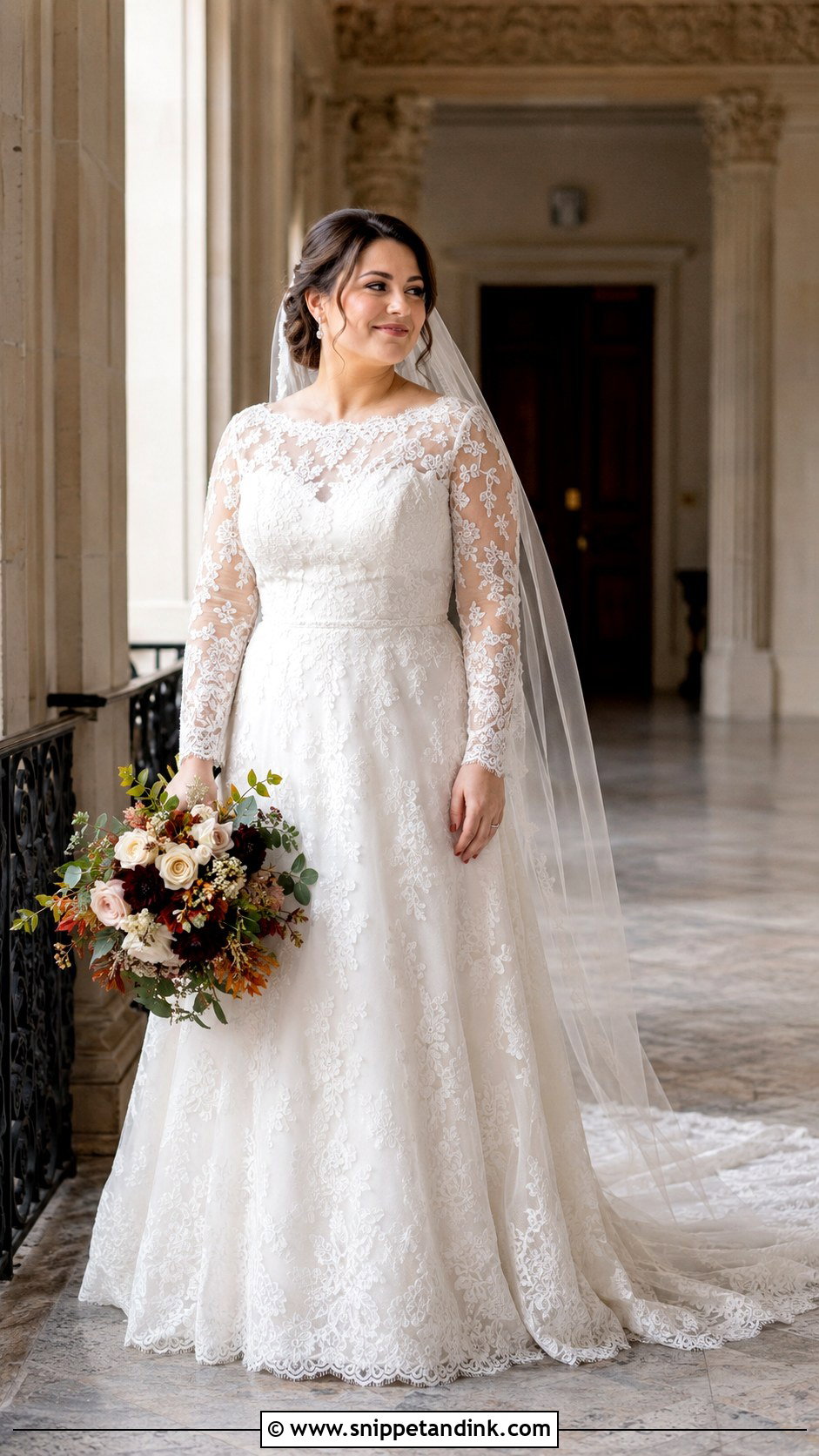
Long lace sleeves are where fabric choice matters more than pattern. Stiff, heavily corded lace bunches at the elbow when you bend your arm, while softer Chantilly or a fine re-embroidered lace moves with you. I always check the sleeve is cut with a little ease above the elbow; a sleeve that fits only when your arm is straight is a sleeve you’ll fight all night. A lined bodice under sheer sleeves gives support with coverage. Low pearl heels and a fingertip veil are enough, and if the lace is busy, skip the necklace. Autumn, winter and older buildings suit this one best.
5. Ball Gown Wedding Dress With Corset Bodice
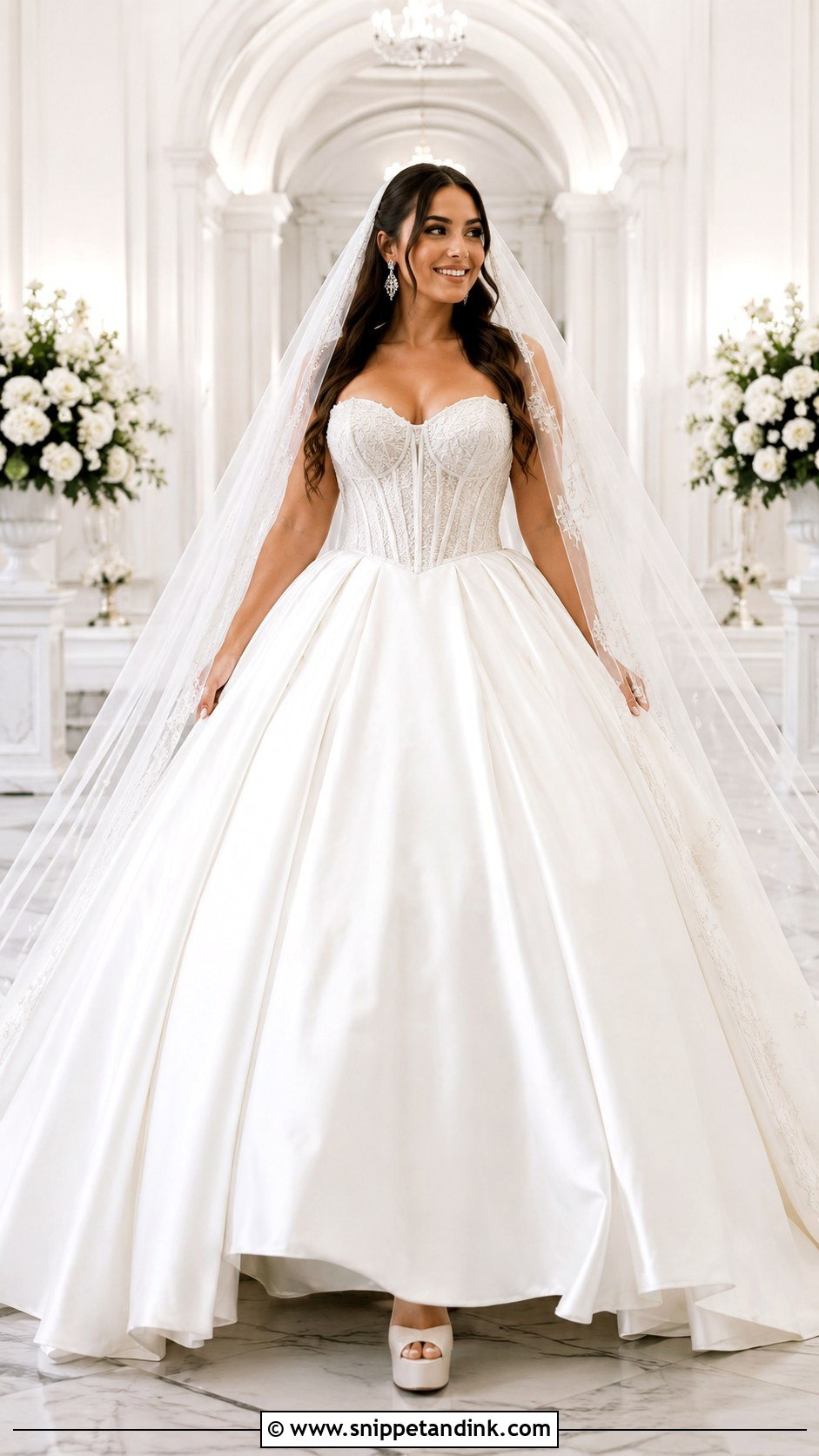
A ball gown wedding dress stands or falls on its corset. When I fit one, I check that the boning ends just above the hip bone and that the lacing closes evenly; a gap that is wider at the bottom than the top means the waist needs taking in, not the bust. Get that right and the skirt can be as full as you like. Platform heels give the hem a little clearance, a cathedral veil suits the scale, and an updo keeps the shoulders from disappearing. Big rooms and formal ceremonies are where it earns its volume.
6. Mermaid Wedding Dress With Detachable Train
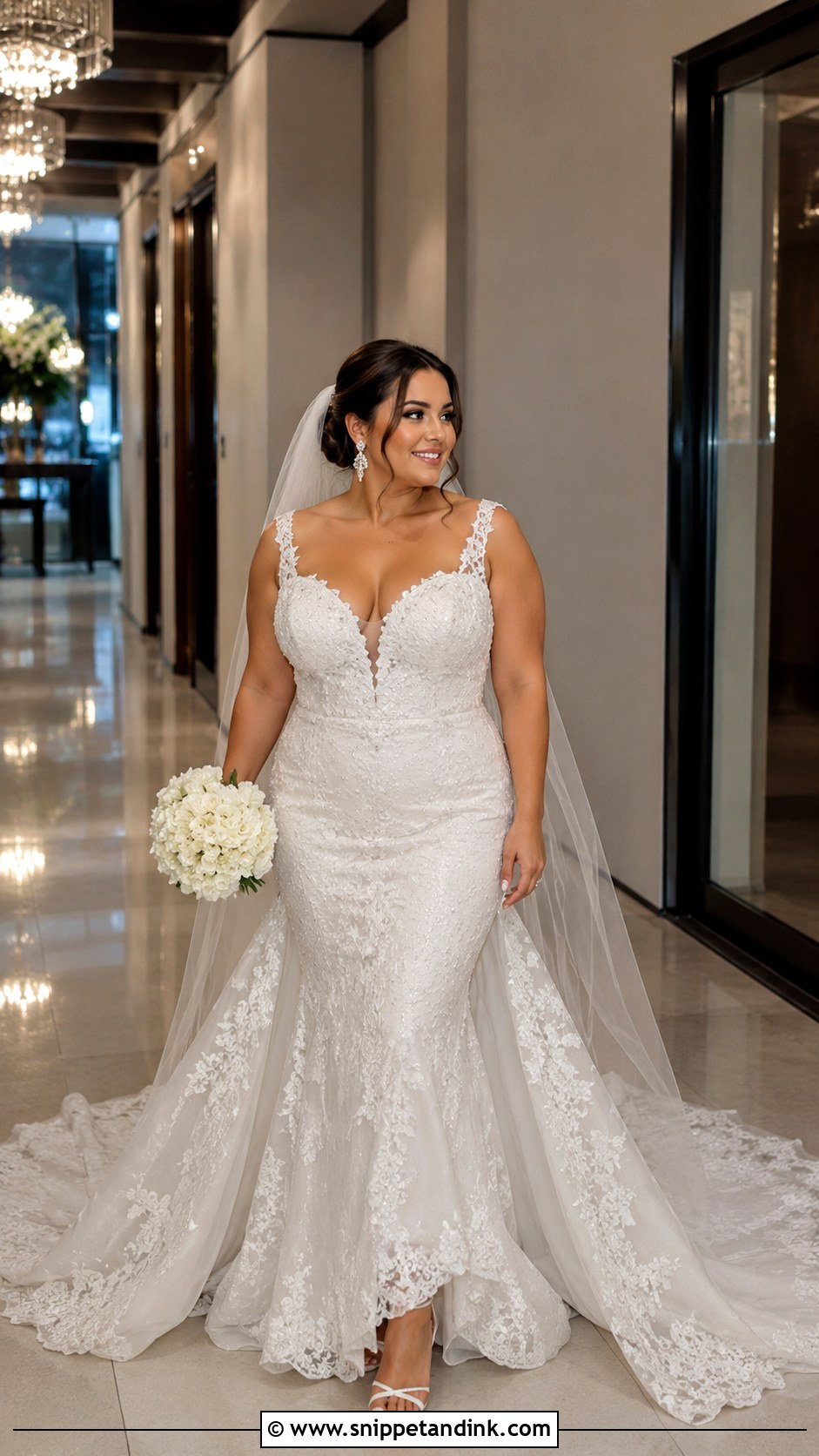
Mermaid gowns are about where the flare starts. On a midsize bride I want it at the lower thigh or the knee; set it too low and you’ll shuffle down the aisle. Stretch lining and well-finished seams matter, because the fitted section takes real strain every time you sit. A detachable train is the clever part: wear it for the ceremony with strappy heels and statement earrings, then unhook it for the reception. Practise sitting in it at the final fitting. If the seams strain across the seat, ask for half an inch let out before the day.
7. Empire Waist Wedding Dress With Tulle Skirt
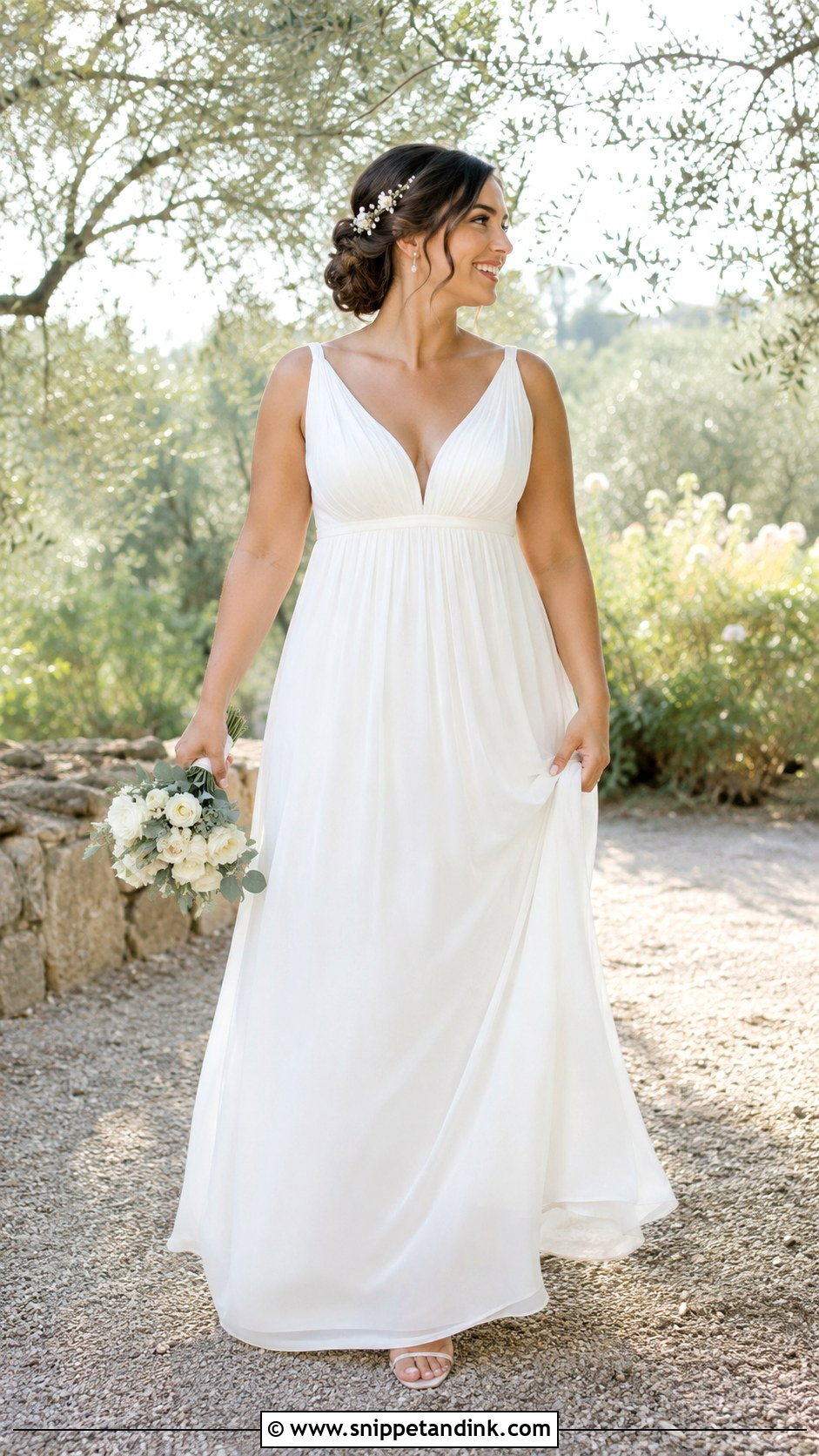
An empire waist wedding dress puts the seam just under the bust, so everything below falls loose over the tummy and hips. The thing I watch for is support: a high seam with no structure above it can flatten a fuller bust, so I look for a lined, shaped bodice or one with light cups. Lightweight tulle or chiffon in the skirt keeps it moving. Dainty heels, a floral comb and pearl studs finish it. It suits beaches and spring ceremonies, and gentle beading at the bodice stops it looking like a nightdress.
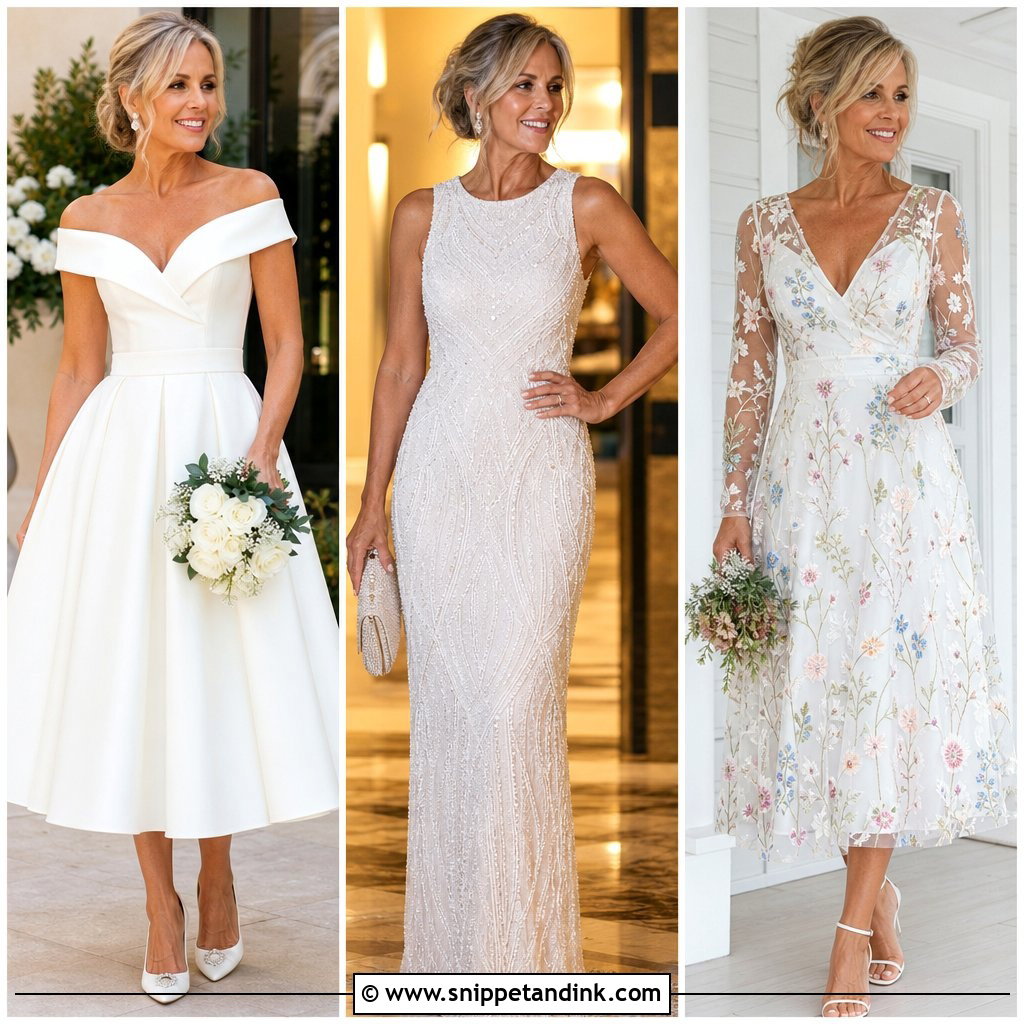
8. Tea Length Wedding Dress With Mary Jane Heels
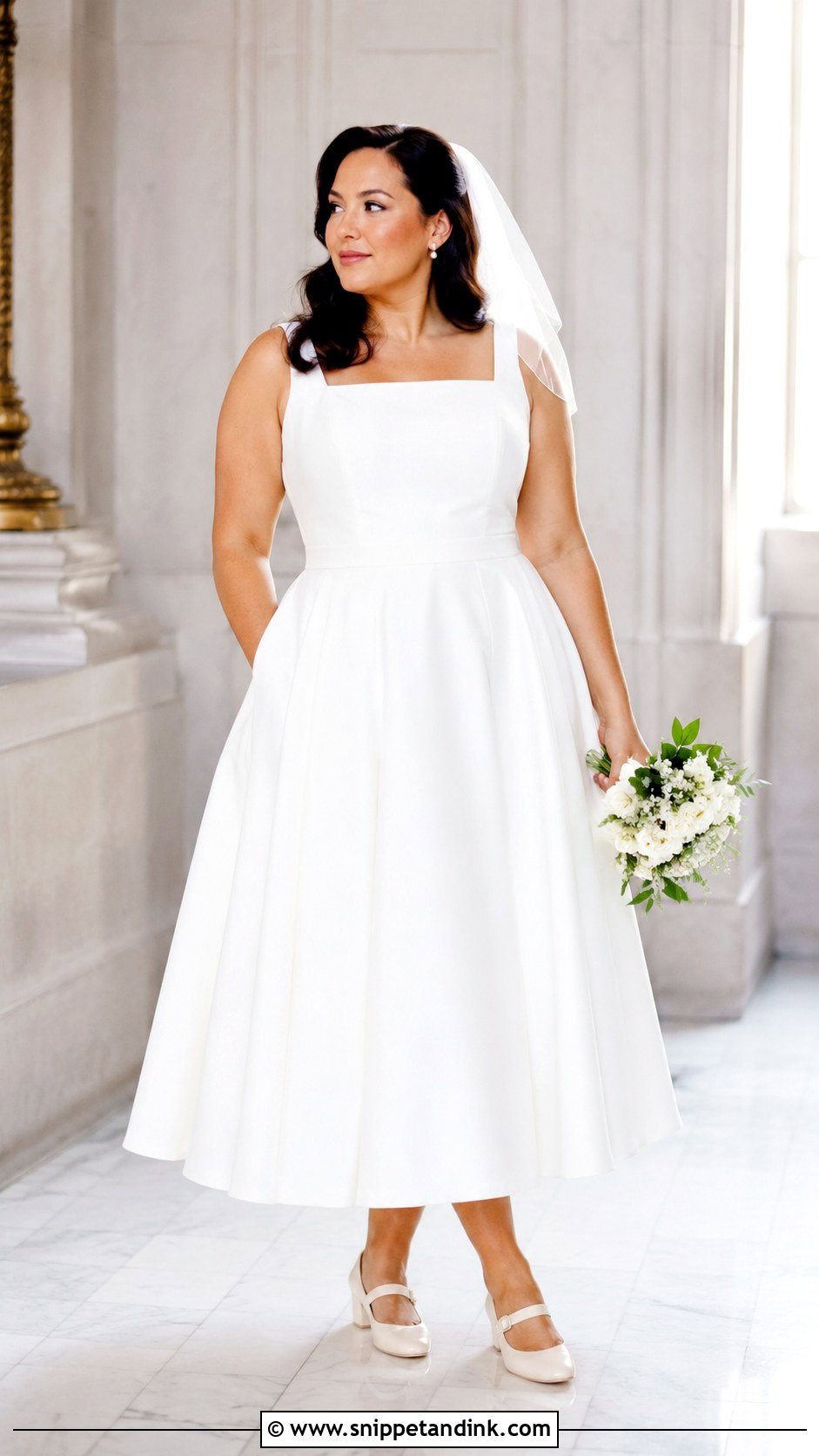
Tea length sits between knee and ankle, and that hemline is the reason to choose it: you can walk, dance and climb stairs without lifting your skirt. A defined waist and a fuller skirt give a midsize figure a clear shape. I’d have the hem set while you wear the actual shoes, since an inch makes the difference between vintage and accidentally cropped. Ivory Mary Janes, pearl earrings and a short veil or bow do the rest. Sheer gloves are fun, but add them last. Courthouse ceremonies and garden brunches are its natural home.
9. Minimalist Column Wedding Dress
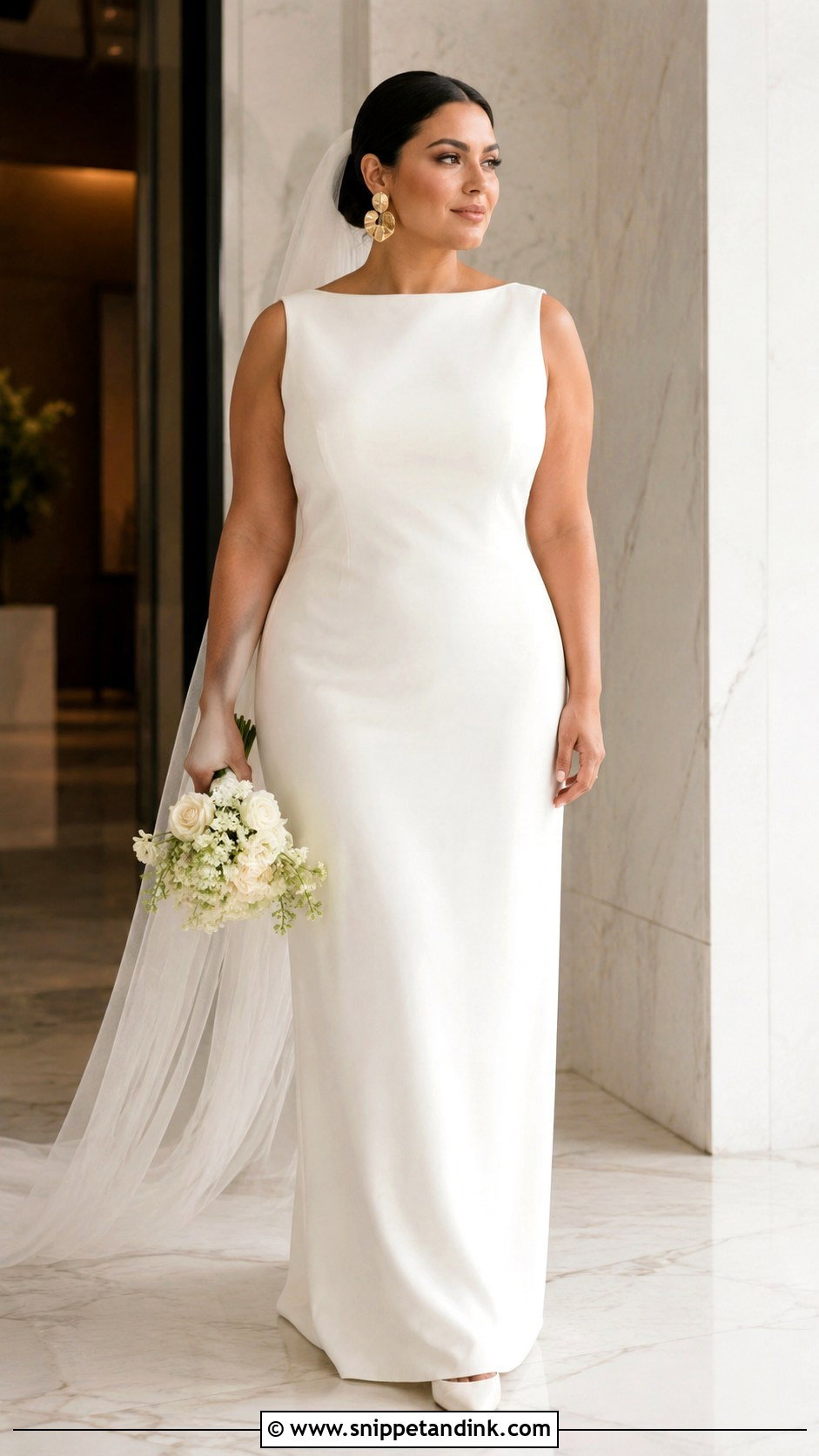
A column dress has nowhere to hide a poor fit. It drops straight from the shoulder, so if the hip measurement is snug, the fabric pulls into horizontal lines across the thighs the moment you stand still. I ask for at least an inch of ease through the hip and a fabric with some weight, such as heavy crepe, so it hangs rather than clings. A bateau or scoop neckline balances the long line. Pointed pumps, sculptural earrings and a plain veil keep it modern. It is the quiet option for city venues and rooftops.
10. Floral Applique Wedding Dress
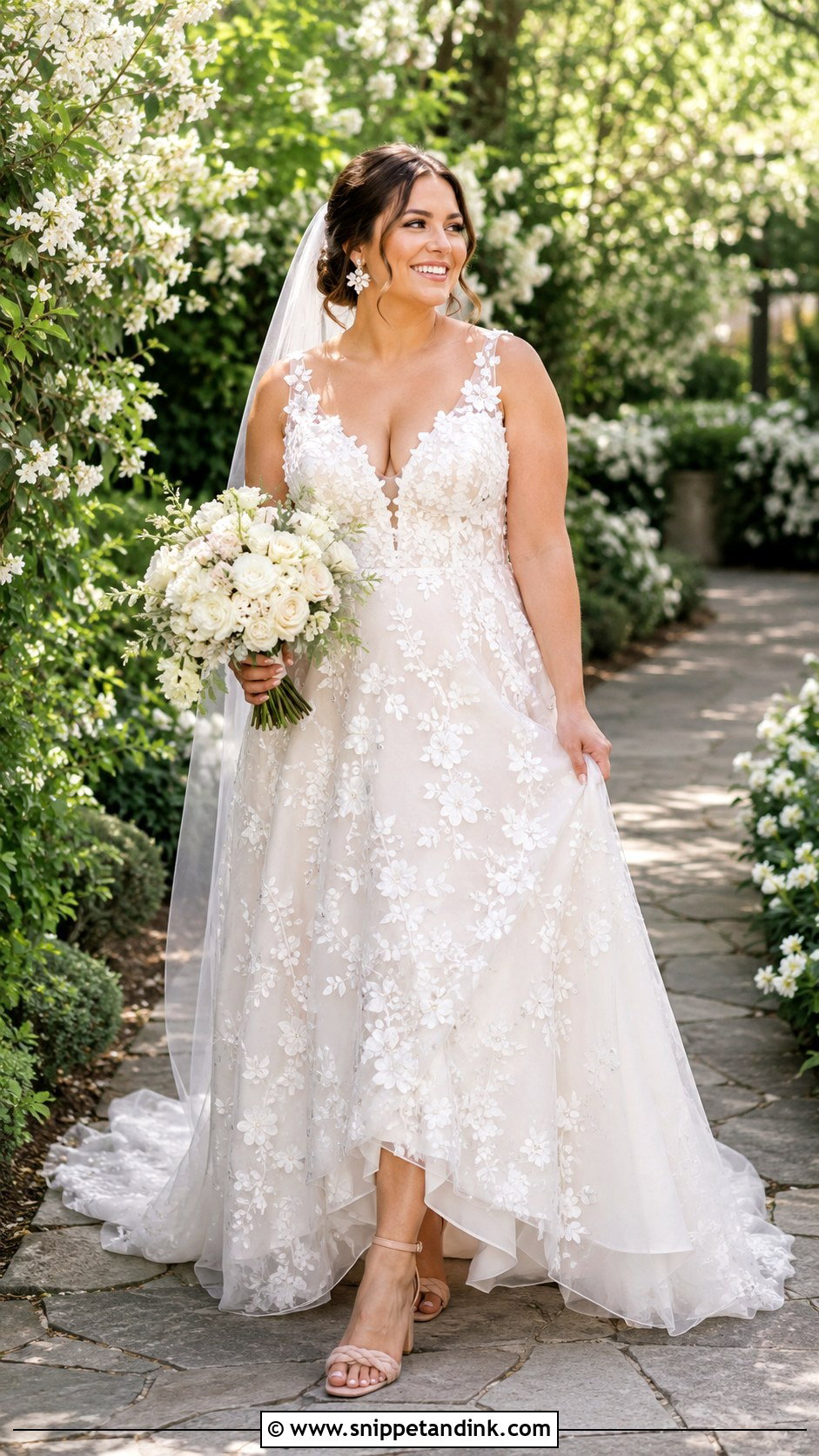
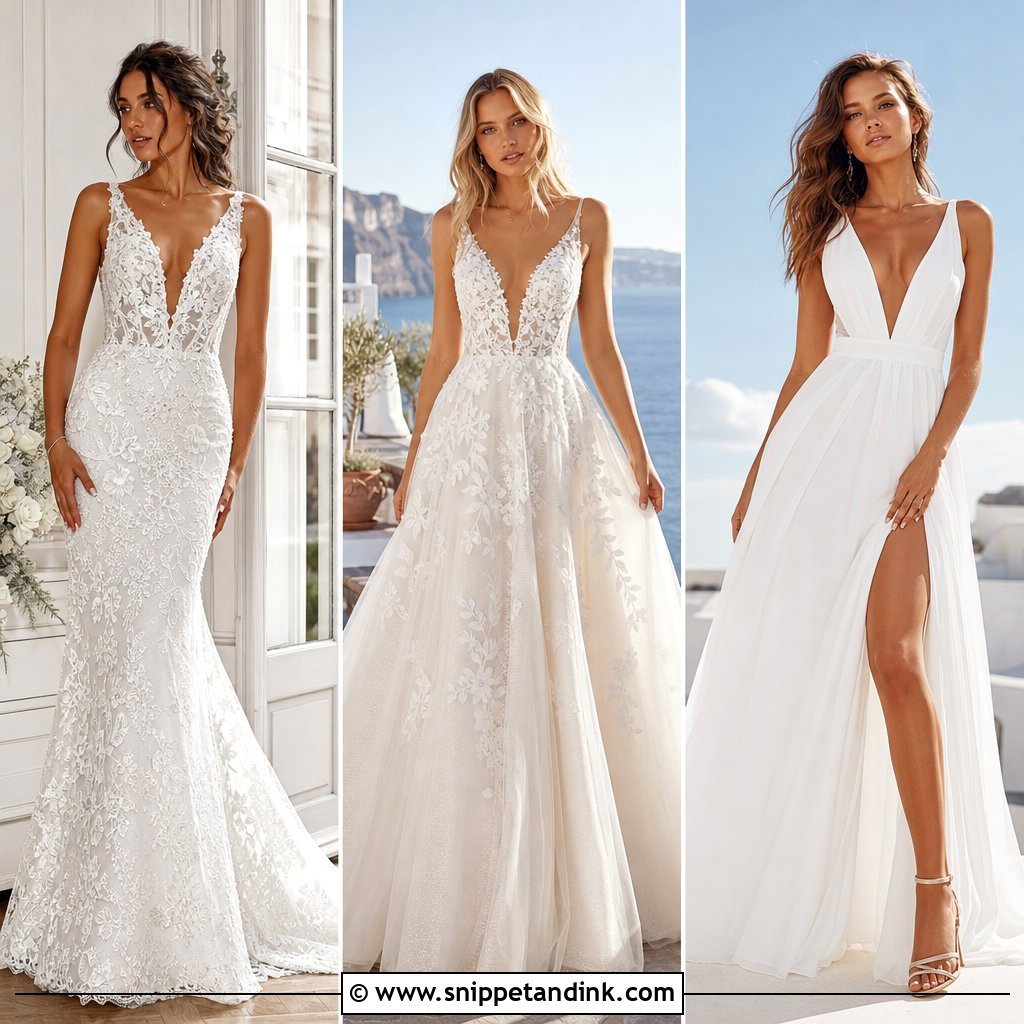
With floral applique, placement is everything. I steer midsize brides towards flowers that climb up the bodice or trace the waist, because they pull the eye where you want it. A heavy cluster at the hip does the opposite. Check that each piece is stitched down properly at the edges, not just tacked, or petals will snag on your bouquet and on hugs. With this much texture, carry a simple fresh bouquet and wear blush heels and floral earrings. It belongs in gardens and spring light.
11. Drop Waist Wedding Dress With Full Skirt
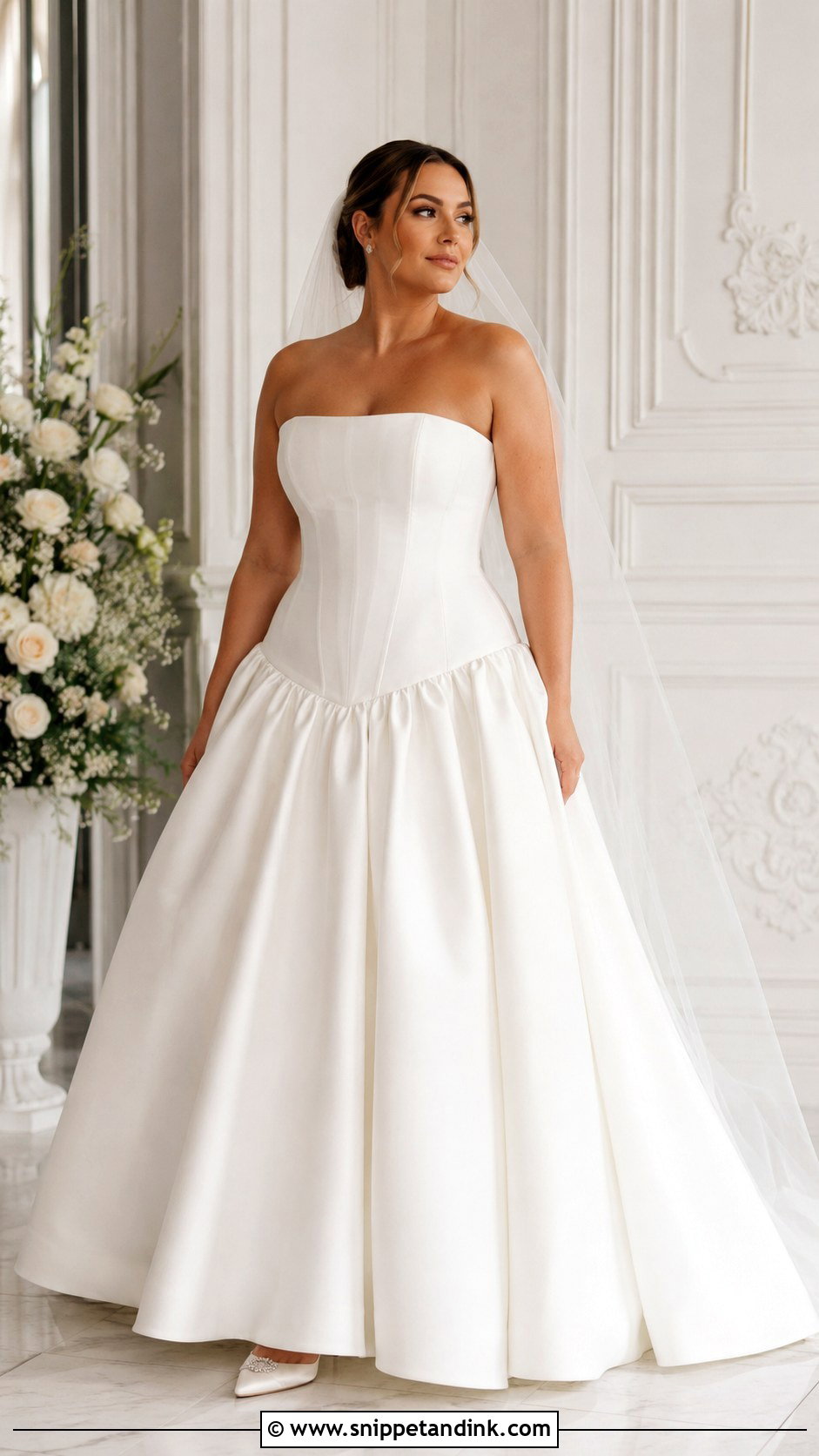
The drop waist is back, and it is more flattering on a midsize body than people expect, provided the bodice has proper structure down to the low seam. Without boning it creases across the stomach every time you sit. With it, the torso looks longer and the skirt opens cleanly from the hip. Keep the skirt’s first layer soft rather than stiff so it doesn’t flare out like a lampshade. Pointed heels, a clean veil and small crystal studs, with hair kept simple. Grand rooms and editorial photos suit it.
12. Wrap Wedding Dress With V Neckline
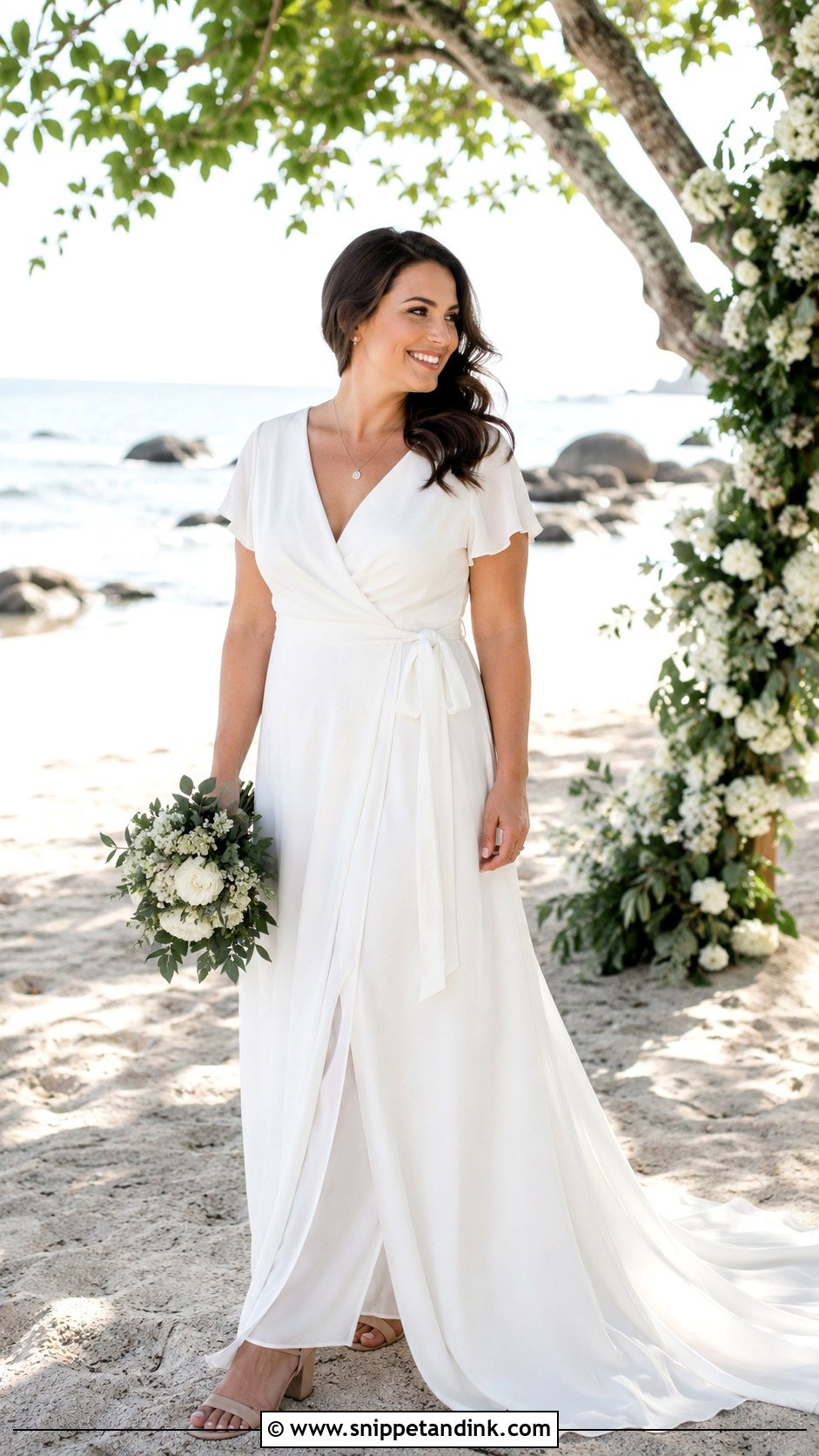
I like a wrap dress for brides whose size changes from fitting to fitting, because the waist ties can absorb a little difference. The V neckline lengthens the upper body, and the diagonal wrap gives shape without boning. Choose crepe, chiffon, satin or soft lace so it reads bridal rather than daywear. The one thing to test is the overlap: sit down and cross your legs, and if the skirt opens to the hip, ask for a hidden snap. Low block heels, a small pendant and a side-swept style that follows the diagonal finish it.
13. Corset Wedding Dress With Slit Skirt
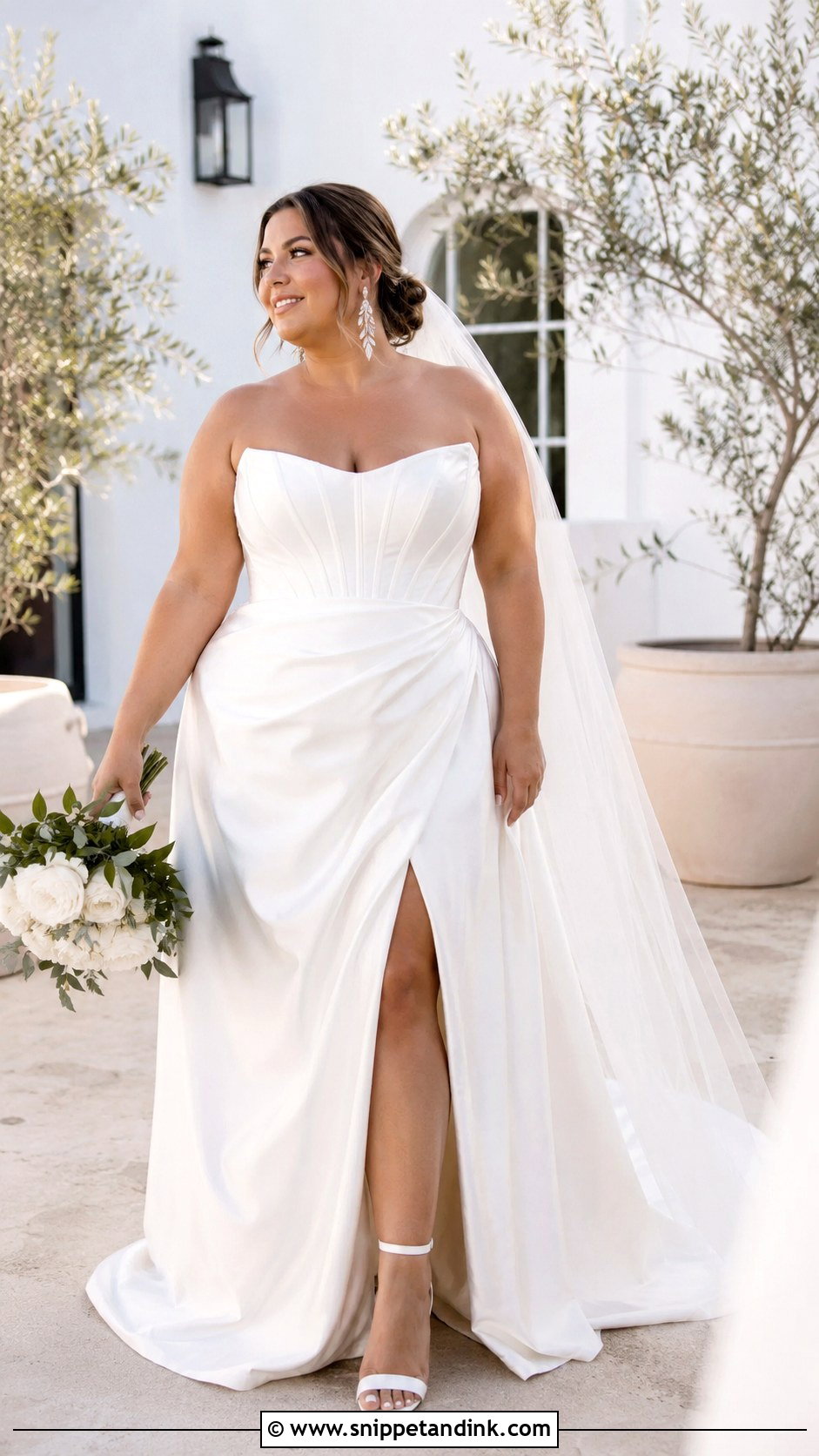
A corset wedding dress with a slit gives you a firm, supportive top and a skirt that moves. Where the slit lands is what I check first. Walk, then sit, in front of the mirror: if it opens past mid-thigh when seated, I usually ask for it to be lowered by an inch or two, and few brides miss the extra height. Ankle-strap heels, drop earrings and a long veil balance it for the ceremony. Soft waves keep it from feeling too sharp. Modern venues and outdoor ceremonies both suit it.
14. Chiffon Wedding Dress With Flutter Sleeves
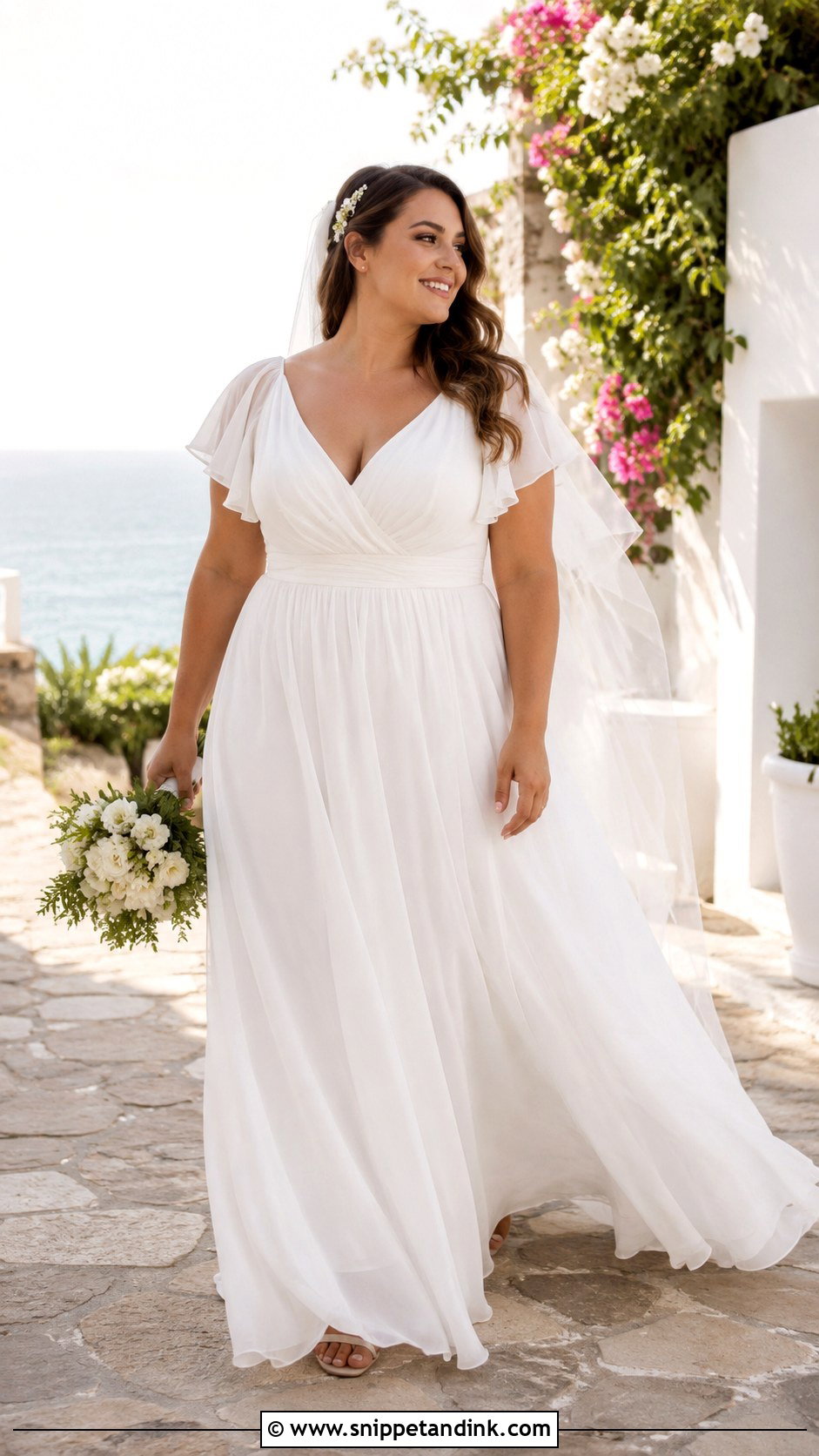
Flutter sleeves are the gentlest arm coverage there is. They sit off the arm rather than gripping it, so nothing digs in when you hug or raise a glass. Chiffon moves with the slightest breeze, which is the point on a beach, but it also wrinkles easily, so hang it in a steamy bathroom the night before. I’d still want a lined bodice and a defined waist underneath all that float. A V neckline or gathered bust works well, with delicate sandals and a floral pin. Warm destinations are made for it.
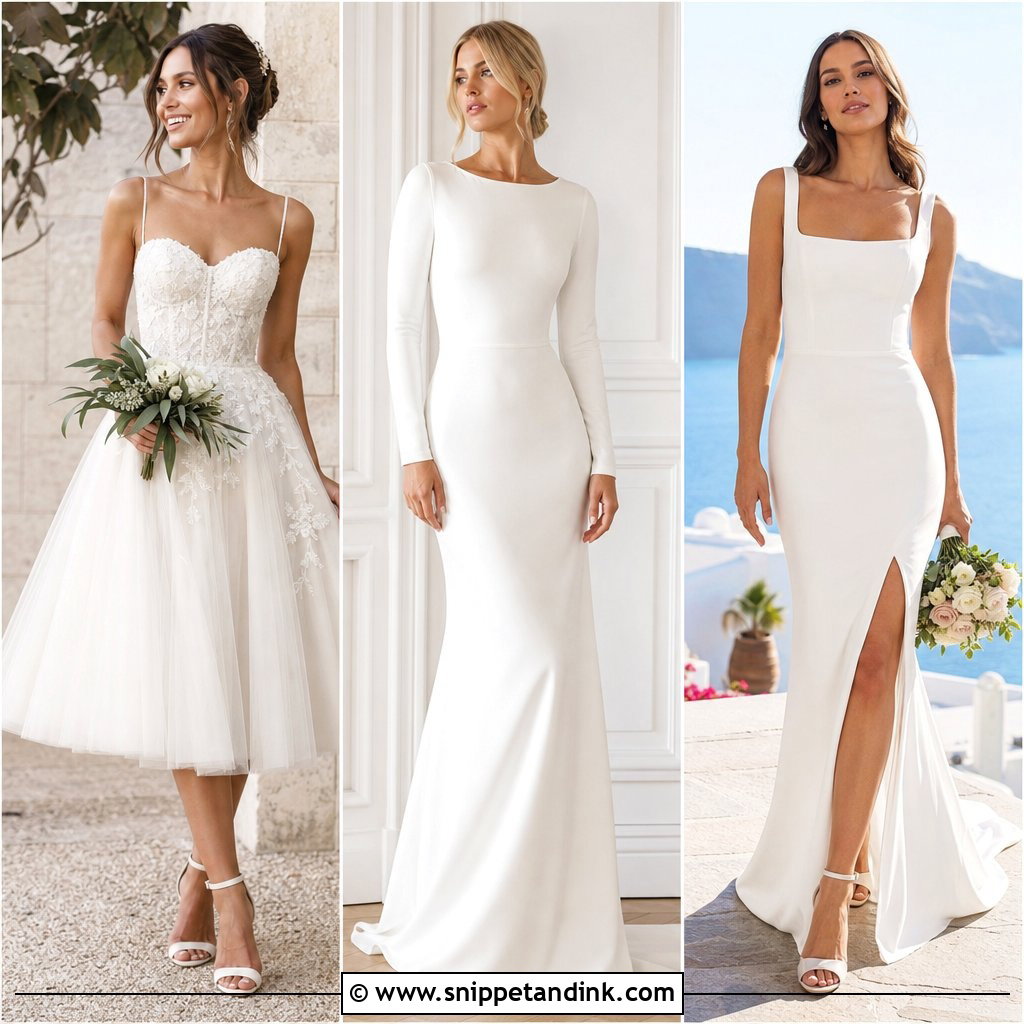
15. Blush Wedding Dress With Ivory Accessories
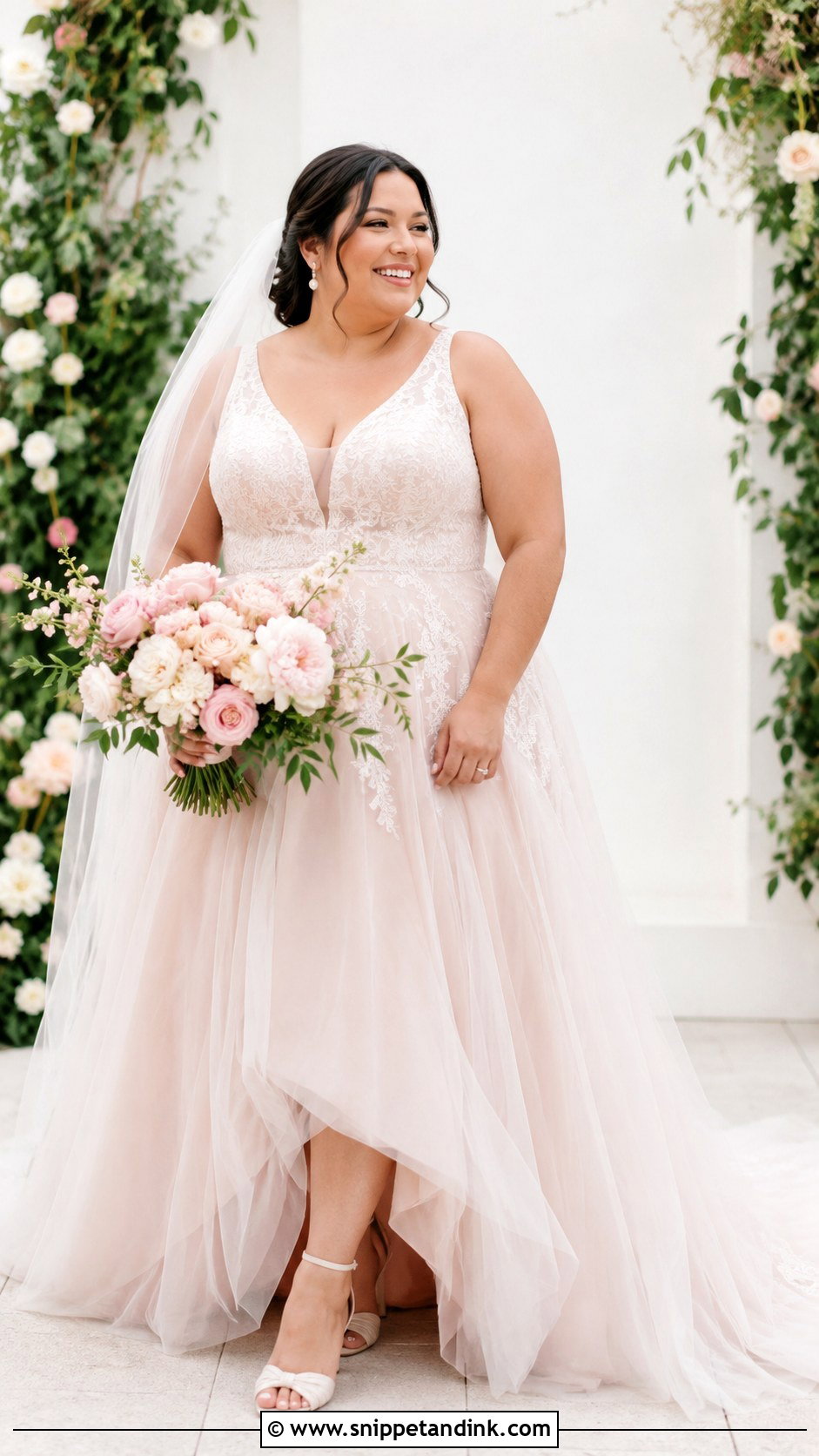
Blush is kinder than bright white on many skin tones, especially warmer ones, because stark white can make the face look flat beside it. I always hold the fabric against a bride’s skin in daylight before ordering, since some blush tulles read almost nude and others read candy pink. Tulle, lace, satin and layered chiffon all come in blush. Keep the veil, heels and earrings ivory so the outfit still reads bridal, and choose cream and pale pink flowers. Spring ceremonies and natural light suit it best.
16. Champagne Wedding Dress With Gold Jewelry
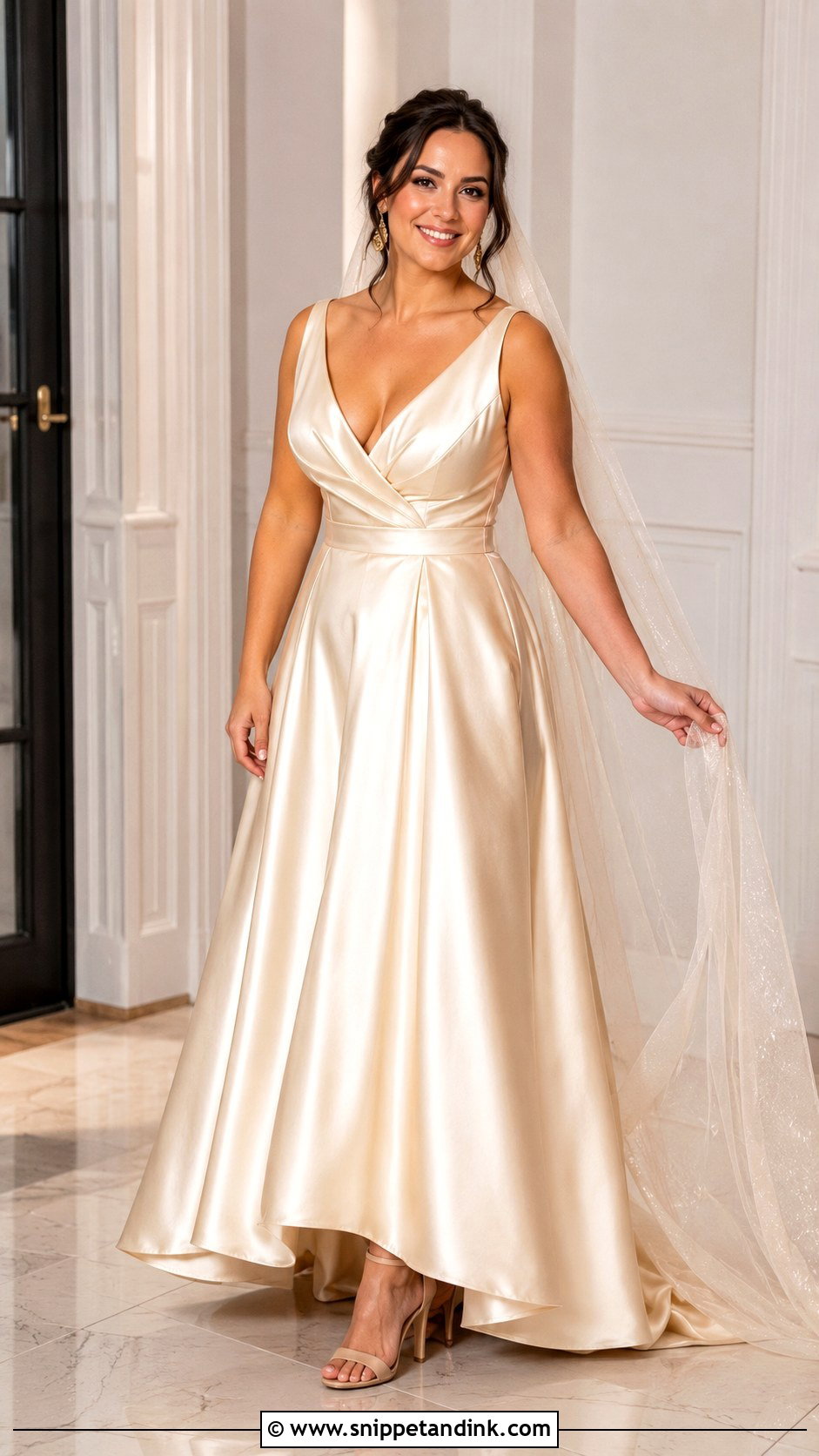
Champagne is the colour I suggest when white washes someone out but they still want an unmistakably bridal look. It sits well with gold, so I’d pair it with warm-toned jewellery and nude or ivory heels, plus a veil with a faint shimmer. Do check the shade under tungsten light if your reception is indoors at night, because some champagnes turn orange in warm bulbs. Satin, beaded tulle and soft crepe all wear it well. Makeup should stay warm and glowing so the tones match. It is a natural fit for evening and autumn weddings.
17. High Neck Wedding Dress With Low Bun
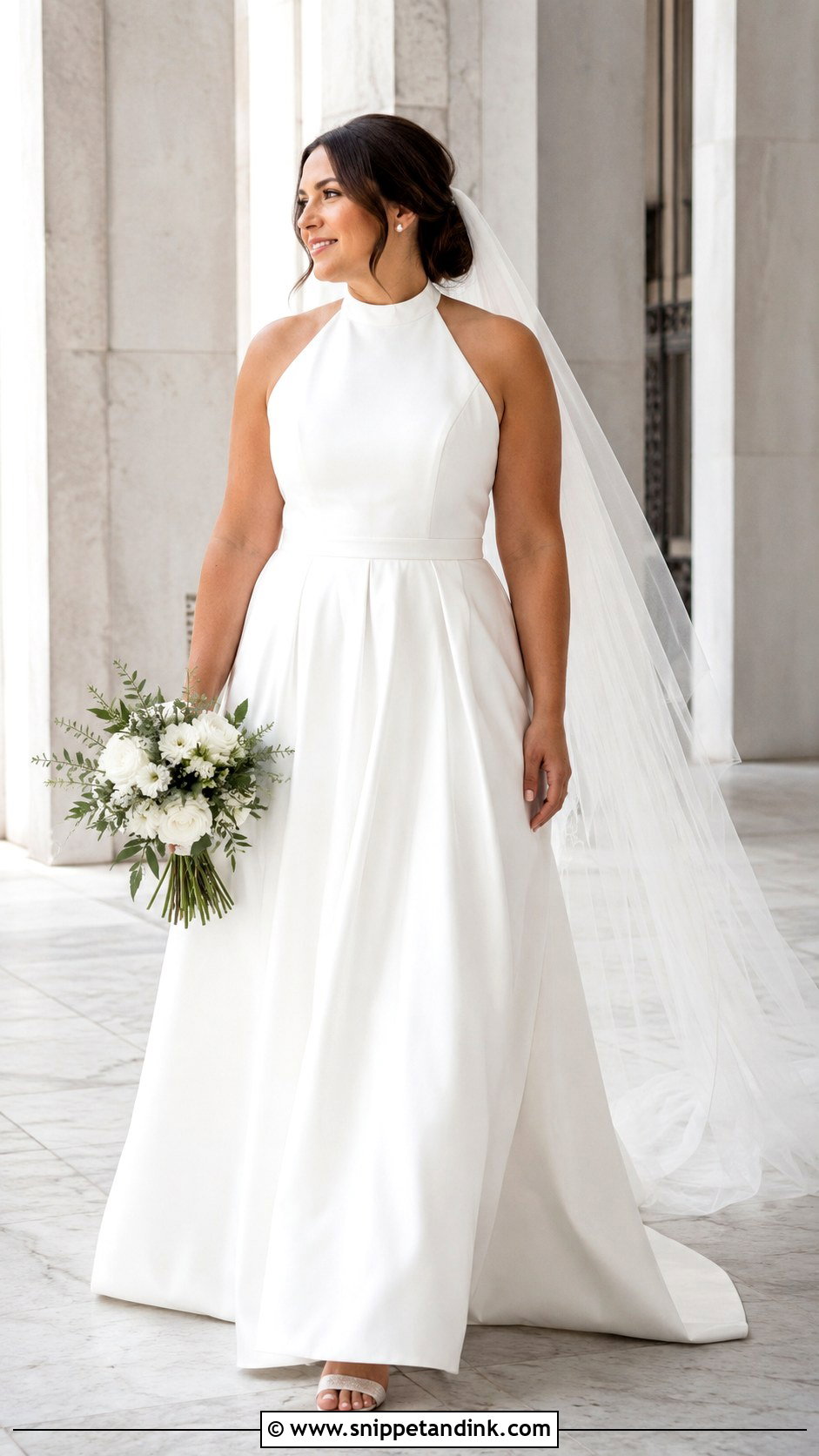
A high neck can look modest, modern or vintage depending on the cloth, and on a midsize bride it needs something to break the expanse of fabric. I usually look for an open back, a sheer yoke or a clearly defined waist; without one of those, a high-neck bodice can make the chest look like a single block. Have the neckline fitted while you’re sitting, since high collars ride up. A low bun shows off the line, with pearl studs, simple heels and a long veil. Cooler seasons and formal ceremonies suit it.
18. Sweetheart Wedding Dress With Tulle Veil
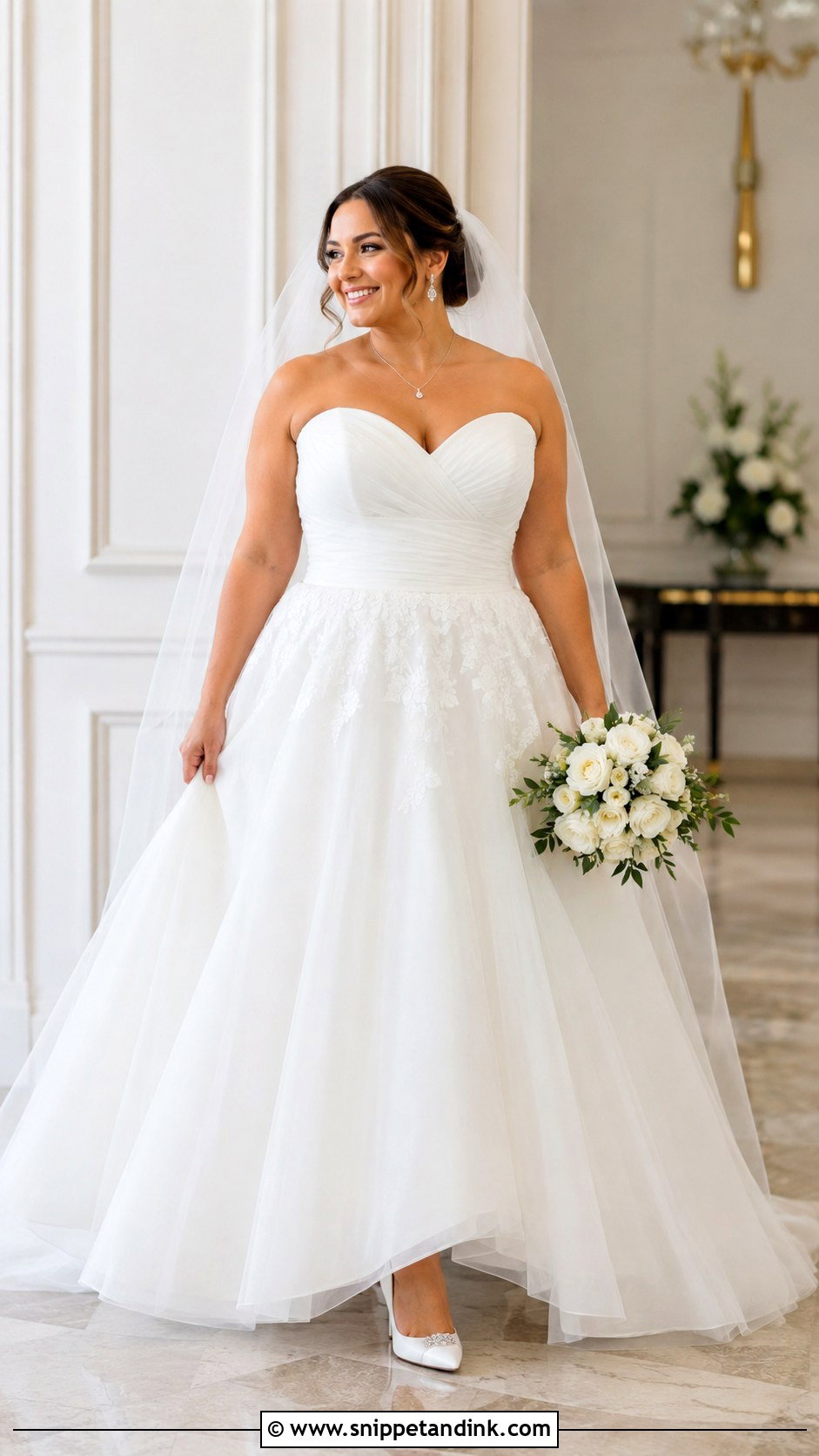
The sweetheart neckline frames the bust and softens the shoulders, and it is the one I see midsize brides relax into fastest. The support has to come from inside the dress, though: built-in cups or a corset base, never just a tight top edge. I check by asking the bride to lean forward. If the neckline gapes, it needs taking in at the side seams. Pick the skirt by how much drama you want, from A-line to ball gown. A tulle veil, crystal earrings and comfortable heels complete it, and it suits almost any venue.
19. Crepe Wedding Dress With Cape Veil
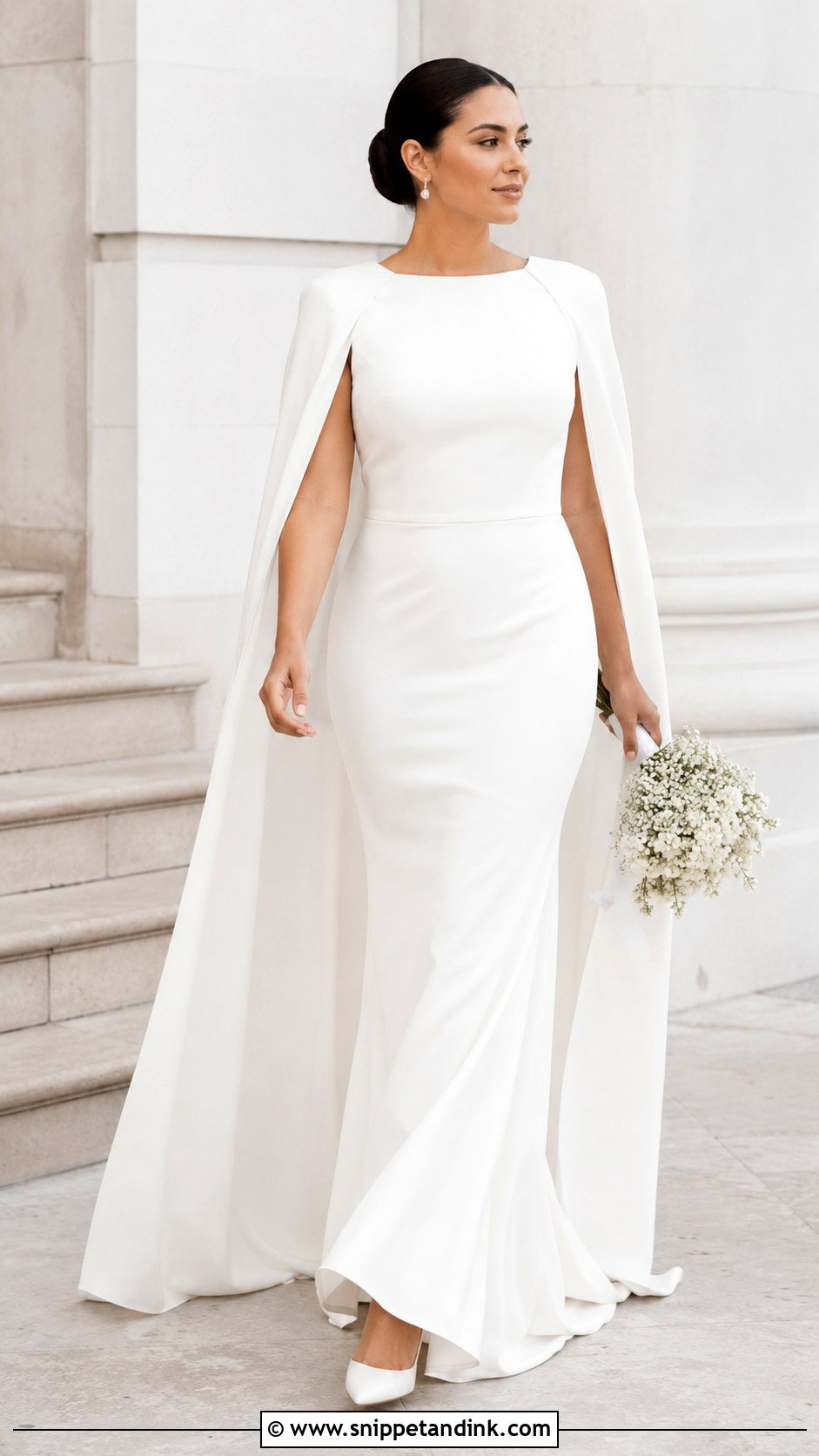
Crepe gives a smooth, tailored finish, and a cape veil replaces the traditional veil with movement from the shoulders. On a midsize body the cape creates a long vertical line down the back, which is why I like it. Crepe is unforgiving of thin lining, though; a cheap one shows every seam and undergarment edge, so feel the inside before you fall for the outside. Fasten the cape with snaps under the shoulder seam rather than pins. Sleek heels, small earrings and a clean hairstyle keep the look sharp for a minimalist or evening wedding.
20. Beaded Wedding Dress With Simple Heels
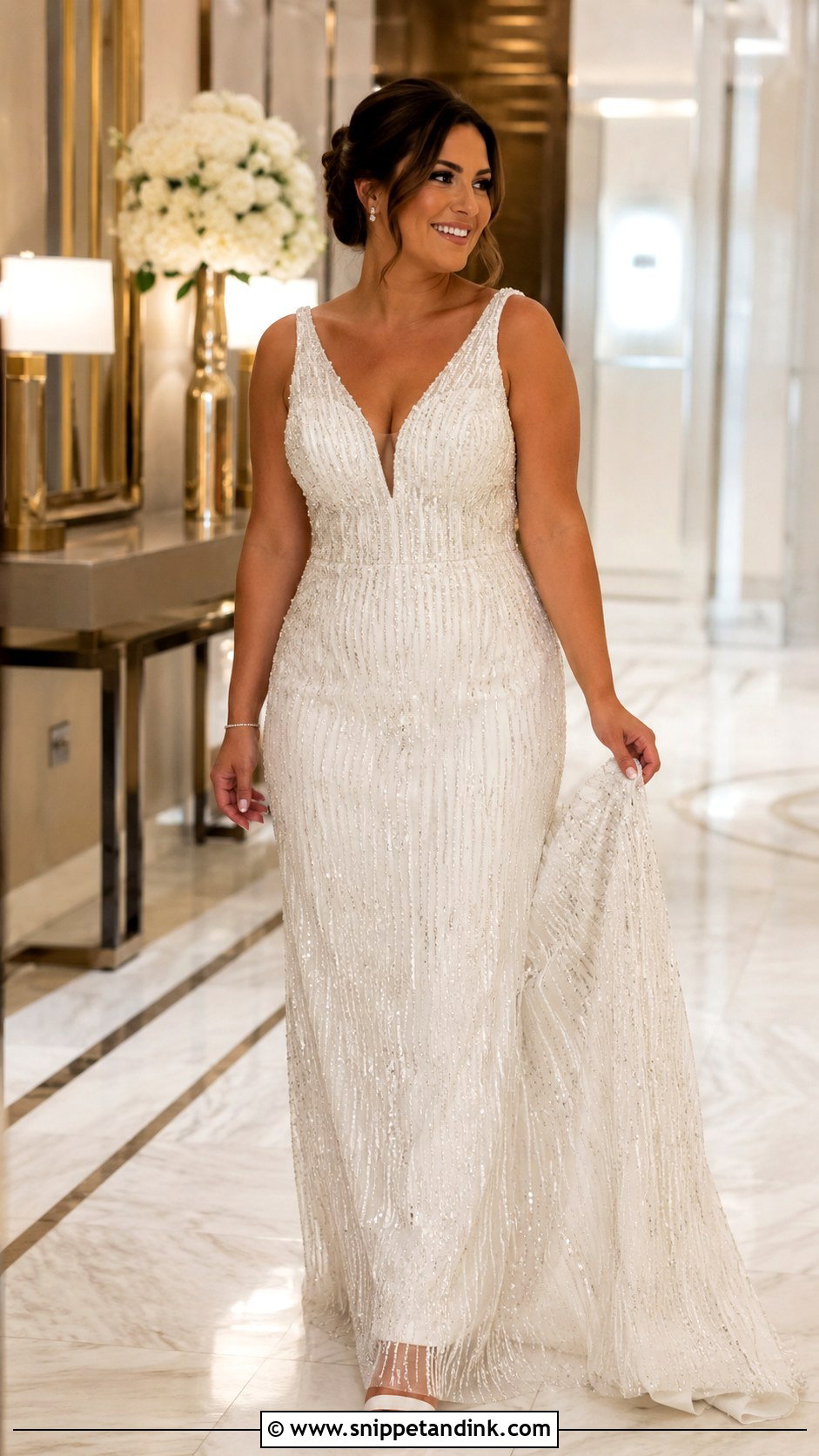
Heavy beading adds real weight, which is something brides only discover once they’ve worn the dress for an hour. I look for beadwork stitched onto a soft, well-lined base, because rough backs scratch the arms and inner wrists. Vertical lines of beading or detail gathered at the waist tend to flatter a midsize shape more than an all-over scatter. With this much sparkle, simple heels, small earrings and a plain veil (or none) are enough. It comes alive under evening lighting in hotel ballrooms.
21. Mikado Wedding Dress With Bow Back
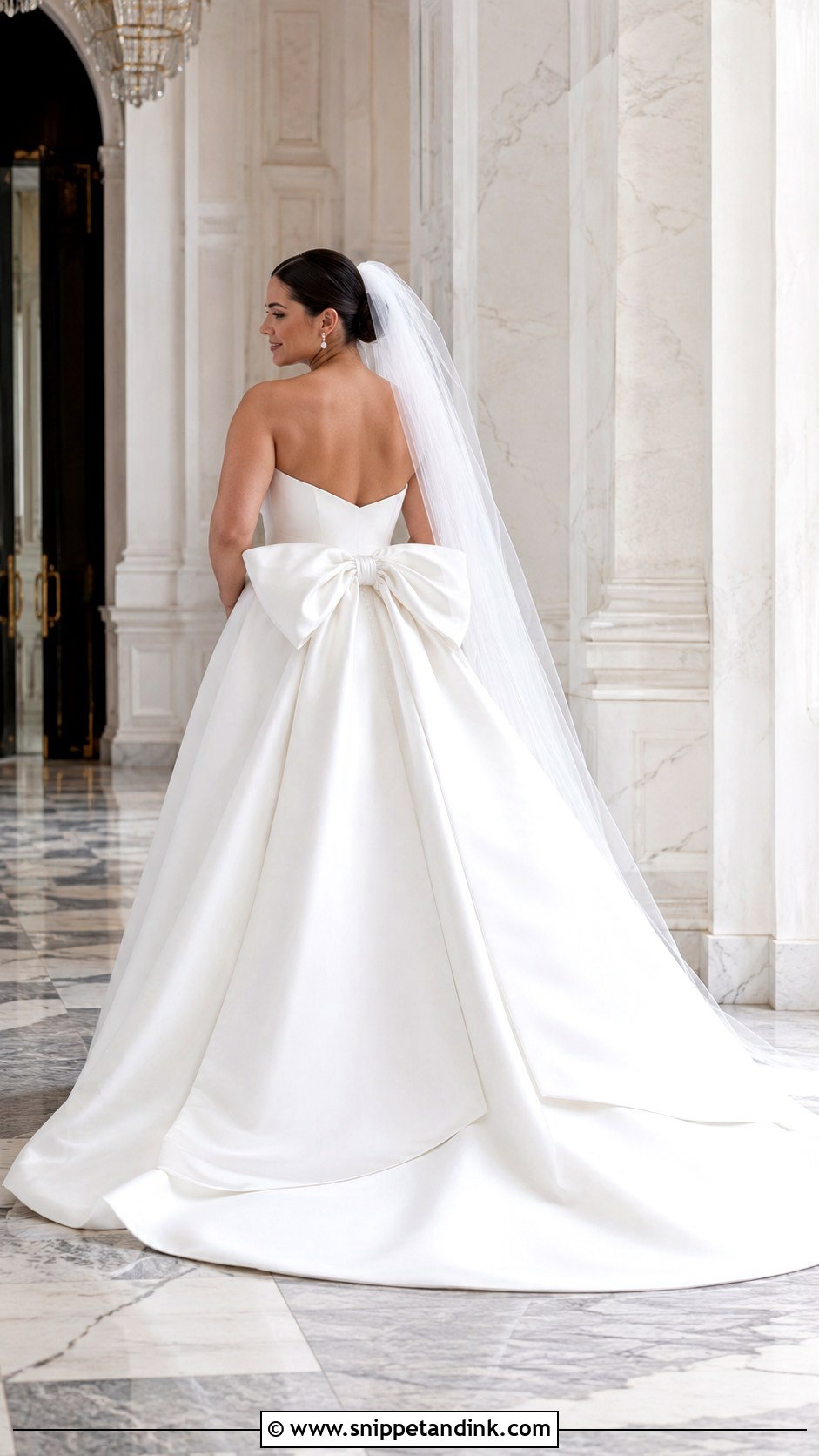
Mikado is a heavy, slightly crisp silk blend that holds its shape on its own, which makes it ideal for midsize brides who want structure without cling. It creases where you sit, though, so a bustle or a careful steam between ceremony and reception is worth planning. A bow at the back gives guests something to look at during the vows, so keep the front plain. Pointed heels, pearl earrings and a simple veil. It is made for formal ceremonies and classic portraits, and it barely needs sparkle.
22. Slip Wedding Dress With Sheer Overlay
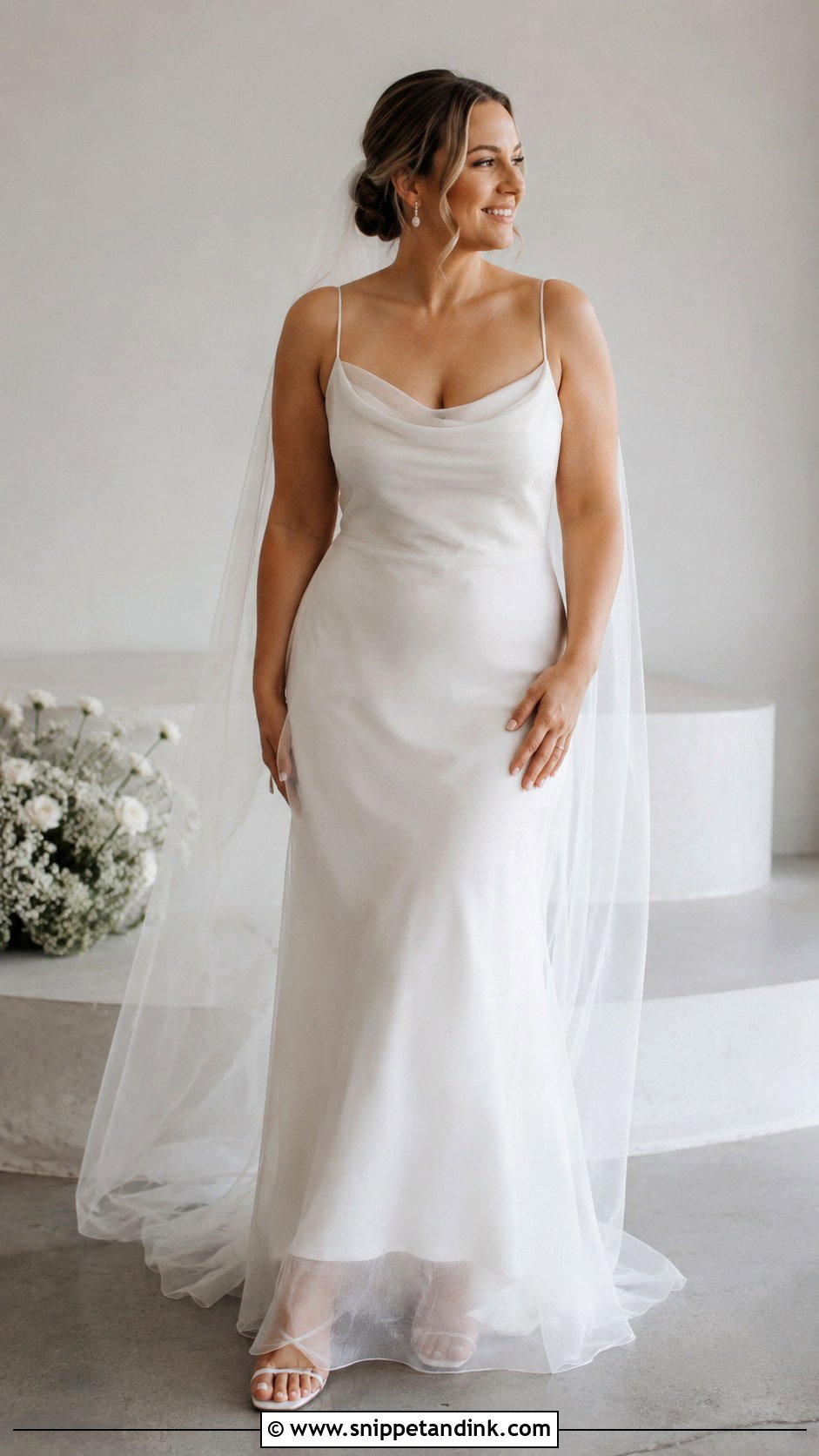
A slip wedding dress on its own can feel exposing, and the sheer overlay is what makes it wearable for many midsize brides. The slip should be cut on the bias so it skims rather than grips, and I’d want it sized to the hip, then taken in at the bust. Organza holds away from the body a little; chiffon falls closer. Strappy heels, delicate earrings and a simple veil. It suits beaches, city ceremonies and small weddings, and the layers keep it from looking plain.
23. Short Wedding Dress With Oversized Bow
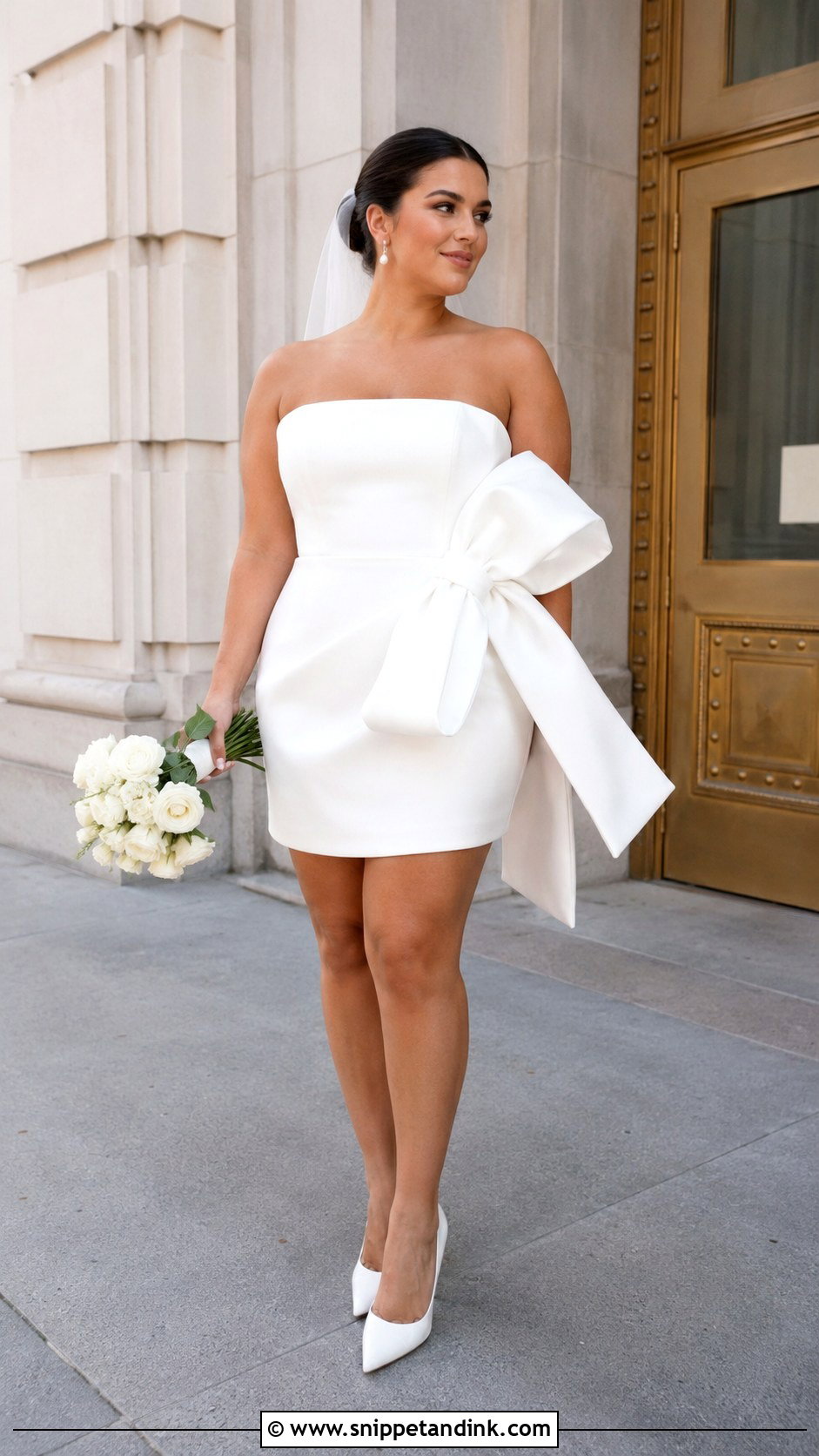
Short dresses with oversized bows are my favourite reception change, or the whole look at a courthouse. The bow needs to be built on a stiff interfacing or it droops by the speeches. I’d choose a structured mini or a knee-length dress with a defined waist and a smooth lining that doesn’t ride up when you dance. Pointed pumps, pearl earrings and a small veil or headband fit the mood. Sheer tights or a cropped jacket add coverage if you want it. It is playful, and it is properly easy to dance in.
24. Wedding Jumpsuit With Detachable Skirt
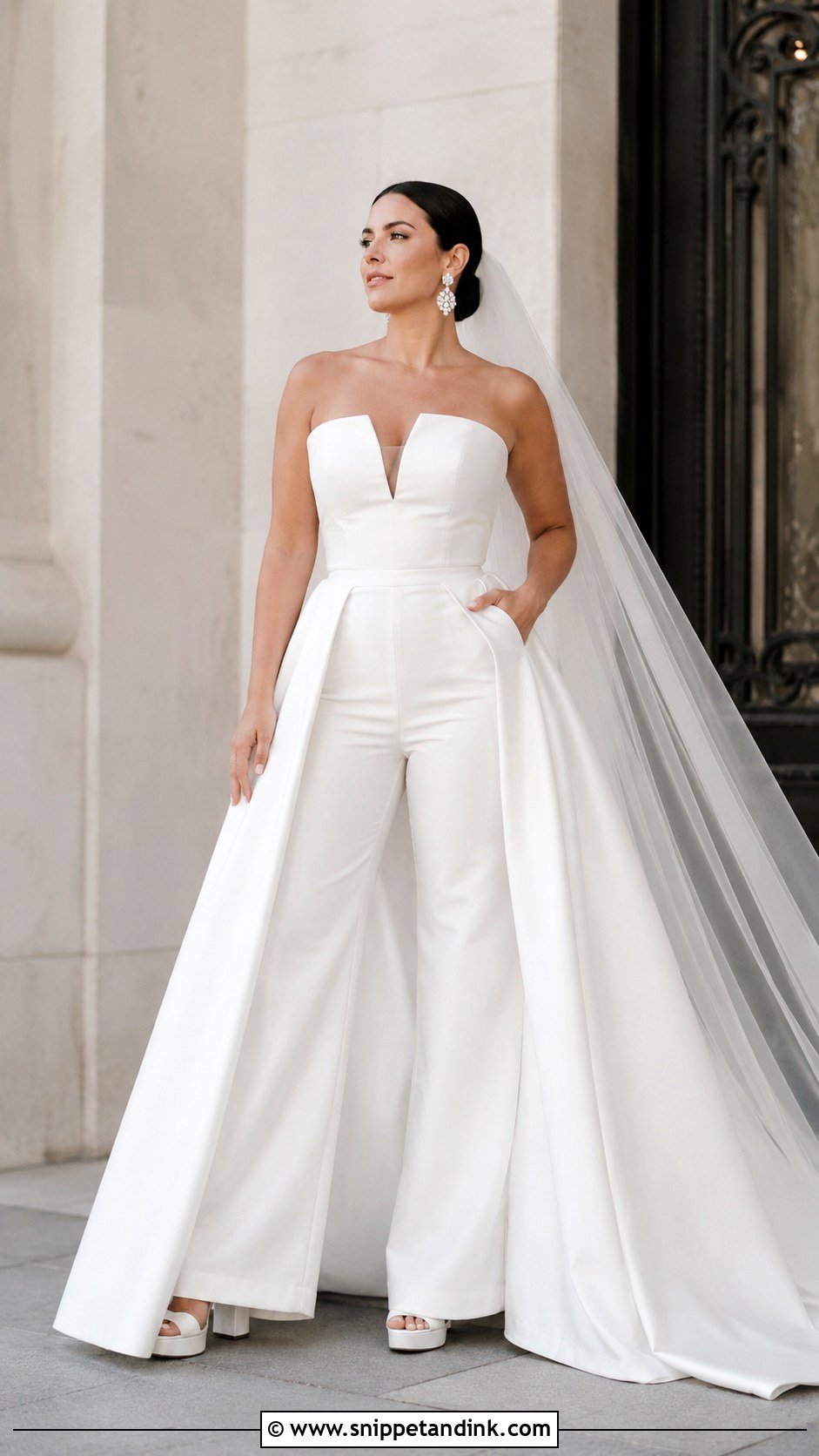
A jumpsuit with a detachable skirt gives you a ceremony silhouette and a party outfit in one fitting. Wide legs balance a midsize frame well, and a waist seam or belt keeps the middle defined. The detail I always test is how the skirt attaches: a hidden waistband with hooks is far kinder than snaps, which can pop open as you walk. Platform heels, statement earrings and a sleek veil or cape for the ceremony, then lose the skirt and keep the same accessories. City weddings suit it best.
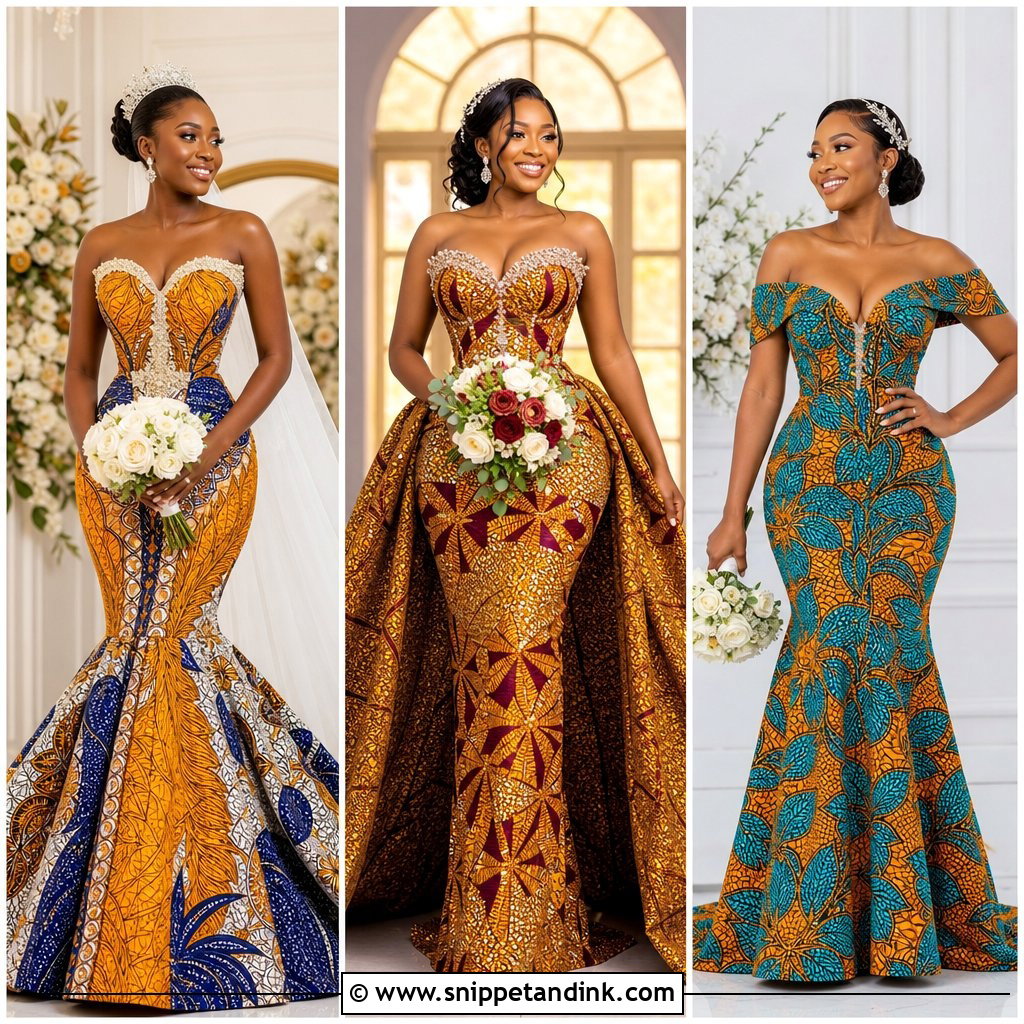
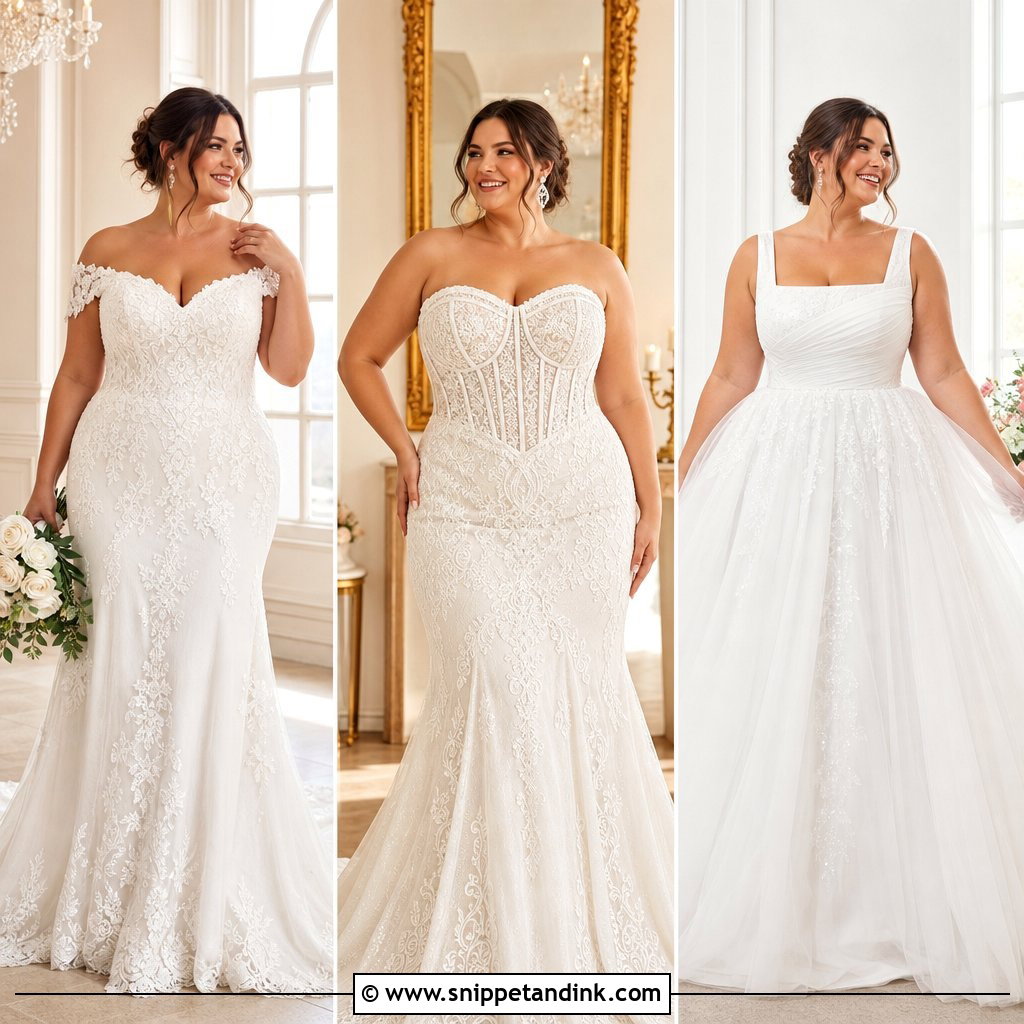

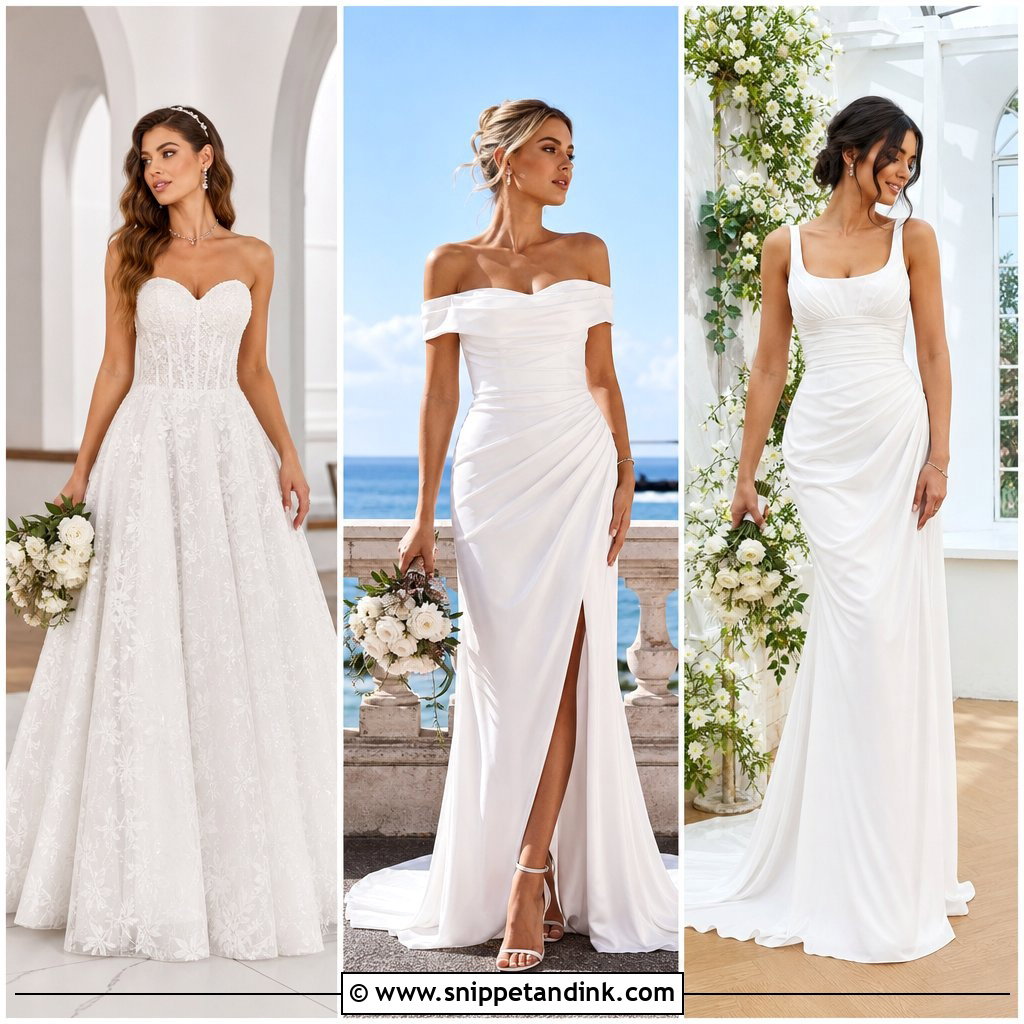
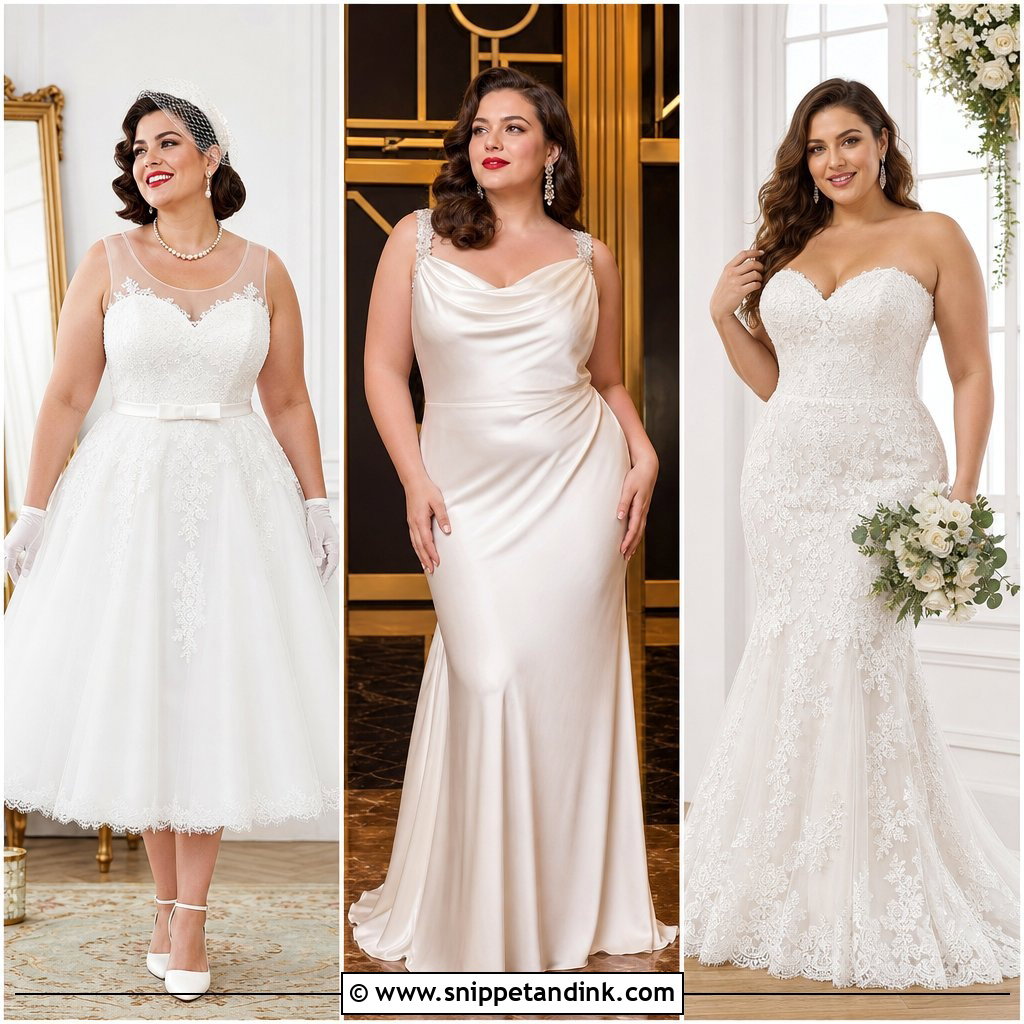
25. Two Piece Wedding Dress With High Waist Skirt
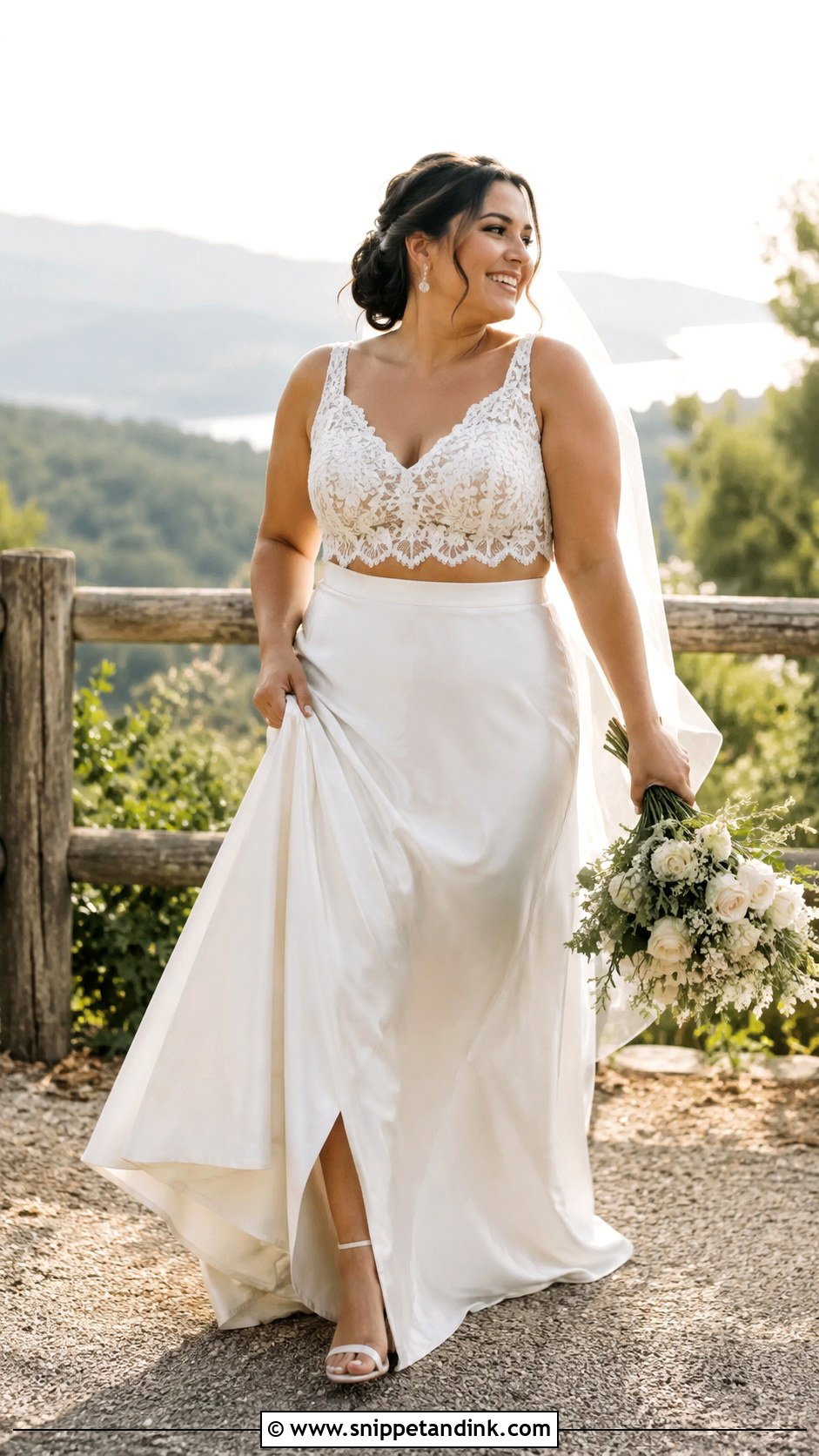
Two-piece bridal sets solve a problem that a single dress cannot: a top and bottom in different sizes. That alone makes me recommend them to many midsize brides. A high-waist skirt with a slightly cropped top shows the narrowest point of the waist; if you want no skin showing, ask for the top to be cut to meet the skirt waistband. Lace with satin or crepe with tulle both work, as does a matching set. Simple heels, a veil and delicate earrings. Relaxed outdoor ceremonies suit it.
26. Boho Wedding Dress With Bell Sleeves
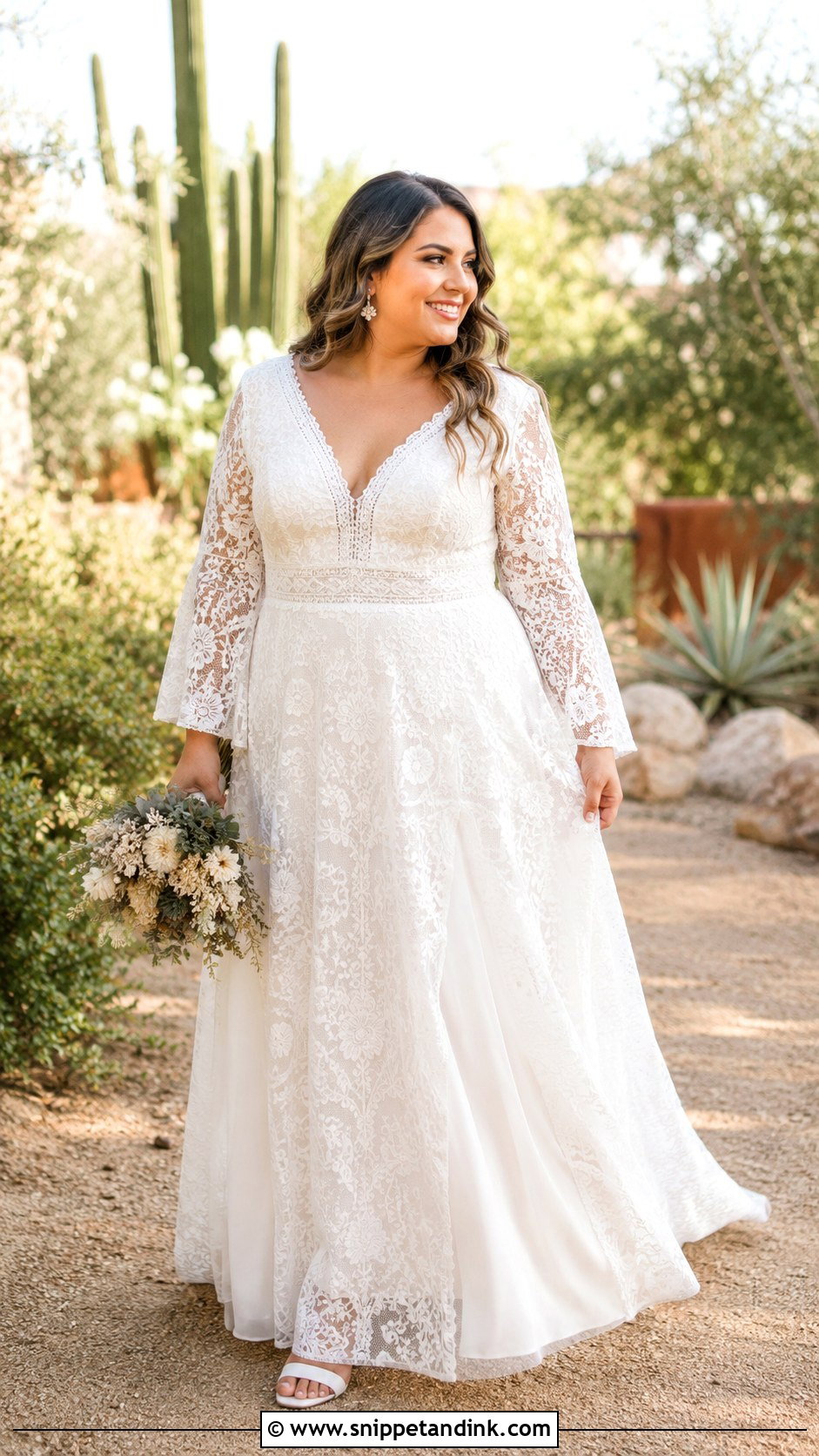
A boho wedding dress with bell sleeves needs a defined waist, either a fitted seam or an empire line, so the volume in the sleeves and skirt has something to come back to. Without it, a midsize bride can look swamped. Bell sleeves also catch on everything, from cake knives to candle flames, so I’d ask for the cuffs to stop above the wrist bone. Soft waves, low block heels and pearl or floral earrings finish it. Desert, beach and rustic venues all suit it.
27. Vintage Wedding Dress With Lace Gloves
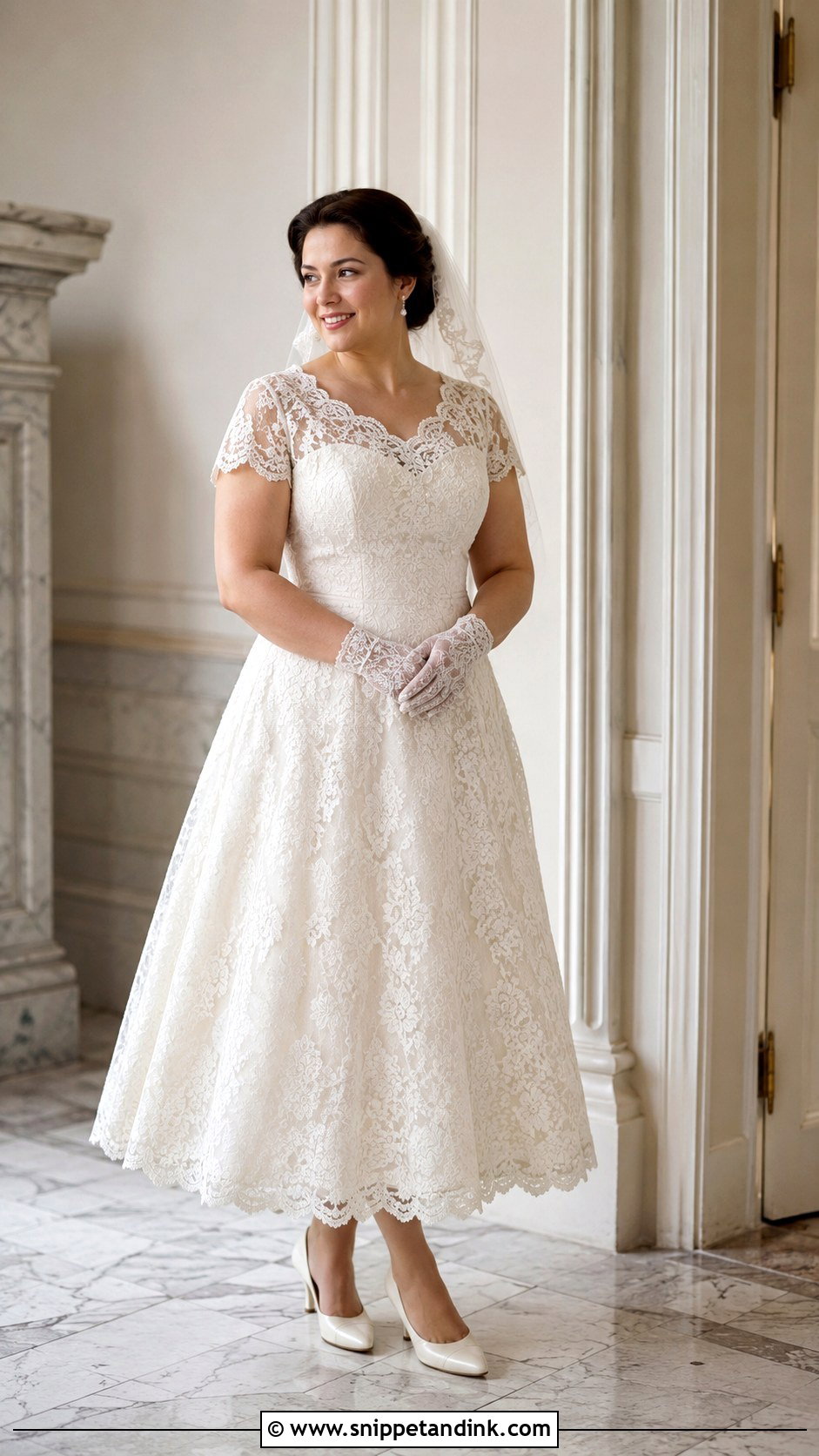
Vintage shapes were cut for a defined waist, which is why so many of them suit midsize brides. A 1950s tea length, a 1930s bias gown or a lace A-line all work. My rule with lace gloves and other period details is to choose one or two, not five, or the outfit tips into costume. Ivory heels, pearl earrings and a short veil are enough, with polished waves or a soft updo. Historic venues and courthouse ceremonies are where these looks feel most at home.
28. Puff Sleeve Wedding Dress With Fitted Bodice
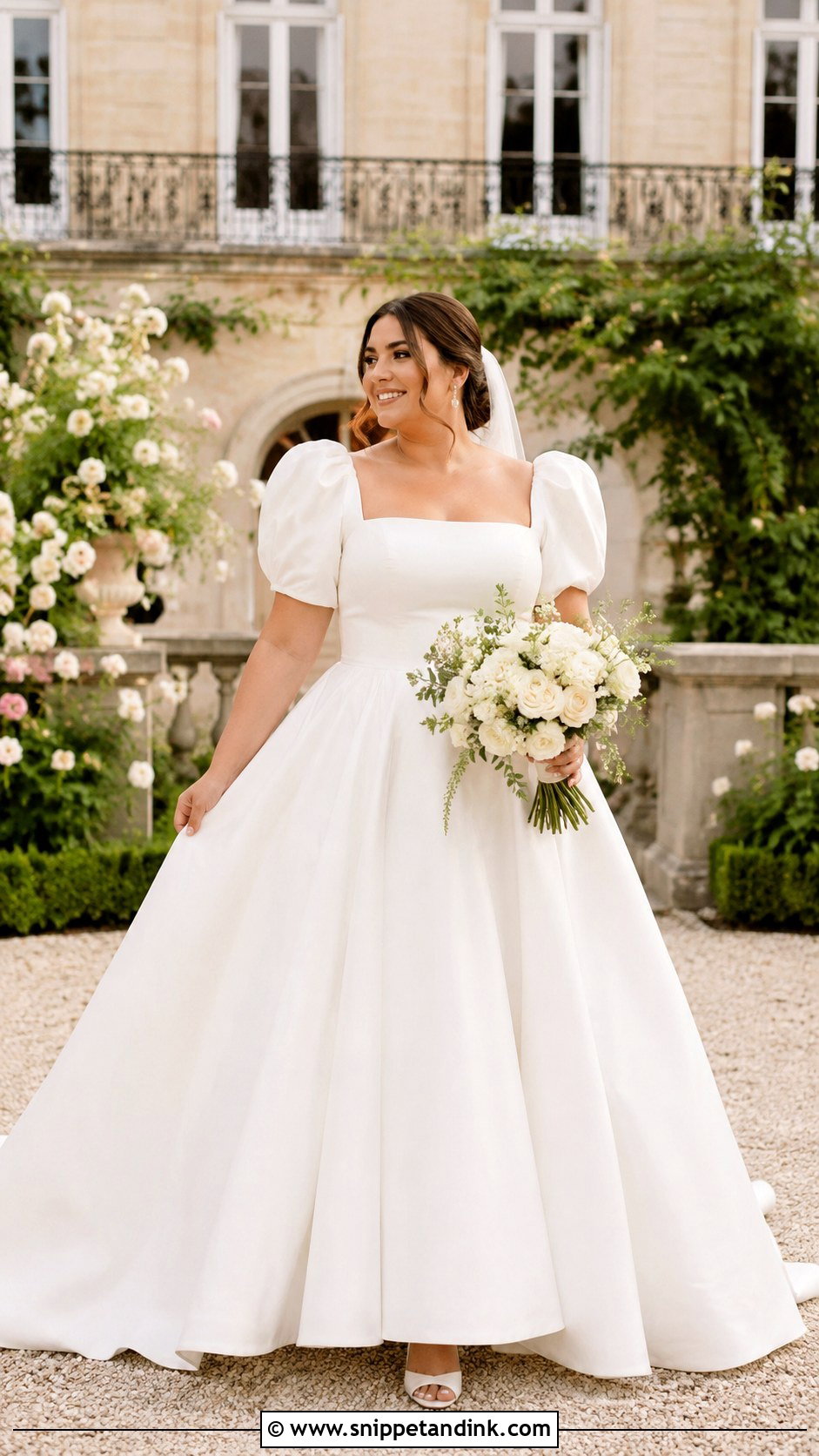
Puff sleeves draw the eye up and widen the shoulder slightly, which balances a fuller hip beautifully. The risk is bulk: oversized puffs in stiff fabric can make the upper arm look heavy. I look for sleeves with a light internal net so they hold shape without extra layers. Pair them with a fitted bodice and an A-line or full skirt, simple heels, small earrings and a clean veil. A centre-part bun keeps the look current, and garden or estate venues suit it.
29. Strapless Wedding Dress With Bridal Bolero
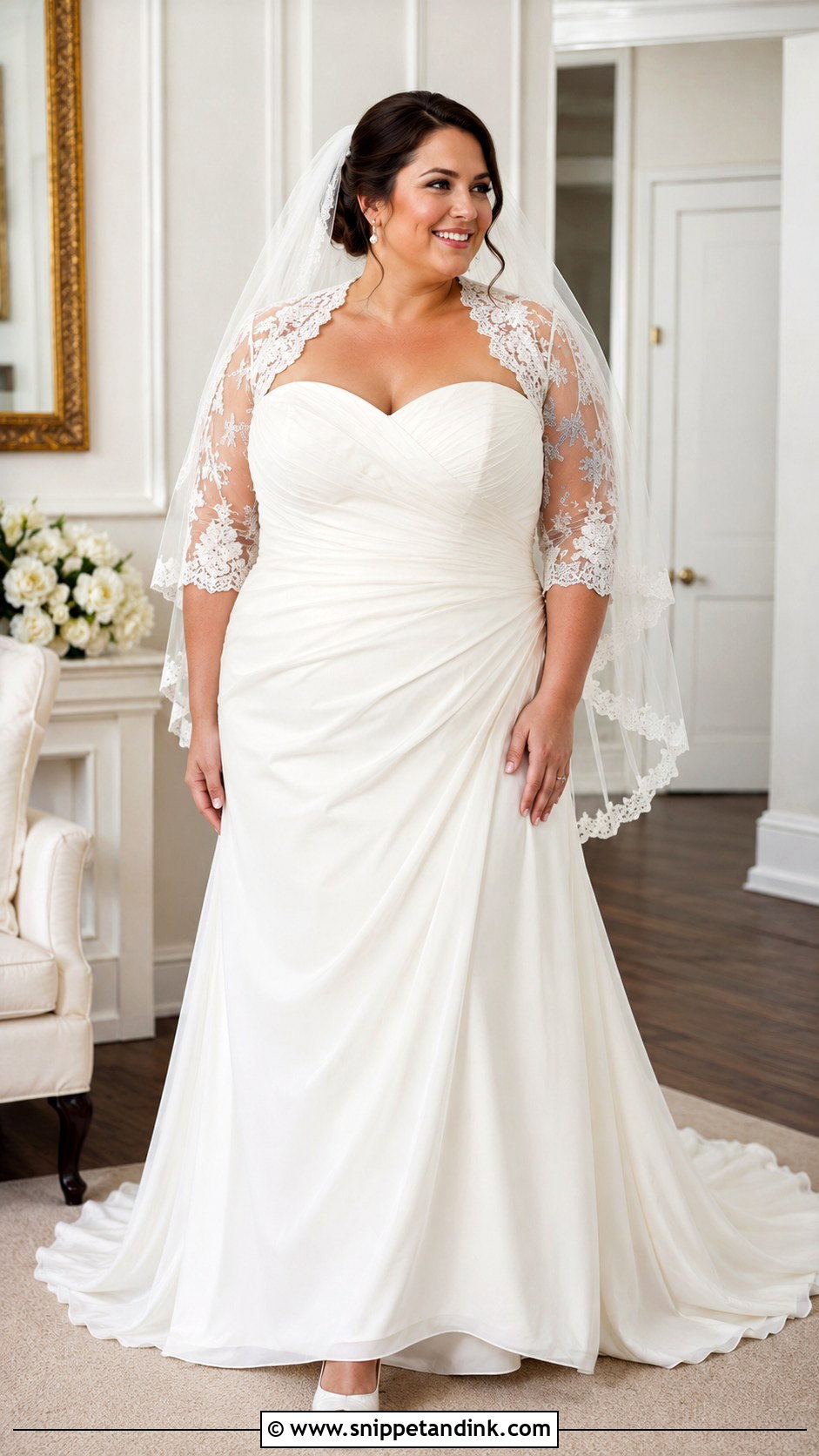
Strapless gowns are only comfortable if the support is built in. I check for boning, a grip band of silicone at the top edge and a waist stay inside, because tightness alone just slides down by the evening. A bolero solves both coverage and temperature for the ceremony. Lace, satin and sheer net boleros all exist, so match the bolero to the gown’s fabric. Ivory heels, pearl earrings and a fingertip veil, then lose the bolero for dancing. It handles a day that starts cold and finishes warm.
30. Reception Wedding Dress With Feather Trim
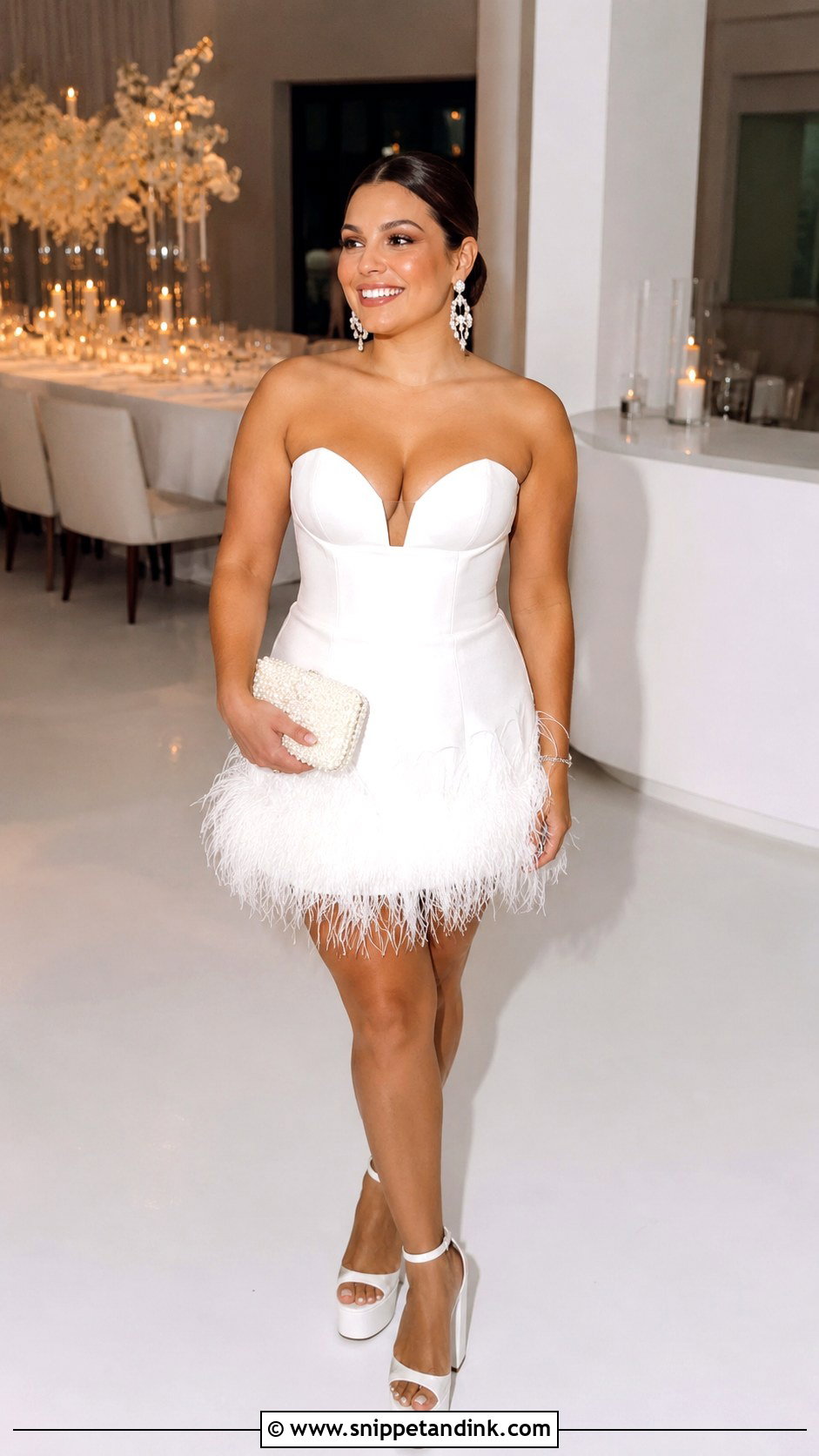
A reception wedding dress with feather trim works best as a change after a traditional ceremony gown. I’d keep the feathers at the hem or the cuffs rather than the neckline, where they tickle the face and get in the way of every hug. A mini, midi or sheath with comfortable structure is easiest to dance in. Block heels or platforms, statement earrings and a sleek clutch, with simple hair. Feathers shed, so pack a lint roller for your partner’s jacket.
Underwear Decides How the Bodice Behaves
I can fit a gown perfectly and then watch it change shape on the day because the bride wore different underwear. Bring the exact bra, shapewear and shoes to every fitting. A plunge bra lifts the bust higher than a balconette, and that half inch moves where a sweetheart neckline sits.
Many gowns with a corset or boned bodice can have cups sewn in, which removes the need for a bra altogether. That is worth asking about with strapless and low-back styles. With shapewear, I’d avoid anything with a waistband that rolls; a high-waisted short with a silicone grip at the leg stays put through a full day and stops thighs rubbing under a long skirt.
The Ten-Minute Test Before You Sign Off on Alterations
At the last fitting, don’t just stand still and admire yourself. Do the things you’ll actually do at the wedding, and say something if any of them feel wrong, because this is the last chance to change it.
- Sit on a hard chair for a few minutes. Check whether the boning digs into your hips and whether the bodice gapes at the top.
- Raise both arms as if you were hugging someone taller. Straps and off-shoulder bands should stay put.
- Walk briskly and climb a step. The hem should clear your toes in your shoes.
- Have someone bustle the train and dance for a minute. A bustle that pulls into a pucker needs its hooks moved.
- Lean forward to pick something up. Nothing should fall open at the neckline.
A Dress Is Finished at the Fitting, Not the Shop
The gown you buy is a starting point. What makes it yours is fitting it to your actual bust, waist and hips, then wearing it to sit, walk and lift your arms before the day. Every look above can work on a midsize body, from structured satin and lace sleeves to short reception dresses and jumpsuits. Pick the shape that feels right in the mirror, budget for alterations, and judge each option by how it feels when you’re moving, hugging and dancing.
You'll Like These Ideas:




Leave a Reply