
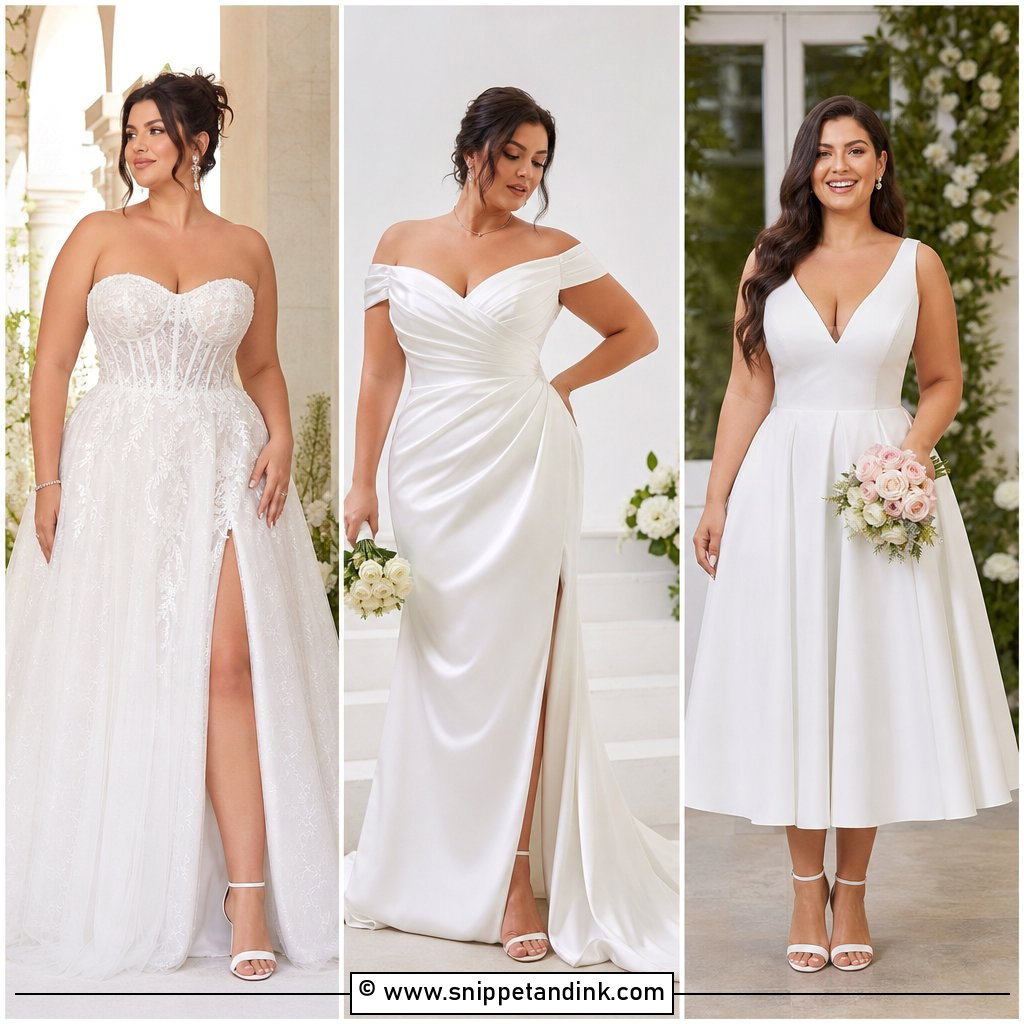
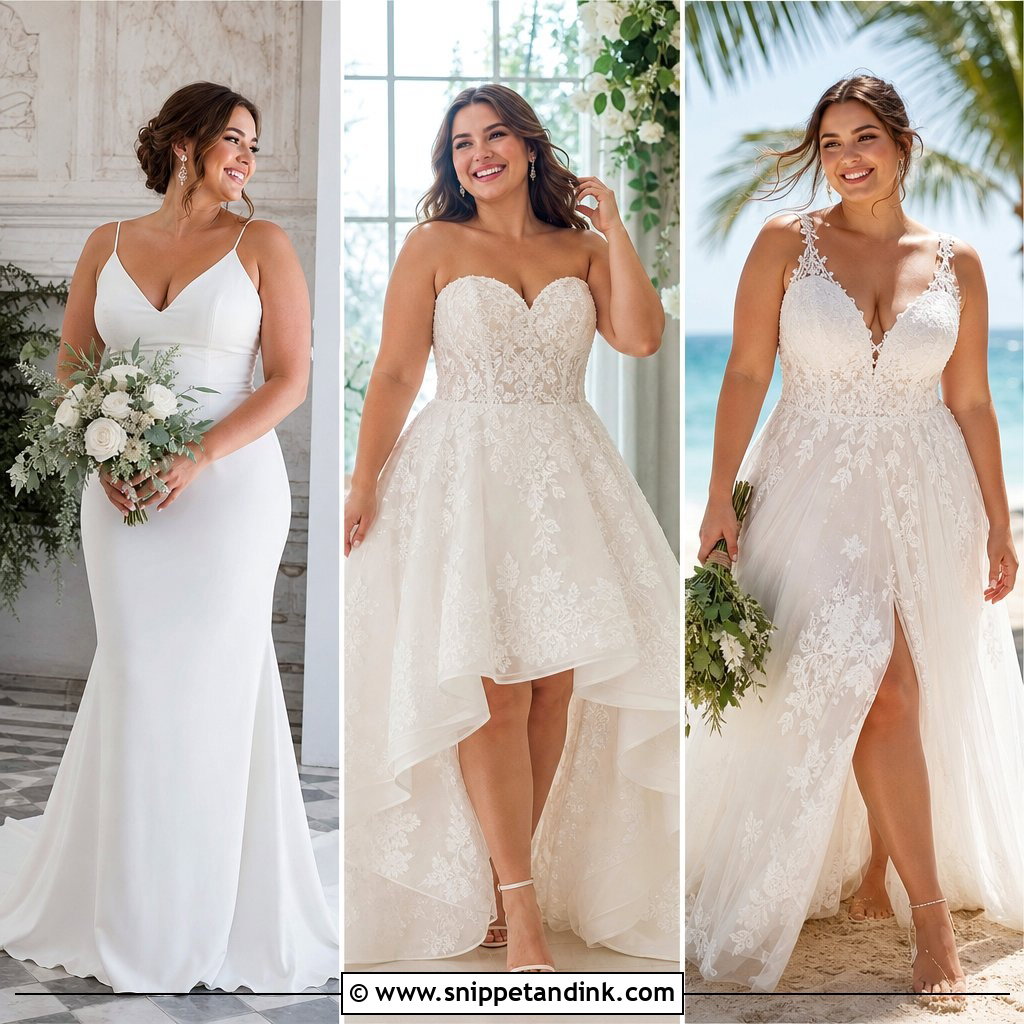
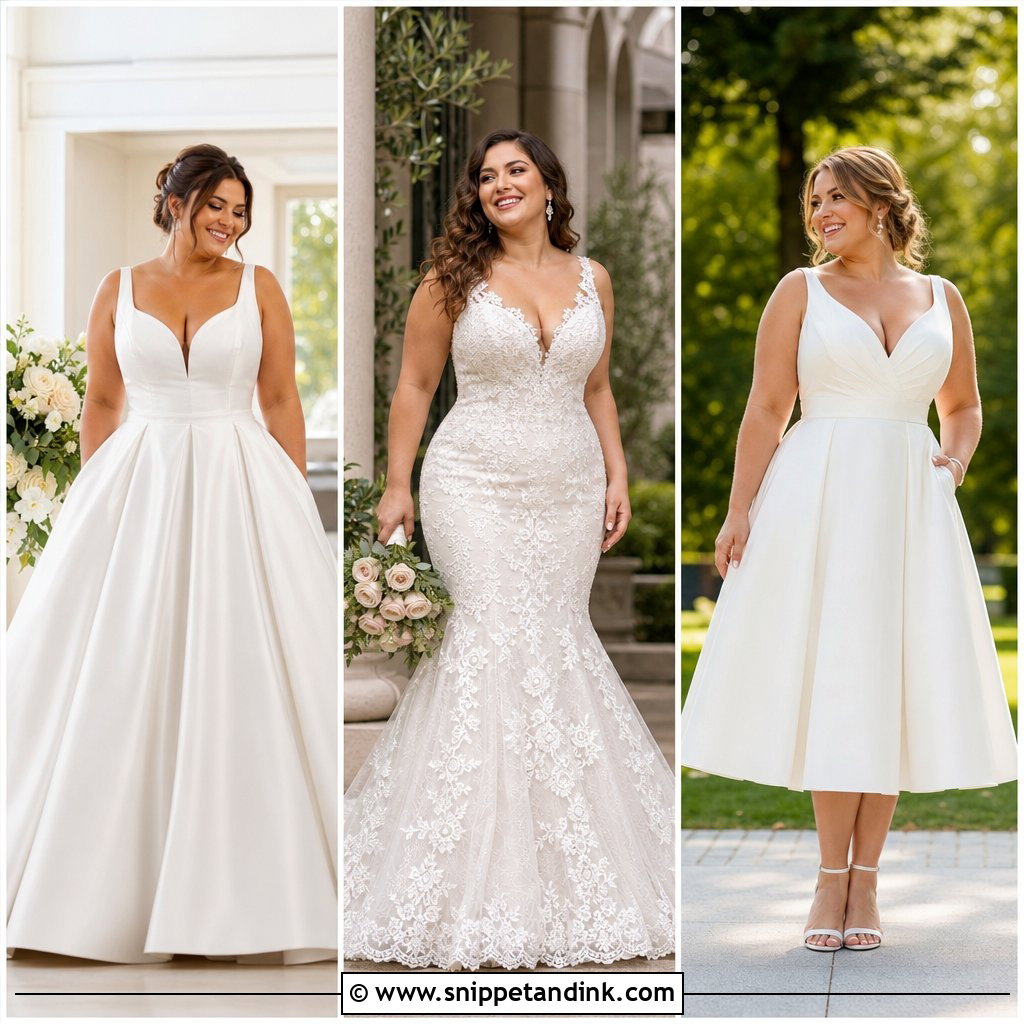
Every silhouette in this collection can work on a curvy body. I say that as someone who spends most fittings with a clip in one hand and a tape measure in the other: A-line, ball gown, mermaid and fit-and-flare skirts all stand alongside sheath designs as workable choices, provided the gown fits through the bust, waist and hips and has real support built inside it. What turns a dress from uncomfortable to right is usually the inner structure and the alterations, not the shape on the hanger. Think about your venue, the season and how much you plan to dance, then use the gowns below as a starting point.
Ordering Off Your Largest Measurement, Then Tailoring Down
Bridal sizing runs small and inconsistently, and it surprises almost everyone. A designer’s chart lists bust, waist and hip, and most brides fall into a different size for each. I always order to the largest of the three. Taking a gown in is routine work for a good seamstress; letting it out depends on seam allowance that many bridal gowns barely have, especially lace and beaded bodices.
When the shop’s samples stop short
Plenty of boutiques carry their samples in only one or two sizes, so you may end up clipped into a dress that won’t close. That tells you very little about how the finished gown will sit. When you book, ask which sizes the samples come in and whether they hold curve samples of the styles you’ve saved. A dress you can actually zip shows you where the waist and flare really land.
- Order early. Many made-to-order gowns take four months or more to arrive, so aim to order around nine months before the wedding where you can.
- Leave roughly two to three months for alterations, usually spread over three fittings.
- Settle on your bra or shapewear before the first fitting, since changing it later moves every measurement.
- Ask whether the designer offers made-to-measure for an extra fee. On a fuller bust it can save a lot of reworking.
1. A-Line Lace Wedding Dress
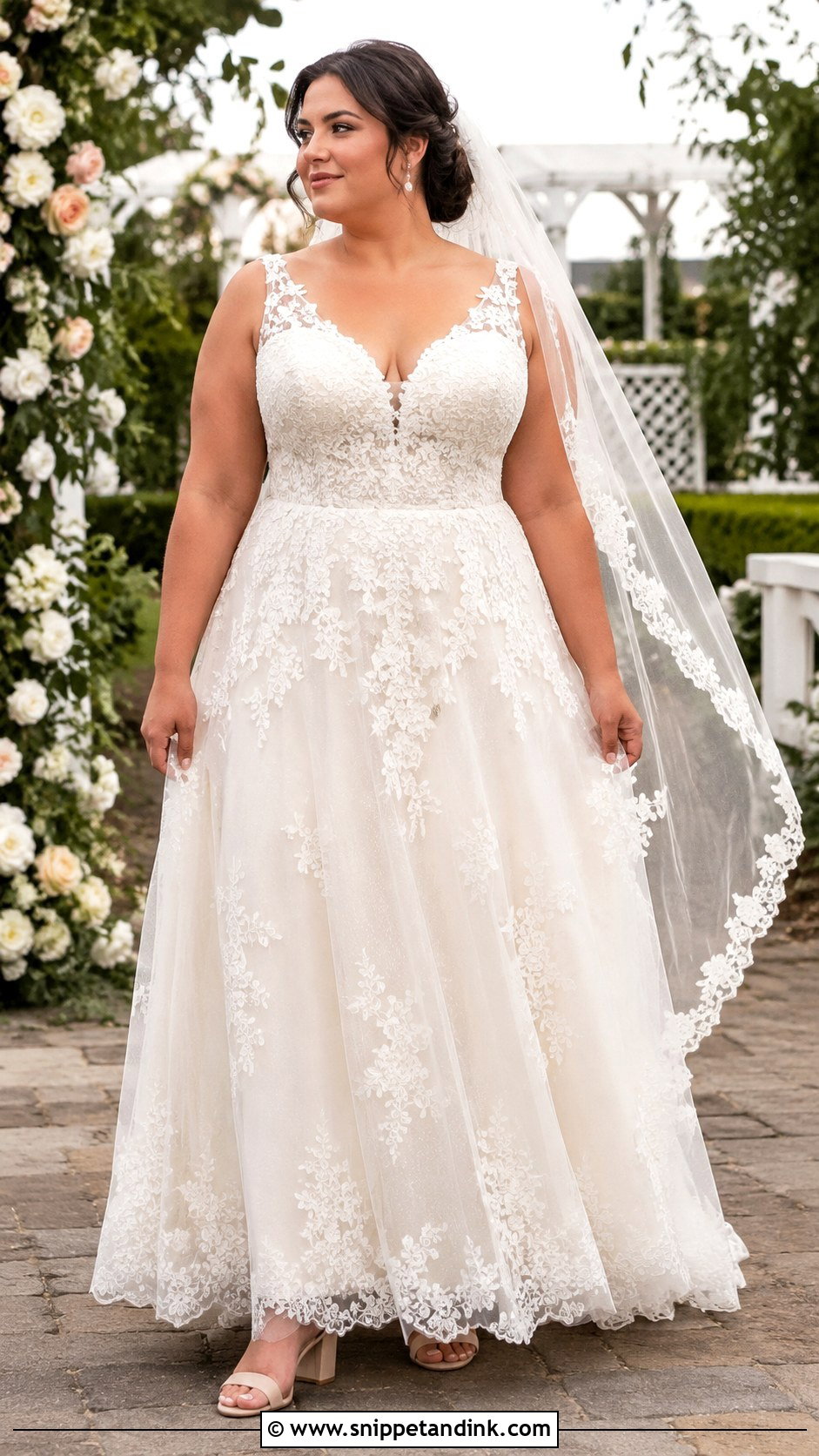
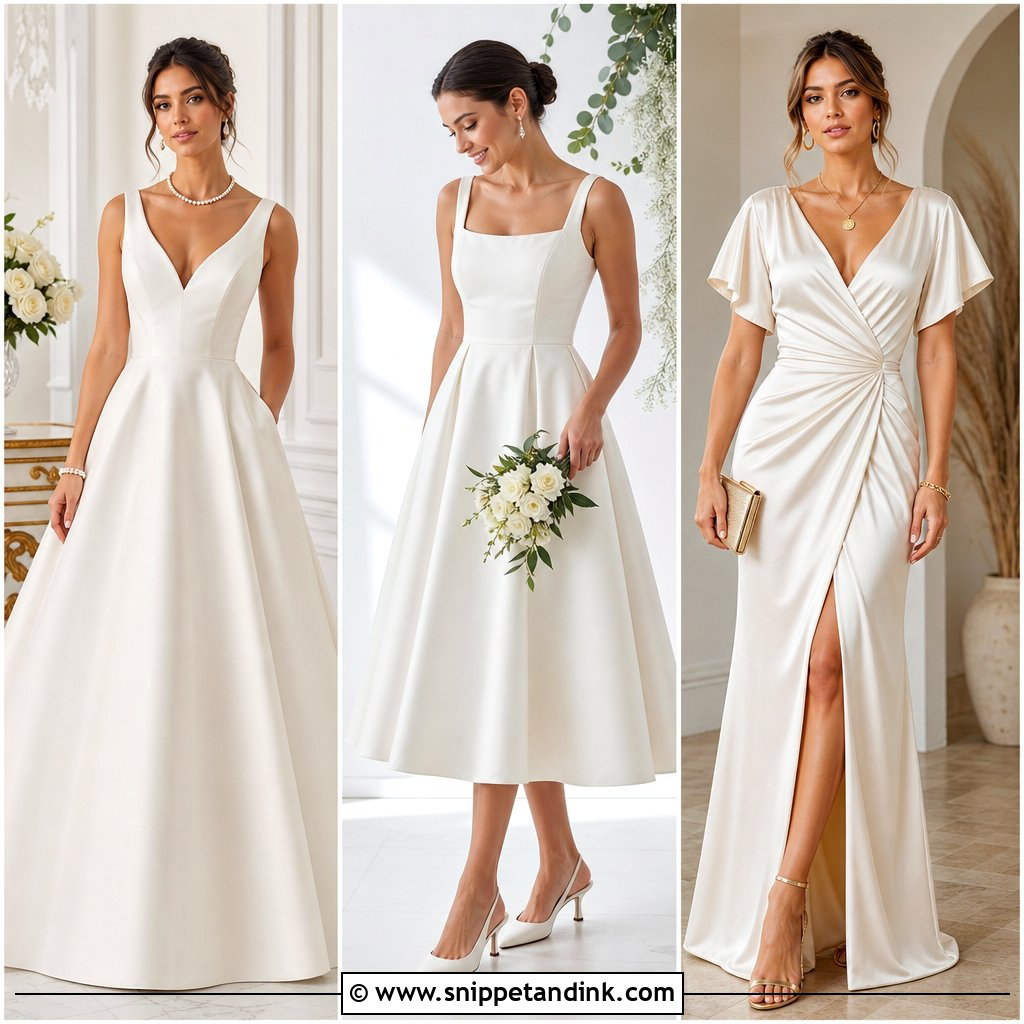
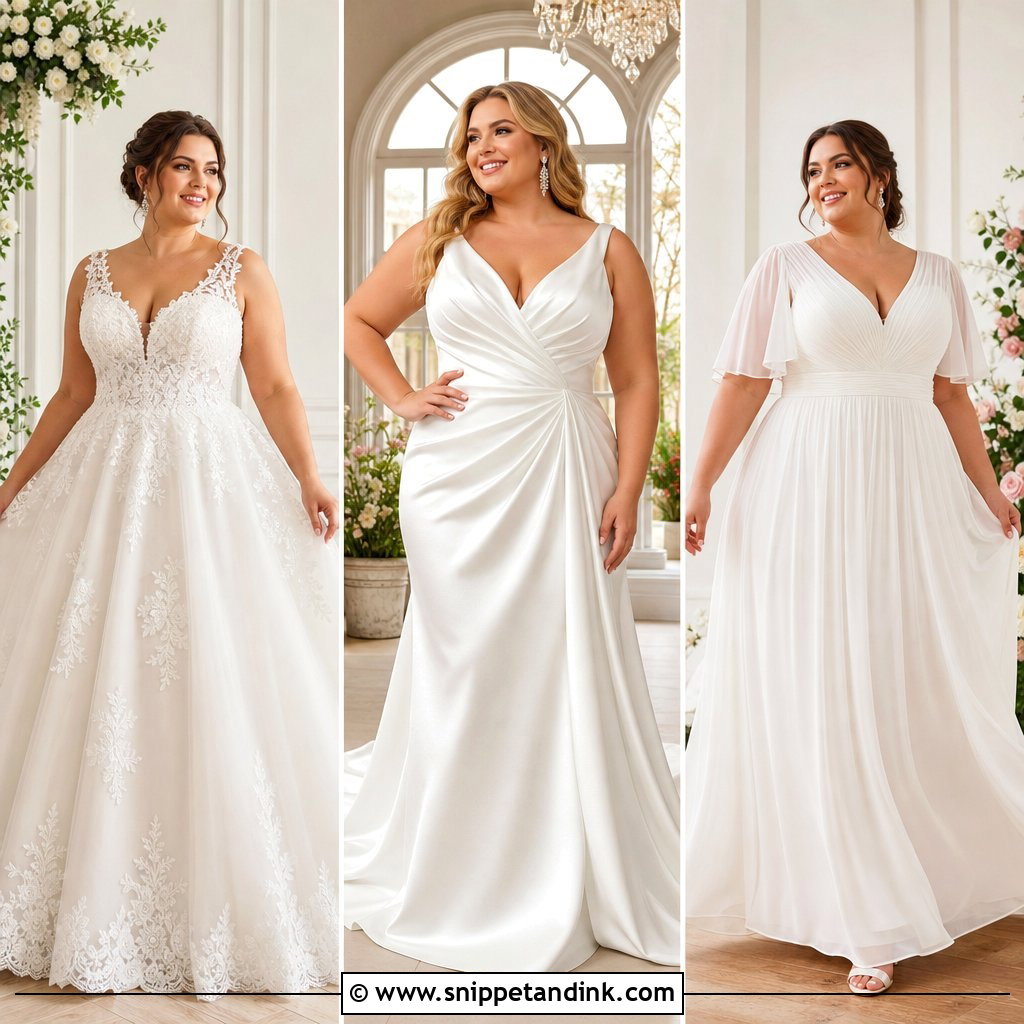
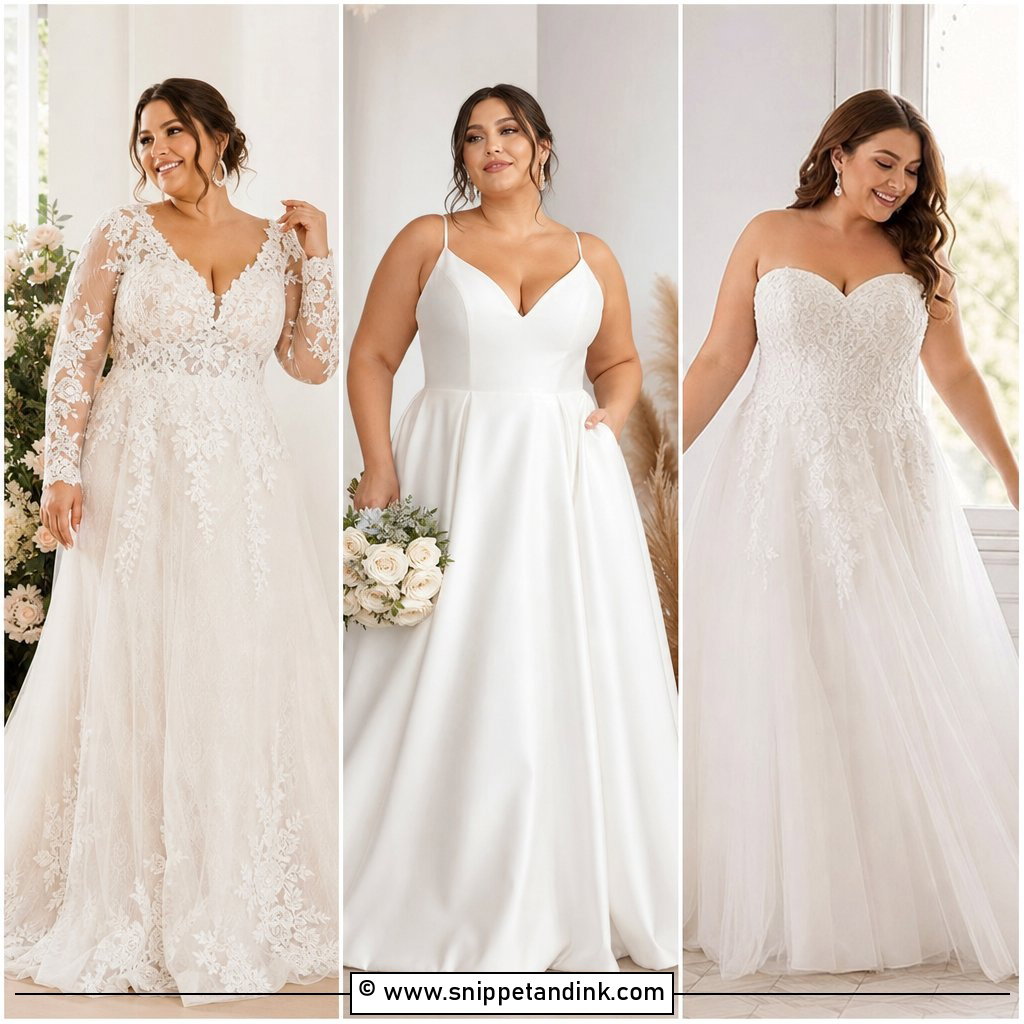
This is the silhouette I pull first for a bride who isn’t sure where to start, because the skirt releases at the waist and asks very little of the hips. Floral lace over an ivory or nude lining adds depth without weight. What I check is the strap. Lace straps stretch over a long day, so I like them backed with stabilizing tape, and a V-neck on wide straps gives a secure, open line. Pair it with block-heel sandals and a lace-edged fingertip veil, and do the hem fitting in your actual wedding shoes while you sit, walk and raise your arms.
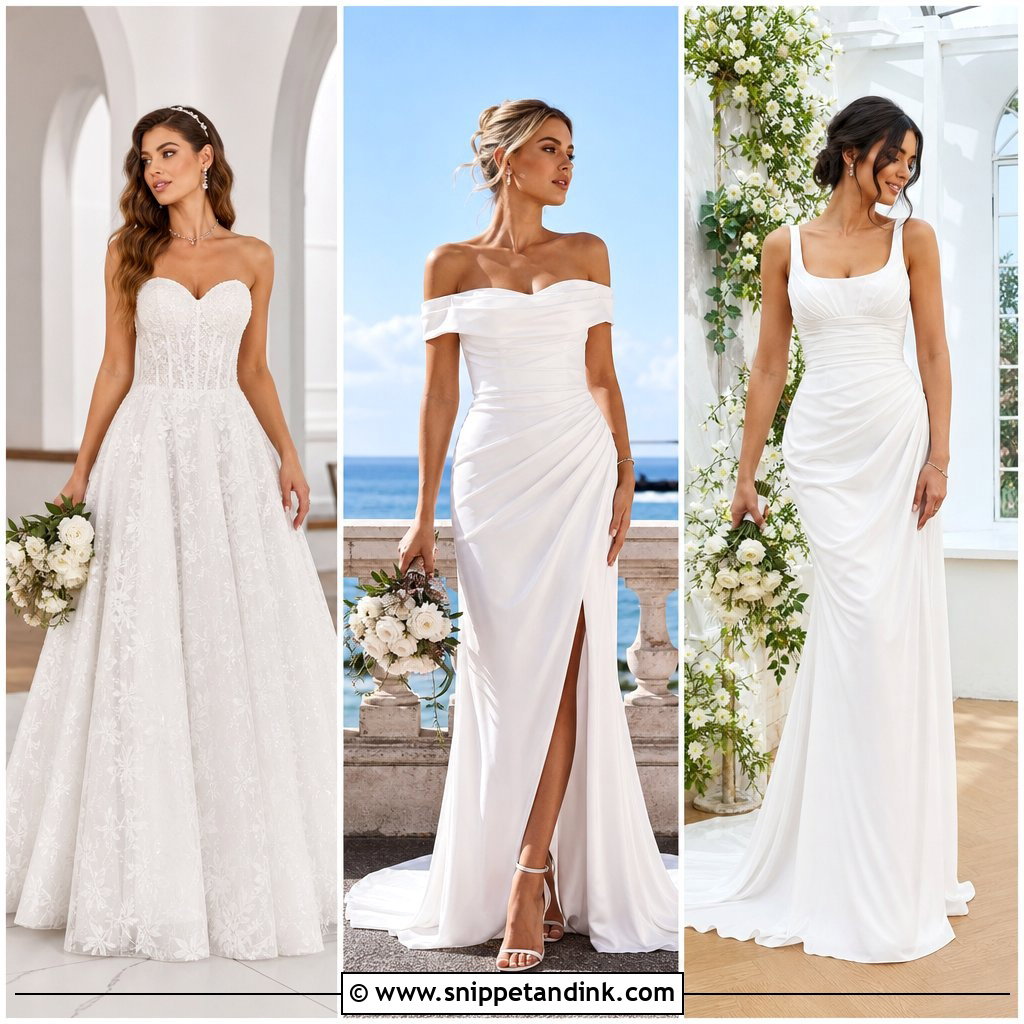
2. Off-the-Shoulder Ball Gown Wedding Dress
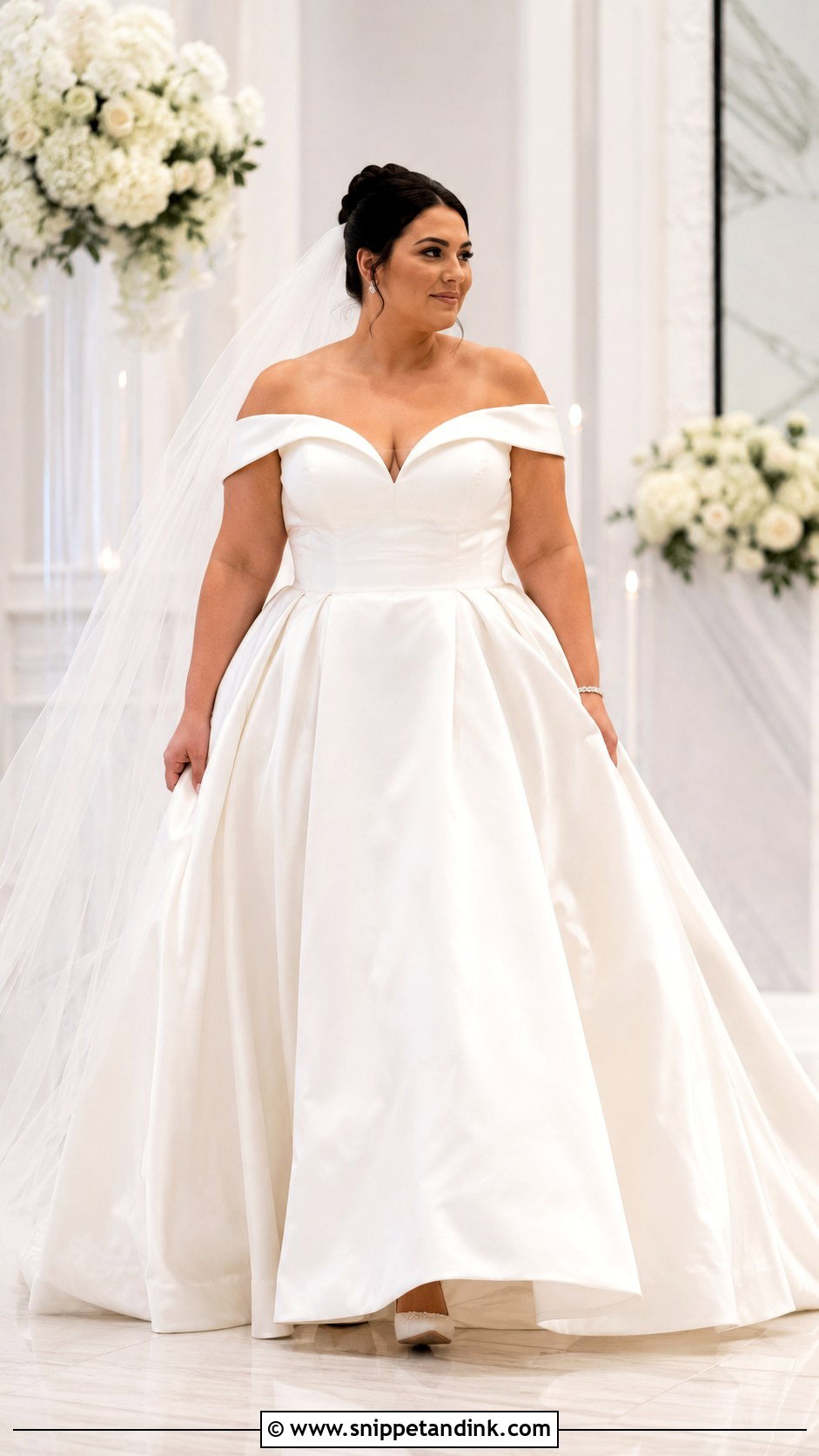
Off-the-shoulder ball gowns are where I see the most hitching and tugging on the day, and it nearly always comes from a bodice that leans on the sleeves to stay up. It shouldn’t. Ask whether the bodice has internal boning and a waist stay, the inner grosgrain band that hooks closed and carries the weight of the skirt. A full satin or tulle skirt is heavy, and without that band it drags the neckline down by evening. With the collarbone on show, stud earrings and swept-back hair are plenty; keep the veil plain if there’s pleating or beadwork. Have the tailor fit a bustle you can fasten without help.
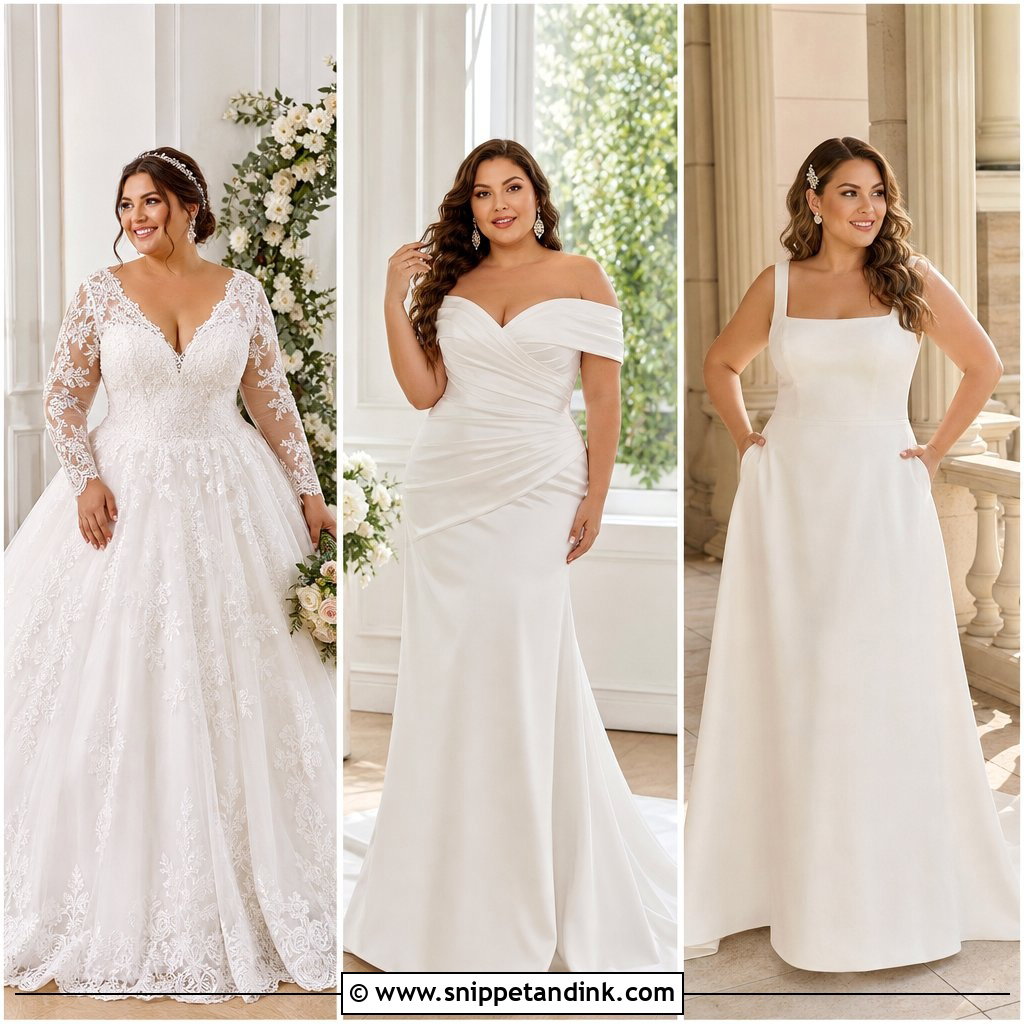
3. Long-Sleeve Lace Wedding Dress
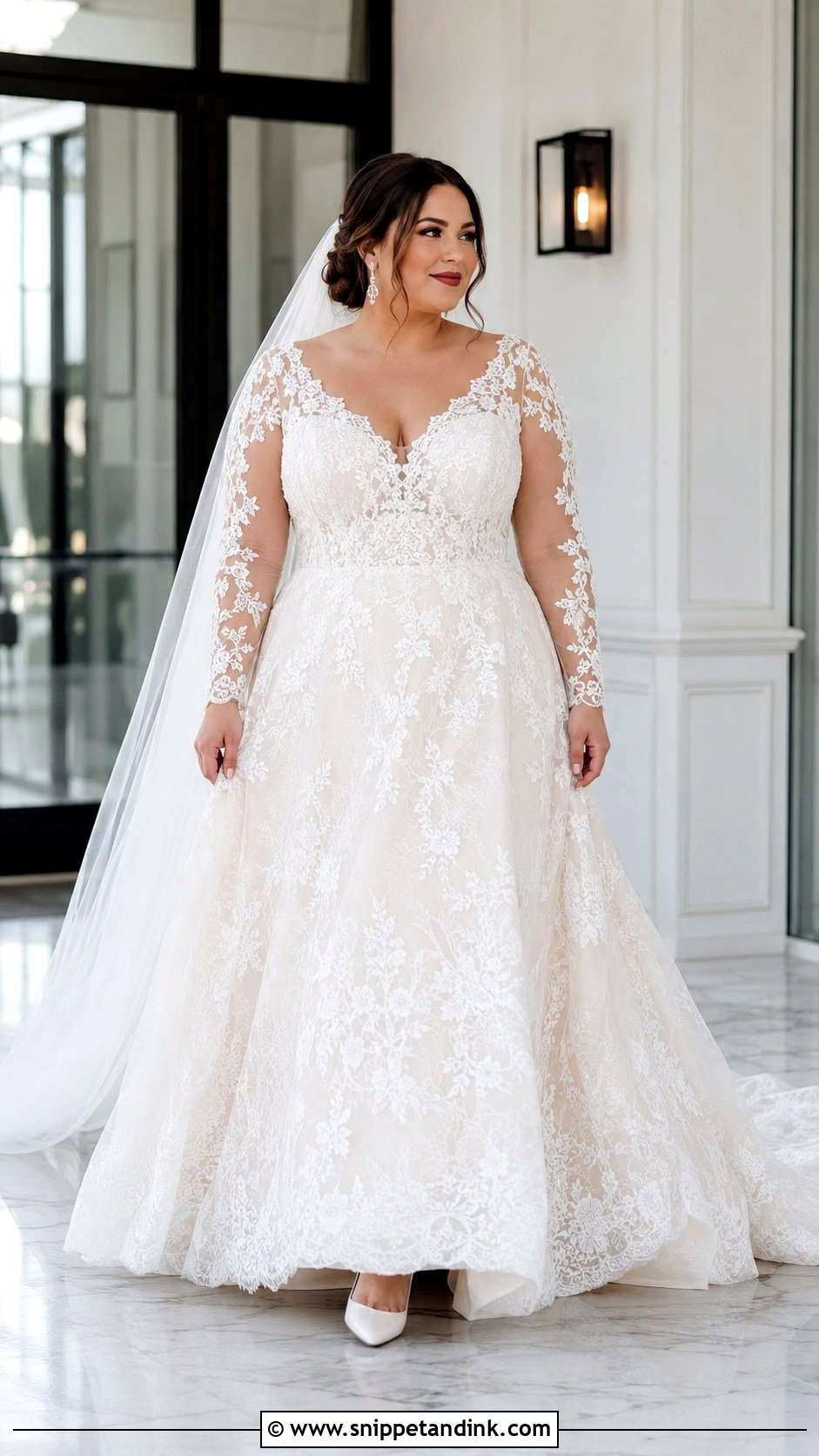
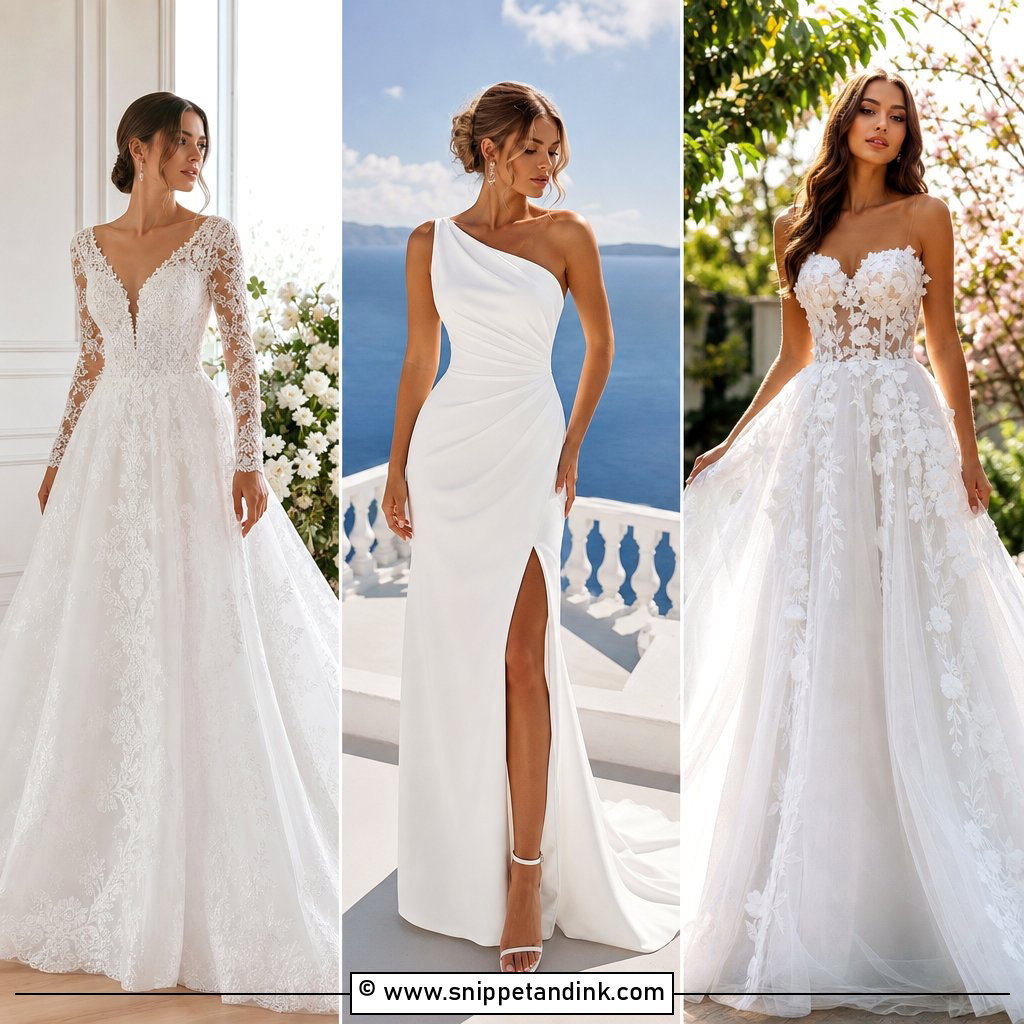
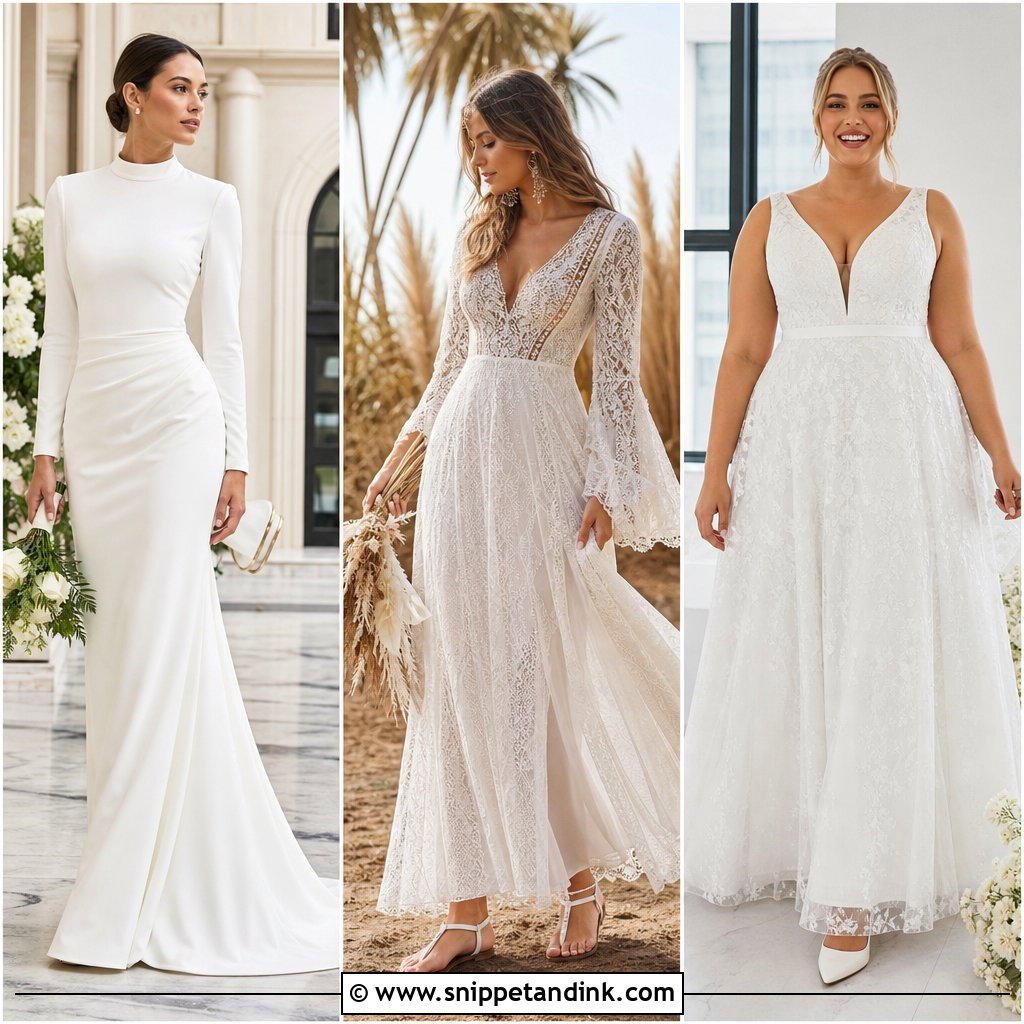
Lace sleeves are the part of a gown I alter most carefully, since there’s often almost no seam allowance in them. Stiff lace on a full upper arm pulls the whole bodice forward when you reach, so look for stretch lace or an illusion sleeve with some give at the elbow. A lined bodice under sheer sleeves keeps the top half light, and an A-line or gentle fit-and-flare skirt leaves the lace room to be the detail, which suits a cool-weather or formal wedding. When trying on the dress, hug someone and then sit down. If the back seam strains or the cuff rides up past the wrist bone, that’s a tailoring note, not a reason to give up on sleeves.
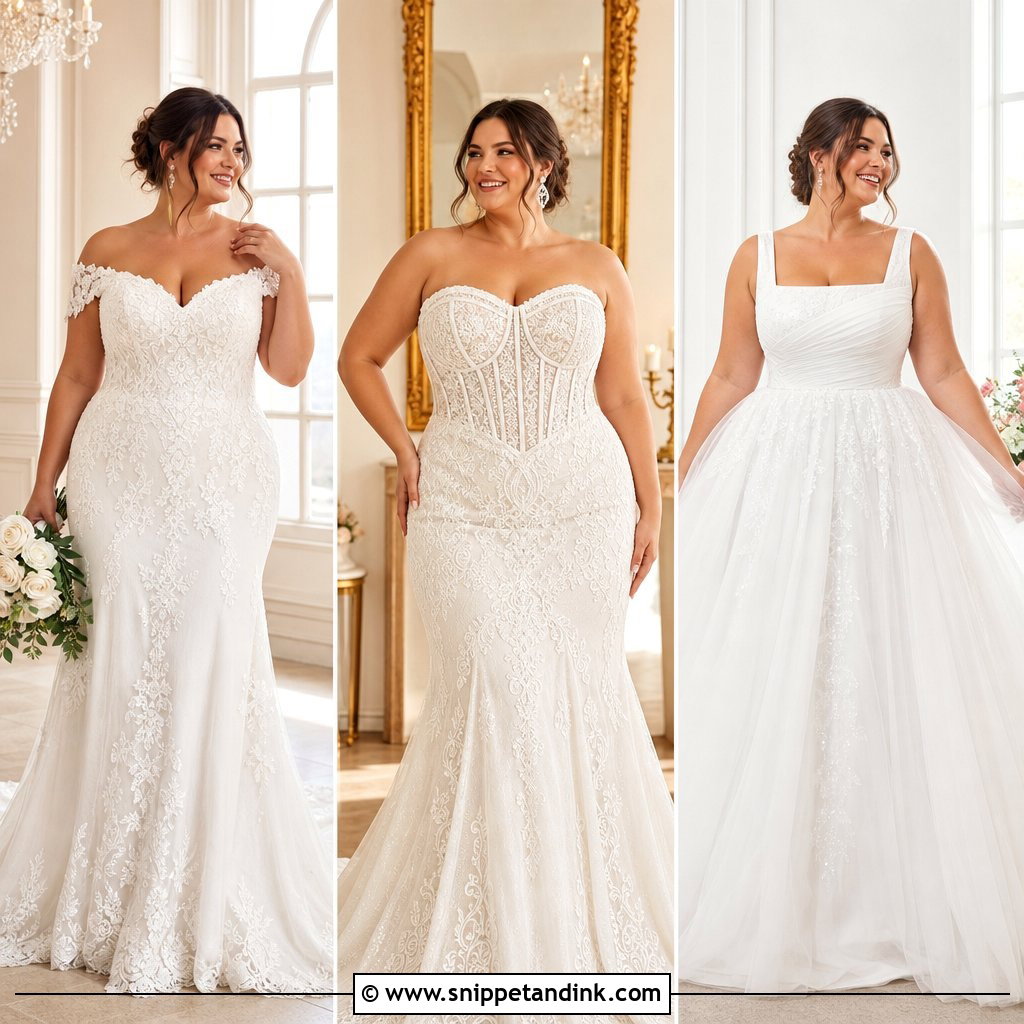
4. Strapless Satin Wedding Dress
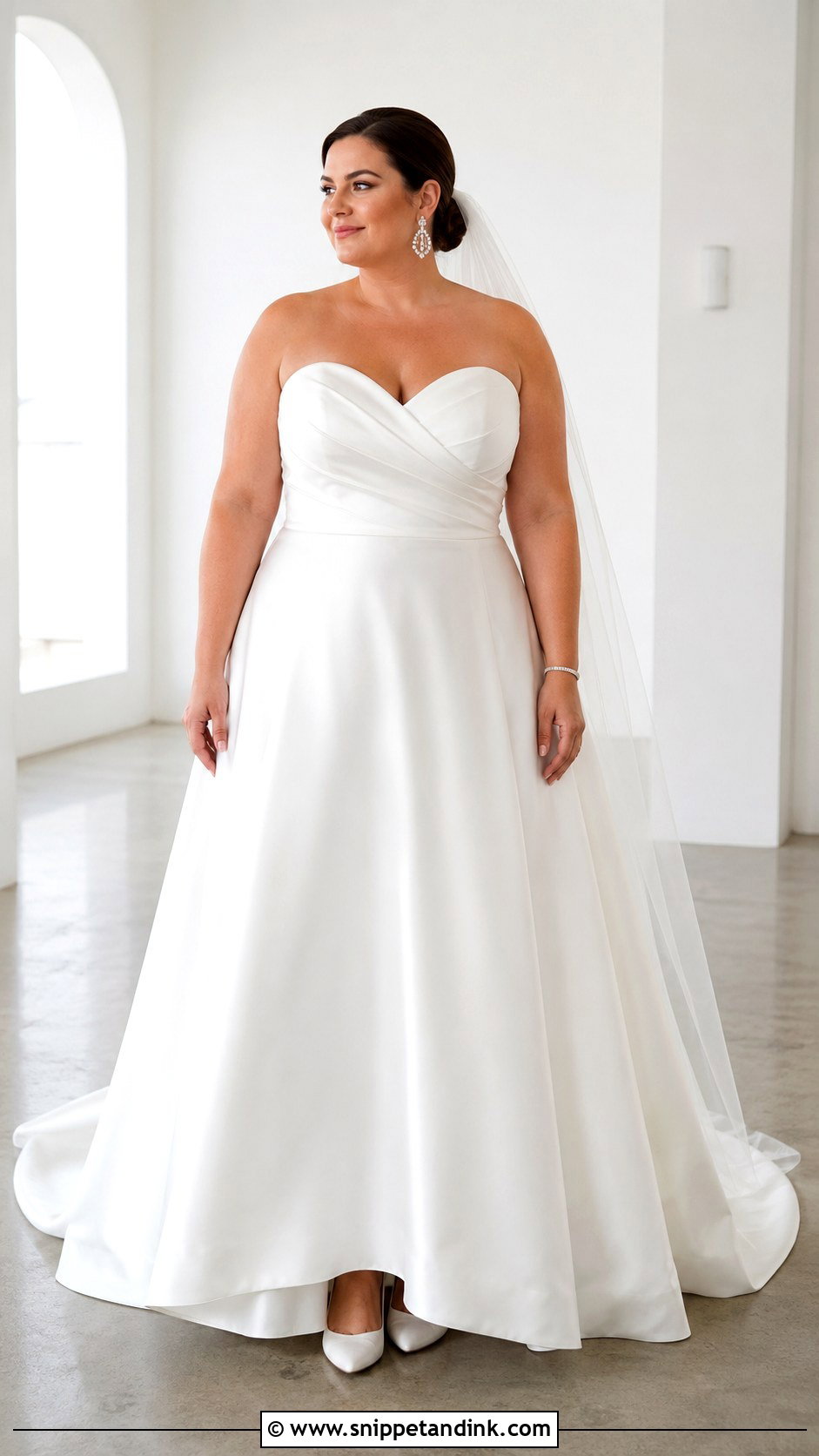
Strapless works with a fuller bust, but only on a gown engineered for it. I look for spiral steel boning, molded cups and a waist stay that grips the natural waist, so the bodice is held up from below instead of squeezed tight at the top. Satin is unforgiving, and a sweetheart or straight neckline needs to lie flat with no gaping when you breathe out. A statement necklace only belongs on a very plain neckline; otherwise chandelier earrings do the job. Bring the exact support garment you’ll wear to every fitting. If you’re hoisting the bodice up at your final fitting, it isn’t finished.
5. V-Neck Chiffon Wedding Dress
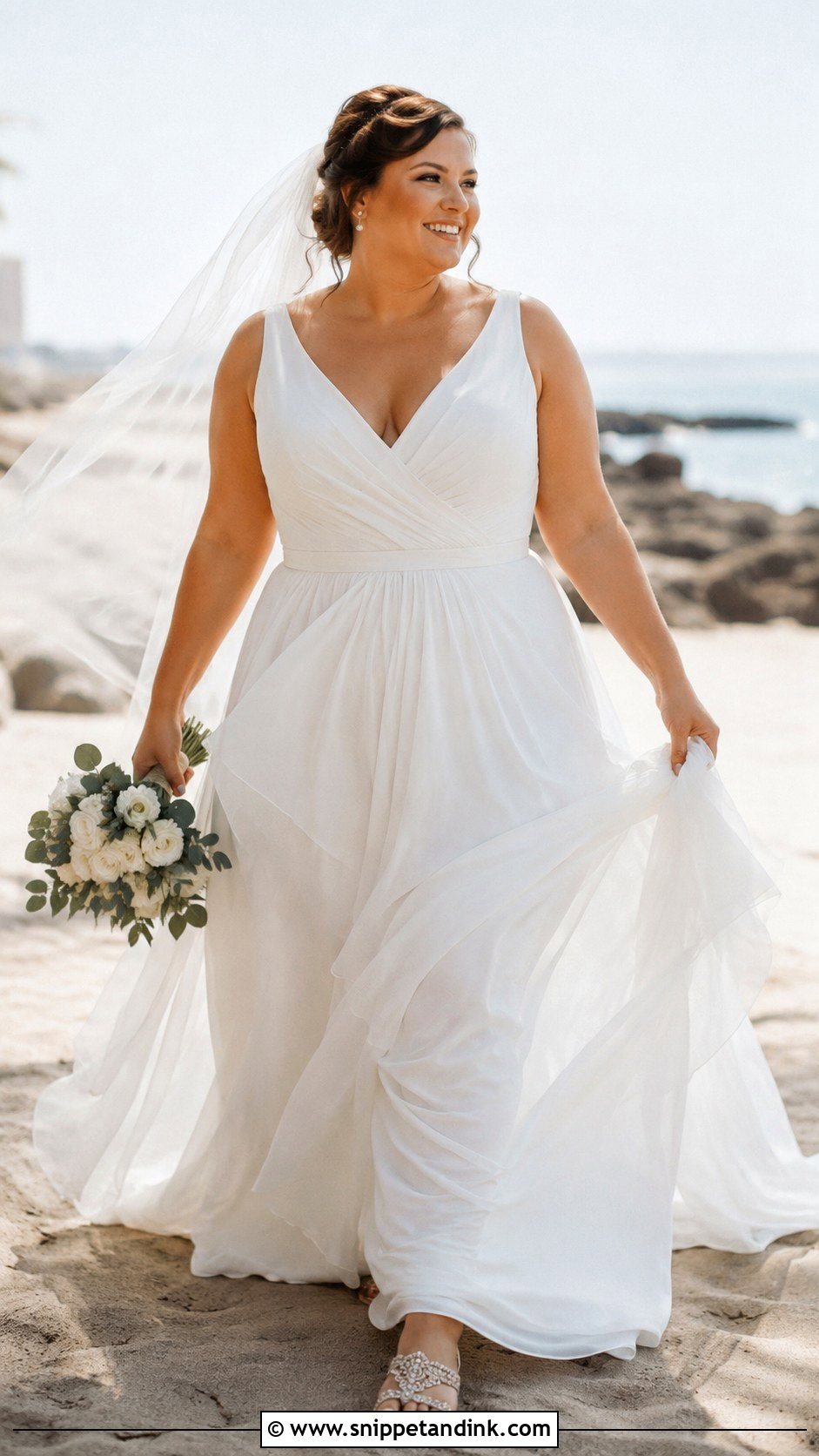
Chiffon is the fabric I suggest most for heat, and also the one that exposes a cheap lining fastest. Unlined chiffon goes sheer in outdoor light and clings once you’re warm, so insist on a full lining. A crossover bodice gathered into a wide waistband gives shape without a corset, and wide straps leave room for a proper bra. On grass or sand I’d choose low block heels or flat sandals, then keep everything else light: pearl earrings, a small comb and a soft fingertip veil.
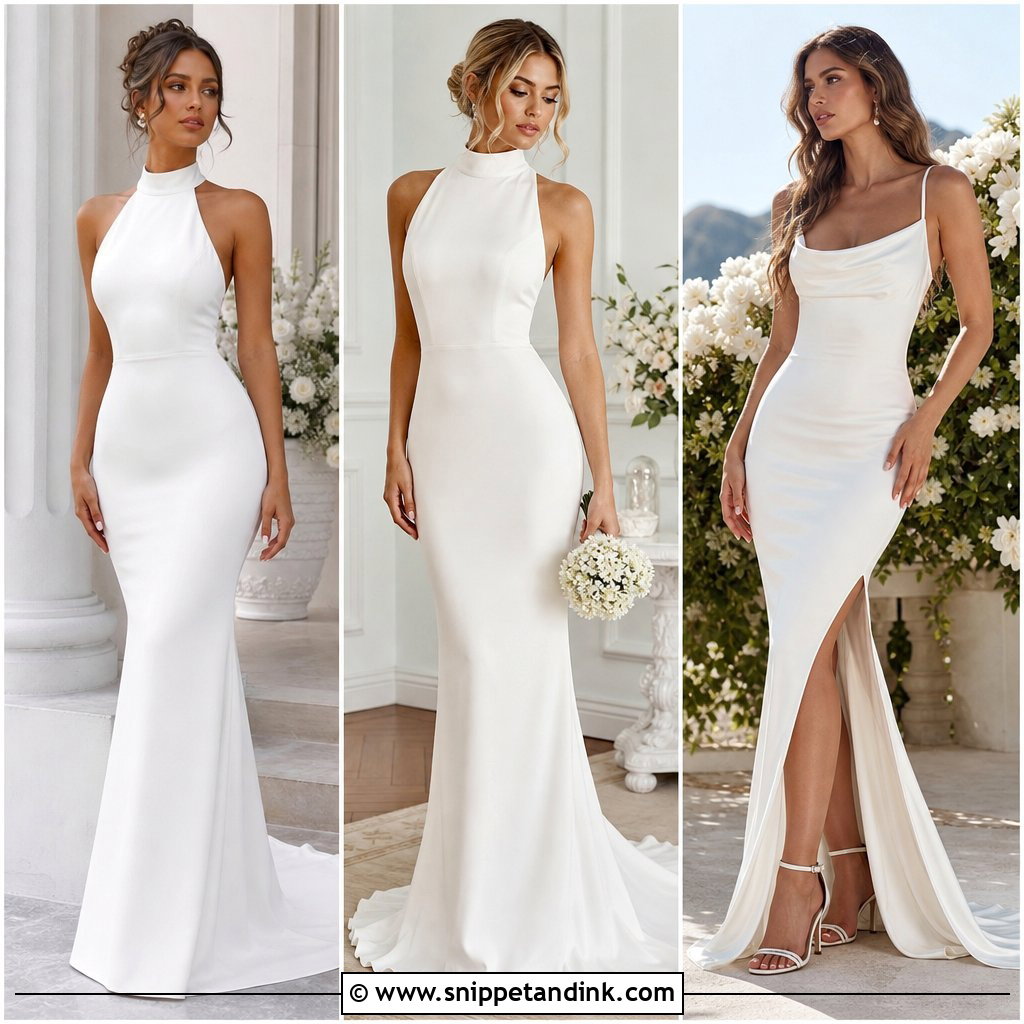
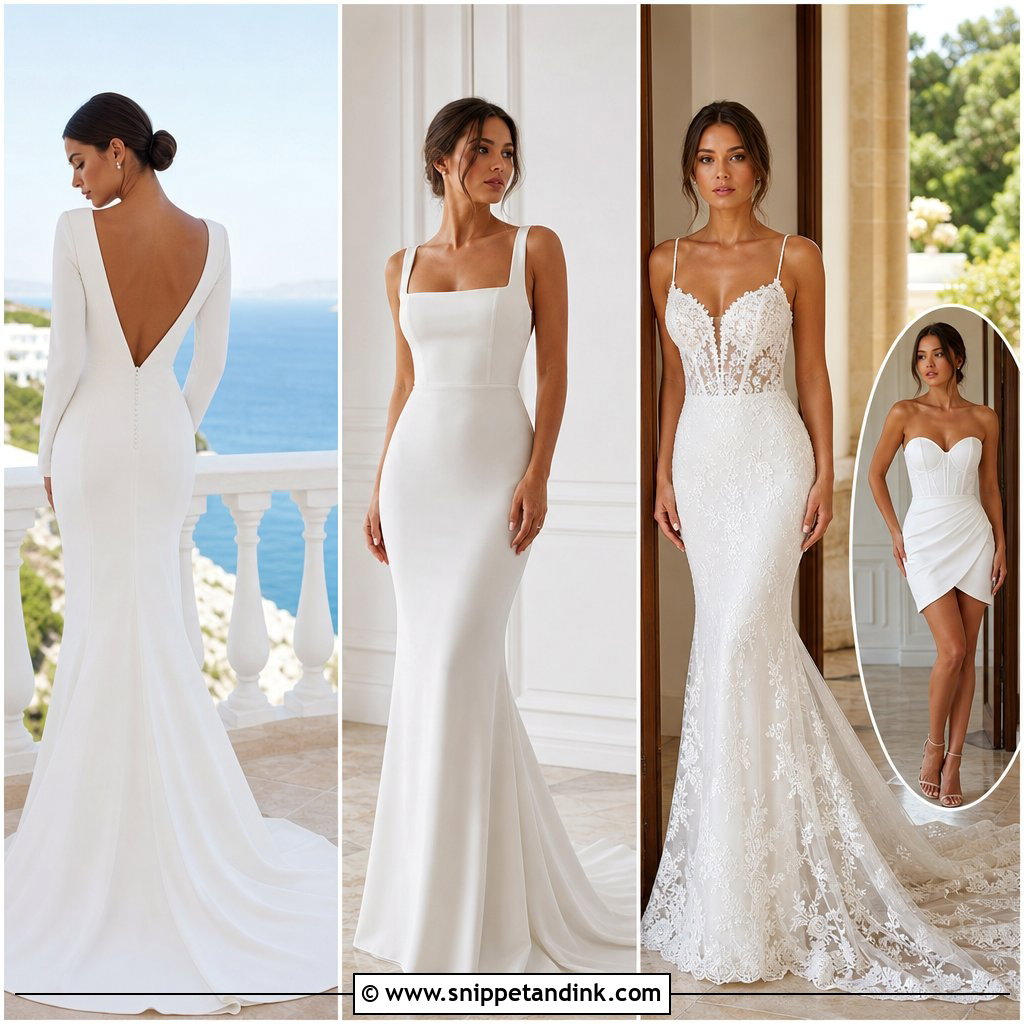
6. Mermaid Wedding Dress
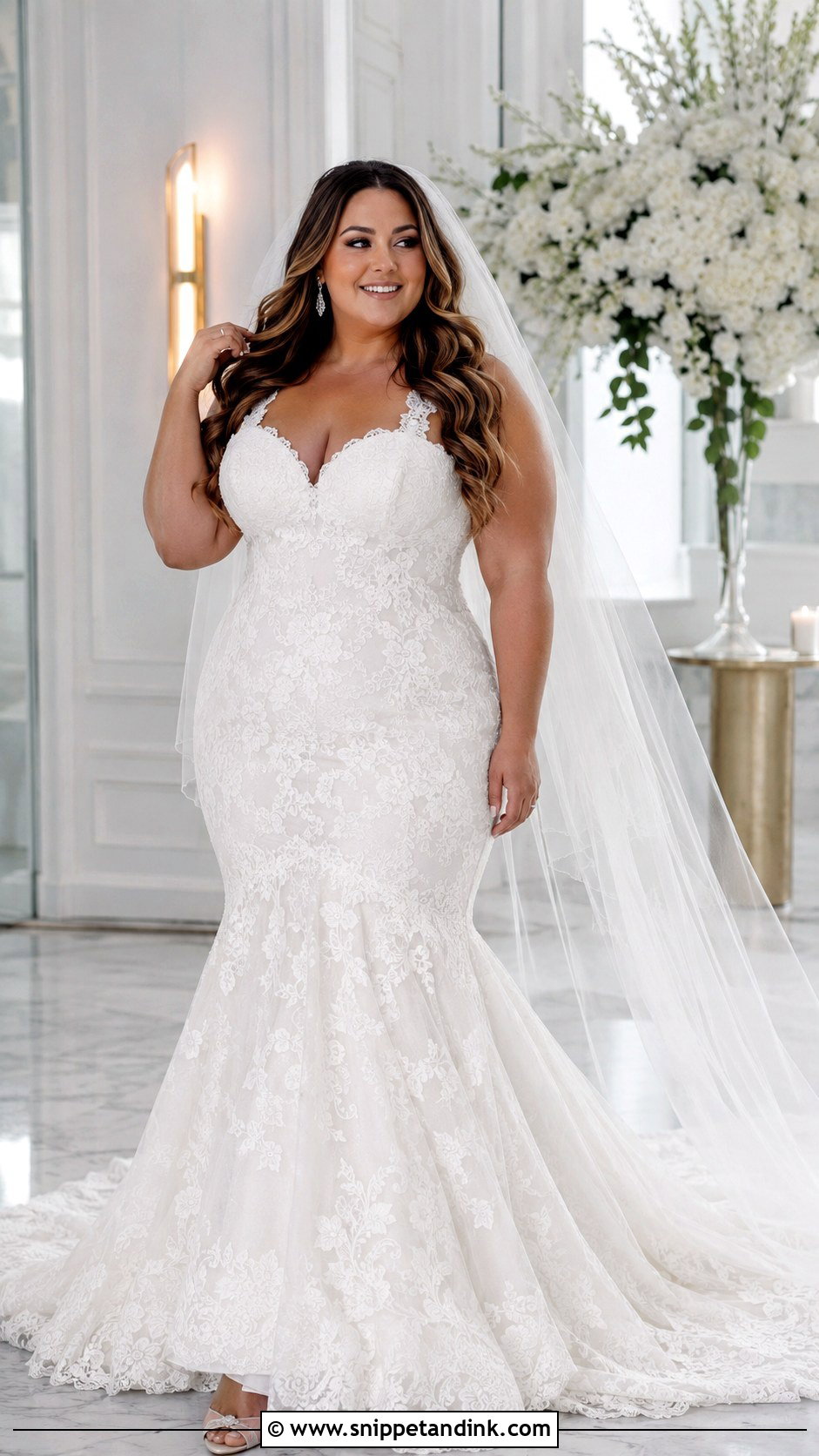
A mermaid needs the most precise fitting of any shape here, and the flare point decides everything. Set it too high and the skirt looks undecided; too low and you’ll shuffle. I mark it by having the bride climb a few stairs, then move it until her stride feels natural. Stretch crepe or lined lace with well-placed seams holds the curve without digging in. Up top, you want support: wide straps, a structured sweetheart bodice or an off-the-shoulder line. Plan a reception bustle too, because a mermaid train gets stepped on by the first dance.
7. Empire Waist Wedding Dress
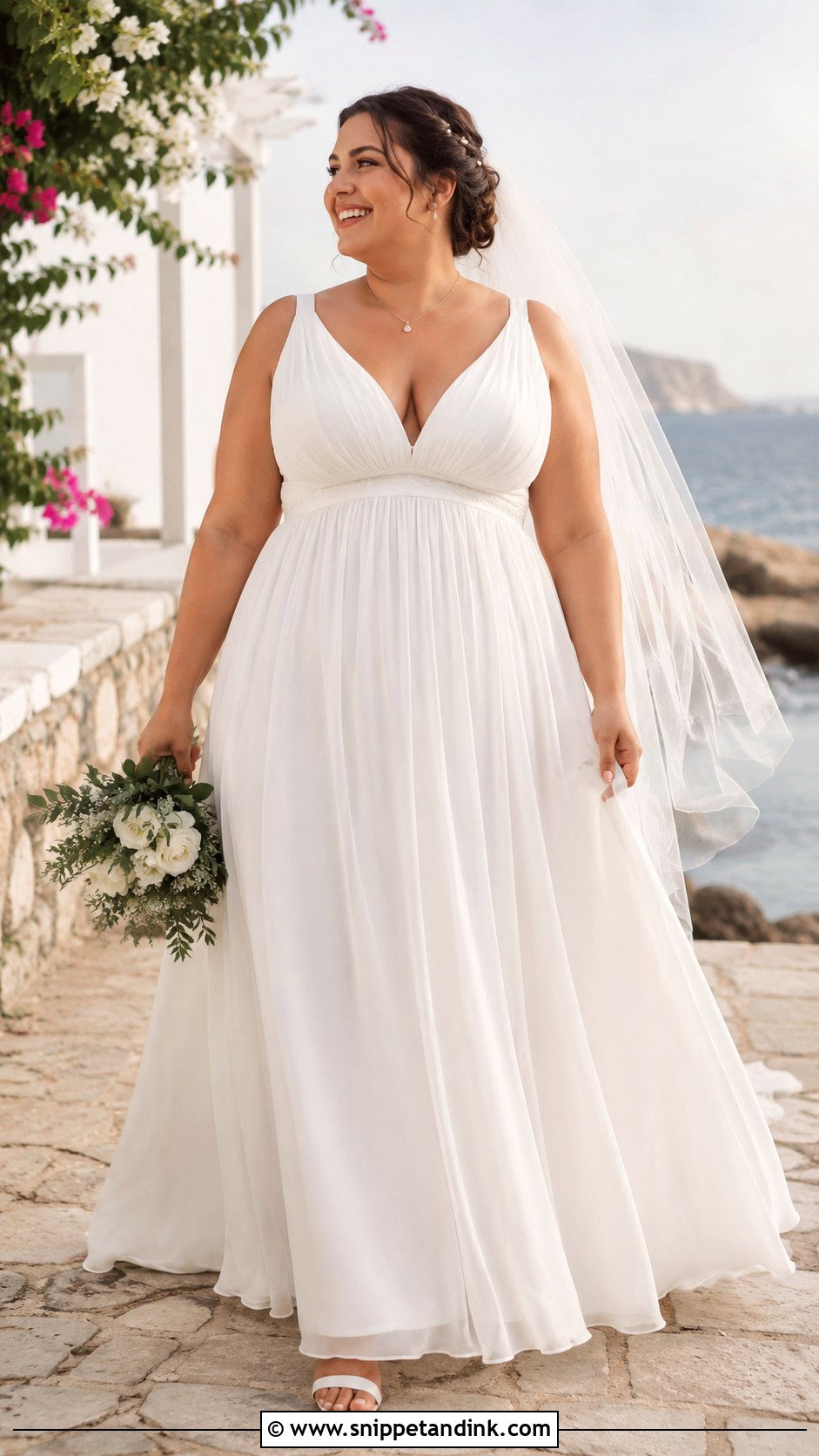
Empire waists get dismissed as a cover-up, which misses why they’re useful. With the seam sitting under the bust, nothing presses on the stomach while you sit through a long dinner, and that comfort counts at a destination wedding in the heat. The catch is the gathering. Too much fabric bunched into that seam adds bulk exactly where you didn’t want it, so look for soft pleats or a draped panel in chiffon, tulle or light crepe. I always ask the bride to raise both arms; if the seam rides up off the ribcage, the bodice needs taking in at the sides.
8. Tea-Length Wedding Dress
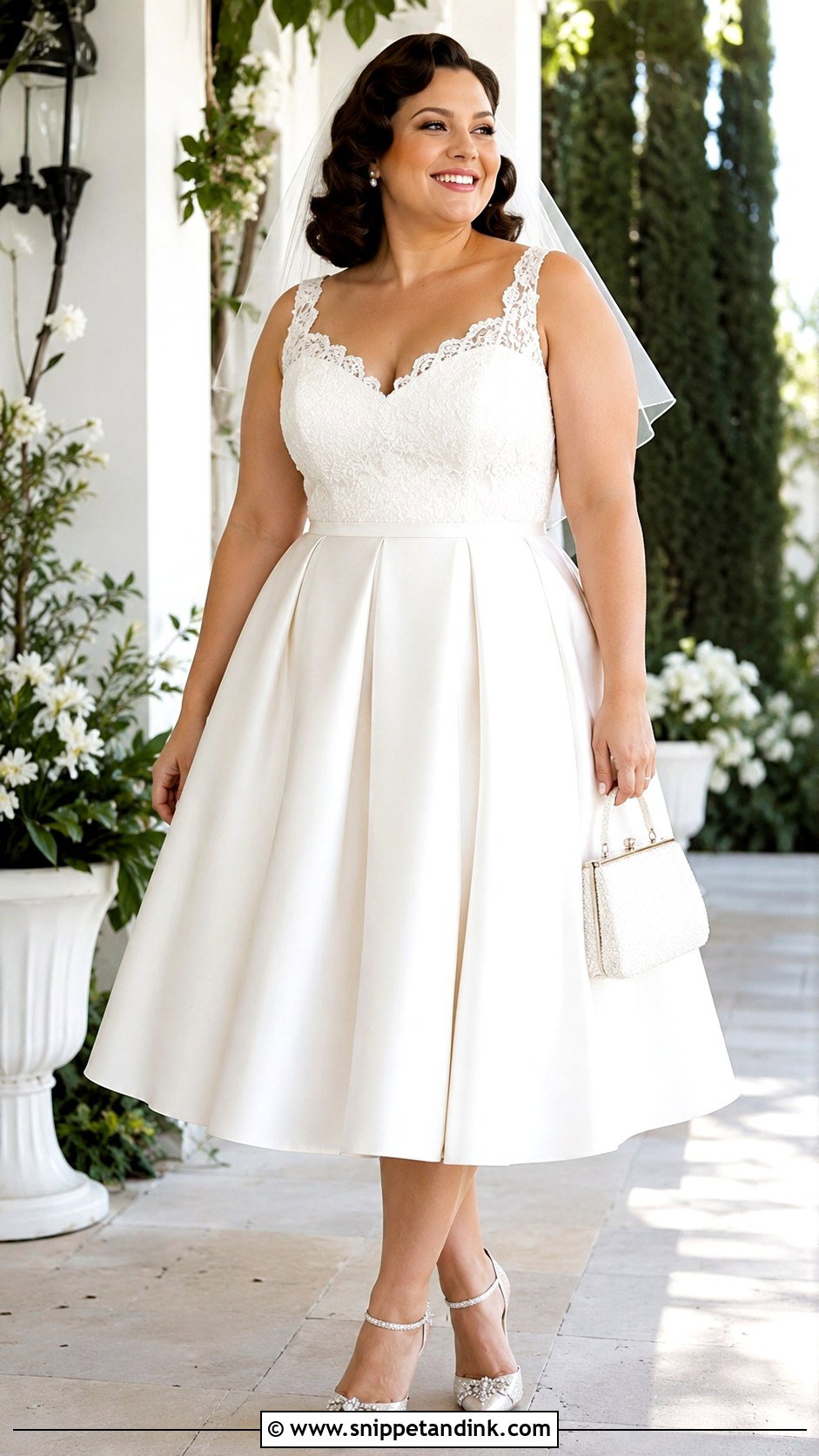
Tea-length lands between the knee and the ankle, so your shoes stop hiding and become half the outfit. Satin holds the vintage flare crisply, tulle adds volume and floral lace softens it. I hem tea-length with the bride standing on a fitting box in her real shoes, because a hem that dips half an inch at the back reads as crooked on a short skirt in a way it never does on a floor-length one. Slingbacks or embellished pumps, a short veil and a smooth updo keep the proportions right.
9. Square-Neck Crepe Wedding Dress
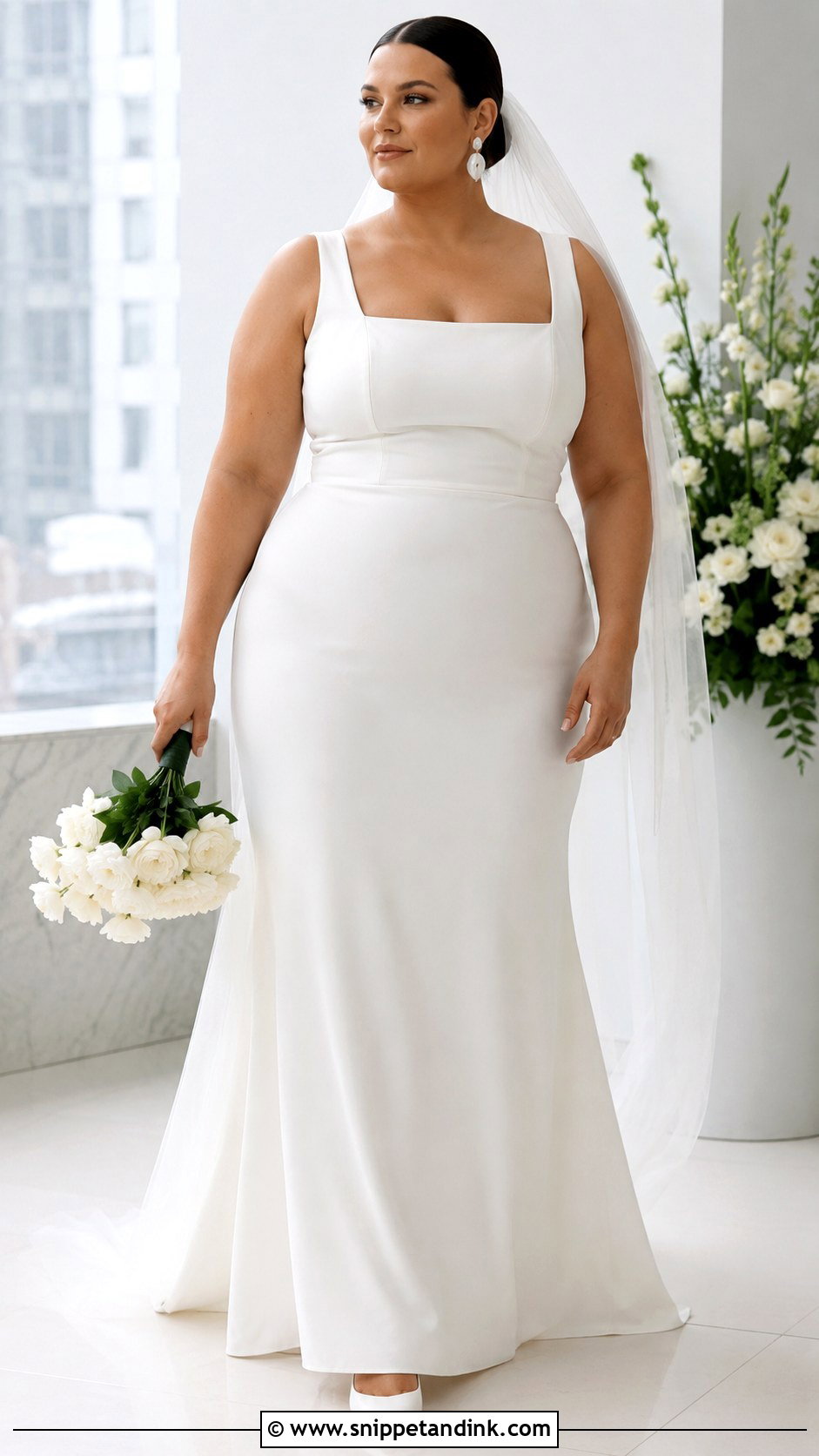
Crepe tells the truth about fit. Every pull from a tight hip or a waist set slightly low shows up as a horizontal wrinkle, so budget for proper alterations on this one. In return you get a crisp square neckline and thick straps that hold a full-coverage bra without anything peeking out. Medium-weight lined crepe skims rather than clings, and a sleek veil with no lace edge keeps it modern.
10. Boho Bell-Sleeve Wedding Dress
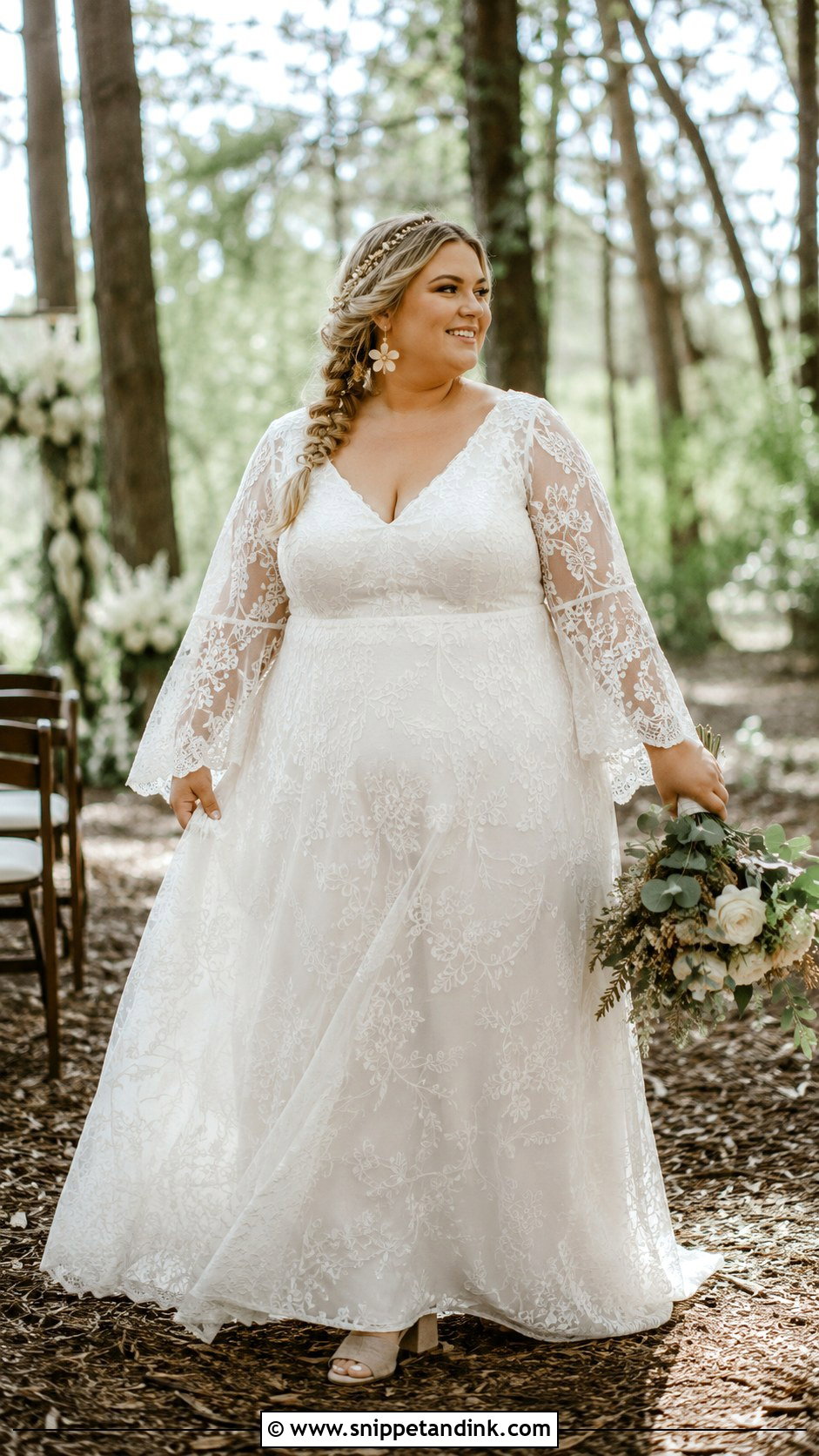
Bell sleeves look romantic in a garden and turn awkward at the buffet. I check where the sleeve opening falls with the arms relaxed, then have the bride hold her flowers, pick up a glass and reach for a fork; if the flare drags across her hands, I shorten it from the elbow seam. A lined lace bodice over a flowing A-line skirt keeps the look relaxed but still bridal. Low suede block heels, a hair vine and a loose braid suit it. With that much lace on the sleeves, the veil can be plain or skipped entirely.
11. High-Neck Wedding Dress
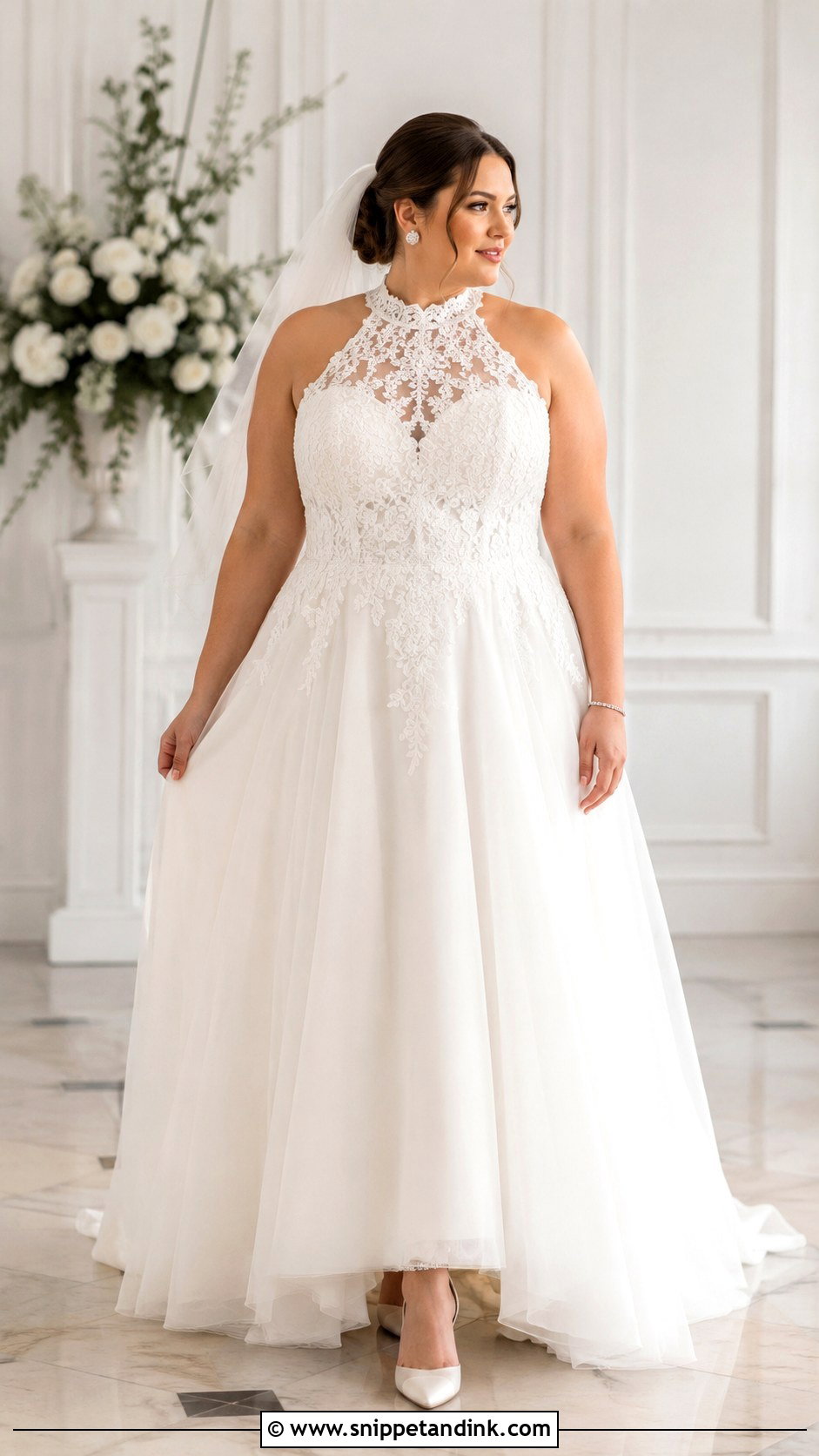
High necklines can be very flattering with a fuller bust because they draw the eye up toward the face, but only if the collar sits right. At the fitting, turn your head both ways and look down at your bouquet. A collar that rubs at the throat in the mirror will bother you all day. Illusion lace reads lighter; smooth crepe looks more contemporary. Skip the necklace, wear studs with a low bun, and anchor the veil beneath the hair so the neckline stays visible from behind.
12. One-Shoulder Wedding Dress
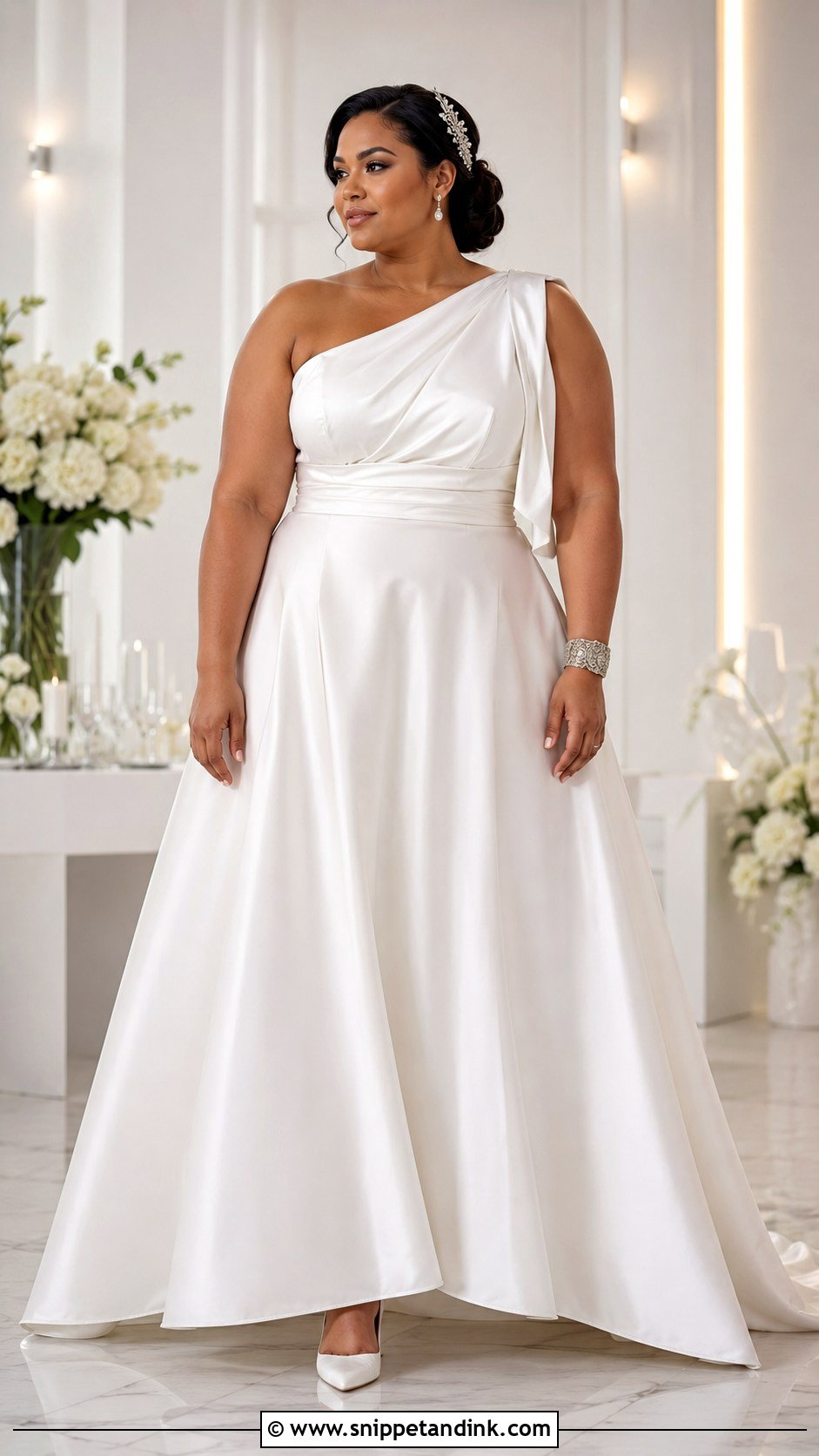
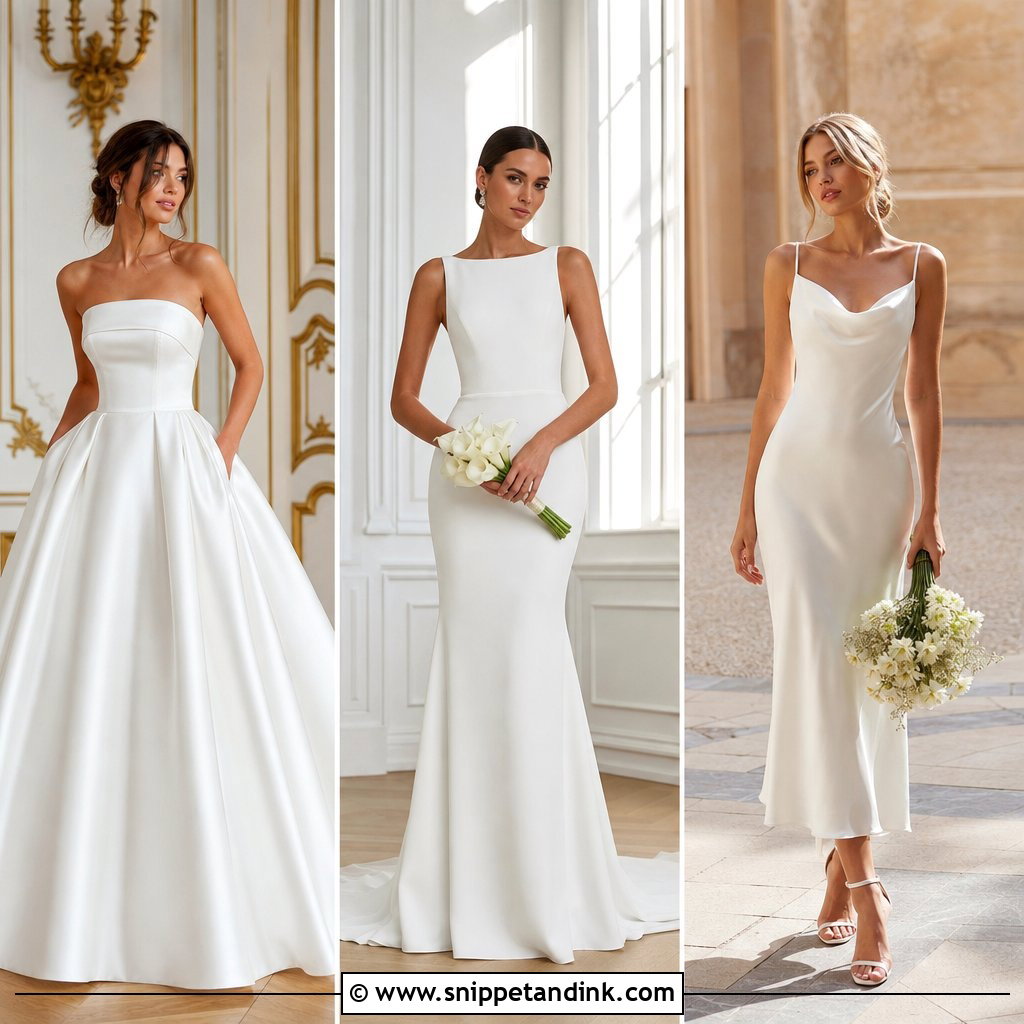
On a one-shoulder gown the bodice has to do the work of the missing strap, and with a fuller bust I want to see boning and a waist stay, not just a snug fit. A draped shoulder looks softer, while a clean single strap looks sharper and more architectural. Satin, crepe and mikado hold the asymmetry well. Lift the bare arm as if you’re waving: the neckline should stay level. If it tilts, ask for a silicone gripper along the top edge. A cuff on the bare-arm side and a plain veil or decorative comb finish it.
13. Corset Bodice Wedding Dress
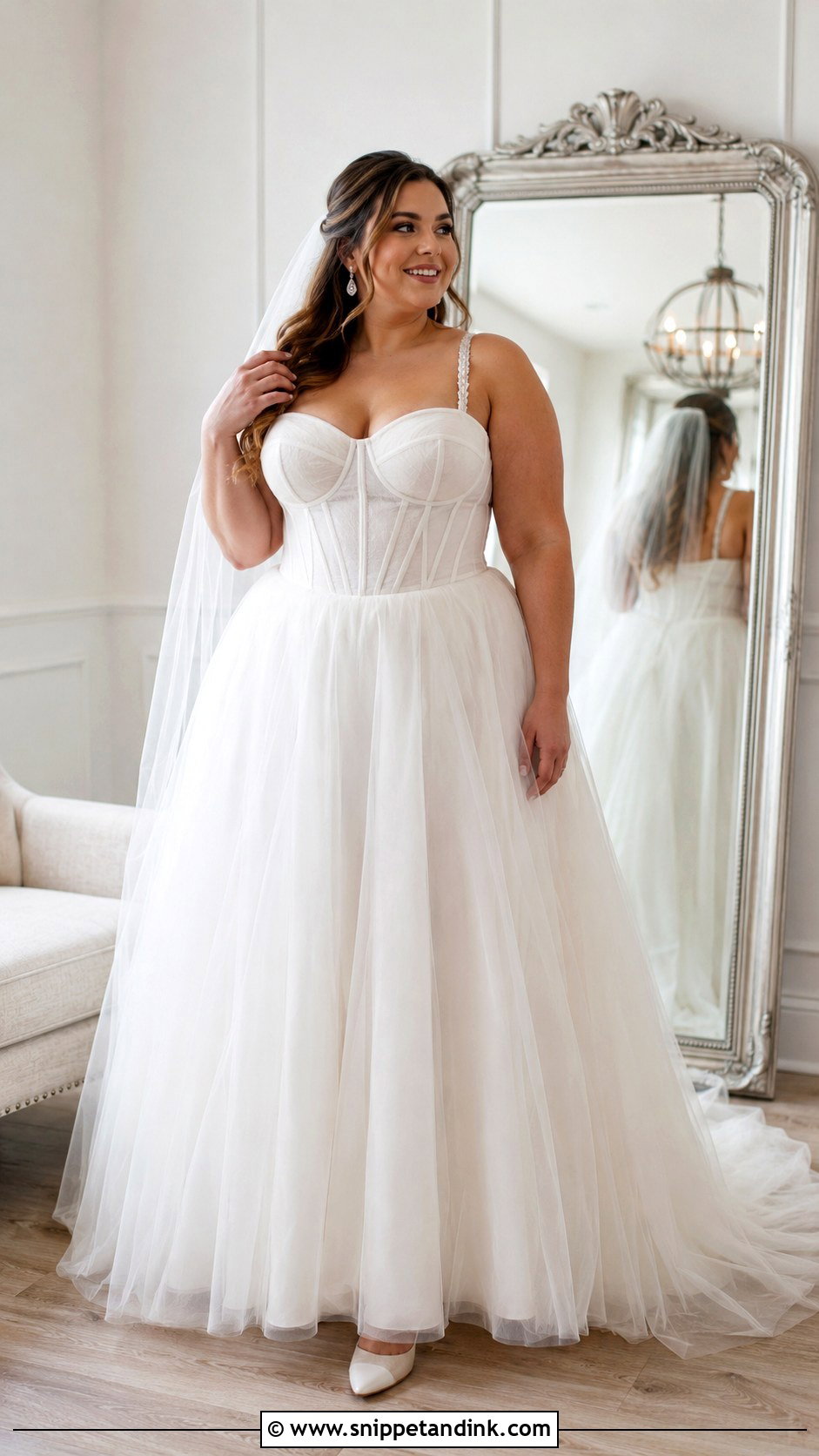
A corset should shape you without stopping you breathing. I lace a corset back loosely first, let the bride sit for a few minutes, and only then tighten, because seated is when it’s least forgiving. Flexible boning and a lining that won’t scratch matter more than how tight it goes. A lace-up back also adjusts if your weight shifts in the final weeks, which a fitted zip can’t do. Wear your real undergarments at every fitting, keep the veil simple so the corset seams can show, and consider a half-up style to soften the structure.
14. Basque Waist Wedding Dress
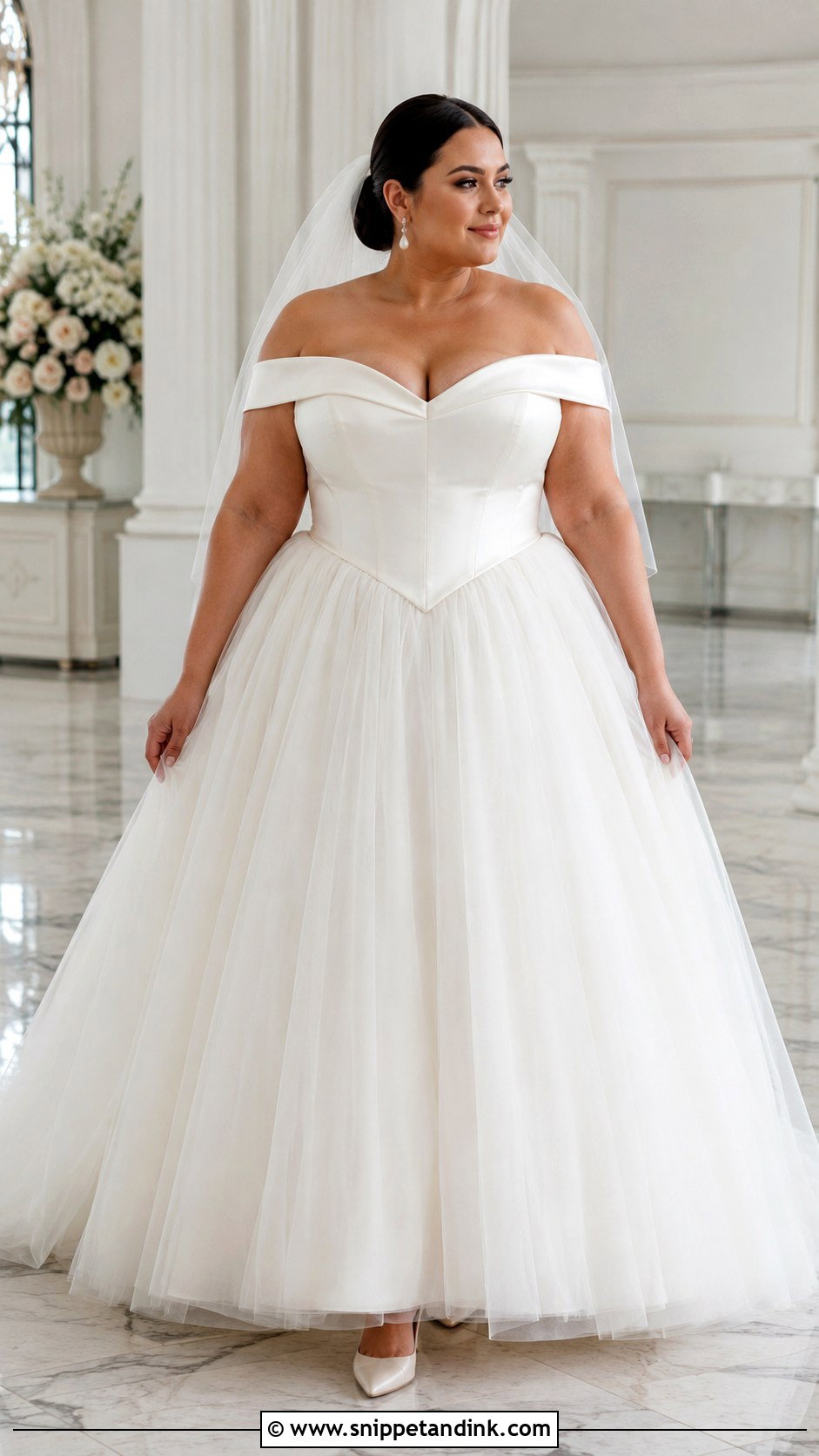
The point of a basque waist dips below the natural waist, and that V flatters many curvy brides because it lengthens the torso. It has to sit dead center, though. I check it face-on and from the side, since even a slight drift makes the whole dress look twisted. Supportive straps or structured off-the-shoulder sleeves keep the bust secure above it; satin makes it formal and layered tulle makes it romantic. Then sit down. The point shouldn’t dig into your stomach when you do.
15. Floral Appliqué Wedding Dress
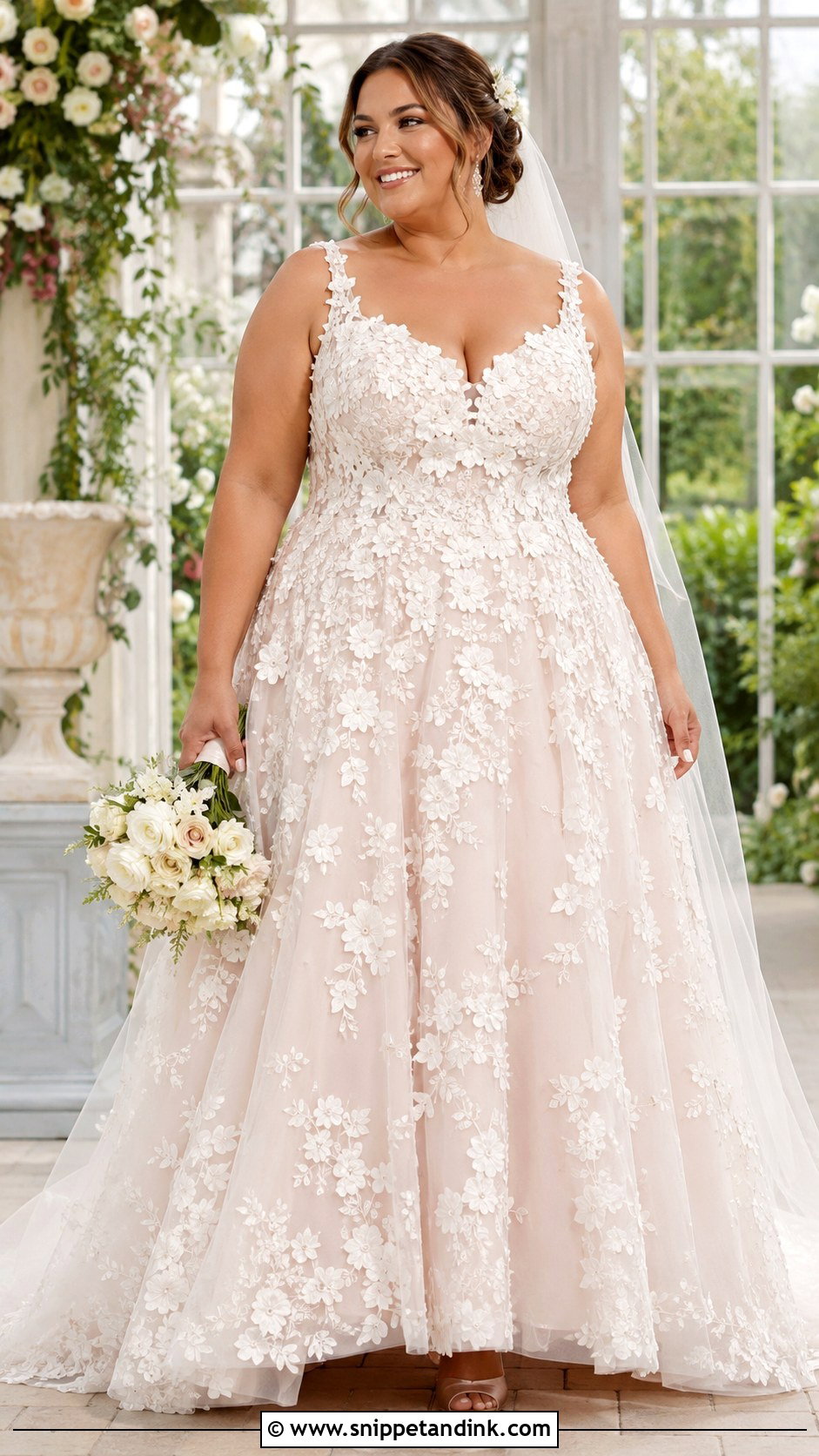
Three-dimensional flowers are hand-stitched on, which means they can be moved. That’s useful. I often shift an appliqué that lands at the underarm or on the seat, where it would rub or get flattened by evening, and I ask for any loose petals to be secured during alterations. Spacing matters too, so check the pattern from the back as well as the front. A nude or blush underlayer makes the flowers stand out more than ivory does. If you echo the motif in your hair, keep the comb small and the veil plain tulle.
16. Cape Sleeve Wedding Dress
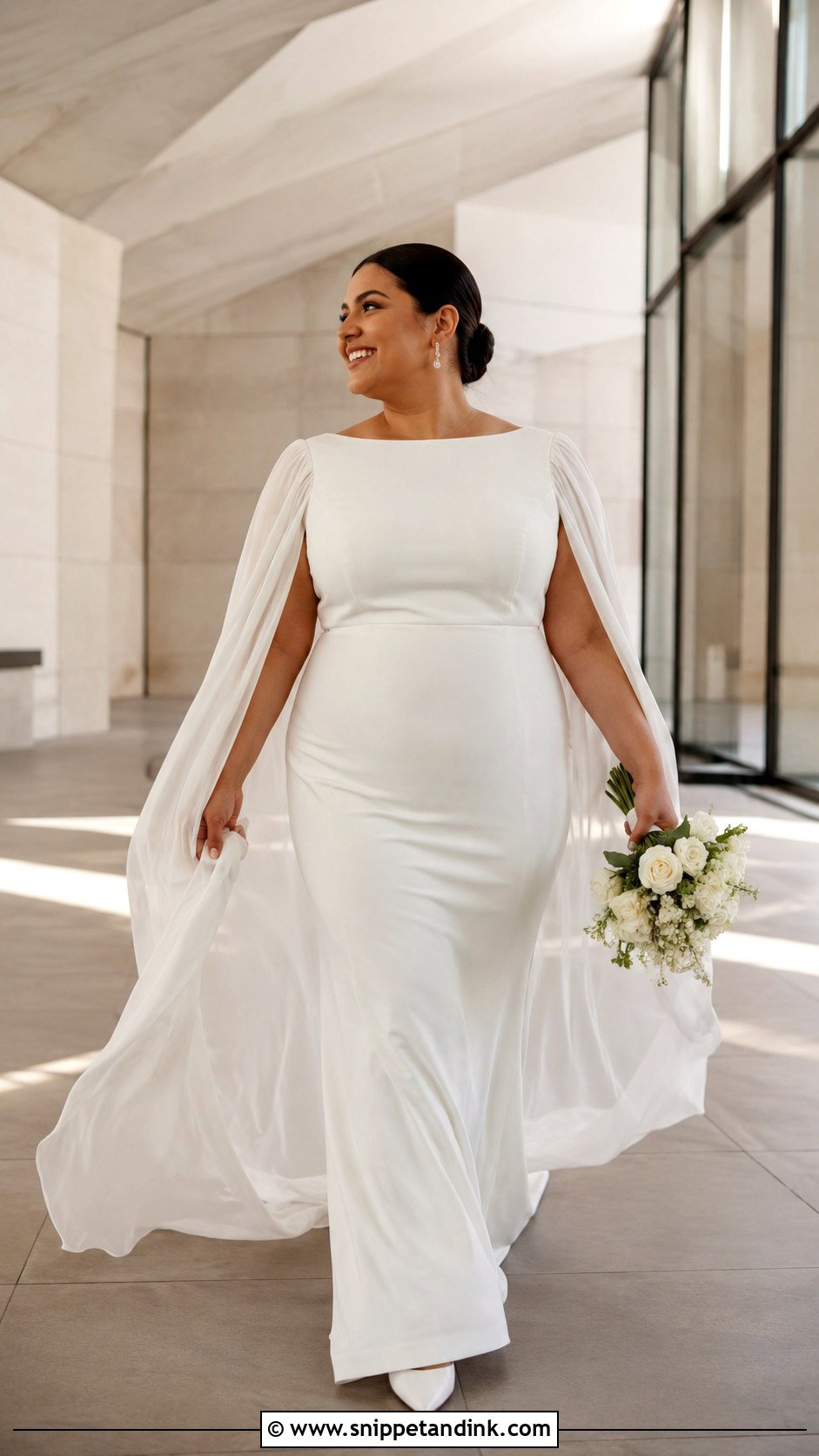
A cape changes how a gown hangs. Heavy fabric attached at the shoulders pulls the bodice backward, so the neckline creeps up at the front as the night goes on. Lightweight chiffon or tulle avoids that, and a column or A-line base keeps the line clean. Because the cape already frames the shoulders, I’d skip both a heavy necklace and an elaborate veil. If it detaches, ask for hidden snaps instead of hooks, practice removing it, and test the length on stairs so it doesn’t catch under your heel.
17. Minimalist Column Wedding Dress
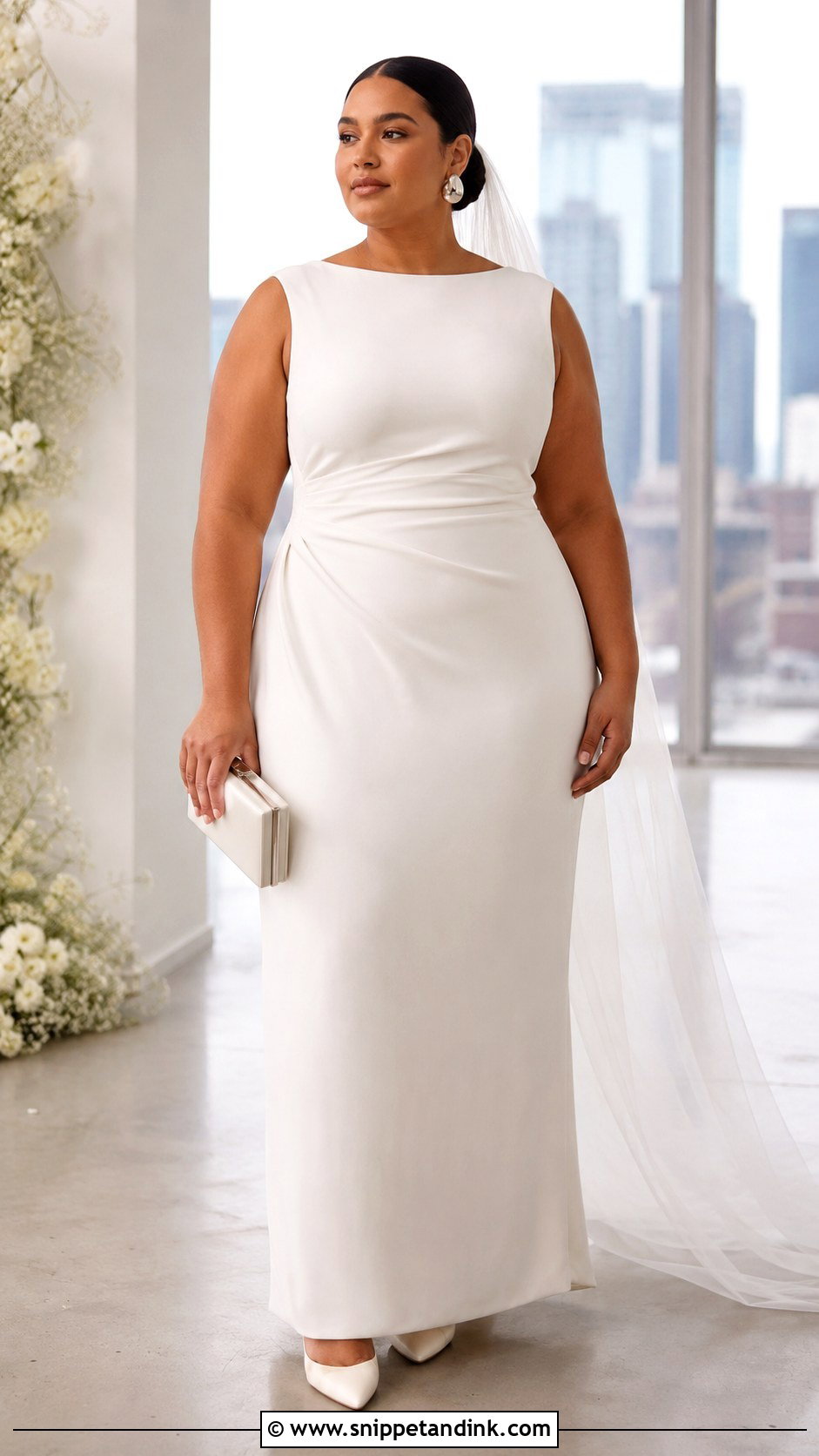
Column gowns hide nothing, which is exactly why a plus size bride who wants one should have one, with the right groundwork. Lined crepe or matte satin with some body follows the figure without clinging, and a soft drape or narrow belt at the waist adds definition. Correct undergarments and tailoring carry most of the weight here, since there’s no lace to distract from a pull line. I check every column gown by a window in daylight, because fitting room lighting hides more than you’d expect. A bateau neckline or short sleeves add coverage if you want it.
18. Tiered Tulle Wedding Dress
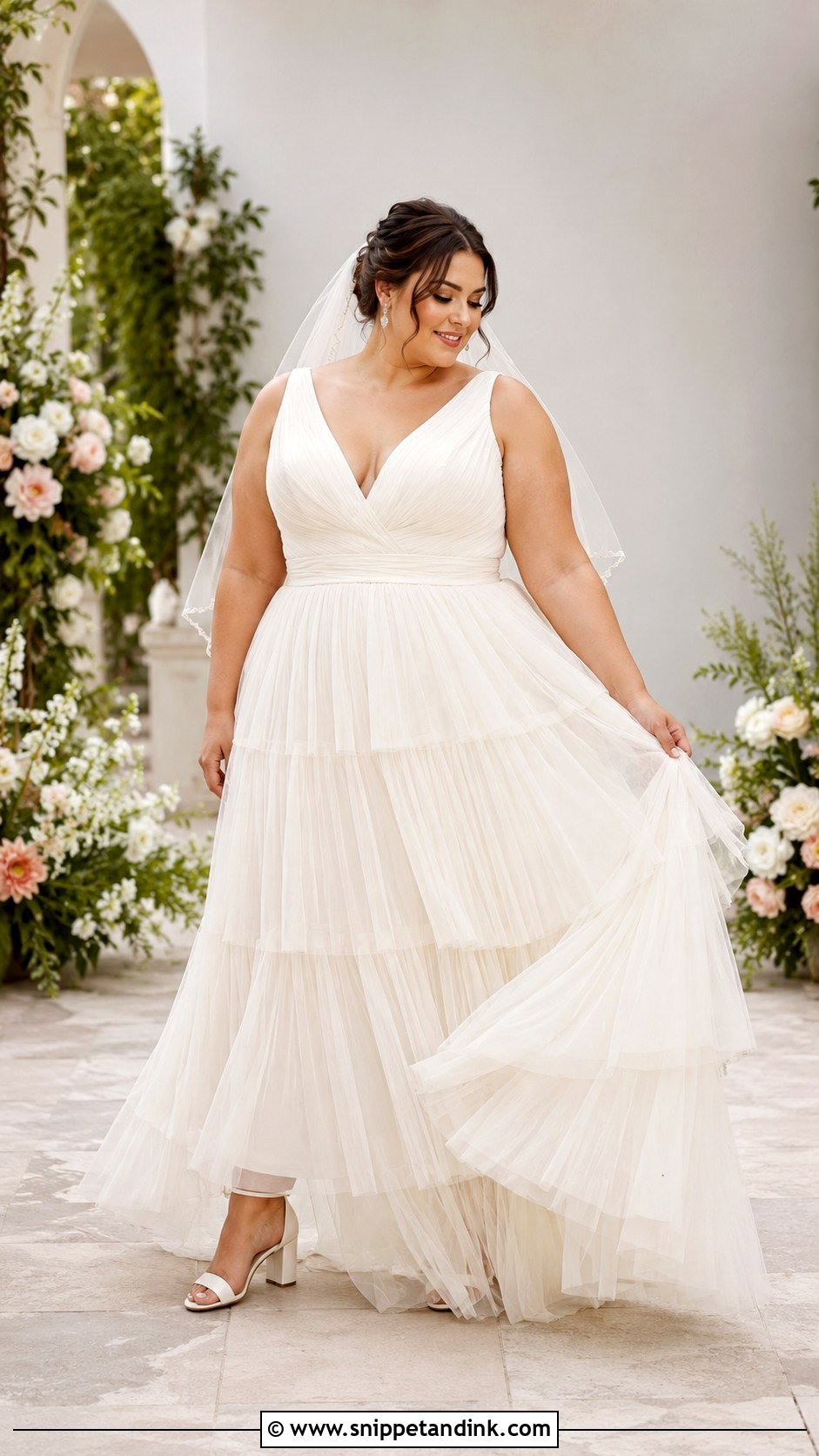
Tiers break the skirt into horizontal bands, so the volume comes in steps instead of one big bell. Feel the tulle before you order. Soft tulle drops; stiff netting stands away from the body and, in tiers, can add width you never planned on. Bustling is the practical question. Each layer may need its own attachment point, so ask how many your seamstress intends and practice them before the day. A fitted V or scoop bodice balances the volume, and the lowest tier should clear the floor in your shoes.
19. Blush Wedding Dress
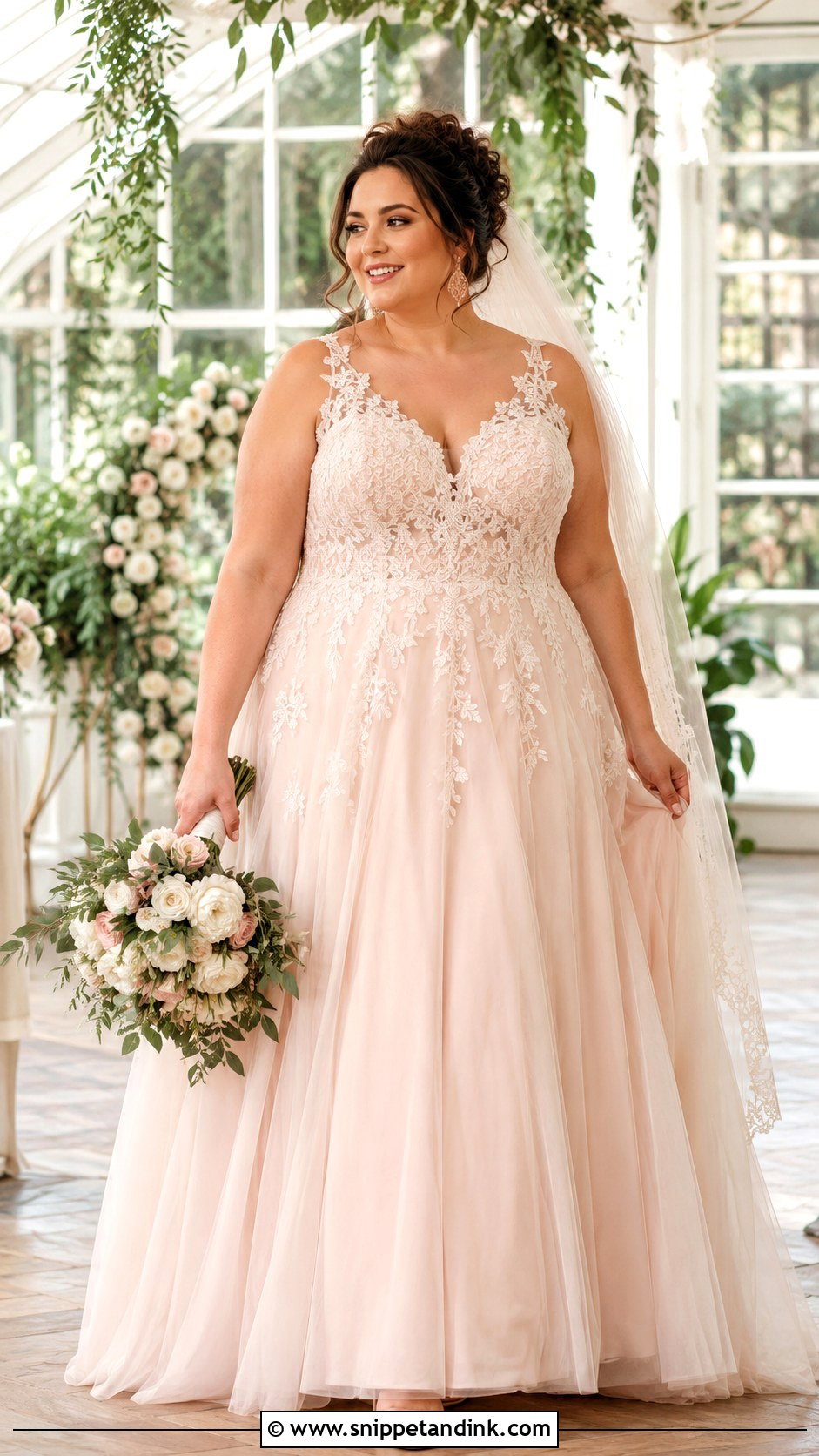
Blush shifts with the light. A pale rose that looks warm by the boutique window can read almost white under flash, or slightly peach under warm bulbs, so look at a swatch outside and indoors before you commit. I also hold the fabric under the bride’s chin, because some pinks make fair skin look flushed while a champagne underlayer sits more quietly. Keep the bouquet and accessories close in tone without matching exactly, so the dress color still registers. Rose-gold earrings and soft waves suit the palette.
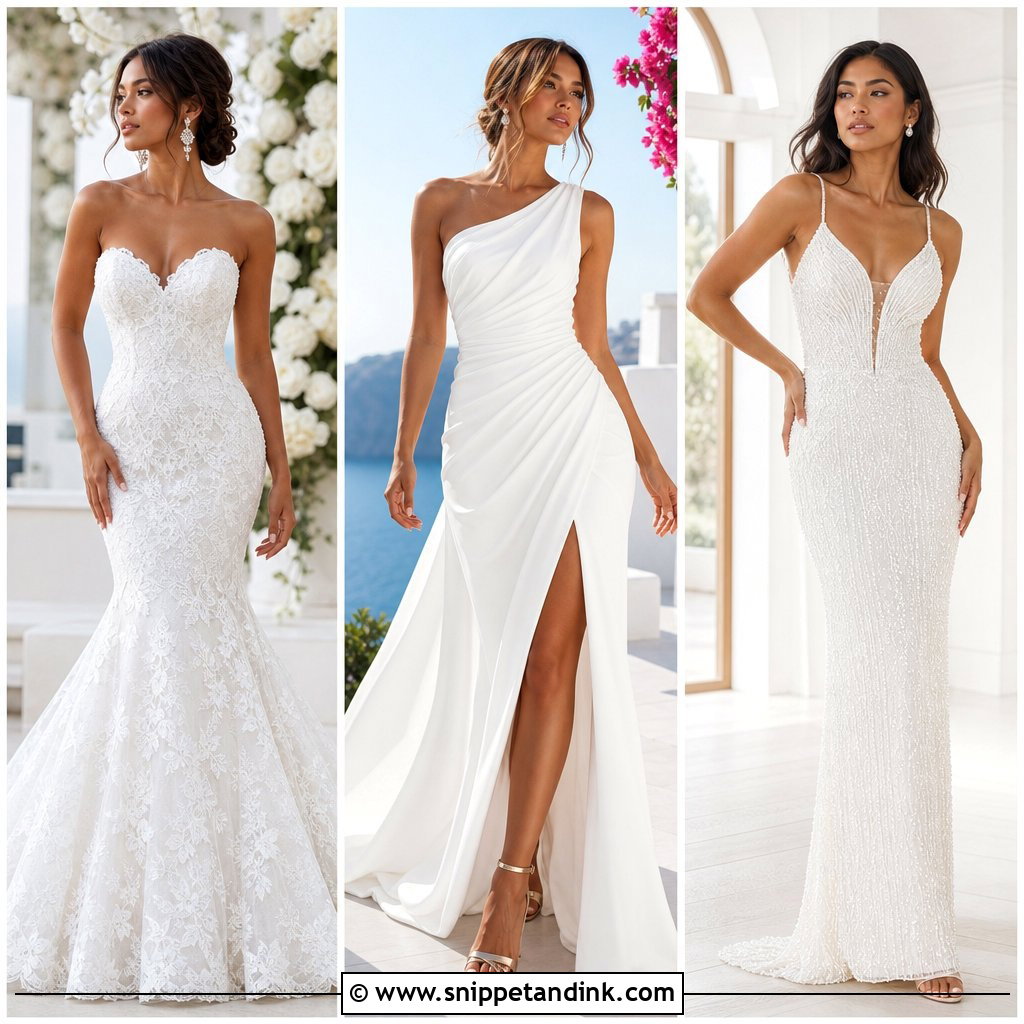
20. Wedding Dress With Detachable Overskirt
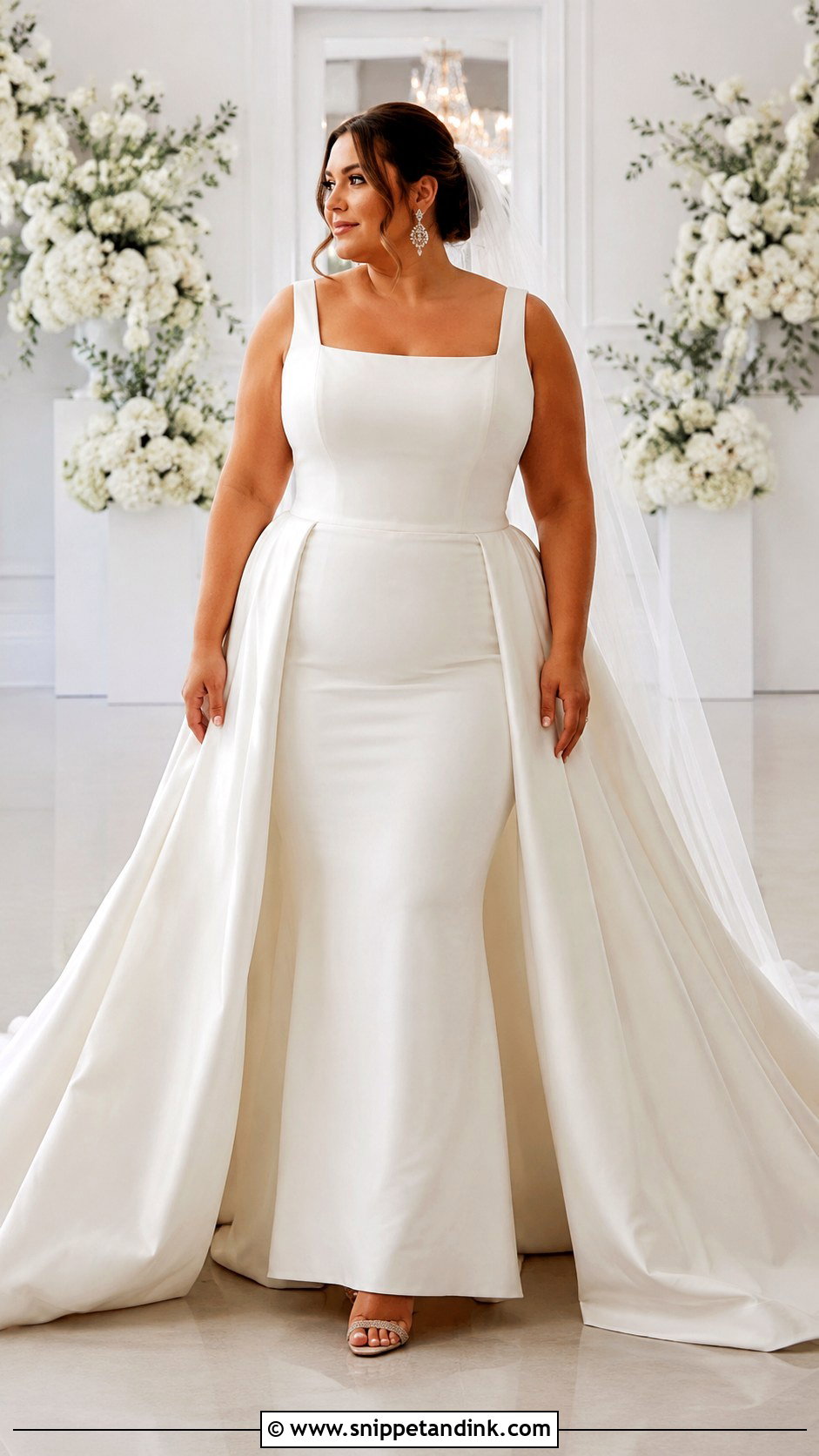
An overskirt gives you a dramatic ceremony entrance and then a fitted sheath or mermaid underneath for dancing, without buying a second gown. The attachment is what I inspect. Hooks or snaps should hide under a belt, a lace edge or a seam, and with a heavy overskirt I want a waist stay beneath so the weight isn’t hanging off the dress fabric alone. Match the color and fabric weight of both layers. Then rehearse the change with the one person who’ll help you; it should take a couple of minutes, not twenty.
How These Gowns Behave Ten Hours In
The fitting room shows you twenty minutes. A wedding asks for a whole day of standing, sitting, hugging and dancing, often in a warm room. These are the problems I most often see by evening, and what I build into the alterations to head them off.
- Inner-thigh chafing under a long skirt: anti-chafe shorts or a balm applied in the morning solve it, and slip shorts don’t show under any gown here.
- Straps cutting in by mid-afternoon: ask for wider straps or a padded underside, especially on heavy skirts where the straps carry real weight.
- A strapless or one-shoulder bodice sliding down: a silicone gripper strip along the top edge plus a firmly fastened waist stay keeps it in place.
- A heavy skirt dragging after dinner: test the bustle at the final fitting. Full ball gowns and tiered skirts often need several anchor points.
The little kit that rescues a gown
I send every bride off with safety pins, a needle and thread matched to the dress, double-sided fashion tape and white chalk for covering small marks on ivory fabric. Hand it to whoever stays with you through the day. Tucked in your own bag, it’s never where you are when a hook pops.
Support First, Silhouette Second
There’s no approved list of silhouettes for curvy brides. Mermaid, ball gown, column or flowing chiffon: each one works when the construction supports you and the alterations are precise. Forget the old advice about hiding particular areas and think about where you want support and how you want to move. Bring your undergarments and shoes to every fitting, sit and dance in the gown, and look at it from behind as well as the front. The right dress is the one you stop noticing by the second hour of the reception, because nothing is pinching, slipping or dragging.
You'll Like These Ideas:




Leave a Reply