
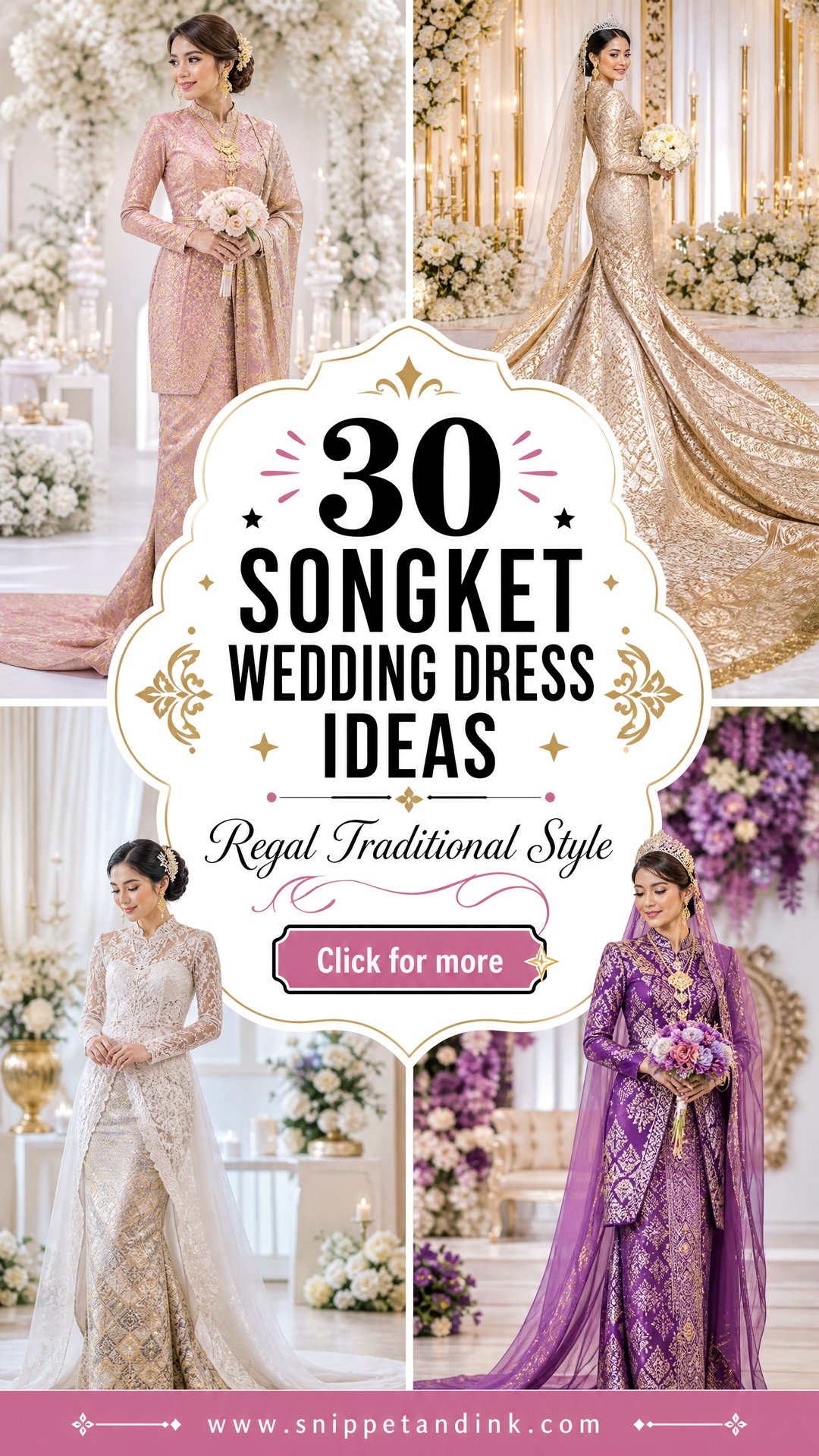
Songket is a brocade, woven with gold or silver thread floated across the surface, and that structure decides everything about how a bridal outfit made from it will sit and move. It is stiffer and heavier than lace or satin, so I treat it as the architecture of a look rather than decoration. You’ll see it in baju kurung, kebaya, ballgowns, two-piece sets and fitted gowns, often alongside traditional Malay wedding attire, lace layering and modern tailoring, from songket kebaya and baju kurung belah to Puteri Perak and full songket sets. The right choice comes down to your venue, how many hours you’ll wear it, your family’s customs and how formal the day will be. Here are thirty ways I’d style it, with notes on what each one asks of you.
Handwoven or Machine Made? Reading Songket Before You Buy
Songket is sold at very different prices, and the gap usually comes down to how it was woven. Handwoven songket is made on a traditional loom with extra weft threads added by hand to build each motif, which can take weeks or even months for a full set. Machine-made versions copy the look in a fraction of the time.
When a bride brings me fabric, I turn it over first. On handwoven cloth the back shows the floating metallic threads clearly, and small irregularities in the motifs give away the human hand. Machine weaving tends to look perfectly identical from one repeat to the next, and the thread is often a flatter, lighter metallic. Neither is wrong. Machine songket is lighter to wear and easier on a budget, while handwoven cloth is an heirloom. Just make sure the price matches what you are actually getting.
1. White Songket Wedding Dress
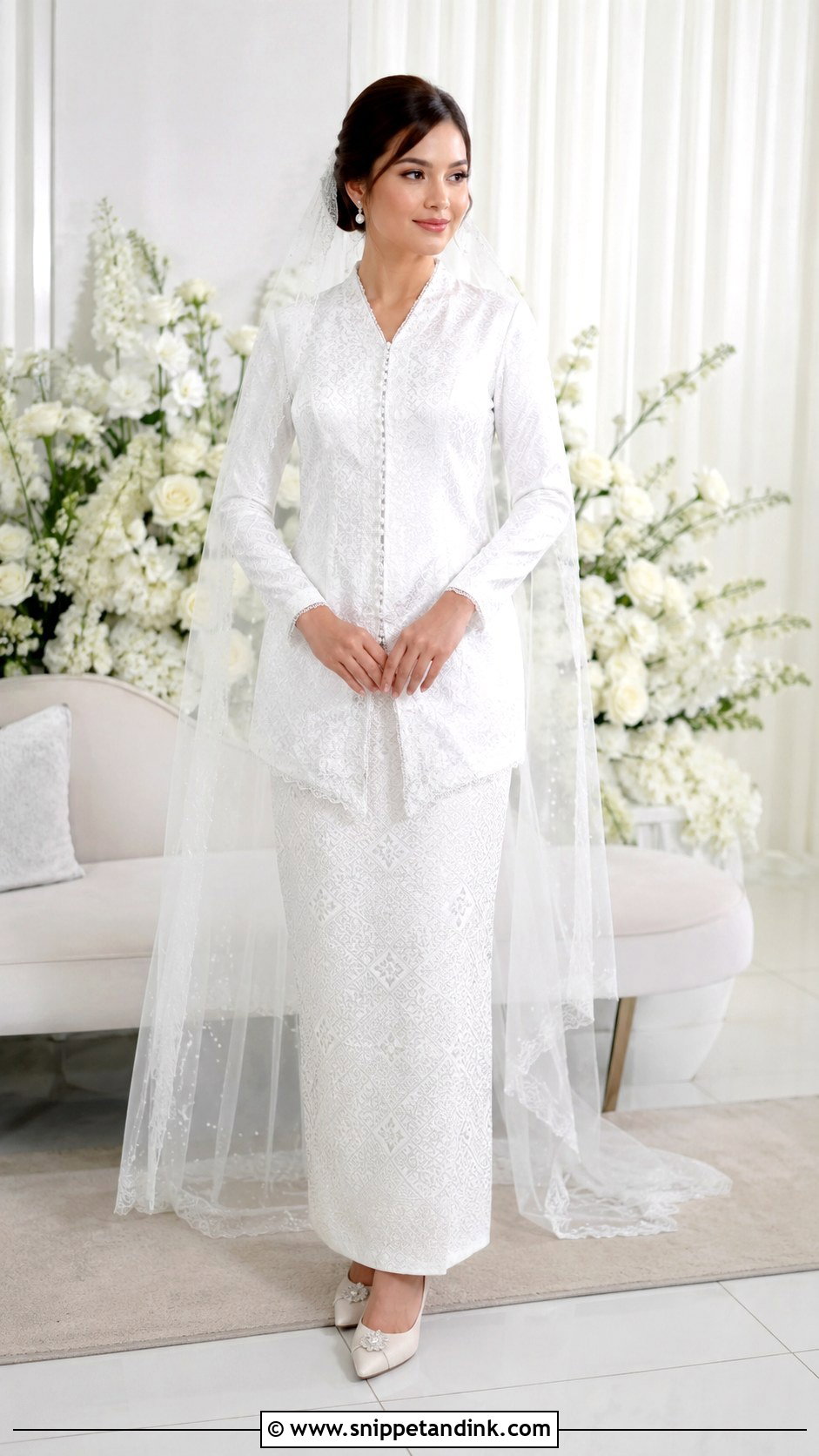
White songket keeps the bride luminous while the weave stops it from looking flat. A fitted long-sleeve top over a straight or mermaid skirt looks polished; a baju kurung cut is the modest route. I ask for silver or pale gold thread on white, since bright yellow gold can make the base look cream beside it. Pearl earrings, a soft veil and ivory heels are enough. It suits a solemnisation where you want calm rather than shine.
2. Gold Songket Wedding Dress
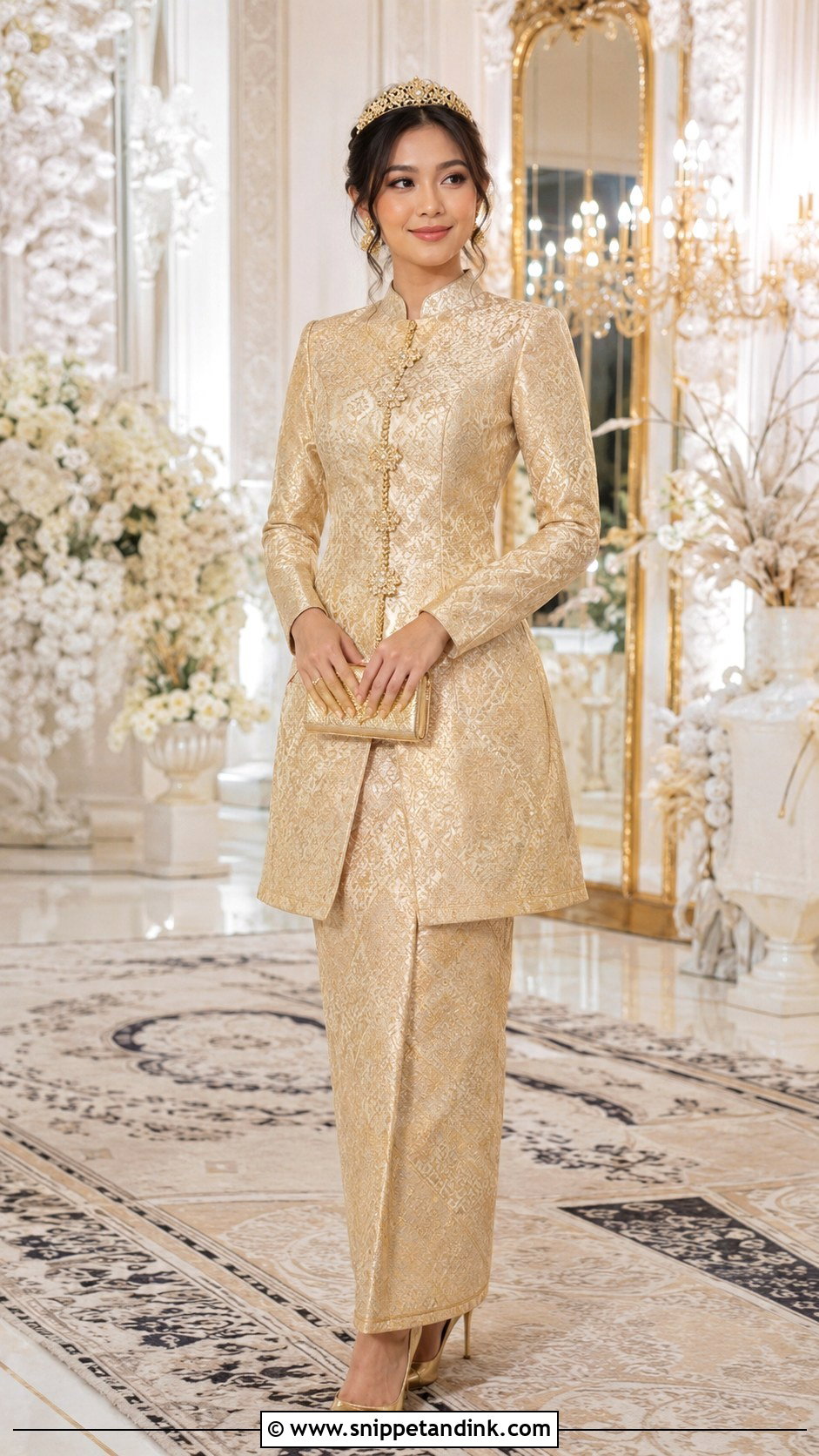
Gold already reads as ceremonial, so the cut can stay simple. A long kebaya over a structured skirt balances the shape; a full songket gown with a short train is the dramatic option. Gold on gold can turn flat under hall lighting. I mix a matte gold accessory with the shinier weave, so the jewellery doesn’t disappear into the fabric. A small tiara, gold heels and a clutch finish it. Leave the heavy necklace and bangles for one look, not both.
3. Silver Songket Wedding Dress
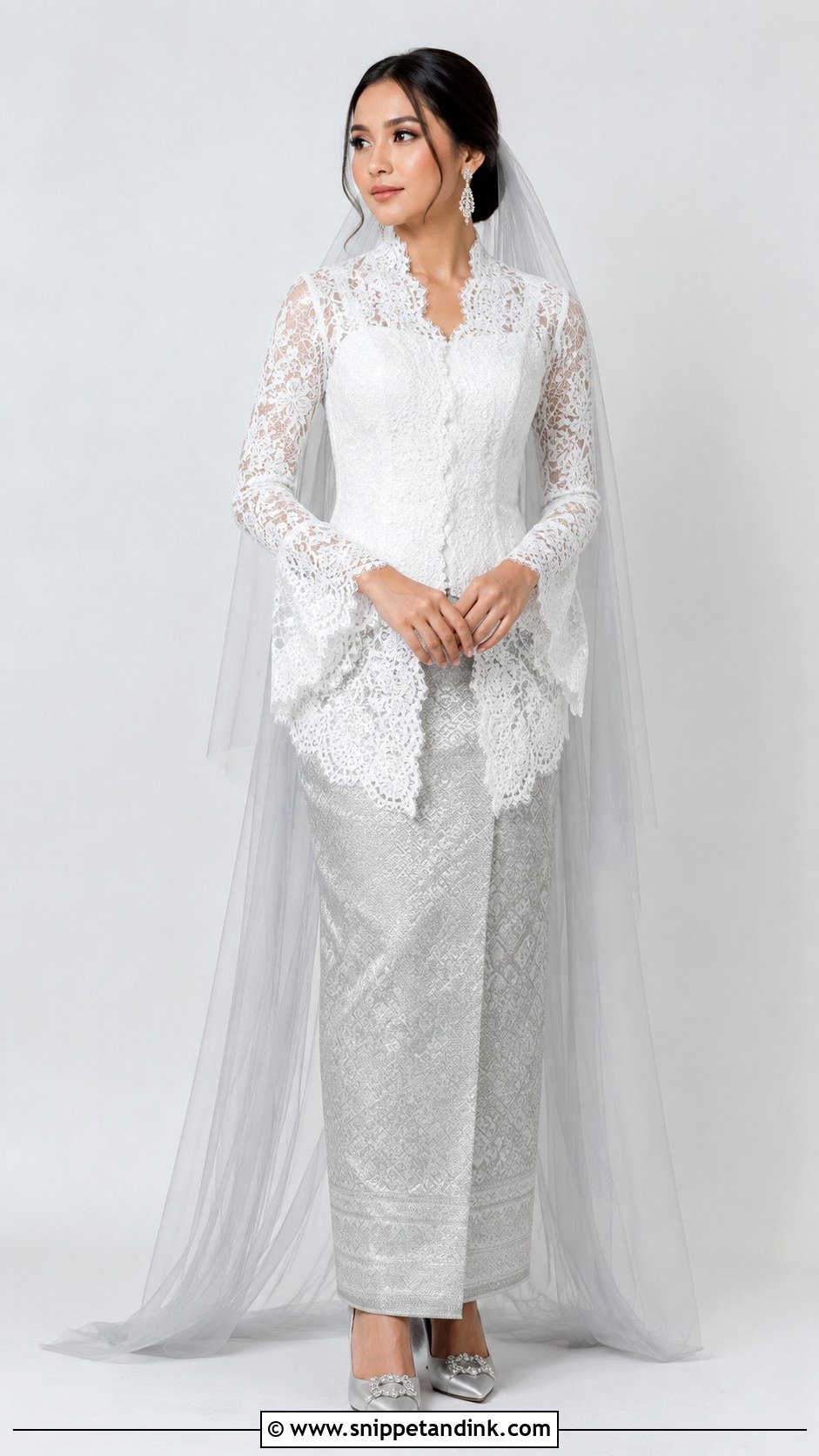
Silver songket gives a royal look in a cooler key. It sits naturally with white lace, grey-toned veils, crystal pins and satin heels. A kebaya with scalloped lace sleeves over a silver skirt mixes softness and structure; a gown with a cape or detachable overskirt is the fashion-forward take. Keep styling clean because the metallic thread already catches every light. I find silver suits evening and ballroom receptions best, where warm lamps soften its edge.
4. Red Songket Wedding Dress
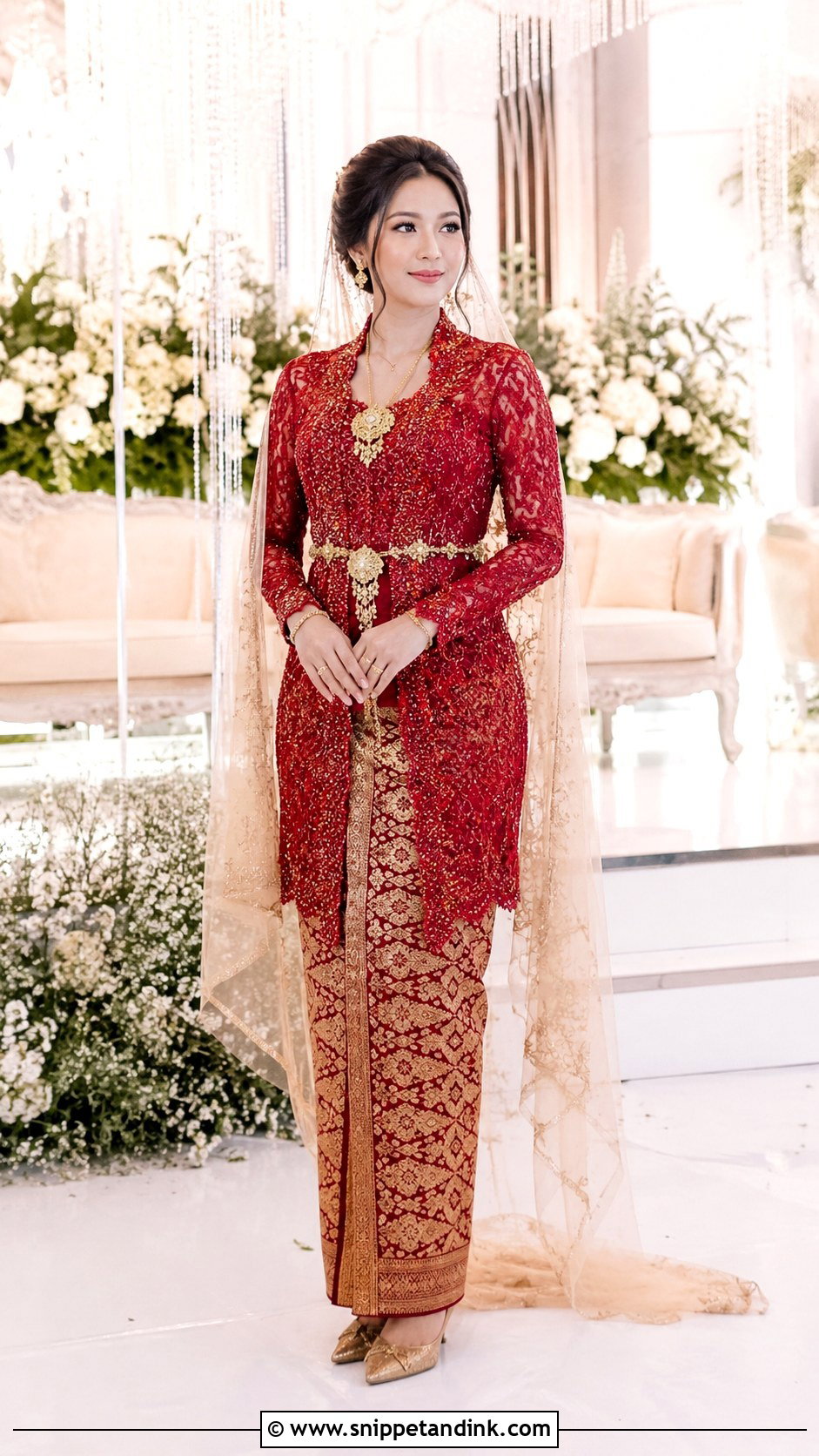
Red woven with gold motifs is the classic celebration combination. A red baju kurung set with a shaped waist stays elegant; a red songket skirt with a lace kebaya in red or champagne modernises it. Gold jewellery belongs here, but keep it refined or the outfit tips into costume. I check red under the venue’s lighting before the day, because some reds lean orange in tungsten light. Nude or gold heels lengthen the line.
5. Emerald Green Songket Wedding Dress
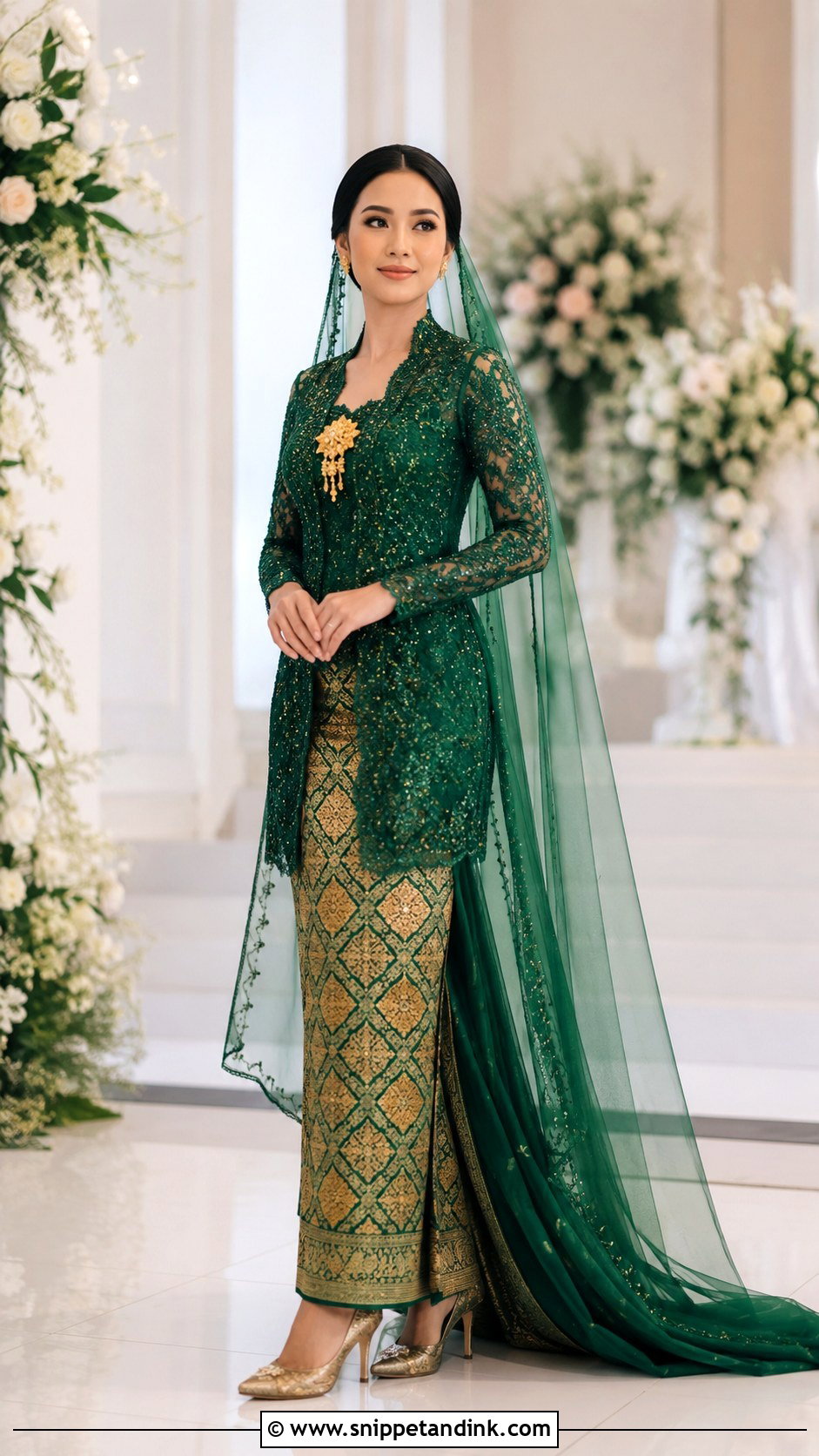
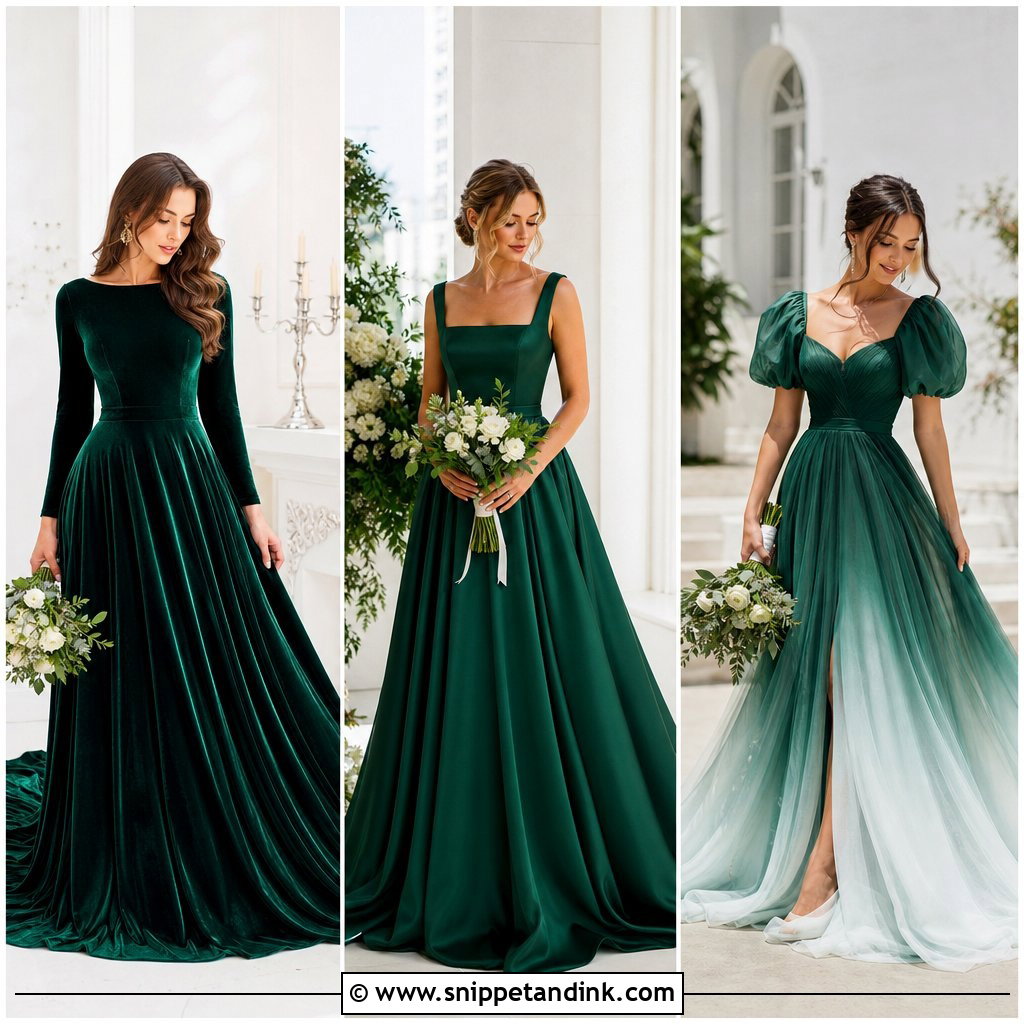
Emerald green songket with gold thread looks rich without much help. A structured kebaya over an emerald skirt suits a reception; a full-length gown gives the fabric a contemporary shape. I keep jewellery minimal so the colour has room. Bronze eyeshadow and a natural lip work with it. Deep greens can swallow a fair complexion in dim halls, so I’d test it near your face in the venue light before ordering metres of it.
6. Dusty Pink Songket Wedding Dress
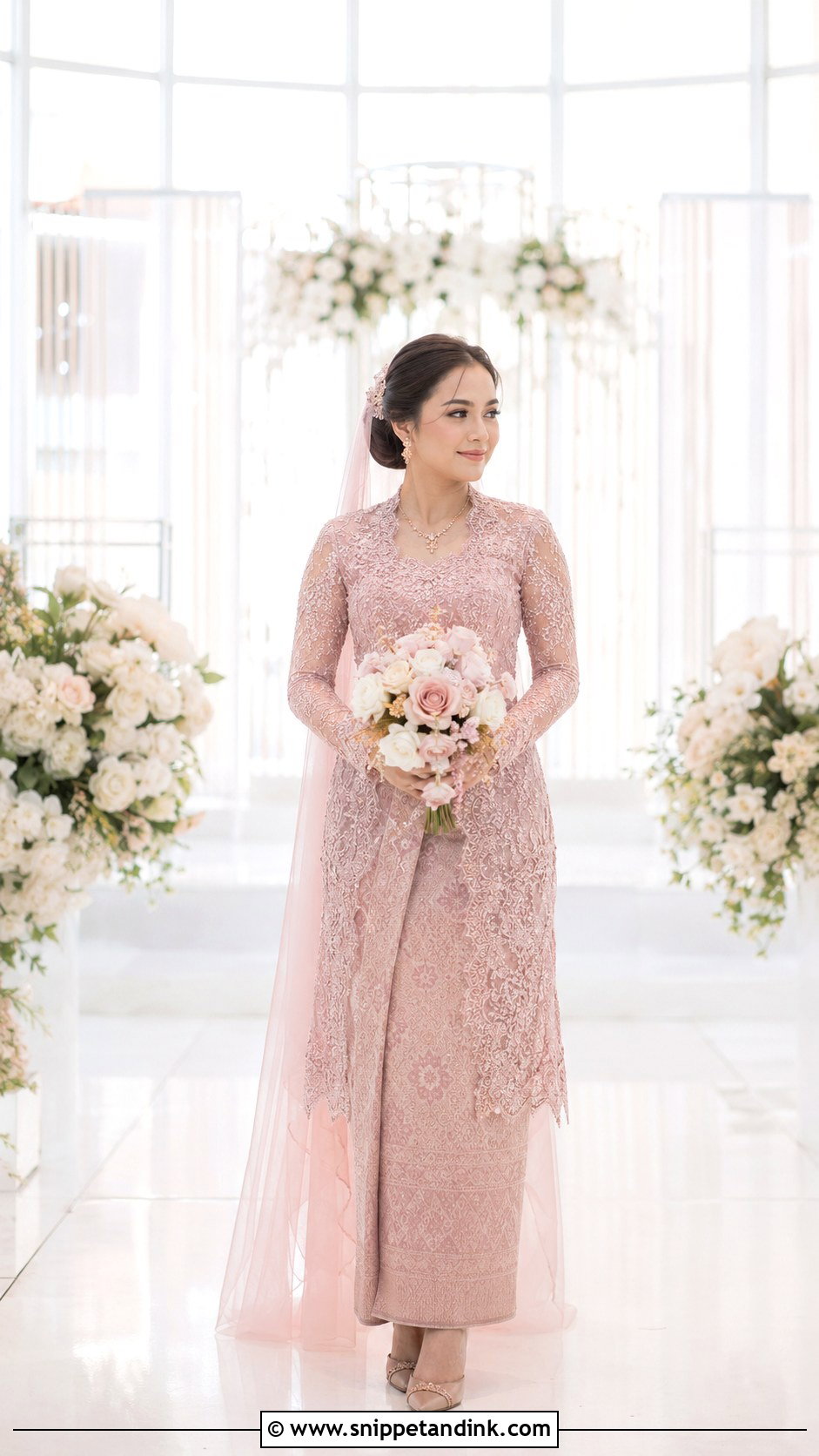
Dusty pink feels modern while the songket keeps it rooted. A matching kebaya and skirt reads sweet for a reception or engagement; a two-piece baju kurung with lace sleeves adds texture. Rose-gold accessories and a blush or ivory veil suit the shade. Daylight is kind to muted pinks; in yellow ballroom lighting they can turn beige, so I prefer this one for daytime events.
7. Baby Blue Songket Wedding Dress
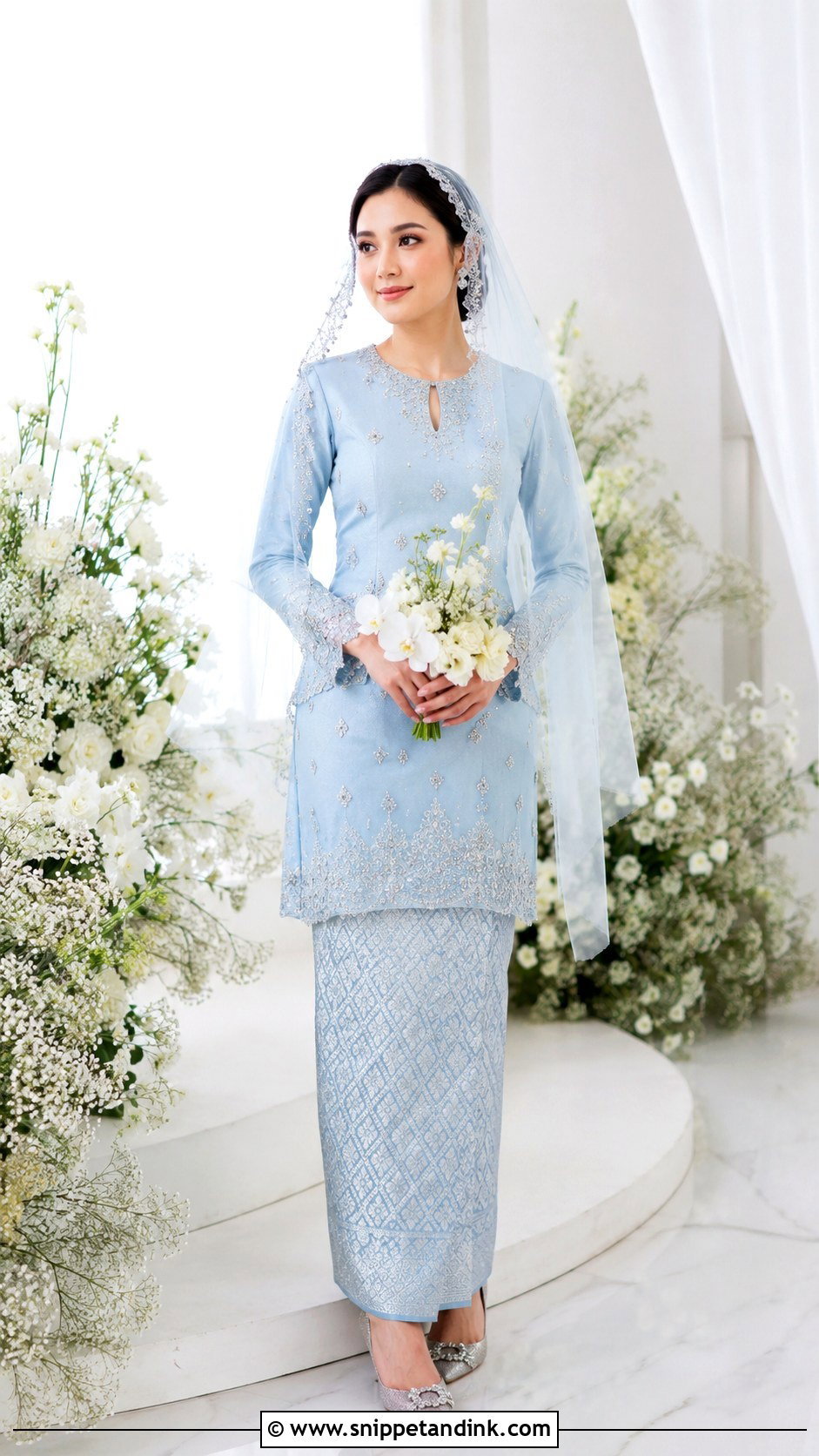
Baby blue is calm and fresh, and still unusual next to white or gold. A baju kurung with a silver-thread songket skirt is modest and cohesive with crystal accessories. A fitted lace top over a flared skirt is the modern version. Silver heels, a pale blue veil and delicate earrings tie it together. I steer blue brides towards silver thread; gold on baby blue can look busy up close.
8. Navy Blue Songket Wedding Dress
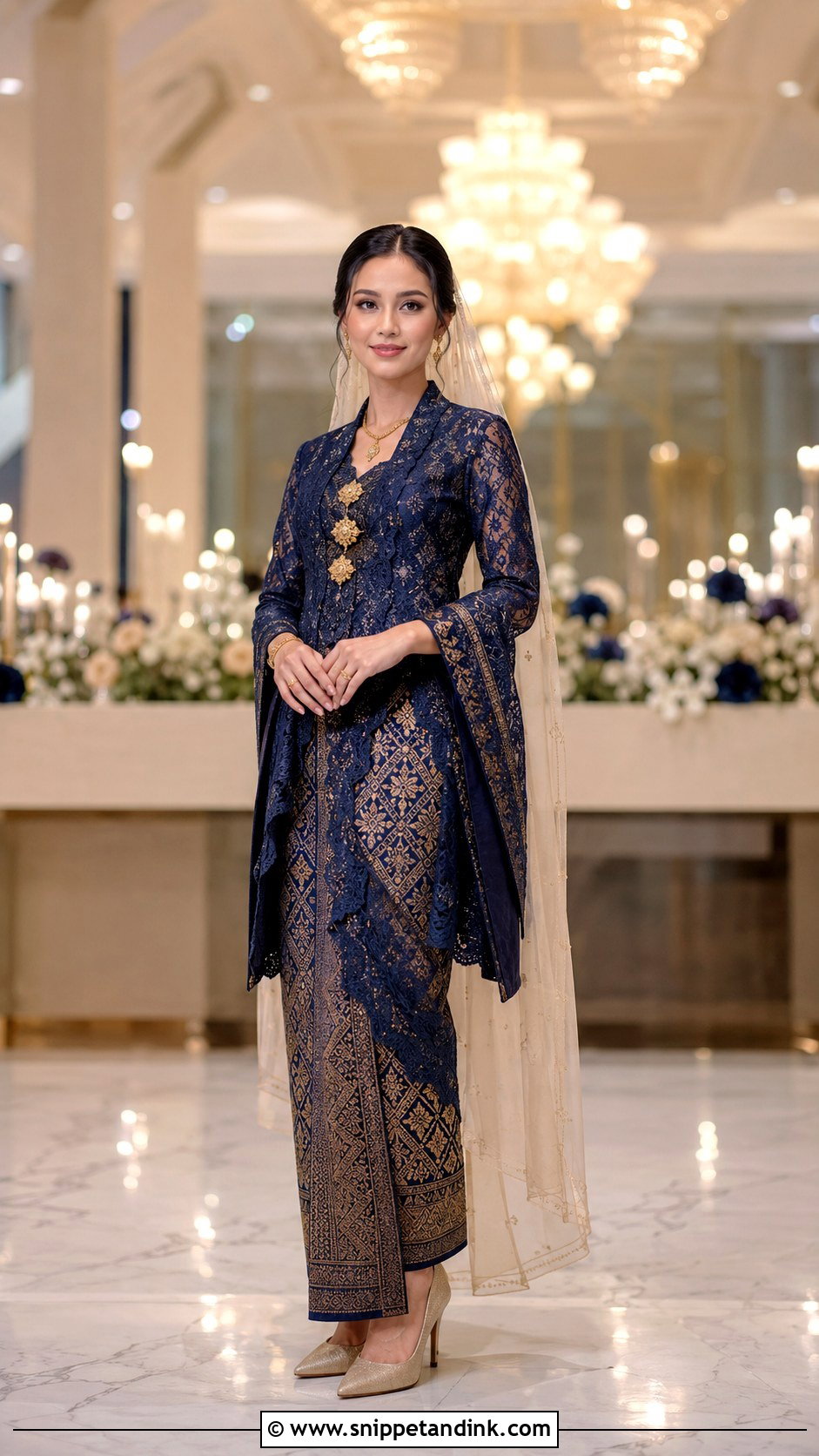
Navy is formal and unexpected, and it holds up well in evening photos. A navy kebaya with gold motifs, a structured skirt and a clean neckline is the look I’d suggest for a reception. Champagne accessories, soft waves or a sheer gold veil lift the depth. A full gown with a high neck and long sleeves suits a modest bride. Defined eyes and a natural lip balance the colour. Watch the hem: dark songket shows dust from hall floors quickly.
9. Black Songket Wedding Dress
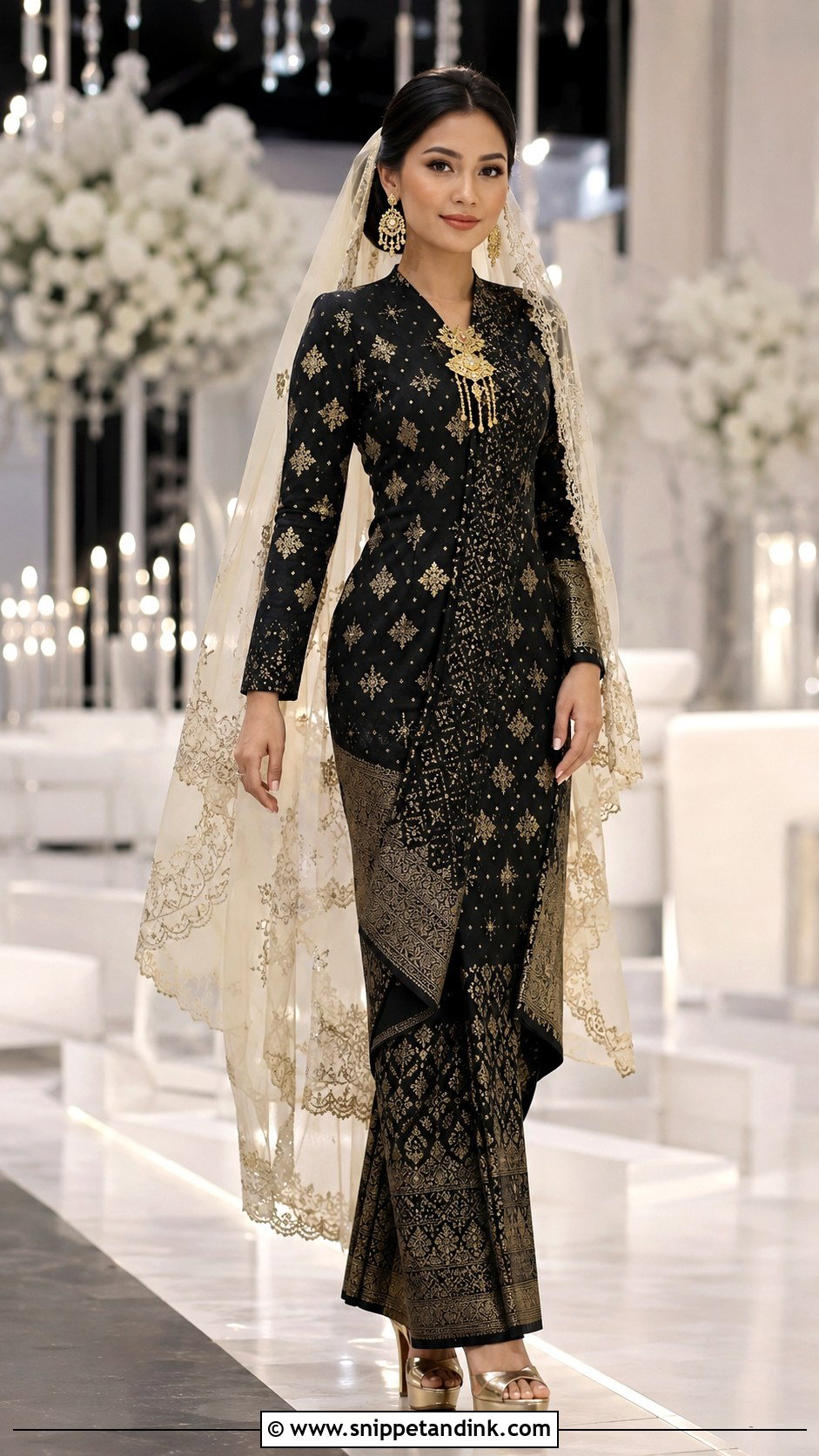
Black songket needs the shape, shine and accessories to make it bridal. Pick black woven with gold or silver, and pair it with a structured kebaya, a long fitted skirt or a ballgown. An ivory veil creates contrast, and gold heels with statement earrings warm it. Before choosing it, I’d talk to your family; in some households black at a wedding is unwelcome, and it is better to know early. Keep makeup refined. Evening receptions suit it.
10. Ivory Songket Kebaya Wedding Dress
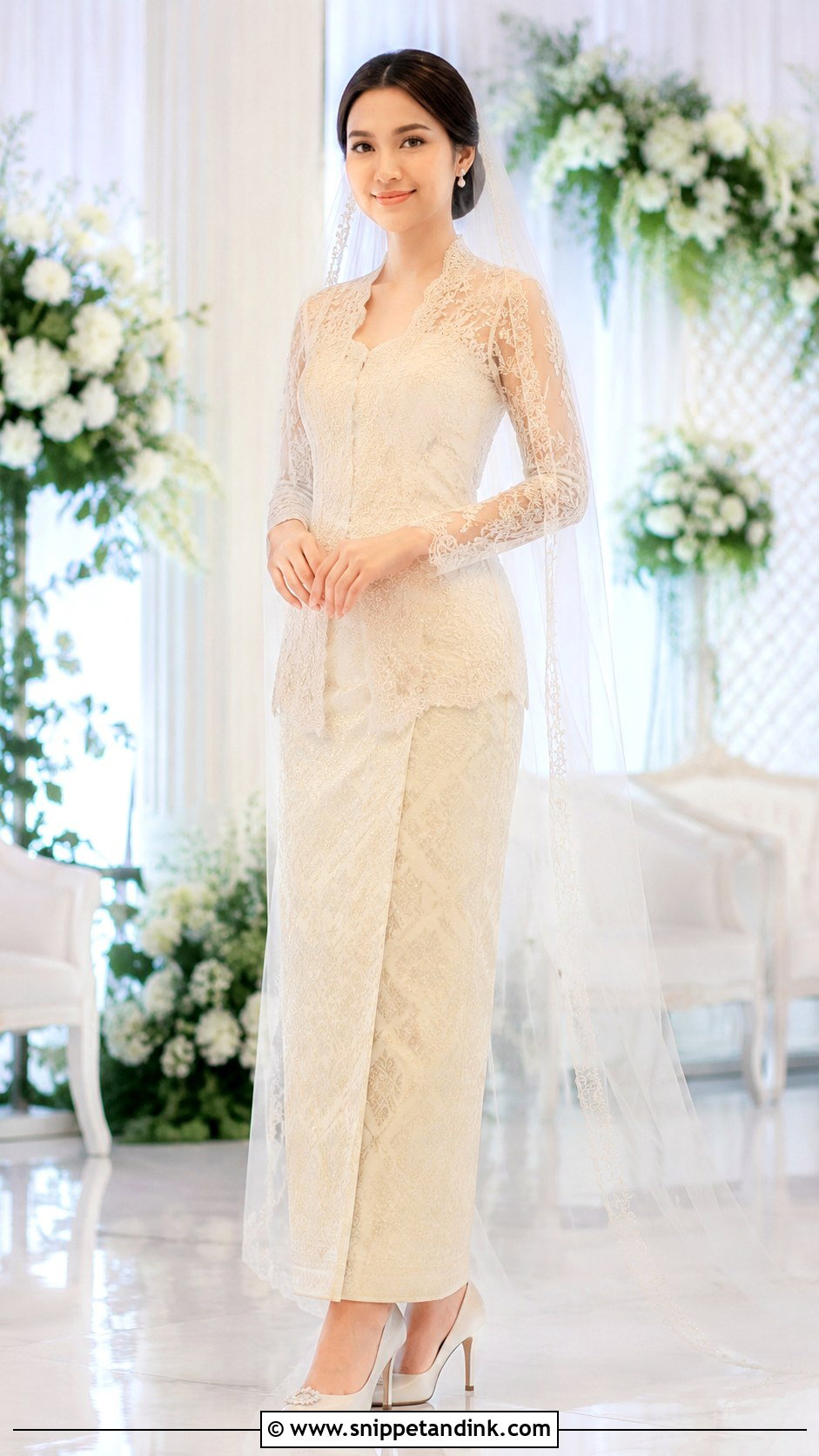
Ivory songket with a kebaya top gives you softness with tailoring. The kebaya defines the body; the skirt adds texture and ceremony. Lace sleeves, covered buttons and a modest neckline lean bridal. Choose gold or silver thread to match your skin tone and jewellery; I hold both swatches against the inner wrist and the face before deciding. Ivory heels, pearls and a sheer veil finish it. It suits solemnisations and indoor receptions.
11. Modern Songket Baju Kurung Wedding Dress
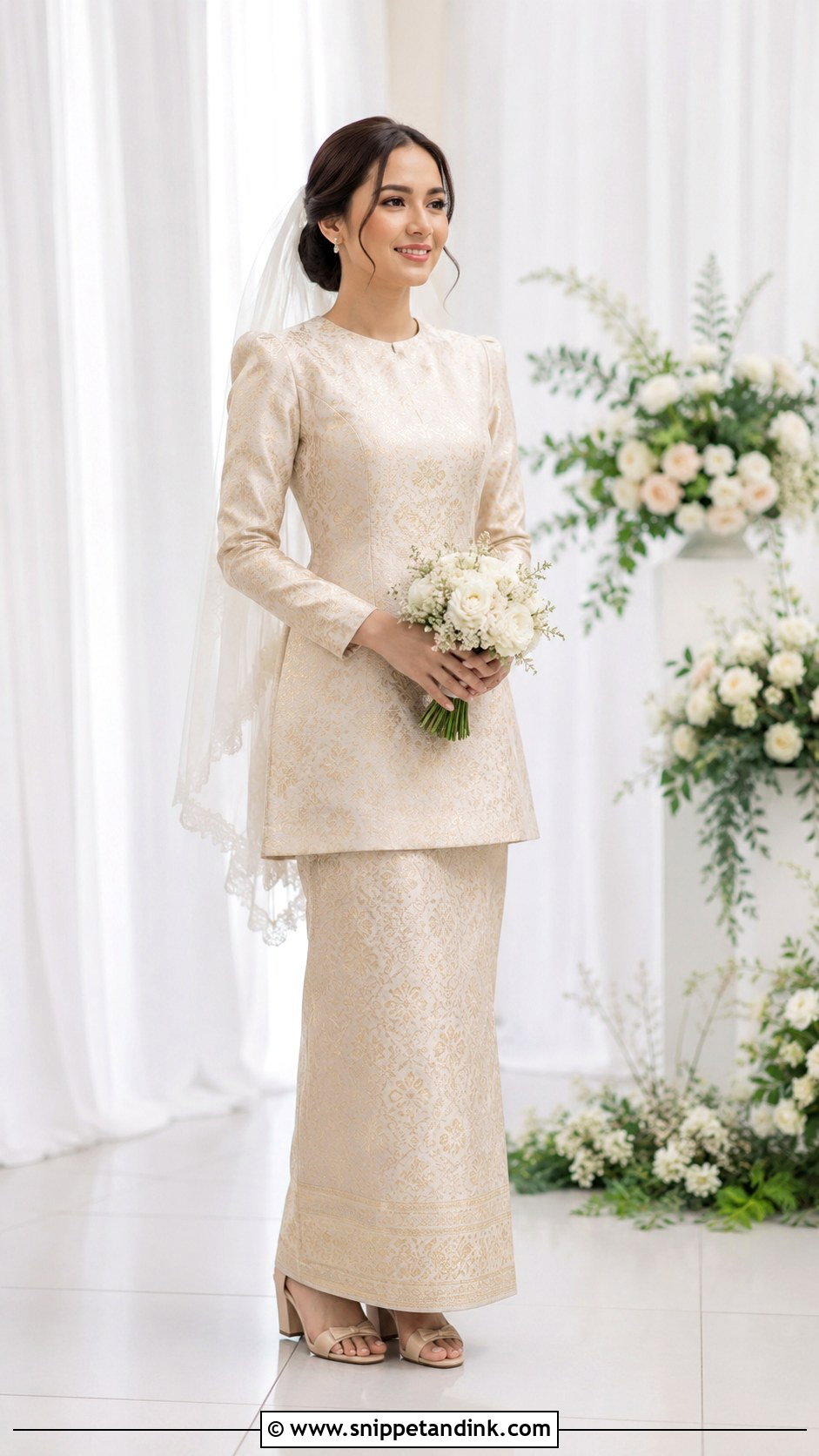
Baju kurung is the most comfortable silhouette for a long day of ceremonies, and modern tailoring can shape the waist and shoulders without losing modesty. Ivory, dusty blue, sage or champagne feel fresh. If a full songket set feels heavy, I’d pair a songket skirt with a plain or lace blouse; you keep the texture and lose half the weight. A veil, small earrings and block heels help on long ceremonies. You’ll move easily and still look formal.
12. Songket Kurung Belah Wedding Dress
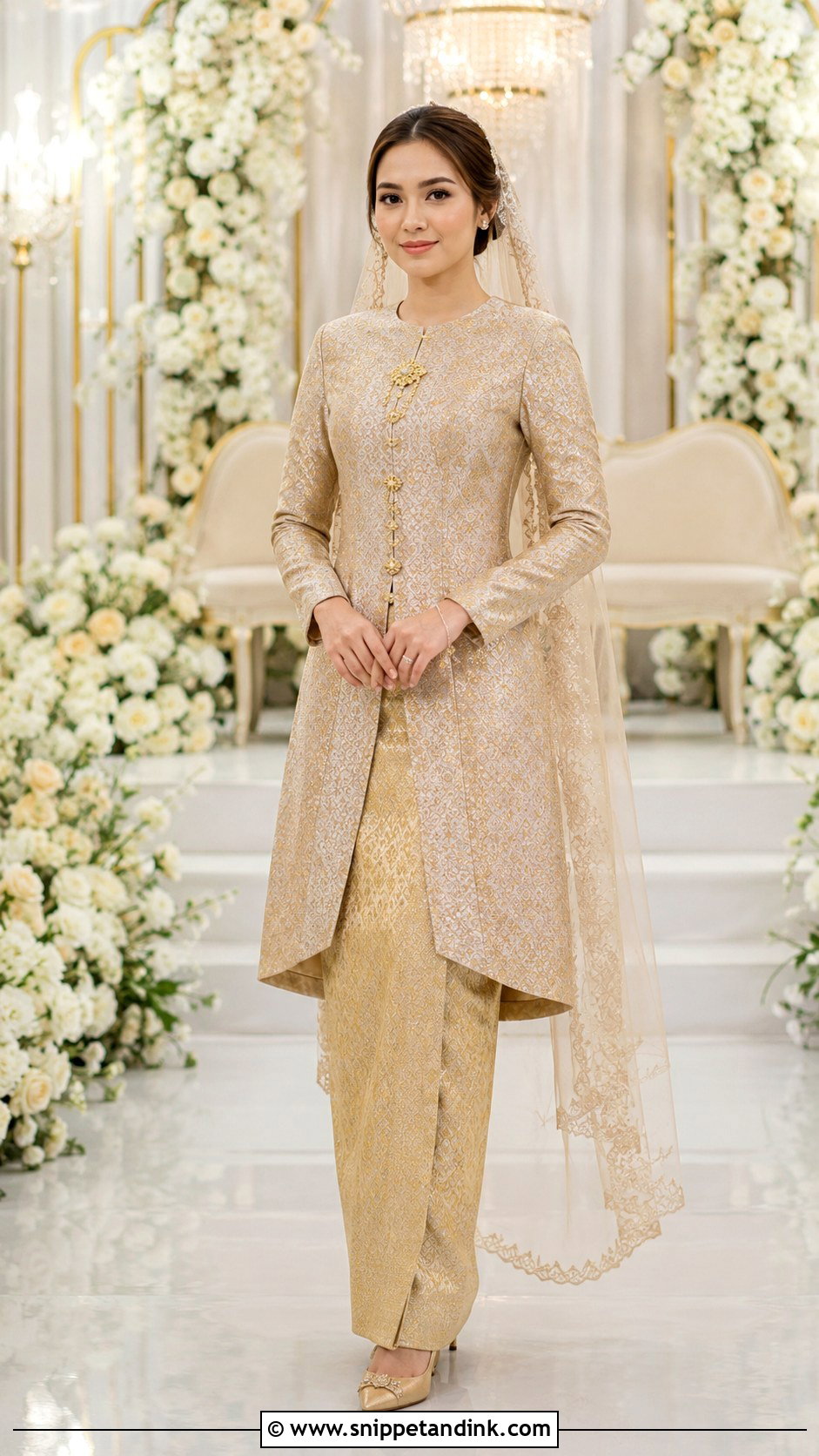
The kurung belah, with its front opening, gives a long, elegant line. A long top over a fitted skirt adds height, especially with pointed heels. Gold, emerald, royal blue or champagne feel ceremonial. A matching veil or selendang adds flow without hiding the weave. The silhouette already has presence, so I keep the jewellery quiet. It gives traditional Malay bridal beauty a neat, tailored finish, as long as the slit is cut to sit closed when you walk.
13. Songket Kebaya Labuh Wedding Dress
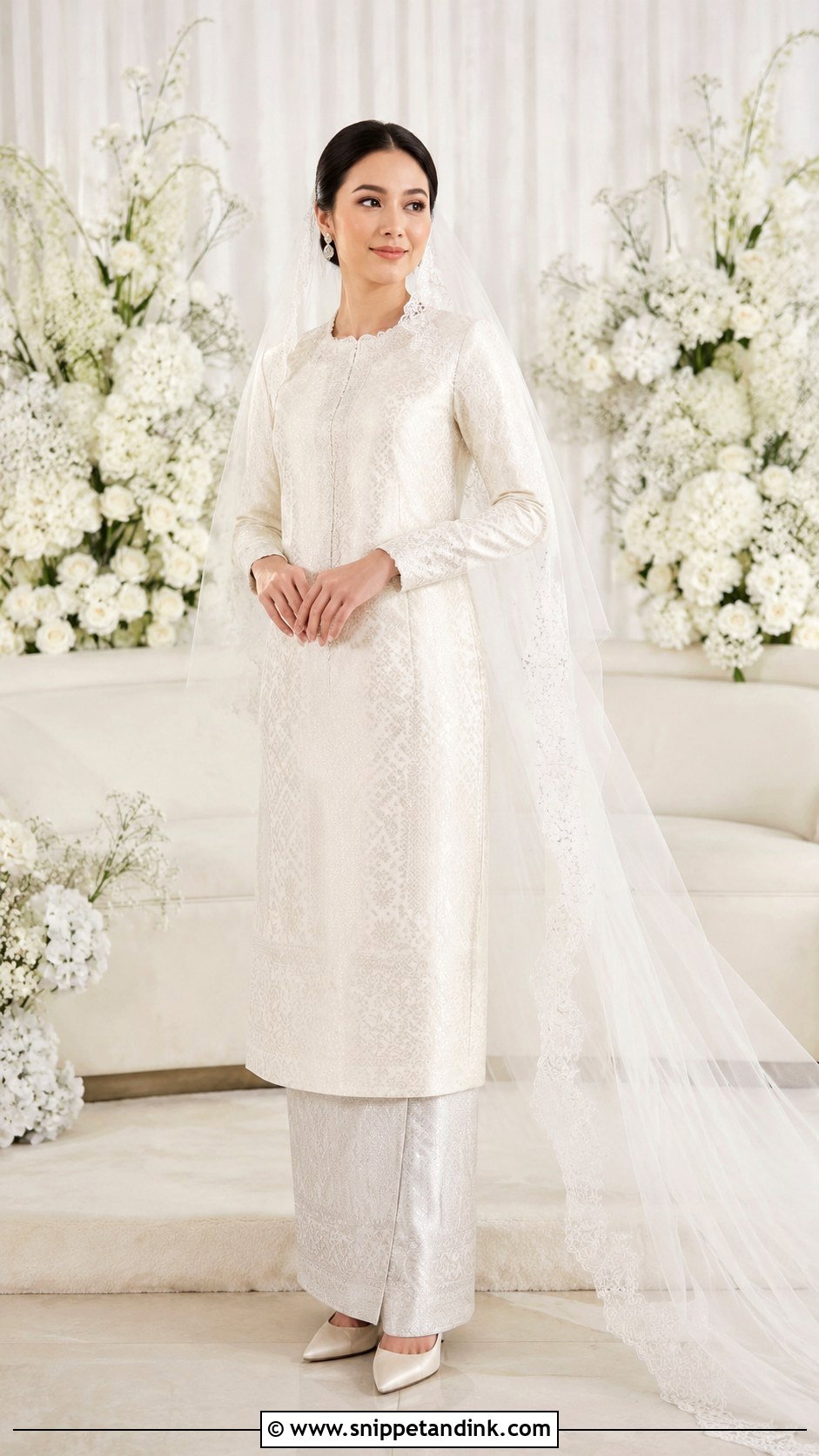
The kebaya labuh’s longer top gives coverage and a feminine line, worn over a straight songket skirt. Lace cuffs, a little beadwork or scalloped edges add detail without weight. Ivory, silver, dusty pink and pale gold suit it. I get the length checked while the bride is sitting; a long kebaya can bunch at the hips on a dais chair if it is cut too narrow. A long veil, satin heels and refined jewellery complete it.
14. Songket Ballgown Wedding Dress
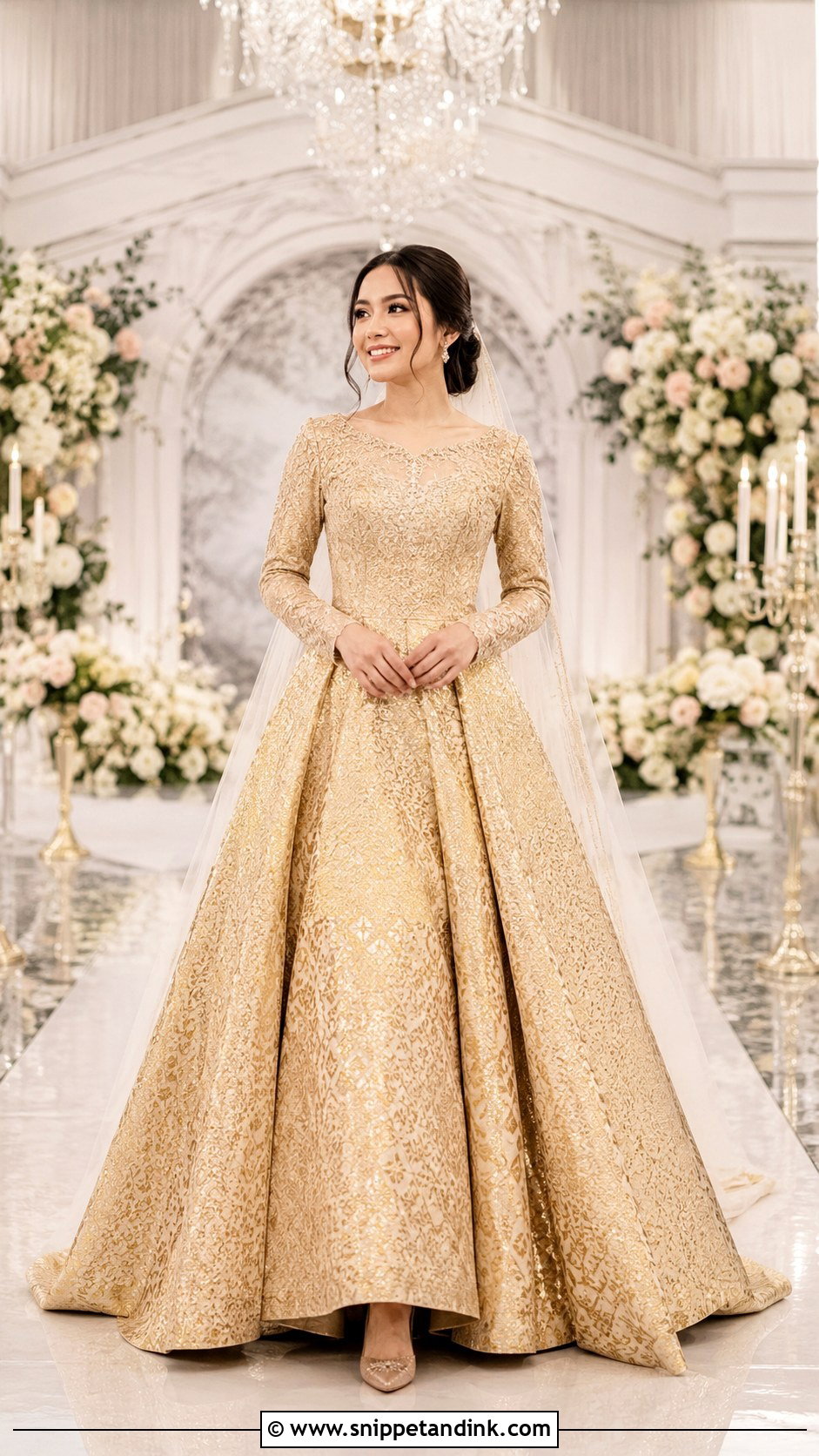
A songket ballgown wedding dress makes the grand entrance on its own. Songket’s body gives volume, and the motifs enrich the skirt. A fitted bodice over a full songket skirt is wearable; extra petticoats on top of heavy brocade are not. A sweetheart neck with sheer sleeves or a modest high neck both work. Keep the veil simple and heels neutral so the skirt leads. Weight is the real issue: a full songket skirt can be heavy, so ask the maker to weigh it before you commit to a long reception in it.
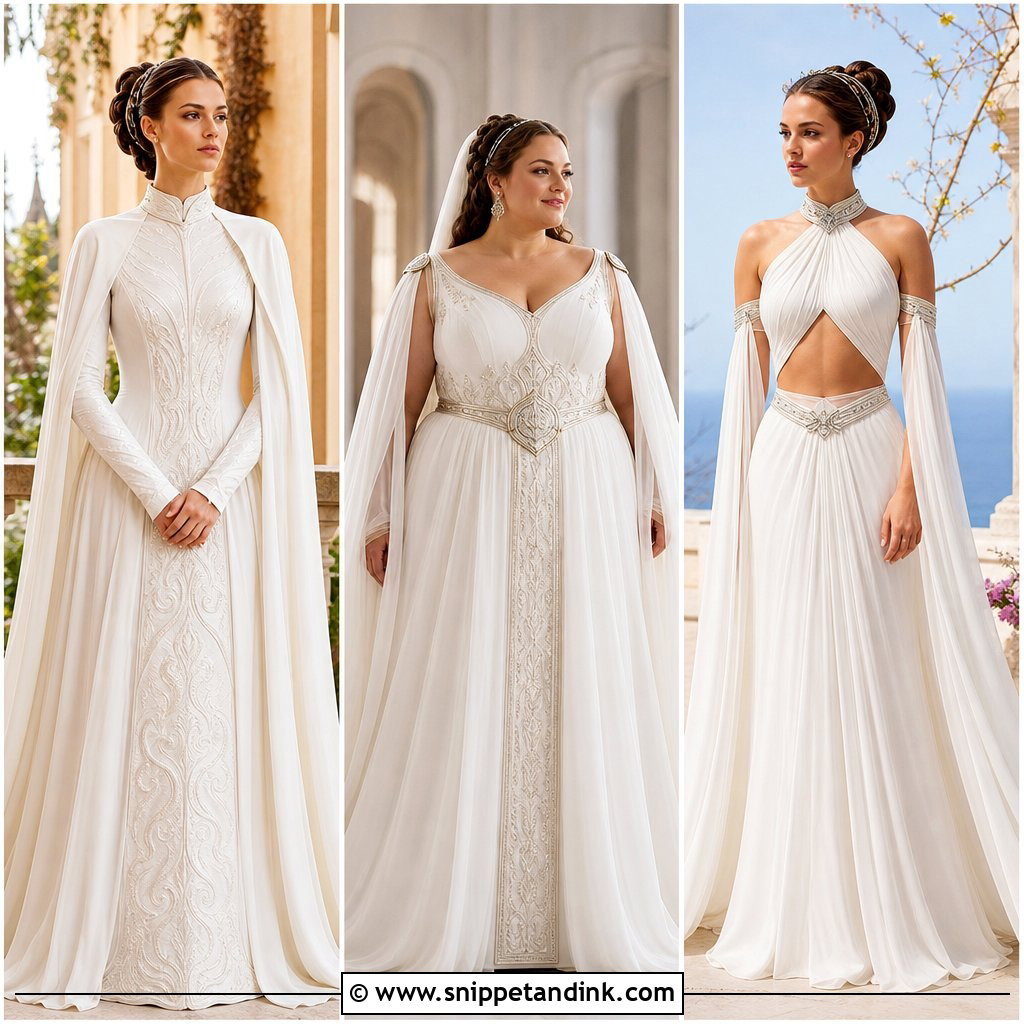
15. Songket Mermaid Wedding Dress
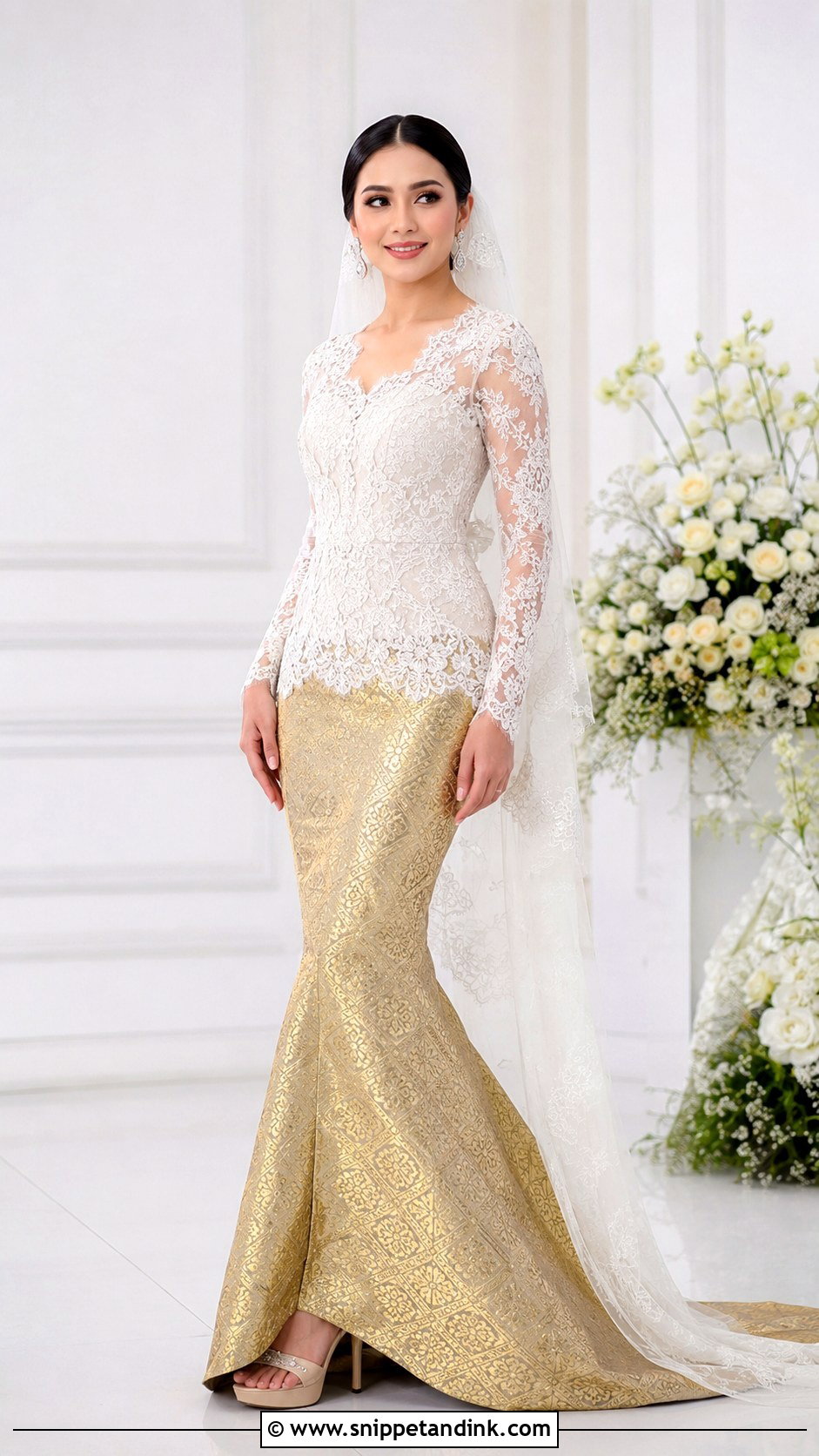
The mermaid hugs the body to the knee and then flares, and songket holds that flare crisply. A lace top over a songket mermaid skirt softens it; full songket feels bolder. My caution is mobility. Songket has no stretch, so a mermaid in it limits your stride and makes sitting on the floor for a traditional ceremony nearly impossible. I’d keep it for the reception. High heels, a sleek veil and drop earrings elongate the line.
16. Songket A Line Wedding Dress
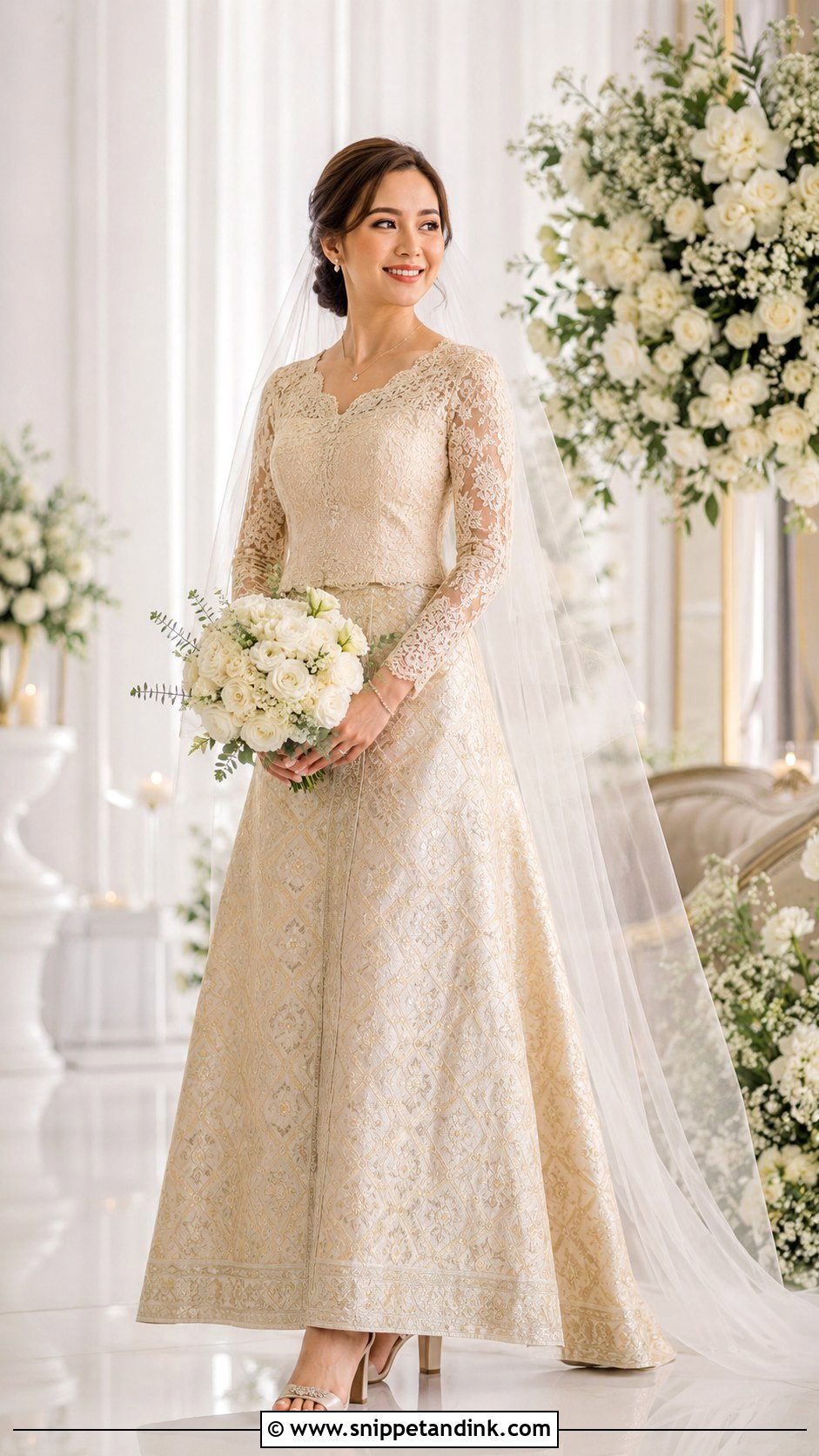
A-line suits most bodies and is easy to manage all day. The skirt widens gently from the waist with movement but not bulk. A lace bodice with an A-line songket skirt mixes softness and texture; long sleeves and a higher neckline make it modest. Ivory, champagne, sage and dusty pink all suit it. Block heels, a delicate veil and small jewellery finish it. If you are unsure which silhouette to commit to, I’d start here at the first fitting.
17. Songket Two Piece Wedding Dress
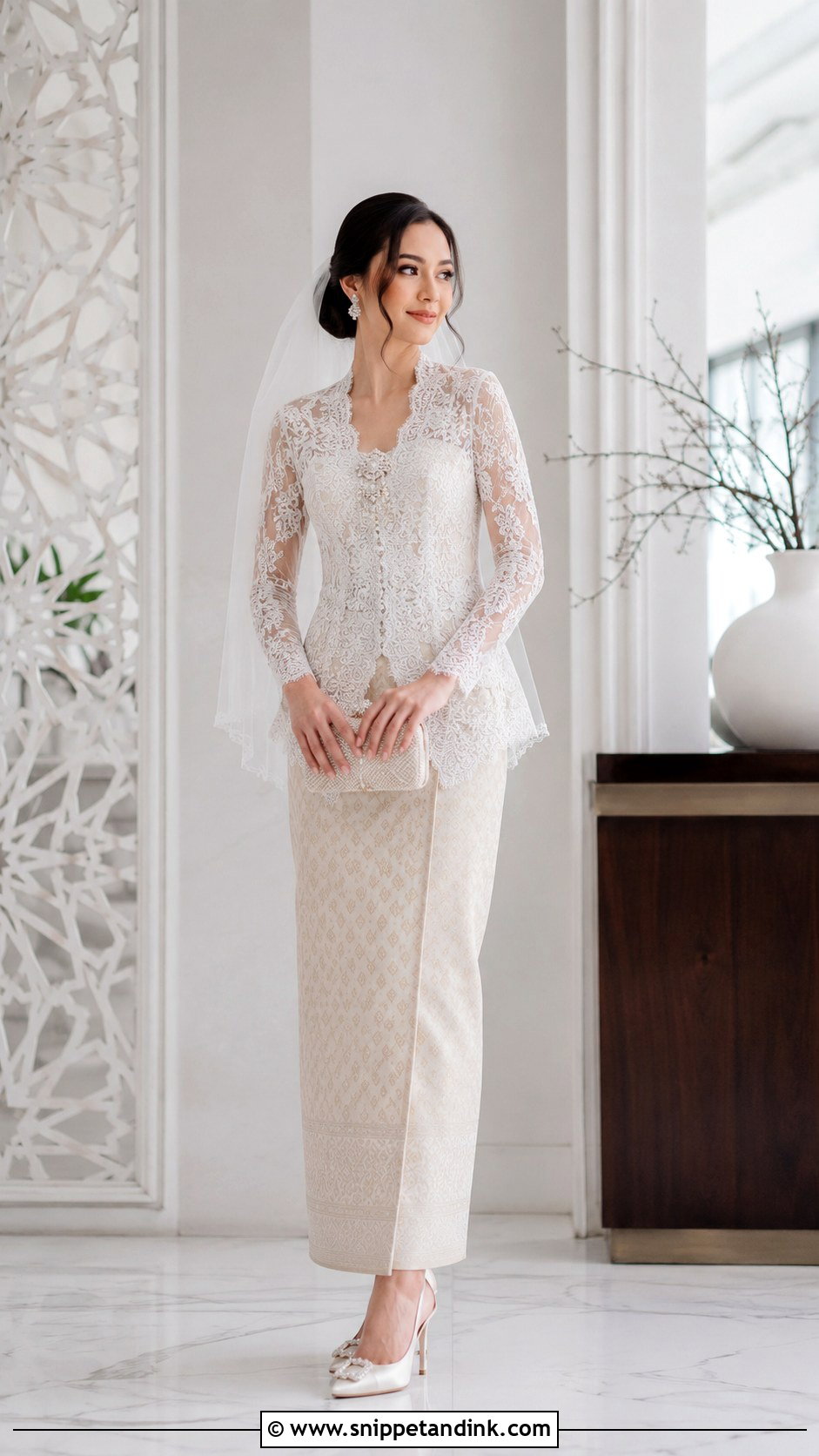
Two-piece songket sets are flexible. A fitted top and matching skirt, a lace blouse with a songket skirt or a peplum top over a straight skirt all qualify. Coordinated colours keep it bridal. The practical bonus: each piece can be altered separately, and your tailor can let out a waistband without touching the top. A matching veil, heels and a small clutch complete it. It also leaves you a skirt you can wear again at family events.
18. Songket Peplum Wedding Dress
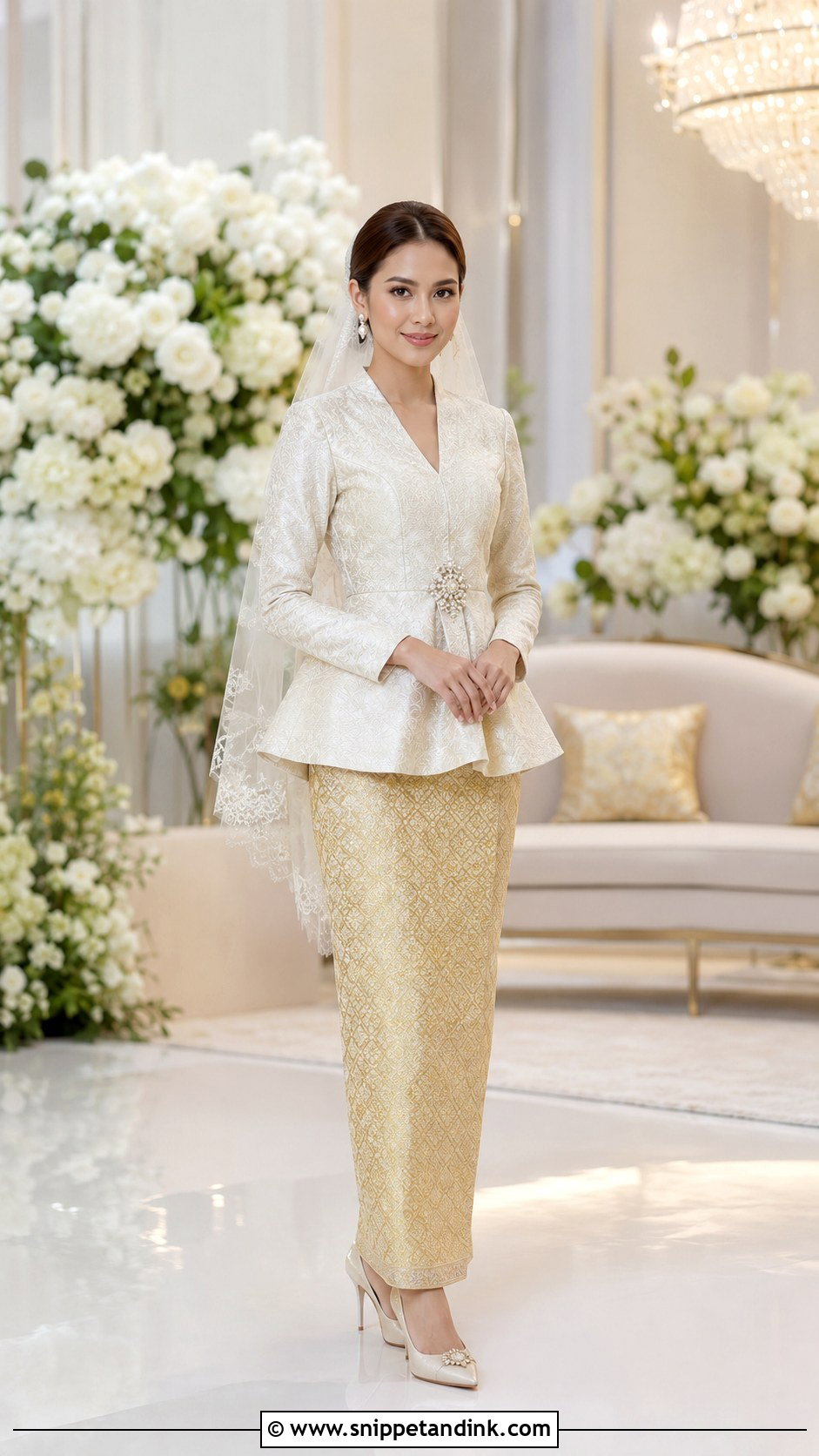
Peplum adds shape at the waist over a straight or mermaid skirt. In lace, it’s romantic; in full songket, regal. I prefer a softer fabric for the peplum itself, because a stiff songket flounce can stick out sideways rather than falling over the hip. Ivory, gold, navy or dusty pink suit different moods. Pointed heels and a fitted veil keep the silhouette long. It is easier to move in than a layered gown, which makes it a sound reception choice.
19. Songket Cape Wedding Dress
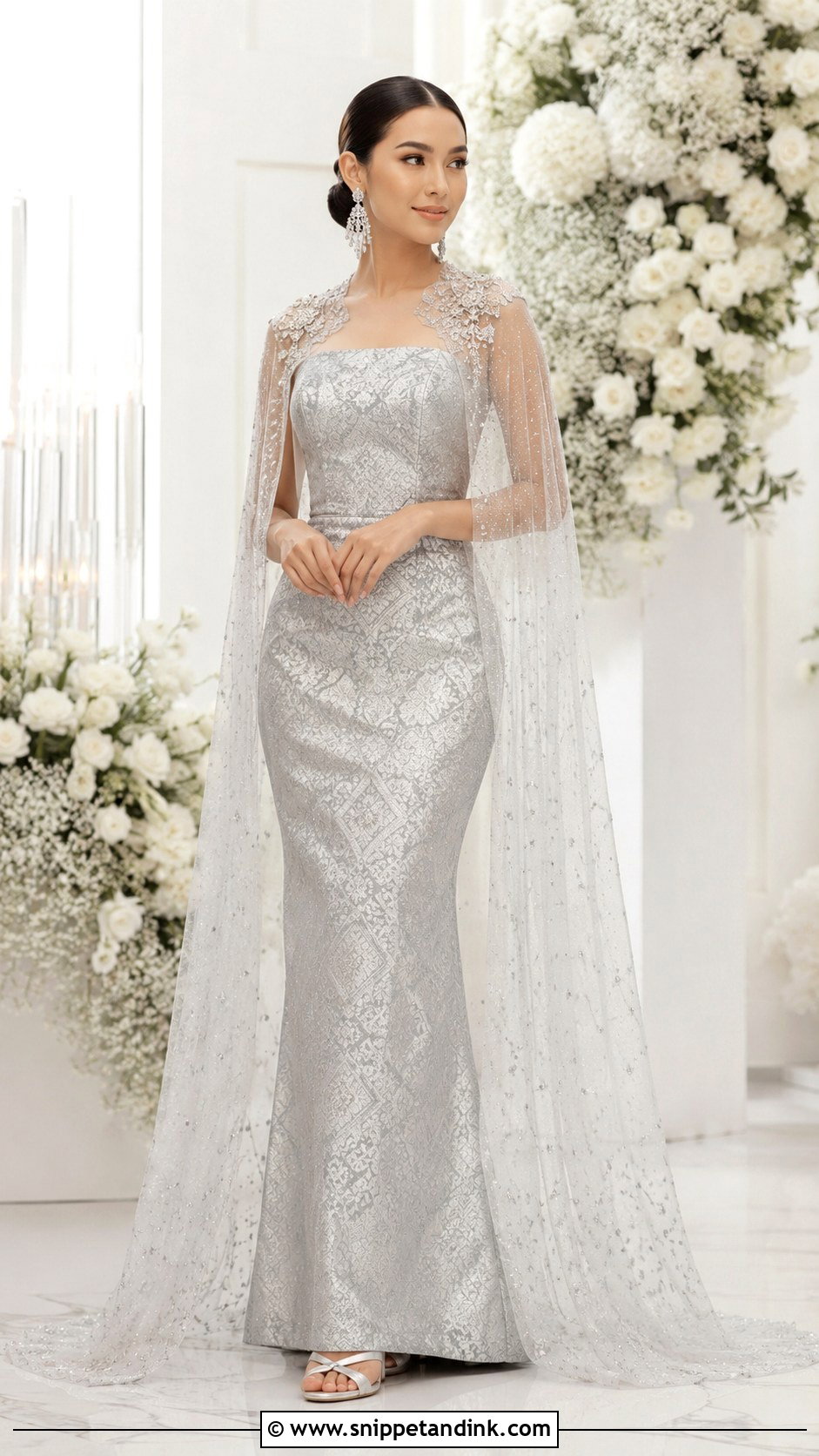
A cape gives movement without a heavy train. Sheer organza, lace or matching songket all work, depending on how bold you want to go. A detachable cape over a fitted songket dress is practical: wear it for the entrance and photos, unclip it for dinner. Keep the base dress plain. Silver, ivory and champagne keep it light. I ask for the cape to fasten at the shoulder seams rather than the neckline, so the weight doesn’t pull the collar back.
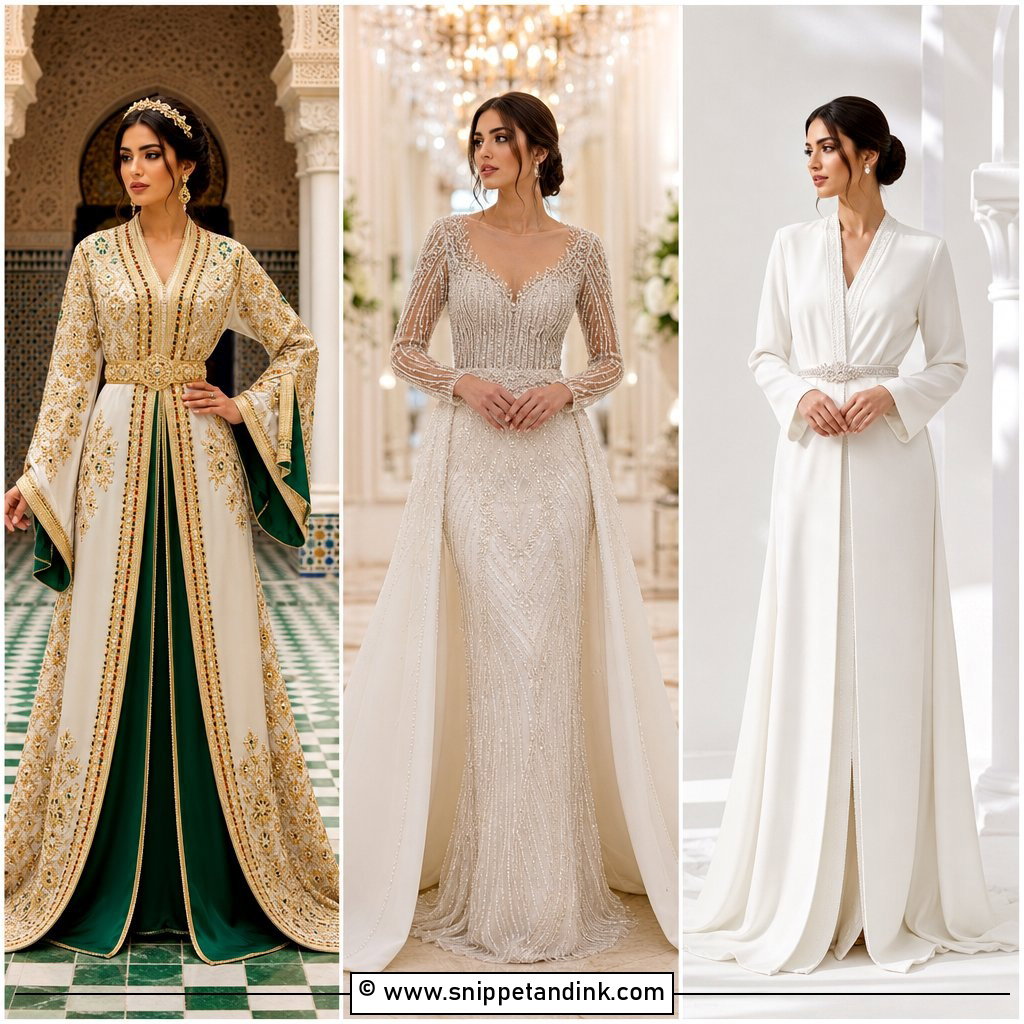
20. Songket Wedding Dress With Train
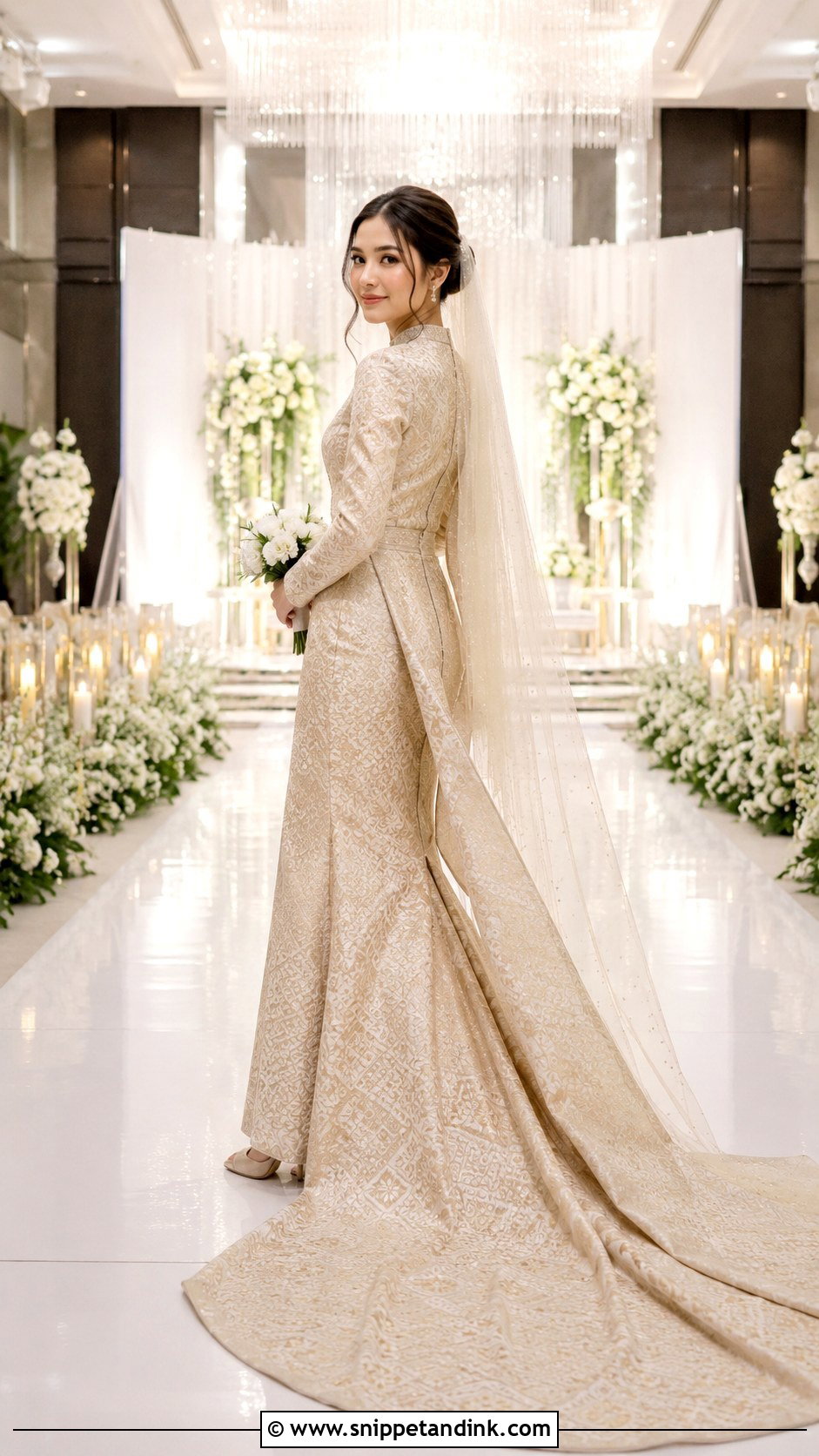
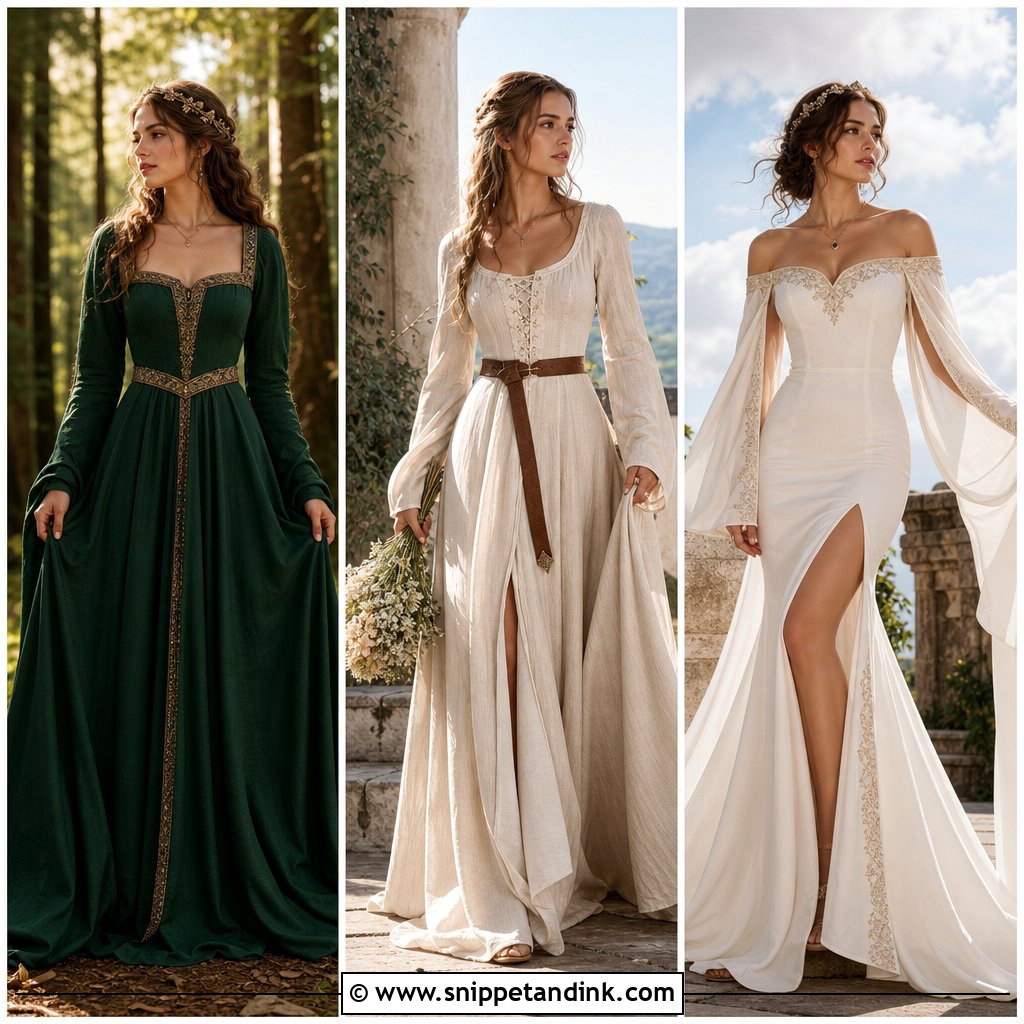
A songket wedding dress with a train can take several forms: part of the skirt, a detachable overskirt or a long back panel from the top. Songket’s weight means a train must be cut and balanced carefully, or it drags the waistband back. A clean front with a detailed back makes a strong impression. Choose a veil lighter than the train. I’d save it for the reception and staged portraits, since trains and crowded floor seating don’t mix.
21. Songket Wedding Dress With Veil
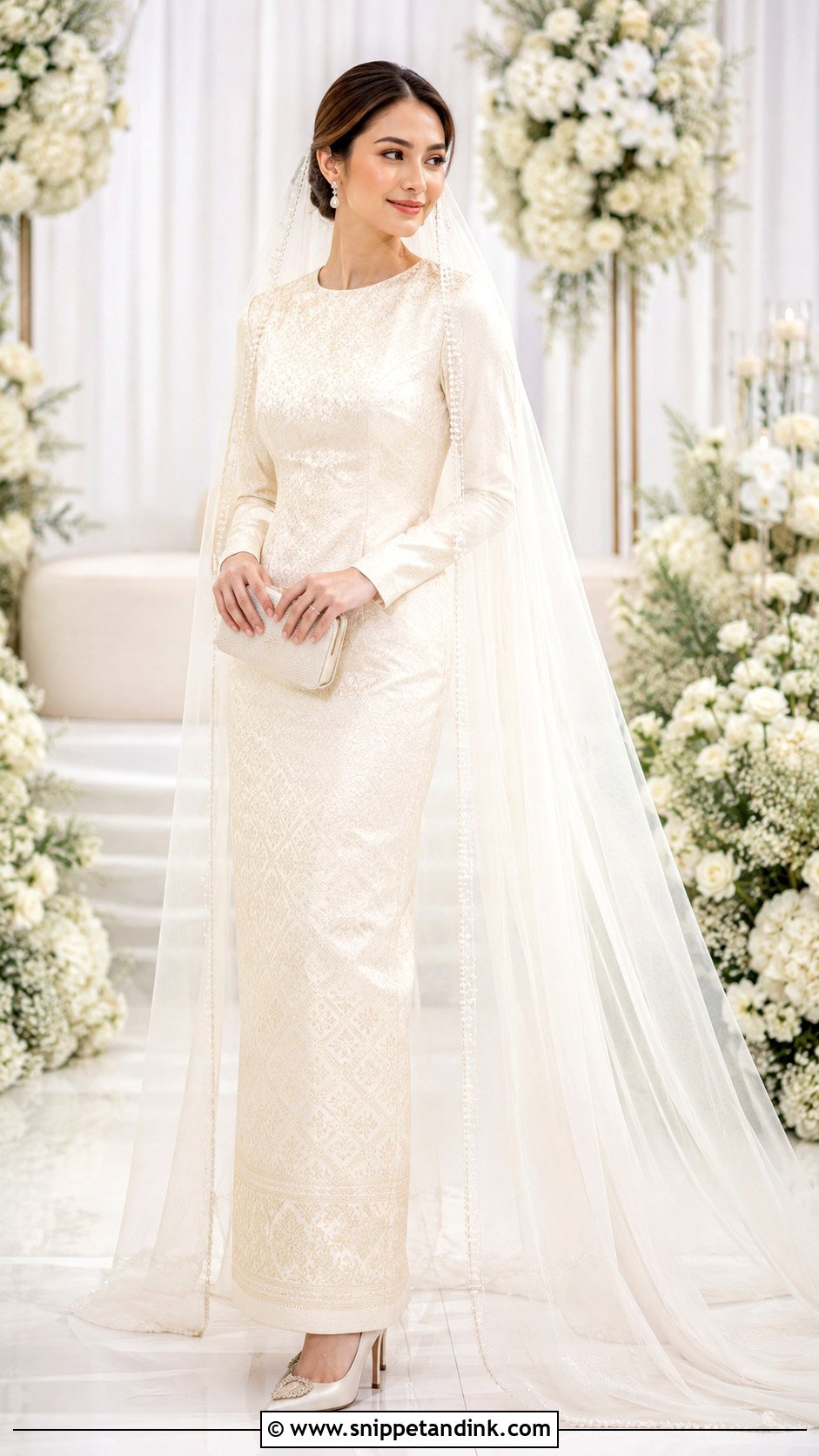
A veil softens songket’s metallic richness. With white or ivory songket, I choose a sheer veil with pearl or lace edging. With jewel tones, champagne or ivory tulle tones the colour down. Baju kurung, kebaya and fitted gowns all wear a veil well. The veil should be pinned to a secure base under the head covering; tulle slides easily on smooth fabric. Keep hair and accessories neat so it falls straight.
22. Songket Wedding Dress With Selendang
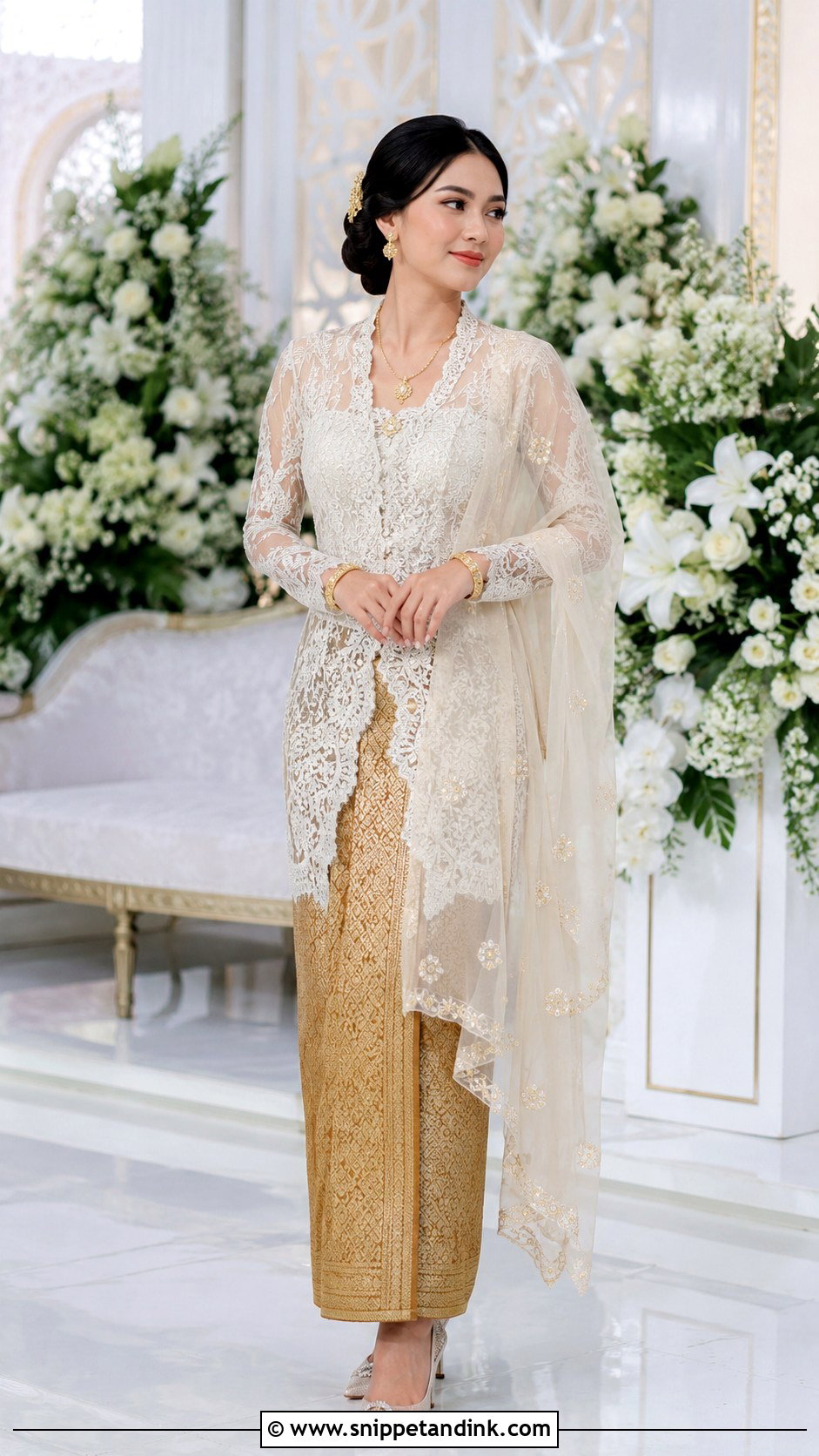
The selendang, a long shawl, can go over one shoulder, around the arms or into the head covering. With a songket skirt and lace kebaya, a sheer selendang keeps things soft. On a full songket outfit, choose a lighter selendang so the look doesn’t get heavy. Matching tones feel formal; a slightly lighter shade adds depth. I pin it at two points, never one, because it slips the moment you hug someone. Delicate heels and traditional jewellery complete it.
23. Songket Wedding Dress With Lace Top
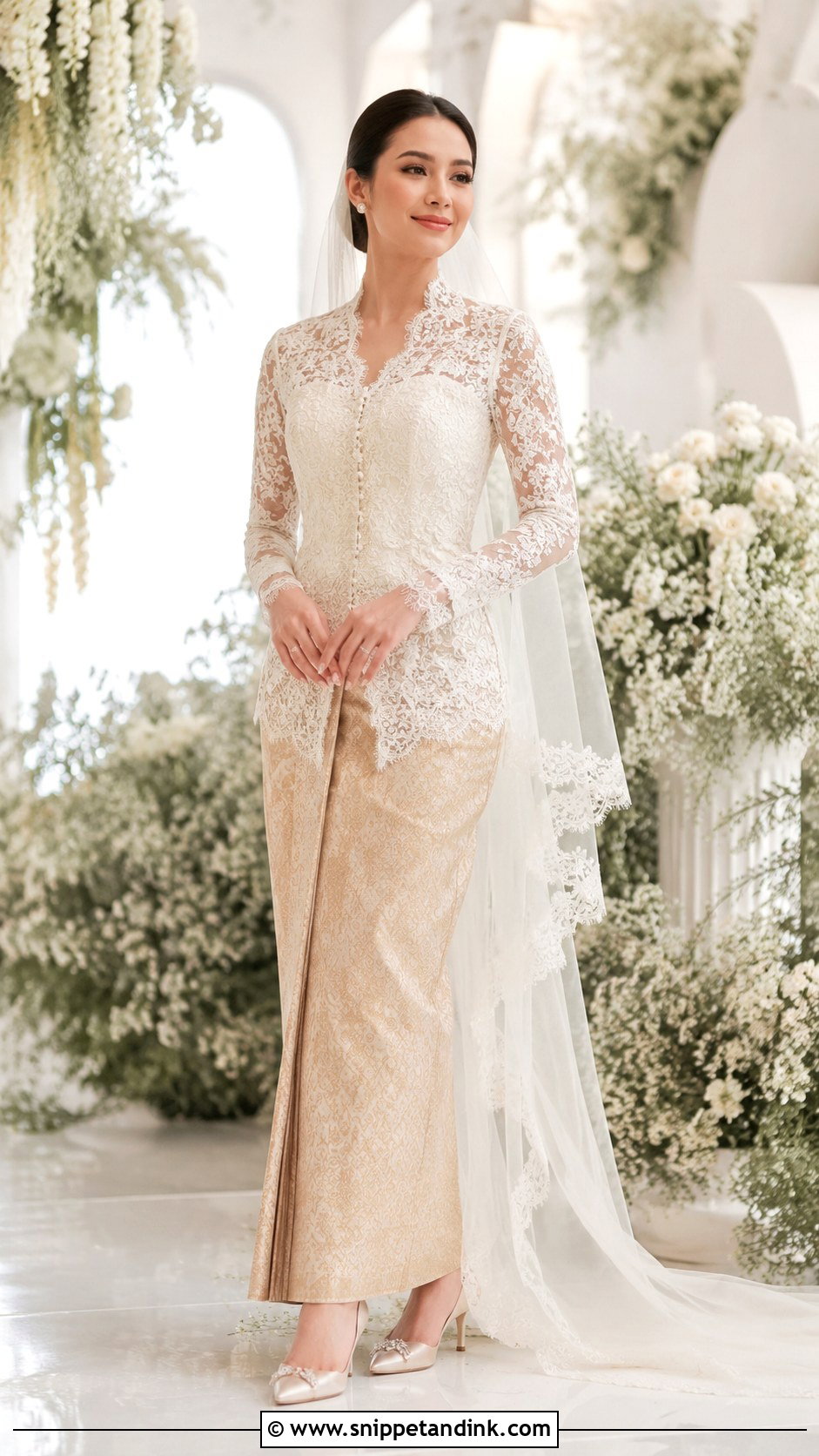
Lace on top and songket below is my favourite balance of textures. Songket brings structure and shine; lace softens the neckline, sleeves and bodice. Kebaya, peplum and two-piece cuts all suit it. Match the lace to the songket base, or go ivory or champagne, so the join looks intentional. Lace slightly lighter in weight than the skirt sits best. A straight or A-line skirt, pearl earrings, satin heels and a soft veil complete it.
24. Songket Wedding Dress With Satin Top
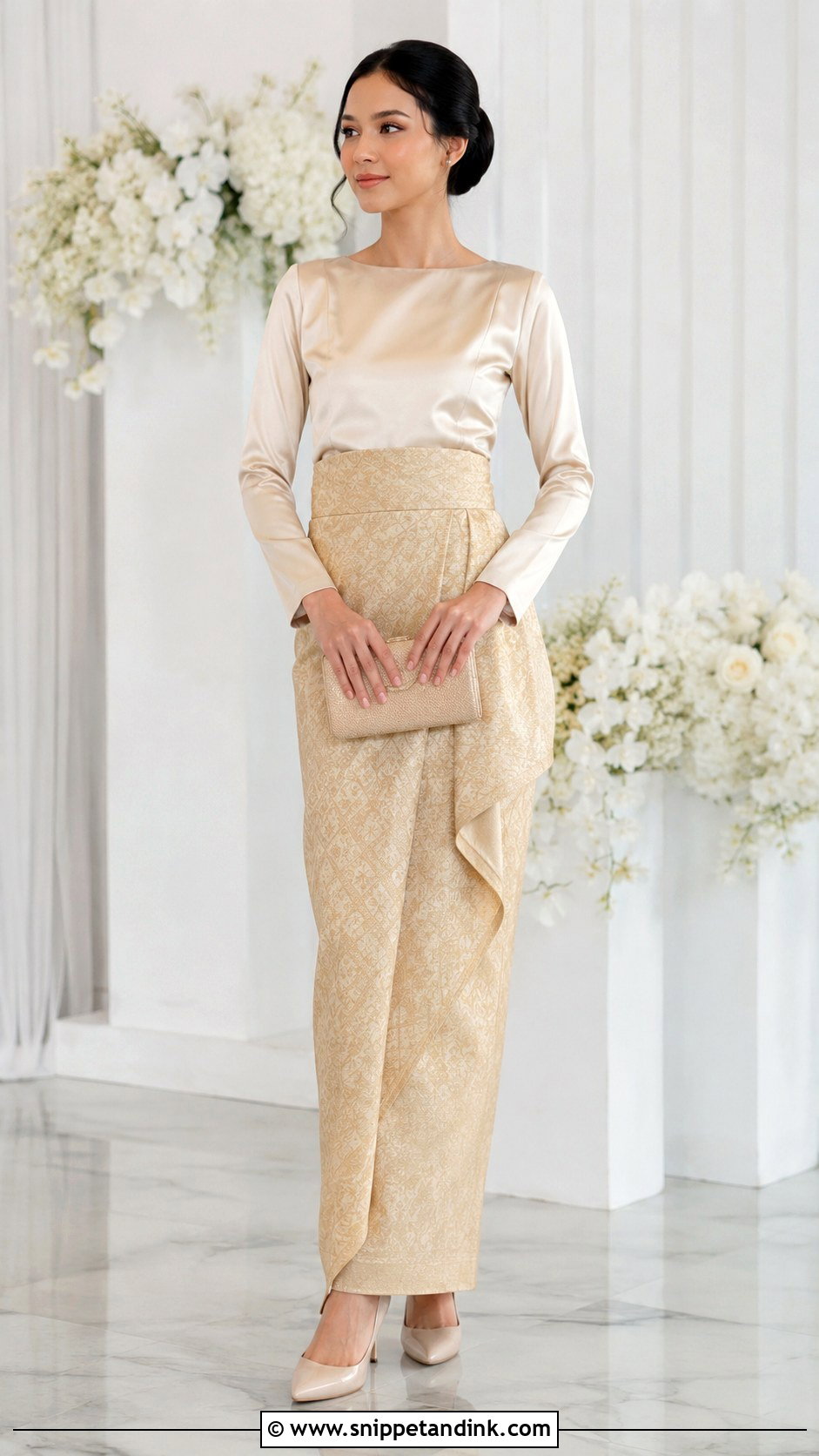
Satin’s smooth shine against the woven skirt looks clean and modern. A high-neck satin blouse with a fitted skirt suits a modest bride; an off-shoulder or boat-neck satin top is more contemporary. Keep the palette tonal: ivory with gold songket, champagne with beige. Satin creases where songket doesn’t, so I steam the blouse right before the bride dresses. Polished heels, a structured clutch and minimal jewellery are all it needs.
25. Pastel Songket Wedding Dress
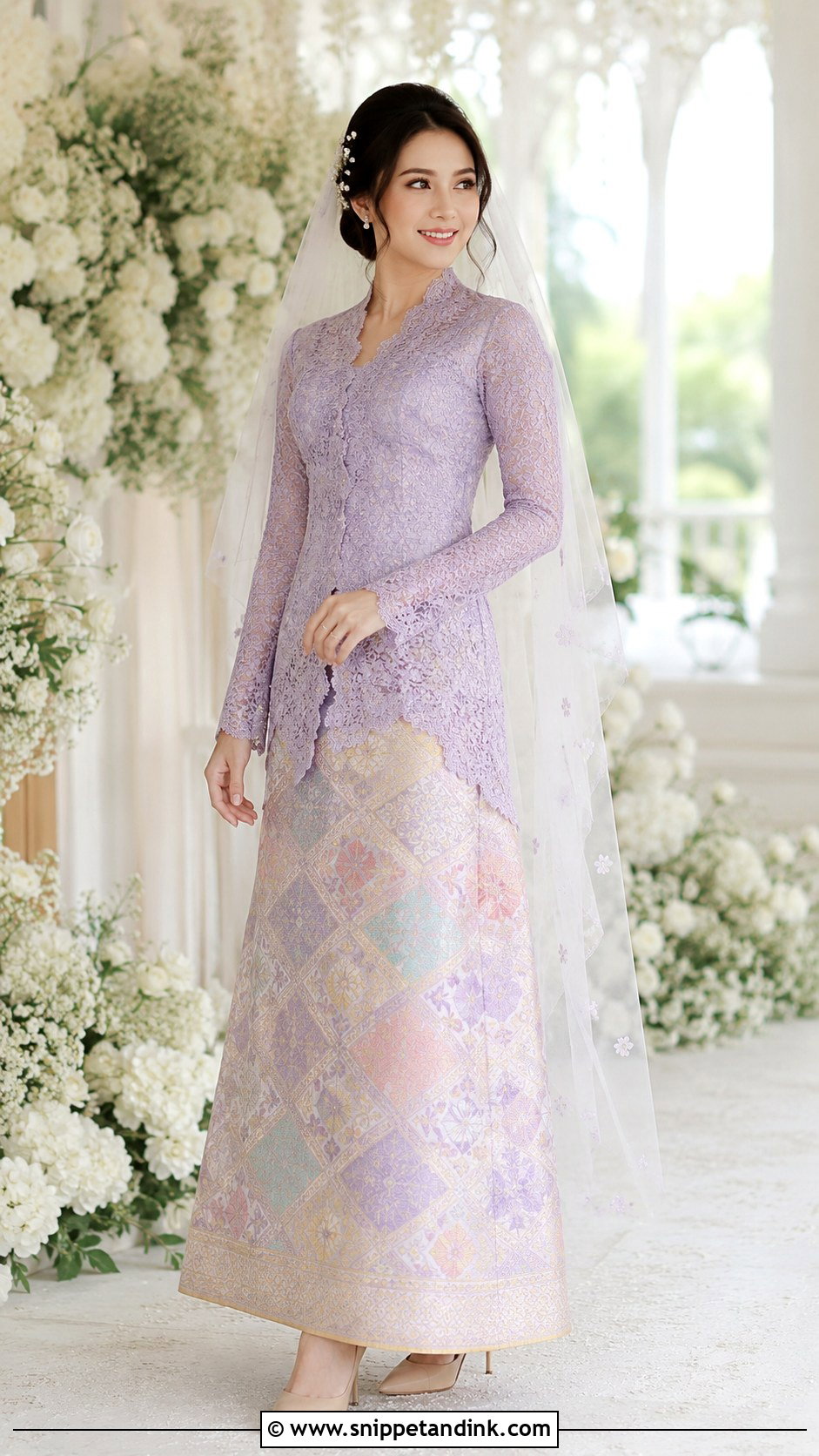
Lavender, mint, powder blue, blush and pale peach make songket feel light. A pastel baju kurung or kebaya with silver thread is especially pretty in daylight. A pastel peplum top with a fitted skirt adds shape. Nude heels, pearl pins and a sheer veil keep it delicate. Pale shades show make-up transfer at the neckline easily, so I add a hidden collar guard on the day. Garden and small family celebrations suit pastels well.
26. Champagne Songket Wedding Dress
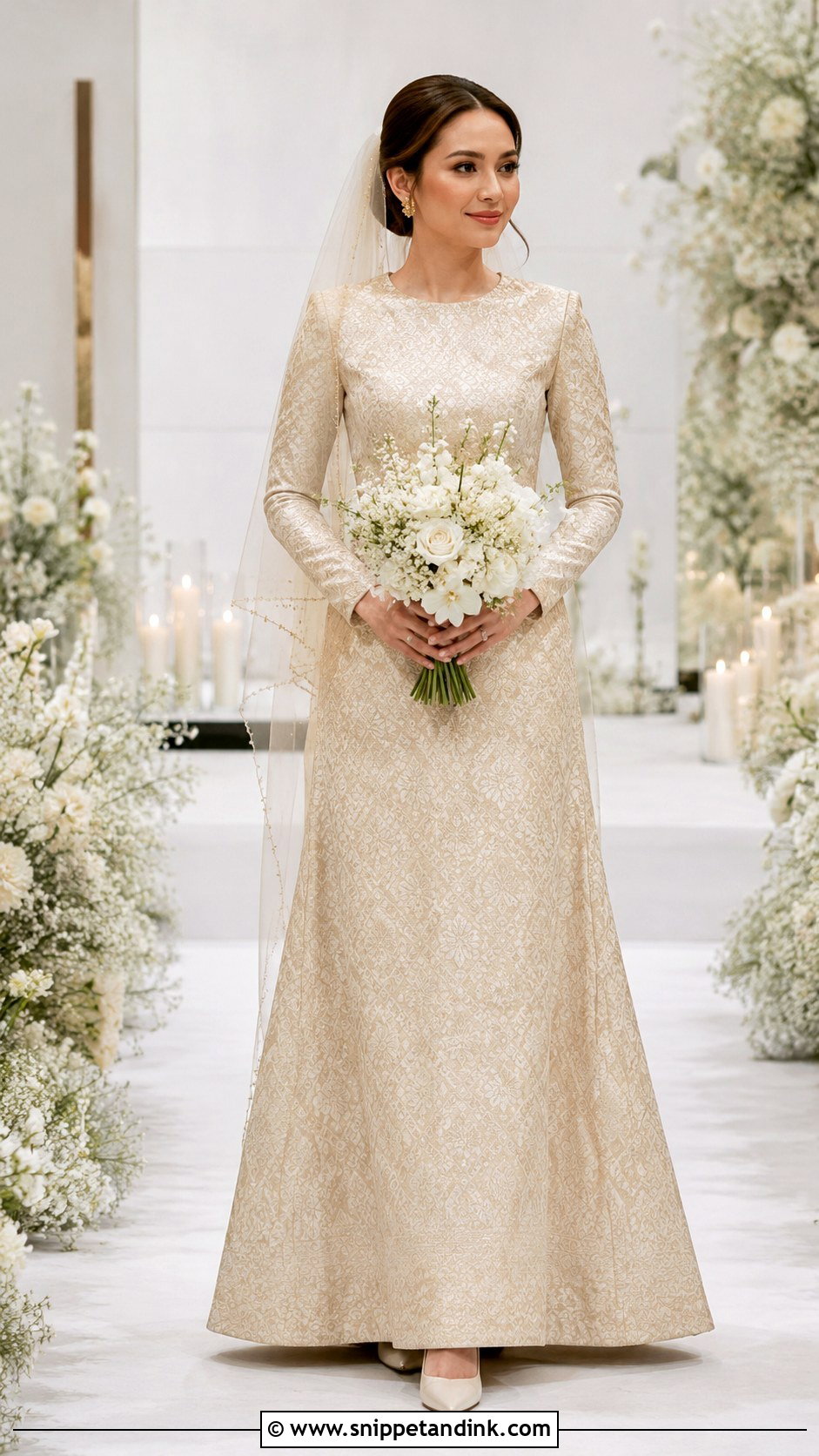
Champagne is warm and suits most skin tones. It’s a softer alternative to bright gold. A champagne gown with a fitted waist and A-line skirt never dates. For tradition, a champagne kebaya over a matching songket sarong skirt. Ivory heels, gold earrings and a light veil work. I like it most with soft glam makeup; heavy contouring can look harsh against such a gentle base.
27. Maroon Songket Wedding Dress
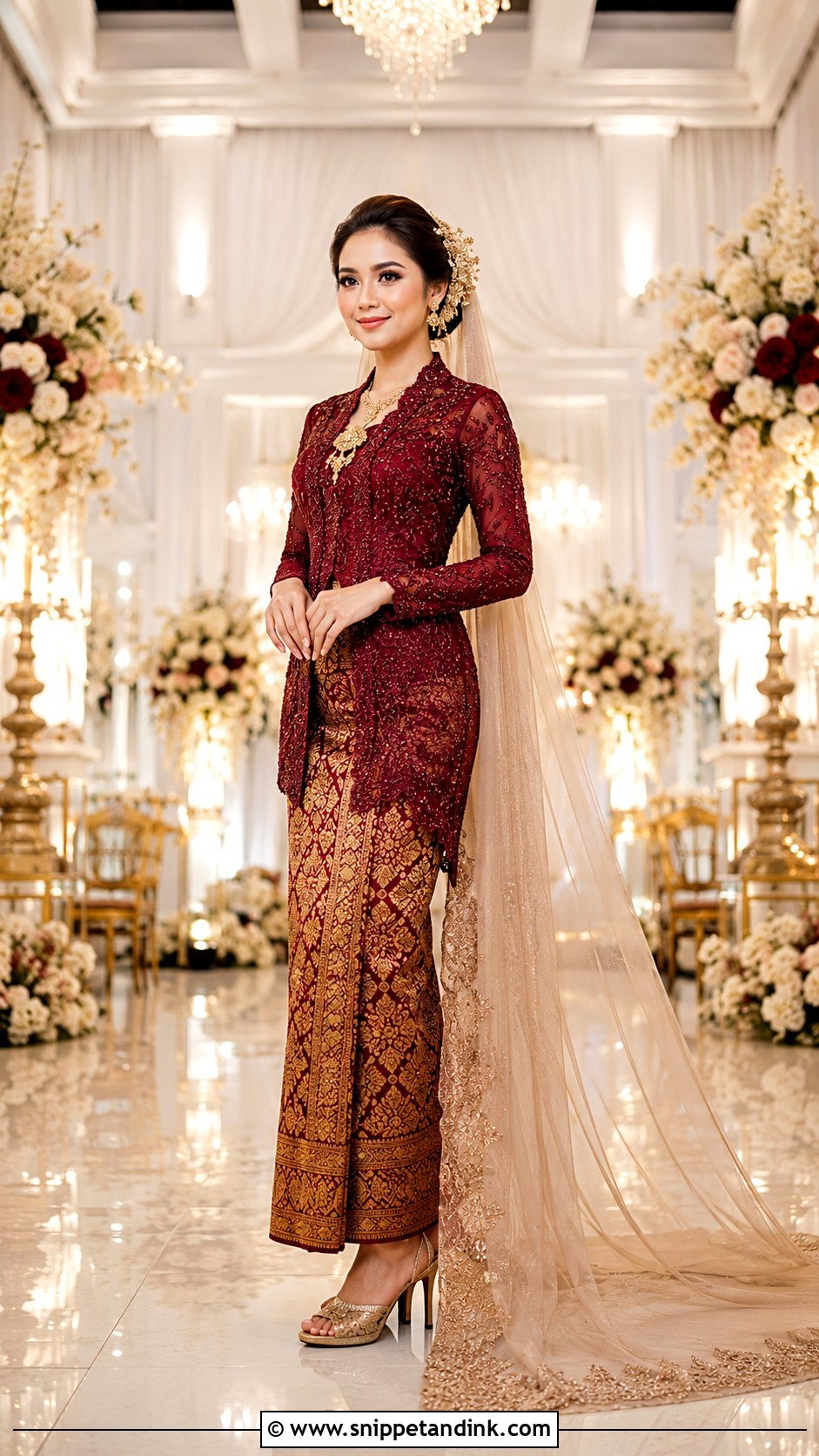
Maroon is deeper and warmer than bright red, and with gold motifs it holds a room. It suits kebaya, baju kurung and mermaid cuts. Gold heels, a gold hairpiece and soft neutral makeup keep it warm; a champagne veil brightens it and keeps it bridal. Maroon photographs richly under evening light, but it can look almost brown in harsh flash, so I mention it to the photographer beforehand. Receptions and formal portraits suit it best.
28. Sage Green Songket Wedding Dress
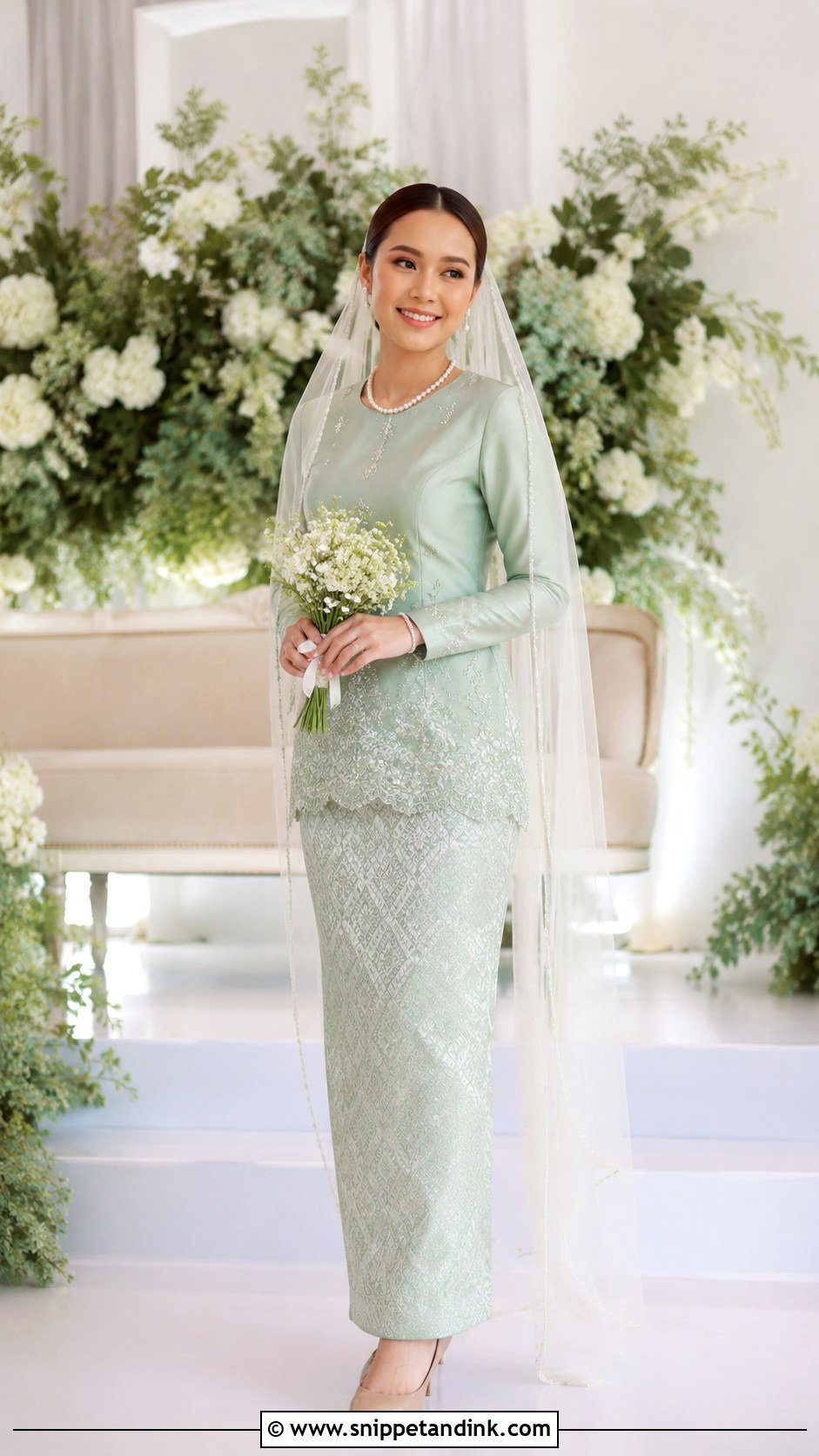
Sage gives colour without brightness. A sage baju kurung with silver or gold songket is calm; a sage lace top with a matching A-line skirt is romantic. Nude heels, pearls and a sheer ivory veil finish it. Sage changes with light, warmer outdoors and greyer indoors, so I’d see the fabric in both before ordering. Daytime ceremonies and airy venues suit it.
29. Purple Songket Wedding Dress
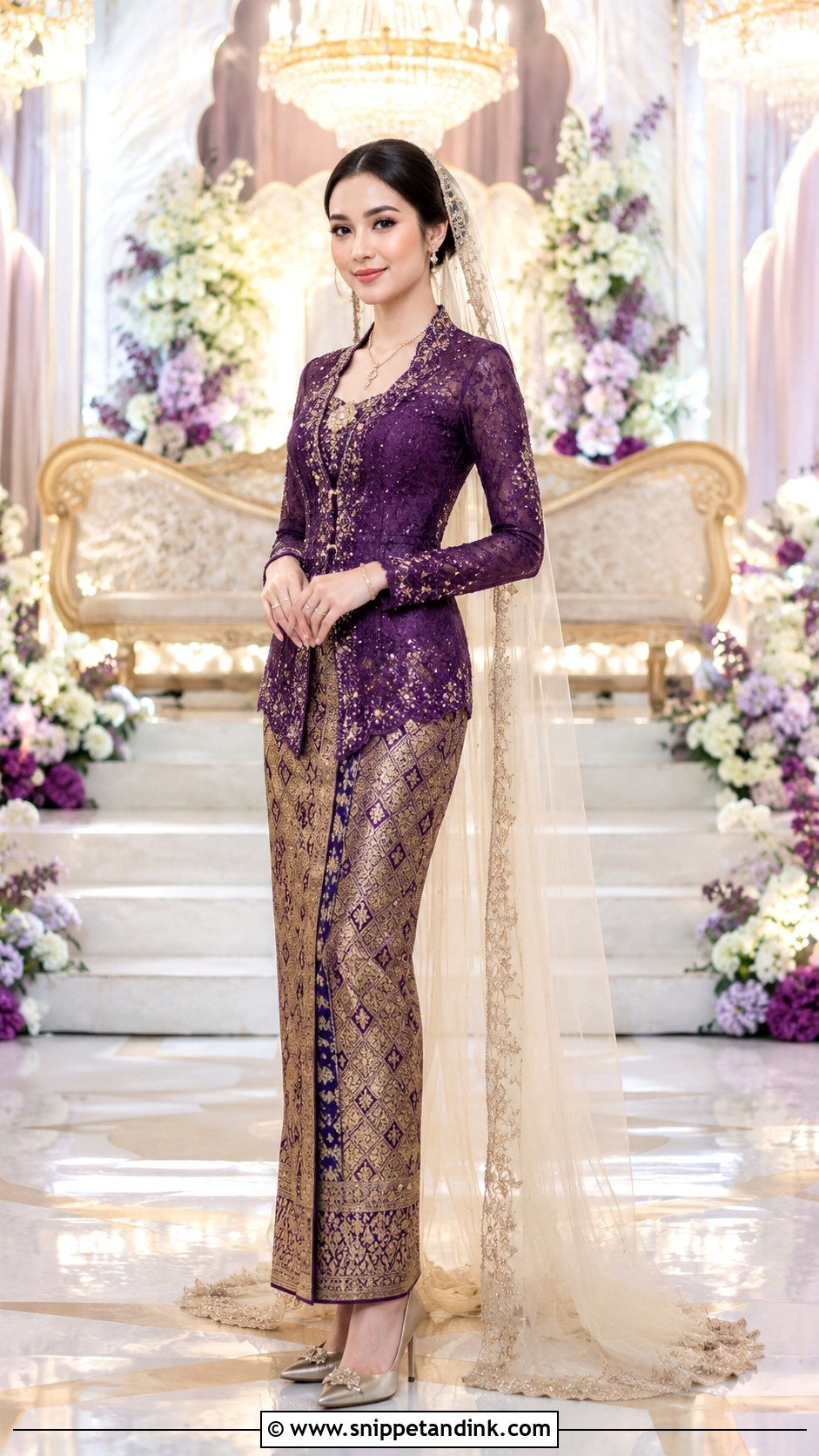
Purple has a long association with royalty, and songket plays into that. Deep purple feels formal; lavender feels romantic. A purple kebaya over a gold songket skirt makes a strong reception look with simple gold jewellery. A lavender gown with a clean neck and long sleeves is the modern take. Silver lifts lighter purples; gold suits darker ones. Keep the veil light. Dye lots vary a lot with purple, so order all the fabric from one bolt.
30. Minimal Songket Wedding Dress
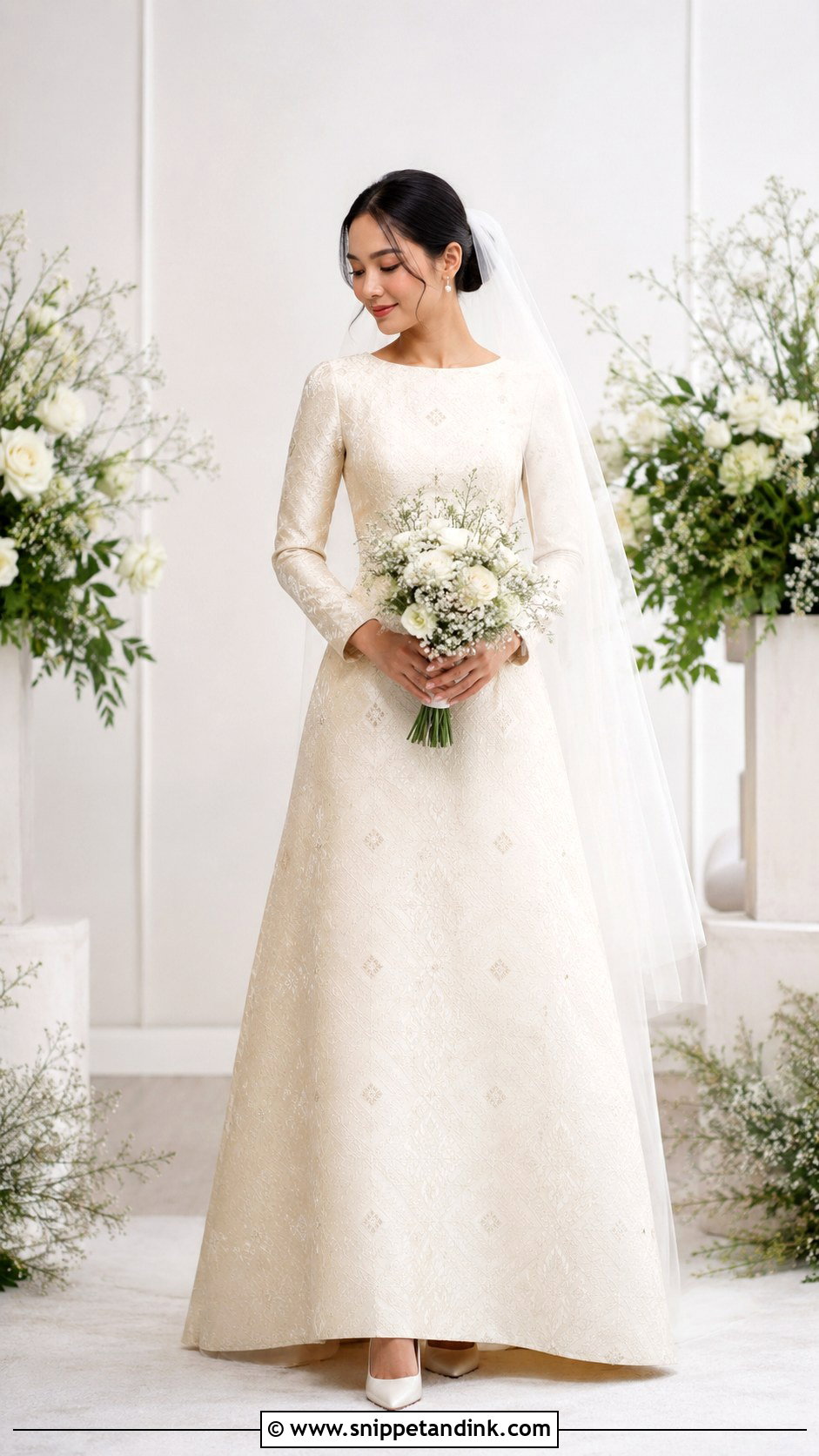
Minimal songket uses smaller motifs, softer metallic thread and a plain silhouette such as an A-line, a straight baju kurung or a long kebaya. White, ivory, champagne and soft grey suit it. Skip heavy beadwork; put the budget into tailoring instead. A smooth veil, simple heels and small earrings are enough. It is the version I’d suggest if you want photos that won’t date, and it’s also the one easiest to rewear.
Why a Good Tailor Cuts Around the Motifs
Songket doesn’t behave like ordinary dress fabric. It has no stretch, the cut edges fray quickly, and once the metallic floats are sliced they can catch and pull. I always ask the tailor how they plan the layout before any scissors touch it.
- The main motif band should sit centred on the front of the skirt, so the fabric is planned around it, not cut to save a few centimetres.
- Seams and darts are kept to a minimum; a lining of soft cotton or satin stops the floats scratching your skin.
- Allow ease at the hips and waist. Brocade with no give will strain at seams if you need to sit on the floor or on a dais for hours.
- Ask for a toile or test fit in cheaper fabric first if the songket is handwoven. A mistake on heirloom cloth is hard to undo.
Folding Songket Away After the Last Guest Leaves
Metallic thread is the weak point when songket is stored. Hard folds crack the threads over time, so I roll the skirt cloth around a tube padded with acid-free tissue or wrap it loosely in clean cotton. Plastic garment bags trap humidity, which encourages tarnish and mildew. Air the outfit for a day before you put it away, keep perfume off the fabric, and spot clean only. If it needs more, take it to a cleaner who handles brocade. To remove creases, press from the reverse with a cloth between the iron and the weave, never directly on the metallic face.
A Woven Heirloom That Starts With Your Wedding
Songket ranges from deeply traditional to sleek and modern, so there’s room for very different brides. A white kebaya, gold baju kurung, pastel two-piece, ballgown or minimal A-line all bring the same texture, shine and cultural weight. What matters most is that the outfit is comfortable for the hours you’ll wear it and right for the setting. Weigh colour, silhouette, veil and accessories together, and give your tailor time. Handled well, songket becomes the piece your family remembers.
You'll Like These Ideas:








Leave a Reply