
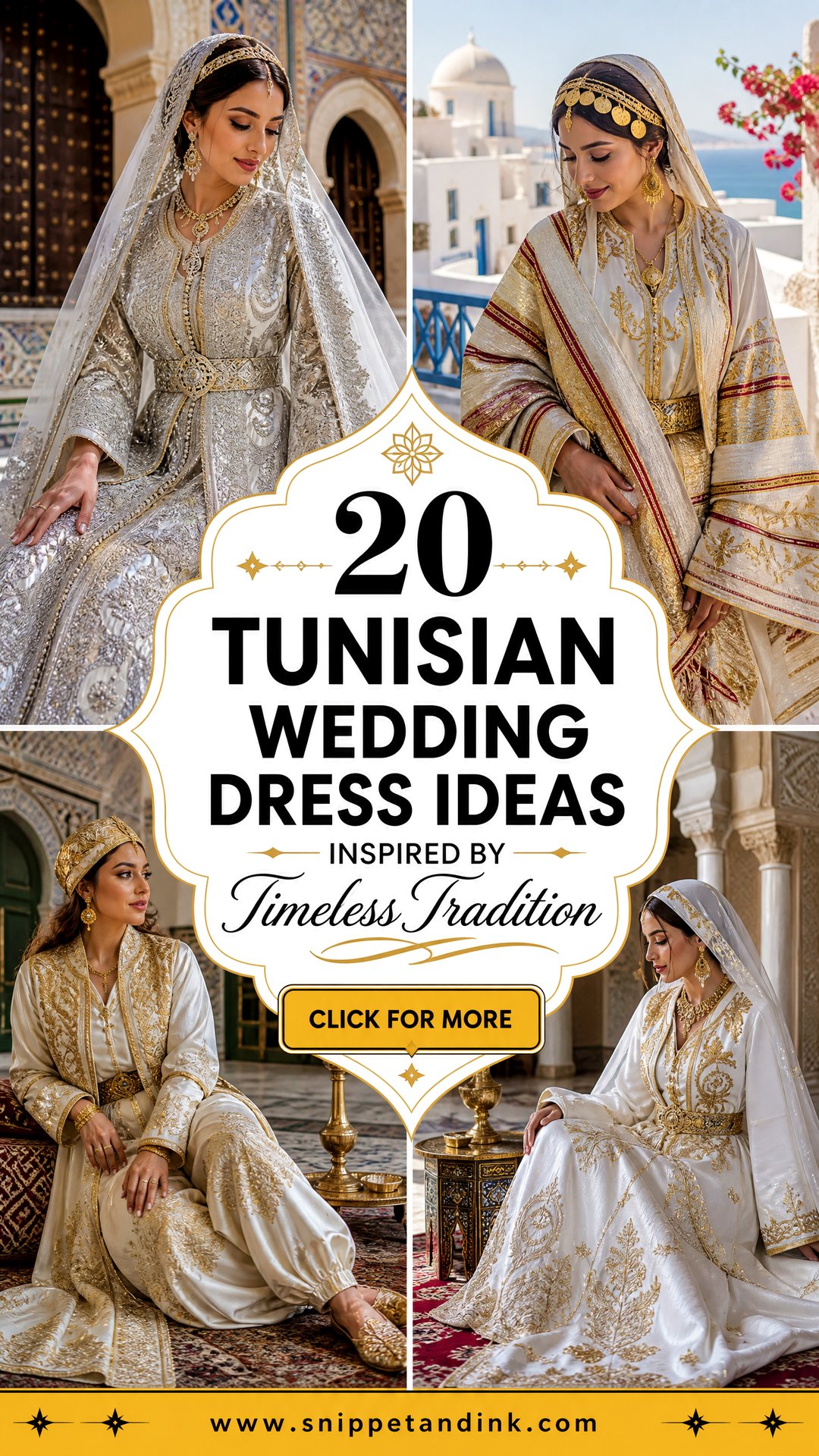
A Tunisian bride rarely wears one dress. Over the wedding celebrations she may move from a velvet keswa heavy with gold thread to silk fouta and blouza sets, a regional costume from her family’s town, and a white gown finished with Tunisian embroidery. Each region adds its own vocabulary: Tunis, Mahdia, Sfax, Hammamet, Djerba and the south all have their fabrics, metalwork and ways of dressing the head. When I style a wardrobe like this, I think about the sequence as much as the single outfit, because what you can bear for three hours at a seated presentation is different from what you can dance in. Below are twenty looks, traditional and modern, with the accessories, hair and practical fittings each one needs.
Planning Three or Four Outfits Across the Celebrations
Most of the questions I get from Tunisian brides aren’t about a single dress. They’re about the order: which outfit for the henna night, which for the outiya, which for the main presentation, and how to change between them without missing half the party. I plan it backwards from the event where you’ll be seen the longest.
- Put the heaviest piece, usually the velvet keswa, where you’ll mostly be seated and photographed, not where you’ll be dancing.
- Give the lightest outfit, a fouta and blouza, kaftan or trousers set, to the part of the night with the most movement.
- Keep jewelry and headpieces consistent across back-to-back changes, so only the dress needs swapping and not every pin in your hair.
- Allow far more time for each change than seems necessary. Heavy embroidered pieces fasten with hooks, ties and pins, and a calm change takes longer than a rushed one.
Choose one person to dress you every time, ideally someone who knows how the traditional pieces are worn, and give her a quiet room near the hall. Hang each outfit in order, with its belt, slippers and jewelry in a labeled bag. When a change goes wrong, it’s almost always because a belt or headpiece went home in the wrong car.
1. Red Velvet Keswa Kbira Wedding Dress
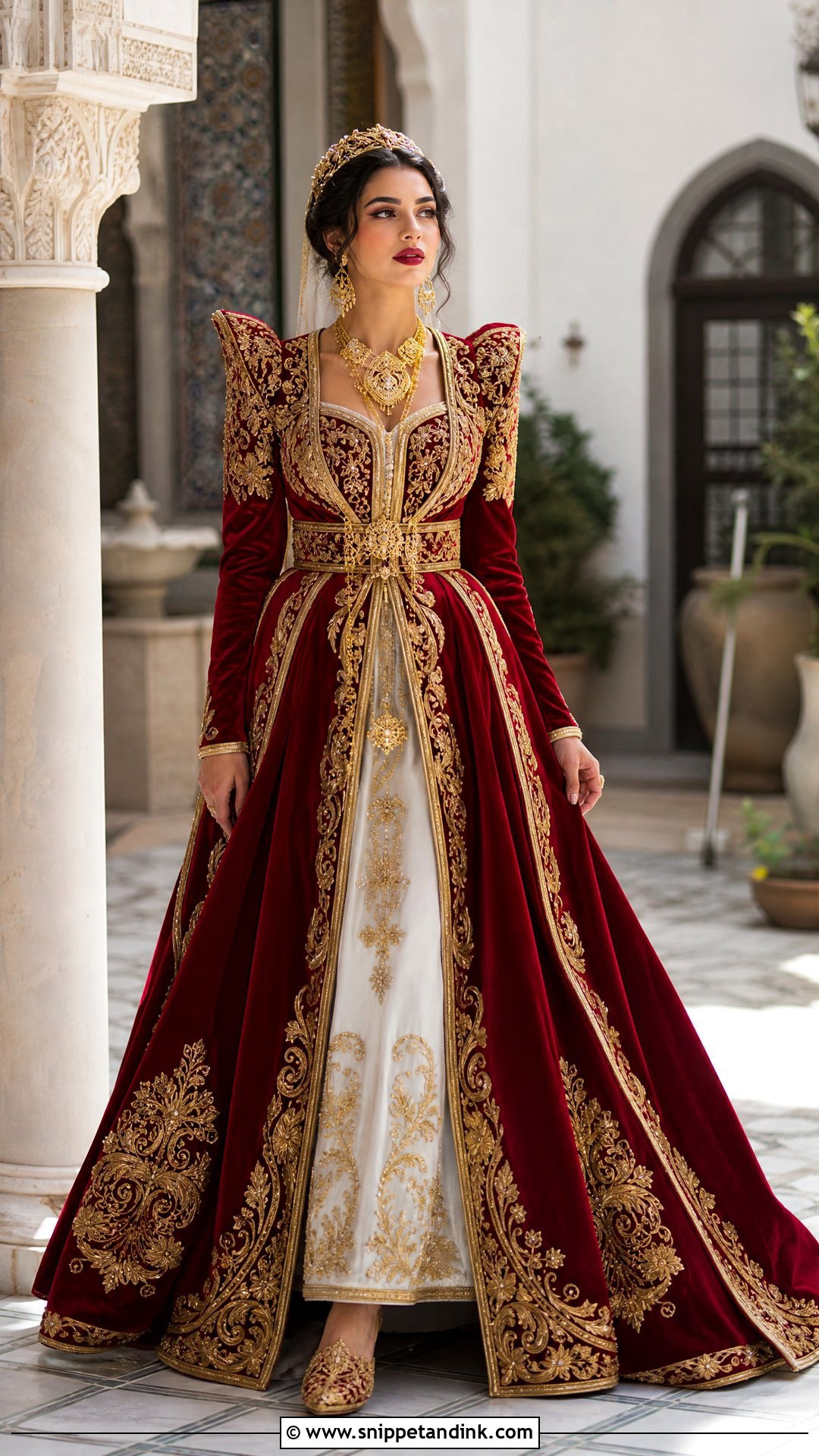
For the main traditional entrance, red velvet keswa kbira still carries more weight than anything else, in meaning and quite literally on the body. It usually means a structured embroidered bodice, a full floor-length skirt and dense gold threadwork at the neckline, sleeves and hem, and velvet gives the red a depth that glows under reception lights. The garment has long stood for family prestige, which is why many brides wear one handed down. Expect it to be heavy, and plan to sit for much of the time you wear it. Gold earrings, layered necklaces, a decorative headpiece and embroidered closed-toe slippers complete it; defined eyes and a soft red lip hold their own against the gold. Pick accessories that repeat the embroidery’s metal and motifs rather than bringing in new colors.
2. Gold Fouta And Blouza Wedding Dress
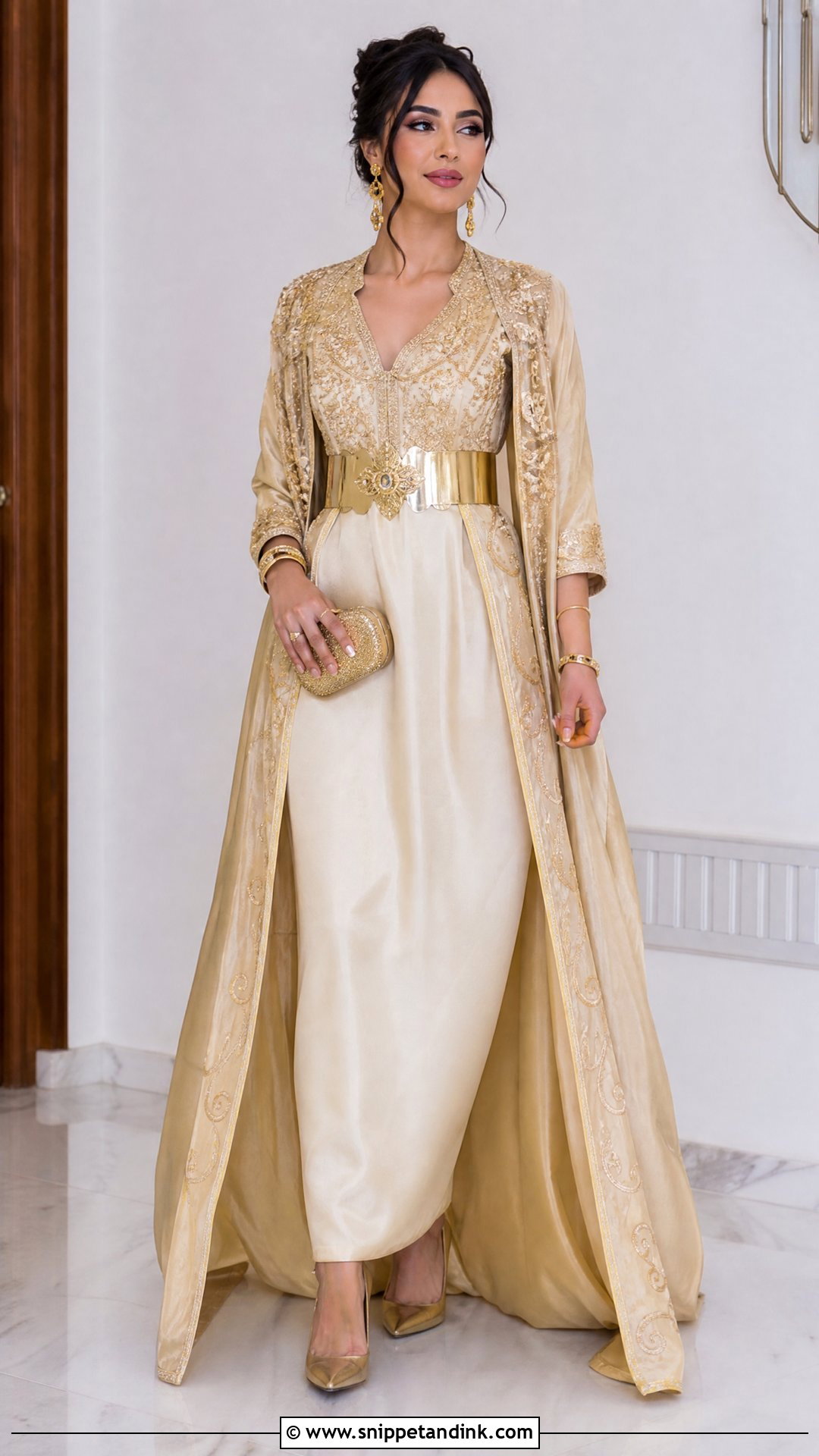
Gold silk turns the fouta and blouza into pure celebration. The blouza is the decorated top, and the matching fouta forms the long skirt beneath it; festive sets are typically silk with elaborate embroidery. The first thing I check is the inside of the blouza. Beadwork and metal thread add real weight, so the top needs proper internal structure or it drags forward at the neckline by mid-evening. A wide embellished belt defines the waist and visually ties the two pieces together. Add metallic pumps, a small gold clutch, drop earrings and stacked bracelets, with a smooth bun or half-up waves to show the neckline. I’d reserve this one for the henna night or a formal presentation.
3. Emerald Green Modern Keswa Wedding Dress
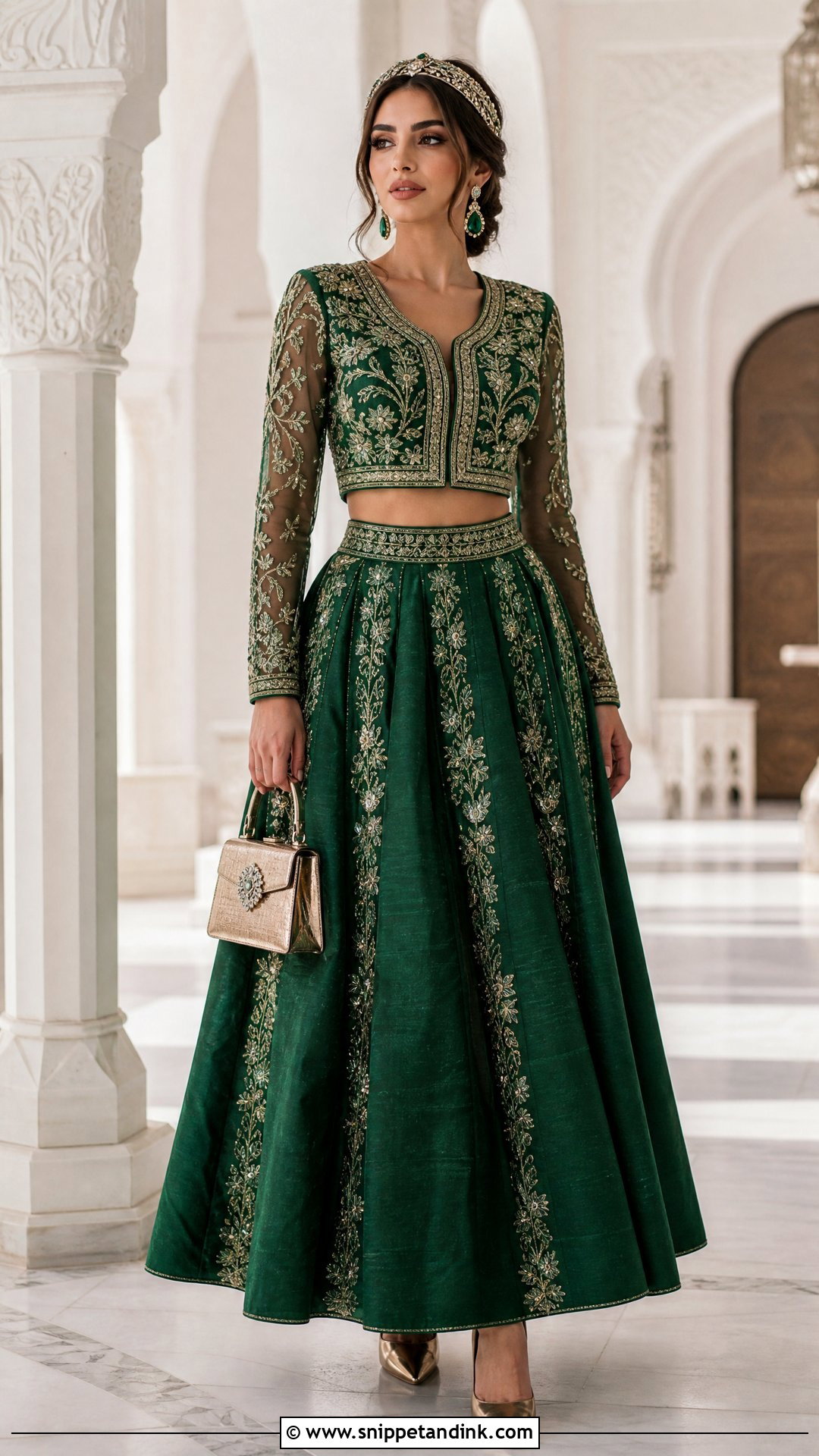
Emerald sits beside gold embroidery as comfortably as red does, with a cooler, more modern feel. A contemporary keswa might pair a cropped structured top with a high-waisted full skirt, which gives shape without the stiffness of the full ceremonial version. Velvet suits winter; satin or brocade is kinder in summer. I like gold botanical motifs concentrated at the neckline and waistband, leaving the green fabric room to show. Pointed gold shoes, emerald earrings, a small metallic bag and a slim jeweled headband finish it, and fitted sheer sleeves with placed embroidery add coverage. Have the front hem taken slightly shorter than the back. You’ll be walking toward relatives, bending to greet them and dancing, and a level hem is the one you step on.
4. Ivory Tunisian Embroidered Wedding Dress
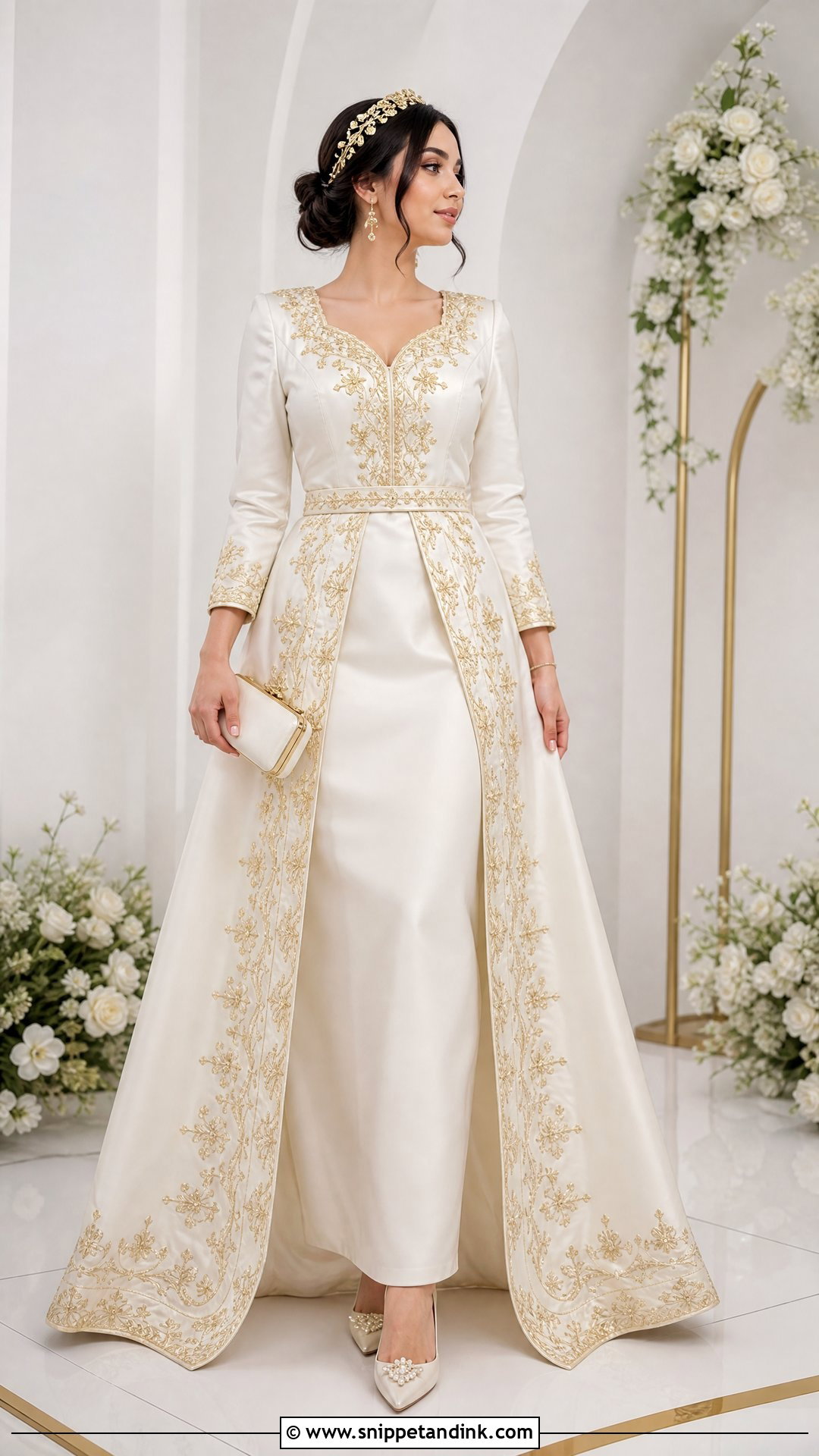
What if you want a white gown that still feels clearly Tunisian? Start with an ivory A-line and add gold embroidery at the neckline, cuffs, waist and train. A square or softly rounded neckline leaves space for statement jewelry. Silk satin, crepe or mikado give enough body to carry the embroidery without puckering, which is a real problem on thin fabrics. A detachable embroidered overskirt makes the entrance more dramatic, then comes off. Pearl pumps, a gold filigree headpiece and a structured ivory clutch complete it. Plan the motifs with a Tunisian designer or artisan who knows what they mean, so the patterns feel considered rather than borrowed. As a single dress for a civil ceremony and reception, this is the most versatile look on the page.
5. Burgundy Mahdia Keswa Wedding Dress
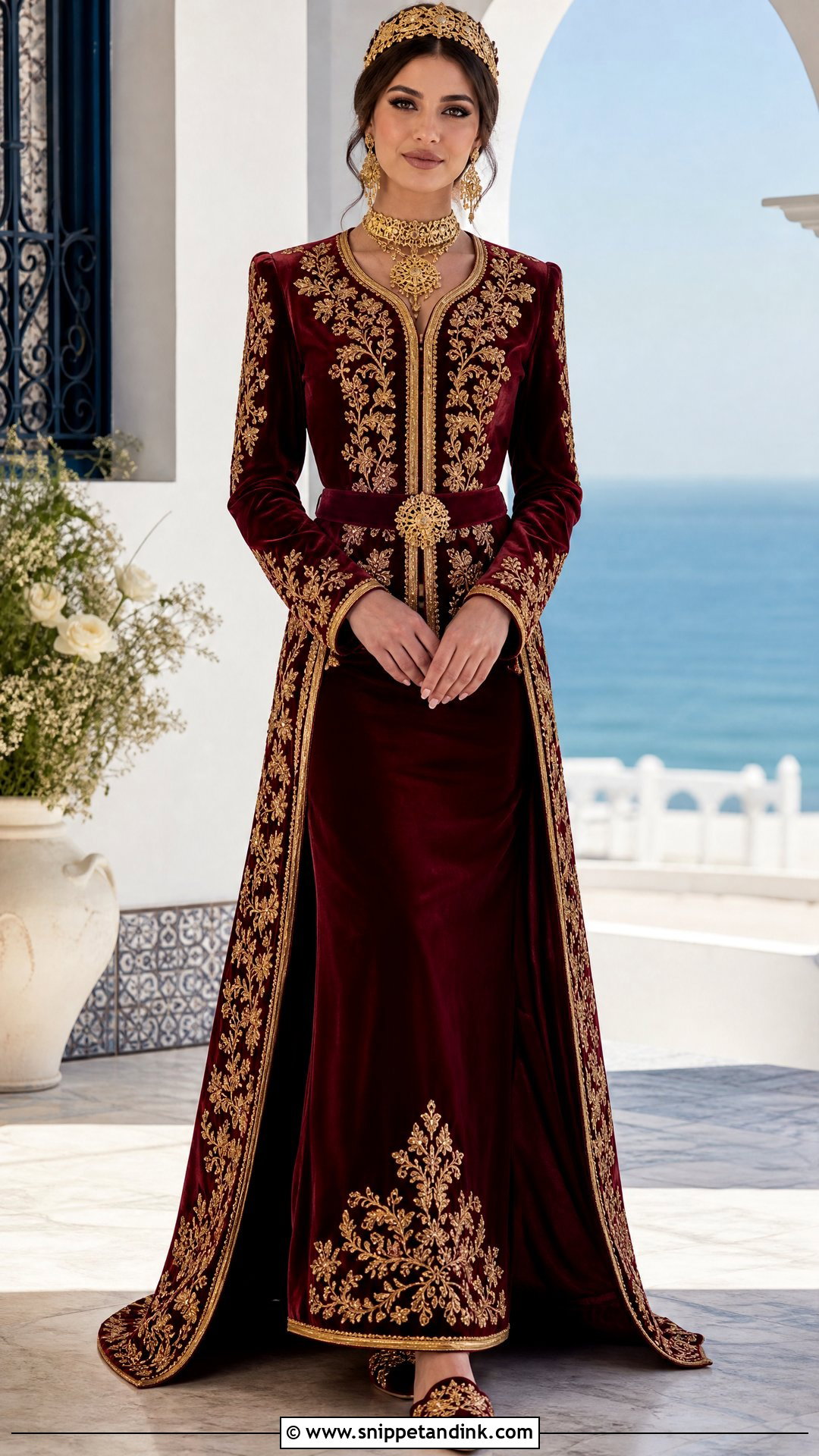
Burgundy reads richer and more grown-up than bright red, and it suits an outfit inspired by Mahdia, whose bridal dress is known for luxurious fabric and heavy gold decoration. For a version you can actually wear through an evening, I’d choose a fitted velvet gown with a defined waist, long embroidered panels and a gently flared skirt. Keep the threadwork to the bodice and sleeve edges so the weight isn’t all at the hem. A coordinated head ornament, gold drops, layered necklaces and pointed velvet slippers suit it, with a low bun so the jewelry shows. Velvet this heavy needs a strong inner lining, hidden support at the waist and a bustle for later. Without those, the skirt pulls the bodice down within hours.
6. Silver Sfax Embroidered Wedding Dress
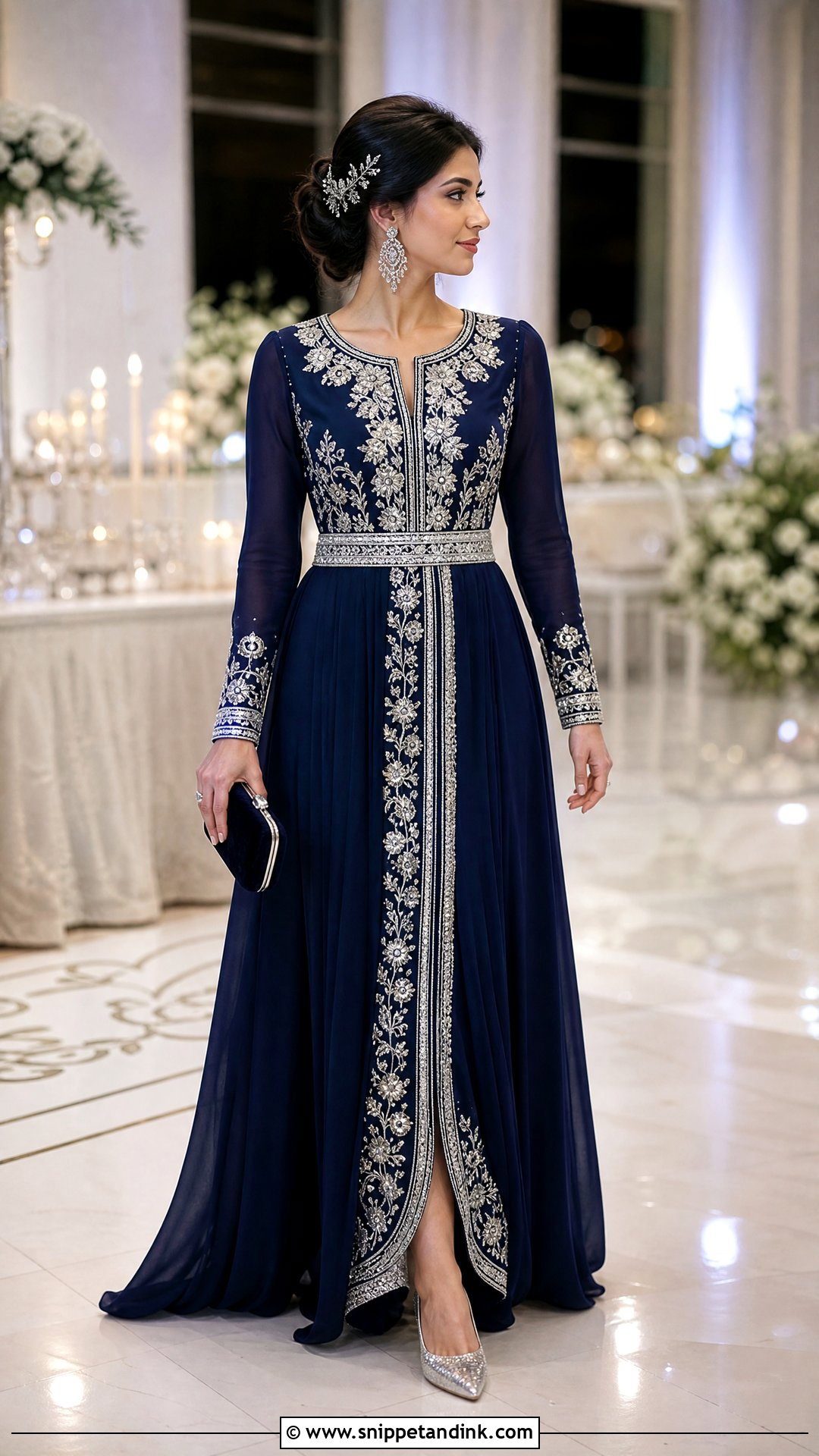
Sfax is associated with fine silver-toned work, and silver gives a bridal outfit a cooler, quieter shine than gold. The trick is the ground color: midnight blue, charcoal or deep plum let the metal stand out, while pale fabrics swallow it. A fitted long-sleeve bodice and flowing skirt give shape with full coverage. Wear silver pumps, chandelier earrings, a jeweled comb and a small velvet clutch, and keep yellow gold out entirely; one metal throughout looks deliberate, two looks like a mix-up. Soft grey eye makeup and a berry lip echo the dress without fighting it. Silver thread shows best under warm evening lighting, so this is the outfit I’d keep for the reception.
7. White And Gold Djerbian Wedding Dress
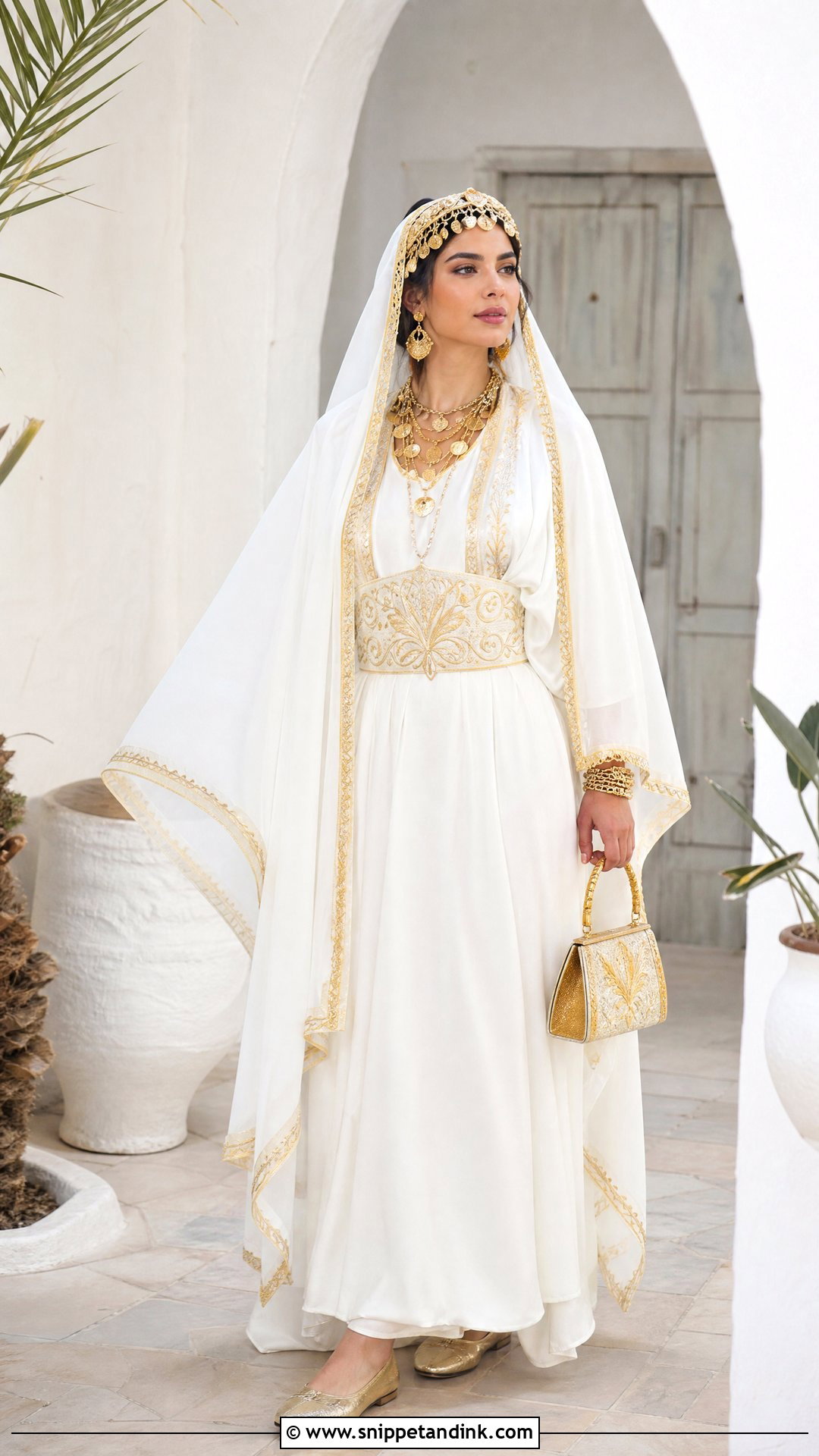
Djerba’s bridal dress is distinctive for its draping and head ornaments, and a white and gold interpretation suits a summer wedding well. Think of a flowing white dress with gold edging, an embroidered waist and a light outer drape arranged around the shoulders. Traditional-style gold jewelry, a carefully fitted headpiece and comfortable metallic flats sit under the long fabric. This is the outfit where I’m most careful, because regional garments carry specific meanings and specific ways of being wrapped. Ask an artisan or a relative who knows how it’s worn to dress you; a stylist guessing at the folds is how it ends up looking like a costume. Glowing skin, defined lashes and a neutral lip keep the makeup fresh in heat.
8. Hammamet Fouta And Blouza Wedding Dress
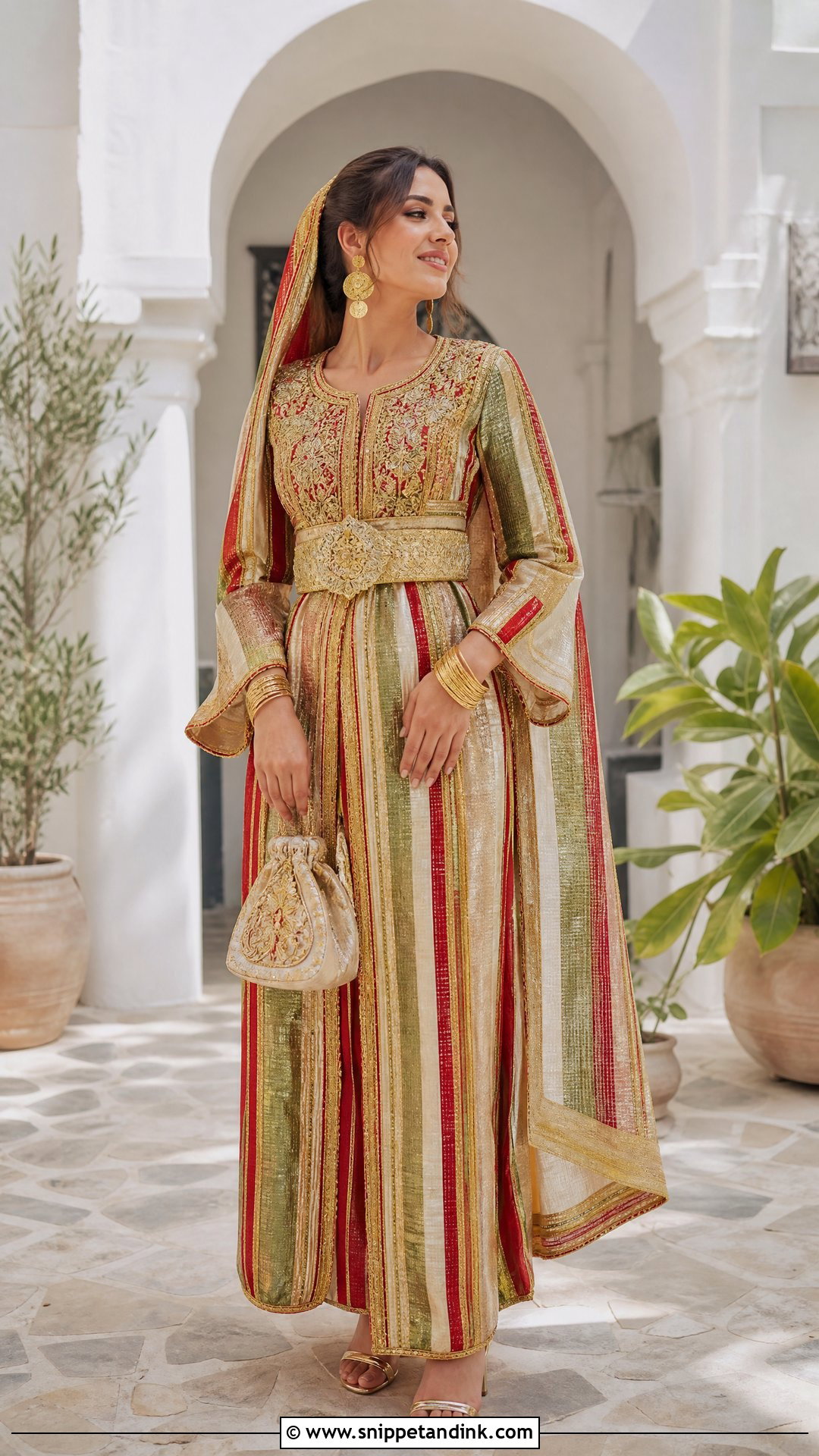
Striped silk is what gives a Hammamet-style fouta its character, and the stripes move as you walk in a way plain silk doesn’t. Hammamet’s wedding wardrobe has long included richly finished versions of this two-piece set. Choose stripes in related tones such as red, gold, olive and warm ivory, and pair them with a fitted embroidered blouza. A decorative belt secures the skirt and marks the waist. Gold sandals, coin-style earrings, stacked bangles and a small embroidered bag work with it. Hair goes into a braided updo or sleek bun, partly to show the neckline and partly because loose hair catches on bead edges. When the silk is busy, I keep heavy embellishment to the bodice and belt only.
9. Jebba And Seroual Tunisian Wedding Dress
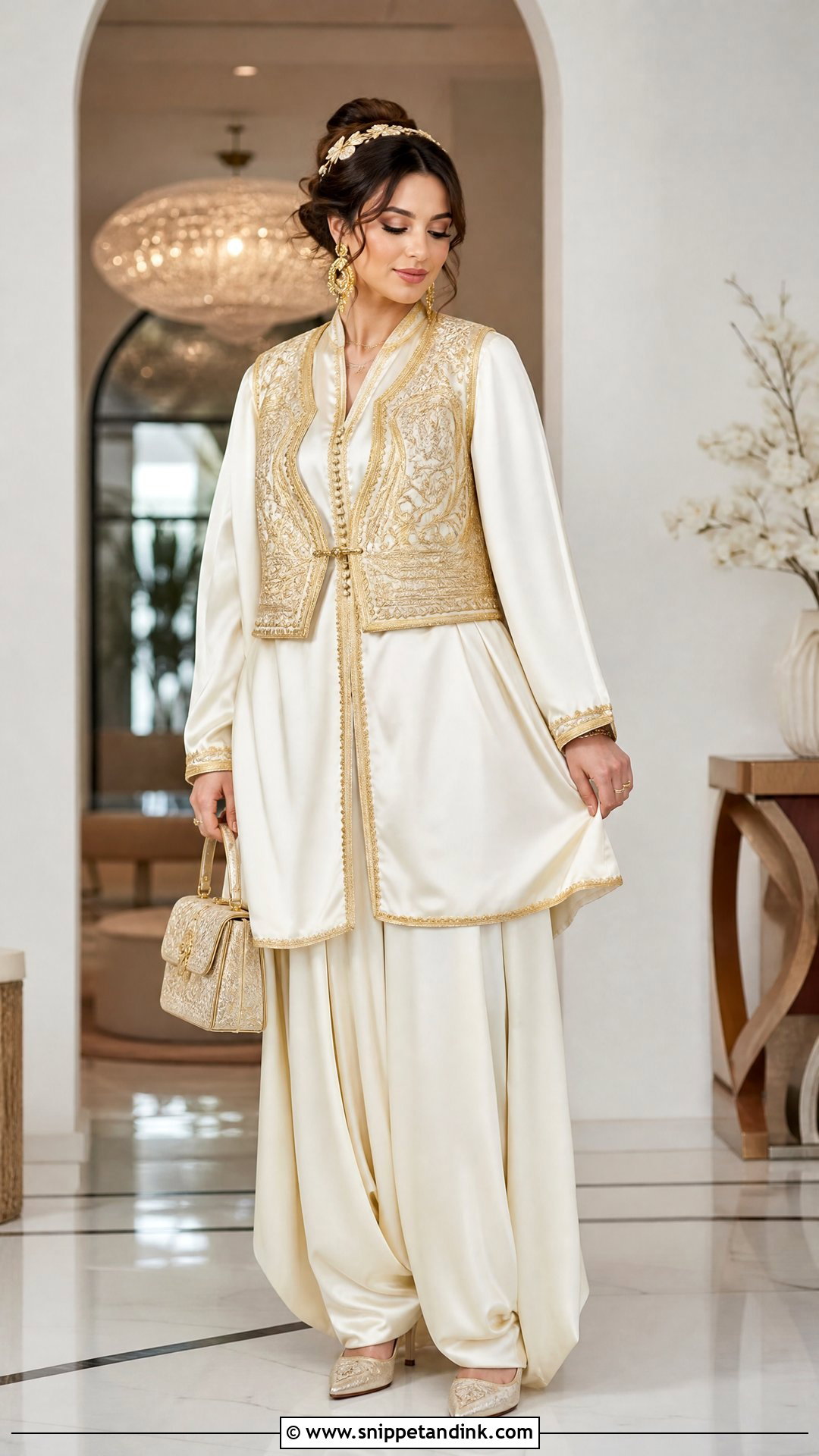
Trousers are part of Tunisian bridal history, which surprises brides who assume a heavy skirt is the only traditional option. One older form of the Tunis keswa combined a short jebba, a decorative vest and full trousers gathered near the ankle, all worked in metallic embroidery. A modern take uses an ivory silk tunic, wide satin trousers and a fitted gold-embroidered farmla-style vest. Add pointed mules, sculptural earrings, a small top-handle bag and a low ponytail wrapped in a metallic band. Have the trousers hemmed in the mules you’ll wear, so they drape over the foot instead of bunching. For an outiya, an engagement party or a reception change, this gives you the most freedom to walk and dance.
10. White Sefsari Bridal Outfit
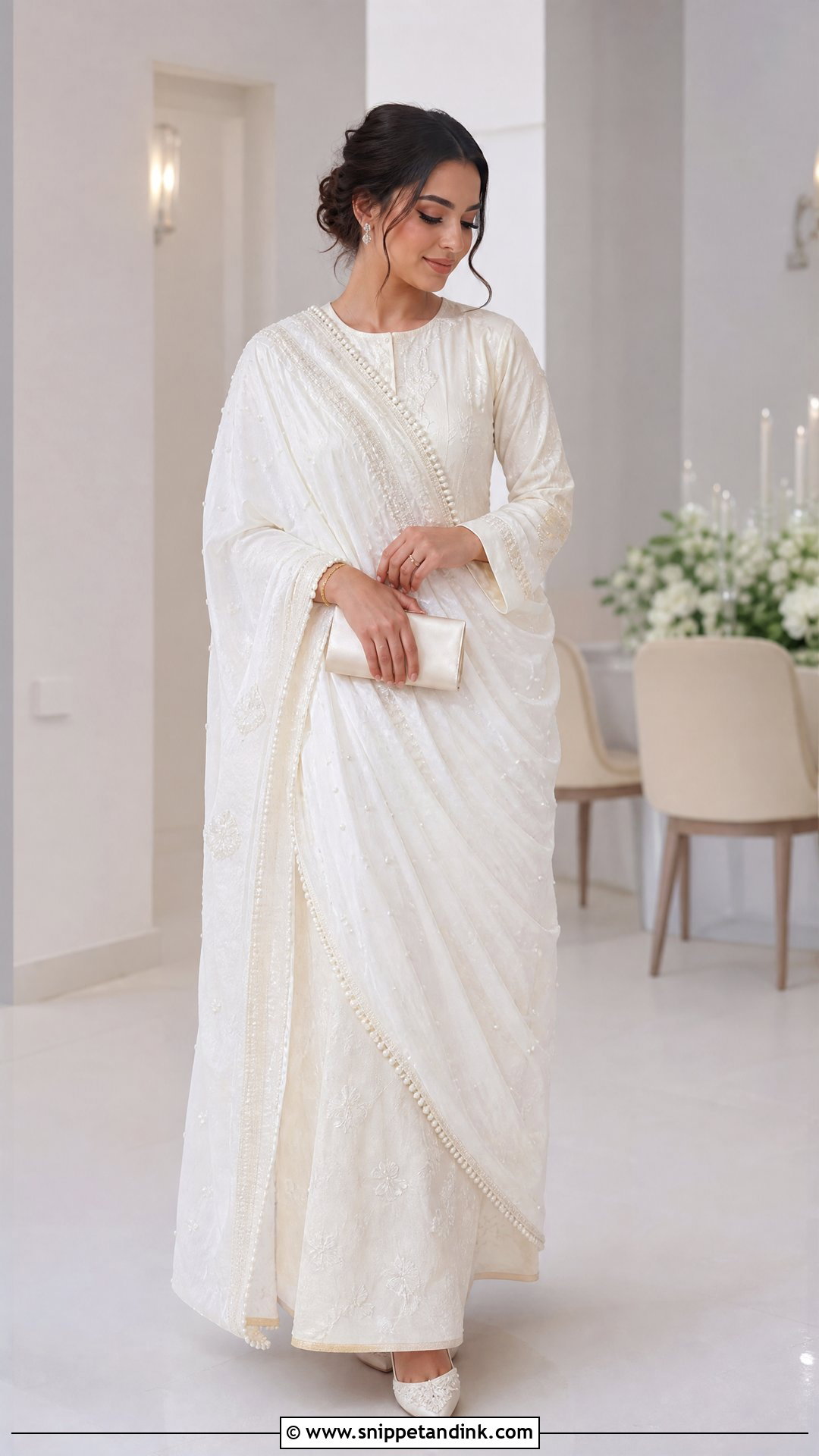
The sefsari is a wrap, and on its own it was never a bridal dress, so I style it as a layer over a complete ivory column gown with long sleeves, subtle pearl embroidery and a floor-length hem. It suits a symbolic entrance or a family ceremony. The fabric should sit securely around the head and shoulders while leaving part of the embroidered dress visible. Pearl earrings, ivory flats, a slim gold bracelet and a small satin clutch are enough. The hidden work matters most here: pins must be flat, smooth and strong, placed where they won’t pull on the hair or tear fine fabric when you turn your head. Someone who knows the garment should do the draping, because they’ll know which folds belong to tradition.
11. Coral And Gold Keswa Wedding Dress
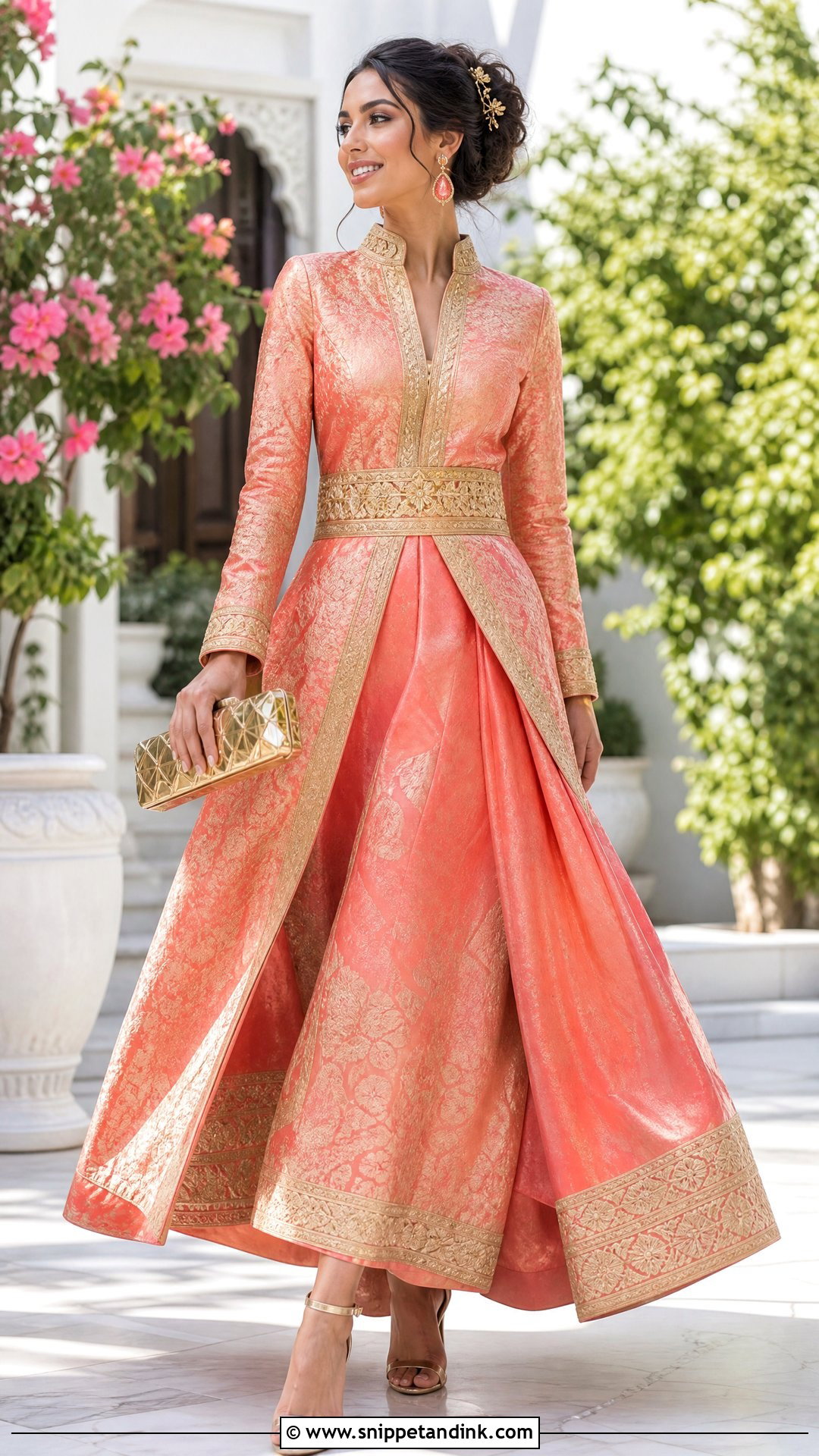
Coral is a daytime color. Under evening lighting it can turn muddy, but in sunlight it looks joyful against gold. I’d choose silk brocade or lightweight satin with fine gold motifs over dense velvet, which feels too heavy for the shade and the hour. A fitted top with elbow-length sleeves pairs with a sweeping skirt and a wide embroidered waistband. Gold ankle-strap heels, coral stone earrings and a compact metallic bag keep the palette tight. Try a polished low bun with gold pins along one side, and warm rose makeup. Ask for fabric samples before ordering. Coral reads pink, orange or almost red depending on the light, and a soft sheen flatters it far more than a bright reflective finish.
12. Midnight Blue Velvet Keswa Wedding Dress
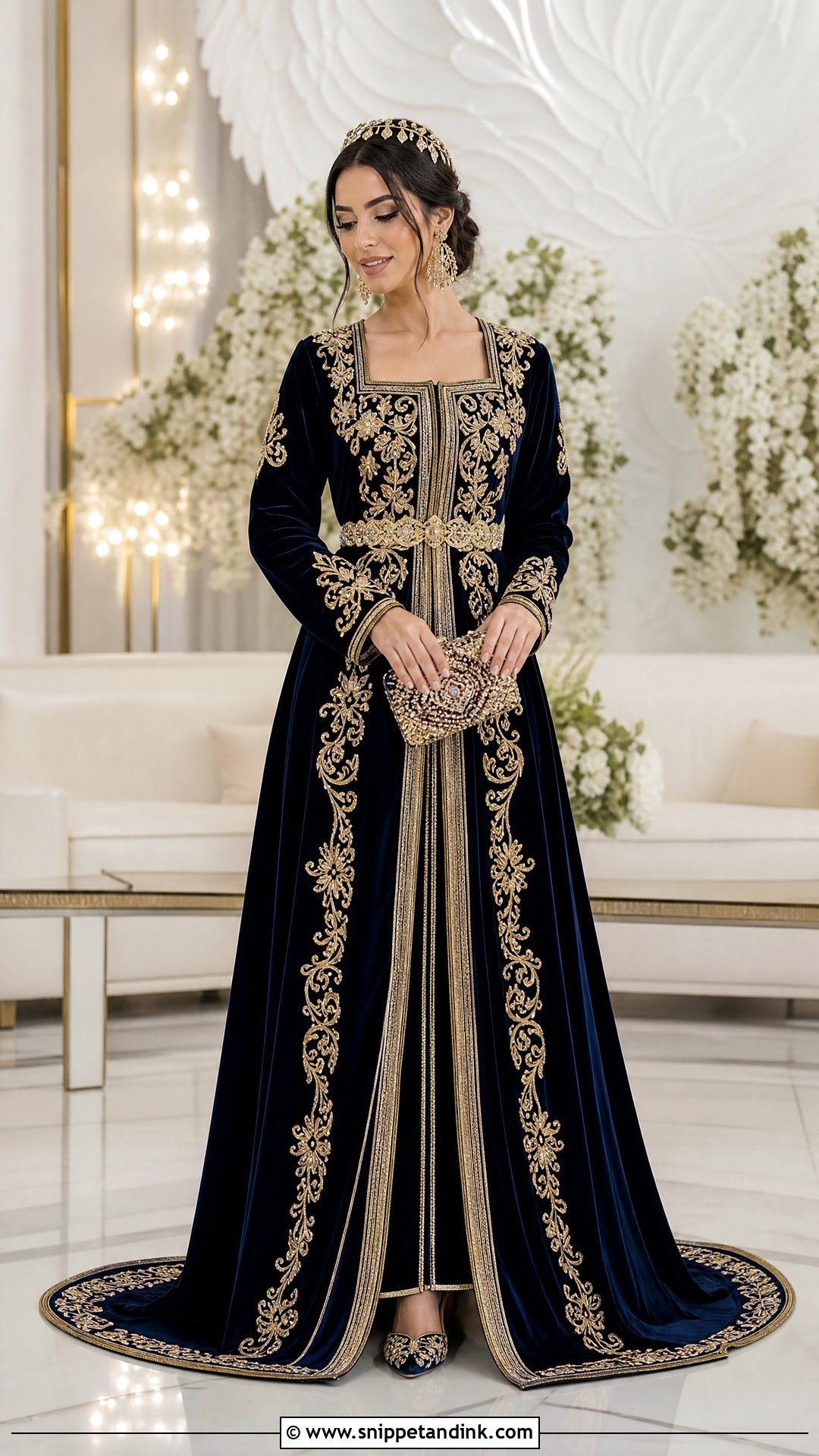
Midnight blue velvet is my favorite base for gold or silver work at a formal evening entrance, because a dark ground makes every stitch look sharper. Choose a structured bodice with a square neckline, fitted sleeves and a floor-length skirt that opens slightly at the front so you can walk. Embroidered blue slippers, metallic earrings, a coordinated headpiece and a small beaded clutch complete it. A heavy velvet skirt needs an internal waistband carrying its weight, or it presses into the hips all night. Concentrate the most elaborate embroidery near the face and waist. Those are the areas that stay visible in close portraits and when you’re seated for hours on the bridal chair.
13. Champagne Beaded Tunisian Wedding Dress
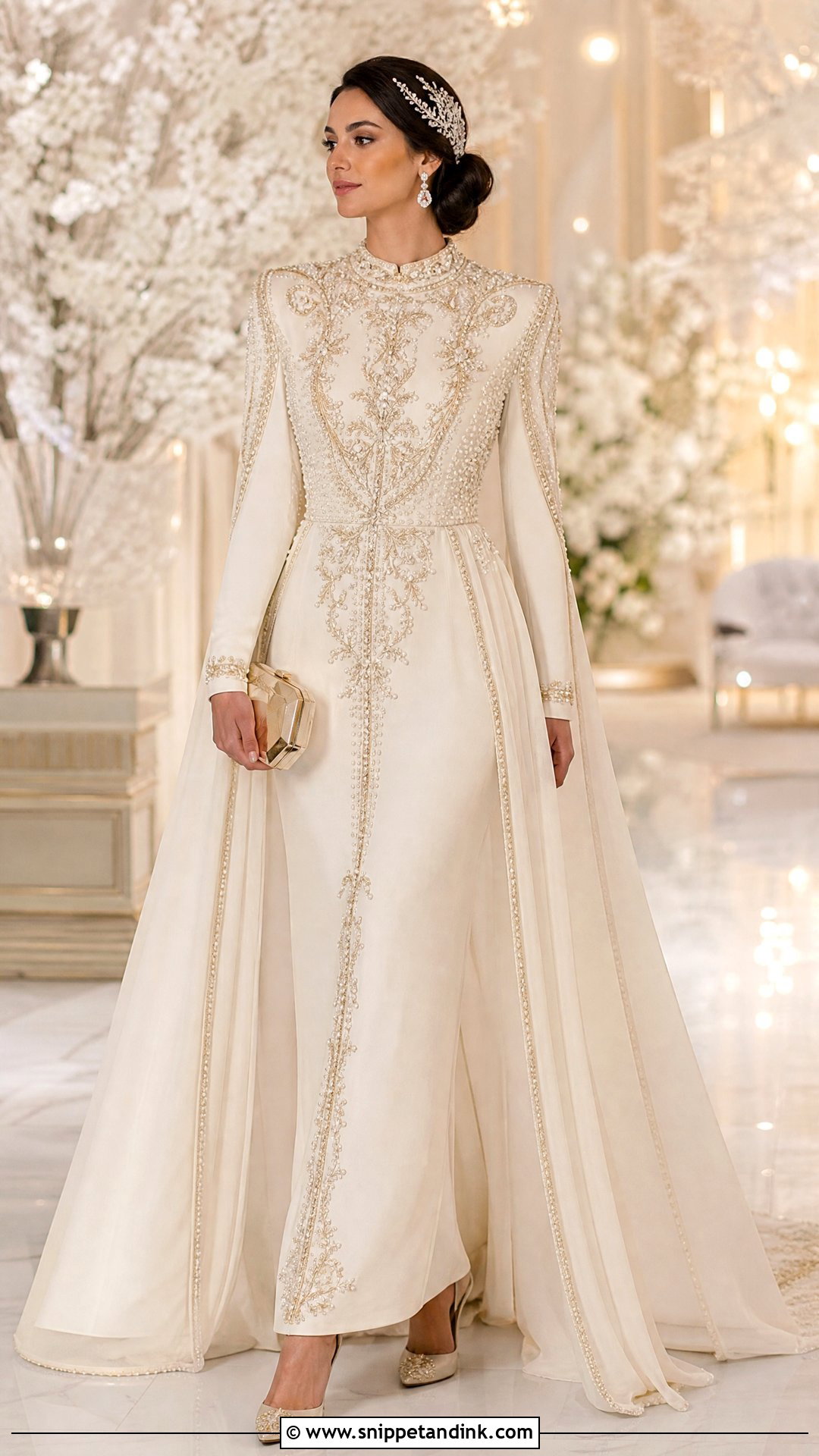
Champagne is warmer than white and makes gold beadwork look softer and less formal. Start with a long-sleeve fitted bodice and a fluid crepe or satin A-line skirt, then add symmetrical gold embroidery at the neckline, cuffs, waist and lower skirt. I use beads sparingly on crepe, because crepe stretches under weight and the skirt can drop unevenly. A detachable cape gives drama for the entrance and comes off before dancing. Champagne pumps, a crystal comb, fine drop earrings and a metallic clutch suit it. For a fuller bust, a slightly higher neckline and a reinforced inner bodice give better support; on petite brides, vertical lines of embroidery lengthen the figure. It works in any season.
14. Blush Pink Fouta And Blouza Wedding Dress
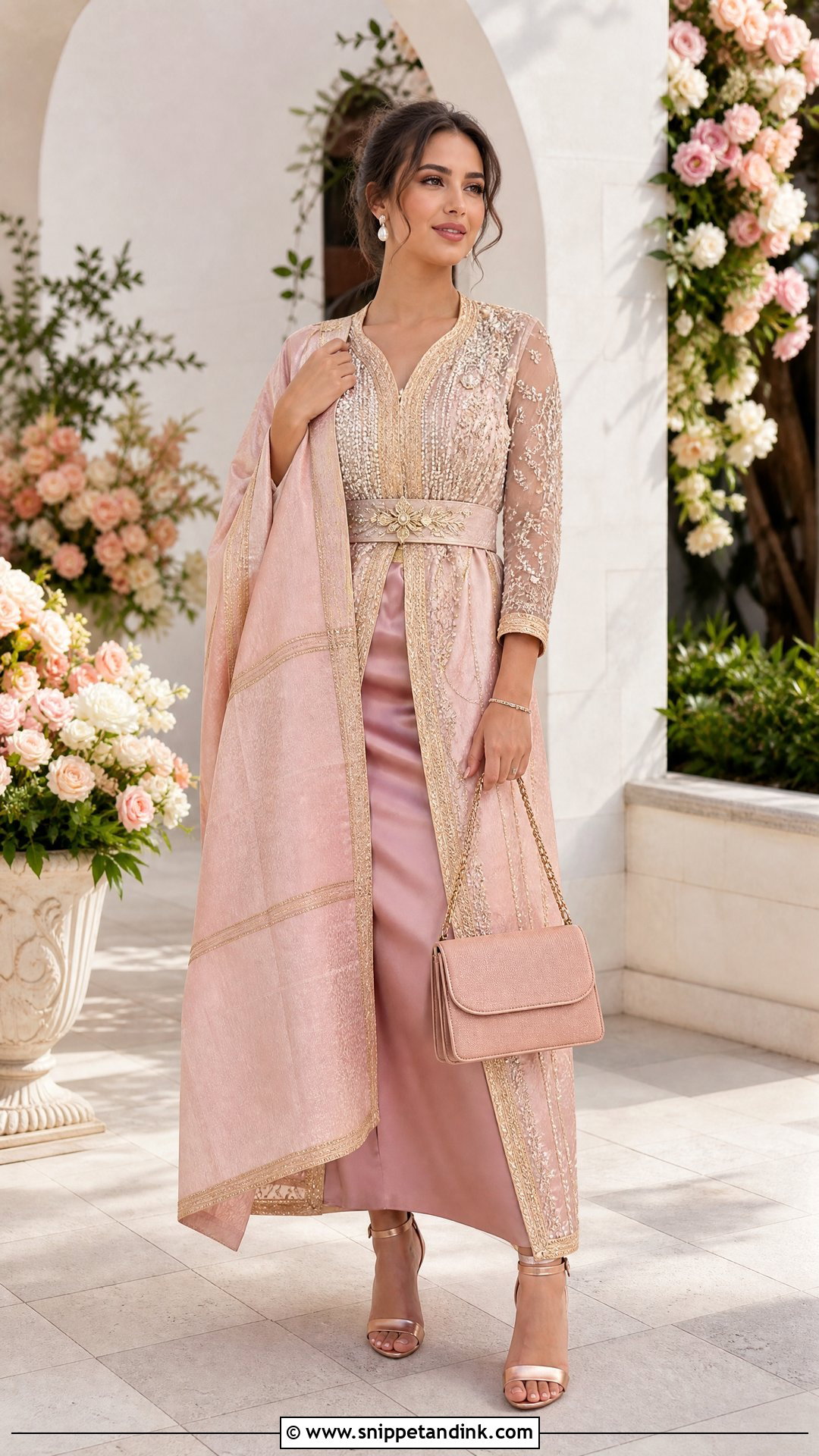
Pink softens the fouta and blouza without losing its festive feel. A rose silk skirt with a fitted top in pale gold thread, pearls and small crystals is the version I’d make. A tonal embroidered belt marks the waist without a harsh break between the two pieces. Rose-gold heels, pearl drops, a slim bracelet and a small blush bag finish it, with a loose low bun and a few face-framing waves. If the blouza neckline is open, a sheer embroidered insert adds both coverage and support. Pick a dusty blush rather than the palest pink, because very pale pink photographs as white next to ivory guests and you lose the point of the color. It suits an engagement party, henna night or daytime event.
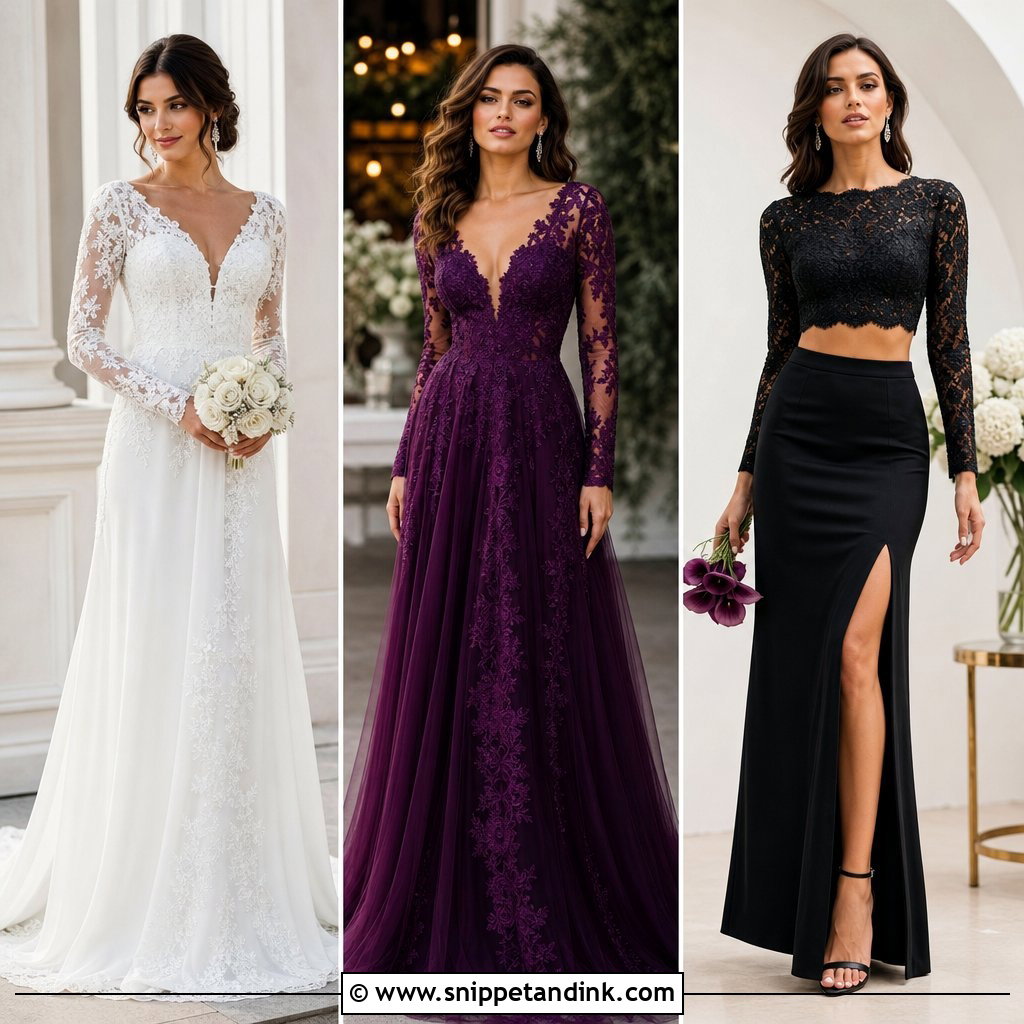
15. Royal Purple Tunisian Wedding Dress
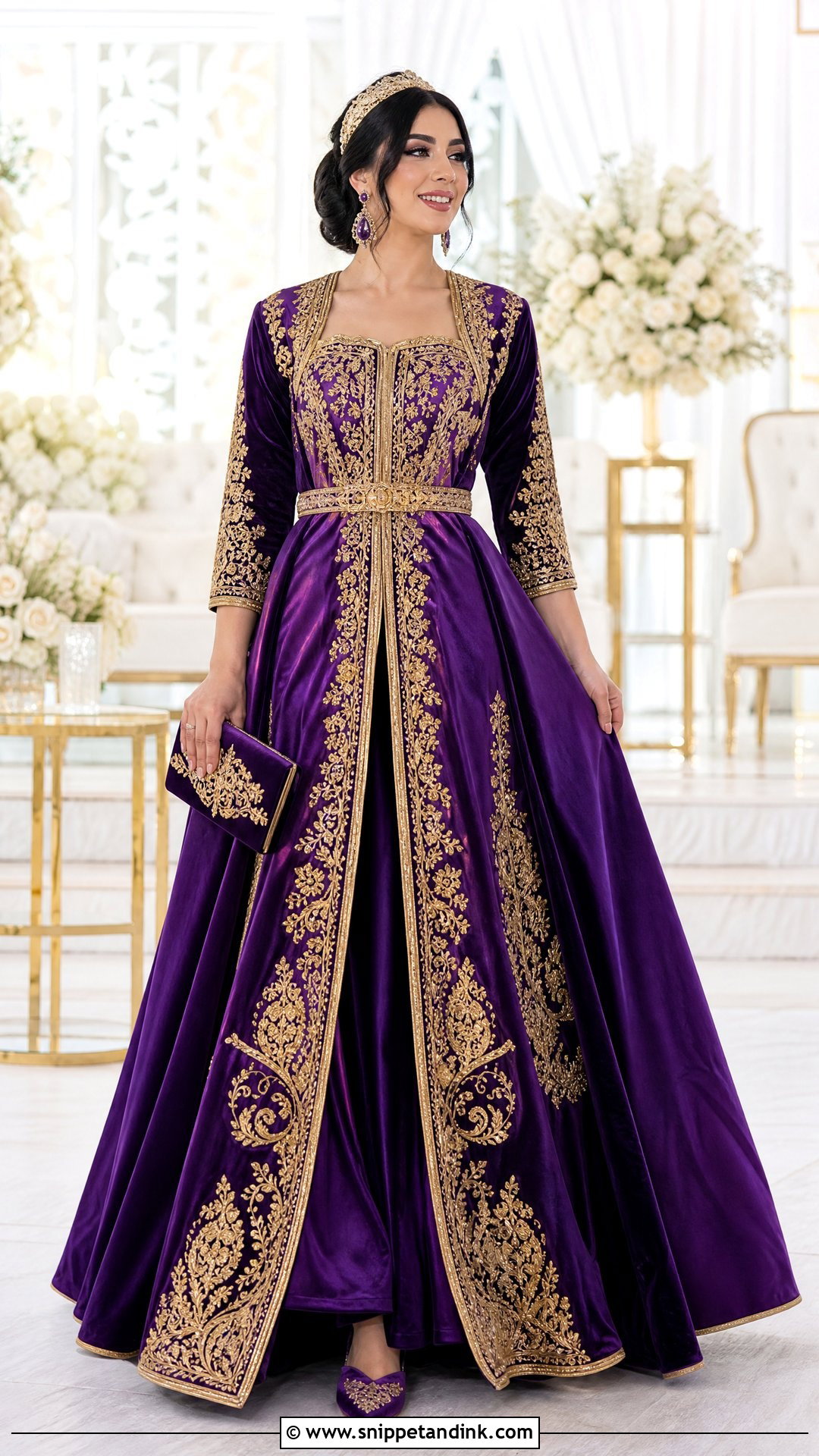
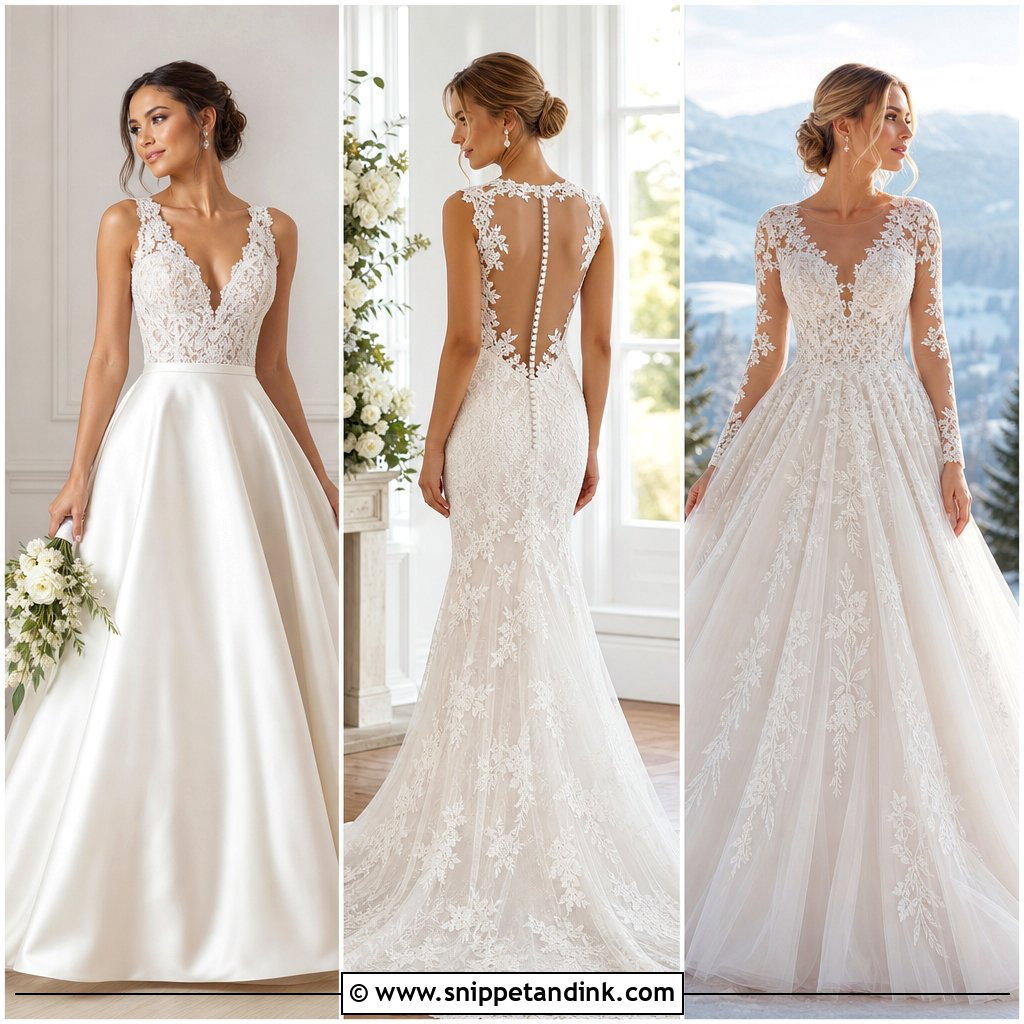
Purple is the outfit nobody else in the room will be wearing. Build it from a fitted brocade bodice, long sleeves and a full skirt falling from a defined waist. Antique gold works better with purple than bright yellow gold, which can look brassy against it. Add velvet pumps, amethyst-toned earrings, a gold headband and a compact embroidered clutch, and keep the necklace plain if the neckline is already dense with work. Vertical embroidery panels from waist to hem lengthen the silhouette. One practical point: metallic thread scratches, so ask for a breathable lining that keeps it off your skin, especially under the arms. It makes a strong reception change away from the usual red, green and white.
16. Green And Gold Henna Wedding Dress
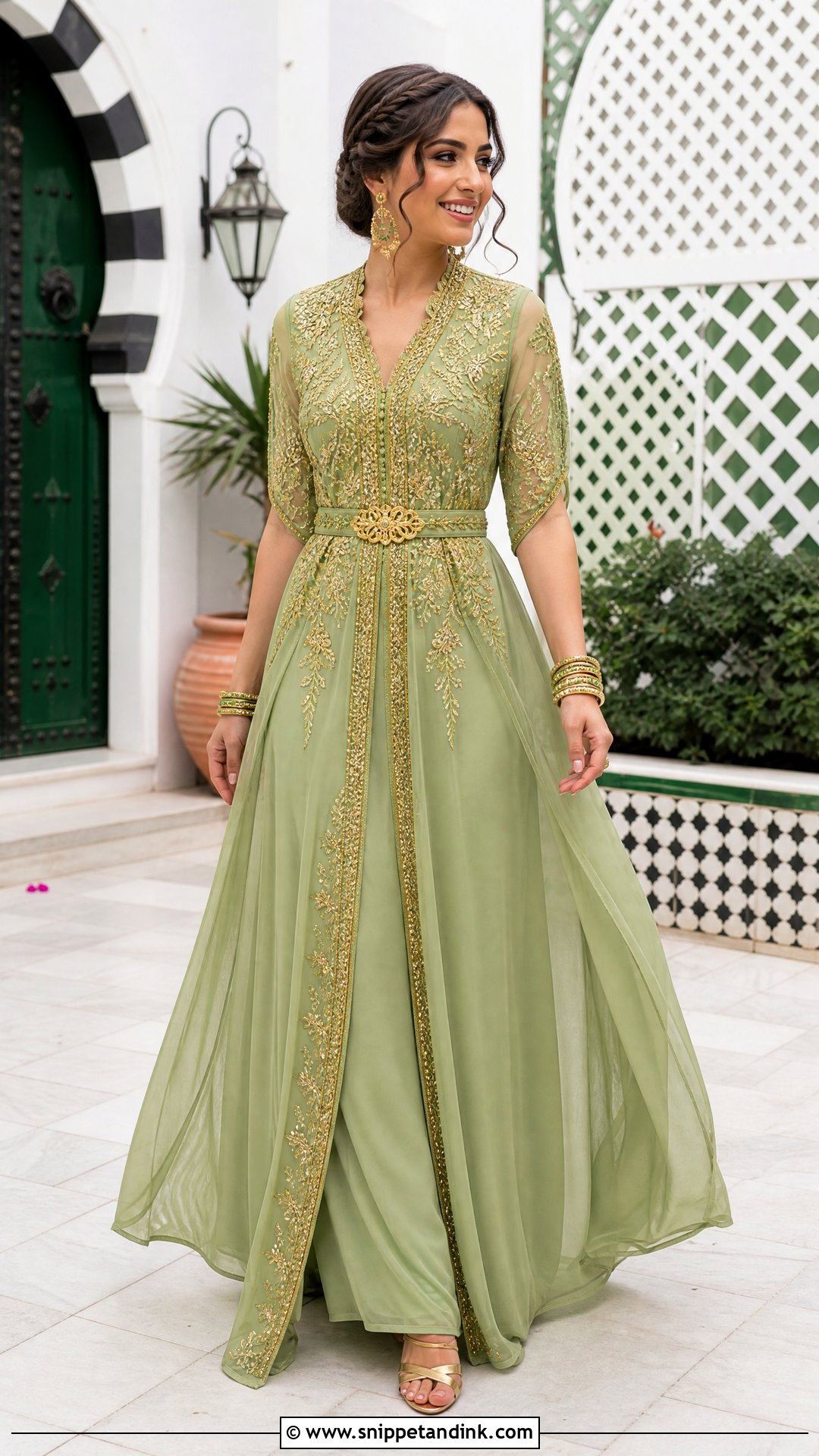
Green and gold belong to henna night, and the outfit has to cope with the evening’s realities: dancing, heat, and hands held out for henna. Choose a light floor-length dress with a fitted embroidered bodice and a skirt that moves freely. Leaf green or jade looks richer than anything close to neon. Gold sandals, layered bracelets, drop earrings and a decorative belt complete it, with short or sheer sleeves for a warm gathering. I’d push sleeves above the wrist, since henna paste on embroidered cuffs leaves a stain that rarely comes out. A braided updo keeps the hands, jewelry and neckline clear for photos. Sit, raise your arms and walk in it at the fitting before you sign off.
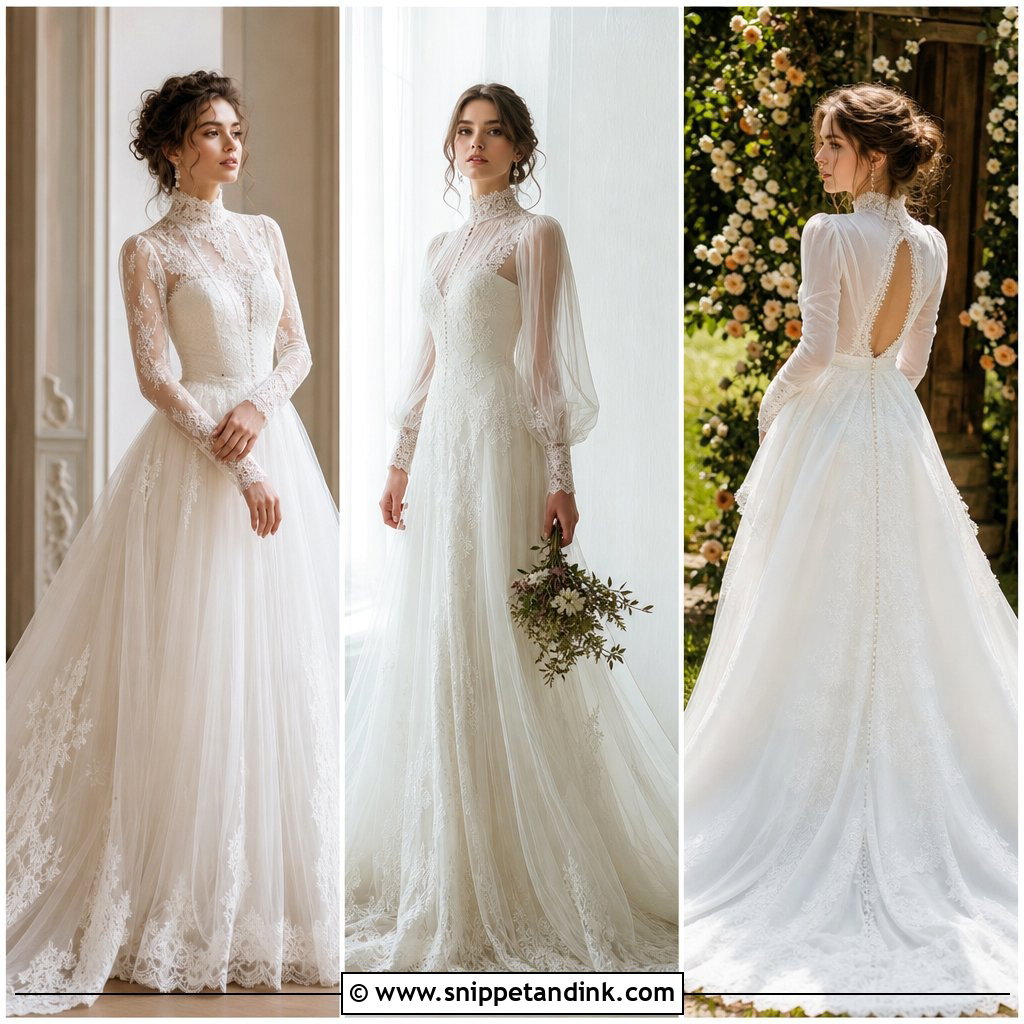
17. Pearl White Long Sleeve Tunisian Wedding Dress
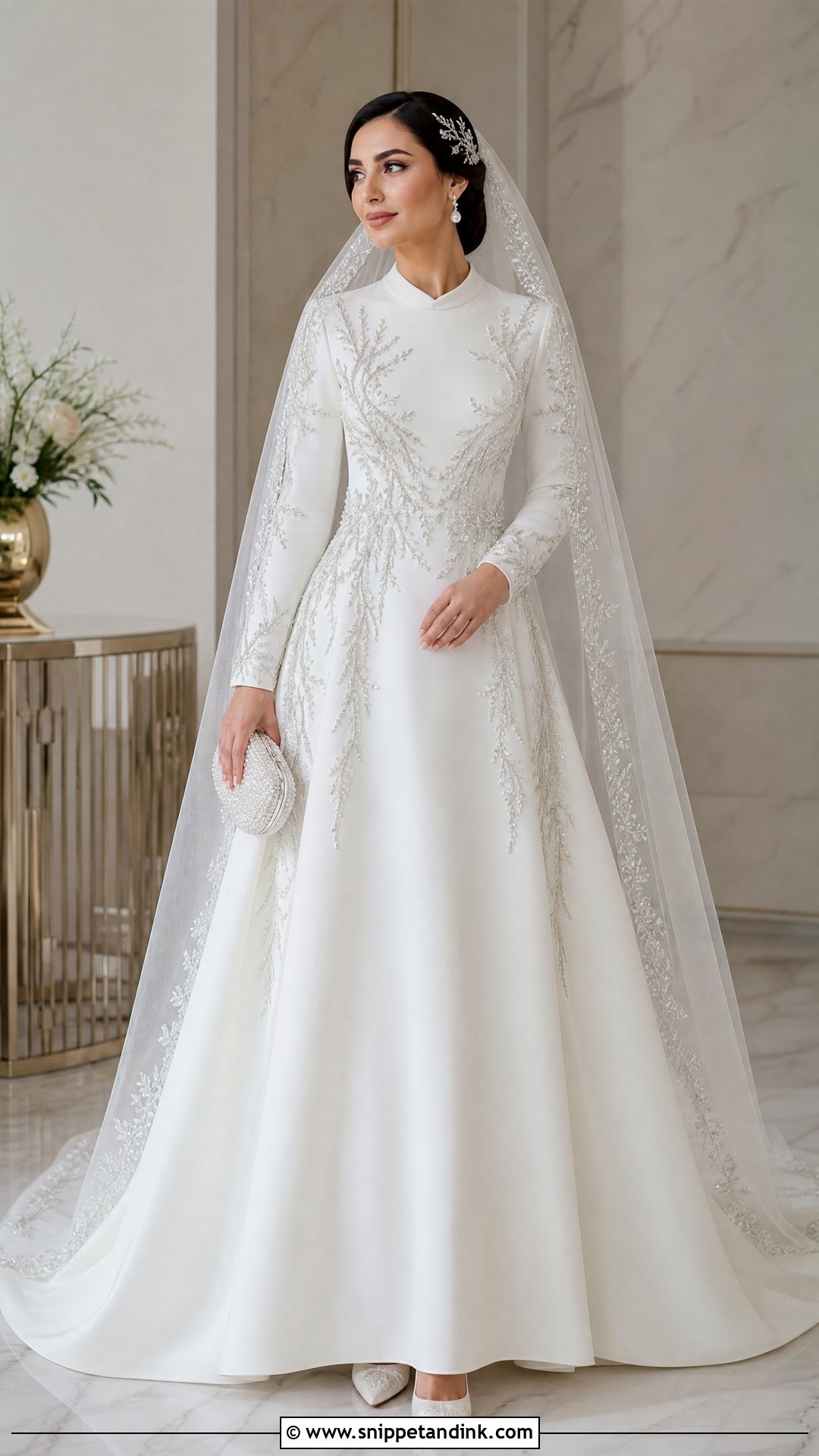
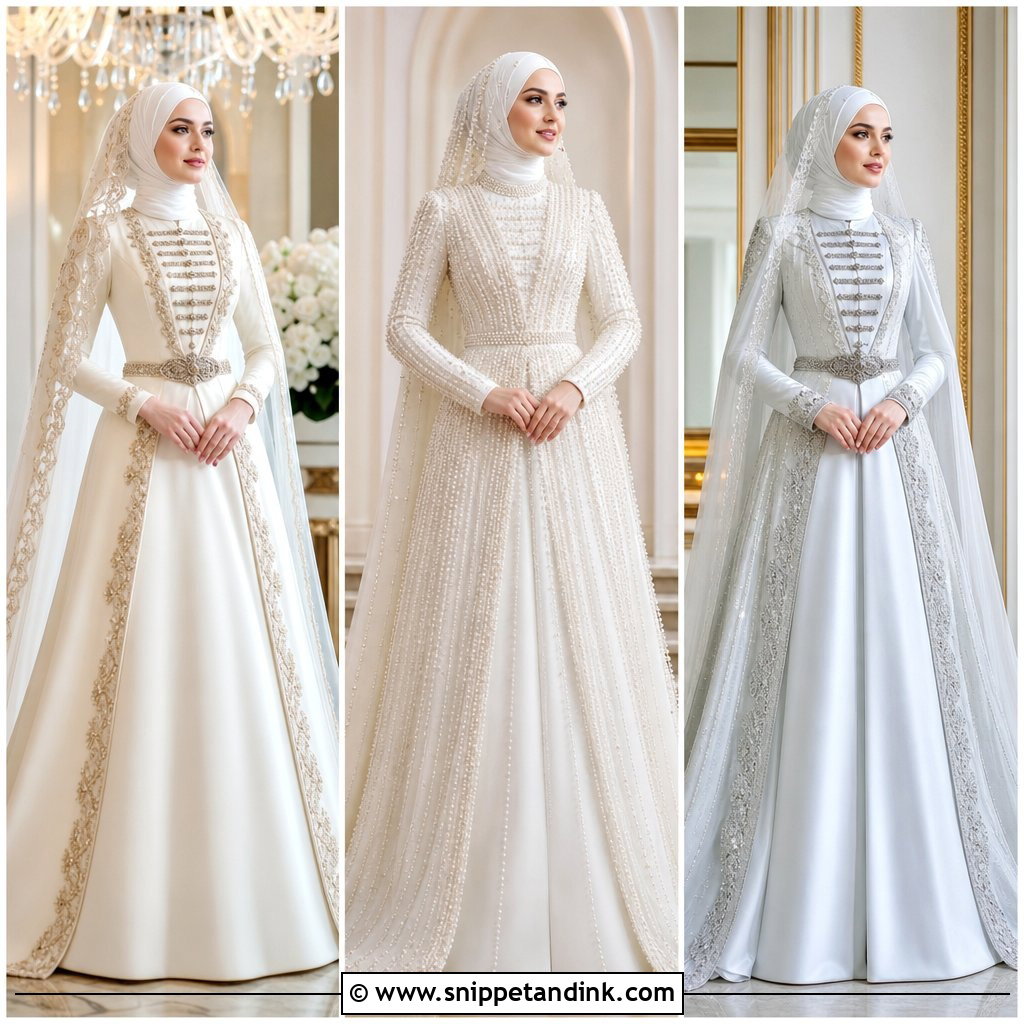
Pearl white with long sleeves is the quietest look here, and the craftsmanship carries it. Choose an A-line or softly fitted matte crepe, with silver and pearl embroidery at the cuffs, high neckline, waist and train. Restraint keeps it light enough to wear all day. Pointed ivory shoes, pearl earrings, a silver comb and a small embroidered clutch complete it, and a smooth low chignon anchors a fingertip veil. One detail I always suggest is repeating a single motif from the dress along the veil border instead of adding unrelated lace. It ties the outfit together in a way a stranger might not name but will notice. It suits a civil ceremony or hotel reception well.
18. Two Piece Keswa Wedding Dress With Overskirt
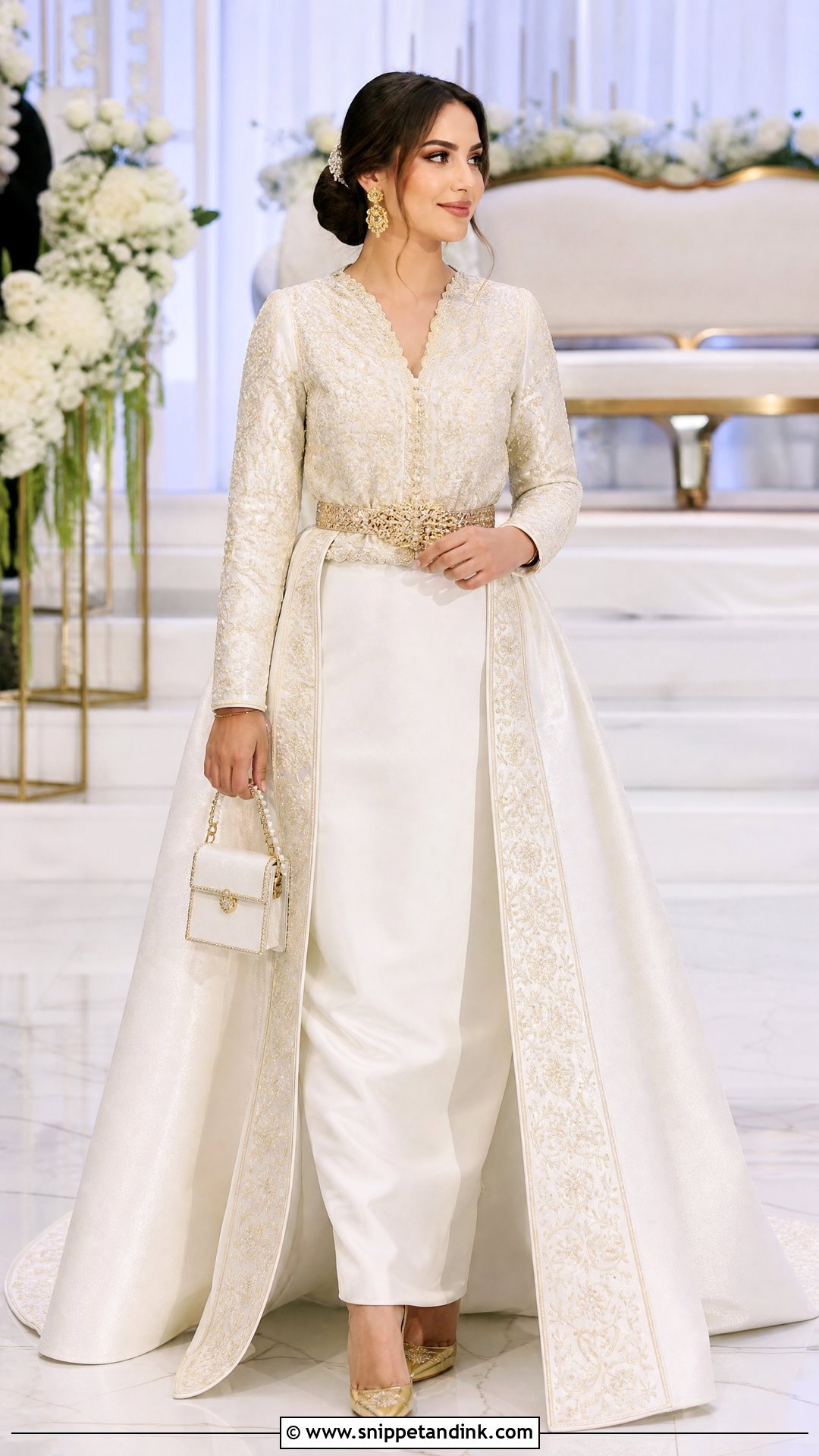
This keswa comes in two layers so you get the ceremonial volume and the freedom to dance, from one outfit. Start with an embroidered fitted top and a straight floor-length skirt in satin or light brocade. A full overskirt fastens at the waist for the entrance, then comes off once the formal photos are done. Metallic pumps, a jeweled belt, gold earrings and a structured mini bag complete it. Ask for hidden fasteners that hold the overskirt firmly without bulk at the waist, and have a relative practise removing it with you before the day. Make the top long enough to overlap the skirt when you sit or lift your arms; a gap of bare skin at the waist is the most common fitting complaint I hear.
19. Tunisian Embroidered Kaftan Wedding Dress
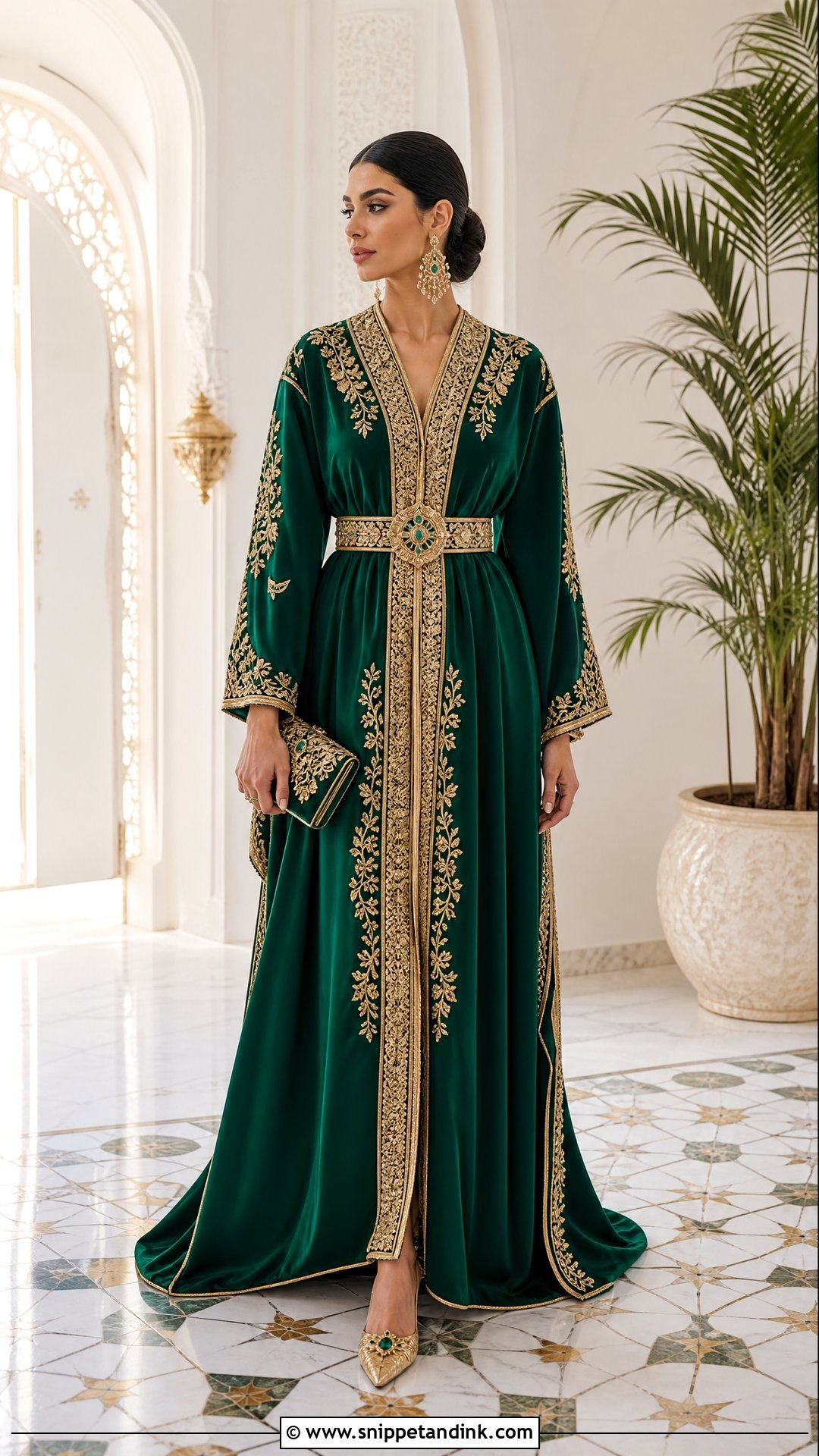
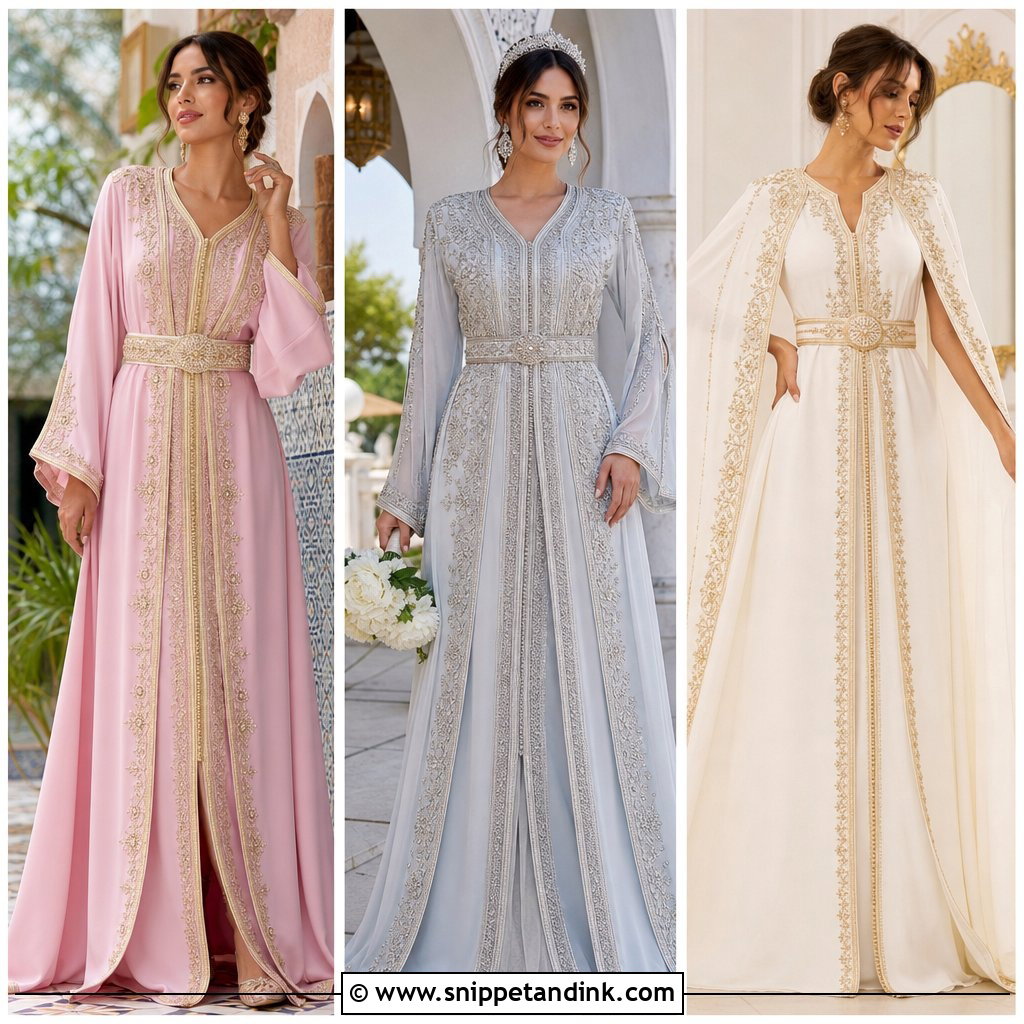
A kaftan can be relaxed and still formal, provided it has shape. Choose a floor-length ivory, emerald, or burgundy design with a defined waist and controlled volume through the sleeves. Tunisian-style metallic motifs suit the neckline, cuffs, front opening and hem. A structured belt is not optional; without it a kaftan reads as a cover-up in photos. Pointed mules, chandelier earrings, a coordinated clutch and a sleek bun or side-parted waves complete it. If the kaftan is heavily embellished, the layer under it should be smooth so beads don’t catch. Have the hem adjusted in the exact shoes you’ll wear, because a kaftan’s straight front edge is easy to tread on.
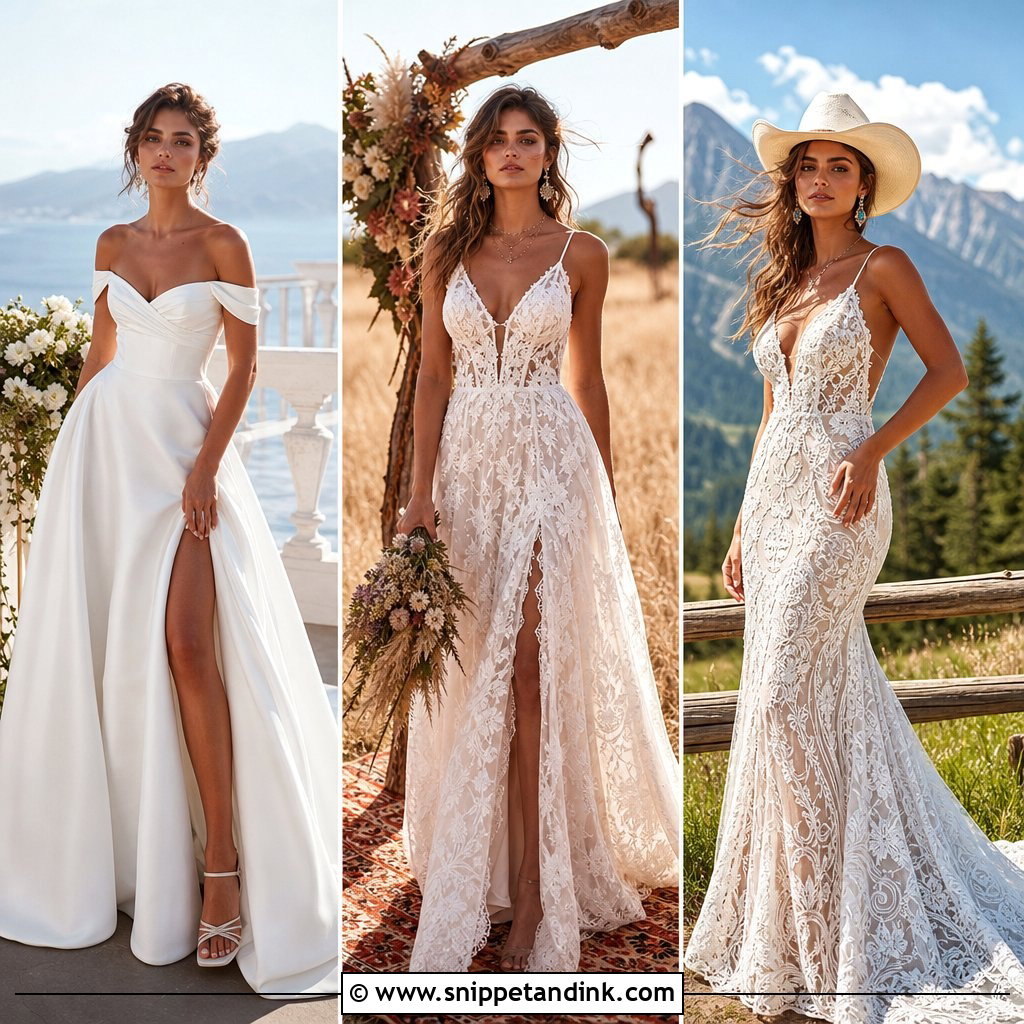
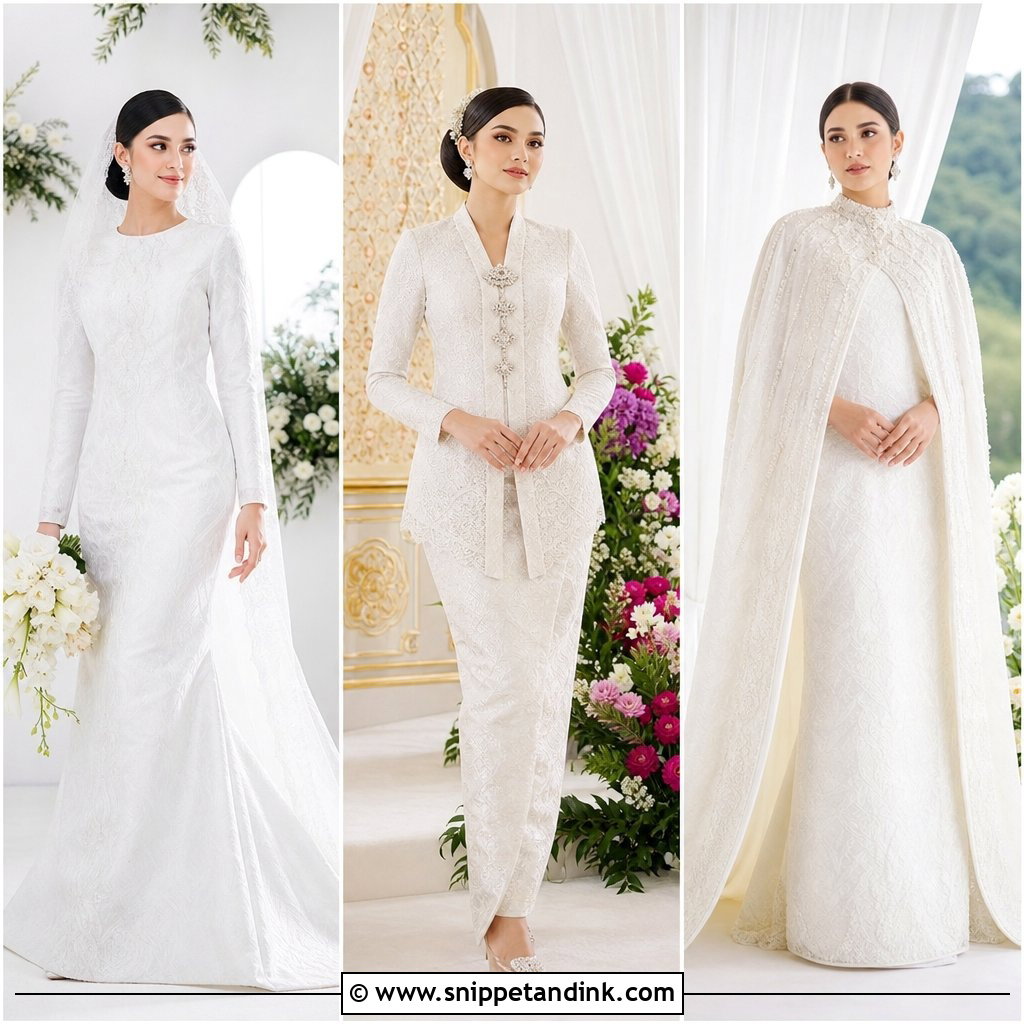
20. White Wedding Dress With Tunisian Cape
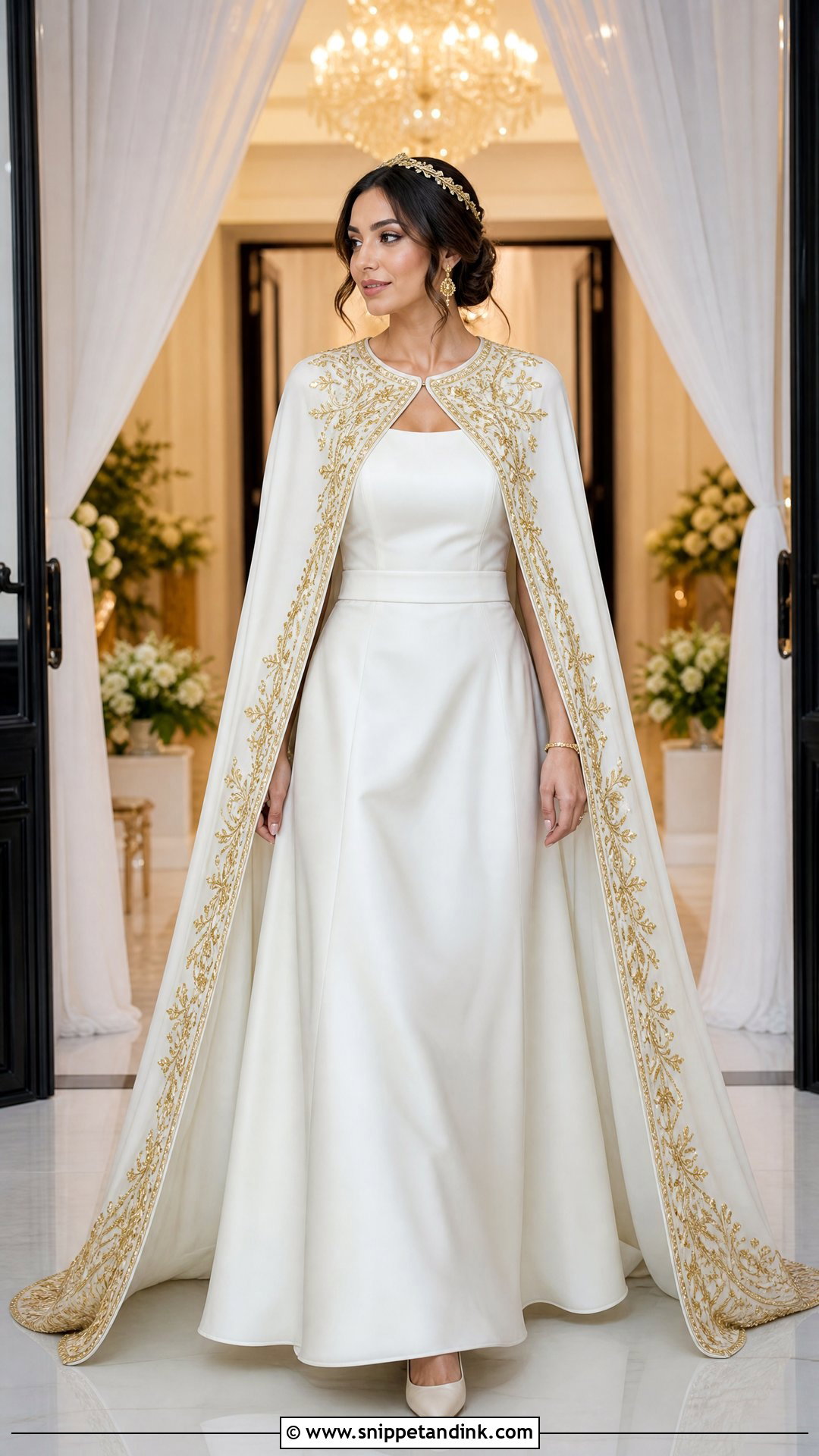
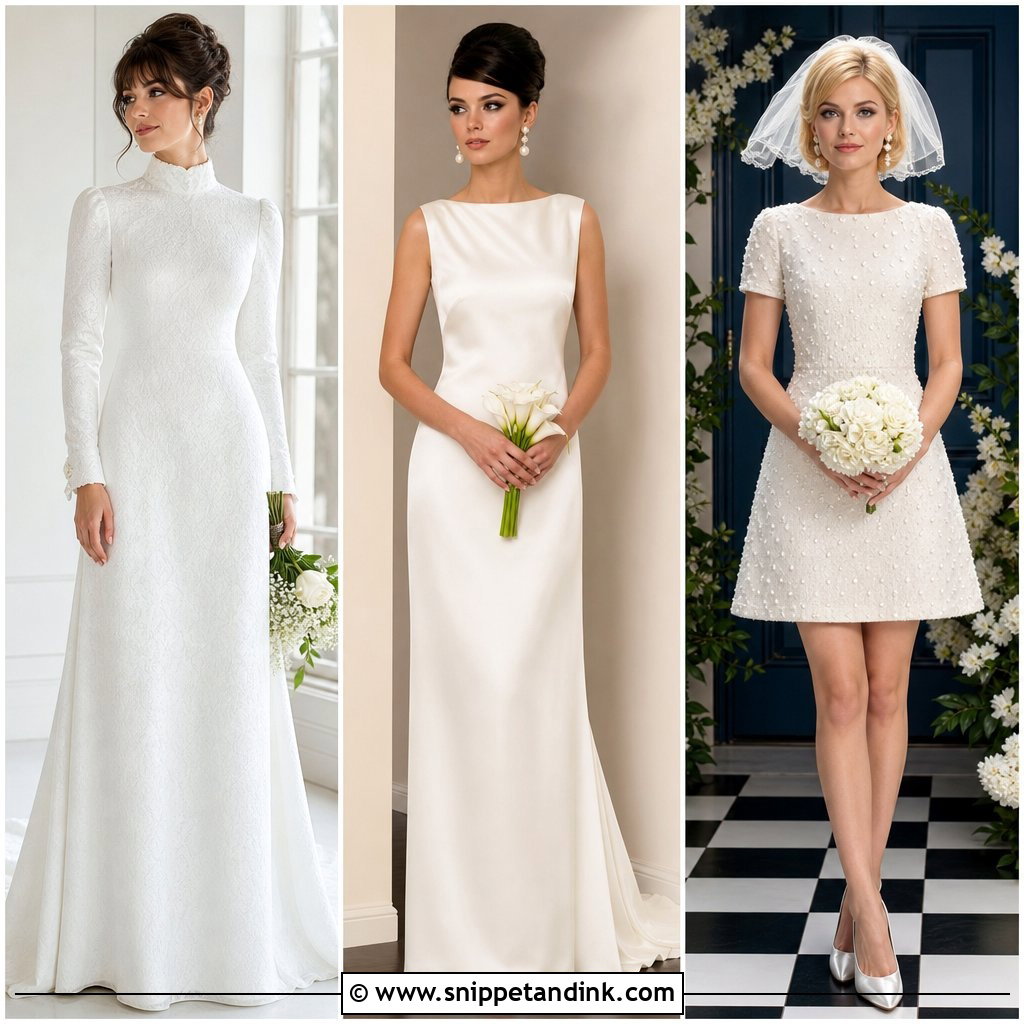
An embroidered cape is the simplest way to bring Tunisian craft to a Western-style gown. Begin with a clean satin column or A-line dress, then add a shoulder cape worked in gold geometric or botanical motifs. Carry the embroidery around the edges and across the back, since the back is what guests see during the entrance and the walk away. Ivory pumps, gold earrings, a slim bracelet and a simple headpiece keep the rest calm. The cape can replace a veil or come off before the reception. Ask for hidden hooks at the shoulders rather than heavy pins; a weighted cape pulls pins through satin and leaves holes in the gown.
Heirloom, Rented or Commissioned Keswa
There are three honest routes to a traditional outfit, and each has its own catch.
Wearing a family piece
An inherited keswa means more than anything you can buy, but heavily embroidered velvet doesn’t alter easily. Seams can usually be let out or taken in a little; moving embroidered panels is another matter. Have it assessed by a tailor who has worked with metal thread months ahead, not weeks.
Renting
Renting traditional bridal outfits is common, and sensible if you’ll wear a piece for a single evening. Try it on in person, check the lining under the arms and around the waist, and confirm in writing what alterations are allowed.
Commissioning new work
Hand embroidery takes a long time, and the best artisans are booked well ahead of wedding season. Start conversations many months before the date, and agree on motifs and metal color from a stitched sample, not a drawing.
Whichever route you take, look after the piece afterwards. Velvet pile crushes under weight, so a heavy keswa shouldn’t hang for years on a hanger; store it flat or loosely folded with acid-free tissue between the folds. Metal thread tarnishes in damp air, which makes a dry cupboard and a breathable cotton bag far better than plastic. If velvet needs freshening, steam it gently from the reverse and never press the pile.
Gold Thread, Family Meaning and a Dress You Can Sit In
Tunisian bridal dress is about meaning and craft first, and both deserve careful tailoring. Whichever outfits you choose, from a red velvet keswa or silk fouta and blouza to a regional costume or a white gown with Tunisian embroidery, wear each one at a fitting for long enough to feel its weight. Walk, sit and dance in it, especially with heavy velvet, metal thread, layered jewelry or a full overskirt. Let artisans and family members guide the regional pieces. The right dress honors your background and still lets you enjoy the celebration it was made for.
You'll Like These Ideas:


Leave a Reply