
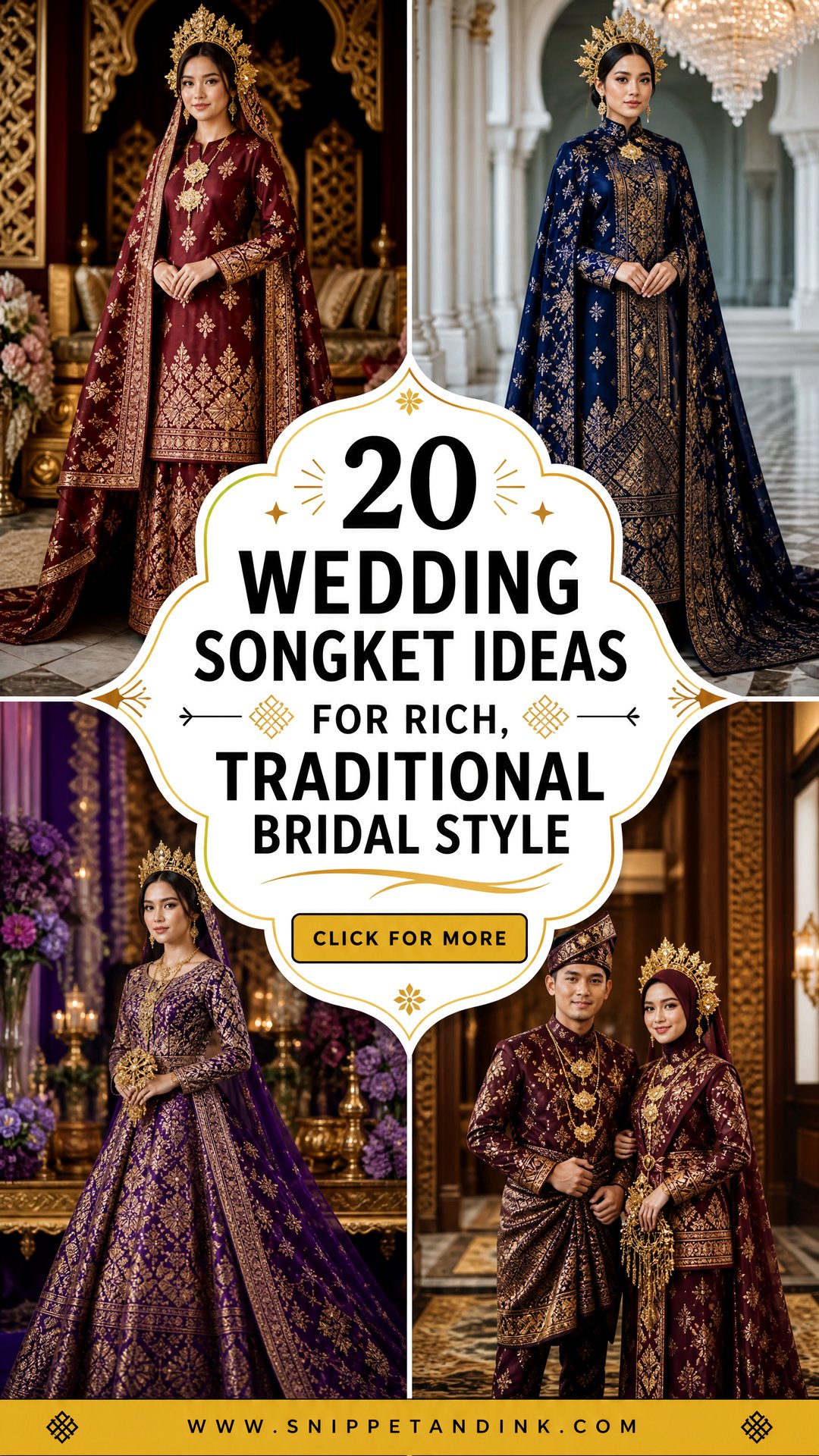
Handwoven, Machine-Made or Printed Songket?
Before talking color, I ask what kind of songket a bride is buying, because the three types look similar in photos and behave very differently on the body.
- Handwoven songket is made on a traditional loom with extra gold or silver threads floated into the weave. A single length can take weeks or months to make. It is heavy, stiff, slightly irregular and costs the most. Turn it over and you’ll see the loose thread floats on the back.
- Machine-woven songket copies the patterns with metallic yarn. It’s lighter, more even and far more affordable, and it’s easier to tailor into fitted modern cuts.
- Printed or foil songket only imitates the motif on the surface. It photographs well from a distance but has none of the texture up close, and the print can crack with wear.
None of these is wrong. Many families keep a handwoven piece for the solemnization and use a lighter machine-woven set for a long reception where the bride will sit, stand and greet guests for hours.
Cutting a Family Songket or Wearing It Whole
If the songket is an heirloom, think hard before handing it to a tailor. Once handwoven cloth is cut for a fitted gown or a mermaid skirt, it can’t go back to being a length of fabric for the next bride in the family. I usually suggest wearing an inherited piece as a wrapped sarong or samping, which needs no cutting at all, and having the fitted top made from new fabric. If you do cut it, ask the tailor to finish every edge immediately, since the metallic floats unravel quickly once a cut is left raw.
1. Ivory Songket Baju Kurung
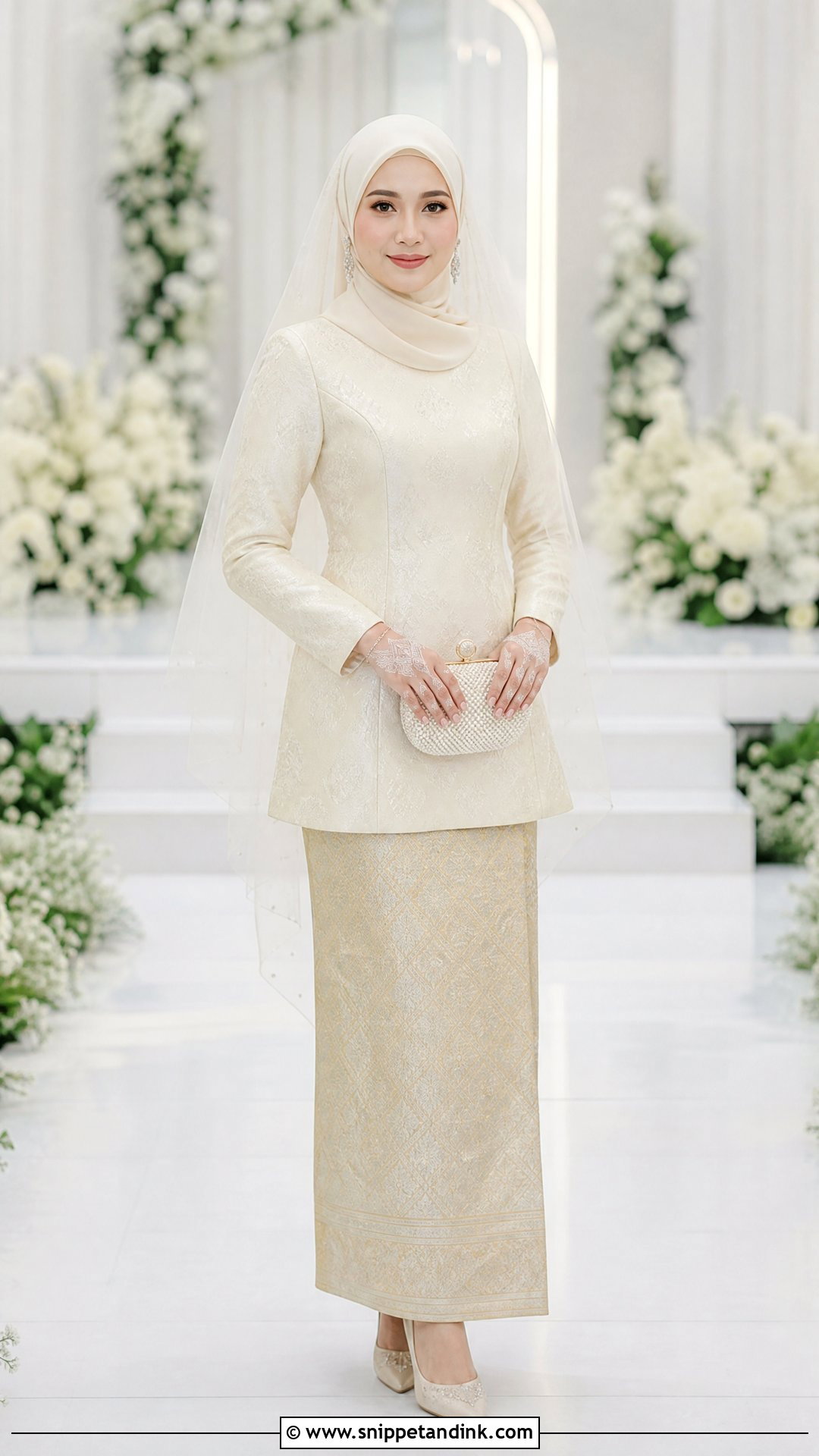
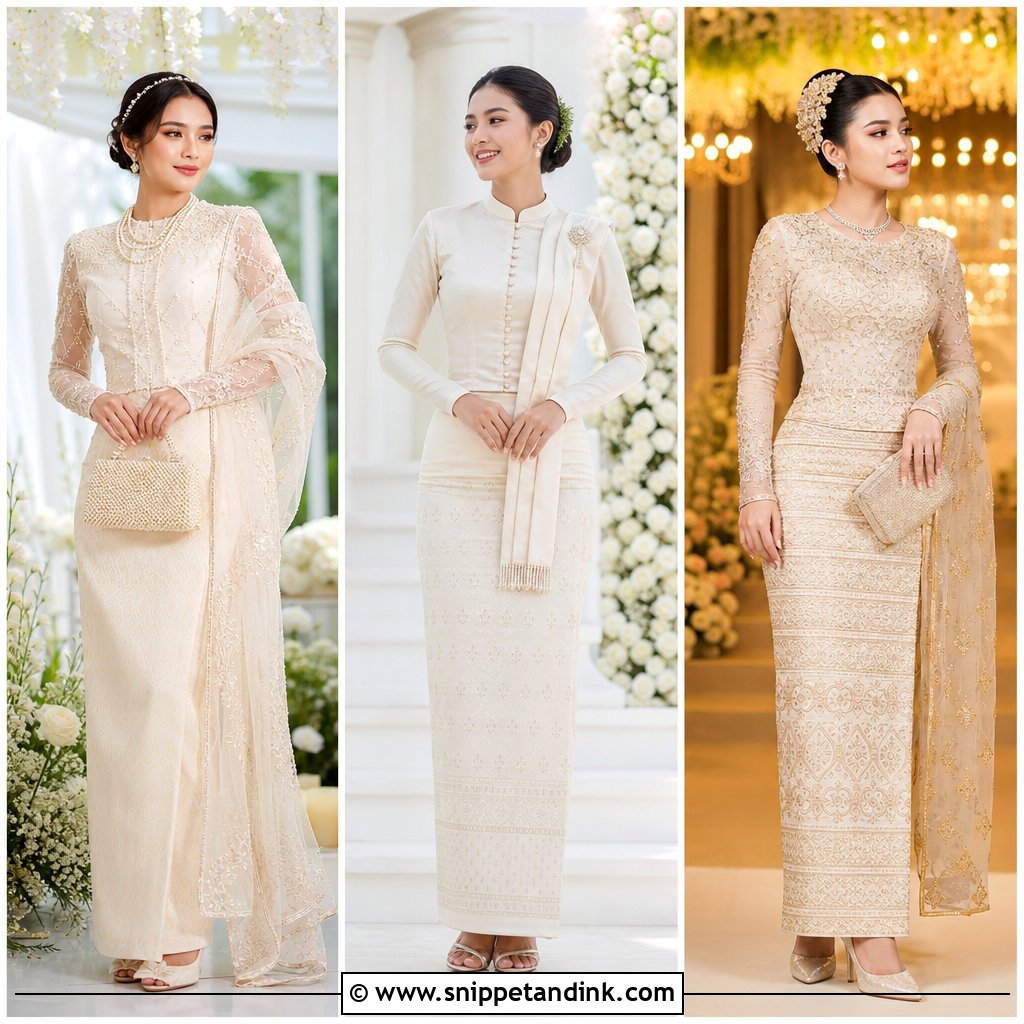
An ivory songket baju kurung is the gentlest way into songket, and it’s the one I suggest for a solemnization. Keep the top softly shaped, with full sleeves, over a straight songket skirt with enough ease to kneel and stand. Gold or silver motifs on ivory add richness while the face stays the focus. The fit at the shoulder is what I check first: a baju kurung that’s too wide there looks borrowed, however good the fabric. Ivory pointed heels, a pearl clutch and small earrings finish it, with a smooth matching hijab or a sheer fingertip veil, and luminous, neutral makeup.
2. Gold Songket Kebaya
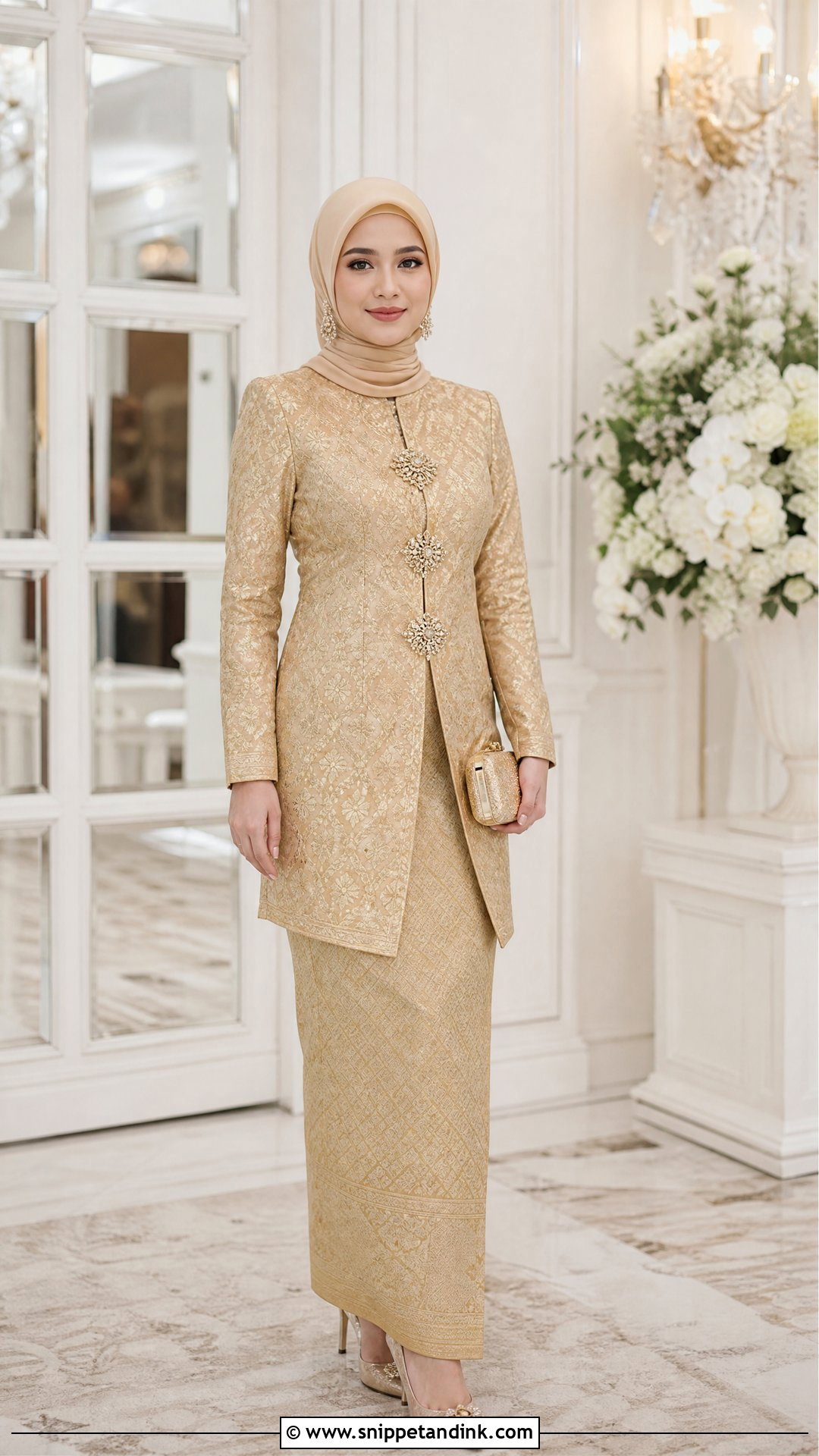
Gold on gold is a lot of shine, so a gold songket kebaya needs very disciplined styling. Choose a fitted kebaya with a longer hem, structured sleeves and light embroidery at the neck, over a songket sarong wrapped so the main motif sits at the front, not lost at the side seam. That placement takes practice; I’d have the person dressing you rehearse the wrap at the fitting. One set of brooches and drop earrings is plenty. Nude or metallic heels, a compact gold clutch and a matte champagne hijab with a small jeweled pin keep it regal rather than busy.
3. Emerald Green Songket Kurung Moden
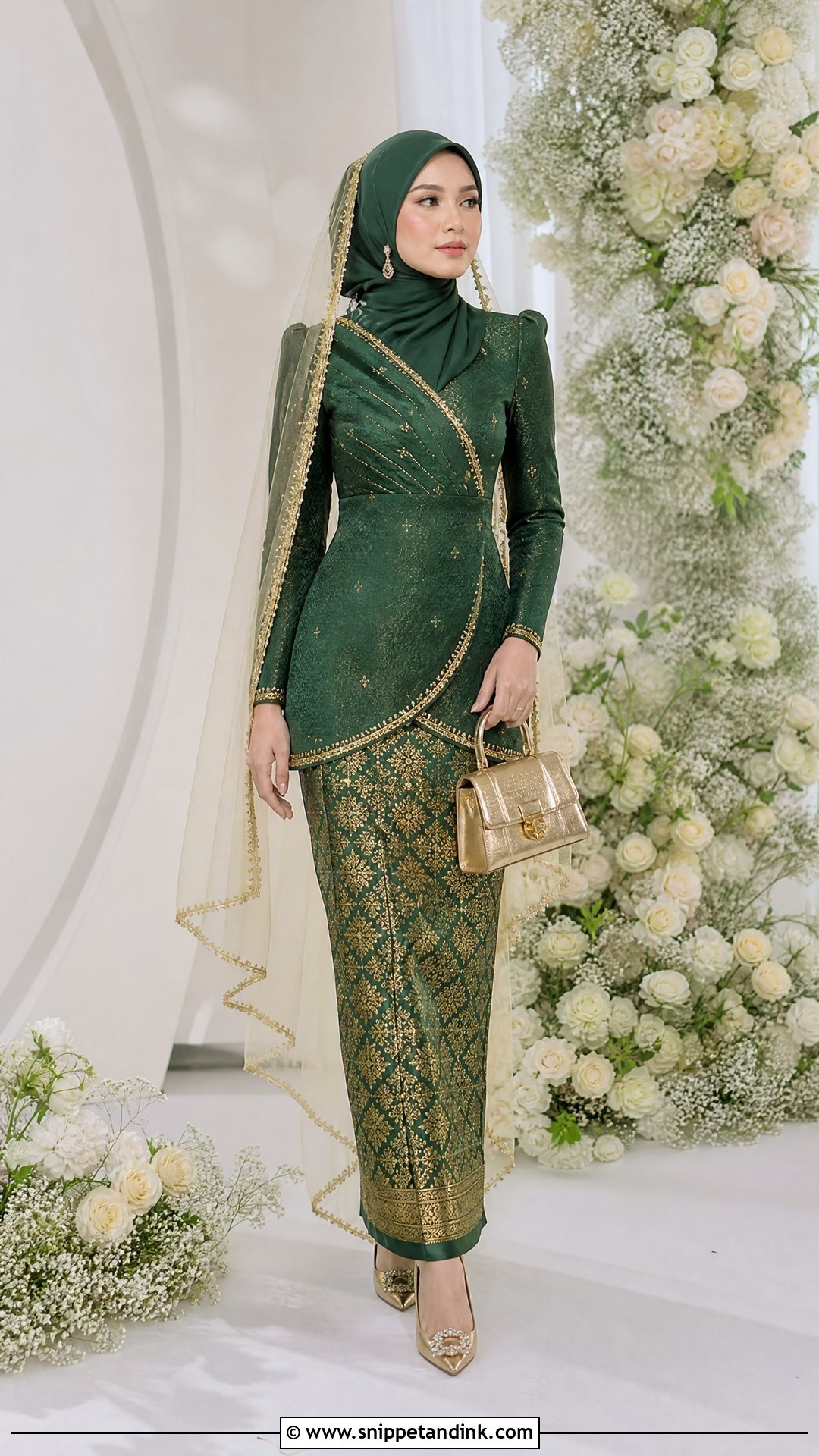
Emerald with gold weaving is rich without being loud, and in a kurung moden with a shaped waist and a slight flare, it looks current. Look for motifs concentrated at the skirt border, cuffs or hem; an all-over pattern on a fitted cut can feel heavy. Deep green can pull color from the skin under warm hall lighting, so I’d lean on warm neutral makeup and a defined eye. Gold pointed heels, a structured mini bag and medium earrings finish it, with an emerald hijab for a tonal look or a champagne veil for contrast. It suits evening receptions and ballrooms.
4. Royal Blue Songket Bridal Gown
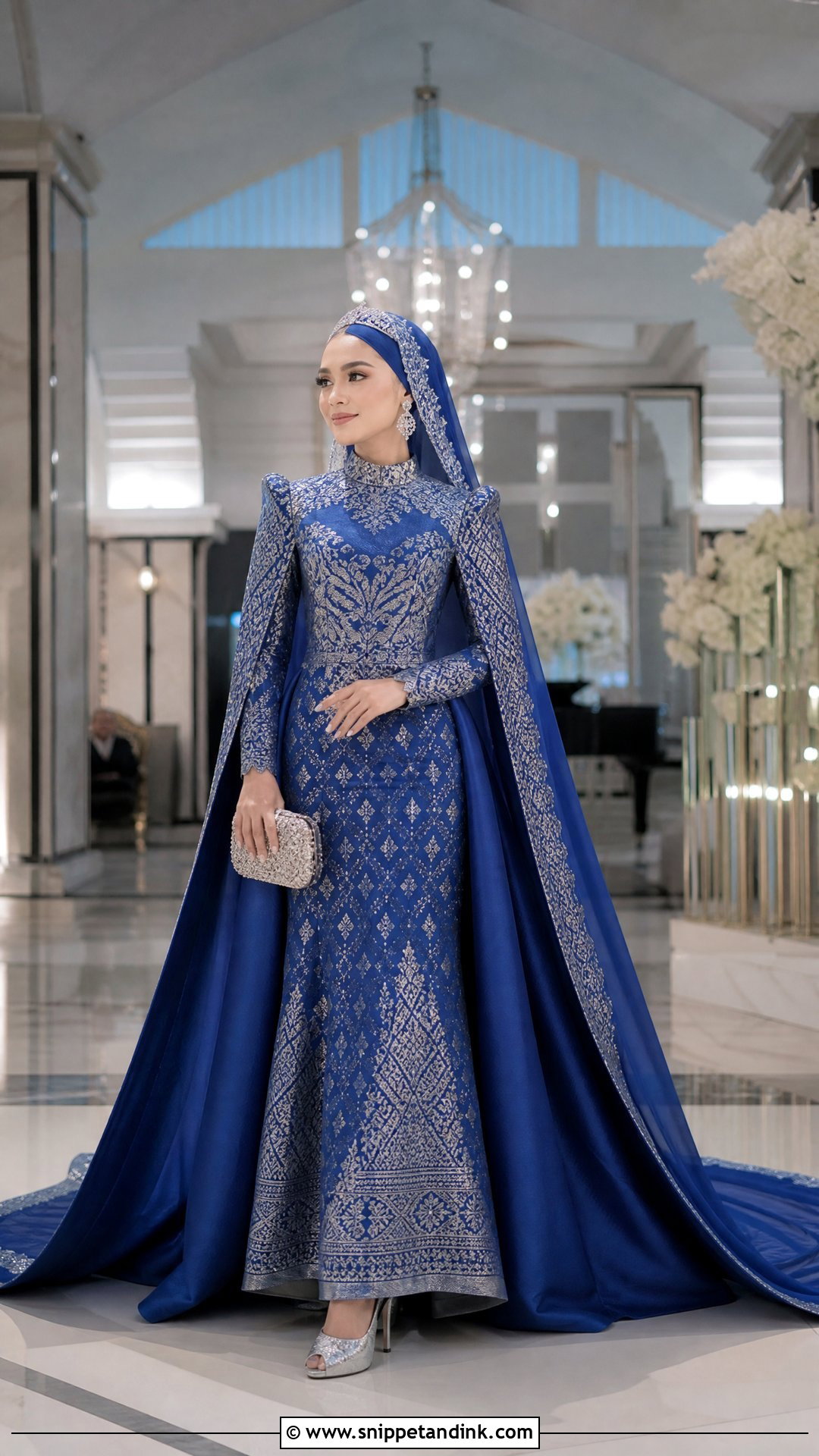
Royal blue songket in a full gown is a bold choice and needs structure to carry the weight of the fabric. A boned bodice, full sleeves and an A-line skirt let the weave show without adding bulk at the hips. Handwoven songket is heavy and stiff, so I’d make any train or cape detachable, for the entrance only. Silver heels, a crystal clutch and drop earrings pick up the metallic thread; a slightly softer blue hijab and a silver-edged veil keep things coordinated. Keep the hijab or hairstyle smooth so the silhouette stays the main event.
5. Dusty Pink Songket Peplum Outfit
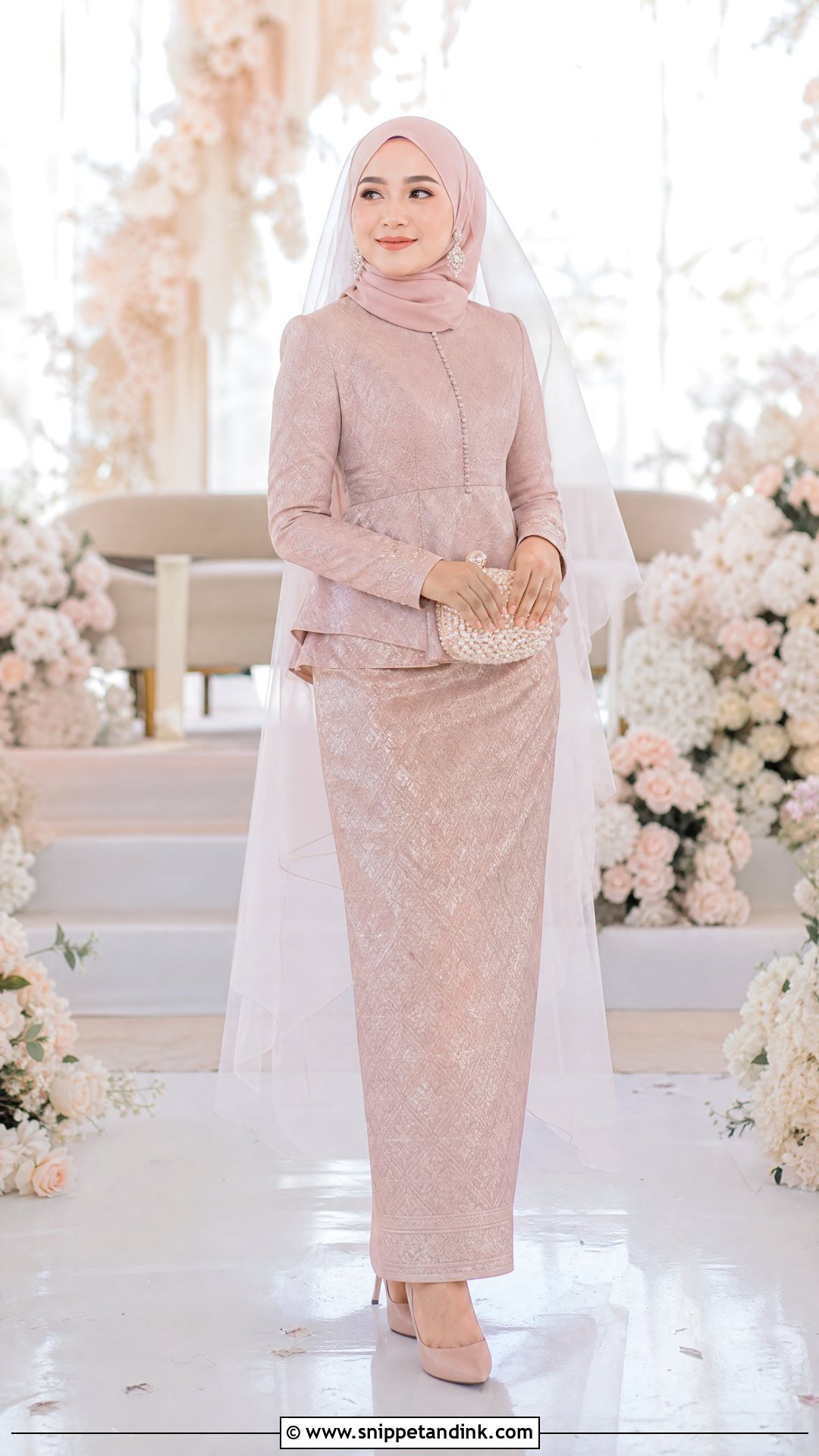
A peplum suits dusty pink because it defines the waist while giving a little cover over the hips. Where it ends matters: I mark it at the fitting at the widest point of the hip or just above, since a peplum that stops halfway can cut the figure in an awkward place. The top should have a modest neckline and full sleeves, over a straight skirt woven in rose gold or silver. Match the hijab to the pink base fabric, not the metallic, and attach a sheer veil behind the head. Blush heels, a pearl clutch and crystal earrings suit a daytime or intimate reception.
6. Silver Songket Kebaya
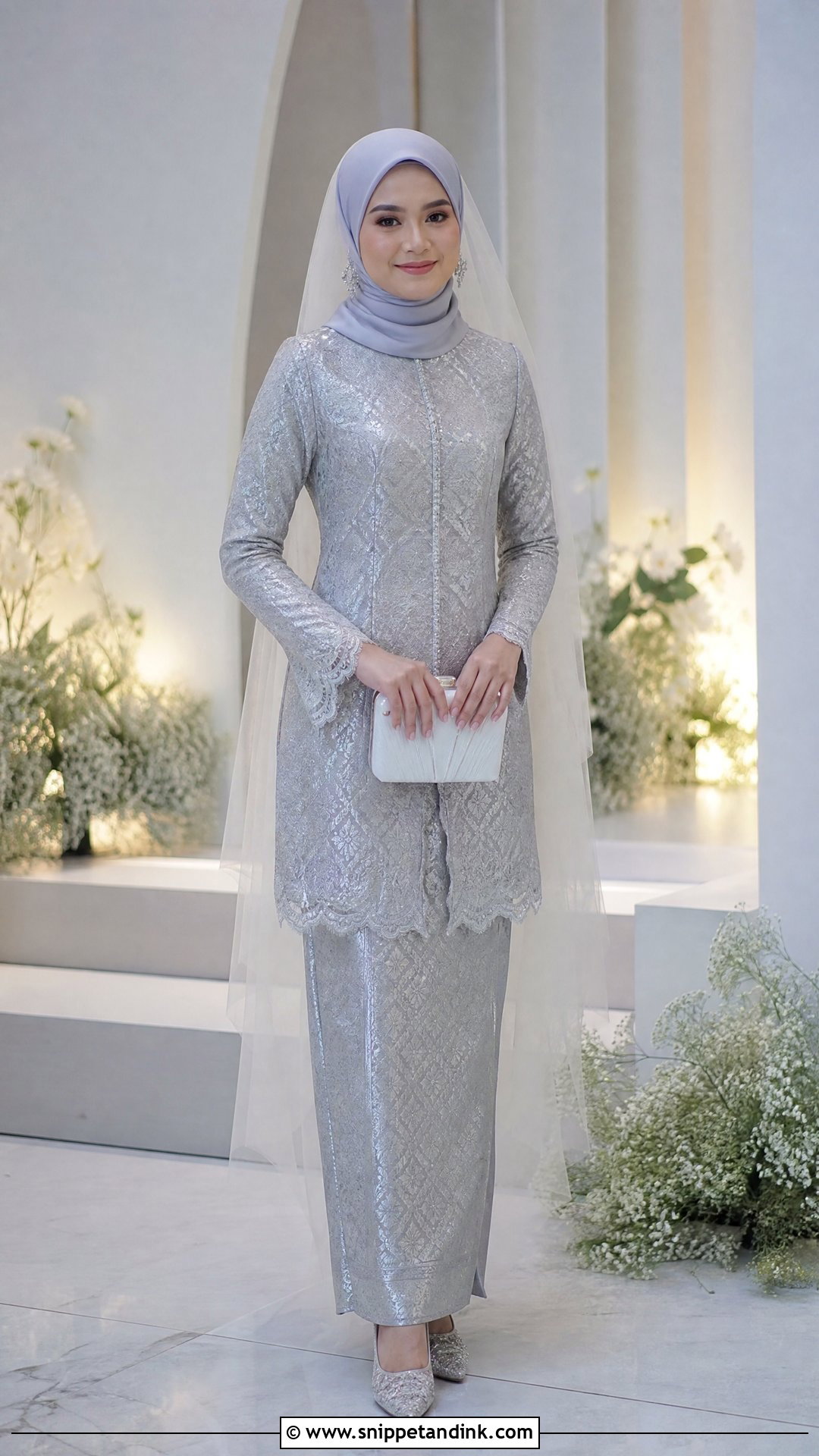
Silver songket looks cool and polished, but it can turn severe against some skin tones. Build the outfit on a long fitted kebaya with clean seams, scalloped cuffs and restrained beadwork, over a matching silver sarong, and keep a white or pale grey lining so the overall look stays light. Fresh, luminous makeup with a soft pink lip is my usual fix for the coolness of the metal. Silver pointed shoes, a white clutch and crystal studs finish it. A pearl or off-white hijab works; only add a veil if it doesn’t hide the shoulder details.
7. Maroon Songket Baju Kurung
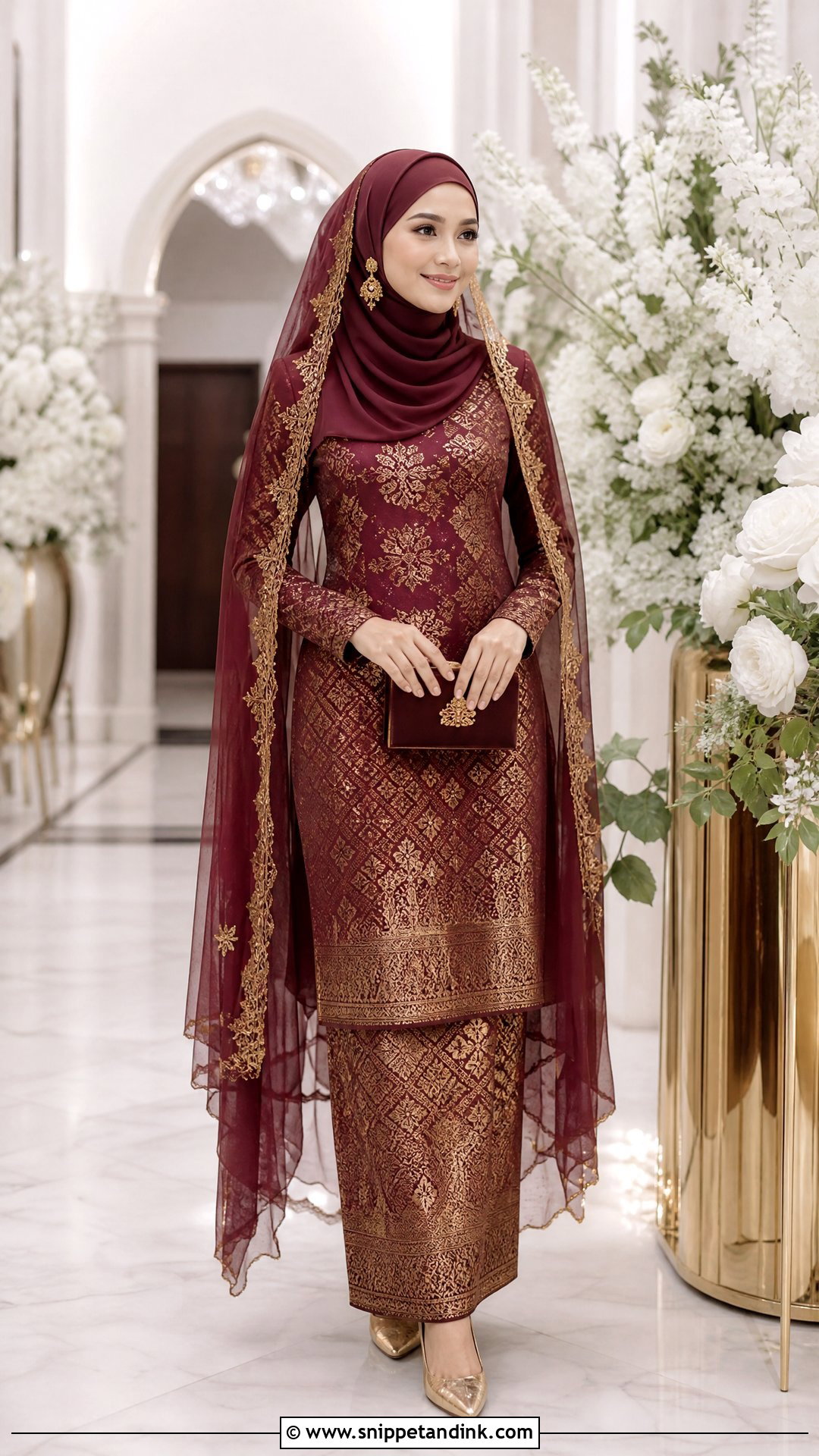
Maroon with antique gold weaving is dignified and forgiving, and the dark base makes floral or geometric motifs stand out clearly. Choose a baju kurung with a neat shoulder line and a comfortable body over a full-length songket skirt. Pick one piece of jewelry to lead, either a statement necklace or drop earrings, never both. Antique gold heels and a maroon box clutch keep the palette tight. A matching hijab with a gold-edged veil frames the face, and warm bronze eyes with a berry lip suit evening events and heritage venues.
8. Champagne Songket Mermaid Dress
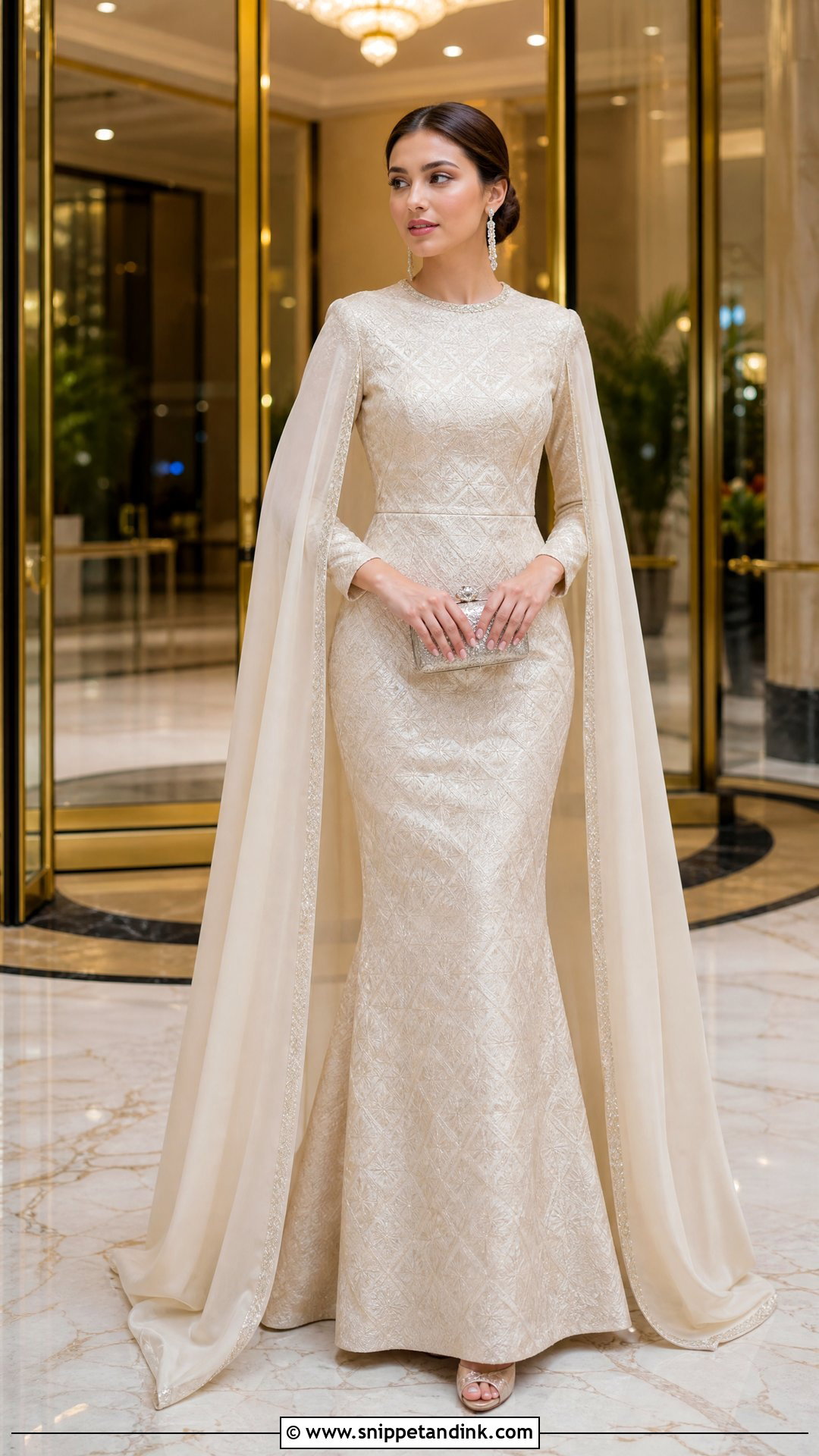
A champagne songket mermaid dress is glamorous, but songket doesn’t stretch, so the fit through hips and knees needs care. Ask for a flexible lining, a back slit or hidden pleats, and walk and sit at every fitting. I’d have the woven pattern placed on purpose, along the flare or the bodice, rather than crowded all over a tight shape. A detachable overskirt adds volume for portraits. For more coverage, add full sleeves, a higher neckline and a light cape. Champagne heels, a metallic clutch, long crystal earrings and a neutral hijab or sleek low bun finish it.
9. Lavender Songket Baju Kurung
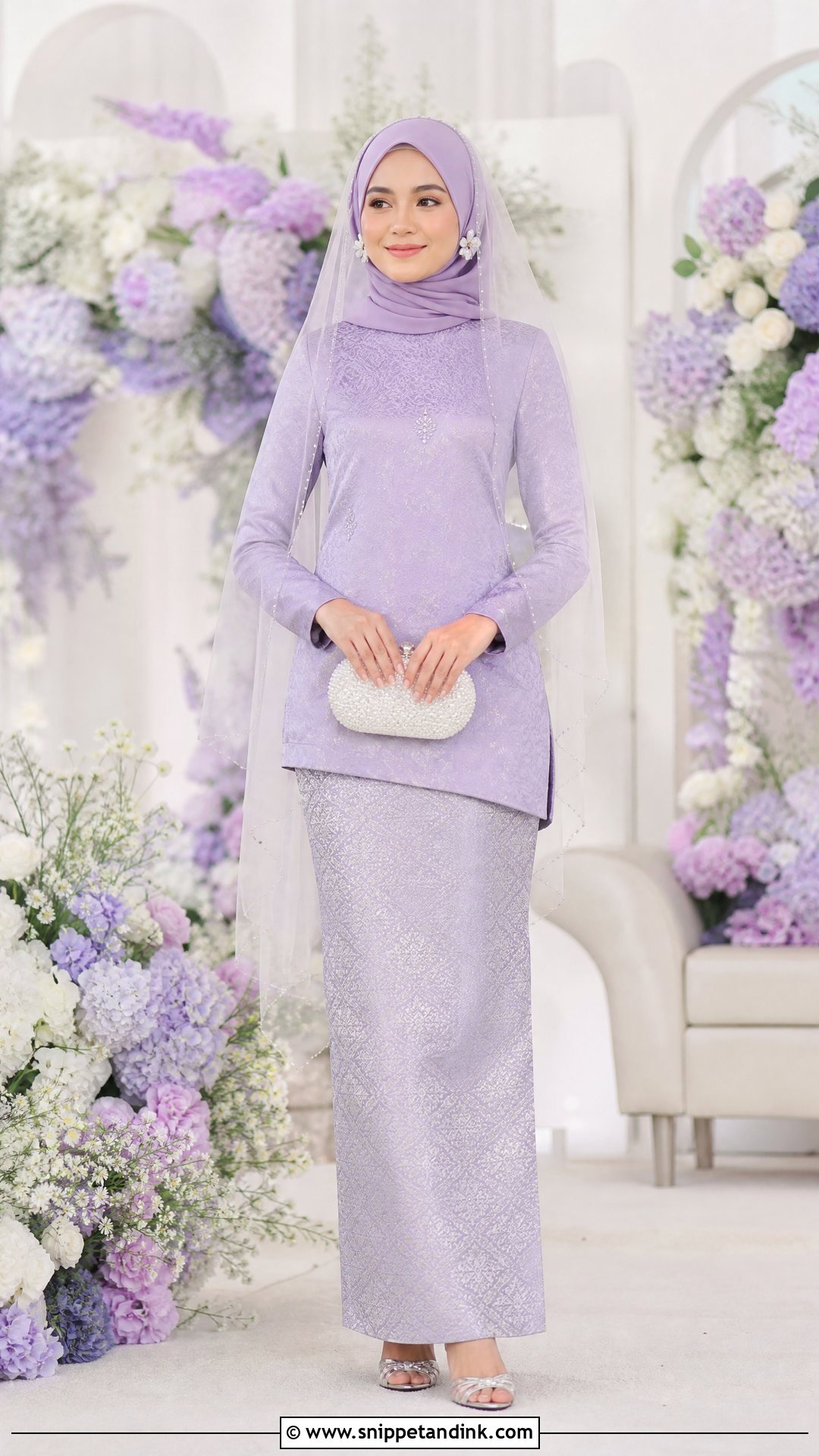
Lavender in a classic baju kurung reads fresh in daylight, as long as the cut stays simple; frills and lavender together turn sweet very quickly. Silver motifs give a clean, cool finish; pale gold warms it. A matching lavender hijab sits nicely under a shoulder-length veil. If the top is long and the fabric soft enough, a slim belt can define the waist, but on stiff songket a belt just creases. Silver heels, a white pearl clutch and small floral earrings, with defined lashes and a mauve-pink lip, suit a garden setting.
10. Black And Gold Songket Kebaya
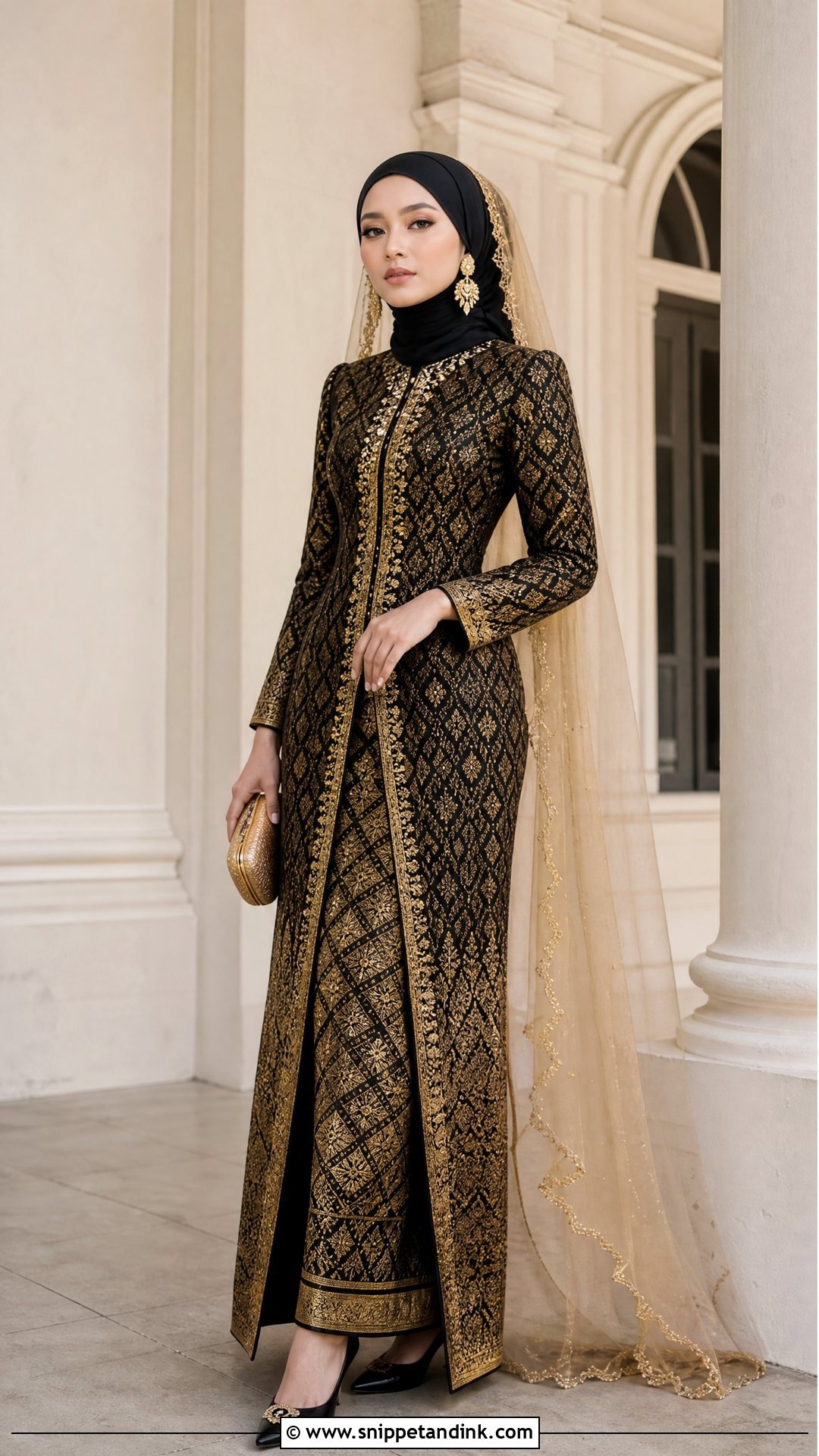
Black and gold is dramatic, and in some families black isn’t welcome at a wedding at all, so I’d check with both sides before falling in love with it. Where it’s embraced, a long black kebaya with gold woven panels, a structured waist and full sleeves over a songket skirt with a clear central motif is very striking. Black pointed heels continue the line; a small gold clutch and sculptural earrings add controlled shine. A matte black hijab with a light gold veil, or a sleek bun with one gold hairpiece, works. Keep the makeup defined and the lip muted.
11. Sage Green Songket Baju Kurung
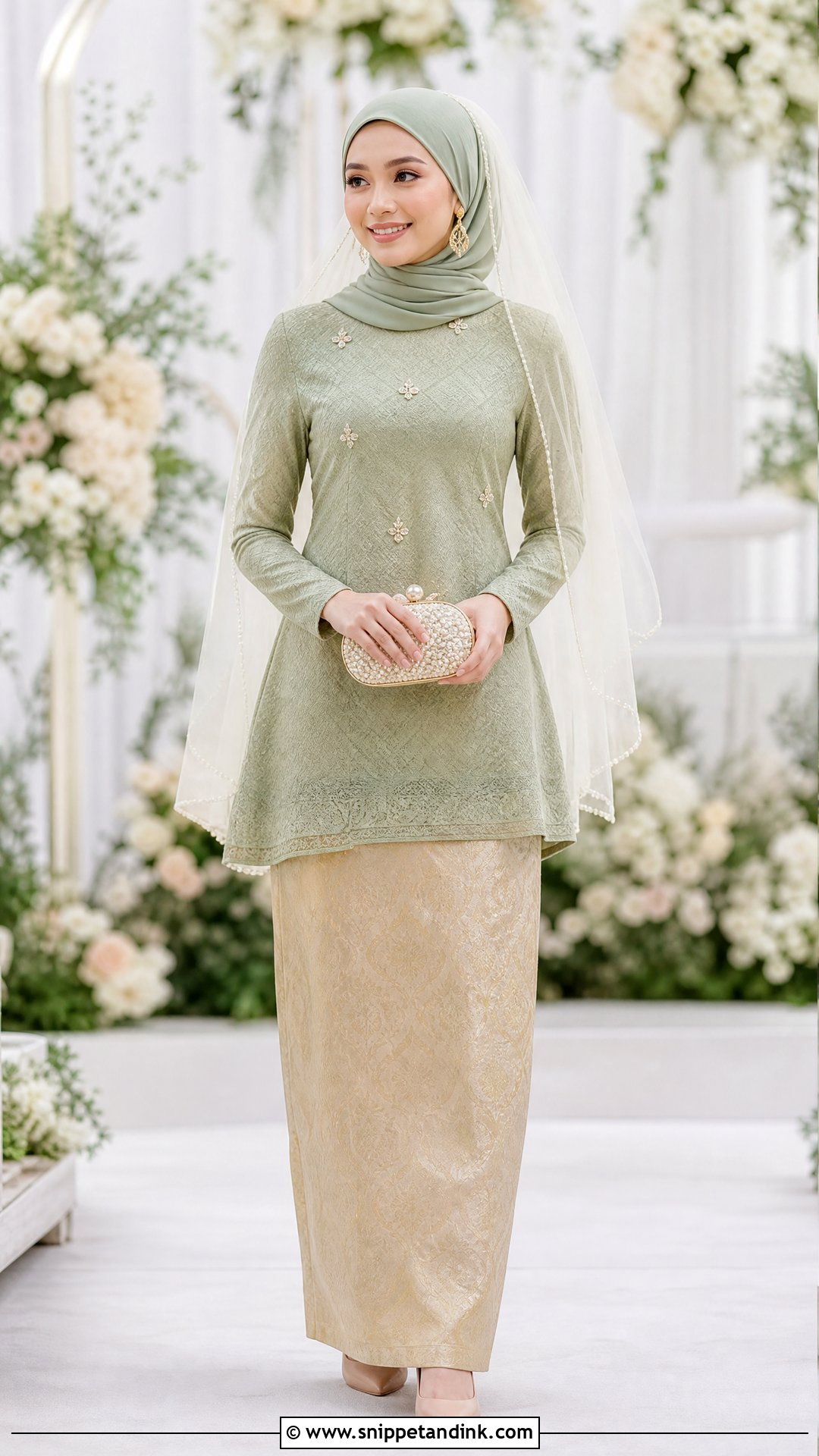
Sage is a calm, modern alternative to jewel tones, and it pairs naturally with champagne or soft gold motifs. The risk is that pale green can wash out the complexion in photos, so I always add warmth through peach-toned makeup. Choose a baju kurung with a slightly shaped waist, full sleeves and a straight woven skirt. A sage hijab in satin or matte chiffon with an ivory veil gives gentle contrast. Nude heels, a pearl clutch and fine gold earrings are enough; covered buttons or narrow gold piping can add definition without crowding the fabric.
12. Red Songket Bridal Set
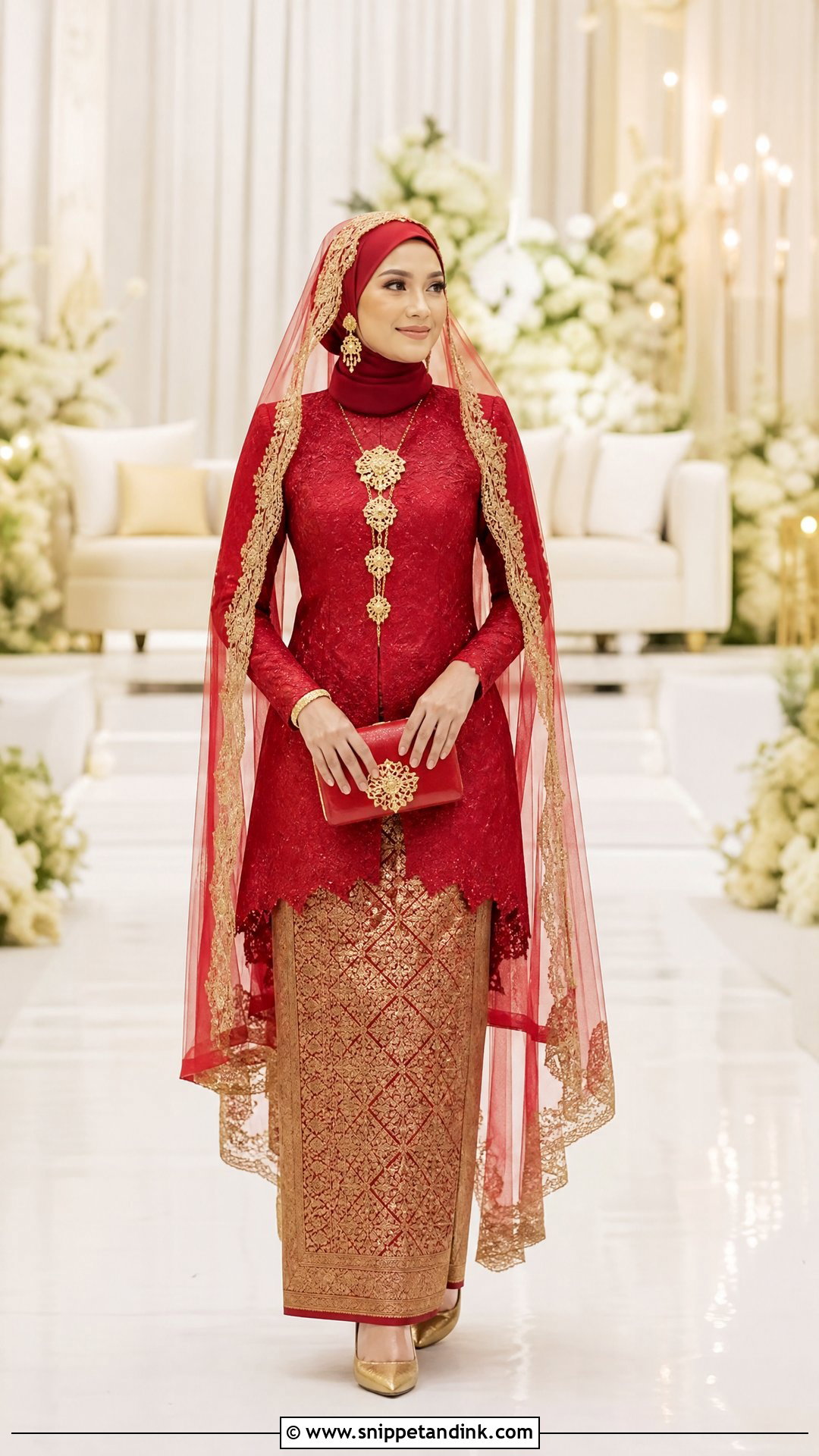
Red and gold is the most celebratory pairing on this list, and the simplest to get right if you stick to two colors. Choose a fitted long top or modern kurung with a floor-length skirt in antique gold weaving, with restrained embroidery at the neck and cuffs echoing the motif. Gold heels, a structured red clutch and traditional earrings complete it. A red hijab with a clean front drape goes under a gold-trimmed veil, or wear a low bun with a decorative comb. Red is hard on a camera’s sensor, so ask your photographer to watch the exposure; overexposed red loses all the weave detail.
13. Navy Songket Cape Dress
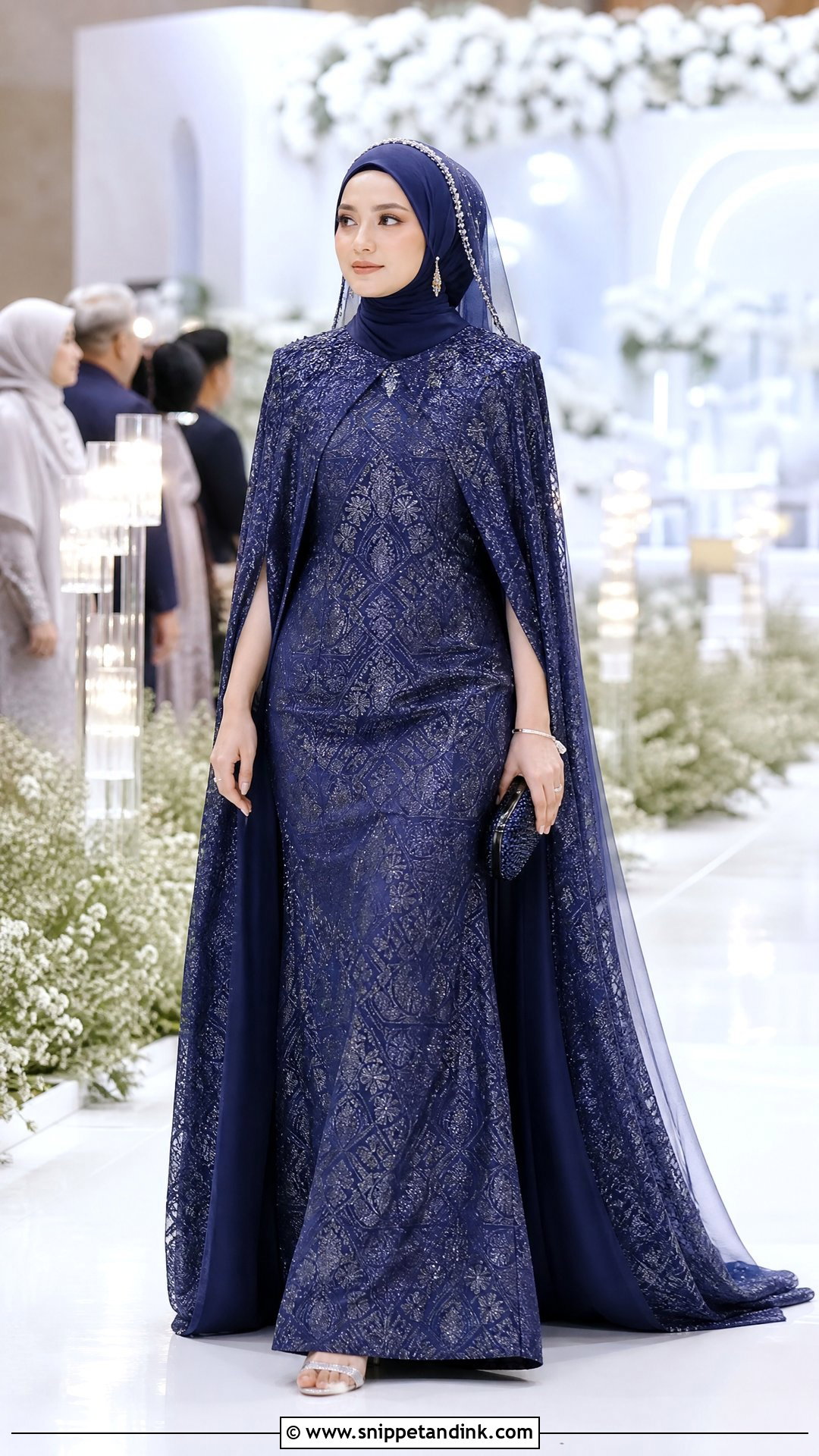
A navy cape dress gives coverage with movement. Start with a straight or lightly flared full-length dress that follows the body, then add a detachable shoulder cape in plain navy so the metallic panels still show beneath it. Plain fabric for the cape matters: a songket cape is very heavy and pulls on the shoulders by mid-reception. Silver heels, a navy crystal clutch, slim drop earrings and a simple bracelet complete it. Navy looks rich under bright venue lighting where black can lose detail, and the cape gives the entrance photos movement.
14. Powder Blue Songket Kebaya
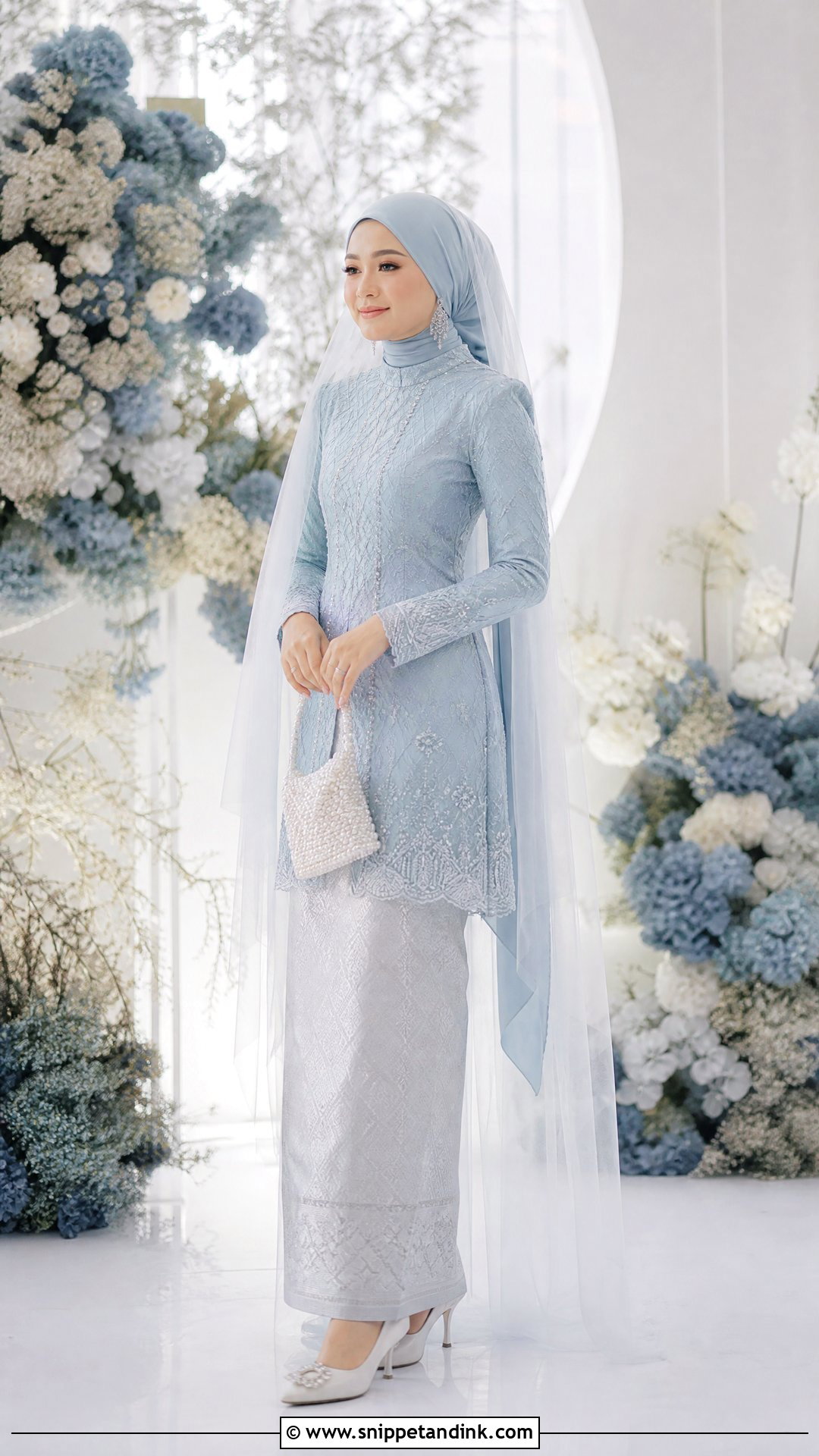
Powder blue gives a kebaya an airy, morning feel. Choose a long fitted top with a modest neckline and fine beadwork at the cuffs, over a matching sarong woven in silver or pale gold. White heels and a pearl handbag brighten it; small crystal earrings are enough. A powder blue hijab under an off-white veil with a simple border looks smooth. Pastels can look grey in shade, so I’d plan portraits in open light, and keep the makeup fresh and pink with softly highlighted skin. It suits morning or early afternoon ceremonies and silver table accents.
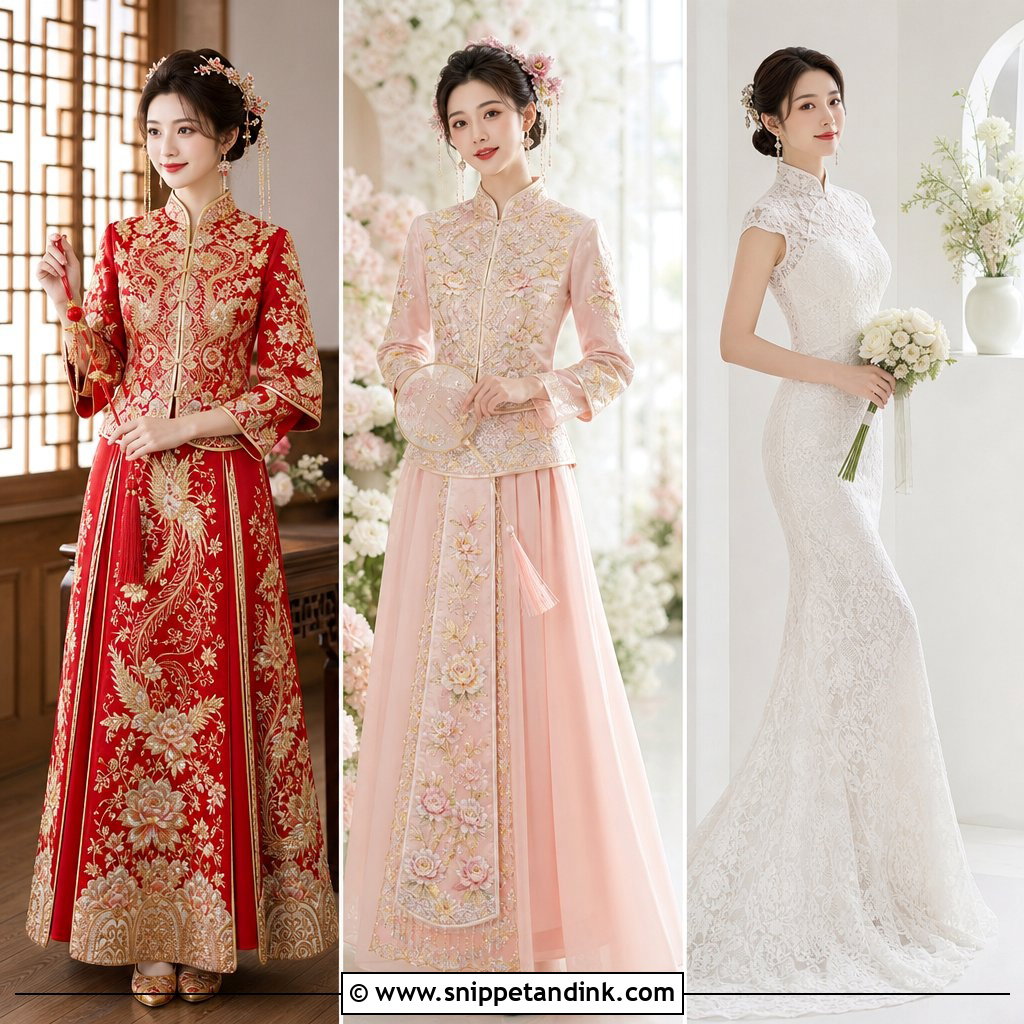

15. White Lace Top With Songket Skirt
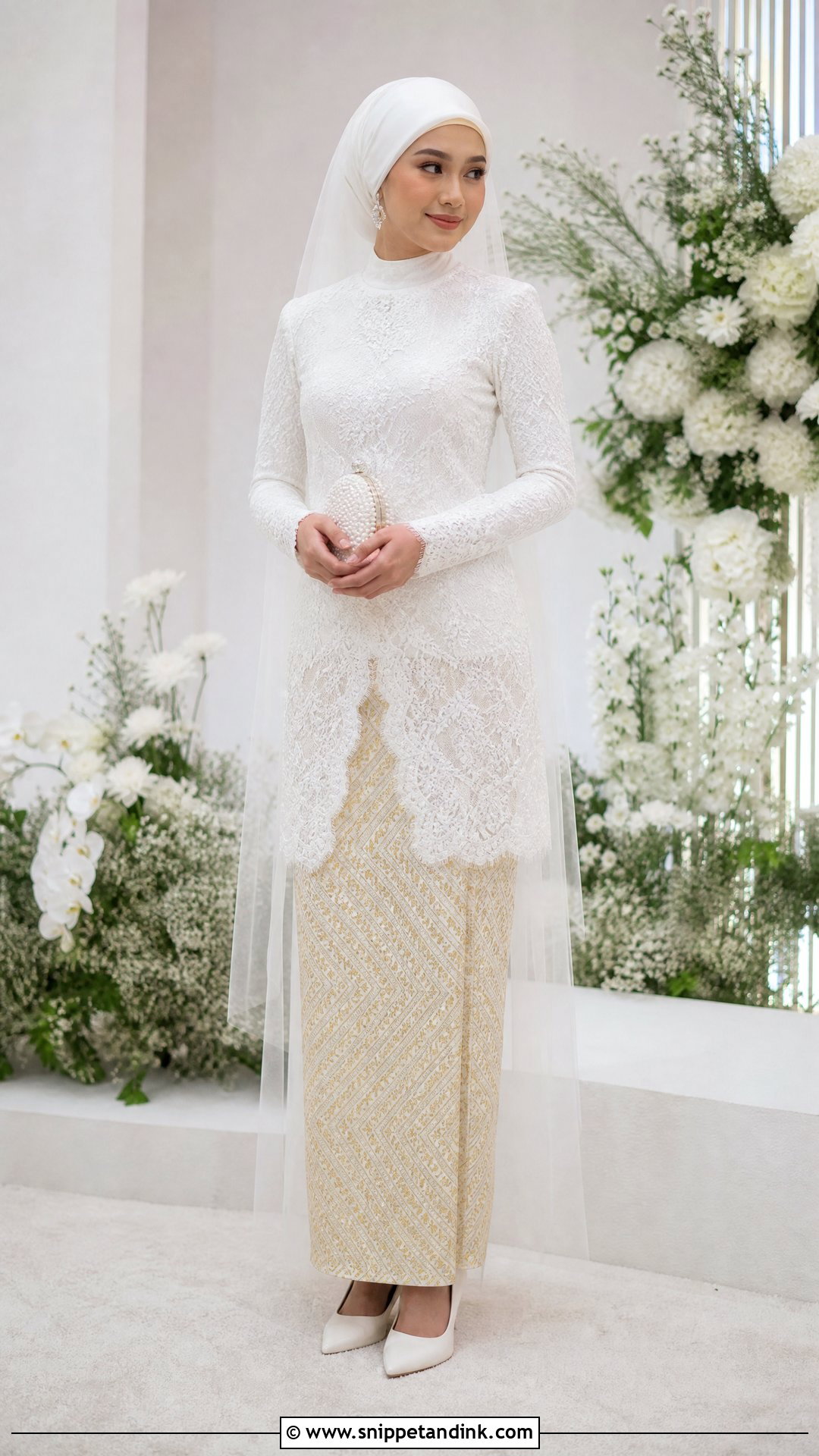
Lace and songket together work when one texture clearly leads. I keep the lace pattern smaller than the songket motif so the two don’t fight. Choose a long-sleeve lace kebaya or fitted blouse with an opaque lining and a neat waist, over an ivory, gold or pastel skirt with a visible woven border. A plain white hijab keeps both textures readable, and a sheer veil lengthens the outline; without a hijab, a low bun with pearl pins. White pointed heels, a small pearl clutch and delicate earrings finish it, which makes it a natural fit for a solemnization.
16. Bronze Songket Kebaya Labuh
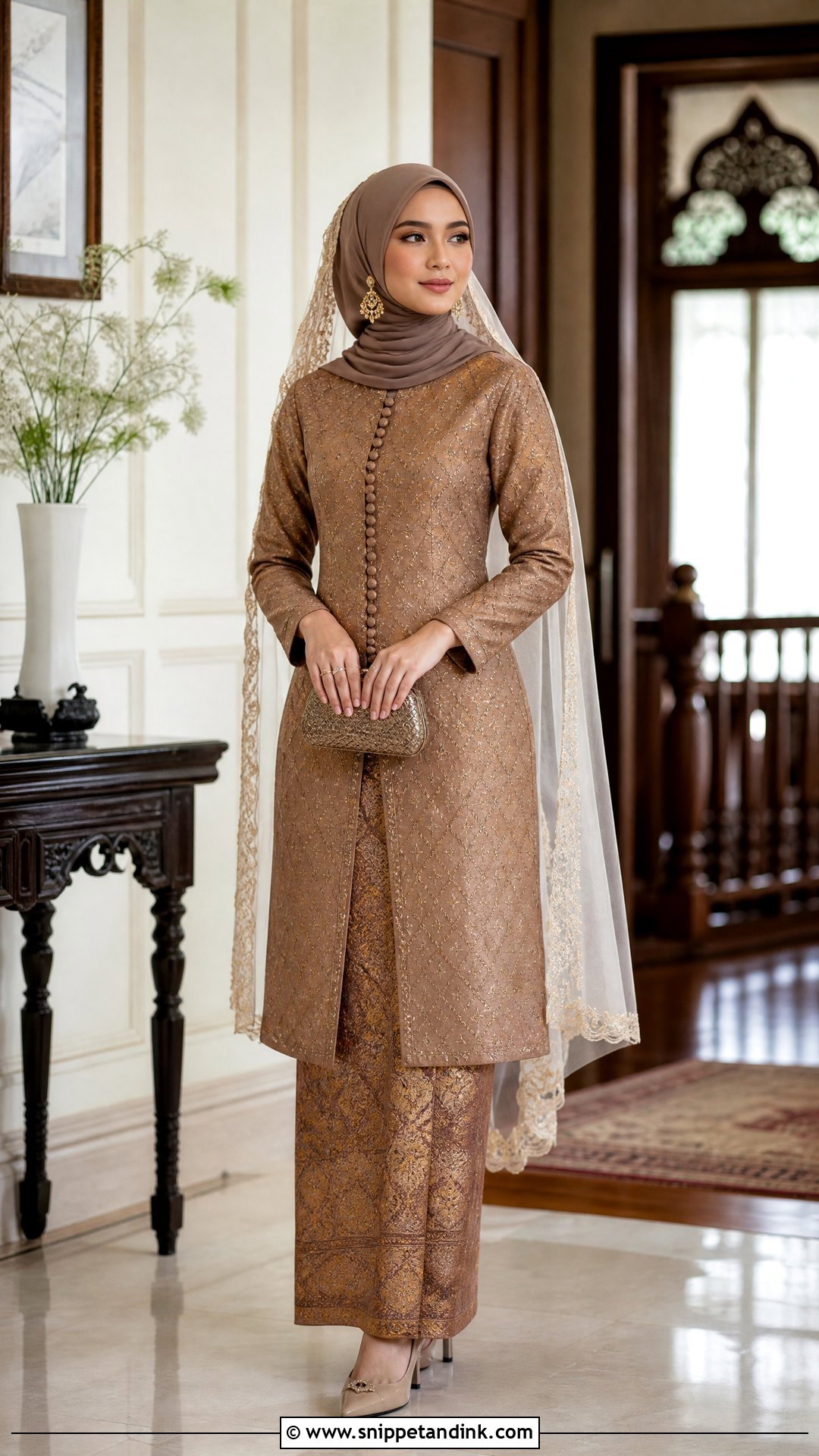
Bronze songket brings warmth to a traditional kebaya labuh outfit, the long kebaya that falls well below the hip. Covered buttons, structured cuffs or subtle embroidery finish it. The sarong should be wrapped so the strongest motif shows at the front, which is easier with a pre-sewn sarong than a loose cloth. Dark nude heels, a bronze clutch and antique gold earrings, with a mocha hijab and an ivory veil, keep the tones tight. Warm brown eyes and a terracotta lip suit heritage buildings and wood interiors.
17. Teal Songket Kurung Moden
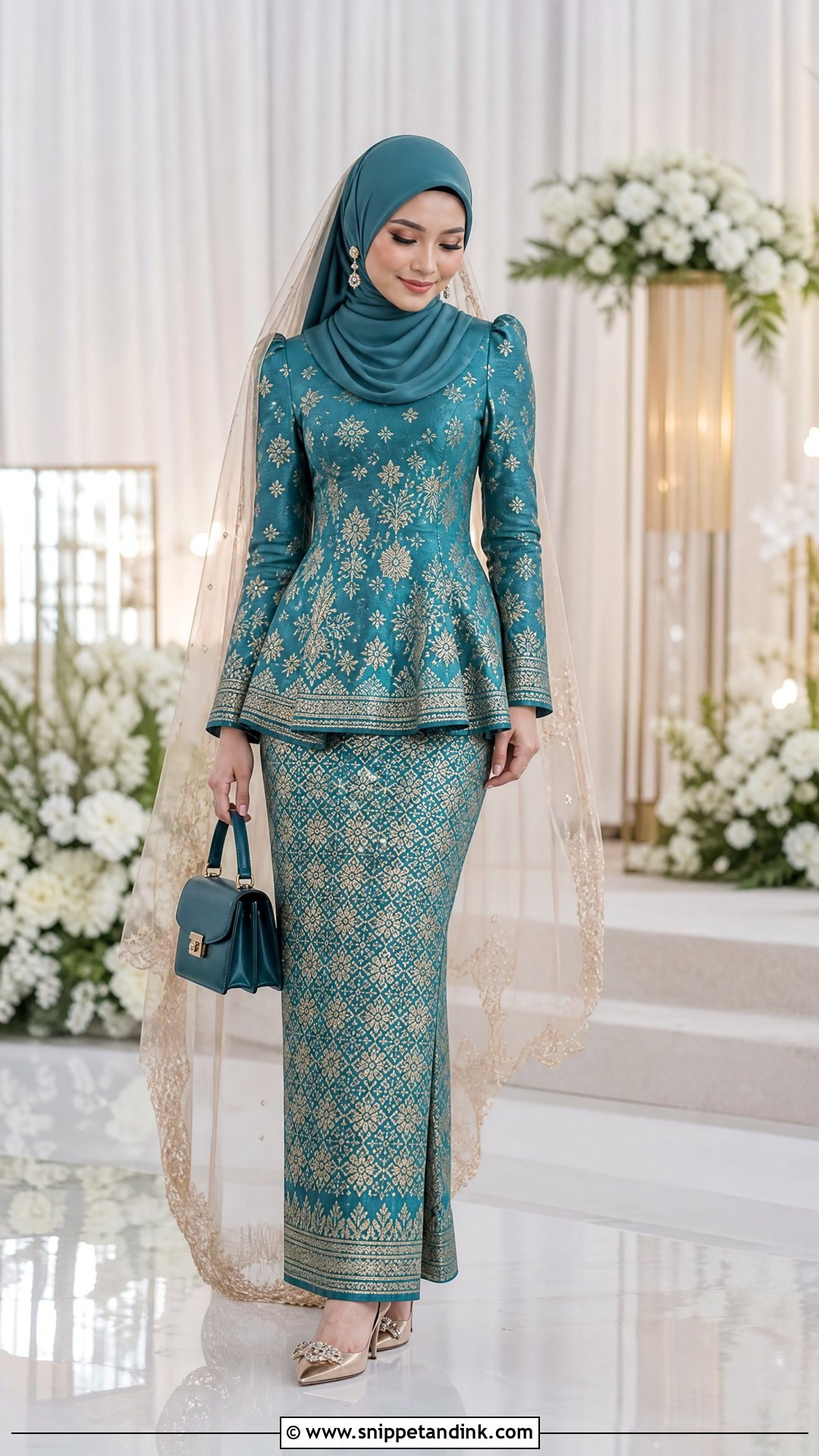
Teal sits between blue and green and catches the eye in any room. In a kurung moden, I like princess seams, a modest neckline and a slightly flared hem over a straight skirt, with gold or silver motifs chosen to match the jewelry you already own. Metallic heels, a structured teal bag and drop earrings complete it. Add a matching hijab with a champagne veil, or wear a neat side-parted bun with one pin. Saturated teal makes skin look either glowing or sallow, so test it against your face in daylight before ordering.
18. Purple Songket Bridal Gown
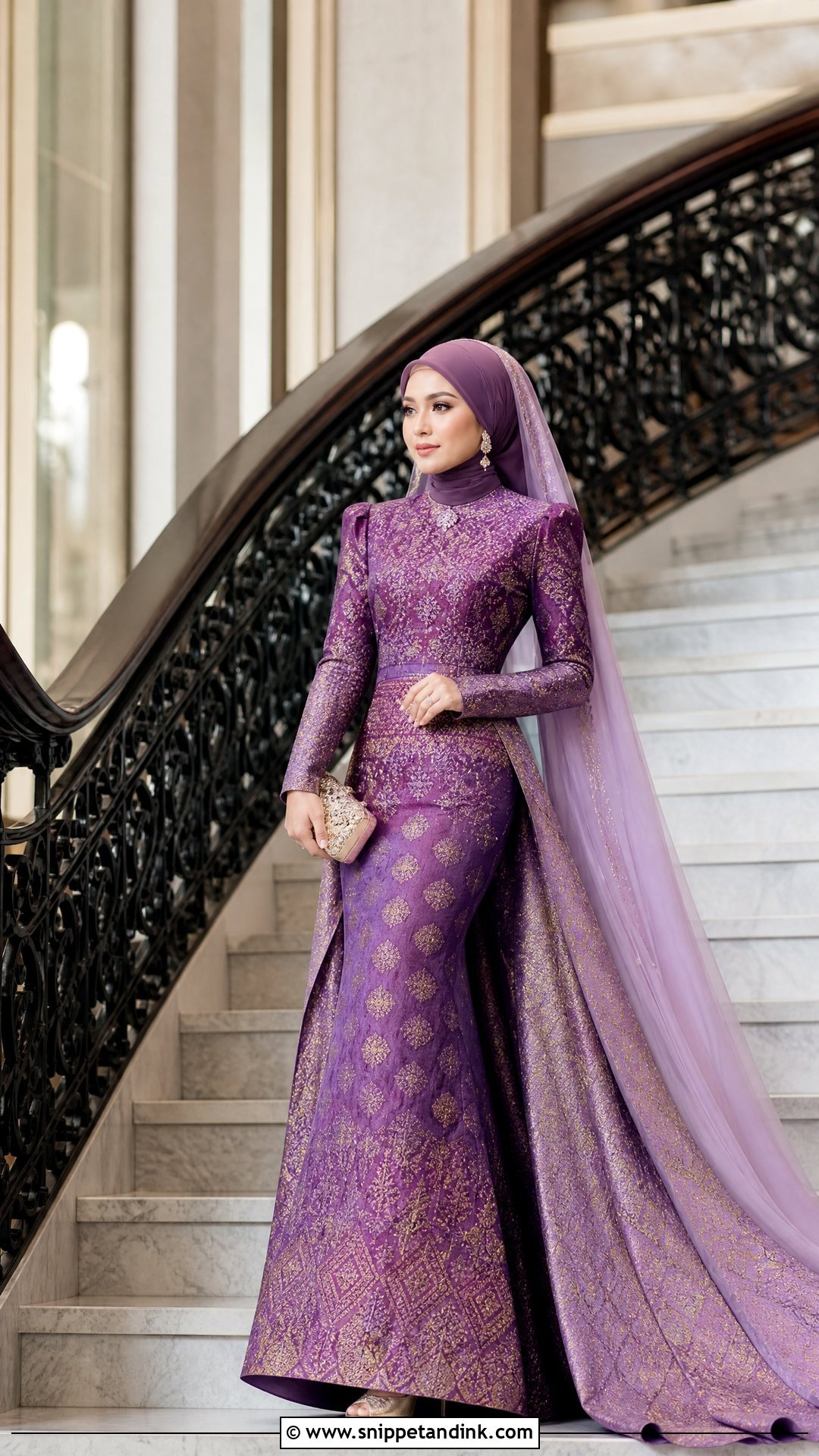
Plum or royal purple with metallic motifs across an A-line skirt has real presence. A structured bodice, long sleeves and a modest neckline balance the skirt’s volume. Songket is heavy enough that I’d always make a train removable rather than weaving extra length into the skirt; the bride will thank you by the second hour. Gold heels, a jeweled clutch and medium earrings suit it. A matte purple hijab with a lighter veil keeps the color from feeling heavy; otherwise a polished updo with a small gold comb. Bronze makeup and a berry lip finish it.
19. Peach Songket Peplum Set
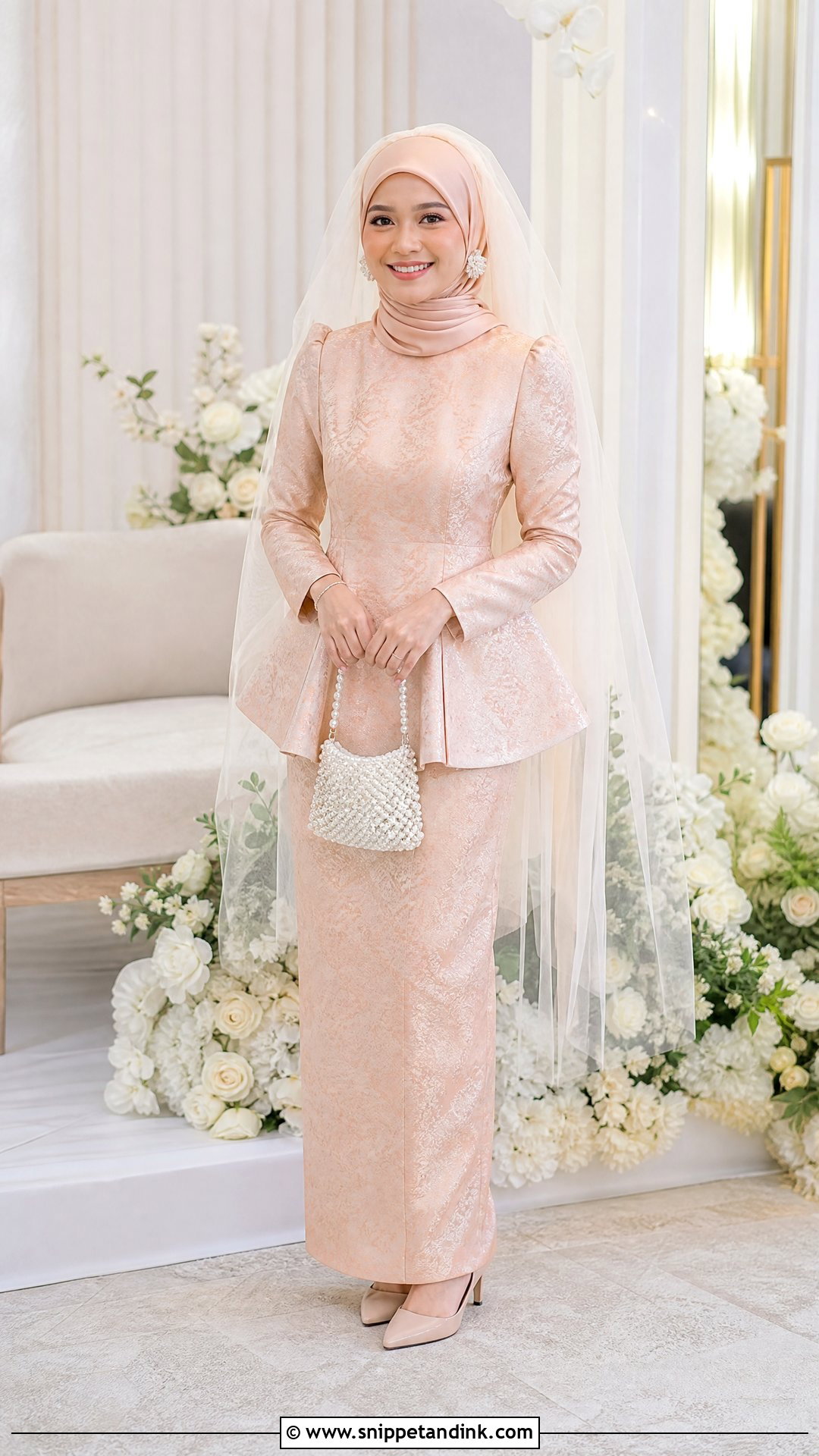
Peach is cheerful without losing formality, and it flatters warm skin especially well. Choose a smooth fitted top with full sleeves and a softly structured peplum ending at the hip, over a straight peach skirt woven with champagne or rose gold threads. Large embellishments break the peplum’s clean line, so I keep them off. Nude heels, a pearl mini bag and fine floral earrings keep the palette light; a peach hijab under an ivory veil adds gentle contrast. Coral blush and a natural pink lip suit a daytime reception or smaller wedding.

20. Matching Bride And Groom Songket Outfit
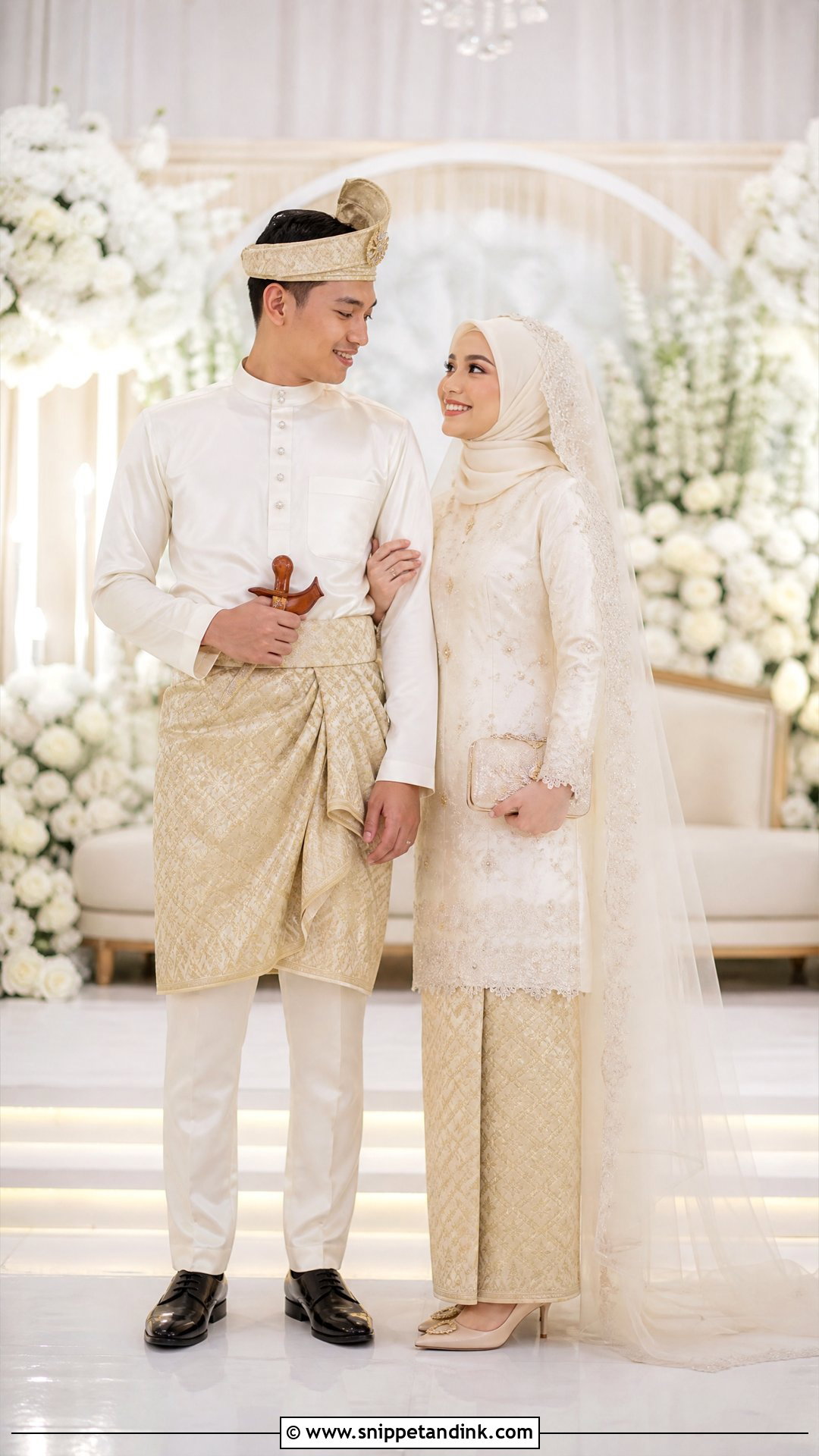
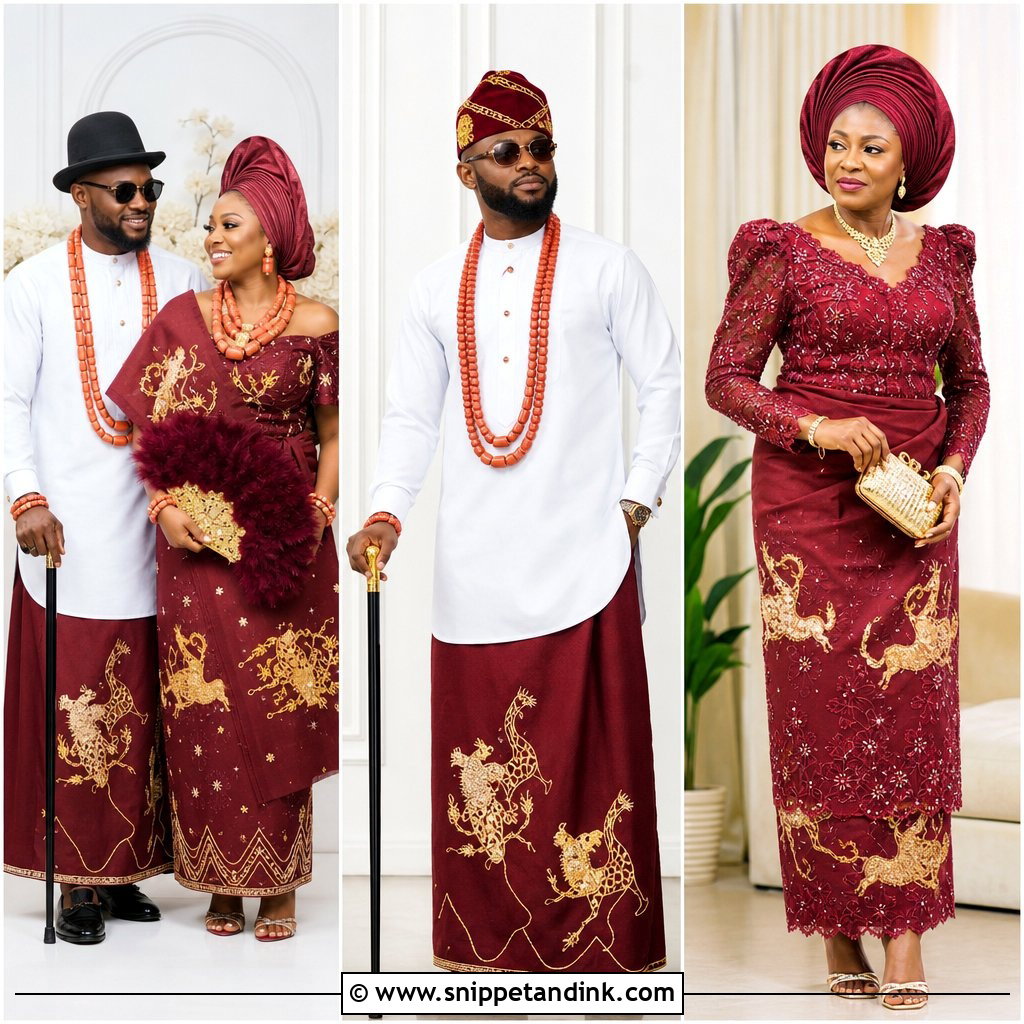
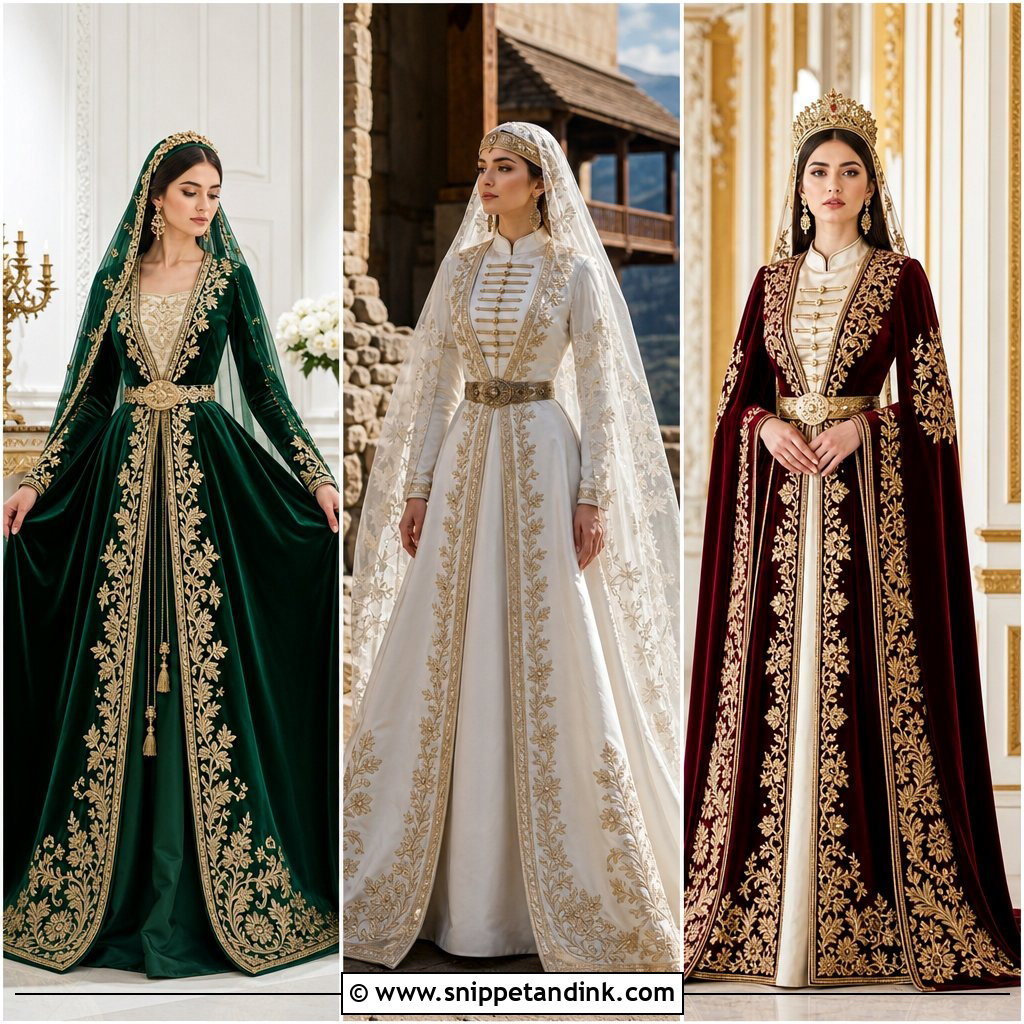
Matching a couple in songket works best when the outfits share one thread color or motif and nothing more. The bride might wear an ivory baju kurung with gold songket, matching heels, a structured clutch and a light veil, while the groom wears an ivory baju Melayu with a gold songket samping, formal shoes and a traditional headpiece. When the samping is cut from the same weave as the bride’s skirt, I check that the motif runs the same way on both. Keep the tailoring equally sharp on both outfits, with room to move. You can also flip the balance, with the bride in a stronger color and the groom in a neutral base.
Rolling, Not Folding: Songket After the Wedding
Metallic thread is the fragile part of songket. Sharp folds crack it over time, damp tarnishes it, and perfume or sweat left in the cloth dulls the shine.
- Air the outfit inside out for a day after the wedding before putting anything away.
- Spot-clean only, or use a cleaner who handles metallic and handwoven textiles. Never machine wash or soak it.
- If you must press it, iron on the reverse at a low setting with a cotton cloth between the iron and the fabric.
- Roll the cloth around a tube wrapped in acid-free tissue or plain cotton instead of folding it, and store it in a breathable cotton bag, not plastic.
- Keep it somewhere dry and dark, and unroll it every few months so the fibers can rest.
Sewn garments that can’t be rolled should hang on a padded hanger with tissue in the sleeves, covered with cotton. Treated this way, a good songket can be worn again by a daughter or niece years from now.
Letting the Weave Lead the Outfit
Songket can carry a soft solemnization look in ivory or a dramatic reception in jewel tones and structured gowns. Pastels belong in daylight; deeper colors come alive in the evening. Whatever the color, the same rules hold: precise tailoring, a comfortable lining, room to move and motifs placed on purpose. Shoes, jewelry, veils, hijabs and bags should support the cloth, never compete with it. Pick the outfit that feels like you, and let the weaving, which someone spent a very long time making, be the thing everyone remembers.
You'll Like These Ideas:



Leave a Reply