
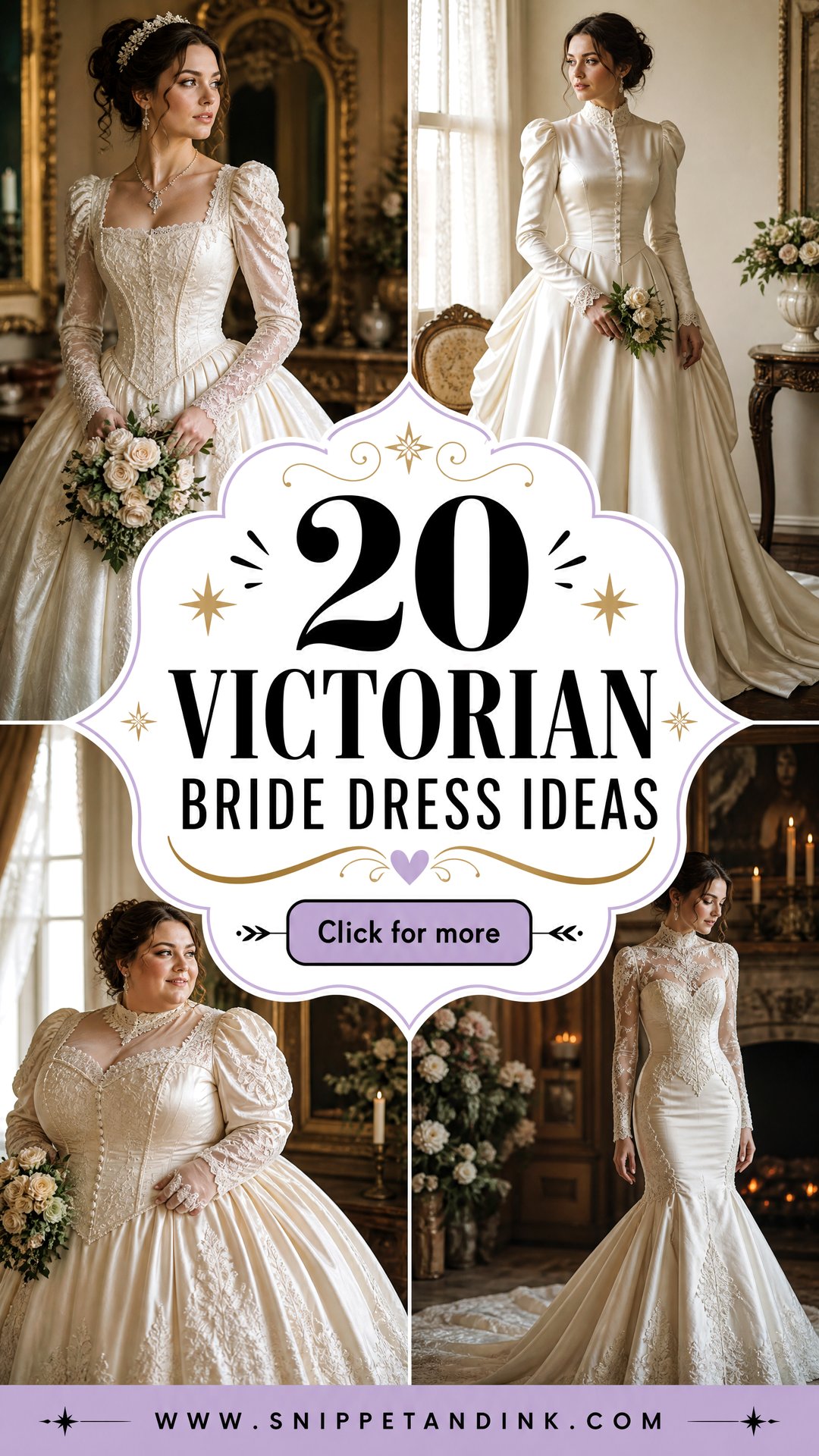
High collars, fitted bodices, long lace sleeves, covered buttons, full skirts and sweeping trains: the vocabulary of a Victorian bride is very recognizable, and it gives a wedding look a sense of history straight away. How dramatic it gets depends on fabric, construction and what you pair with it. The era’s shapes are more versatile than people assume, too. Corsetry, Basque waists, vintage lace, pleated skirts and high necklines all sit comfortably in bridal design today. In my fittings, these dresses range from ornate ball gowns to light garden dresses and tailored two-pieces. Each of the twenty looks below comes with the shoes, veil, jewelry and small finishing details I’d put with it.
Real Antique Gown or a New One Made in the Style?
Some brides want an actual nineteenth-century dress, not an inspired one. I understand the pull, but true antique gowns come with limits that a new dress doesn’t, and it’s worth knowing them before you fall in love at an auction.
What to check on a genuine antique
- Size: period dresses were made for corseted, often smaller frames, and seam allowances are narrow, so letting one out is rarely possible.
- Silk condition: many silks of the era were weighted with metal salts and now split along folds. Hold the fabric to light and look for fine cracks.
- Lace and stains: yellowing, underarm marks and foxing can sometimes be reduced by a textile conservator, but never with home bleach or a standard dry cleaner.
- Strength: a dress that survives being tried on may not survive eight hours of dancing.
My usual advice is a middle path. Wear a new gown made in the style, and bring the antique in as a smaller piece, such as a lace collar, a veil edge or a sash, where it carries meaning without taking all the strain.
If you do wear the original, have a conservator assess it first, keep alterations reversible with hand basting rather than cutting, and plan a lighter second dress for the reception.
1. High Neck Lace Victorian Bride Dress
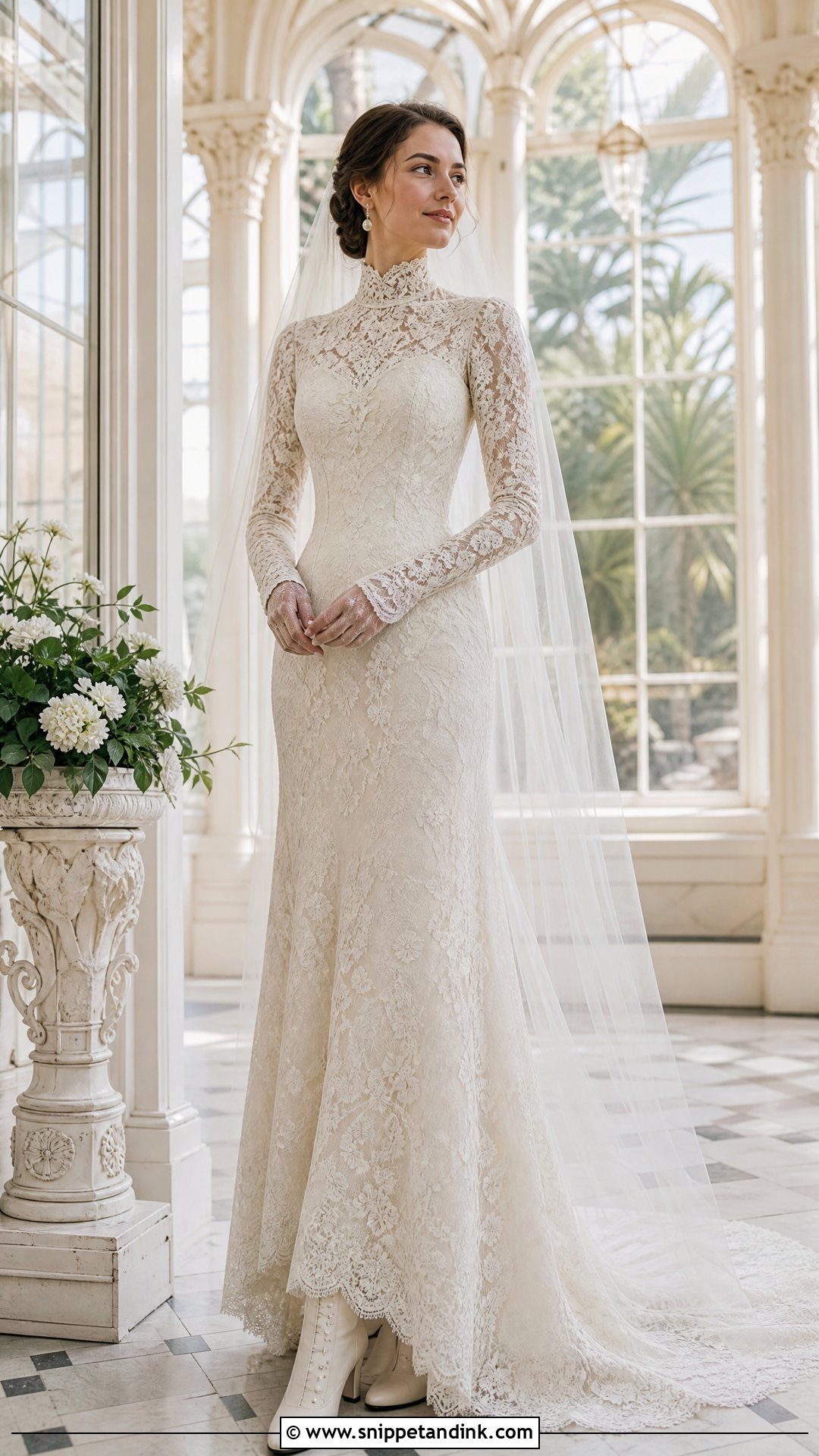
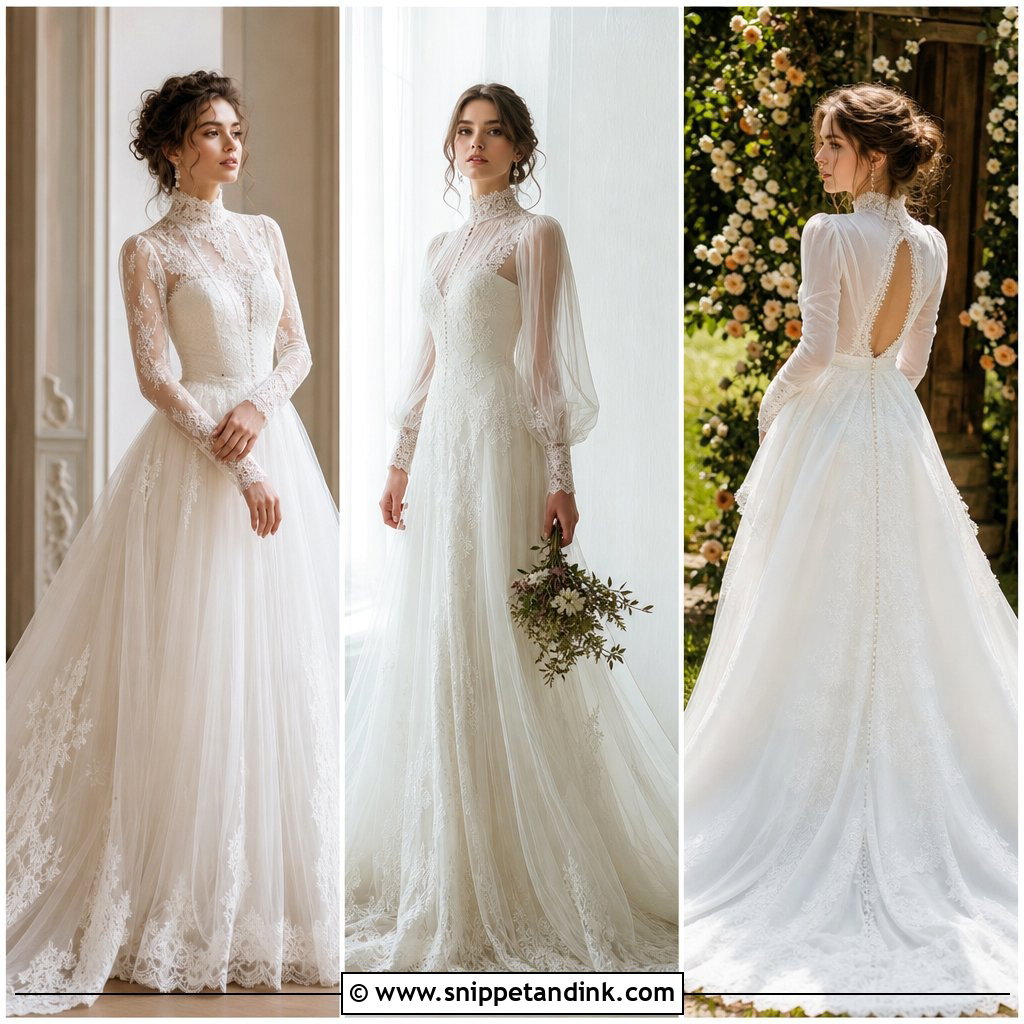
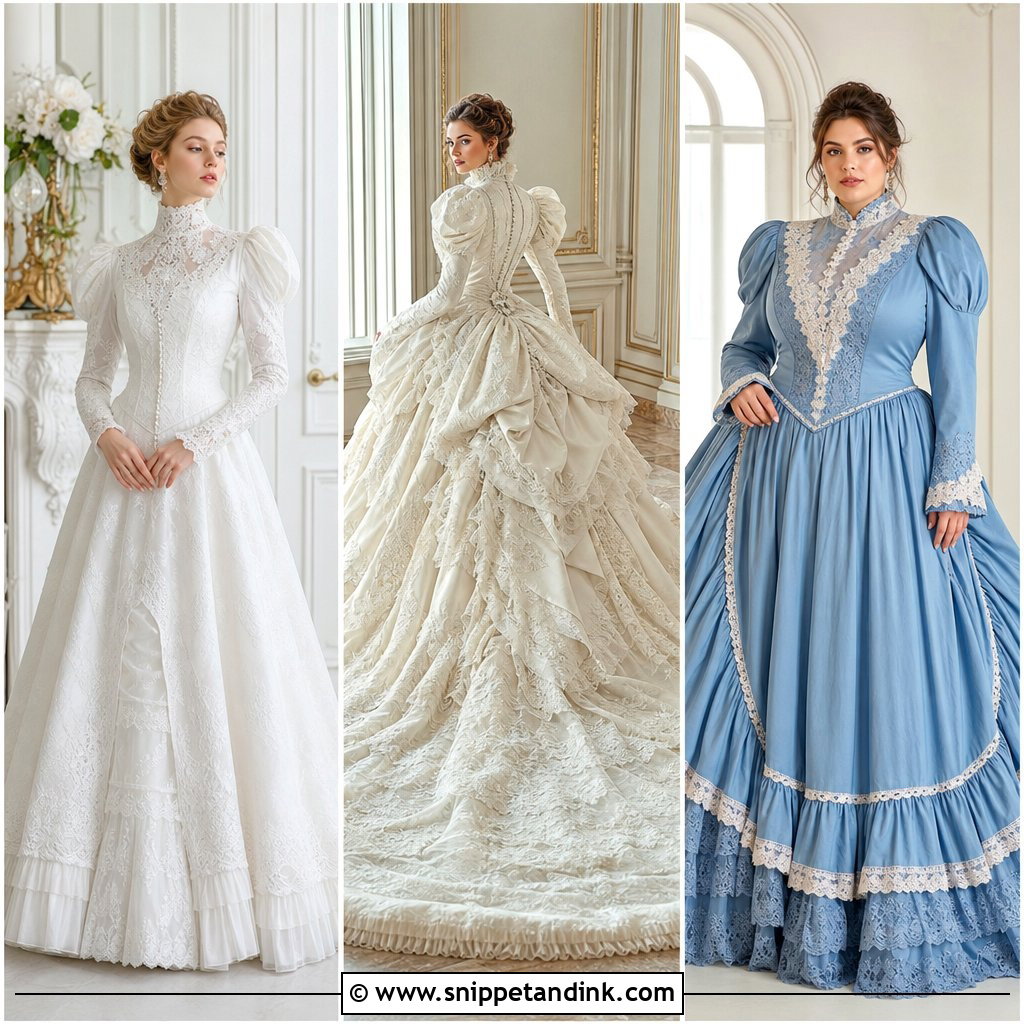
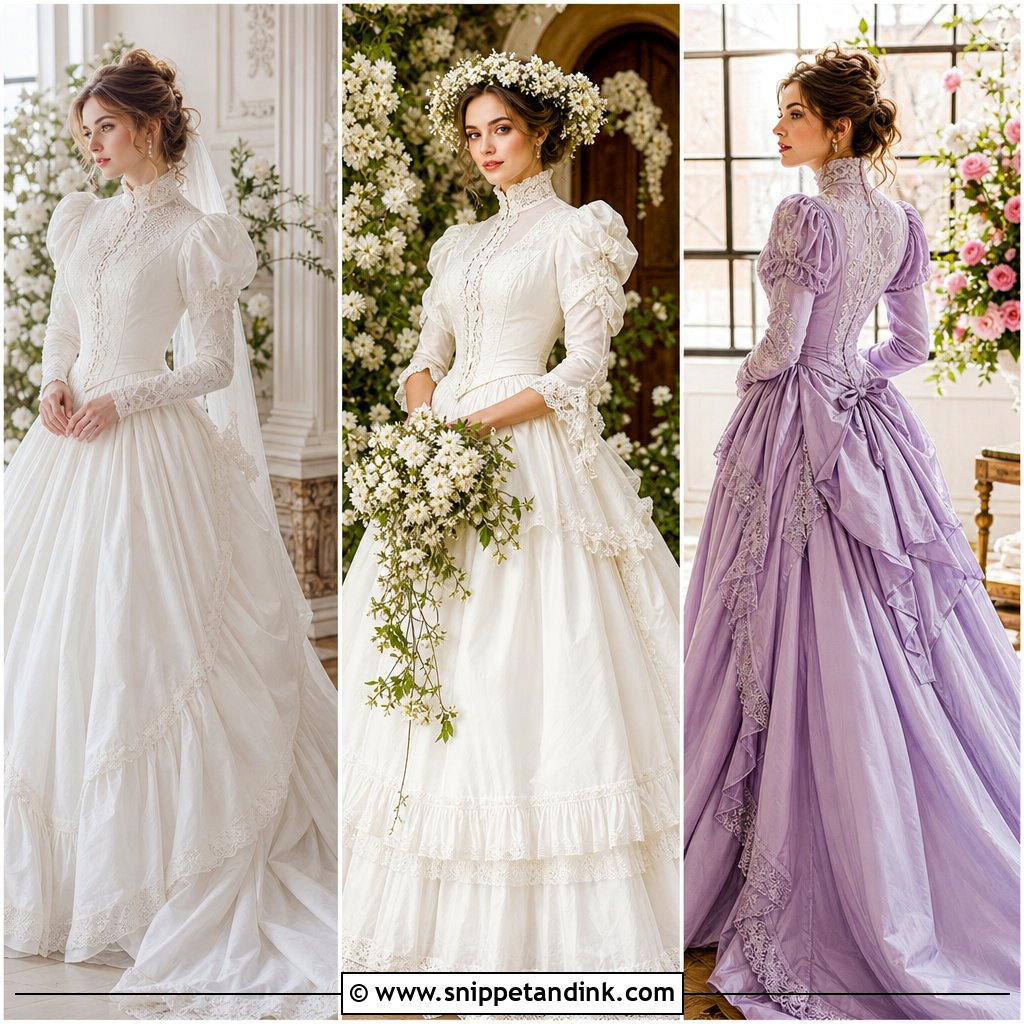
A high-neck lace gown is the era in a single garment. I’d look for a scalloped collar, sheer long sleeves and covered buttons down the back. Put white floral lace over an ivory lining and the pattern stands out more, with a slightly antique cast. The softly flared skirt keeps petite brides from disappearing. Pearl drop earrings, ivory button boots, a fingertip veil under a smooth low bun and a small bouquet of white roses with trailing greenery complete it. No necklace; the collar already frames your face. Estates, conservatories and historic hotels suit it.
2. Victorian Bride Dress With Puff Sleeves
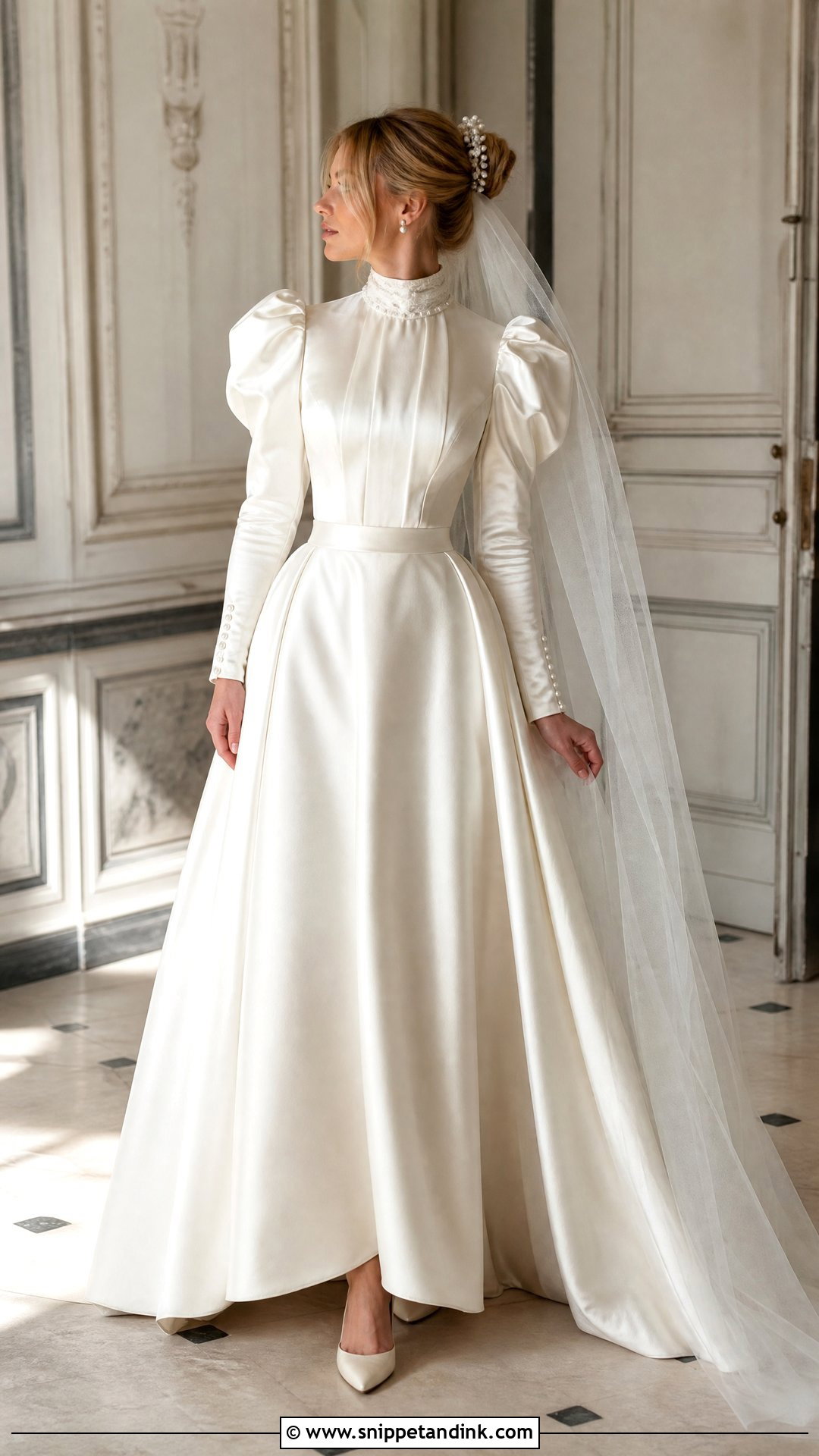
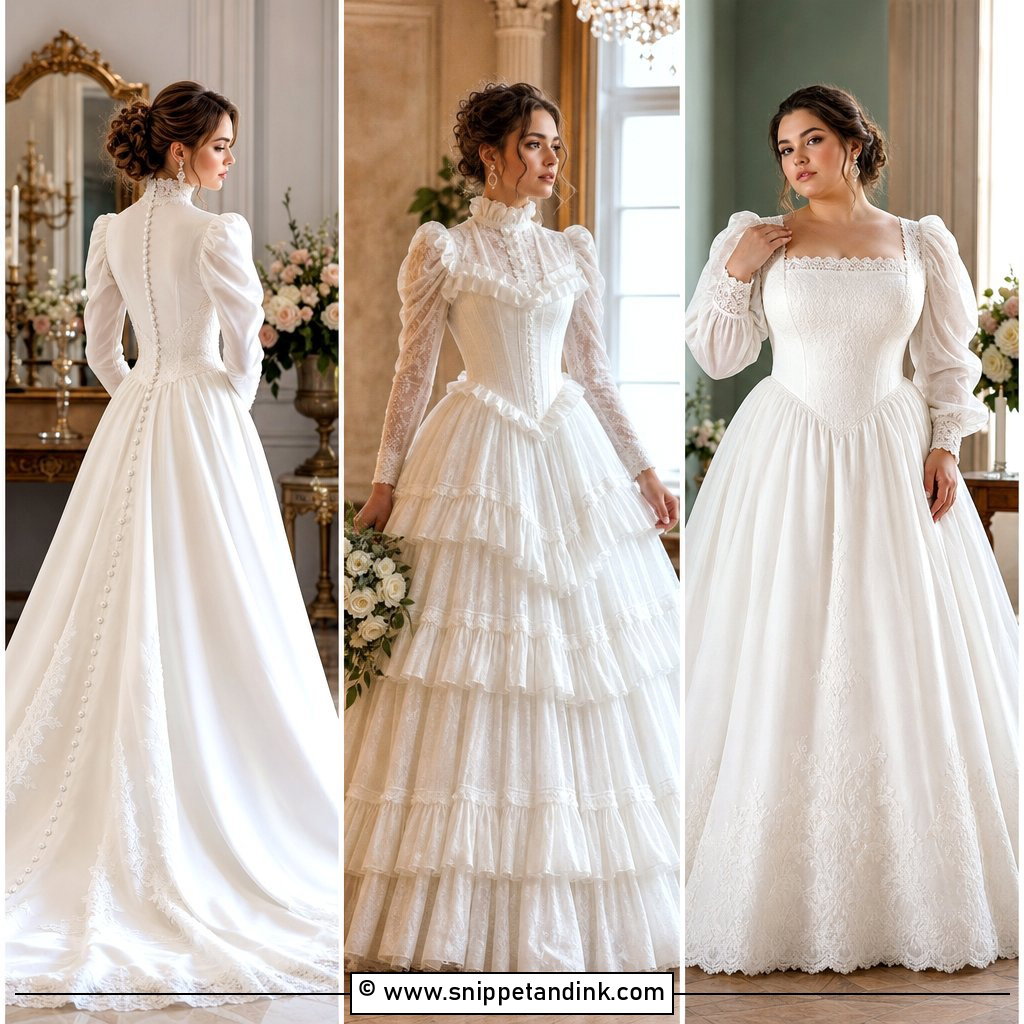
Puff sleeves are where most brides start when they want a hint of the period. The good ones hold their volume at the shoulder and taper neatly to the wrist, finished with small pearl buttons at the cuff. A fitted satin bodice and natural waist balance the sleeves, and an A-line skirt moves easily. Pointed ivory pumps, a pearl comb, delicate studs and a medium tulle veil that stops short of the sleeves suit it, with cream peonies or garden roses. The fullness should be scaled to you. I often have a seamstress take out a little of the sleeve head on smaller frames, which keeps the character and loses the costume.
3. Victorian Bustle Wedding Dress
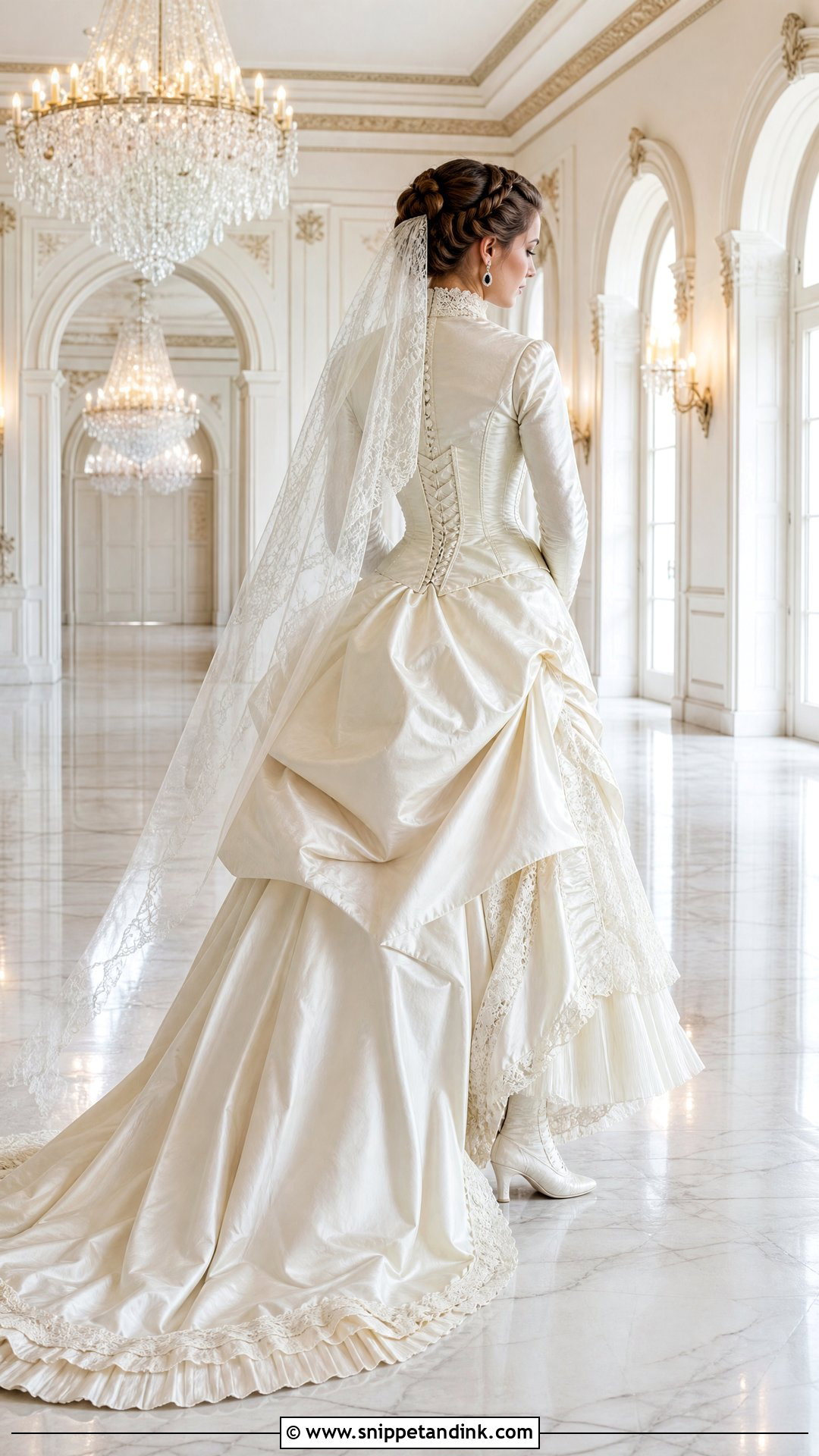
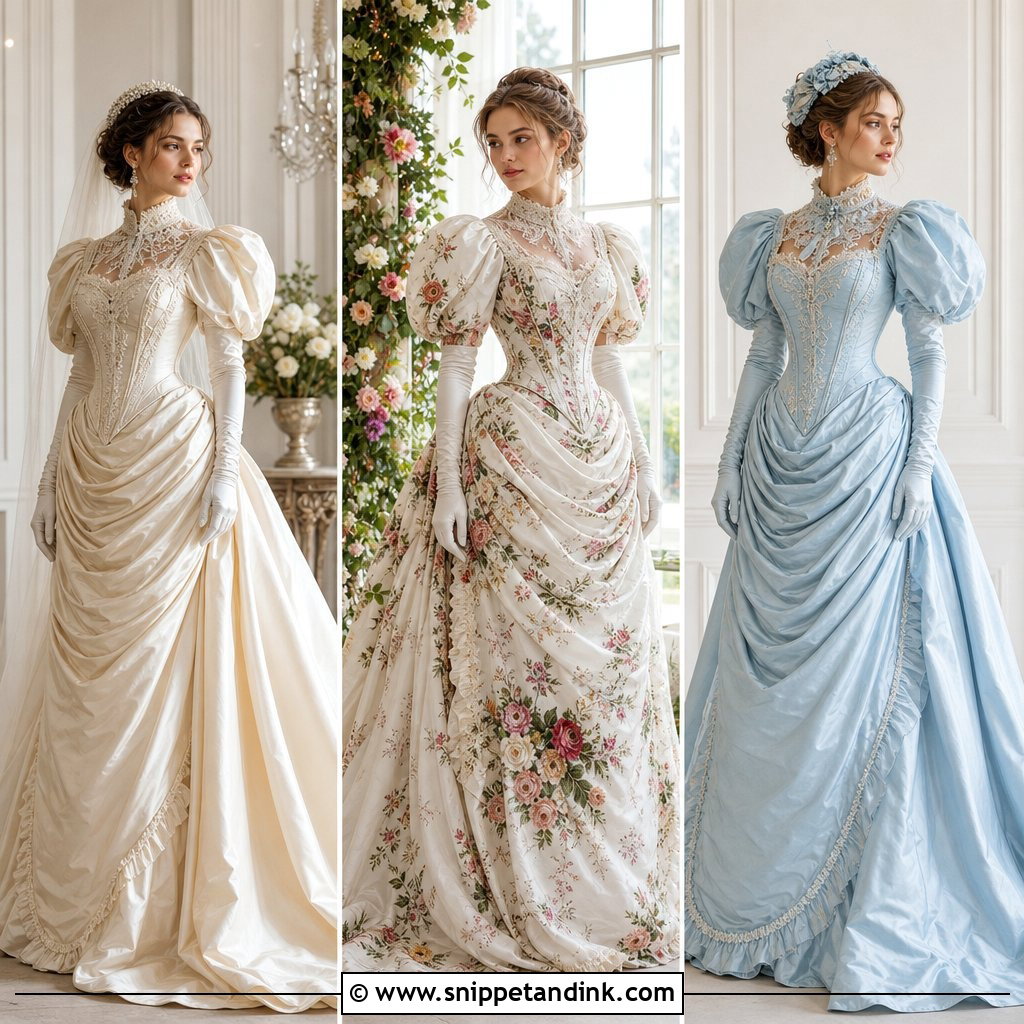
A bustle wedding dress puts all the fullness at the back. For a wedding today, I’d keep the bustle gently structured rather than padded, with a smooth fitted bodice, defined waist and layered overskirt. Draped satin or silk shows the folds well, especially trimmed with narrow lace or covered buttons. Lace-up ivory boots stay comfortable under the long hem; add a chapel veil, cameo earrings and a braided chignon, plus a small structured bouquet. Ask the seamstress for hidden loops or ties so the train can be lifted for walking and dancing. Ballrooms and historic mansions give it room.
4. Victorian Corset Wedding Dress
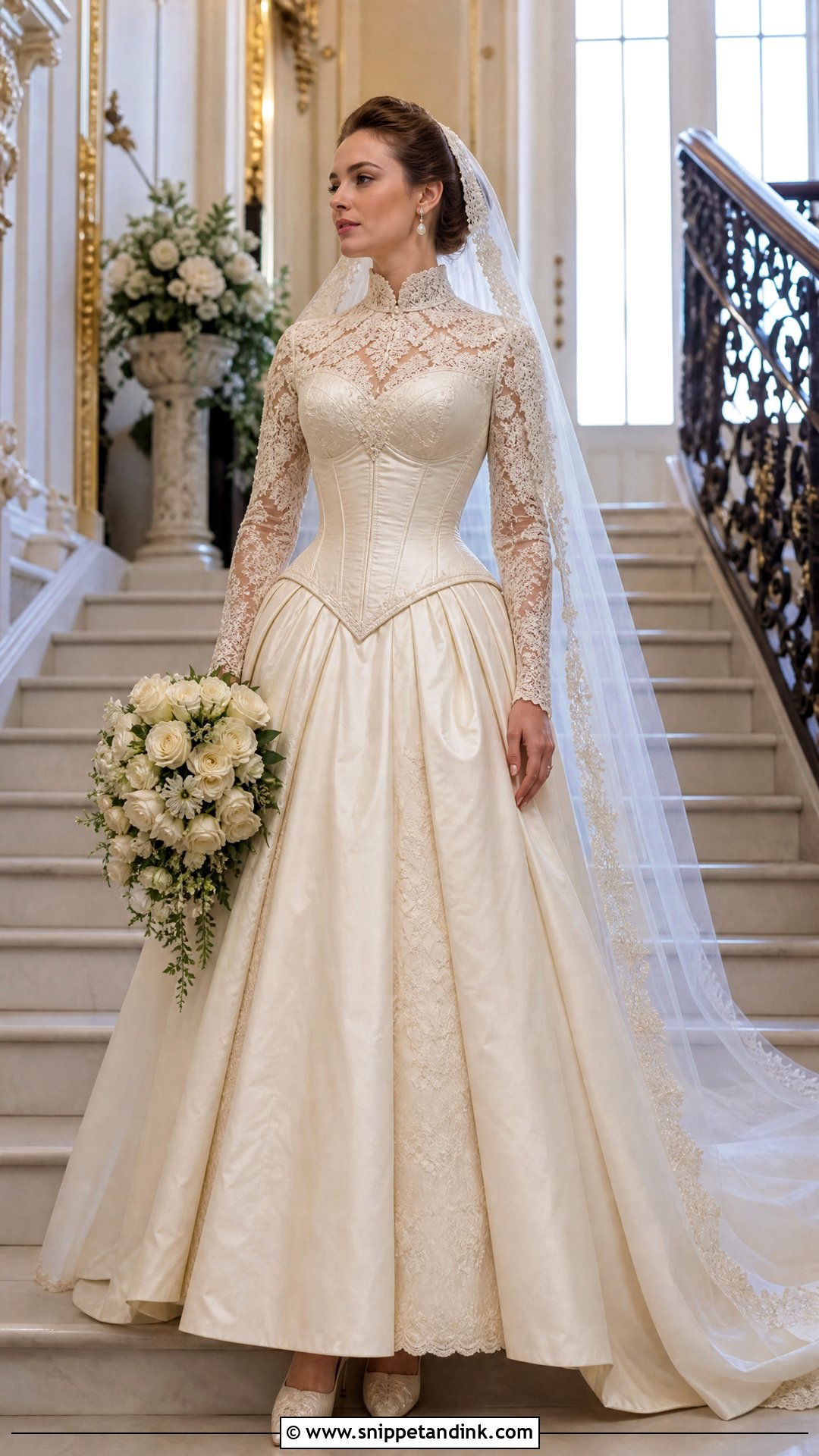
Love the structure but not the history lesson? A Victorian corset gown pairs a sculpted bodice with a flowing skirt, and a modest neckline and lace panels keep it bridal rather than exposed. A Basque waist draws a long line through the torso, balanced by a full silk or satin skirt. Closed-toe ivory heels, pearl earrings and a cathedral veil edged in subtle lace complete it, with soft curls in a low updo so it never looks severe. Carry cream roses tied with silk ribbon. Modern bridal corsets are built to support, not to reduce your waist. If the fitter is lacing you tighter to change your shape, that is the moment to say stop.
5. Victorian Ball Gown Wedding Dress
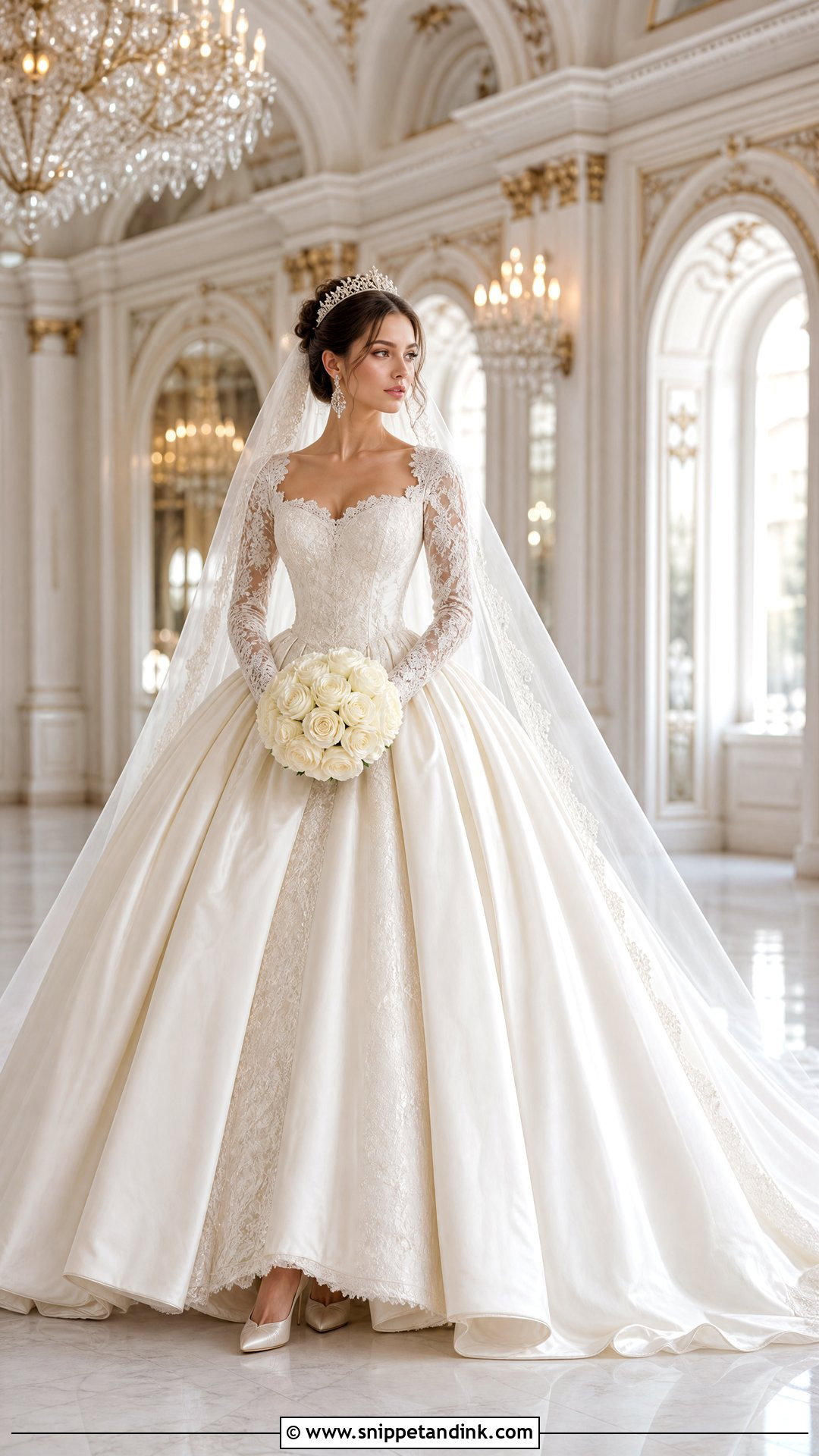
Nothing on this list has more presence on the aisle. Start with a fitted bodice, a high or softly squared neckline and a voluminous skirt held out by layers of lightweight tulle rather than a hoop, which is lighter and sits more naturally. Silk satin gives the grand finish and lace appliqués on the bodice add romance. Long sleeves add coverage; short gathered ones lighten it. Satin pumps, a cathedral veil, pearl-and-crystal earrings, a polished low bun and a rounded bouquet of ivory roses keep it formal. With a skirt this big, I hold back on jewelry and embellishment. It needs a large venue and a wide aisle.
6. Victorian Tea Length Bride Dress
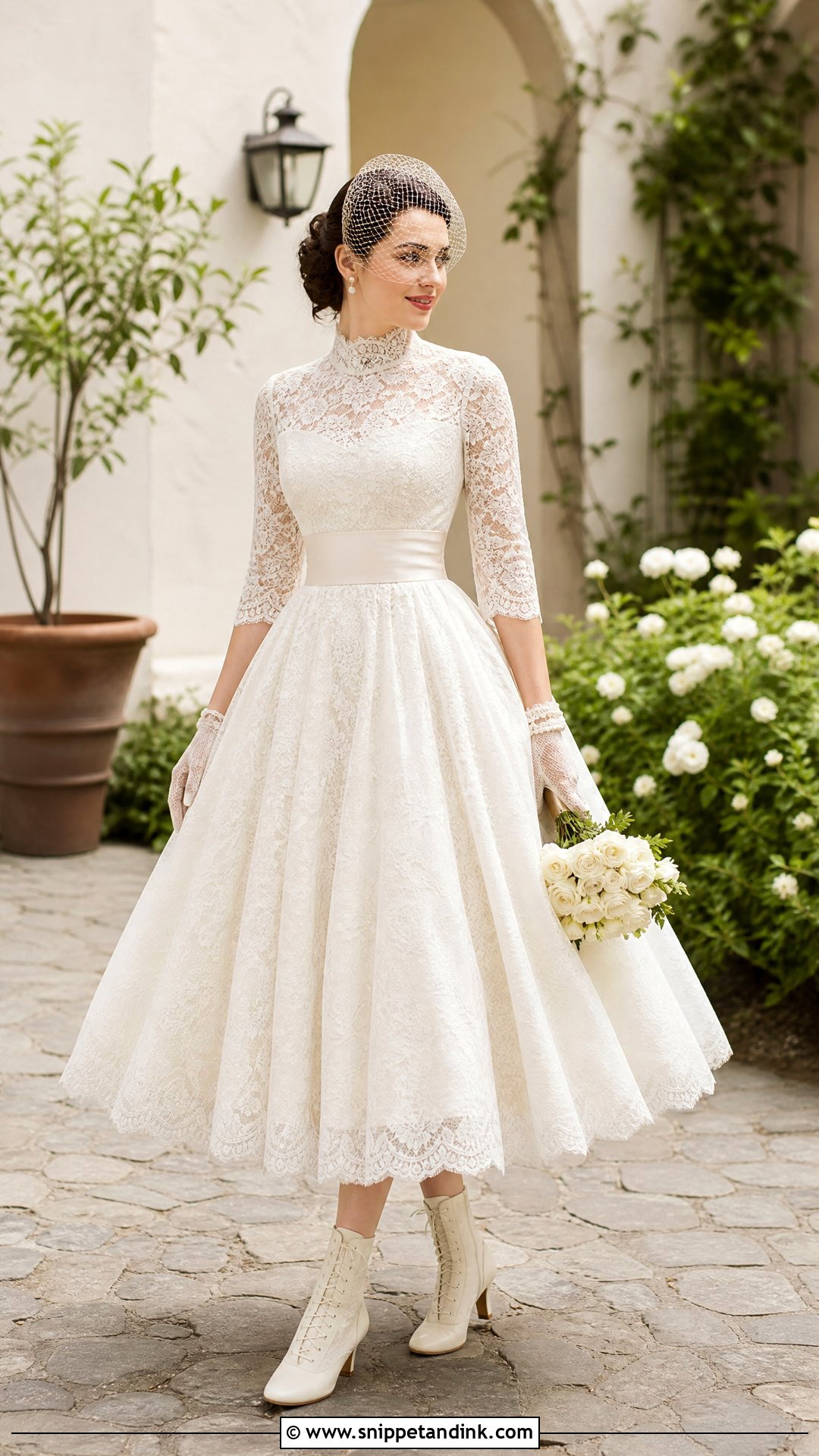
Tea length gives you the period without the train. A fitted lace bodice, high neckline and bracelet sleeves sit over a full skirt ending between knee and ankle, with a narrow satin waistband to calm the lace. Shoes take center stage at this hem, so ivory lace-up boots, low block heels or pearl-trimmed pumps are worth choosing carefully. A birdcage or fingertip veil, delicate gloves, pearl studs and a compact bouquet of white ranunculus complete it. For courthouses, gardens and small historic venues, it’s the most practical dress here.
7. Victorian Bride Dress With Cape
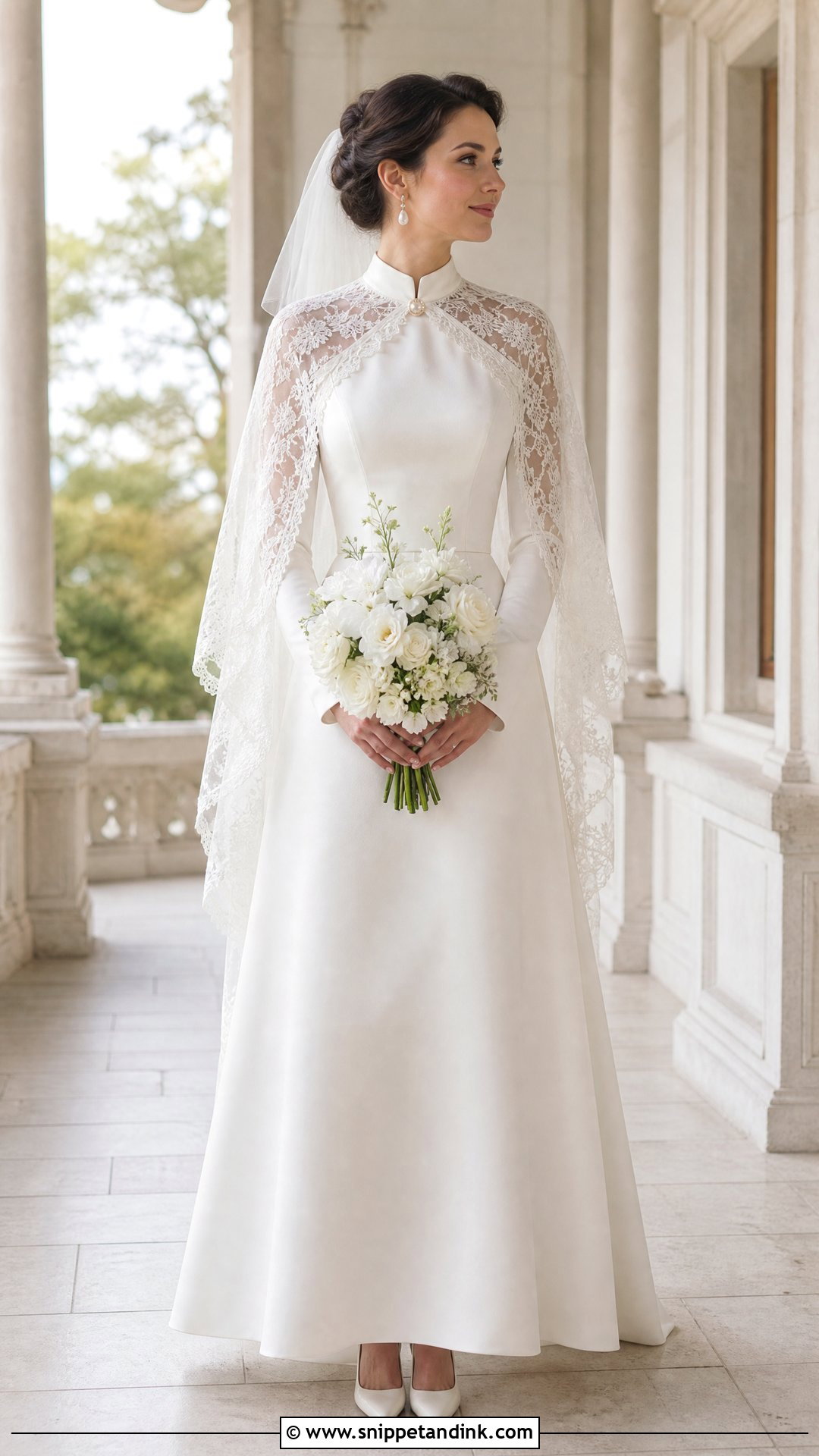
A cape adds drama and coverage at once. Over a simple fitted dress with long sleeves, a high collar and a gently flared skirt, you might wear sheer lace in warm months or opaque satin for a cold-season ceremony. The neck clasp is a chance for pearls, crystals or an antique-style brooch. Pointed pumps, drop earrings and a sleek low bun finish it. Here’s my rule: cape or long veil, not both, because two equally dramatic layers fight. A short veil tucked under the hair is the compromise. Carry a loose white bouquet with greenery, and look for a staircase for the portraits.
8. Victorian Bride Dress With Leg Of Mutton Sleeves
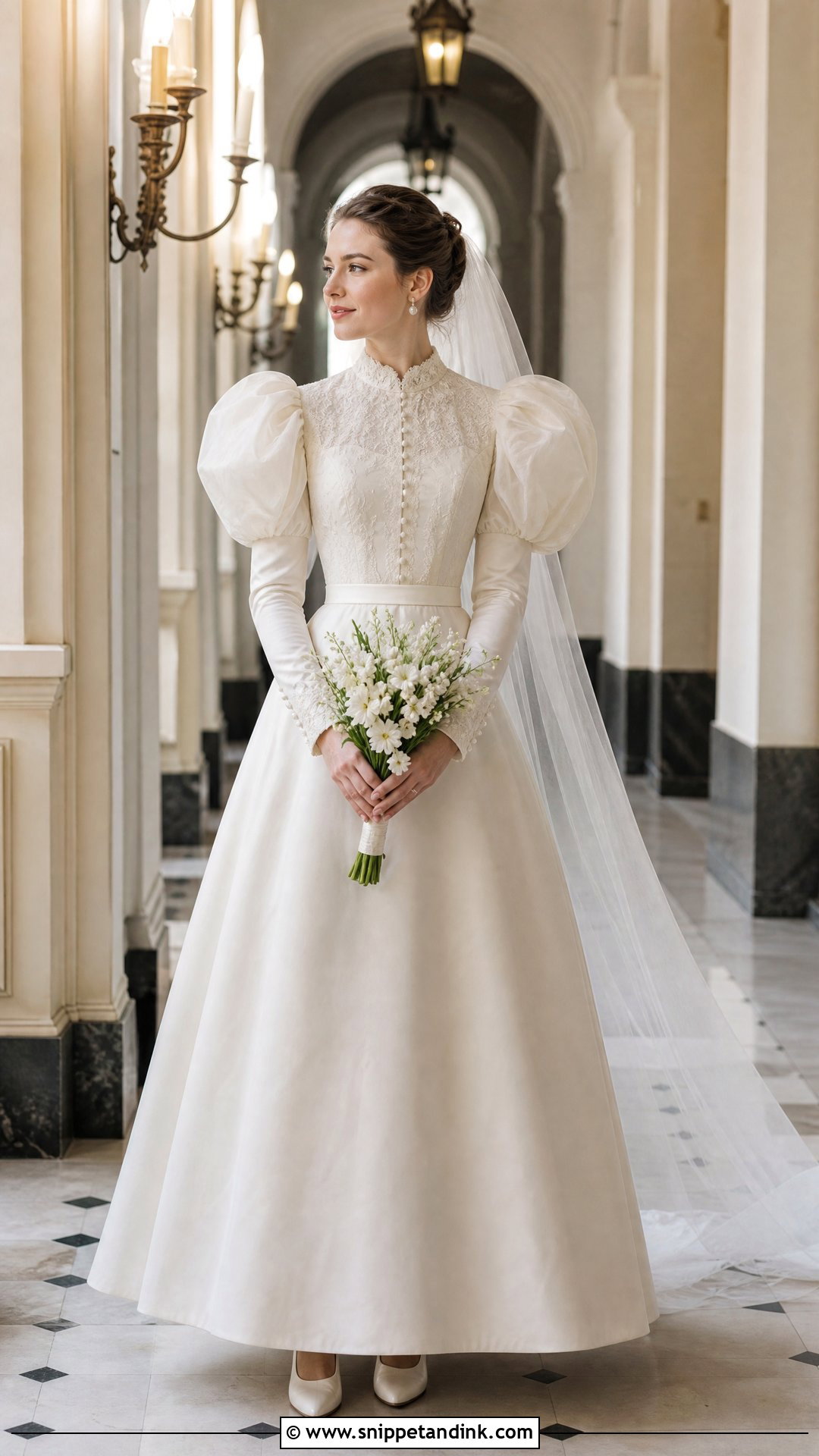
Leg-of-mutton sleeves swell at the shoulder and then cling down the forearm, and they’re the boldest Victorian feature you can wear. Let them lead: a fitted bodice and a clean skirt, in light organza, silk or lace so the volume reads airy rather than bulky. A high collar and covered buttons strengthen the period effect, and a narrow belt marks the waist. Simple ivory pumps, tiny pearl earrings, a low twisted bun and a plain chapel veil keep it controlled, with a slender ribbon-tied bouquet. Broad shoulders suit a softer sleeve. Petite brides can take a slightly raised head, scaled down so it doesn’t swamp them.
9. Victorian Bride Dress With Ruffled Skirt
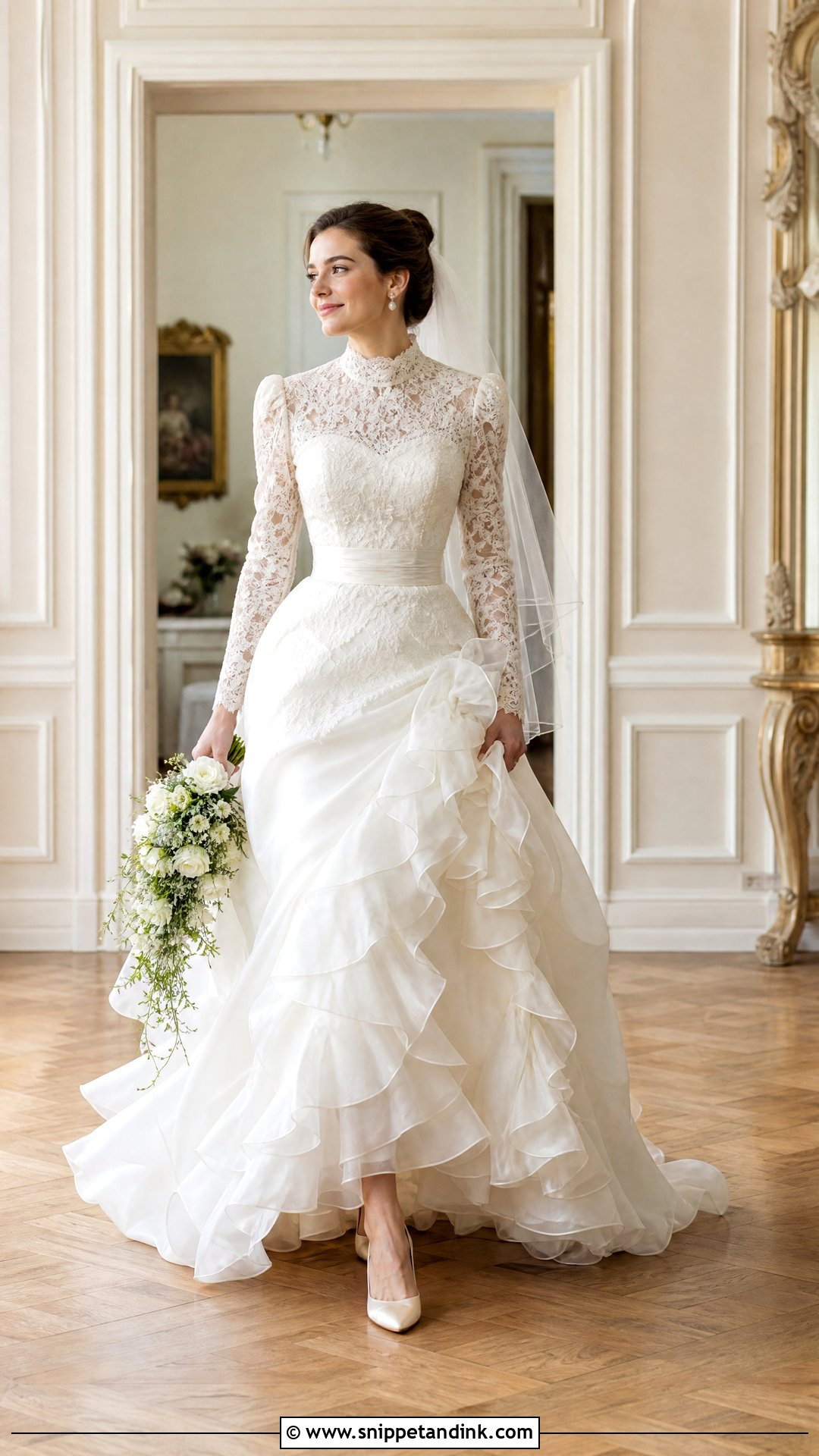
Ruffles bring texture and volume, and their placement decides whether they flatter. Start graduated ruffles below the hips so there’s no bulk at the waist, and choose soft tulle, organza or light lace over stiff fabric. A fitted lace bodice with long sleeves balances the busy skirt. Understated satin heels, pearl studs, a simple veil with a clean edge and a smooth chignon give contrast, and a small cascade bouquet follows the skirt’s vertical movement. One fitting check I always make: the front hem must clear your shoe tips, because toes catch in ruffles and tear them on the walk down the aisle.
10. Victorian Bride Dress With Square Neckline
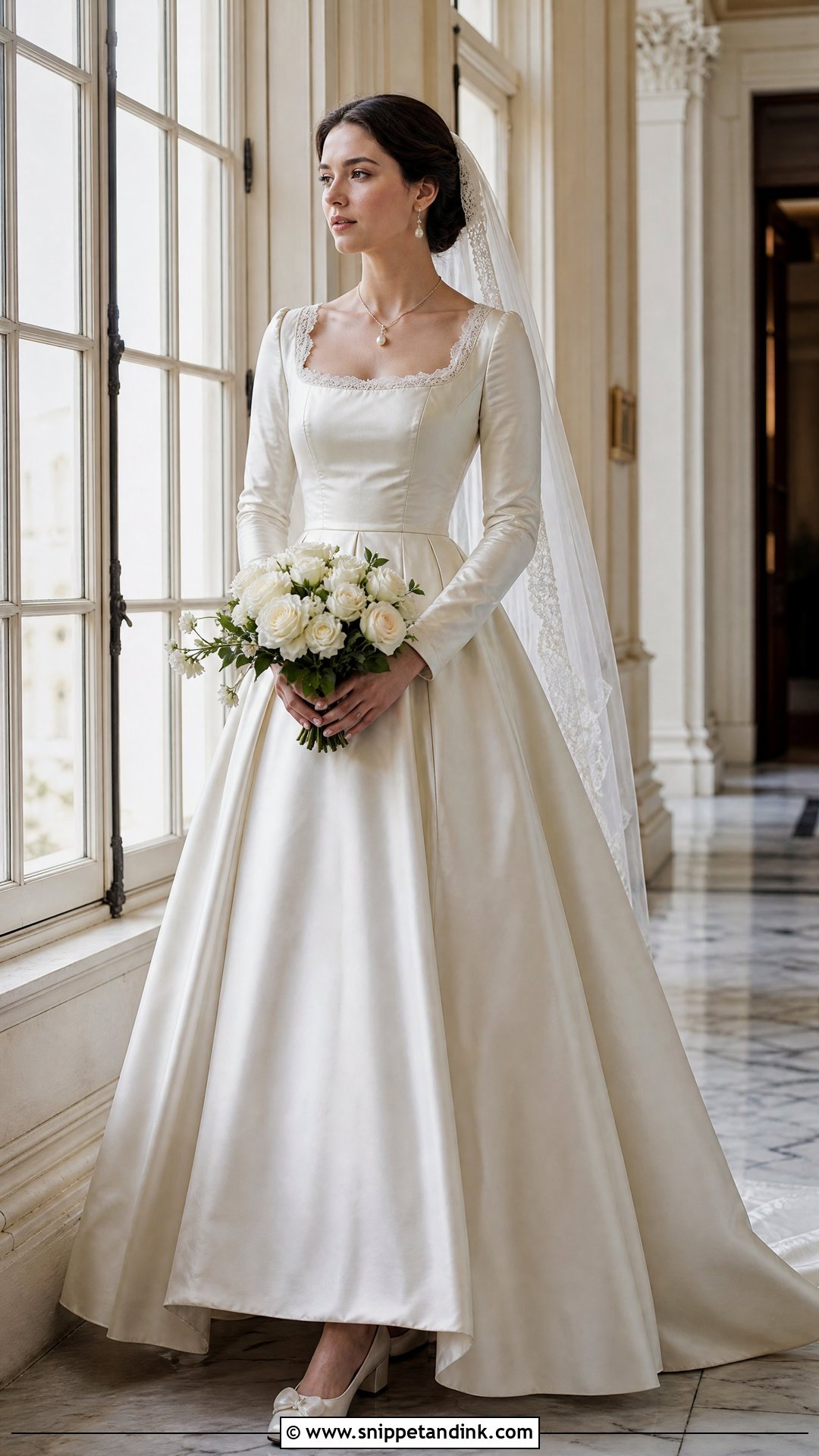
A square neck is the version for brides who like the era but hate anything close around the throat. It shows the collarbone and gives more space than a high collar, while lace edging, long slim sleeves and a structured waist keep the period feel. A full A-line skirt in matte satin and a row of back buttons complete the dress. A delicate pearl pendant fills the neckline nicely here, with small earrings, ivory block heels and a chapel veil. A soft low bun with a few face-framing waves and white garden roses keep it romantic.
11. Victorian Bride Dress With Off Shoulder Bodice
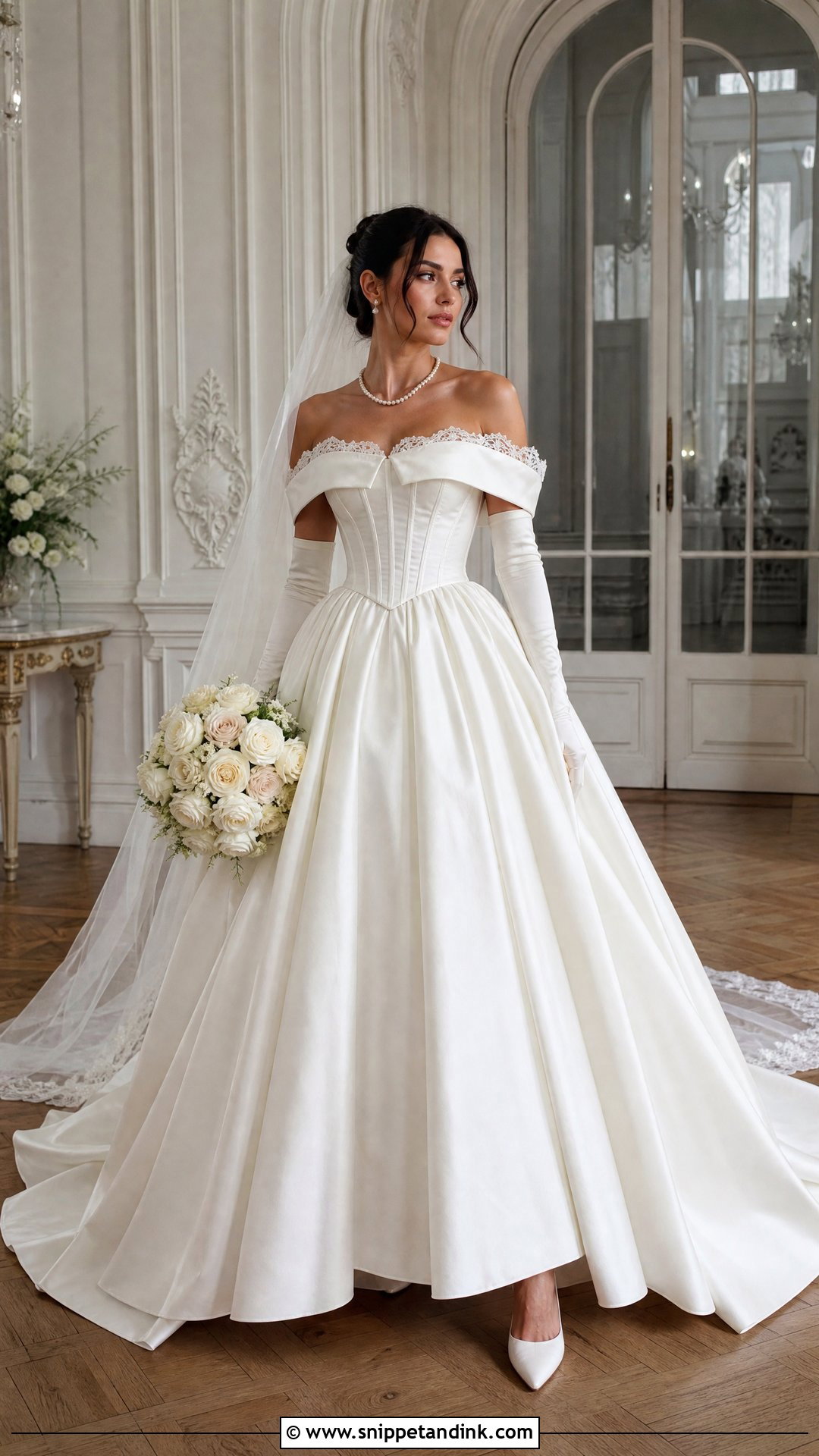
Victorian evening dress bared the shoulders, so an off-shoulder bodice is true to the era. Look for a gently folded neckline trimmed with lace, pleating or small fabric flowers, over a corseted waist, a full satin skirt and a sweeping train. Detachable fitted sleeves give you two versions of the dress across the day. A short pearl necklace, matching earrings, satin pumps and an elegant updo work, with a long lace-edged veil set beneath the bun so it falls cleanly behind the shoulders. Carry a rounded cream bouquet. Test it sitting, walking and raising your arms at the fitting; an off-shoulder bodice that isn’t anchored to the corset slides.
12. Simple Satin Victorian Bride Dress
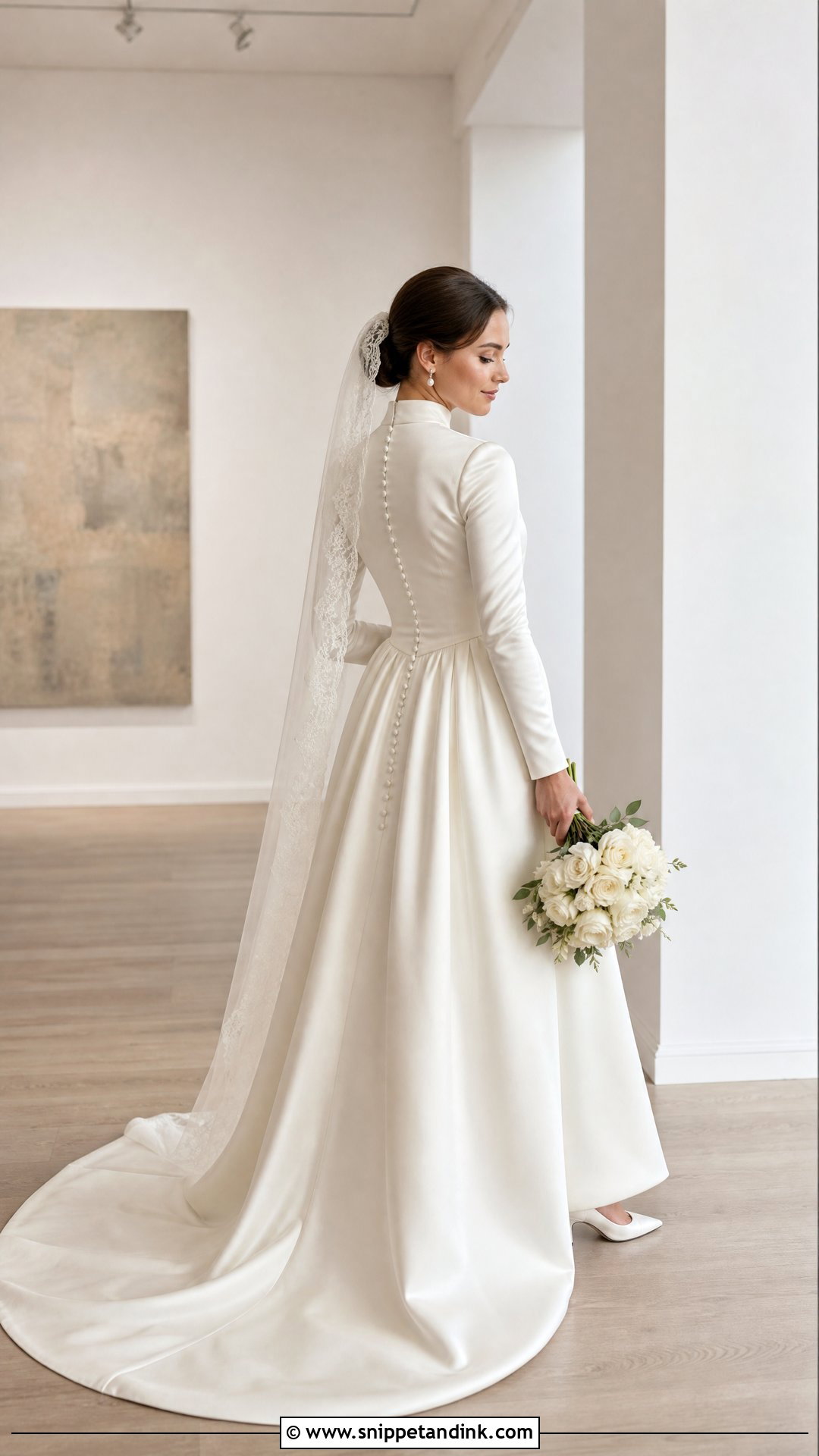
Simple satin lets the silhouette carry the period. A high neckline, fitted long sleeves, a defined waist and a softly gathered floor-length skirt are enough, with covered buttons running from collar to lower back and a small train. Ivory kitten heels, pearl drop earrings, a narrow lace veil and a center-parted low bun suit it, along with white roses tied with a long satin ribbon. The fabric choice decides everything. I look for satin heavy enough to drape smoothly without looking stiff or overly shiny; thin satin wrinkles at the elbows and shows every seam.
13. Boho Victorian Lace Bride Dress
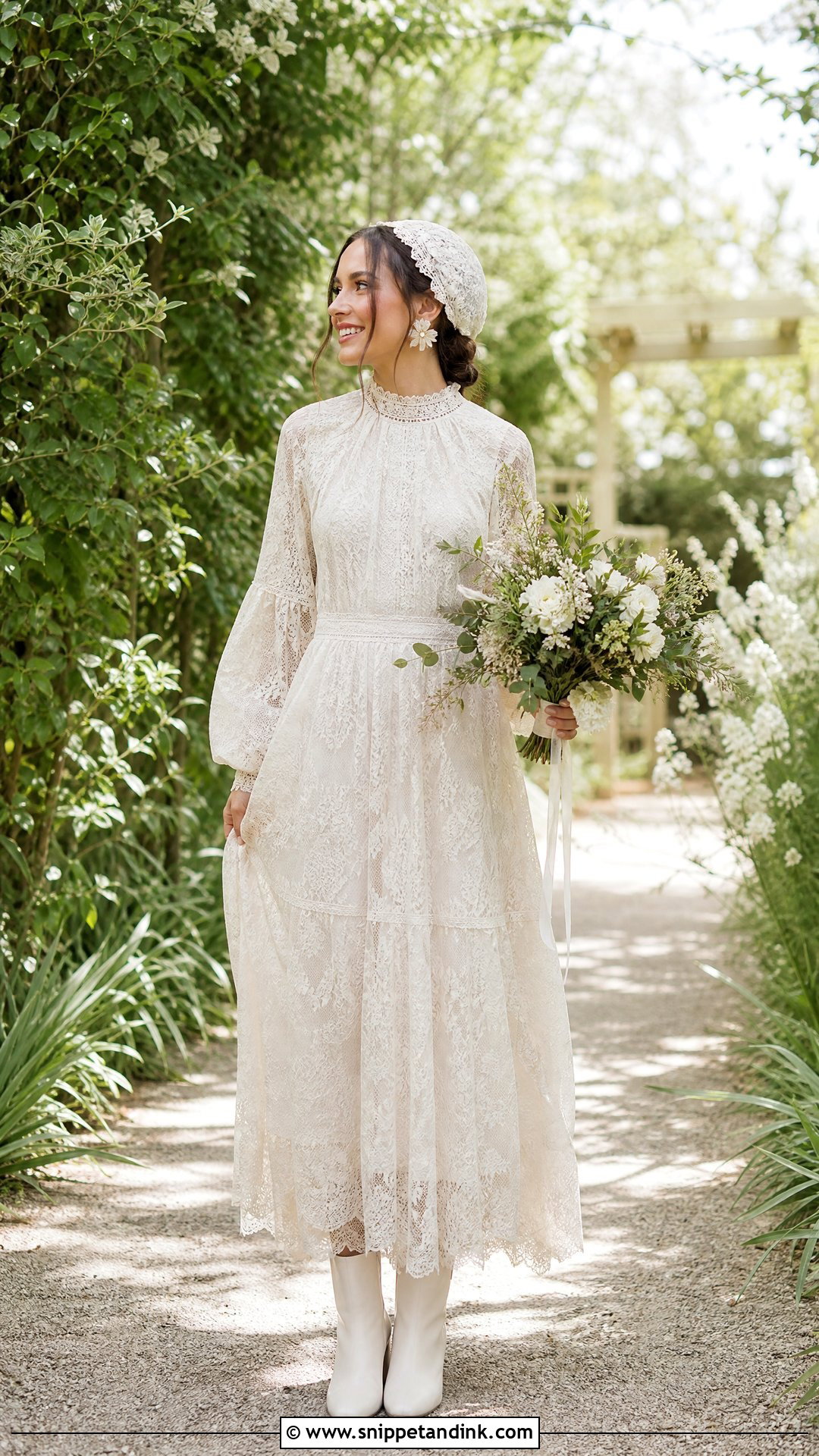
Boho and Victorian meet surprisingly well outdoors. Soft floral lace, a raised neckline, loose bishop sleeves and a gently defined waist sit over a flowing A-line with a light lining and a manageable train. Ivory ankle boots or low block heels, small botanical earrings and a loosely braided updo keep it relaxed, while a soft tulle veil or lace Juliet cap adds vintage character. Carry white flowers, ferns and trailing greenery. Light lace looks more transparent in bright sun than in the shop, so check your lining in daylight before the final fitting.
14. Winter Victorian Bride Dress
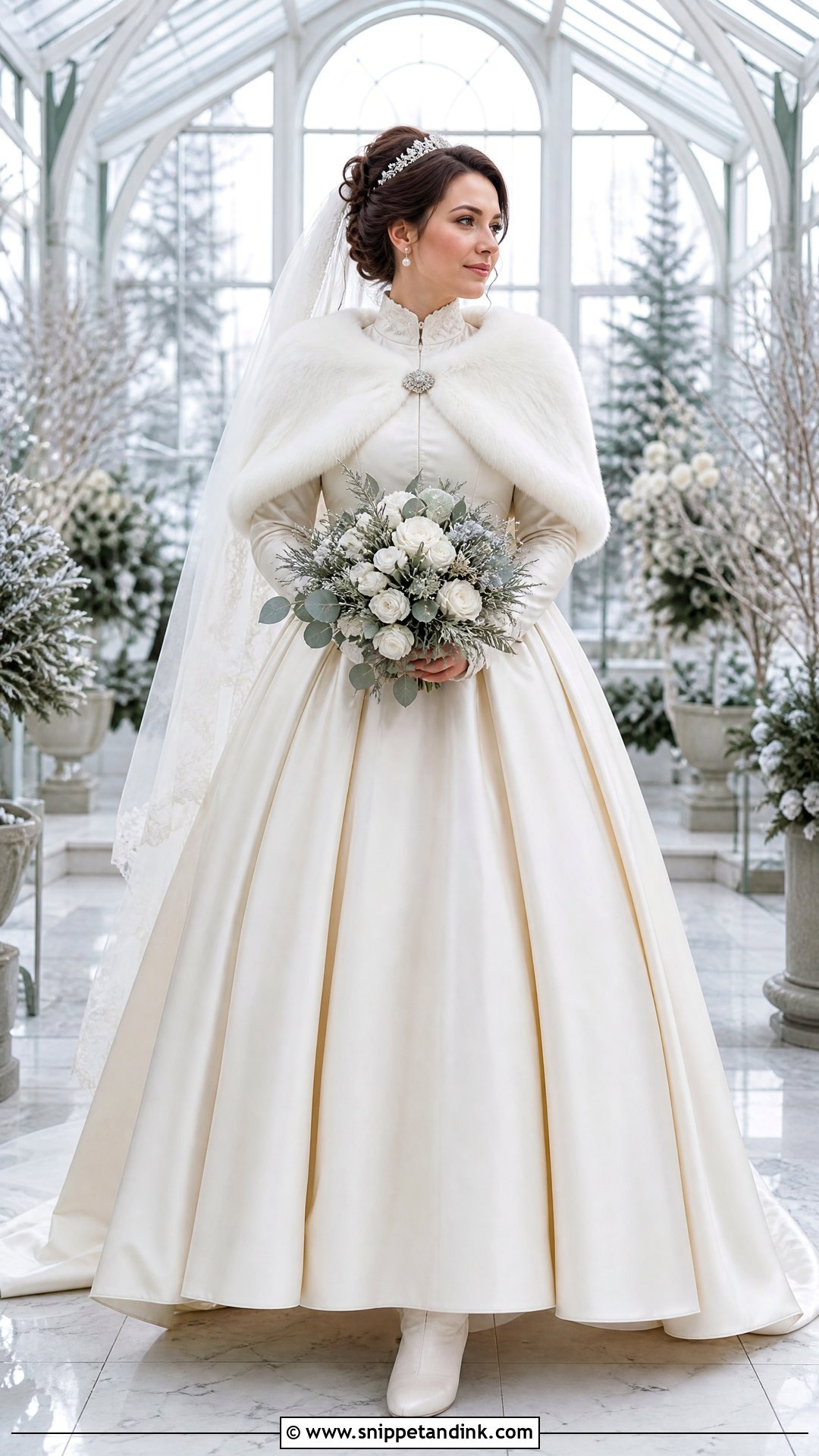
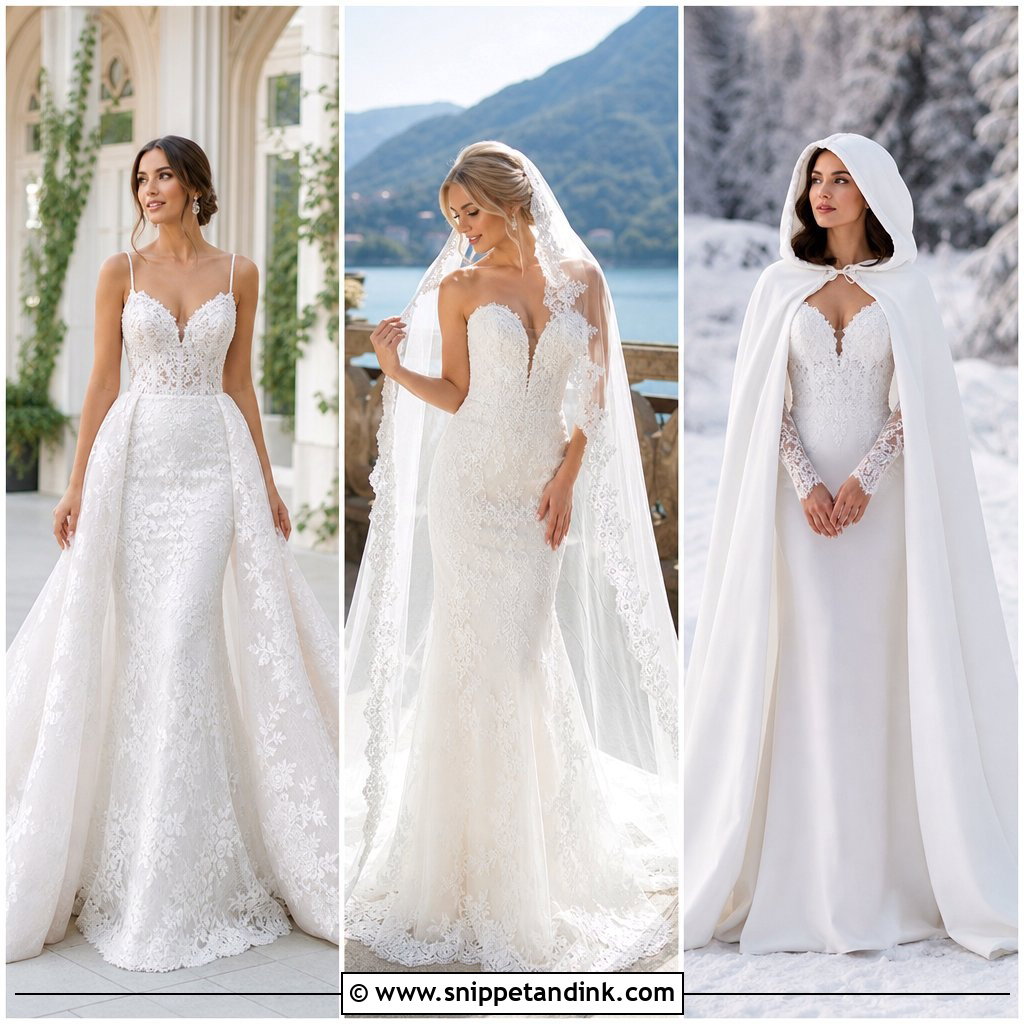
Winter is the season these dresses were made for. A long-sleeve satin gown with a high collar, fitted waist and full skirt is the base, with a white faux-fur capelet or tailored velvet cape for outdoor moments. Closed-toe boots, opaque stockings and a lined skirt are practical choices nobody sees. Pearl earrings, a decorative comb and a chapel veil you can take off before going outside finish it, with white flowers and silver-green foliage. Move slowly from cold outdoor air into a warm room; satin can pick up condensation spots, and a quick blot with a clean cloth stops them setting.
15. Summer Victorian Bride Dress
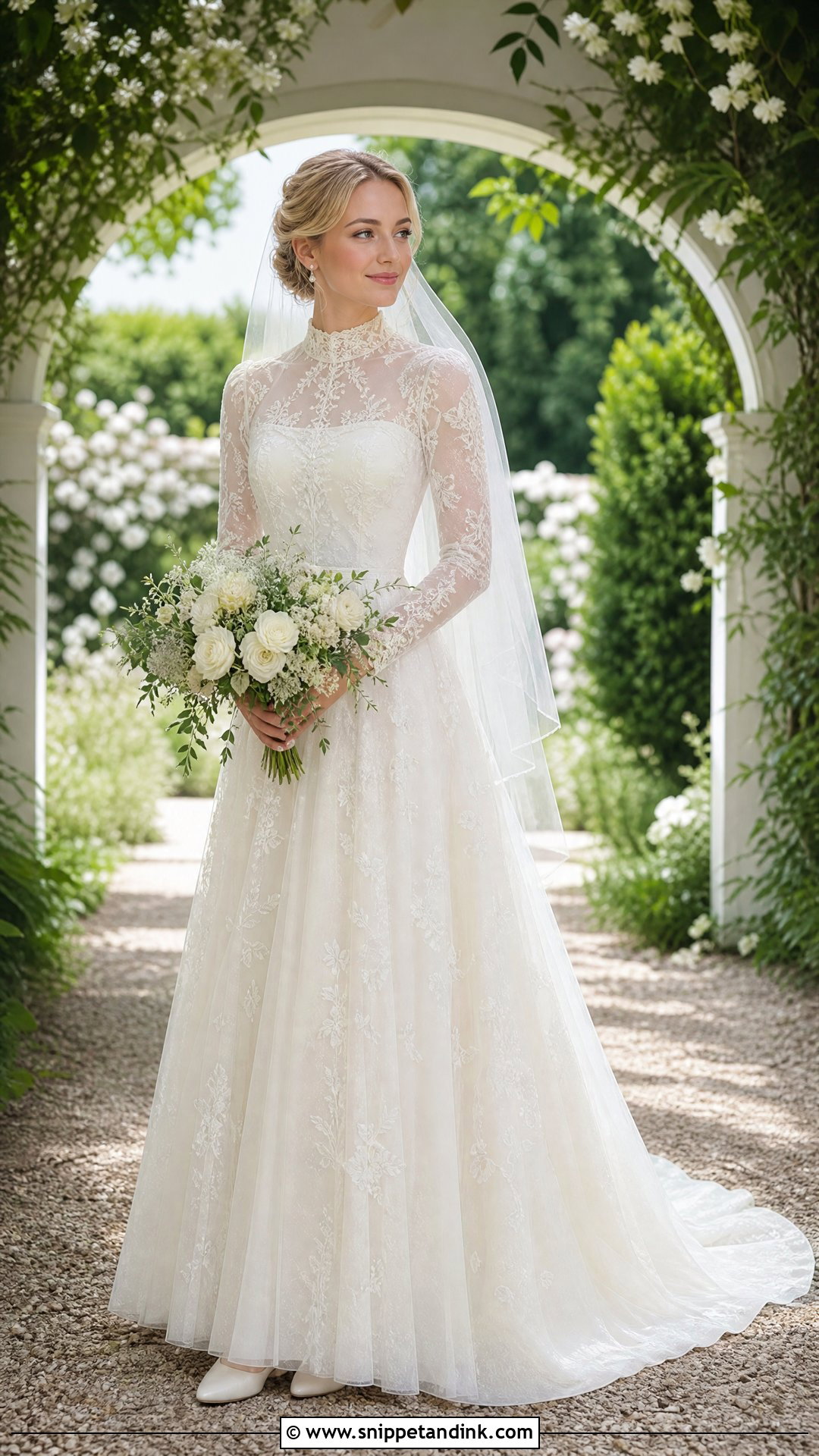
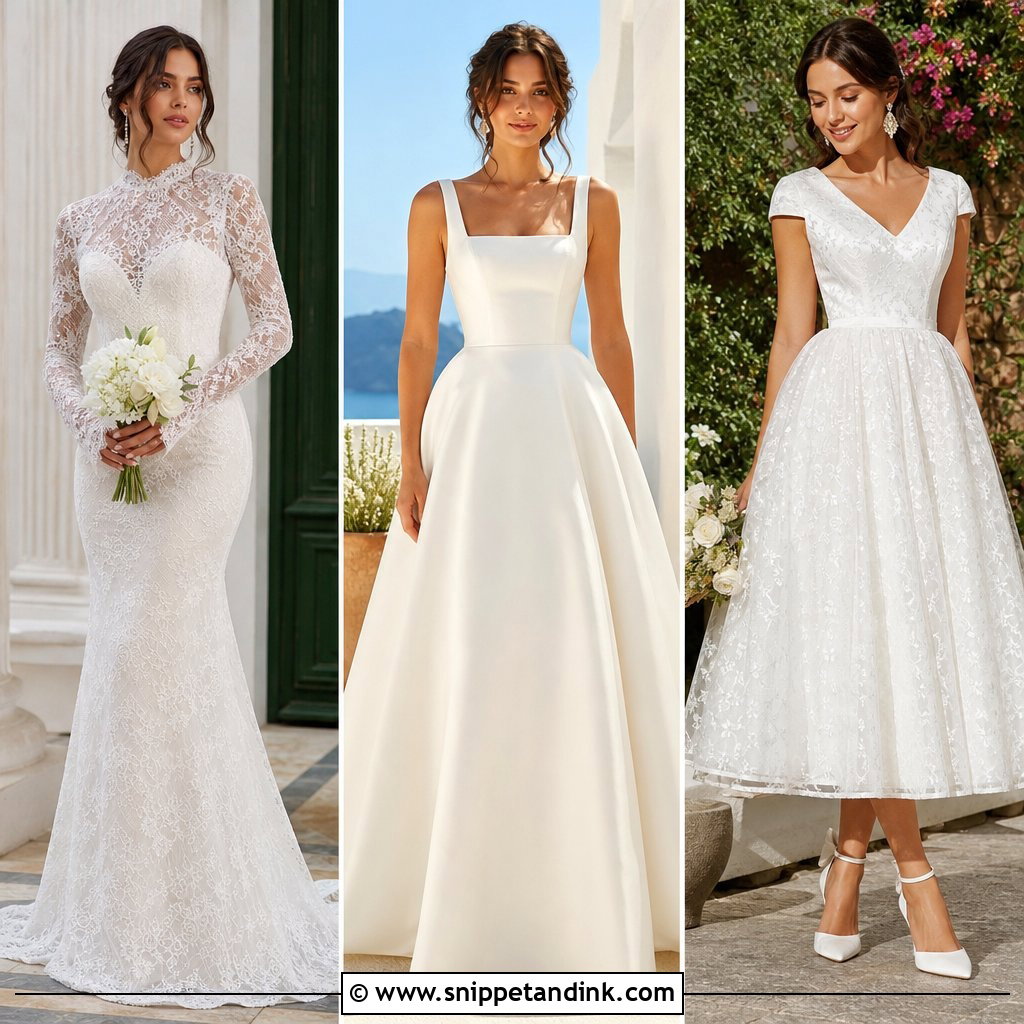
Heat is the problem in summer, and fabric is the fix. Breathable cotton lace, embroidered tulle or lightweight silk with a high illusion neckline and sheer sleeves keeps the romance without trapping warmth. A softly fitted bodice and flowing A-line skirt move well, and a short train is easier outdoors. Ivory low heels, pearl studs, a delicate fingertip veil and a loose braided bun that keeps hair off your neck work, with a light bouquet of white cosmos or garden roses. I’d steer you away from heavy underskirts, thick synthetic linings and tight corsetry for a summer date. Gardens, glasshouses with shade and estates with covered terraces are where it’s happiest.
16. Plus Size Victorian Bride Dress
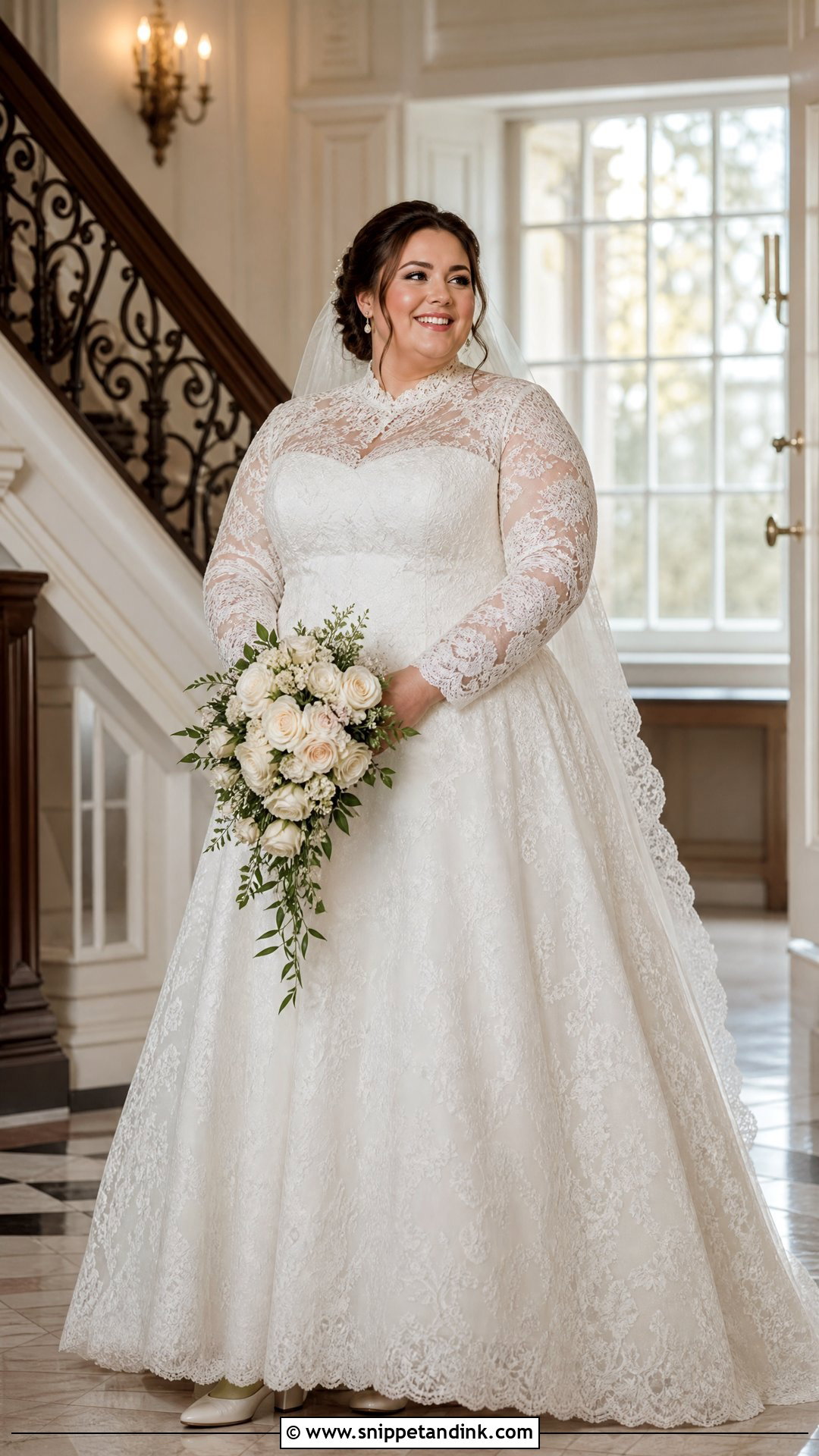
Structure, comfort and proportion together make a plus-size Victorian gown work. A supportive lace bodice with a raised neckline, long sleeves and a Basque or natural waist sits over an A-line that glides past the hips, with a soft petticoat for fullness without weight. Ask for stretch or extra room around the upper arm in the sleeves, since lace sleeves cut to sample-size measurements often pinch there first. Block heels, pearl earrings, a lace-trimmed veil on a secure low updo and a medium cascade bouquet complete it. Forget rigid figure rules. Ask the salon about reinforced closures, sleeve changes and bodice lining so the fit is truly yours.
17. Black And White Victorian Bride Dress
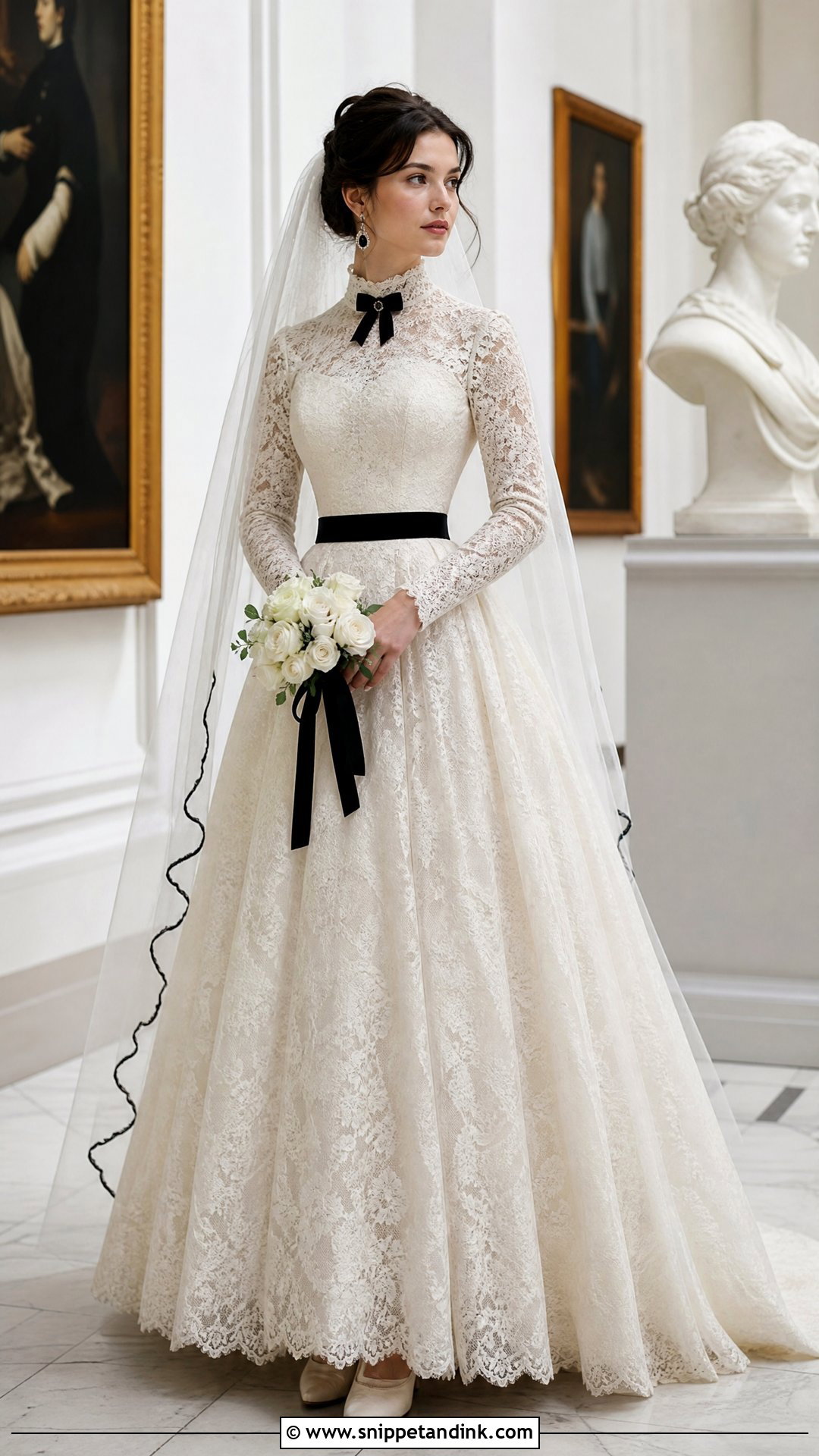
A few black accents make a white Victorian gown graphic. Start with an ivory high-neck dress with long lace sleeves, a fitted bodice and a full skirt, then add black through a velvet waistband, a tiny collar bow, embroidered trim or covered buttons. Precision is everything: two or three small touches look deliberate, more look like costume. Ivory heels, black-and-pearl earrings and a white veil with a narrow black edge complete it, with a smooth chignon and softly defined makeup. Tie the white bouquet with black velvet ribbon. Historic venues, galleries and grand hotels with pale interiors show the contrast at its sharpest.
18. Victorian Two Piece Bride Dress
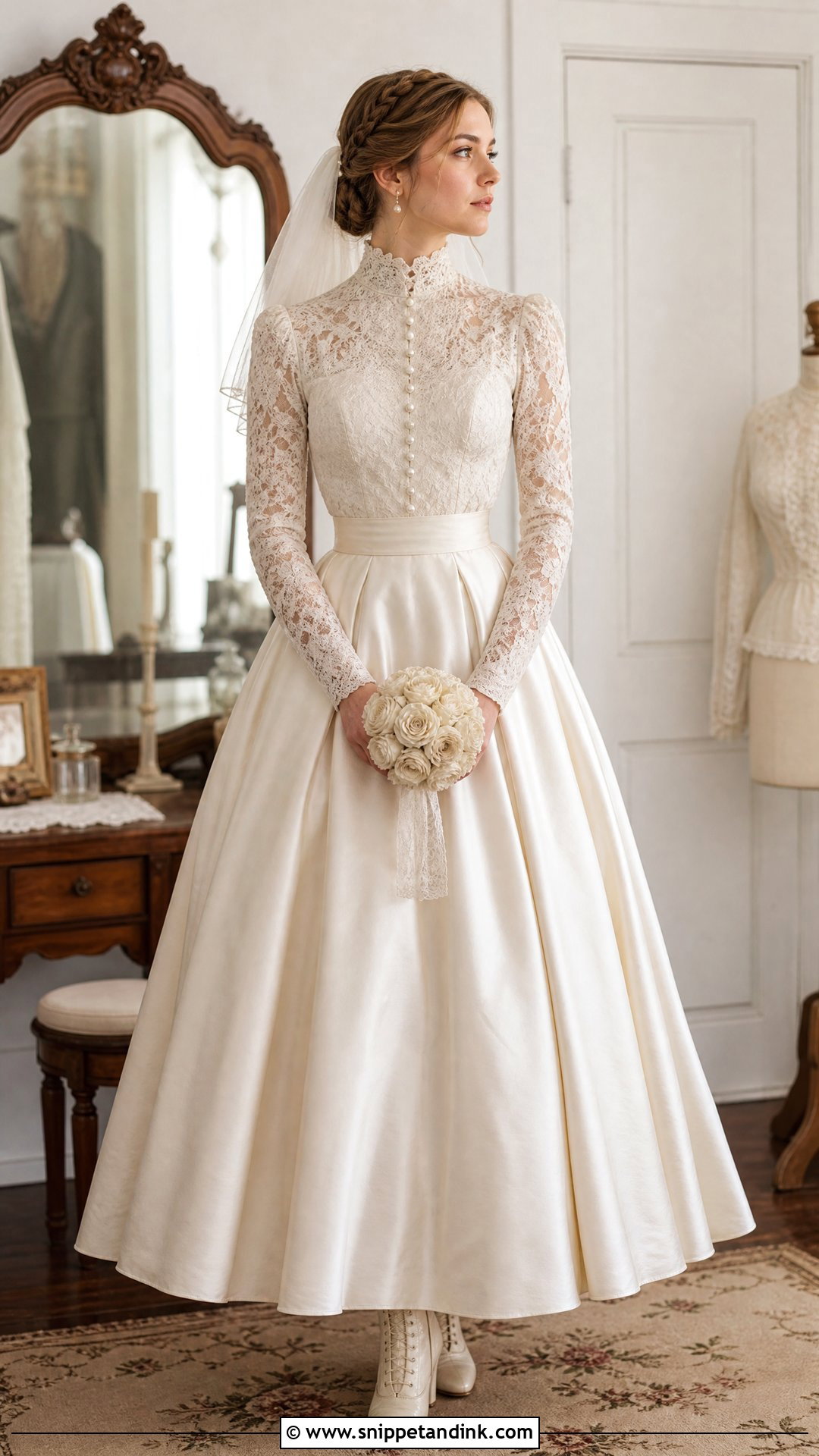
A two-piece is the most flexible option here and one I suggest more than brides expect. A high-neck lace blouse with fitted sleeves and pearl buttons pairs with a full, floor-length satin skirt, either tucked into a wide structured waistband or layered over a corseted under-bodice for support. Match the ivories closely so the pieces look like one outfit. Lace-up boots, pearl earrings and a small veil on a braided low bun complete it, with a neat bouquet of cream roses. It solves the problem of different sizes on top and bottom, and the blouse can be worn again. Ask for a few discreet blouse-to-skirt snaps at the waist so it stays tucked through hugs and dancing.
19. Victorian Mermaid Bride Dress
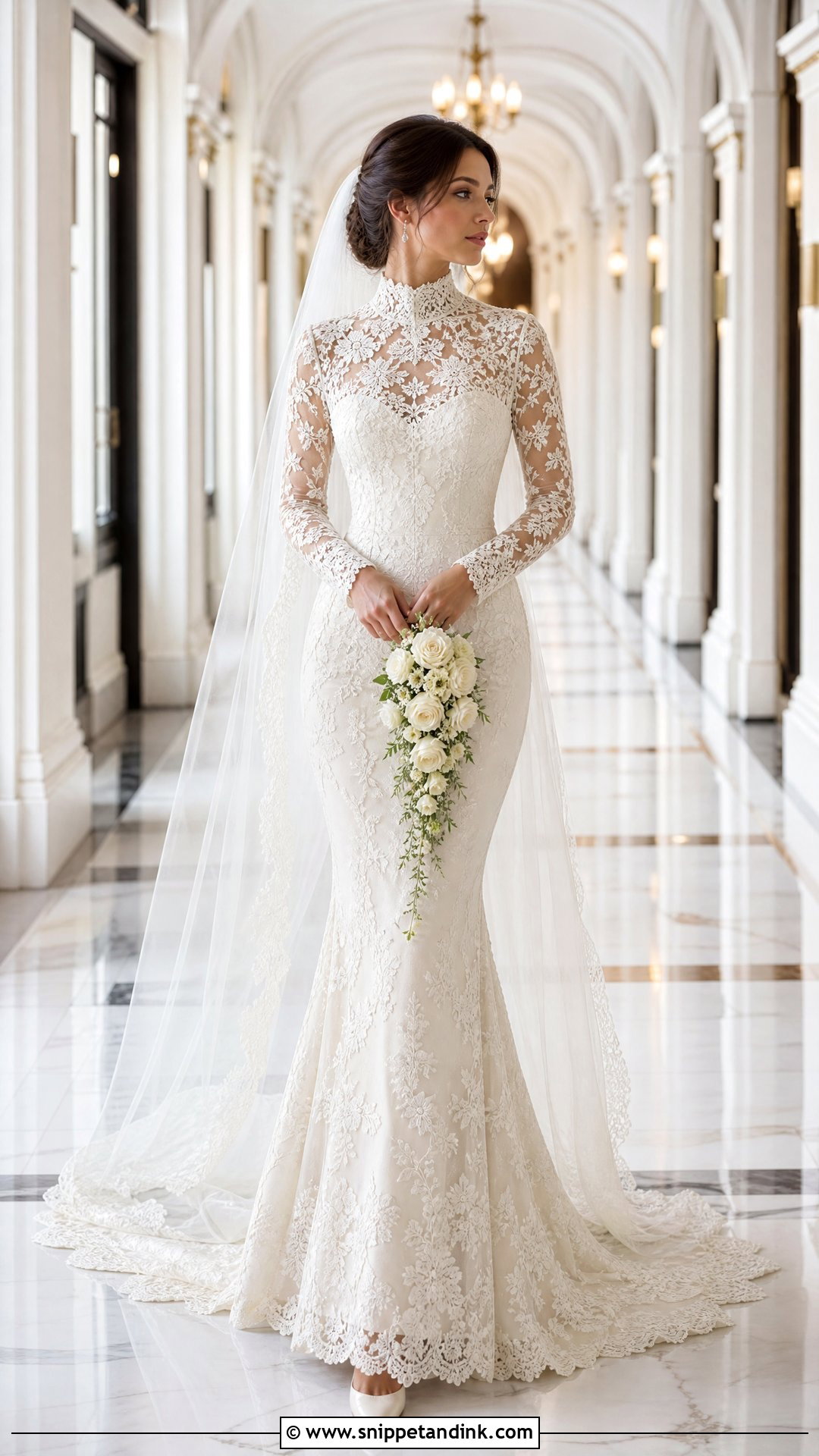
The mermaid is the modern hybrid on this list. A high lace neckline, long sheer sleeves and covered back buttons give the period detail, and the close skirt flares below the knee. Floral lace over a supportive ivory lining keeps coverage comfortable. Pointed heels, delicate drop earrings, a cathedral veil with a simple edge and a sleek low bun stretch the line further, and a narrow cascade bouquet won’t break it the way a round one would. Practice walking and sitting at fittings. With all that coverage plus a fitted skirt, I ask for a lightweight lining so you don’t overheat.

20. Victorian Bride Dress With Cathedral Train
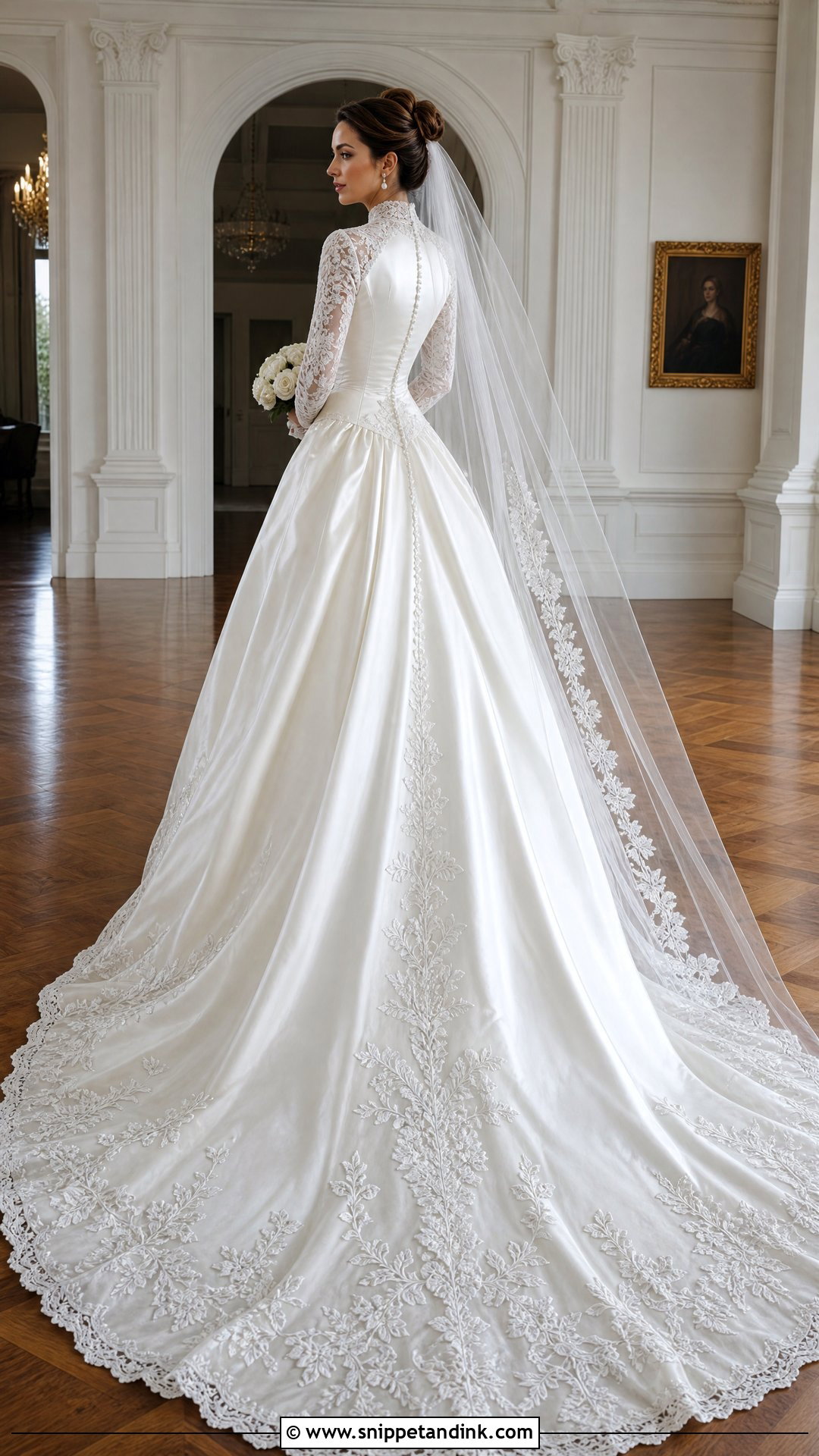
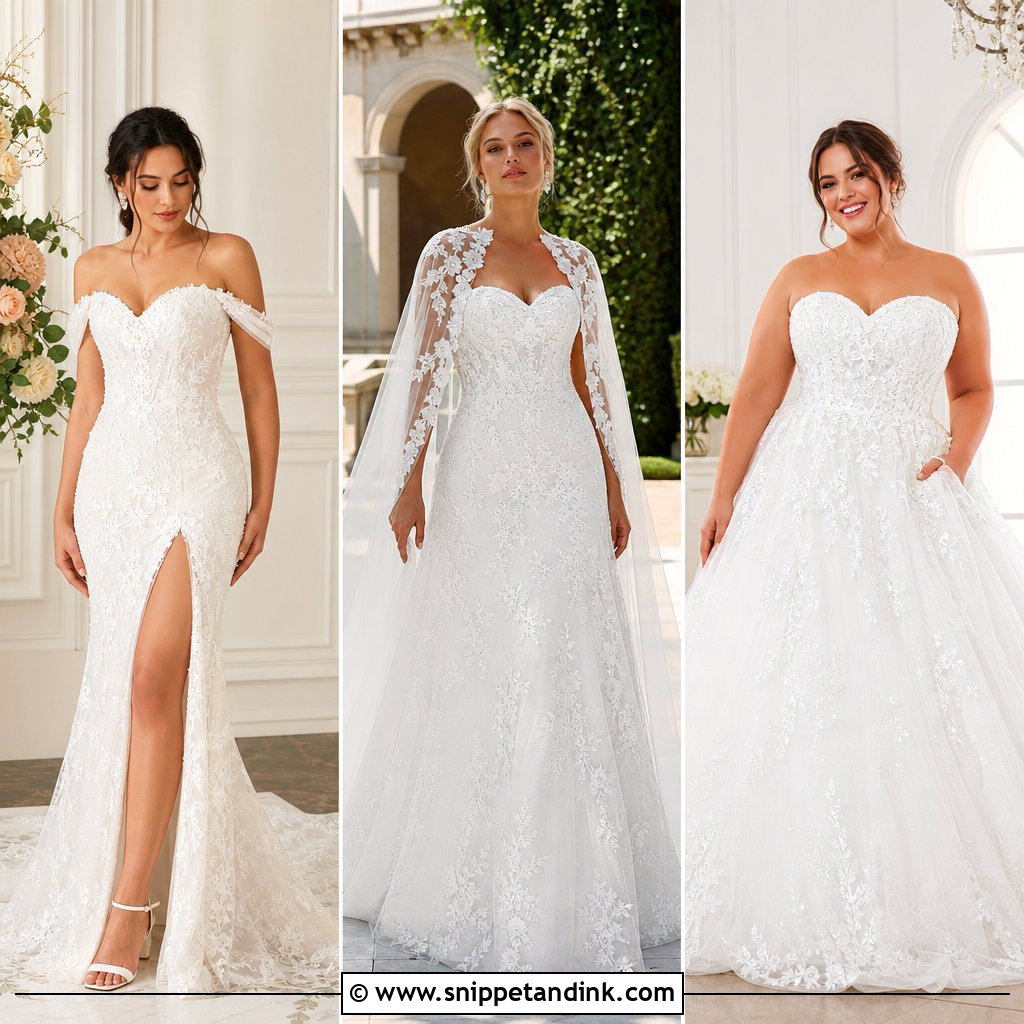
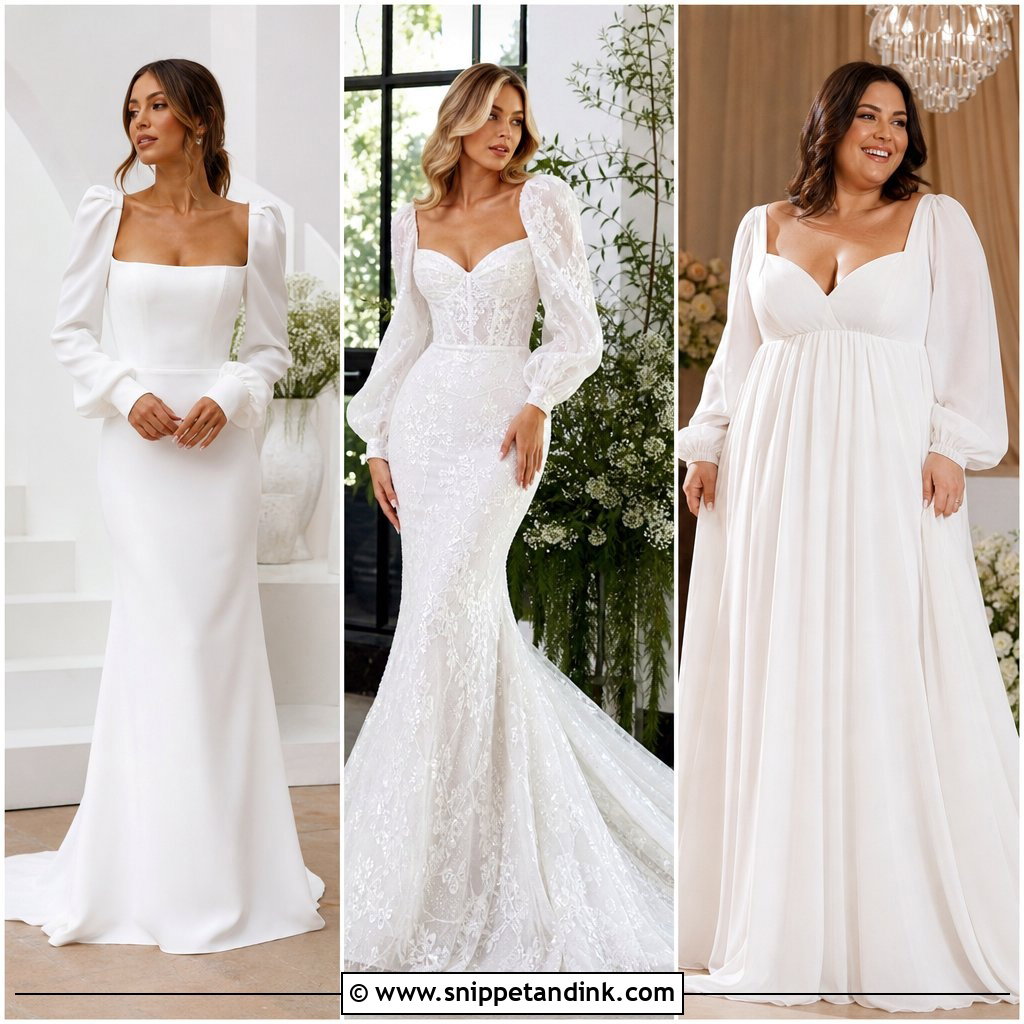
A cathedral train is the grandest finish a Victorian look can have. Choose a fitted high-neck bodice with long lace sleeves and a structured skirt that runs well behind you. Satin gives a smooth, regal train, and lace appliqués at the hem show up nicely in photos taken from behind. Closed-toe heels, pearl earrings and a secure updo with a long veil complete it. If the veil matches the train’s length, keep its decoration lighter so the layers don’t compete. A compact bouquet leaves the bodice visible. Plan the bustle with your seamstress early. A cathedral train usually needs several hooks or ribbons, and whoever lifts it should practice before the day.
Heirloom Pieces That Fit a Victorian Look
This style welcomes family pieces more naturally than almost any other, and they give the heritage feeling real roots. A few ways I’ve worked them in:
- A mother’s or grandmother’s lace, cleaned by a specialist and hand-stitched along the edge of a new veil.
- An old brooch at the throat of a high collar, or wrapped into the ribbon of the bouquet stem.
- Family pearls, restrung on new silk before the wedding, since old thread can snap without warning.
- A small square of a relative’s wedding dress sewn inside your hem or bodice, where only you know it’s there.
Bring any heirloom to a fitting so the seamstress can see where it sits against the gown. Antique ivory and new ivory rarely match exactly, and a little distance between them, or a deliberate contrast, looks better than a near miss.
Romance That Still Lets You Dance
A Victorian bridal look should feel romantic and personal, never like a hired costume. High collars, lace sleeves, corseted waists, full skirts, bustles, satin and covered buttons each express the era in a different way. You can go fully historical with a ball gown and cathedral train or keep it light with a tea-length dress, a flowing lace shape or a two-piece. Choose the shoes, veil, jewelry, hair and flowers to support the dress rather than echo every detail of it. Then wear the whole outfit, walk in it and sit in it, before you call it finished.
You'll Like These Ideas:




Leave a Reply