
Most of the Indian brides I dress wear three or four outfits across the wedding, and the hardest part is rarely the colour. It is working out which garment can carry which ceremony. A zardozi lehenga that looks right at the pheras can be miserable at a daytime haldi, and a handwoven silk saree behaves very differently from a georgette Anarkali once you sit cross-legged for an hour. Below are twenty regional and classic outfits, with notes on how each one drapes, how much it weighs on the body, and where it tends to fit best, whether you are the bride, her sister or a guest in the third row.
Matching an Outfit to Each Ceremony of a Multi-Day Wedding
When a bride brings me a mood board, I first ask for the schedule. An Indian wedding is usually a run of events, and each one asks something different of the clothes. The haldi involves turmeric paste that stains silk permanently, so I put brides in cotton or an outfit they are happy to retire. The mehndi means sitting still with wet hands for a couple of hours, so loose sleeves and a dupatta you never have to adjust matter more than embroidery.
The sangeet is the night for movement: shararas, Patiala suits and lighter lehengas. The main ceremony is where the heaviest piece belongs, because you will mostly be seated and photographed. The reception is often where brides switch to a lighter saree or gown, simply because by then they are tired.
If you are a guest or close family
- Ask the family whether red or a particular colour is being kept for the bride, and avoid it.
- Close relatives can wear heavier work than general guests; matching outfits for sisters or cousins are common, so ask before you shop.
- Temple and gurdwara ceremonies often expect covered shoulders and a head covering, so carry a dupatta even with a saree.
- Floor seating is common. Test any outfit by sitting cross-legged on the floor for ten minutes at home.
1. Red Bridal Lehenga With Dupatta
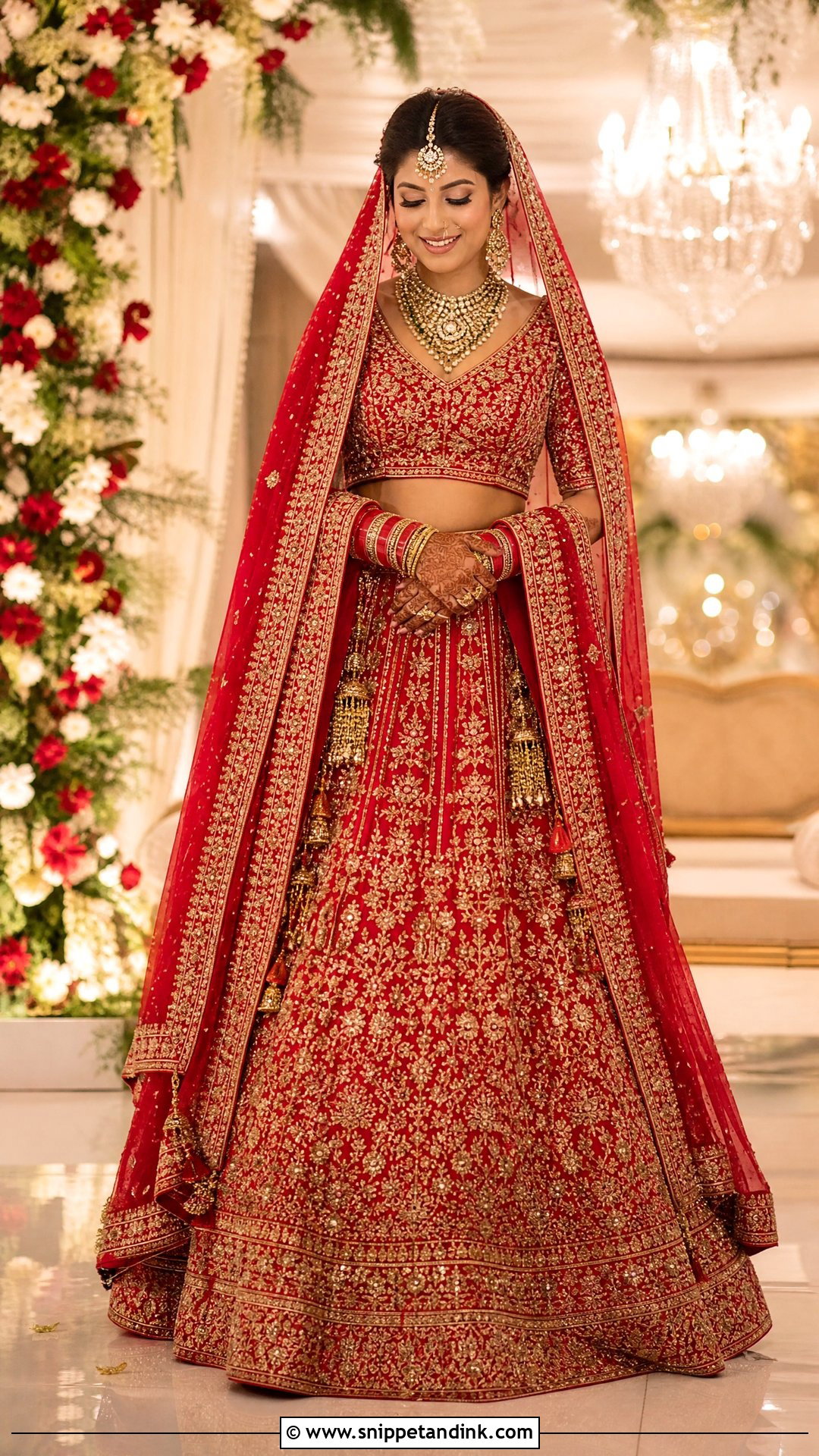
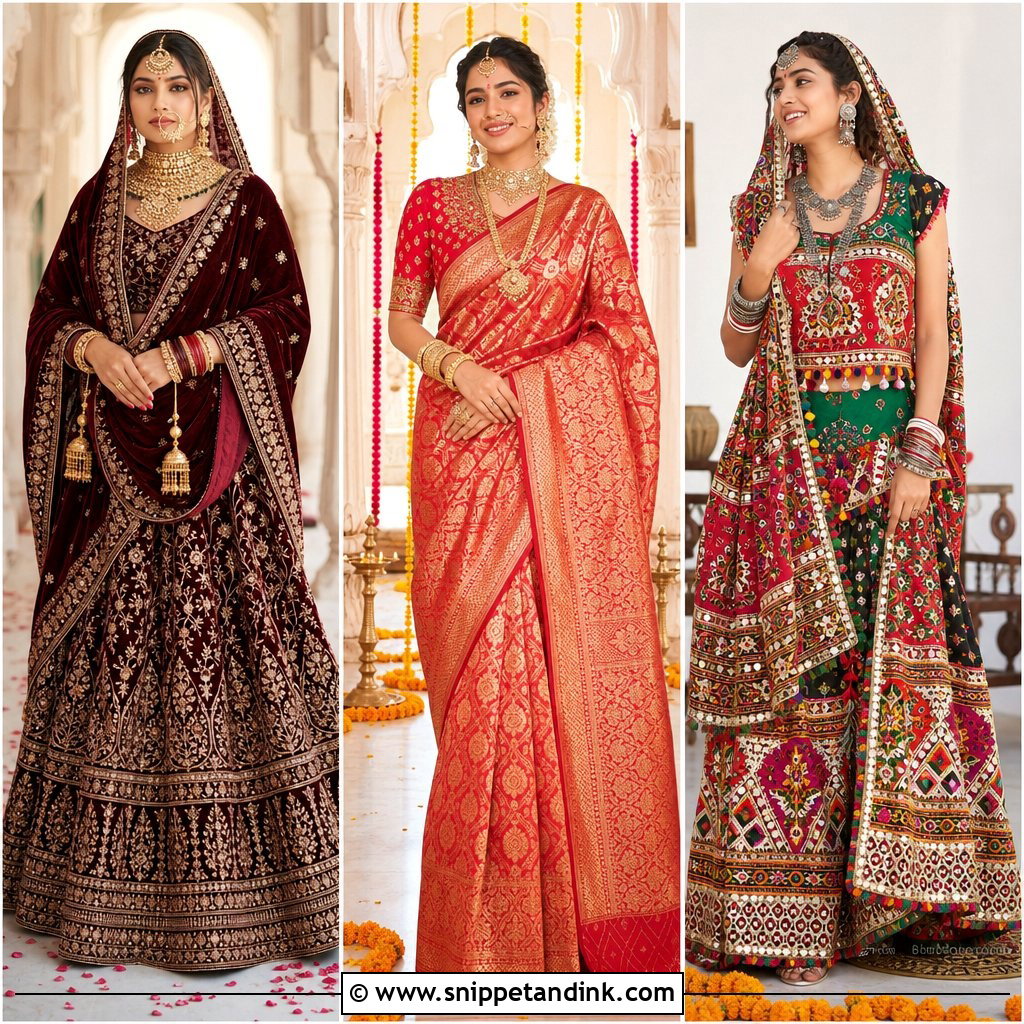
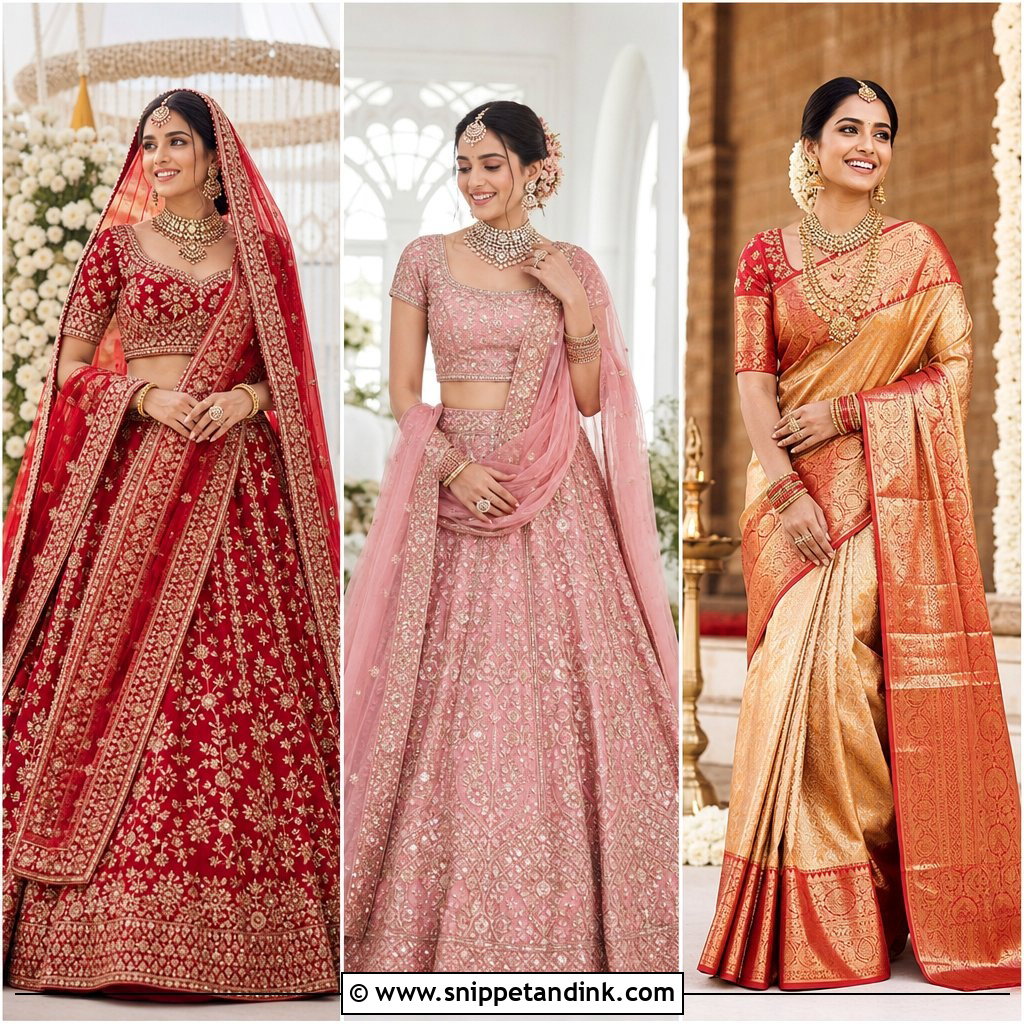
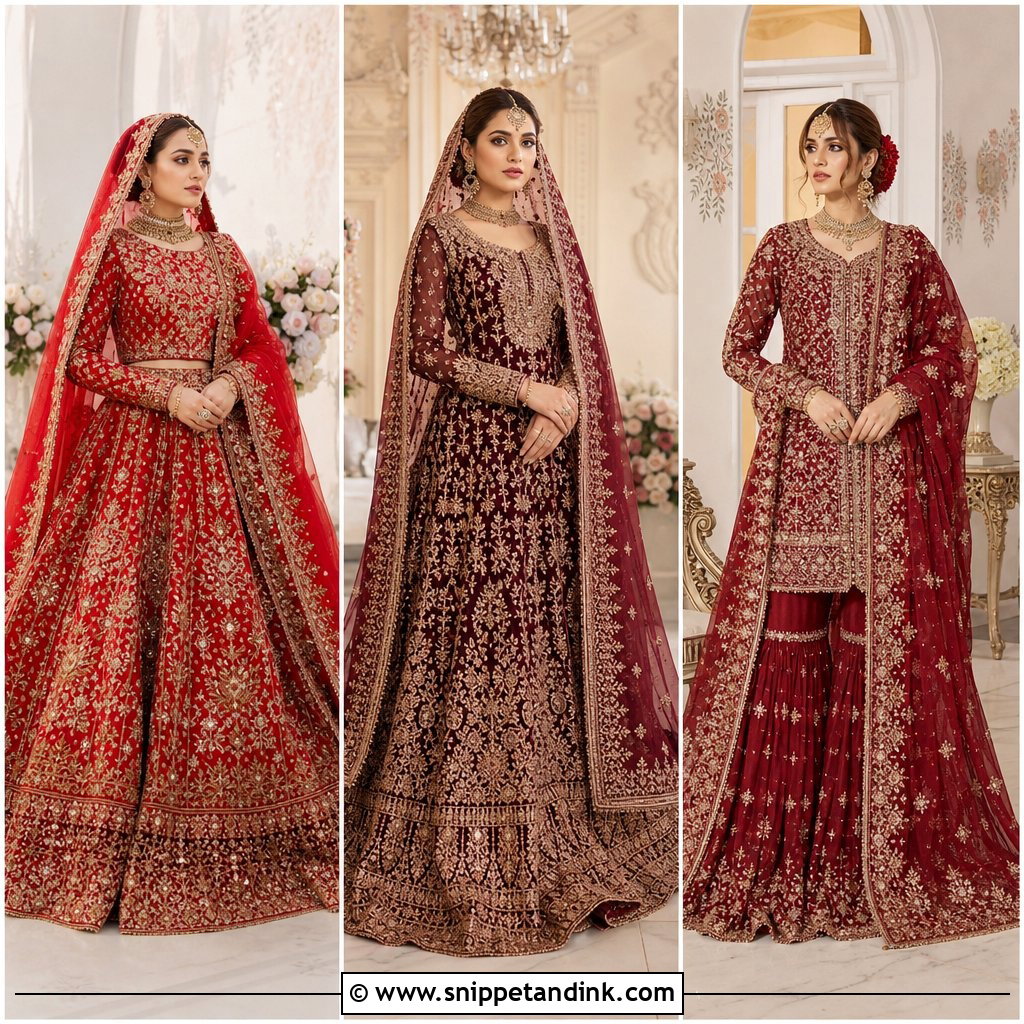
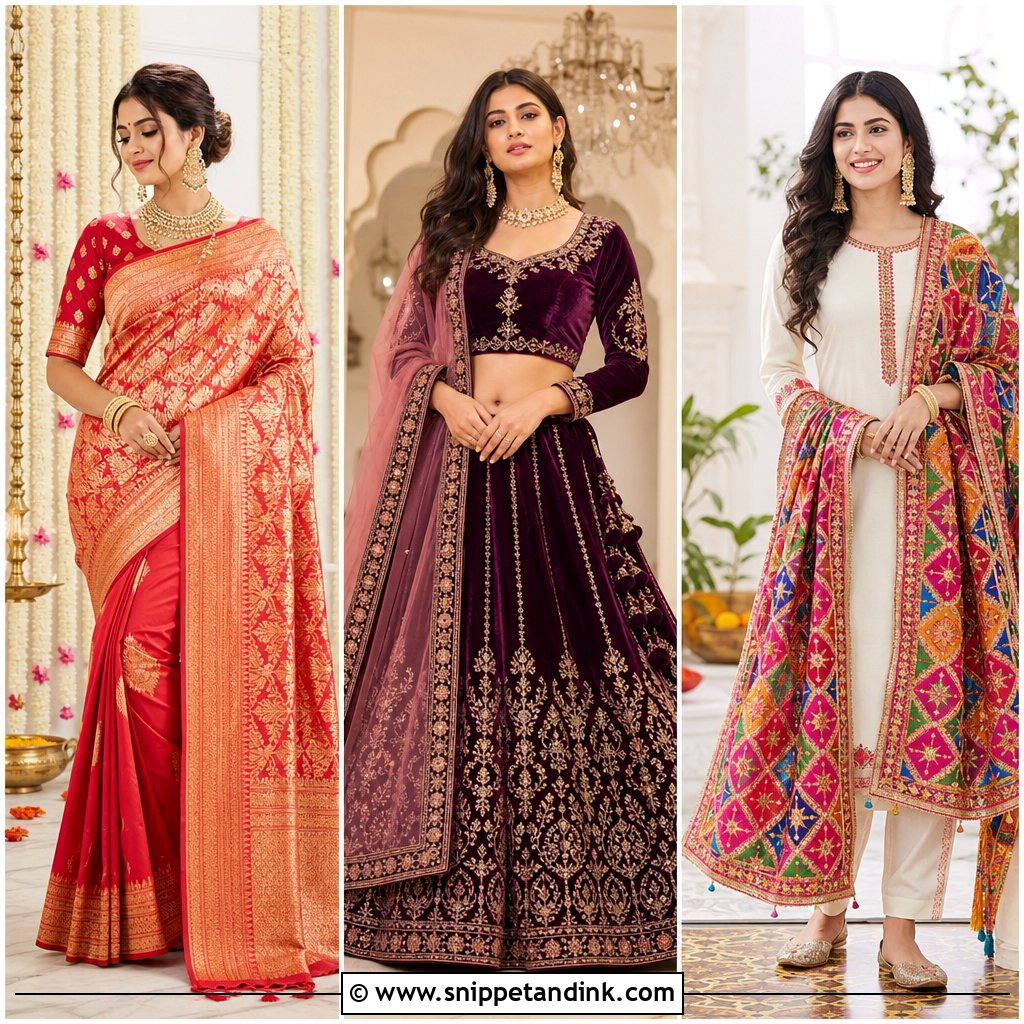
Red is still the colour most North Indian families expect at the pheras, and a full lehenga is the shape that carries it best. Zari, zardozi and dabka all add weight, so the first thing I ask at a fitting is how long the bride will be sitting on the floor. Heavily layered velvet can pull a lehenga past six kilos, which you feel in the waistband by the second hour; raw silk with the same embroidery is noticeably kinder. I always have the choli boned or at least lined with a firm canvas, because a soft blouse collapses under a heavy necklace. Two dupattas are common: one pinned over the head, a lighter one across the shoulder. Keep skirt, blouse and both dupattas in one colour family, then let the maang tikka, layered necklace, bangles and embroidered juttis do the rest.
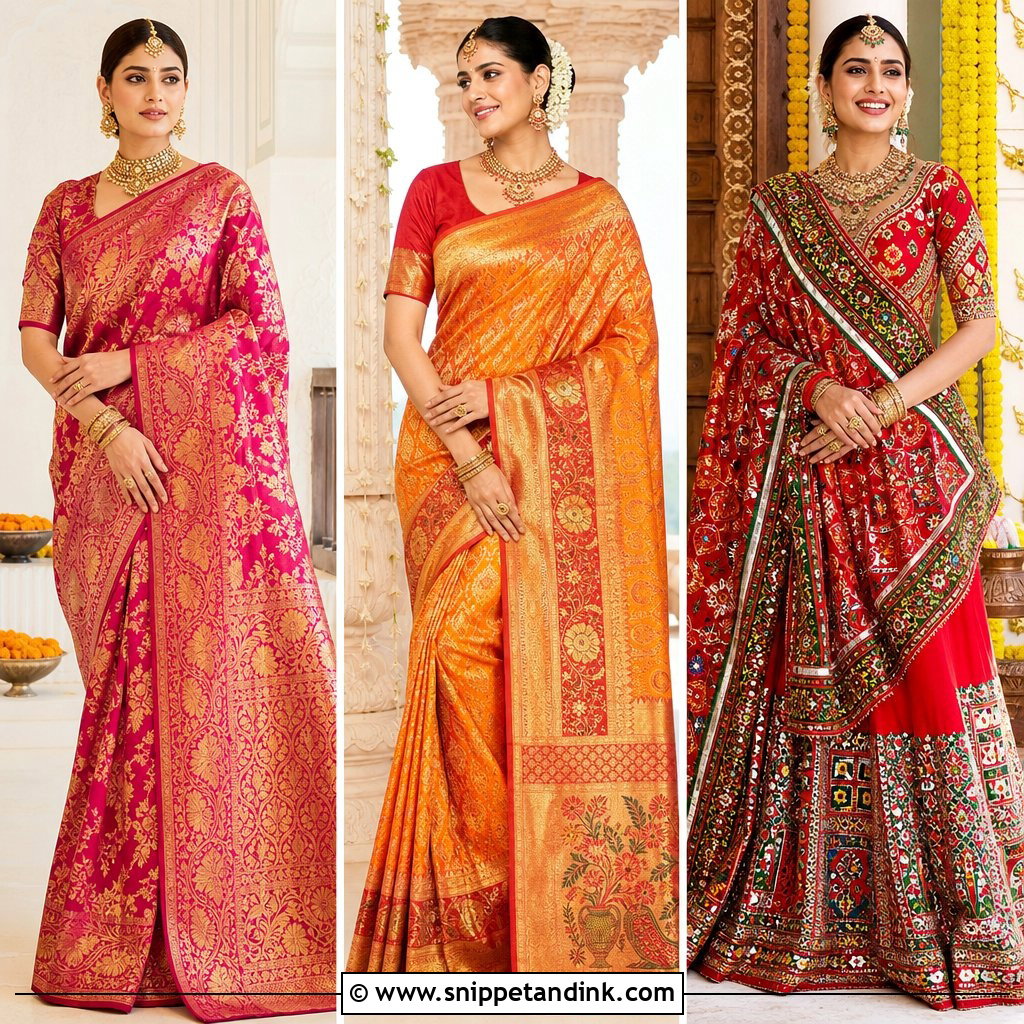
2. Banarasi Silk Saree With Gold Jewelry
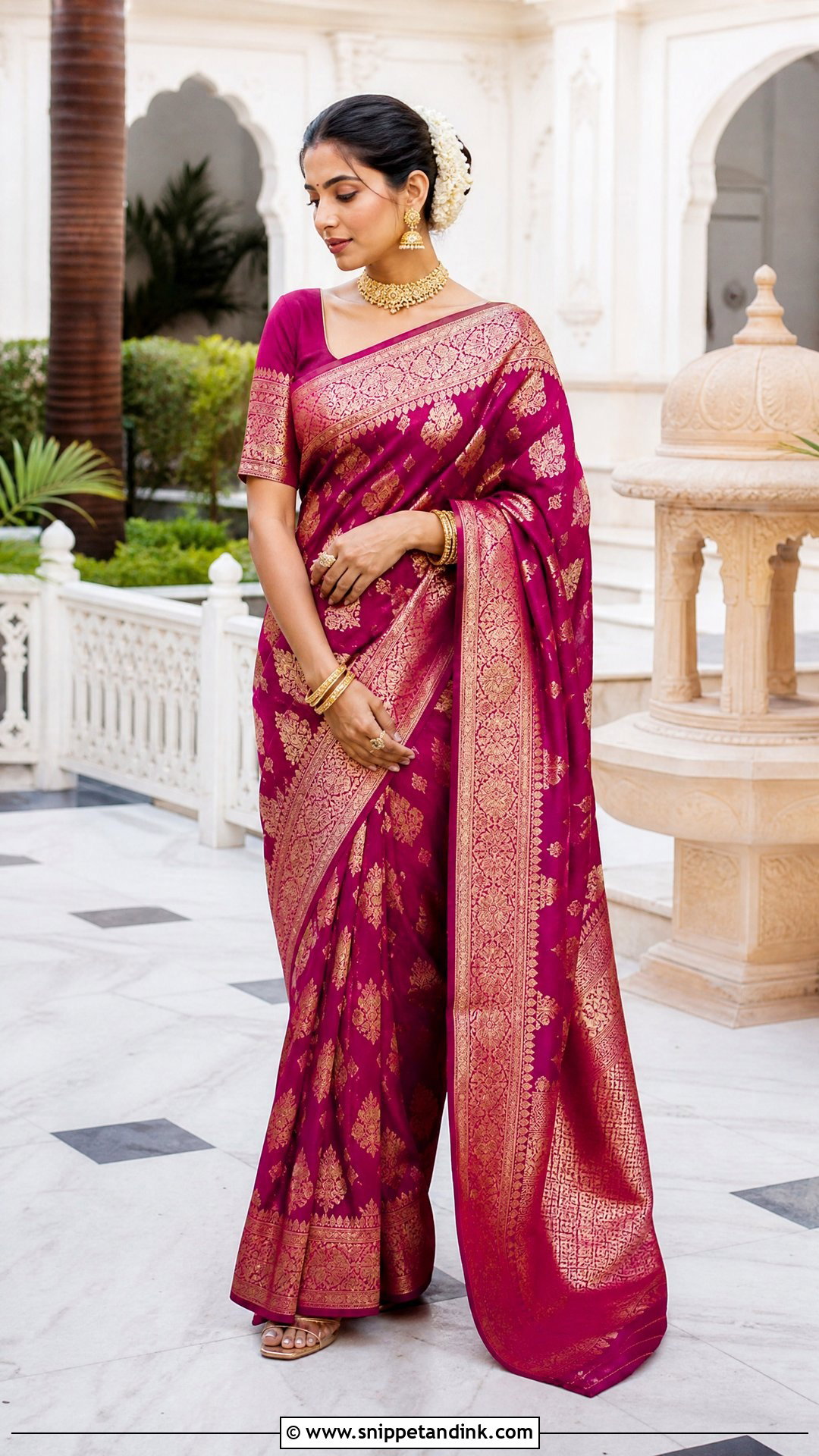
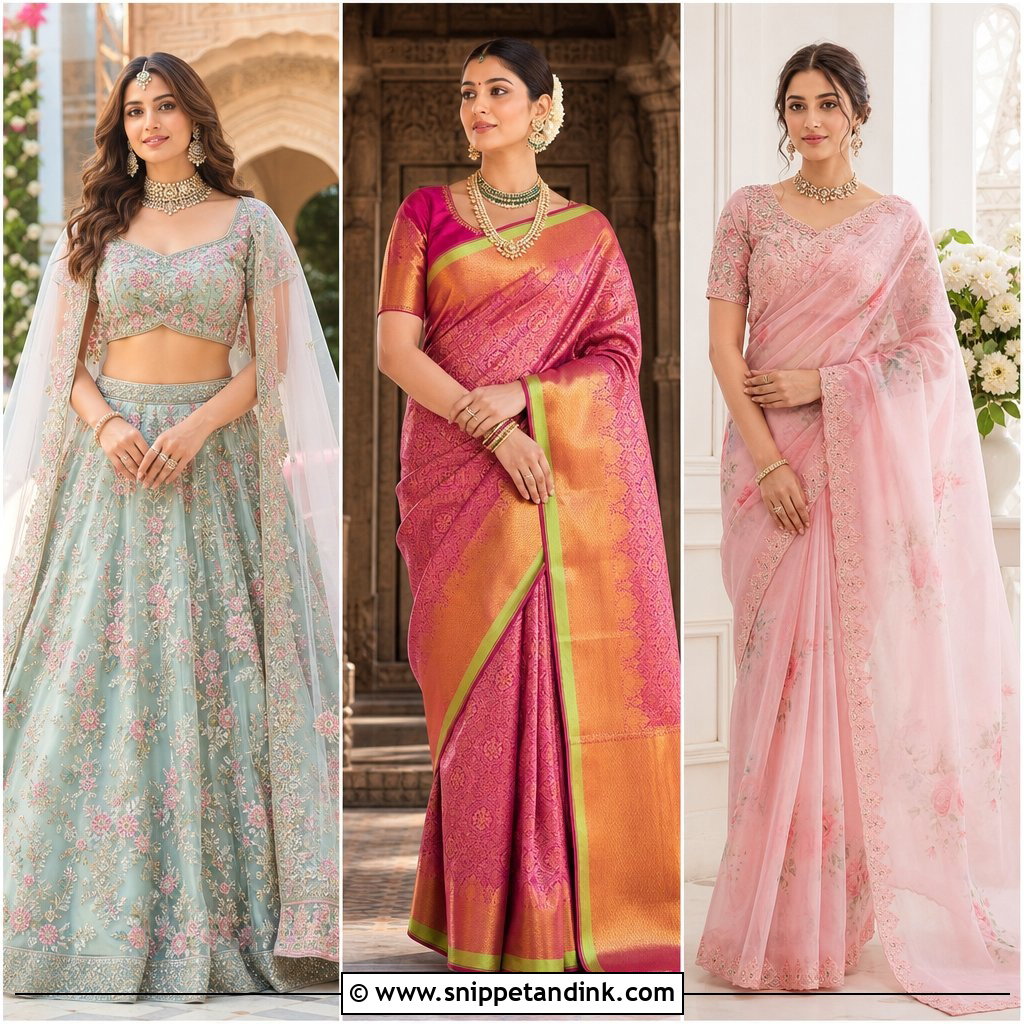
Banarasi silk earns its formal reputation from the brocade itself: the zari is woven into the fabric, not stitched on, so the sheen moves as you move. That also makes the pallu stiffer than people expect, and it needs a few extra pins at the shoulder. For an evening ceremony I lean toward deep red, magenta, emerald or royal blue, and I match the blouse to a colour picked from the border rather than the body. Neat, narrow pleats keep the pallu readable. Finish with gold jhumkas, a choker, stacked bangles and a low bun with fresh flowers. If the day involves a lot of standing, swap heels for embellished flats; nobody sees your feet under a properly hemmed saree anyway.
3. Kanjeevaram Silk Saree With Temple Jewelry
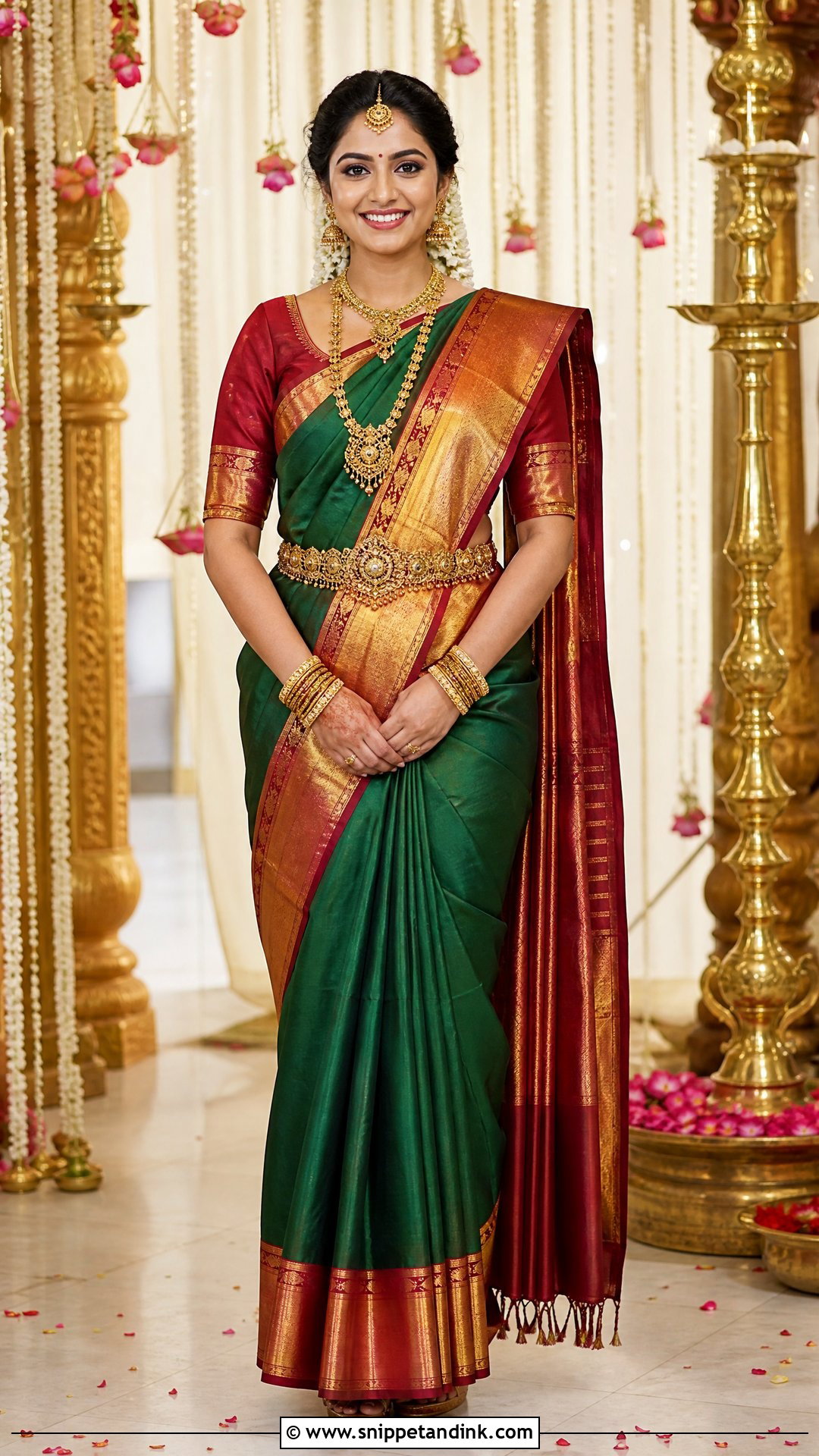
For a traditional South Indian wedding look, the Kanjeevaram is the saree I reach for first. The body and border are often woven separately and interlocked, which gives that firm, almost architectural fall, but it also means the silk is heavy and does not forgive sloppy pleating. I pleat it on the bride, not in advance, and pin each fold at the waist. Crimson, mustard, emerald and deep pink with a contrasting gold border all hold their colour under bright mandap lights. Pair it with a short-sleeved silk or brocade blouse, temple jewellery, jhumkas, a waist belt and flowers worked into a braid or bun. Low gold sandals are enough. Kanchipuram silk sits alongside the Banarasi and Paithani as one of the great brocade handloom traditions worn for ceremonies.
4. Paithani Saree With Traditional Nath
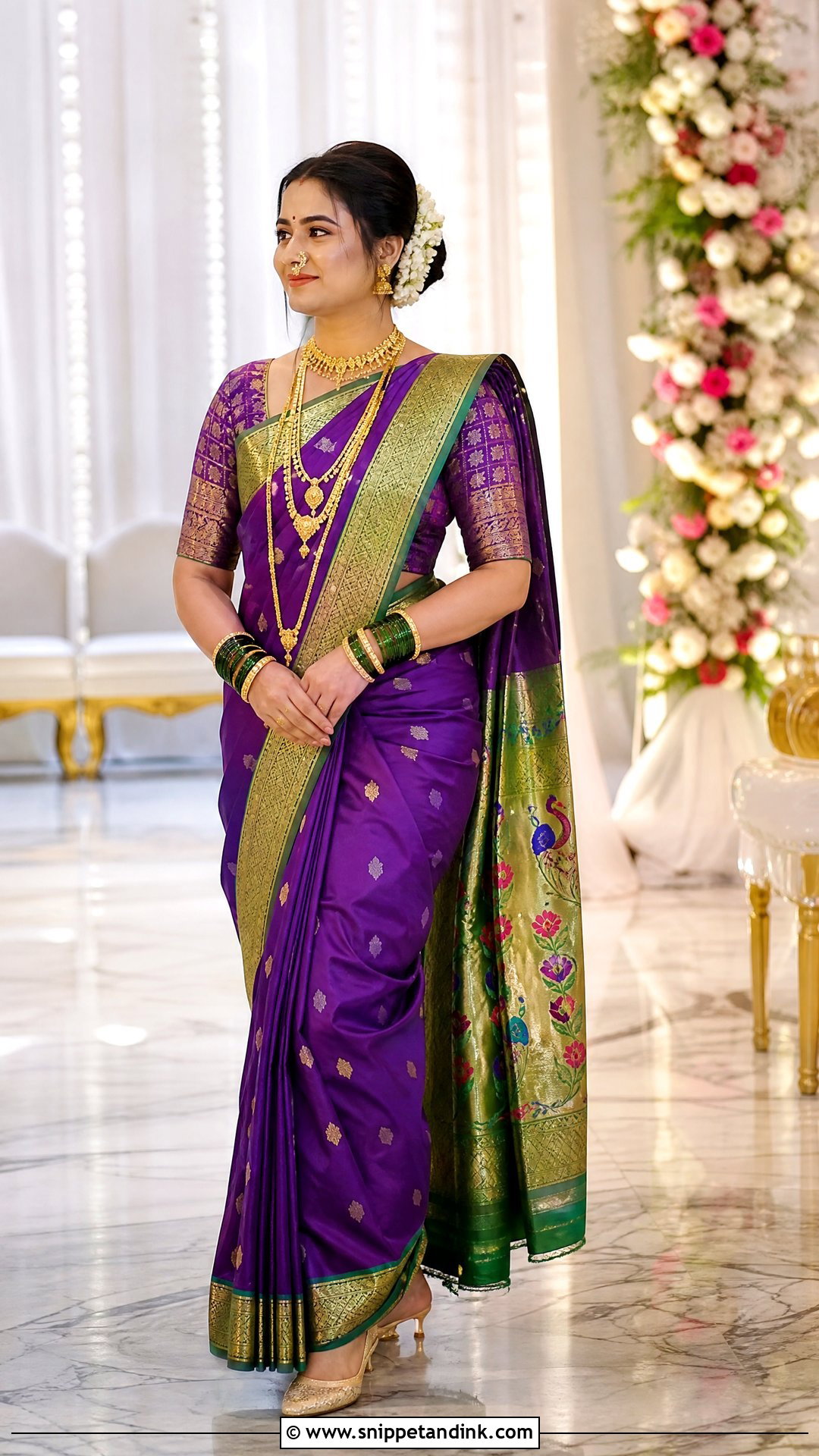
A Paithani is often part of a Maharashtrian bride’s trousseau, and you can spot one from across a hall by the peacock or lotus pallu and the contrasting border. The silk is lighter than most people assume, but the pallu is dense, so I anchor it at the shoulder with two pins instead of one. Purple, peacock blue, green and magenta are the classic bodies. The drape is where I defer to the family: some brides want a standard Nivi drape, others a regional style, and I would rather ask than guess. Add the Maharashtrian nath, layered necklaces, green glass bangles, gold bracelets and a crescent bindi, with jasmine around a sleek bun. Low block heels help when the rituals mean sitting down and standing up dozens of times.
5. Bengali Red And White Saree With Gold Accessories
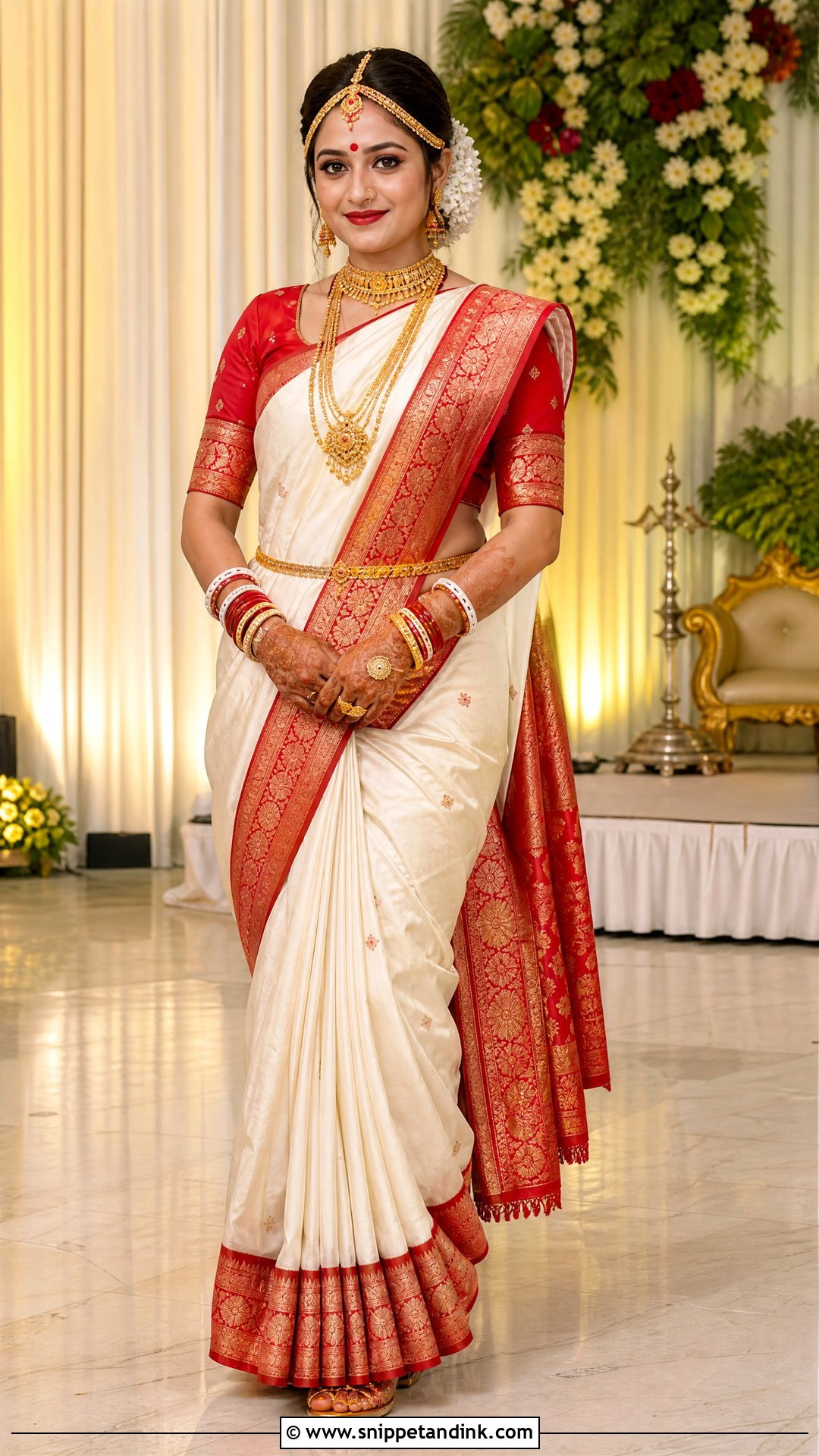
White with a red border reads instantly as Bengali, but the details change from family to family, so I check the expected drape and accessories before recreating a bridal version. For a bride, a silk with zari work gives weight and structure; a guest can wear a lighter handloom and still look correct. I like a red blouse with elbow-length sleeves here because it frames the arms against all that white. Bring the pallu over the shoulder neatly so the border runs unbroken in photos. Gold earrings, layered necklaces, red and white bangles and a forehead design suited to the ceremony finish the look, with a smooth bun and red flowers. White cotton shows every crease, so I steam it on the morning, never the night before.
6. Kerala Kasavu Saree With Gold Blouse
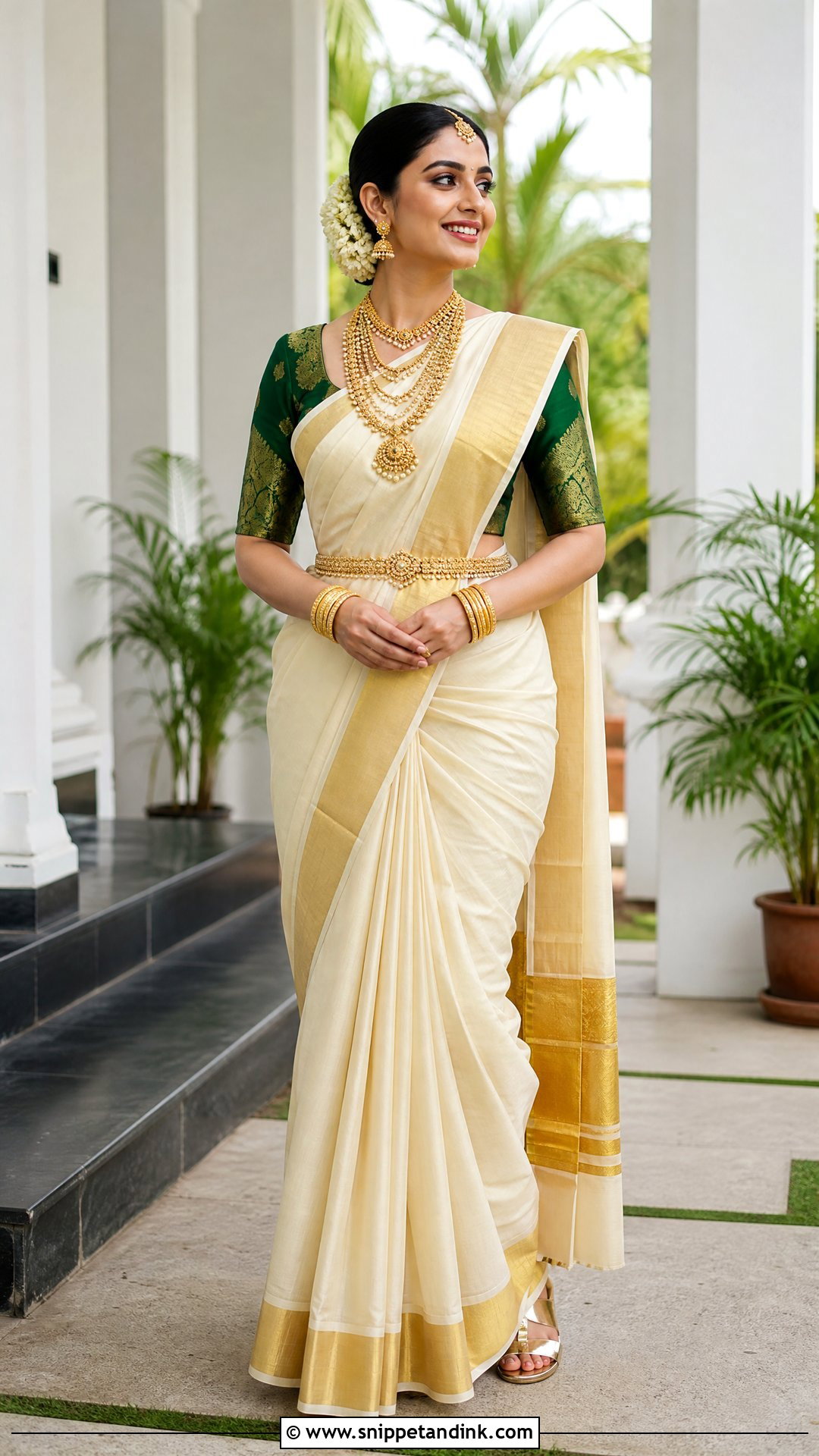
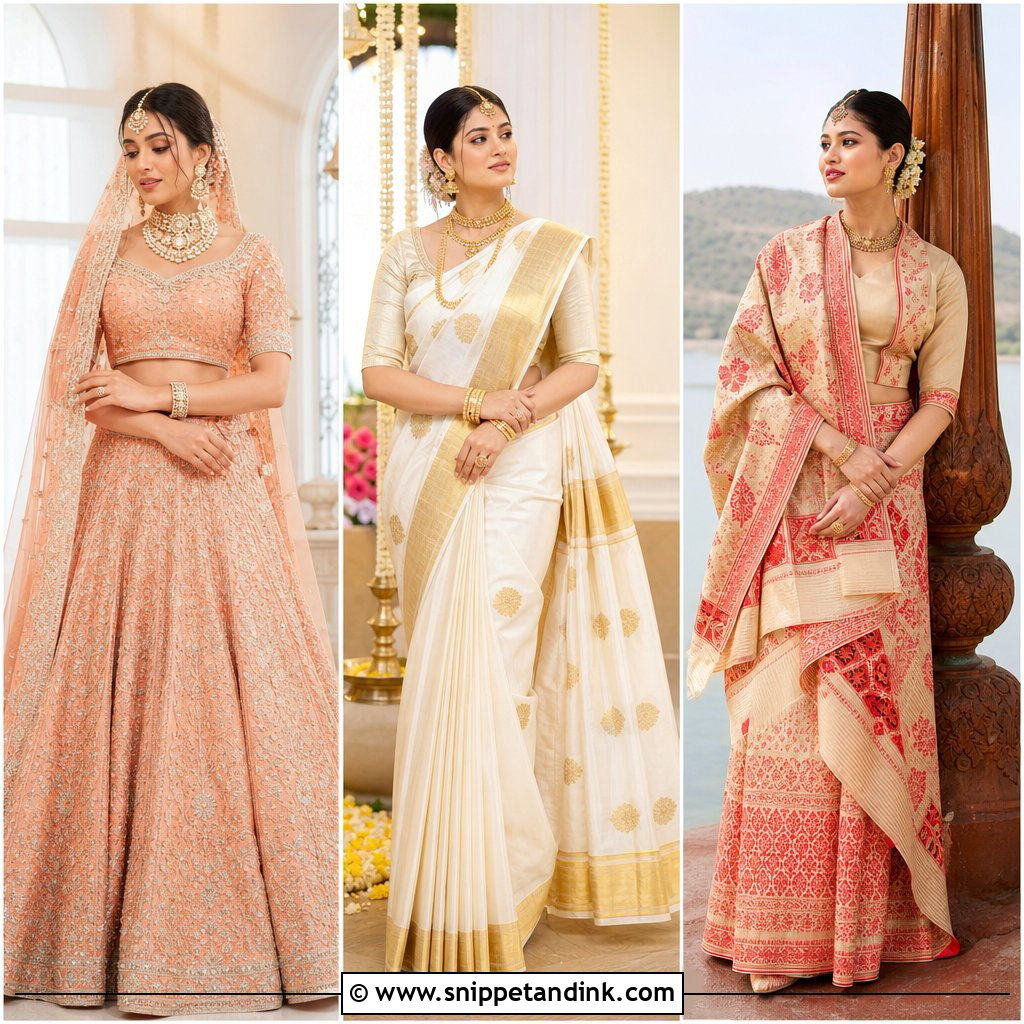
Ivory and gold make the elegant Kerala wedding outfit people picture, and the restraint is the point. The metallic kasavu border is the decoration, so I keep the drape clean and avoid adding a heavily worked blouse. Gold, green or red blouses all work; let the ceremony colours decide. A layered gold necklace, traditional earrings, bangles and a fine waist belt add richness without fighting the fabric. Jasmine around a smooth bun and metallic sandals finish it. Kerala’s handloom cotton is famous for those carefully woven borders, and the cotton versions breathe far better than silk in coastal heat, which is the reason I suggest them for outdoor daytime ceremonies.
7. Assamese Mekhela Chador With Muga Silk
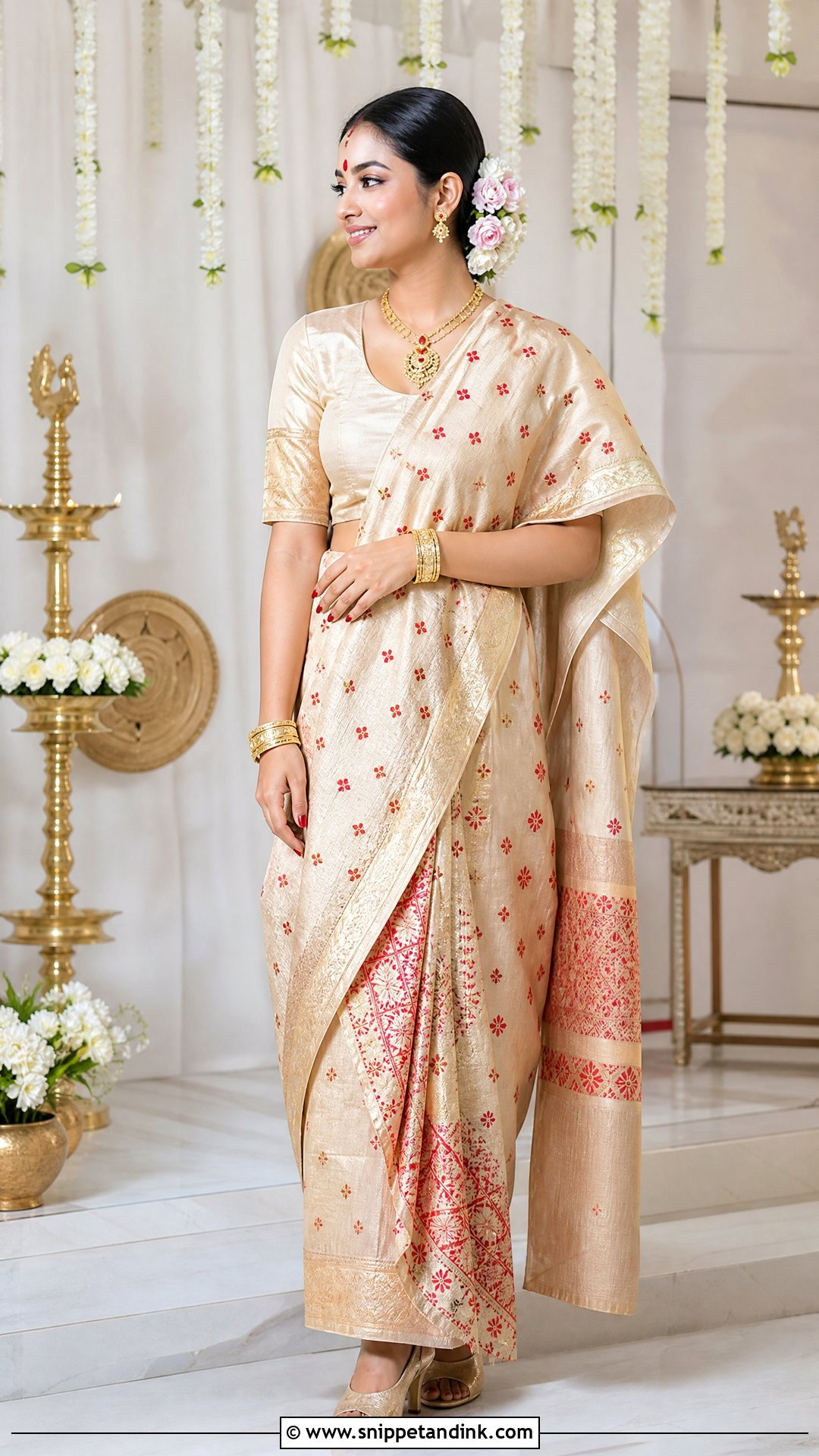
An Assamese mekhela chador is two pieces: the mekhela wraps the lower body like a pleated skirt, and the chador drapes over the top in a way that resembles a saree. Muga silk has a natural golden tone that deepens with age and washing, which is why families hand these sets down. In my experience the chador slips more than a saree pallu does, so I pin it at the shoulder and again at the back of the waist. Cream and gold is the classic pairing; red woven motifs add contrast. Style it with a fitted blouse, traditional Assamese jewellery, bangles, a neat flower-trimmed bun and gold sandals.
8. Rajasthani Gota Patti Lehenga With Odhani
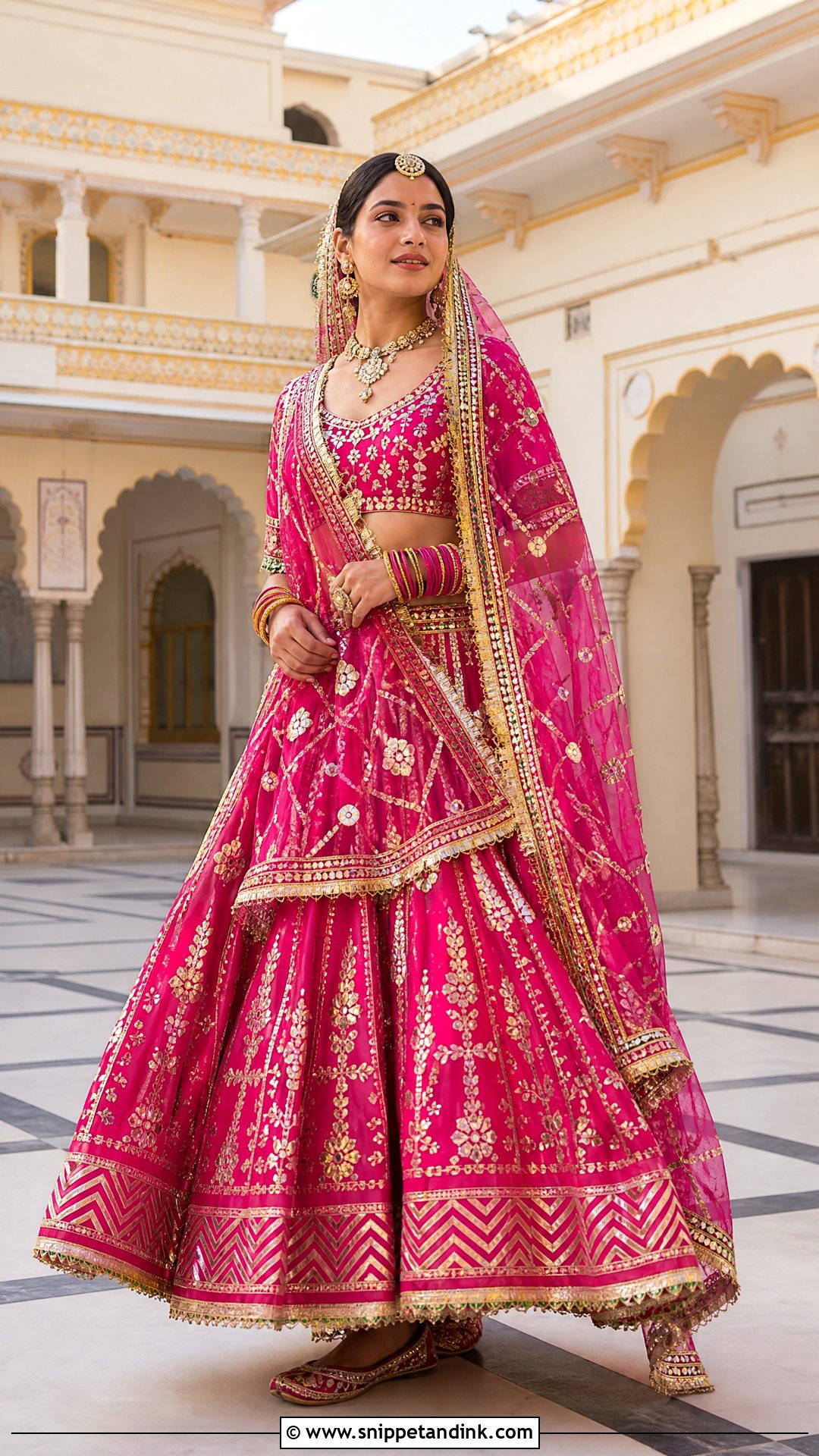
Gota patti is metallic ribbon appliqué, so it is lighter than zardozi while still throwing light around a room. Start with a flared lehenga in red, maroon, fuchsia, mustard or green, a fitted choli and an odhani with an embellished border. Brides can carry gota across the whole skirt; guests do better with smaller motifs and a quieter dupatta. One thing I watch for: older gota can tarnish to a dull brown, so check heirloom pieces in daylight before committing. Add a borla, statement earrings, bangles and embroidered juttis, with a braid or low bun that sits comfortably under the head drape. The outfit already shines, so carry a small coordinated bag rather than another sparkly piece.
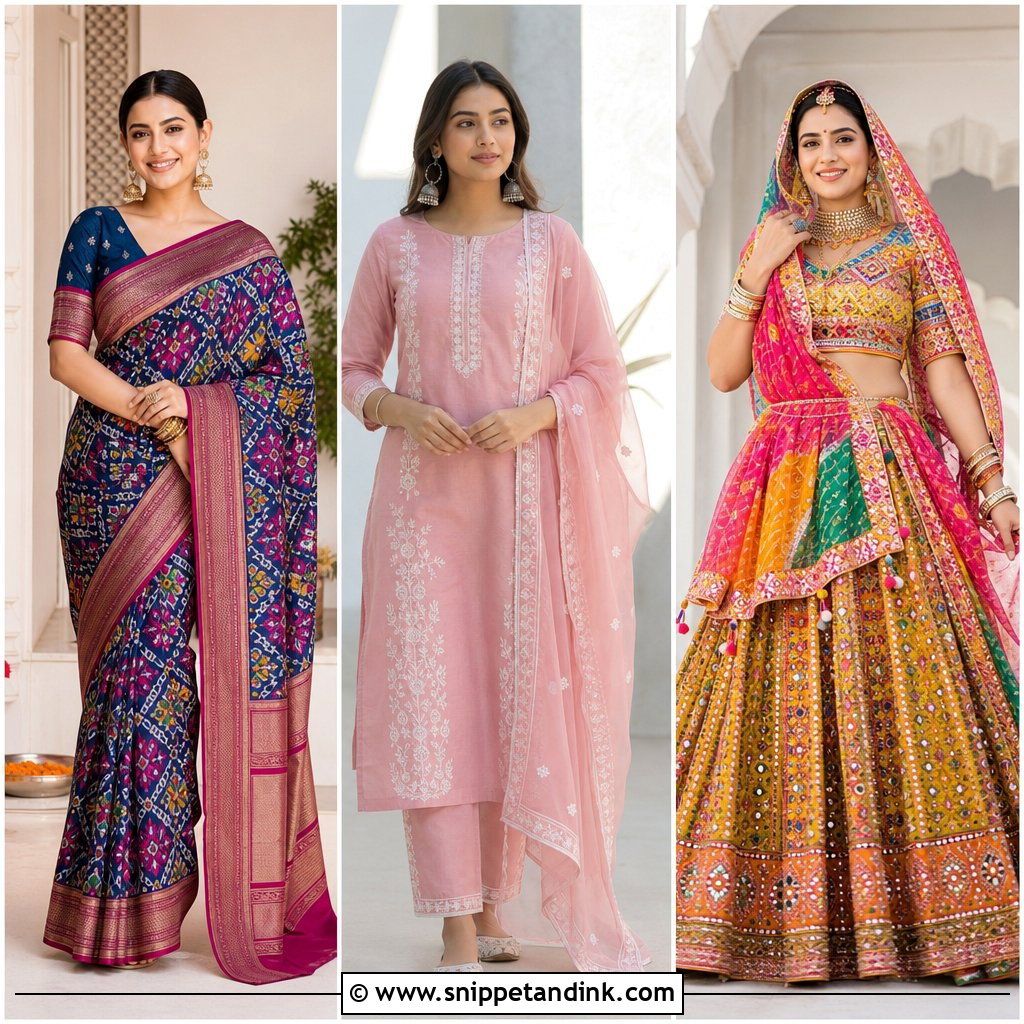
9. Gujarati Bandhani Ghagra Choli With Dupatta
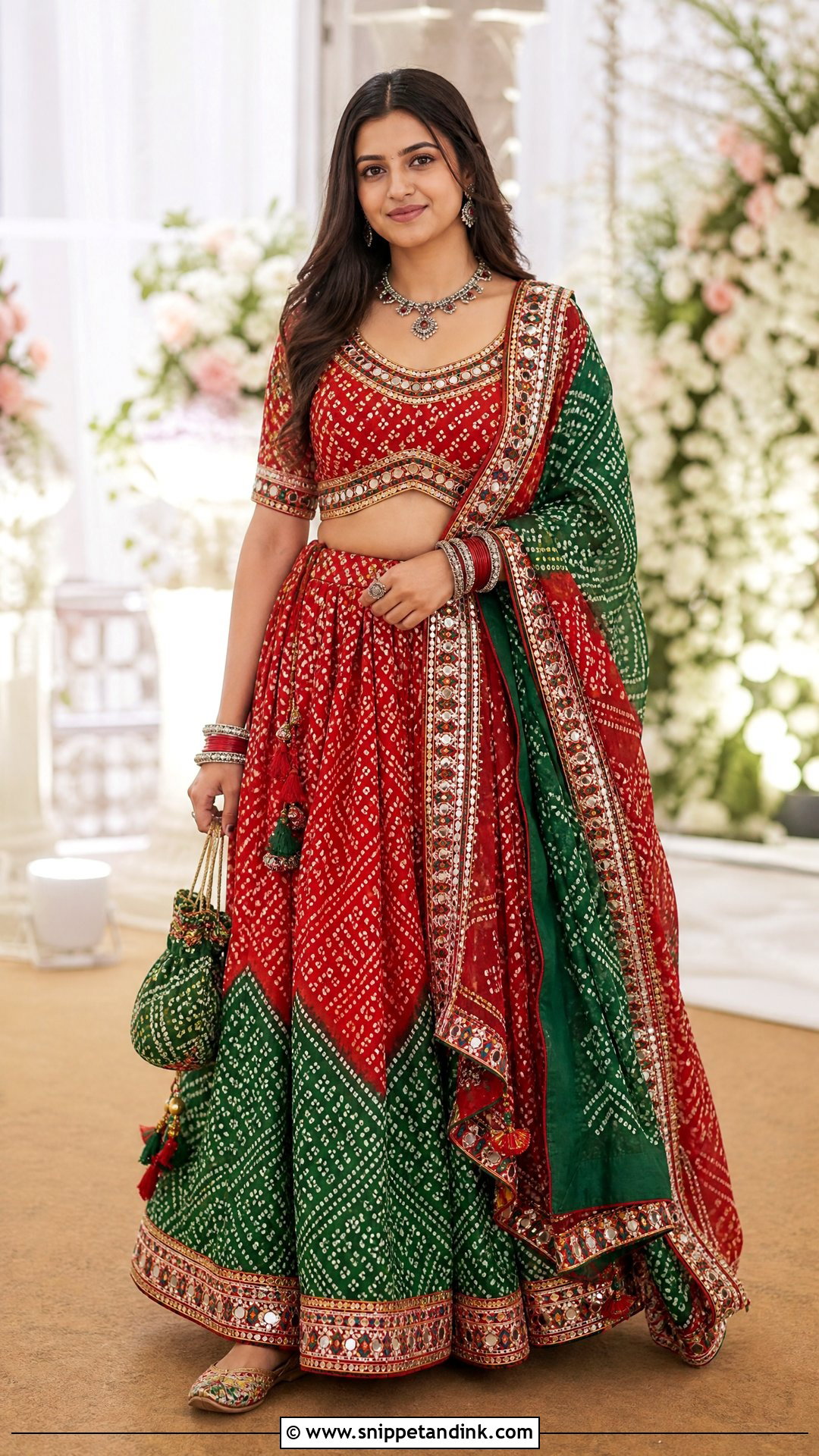
Bandhani is tie-dye done by hand, thousands of tiny pinched dots, and the slight irregularity is how you know it is real. On a flared ghagra in red, green, orange or pink it gives movement that suits a garba or sangeet. Pair it with a coordinated choli and a light dupatta draped across the torso or over the head. Mirror work or metallic edging will dress it up without hiding the dots. A statement necklace, earrings, bangles and mojaris complete it, with a secure braid so you can dance. I’d steer guests away from an all-red Bandhani if the bride is wearing red; it reads as competing in photos even when nobody intends it.
10. Punjabi Patiala Salwar Suit With Phulkari Dupatta
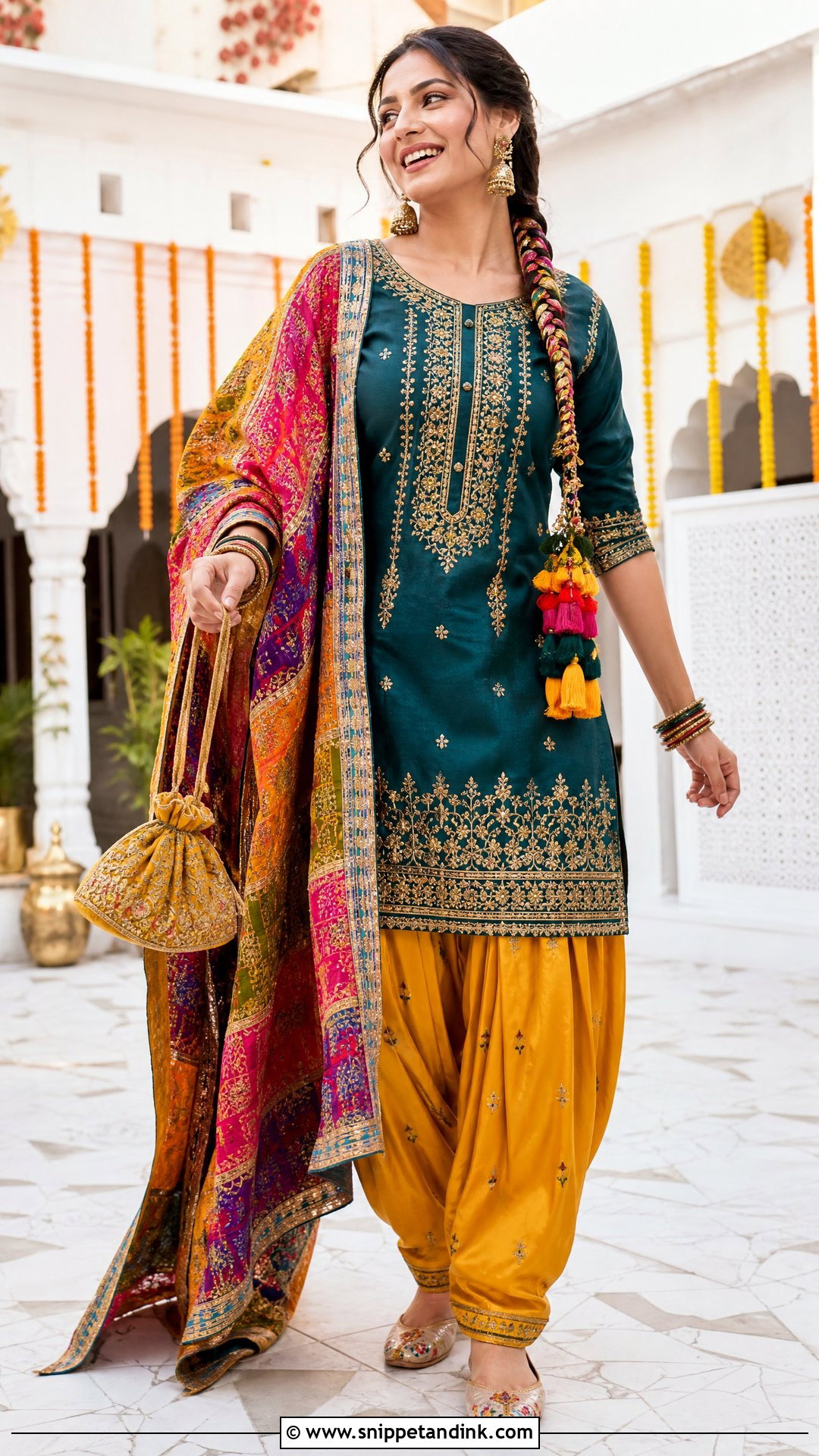
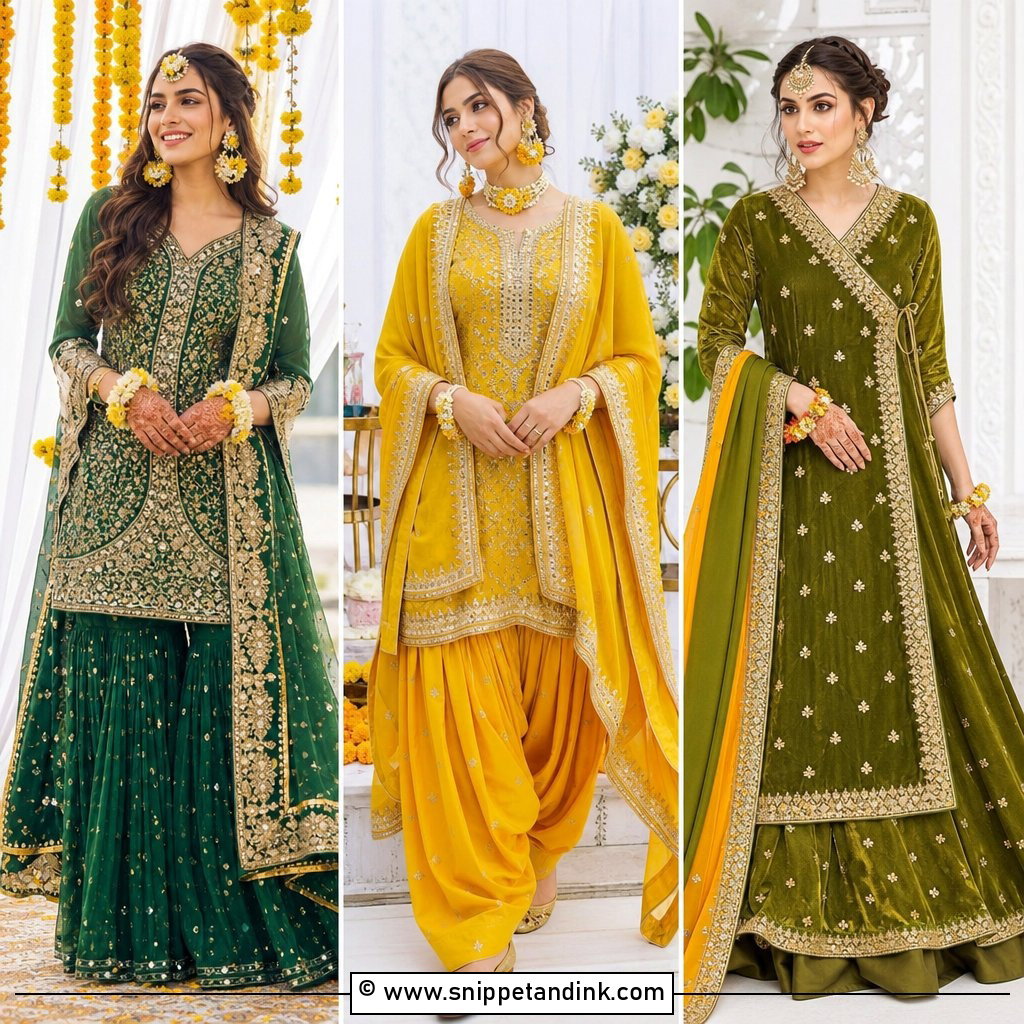
Need something you can dance in for six hours? A Punjabi Patiala salwar suit is the outfit I suggest most for a sangeet. The Patiala pants use a lot of fabric folded into deep pleats, so they hang full without restricting your stride. Pair them with a knee-length kameez in silk, cotton-silk or brocade, and a Phulkari-inspired dupatta for colour. Jewel tones, bright pink, mustard, teal and green all suit it. Jhumkas, bangles, a potli and embroidered juttis finish the look. For dancing, drape the dupatta over one shoulder; for rituals, pin it across both. A paranda in the braid is a Punjabi touch that stays put better than loose flowers.
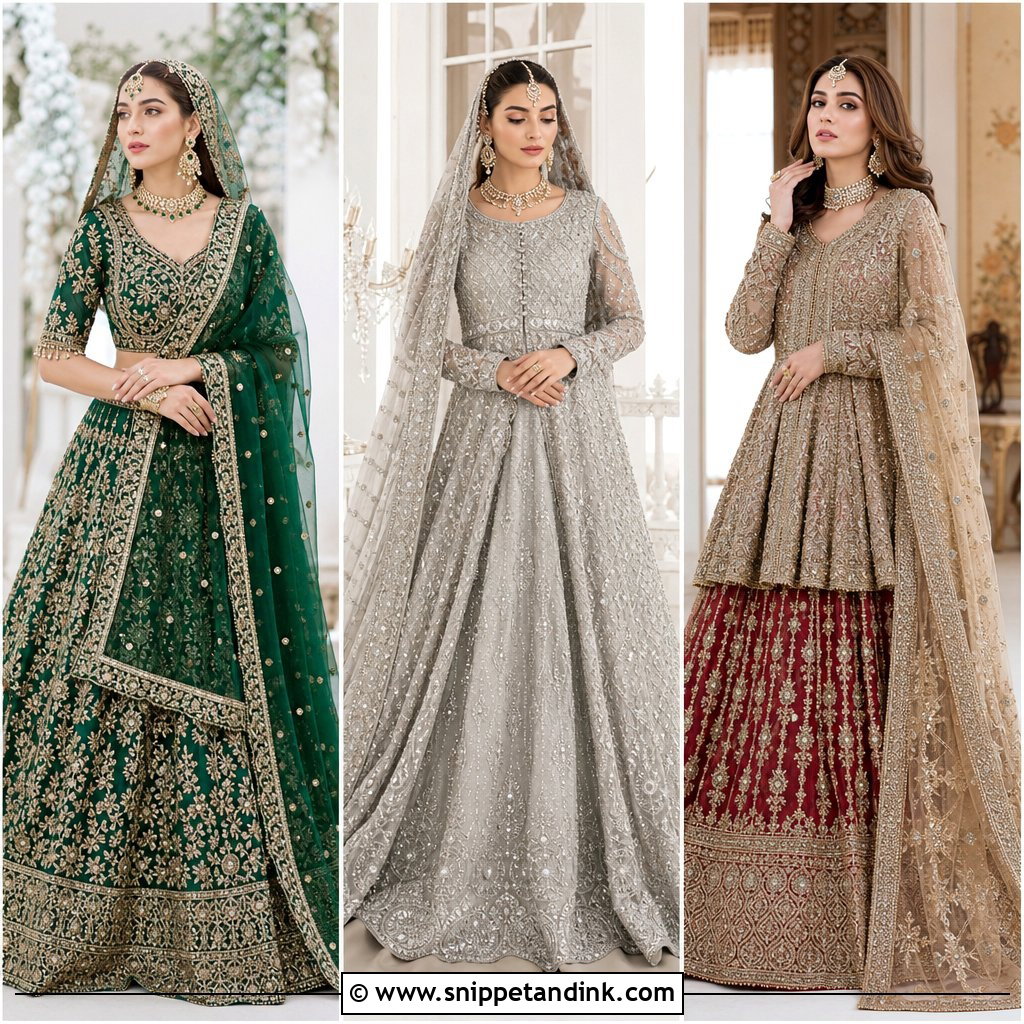
11. Floor-Length Anarkali Suit With Churidar
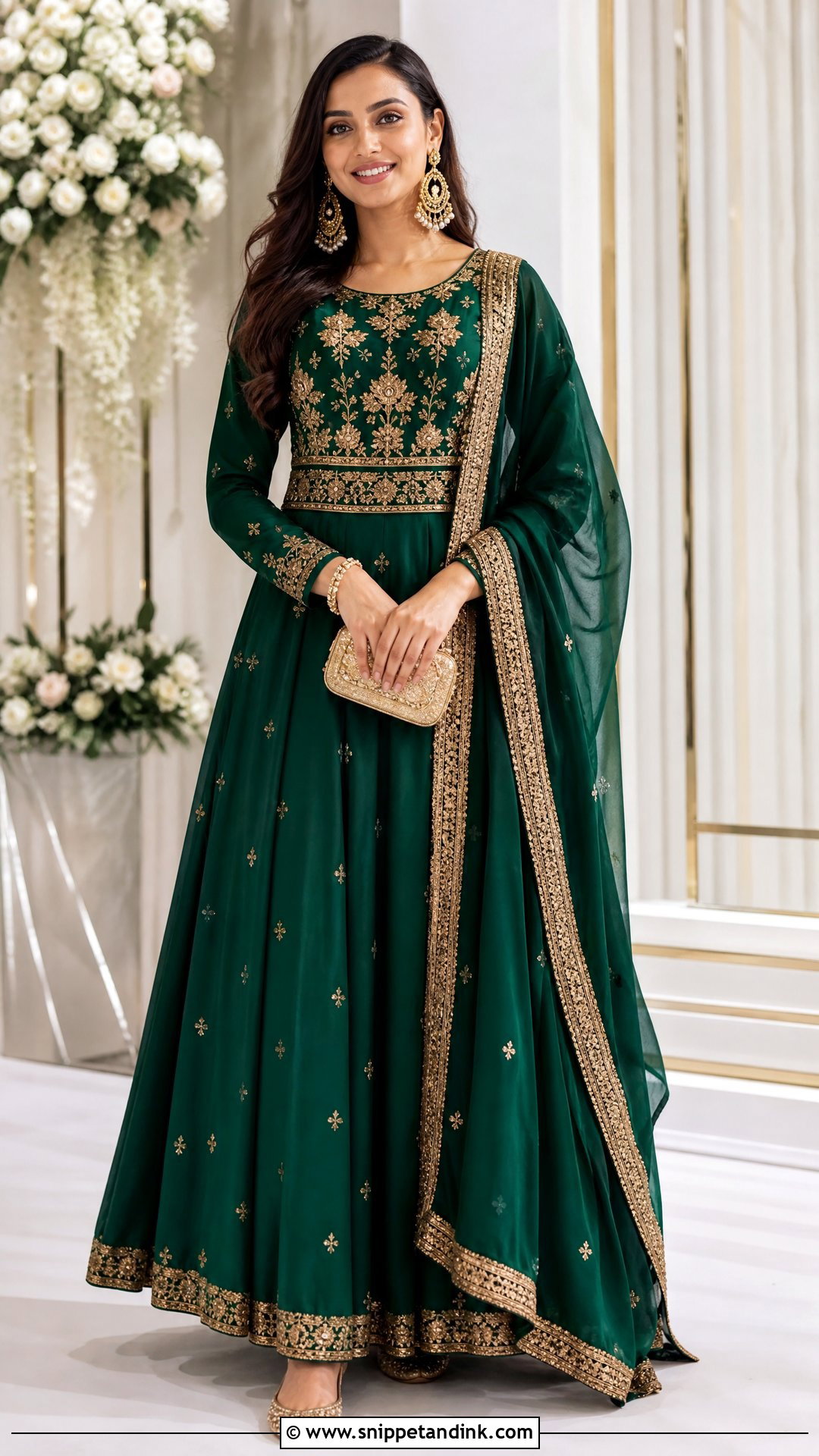
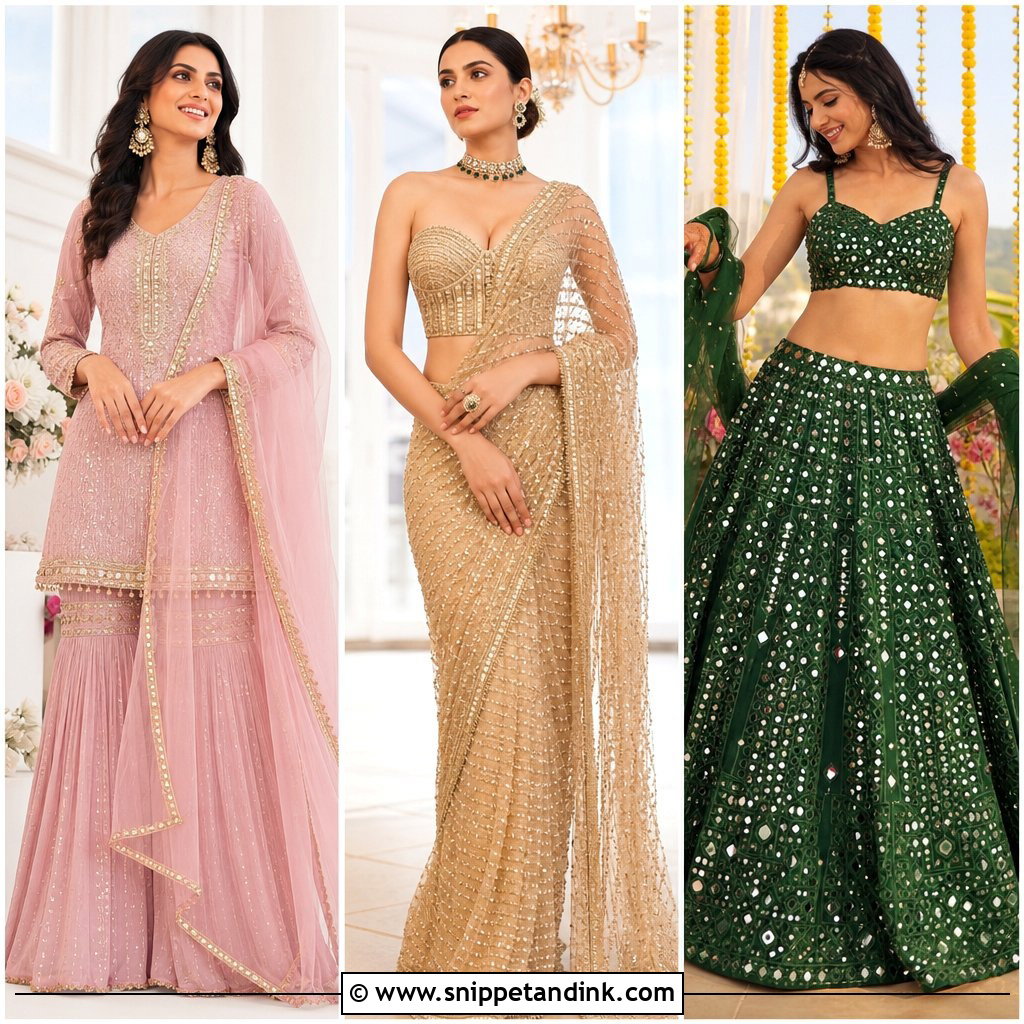
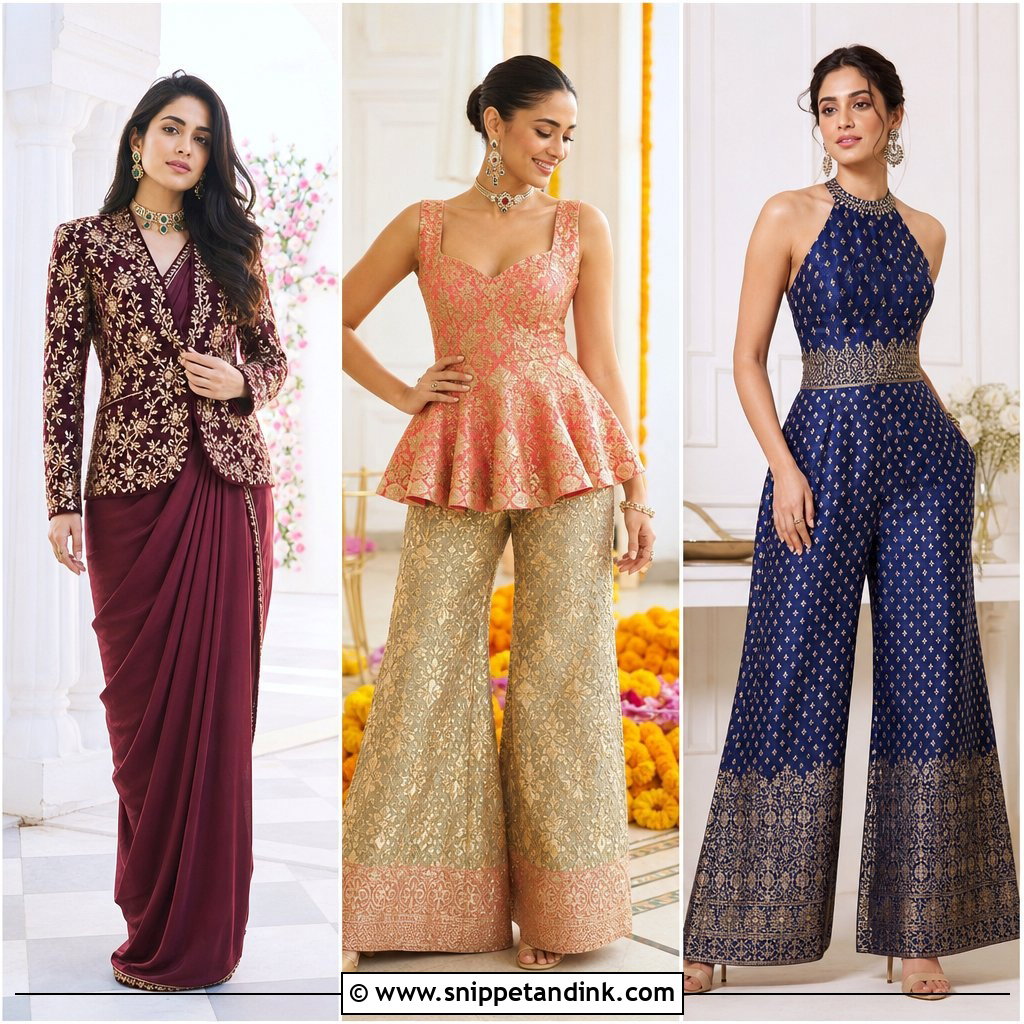
An Anarkali gives you the sweep of a gown with the structure of Indian occasion wear. The fitted bodice and flared lower panel flatter many body types, but the flare depends entirely on how many kalis (panels) the tailor cuts, so I ask about that before anything else. Silk, georgette and cotton-silk all work, with embroidery kept to the neckline, cuffs and hem. Wear it over a comfortable churidar with a light dupatta, chandbali earrings, a bracelet, a small clutch and pointed juttis or low heels. A side-parted bun or soft braid suits the long line. Guests usually look right in pastel embroidery; close family can go deeper in colour and heavier in work. Very full georgette Anarkalis catch underfoot on stairs, so check the hem length in the shoes you will wear.
12. Embroidered Sharara Set With Short Kurti
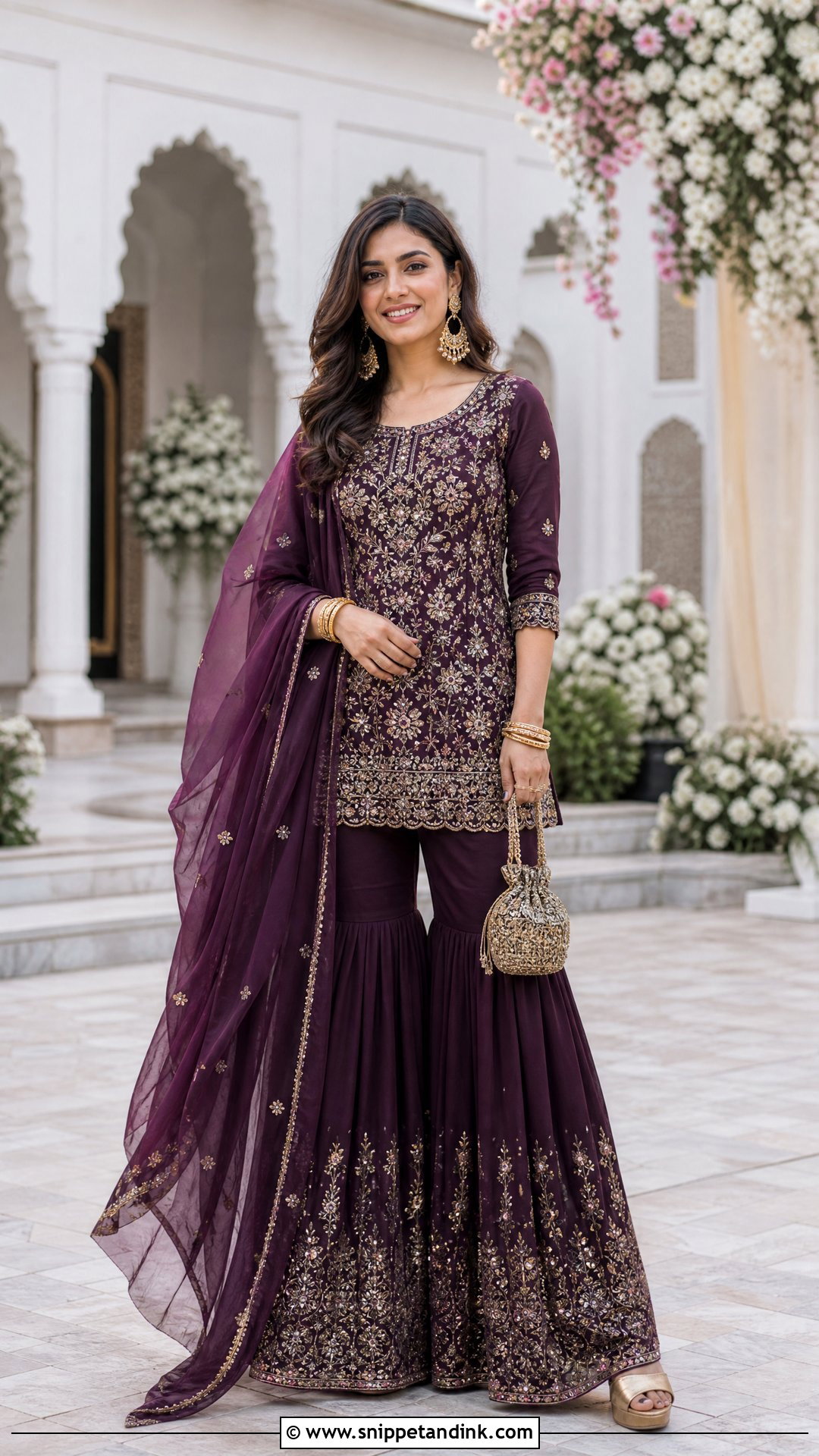
A sharara set has wide trousers that flare from the hip and look almost like a divided skirt when you stand still. It is usually worn with a short or mid-length kurti and a coordinating dupatta. The fitted top is what stops the volume from swallowing you, so I keep it close through the waist. Emerald, navy, plum, coral and soft mint all work, with embroidery along the kurti, the trouser hem and the dupatta edge. Add statement earrings, bangles, a potli and block heels. Shararas move well when you dance, but the hem must clear the floor in your actual shoes; a sharara that drags is the outfit I see people trip in most.
13. Traditional Gharara Set With Embroidered Dupatta
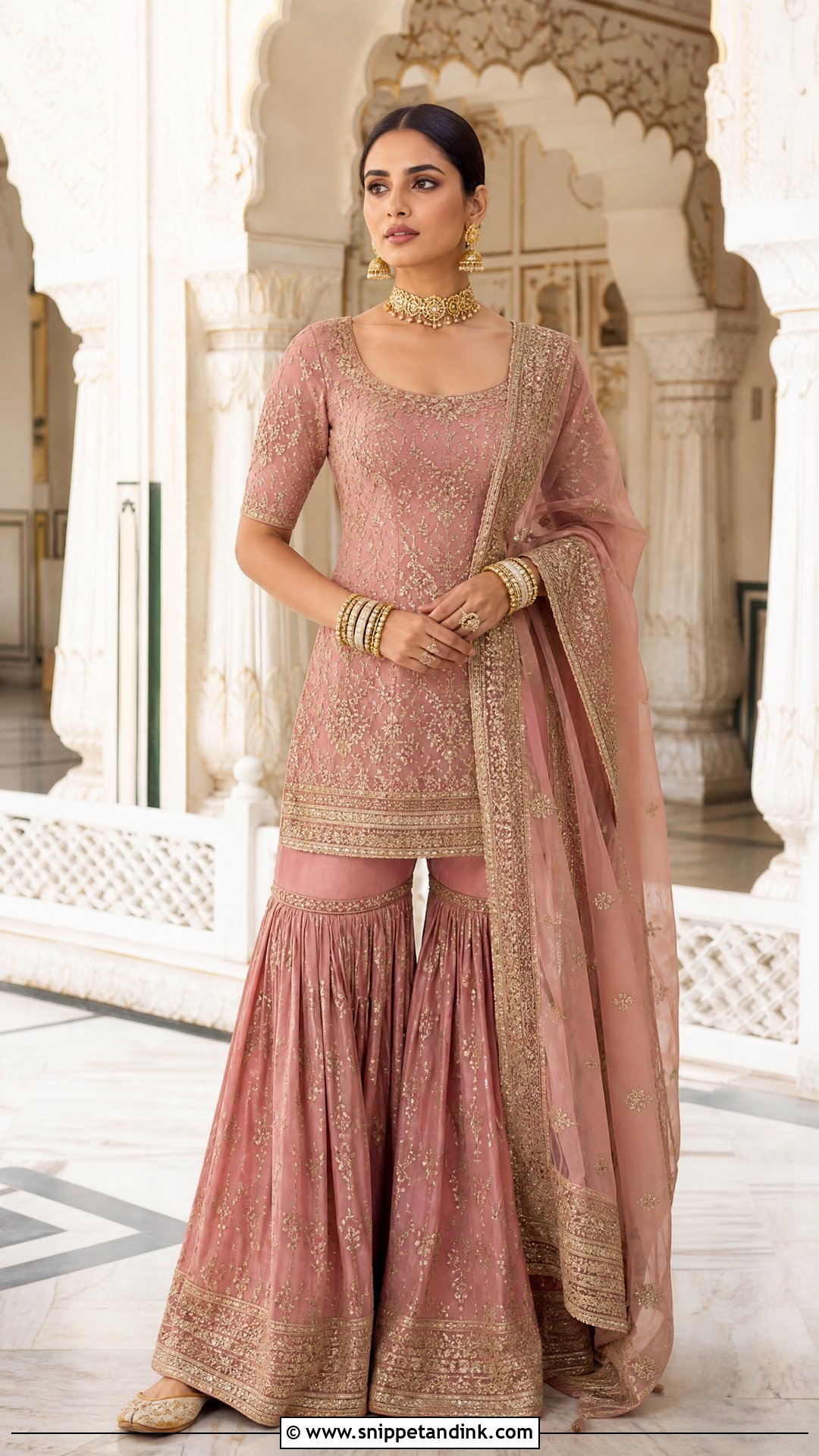
A gharara is cut close through the thigh and then gathered at the knee into a dramatic flare, usually with a decorative band covering the join. That join is the whole design, so I pair it with a short kurti that keeps it visible. Silk, brocade and tissue give it the formality a wedding needs. Deep green, maroon, navy, rose and antique gold are lovely choices, finished with an embroidered dupatta worn over the head or across one shoulder, a choker, jhumkas, bangles and embellished flats. Keep the kurti plain because the trousers already bring plenty of volume. The fit at waist, hip and knee is critical; too tight at the knee and you cannot sit on a low seat comfortably.
14. South Indian Half Saree With Gold Border
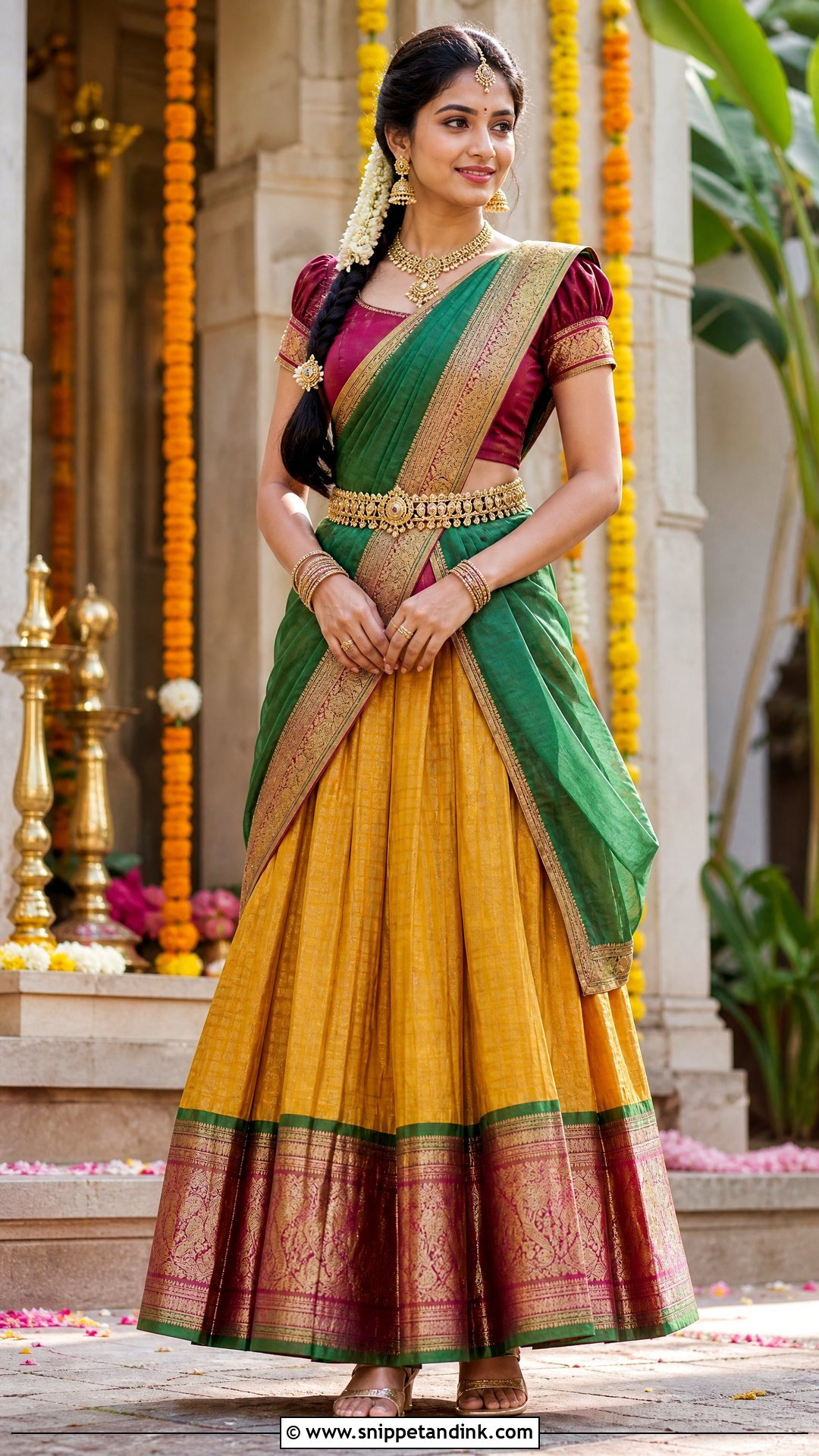
The half saree, or langa voni, is three pieces: a long skirt, a fitted blouse and a draped voni that gives the impression of a saree. Families in the south often see it as a young woman’s ceremonial outfit, and it is easier to move in than a full nine yards. For a wedding I like silk pieces in contrasting colours tied together by a consistent gold border, such as a magenta skirt, green blouse and mustard drape. Matched jewel tones feel more formal. Temple earrings, layered necklaces, bangles, a waist belt and gold sandals complete it, with a long flower-trimmed braid. Pin the voni at the shoulder and the waist; unpinned, it slides off the blouse the moment you bend.
15. Dharmavaram Silk Saree With Contrast Blouse
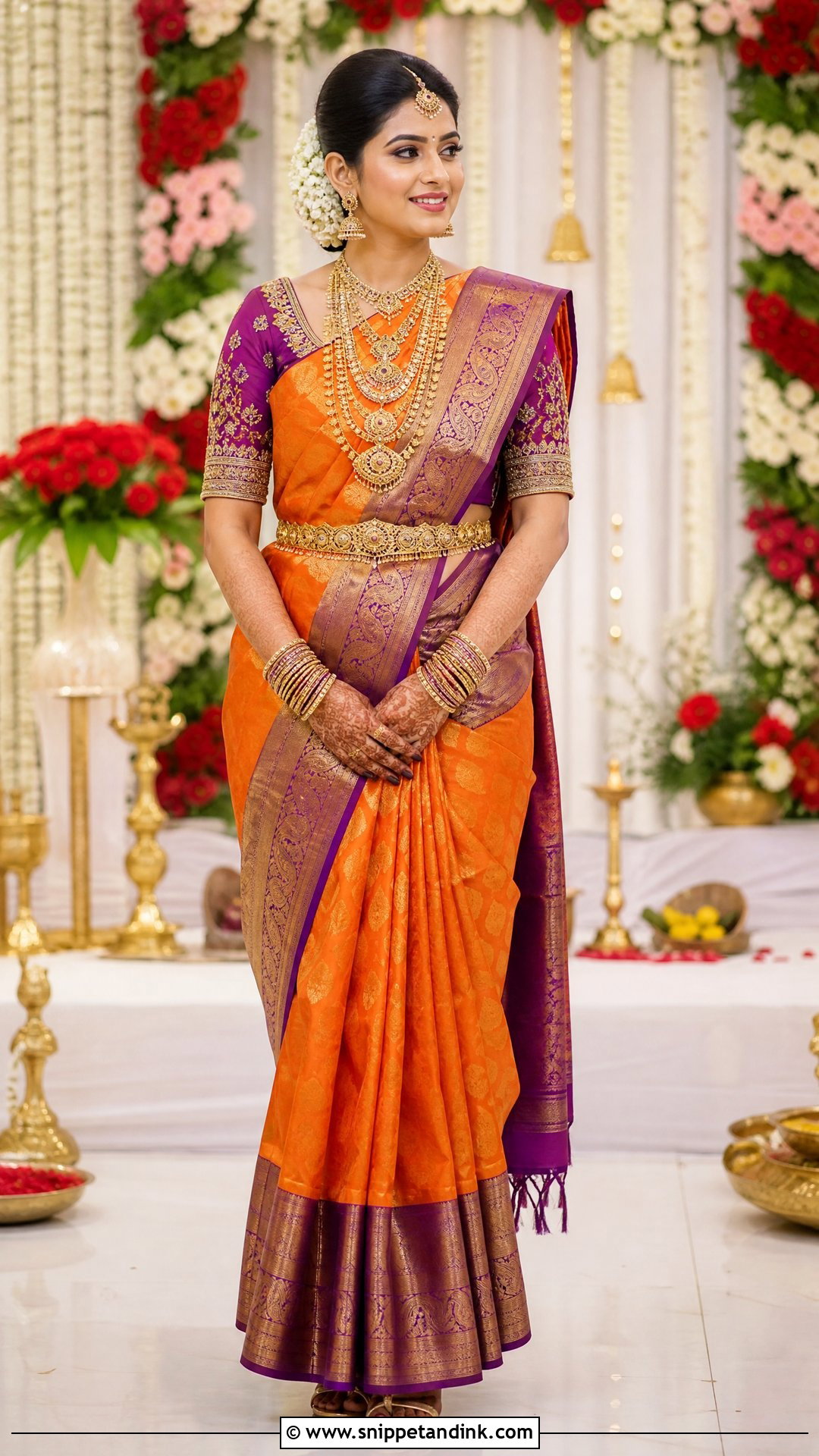
Dharmavaram silk is known for bright, saturated colours and wide, richly patterned borders, and it is a popular bridal saree in Andhra Pradesh. The silk is weighty, so pleats need pressing before draping or they bunch at the waist. Orange, crimson, purple and green with a contrasting silk blouse is the classic approach. If the body has elaborate motifs, keep the blouse neckline simple. Gold jhumkas, stacked bangles, a waist belt and layered necklaces build the ceremonial look, with a braid or low bun and jasmine. Choose low sandals that stay hidden under the hem. I tell brides to walk a full lap of the room in it at the fitting, since heavy silk shows you where the drape will fail.
16. Pochampally Ikat Saree With Statement Jewelry
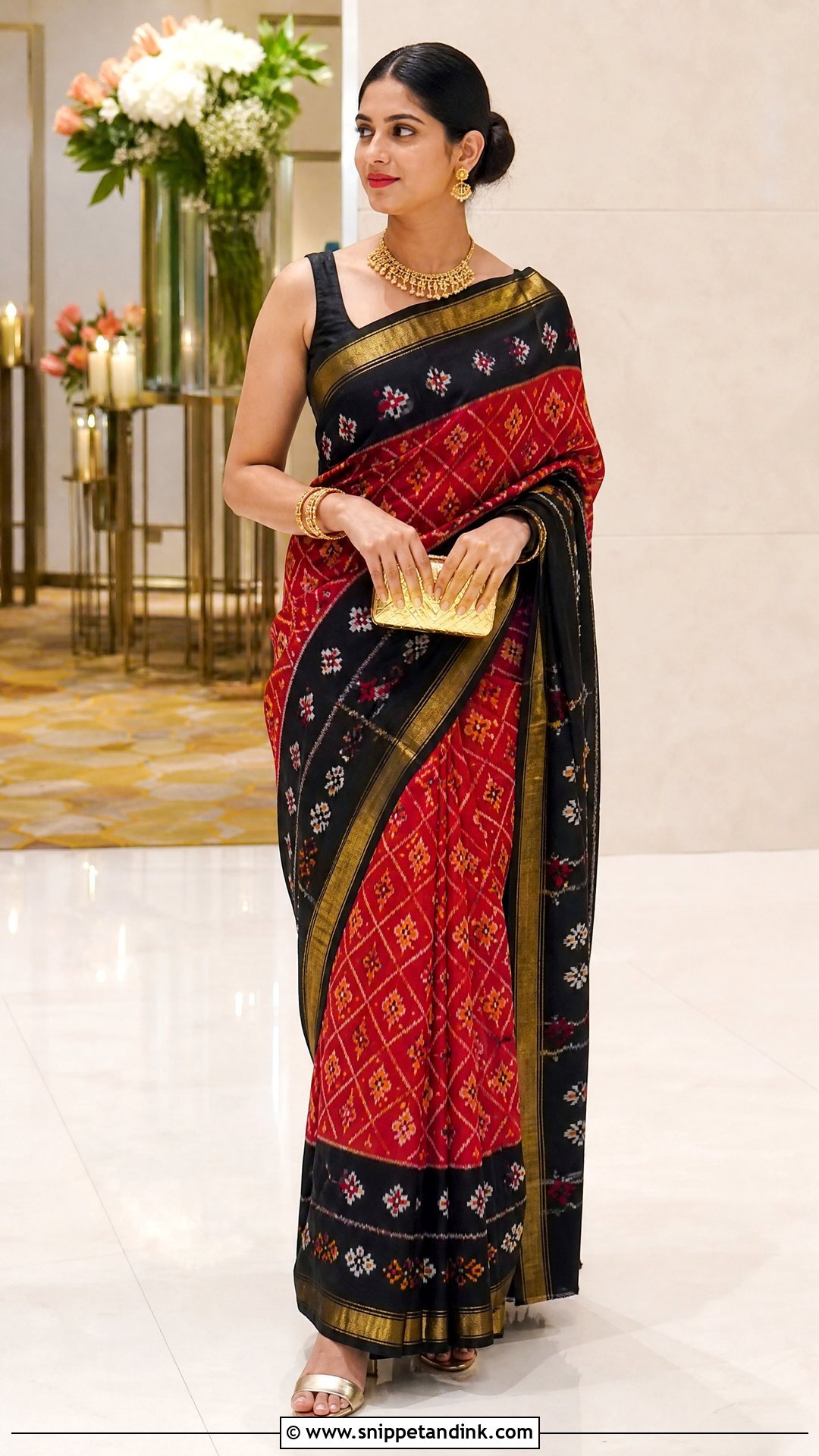
Pochampally Ikat comes from Telangana, and the pattern is dyed into the threads before weaving, which gives the motifs that slightly blurred, feathered edge. It looks graphic rather than ornate, a welcome break from heavy embroidery. For a wedding, go for the silk version in red, black, purple, teal or mustard. Match a solid blouse to one colour in the pattern and keep it unembellished; a worked blouse and Ikat together look busy every time. A structured gold necklace, coordinating earrings, bangles, a compact clutch and a sleek bun keep it polished. This is a saree I often recommend to guests who want something traditional that still feels a little modern.
17. Maheshwari Saree With Embroidered Blouse
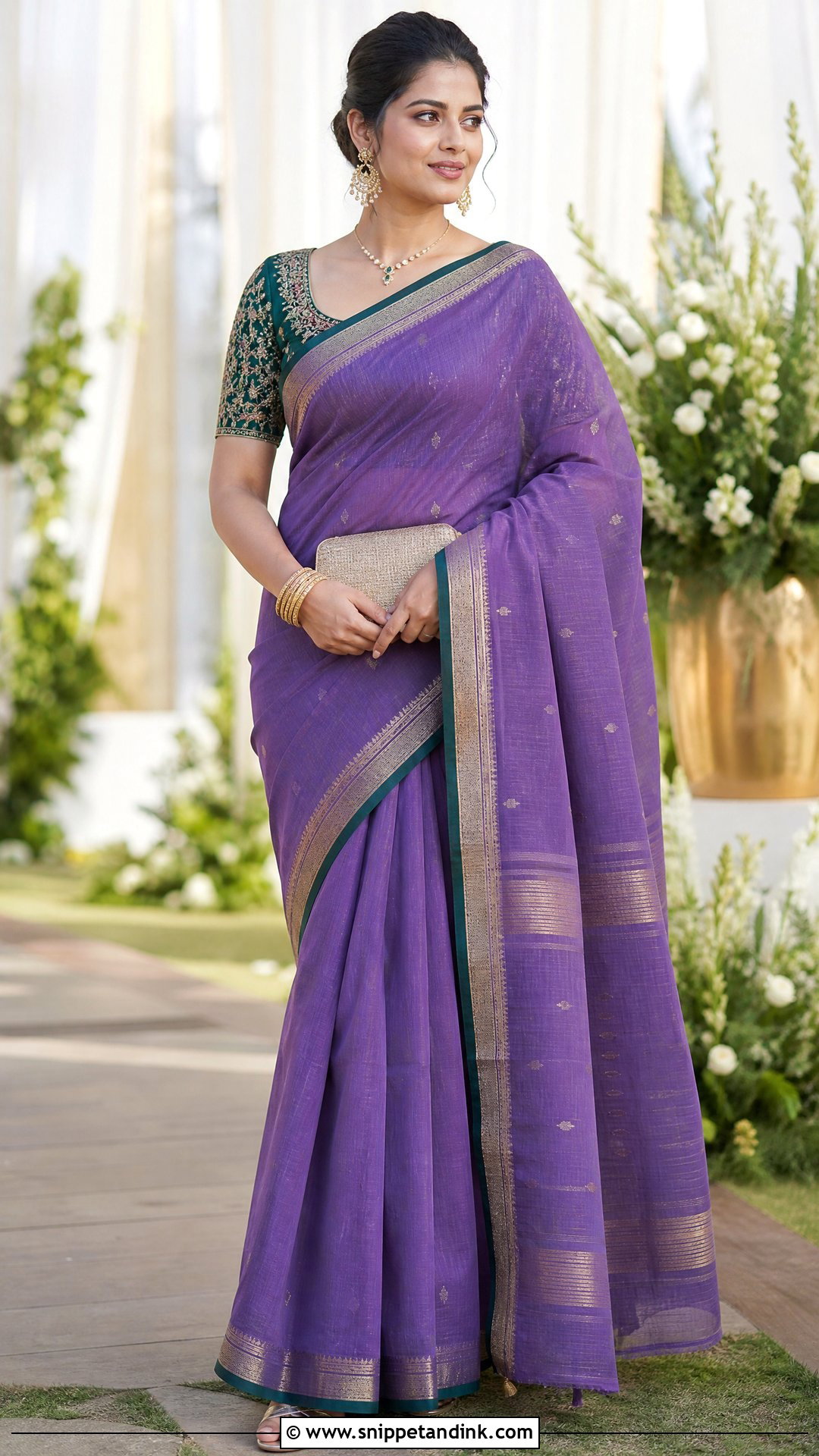
Maheshwari sarees are a cotton and silk blend from Madhya Pradesh, light and slightly glossy, with distinctive reversible borders. Because they weigh so little, they are what I suggest for guests sitting through long ceremonies in warm weather. Magenta, violet, emerald and deep blue suit evenings; soft pink and turquoise suit daytime. An embroidered blouse adds texture, but keep it restrained so the clean weave still leads. Gold earrings, a fine necklace, bangles, mid-height sandals and a low bun or neat braid finish the outfit. The trade-off is that light fabric shows creases quickly, so drape it as close to leaving as you can.
18. Baluchari Silk Saree With Traditional Jewelry
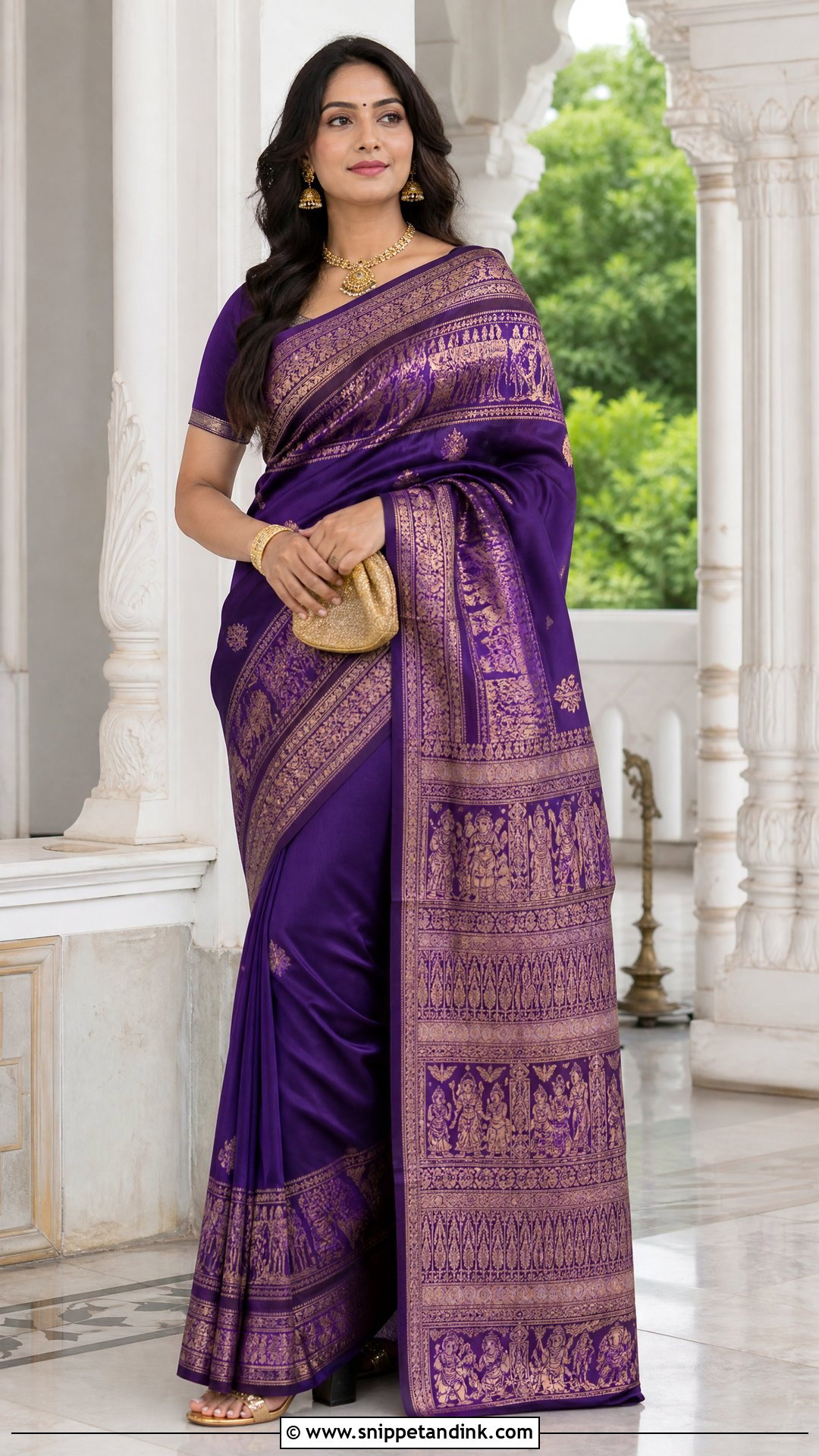
Baluchari sarees come from Bishnupur in West Bengal, and their pallus are woven with whole scenes, often figures and stories drawn from epics and courtly life. That means the pallu is the piece people walk up to and look at. Purple, maroon, green and navy show the woven figures most clearly. A matching or contrasting silk blouse with a simple neckline and elbow-length sleeves keeps attention on the weave. Traditional gold earrings, a layered necklace, bangles and a small bindi are enough, with a plain clutch. When I drape a Baluchari, I spread the pallu wider across the shoulder than usual so the main panel is actually visible in photographs instead of bunched.
19. Berhampuri Patta Saree With Odia Accessories
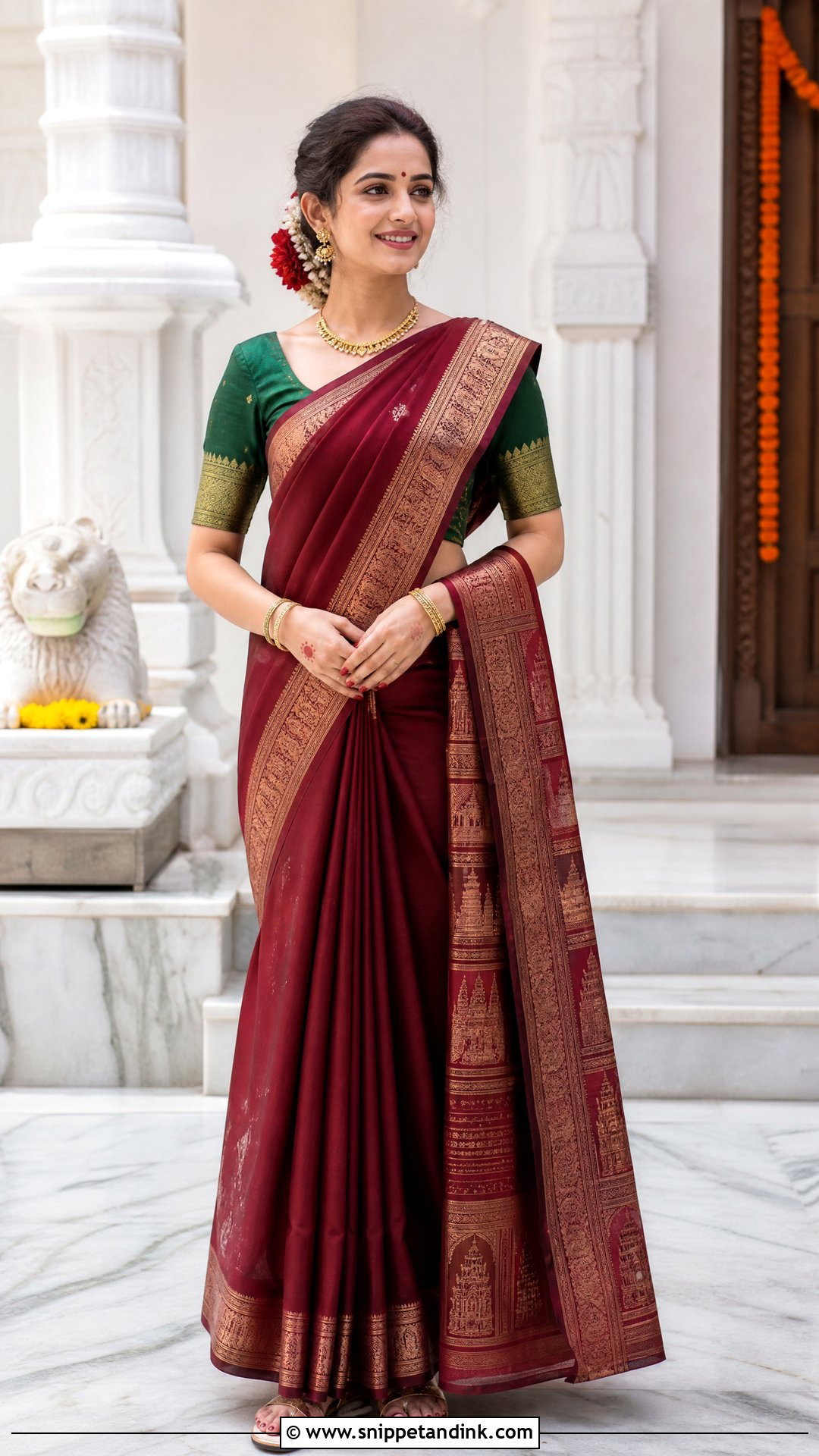
Berhampuri Patta silk comes from Berhampur in Odisha and is worn for marriages and traditional ceremonies, recognisable by its temple-style borders. Red, maroon, purple and deep green are the usual bodies, paired with a fitted blouse that echoes the border colour. Keep the blouse light on embroidery so the woven border stays the focus. Traditional earrings, bangles, a necklace, a neat bun with white flowers, a small red bindi and gold sandals complete it. What I like about this saree is how it scales: in rich silk with heavy jewellery it works for a bride; in a lighter weave with fewer pieces it is right for a relative or guest.
20. Maharashtrian Nauvari Saree With Traditional Jewelry
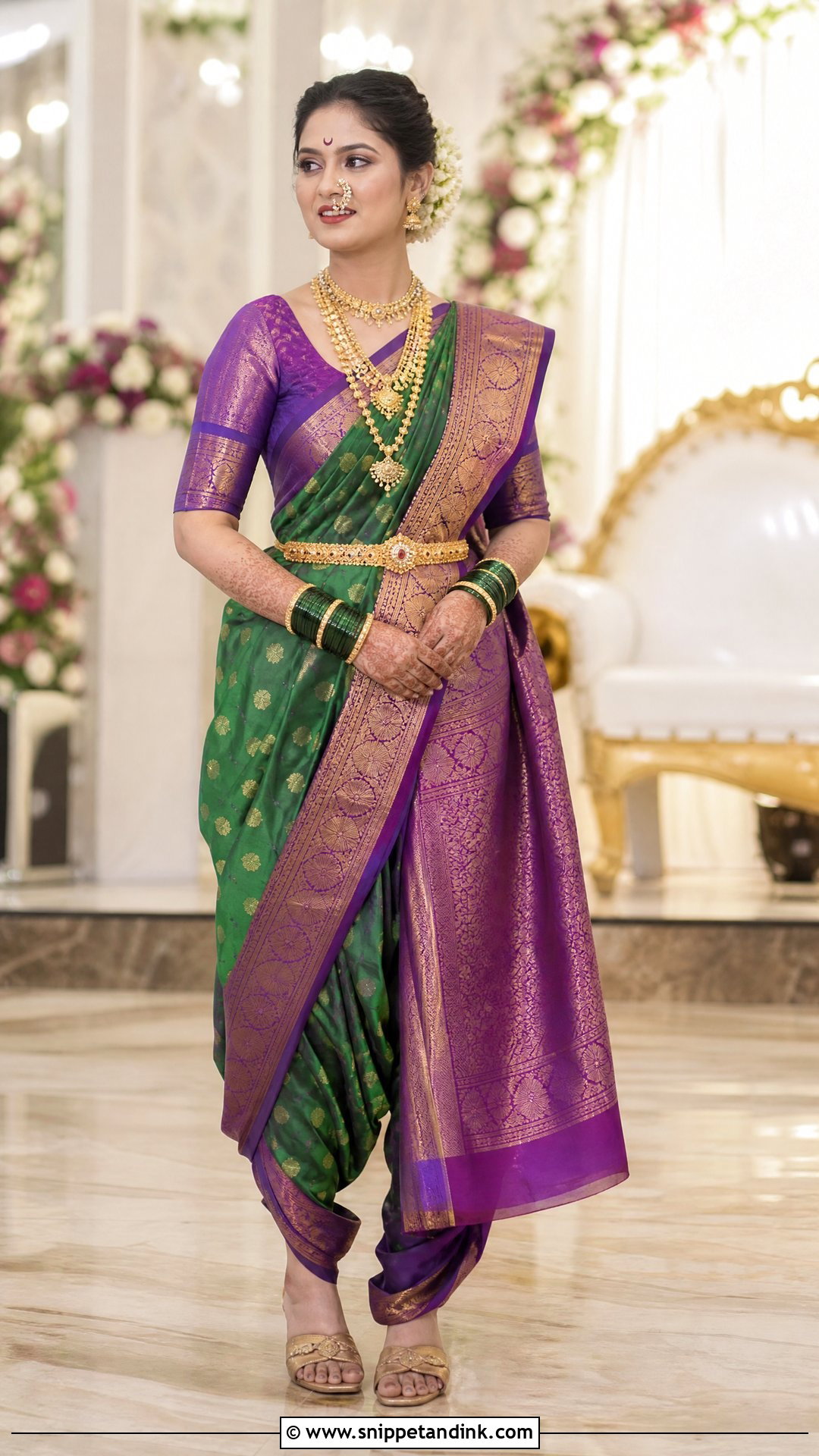
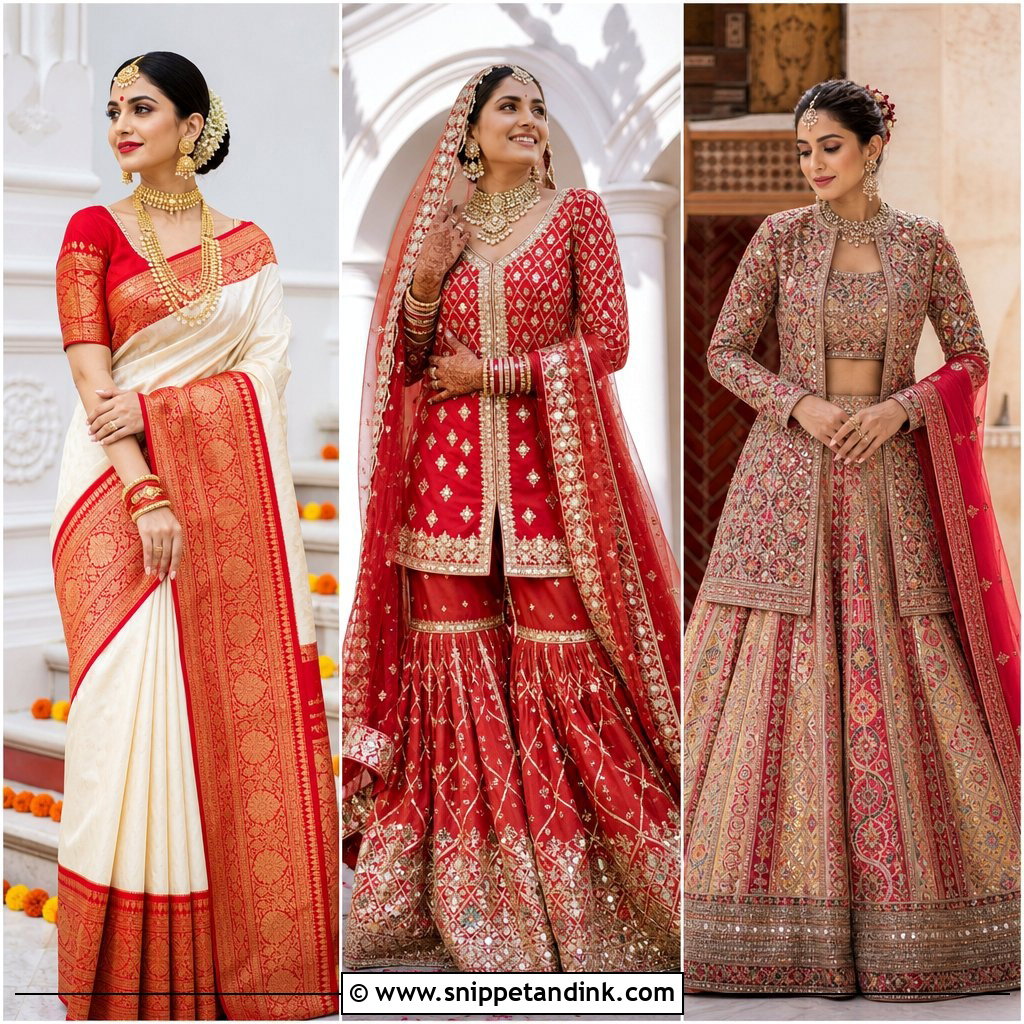
A Nauvari saree is nine yards draped between the legs into a trouser-like shape, which gives you real freedom of movement. It is also the drape most people cannot do on themselves, so I book a professional draper or have the bride practise several times beforehand. Green, purple, red and mustard silk with a gold border are traditional. Pair it with a fitted blouse, the nath, a crescent bindi, layered necklaces, earrings, green bangles and a waist belt, plus a flower-wrapped bun and comfortable sandals. The pleats at the back waist carry the whole drape, so pin them firmly. Families differ on the exact drape and jewellery, and for a bride I always follow their lead.
The Fittings That Decide Whether You Are Comfortable at Hour Six
Most discomfort I see at Indian weddings comes from the blouse, not the skirt or saree. A choli is cut close and holds up heavy jewellery, so I plan at least two fittings and keep the last one within a few weeks of the wedding, since many brides change shape slightly in the final months. Custom bridal lehengas often take several months to embroider, so order early enough that alterations are not rushed.
Bring your actual shoes and your heaviest necklace to the final fitting. The neckline needs to sit under the jewellery without the metal digging into skin, and the hem has to be set for the heel you will really wear.
What goes in my styling kit on the day
- Safety pins in two sizes, plus U-pins for the dupatta on the hair
- Double-sided fabric tape for a blouse edge that gapes when you raise your arms
- A spare petticoat drawstring, because they snap more often than you would think
- Blotting paper and a small towel to keep sweat off silk near the neckline
Folding and Airing Silk Once the Celebrations End
Silk and real zari last for decades if you treat them gently. Air the outfit for a day before packing it, so trapped sweat and perfume do not set into the fabric. Send stains to a cleaner who handles heavy embroidery rather than washing at home. Wrap sarees and lehengas in soft muslin, never plastic, which traps moisture. Refold silk sarees every few months along different lines, because a sharp fold left for years can crack the zari threads along the crease.
Red Silk, Woven Borders and a Blouse That Holds Up
Lehengas bring the grandeur most brides want at the main ceremony, while the handloom sarees here, from Banarasi and Kanjeevaram to Ikat and Baluchari, each carry a weaving tradition you can wear. Anarkalis, shararas, ghararas and salwar suits are the easier option for guests and for the dancing nights. Work out the ceremony, the weather, the dress code and the families’ customs first, and the shortlist narrows itself. Then put your effort into the parts nobody photographs: a blouse that supports you, linings that breathe, pins in the right places and shoes you can stand in for hours.
You'll Like These Ideas:


Leave a Reply