
Bridal Mayon Dress Ideas celebrate color and comfort, and that’s the brief I give every tailor: this outfit has to survive sitting on cushions, being hugged by every aunt and having ubtan rubbed onto the hands and face. Yellow is the classic, but mustard, marigold, green, orange and floral prints all belong here. Ghararas, shararas, lehengas, Anarkalis, kaftans and relaxed kurta sets are the usual shapes, finished with gota, mirror work or light embroidery. Keep the fabric light, because the bride sits for rituals for long stretches. Flower jewelry, soft juttis, fresh makeup and an easy hairstyle complete it. Below are twenty outfits, traditional and fusion, with the details I’d check before each one goes to the tailor.
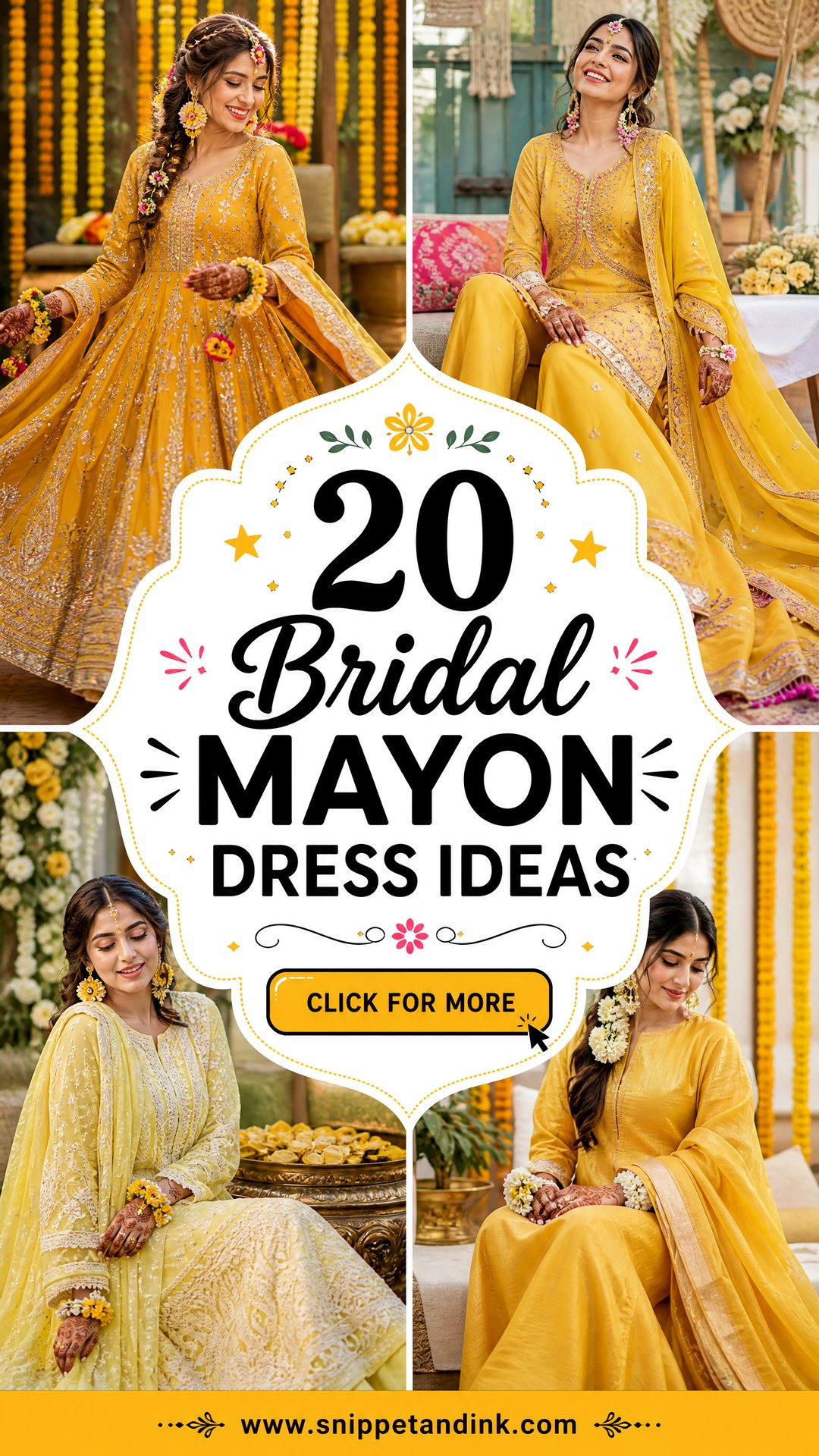
Turmeric Will Touch Your Outfit, So Plan for It
Ubtan is a paste of turmeric, gram flour and oil, and it travels. It goes on your hands and face, and every relative who applies it brushes the sleeves, the dupatta and the lap. Turmeric stains quickly and deeply, so I plan the fabric around the ritual rather than the photos alone.
- Keep the most delicate pieces, such as pale chikankari, white organza or ivory net, away from the ubtan part of the evening.
- Cotton, cotton silk and washable georgette clean up far better than silk tissue or embroidered net.
- Ask for sleeves you can push above the elbow, or three-quarter sleeves, so the paste lands on skin, not cuffs.
- Have a plain cotton dupatta or a sheet over the lap during application and swap to the decorative dupatta for photos.
- Fresh flower jewelry stains too; keep it on for photos, off during the messiest part.
Some families plan two outfits: a simpler one for the ubtan and a dressier one for the evening’s music and photos. It isn’t extravagant if the second outfit is what you’ll want framed.
1. Yellow Gharara Bridal Mayon Dress
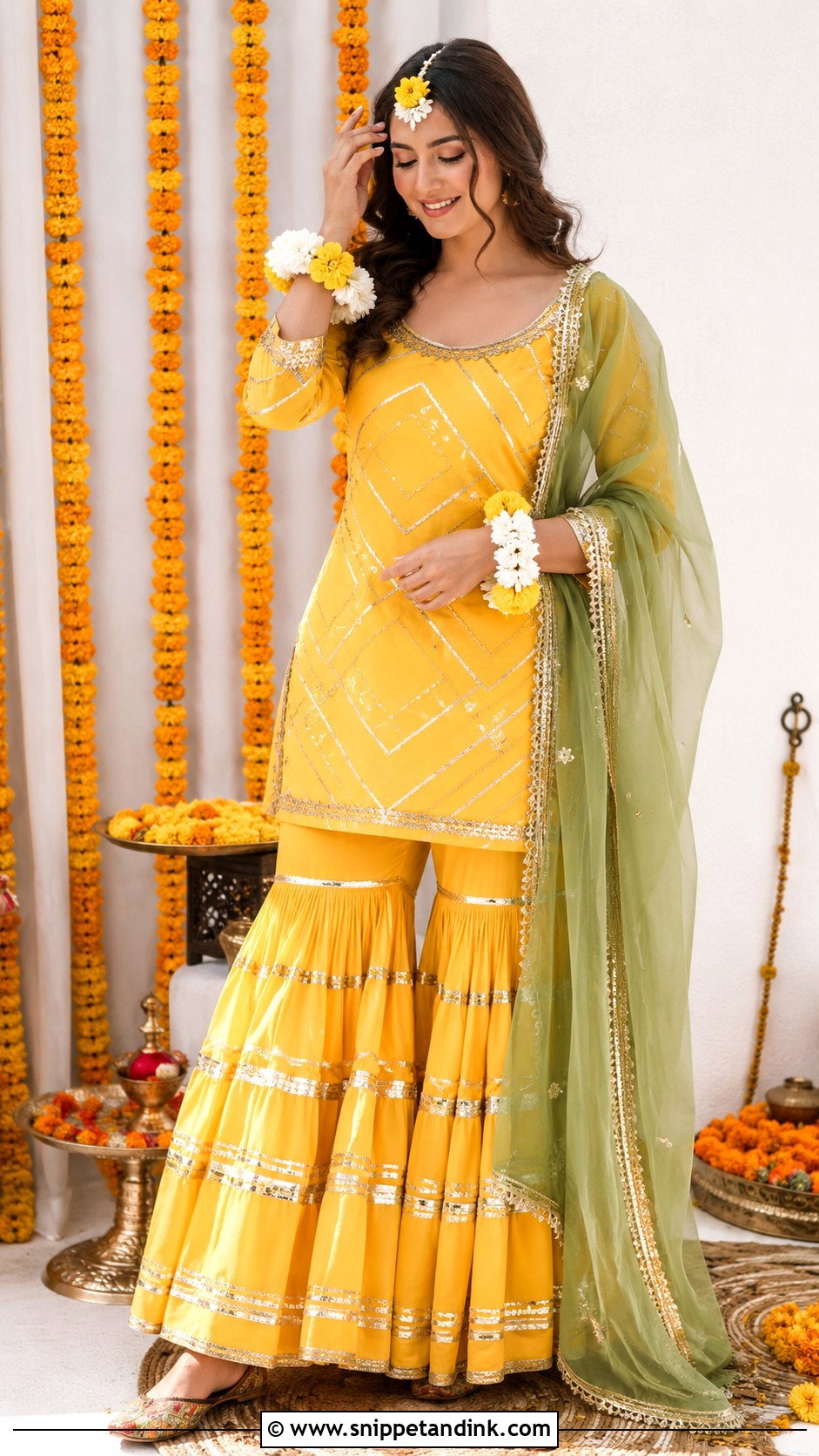
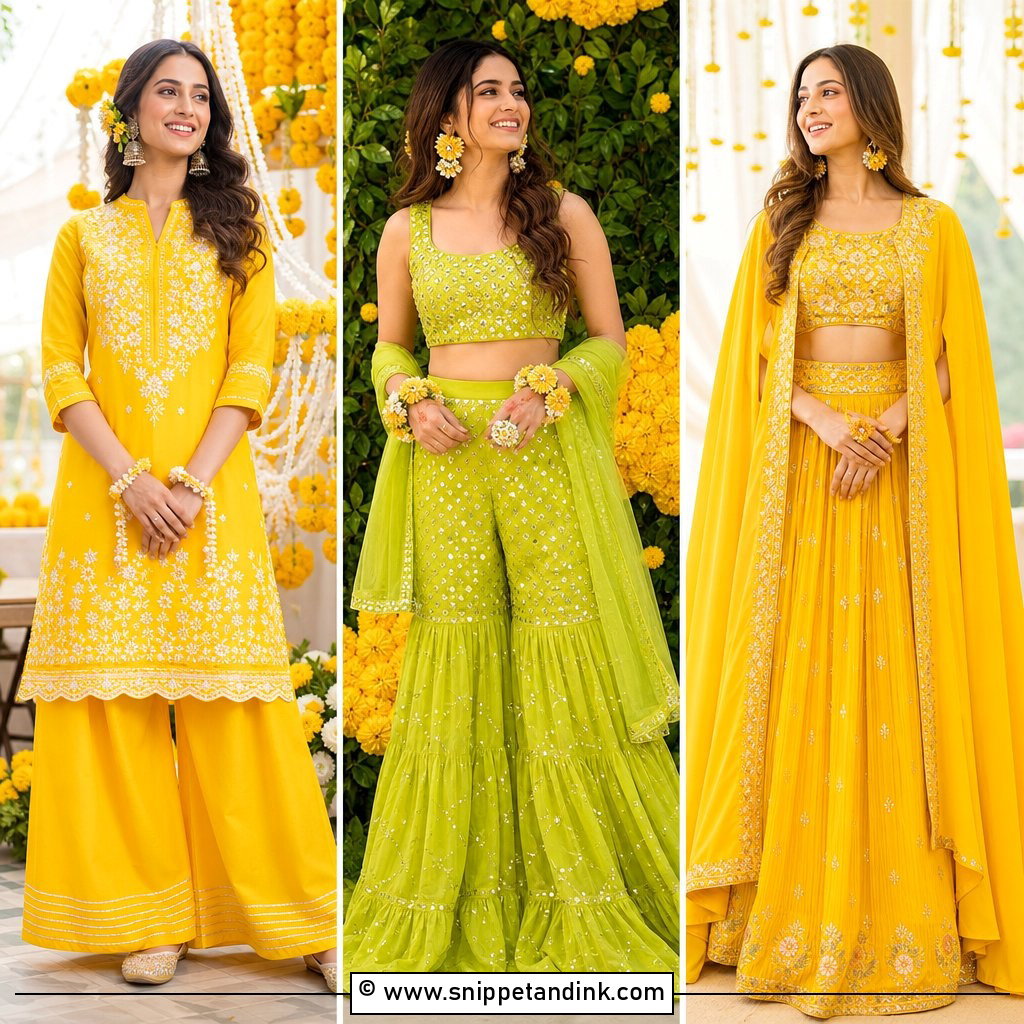
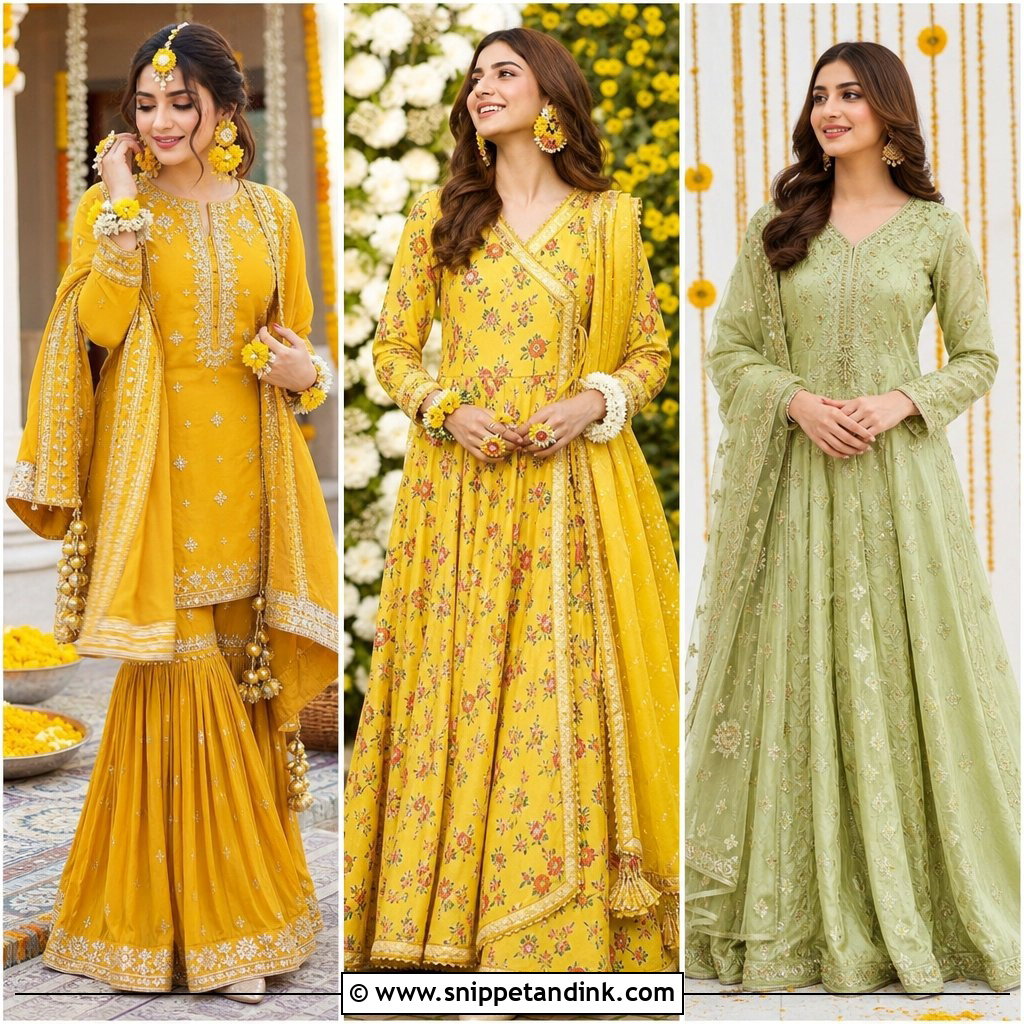
The yellow gharara is the look most families picture for a Mayon, and it’s hard to beat. I’d pair a short straight kurti, with gota edging, small mirrors or scattered florals, with a gharara that fits smoothly through the thigh before it opens at the knee. The joint where the flare starts, the gota band at the knee, is where poor stitching shows first, so check it. A green, pink or orange organza dupatta adds contrast without weight. Embroidered juttis, flower wrist garlands, a flower tikka and small earrings finish it. A low braided bun holds the dupatta in place. Cotton silk, chiffon or blended tissue keeps it breathable, and the hem should sit just off the floor.
2. Mustard Anarkali Bridal Mayon Dress
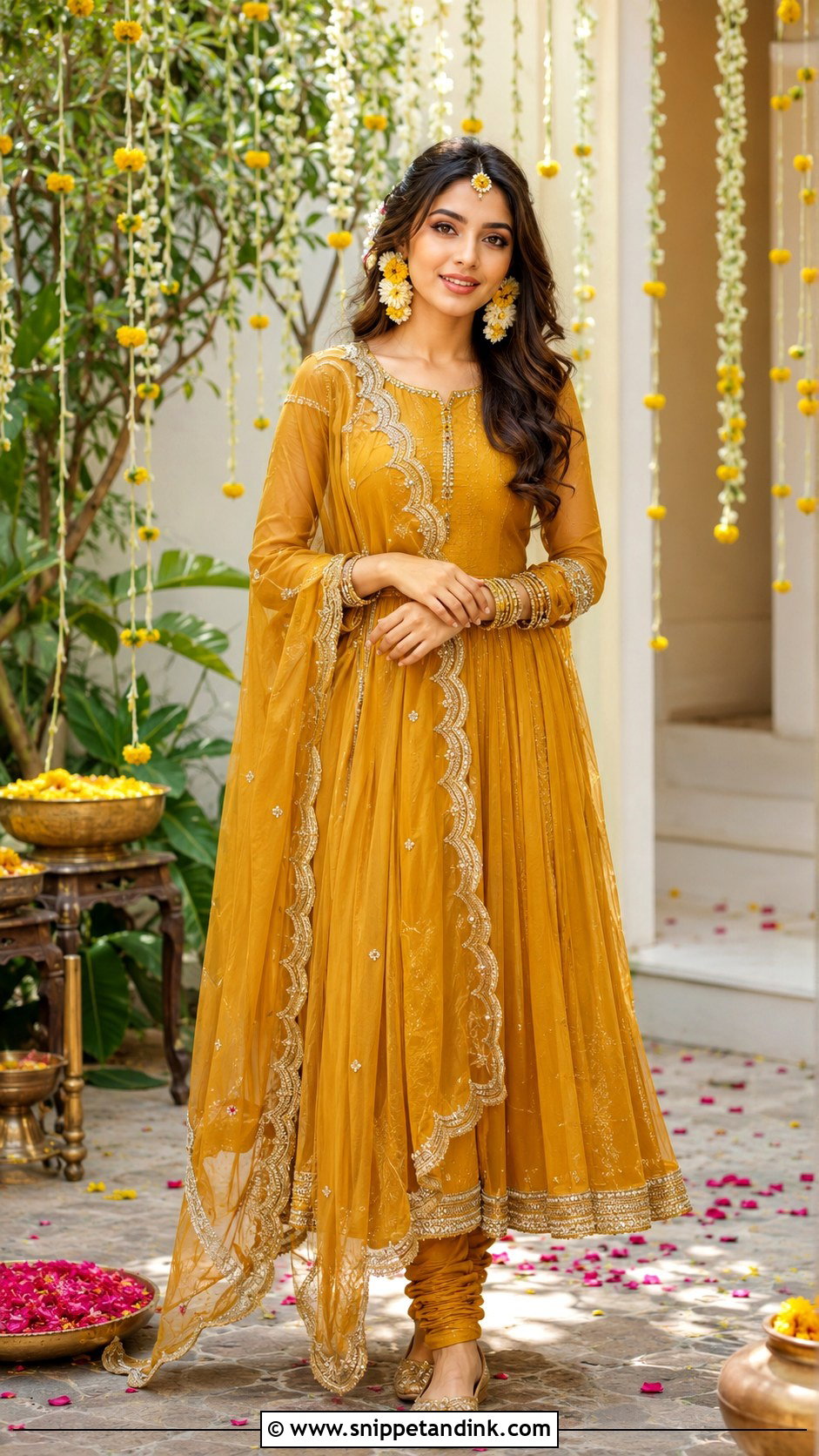
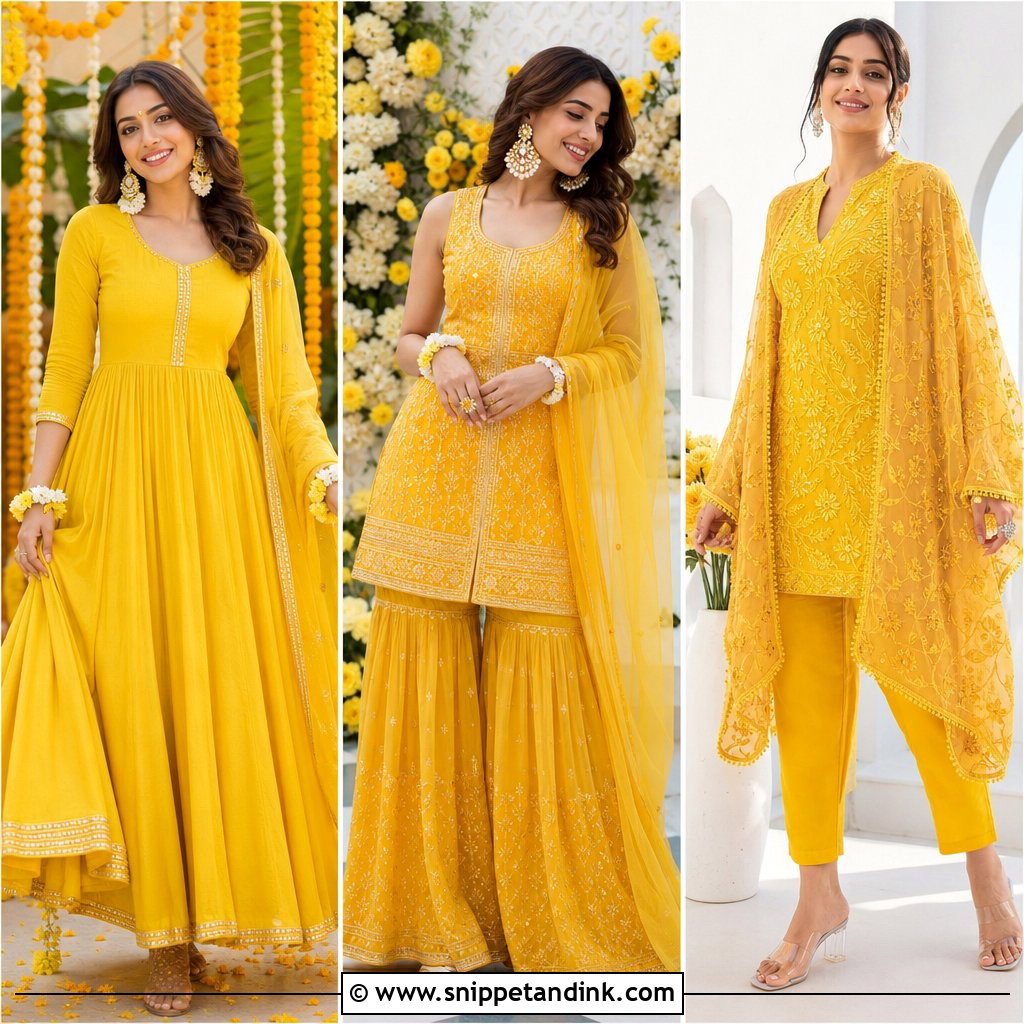
A mustard Anarkali moves well and needs very little decoration to look festive. Look for a fitted bodice, a waist that isn’t tight and a generous skirt that flares when you walk. Fine gota lines at the neckline, cuffs and hem define the shape. With churidar and a sheer dupatta with a scalloped border, it looks complete. Gold or multicolored juttis, floral earrings and stacked bangles add the festive layer. Decide how the dupatta will sit before you plan hair: loose waves if it goes over the arms, a flower braid if it goes on the head. Mustard sits well against marigold decor, with coral lipstick and softly defined eyes.
3. Marigold Sharara Bridal Mayon Dress
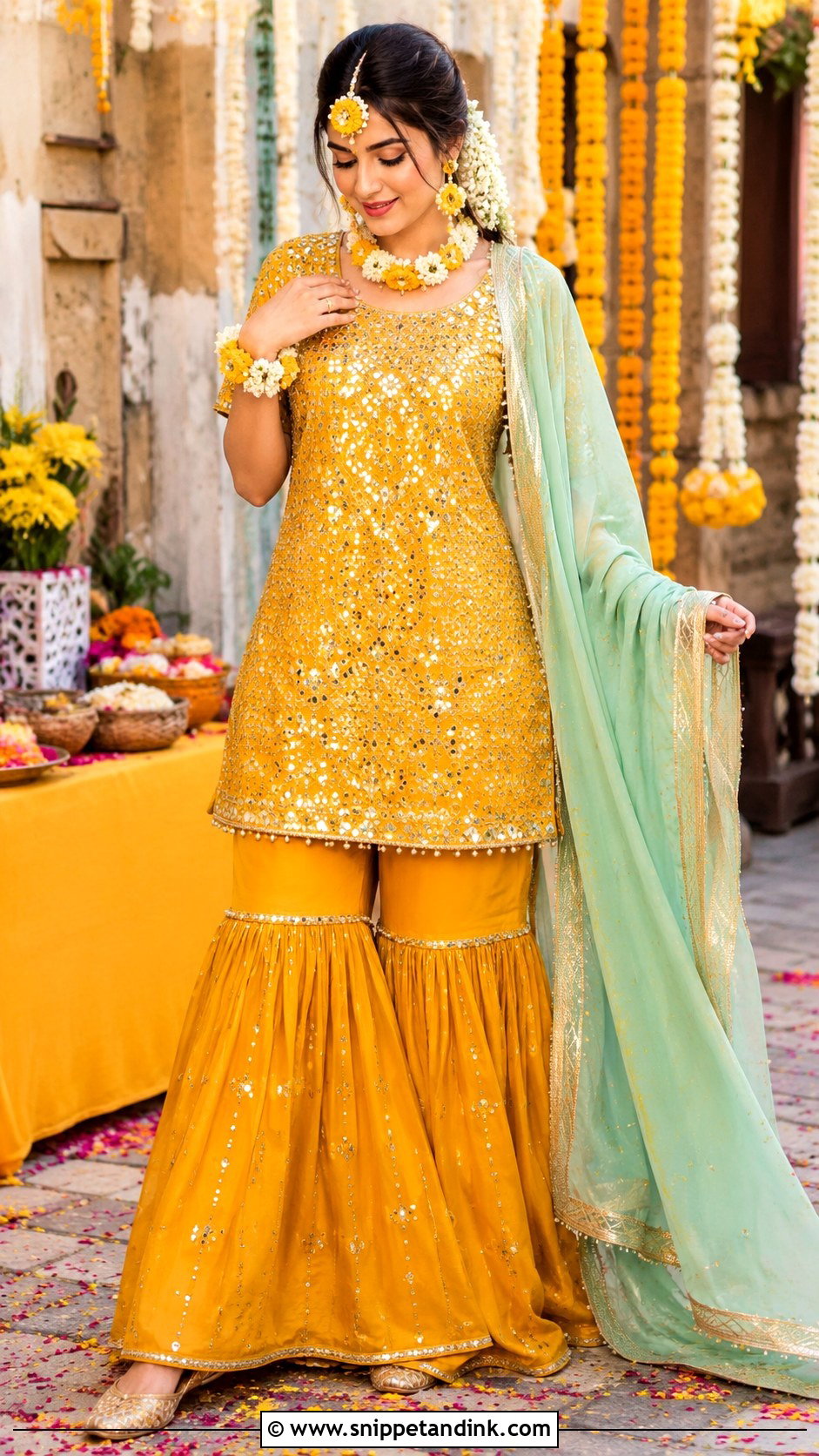
Marigold is warm and bold in a bridal sharara outfit, so the kurti should be short with a clean neckline to balance the wide legs. Small mirror work, geometric gota or a few sequins catch light without fighting the color. A mint or fuchsia dupatta, pinned lightly over one shoulder, gives contrast. Gold juttis, a flower necklace, gajras and a fine maang tikka finish it, with soft curls pulled back to show the jewelry. Shararas give lots of leg room, so you can sit cross-legged and dance easily. Ask for a soft lining behind any embroidery, because raw gota backing scratches.
4. Floral Lehenga Bridal Mayon Dress
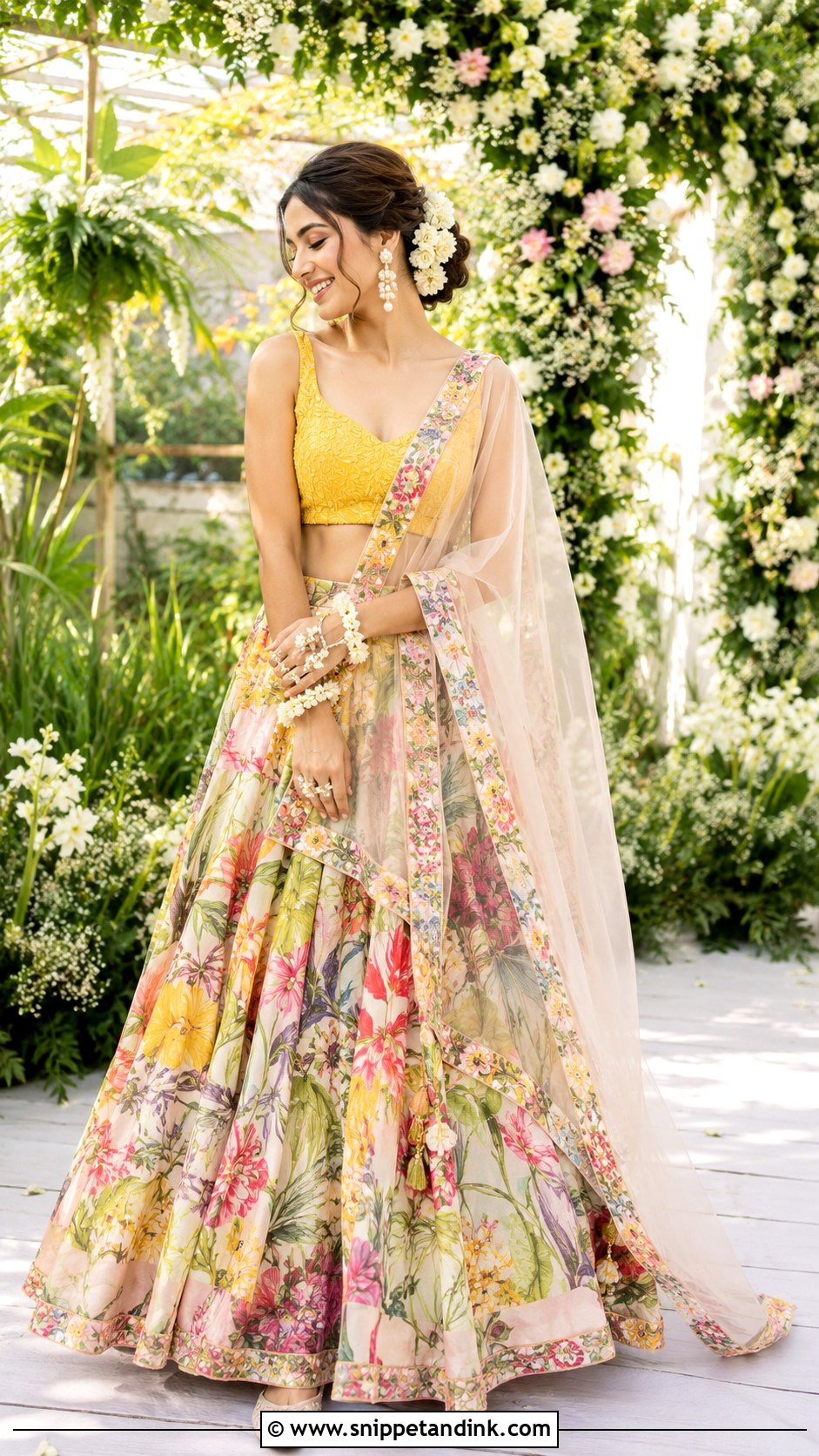
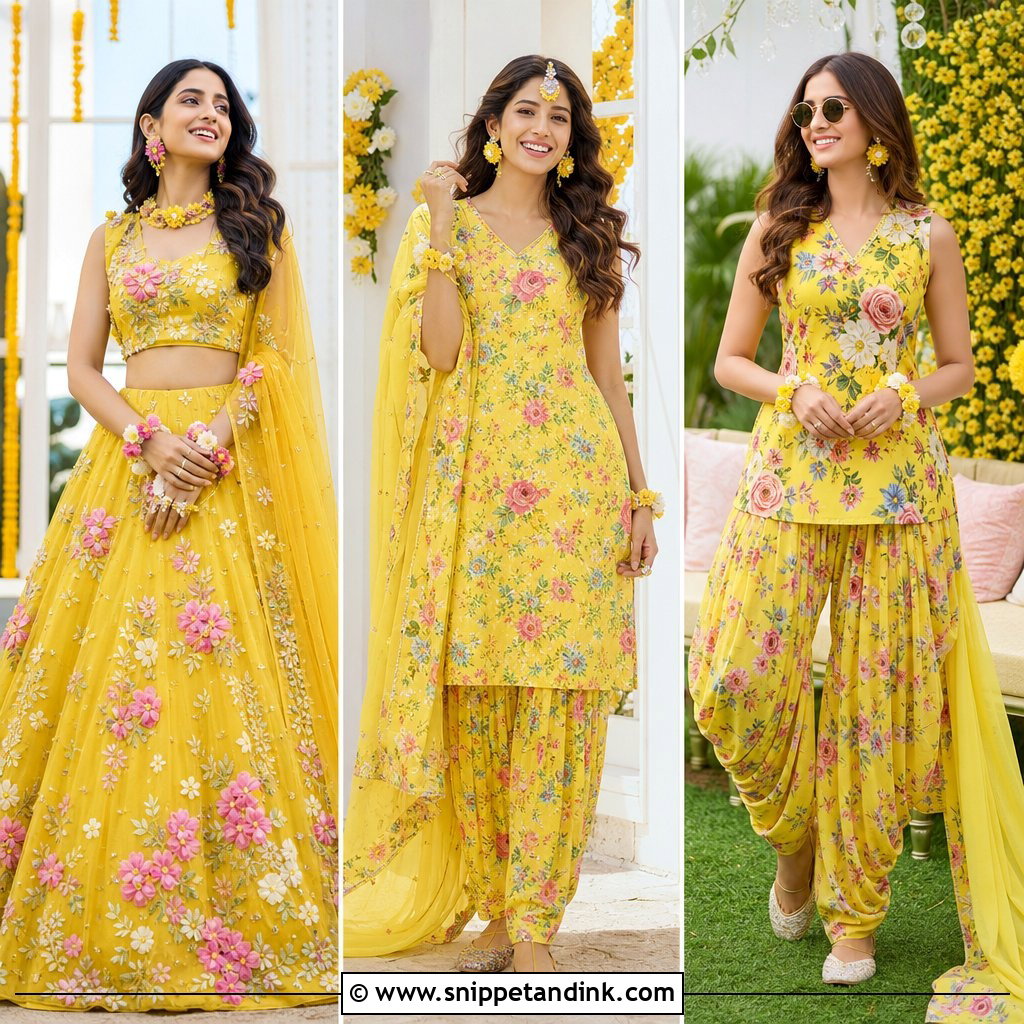
A floral lehenga is the answer for brides who don’t want to wear solid yellow. A skirt with saffron, pink, green and ivory flowers pairs with a plain yellow blouse that gives secure coverage and room to raise your arms. A light organza dupatta with a narrow floral border pulls it together. Keep the blouse plain; with a printed skirt, an embellished blouse makes the whole outfit look crowded. Pastel juttis, small pearl earrings, flower bangles and a fresh floral hairpiece suit it, with a half-up style and loose curls. It’s well suited to an outdoor or garden Mayon in daylight.
5. Mirror Work Bridal Mayon Dress
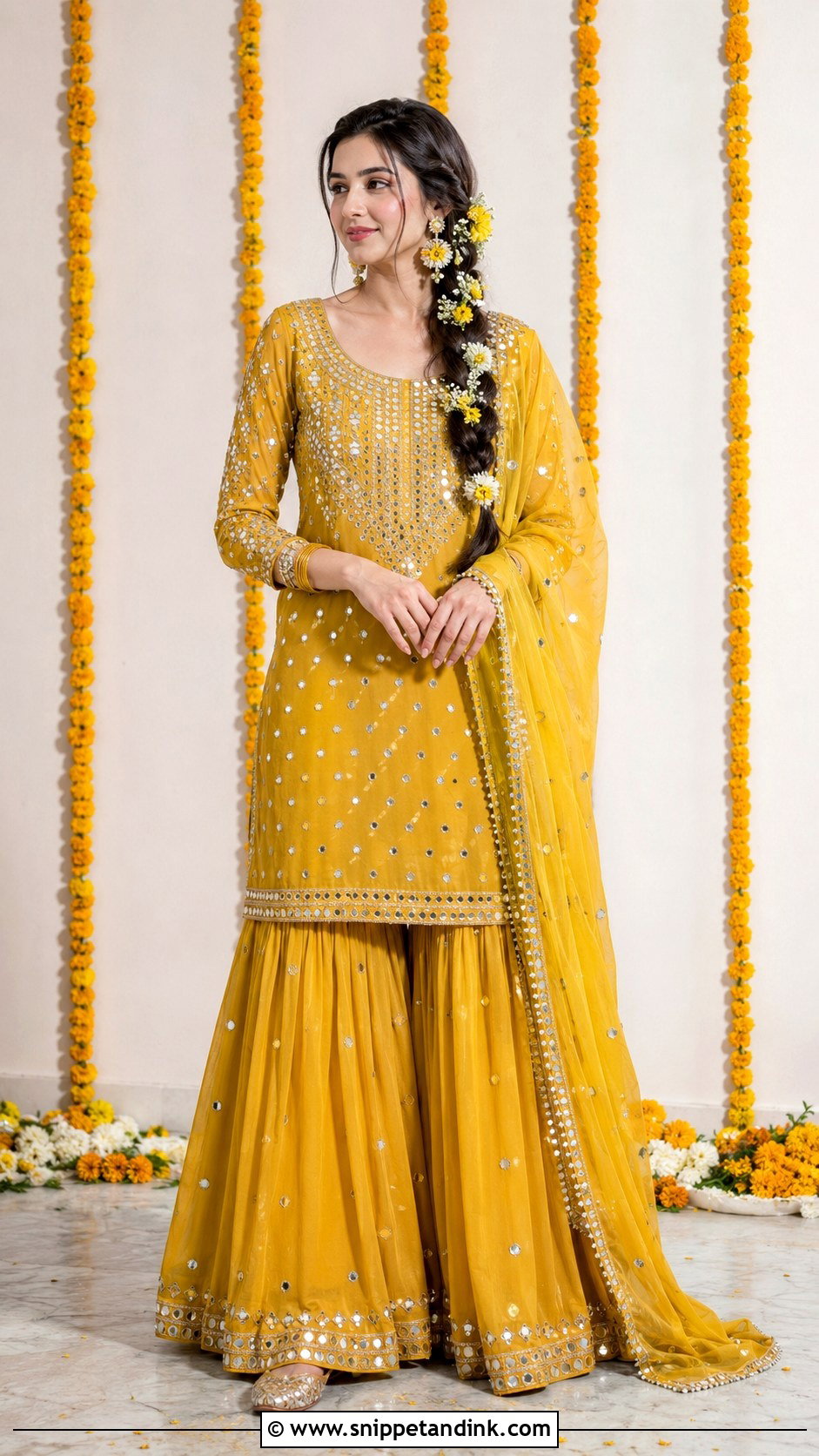
Mirror work is lovely in moderation and exhausting when overdone. I start with a turmeric-yellow kurti with evenly spaced mirrors at the neckline and sleeves, then add sharara or a paneled skirt with a lighter version of the same detail. The dupatta stays plain chiffon with only a mirror border. Silver-gold juttis, slim bangles and floral earrings carry the reflective theme. A neat side braid with a few small flowers suits it better than a big arrangement. Before the day, run your hands over every mirror: a loose or sharp-edged one near the inner arm or waist will scratch you every time you move.
6. Gota Patti Bridal Mayon Dress
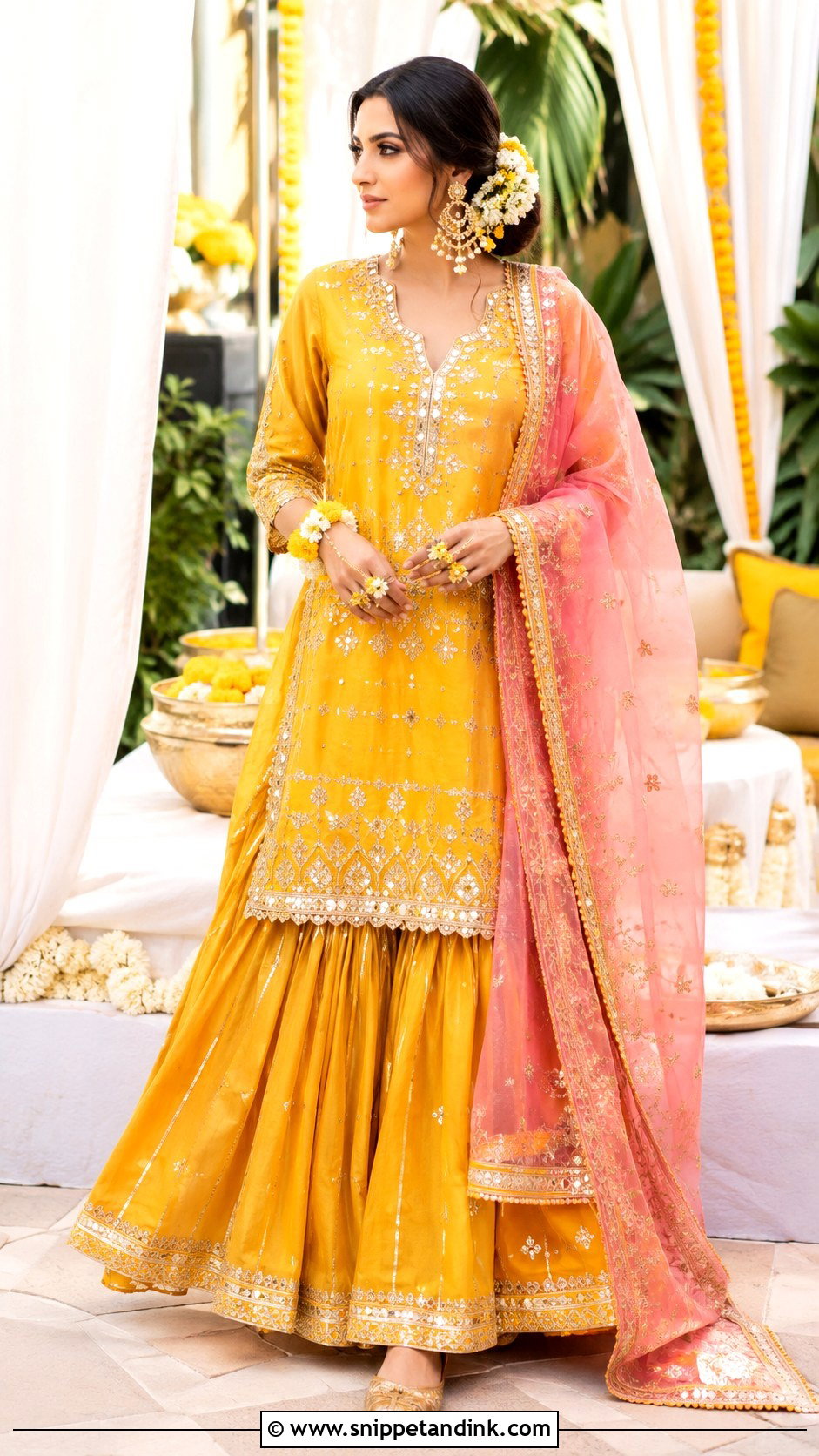
Gota patti is the most festive trim you can put on a Mayon outfit, but it’s metallic and stiff, so placement matters. A knee-length kurta with diagonal gota lines over a gathered lehenga or sharara looks flattering. Choose light trim over dense blocks, especially at the sleeves and neckline, and keep the skirt lightly worked so you can sit on the floor without the trim digging in. A pink organza dupatta with gold edging brightens it. Gold juttis, floral hand jewelry, small chandbalis and matching bangles finish the look. A center-parted low bun covered in white or yellow flowers is classic. Cotton silk or georgette underneath softens the trim.
7. Banarsi Gharara Bridal Mayon Dress
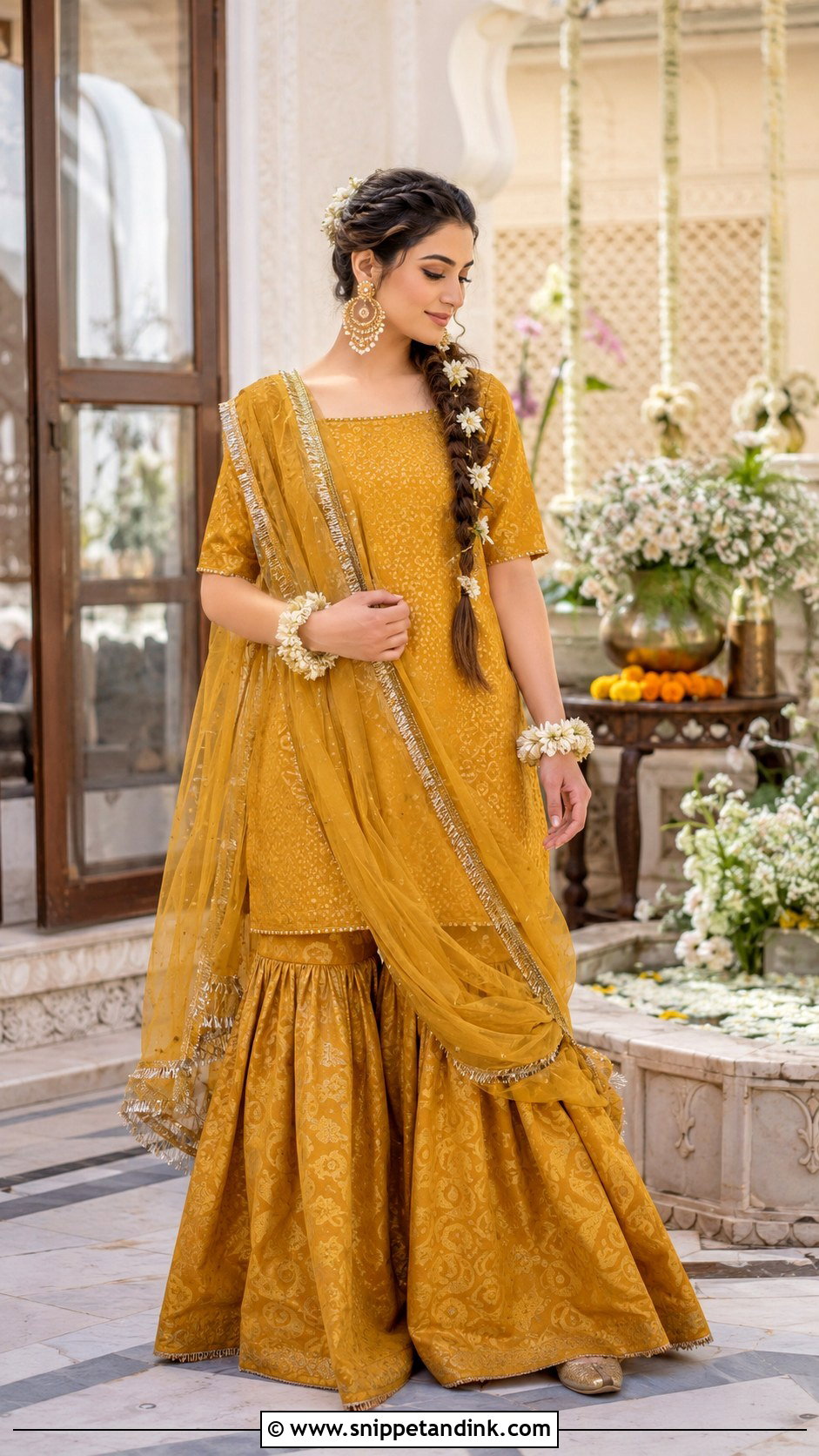
Banarsi brings a vintage, more formal feel, so I keep the woven motifs small. Mustard, green or orange Banarsi with fine gold buttis looks right for a Mayon; dense, heavy brocade belongs at the baraat. A plain short kurti with matching piping, covered buttons and light neckline embroidery balances it, with a soft net dupatta edged in a thin kiran border. Pointed juttis, antique gold earrings and fresh flower bracelets suit the fabric, and a long braid wrapped in ribbon or blossoms adds an old-fashioned touch. Banarsi holds volume, so avoid big sleeves, and ask for a breathable lining.
8. Angrakha Bridal Mayon Dress
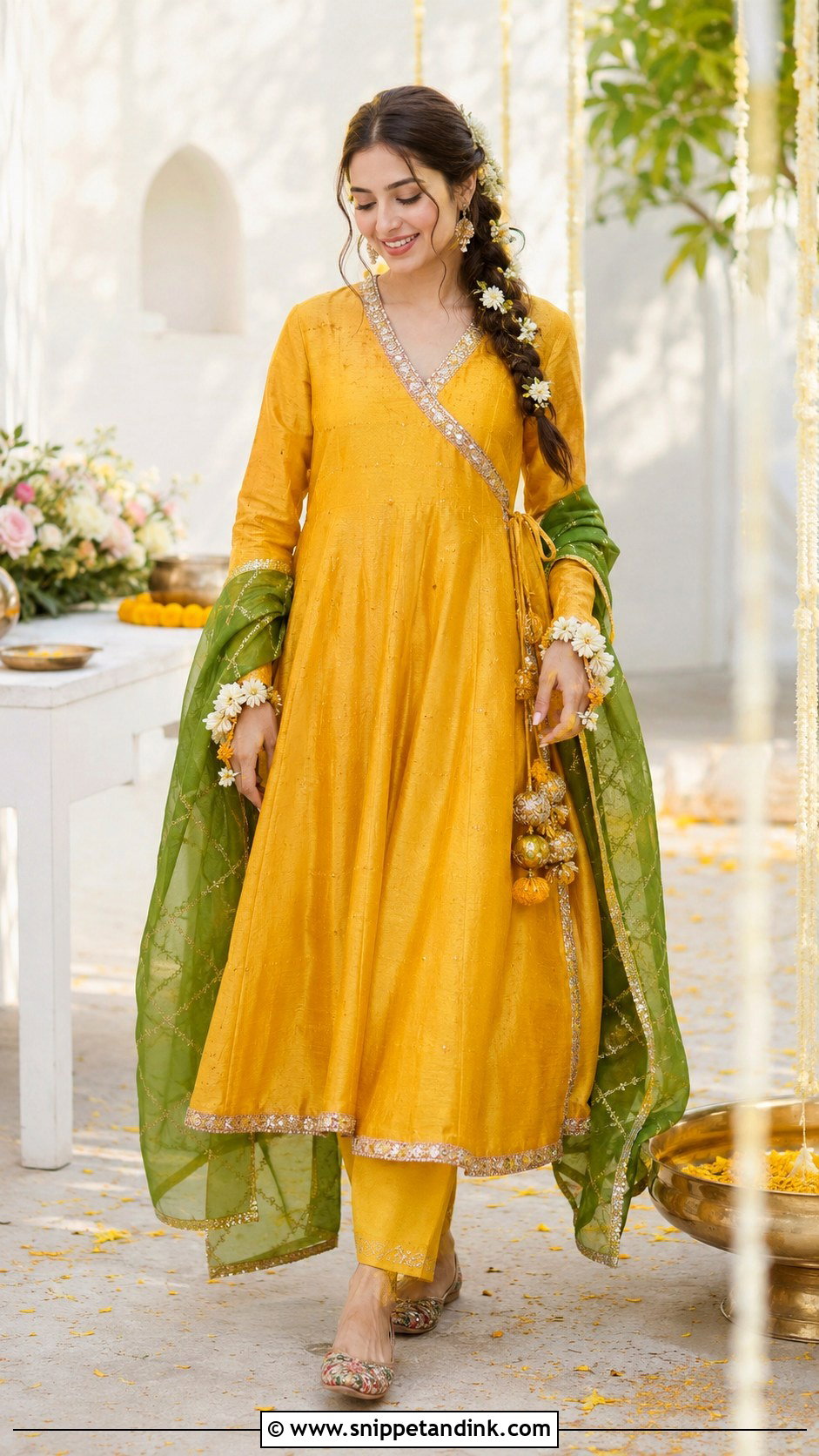
An Angrakha overlaps across the bodice, which gives shape without tight fitting. A yellow or mango design with fabric tassels at the side tie and a flared hem around the calf or ankle pairs best with narrow pants. Place a contrasting green dupatta over one shoulder so the ties stay visible. Embroidered juttis, light earrings, flower bangles and a small nose pin finish it, with a soft low ponytail or relaxed braid. Avoid heavy embellishment over the wrap closure; it pulls the overlap open as you sit. Fine gota borders and worked cuffs are enough.
9. Peplum Lehenga Bridal Mayon Dress
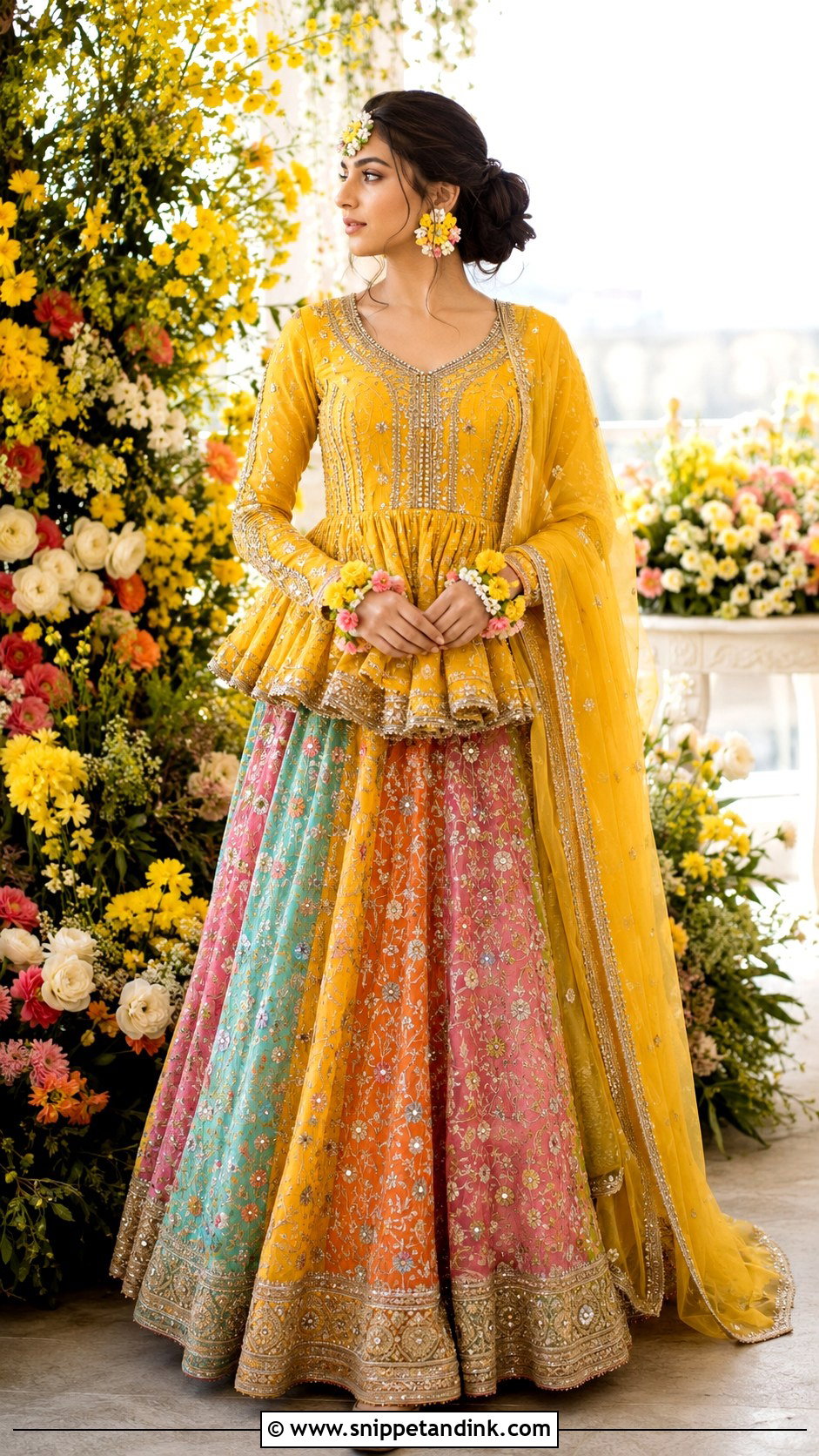
A peplum lehenga is the modern choice, and proportion is everything with it. The peplum should end above the widest part of the skirt, otherwise it adds bulk exactly where you don’t want it. A fitted yellow peplum that sits comfortably at the waist pairs with a flowing orange, pink or multicolor lehenga with small embroidered motifs. Carry the dupatta over one arm so the peplum stays visible. Neutral juttis, flower earrings, a statement tikka and a few bangles finish it, with sleek waves or a textured low bun. Skip stiff boning; you’ll be sitting on the floor.
10. Yellow Pishwas Bridal Mayon Dress
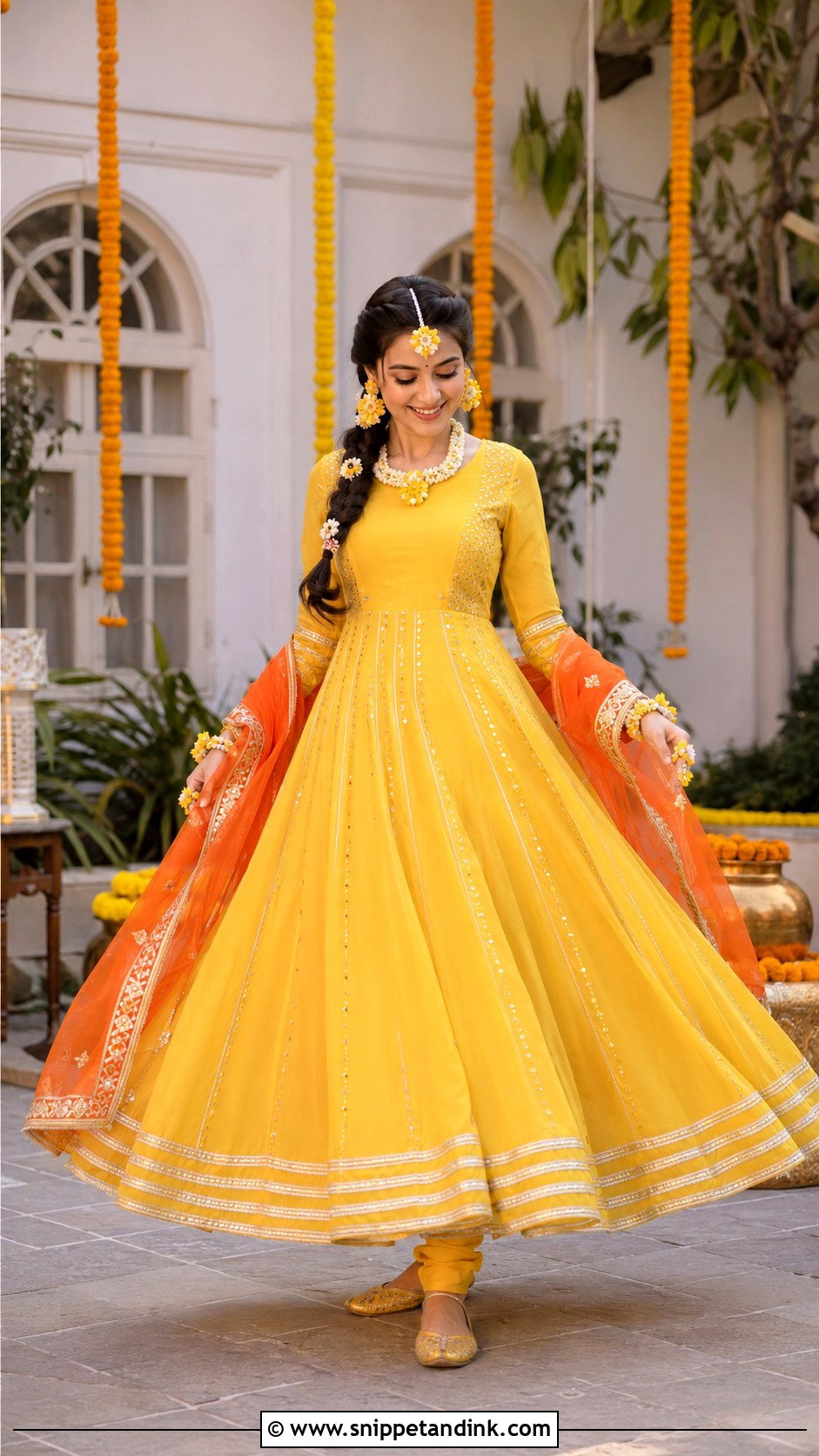
A Pishwas has a regal flowing shape but stays light enough for a pre-wedding event if it’s cut in chiffon, georgette or soft cotton net. Look for a fitted top, several airy panels and a hem finished with fine gota or embroidered flowers. Wear it with churidar and an orange or green dupatta draped loosely over both arms. Gold juttis, light flower jewelry and slim drop earrings suit it, with a center-parted braid or low bun to keep the neckline clear. Too many panels make the skirt hard to gather when you sit, so I’d keep the volume moderate and add a light lining for coverage.
11. Floral Kaftan Bridal Mayon Dress
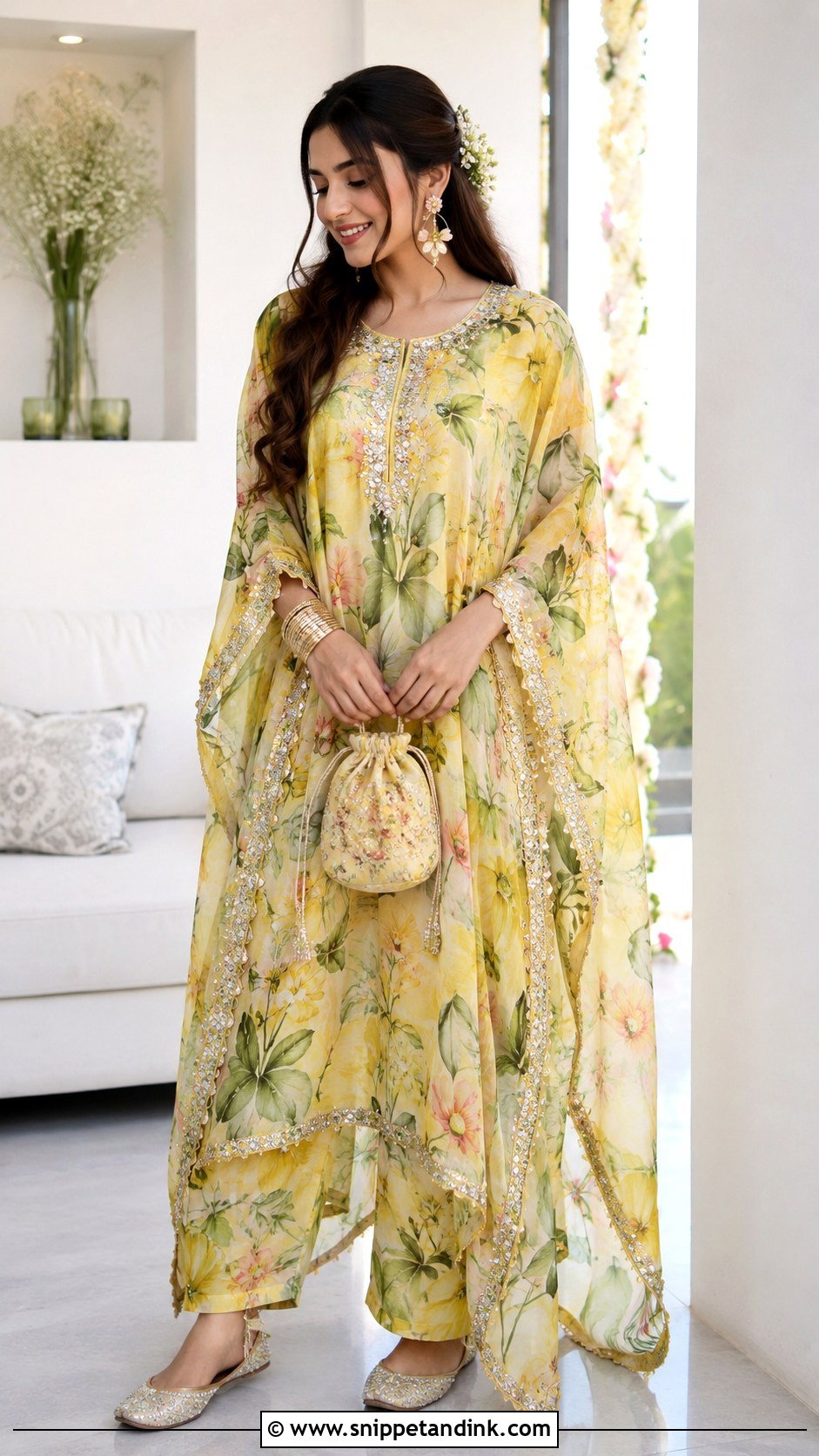
For a small home Mayon, a floral kaftan is comfortable and still festive. A yellow base with pink, orange or green motifs, defined cuffs, a modest V-neck and a lightly shaped waist stops the loose shape from swamping you. Gota piping at the neckline and side slits adds a traditional touch. Embellished flats or juttis, floral drops, stacked bangles and a small potli finish it. Soft waves with one side pinned back suit the relaxed shape. Skip a big dupatta or choose a narrow one, since the print already moves. Wide sleeves are easy to push back when the ubtan comes out.
12. Dhoti Pants Bridal Mayon Dress
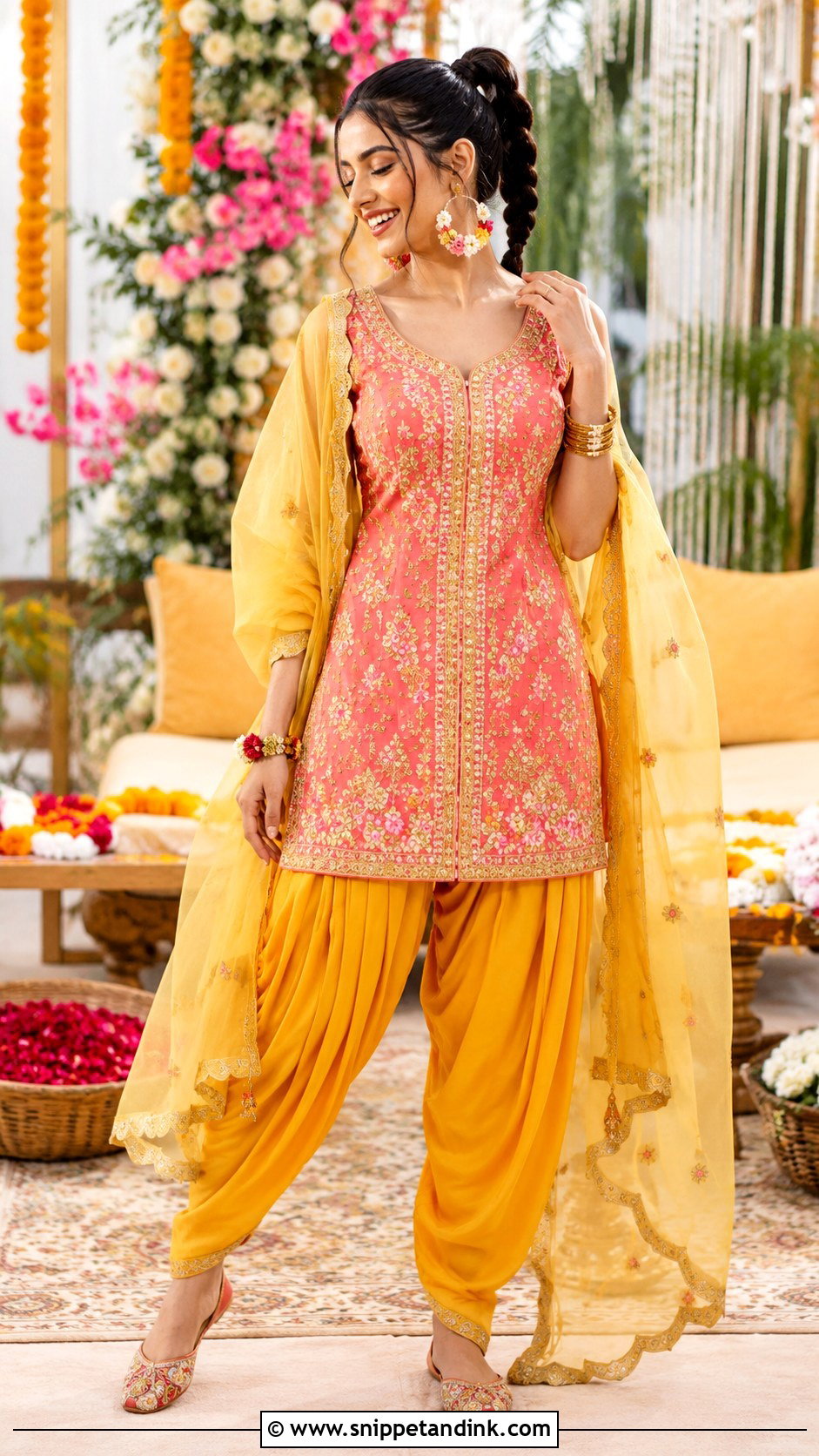
Dhoti pants suit a bride who leans toward fusion and likes to move. The drape should be soft enough to fold cleanly without bulk at the hip, in mango yellow or lime, paired with a fitted coral, green or yellow kurti that ends near the waist or upper hip. Do a walking test before the day: if the dhoti crotch hangs too low, it limits your stride and pulls when you sit. A light organza dupatta over one shoulder or across the back like a stole, embroidered juttis, floral hoops, gold bangles and a small tikka complete it. A high braided ponytail keeps the silhouette clean and stays put through dancing.
13. Palazzo Suit Bridal Mayon Dress
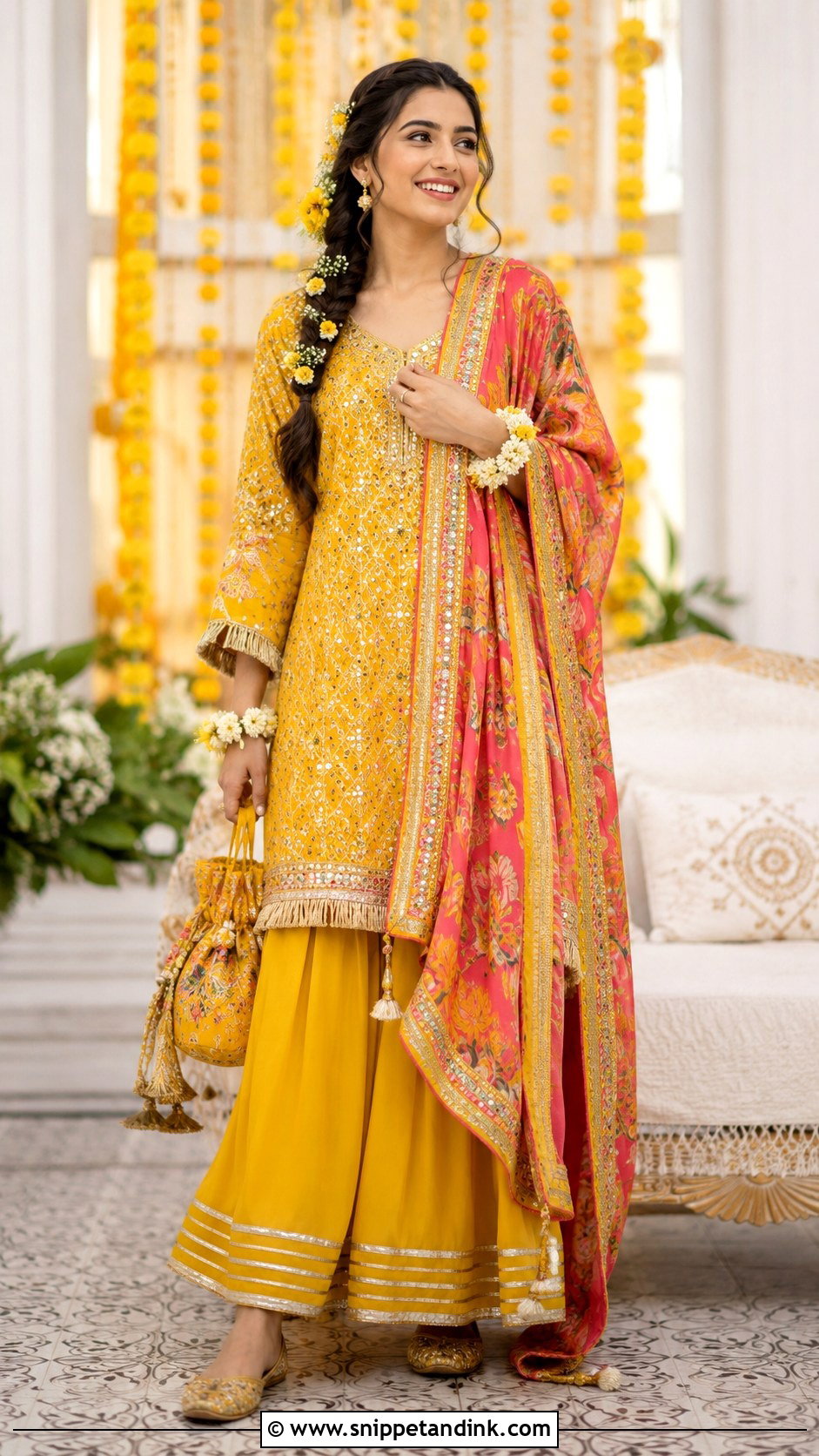
Palazzo suits are comfortable, but they can look shapeless if both pieces are loose. I pair wide yellow palazzos with a lightly fitted knee-length kurta with side slits, a defined neckline and vertical gota lines that lengthen the outfit. A printed dupatta in pink, orange and green adds cheer. Cushioned juttis, flower bracelets, small gold earrings and a matching potli finish it, with a loose braid or a half-up style with small blossoms. Set the palazzo length with your juttis on: they should skim the floor without covering the toe, or you’ll step on the hem every time you stand.
14. Chikankari Bridal Mayon Dress
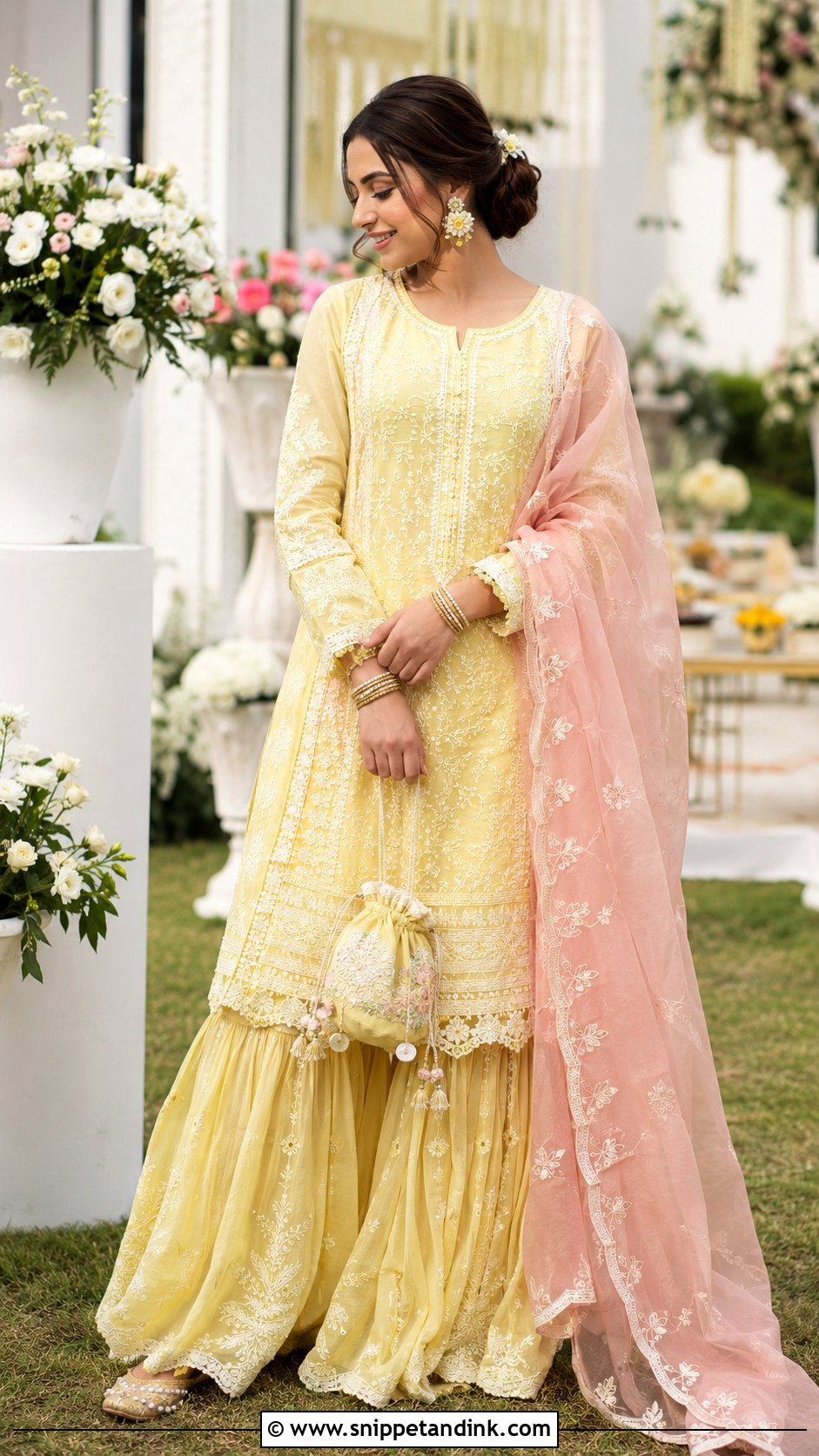
Chikankari is refined and quiet, a good choice for brides who find heavy Mayon clothing too much. A lemon-yellow embroidered kurta in cotton, georgette or chiffon pairs with a matching gharara or straight pants edged with narrow gota. A sheer white, mint or blush dupatta keeps it soft. Pearl-detailed juttis, floral earrings, slim bangles and a small potli finish the look, with natural curls, a relaxed bun or side braid. Chikankari is often worked on sheer fabric, so match the lining to the kurta color; a white lining under lemon yellow makes the embroidery disappear. A flower tikka or layered floral necklace adds bridal definition.
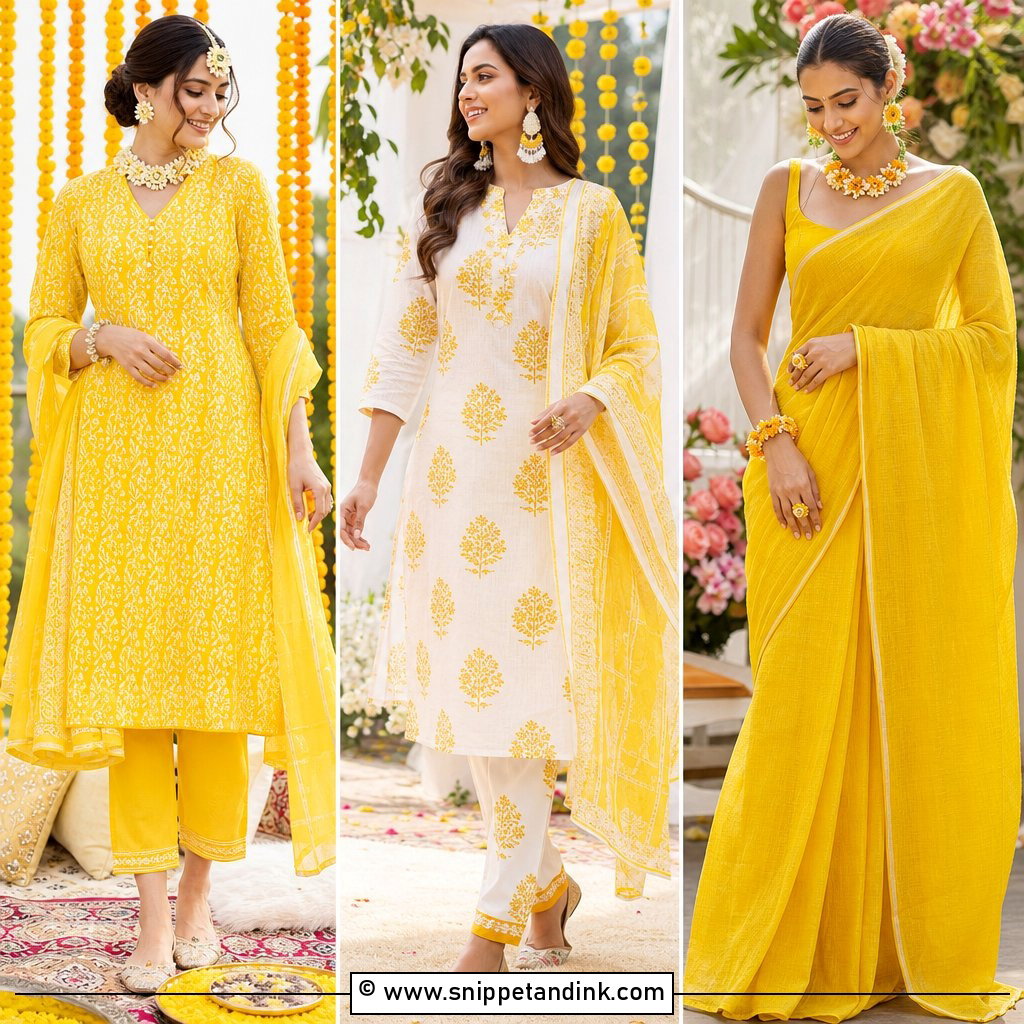
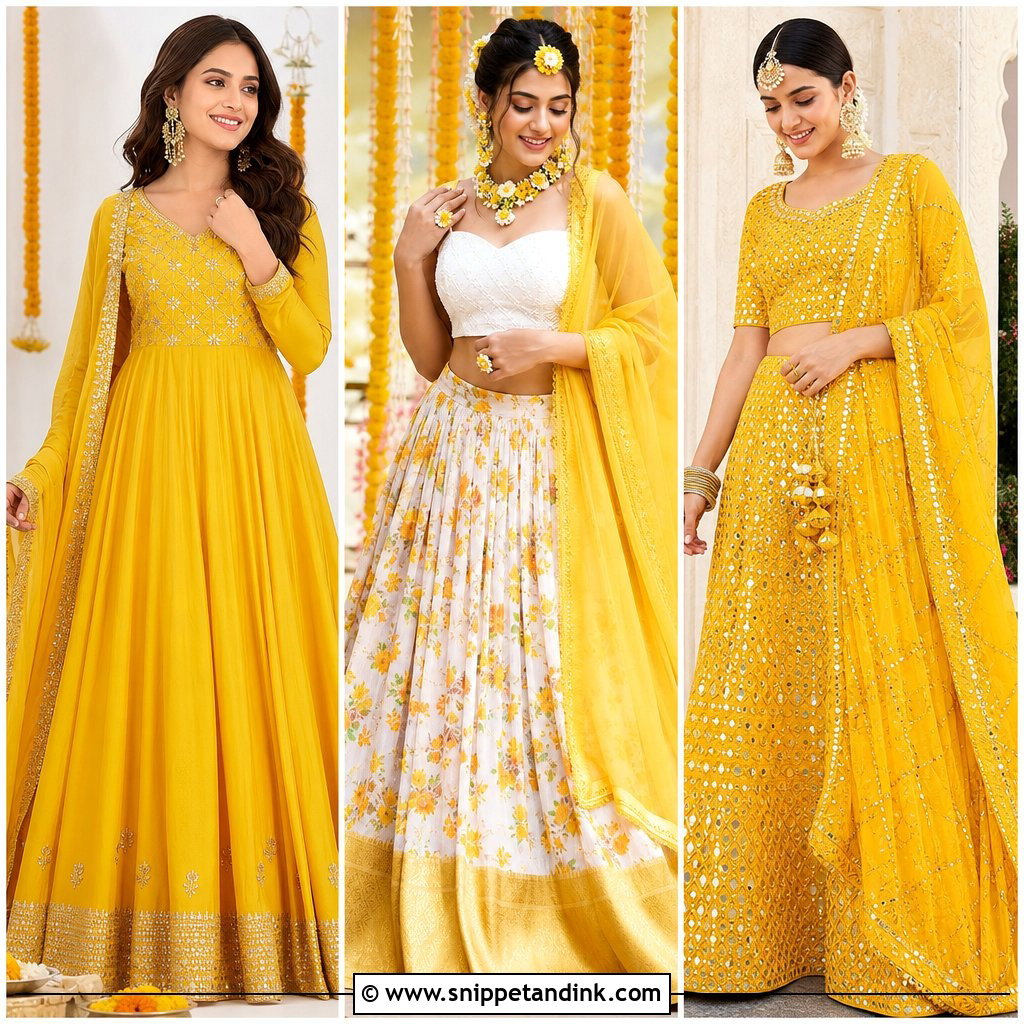
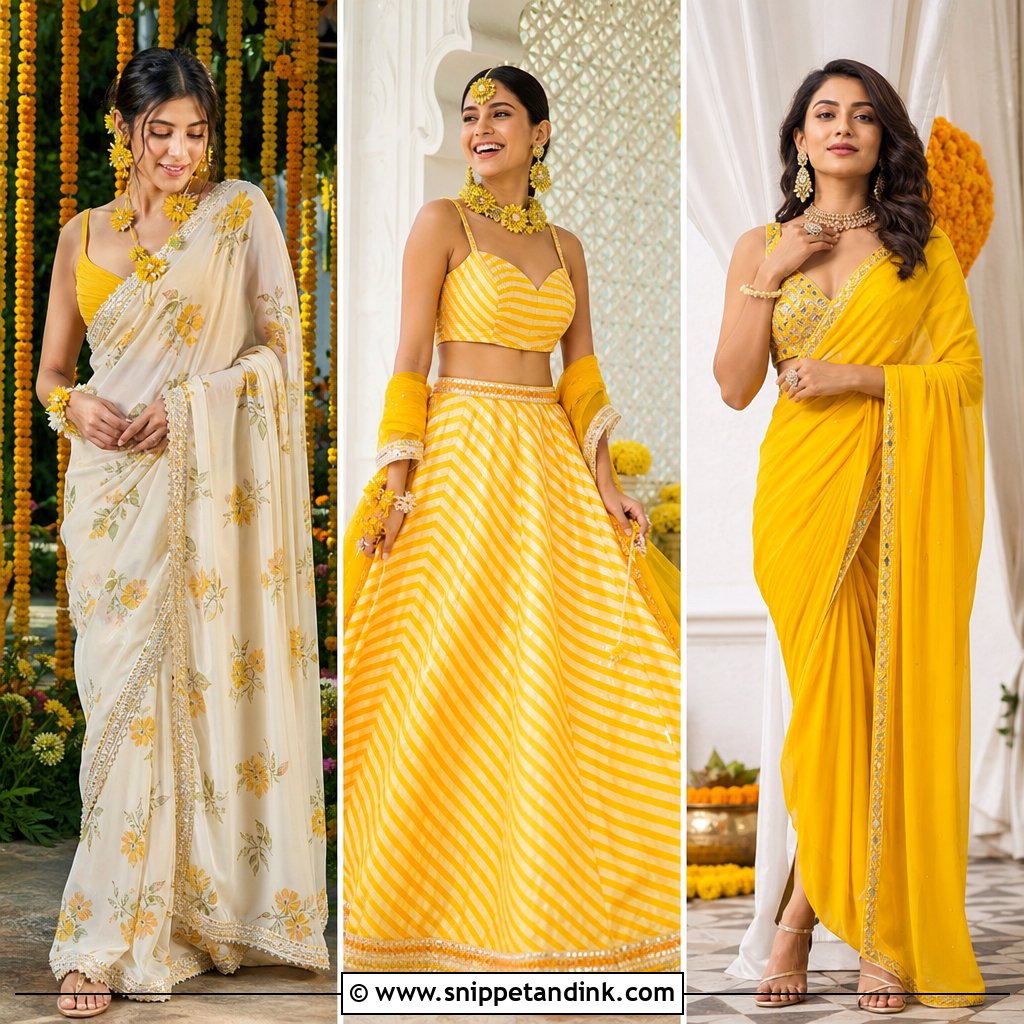
15. Ombre Lehenga Bridal Mayon Dress
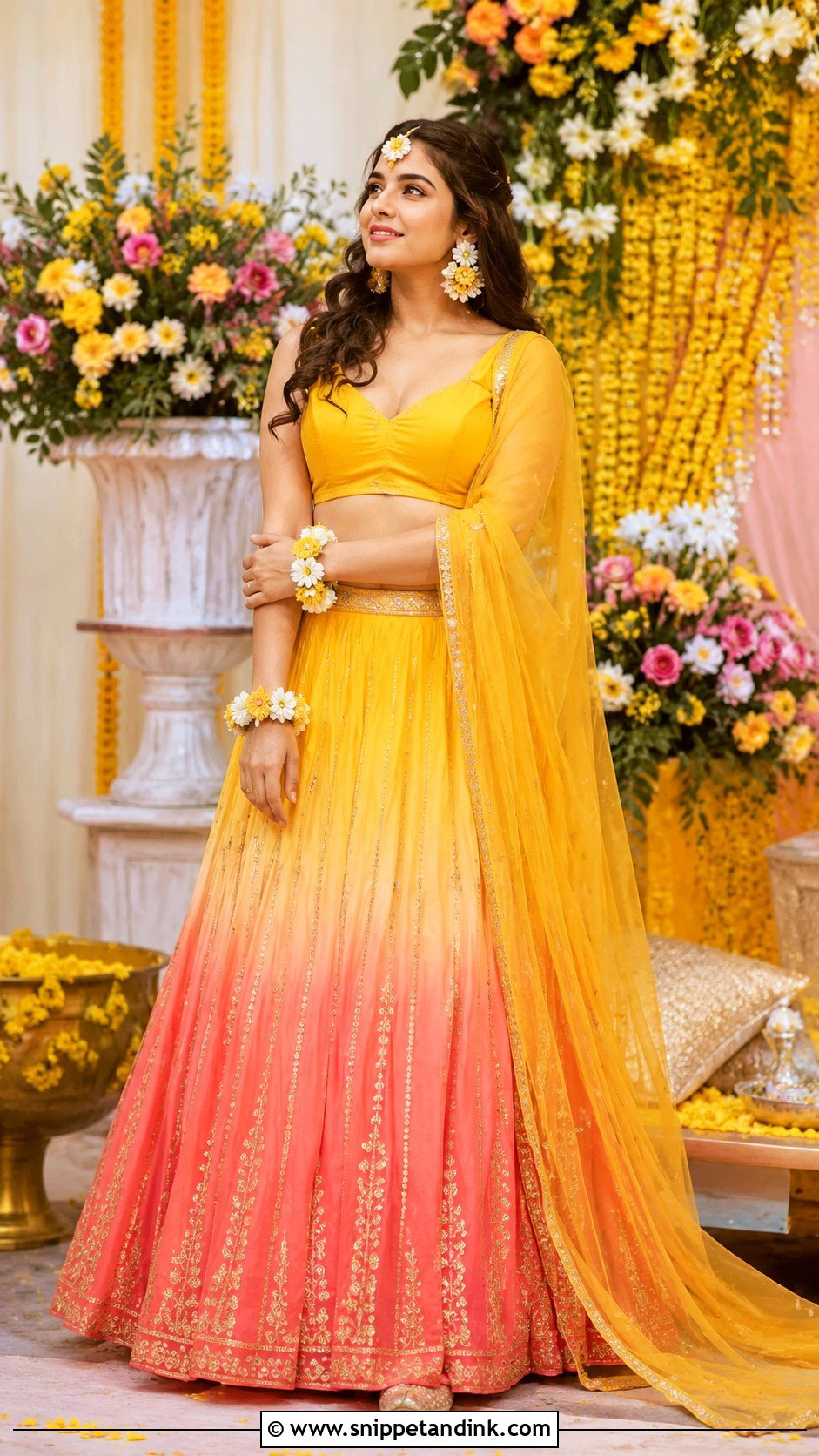
An ombre lehenga puts several Mayon colors into one skirt. Choose one that fades from yellow into orange, coral or pink with light embroidery around the hem, and check the dye fade in daylight: it should change gradually, not in visible bands. A plain yellow blouse with supportive straps or sleeves keeps it calm. Pick a sheer dupatta in the lightest shade of the skirt. Gold juttis, flower earrings, wrist garlands and a small tikka finish it, with loose curls or a soft braided ponytail. Repeat just one detail from the skirt on the blouse, such as a narrow gota edge.
16. Color Block Bridal Mayon Dress
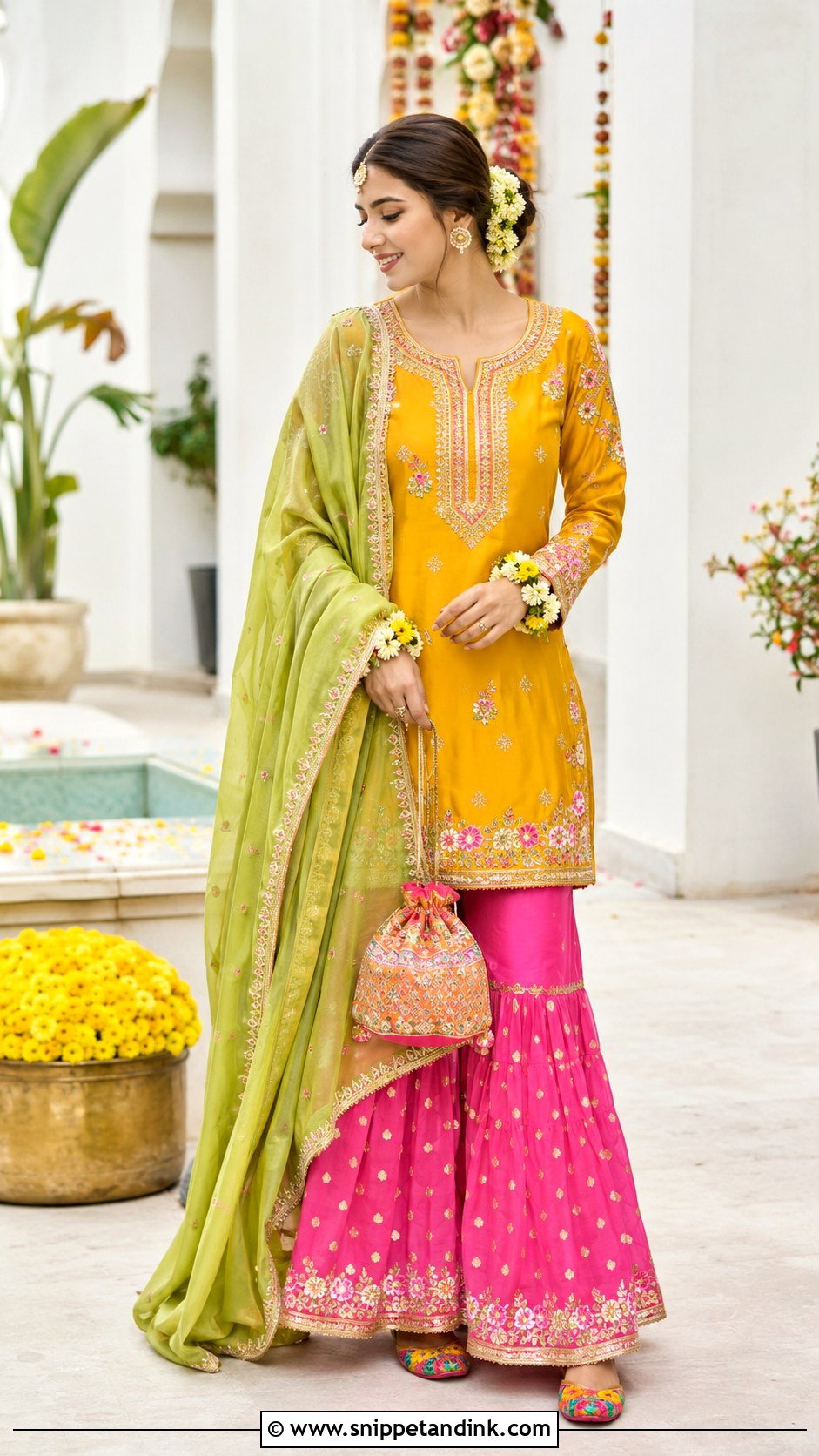
Color blocking works when one color leads. I’d let yellow dominate in the kurti, use pink for the gharara and keep green or orange for the dupatta with a narrow gold border. Then repeat each color once in an accessory: multicolor juttis, flower bangles containing all three shades, a potli with matching embroidery. Keep the kurti simple so the palette doesn’t overwhelm. A sleek low bun with yellow flowers tidies it. Soft gold jewelry ties the contrasting pieces together without adding another color.
17. Jacket Lehenga Bridal Mayon Dress
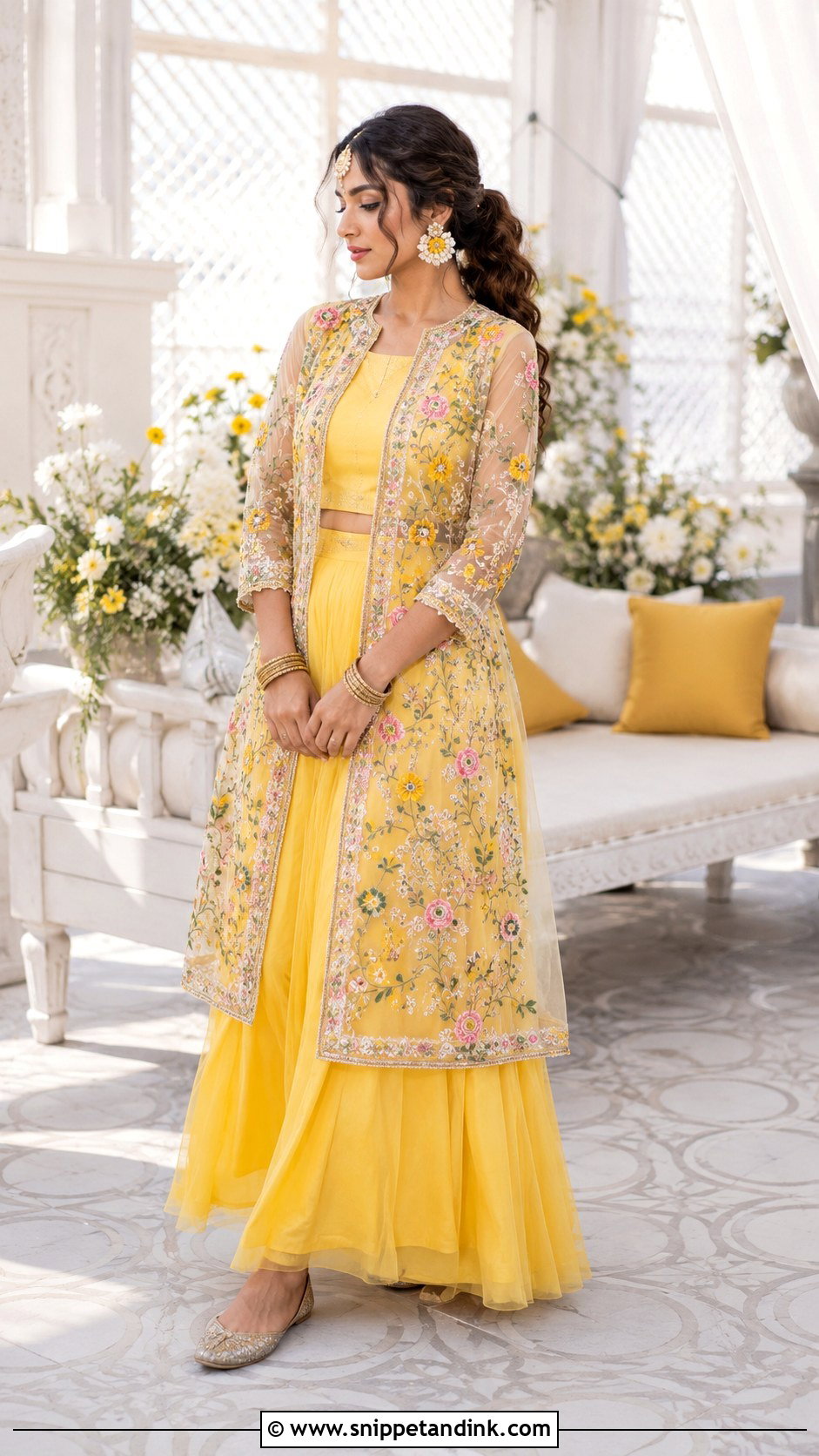
A light embroidered jacket turns a simple lehenga into something modern. Start with a plain yellow blouse and matching skirt, then layer a sheer knee-length jacket with floral threadwork, mirrors or fine gota. Open fronts keep the waist visible. Check the jacket sleeves by raising your arms over your head; fitted jacket sleeves bind at the armhole, and you’ll be lifting your hands for ubtan and dancing. If the jacket gives enough coverage, skip the dupatta. Metallic juttis, flower earrings, a slim tikka and stacked bangles finish it, with a low ponytail and soft curls.
18. Farshi Gharara Bridal Mayon Dress
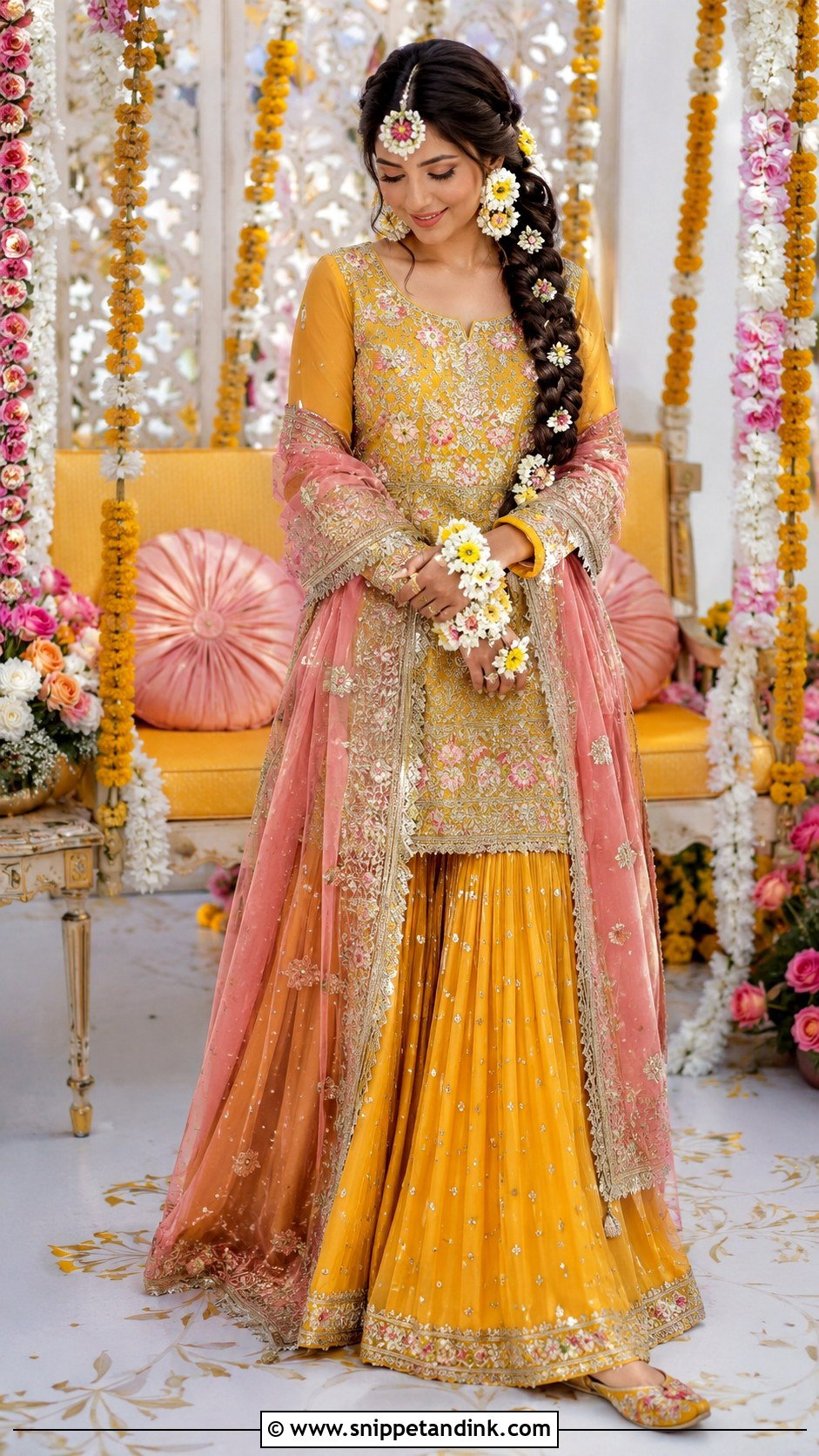
A farshi gharara is dramatic, with its floor-length flare trailing behind you, and it isn’t practical for every bride. It works best when you’ll mostly stay in one decorated seating area. Choose mustard or turmeric with controlled volume and a short kurti with delicate kora, gota or floral embroidery. A sheer green or pink dupatta goes lightly over one shoulder. Flat embroidered juttis, floral jewelry, small earrings and a center tikka finish it, with a neat bun or long braid. Ask the tailor for a discreet wrist loop inside the gharara so you can lift it when walking between rooms.
19. Phulkari Bridal Mayon Dress
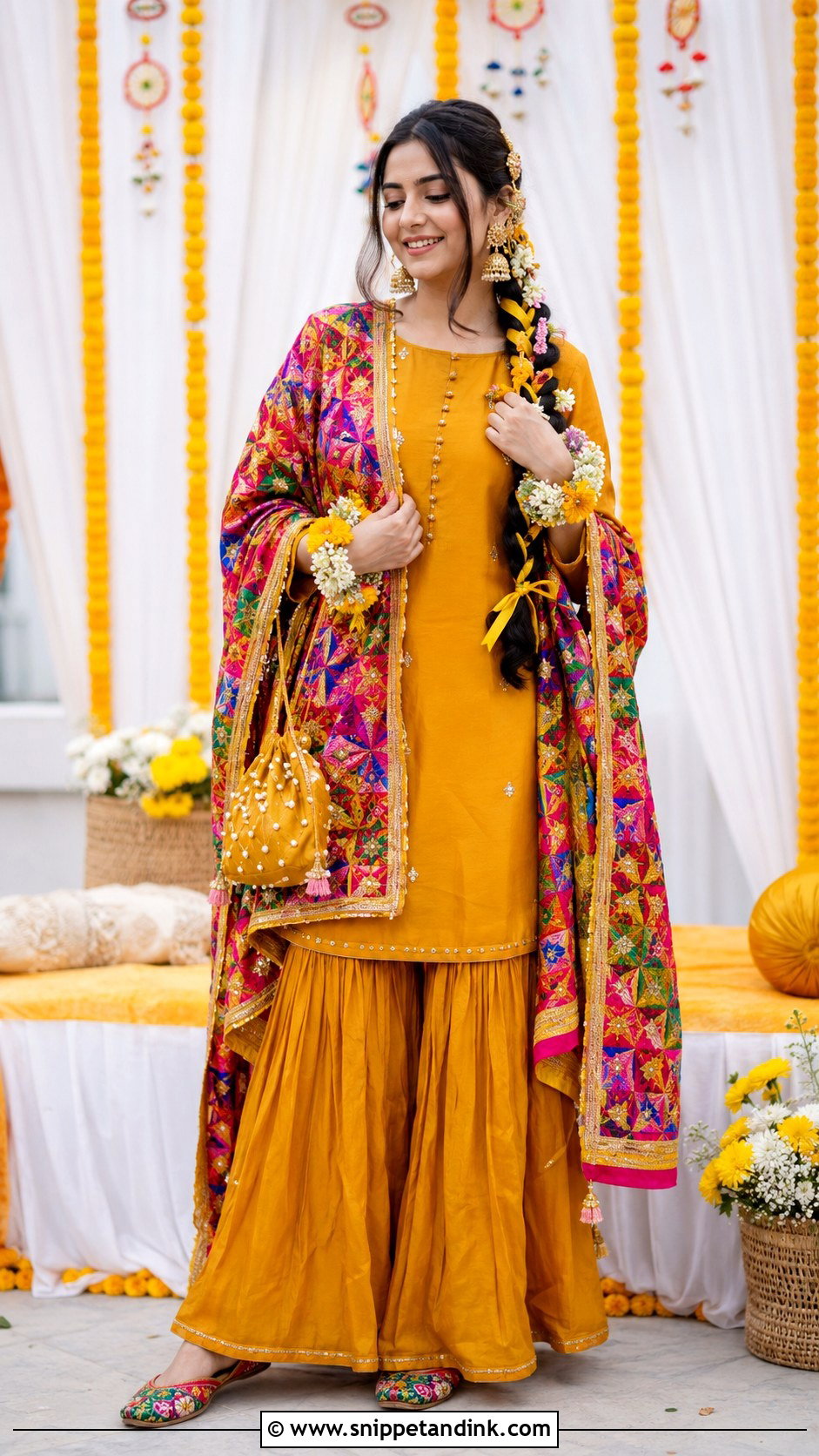
A Phulkari dupatta carries the whole outfit, so the rest stays plain. A mustard kurta with straight pants or a lightly flared gharara and only a narrow gota border at cuffs and hem lets the vibrant Phulkari dupatta show its pink, orange, green and red embroidery across one shoulder. Multicolor juttis, gold earrings, flower bangles and a small potli carry the palette. A smooth braid with ribbon or small flowers suits it. Hand-embroidered Phulkari can be heavy, so secure it with hidden pins at the shoulder and back, especially if you’ll dance.
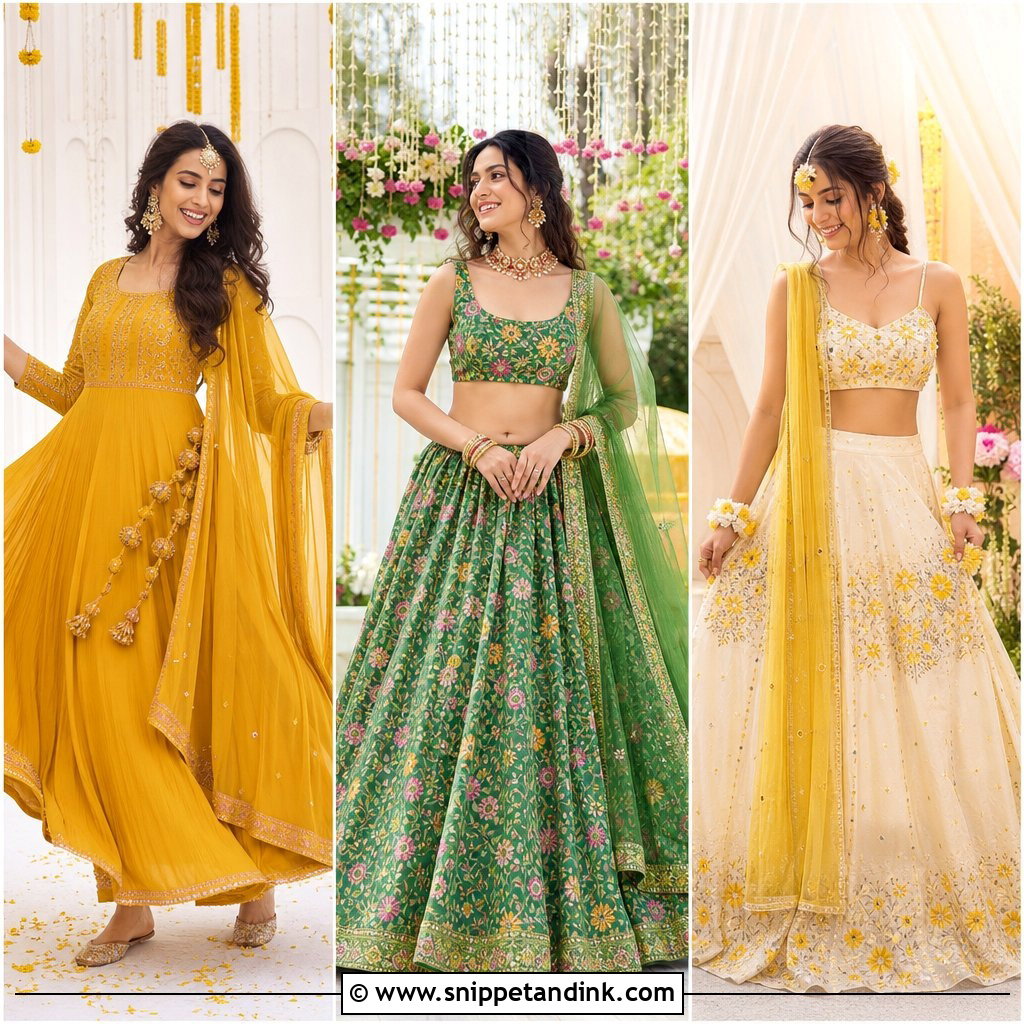



20. Minimal Cotton Silk Bridal Mayon Dress
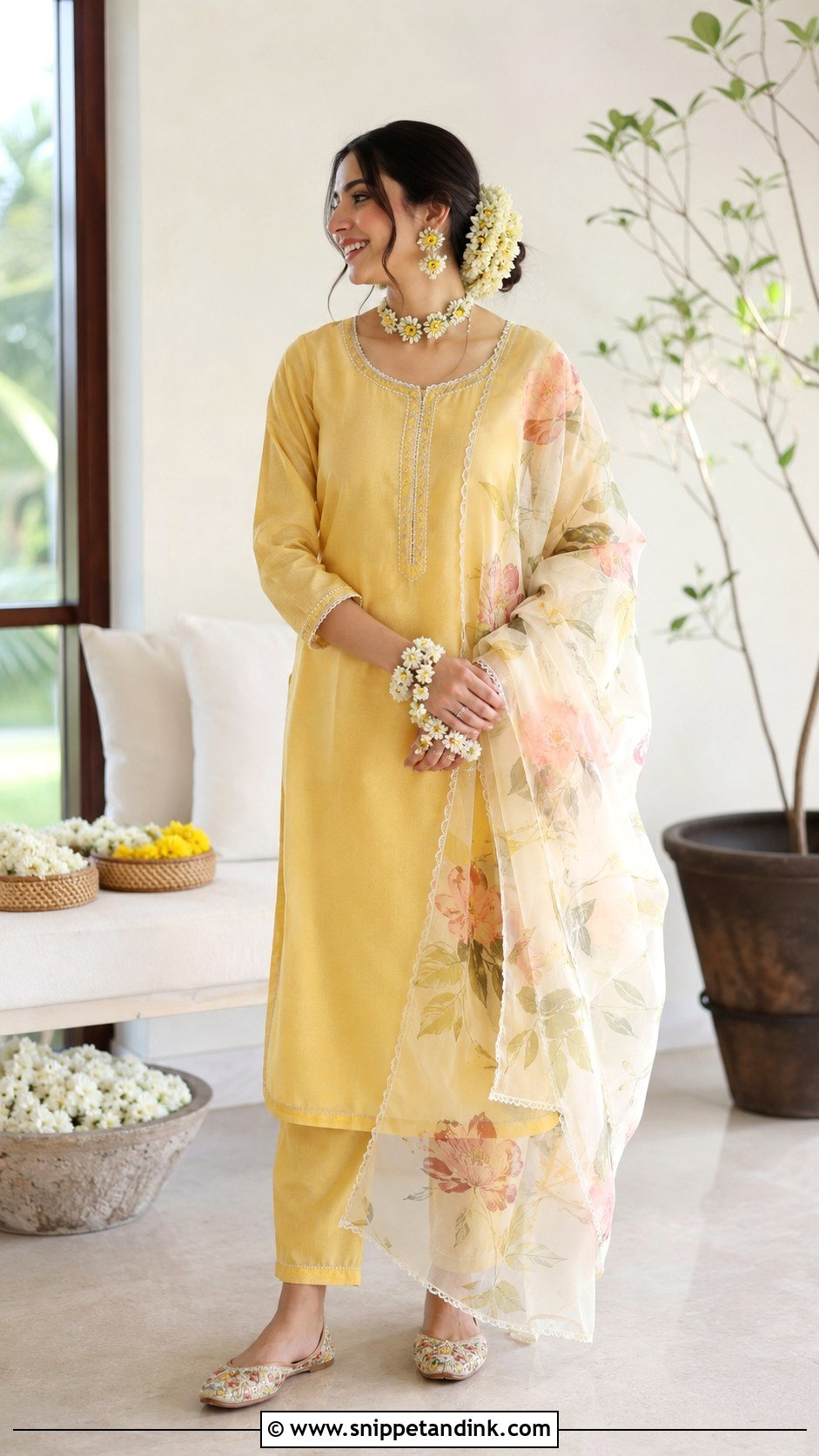
For a small Mayon at home, plain cotton silk is honestly enough. A yellow kurta with a clean boat neck, three-quarter sleeves and a little gota at the cuffs pairs with straight pants or a softly gathered gharara in the same shade. Bring in color through a floral organza dupatta, embroidered juttis and fresh flower jewelry. A low bun covered with jasmine or yellow blossoms marks you as the bride. Even skin, peach blush, defined lashes and a comfortable lip color keep makeup fresh. Cotton silk has a soft shine and is far easier to clean after ubtan than embellished fabric.
Getting Haldi Out of Silk and Cotton Afterwards
Act the same night if you can. Turmeric sets as it dries, and the longer it sits, the harder it is to lift. Scrape off any paste gently with a blunt edge instead of rubbing, which only pushes the color deeper.
For washable cotton and blends
Rinse from the back of the fabric with cold water. Hot water can set the stain. Turmeric reacts to alkaline soap by turning reddish, which alarms people, but that’s a color change of the same stain, not a new one. Drying in sunlight helps fade turmeric naturally, so lay cotton out in direct sun after washing, though test a hidden spot first on dyed fabric.
For silk, gota and embellished pieces
Don’t soak them. Water can tarnish metallic gota and make silk dyes run. Blot only, then take it to a dry cleaner who handles embroidered South Asian clothing, and tell them it’s turmeric so they treat it properly.
A Mayon Outfit Should Let You Sit on the Floor
A Mayon outfit should feel like you and still let you sit on cushions for hours. A yellow gharara or mustard Anarkali is the traditional pick; floral lehengas, kaftans, dhoti pants and jacket sets are the modern ones. Think about where the event is, how long you’ll wear it and how close the ubtan will come to the fabric. Light materials, a well-pinned dupatta, flat juttis and soft linings make a real difference. Flower jewelry, fresh makeup and a practical hairstyle usually give all the bridal touch you need.
You'll Like These Ideas:







Leave a Reply