
A Pakistani bride rarely wears one outfit. She wears four or five across the mehndi, nikkah, baraat, walima and sometimes a reception, and each one has to suit the event, her body and the jewelry she’s inheriting or buying. Red lehengas and farshi ghararas still anchor the baraat, while nikkah maxis, shararas, peshwas gowns and jacket sets fill in the rest of the week. Good photos matter, but an outfit you can sit, eat and laugh in matters more by the end of the night. Below are 25 complete looks, head to toe, with the fitting and styling notes I give brides at a first consultation.
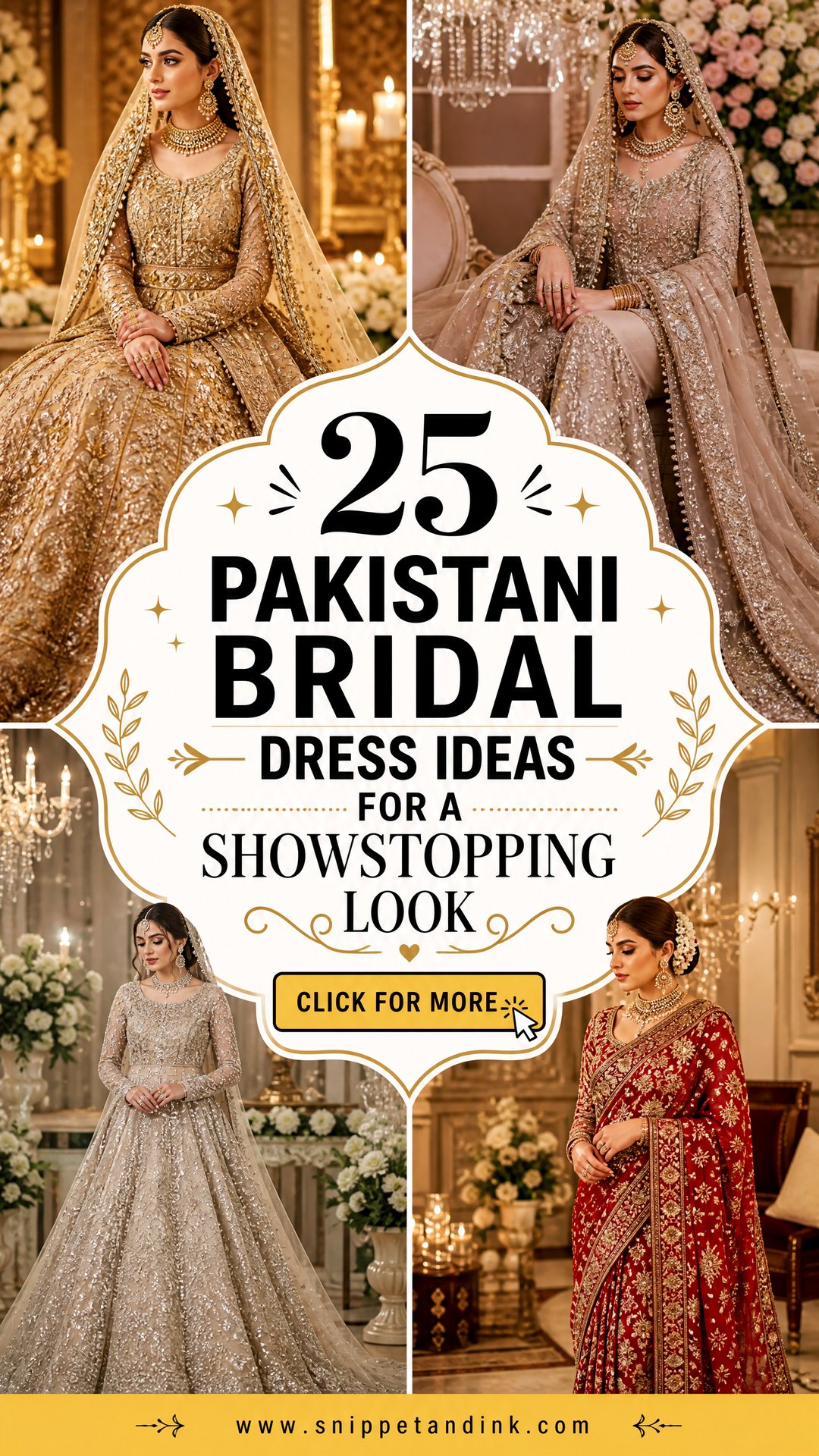
Tissue, Jamawar, Banarsi and Net Wear Very Differently
Brides choose by color and embroidery first, but the base fabric decides how an outfit feels at hour five. Here is how the main bridal fabrics behave once they’re actually worn.
- Tissue is woven with metallic thread, so it shimmers on its own. It’s light and crisp, but it creases and can feel scratchy without a lining.
- Jamawar carries a woven pattern, often paisley, with a soft heft. It’s lovely for ghararas and long shirts in cooler months and warm in summer.
- Banarsi silk is heavier than it looks and rich without any embroidery, so it’s best in winter or a well-cooled hall.
- Net and organza are the lightest carriers of heavy embroidery. Net drapes, organza stands away from the body, and both need a soft lining against the skin.
- Raw silk has a matte, slubbed surface that holds structure for blouses and shirts and takes dense handwork well.
- Velvet gives the deepest color and the warmest wear, and it marks wherever it’s crushed.
For a summer wedding, I move the heavy embroidery onto net or organza and save jamawar, Banarsi and velvet for winter. Whatever the fabric, ask for cotton or soft silk lining at the underarms and waist, where skin and stitching rub together all day.
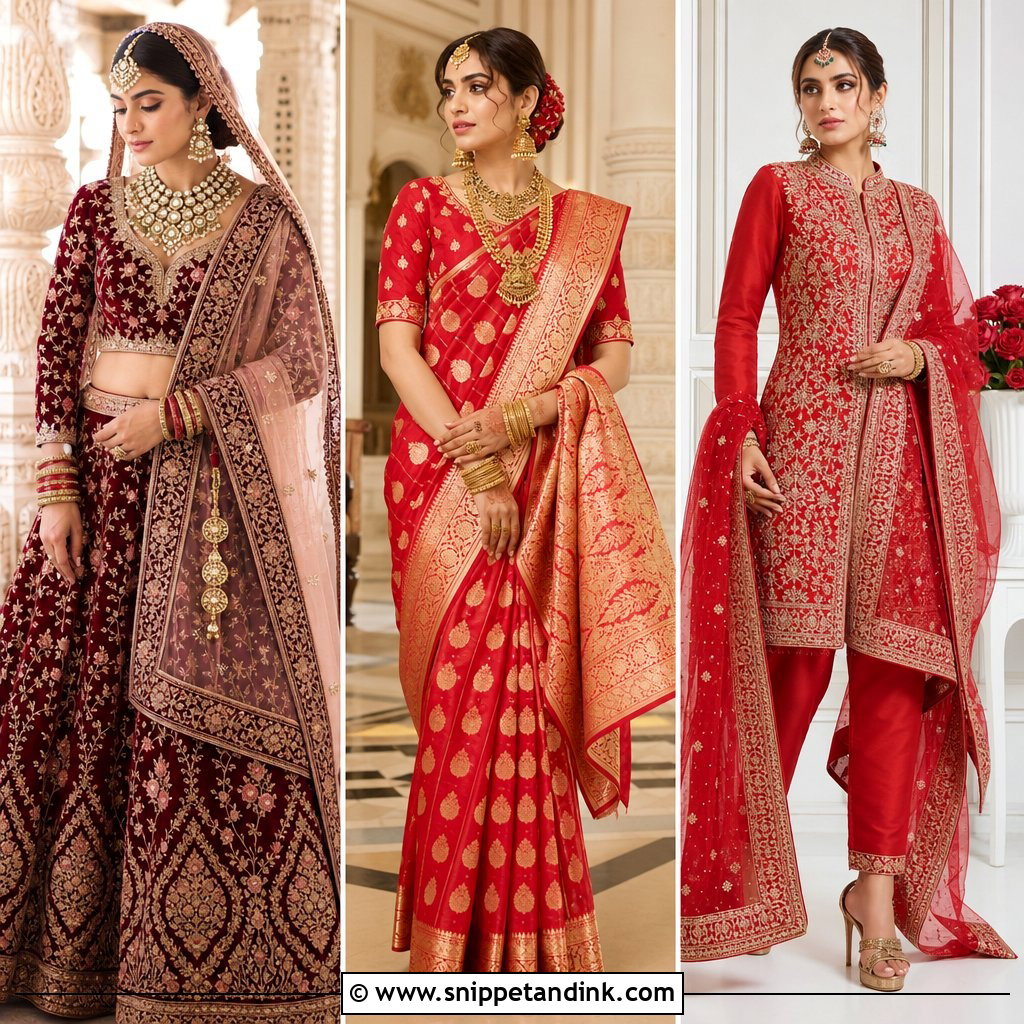
1. Red Pakistani Bridal Lehenga
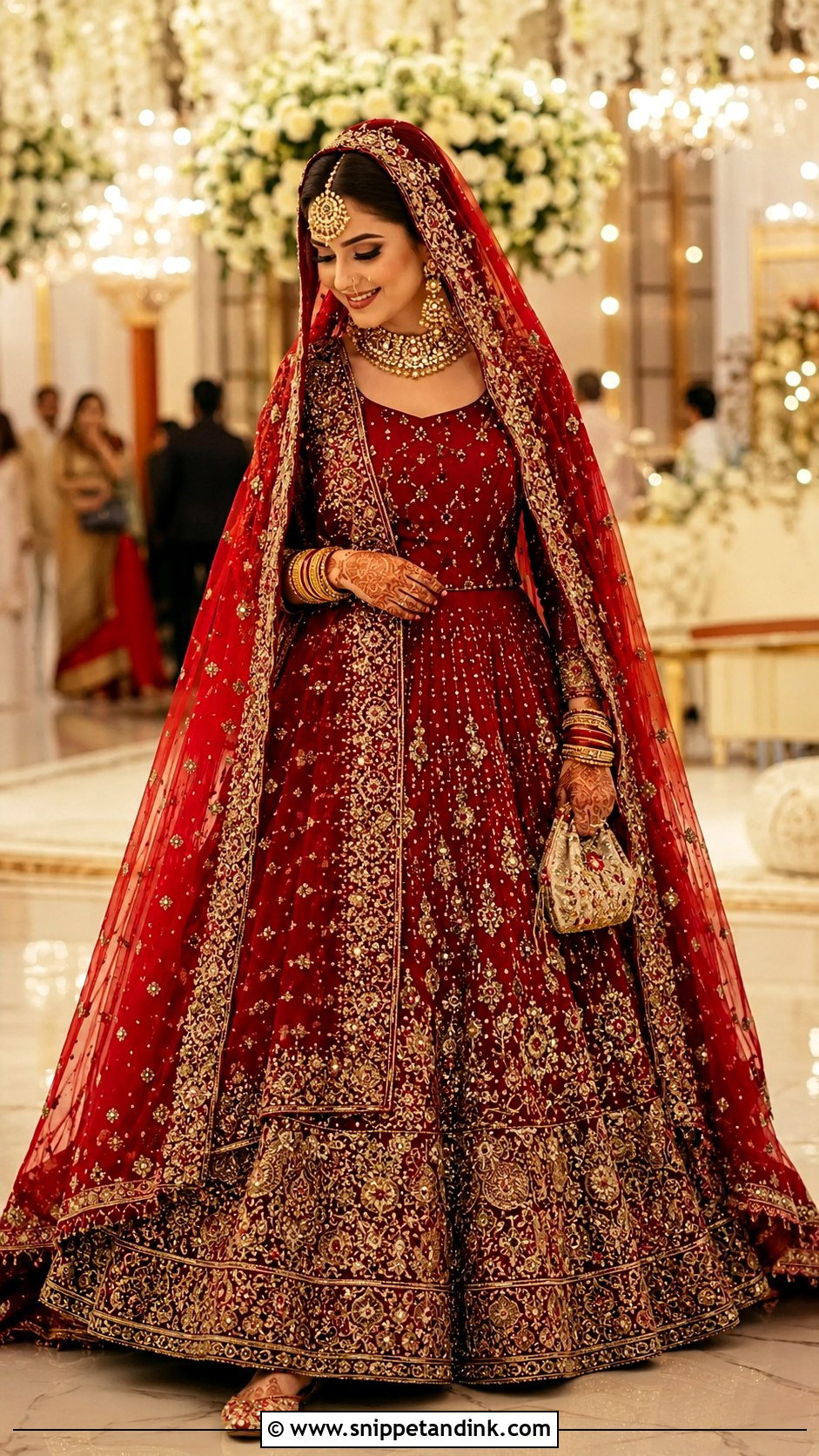
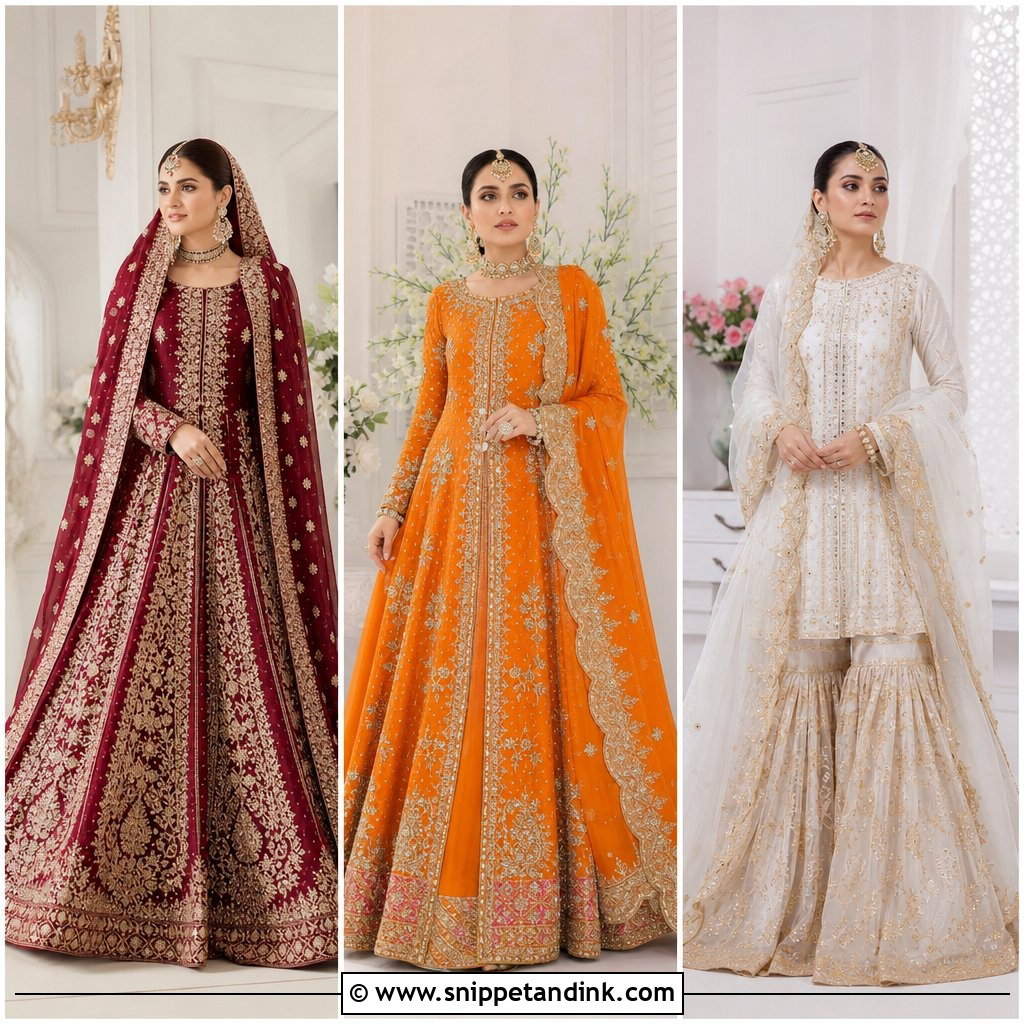
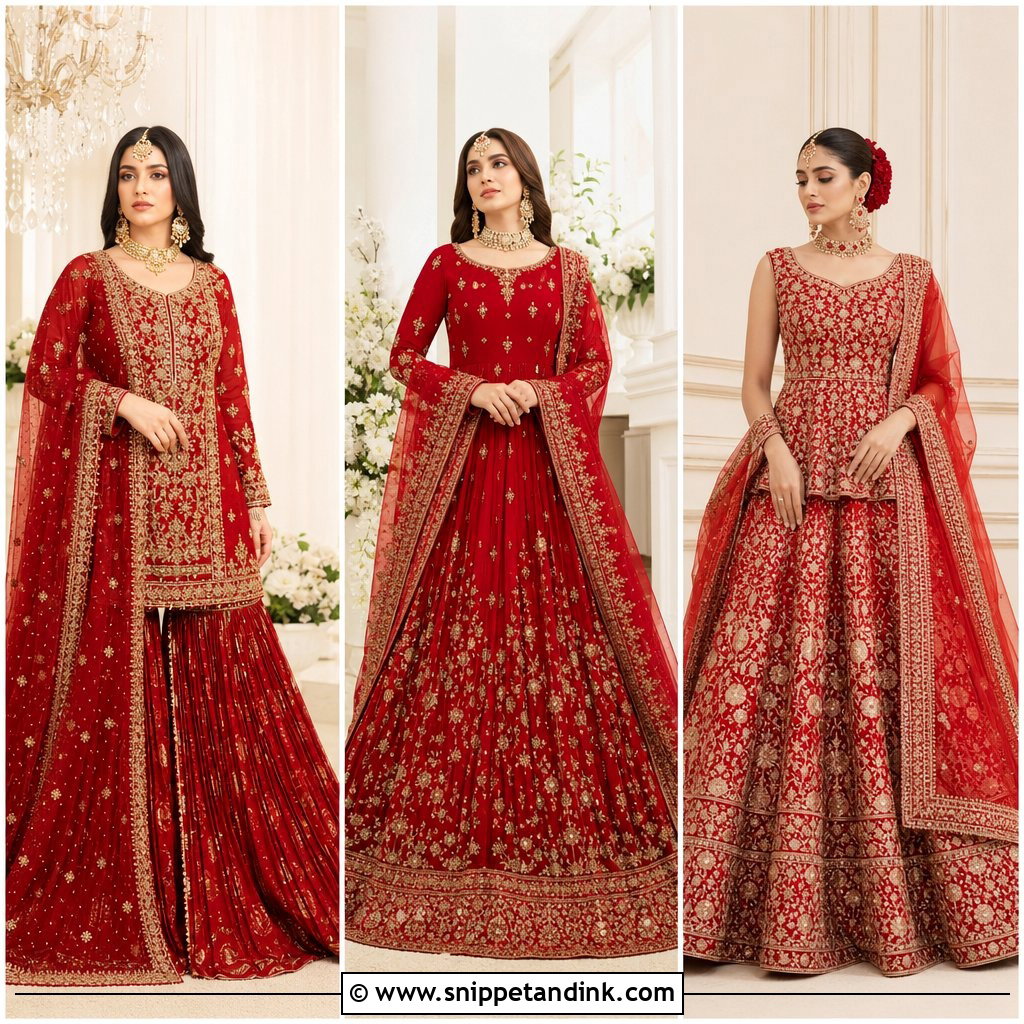
Red is the baraat color that grandmothers, photographers and family albums all expect, and it still earns the spot. Deep red, maroon or antique red with a heavily worked blouse and a densely bordered dupatta is the classic, finished in zari, dabka, naqshi, sequins and gota. Naqshi is worth asking for by name: it’s a fine metal-wire work that sits flatter than dabka, so it glints without adding much bulk. Gold kundan, a matha patti, bangles and khussa or low block heels complete it. Pin the dupatta over the head and one shoulder so the blouse and waistline still show.
2. Maroon Pakistani Bridal Lehenga
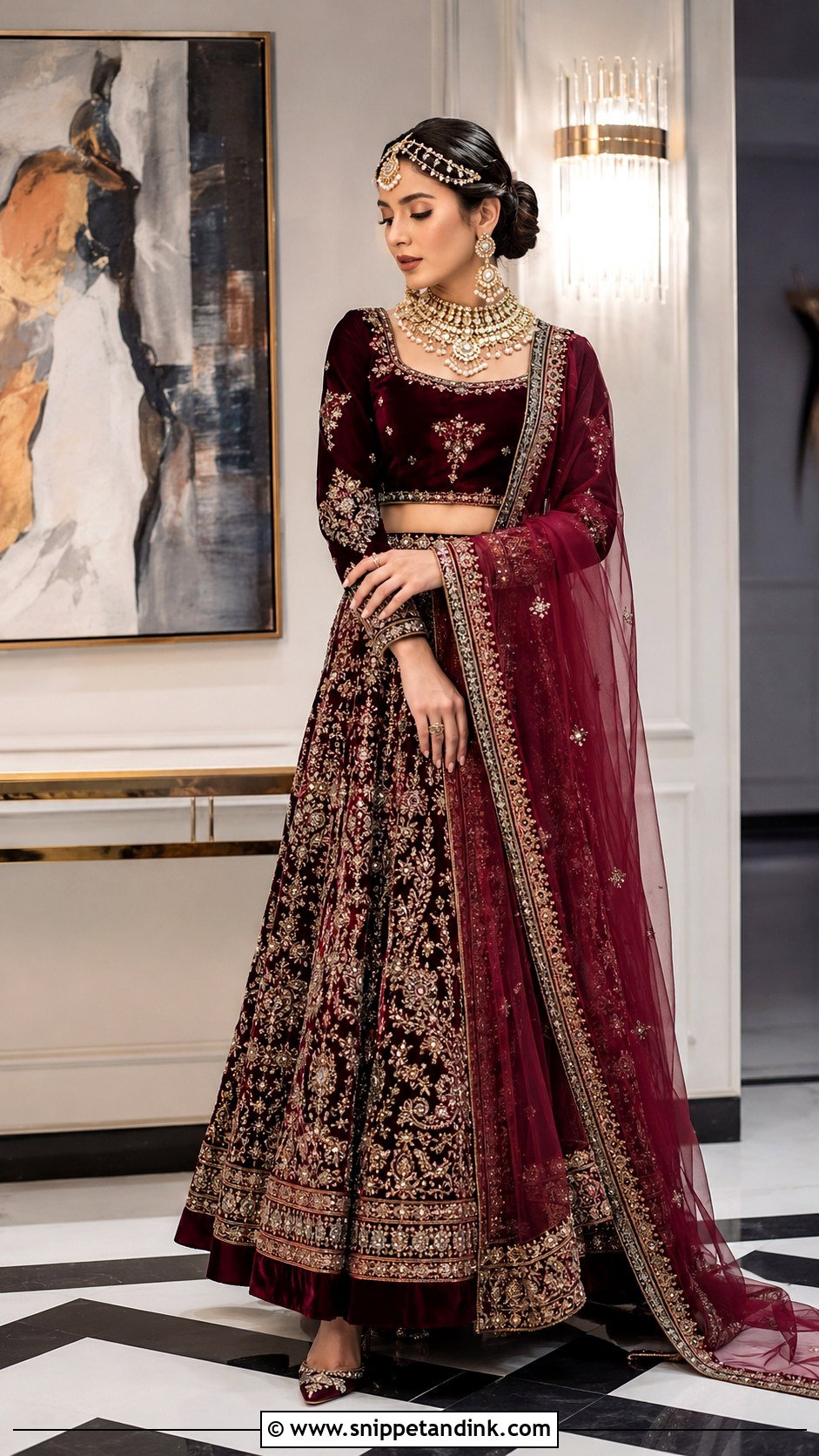
Maroon has red’s traditional pull with a deeper, more grown-up tone, and it comes into its own in evening light. Velvet, raw silk, jamawar and tissue all suit it. I’d pair a lehenga in antique gold work with a fitted blouse and a sheer scalloped dupatta. With a very heavy lehenga, keep the blouse neckline clean and structured, or the outfit crowds itself. Polki, ruby accents, gold bangles and a bold necklace sit well on maroon. Soft glam makeup, a center-parted bun and a classic passa or jhumar give it a royal finish.
3. Gold Pakistani Bridal Lehenga
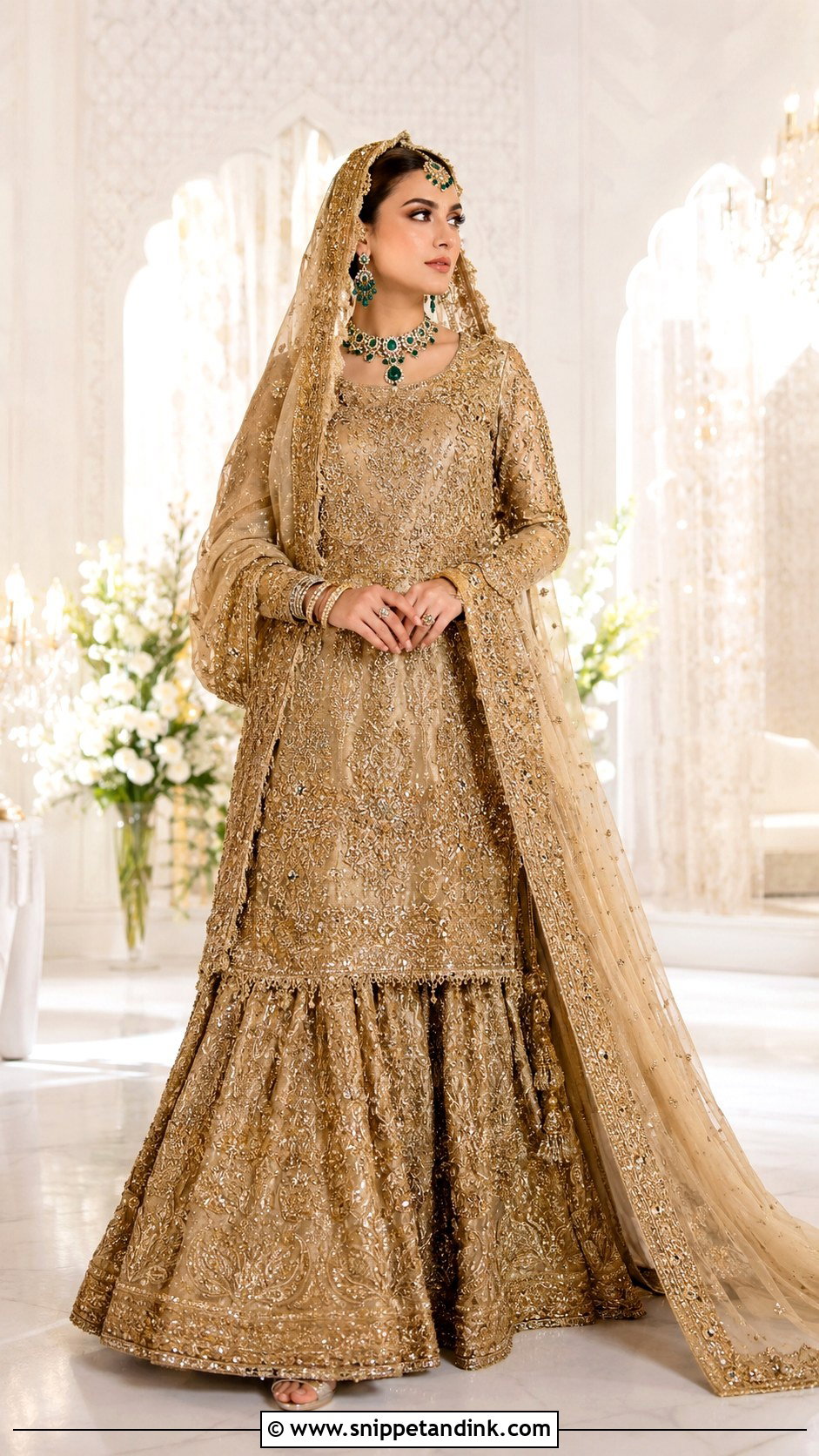
Gold catches more light than any other bridal color, which helps indoor photography and becomes a risk under strong flash, where shiny gold can blow out to a flat yellow. That’s why I lean toward champagne, antique or dull gold for most brides. A long embroidered shirt over a flared lehenga keeps it modest; a fitted choli looks more modern. Emerald, pearl or ruby jewelry gives contrast so the outfit and the jewelry don’t merge into one gold mass. A sheer gold dupatta with a heavy border and neutral, metallic or ivory shoes finish it.
4. Ivory Pakistani Bridal Maxi
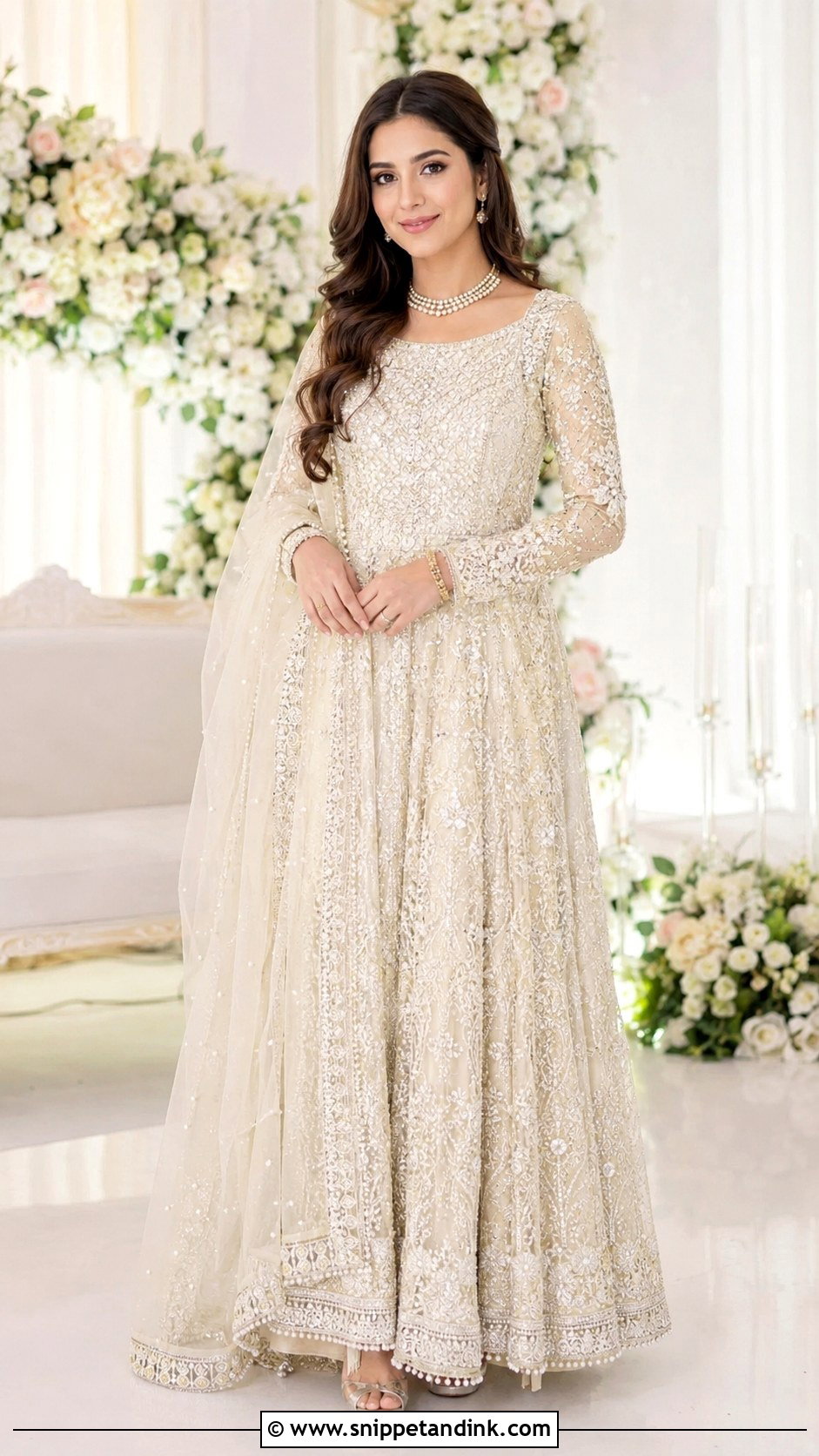
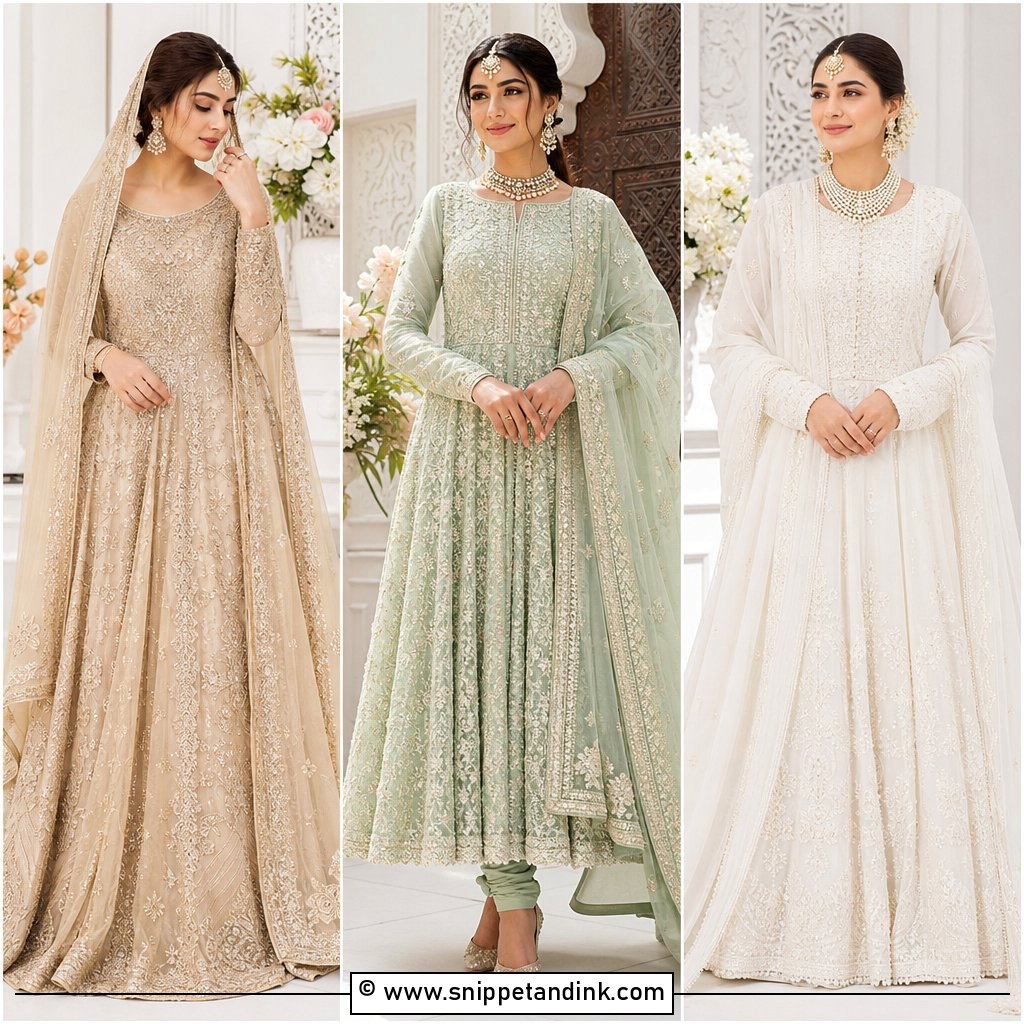
Ivory is my first suggestion for a nikkah or a daytime walima. It’s quiet, and it lets a bride’s face lead. Choose a floor-length maxi with pearl, crystal, silver or resham work. A matching dupatta over the head keeps it traditional, and a second sheer one adds volume in photos. Pearls, diamond-look earrings or a fine choker suit it, along with dewy makeup, a soft pink lip and a low bun. One fitting note: ivory satin and net show every lump of a seam allowance, so the inside finishing has to be neat and the lining fully pressed. Embellished heels or satin sandals complete it.
5. White Pakistani Bridal Nikkah Dress
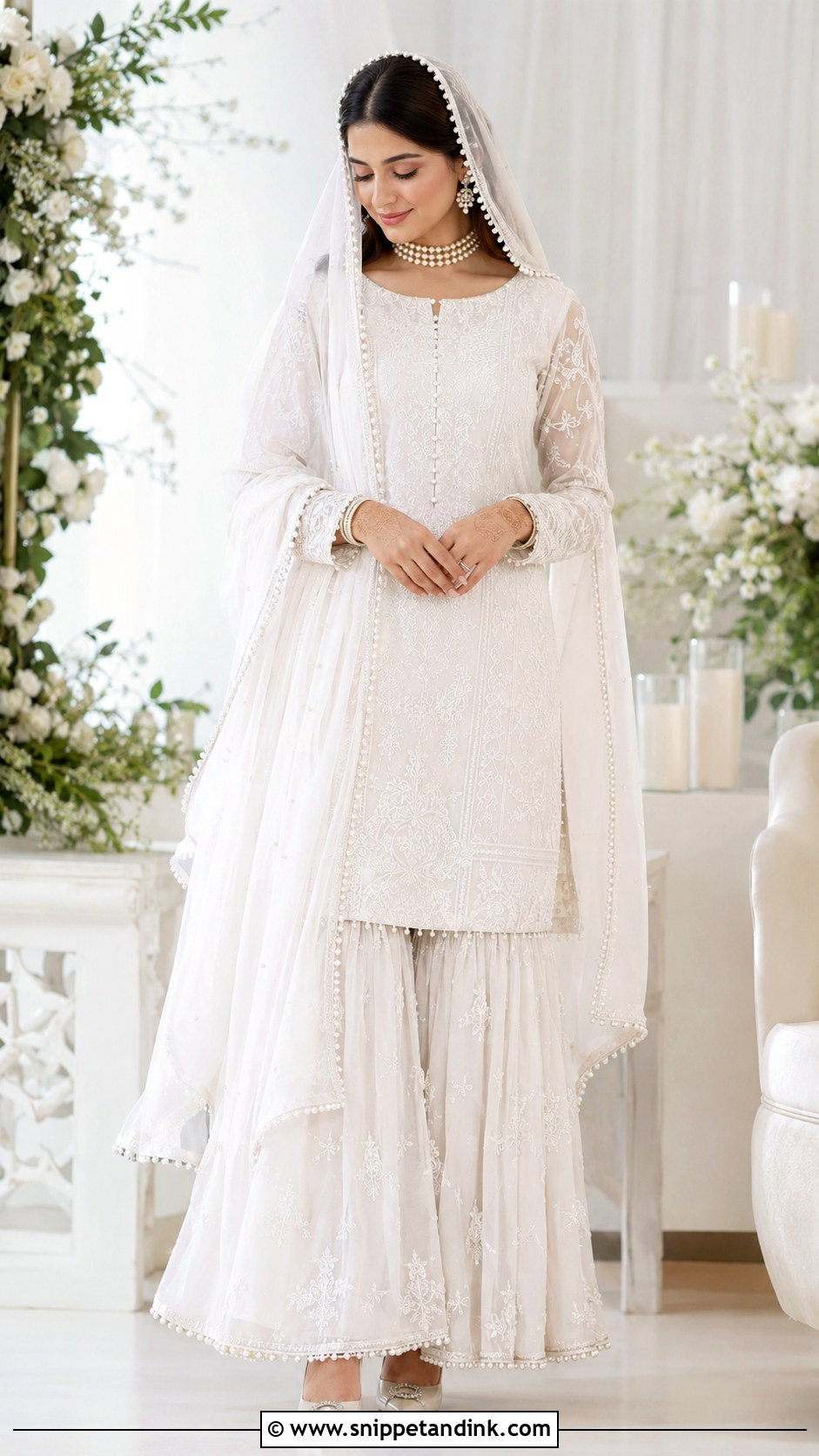
For the signing itself, many brides want something serene rather than showy, and white fits that mood. A long white shirt with a sharara, gharara or straight pants looks refined without feeling plain, especially with pearl work, silver thread, lace borders or chikankari-style embroidery. Chikankari shadow work is stitched from the back of sheer fabric, so it needs a lining that shows it off; a soft ivory lining under white muslin makes the stitches visible. A white net or organza dupatta frames the face. Pearl jewelry, light bangles and low heels are enough, with fresh makeup and a rose or peach lip.
6. Pastel Pakistani Bridal Lehenga
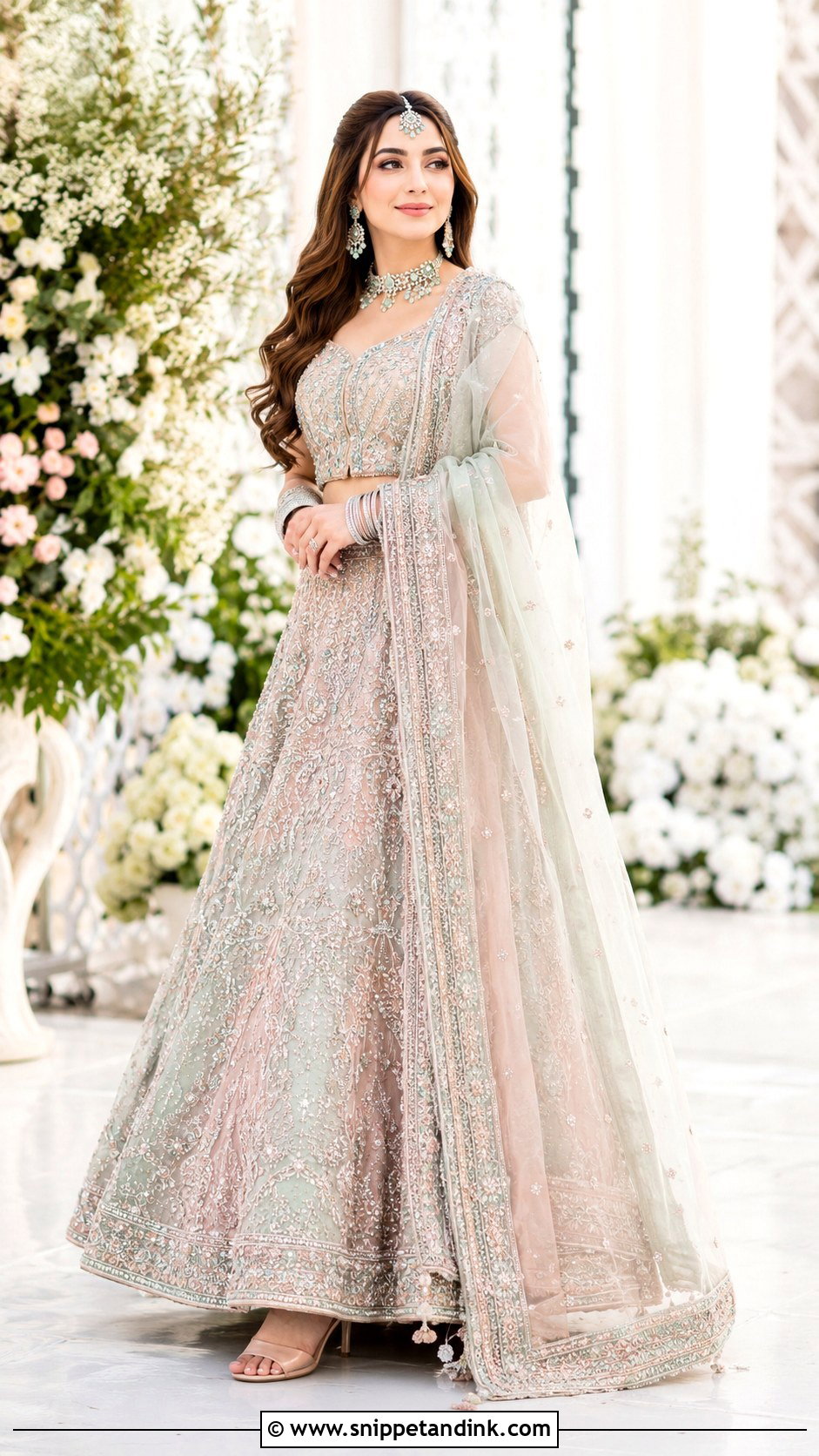
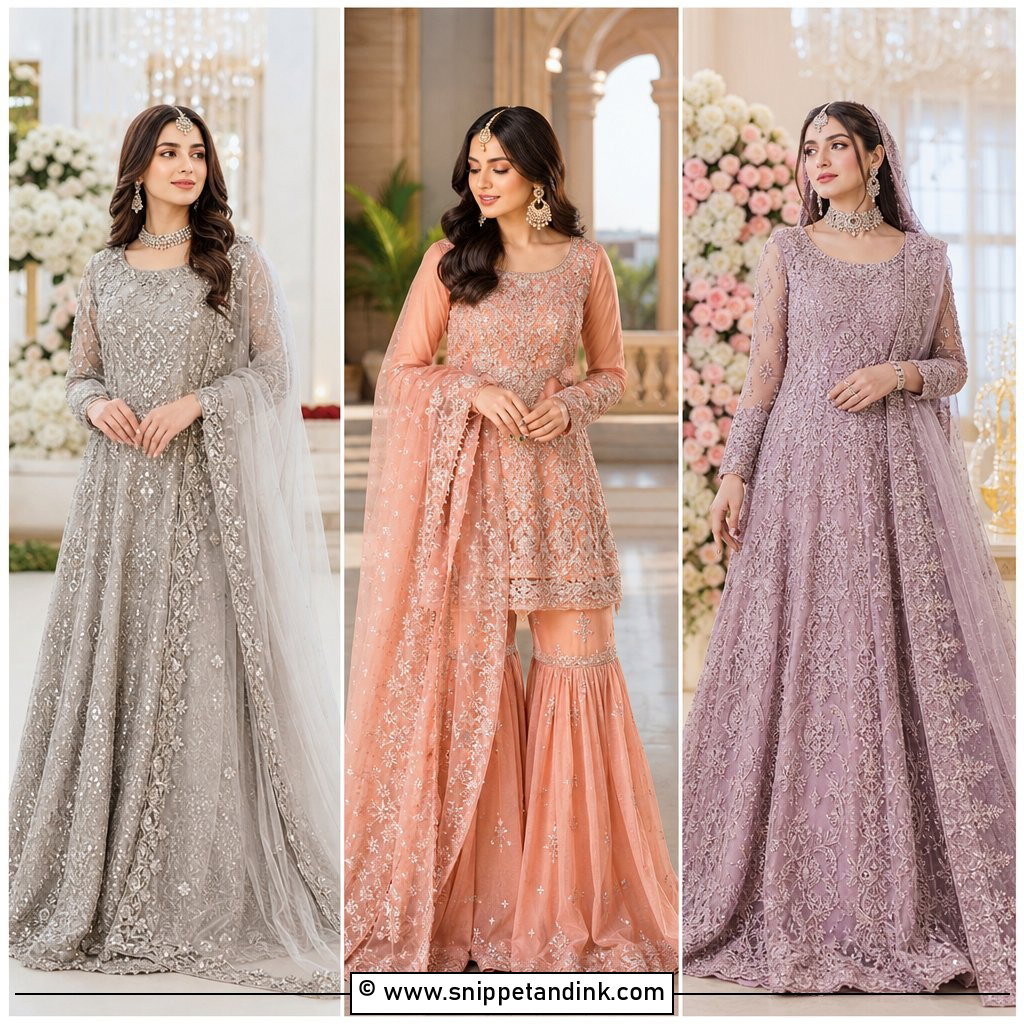
Pastel lehengas have become a regular option for walima, nikkah and softer reception looks. Blush, mint, powder blue, lilac, peach and champagne all read bridal once the embroidery is rich enough, in silver, pearl, sequin or tonal thread. A structured blouse and sheer dupatta keep it crisp; a long shirt adds coverage. Pearls, crystals or soft kundan keep the jewelry in proportion, and smooth hair stops the look getting fussy. My one caution: pastels show perspiration and makeup transfer far more than dark colors, so dress shields and a careful routine at the neckline are worth the bother.
7. Blush Pink Pakistani Bridal Dress
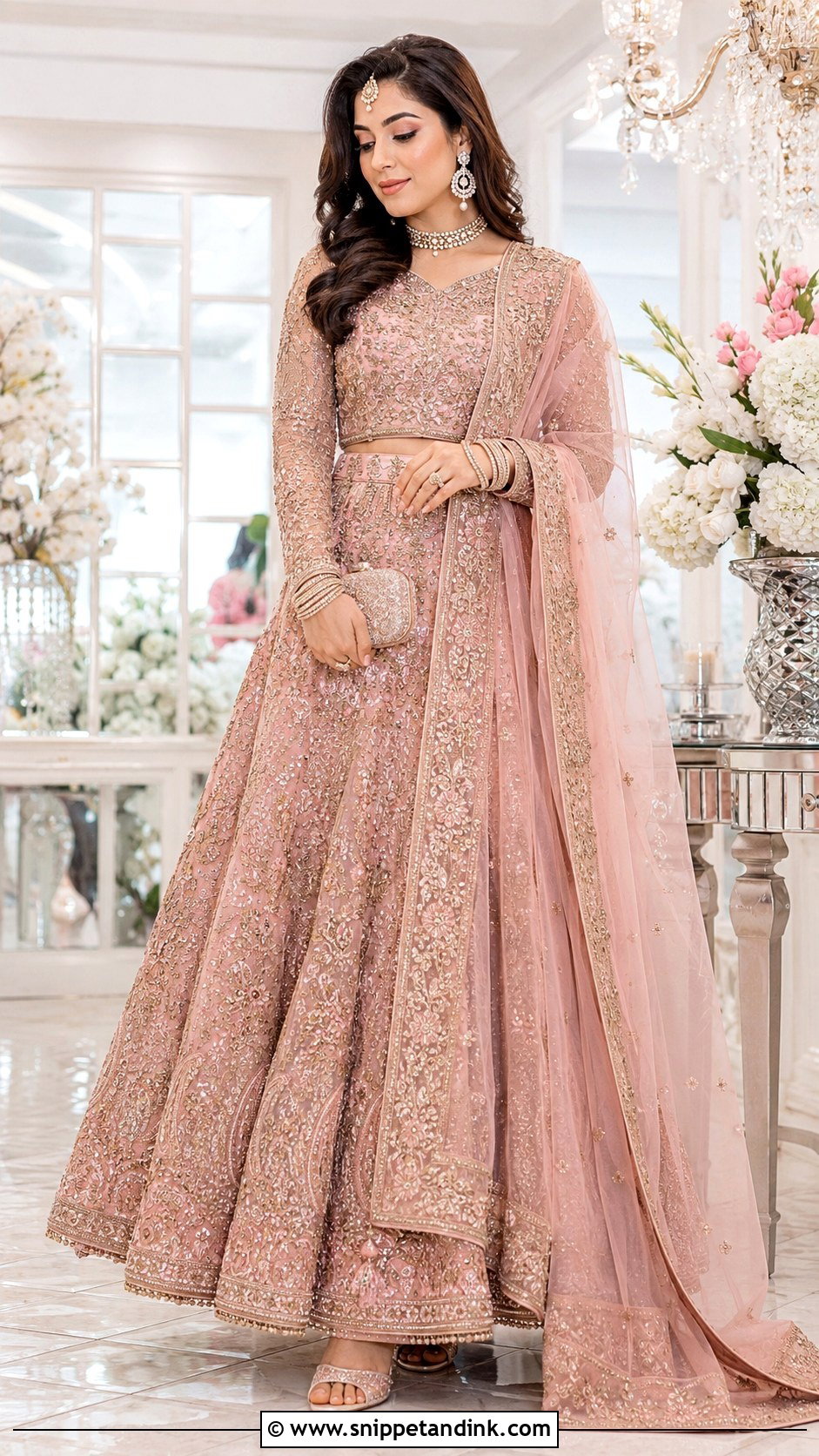
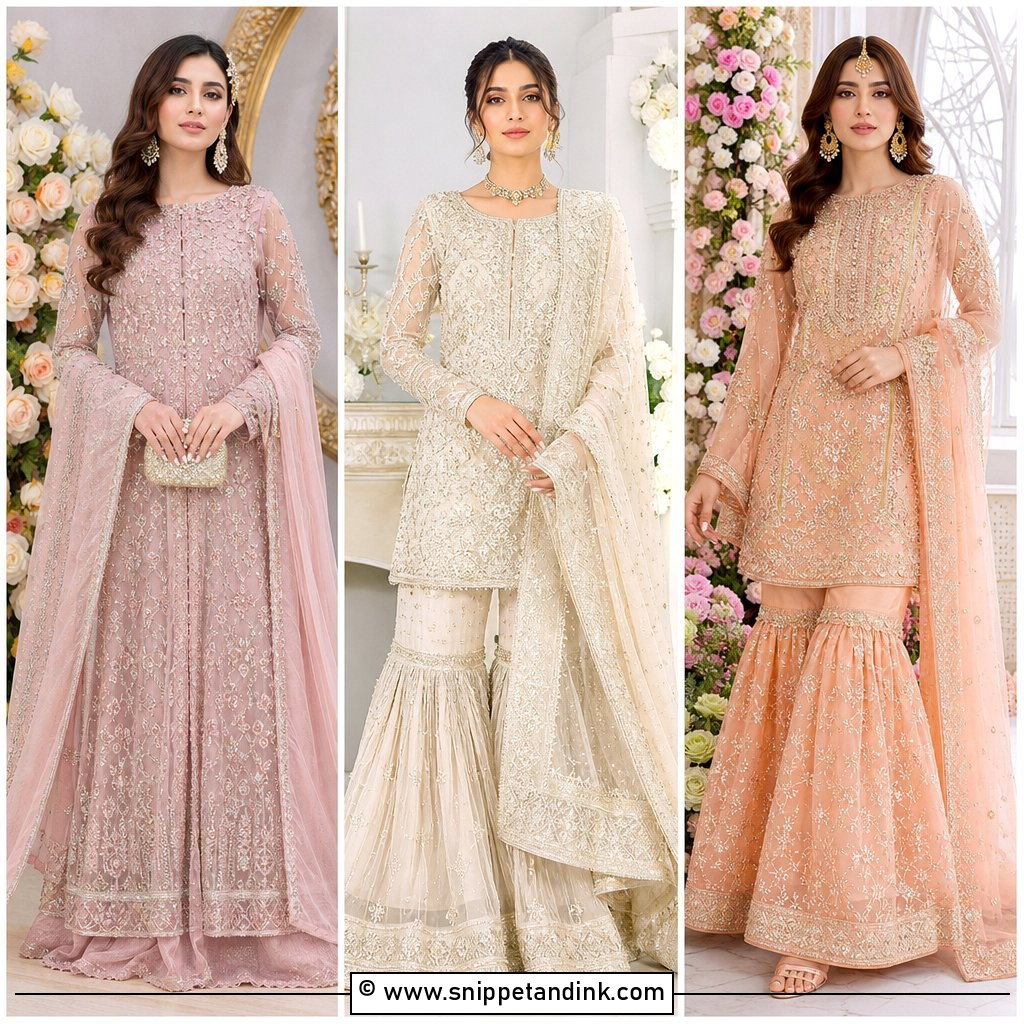
Blush is the most flexible bridal color I work with. It can be a walima, a reception or a nikkah outfit depending purely on how much embroidery goes on it. A blush lehenga, maxi or peshwas with silver, champagne or rose-gold detailing and a sheer, lightly scattered dupatta keeps it light. Rose gold is the metal I reach for first, because yellow gold can look heavy against blush, though a soft polki set also works. Nude heels, metallic sandals or embroidered khussa, soft waves and a natural pink lip finish it.
8. Pakistani Bridal Gharara
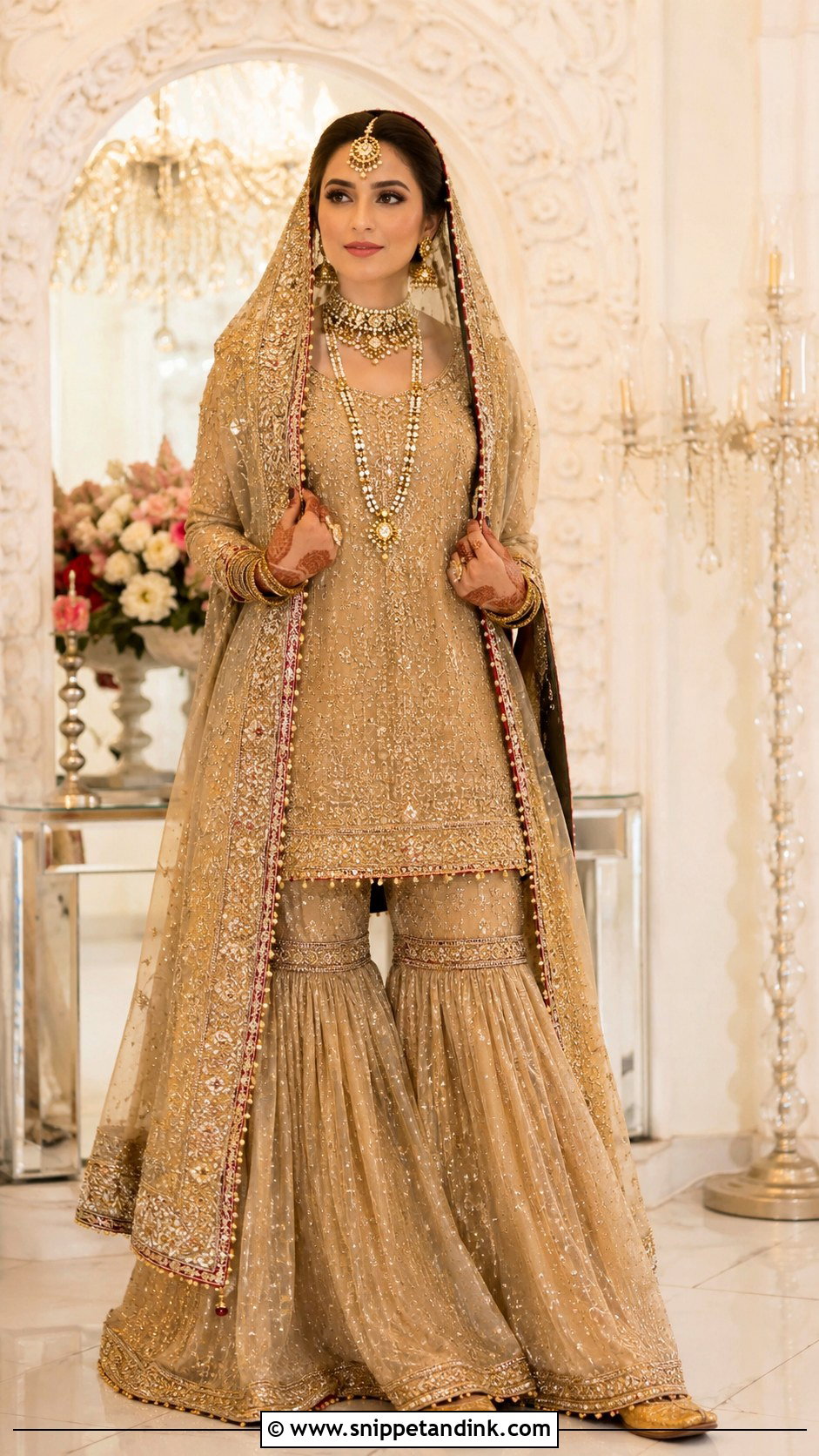
The gharara is fitted to the knee and flares below it, a shape that goes back to the courts of Awadh and still looks distinctly bridal. Silk, jamawar, tissue or organza with heavy borders and detailed work at the knee joint suits a bride, with a long kameez, short kurti or embroidered peplum on top. Each leg of a gharara uses a lot of fabric, so a heavy one can be tiring to walk in. I ask brides to walk across the room and back at the fitting before we finalize the number of panels. A rich-bordered dupatta over the head and one arm, a choker, a long haar, jhumkas and bangles complete it.
9. Farshi Gharara Pakistani Bridal Dress
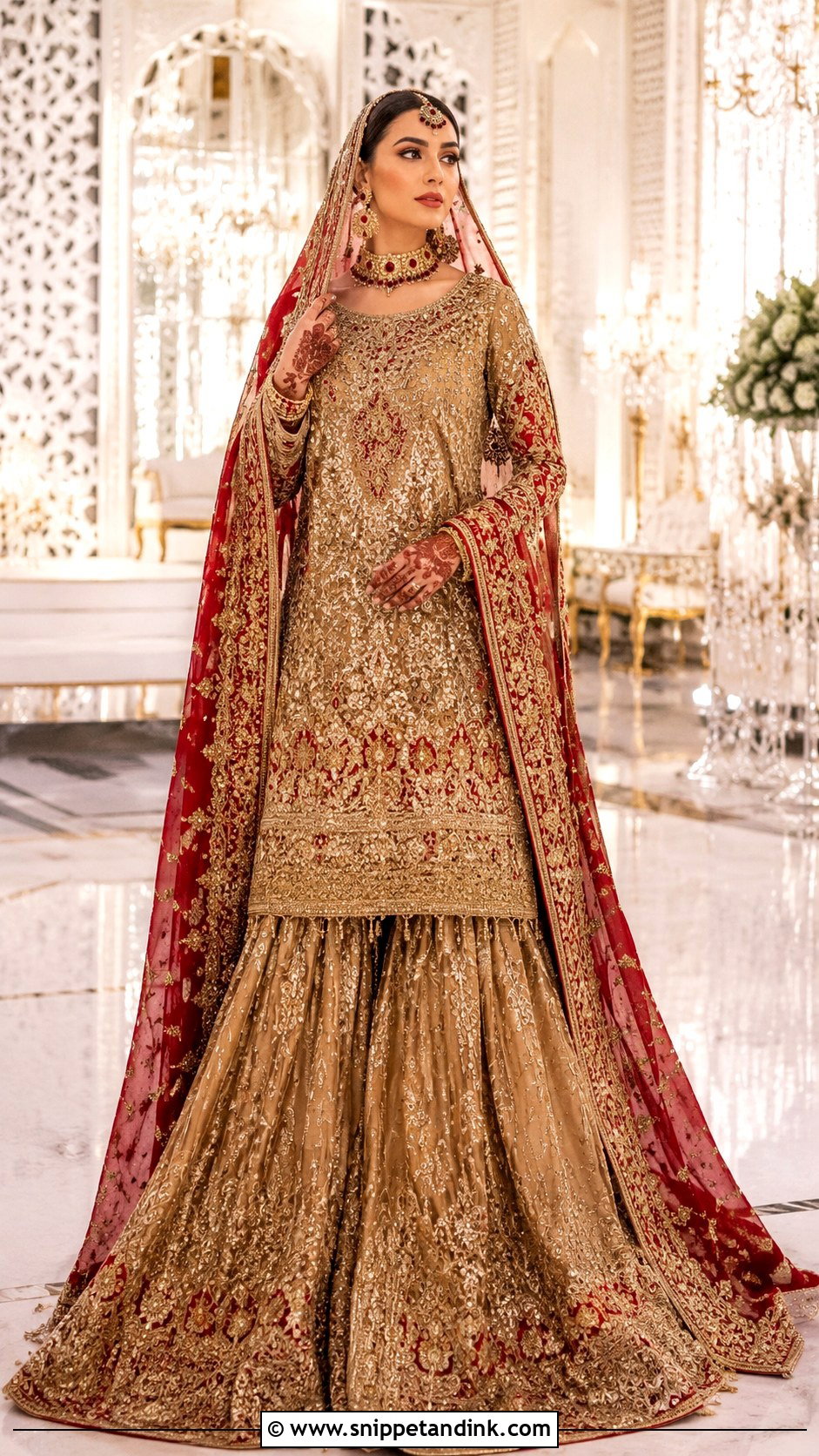
A farshi gharara Pakistani bridal dress is the gharara at full scale, so wide it pools on the floor, which is what farshi refers to. It needs space. In a grand hall it reads royal; at a crowded house function it gets trodden on. Jamawar, tissue or raw silk with heavy embroidery along the hem and knee carries the weight well. Because the bottom is so full, keep the upper body well fitted with a long embroidered shirt or classic kurti and a wide-bordered dupatta. A bride in a farshi gharara can’t see her feet, so I put her in comfortable low heels and assign someone to guide her on steps.
10. Pakistani Bridal Sharara
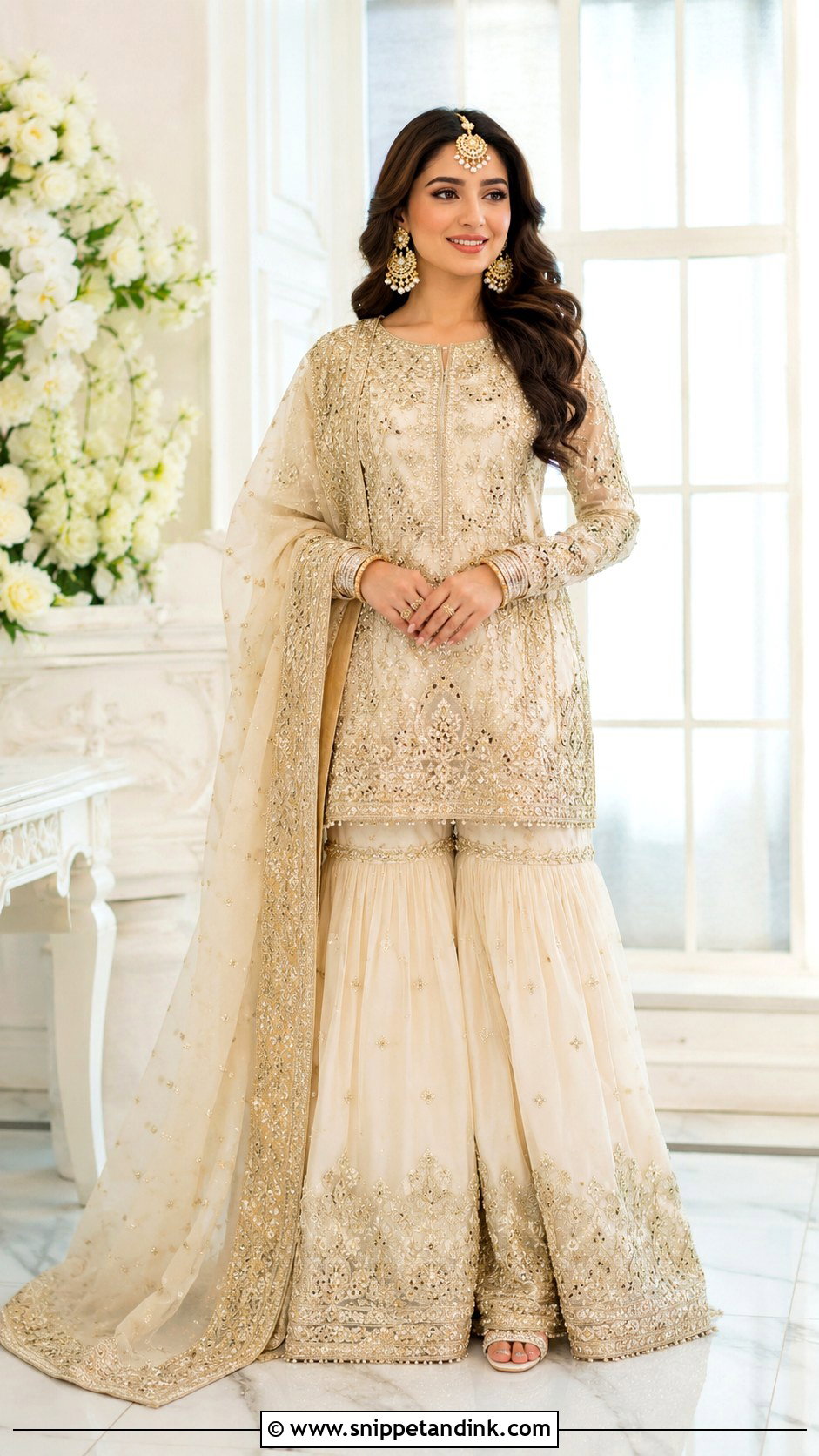
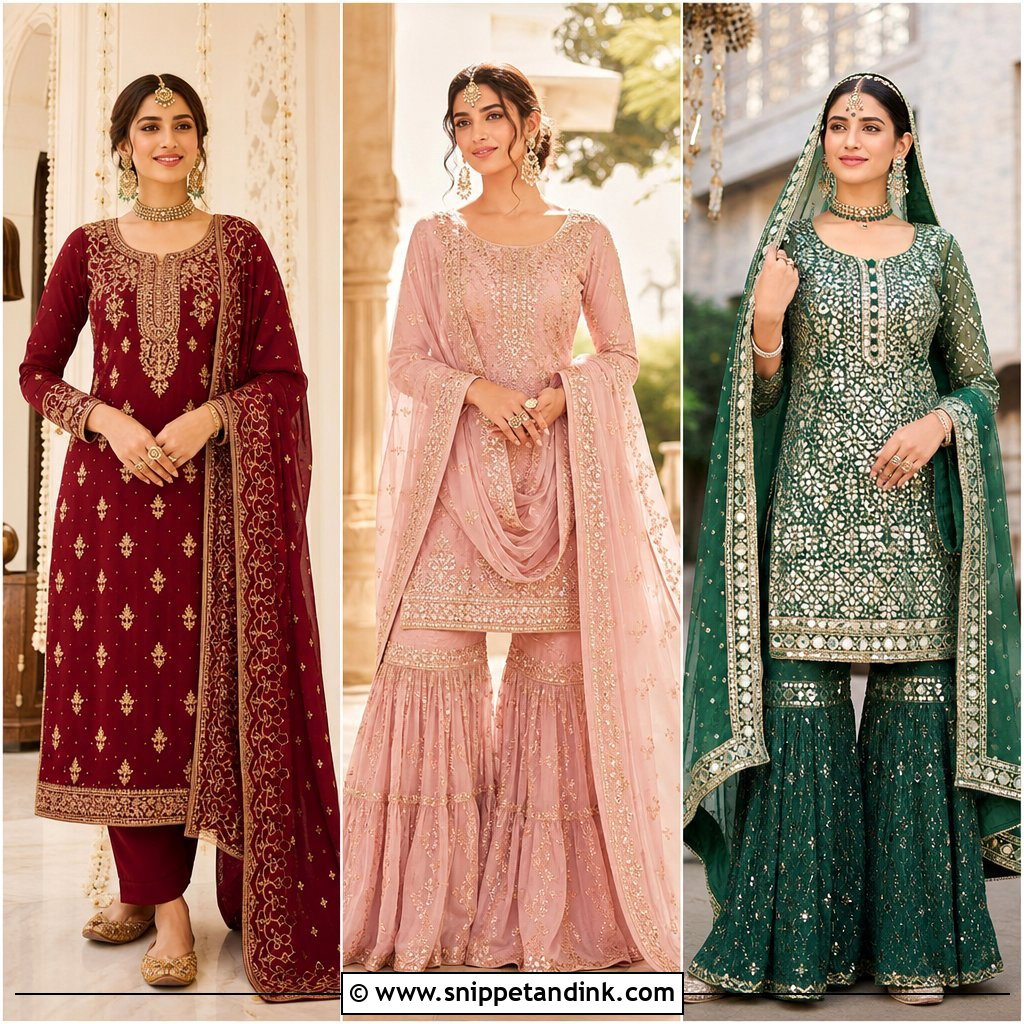
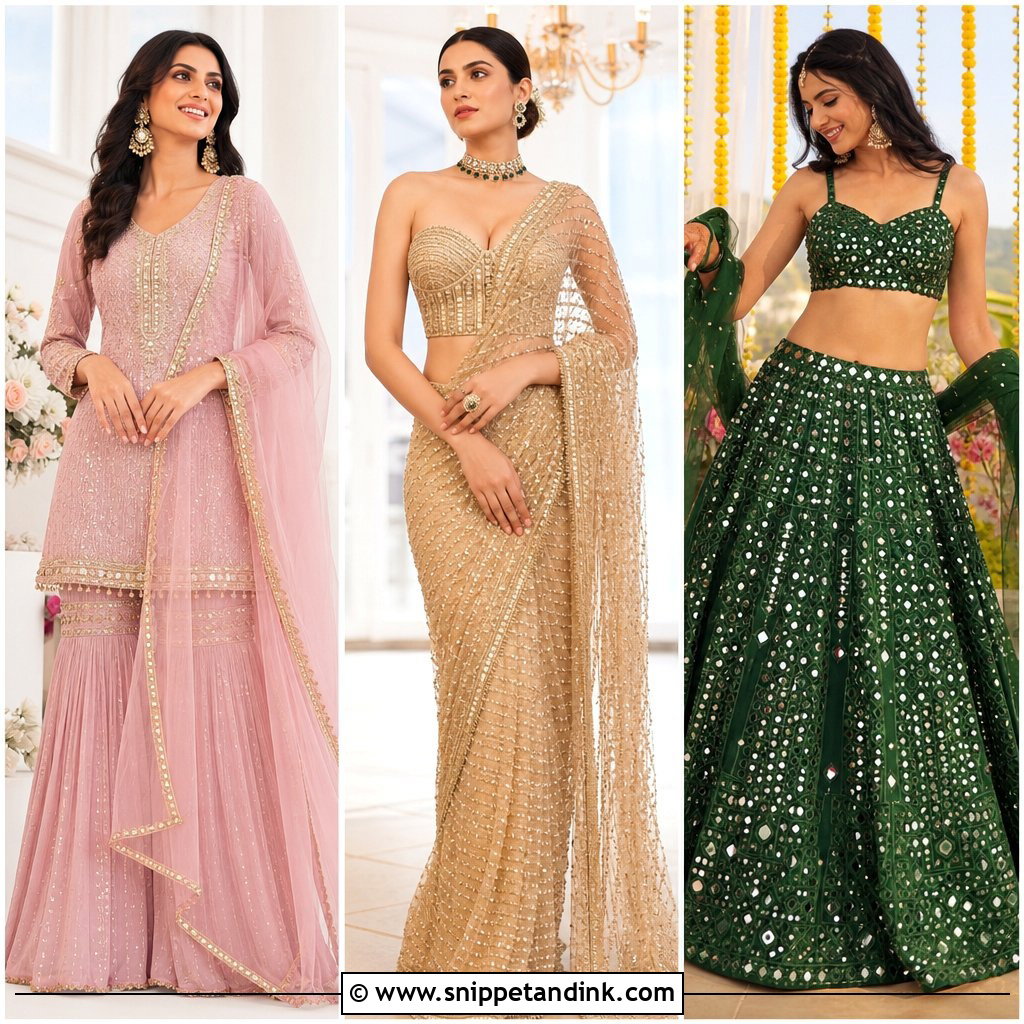
The difference between a sharara and a gharara is where the flare starts. A sharara flares from the waist in one line, with no knee joint, which makes it the easier of the two to walk, sit and dance in. For a bride, put heavy embroidery at the hem and pair it with a long shirt and matching dupatta. Red, ivory, gold, green, peach and pastels all work, and the color and amount of work decide whether it belongs at a nikkah, mehndi, baraat or walima. Statement earrings, a tikka, bangles and embellished shoes finish it.
11. Pakistani Bridal Peshwas
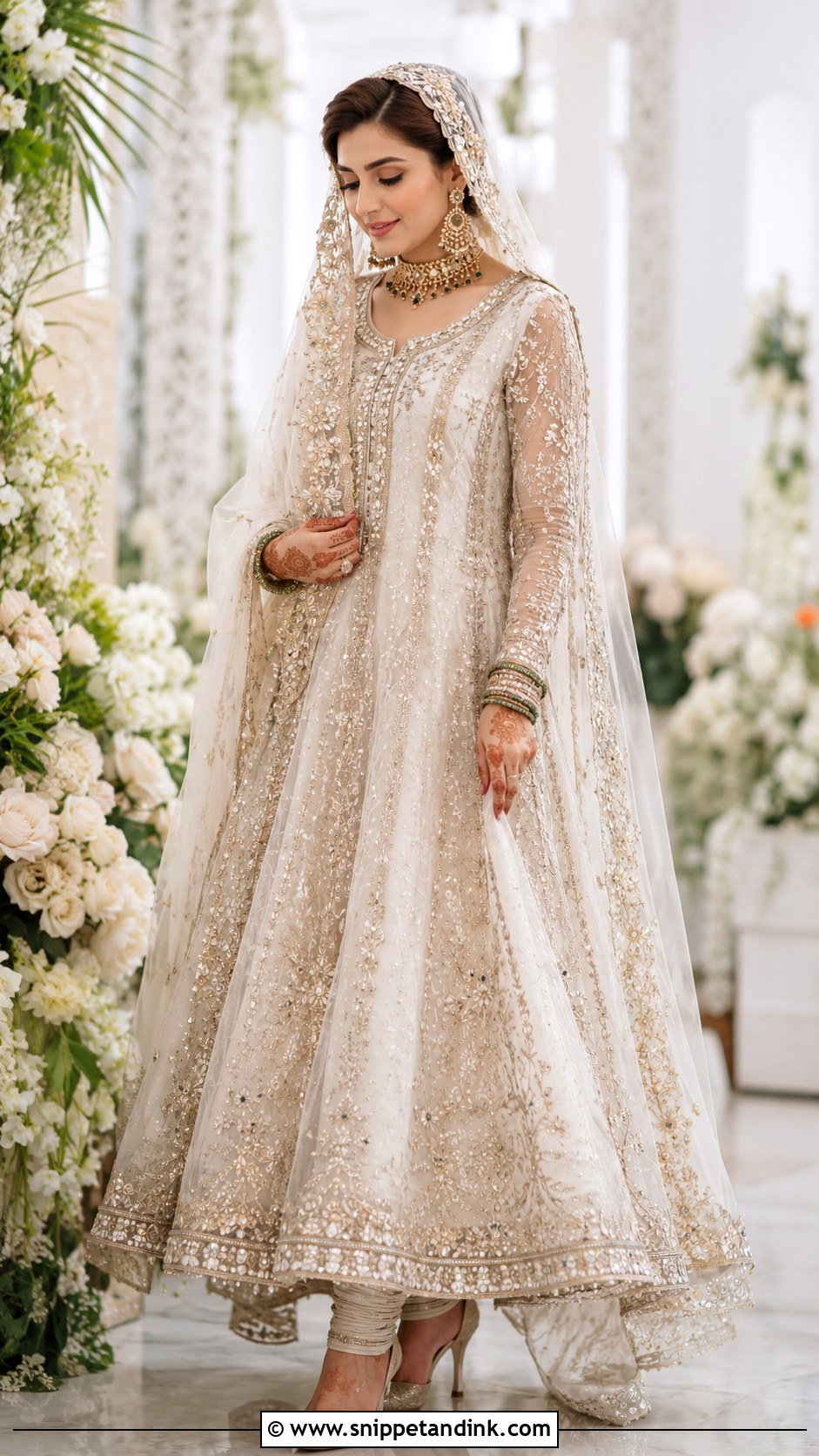
The peshwas has a fitted bodice and a long, many-paneled skirt, so it moves well while covering fully. Organza, silk, net or tissue with zari, resham, mirror or pearl work suits a bride. Underneath, churidar or straight pants keep it light, and a lehenga adds volume. The bodice fit is everything here. Too loose and the panels hang limp; too tight and the waist seam rides up when you lift your arms. A dupatta over the head, a choker, earrings, bangles and soft heels complete it for a mehndi, nikkah or walima.
12. Pakistani Bridal Anarkali Dress
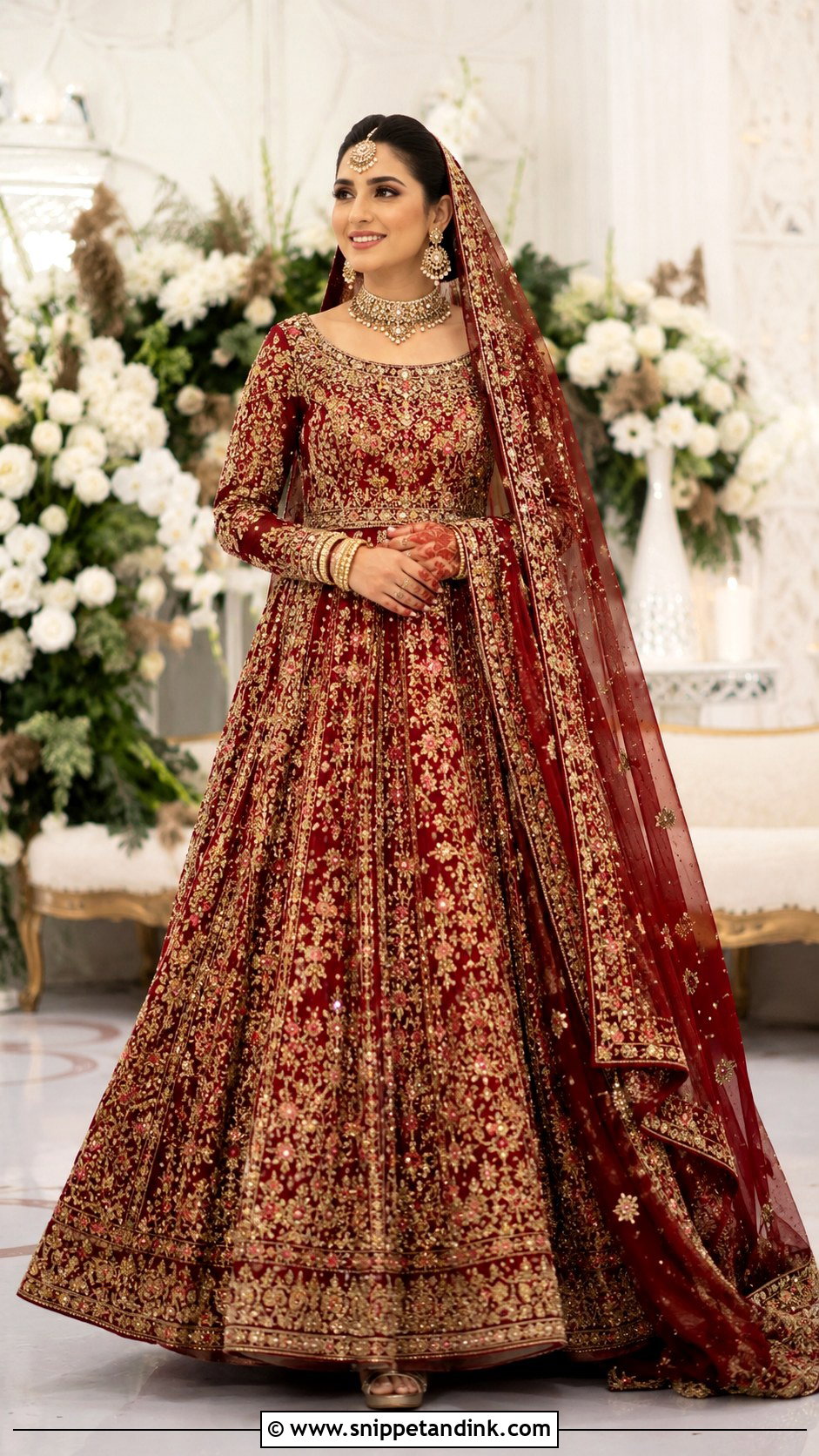
An anarkali draws one long vertical line, which is why so many body types look tall and balanced in it. A fitted bodice, a wide flare, and embroidery at the neckline, sleeves and hem keep it bridal. Net, organza, chiffon, silk and tissue all work, though they behave differently: chiffon swings close to the leg, organza holds its shape away from it. Wear churidar or straight trousers underneath, or a hidden can-can for more volume. A matching dupatta, jhumkas, a tikka and heels finish it for a nikkah, reception or smaller function.
13. Pakistani Bridal Maxi Dress
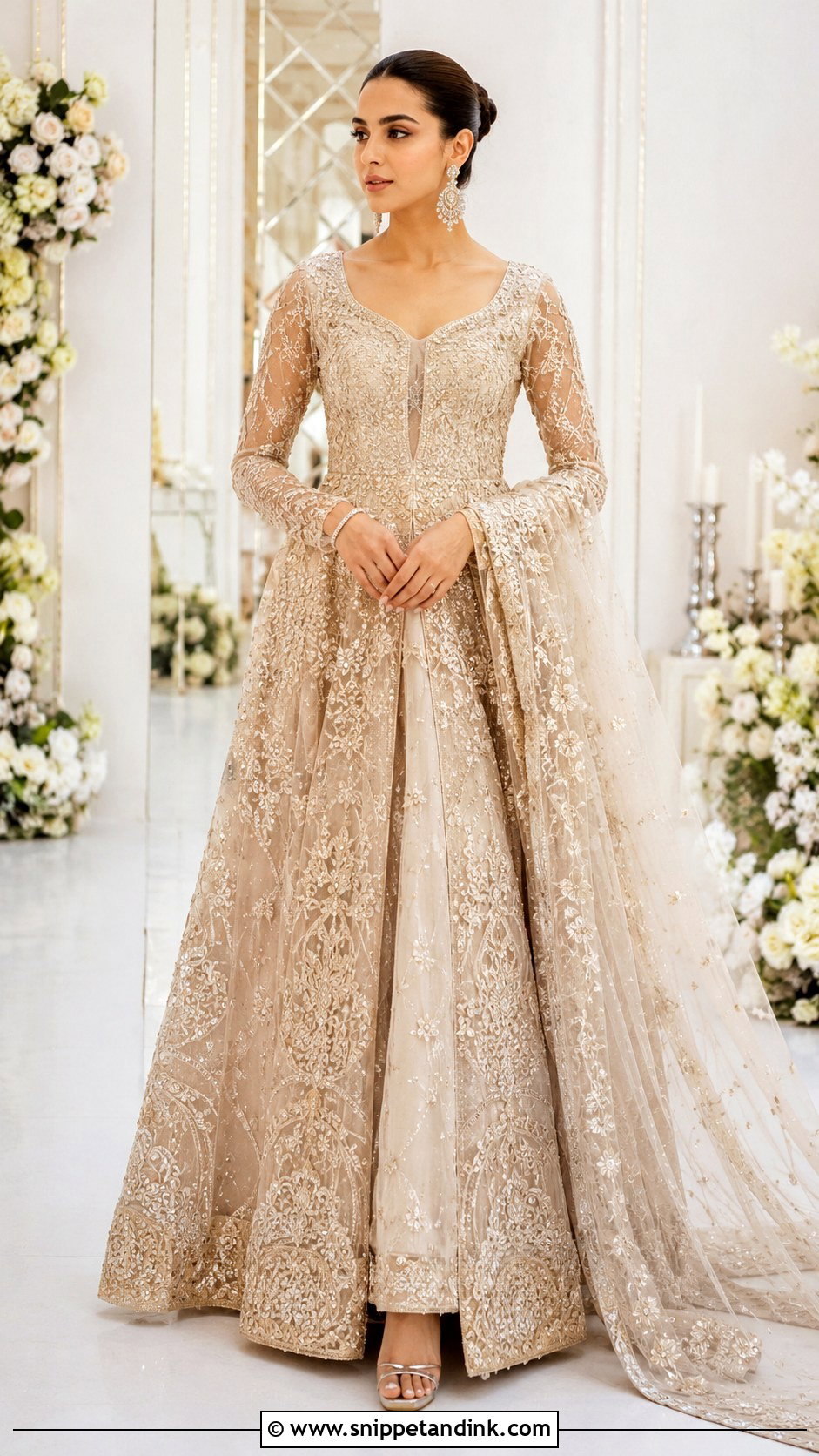
Some brides simply prefer a gown silhouette, and a maxi gives them that while staying within Pakistani bridal dressing. It suits a walima, reception or engagement. Look for a structured bodice, a soft flare, and embroidery that runs from neckline to hem. Ivory, champagne, silver, blush, mint and soft gold are common, with a sheer dupatta to bring it back to tradition and a trail if you want it formal. A boned bodice is only comfortable if the last adjustment happens close to the wedding, since weight often shifts in the final months. Keep jewelry to a choker or drop earrings, with sleek heels and a clean hairstyle.
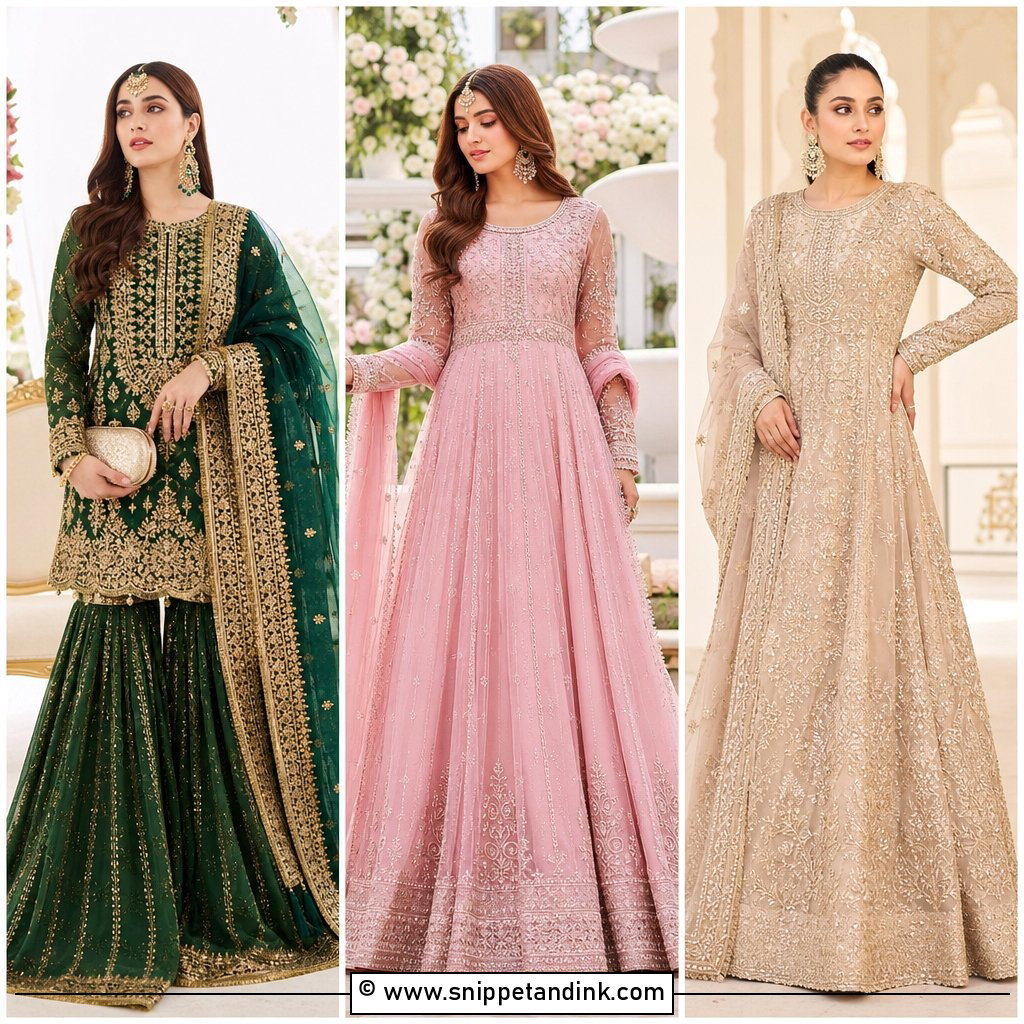
14. Pakistani Bridal Long Shirt With Lehenga
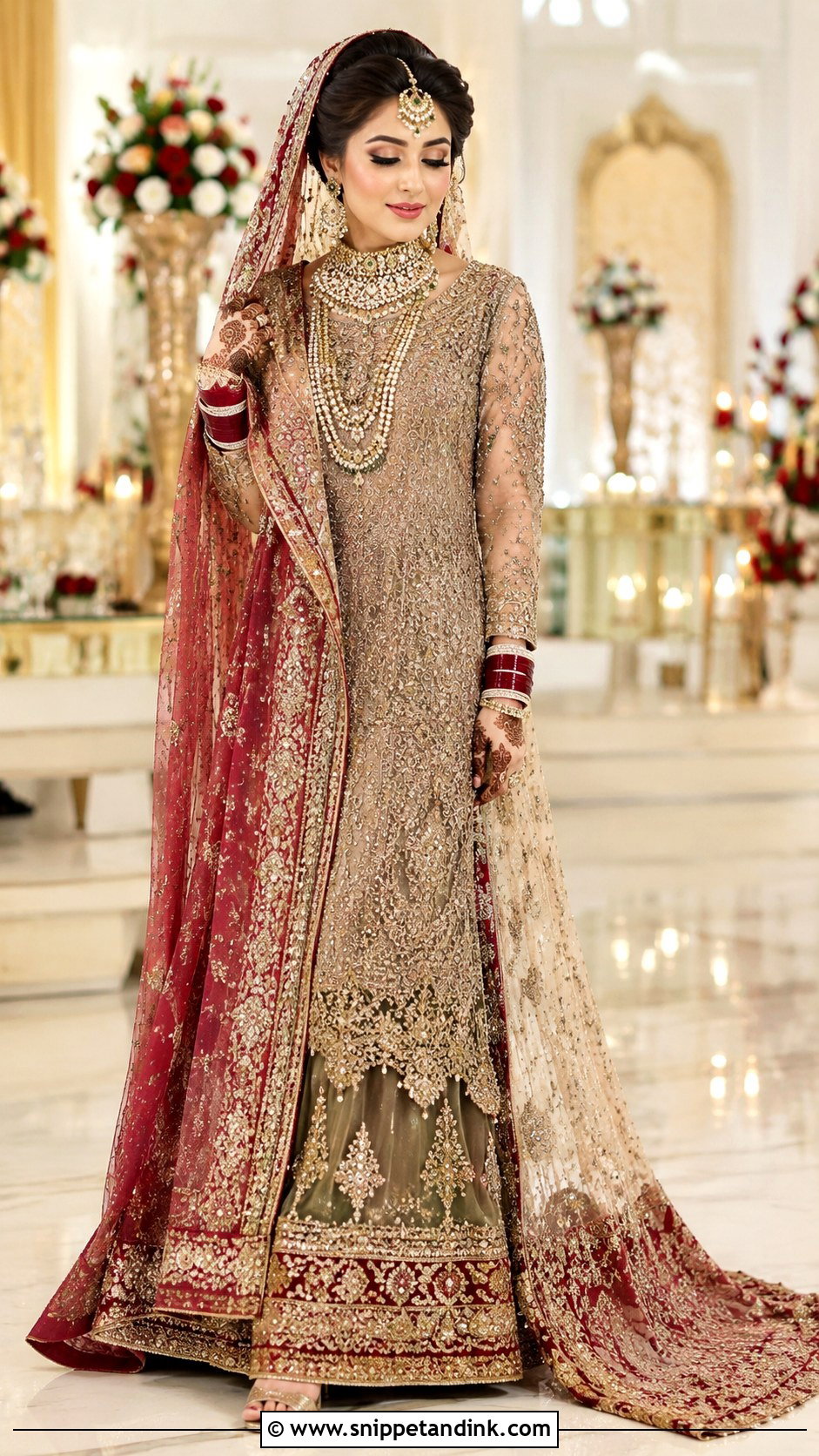
The long shirt over a lehenga is the most quietly Pakistani of the bridal combinations: coverage from the shirt, ceremony from the lehenga. Baraat brides who don’t want a short blouse often land here. Choose a long kameez worked on the front, sleeves and hem, over a flared lehenga with a heavy border, and add a coordinated wide-bordered dupatta. Because the shirt hides the lehenga waistband, you can set the waist a little lower and more comfortably without anyone seeing. Layered jewelry, bangles, and heels or khussa finish it.
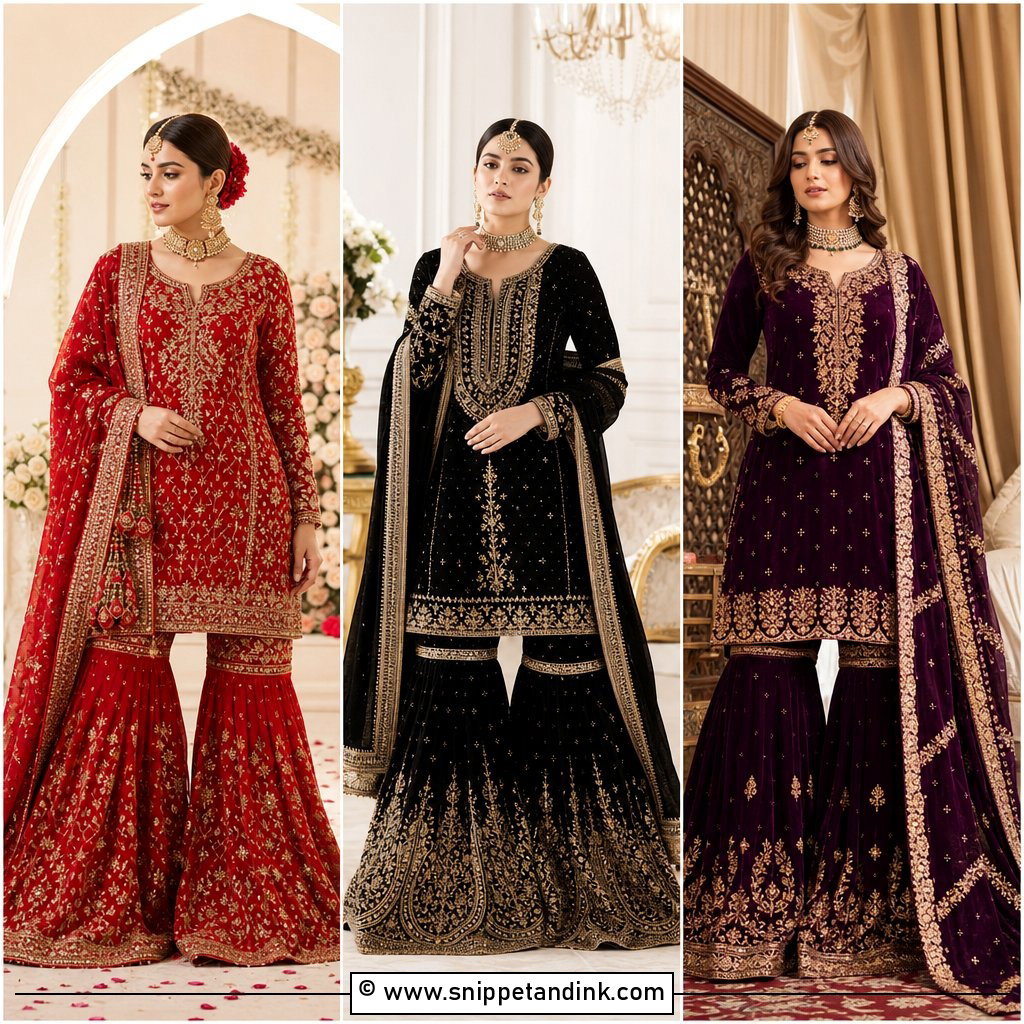
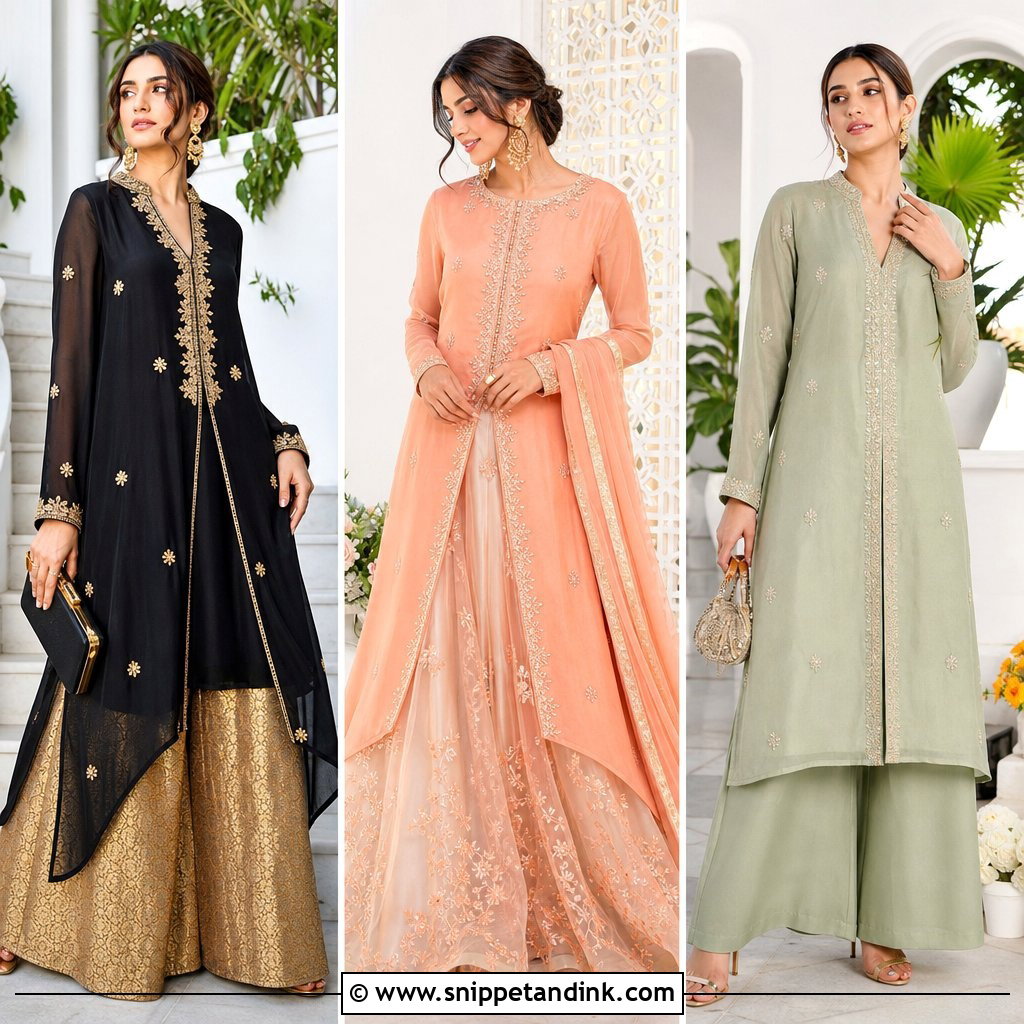
15. Pakistani Bridal Short Shirt With Lehenga
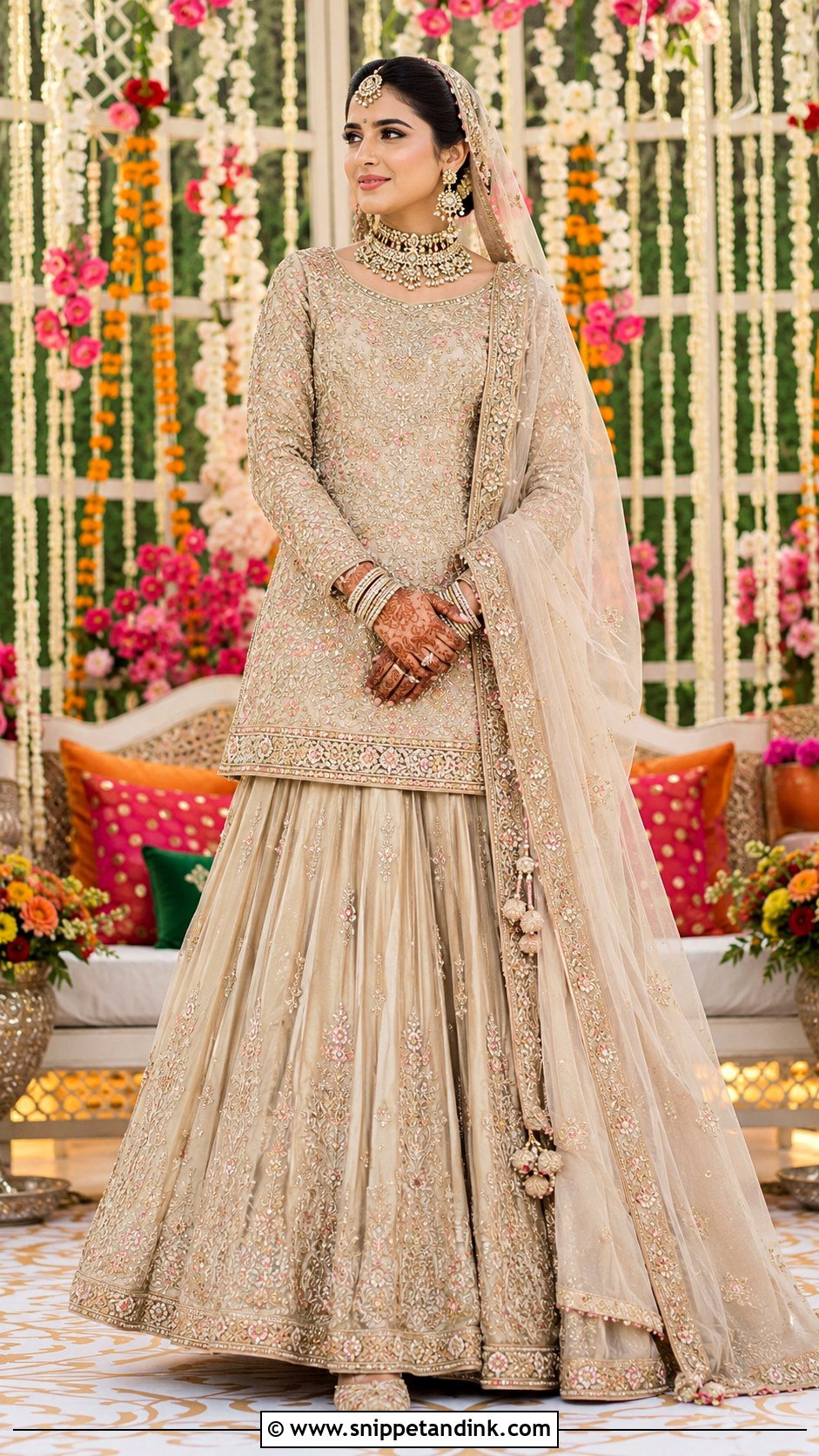
A short shirt shows off the lehenga’s waist and embroidery, so it looks younger and livelier in photos. Choose a structured short shirt or kurti with heavy neckline, sleeve and hem work over a full lehenga in silk, tissue, velvet or organza. The dupatta goes over the head for the ceremony and onto one shoulder for portraits. Short shirts ride up when you sit, so I make sure the lehenga waistband is finished as neatly as the shirt, because it will be seen. A statement choker, tikka and bangles balance it, and the color decides whether it’s for a mehndi, baraat or reception.
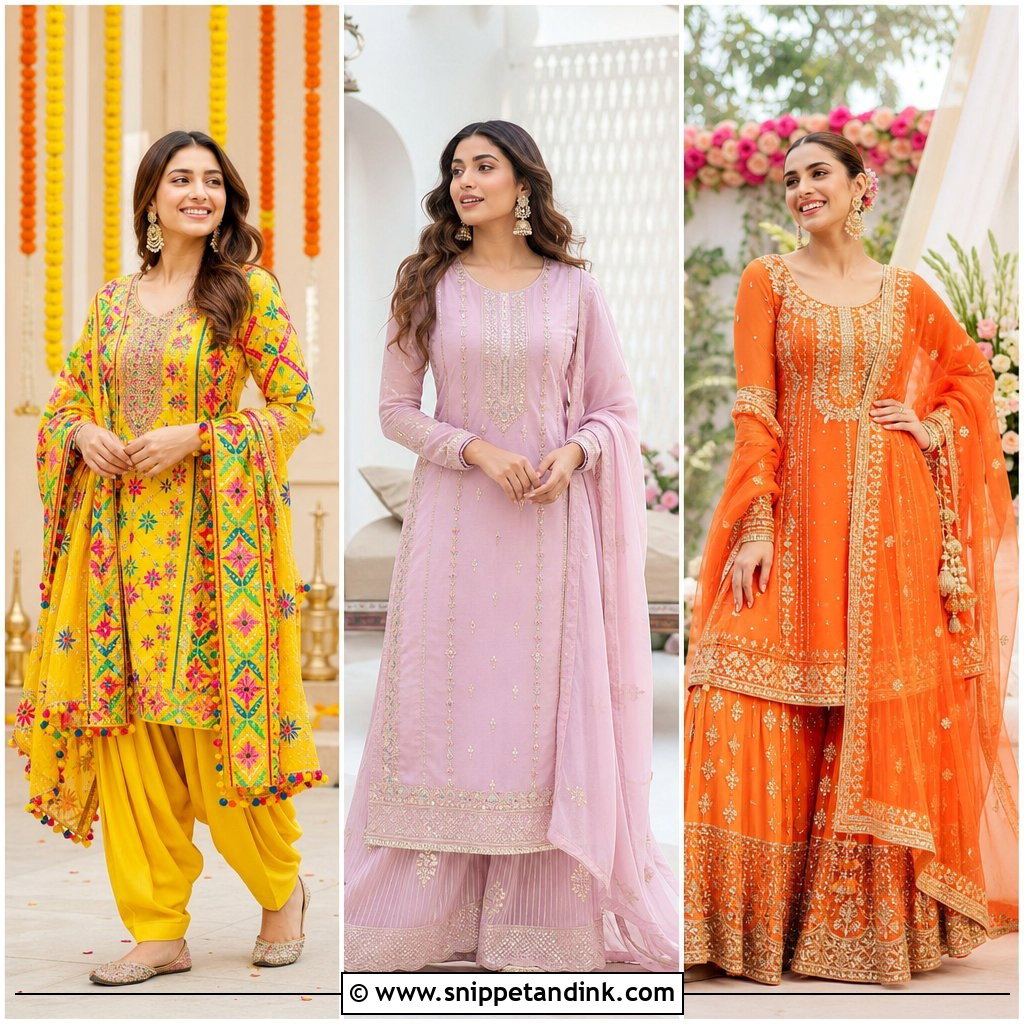
16. Green Pakistani Bridal Mehndi Dress
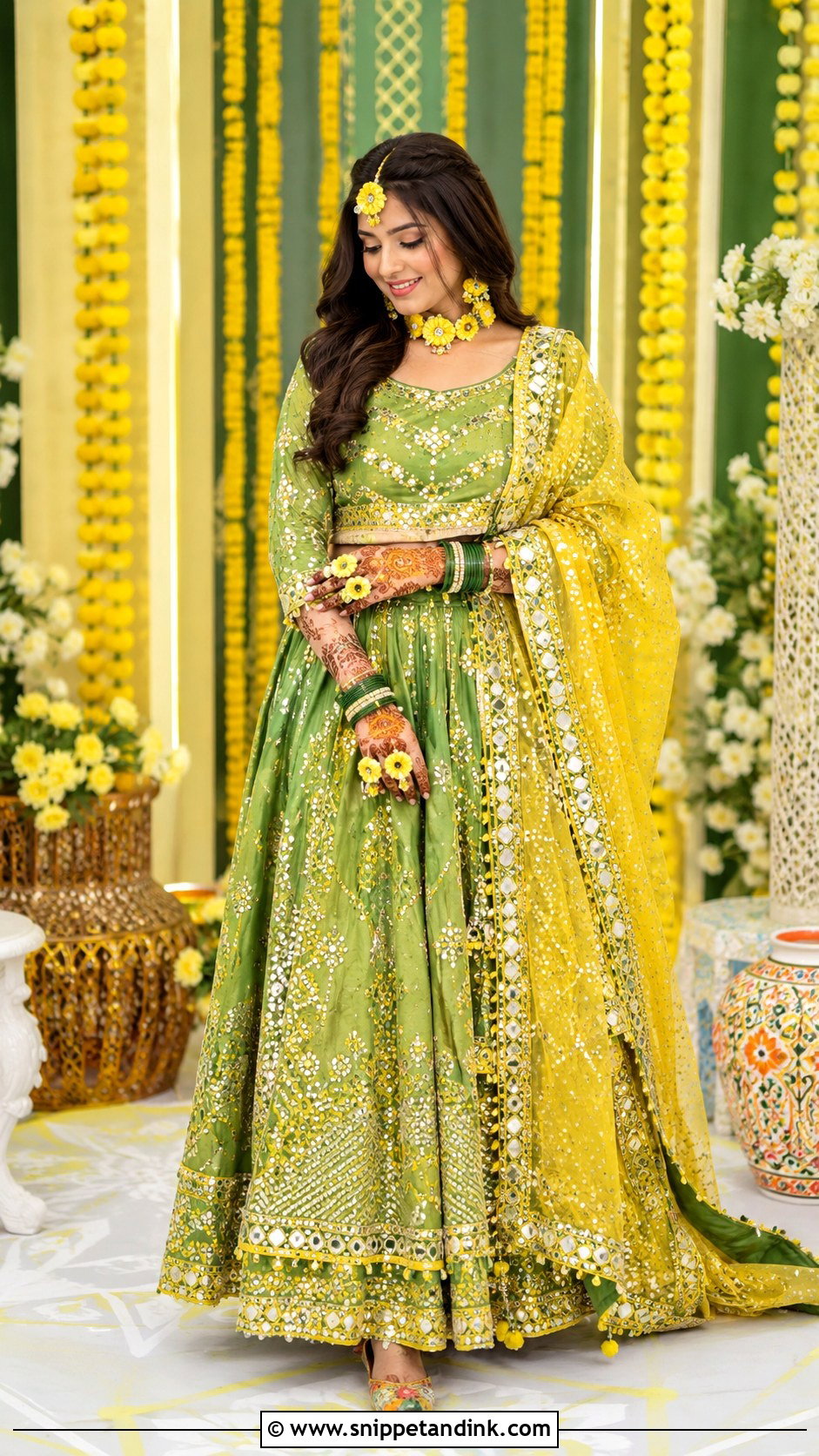
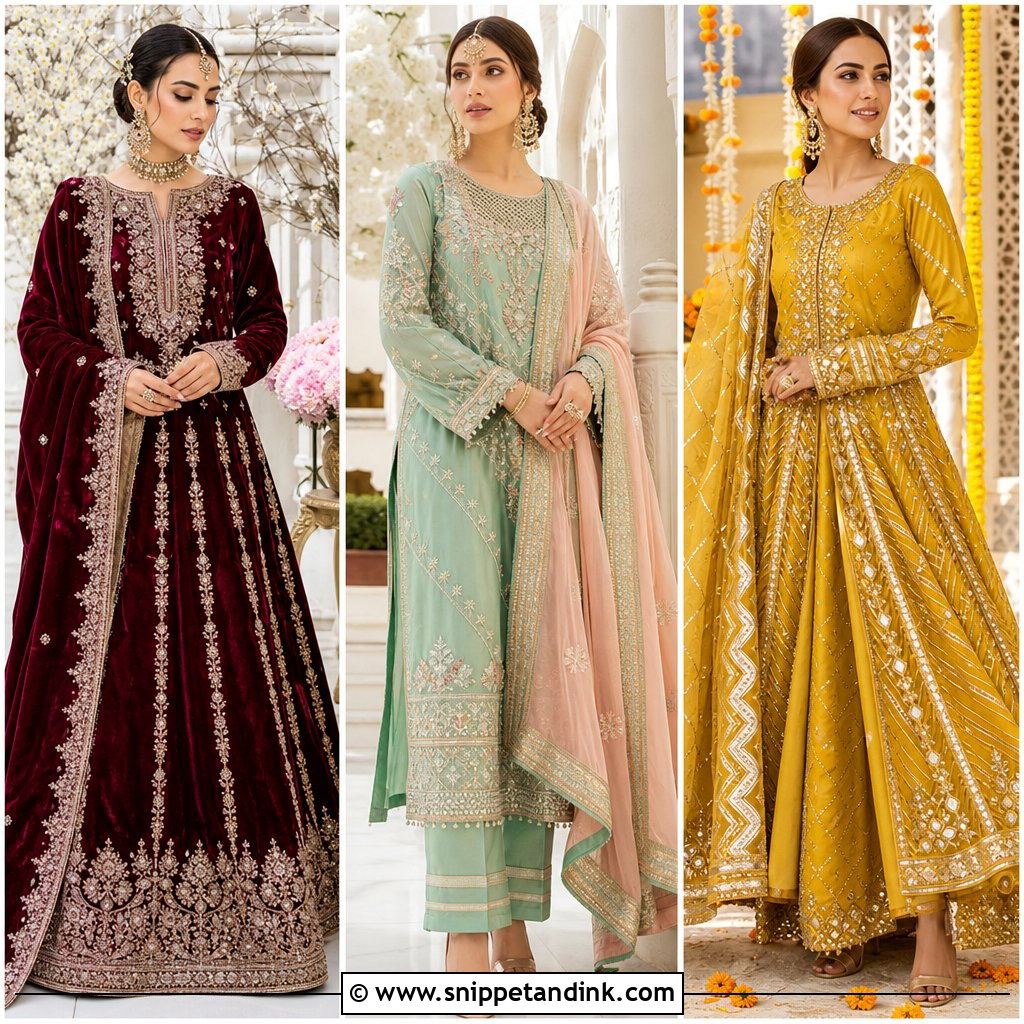
Green is one of the two traditional mehndi colors, alongside yellow, and it flatters far more skin tones than people expect. Mehndi green, emerald and lime take mustard, orange and fuchsia as accents. A green lehenga choli, sharara or peshwas with gota, mirror work, threadwork or colorful borders makes a complete look, with a contrasting dupatta in yellow, pink, orange or gold. Floral pieces, gota jewelry or traditional jhumkas suit different moods. Choose a sleeve you can push above the elbow, because the bride’s mehndi is often applied around the event and wet paste stains fabric. Comfortable khussa, soft curls and fresh makeup finish it.
17. Yellow Pakistani Bridal Mehndi Dress
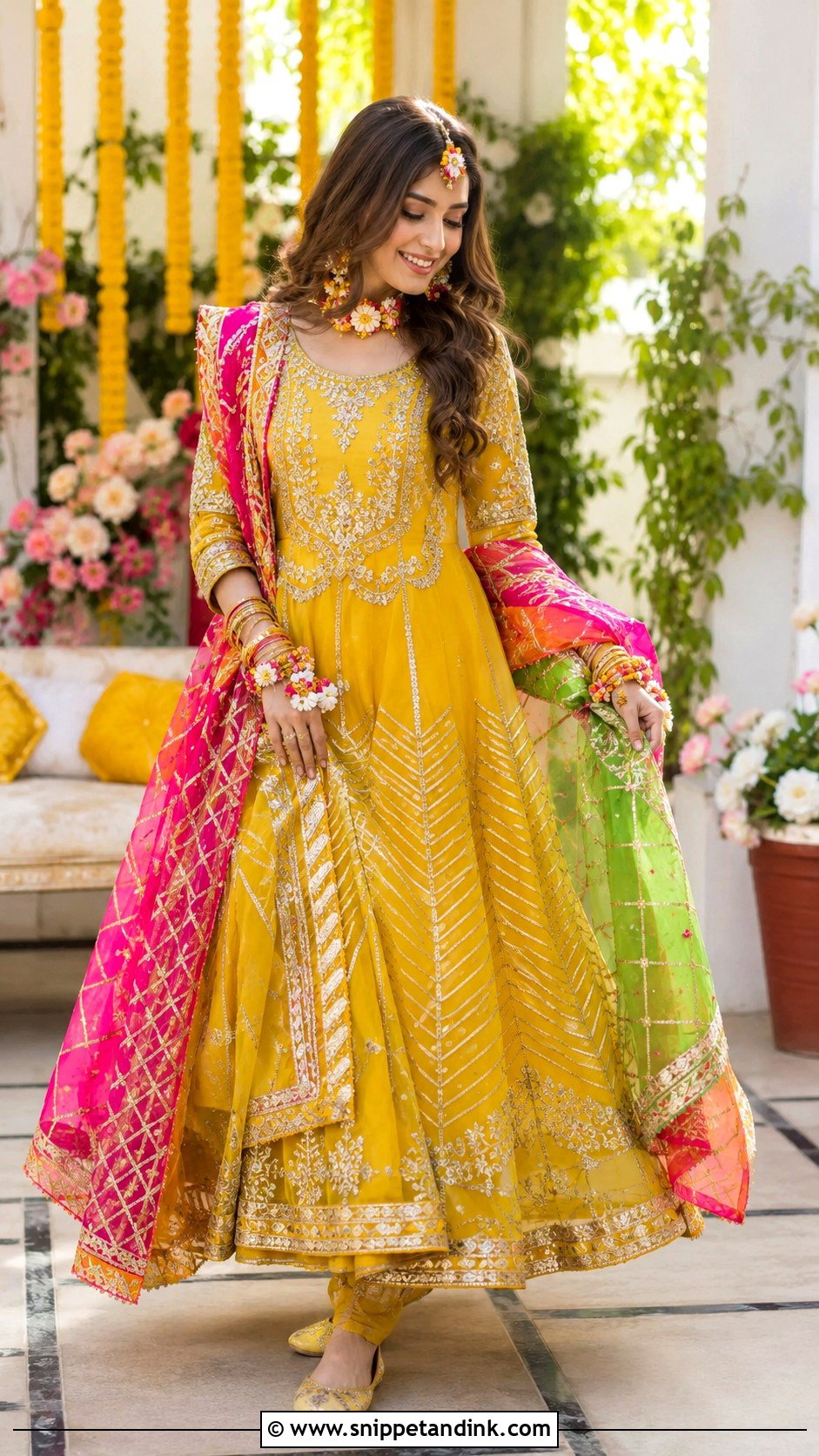
A yellow Pakistani bridal mehndi dress comes alive in daylight and outdoors. The shade matters more than with most colors. Mustard is kinder to olive and deeper skin, while butter yellow can flatter fairer skin and wash out others. A yellow peshwas with gota, a mirror-work lehenga choli or a sharara with colorful borders all work, with a pink, green or orange dupatta for contrast. Floral jewelry, bangles and embroidered khussa keep it light. Peach or coral makeup suits yellow better than cool pinks.
18. Orange Pakistani Bridal Mehndi Dress
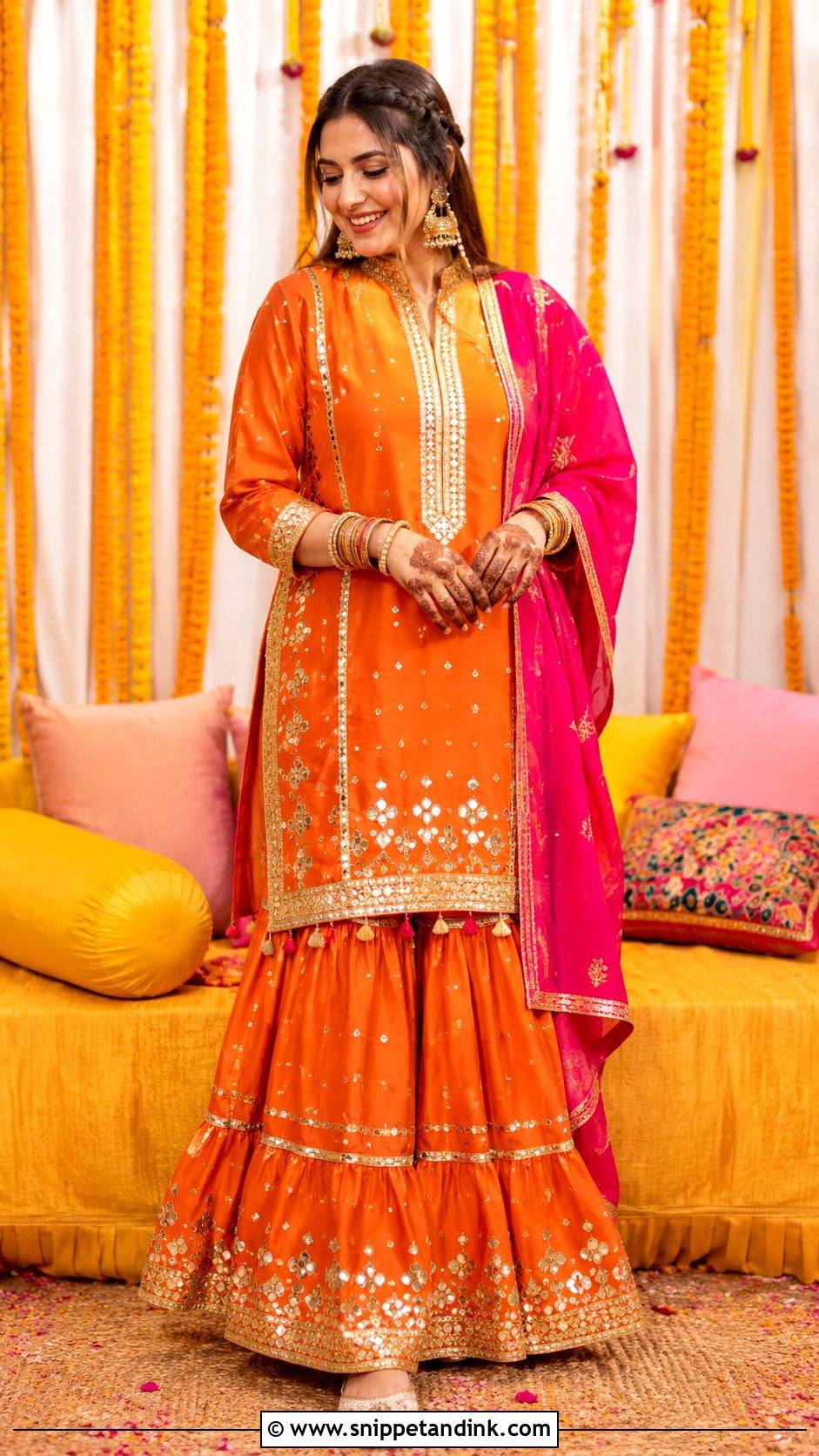
Orange is bolder than yellow and warmer than green, and it’s my pick for a bride who loves color and plans to dance most of the night. Tangerine, rust, burnt orange and marigold all work in a lehenga, sharara or angrakha-style peshwas with gold gota, mirror work and colorful thread. A hot pink, green or yellow dupatta makes it playful. Gota is a light metallic ribbon work, so even a heavily trimmed outfit stays easy to move in. Traditional jhumkas, bangles and khussa, with braided hair or loose waves, complete it.
19. Pakistani Bridal Walima Gown
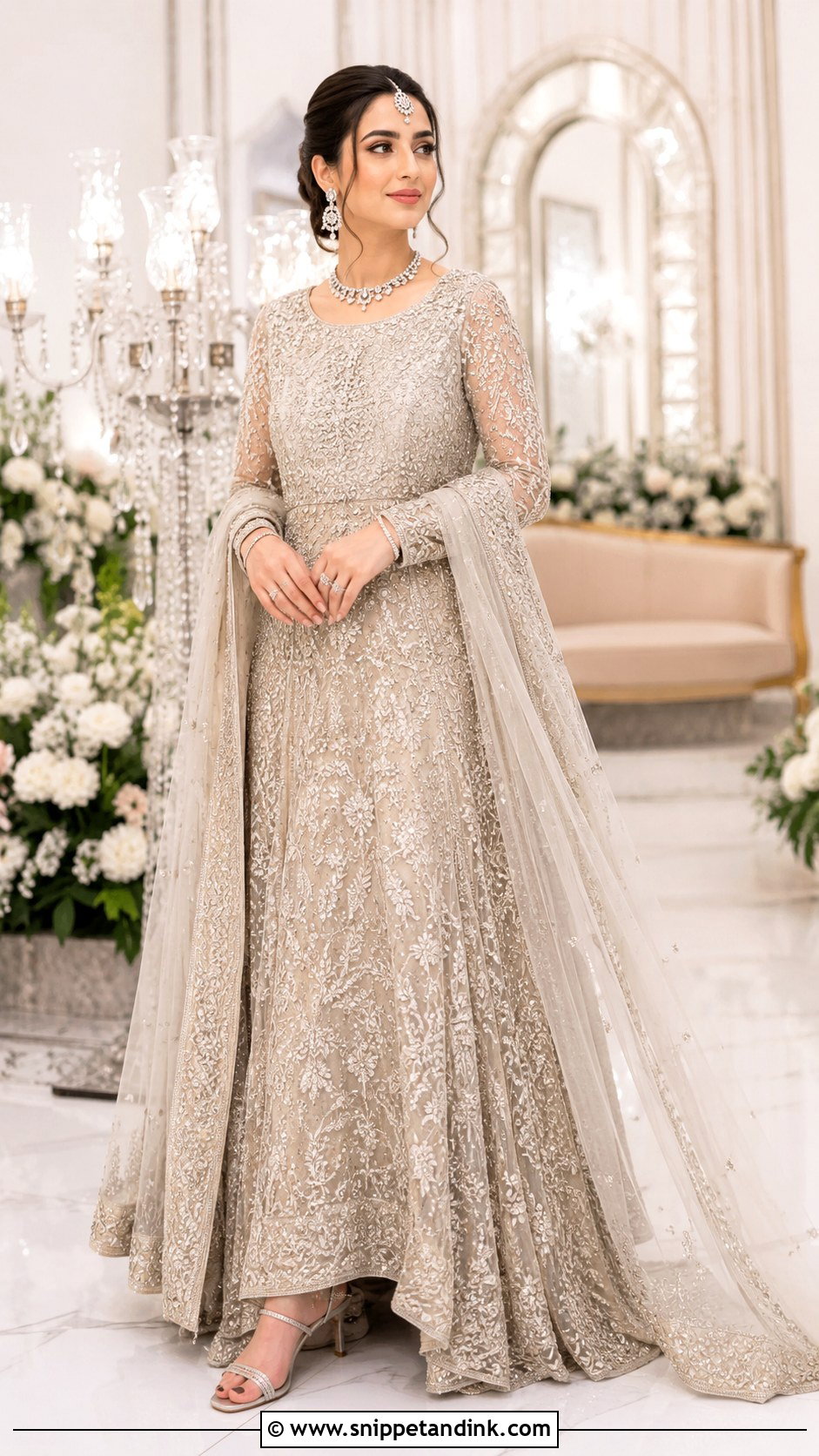
Walima dressing usually comes down a level from the baraat. Silver, champagne, blush, ivory, powder blue and mint suit a floor-length gown with a structured bodice, a flowing skirt and delicate embroidery, and a sheer dupatta keeps it tied to tradition. Crystal, pearl or diamond-look jewelry fits the lighter palette. By the walima, a bride has been through two or three long days, so I keep this outfit the lightest of the main pieces and make sure the shoes are already broken in. Luminous makeup, soft eyes, a natural lip and a polished hairstyle complete it.





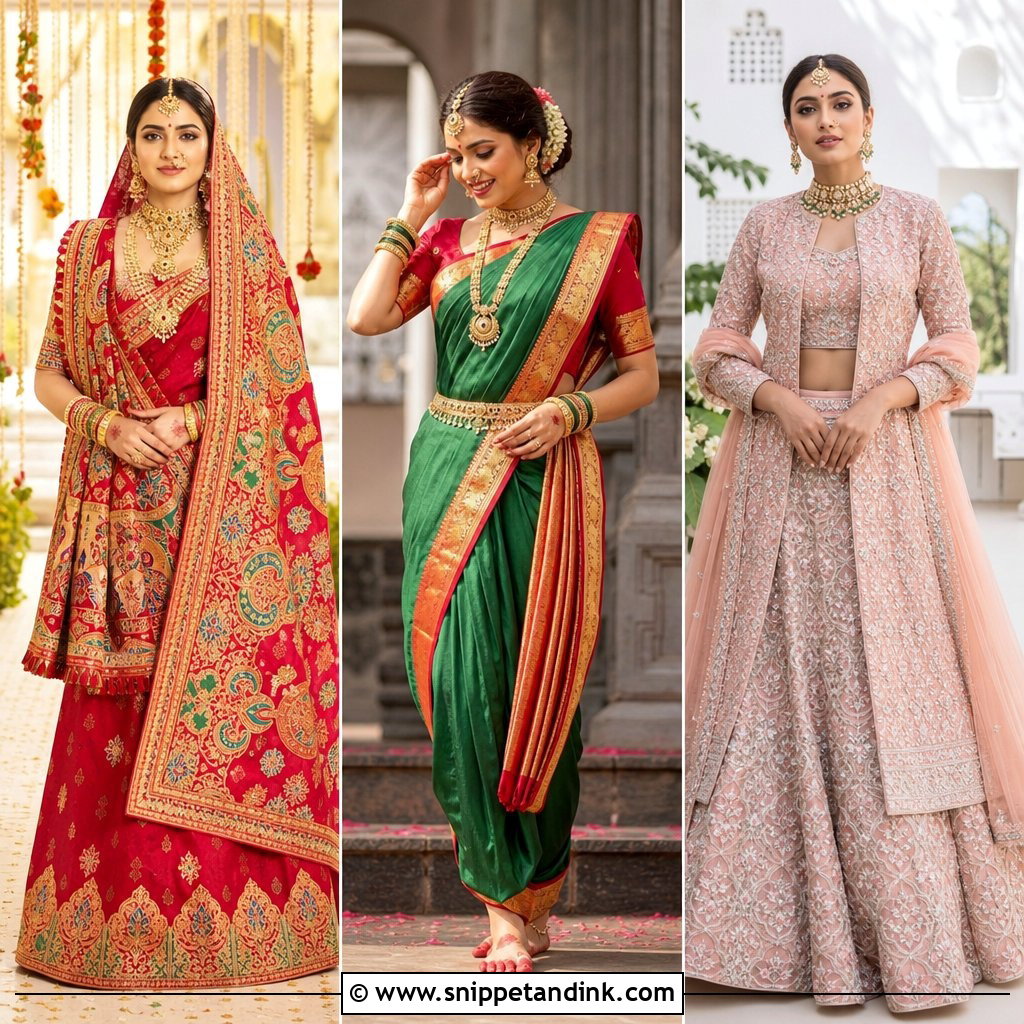
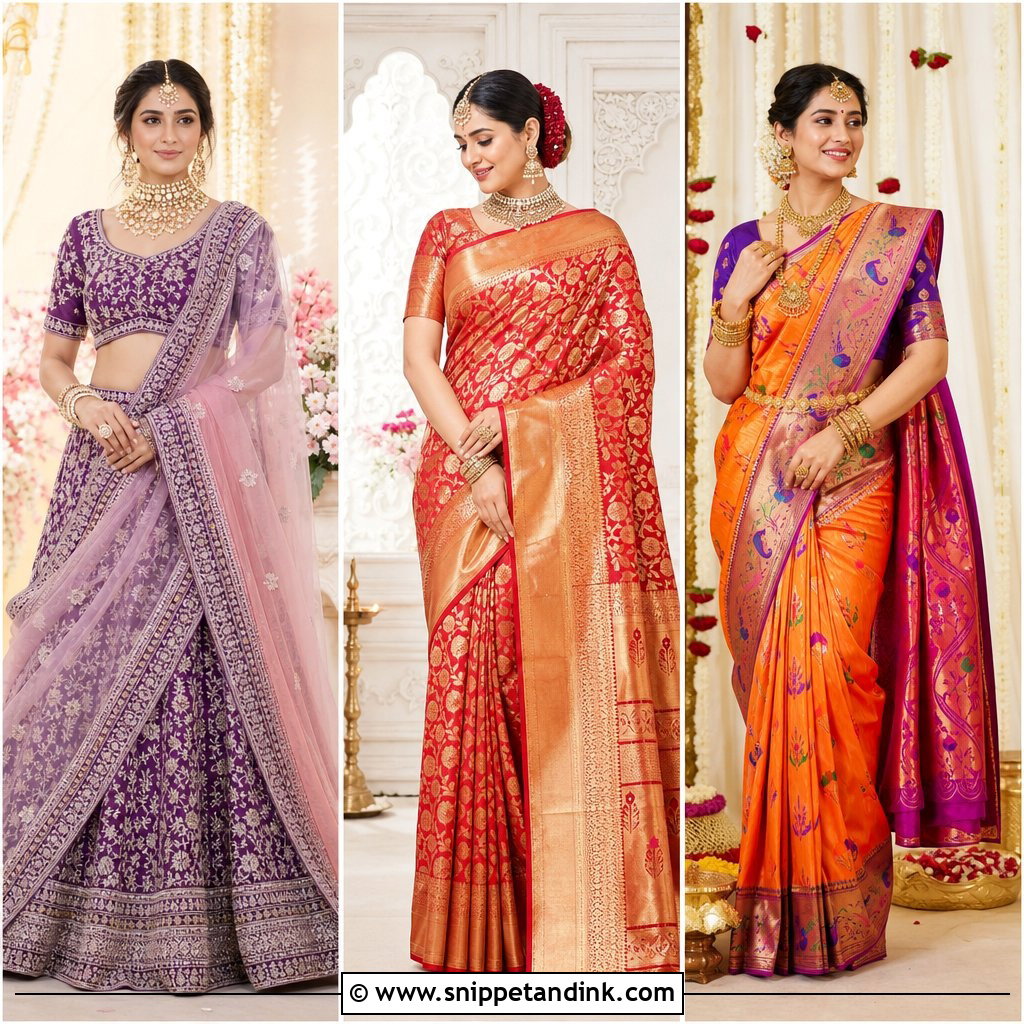
20. Pakistani Bridal Saree
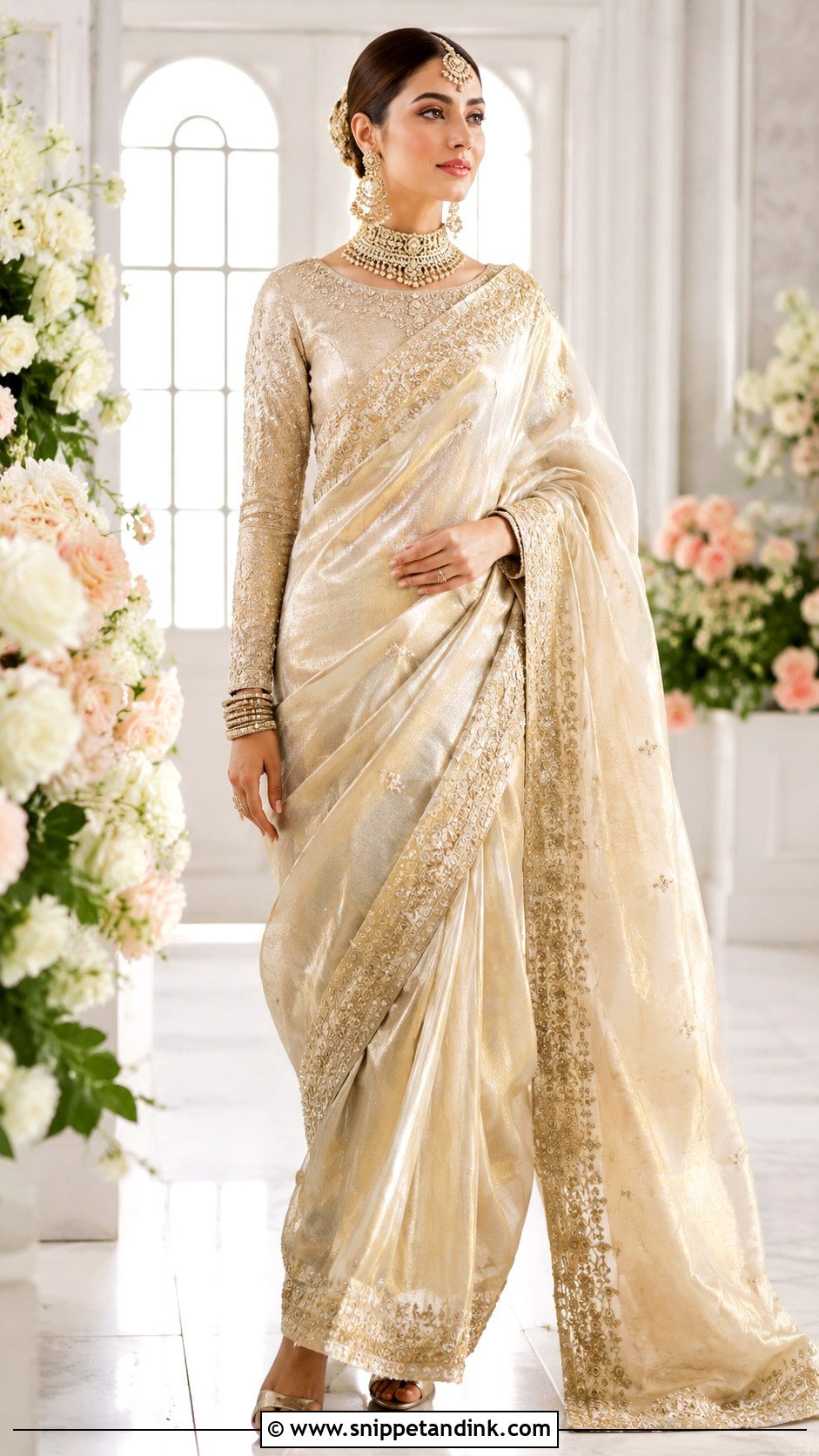
The Pakistani bridal saree is underused, and at a nikkah, walima, reception or smaller ceremony it can look more sophisticated than anything with volume. Tissue, silk, organza, chiffon or jamawar with a heavily worked border and blouse suits a bride, in ivory, gold, maroon, blush or emerald. A longer blouse, embellished sleeves or a modest drape gives it a Pakistani character. The shoes matter more than with other outfits, since the saree’s length is set to them, so pick the heels before the drape and keep the pleats pinned securely. A choker, statement earrings and bangles finish it.
21. Pakistani Bridal Jacket Lehenga
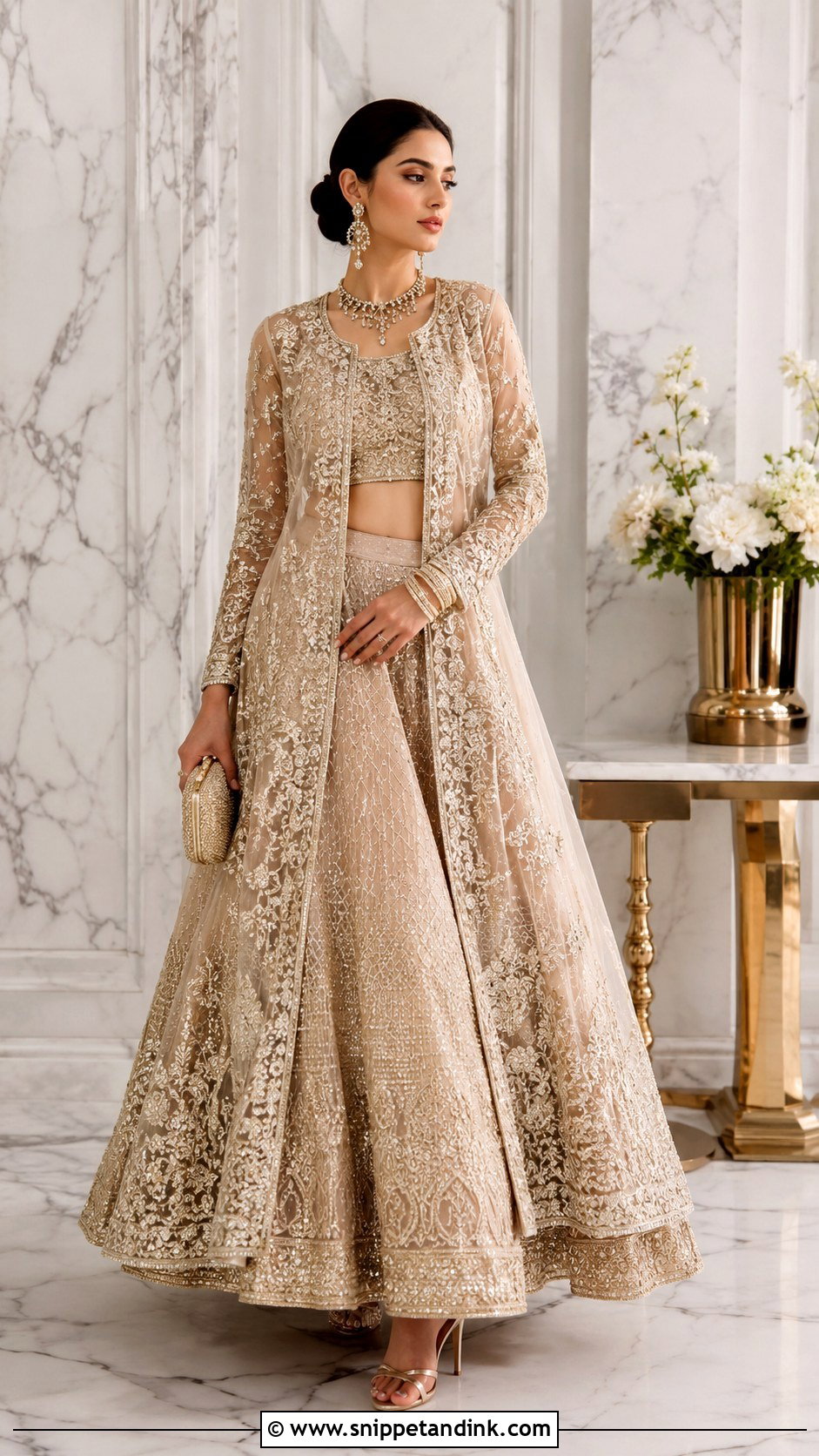
A jacket over a lehenga or gown gives structure and coverage with a couture finish. Velvet, organza, net or silk jackets over a fitted blouse and flared lehenga suit a reception, walima or winter wedding, and open-front, belted or fully closed styles change how much is covered. Velvet jackets are warm, so I’d only choose one for winter or a venue with strong air conditioning; organza and net breathe far better. Keep the jewelry sleek so the jacket leads. Heels, a small clutch and a neat hairstyle complete it.
22. Pakistani Bridal Velvet Dress
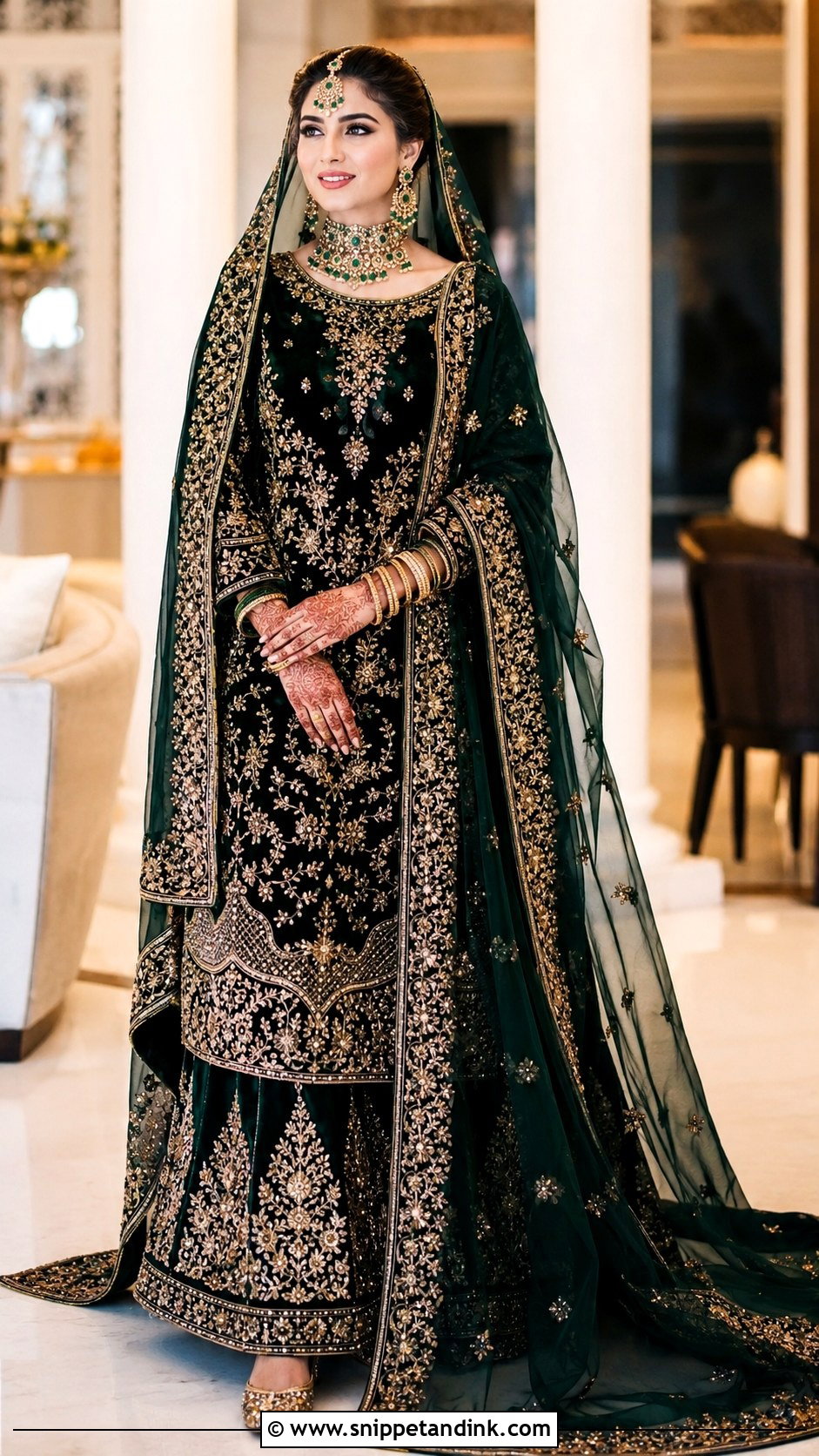
Velvet holds deep color better than any other fabric, so maroon, emerald, navy, plum, blackened red and antique gold all look their richest in it. A velvet lehenga, long shirt with gharara or peshwas with heavy gold embroidery suits a winter wedding. Since velvet is already heavy, avoid bulky layers and choose an organza or net dupatta. It also crushes easily. Hang it, never fold it, and steam it from the inside if the pile gets flattened. Kundan, traditional bangles, heels or khussa and slightly defined makeup stand up to the fabric in an evening hall.
23. Pakistani Bridal Banarsi Dress
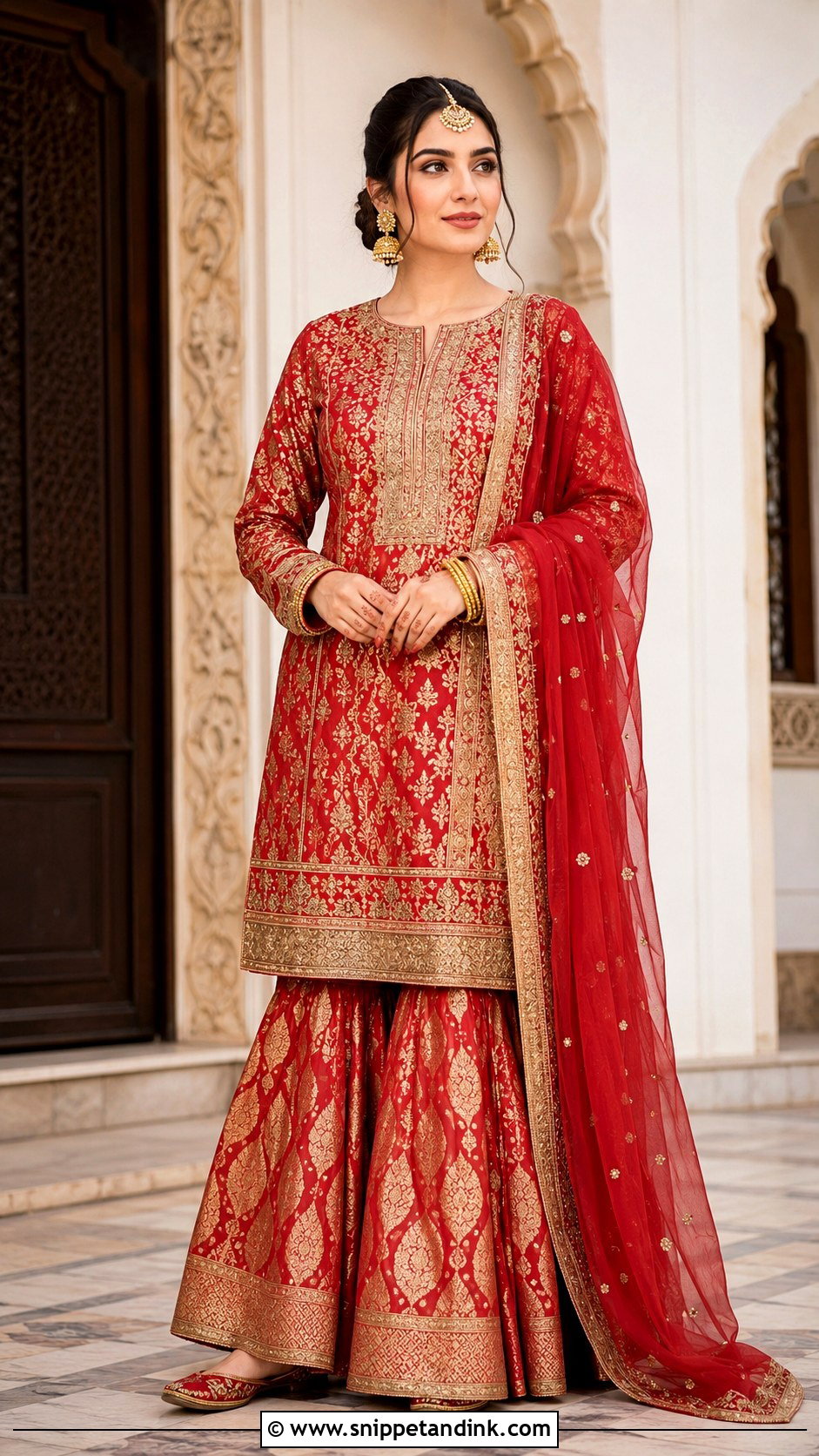
Banarsi is woven, not embroidered: the pattern comes from zari and silk threads on the loom, so the fabric has texture before anyone adds a stitch. That’s why it looks rich without the weight of heavy surface work. A Banarsi lehenga, gharara, sharara or long shirt in red, gold, green, magenta or ivory suits a nikkah, baraat or family-centered ceremony. Pair it with a plain or lightly worked dupatta if the weave is bold. Real zari can tarnish, so spray perfume on skin rather than directly onto the fabric. Gold jewelry, jhumkas, bangles and a traditional tikka complete it.
24. Pakistani Bridal Cape Dress
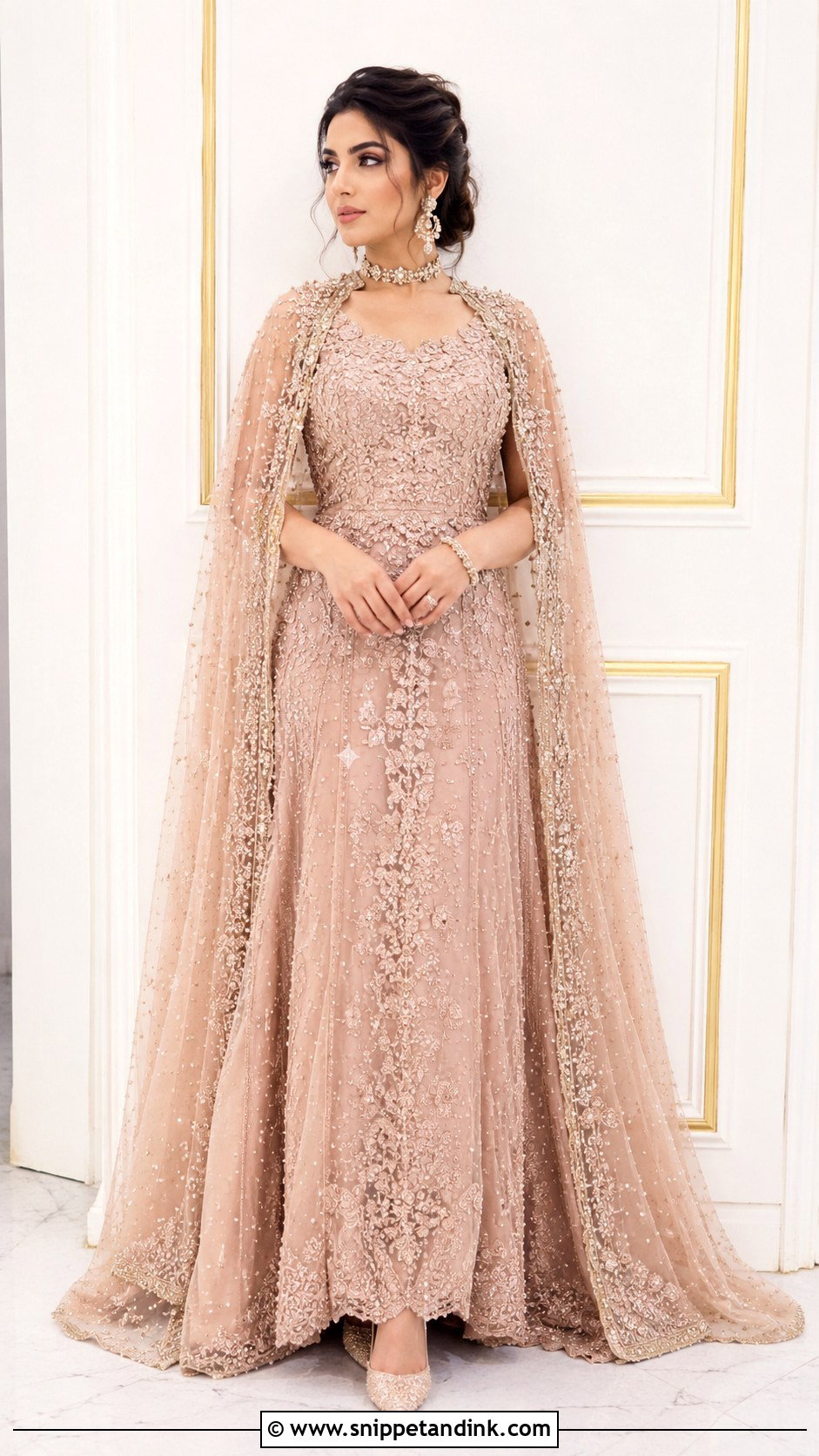
A cape gives a bride drama at the shoulders without a heavy dupatta to manage. It can attach to a gown, a lehenga blouse or a maxi, and pearl, crystal, sequin or thread embroidery keeps it bridal. Walima, reception and engagement events suit it best. Because the cape frames the upper body, keep jewelry to earrings, a bracelet or a fine choker. I always check how the cape is attached. Hooks or snaps at the shoulder seam hold better than tacking into a fine net bodice, which can tear under the weight. Pointed heels or embellished sandals finish it.

25. Pakistani Bridal Dupatta Trail Dress
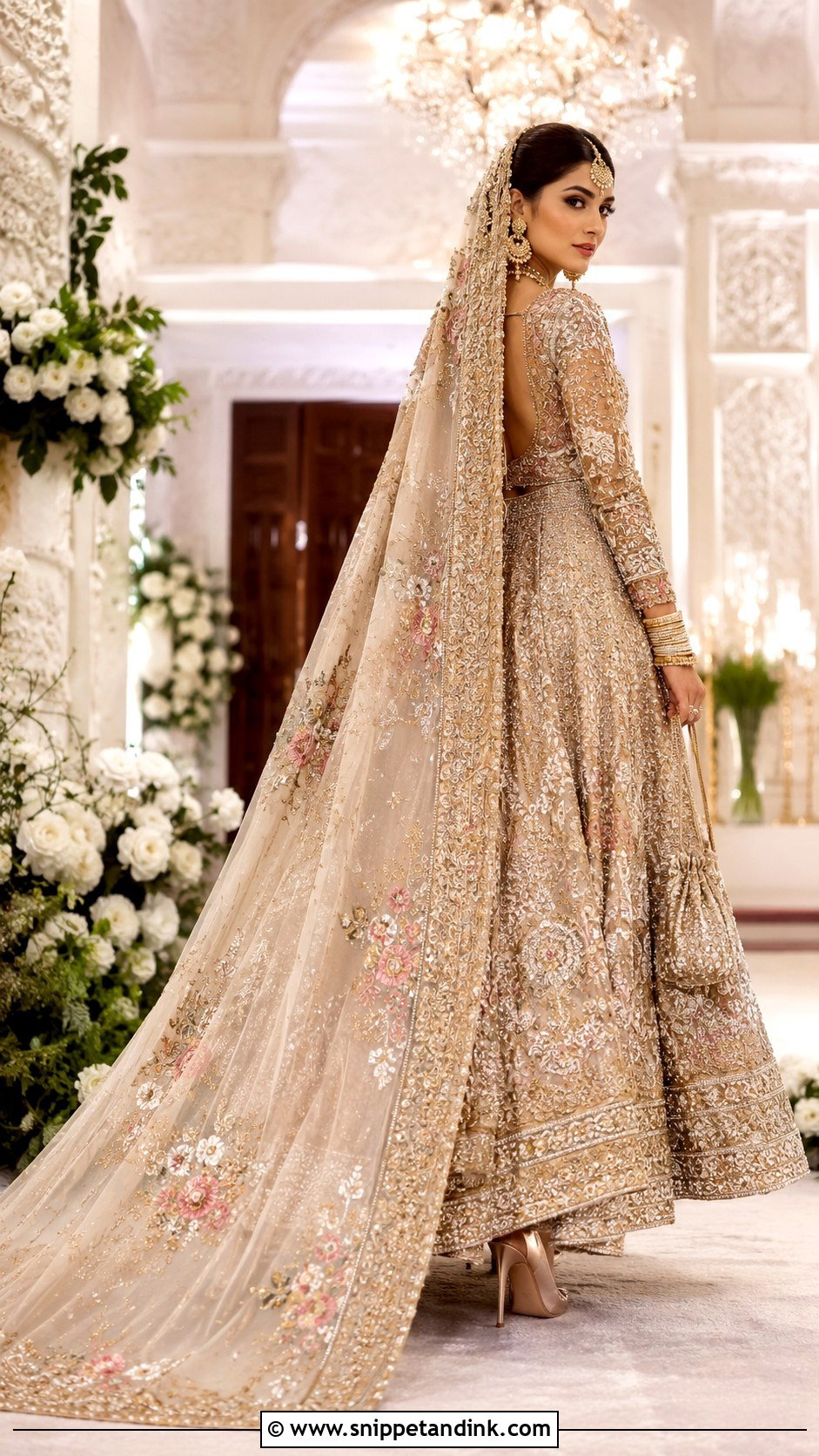
A long trailing dupatta adds ceremony to a lehenga, peshwas, maxi or gharara, and it’s at its best in baraat and formal reception portraits. Pick one with a heavy border, scalloped edges or scattered embellishment, since the back and sides are seen as much as the front. Pinning is the craft here: firm at the crown and shoulder, loose everywhere else, so it moves naturally without dragging the head backward. I leave the trailing end free of pins so it can be lifted out of the way at dinner. Statement jewelry, elegant heels and a hairstyle built to anchor the head drape complete it.
A Bridal Lehenga Can Have a Second Life
Families spend a great deal on bridal outfits, and many end up sealed in a trunk for good. A little planning at the ordering stage means the pieces can be worn again.
Plan the re-wear when you order
Ask the designer to leave extra seam allowance in the blouse so it can be let out later, and to make any dupatta removable from an attached cape or trail. A heavy dupatta stitched as its own piece can dress up a plain suit at a sister’s or cousin’s wedding years later. The lehenga skirt can pair with a simpler long shirt for Eid or a family function, which changes the outfit enough that nobody thinks of it as the bridal one.
Caring for zari and dabka between wears
Dry clean only, with a cleaner used to metal embroidery, and point out food or makeup marks within the first week, because stains set over time. At home, wrap the piece in soft muslin rather than plastic, fold it with tissue between the layers, and refold it along different lines every few months so the metal threads don’t crack in one place. Keep it away from damp walls and air it on a dry day now and then.
The Outfit That Earns Its Place on Each Day
Pakistani bridal dressing gives you room to honor tradition and still show your own taste. A classic red lehenga, an ivory nikkah maxi, a colorful mehndi sharara or a modern cape gown each make sense for the right event. Before the final fittings, think about season, venue, jewelry and how you’ll move, and look at the outfit from the back and sides as well as the front. Weigh the fabric and plan the dupatta too. When color, embroidery, silhouette and accessories are in proportion, the outfit will hold up in photos you’ll keep for decades.
You'll Like These Ideas:




Leave a Reply