
A chaniya choli is built to move. The skirt is cut wide so it swings when you walk and spins open during garba, and that one fact shapes almost every decision I make with a bride: fabric weight, how far the embroidery climbs up the skirt, what goes underneath. Start from the function. The ceremony wants red and gold and a head drape; haldi, sangeet and garba nights want lighter cloth and secure hair; the reception can take sequins or a jacket. I’m seeing more brides ask for heritage textiles such as Bandhani and Banarasi weaves alongside newer blouse shapes, and the twenty sets below cover both, with the jewelry, footwear and dupatta that make each one complete.
How Wide a Ghera You Can Actually Dance In
The ghera is the flare of the skirt, measured around the hem, and it decides how the chaniya moves. More fabric means a wider circle when you spin, and also more weight hanging from your waist for the whole evening. I ask three questions before recommending a flare.
First, what’s the fabric? Georgette and chiffon can carry a very wide ghera and still feel light. Silk, raw silk and velvet get heavy fast, so a bridal skirt in those fabrics usually needs a more modest flare or a lighter lining. Second, how much will you dance? For garba and dandiya I’d rather see a full but light skirt than a heavily embroidered one, because the weight pulls on the waistband with every turn. Third, what’s underneath? A can-can layer gives the bell shape, but stiff net scratches, so ask for a soft cotton layer between net and skin.
The waistband takes all of this. A drawstring alone digs in under heavy skirts; a wider band with hooks spreads the load. Have the length set while you wear the exact footwear, and leave the hem just above the floor so you’re not stepping on it during the first spin.
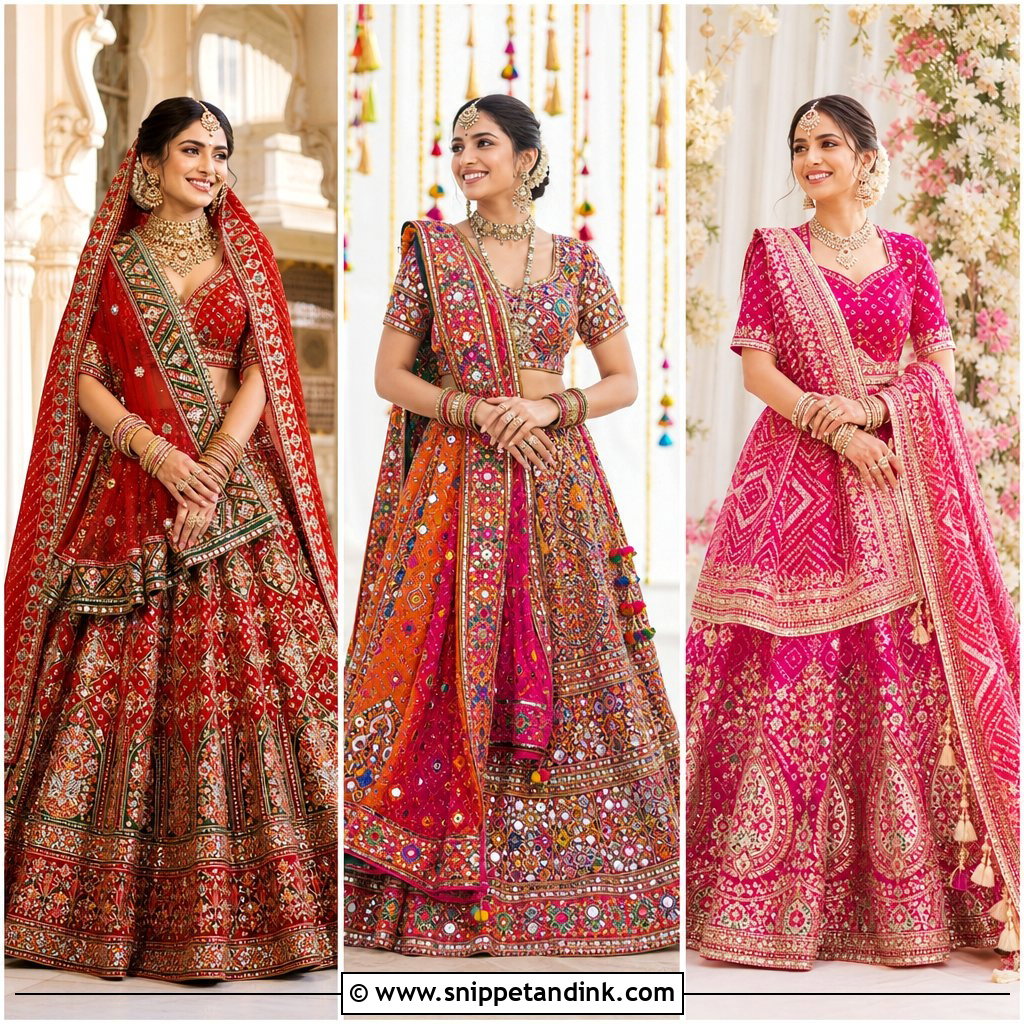
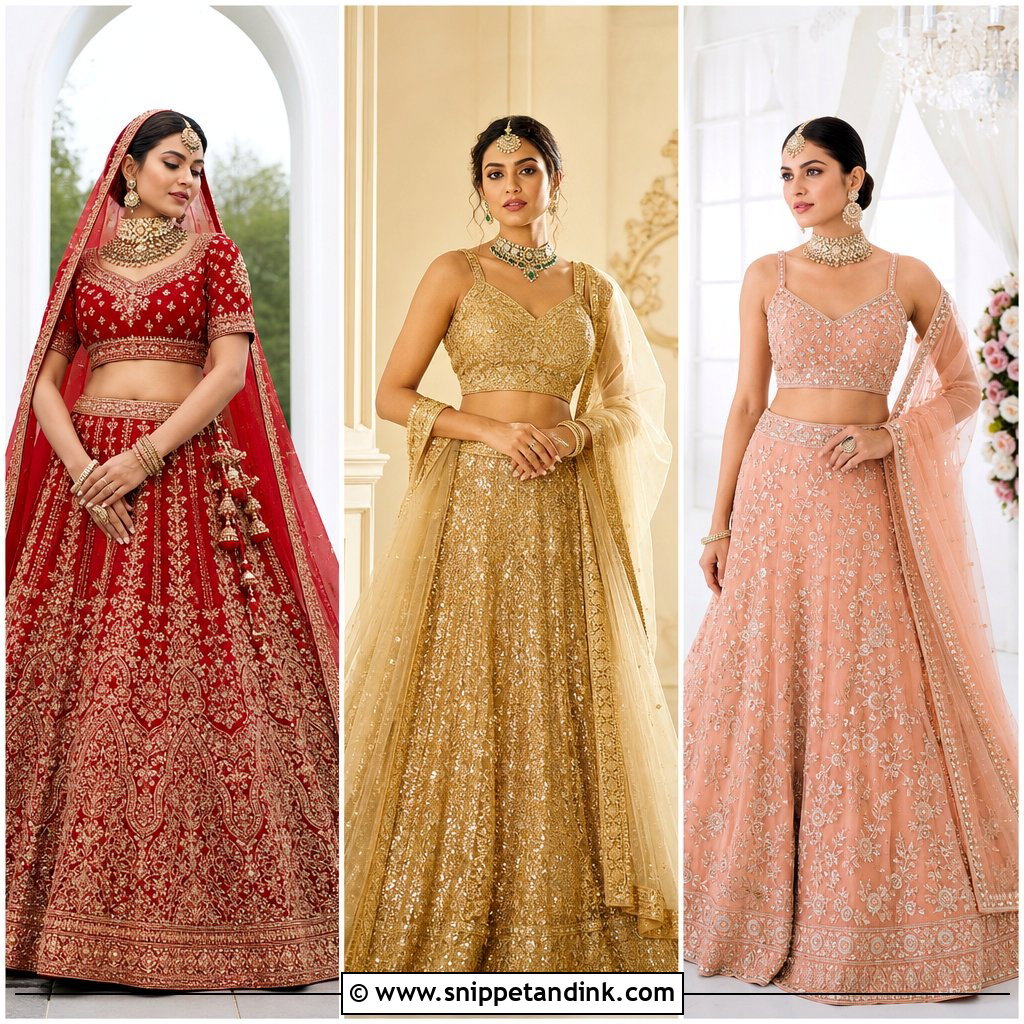
1. Red Zardozi Wedding Chaniya Choli
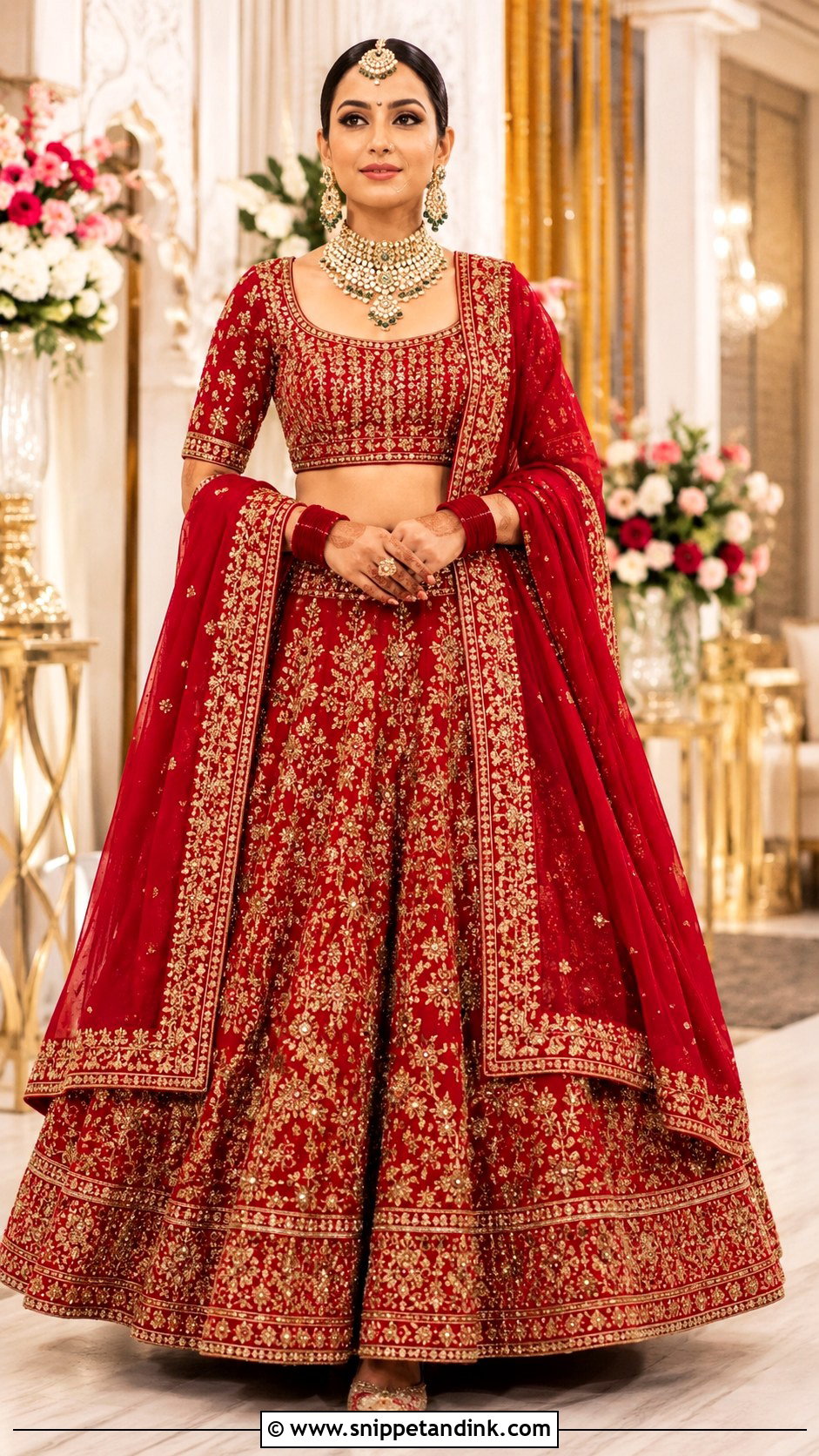
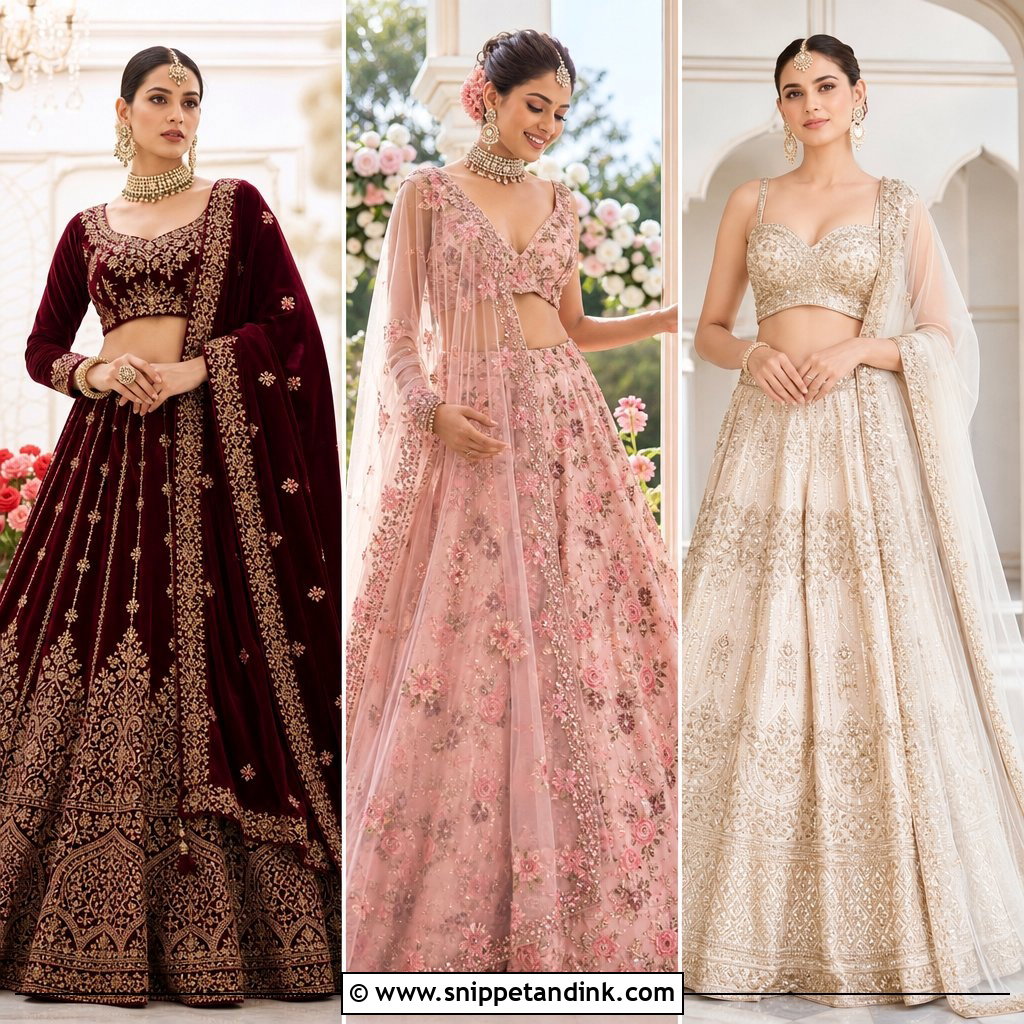
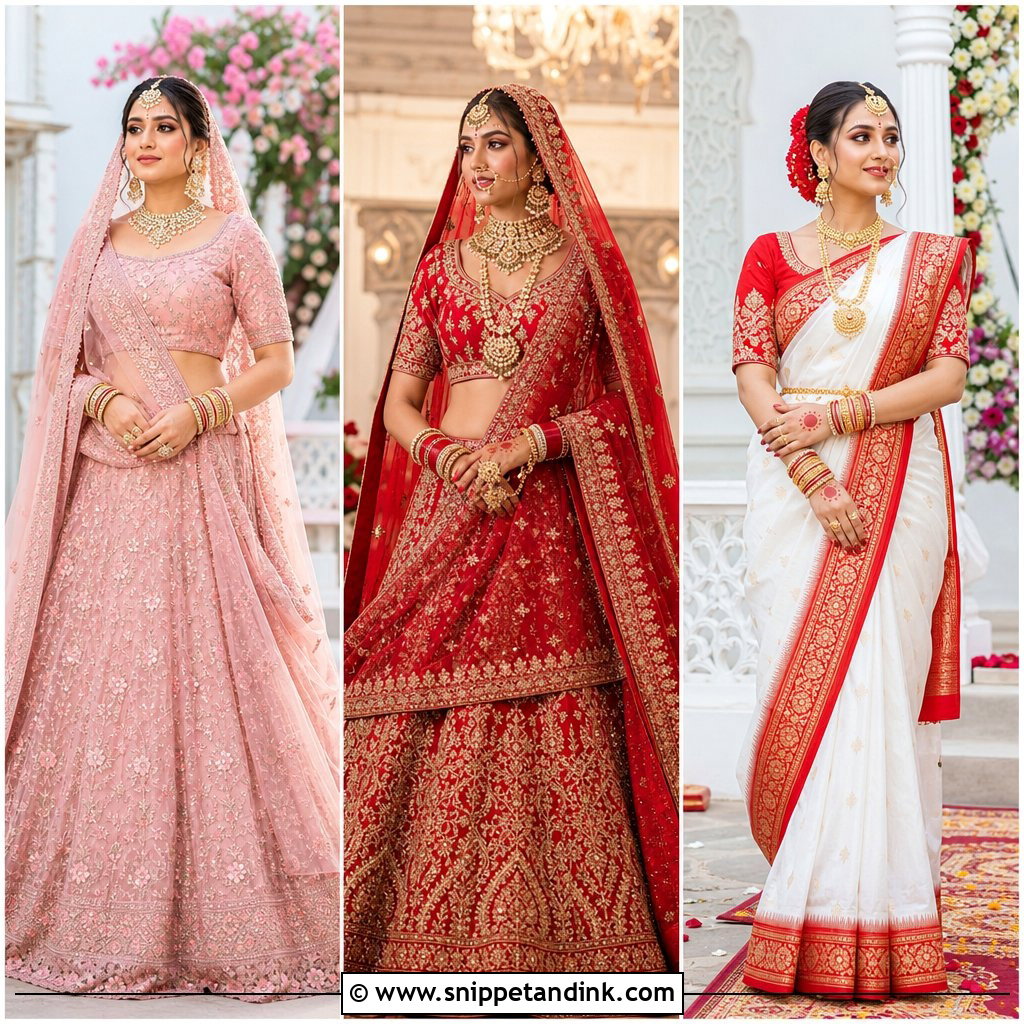
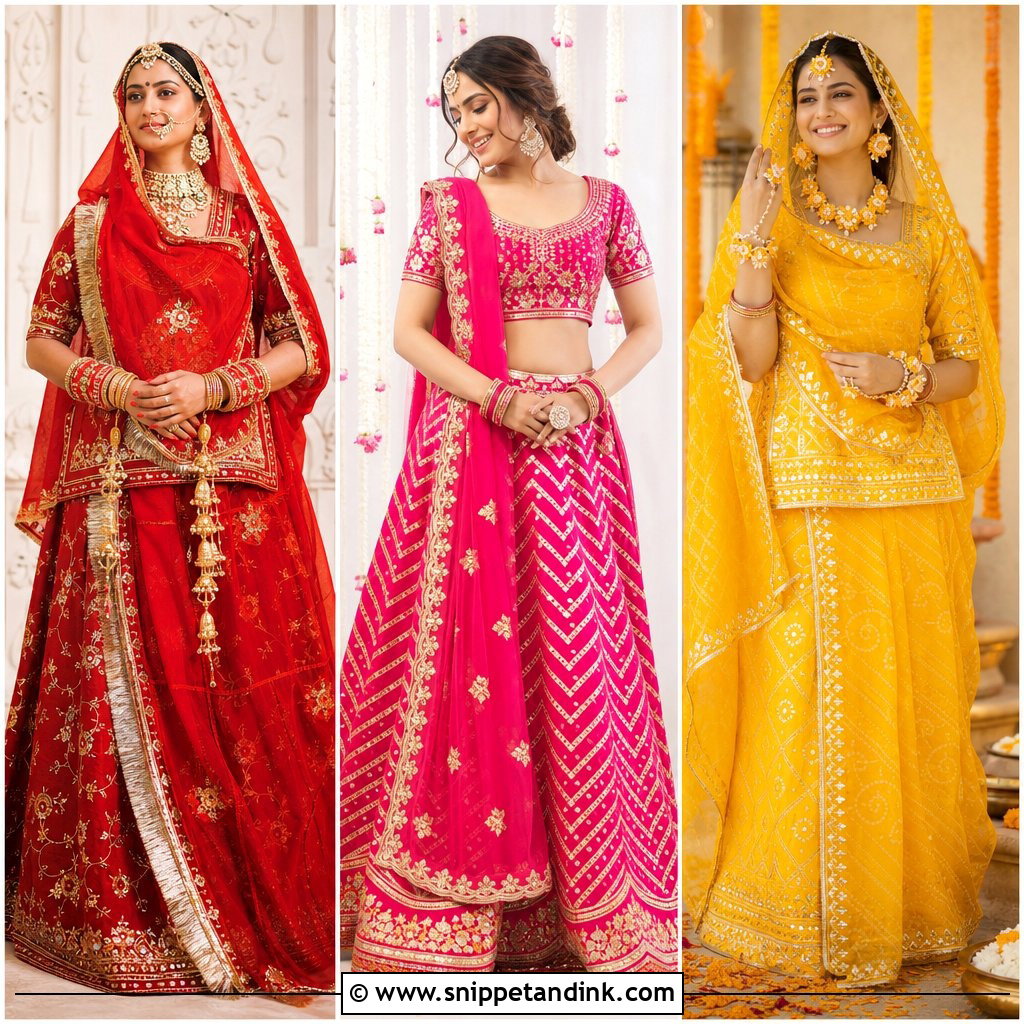
Red zardozi is the classic bridal chaniya, and the skirt does most of the work. A full-flared silk or raw-silk ghera with gold vines, paisleys or architectural borders needs a choli that repeats the motifs at a smaller scale; matching the density head to toe makes the whole outfit look heavy. I like elbow sleeves here. Two dupattas are common for the ceremony: red net over the head and a lighter one across a shoulder. Kundan necklace, earrings, maang tikka, bangles and embroidered juttis finish it. Scale the motifs to the bride. On a petite frame, small motifs and a controlled flare; taller brides can carry broad borders and layered jewelry without being swallowed.
2. Maroon Velvet Wedding Chaniya Choli
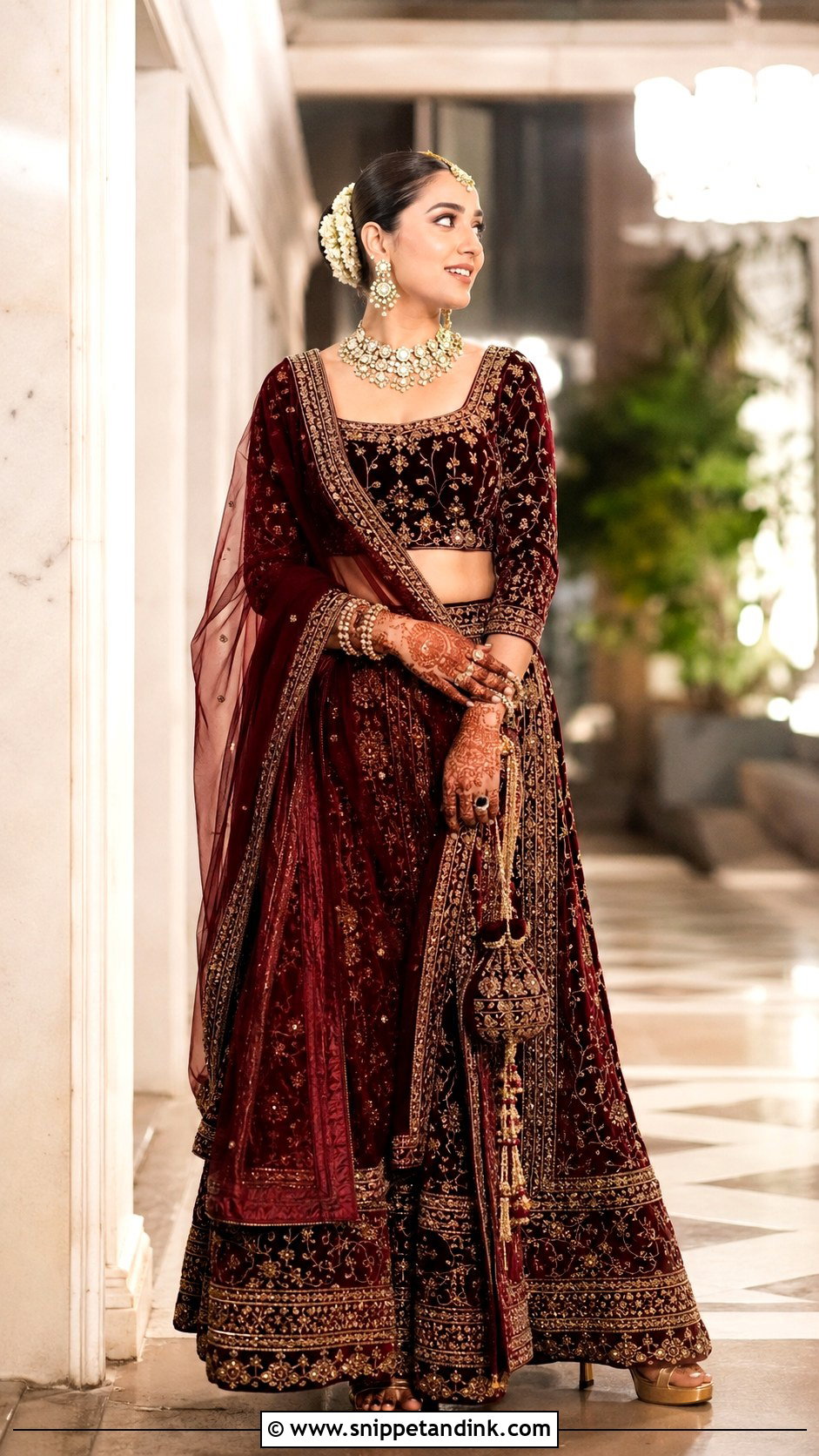
Velvet is for cold-weather ceremonies, and a maroon velvet wedding chaniya choli carries real depth under evening light. Ask for a paneled skirt rather than a gathered one. Gathered velvet bunches thickly at the waistband and adds bulk exactly where you don’t want it. Keep the antique-gold embroidery to hem and waist. A structured choli with a square neck and three-quarter sleeves supports the weight, and a light organza dupatta keeps the outfit from feeling dense. Antique polki, a sleek low bun and maroon bangles complete it. Gold platform sandals stay hidden under the skirt, and a small potli is all the bag velvet needs.
3. Ivory Gold Wedding Chaniya Choli
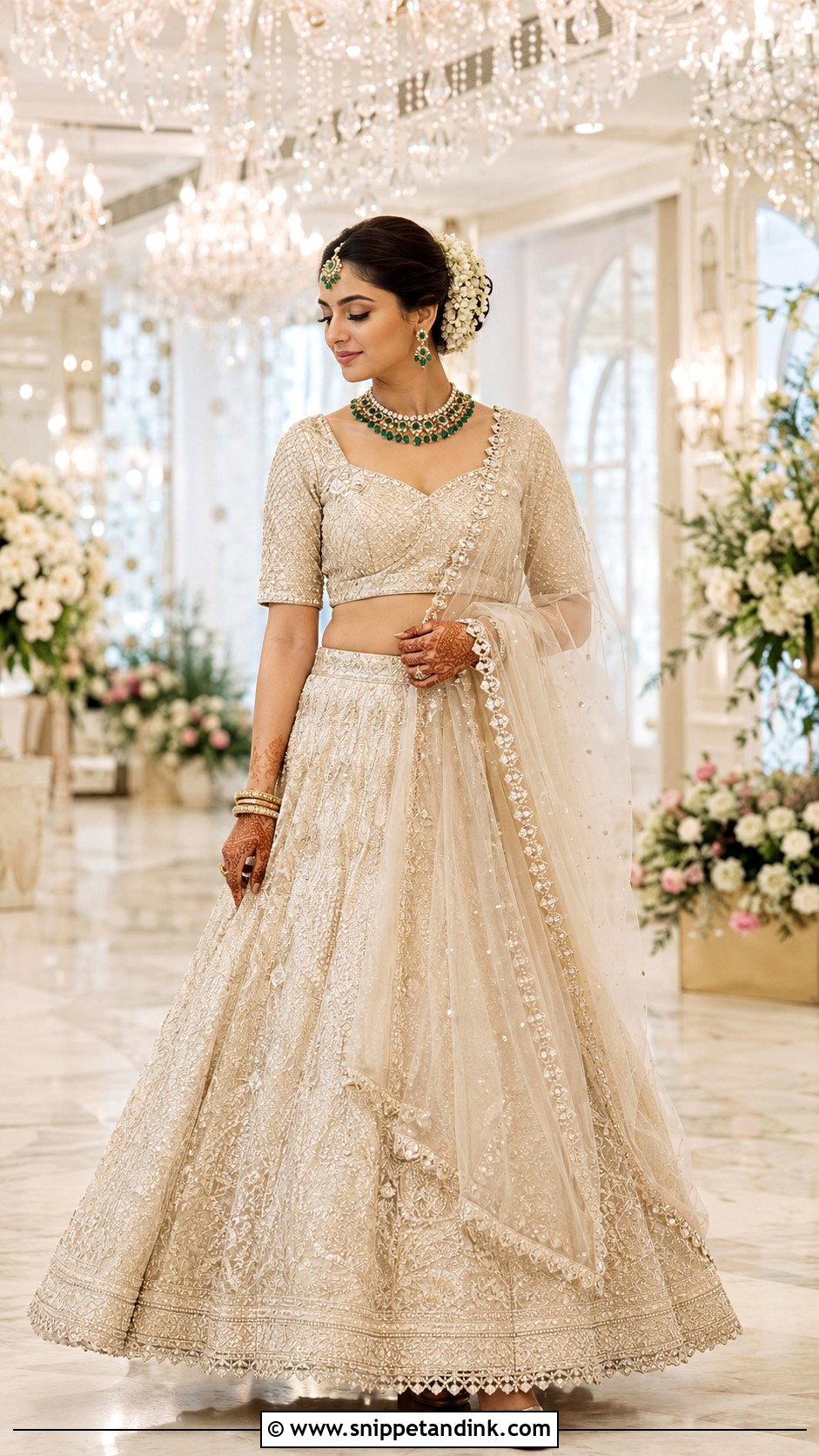
Ivory and gold read as refined, but they need light. In a dim hall, tonal threadwork, pearls and pale sequins blur into one cream surface, so I’d save this set for a daytime or brightly lit venue. Pair an ivory skirt with a fitted gold choli, or an ivory choli with a metallic border, and a sheer dupatta edged in small pearls. Emerald jewelry brings strong contrast; diamond-style pieces keep it quiet. Neutral block heels or padded juttis help through a long ceremony. A bride can add a second veil-like dupatta; a guest should keep to one simple shoulder drape. Glowing makeup and a bun with white flowers suit it.
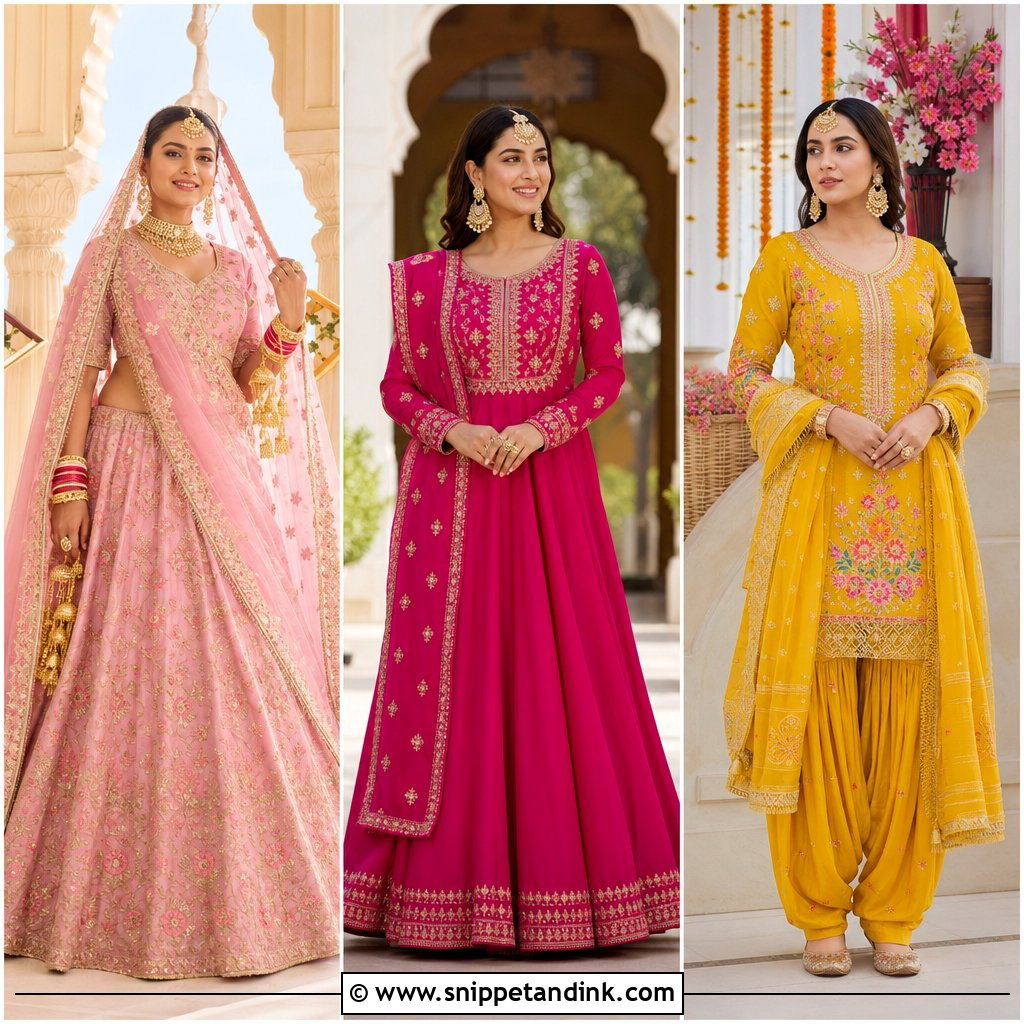
4. Blush Pink Floral Wedding Chaniya Choli
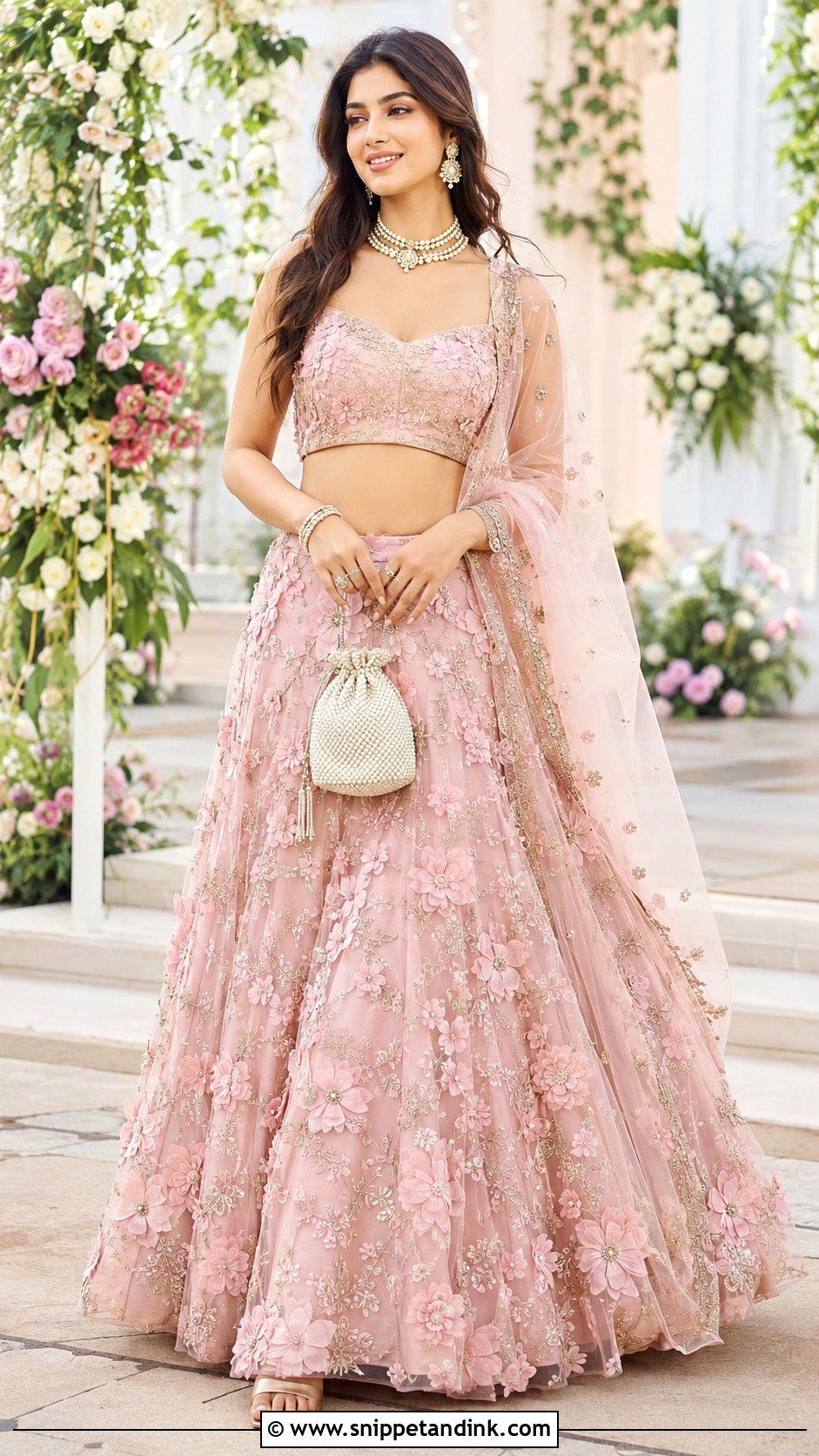
Blush pink with raised floral embroidery belongs outdoors, where sunlight picks up the texture. A light organza or silk skirt carries dimensional flowers without sagging. The choli can have a scoop or sweetheart neck depending on the support you need, with short sleeves. Drape a matching sheer dupatta loosely over both arms so the pattern stays visible. Pearl earrings, a fine necklace and a small floral maang tikka, then champagne sandals and a pearl potli. Loose waves or a low textured bun keep it airy. One color note I give at every fitting: ask for embroidery a shade deeper than the base. Fully tonal pink flowers disappear in photos.
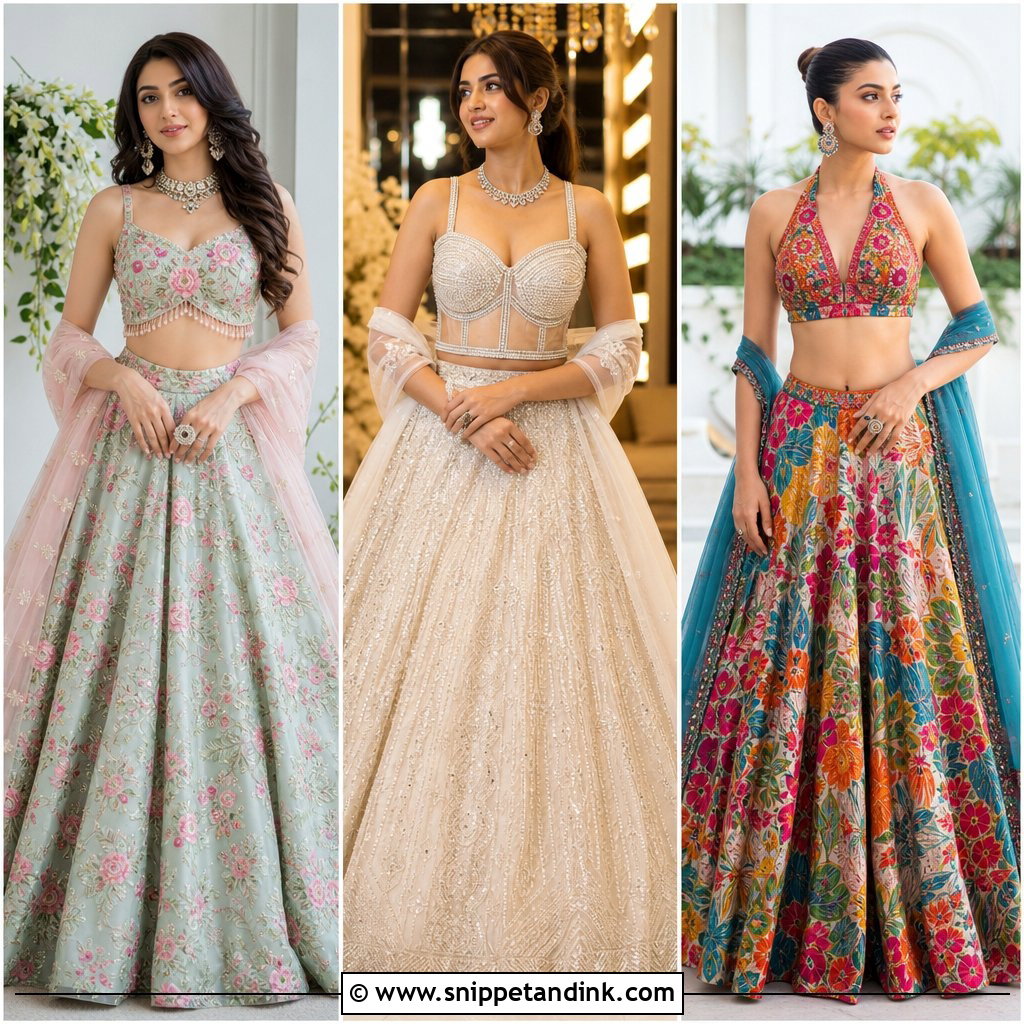
5. Emerald Green Wedding Chaniya Choli
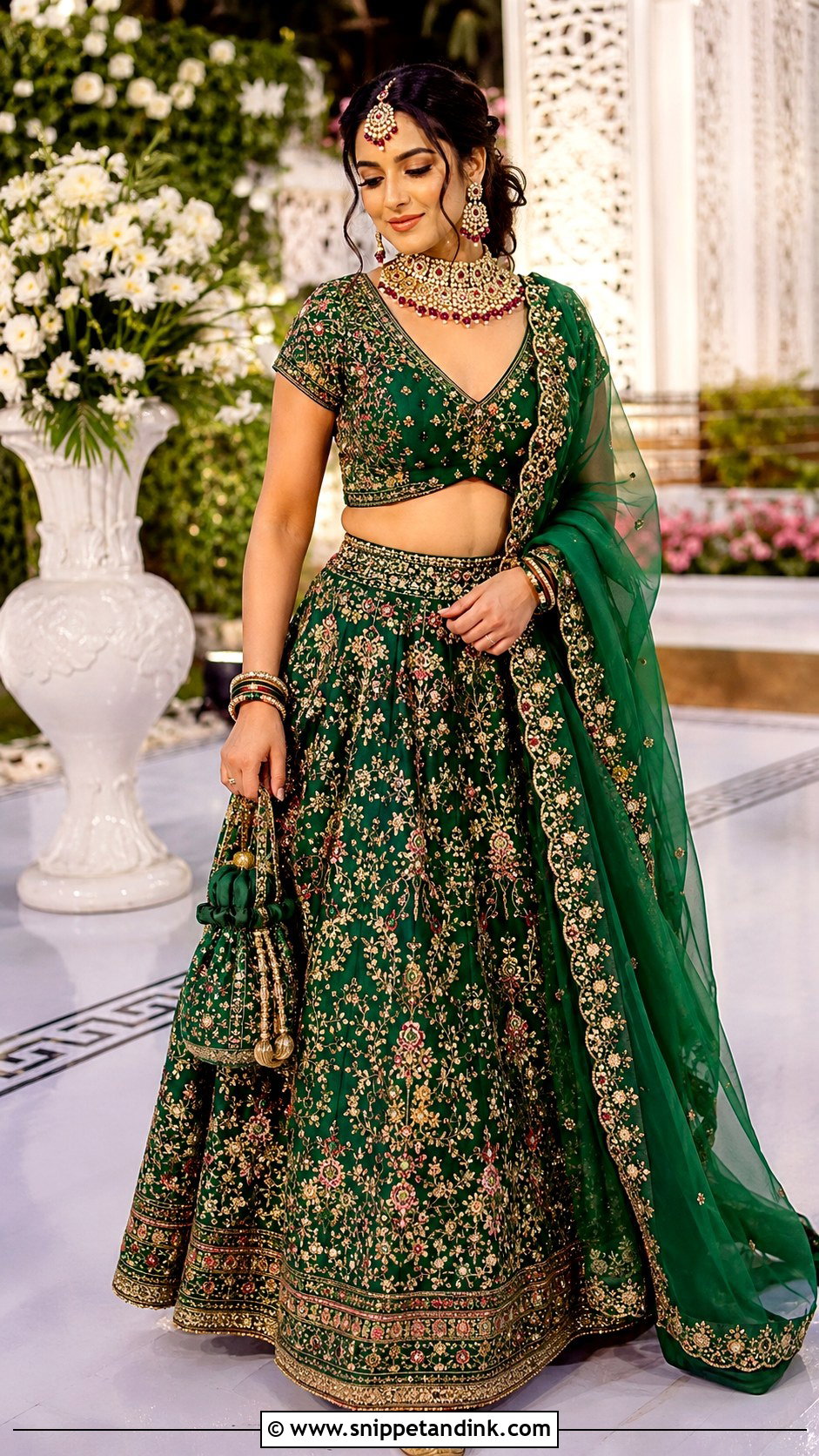
Emerald is a color I trust for evening ceremonies, because it holds saturation under warm lighting where pastels fade. A silk skirt with antique-gold threadwork, sequins and a broad embroidered hem pairs with a matching V-neck choli, and the V draws a vertical line that balances the volume below. Choose a sheer green dupatta with scattered motifs or a muted gold one for contrast. Kundan with ruby accents warms the palette; clear stones keep it cool and crisp. A center-parted bun, defined eyeliner and a berry lip suit it, with gold juttis and a compact potli. When the skirt is heavily worked, I lighten the choli and dupatta so each part gets some breathing room.
6. Royal Blue Mirror Work Wedding Chaniya Choli
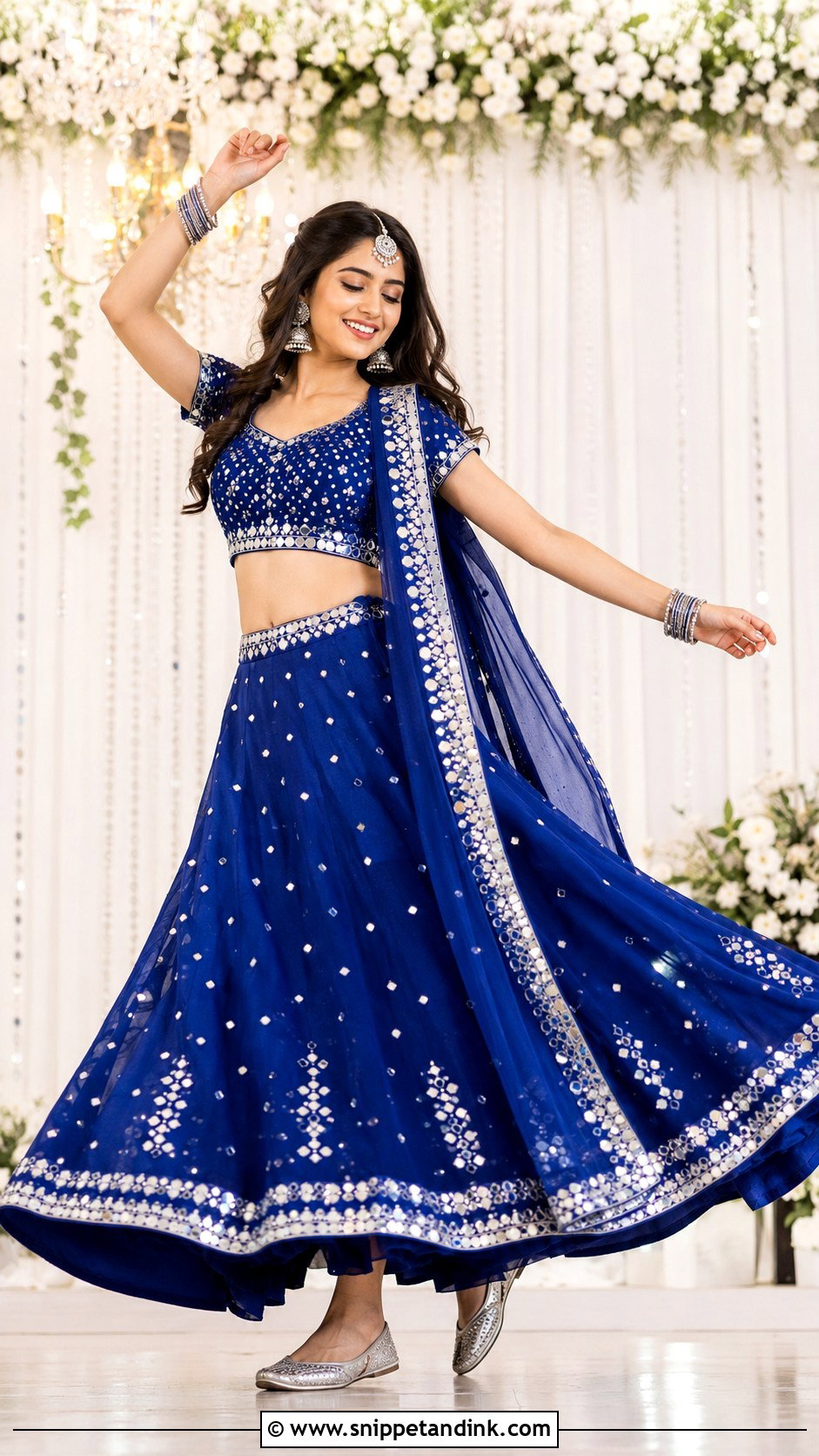
For a night with music and dancing, royal blue mirror work brings color and sparkle that moves with you. A full-flared georgette skirt with evenly spaced mirrors and colorful thread is light enough to spin in. Choose a choli with secure straps or short sleeves, and a paler blue dupatta with a narrow mirror border. Silver earrings, stacked bangles and an oxidized or crystal maang tikka suit the reflective work, with cushioned silver juttis and a small drawstring bag. Hair goes in a braid, ponytail or firmly pinned half-up. Long chains and dangling earrings catch on mirror frames, so I keep jewelry close to the body for any outfit with this much mirror work.
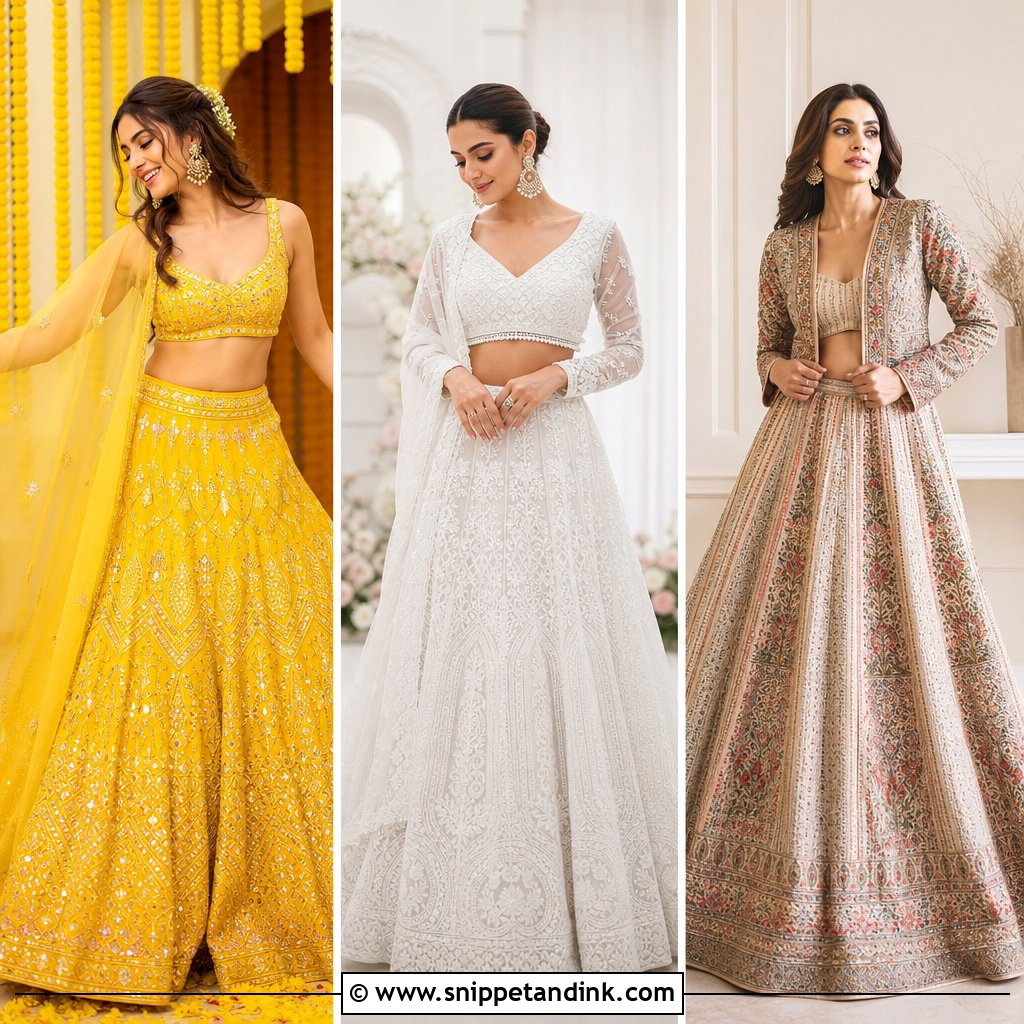
7. Yellow Haldi Wedding Chaniya Choli
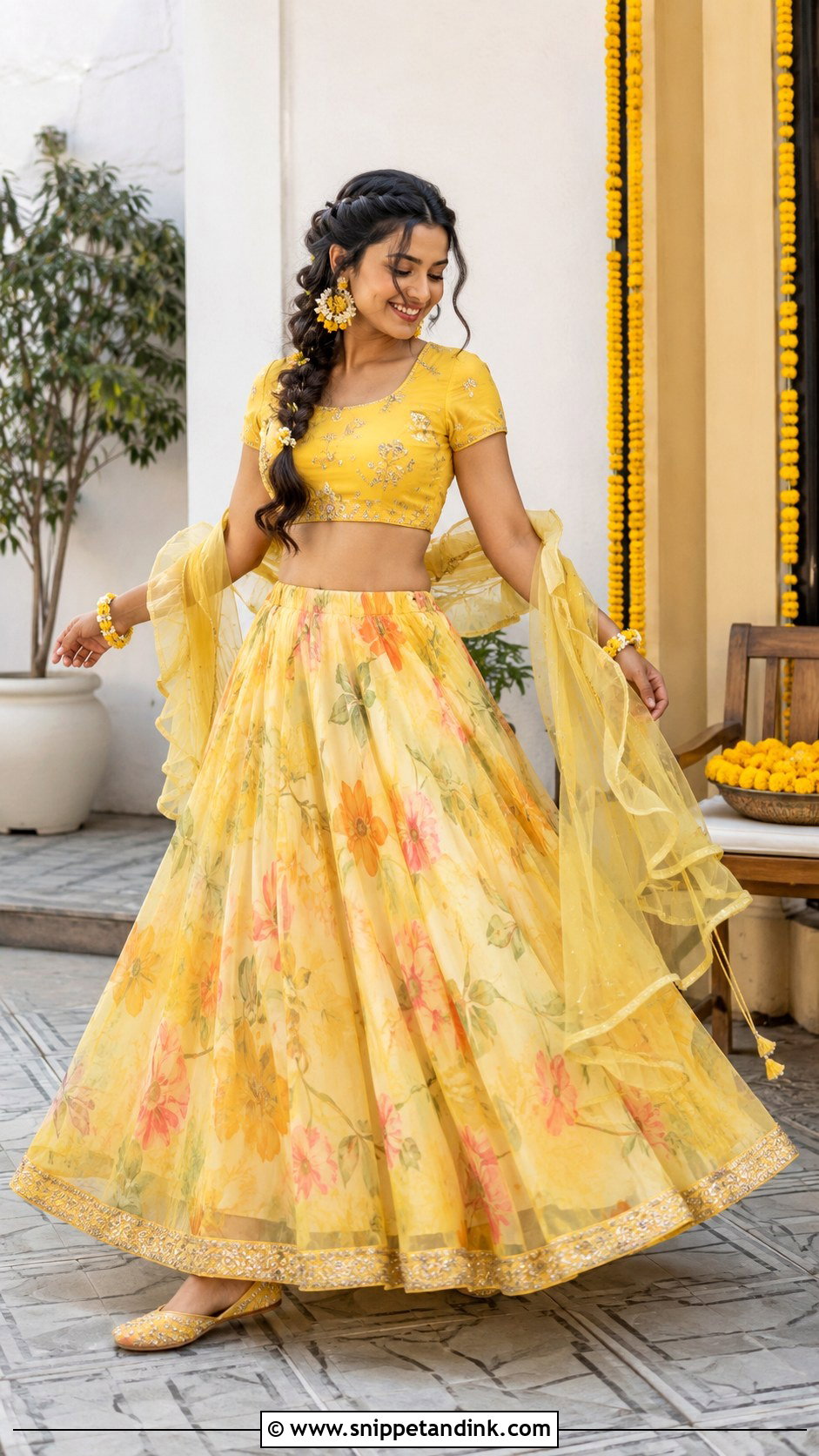
Haldi is the one function where I tell brides to plan for damage. Turmeric paste stains silk, gota and embroidery thread for good. A lightweight yellow wedding chaniya choli in cotton-silk, georgette or organza keeps you cool in daytime heat, and yellow hides the splashes better than any other shade. A skirt with small floral motifs or a simple gota border is enough decoration. Sleeveless, short or elbow sleeves depending on coverage. Keep the organza dupatta pinned or take it off before the paste comes out. Floral earrings, bangles and a small hair accessory, then yellow or neutral juttis. A braid or low bun stays neat. Choose washable fabric over anything precious.
8. Orange Bandhani Wedding Chaniya Choli
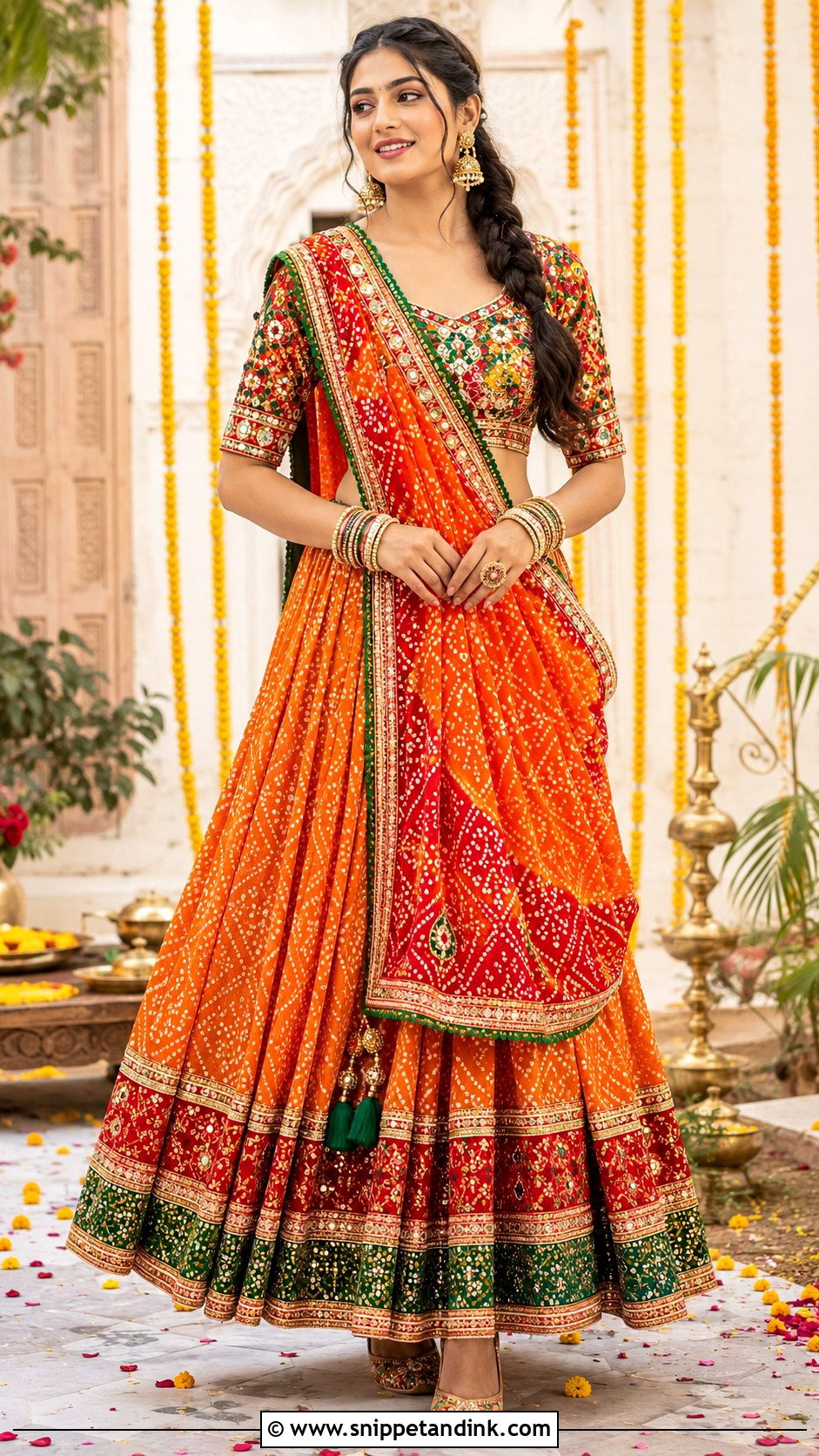
Bandhani is tie-dye done by hand, thousands of tiny pinched dots, and an orange Bandhani skirt with a red, pink or green border carries real textile character. I pick the choli in one of the border colors so the set looks coordinated rather than matched. A Bandhani dupatta draped diagonally across the torso brings the dots up into the top half. Gold jhumkas, stacked bangles, a small bindi and embroidered juttis complete it, with a side braid and a few hair ornaments. If the skirt holds several colors, I keep all the jewelry in one metal. One thing to know: real Bandhani can bleed dye when damp, so it shouldn’t sit against a white blouse on a humid day.
9. Pink And Orange Gujarati Wedding Chaniya Choli
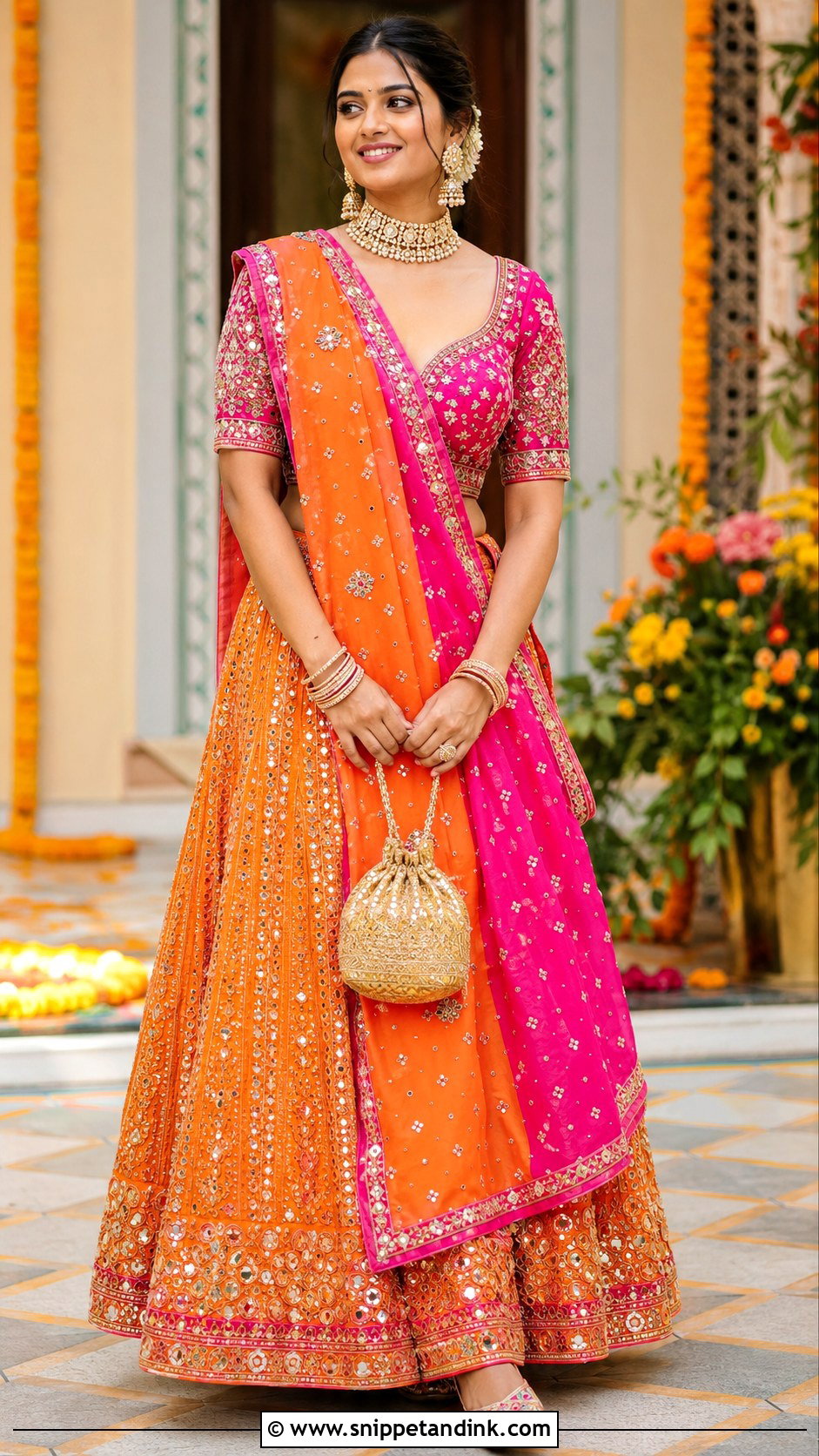
Pink and orange together are pure celebration. A Gujarati wedding chaniya choli in this pairing usually means an orange skirt with mirror work, colorful thread and a patterned border, and a hot pink choli carrying a few orange details back up. The dupatta looks best in a front drape so its border sits across the body where everyone can see it. A statement choker, jhumkas, bangles and a forehead ornament, with embroidered flats for comfort. If the dupatta will go over the head, a braided bun or sleek low bun gives the pins something to grip. The colors are already loud, so I keep the potli small and gold.
10. Purple Sequin Wedding Chaniya Choli
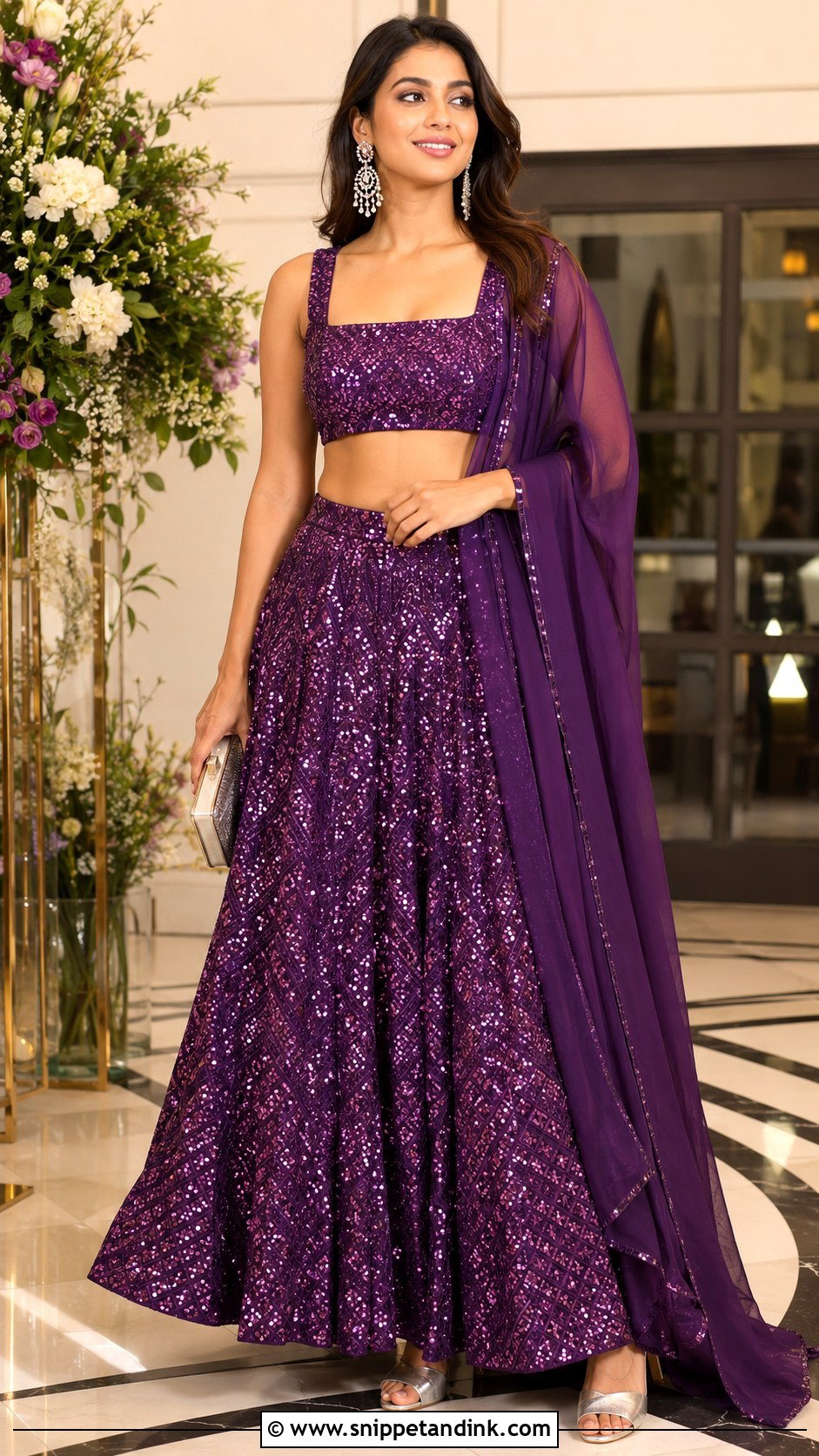
Sequins on purple suit a sangeet stage or an evening reception. Look for sequins placed in vertical, geometric or floral patterns rather than an all-over cover; placed sparkle moves with the skirt and all-over sparkle just reflects flash. Pair it with a supportive blouse, square neck with short sleeves or wide straps. A plain chiffon dupatta with a slim embellished edge won’t compete. Crystal earrings, a bracelet and a ring are enough, plus silver block heels and a sleek clutch. A high ponytail or polished waves add structure. I check the inside seams of sequin skirts before anything else, because rough sequin backing scratches the legs during a long performance.
11. Mint Green Wedding Chaniya Choli
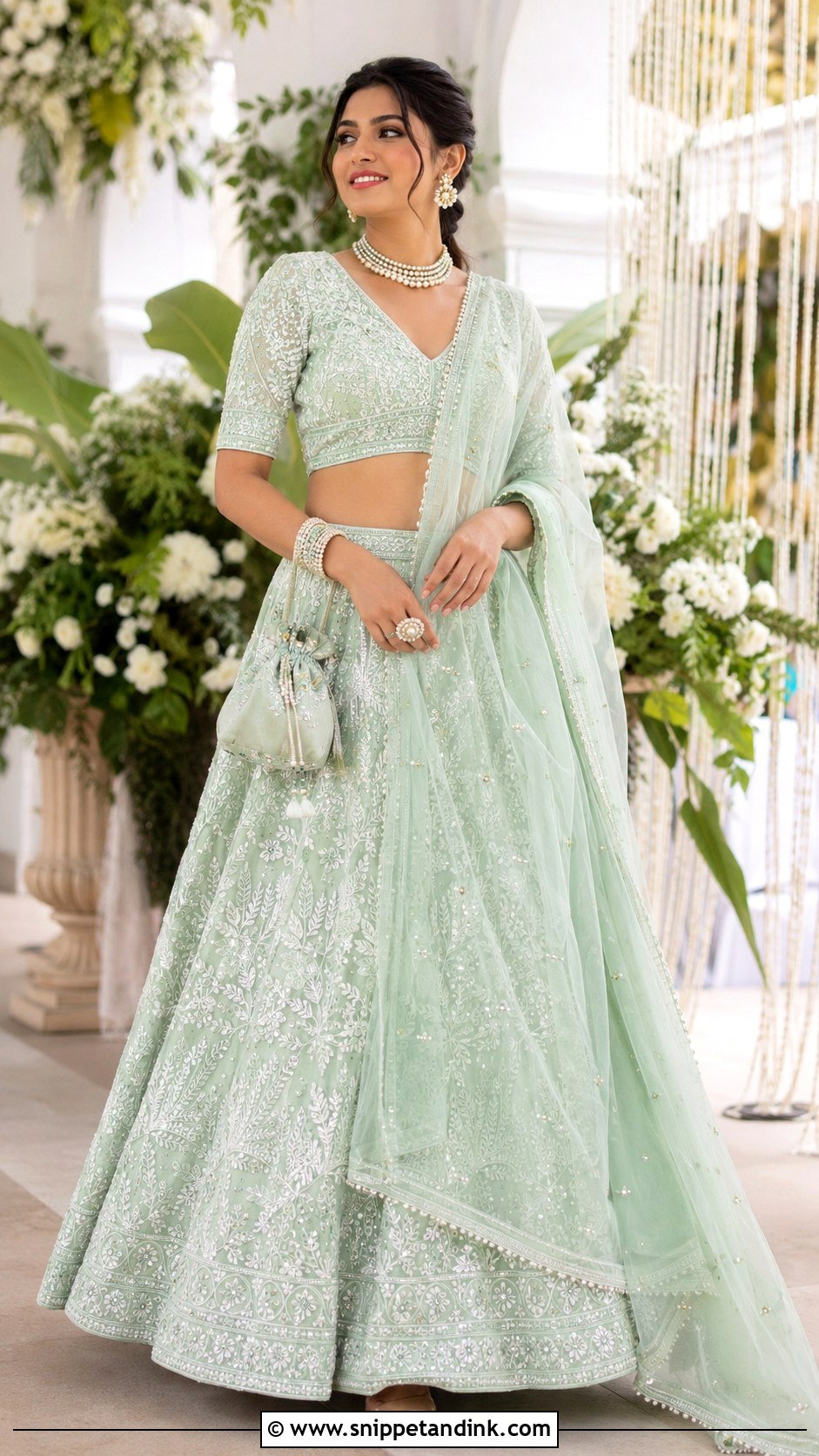
Mint green is fresh in daylight and goes slightly grey at night, so I’d book it for a morning or afternoon event. A soft net, organza or georgette skirt with white threadwork, pearls and small silver sequins pairs with a matching choli, rounded neck and fitted elbow sleeves. A sheer dupatta over one shoulder keeps the blouse visible. Pearl earrings, a delicate choker and a slim bracelet are plenty; add silver or nude sandals and a mint potli. Soft curls, a half-up style or a neat bun with small white flowers suit it. Tonal white-on-mint embroidery loses definition in photos, so a silver border at the skirt hem and dupatta edge sharpens the outline.
12. Lavender Wedding Chaniya Choli
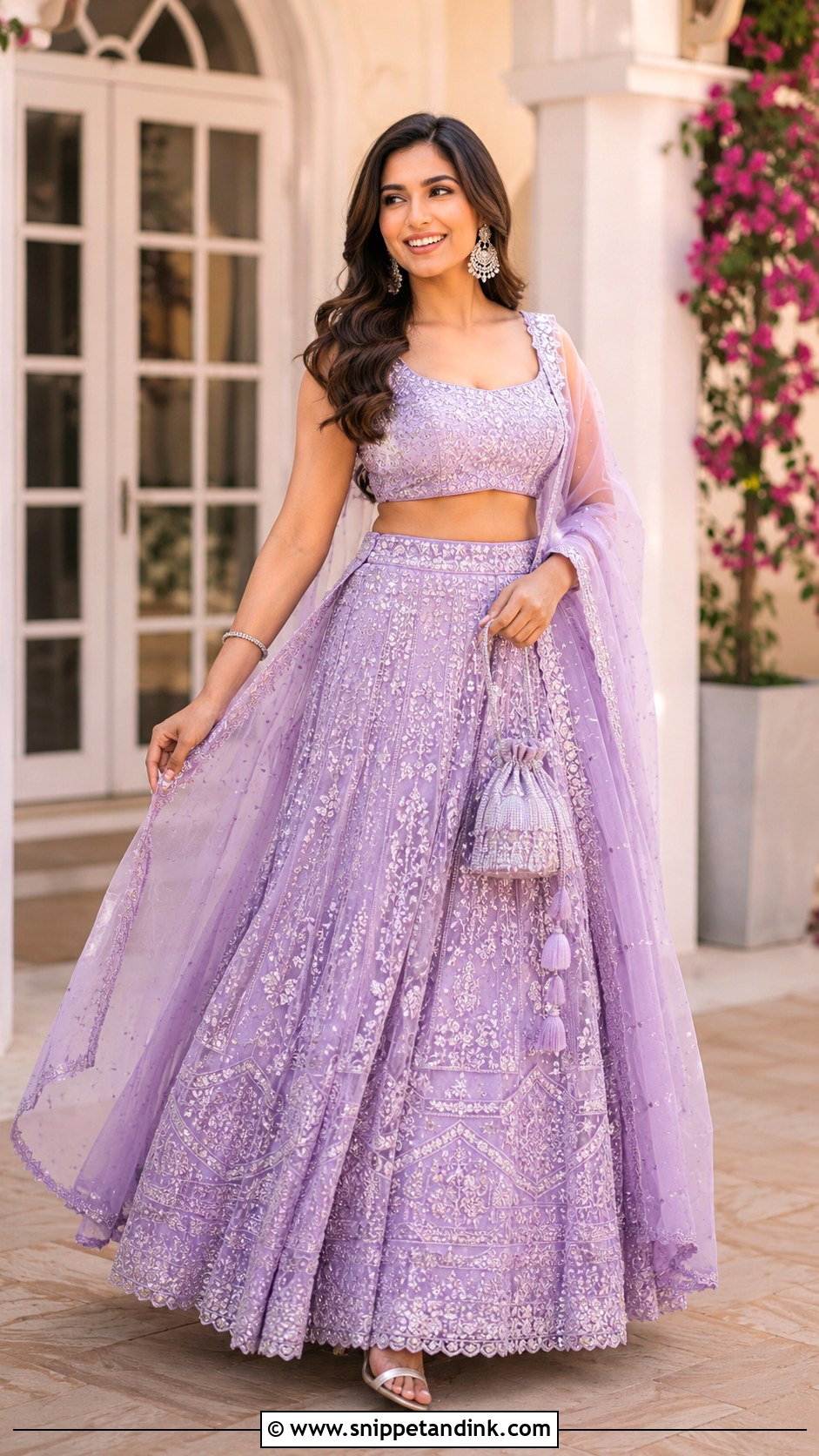
Lavender avoids the sweetness of pink while staying soft. A flowing skirt with silver embroidery, delicate sequins and small botanical motifs gets definition from a structured lavender blouse with a modest sweetheart or square neck. Pin a sheer crystal-scattered dupatta at one shoulder so it doesn’t drift. Silver-toned earrings, a slim necklace and a bracelet, then metallic block heels and a beaded potli, keep the palette cool. Loose waves for a relaxed function, a low bun for a formal ceremony. I’d steer brides with very warm, golden undertones toward a pinker lavender; the blue-leaning shades can make warm skin look sallow. Mauve blush and a neutral pink lip finish it.
13. Peach Gota Patti Wedding Chaniya Choli
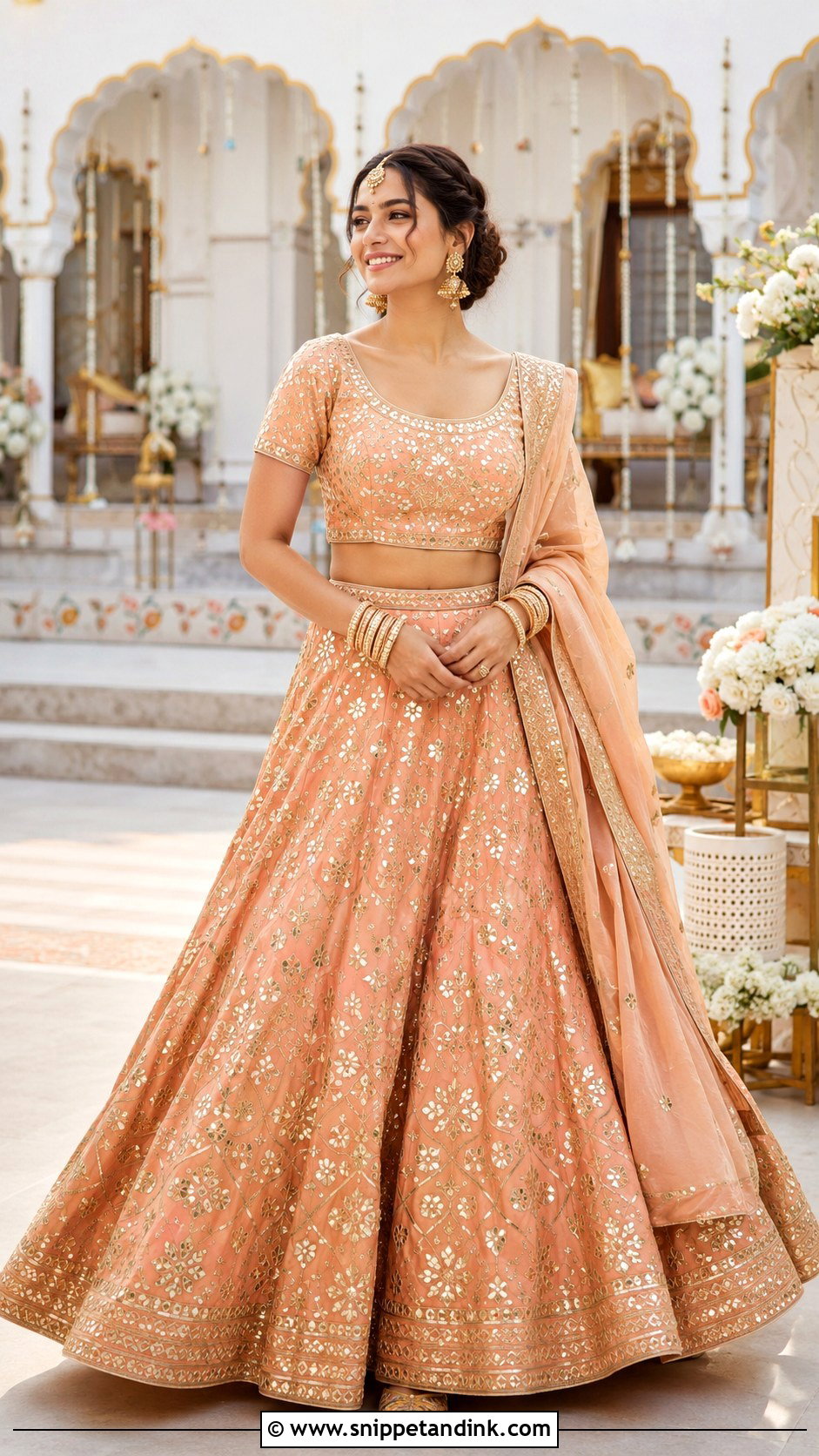
Gota patti is ribbon work: strips of metallic ribbon folded and stitched into leaves and petals. It shines without being heavy, which is why it suits a peach silk or georgette skirt with motifs clustered at the hem and smaller ones climbing above. Pair it with a matching choli, scoop neck and short or three-quarter sleeves, and a light peach dupatta with a gota border, worn across one shoulder or over the head. Gold jhumkas, a delicate maang tikka, stacked bangles and metallic juttis complete it. A soft bun with face-framing strands keeps it easy. Peach can blend into some complexions, so I use a deeper peach lip, defined liner or contrasting jewelry to separate skin from fabric.
14. White And Red Wedding Chaniya Choli
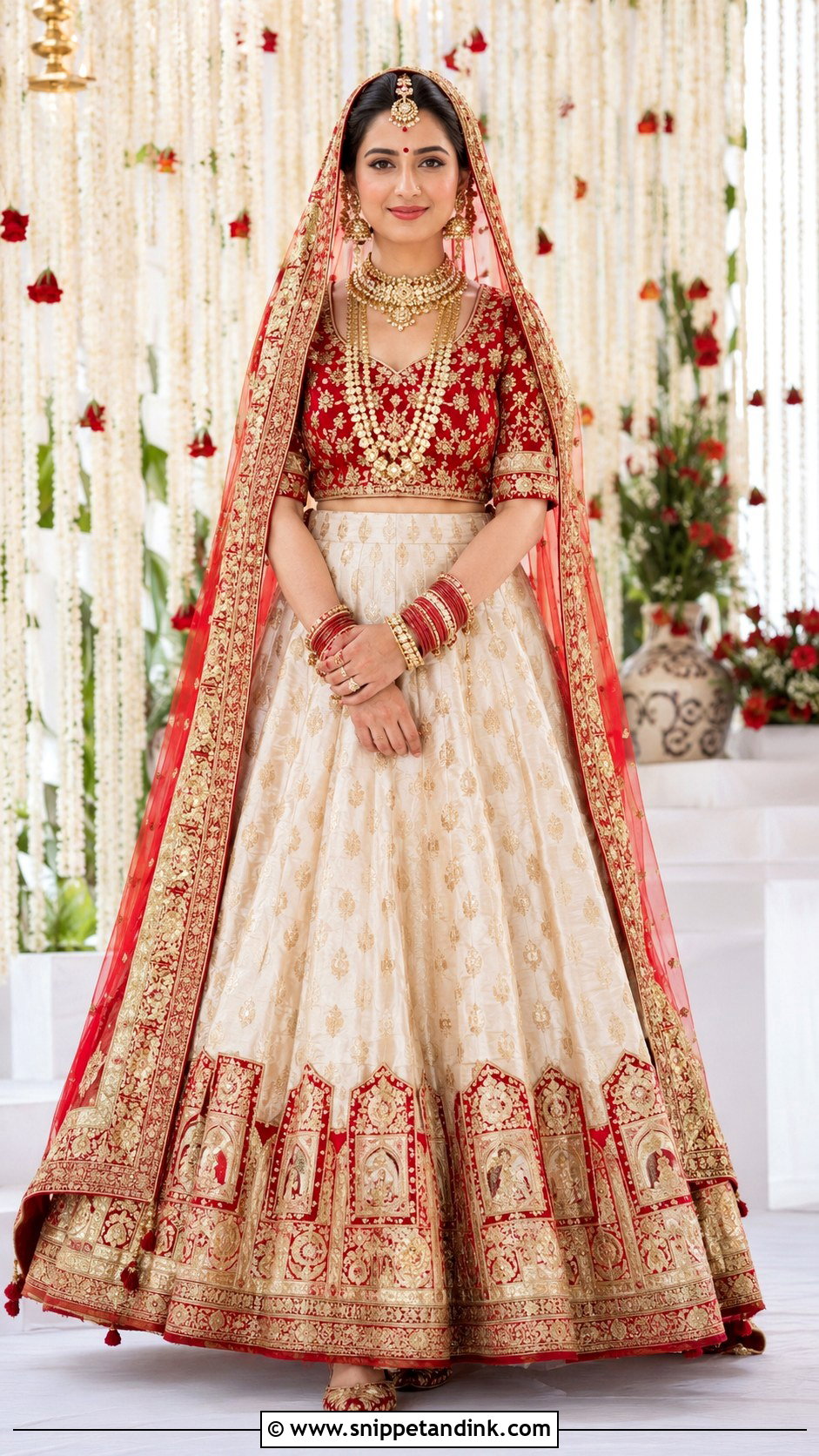
White and red carries meaning in many Gujarati and Bengali traditions, and it gives a high-contrast alternative to all red. An ivory or white silk skirt with red borders and gold motifs pairs with a red choli worked in gold at the neckline and sleeves. A red-and-white dupatta can be set in a front drape or over the head for the ceremony. Gold jewelry, red bangles, a bindi and traditional juttis tie it together, with a center-parted low bun. Color blocking only looks deliberate when the shapes are crisp, so I keep the choli fitted and the skirt structured. Brides can layer necklaces; guests should choose one statement piece.
15. Banarasi Silk Wedding Chaniya Choli
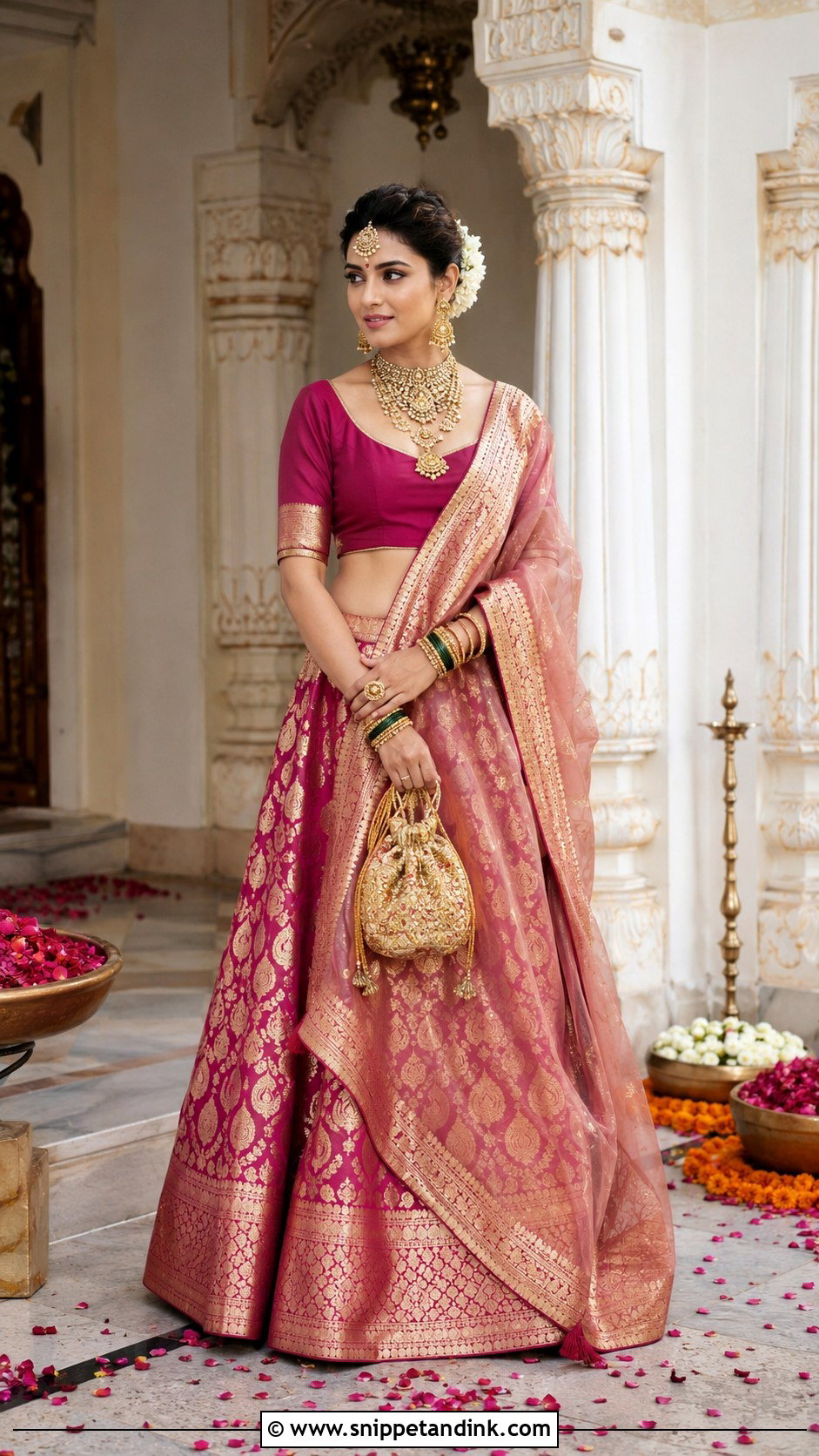
Banarasi weaves the gold motifs into the silk itself, so a Banarasi silk wedding chaniya choli looks rich with very little surface work. Red, magenta, green or purple carry the gold best. I pair the skirt with a solid silk choli that picks one color from the weave, then a tissue, organza or light silk dupatta so the whole set doesn’t get heavy. Temple jewelry, kundan or classic gold earrings and bangles all suit it, with embroidered juttis, a structured potli and a clean bun with fresh flowers. Banarasi holds its own shape, so don’t add a big can-can underneath; it turns the skirt into a stiff bell. The waist needs careful tailoring.
16. Multicolor Patchwork Wedding Chaniya Choli
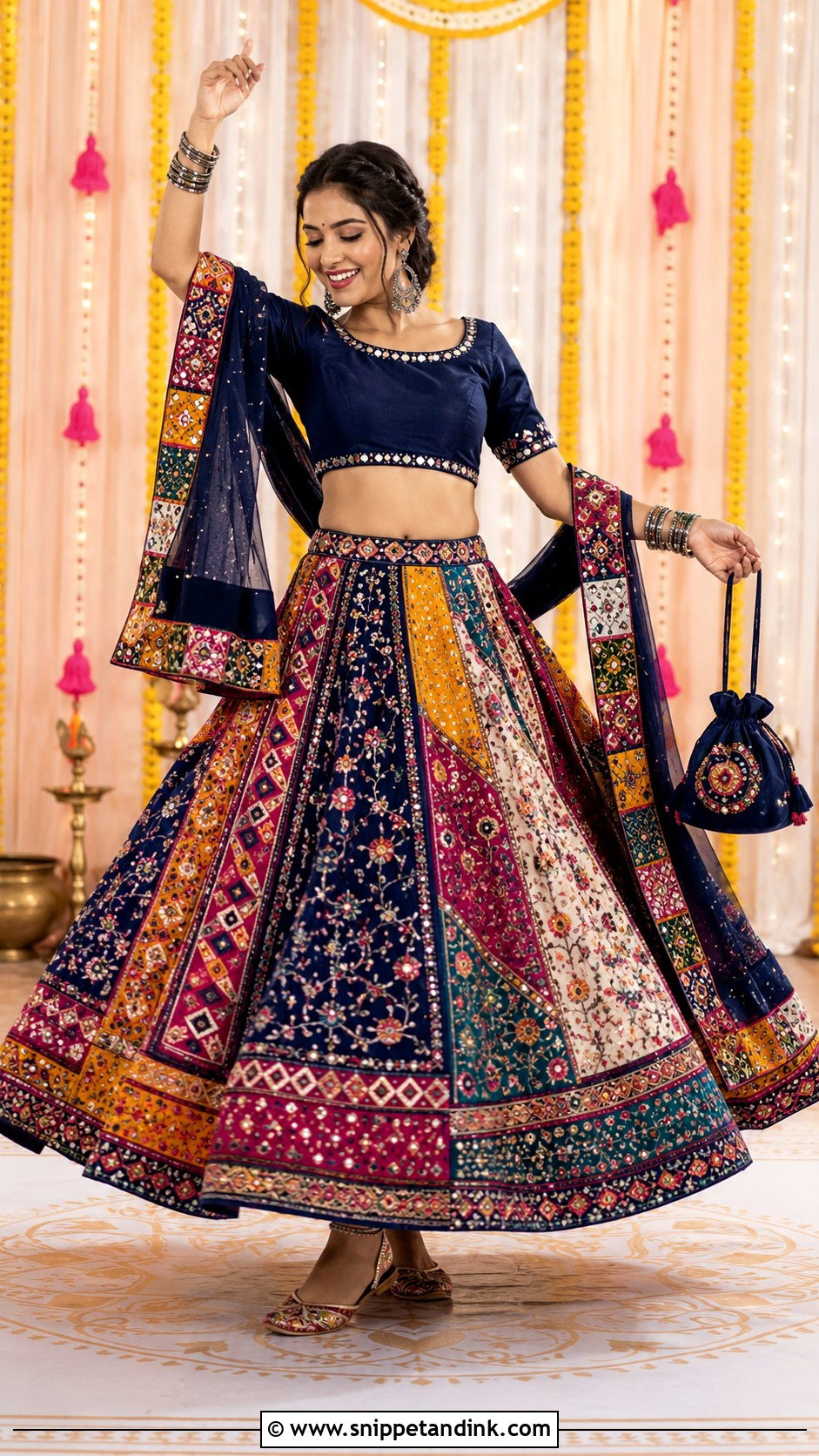
Garba is where a multicolor patchwork wedding chaniya choli belongs. A full-circle skirt combining embroidered patches, printed cloth, mirrors and borders opens into a wheel when you turn. Anchor all that color with a solid black, red, navy or green choli, and connect the halves with a simple dupatta edged in patchwork. Oxidized silver earrings, layered bangles and a statement ring suit it. For hours of dancing, juttis or closed flats beat heels every time. A long braid or high ponytail stays out of the way. With so much pattern in the skirt, I hand brides a small solid potli in the blouse color, never a printed bag.
17. Cape Blouse Wedding Chaniya Choli
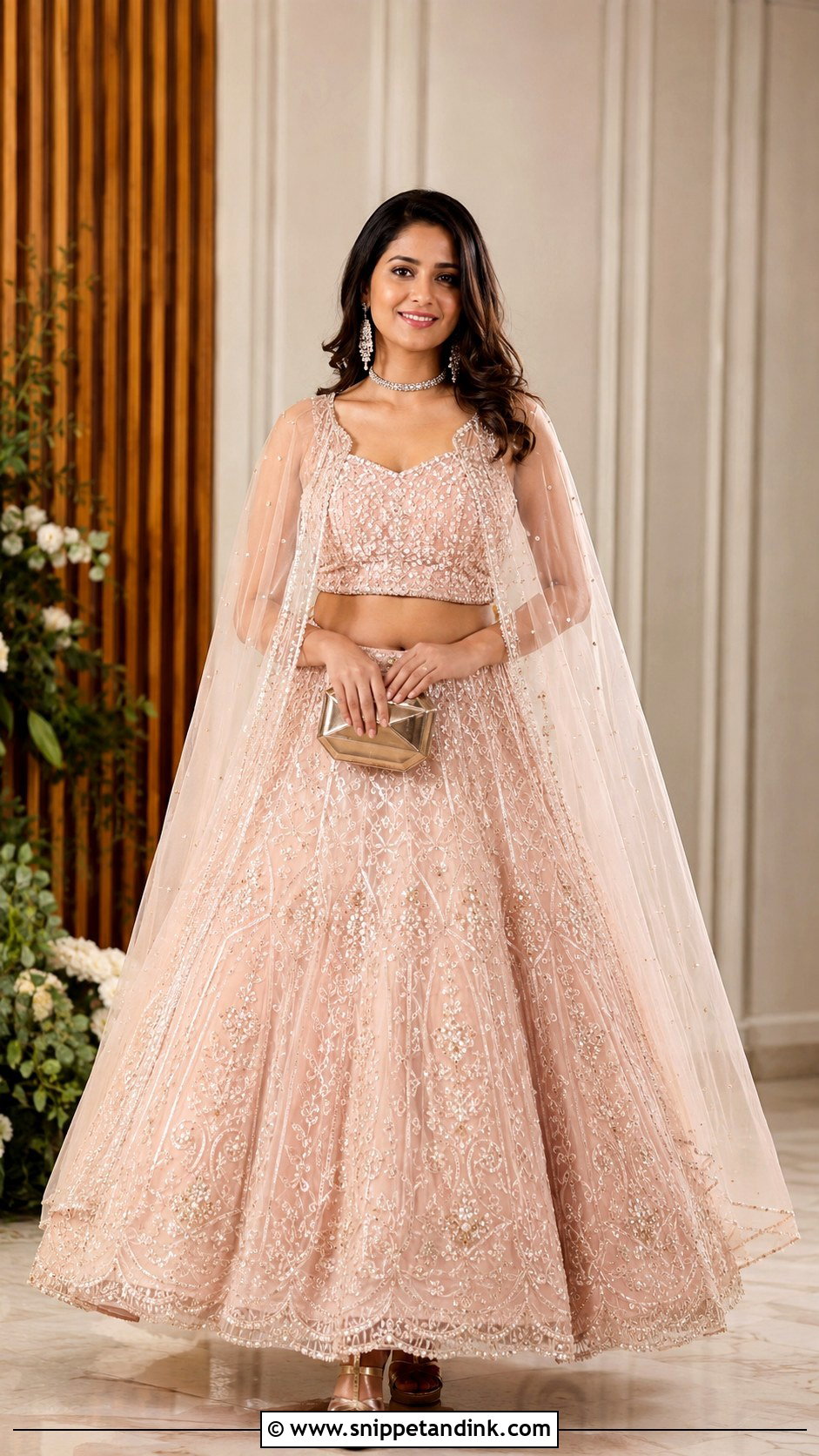
A cape blouse replaces the dupatta altogether, and brides who have greetings, photos and dancing all in one evening tend to love that. A sheer hip-length cape with pearls, sequins or fine threadwork goes over a fitted blouse, with a solid or lightly embroidered skirt that has a defined waistband and a balanced flare. Your hands stay free. Long earrings or a slim choker, not both, if the cape neckline is detailed, then metallic heels and a structured clutch. A sleek low ponytail or bun shows off the shoulders. The length I aim for: ending above the widest part of the skirt, so the waist still reads.
18. Jacket Wedding Chaniya Choli
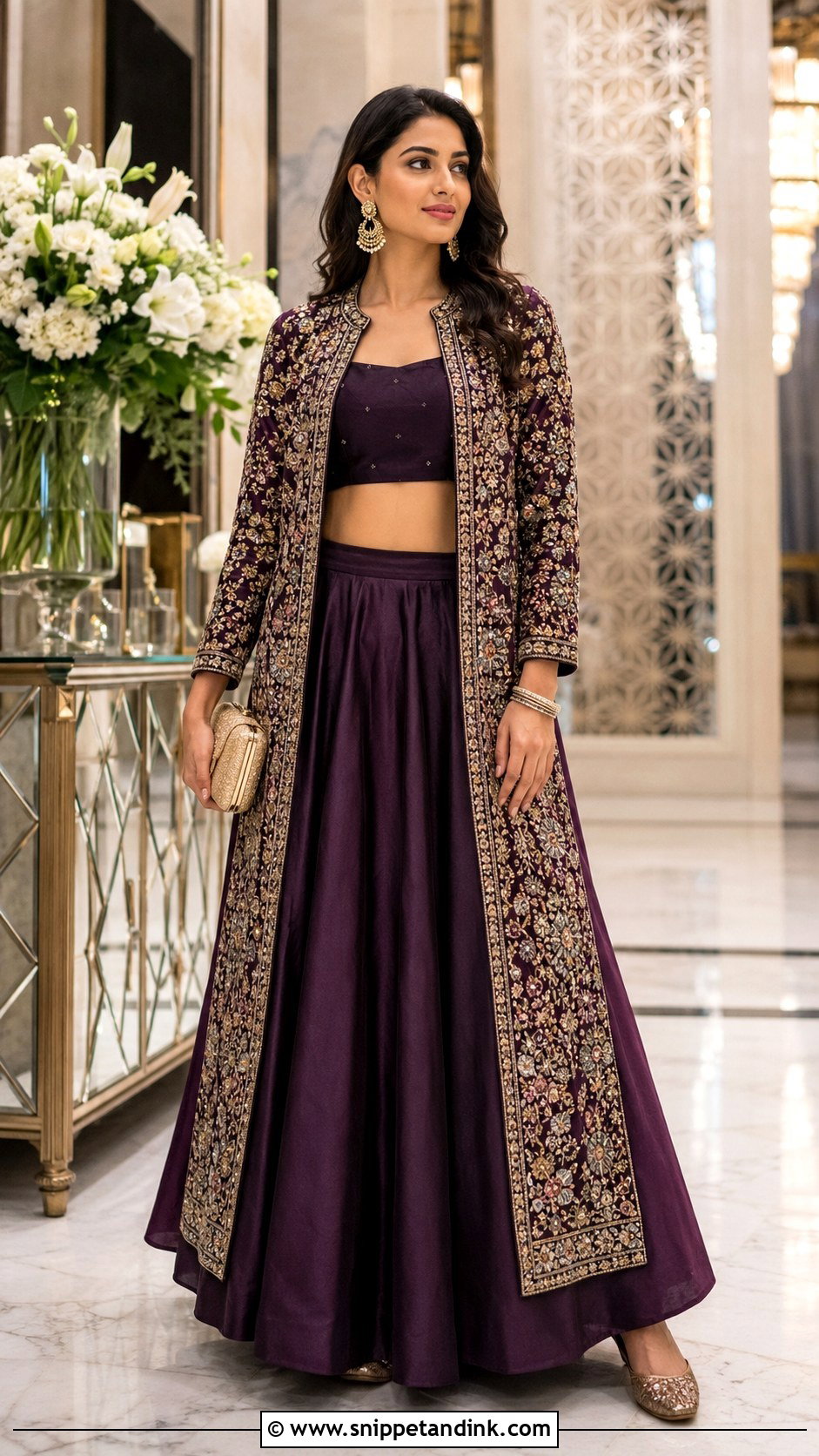
Jackets add coverage and length in one layer. Start with a streamlined silk or georgette skirt in a jewel tone, pastel or neutral, a simple fitted choli and a long embroidered jacket left open down the front. Vertical embroidery, side slits and a lightly shaped waist keep the jacket from looking boxy. Skip the dupatta or carry a very light one over one arm. Medium earrings, a cocktail ring and slim bangles, with pointed juttis or block heels. A straight blowout or low bun follows the long lines. I check the jacket’s armholes at the fitting; a jacket cut tight over a sleeved choli won’t let you lift your arms. Receptions and cooler evenings suit it.
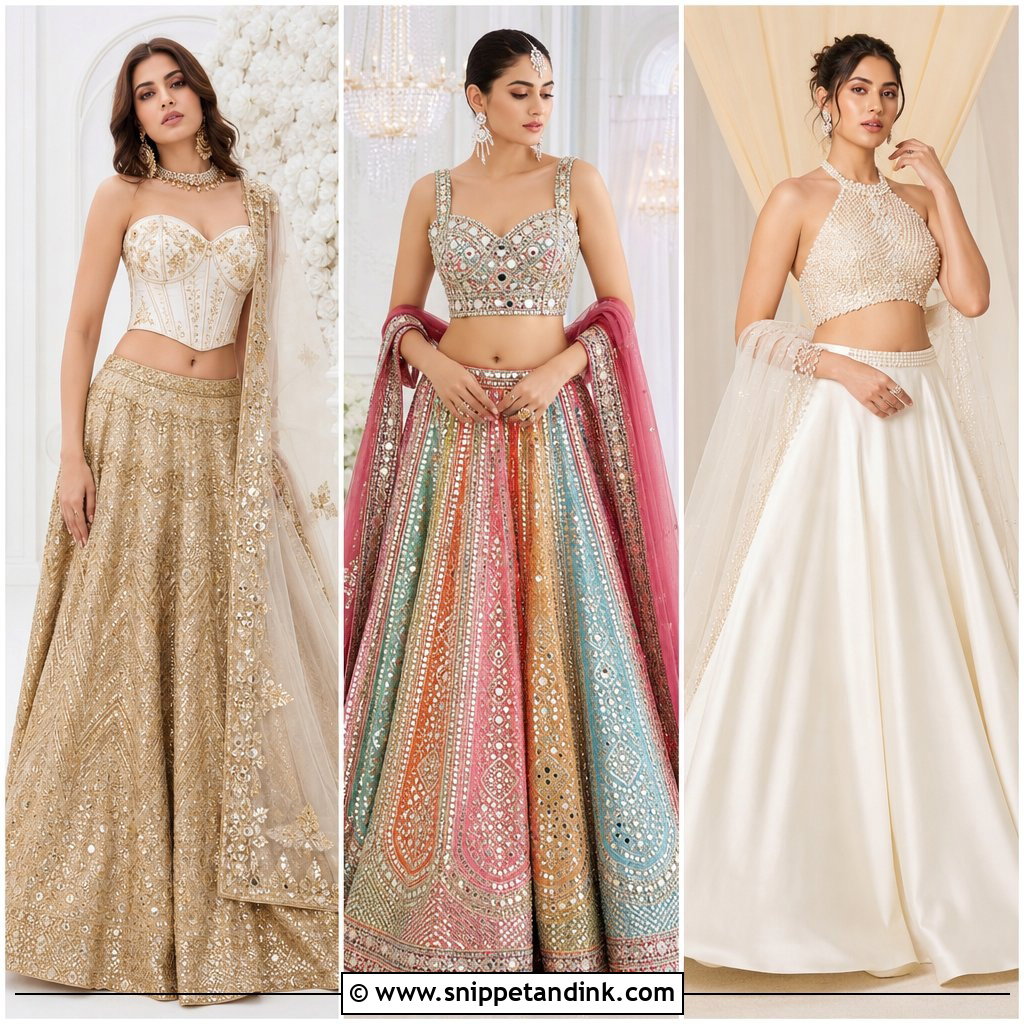
19. Corset Blouse Wedding Chaniya Choli
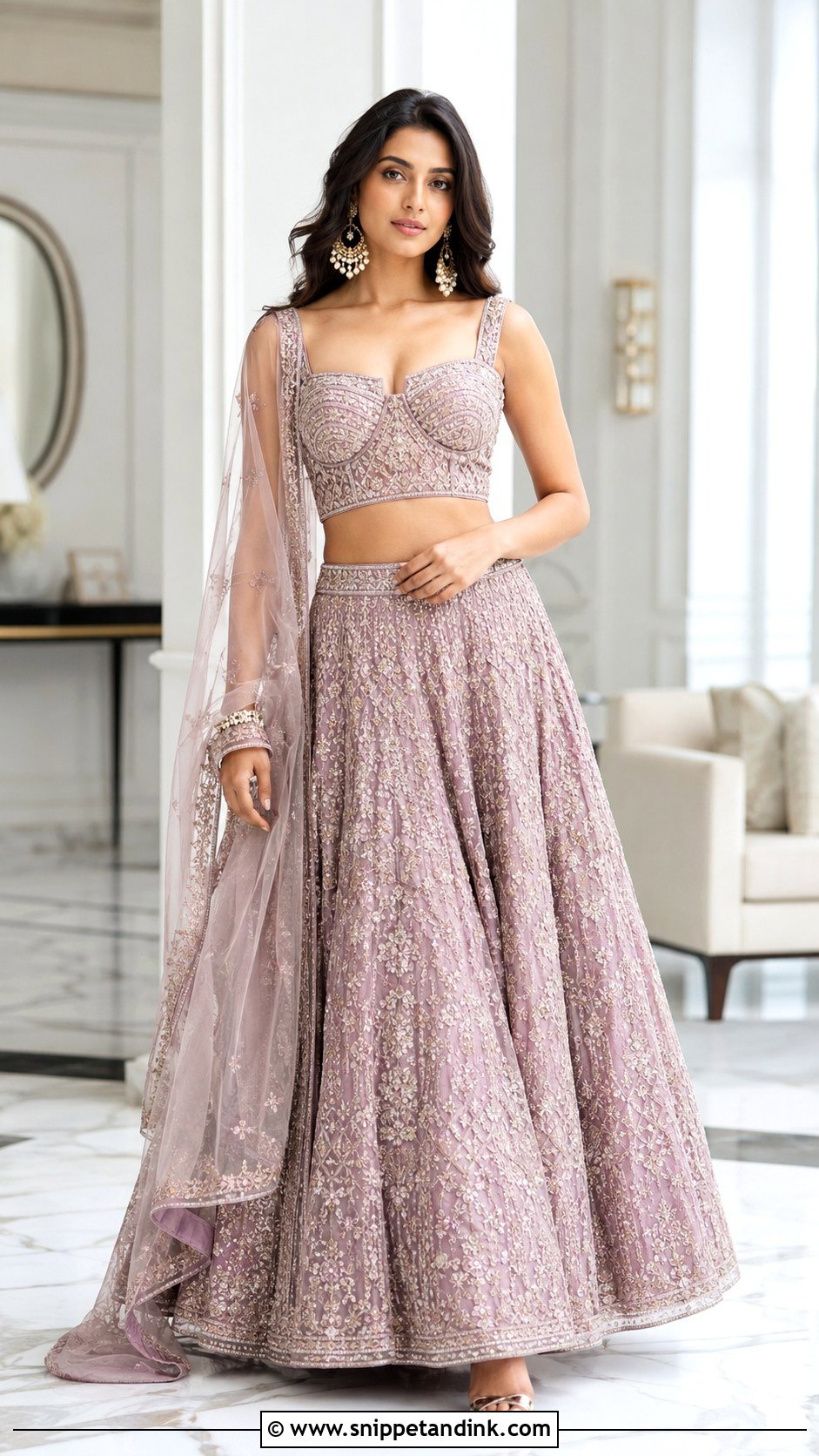
Corset cholis bring structure to a traditional skirt. A high-waisted chaniya with controlled flare and a clean waistband pairs with a corset-inspired choli that has wide straps, proper internal support and enough length to cover the midriff when you raise your arms. A light dupatta draped from one shoulder and fixed at the wrist or waist softens the shape and adds movement. Statement earrings, a delicate bracelet and metallic heels keep the styling modern, with a sleek ponytail or center-parted bun. The test is breathing. If you can’t take a full breath sitting down, the corset is too tight; at the fitting, sit, walk and lift your arms before approving it.



20. Champagne Silver Wedding Chaniya Choli
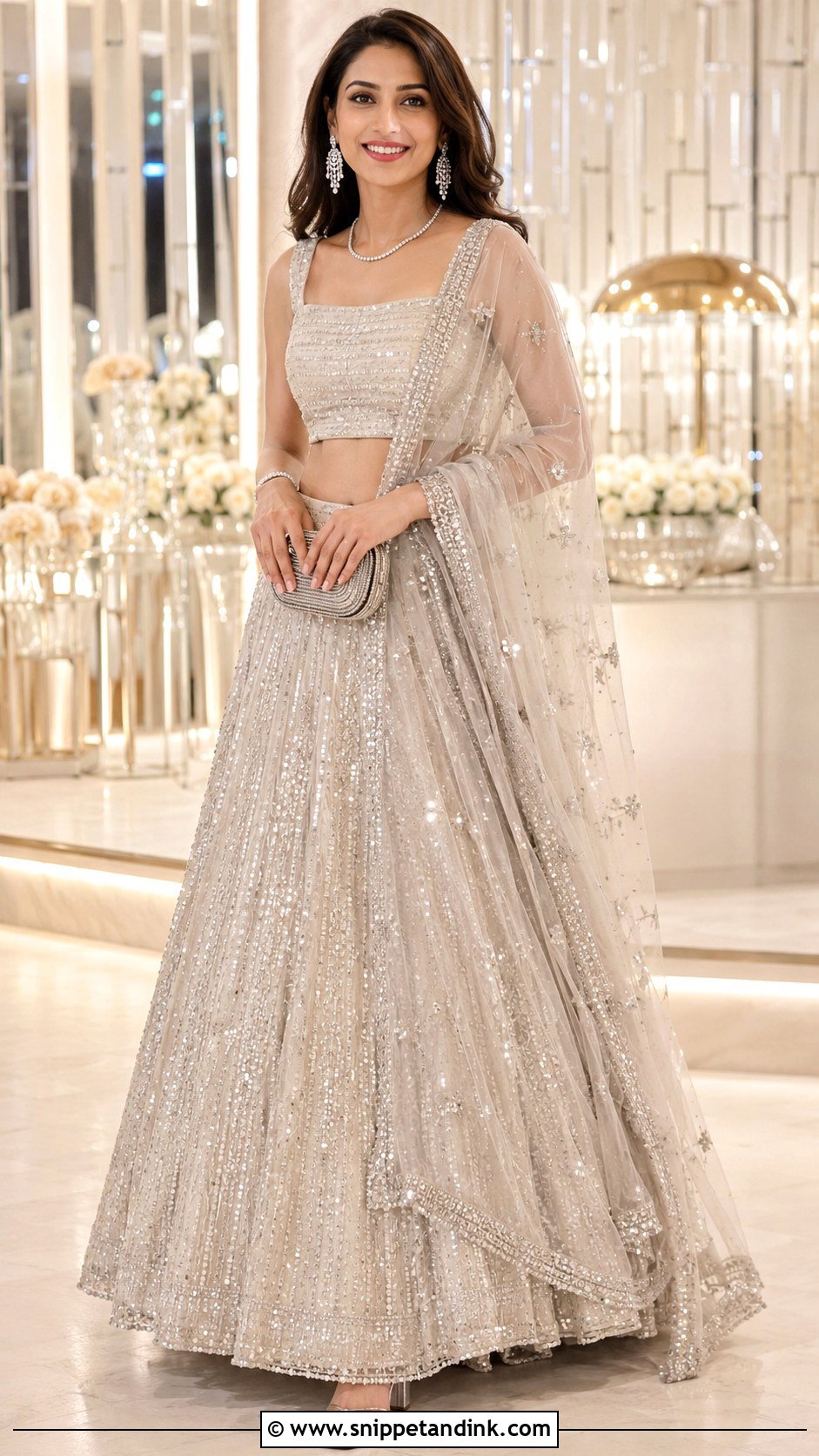
Champagne and silver make a pale, luminous reception look, and the risk with pale outfits is that they look shapeless. A fluid skirt with fine silver threadwork, pearls or scattered sequins pairs with a champagne choli, square neck with delicate straps or short sleeves. A sheer silver-grey dupatta adds a little contrast inside the neutral palette. Crystal earrings, a slim necklace and a metallic clutch, with silver block heels for stability under the long hem. Smooth waves, a low bun or a sleek ponytail depending on the neckline, and makeup with radiant skin and a rose-neutral lip. I take extra care with tailoring at the waist and shoulders here, since structure is what stops a pale outfit from washing out.
Setting a Seedha Pallu Dupatta That Holds
The Gujarati front drape shows off the dupatta’s border across the body, and it’s the drape I’m asked about most for chaniya cholis. Families do it slightly differently, so ask whoever will dress you how they prefer it. This is the general sequence I use.
- Tuck one end of the dupatta into the skirt waistband at the front, a little to one side, and pin it through the band so it can’t slide out.
- Take the length around your back and bring it over the opposite shoulder, so the decorated border falls down across your front.
- Spread the fabric across the chest to show the border, then pin it at the shoulder through the choli’s seam rather than the fabric face.
- Tuck or pin the lower end at the waist, or let it hang if the dupatta is light.
- For a head drape, lift a section of the back over the head and grip it into the bun with U-pins.
Net and georgette dupattas hold this drape well; stiff tissue or heavy silk tends to stand away from the body. Practice it once with the actual dupatta before the day, since a new border is often stiffer than you’d expect and needs a quick steam to fall flat.
Dance in It Once Before the Wedding Night
Across this list you have ceremony reds, daytime pastels, garba patchwork and reception sequins. Start with a color and fabric that suit the venue, the weather and what the function is for. Then balance the skirt’s volume and embellishment against a choli that fits properly and that you can breathe in. Jewelry, footwear, hair and the dupatta should support the outfit, not compete with it. Before the wedding, put the whole thing on, shoes and jewelry included, and sit, walk and dance in it. Good tailoring and a dupatta that’s pinned in the right places make even a heavy chaniya choli comfortable for a long night.
You'll Like These Ideas:






Leave a Reply