
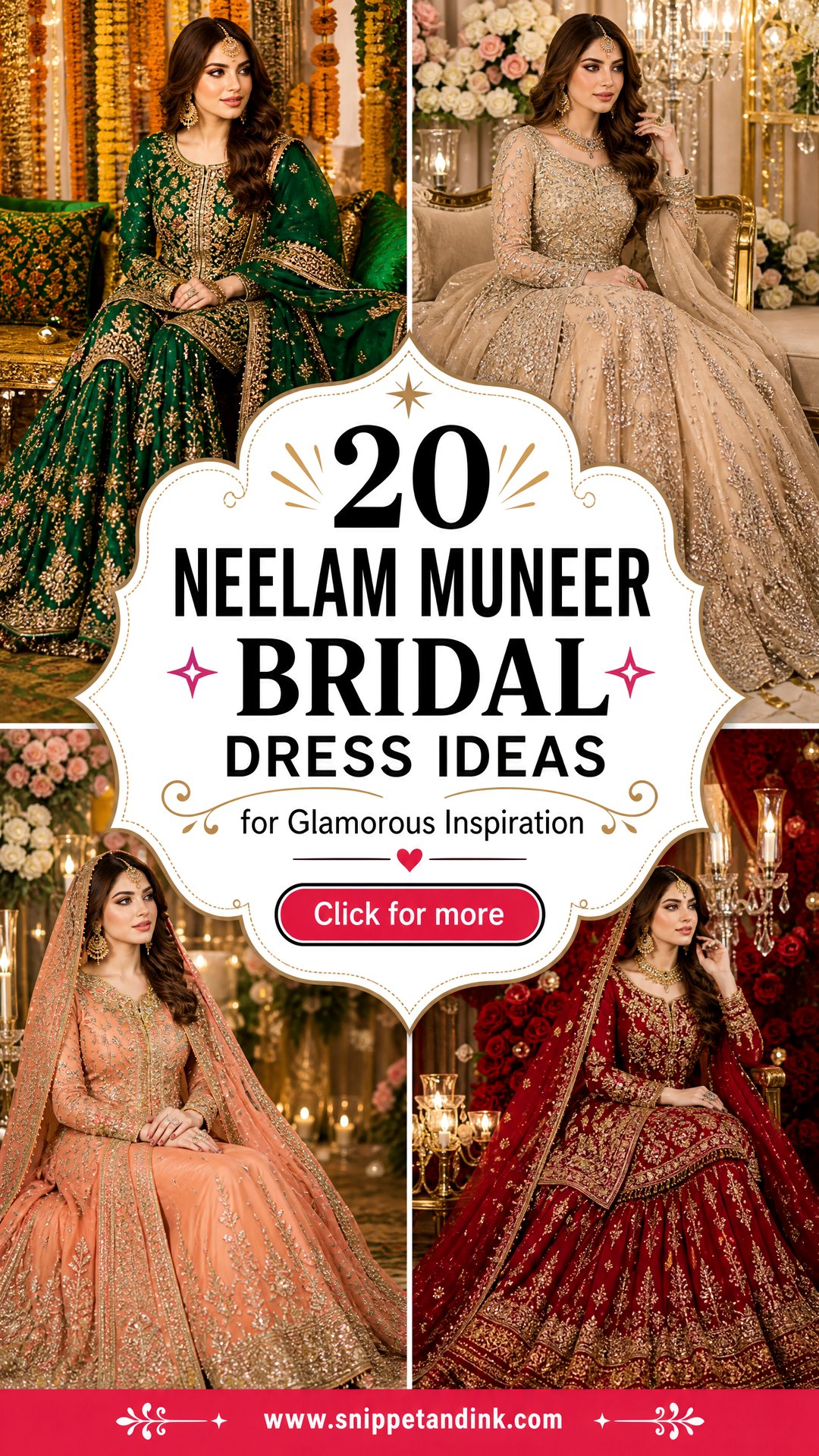
Neelam Muneer’s wedding wardrobe is a good reference if you love traditional Pakistani fashion but want it to look camera-ready. Her own wedding events included a white and silver gharara and a classic red bridal outfit, and her shoots have shown plenty of heavily worked ivory couture. What ties those looks together is dense hand embroidery, controlled dupatta draping and jewellery chosen to frame the face. You don’t need to copy any outfit stitch for stitch. When I build a look like this for a bride, I start with the silhouette she can move in, then adjust the colour to her skin tone and scale the embroidery to the event. Below are twenty complete outfits for the mayun, mehndi, nikah, baraat and walima.
Planning Five Events as One Wardrobe
Pakistani weddings often stretch over four or five events, and the outfits look better when they’re planned together instead of one at a time. I sketch the whole sequence with the bride before she orders anything.
- Mayun: yellow or mustard, light cotton or net, nothing you’d mind staining.
- Mehndi: bright, short and danceable, often green with contrasting dupattas.
- Nikah: soft and calm, usually white, ivory, pastel or silver.
- Baraat: the heaviest and most traditional outfit, commonly red or maroon.
- Walima: a clear contrast to the baraat, such as champagne, grey, blush or navy.
Two practical points come out of this. First, vary the silhouette, not just the colour; a lehenga, a gharara and a gown on consecutive days look far more different in photos than three lehengas. Second, reuse jewellery where you can. A good kundan or polki set can anchor both the mehndi and the baraat, which frees budget for the outfits themselves.
1. Neelam Muneer Red Bridal Lehenga
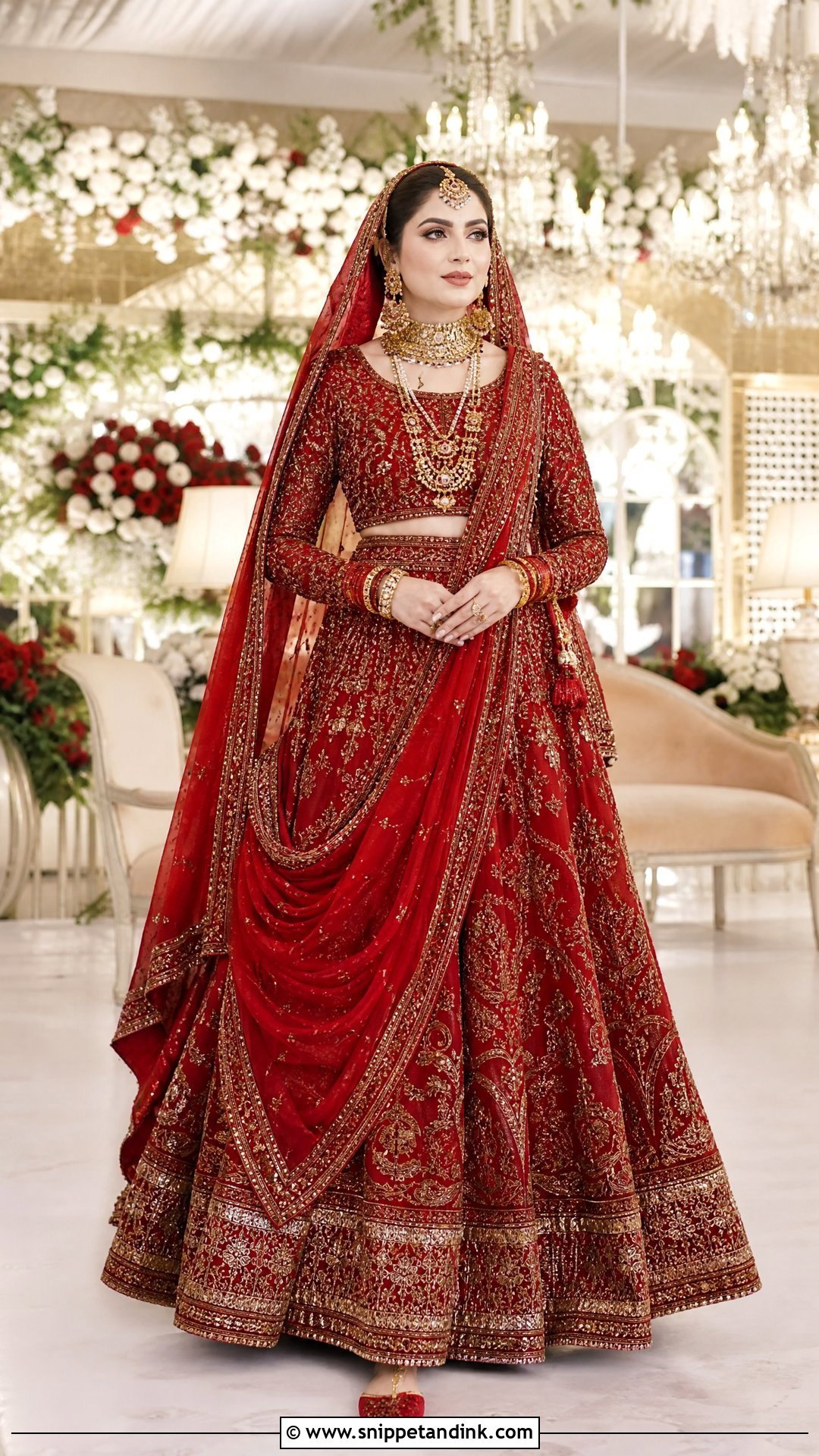
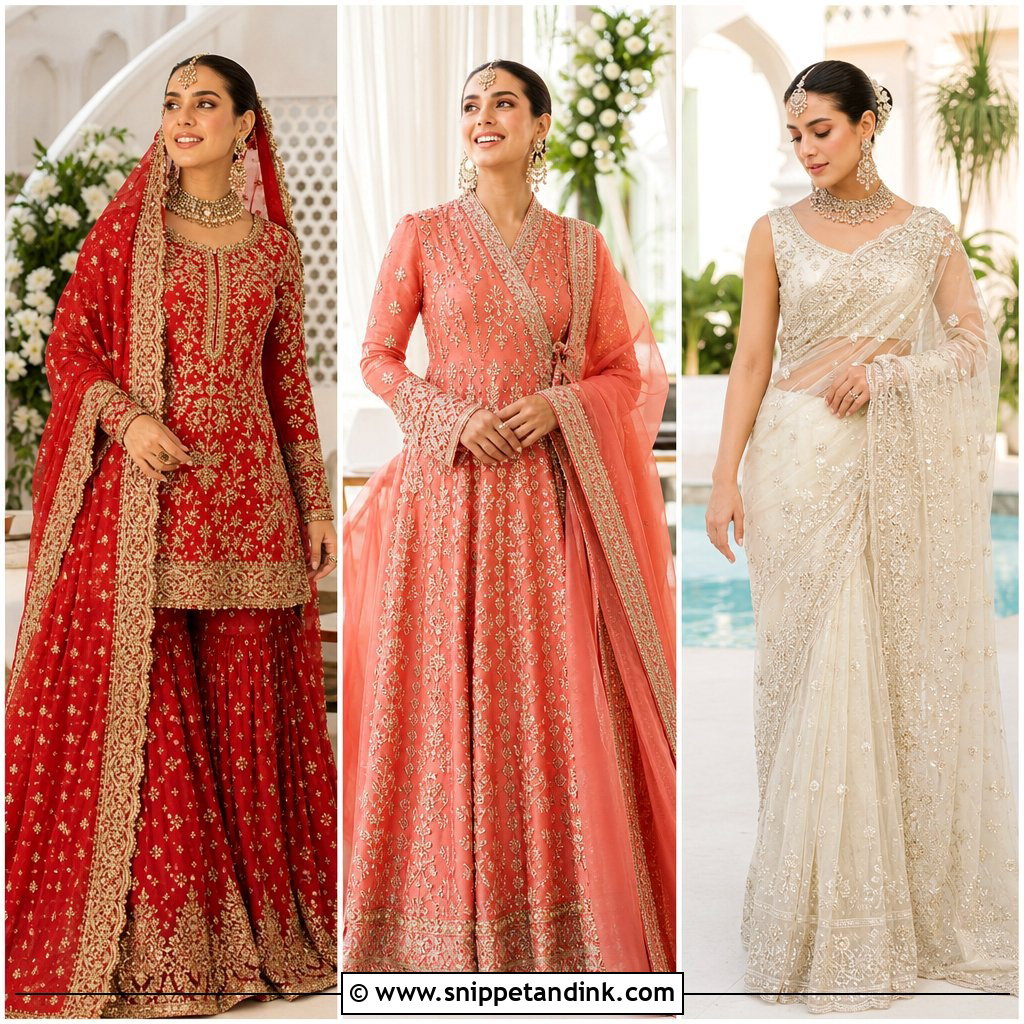
Red is still the baraat colour most families expect, and a deep crimson with antique gold is the version that photographs richest. I’d pair the skirt with a fitted long-sleeve blouse and keep the embroidery to floral vines, architectural borders and a little sequin, so it reads rich rather than crowded. Two dupattas: red over the head, a lighter embroidered one across a shoulder. Gold choker plus a longer layer, jhumkas, maang tikka and bangles, with red velvet khussas. One caution with crimson: bright orange-reds can wash out cooler skin tones, so hold the fabric to your face in daylight before ordering. Soft radiant makeup and a muted rose lip let the colour lead.
2. Neelam Muneer White Silver Bridal Gharara
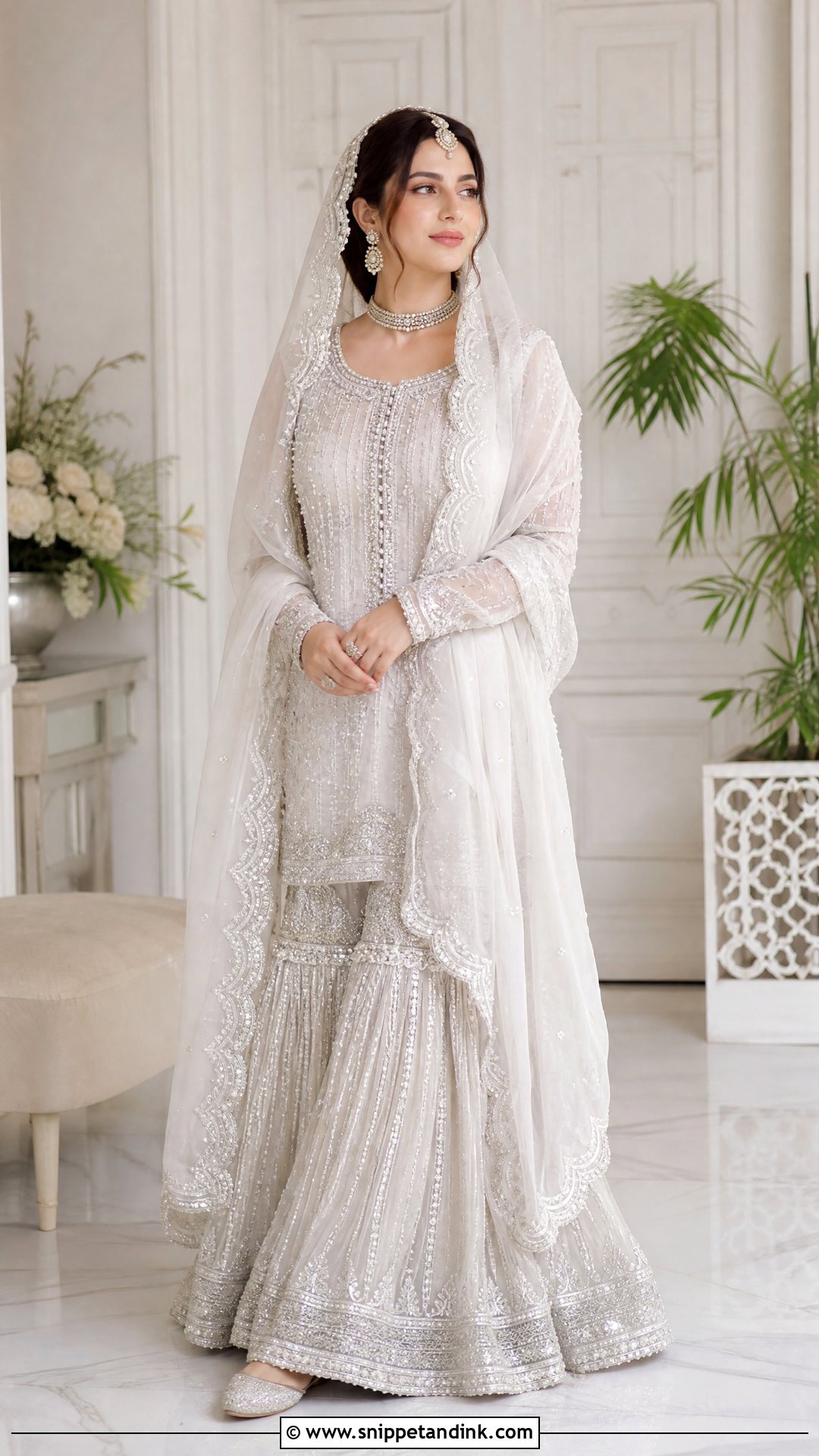
White and silver is the calm choice for a daytime nikah. A chiffon or organza shirt worked with pearls, beads and sequins over a gharara with a clear knee seam and a wide hem. The scalloped dupatta over the head gives the pale palette some structure. Silver khussas, a pearl choker, small earrings and a centred tikka. Pale pink flowers in a low bun or a small white bouquet add a little warmth. White fabric shows makeup transfer immediately, so I always put a clean muslin cloth around the neckline while the bride is being finished. Silver-beige eyeshadow and a soft pink lip suit it.
3. Neelam Muneer Ivory Bridal Pishwas
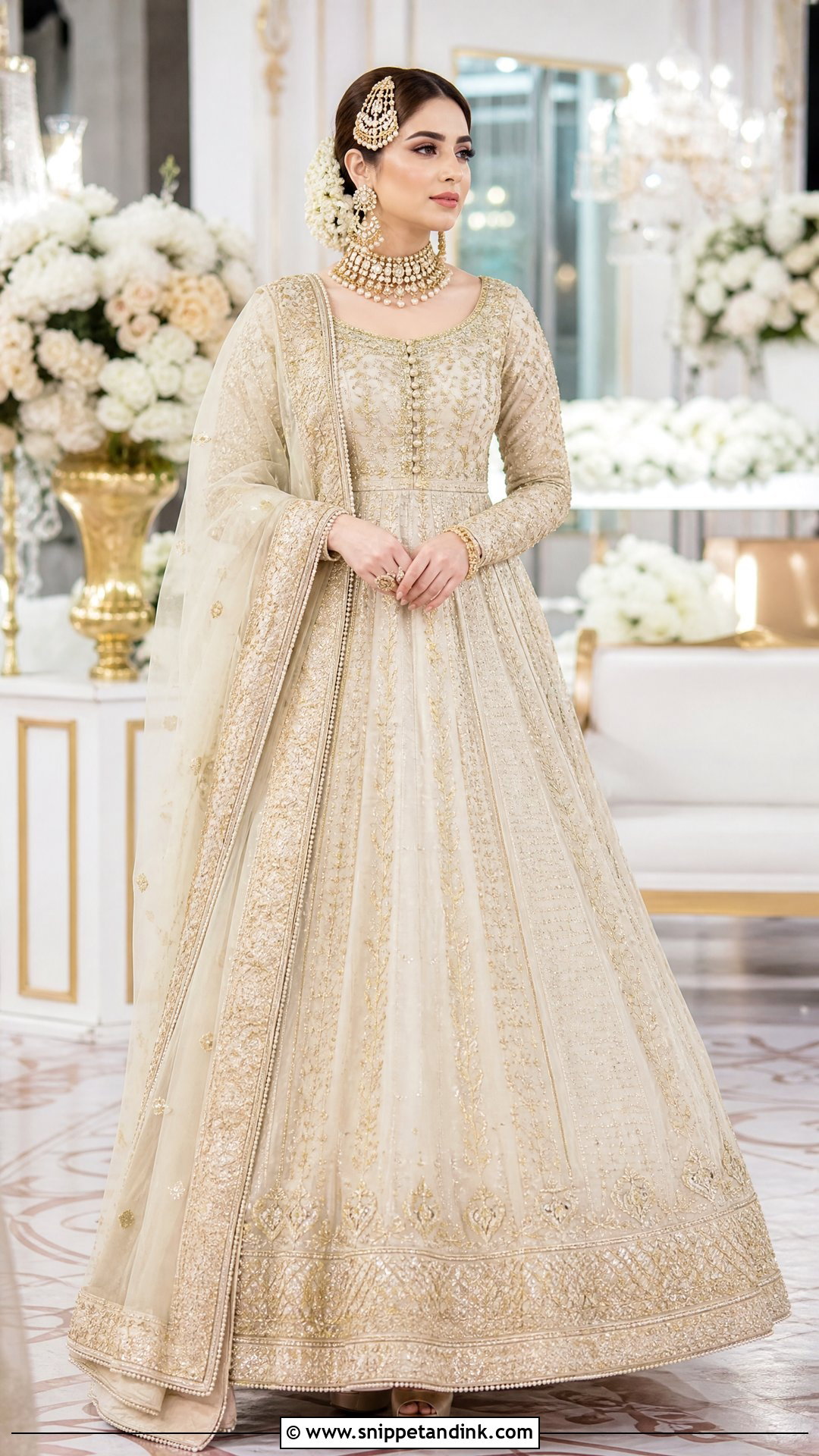
The pishwas, a long fitted bodice flaring into a full skirt, moves better than almost any other Pakistani bridal shape when you walk. In ivory with gold zari, pearls and fine thread, I’d look for vertical motifs on the body to lengthen it and a heavy border at the hem so the flare has weight to swing. An ivory organza dupatta with gold edging, loosely over the head. Champagne heels or embroidered ivory khussas, a polki choker, drops and a side jhoomar. Keep makeup fresh and the bun smooth. Ivory needs careful steaming before the event because organza creases show clearly against a pale ground.
4. Neelam Muneer Maroon Velvet Bridal Lehenga
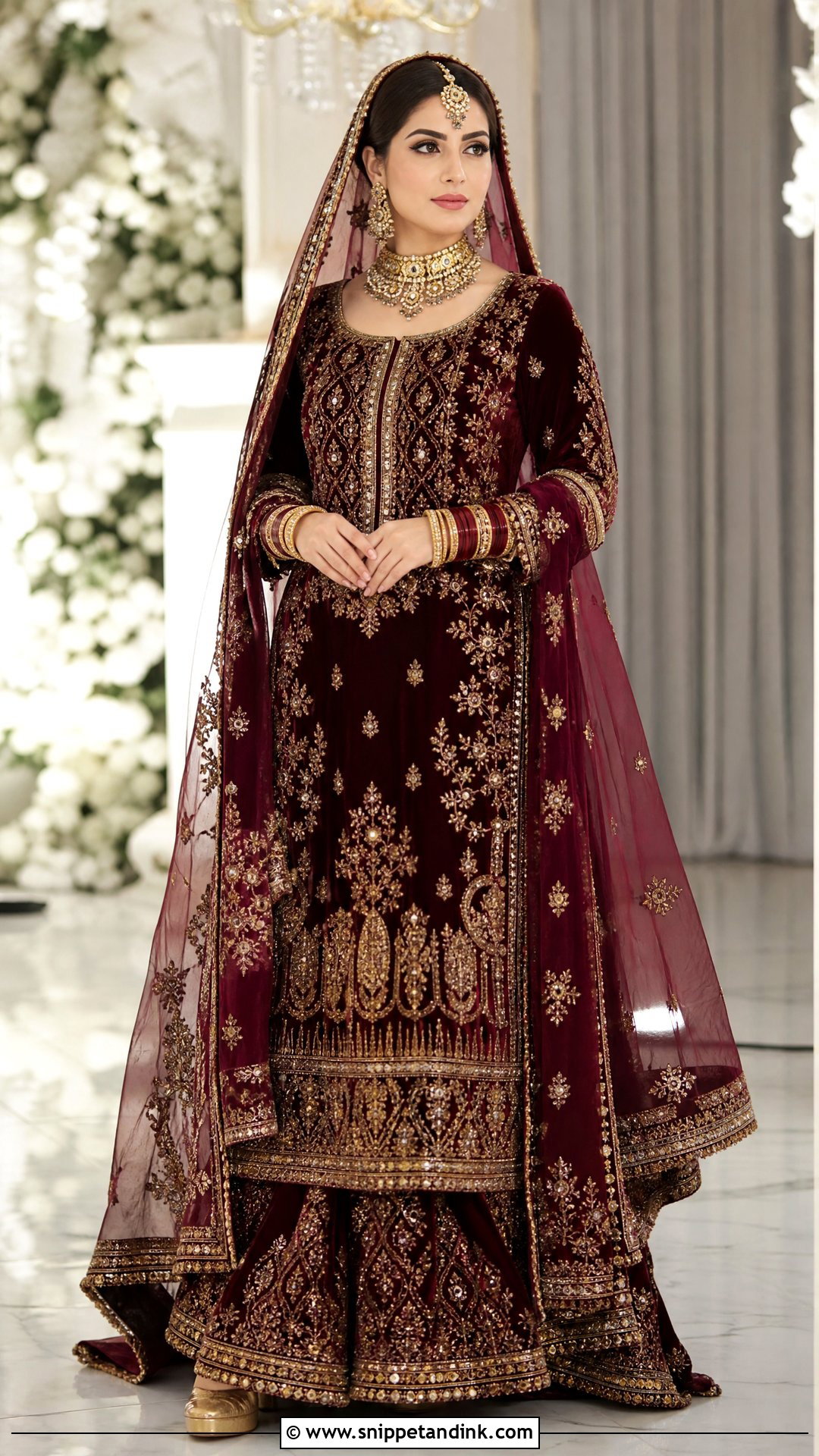
In winter I steer brides towards maroon velvet, because it has depth no other fabric gives and it’s warm. A velvet blouse or long shirt over a matching lehenga worked in antique gold dabka, naqshi and sequins. Space the motifs on top and concentrate the heaviest work near the hem, which also helps the skirt hang. A sheer maroon dupatta keeps the total weight down. Velvet plus heavy embroidery gets very hot in a crowded hall, so ask about the venue’s heating and choose comfortable gold platforms or khussas. Kundan jewellery, red bangles, warm brown eyes and a berry lip.
5. Neelam Muneer Gold Bridal Sharara
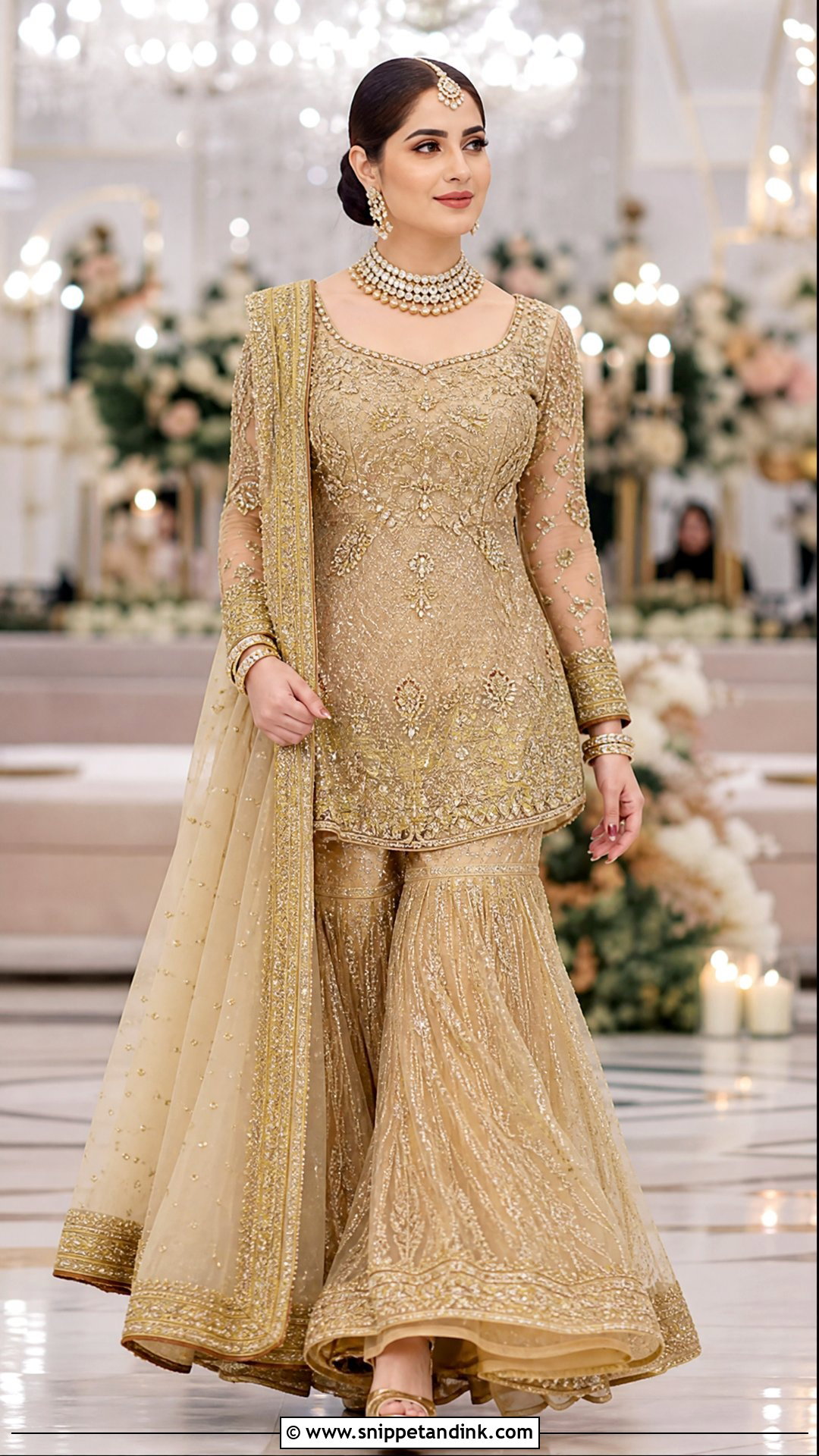
Not every bride wants a heavy lehenga, and a gold sharara is my usual suggestion when she doesn’t. Wide flared pants with a short fitted kurti in tonal embroidery give the same festive volume with far less weight to carry. Mixing matte threadwork with small sequins stops gold from looking flat on camera. Put a sheer gold dupatta over one shoulder and fix it lightly at the head so both hands stay free. Metallic block heels, a pearl and kundan necklace, matching earrings, stacked bangles. A sleek bun with a few loose strands, bronze eyes and a peach lip. Reception, engagement or a formal family dinner.
6. Neelam Muneer Blush Pink Bridal Lehenga
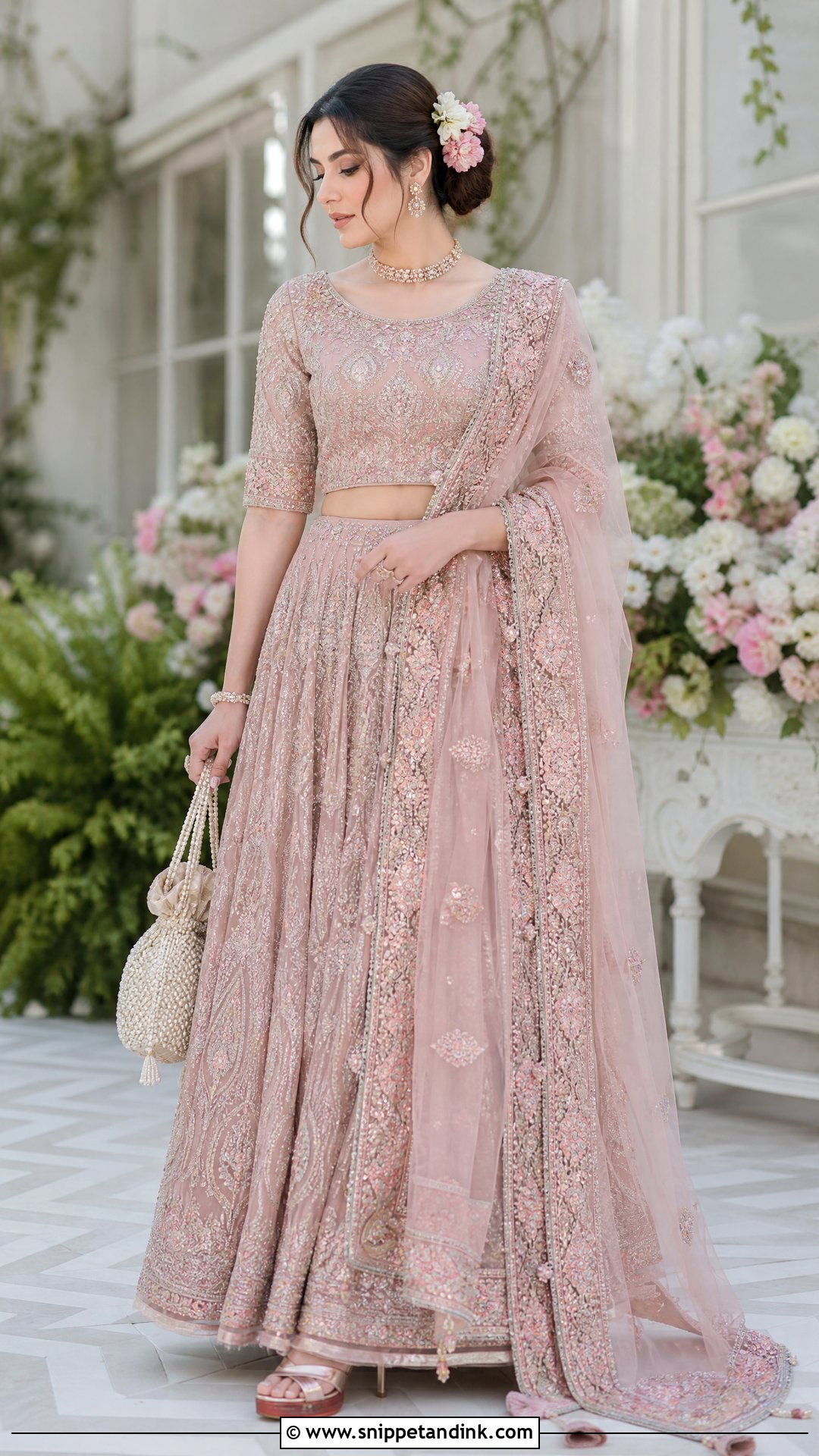
Blush pink is soft enough to let craftsmanship show, which makes it a good colour for silver, rose-gold and pearl embroidery. A flowing skirt, a structured blouse with full or elbow sleeves for support, and a net dupatta with a clear border, either over the head or diagonally across the body. Rose-gold heels, a pearl potli and jewellery with pale stones. A slim crystal belt adds definition at the waist. Pale pink can look grey under cool indoor lighting, so check the fabric under the venue’s lights if you can. Low textured bun, rosy cheeks, pink-nude lip; daylight walimas and spring receptions.
7. Neelam Muneer Emerald Green Mehndi Gharara
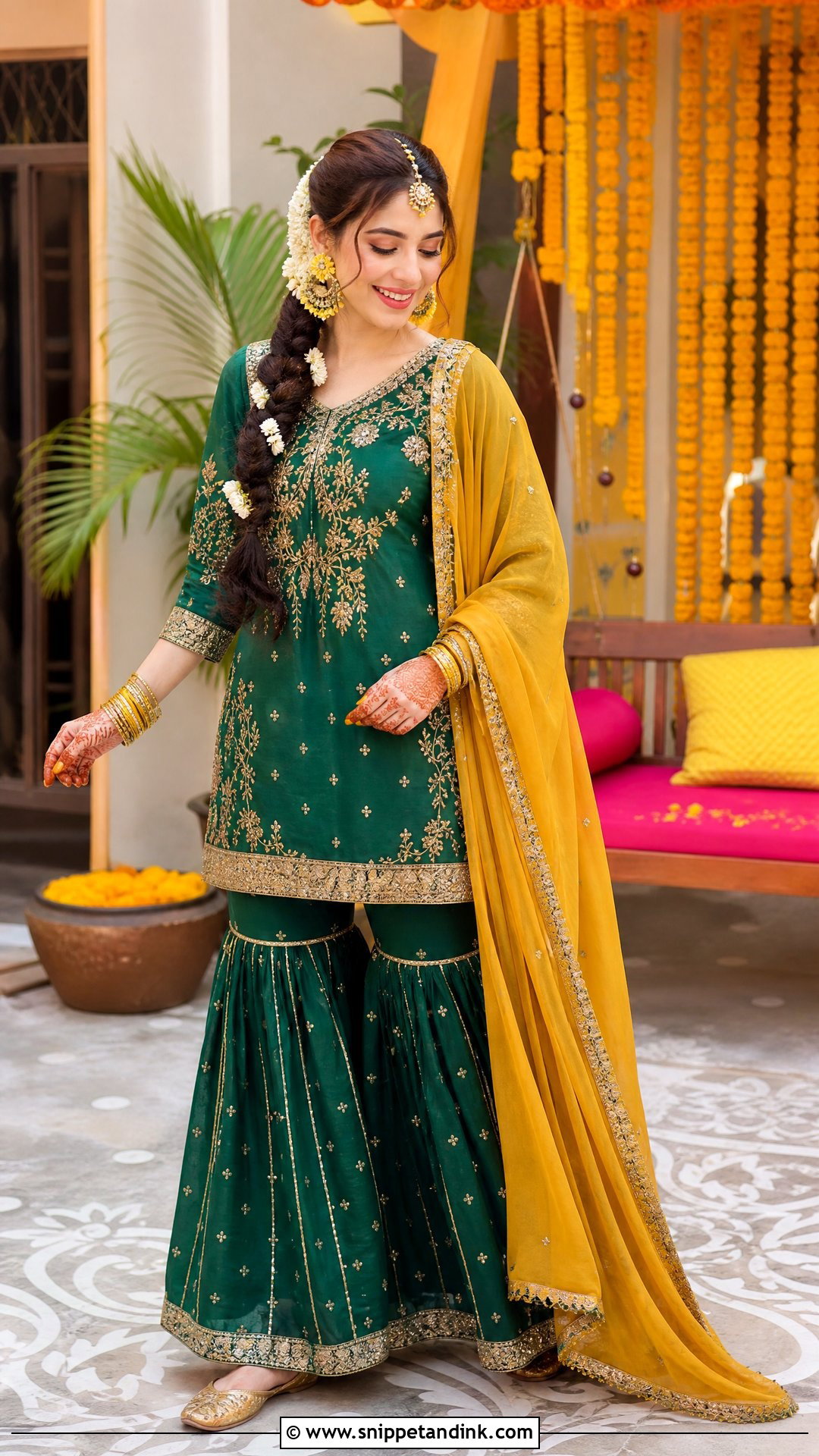
Mehndi is the one event where a bride should be able to dance, so I keep the shirt short and the skirt light. Emerald green with gold gota, mirrors and coloured thread on the shirt, over an emerald gharara with a bright border at the knee and hem. A contrasting dupatta in mustard, coral or hot pink brings the playful colour mehndi is known for. Gold khussas, floral earrings, bangles and a small tikka. A loose braid with fresh flowers looks lovely from behind, which matters because guests will film her back while she dances. Long-wear makeup, defined lashes and a coral lip.
8. Neelam Muneer Mustard Yellow Mayun Pishwas
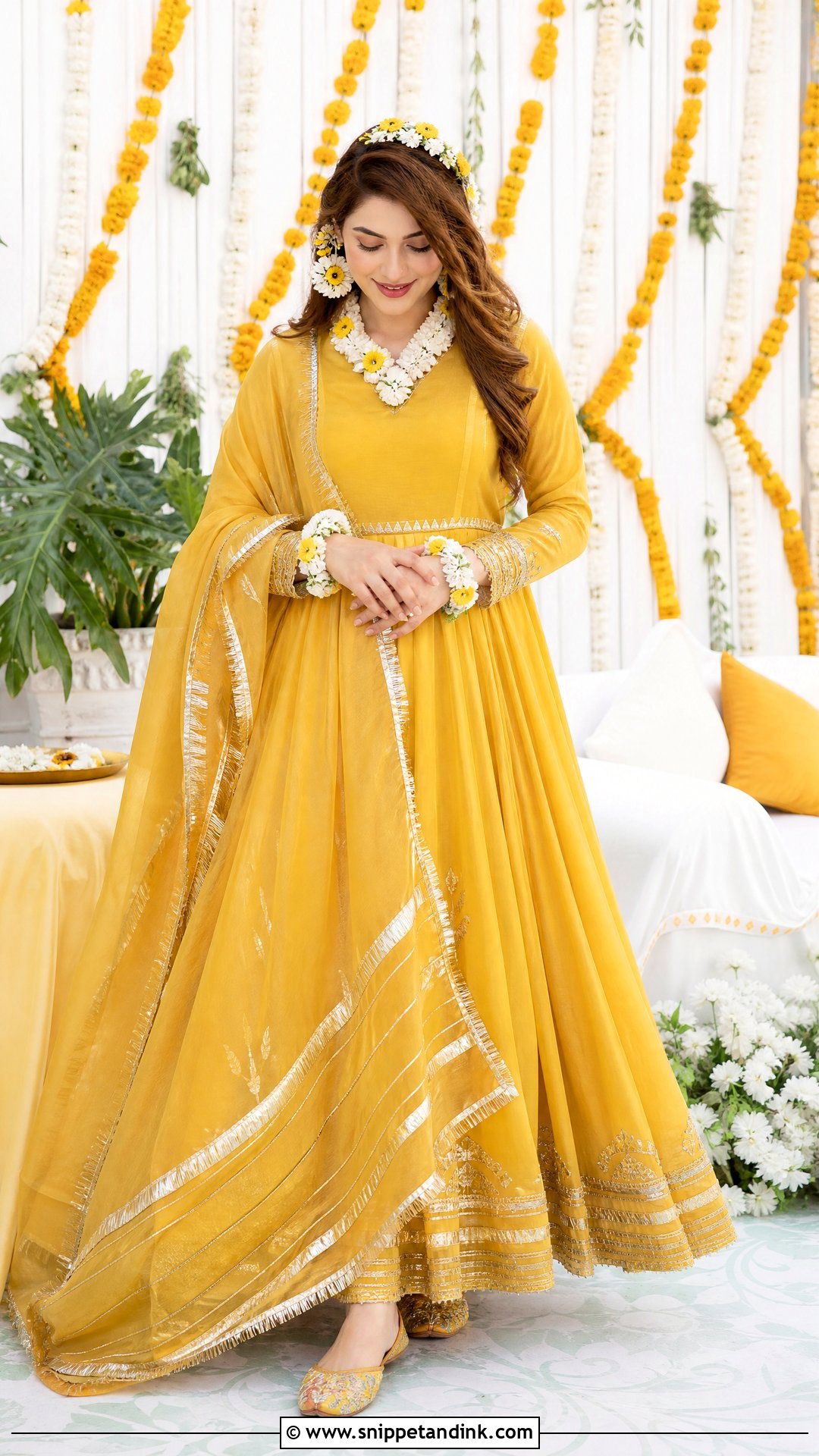
The mayun is usually seated, messy and turmeric-stained, so I’d never put a bride in anything precious for it. A cotton-net or organza pishwas in mustard yellow, with a comfortable bodice and an ankle-length flare, is light and washable enough. Small gota motifs, gold edging and floral thread are plenty. A matching yellow dupatta with a narrow kiran border, draped loosely over the head and one arm. Gold flats or khussas for sitting cross-legged. Fresh floral earrings, wrist garlands and a simple necklace, natural makeup and a soft braid. Haldi paste does stain, so test a hidden seam if the fabric matters to you.
9. Neelam Muneer Red Gold Bridal Gharara
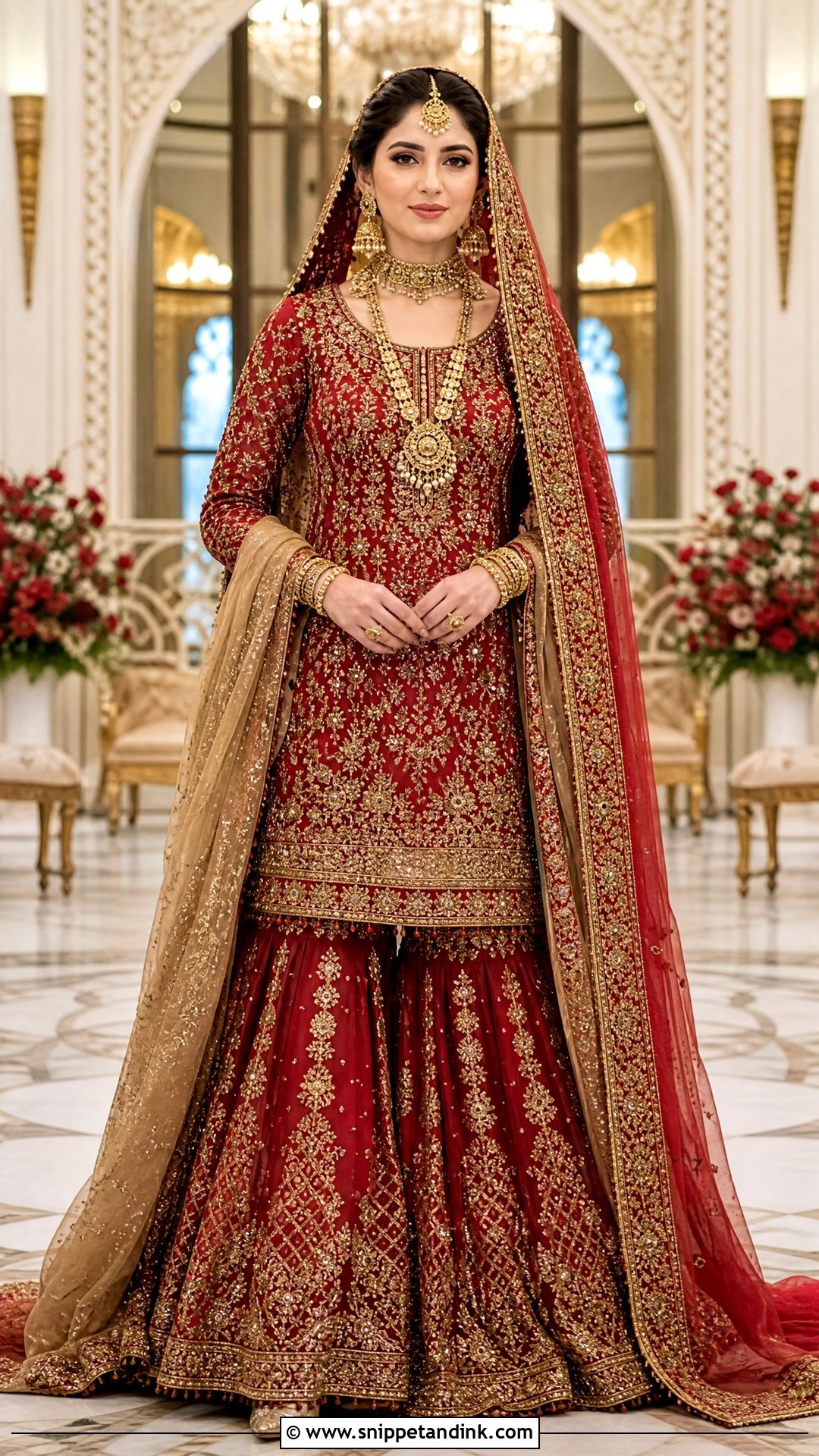
A red gharara has an old-world entrance built into it: fitted to the knee, then opening into a wide embroidered flare that swings as she walks in. Pair it with a long red shirt with dense gold work at the neckline, sleeves, slits and hem. A red net dupatta over the head; a second, lighter one across an arm for more grandeur. Gold khussas, choker, long necklace, jhumkas and a prominent tikka. Walking in a gharara takes some practice because the knee seam limits stride length, so I suggest a rehearsal in the actual outfit. Centre-parted bun, defined eyes. A good choice for a bride who wants tradition but not another lehenga.
10. Neelam Muneer Champagne Walima Gown
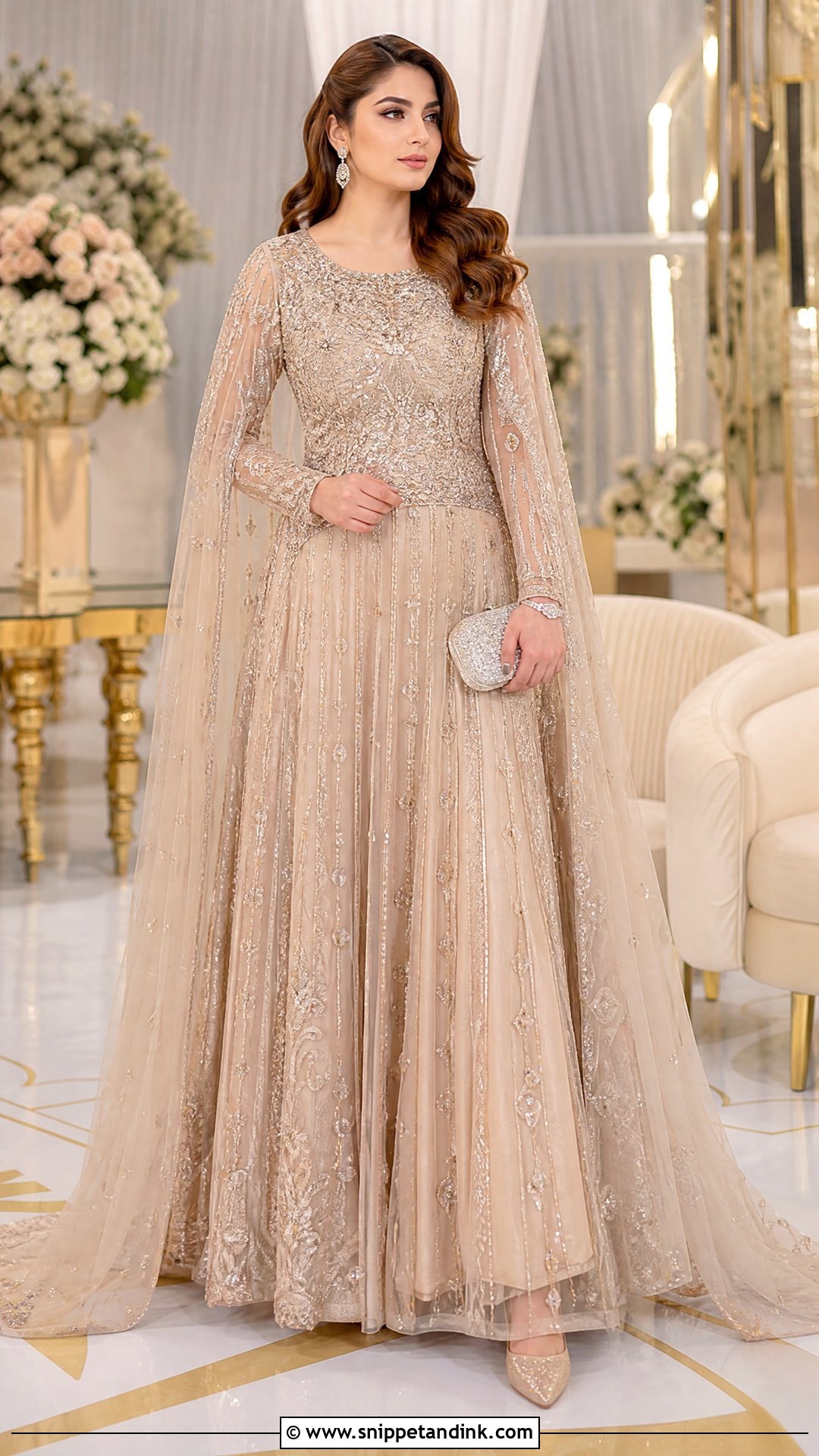
Champagne catches light without the glare of pure gold, which is why it works so well for walima gowns. A fitted bodice, full sleeves and a skirt that opens gradually rather than ballooning. Tonal crystals, pearls, sequins and metallic thread add depth while keeping the colour soft. A sheer cape-style dupatta or long veil from the shoulders gives a graceful entrance. Champagne pointed heels, a crystal clutch, diamond-style studs, a thin necklace and bracelet. Polished waves or a low bun depending on the neckline. Champagne can drain warmer complexions to beige, so taupe eyes and a rose-nude lip help keep colour in the face.
11. Neelam Muneer Silver Gray Walima Lehenga
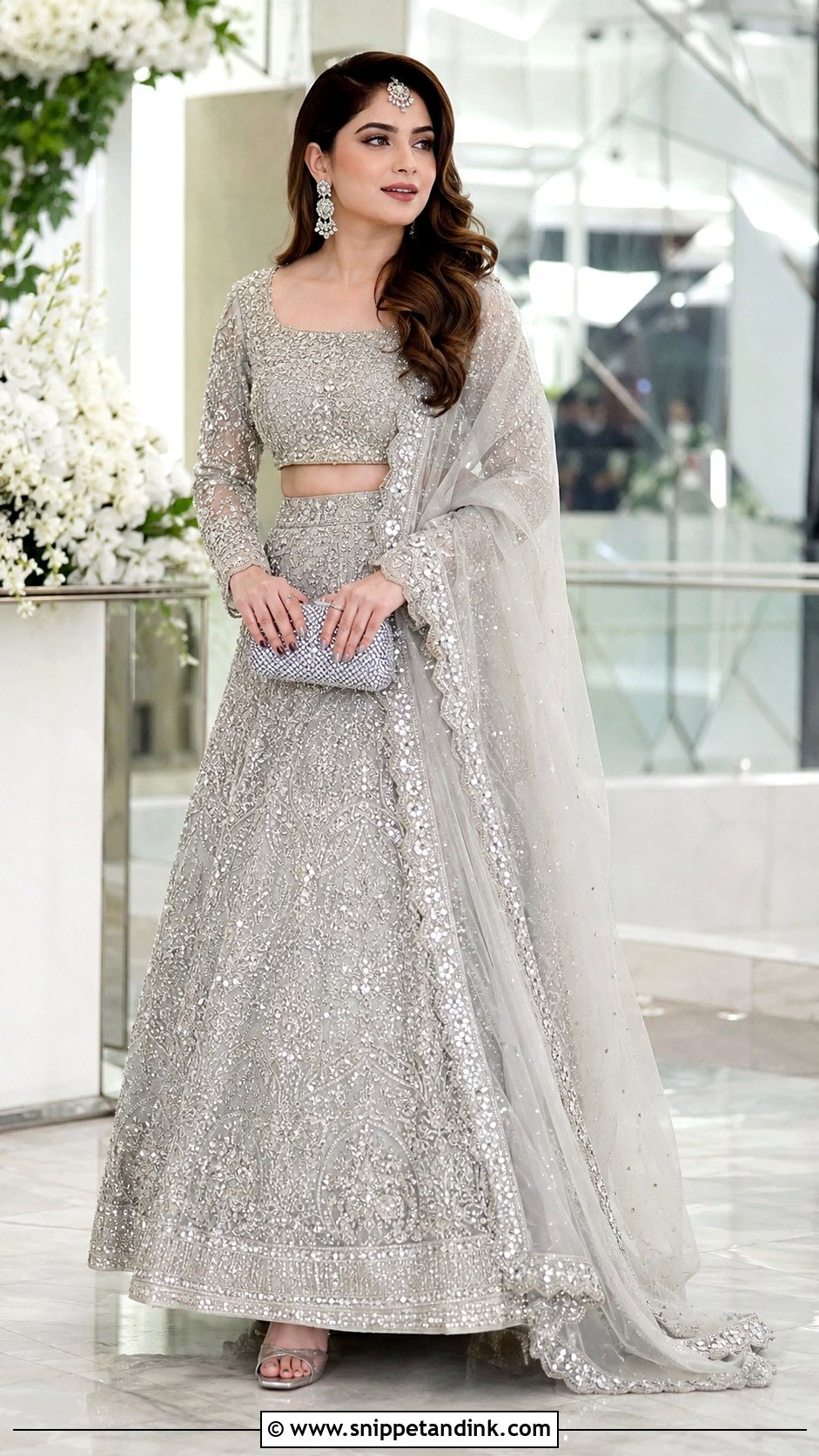
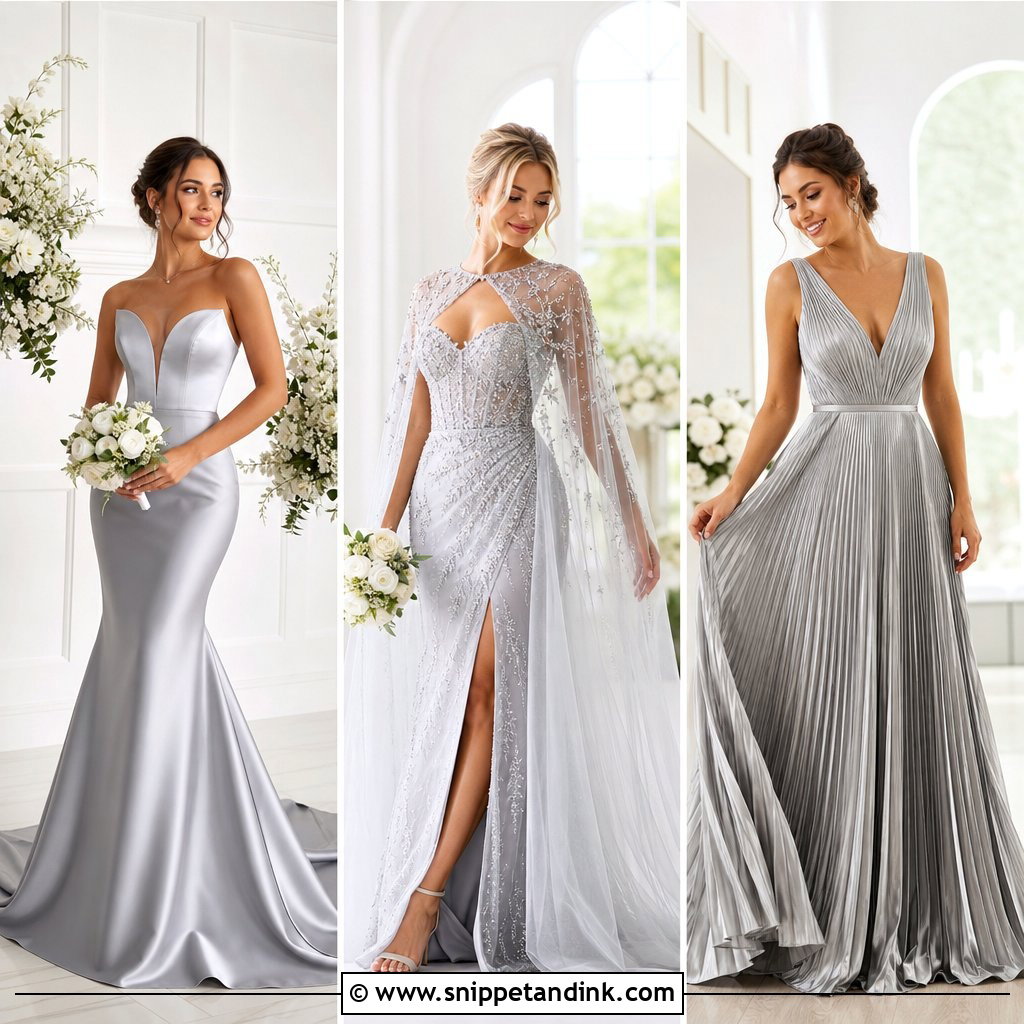
Silver grey is the walima colour I suggest to brides who’ve worn red at the baraat and want a clear change. A structured lehenga with crystals, sequins and metallic thread in vertical or floral patterns, a fitted blouse and a sheer dupatta with a narrow silver border. If the skirt is dense, keep the blouse neckline plain. Silver heels, crystal clutch, drop earrings and a refined headpiece; pale lavender or icy blue stones add a hint of contrast. Grey needs warmth near the face, otherwise skin looks dull, so I’d use cool pink blush and a mauve-nude lip. Sweep smooth waves to one side. Best indoors.
12. Neelam Muneer Peach Bridal Angrakha
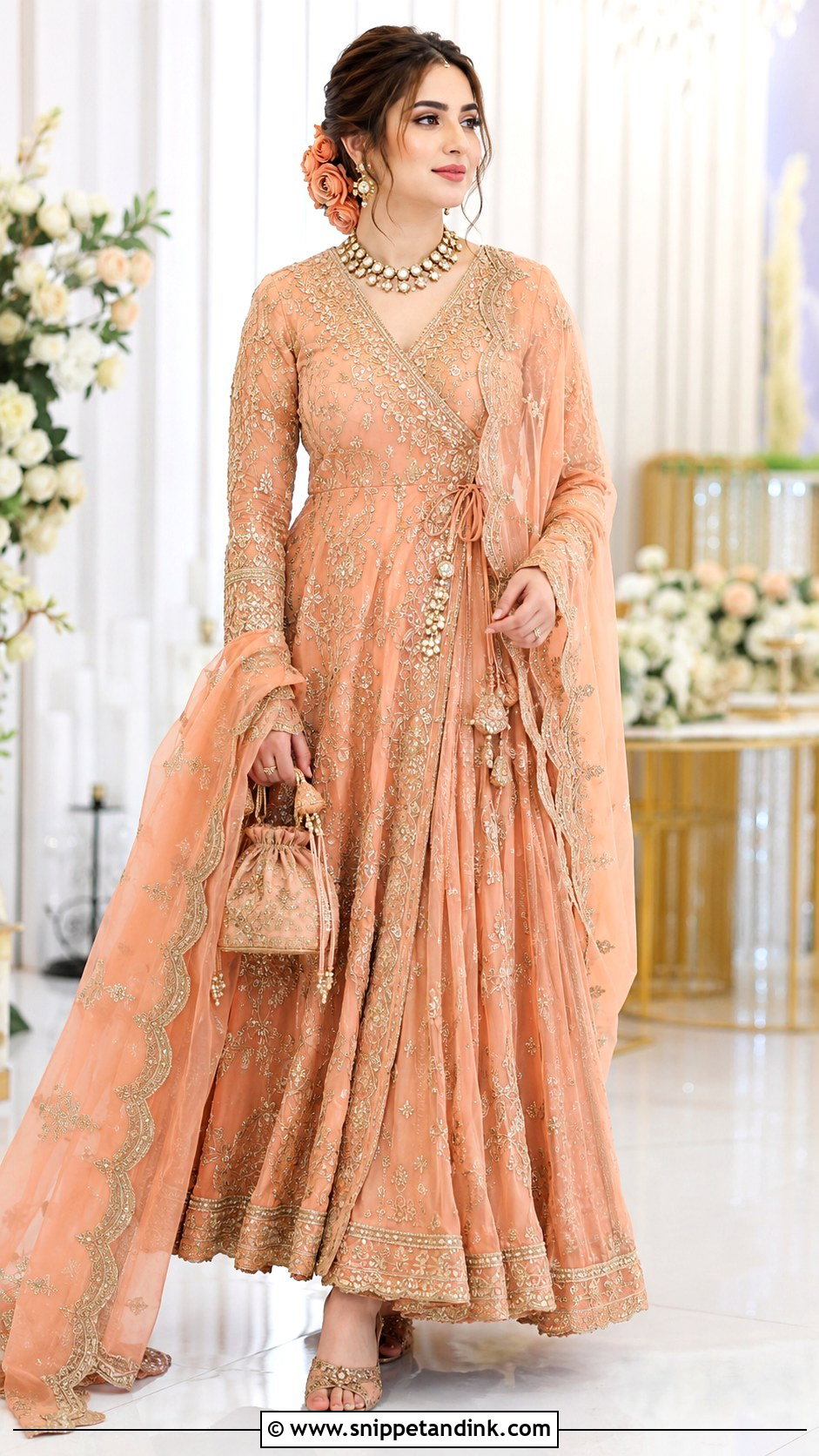
A peach angrakha wraps across the body and ties at the side, which makes it one of the most forgiving shapes for different figures, since the overlap can be adjusted. Choose knee-length or floor-length, with gold embroidery tracing the wrap edge, neckline, cuffs and hem so the construction stays visible. A shorter angrakha pairs well with a lehenga or sharara. Peach organza dupatta with gold scallops, fixed on one shoulder. Embroidered gold heels, a potli, kundan earrings and a medium necklace. Peach flowers in a low bun. Comfortable for an engagement or dholki; with richer work, it can carry a nikah.
13. Neelam Muneer Plum Bridal Maxi
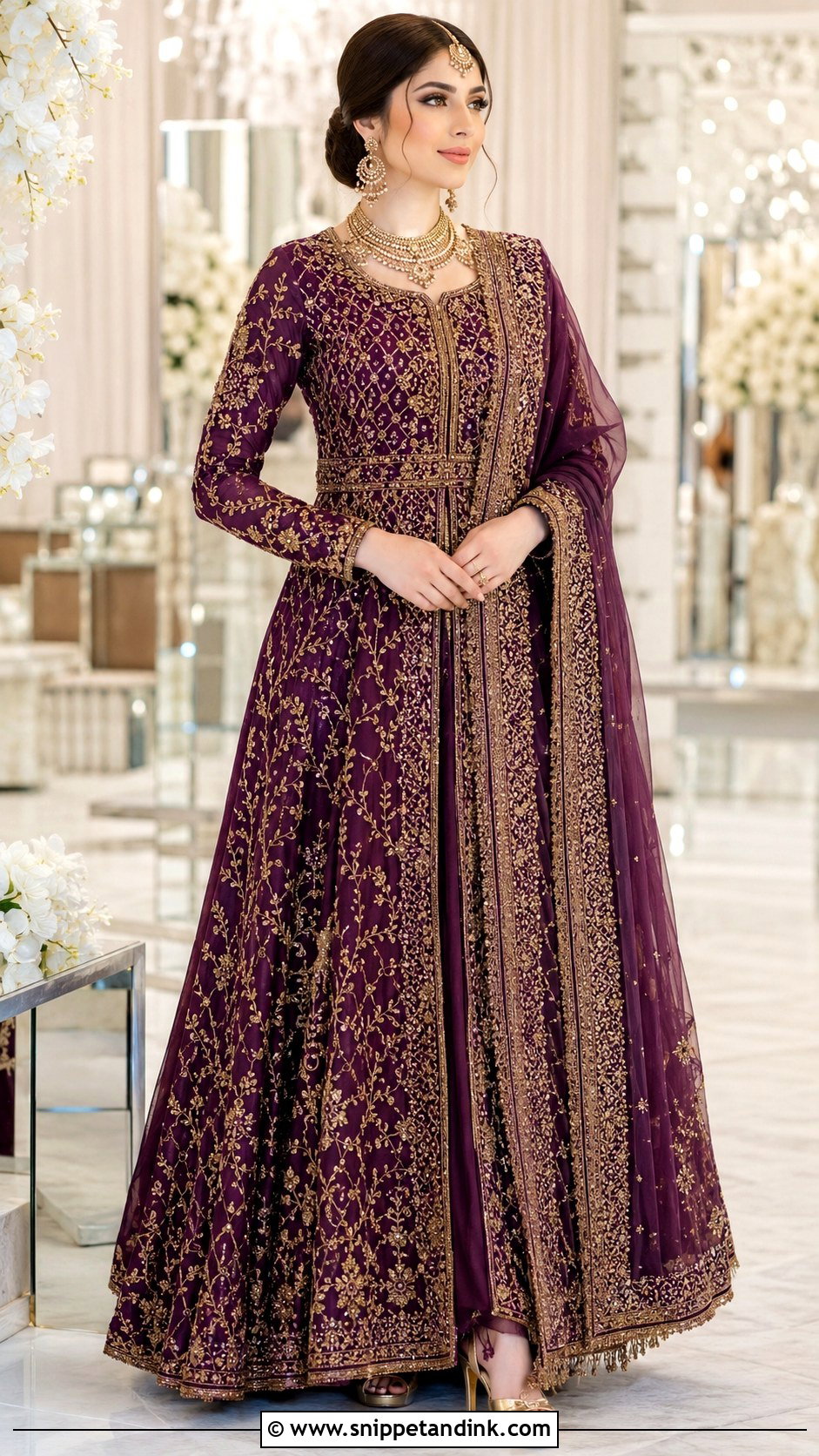
Plum gives evening drama without repeating red. A floor-length maxi with a fitted bodice, defined waist and wide skirt looks statuesque, especially with full sleeves and a moderately high neck. Embroidery in antique gold, copper or muted rose gold suits the depth of the colour better than bright yellow gold, which can look harsh against plum. A plum dupatta with a broad border, over the head and falling behind the shoulders. Gold heels, a jewel-toned clutch, statement earrings and a layered necklace. Sleek low bun, plum-brown eyes. Winter receptions and indoor evening engagements.
14. Neelam Muneer Ruby Farshi Gharara
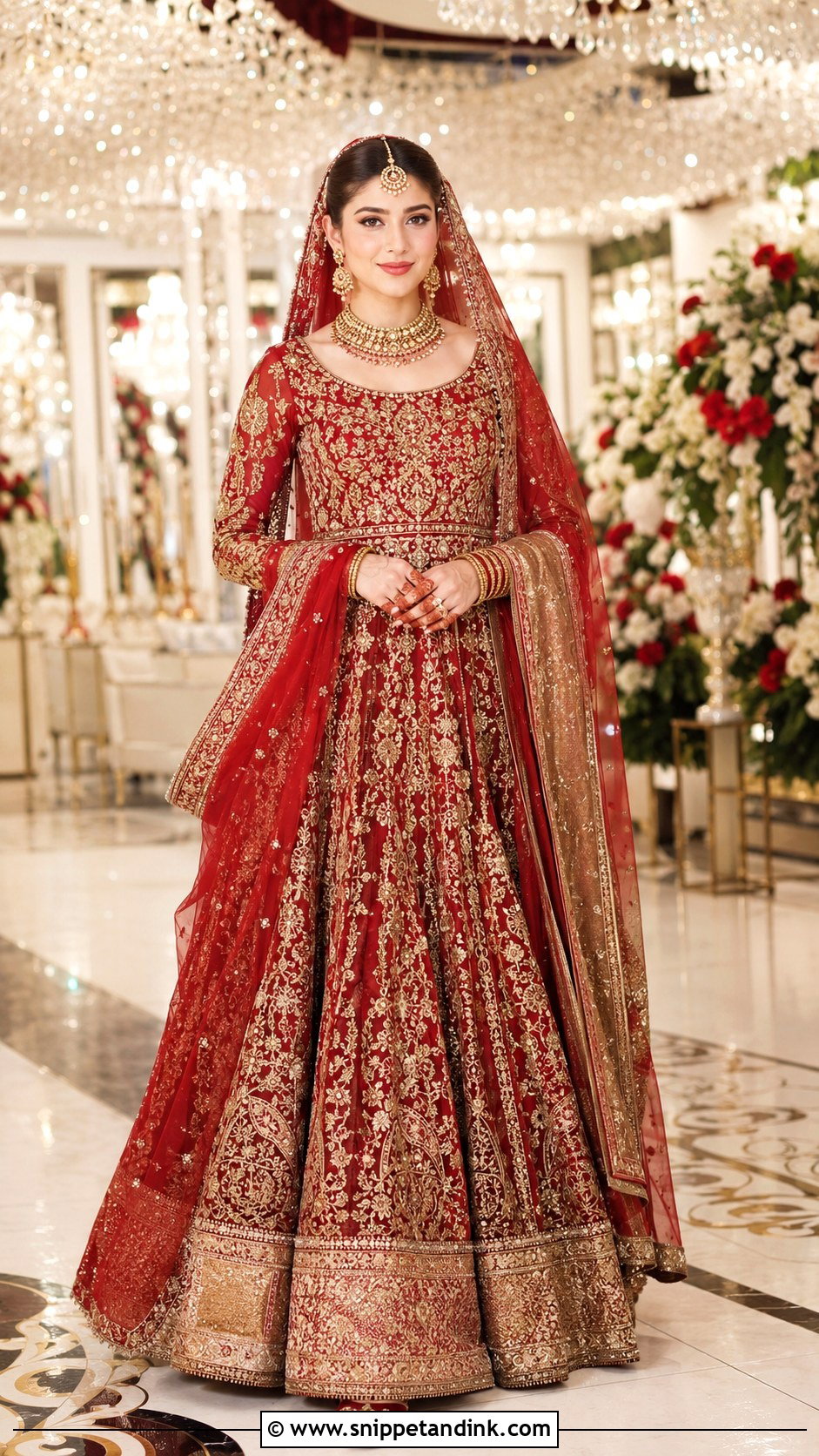
The farshi gharara is the most dramatic shape here: the lower section pools across the floor in a long train-like sweep. Ruby with a fitted kurti in gold zardozi and a well-shaped neckline is a powerful look. Keep the dupatta sheer red over the head so the garment below stays the focus. You’ll need hidden platforms or cushioned khussas, and a helper to lift the hem on stairs. Broad polki choker, long necklace, earrings, jhoomar and bangles. It’s honestly a garment for entrances and seated ceremonies; for dancing, plan a change of outfit.
15. Neelam Muneer Ivory Gold Bridal Saree
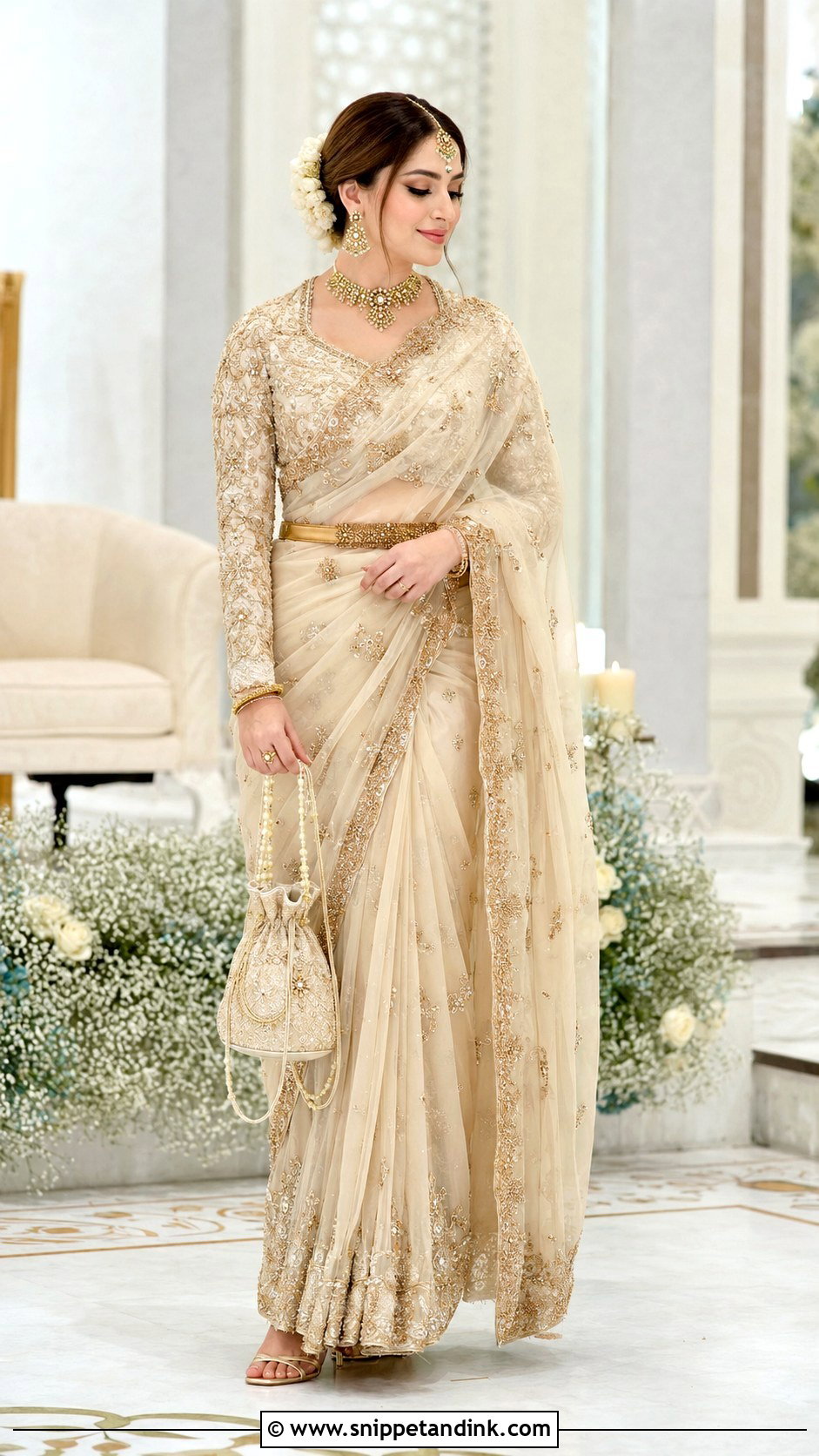
An ivory and gold saree is for the bride who prefers drape to volume. Organza, chiffon or tissue with an embroidered border and small motifs across the body, worn with a fitted gold or ivory blouse with full sleeves. The pallu goes over the head for the ceremony and back to the shoulder for the reception. I’d always have the saree pre-pleated and pinned by someone experienced on the day; tissue is slippery and pleats loosen within an hour otherwise. A slim waist belt helps hold them. Gold heels, a structured potli, choker, drops and a small tikka, with white flowers in a centre-parted bun.
16. Neelam Muneer Teal Blue Bridal Lehenga
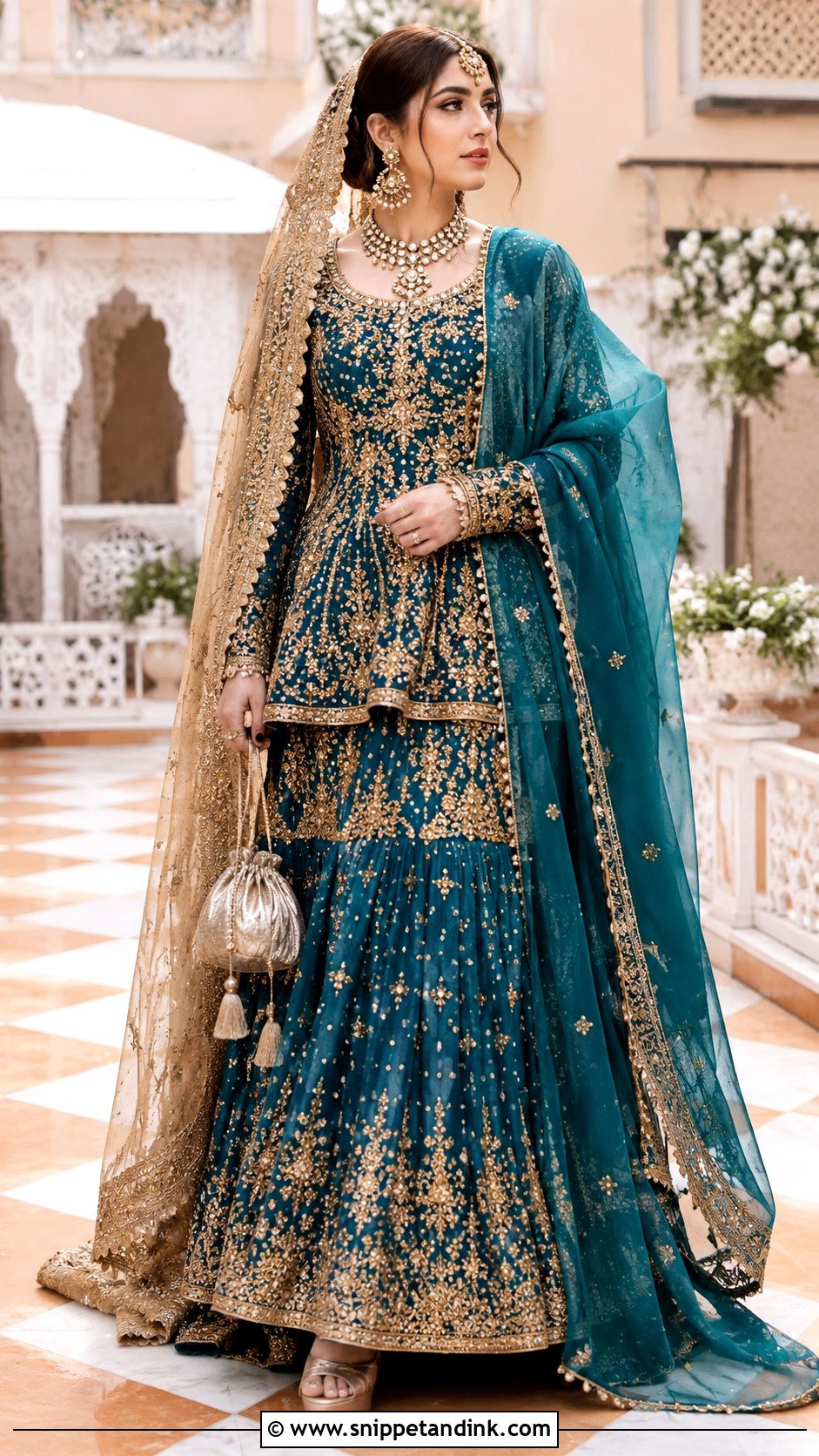
Teal is a strong bridal colour that avoids the red, maroon and green most families expect. Antique gold and copper embroidery on teal holds up well under bright venue lighting. Pair the lehenga with a fitted blouse or a short peplum top, depending on coverage. A teal dupatta over one shoulder and a soft gold one over the head adds contrast. Gold platforms, a metallic potli, chandelier earrings and a kundan necklace with green stones. A side-parted low bun softens the colour. Bronze eyes, peach blush and a neutral lip. Engagements, evening receptions and destination weddings by the sea or in gardens.
17. Neelam Muneer Rose Pink Bridal Sharara
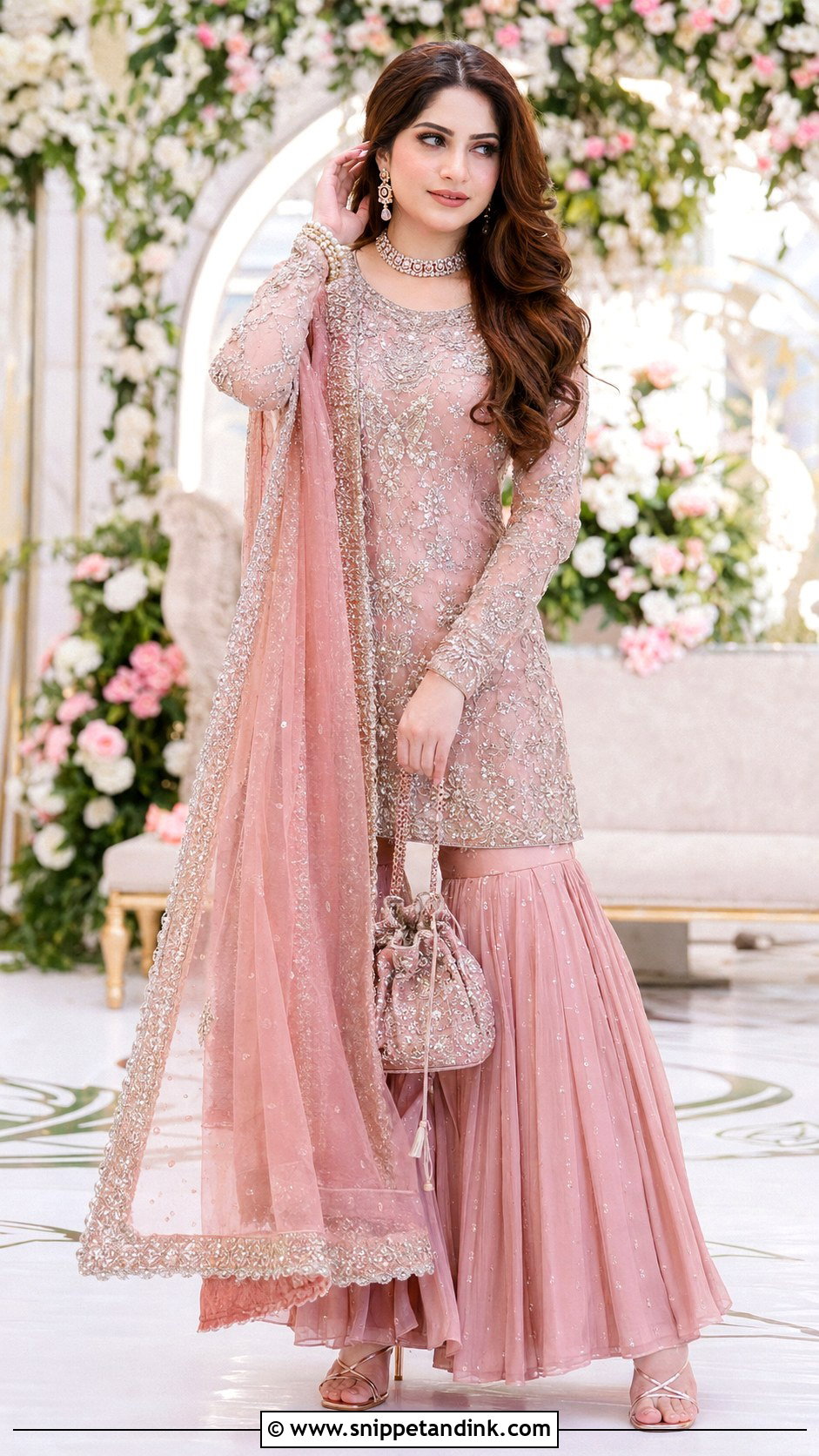
Rose pink in a sharara looks youthful, and the layered flare of the pants moves well when walking. Choose wide sharara pants with silver or rose-gold work, a fitted mid-length shirt that marks the waist, and embroidery at the neckline, cuffs and slits. A light net dupatta across the arms or softly over the head. Rose-gold heels, pearl bangles, a delicate choker, drops and a small bag. Loose waves for an engagement; a low bun if you’re wearing it for the nikah. Sharara hems catch on heels, so take your exact shoes to the hem fitting. Keep makeup rosy and luminous.
18. Neelam Muneer White Pearl Bridal Anarkali
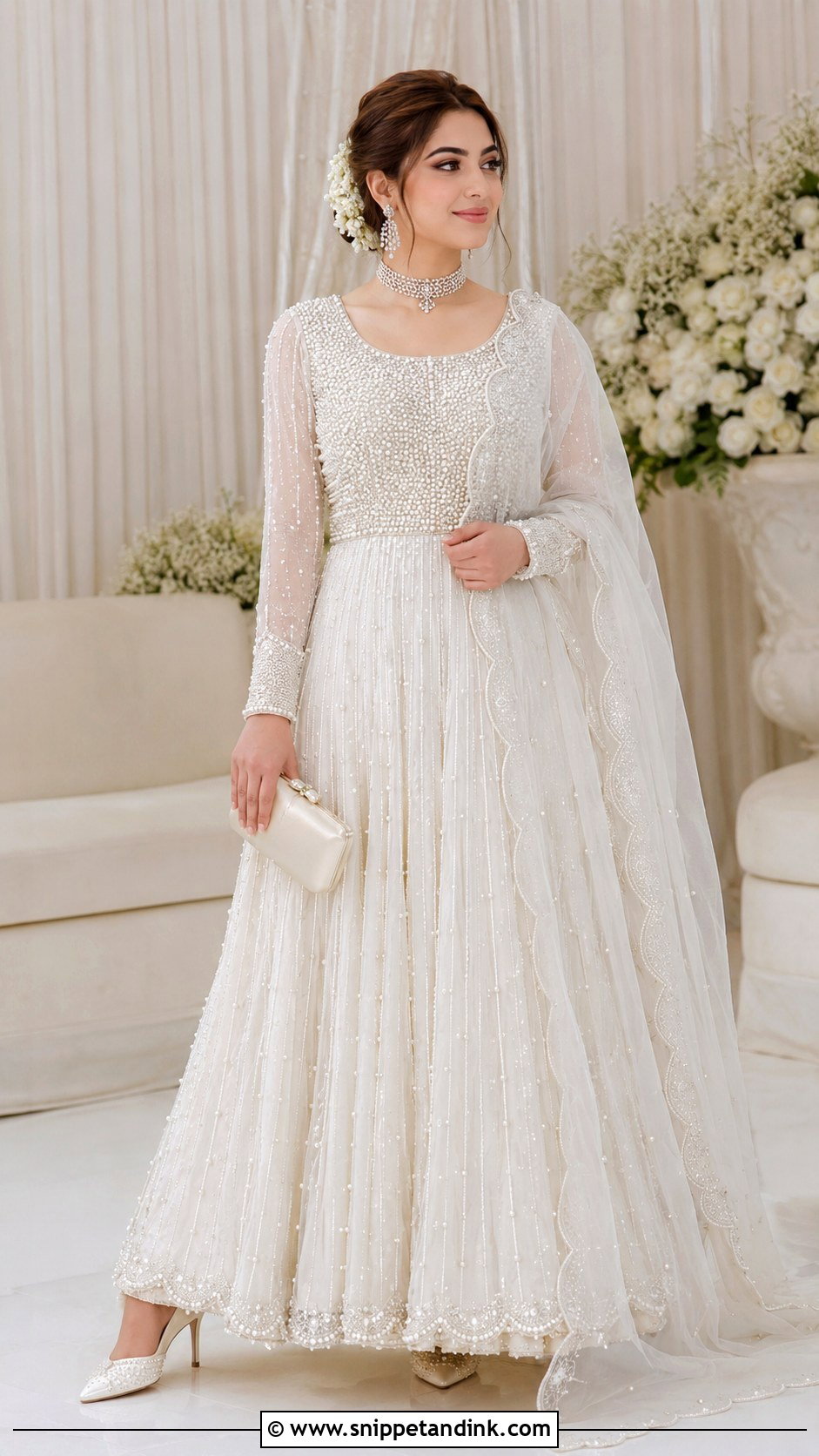
Pearls give a white anarkali soft texture rather than sparkle. A long flared silhouette with a fitted bodice, pearls concentrated at the neckline, sleeves and hem, and silver thread or clear sequins in between. Pearl-heavy hems are heavier than they look, so I check how the skirt drops before signing off on the length. White organza dupatta with scalloped edges, neatly over the head. Pearl-covered heels, a satin clutch, drops and a pearl choker. White flowers in a low bun. Fresh, luminous makeup with soft lashes and a pink-beige lip. Indoor nikahs and daytime receptions.
19. Neelam Muneer Navy Blue Bridal Gown
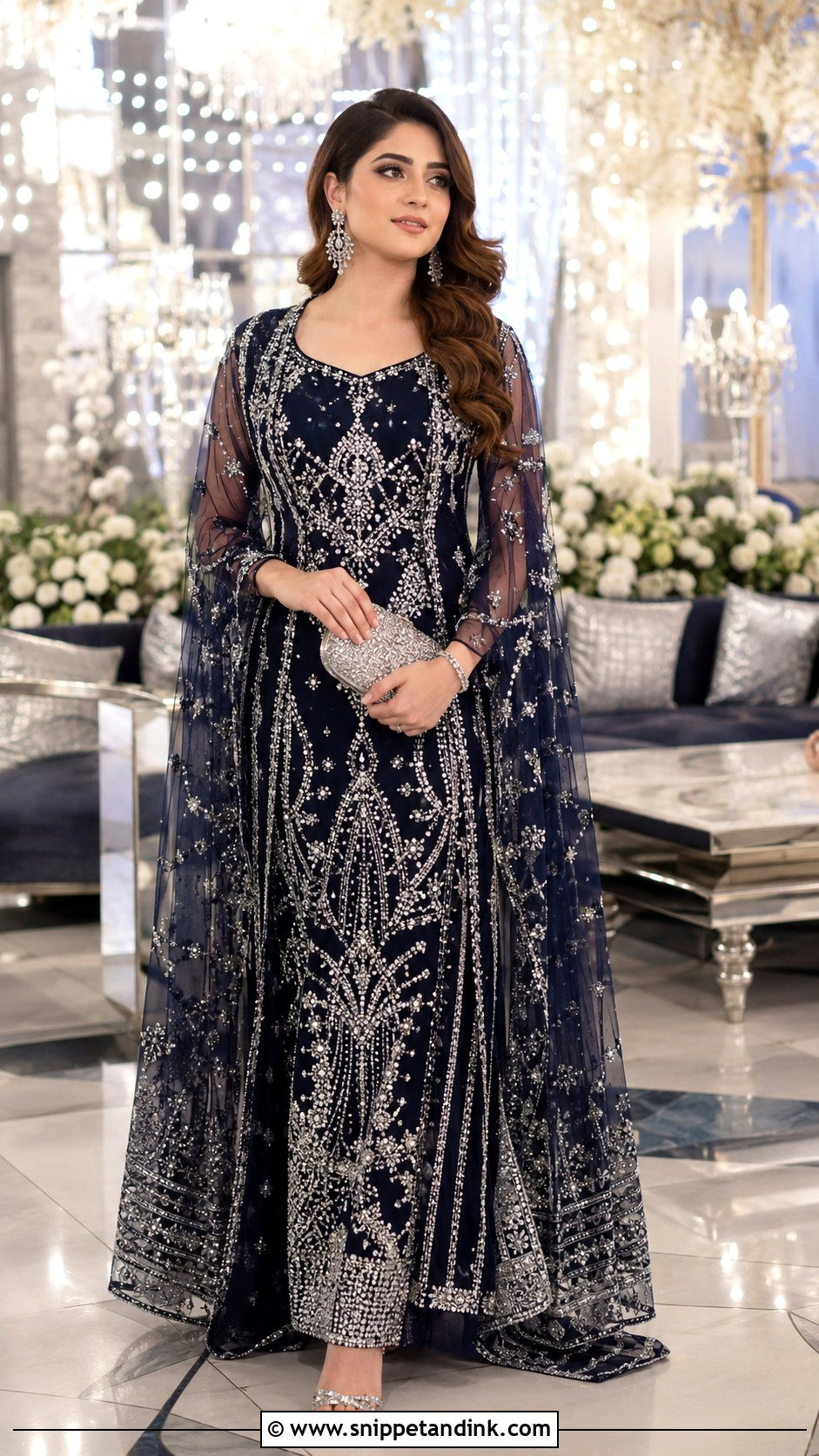
Navy is one of the few colours that lets silver embroidery show clearly at night, which is why it suits a formal walima. A full-length gown with a structured bodice, defined waist and soft flare, with silver crystals, beads and thread around the neckline and lower panels. A sheer navy cape or dupatta adds movement. Silver heels, a crystal clutch, statement earrings and a slim bracelet. Skip a big necklace if the bodice is dense. Navy reads very dark in candle-lit photos, so ask your photographer to use some fill light at the entrance. Sleek waves or a polished bun, cool-toned makeup, berry-nude lip.

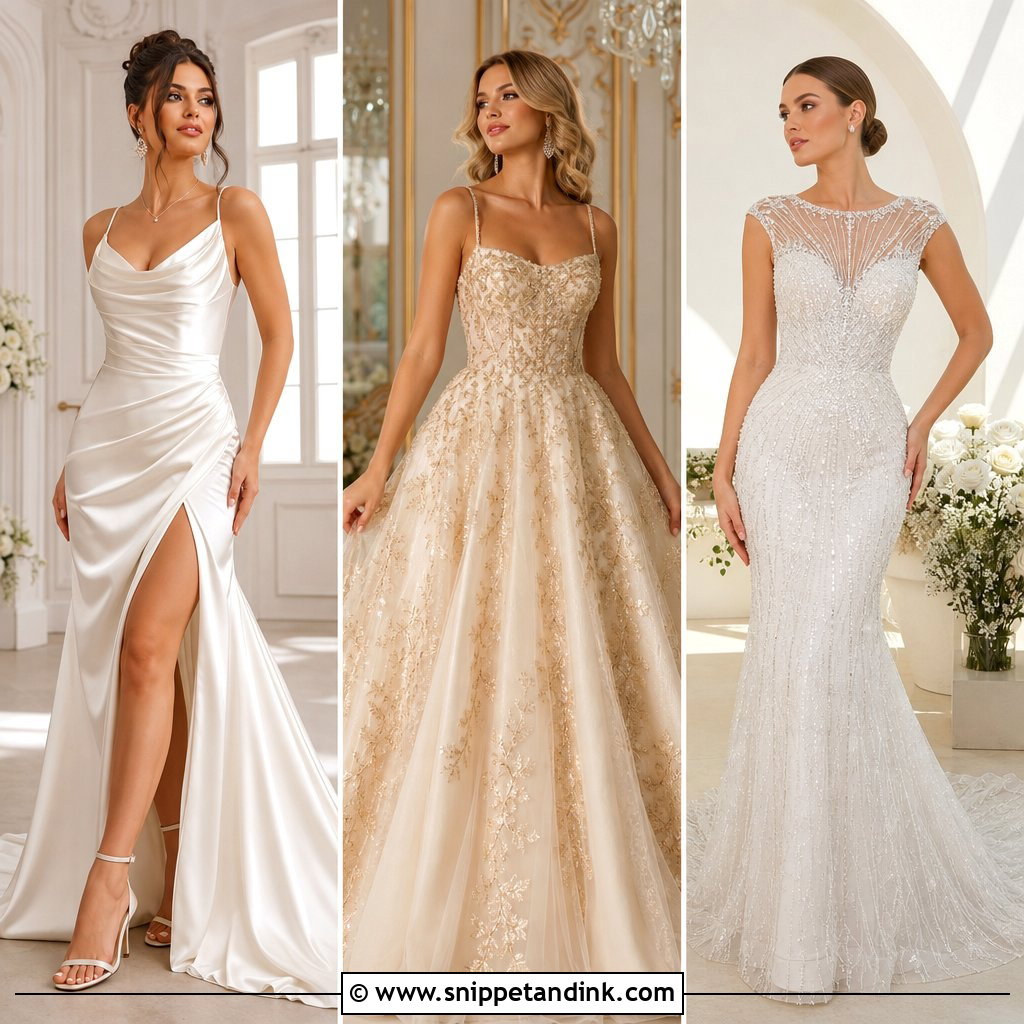
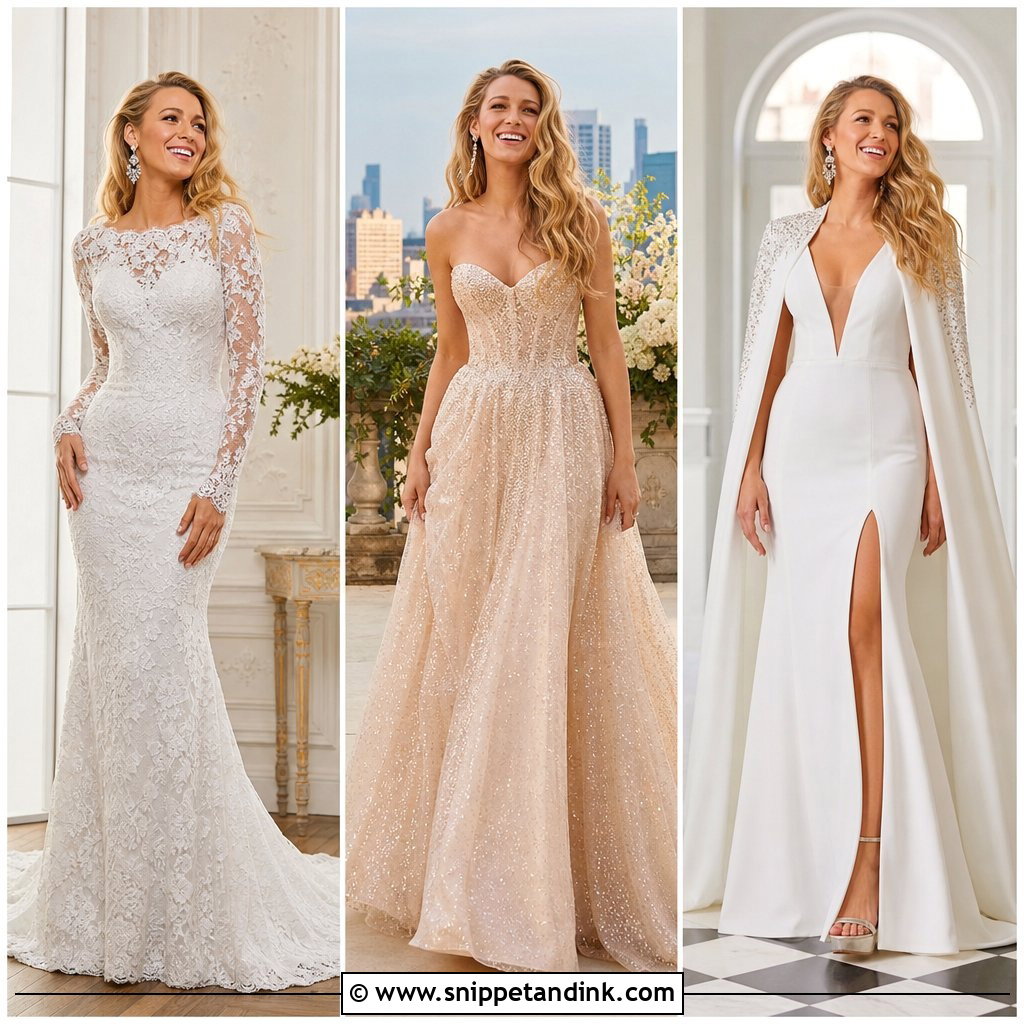
20. Neelam Muneer Red Double Dupatta Pishwas
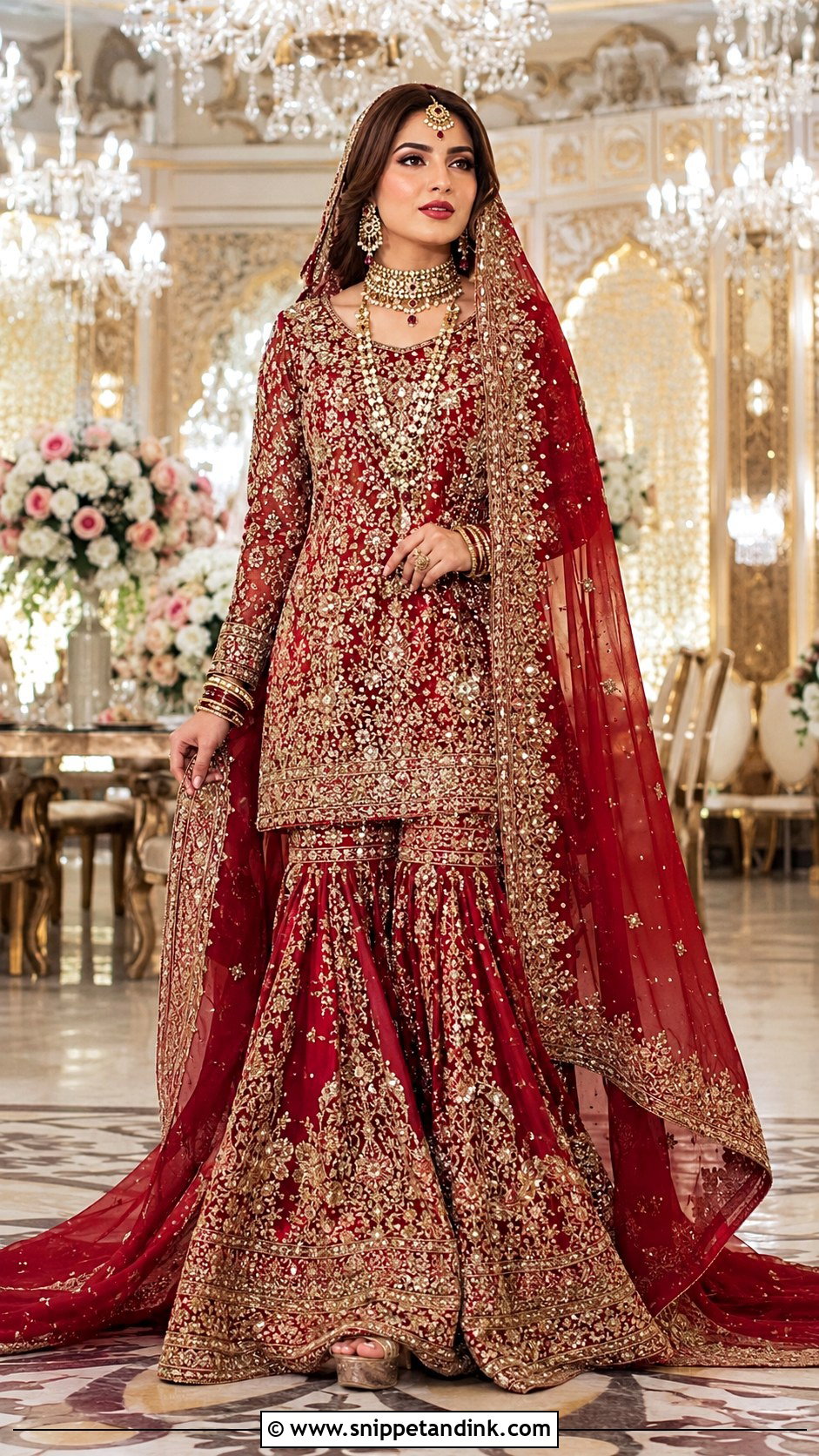
Two dupattas with a red bridal pishwas is the grandest traditional option in this list. The pishwas has a fitted top, full sleeves and gold embroidery from waist to hem. A light red net dupatta goes over the head; a heavier gold-bordered one runs diagonally across the torso. Layering two dupattas adds real weight on the head and shoulders, so the head one should be the lighter and needs pinning to the hair base, not the hair itself. Red and gold khussas, bangles, a broad necklace, earrings, tikka and a small nath if you like. Centre-parted bun, defined bridal makeup. Large baraats and formal portraits.
Hand Embroidery Runs on Months, Not Weeks
Zardozi, dabka and kora work is done by hand, and a heavily embroidered bridal outfit usually takes months, not weeks. Many designer houses ask for orders several months before the wedding, and more during peak season, though timelines vary between ateliers. Leave room for at least two fittings and for alterations after the first one, because embroidered fabric can’t simply be let out at the seams the way plain fabric can. If you’re ordering from abroad, add shipping and customs time on top, and ask for the outfit to arrive at least a month before the first event so any last fixes can be made by a local tailor.
Looking after the outfit afterwards
Metal threads tarnish when they’re sealed in plastic or kept somewhere damp. Store heavy outfits flat, or rolled, inside soft cotton or muslin, with acid-free tissue between embroidered layers so the work doesn’t rub. Avoid hanging a heavy lehenga by its waistband for long, since the weight stretches it. Take the outfit out every few months to air, and refold it along different lines so creases don’t set. If it needs cleaning, use a dry cleaner who handles bridal embroidery; home washing can loosen sequins and dull zari.
Start With the Shape You Can Move In
A bridal outfit has to look right and still let you walk, sit and celebrate. The looks above cover every event, from a bright mayun and mehndi to the nikah, the baraat and a polished walima. My order of decisions is always the same: silhouette first, because that decides comfort, then fabric, colour and embroidery to suit the venue and season. Jewellery, shoes, makeup and dupatta placement come last and should support the dress rather than compete with it. Classic red, soft ivory, pink or a jewel tone can all work if the pieces are planned together.
You'll Like These Ideas:



Leave a Reply