
The couples who book me now rarely want a plain white tower. They come with a fabric swatch, a photo of the venue and strong opinions about pistachio. Texture, color, sculptural shapes and unexpected flavors are all on the table, and some cakes end up vintage and soft while others are bold enough to anchor the room. My job is to make the design fit the venue, the season, the flowers and the dress code, and still taste good at the end of a long reception. What follows are the styles I’m building most often, with honest notes on how each one is made and where it can go wrong.
Getting the Most From a Tasting Appointment
A consultation is where the design actually gets decided, and the couples who come prepared leave with a much clearer cake. I usually put out several sponges, fillings and frostings to taste separately and then in combination, because a filling that’s lovely on a spoon can disappear between two layers of chocolate.
- Bring your palette: a fabric swatch, an invitation proof or a photo of your bouquet plan. Colors described in words almost never match.
- Bring a venue photo and the date and time the cake will be set up, so your baker can judge heat, light and access.
- Taste the frosting on its own. On a textured or naked cake, it’s half of what people eat.
- Ask how many tiers are real cake and whether any are dummies, and how the cake will be supported if it’s tall or shaped.
- Have your final guest count roughly in mind; a kitchen cake kept in the back for cutting can make a smaller display cake possible.
1. Vintage Lambeth Wedding Cake
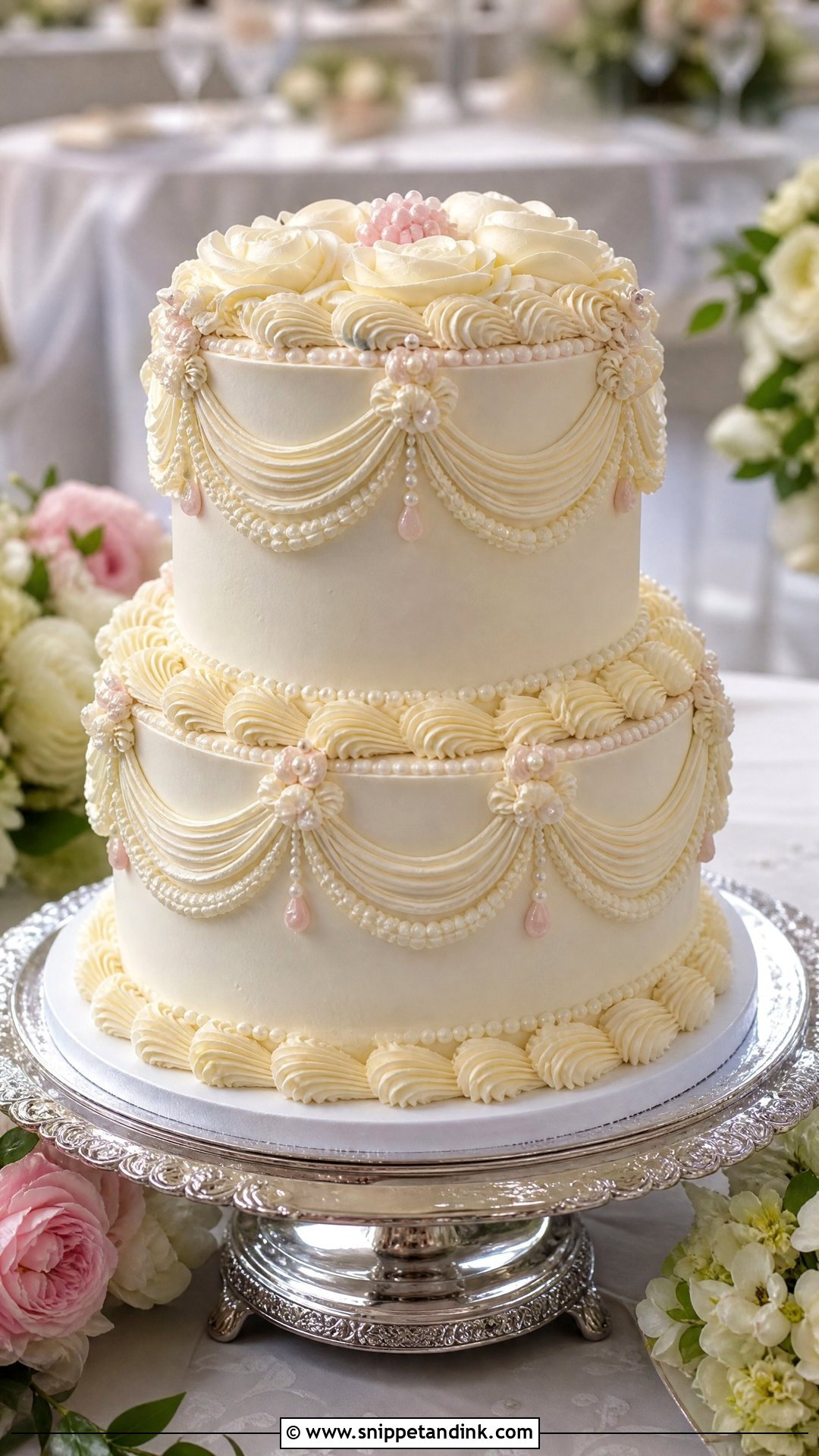
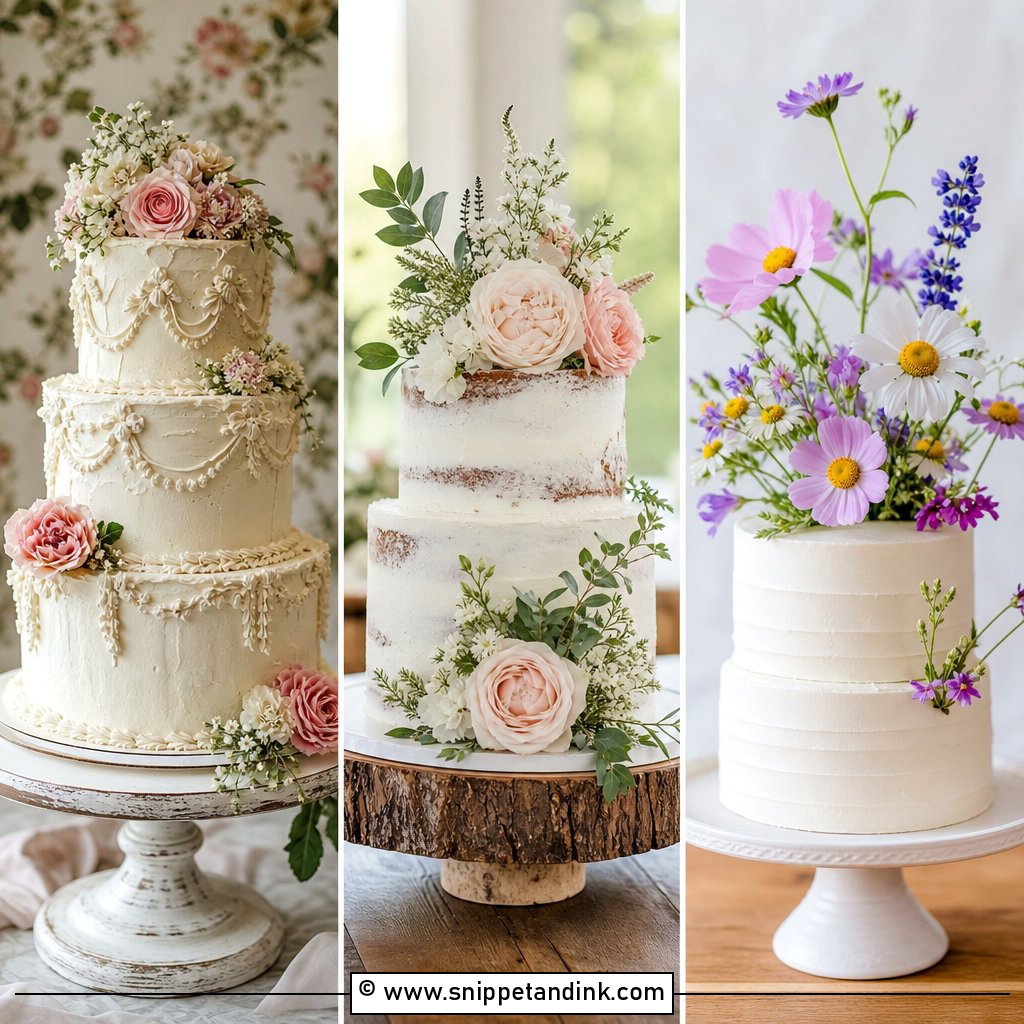
Lambeth is an old English piping method: layer upon layer of overpiped shells, swags, scrolls and ruffles, often finished with pearls. It needs a frosting that holds a sharp ridge, and it takes hours, so it’s one of the more labor-heavy cakes I make. Ivory, blush, butter yellow and pale blue suit it. To keep it from looking dated, I leave clean space between the piped bands, or put all the drama on a tall single tier. Ballrooms, garden receptions and restaurant dinners all carry it. Vanilla bean, almond, lemon or strawberry keep the flavor as classic as the look.
2. Pearl Wedding Cake
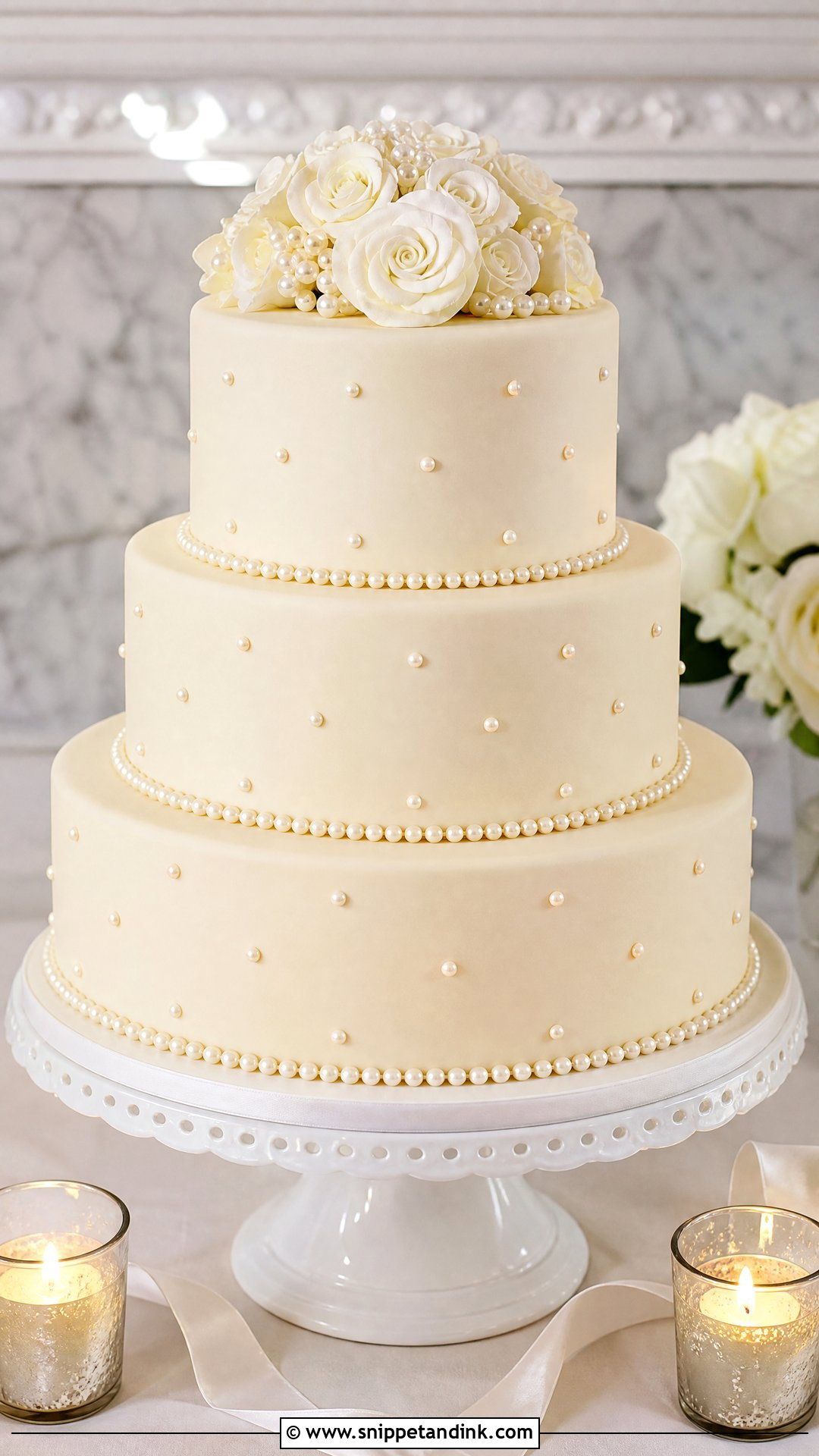
Pearls behave like jewelry on a cake: scattered, set in neat rows or used as borders between tiers. They show best on a smooth surface, which means the buttercream or fondant underneath has to be flawless. I match the pearl size to the gown details when I can, so a bride wearing small pearl earrings doesn’t get a cake studded with marbles. Ivory, cream, champagne and very pale pink keep the palette quiet. Almond cake with vanilla buttercream or white chocolate raspberry gives it a polished flavor.
3. Pressed Flower Wedding Cake
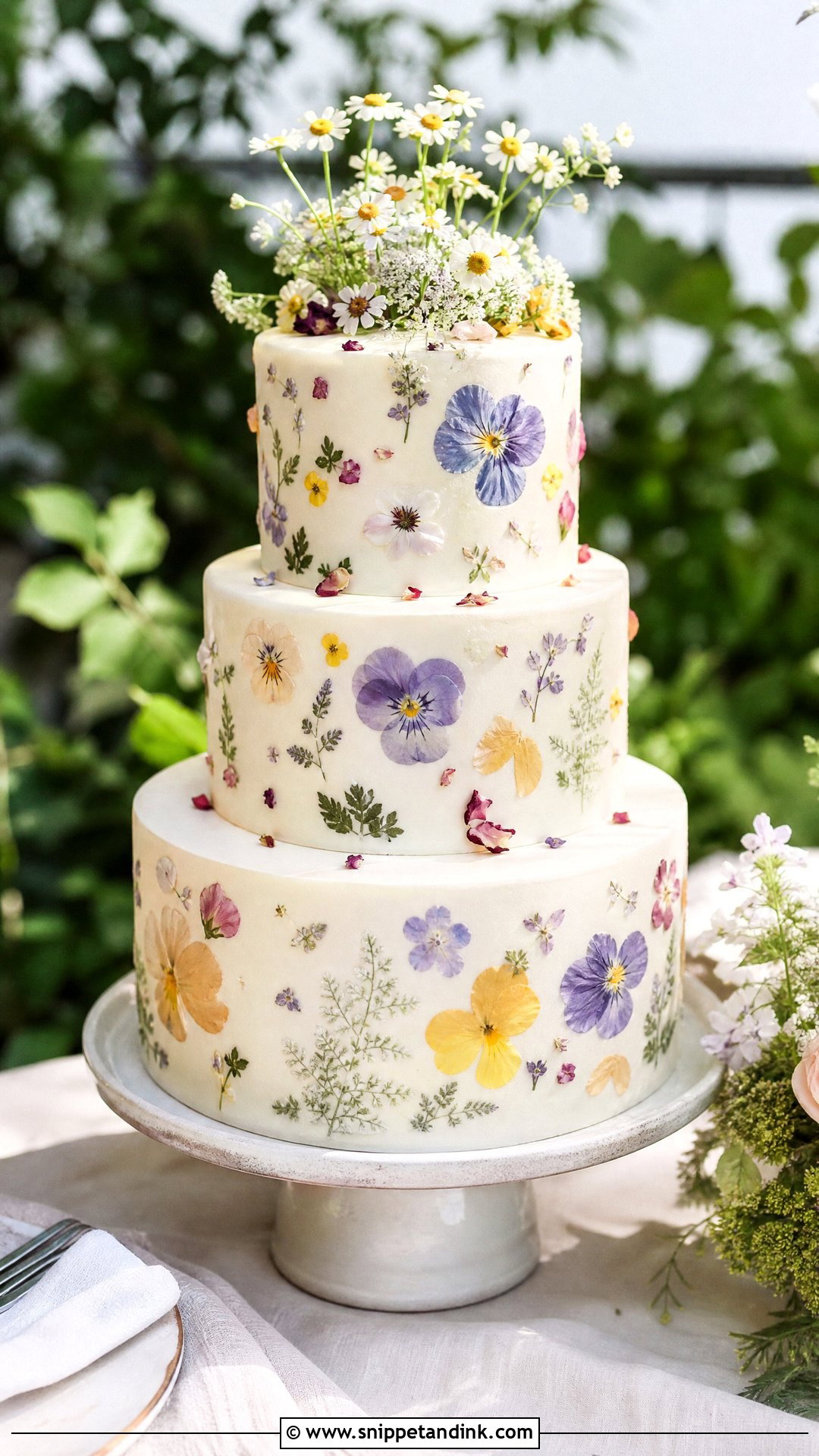
Pressed flowers look like a herbarium page wrapped around the tiers. The flowers themselves matter more than the design. They have to be grown without pesticides for eating, which rules out most florist stock, so I buy from edible flower growers or press my own. Pansies, violets, chamomile, lavender and small rose petals all press well and keep their color. A smooth, pale frosting lets them read clearly. Spring and summer outdoor weddings suit it, and lemon elderflower, honey vanilla or orange blossom carry the botanical feeling inside.
4. Black And White Wedding Cake
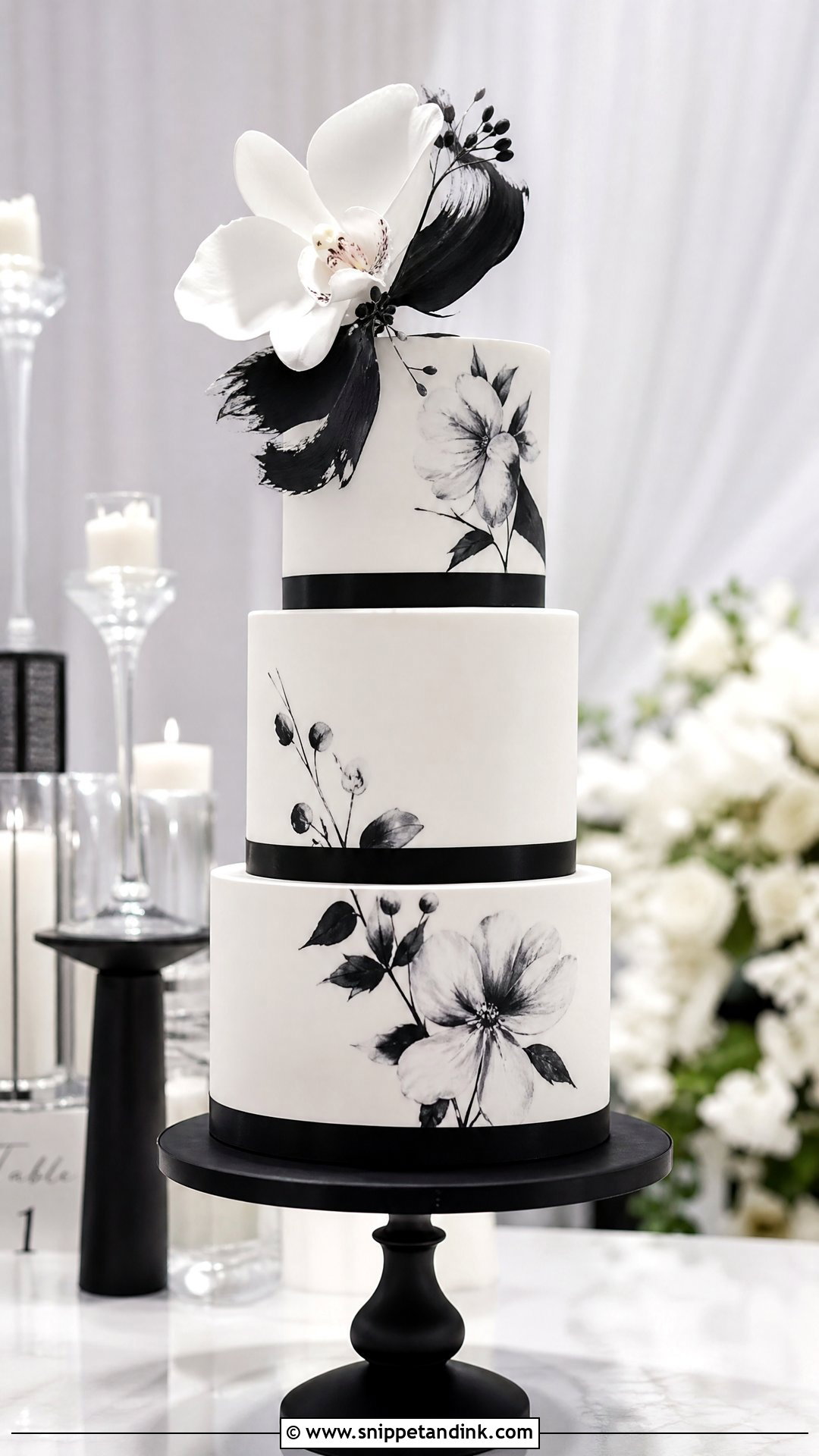
High contrast suits a city venue or evening reception. Black ribbon bands, painted florals, fondant bows, lace patterns or abstract brushstrokes go over a white base, which keeps it bridal while giving it a fashion edge. I paint black details with concentrated gel color thinned with a little alcohol so the lines dry quickly and don’t bleed into the white. Dark chocolate with vanilla buttercream, black cocoa sponge or vanilla with ganache filling all match. White orchids, sugar roses or a satin bow soften it if you want them to.
5. Square Wedding Cake
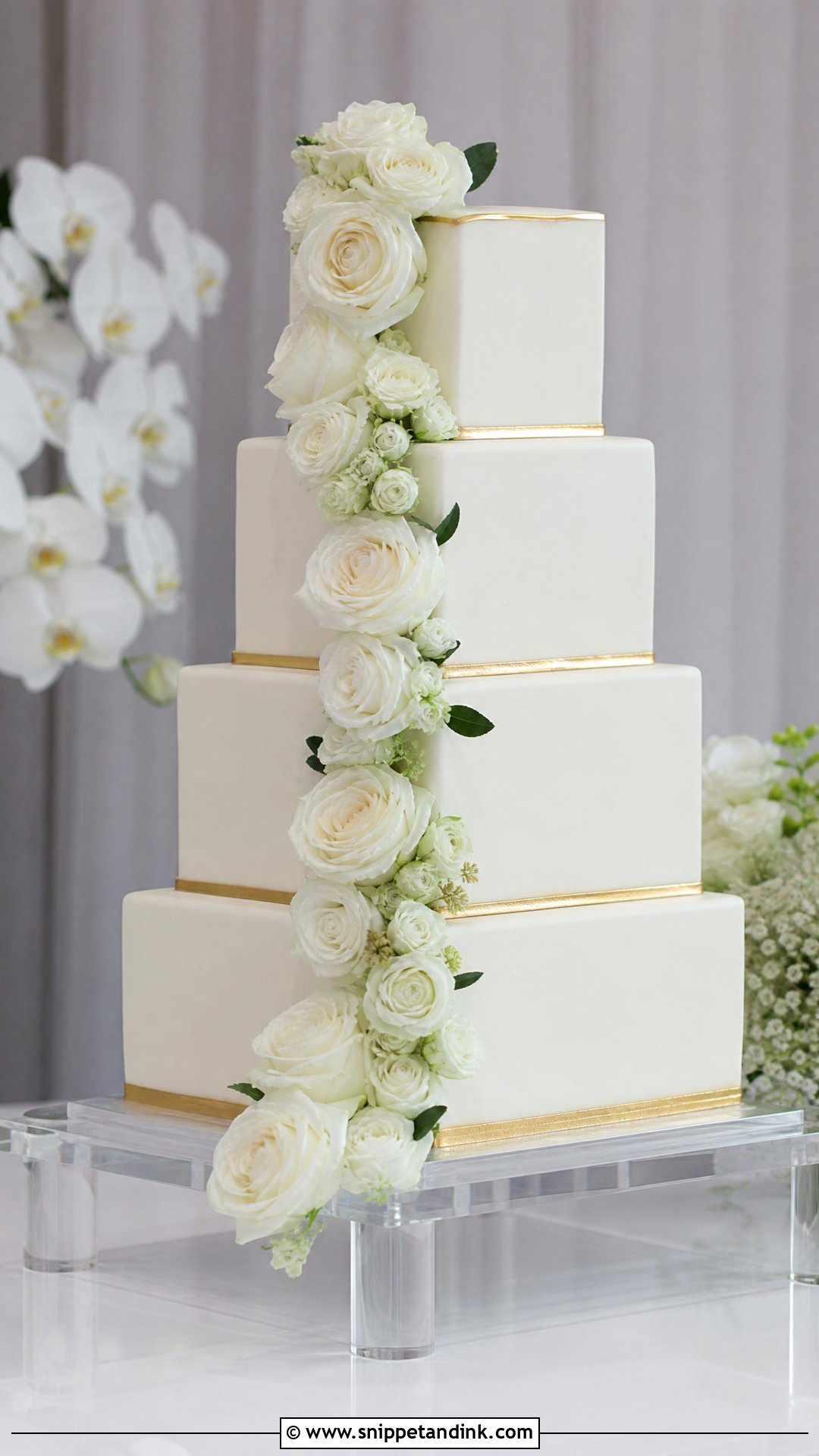
Square tiers look architectural, but they’re harder to finish than rounds. Every corner needs a firm base, usually ganache under fondant or a well-chilled buttercream, or the edges round off and the cake loses its point. Smooth white fondant keeps it minimal; cascading flowers or metallic accents make it romantic or dramatic. A sleek pedestal shows the edges well. One practical bonus: square tiers cut into neat, even portions, so they serve slightly more than a round of the same width. Vanilla bean, champagne, pistachio or chocolate raspberry soften the structured shape.
6. Watercolor Wedding Cake
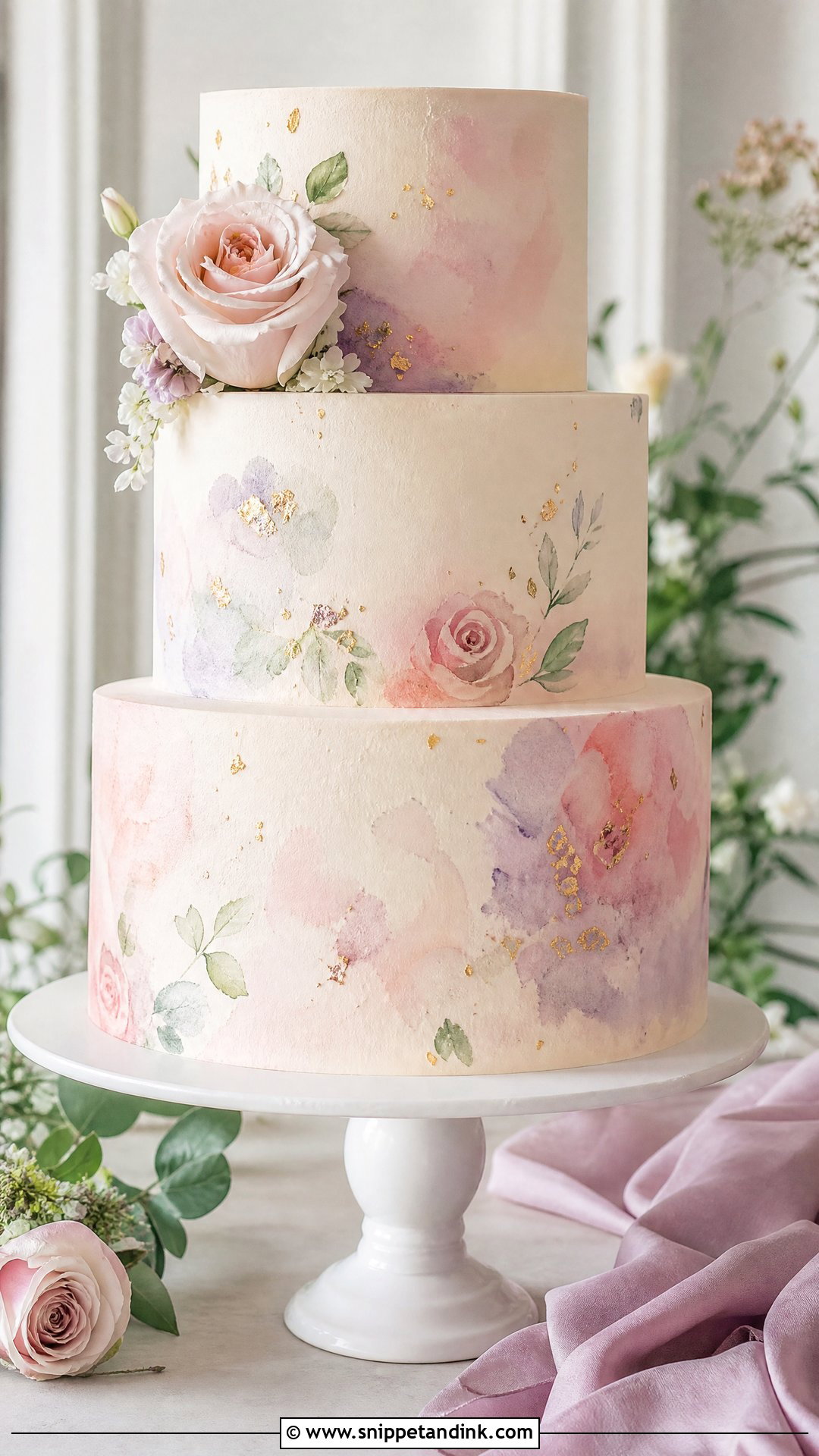
Here the frosting becomes a canvas. The color can be soft blush, lavender and sage, or stronger with blue, coral and gold, and it can look like a gentle wash, a painted bouquet or an abstract sunset. I usually take the colors from the invitation suite or the florist’s palette so the cake doesn’t sit apart from everything else. Fondant takes painted detail more crisply; buttercream gives a softer, blended wash. Lemon raspberry, vanilla peach or coconut lime keep the inside as light as the outside.
7. Minimalist Wedding Cake
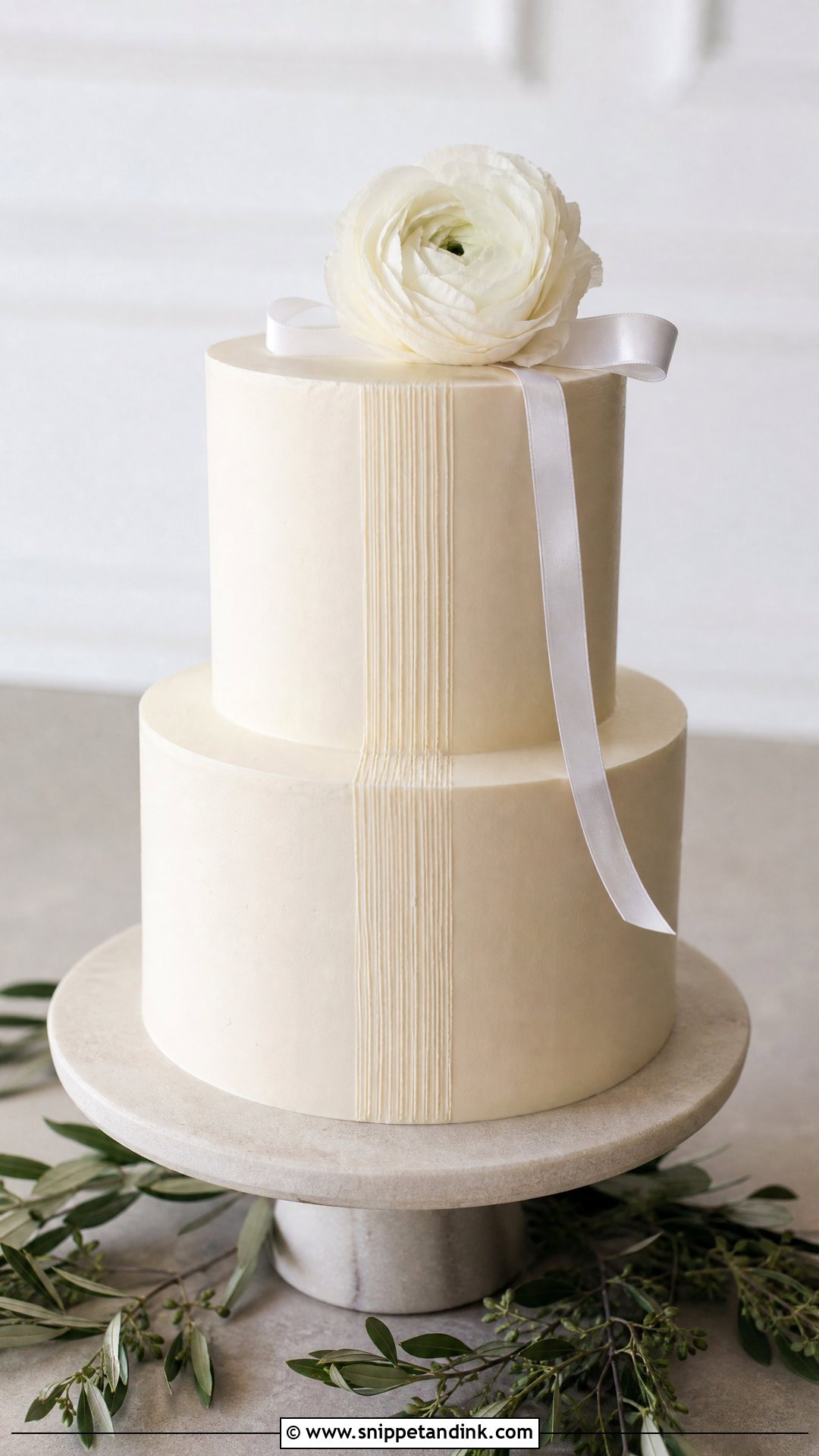
Simple cakes are where the skill shows. With smooth buttercream, clean edges, ivory tones and only one or two details, there’s nothing to hide an uneven tier or a soft corner, so finishing and proportion do all the work. A single flower, a thin ribbon, a few tiny pearls or one textured line is enough. It doesn’t compete with the decor, which makes it a strong pick for modern venues and candlelit rooms. Vanilla bean, almond, lemon or white chocolate fit the quiet look.
8. Sculptural Wedding Cake
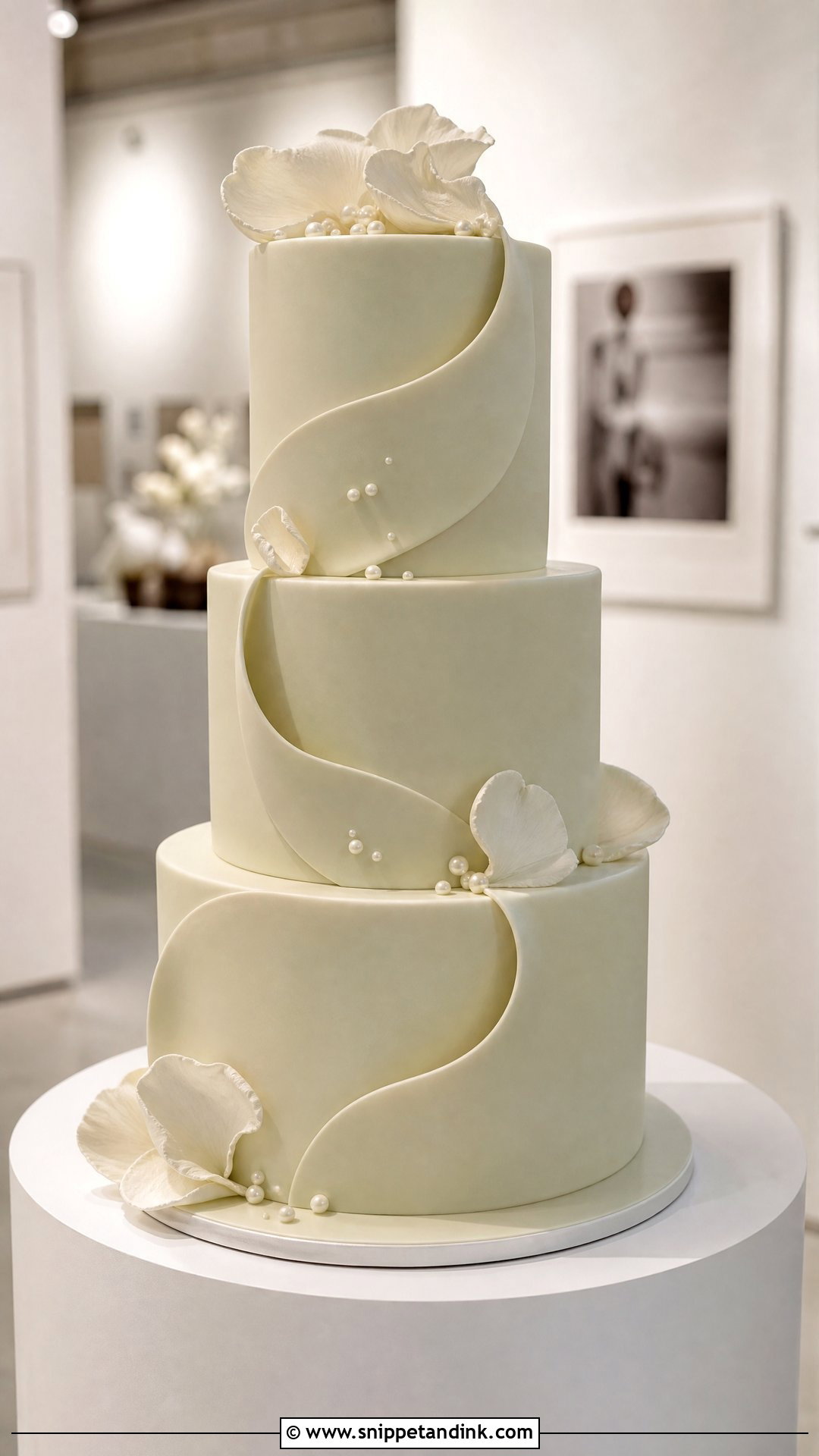
A sculptural wedding cake trades stacked tiers for curves, offset layers, tall columns, wave textures or abstract panels. Each of those shapes needs hidden structure, so expect internal boards, central dowels and sometimes a few dummy tiers made of foam to keep the weight manageable. All-white, soft neutrals or one bold accent color work best. Give it space on the display table so the silhouette can be seen. Pistachio, vanilla bean, chocolate hazelnut or passion fruit make the inside as interesting as the shape.
9. Floral Cascade Wedding Cake
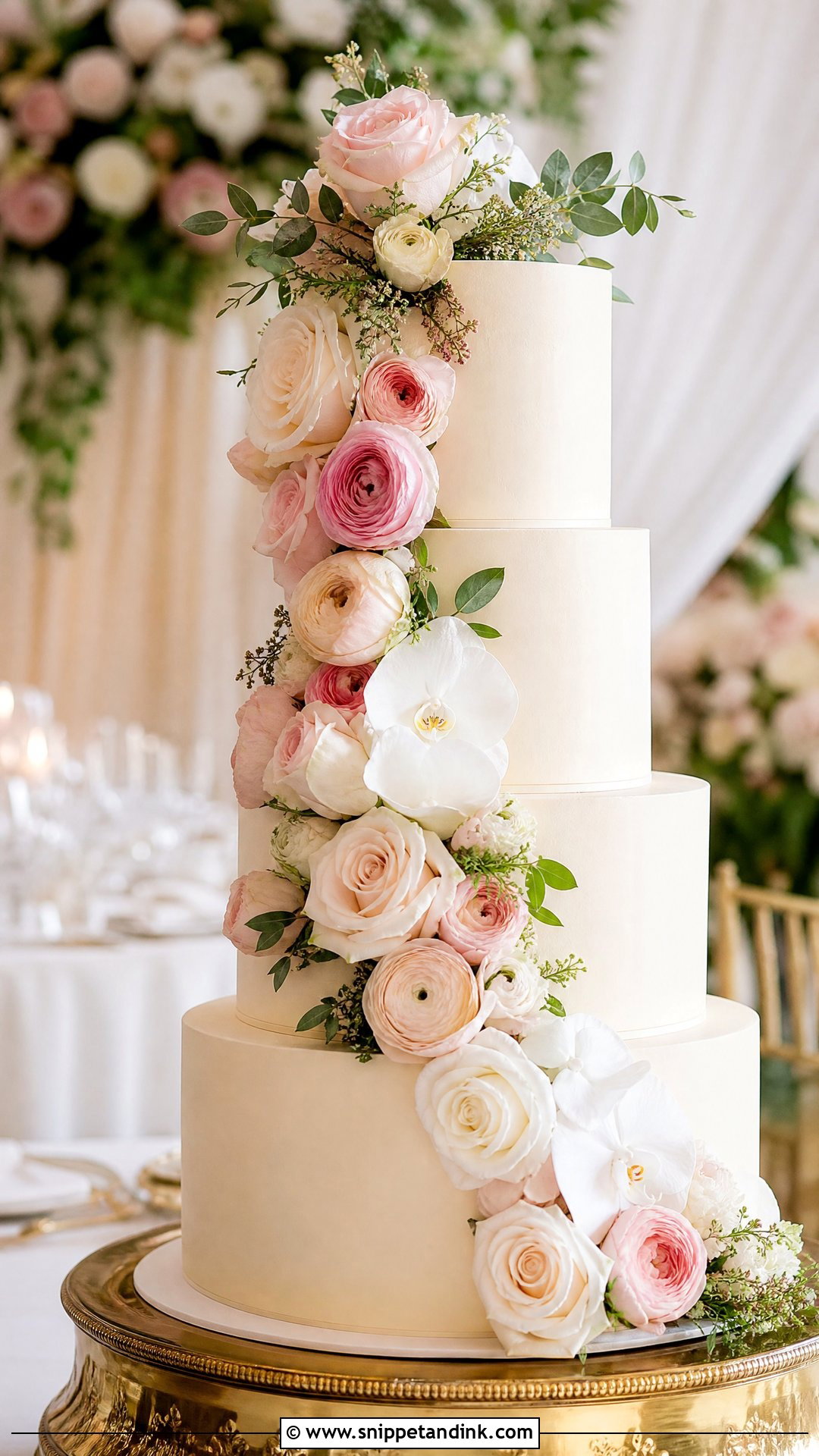
Trailing flowers from the top tier down the side gives a cake movement and height. The cascade can be fresh, sugar or wafer paper, and each choice changes the budget and the timeline: fresh goes on at the venue, sugar flowers are made weeks ahead, wafer paper sits in between. Roses, orchids, peonies and ranunculus all work. Three or more tiers give a long cascade room to fall, though a two-tier cake can carry a shorter one. An ivory or blush base with vanilla raspberry, lemon or almond inside keeps it classic.
10. Buttercream Texture Wedding Cake
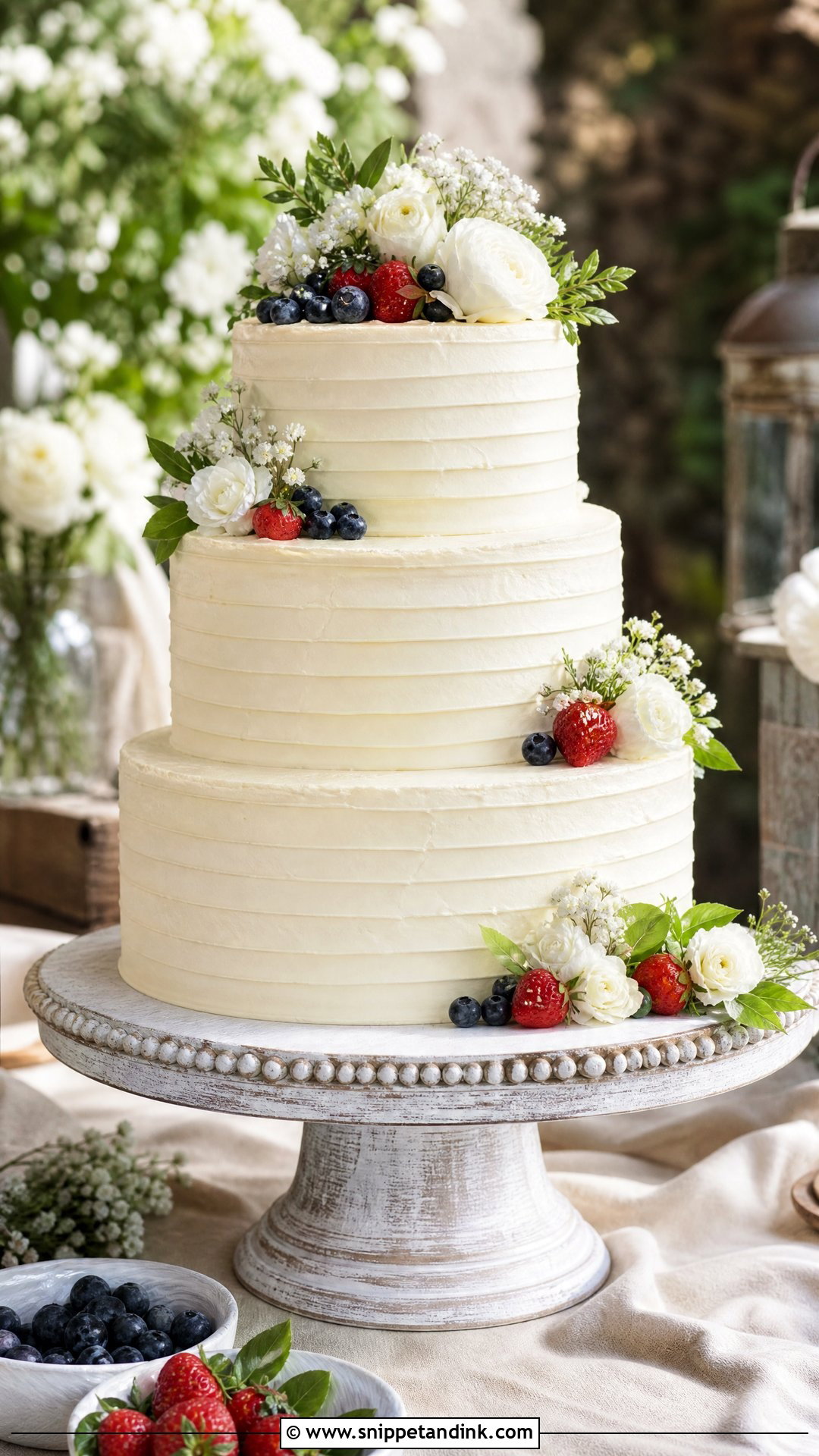
Textured buttercream is the most forgiving finish I make, and one of the most popular. Ridges, palette knife strokes, horizontal lines or soft waves catch the light and hide small imperfections, so the cake needs very little else. A few flowers, some fruit or greenery finish it. Barns, gardens and beach receptions all suit it. Because the buttercream is the star, the flavor of the frosting matters more than usual, so taste it on its own at your consultation. Salted caramel, lemon, coconut and chocolate all pair well.
11. Gold Leaf Wedding Cake
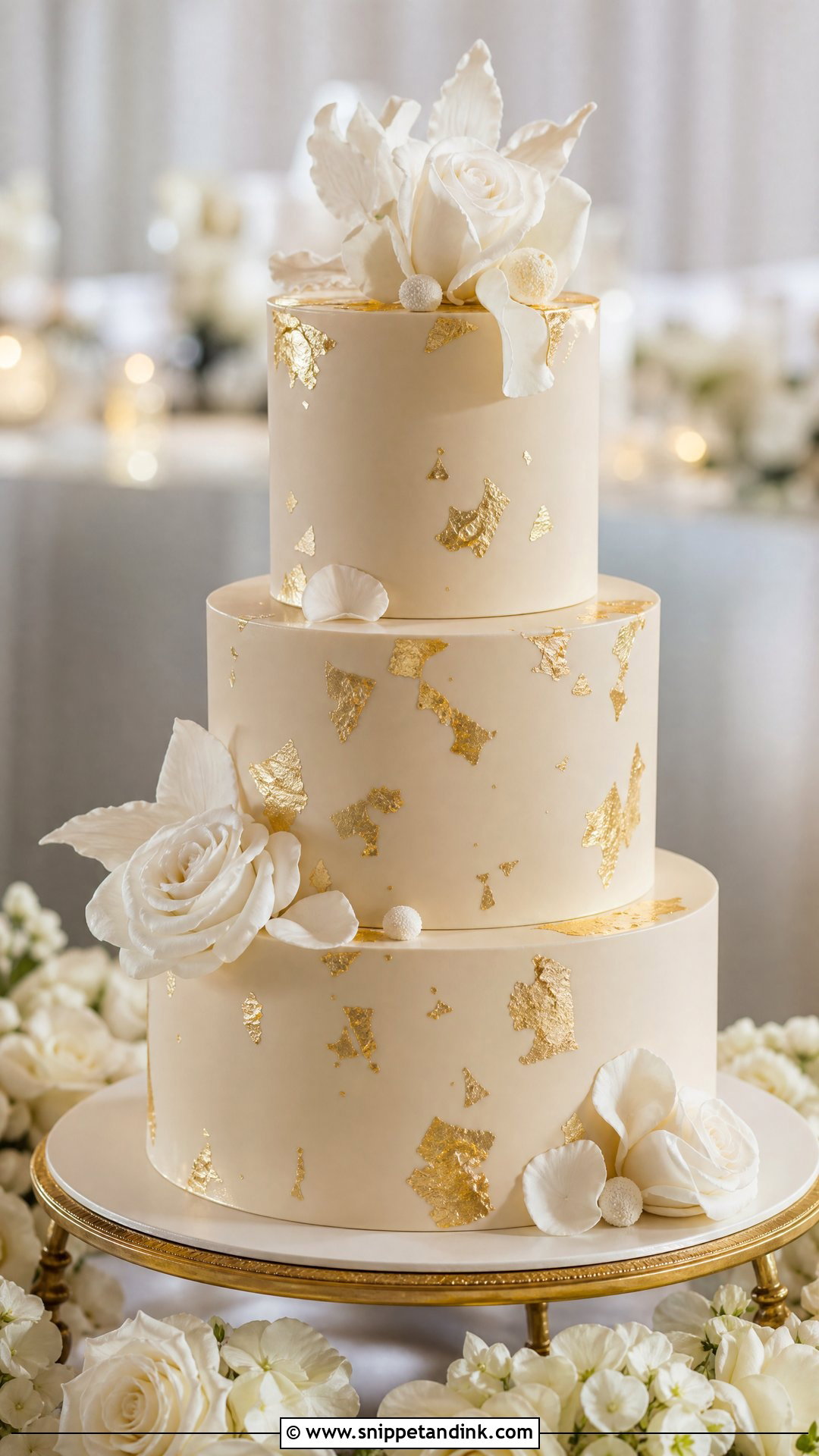
Edible gold leaf is real gold beaten almost to nothing, and it can go on as scattered flakes, torn sheets, painted edges or a fully gilded tier. Ivory, white, blush, black, emerald and deep blue all show it off. The leaf sticks best to a slightly tacky surface, so I apply it to fondant or a chilled crusted buttercream rather than soft frosting, which smears. Balance it with fresh flowers, sugar petals or simple texture. Vanilla bean, caramel, chocolate espresso and pistachio all suit the warm color.
12. Bows Wedding Cake
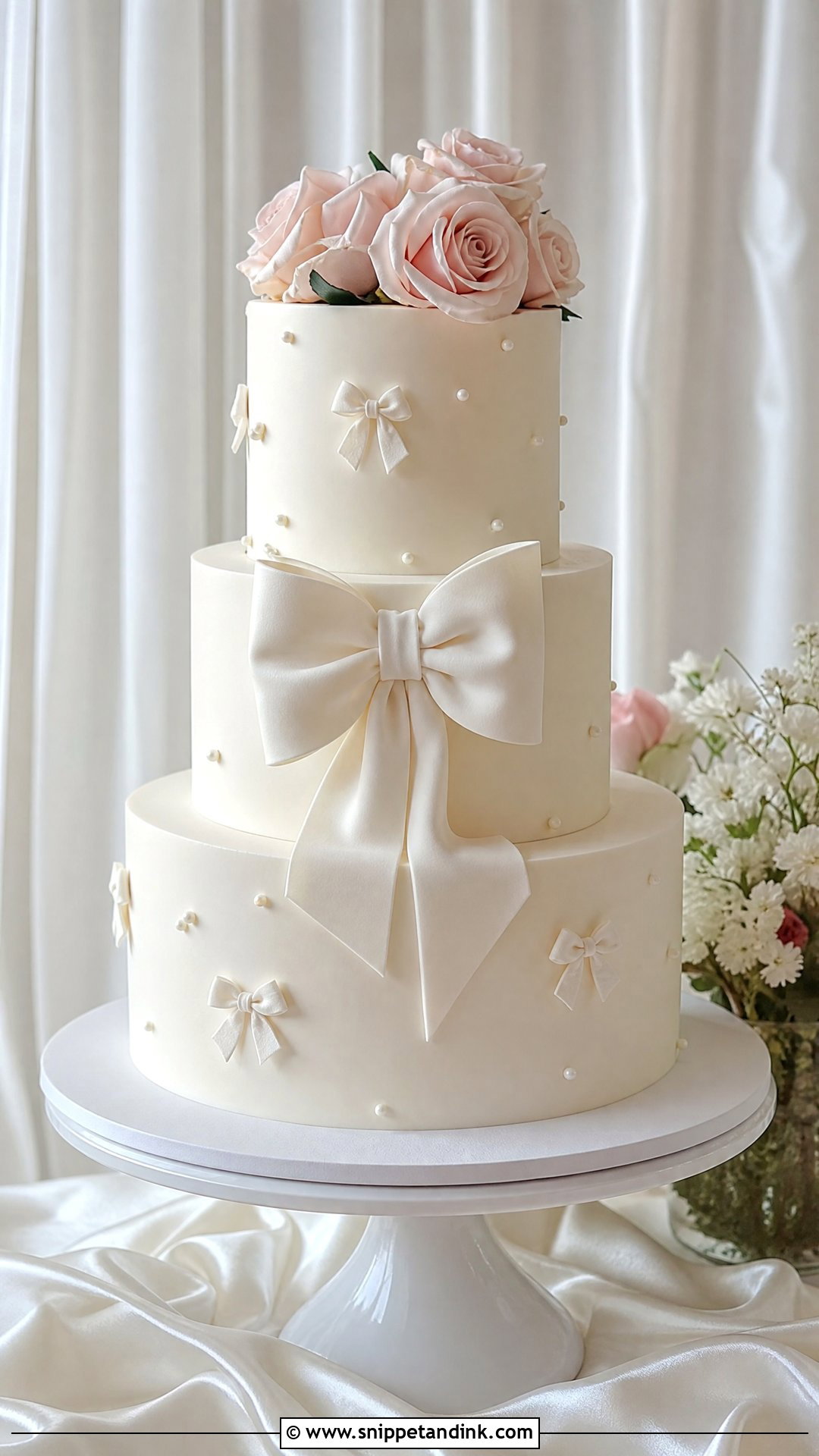
Bows are everywhere on cakes right now, and they’re simpler than they look. A large single bow reads fashion-led; small bows around each tier feel softer. Fondant and sugar paste hold the crispest shape but need a day or two to set, buttercream bows stay small and soft, and real ribbon must be backed with a strip of acetate or parchment so it doesn’t absorb butter and stain. White, ivory, blush, powder blue and black and white all suit them. Almond, vanilla, strawberry or white chocolate keep the mood light.
13. Fruit Wedding Cake
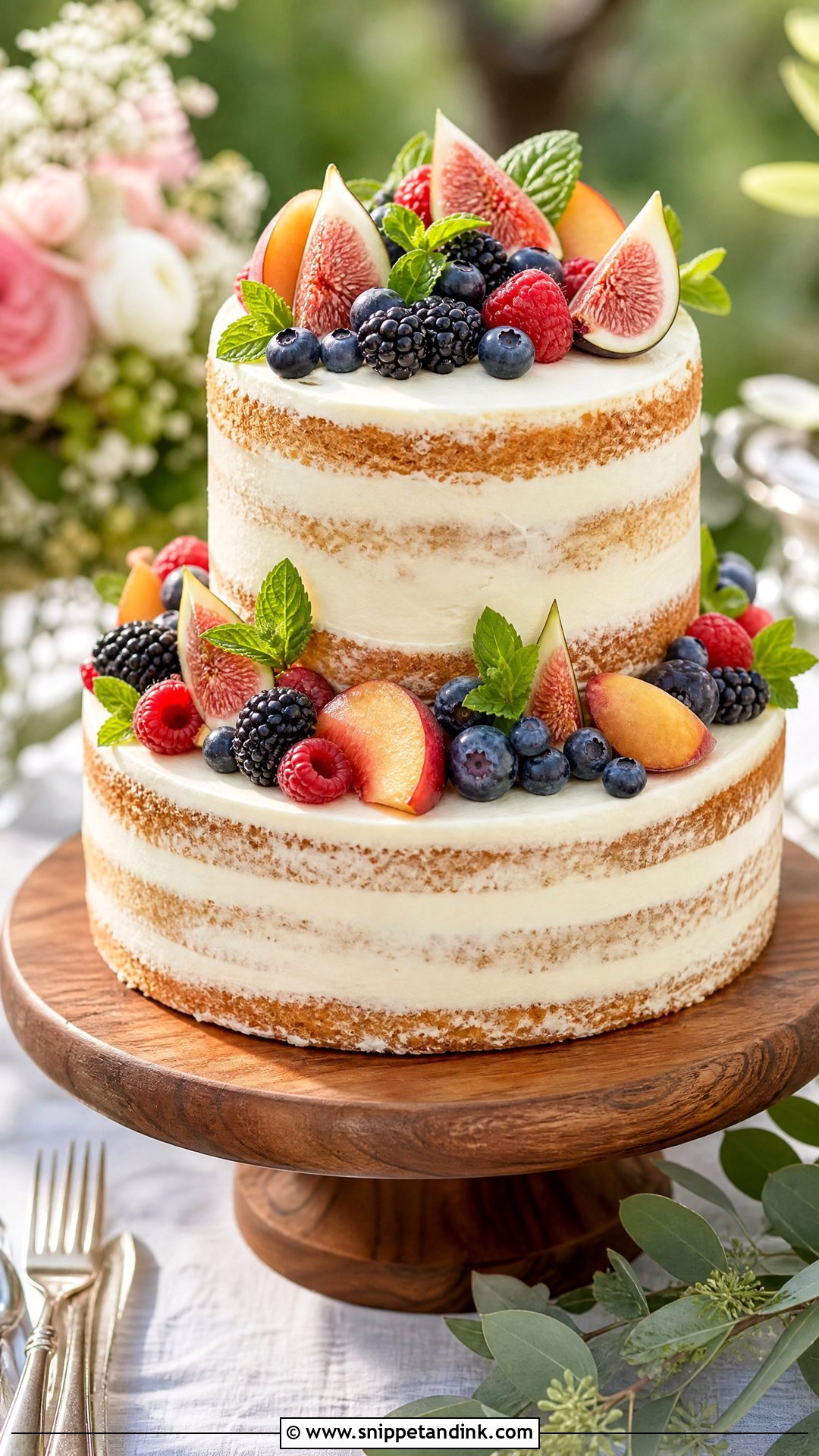
Fresh fruit makes a cake feel seasonal, but it’s also the decoration with the shortest life. A fruit wedding cake decorated with berries, figs, citrus slices, cherries, grapes or peaches has to be dressed at the venue, because cut fruit weeps juice into the frosting within hours. A light glaze of apricot jam keeps berries glossy. Semi-naked frosting gives a rustic look; smooth buttercream with careful placement looks polished. Match the filling to the topping, as with lemon blueberry, almond cherry or peach cream, and add mint or thyme for green.
14. Monogram Wedding Cake
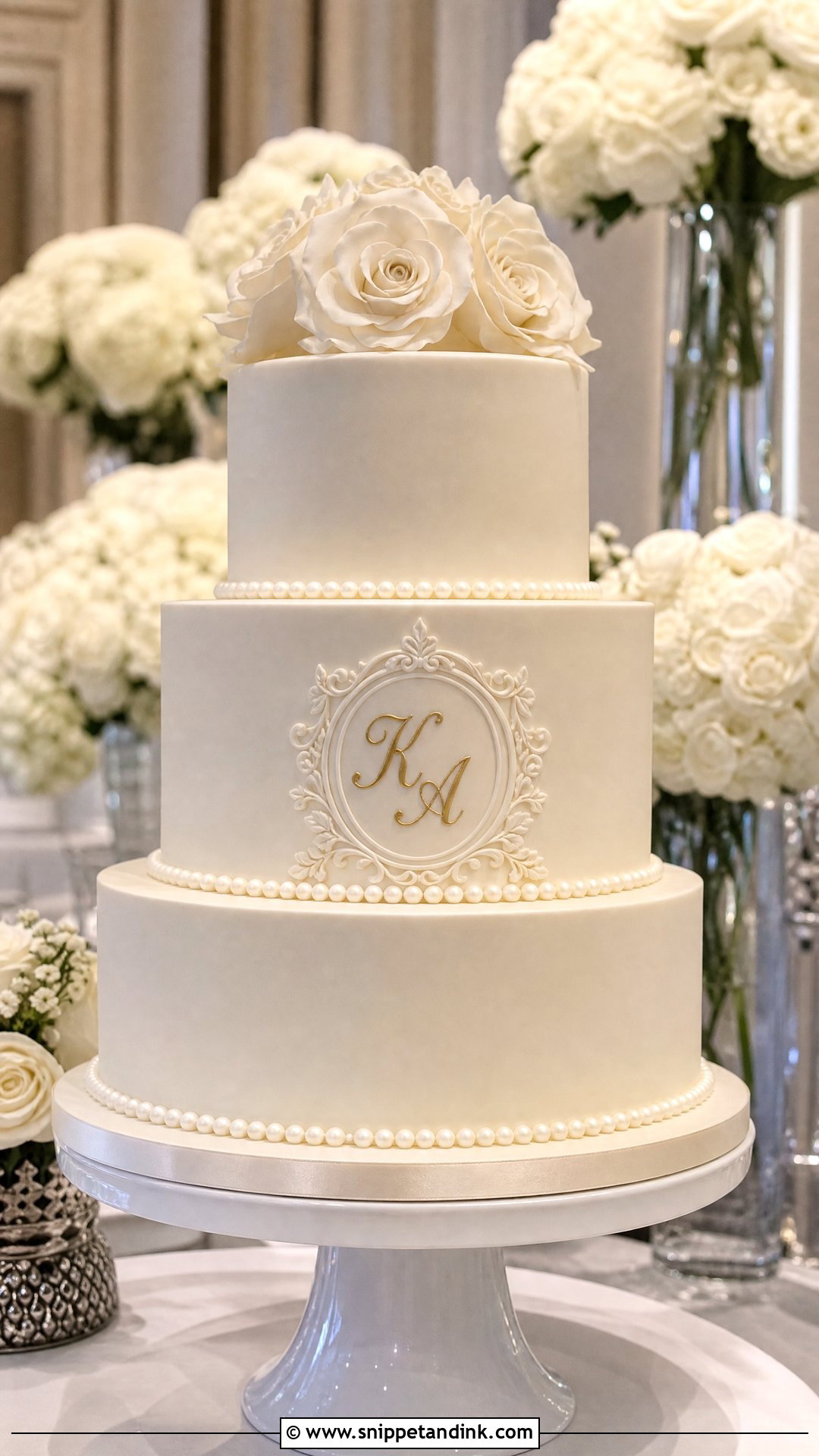
Initials are the simplest way to make a cake personal. They can be piped, painted, embossed or cut from fondant or sugar. Tone-on-tone, the same color as the frosting on the middle tier, is subtle and shows up only as shadow and texture; gold, silver, black or soft blue lettering is bolder. Embossed initials need fondant, as buttercream won’t take a crisp impression. Smooth fondant, fine piping, pearls or a few florals keep the rest clean for a formal hotel or traditional venue. Vanilla almond, chocolate ganache, lemon cream or raspberry white chocolate all suit it.
15. Ruffle Wedding Cake
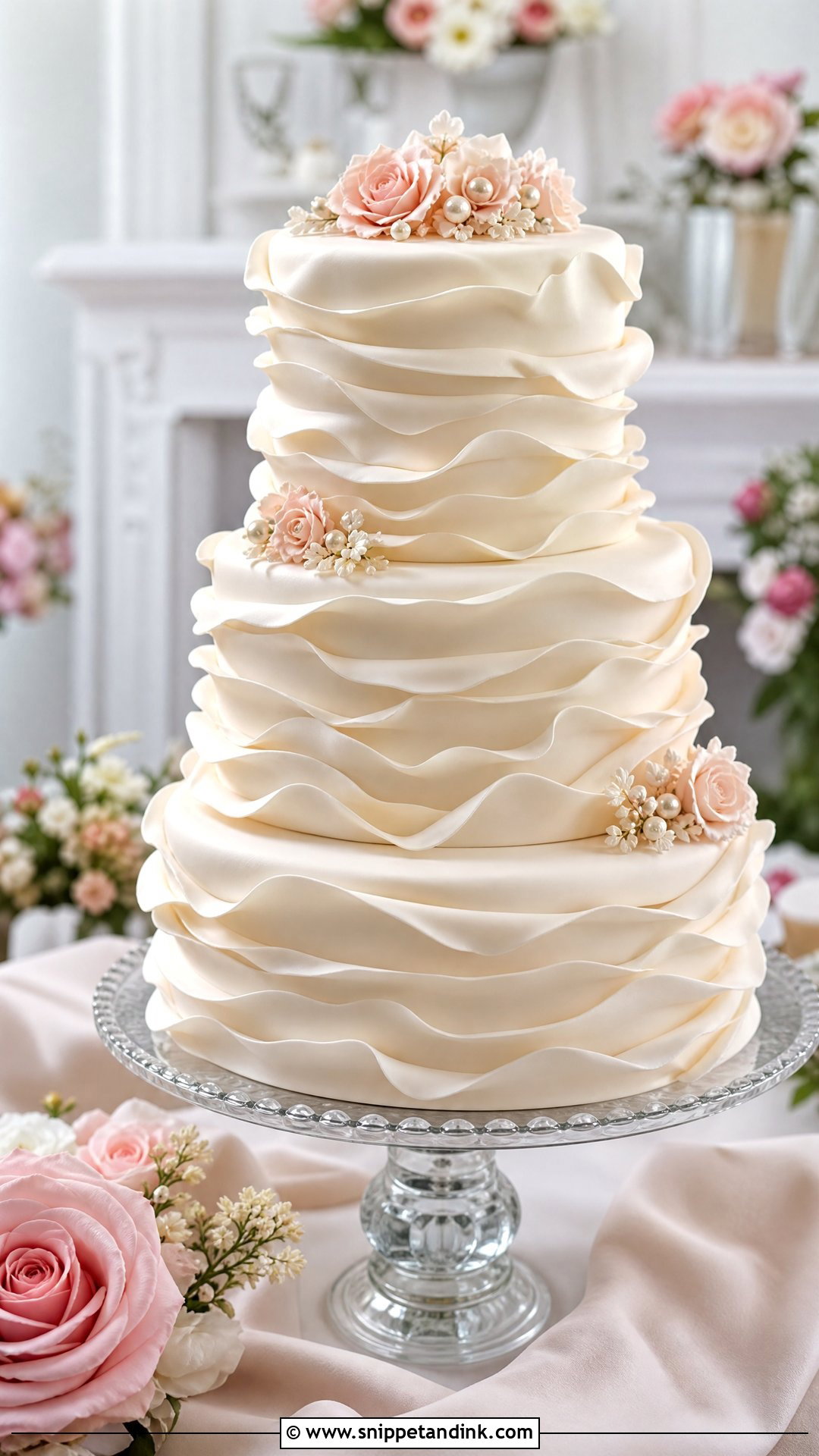
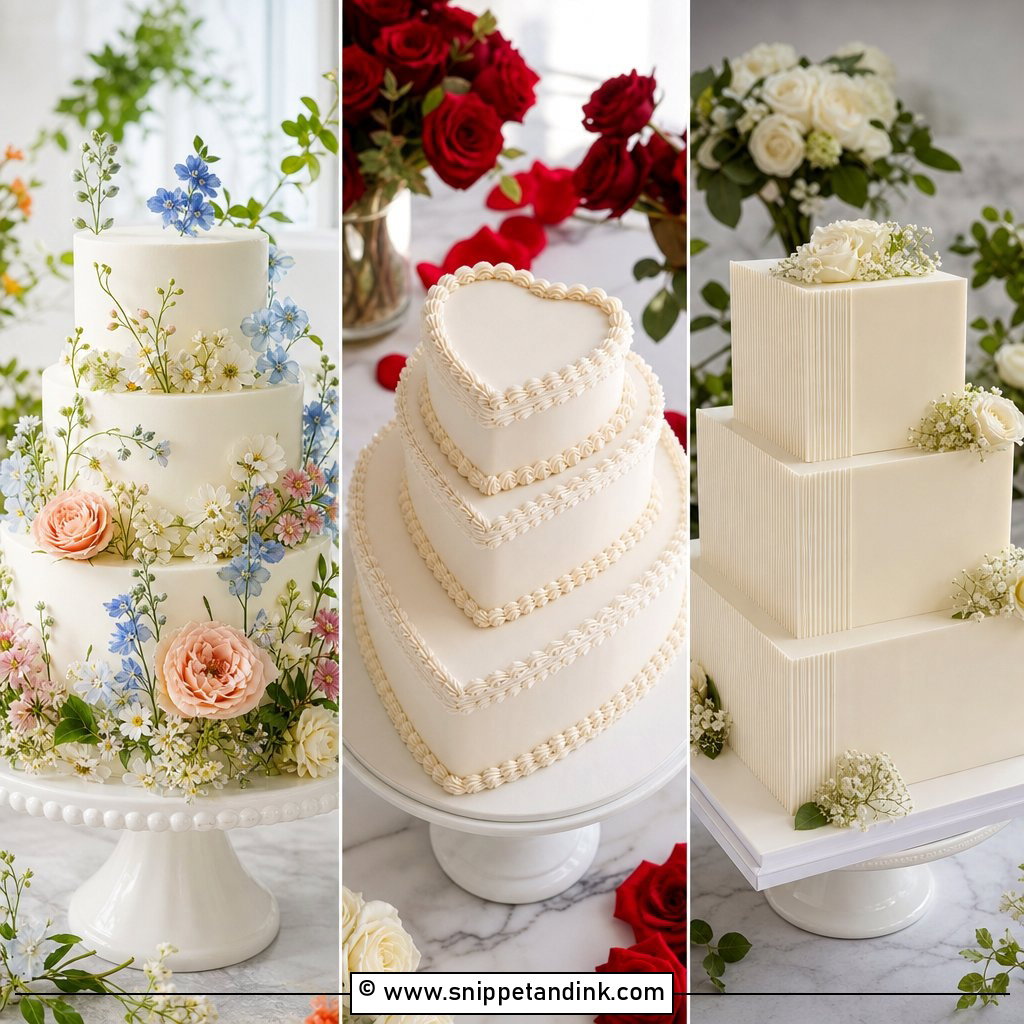
A ruffle wedding cake borrows its texture from fabric. The ruffles can wrap every tier, cover one statement tier or fall vertically like a gown skirt. Fondant ruffles hold the sharpest edges, buttercream ruffles are softer and need a cool room, and wafer paper is the lightest and most delicate. Ivory, blush, champagne and pale gray show the shadows between layers best. Keep flowers to a minimum so the texture stays central. Vanilla bean, rosewater raspberry, lemon cream and coconut are gentle flavor matches.
16. Marble Wedding Cake
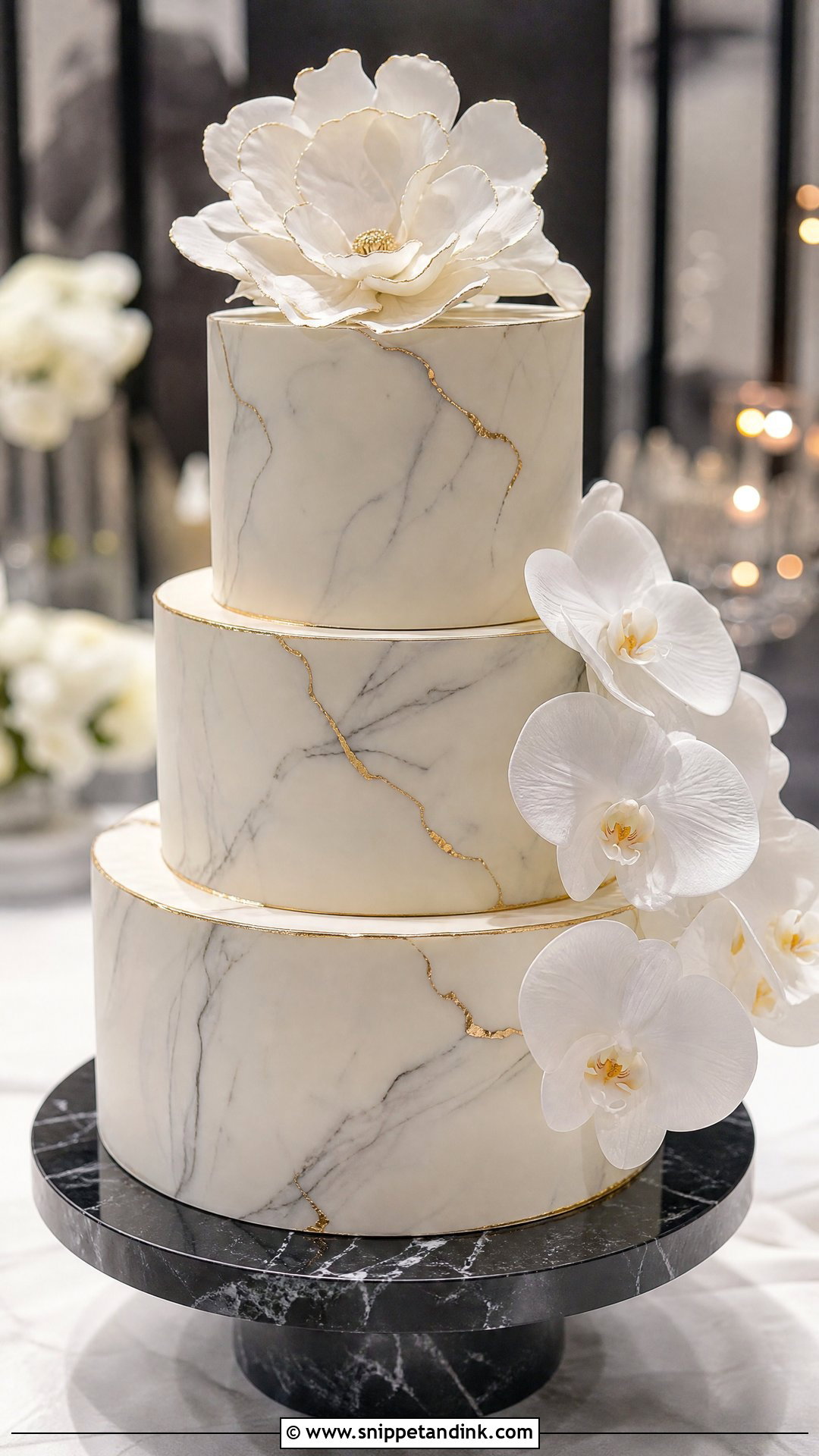
Stone-effect tiers in gray, beige, blush, green or blue look clean and modern, especially with gold veining or thin metallic edges. Fondant gives the crispest marble because the color is twisted in before rolling; buttercream gives a softer, smudgier version. I make each tier separately so the veining varies naturally, as real stone would. Hotels, lofts and indoor receptions suit it. Chocolate ganache, vanilla bean, espresso cream or pistachio match the mood, and orchids, roses or one sculptural sugar flower balance the surface.
17. Naked Wedding Cake
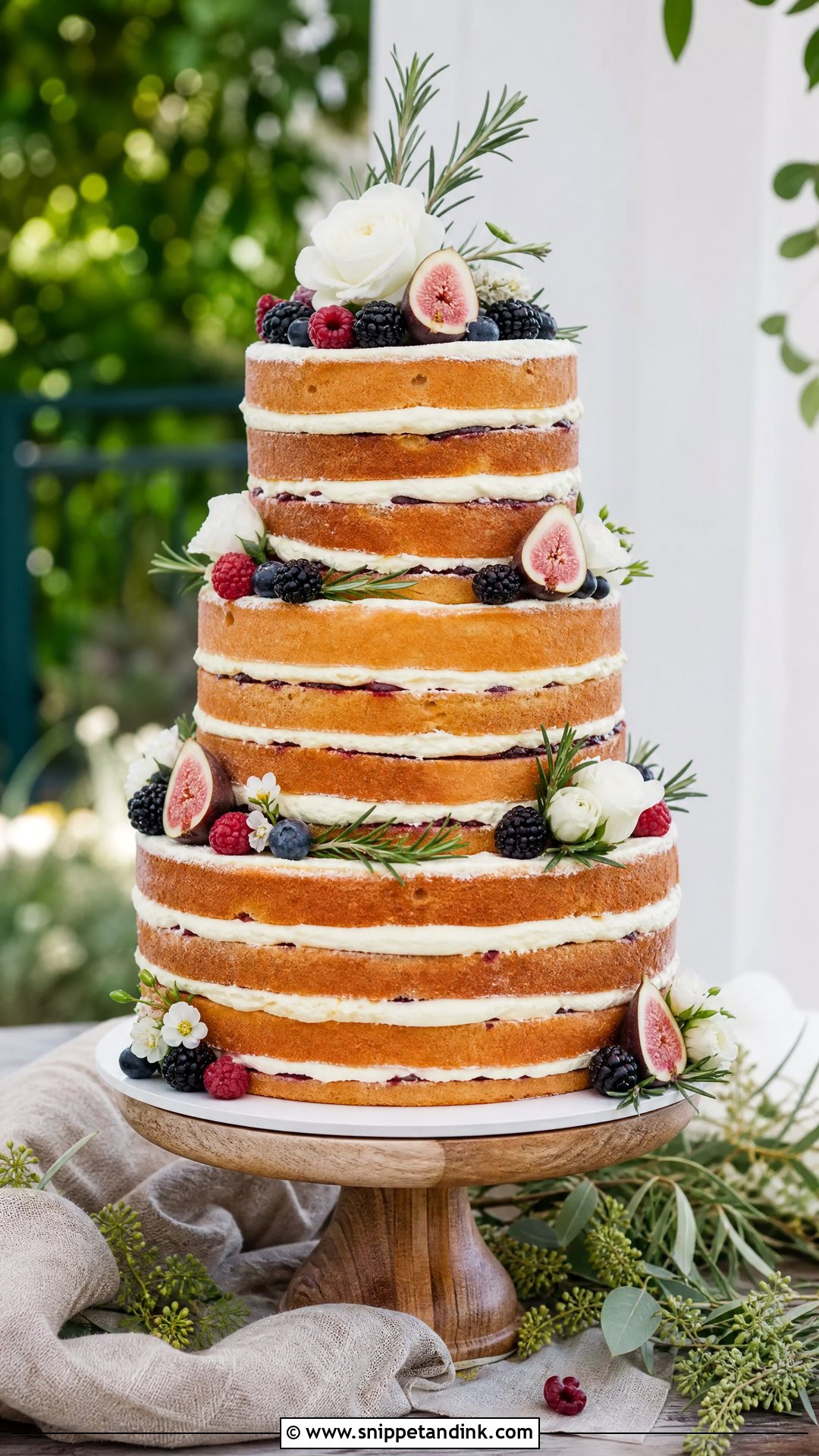
With almost no frosting on the outside, every layer is on show, so even baking and neat filling matter more than any decoration. Buttercream, cream cheese frosting, jam, curd or whipped filling sits between the layers, and flowers, berries, figs or herbs finish the top. The honest drawback is that bare sponge dries out in open air much faster than frosted cake. I brush the layers with syrup and assemble as late as I can, and I’d steer you away from this one for a long outdoor reception in summer. Vanilla berry, carrot, lemon raspberry and chocolate mocha are popular.
18. Tall Single Tier Wedding Cake
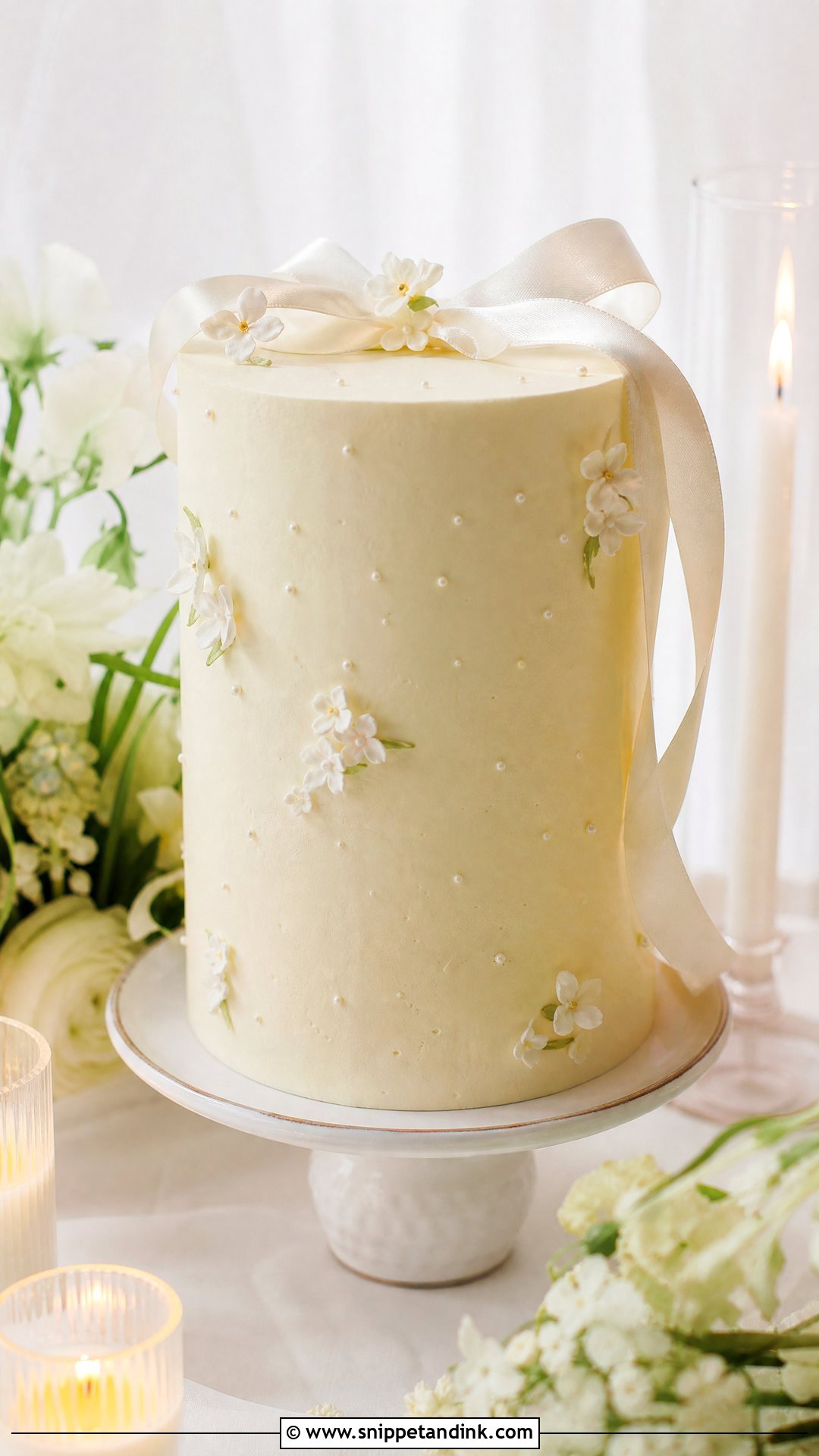
For elopements and micro weddings, a tall single tier gives height without dozens of servings. I build these from two stacked cakes with a board and supports between them, which is what lets a narrow cake stand tall without bulging. Smooth buttercream, vintage piping, pearls, flowers or a dramatic bow all work, and a pedestal stand with candles around it makes it feel like the centerpiece. Choose a flavor that means something to you both, such as almond apricot, lemon blueberry or chocolate caramel.
19. Colorful Wedding Cake
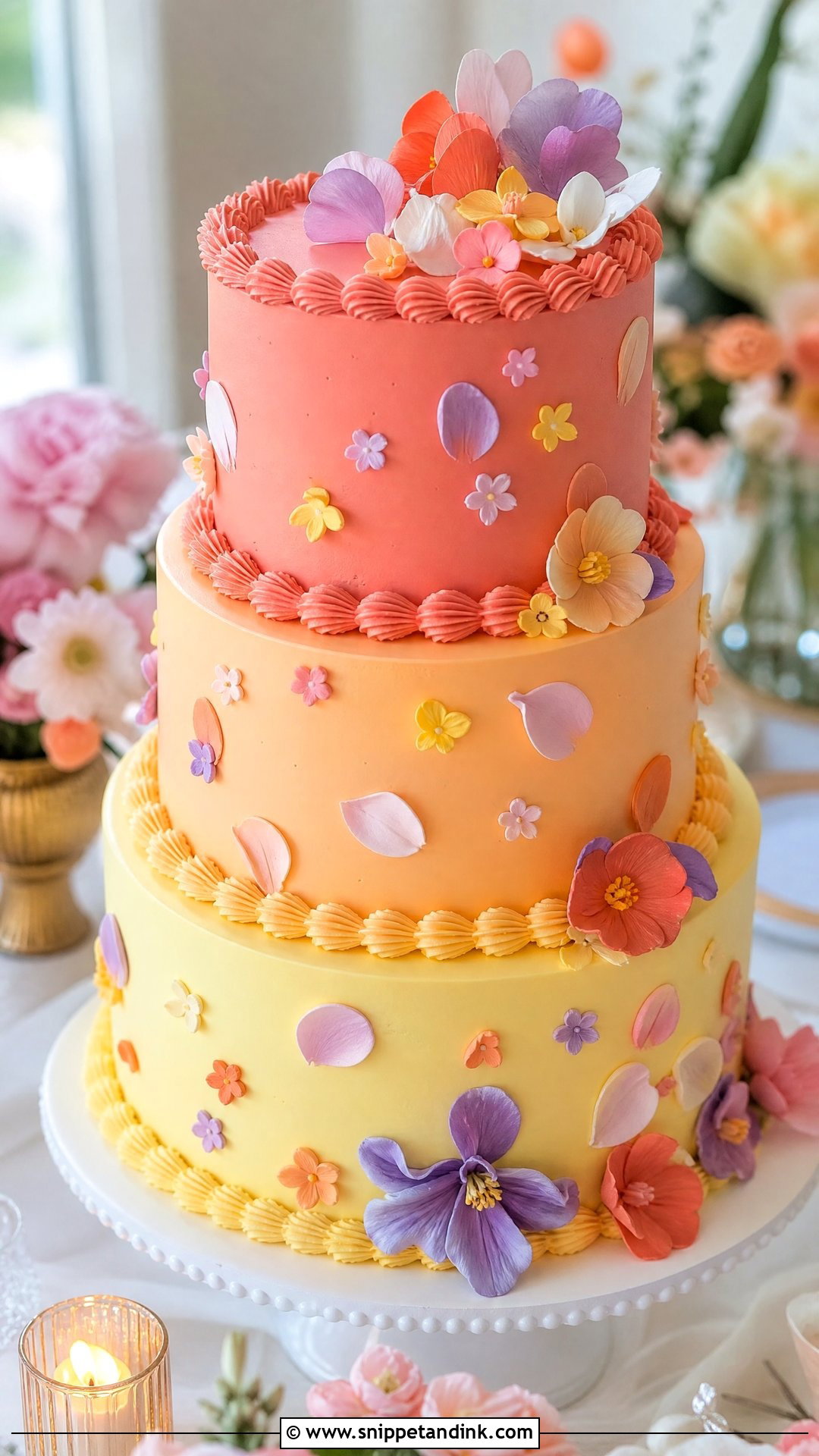
Color can come from painted buttercream, fondant panels, edible flowers, fruit, piping or tinted tiers. Coral, peach, lavender, sage, sky blue, terracotta and butter yellow are the shades I’m mixing most. The trick is pulling from the wedding palette rather than adding random brightness, and remembering that buttercream colors deepen over a few hours, so I tint a day ahead. Outdoor weddings, creative venues and couples who don’t want all white suit it. Flavors like strawberry, lemon, funfetti, pistachio or orange blossom support the playful look.




20. Black Wedding Cake
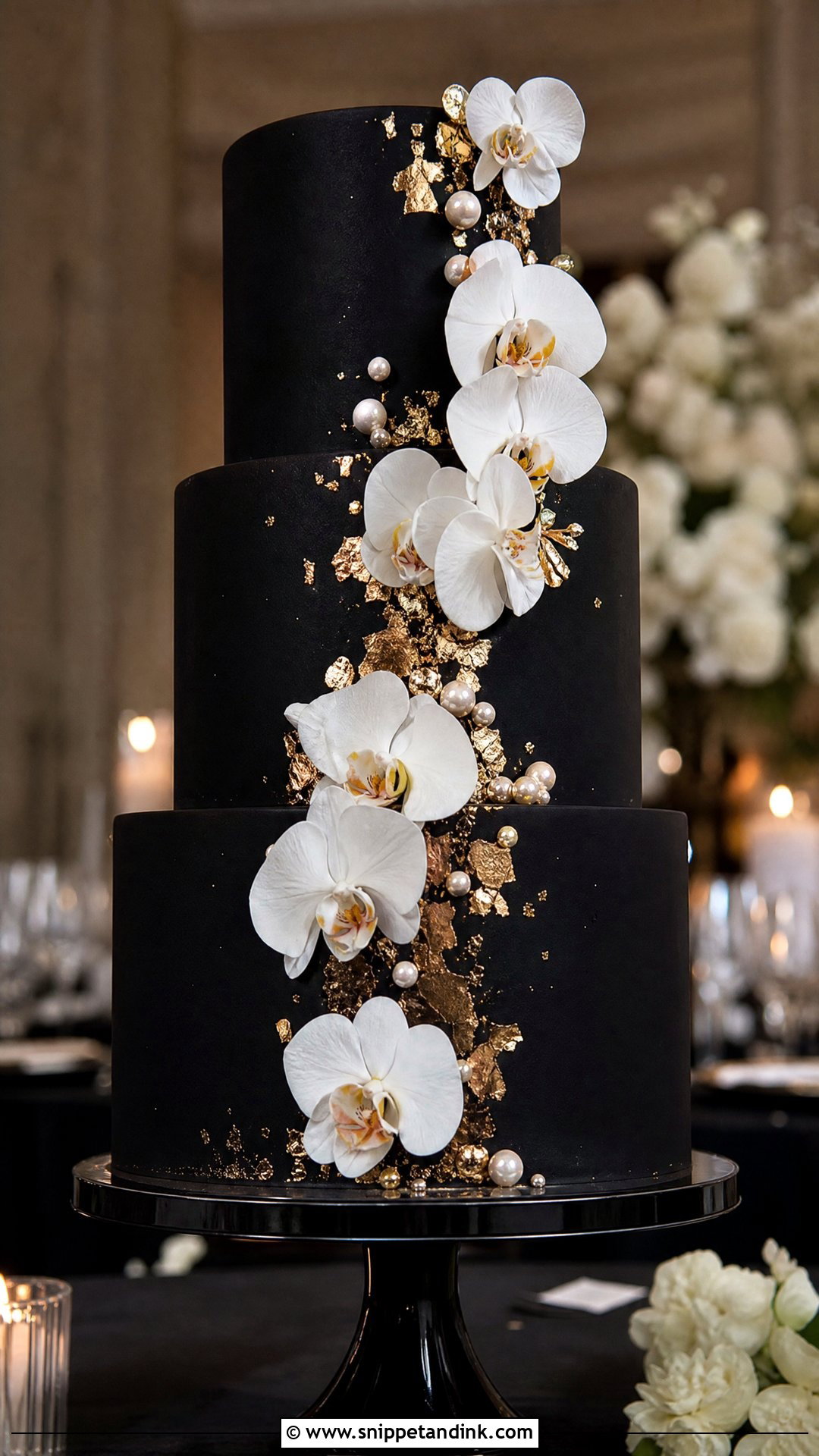
Black cakes need a plan. Matte black buttercream, black fondant, black cocoa frosting or dark chocolate ganache all get there, but heavily dyed frosting can stain teeth and taste bitter, so I start from black cocoa or dark chocolate to keep the dye low. White flowers, gold leaf, pearls or fine piping soften it. Clean shapes and soft lighting keep it looking intentional at an evening reception rather than heavy. Dark chocolate, blackberry, espresso and salted caramel suit the moody outside.
21. Greenery Wedding Cake
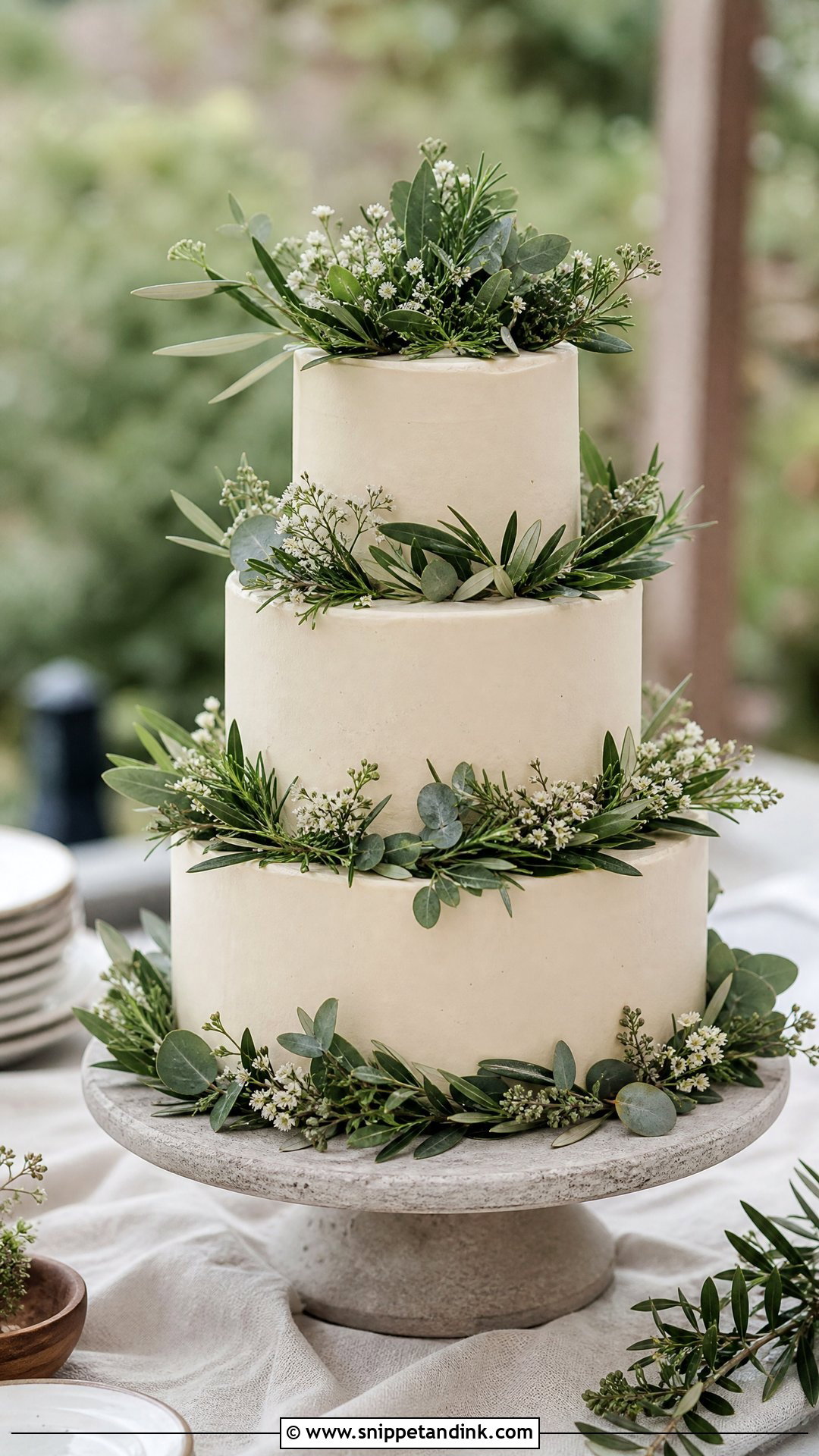
Leaves instead of large blooms give a fresher, quieter cake: olive branches, rosemary, fern and small edible leaves on white or ivory frosting. Be careful with eucalyptus, which florists love but which isn’t food-safe; I only use it with the stems wrapped and away from anything that gets served, or swap it for sugar leaves. Fully frosted, semi-naked or smooth fondant all work depending on how formal the day is. Lemon olive oil, vanilla honey, almond or pear spice match the earthy mood. Keep the placement airy so the greenery frames the cake.
22. Coastal Wedding Cake
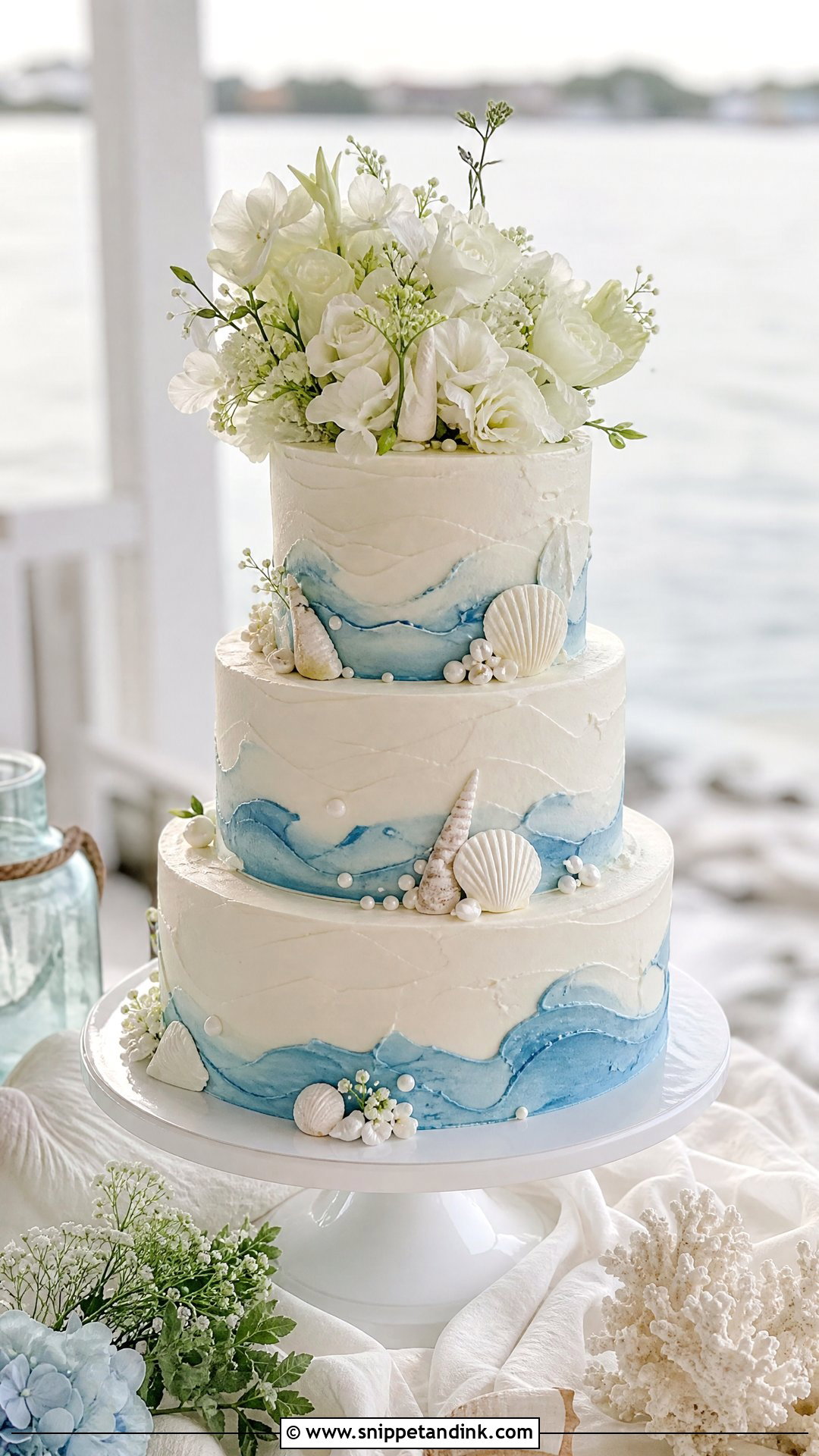
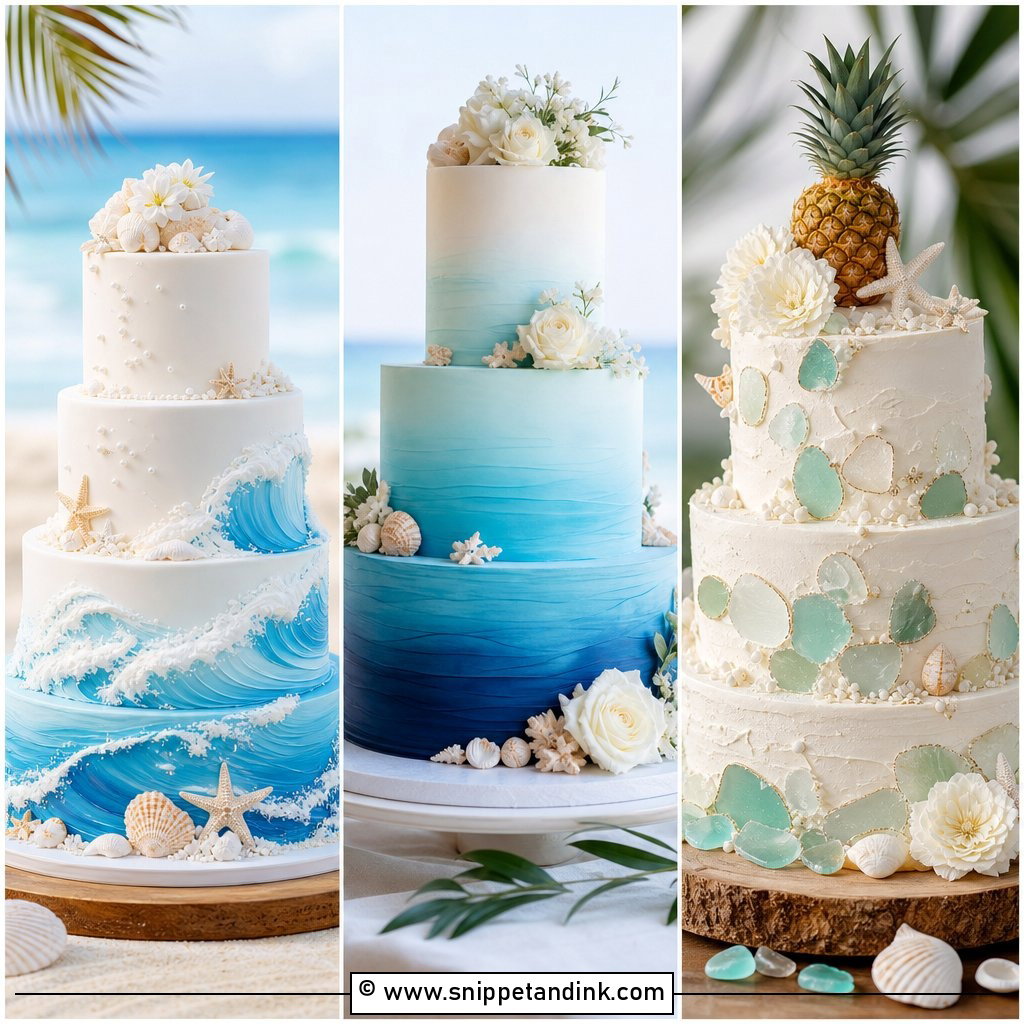
Coastal cakes go wrong when they get too literal. Soft blue, ivory, sand and pearl tones, wave-like buttercream, watercolor blue edges and a few sugar shells used sparingly keep it grown-up. Beach venues bring heat, humidity and sometimes wind, so buttercream needs shade and a firm base, and I’d keep sugar shells off until the cake is set up. Coconut lime, lemon cream, vanilla passion fruit or almond citrus are natural fits. A white stand and linen keep it fresh.
23. Garden Wedding Cake
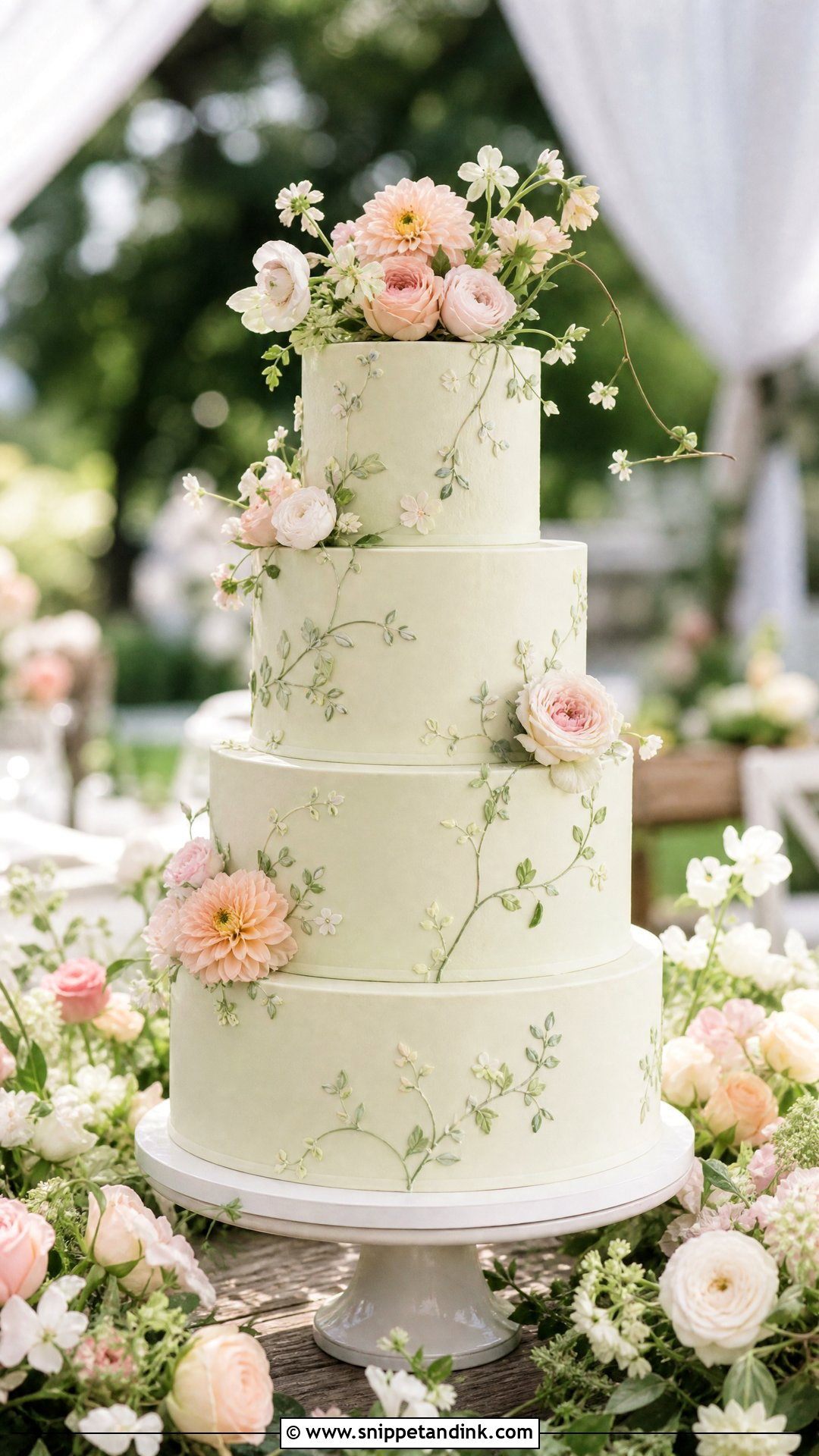
Lush tiers with fresh or sugar flowers, vines, herbs and soft color suit spring and summer weddings in tents, gardens, estates and courtyards. I like to work from the bridal bouquet so the cake repeats its flowers, such as roses, dahlias and ranunculus. Piping and placement decide whether it’s neat and formal or relaxed and whimsical. Outdoors, fresh flowers on a cake wilt faster than the arrangements on the tables, so they go on last. Lemon elderflower, strawberry vanilla, lavender honey or pistachio rose suit the floral mood.
24. Dessert Table Wedding Cake
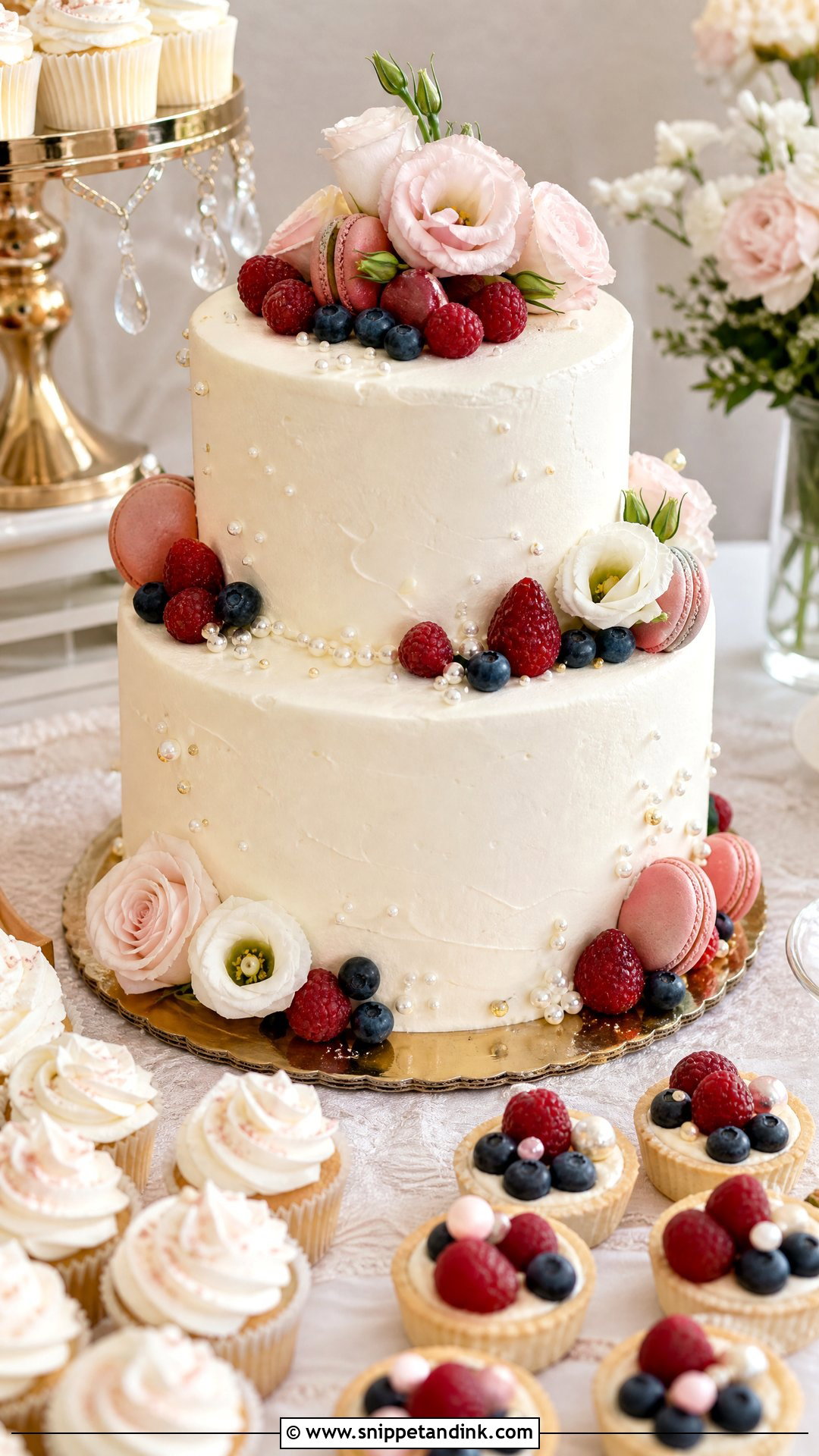
When the cake is one part of a larger sweet display, it can be smaller, but it still needs height, color or one strong detail to anchor the table. Matching cupcakes, mini tarts, cookies, macarons, cake slices or fruit desserts surround it. Couples get variety and still keep the cutting moment. Repeat one color, flower or flavor between the cake and the other sweets so the table looks planned. Vanilla raspberry, chocolate caramel, lemon cream or almond all play well with other desserts.



25. Heart Wedding Cake
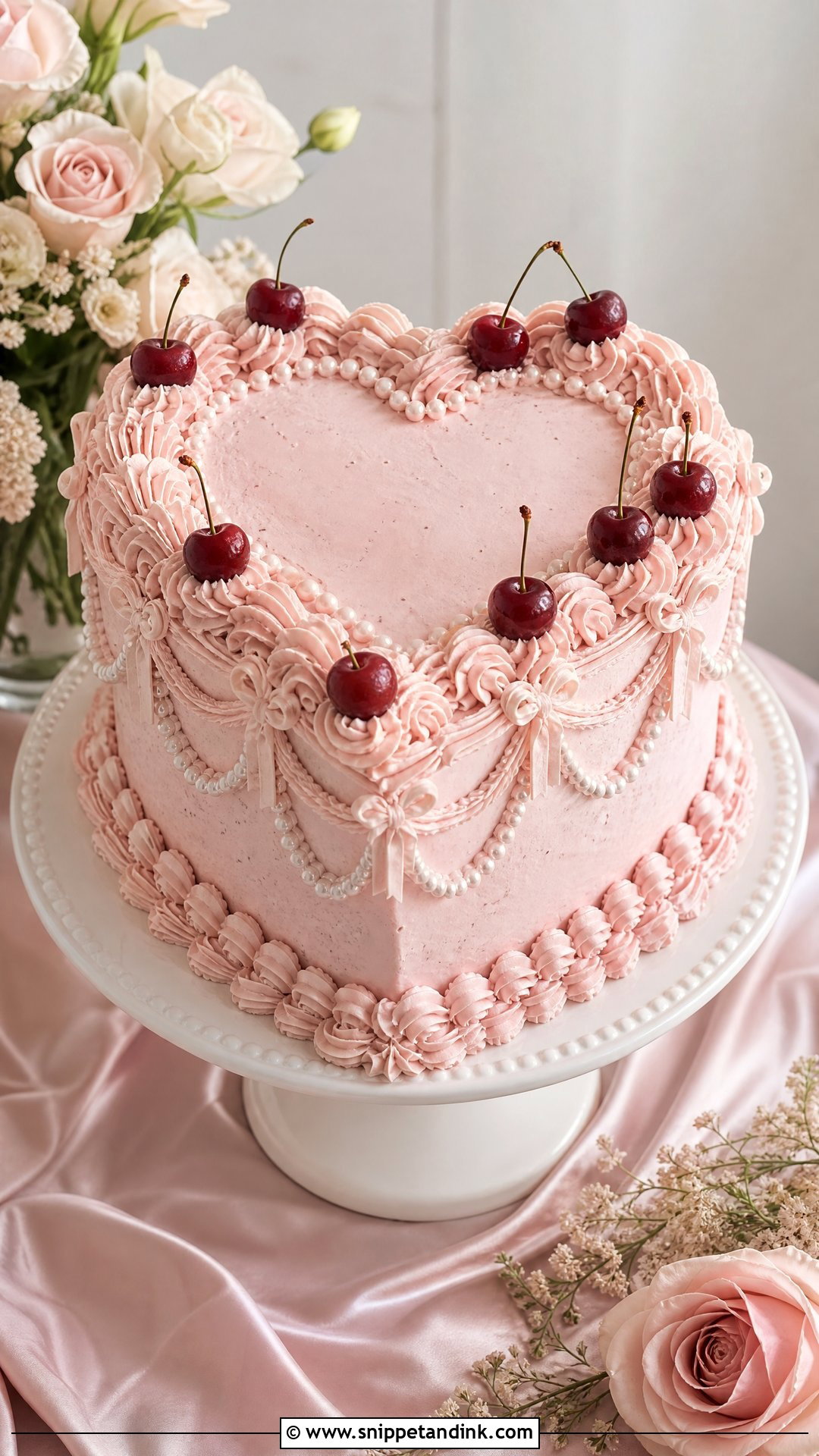
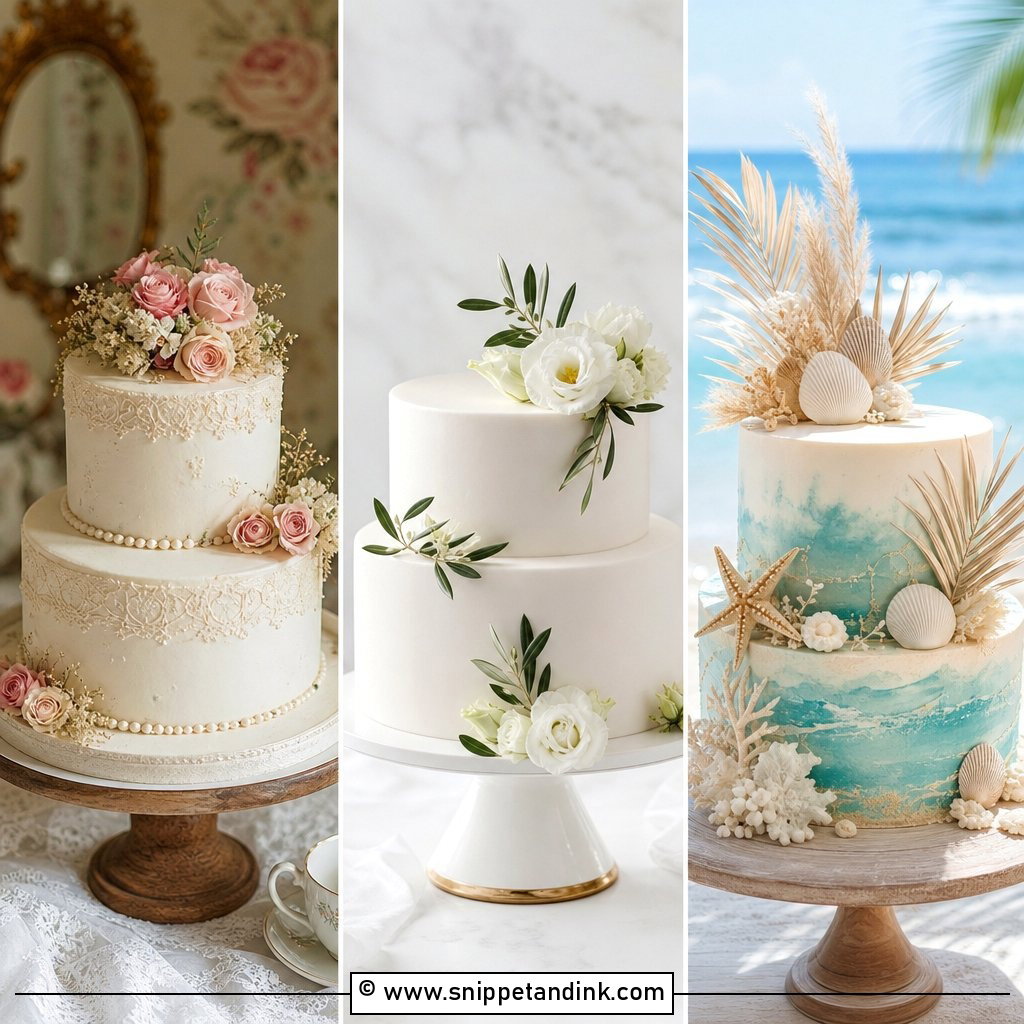
Hearts suit small weddings, courthouse celebrations, bridal brunches and vintage receptions, where one tier is enough. A heart wedding cake takes Lambeth piping, pearls, cherries, bows or soft borders well. White, blush, red, pale yellow and powder blue are popular, though ivory looks the most bridal. Stacked heart tiers are harder to balance than rounds because the point carries little weight, so I keep stacked hearts to two tiers. Strawberry shortcake, vanilla cream, red velvet, almond raspberry and chocolate cherry suit the shape.
Flowers on the Cake: Which Ones Are Safe and Who Brings Them
Fresh flowers appear on almost half the cakes in this list, and they cause more day-of confusion than anything else I deal with. Decide early whether your florist or your baker is responsible for them. Usually the florist supplies the stems and the baker places them, but that needs to be in writing, along with a delivery time at the venue.
Not every pretty flower belongs near food. Hydrangea, lily of the valley, foxglove, sweet pea, delphinium and eucalyptus are all on my do-not-touch list, and most florist flowers have been sprayed even when the variety itself is harmless. When a design calls for one of those, I either make it in sugar or keep the real one on a separate stand beside the cake.
How I attach real stems
Every stem is wrapped in floral tape or pushed into a plastic posy pick so it never touches the cake directly, and nothing is pressed straight into the sponge. Flowers come off before cutting, and whoever cuts the cake should know where the picks are. If a flower is meant to be eaten, it must come from an edible flower grower, not a bouquet.
Design the Cake Around the Room It Will Stand In
A cake doesn’t need to be huge or complicated to feel like yours. It can stand out through its color, shape, piping, flavor, flowers, texture or one personal detail. Before you settle on a style, think about the venue, the season, how many guests will eat it, the stand it will sit on and how it will look in the light of the room. Bring the few styles you keep returning to into your consultation, then work out with your baker what’s realistic for your day and what will still taste good when it’s finally cut.
You'll Like These Ideas:










Leave a Reply