
Dressing the cake is usually the last floral job I do before guests walk in, and it’s the one people photograph closest. Purple gives me a wide range to work with: lavender and lilac for a garden feel, orchid and wisteria for something more styled, plum and mauve for evening. The flowers can be fresh, sugar, pressed, painted or piped, and each behaves differently once it’s sitting on frosting for five hours. These 25 cakes show the range, with my notes on which blooms hold up, which need a stand-in, and how I’d place them.
Who Puts the Flowers on the Cake, and When
Fresh flowers on a cake are a shared job between florist and baker, and it goes wrong when nobody owns it. My usual arrangement is that the baker delivers and sets up the cake first. Then I dress it at the venue, as one of the last tasks before guests arrive, so the flowers spend as little time out of water as possible.
- Cake flowers come from a separate, pesticide-free order, not from leftover centerpiece stems.
- Each stem is wrapped in floral tape or set into a food-safe pick, so no sap or stem touches the cake.
- Large clusters sit on a small disc or parchment rather than pressed into frosting.
- Agree in writing who supplies, places and removes the flowers before cutting.
Ask your florist to quote cake flowers as their own line. It’s usually a modest amount, but it makes sure someone actually plans for it.
1. Purple Flower Wedding Cake With White Buttercream
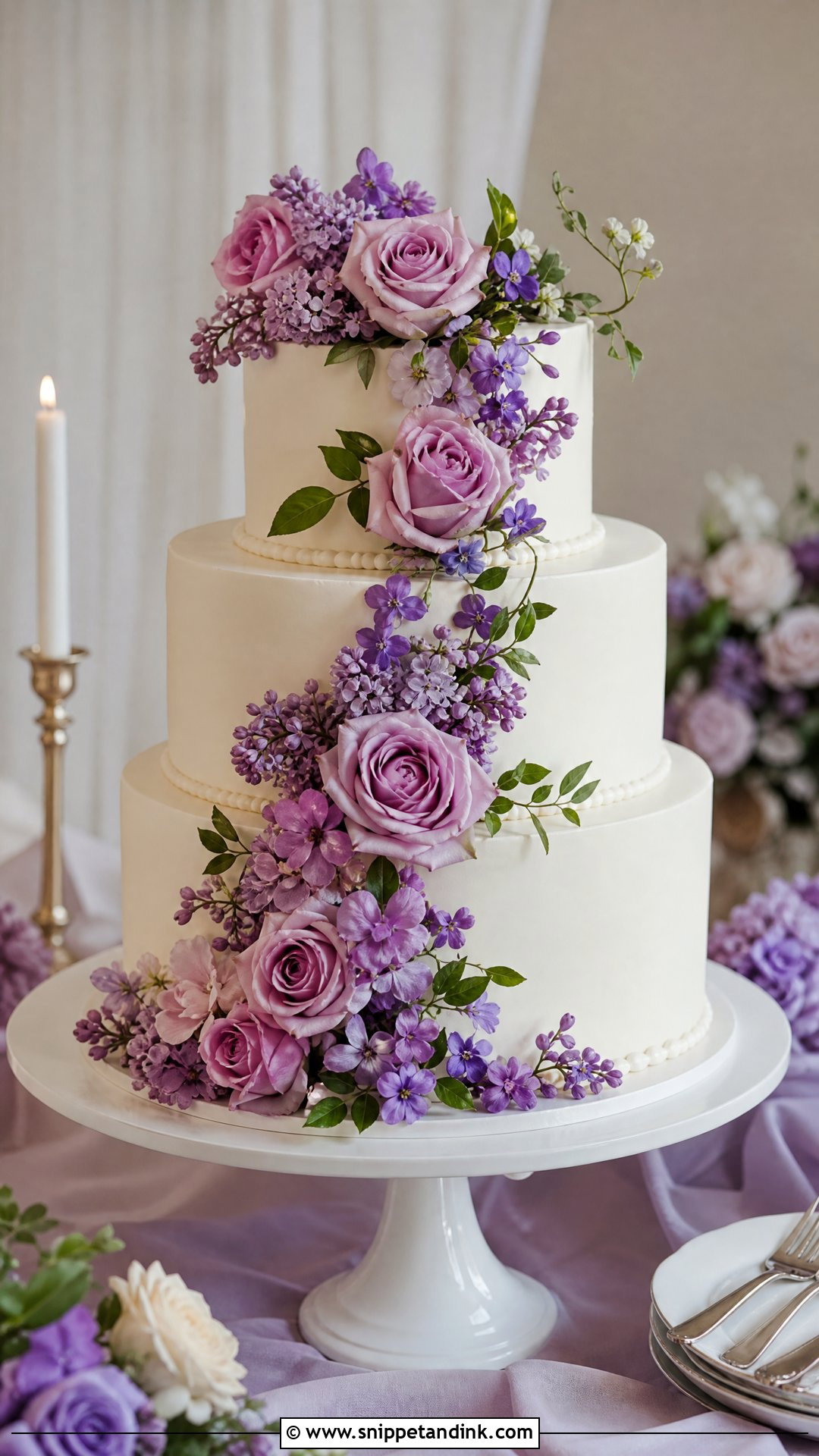
White buttercream is the easiest canvas I can ask for. Against it, lavender, lilac and violet read clearly without the cake looking dyed. A white buttercream cake with purple flowers works at two tiers or five; I’d place a soft cascade on a tall cake, a corner cluster on a short one. Smooth buttercream gives a crisp backdrop, light texture suits a relaxed day. Vanilla, almond, lemon or champagne sponge keep the flavor classic.
2. Lavender Flower Wedding Cake
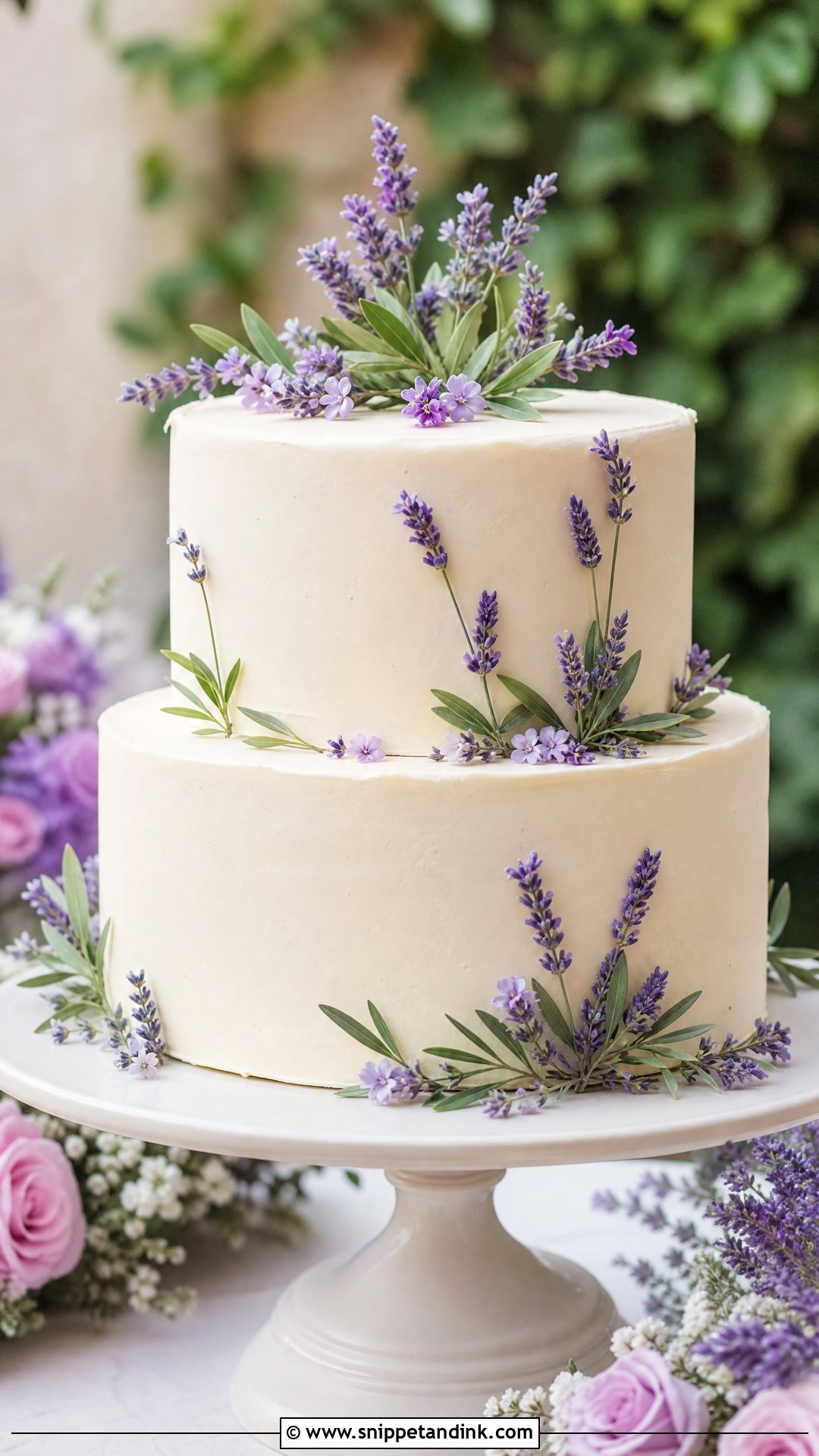
Real lavender is one of the few purple flowers I’m happy to put straight onto a cake, as long as it’s culinary grade and unsprayed. A lavender flower wedding cake carries a light scent too, which guests notice when they lean in. Dried sprigs hold their shape all day; fresh ones droop a little by evening. It blends with ivory, sage, blush, silver and pale blue palettes. Keep the sprigs airy and few. Honey, lemon, earl grey and white chocolate flavors all suit it.
3. Lilac Flower Wedding Cake
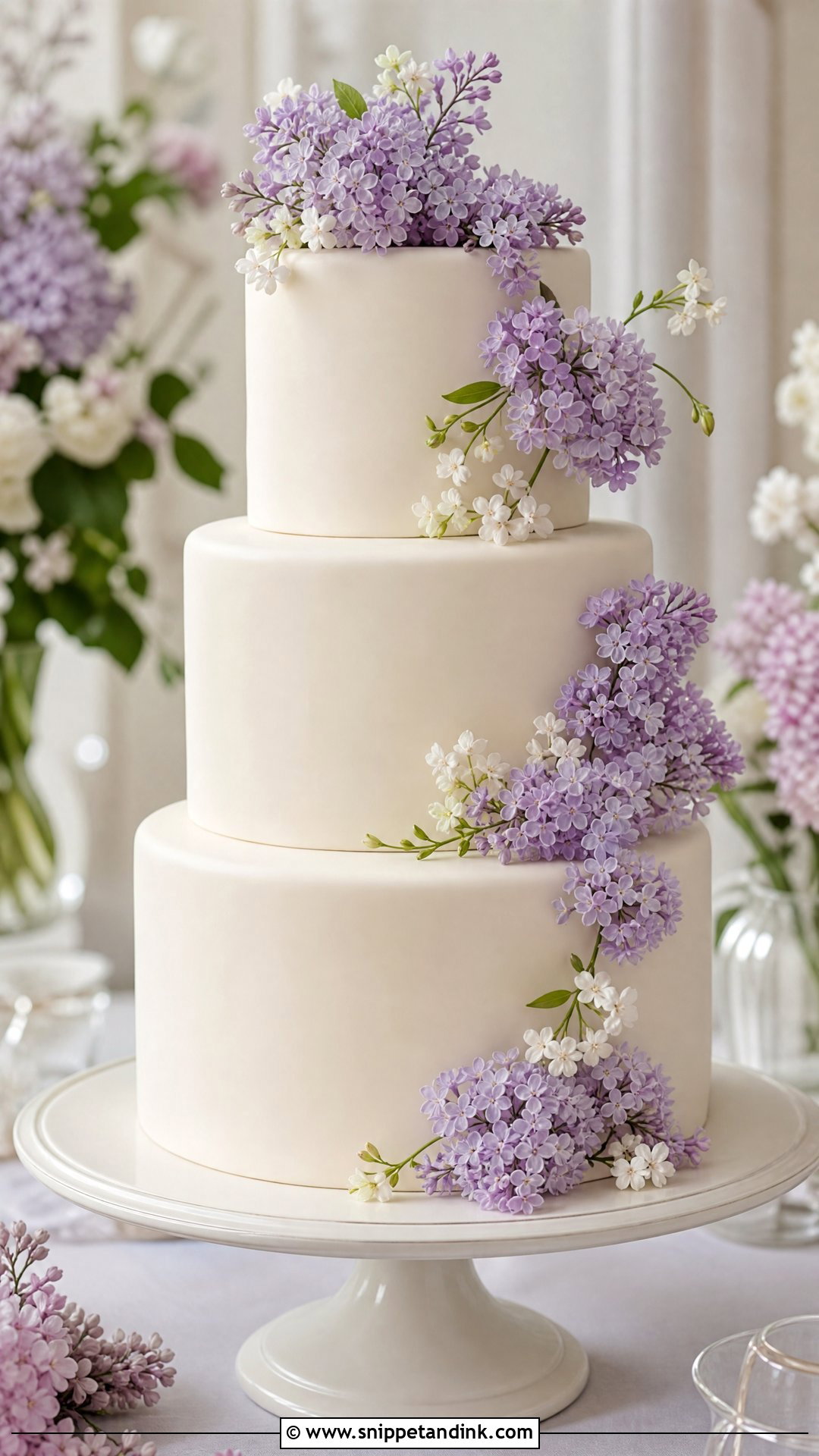
Here’s my honest warning about lilac: cut lilac wilts fast. The woody stems struggle to drink even in a vase, and out of water on a cake, the clusters can go limp within a couple of hours. So for a cake I’d use sugar lilac, or real clusters added at the very last minute. The look itself is soft and full of movement, with clusters around each tier base or trailing down one side. White or ivory frosting makes the color stand out. It’s a spring flower, ideal for a garden or brunch reception.
4. Purple Rose Wedding Cake
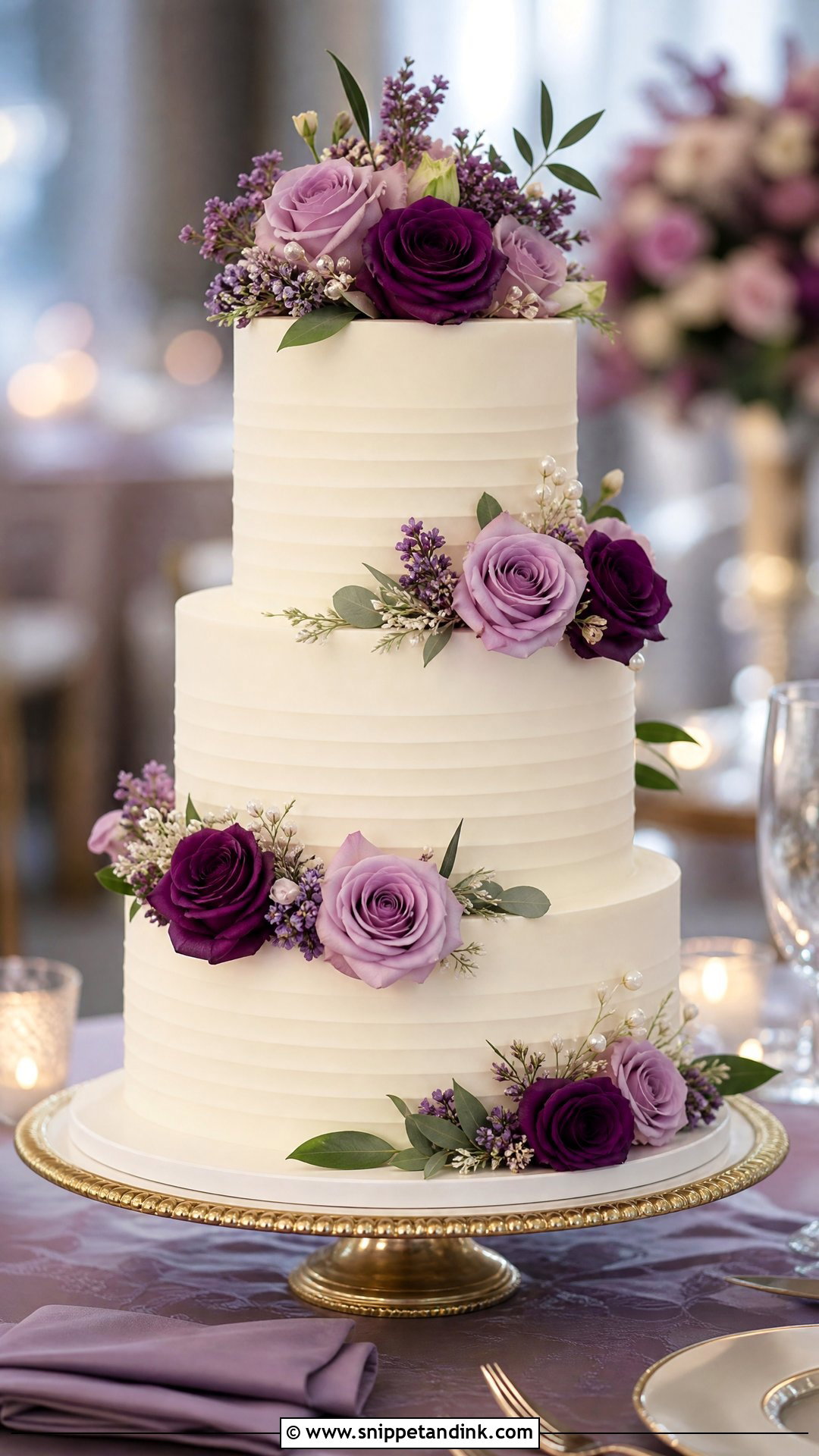
Roses are the workhorse of cake flowers. They last out of water for hours, their petals don’t drop, and they come in every purple from soft lavender and mauve to deep plum. I use a diagonal cascade for a classic look or one tight cluster between tiers for something modern. They mix easily with white roses, greenery, pearls and gold leaf. The roses must be grown without pesticides if they’re going near frosting, which means ordering them specifically for the cake, not pulling them from the centerpiece stock.
5. Purple Orchid Wedding Cake
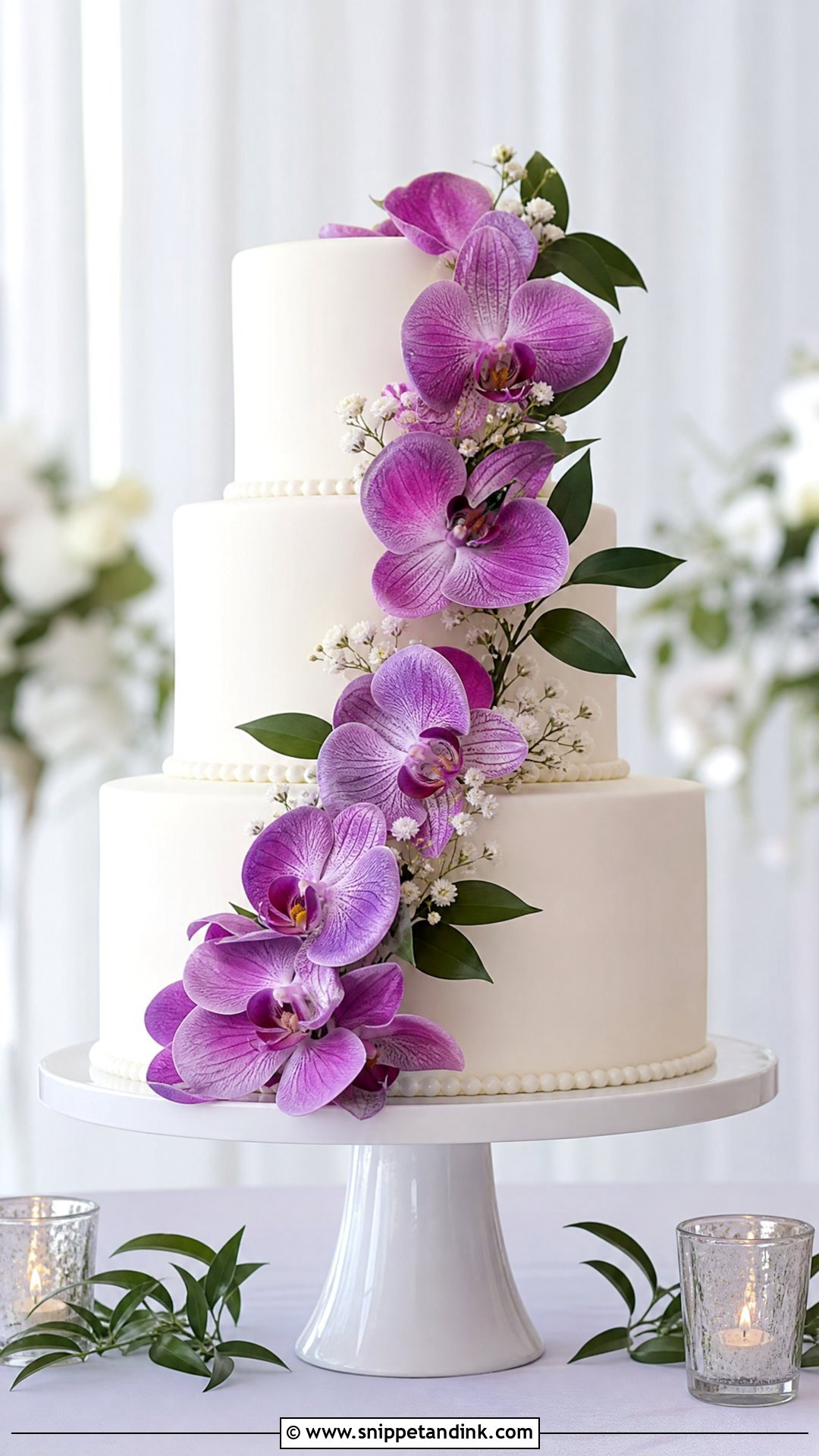
Orchids are my most reliable fresh flower for a cake: sculptural, light and slow to wilt. Dendrobium sprays drape well in a cascade; single cymbidium heads make bolder accents. On white fondant they look polished in a ballroom or beach setting. Mixing them with small white flowers and greenery softens the look, while a lavender or plum base with white orchids reverses it. Coconut, passion fruit, vanilla, white chocolate and almond suit the tropical feel. Keep the tiers smooth so the orchids’ shape reads.
6. Purple Hydrangea Wedding Cake
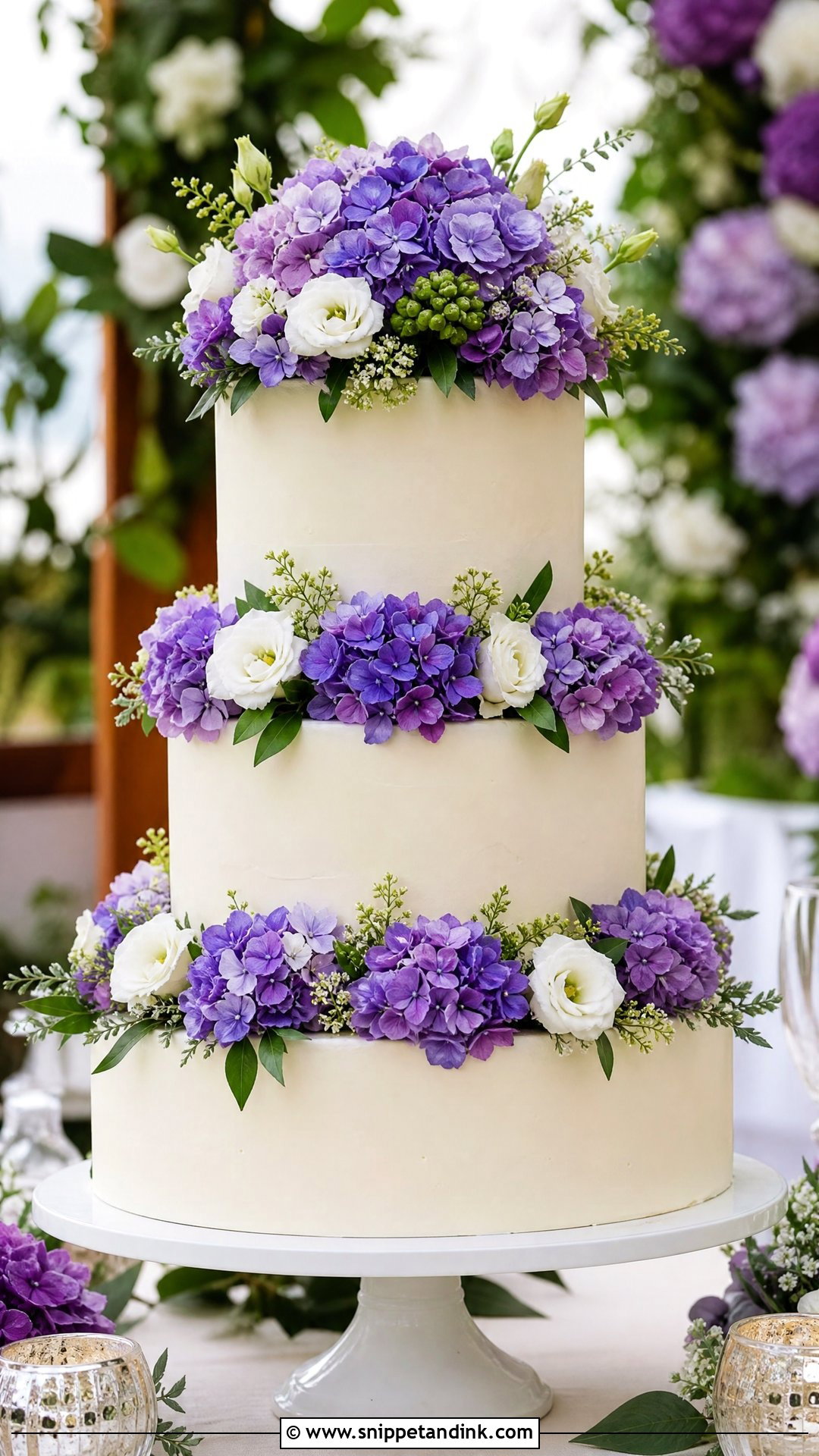
Hydrangeas give a cake that full, cloud-like volume, but I won’t put fresh hydrangea on a cake. The plant is toxic, and the heads wilt notoriously fast once out of water. Sugar or wafer-paper hydrangea clusters give the same abundance safely, filling the gaps between tiers. Light purple feels airy; deep violet adds drama. They pair with garden roses, lisianthus and small white fillers. Keep the frosting simple, as the flowers are already doing a lot.
7. Purple Wisteria Wedding Cake
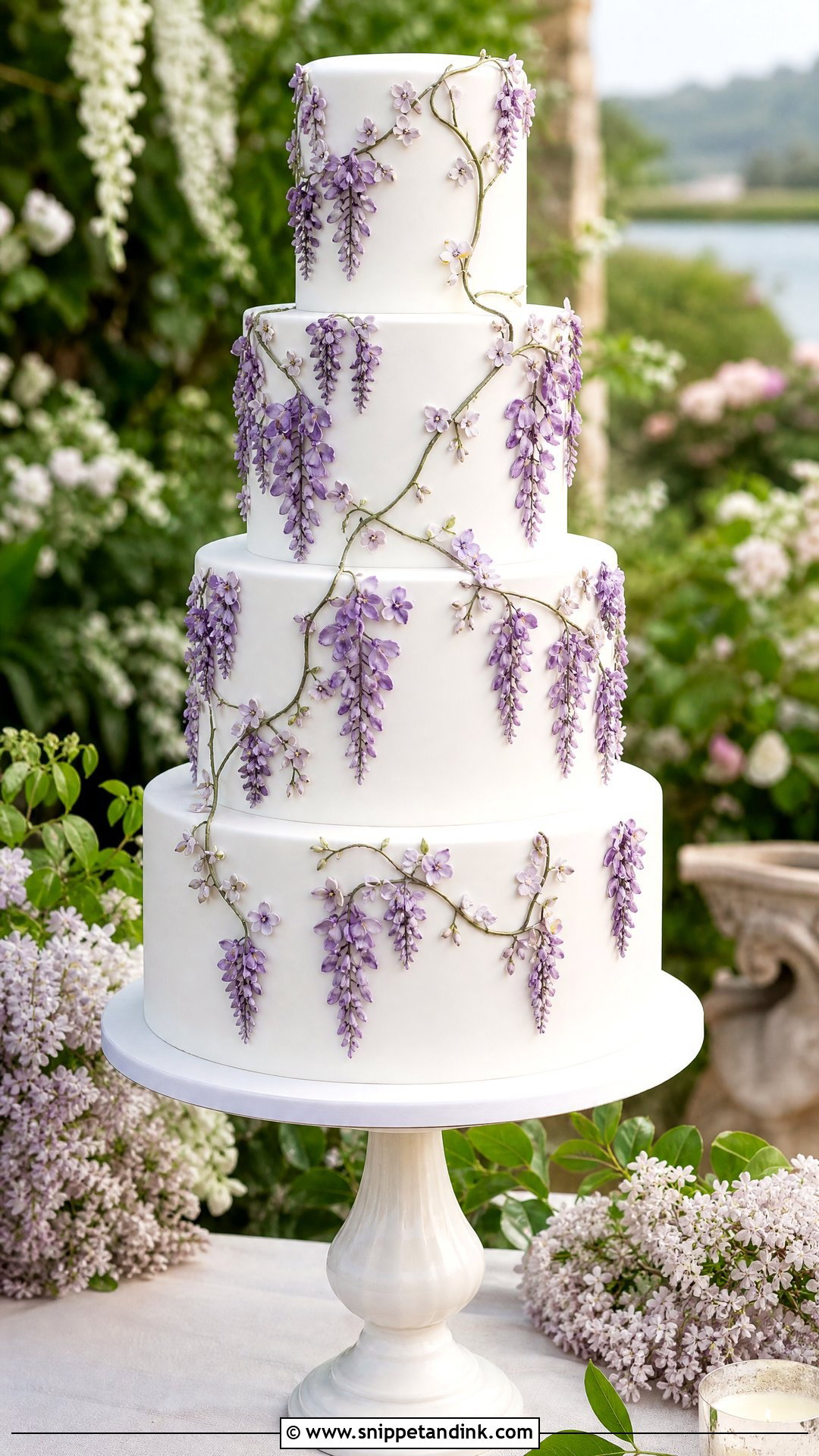
Wisteria draped down the tiers like hanging vines is one of the most romantic cakes on this list. It needs height, so it suits a tall cake. Real wisteria is toxic and drops its tiny flowers as it dries, so this one is always sugar work. A white or pale lavender base lets the strands show. It suits garden weddings and estate venues, and the rest of the decoration should stay minimal.
8. Purple Peony Wedding Cake
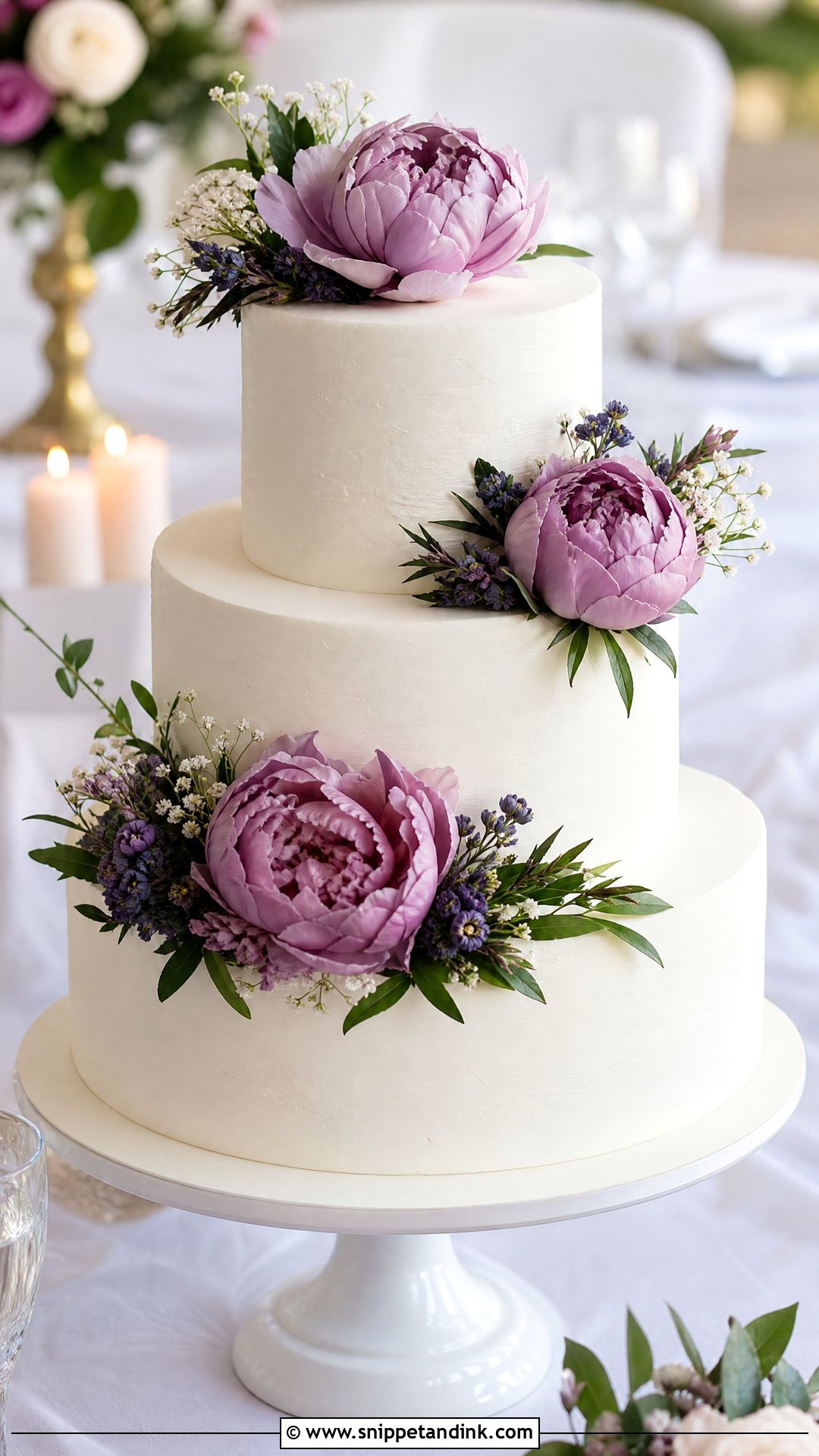
A single peony head is big enough to change a whole tier. Three mauve, lavender or plum peonies between tiers can turn a plain white cake into a centerpiece. The challenge is timing: a peony that’s perfectly open in the morning can start dropping petals by the evening in a warm room. I choose blooms that are just opening and add them as late as I can. Small white buds and greenery give depth. They’re in season in late spring and early summer.
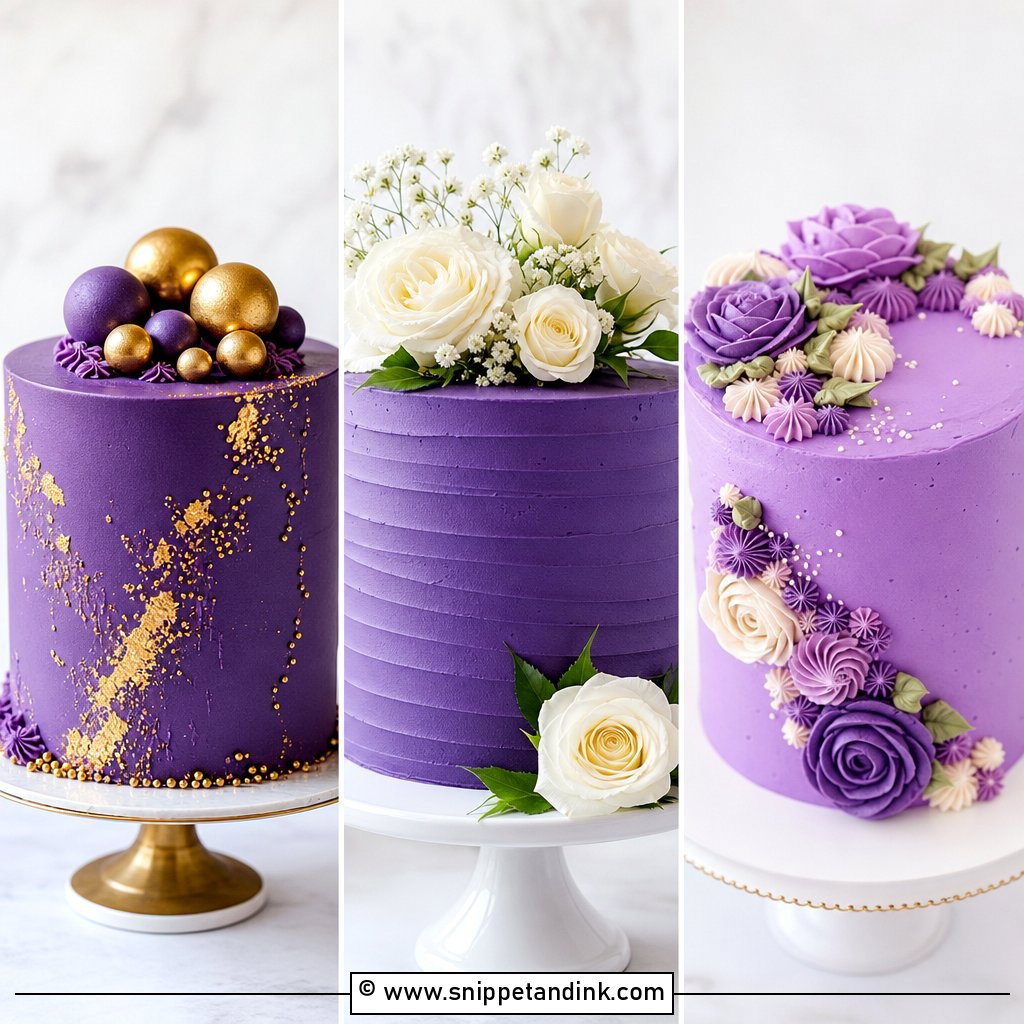
9. Purple Flower Cake With Gold Leaf
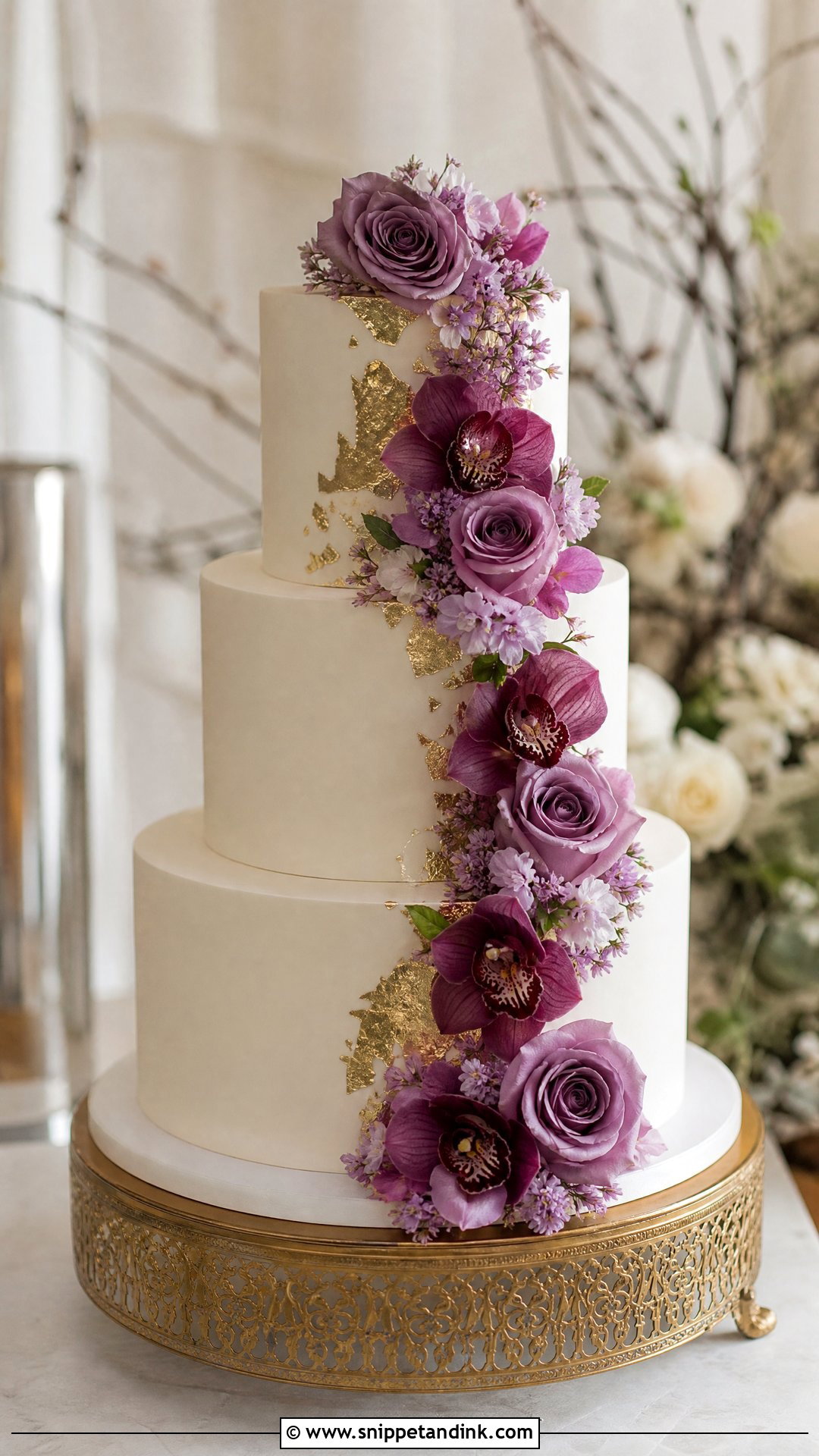
Gold leaf works best in small, irregular patches with flowers placed near them, so the metal looks like part of the design rather than a separate idea. It warms ivory, white or lavender frosting and glows against deep plum. Lavender roses, purple orchids and mauve peonies suit it. It’s a lovely choice for evening receptions and formal venues. Keep the gold delicate; a fully gilded tier competes with the flowers.
10. Purple Flower Cake With Silver Details
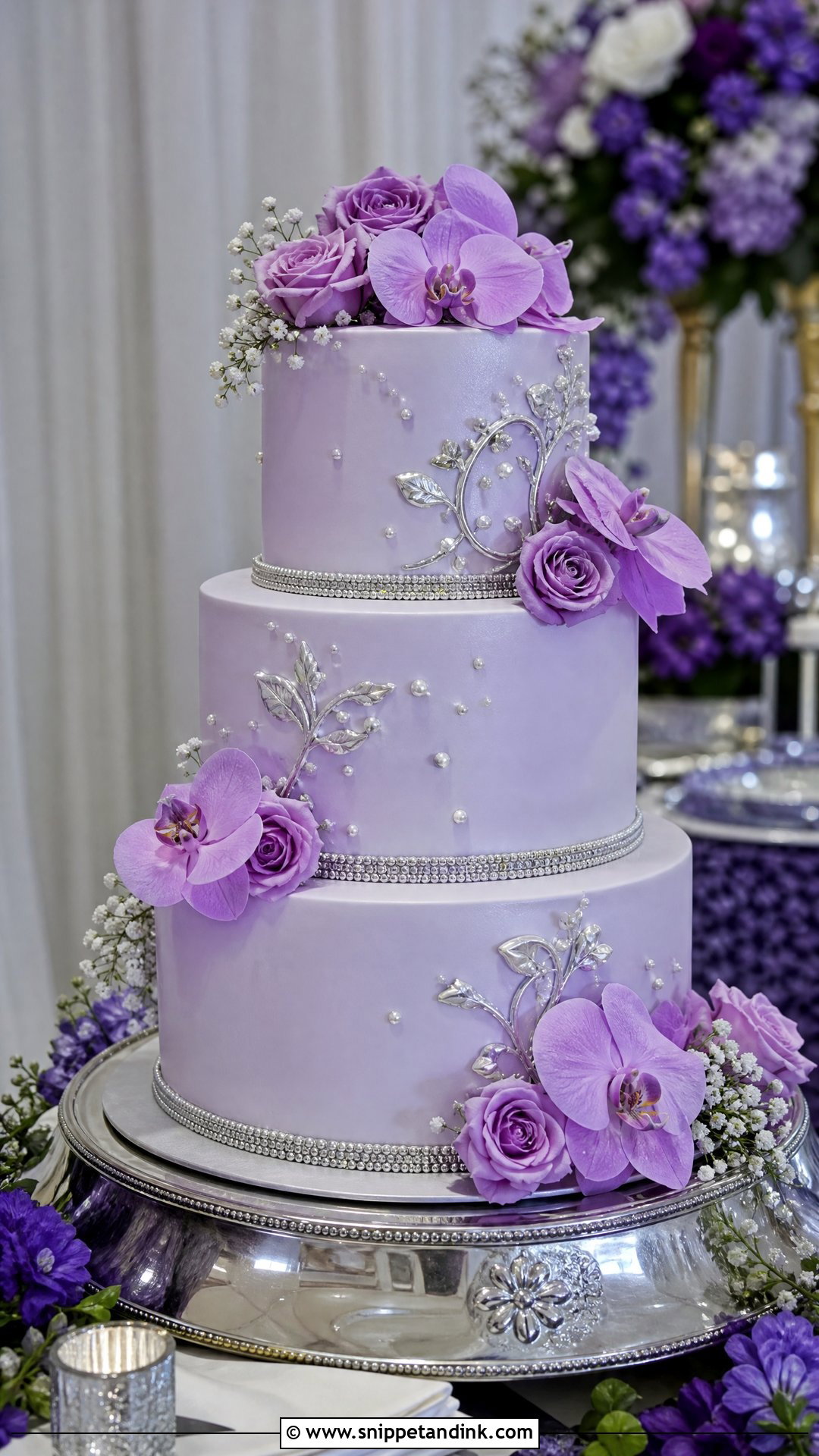
Silver cools the palette, which suits lavender, lilac, icy violet and white blooms. It can come in as thin bands, sugar pearls, metallic brushstrokes or a shimmer on the tier edges. Purple orchids, roses and sugar hydrangea all pair well with it. It fits winter palettes and evening receptions. I arrange the flowers loosely to keep a silver cake from looking too stiff.
11. Purple Ombre Flower Wedding Cake
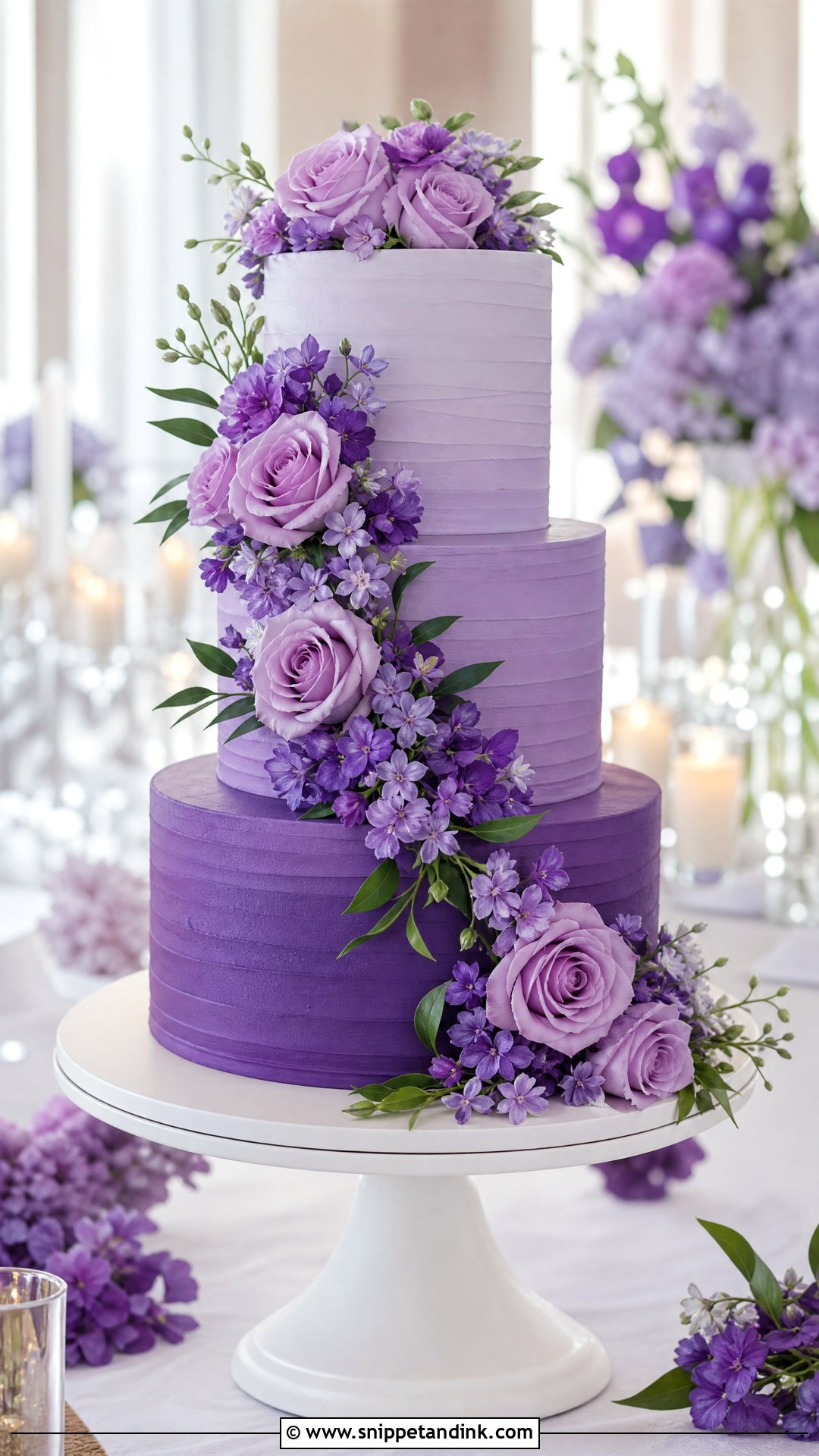
With color spread across the tiers, the flowers can follow the gradient. A purple ombre flower wedding cake might fade from deep violet at the bottom to lilac at the top, and I’d match the blooms to each tier’s shade so the flowers seem to grow out of the color. Buttercream ombre looks hand-blended; fondant looks smoother. Vanilla, berry, lemon, white chocolate or lavender flavors suit it.
12. Purple Watercolor Flower Wedding Cake
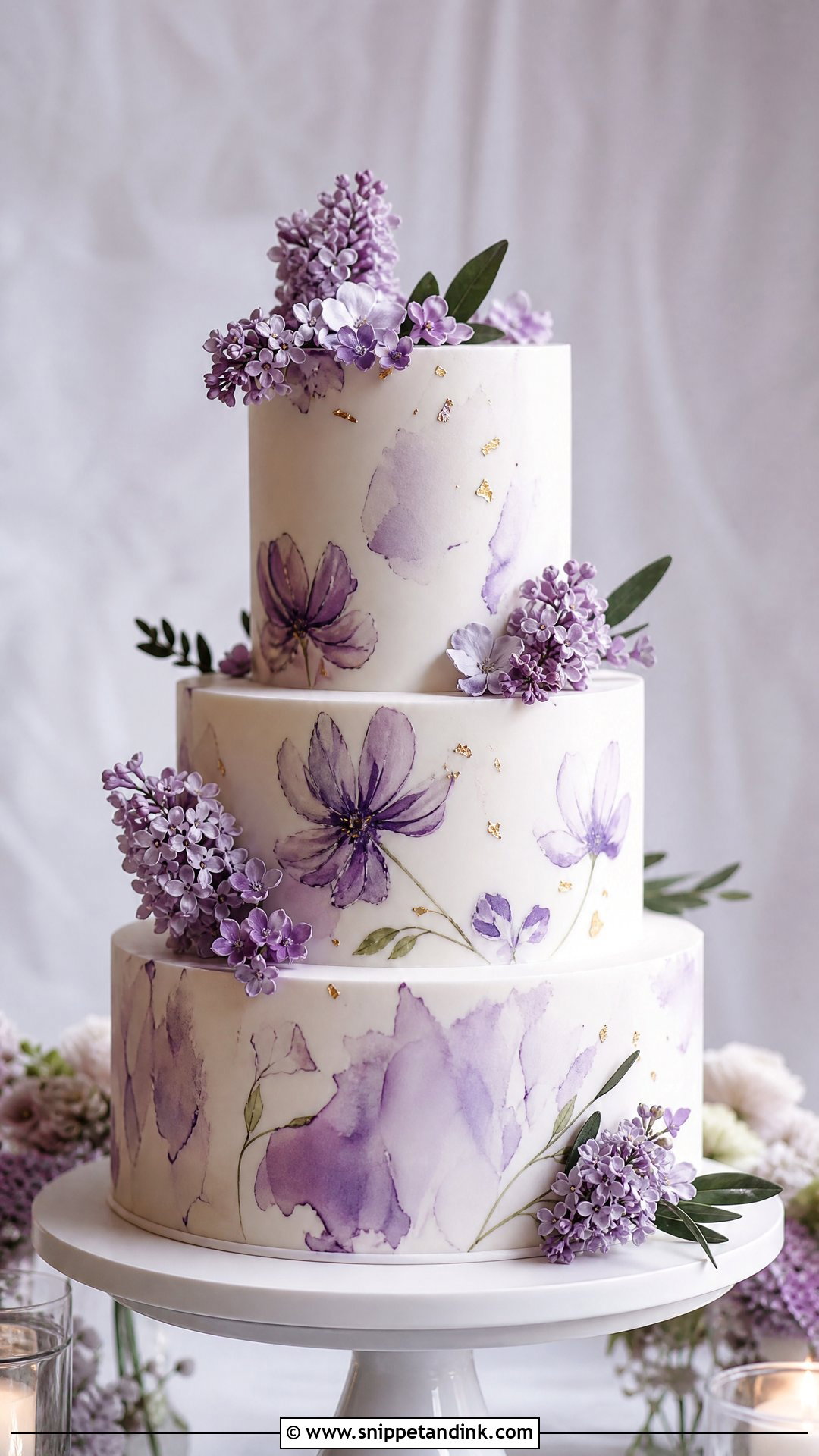
Watercolor washes in lavender, violet and mauve give the flowers a painted background to sit against. For a purple watercolor flower wedding cake, I’d pick blooms in the same three or four shades as the wash, so the edges between paint and petal blur. Hand-painted flowers, sugar flowers or fresh blooms all work. White fondant gives the paint a clean surface; buttercream softens it. Keep the color loose.
13. Purple Pressed Flower Wedding Cake
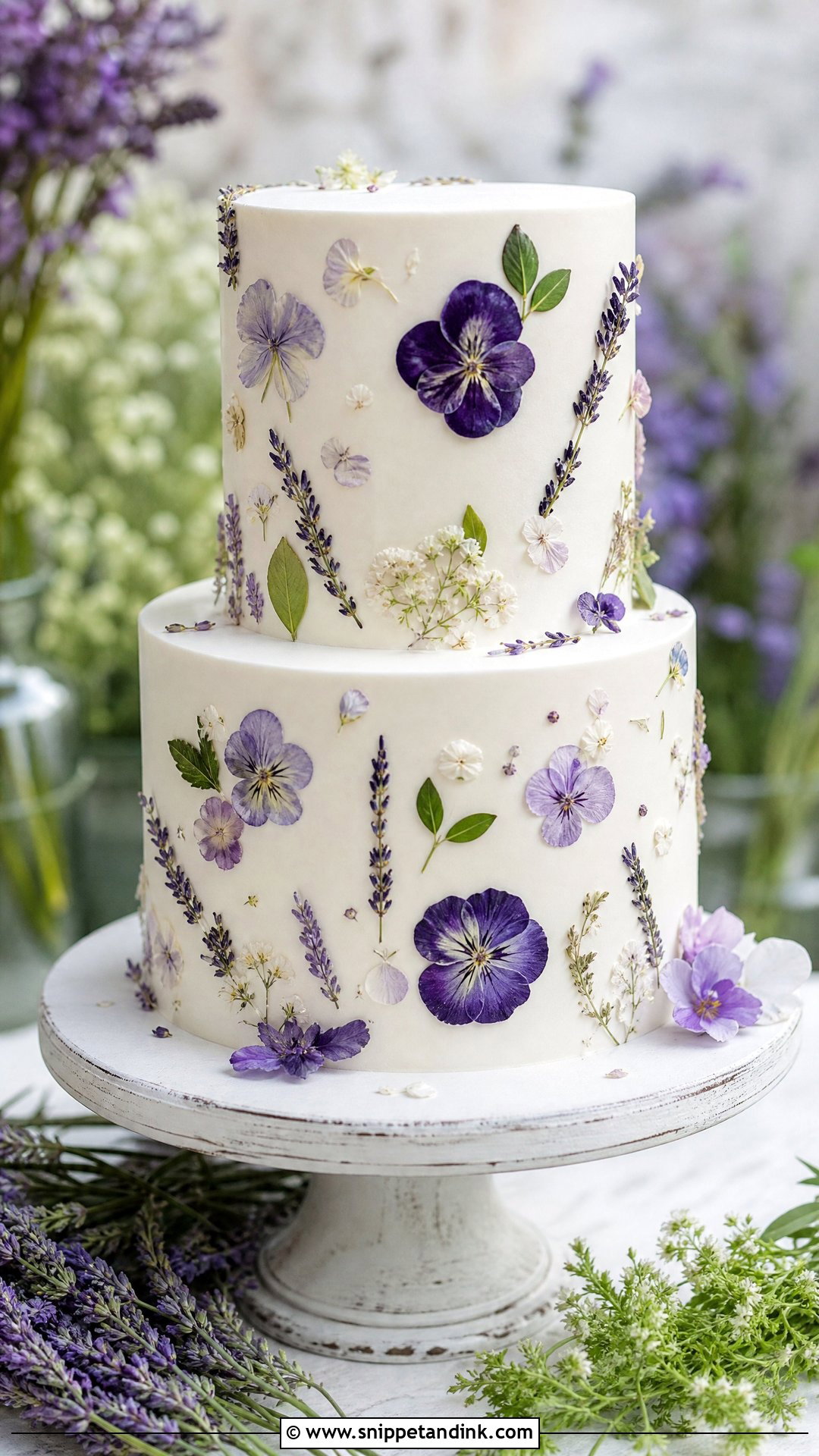
Pressed flowers lie flat, so they work like floral confetti on the tiers. Tiny violets, pansies, lavender buds and other edible petals look best spaced out rather than packed. Violas and pansies press well and keep much of their color; thick-petalled flowers don’t. They must be grown as edible flowers, which is a different supply from cut stems. This suits cottage and outdoor weddings with a handmade feel.
14. Purple Sugar Flower Wedding Cake
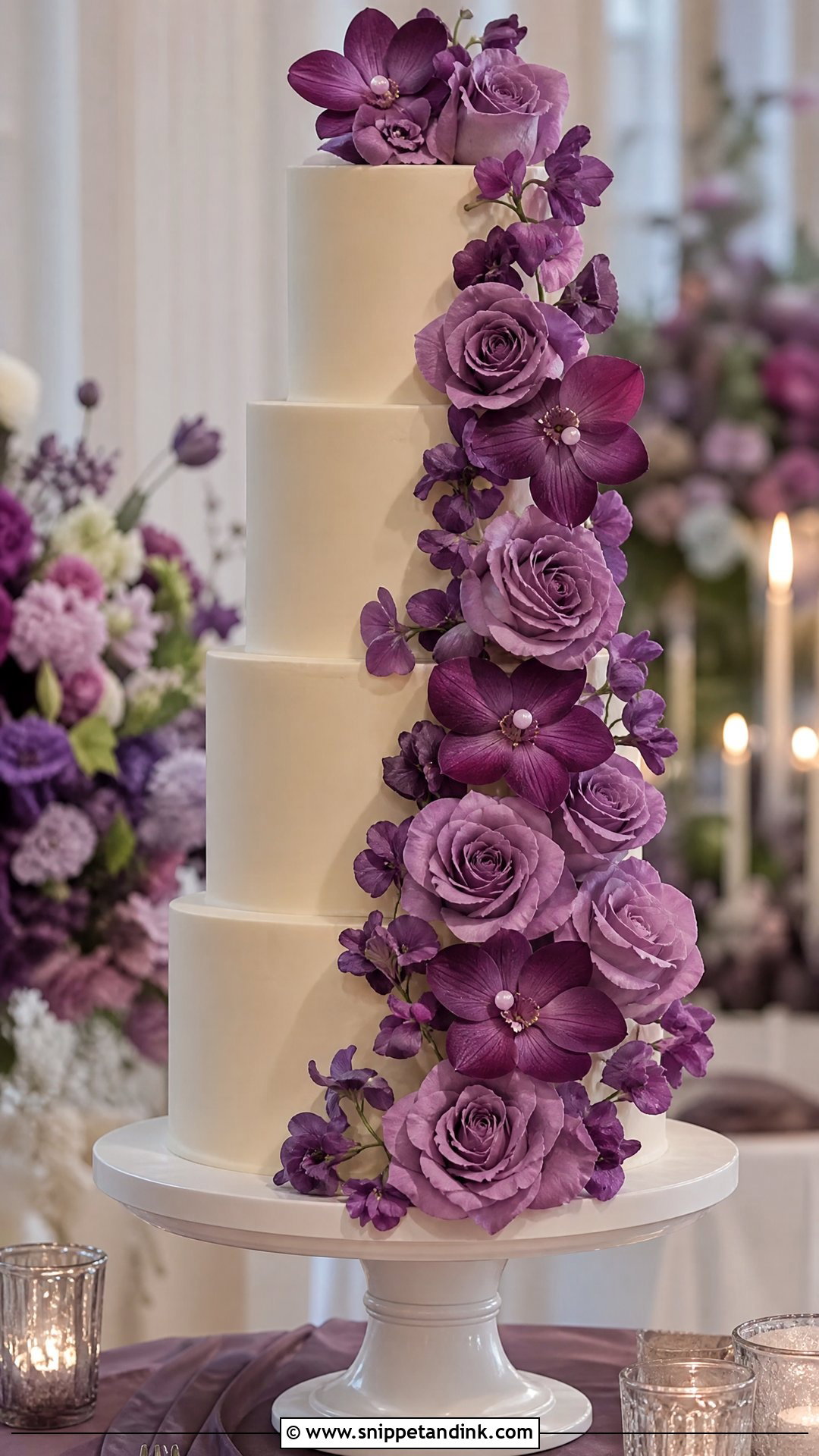
Sugar flowers look fresh all day because they don’t wilt, and they solve every safety question that fresh blooms raise. Roses, orchids, lilacs, peonies, violets and lavender sprigs can all be made in sugar. They’re also the easiest way to match the bouquet exactly: I send the cake designer a photo of the bouquet recipe, and the sugar flowers copy its shapes and shades. Pale lilac is romantic, deep plum dramatic. A smooth fondant base shows the craftsmanship best.
15. Purple Buttercream Flower Wedding Cake
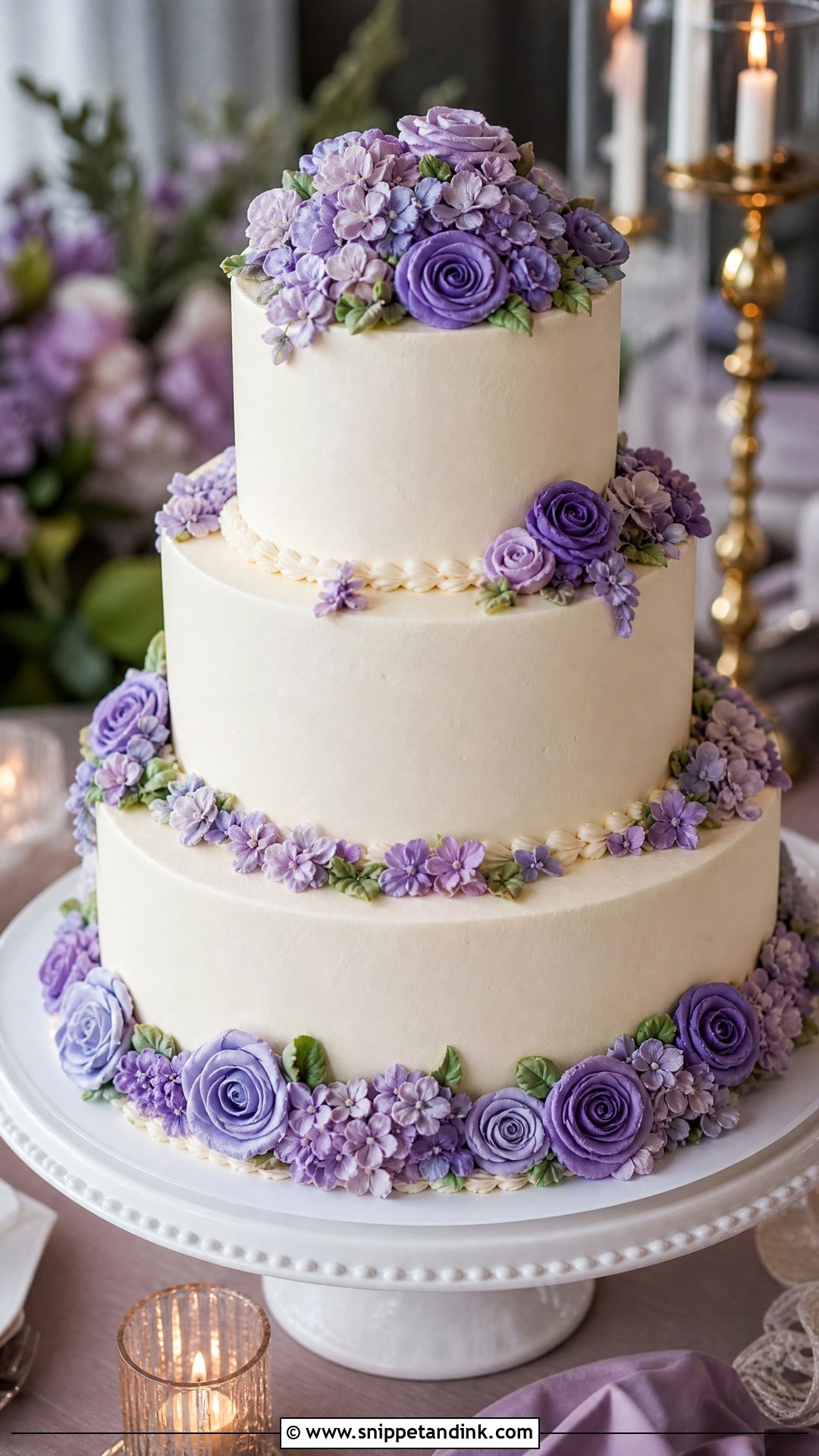
Piped buttercream flowers are made directly on the cake with a piping tip, so there are no stems to worry about at all. Roses, rosettes, lavender sprigs, hydrangea clusters and small blossoms all pipe well. They can cover a whole tier or act as borders. White frosting with purple piping is classic; lavender with deeper blooms is more colorful. In hot weather piped flowers soften, so this is best for an indoor reception.
16. Purple Floral Tiered Wedding Cake
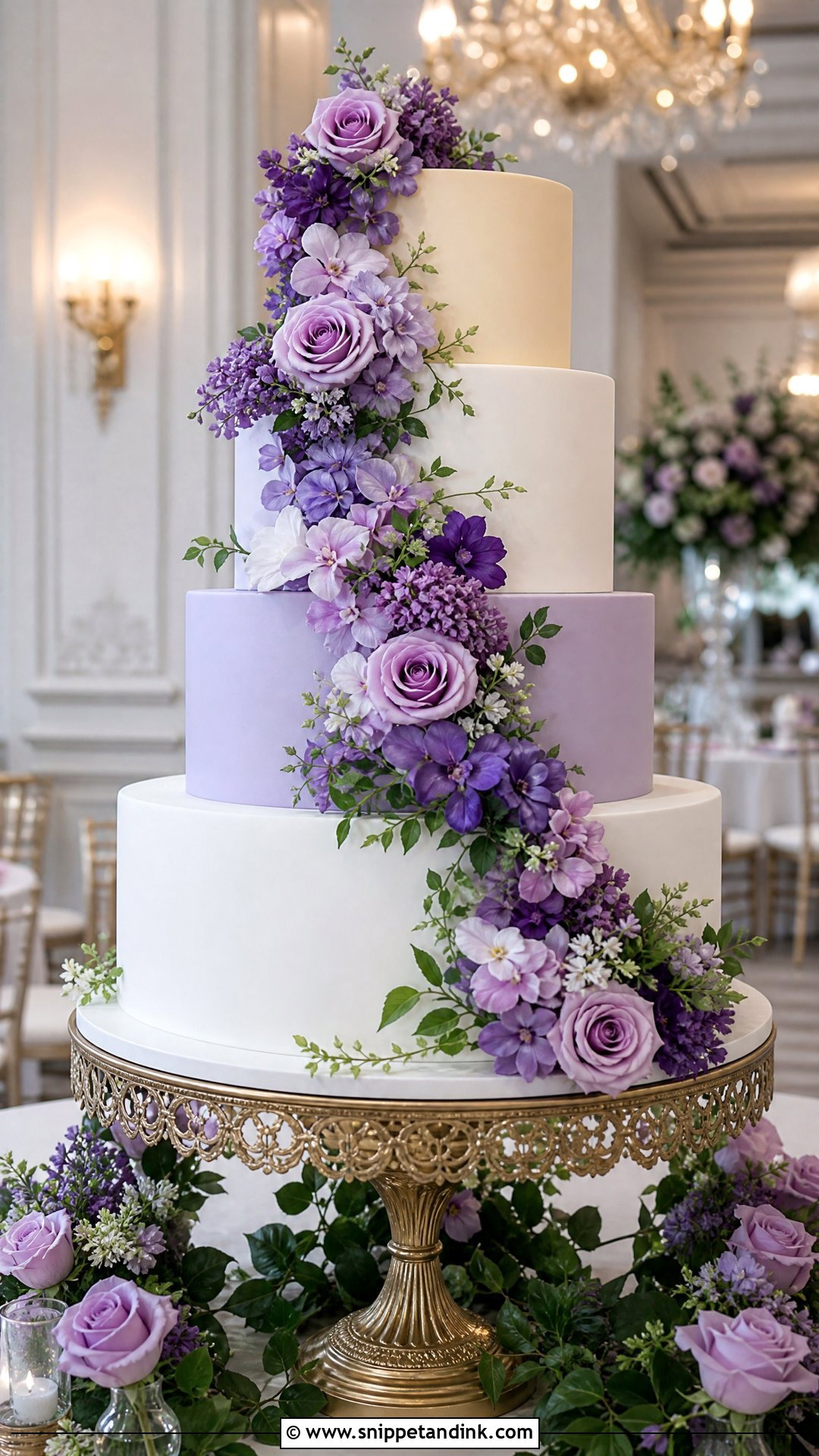
More tiers give more room to mix: one tier smooth ivory, another pale lavender, another covered in purple blooms. A cascade links the tiers. Mixing fresh and sugar flowers is common here; I place the sugar ones where they touch frosting and the fresh ones on picks. Each tier can have its own flavor, such as vanilla almond, raspberry, lemon, chocolate or lavender honey. It suits a large reception.
17. Purple Floral Semi Naked Wedding Cake
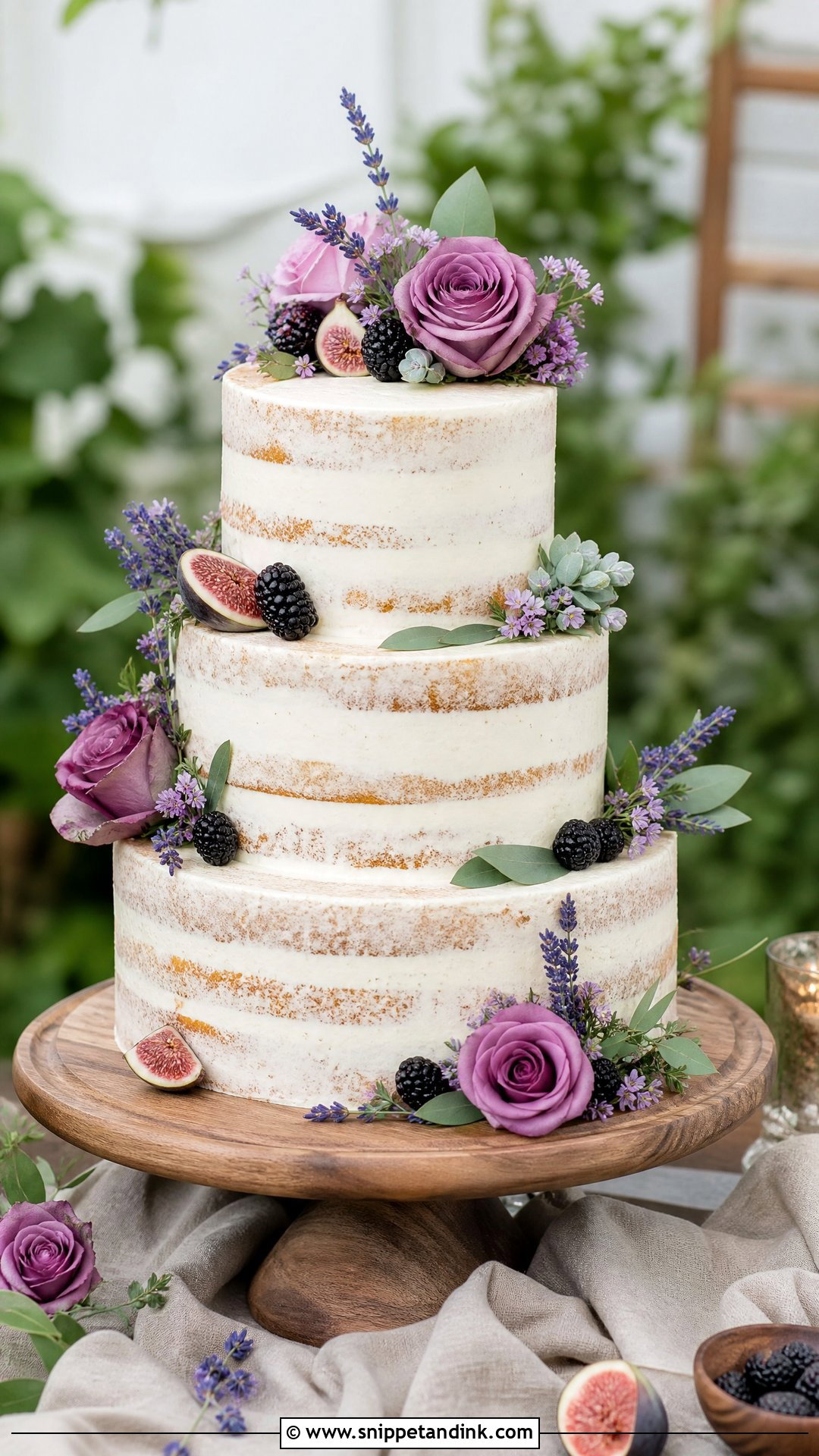
A semi-naked cake shows its sponge through a thin scrape of frosting, which suits a barn, garden or outdoor reception. Lavender sprigs, lilac clusters, purple roses and small violets suit it, as do figs and herbs. The exposed sponge dries out faster than a fully frosted cake, so it shouldn’t sit out for hours before cutting. Vanilla, lemon, almond or spice suit the season. Loose, natural placement looks best.
18. Purple Floral Fondant Wedding Cake
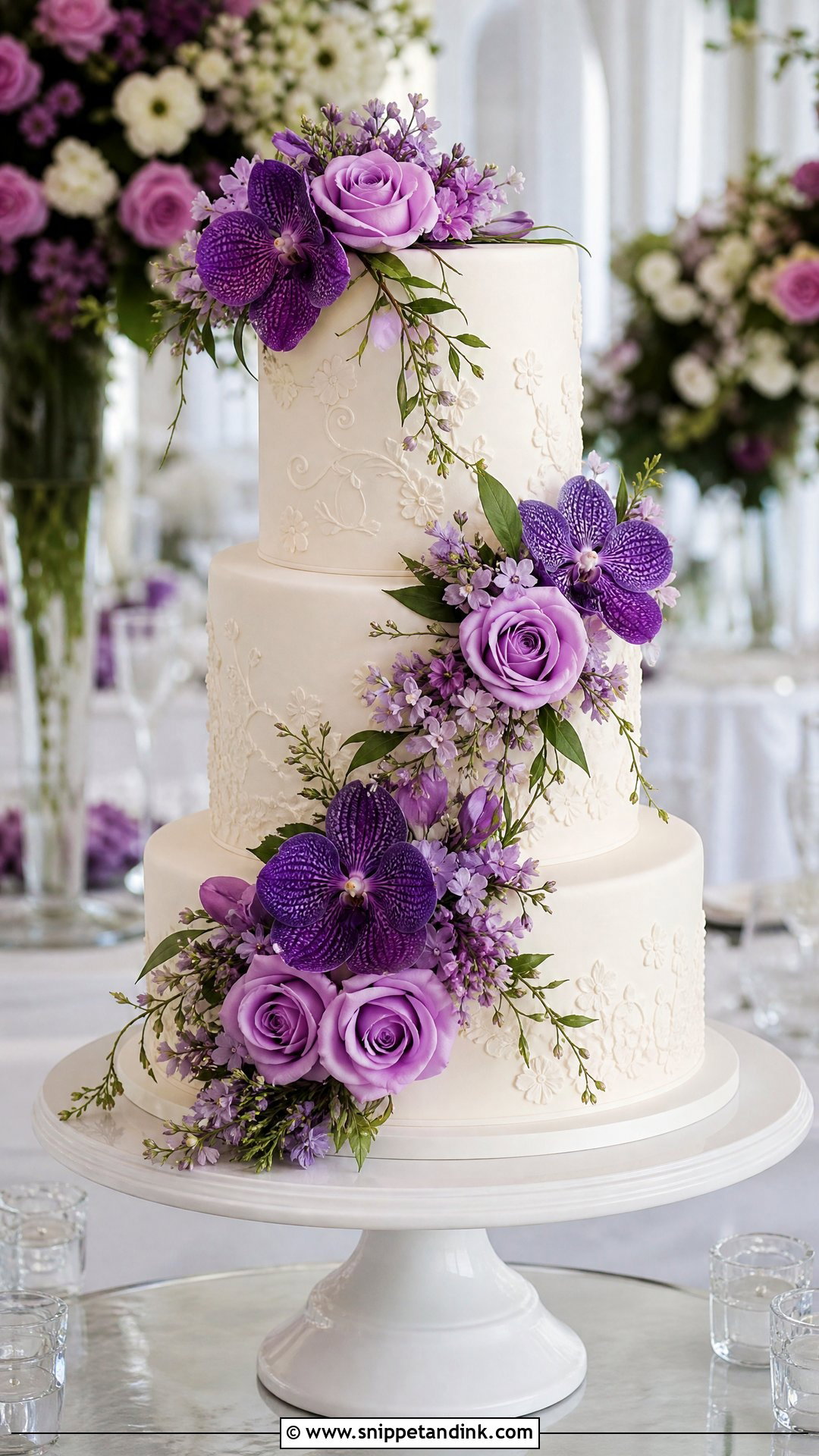
Fondant gives clean lines and crisp tiers, a smooth surface for painted flowers, embossed patterns and sugar blooms. White fondant with purple florals is classic; lavender fondant is more modern. A cascade, a topper or small blossoms around each tier all work. It looks neat from every angle, which matters in a formal room. Vanilla bean, almond, champagne, lemon and white chocolate raspberry suit it.
19. Purple Floral Drip Wedding Cake
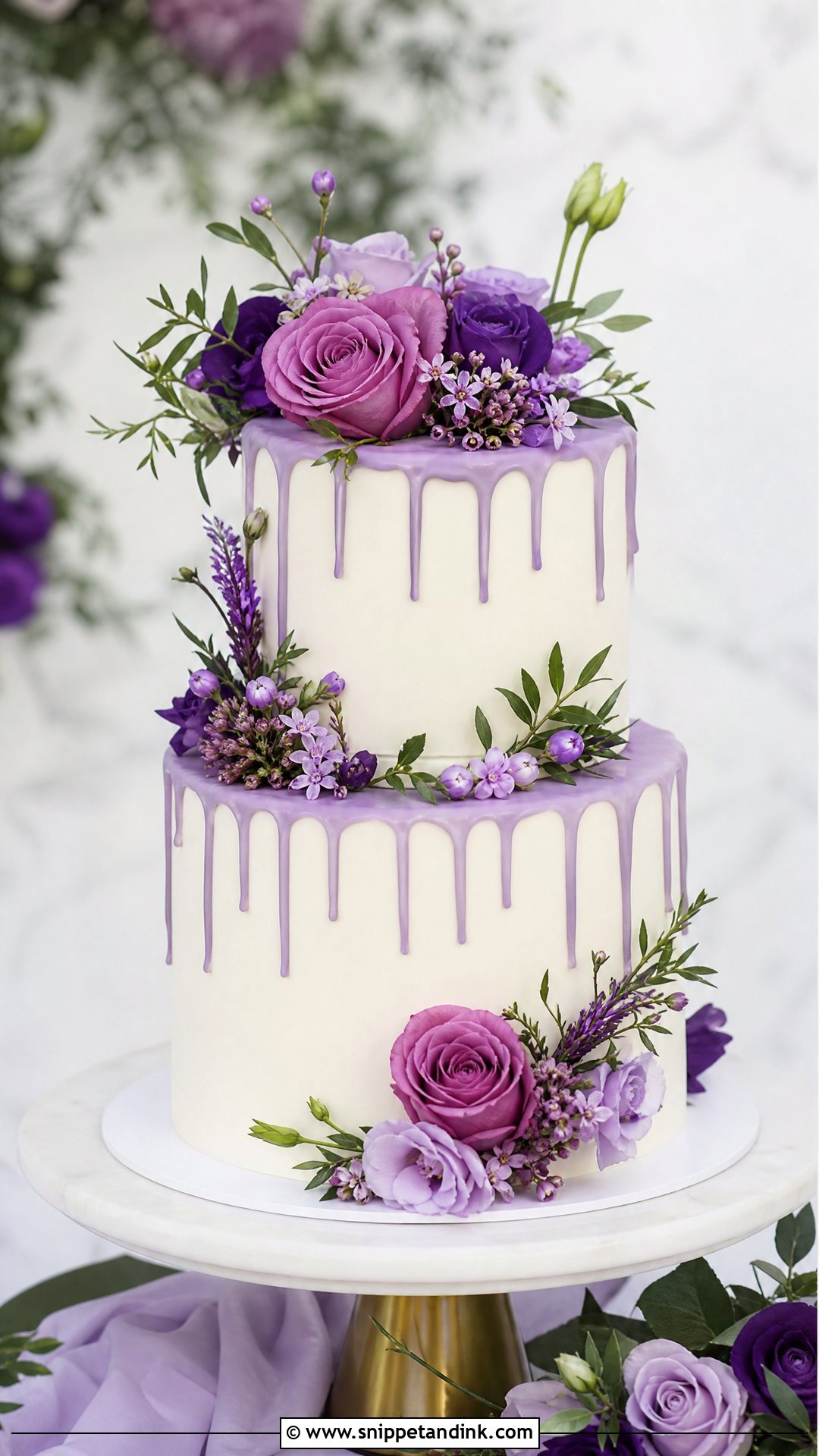
A drip gives a romantic floral cake a modern edge. Lavender, violet, white chocolate or metallic drips work, and flowers on top and on the sides soften the result. I place the flowers after the drip has set, otherwise the drip runs around the stems. It stands out best on smooth buttercream. Vanilla, chocolate, berry or lemon sponge suit it.


20. Purple Floral Marble Wedding Cake
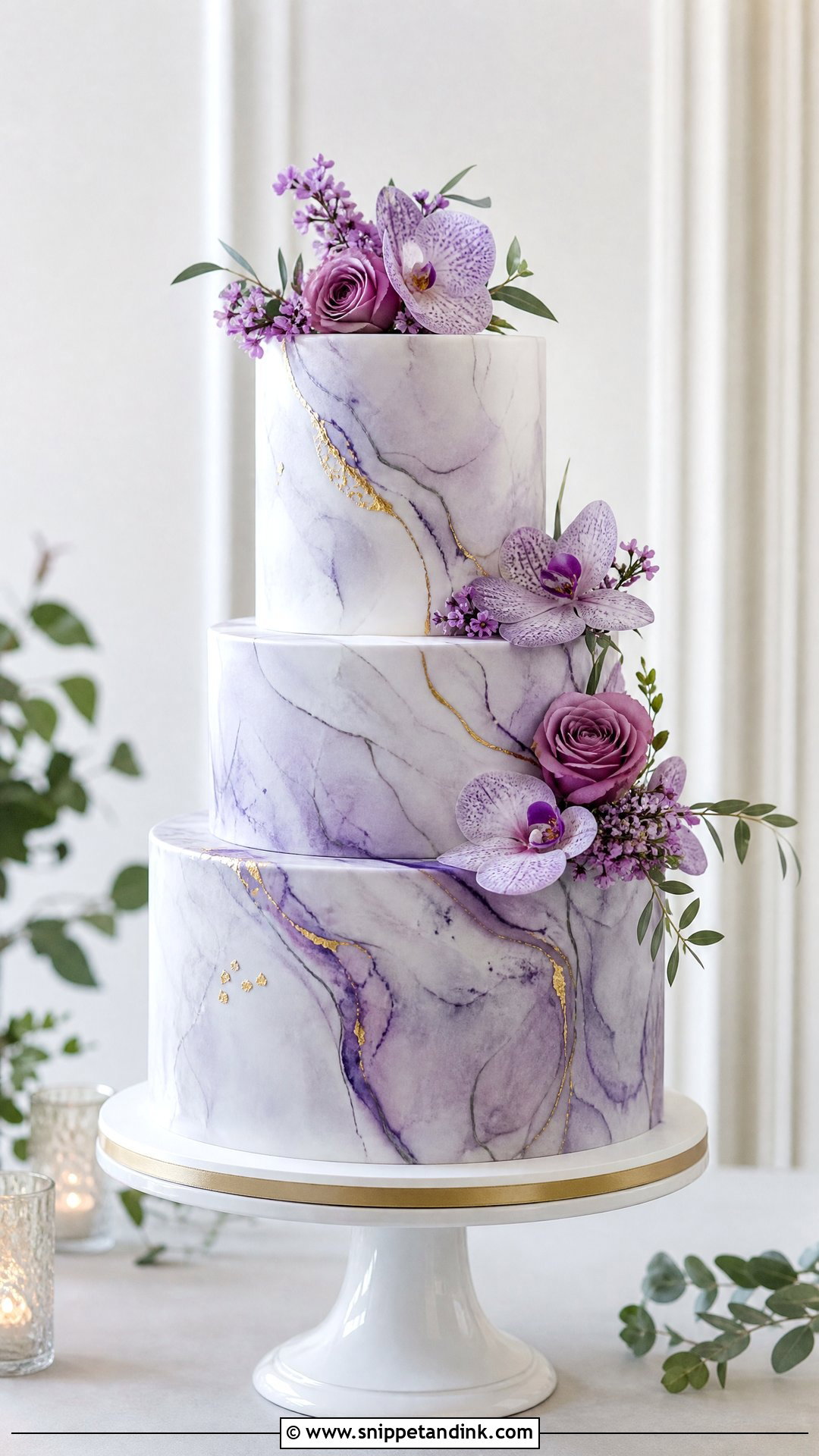
Marble blends white, lavender, violet and soft grey into a stone-like surface. A purple floral marble wedding cake needs flowers to warm it up, and orchids or sugar roses suit the cool surface best. Fondant gives the cleanest marble; buttercream marble takes a skilled hand. Gold or silver in small amounts adds shine.
21. Purple Floral Lace Wedding Cake
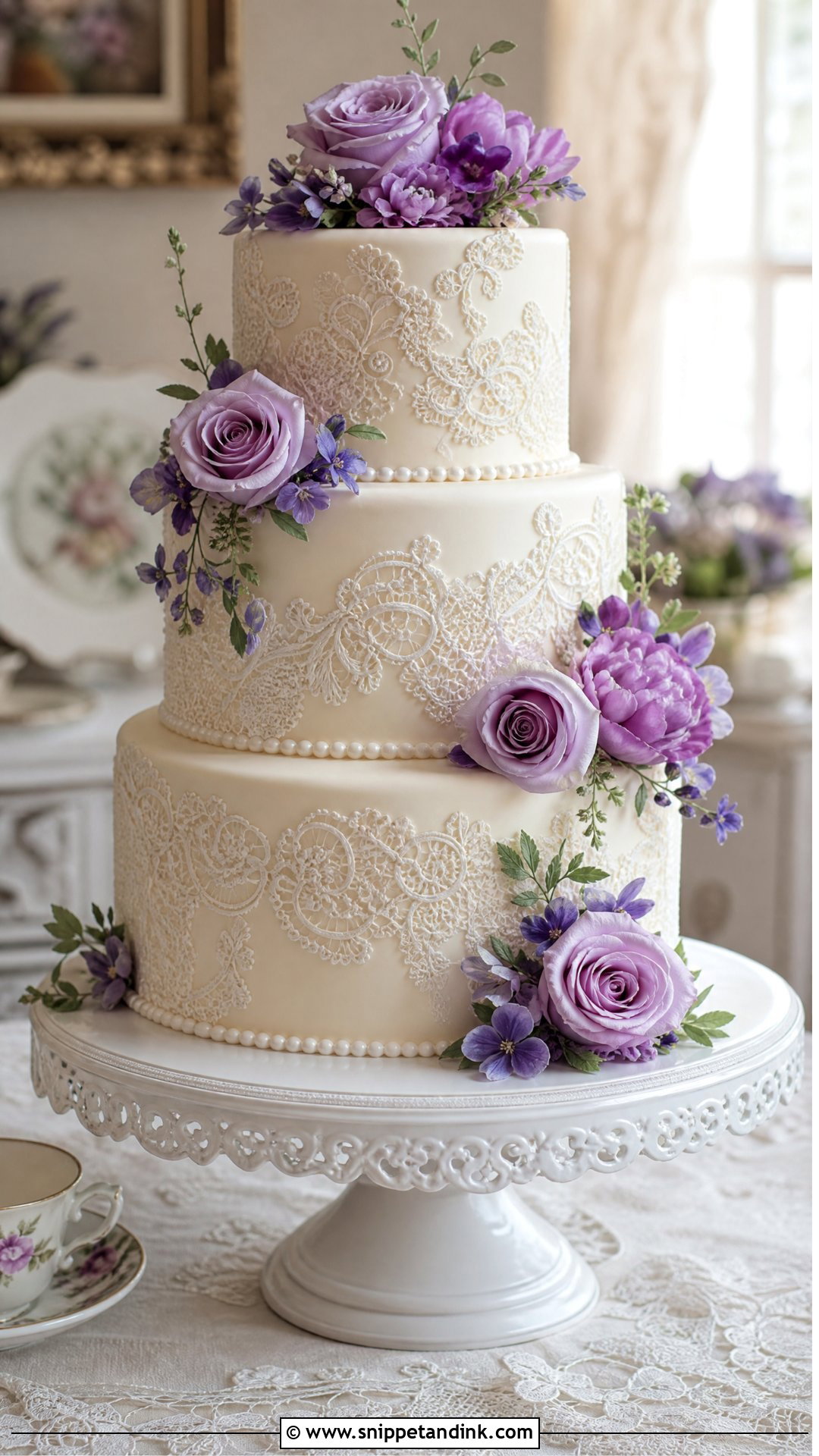
Lace can be piped in royal icing, embossed in fondant, or applied as edible lace. Purple flowers soften it: lavender roses, mauve peonies, lilac clusters and small violets. The lace needs a white or ivory base to show. I keep the flowers off the lace itself so its pattern stays visible, usually at the top tier or in one cluster. It suits a vintage or traditional gown.
22. Purple Floral Ruffle Wedding Cake
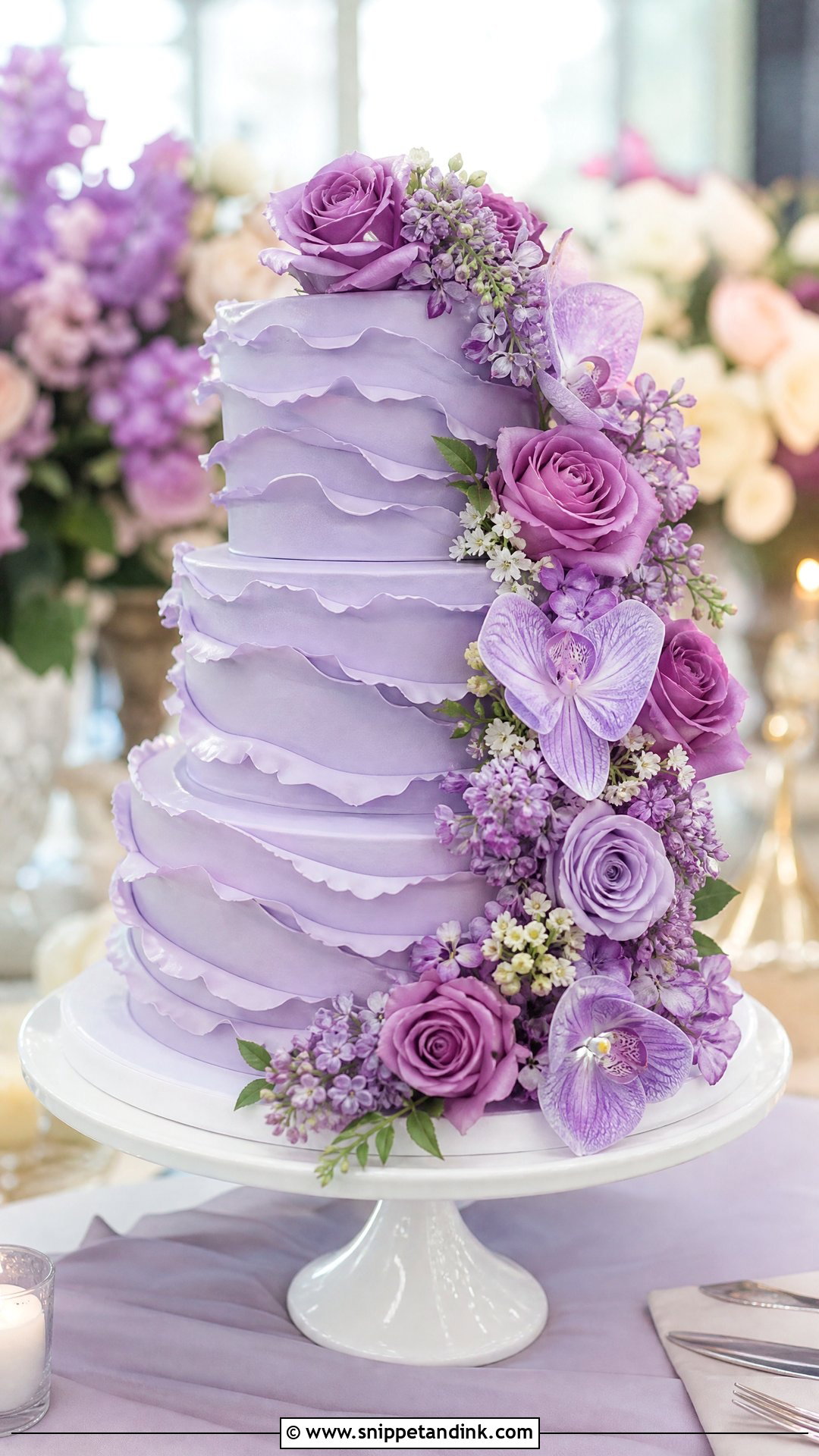
Ruffles already give a lot of texture, so the flowers should be quieter. White ruffles are classic; pale lavender adds color. I’d put flowers at the top, between tiers or along one side. Purple roses, orchids and small lilac sugar blooms suit it. Heavy fresh flowers can crush buttercream ruffles, so lighter blooms are better here.
23. Purple Floral Minimalist Wedding Cake
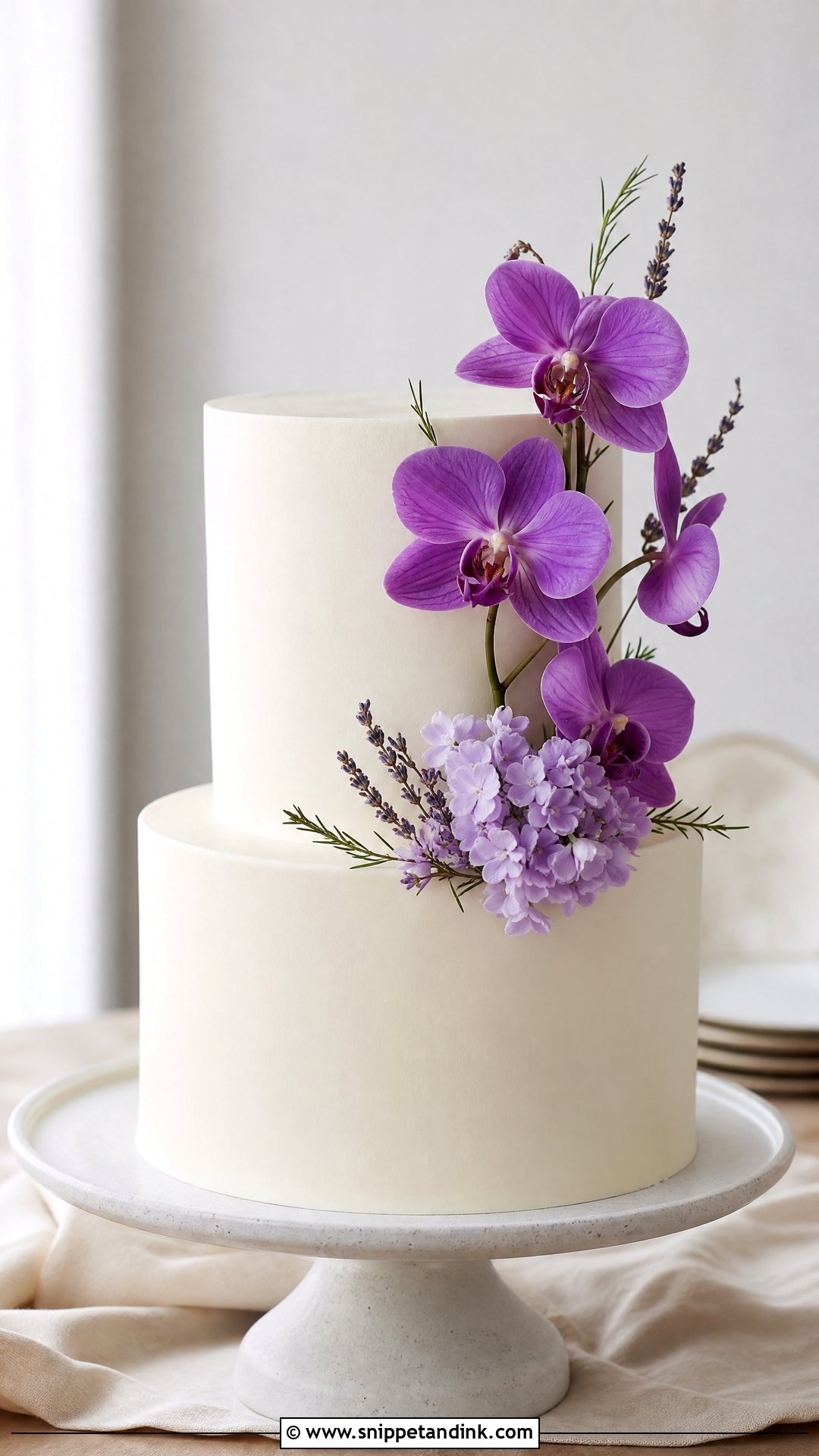
Minimal is harder than it looks, because three flowers on a white cake have to be exactly right. One orchid stem, a small lilac cluster or a group of lavender roses can be enough. I pick the best stems from the whole order for this, as every flaw shows. Smooth frosting, a clean shape and a limited palette suit small weddings and modern venues.
24. Purple Floral Garden Wedding Cake
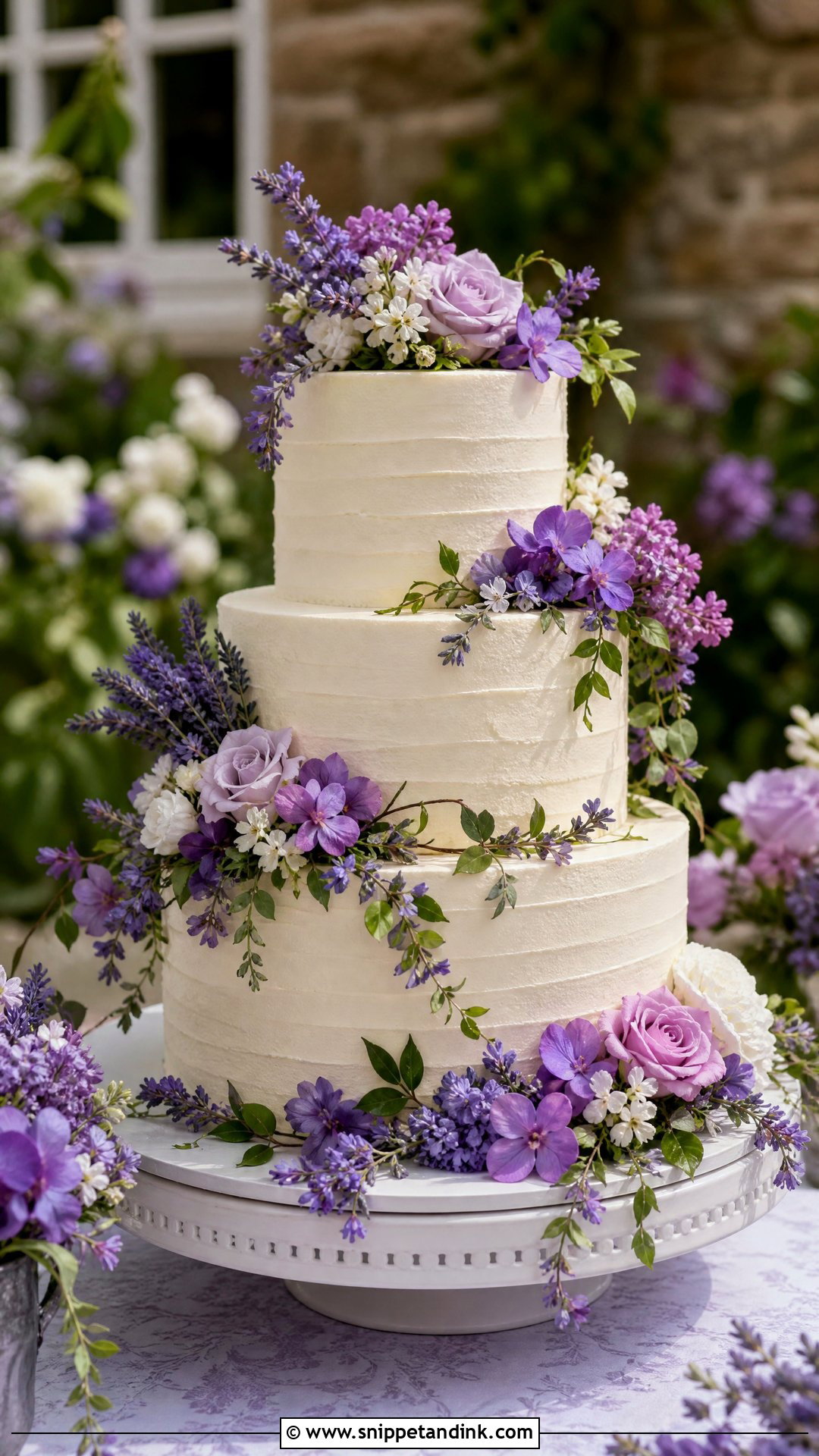
A garden cake looks as if the flowers are growing around the tiers. I mix lavender, lilac, purple roses, violets, greenery and small white blooms in varied sizes, which gives depth. Buttercream or semi-naked bases look organic; fondant looks more refined. It suits outdoor ceremonies, tented receptions and spring or summer dates. It should look abundant but still neat enough for a wedding table.
25. Dark Purple Flower Wedding Cake
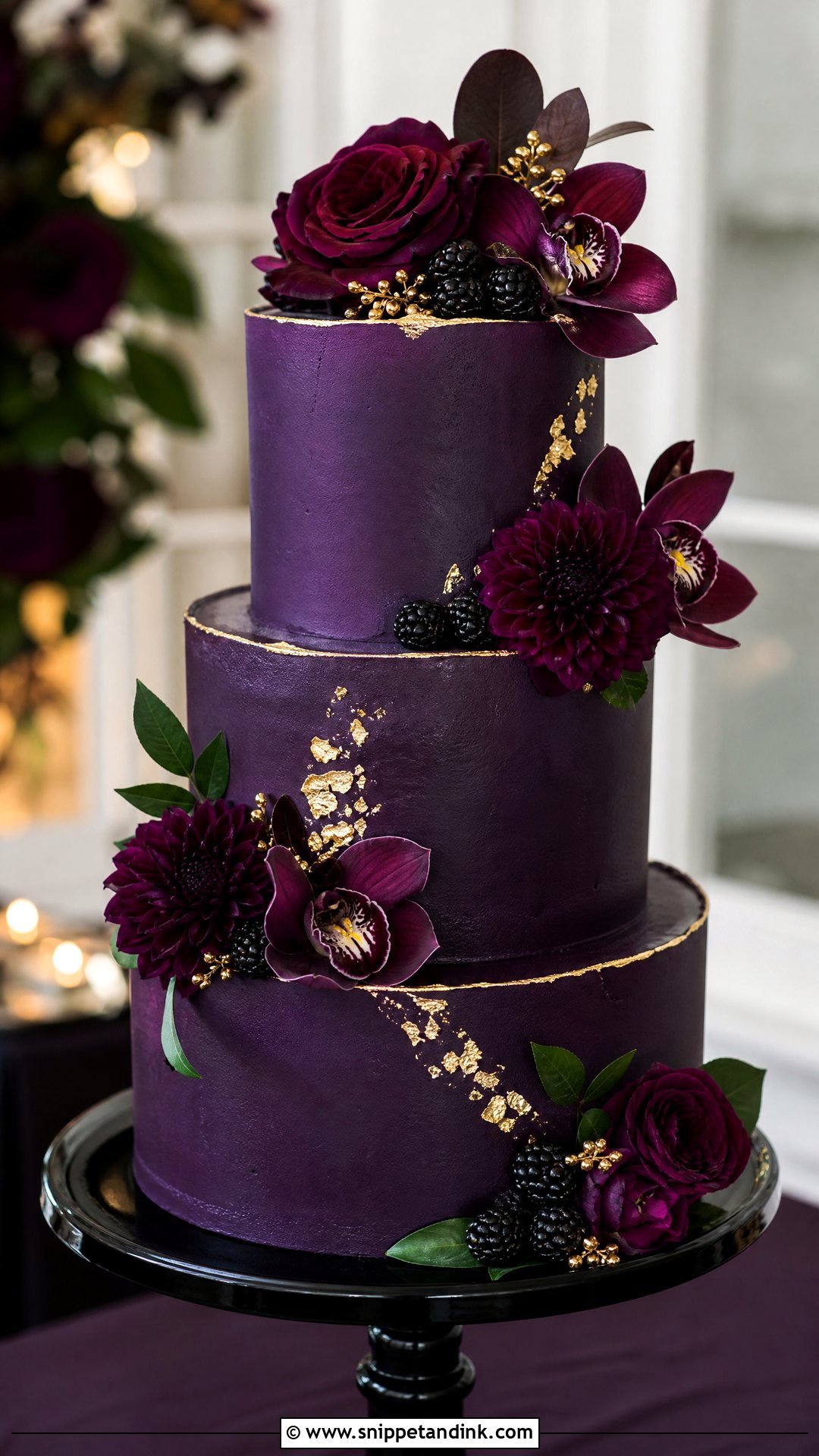
Deep plum, eggplant and violet blooms against white, ivory, charcoal or deep purple frosting make a dramatic evening cake. Dark purple roses, orchids, dahlias or sugar flowers work best. Dahlias are delicate and bruise easily, so they need careful handling. On dark frosting I vary the flower shades slightly so the cake doesn’t look flat in photos. Gold leaf, blackberries or metallic accents add depth.
Purple Blooms That Survive Hours Without Water
A cake is the harshest spot for a flower: no water, warm air, and often the brightest lighting in the room. Some purple flowers cope, many don’t.
Reliable on a cake
Orchids, spray roses, statice, waxflower, thistle and dried lavender hold their shape for the whole evening. Lisianthus is decent if it’s well conditioned.
Better in sugar
Hydrangea, wisteria and sweet pea should never touch frosting, since they’re toxic. Lilac and fully open peonies wilt or drop petals too fast. For any of these, ask for sugar versions and use the real flowers in the bouquet and centerpieces instead.
If the weather is hot or the cake table sits under strong light, I’d lean toward more sugar flowers and fewer fresh ones, whatever the design.
Conditioning makes the difference
How a flower was treated the day before matters as much as which flower it is. I give cake stems a long drink in cool water overnight, keep them in the cooler until I leave for the venue, and only trim and wrap them on site. A rose that was properly hydrated will look fresh on the cake at the last dance; the same rose pulled dry from a bucket can sag by the speeches. When you meet your florist, it’s fair to ask how the cake flowers will be prepped and kept until they go on.
Let the Bouquet Set the Cake’s Palette
Purple flower wedding cakes adapt to almost any style, from soft lavender garden looks to plum orchids and dark roses. The deciding factors are your venue, season, palette and how formal the dessert table is. Fondant reads polished, buttercream warm, semi-naked natural. My advice is simple: start from your bouquet. Share its recipe with your baker and florist, decide which flowers are fresh and which are sugar, and agree who places them and when. That’s what makes the cake look like part of the same wedding.
You'll Like These Ideas:





Leave a Reply