
The cake is often the one piece of reception decor guests walk up to and study, so it sets more of the mood than people expect. The orders coming across my bench lately lean toward texture and personality: vintage over-piping, edible pearls, sculpted shapes, pressed flowers, bows, and soft color in place of stark white. Some couples still want clean white tiers with fresh blooms, and that never looks wrong. What matters is that the cake suits your venue, flowers, dress and guest count. Below are 30 Aesthetic Cake Inspo Ideas for Wedding, each with notes on how it is actually made.
What an Inspo Screenshot Tells a Baker, and What It Hides
I love it when couples arrive with saved photos, but a picture of a cake is not a recipe for one. When I study a screenshot, I’m reading a few things the couple usually hasn’t noticed.
- Scale. A cake photographed close up on a small stand can be far smaller than it looks. I ask how many guests it needs to feed before I agree it will look the same.
- Frosting. Very sharp edges and a glassy finish often mean fondant or a ganache shell, not buttercream. If you want buttercream, the look will be softer.
- Labour. Over-piping, sugar flowers and hand painting take many hours, and that is where most of the price comes from.
- Season. Wafer paper, delicate piping and fresh fruit that look perfect in a cool studio may not survive a July garden.
Tell your baker which single detail you love most in each photo. That is far more useful than asking for an exact copy.
1. Pearl Wedding Cake
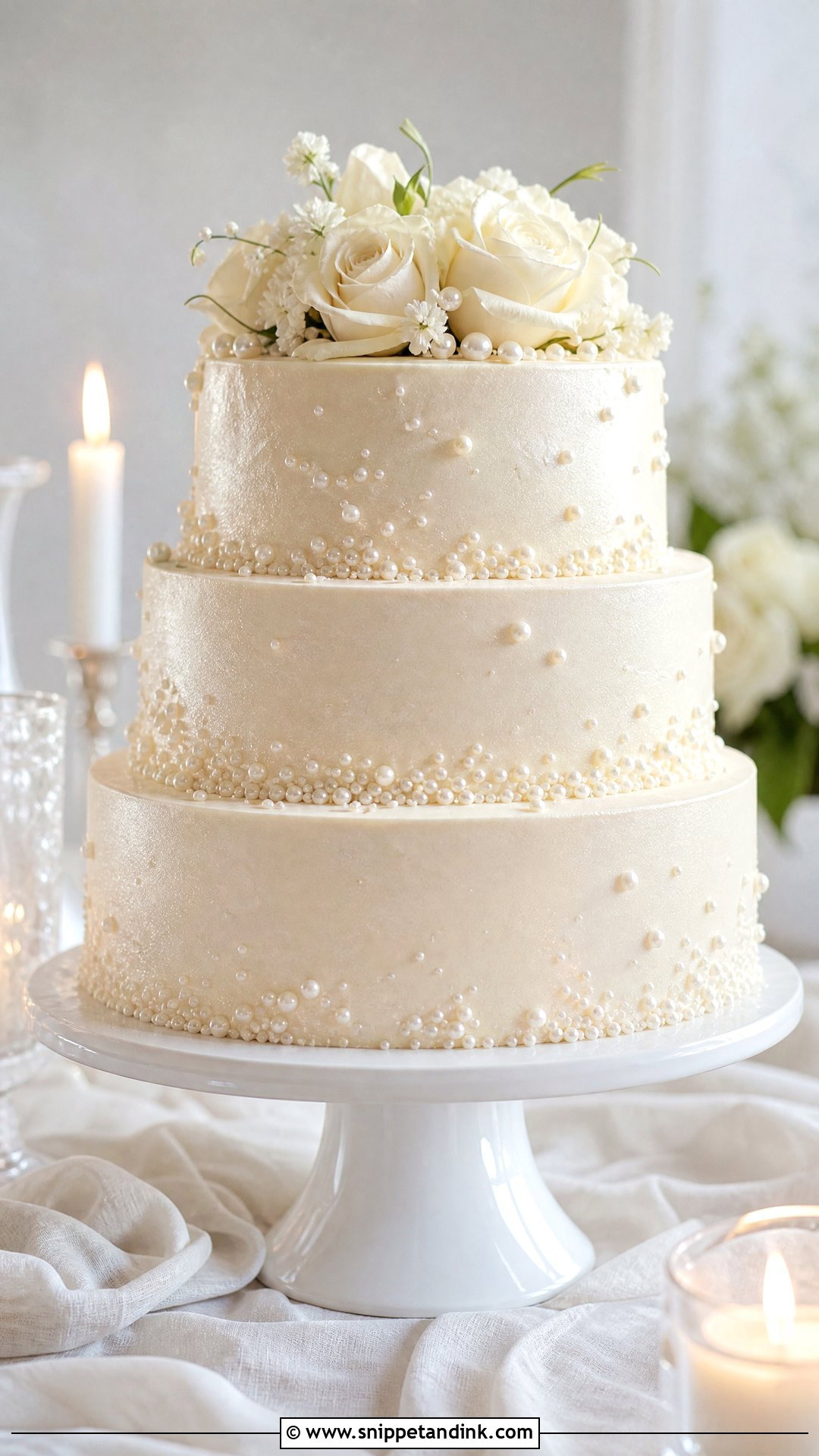
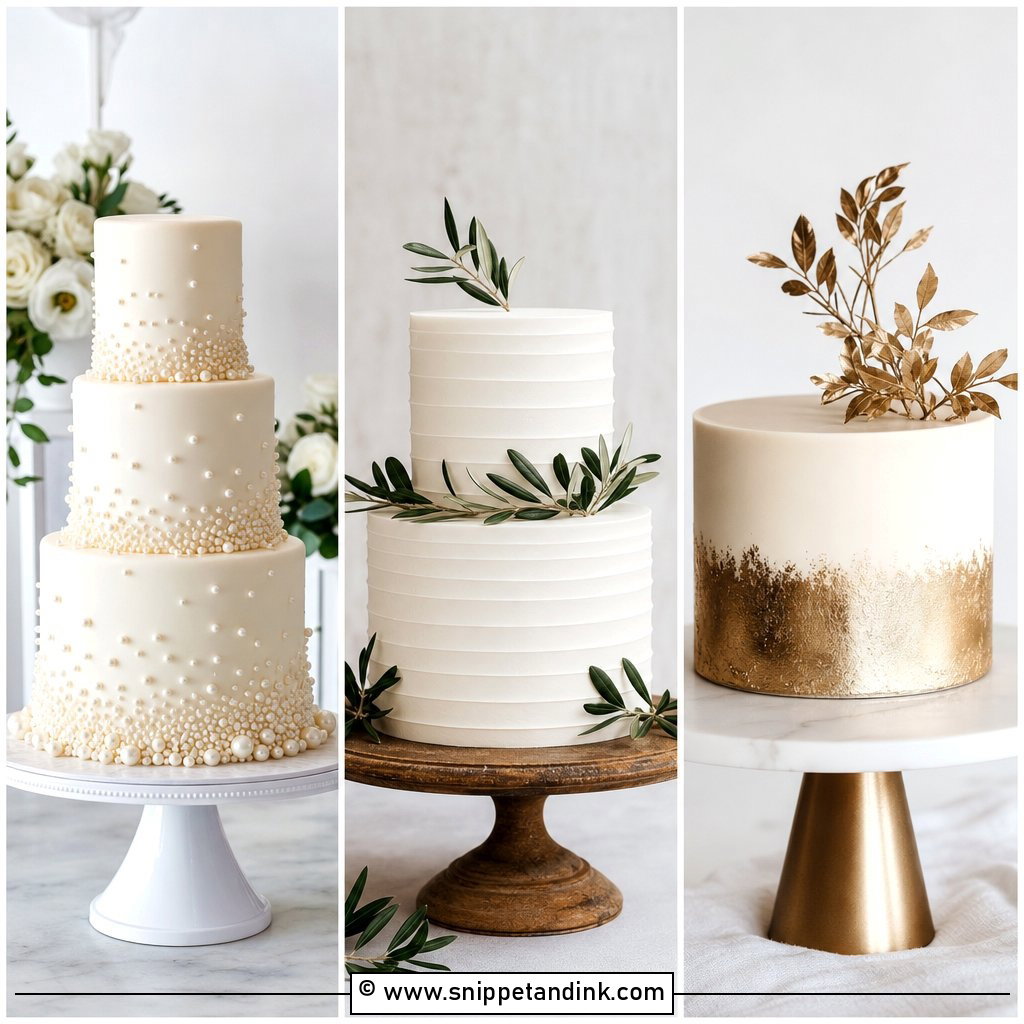
Pearls are one of the easiest details to get right and one of the easiest to overdo. Scattered edible pearls over smooth buttercream look classic; a full pearlised coating reads more dramatic and heavier. I set each pearl with tweezers and a dot of piping gel, because pressed straight into soft buttercream they sink and lose their shape. Ivory, champagne, blush and soft white are the easiest bases to match with linens. Keep the tiers plain and add white roses, orchids or a satin ribbon at the base if you want more.
2. Vintage Wedding Cake
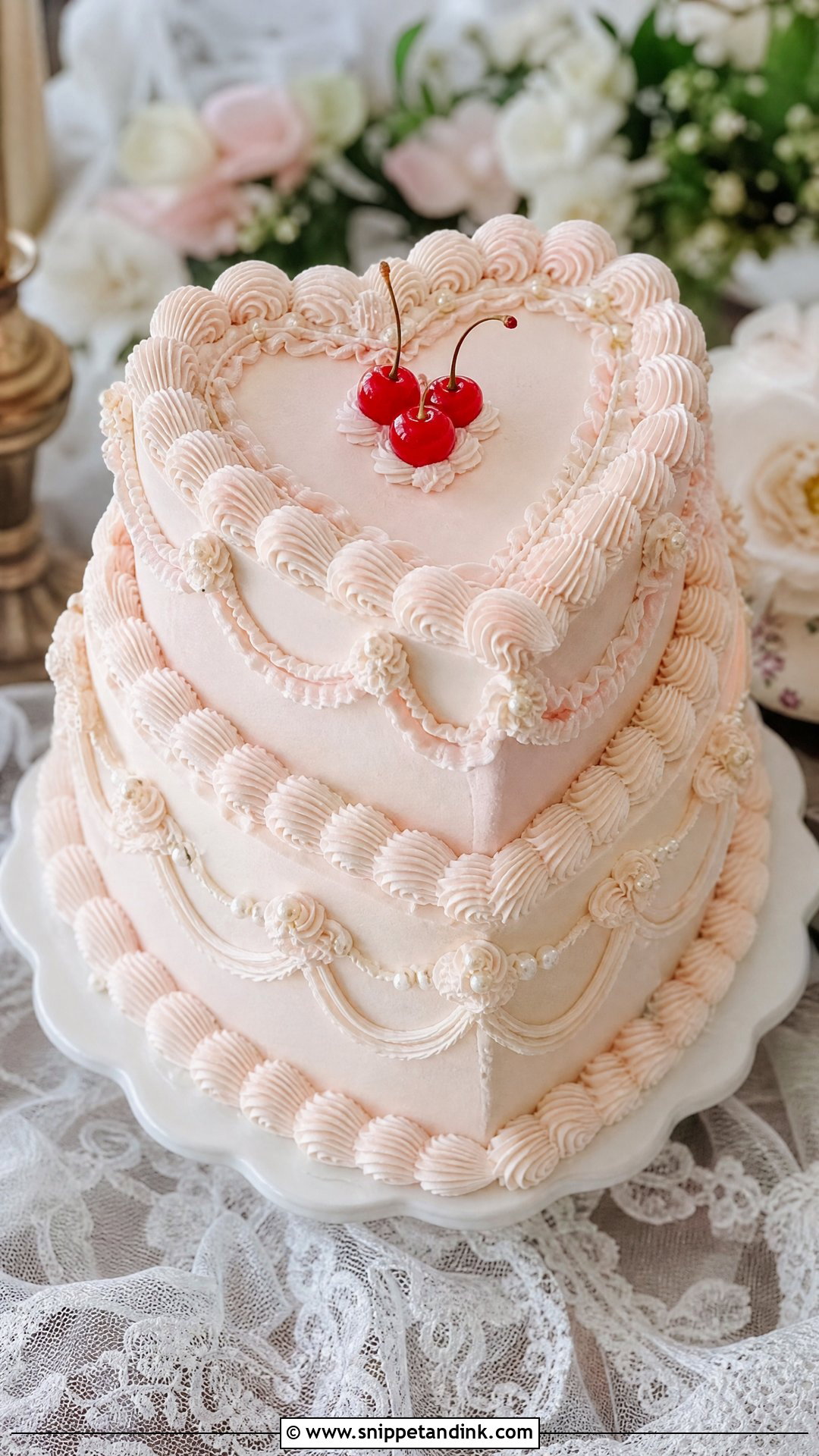
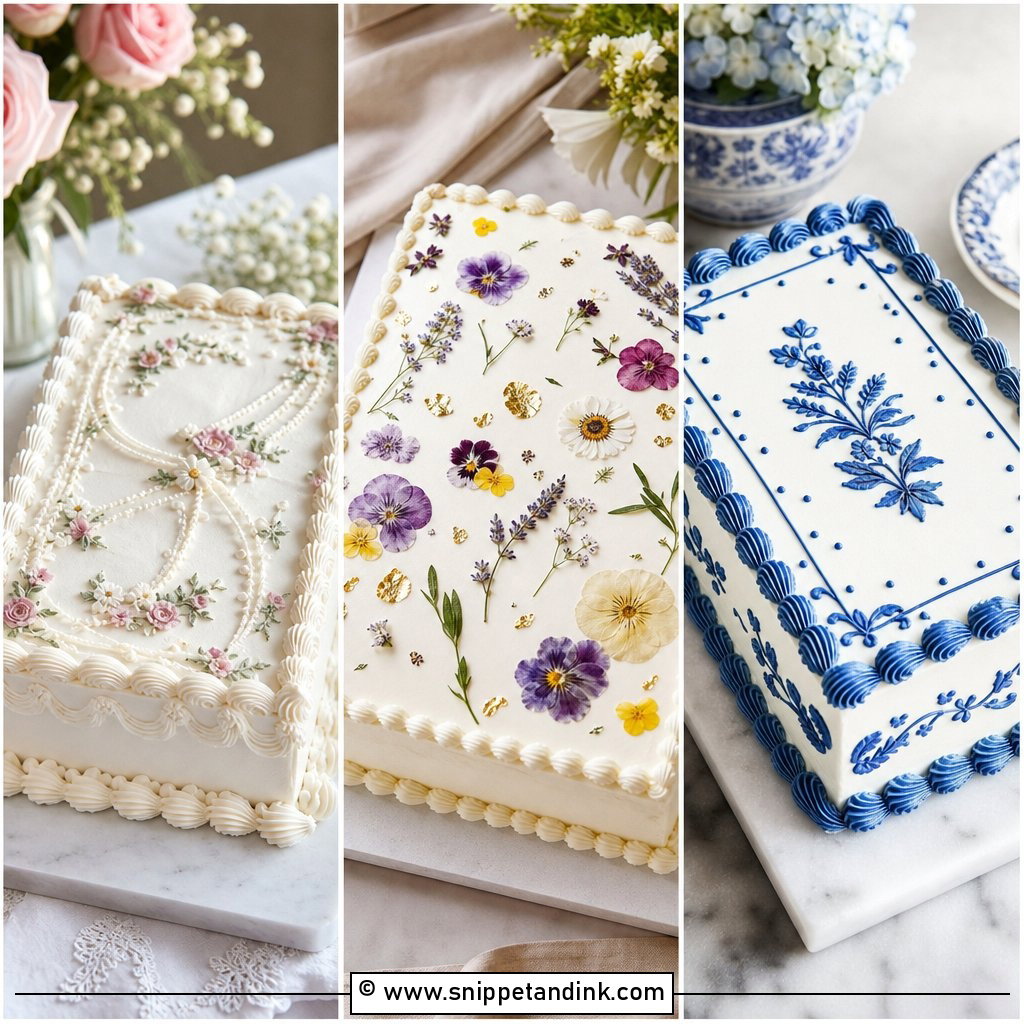
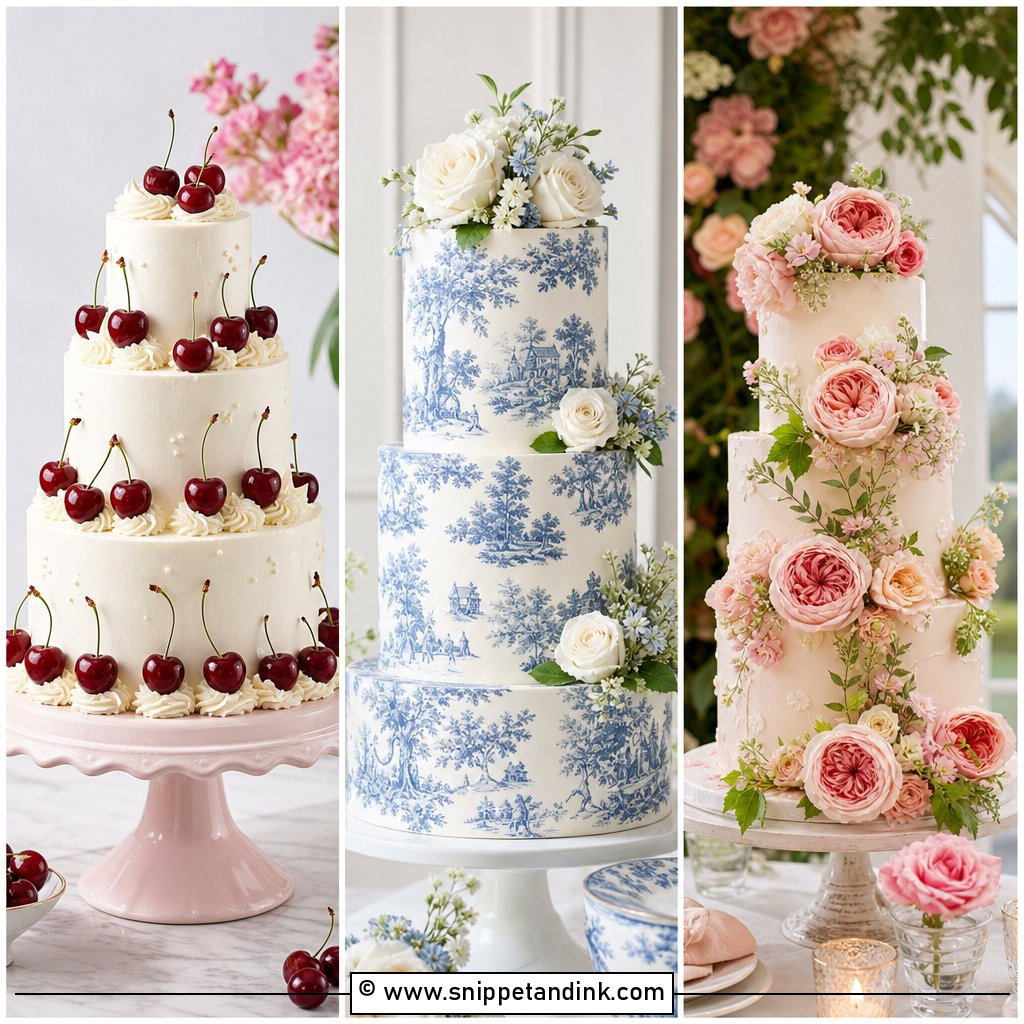
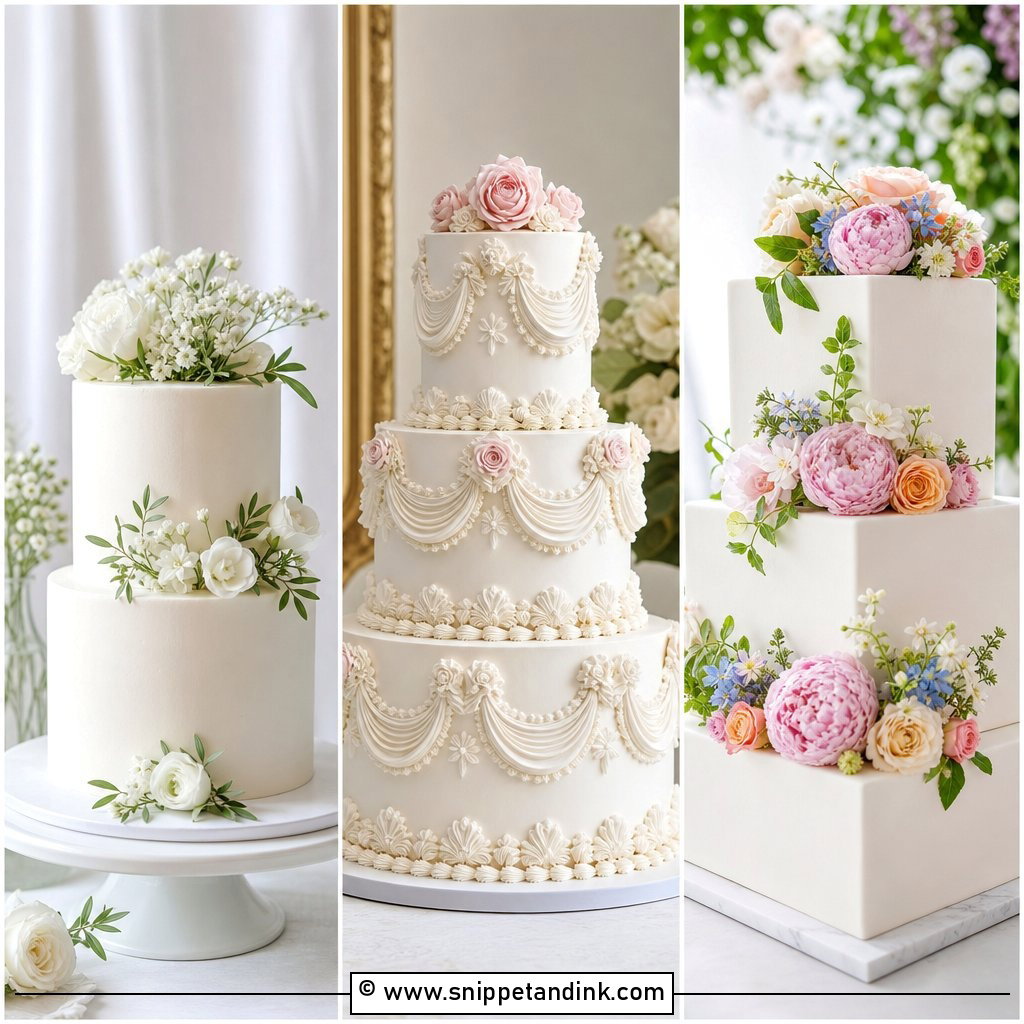
A vintage cake runs on piping: shell borders, swags, tiny rosettes and lace. I pipe it on a well-chilled cake so each shape sets crisply, and I keep the color palette to two or three shades so the detail doesn’t turn busy. Ivory, pale pink, butter yellow and baby blue keep it fresh rather than dated. Round tiers, hearts or a petite two-tier suit the style best. Cherries, pearls and ribbons add charm, but pick one or two of them rather than all three.
3. Lambeth Wedding Cake
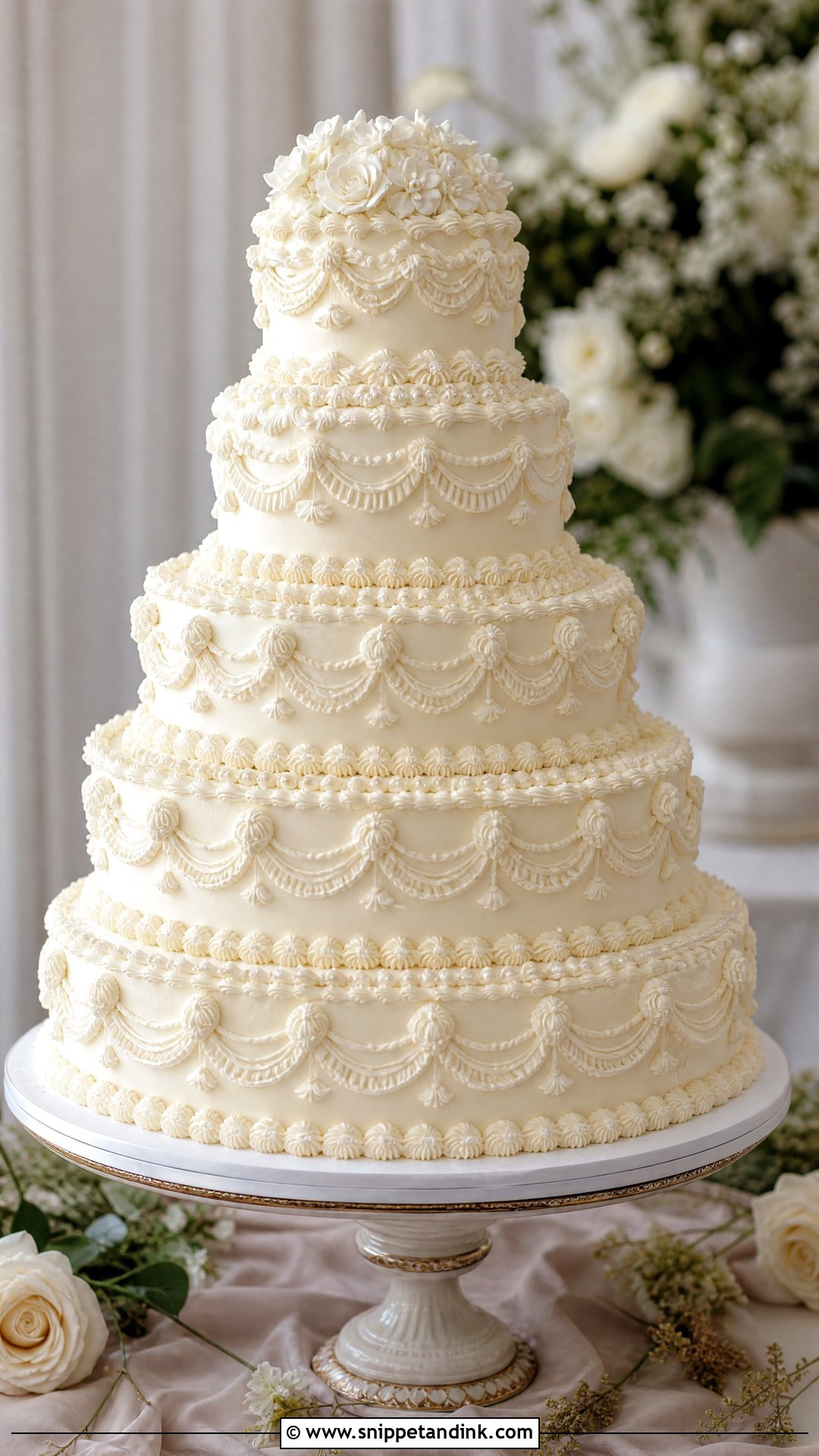
A Lambeth wedding cake is built from layers of piping on top of piping: shells, scrolls, garlands and borders stacked into raised relief. It is slow work, and that labour is why these cakes cost more than a plain cake of the same size. White on white looks bridal; blush, sage or blue makes it playful. On a hot day, deep over-piped buttercream softens and can sag at the swags, so I suggest an indoor or air-conditioned spot. Keep everything around it simple, with a pedestal stand and a few small flowers.
4. Bow Wedding Cake
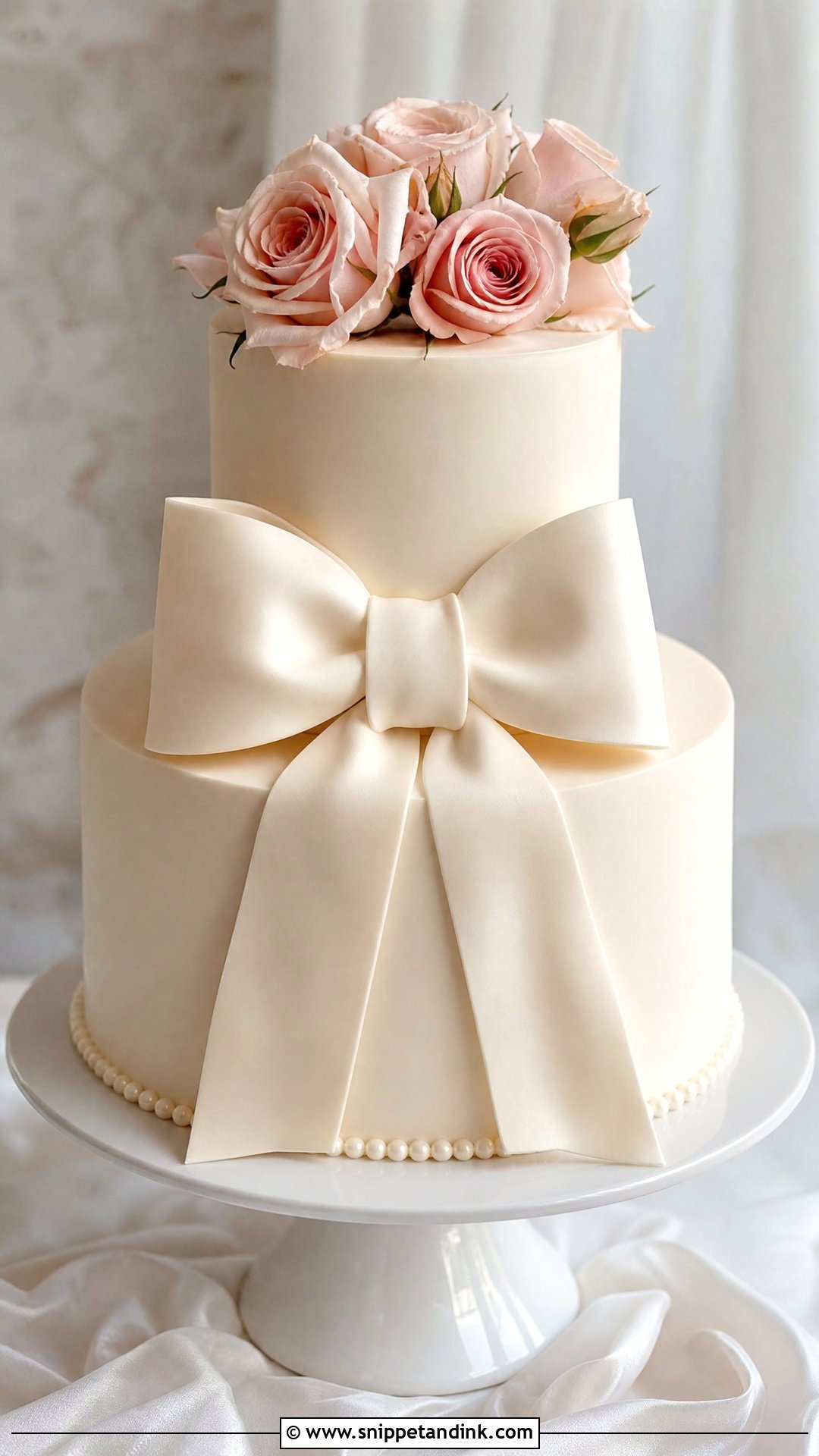
Bows have been everywhere in bridal styling, and they translate well to cake. I make them from sugar paste and let the loops dry over rolled paper for a day or two so they hold their shape; a fresh paste bow droops. Real satin ribbon is quicker but needs a grease barrier behind it or it spots. One oversized bow on a smooth white cake looks editorial, while small bows on every tier feel more vintage. If you’re wearing a bow on your dress or veil, this is a simple way to echo it.
5. Pressed Flower Wedding Cake
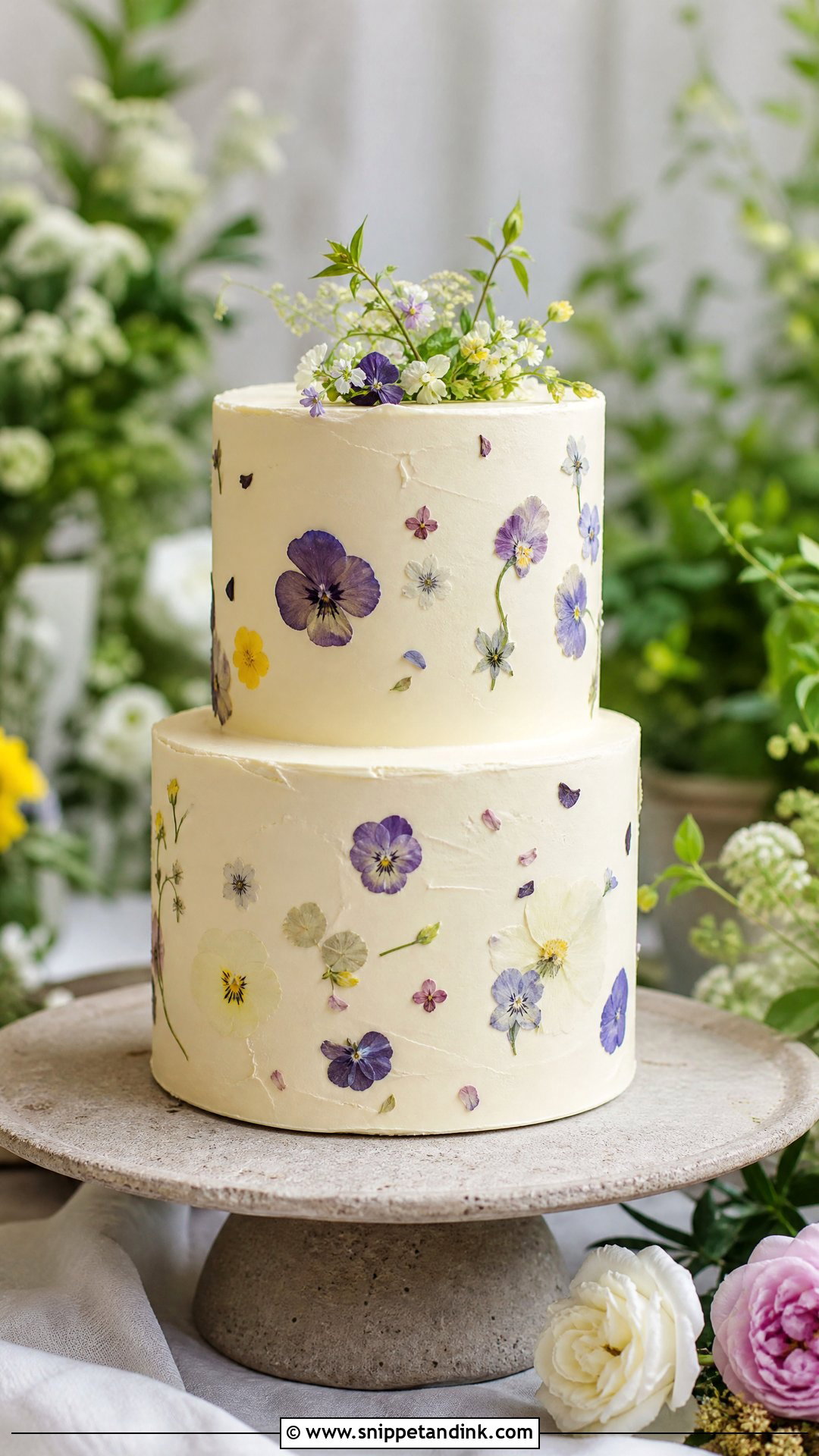
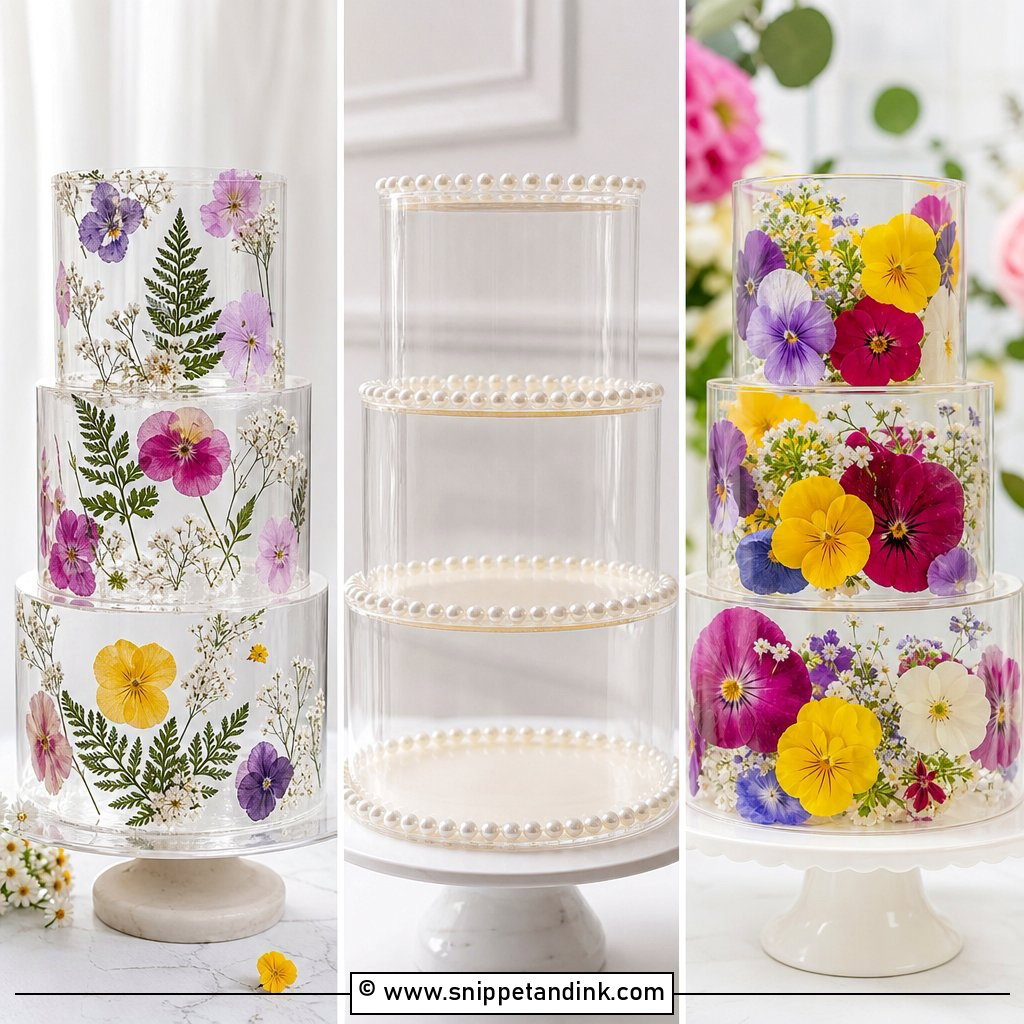
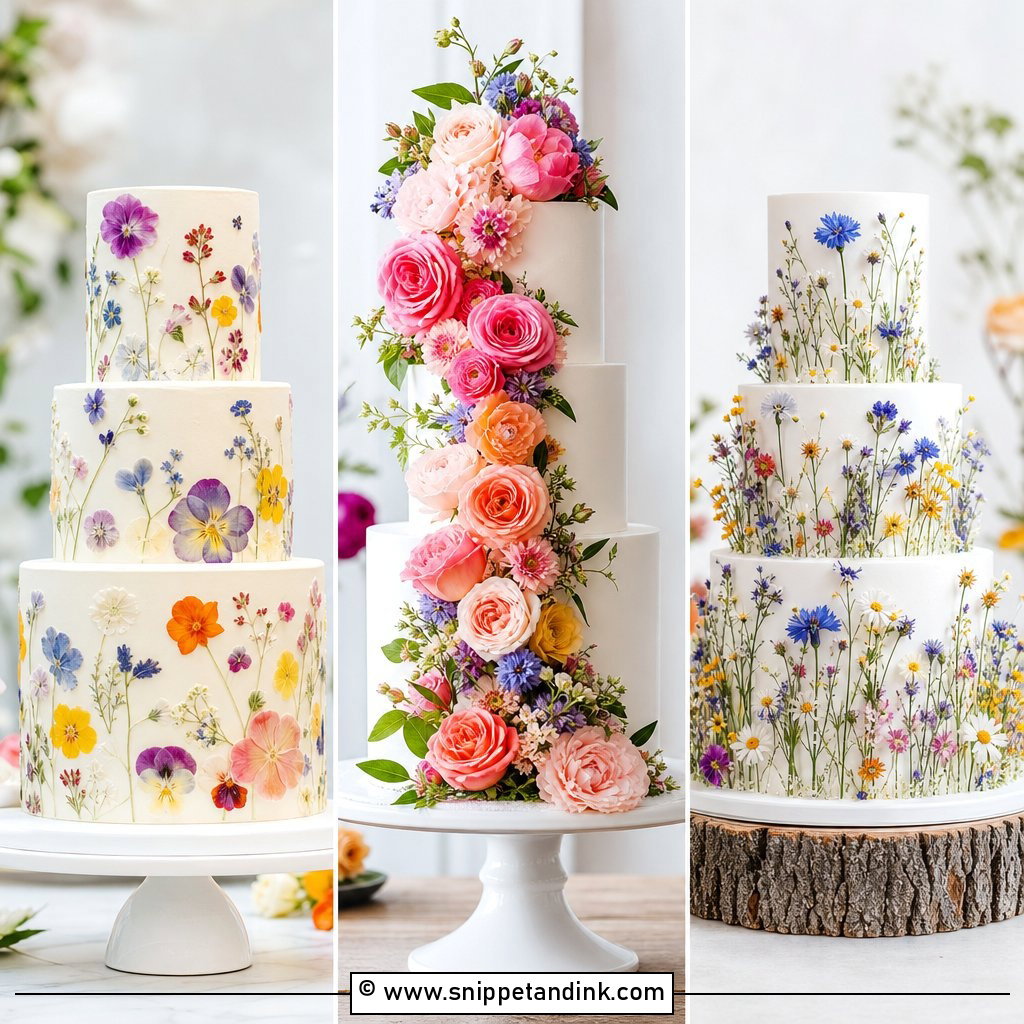
Pressed flower wedding cakes look almost painted, with flat blooms laid onto smooth buttercream or fondant. I only use flowers grown for eating, such as pansies, violas, calendula, cornflowers and lavender, and I press them myself or buy them already pressed for food use. Supermarket bouquets are often sprayed and are not safe on a cake. A pale ivory or cream base lets the color show. Pressed petals can fade under strong sun, so keep the cake out of direct light until it is cut.
6. Fresh Flower Wedding Cake
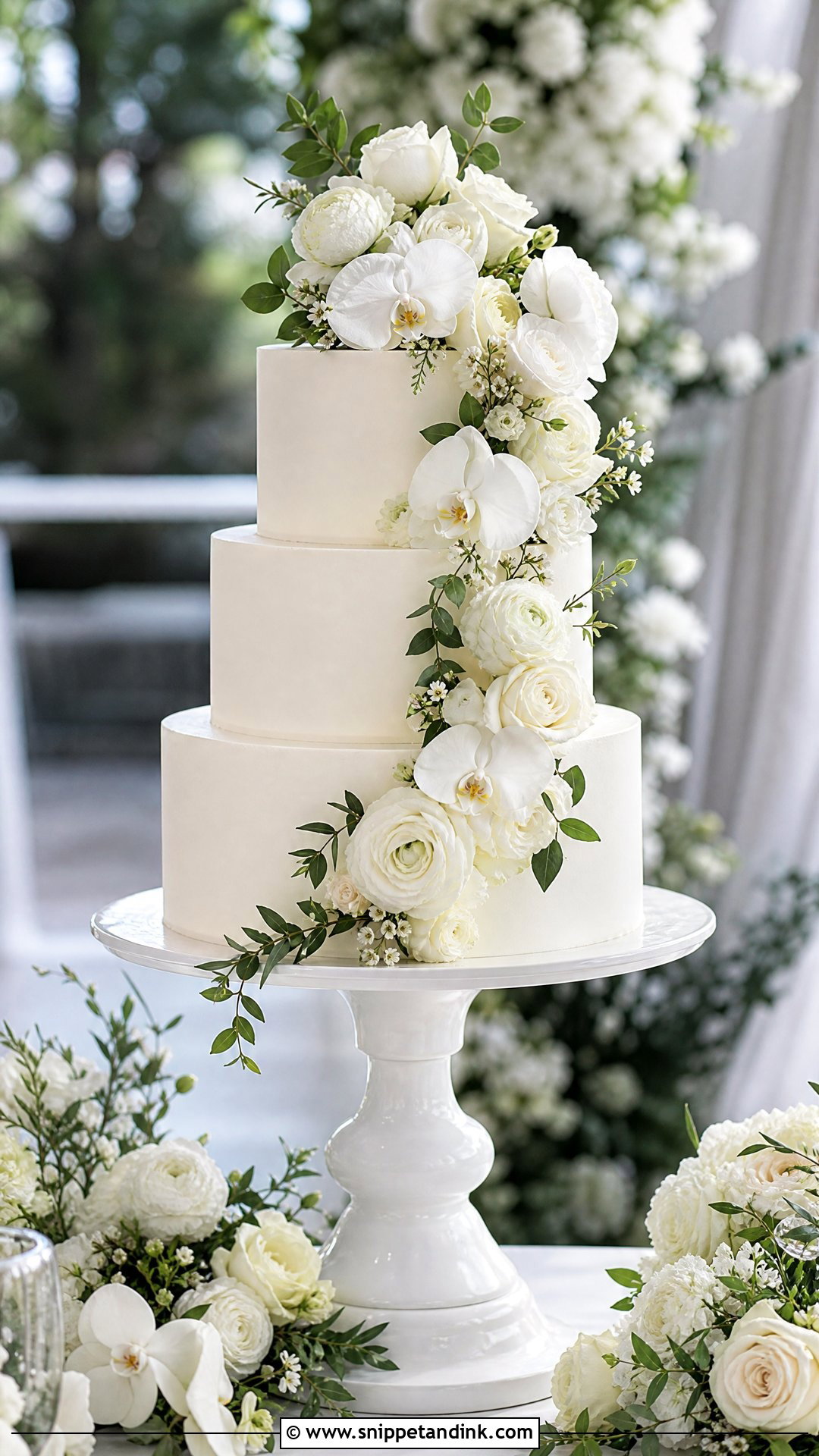
Fresh flowers can turn a plain tiered cake into a centerpiece, but they need planning between your florist and baker. Roses, ranunculus, orchids, peonies and small greenery are common. I wrap every stem in floral tape or set it in a posy pick so nothing touches the frosting, and I ask the florist for blooms grown without heavy sprays. Balance is the hard part: too many flowers hide the cake, too few look like an afterthought. A cascade feels romantic; scattered stems feel lighter.
7. Buttercream Wedding Cake
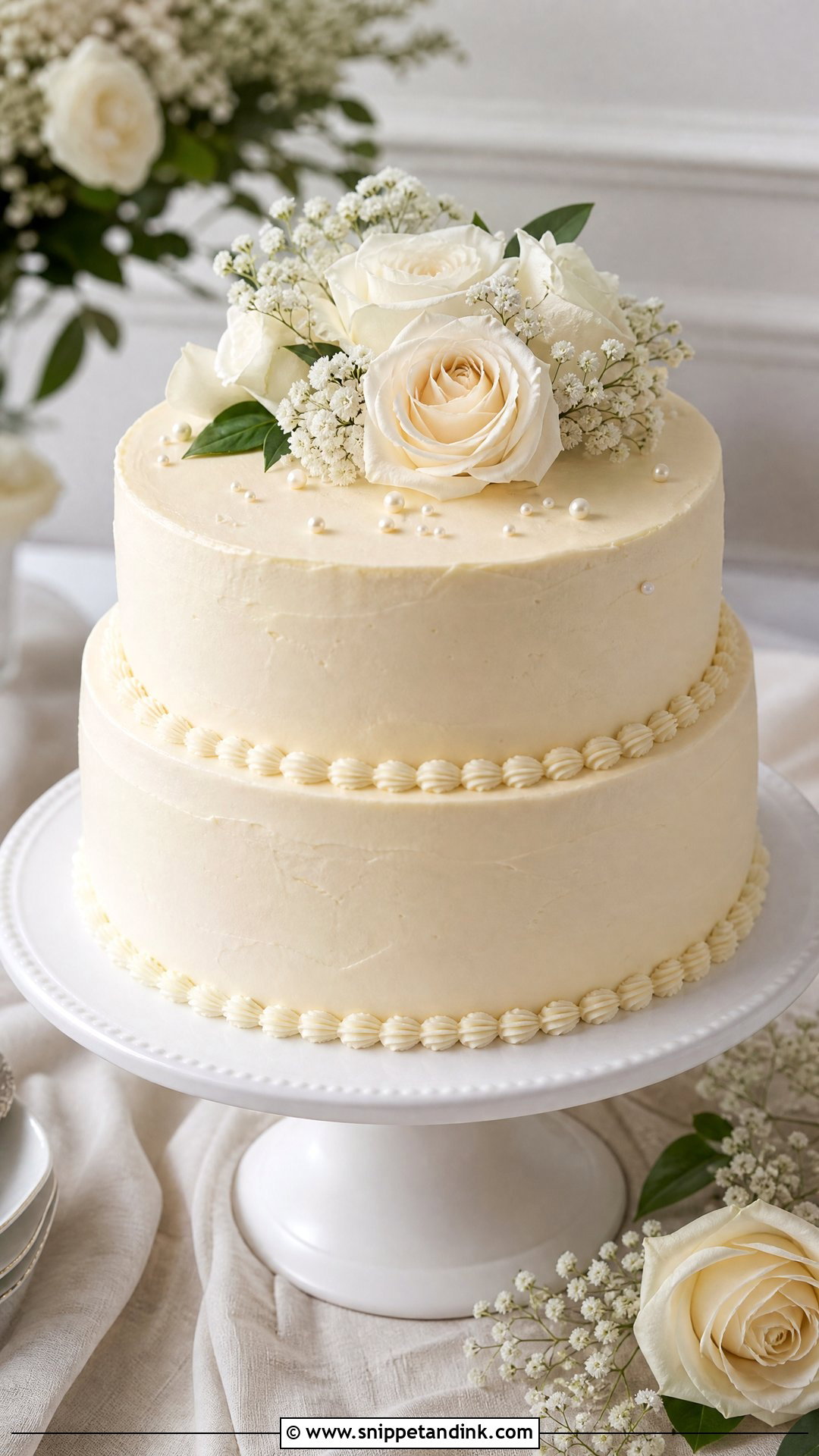
Buttercream is the frosting most guests actually want to eat. Smooth sides look modern, while textured strokes look handmade. My usual choice for weddings is Swiss meringue buttercream, which is less sweet and silkier than the American style made with powdered sugar, but it softens sooner in heat. In a warm room, I’d keep it chilled until close to cutting. It suits rustic barns, gardens and formal rooms equally, without the heavy look some people associate with fondant.
8. Textured Wedding Cake
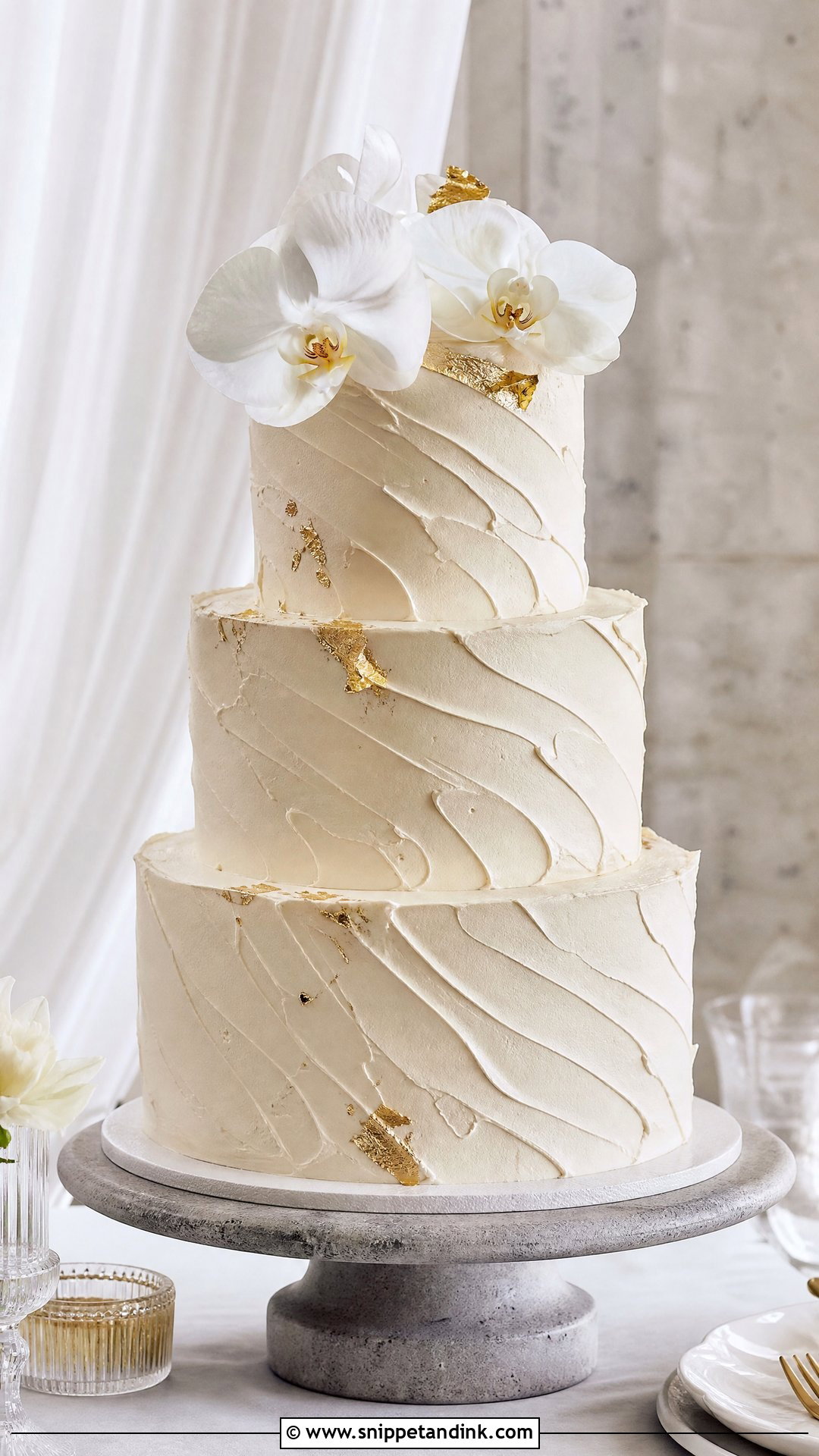
A textured wedding cake gets its interest from the frosting itself: ridges from a comb scraper, palette knife strokes, plaster-like finishes or soft waves. I chill between coats so the final layer holds the texture rather than smearing. White, ivory, beige or pale taupe show texture best, because shadows do the work. One or two fresh stems are enough, or none at all for a sculptural look. Candles, linen and stone around it bring out the texture in photos.
9. Ruffle Wedding Cake
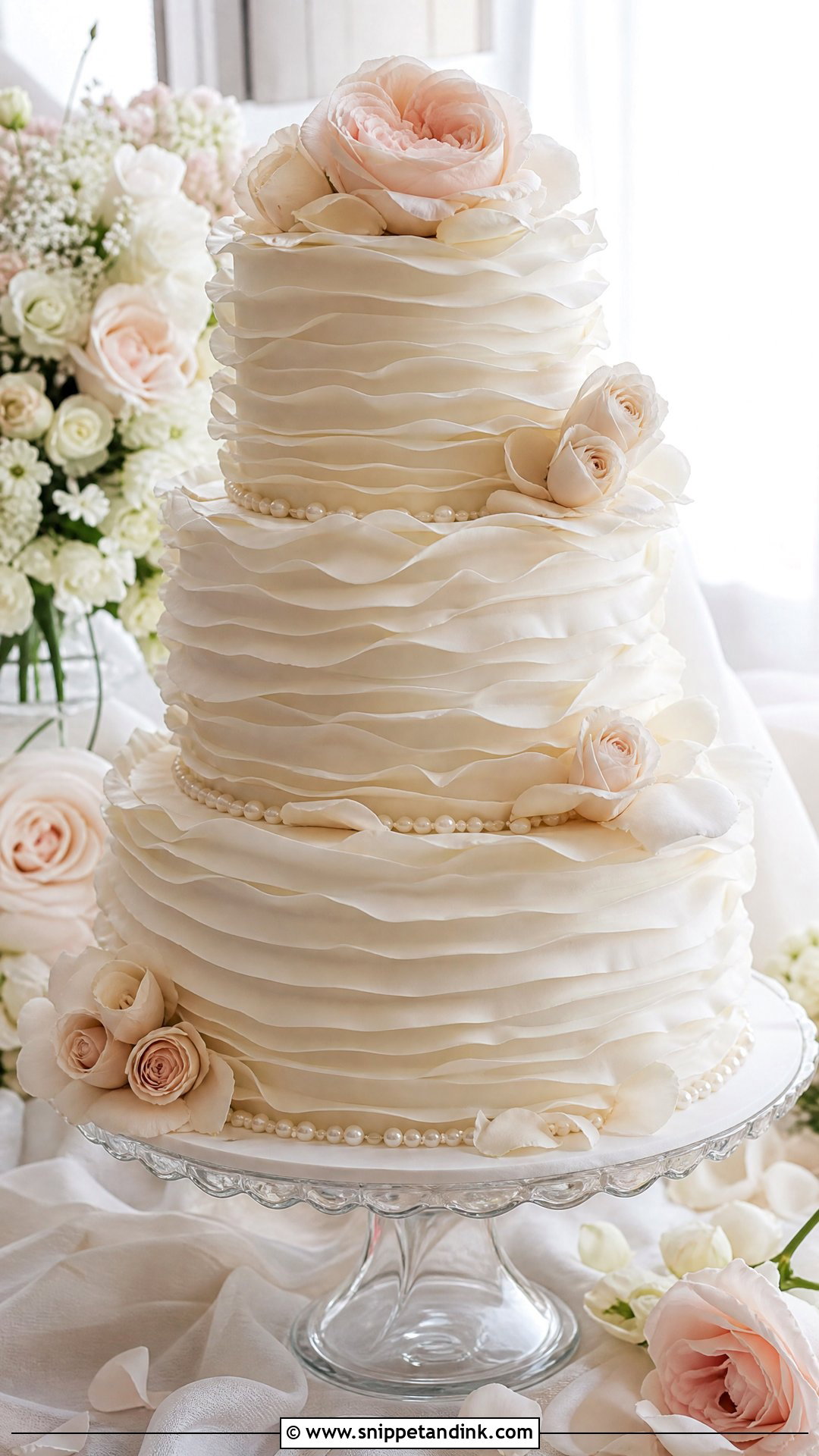
Ruffles can be fondant, buttercream or wafer paper, and each behaves differently. Fondant ruffles are sturdy; buttercream ruffles are soft and edible; wafer paper looks airy but wilts in humidity, so I avoid it for summer outdoor weddings. One ruffled tier is understated, a fully ruffled cake is dramatic. White and ivory are classic, and blush or pale peach work too. Keep the topper small so the ruffles stay the focus.
10. Sculptural Wedding Cake
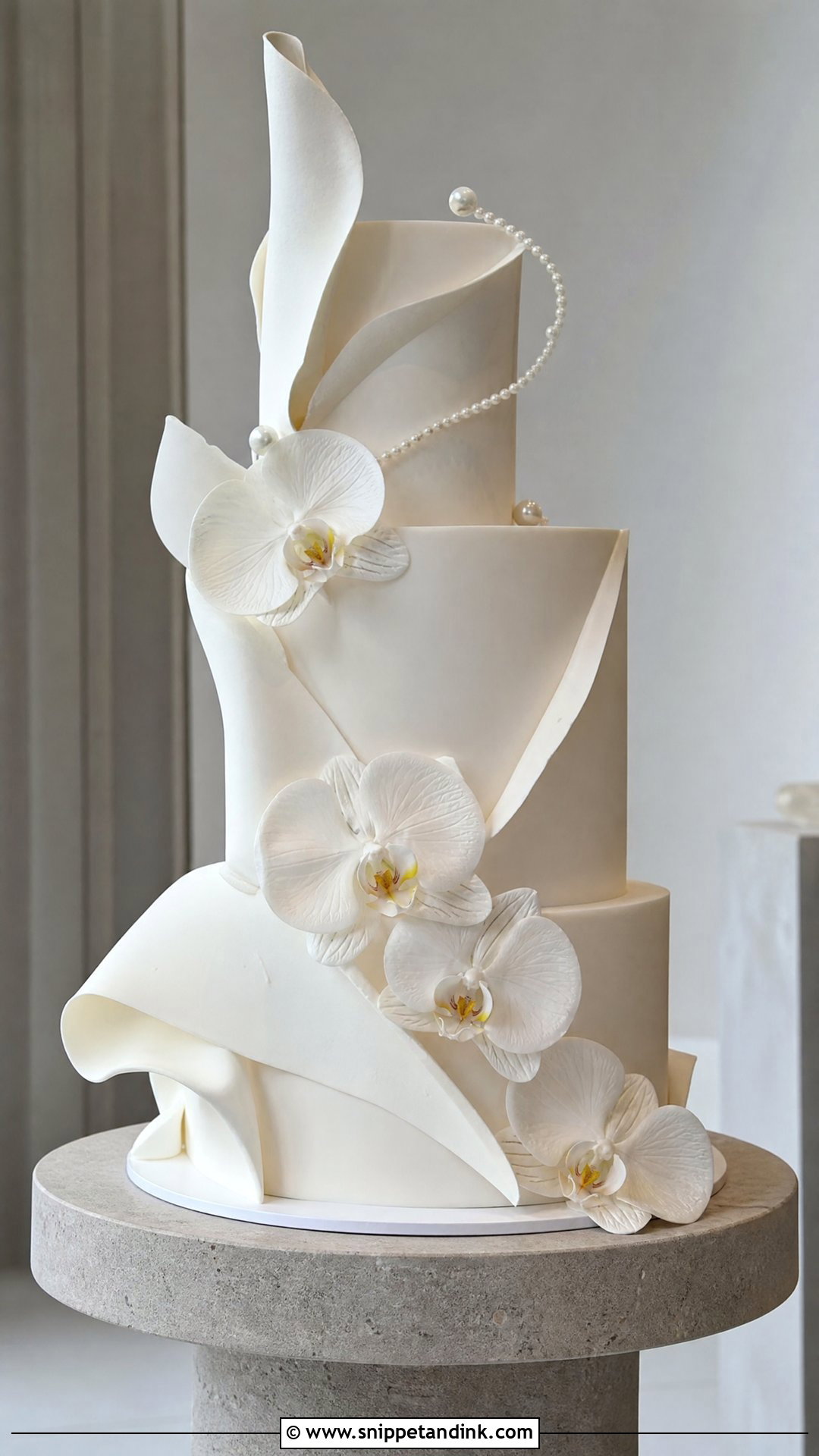
Sculptural cakes, with curved tiers, arches, folds and asymmetric shapes, are as much engineering as baking. Most need a firm ganache layer under fondant and internal supports, and some shapes are carved from cake while others are built from sugar or modelling chocolate. Tell your baker early, since these take extra days. White, cream, stone and sand keep the shape the focus. A gallery-like venue or modern florals suit it. Expect a higher price for the structure alone.
11. Minimalist Wedding Cake
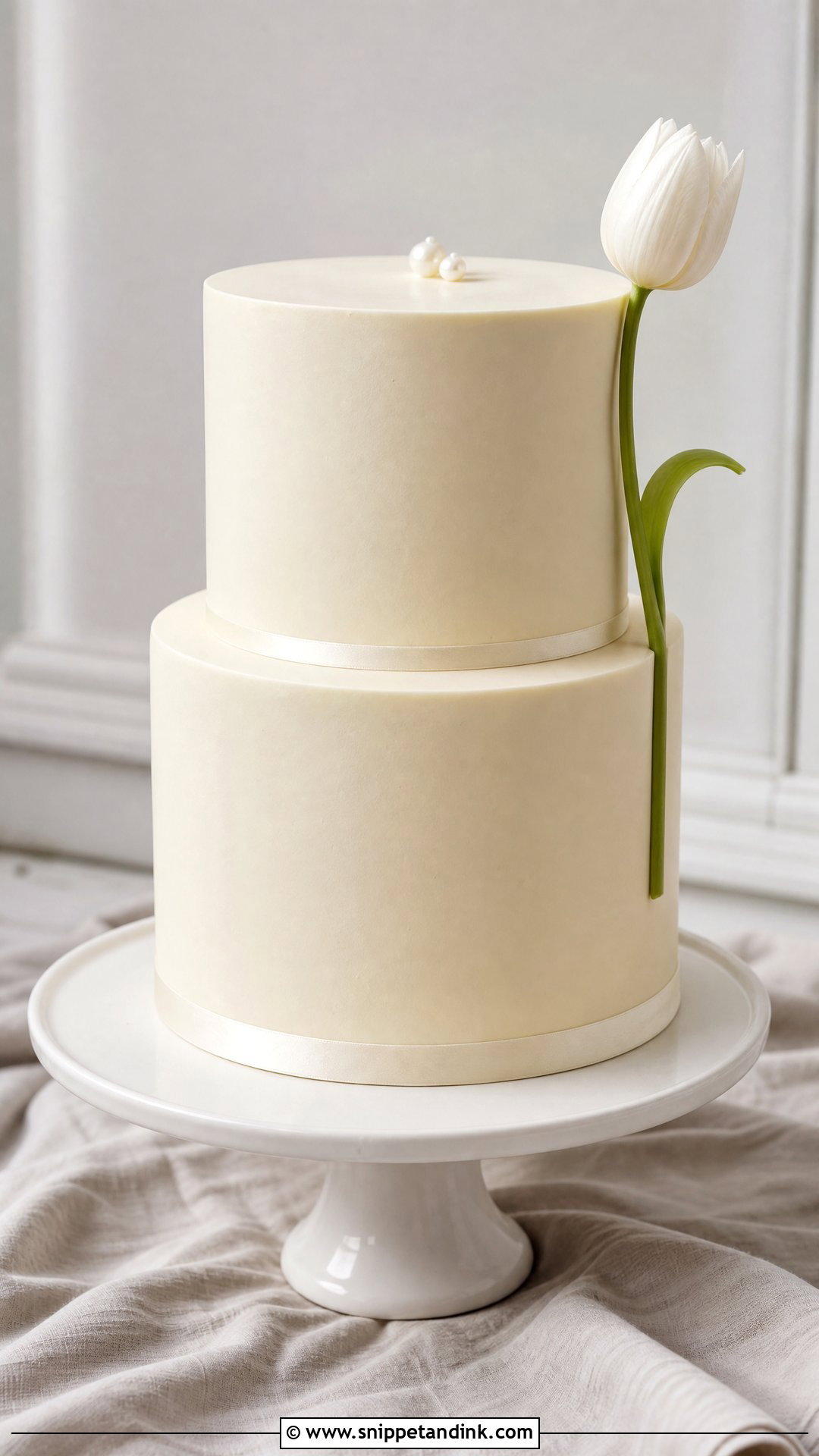
Minimalist cakes are the hardest to hide mistakes on. Every edge has to be sharp and every tier perfectly centred, because there is no decoration to distract the eye. A single flower stem, a thin ribbon, a fine pearl border or a subtle texture is enough. White, ivory and soft beige are common; pale blush or sage also work. It suits small weddings and modern venues. Resist adding more at the last minute.
12. Floral Wedding Cake
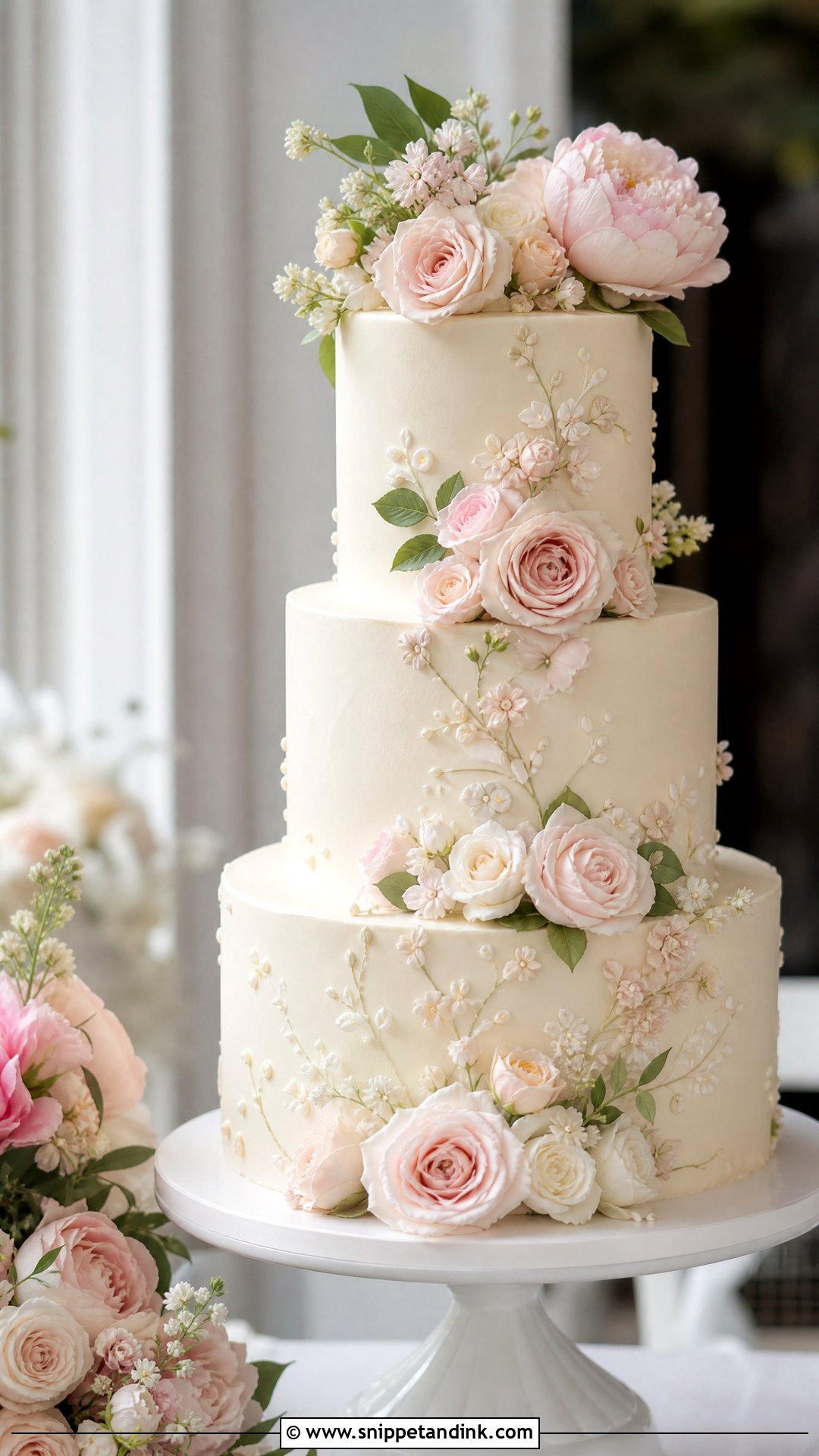
A floral cake goes beyond a few flowers on top. The design can mix piped flowers, sugar flowers, painted blooms, fresh petals or pressed ones, so the cake connects to the bouquet and the arch. Sugar flowers take days to make and dry, which is why they need early booking, but you can keep them afterward in a box out of the light. Garden colors like blush, mauve, cream, yellow and pale blue work. White sugar flowers on ivory look formal; mixed blooms in different sizes look whimsical.
13. Garden Wedding Cake
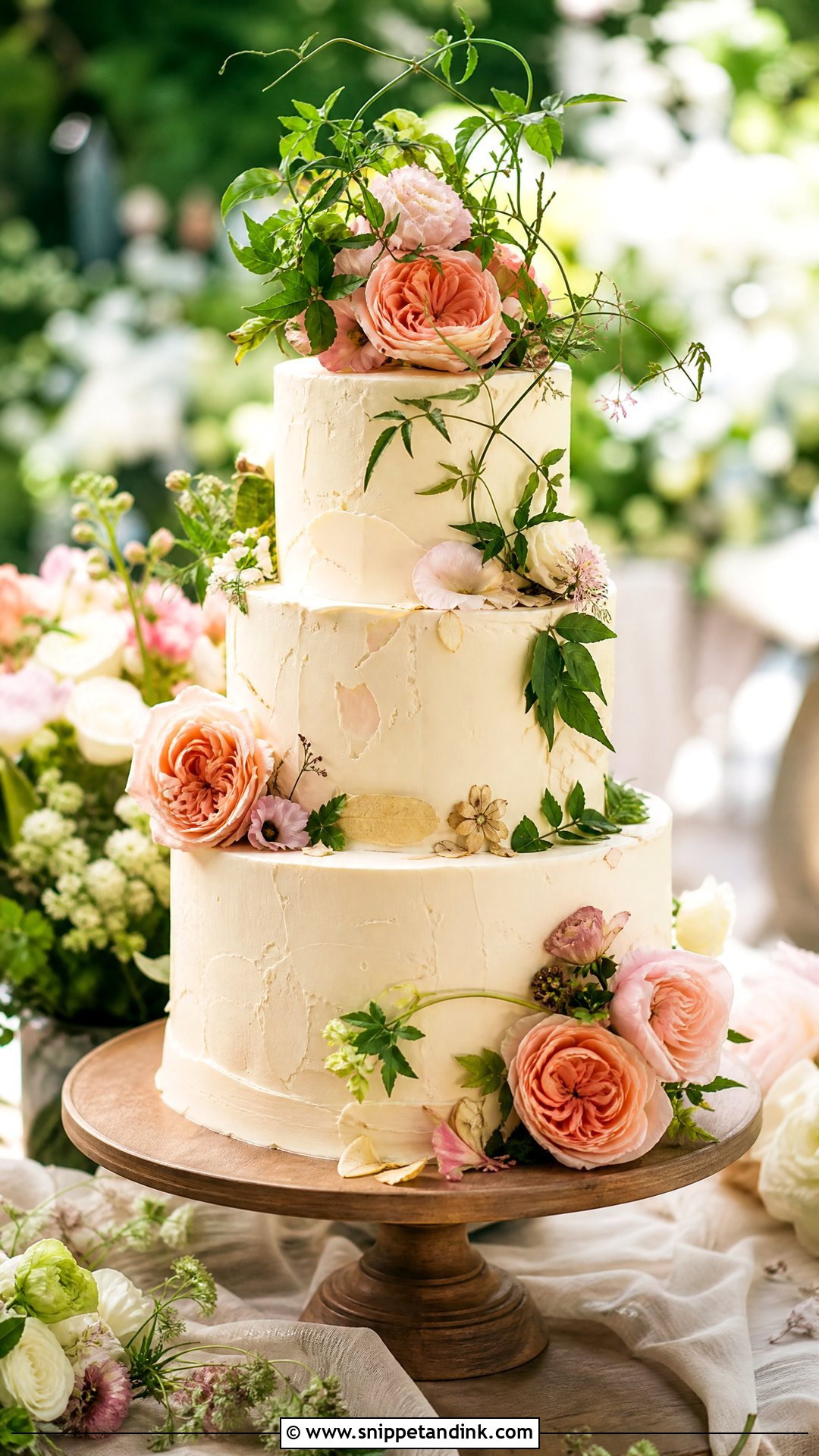
A garden cake should look like it grew a little: soft buttercream, climbing flowers, small leaves and a palette taken from real blooms. Herbs like rosemary or thyme add greenery that is safe to eat. A semi-naked finish fits the relaxed mood, but it dries out faster than a fully frosted cake, so I don’t recommend it when the cake will stand outdoors for hours before cutting. A wooden stand and a linen runner suit it.
14. Heart Wedding Cake
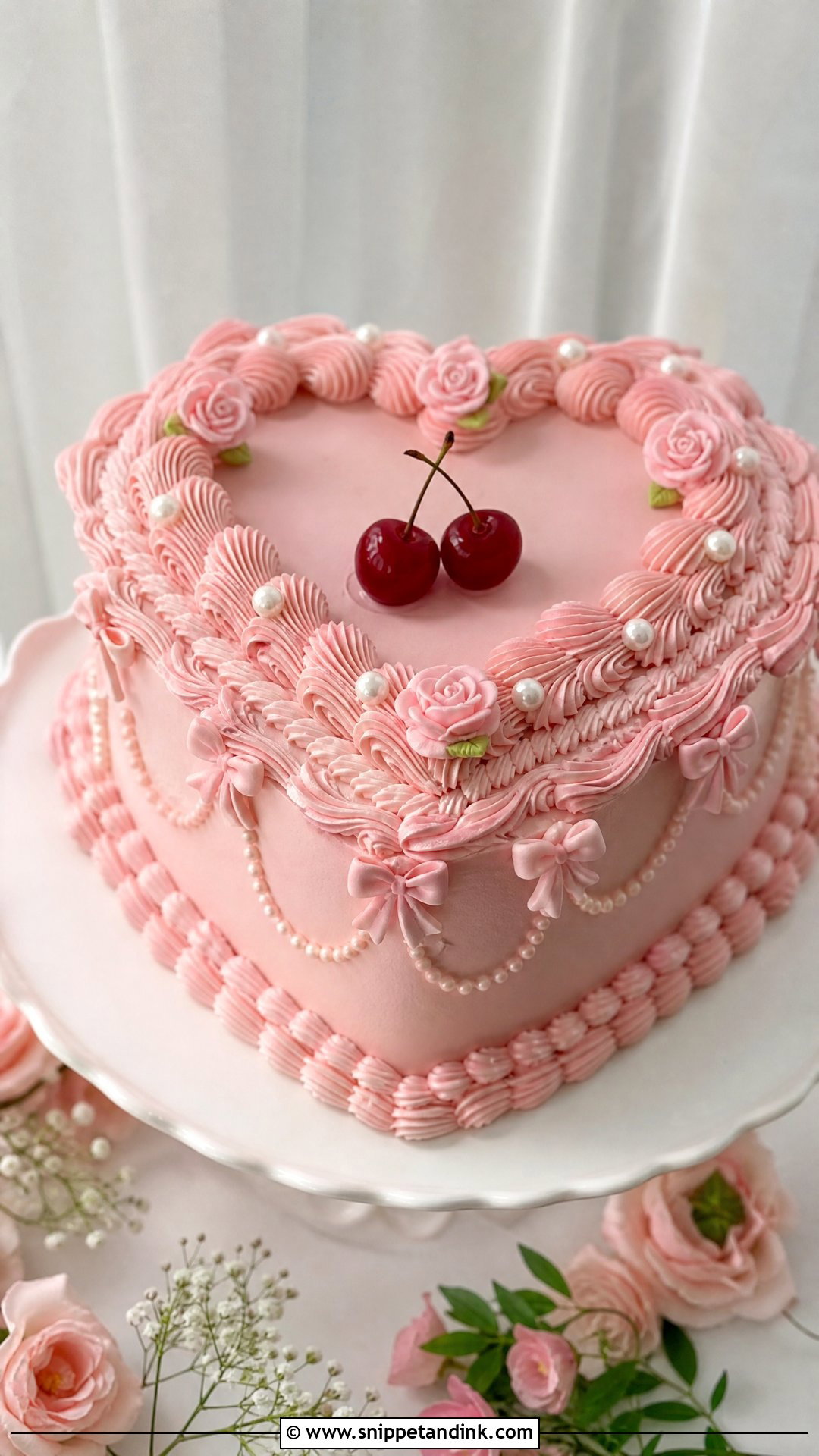
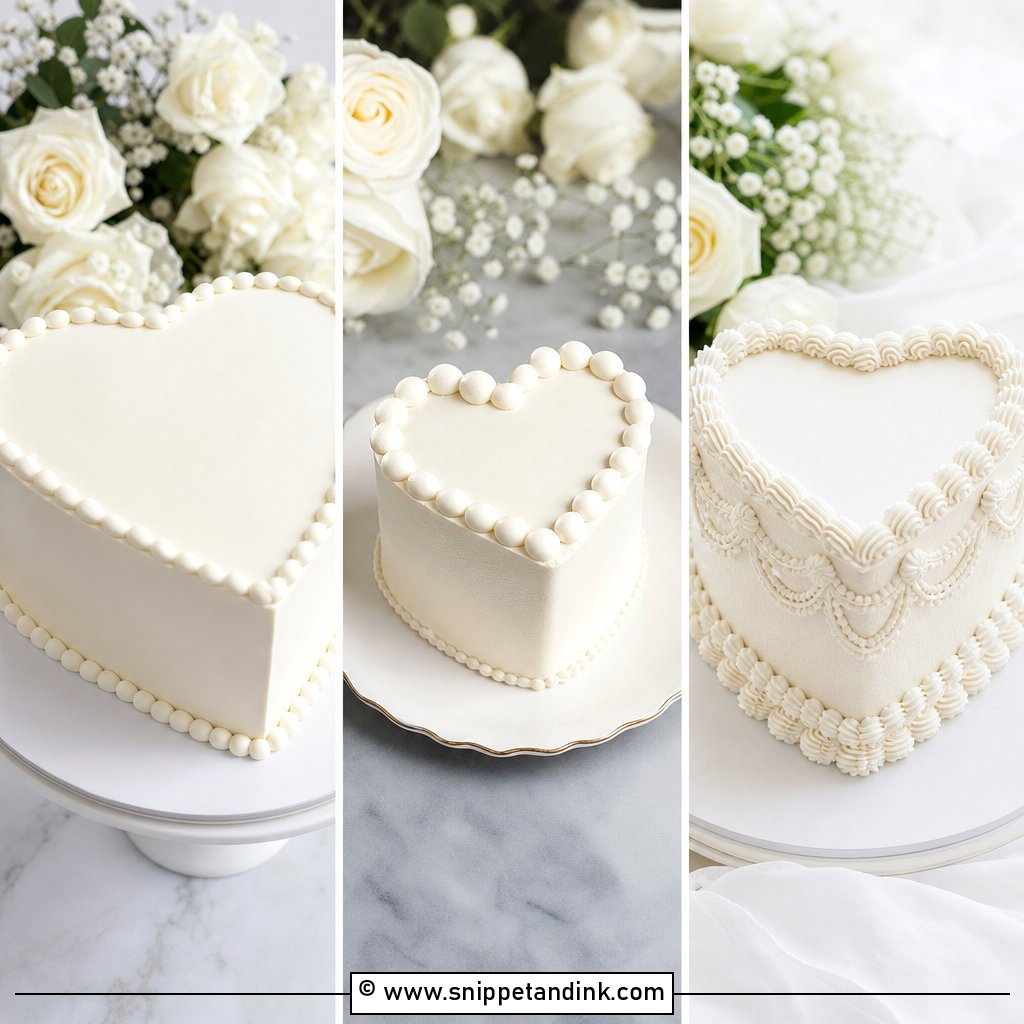
A heart wedding cake leans into nostalgia, and vintage piping, pearl borders, cherries, bows or buttercream roses suit the shape. A single-tier heart makes a sweet cutting cake for an elopement or small wedding; stacked hearts create a bigger moment. Heart tins are harder to frost cleanly at the point and the dip, so I chill the cake and finish those spots by hand. White and blush are classic; red accents, pale blue or butter yellow make it playful. Keep the decoration neat, because the shape already does a lot.
15. Single Tier Wedding Cake
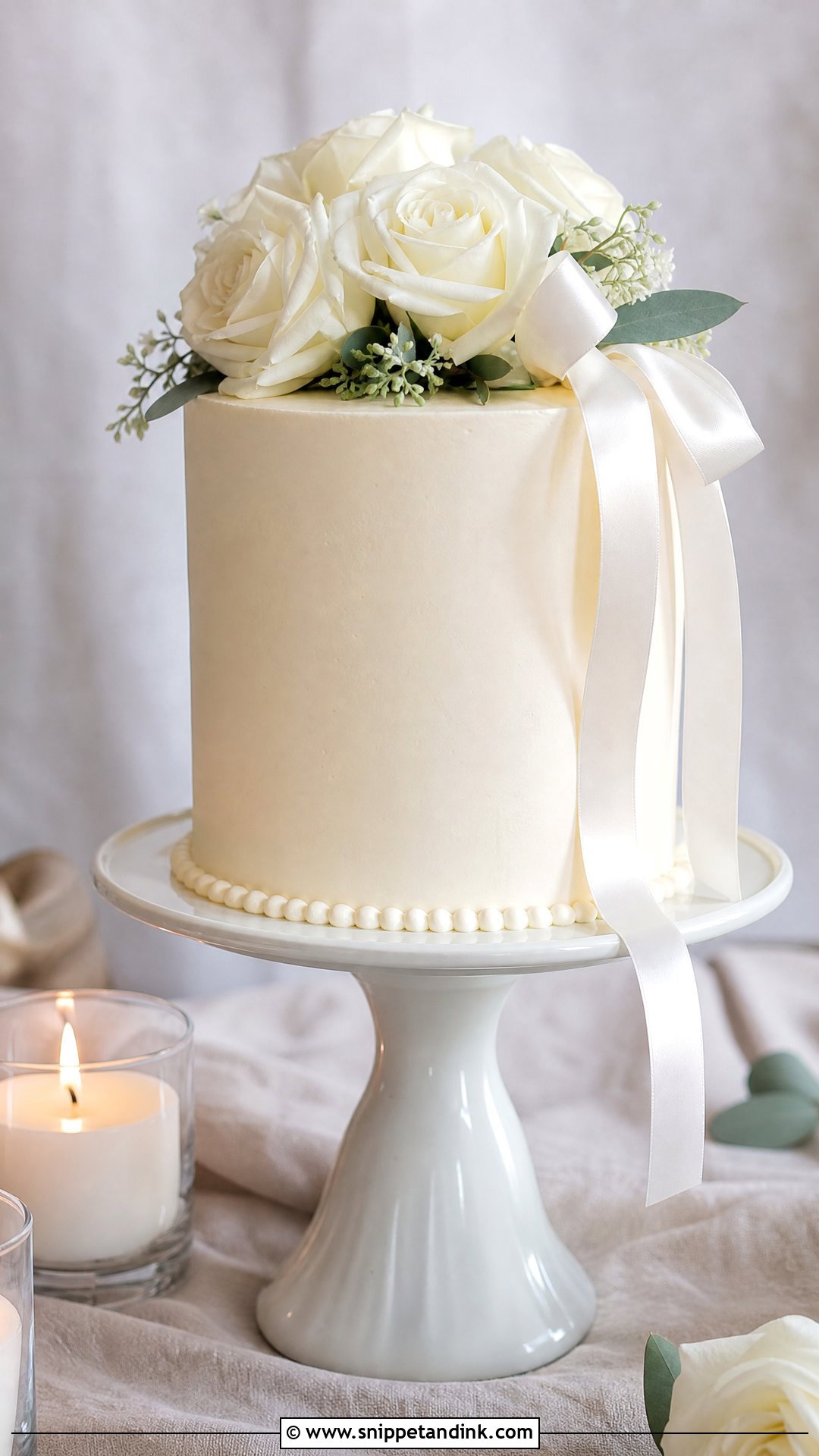
A single tier holds its own when it has some height. I often bake it as a double-barrel tier, twice as tall as a normal tier, with a hidden board in the middle so it doesn’t compress. It fits elopements, micro weddings and restaurant receptions, especially when there are other desserts. Fresh flowers, pearls, fruit, bows or texture can all finish it. A raised stand gives it presence on the table.
16. Two Tier Wedding Cake
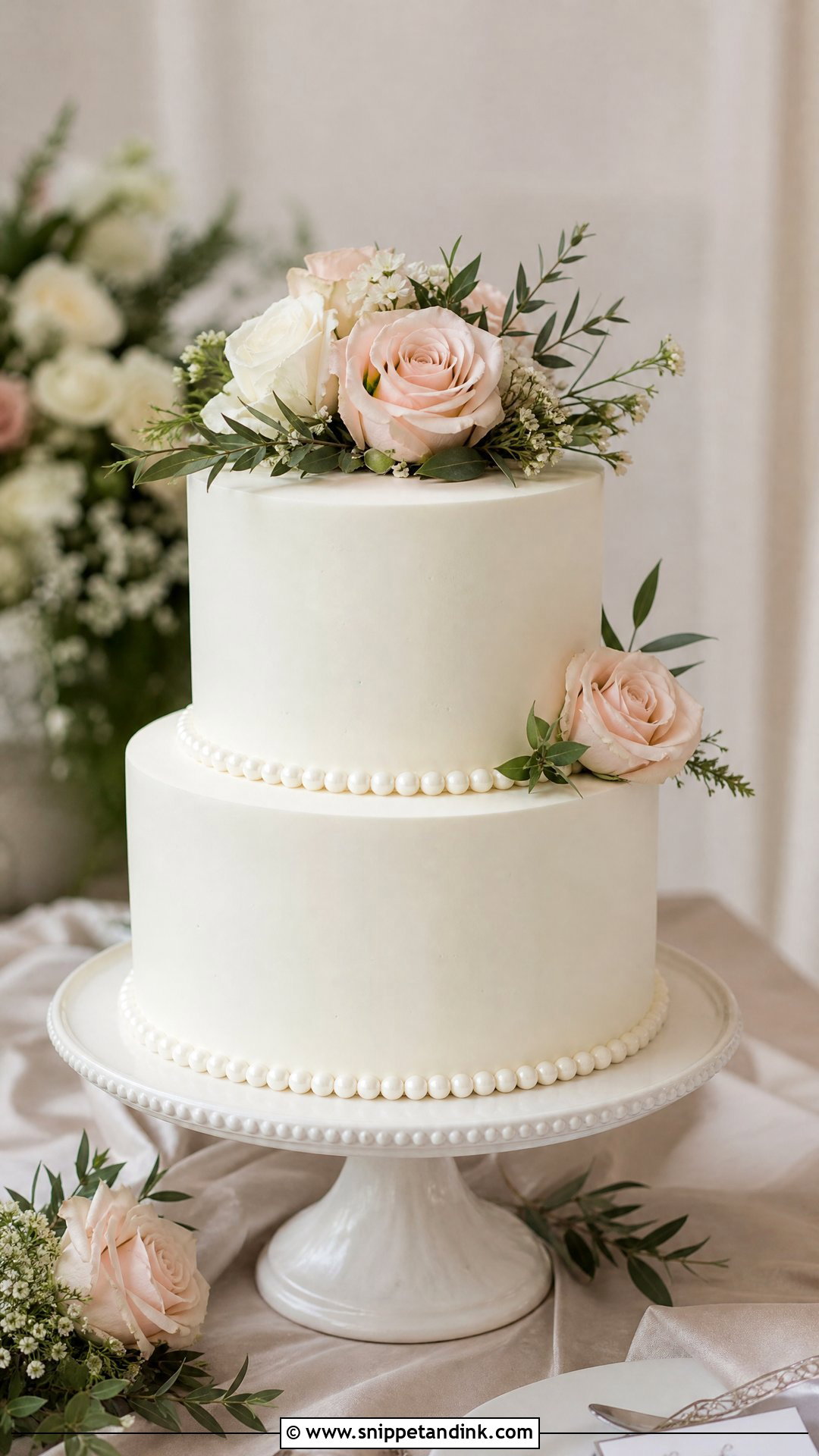
Two tiers give the stacked look without overwhelming a smaller guest list. A six and eight inch pair feeds roughly three dozen wedding-size slices, though slice sizes vary by baker. I always put a board and dowels under the top tier, even on a small cake. Keep both tiers smooth or add texture to one for contrast. Flowers between the tiers feel romantic; pearls or piping feel formal. A wider bottom tier keeps the proportions balanced.
17. Three Tier Wedding Cake
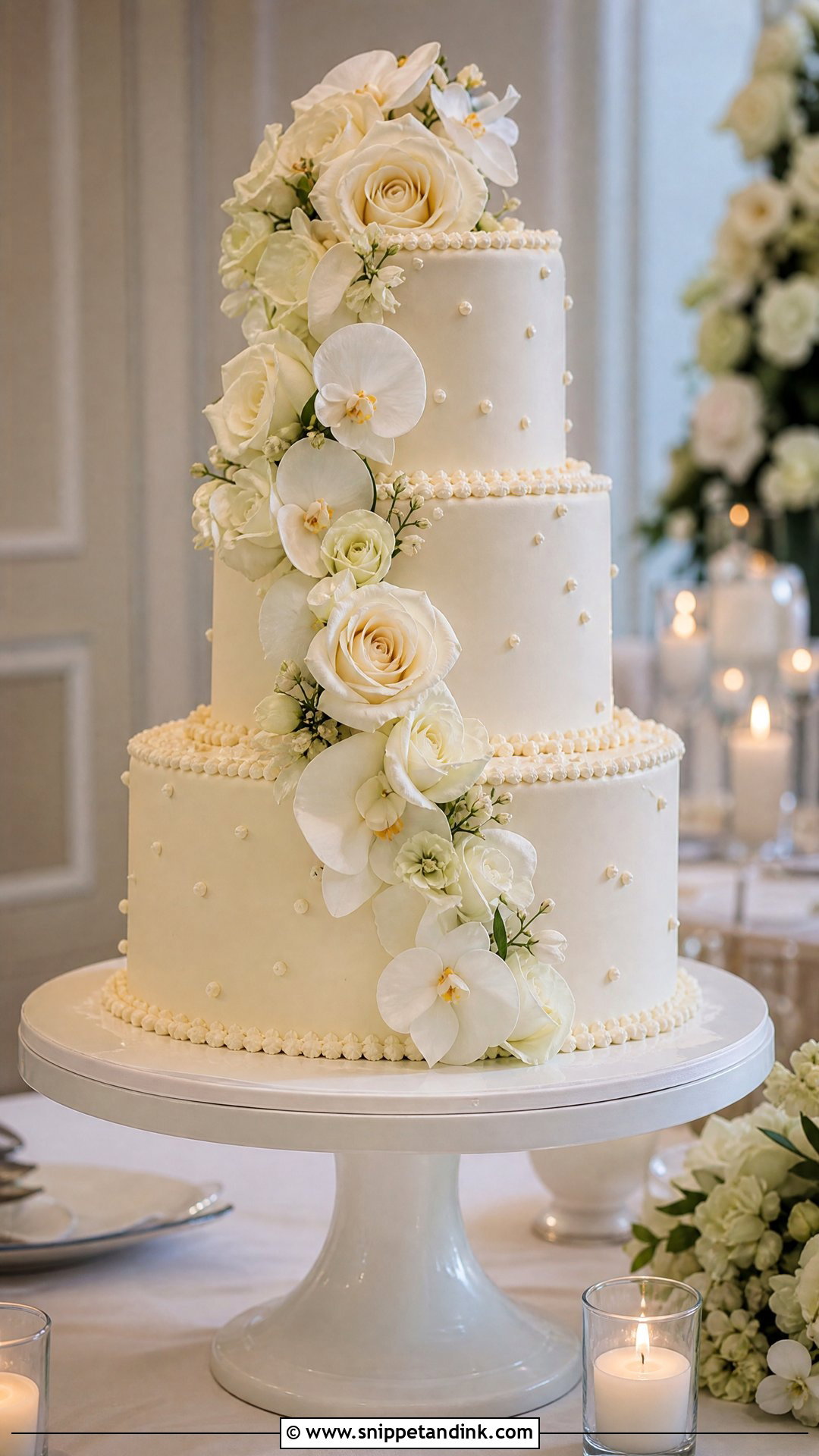
Three tiers give height and real presence, and enough room to vary design and flavor across the layers. It needs proper support: dowels in each lower tier and a central dowel if it will travel assembled. I keep the top tier lightest in decoration and let the design flow downward. A white three-tier cake with flowers is classic, while color or metallic touches modernise it. It suits medium and large weddings.
18. Square Wedding Cake
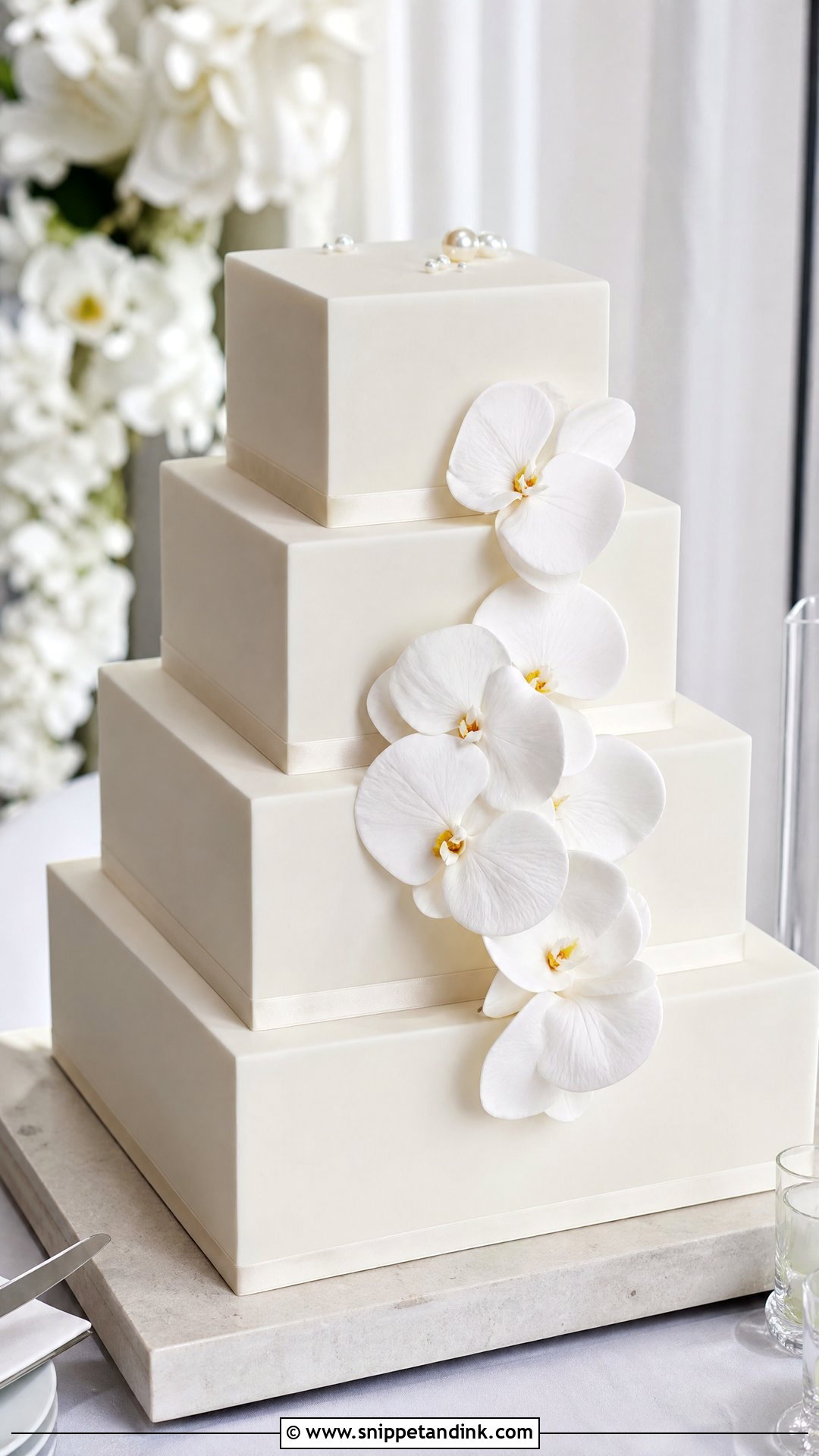
Square tiers look modern, but the corners are where the skill shows. Getting sharp corners takes extra frosting and chilling between coats, and square tiers also serve more slices than round tiers of the same width. Smooth fondant or buttercream shows the shape best. Stack them evenly for structure or rotate each tier for an artistic twist. Thin ribbon, fine piping or a few flowers soften the edges. Soft beige, blush or sage warm it up.
19. Round Wedding Cake
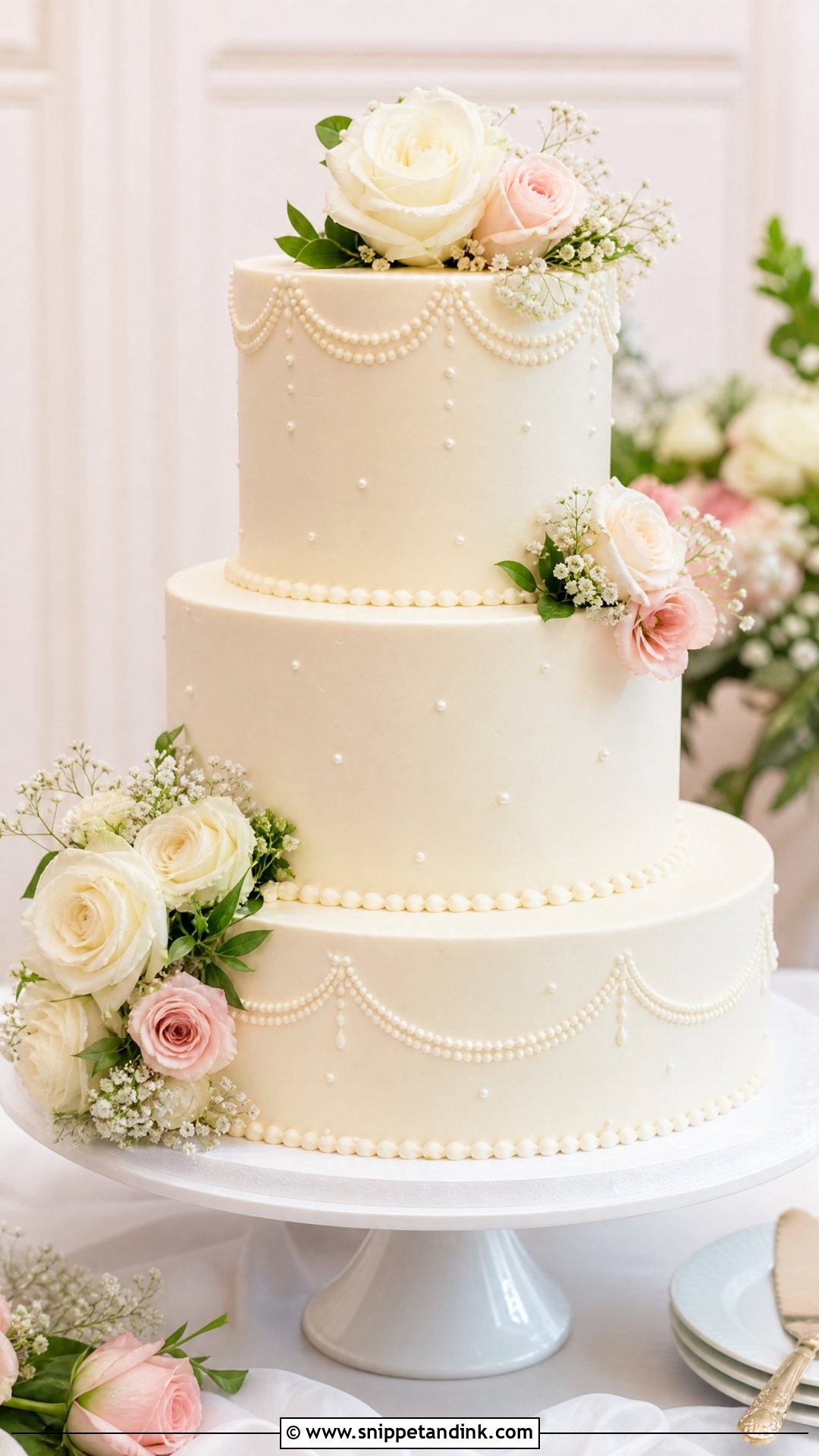
Round tiers are the most classic shape and the easiest to frost evenly, which is one reason most bakers default to them. They take any finish: smooth buttercream, fondant, ruffles, pearls, fresh flowers or vintage piping. White with floral accents looks traditional; textured buttercream with minimal decoration looks modern. Round cakes also look the same from every angle. If you’re unsure where to start, start here.


20. Watercolor Wedding Cake
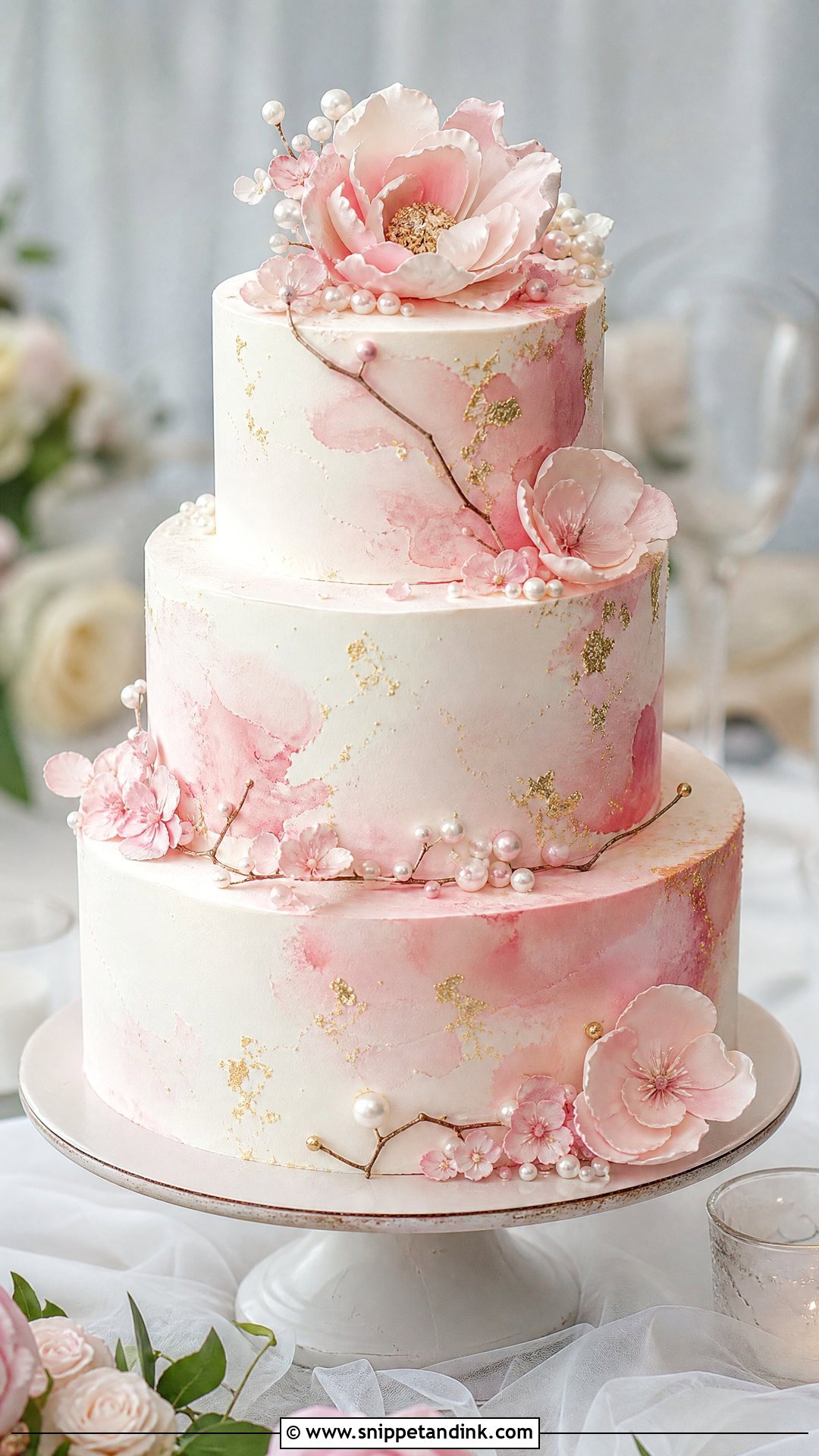
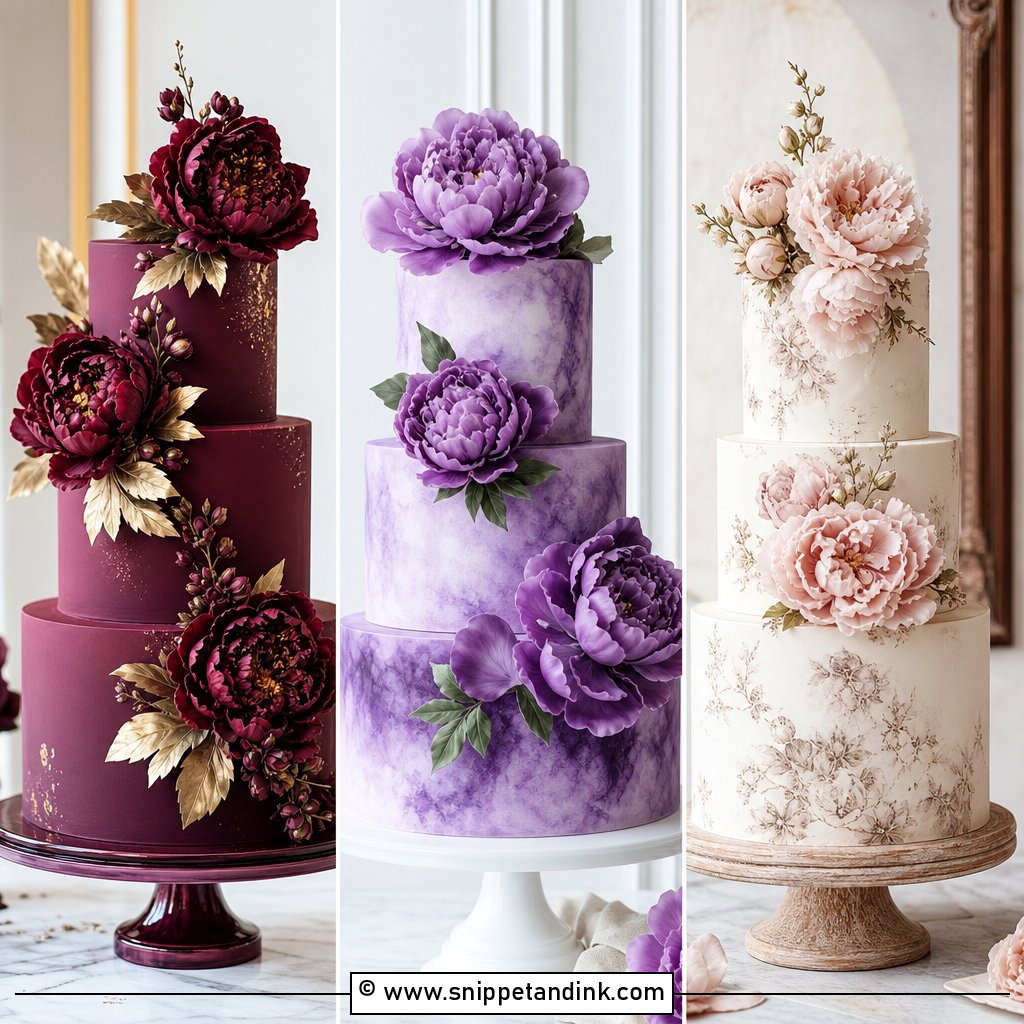
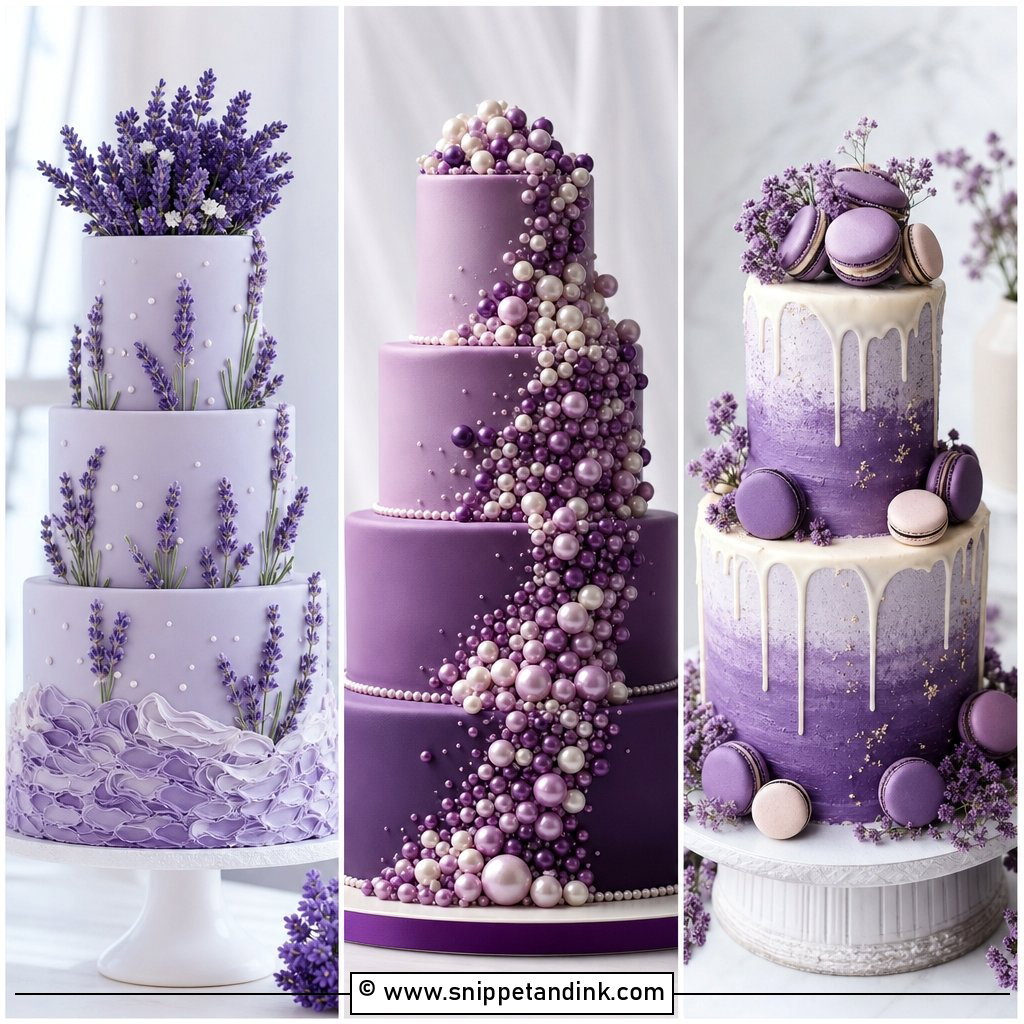
A watercolor finish is made by smearing a few shades of tinted buttercream onto the cake and scraping them smooth, or by brushing thinned gel color onto a firm surface. The trick is blending enough that it looks soft, not streaky, which is why I build it slowly. Blush, blue, lavender, peach or sage all work. Sugar flowers, gold flecks or pearls suit it. Keep the brushwork subtle for elegance, or go deeper for drama.
21. Painted Wedding Cake
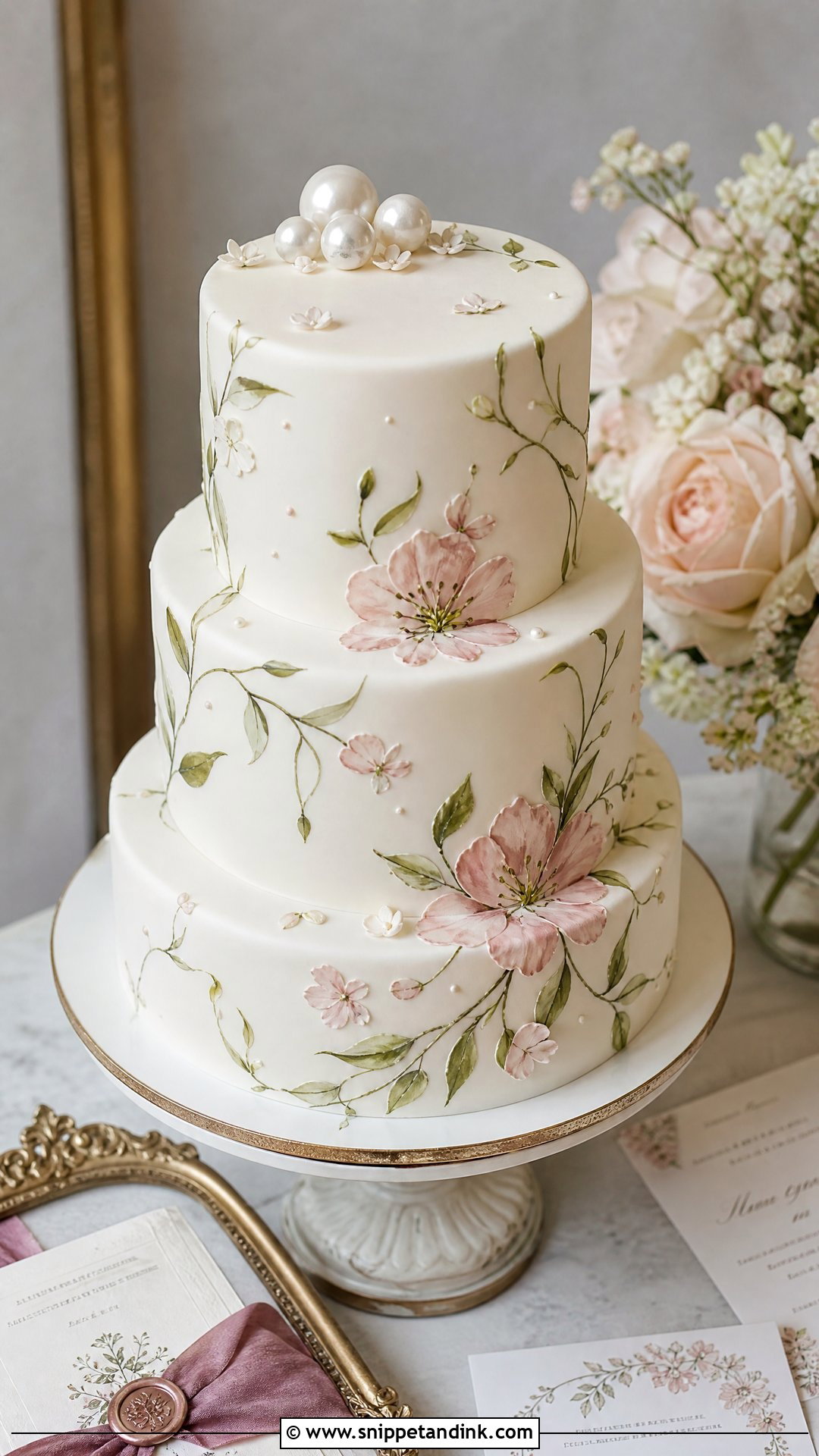
Painted cakes need a smooth, firm canvas, usually fondant or a crusted buttercream, because the brush drags on soft frosting. I paint with gel colors thinned with a little clear alcohol, which evaporates and leaves the color behind. Flowers, vines, abstract strokes or a sketch of the venue can all work, and the painting can match your invitations or bouquet. Keep the rest of the cake plain so the artwork reads clearly. Allow extra time, since detailed painting takes hours.
22. Metallic Wedding Cake
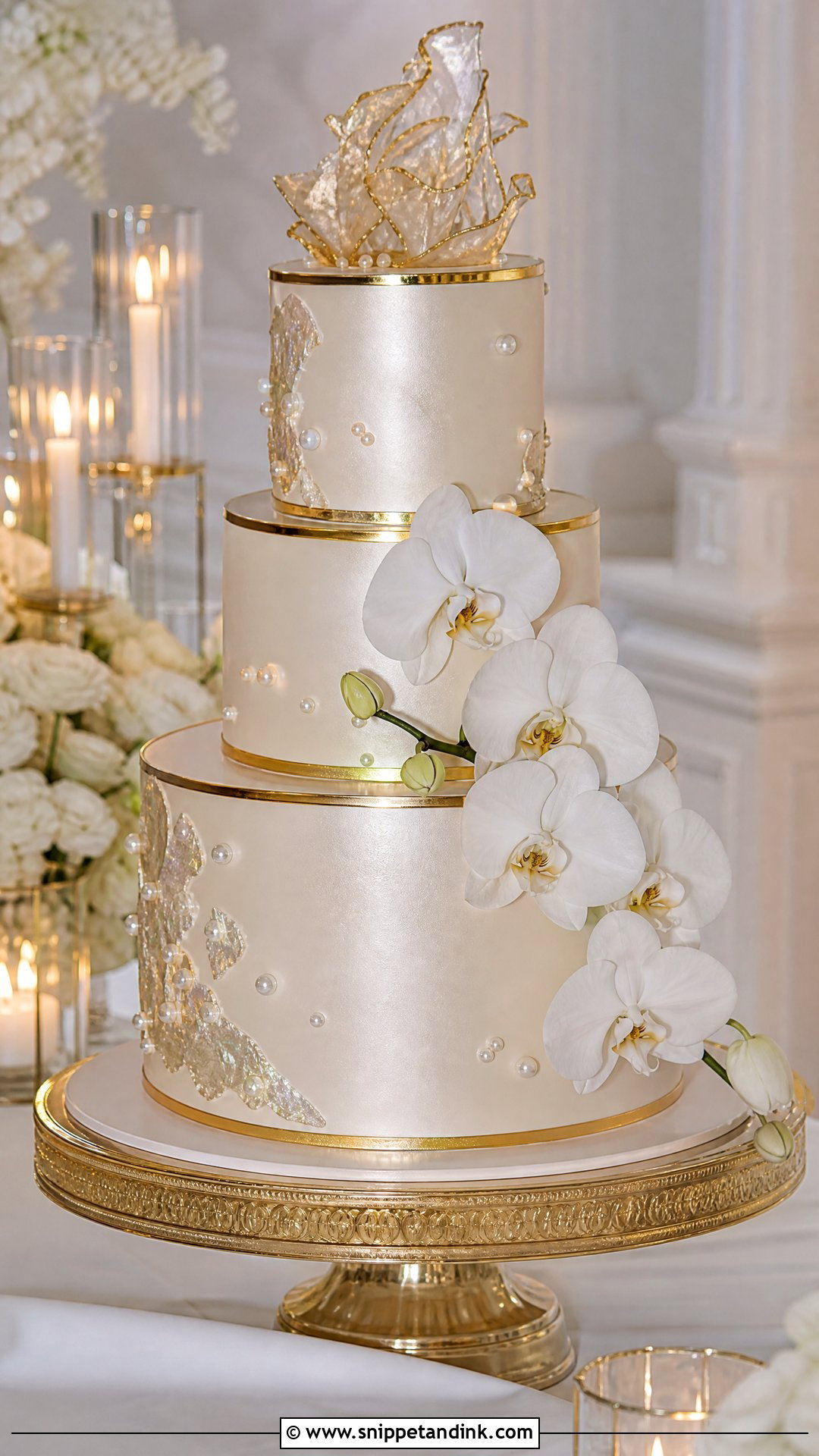
Metallic touches look expensive in small doses and cheap in large ones. Thin painted edges, a few foil flakes, a stencilled pattern or a single shimmering tier are enough. I use only products labelled edible; some glitters and dusts sold for cakes are decoration-only. Pair the metal with ivory, white, blush, taupe or black. Evening receptions and candlelit rooms suit metallic finishes best, because the shine picks up the warm light.
23. Gold Wedding Cake
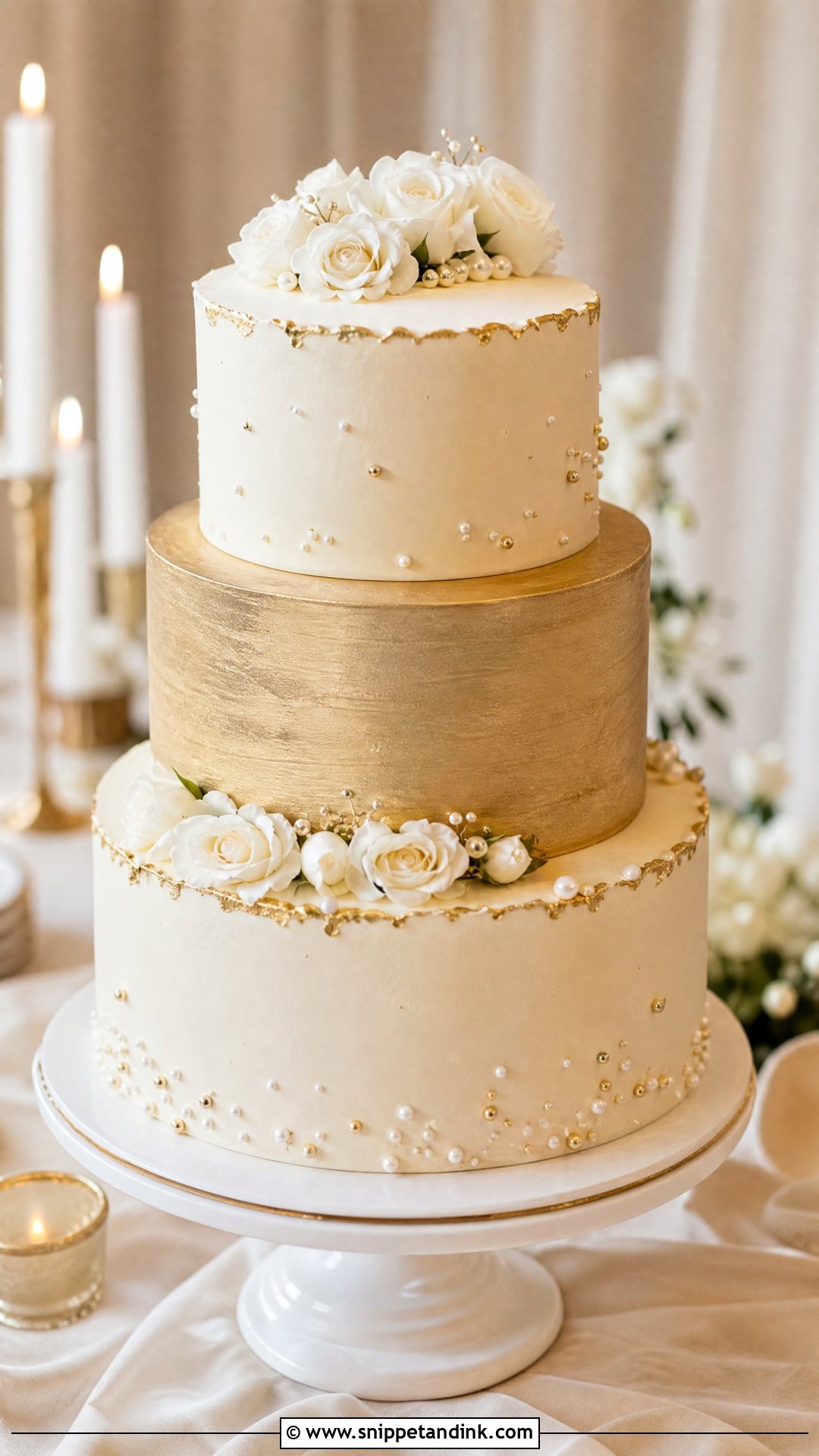
Gold adapts well: thin gold edging on white tiers for a classic cake, or one fully gold tier between ivory tiers for something bolder. I paint gold over a pale yellow-tinted base so any missed spot doesn’t show white. Champagne gold tends to sit better in photos than bright yellow gold, especially under warm lighting. Pearls, white roses, orchids and textured buttercream all suit it. Choose one main gold element and let the rest stay clean.
24. Black And White Wedding Cake
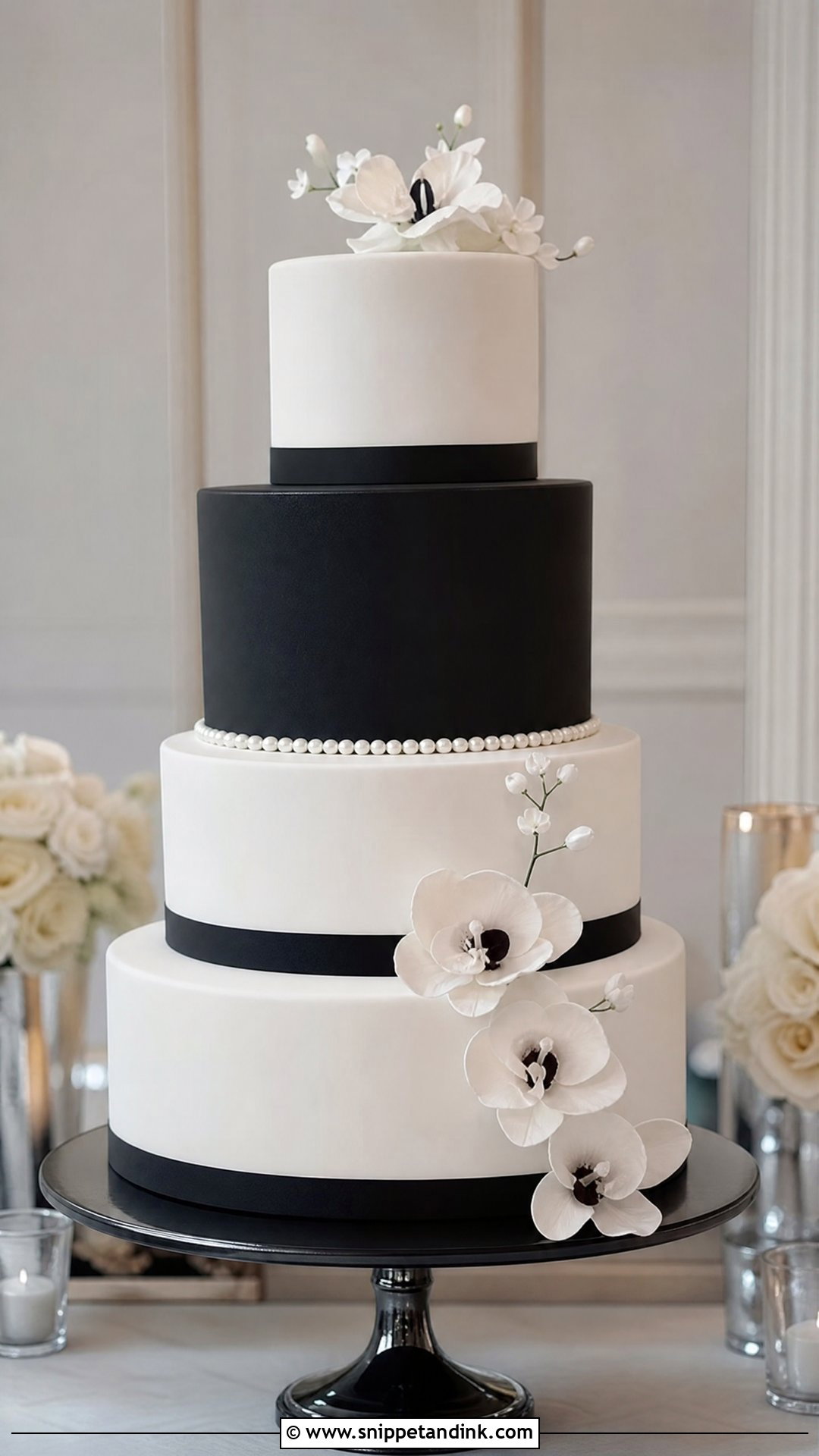
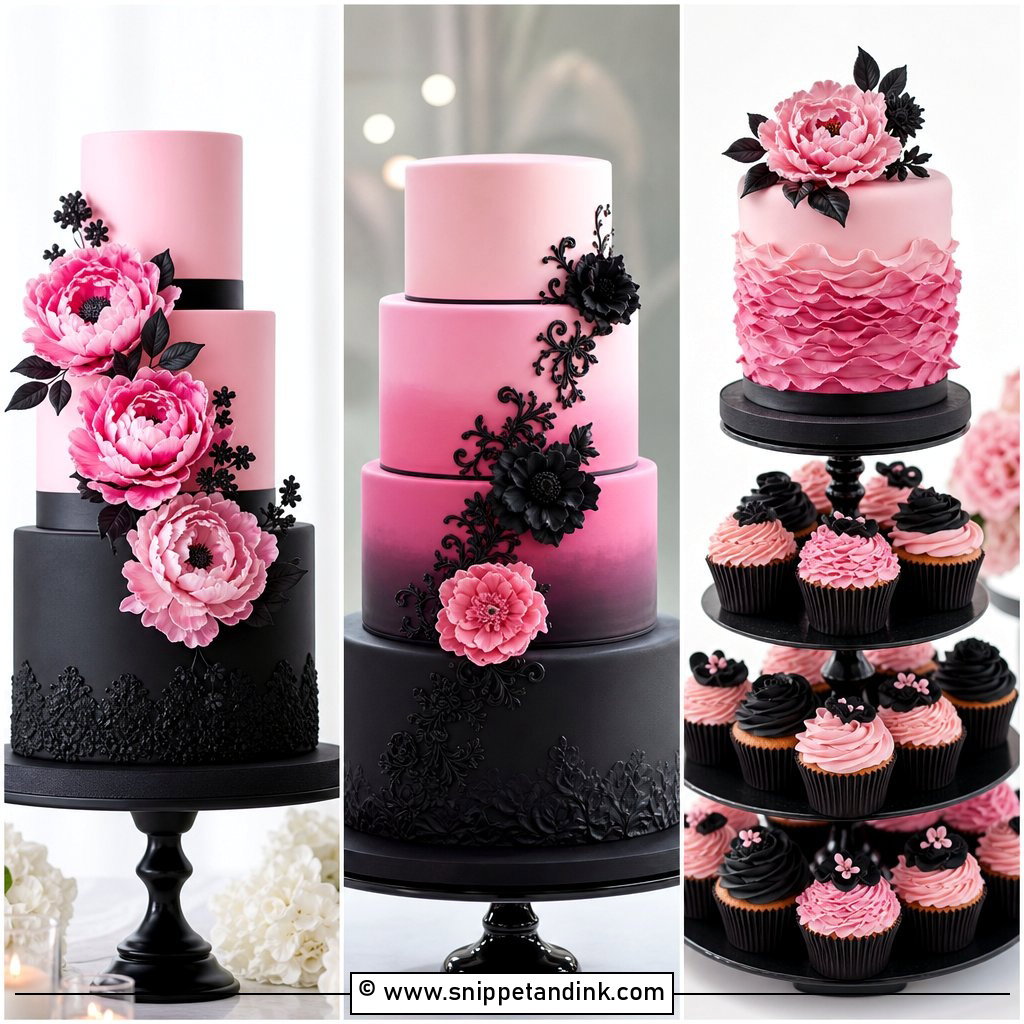
Black and white looks sharp, but black frosting has practical problems. Black buttercream needs so much coloring that it can taste bitter and stain mouths, so I use black fondant or keep black to thin piping, ribbon or one accent. A single black tier among white ones makes a strong statement. Pearls, white orchids or sugar flowers soften the contrast. Sleek table settings and candlelight suit it.

25. Blue Wedding Cake
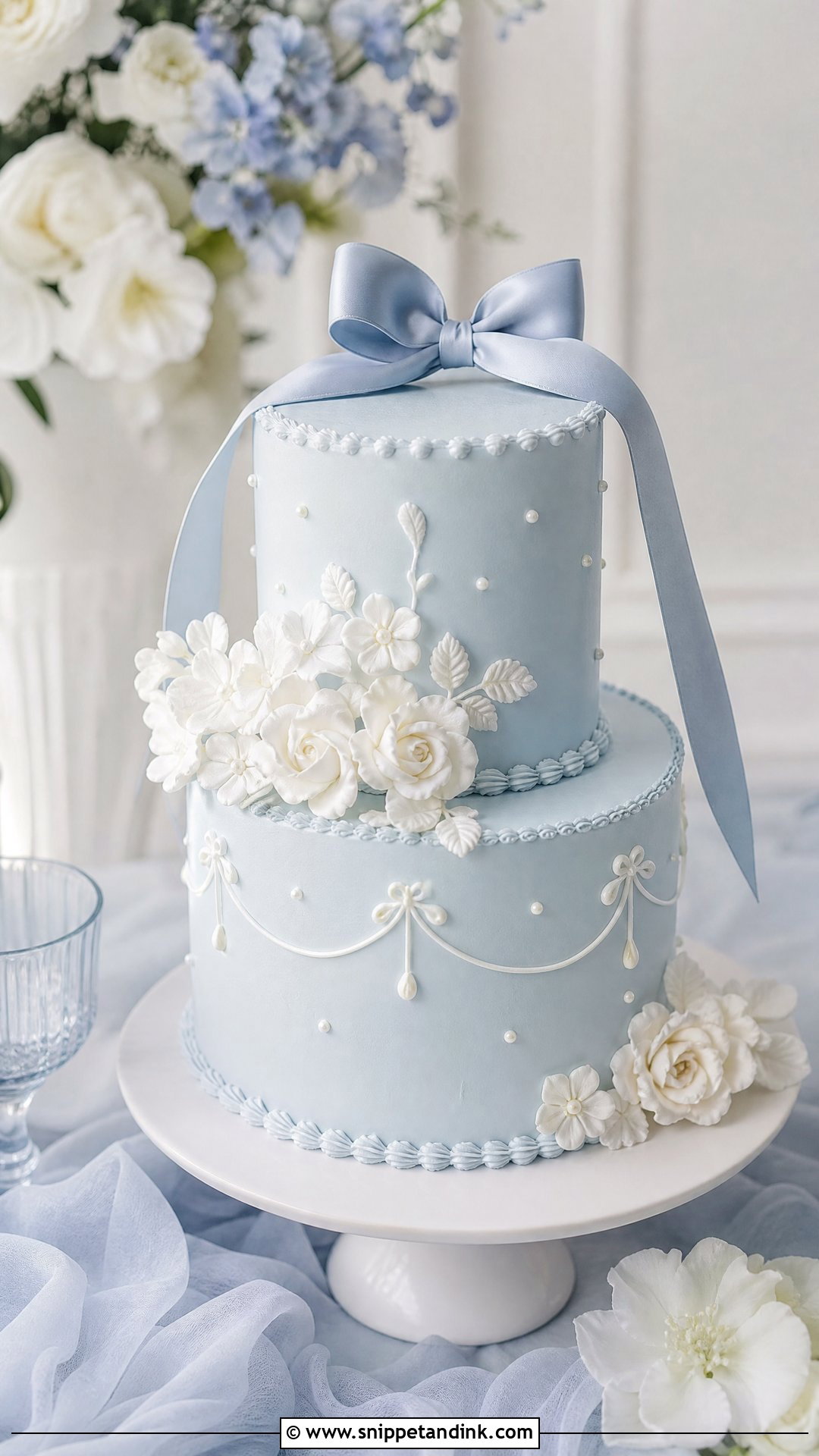
Blue covers a lot of ground: pale blue is dreamy with pearls and vintage piping, dusty blue is soft with silver or ivory, and deep blue is dramatic on smooth frosting. Color matching takes care, because buttercream made with butter is slightly yellow and pushes blue toward teal, so I start from the whitest base I can. It ties the cake to bridesmaid dresses, invitations or tablescapes. Watercolor effects, bows and delicate florals suit it.
26. Blush Wedding Cake
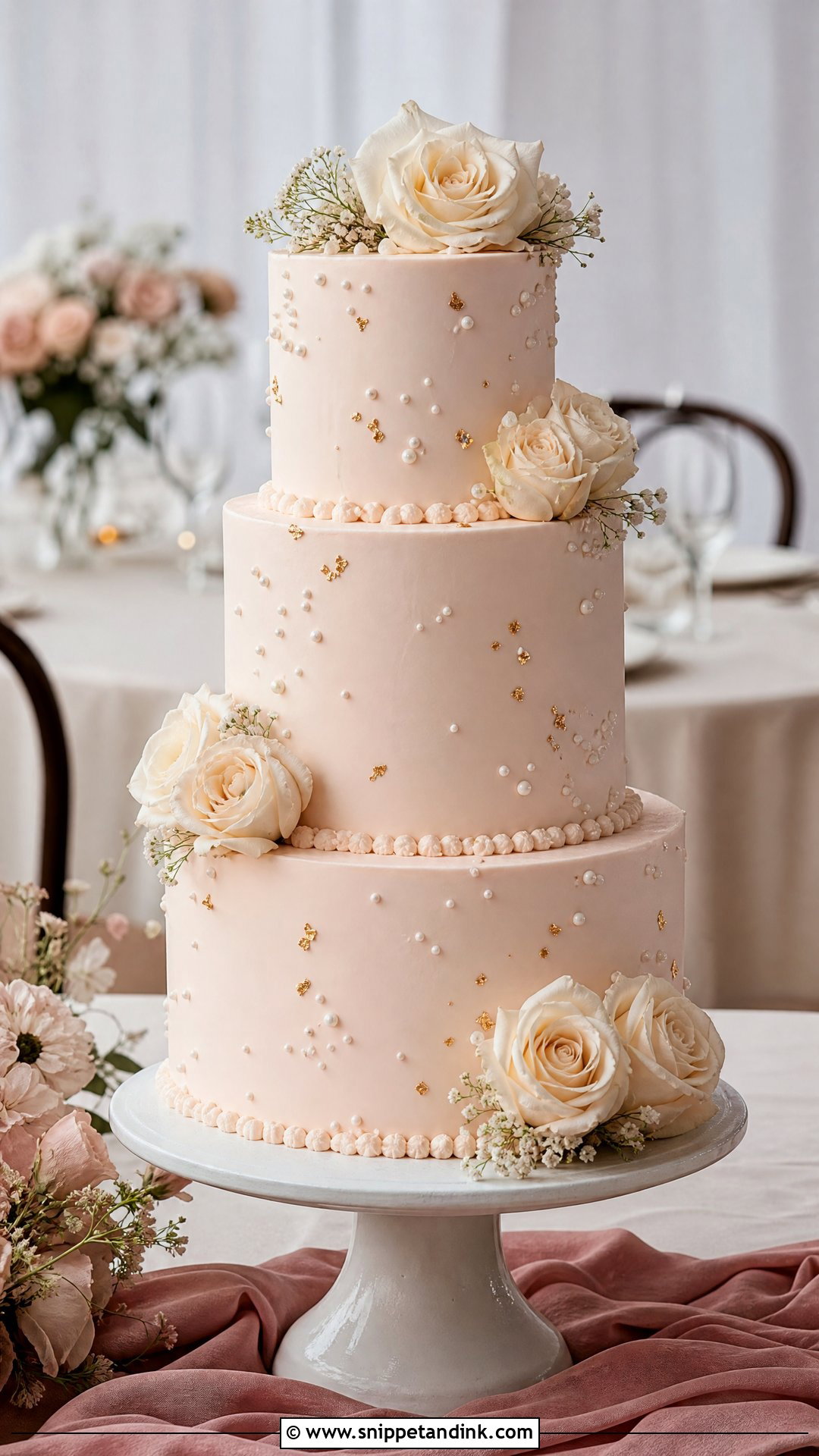
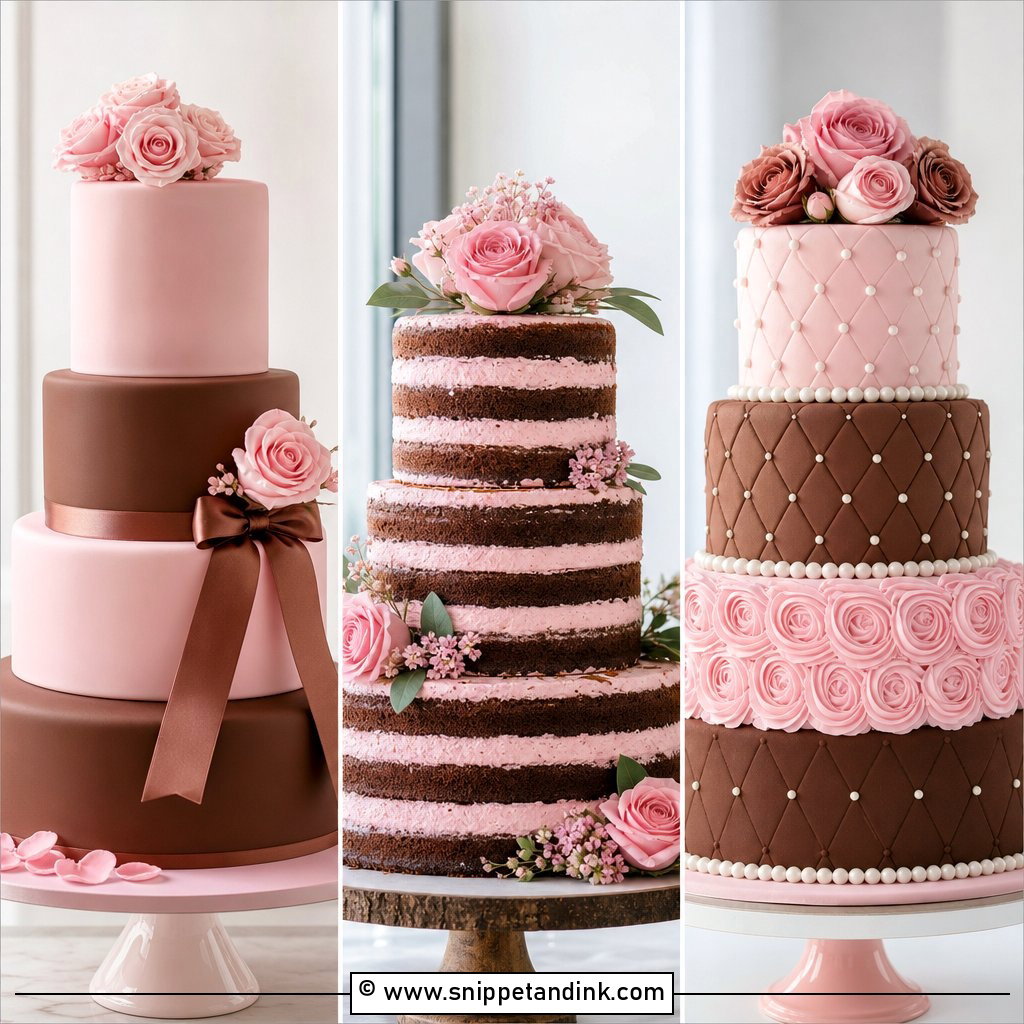
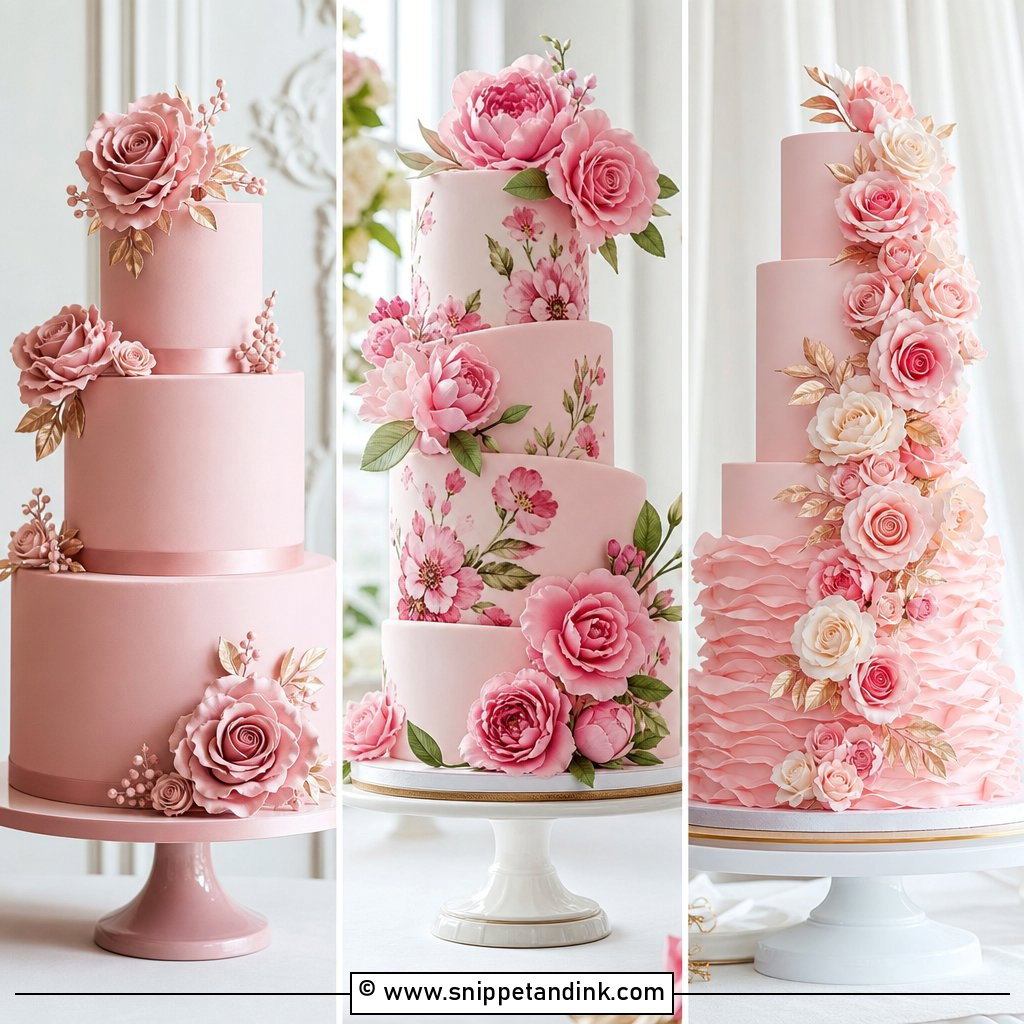
Blush ranges from barely-there pink to deeper rose, and it sits well with ivory flowers, pearls, gold and delicate piping. I mix it with a very small amount of color, because pink deepens as buttercream sits and you can’t take it back. Clean shapes and simple decoration keep it from looking too sweet. Use blush across every tier or just one. Garden weddings and spring receptions suit it.
27. Sage Green Wedding Cake
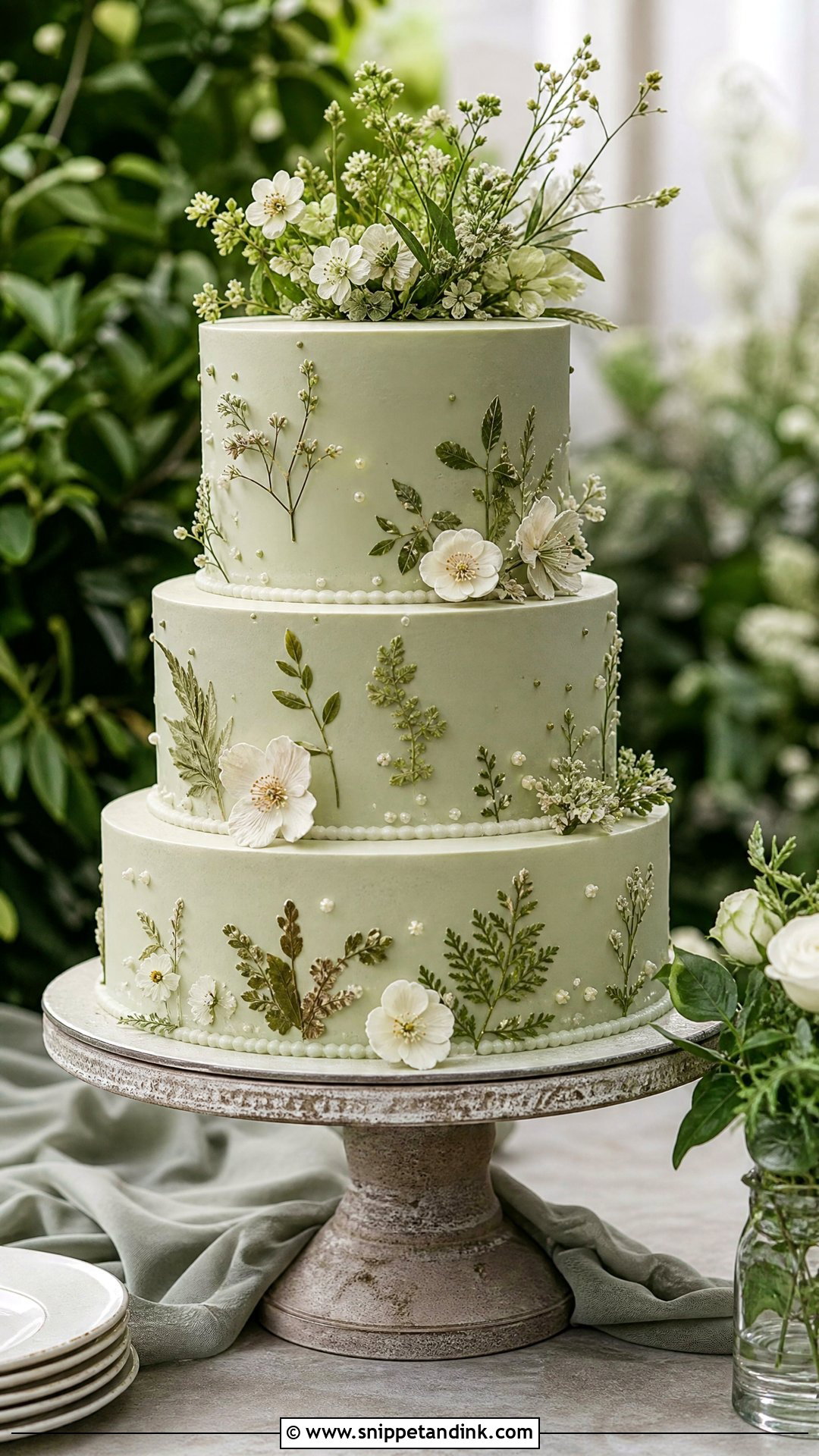
Sage green is calm and works with ivory, cream, beige, soft gold and white flowers. I tint it slightly grey so it stays muted; too much green and it starts to look like mint. Smooth sage looks refined; textured frosting makes it more organic. Small blooms, olive-toned greenery or pressed flowers finish it. It adds color to the reception while keeping the mood peaceful.
28. Fruit Wedding Cake
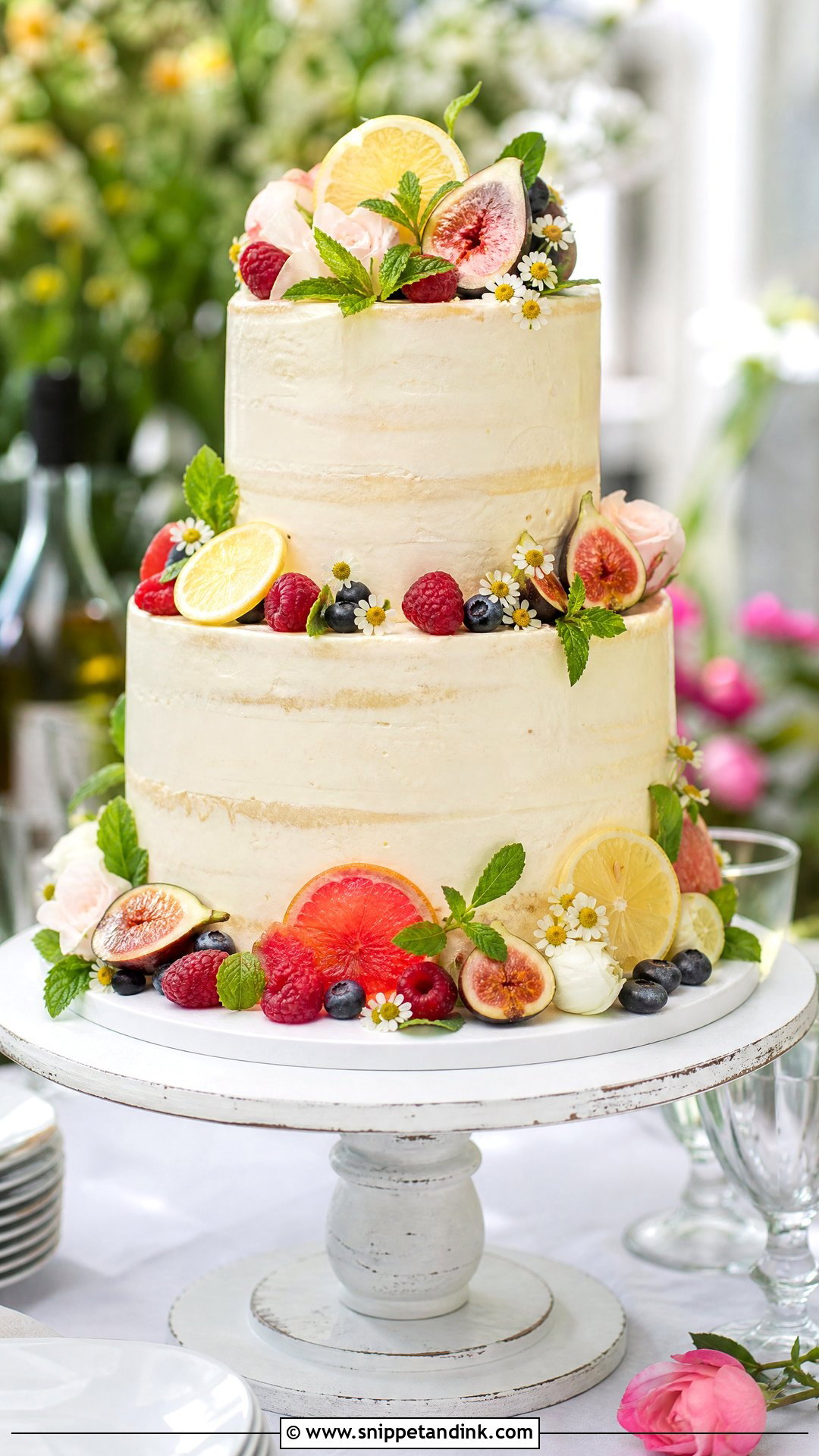
Fruit makes a cake look abundant and hints at the flavor inside. Berries hold up best on a cake. Cut fruit like citrus slices or stone fruit releases juice, so I glaze it lightly and add it close to the reception. Figs feel elegant, citrus bright, berries romantic. Choose fruit in season for flavor and color, and keep the frosting simple. Vanilla berry, lemon, almond or lightly spiced cake pair well with fruit.
29. Mini Wedding Cakes
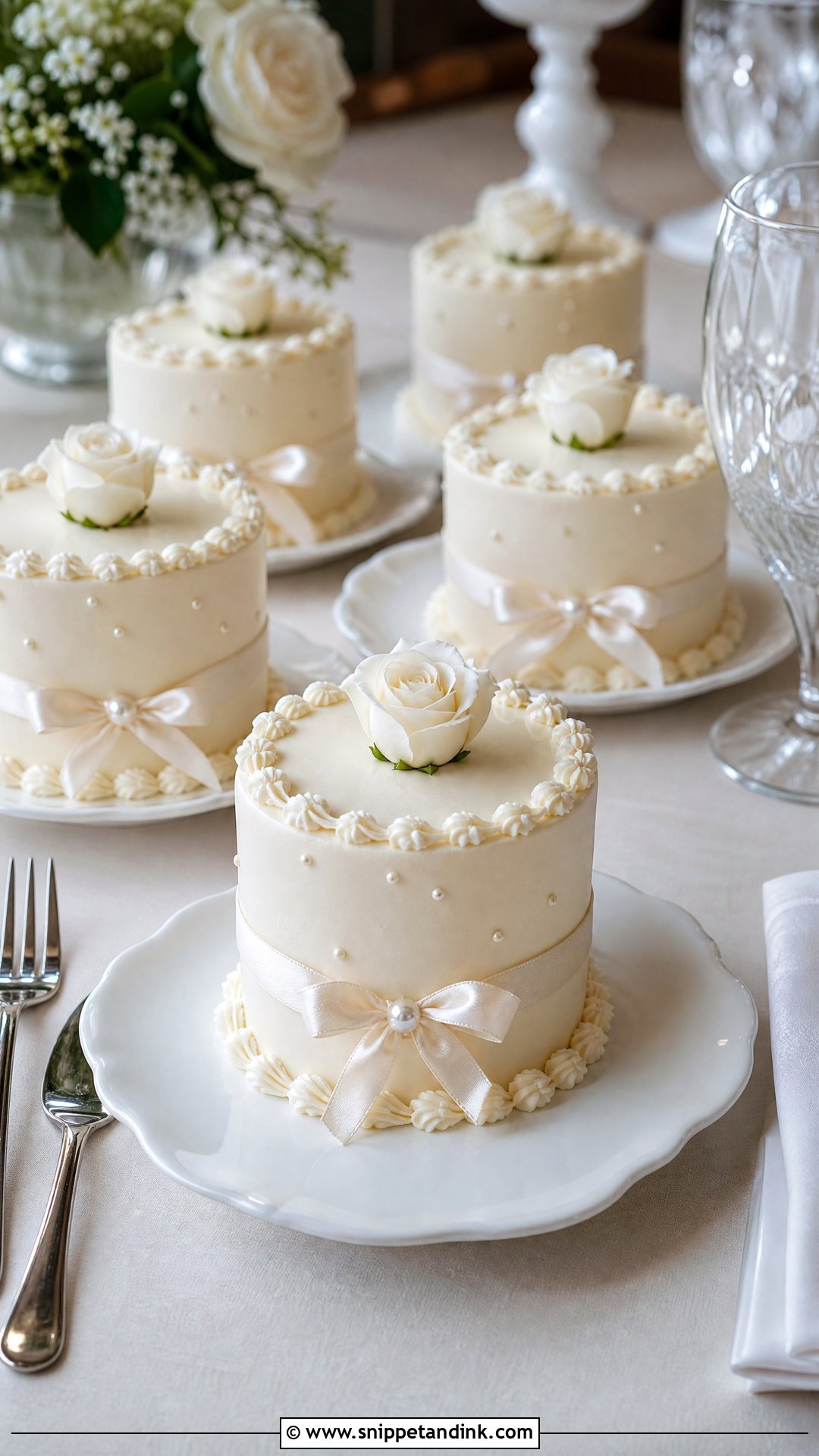
Mini cakes give each guest a tiny version of the wedding cake, with smooth buttercream, pearls, flowers, ribbon or piping. They take much longer to decorate than one large cake, so expect a higher cost per serving and book early. Different flavors are easy to offer, and guests enjoy choosing. Keep the decoration consistent so the display looks unified. They work for intimate weddings and brunch receptions, and they look good on trays or set at each place.
30. Dessert Table Wedding Cake
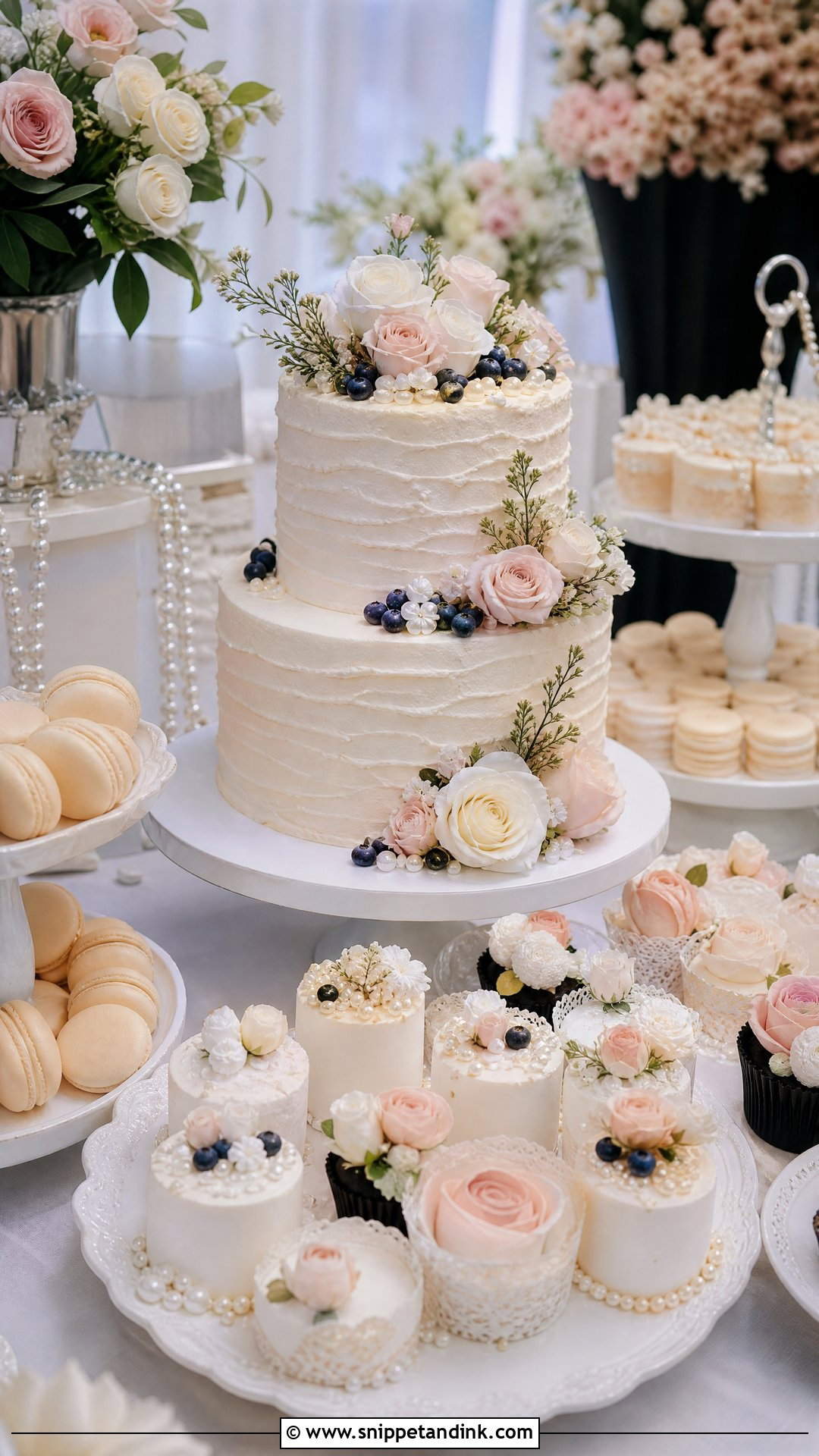
A dessert table wedding cake makes the cake one part of a larger sweet display, with a smaller statement cake surrounded by cupcakes, macarons, cookies, mini cakes or fruit tarts. The main cake still needs a strong design, such as pearls, flowers, texture or vintage piping. If you want plenty of servings without a huge display cake, ask your baker about a plain kitchen cake cut behind the scenes. Matching stands and linens tie everything together.
Why Blue Buttercream Turns Teal and Black Frosting Stains Teeth
Colored cakes are popular right now, and color behaves differently in frosting than on fabric or paper. Buttercream made with butter starts out pale yellow, so blue drifts toward teal and lavender toward grey unless the baker whitens the base first. Dark colors need a lot of dye, which can leave a bitter taste and color lips and teeth, so I keep black, navy and deep red to accents or use fondant. Pastels are easiest, and they deepen slightly over a few hours as the color develops, so I mix them a shade lighter than the target.
If you need an exact match to bridesmaid dresses, bring a fabric swatch rather than a photo. Screens shift color, and fabric in daylight is the truest reference I can work from.
Piping, Pearls and Flowers at a Summer Outdoor Reception
Heat is the biggest risk to a wedding cake. Buttercream softens, piping sags, fresh flowers wilt and fruit weeps, and direct sun speeds all of it up. For an outdoor summer reception, I’d plan on these:
- Keep the cake indoors or under shade until it’s time to cut it, and set the cake table away from heaters and lighting rigs.
- Choose a firmer finish, such as fondant over ganache, for the tiers that will stand longest.
- Ask for sugar flowers rather than fresh ones if the cake will sit out for hours.
- Schedule the cutting earlier in the evening rather than at the very end.
Take Three Saved Photos to Your Tasting, Not Thirty
The cakes that look best are the ones planned alongside everything else, not picked at the last minute. Start with your mood, guest count, venue, flowers and palette, then let those decide the shape, frosting, decoration and flavor. A small heart cake can feel as special as a tall three-tier cake when the details are right. Pearls, bows, pressed flowers, ruffles, fruit and sculptural textures each give a different personality. Bring your favorite few to your baker and build from there.
You'll Like These Ideas:





Leave a Reply