
Two tiers is the size I bake most for small weddings, and it’s the one people underestimate. It’s easy to carry, easy to display and feeds a modest guest list, yet with the right proportions it can look every bit as finished as a tall cake. The design range is wide: Lambeth piping for a vintage table, fresh flowers for a garden, smooth buttercream for a modern room, or colour, texture and fruit if you like something bolder. What makes a small cake look expensive isn’t more decoration. It’s tiers that are the right height for each other, a clean finish and one confident idea. Here are the designs I’d suggest, with what goes into making each one work.
Two Tiers, How Many Slices? Sizing the Cake for Your Guest List
The first thing I work out with any couple is servings, because it decides the tier sizes before we think about design. Wedding slices are cut smaller than party slices, usually a tall, narrow finger of cake, so a two-tier cake goes further than people expect.
These are rough wedding-portion figures for standard-height round tiers. Bakers cut slightly differently, so treat them as a starting point.
- 6-inch on 8-inch: around 35 to 40 slices, enough for a small dinner or an elopement with family.
- 6-inch on 9-inch or 10-inch: around 45 to 50 slices.
- 8-inch on 10-inch: around 60 slices, the largest two-tier that still looks balanced on most tables.
- Extended-height tiers, sometimes called double barrel, add roughly half again to a tier’s servings without adding a third tier.
If your guest list is a little bigger than the cake, there’s no need to jump to three tiers. A plain kitchen cake in the same flavour, kept out of sight and cut by the caterer, makes up the difference for much less money. Square tiers also give more portions than round ones of the same width.
Tell your baker how you plan to serve the cake too. As dessert after a full meal, smaller portions are fine; as the only sweet at an afternoon reception, people want a proper slice, and I size up.
1. Two Tier Wedding Cake With Fresh Flowers
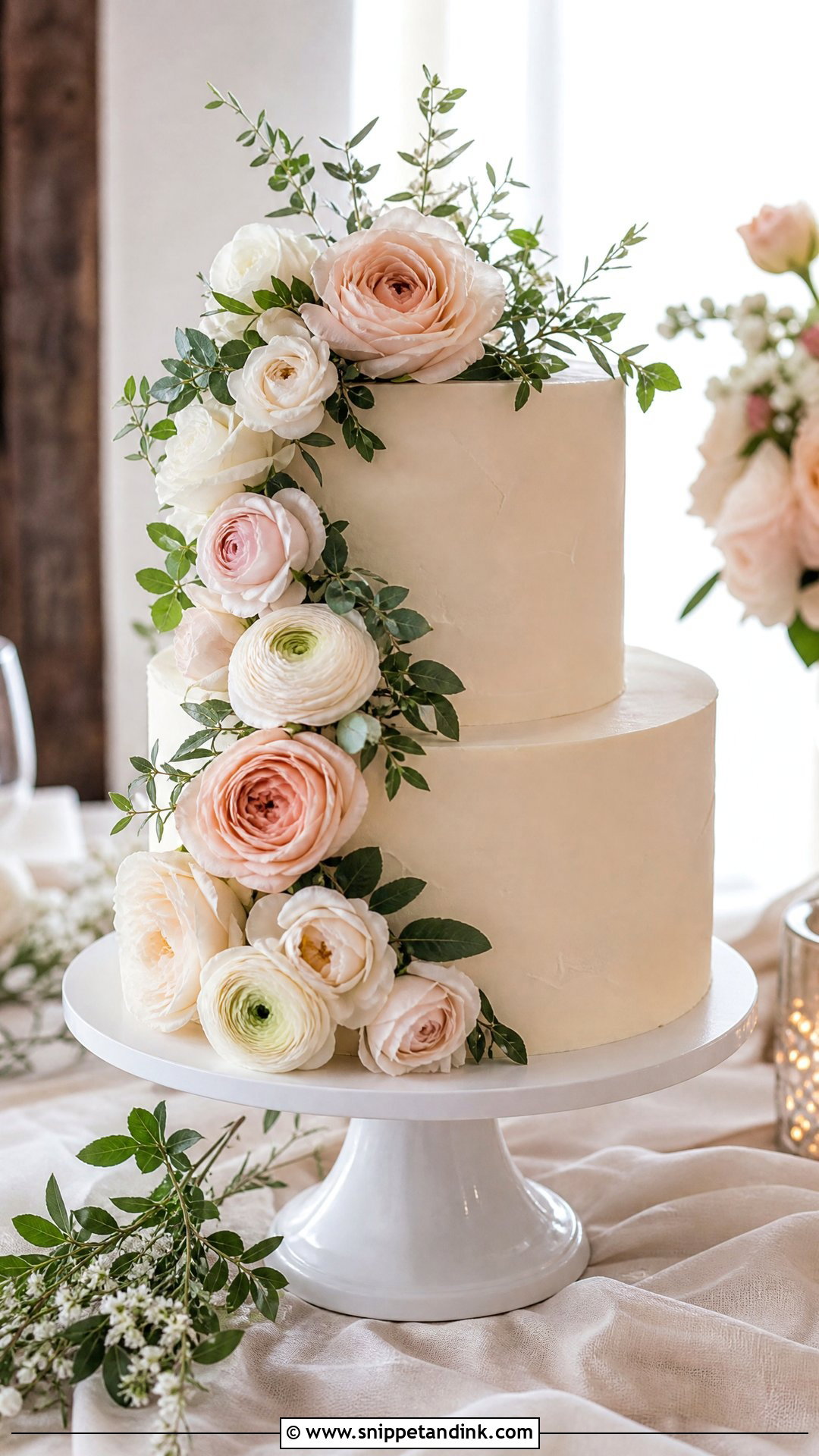
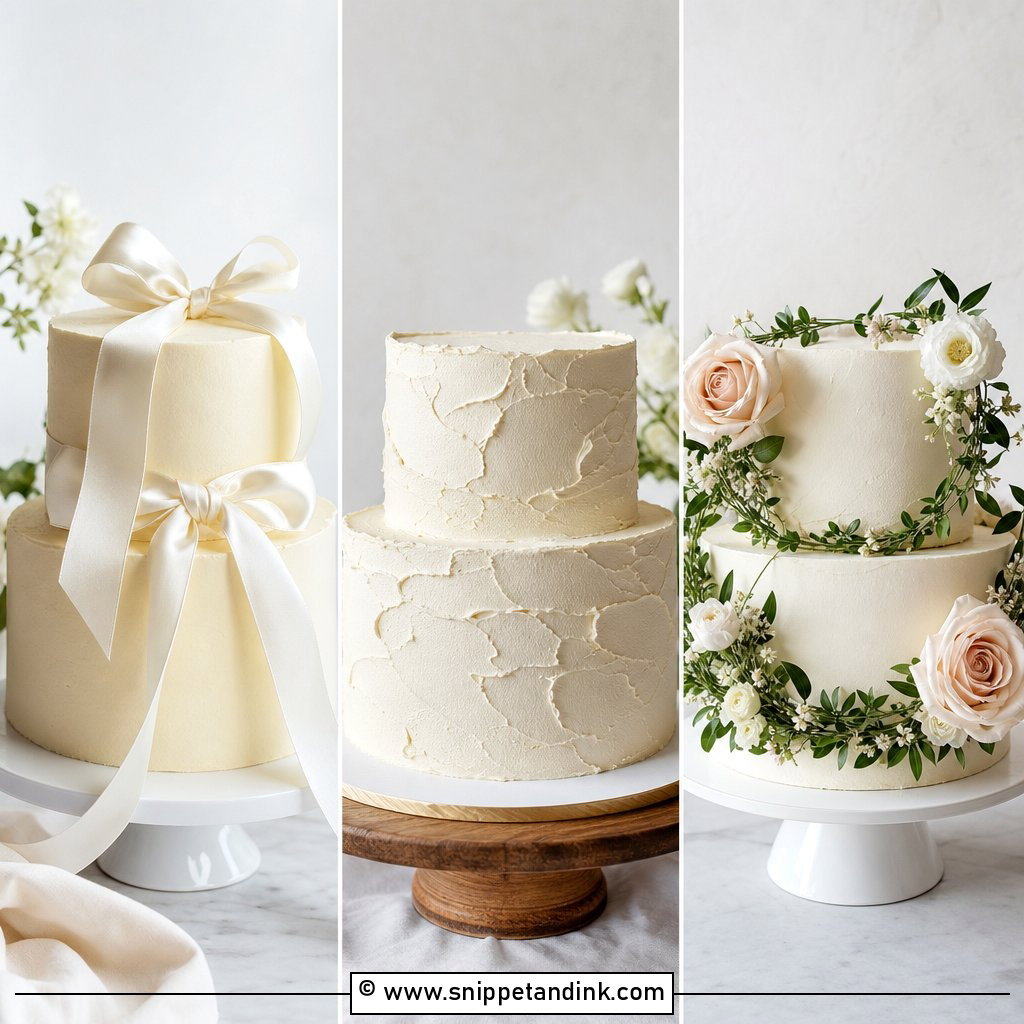
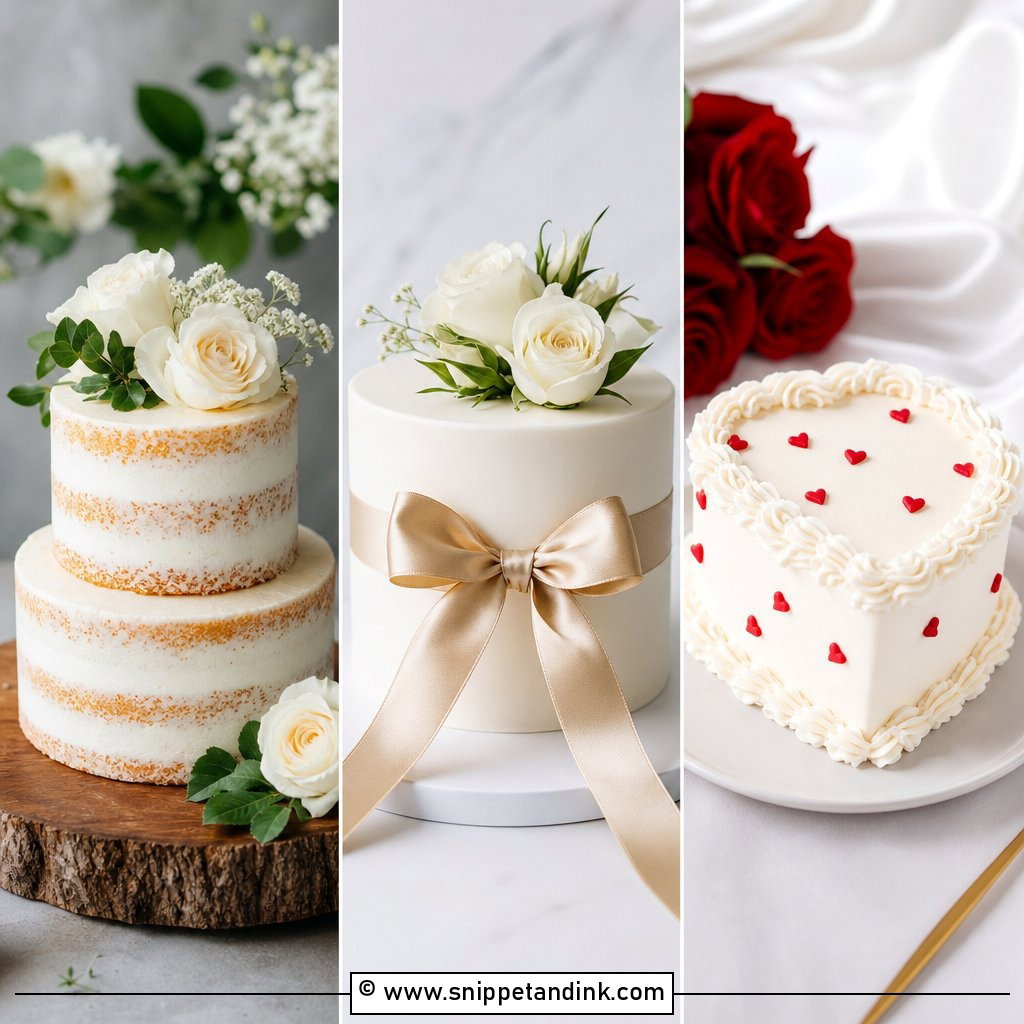
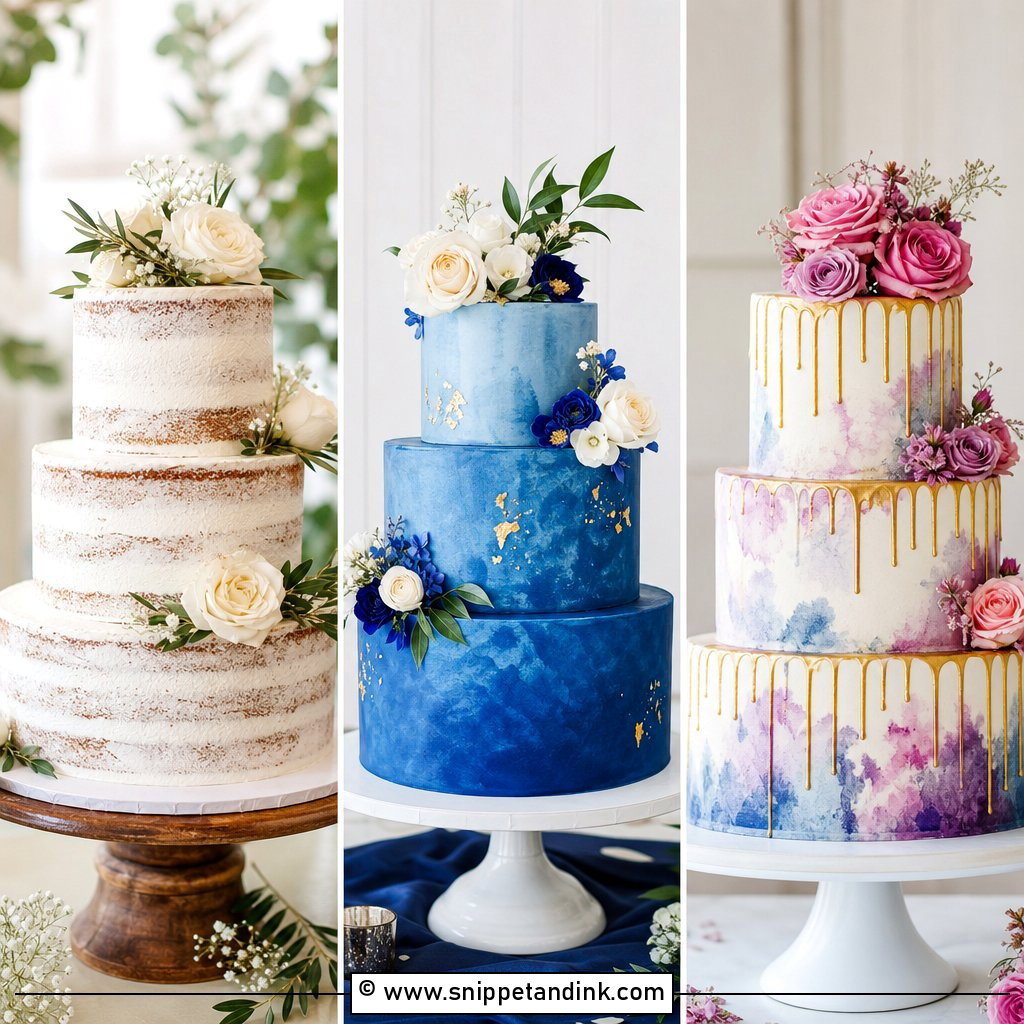
Fresh flowers are the request I hear most, usually to match the bouquet. The cake underneath is normally smooth ivory buttercream or fondant, and the blooms go in deliberate clusters: one at the join between tiers and one at the base reads much cleaner than flowers dotted everywhere. Roses, ranunculus, lisianthus, orchids and small greenery sprays all suit it. On a two-tier cake, keep the top cluster small, or it hides half the upper tier. Stems are wrapped in floral tape and pushed into a straw or a flower pick, never straight into the sponge, and your florist should confirm which flowers are unsprayed.
2. Two Tier Wedding Cake With Buttercream
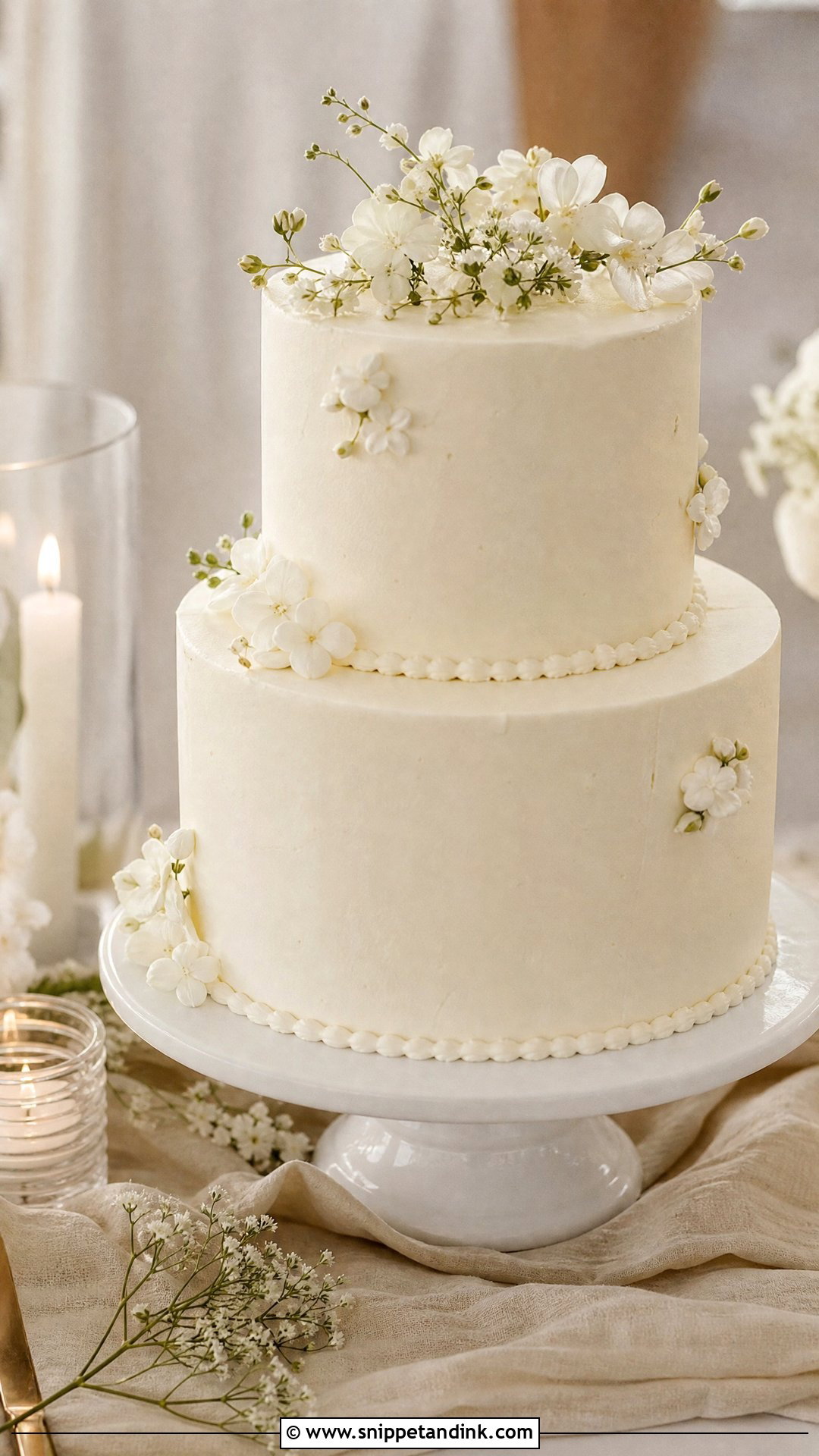
Buttercream is the finish for couples who care how the cake tastes as much as how it looks, and guests tend to agree. The texture is a choice: glass-smooth for a modern room, faint combed lines outdoors, or soft swoops that look hand-made. Smooth sides with sharp top edges take the most time in my kitchen, so that’s where a price difference often comes from. Ivory, white, champagne and pale blush match almost any palette. Vanilla, almond, lemon, strawberry or chocolate sponge, and a few flowers, pearls or a slim border to finish.
3. Two Tier Wedding Cake With Pearls
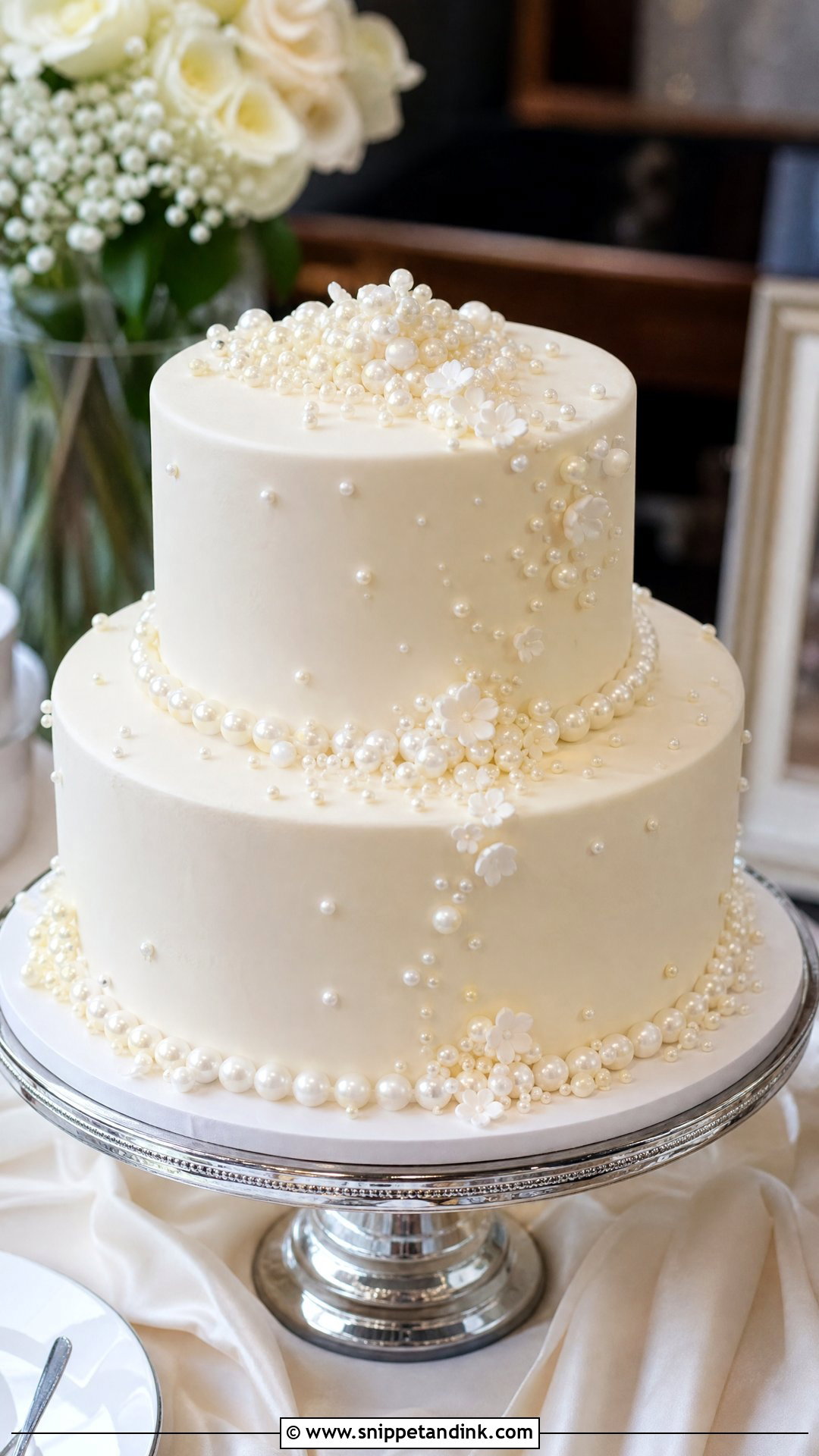
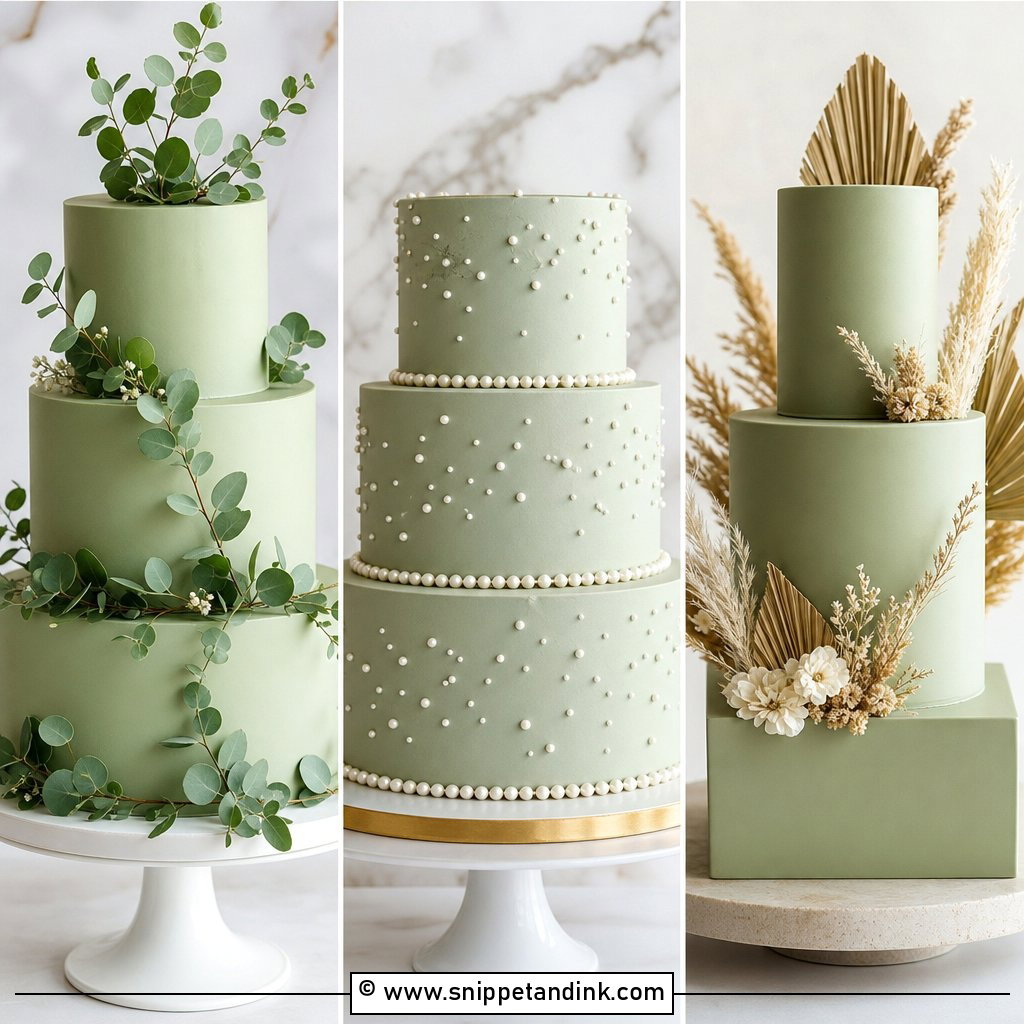
Edible pearls need a smooth, plain background to read properly, so this is a design for ivory buttercream, satin-finish fondant or pale blush icing. I set them in neat rows along a border, use them to trace piped swags, or scatter them lightly. Mixing two or three sizes looks more current than one uniform string. One practical note: dragées and sugar pearls are hard, so I warn guests or keep them to the edges where they’re easy to avoid when slicing. A small flower cluster at the base is optional. It’s a natural fit for a formal reception.
4. Two Tier Wedding Cake With Gold Leaf
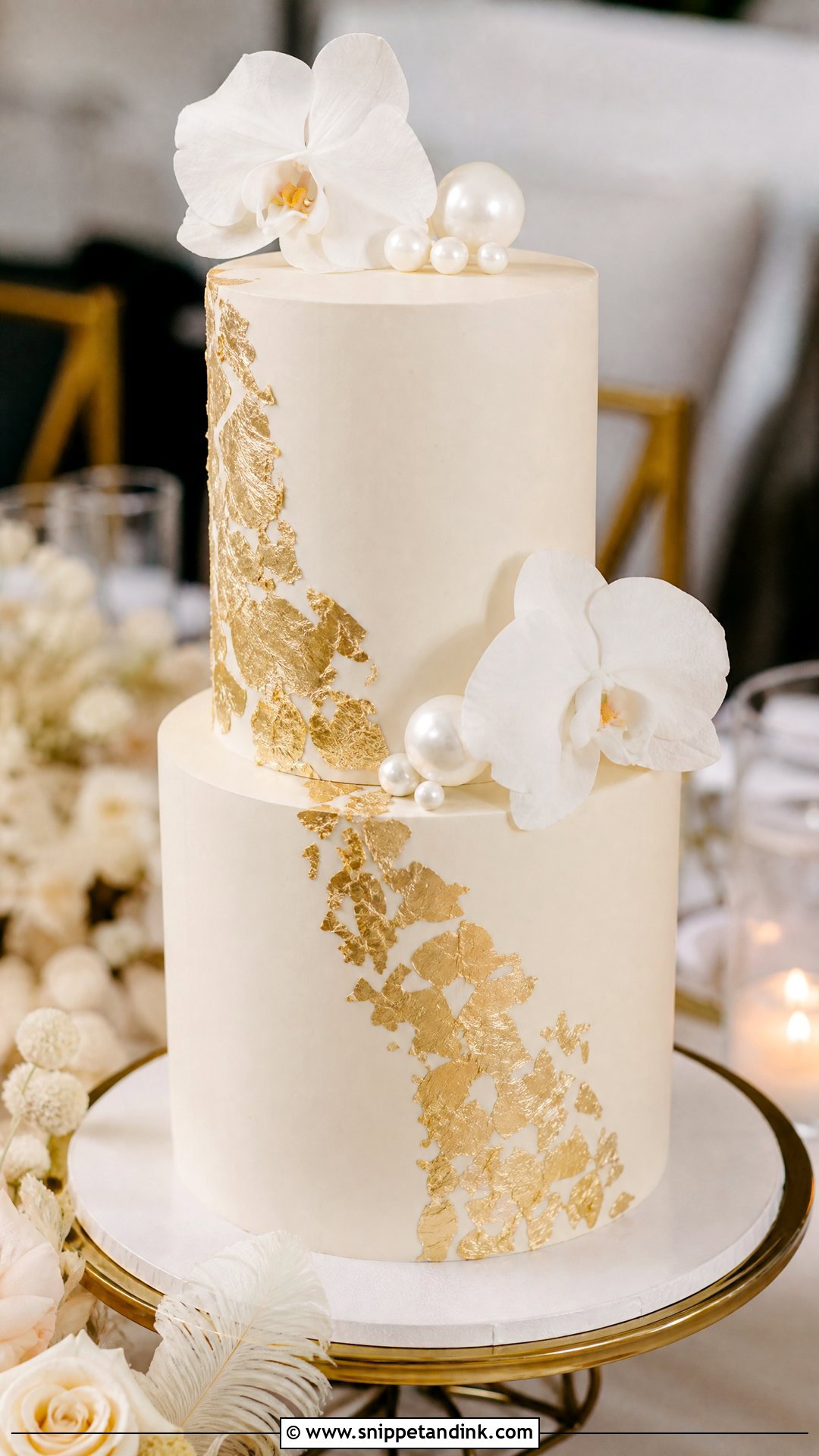
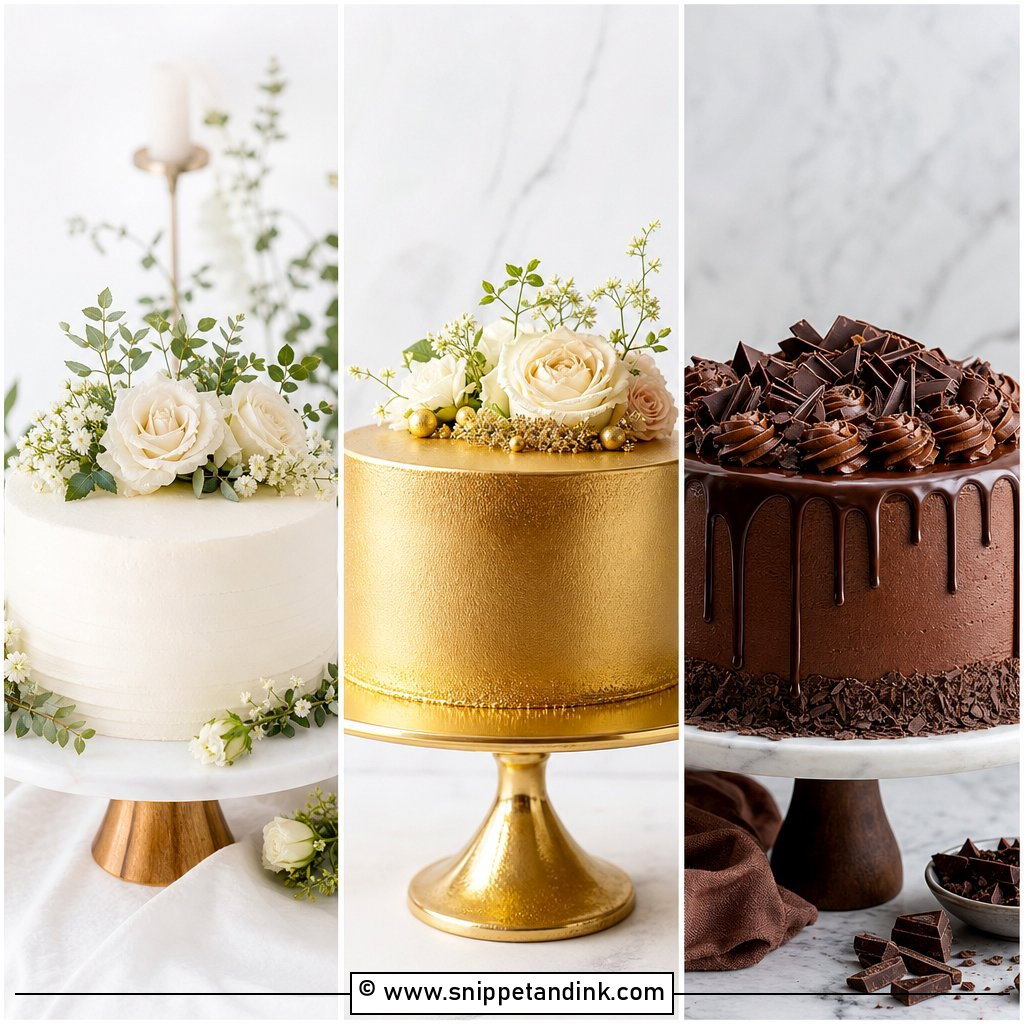
On a two tier wedding cake, gold leaf looks richest in small, broken patches along one edge or down one side rather than covering every surface. Real edible gold leaf is fragile, thinner than tissue, and I apply it with a dry brush; it sits best on matte fondant or a chilled smooth buttercream. White, ivory, blush, sage, dusty blue and mocha all take gold well. Flowers, fruit or clean modern lines suit it. Display it on a plain pedestal so the gold catches light without competing with the table.
5. Two Tier Wedding Cake With Roses
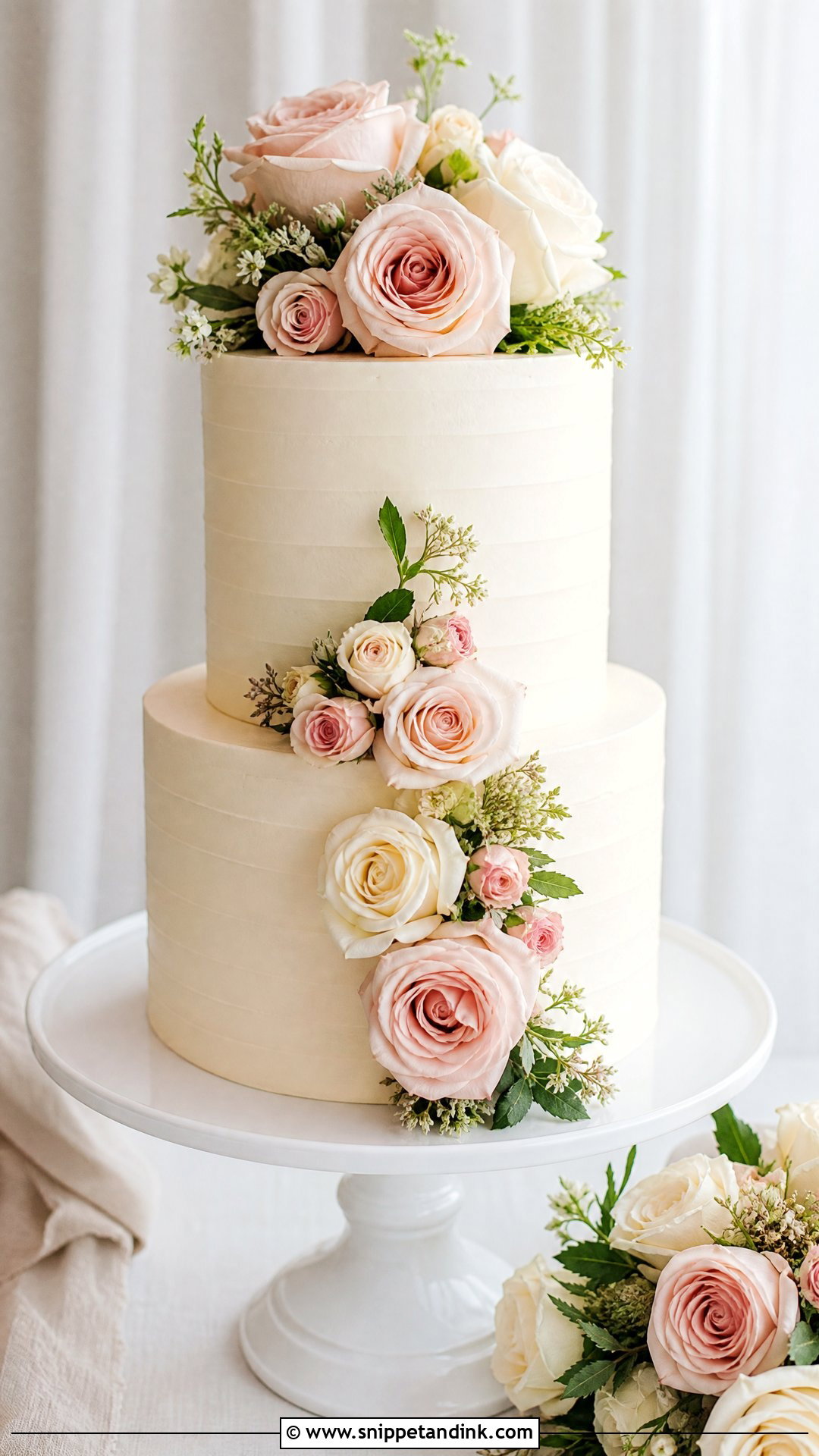
Roses are a classic, and the variety changes the mood. White roses look traditional; blush is softer; garden roses, with their open cupped heads, look natural and full. They can sit between the tiers, cascade down one side or cluster top and base. Big blooms need a plain background or the cake turns crowded. Real garden roses open further in warm rooms, so I place them as late as possible. Buttercream, fondant or lightly textured icing all work, especially for spring, summer and formal indoor weddings.
6. Two Tier Wedding Cake With Greenery
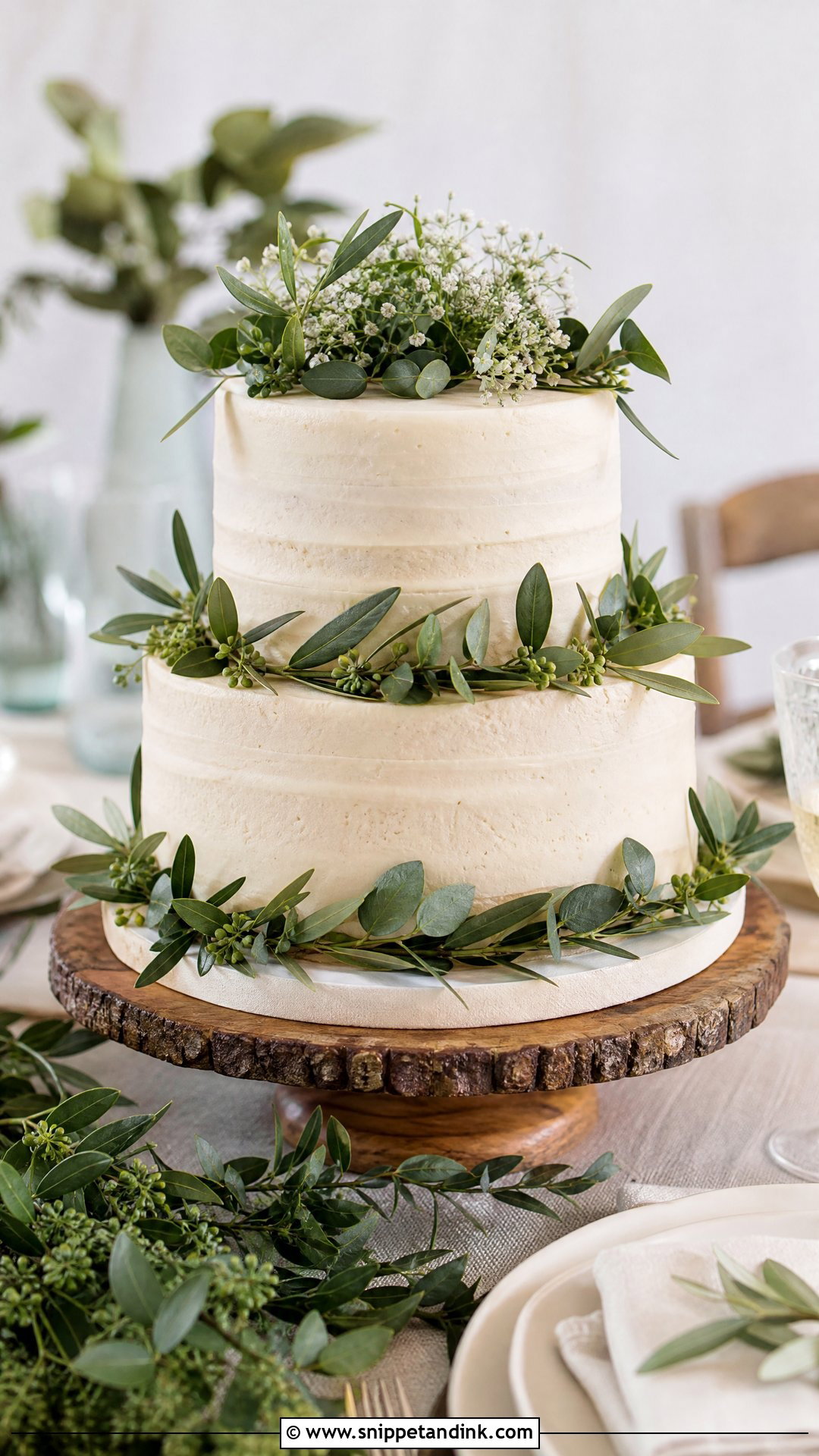
Greenery suits couples who’d like a natural cake that isn’t floral. Eucalyptus, olive, rosemary, fern and small edible herbs add movement to a plain white cake. Eucalyptus is the one to handle with care, as it isn’t food-safe and needs a barrier; rosemary and olive are far less of a worry. I wrap it around the base of each tier or let it trail down one side, and stop before it hides the tiers. Ivory buttercream over vanilla, lemon or almond keeps the whole thing light. Barns, gardens and outdoor venues suit it.
7. Two Tier Wedding Cake With Baby Blue
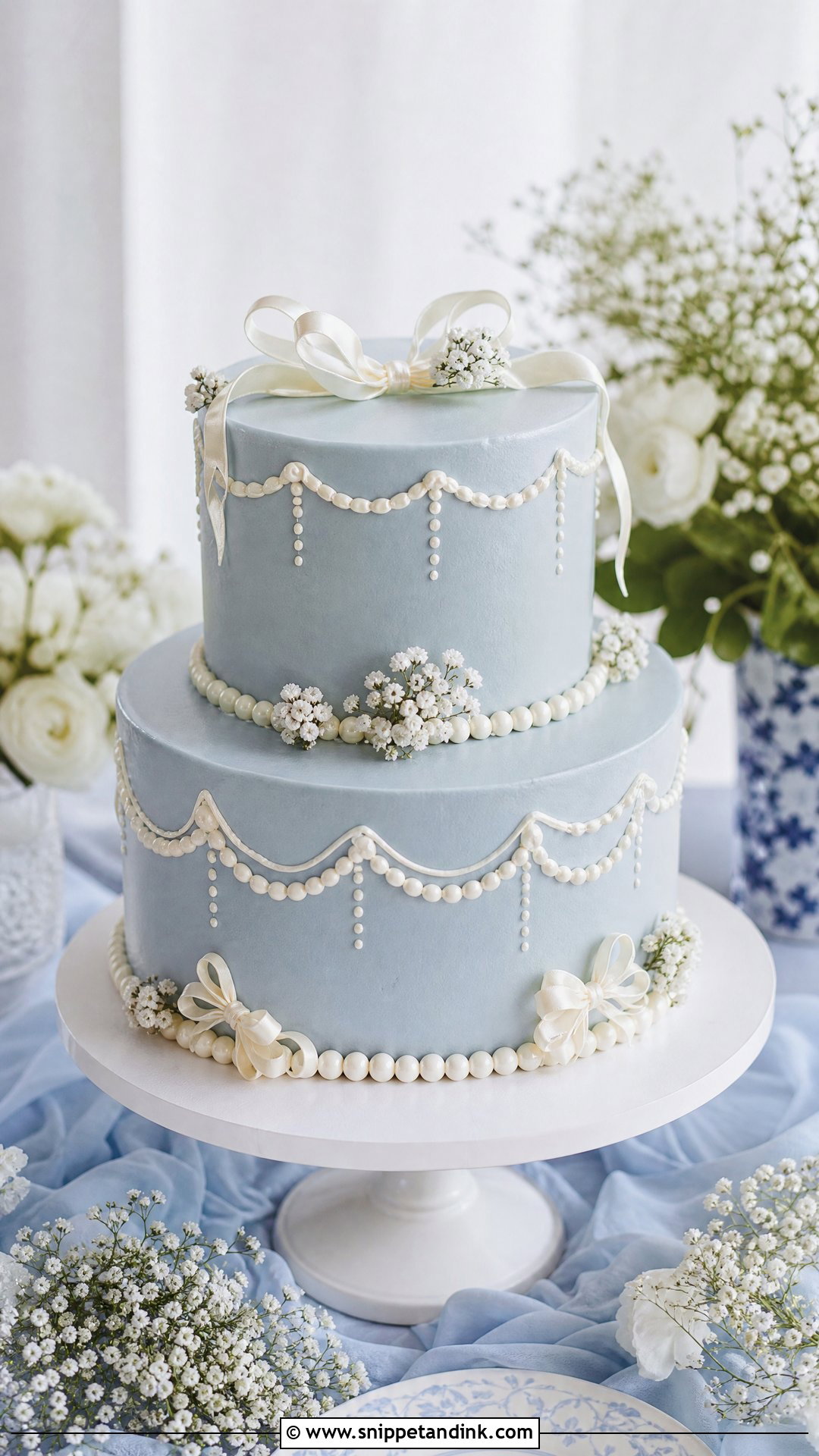
Baby blue is having a moment, and it shows off vintage piping, pearl borders and bows especially well. Tinting buttercream blue takes care, because the natural yellow of butter can turn it slightly green, so I start from a whitened base. A pale blue cake stays elegant when the shape is clean: white piping, small pearls, white flowers or a satin ribbon at the base. Vanilla, almond, lemon or blueberry inside. It suits spring, coastal and garden weddings and gives colour without anything bold.
8. Two Tier Wedding Cake With Blush Pink
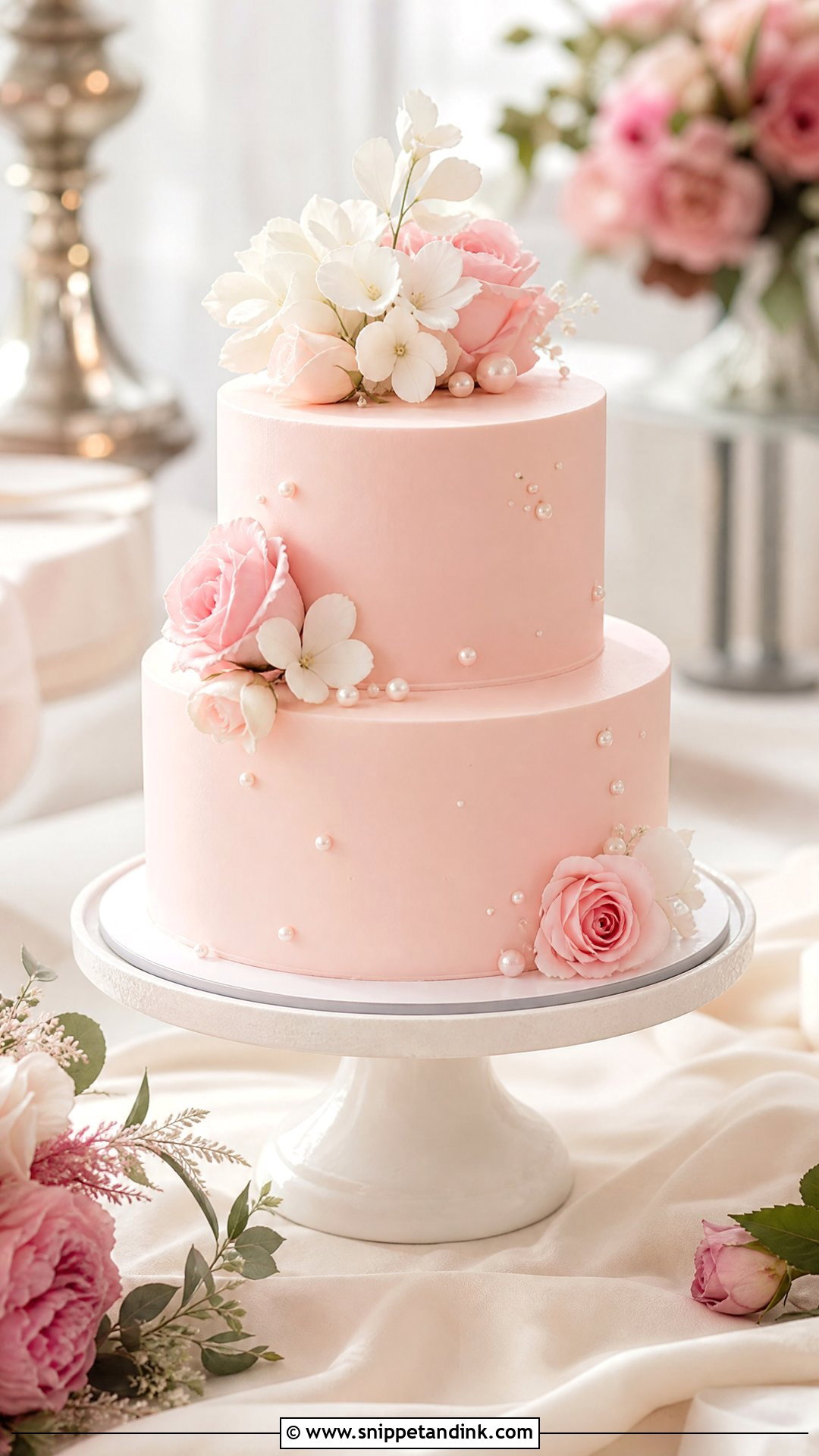
Blush has to be muted to look bridal. Bright pink frosting tips straight into birthday territory, so I tint with a tiny amount of colour, sometimes with a touch of brown or peach to dust it down. It pairs with ivory, gold, sage, mauve and white flowers, and it can be smooth and modern, vintage piped or decorated with sugar flowers. Strawberry, raspberry, vanilla, almond or a champagne-style flavour suit it. Pearls or a small floral cascade finish it neatly.
9. Two Tier Wedding Cake With Lambeth Piping
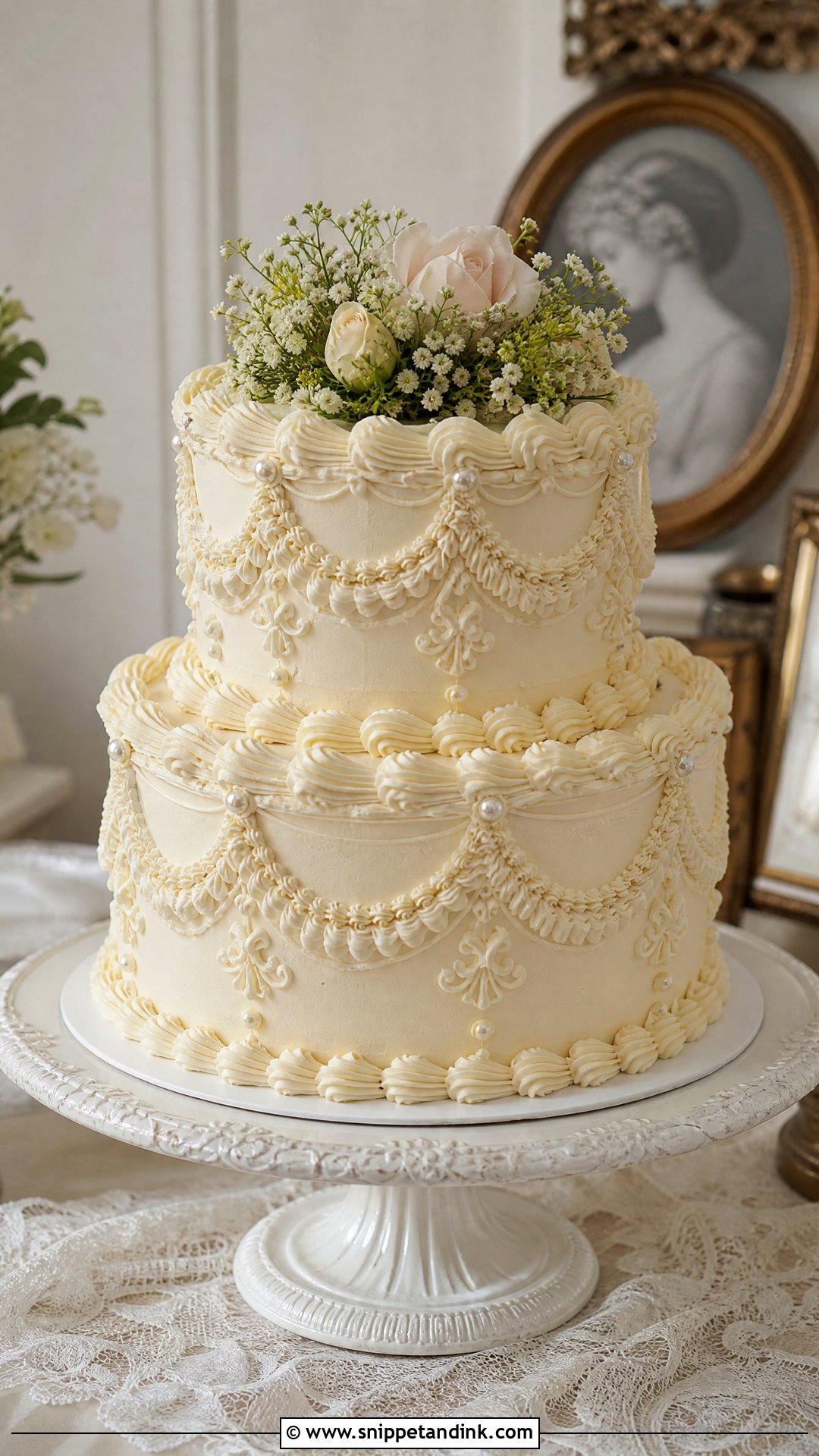
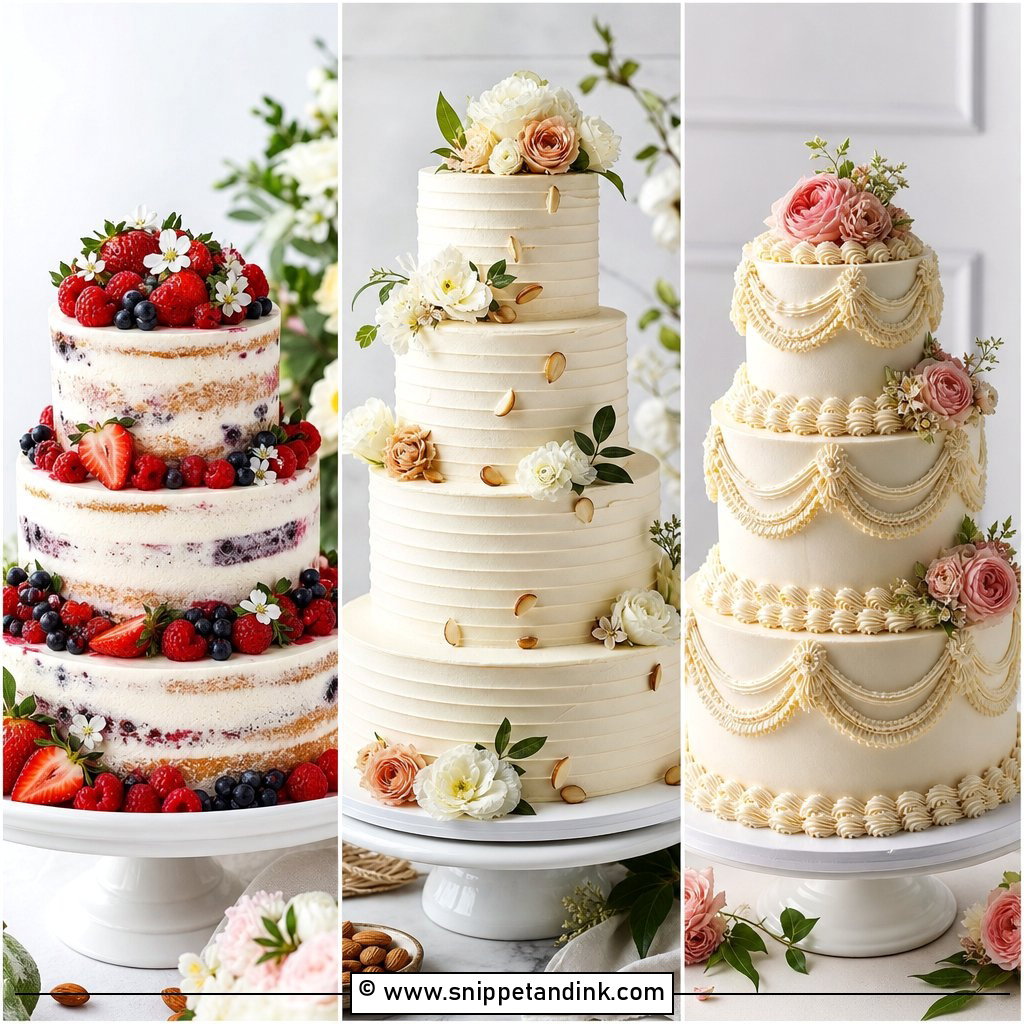
Lambeth piping is layered overpiping: borders built on borders, shells, swags, scrolls and drop strings stacked until the cake looks like lace. It’s slow, precise work and it needs a stiff, stable buttercream that holds a sharp ridge, so ask to see close-up photos of a baker’s own Lambeth before booking. White-on-white is the classic, while ivory, baby blue, blush or butter yellow feel fresher, and cherries, bows or pearls add humour. The piping is the decoration, so it rarely needs flowers. It’s how I’d make a two-tier cake feel grand.
10. Two Tier Wedding Cake With Vintage Piping
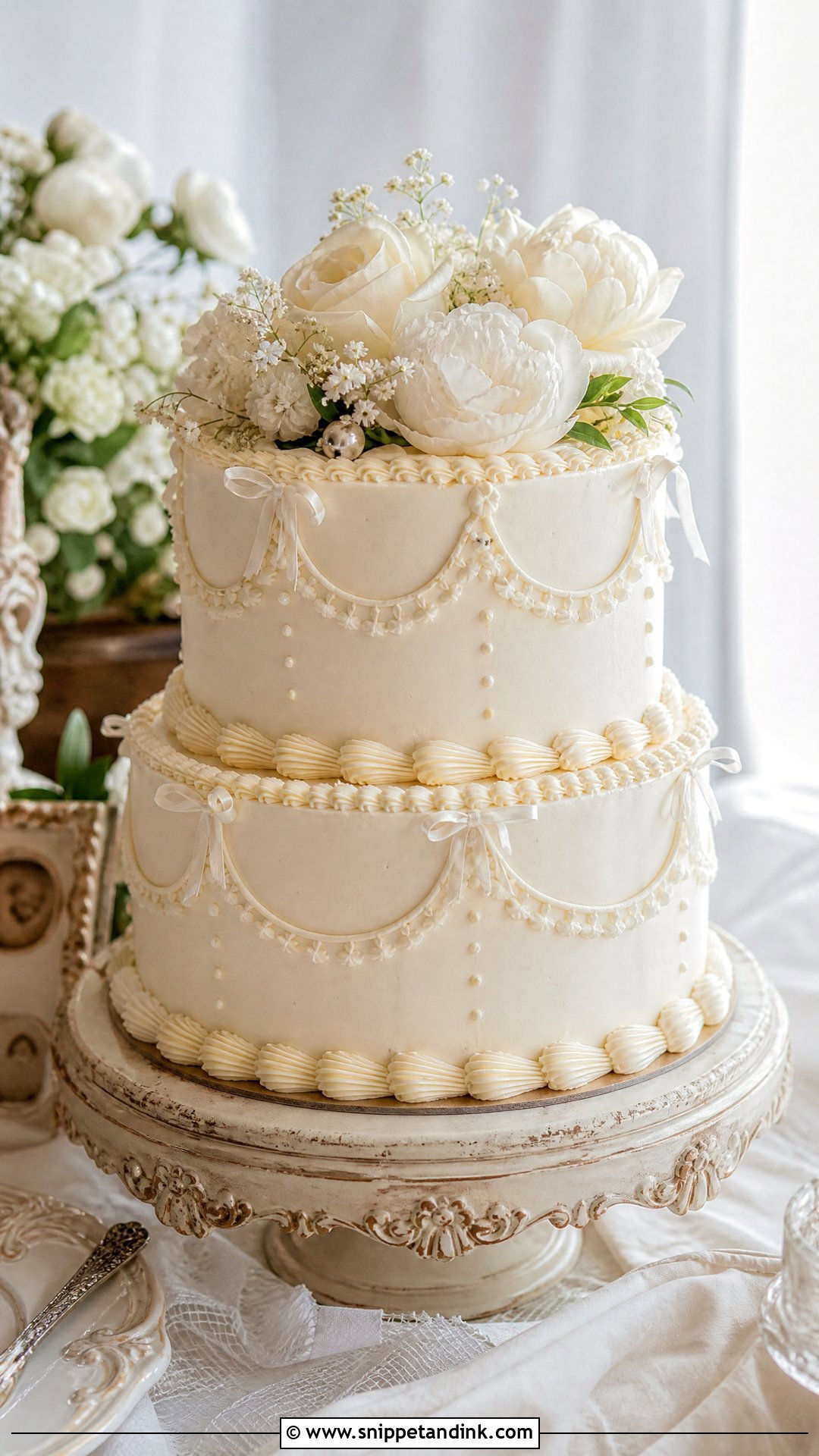
If full Lambeth is too much, a lighter vintage approach gets you the heirloom feel with less piping: shell borders, a ruffled edge, piped garlands, dots and a little side detail. It can stay simple or be built up. Ivory is the safest base colour; pale blue, blush and cream work too. A few edible pearls, tiny bows or a small flower on top dress it up. On warm days, very fine piped work can soften and lose definition, so this one prefers an indoor table.
11. Two Tier Wedding Cake With Pressed Flowers
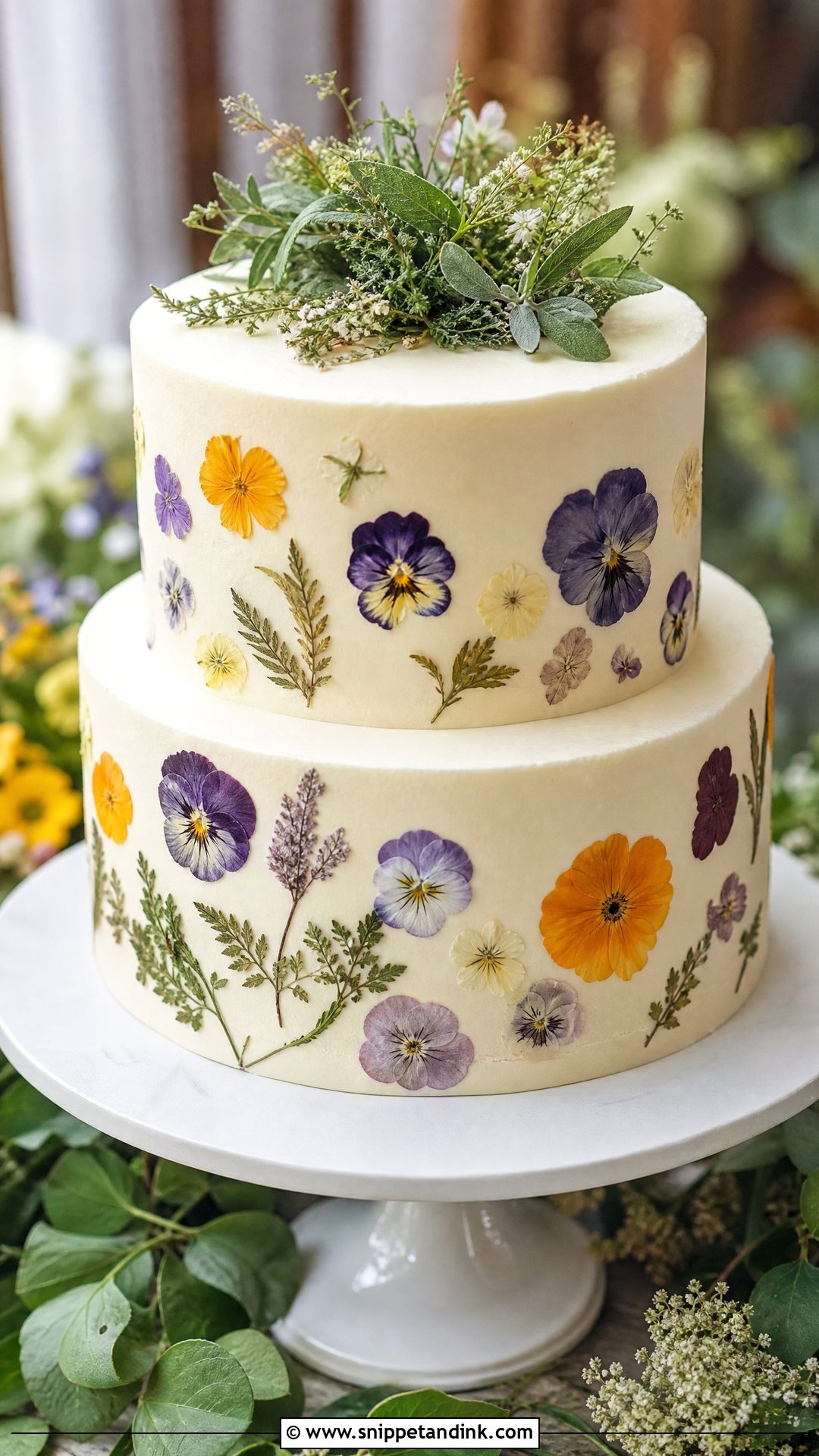
Pressed flowers are pressed flat onto the side of the cake, so they need to be edible blooms grown without sprays. Pansies, violas, calendula petals and small herb leaves are what I reach for. I press them myself a week or two ahead, then lay them on chilled buttercream or fondant and brush them with a thin glaze so the edges don’t curl. A smooth base lets each flower show. On a white ceramic stand or a wooden board it has a hand-made, botanical feel that suits spring and intimate receptions.
12. Two Tier Wedding Cake With Sugar Flowers
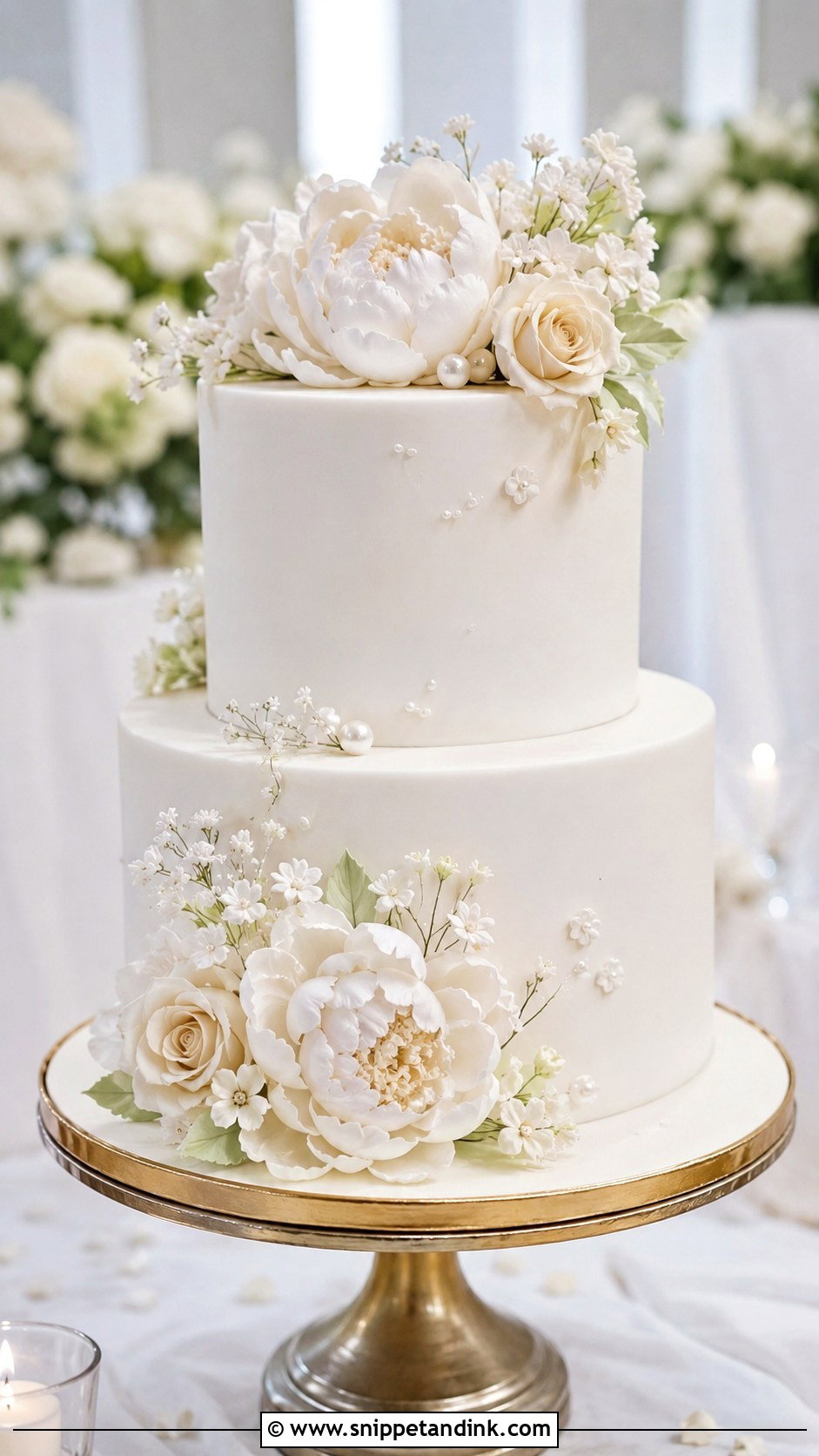
Sugar flowers solve the wilting problem and let you have flowers that are out of season or not food-safe fresh: peonies in autumn, sweet peas in winter. Every petal is rolled, wired and dusted by hand, so a large arrangement represents many hours of work, and the price reflects it. On two tiers, I’d put that effort into one bold arrangement rather than many small pieces. Smooth fondant or buttercream shows them best. They hold their shape all night, and many couples keep them afterwards, since sugar flowers last for years in a dry box.
13. Two Tier Wedding Cake With Simple White Frosting
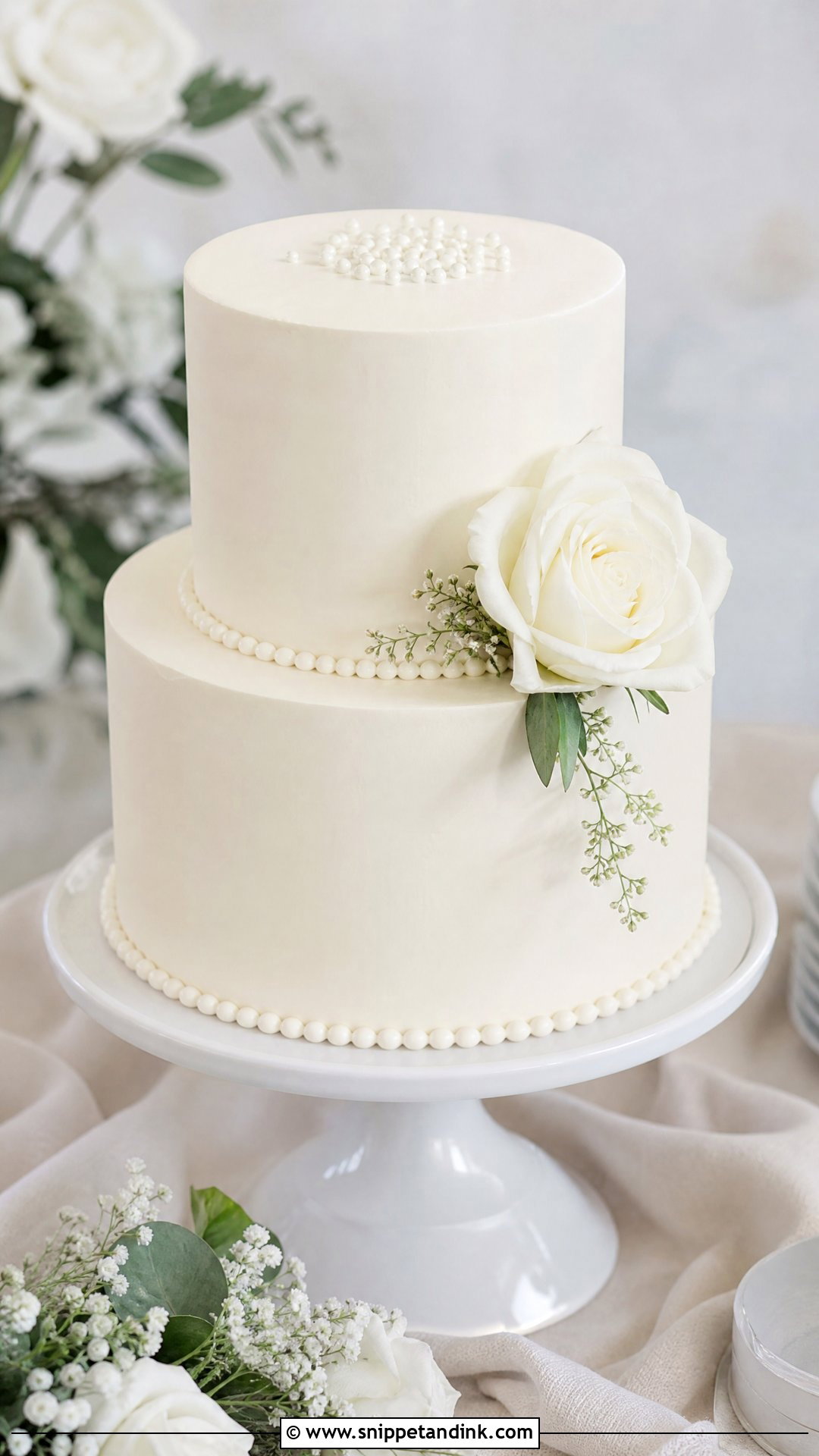
Plain white frosting works only when everything else is right: tiers stacked dead centre, edges sharp, and the cake displayed with some thought. A fine piped border, a single flower on top or a slim ribbon round each tier is plenty. Ribbon needs a strip of greaseproof or clear tape behind it, or the butter seeps through and stains it. This is the cake to pick when your florals, linens or venue already carry the room. White also goes with any flavour: vanilla, almond, lemon, coconut, chocolate or red velvet.
14. Two Tier Wedding Cake With Textured Buttercream
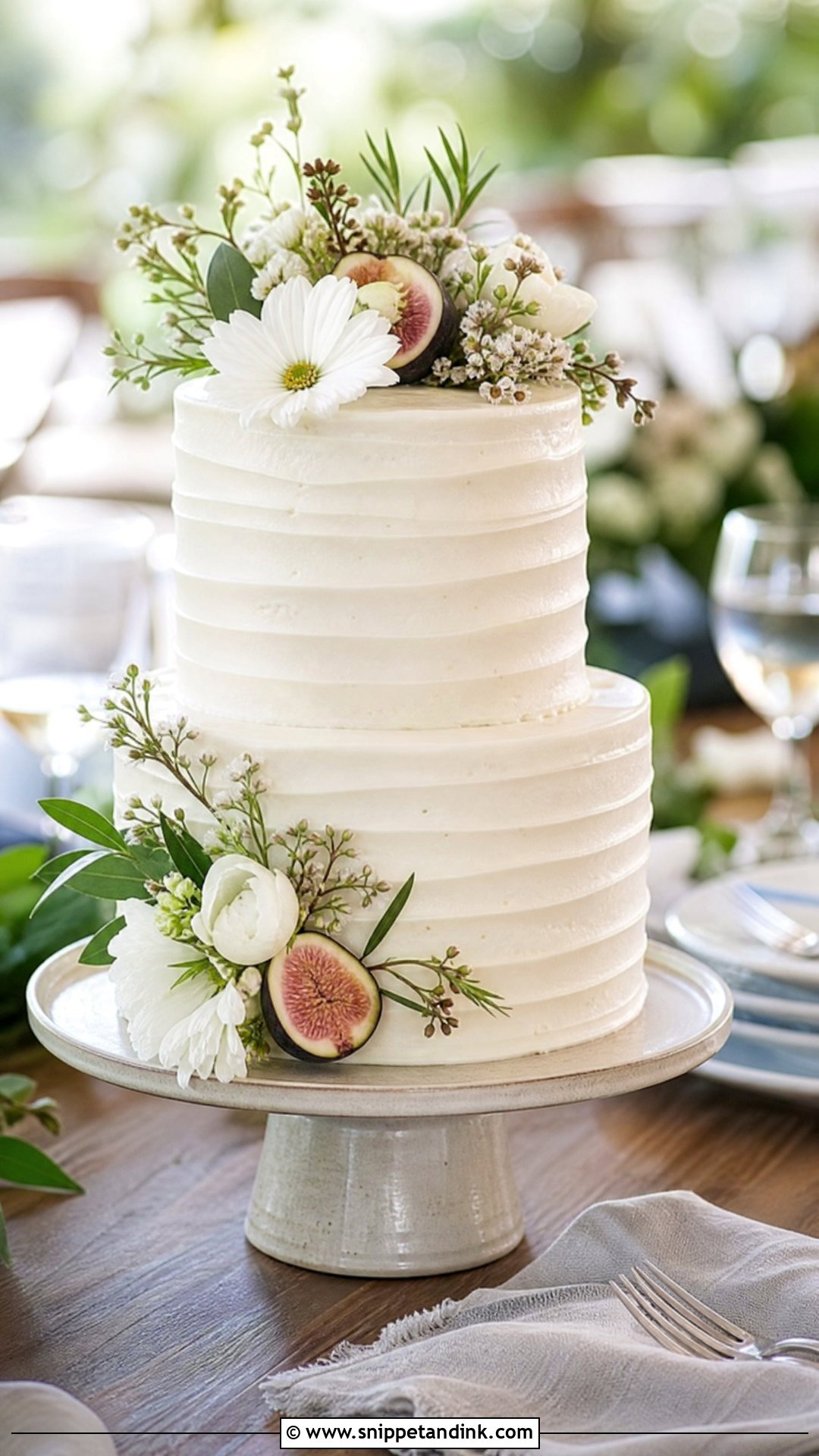
Textured buttercream is forgiving and relaxed. The finish might be soft horizontal lines from a comb, palette knife strokes, gentle waves or rustic ridges. The texture still has to look deliberate, meaning the same pattern repeated evenly round both tiers. It’s a good choice outdoors, because small marks and a little softening disappear into the texture. Fresh flowers, greenery, figs or berries suit it. Ivory and off-white are classic; taupe, sage or dusty pink feel more modern.

15. Two Tier Wedding Cake With Ruffles
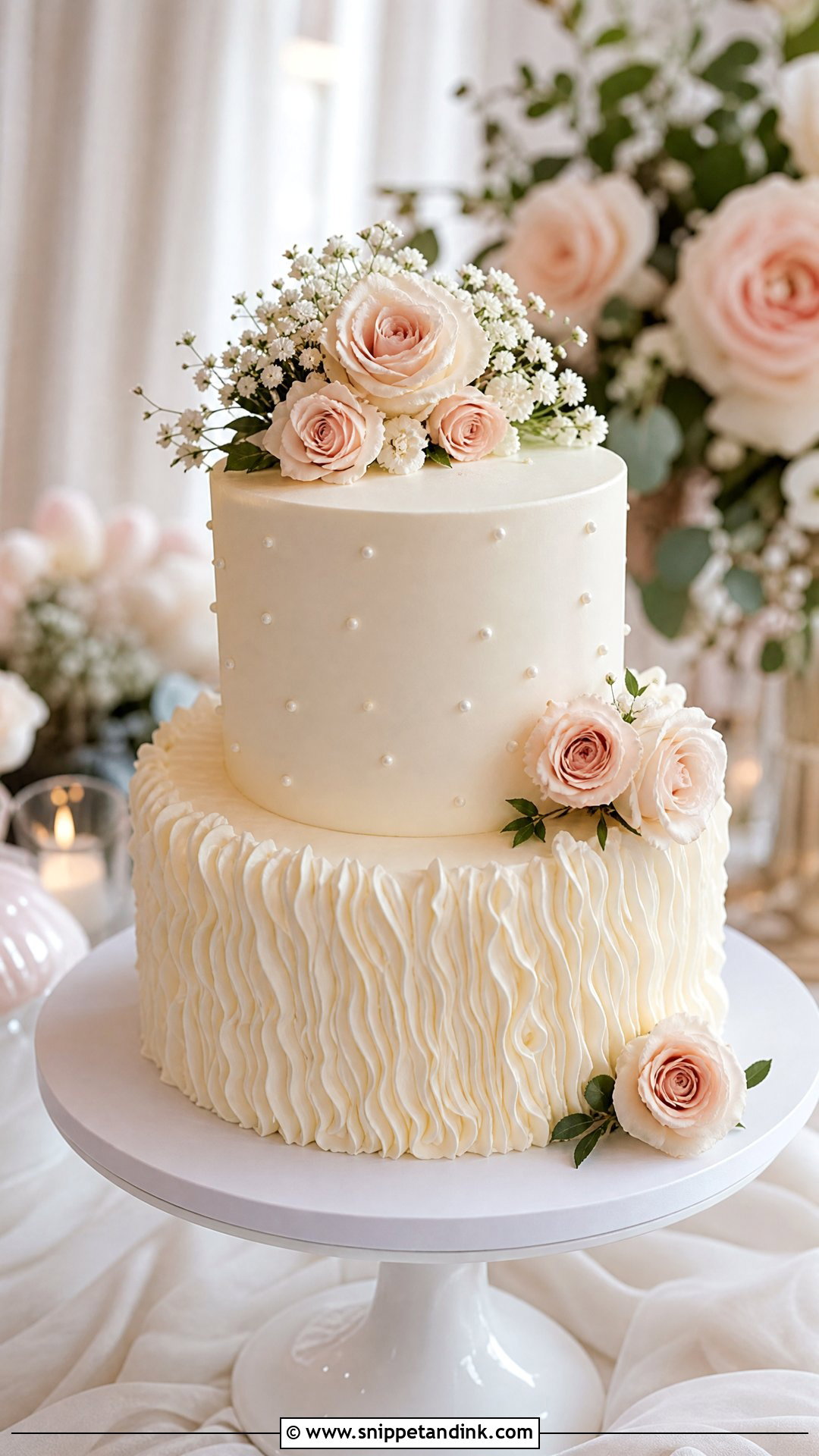
Ruffles add drama without height. They can be piped in buttercream, cut from thin fondant or folded in wafer paper, which is the lightest and gives the most delicate edge. Vertical ruffles feel airy, horizontal ones look like a skirt. On two tiers, I’d usually ruffle one and keep the other smooth, so the cake has somewhere for the eye to rest. Wafer paper reacts badly to humidity, so for summer outdoors I’d switch to fondant ruffles. White, ivory, blush or champagne all suit it.
16. Two Tier Wedding Cake With Bows
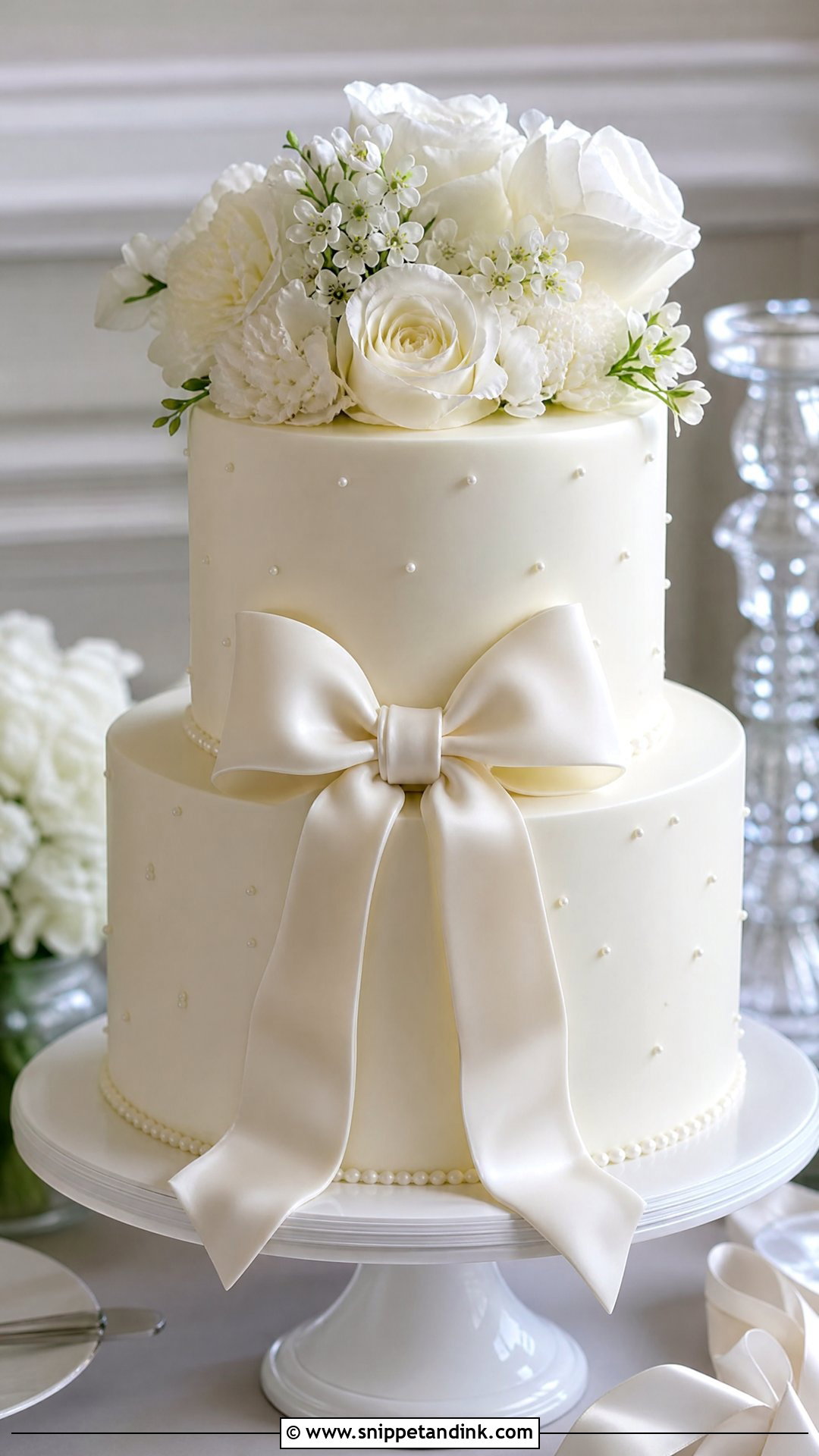
Bows make a cake look charming, and the material changes the result. Fondant or sugar paste bows hold a crisp shape; real satin ribbon looks soft but needs to be backed and kept from touching the frosting directly. One large bow on the front makes a statement, small bows round the sides look vintage. Smooth frosting, pearls and soft colours like ivory, blush, pale blue or champagne suit it. Keep the loops neat and symmetrical, so it looks grown-up rather than like a gift box.
17. Two Tier Wedding Cake With Fruit
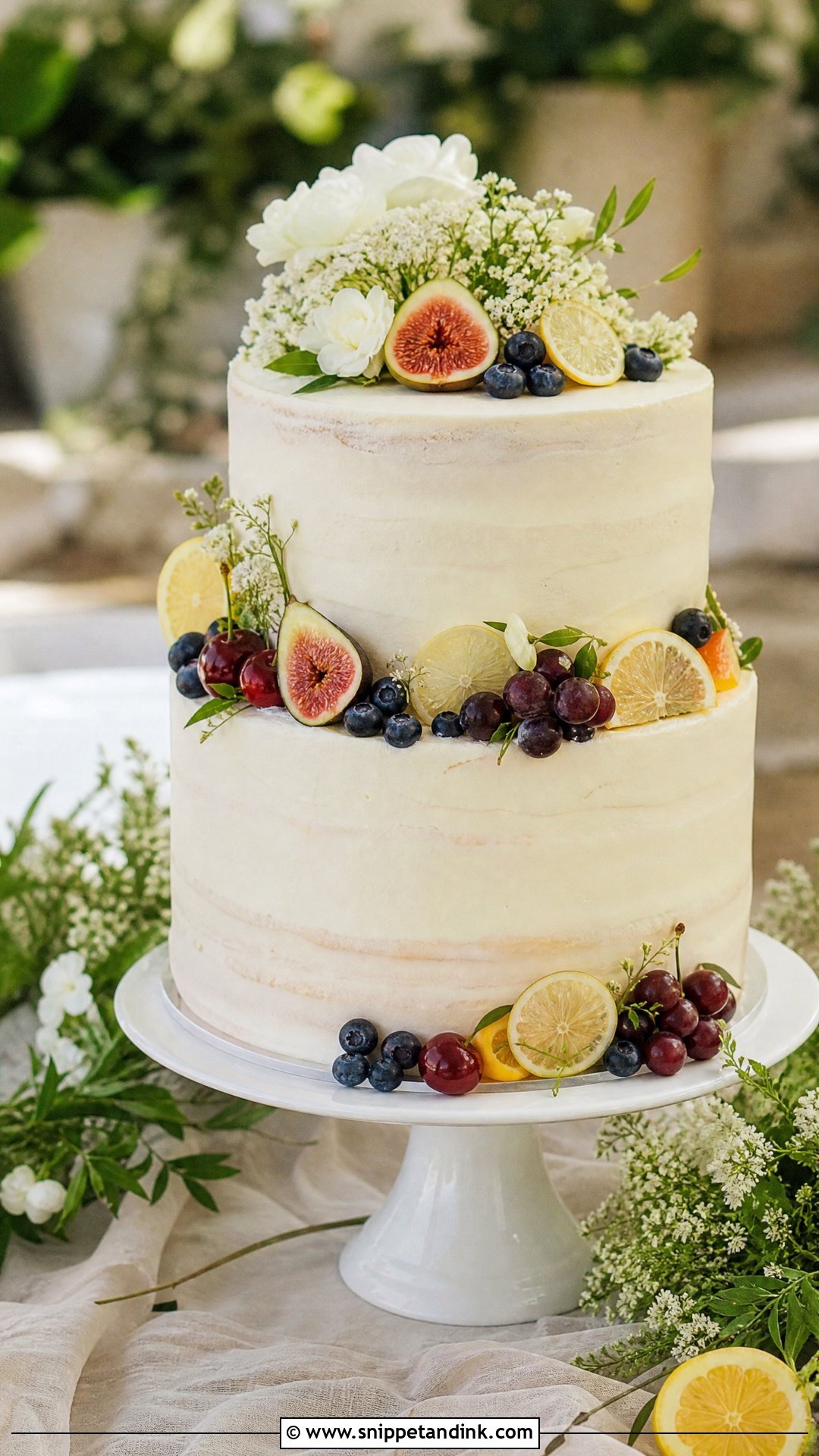
Fruit makes a cake look generous and gives a hint of the flavour inside: lemon berry, vanilla fig, almond pear or chocolate cherry. Figs, berries, grapes, citrus slices, cherries and pears all look good grouped in clusters rather than covering the cake. Cut fruit weeps onto buttercream within hours, so I keep cut faces to a minimum, choose whole berries and halved figs, and glaze them lightly. A few soft flowers complete it. Brunch weddings and warm-weather gardens suit it best.
18. Two Tier Wedding Cake With Chocolate
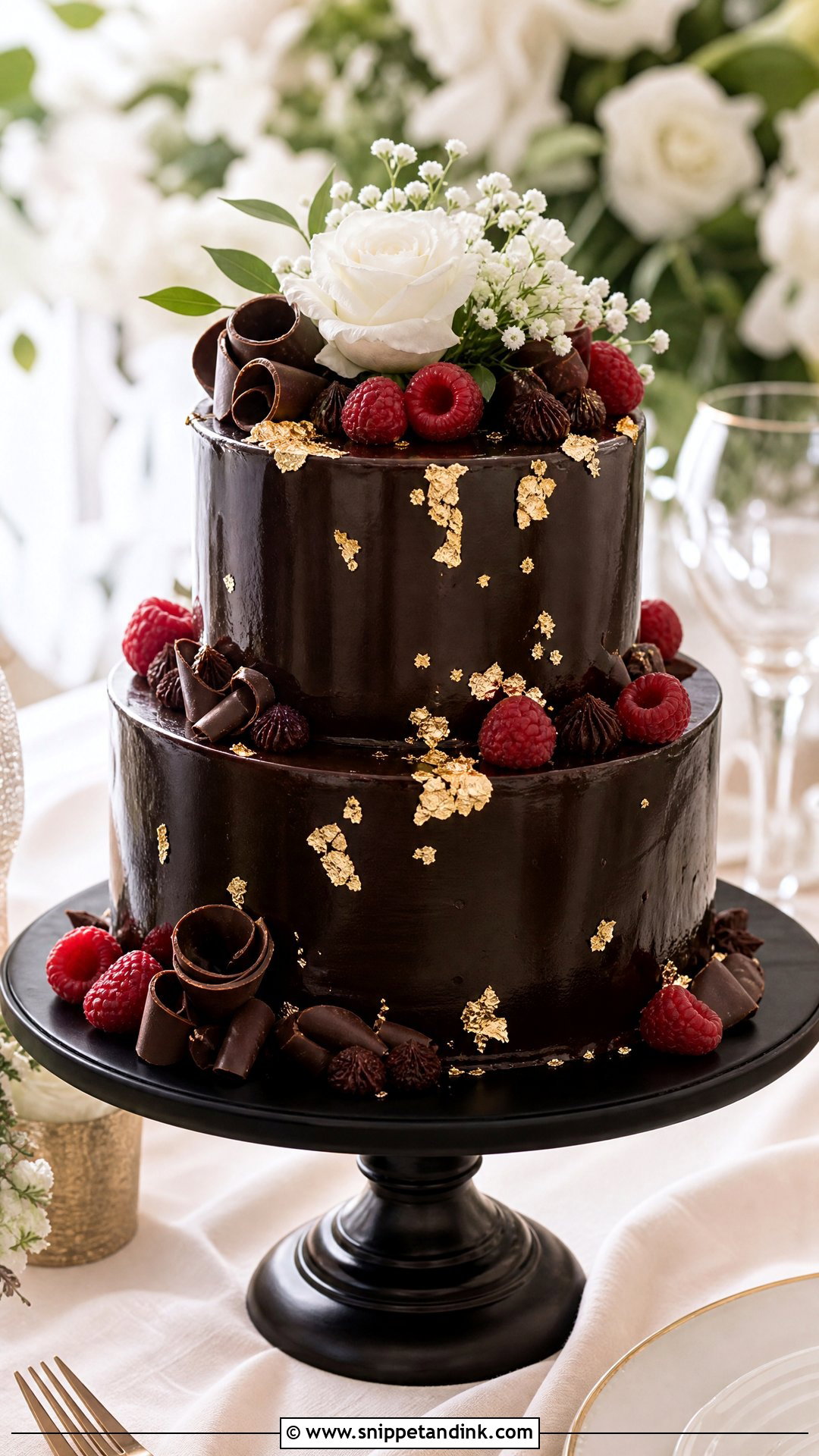
Chocolate can look formal if the finish is polished. A dark ganache coating sets firm and gives the sharpest edges of any covering I use, while white chocolate buttercream keeps it light and traditional. Chocolate sails, a ganache drip, berries, gold leaf or a few flowers dress it up. For a formal room keep the sides smooth; for something cosy, textured chocolate buttercream feels warmer. Raspberry, espresso, caramel, hazelnut, vanilla or strawberry fillings pair with it, and guests always remember a good chocolate cake.
19. Two Tier Wedding Cake With Lemon
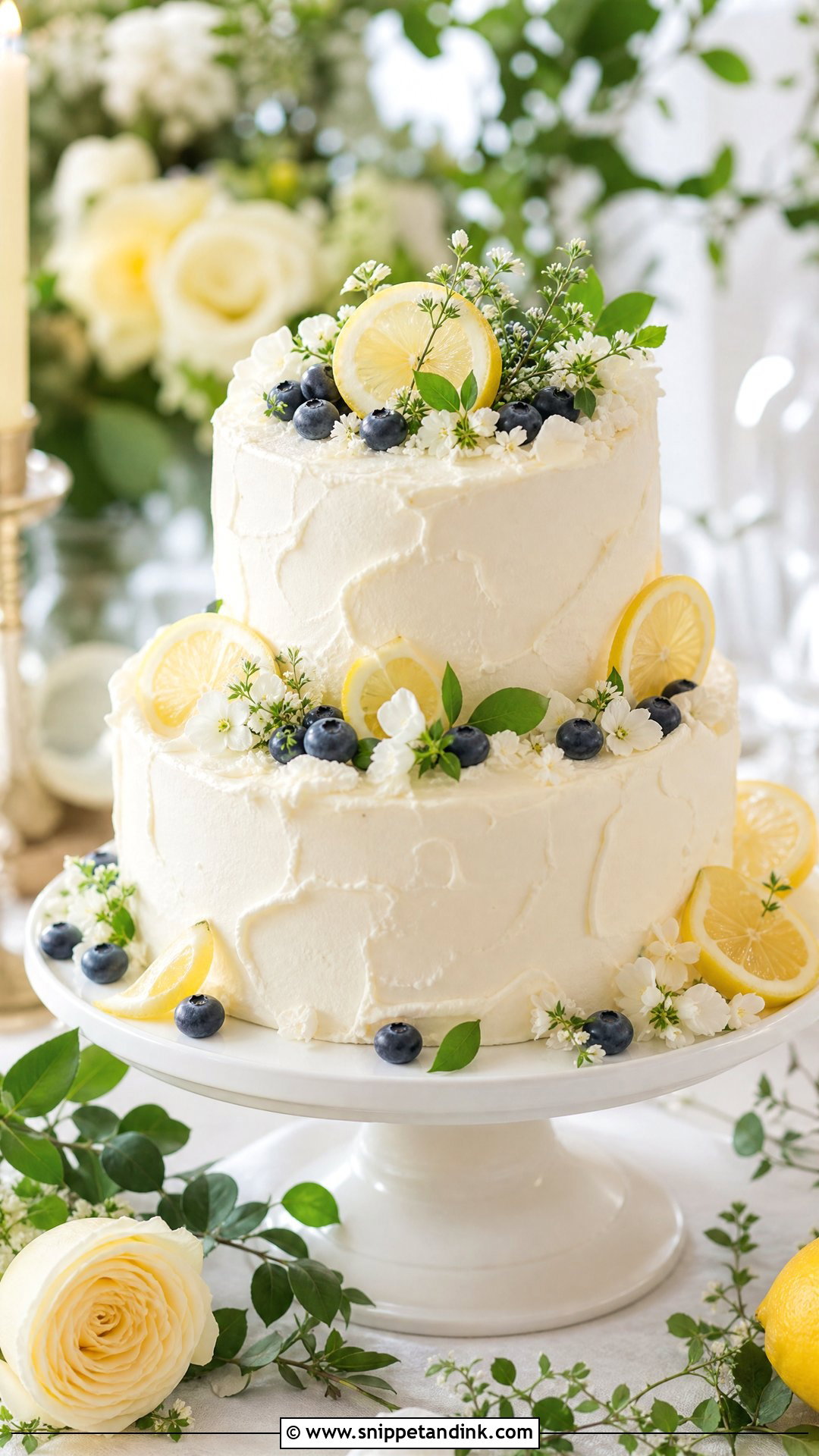
Lemon is the flavour I suggest for daytime spring and summer receptions, because it stays fresh-tasting in warm weather. Outside, ivory frosting with pale yellow touches and lemon slices keeps it simple; white flowers, herbs, blueberries or a light glaze push it toward garden style. Fresh slices dry and curl within a few hours, so I add them on site or candy them first. Inside, it works with buttercream, cream cheese frosting, elderflower, raspberry jam or blueberry compote. Display it on a white pedestal with a little greenery.



20. Two Tier Wedding Cake With Red Velvet
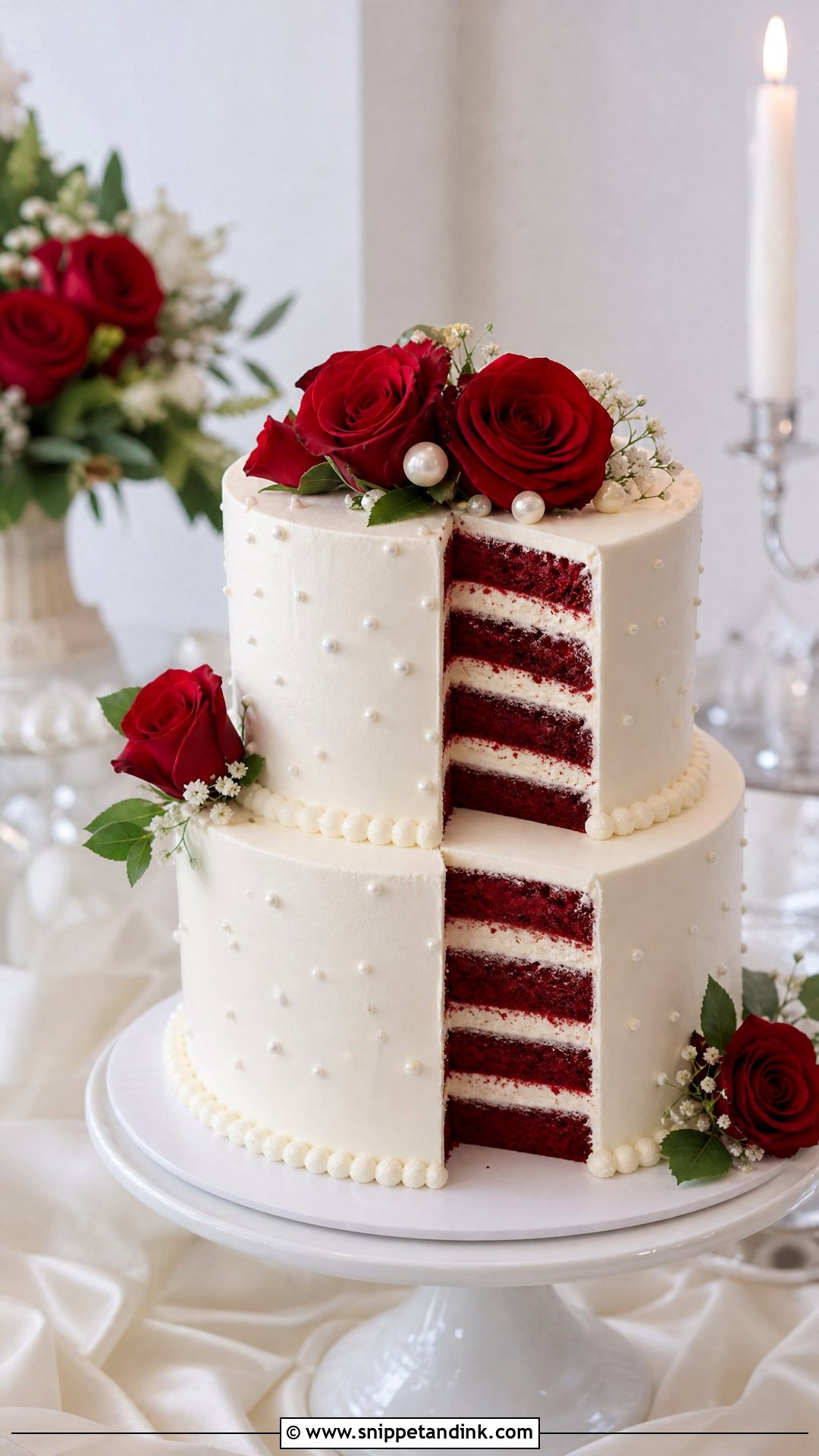
Red velvet is all about the reveal. Most couples cover it in white or ivory cream cheese frosting, so the red crumb appears only when the first slice comes out. Cream cheese frosting is softer than buttercream and needs to stay cool, which makes very sharp edges harder and an outdoor summer table a poor idea. Smooth and simple, vintage piped, or red roses with pearls all suit it. It’s a good fit for winter and formal evenings, and the red-and-white cross-section always gets photographed.
21. Two Tier Wedding Cake With Black And White
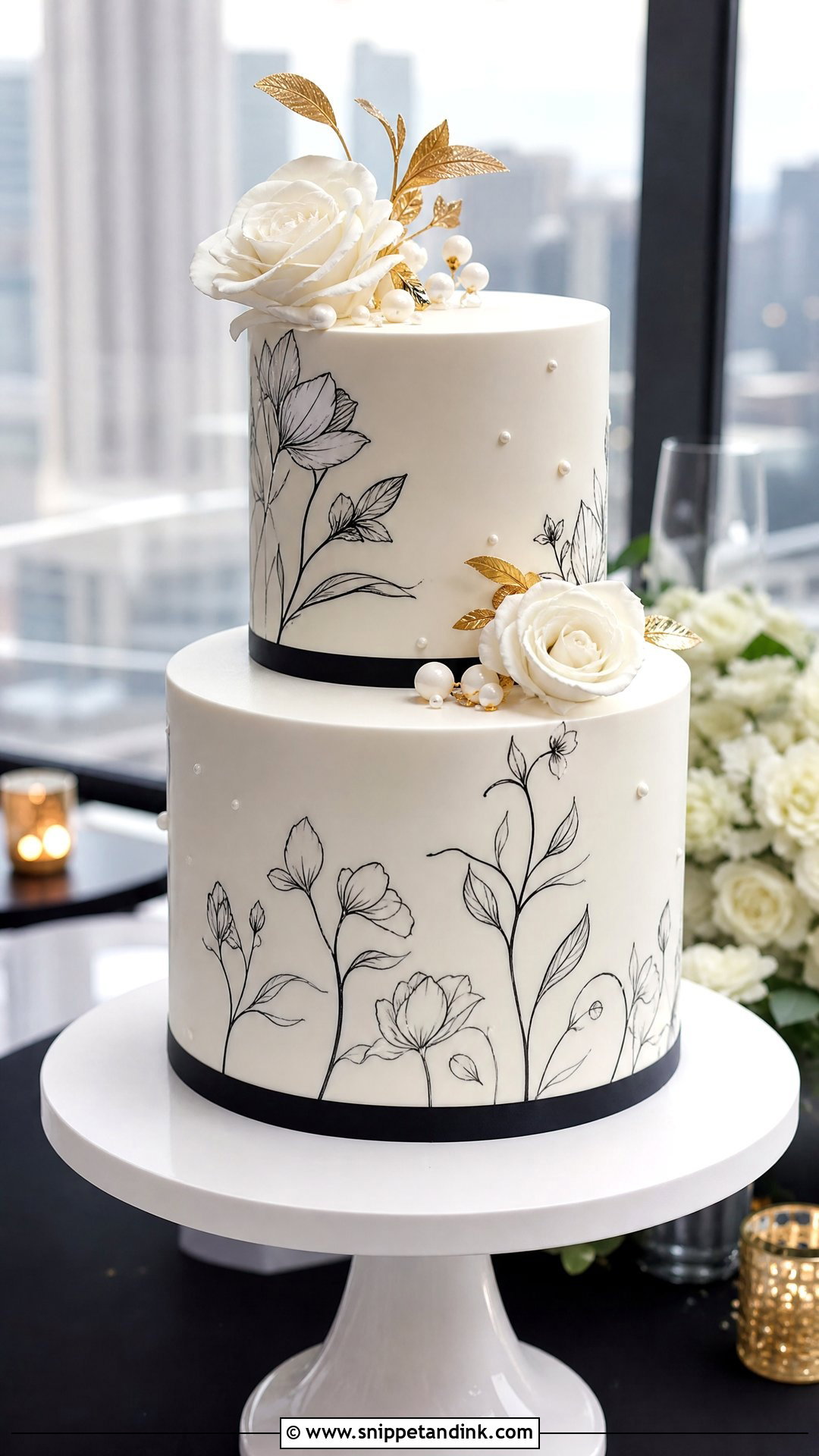
Black and white is graphic and formal. White buttercream with a thin black ribbon, black piped details or painted floral lines all work, or you can go bold with a black base tier under a white top tier. True black icing needs a lot of colour, which can stain lips and teeth, so I use black fondant or keep black to fine details. Clean decoration makes the contrast look deliberate. Evening receptions, city venues and museums suit it; white roses, pearls or a touch of gold add warmth. Vanilla, chocolate, almond or cookies and cream inside.
22. Two Tier Wedding Cake With Sage Green
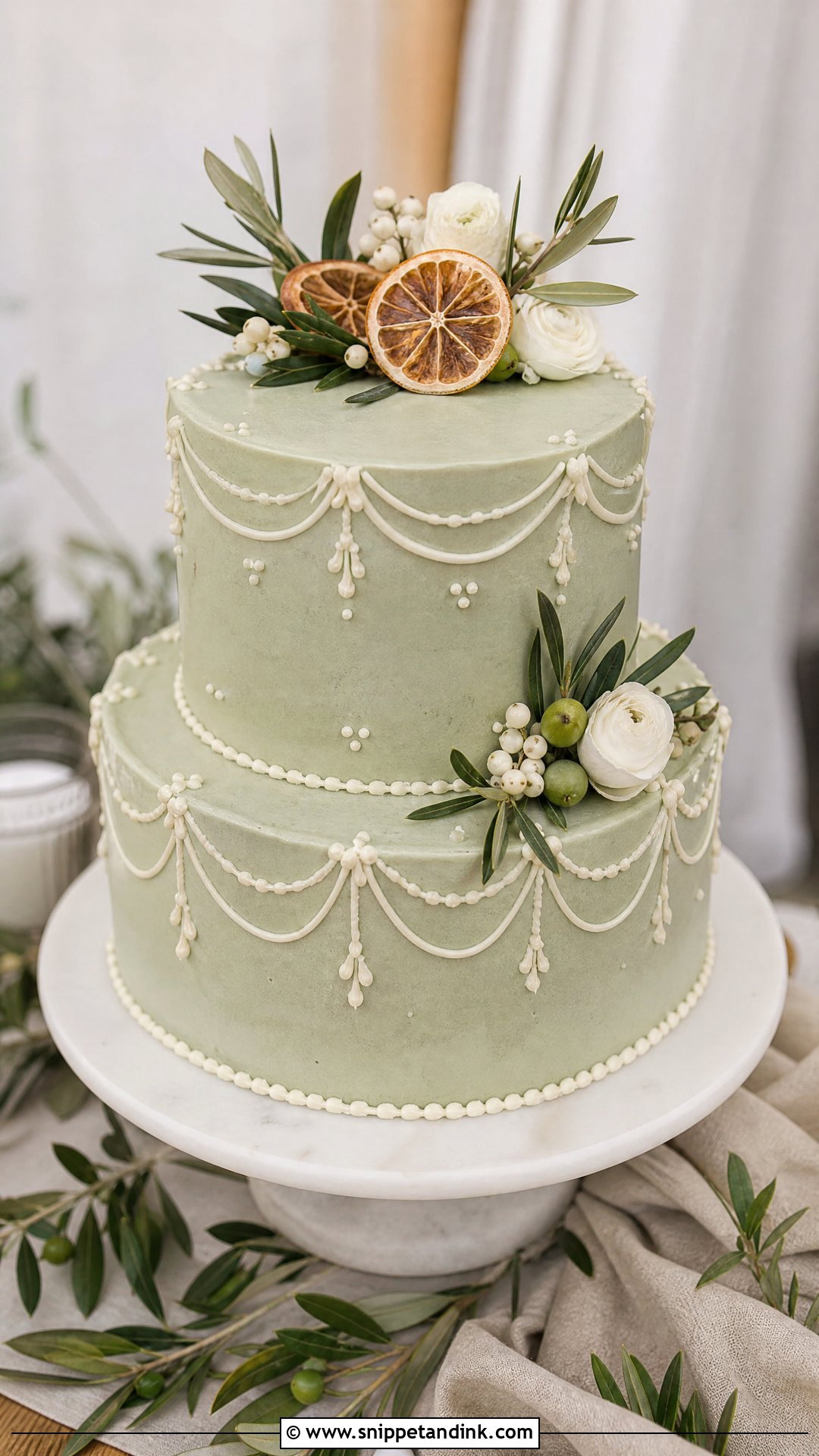
Sage is calm and modern, and it sits naturally in gardens and with neutral palettes. A cake in smooth sage buttercream is the cleanest version; textured icing or ivory piping on sage feels softer. Getting a true sage rather than mint or khaki takes testing, so I’d ask your baker for a colour sample next to your linens. White flowers, olive leaves, dried citrus or small pearls finish it. Pistachio, almond, lemon, vanilla or honey all suit the colour. A simple white or wooden stand completes it.
23. Two Tier Wedding Cake With Minimalist Style
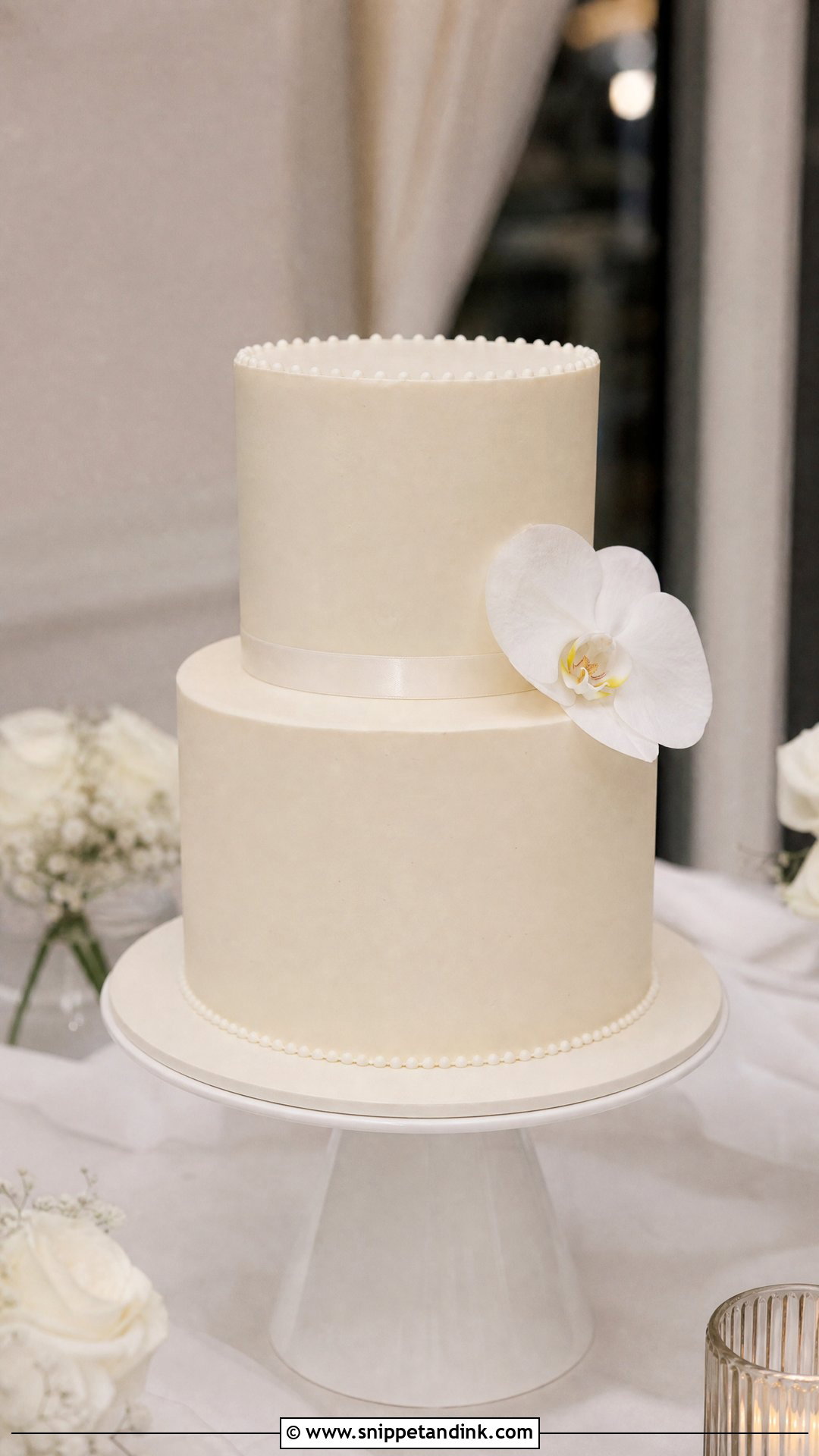
Minimalism makes a two tier wedding cake look precise rather than plain, but only if the basics are flawless: straight sides, crisp edges and tiers stacked dead centre. One flower, a soft ribbon, a fine pearl border or a strip of texture is the whole decoration. White, ivory, stone, taupe and pale grey suit modern venues, rooftops and courthouse weddings. Let the flavour carry the personality instead: almond raspberry, lemon elderflower, chocolate caramel or vanilla bean.
24. Two Tier Wedding Cake With Drip
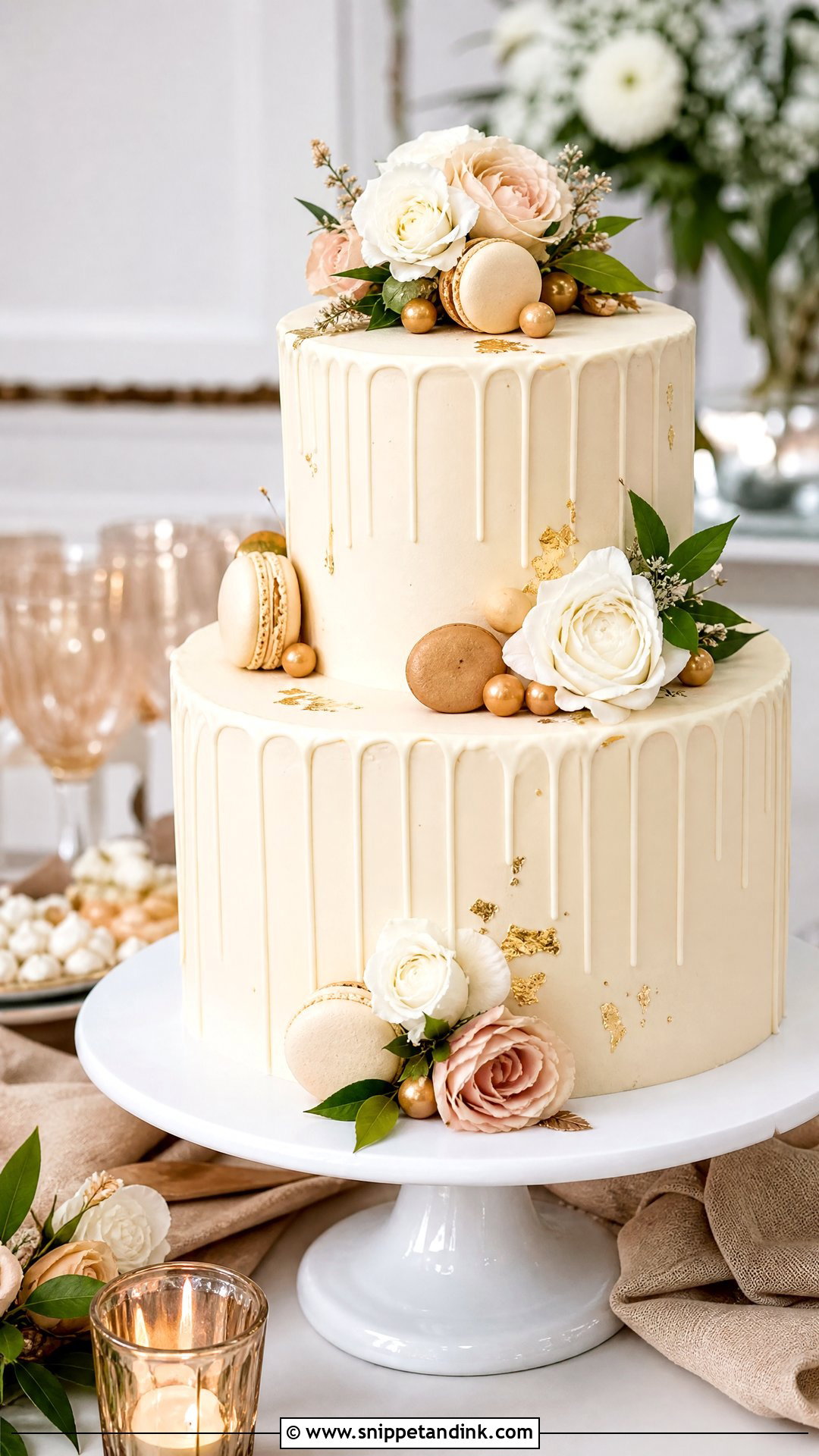
Drips need control to look like a wedding cake. I test the ganache temperature on the chilled cake before committing; too warm and it runs to the board, too cool and it sits in blobs. White chocolate over ivory buttercream is the softest version, caramel adds warmth. Dark chocolate drip works with berries and gold leaf if the rest stays clean. Small clusters of flowers, macarons, fruit or pearls on top give it height. It’s playful but still smart enough for a formal table.


25. Two Tier Wedding Cake With Square Tiers
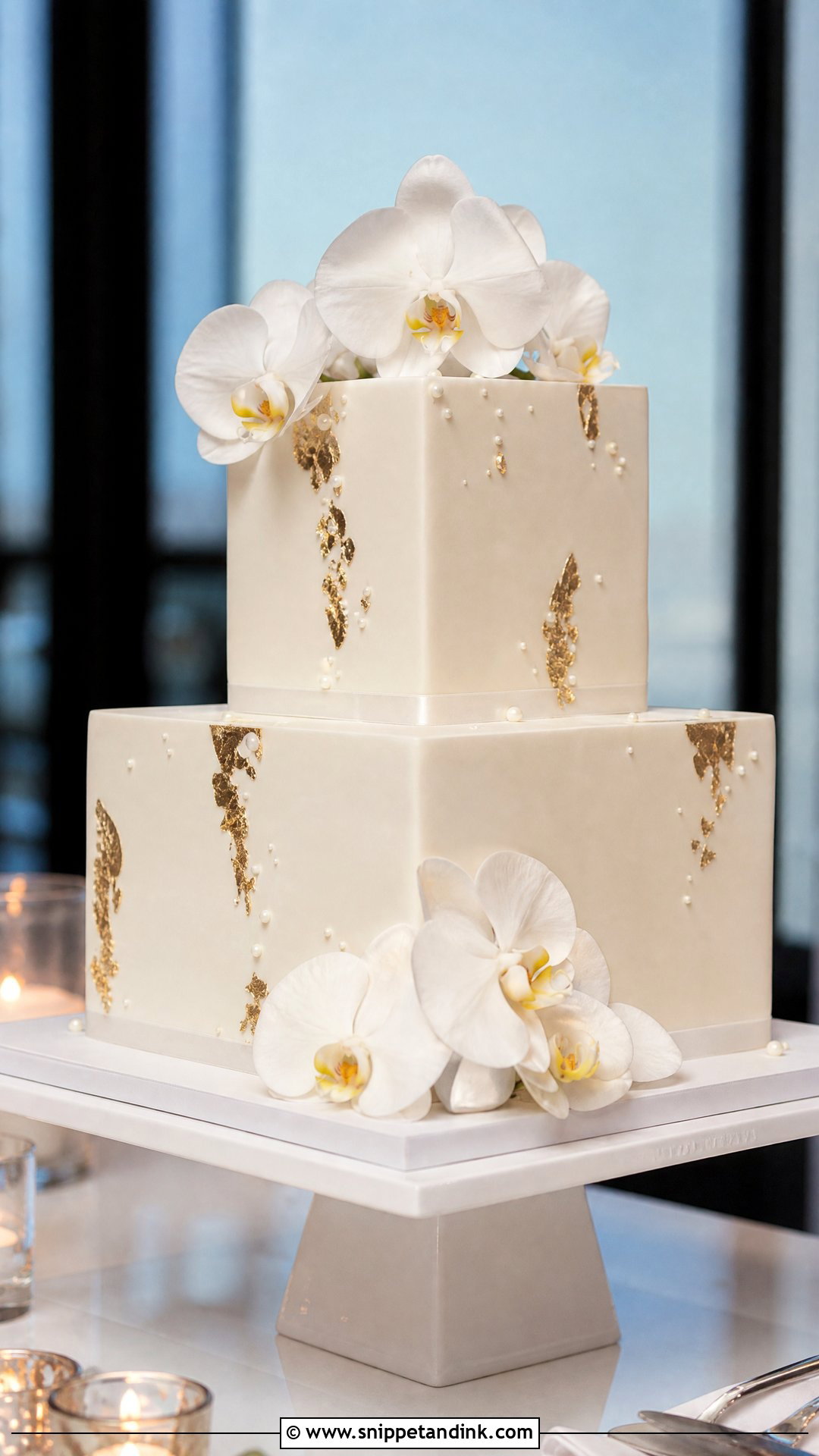
Square tiers look architectural and slightly unexpected. Smooth fondant gives the sharpest corners; buttercream square cakes are possible but much harder to keep crisp, so I’d only do them indoors. Fresh orchids, sugar flowers, ribbon, gold leaf or a small monogram all suit the shape. Square cakes also cut neatly into even portions, and they offer more servings than a round tier of the same width. Place decoration at one corner or along one side, rather than centring it. Modern hotels and city venues suit it.
Giving a Short Cake Presence on the Table
A two-tier cake can look lost in a big room, especially next to a tall floral arrangement. Most of the fixes are about height and spacing rather than more decoration.
Get the tier ratio right
The two tiers should step down by about two inches in diameter, sometimes three. A 6-inch on a 10-inch looks like a hat on a drum; a 6-inch on an 8-inch looks like a tower. Making the top tier extended-height while the bottom stays standard also gives a taller, more elegant outline.
Lift it
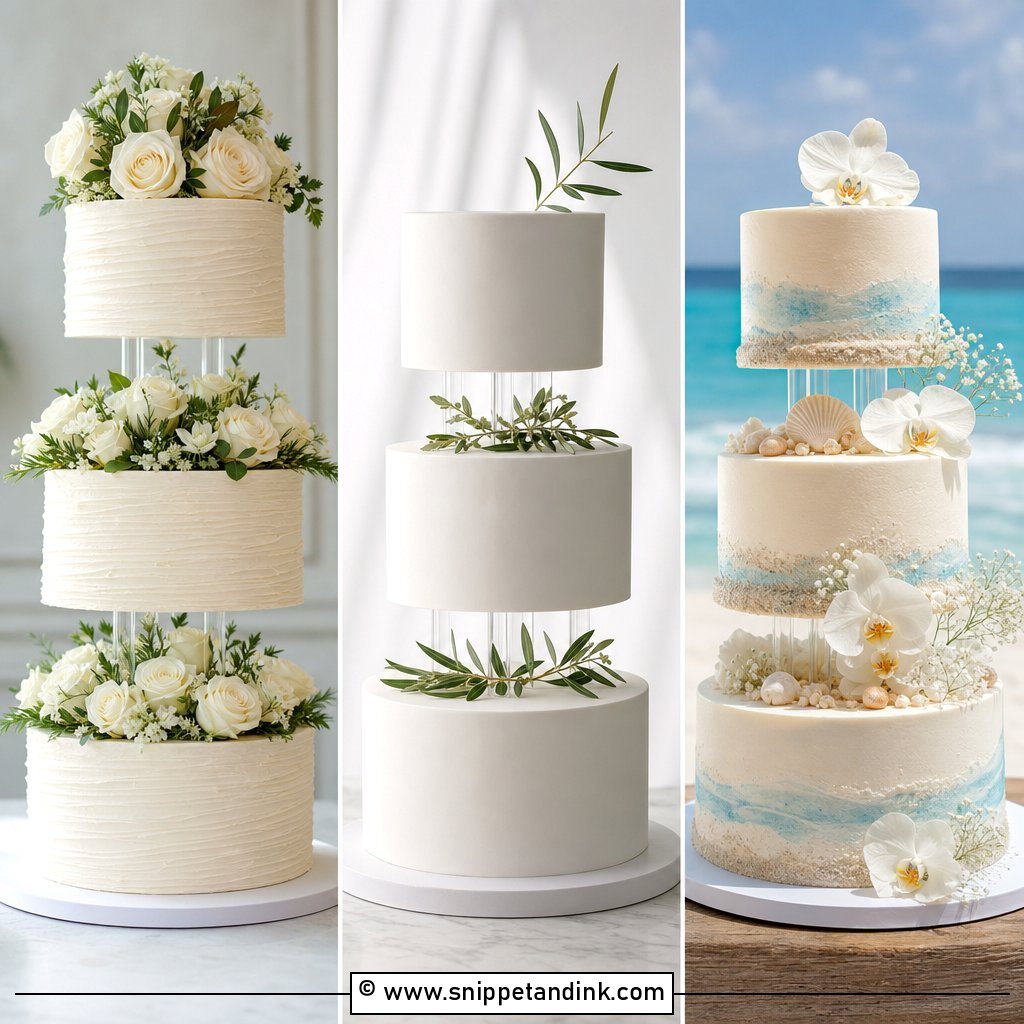
A pedestal stand adds instant height and brings the cake up to eye level in photos. A separator between the tiers, filled with flowers or simply left as a clear acrylic gap, adds a few inches and makes the cake feel lighter. Both are cheaper than baking another tier.
Give it space
Put the cake on its own small round table, or at the centre of the dessert table with nothing taller than it close by. A backdrop that contrasts with the icing helps it read from across the room; a white cake against a white wall disappears.
Finally, a topper or top floral cluster should be no wider than the top tier. Anything that overhangs makes a small cake look top-heavy in every picture.
A Two Tier Cake Only Looks Small When the Proportions Are Off
A small cake can be the focal point of the dessert table if the height, finish and decoration agree with each other. Romantic weddings lean toward roses, blush or pressed flowers; modern ones toward minimal styling, square tiers, black and white or sage; nostalgic couples love vintage piping and Lambeth borders. Bring a few photos you love to your baker, then talk through structure, servings, frosting, and safe flower placement. Those four conversations decide whether the design in the photo is the one that arrives at your venue.
You'll Like These Ideas:








Leave a Reply