
Most couples arrive at a cake consultation with a folder of saved pictures and very little sense of what each decoration involves. That’s fine, it’s my job to translate. The cakes I’m asked for now are more personal than plain white tiers: piping that echoes a vintage dress, pressed flowers from the venue’s garden, pearls to match earrings, draped fondant, textured buttercream and sculptural shapes. A decoration should connect to the rest of the wedding and leave the cake tasting as good as it looks. Here are twenty I make often, with what each one means for your order.
What Your Baker Needs at the First Consultation
Inspiration photos help, but they rarely tell me enough on their own. The details below change both the design and the quote, so I’d gather them before we meet.
- Your guest count, and whether every guest gets cake or there’s also a dessert table.
- The venue and whether the cake will stand indoors, in a tent or outside.
- A swatch or photo of the dress, linens and invitation, so colors are matched to something real.
- Which picture shows the decoration you love, and which part of it. Often it’s only the piping or only the flowers.
- Any allergies, plus whether the venue requires a cutting or plating fee.
Where the cost of a decoration comes from
Decoration is priced mainly in hours. Hand piping, sugar flowers and painting take far longer than fresh flowers or texture, so two cakes of the same size can be priced very differently. If budget is tight, I’d put the detailed work on one tier and keep the others simple.
1. Vintage Wedding Cake
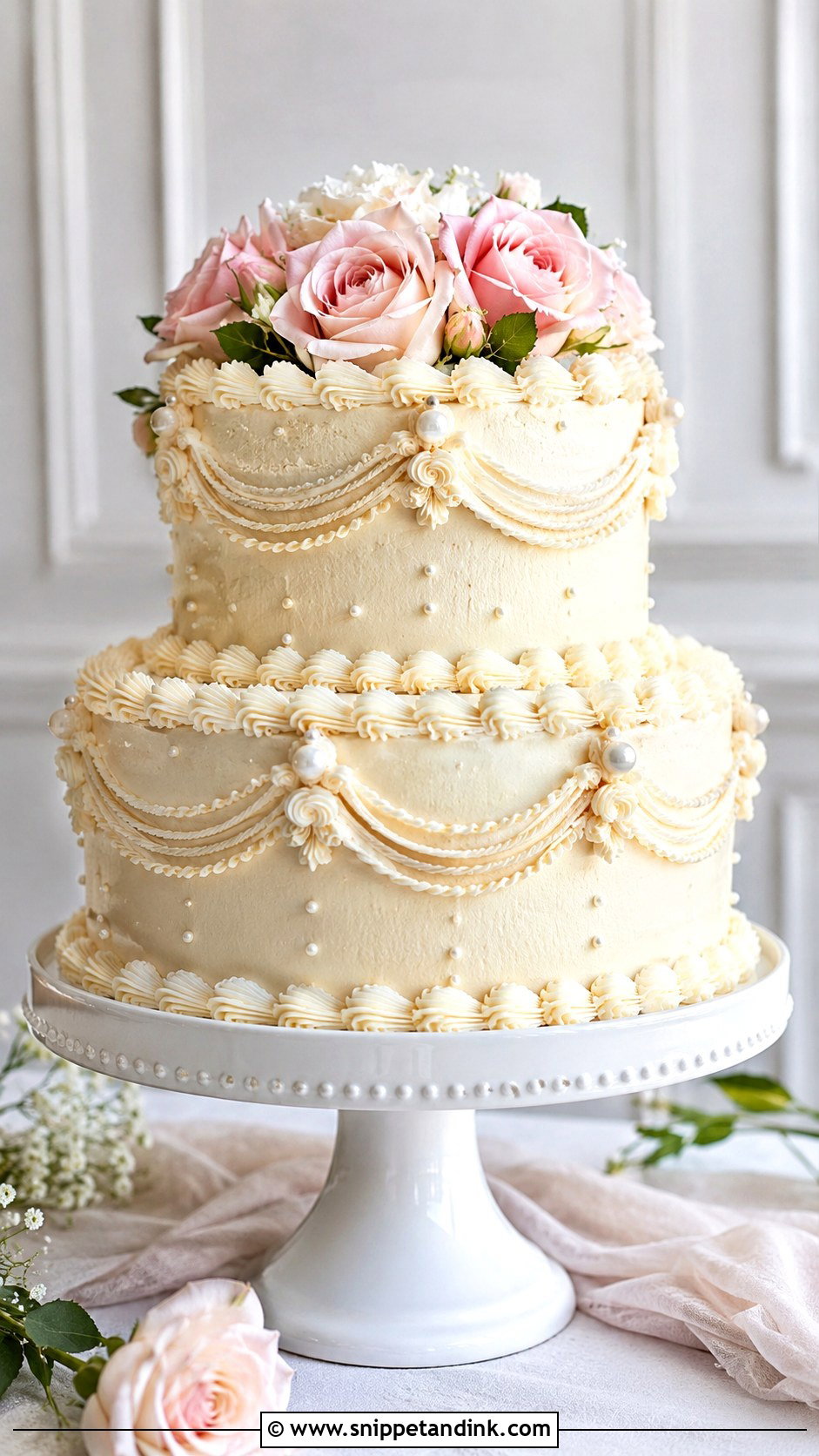
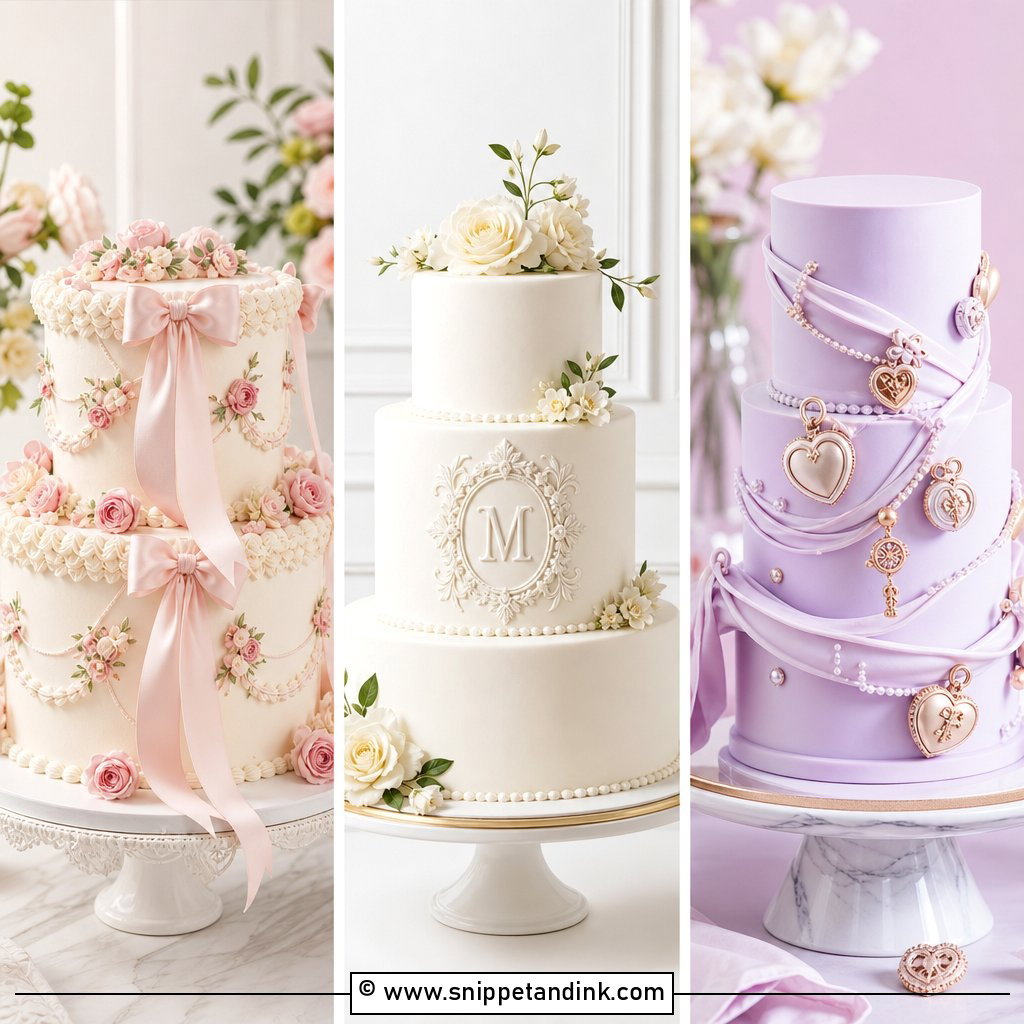
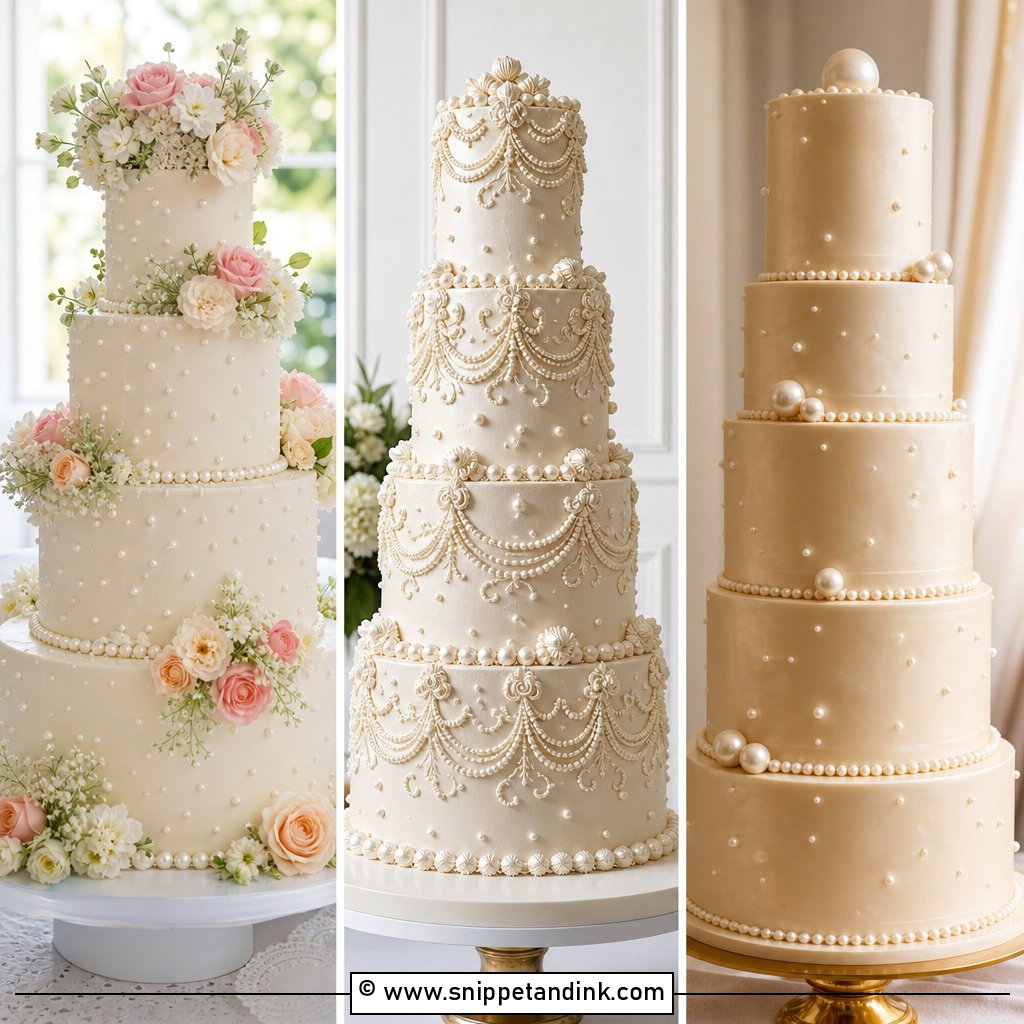
Vintage cakes are built from piping, stacked shell borders, pearl dots, rosettes and swags, the old bakery look. I find they work best on a round two or three tier cake in ivory, blush, baby blue or pale butter yellow. Keep the base color plain and let the piping carry the design. Glacé cherries and sugar pearls add a playful touch. Be aware that heavy piping adds a lot of extra frosting, so ask for a lighter sponge or a less sweet buttercream if you’re worried about richness.
2. Lambeth Wedding Cake
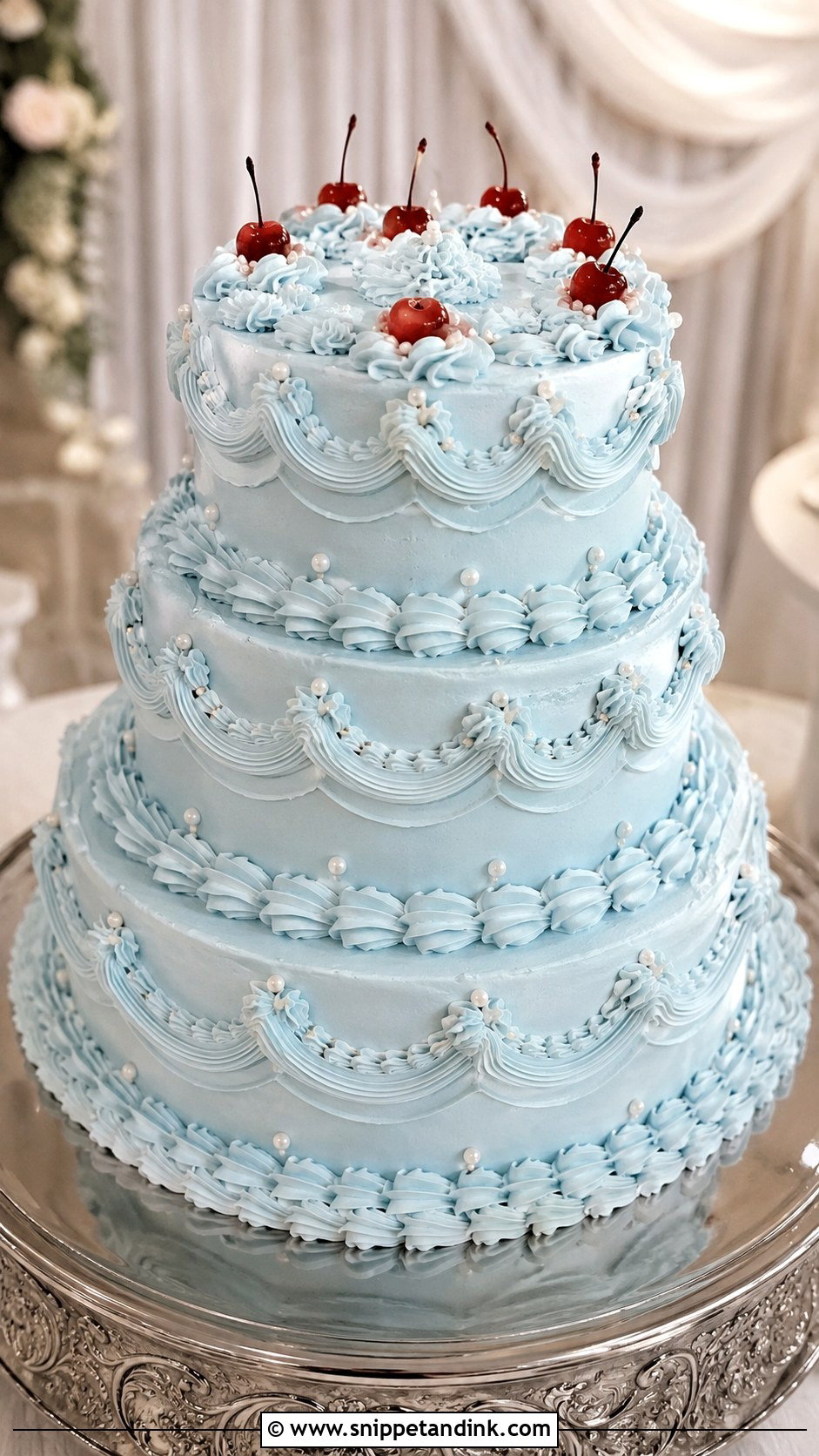
Lambeth piping is layered: repeated borders, over-piped curves, scallops and raised details built up in stages. It is labor-heavy, which is the main reason it tends to cost more than a floral cake of the same size. In return, it holds the dessert table without large flower arrangements. White on white feels classic; pastel buttercream feels more current. The thing I watch is balance from tier to tier, keeping the scale of piping proportional to each tier’s size. Use a plain stand so nothing competes.
3. Pearl Wedding Cake
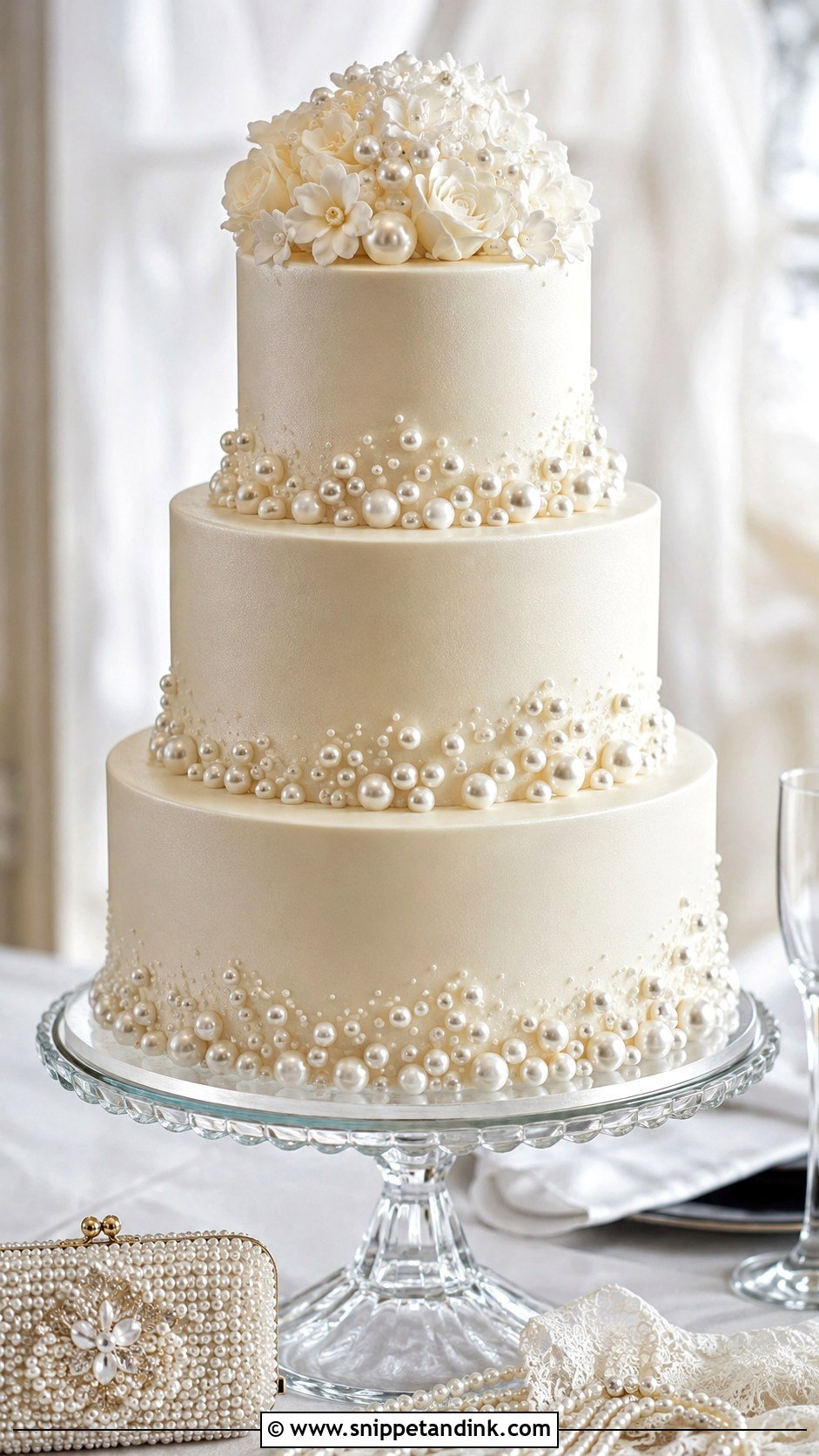
Edible pearls can go around each tier, scatter across smooth buttercream or sit in clean lines. Tiny pearls in uneven clusters look delicate; larger pearls at the base of each tier look bolder. If you’re wearing pearl earrings or a pearl-trimmed veil, I’ll often pull the size and shade from those. Ivory and champagne frosting suit pearls better than bright white, which can make silver-toned pearls look grey. Tell guests the larger sugar pearls are hard before they bite into one.
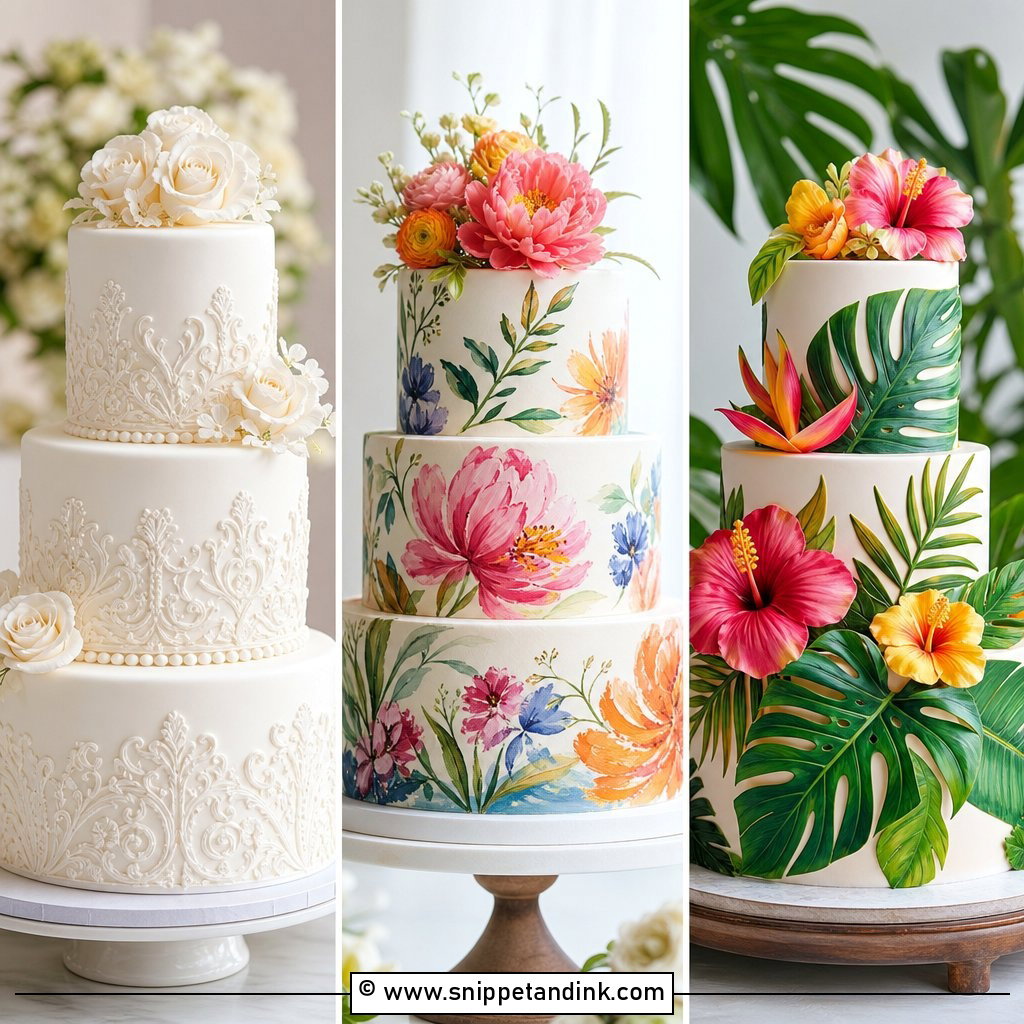
4. Floral Wedding Cake
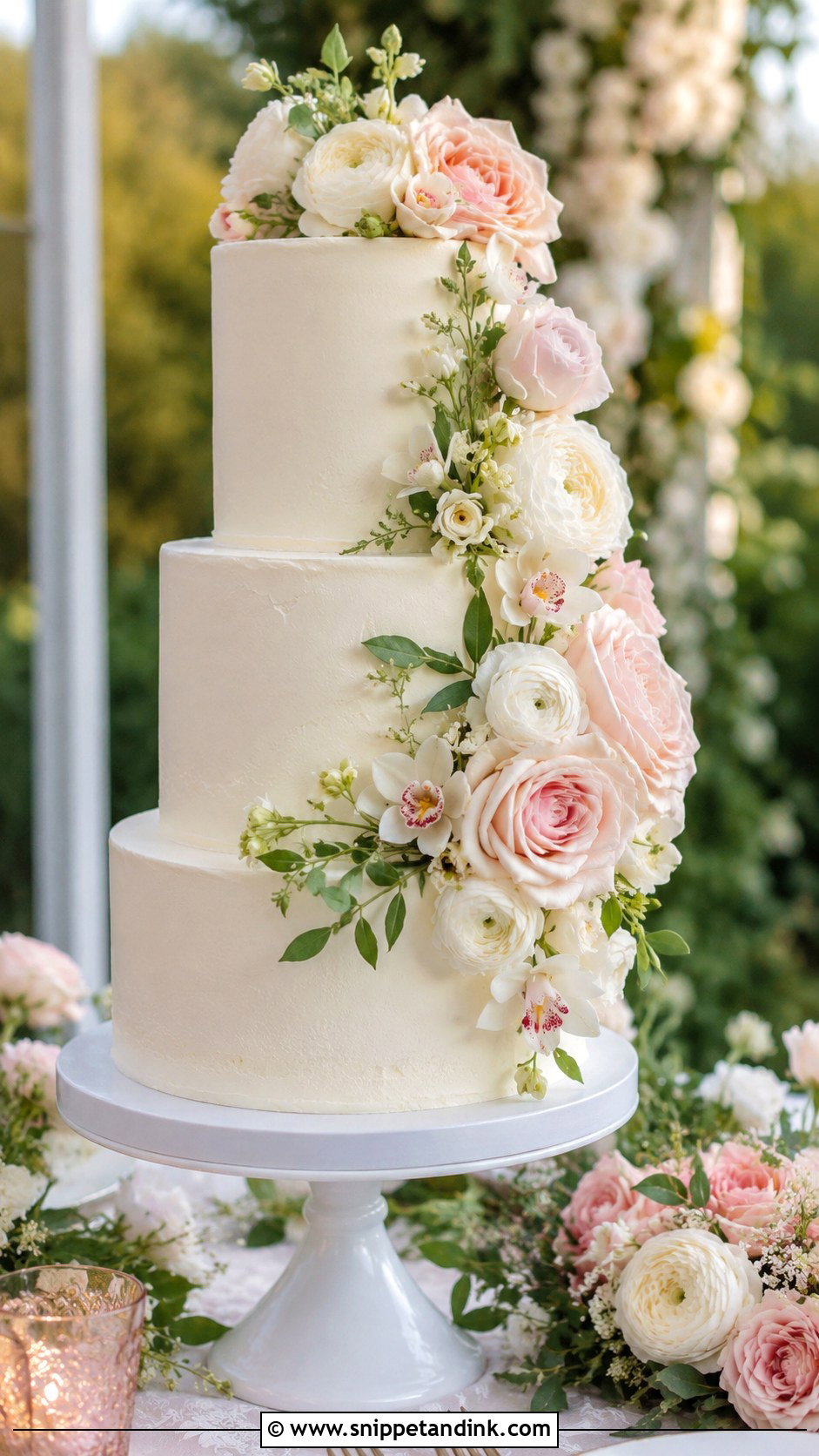
Flowers are the most direct way to link the cake to the bouquet, arch and centerpieces. Roses, ranunculus, orchids, peonies and small fillers can all be used, but only blooms that are grown without pesticides and are safe near food. I ask florist and baker to talk directly, and I insist the stems are wrapped and set into picks. Restraint usually looks better than coverage: two or three flowing clusters beat a cake hidden under stems. Remember the florist’s time to dress the cake is often billed separately.
5. Pressed Flower Wedding Cake
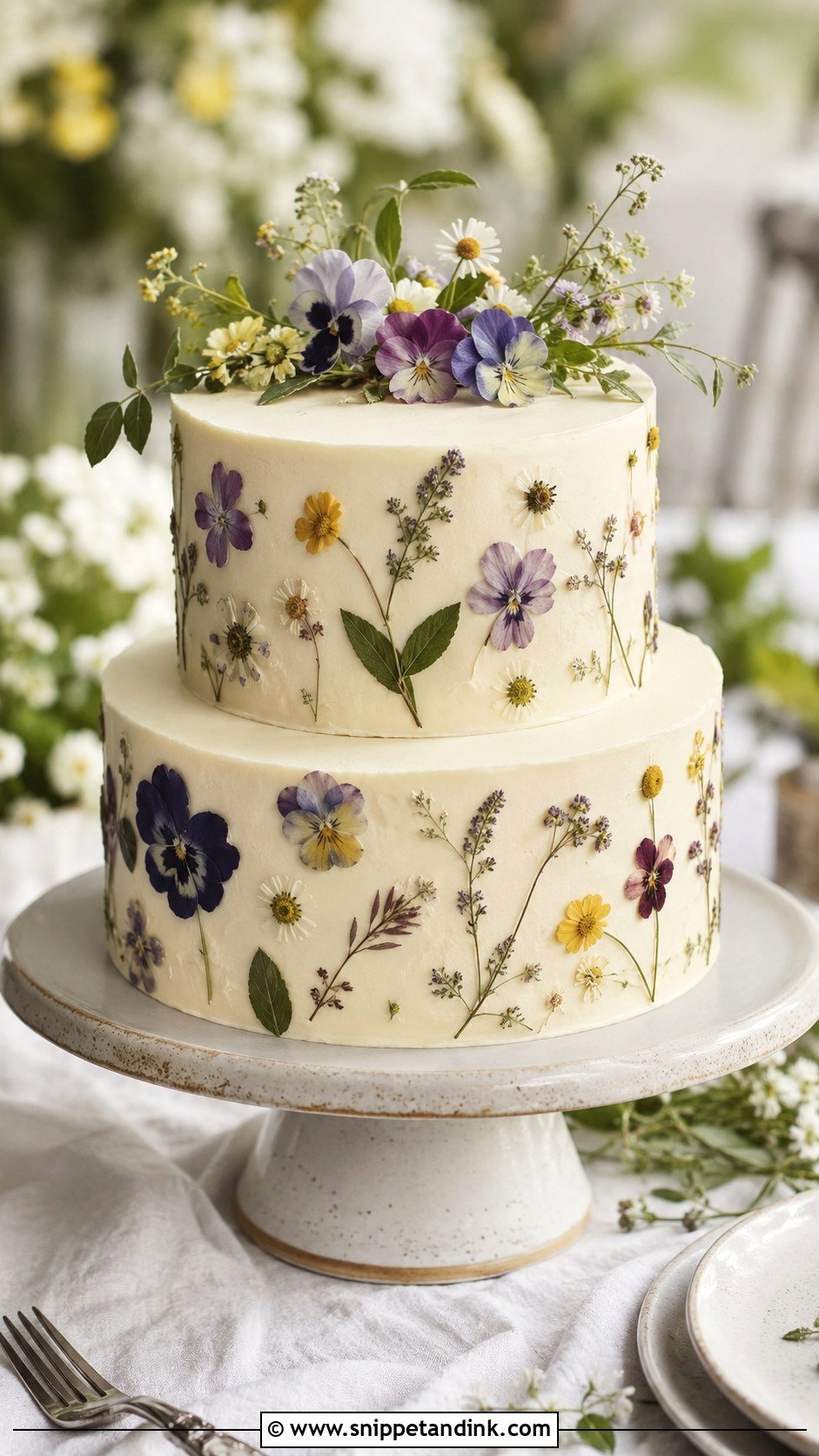
Pressed flowers sit flat against the frosting, more like a botanical illustration than an arrangement. They must be edible varieties, pressed and dried properly. Small flowers keep the surface neat. One color family looks refined; mixed soft shades look like wildflowers. They’re ideal for spring weddings and smaller receptions. Because pressed petals slowly absorb moisture from buttercream, I apply them on the day rather than the night before.
6. Buttercream Wedding Cake
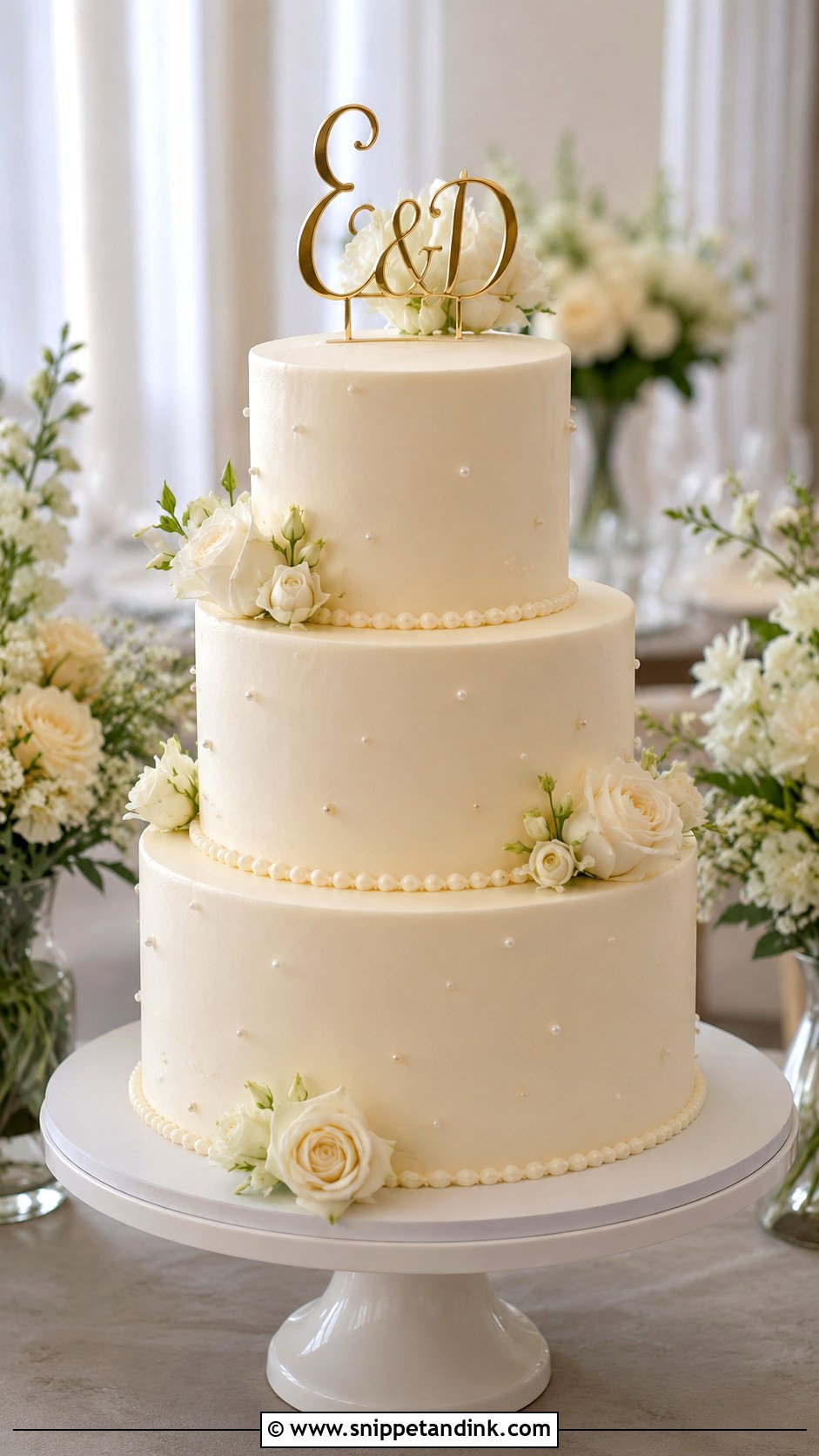
Buttercream is the finish I recommend most, partly for taste and partly because it can be smooth, lightly textured or finished with spatula marks. It suits garden parties as well as formal rooms. Flavors are flexible too: lemon or berry in summer, spiced or caramel in autumn. The honest limitation is heat. A buttercream cake should be set up indoors or in shade and not sit out for hours on a hot afternoon. In bright natural light, a smooth buttercream finish looks soft and warm.
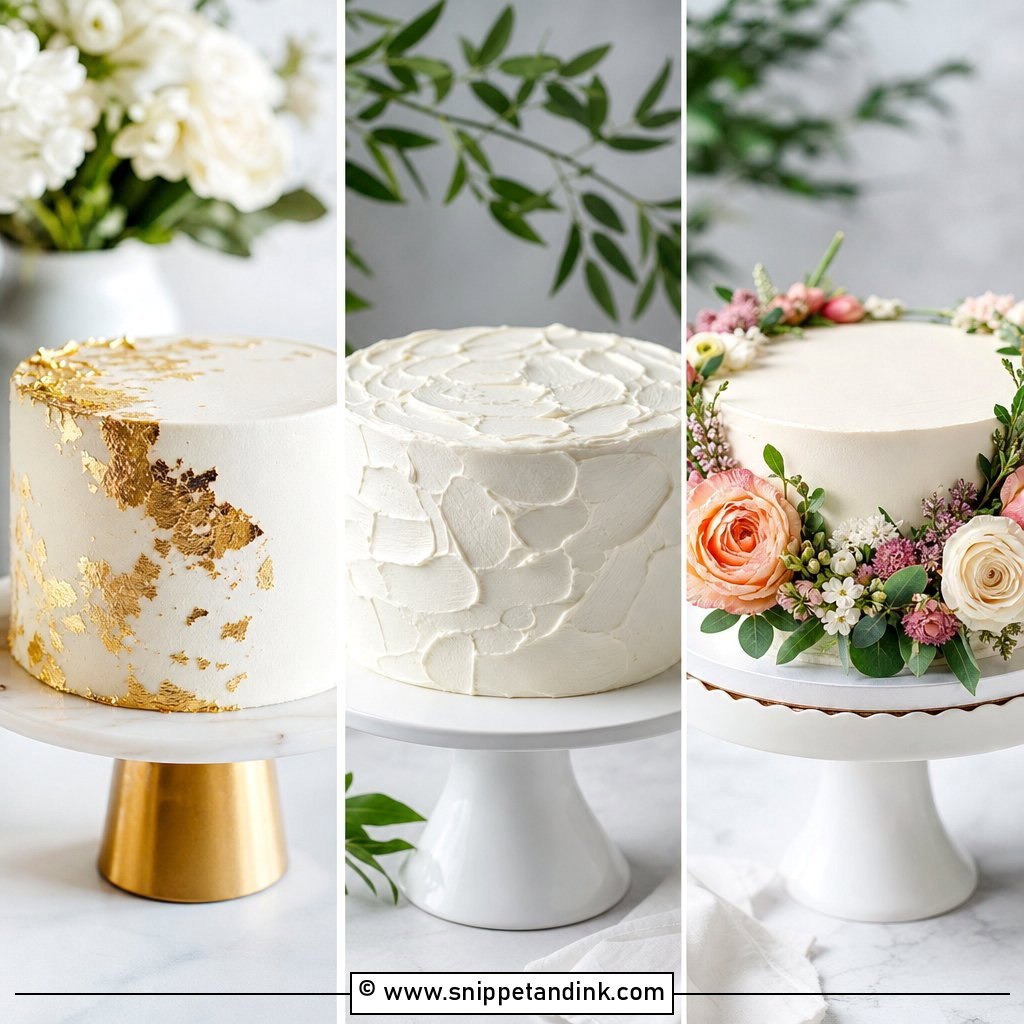
7. Textured Wedding Cake
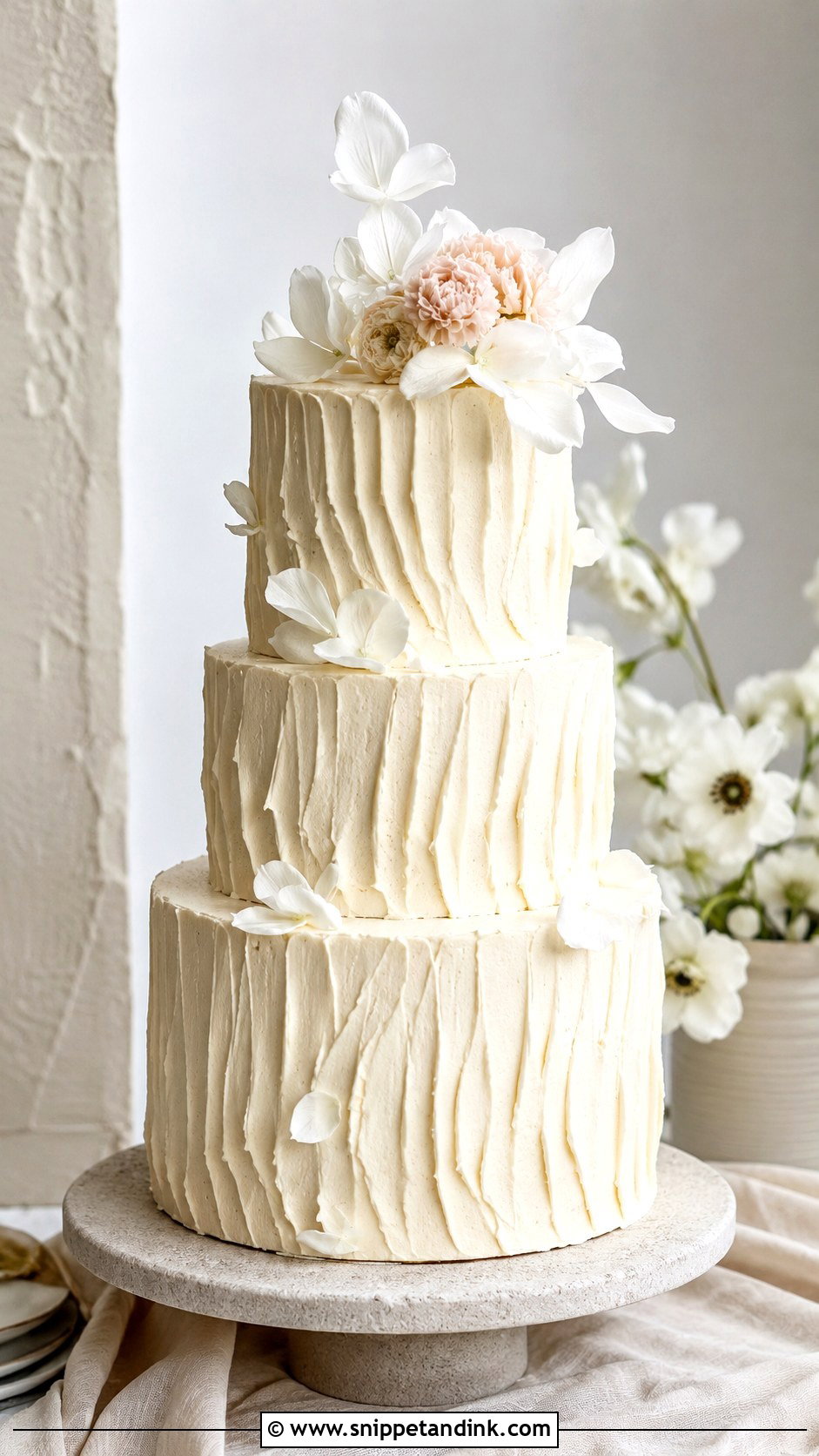
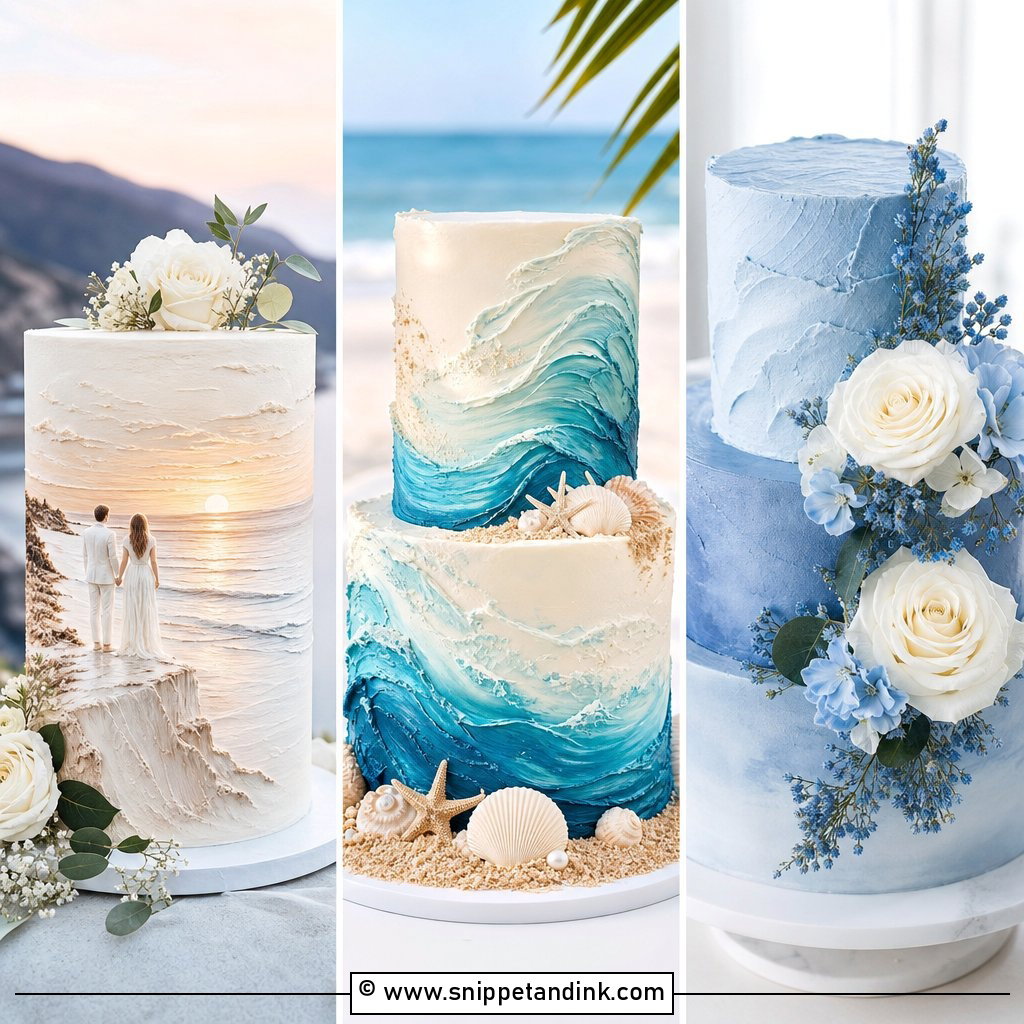
Ribbed buttercream, palette knife strokes, ruffles, pleats and waves give a cake movement without color. A textured finish hides minor dents, which is a practical advantage when a cake has to travel. White texture reads sculptural; beige, blush or sage makes it warmer. Because the surface already has interest, I keep decoration to one floral cluster or a few sugar petals. It suits modern couples who still want some romance.
8. Minimalist Wedding Cake
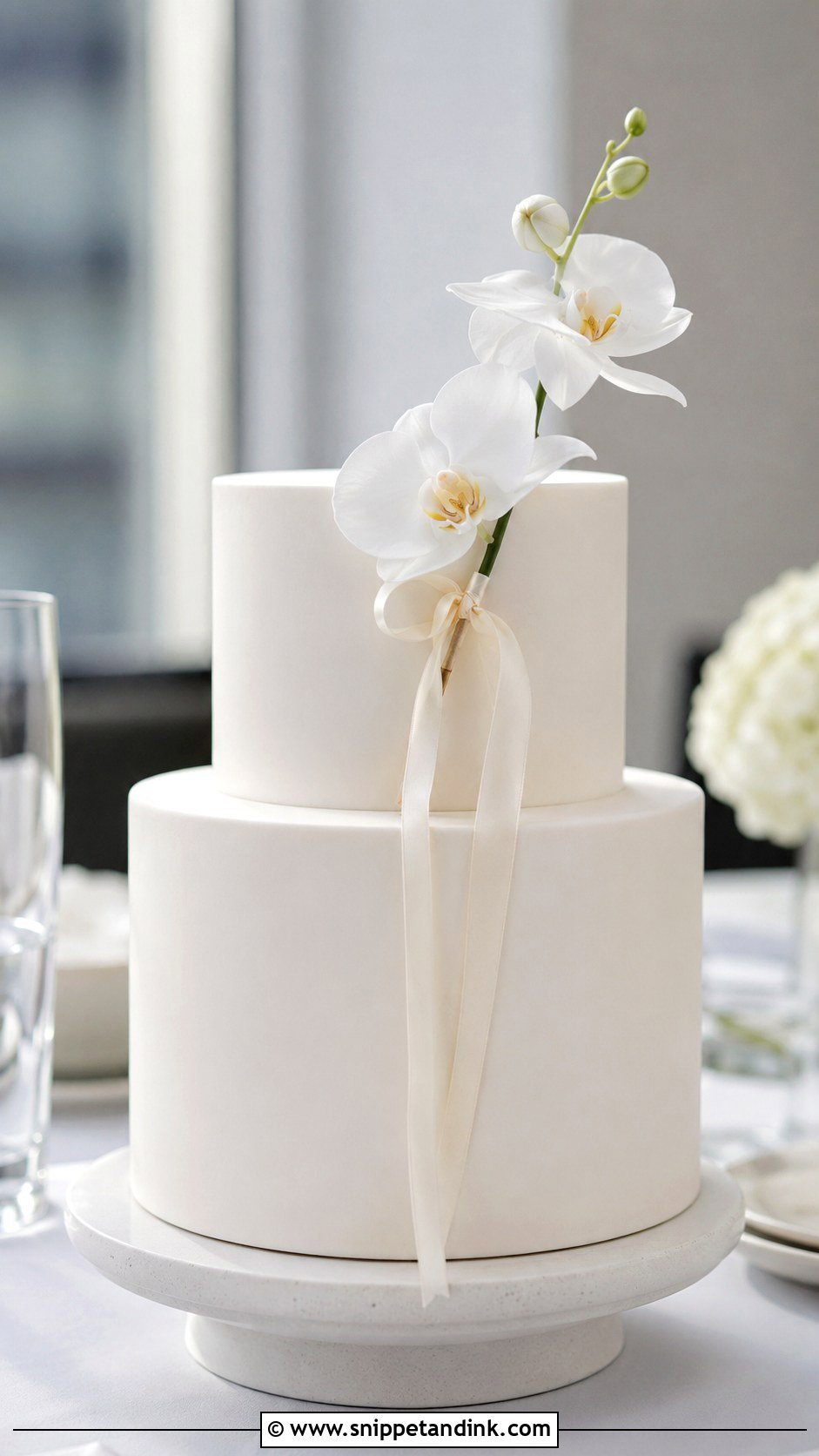
Minimalist cakes show everything, so the craftsmanship has to be exact: sharp edges, level tiers, even proportions. A single flower, a slim ribbon, a monogram topper or a line of pearls at the base is enough. I’ll warn couples that minimalist doesn’t always mean cheaper, because getting buttercream perfectly straight takes time. A ceramic, glass or brushed gold stand that suits the room finishes the look. Small receptions and city venues are where I see these most.
9. Naked Wedding Cake
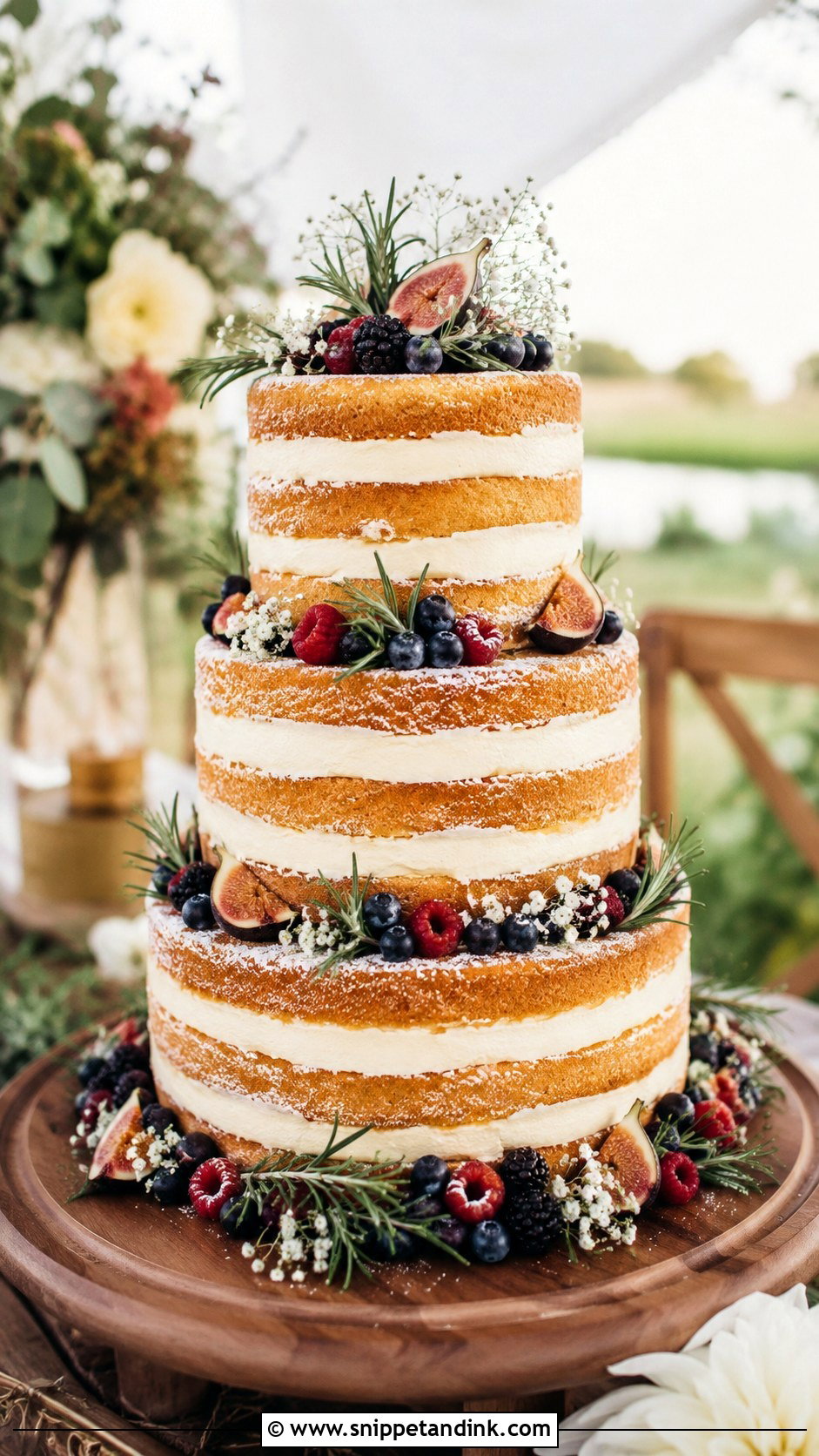
A naked wedding cake shows the layers with almost no frosting outside, so the sponge and filling become the decoration. Vanilla, almond, carrot, lemon or chocolate all look appealing. Berries, figs, herbs and small flowers sit on top and between tiers. The downside is drying: exposed sponge loses moisture within hours. For most weddings I recommend semi-naked instead, which keeps the same look with a protective thin coat.
10. Semi Naked Wedding Cake
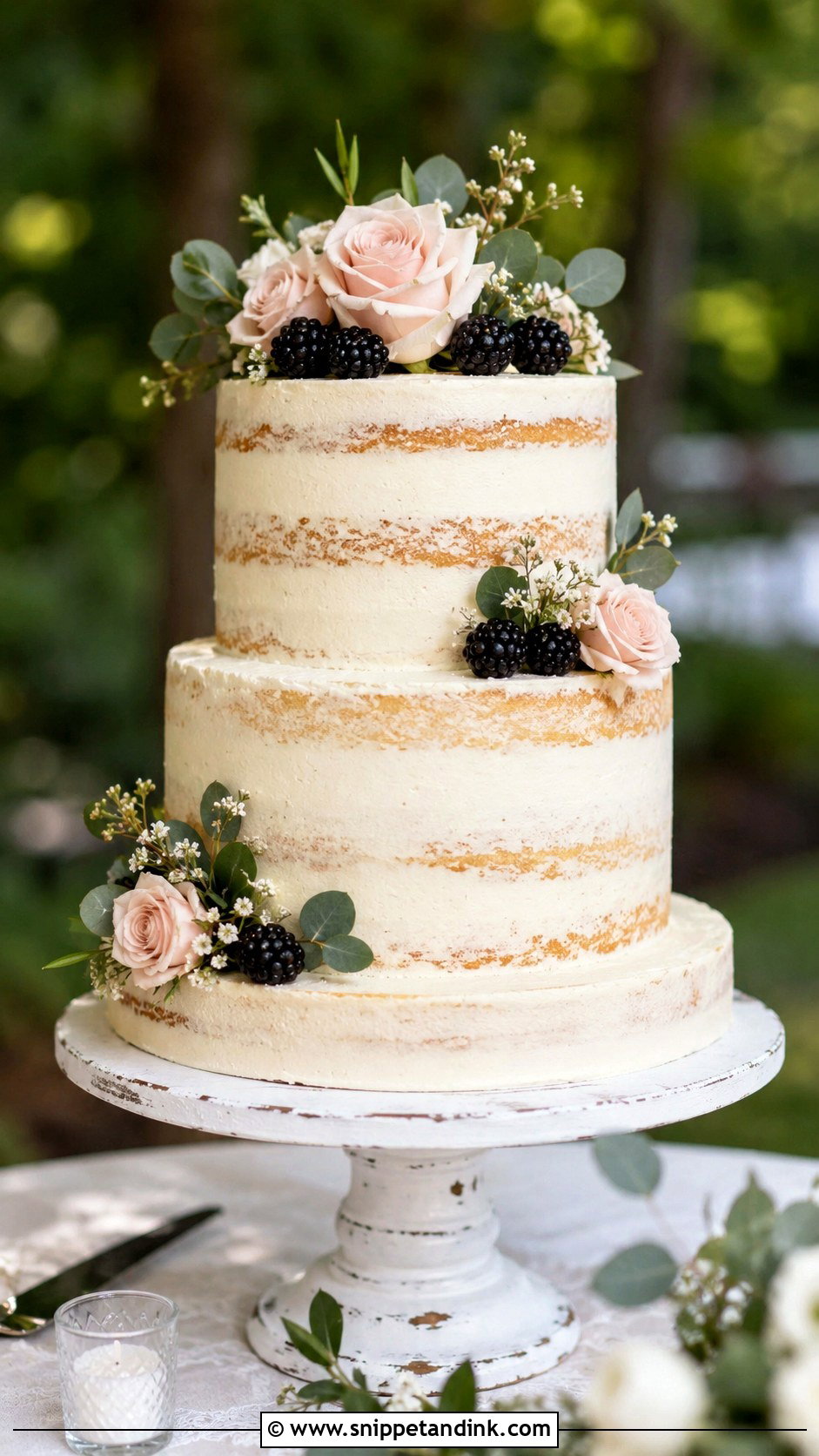
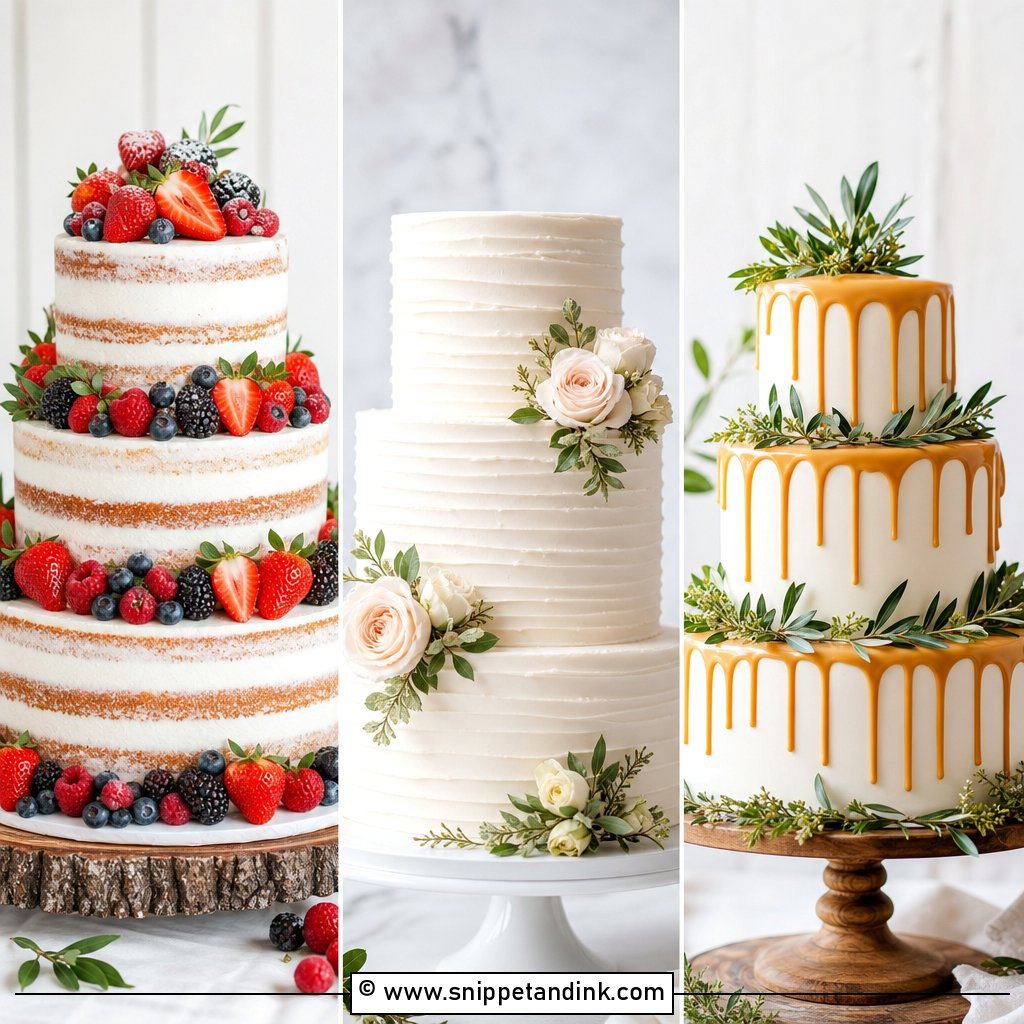
Semi naked gives the exposed-layer look with more polish and better keeping. A thin layer of buttercream covers the cake while the sponge shows through in soft patches. Seasonal flowers, fruit and greenery suit it. Ivory buttercream and white flowers make it more formal; berries and golden sponge make it warmer. It’s a good fit for outdoor venues, provided it’s kept out of direct sun.
11. White Wedding Cake
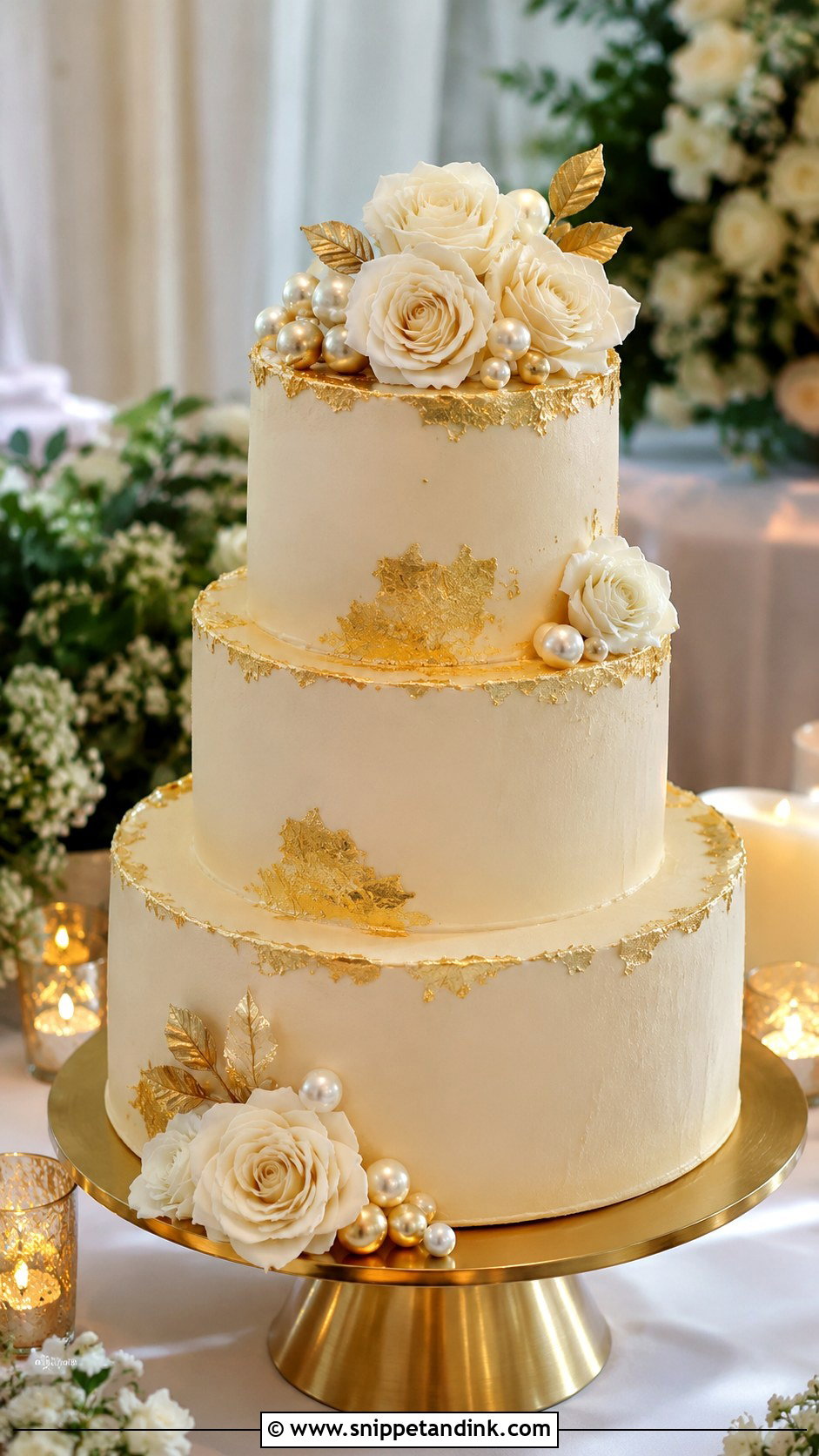
White never goes out of favor because it suits any venue, dress and palette. Fondant gives a formal look; white buttercream is softer. Since there is no color to look at, I add sugar flowers, piped lace, pearls or texture so the light creates shadows and the details show. One caution: pure white fondant can look slightly blue in photos under cool lighting, so I often suggest a very soft ivory if the dress is ivory.
12. Black And White Wedding Cake
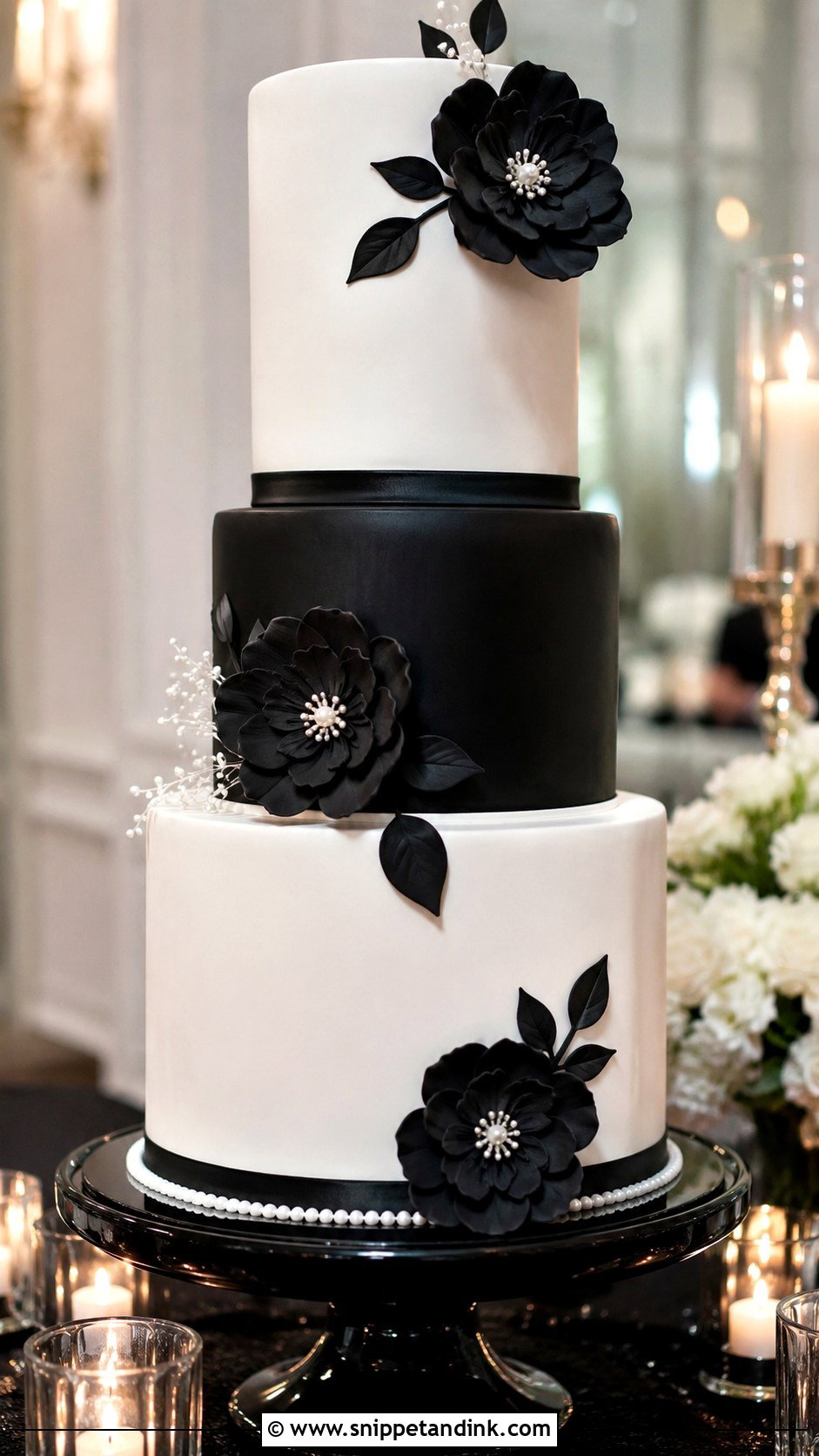
Black works on a wedding cake as an accent, not a base. A white cake with black ribbon, piping or sugar flowers, or one painted black tier with white flowers, looks sharp. Fully black icing needs a lot of coloring, which can stain teeth and taste bitter, so I use it in small areas or swap in a dark chocolate finish. Evening receptions and formal venues suit it. Metallics, if any, should be subtle.
13. Gold Wedding Cake
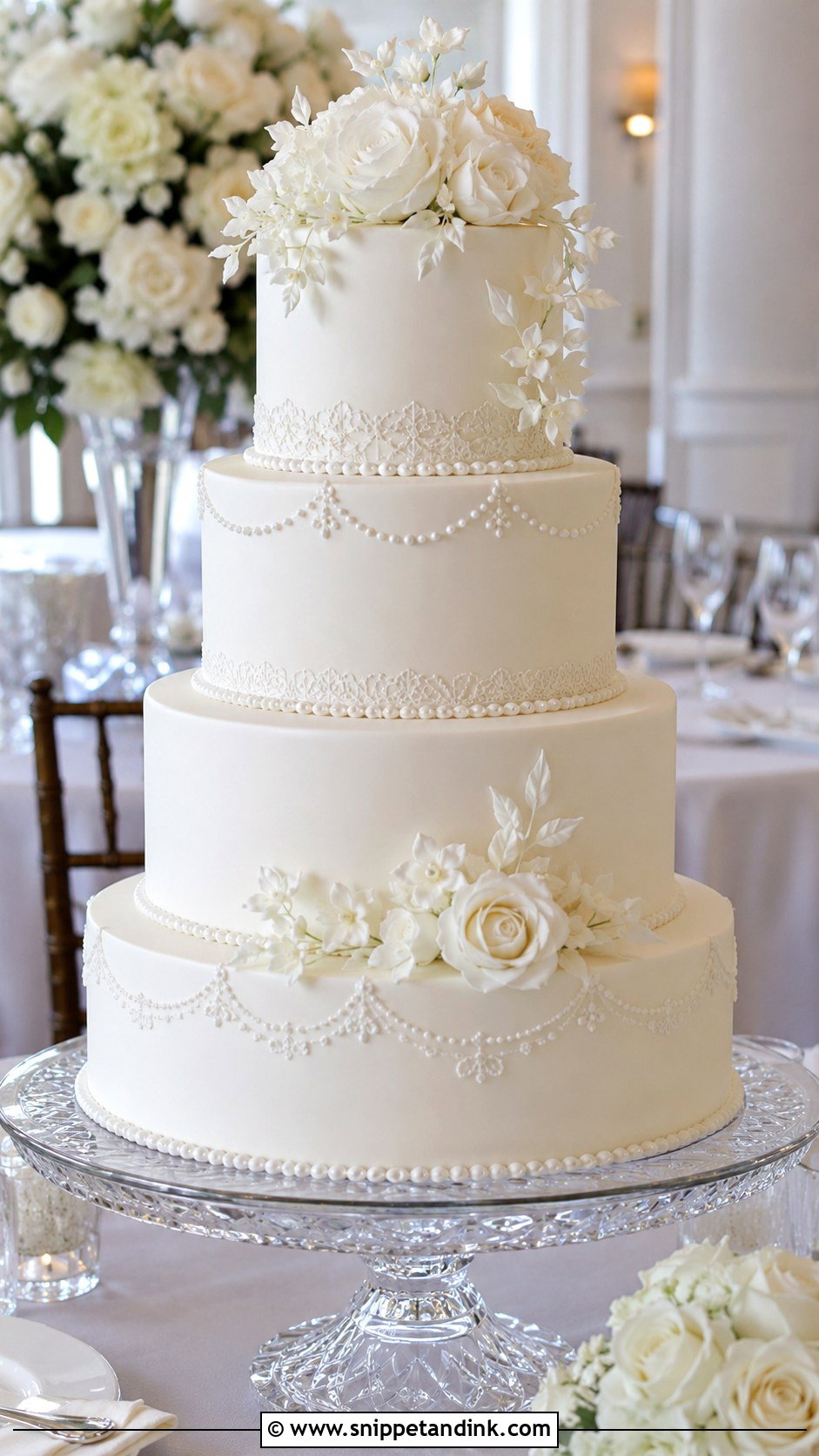
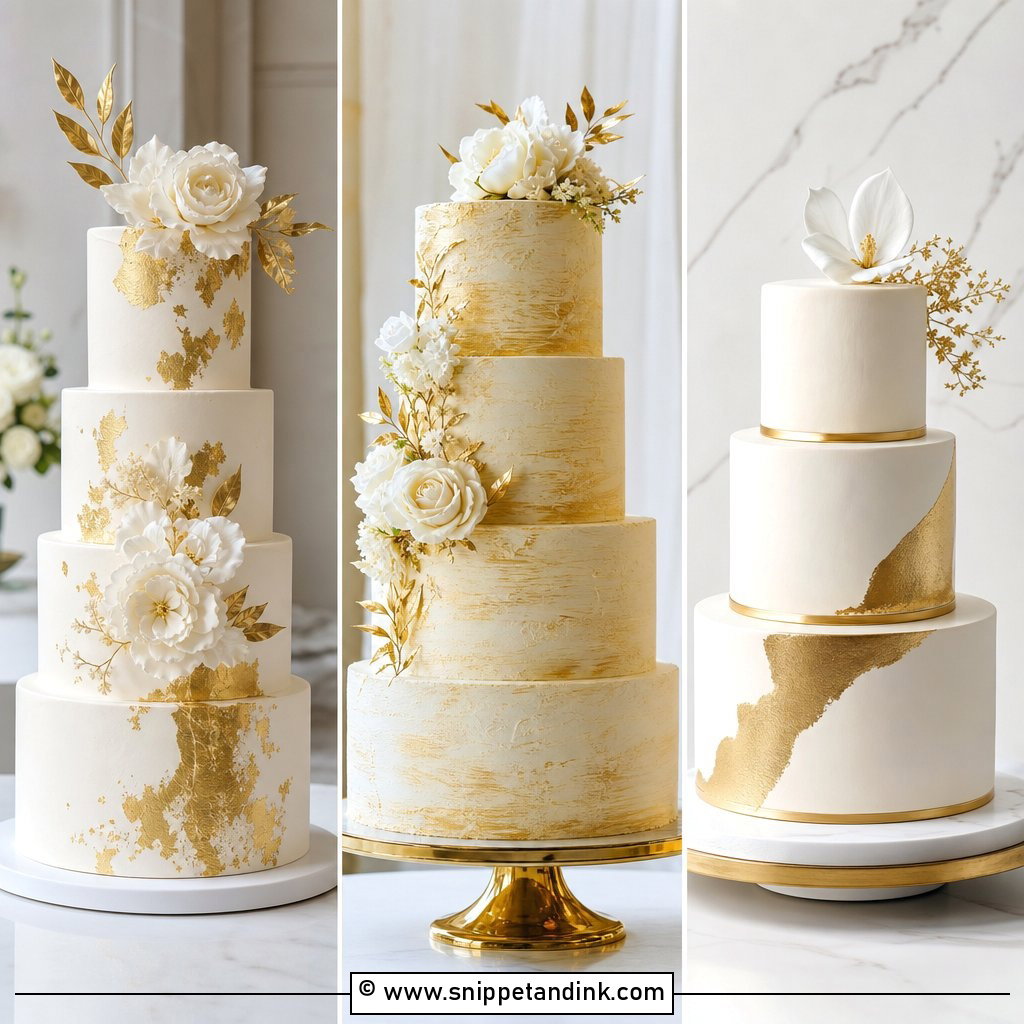
Gold can go on as leaf, painted edges, metallic splatter, thin bands or brushed accents over fondant or buttercream. I keep it to small areas so the cake still reads as a wedding cake. Ivory, blush, champagne and soft taupe all pair well. If the tables have gold flatware or candleholders, the cake will tie in naturally. Ask your baker to confirm the gold is edible, not decorative only.
14. Greenery Wedding Cake
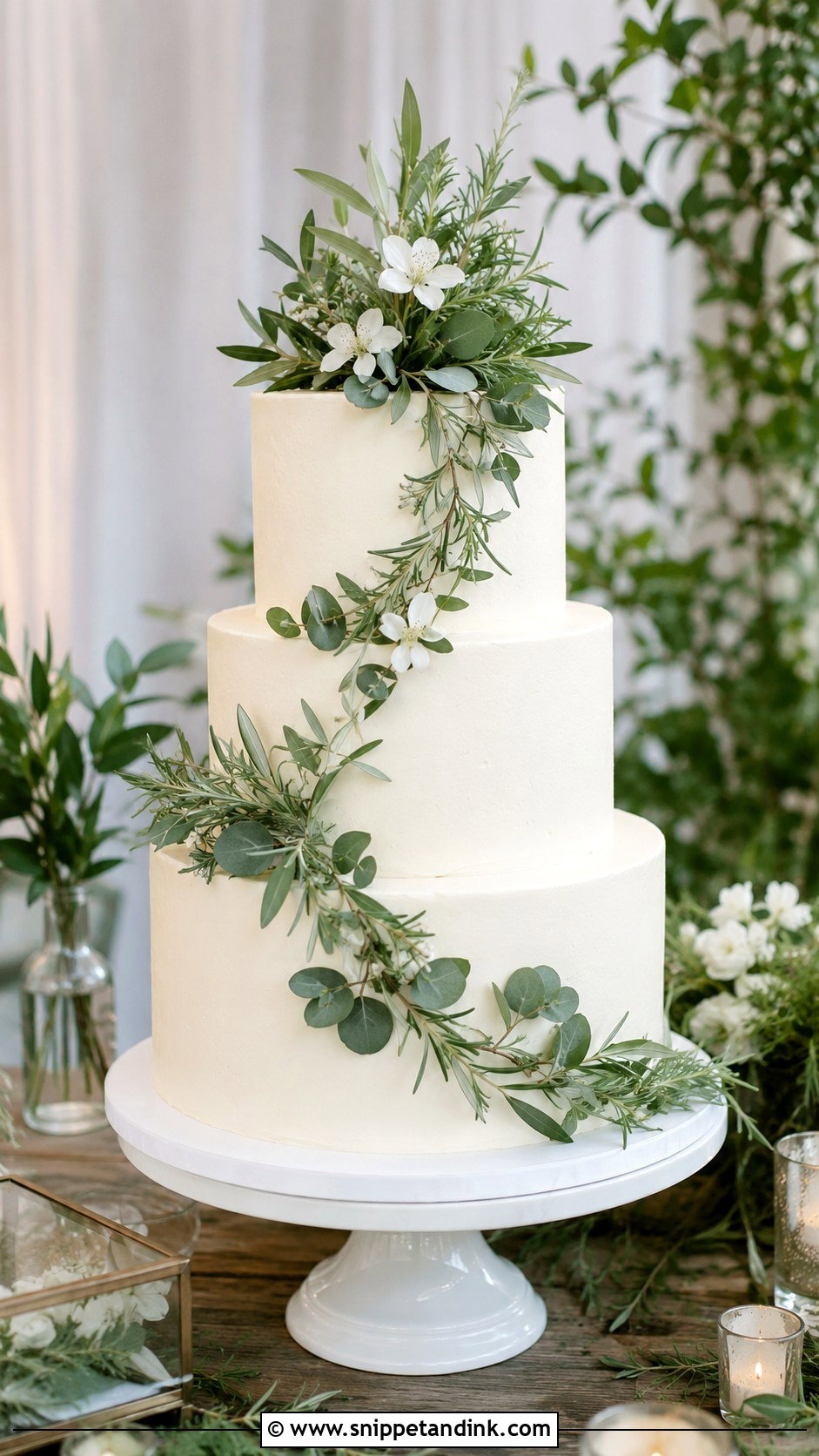
Eucalyptus, olive leaves, rosemary and vines give a clean botanical look on white buttercream, semi naked cake or smooth fondant. Some greenery, eucalyptus included, isn’t meant to be eaten, so I wrap stems and keep leaves off cut surfaces. Herbs like rosemary are the safe option. Place it in small clusters or a single flowing line. Add white flowers for softness, or keep it all green for a modern look.
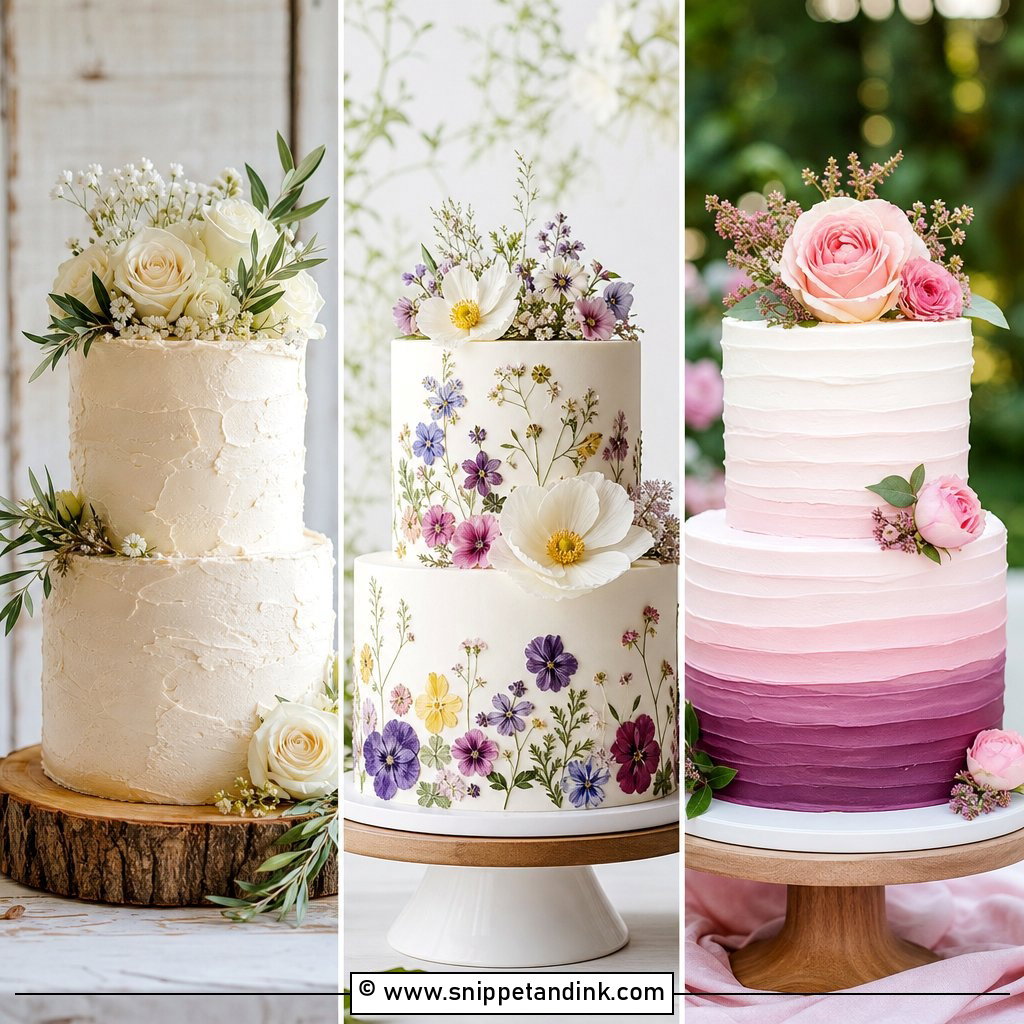
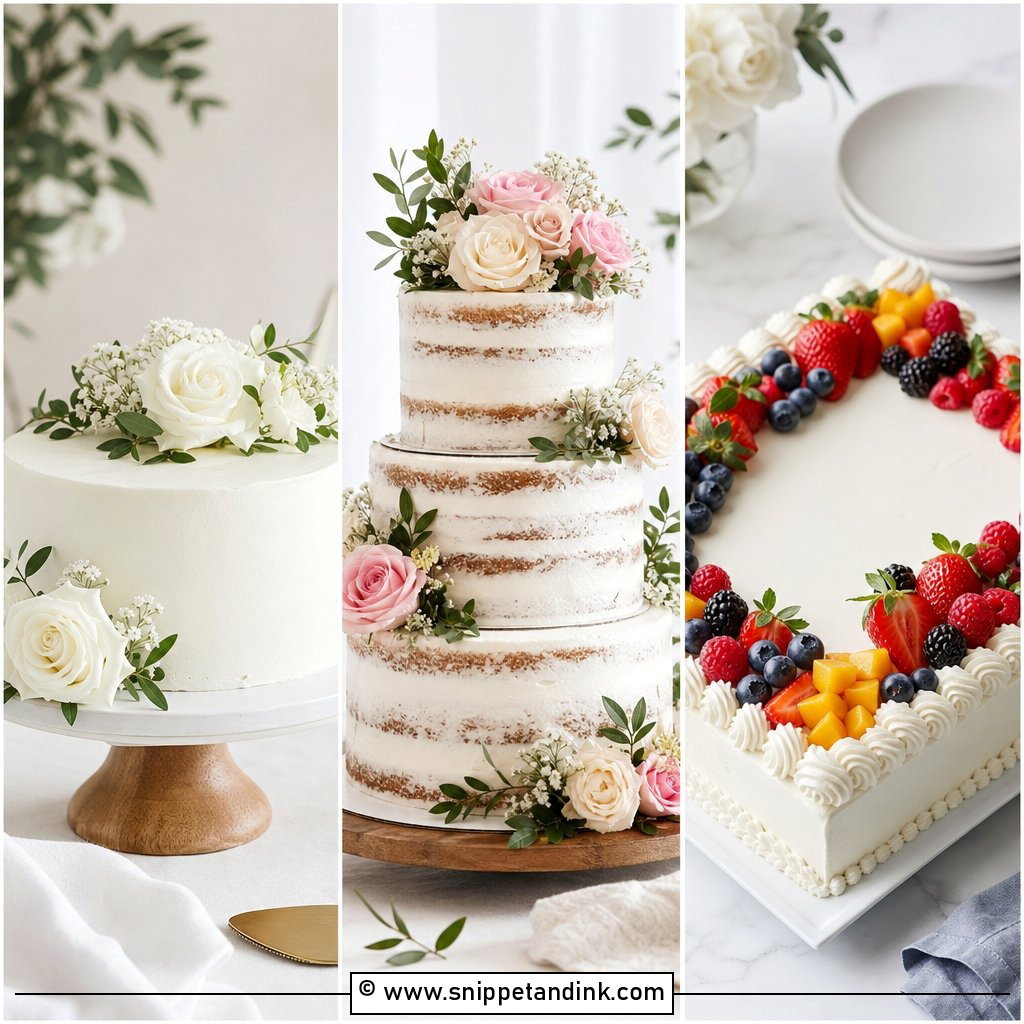
15. Fruit Wedding Cake
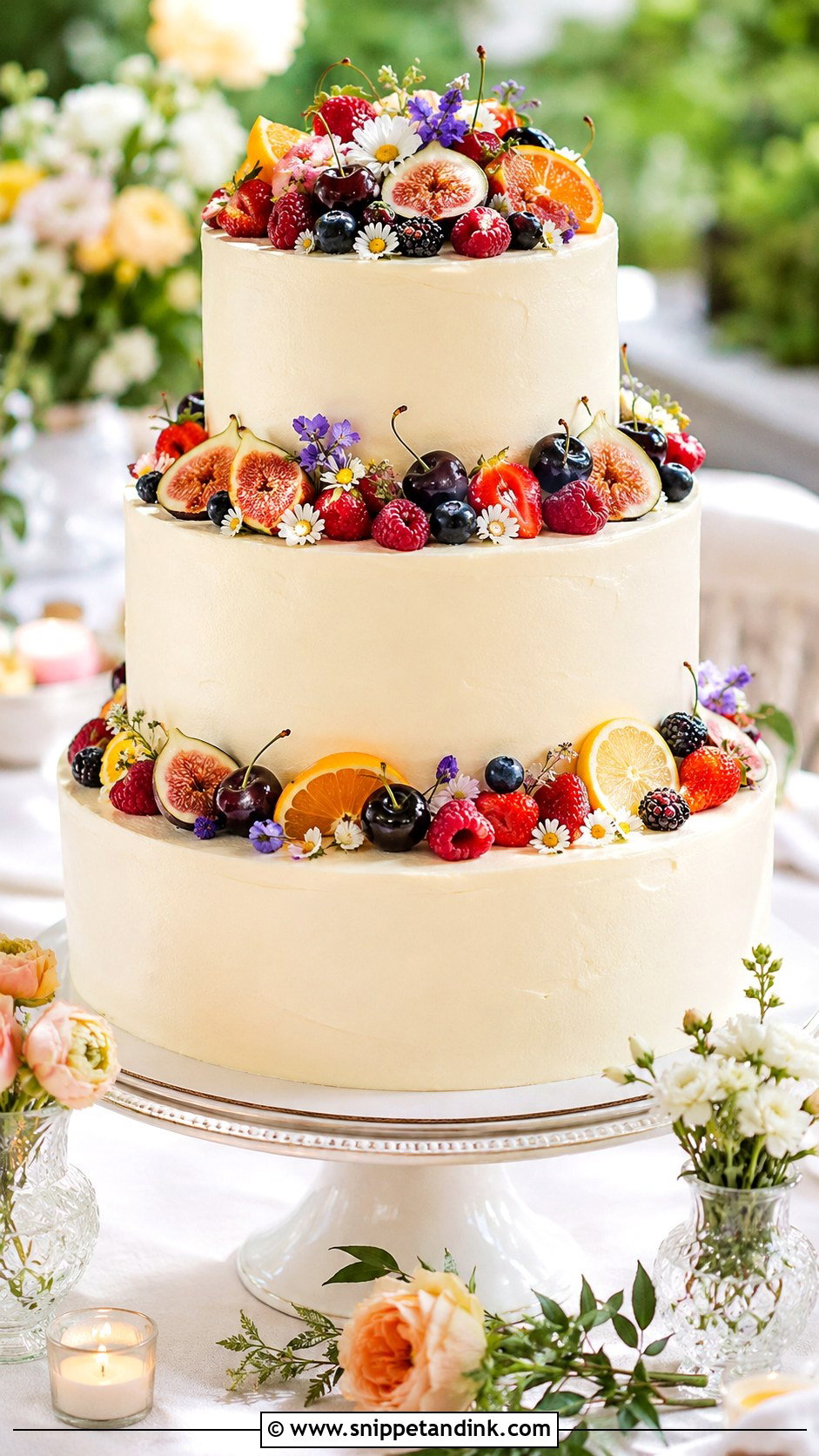
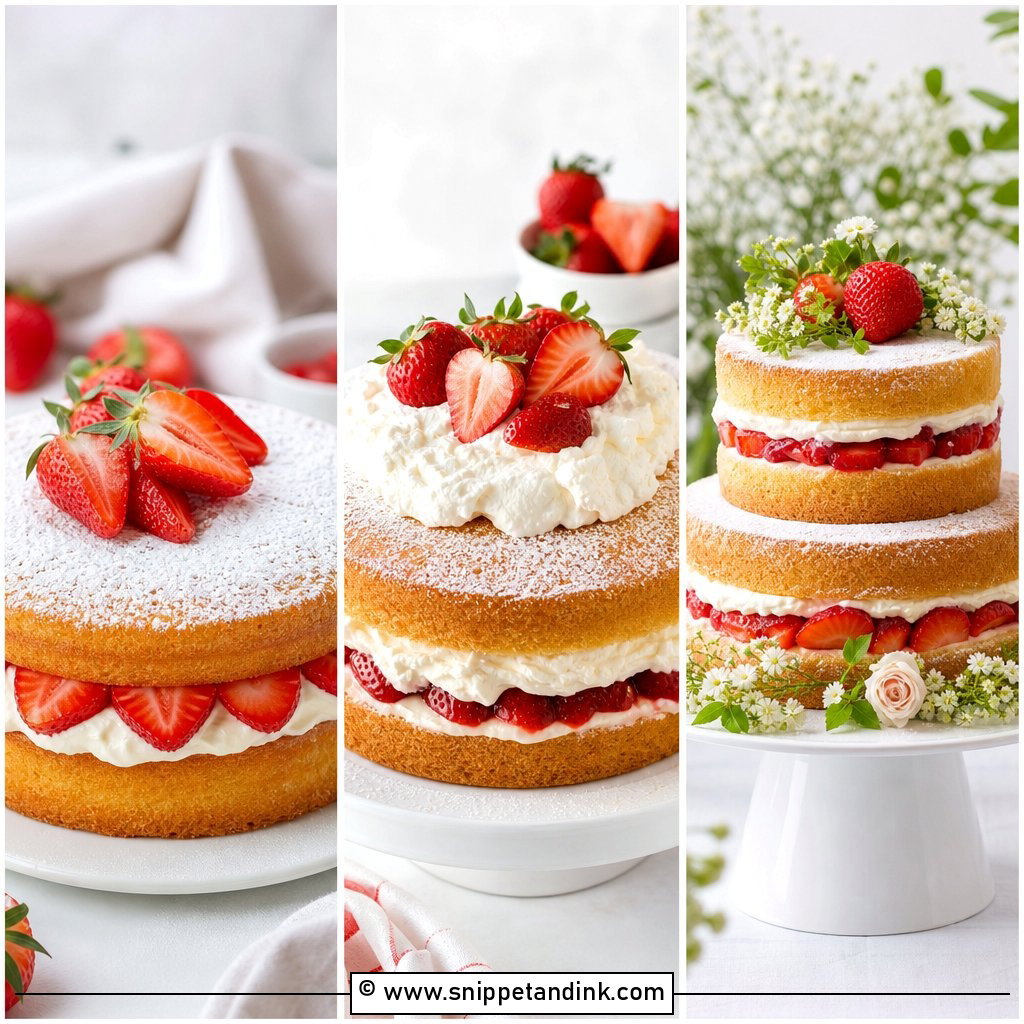
Fruit makes a cake look abundant without heavy decoration. Berries, figs, citrus slices, grapes, pears and cherries can follow the season: berries in summer, figs and pears in autumn. Cut fruit weeps juice onto frosting and browns, so I use whole fruit where possible and brush cut pieces with a light glaze. A white or ivory base makes the colors stand out. Small flowers or herbs finish it.
16. Watercolor Wedding Cake
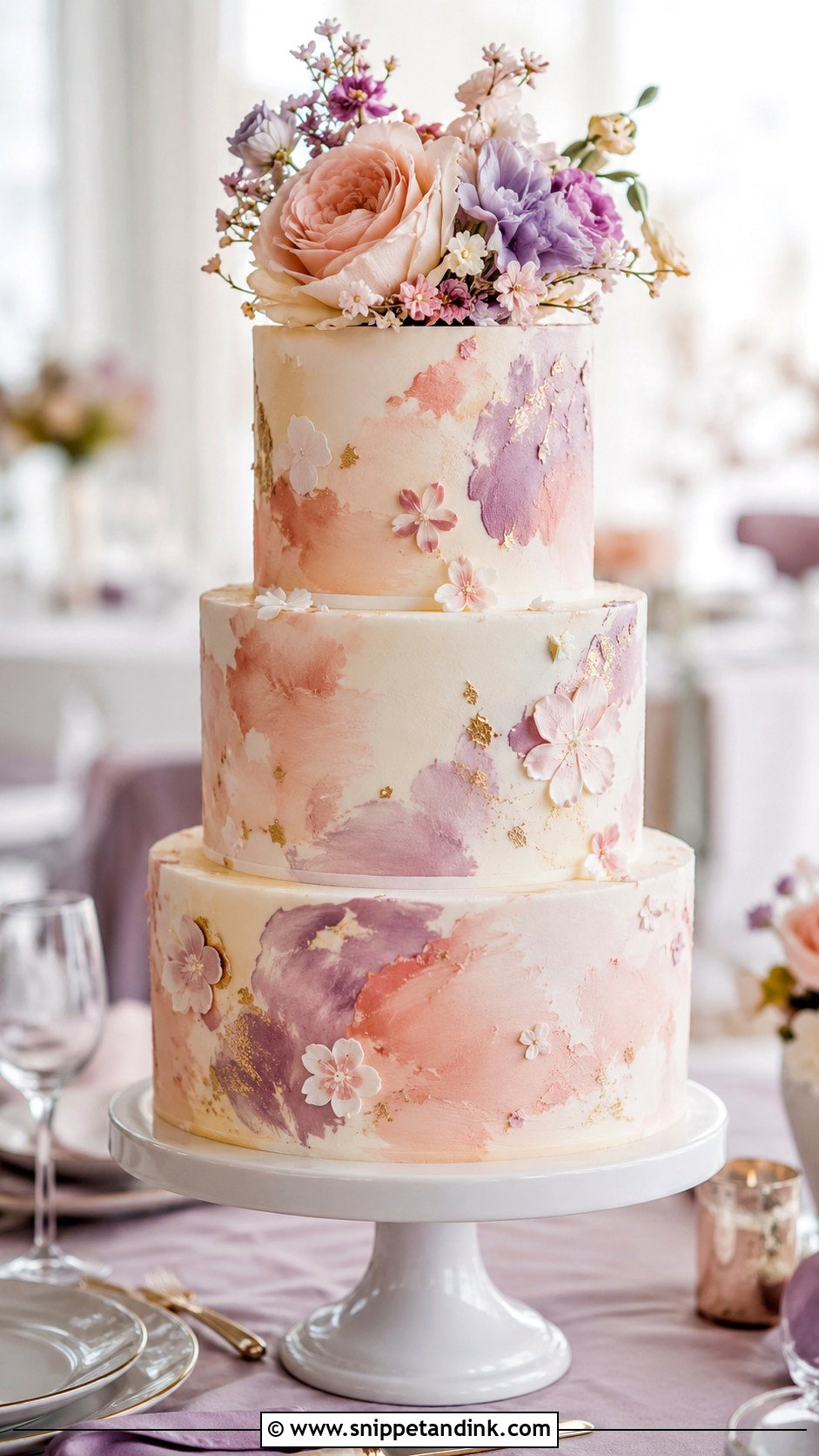
Watercolor is painted onto fondant or blended into buttercream with soft strokes, using blush, lavender, dusty blue, peach, sage or champagne. It gives color without brightness. The difference between a good watercolor cake and a muddy one is restraint and blending; too many colors turn brown where they meet. One floral arrangement, a small gold accent or a clean topper is enough. It suits garden and artistic weddings.
17. Marble Wedding Cake
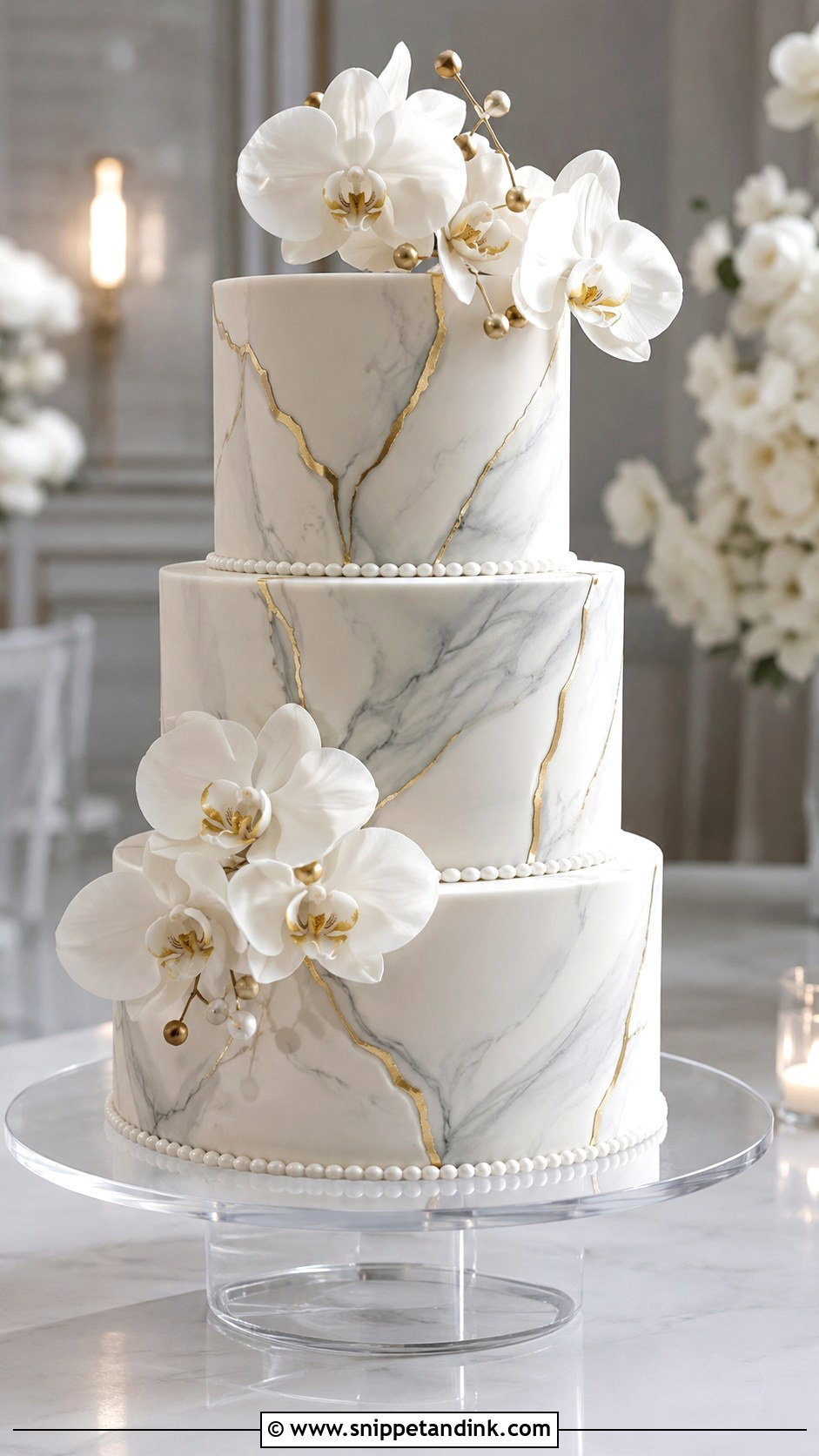
Marbling looks like stone or silk: soft grey on white, blush on ivory, green and cream. It usually works best on fondant, since the pattern needs a smooth, clean surface. I keep gold veining thin; heavy veining looks fake quickly. Minimal flowers and an acrylic stand suit it. It’s a good middle ground for couples who find plain white too plain.
18. Monogram Wedding Cake
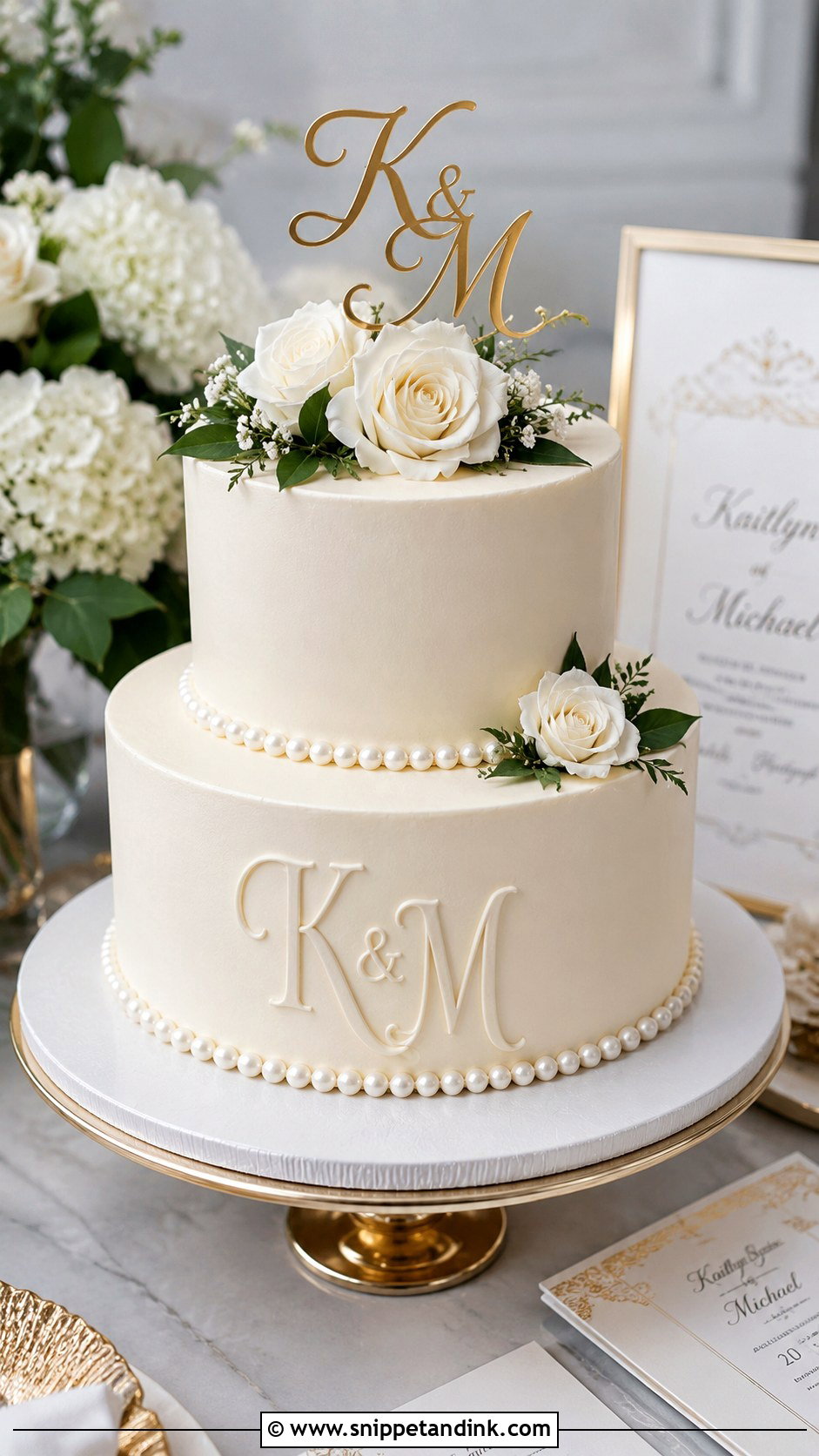
Initials can be a topper, piped on the front tier, stamped into fondant or painted in gold. Script reads romantic; block letters look modern. I check spelling and order of initials twice in writing with couples before anything is piped, since a mistake can’t be scraped off fondant. Keep the rest of the cake simple. A ribbon or a few pearls softens it.
19. Heart Wedding Cake
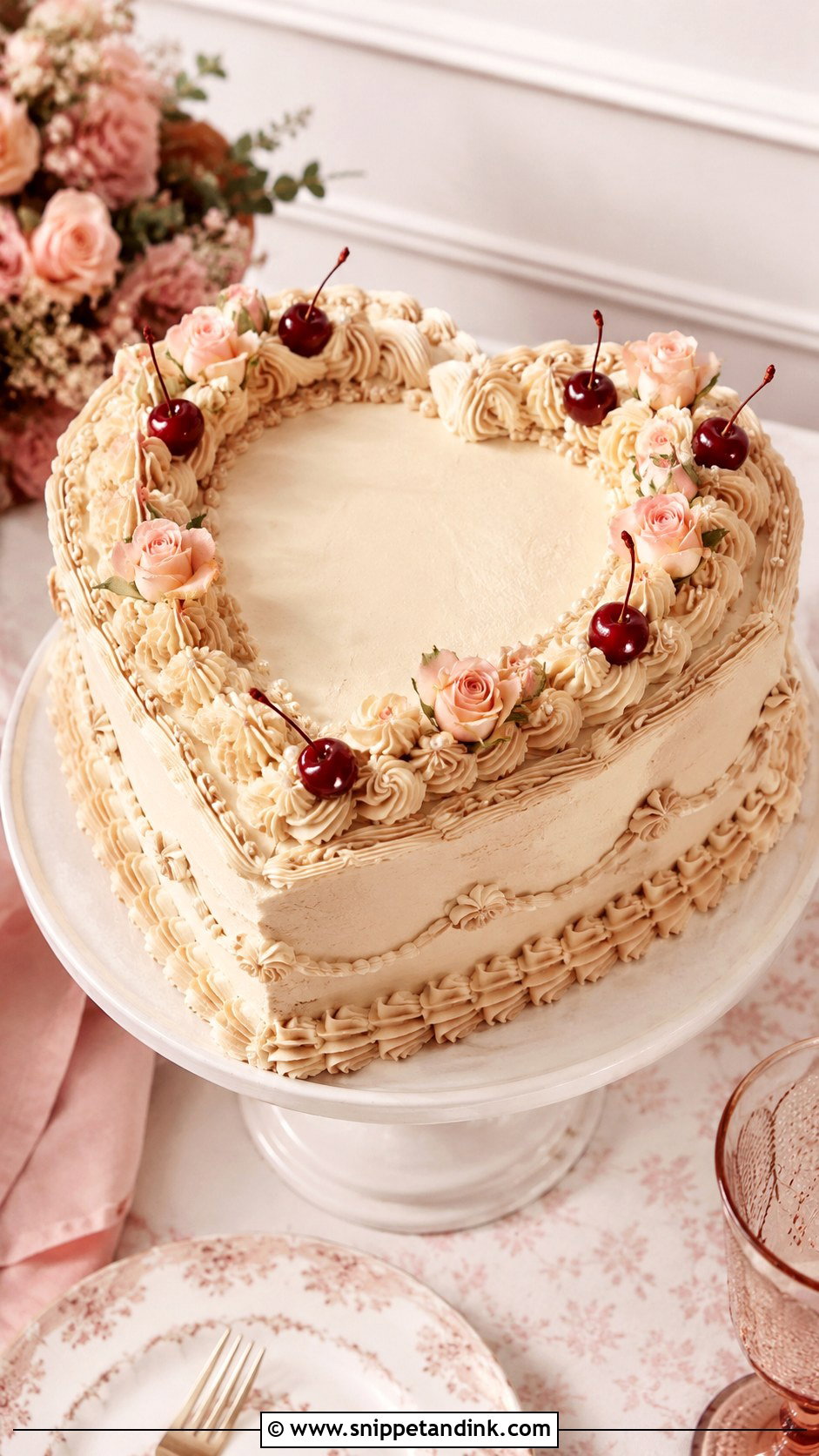
A heart cake can be a single heart for a small wedding or a tiered cake with a heart-shaped top tier. Vintage piping suits it because the borders follow the curve. White, blush, red or pale blue frosting all work. Heart pans make cutting into neat portions harder, so I plan servings with a sheet cake behind the scenes for larger guest lists. Cherries, pearls or tiny roses finish it.
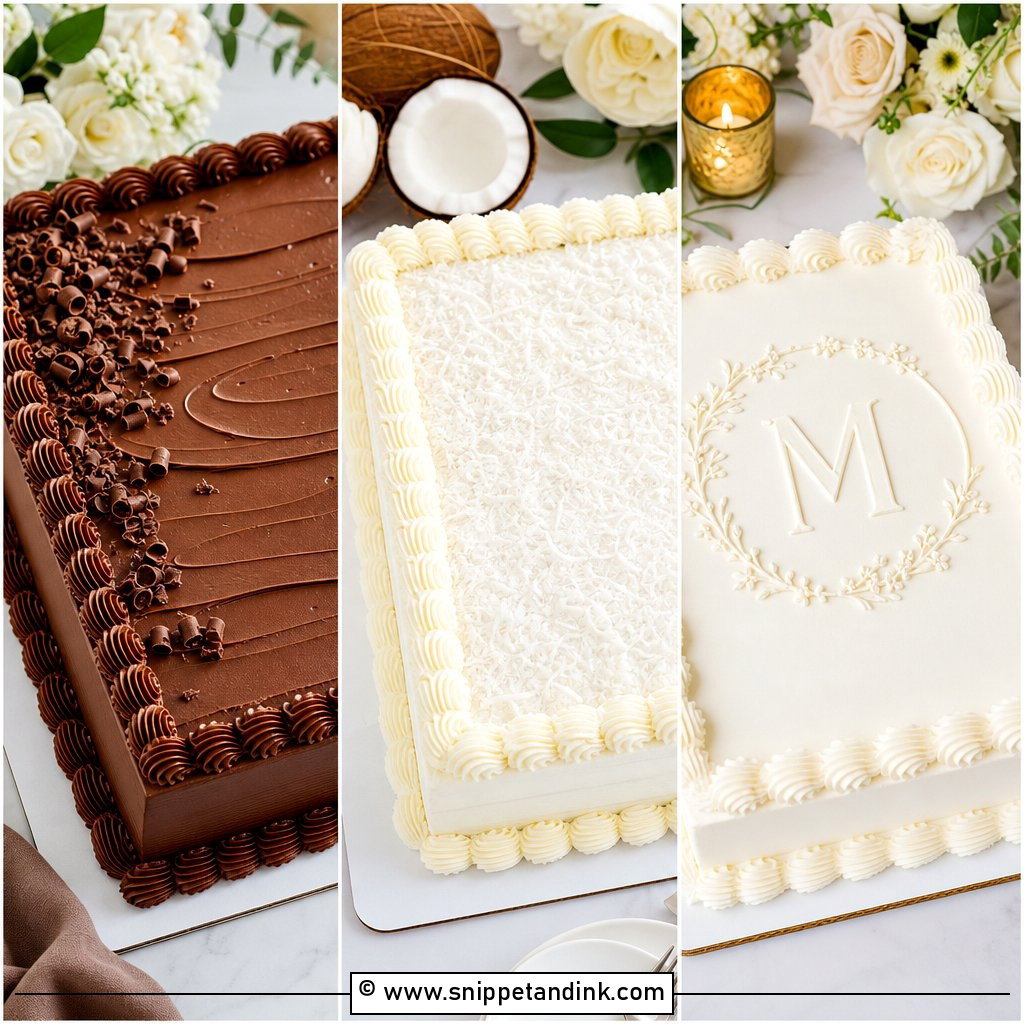



20. Mini Wedding Cake
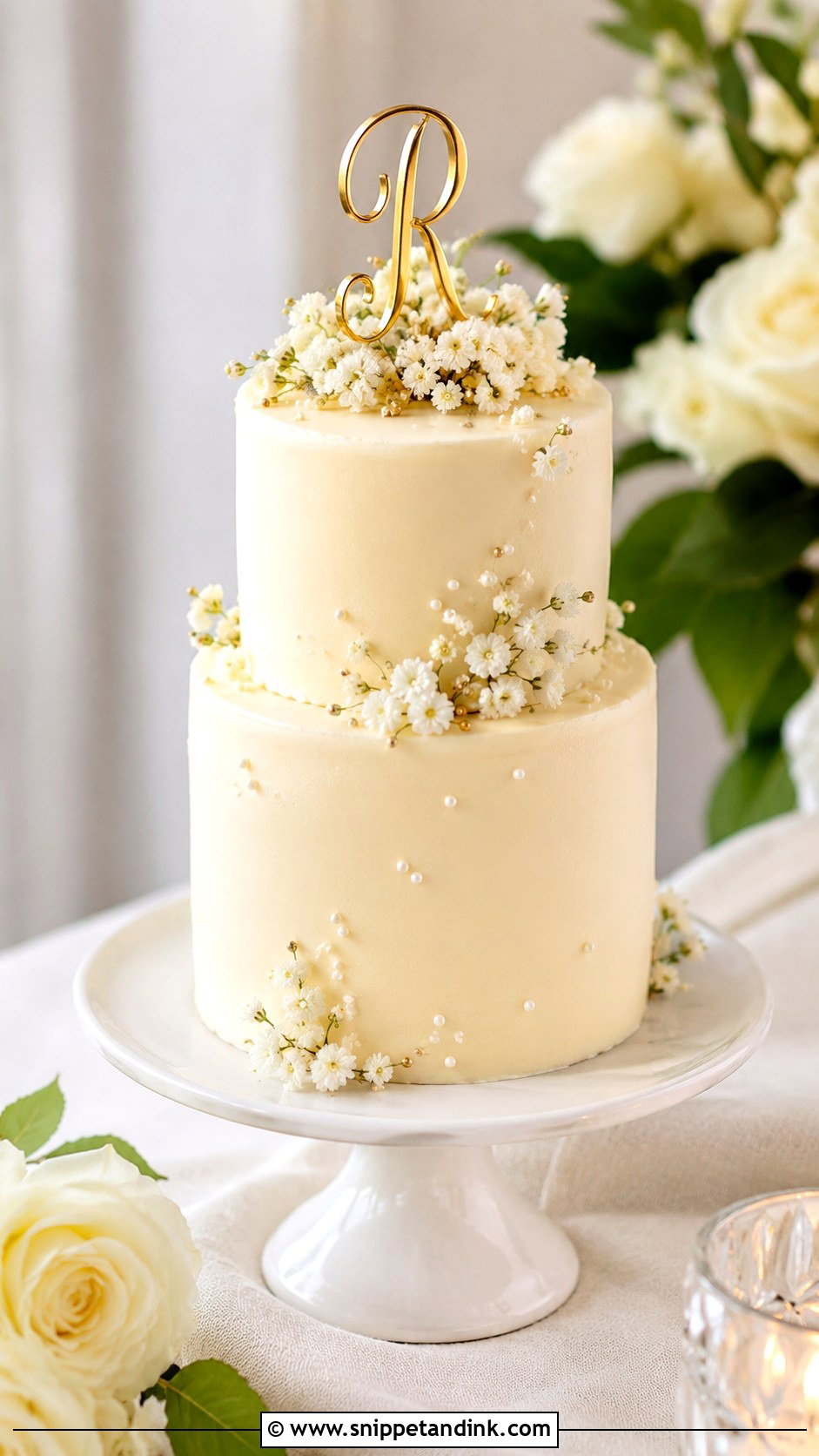
A mini cake suits intimate weddings, or couples who want a small cutting cake and extra sheet cake served from the kitchen. One or two tiers can still feel luxurious with smooth buttercream, small flowers, pearls or a monogram topper. Several mini cakes in different flavors give guests choice and fill a table well. Each one still needs individual decorating, so the price per serving is often higher than a single large cake.
Decorations That Come Off Before Anyone Slices
Many decorations look edible and aren’t: wired sugar flowers, fresh stems, eucalyptus, ribbon, toppers, dowels and cake boards between tiers. Someone has to remove all of them before the cake is cut and served, and couples rarely think about who.
I write a short note for the venue or caterer listing every non-edible item and where it sits. Ask whether their staff will cut the cake, and whether that’s included. If you’d like to keep the topper or sugar flowers, say so in advance and ask for a box, otherwise they may be thrown away with the boards. Keep the top tier separate if you plan to save it, and wrap it well before freezing.
Cutting a decorated cake cleanly
Heavily piped and fondant tiers are easier to portion if they’re cut while still slightly cool, with a long knife dipped in hot water and wiped between slices. I suggest the kitchen removes each tier from the stack and cuts it on a board, rather than slicing into the tower on display, where boards and dowels make neat portions almost impossible.
A Cake That Belongs to the Rest of the Wedding
The right decoration matches the couple, the room and the time of year. Some will love a dramatic Lambeth cake, others a smooth cake with one flower. Fresh fruit, pearls, greenery, gold, pressed flowers and textured buttercream each make a cake personal in a different way. Before you decide, I’d look at the season, the room, the dress and where the cake will stand. A cake doesn’t need to be large to be remembered. It needs one clear idea, done well.
You'll Like These Ideas:


Leave a Reply