
A forest cake should look as if it belongs to the place, not as if it was dropped there from a city ballroom. That usually means buttercream in earthy colors, a few textures borrowed from the woods, such as bark, moss, ferns, berries and mushrooms, and a handful of small flowers. It rarely means a big cake. Two small tiers, a semi-naked finish or one clean tier will hold their own on a rustic table. I’ve made these for clearings, cabins and barn receptions, and below are twenty that work, plus what I’d change for an outdoor setting.
A Forest Cake Brief Your Baker Can Work From
“Woodland” means very different things to different couples. To one it’s ferns and white flowers, to another it’s chocolate bark and toadstools. When couples come to me with a forest wedding, these are the things I ask for, and they save us both a round of sketches.
- Photos of the actual venue, ideally at the time of day the cake will be cut.
- One hero detail you love most, and one you’d happily drop.
- Your palette in two or three colors, including how dark you’ll go.
- Whether the cake sits indoors, in a tent or in the open.
- Any allergies, since nuts often appear in pinecones, bark and moss mixes.
Textured finishes and sugar details take more hours than a smooth cake with fresh greens, so expect the decorating time, and often the price, to reflect that.
1. Simple Forest Wedding Cake With Greenery
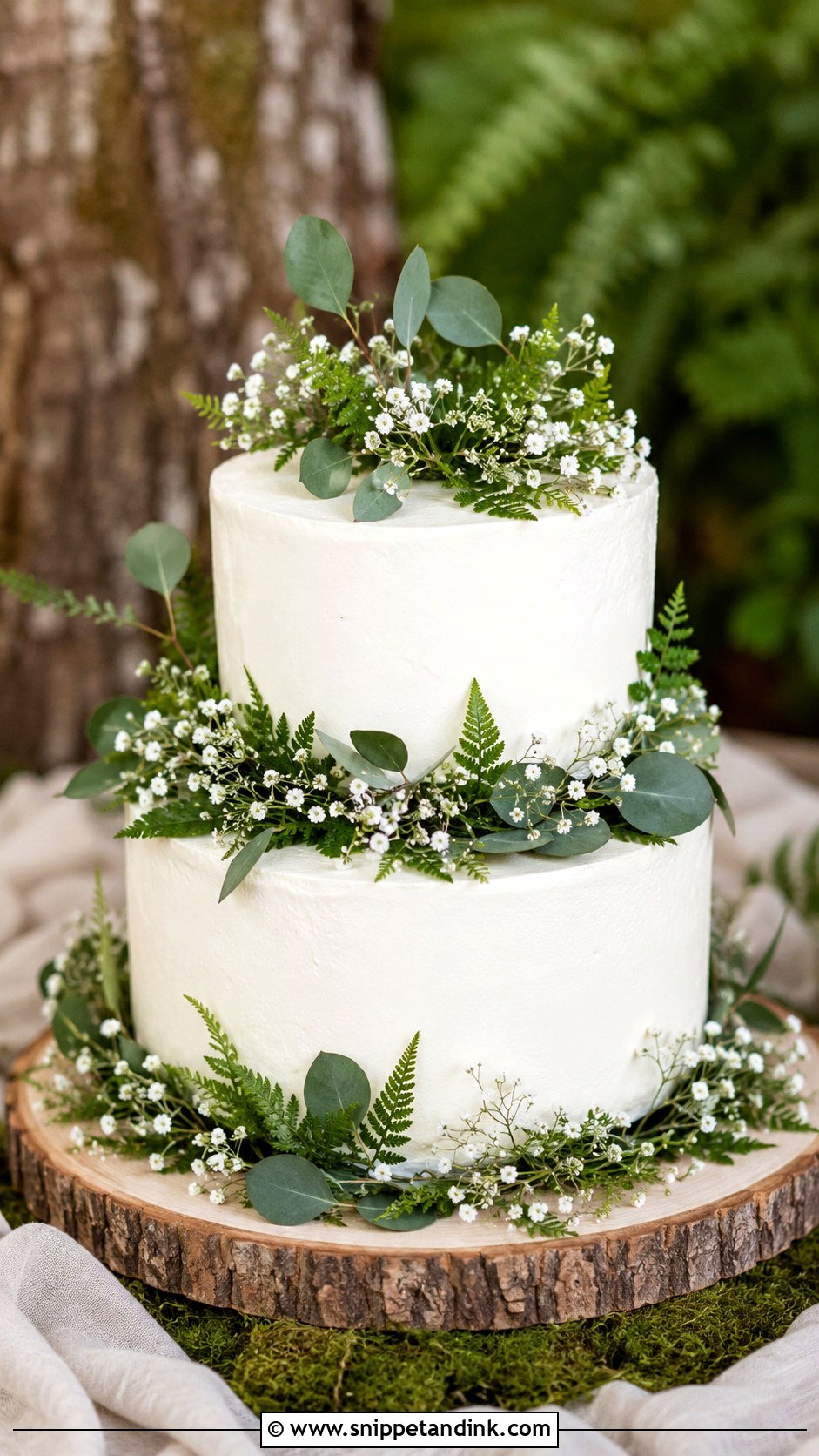
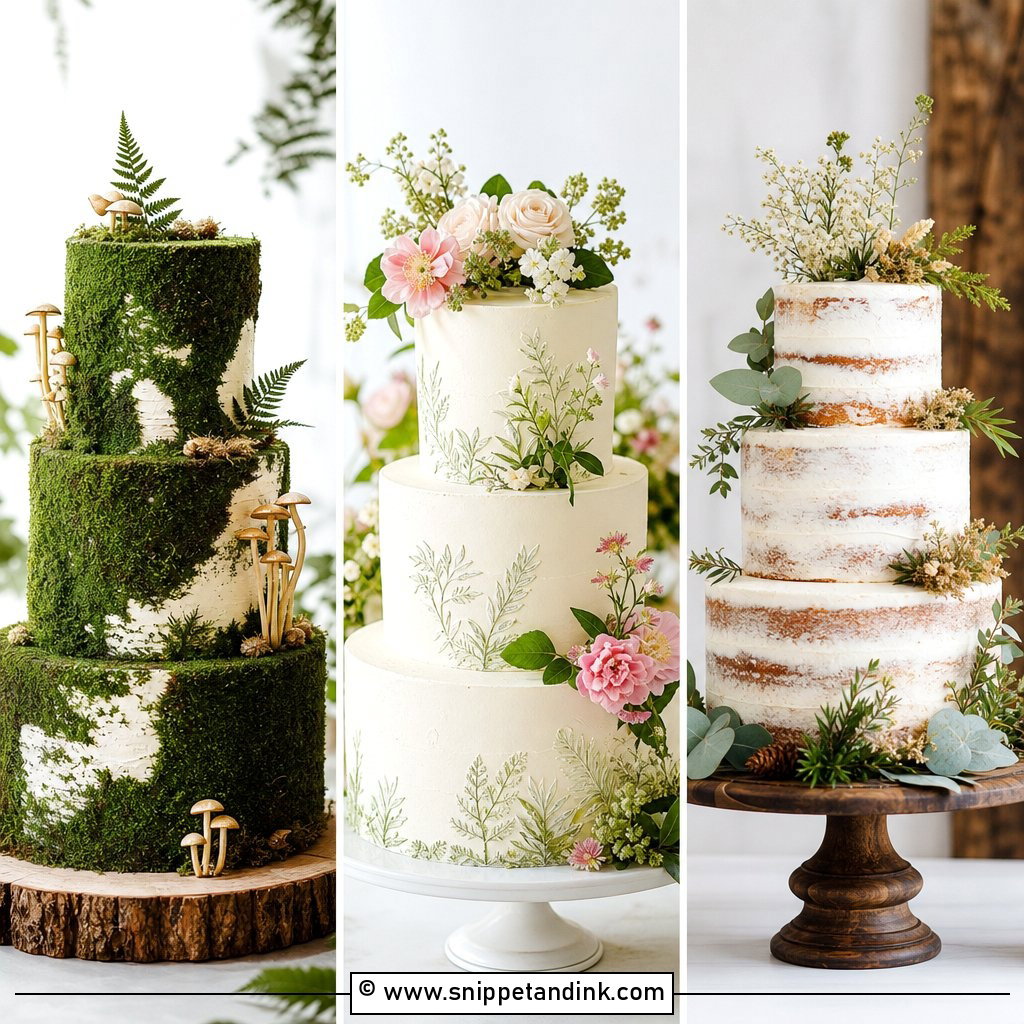
Greenery on a white or ivory buttercream cake is the simplest way to say woodland. Ferns, eucalyptus, olive leaves and small trailing vines go around the tiers, with nothing else competing. I keep the shape classic and the greens light; once leaves cover more than a third of a tier, it starts to look like a hedge. Two tiers suit a small wedding, three can still look simple. A wood slice or a stone-look stand grounds it.
2. Semi Naked Forest Wedding Cake
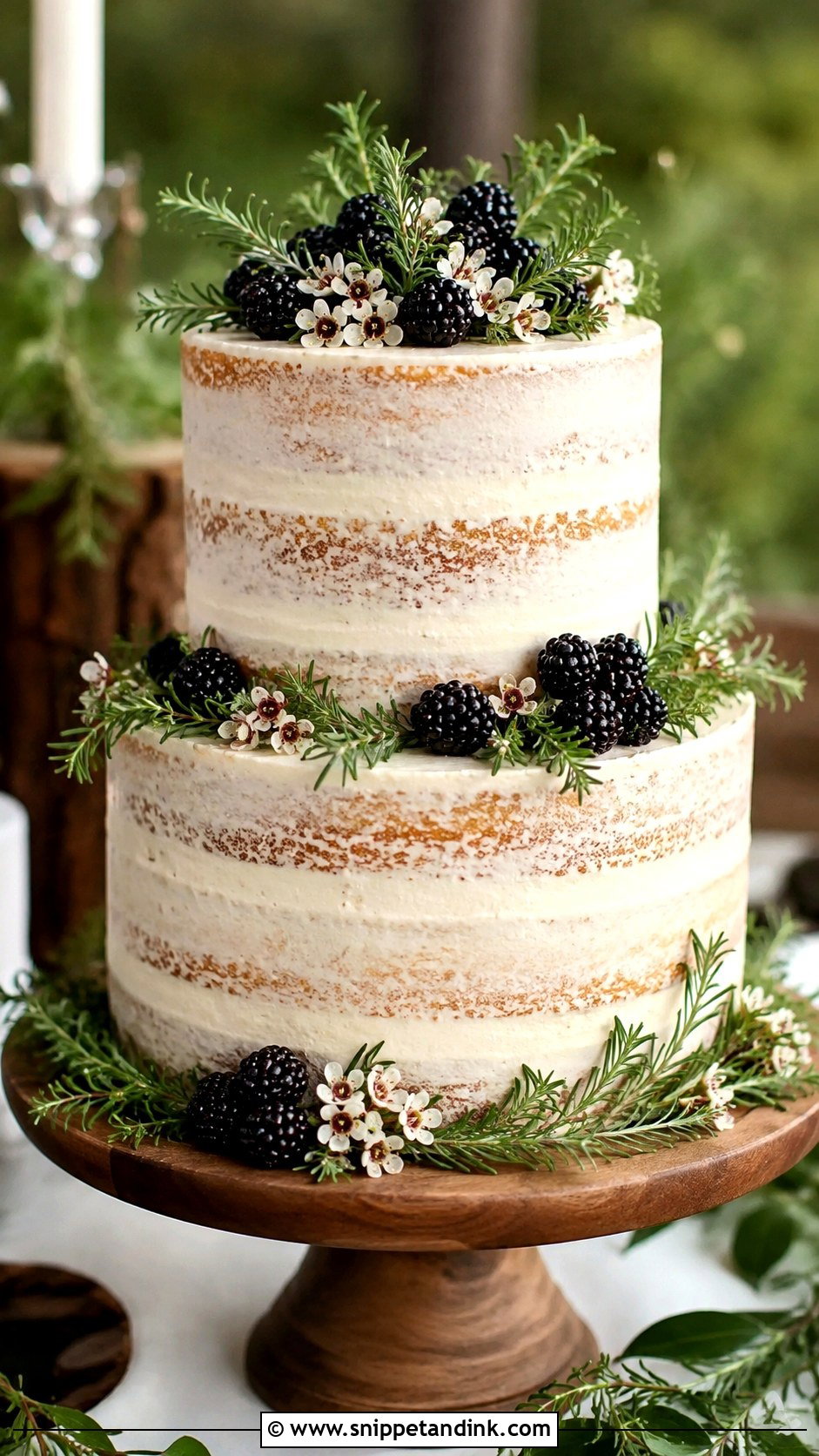
Semi-naked cakes have one thin coat of buttercream scraped back so the layers show. Spice, carrot, almond, vanilla and chocolate sponges all look good through it. I finish with a few sprigs between tiers and some berries or tiny white flowers. The scrape should be smooth but not perfect; that slight unevenness is the charm. My one caution is that exposed sponge dries out faster than a fully coated cake, so outdoors I’d set it out close to serving time.
3. Moss Forest Wedding Cake
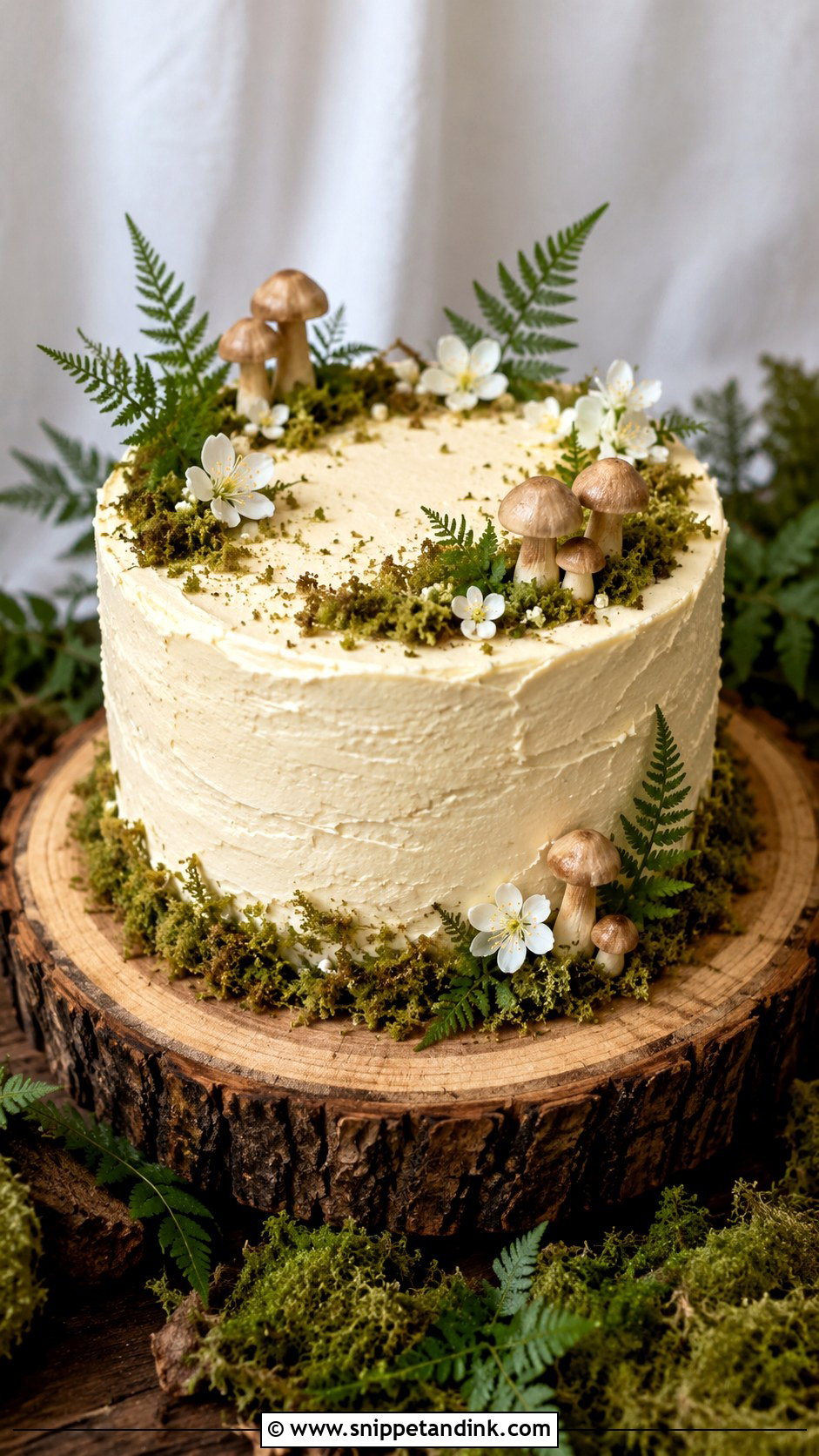
Moss gives an enchanted woodland feeling without much drama. I make it from green-tinted sponge crumbs, pressed lightly onto the buttercream in patches, so it looks like moss creeping up a stone. Textured sugar or chopped herbs work for small accents. One round tier or two stacked tiers give the texture room. A few tiny mushrooms, small white blossoms or fern pieces balance it, in soft green, ivory and brown.
4. Fern Forest Wedding Cake
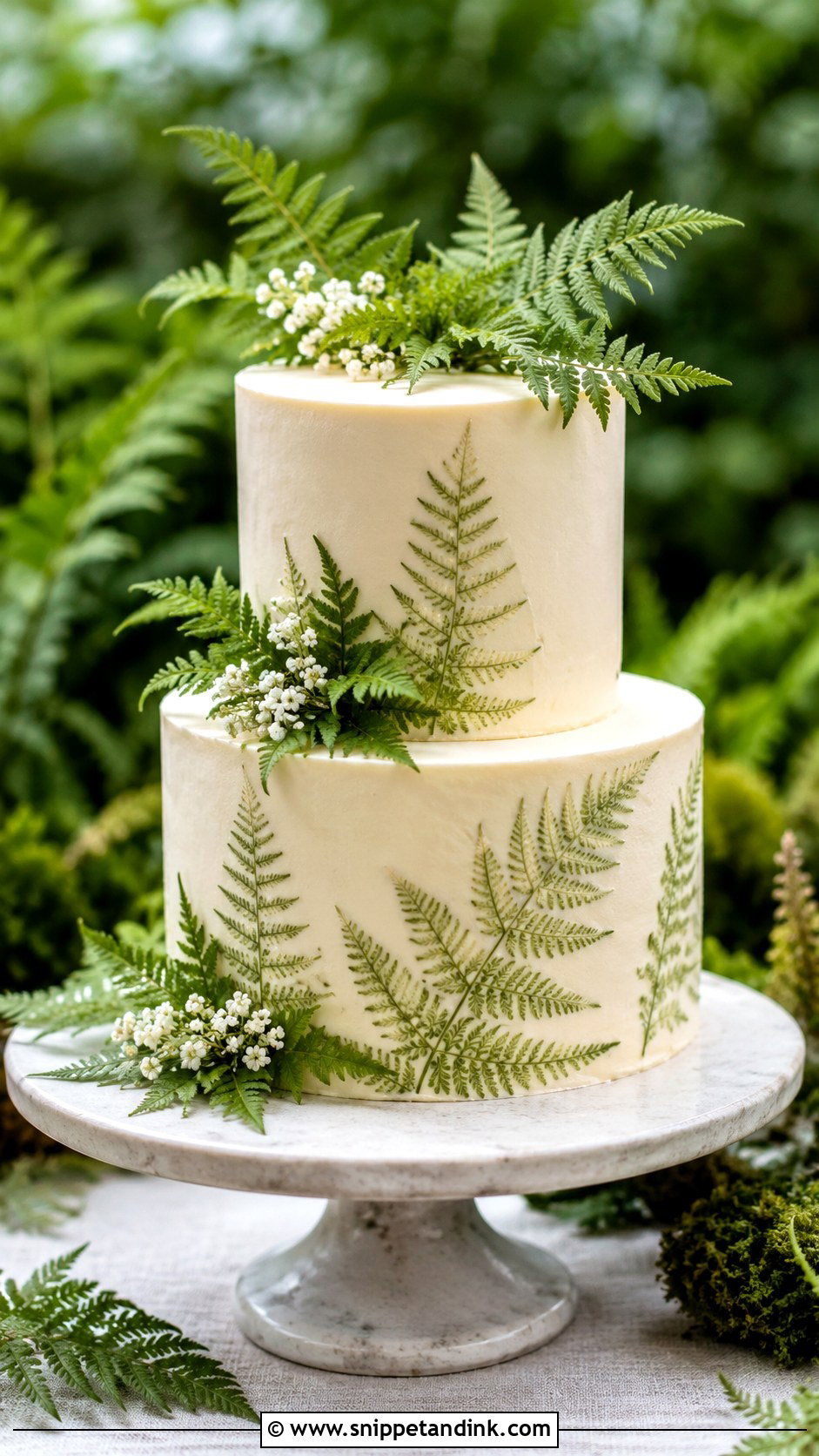
Ferns read as shade and woodland instantly. On fondant, I press a real, washed fern into the soft surface for a clean imprint, or paint fern fronds by hand; on buttercream, I use fern shapes cut from wafer paper. Fresh fern stems can sit around the cake too, wrapped at the cut end. Ask for light texture in the frosting rather than a perfectly flat finish if you want it organic. Spring, summer and early autumn suit it, with pale flowers and green linens nearby.
5. Bark Forest Wedding Cake
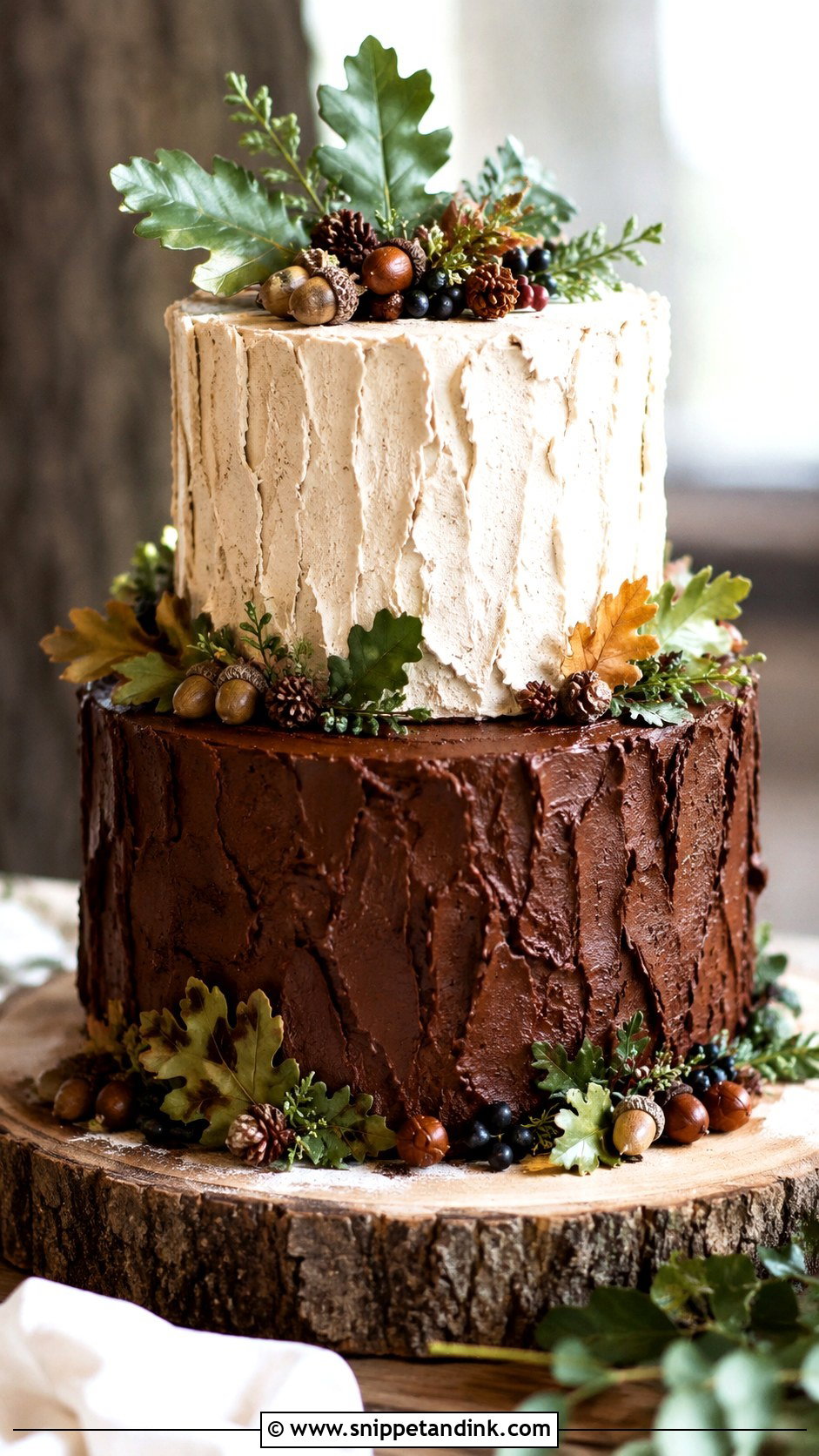
Bark texture is easier than it looks. I spread buttercream or ganache on thick, then drag a fork or a fine comb upward to make the grain; fondant panels with brown and ivory shading give a smoother tree. Keep the texture gentle rather than deep, or the cake looks like a log. A few greenery sprigs, sugar acorns, berries or tiny flowers soften it. It suits cabins and autumn woodland weddings, and the textured finish forgives small knocks in transport.
6. White Forest Wedding Cake
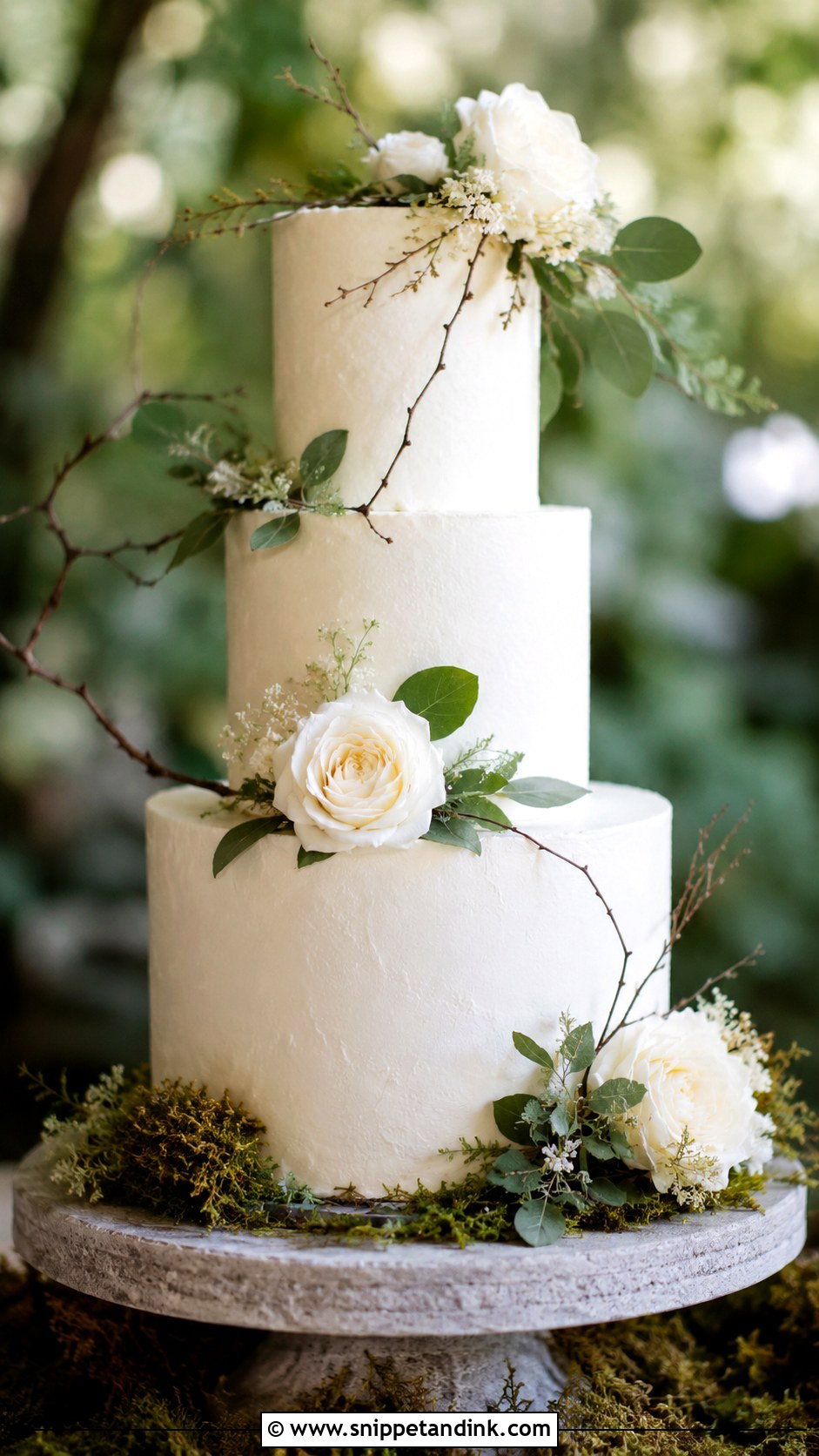
Keep the cake white, and let the forest show up in small details: white flowers, pale green leaves, a few thin branches, delicate fern accents. Smooth buttercream is classic; light texture relaxes it. I like this version when the venue itself is dramatic, with tall trees and deep shade, because a pale cake stands out against dark greens rather than disappearing into them. A wooden stand or a ring of moss crumbs at the base is plenty.
7. Rustic Forest Wedding Cake
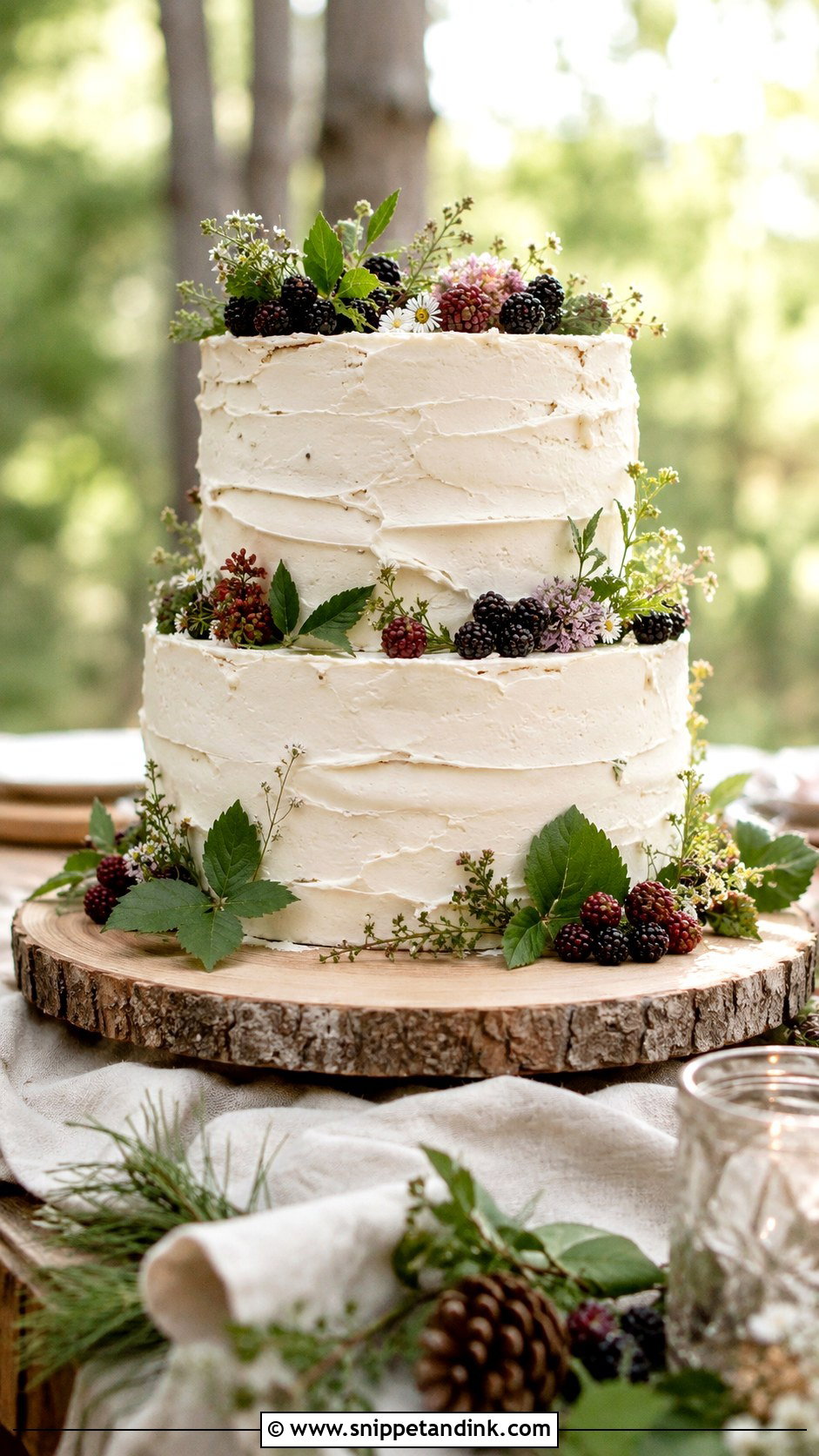
Textured buttercream in natural tones, a few small flowers, greenery and berries on two tiers. Rustic isn’t the same as messy; the uneven frosting has to look deliberate, with clean top edges even where the sides are rough. Spice, carrot, almond and chocolate are the flavors I’d pair with it. A wood slice stand completes the look and matches a relaxed outdoor reception.
8. Forest Wedding Cake With Wildflowers
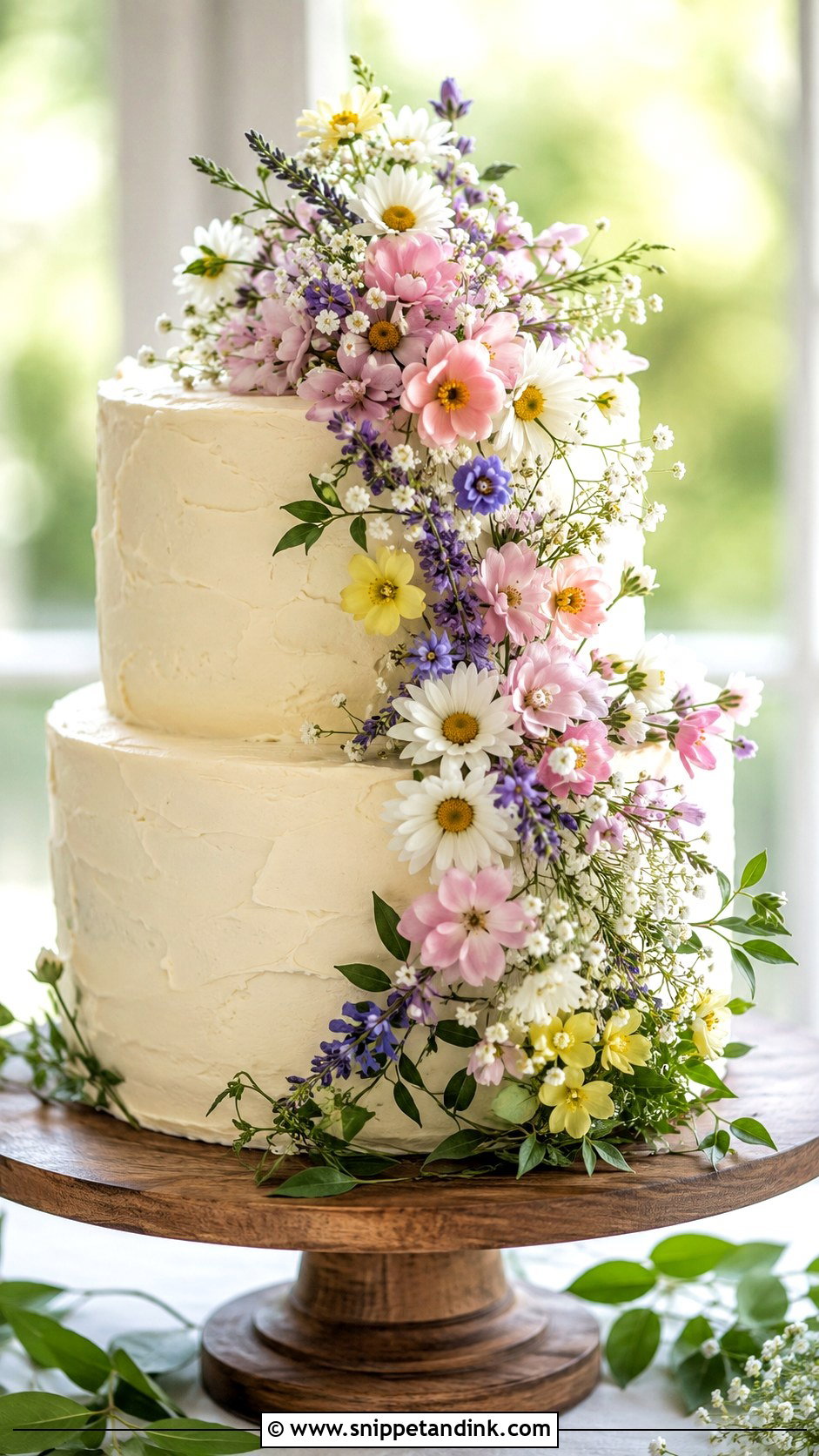
Small blooms in ivory, blush, lavender, pale yellow or dusty blue climb up one side or gather between the tiers. The cake stays smooth or lightly textured underneath. Wildflowers wilt fast without water, faster outside on a warm afternoon, so I place them as late as possible or use pressed or sugar versions that won’t droop. Spring and summer suit soft tones; deeper shades work in autumn.
9. Forest Wedding Cake With Mushrooms
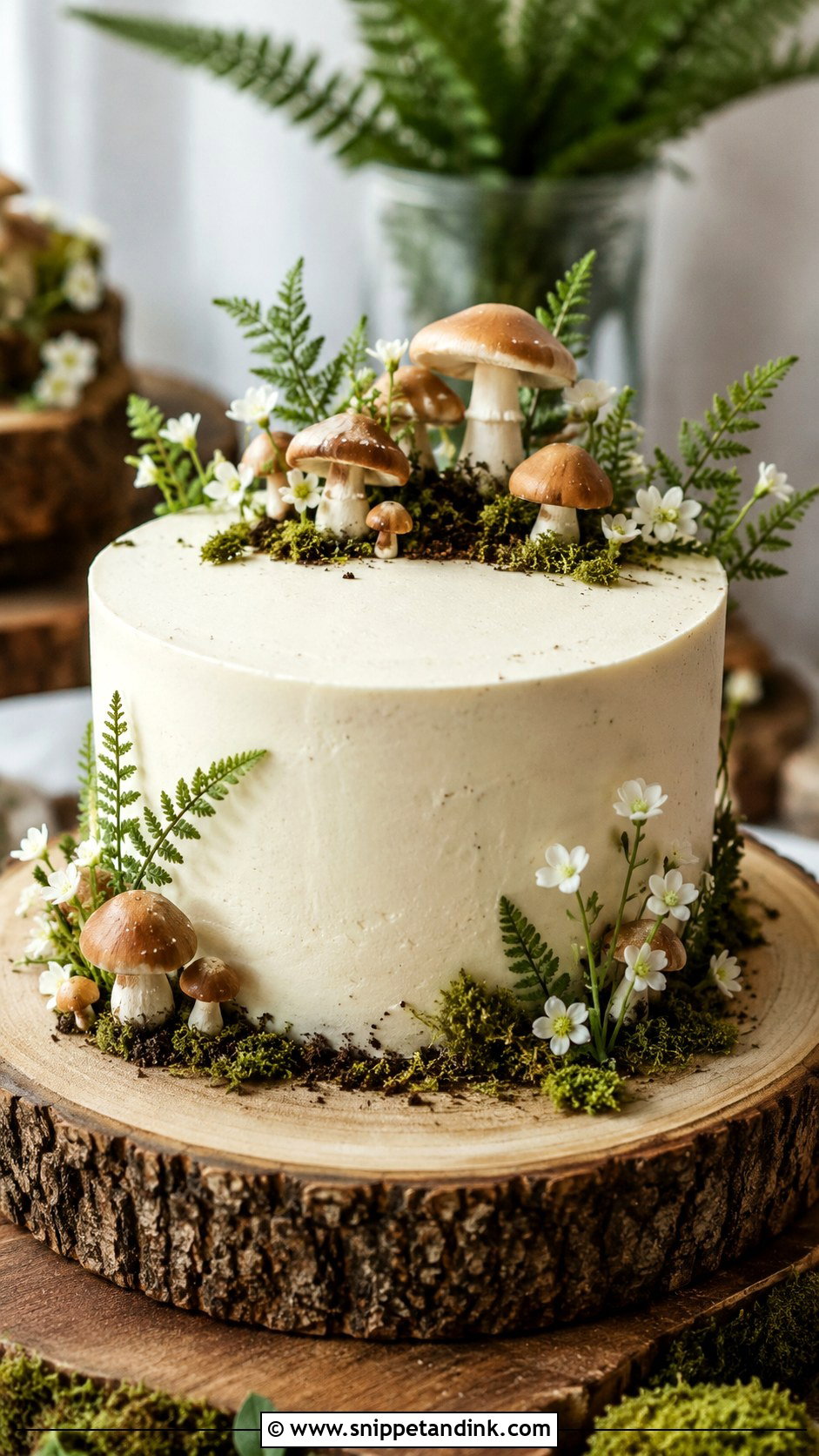
Mushrooms make a forest cake feel like a storybook. Small sugar mushrooms, fondant ones or painted details all work; my favorite are meringue mushrooms, which are light enough to sit on soft buttercream without sinking. I keep them small and place them in twos and threes at the base, the way they grow. An ivory, cream or soft brown base, a little moss crumb and a fern or two finish the scene. Oversized mushrooms tip it into a children’s party.
10. Forest Wedding Cake With Pinecones
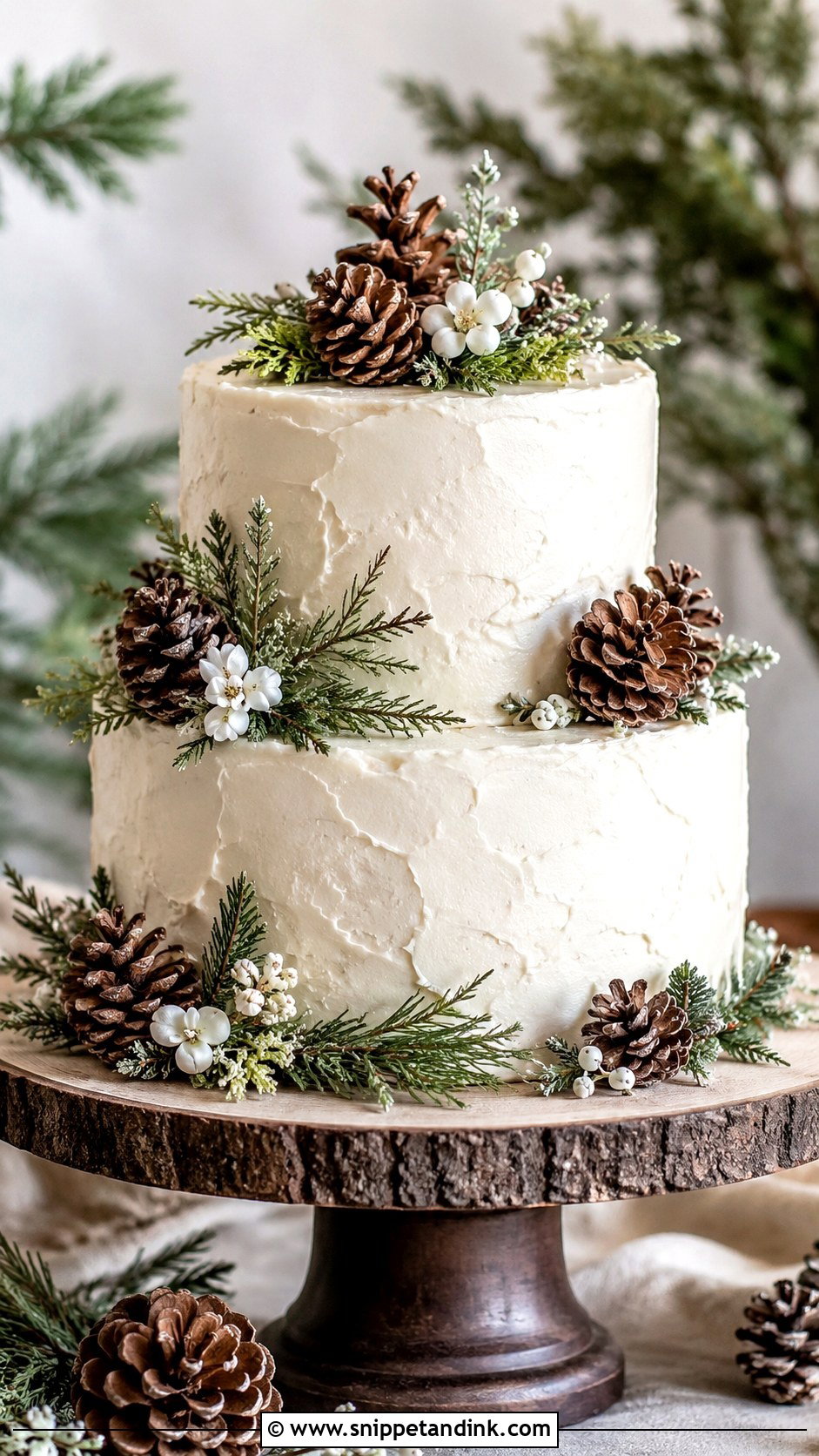
Real pinecones collected outside never go on the frosting. They carry dirt, sap and insects. For a cake, I make them from chocolate with overlapping almond slices or chocolate cereal flakes, or in sugar; just flag the almonds if anyone has a nut allergy. Tuck them around the base or between tiers with greenery on top. Ivory buttercream, chocolate frosting or beige fondant all suit them. Small white flowers or berries lift the dark tones for autumn and winter weddings.
11. Forest Wedding Cake With Berries
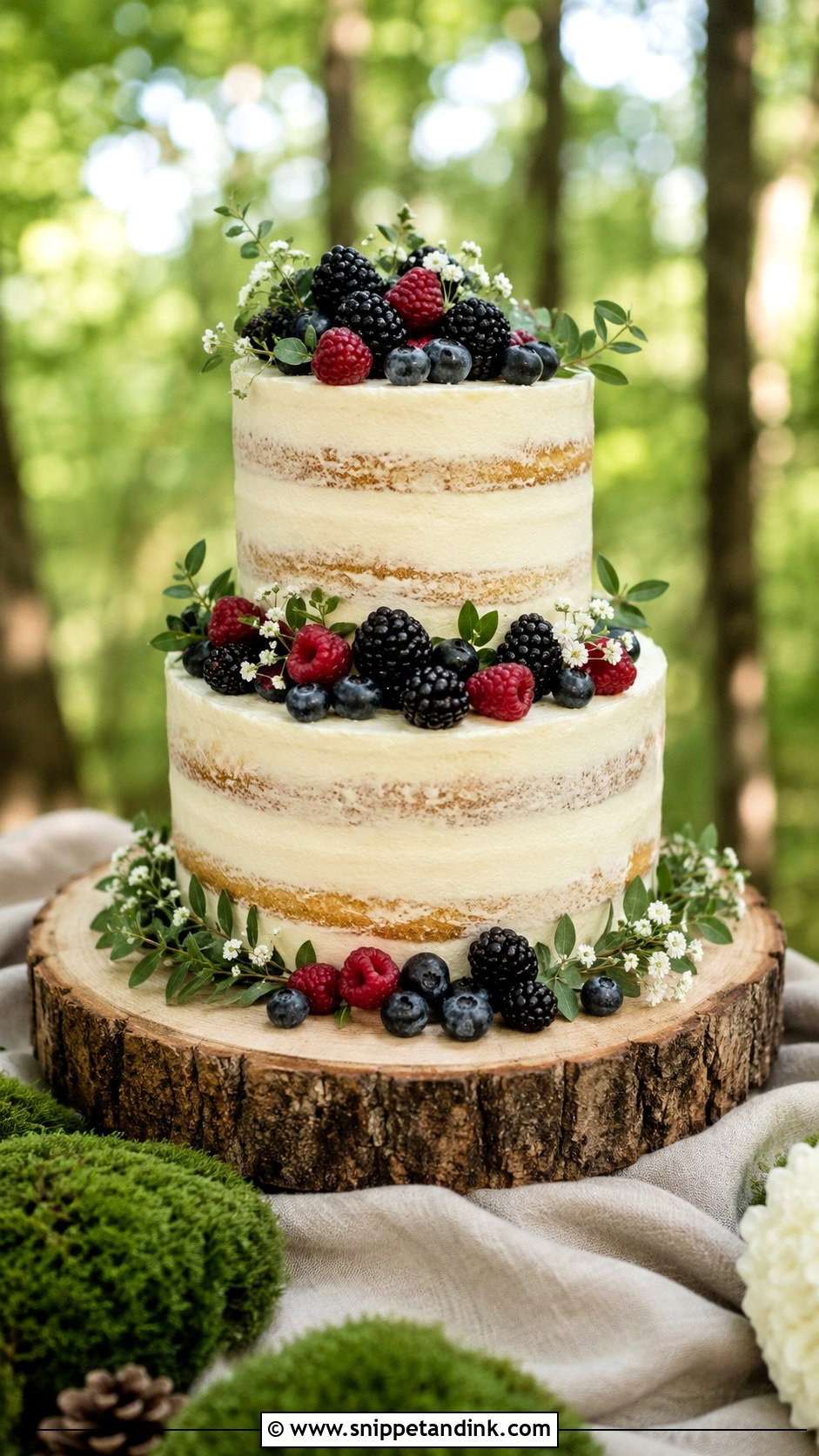
Blackberries, blueberries, raspberries and small strawberries give a foraged look with very little work. On a semi-naked cake the fruit looks relaxed against the layers; smooth white buttercream gives a cleaner style. I wash and dry berries thoroughly, because water on buttercream leaves streaks, and I add raspberries last since they bleed juice once cut. Greenery or tiny flowers soften the clusters. Vanilla, lemon, almond, chocolate and spice all pair well.
12. Forest Wedding Cake With Wood Slice
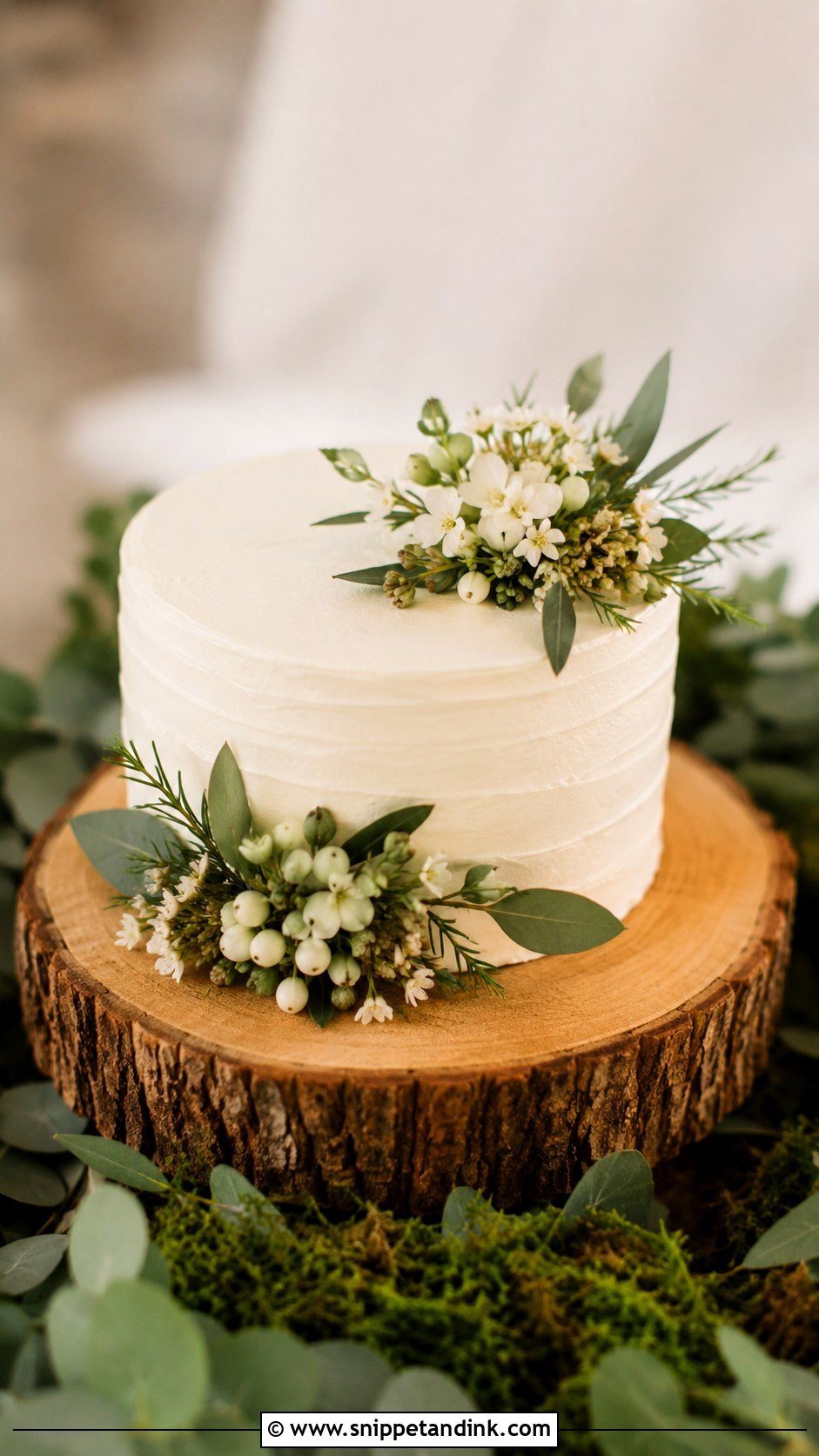
A wood slice display lets a plain cake feel woodland straight away. The cake can be smooth buttercream with a few flowers. The wood does the rest. Here’s what I check: the slice has to be dry, sealed or covered with a cake board, and level, since fresh slices crack and warp as they dry out. Moss, small candles or scattered leaves around it add atmosphere. Keep the cake pale so the wood is the anchor.
13. Forest Wedding Cake With Pressed Flowers
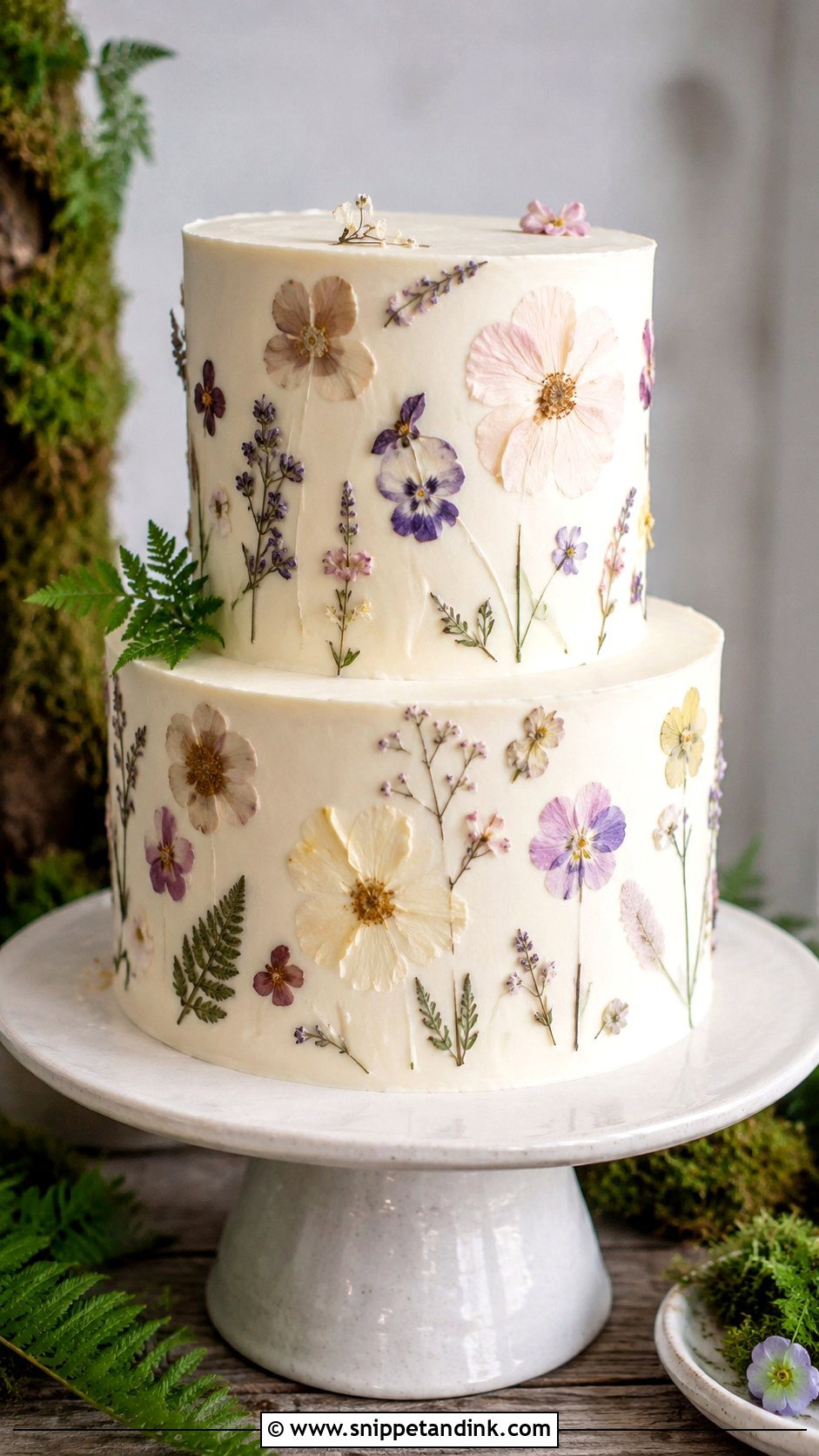
Pressed flowers lie flat across smooth buttercream or fondant, in a scatter, a soft wreath or a trail climbing the side. They have to be edible varieties, and muted colors suit a woodland setting best. On buttercream, pressed petals slowly absorb moisture, so I place them on the day. No piping or large floral pieces needed. It’s at its best on simple tiers for spring forest weddings and intimate outdoor ceremonies.
14. Forest Wedding Cake With Autumn Leaves
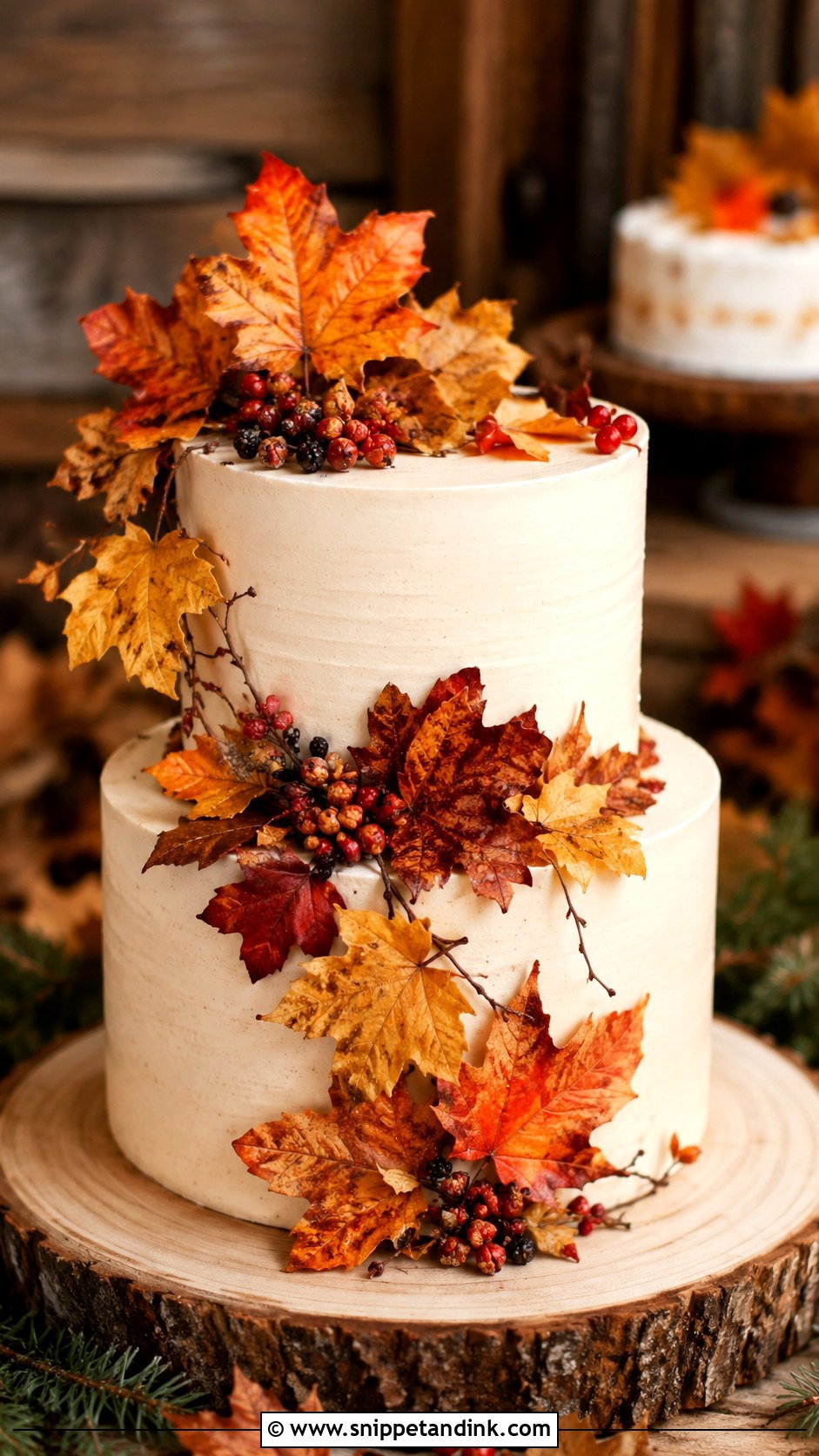
Autumn leaves bring color to a forest cake without real foliage. Sugar leaves, wafer paper leaves or painted fondant leaves in amber, rust, gold and deep red, against cream, beige or chocolate buttercream. Wafer paper curls and wilts in damp air, which outdoor autumn evenings often have, so for a tent or a misty venue I’d choose sugar instead. A few leaves falling down one side is plenty for October and November, with berries or small branches for texture.

15. Chocolate Forest Wedding Cake
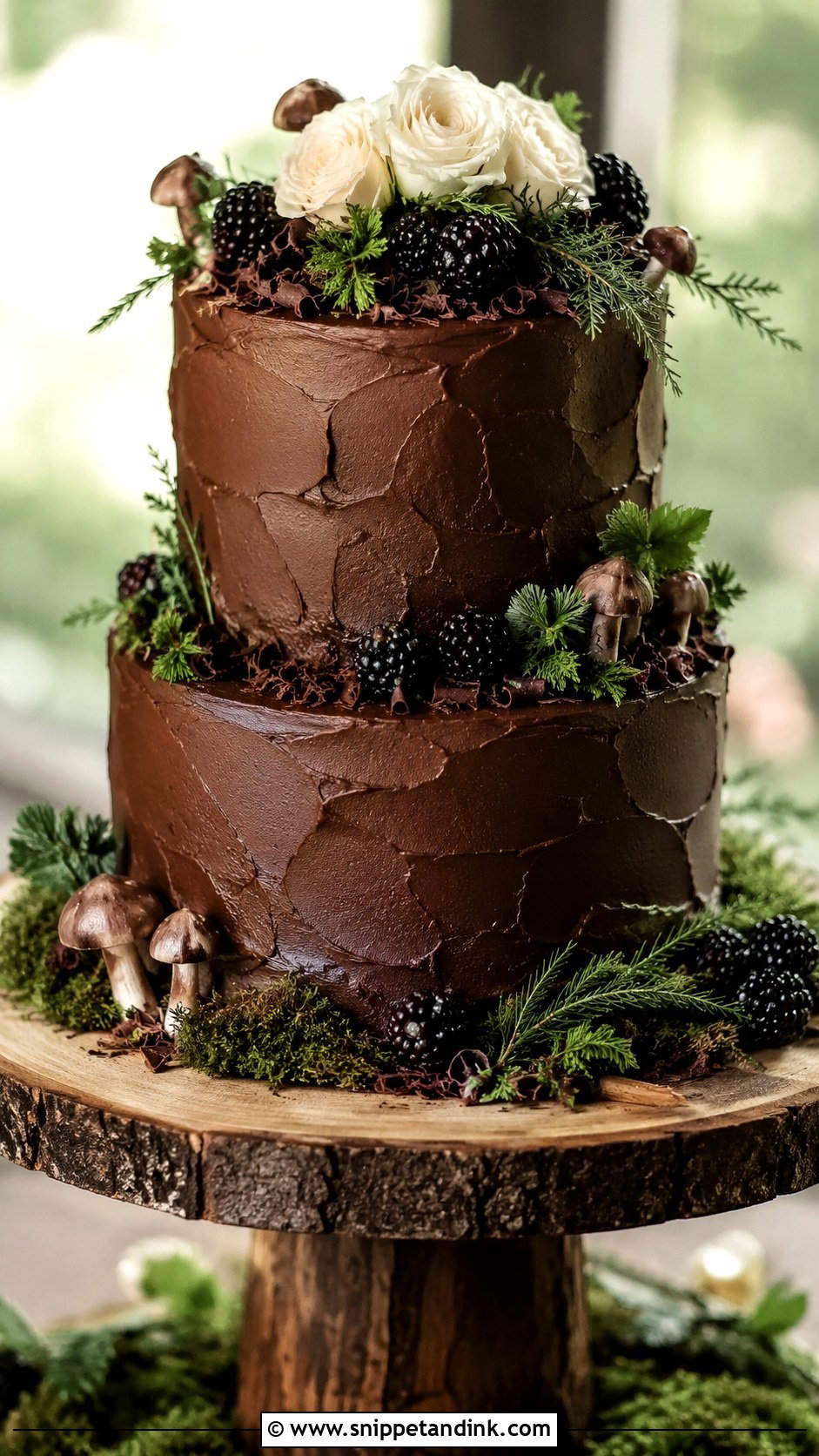
Chocolate suits couples who don’t want an all-white cake. Dark chocolate buttercream or ganache already looks like forest floor, and berries, greenery and tiny flowers show up well against it. I prefer a textured finish here rather than a glossy coat; shiny ganache picks up every fingerprint and reflects flash. One tier for an intimate wedding, two for more presence. Chocolate shavings, cocoa-dusted leaves or small sugar mushrooms finish it.
16. Black Forest Wedding Cake
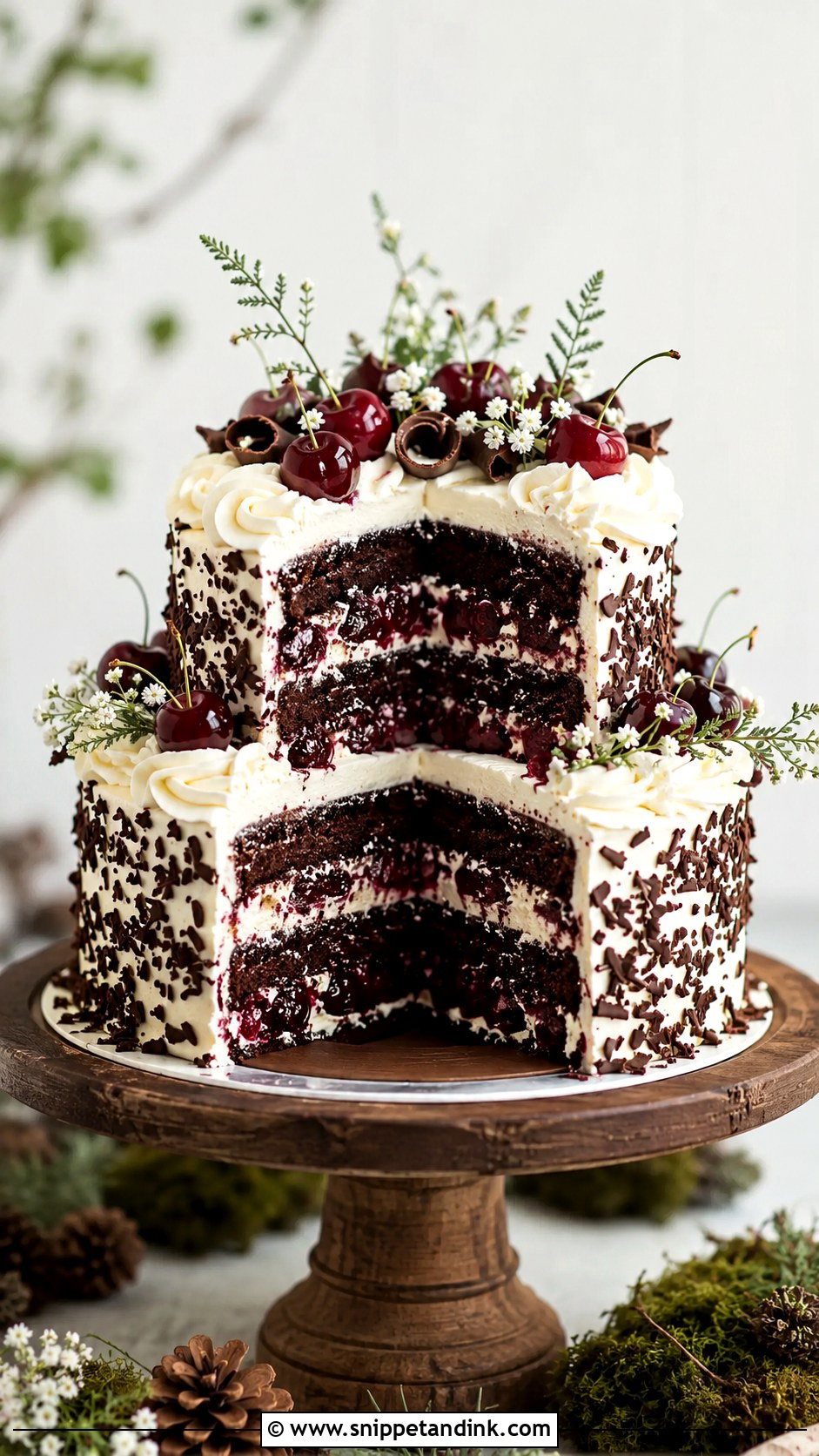
A Black Forest wedding cake brings the flavor in with the name: dark chocolate layers, cherry filling and whipped cream. The cream is the catch. Plain whipped cream won’t hold up through a warm outdoor reception, so I use a stabilized version or a cream-style buttercream on the outside. White frosting or dark chocolate accents keep it clean, with cherries, chocolate curls and a few greenery sprigs. A tall single tier or two simple tiers suit it, and cherry red shows up well against wood and moss.
17. Carrot Forest Wedding Cake
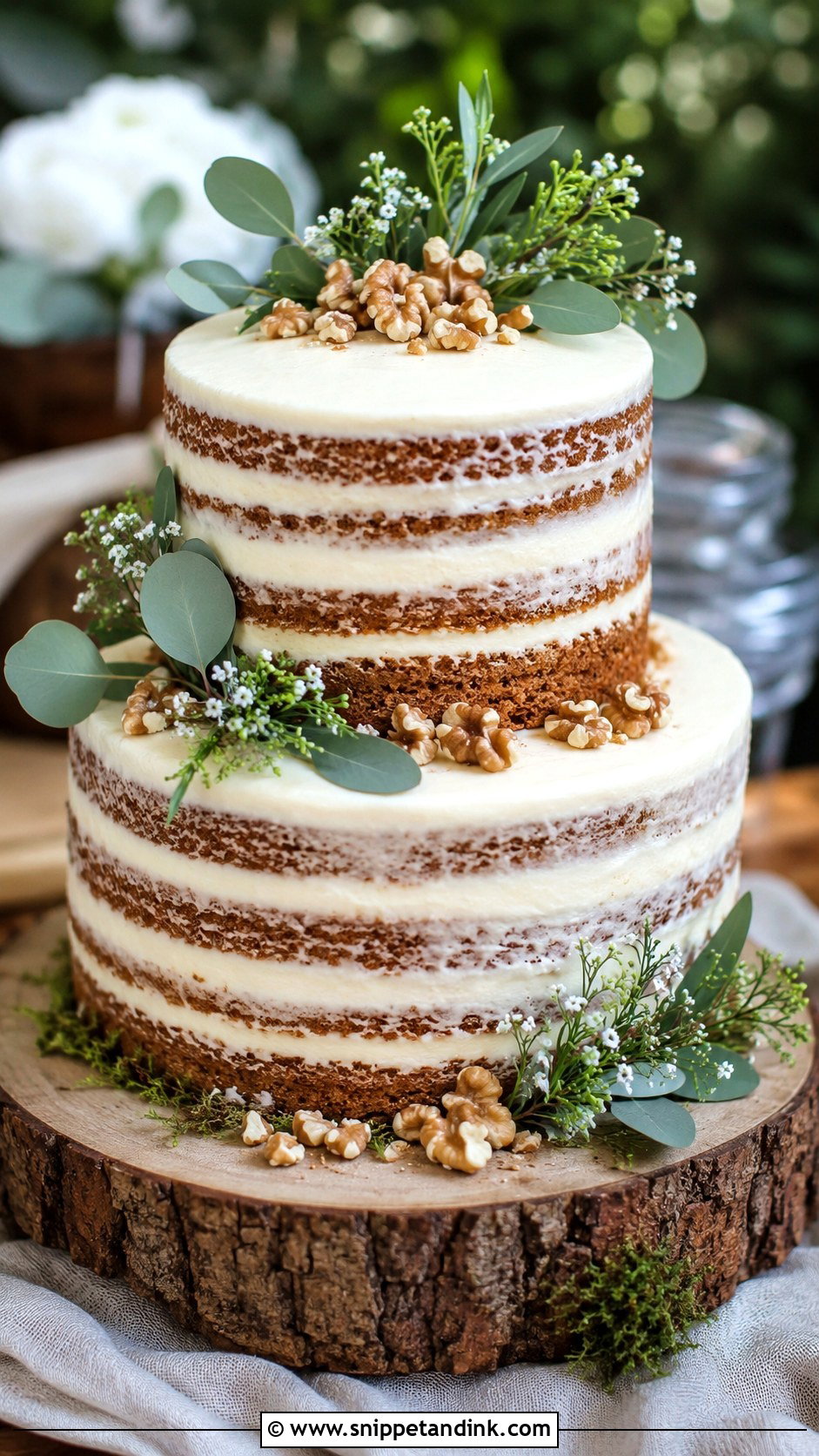
Carrot cake fits the woods: golden-brown layers and cream cheese frosting in soft ivory. Semi-naked works well, because the cake color becomes part of the look. Chopped nuts at the base, small greenery sprigs, tiny flowers or sugar leaves finish it. Cream cheese frosting softens faster than buttercream and needs to stay cool, so on a warm day I’d keep it chilled until shortly before cutting. Autumn weddings and rustic venues suit it.
18. Lavender Forest Wedding Cake
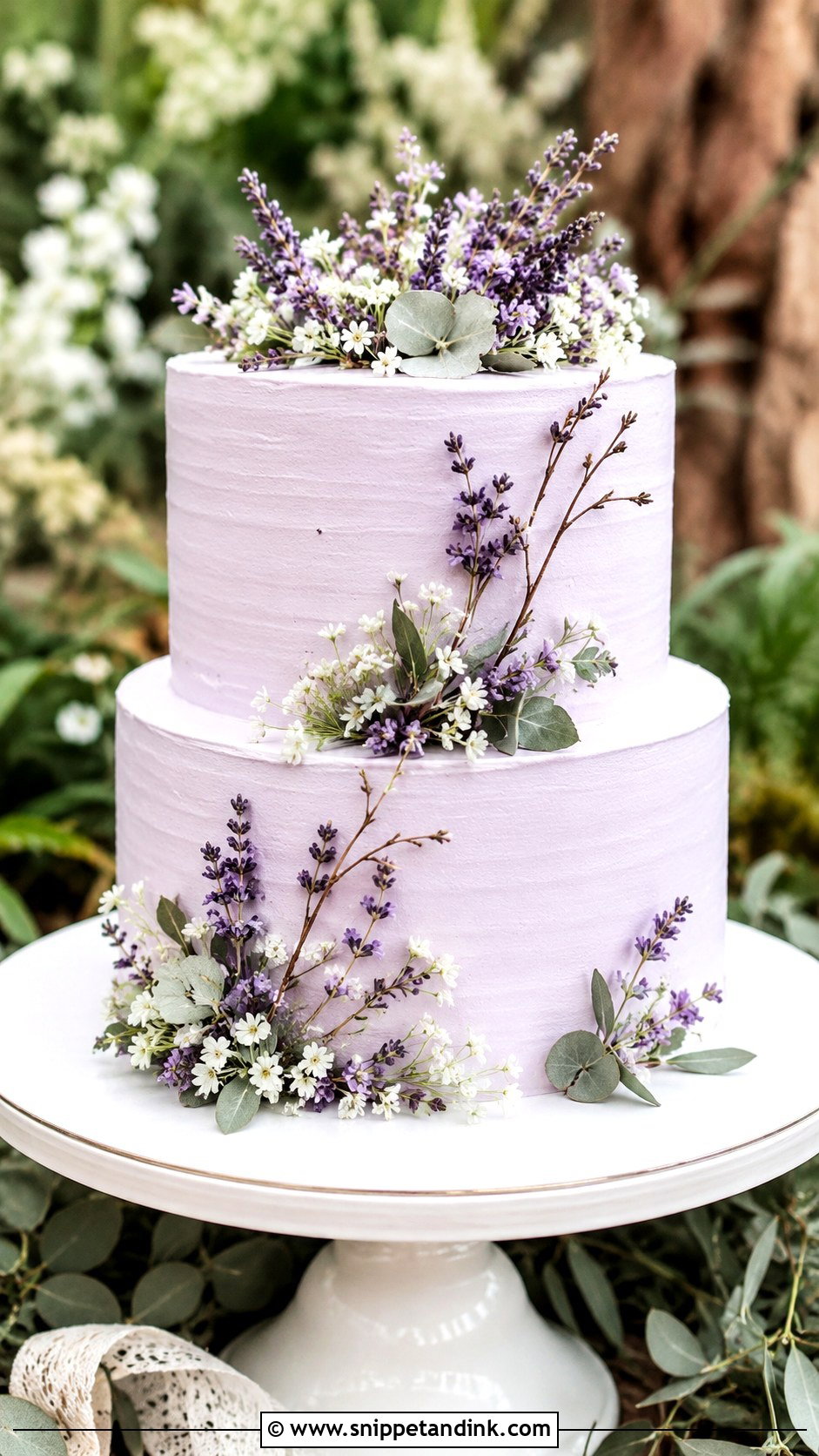
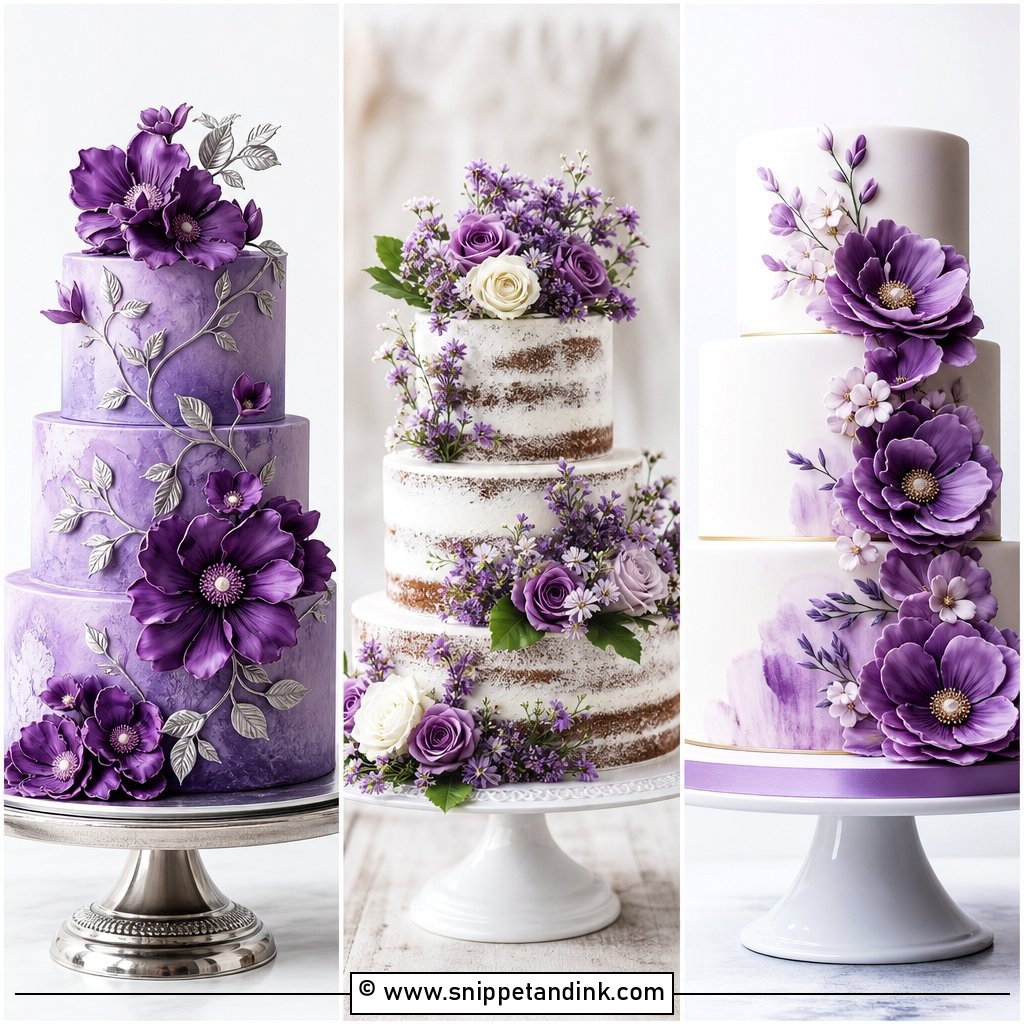
Soft lavender against ivory frosting, pale green leaves and small white flowers is quietly unexpected for a forest cake. Lavender buttercream, lavender sugar flowers or a light scatter of dried culinary lavender all work. Go easy on the dried buds; a little tastes floral, too much tastes like soap. One or two tiers with a gentle floral cluster are enough. Spring and summer woodland weddings with soft linens and natural wood suit it.
19. Small Forest Wedding Cake
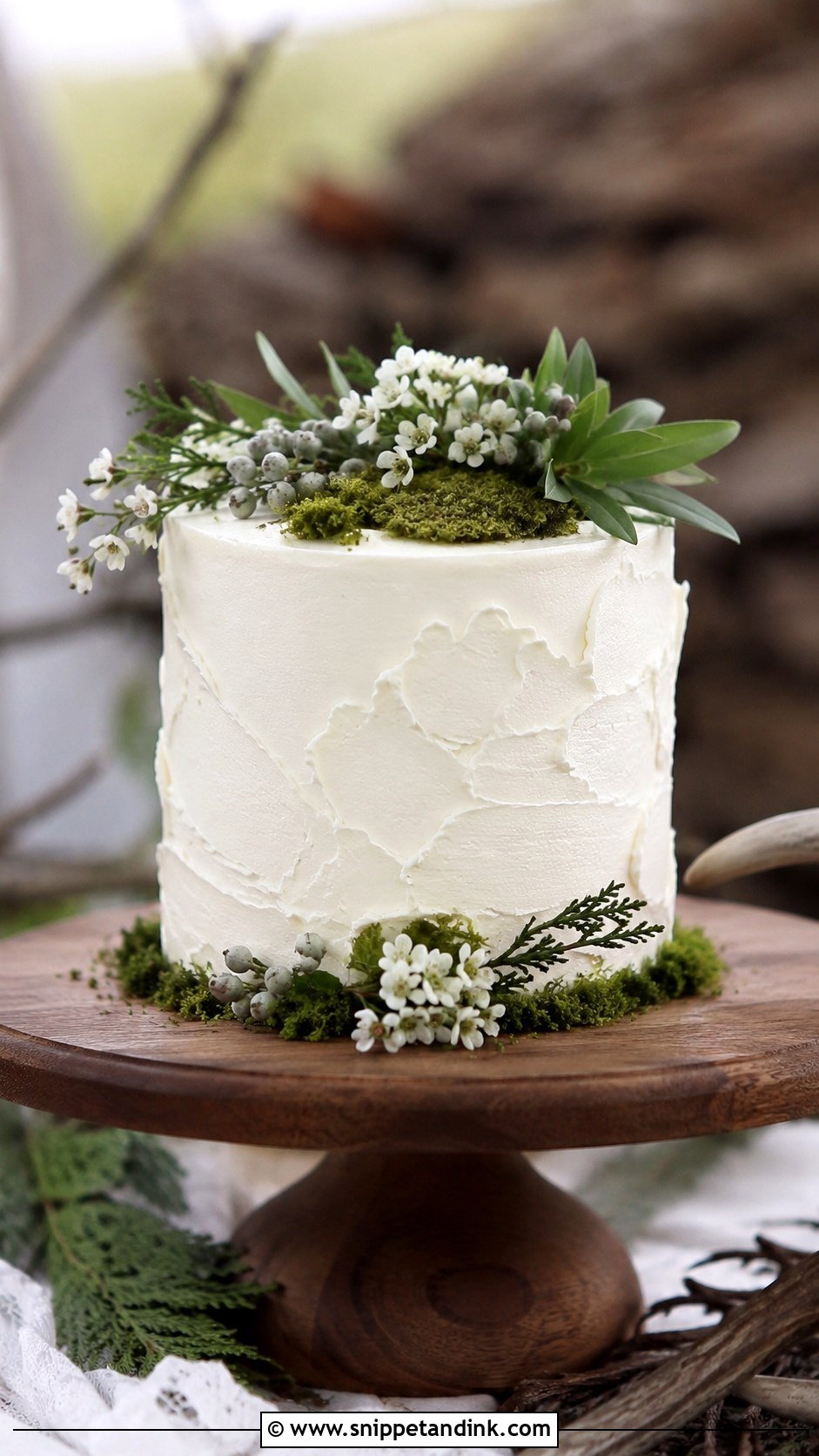
One tier is enough for an elopement or a micro wedding in the woods. Choose a flavor you love first, then add greenery, berries, moss crumbs or pressed flowers. A textured buttercream finish gives depth without fuss. Small cakes look right on a raised stand, a wood slice or a vintage plate. They’re also far easier to carry along a forest path. Surround it with small desserts or greenery if the table feels empty.


20. Two Tier Forest Wedding Cake
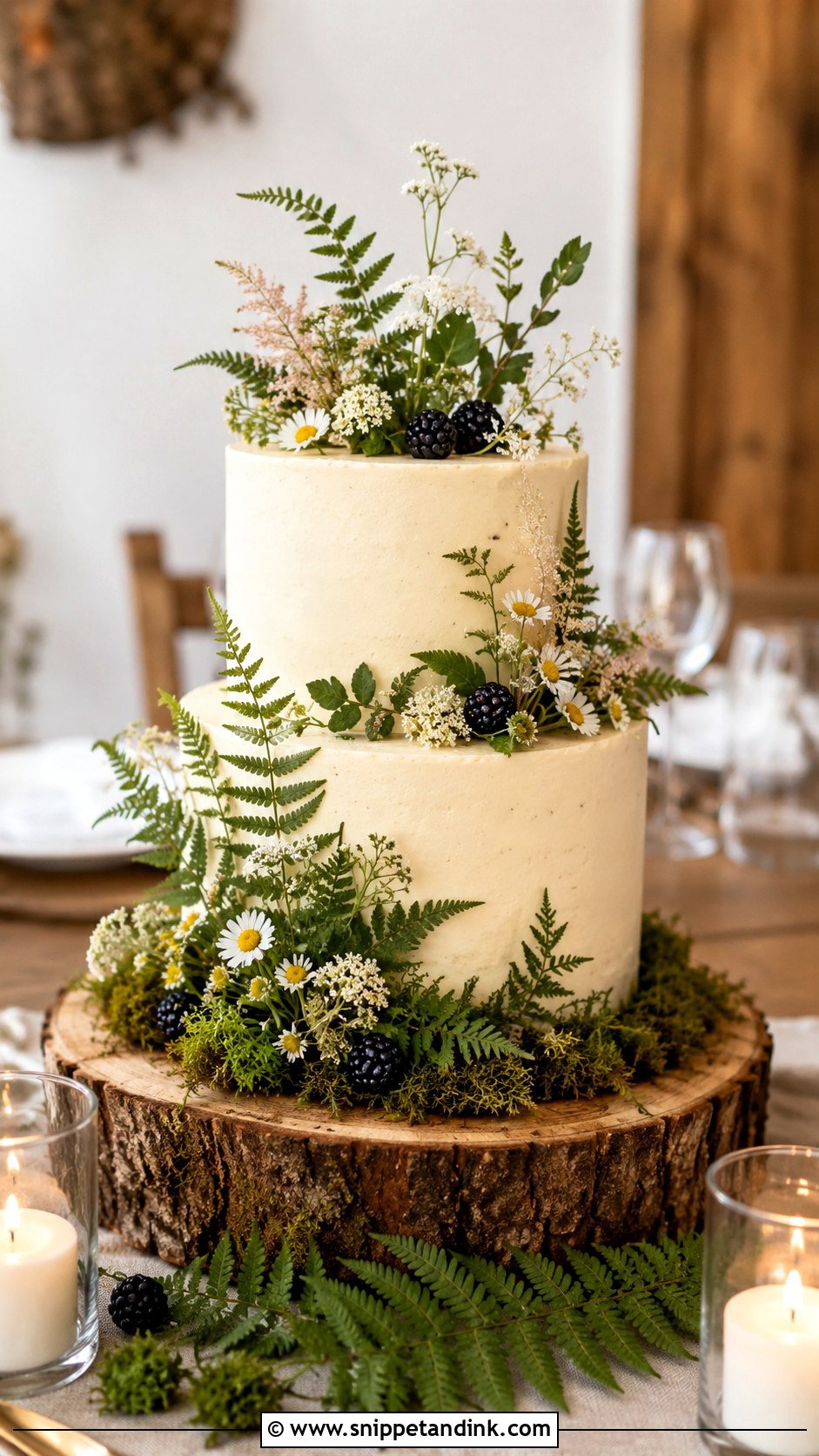
A two tier forest wedding cake gives height and presence while staying simple. Ivory buttercream, a semi-naked finish or soft texture underneath, then one natural detail: ferns, wildflowers, berries, chocolate pinecones or moss. I always push couples to pick one, because a cake carrying all five looks like a craft display. Two tiers work in every season and sit well against trees and rustic decor.
Moss, Pinecones and Bark From the Forest Floor Stay Off the Frosting
I understand the appeal of gathering a few things from the venue itself. But real moss, pinecones, bark and fallen branches carry soil, sap, insects and sometimes mold spores. None of that should go near food. Everything you see on a forest cake is either edible or sitting on a barrier.
If you’ve collected something meaningful, put it on the table around the stand instead. A ring of real moss and pinecones on the tablecloth gives the same effect, and the cake stays clean.
Setting Up a Cake Table Under the Trees
Outdoor forest receptions are lovely and hard on cakes. The ground is uneven, the light moves and the wildlife is curious.
- Level the table with a phone level before the cake arrives; a slight tilt shows on a tiered cake.
- Put it in full shade, and remember the shade shifts through the afternoon.
- Keep a clean cake dome or a mesh cover nearby for wasps in late summer.
- Cream cheese, whipped cream and fresh berries need the shortest time out of the fridge.
- Choose a spot with a firm surface underfoot for whoever is cutting and serving.
Let the Trees Do Most of the Decorating
A forest cake needs just enough woodland detail to connect it to the setting, and no more, or it starts to look like a prop. Greenery, moss crumbs, berries, bark texture, wildflowers, mushrooms and wood slices all work when they’re used sparingly. Your venue, the season and the flavor you want will point you to one or two. Then plan for the outdoors: shade, a level table and edible versions of anything you’d find on the forest floor. Get those right and even a small textured cake looks at home among the trees.
You'll Like These Ideas:





Leave a Reply