
Some cakes get eaten and forgotten. The ones guests talk about usually have one small detail that pulls them in close: ribbons tucked under a tier with charms on the ends, a scatter of edible pearls, a bow piped so neatly it looks like satin. That is what I mean by a charm cake. It can be the old cake pull tradition, or simply a cake built around tiny, personal decorations rather than size. Buttercream, ivory fondant, sugar flowers, vintage piping and gold leaf all have a place here. The twenty designs below are ones I’d happily build, each with notes on how the detail is made and where it can trip you up.
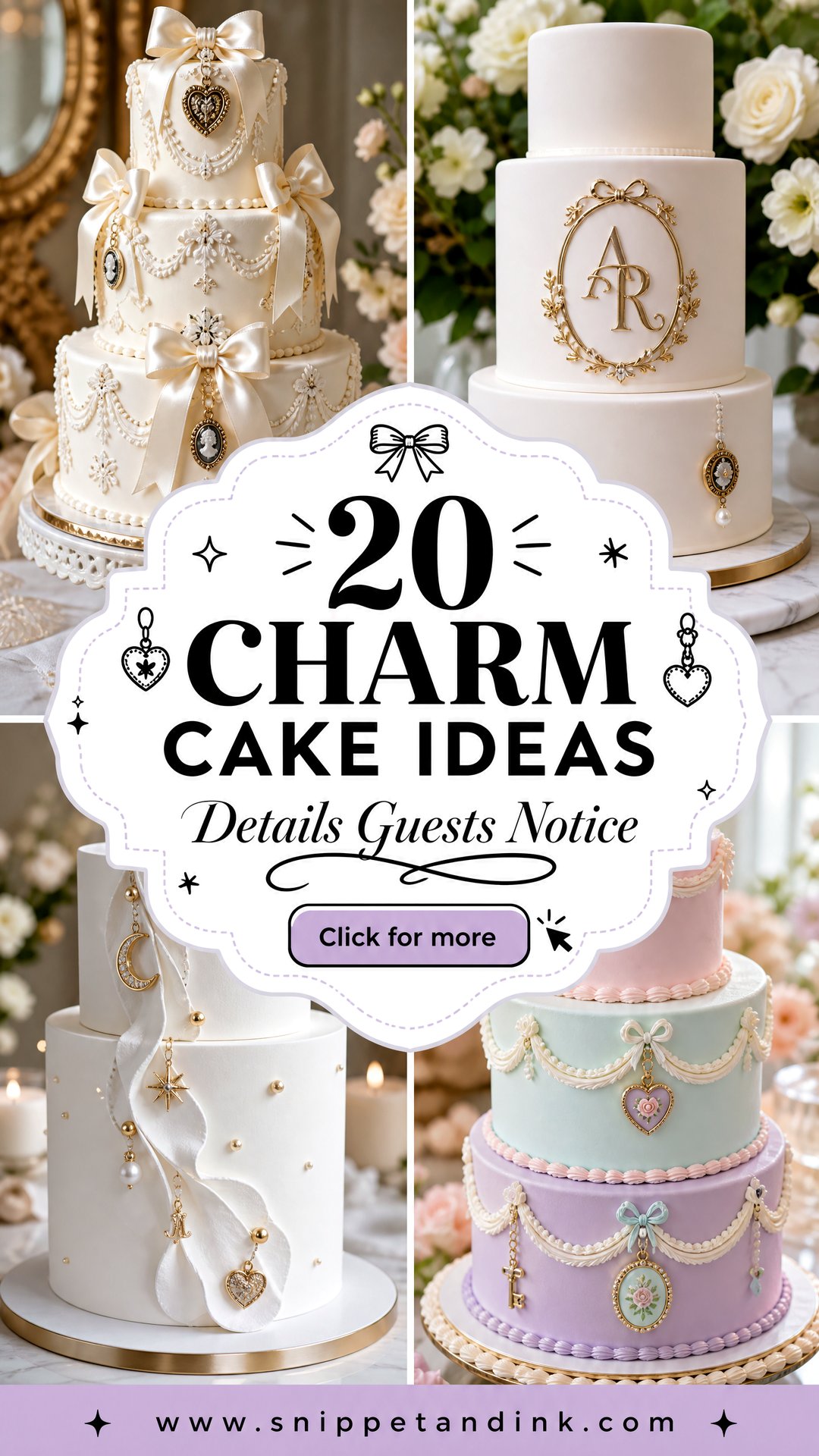
How Cake Pull Charms Go In Without Touching the Sponge
The cake pull is the part of a charm cake couples ask me about most, and it needs planning weeks ahead, not on the morning. Charms are metal, the cake is food, and the two should never meet directly.
- Buy charms early and give them to your baker with the final order, along with ribbons already cut to length. I like ribbons long enough to drape out past the bottom tier comfortably, so nobody has to reach across the cake to pull.
- Choose solid sterling silver or stainless steel. Cheap plated charms can flake or tarnish, and nobody wants that next to dessert.
- Wash and dry every charm thoroughly before it goes to the bakery.
- Each charm is wrapped in food-safe film or set into a small sealed pocket, then placed in a channel cut into the cake board or tucked between the bottom tier and its board. The sponge itself stays untouched.
- Count charms against the people pulling. One per bridesmaid is traditional, and an extra ‘blank’ ribbon or two keeps the result a surprise.
If children will be near the cake table, keep the ribbon ends tucked up until the pull itself. Small charms are a choking risk, and little hands love ribbons.
1. Wedding Cake With Ribbon Pulls
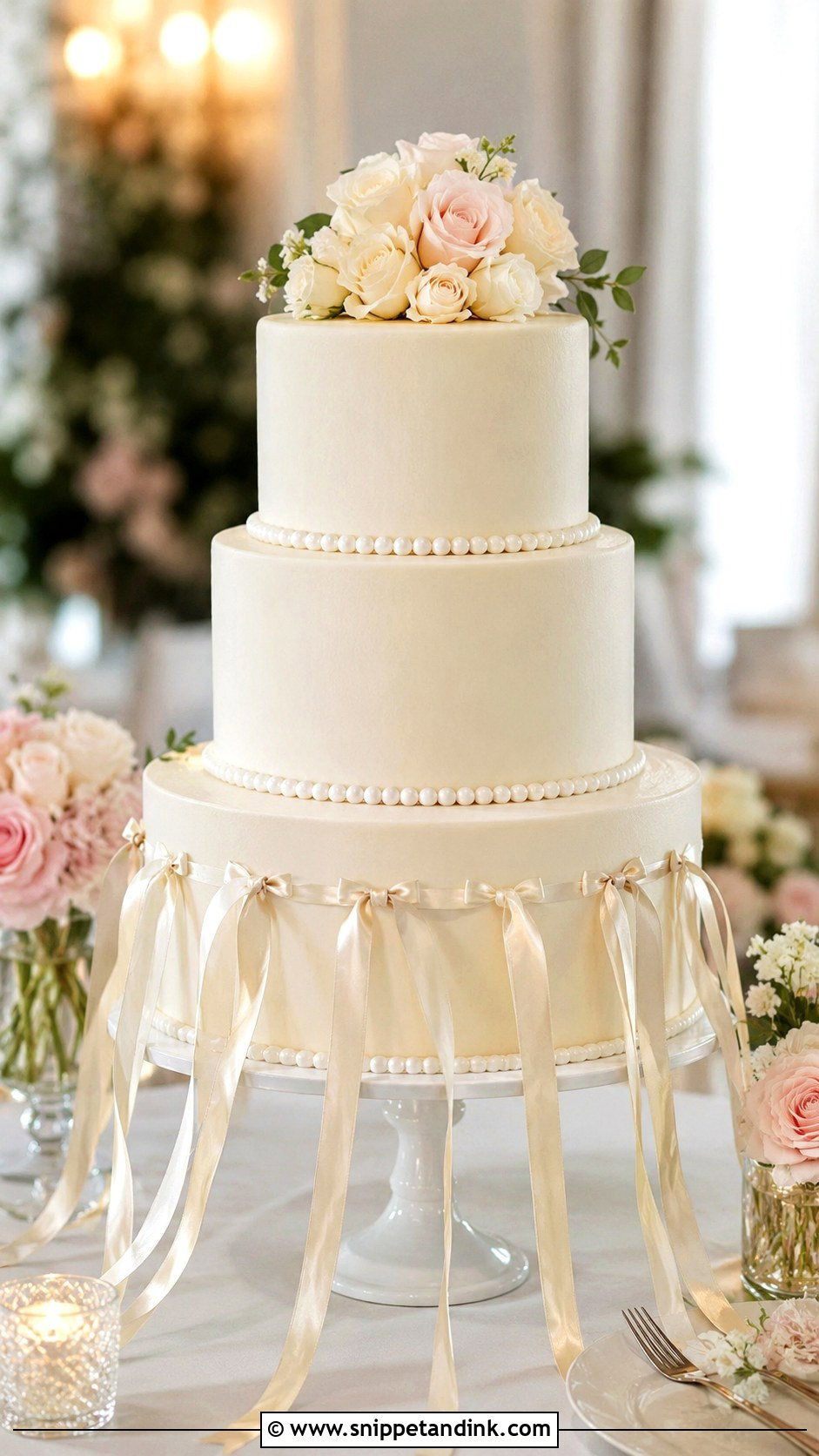
Ribbon pulls are the heart of the charm cake tradition. Small charms are tied to satin ribbons and slid under the bottom tier or between layers, and guests, usually the bridesmaids, each pull one at the reception. The cake needs a smooth buttercream or fondant finish so the ribbons lie flat and leave a clean exit point. I never push charms straight into sponge; they sit in a slot in the cake board or inside a wrapped pocket, so nothing metal touches what people eat. Ivory, blush, champagne or dusty blue ribbon can match the palette. Keep the cake itself quiet, with a pearl border or a little simple piping, so the ribbons read clearly.
2. Pearl Wedding Cake
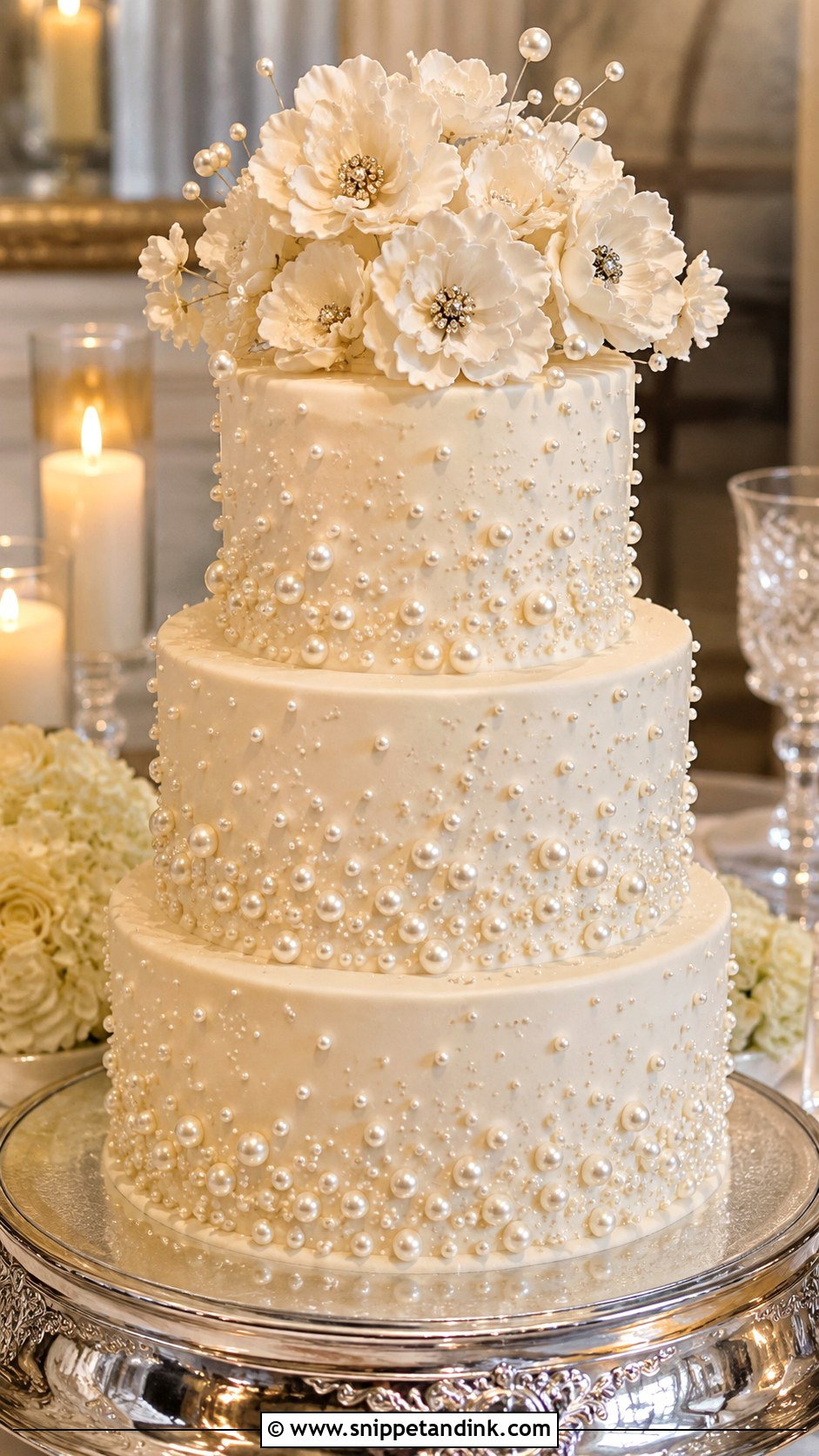
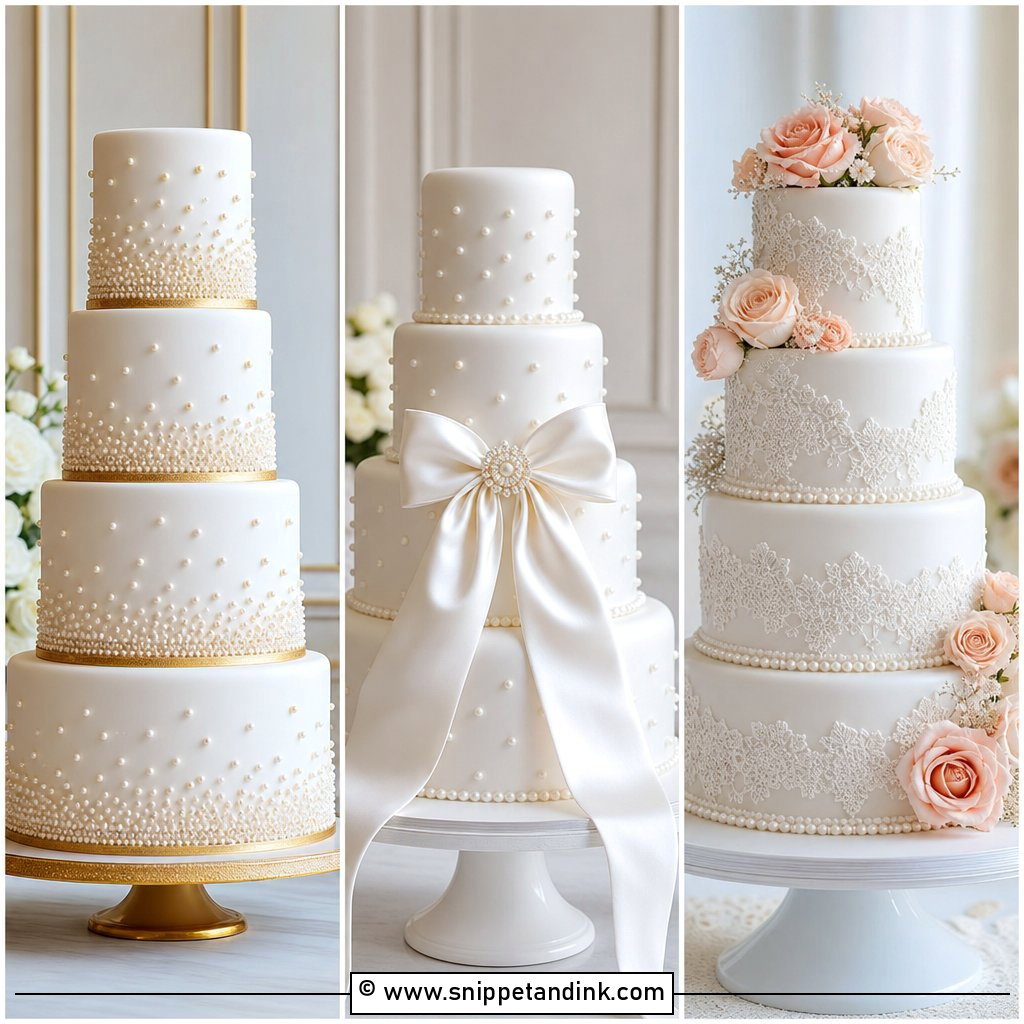
Pearls give a cake the look of jewellery, which is why they suit a charm theme so well. They can be scattered lightly, set in neat borders or pressed on until a tier is fully covered. I mix three or four sizes; a single size in rows looks machine-made, while varied sizes catch light like a real strand. Ivory vanilla sponge under smooth buttercream is a reliable base, with champagne or pale gold for warmth. Sugar pearls are hard on teeth, so on a fully pearled tier I tell couples to warn guests or to keep that tier for display and serve from a kitchen cake.
3. Gold Charm Wedding Cake
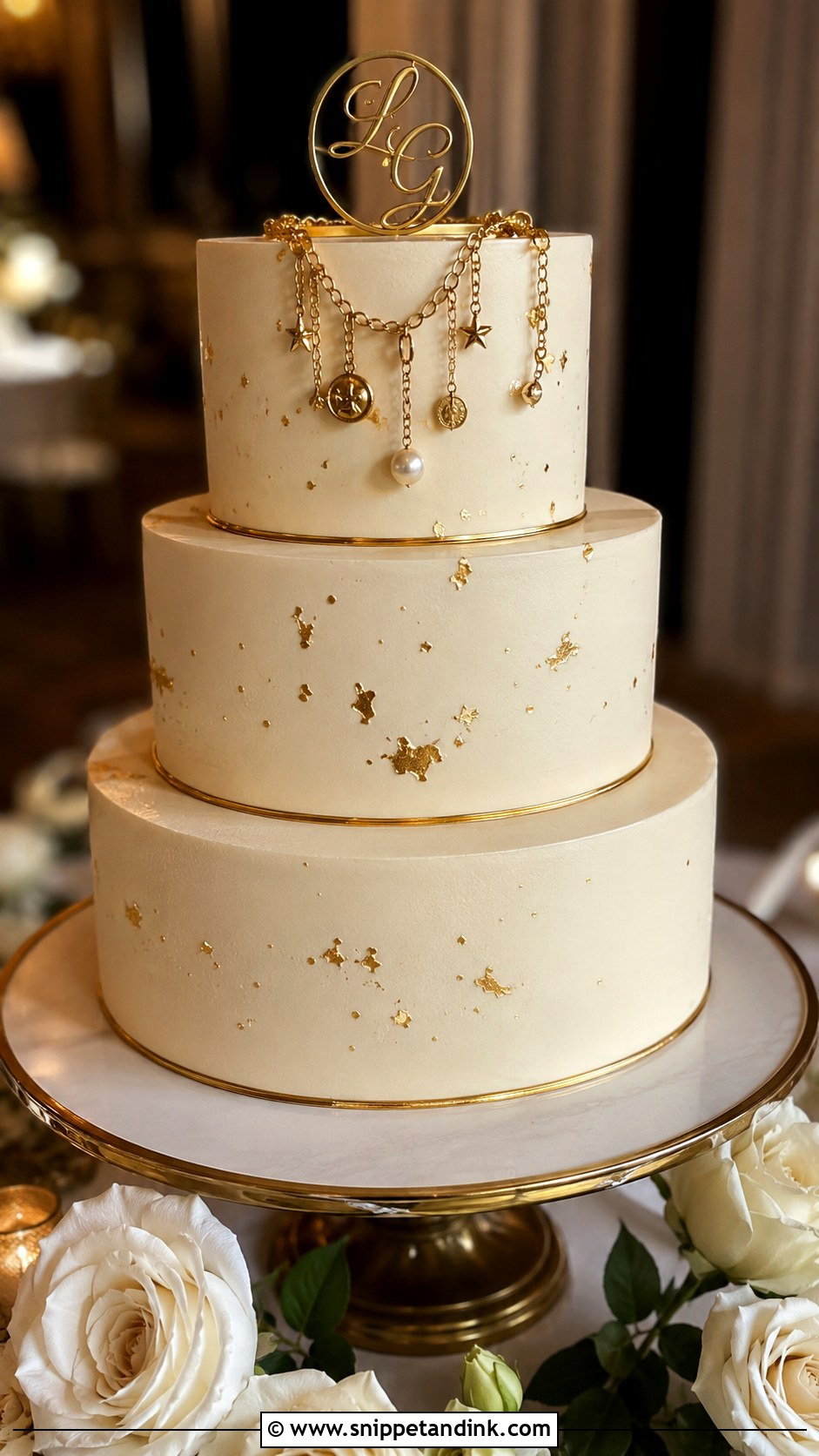
Gold works best in small, deliberate doses: a thin painted rim, a few edible charms, flakes of gold leaf, or a delicate monogram on top. Covering a whole tier in metallic paint can look heavy, and painted fondant shows every brush stroke under reception lights. A white or ivory cake keeps the gold reading as an accent, and caramel, almond, or vanilla flavors are warm and easy for a crowd. I paint gold on fondant or very firm, chilled buttercream; on soft buttercream it drags. Ballrooms and evening receptions suit it.
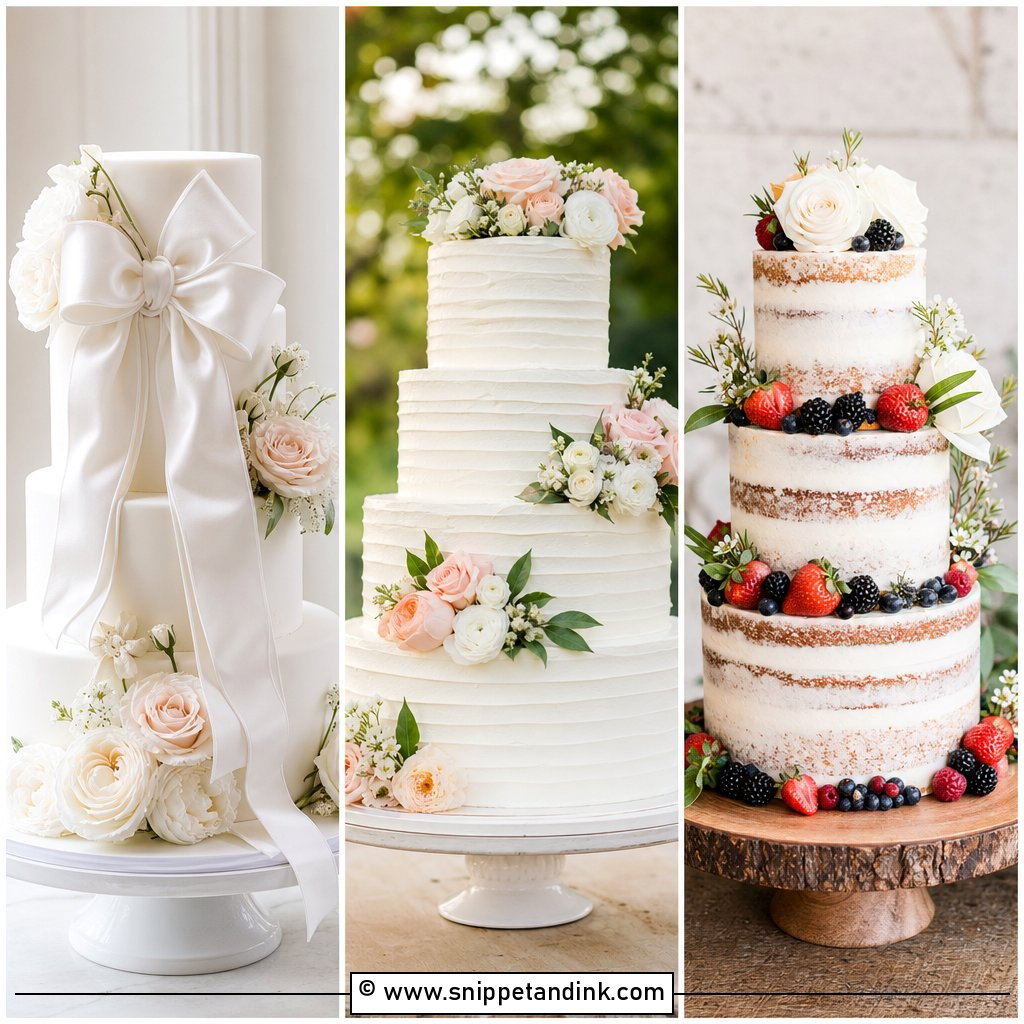
4. Vintage Wedding Cake With Bows
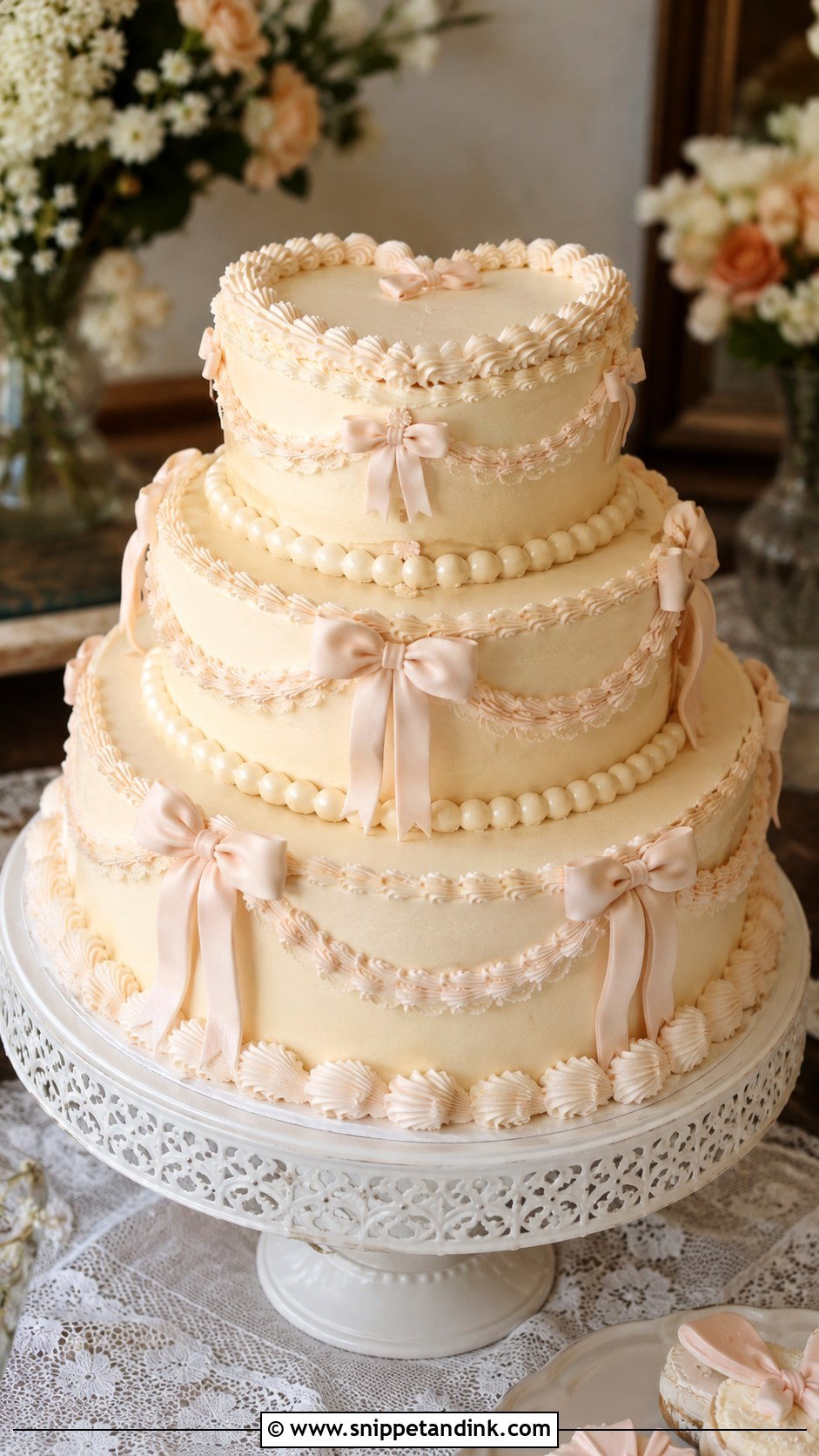
A vintage wedding cake with bows relies on piping skill more than anything else. Shell borders, ribbon-like swags and small fondant or satin bows are the vocabulary, and a heart-shaped top tier or scalloped edge adds sweetness without tipping into a birthday cake. I keep to ivory, blush or butter yellow. Vanilla bean, almond or champagne sponge fit the style. The difference between vintage and messy is spacing: I mark the swag points around each tier with a ruler before piping a single line, so every drape hangs at the same depth.
5. Floral Charm Wedding Cake
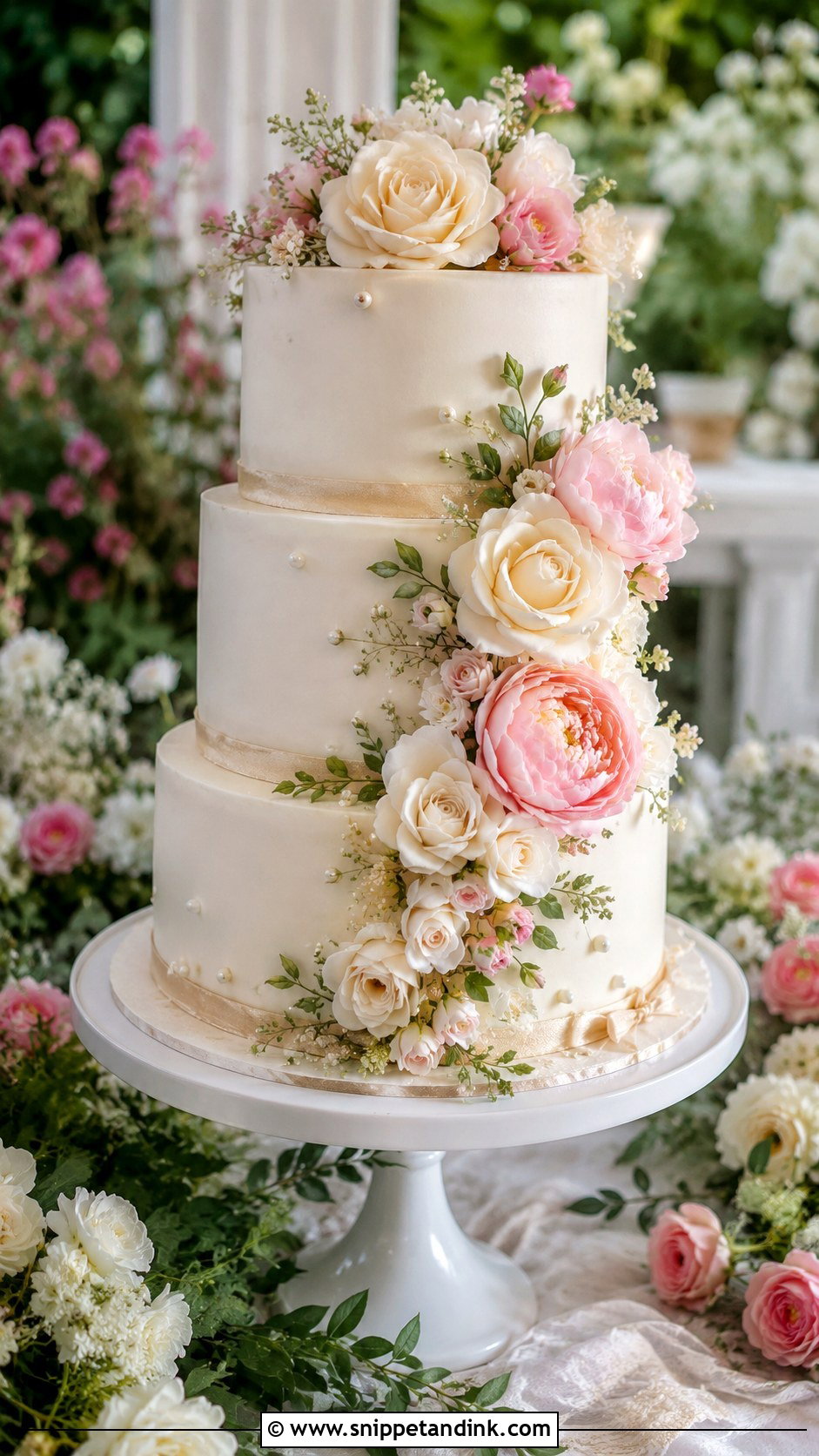
Flowers can carry the whole cake. Sugar flowers, pressed edible petals or fresh blooms placed carefully around the tiers give a garden centrepiece. Matching the bouquet ties it together: roses, peonies, sweet peas or lily of the valley. Lily of the valley is toxic, though, so it only appears in sugar on my cakes, never fresh. Any fresh flowers need to be unsprayed, with stems wrapped in floral tape and sealed in a pick before they go near the sponge. A smooth white base with pale pink, cream or sage lets the flowers stand out, and lemon, vanilla or raspberry flavours sit well alongside.
6. Heart Wedding Cake
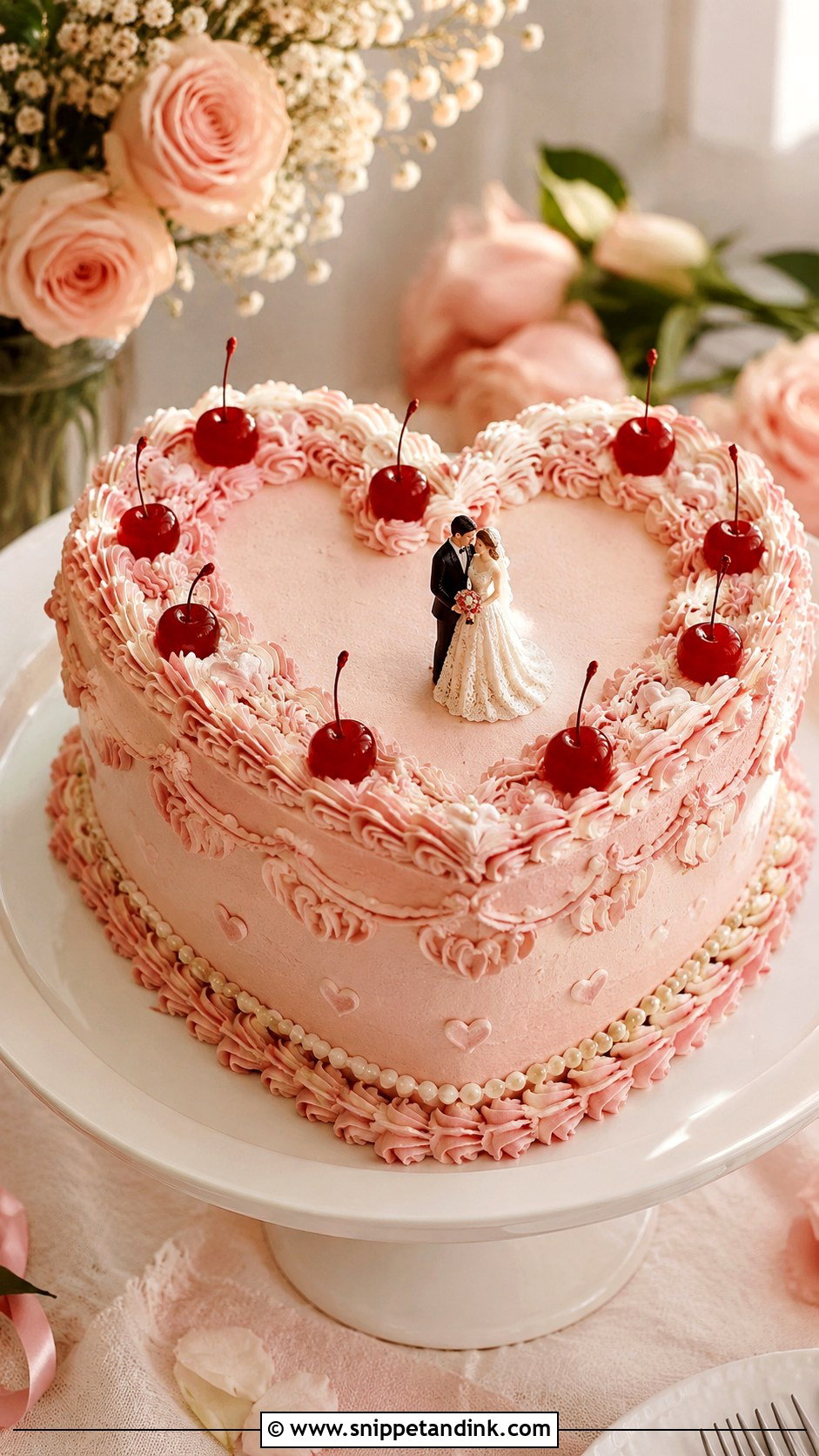
A heart-shaped cake is playful, which is the point and also the risk. As a single-tier cutting cake or a stacked heart cake with vintage piping, it reads as a wedding cake only when the colours stay soft: white, blush or pale pink buttercream. Pearls, piped borders, cherries, ribbon pulls or a small “just married” topper add charm. Red velvet, vanilla or strawberry cake fit the shape. Hearts are awkward to slice into even portions, so I cut a heart from a larger square in my head when I quote servings. It looks best photographed from above.
7. Mini Charm Wedding Cakes
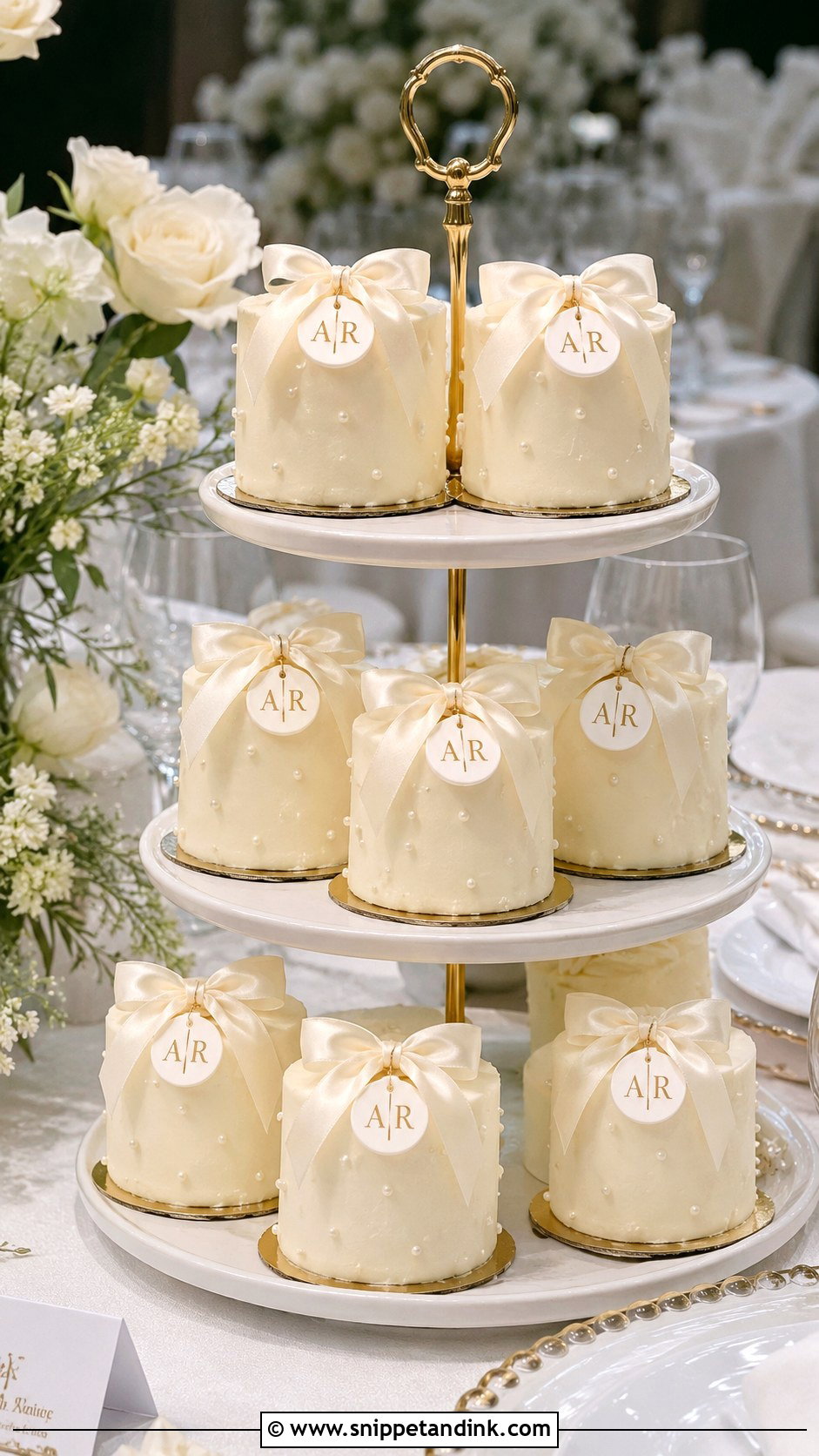
Mini cakes turn the dessert into part favour, part wedding cake. Each guest gets a small cake with a ribbon, a sugar pearl or a tiny charm tag. They save the cutting and plating rush at a busy reception, but they take far longer to make than one large cake, since every one is filled, crumb-coated and finished by hand. That is reflected in the price and the lead time. Keep flavours to two or three, such as vanilla, chocolate or lemon, and one colour palette across all of them. Tiered stands or a cake at each place setting both work.
8. Monogram Wedding Cake
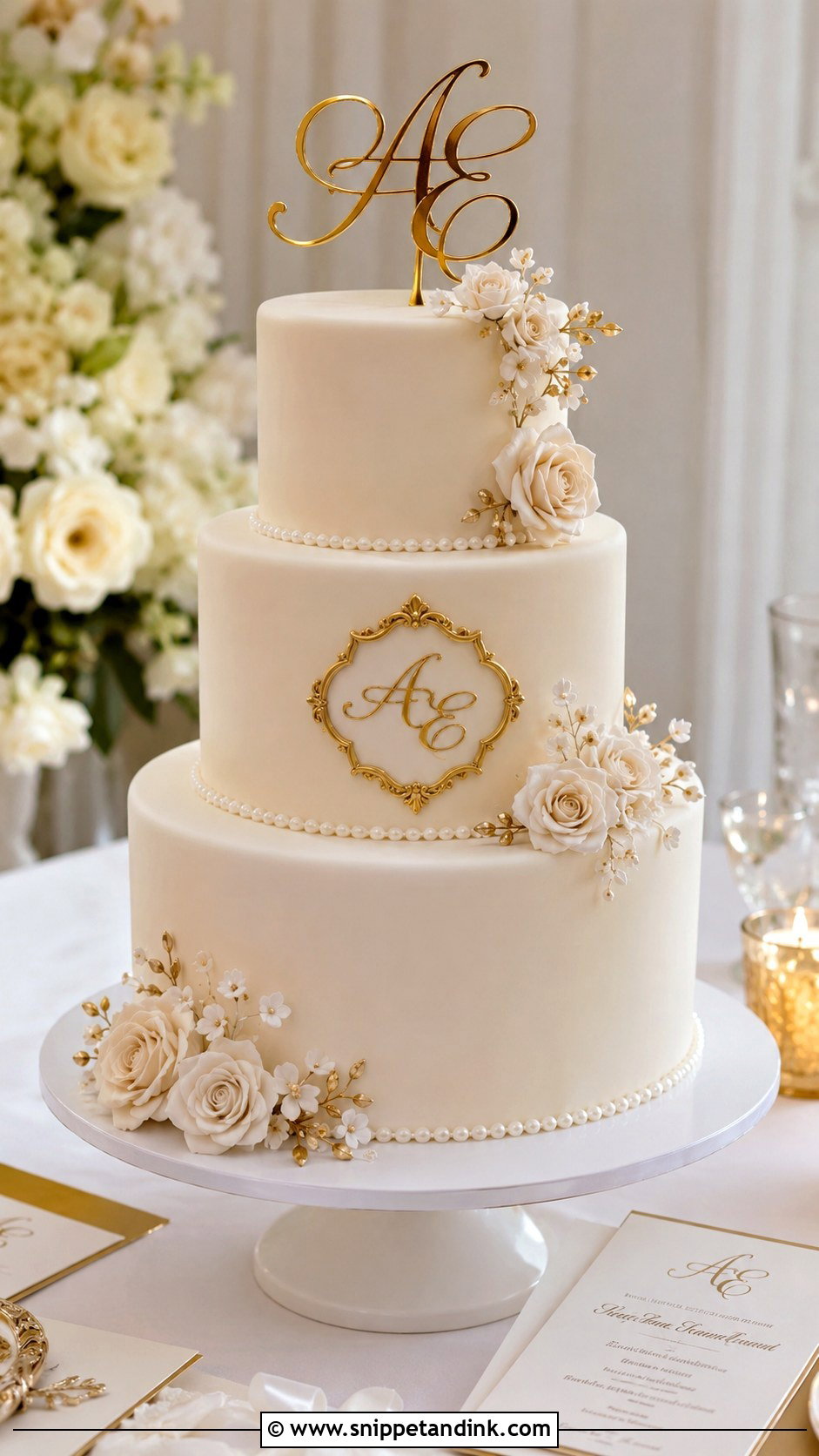
A monogram makes the cake personal without shouting about it. The initials can be a fondant plaque, piped lettering, an edible gold stamp or a small topper. I keep it keepsake-sized, about the width of a palm on a top tier, rather than a sign. Smooth ivory buttercream, pearl trim and a few sugar flowers frame it. Bring your invitation to the tasting so the lettering can match its typeface; it’s the detail people notice when they compare the cake with the stationery. Almond, vanilla bean or chocolate with raspberry filling please most guests.
9. Lace Wedding Cake
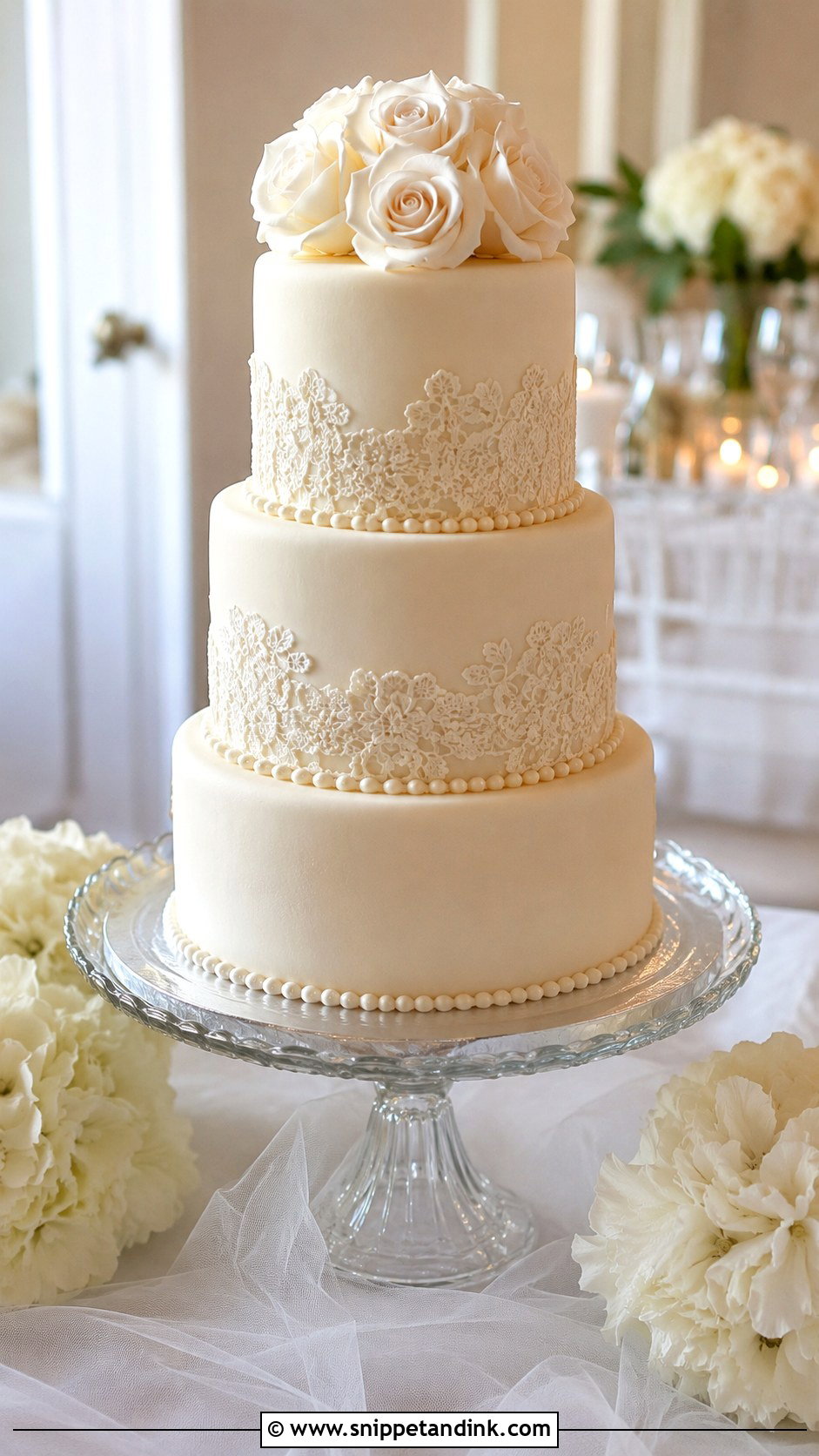
Lace on a cake can be made several ways: fondant appliqués, piped royal icing, stencilled patterns or edible lace sheets. The nicest version copies a motif from the dress, the veil or the invitation, which means sending your baker a close-up photo of the actual fabric. Soft ivory, white or champagne lets the texture show. Piped lace is the most delicate and the most fragile; it chips if the cake is bumped in transit, so it’s applied last, at the venue if possible. Light vanilla or lemon sponge keeps the flavour clean. One or two tiers of lace is enough.
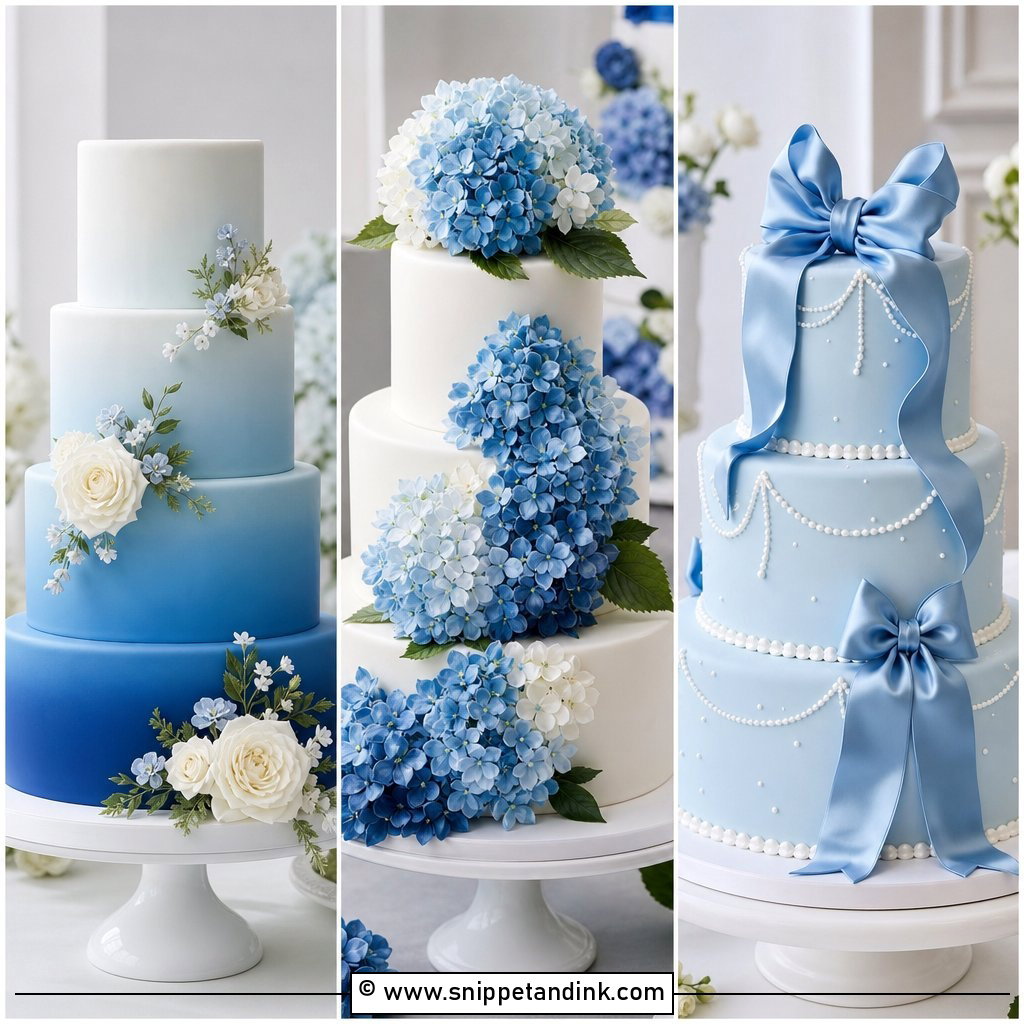
10. Something Blue Wedding Cake
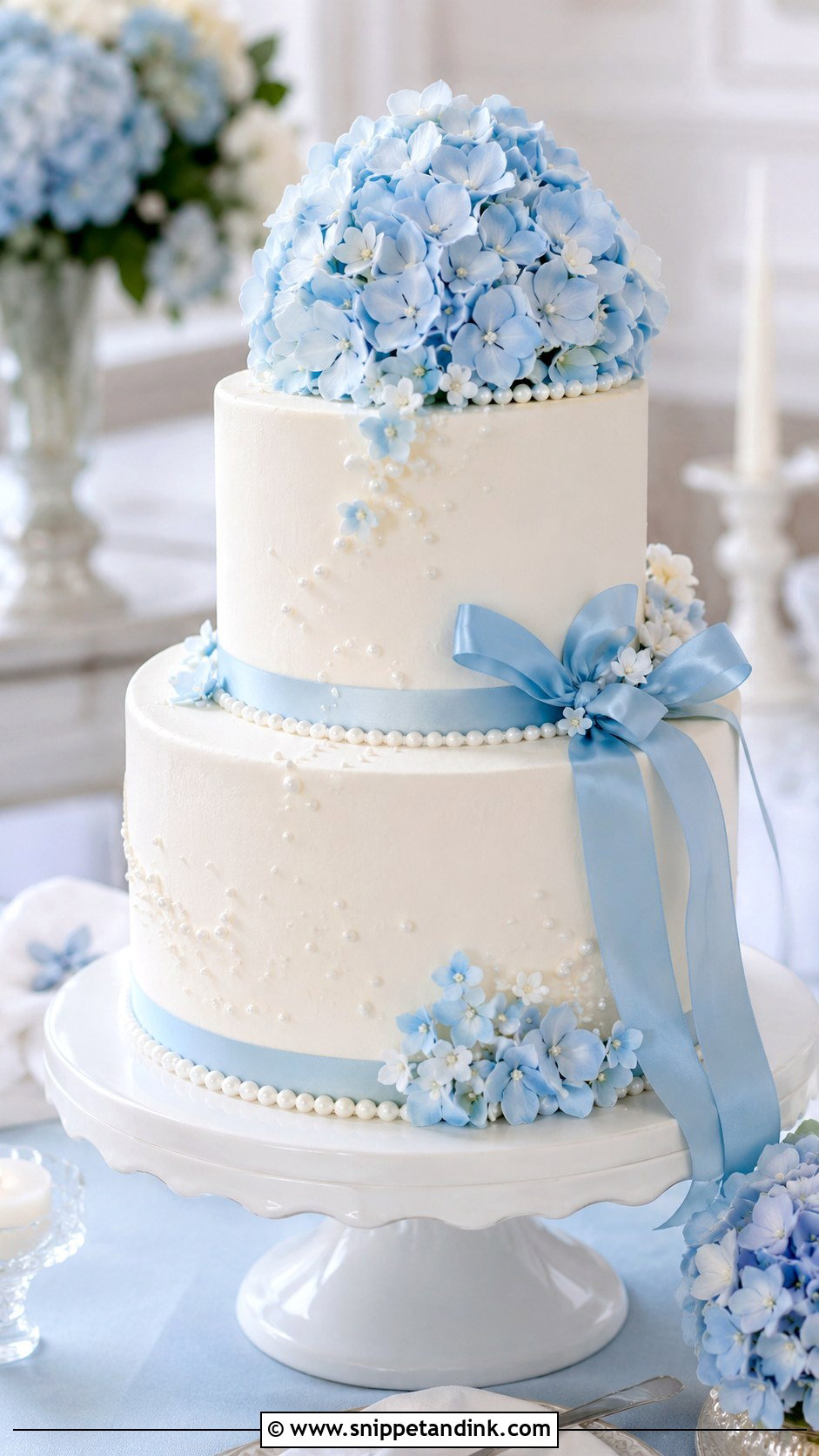
Something blue folds the old rhyme into dessert. The blue can be faint: powder blue ribbon pulls, pale blue flowers, watercolour frosting or a thin blue base tier. Blue food colouring is one of the hardest to keep soft. Too much drifts toward teal or turns grey under warm light, so I mix it into white buttercream a drop at a time and check it in daylight. Vanilla, lemon or almond suit it. Silver charms, blue satin, pearls or a small blue bow add the charm detail. Spring weddings, coastal venues and garden receptions are its natural setting.
11. Buttercream Charm Wedding Cake
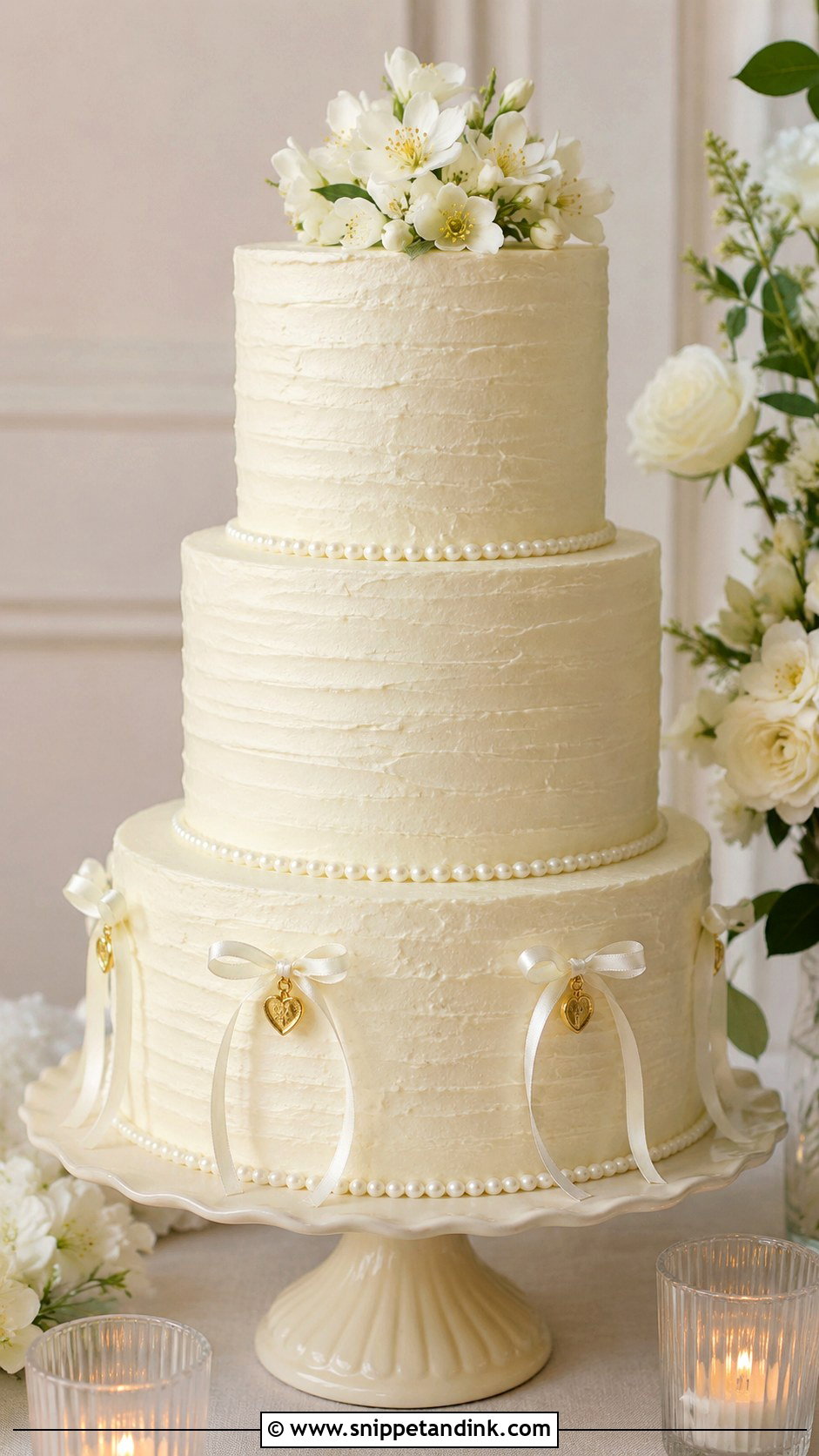
Buttercream is the finish I recommend to couples who care most about taste. It’s softer than fondant and more forgiving to eat, and it takes ribbon pulls, pearl borders, piped hearts and sugar flowers well. The trade-off is heat. American buttercream crusts and holds better in warm rooms, while Swiss meringue tastes lighter but softens faster, so the venue temperature should decide between them. Vanilla, chocolate, lemon or almond layers all work, and an ivory, cream, blush or sage palette keeps it clean. It has a handmade softness fondant can’t copy.
12. Garden Wedding Cake
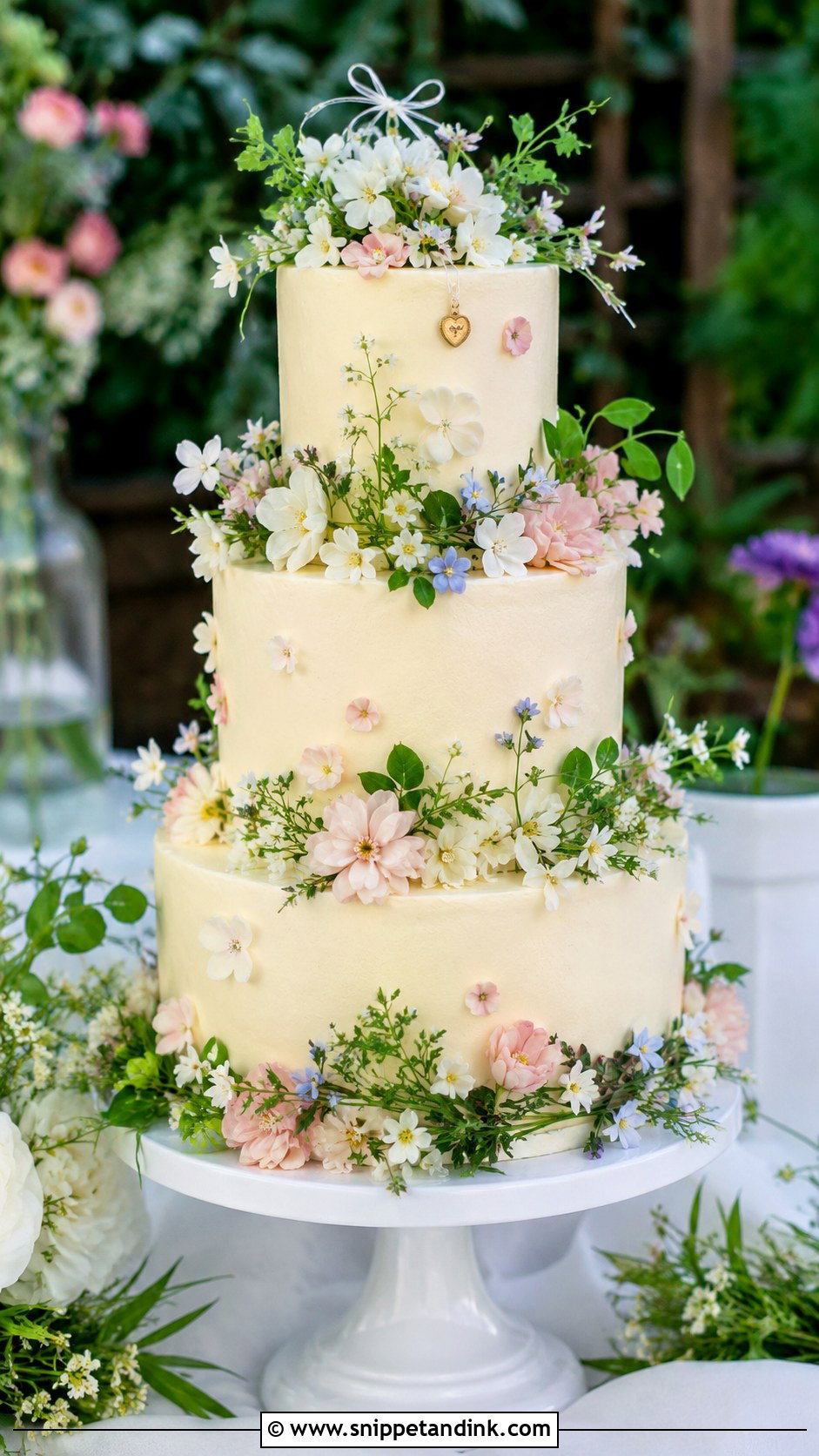
A garden cake should look as if the flowers grew up the tiers rather than landing on top. I place blooms in loose diagonal drifts, with greenery trailing between them and a few ribbon pulls tucked under the base. Edible petals and sugar blossoms fill gaps where fresh stems would be unsafe. A lemon elderflower, vanilla berry or pistachio cake suits the mood. Keep the frosting light; dark colours fight the flowers. The arrangement is the hardest part to get right, so ask to see photos of your baker’s past garden cakes, not only the sponge.
13. Two Tier Charm Wedding Cake
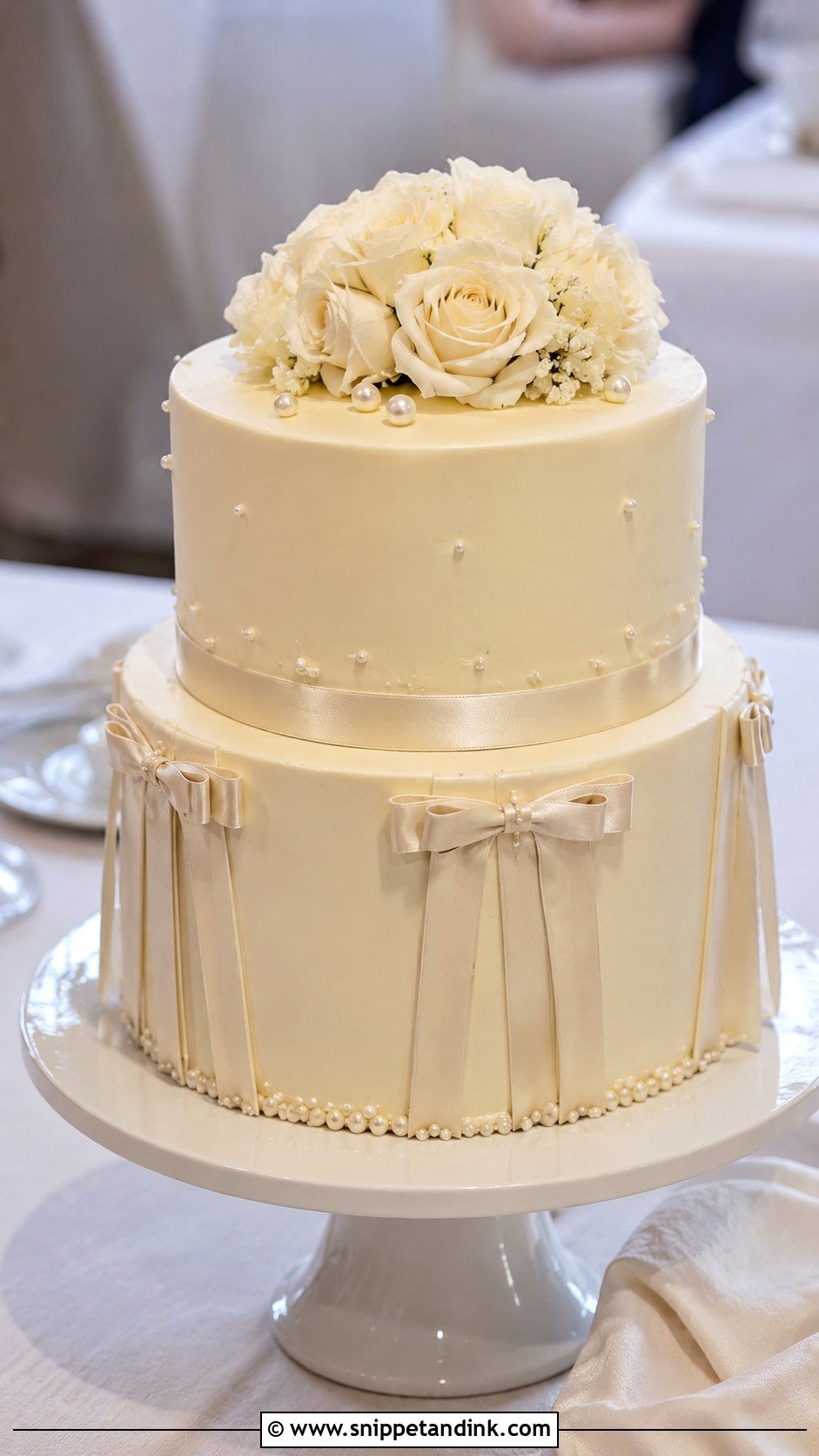
Two tiers is my favourite size for small weddings. There’s enough height for photographs, it fits on a standard cake table and it’s quick to cut. The top tier carries flowers, a monogram or a bow; the bottom takes ribbon pulls or pearl trim. Smooth buttercream or fondant gives a polished finish. Vanilla and chocolate are dependable, and lemon raspberry or almond cream feel a little more special. If your guest list outgrows two tiers, a kitchen sheet cake in the same flavour covers the extra servings without a third tier.
14. Tall Wedding Cake With Charms
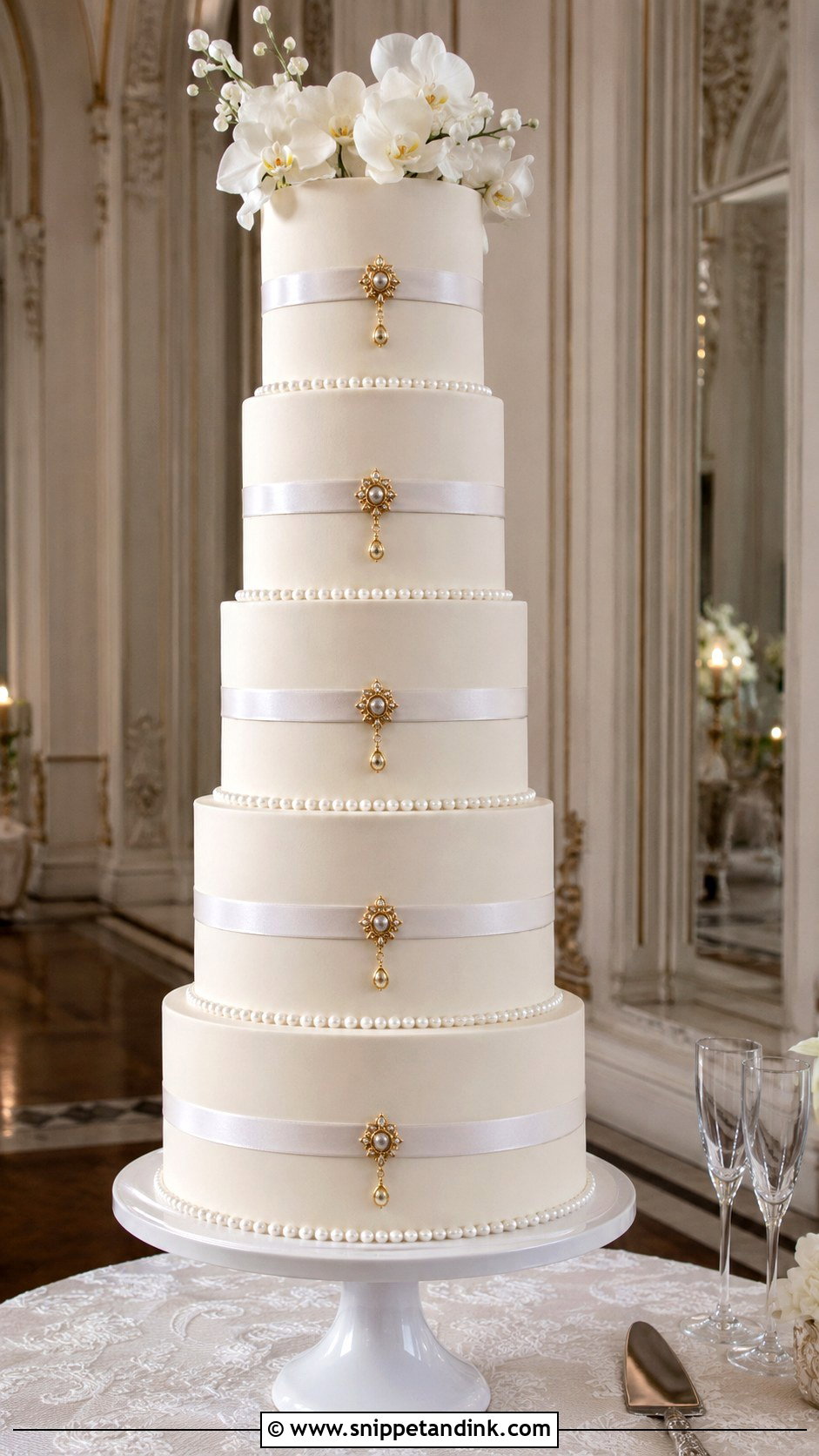
A tall cake made of several slim tiers is the most dramatic shape on this list. Ribbons around one lower tier, edible pearls between tiers or tiny gold accents give it a jewellery-like finish, and ivory, white or champagne fondant suits the height. Height brings engineering: every tier sits on its own board with dowels underneath, and a central rod runs through the stack so it can’t lean during the move. That also means firm fillings like chocolate ganache or a stable buttercream, not soft mousse. Keep the charms balanced. On a tall cake, clutter is easy to see from across the room.


15. Blush Wedding Cake
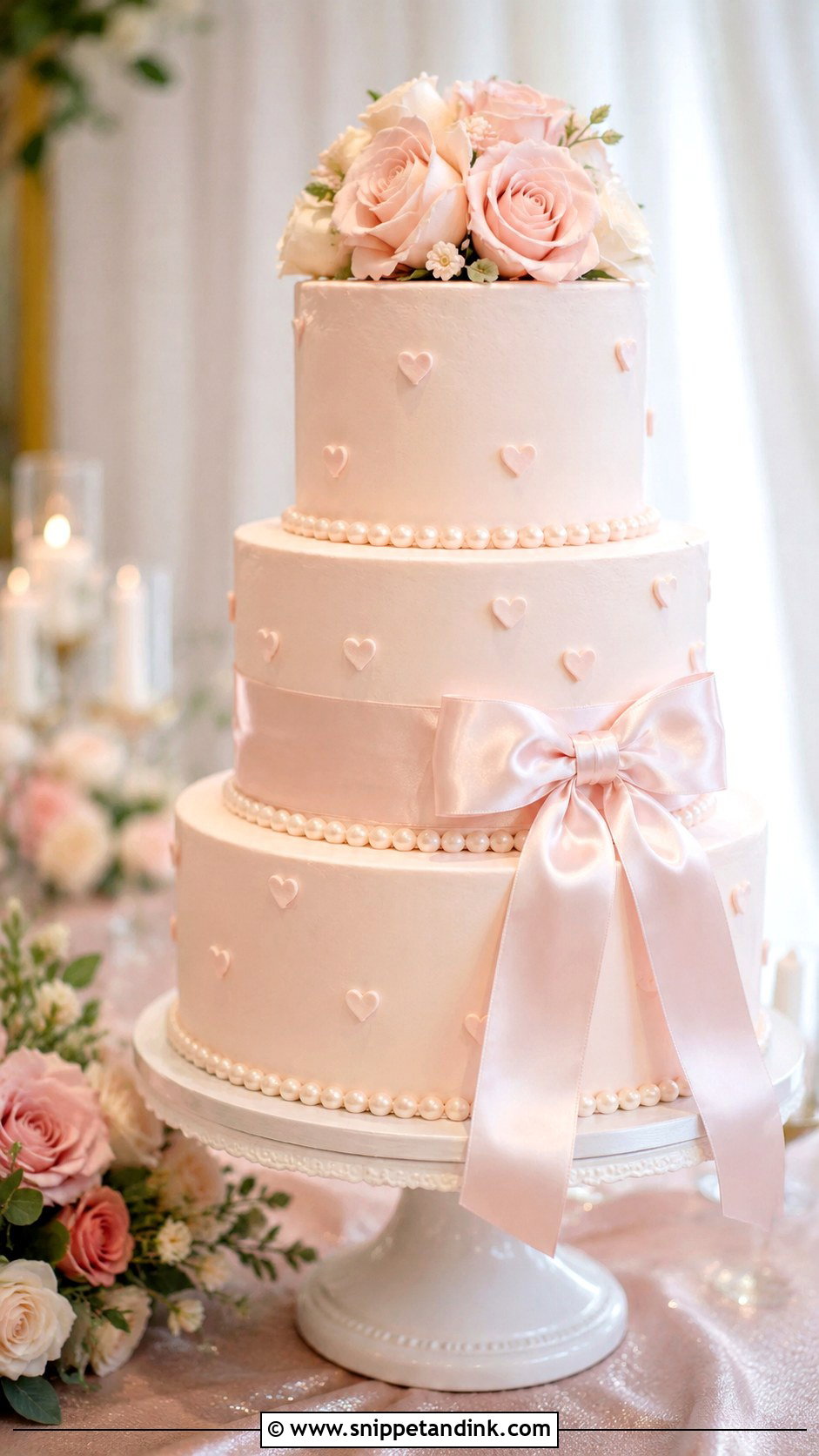
Blush is the easiest colour to style because it sits comfortably with ivory, gold, pearl and champagne. It can appear as pale pink buttercream, watercolour fondant, sugar roses, ribbon pulls or a small bow. Strawberry, vanilla bean, almond or raspberry cream make sense with the colour. I’d keep the pink muted. Bright pink reads as a birthday cake, and red-based colourings can deepen as buttercream sits overnight, so I tint a shade lighter than the target. Tiny hearts, edible pearls or satin ribbon at the base of each tier add the charm.
16. Square Wedding Cake With Charms
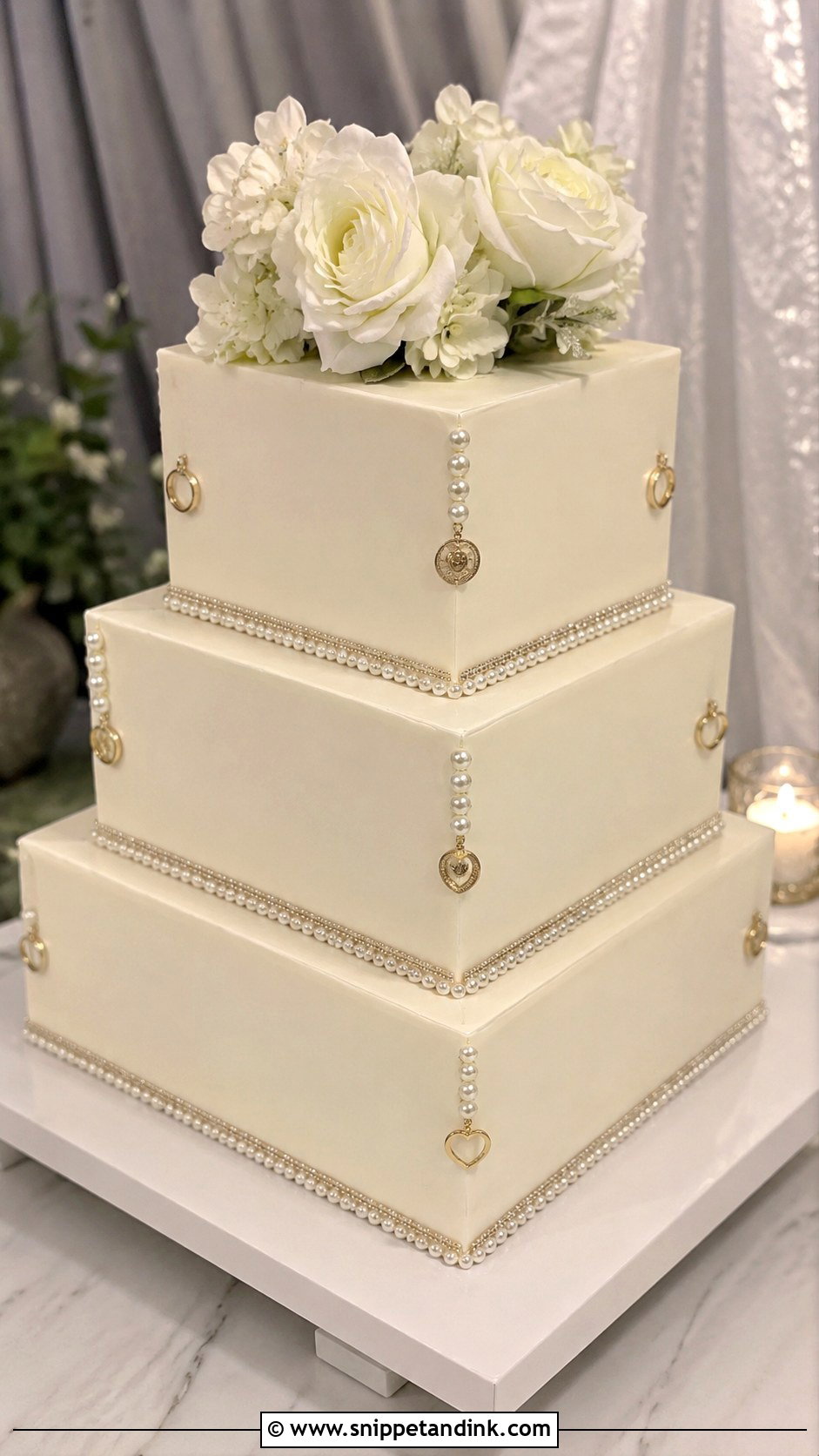
Square tiers feel modern, and the sharp corners make pearl borders, ribbon pulls and gold edges look extra crisp. They are also harder to finish. Getting a buttercream corner truly sharp takes time and chilling between coats, so ask to see a square cake your baker has already made. Smooth fondant holds the shape most easily. Ivory, white or pale champagne keeps it bridal, and a few subtle flowers soften the geometry. Vanilla, chocolate and almond all work. Put the charm details on one side or one tier only; the shape already gives plenty to look at.
17. Rustic Charm Wedding Cake
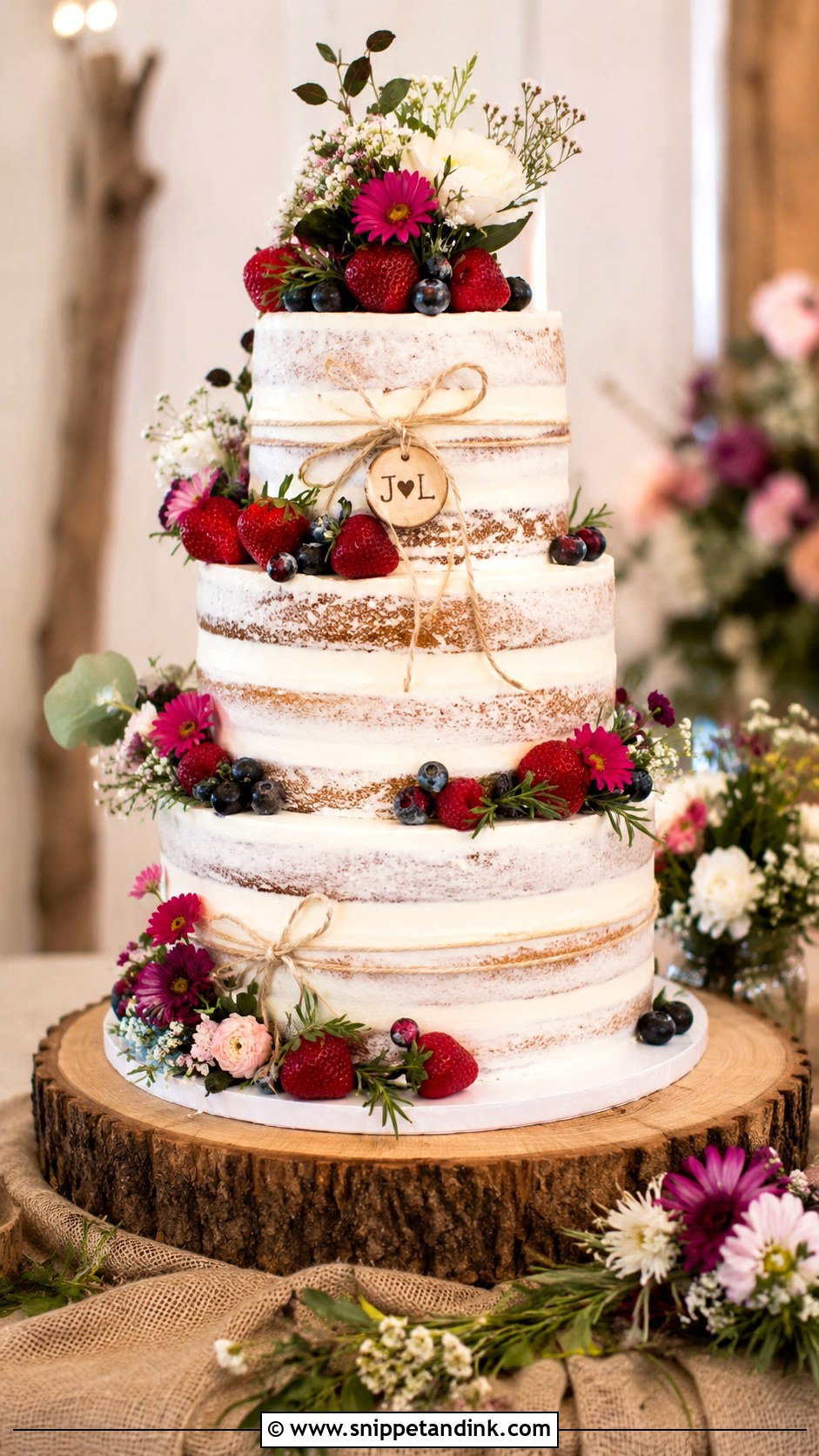
A rustic charm wedding cake belongs at a barn or outdoor reception. A semi-naked or lightly frosted finish shows a little of the layers, and fresh berries, small flowers, greenery, ribbon pulls or wooden-style charm tags dress it. Vanilla berry, carrot, spice or lemon cream fit the mood, and a wood slice or ceramic stand finishes the display. Semi-naked cakes dry out faster than fully frosted ones because more sponge is exposed to air, so I brush the layers with syrup and assemble as close to delivery as I can. Natural should never mean unfinished.
18. Modern Wedding Cake With Charms
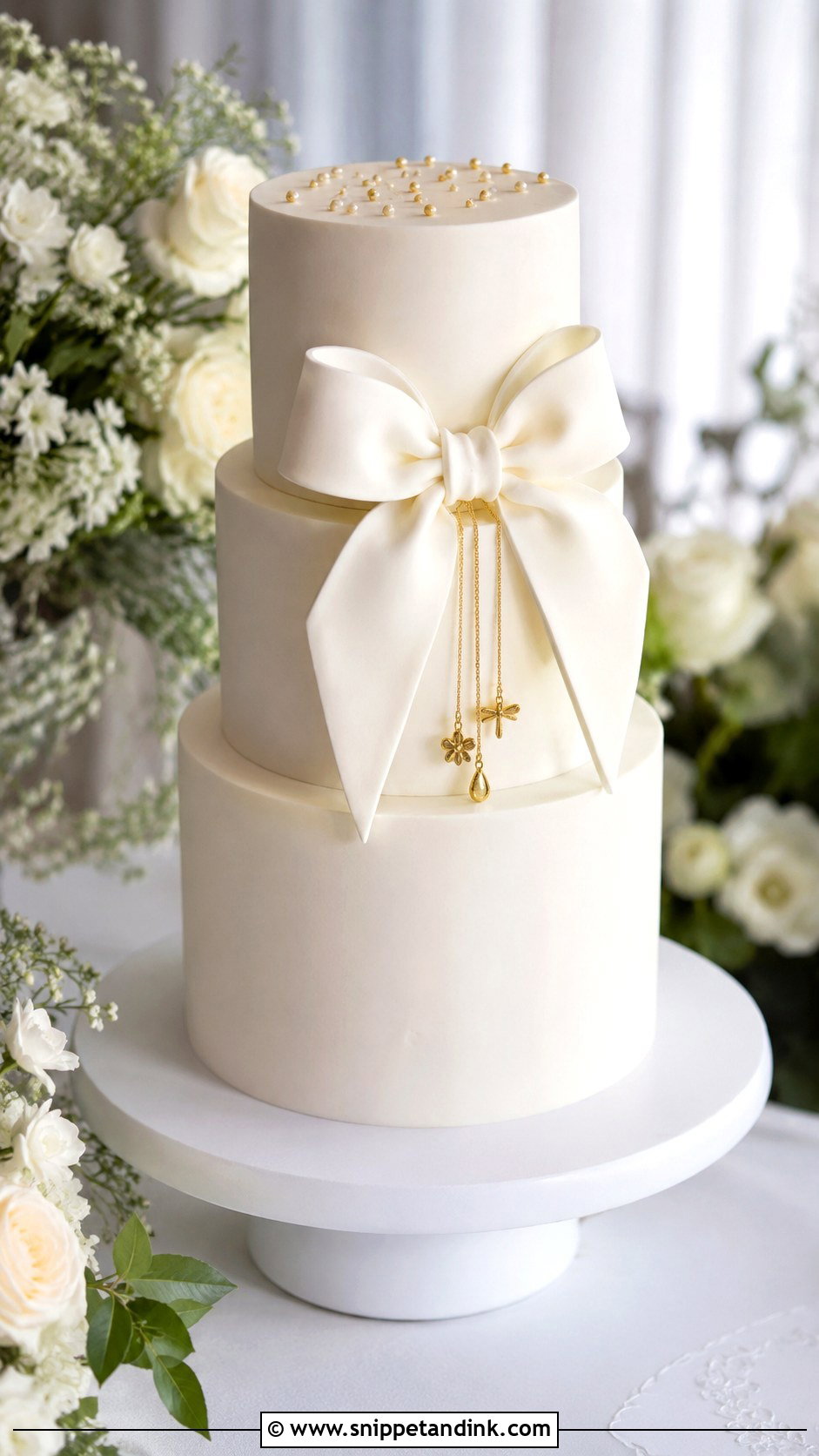
Modern charm cakes need restraint. I start with a clean white or ivory cake and give it one feature only: thin ribbons, gold charm pulls, one sculptural bow or a small monogram plaque. Smooth buttercream, sharp fondant edges and even tier spacing do the rest. Flavours can be classic or a little unexpected: vanilla bean, chocolate espresso, lemon or pistachio. Flowers are optional, and if you have them, one small cluster is enough. The harder part for most couples is saying no to a second detail, because with a design this sparse every addition shows.
19. Pastel Wedding Cake
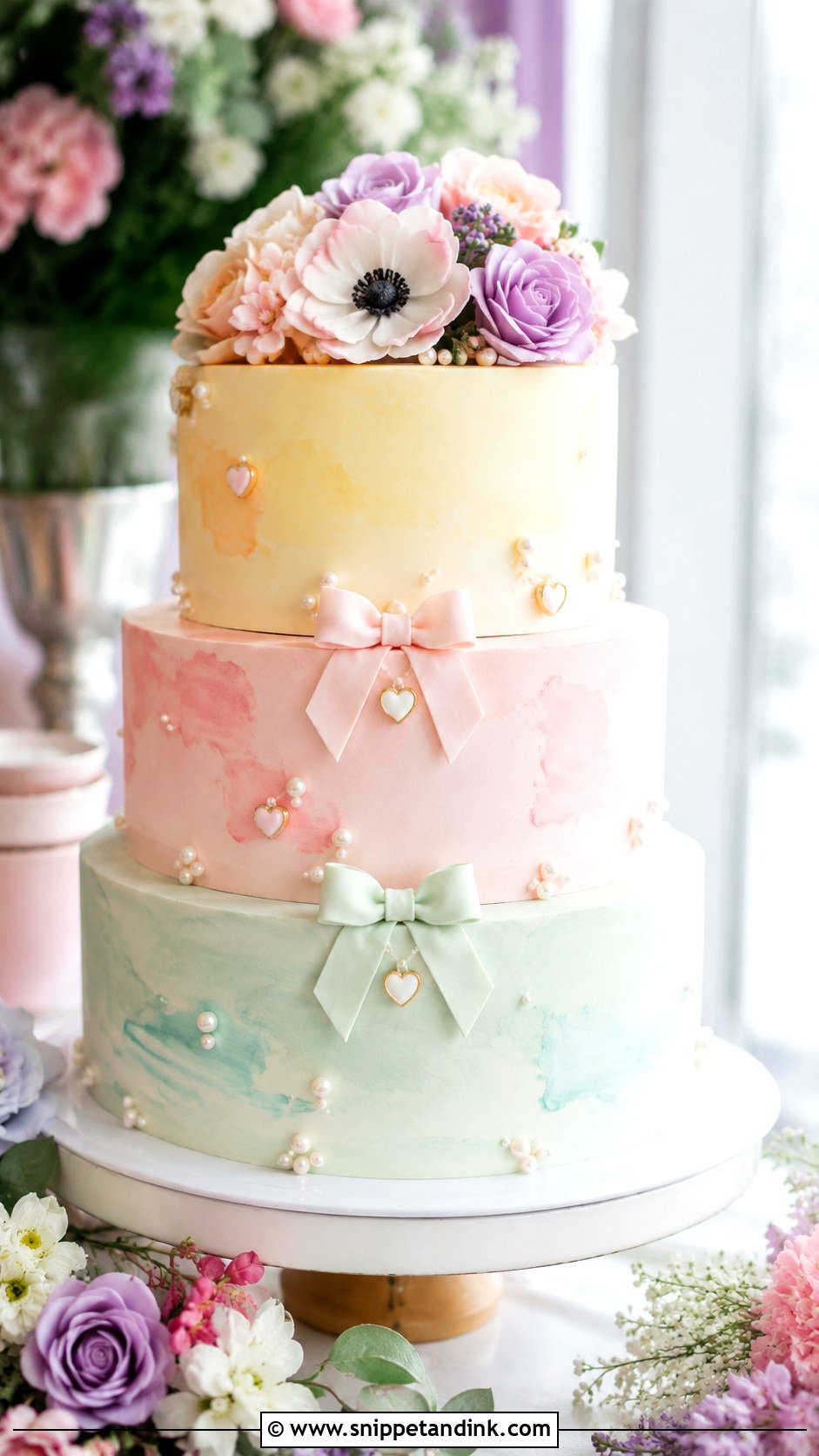
Pastels bring colour without losing softness. Pale lavender, mint, butter yellow, blush and powder blue can each take a tier or blend together in watercolour frosting, with bows, pearls, tiny hearts or ribbon pulls for the charm. Vanilla, lemon, strawberry or coconut suit the palette. I’d always mute pastels with a touch of ivory; straight-from-the-bottle candy tones look like a baby shower. Lavender is the one to watch, since purple colourings can fade toward grey-blue in sunlight. A plain white stand and fresh flowers nearby keep the display airy.


20. Charm Bracelet Wedding Cake
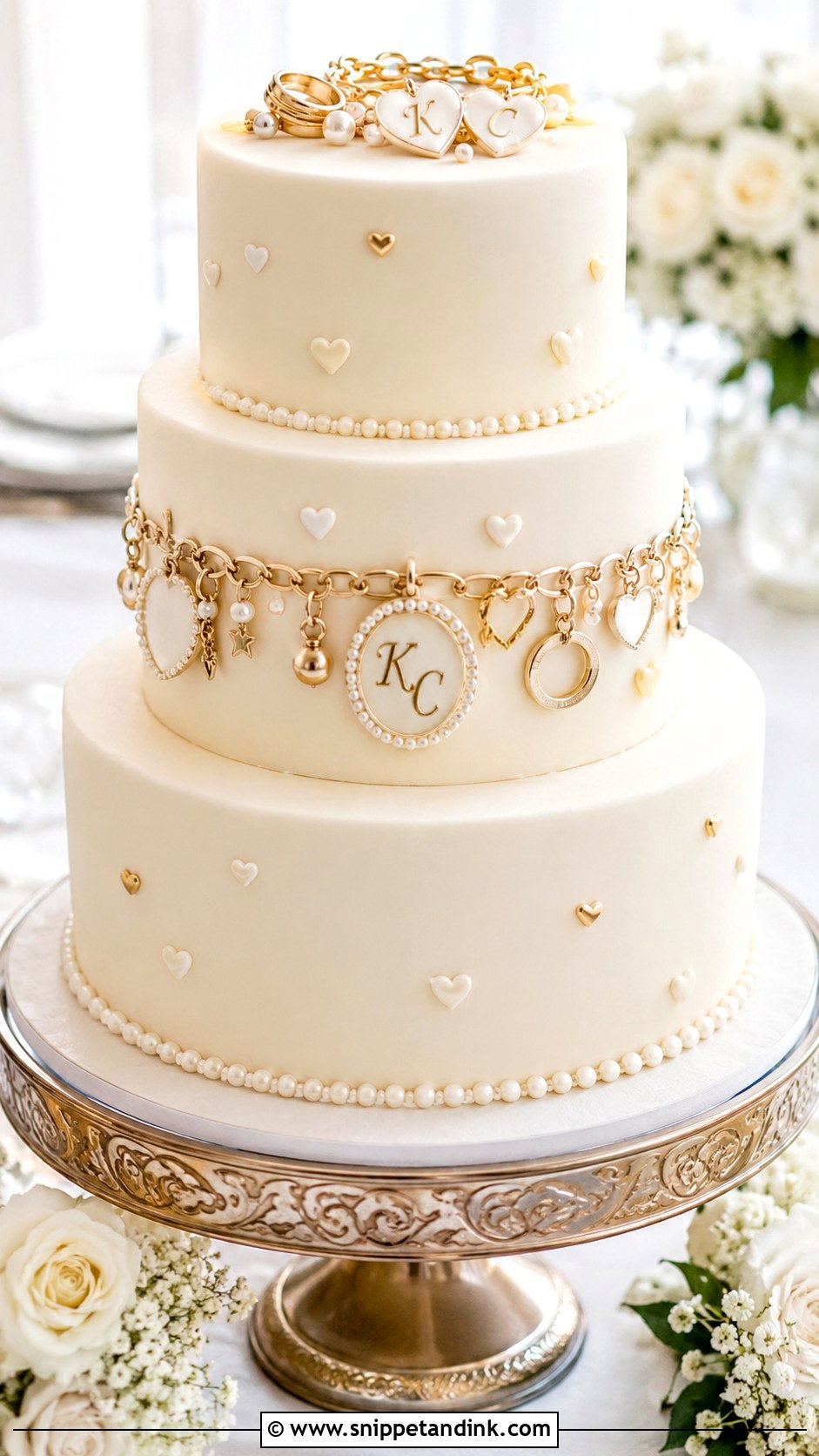
The charm bracelet cake takes the theme literally. An edible bracelet wraps one tier: small fondant hearts, stars, initials, rings, flowers and pearls joined by a thin painted gold or silver line. The base stays ivory or white so the bracelet reads clearly, with vanilla, almond or champagne sponge underneath. The detail I always ask couples for is the meaning. A charm for the city where you met, your dog, a family initial: the design comes alive when each piece stands for something, and guests will lean in to work out the story.
What the Charms Traditionally Mean, and When the Pull Happens
The cake pull is an old custom, kept especially alive in New Orleans, where bridesmaids each pull a ribbon and read their fortune in the charm on the end. The meanings vary from family to family, but these are the ones I’m asked to include most often:
- Ring: the next to marry.
- Heart: love that’s coming or staying.
- Horseshoe or four-leaf clover: good luck.
- Anchor: a steady life, or adventure, depending on who you ask.
- Purse or money bag: prosperity.
- Thimble: traditionally a gentle tease about staying single. Some couples leave it out, others keep it for the laugh.
Many couples now do the pull at the bridal luncheon or shower, with a smaller display cake, so the reception schedule stays free. If you’d rather keep it at the reception, do it before the cake is cut. Once the knife goes in, the bottom tier gets moved and the ribbons are easily tangled or buried in crumbs. Tell your photographer when it’s happening; the moment the charms come out is quick and easy to miss.
Bring Your Baker Ribbon Samples, Not Just Photos
A charm cake runs on small details, and those details are easiest to get right when your baker can see and touch them. Ribbon pulls suit a traditional reception, pearls and flowers suit a romantic one, a heart shape is playful, and a clean modern cake with one personal accent suits couples who like restraint. Venue, colours and guest count narrow it down quickly. Bring photos, ribbon samples, flower notes and your favourite flavours to the tasting. Whether you end up with two tiers or five, it’s the small, personal pieces people remember.
You'll Like These Ideas:









Leave a Reply