
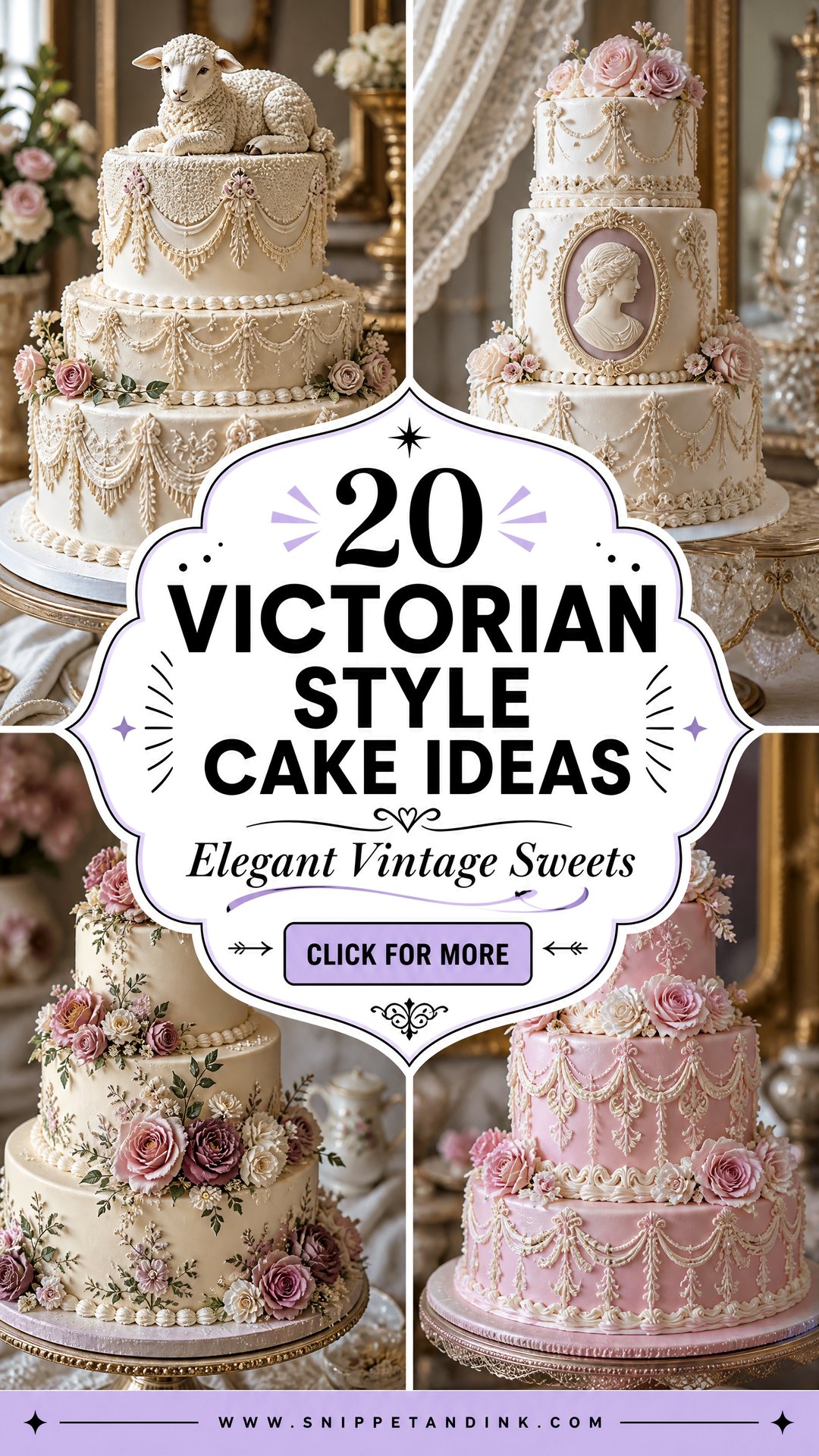
Victorian wedding cakes are the ones I spend the longest piping, and they look it. Tall ivory tiers, pearl borders, sugar roses, lace and scallops all read as handwork, because they are. The style stretches further than people expect. At one end sits a full Lambeth cake with layer on layer of over-piping; at the other, a plain tier with a single band of lace and a few antique touches. Ballrooms, historic houses, gardens and at-home receptions can all carry one. Here are twenty versions, with notes on how each is built and what it asks of the venue.
The Hours Behind Lambeth Piping, and What They Mean for Your Order
Victorian cakes are priced and scheduled by handwork more than by size. A plain three-tier cake and a three-tier Lambeth cake use similar amounts of cake, but the second can take many more hours of piping, because each layer of over-piping has to firm before the next goes on. Sugar flowers add their own time, since they’re made weeks ahead and left to dry.
That’s why I’d contact a cake designer for this style earlier than for a simpler cake, often six months or more before the wedding for busy seasons. Here is roughly how I’d want the order to unfold:
- First conversation: guest count, venue and the level of detail, from a single lace band to full over-piping
- Tasting and sketch: flavors chosen, with a drawing of each tier and the piping style on it
- Final details a few weeks out: confirmed numbers, flower colors, any monogram or cameo
- Sugar flowers and plaques made in the weeks before, so they’re fully dry
- Baking and covering in the last few days, piping last, then delivery and stacking at the venue
Bring things that carry the period feel for you: a photo of your dress lace, an invitation with a border, a piece of family china. Those give me far more to work with than a saved cake photo, and they’re what make the piping yours.
1. Victorian Lace Wedding Cake
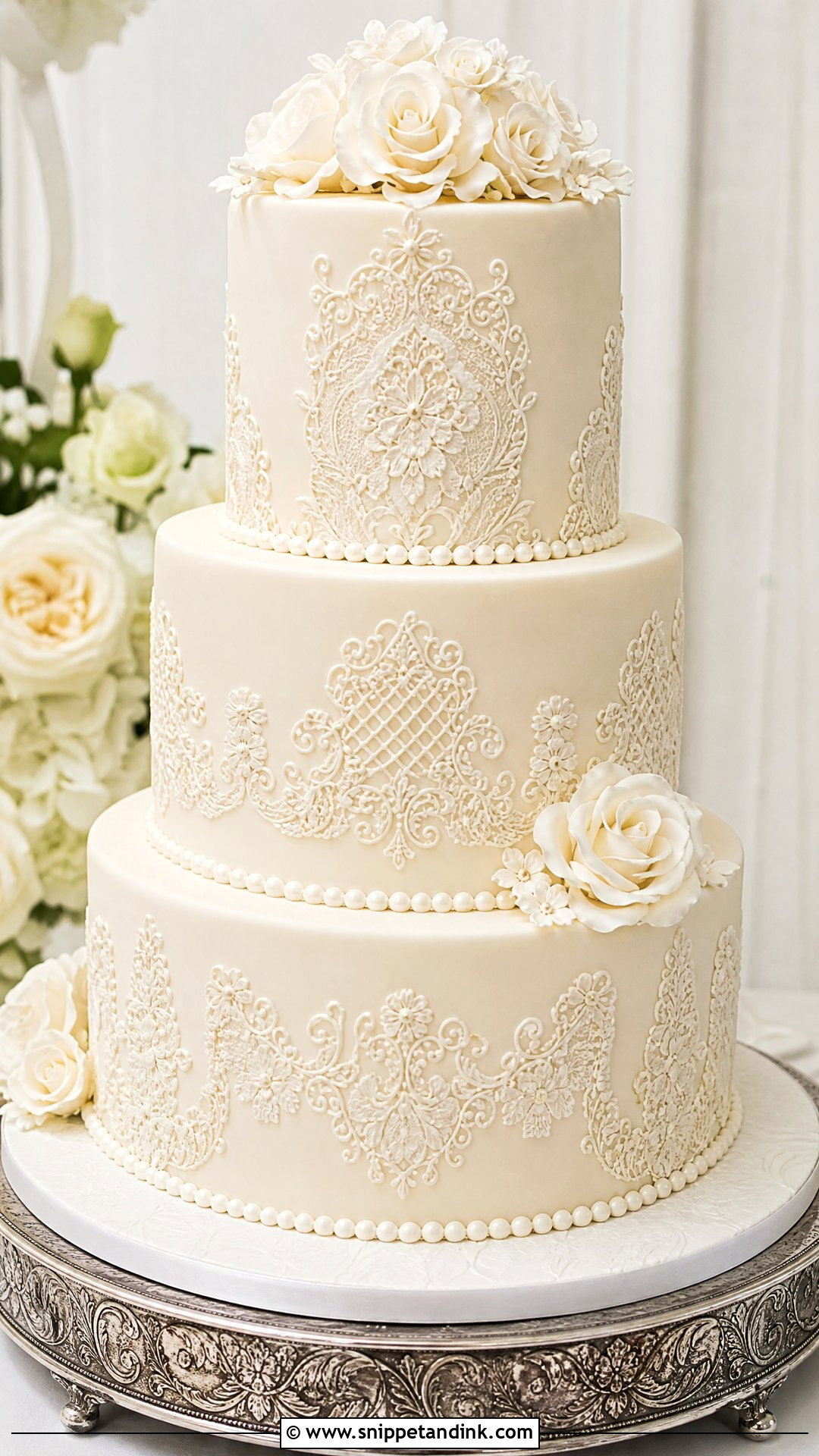
Lace is the most natural starting point, because the cake echoes antique bridal lace almost directly. I usually work three tiers covered in smooth fondant or a firm ganache-set buttercream, then pipe lace panels, tiny dots and scalloped bands on each so the cake looks finished from every side, not only the front. Pearl accents and a few sugar roses or pale blush blossoms soften it. If your dress has a lace pattern, bring a close-up photo; I can trace the motif into the piping so the two match. Chapels, historic homes and formal receptions suit it.
2. Victorian Lambeth Wedding Cake
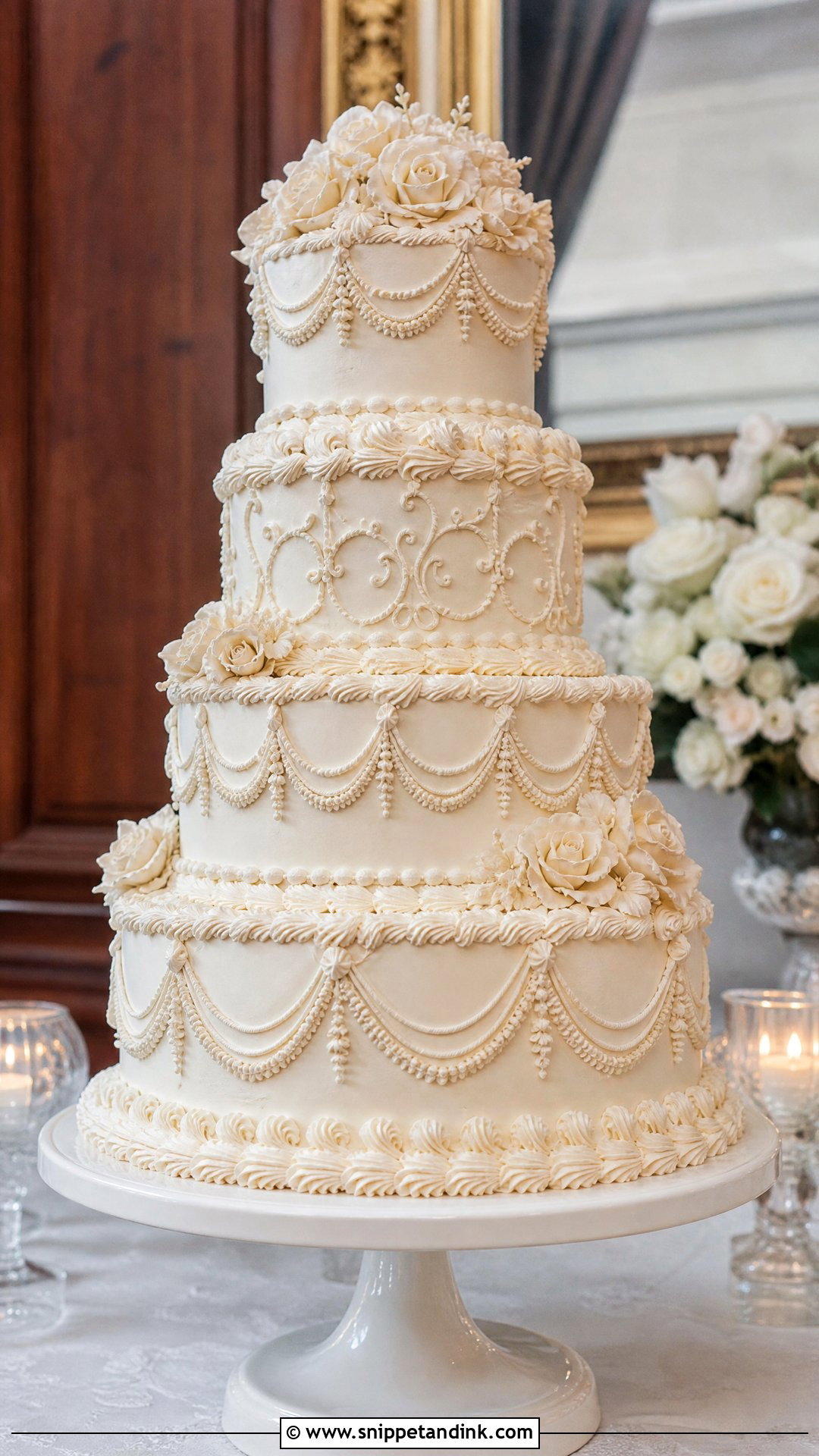
Lambeth is over-piping: borders piped on top of borders, building shells, swags, scrolls and drapes out from the cake until it looks like a carved antique mirror frame. It is slow work, every layer has to firm up before the next goes on, and that time shows in the quote. Ivory buttercream is the safest base, though pale pink, blue or champagne all suit it. Two tiers carry the style for a smaller wedding, while four becomes a true reception centerpiece. Sugar pearls tucked between the piped layers pick out the detail without adding clutter.
3. Victorian Pearl Wedding Cake
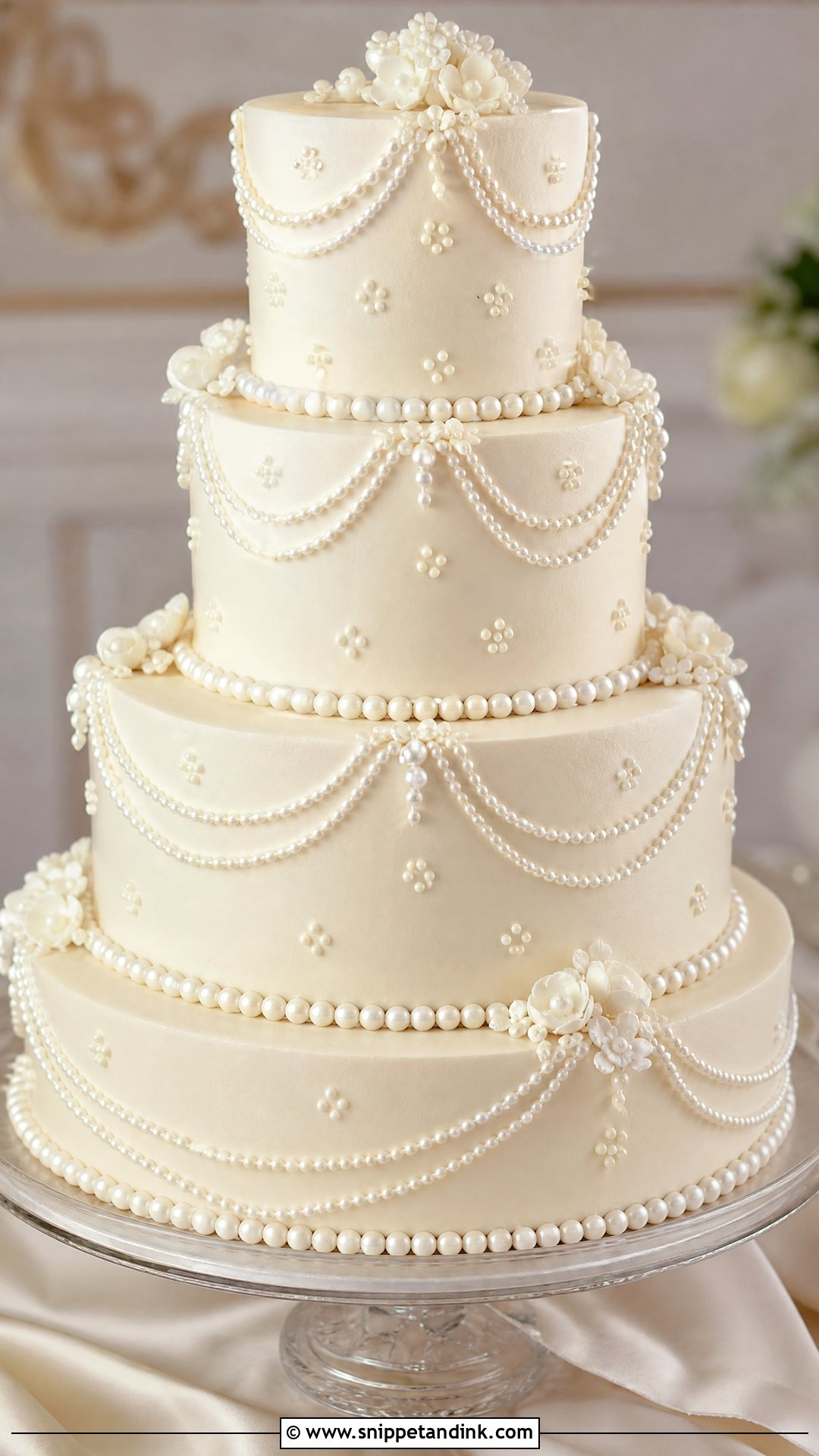
Pearl cakes rely on texture rather than color. I wrap smooth ivory tiers with a pearl band at each base, add strands or swags higher up and cluster tiny piped dots around any sugar flowers, so the eye moves round the cake the way it would along a necklace. Spacing matters more than quantity: pearls set too evenly look machine-made. Soft lace piping or a little raised scrollwork brings in the period feel. It’s a good fit for couples who want vintage detail but a cleaner overall cake.
4. Victorian Rose Wedding Cake
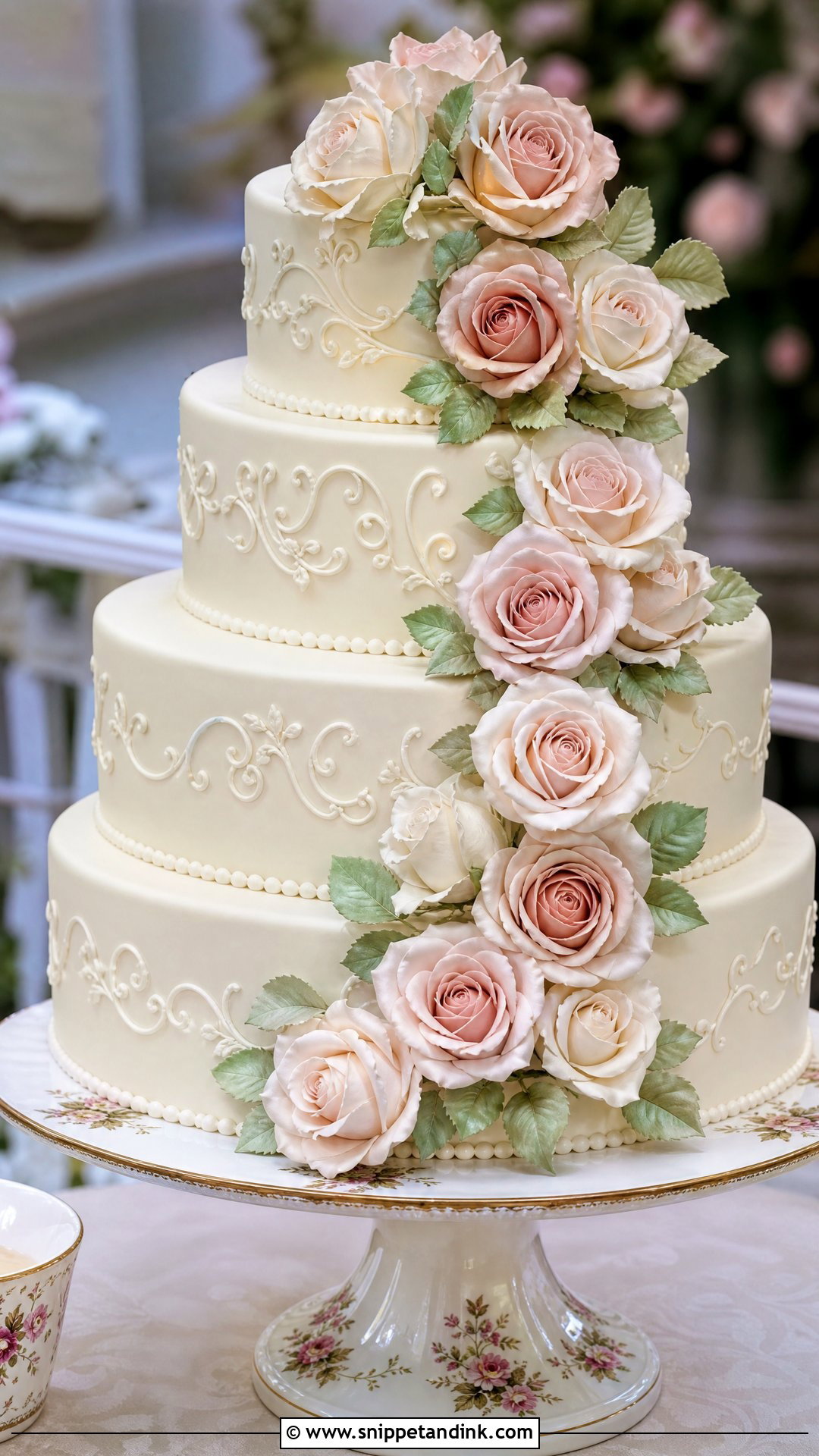
Roses were everywhere in nineteenth-century decoration, so a rose cake sits comfortably in this style. I make sugar roses in blush, dusty pink, cream or mauve and arrange them in clusters, either cascading down one side or circling each tier as a garland. Sugar roses take time to dry hard, so I make them weeks before the wedding; that lead time is one reason detailed floral cakes need booking well ahead. Piped scrolls, pearl borders and small leaves finish it. Spring and summer suit the pale shades, deeper roses work for autumn.
5. Victorian Royal Icing Wedding Cake
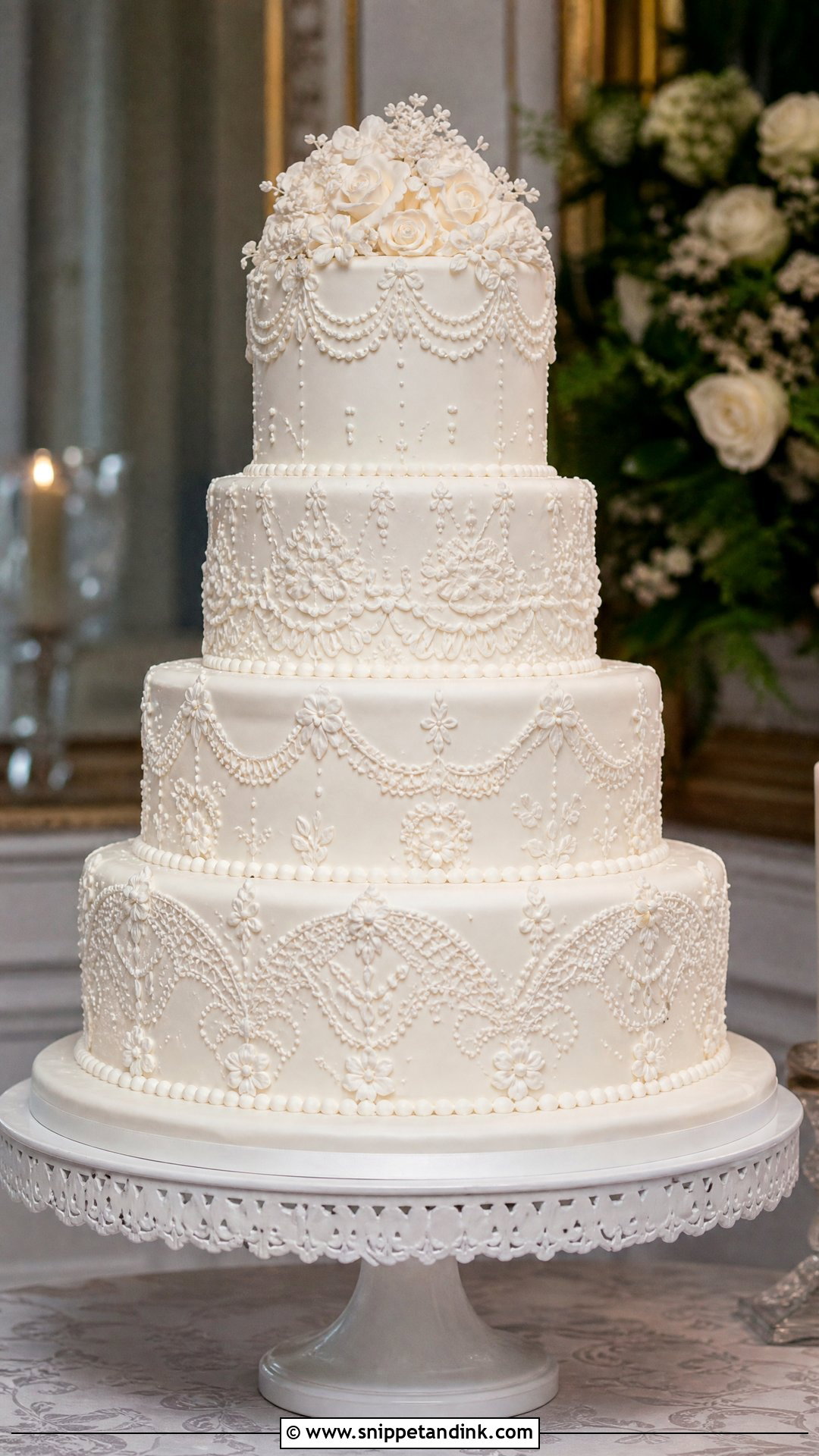
Royal icing gives the finest Victorian detail: lace, dots, string work, raised scrolls, all crisp enough to cast tiny shadows. It sets hard, which is why it was used over smooth cakes for intricate decoration, and why I keep the palette to white or ivory so the texture does the talking. A tall tiered cake with royal icing patterns has real presence in a ballroom or period venue. I add sugar flowers only where a pattern needs a resting point, so the piping stays visible. One caution: royal icing softens in damp air, so a humid summer marquee is not its natural home.
6. Victorian Cameo Wedding Cake
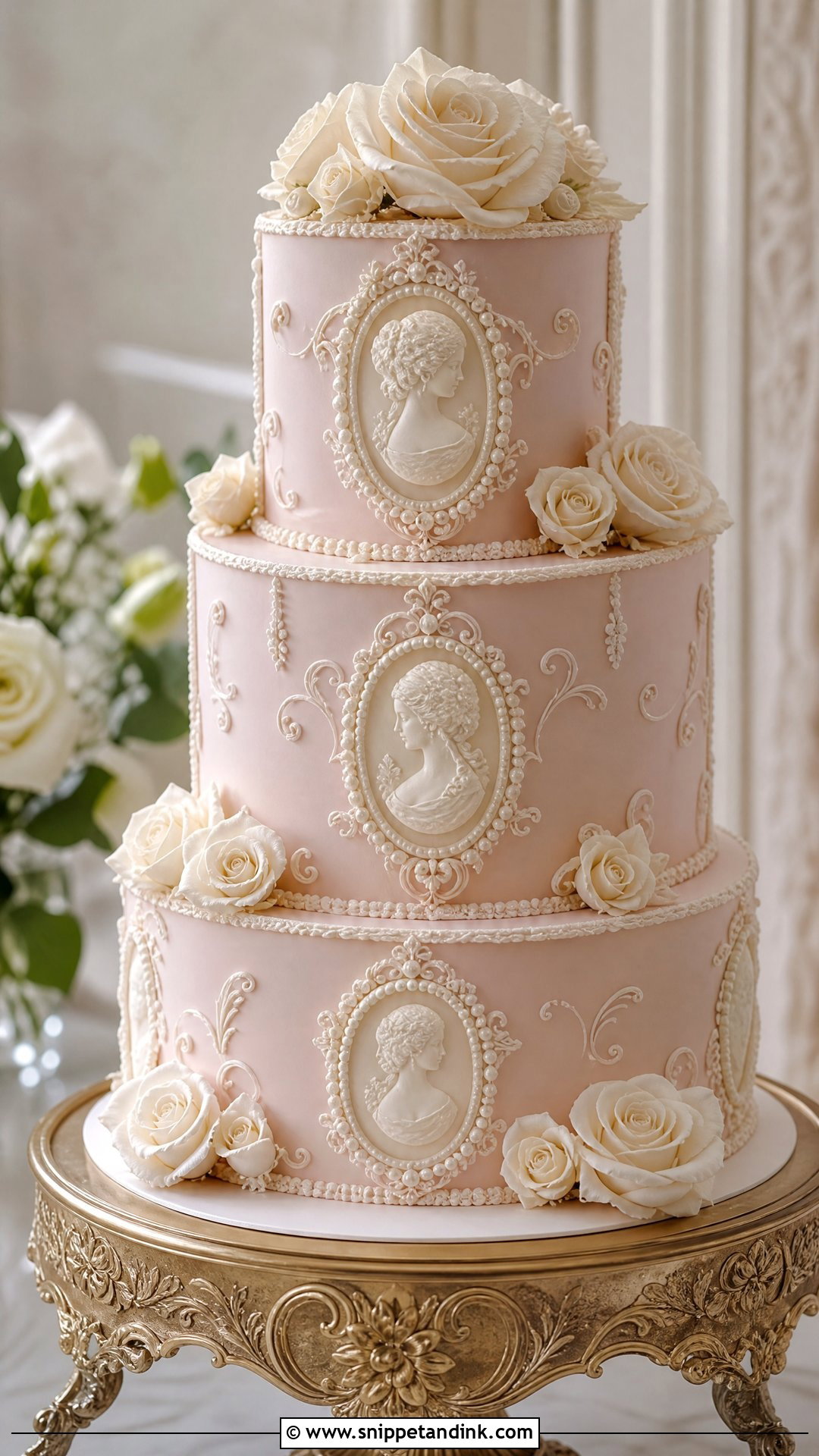
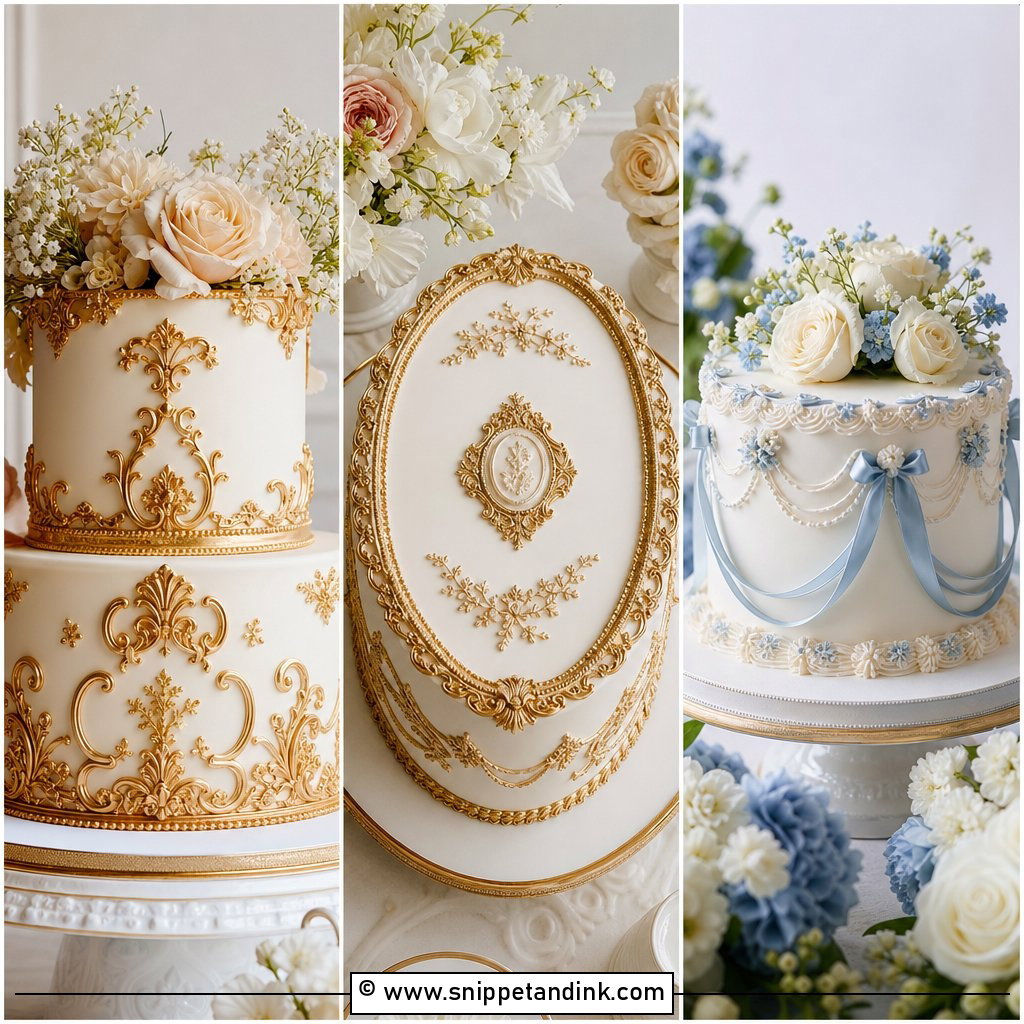
Cameos give the cake an heirloom feel. I mold oval plaques in sugar paste, often with a profile in relief, and set one on the front of each tier like a framed portrait. Ivory, blush or pale blue tiers work, with piped pearls and scrollwork around each frame and small flowers to finish. The design holds together best when each tier has one framed detail rather than decoration everywhere. Couples who love vintage jewelry, old portraits or storybook styling tend to gravitate to it.
7. Victorian Gold Wedding Cake
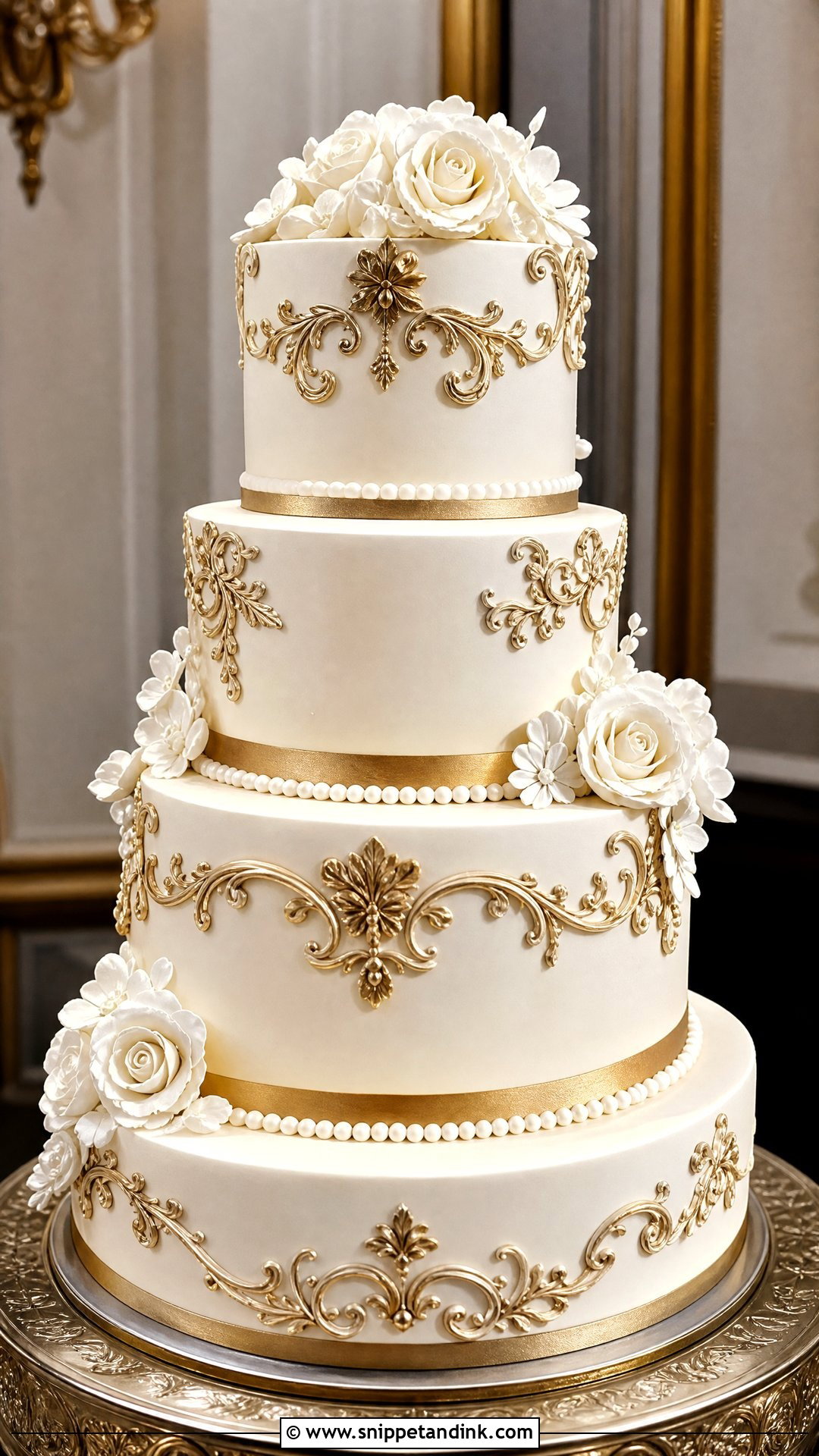
Gold works on a Victorian cake as trim, not as a coating. I start with ivory or champagne tiers and paint gold onto raised scrolls, thin bands, frame shapes or the edges of piping with edible lustre mixed into a little alcohol, which evaporates and leaves the metal finish. A few flakes of leaf on raised lace sections catch candlelight beautifully. Pearl borders and white sugar flowers balance it. Formal evening weddings and grand halls carry the warmth best.
8. Victorian Floral Wedding Cake
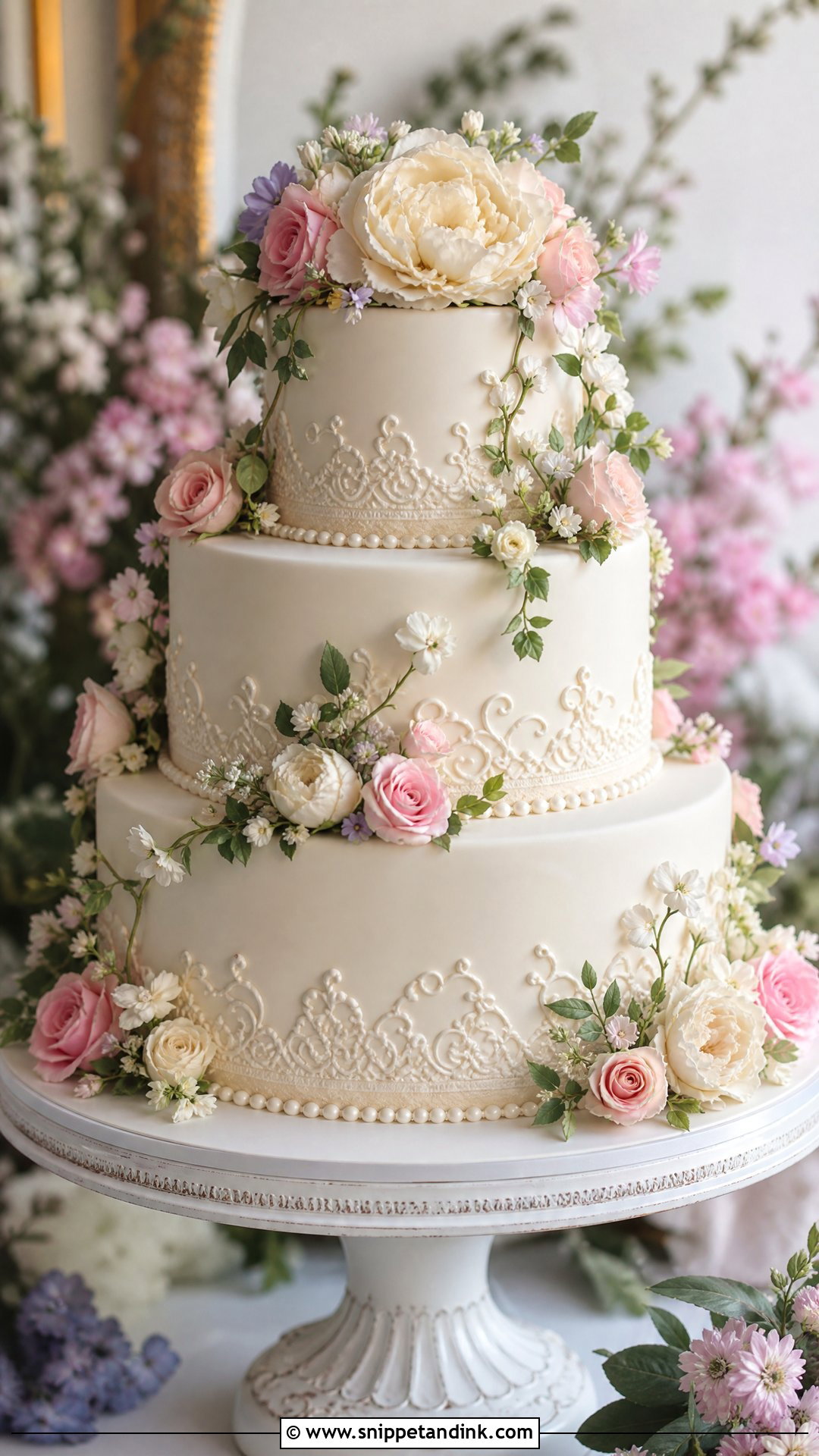
A floral cake in this style uses many small flowers rather than one big cluster: roses, peonies, lily of the valley, sweet peas and tiny blossoms scattered in a natural pattern around the tiers. Real lily of the valley is poisonous, so on a cake it should only ever be sugar. I keep the icing ivory or pale cream so the flowers look delicate, and add piped vines, pearl dots and lace borders between them. On a vintage stand with fresh greenery nearby, it changes easily with the season.
9. Victorian Ruffle Wedding Cake
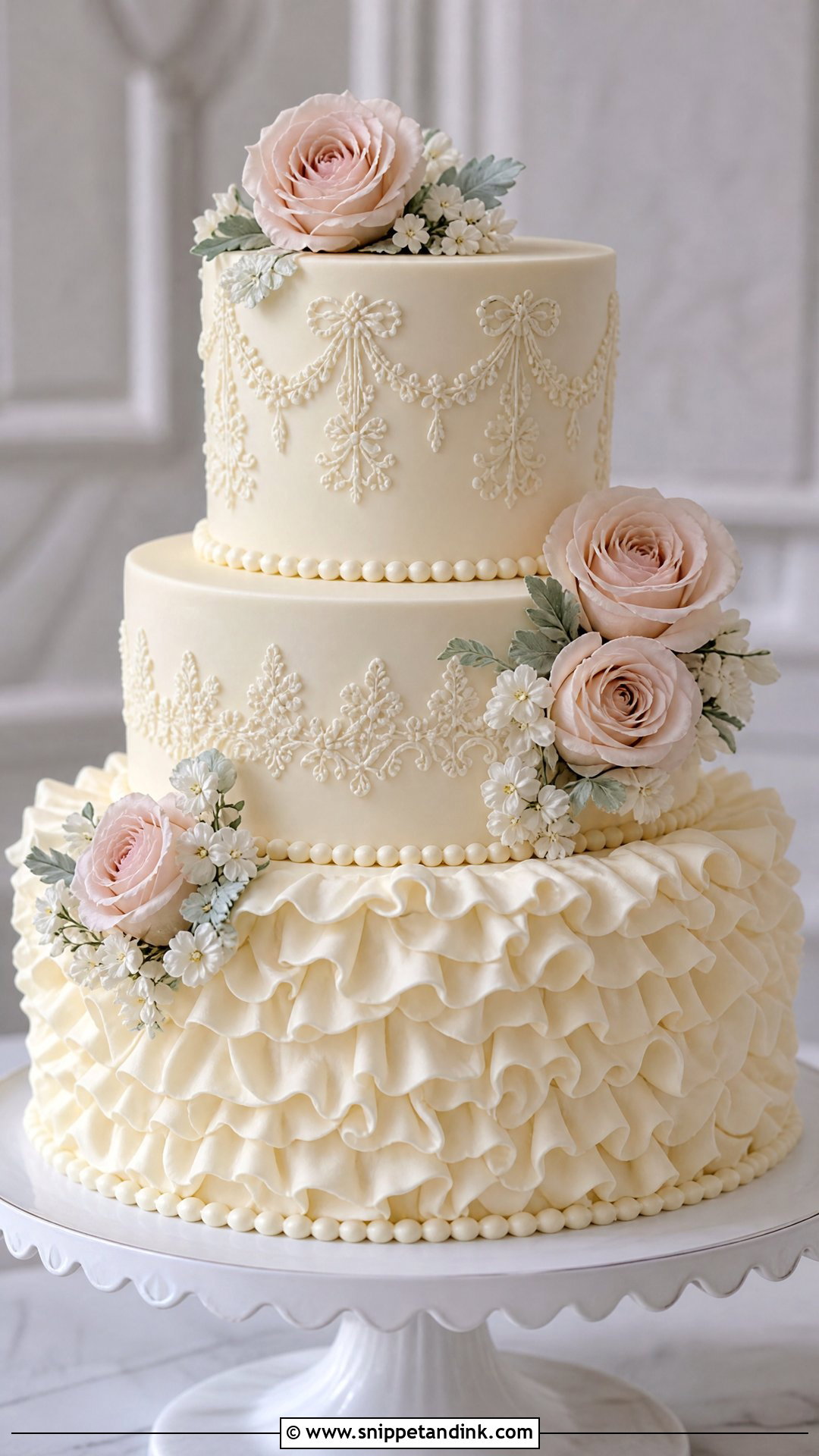
Ruffles turn icing into something that looks like fabric, layered silk or the skirt of an old gown. I cut fondant ruffles thin and attach them row by row, or pipe them in buttercream with a petal tip for a softer edge. One ruffled tier between smooth ones usually looks more considered than ruffles all over. Pearl borders, lace piping and a few sugar roses keep it in period. Fondant ruffles droop in heat, so for a warm venue I lean toward the buttercream version and keep the cake cool until it’s set out.
10. Victorian Blue Wedding Cake
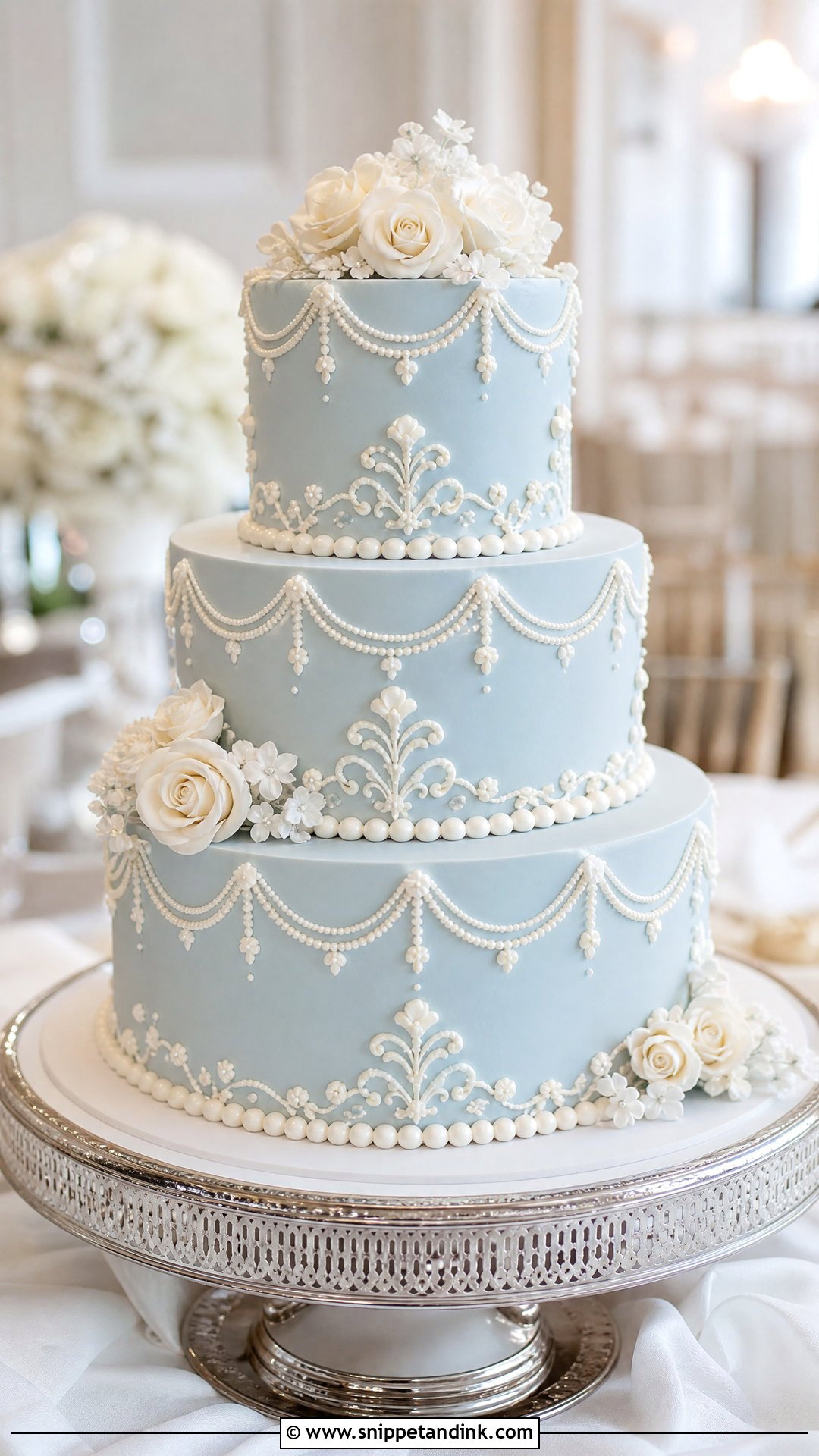
Pale blue was common in nineteenth-century interiors and china, so a blue cake looks old-world rather than novel. I tint the base powder or dusty blue, then pipe white Lambeth borders, pearls and small sugar flowers over it; the white piping reads crisper against blue than it ever does on white. Blue icing fades in strong light, so I keep the cake out of direct sun until it’s displayed. Silver stands, white linen and classic flowers suit it, and a soft shade keeps the whole thing graceful.
11. Victorian Pink Wedding Cake
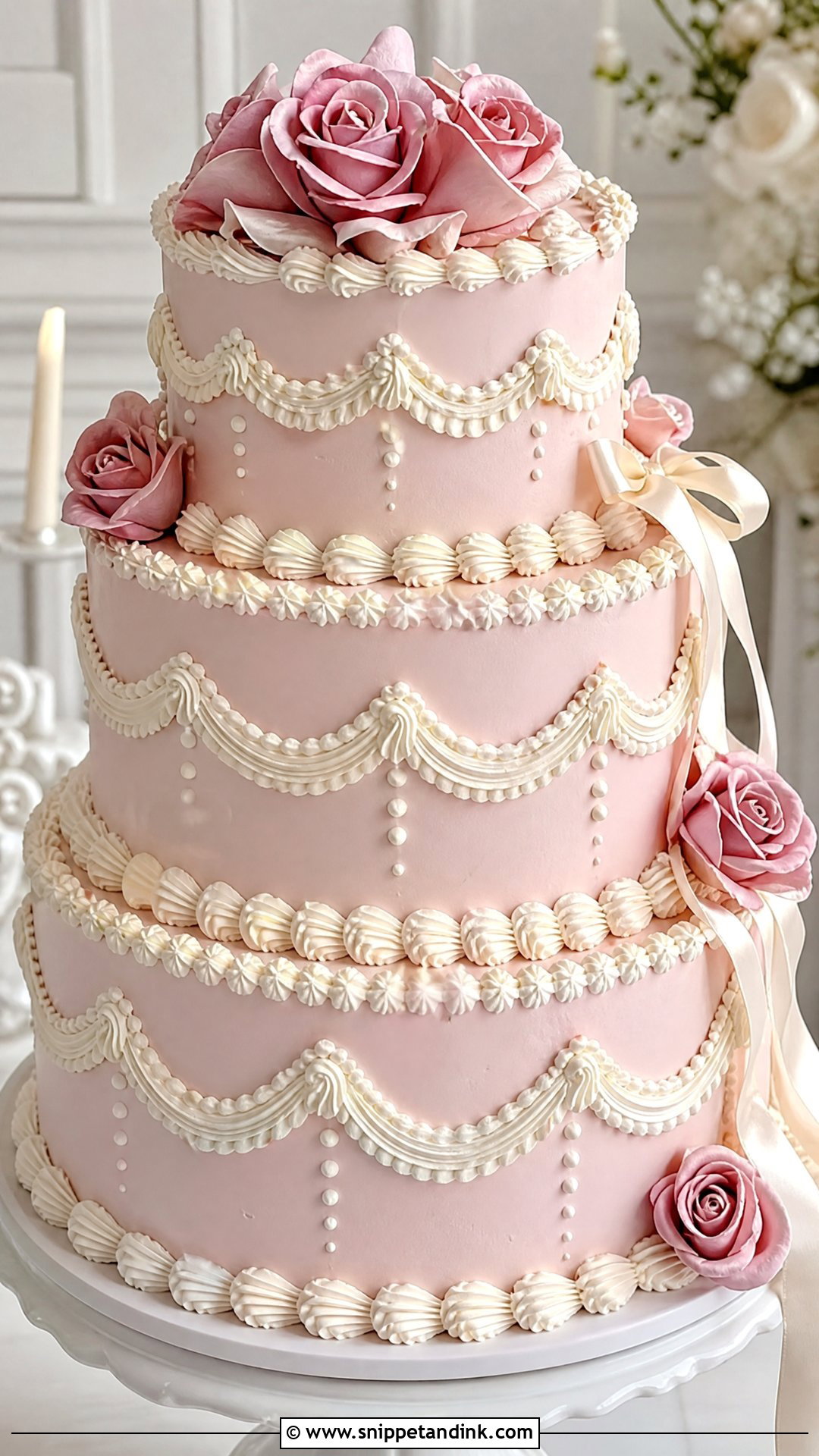
A pink Victorian cake needs restraint, or it starts to look like a birthday cake. I use blush or dusty rose icing with ivory piping layered over it: shell borders, scalloped swags, pearl dots and sugar roses, all kept tonal. A heart-shaped top tier adds nostalgia, though round tiers read more formal. Garden weddings, spring receptions and bridal teas are where this one feels most at home.
12. Victorian White Wedding Cake
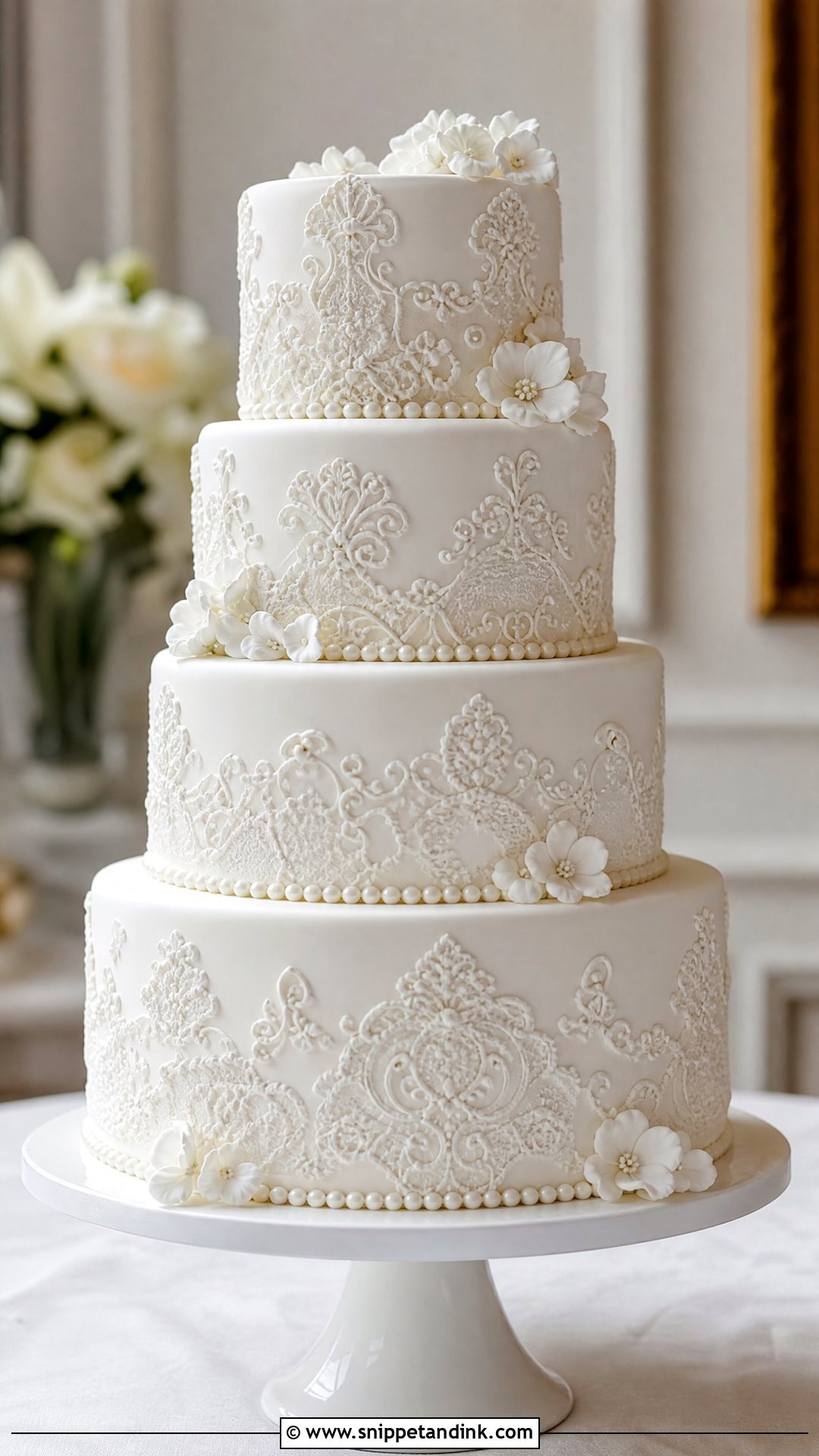
White-on-white is the hardest version to get right, because nothing hides the piping. Every lace line, raised scroll, pearl dot and floral applique has to be clean, since shadow is the only thing showing the detail. I give each tier its own texture, perhaps lace on one, pearls on the next and scrollwork on top, so it doesn’t look plain from a distance. Lit from the side it shows its detail best; harsh overhead light flattens it, which is worth mentioning to the venue. Churches and formal hotel receptions suit it.
13. Victorian Black And White Wedding Cake
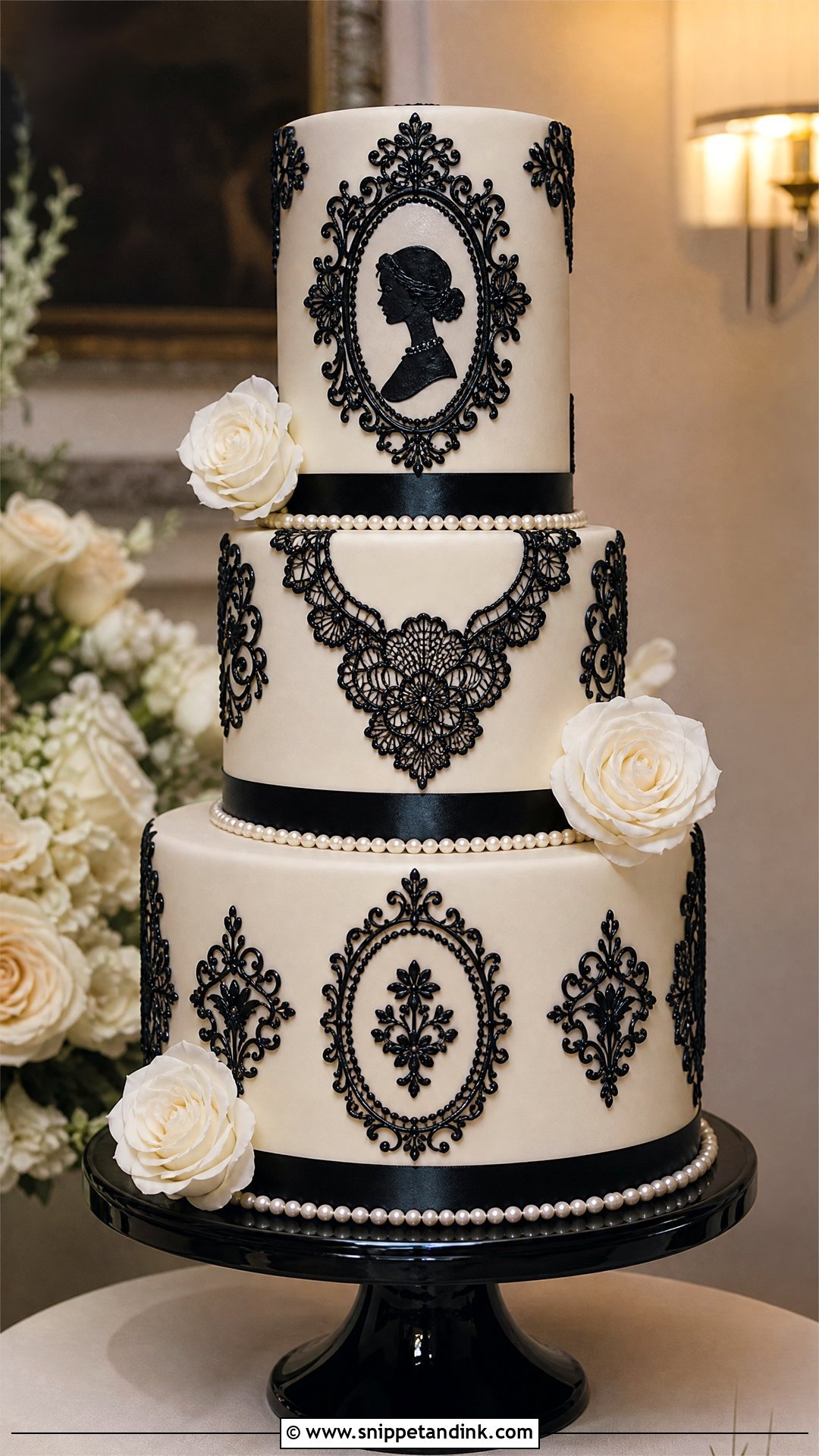
Black and white adds formal drama. I keep the tiers mostly ivory or white and use black as piping, ribbon-style bands or cameo details. Black icing needs a lot of coloring and can taste bitter and stain mouths, so I use it only for fine detail rather than whole surfaces. Contrast makes scrollwork and lace jump out, as long as the black is placed with intent and not scattered. White sugar roses, pearl borders and a hint of soft gold keep it bridal. It suits evening receptions and historic ballrooms.
14. Victorian Heart Wedding Cake
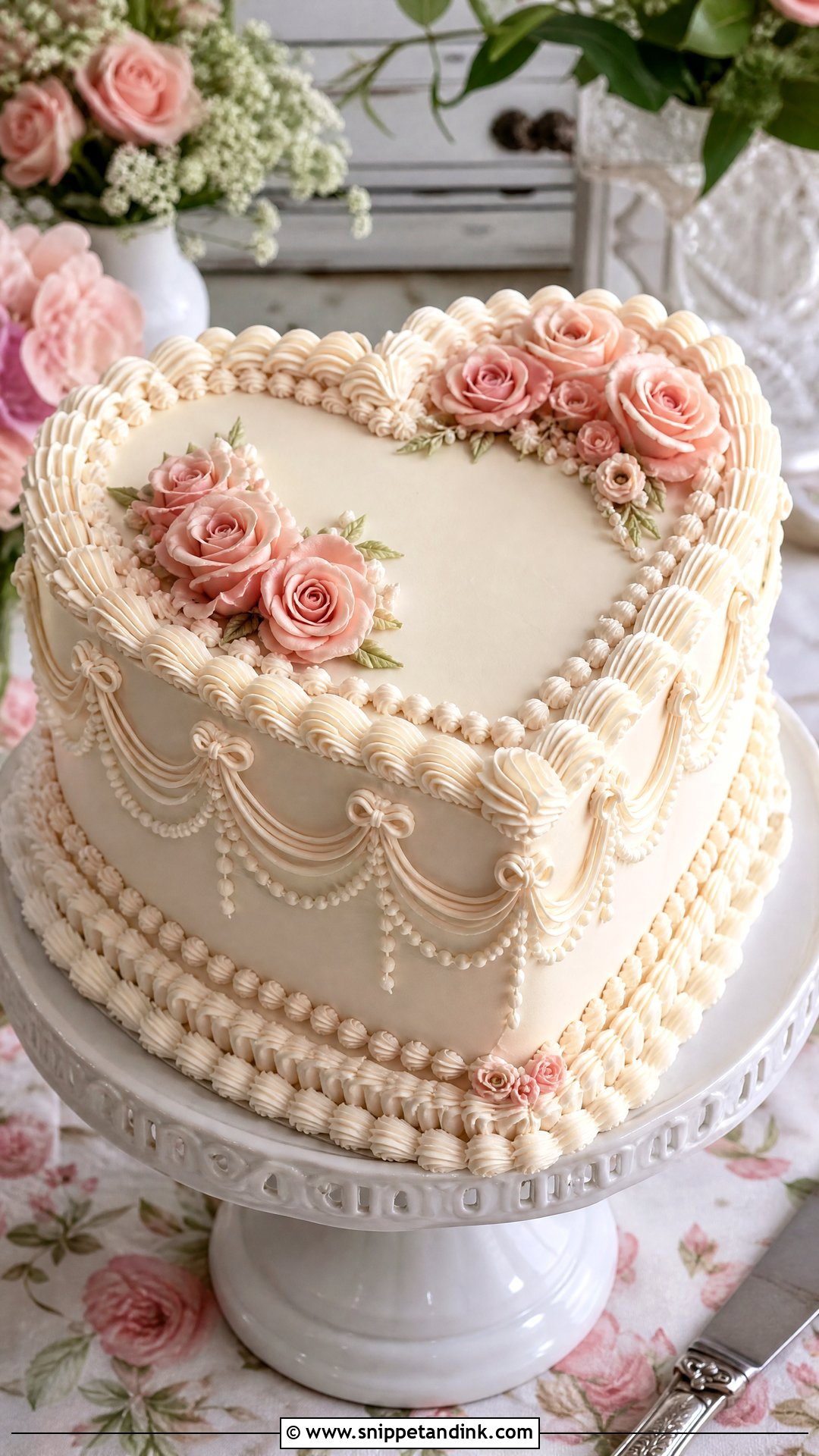
A Victorian heart wedding cake leans sweet and nostalgic, and the trick for a wedding is keeping it grown-up. Two or three heart tiers in ivory buttercream, scalloped borders, pearl dots and layered piping round every edge. Hearts are awkward to pipe evenly because the curves change at the point and the dip, so they take longer than rounds. Blush roses or small sugar bows add softness. It reads well from above and from the front, and suits small weddings, dessert tables or a cutting cake.
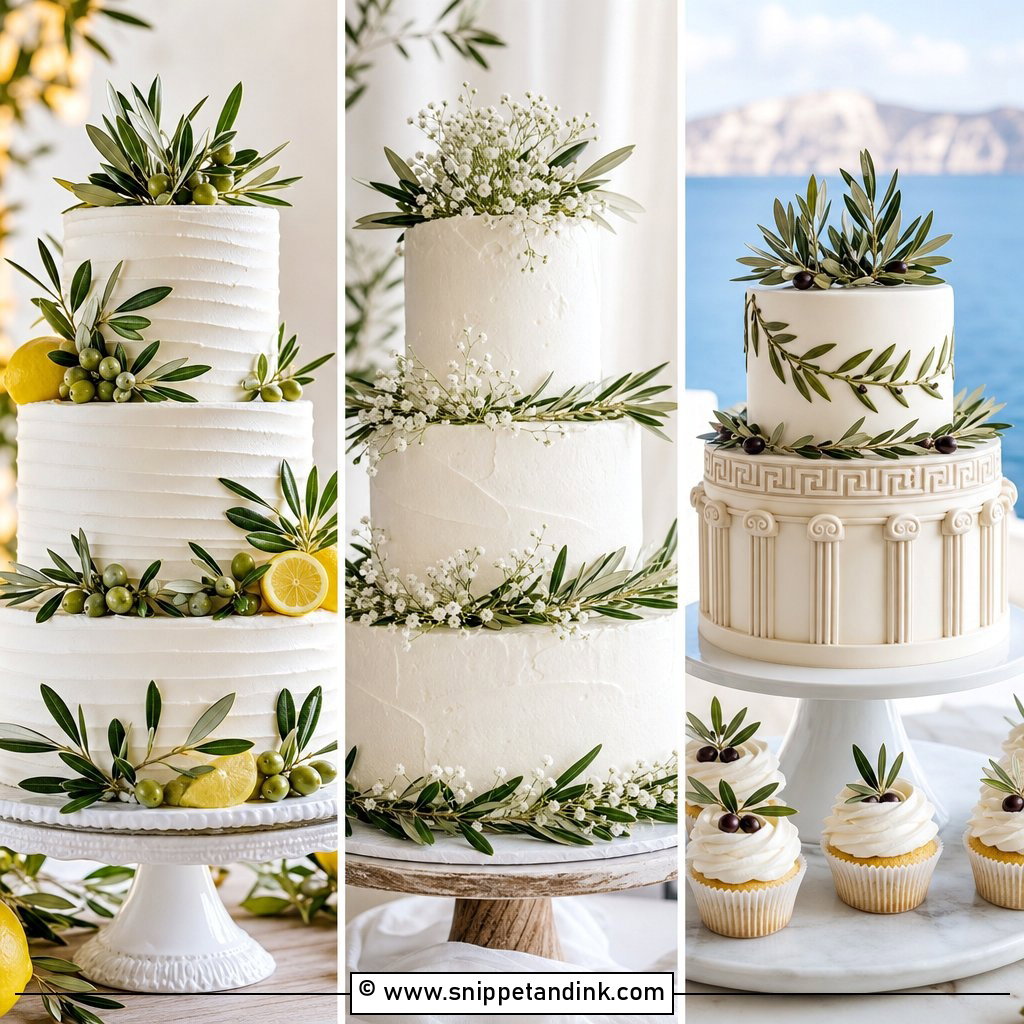
15. Victorian Fruitcake Wedding Cake
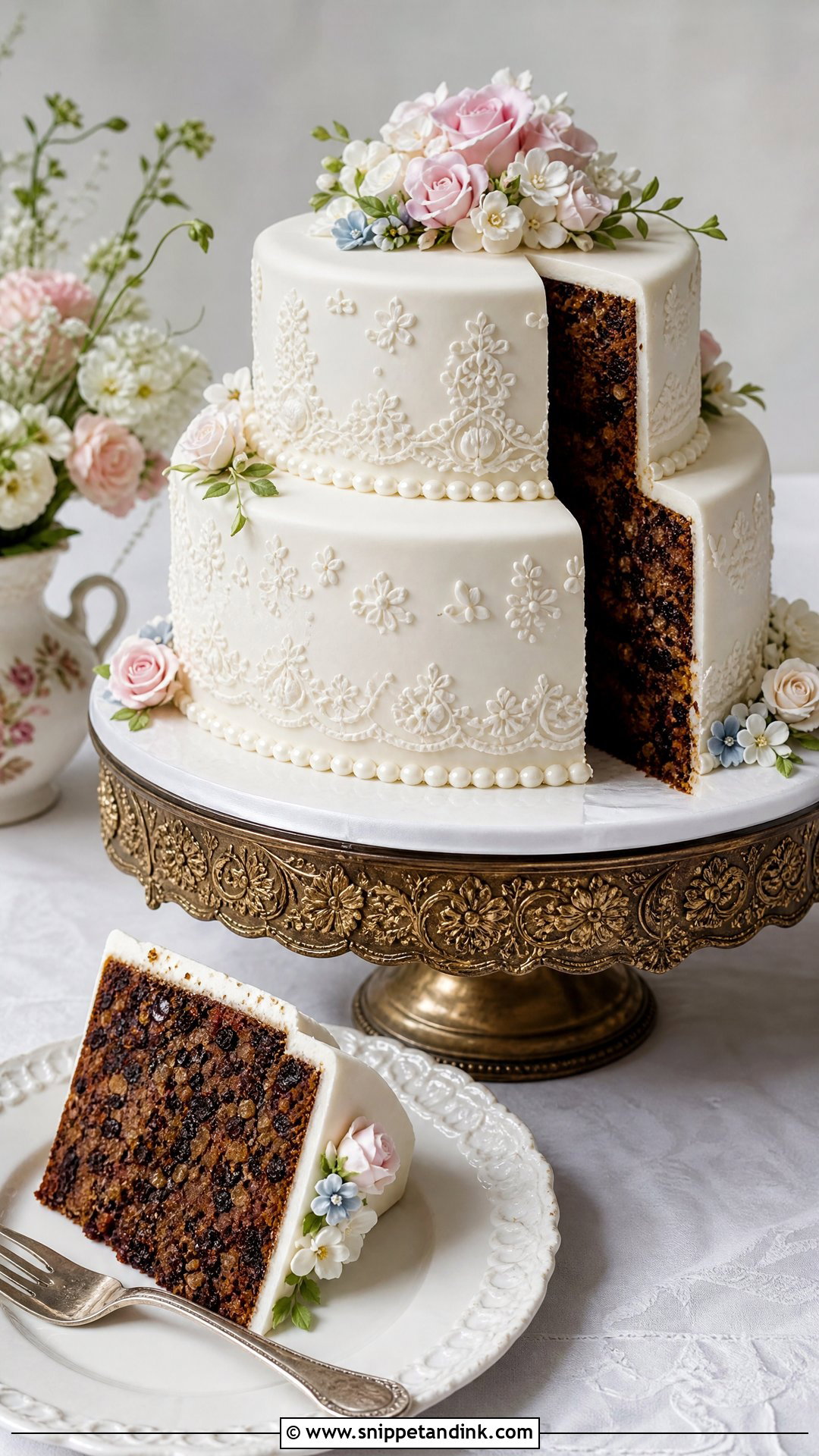
Fruitcake is the original wedding cake of the period: it kept for weeks, held the weight of stacked tiers and sat under marzipan and hard icing without collapsing. I still bake it weeks ahead and feed it with brandy so it matures. Smooth ivory icing outside, then royal icing lace, piped borders and small sugar flowers. Many couples now choose a fruitcake top tier and lighter sponge or spice tiers below, so guests have a choice. It suits couples with family recipes or a love of tradition.
16. Victorian Column Wedding Cake
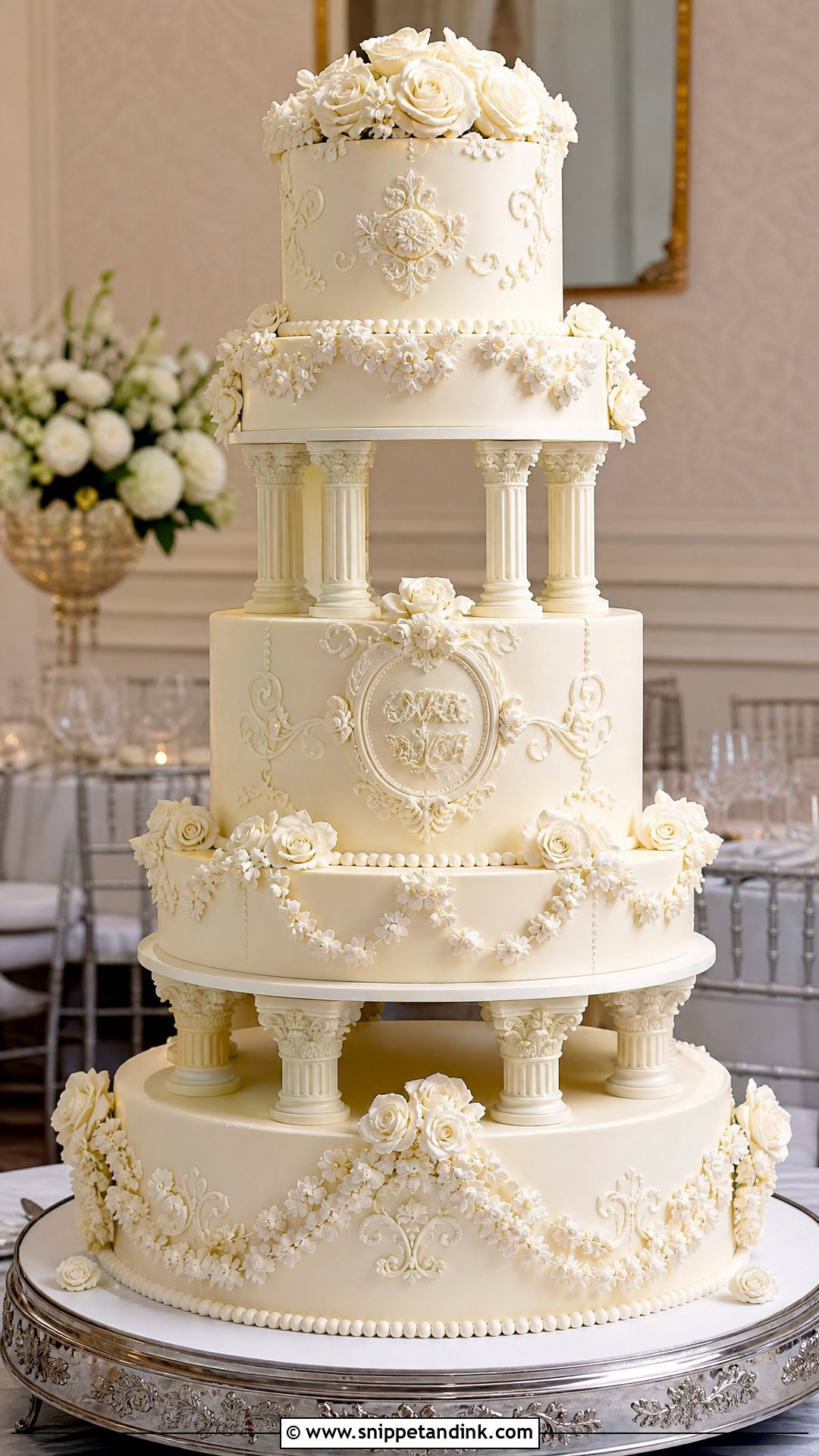
Columns separate the tiers, giving height and an architectural look. Pillared tiers need firm cakes and solid boards with supports driven down through each tier, because every column is pushing weight onto a small point; this was easiest with fruitcake and needs care with sponge. Ivory icing, white piping, pearl borders, scrollwork and small sugar roses at each base keep it soft. It suits large weddings and rooms with high ceilings, period molding or heavy drapery.
17. Victorian Bow Wedding Cake
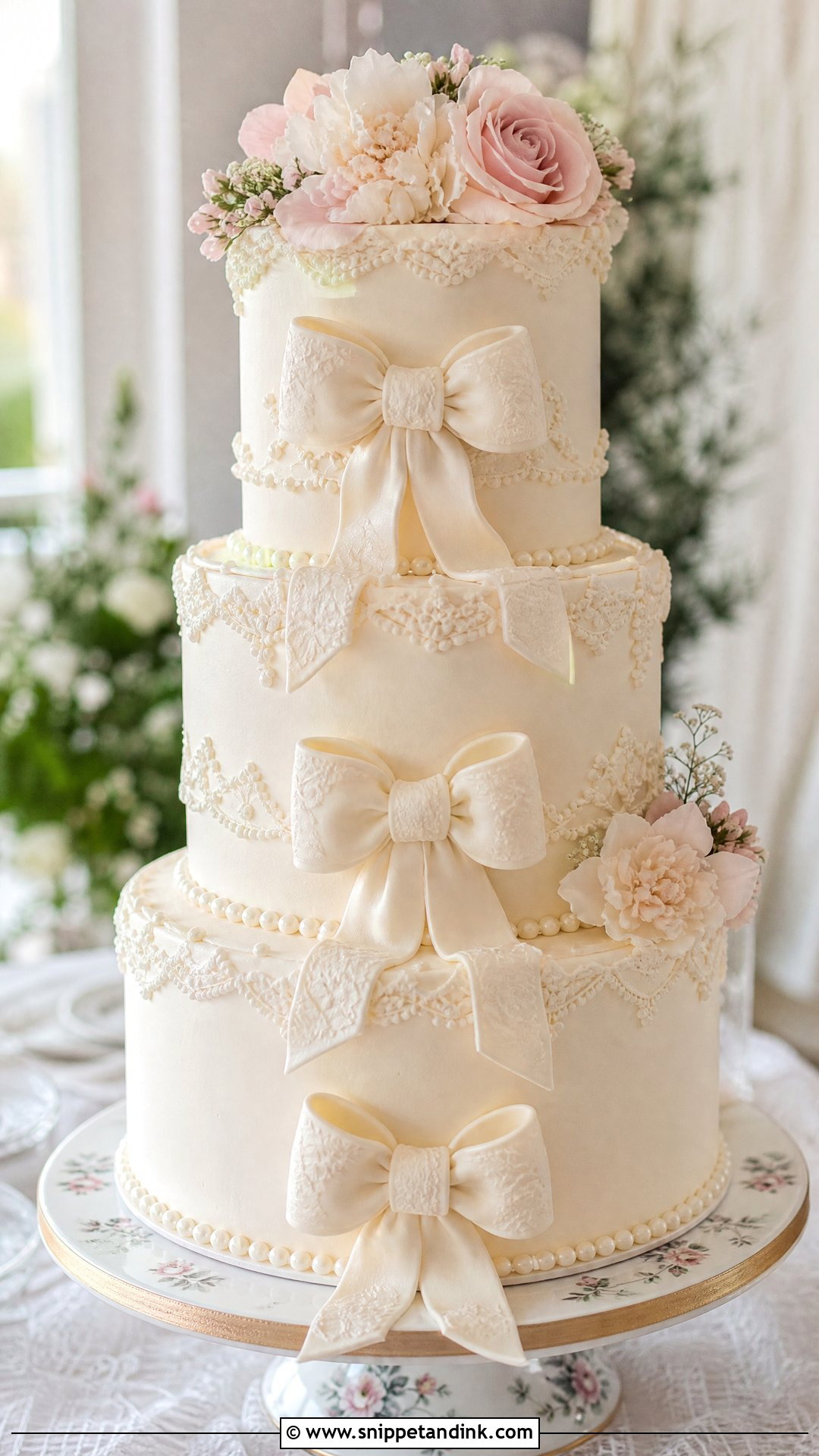
Bows can be made in fondant, sugar paste or piped buttercream. I like one soft sugar bow on the front of each ivory tier, with lace piping and pearl borders around it. Delicate loops look bridal, while fat ones start to look like a gift box, so I roll the paste thin and let the tails fall naturally. Blush, cream, champagne or pale blue accents suit it. Satin gowns, vintage stationery and roses with trailing greenery all pair well.
18. Victorian Monogram Wedding Cake
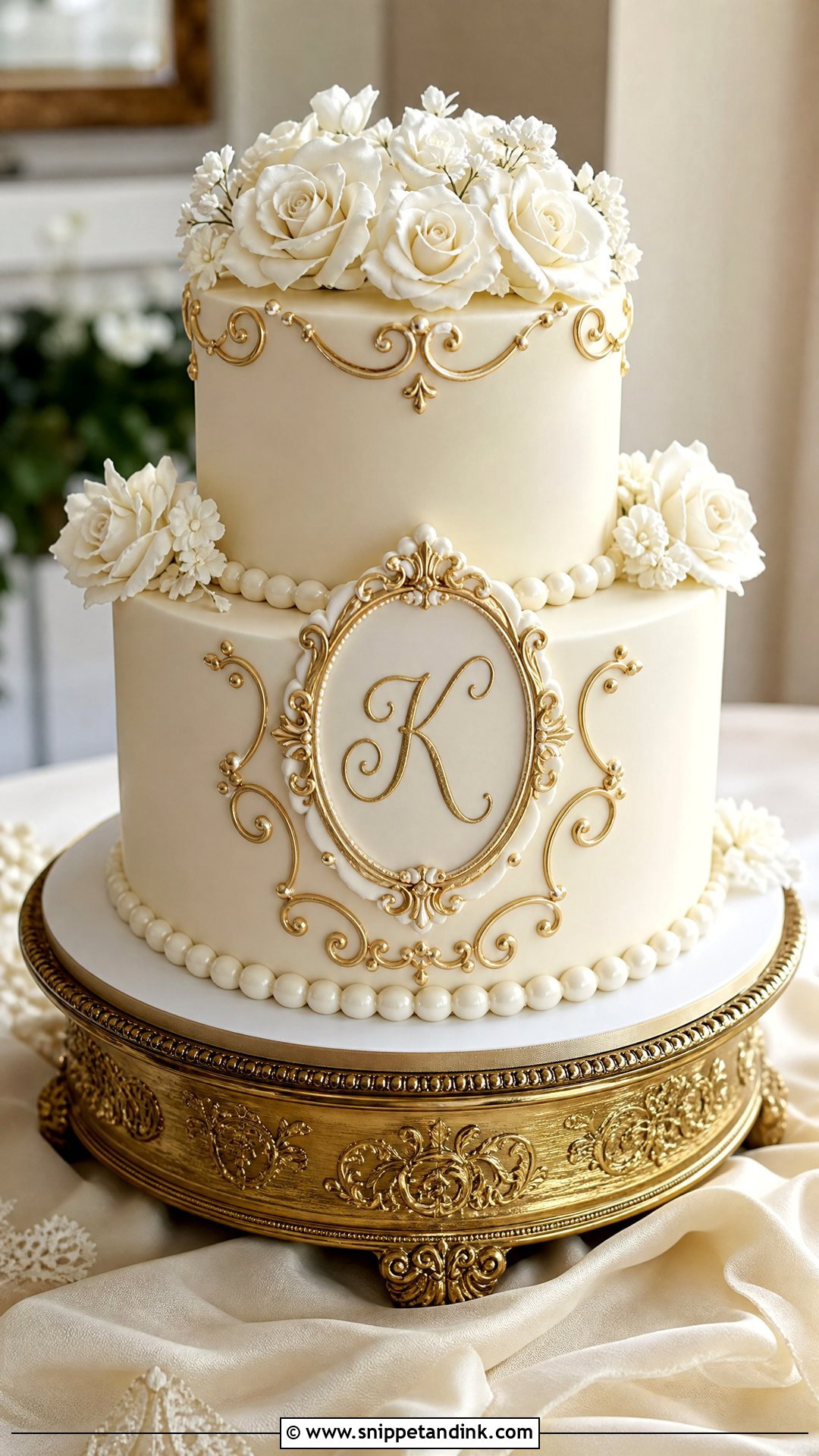
A monogram cake feels personal and formal at once. I place the initials inside a piped frame, a gold oval plaque or a lace medallion on the front tier, and keep the rest calm: ivory icing, pearl borders, soft scrollwork. Lettering has to be legible from the back of the room, so I check the spacing at full size before piping, and I keep flowers away from the letters themselves. A few small blossoms around the frame are enough.
19. Victorian Garden Wedding Cake
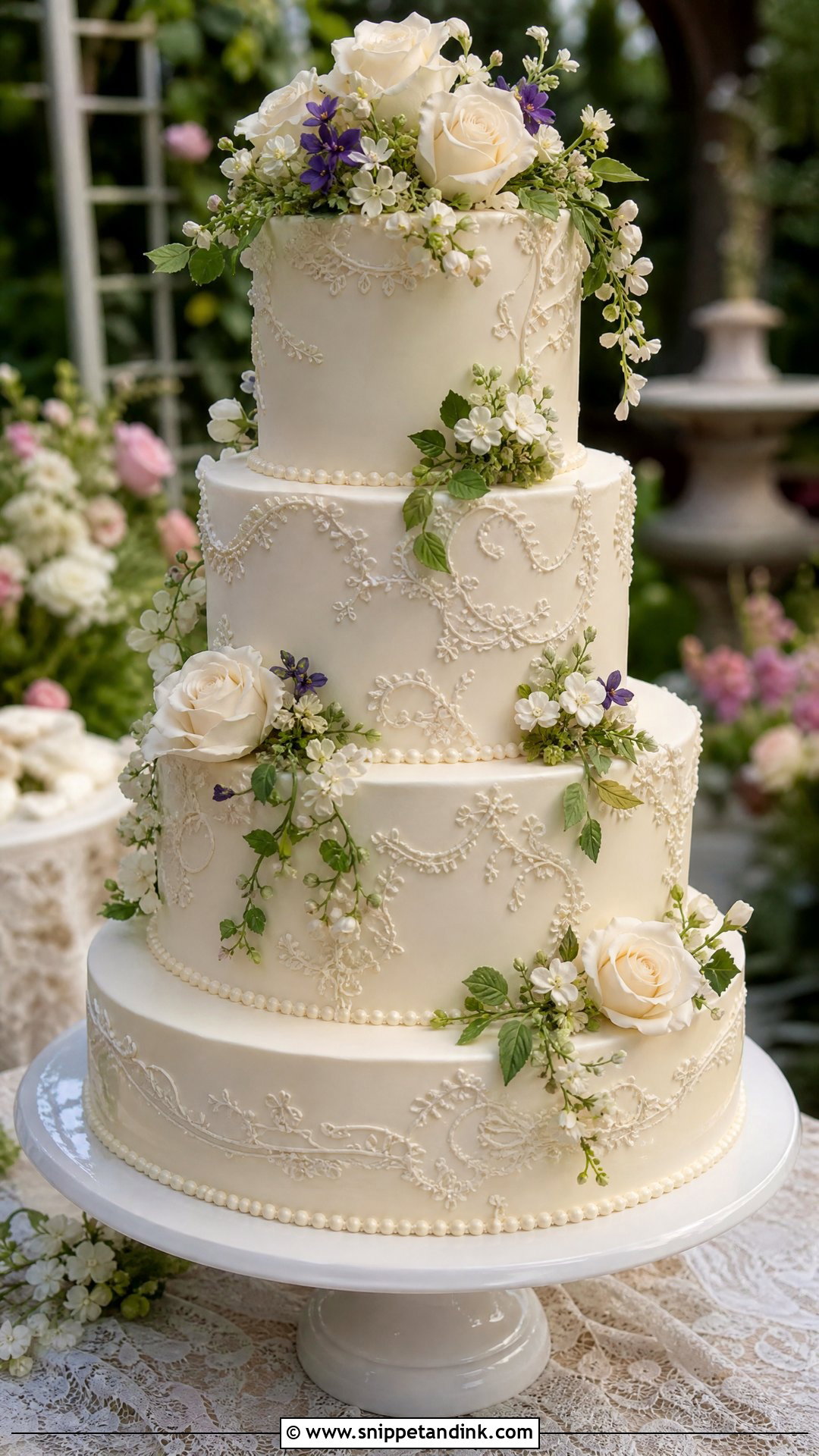
A garden cake softens all that formality with outdoor romance. Ivory tiers, piped lace and pearl borders, with sugar roses, violets, small blossoms and trailing leaves in a loose garland or gathered at the base and top. The skill is making it look natural while every flower is placed; too wild and it loses the period feel. If the cake is going into a greenhouse or garden venue, I’d ask about shade and temperature, because glass rooms heat up fast and buttercream will slump.


20. Victorian Mini Wedding Cake
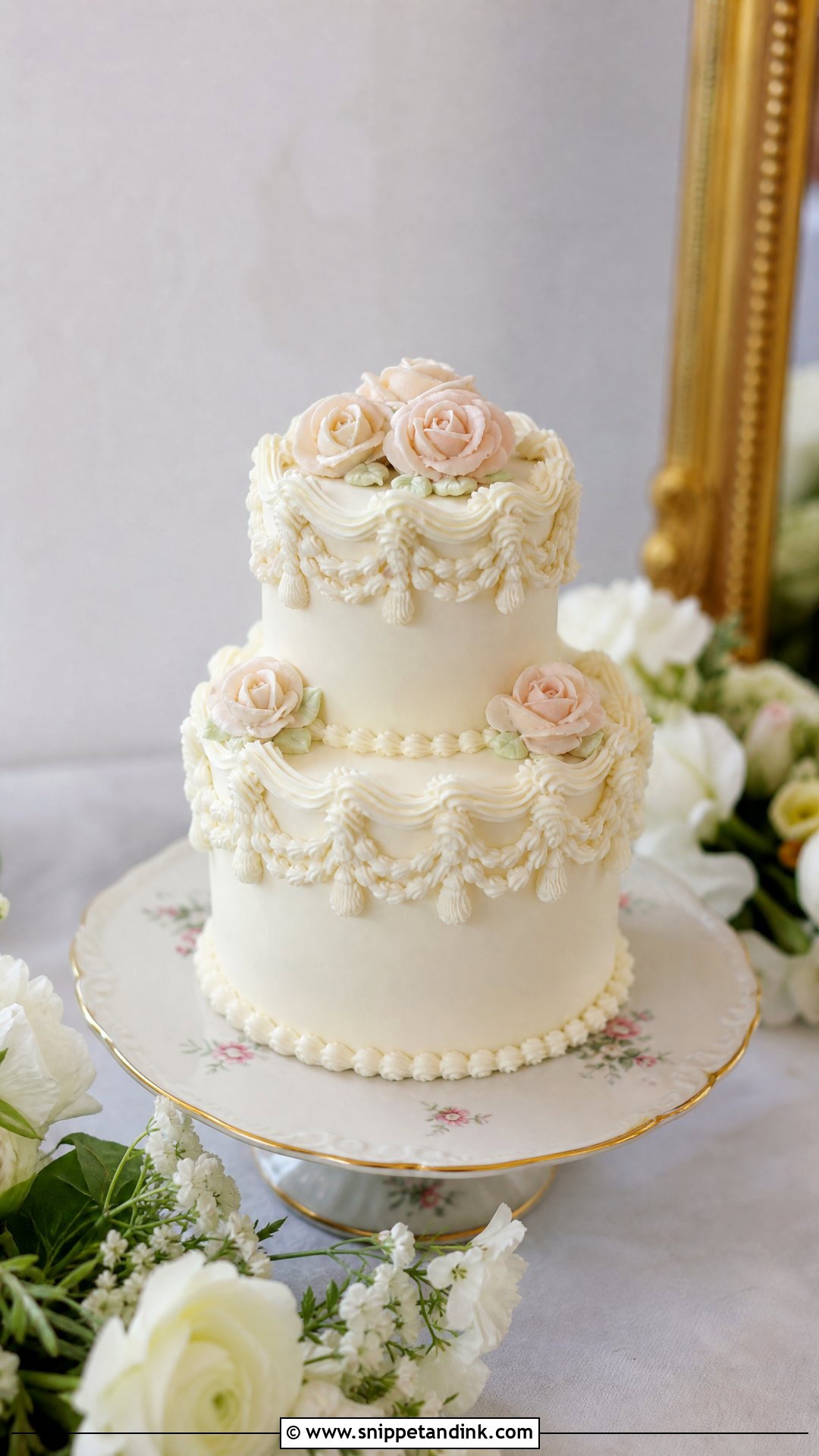
Scale is the challenge with a mini cake, whether it’s a cutting cake for an elopement or a dessert table of individual cakes. I drop to finer piping tips, smaller pearls and lighter borders, because full-size Lambeth shells on a six-inch cake swallow it. A one or two-tier cake with ivory buttercream, scaled-down Lambeth piping and a few small sugar flowers still has all the detail. A small heart cake suits a soft romantic style too. You get the look without a large multi-tier centerpiece.
Royal Icing, Damp Air and a Very Heavy Cake
All that sugar has practical consequences on the day. Royal icing absorbs moisture, so in a humid marquee or a room full of guests on a warm evening the finest piping can soften and lose its edge. Buttercream piping holds its form better in damp air but slumps in heat. I’d tell your designer honestly what the room will be like and when the cake will be set out, so the icing can be chosen for the conditions.
Heavily piped tiers are also heavy and fragile. I deliver detailed cakes in separate tiers and stack them at the venue, then pipe the joins on site so no border has to travel. The table needs to be level and sturdy, out of direct sun and away from heaters, with space behind it so nobody has to reach over the cake.
Cutting it, and keeping a tier
Hard royal icing over fruitcake needs a long, sharp knife and some force, so warn the caterers. If you’d like to follow the old custom of keeping a tier for a first anniversary or christening, fruitcake under marzipan and icing is the version that keeps; sponge tiers are better frozen, well wrapped, and eaten within a few months.
Graceful Across the Room, Richer at Arm’s Length
People love these cakes because the detail is visibly made by hand: piping, pearls, lace, roses and tiers that feel old-world. From a dramatic Lambeth cake to a quiet white lace cake, a blush rose cake or a tiny vintage cutting cake, the style can be adjusted to fit your venue and guest count. I’d judge every design from two distances: graceful from across the room, and richer still at arm’s length. Pick the details that connect to your flowers, dress and reception, and allow time for the handwork.
You'll Like These Ideas:




Leave a Reply