
Pink on its own can look sugary. Put it next to brown and it suddenly looks grown-up. Blush, dusty rose, mocha, cocoa and espresso soften each other, with the pink bringing the flowers and the brown giving the cake weight and warmth on camera. The pairing works in a garden, a barn in October, a modern loft or a candlelit ballroom. For a baker, it’s also one of the most natural palettes there is, since half the colors can come straight from chocolate, coffee and fruit. Below are twenty ways I’d put pink and brown on a wedding cake, from a plain smooth tier to ganache, ruffles, pearls and texture.
Let the Flavors Make the Colors
This palette is unusual because the ingredients can do most of the coloring. When I design a pink and brown cake, I start at the tasting rather than at the color chart, because flavor-based color tastes better and behaves better than dye.
Where the brown comes from
- Cocoa powder or melted chocolate in buttercream gives anything from milk-coffee to espresso without any dye.
- Espresso or coffee extract makes a soft mocha and pairs well with chocolate sponge.
- Caramel and dulce de leche give warm golden-brown, which suits fall and rustic cakes.
Where the pink comes from
Freeze-dried raspberry or strawberry powder turns buttercream a dusty pink and adds a sharp fruit note that cuts through chocolate. It won’t give a clear, bright blush, though, so for that I add a touch of gel color. Raspberry, strawberry, cherry and a little rose water are the pairings I suggest most with chocolate, and they mean the colors on the outside match what guests taste inside.
1. Pink And Brown Tiered Wedding Cake
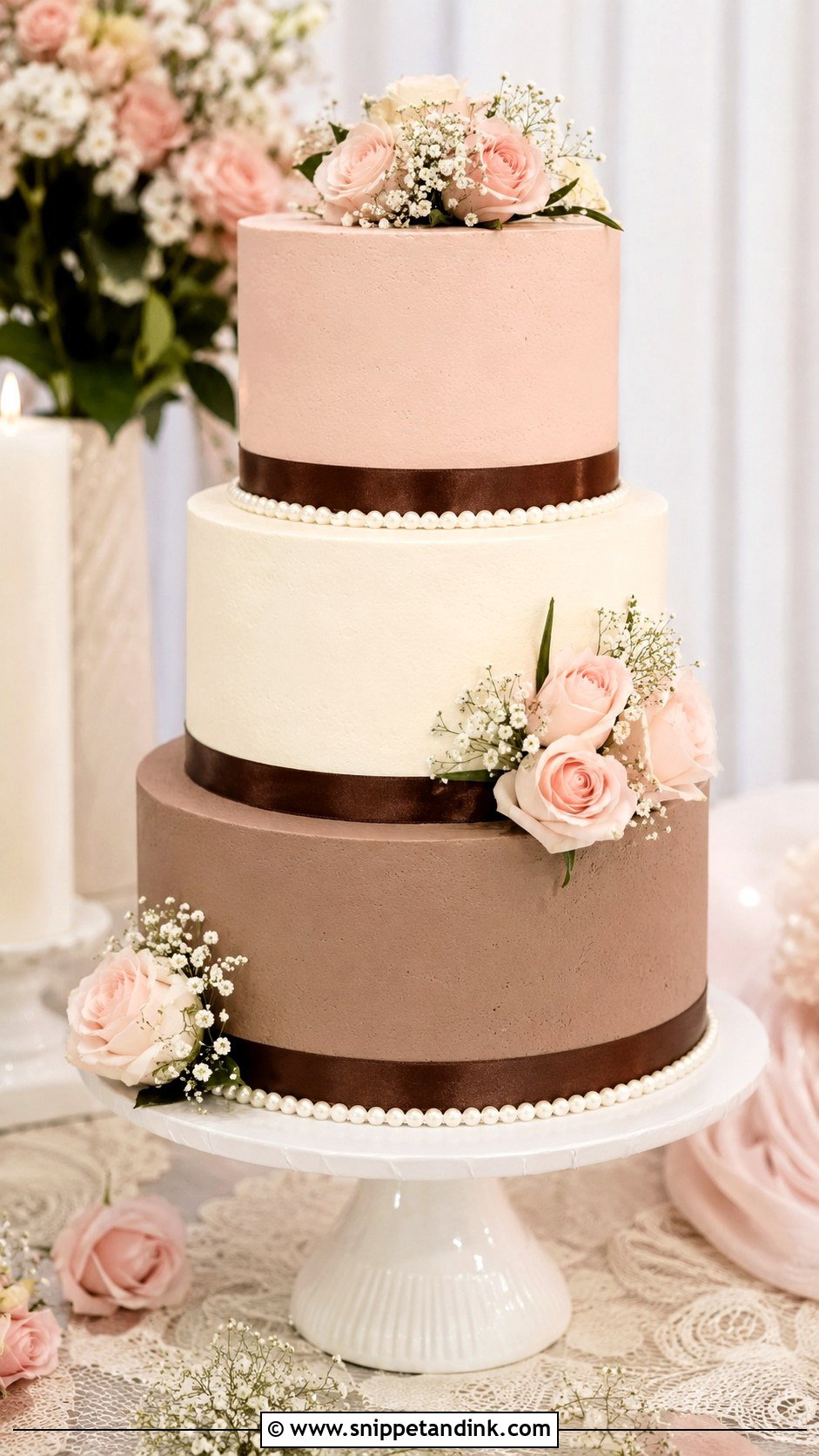
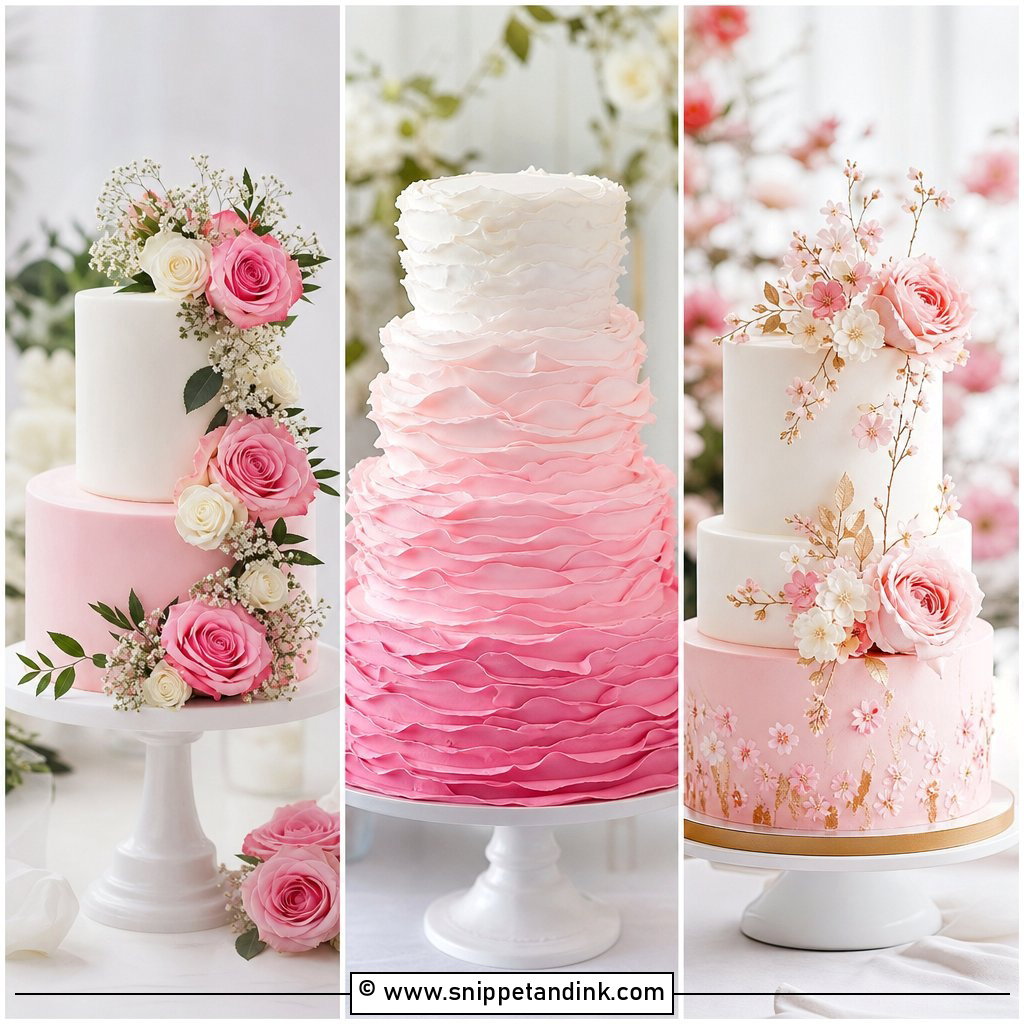
Tiers let you control how much of each color shows, which is why this is the classic layout. My usual three-tier plan is blush on the top and bottom with a mocha or cocoa tier in the middle, so the darker color sits like a belt rather than dragging the cake down. Fresh roses, sugar flowers or a soft brown ribbon carry the eye between tiers. Formal and medium-sized weddings suit it. Ask for clean edges on every tier, because a sharp finish is what makes two colors look planned.
2. Pink And Brown Chocolate Drip Wedding Cake
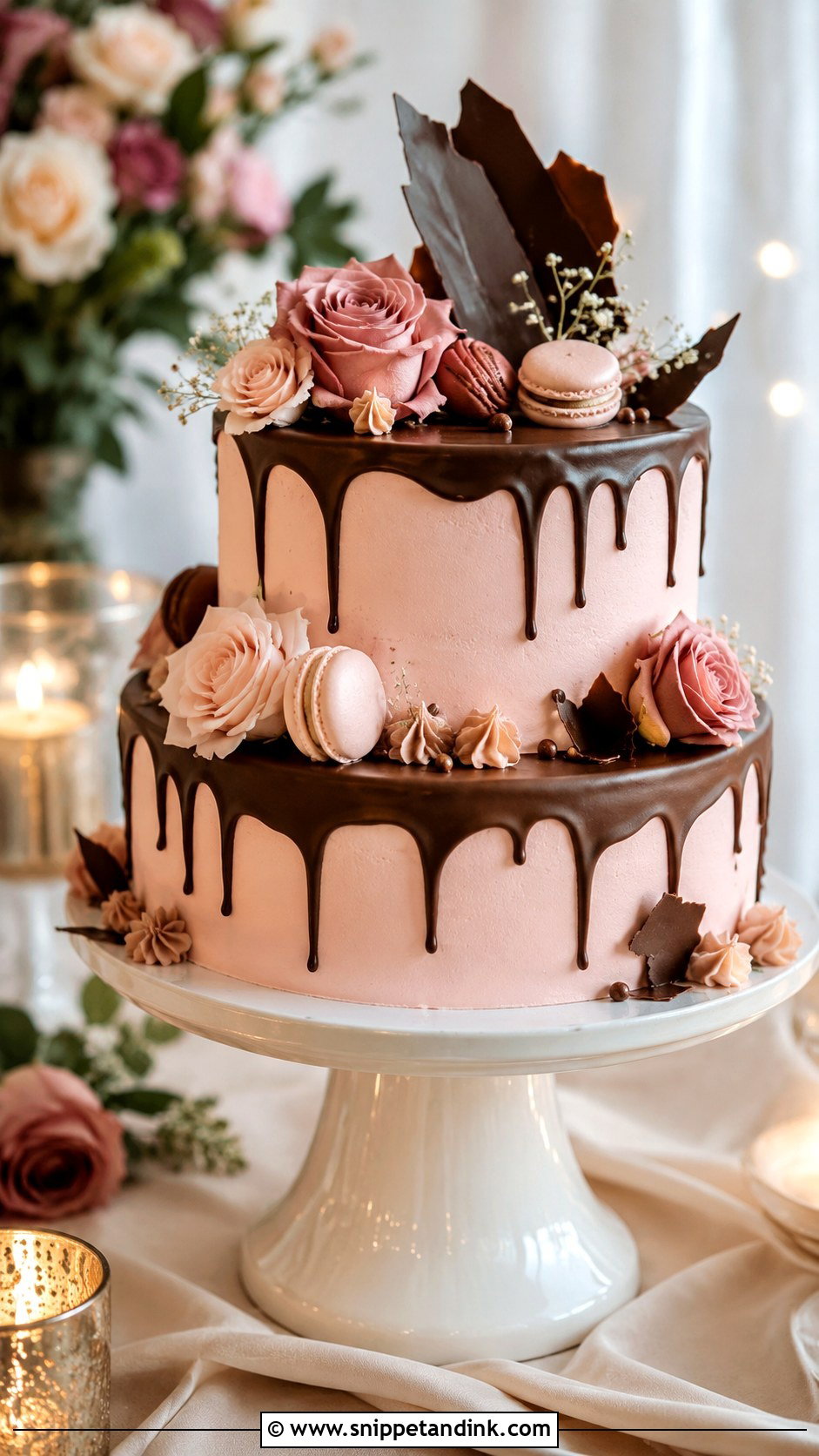
Pink cake, glossy chocolate drip: guests know what it tastes like before they’ve seen the menu. Blush buttercream keeps the base soft, and a dark or milk chocolate drip adds richness. Roses, chocolate shards, a few macarons or small gold touches finish it. The drip is where these cakes go wrong. I pour ganache only once it has cooled to just above body temperature and the cake is fridge-cold, so the drips stop a third of the way down instead of pooling on the board. Neat drips keep it looking like a wedding cake and not a birthday one.
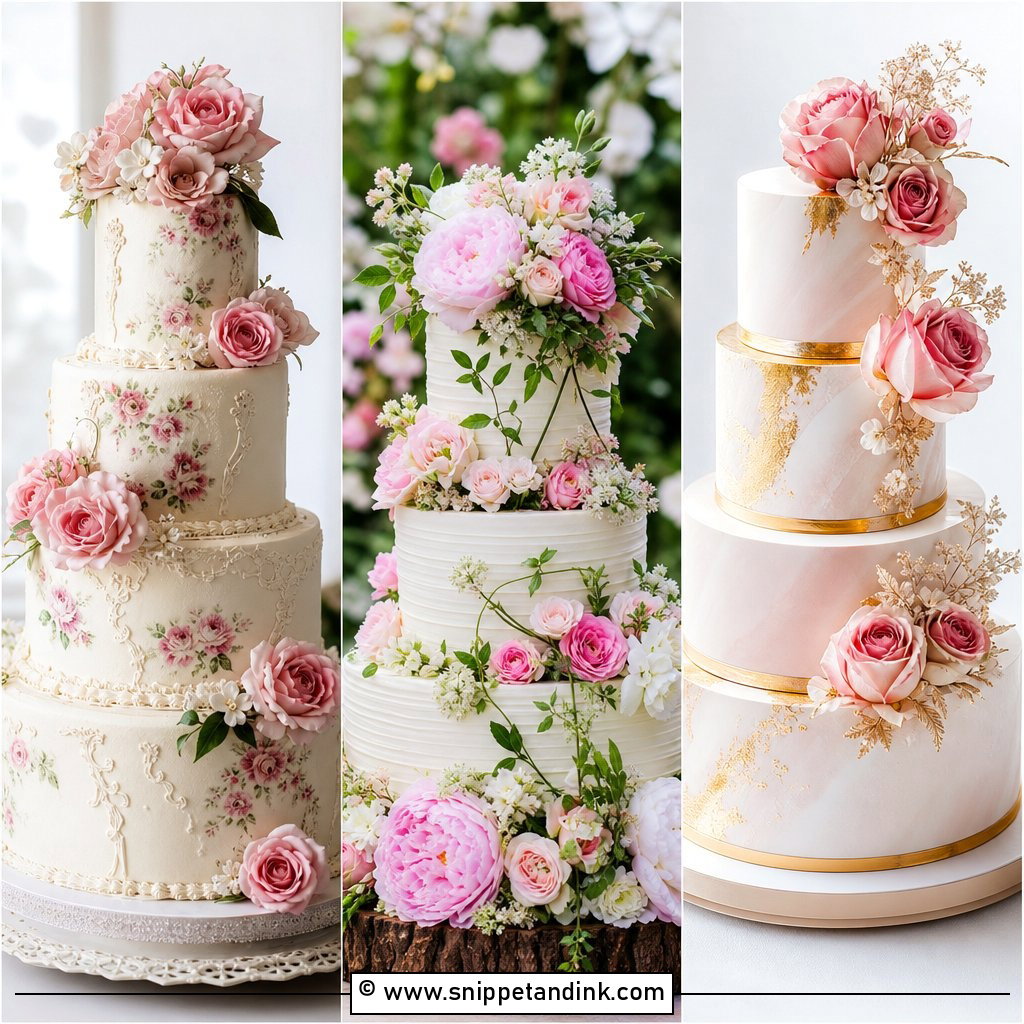
3. Pink And Brown Floral Wedding Cake
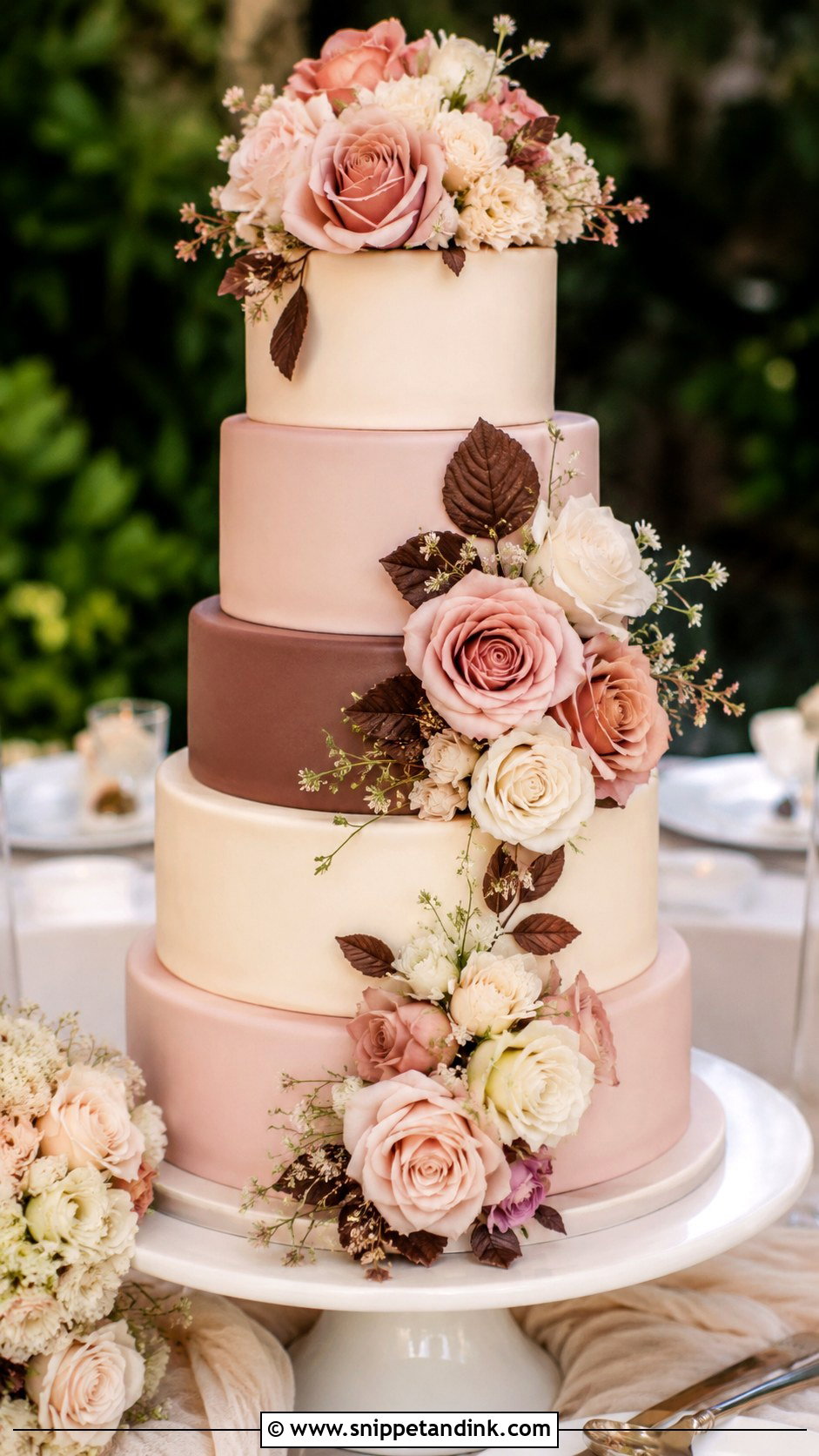
Garden flowers in a warmer palette are what this cake is about. I’d start with ivory, blush or a very pale mocha frosting and group flowers in dusty rose, soft pink, cream and muted cocoa. Fresh flowers look lush, while sugar flowers stay perfect all night and can be made weeks ahead. The brown can come from chocolate leaves, dried flowers, ribbon or a mocha-painted tier. Brown-toned fresh flowers exist, such as some coffee-colored roses and chocolate cosmos, so ask your florist before going straight to sugar. Group them in natural clusters rather than an even ring.
4. Pink And Brown Rustic Wedding Cake
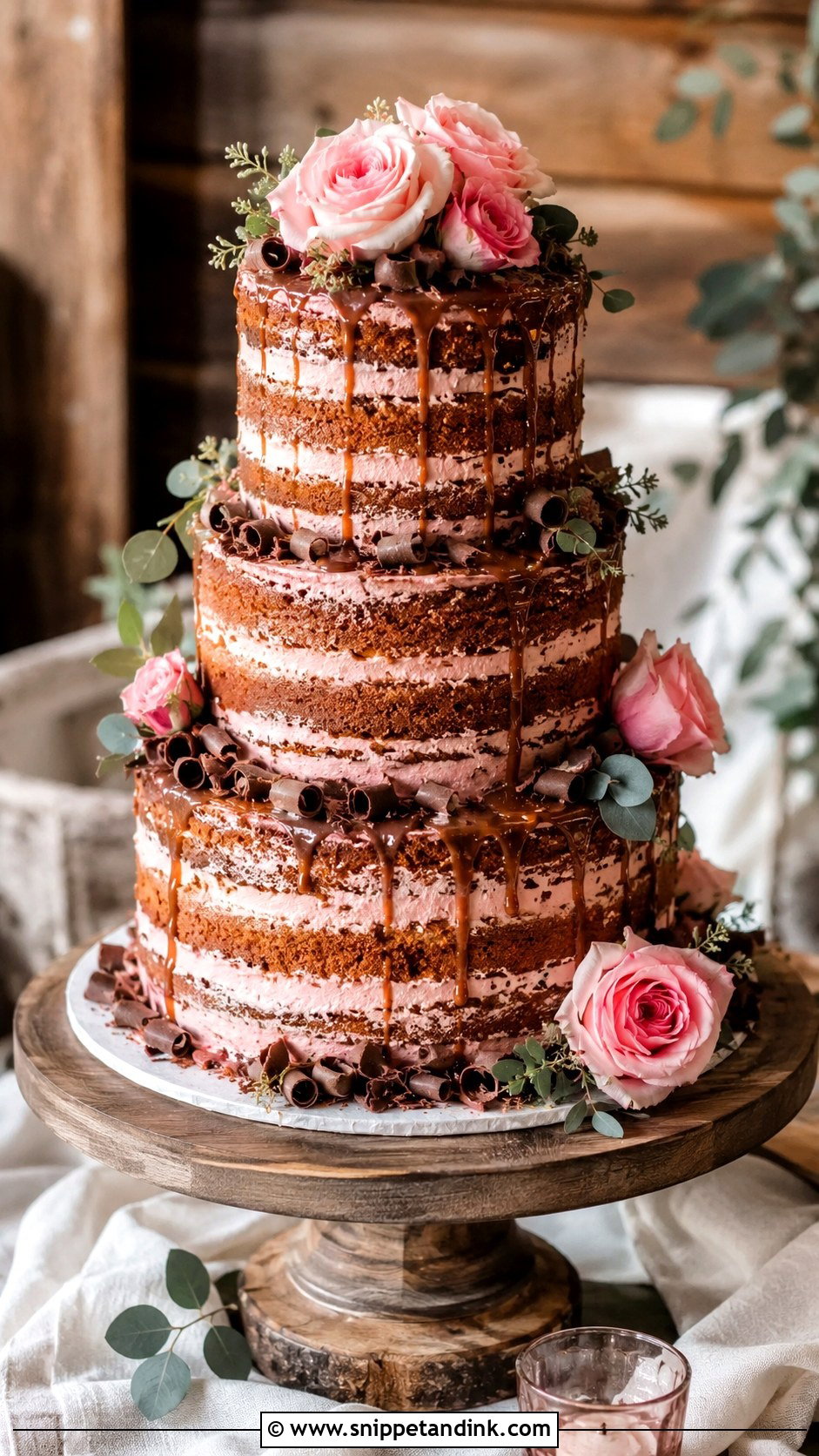
A semi-naked finish lets the golden-brown sponge do the brown part for you, with a thin scrape of frosting over it. Add blush roses, small pink blossoms, chocolate curls and a little greenery. Brown can also come from the wooden stand, a dusting of cocoa or caramel filling showing between layers. Rustic shouldn’t mean unfinished, though. I level every layer and keep the filling the same height so the stripes look even from across the barn. Barns, outdoor receptions and cozy fall weddings suit it.
5. Pink And Brown Boho Wedding Cake
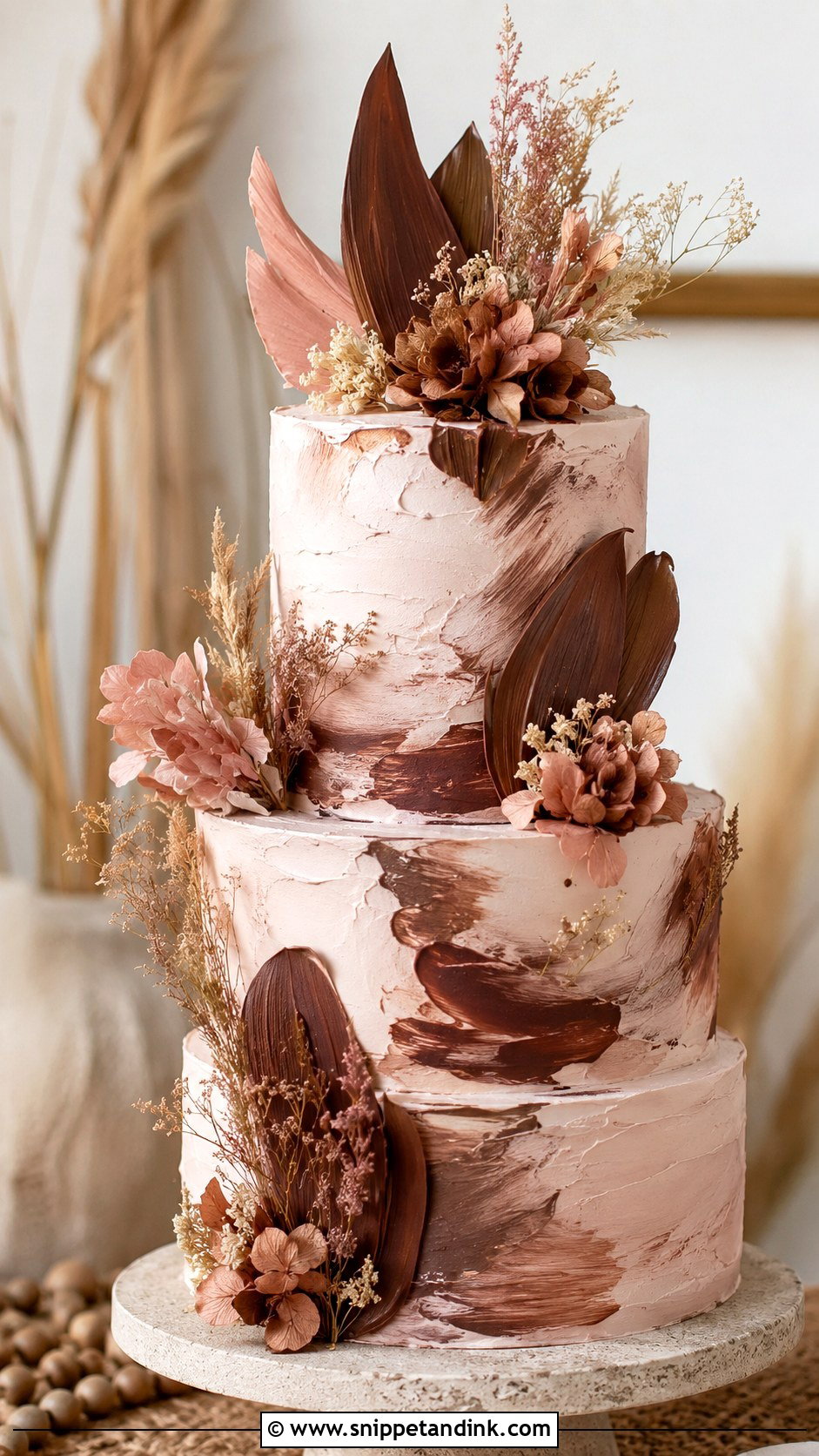
Boho cakes are about texture and earthy color, so I build them with tools rather than piping bags. Dusty pink buttercream, mocha strokes laid on with a palette knife, dried flowers, a few pampas-style sugar plumes and small petals give that layered, gathered look. Brown can show up in terracotta-cocoa tones, chocolate sails or a soft caramel drip. Real pampas grass sheds and isn’t meant for food, so I keep it on the table and make the cake version from sugar or wafer paper. Linen, woven details and warm candlelight suit the table. Stop before it gets busy.
6. Pink And Brown Vintage Wedding Cake
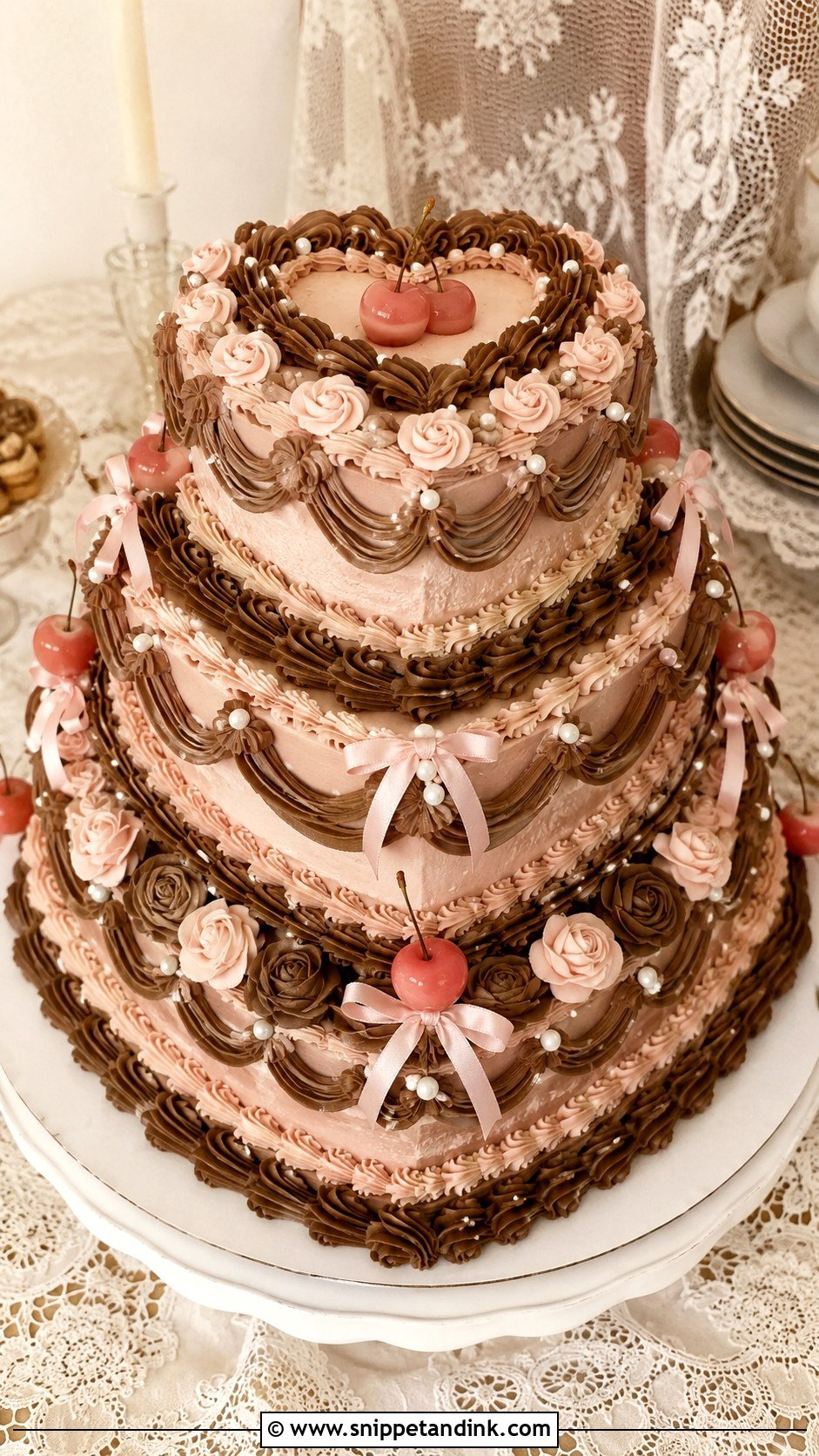
Old-fashioned piping in a new color is what makes this one work. Picture a blush cake with cocoa-brown shell borders, piped swags, small rosettes and pearl details. The brown keeps the vintage style from tipping into sugary, which is a problem all-pastel versions can have. One tier suits an intimate wedding, several suit a big reception. I pipe the brown in a chocolate buttercream rather than a heavily dyed one, because it tastes better and holds the shell ridges well. Pink cherries, bows or sugar roses add a playful note.
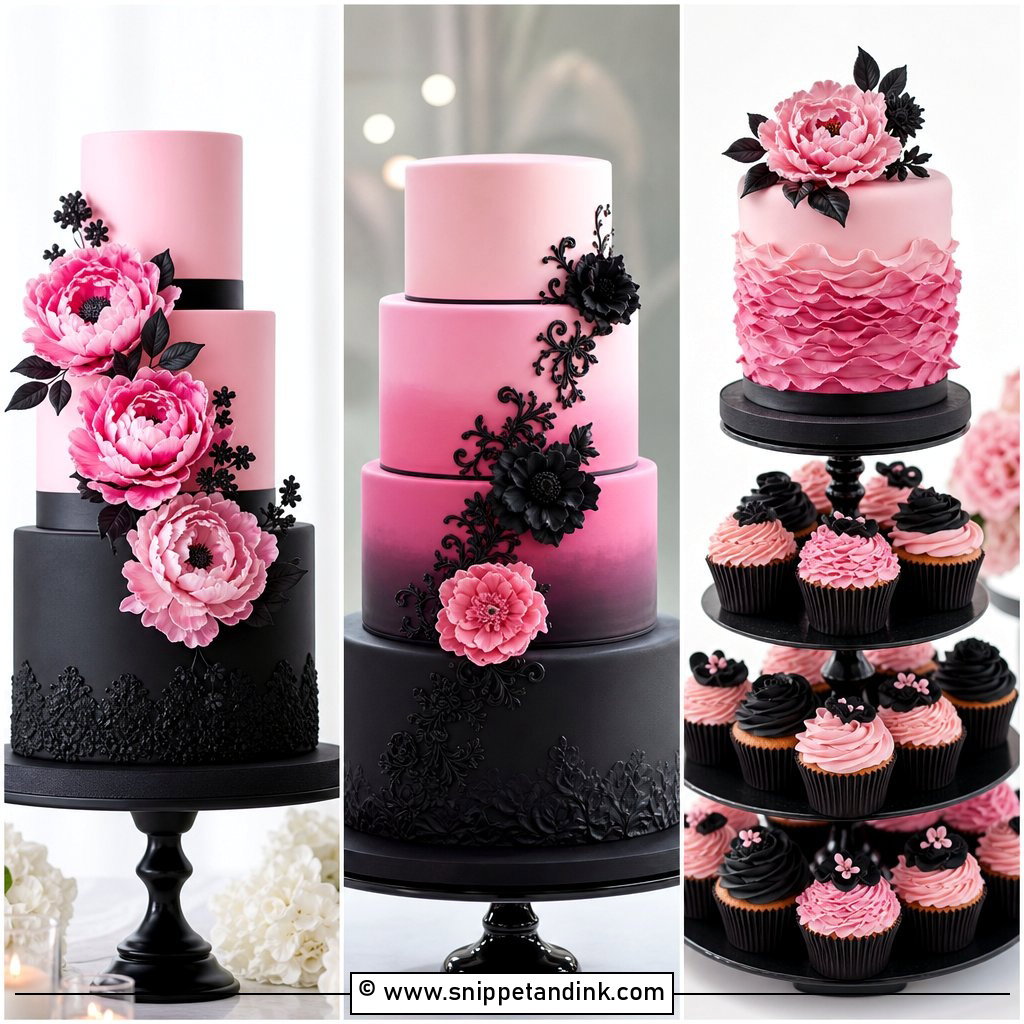
7. Pink And Brown Ombre Wedding Cake
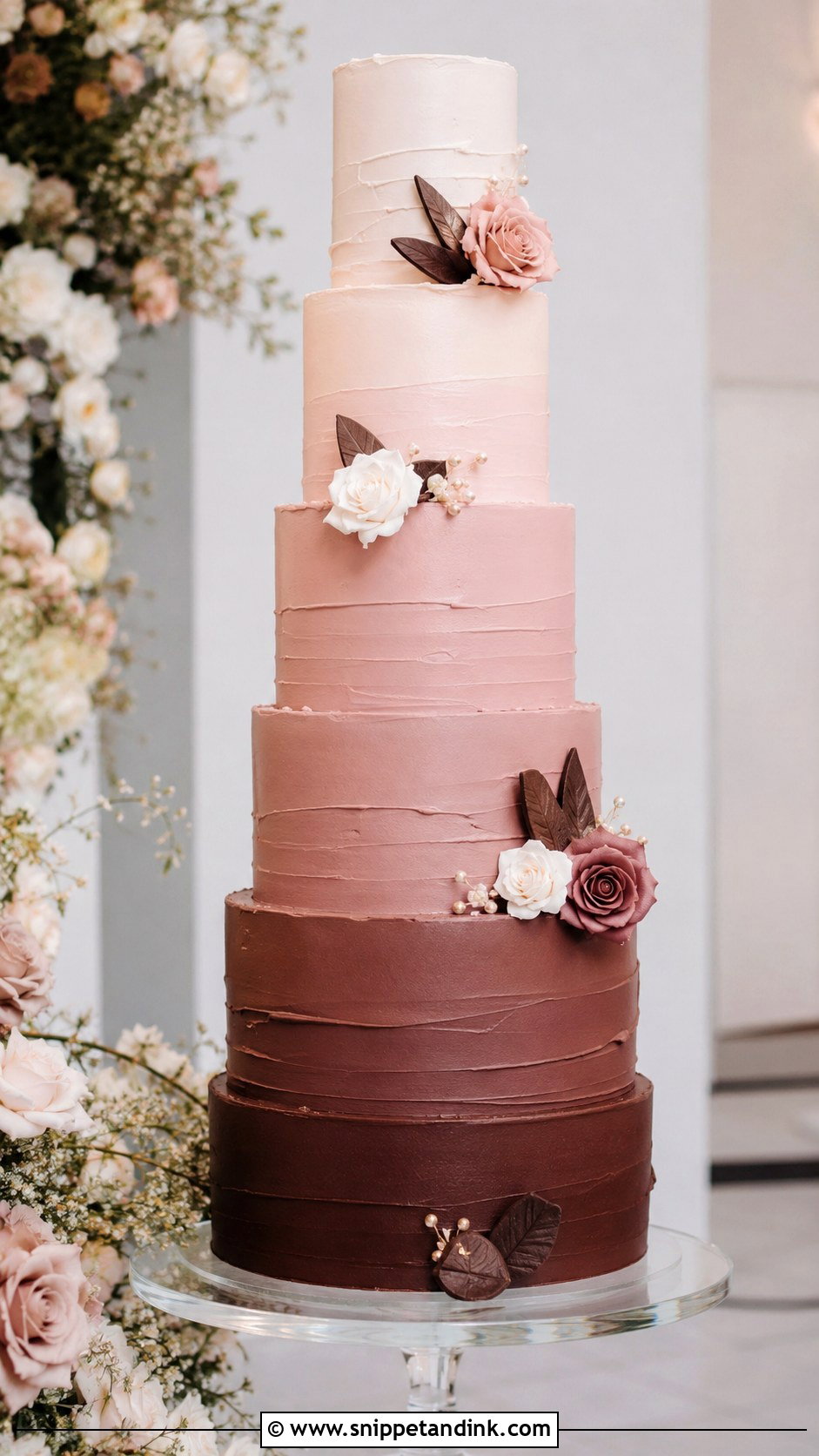
Ombre takes planning more than skill. I mix the palest blush first, then deepen it in measured steps through rose and mauve into mocha and cocoa, so each tier differs from the next by the same amount. Skip a step and the gradient jumps. Tall cakes suit it, since the color needs height to travel. Smooth frosting reads modern, while light texture softens it. A few flowers or delicate chocolate pieces are all it needs.
8. Pink And Brown Buttercream Wedding Cake
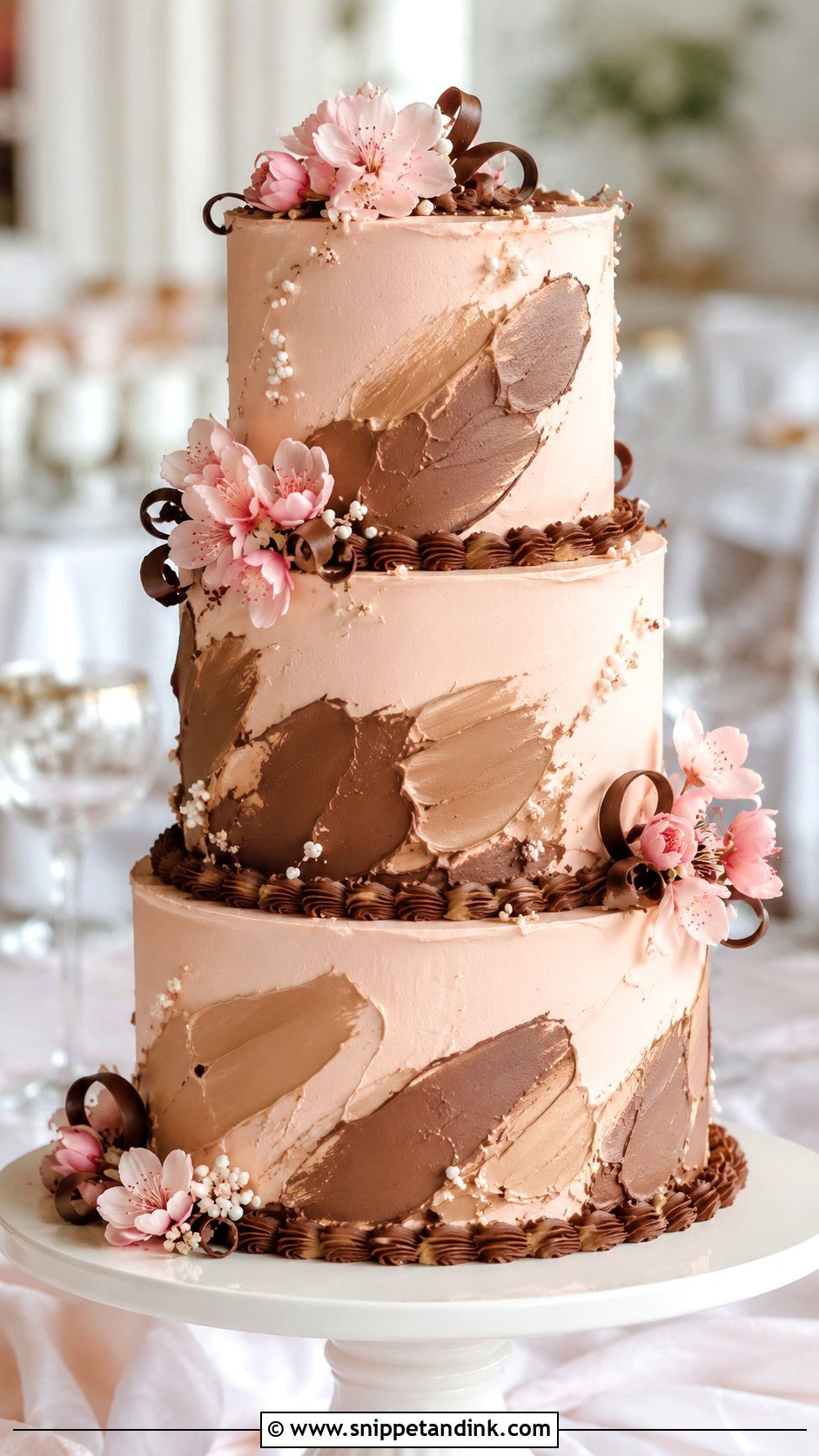
Buttercream is the most forgiving and the most edible finish for this palette, and it does everything: smooth, textured, piped or painted. Try blush with mocha palette knife strokes, cocoa borders or a full chocolate base tier. Vanilla, chocolate, almond, raspberry and espresso flavors all suit the colors. It’s softer and less formal than fondant, but still looks polished with sharp edges, which come from chilling the cake and running a hot scraper around it. Flowers, pearls or chocolate curls make the palette clear.
9. Pink And Brown Fondant Wedding Cake
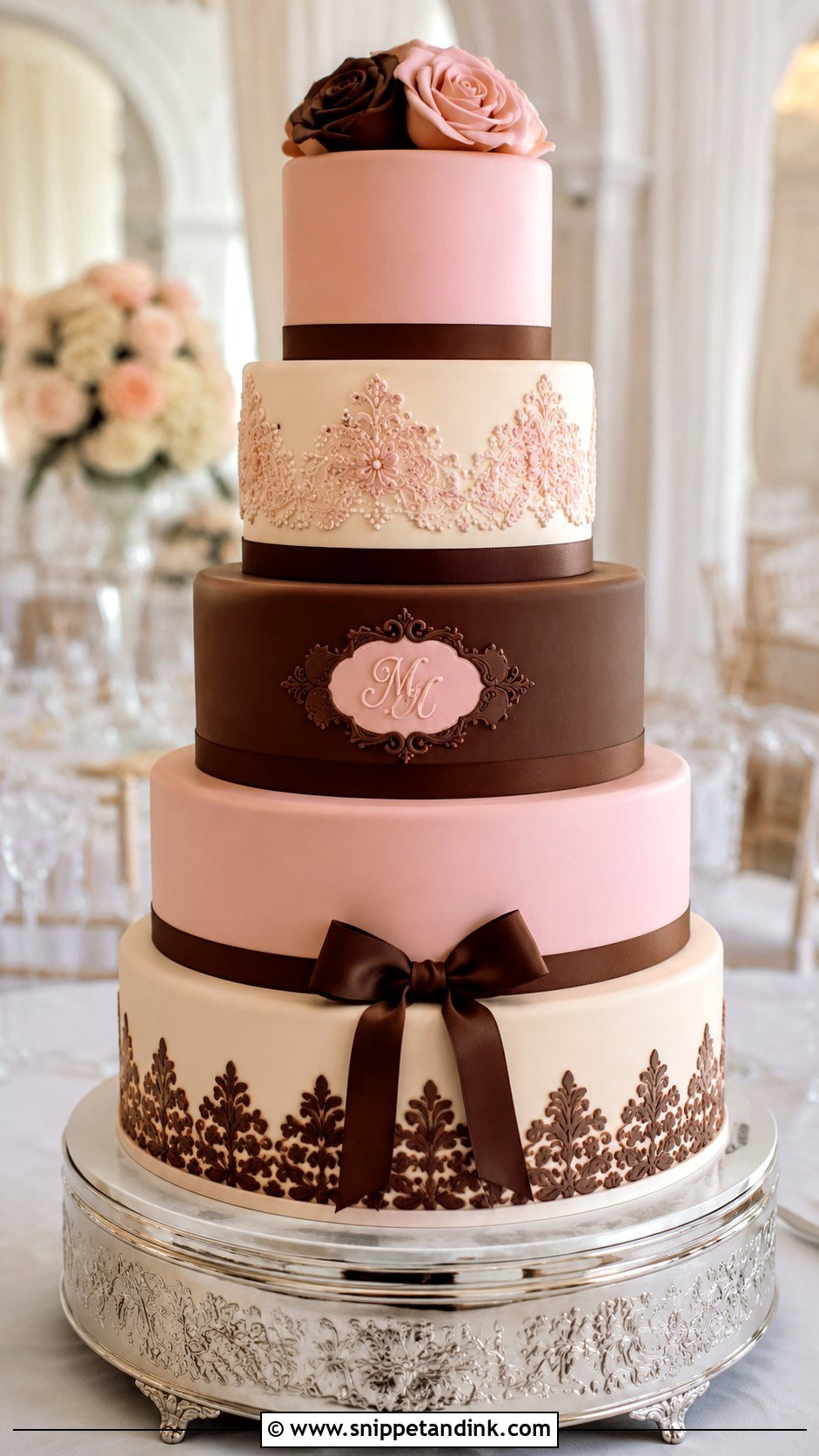
Fondant gives the crispest, most sculpted finish, and it’s the one I’d recommend for a long display or a warm room, since it shields the buttercream underneath. A blush tier next to a deep chocolate-brown one looks striking with almost no decoration. Thin ribbon bands, sugar flowers, embossed lace or painted cocoa details add texture. Be aware that deep brown fondant is heavily colored. Many bakers make it from chocolate-based fondant or modelling paste to avoid the bitter taste and mouth-staining that come with a lot of dye. Keep the shades muted for a formal ballroom.
10. Pink And Brown Naked Wedding Cake
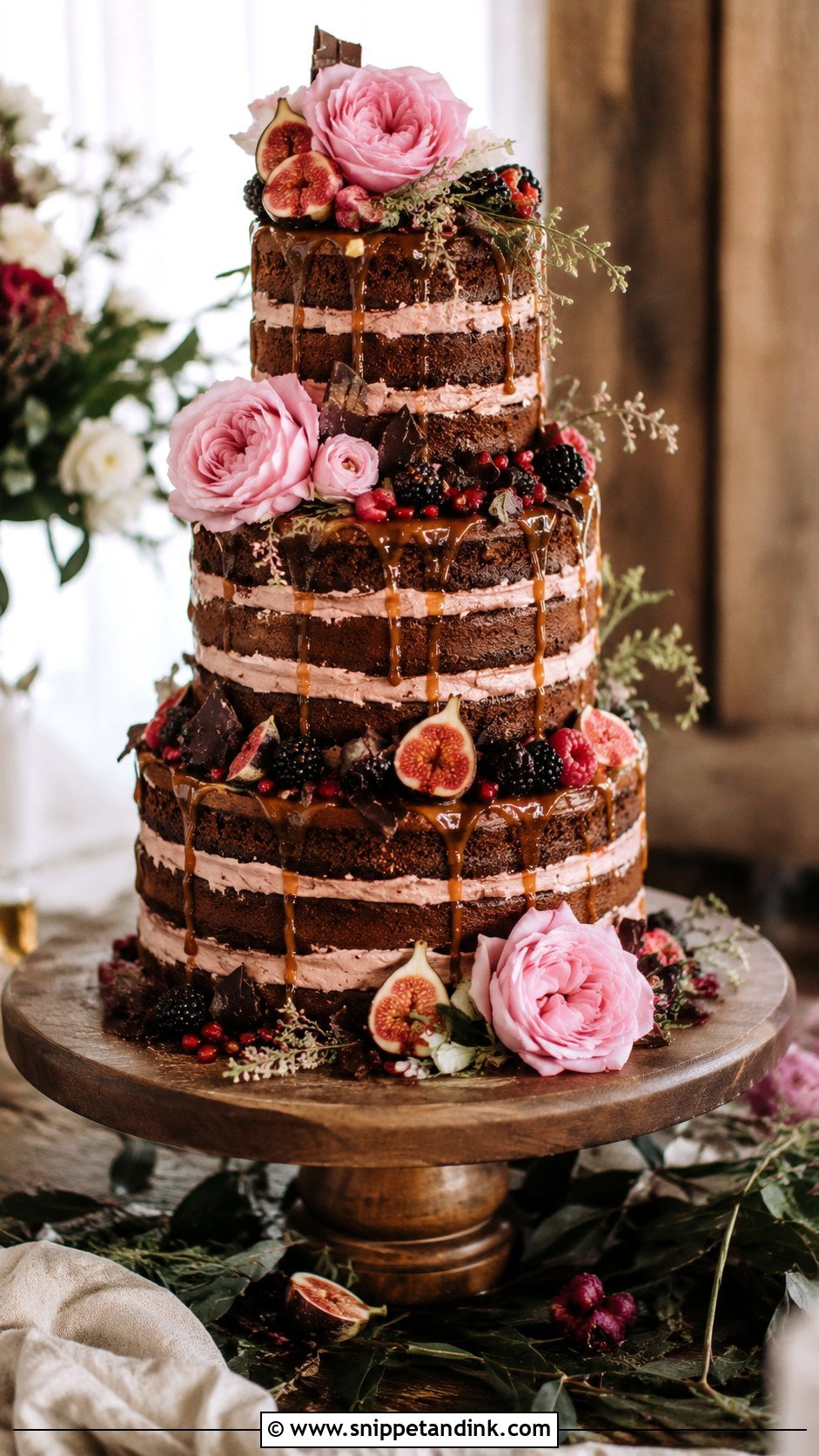
Here the cake does the coloring. Exposed chocolate, vanilla bean, almond or spice layers bring the brown, while pink comes from a raspberry or strawberry filling, blush buttercream or fresh flowers. Berries, roses, figs, chocolate pieces or a caramel drizzle decorate it. With so little frosting, the layers must be even and moist, and I keep the cake wrapped until shortly before it’s displayed so the exposed edges don’t dry out. Rustic, garden and intimate weddings suit it.
11. Pink And Brown Square Wedding Cake
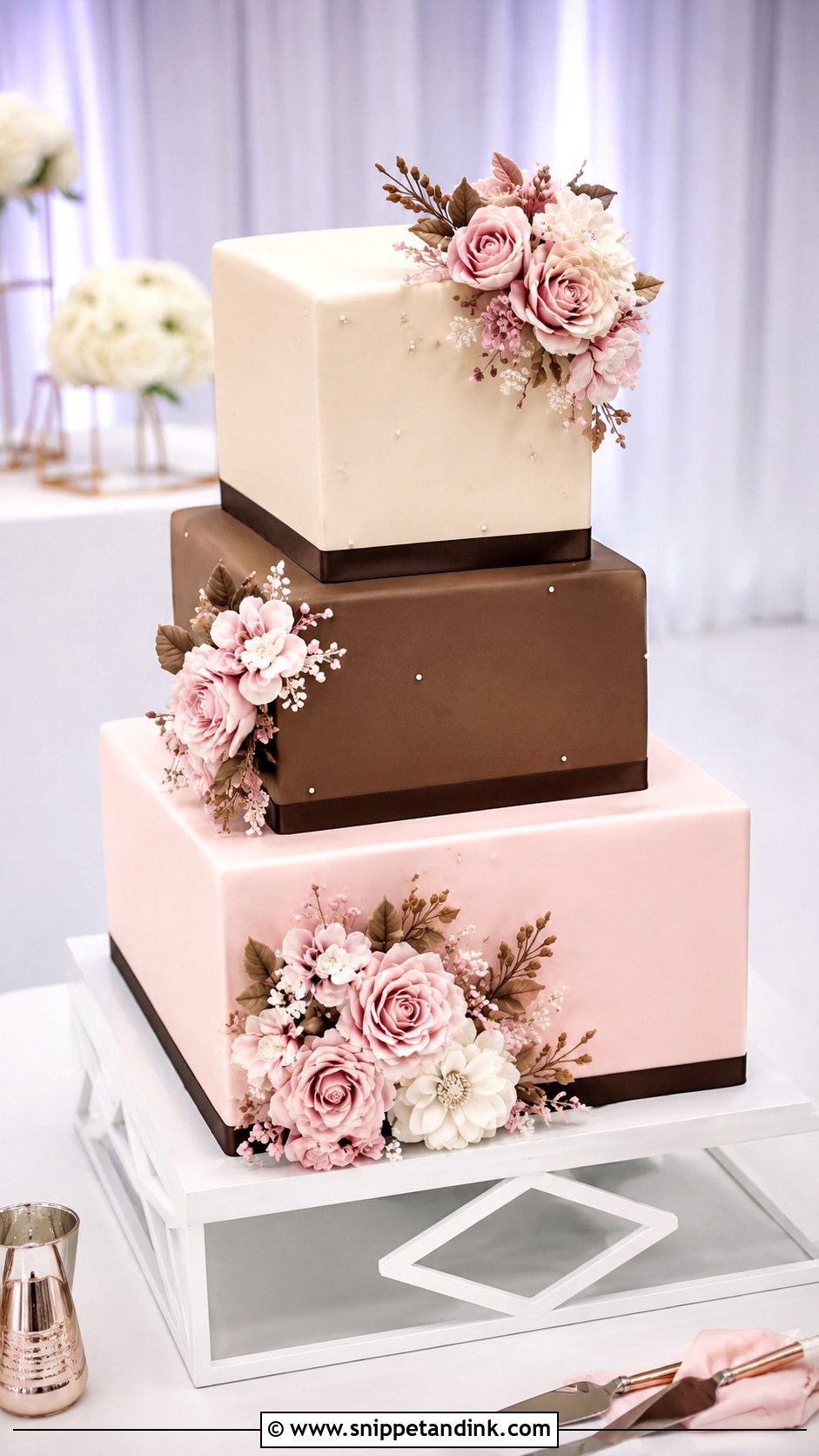
Square tiers make the color contrast look sharper. A pale pink top, a mocha middle and an ivory base with brown piping or ribbon looks modern straight away. Smooth fondant or very sharp buttercream is a must, since the corners show every flaw. A practical bonus: a square tier gives more servings than a round tier of the same width. Contemporary weddings and hotel receptions suit it. A small cluster of flowers on one corner softens the angles.
12. Pink And Brown Watercolor Wedding Cake
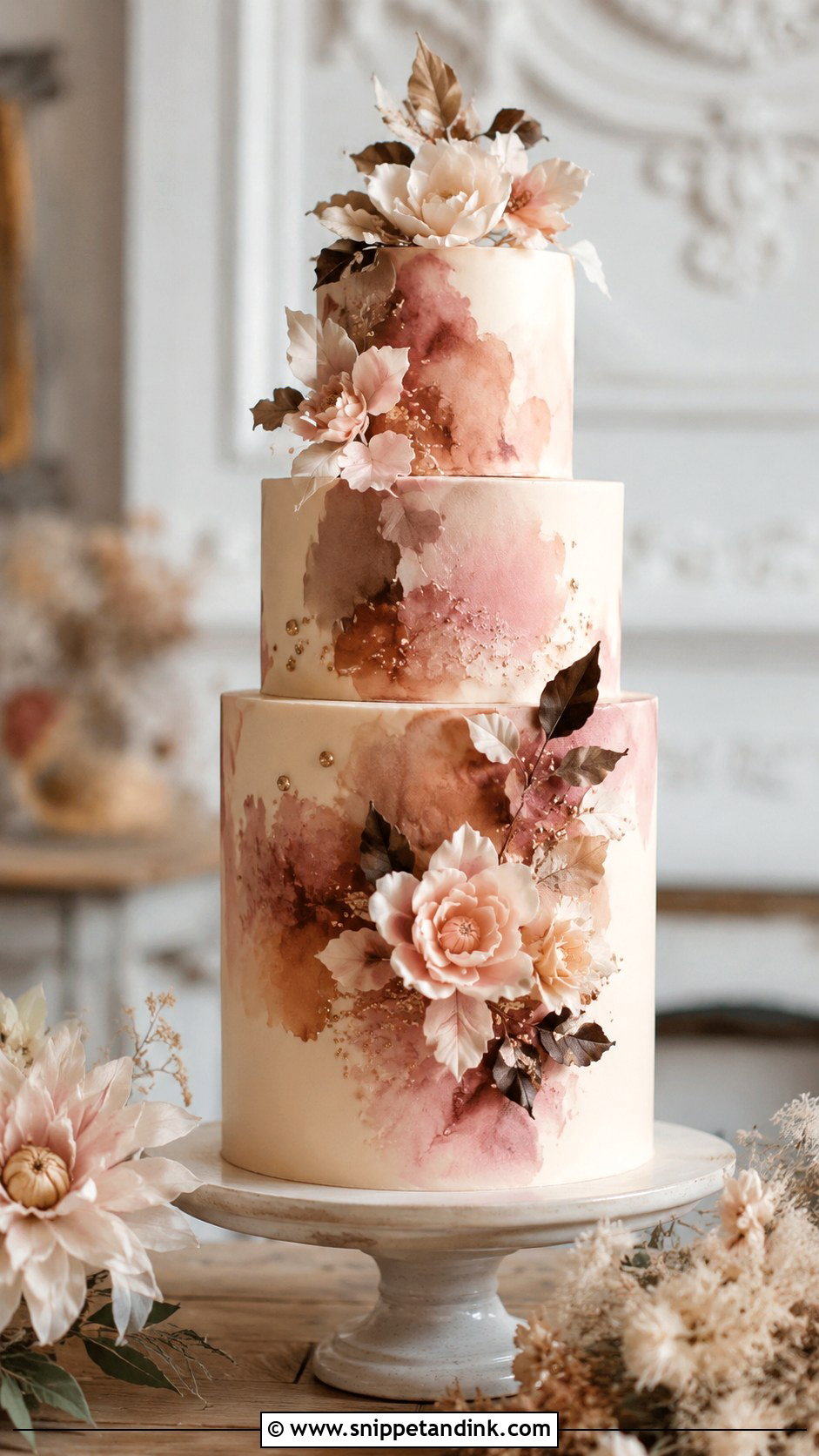
Watercolor cakes look painted because they are. On buttercream, I smear dabs of rose, taupe, cocoa and mocha across a chilled ivory or blush tier with a spatula, then smooth it so the colors blend rather than stripe. On fondant, I paint with thinned gel color. Sugar flowers, edible pearls or delicate chocolate leaves finish it. Soft indoor light shows the washes best. Keep the rest of the dessert table quiet so the painting is what people notice.
13. Pink And Brown Marble Wedding Cake
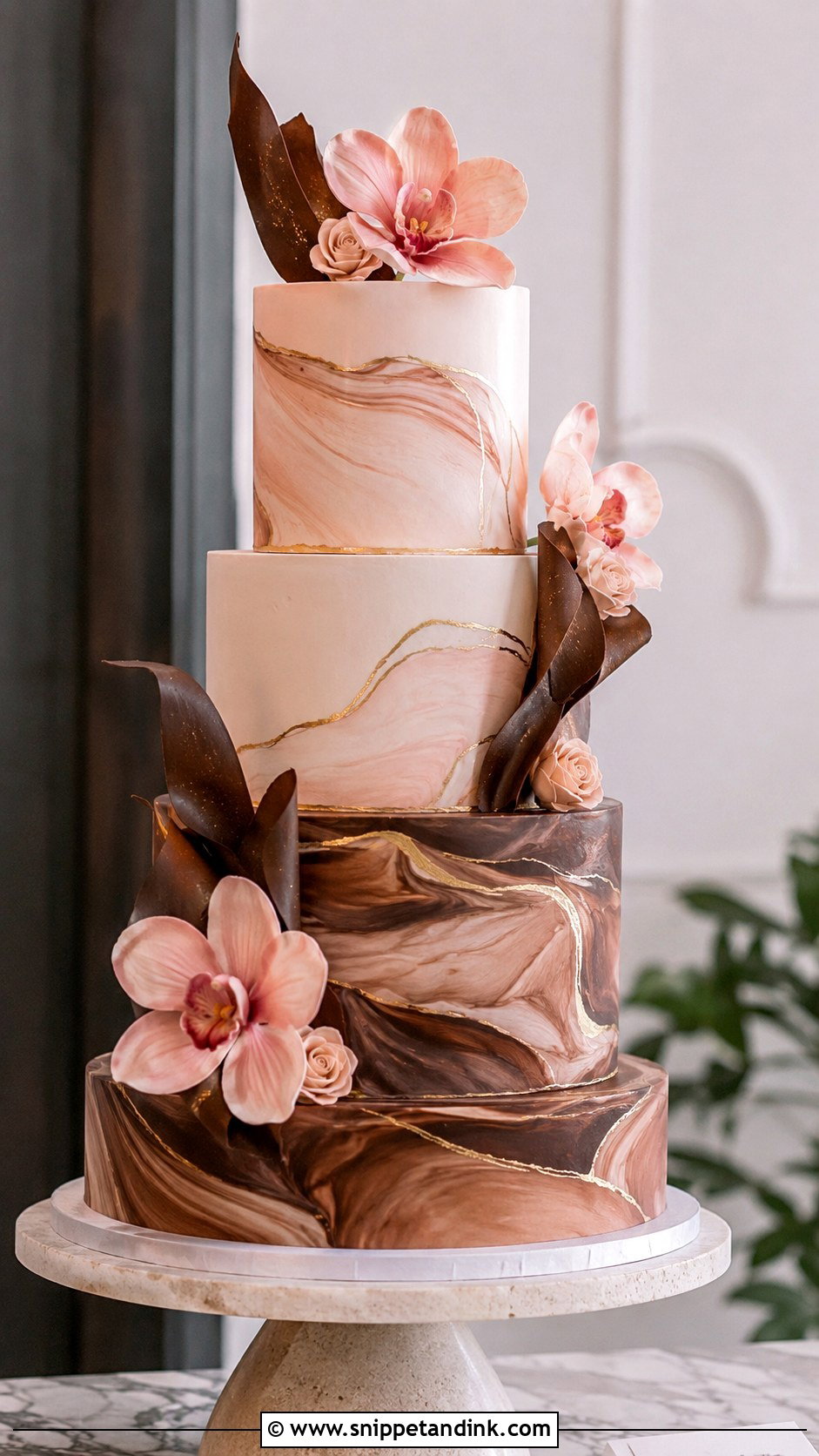
Marble is about restraint in the kneading. For fondant, I fold blush, ivory, mocha and chocolate together only a few times before rolling; knead too long and the veins blur into muddy beige. Buttercream marble is swept on with a spatula instead. The effect gives the cake movement without much decoration. Thin gold lines, pink orchids, sugar roses or a chocolate sail can add a refined finishing note. Modern venues with stone, concrete or warm wood suit it. Ask for soft veining rather than heavy streaks.
14. Pink And Brown Macaron Wedding Cake
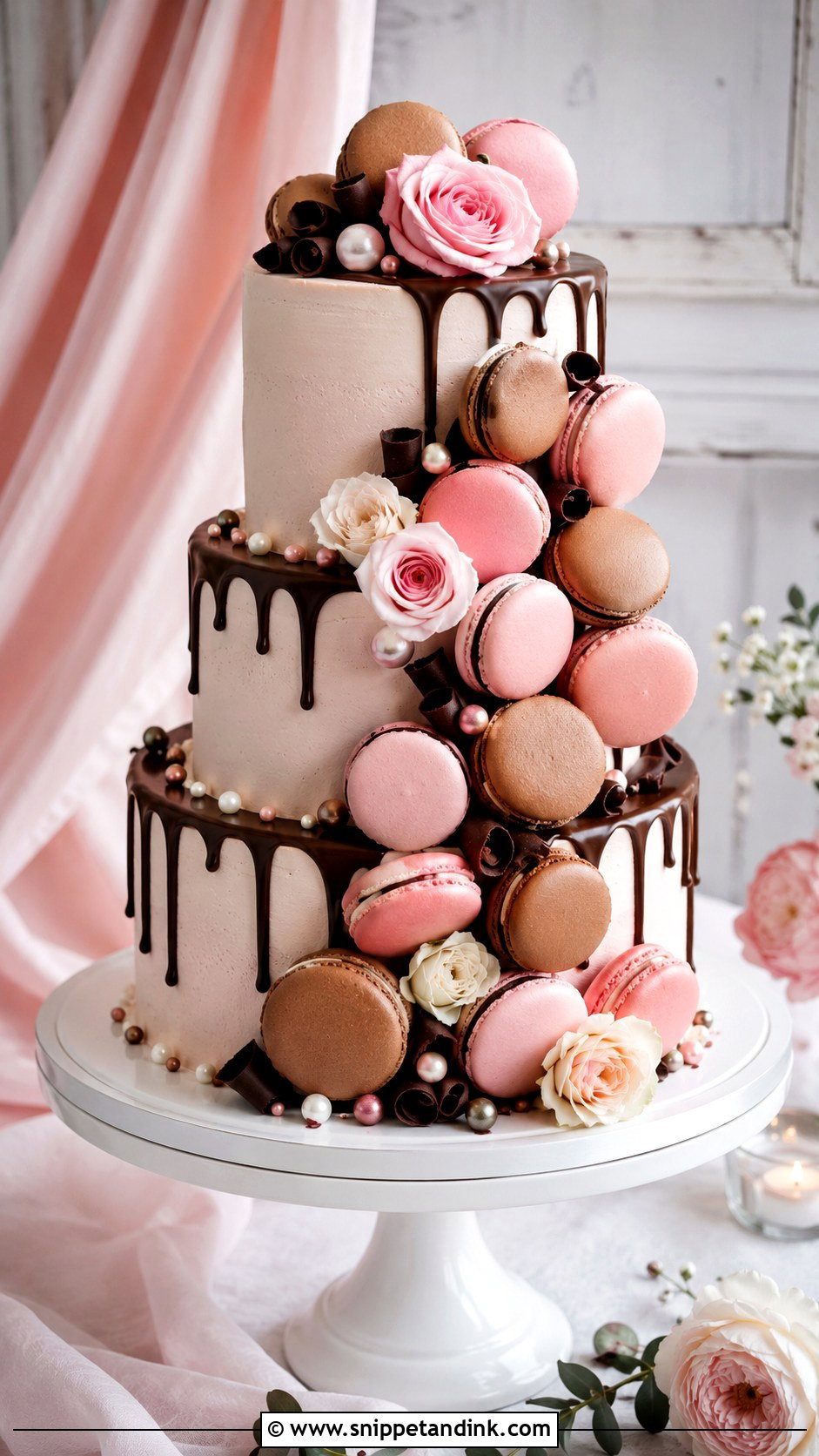
Macarons add a second dessert to the cake, and guests love that. The cake can be blush, ivory or mocha, with pink and chocolate macarons around the tiers or tucked into a cascade with roses, ganache drips and chocolate curls. Macaron shells absorb moisture from buttercream and soften within hours, so I attach them on site with a dab of melted chocolate and keep them off the wettest parts of the cake. Space them evenly or cluster them on purpose; random placement looks like an accident.
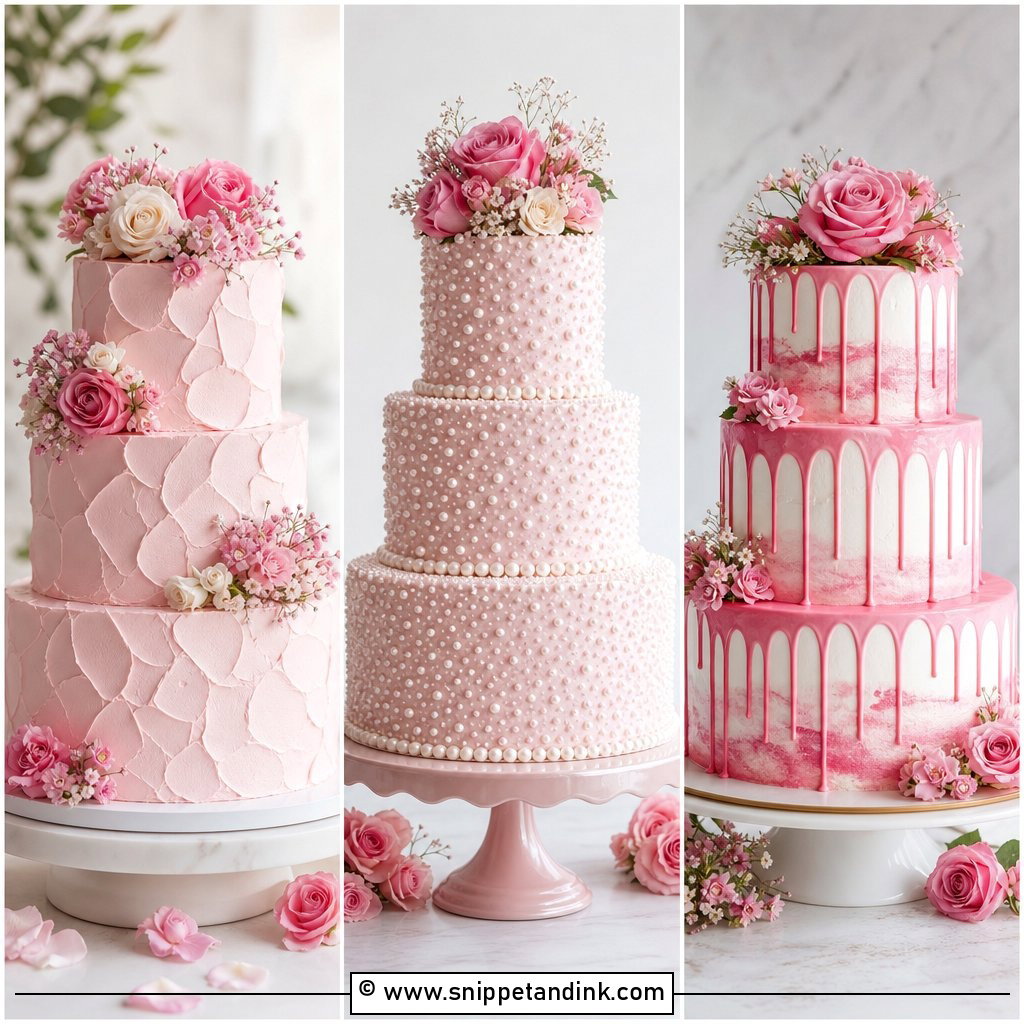

15. Pink And Brown Rose Wedding Cake
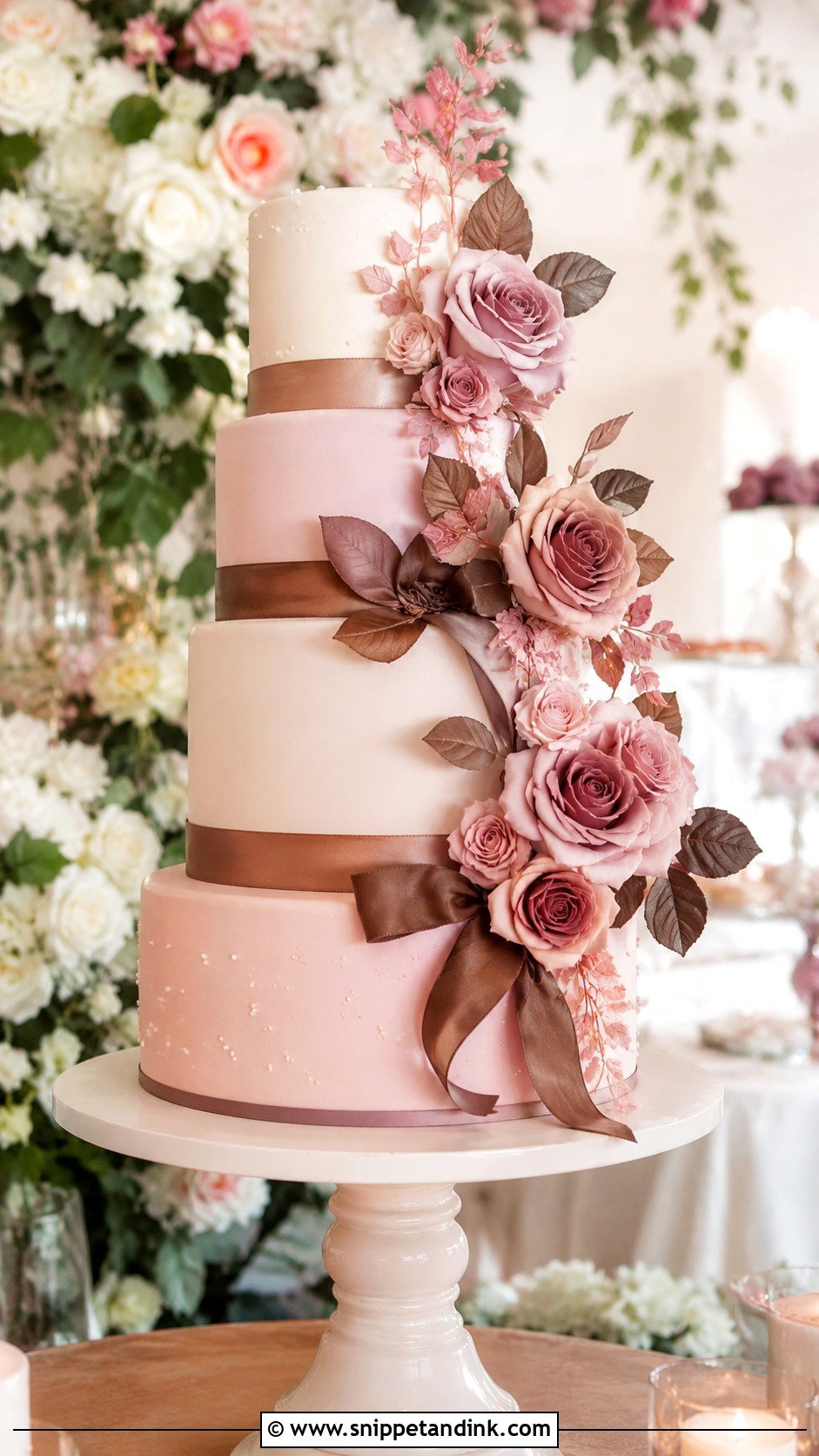
Roses are the easiest way to match the cake to the bouquet. Fresh, sugar and piped buttercream roses all work, in blush, dusty pink, cream and cocoa-tinted shades. A soft pink cake with chocolate-brown ribbon, or a mocha cake with pale pink roses, gives two quite different moods. Roses can cascade down one side, circle each tier or sit in one big cluster. Fresh roses need taped stems and a barrier between stem and cake. Keep the brown accents light so the flowers lead.
16. Pink And Brown Pearl Wedding Cake
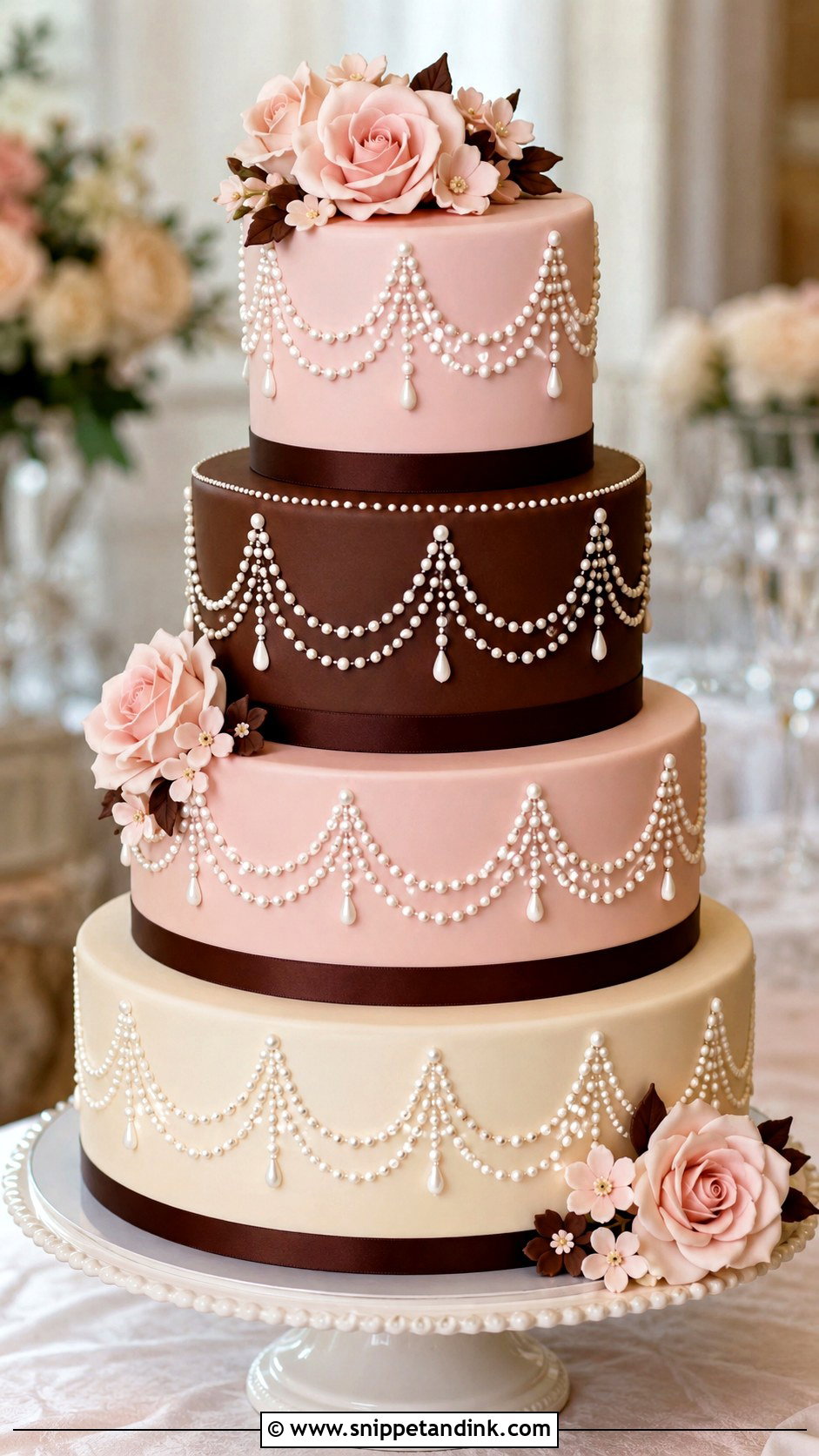
Pearls look expensive when they’re placed with space around them. Blush frosting, mocha tiers and a few rows of edible pearls make a refined cake without big flowers. They can be scattered, run in borders or set in patterns on fondant, and brown can come from cocoa buttercream, chocolate ribbon or an espresso-toned bottom tier. On buttercream, I place pearls while it’s still tacky so they stay put. Indoor receptions and classic gowns suit it. Fewer pearls, placed well, always beat a crowded scatter.
17. Pink And Brown Modern Wedding Cake
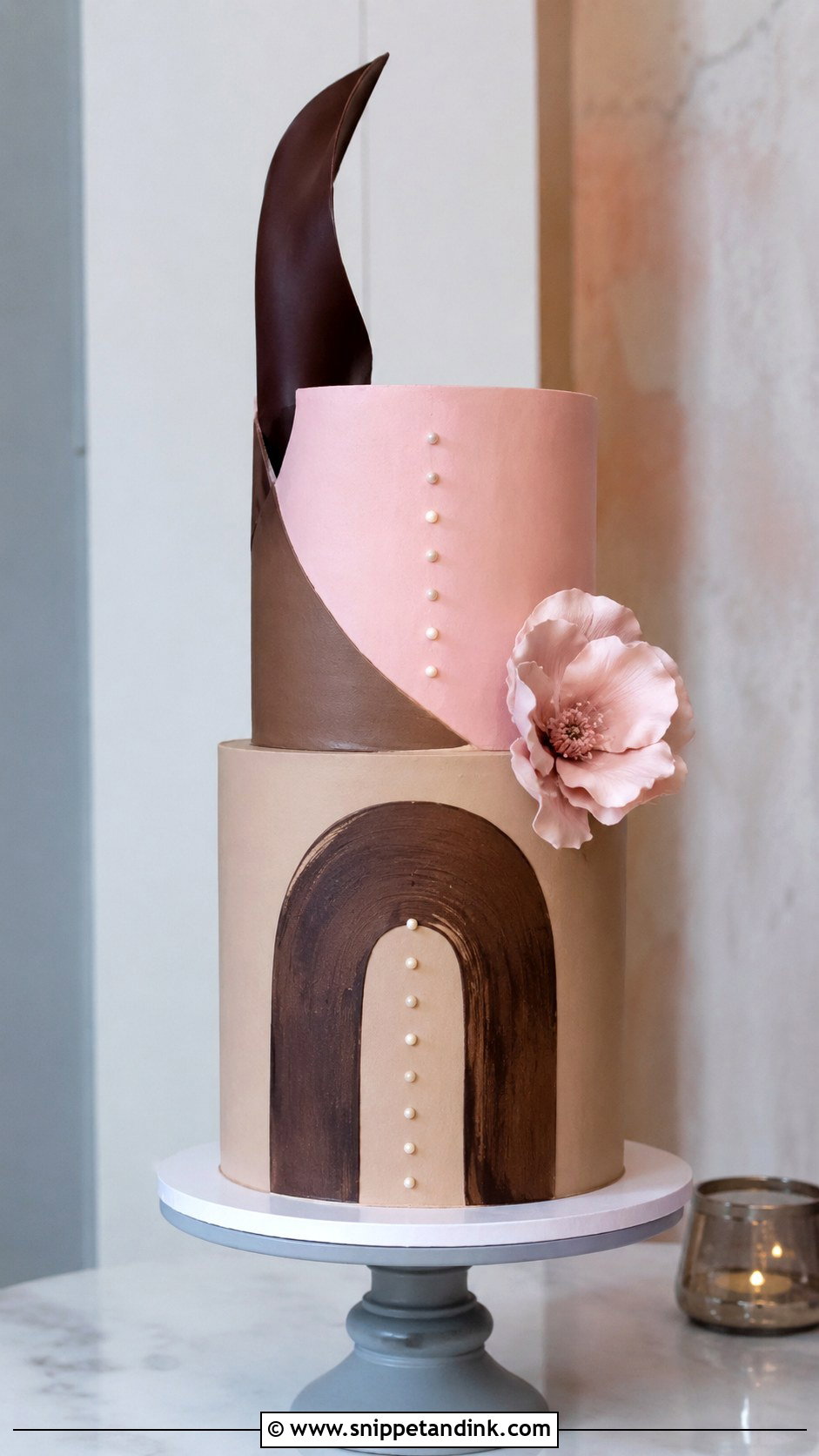
Modern cakes depend on proportion more than decoration. Sharp tiers, smooth frosting and one plan for the decoration, nothing more. Blush and mocha blocked tier by tier works well with a single statement detail like a chocolate sail, one sugar flower or a painted arch. Chocolate sails are tempered chocolate set on curved acetate; they soften quickly in warm hands and warm rooms, so I add them at the venue. City weddings and minimalist receptions suit this cake.
18. Pink And Brown Small Wedding Cake
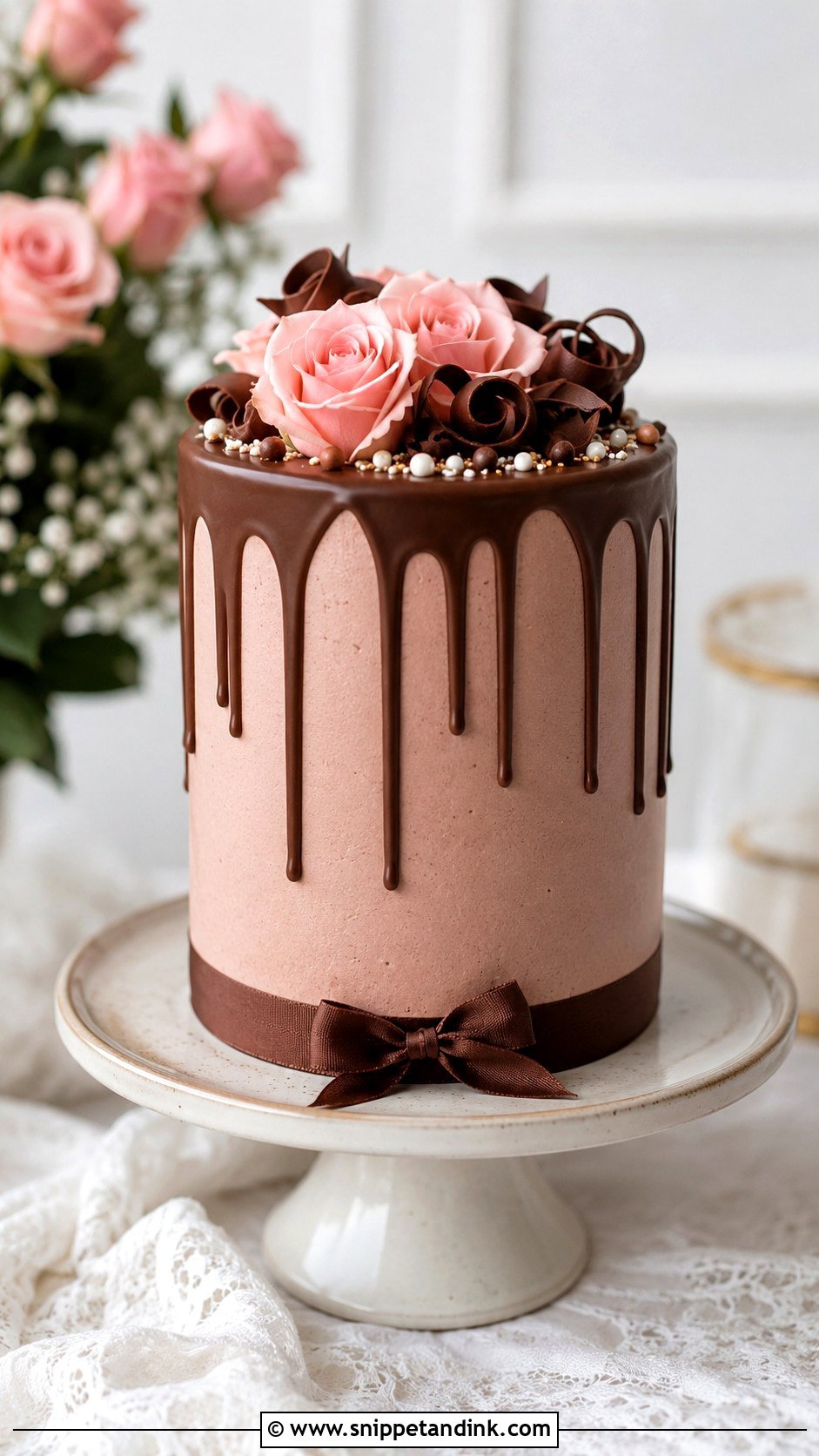
A small cake has to earn its place with focus, not size. A two-tier or tall single-tier cake with blush buttercream, a chocolate drip, a few roses and a mocha ribbon at the base feels complete. A chocolate sponge under pink frosting gives you the brown when it’s cut. Elopements and micro weddings suit it, and a kitchen sheet cake can feed the rest of the guests. Choose decoration at the cake’s scale, since oversized flowers swamp a small tier.
19. Pink And Brown Fall Wedding Cake
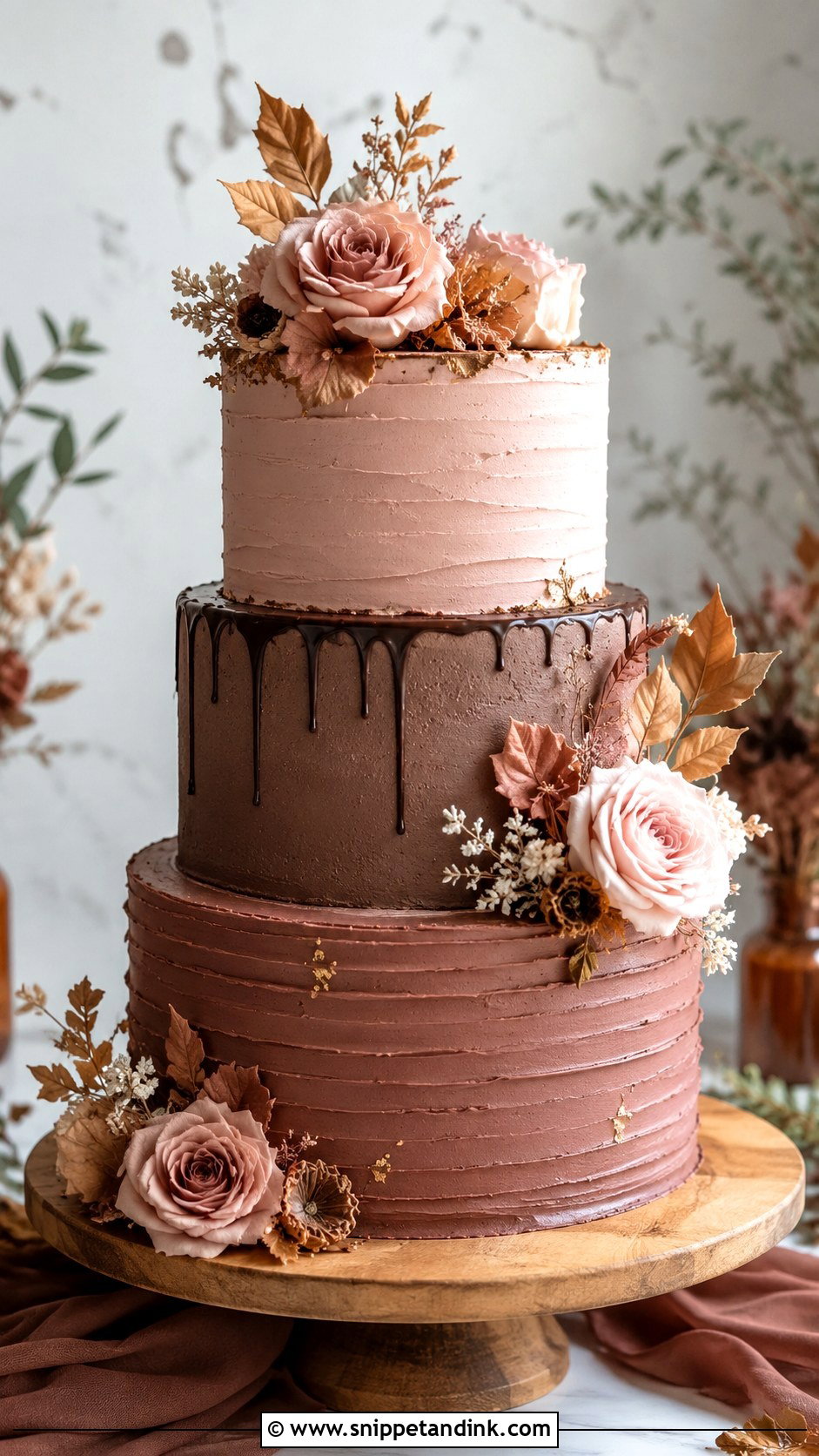
Fall weddings usually mean orange, and a pink and brown fall wedding cake is a welcome change. Dusty rose, mauve, cocoa, caramel and espresso feel seasonal without a single pumpkin. Textured buttercream, chocolate ganache, sugar leaves, dried flowers and soft blush roses suit it, and chocolate, spice, caramel, espresso or almond flavors match the colors. I’d keep the pink muted toward mauve so it sits with the autumn tones. A wooden stand and candlelight complete the table.
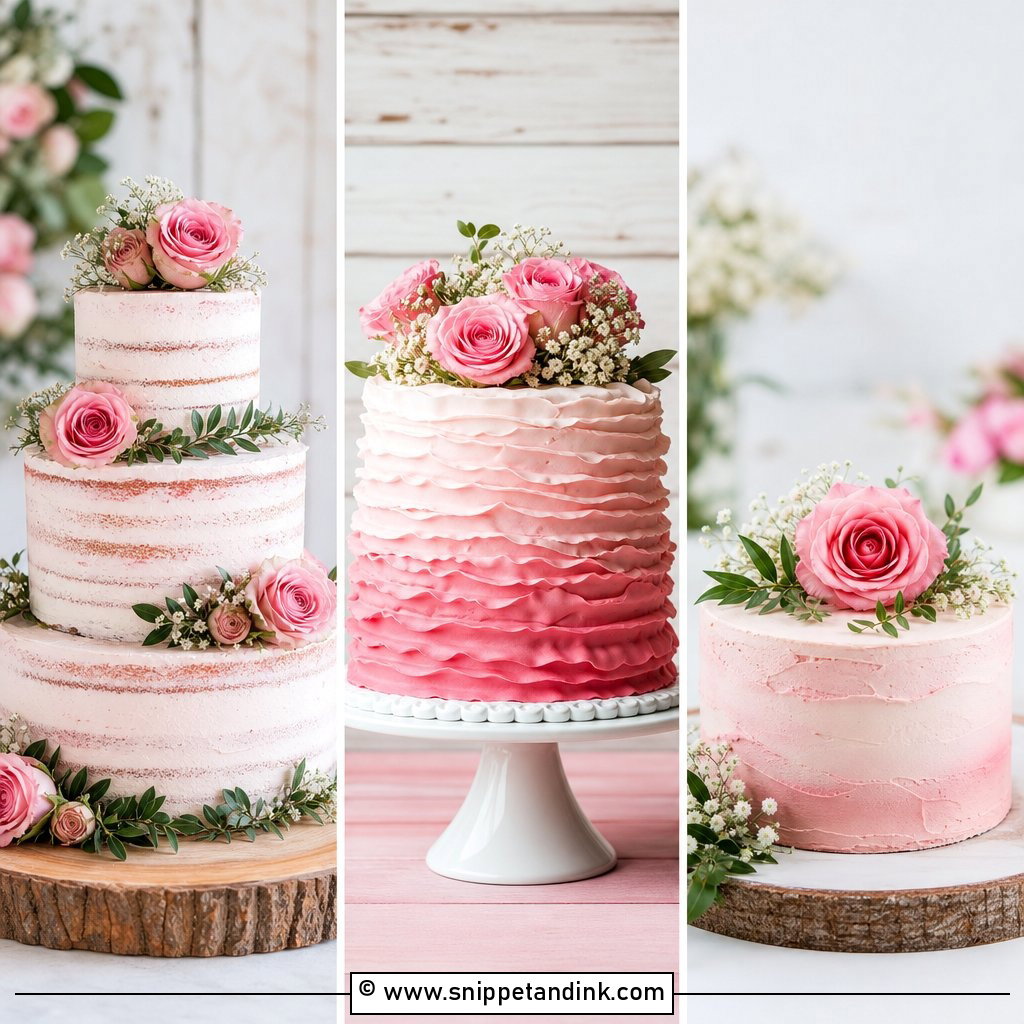
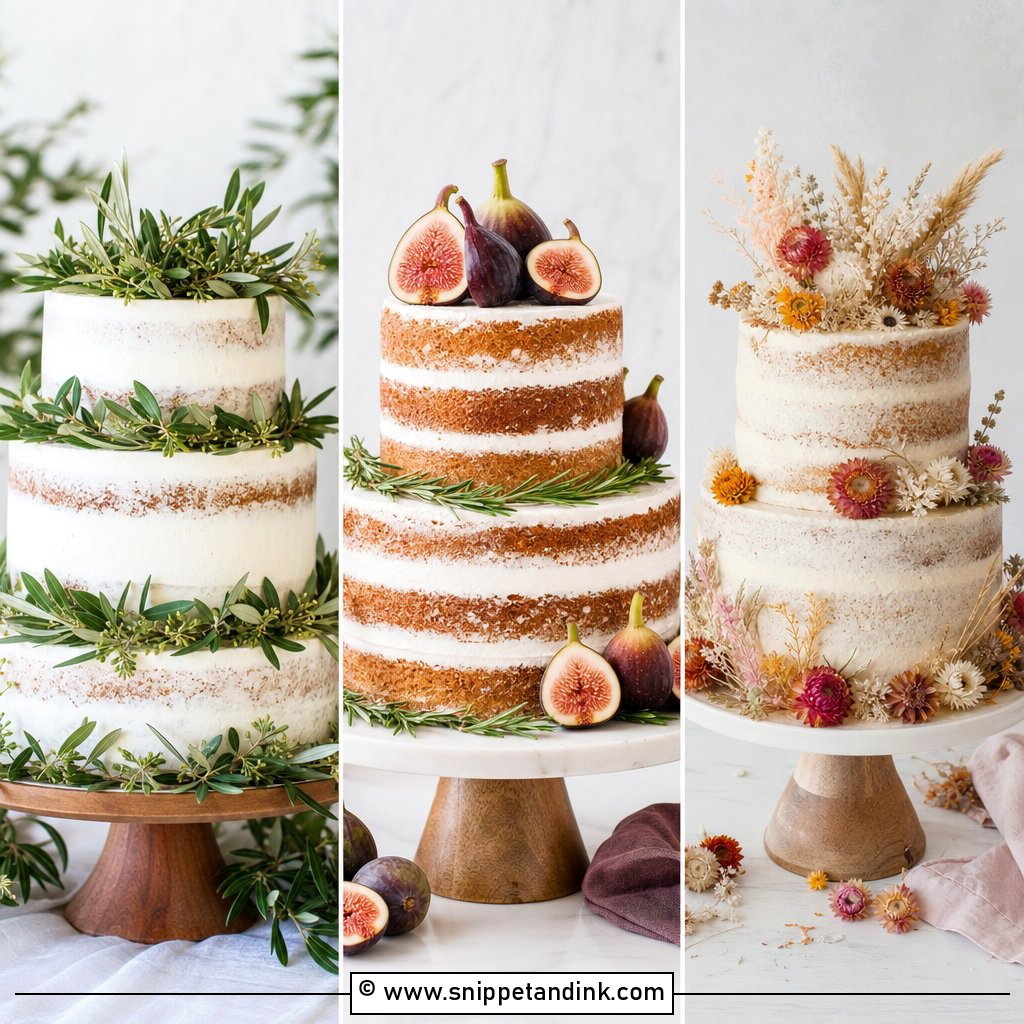


20. Pink And Brown Elegant Wedding Cake
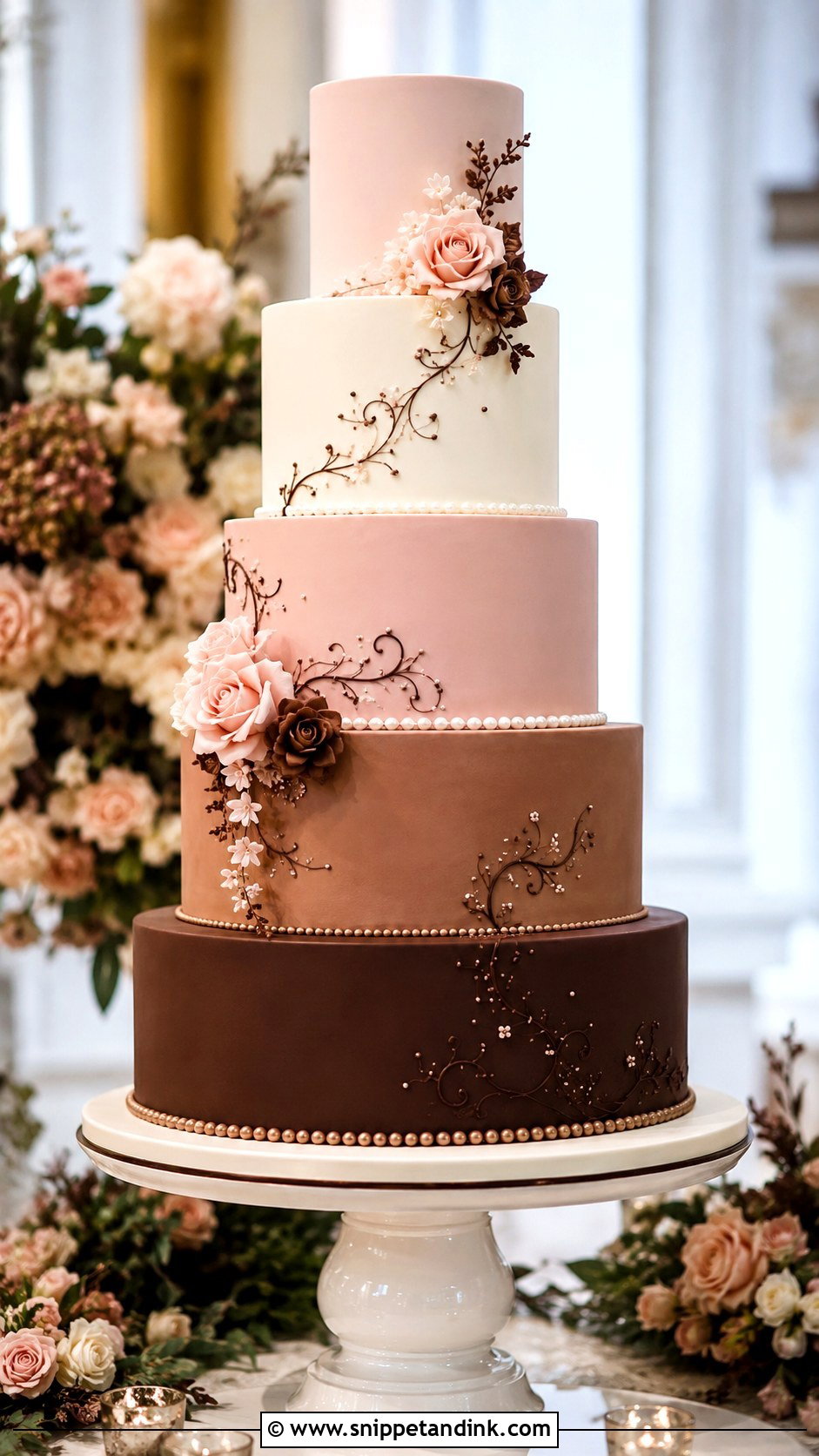
Restraint is the whole design here. Soft blush, ivory, mocha and deep chocolate, never bright pink or harsh brown, over smooth buttercream or fondant. Then one or two fine details: sugar flowers, thin piping, edible pearls or a subtle ganache accent. Formal receptions suit the rich but quiet palette. A tall tiered shape gives drama; a clean two-tier cake suits a smaller room. When I design this cake, I remove one detail before I’m finished, and it nearly always looks better for it.
Cocoa Icing and a White Dress at the Cutting
Dark frosting is the one part of this palette that needs a plan for the moment you cut the cake. Chocolate and ganache leave marks on silk and satin, and very dark icing colored with a lot of dye can stain lips and teeth for photos. A few habits keep the day clean:
- Cut from a blush or ivory tier, or from the back of the cake, rather than through a chocolate drip.
- Ask the venue for a napkin to hold under each slice, and keep sleeves and bouquet ribbons clear of the board.
- If you plan to feed each other, use a small bite from the pink tier, and skip the playful smash in a white gown.
- Keep a damp cloth and a clean napkin nearby. Blot chocolate off fabric; rubbing spreads it.
Heat is the other concern. Chocolate drips, sails and ganache soften in a warm room much sooner than plain buttercream, so I set up these details last and ask for a cake table away from windows, heaters and big candle clusters.
Blush, Mocha and the Room Around Them
Pink and brown give you romance with warmth, and the same palette can look classic, rustic or sleek depending on the cake. Blush flowers, mocha frosting, chocolate drips, cocoa tiers and dusty rose details all combine differently. Before you settle on a design, think about the venue, the season, your flowers and the table styling. A garden wedding wants softer flowers, while a formal room suits smooth tiers and fewer accents. Bring photos of the room to your tasting, and the right balance usually becomes obvious.
You'll Like These Ideas:





Leave a Reply