
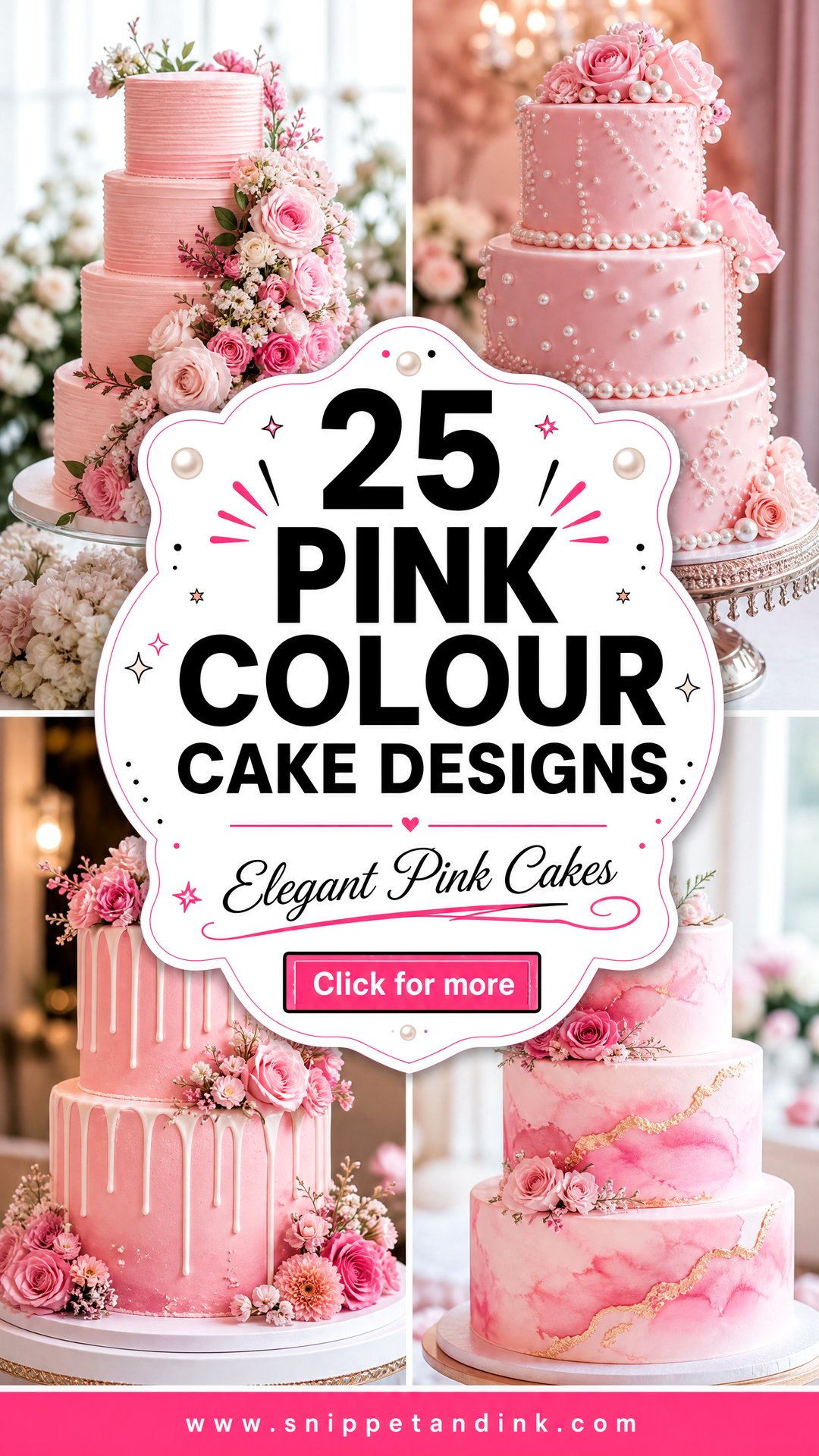
Pink is one of the most rewarding colours I tint, and one of the trickiest. A pale blush suits a garden reception, a deep rose holds its own under ballroom chandeliers, and a bright pink makes a modern dessert table feel confident. It sits happily with pearls, sugar flowers, bows, gold leaf, lace piping, fruit or a plain smooth finish. What it won’t forgive is a careless mix, because pink shifts toward peach, grey or lilac depending on the frosting under it and the light around it. The 25 cakes below show whole designs, tiers and texture and decoration together, with notes on what each one asks of the baker and the room it’s going into.
Why Pink Buttercream Turns Peach, and How I Stop It
Butter is yellow. Add a drop of pink to a butter-heavy American buttercream and you get salmon or peach, not blush. When a couple shows me a cool, true pink, I either whip the butter for much longer to pale it, switch to a Swiss meringue buttercream that starts whiter, or add the tiniest touch of violet to cancel the yellow before tinting.
Gel colours also keep developing. A pink that looks right straight after mixing usually darkens over the next hour or two, so I mix a shade lighter than the target and let it rest before judging. If you’re bringing me a swatch, fabric or a bridesmaid dress sample works far better than a photo on a phone, because screens push pinks brighter than real life.
Questions worth asking at your tasting
- Which frosting do you use, and how pale can it go before tinting?
- Will the pink be in the frosting, the fondant, or painted on the surface?
- Are the flowers sugar or fresh, and who supplies and places the fresh ones?
- How long can the finished cake sit out in my venue, and at what temperature?
1. Blush Pink Wedding Cake
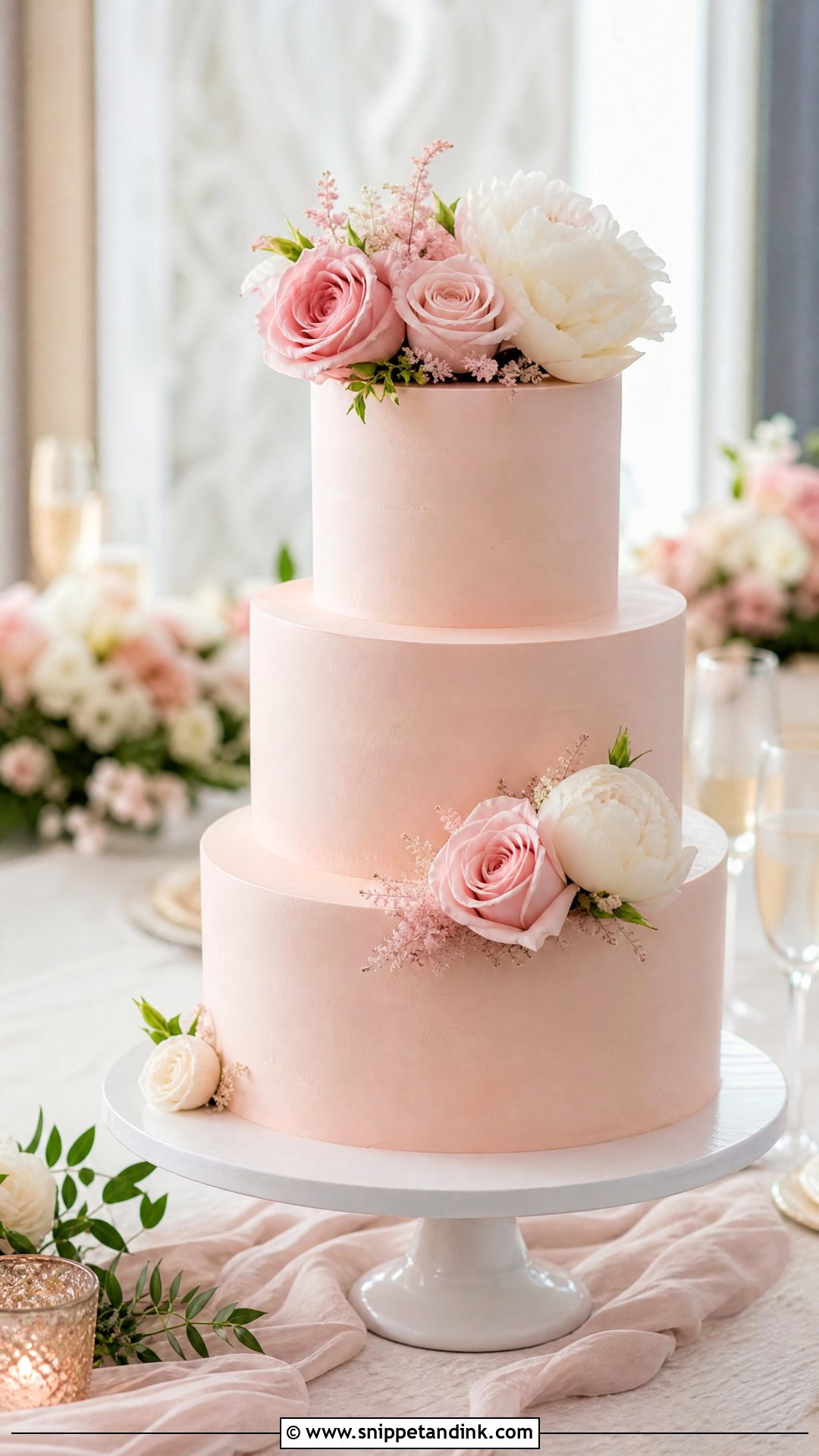
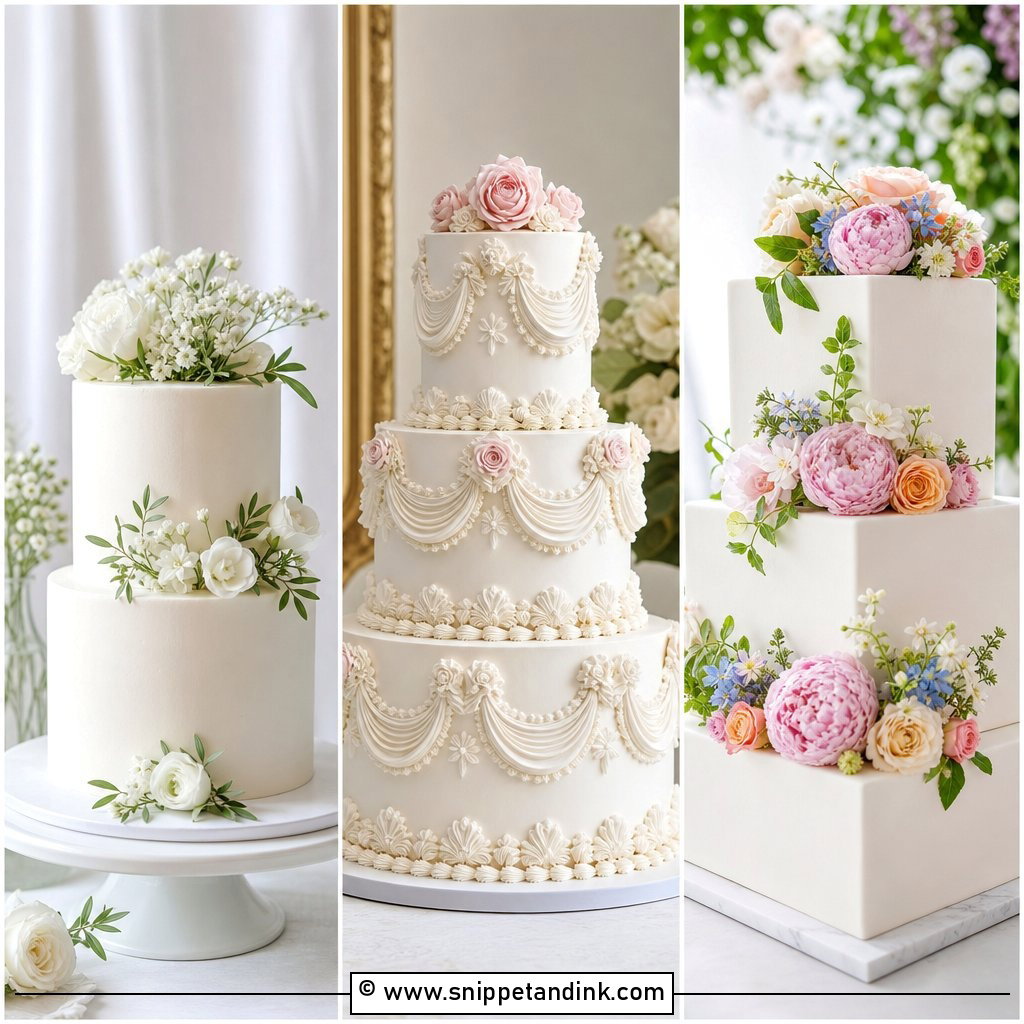
Blush works when it reads as a warm pastel, the colour of the inside of a shell, not candyfloss. I build three tiers in smooth buttercream or fondant and keep the colour so soft it almost looks ivory at the far end of the room. Fresh roses, peonies or ranunculus in clusters finish it, ideally sourced through your florist so they match the bouquet. It sits naturally with ivory linens, champagne and pale greenery. Clean tiers and a plain stand keep it current.
2. Pink Ombre Wedding Cake
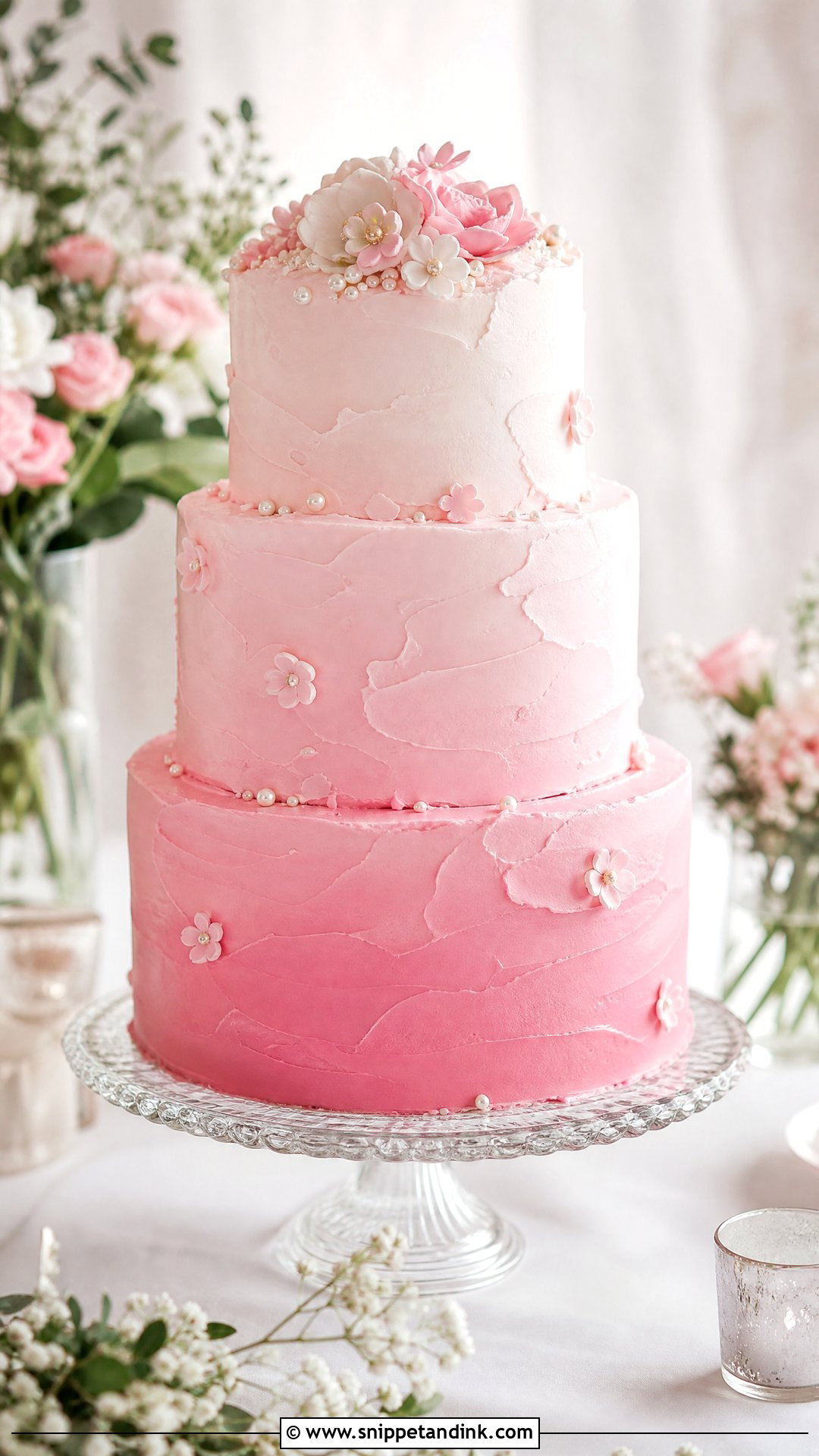
Ombre runs from deep rose at the base through dusty pink to almost-white blush on top. I tint one batch of buttercream to the darkest shade and then cut it back with plain frosting for each lighter tier, which is the only reliable way to get even steps between colours. On a single tier, I blend the bands with a scraper while the frosting is still soft. Small sugar flowers, a few pearls or fine piping are all it needs, and the gradient reads from any side of the table.
3. Dusty Pink Wedding Cake
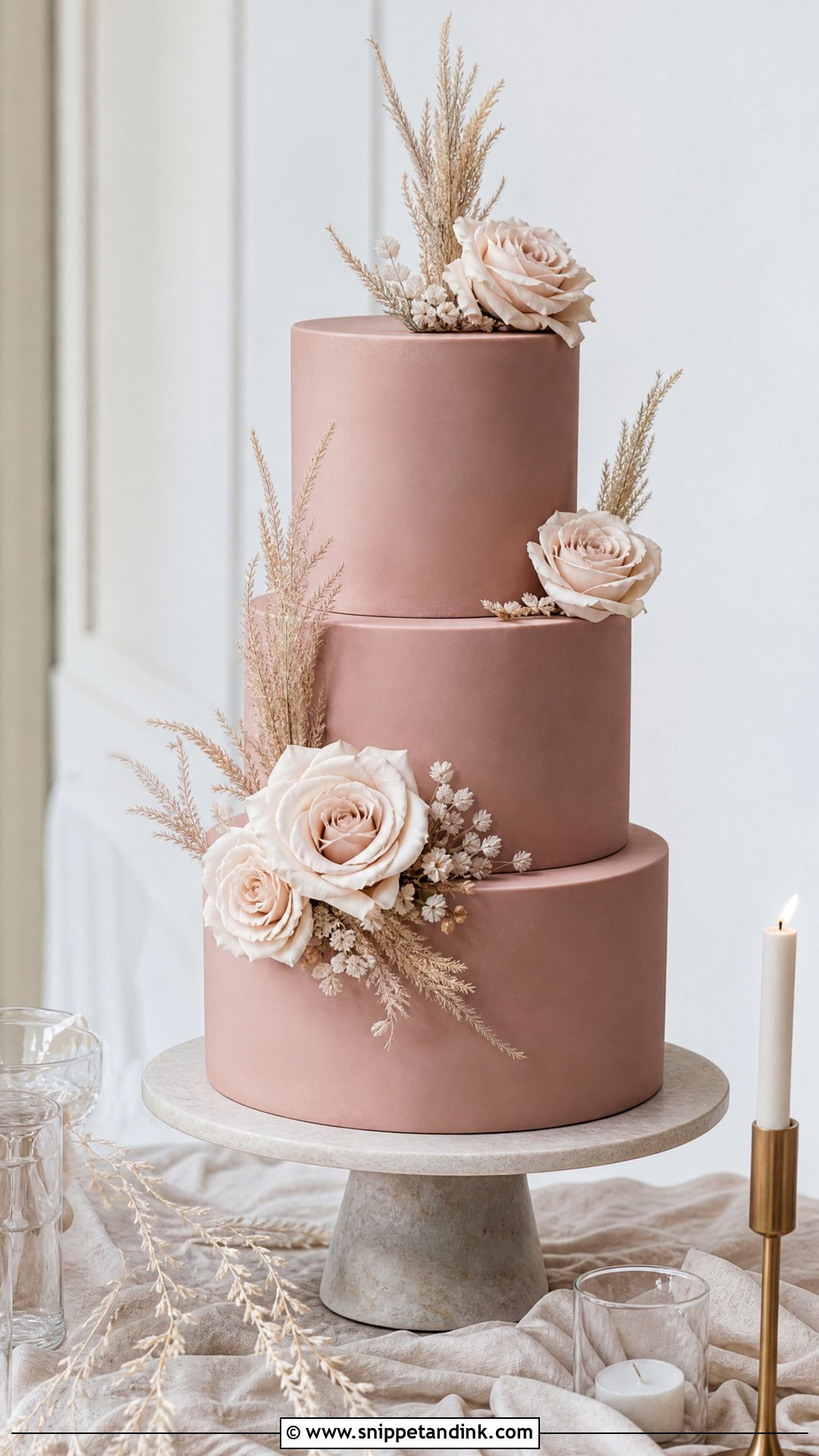
Dusty pink is pink with a little grey or brown knocked into it, and that restraint is why it feels grown-up. It suits vintage receptions, modern weddings and autumn celebrations equally well. I like it on matte fondant, textured buttercream or brushed with edible paint over a pale base. Ivory flowers, dried grasses or pale gold accents keep it warm. If your linens are neutral and the florals lean antique rose, this is the pink I’d pick; it adds colour without shouting over candlelight.
4. Light Pink Wedding Cake
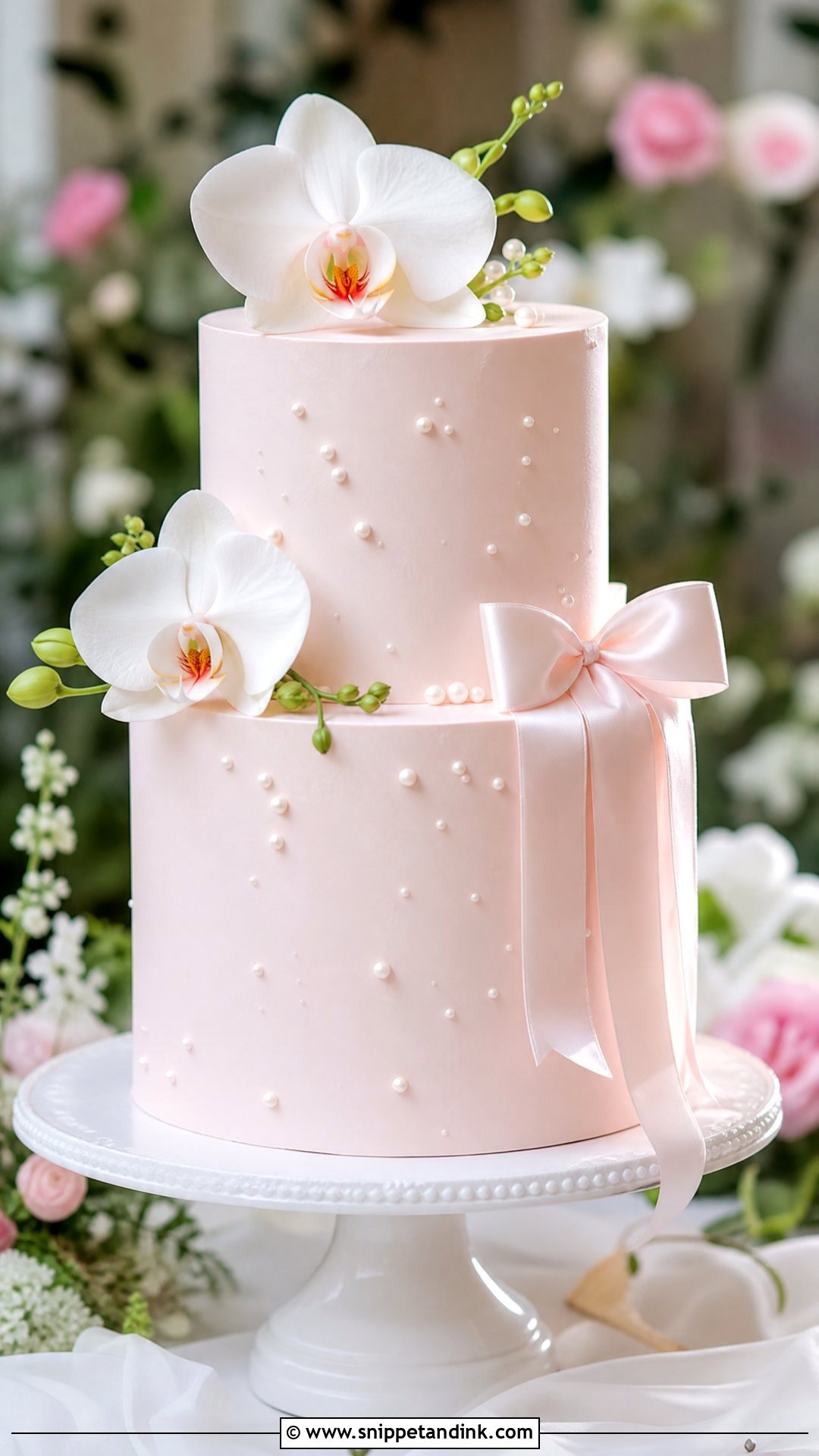
Light pink is almost pastel, so it stands out against white linens but never dominates. Two or three tall tiers in smooth frosting keep it fresh. I’d finish it with white orchids, a few pink roses, a scattering of tiny pearls or a satin ribbon at the base of each tier. One practical note on ribbon: I back real satin with a strip of acetate or tape, or the butter in the frosting seeps through and leaves greasy spots. Spring weddings, daytime receptions and garden venues suit it best.
5. Pink Floral Wedding Cake
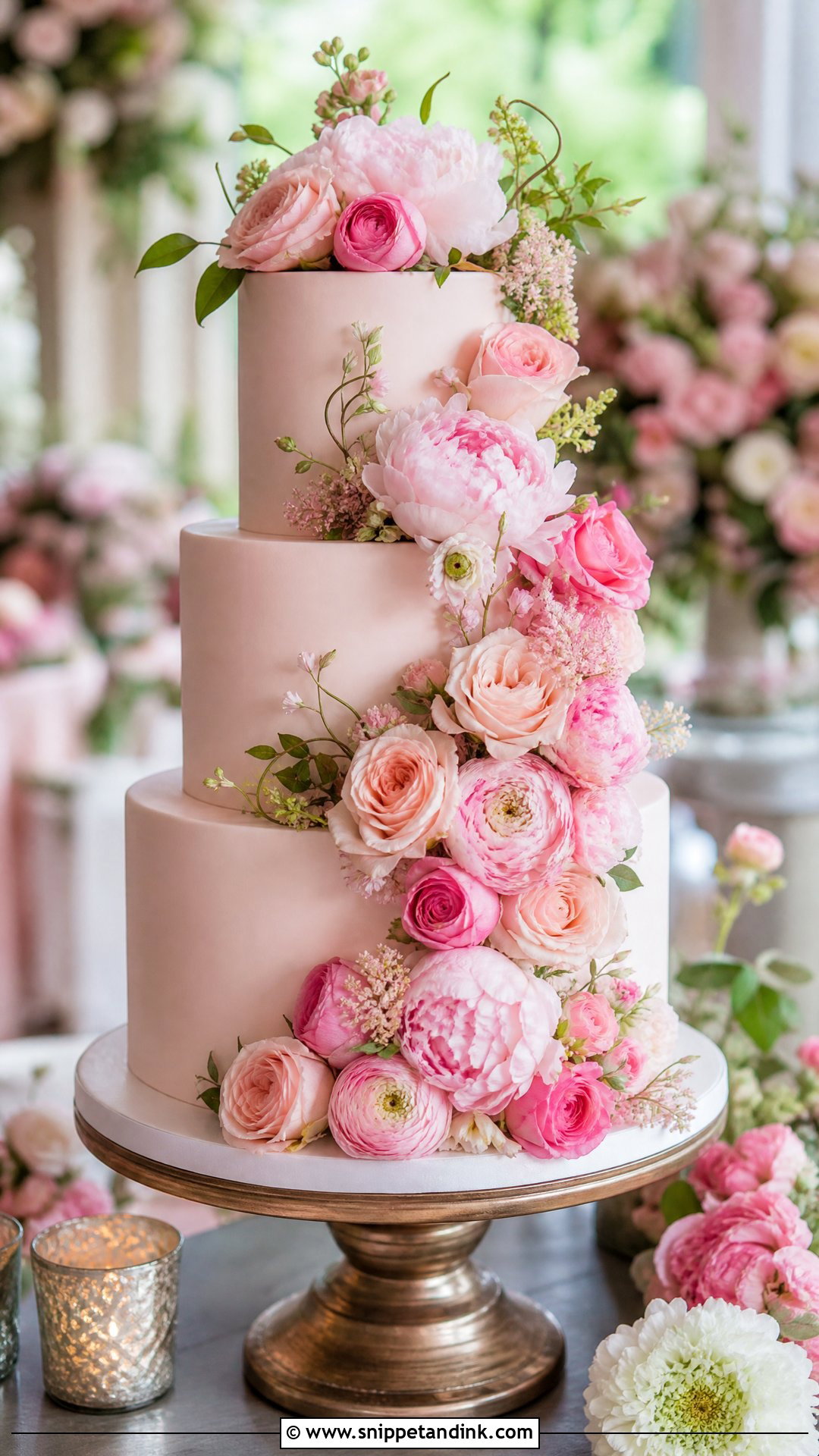
A floral cake can pull the whole colour palette together on one table. The base might be pale pink, blush or ivory, and the flowers carry the design. Fresh blooms look loose and organic; sugar flowers are slower to make but never wilt and can be matched petal for petal to the bouquet. Roses, peonies, ranunculus and orchids all come in good pinks. I’d keep sweet peas as sugar flowers only, because the real plant isn’t food-safe. Cascade them for drama, cluster them for a tidier look.
6. Pink Buttercream Wedding Cake
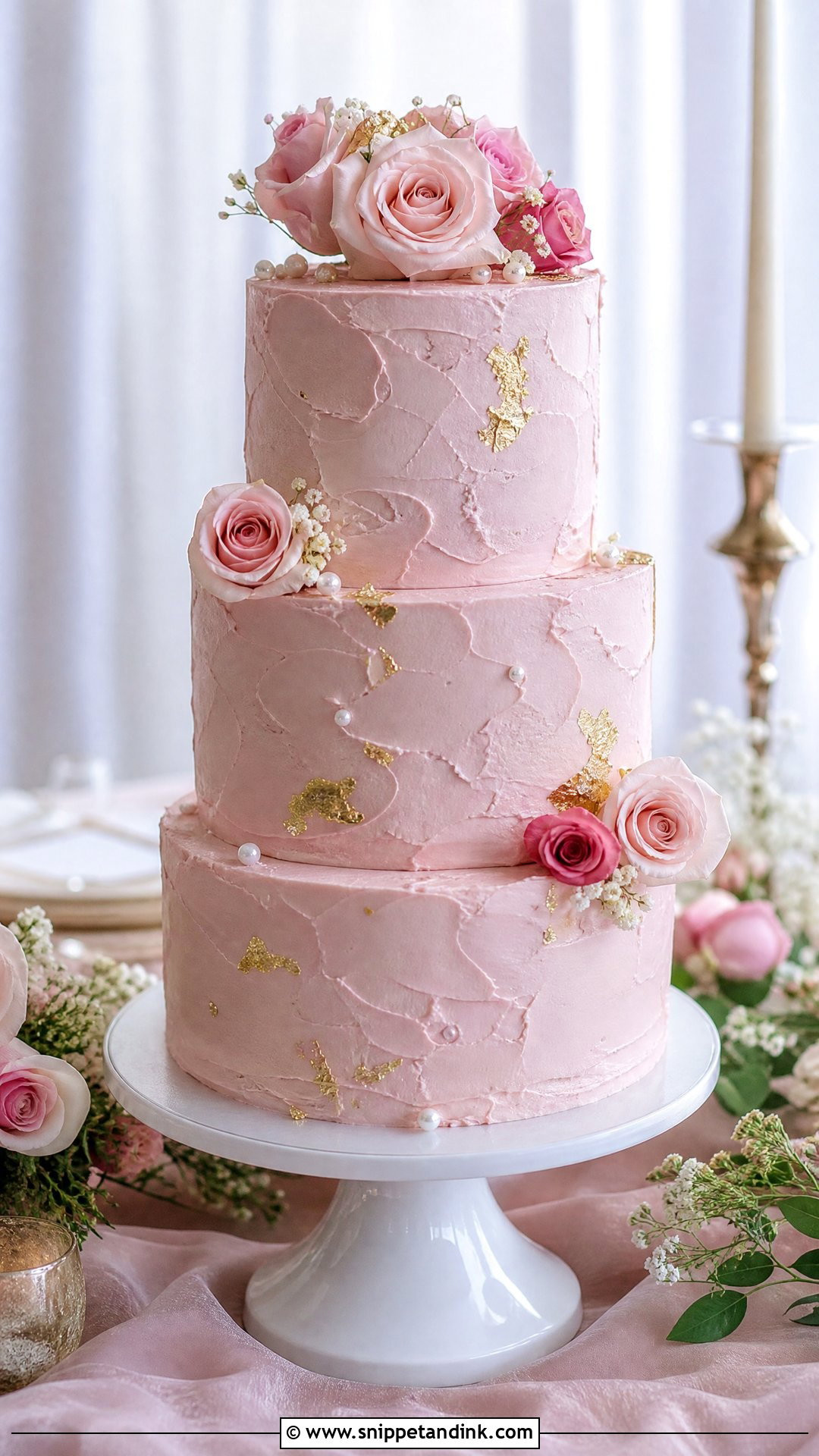
Buttercream gives a soft, handmade surface that fondant can’t fake. It can be scraped glass-smooth, combed into fine ridges, brushed with a palette knife or left deliberately imperfect. A pale rose shade feels classic, a deeper pink more striking. Fresh blooms, gold leaf, piped borders or a few pearls all suit it. The catch is heat: buttercream starts to soften in a warm room, so I’d only suggest it for a summer marquee if the cake can stay inside until just before guests see it.
7. Pink Fondant Wedding Cake
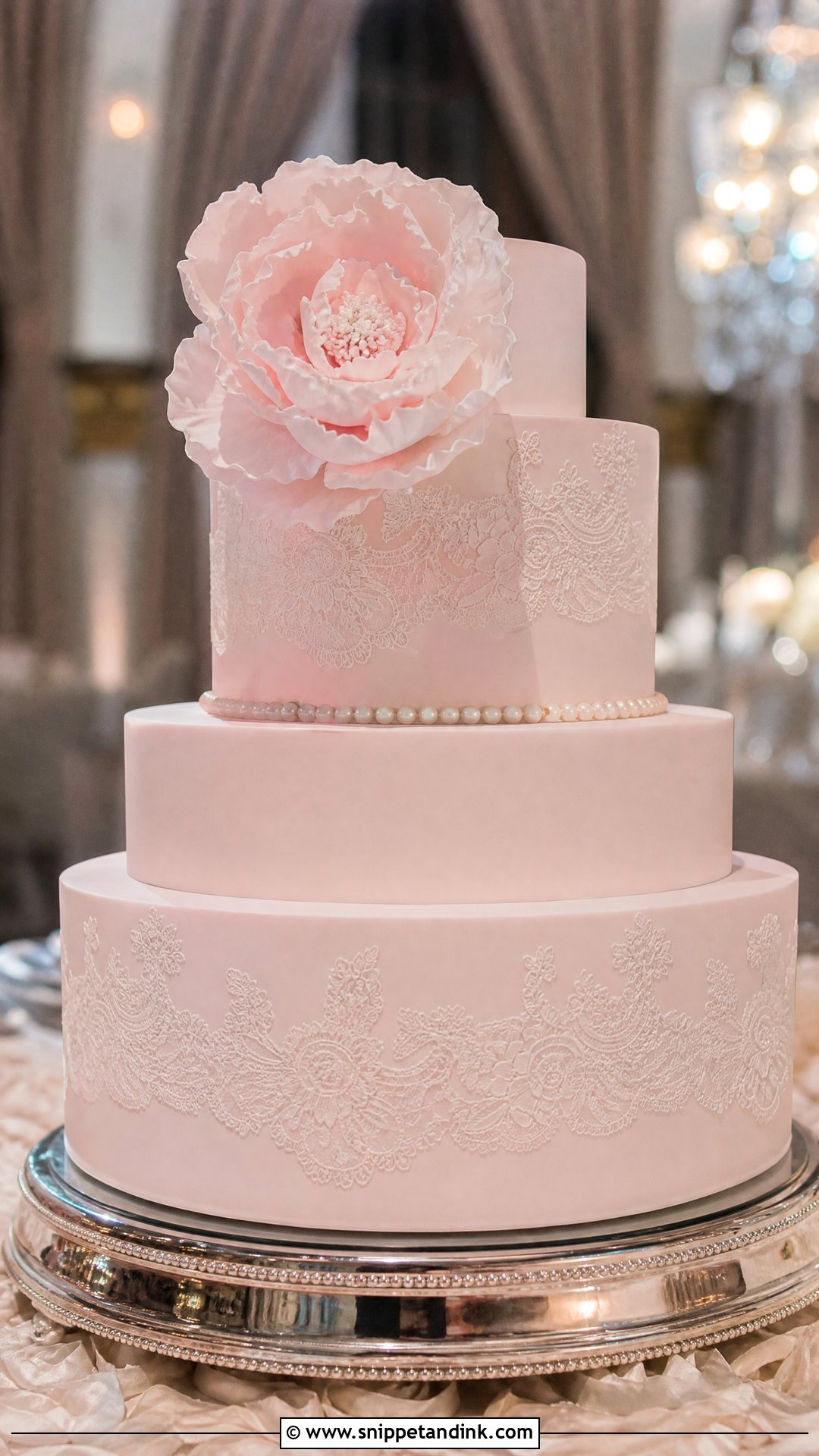
Fondant is for sharp edges and a flawless surface. It holds crisp tier corners, takes embossing and lace moulds, and gives me a smooth canvas to paint on. A pale pink fondant cake with one oversized sugar flower looks modern; a rose pink one with sculpted bows feels editorial. Pink fondant is easiest bought pre-coloured for an even tone across several tiers, because hand-kneading colour into large batches can streak. Keep decoration balanced so the colour stays the focus.
8. Pink And Gold Wedding Cake
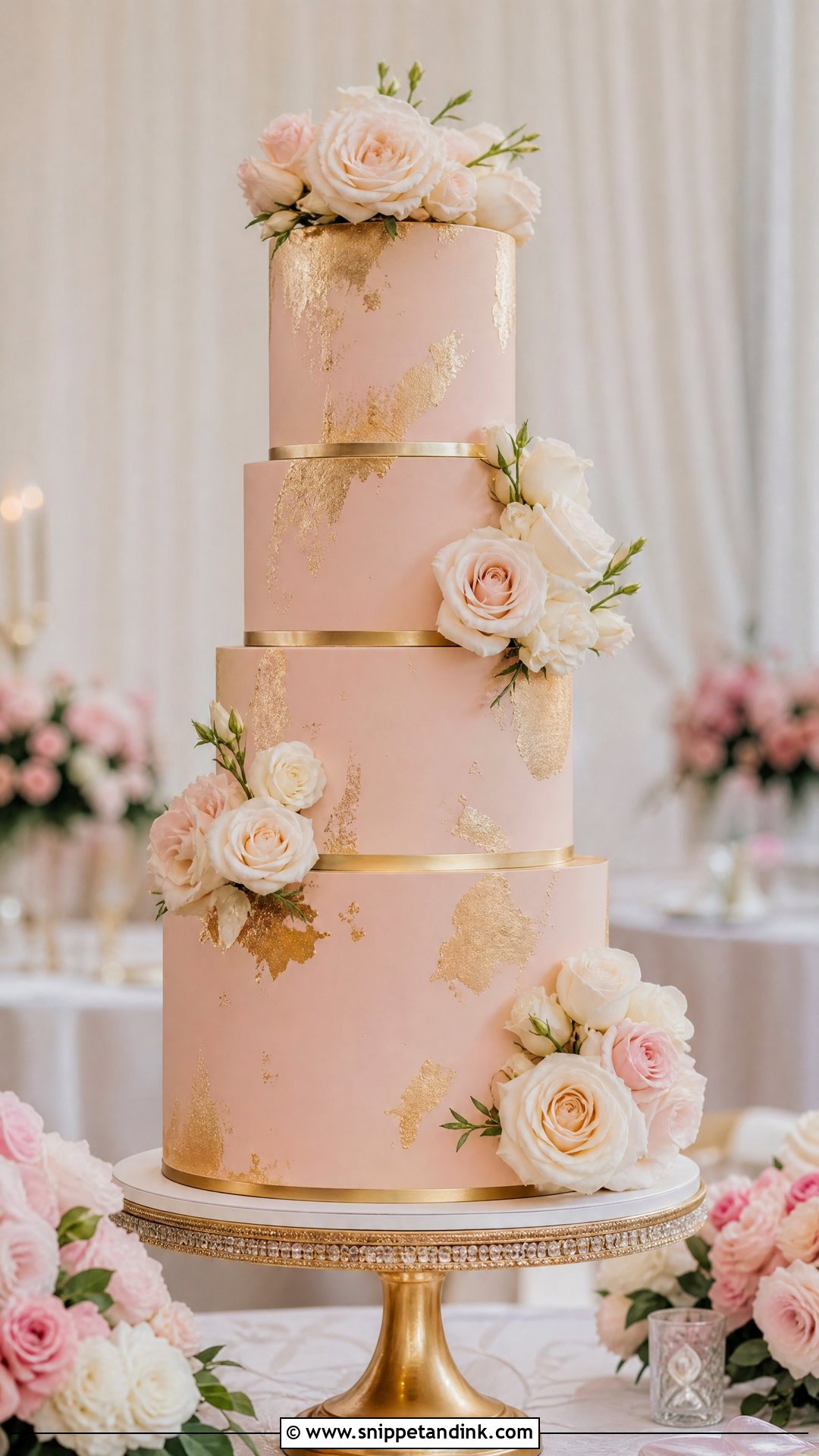
Pink and gold is warm and celebratory. Blush with brushed gold leaf looks refined; deeper rose with gold trim leans glamorous. Metallics show off best on smooth tiered fondant cakes, since leaf and paint catch on texture. Gold can be a thin line, a painted edge, scattered flakes or a monogram. I’d use it as an accent on one or two tiers rather than gilding everything, and check that any gold paint is labelled edible, not just non-toxic. Ivory flowers soften it.
9. Pink And White Wedding Cake
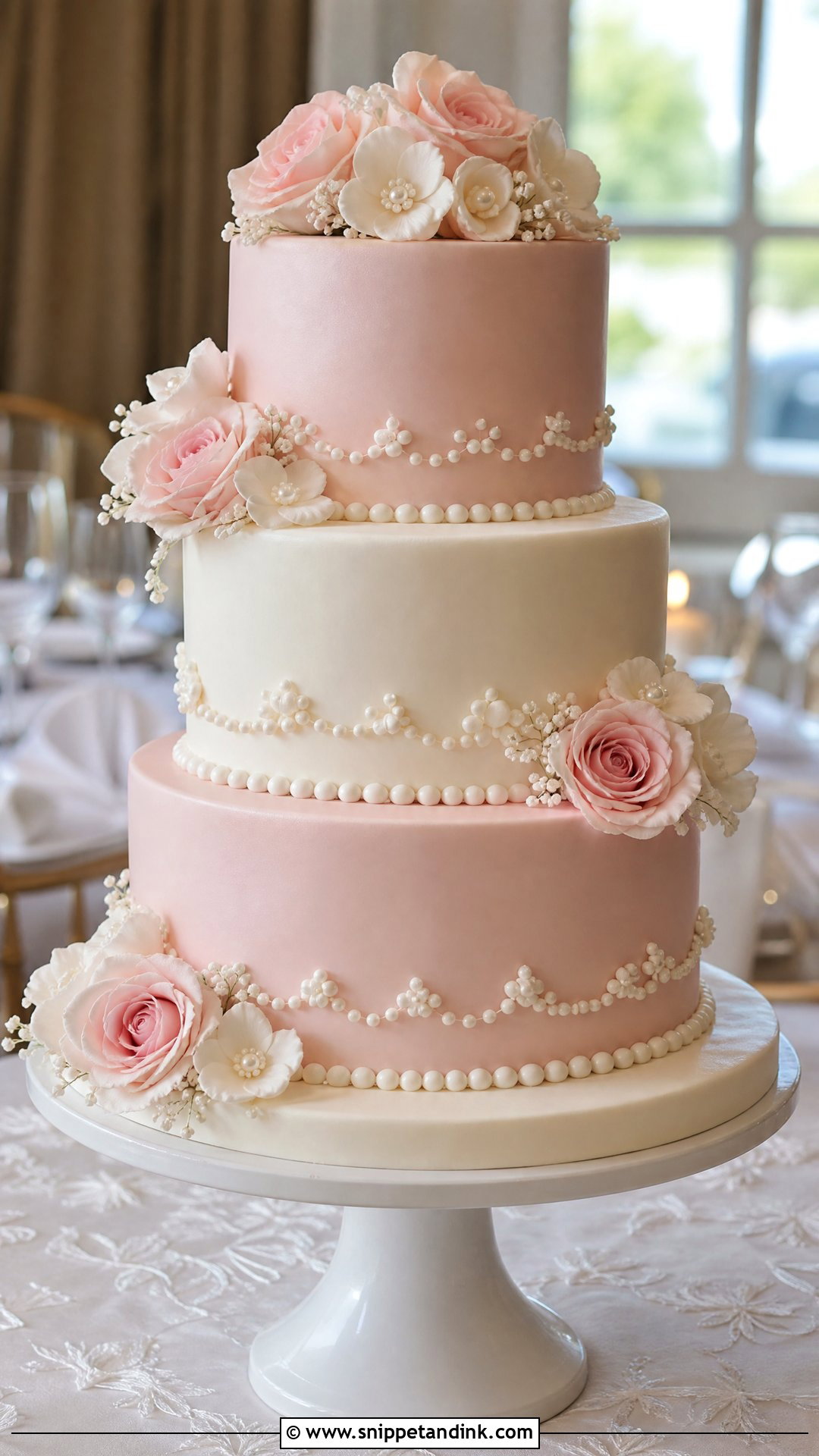
Pink and white keeps a traditional wedding cake at heart while adding colour. The bottom tier can be pink with white tiers stacked above, or the whole cake white with pink floral accents. Putting the colour on the base tier is the easiest way to anchor the design and it photographs with a clear top-to-bottom story. Pearls, lace piping, sugar roses and satin ribbon all sit well with it, and the finish can be as simple or detailed as the venue calls for.
10. Pink Rose Wedding Cake
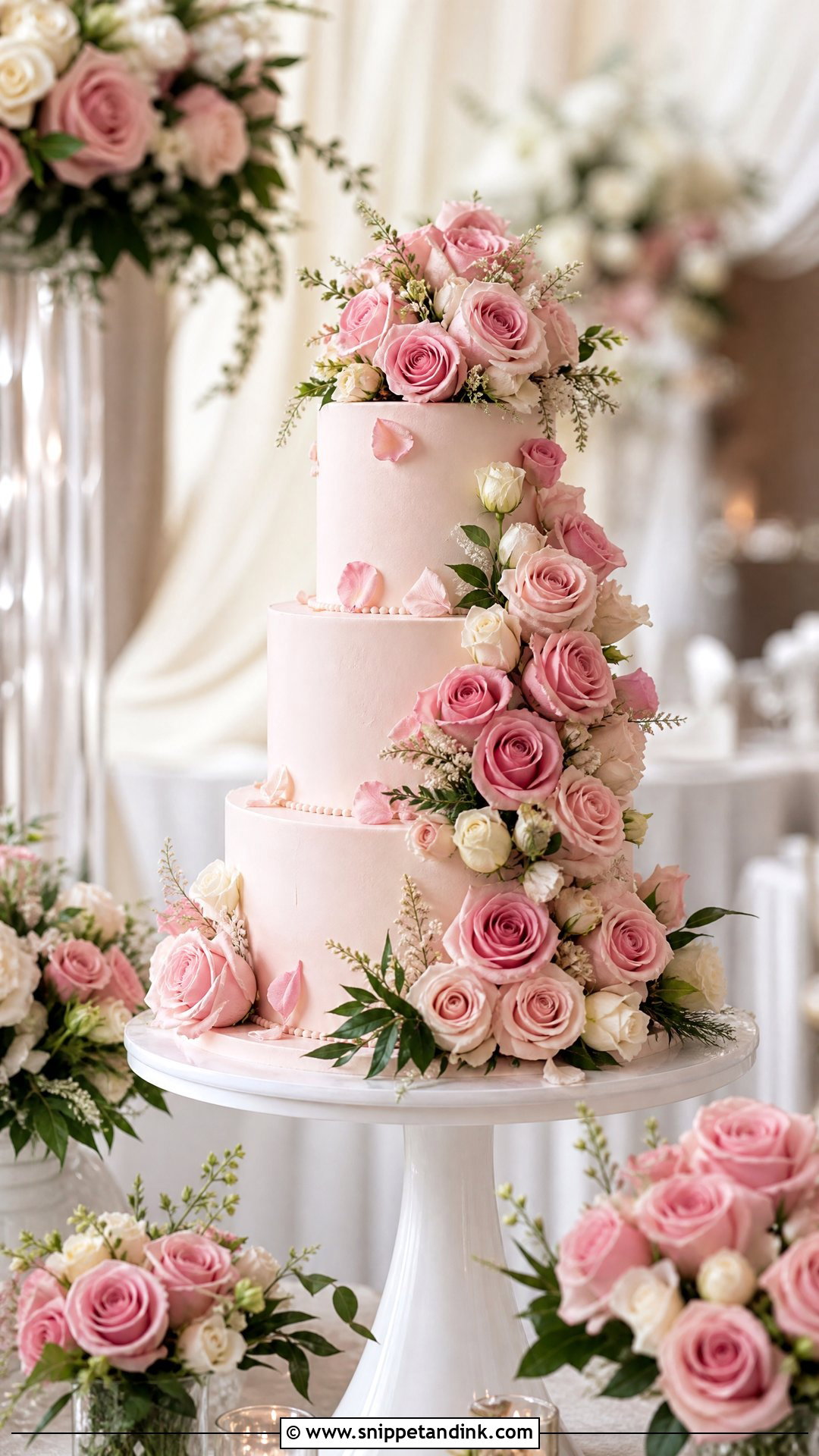
Roses are the easiest flower to coordinate with the rest of the wedding, and the most versatile on a cake: fresh, sugar, piped in buttercream or painted on fondant. A blush cake with a cascade of pink roses is lush and classic; a smooth white cake with tight rose clusters is cleaner. If you want fresh ones, they must be unsprayed, and I insert each stem into a food-safe pick so the stem never touches the sponge. Mixing pale pink, dusty rose and ivory blooms gives depth.
11. Pink Ruffle Wedding Cake
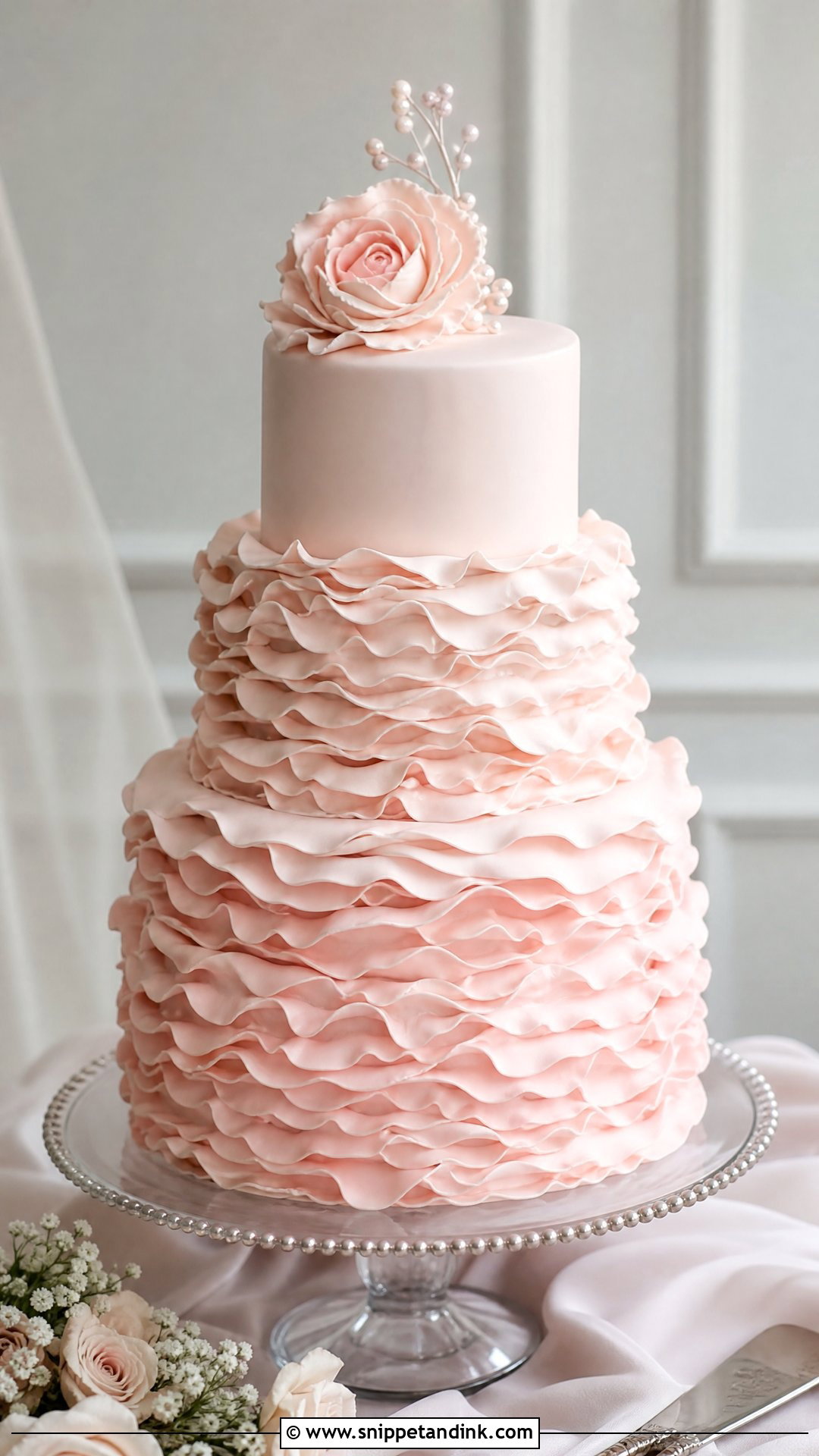
Ruffles give a cake the look of fabric in motion. They can wrap every tier or just one. In fondant I cut thin strips, frill the edge with a ball tool and layer them from the bottom up; in buttercream they’re piped with a petal tip. Pale pink ruffles feel delicate, brighter ones more playful. Fondant ruffles are heavy on the tier, so I’d steer away from covering a tall cake top to bottom unless it’s well dowelled. A smooth top tier with one sugar flower balances the texture.
12. Pink Pearl Wedding Cake
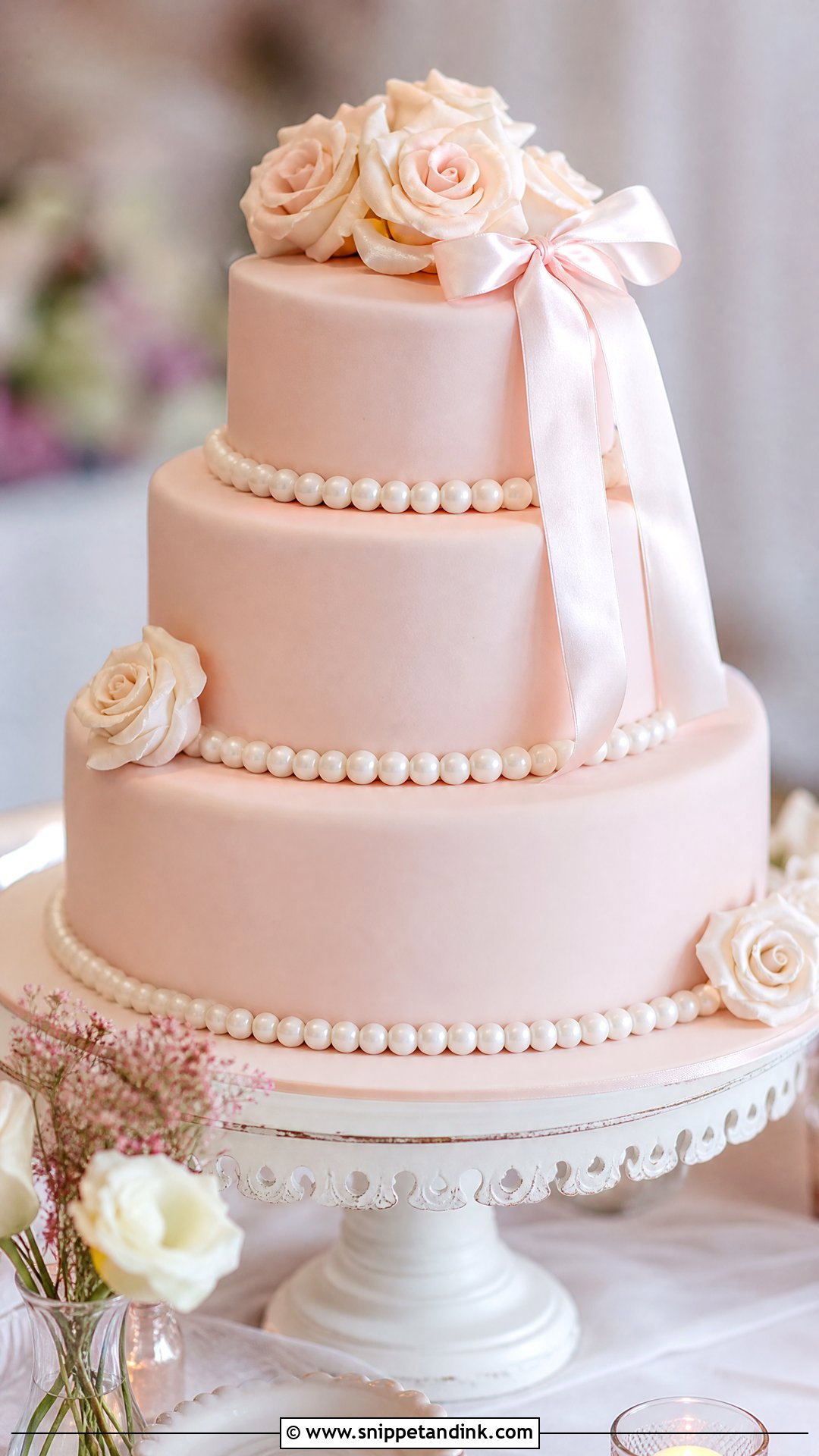
Edible pearls on a soft pink base read bridal without the formality of plain white. They can go in rows, loose clusters or neat borders around each tier. I set them with a dab of piping gel so they don’t roll when the cake is moved. A modern version uses smooth tiers and pearls sparingly; a romantic one adds pearl swags or a full pearl-covered accent tier, which takes hours of placement, so expect that to show up in the quote.
13. Pink Bow Wedding Cake
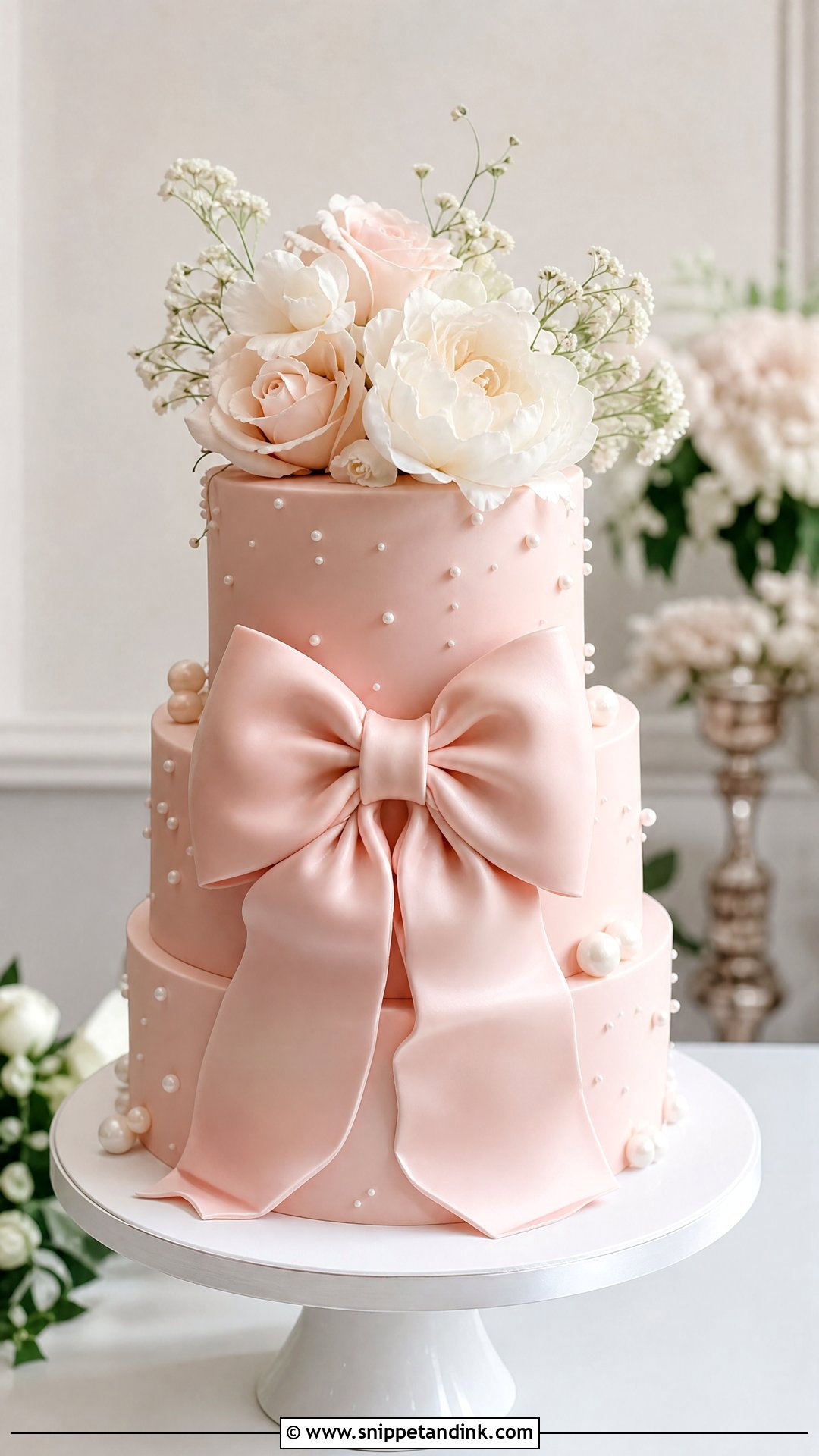
Bows are back on wedding cakes in a big way. They can be fondant, gum paste, real silk ribbon or sculpted buttercream. One large pale pink bow on the front of a plain cake has a fashion feel; small pink bows around each tier of a white cake feels sweet. A big standing bow needs gum paste or a modelling paste so the loops dry firm and don’t sag overnight, which means I make it days in advance. Keep the rest of the cake simple so the bow is the star.
14. Pink Drip Wedding Cake
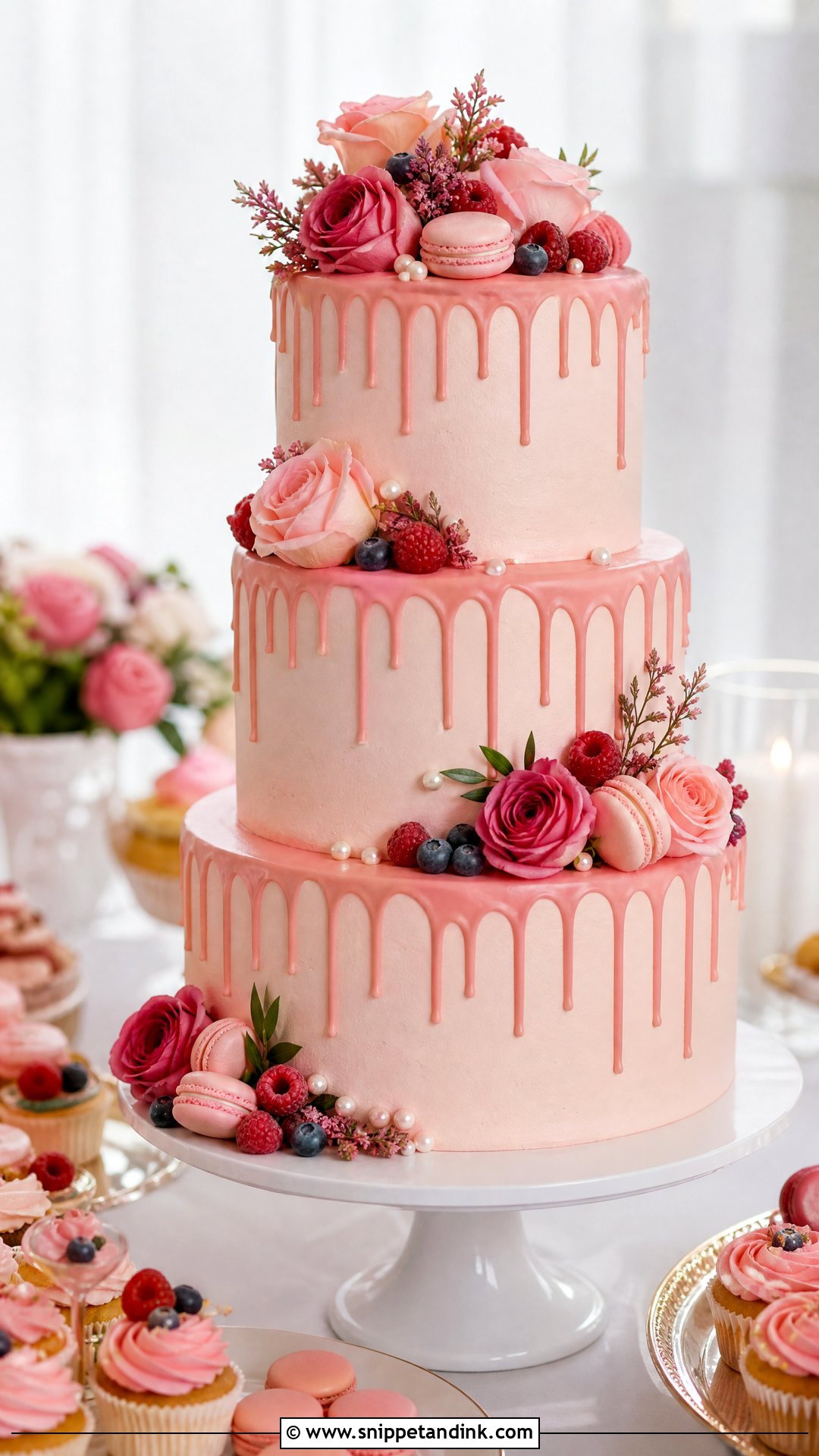
A drip cake brings dessert-table energy to a wedding. Pale pink over ivory buttercream, rose over blush, or a glossy pink ganache over plain tiers all work. I chill the cake first so the drips set at a controlled length, and I test one drip before going round the tier. Messy drips look home-baked in the wrong way. Macarons, berries, flowers and pearls finish the top. A two-tier pink drip cake also suits a smaller reception well.
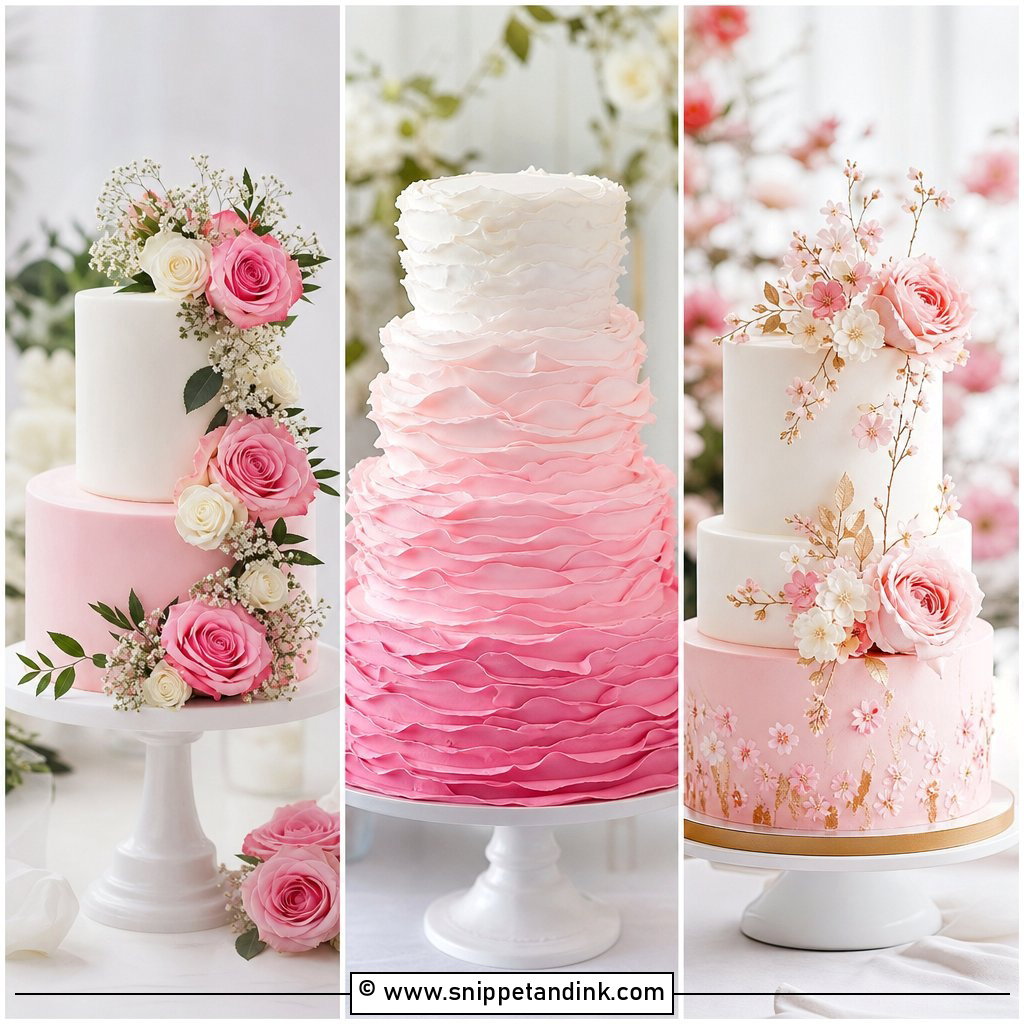

15. Pink Watercolor Wedding Cake
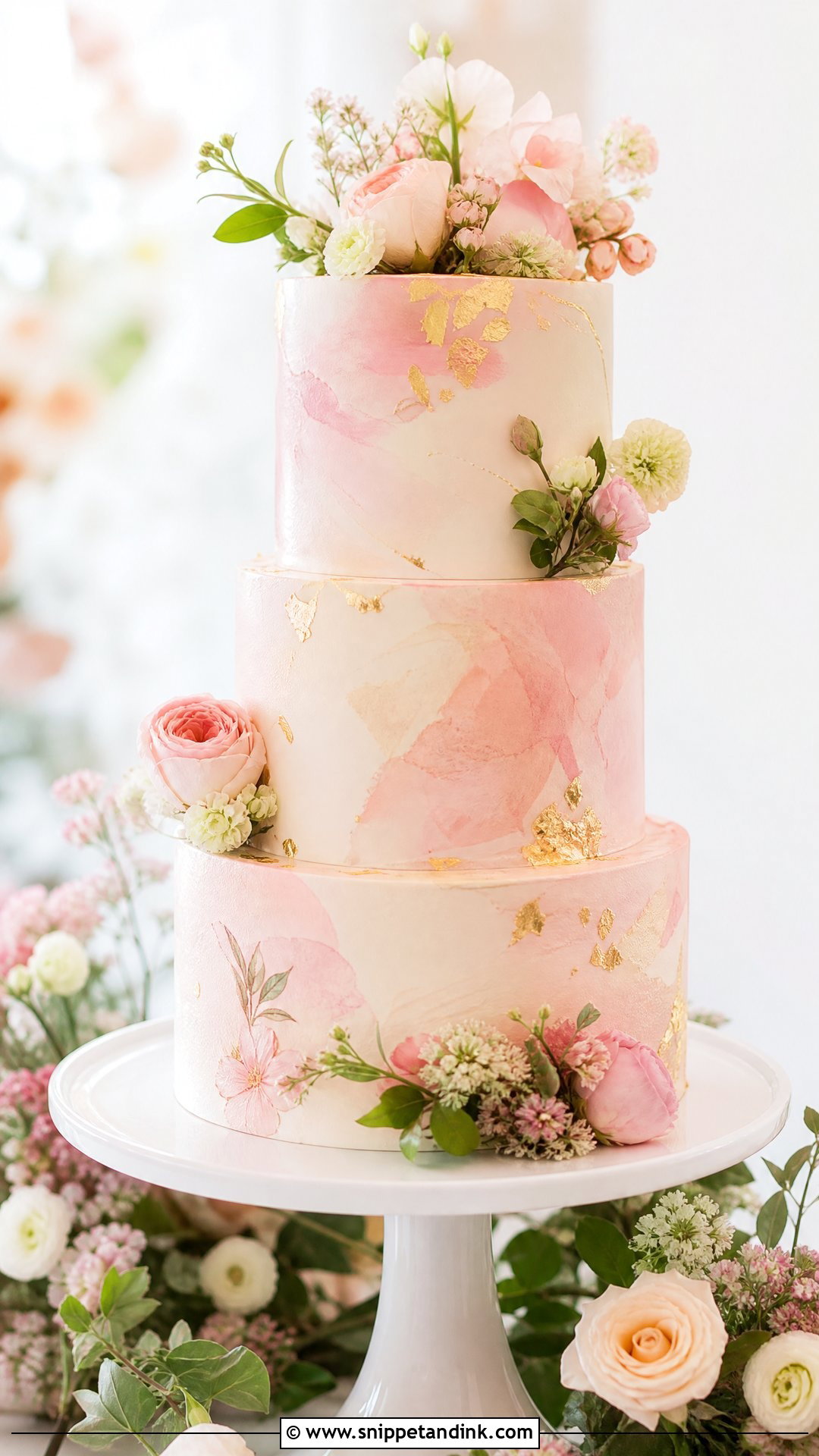
Watercolour cakes are painted with diluted gel colour or petal dust in loose washes across white or blush fondant, much like paint on paper. It’s a quiet way to bring in pink without colouring the whole cake. Fondant takes this best; on buttercream the wash can only be spread with a palette knife and looks rougher. Gold leaf, hand-painted florals or a few fresh blooms finish it. Spring, beach and outdoor weddings suit it. Keep the shape simple so the painting stays the focus.
16. Pink Marble Wedding Cake
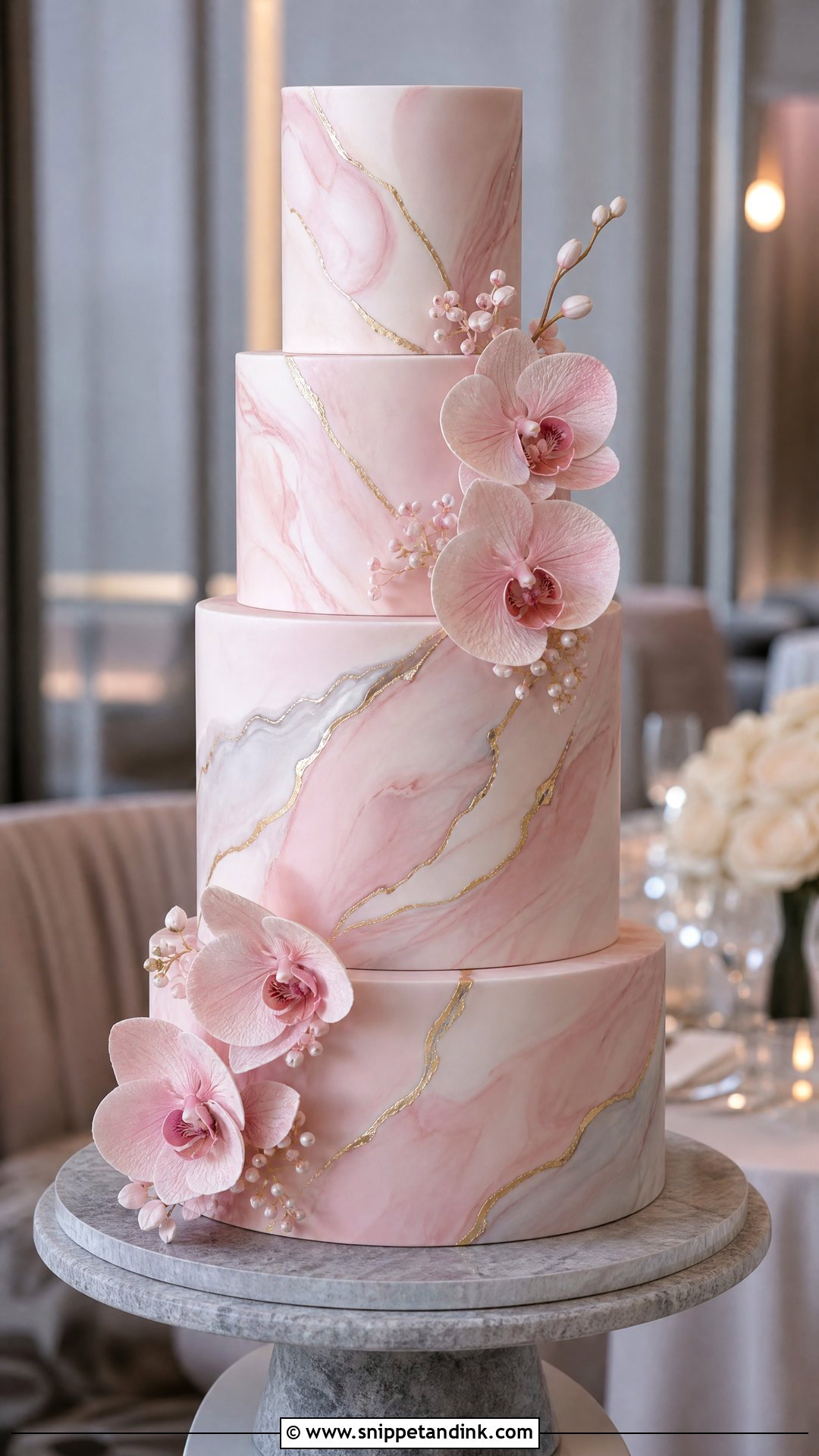
Marbling blends blush, rose, ivory and a touch of pale grey into soft veining. In fondant I twist the colours together and roll them out just until the streaks look like stone, stopping before they blur into one pink. It suits modern venues and city weddings. Thin gold lines, orchids or small sugar flowers are plenty, since the surface already has depth. Pink feels sophisticated this way rather than sweet.
17. Pink Lace Wedding Cake
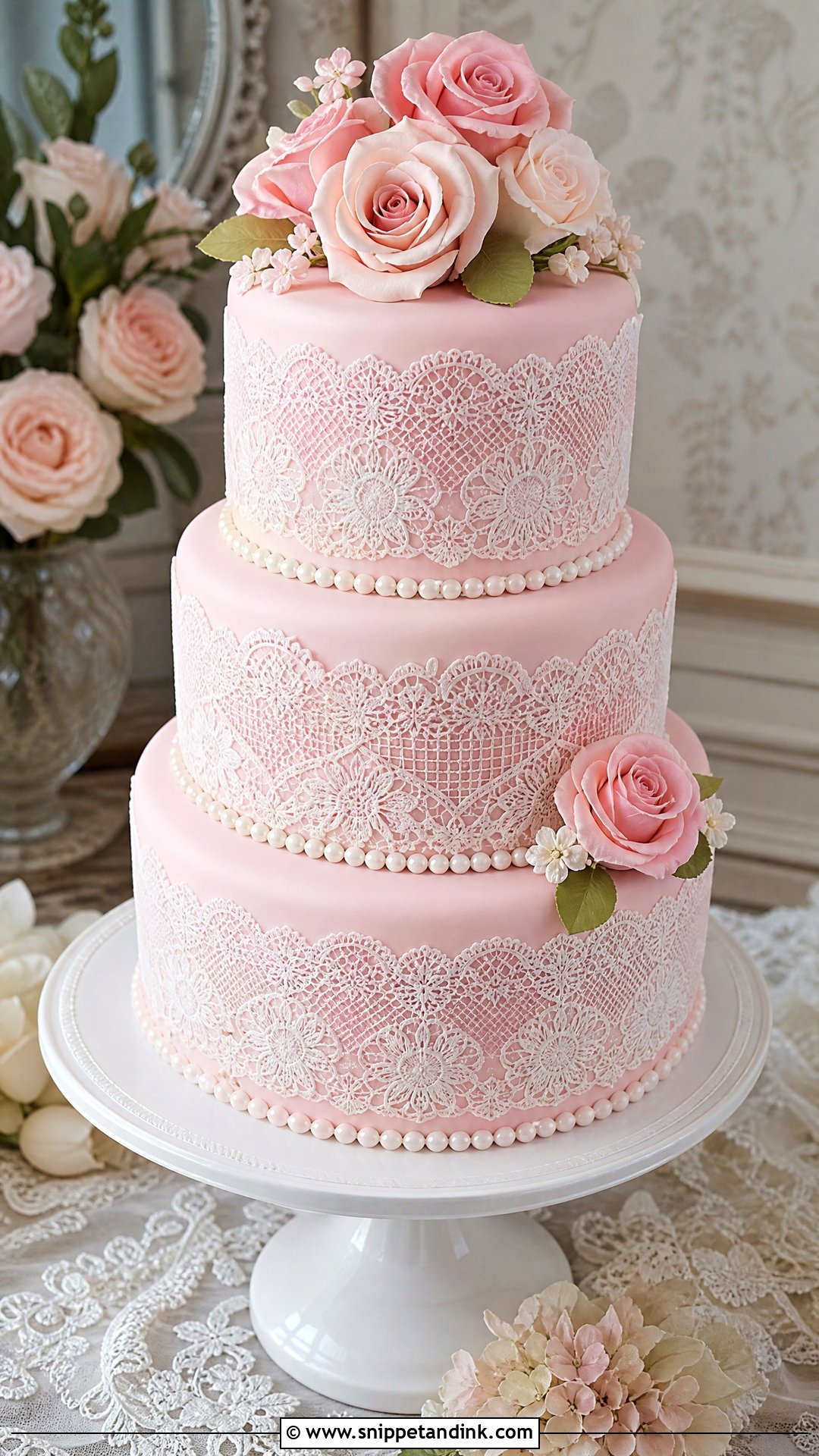
Lace on a pink cake can be piped in white, embossed into fondant or made from edible lace appliqués set in a silicone mat. On blush, dusty pink or rose tiers it looks especially pretty. Pair it with pearl borders, sugar roses or a satin ribbon. Edible lace is sensitive to humidity and can go limp or sticky in a damp room, so I apply it as late as possible. Lace on one or two tiers, smooth on the rest, keeps it from looking busy.
18. Pink Vintage Wedding Cake
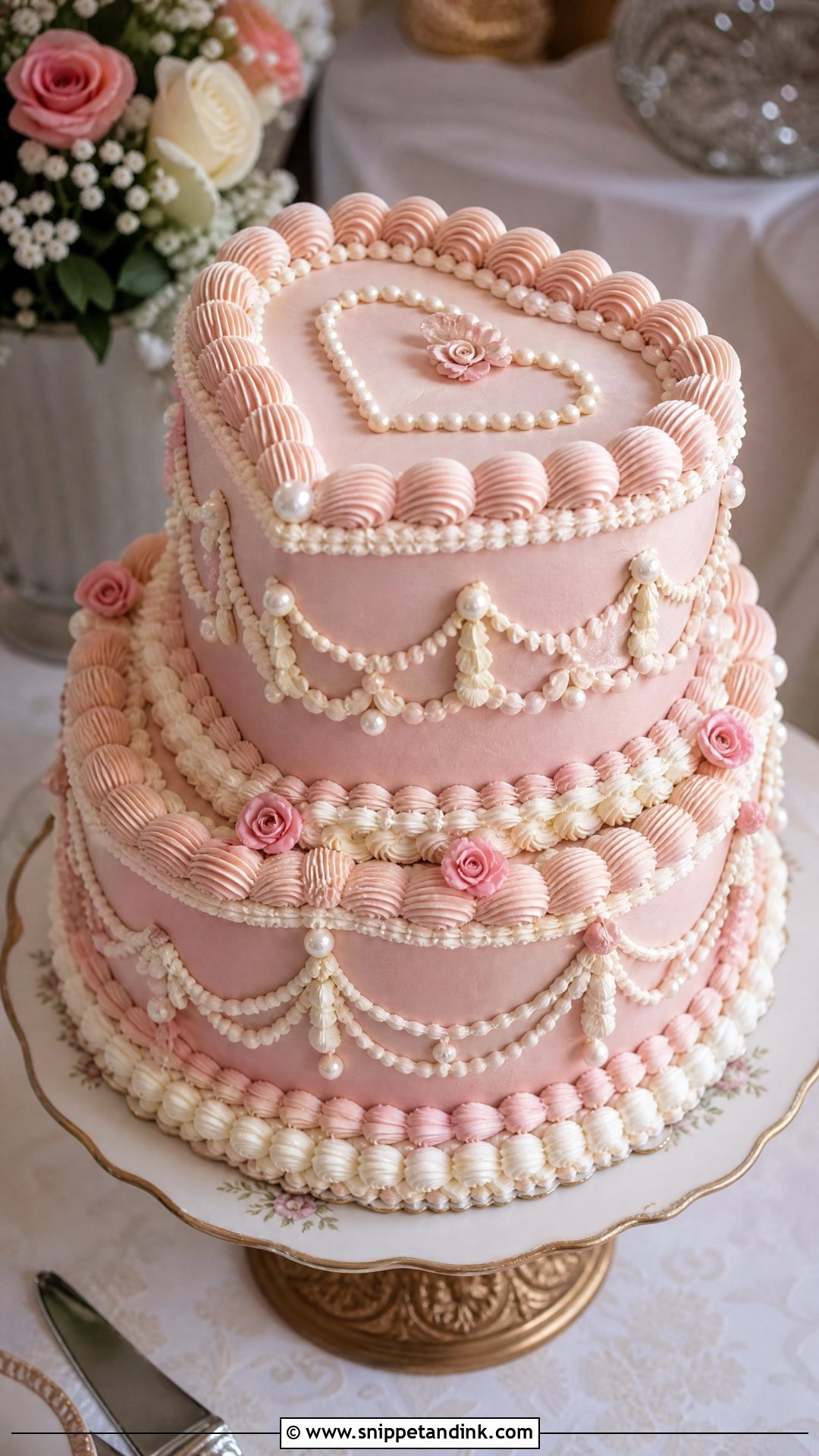
Vintage cakes revive ornate piping and old-fashioned charm: heart-shaped tiers, shell borders, Lambeth piping, pearls and little buttercream roses. Lambeth is overpiping, layer upon layer of scrolls built out from the cake, and it’s slow work, so allow for that in time and budget. Dusty pink or blush keeps it romantic while ivory piping adds contrast. It suits a small cutting cake as well as a grand tiered display. A simple stand stops it tipping into kitsch.
19. Pink Geode Wedding Cake
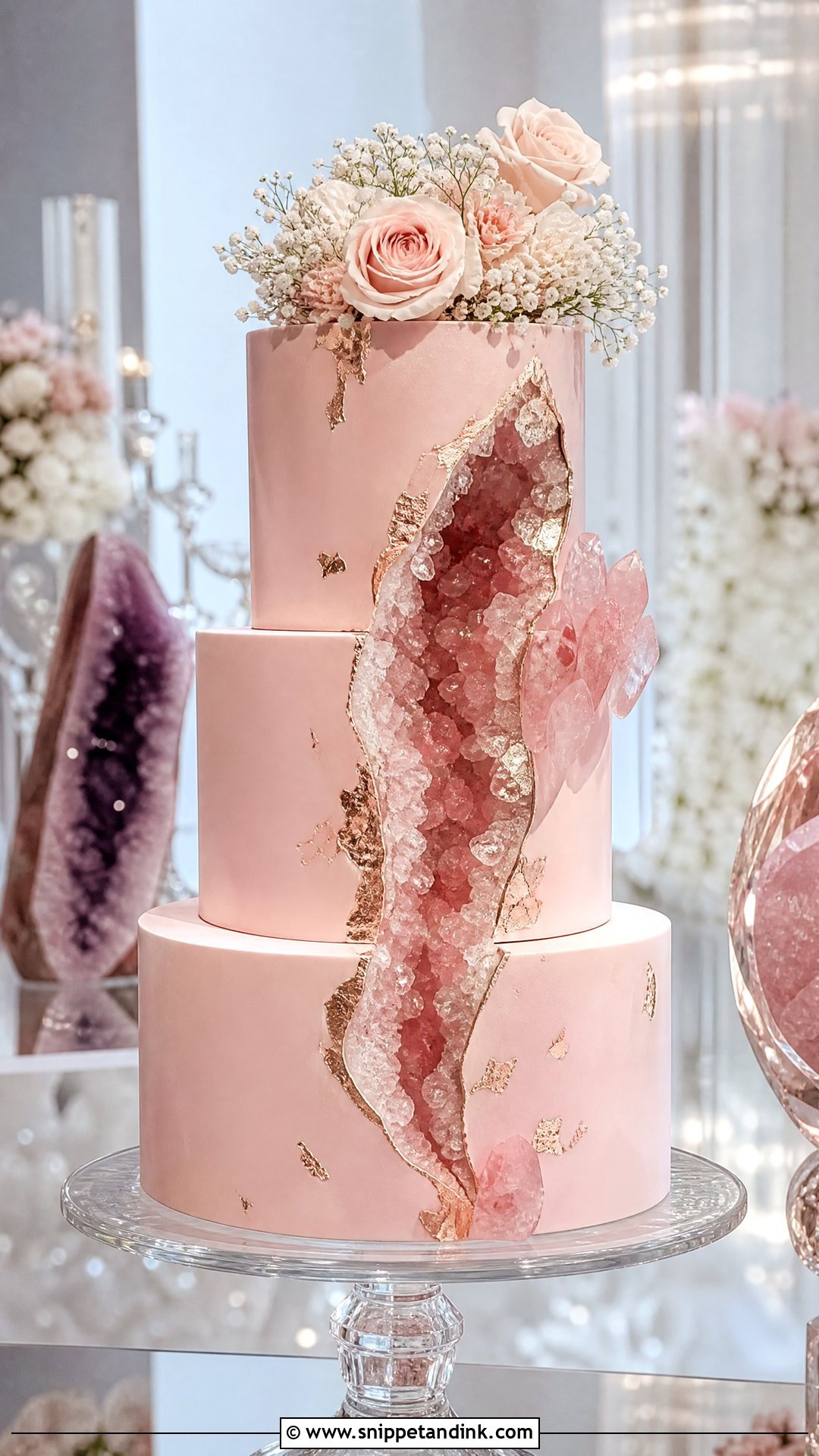
A geode cake has a section carved away and filled with rock-candy or isomalt crystals in pink, rose and blush. I’d keep everything else smooth so the crystal section looks intentional. White, ivory or pale pink fondant is a clean base, and metallic paint along the cut edge gives it definition. Rock candy is hard and sharp, so I’d tell guests to avoid eating the crystals themselves, or carve them off before slicing. Modern venues and gemstone-themed decor suit it.


20. Pink Macaron Wedding Cake
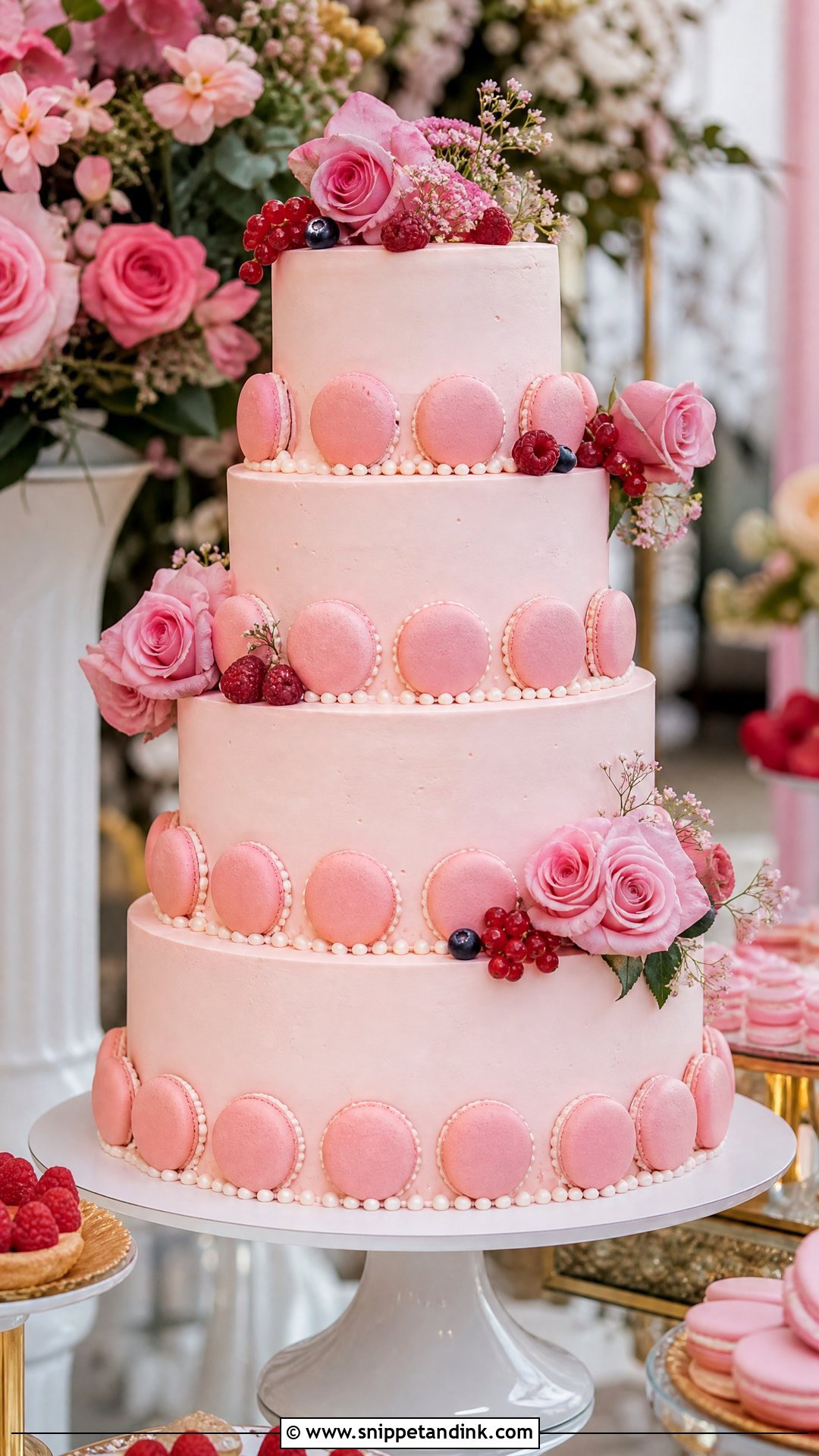
Macarons give height, colour and texture without heavy florals. The cake can be blush buttercream or soft pink fondant, with macarons around the tiers or stacked on top. I attach them with a dot of buttercream and add them close to delivery, because macarons soften against moist frosting within hours. Mixing light pink, rose, ivory and champagne shells gives a gentle palette. Fresh flowers or berries fill gaps. French-inspired weddings and dessert tables with matching sweets are the obvious fit.
21. Pink Champagne Wedding Cake
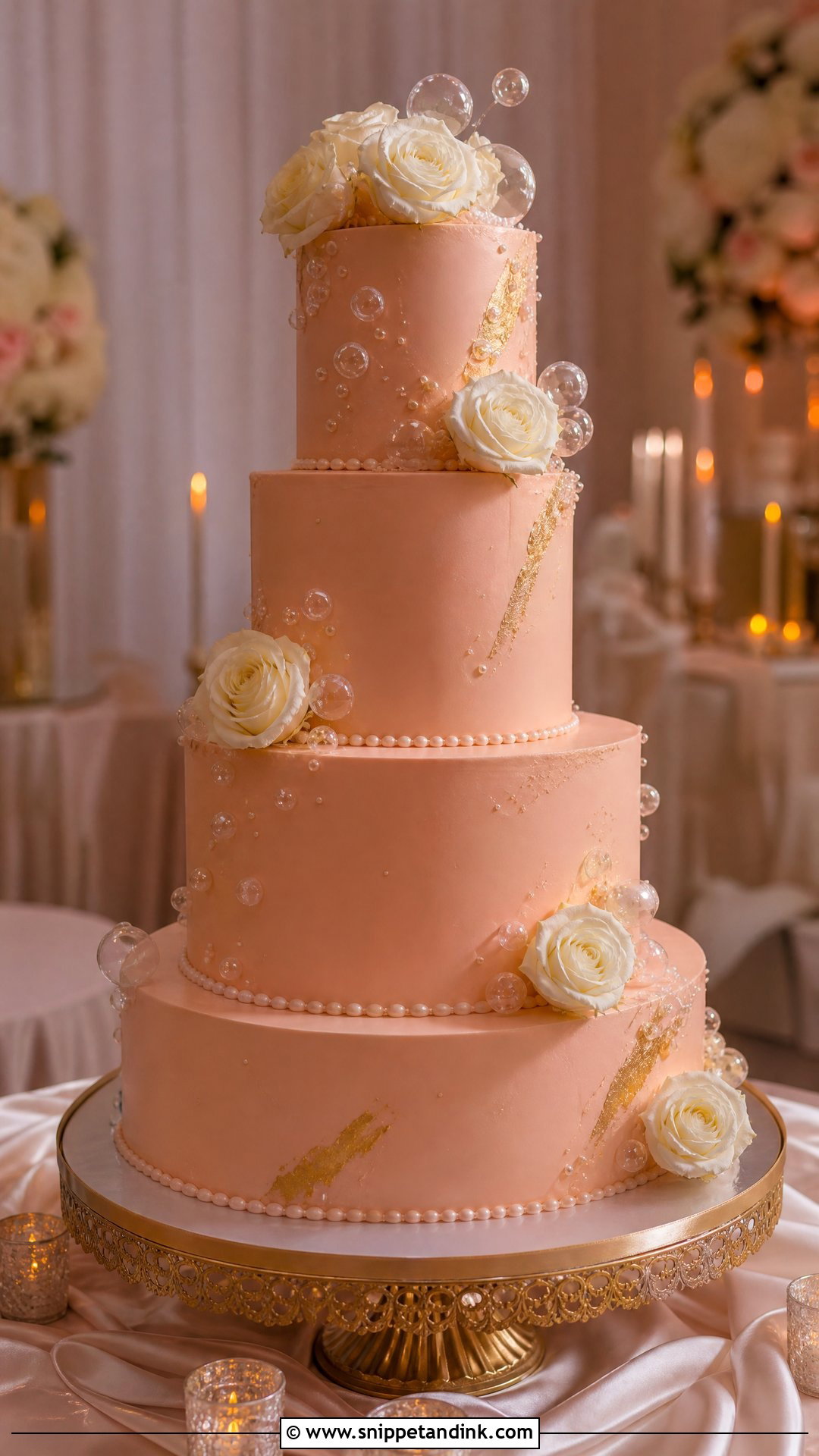
Pink champagne is a flavour as much as a look: a pale pink crumb, champagne in the sponge or buttercream, and a smooth blush outside. The alcohol mostly bakes out of the sponge but can stay present in a syrup or frosting, which is worth mentioning to me if you have guests avoiding alcohol. Sugar bubbles, pearls, white roses or brushed gold hint at the theme. Tall clean tiers suit evening and ballroom receptions.
22. Pink Heart Wedding Cake
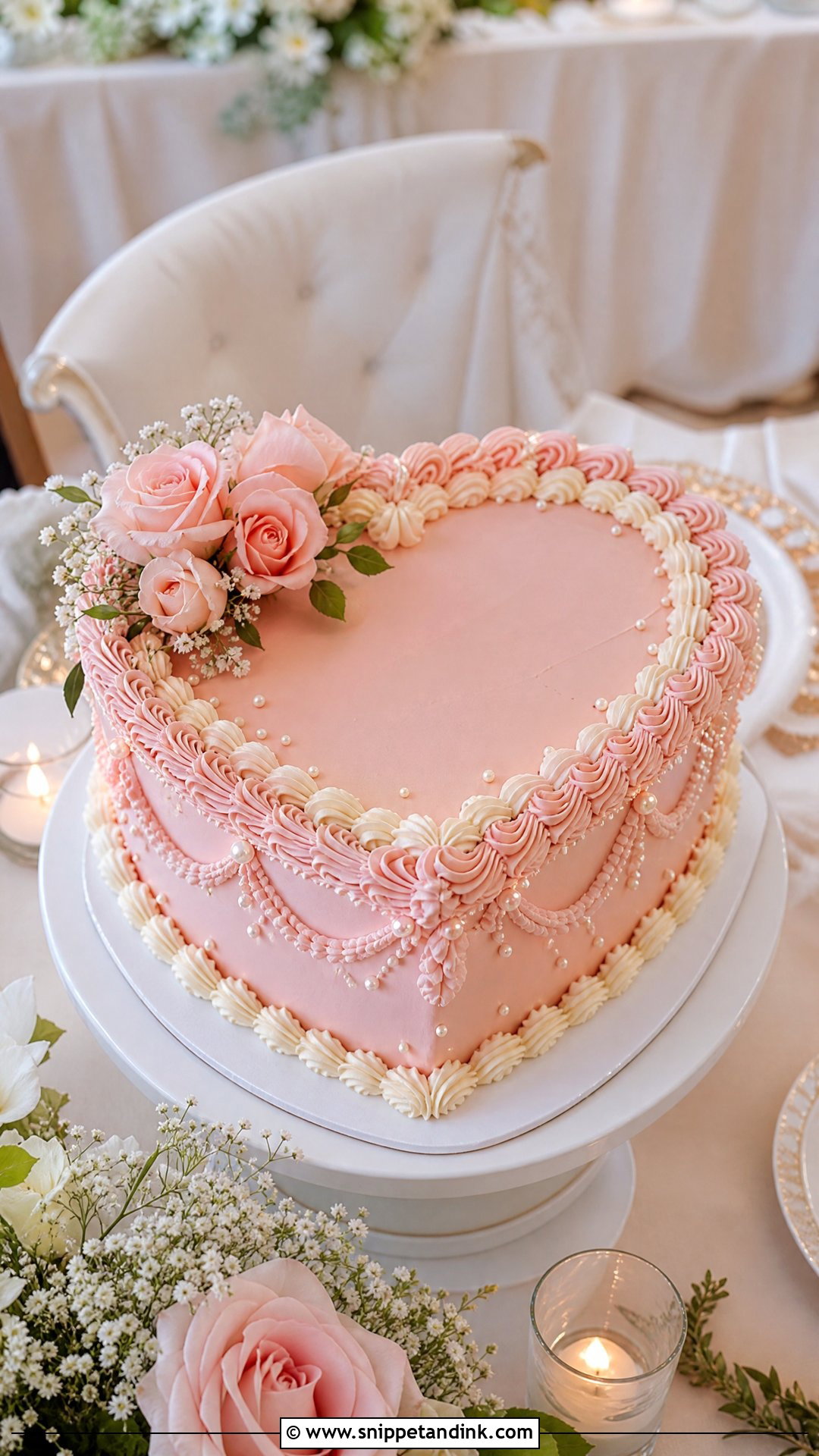
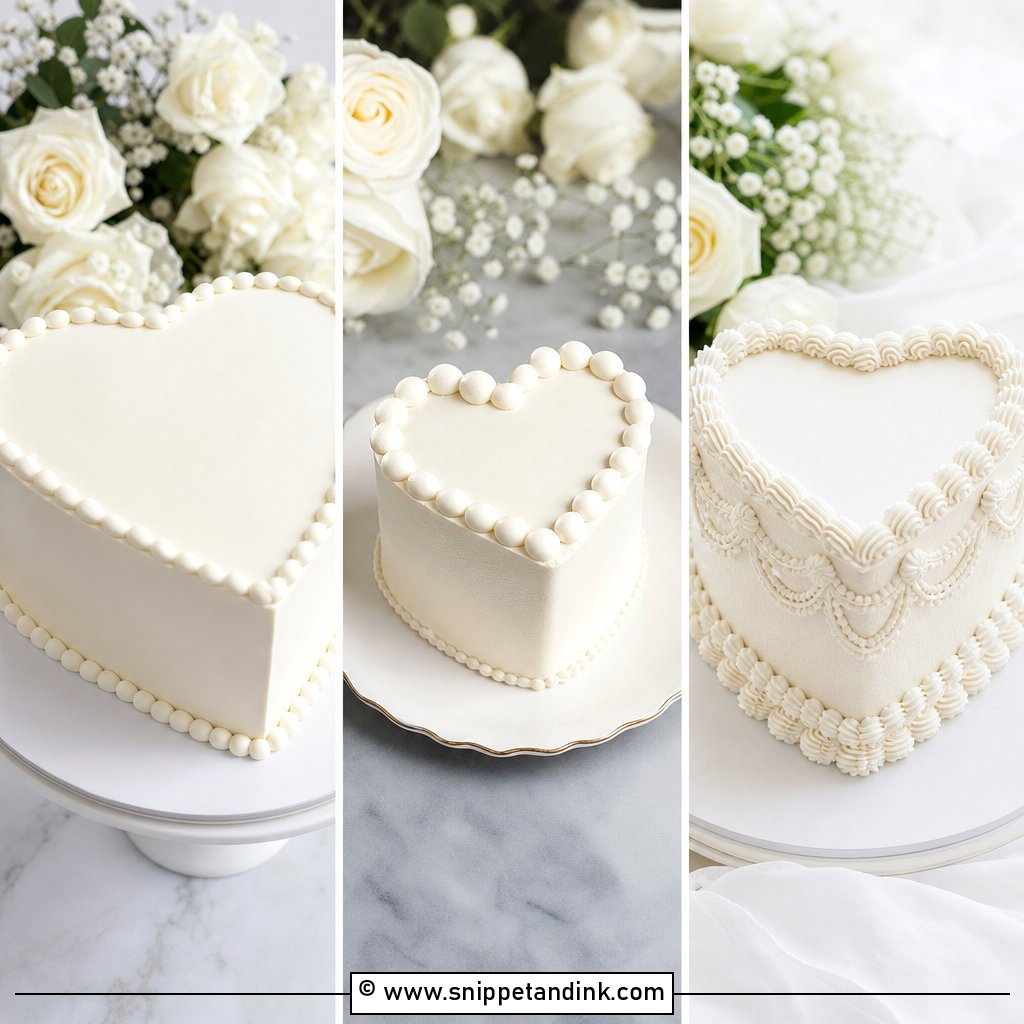
Heart-shaped cakes are sweet and personal. With piped borders they read vintage; with smooth pink buttercream and little else they look modern. The point of a heart is notoriously hard to keep sharp, so I carve from a slightly oversized cake and chill before frosting. Blush or dusty pink, ivory piping, a few pearls and small roses keep it polished. It’s ideal as a cutting cake or a sweetheart-table cake, on a plain white stand.
23. Pink Square Wedding Cake
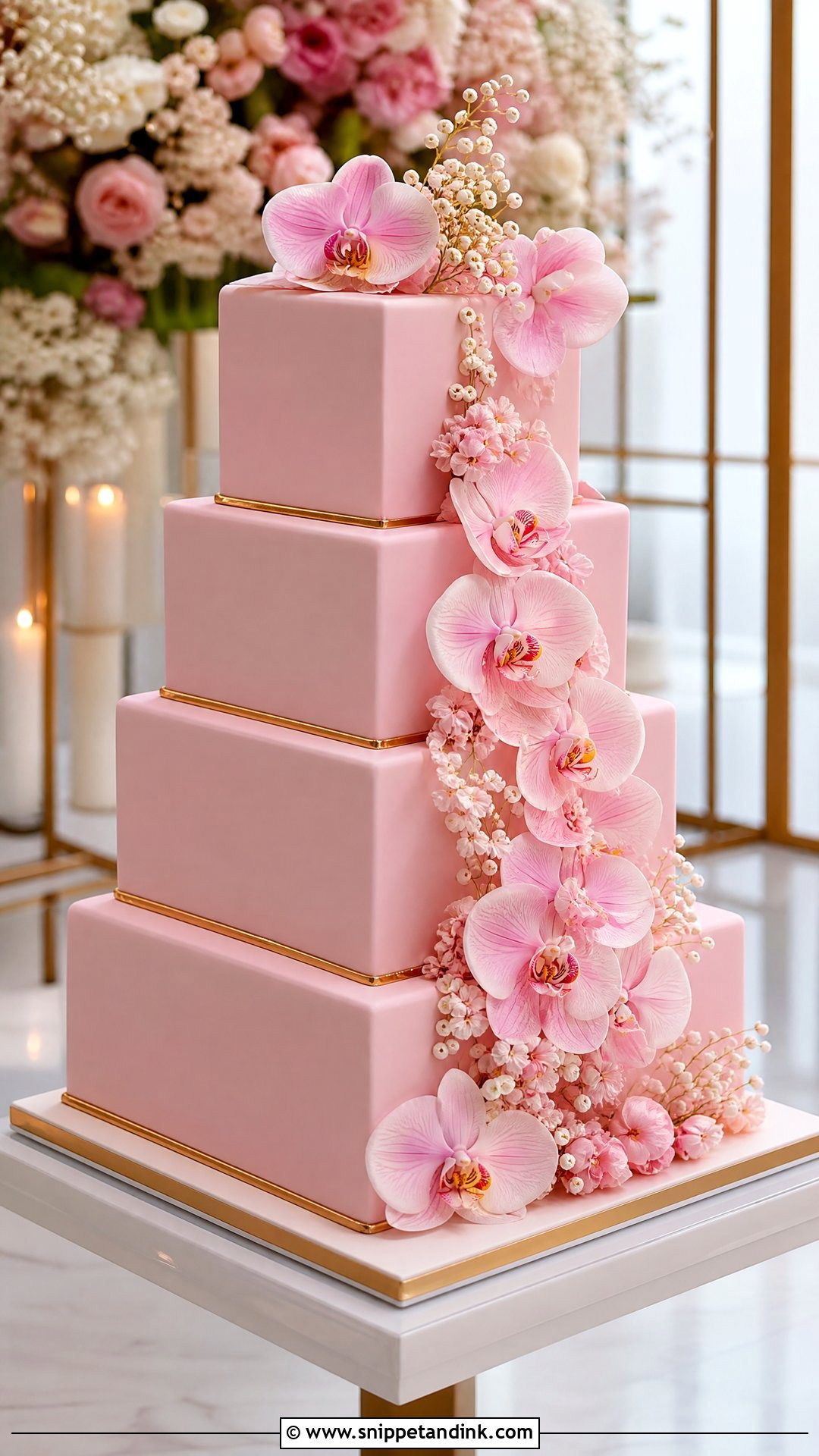
Square tiers feel architectural, especially in smooth fondant or very precise buttercream. Blush with fresh flowers looks soft; rose pink square tiers look contemporary. The corners are the hardest part: they’re where fondant tears and buttercream rounds off, so square cakes take noticeably longer to finish than round ones. Gold trim, sugar orchids or a single floral cascade along one corner is all it needs. Hotel weddings and structured decor suit it.
24. Pink Naked Wedding Cake
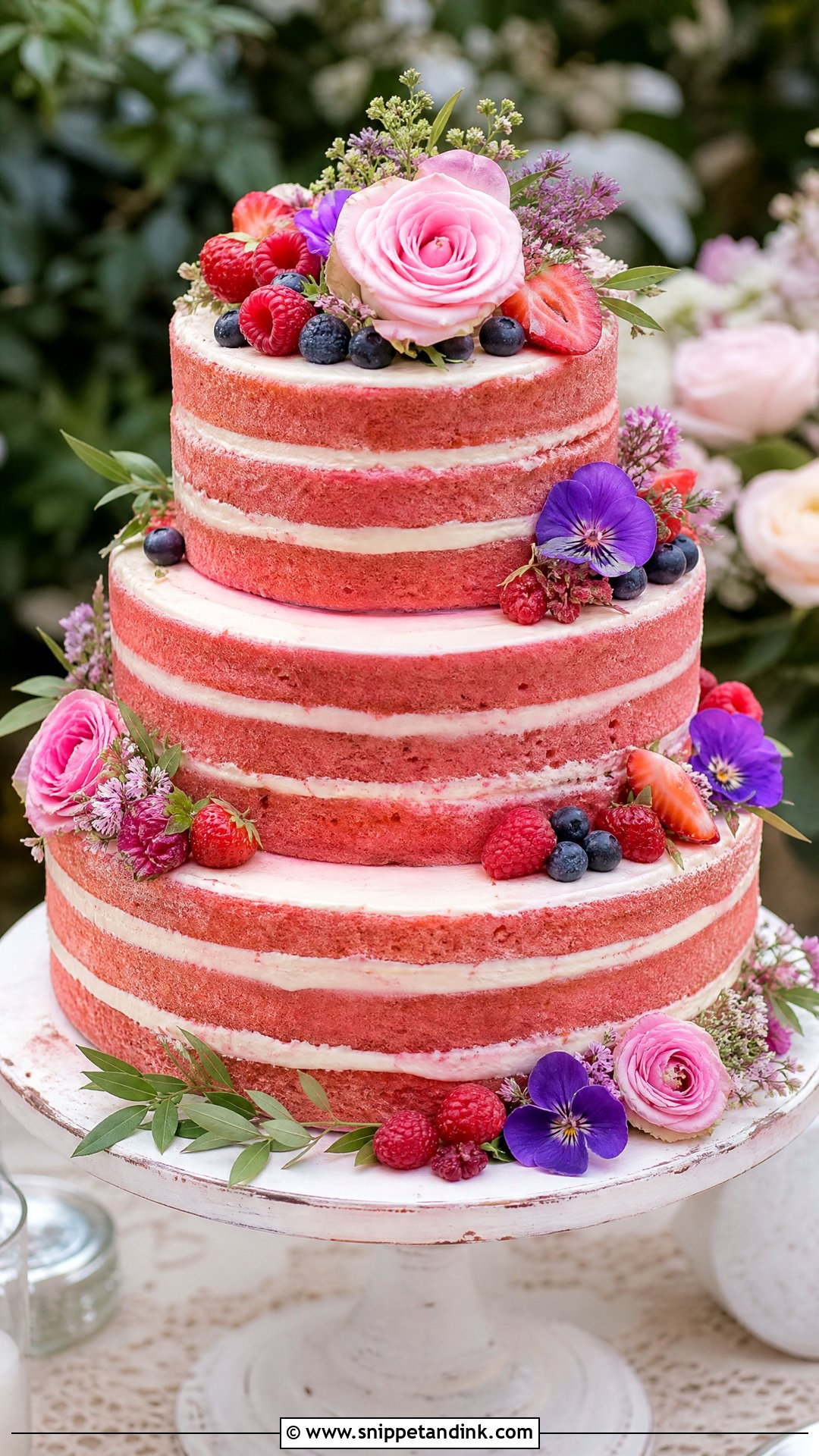
A naked cake has a thin scrape of frosting so the layers show through. For a pink one, I tint the buttercream or the sponge itself so the colour reads clearly. Fresh berries, roses, edible flowers and greenery finish it. Because so much sponge is exposed, it dries out faster than a fully frosted cake, so I’d want it assembled the morning of the wedding, not the day before. Rustic, garden and outdoor venues suit it best. Keep layers level and the scrape neat.



25. Pink Tiered Wedding Cake
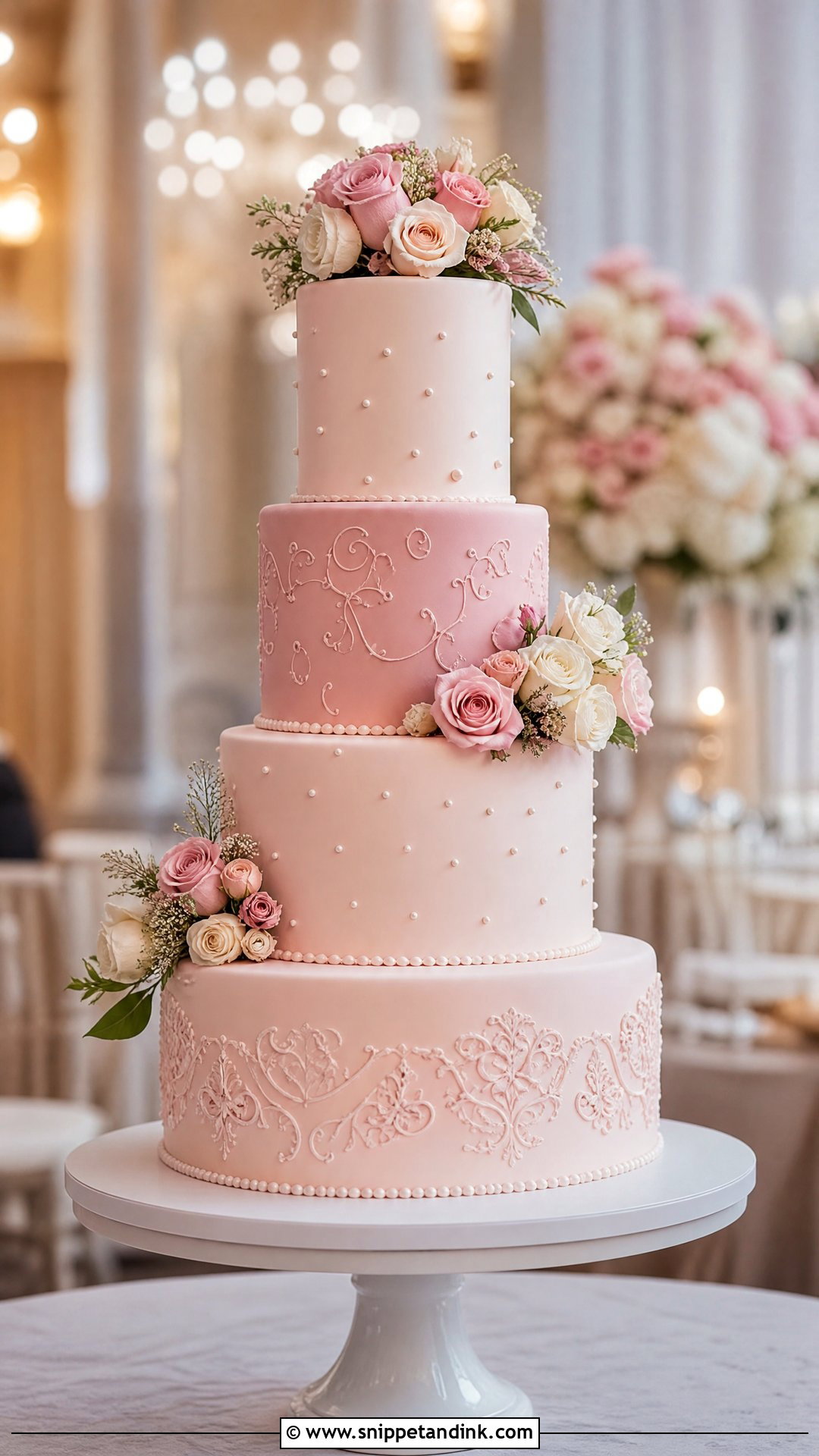
A tiered pink cake is the classic centrepiece. The tiers can be one shade of blush or step from pale pink to rose. Flowers, pearls, lace, bows, ruffles or gold all work on it. Four tiers suit a ballroom, two tiers an intimate wedding. Proportion is the detail I fuss over most: tiers usually step down by two inches in diameter for a balanced profile, and extra height on each tier makes the whole cake look taller and more modern.
Sunlight, Marquees and a Pink That Fades by Dessert
Pinks and purples are the least light-stable food colours I work with. Put a pink cake in a sunny window or under a clear marquee roof for a few hours and the side facing the light can fade noticeably while the back stays bright. I always ask where the cake table will sit and steer it away from direct sun, or plan a later reveal.
Heat is the other enemy. Buttercream begins to soften and slide in a warm room, and ruffles, drips and piped borders go first. Fondant copes better with warmth but hates the jump from a cold van into a humid hall; condensation beads on the surface and can make painted or dusted pink run. My delivery routine for a summer wedding:
- Cake travels chilled, in a flat, air-conditioned vehicle, tiers boxed separately if the design allows.
- Fondant cakes come out of the cold gradually and stay boxed until they reach room temperature, so any condensation dries off unseen.
- Fresh flowers go on at the venue, never in transit.
- The table is set in shade, away from heaters, ovens and candles.
Sugar flowers and fondant details need ordering early too. They’re made by hand, often petal by petal, and many designers book up months ahead in peak season, so ask about lead times at your first enquiry rather than after you’ve settled the venue.
Settle the Shade First, Then Decorate
Pink cakes can be soft, bold, vintage or modern, plain or richly decorated. Your venue, flowers, dress and the feel of the reception narrow it down quickly. Blush and light pink feel airy; dusty pink and rose add depth. Buttercream gives softness, fondant gives polish, and texture adds personality. Pearls, bows, roses, macarons, lace and gold all change the result. Pick the shade with your baker first, under the kind of light your reception will have, and let the decoration follow from there.
You'll Like These Ideas:



Leave a Reply