
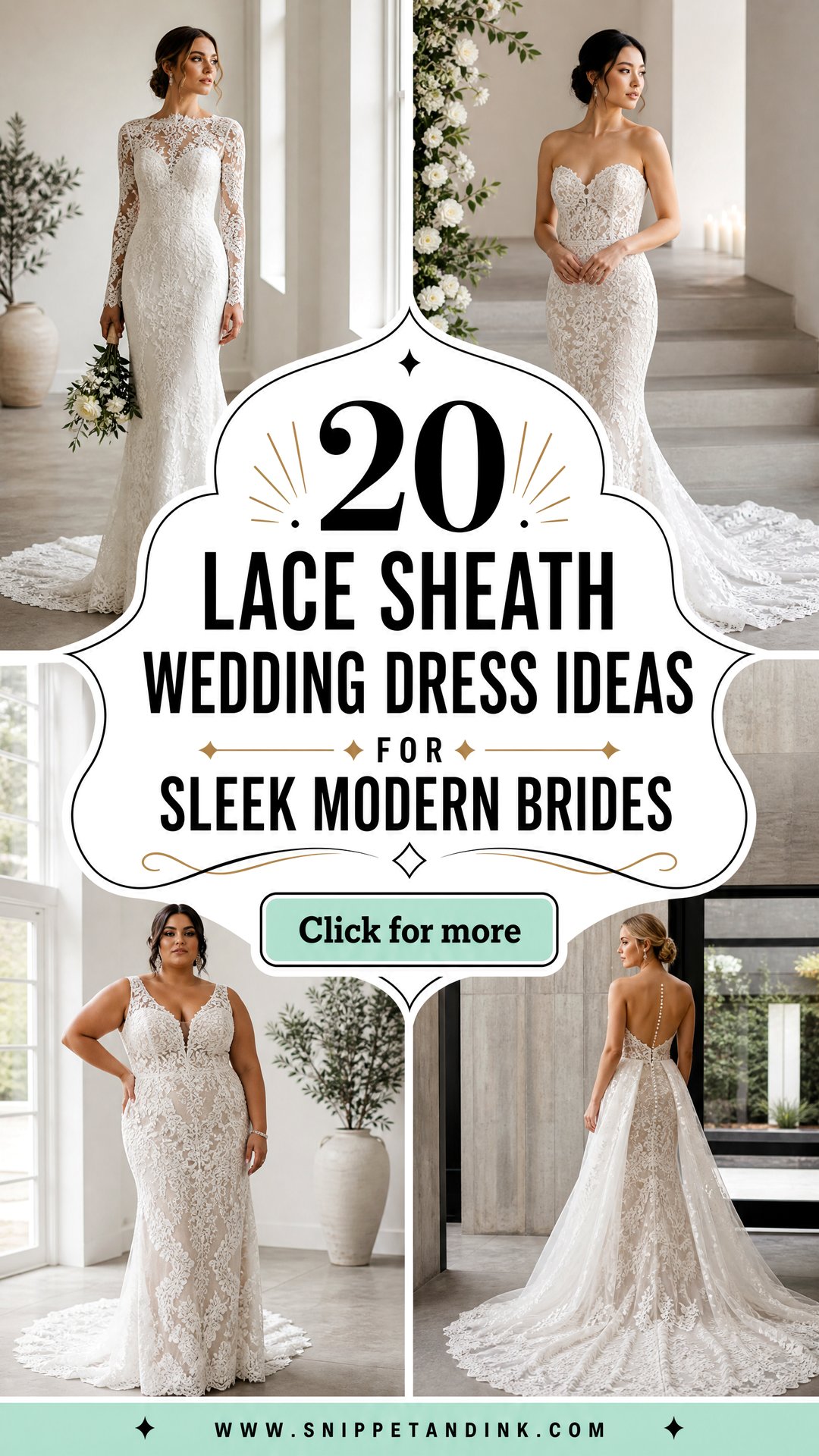
A sheath is the least forgiving silhouette I style, and that’s exactly why I like it in lace. The skirt drops close to the body and runs fairly straight to the hem, so there’s no ball-gown volume to hide a loose seam or a lining that shifts when you sit. Lace changes the whole mood of that simple shape: floral appliqués, fine eyelash edging, geometric guipure, illusion panels, or a scattering of beads. With the right lining and honest tailoring, a sheath can sit well on petite, tall, straight and curvy figures. For each gown below I’ve added the shoes, jewelry, hair and veil I’d put with it, so you can judge the whole outfit and not just the dress on a hanger.
How to Tell Good Lace From Lace That Will Fight a Slim Cut
When I pull lace sheaths for a bride, I handle the fabric before I look at the neckline. A sheath sits close to the body, so the lace has to lie flat over curves and move with you. Some laces do that well and some don’t.
- Fine net-based lace (the soft, corded floral kind) drapes closely and suits a fitted skirt. It also snags more easily, so watch rings and beaded bracelets.
- Heavier corded or guipure lace holds its own shape. It looks crisp on a structured bodice but can stand away from the hips and make a sheath look boxy.
- Placed appliqués are cut out and stitched onto tulle by hand, which means a good seamstress can shift them during alterations. Allover lace by the yard is harder to adjust without breaking the pattern.
Look at the inside too. A lining with a little stretch lets you sit without the skirt riding up, and a separate underlining stops the lace seams showing through as lines. If the hem has a scalloped lace border, ask before buying whether it can be shortened. Usually the border has to be unpicked and reattached higher, which takes time and adds to the alteration cost, so a gown that is close to your length to begin with saves trouble.
Finally, sit down in it. A sheath that looks perfect standing can pull across the thighs when seated, and lace with no give will show strain at the side seams first. I’d rather find that in the shop than at the reception.
1. Long Sleeve Lace Sheath Wedding Dress
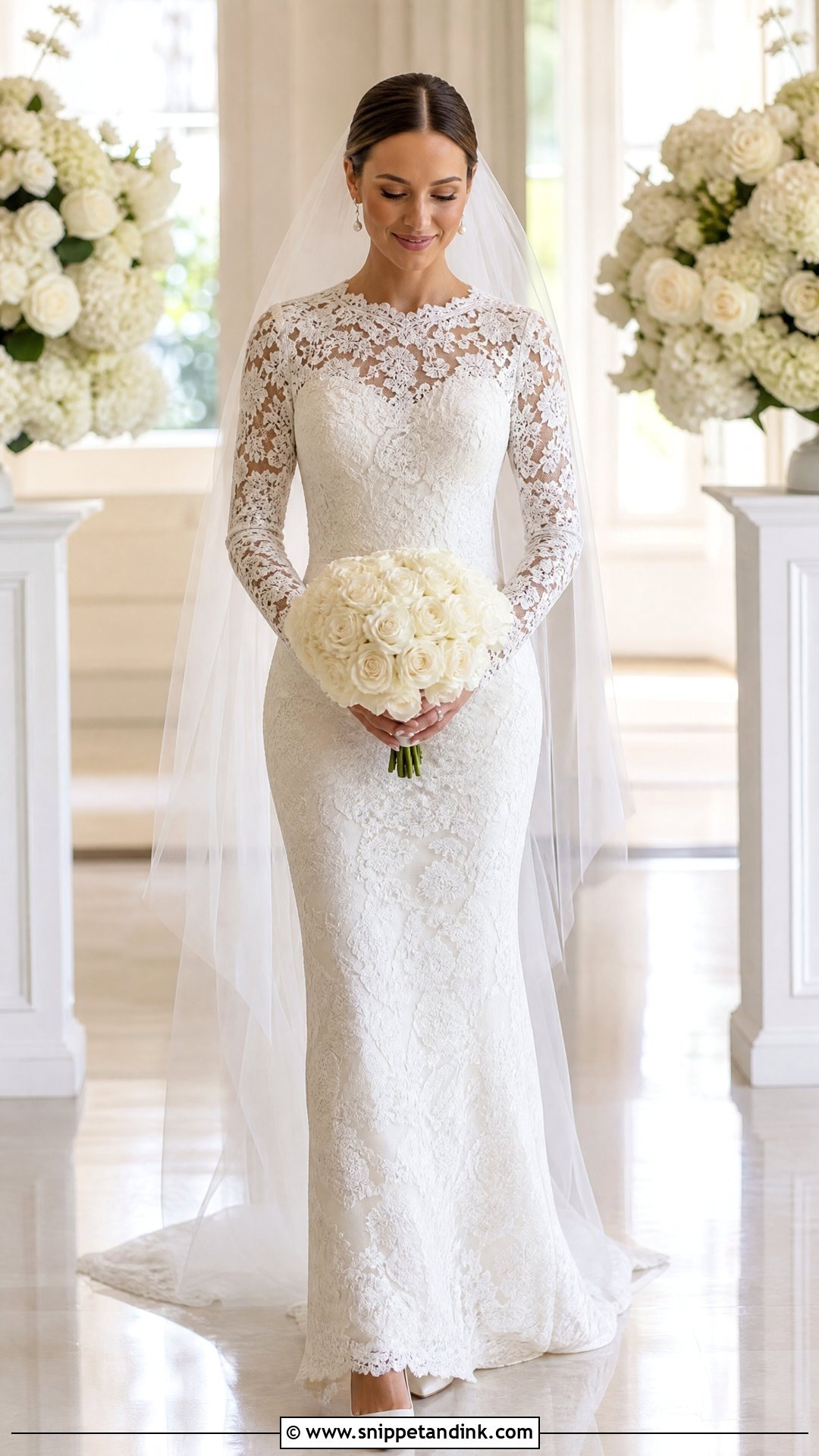
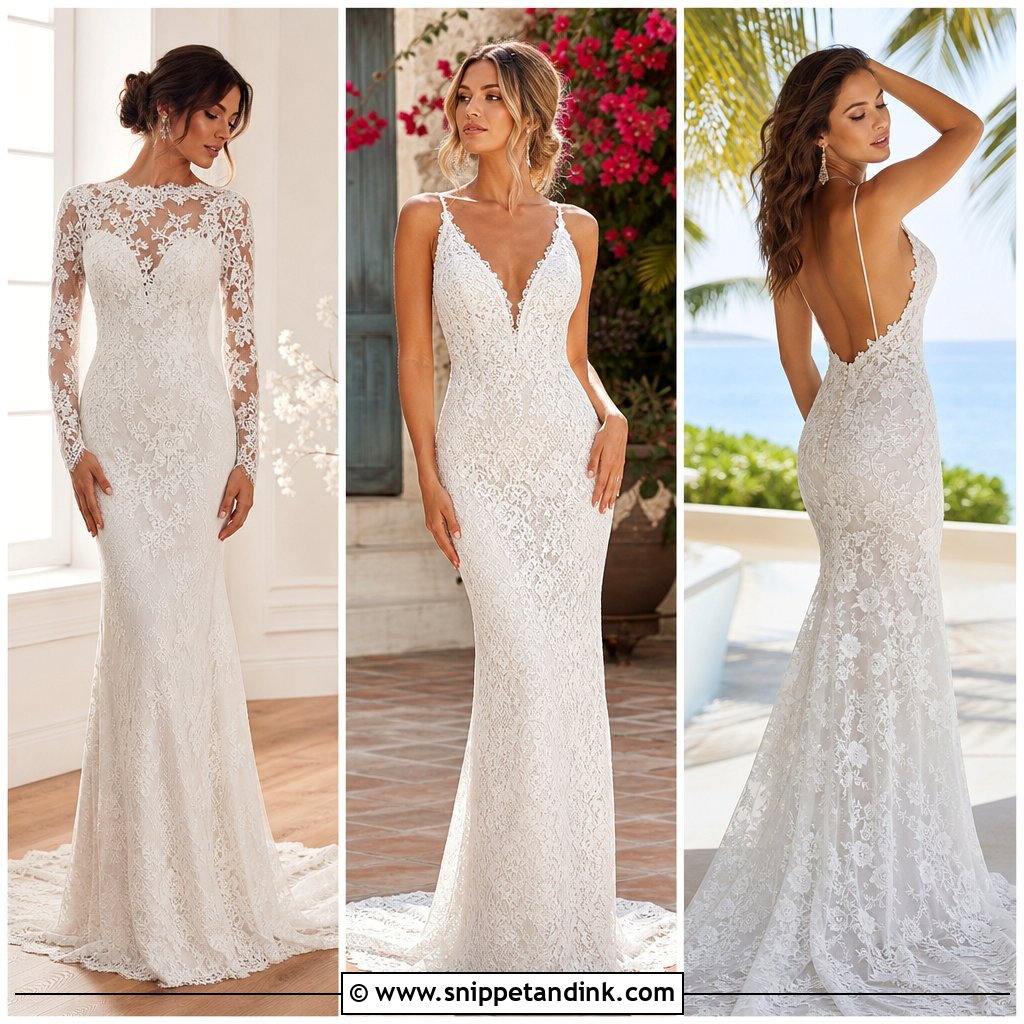
Sleeves are where a long sleeve lace sheath wedding dress succeeds or fails. Illusion sleeves with floral lace running on from the bodice look graceful on the hanger, but lace has almost no stretch, so I always ask a bride to hug someone and lift a glass at the fitting. If the sleeve tugs at the elbow or the shoulder seam rides up, it needs a gusset or a looser cut. An ivory lining keeps the look traditional; a nude lining sharpens the pattern. I’d add pointed ivory pumps, pearl drops and a low chignon, with a fingertip veil that moves without covering the line of the dress. In cold months, a structured bouquet of white roses and greenery suits the coverage.
2. Off Shoulder Lace Sheath Wedding Dress
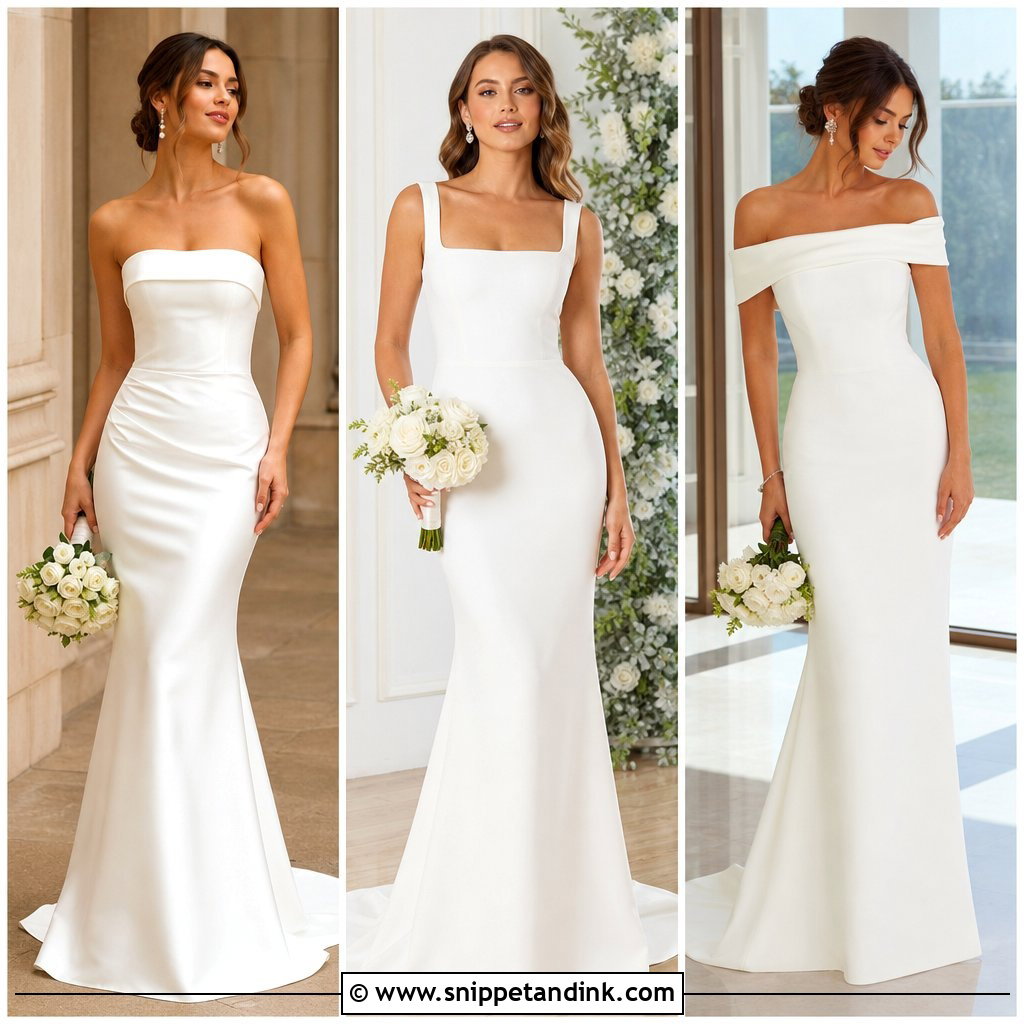
Off-shoulder lace is the neckline I see adjusted most often on the day, usually because it was fitted while the bride stood still. A folded lace band or a pair of detachable straps has to grip the upper arm without biting into it, and that only works with a lightly boned bodice underneath doing the real holding. Keep jewelry small: pearl studs and one fine bracelet. An updo shows off the shoulder line, and a few loose pieces at the face stop it looking stiff. I’d pair a plain-edged chapel veil with this one so it doesn’t fight the lace, then ivory slingbacks for a formal room or a garden.
3. Strapless Lace Sheath Wedding Dress
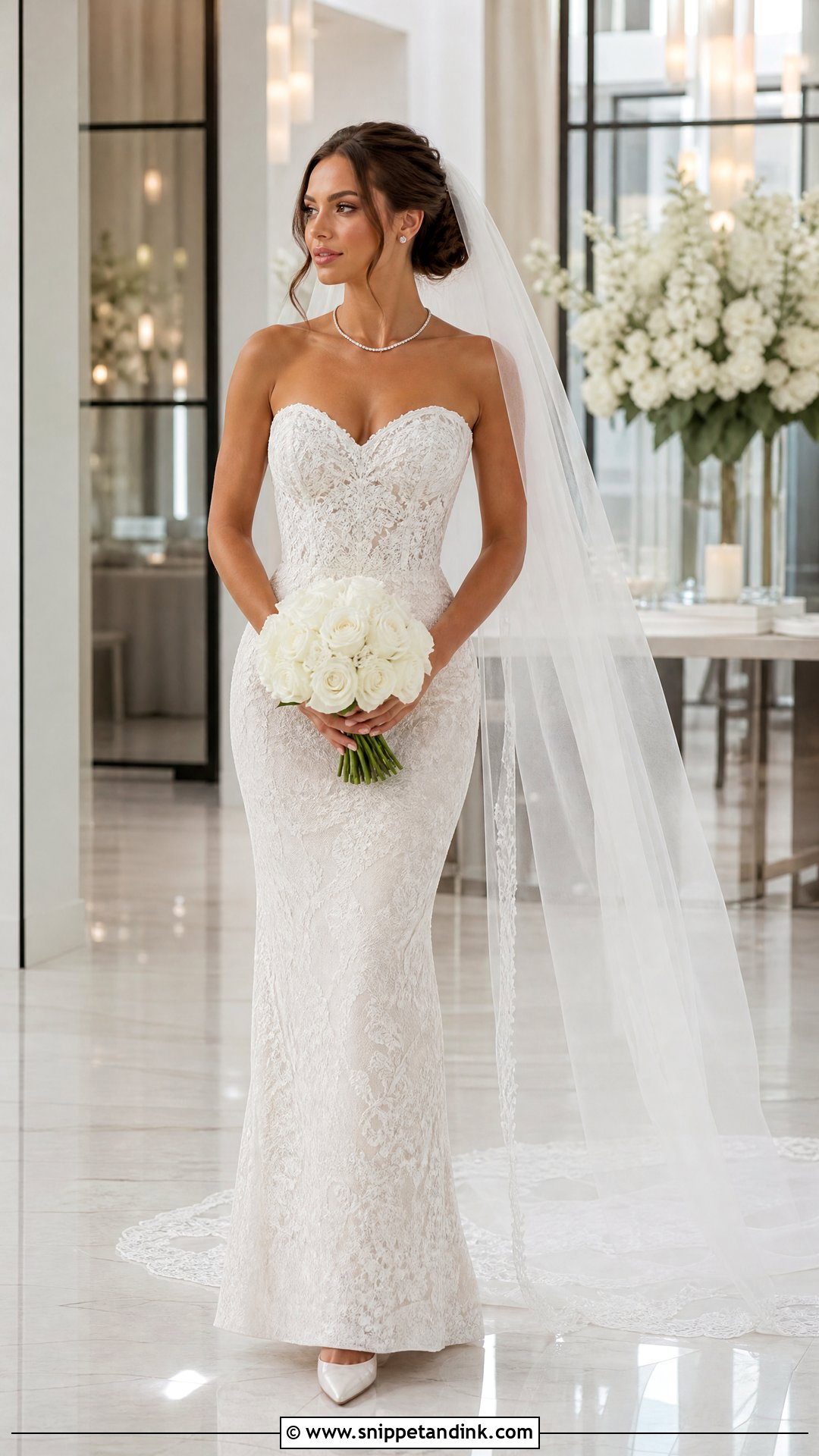
Strapless lace looks simple, but the engineering is all inside. I check three things before anything else: the boning sits flat against the ribs, the cups are built in rather than relied on from a bra, and there’s a grosgrain waist stay holding the bodice down. Without that stay, a strapless sheath creeps south by the first dance. A straight or gently curved neckline reads classic, and a soft sweetheart adds shape. A tennis necklace with matching studs and ivory satin pointed heels is all it needs. Wear a sheer cathedral veil for the vows, then take it off for the reception and let the fitted skirt do the talking. A small bouquet keeps the lace visible in pictures.
4. V Neck Lace Sheath Wedding Dress
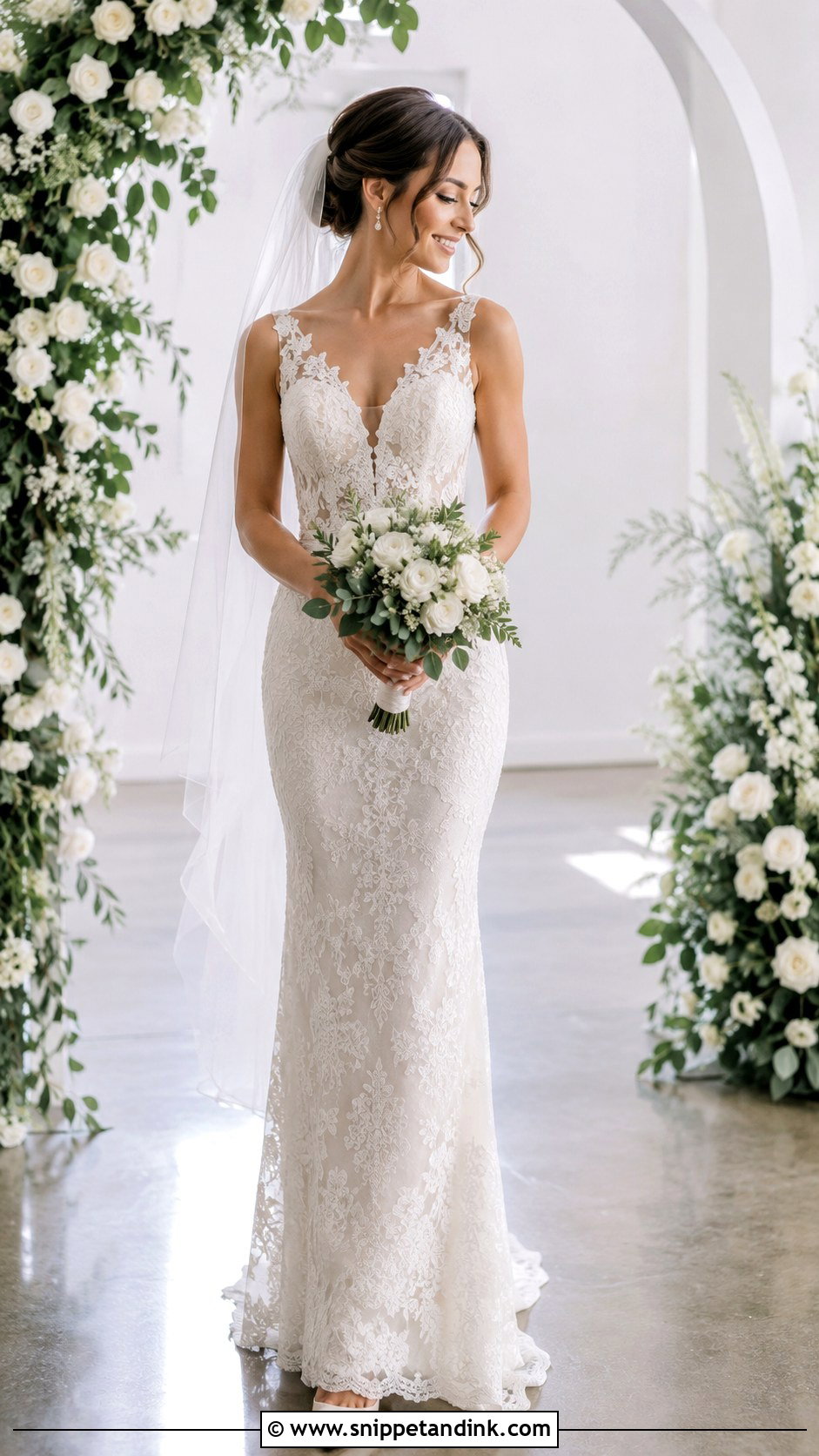
A V-neck stretches the torso, and on a sheath that vertical line runs all the way to the hem. Pick a depth you won’t be tugging at during the vows; most bridal houses can add an illusion insert if you’d like more cover. The real test is the bodice fit. If the edges of the V gape when you lean forward, the lace was cut for a different bust and needs taking in at the side seams, not just pinned. Lace edging softens the neckline and ties it to the skirt. I usually skip a necklace here and use slim drop earrings, a quiet bracelet and closed-toe ivory pumps. A low ponytail or smooth chignon keeps the neckline clear, with a light veil and a loose white-and-green bouquet.
5. High Neck Lace Sheath Wedding Dress
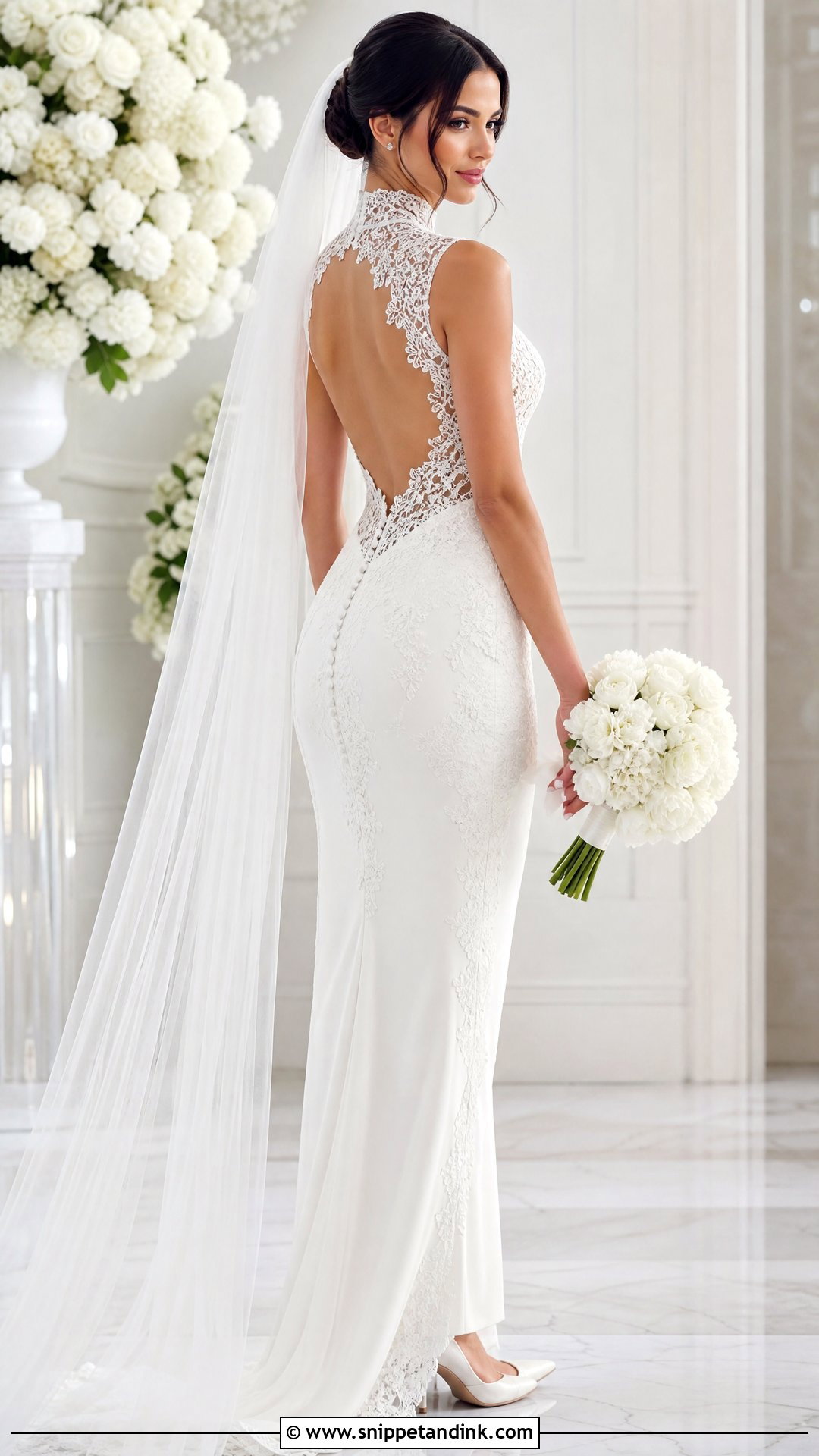
Covered necklines show detail up close, which is why a high neck lace sheath wedding dress is one I’d point a camera-shy bride toward: the lace gives the photographer something to focus on besides your face. Choose an illusion neck with floral motifs or a fully lined lace bodice. Sleeveless reads lighter; fitted long sleeves read formal. Because the neckline already frames the face, small diamond or crystal studs are enough, and a neat bun keeps hair off the lace so it doesn’t catch. One caution: a high neck can feel warm by evening, so test it for an hour, not five minutes. A low back balances the covered front, and a plain chapel veil, satin clutch and compact white bouquet finish it.
6. Square Neck Lace Sheath Wedding Dress
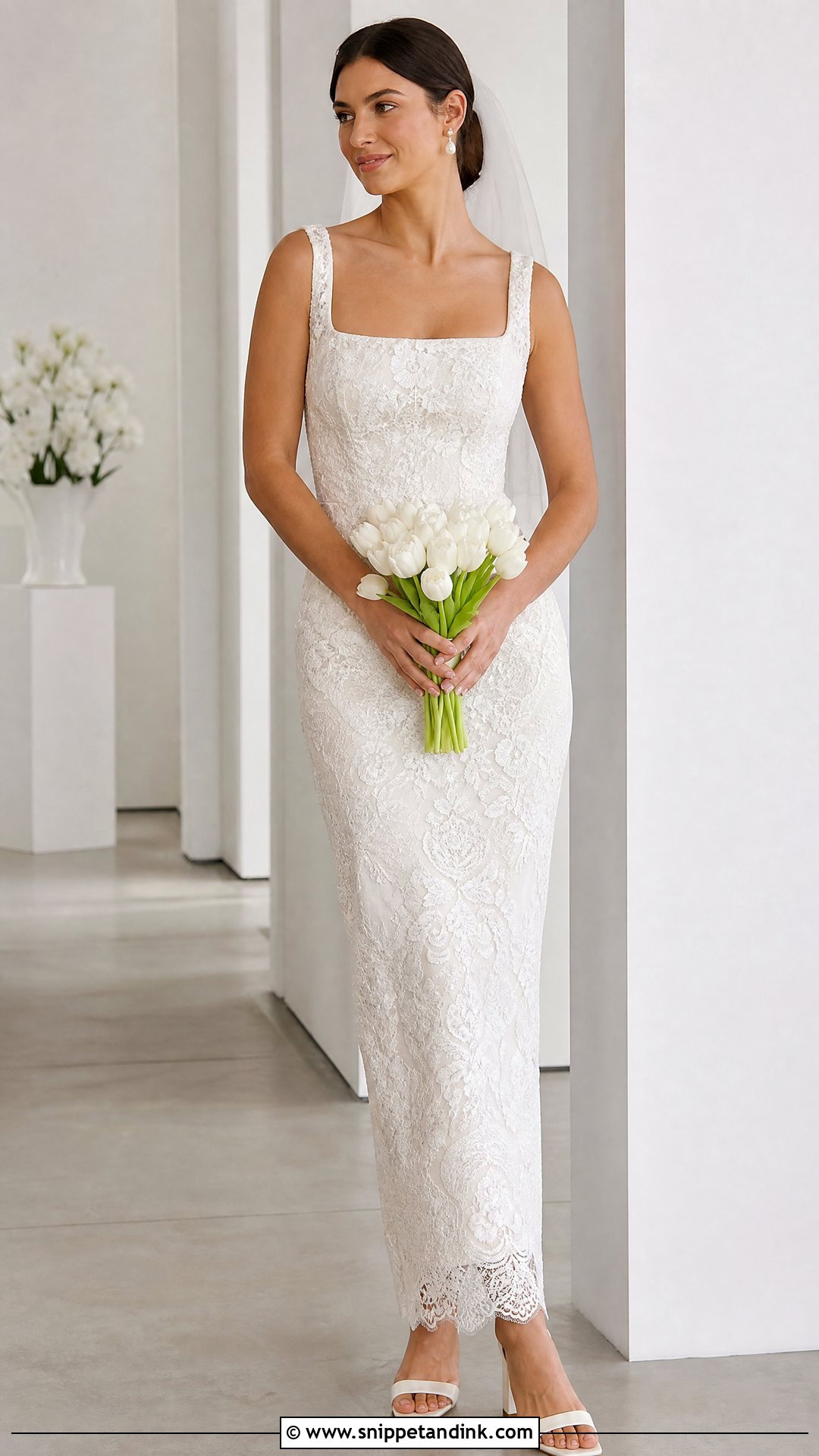
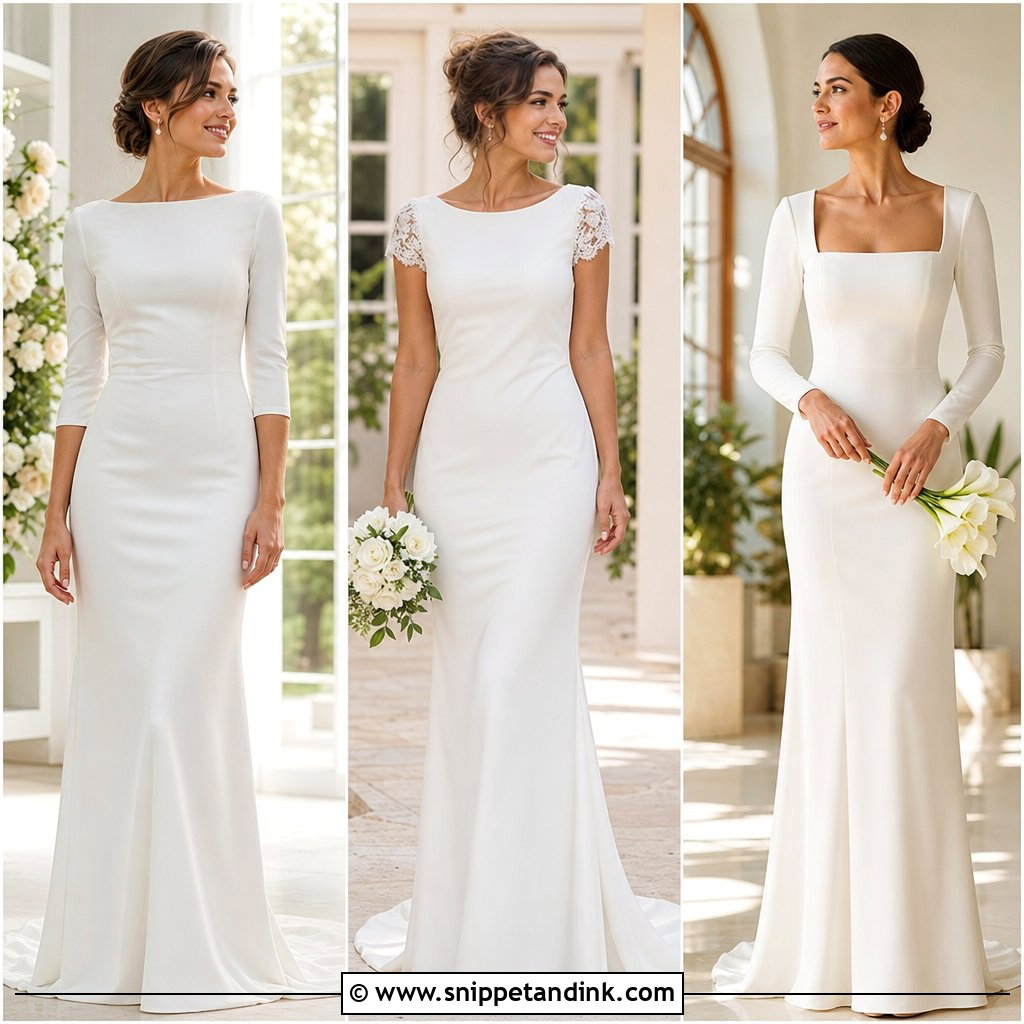
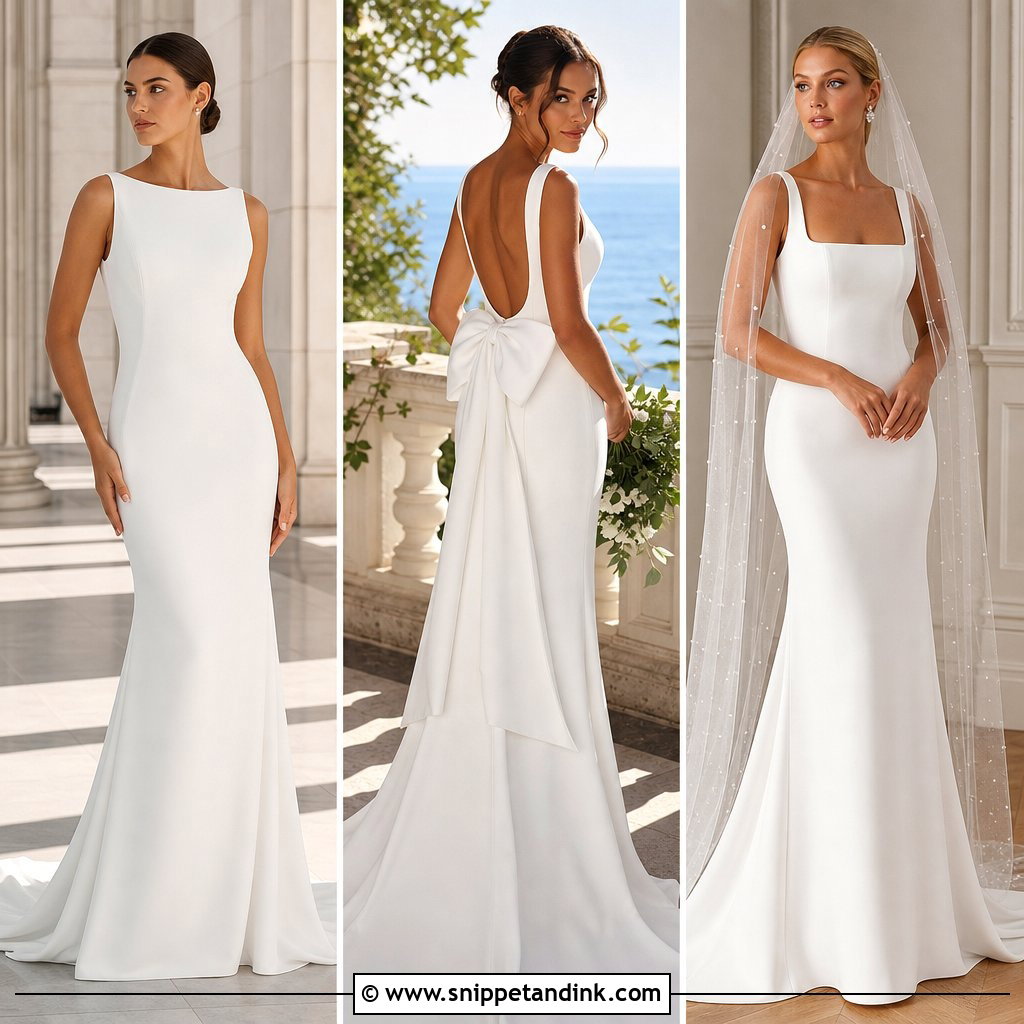
Square necks need a crisp base to hold their corners. Lace laid over matte crepe or soft satin keeps the line sharp, while lace over thin tulle can collapse into a curve. Wide straps, short sleeves or three-quarter sleeves all suit this neckline. I style it with pearl button earrings, a smooth low bun and ivory block heels, then a short blusher or plain fingertip veil so the geometry stays visible. White tulips, roses or callas work in a tidy bouquet. At fittings, reach forward, sit, and lift your arms: the straps should stay flat and the neckline level across the chest.
7. Cap Sleeve Lace Sheath Wedding Dress
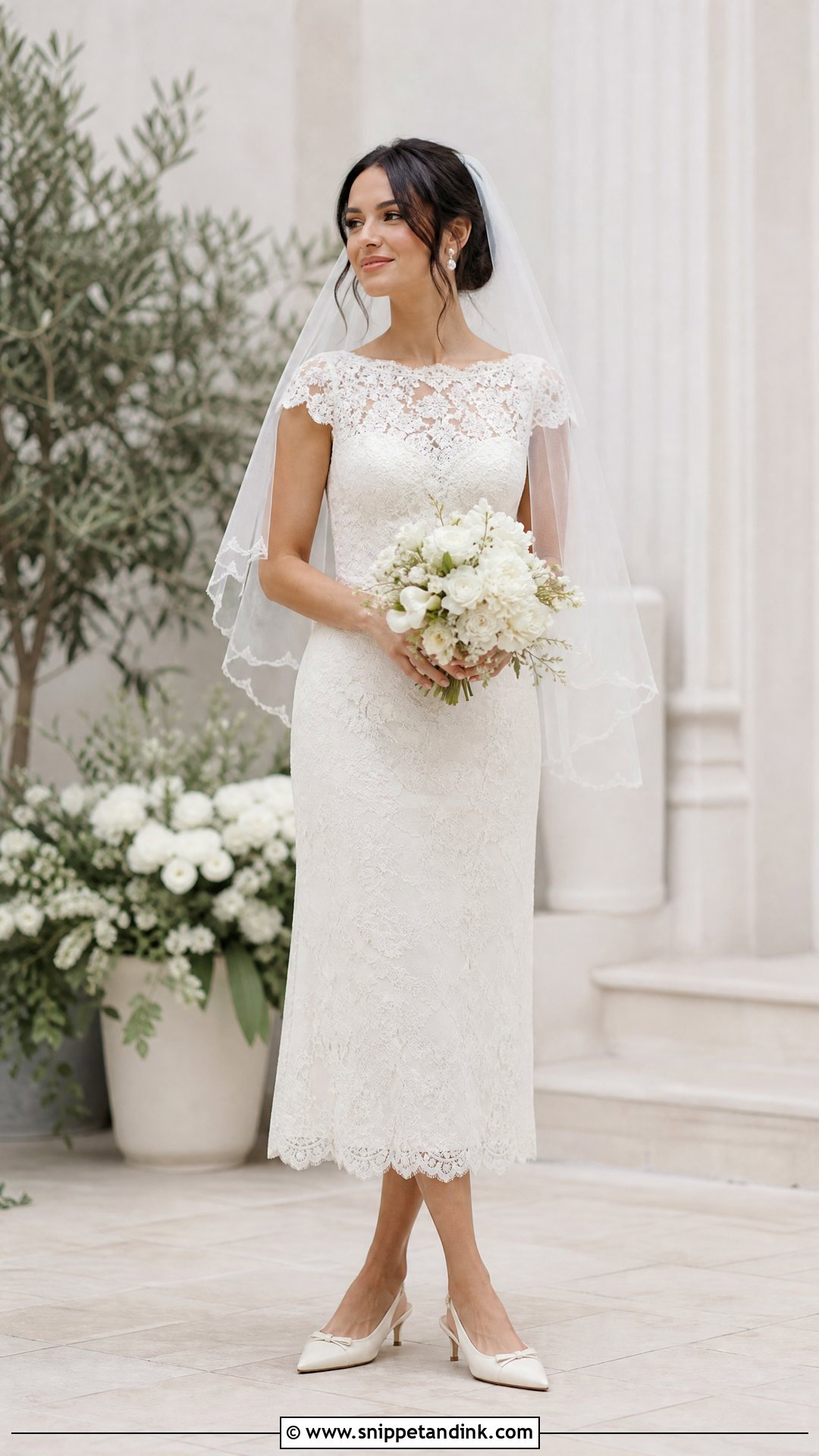
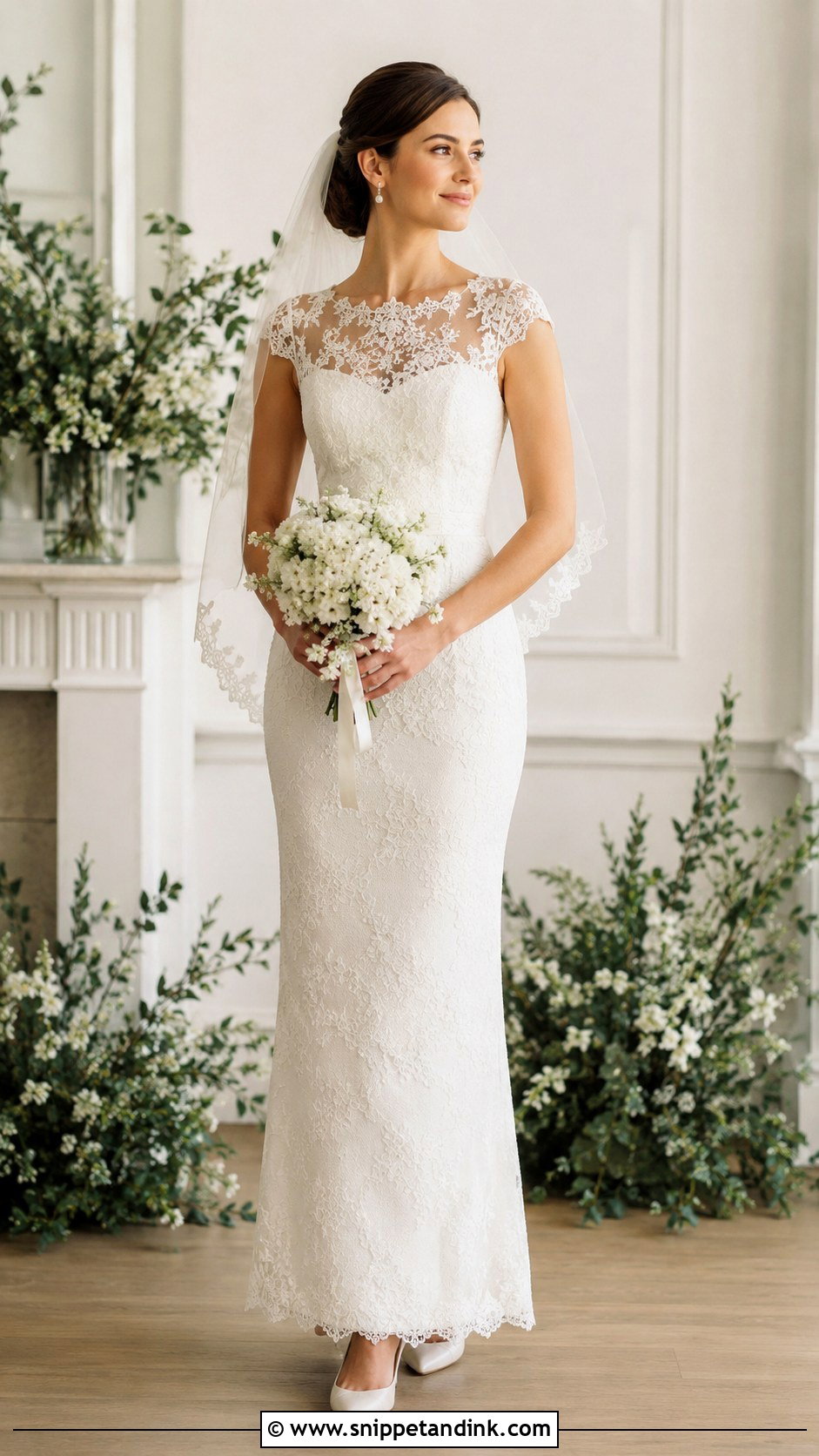
Delicate cap sleeves give a little shoulder cover without the weight of a full sleeve. Sheer lace barely shows; a lined cap looks more traditional. Watch where the sleeve ends on your arm. If it stops at the widest point of the upper arm, it can press in and leave a mark by the reception, so I’d move it a touch higher or lower. Small pearl drops, ivory kitten heels and a loose low bun keep things light. A scalloped veil can echo the sleeve edge, though when the lace is busy, a plain veil looks cleaner. Carry a medium bouquet of soft white flowers and pale greenery for a daytime ceremony.
8. Illusion Bodice Lace Sheath Wedding Dress
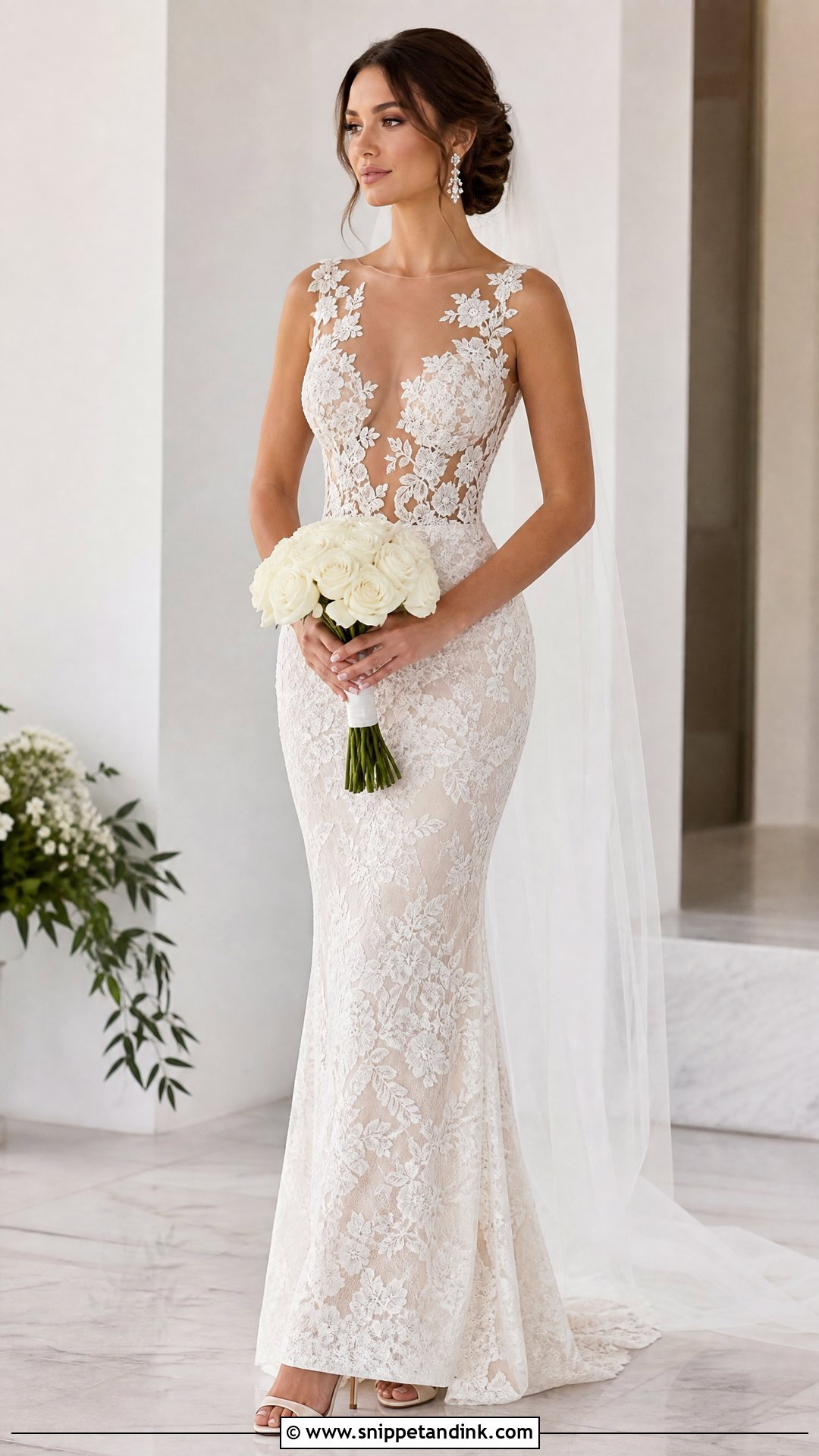
Illusion mesh only works if it disappears. I take brides to a window to compare mesh against their skin in daylight, because shop lighting flatters every shade and a mismatched mesh shows as a grey band in photos. Placed lace and a little hidden lining can give real coverage without losing the floating effect. Crystal studs, slim ivory heels and one small comb above a low chignon are enough jewelry. Choose a plain chapel veil and keep the bouquet restrained: white roses, minimal greenery. During alterations, check the mesh around the neckline and armholes. Any puckering there pulls the eye away from the appliqués.
9. Open Back Lace Sheath Wedding Dress
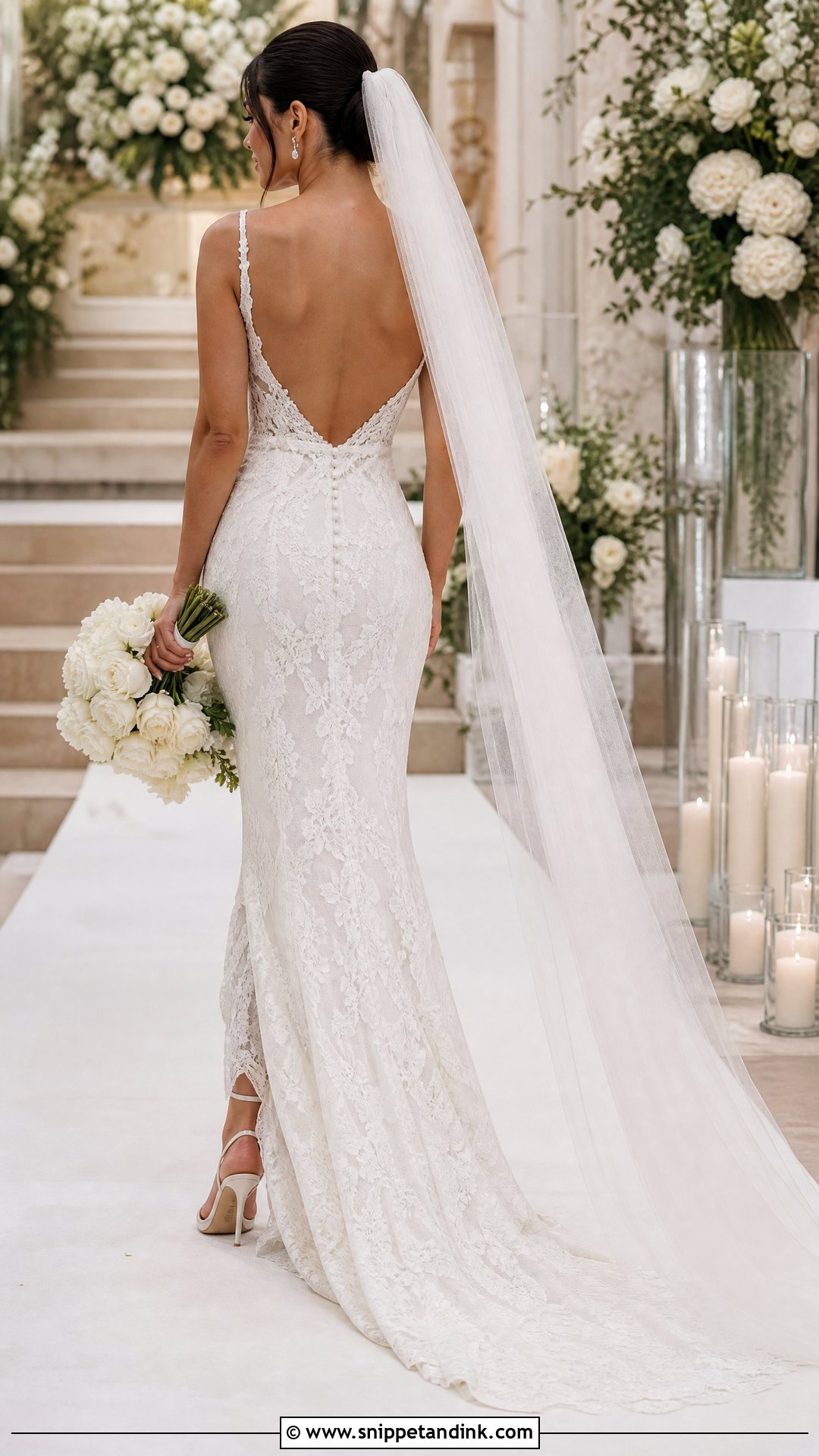
Open backs are the reason many brides pick a sheath, and also the reason they come back to their seamstress worried about undergarments. Decide early whether the dress has built-in cups or whether you’ll need a low-back body or adhesive bra, because that affects how the bodice is fitted. A deep scoop, a soft V, or lace-framed illusion all work, and a column of covered buttons draws the eye down toward the train. Hair should go up or to one side. I’d add quiet earrings, a delicate bracelet and ivory heels with ankle straps. A long plain veil looks striking for the walk back down the aisle and comes off later so the back can be seen.
10. Floral Lace Sheath Wedding Dress
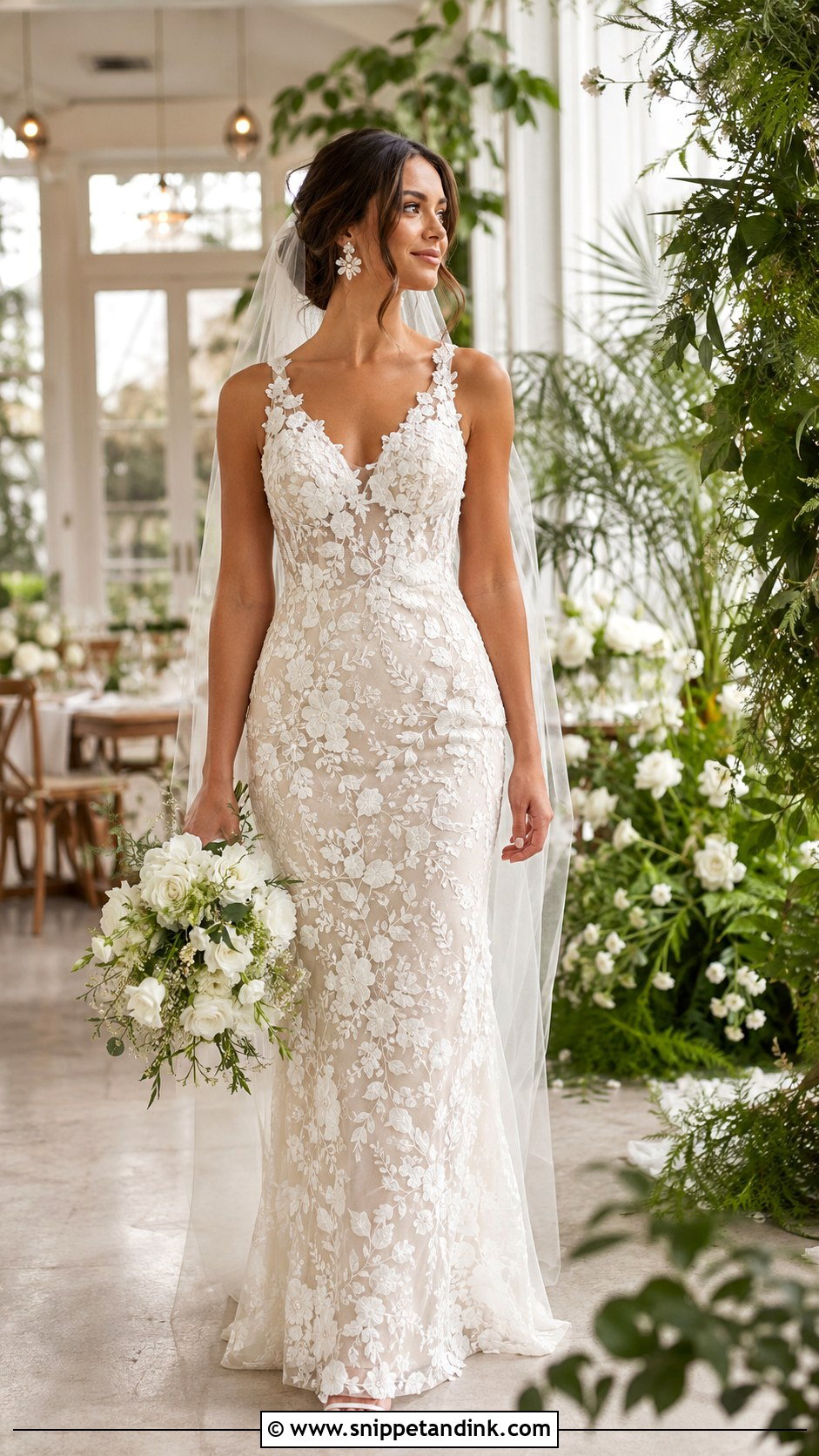
Large floral lace reads from across the room, which is its strength and its risk. On a slim sheath, I prefer the flowers concentrated on the bodice and thinning out down the skirt, so the pattern doesn’t overwhelm the shape. An ivory lining softens the flowers; a pale nude one makes them pop. Floral-inspired earrings, ivory sandals and a relaxed updo with a few small white blooms complete it. A plain tulle veil gives the dimensional lace a quiet background. Pick a loose bouquet that echoes the pattern rather than copying it, and keep every other accessory minimal.
11. Beaded Lace Sheath Wedding Dress
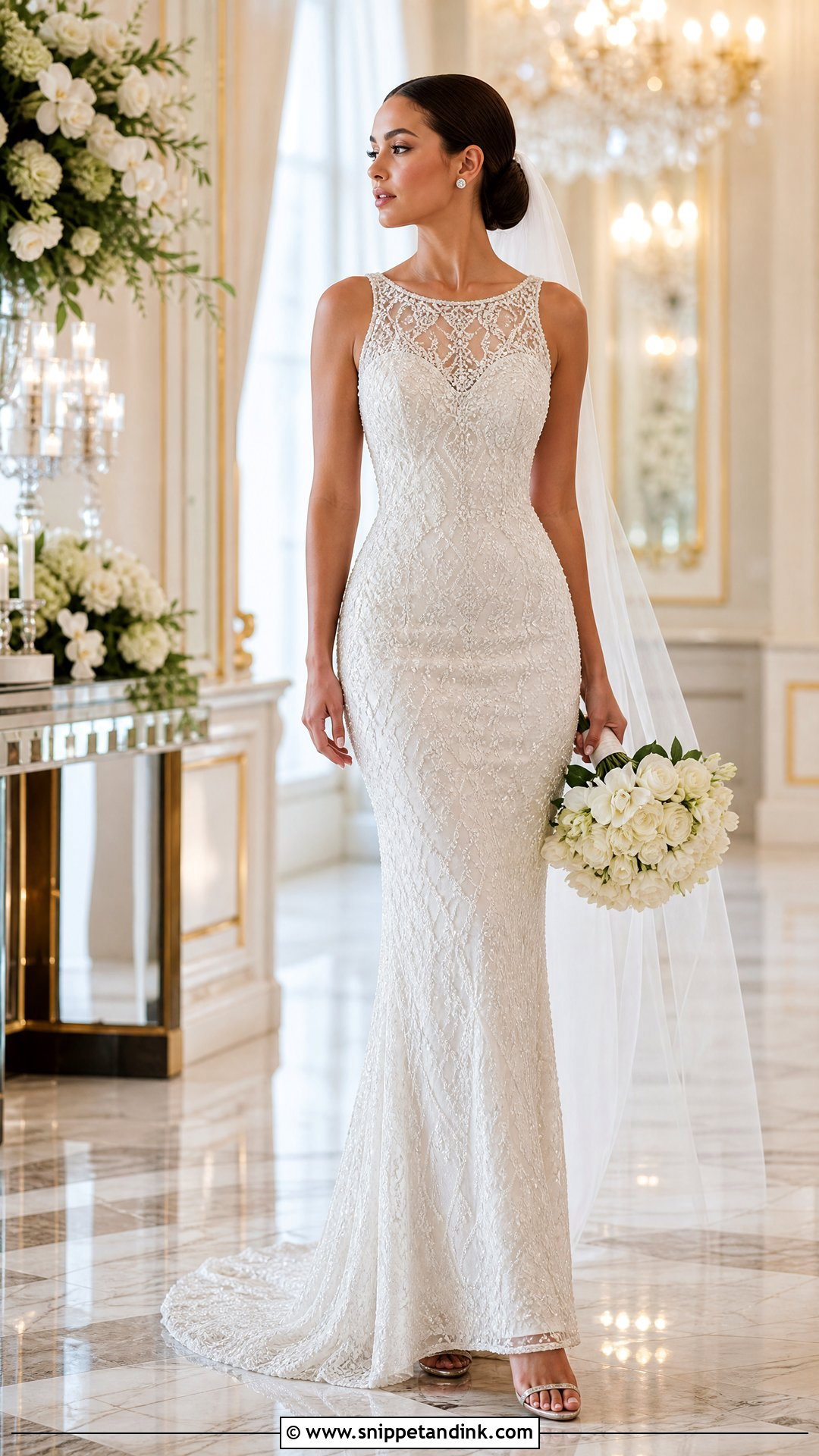
Beading is heavier than it looks on a hanger. A beaded lace sheath sparkles at an evening reception, but dense embellishment can drag a light lace downward and stretch the seams by the end of the night. Look for fine crystal, pearl or sequin accents spaced evenly, with a smooth lining so beads never sit against bare skin. Crystal studs, metallic ivory heels and a polished low bun are plenty, and I’d leave the necklace at home if the bodice is already bright. A plain veil with a narrow edge and a structured white bouquet give contrast. Before you buy, see the dress under warm light, daylight and a phone flash, because some beading flares white on camera.
12. Vintage Lace Sheath Wedding Dress
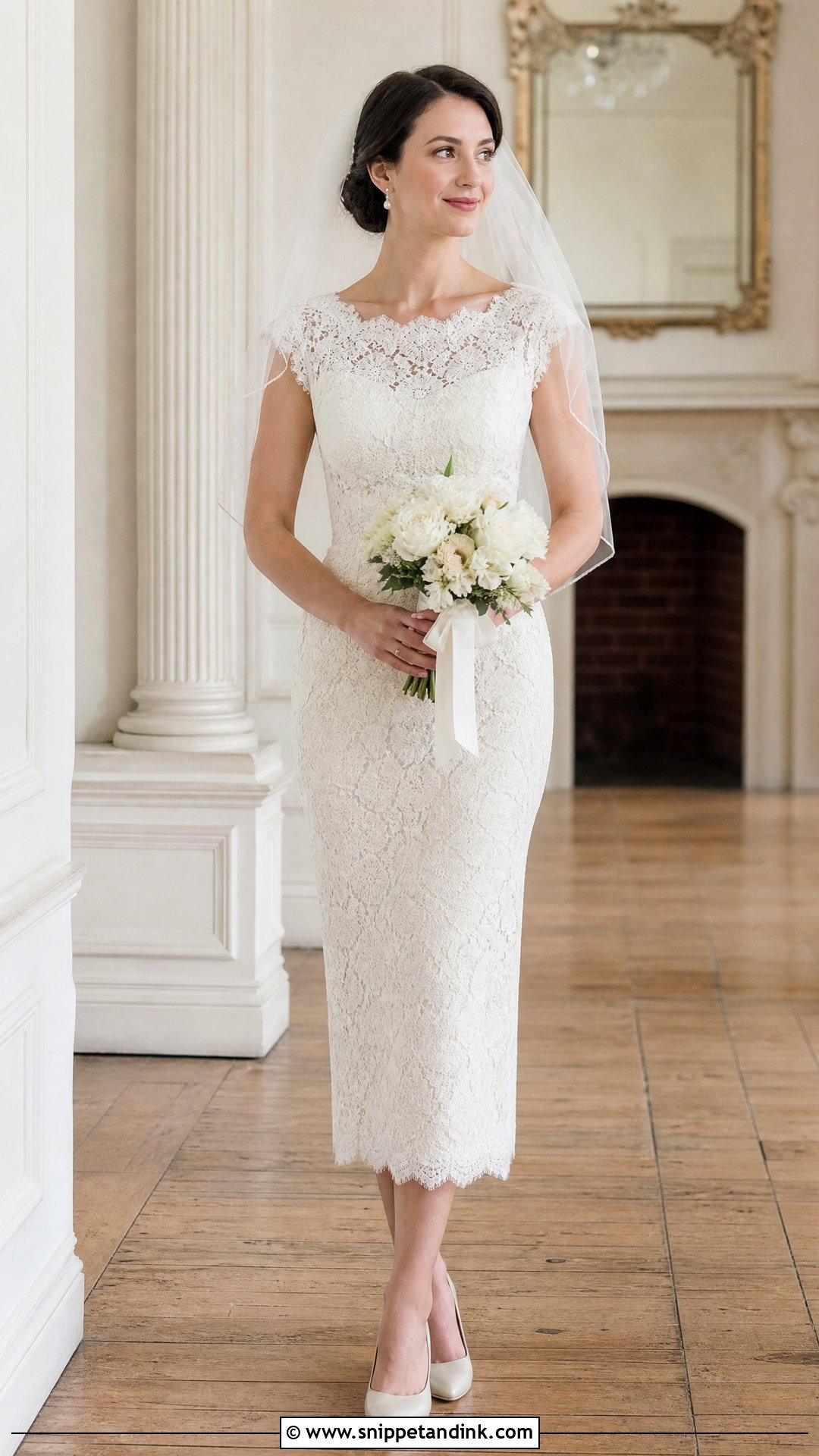
The trick with vintage lace is keeping it a reference, not a costume. I look for delicate crochet lace, eyelash trim, covered buttons or a scalloped neckline, then pair it with an ivory, cream or pale champagne lining, which looks softer and more aged than bright white. Pearl earrings, low satin pumps and waves pinned to one side suit the era. A birdcage veil is a bolder finish; a plain fingertip veil is safer. Tie a compact bouquet with ivory ribbon and carry a small structured clutch. Older-style lace often has a defined scallop edge, so tailoring at the waist, shoulders and side seams has to keep that border lined up.
13. Boho Lace Sheath Wedding Dress
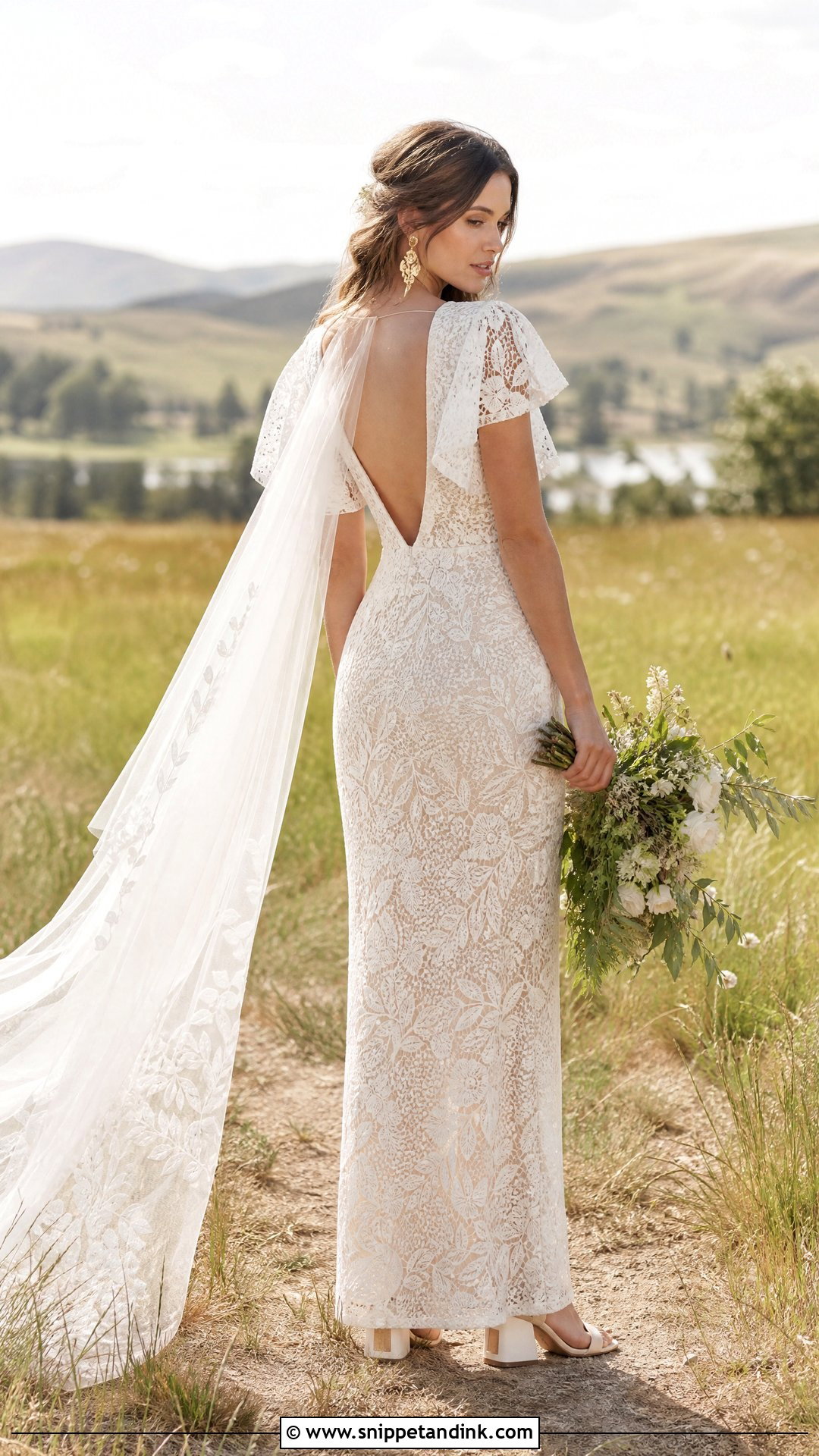
Boho lace has to move, so I’d steer you away from any version with a stiff, heavily lined skirt. Soft crochet, leafy lace or an open geometric pattern over a smooth opaque lining keeps the drape relaxed while staying modest in sunlight. Flutter sleeves, a gentle V or an open back add ease without changing the slim line. I’d style it with ivory block-heel sandals, textured gold earrings and loose waves twisted low. A simple veil, a sheer cape or a fine hair vine gives movement for the ceremony. Carry a loosely tied bouquet with varied greenery. Hold back on jewelry: the lace is already doing most of the work.
14. Minimalist Lace Sheath Wedding Dress
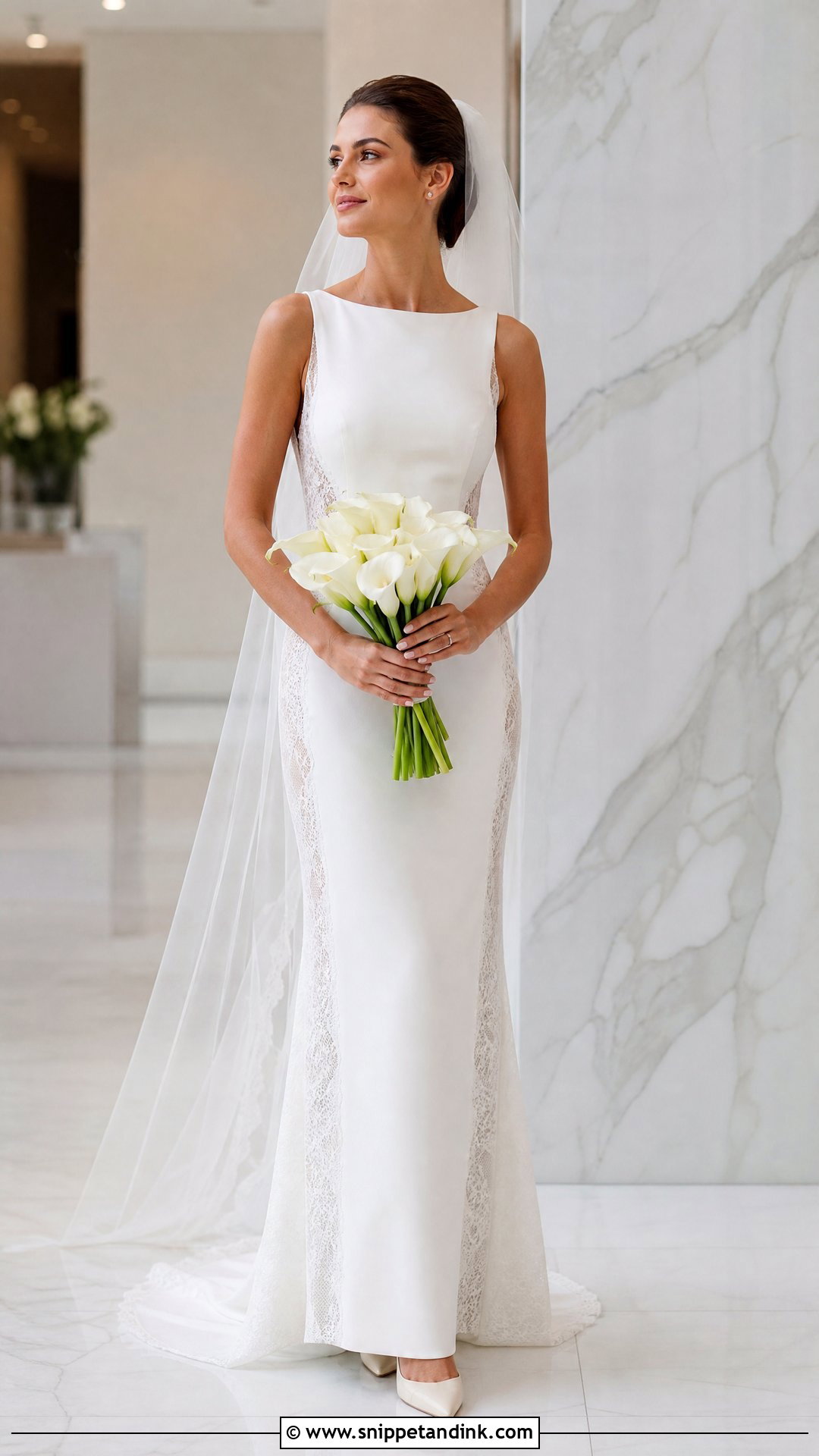
Can lace still look minimalist? Yes, if it’s confined to one area. A smooth crepe sheath with lace side panels, a lace-trimmed neckline, or a low-contrast overlay keeps the clean line that minimalist brides want. Pair it with small studs, pointed ivory pumps and a sleek center-parted bun, plus a single-layer veil so no new texture is added. A sculptural bouquet of calla lilies or a few long stems suits the mood. Keep makeup polished and natural. This style needs the sharpest alterations of all, because with so little decoration, every seam and every bit of pulling across the hips shows.
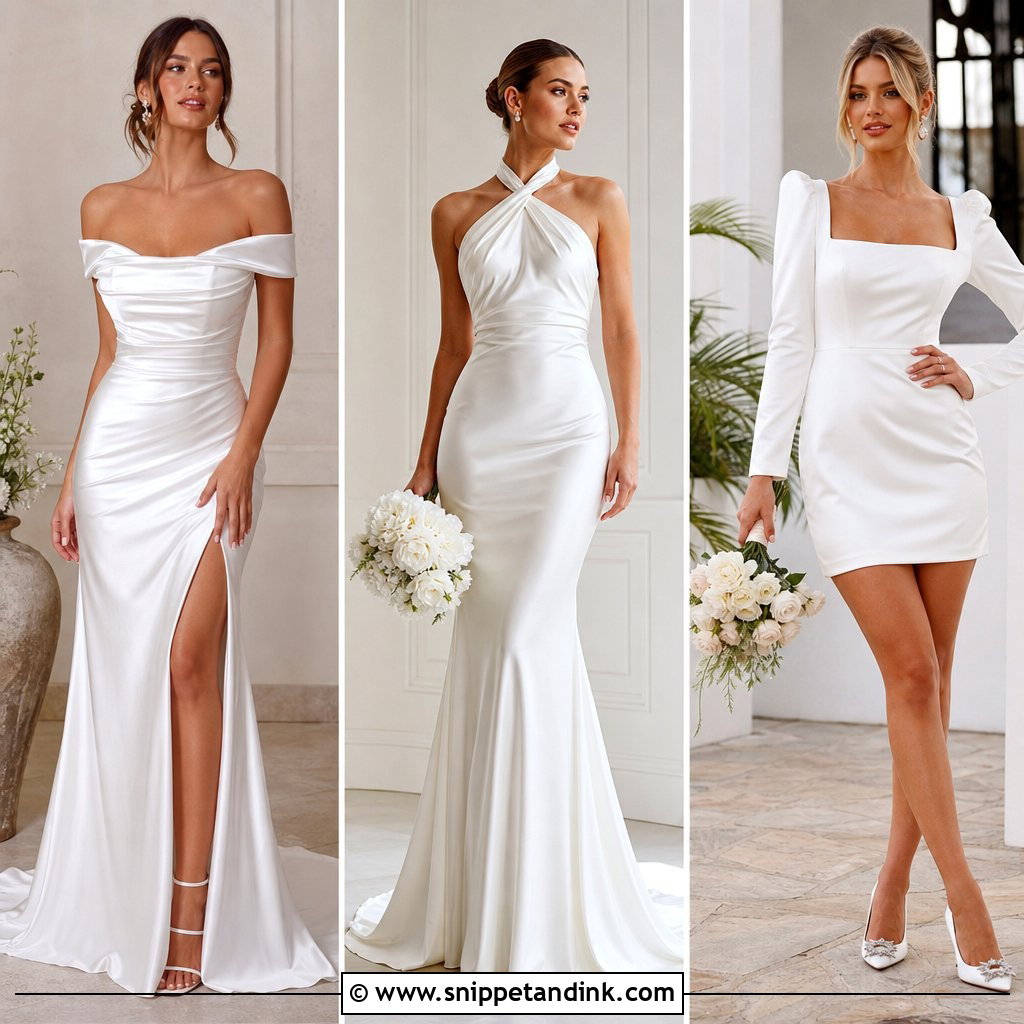

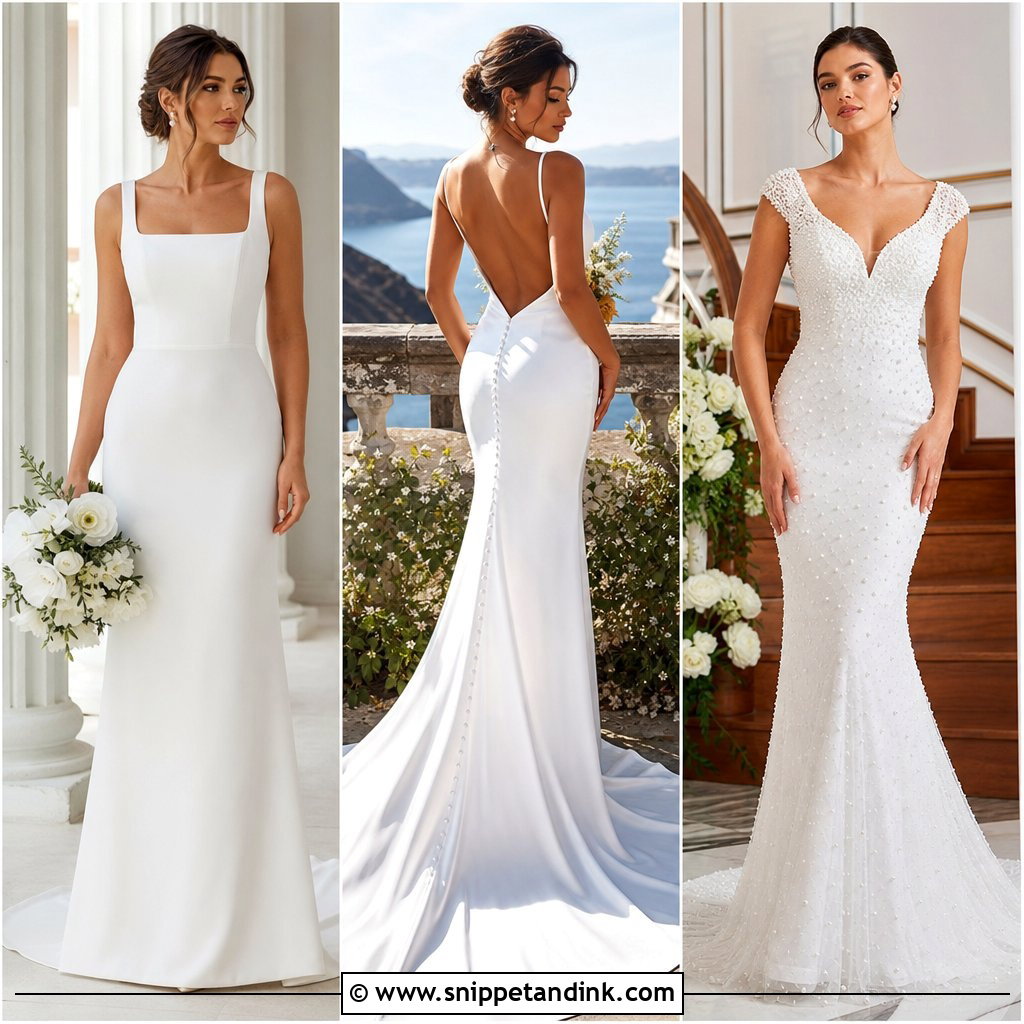
15. Plus Size Lace Sheath Wedding Dress
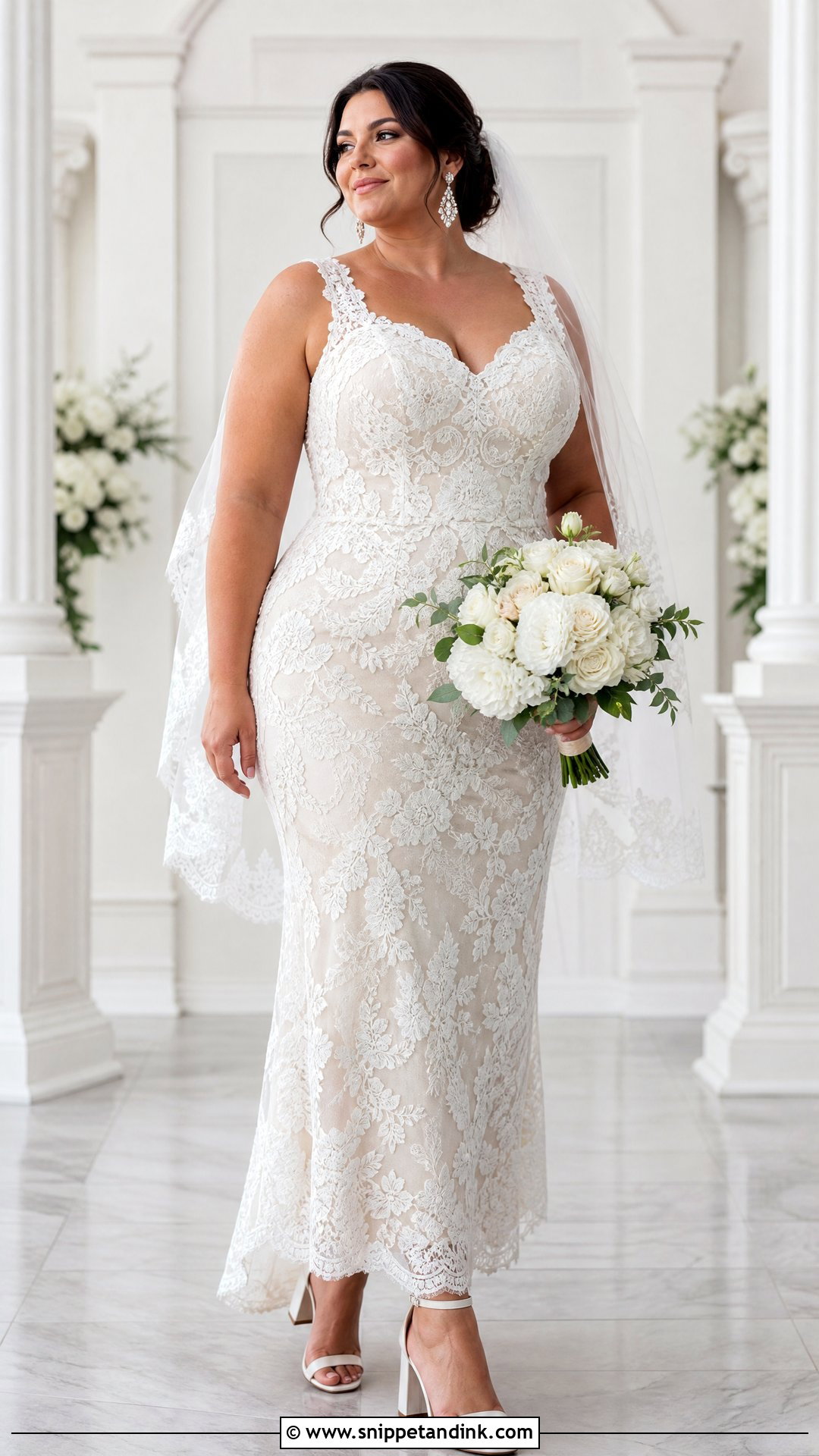
For a plus size lace sheath wedding dress, I start with support and work outward. A structured bodice, stable straps, a lining with some give and seams that follow the body are worth more than any lace pattern. Lace running vertically or scattered softly keeps the long line of the skirt. Order for your largest measurement and let the seamstress take in everywhere else; sizing down to the smallest number almost always means a bodice that can’t be let out enough. Supportive block heels, statement earrings and a secure low updo or soft waves complete it, with a fingertip veil and a medium bouquet that leaves the waist in view. At the fitting, sit, breathe deeply and dance a few steps.
16. Petite Lace Sheath Wedding Dress
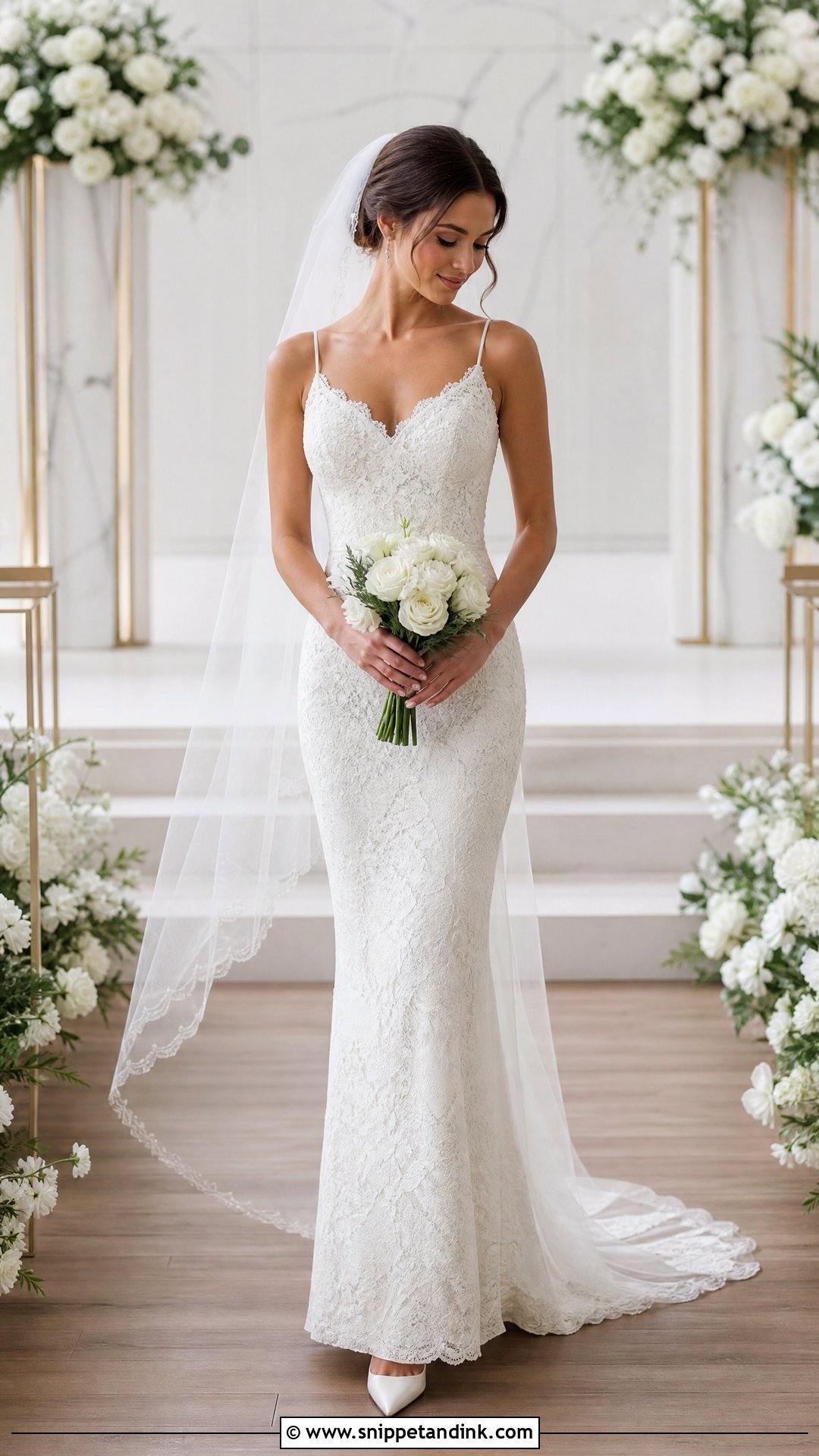
Scale matters most on a petite frame. Huge appliqués on a small body read as a print, so I look for lace motifs sized to you and a pattern that runs unbroken from bodice to hem for one long line. A defined natural waist and a moderate neckline help. Pointed-toe ivory heels, small drop earrings and an updo with a little lift at the crown add height. Choose a narrow bouquet and a fingertip or chapel veil, and skip belts or bold horizontal details that cut you in half. Petite alterations can involve more than the hem: ask whether the waist, straps and bodice lace can be moved up proportionally.
17. Beach Lace Sheath Wedding Dress
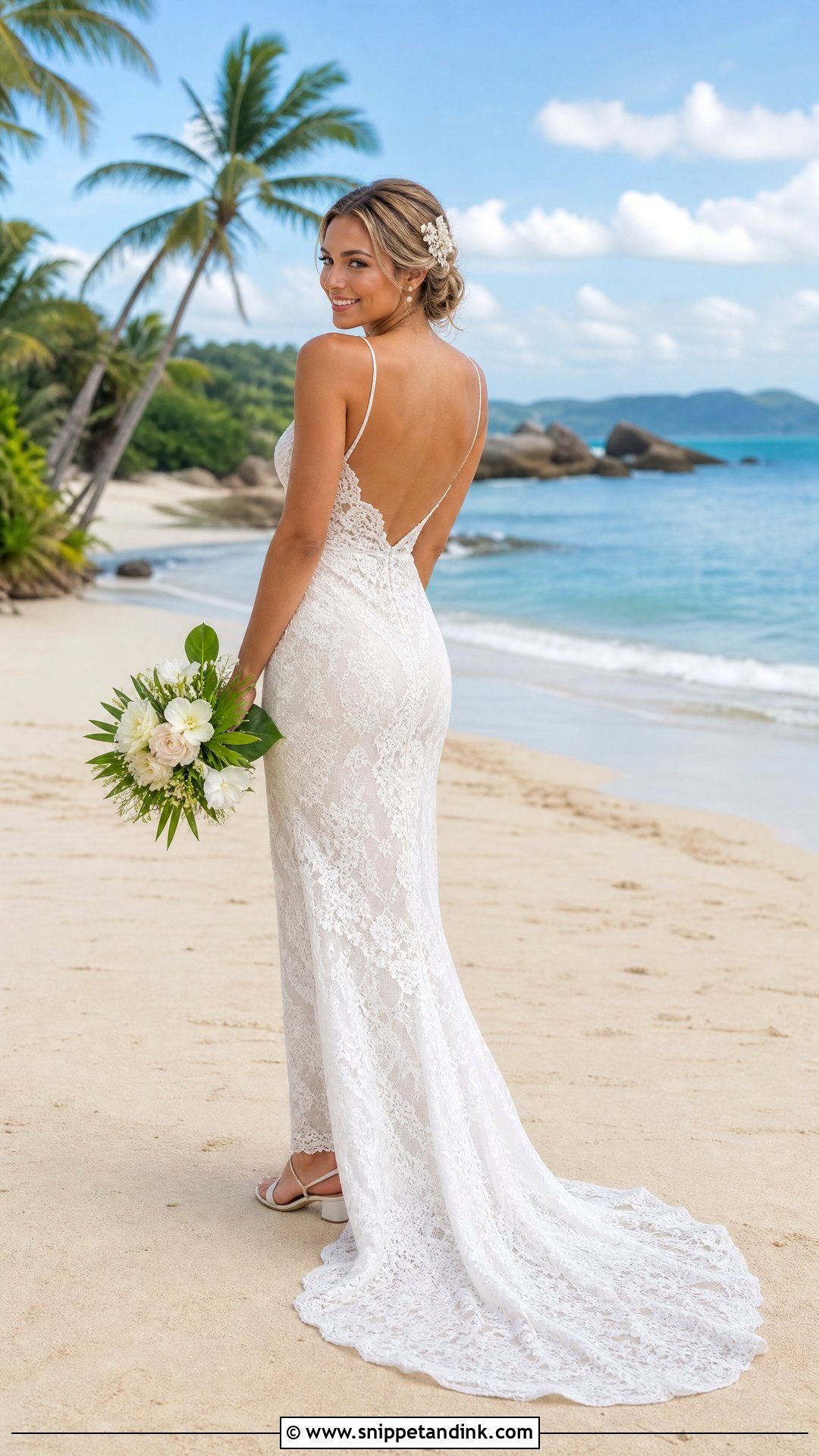
Sand is hard on lace. A long train drags it into every motif, and beads trap it, so for a beach ceremony I’d choose a light sheath with a short sweep train or none at all. Breathable lining matters in humidity, and a V-neck, open back or slim straps keep the look airy. Make sure the bodice is secure enough that coastal wind doesn’t have you adjusting straps all day. Flat bridal sandals, pearl studs and a low textured bun suit the setting. Instead of a long veil, wear a short veil, decorative comb or sheer cape that comes off easily. A compact bouquet of white flowers and fresh greenery finishes it, and you’ll be able to walk across uneven sand without lifting the skirt.
18. Garden Lace Sheath Wedding Dress
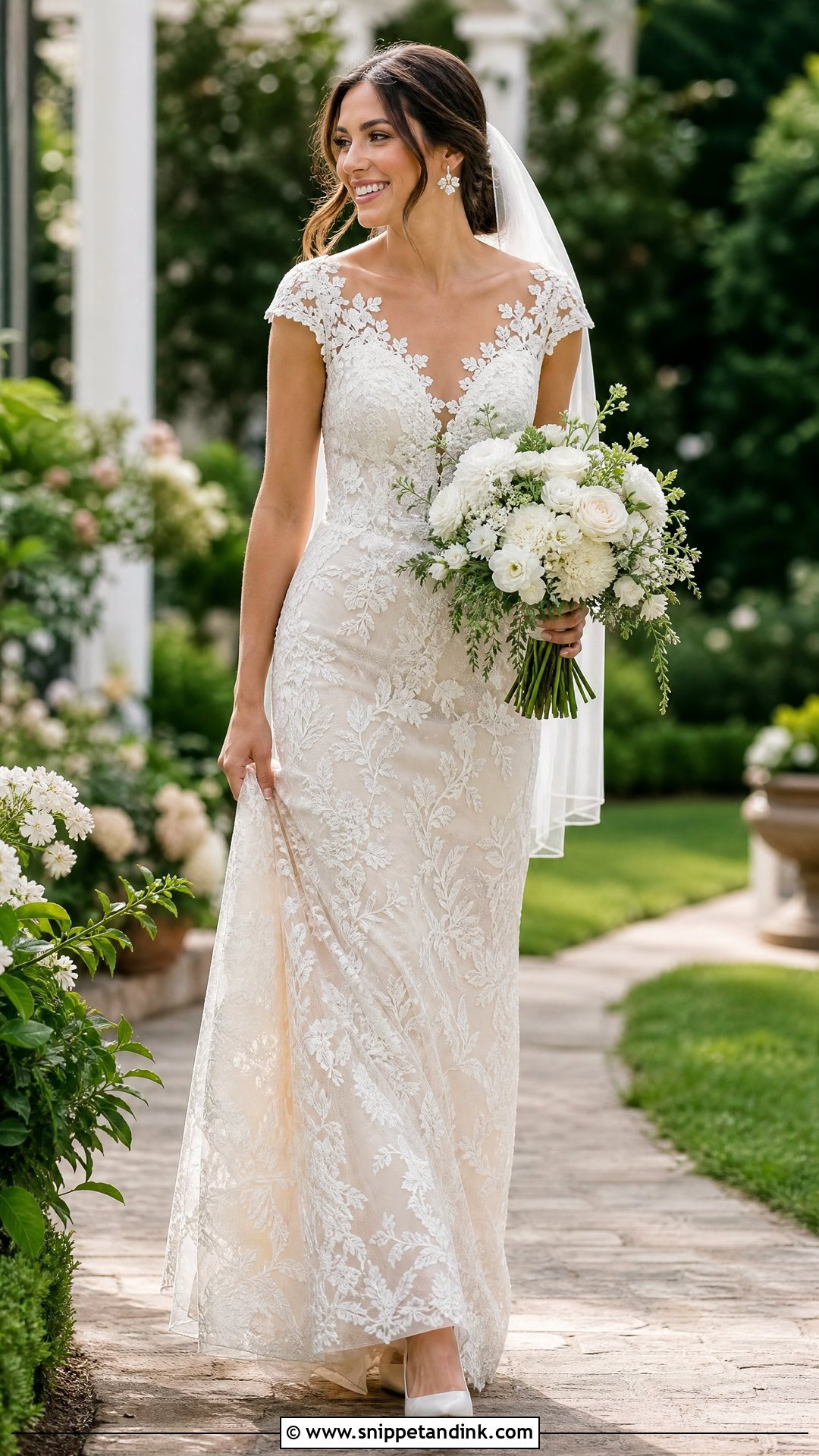
A garden is the natural home for a floral lace sheath wedding dress, with embroidered vines, leafy appliqués or small blossoms over ivory or pale champagne lining. A square neck, cap sleeves or an illusion bodice keep it romantic without extra volume. Choose block-heel pumps: stilettos sink into lawn within minutes. Delicate floral earrings and a relaxed low bun suit it, and a plain or lightly scattered floral veil works if the lace itself is subtle. Hold the seasonal bouquet low enough that it doesn’t hide the bodice. Ask for a short train or a bustle, since grass, pollen and damp earth mark lace quickly when you walk between ceremony and reception.
19. Courthouse Lace Sheath Wedding Dress
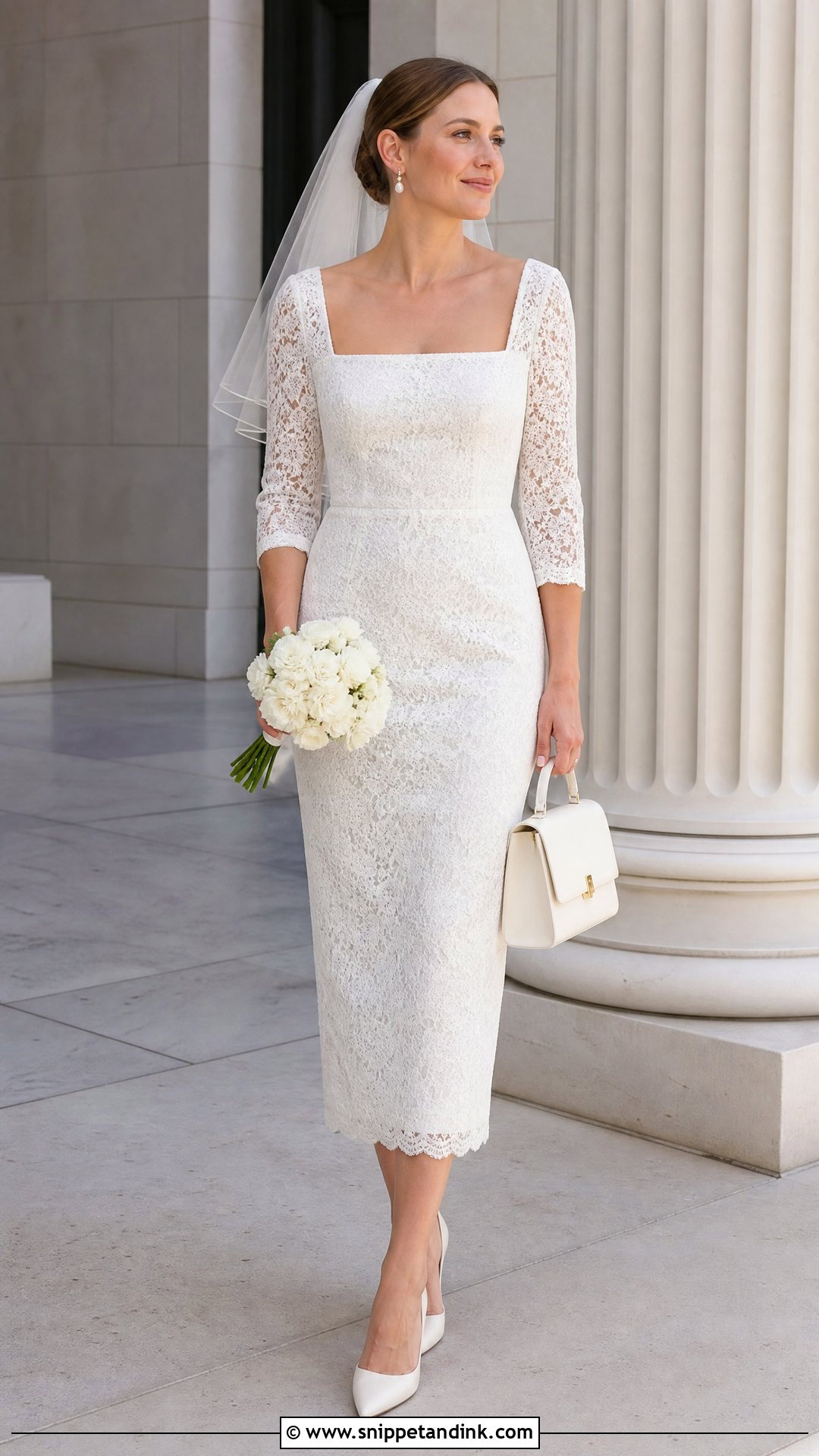
Courthouse weddings move fast: security lines, corridors, steps, a quick photo outside. I’d pick either a floor-length sheath with almost no train or a midi length with clean lining and refined lace. Three-quarter sleeves, a square neck or a simple V look right in daylight. Pointed pumps, pearl earrings and a structured ivory bag keep it neat, and a smooth bun or softly curled bob stays tidy through the day. Skip the cathedral veil. A short veil, small comb or tailored ivory jacket is easier to manage in a public building. Keep the bouquet compact enough to hold while signing papers.



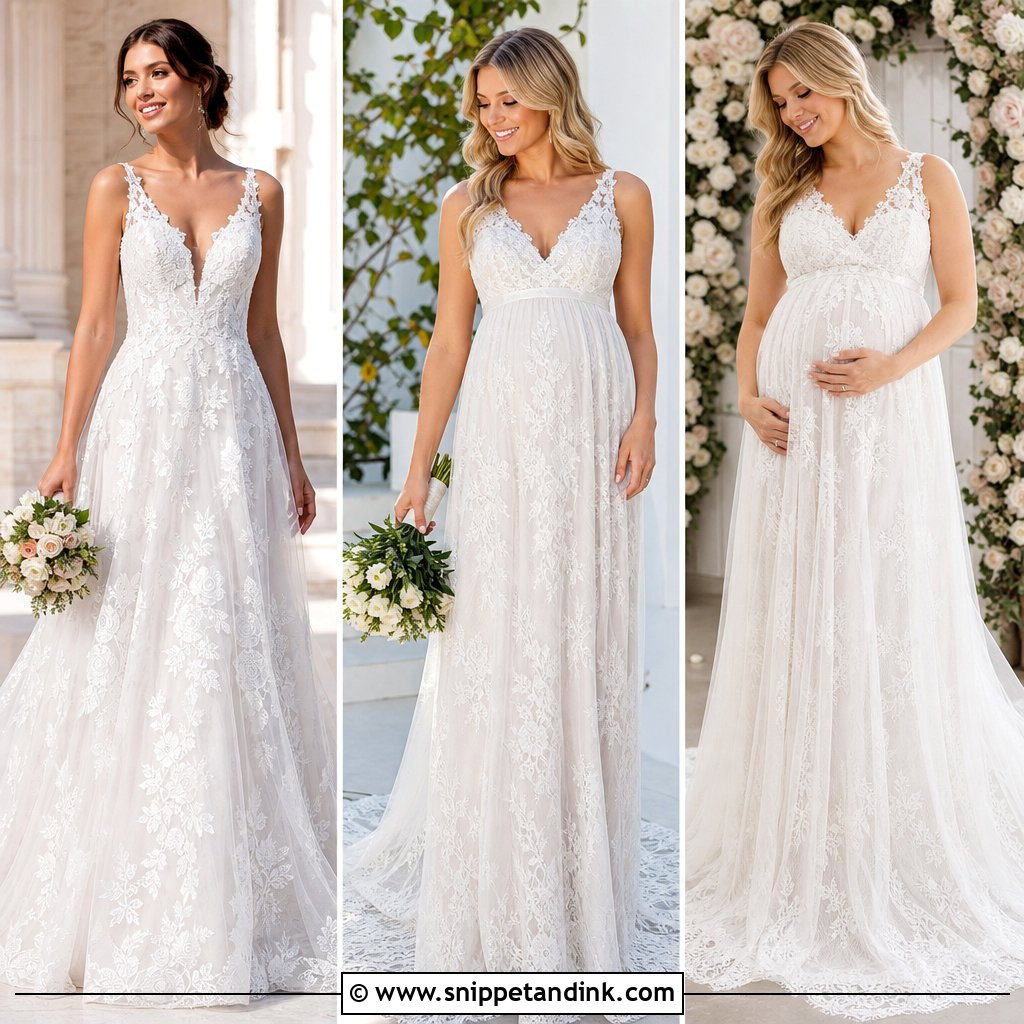
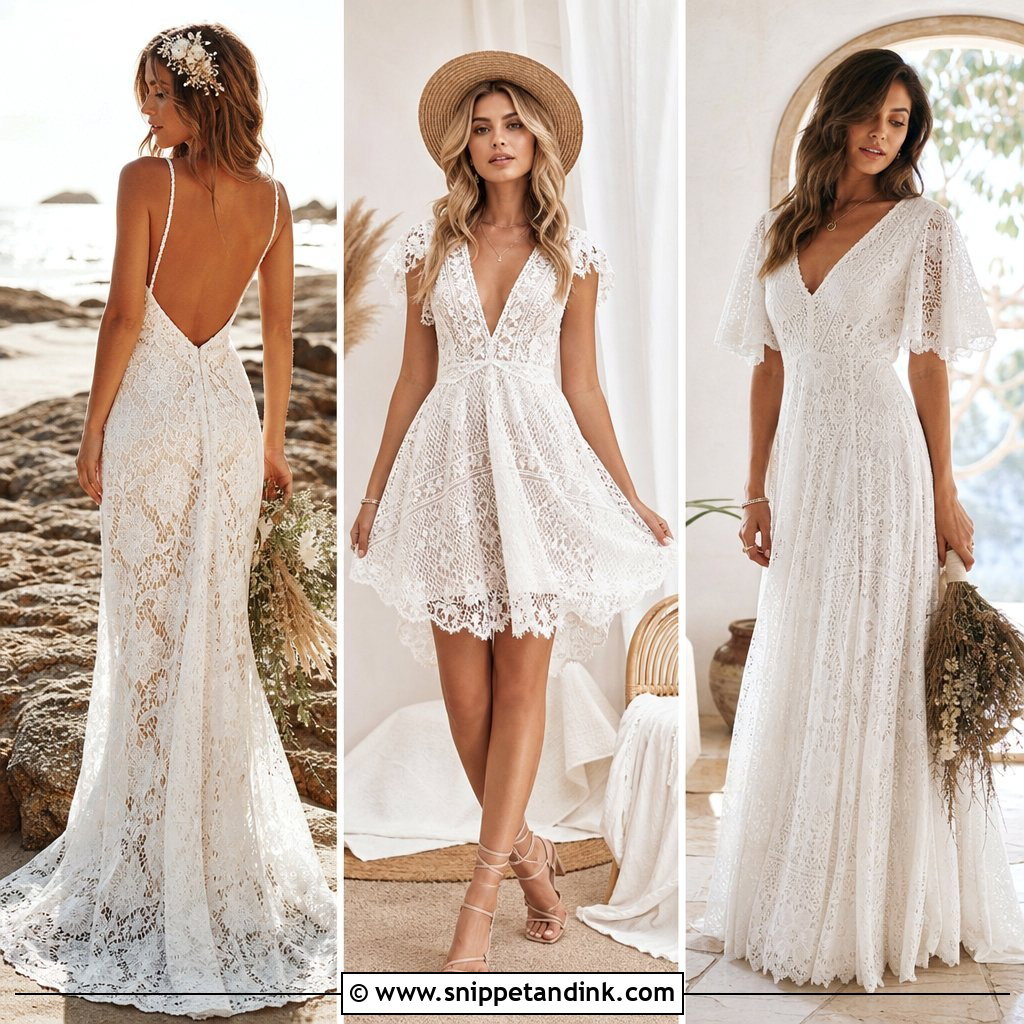
20. Lace Sheath Wedding Dress With Detachable Train
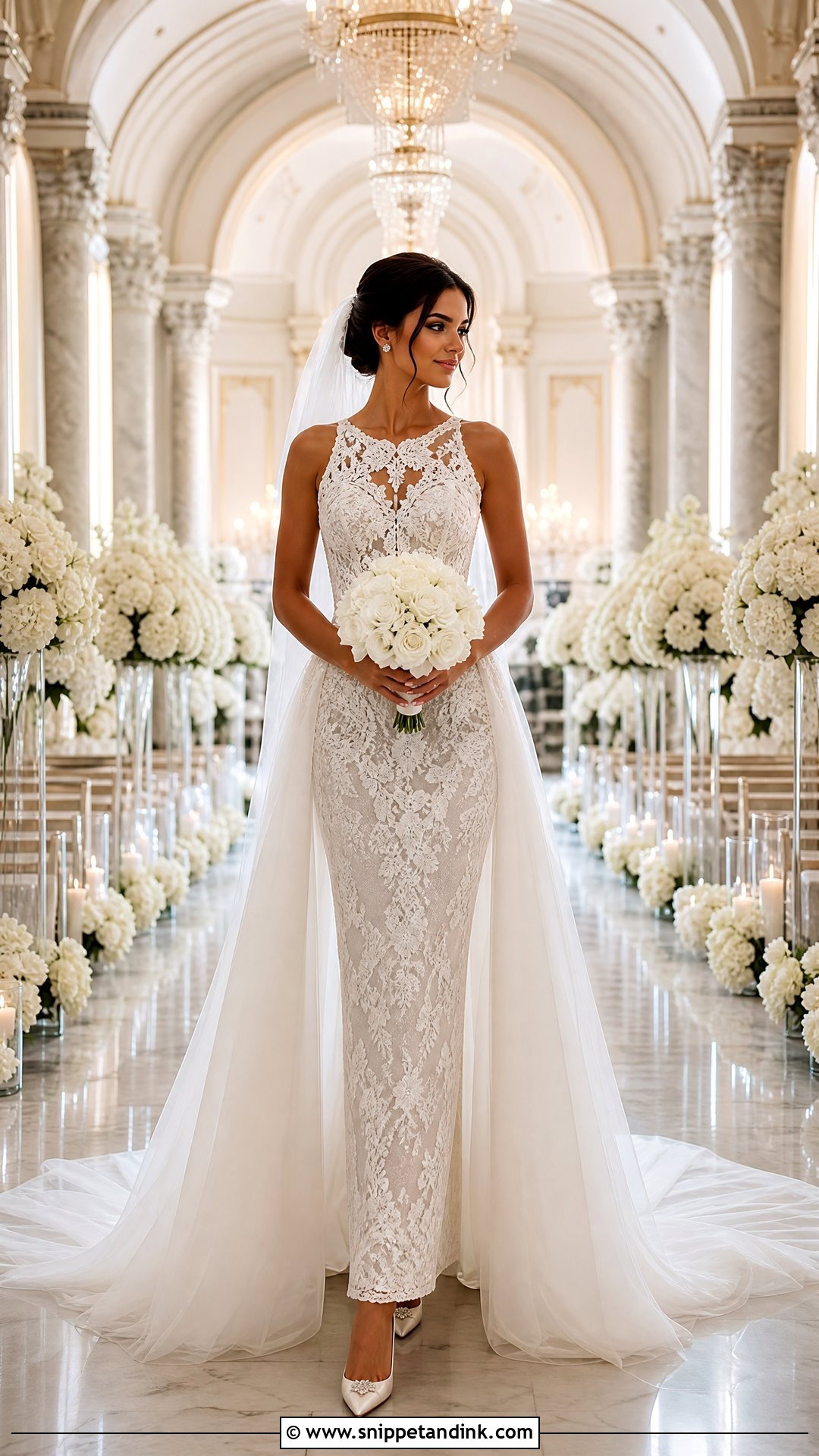
Two looks, one dress: a detachable train lets a lace sheath feel formal for the ceremony and easy for the dance floor. The lace or tulle overskirt should start cleanly at the waist and sweep into a chapel or cathedral length, then unhook to reveal the slim gown underneath. Sparkling studs, ivory heels and an updo that suits both versions keep things simple, with a plain veil that doesn’t compete with the train. For the reception, add a fine bracelet or switch to bolder earrings. Practice taking the overskirt off with whoever will help you, because hooks hidden under lace are fiddly. The base gown still needs to look finished on its own, with no visible attachment points.
Bustles, Steam and Snags on the Wedding Day
A sheath has less fabric than a full skirt, but lace makes it more delicate to handle. These are the jobs I make sure someone in the bridal party knows how to do.
Bustling a narrow skirt
Most sheath trains are short enough for a simple over bustle: a few hidden hooks or buttons that lift the train to the back of the skirt. A slim skirt doesn’t have the volume for an elaborate under bustle, and too many lift points make the back look bunched. Ask your seamstress to show the maid of honor how it works at the final fitting, and mark the matching loops with a small thread tag.
Getting creases out
Never put an iron straight onto lace. Hang the gown as soon as it comes out of the bag and use a handheld steamer from the inside, a short distance from the fabric, keeping it away from beads and glued crystals. Lining creases from travel usually drop within a day of hanging.
If the lace catches
Snags happen on rings, bouquet wire and chair edges. Don’t pull a loose thread. Push it to the back with a needle or leave it alone until a seamstress can tack it. A small kit with ivory thread, a fine needle, clear tape and safety pins handles most problems. After the wedding, have it cleaned by someone who works with lace and beading, and store it folded in acid-free tissue in a breathable box. Long-term hanging lets a heavy lace skirt stretch out of shape.
A Sheath Shows Every Seam, So Fit Decides It
One slim silhouette can carry a minimalist look, a vintage one, a beach ceremony or a black-tie evening, depending on the lace and how you style it. Start with what you’ll be comfortable in for the whole day: neckline, sleeve length, lining shade and the scale of the pattern. Then build outward with shoes, jewelry, hair, veil and bouquet that support the gown instead of competing with it. Fit stays the priority, because a sheath has nowhere to hide pulling or gaping. At every fitting, walk, sit and raise your arms, and only sign off when the dress moves with you.
You'll Like These Ideas:



Leave a Reply