
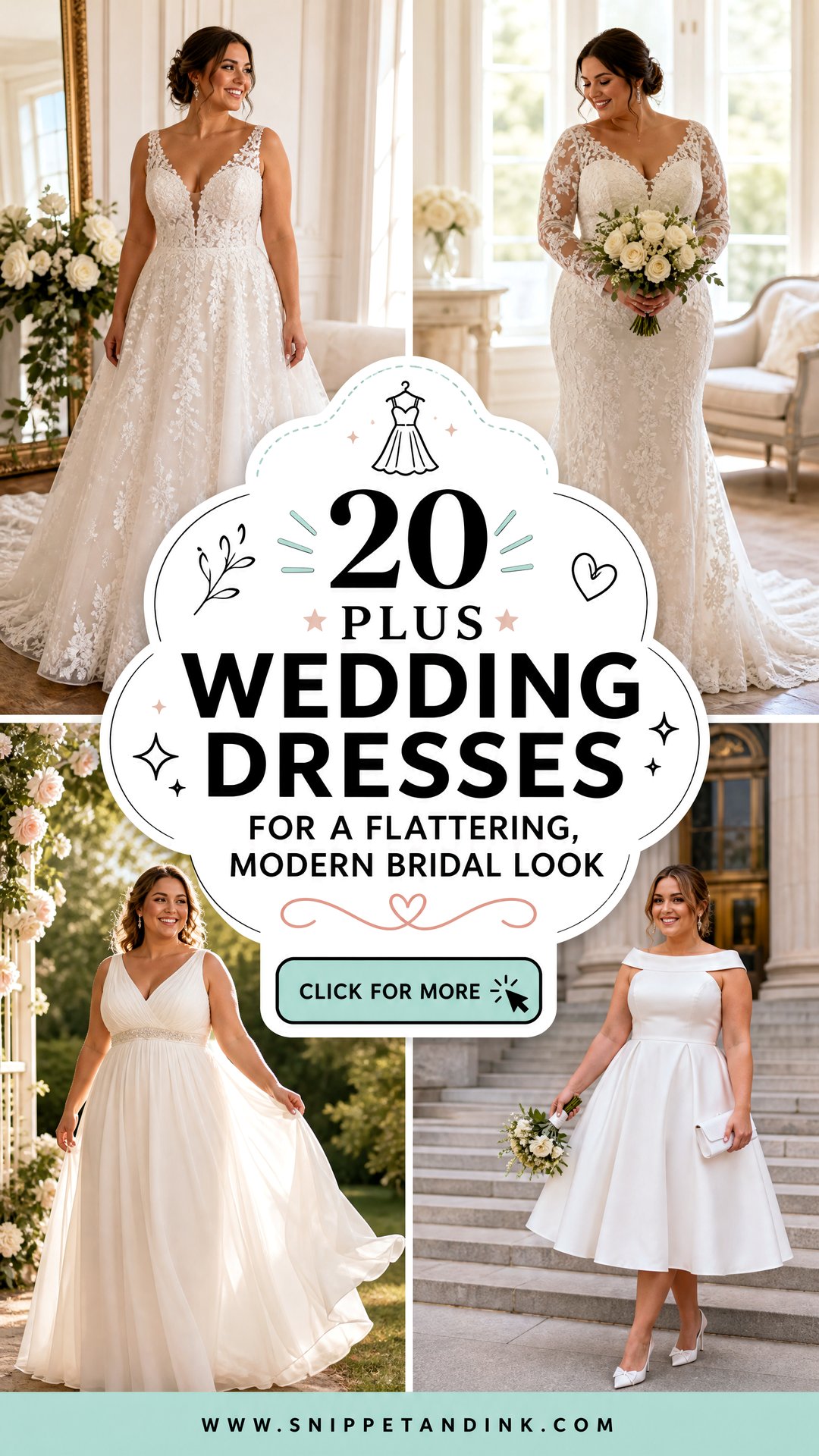
Wedding dress shopping as a plus-size bride used to mean being handed whatever the salon happened to have in a larger sample. That has changed, and the choice now runs from lace A-lines and fitted crepe to midis, ball gowns and bridal separates. The twenty looks below are styled head to toe, with shoes, jewellery and veil, so you can picture the whole outfit. When I work with curvy brides, my rule is simple: no silhouette is off limits, but the construction inside it has to be right. Shorter hemlines, clean minimal shapes and separates are all well represented in current collections, so there is more room than ever to dress for your taste rather than for a rule.
Phone the Salon About Sample Sizes First
Bridal salons try dresses on from samples, and many still stock most samples in a narrow size range. Trying a gown two sizes too small, held together with clips at the back, tells you very little about how it will look and feels discouraging. A quick call before you book saves the disappointment.
- Ask which designers they carry in samples close to your size, and request those dresses be pulled for your appointment.
- Ask whether the designer offers the style in extended sizes and whether there is an extra charge for larger sizes.
- Check how they handle samples that don’t close: a good consultant uses panels or a corset back rather than leaving the zip open.
- Ask about their alterations team and whether they have worked on structured plus-size gowns.
Salons that stock a full size range will say so happily. If the answers are vague, book elsewhere.
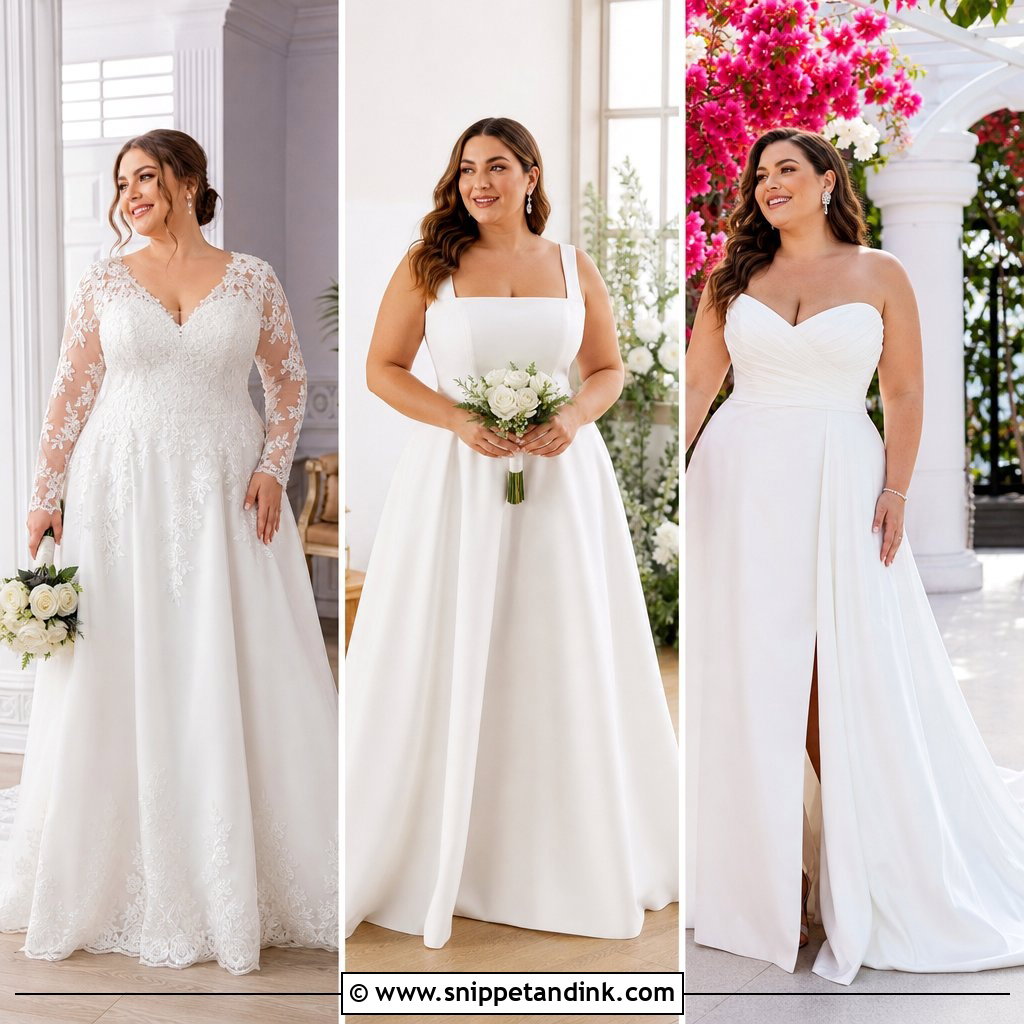
1. A-Line Lace Wedding Dress
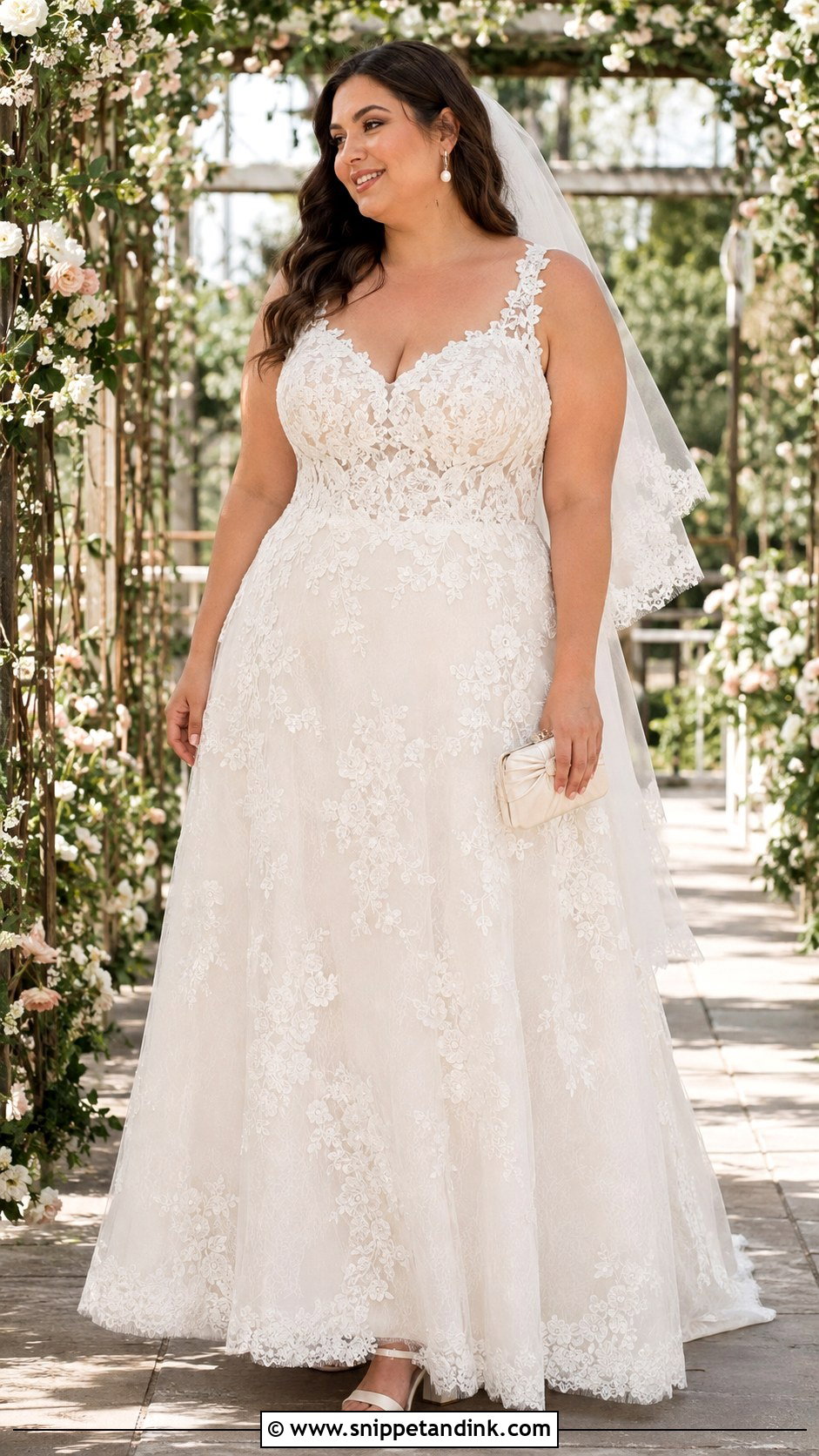
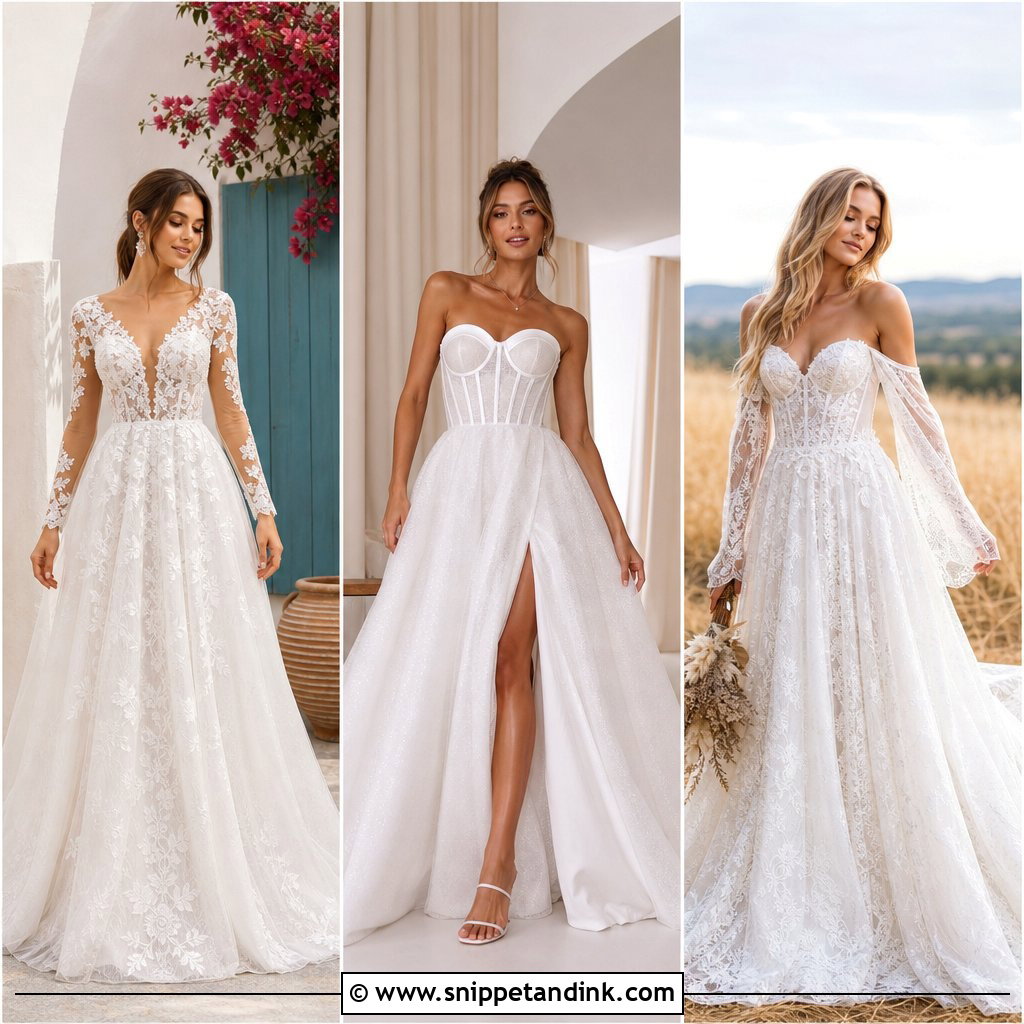
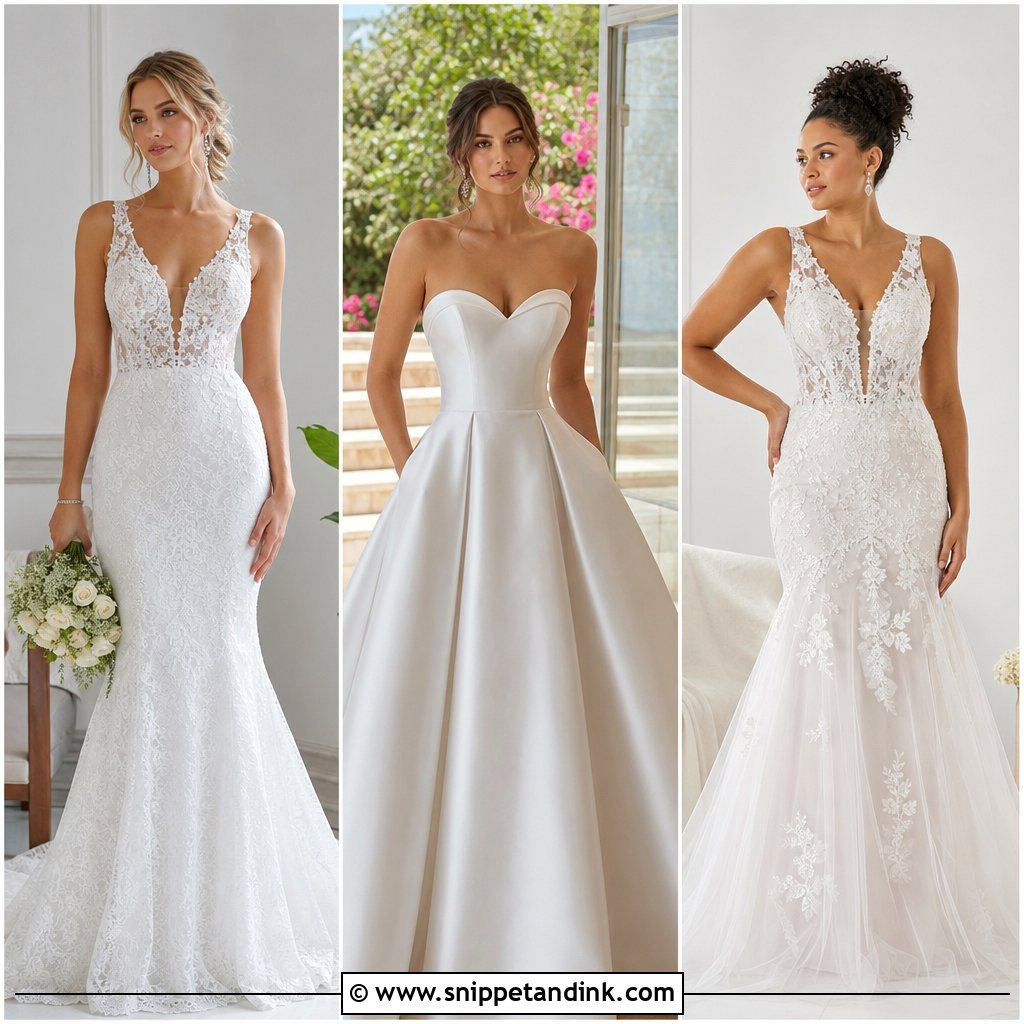
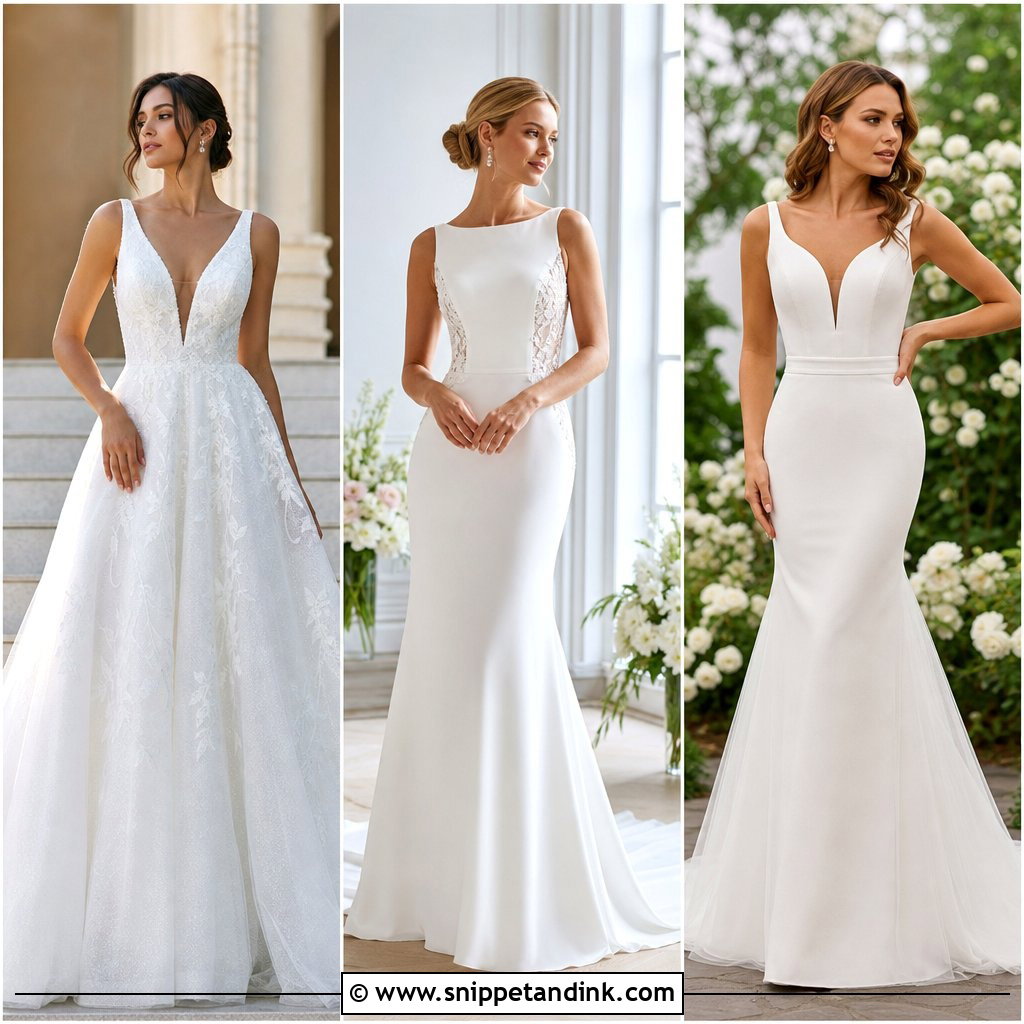
The lace A-line is where I start most first appointments, because it shows me how a bride feels about fit through the waist before we try anything more fitted. Look for a defined natural waist, straps wide enough to hide a bra strap, and a skirt that flows past the hips without clinging. Floral lace laid over a smooth lining gives depth; unlined lace shows every line underneath. A modest V-neck keeps the upper body open. Pearl drops, a fingertip veil and ivory block-heel sandals keep you steady on garden paths, with a small satin clutch for essentials.
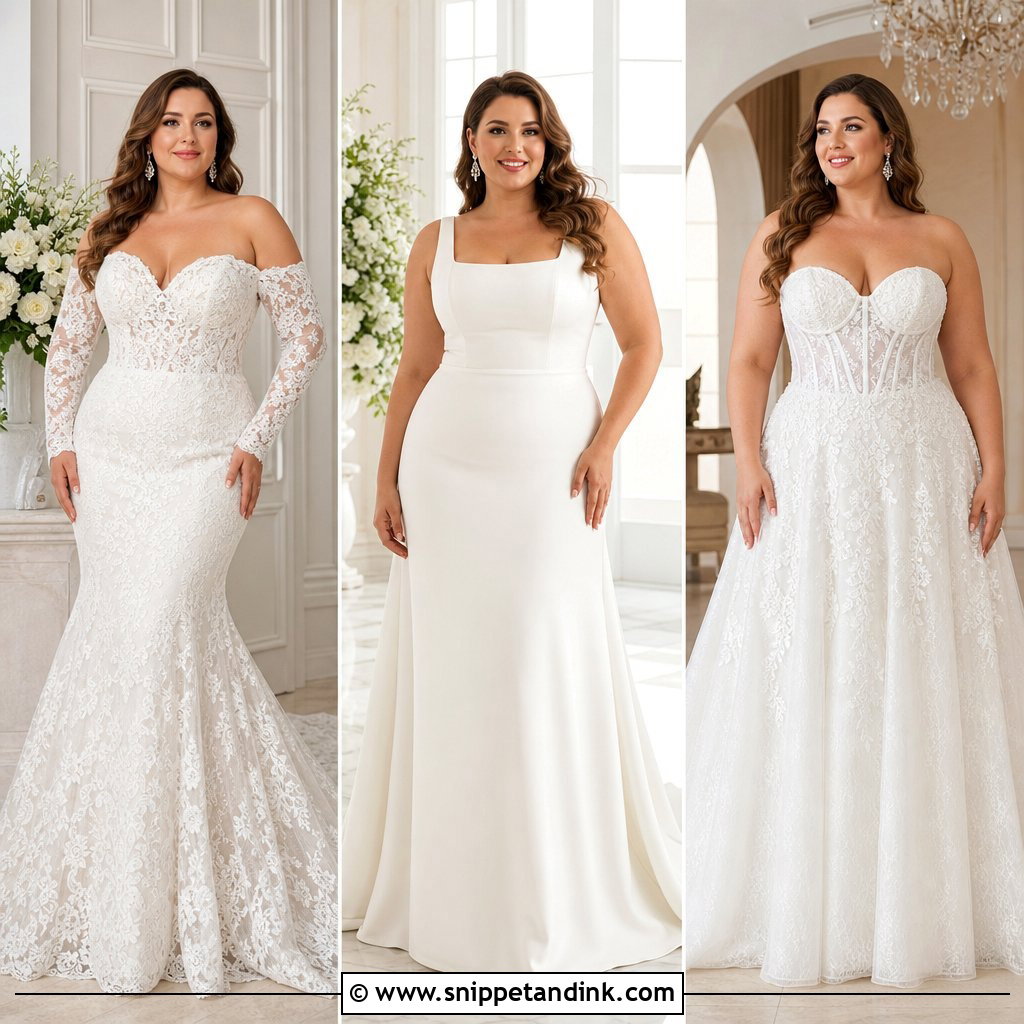
2. Off-the-Shoulder Ball Gown Wedding Dress
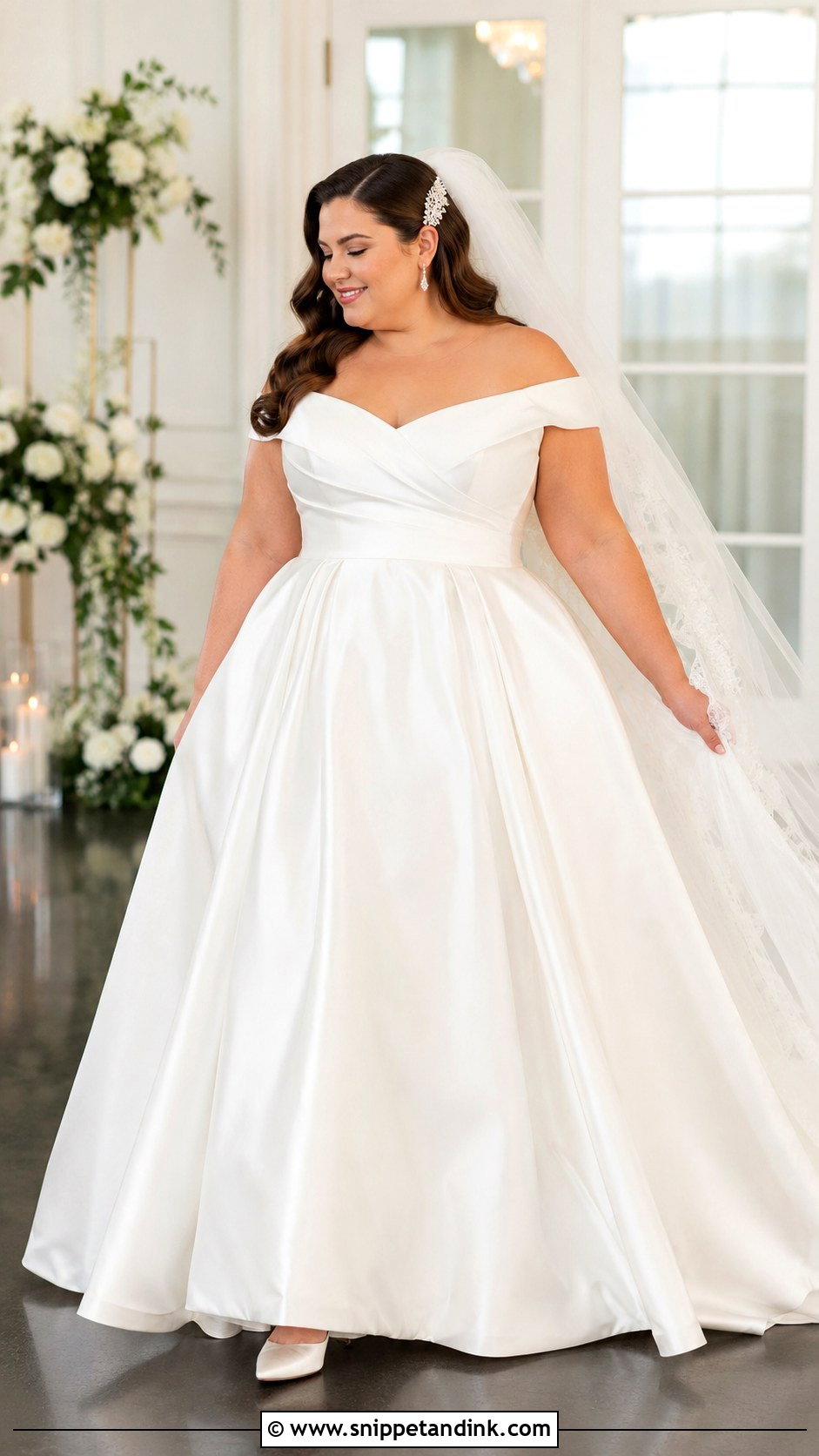
Off-the-shoulder sleeves on a curvy bride need one thing above all: a bodice that holds itself up. Look for internal boning and a waist stay, a hidden ribbon belt that anchors the dress so the sleeves don’t carry the weight. Then the sleeves can sit lightly on the upper arm without digging in. A full satin, mikado or tulle skirt gives the drama. Style it with a crystal comb, small studs and a cathedral veil that follows the train. Flats or low block heels disappear under the skirt and save your feet. Skip the necklace and let the collarbone carry it.
3. Long Sleeve Lace Wedding Dress
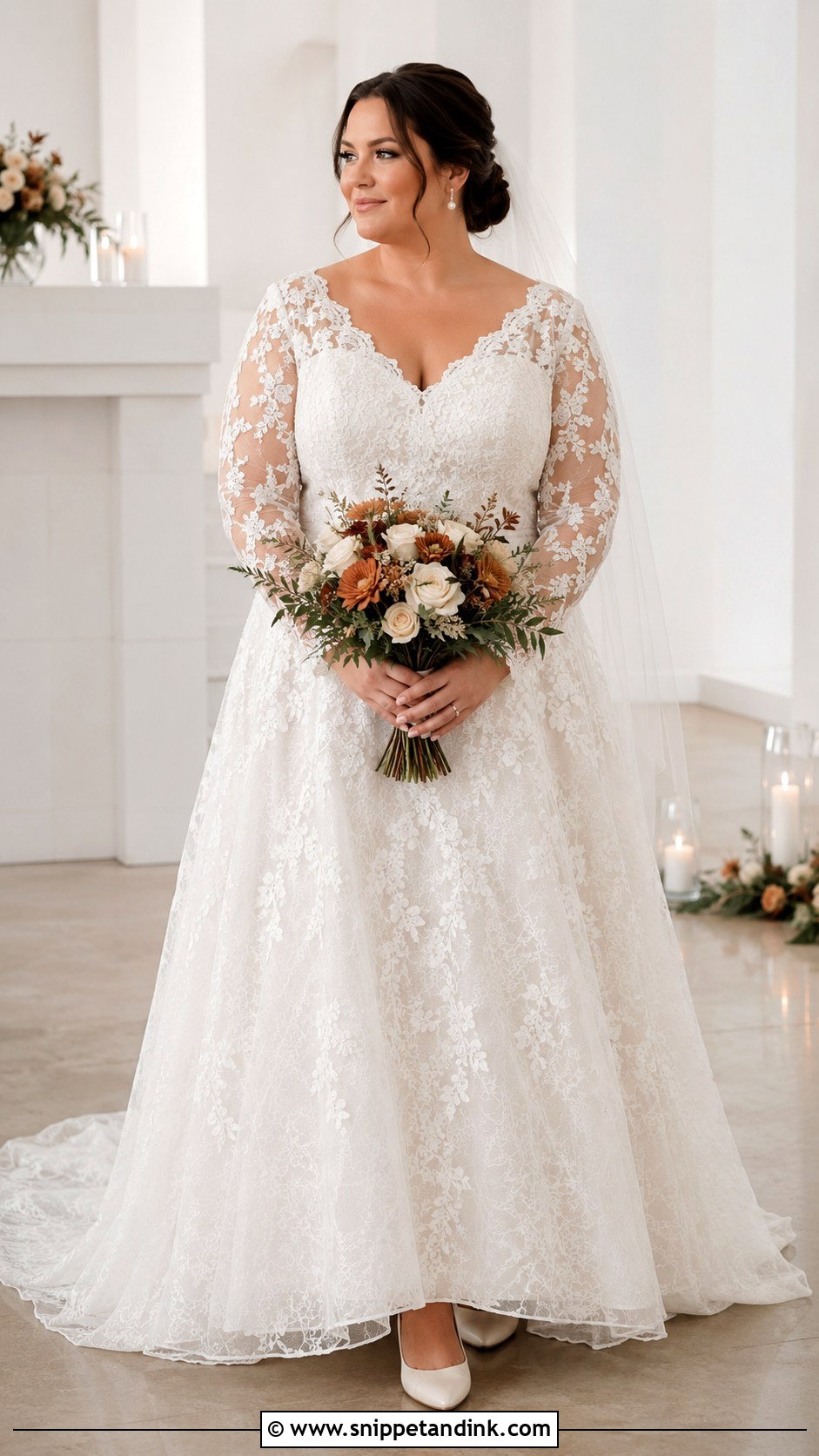
Illusion sleeves with appliqués placed carefully along the arm look delicate, but they need to be fitted to your upper arm, not to the sample’s. Ask how much the mesh can be let out; if the sleeve was cut tight, it may not have enough fabric. Lined sleeves give a smoother, more defined finish. A fitted bodice with an A-line skirt lets the lace stand out. Pearl earrings, a low bun and a light veil under the hair complete it, with closed-toe pumps or flats for cooler months. A bracelet or heirloom ring replaces a necklace. It suits autumn, winter and formal indoor ceremonies.
4. Sweetheart Neckline Wedding Dress
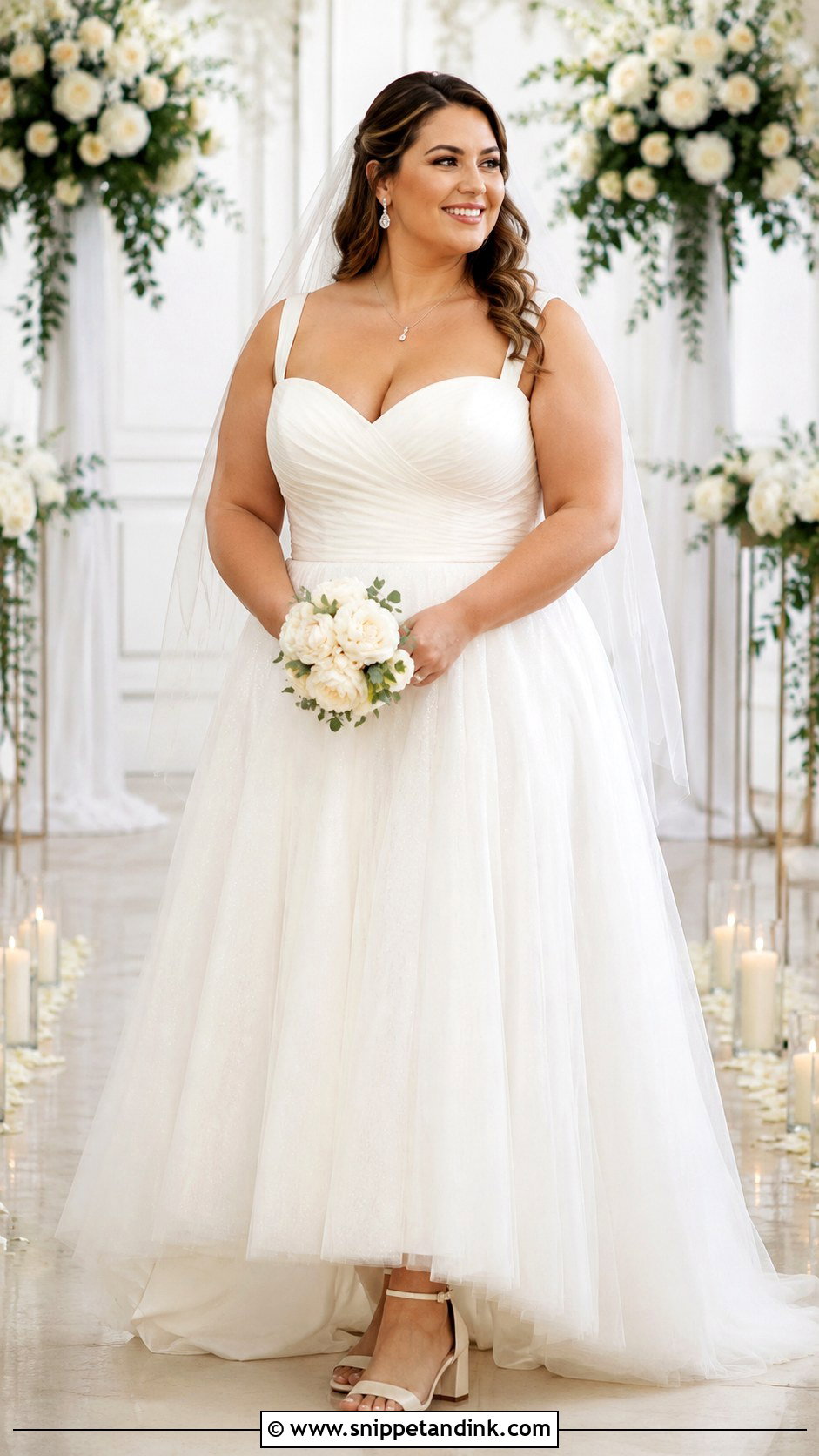
A sweetheart neckline flatters a fuller bust, but only if the cups fit. When cups are too small, the neckline cuts across the chest; too large, they gape. I always have the cups adjusted before anything else on this style. Comfortable boning and wide-set straps add support, and a tulle or organza skirt keeps the dress light. Subtle ruching at the waist adds texture. A short pendant, sparkling earrings and a sheer veil with a clean edge suit it, with ankle-strap block heels underneath. For the reception, swap the veil for a satin bow in your hair and carry a compact bouquet.
5. Corset Bodice Wedding Dress
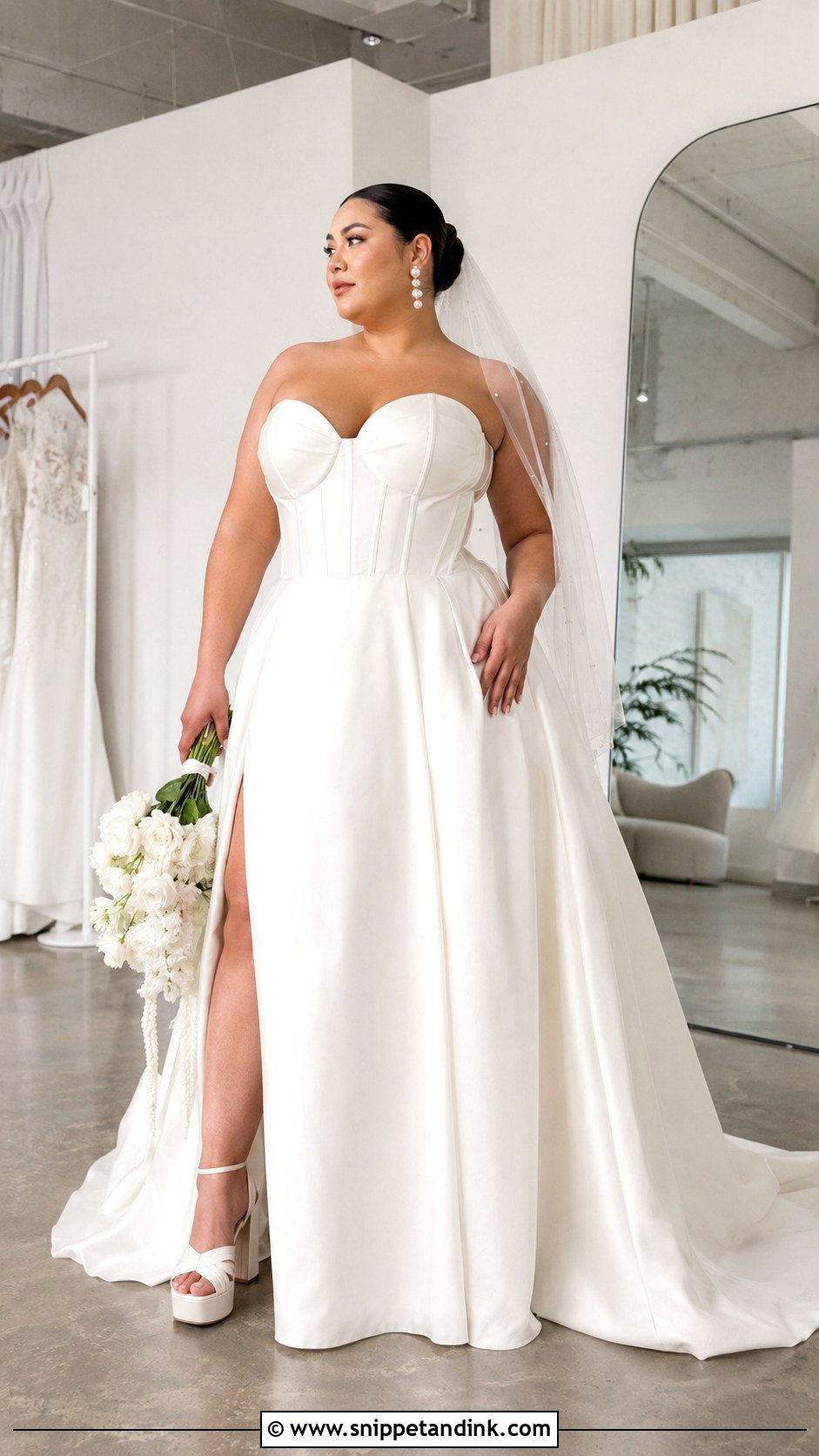
Never size down to make a corset squeeze. The corset should be fitted to your measurements, with proper boning and either adjustable lacing or a strong zip back; that structure is what gives the shape. Lacing is the more forgiving option for curvy brides, because it can be adjusted on the morning to account for how your body feels that day. Pair the bodice with an A-line or a full ball skirt. A sheer fingertip veil, sculptural pearl earrings and cushioned block heels complete it, with a sleek bun to show the neckline. If the seams are on show, keep other accessories simple.
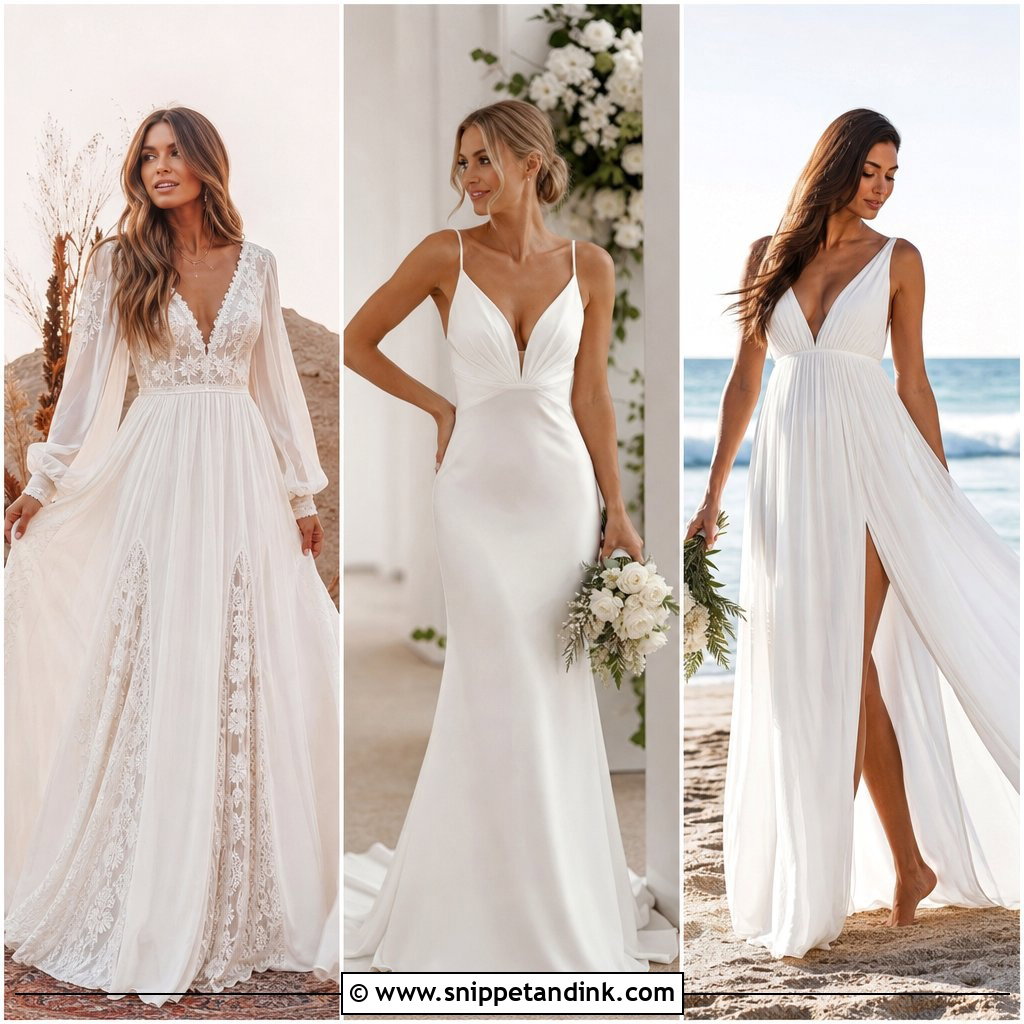
6. Empire Waist Chiffon Wedding Dress
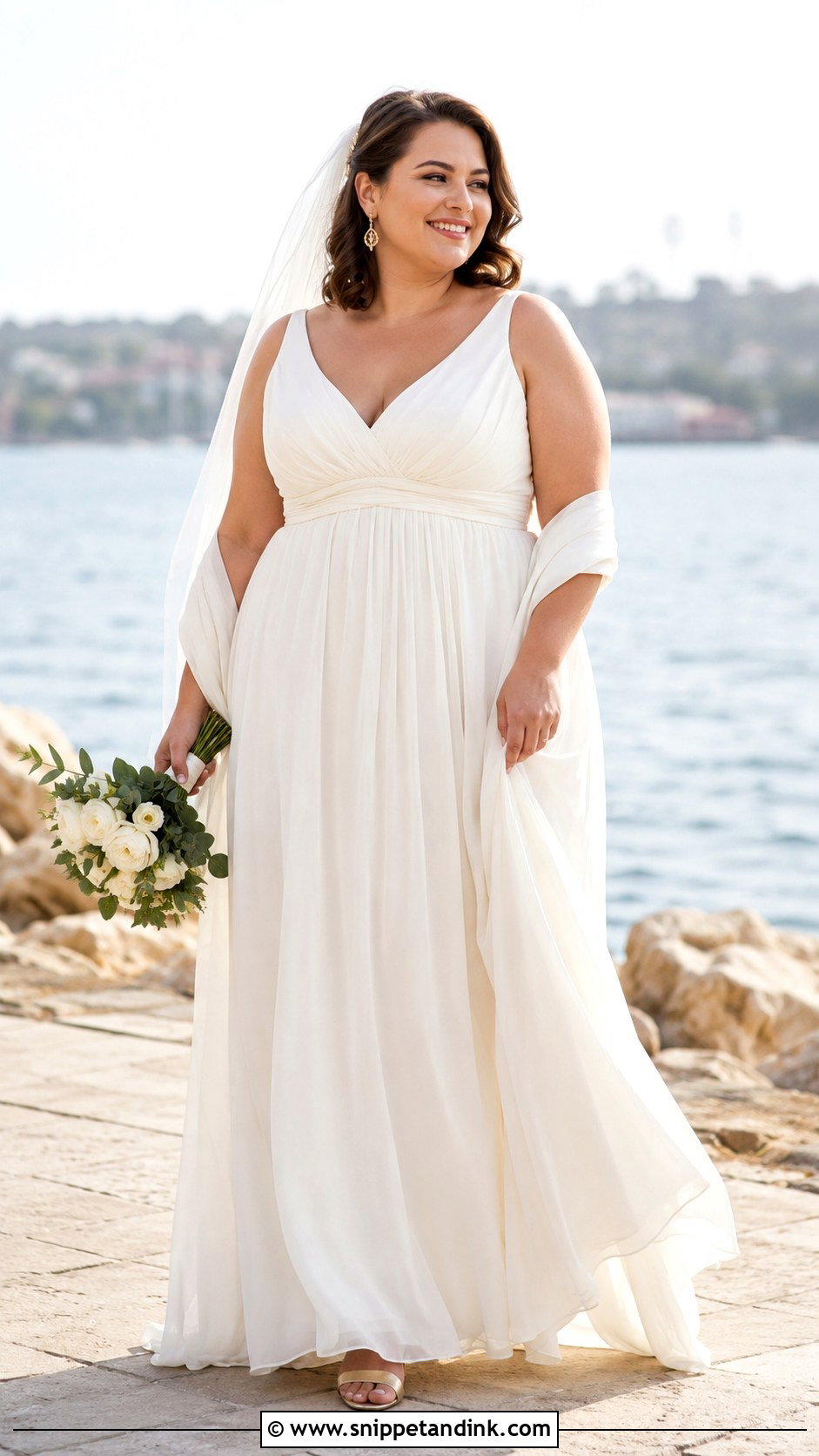
An empire waist wedding dress in chiffon raises the waistline to just under the bust and lets the skirt fall loose, which many brides find more comfortable than a fitted midsection. The risk is shapelessness; wide straps and a structured bodice inside fix that. Ask for several lined layers of chiffon, because a single layer turns sheer in sunshine. Delicate gold or pearl earrings, a shoulder-length veil and low sandals suit it, with a loose updo. Carry a light wrap for outdoor ceremonies. It suits warm weather, waterfront venues and small destination weddings.
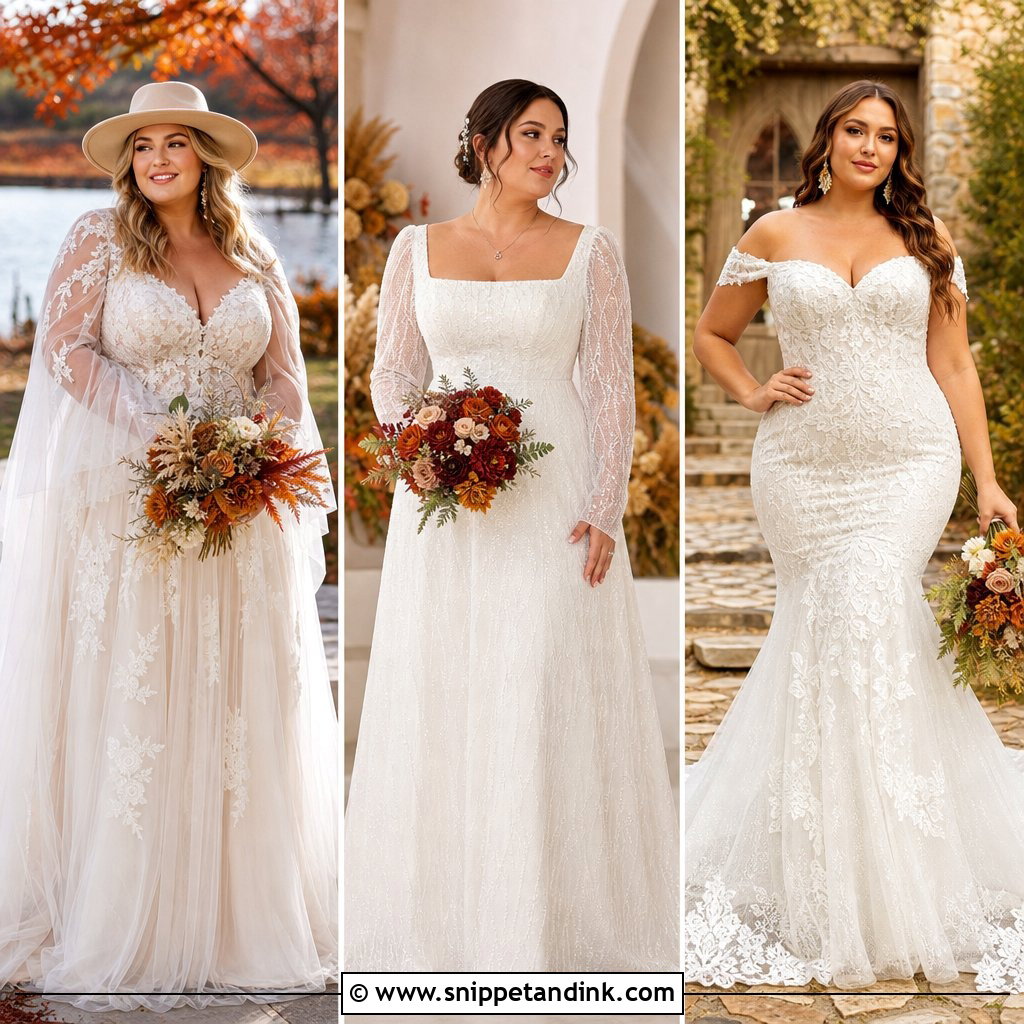
7. Mermaid Wedding Dress
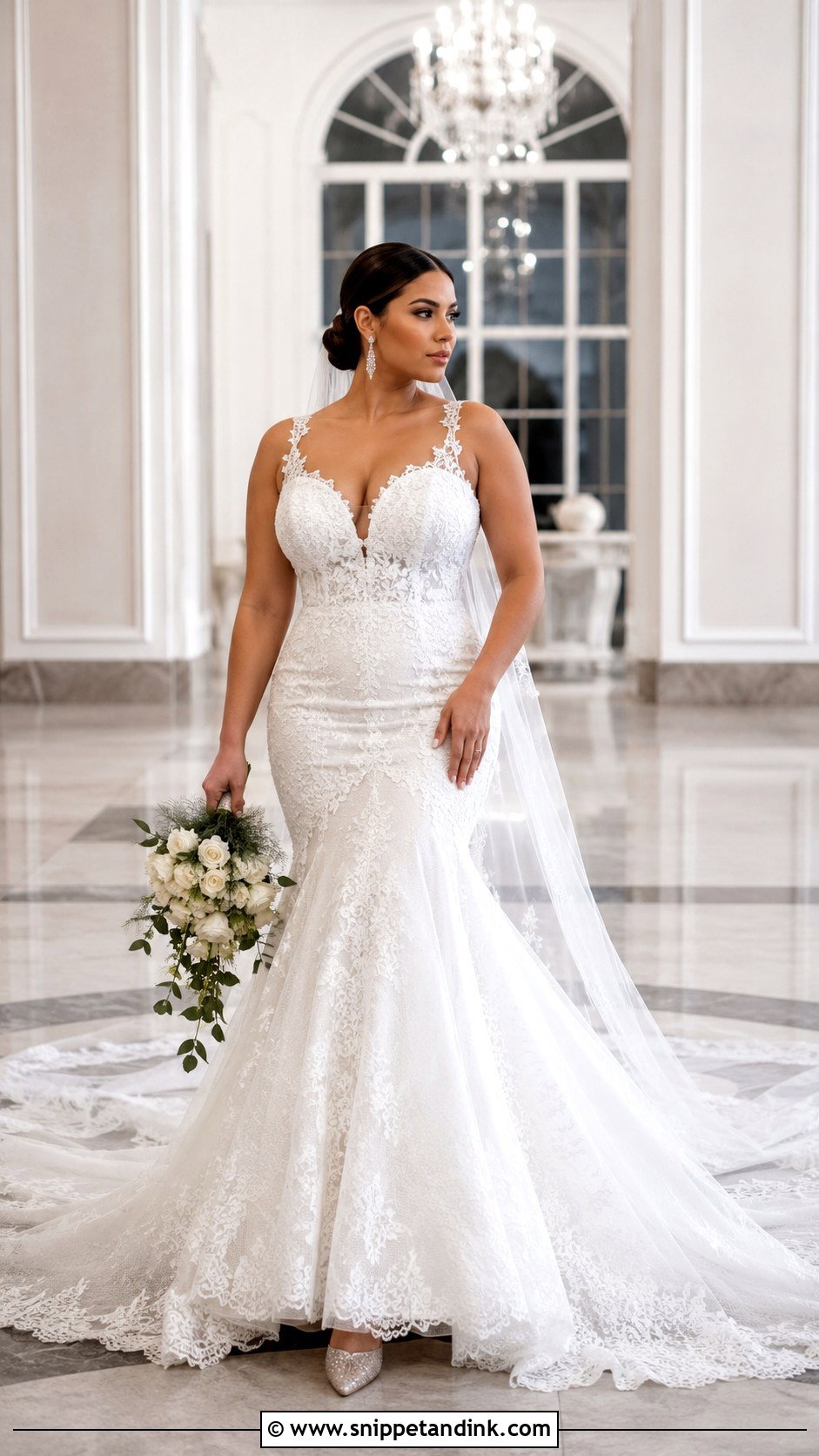
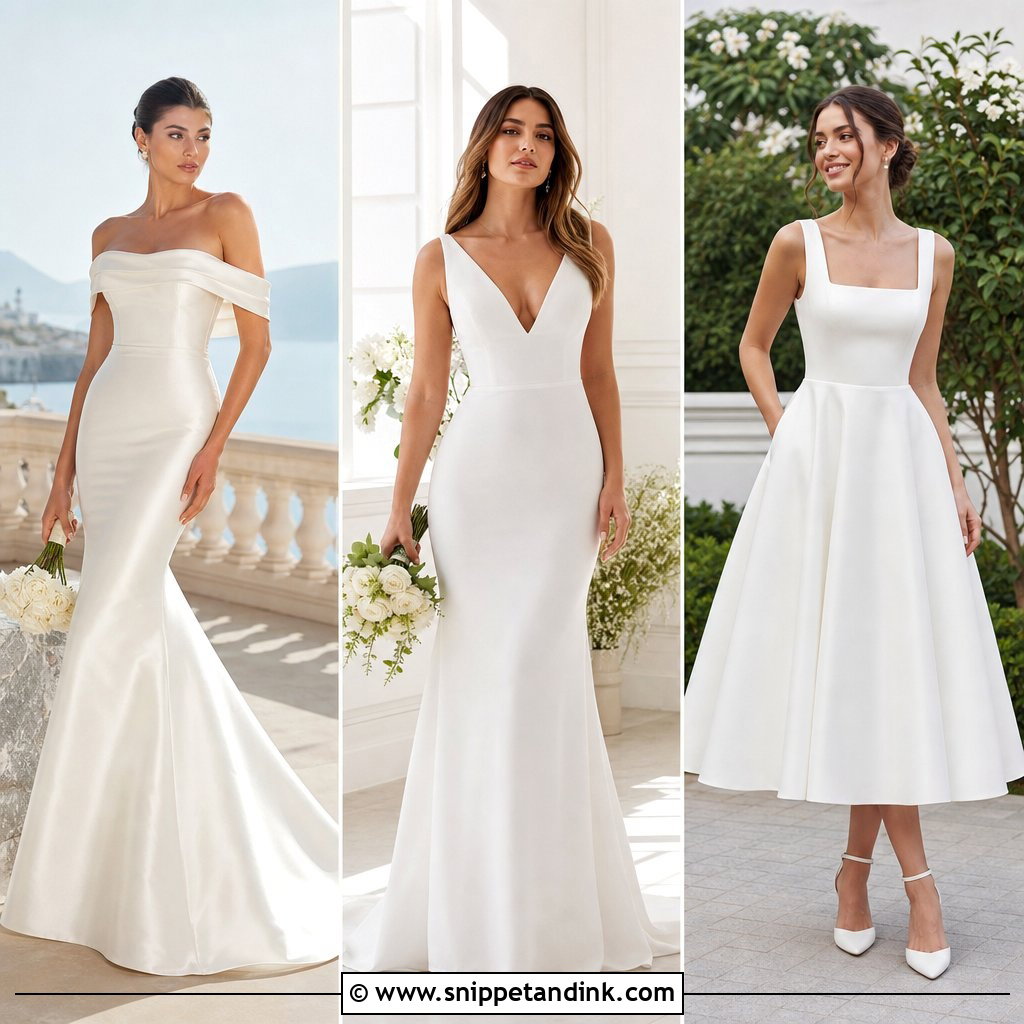
Curvy brides are often told to avoid mermaids, and I disagree. What matters is where the flare starts. A flare that begins at or slightly above the knee lets you walk normally; one set low makes you shuffle. Stretch lining and firm inner structure smooth the hips. Lace appliqués or plain crepe both work. Long earrings, a smooth cathedral veil and pointed heels at a height you can manage suit it, with a low bun or polished waves. A removable overskirt for the ceremony, taken off for the reception, gives you two looks.
8. Fit-and-Flare Crepe Wedding Dress
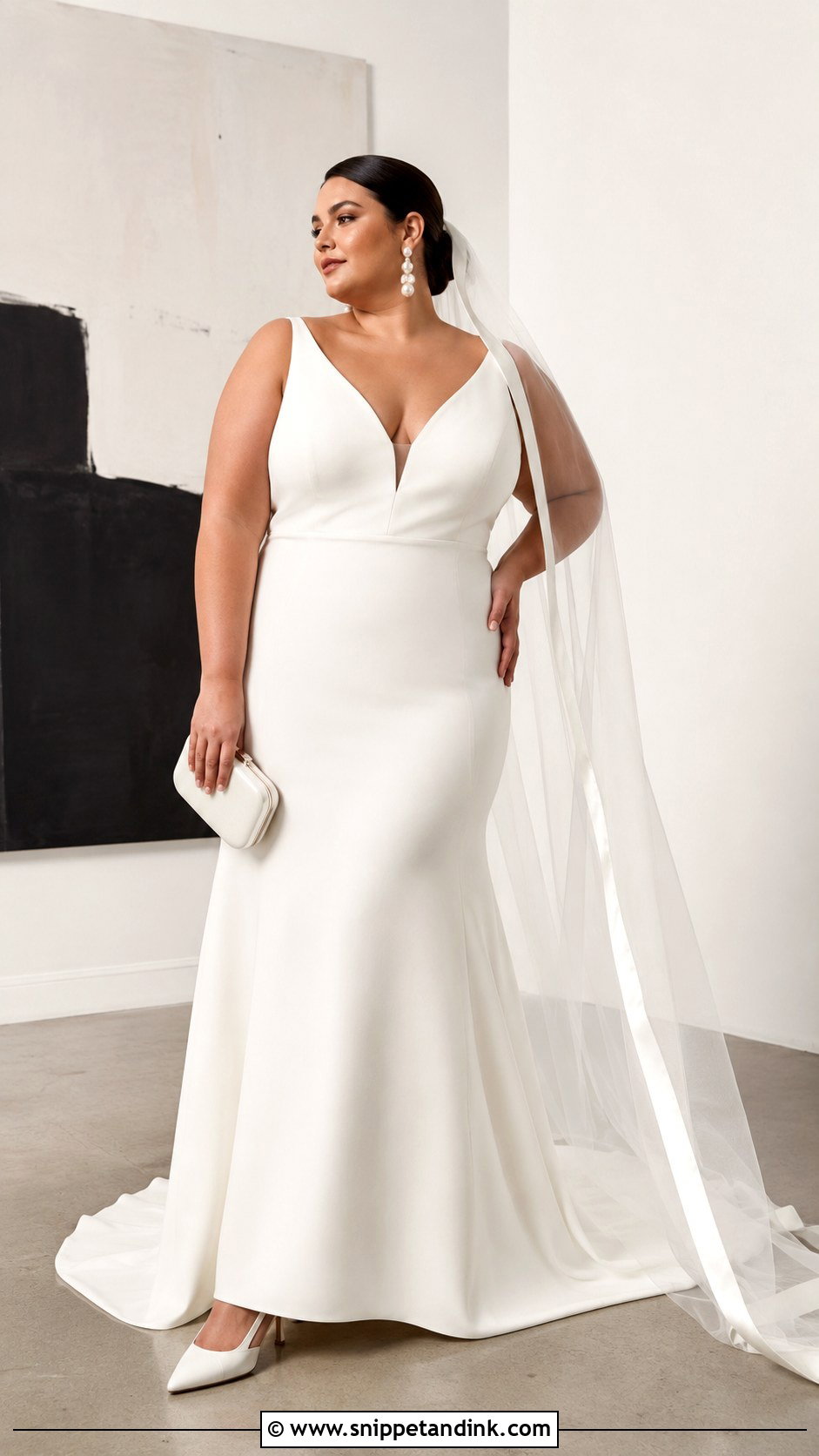
Crepe has the weight to skim curves rather than cling, as long as it is thick. Thin crepe shows every seam and underwear line; a heavier stretch crepe with a fully lined bodice looks polished. The fit-and-flare widens gradually below the hips, so there’s more room to move than in a mermaid. Pearl statement earrings, a sleek updo and a long veil with a narrow satin edge keep it minimal, with white pointed pumps or low slingbacks. If the front is plain, a back detail such as covered buttons or a detachable bow gives the photographer something to capture.
9. Square Neck Wedding Dress
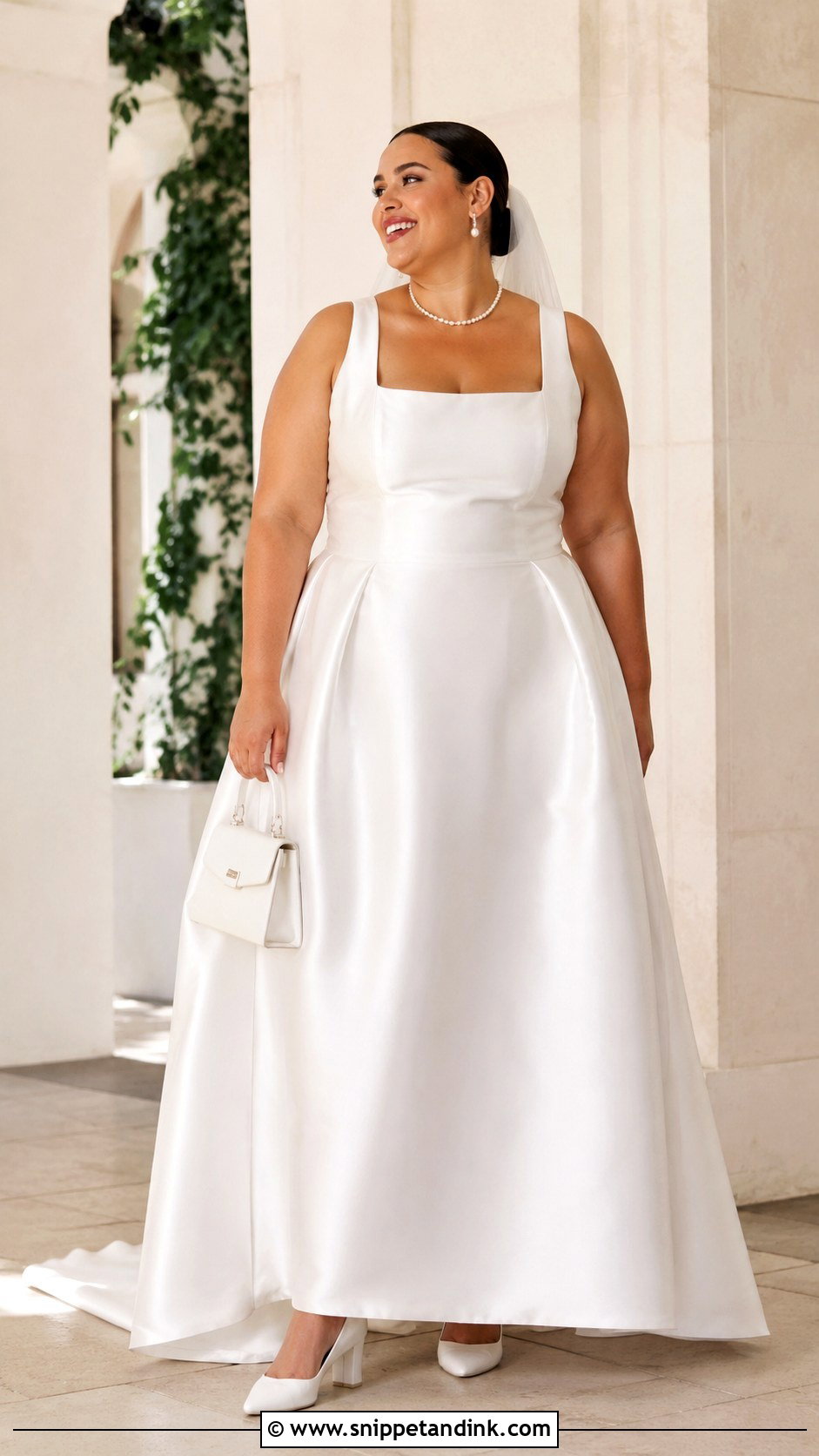
Wide straps and a square neckline are a strong combination for a fuller bust: they support, frame the upper body and carry a proper bra. An A-line or gently fitted skirt balances the shape. Satin gives a crisp, formal finish; crepe feels softer. A short pearl necklace, matching earrings and a veil behind a smooth bun suit it, with ivory block-heel pumps and a small structured bag for portraits. Short puff sleeves add a romantic note without changing the neckline. The corners of a square neck can gape on the curve of the bust, so check them while seated.
10. V-Neck Wedding Dress
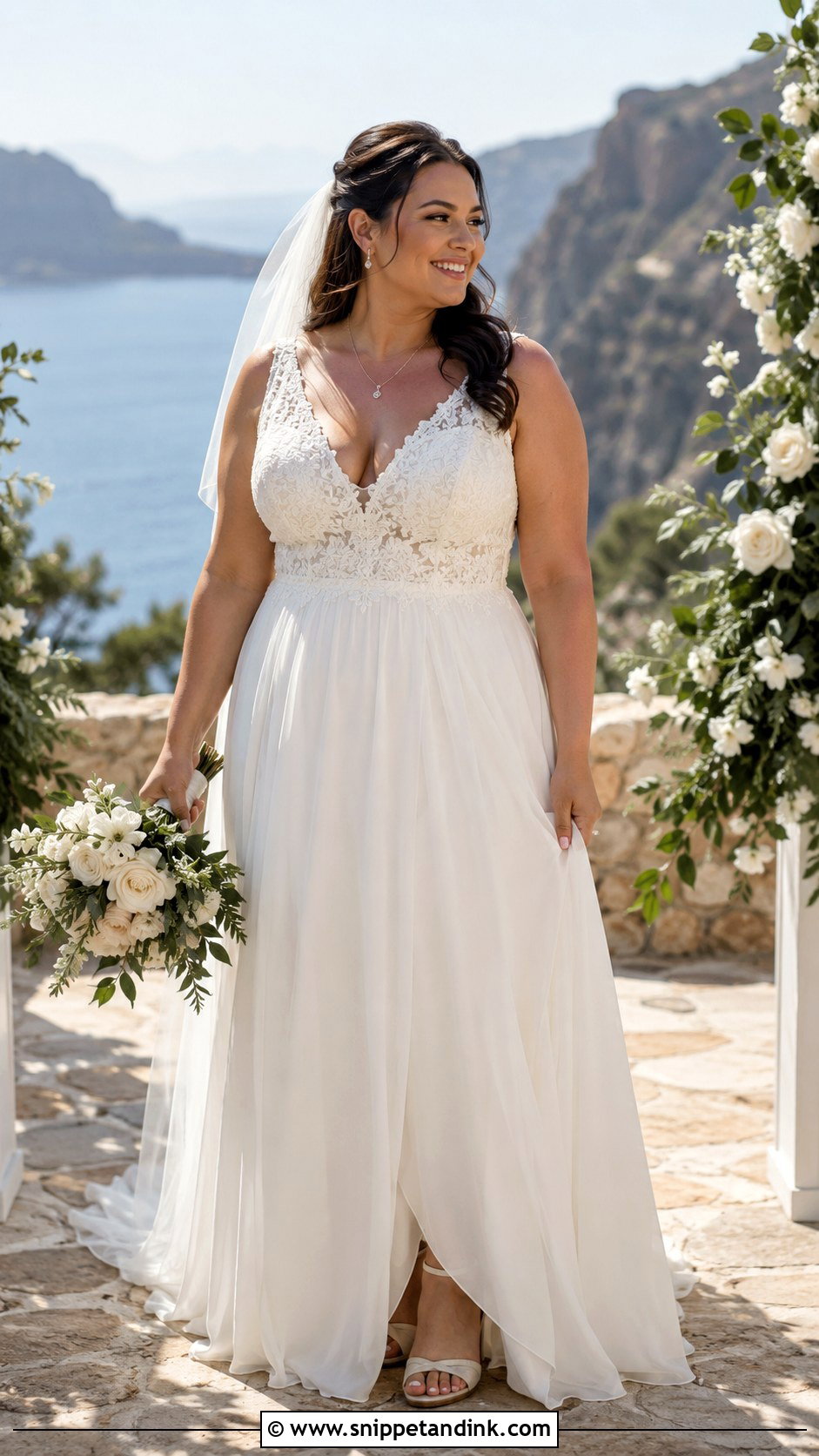
A V-neck draws a long line and makes room for a favourite necklace. Set the depth to your comfort, and ask whether there’s a mesh panel or underlayer at the point of the V; a deep V without support shifts every time you move your arms. A lace bodice over a flowing chiffon skirt reads romantic, a full crepe gown minimal. A delicate pendant, small drops and a light veil are enough, with wide-heeled sandals for stability. Half-up hair keeps the neckline visible. Change the fabric and accessories and the same dress works on a beach or in a ballroom.
11. High Neck Lace Wedding Dress
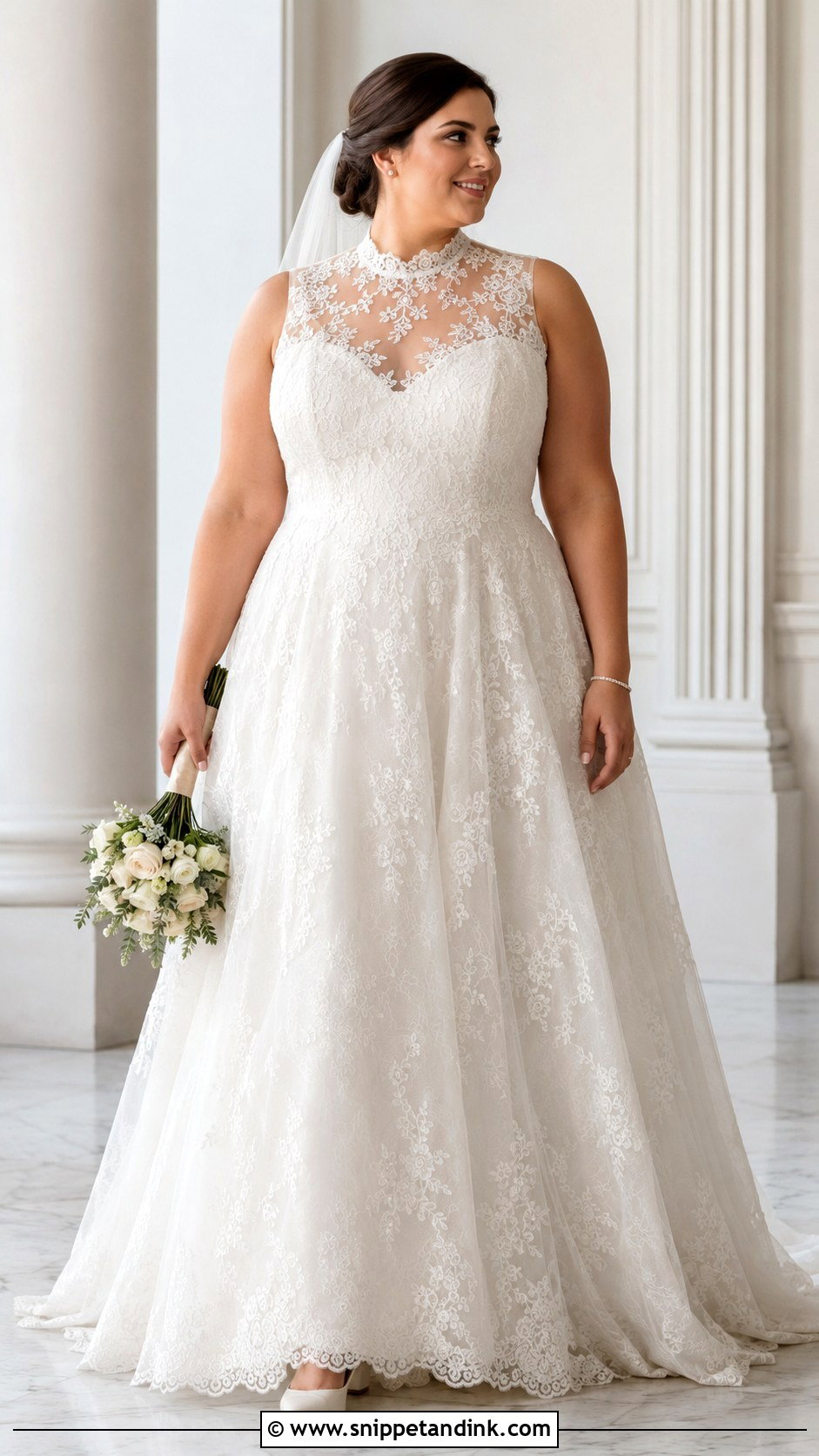
High necks worry some curvy brides, who fear the bust will look larger. With a soft illusion neckline and lace motifs carried across the collar and shoulders, the effect is the opposite: the eye moves upward. A sleeveless bodice keeps it balanced, and an A-line skirt keeps the focus on the upper detail. Pearl studs, a narrow bracelet and a small comb replace a necklace. Closed-toe pumps and a simple veil under a low bun finish it. An ivory lining looks traditional; a nude lining makes the lace pattern pop. Make sure the collar doesn’t grip when you turn your head.
12. Strapless Satin Wedding Dress
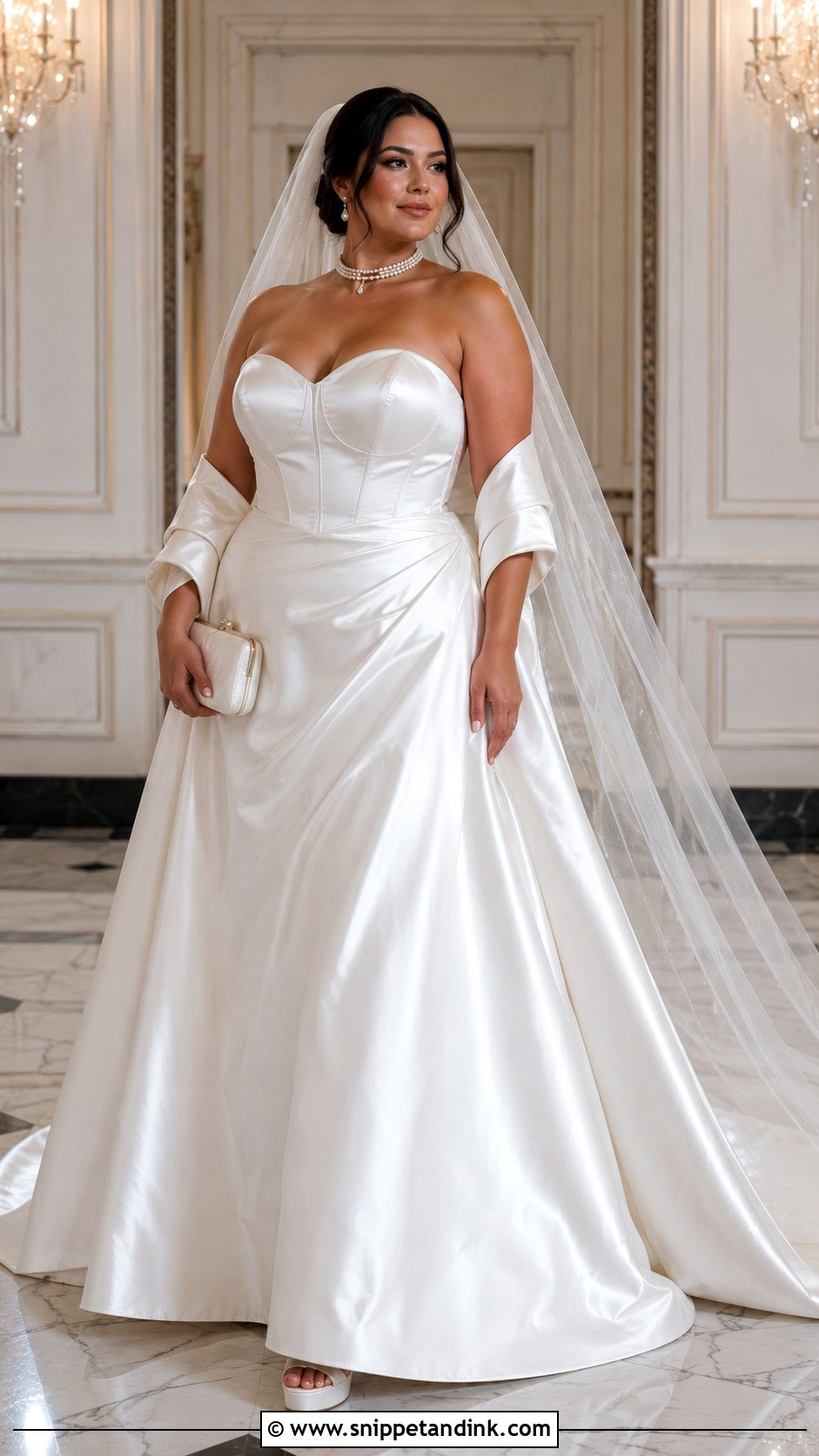
Strapless in plus sizes stays up because of what’s inside, not because it’s tight. A built-in corset, a waist stay and a bodice fitted exactly at the waist do the work, and if any of them is missing you’ll be tugging it up through dinner. An A-line skirt moves gently; a ball skirt adds volume. A pearl choker, drop earrings and a long sheer veil soften the smooth satin, with ivory platform heels and a satin clutch. For a church ceremony, a matching bolero or off-shoulder wrap gives coverage and comes off for the party.
13. Boho Wedding Dress With Bell Sleeves
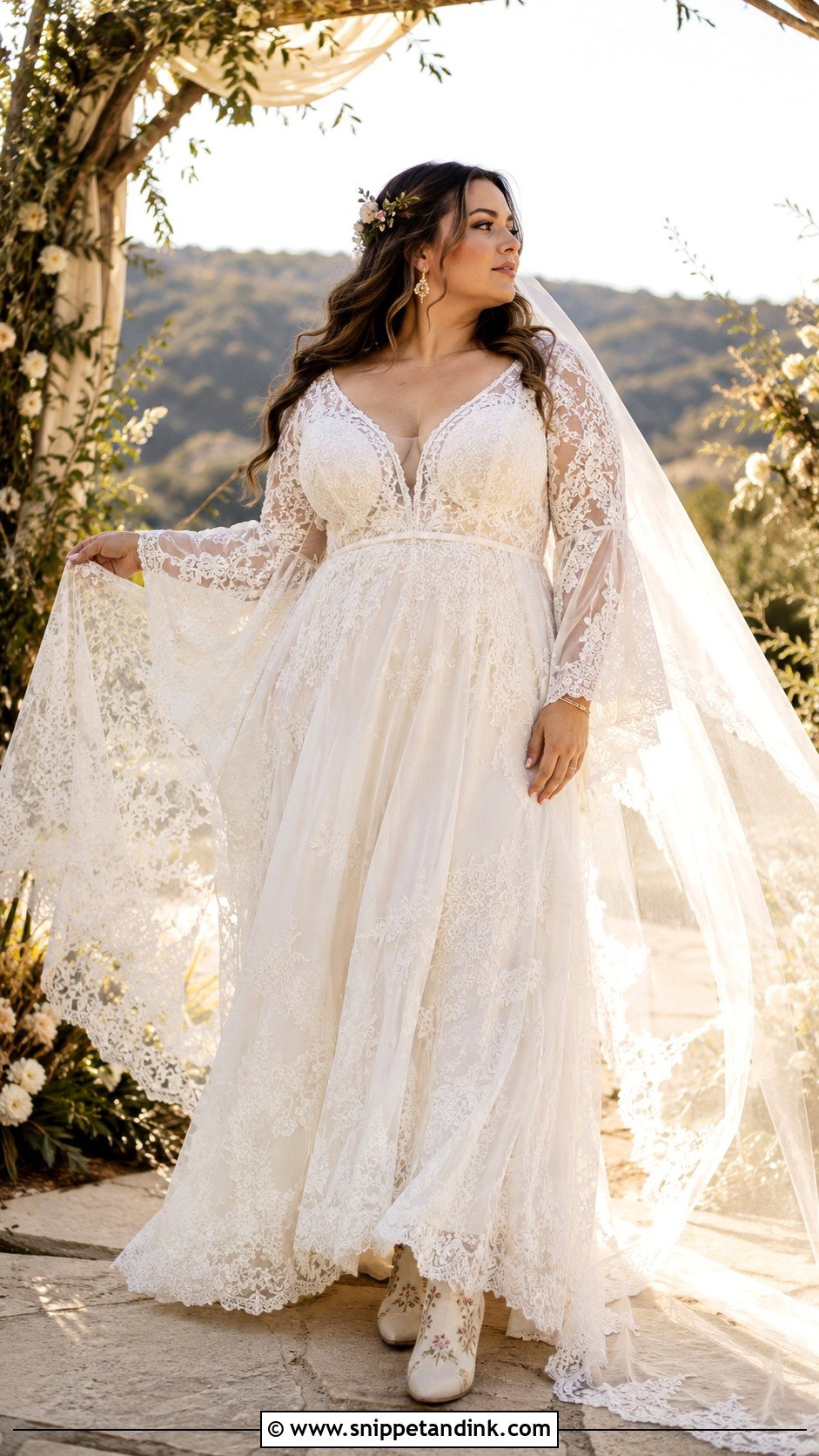
Crochet-style lace and bell sleeves bring texture and a looser, relaxed mood. Look for a proper lining under the lace, a defined waist and sleeves that open below the elbow. Bell sleeves dip into food and catch on bouquets, so practise holding the flowers. The flowing skirt suits outdoor settings. Loose waves, a small floral hairpiece and gold earrings fit the style; block-heel sandals or embroidered bridal boots handle grass. A lace-edged cape veil can replace a traditional veil and come off later. Keep the bouquet loose and natural.
14. Tea-Length Wedding Dress
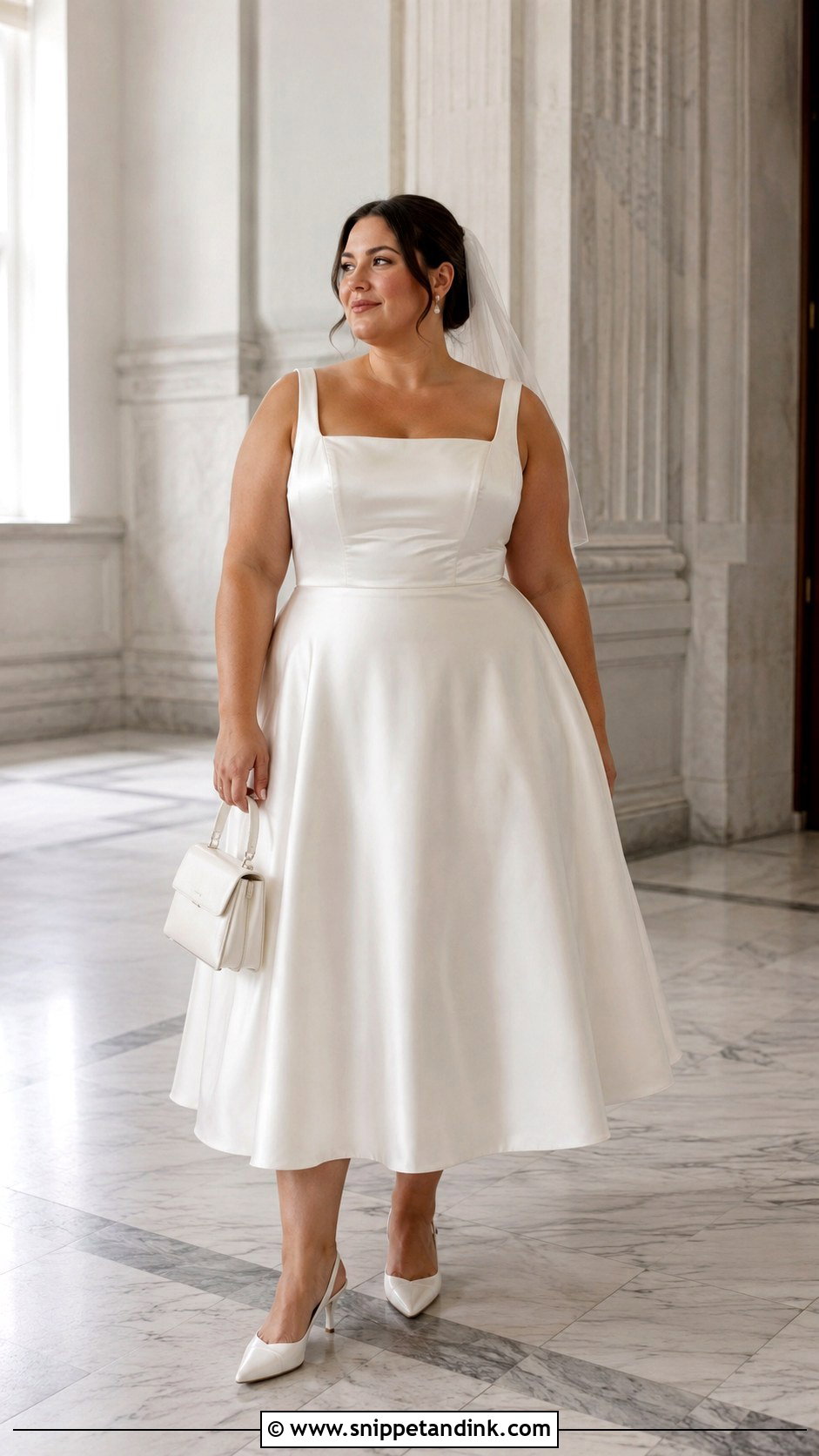
Tea length sits between knee and ankle, so the shoes become part of the look. A structured bodice with a flared skirt is the classic version; a smooth satin midi is more modern. Pointed slingback pumps, pearl earrings and a short veil or decorative headband complete it, with a small top-handle bag for photos. The hem needs a seamstress, since a length that falls at the widest point of the calf looks unplanned; just below that point usually looks intentional. It’s comfortable and cheerful, and it works for civil ceremonies, daytime parties, small weddings and as a second look.

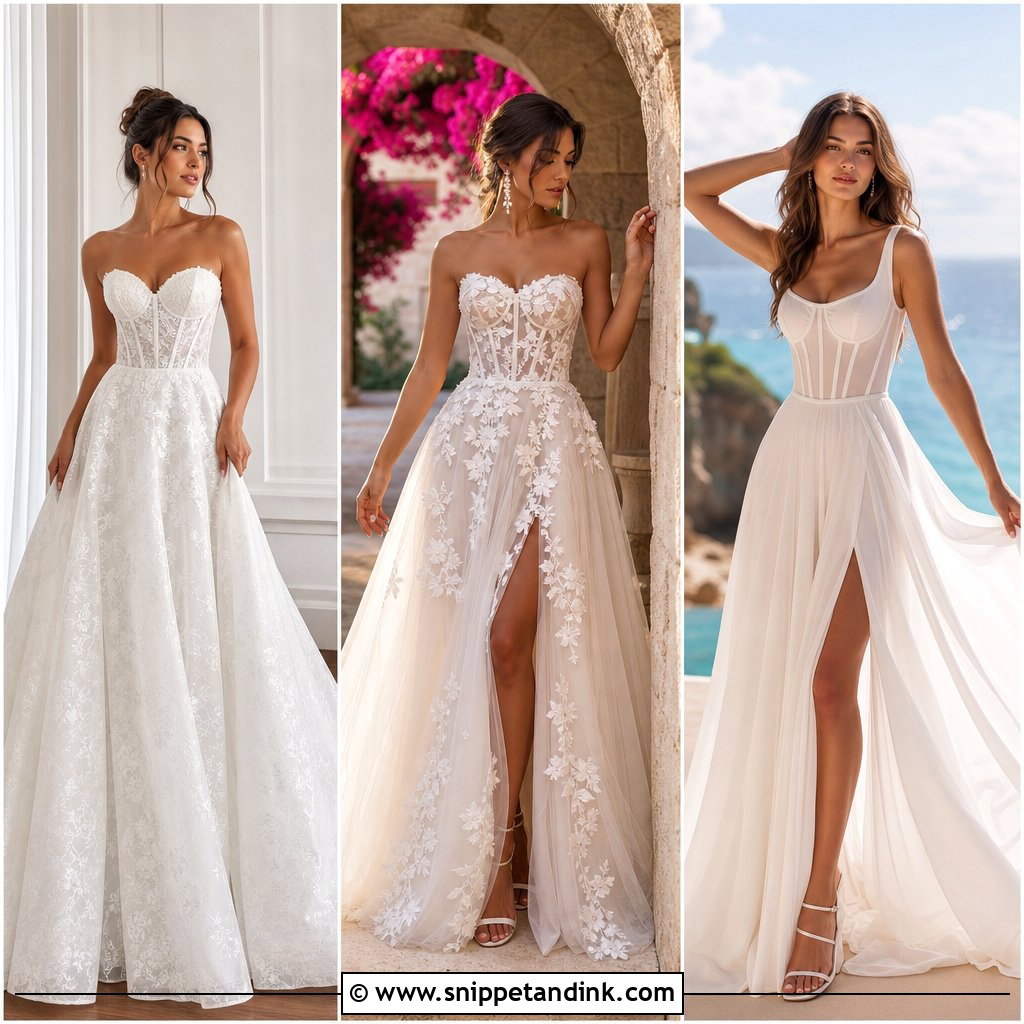
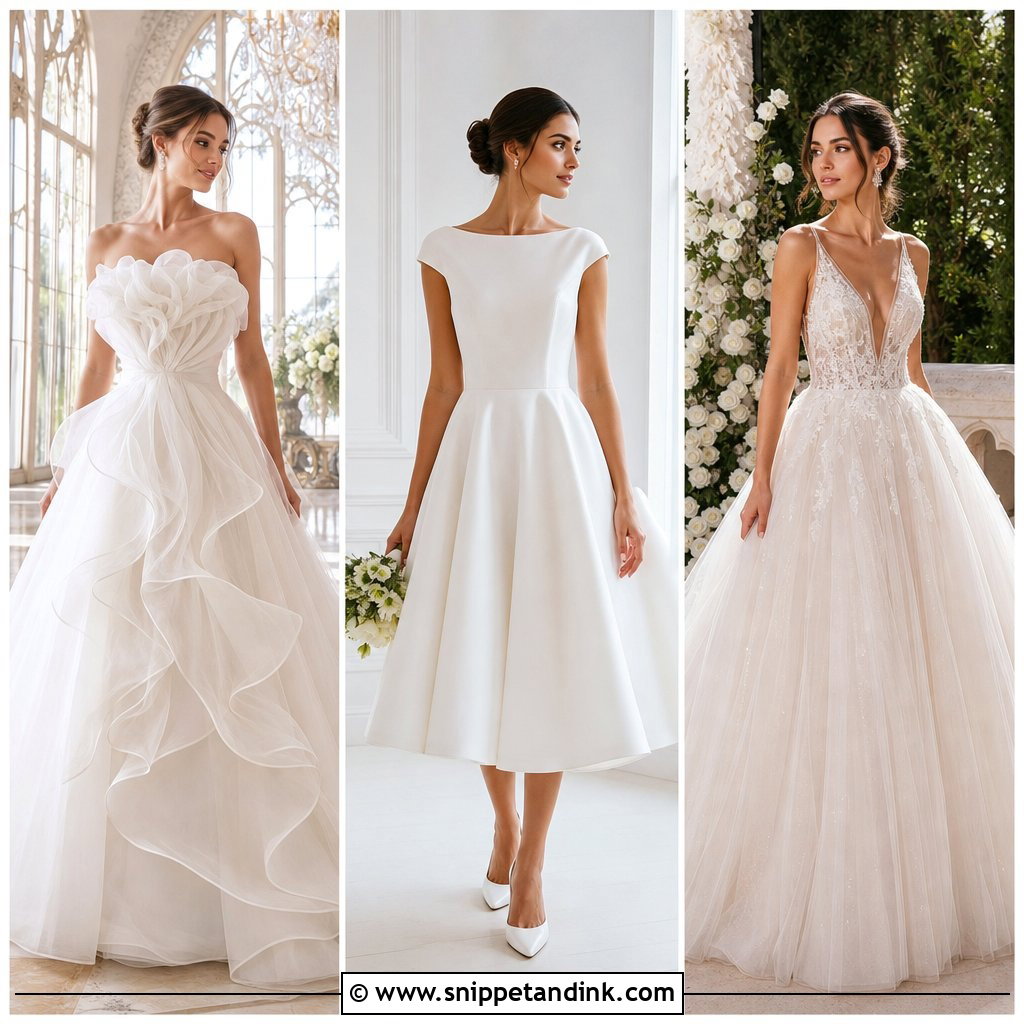
15. Simple Sheath Wedding Dress
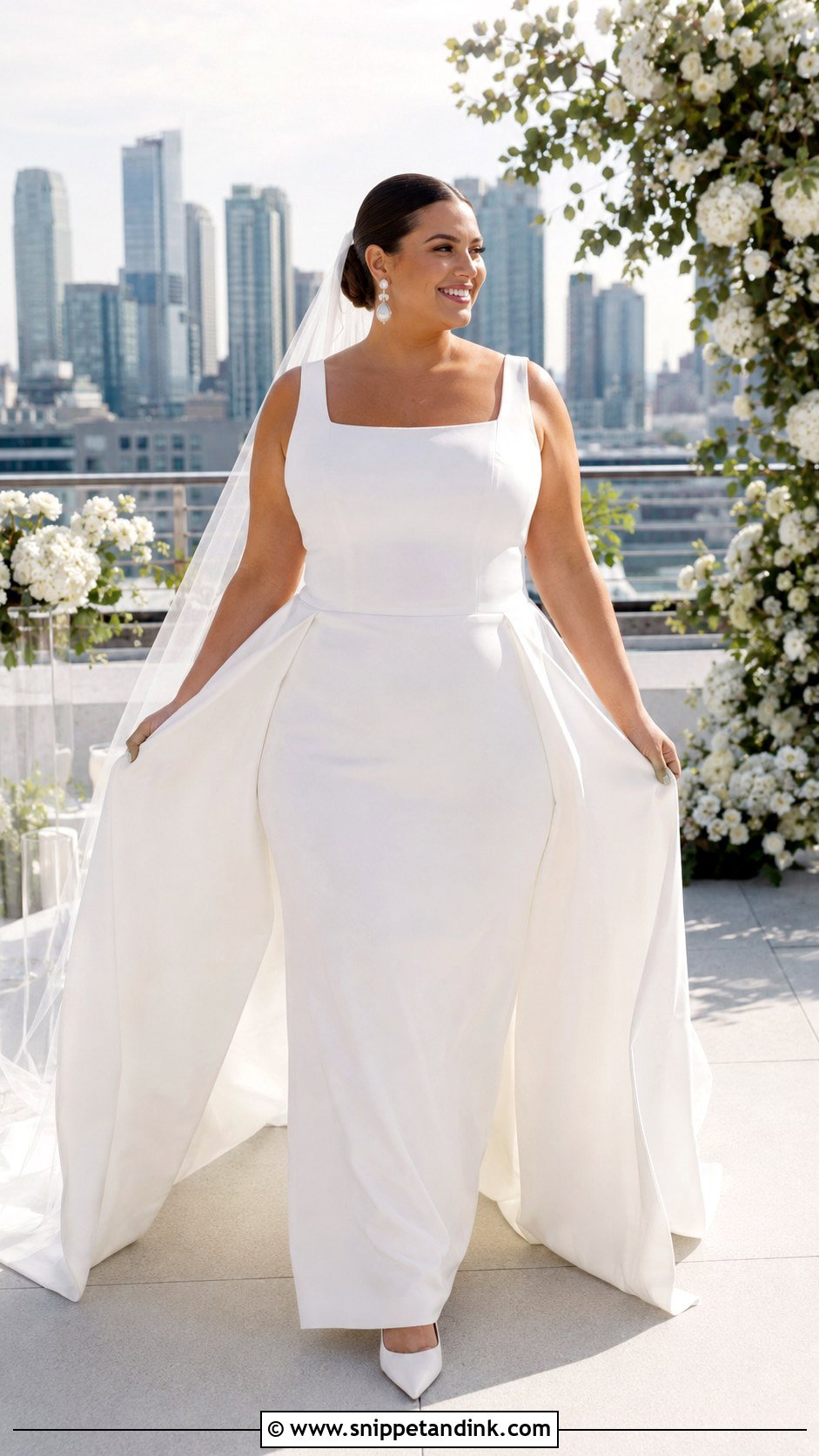
The sheath is the dress I suggest when a bride wants something very simple and very comfortable. It falls in a straight line with no wide skirt or train. Choose lined stretch crepe, satin or a heavyweight jersey; light jersey clings and shows every line. Wide straps, a draped neckline or short sleeves add support. Sculptural earrings, a low bun and a narrow cathedral veil supply the drama, with pointed flats or kitten heels. A detachable overskirt turns it into two looks. It suits rooftops, city halls and modern venues.
16. Floral Appliqué Wedding Dress
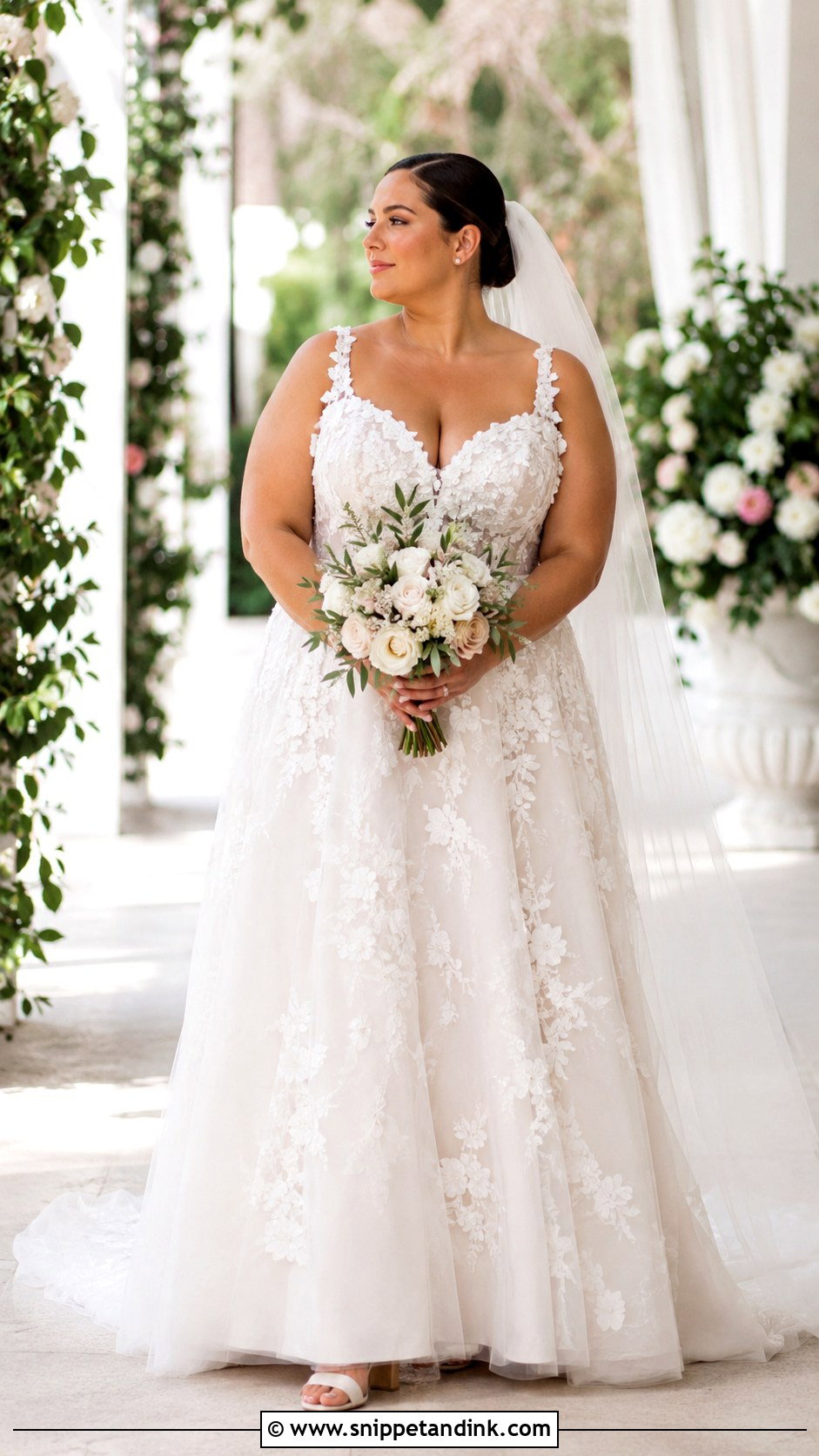
Appliqués work best when they’re dense on the bodice and thin out down the skirt. That gradient keeps the dress from feeling covered all over, and on a curvy figure it draws the eye up. An A-line gives the flowers space, and supportive straps with a defined waist keep it comfortable. Pearl studs, a plain tulle veil and ivory block-heel sandals keep the rest calm. Keep hair sleek so it doesn’t compete with the flowers, and choose a bouquet with fewer flower varieties. When the side seams are taken in, ask the seamstress to move appliqués so they flow across the seam.
17. Cape Sleeve Wedding Dress
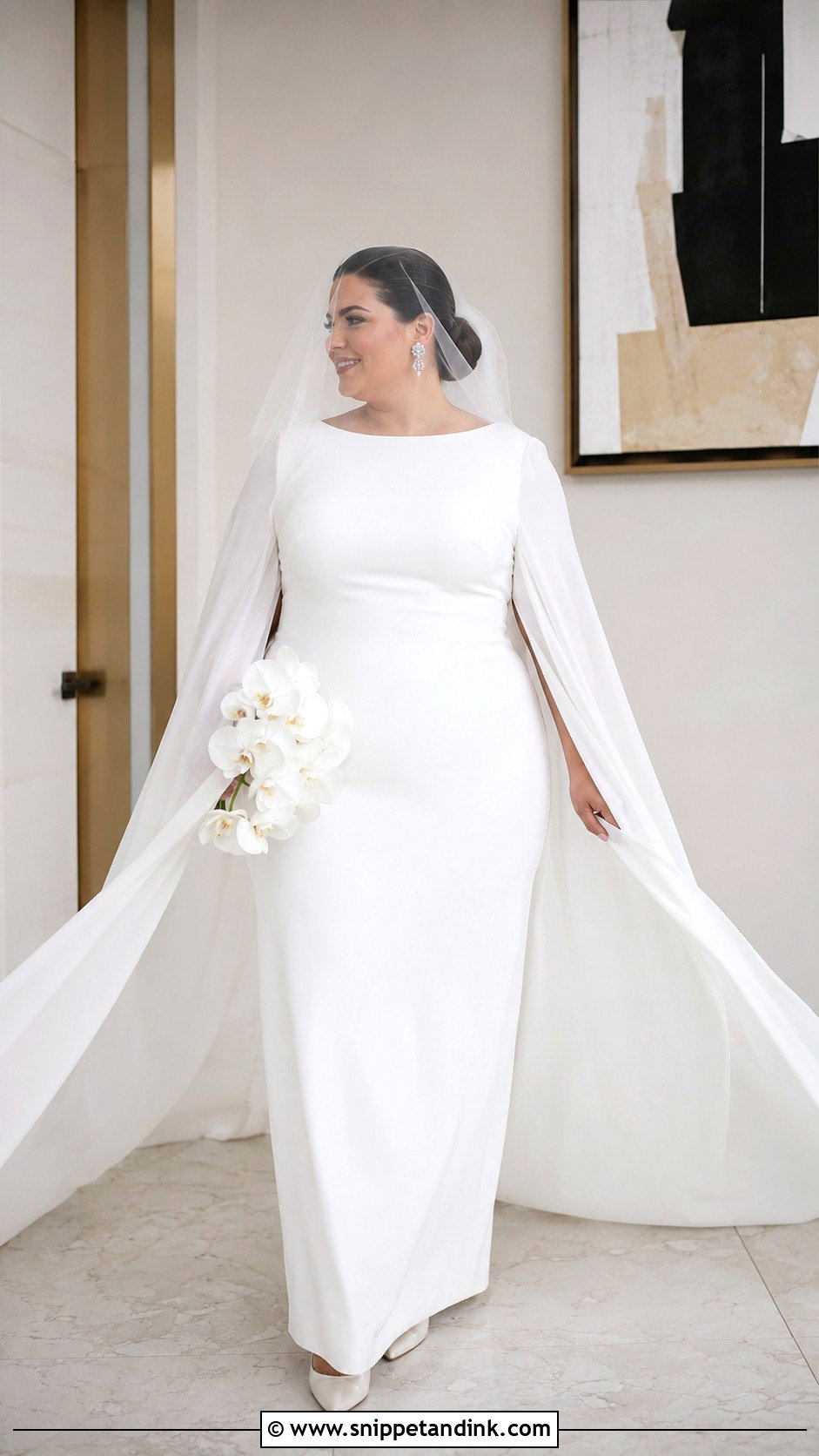
A cape can fall from the shoulders, attach at the neckline or extend from the back, and it gives movement and arm coverage without a fitted sleeve. Pair it with a simple crepe A-line or column so the cape stays the feature. Polished earrings, a smooth bun and pointed ivory pumps complete it. If the cape reaches the floor, skip the long veil; a short blusher can still work for the ceremony. Capes need weight at the hem to fall properly, and very light chiffon ones blow sideways outdoors, so check the venue before deciding.
18. Two-Piece Wedding Dress
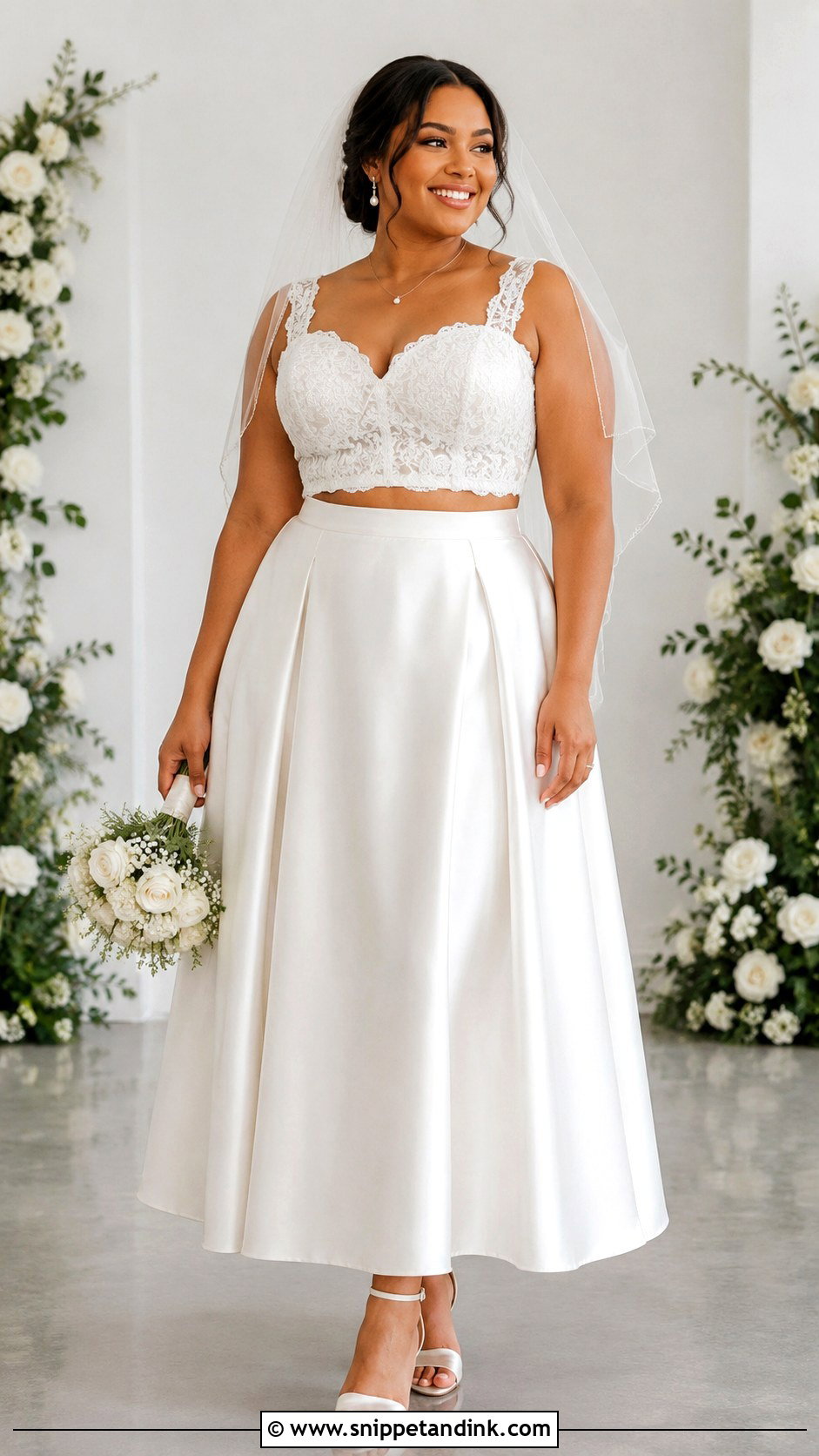
Separates let you buy the top and skirt in different sizes, which is a real advantage when your bust and hips sit in different size bands. Try a structured lace top with a high-waisted satin skirt, and make sure they meet comfortably when you stand, sit and dance. An overlapping top gives coverage while keeping the two-piece effect. A simple pendant, pearl earrings and a sheer fingertip veil suit it, with ankle-strap heels or flats. Check the whites match in daylight; ivory and diamond white sitting side by side show up clearly in photos.
19. Courthouse Midi Wedding Dress
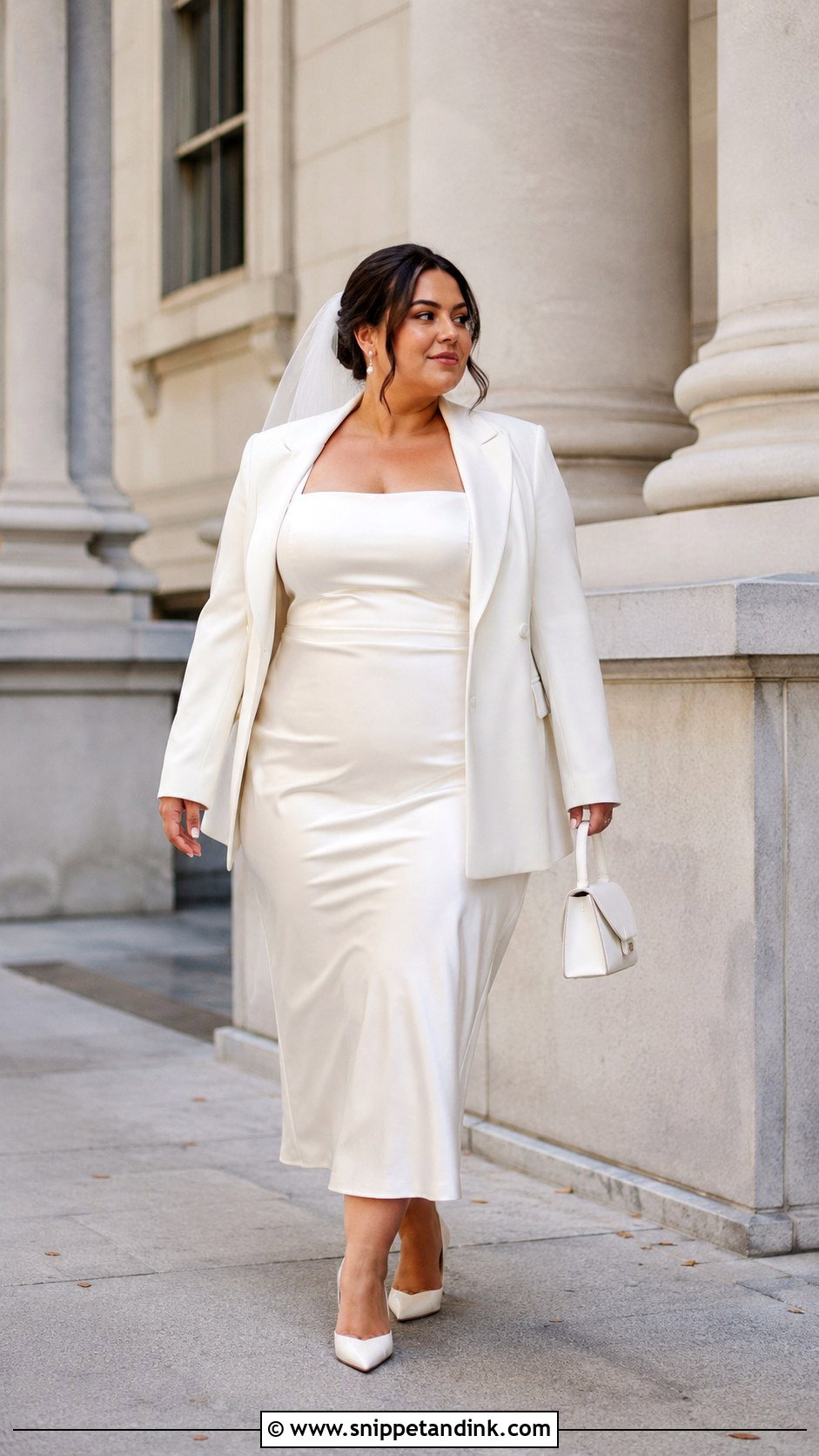
A courthouse midi wedding dress has to work for walking, a crowded registry office and lunch afterwards. A structured wrap, a square-neck satin midi or a tailored dress with elbow sleeves all fit. Keep the hem below the knee. Pointed slingbacks, pearl drops and a top-handle bag complete it, with a short veil, padded headband or hair bow for a bridal touch. A fitted blazer or light coat covers you for outdoor city photos. Wrap dresses gape on a fuller bust, so ask for a hidden snap at the crossover.


20. Sparkly Tulle Wedding Dress
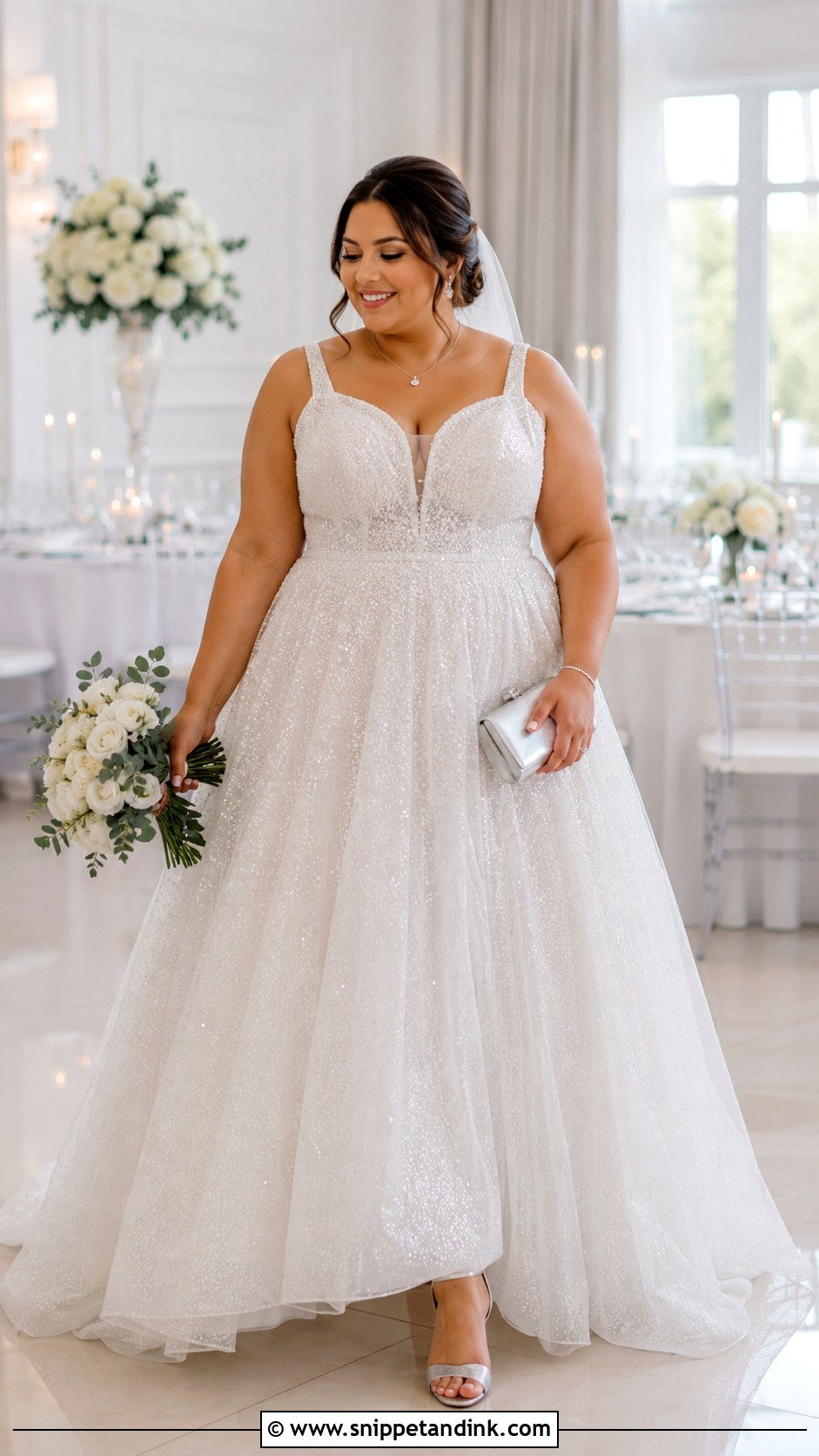
Scattered sparkle in tulle catches light from every angle without the weight of a fully beaded gown. Look for shimmer, small sequins or beaded appliqués spread evenly across bodice and skirt, so the dress doesn’t feel heavy at the top. A soft A-line lets the tulle move, and a lined, supportive bodice keeps it comfortable. Crystal studs, a simple veil and silver or ivory block heels are plenty. Keep the hair smooth and skip an ornate headpiece. Bright indoor rooms and evening receptions show the sparkle best, especially when you’re moving.
Satin, Crepe, Lace or Tulle on a Curvy Figure?
The same silhouette can look completely different in another fabric, and on curves the differences show more. Here is how I explain them at appointments.
Satin and mikado
Heavy satin and mikado hold their own shape, so they smooth over the body and look structured. Thin, shiny satin does the opposite and shows lumps and underwear lines. Satin also creases where you sit, so expect a few lines across the lap by the reception.
Crepe
A weighty stretch crepe is one of the most comfortable fabrics for a long day, matte and close-fitting without squeezing. It needs precise tailoring and smooth underwear, because every seam is visible.
Lace and tulle
Lace with a little stretch moves with you, and its pattern breaks up the surface, which many brides find reassuring. Tulle adds volume without weight, but layers add up; four or five layers of tulle look airy, ten start to look heavy at the hip. Ask how many layers are in the skirt, and whether any can be removed during alterations.
Your Dress Size Is a Measurement, Not a Rulebook
No rule about size or shape should decide your gown. The right one supports you, suits the celebration, and is comfortable from the first photograph to the last dance. Across these twenty looks, from lace A-lines and ball gowns to sheaths, separates and courthouse midis, the common thread is construction: boning, waist stays, linings and straps doing the work so you don’t have to. Shop with accurate measurements, ask about sample sizes, be realistic about alterations, and wear your real shoes and underwear to fittings. And try at least one shape you were told to avoid.
You'll Like These Ideas:






Leave a Reply