
An A-line is the gown I pull first for most appointments, because it tells me quickly how a bride feels about her waist. The bodice fits close, then the skirt opens gradually to the floor, so you get shape without the weight of a ball gown. Designers keep reworking it with corsetry, sheer overlays, pleating and lace, and the fabric changes its mood more than any detail does: satin reads formal, chiffon relaxed, crepe modern. Below are twenty complete A-frame looks, each with the shoes, veil and flowers I would put with it, plus what I check on the bride before I say yes.
Reading an A-Line on the Hanger Versus on Your Body
Every A-line looks similar on a rail. The differences only show when it’s on you, and they come down to two lines: where the waist seam sits and how sharply the skirt starts to flare. When I fit one, the first thing I do is find the bride’s natural waist, the narrowest point when she bends to the side, and compare it with the seam. A seam that sits even slightly low shortens the legs; one that sits high can look maternity in profile.
Next I look at the flare. A gentle angle that starts at the hip is easy to wear and suits most figures. A sharper flare starting right at the waist gives more drama but adds width, which can be wonderful on a straight frame and too much on a curvy one.
What I check in the first appointment
- Whether the sample size is close to yours. Boutique samples are often clipped at the back, so ask to see the front and the side, not just the mirror view.
- How the skirt sits when you’re seated. Stiffer fabrics can tent forward; soft ones can bunch.
- Where the weight hangs. A heavy satin skirt pulls on the shoulders by evening if the bodice isn’t carrying it properly.
- How much the neckline and straps can be altered, because these are harder to change than a hem.
Order early. Many made-to-order gowns take several months to arrive, and you’ll want room for alterations afterwards, so starting the search eight to ten months out is sensible. Timelines vary by designer, so ask for the expected delivery date in writing.
1. Satin A-Line Wedding Dress
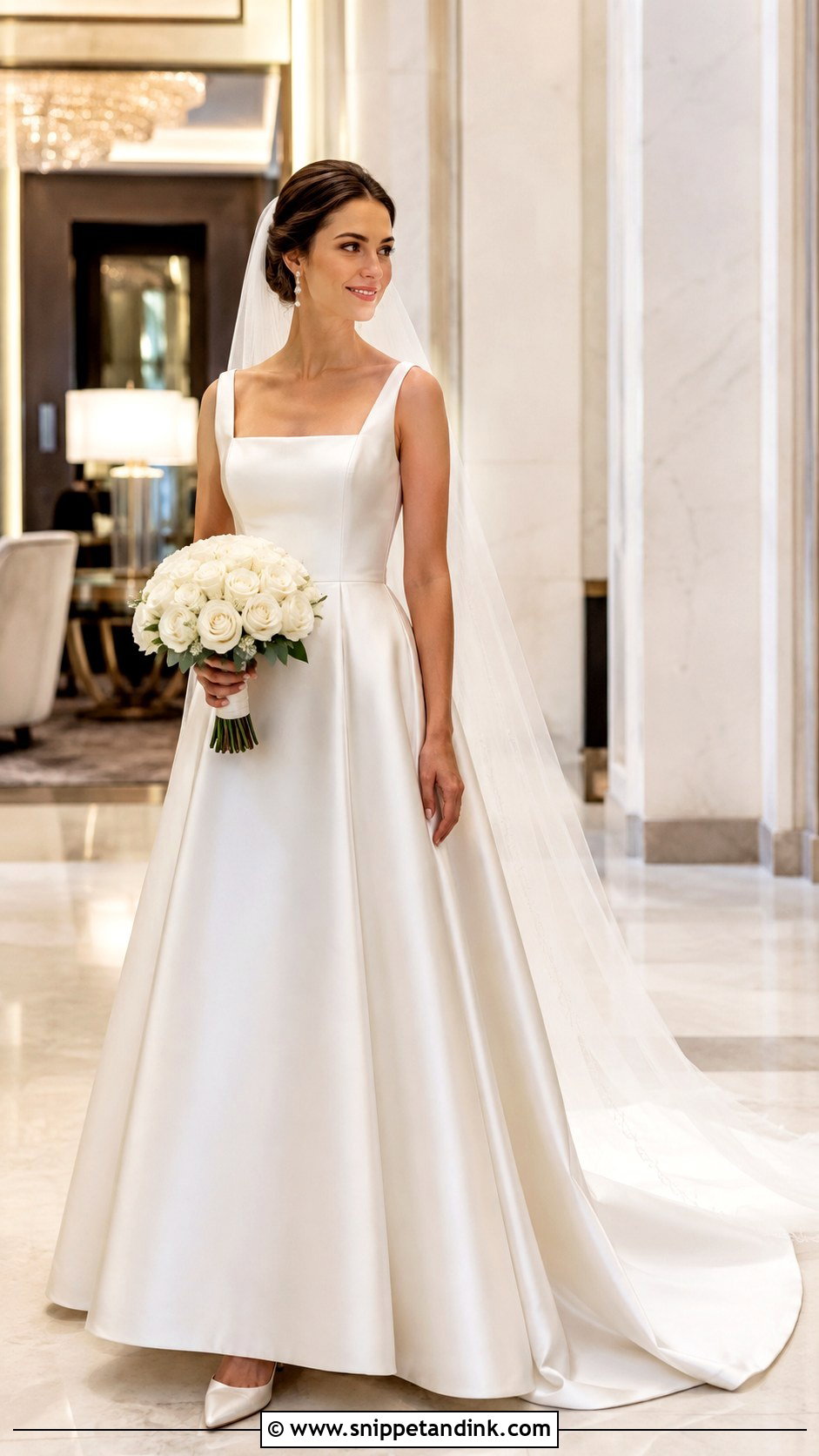
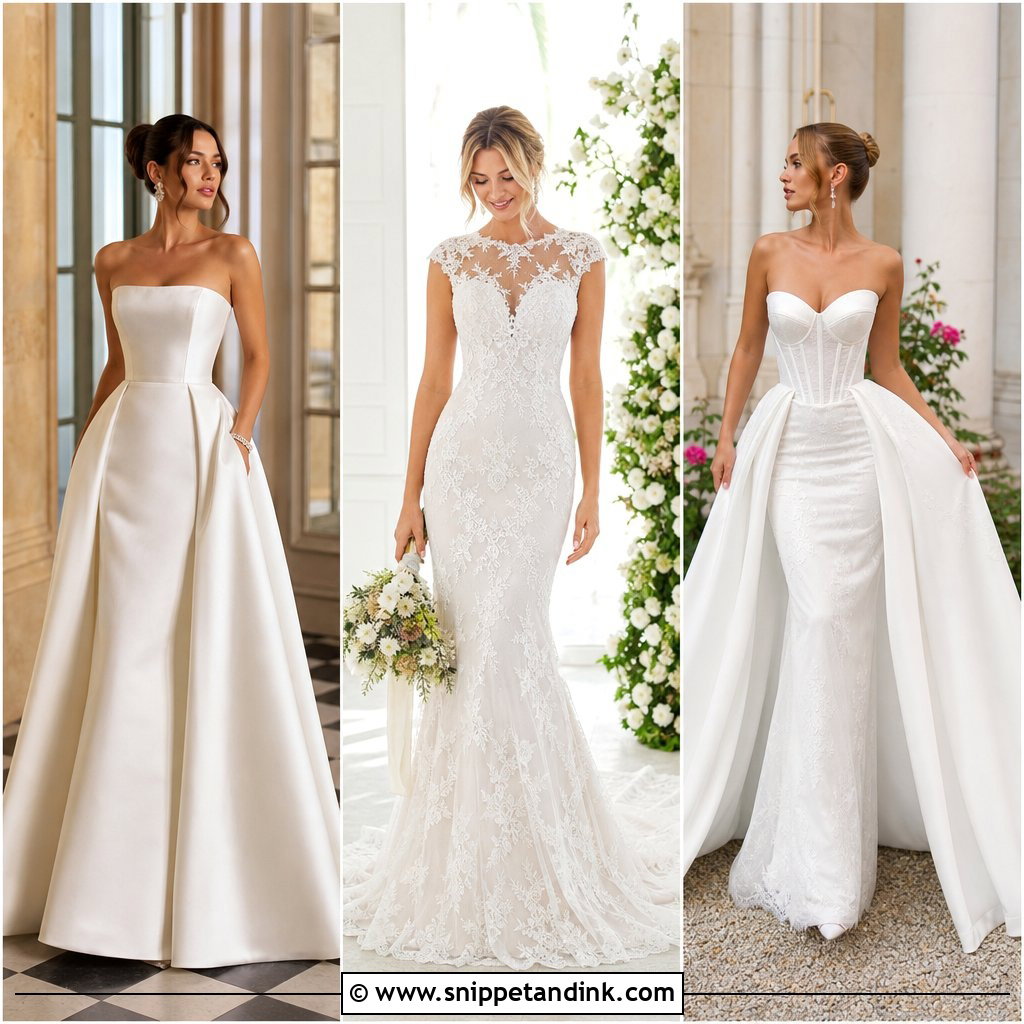
Satin is the fabric that shows a good A-line at its cleanest, and also the one that shows a bad fit fastest. Because it reflects light, any pulling at the side seams or a waist that sits a centimetre too high appears as a shiny diagonal line in photos. I look for a softly structured bodice, a natural waist and a skirt that glides away from the hips rather than clinging. A strapless or bateau neckline suits it, and covered buttons down the back finish it properly. Pointed ivory pumps, pearl drops, a structured bouquet of roses or calla lilies and a cathedral veil are all it needs. Keep everything else quiet. This is a ballroom, museum or formal estate dress.
2. Lace A-Line Wedding Dress
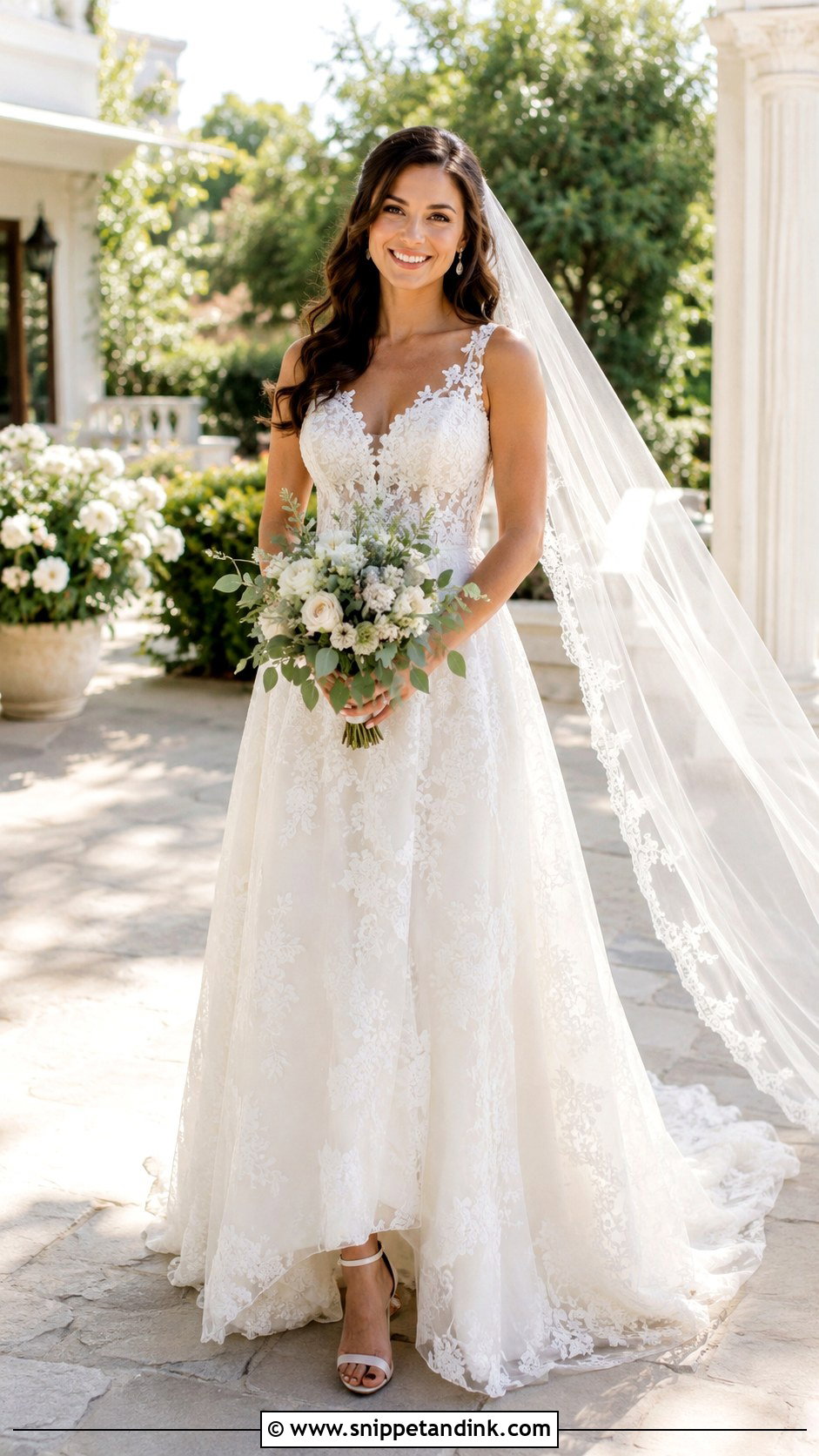
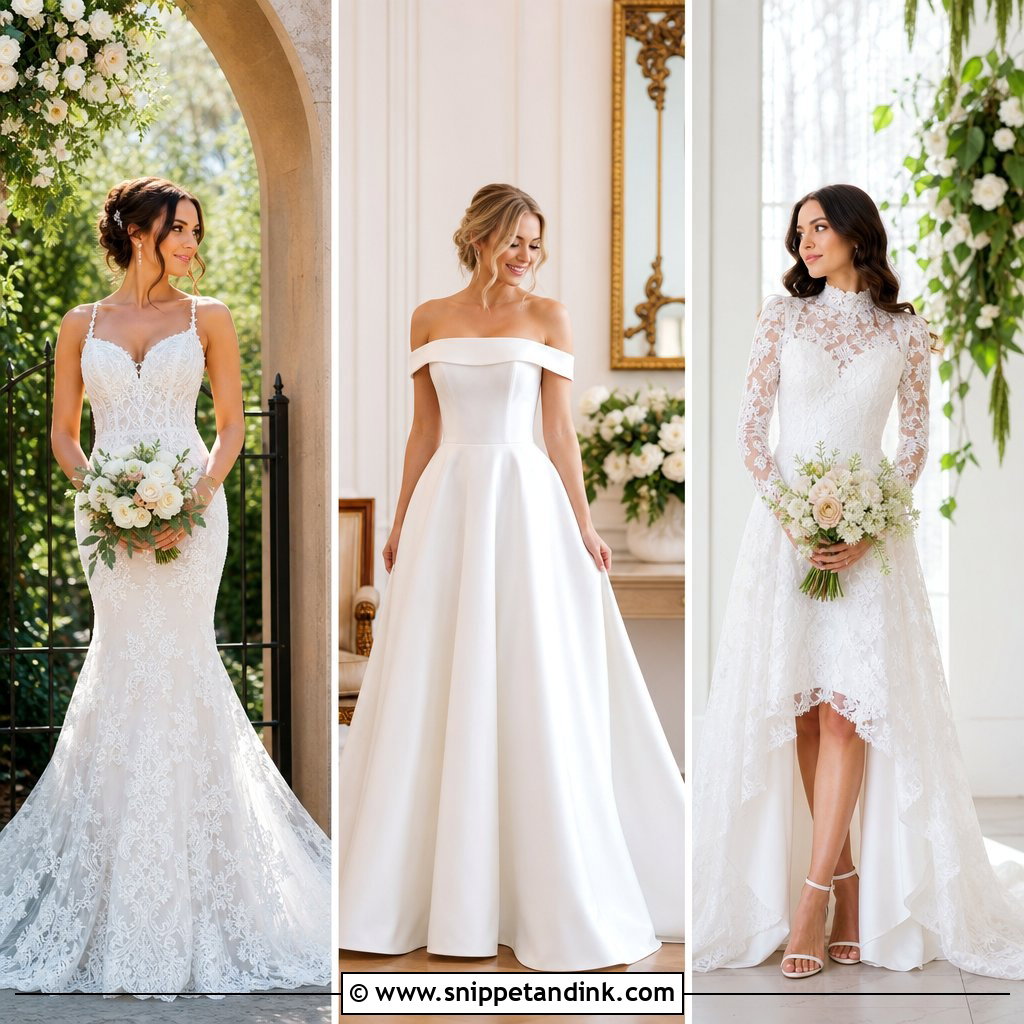
Lace softens the A-line, but the placement of the motifs decides whether it looks expensive. When I zip a bride into a lace gown, I check that the appliqués meet cleanly across the back closure and that the motif at the waist doesn’t break awkwardly at a seam. A good one has a comfortable lining and supportive cups underneath, with the lace trailing gently onto the skirt rather than stopping in a hard line. Ankle-strap heels, small crystal studs and a fingertip veil edged in the same lace keep it coherent. Hair in a loose low bun or soft waves leaves the texture alone. Ivory blooms with pale greenery suit it, and designers keep pairing classic patterns with cleaner silhouettes, so lace no longer has to read vintage.
3. Tulle A-Line Wedding Dress
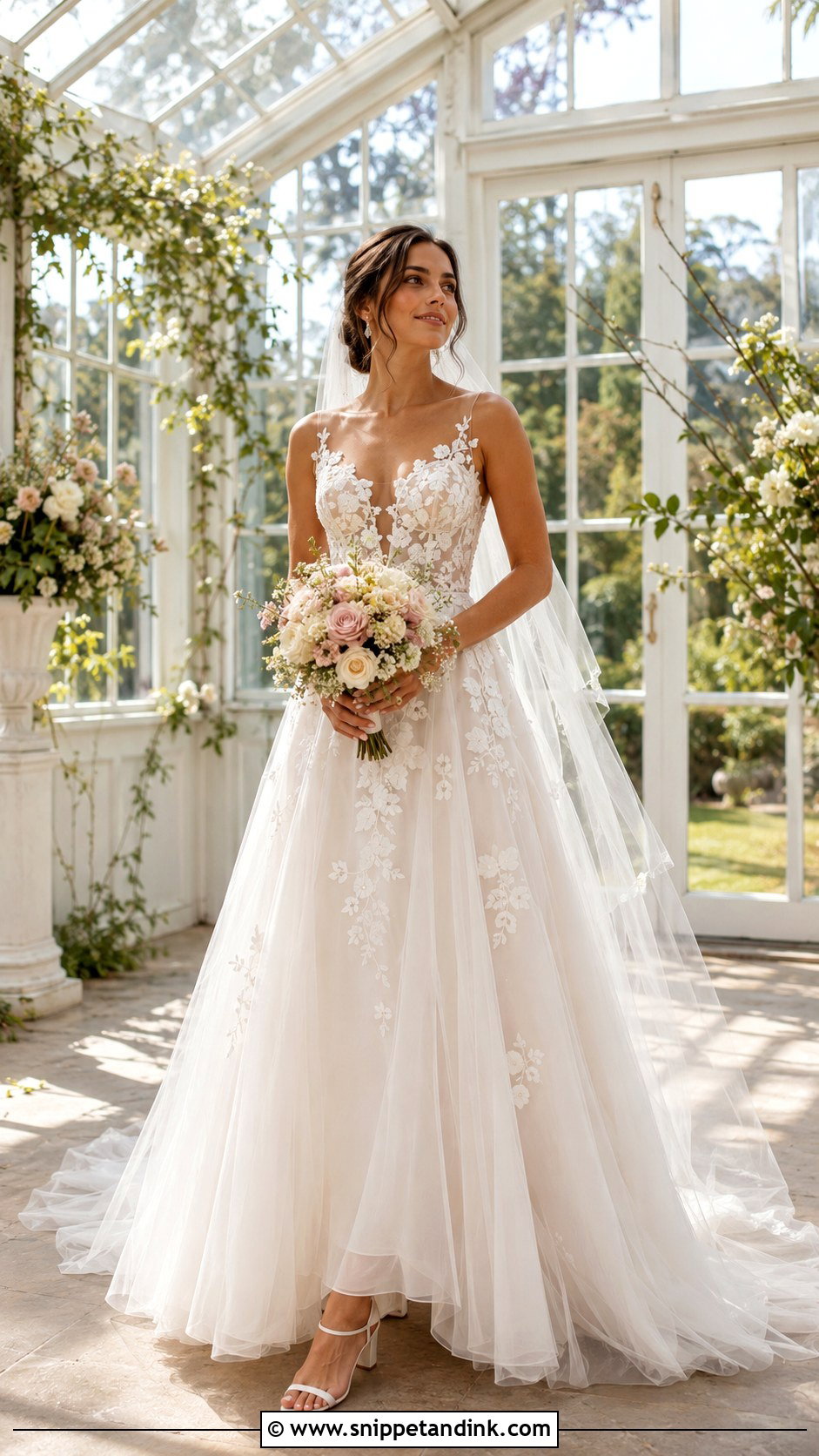
Tulle gives you the floating skirt without the circumference of a ball gown, which matters more than people expect in a narrow aisle or a crowded reception room. A fitted illusion bodice, light boning and a few scattered appliqués hold the upper body while the layers fall loosely. The thing I warn brides about is snagging: tulle catches on beaded bracelets, rough stonework and the Velcro on a photographer’s bag. Block-heel sandals, crystal studs and a chapel veil suit it, and a well-anchored bustle makes the evening easier. It photographs best in daylight, in gardens and glasshouses.
4. Chiffon A-Line Wedding Dress
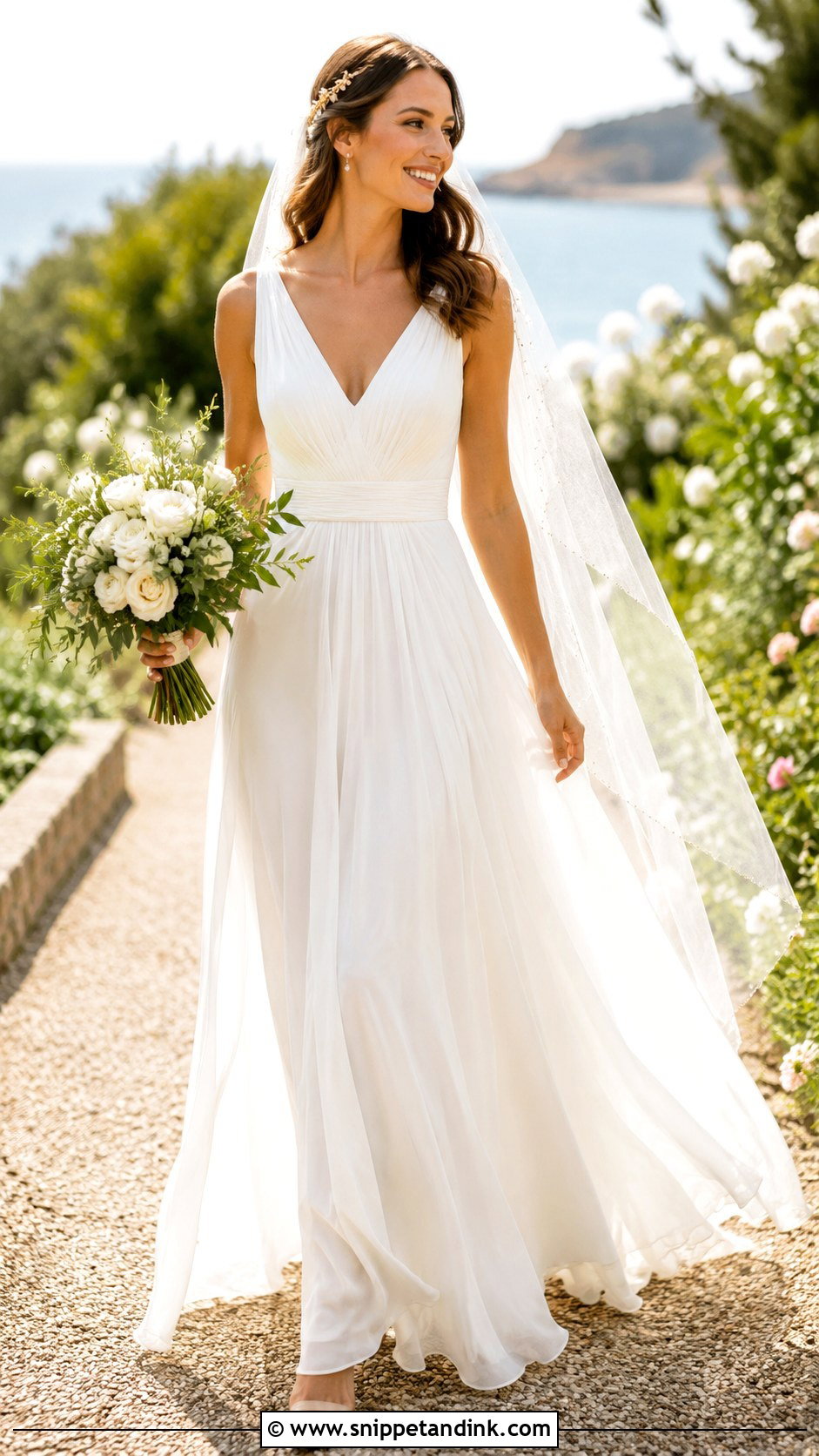
Chiffon is the one I recommend for heat. It breathes, it drapes from the waist and it moves in a breeze instead of fighting it. The catch is that unlined chiffon can be sheer in strong sun, so I always ask a bride to stand by a window during the fitting. Choose a lined design with a supportive V-neck or gathered crossover bodice so nothing shifts while you dance. Low block heels or flat sandals won’t sink into lawn or sand. Small gold earrings, a fine hairpin, a fingertip veil and a bouquet of white flowers and greenery are enough; heavy jewellery looks oddly separate from such a light fabric.
5. Mikado A-Line Wedding Dress
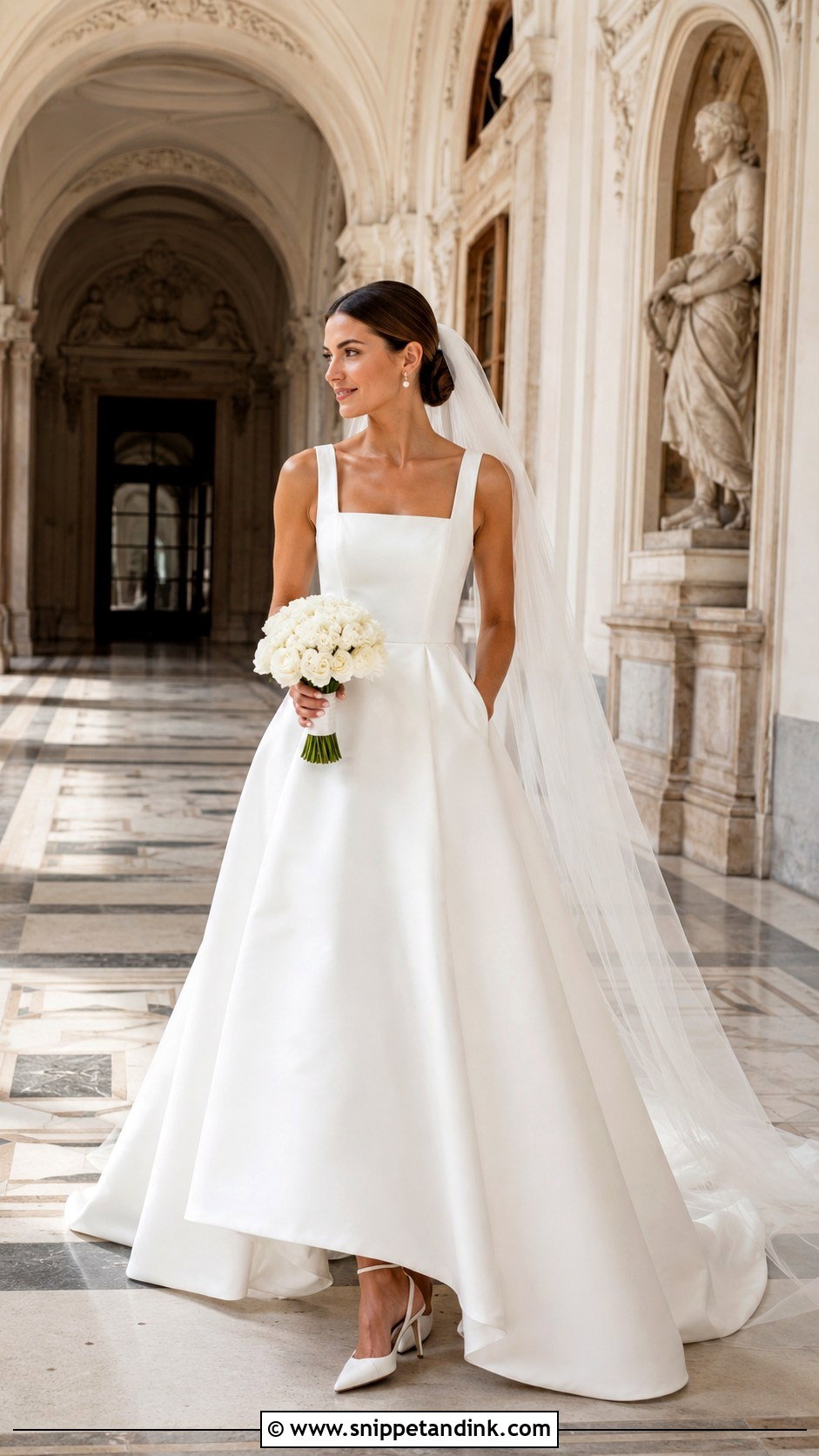
Mikado is a heavier silk blend with a slight sheen and real body, so it holds a pleat and supports a wide strap or square neckline without boning doing all the work. The skirt keeps its own shape, which means no tulle petticoat underneath. What I test is sitting: a stiff skirt can tent up at the front when you sit at the head table, so I have the bride sit, stand and walk a few steps before alterations are signed off. Hidden pockets are worth asking for. Slingback heels, pearl-and-diamond earrings, a neat chignon and a long plain veil let the fabric speak, with a compact bouquet for balance in a gallery or historic house.
6. Strapless A-Line Wedding Dress
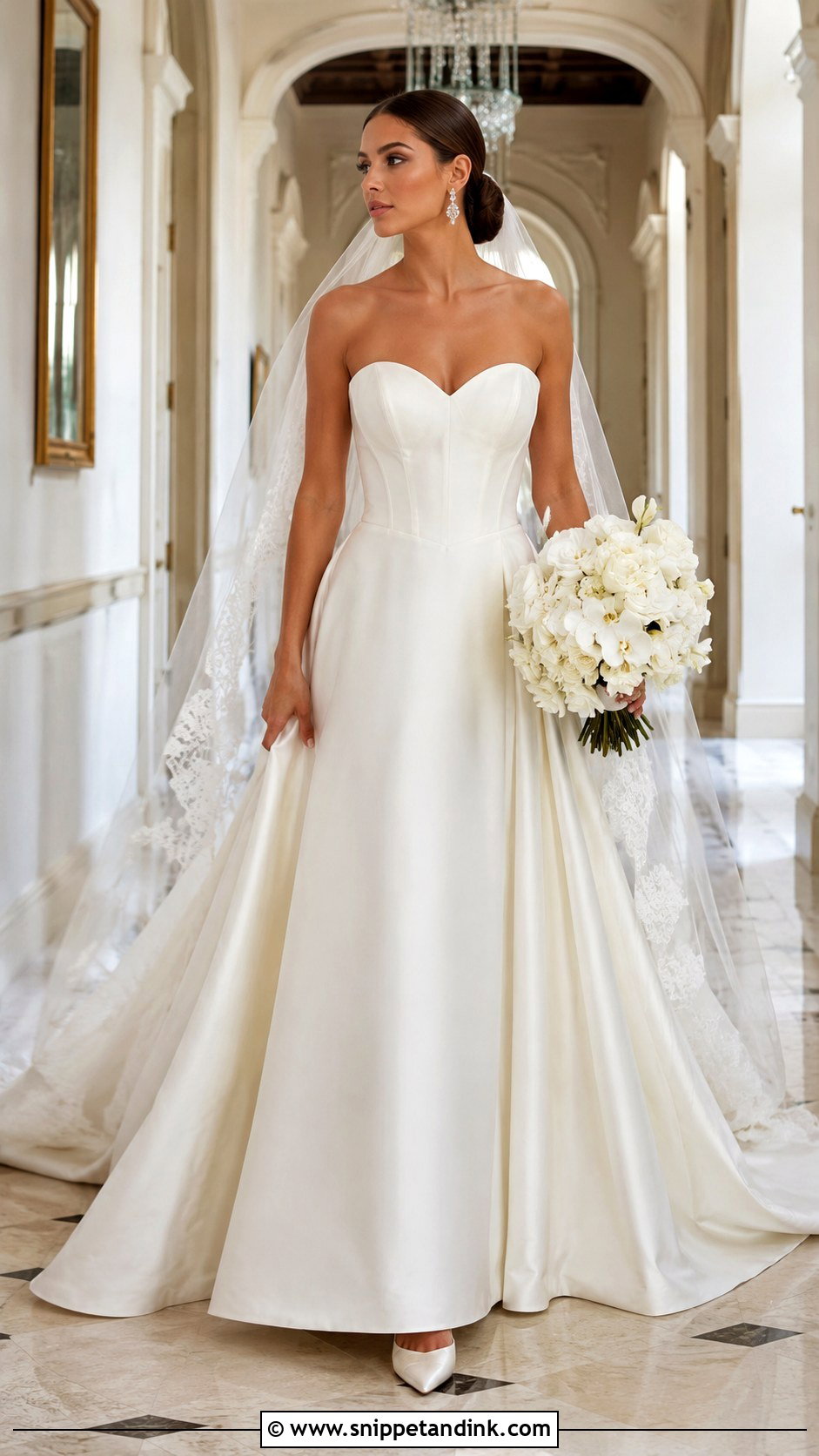
Strapless relies entirely on what’s built inside it. I check for proper boning, cups that sit at the right height and a back that holds without you tugging at it every ten minutes. A softly curved sweetheart neckline is the romantic option, and a straight neckline is cleaner and more current. Choose either a short pearl necklace or drop earrings, not both, if the bodice is already embellished. Pointed pumps, a cathedral veil and a smooth updo suit it, and a removable lace bolero covers the shoulders for a religious ceremony. At the fitting, raise your arms and hug someone. If the top edge moves, it needs taking in.
7. Long Sleeve A-Line Wedding Dress
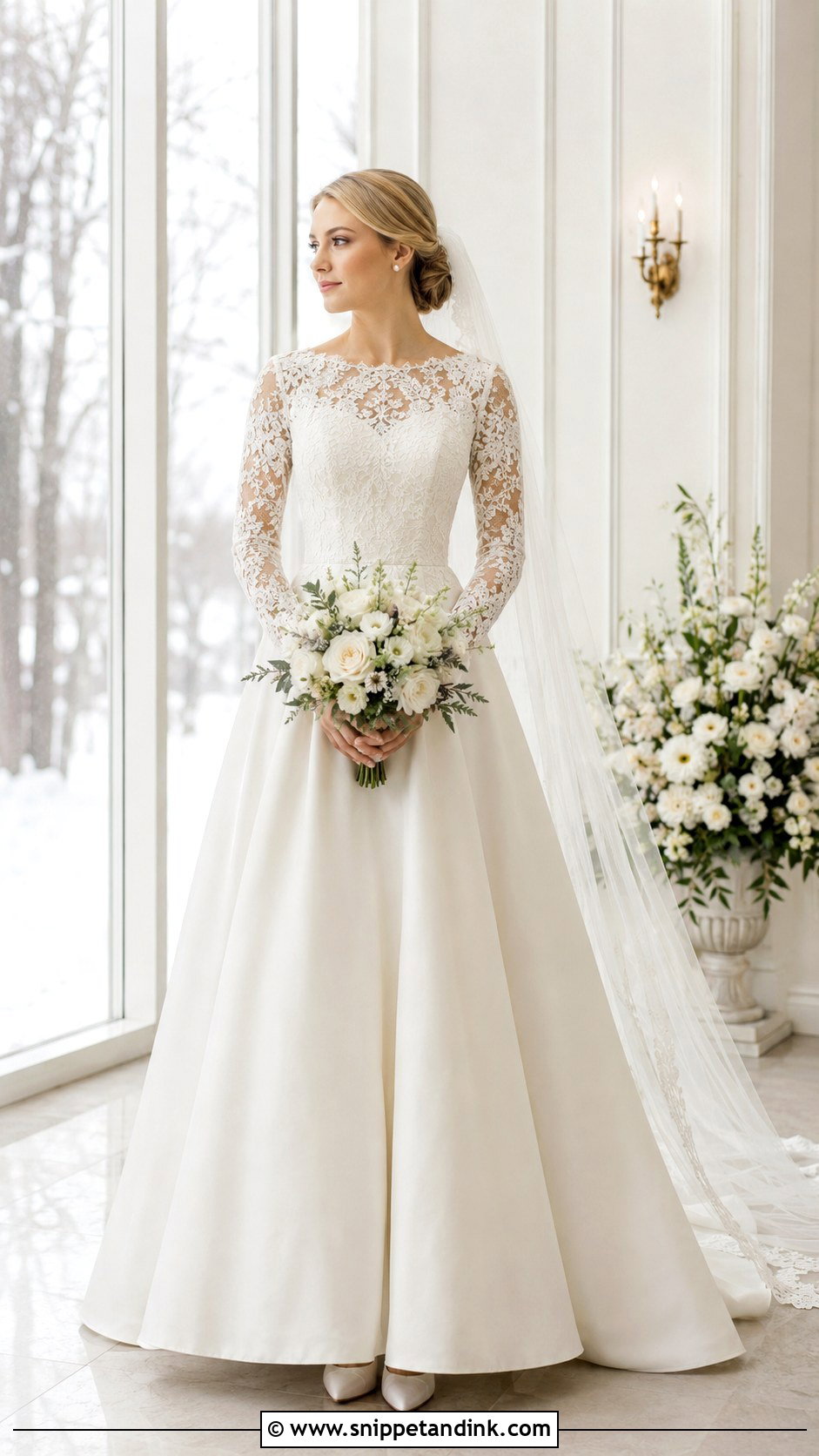
Sleeves are where I spend most of an alteration appointment on this style. A fitted sleeve that looks perfect with arms at your sides can pull across the back when you lift a glass or wrap your arms around someone, so I always have brides reach forward and up. Sheer lace sleeves are delicate; fitted crepe or satin is cleaner. Watch where the cuff lands, especially with buttons or dense appliqués near the wrist. Closed-toe pumps, pearl studs, a low bun with a decorative comb and a plain chapel veil keep the eye on the sleeve detail. It’s a natural fit for autumn, winter and early spring, and for air-conditioned rooms.
8. Off-Shoulder A-Line Wedding Dress
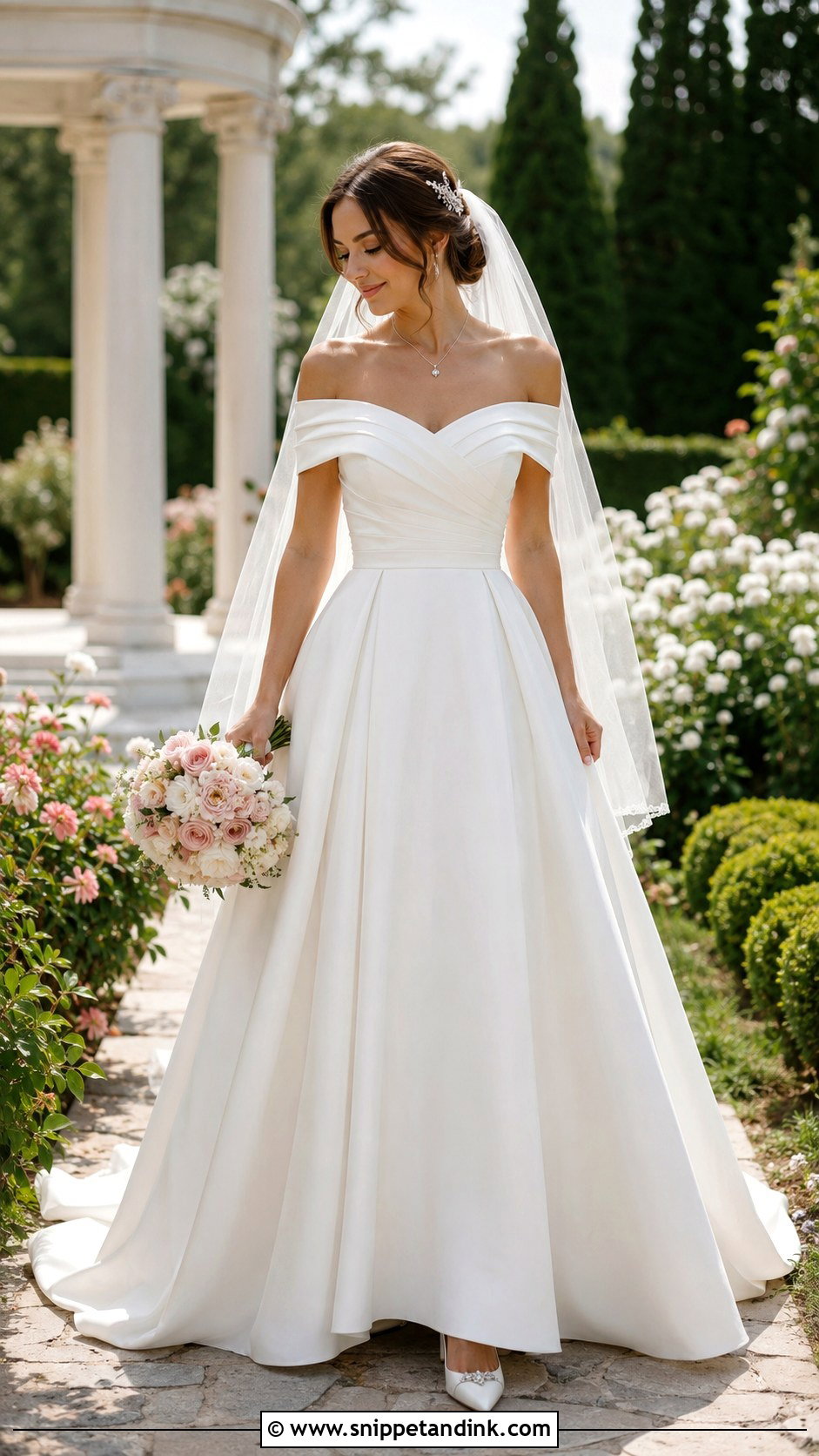
Off-shoulder bands look simple, but they’re one of the hardest necklines to get right. Too tight and they dig into the upper arm; too loose and they slide whenever you move. Folded satin bands give a sculpted look, while lace or tulle straps are softer and a little more forgiving. Test it by hugging, sitting and reaching across a table. I’d style it with a fine pendant, a crystal comb and low pointed heels, and pull the hair back so loose ends don’t catch on the shoulder trim. Attach the veil below the hairstyle so it falls behind the neckline rather than over it. A rounded bouquet in white, blush or peach is plenty.
9. Square Neck A-Line Wedding Dress
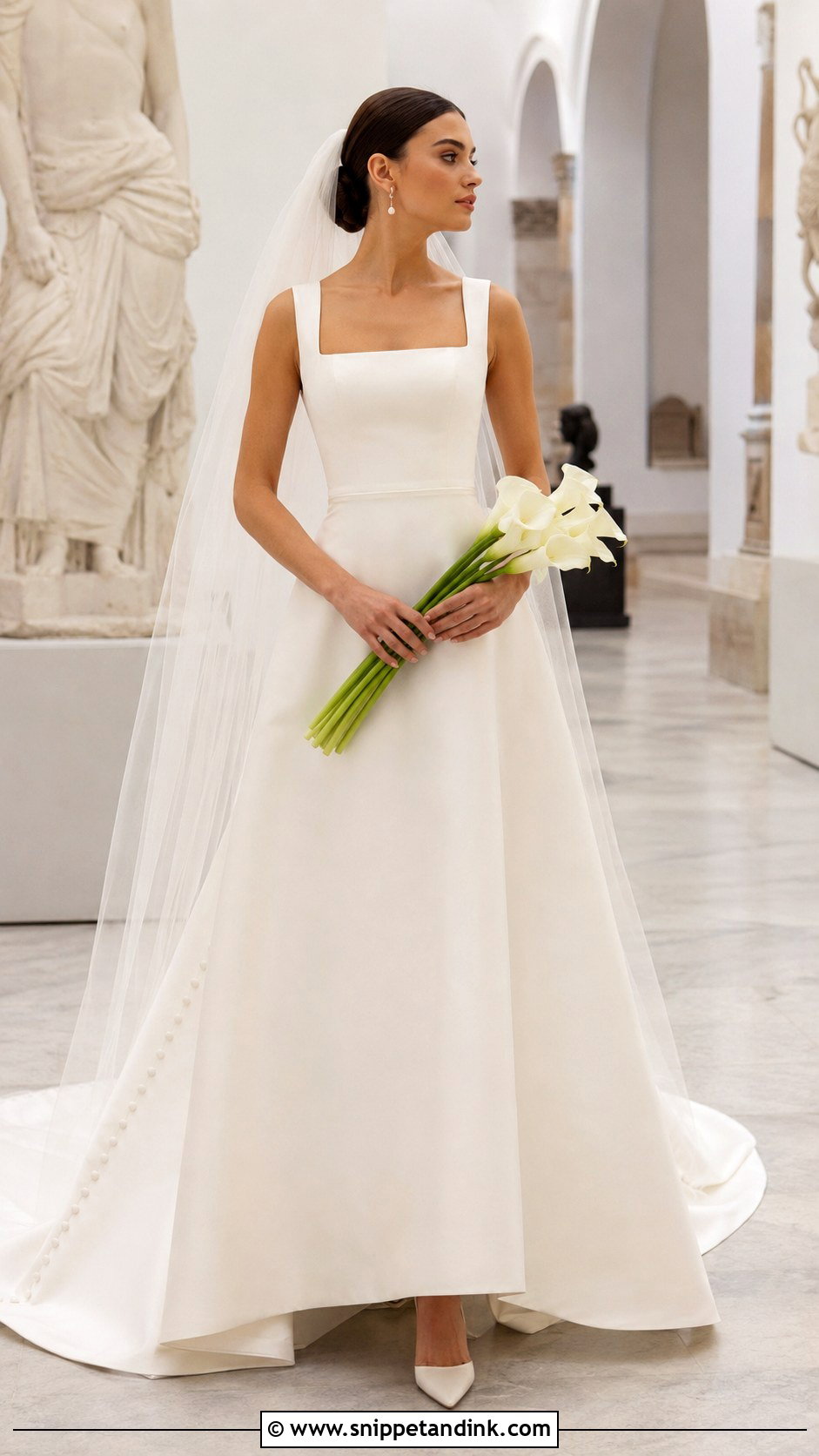
A square neck has a slightly historical feel that still reads current, and it’s useful because strap width changes how the shoulders look. Wider straps balance broad shoulders; narrower ones open up a slim frame. I usually put this neckline in structured satin or Mikado so the corners stay crisp, since in soft lace they can collapse into a scoop by the end of the night. Pearl drop earrings, a narrow bracelet and pointed heels are enough, with a sleek low bun and a plain chapel veil. Long-stemmed white flowers tied with ribbon echo the straight lines. It sits comfortably between classic and modern, which is why it suits brides who can’t decide between the two.
10. V-Neck A-Line Wedding Dress
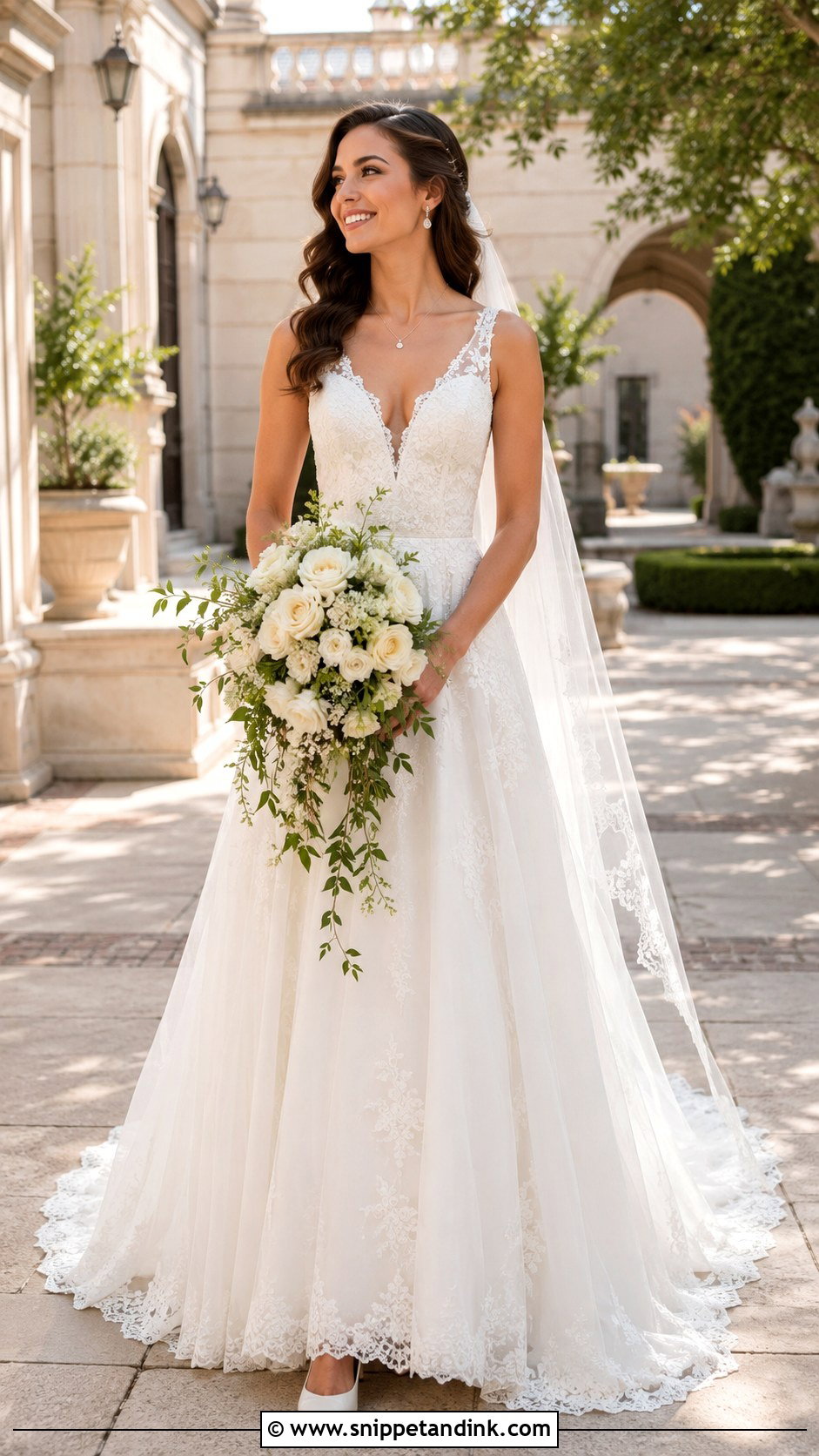
A V-neck pulls the eye up and down, which lengthens the torso and frames the face. Depth is the question I settle first: a shallow V is easy to wear all day, while a deep one needs an illusion panel or fashion tape, and I’d only go deep if wide straps are holding the bodice in place. Lace edging softens the line. A fine pendant, small earrings and almond-toe heels suit it, along with a fingertip veil, or a longer plain one for a formal church. Wear hair in a low textured bun or side-swept waves so the neckline stays open. A cascading bouquet repeats the vertical line, but switch to a compact one if the bodice is heavily embroidered.
11. Corset A-Line Wedding Dress
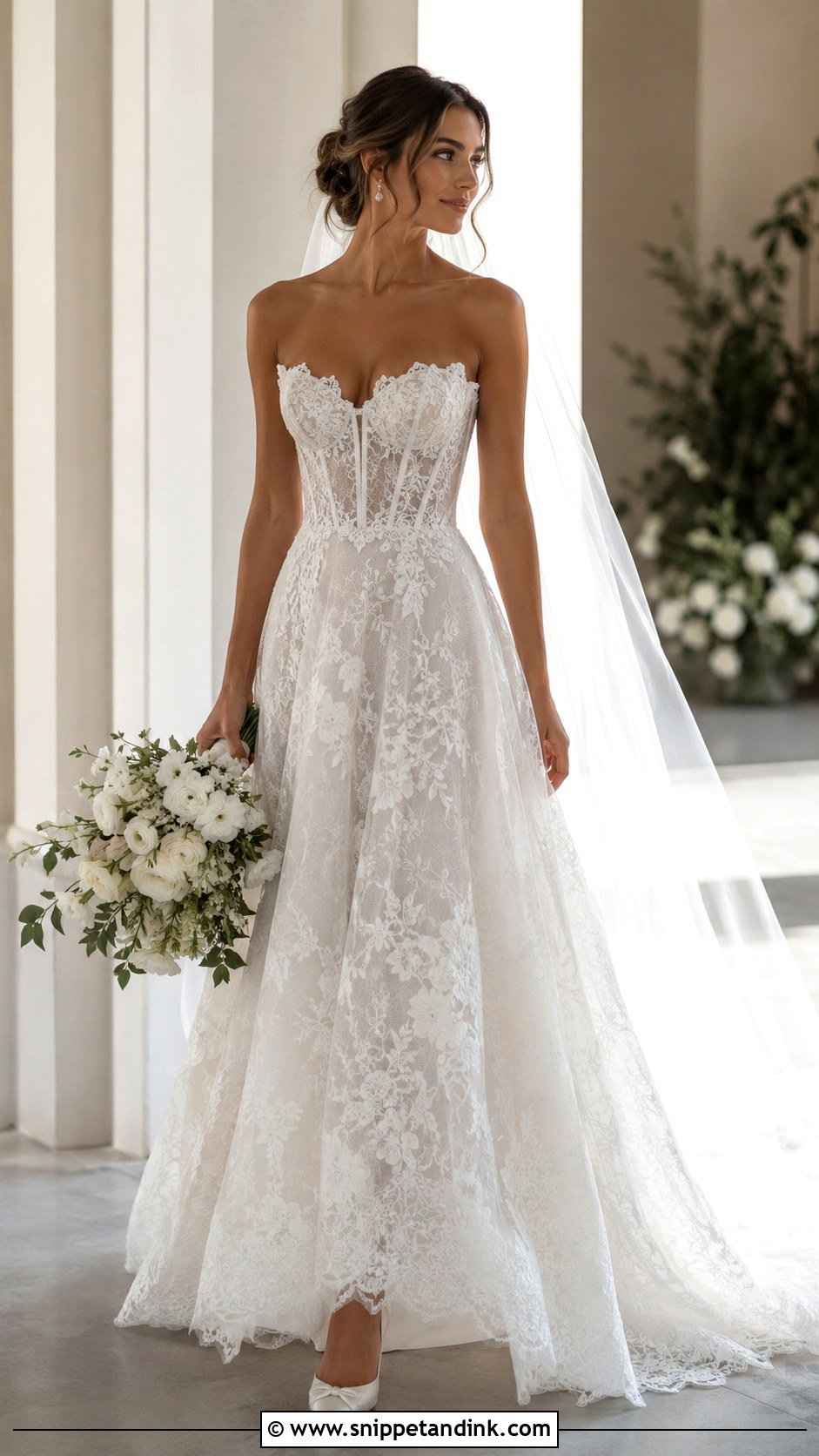
Corset bodices are back, and the good ones are built to support, not squeeze. I pay attention to whether the cups are proportioned to the bride, because lacing tighter can’t fix a cup that’s the wrong shape. Exposed seams look modern; a lace overlay softens the construction. Simple drop earrings, satin pumps and a sheer cathedral veil without heavy edging leave the bodice as the feature, and a soft updo keeps the neckline clear. Carry an organic, slightly loose bouquet so the whole look doesn’t turn rigid. At every fitting, sit down and take a deep breath. If you can’t, it’s too tight, however good it looks standing.
12. Basque Waist A-Line Wedding Dress
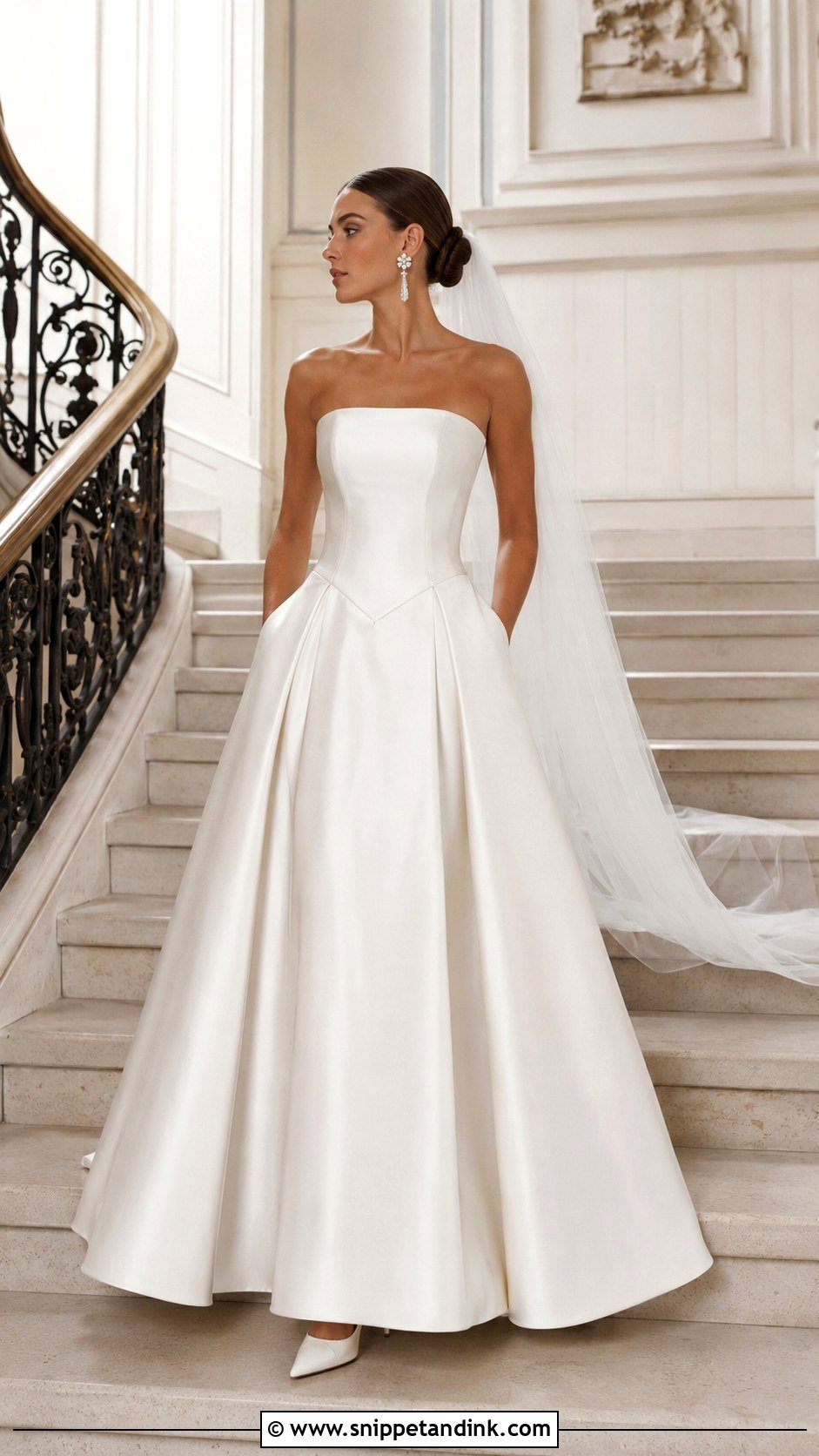
A Basque waist dips into a V below the natural waistline, which lengthens the bodice and gives the skirt a dramatic starting point. Structured fabrics like satin and Mikado show that point clearly; in lace it tends to blur. Pair it with a strapless or gently scooped neckline, minimal jewellery and a plain veil. Long gloves look formal, though I’d skip them if the sleeves or bodice are already busy. Basque and dropped-waist detailing keeps showing up in bridal collections next to corsetry and fuller skirts. The tailoring matters most: if the point drifts even slightly off centre, everyone notices it in the front-on ceremony photos.
13. Minimalist A-Line Wedding Dress
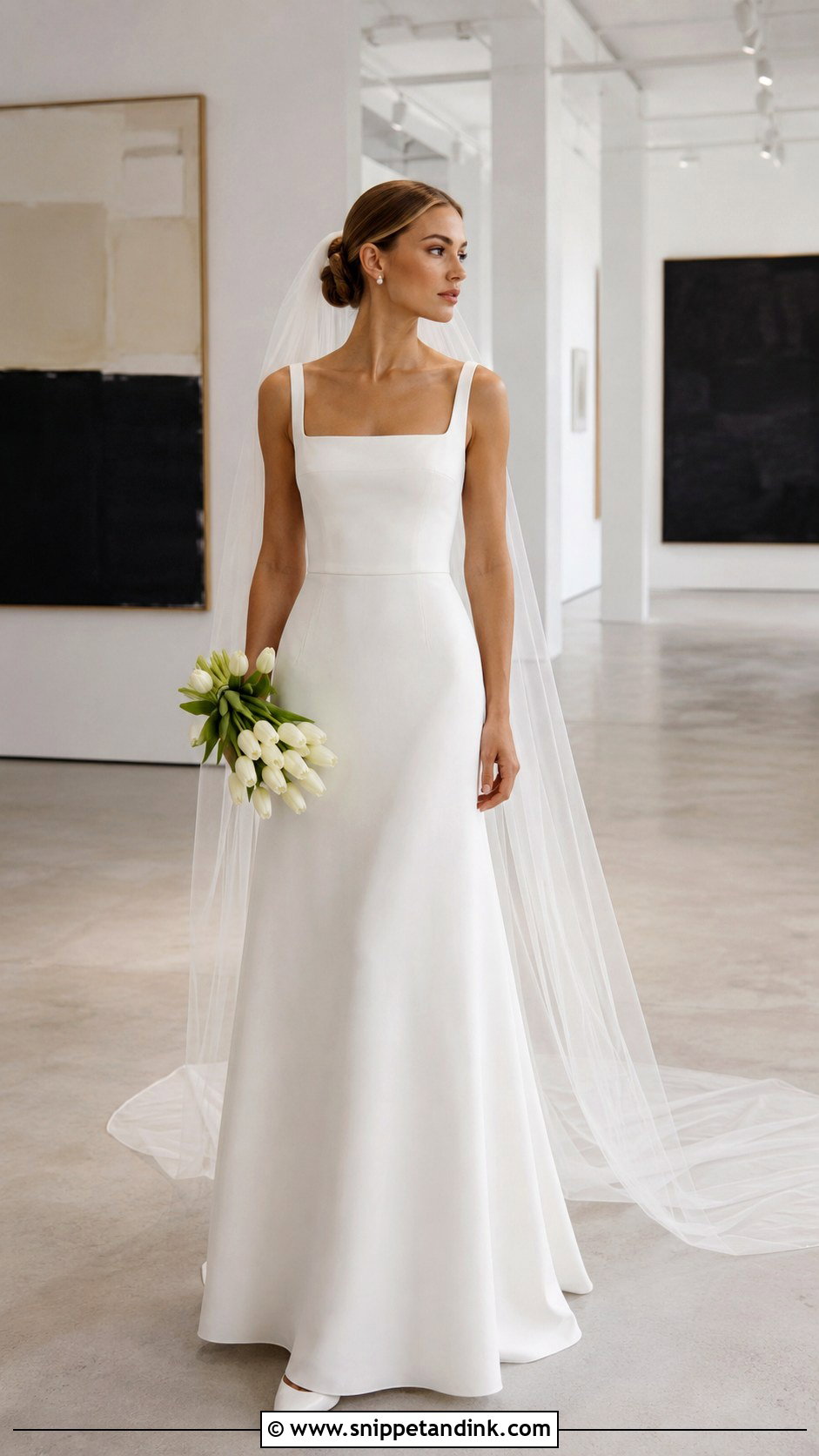
Minimal gowns hide nothing. With no lace to disguise a seam, I turn the dress inside out at the boutique and look at the lining, the zip and how the waist seam is finished, because that’s what you’ll see in close-up photos. Crepe, satin and Mikado give the smoothest lines. Pick one distinctive feature, such as a low back, covered buttons or a sculpted waist seam, and let it be the only one. Polished pumps, pearl studs, a sleek bun and a plain cathedral veil complete it. A single-variety bouquet of tulips, roses or calla lilies keeps the restraint going.
14. Floral Appliqué A-Line Wedding Dress
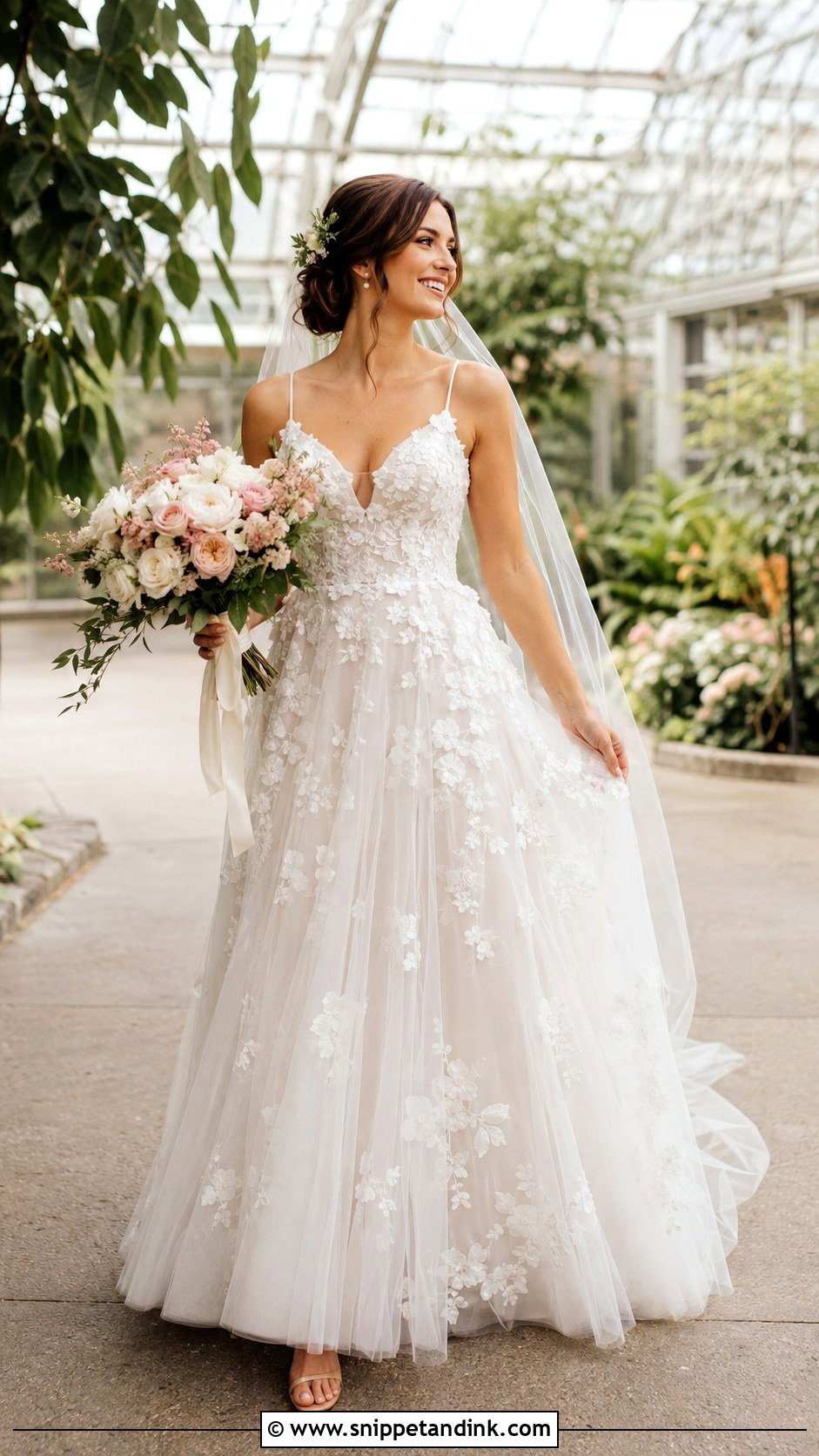
Floral appliqués add depth while the comfortable A-line shape stays the same. They can cluster at the bodice and waist or drift down a tulle skirt, and the scale is what I look at closely: one consistent size looks refined, while mixing small and medium blooms looks more natural. Raised petals do get crushed in a car or under a seatbelt, so I tell brides to sit forward on the drive and fluff them before the ceremony. Barely embellished heels, tiny pearls and a sheer veil leave the surface visible. A low bun with one small floral pin beats a crown here. A garden bouquet in white, blush and pale green ties it to spring, conservatories and outdoor ceremonies.
15. Beaded A-Line Wedding Dress
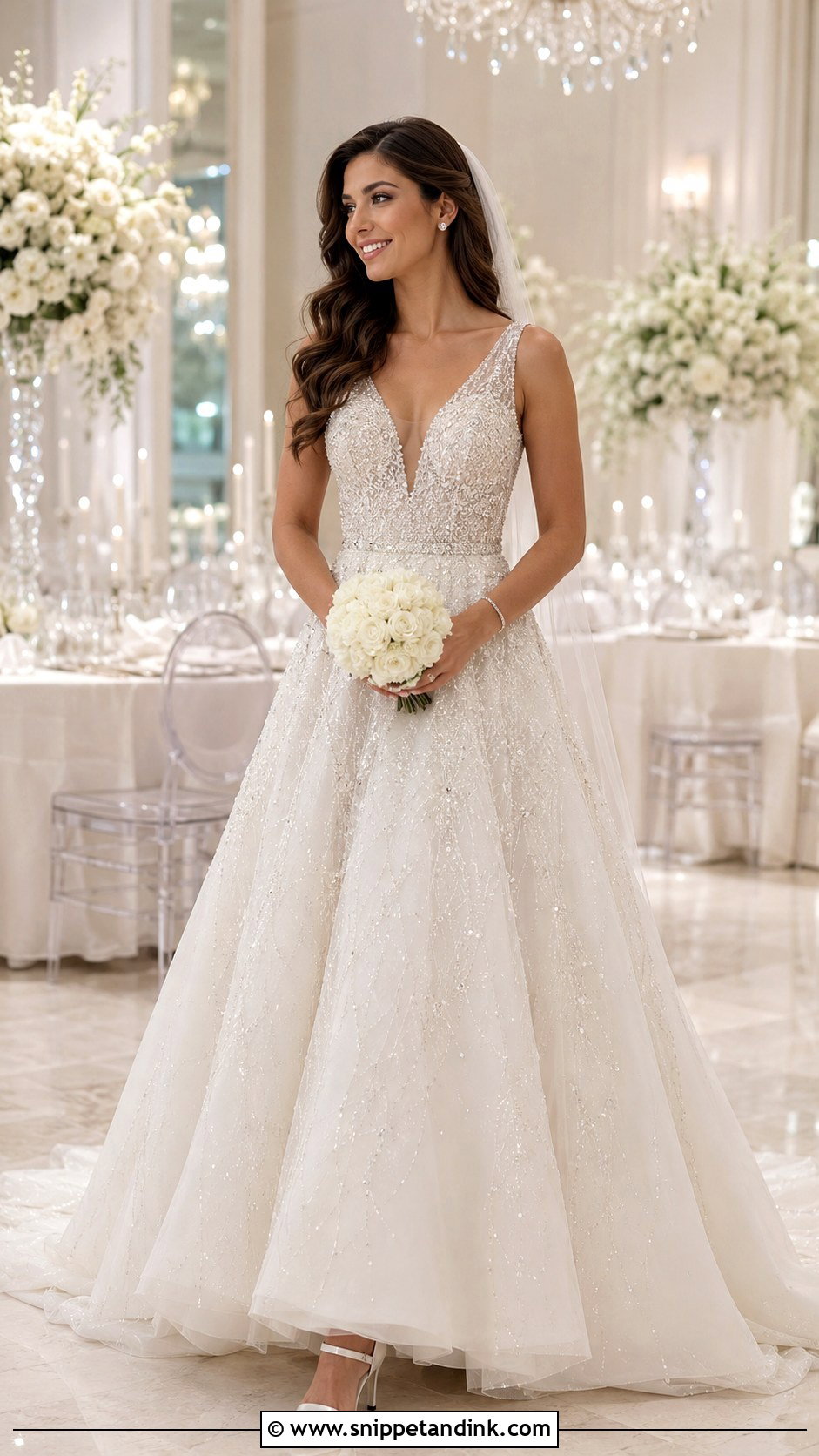
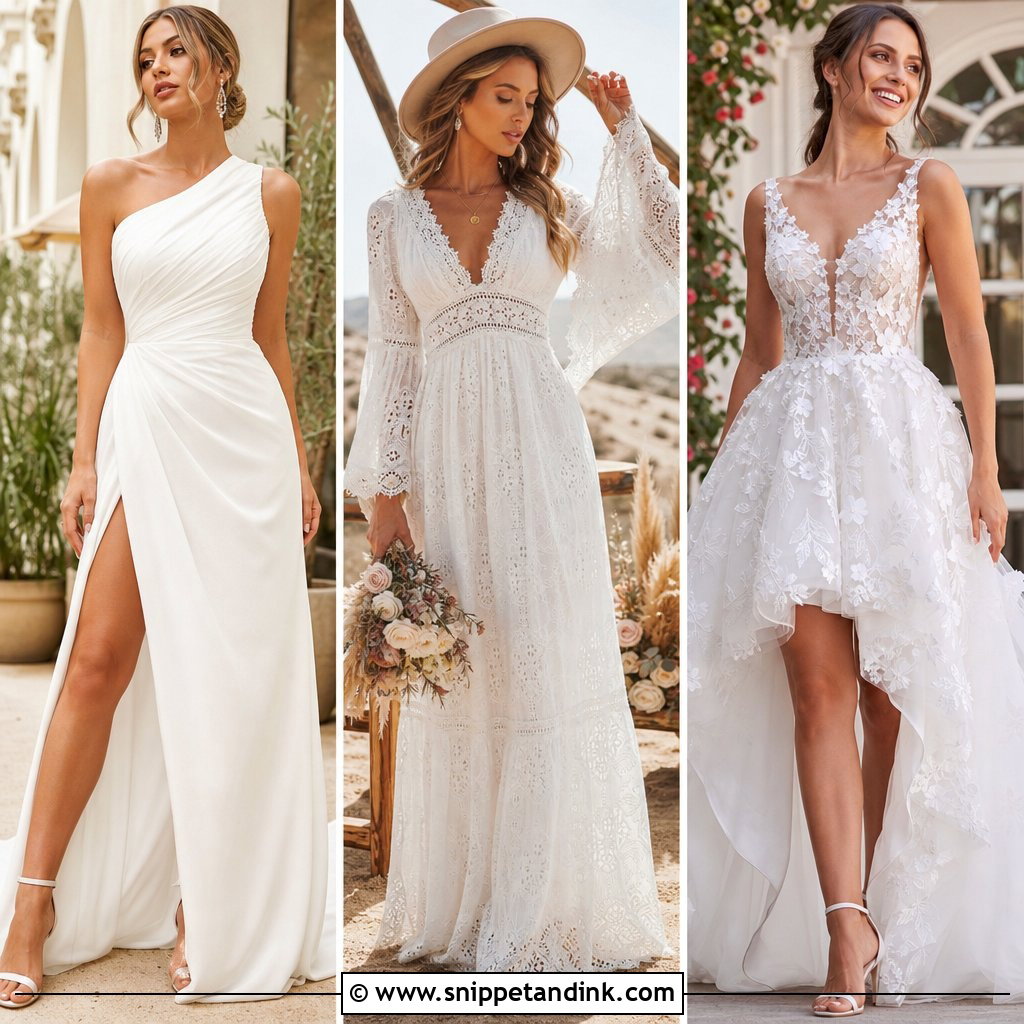
Beading catches light, and on an A-line it comes with more freedom than a fully fitted embellished gown. Beads at the bodice define the waist; scattered crystals or pearls give the skirt a gentle sparkle. Run your hand down the inside of the arm area before you buy, because beading at the underarm can scratch raw by the end of a long day. Simple satin heels, small crystal studs and a narrow bracelet are enough, and a plain veil stops the outfit from tipping into busy. A polished updo or soft vintage waves both work, depending on the neckline. This is an evening dress: overhead lighting in a hotel ballroom is what makes the surface come alive.
16. Boho A-Line Wedding Dress
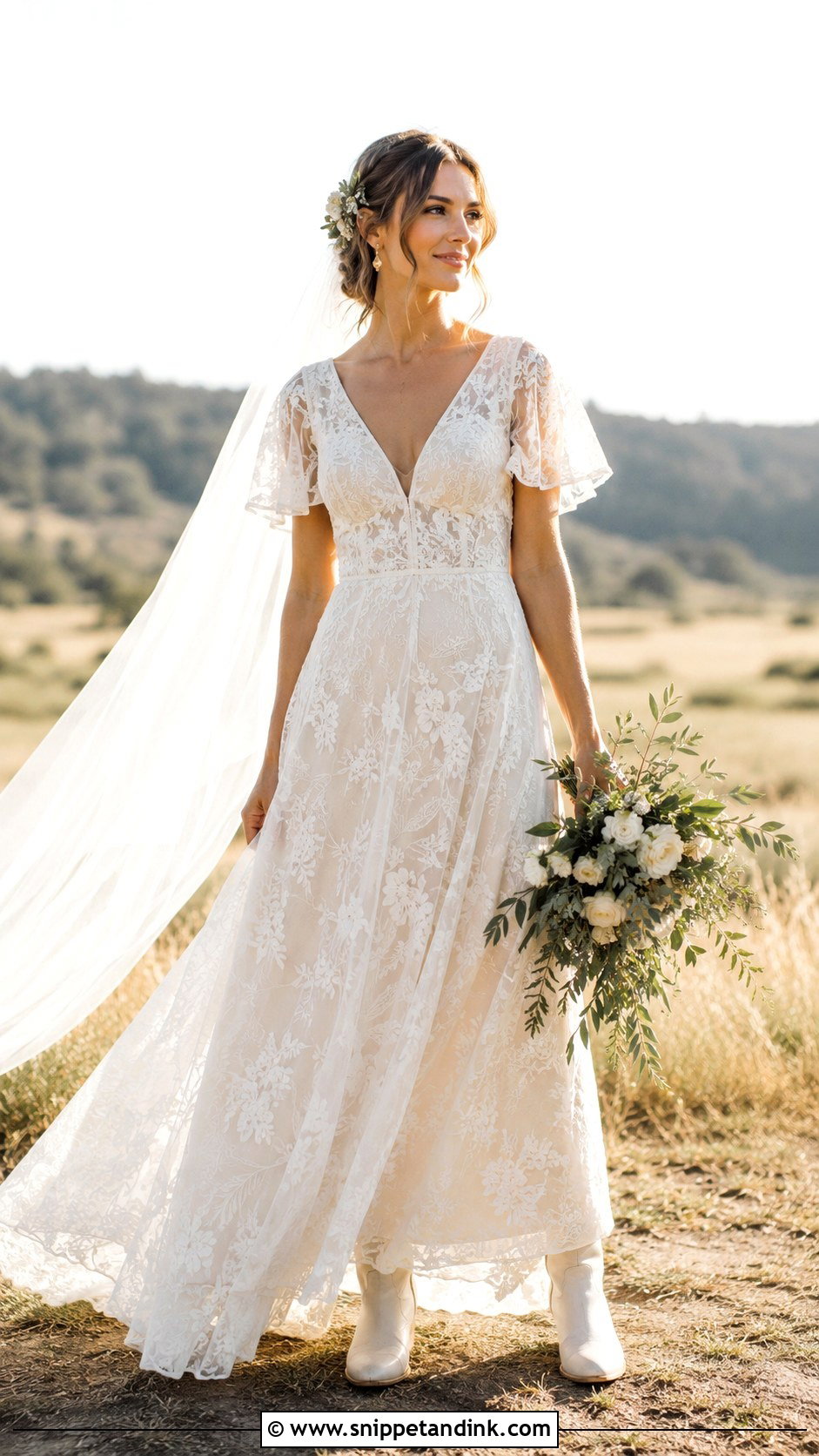
Boho should look relaxed, and the easiest way to ruin that is to pile on too many rustic details at once. Soft lace, light chiffon or embroidered tulle over a comfortable lining gives the right movement, and a V-neck, flutter sleeve or open back adds the easygoing feel while the fitted waist keeps the shape. For shoes, think about the ground first: low block heels, polished flats, or clean ivory boots all work depending on terrain and season. Small gold earrings, loose waves and one botanical hairpiece are enough. Carry an organic bouquet with grasses and greenery, and add a fingertip veil or light cape.
17. Plus-Size A-Line Wedding Dress
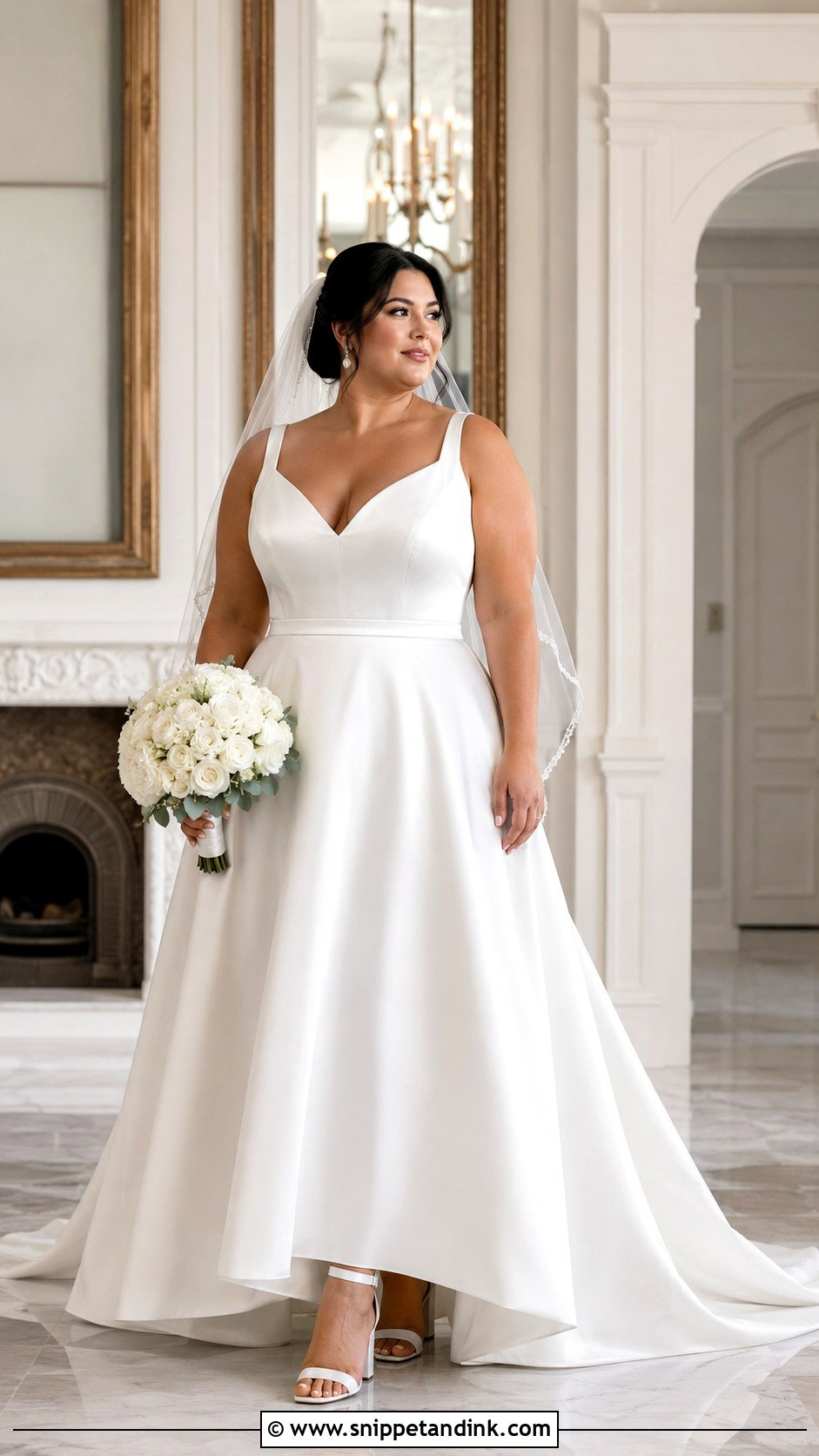
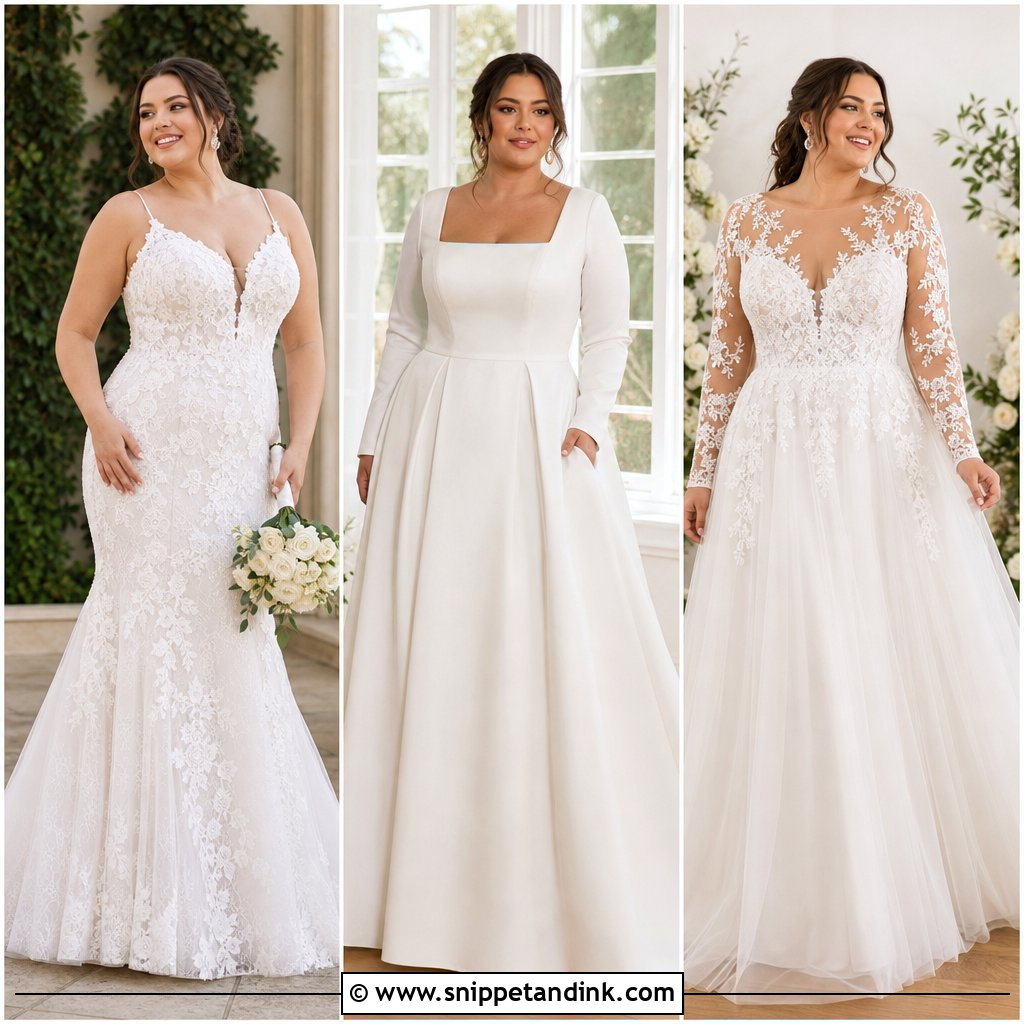
For plus-size brides, the A-line works because the structure can carry the support while the skirt moves freely. I’m far more interested in fit than in any rule about what you should or shouldn’t wear. Wide straps, internal boning, built-in cups and a sturdy closure create the foundation; the fabric is then about mood, satin for structure, chiffon for softness, lace for texture. Bring the exact undergarments and shoes you’ll wear to every fitting, because a different bra changes where the bodice sits. A seamstress experienced with bridalwear can adjust bust, waist, straps and hem while keeping the proportions. The right gown stays put all day and looks like you.
18. Petite A-Line Wedding Dress
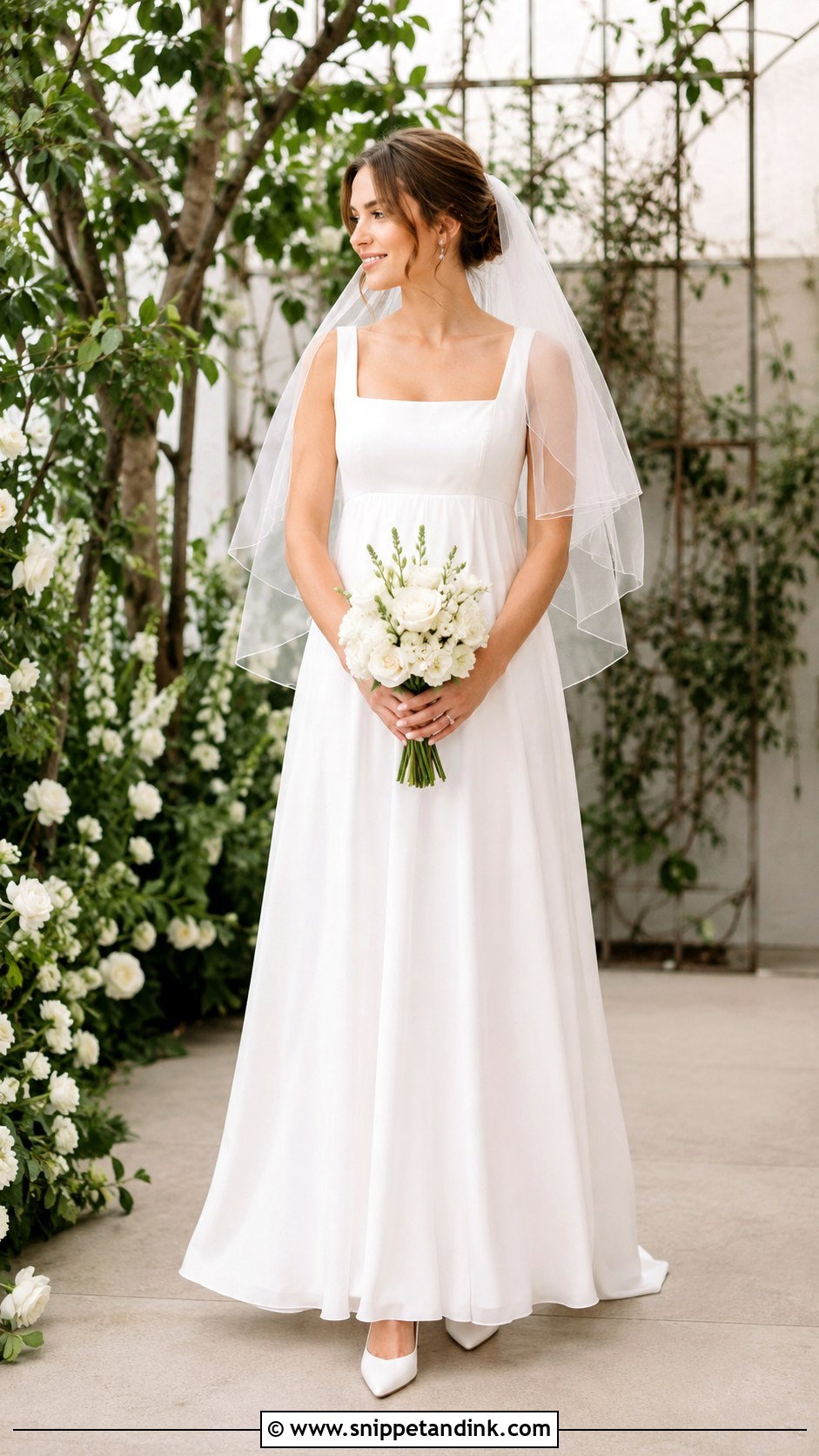
On a petite bride, scale is everything. A sample made for someone taller usually needs more than a hem: the bodice may be too long, the straps may sit wide and an appliqué meant for the hip can land at the knee. I’d steer you towards a moderate skirt rather than deep layers, which can swallow a shorter frame. A V-neck, square neckline or slightly raised waist seam lengthens the line. Pointed-toe heels you can actually stand in, delicate earrings and a narrow bouquet keep it in proportion, with a fingertip or chapel veil. A little lift at the crown, or a neat updo, finishes the streamlined effect.
19. Beach A-Line Wedding Dress
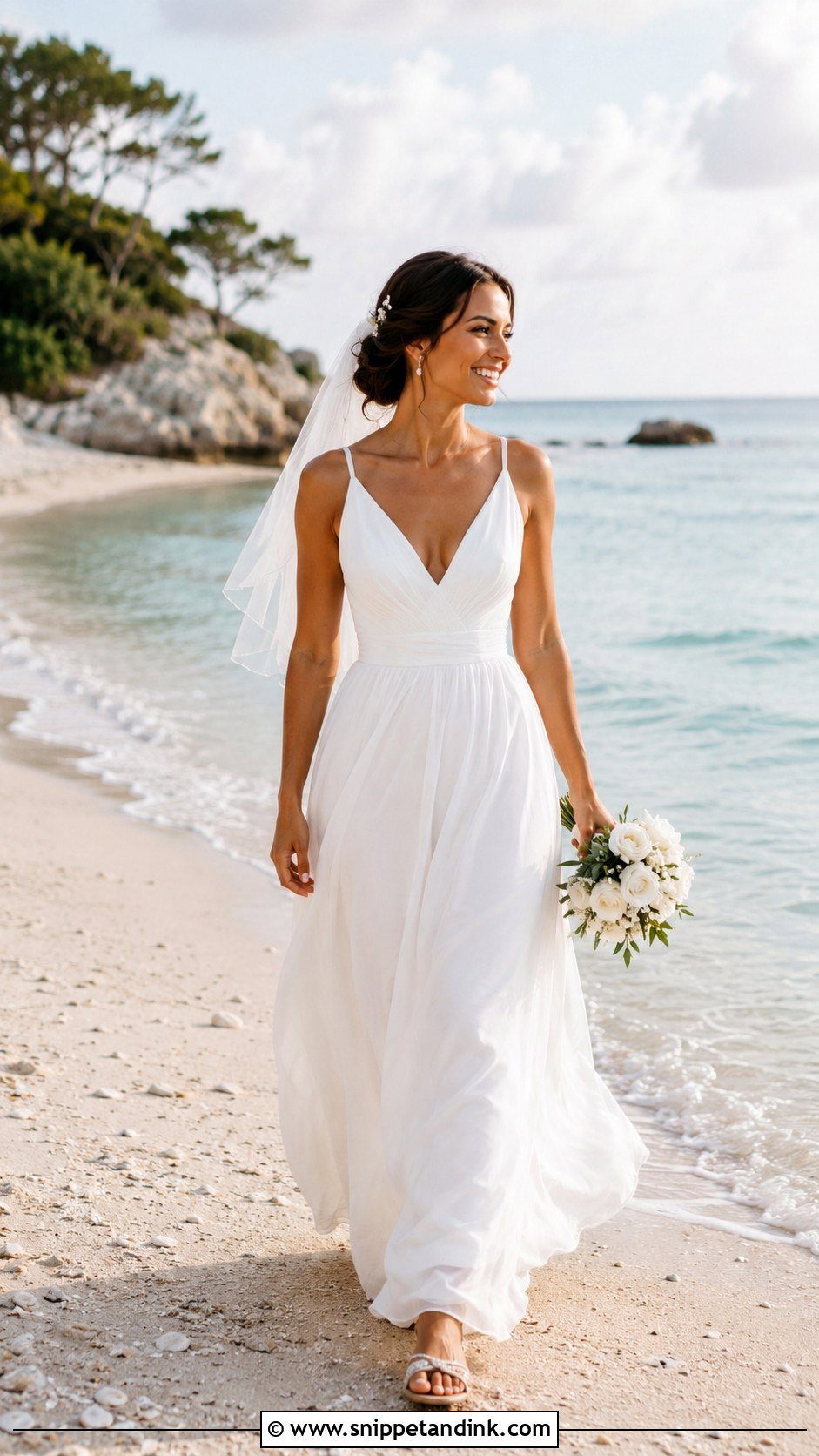
Beach gowns have to deal with wind, sand and uneven ground, so I judge them on construction before looks. Chiffon, soft tulle and light crepe move well without dragging. A lined bodice with secure straps or proper internal structure means you’re not hitching it up during vows. Flat sandals or low wedges work, or bare feet if the venue allows. Small pearl earrings and a hairpin that holds waves off your face handle the breeze. Skip a long train, which collects wet sand at the hem and turns heavy; a short veil, sheer cape or removable overskirt is far easier. A coastal bouquet in restrained colours suits the setting.



20. Winter A-Line Wedding Dress
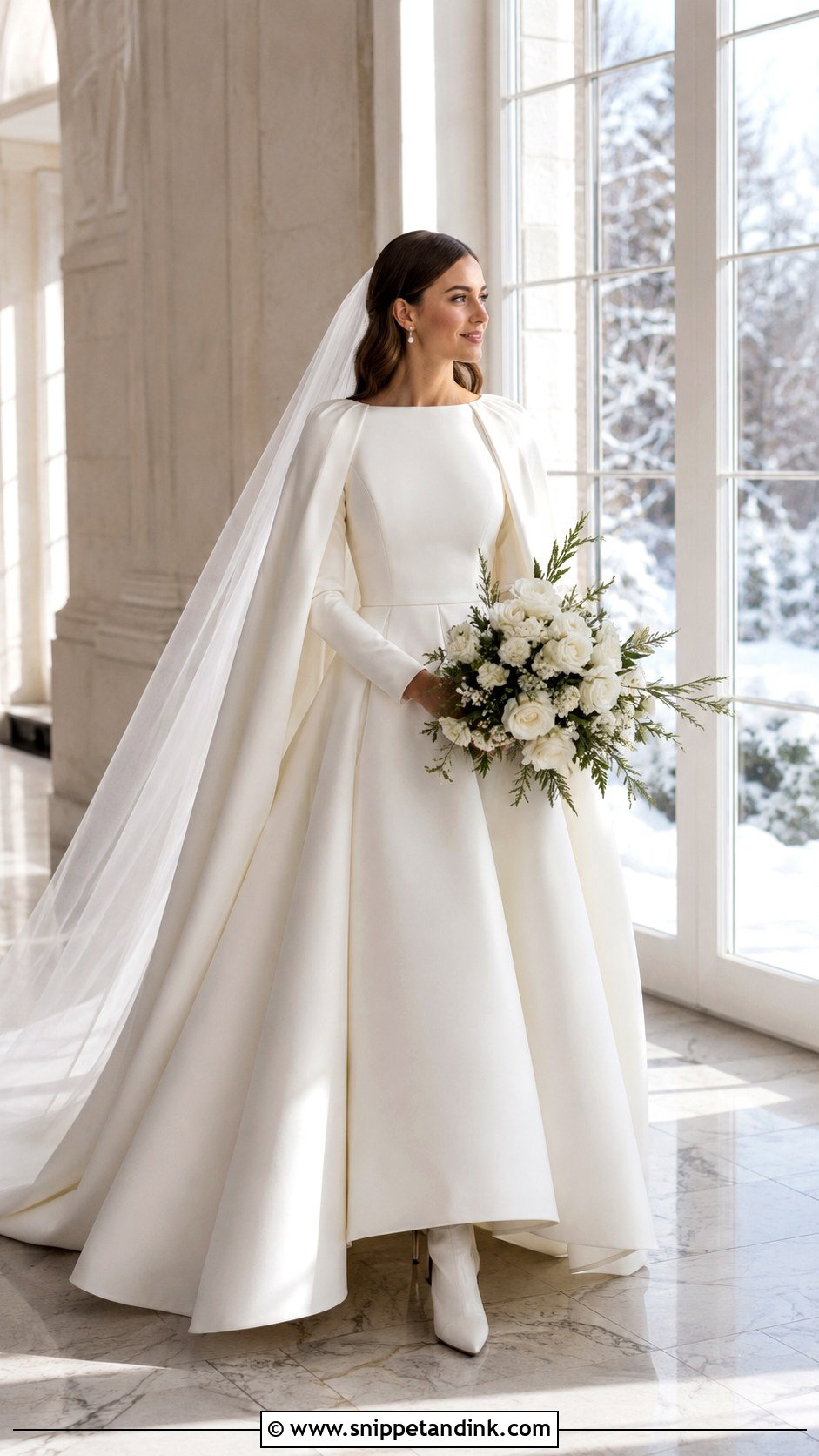
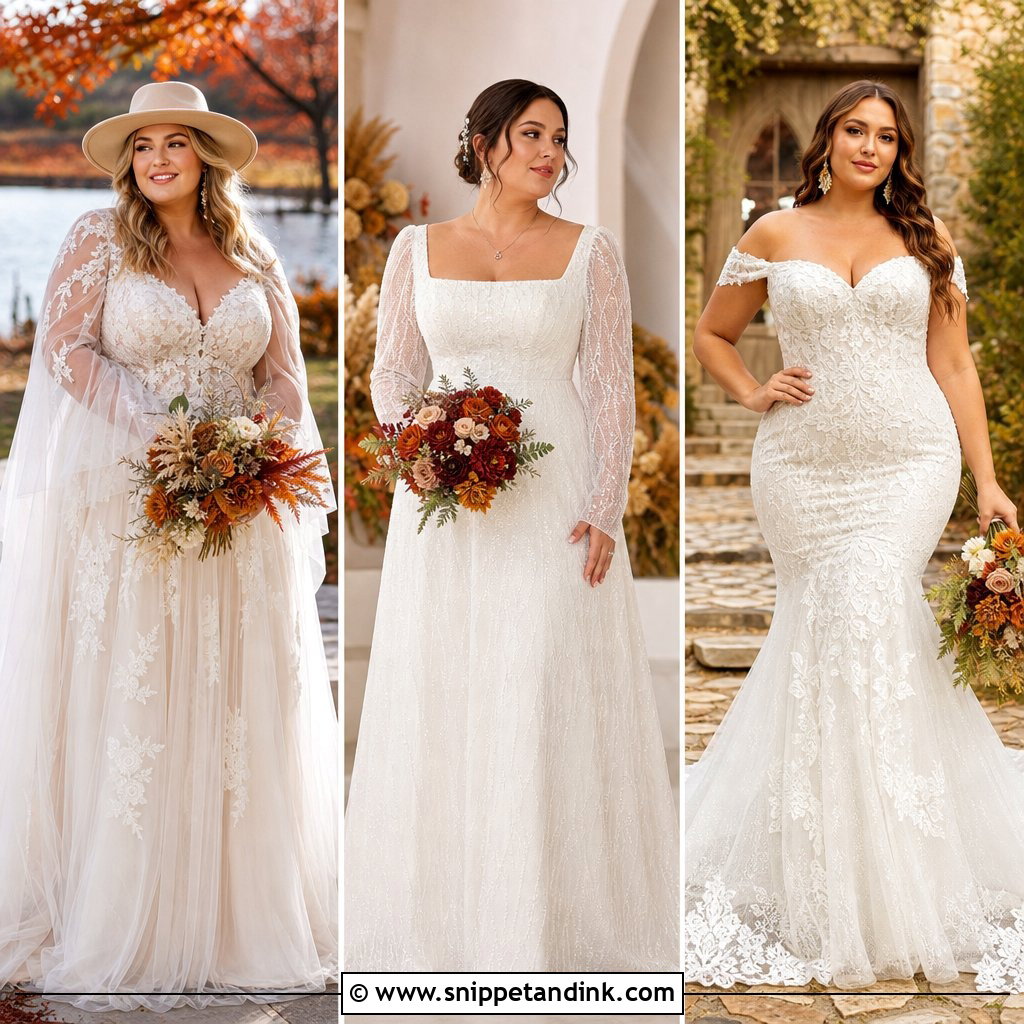
A winter A-line wedding dress can carry heavier fabric because the season actually suits it. I’d go for substantial satin, Mikado or lined crepe with long sleeves or a structured bodice. Bring your outer layer, whether a tailored ivory coat, faux-fur wrap or cape, to the final fitting, because a coat cut for everyday clothes will crush a skirt or pull at the sleeves. Closed-toe pumps or ankle boots make sense on icy paths. Pearl earrings, a polished updo and a cathedral veil suit a church ceremony, and white flowers with evergreen foliage feel seasonal without looking themed.
The Fitting Schedule and the Bustle Question
Most brides need two or three alteration appointments, usually beginning six to eight weeks before the wedding. Earlier than that and your body can still change; later and the seamstress is rushed. Bring your actual shoes to the first one, because the hem is set against the heel height, and a hem marked in socks will drag.
An A-line skirt with any train needs a bustle for the reception, and the style changes how the back looks for the rest of the night. I always ask a bride to practise it with whoever will do it on the day, usually a bridesmaid or her mother.
Bustle styles that suit this silhouette
- Over bustle: the train hooks up onto the outside of the skirt. Quick to fasten and reliable on satin and Mikado.
- French or under bustle: the train tucks underneath with ribbon ties, creating soft folds. It works well on tulle and chiffon but takes longer, and the ribbons are colour-coded for a reason.
- Ballroom bustle: the train lifts so the hem looks even all round, almost as if there were no train. It suits formal evenings and needs more hand-sewing time.
The Week Before: Steaming, Hanging and Getting It to the Venue
Take the gown out of its bag the moment it comes home and hang it high so the skirt falls without touching the floor. Creases from the bag drop out of chiffon and tulle by themselves within a day or two. Satin and Mikado are different: they need a handheld steamer held a few centimetres away, never an iron straight on the fabric, which can leave a permanent shine.
On the morning, lay the dress flat across a back seat or hang it from a hook with the skirt folded loosely over a clean sheet. Don’t put it in the boot. Pack a small kit with clear thread, safety pins, a white chalk stick for small marks and the bustle instructions, because these are the things I end up needing most often.
An A-Line Should Let You Sit Down at Dinner
The A-line adapts to almost every venue, season and body, which is exactly why it’s worth being picky about the details. Satin and Mikado give structure, chiffon and tulle give movement, and lace, beading, corsetry or appliqués add personality without changing the shape. Ignore how a sample looks on the hanger and judge it on you: support, fabric weight, neckline position, skirt volume and how much alteration it needs. Then choose a veil, shoes and flowers that point in the same direction. My final test is always the same. Sit, walk and lift your arms in it, because you’ll be doing all three for hours.
You'll Like These Ideas:









Leave a Reply