
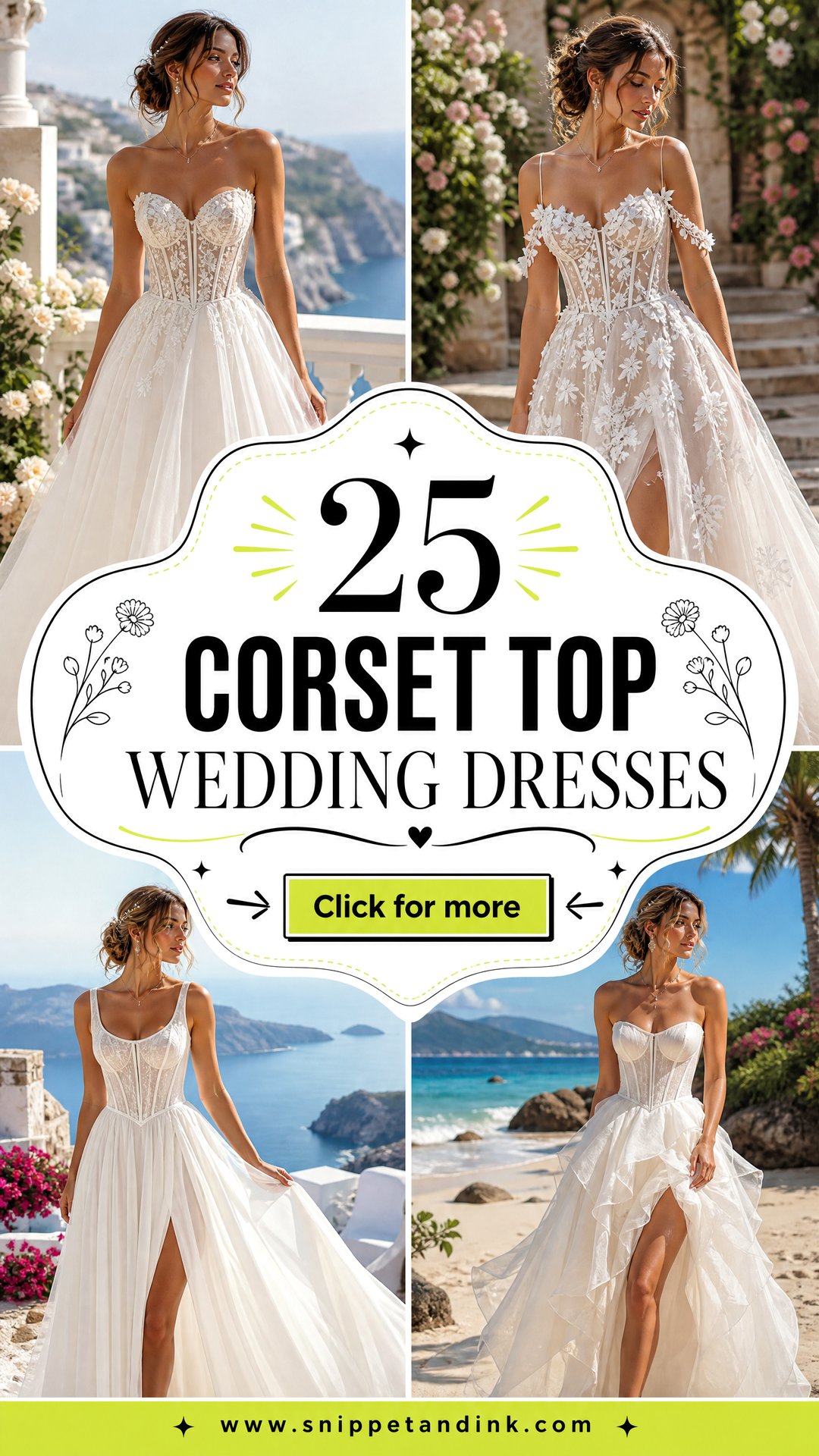
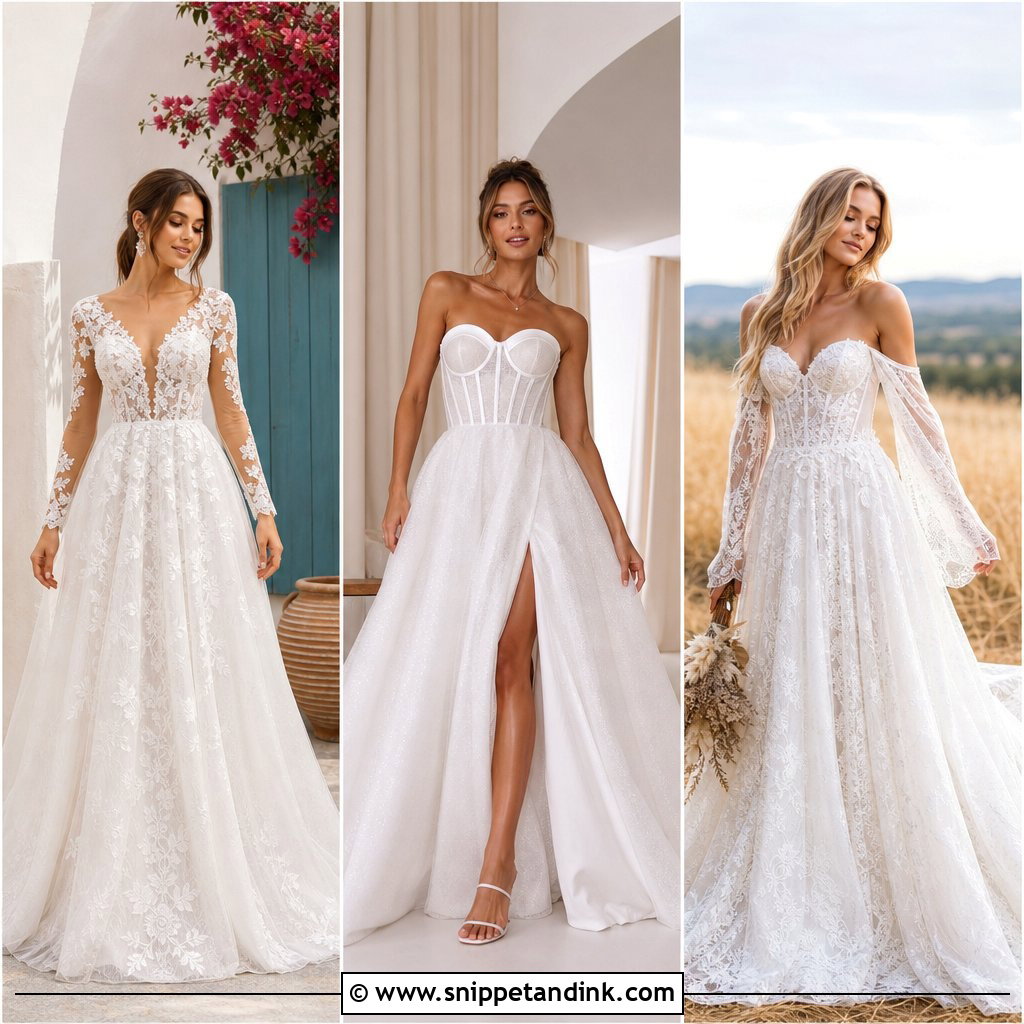
Boning, a defined waist and a bodice that holds itself up: that’s what a corset top adds to a wedding dress, and it can sit on top of nearly any skirt. Basque waists, visible boning, drop waists and bridal separates are all part of the current picture. The test I use is simple. The dress should feel secure while you breathe, sit and dance, and the back closure, skirt weight, train and underwear all matter as much as the front view. The 25 complete looks below come with the fitting checks I’d make on each.
Why the Sample at the Boutique Never Fits Like Yours Will
Corset tops are the dresses brides most often misjudge at the first appointment. Shop samples come in a handful of sizes and are clipped at the back to roughly fit whoever is trying them on, so the bodice rarely sits where it would on a dress made to your measurements. A sample that looks loose at the bust or tight at the hip is not a reason to rule the style out.
What I look at instead is proportion. Does the waist seam land near your natural waist? Is the top edge at a height you’re comfortable with? Do the boning channels run in lines that suit your torso length? Those things stay the same in your own size. The fit around the ribs and bust will change once it’s made for you.
Take side and back photos at the appointment, too. Most brides only check the front mirror, and corset tops show most of their character from the side.
1. Satin Corset Ball Gown Wedding Dress
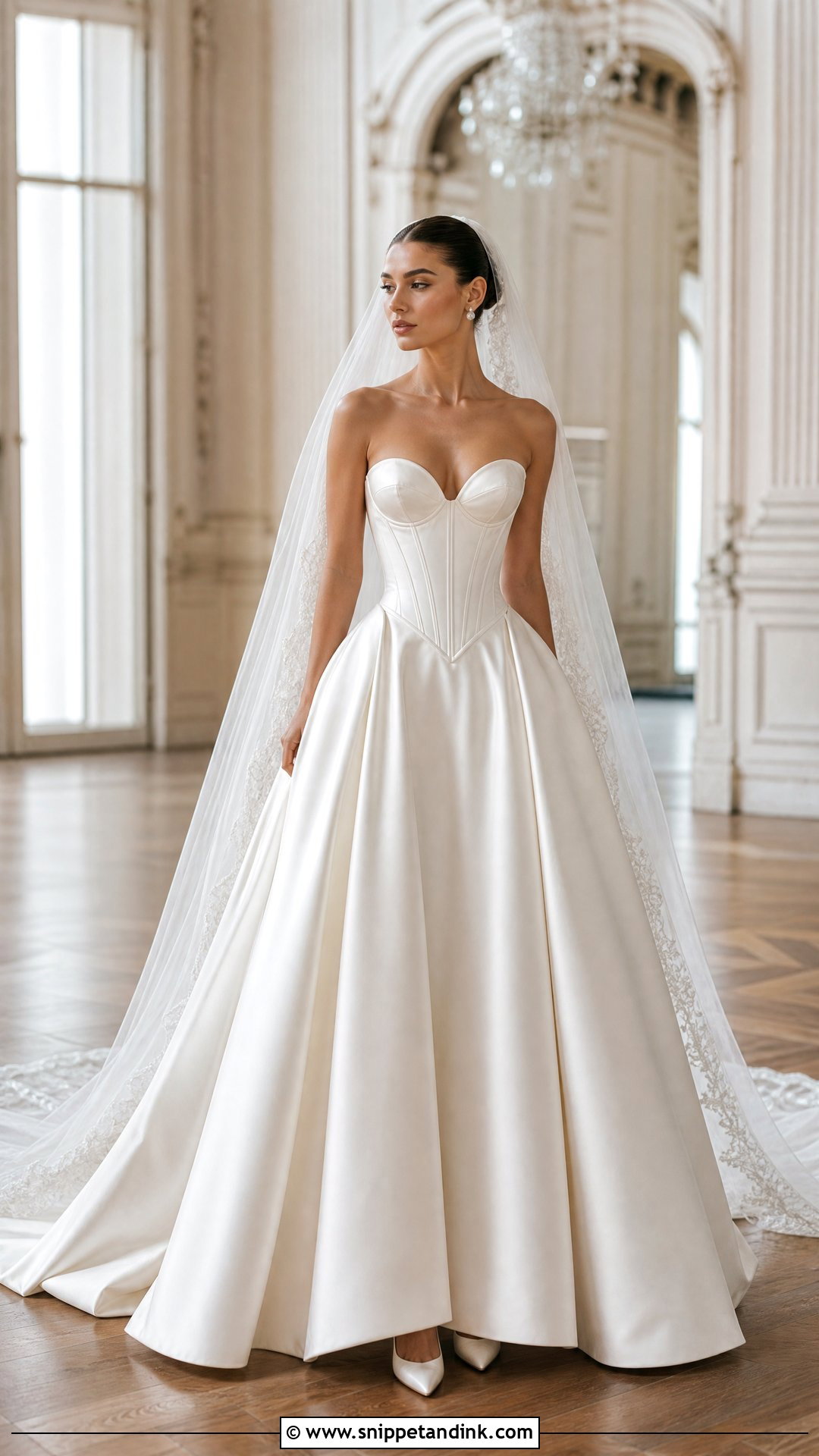
Ivory satin, a sweetheart neckline and a full skirt: this is the formal corset gown in its plainest form. A gently pointed basque waist makes the join between bodice and skirt look deliberate. Covered buttons and a chapel train are enough detail. Heavy satin skirts pull on the waist seam, so I ask for a sturdy bustle and have the bride walk the length of the shop twice before signing off. A cathedral veil, pointed pumps, pearl drops and a sleek low bun complete it.
2. Lace Basque Waist Corset Wedding Dress
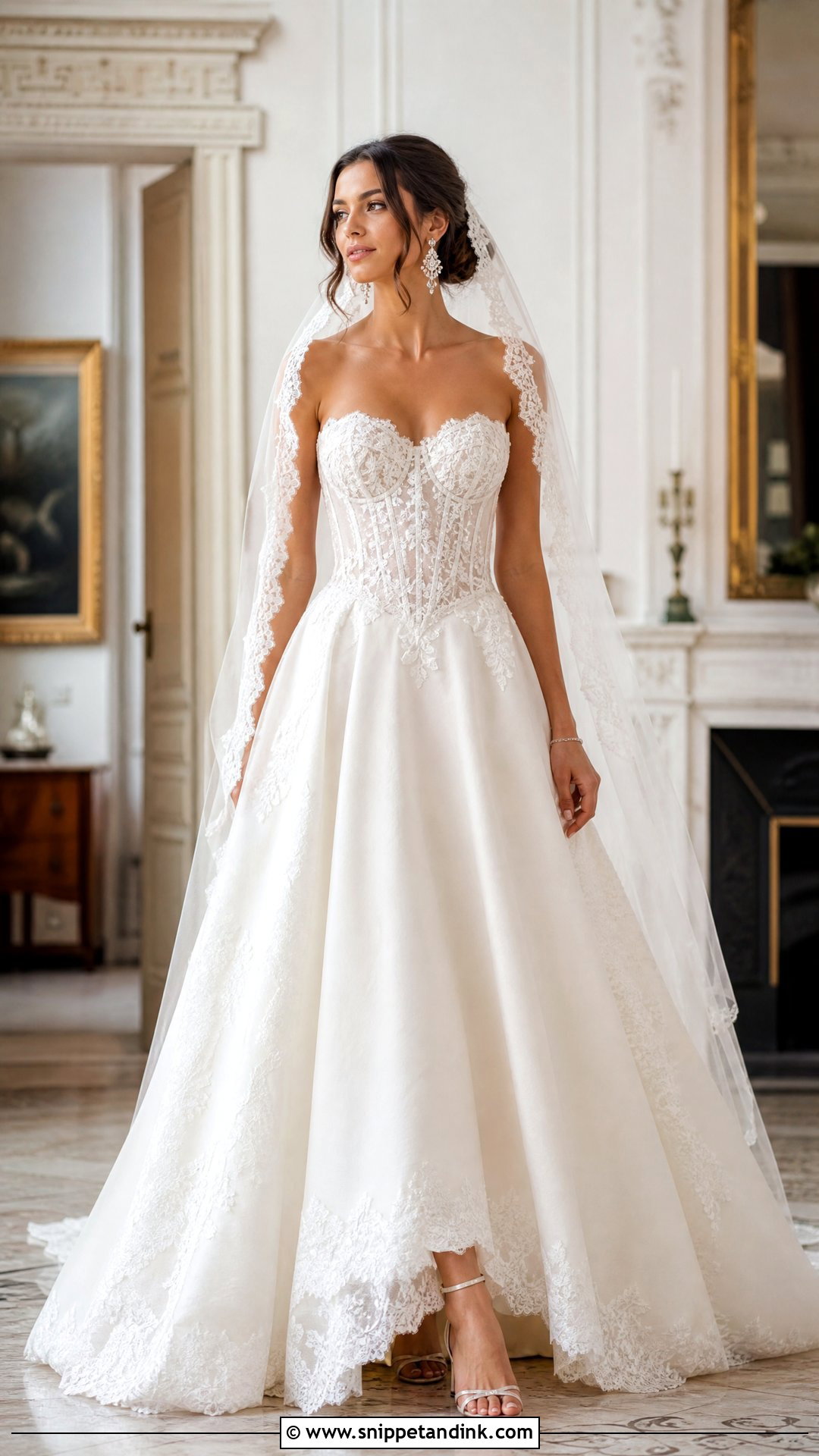
Lace is the softest way to wear a basque point. The things I check are behind the lace: cups that actually support, boning placed so it doesn’t show as ridges, and lace that runs onto the skirt rather than stopping at the waist. A full A-line or ball gown balances the point. Sit down at the fitting and look at the waist; the point should lie flat, not flip up. Ankle-strap heels, small crystal earrings and a lace-trimmed fingertip veil suit garden or historic venues.
3. Sweetheart Corset A-Line Wedding Dress
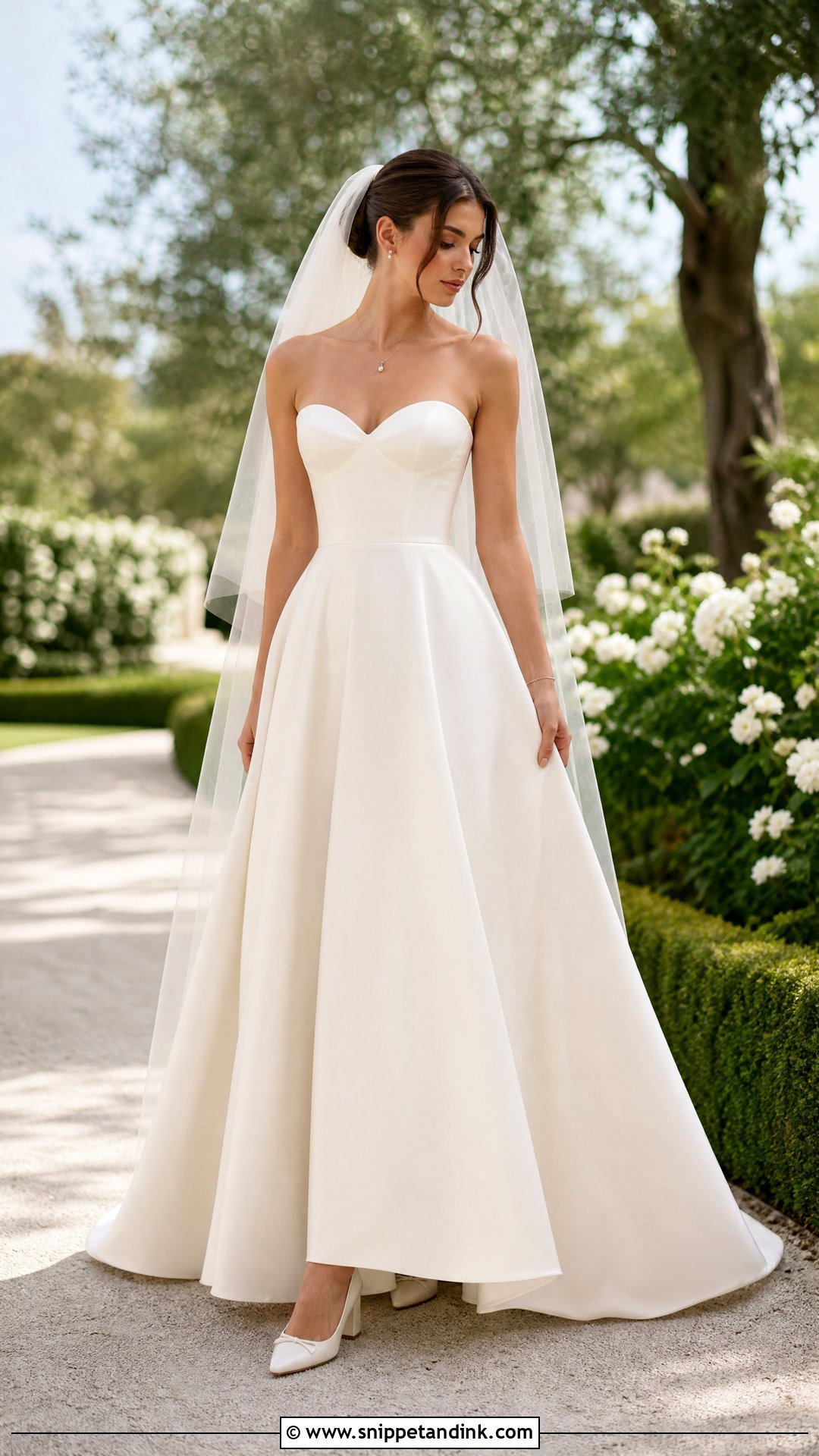
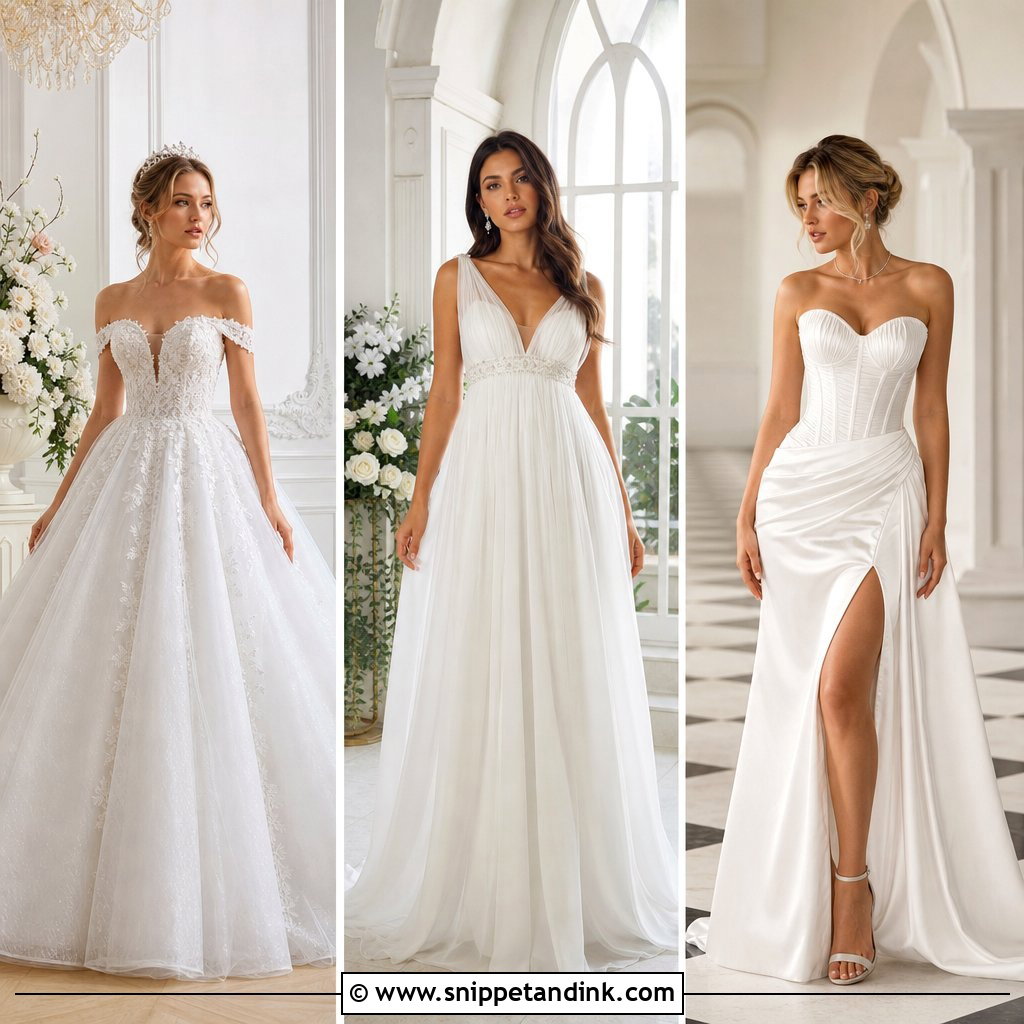
For a first wedding-dress appointment, this is where I’d start. The sweetheart curve shows the collarbones, and the A-line skirt falls away from the waist without clinging to the hips, so it suits a wide range of figures. Matte satin or mikado reads formal; layered tulle reads softer. Strapless sweethearts slide if the internal support is weak, so I lift and press at the side seams during the fitting to check it stays put. Low block heels manage grass and stone paths, with pearl studs and a fingertip veil.
4. Off-Shoulder Corset Tulle Wedding Dress
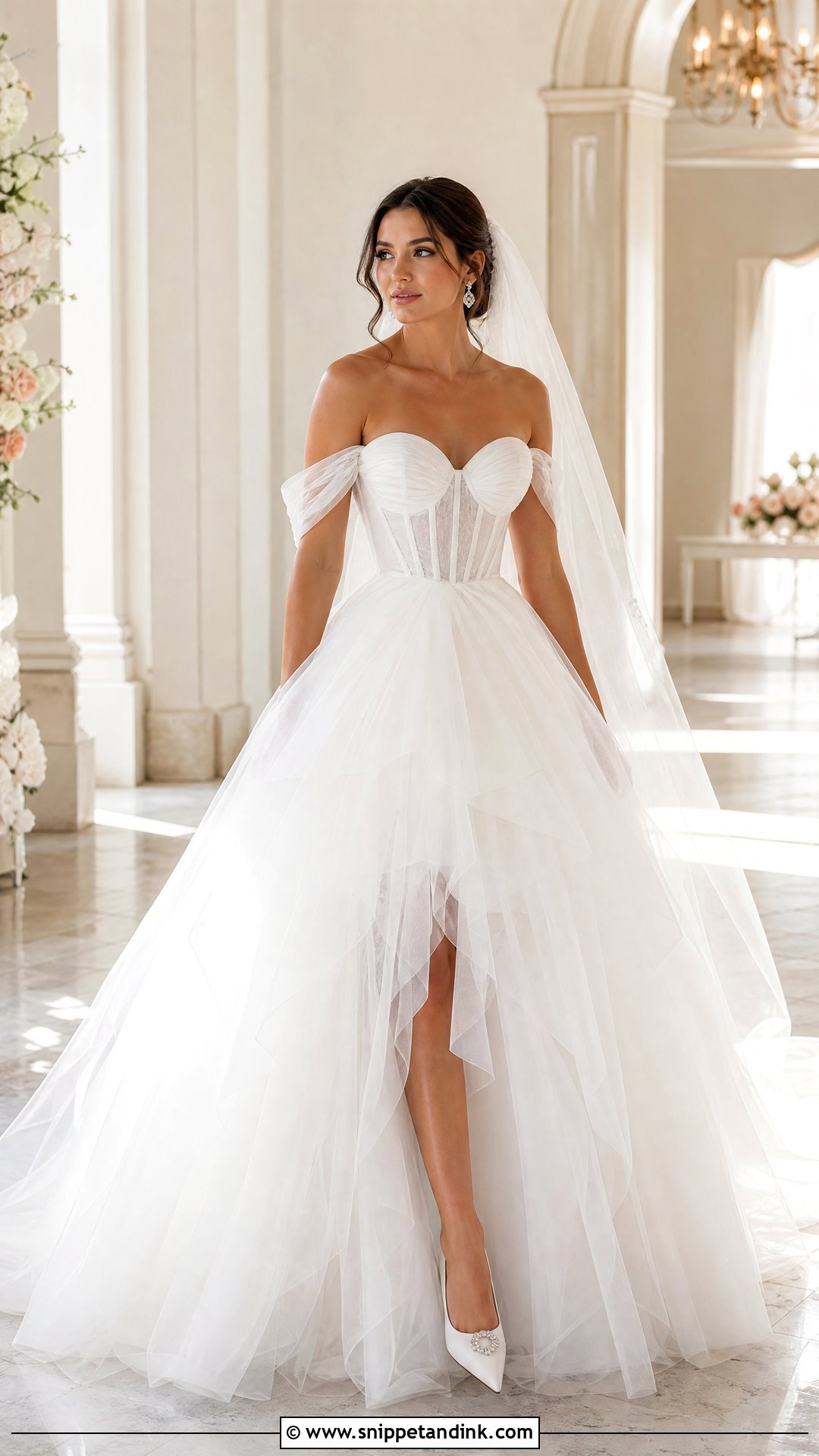
Tulle gives volume without the stiffness of satin, and the off-shoulder line frames the face. Sleeves are the fit risk. Draped bands that sit too tight across the upper arm stop you hugging anyone properly. I have brides lift their arms, hug me and do a few dance steps before the sleeves are stitched in place. Subtle exposed boning gives definition. Crystal drop earrings, pointed pumps, a chapel veil and a textured updo keep the shoulders clear; spring ceremonies indoors suit it best.
5. Long-Sleeve Lace Corset Wedding Dress
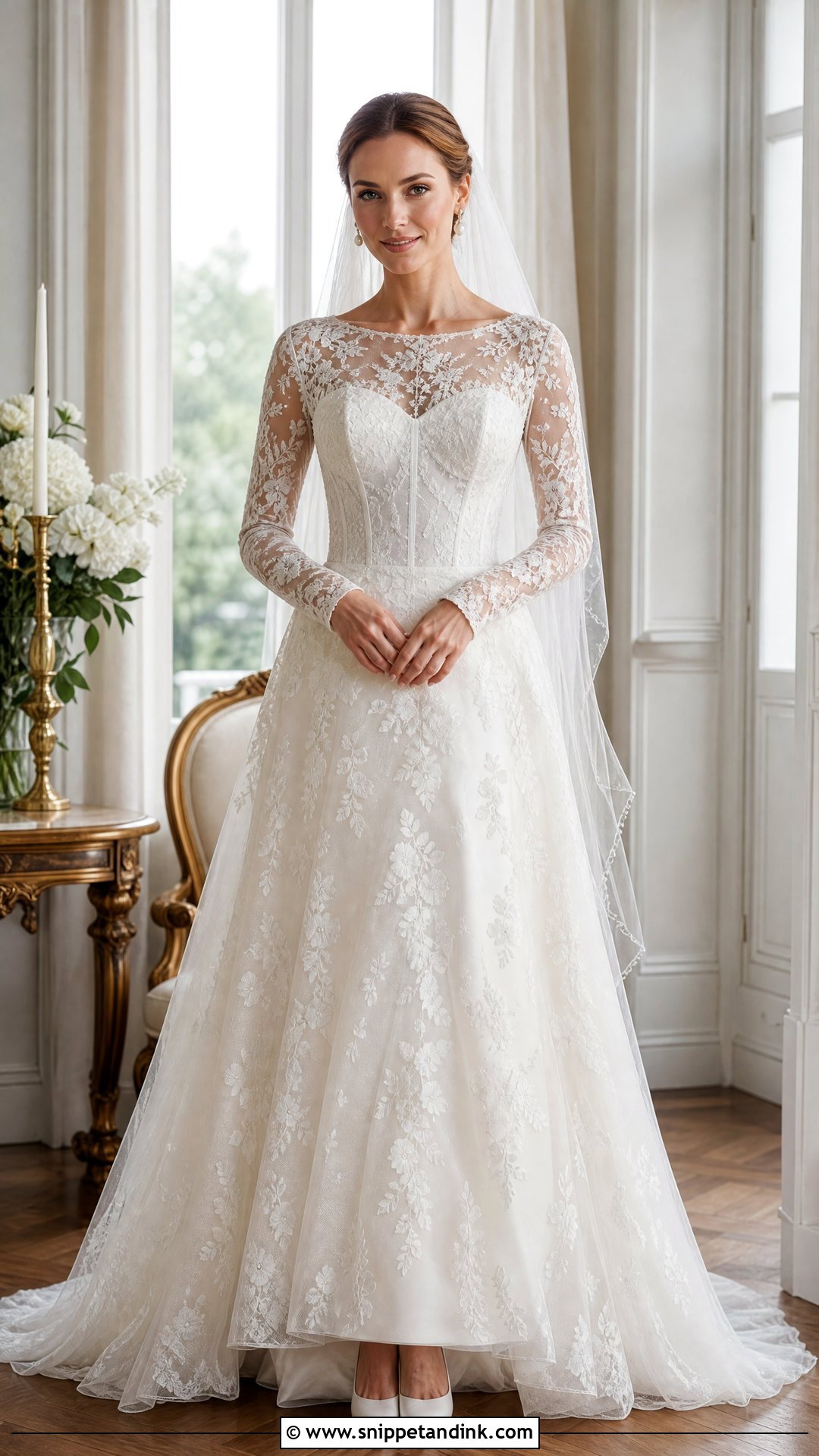
Long lace sleeves can make a bodice look heavy unless the structure underneath is doing the work. An internal boned bodice beneath illusion lace lets the sleeves and neckline stay light. Lace appliqués across the waist hide the join between bodice and skirt neatly. Bend your elbows at the fitting; narrow lace sleeves can bind there. Finished cuffs matter, especially if they sit near a bracelet or a ribboned bouquet. Closed-toe pumps and a raw-edge veil suit autumn and winter.
6. Square-Neck Corset Mikado Wedding Dress
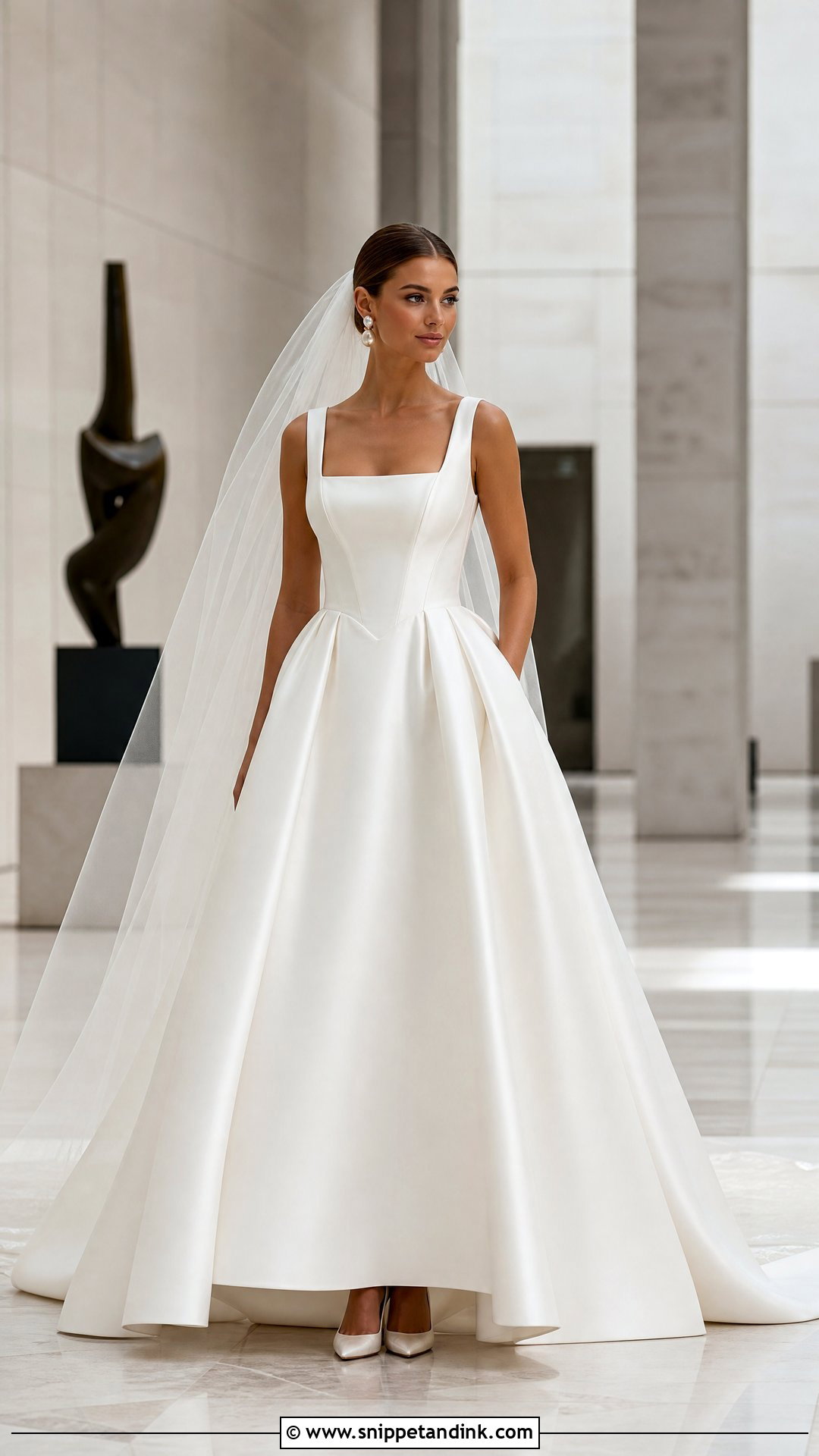
Mikado is stiff enough to hold a square neckline perfectly straight, which is why this one looks so clean. Wide straps add stability for anyone who doesn’t trust a strapless bodice. The fitting issue with mikado is the waist: firm bodice meeting firm skirt can bunch at the seam, so I walk around the bride and check it from every side. Sleek pointed heels, sculptural pearl earrings, a smooth cathedral veil and a polished bun suit hotels, museums and city venues.
7. Sheer Corset Mermaid Wedding Dress
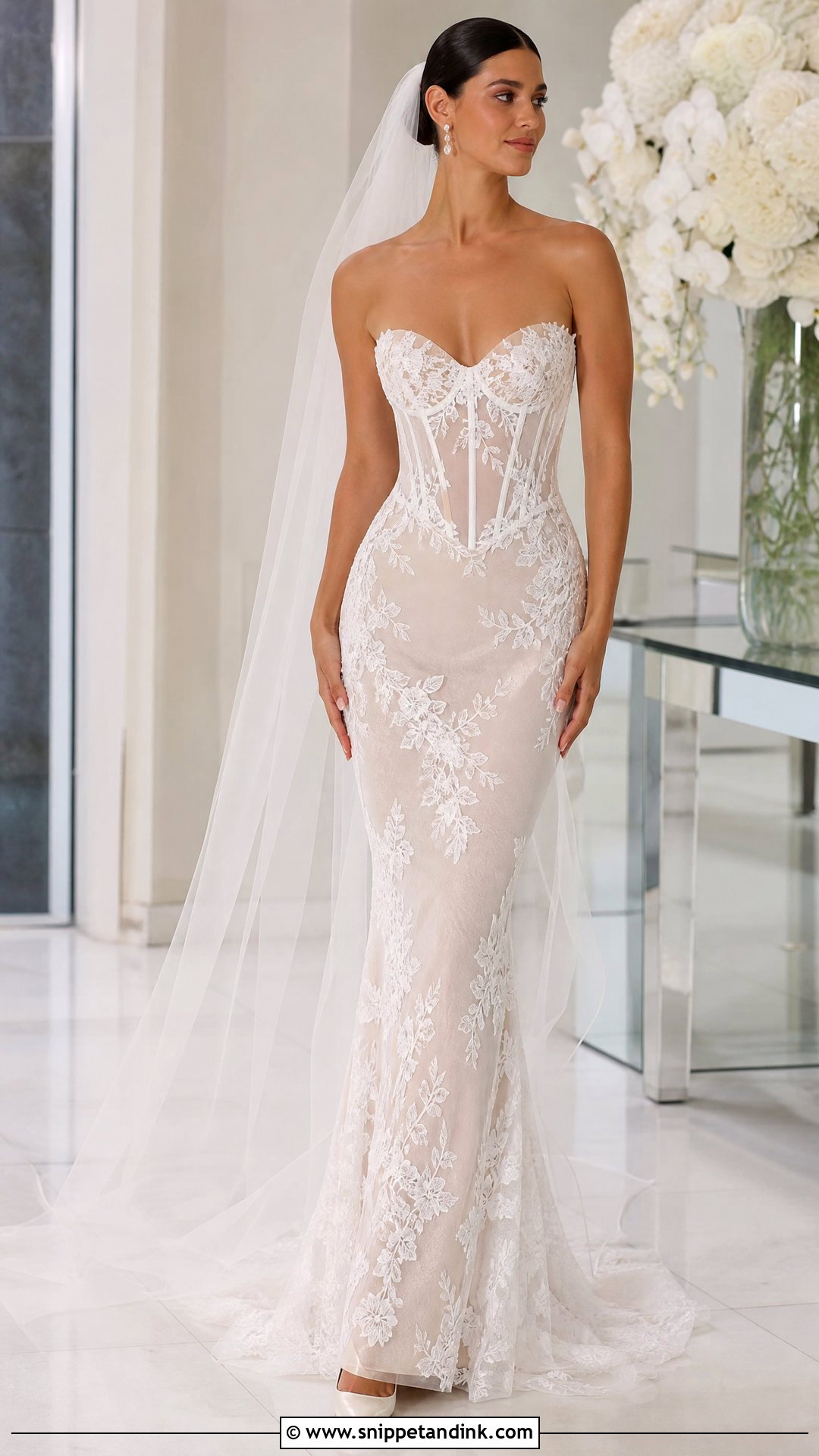
Sheer mermaid bodices look fragile but shouldn’t be. I want to see lace appliqués over a lined foundation, not mesh doing the holding on its own. The skirt fits through the hips and flares near the knee, which limits stride, so walk, sit and take a few steps at every fitting. A secure bustle matters on a train this close-fitting. Pointed pumps, slim crystal earrings, a plain veil and a sleek ponytail let the construction show at an evening venue.
8. Drop-Waist Satin Corset Wedding Dress
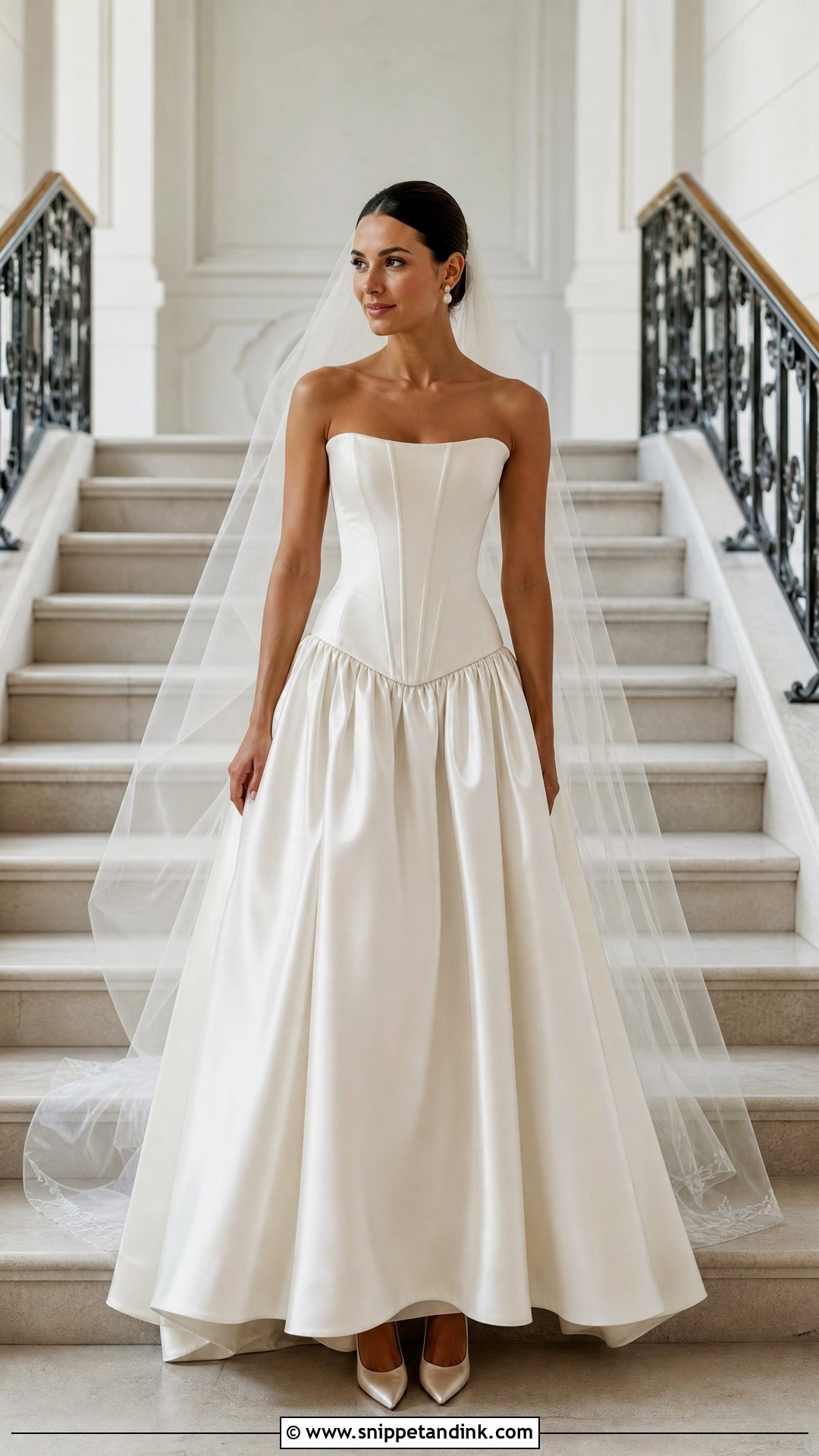
A dropped waist lengthens the bodice before the skirt opens, and on satin with little embellishment the cut does all the talking. The risk sits at the hips. When you sit, the seam and the bottom of the boning can press into you, so I check where each bone ends and ask for them to be trimmed if they dig. A French twist, pearl button earrings and slim ivory heels suit the formal proportions. Grand staircases and ballrooms show the line best.
9. Pearl Corset Wedding Dress
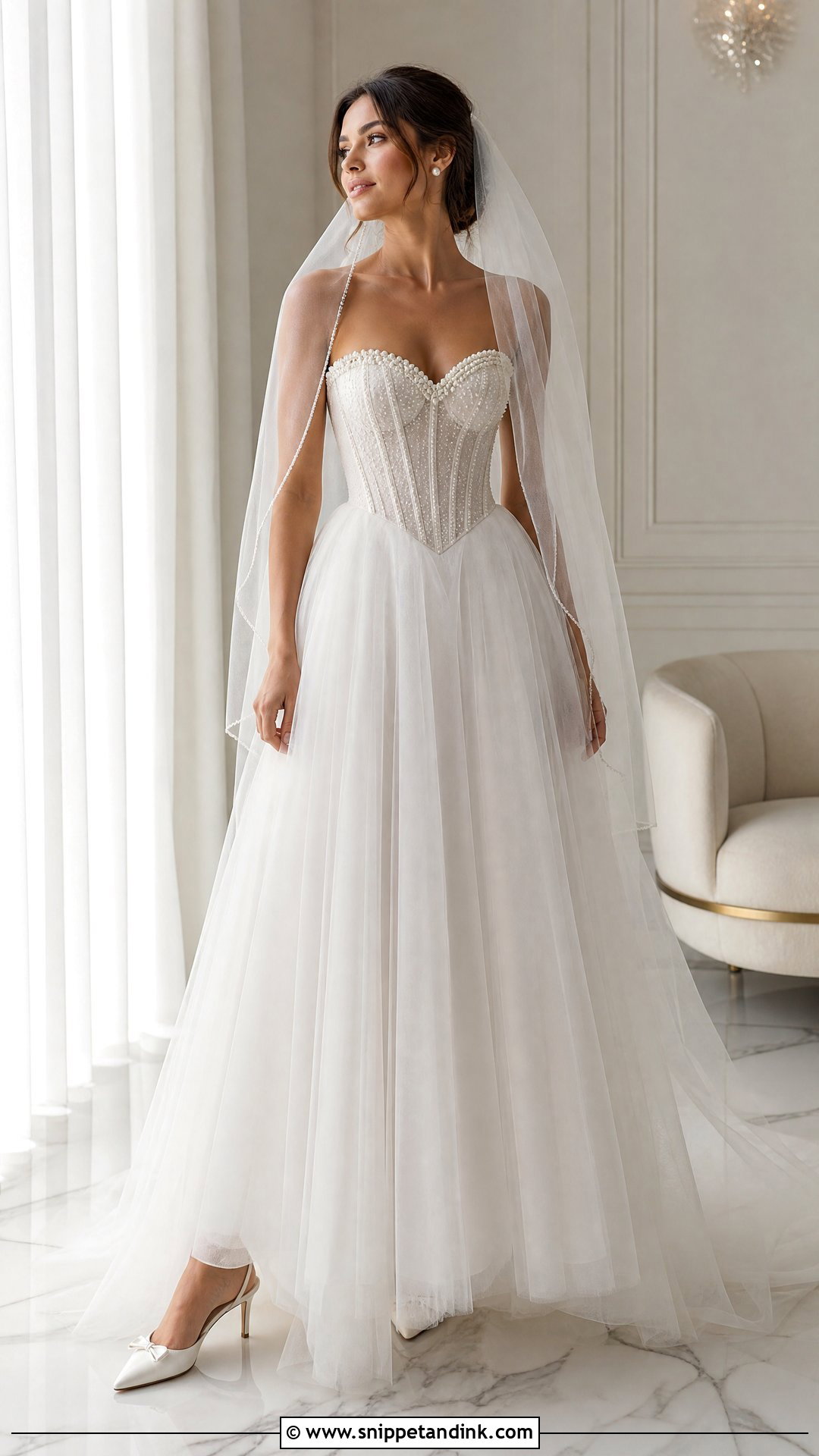
Pearls are best kept to a few places: the neckline, the boning channels or the lace motifs. Spread across everything, they flatten the shape the corset creates. A soft tulle A-line skirt gives contrast. Skip the necklace if the neckline is already beaded. After alterations, I go over the underarms, waist seam and back closure for loose pearls, since those are the places where constant movement wears thread through. Satin slingbacks and a fingertip veil finish it.
10. Floral Appliqué Corset Wedding Dress
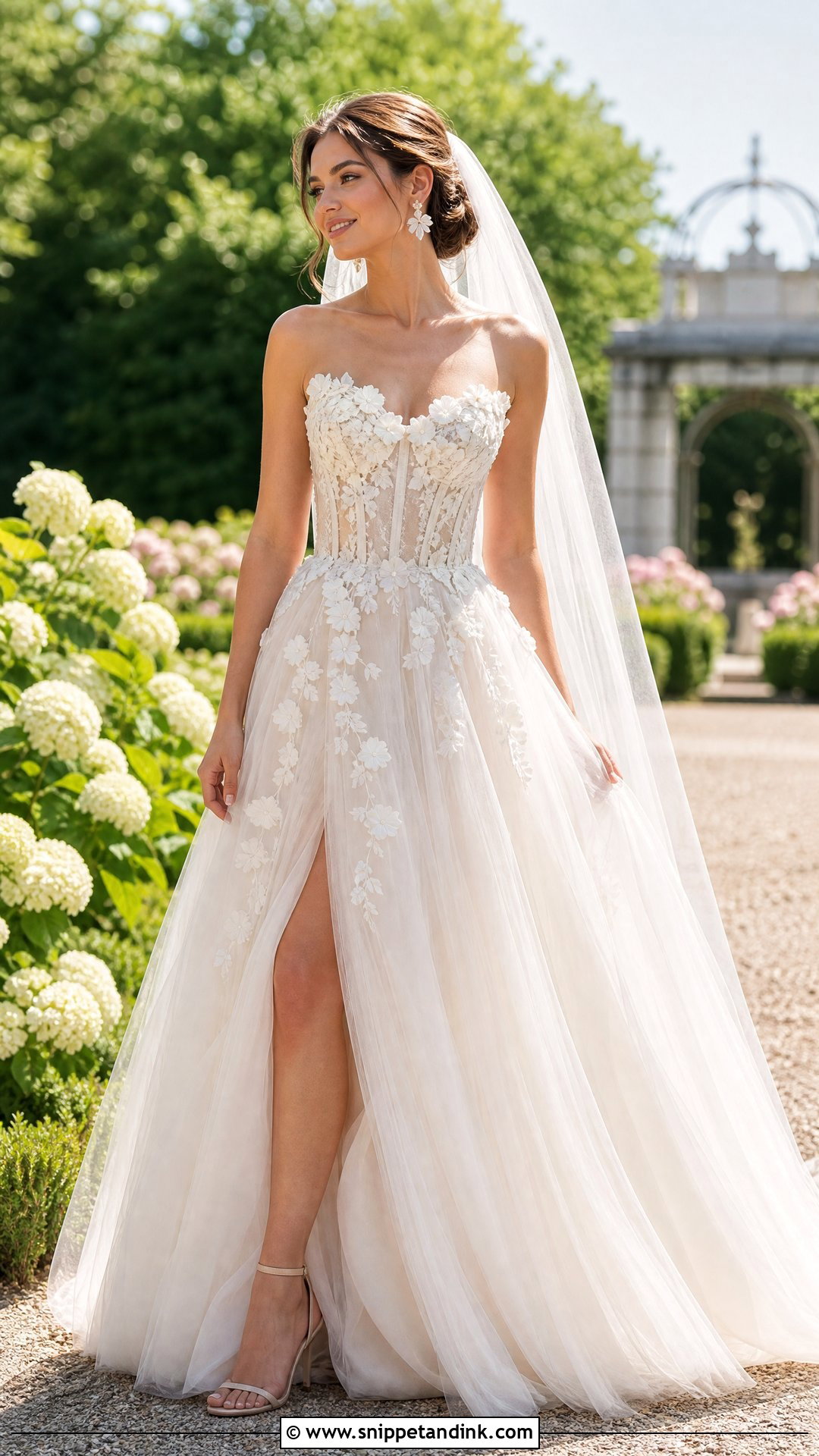
Raised flowers that start at the neckline and scatter down a tulle skirt connect the bodice and skirt into one design. A nude or ivory lining decides how much of the corset shows through. The comfort issue is underarm scratch, because raised appliqué there rubs with every arm movement. I also check flowers near the closure, bustle points and hem are stitched firmly. Ankle-strap heels, loose waves and a plain veil suit botanical venues and spring ceremonies.
11. Corset Wedding Dress With Detachable Sleeves
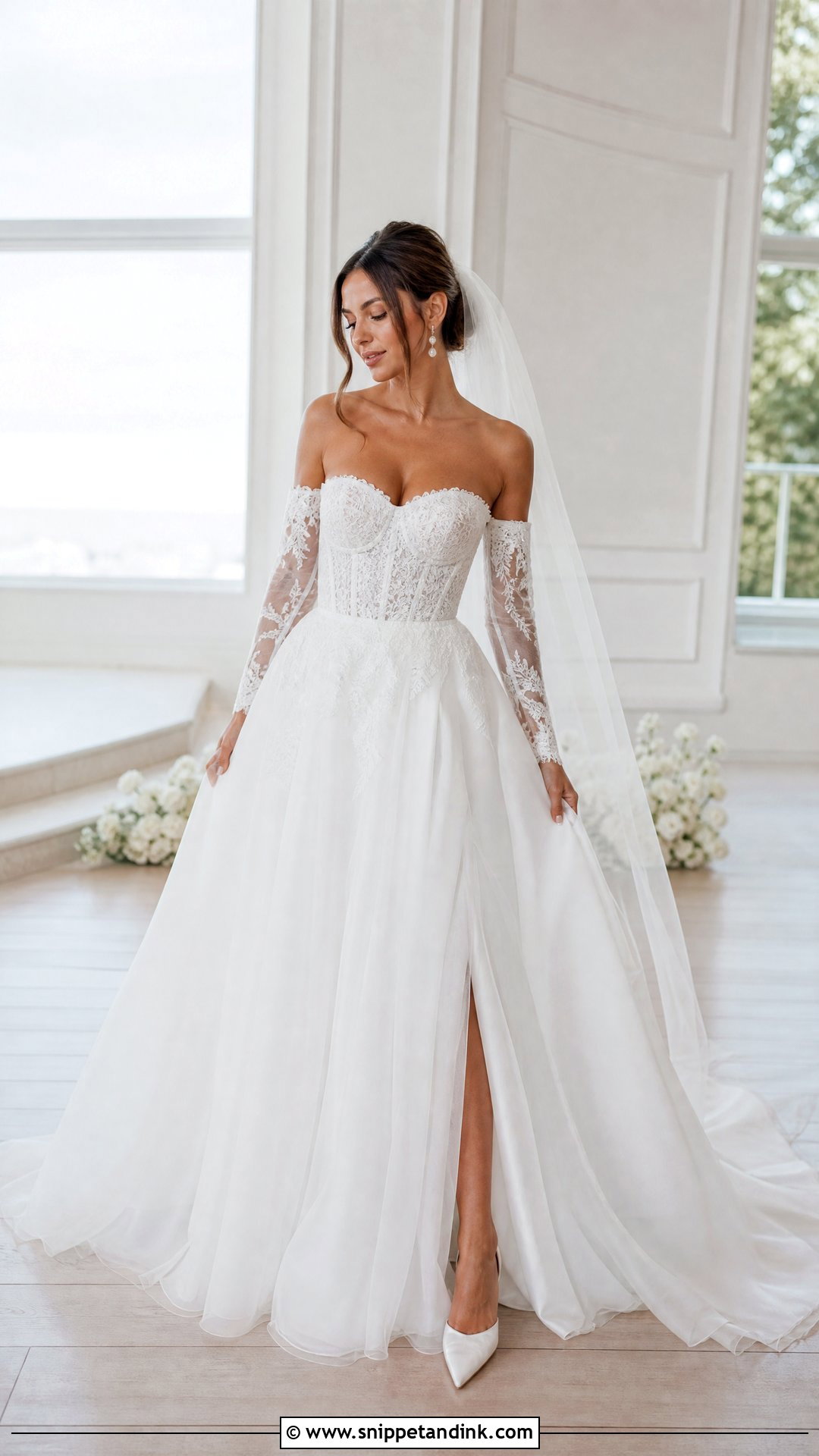
Two looks, one dress. Lace sleeves or draped off-shoulder bands go on for the ceremony and come off for the reception, over a strapless sweetheart bodice and an A-line skirt. Hidden attachment points are the detail I check; when the sleeves come off, you shouldn’t see snaps on the bodice. Teach a bridesmaid to remove them and practise once before the day. Pearl drops and a chapel veil for the ceremony, then a sparkling comb later.
12. Strapless Minimalist Corset Wedding Dress
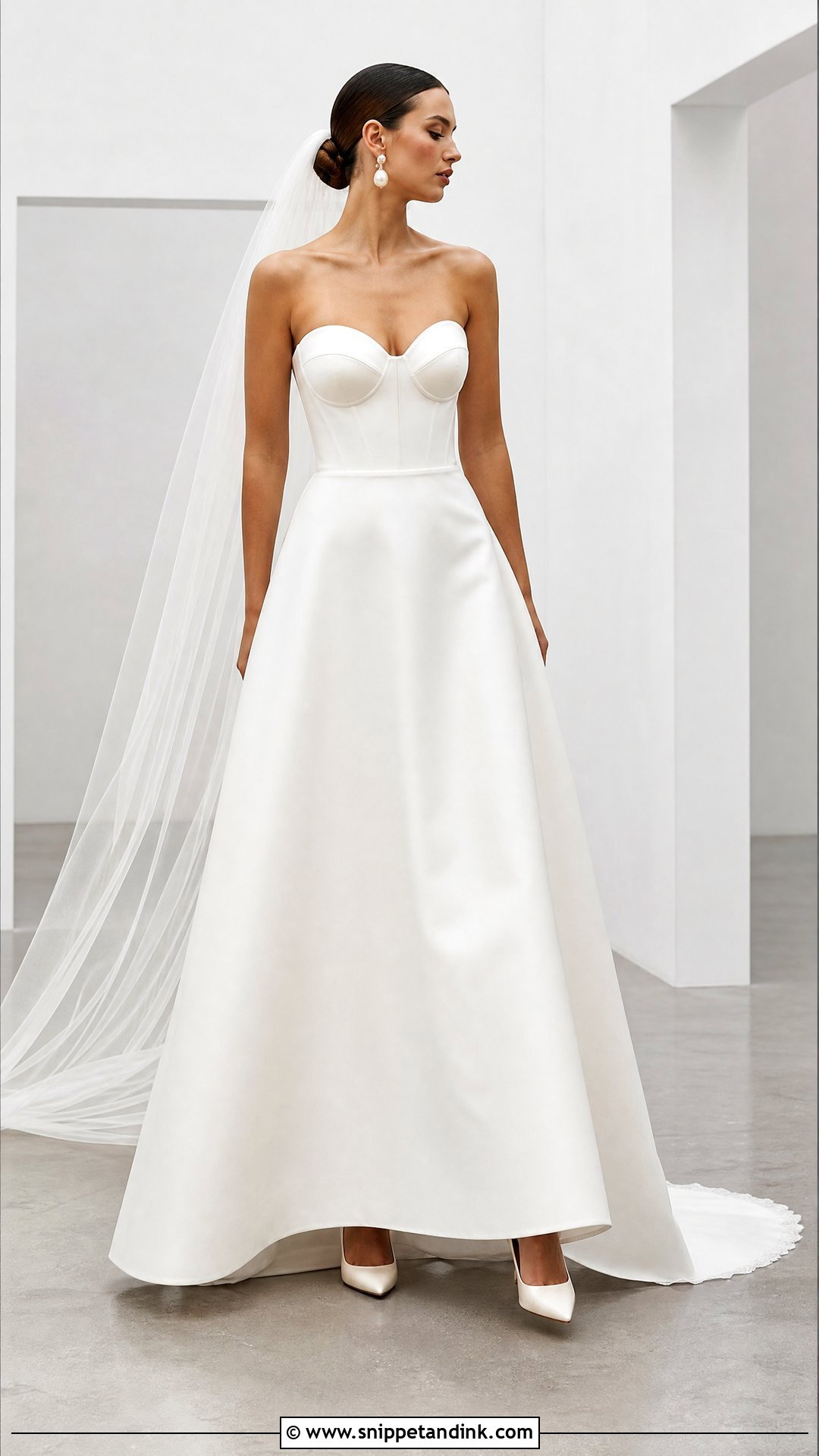
Strip away the decoration and the construction is all that’s left, so it has to be perfect. Crepe, satin or mikado with a sculpted neckline and precise vertical seams. Any skirt from column to restrained ball gown works. On plain fabric, I check three things above all: the top edge sits evenly all the way round, the waist is smooth, and the back closure lies flat. Statement pearl earrings, pointed pumps, a long raw-edge veil and no necklace.
13. Halter Corset Wedding Dress
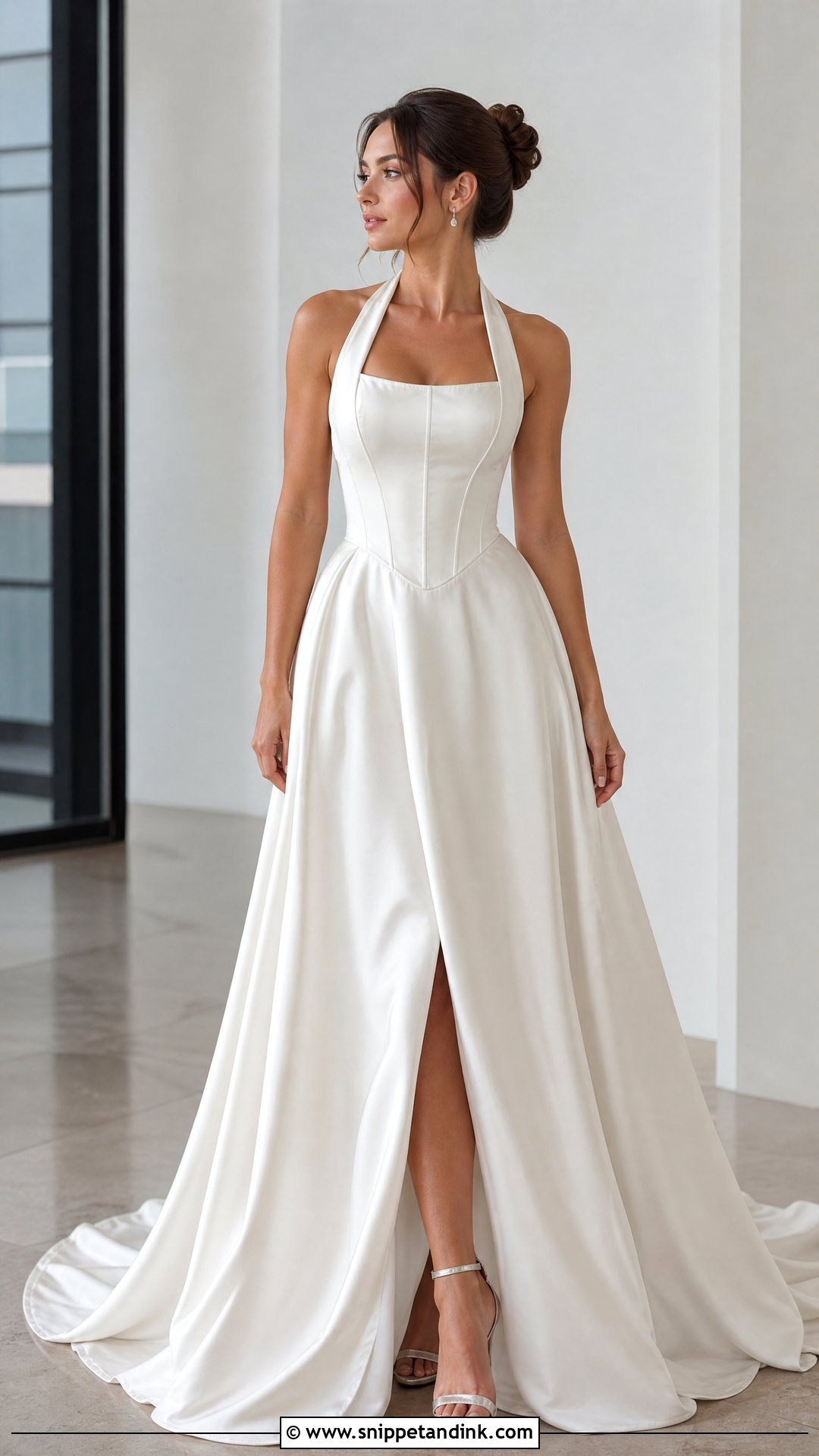
Halters pull the eye upward, but the weight of the dress must sit on the bodice, not your neck. A strap too narrow, or a bodice too weak to carry itself, leaves you with neck ache by the speeches. Strong side panels and a wide halter strap avoid that. A fit-and-flare or flowing chiffon skirt suits warm weather. Small drop earrings, metallic sandals and an updo or polished ponytail show off the neckline and back.
14. Scoop-Neck Corset Chiffon Wedding Dress
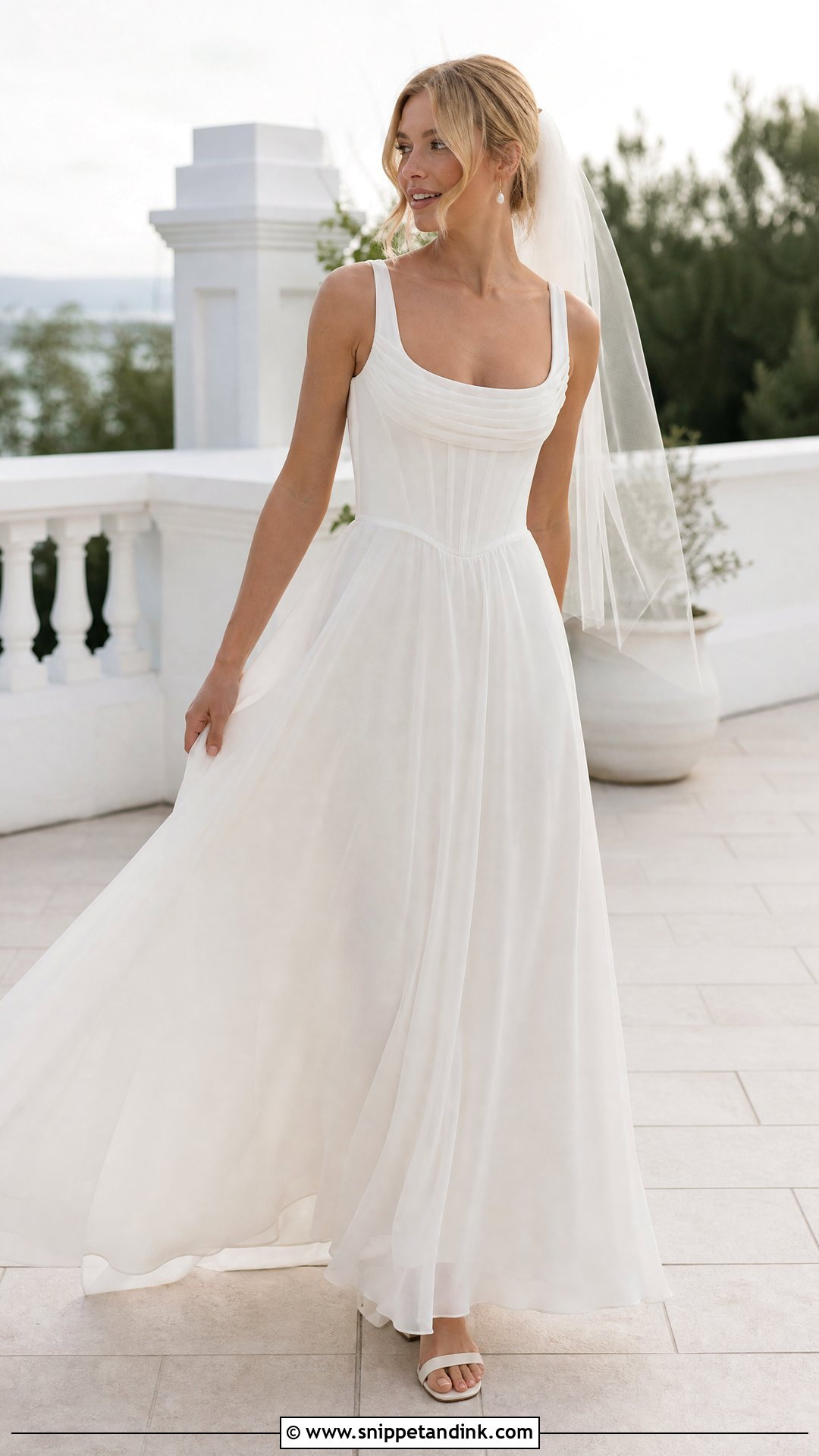
The rounded neckline gives softer coverage than a deep sweetheart, and hidden boning keeps the support while chiffon drapes over it. A scoop-neck corset chiffon wedding dress moves easily, which is why I suggest it for beaches, terraces and relaxed gardens. Two things to check: the lining has enough weight that the skirt isn’t see-through in bright sun, and the hem is measured in your exact shoes so chiffon doesn’t catch. Block-heel sandals, pearl earrings and a loose bun suit it.
15. One-Shoulder Corset Wedding Dress
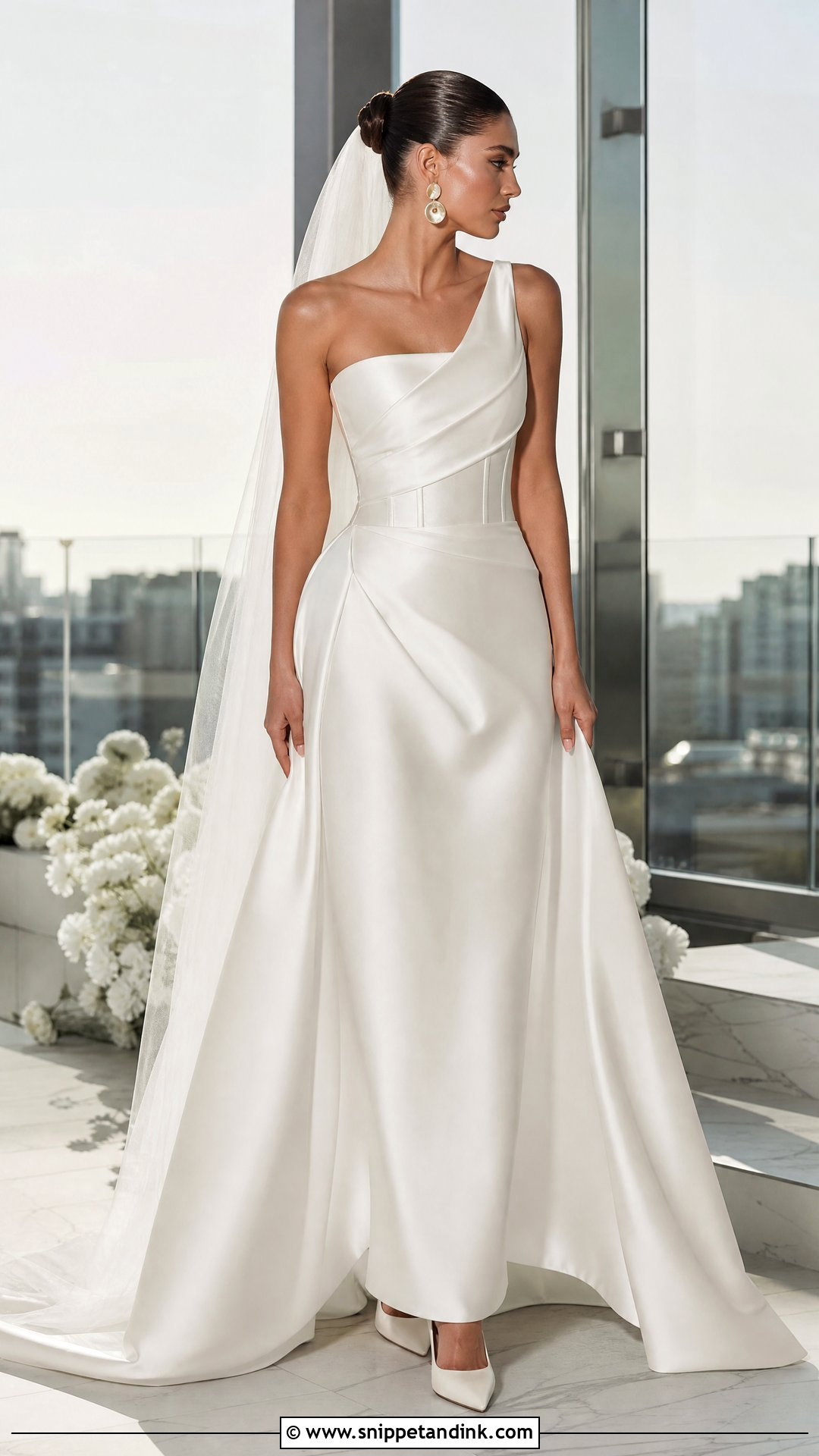
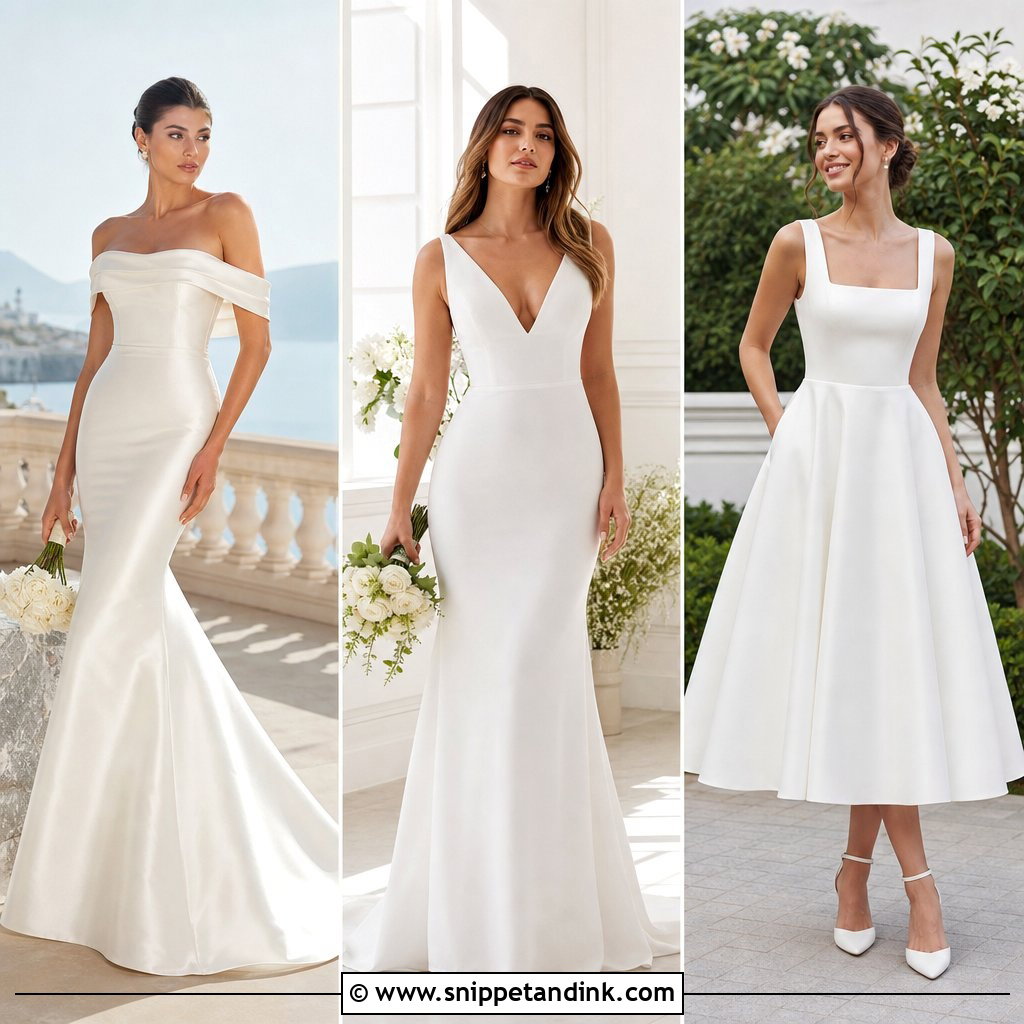
One-shoulder corsets look sharp in draped satin, but they only work when the whole bodice is structured and the single strap is mostly decorative. If the strap is holding the dress up, it digs in and twists. At fittings I check both sides: the strapless side must stay put and the strap must not rub or restrict the arm. No necklace, as it breaks the diagonal line. Sculptural earrings, pointed heels and a simple veil under a sleek bun suit galleries and rooftops.
16. Corset Wedding Dress With Overskirt
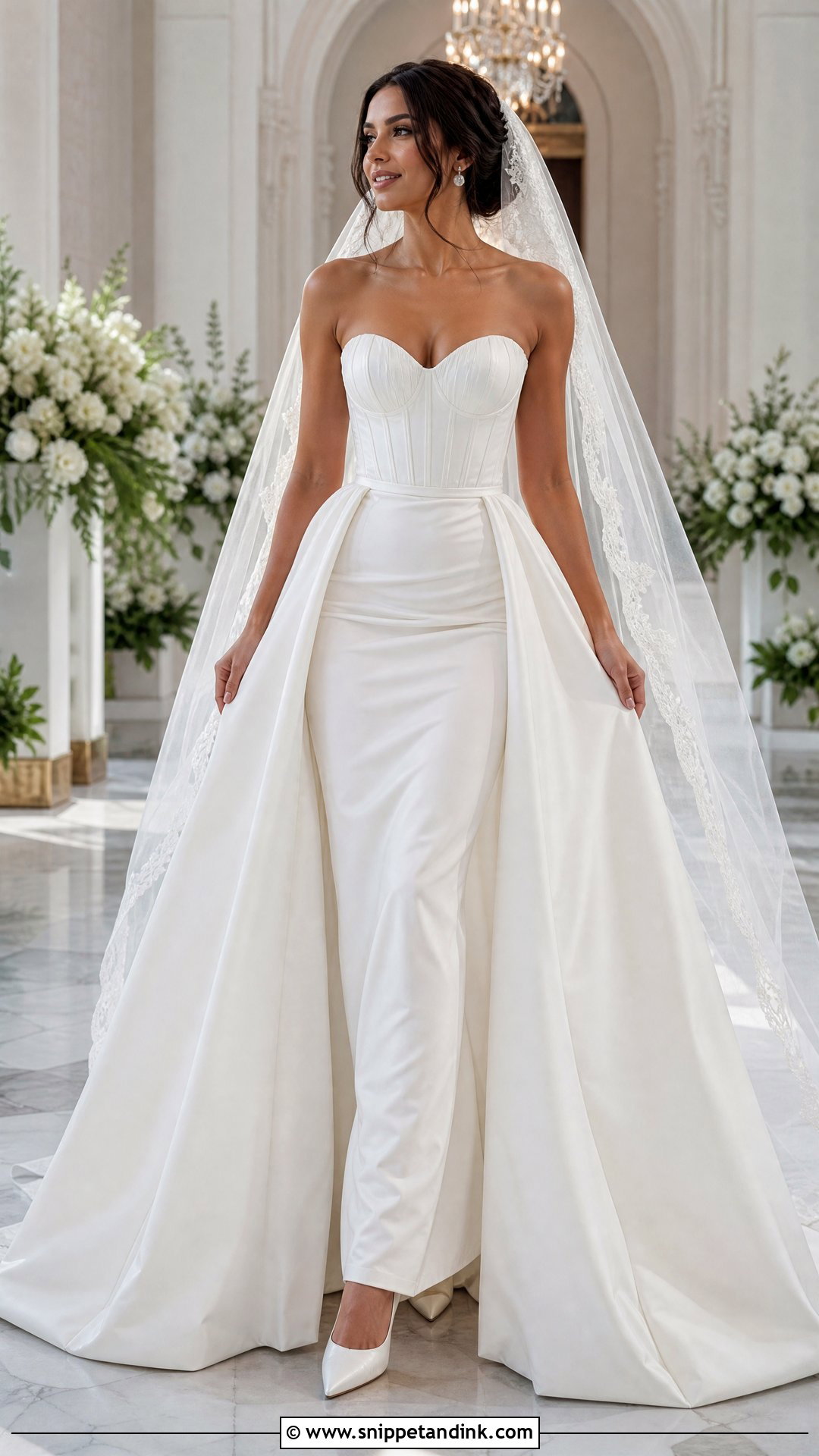
A removable overskirt turns a fitted corset column or mermaid dress into a full ceremony gown, then comes off for dancing. It should attach at the natural waist under a narrow band so nothing shows. Have whoever will help you learn the fastening, then test it while you walk, sit and move; a shifting overskirt creates bulk around the corset. A cathedral veil, pearl earrings and pointed heels for the ceremony, then off with both.
17. High-Slit Corset Wedding Dress
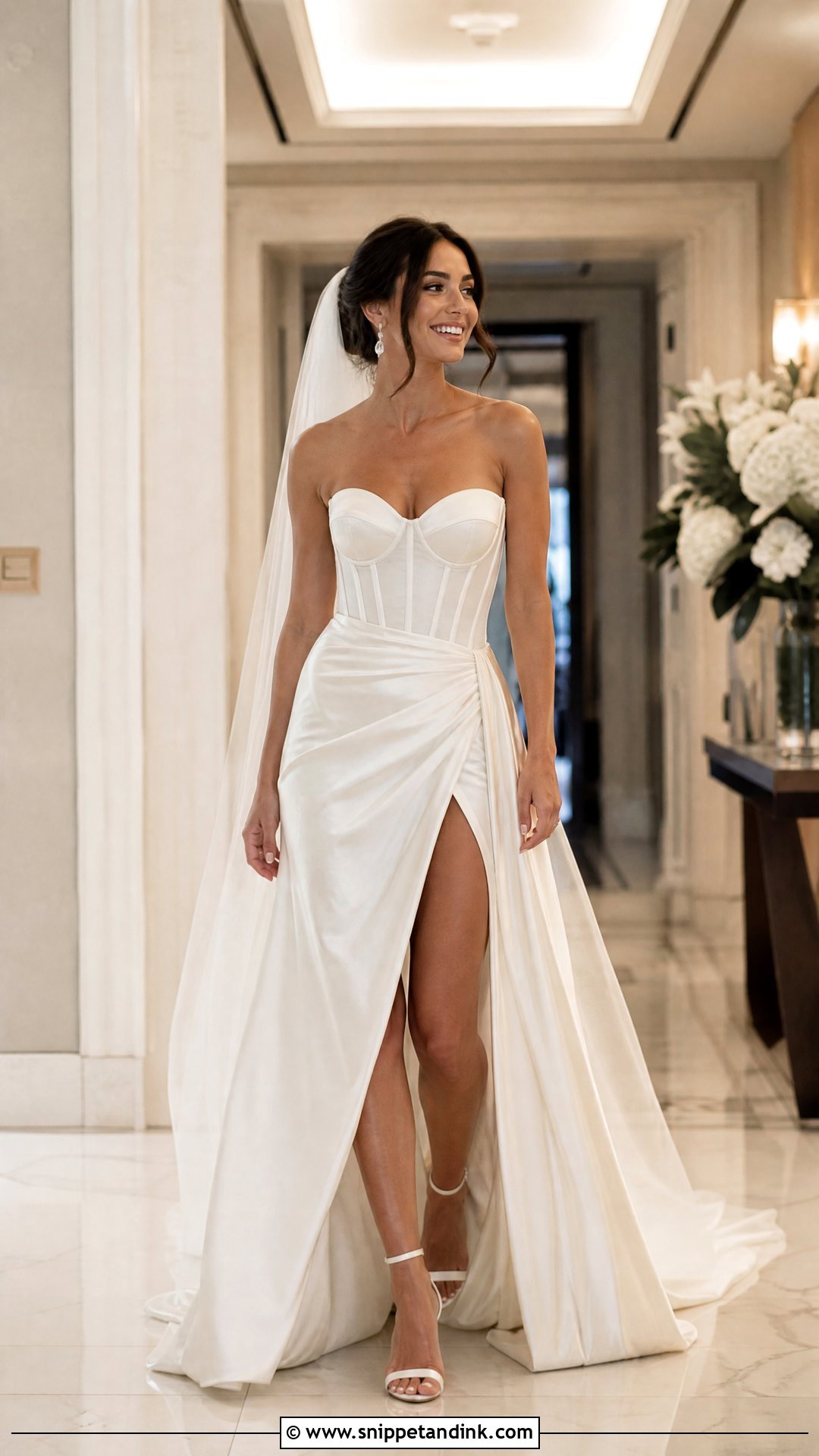
Slits are about movement, and I’d always position one slightly off-centre rather than straight down the front. A centre slit opens too far every time you sit. Satin or crepe with a firmly lined corset works best. Test it in a breeze and on stairs, and if it opens more than you’d like, your seamstress can add a discreet stitch or a modesty panel. Ankle-strap heels, understated earrings, a long plain veil and a smooth updo; a light overskirt can cover it for the ceremony.
18. Tea-Length Corset Wedding Dress
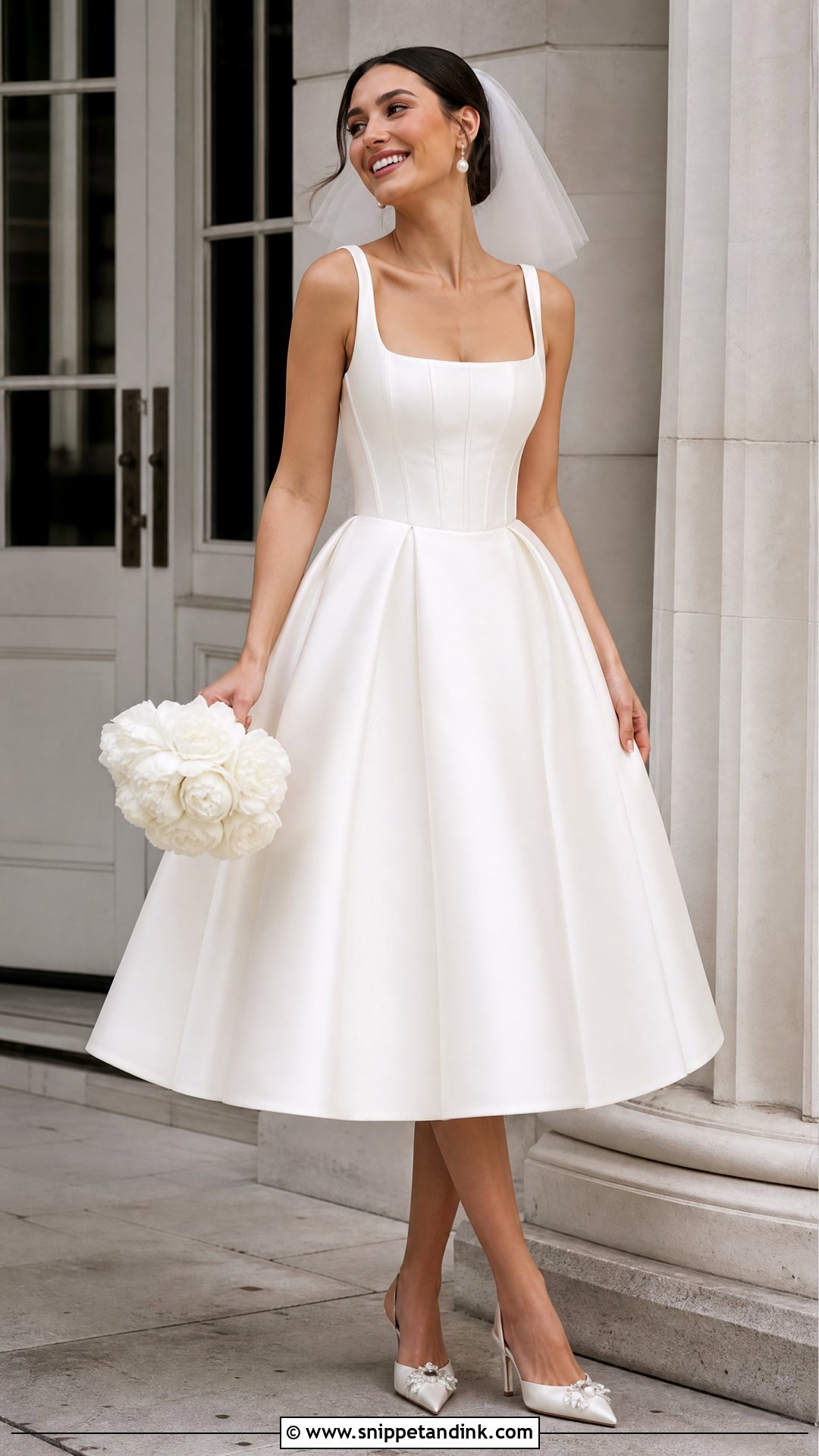
Tea length ends between knee and ankle, so the shoes are on show and the proportions matter. A sweetheart or square-neck bodice over a full skirt is the classic shape. Satin, mikado and layered tulle hold it best. I fit the hem with the petticoat on, since a petticoat lifts the skirt and changes where the hem falls. Pockets are worth asking for if the skirt has enough body. Pointed pumps, pearl earrings, a short veil and a small bouquet suit courthouses and daytime receptions.
19. Mini Corset Wedding Dress
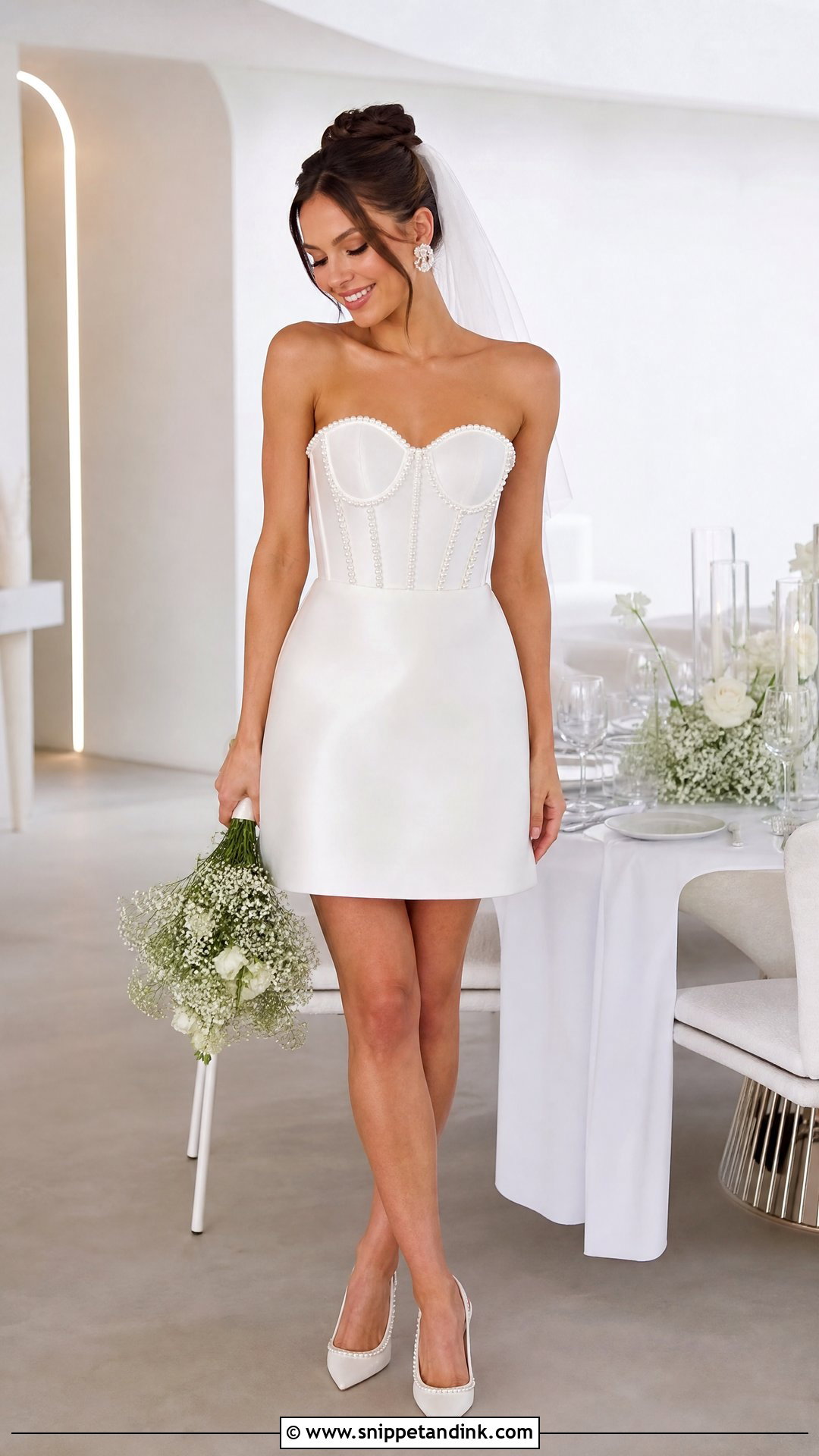
Minis are lively and practical for a civil ceremony, welcome party or reception change. A structured bodice over a tailored or gathered mini skirt stays bridal. The coverage check is non-negotiable: sit, dance and raise your arms to see what the hem does. Satin, crepe or pearl-embellished fabric suit it. Slingbacks, statement earrings and a short veil or sculptural bow; sheer tights in cold months.
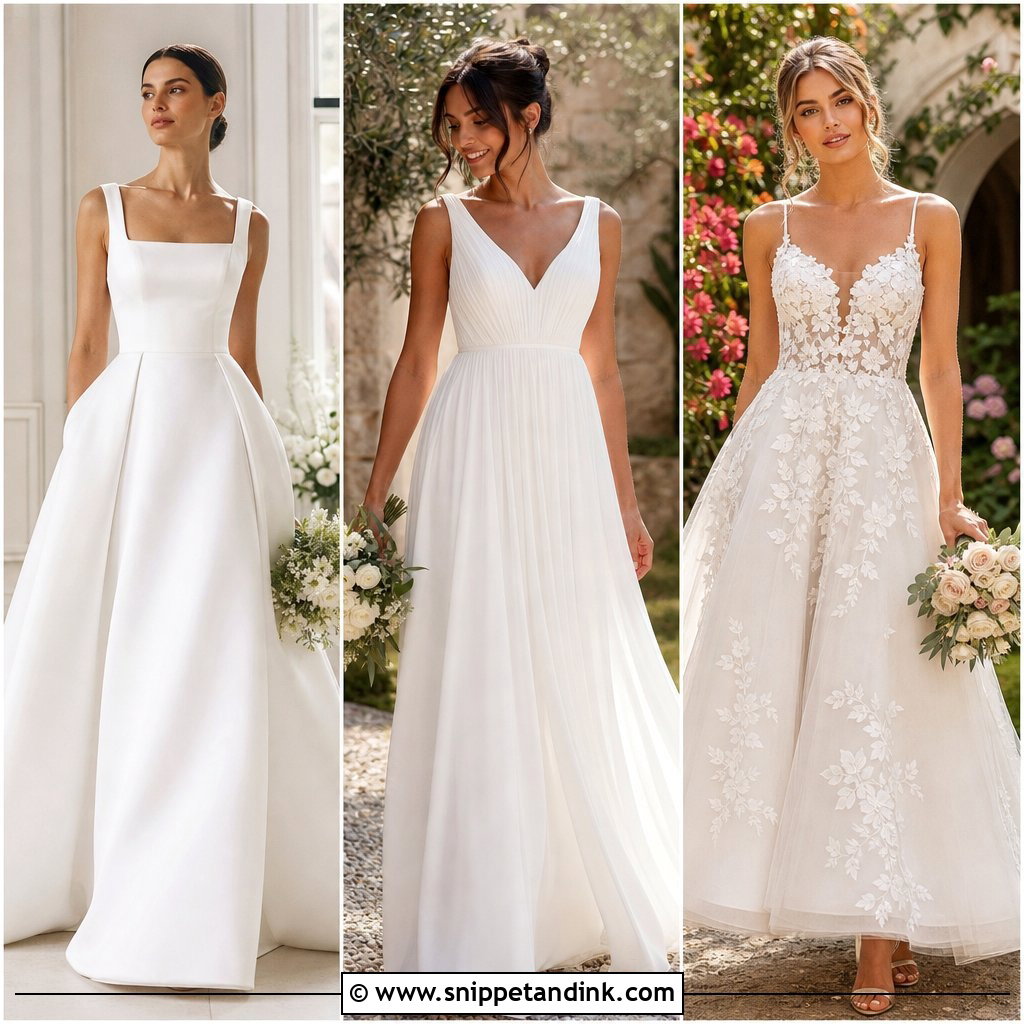
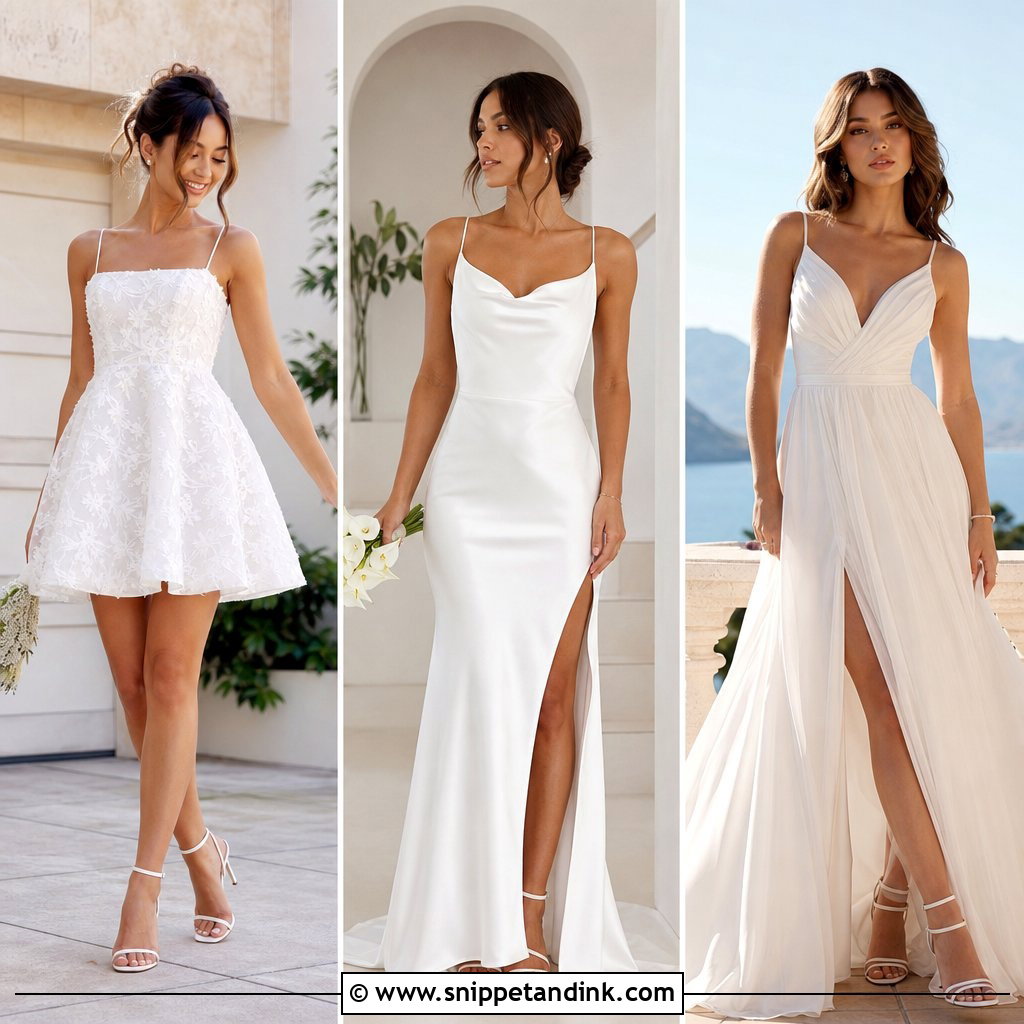
20. Plus-Size Corset A-Line Wedding Dress
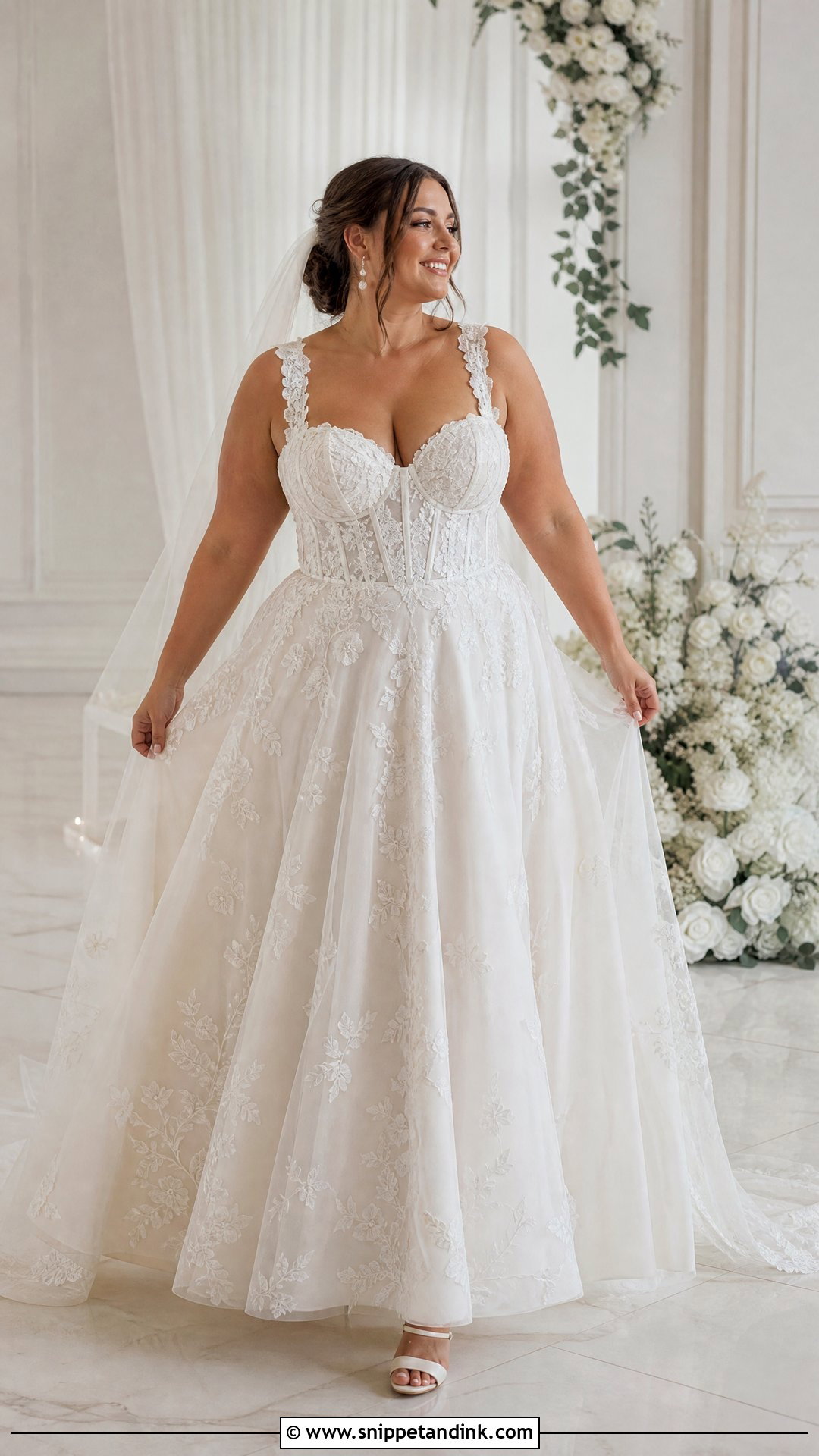
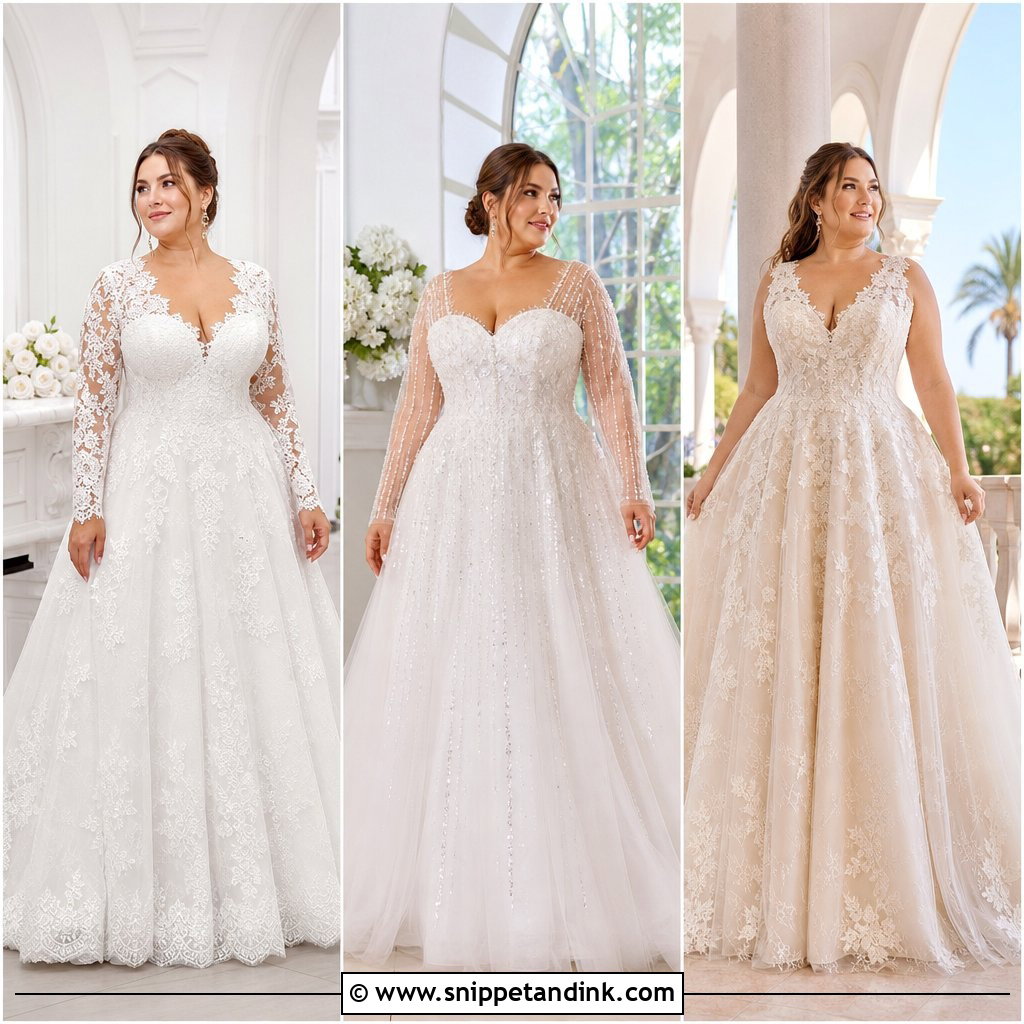
Support is the reason many plus-size brides love a corset top, and the details that matter are proportionate cups, strong boning, adjustable lacing and a waist seam placed for your torso rather than the sample’s. Wide straps or detachable off-shoulder sleeves add stability. Lace over a supportive lining is a good combination. Fit matters more than the label size, so look for a shop and alterations team experienced with inclusive sizing. Sit, breathe deeply, hug and dance at each fitting. Block heels, pearl earrings and a chapel veil complete it.
21. High-Neck Lace Corset Wedding Dress
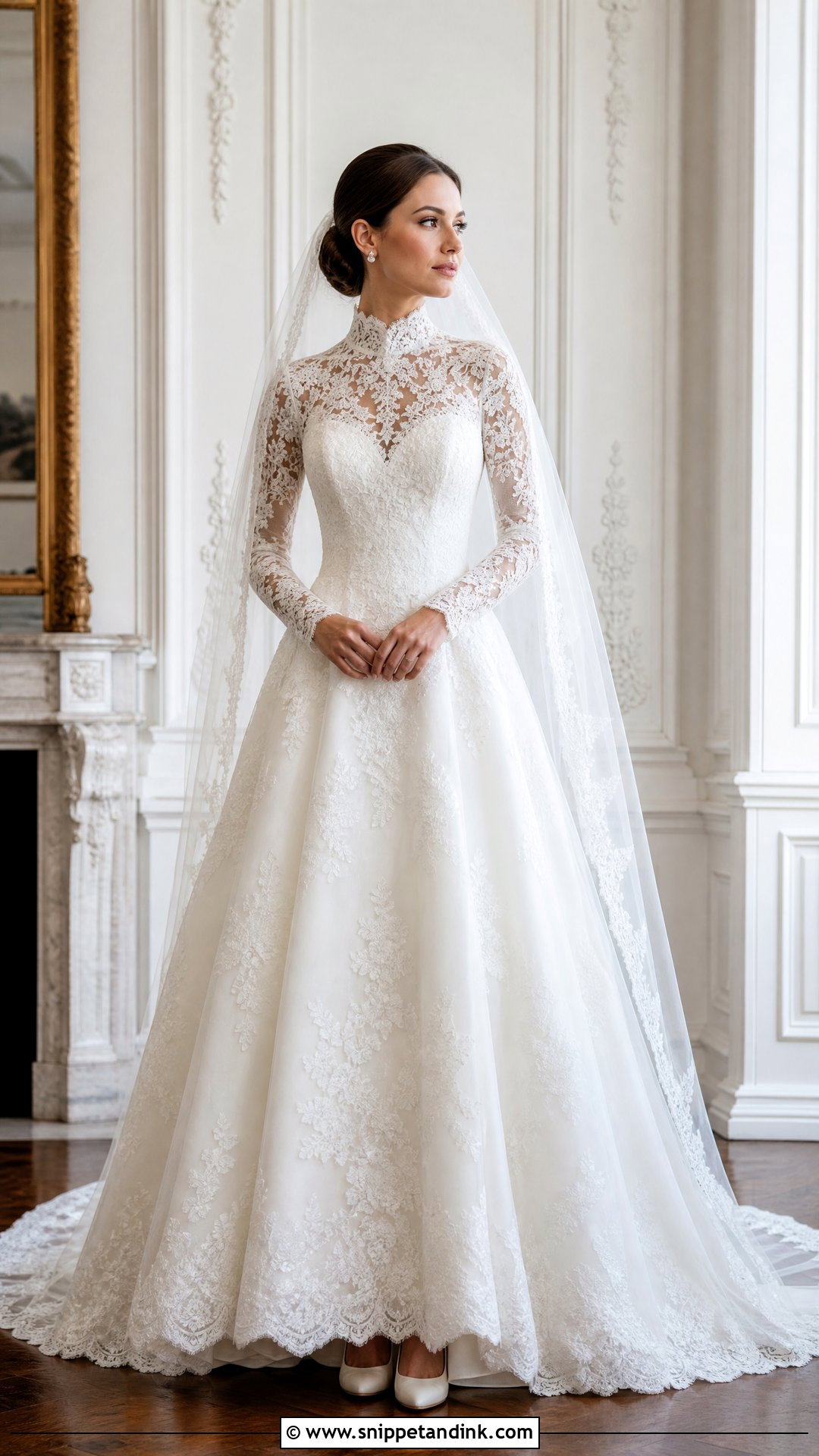
Illusion lace up to the throat over a sweetheart or scoop corset gives coverage while the structure stays underneath. The tricky bit is making the two layers move together. If the outer lace is cut too short or tight, it pulls across the shoulders and wrinkles every time you turn your head. I have brides look down, turn and reach during the fitting. Long sleeves and an A-line skirt suit it, with pearl studs, a low bun, no necklace and a cathedral veil.
22. Vintage Brocade Corset Wedding Dress
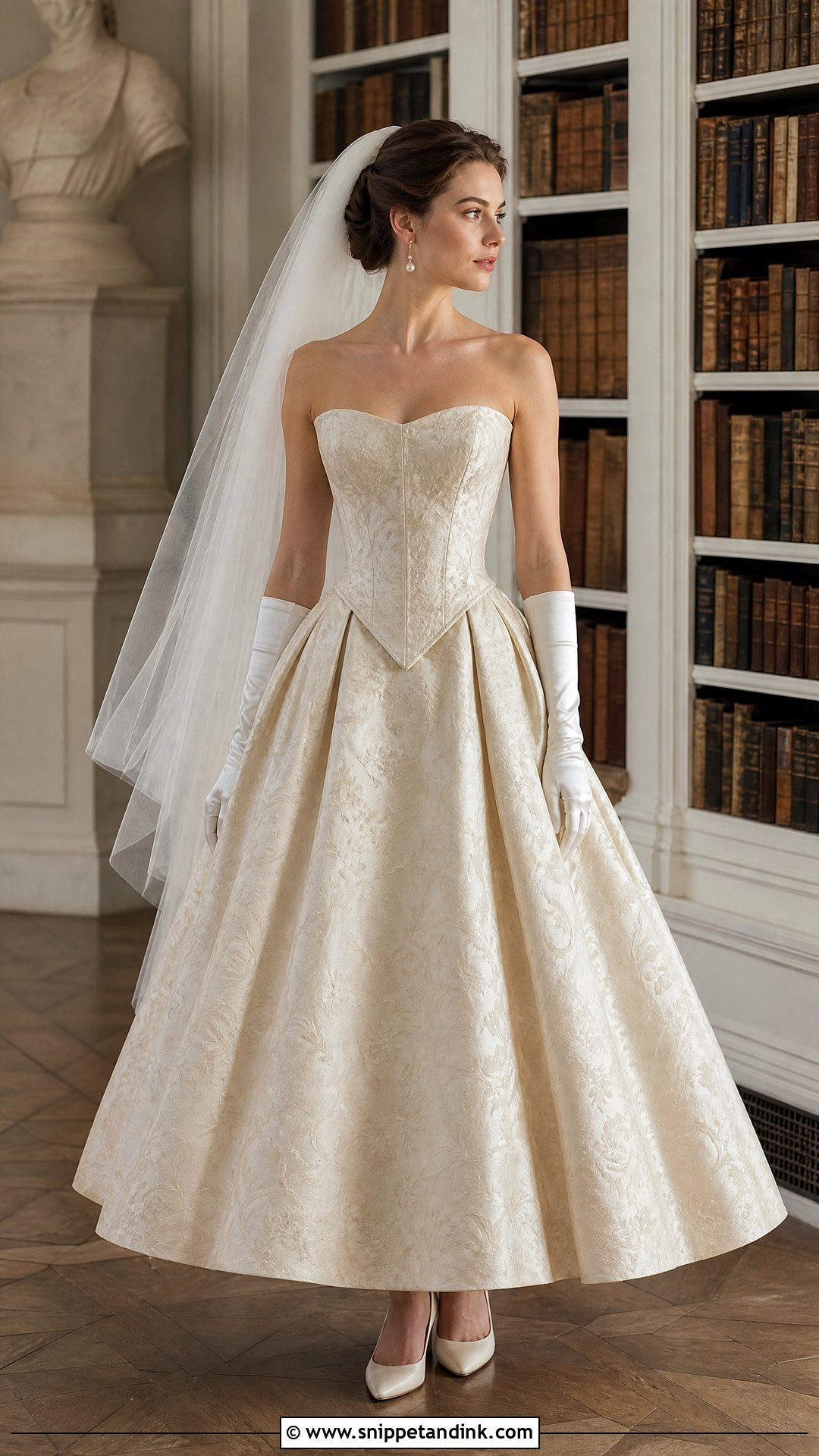
Brocade has texture woven right in, so it needs no beading. An ivory floral brocade with a pointed waist and full skirt shows off the pattern. Covered buttons and a modest train add tradition. Brocade is thick, which brings two concerns: heat and bulk. I ask the tailor to reduce layers at the waist seam, pockets, closure and bustle points. Pearl earrings, satin pumps, wrist gloves and a chignon suit historic hotels and libraries.
23. Beach Corset Organza Wedding Dress
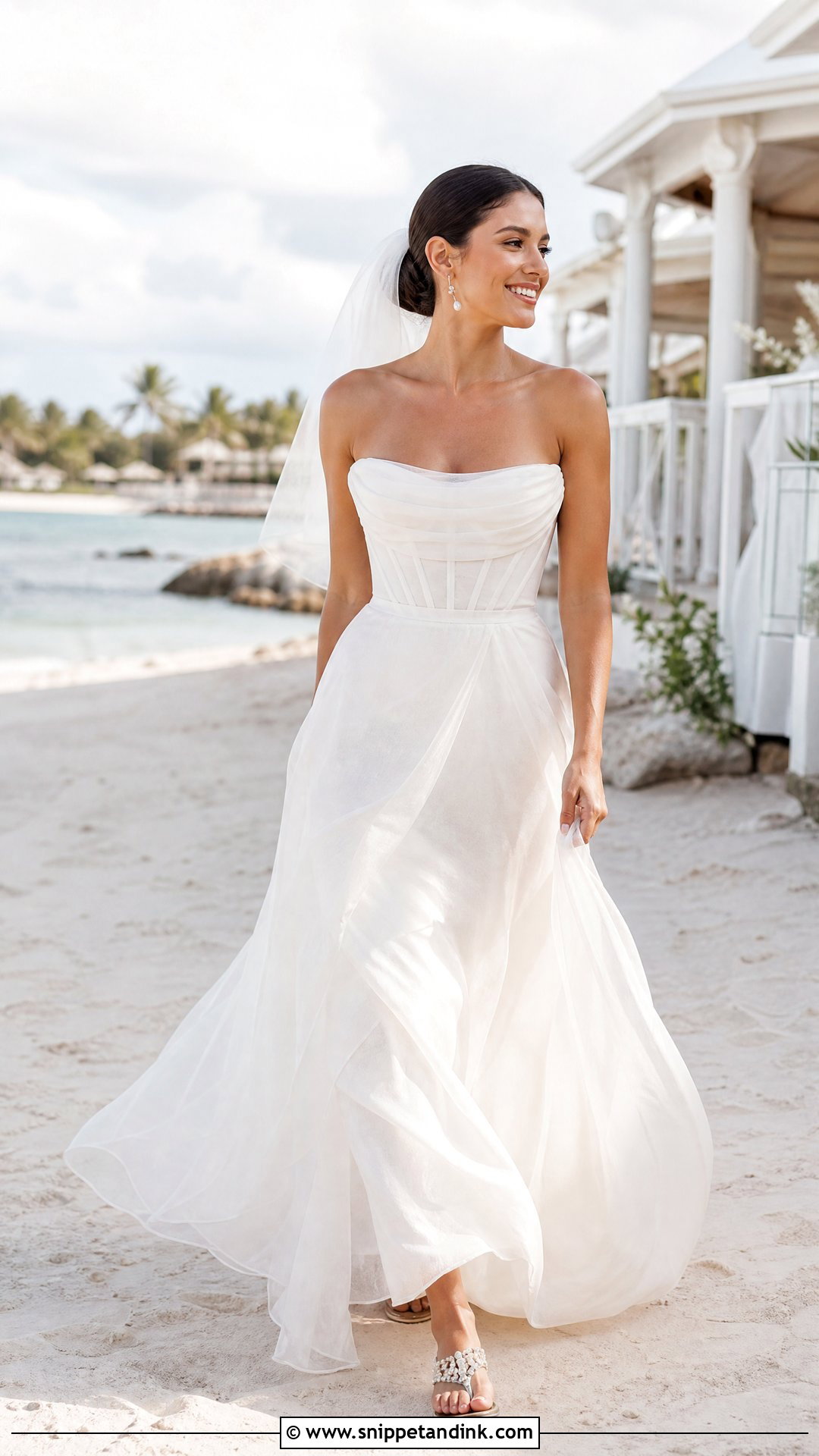
On a beach the corset should be light: fine boning covered in chiffon or organza, an A-line skirt and a manageable sweep train. Skip thick satin and heavy beading, which get hot and heavy fast outdoors. A breathable lining matters more than any embellishment. I test beach gowns in bright daylight to make sure they’re not see-through, and add a wrist loop or simple bustle for walking on sand. Flat sandals, pearl earrings and a short, firmly pinned veil complete it.
24. Black Corset Wedding Dress
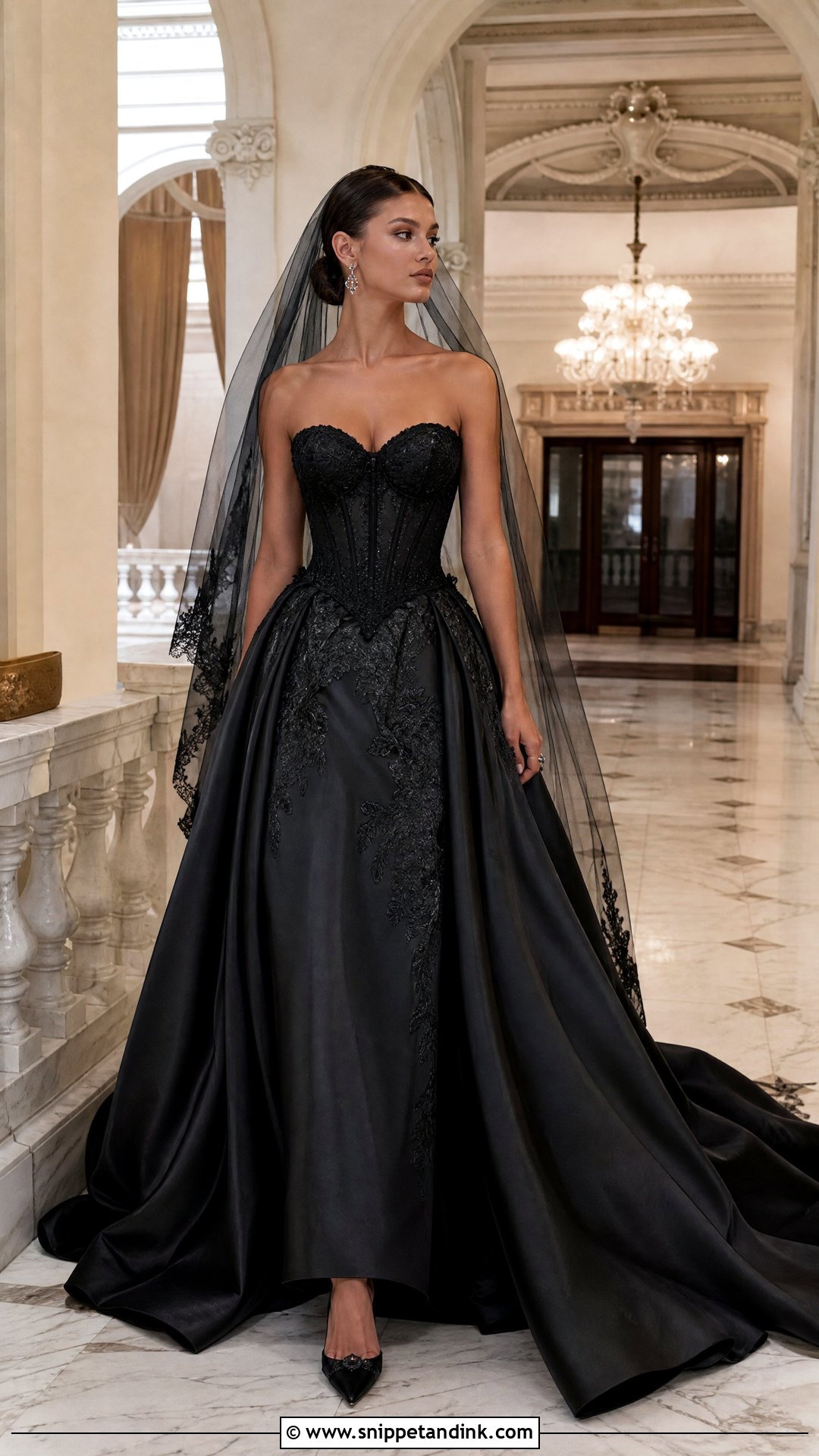
Black gowns hide construction in photos, which is the opposite of what you want from a corset. Matte satin, lace or tulle with visible texture and defined seams helps the shape read. Tonal embroidery adds depth. Talk to your photographer about light before the day, because the waist and skirt can merge into one dark shape in dim rooms. Black pointed heels, crystal earrings and a black or ivory veil, with a sleek updo, suit theatres and evening venues.

25. Two-Piece Corset Top Wedding Dress
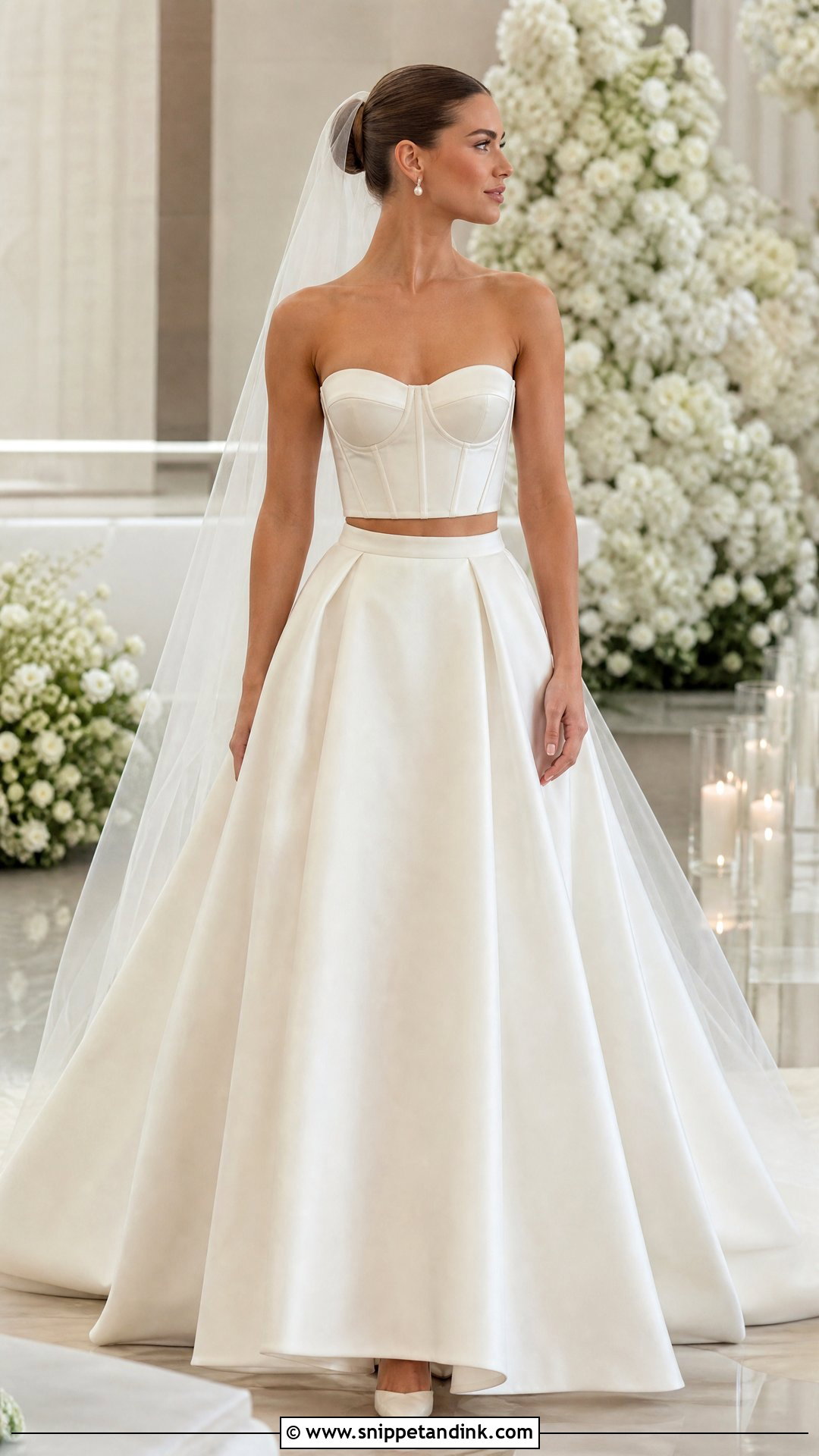
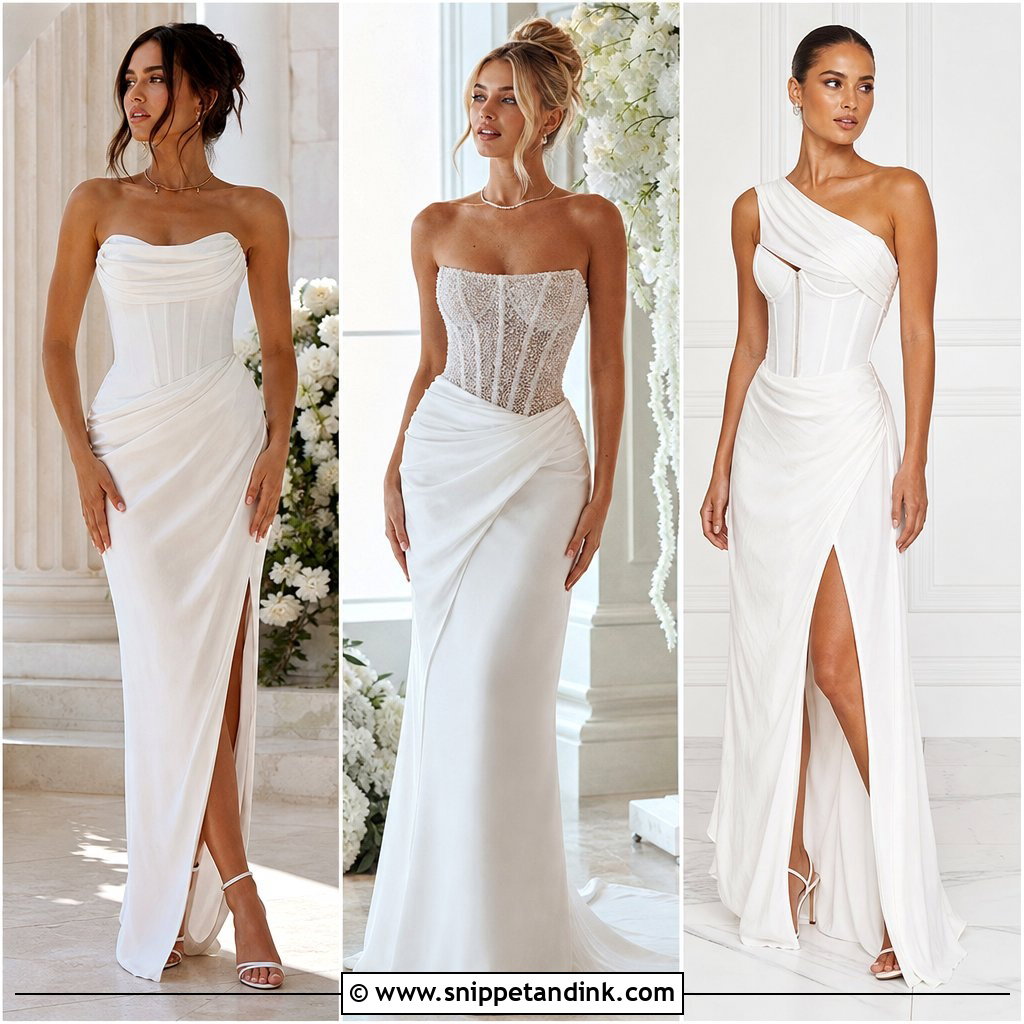
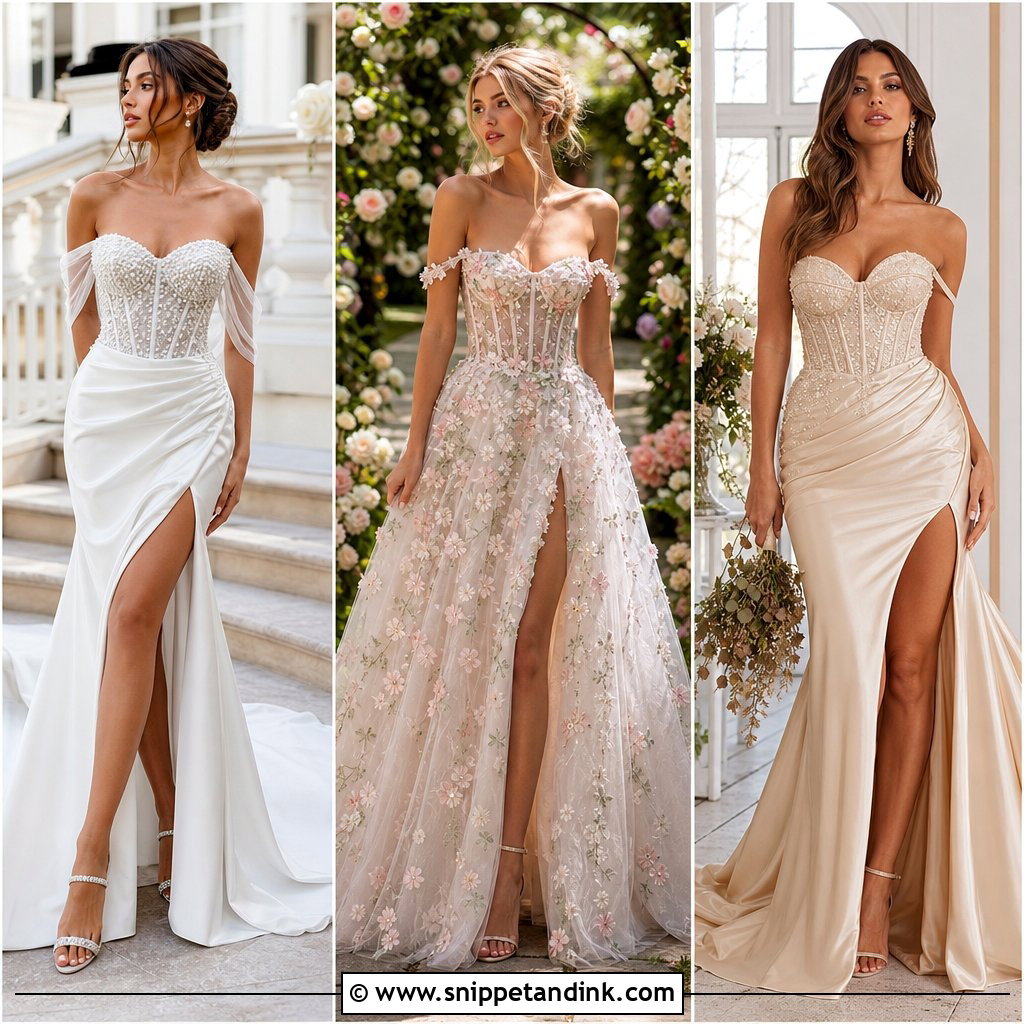
Separates let you swap the skirt and keep the corset. A structured satin, lace or pearl top pairs with a matching high-waisted skirt, and the pieces should overlap securely. I ask the tailor for small interior hooks between top and skirt, which stops the corset riding up when you dance. A full skirt for the ceremony, a slim one for later. Matching fabrics read as one gown; contrasting textures show the separation. Pointed heels, pearl earrings and a long veil under a neat bun.
How Far Ahead a Corset Gown Should Be Ordered
Structured gowns are slower to make and slower to alter than soft ones. Timings vary by designer and shop, but this is the rough calendar I plan around:
- Order the gown about eight to ten months before the wedding. Made-to-order structured dresses often take several months to arrive, and rush fees are common below that.
- Book the first fitting around two to three months out. Corset alterations involve taking out boning, adjusting channels and resewing, which takes longer than a simple hem.
- Plan a second fitting a few weeks later for the bust, waist and any detachable pieces.
- Have the final fitting about two weeks before the wedding, with your shoes, underwear and the person who will help you dress.
- Collect the dress pressed and on a padded hanger, and hang it by the inner loops, not the straps, so the bodice doesn’t stretch.
If you’re shopping later than this, off-the-rack corset gowns are the safer route. They need only alterations, and many shops can turn those around faster if you tell them your date at the first visit.
Get the Bodice Right Before Anything Else
Fit, movement, fabric and venue narrow this list down faster than appearance ever will. Satin ball gowns bring formality; chiffon and organza feel lighter. Lace, pearls, flowers, detachable sleeves and overskirts let you personalise without overwhelming the corset. Bring your planned shoes and underwear to every fitting, and sit, walk, hug and dance before approving alterations. The bodice should support you and never interfere with breathing. Once it fits, choose the veil, jewelry, hair and shoes to suit the neckline.
You'll Like These Ideas:







Leave a Reply