
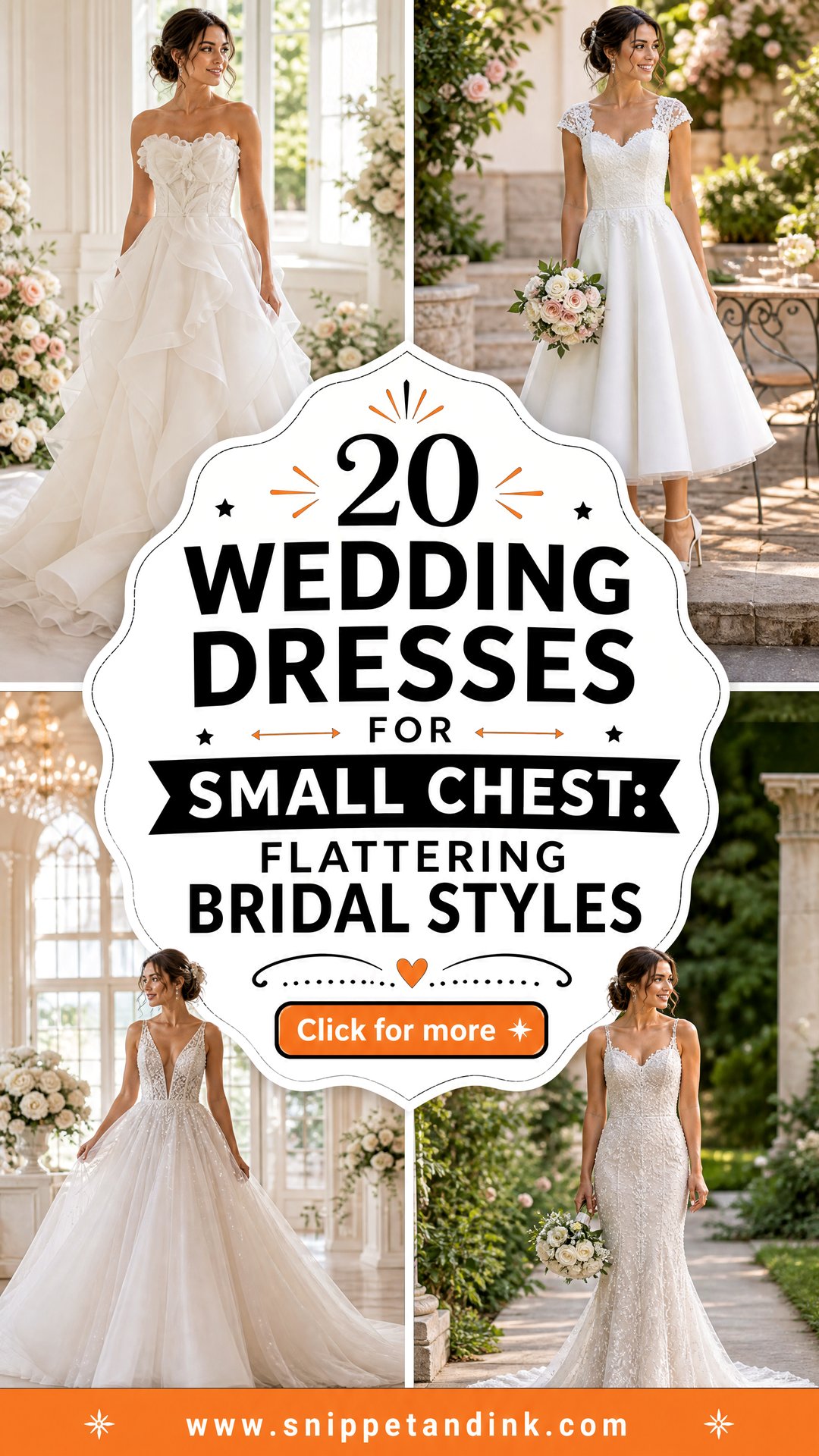
Most wedding gown samples are cut for a fuller cup than many brides have, which is why so many women with a small chest walk out of their first appointment thinking nothing suits them. It usually isn’t the dress. It’s the fit at the top edge of the bodice. The styles below show necklines and fabrics that define the waist, add a little shape or simply show off a smaller bust with confidence, from structured corsets and cowl necklines to drop waists and tulle. In each one I’ve noted where the bodice needs attention, because cups, straps and illusion panels are where tailoring makes the biggest difference. Take this list with you to the salon or to your seamstress.
Sew-In Cups, Adhesive Bras or Nothing Underneath
Support is the first conversation I have with a small-chested bride, because the answer changes how every bodice fits. There are three main routes, and each suits different dresses.
- Sew-in cups are stitched into the lining by your seamstress. They can’t slip, they’re right for most strapless and sweetheart gowns, and she can choose a cup shape that fills the bodice without adding obvious size.
- Adhesive or stick-on bras suit backless and deep-V styles. Try one for a full day before the wedding, since some lose grip on warm skin or with body lotion underneath.
- Nothing at all is realistic for many small busts in a well-boned corset, a halter or a plunge with mesh. The dress itself does the work.
Whichever you choose, bring it to the very first fitting. A bodice taken in over one bra and then worn over another will gape or pinch on the day.
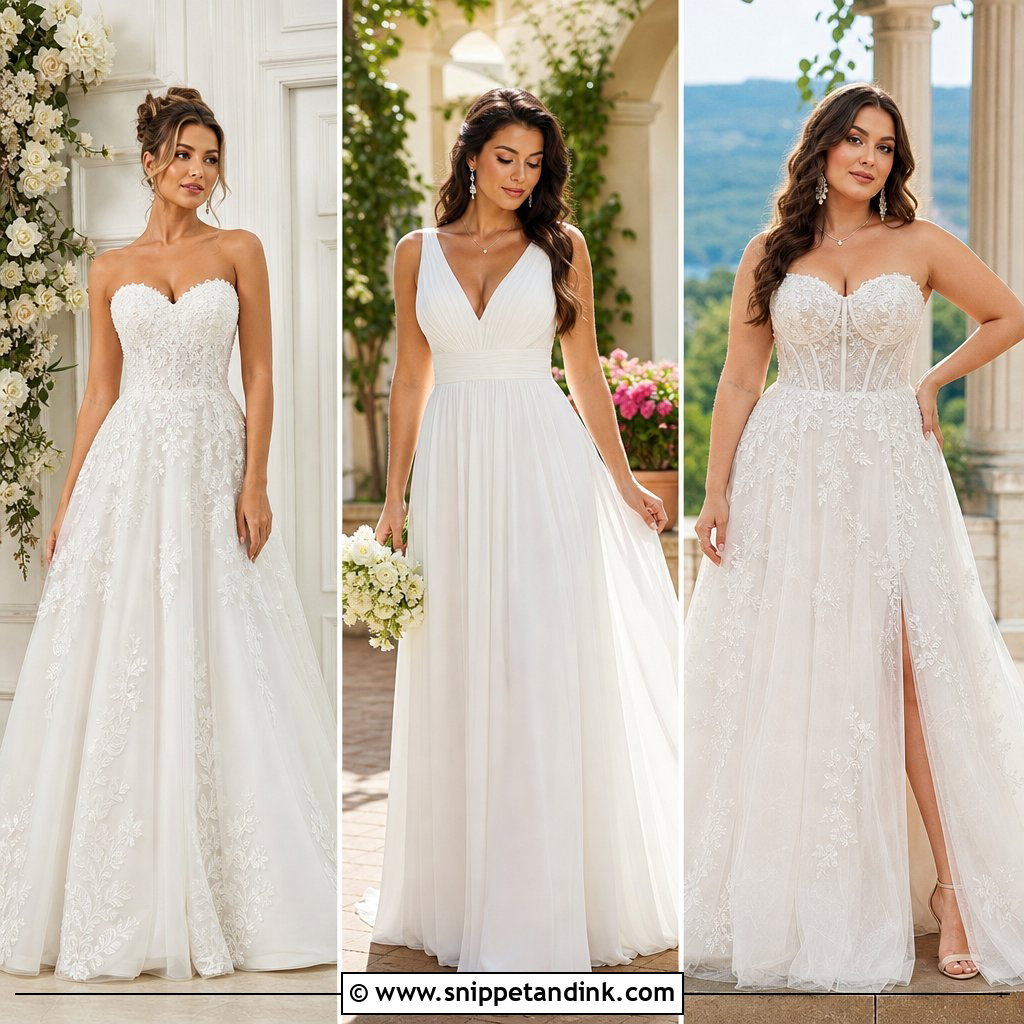
1. Strapless Sweetheart A-Line Wedding Dress
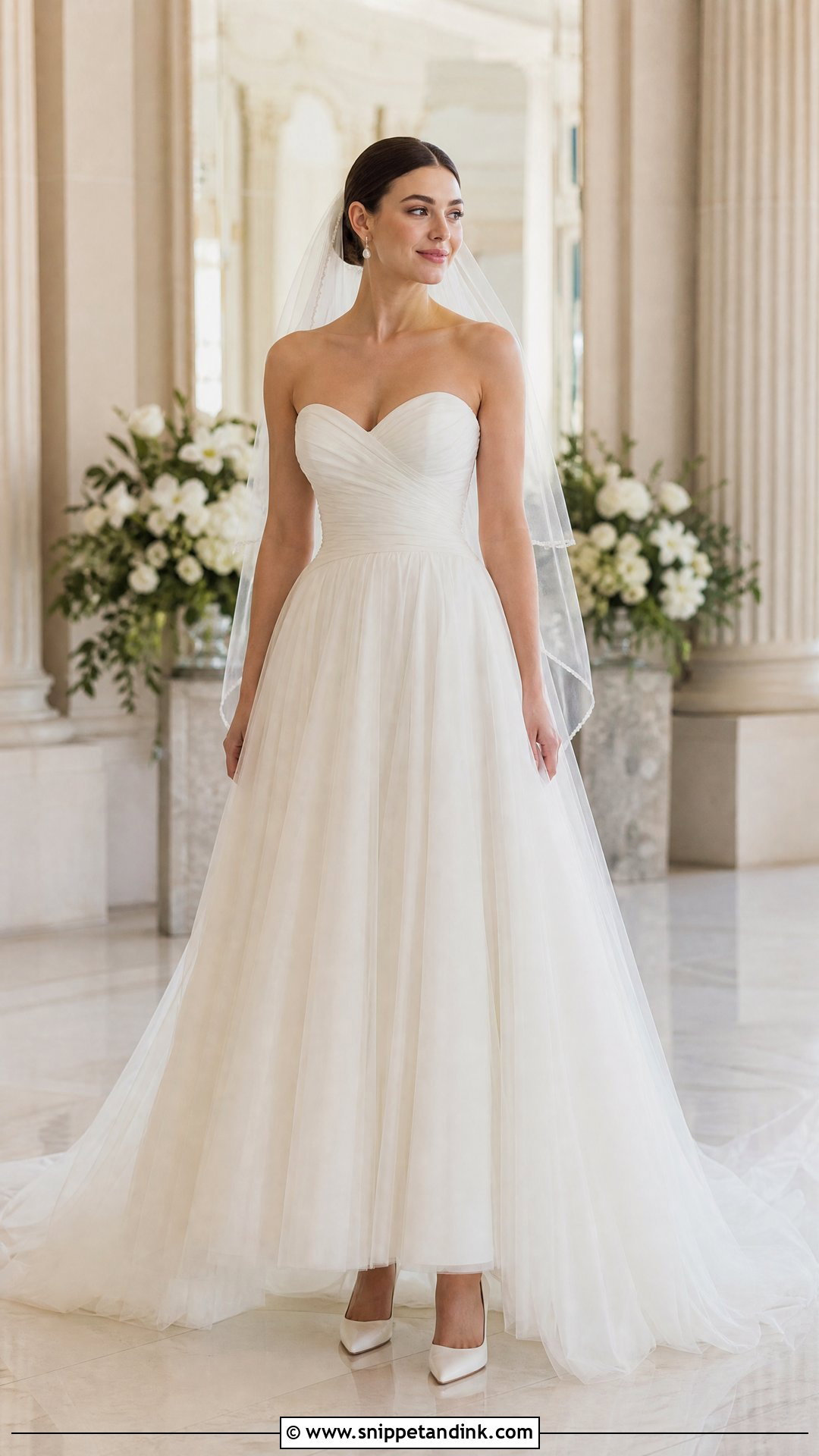
A sweetheart line traces the top of the bust, so on a small chest it can either look lovely or collapse into two empty dips. The fix is in the fitting rather than the padding. I ask the seamstress to take the bodice in snugly against the rib cage and lower the cup depth so the neckline sits on the skin. Ruching, lace appliqués or light beading on the bodice add texture if you want it. A satin skirt keeps the A-line clean; layered tulle softens it. Pointed ivory pumps, pearl drops and a fingertip veil finish it simply.
2. Plunging V-Neck Crepe Wedding Dress
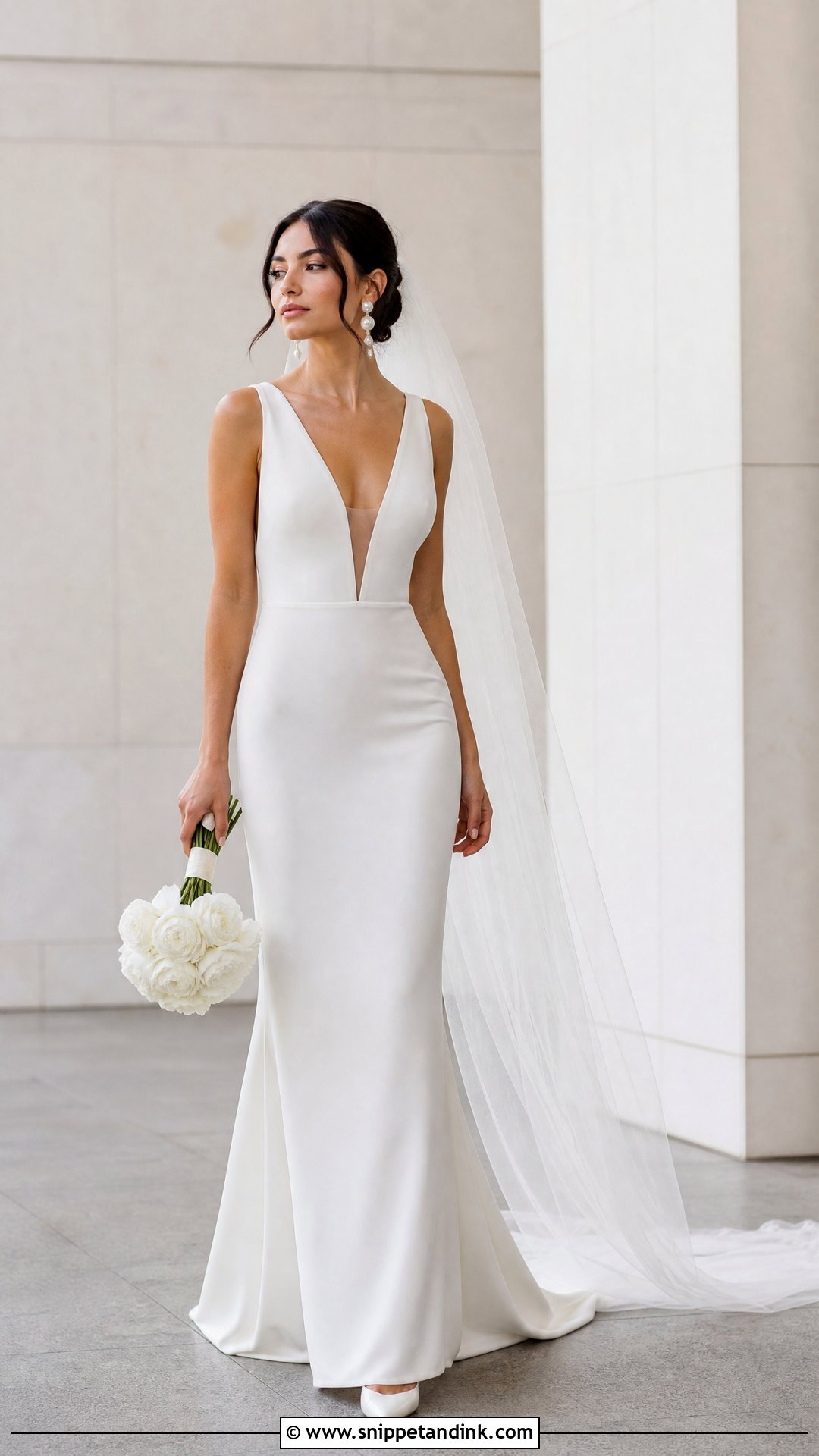
Small busts carry a deep V better than almost anyone, because there’s little weight pulling the neckline sideways. The plunging V-neck crepe wedding dress works by drawing the eye down in one long line rather than relying on cleavage, and you can often wear it without a bra at all. A fine illusion mesh insert keeps everything where it should be. I still pack fashion tape for the day: one strip along each edge stops the neckline gapping when you lean in to sign the register. A fitted waist with a column or fit-and-flare skirt, plus a low bun and pearl earrings, keeps it clean.
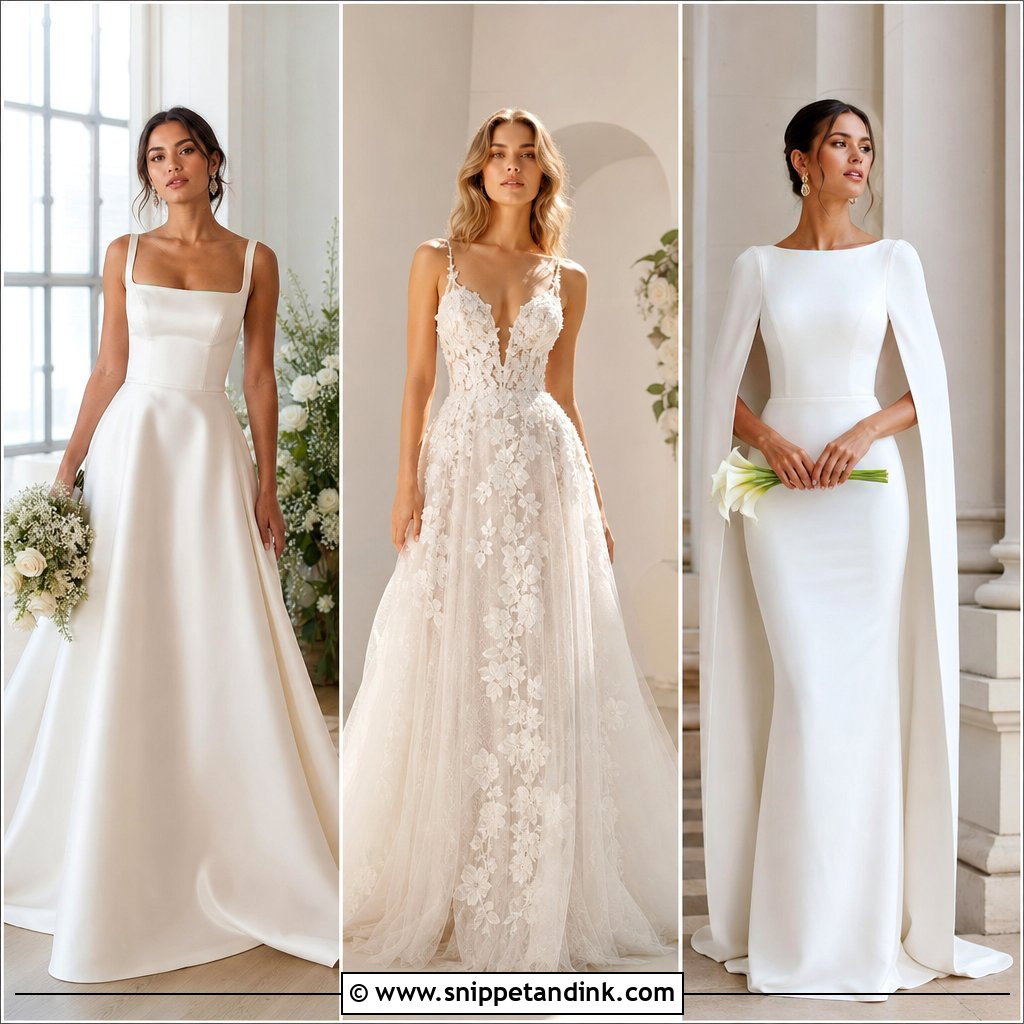
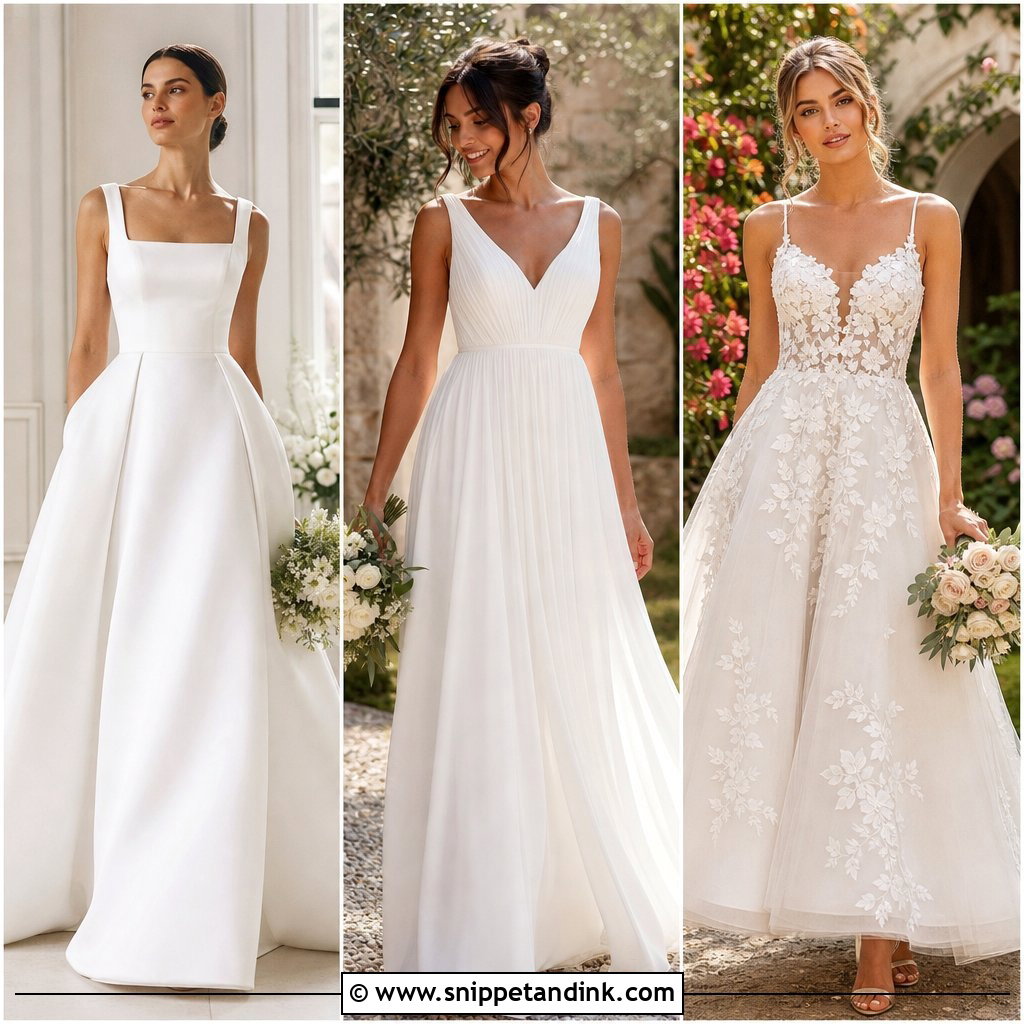
3. Square-Neck Satin Ball Gown Wedding Dress
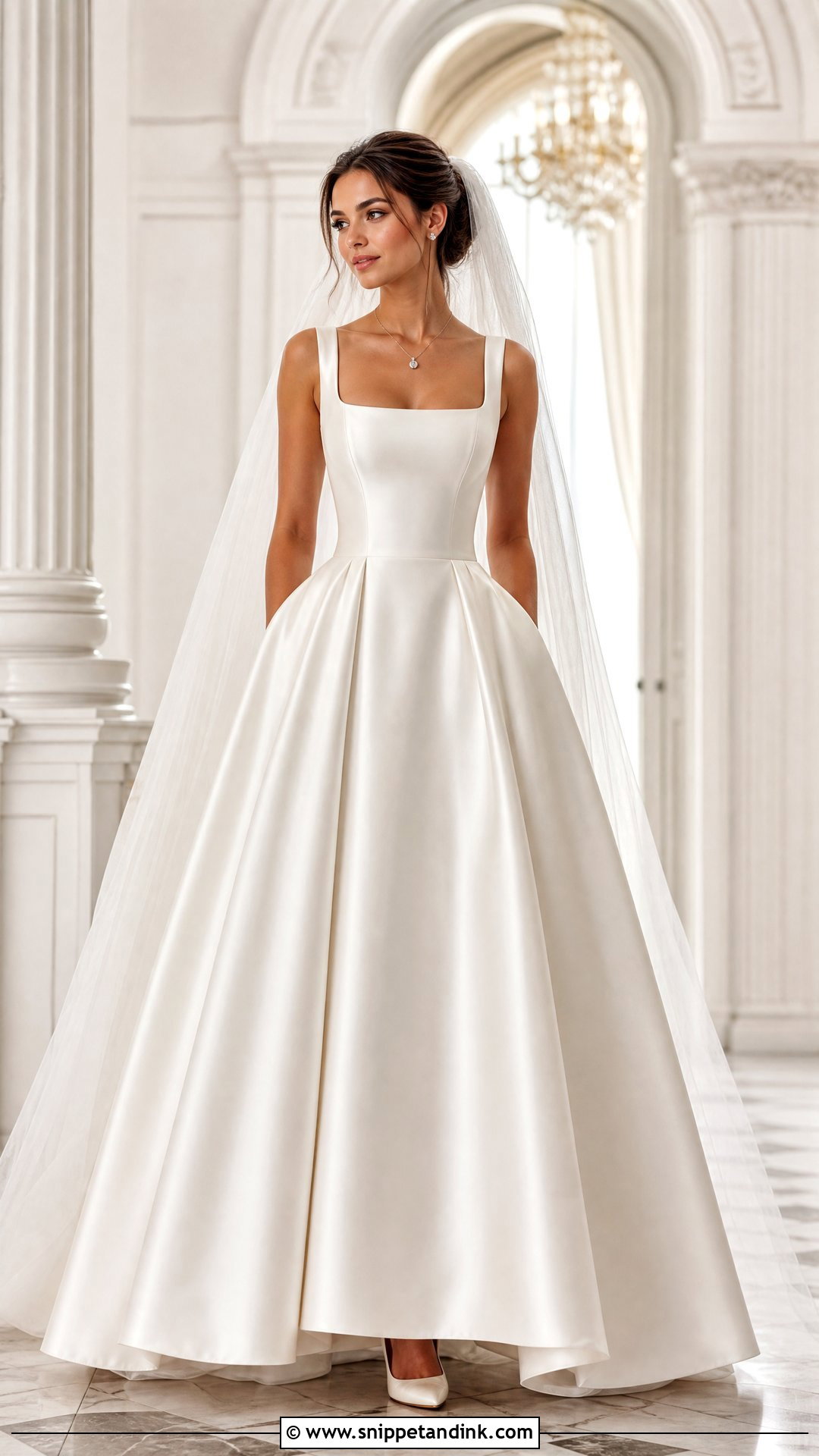
A straight square neckline runs horizontally across the chest, and that line visually widens the upper body. Wide-set straps frame the shoulders. Look for princess seams and lightly moulded cups rather than thick padding, which tends to look stiff in satin. A full satin skirt gives drama below a simple bodice. One fitting point to watch: the top corners of the square should press flat against the skin. If they tip forward when you bend, the straps need shortening. A polished updo, diamond studs and a narrow-edged veil suit it, and the open space leaves room for a short pendant.
4. Halter-Neck Silk Wedding Dress
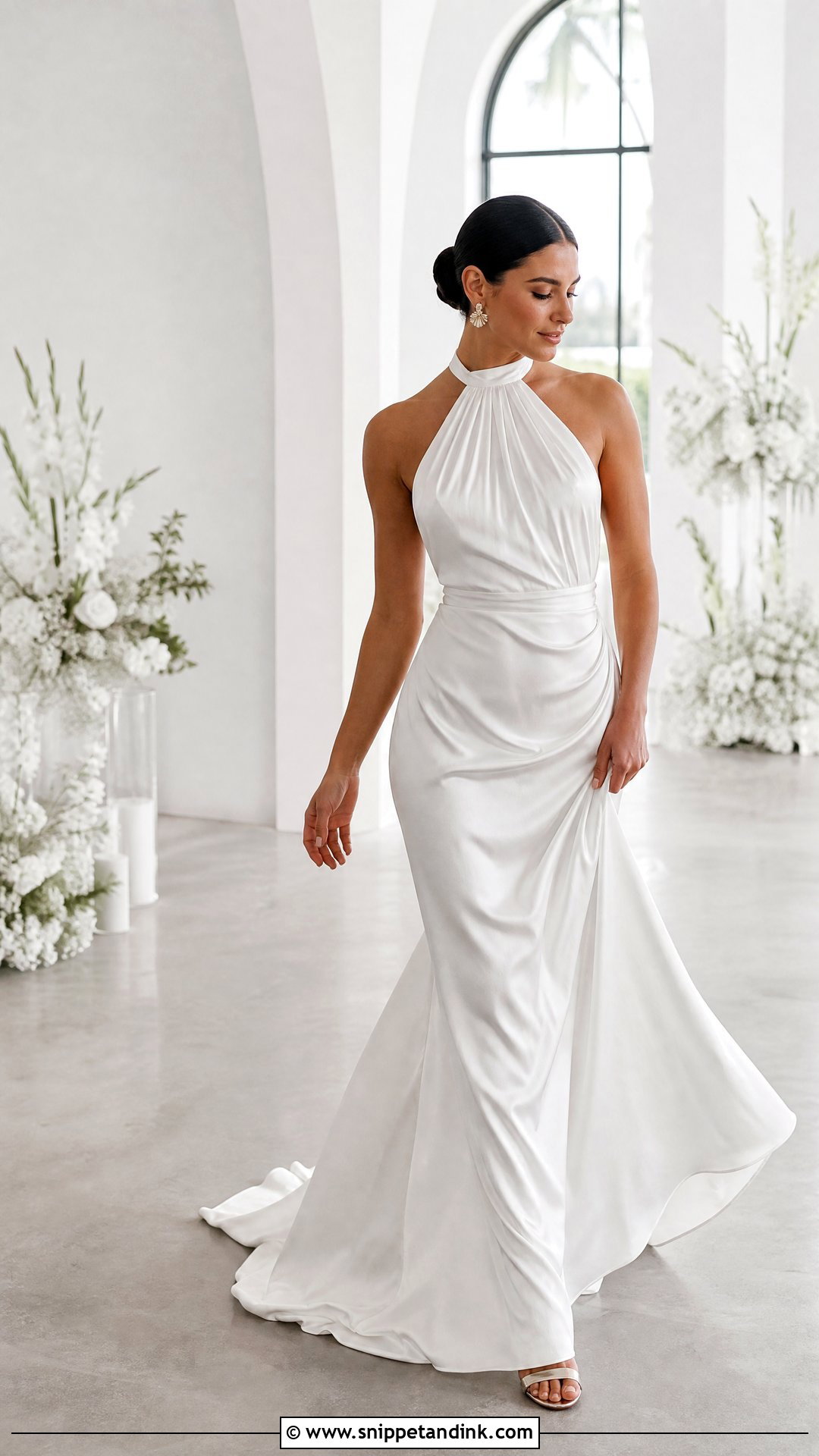
Halters shift attention up to the shoulders, collarbones and neck, and that’s exactly where a small-chested bride can show off. A softly gathered bodice and open back are the classic pairing. Silk satin or charmeuse drapes close to the body, so the cut works with your shape instead of disguising it. Halters are fussy to alter, though. If the neck strap is too long, the front sags; too short and it drags on your neck all night. I have the strap and side seams fitted together in the same appointment. Statement earrings and a smooth bun, no necklace.
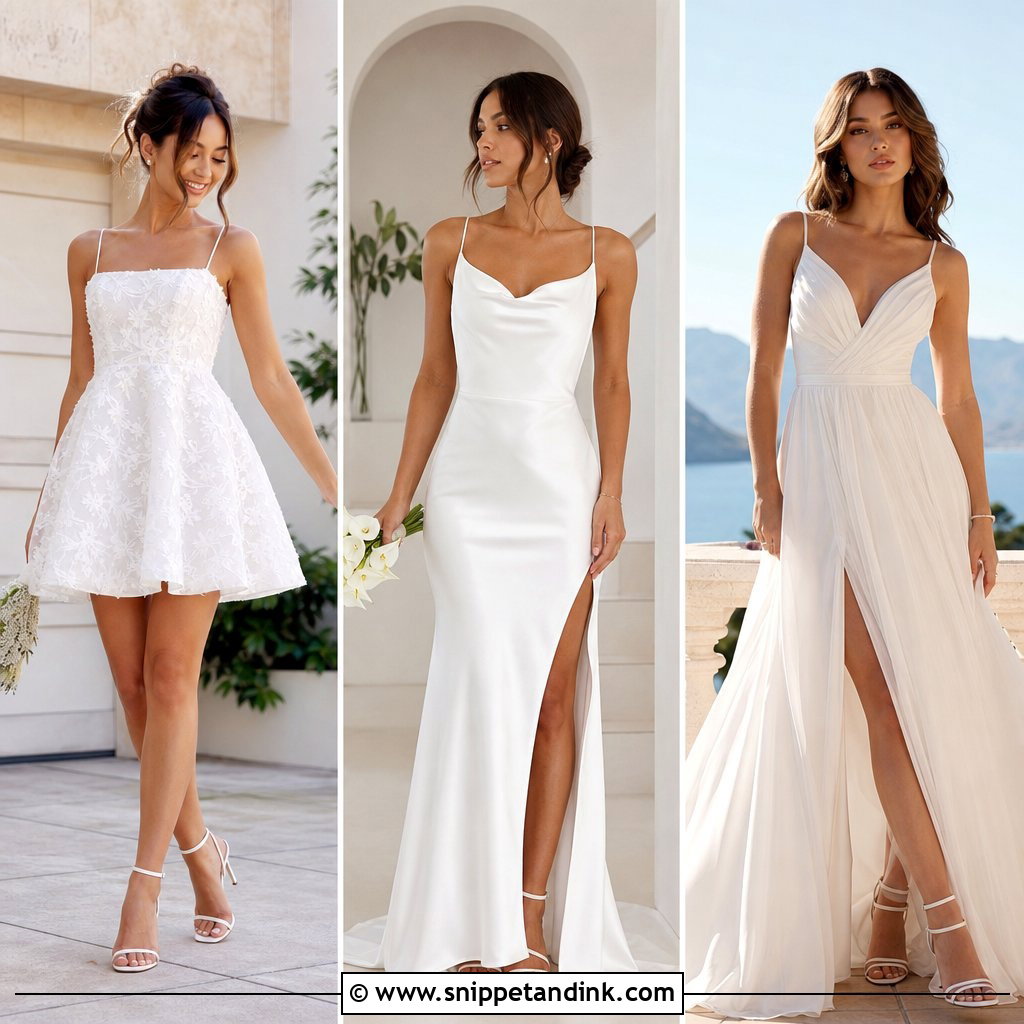
5. Cowl-Neck Slip Wedding Dress
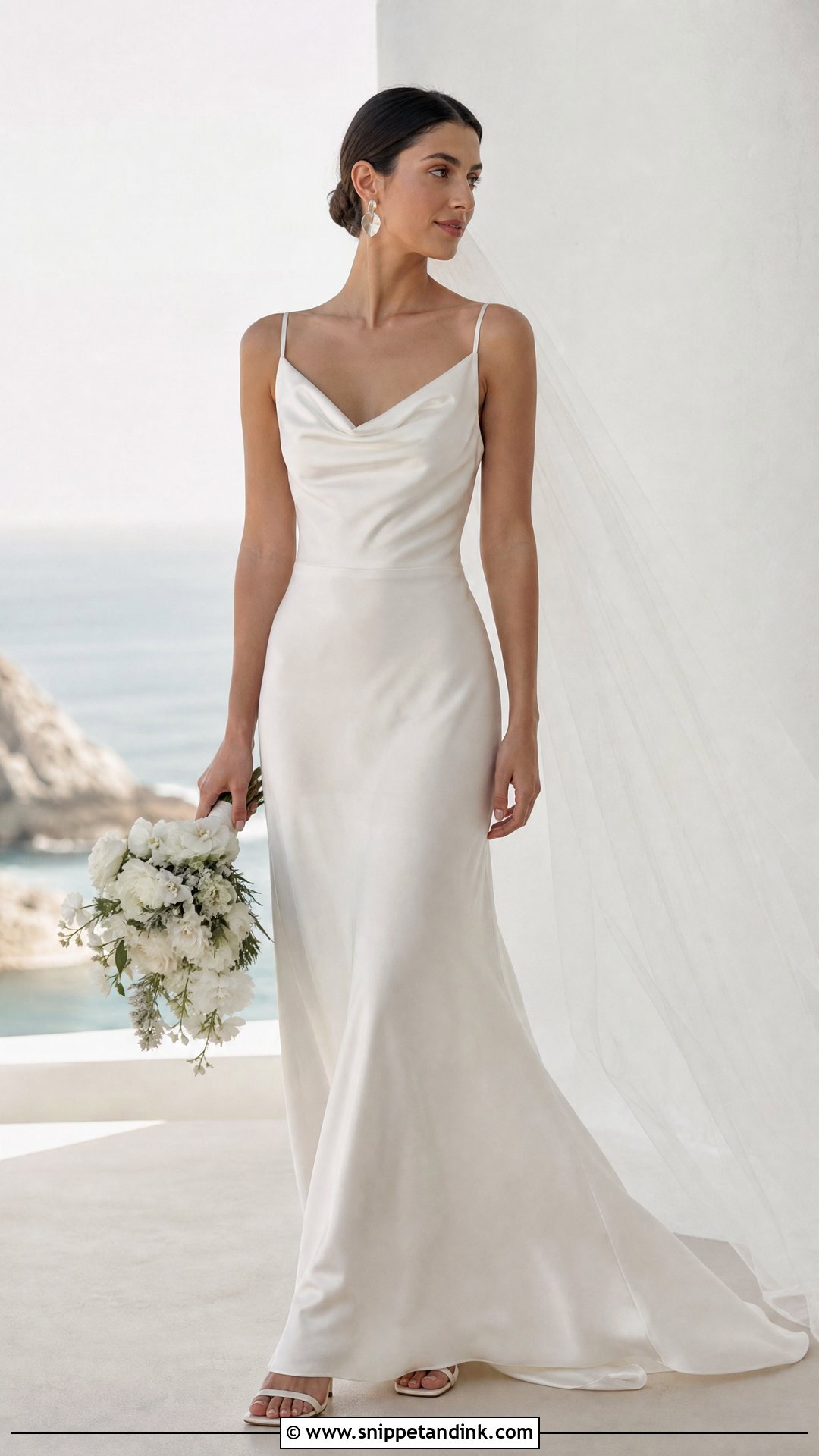
A cowl neckline adds soft folds of fabric right where a smaller bust might want a bit of volume, without any padding at all. In a bias-cut silk or satin slip, it follows the body naturally, and it suits a modern ceremony, a coastal venue or a small city wedding. Adjustable spaghetti straps let you control how deep the cowl falls, which matters, because one centimetre lower and it can swing open when you lean forward. Slim ivory sandals, sculptural earrings and a light chapel veil keep it fluid. Add a sheer organza wrap if you want more coverage.
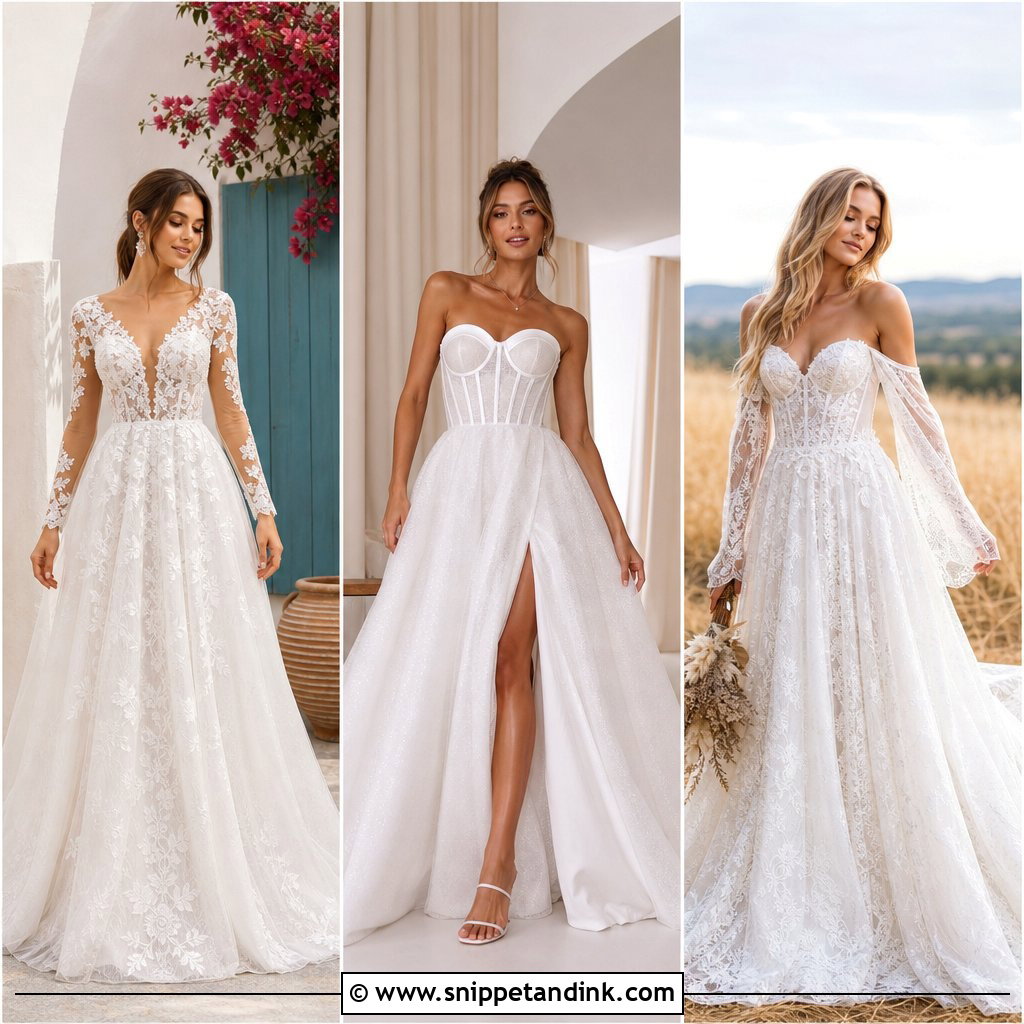
6. Corset Basque-Waist Wedding Dress
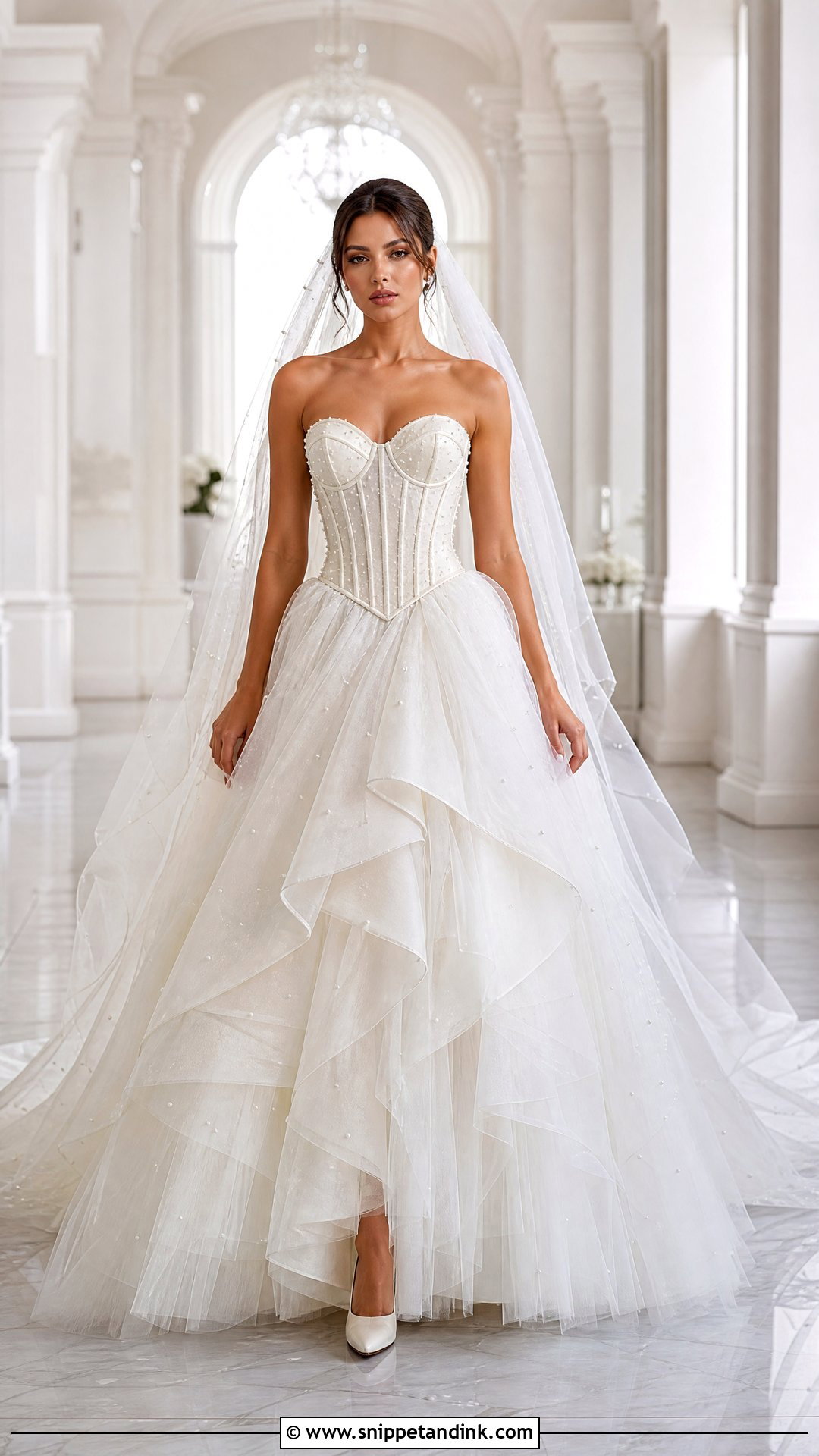
When a bride tells me she wants shape, this is often what I bring out. A corset bodice with a pointed Basque waist structures the torso and draws attention to the narrowest point of the body. Seamed cups give gentle lift on their own, so there’s no need for a push-up bra underneath. A straight or softly curved neckline with wider-set straps looks polished, and a full tulle or satin skirt balances the fitted top. The boning and cups need professional fitting to your measurements; an off-the-rack corset sized for a bigger cup will gape at the top edge.
7. Off-the-Shoulder Lace A-Line Wedding Dress
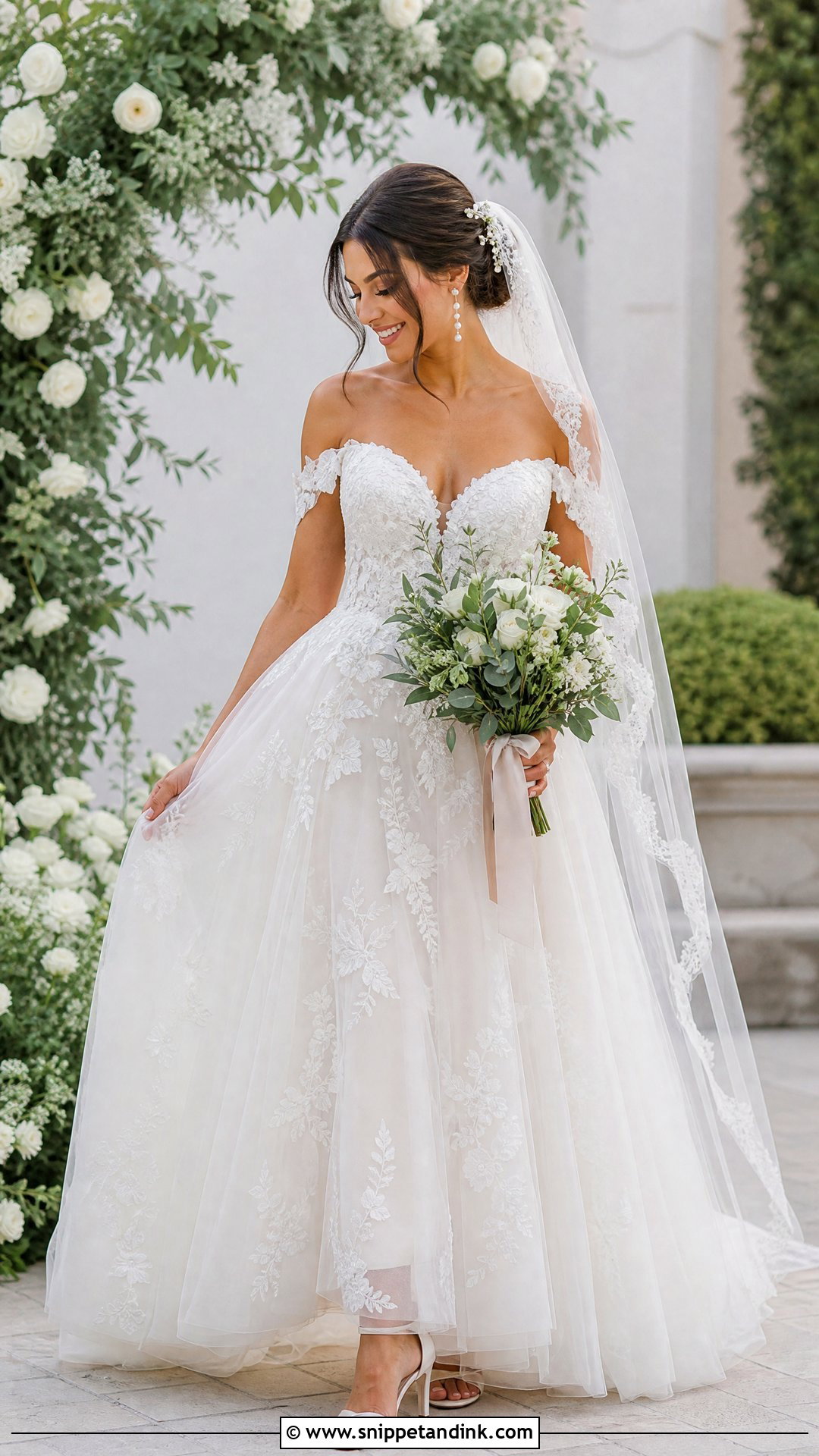
Off-the-shoulder lace draws a soft horizontal line across the collarbones, which balances a smaller bust nicely. Look for a fitted lace bodice with built-in cups and a sweetheart foundation underneath, so the structure is doing the work rather than the sleeves. A chiffon or tulle skirt keeps it light. I test this neckline by having the bride sit, hug and raise both arms, since the sleeves sit across the upper arm and limit reach. If the dress slips when you lift your arms, the support isn’t secure enough at the waist and ribs.
8. High-Neck Open-Back Wedding Dress
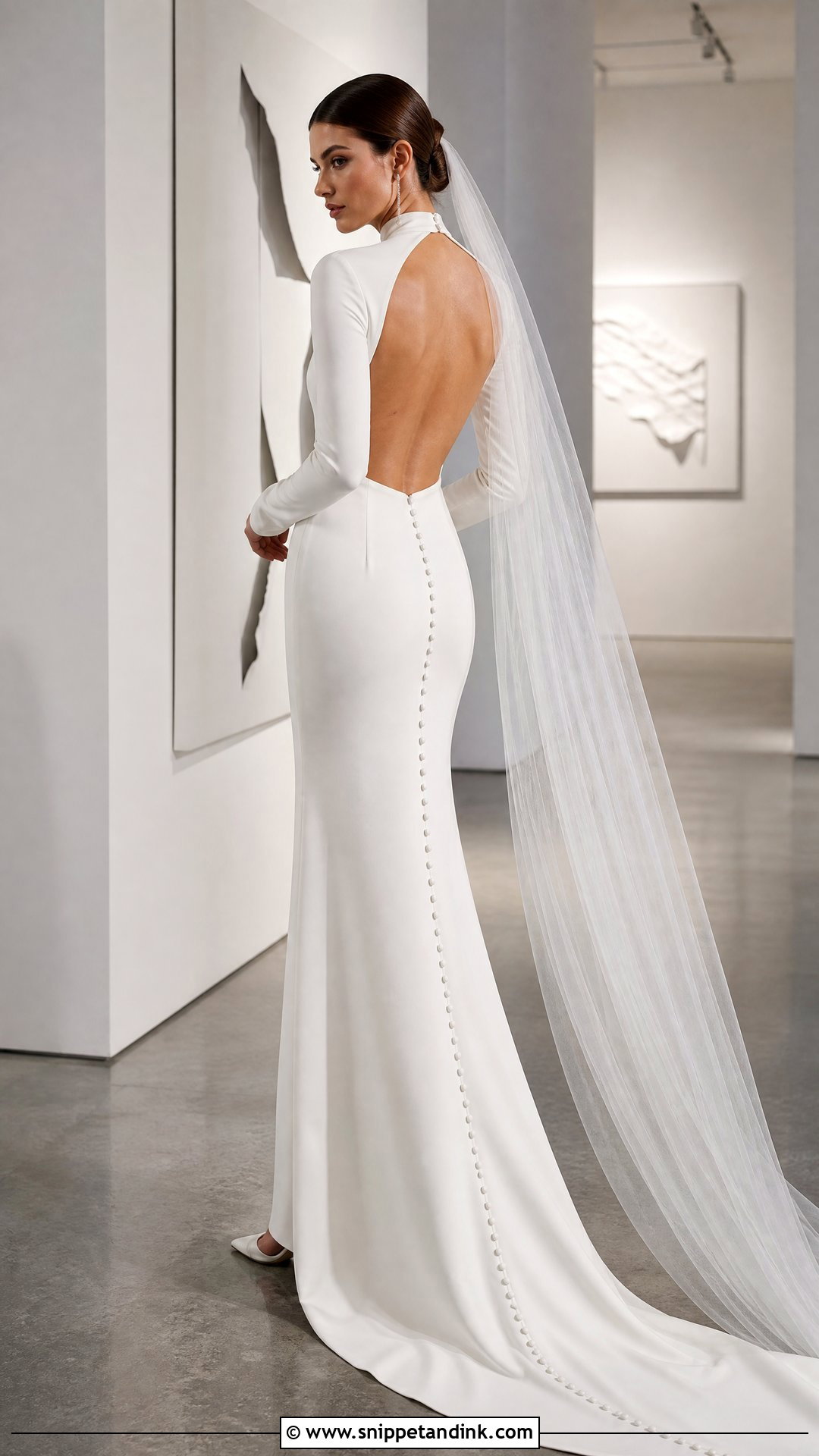
Would you rather show your back than add anything at the front? A high neck with an open back gives modest coverage in front and real impact behind. A fitted crepe, satin or lace bodice follows your natural shape without bulky cups, which a small chest rarely needs here. A slim sheath or column skirt extends the line. Wear your hair up, add long earrings and attach a plain veil below the bun. The neck and shoulders need precise fitting, because loose fabric there wrinkles badly once the back is cut deep.
9. Illusion-Neckline Tulle Wedding Dress
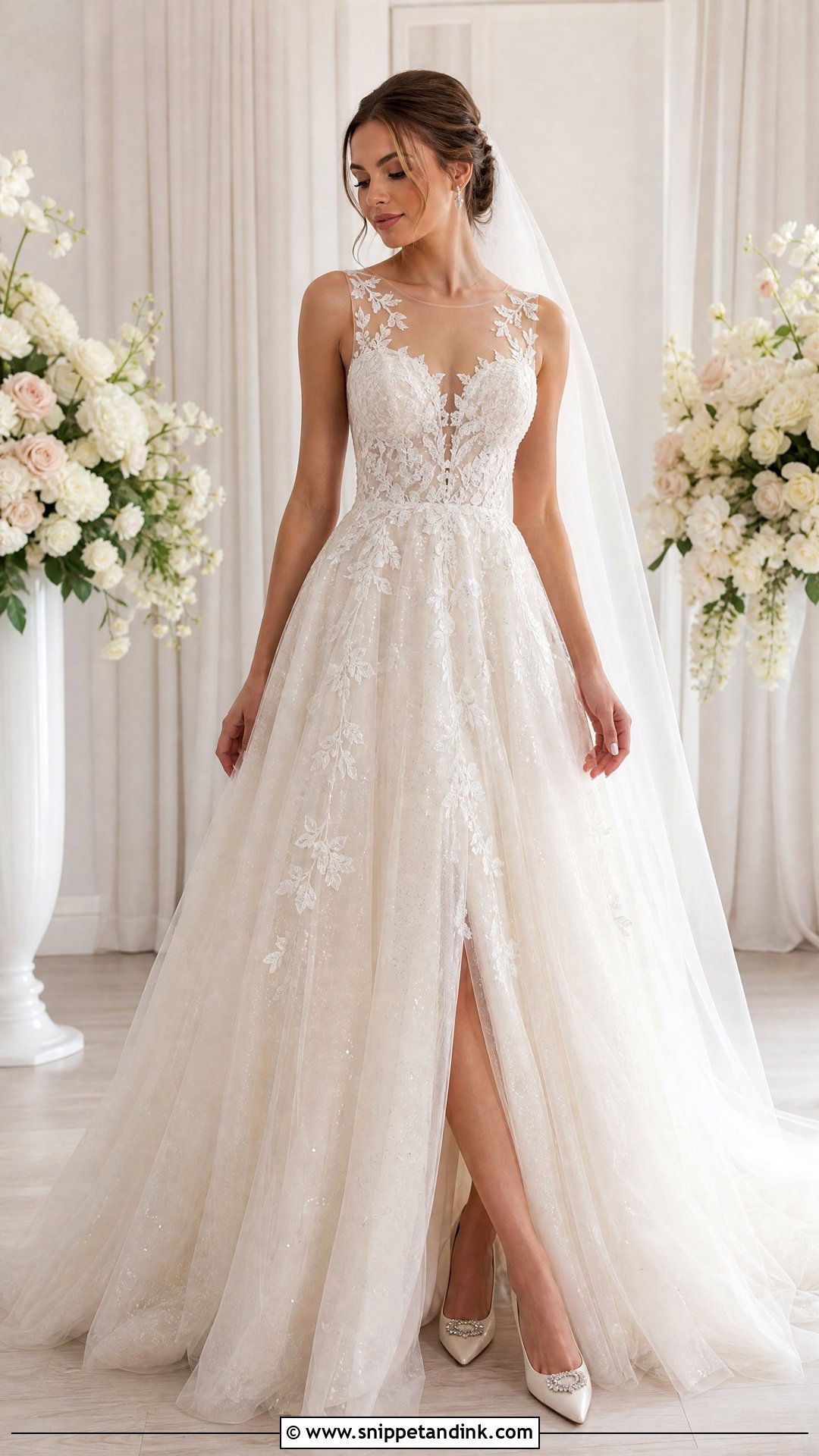
Illusion necklines let lace, pearls or floral appliqués appear to float on the skin, adding texture over a small chest without a low or heavily curved neckline. Choose a bodice where the appliqués sit over supportive cups and the waist is softly defined. A layered tulle skirt keeps the proportions balanced. Mesh colour is the detail most people miss: in a shop under warm light, almost any mesh looks invisible, but in daylight the wrong shade shows as a grey or pink band. Check it by a window. The neckline should lie flat across the collarbones with no puckering.
10. Scoop-Neck Empire-Waist Wedding Dress
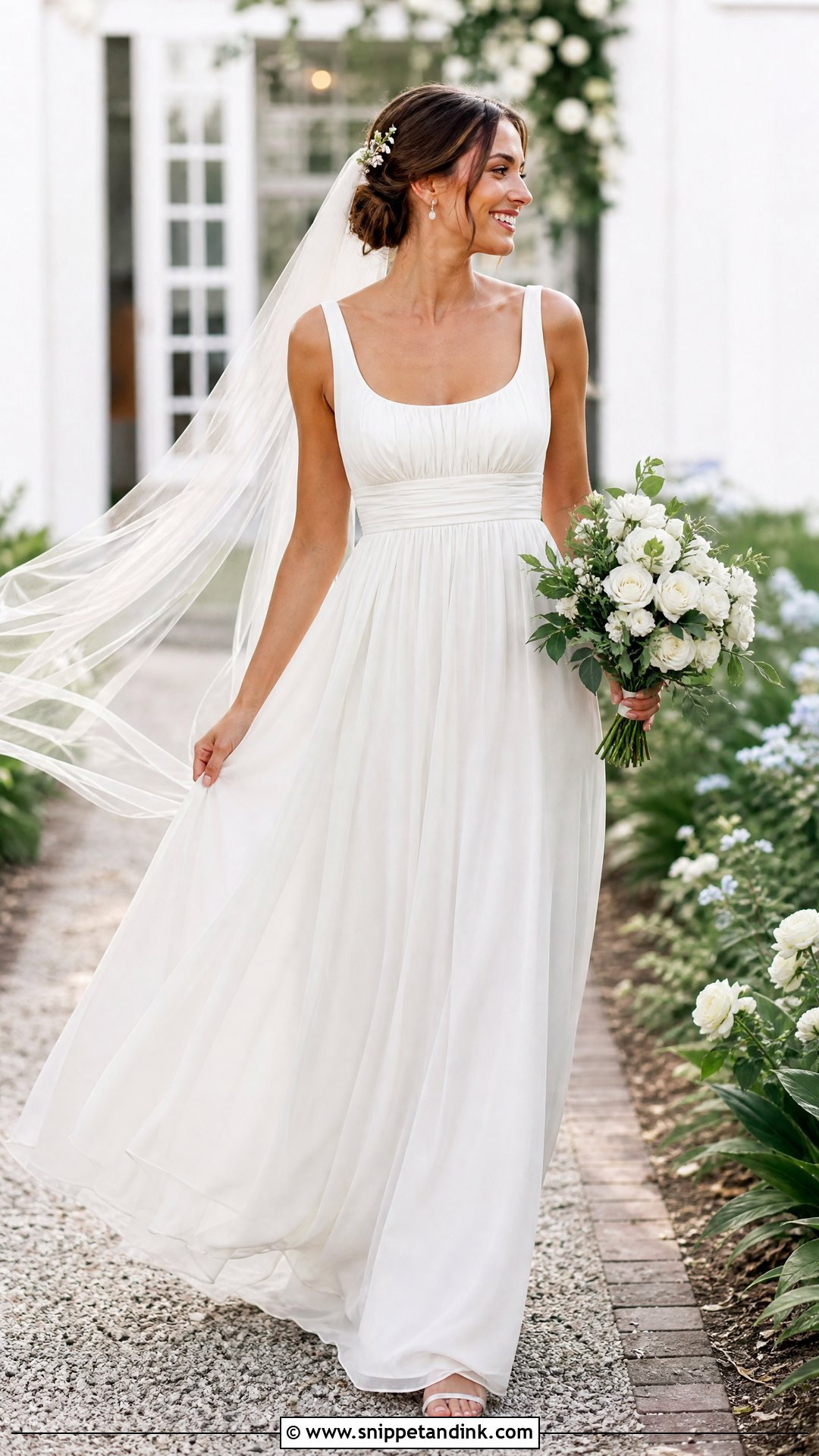
An empire waist puts its seam just below the bust, and the gathers beneath it create soft fullness where a small chest might otherwise look flat. A scoop neckline adds a little curve. Chiffon, silk georgette or soft tulle stop the high seam from looking stiff, and the loose fit through the stomach and hips makes it a comfortable warm-weather choice. The seam has to sit under the bust, never across it. If it climbs on to the lower bust, the whole bodice looks too small. Petite brides may also need the bodice shortened so the neckline and cups land in the right place.
11. Ruched-Bodice Chiffon Wedding Dress
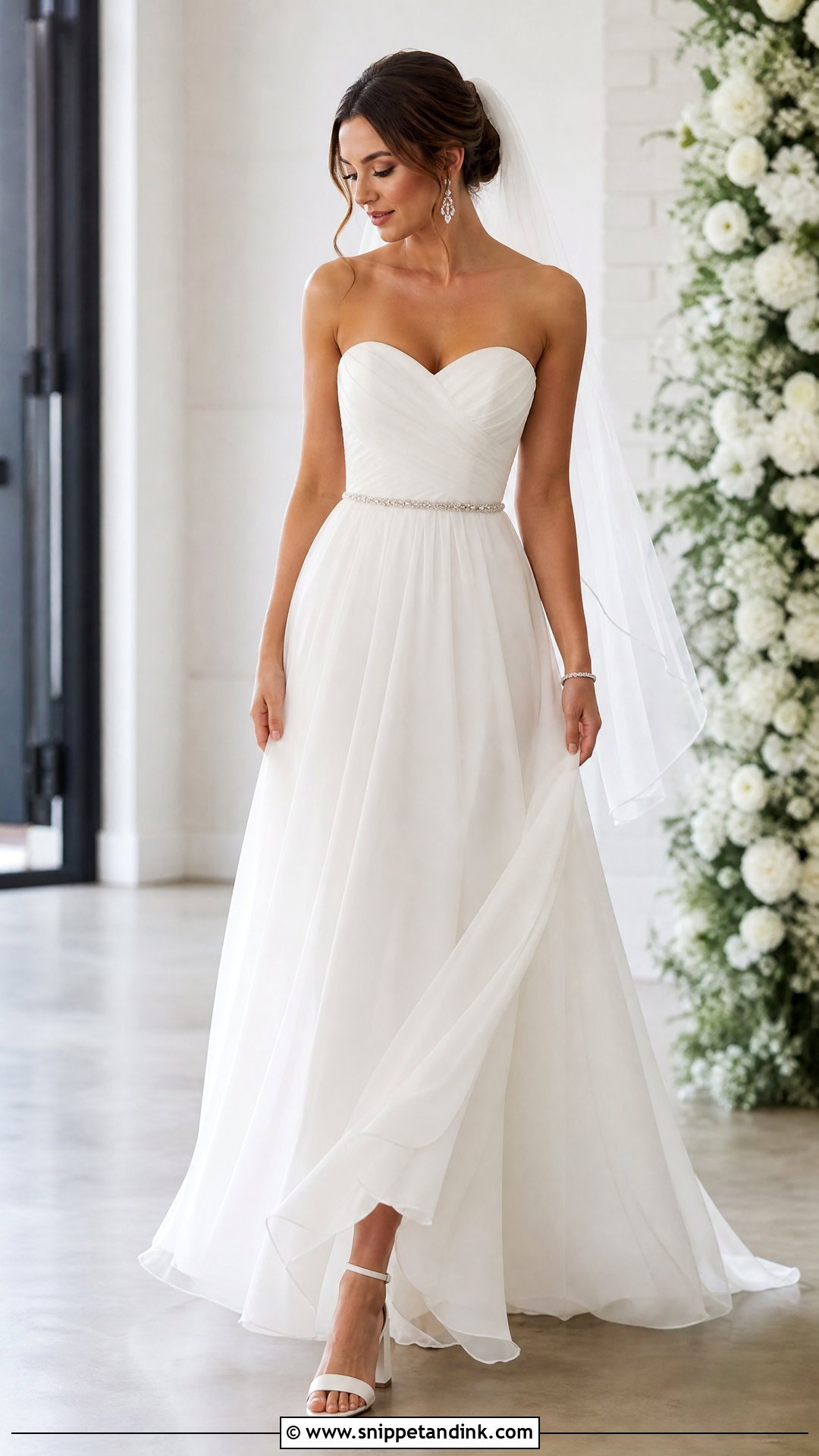
Smooth fabric can look flat across a small chest; ruching breaks that up. Diagonal or gathered folds that follow the cups and narrow toward the waist add depth without padding. A sweetheart or draped neckline suits it, and a floating chiffon A-line skirt keeps the dress easy to move in. Watch the gathers, though. Very thick ruching adds bulk through the whole torso, so I look for fine, shallow folds. A ruched bodice is one of the easiest ways I know to add visual volume where you want it. Crystal earrings and a chapel veil finish it.
12. Ruffled-Bodice Organza Wedding Dress
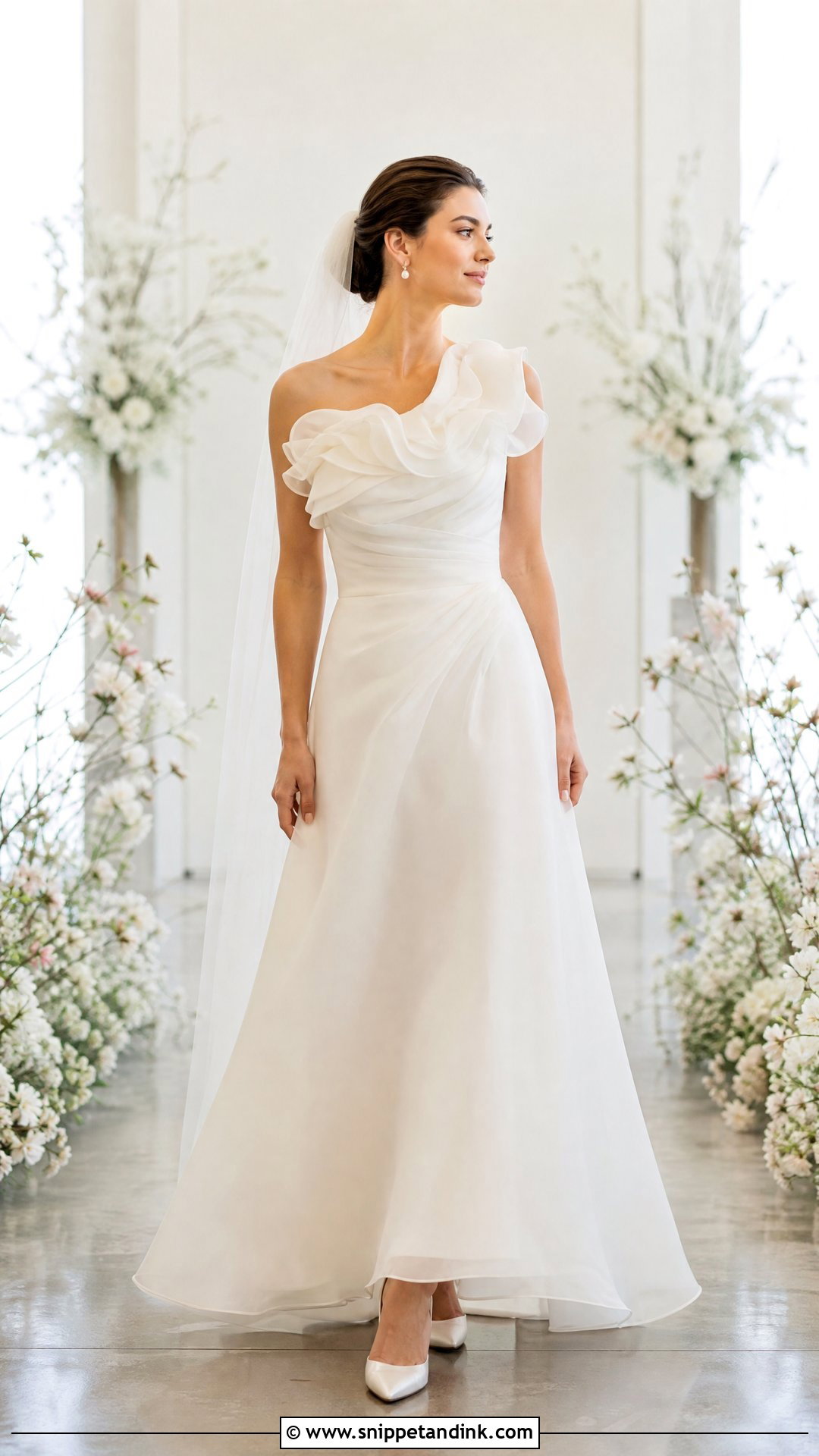
Ruffles add real dimension across the chest. Organza is light but crisp enough to hold each ruffle in shape, so it suits spring weddings and formal indoor ceremonies. I’d choose asymmetric ruffles or a layered neckline over big tiers, which can swamp a slight frame. A fitted waist and plain A-line skirt keep the balance. Because the bodice is busy, pare everything else back: pearl earrings, satin pumps and a plain veil. At alterations, ask for the foundation and the ruffles to be adjusted together; taking in only the lining leaves the ruffles bunched at the side seams.
13. Floral Appliqué Wedding Dress
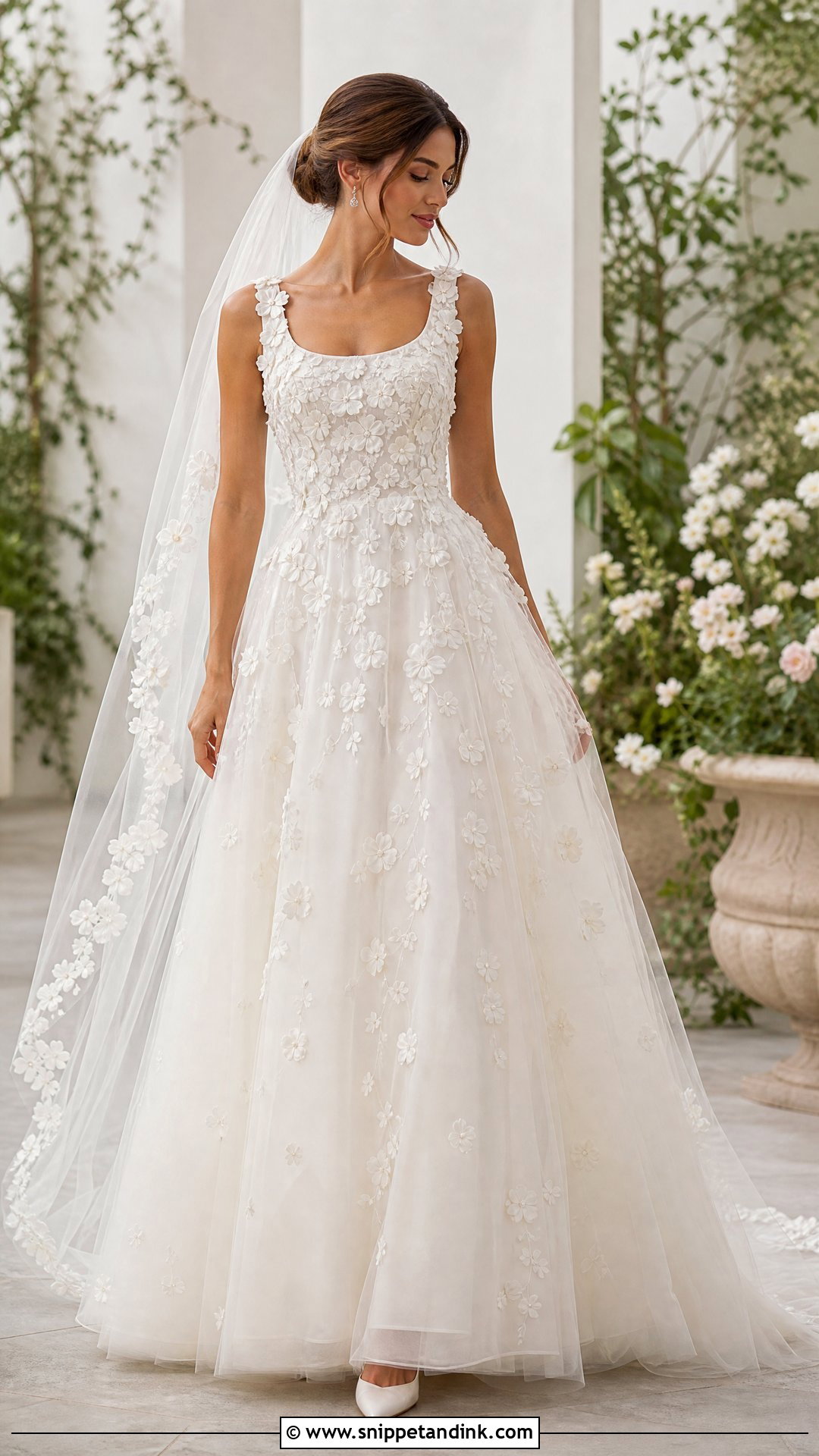
Three-dimensional flowers concentrated across the bodice pull attention upward and add texture with no padding involved. They usually thin out through the waist and scatter down the skirt. A fitted scoop, square or sweetheart bodice with light boning underneath works well. Skip the necklace, and if you’d like the veil to echo the dress, choose one with only a few matching flowers near the edge. Feel under the arms and along the neckline before buying, because the stiff backing on some appliqués rubs the skin raw by evening.
14. One-Shoulder Column Wedding Dress
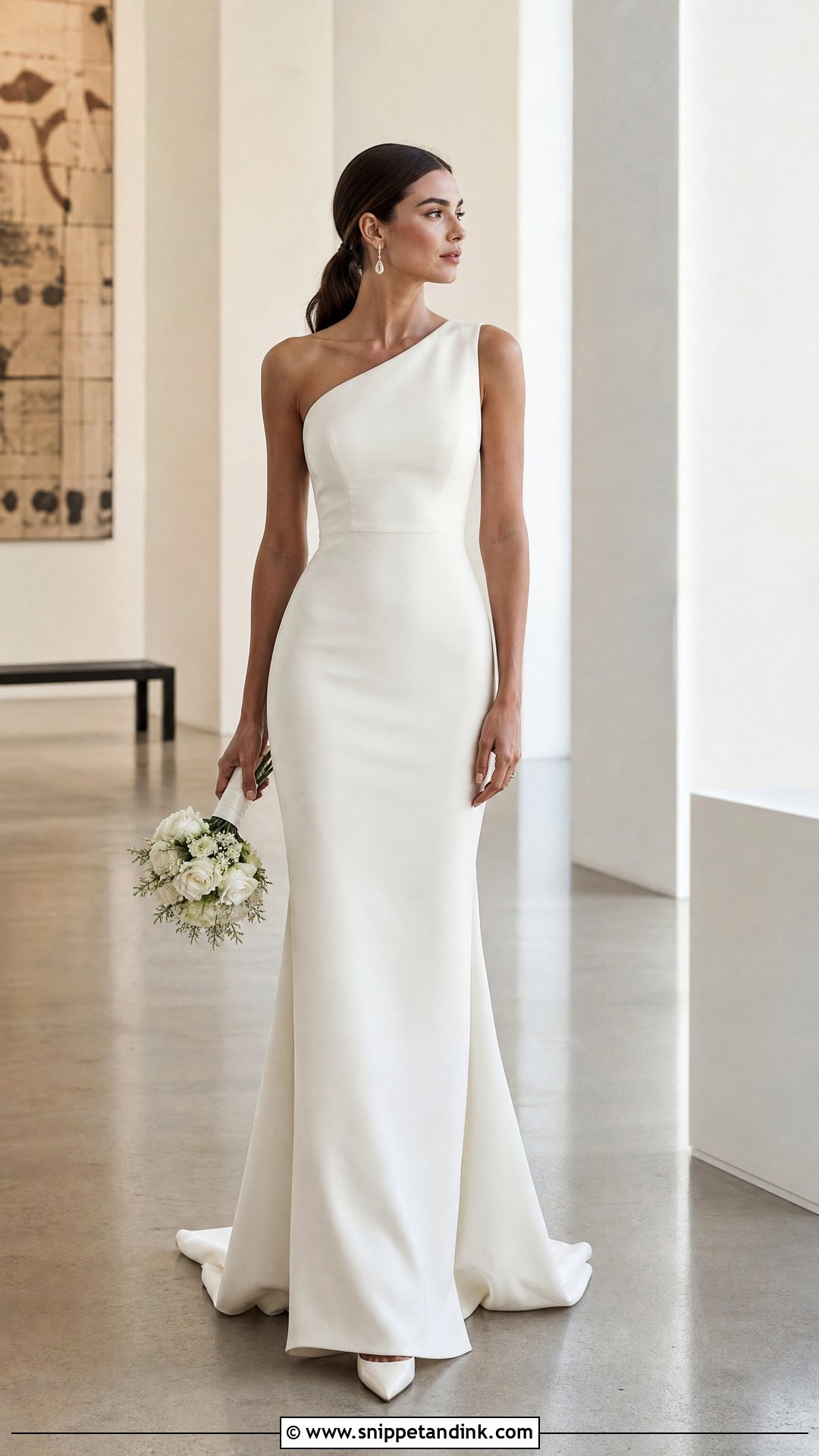
One-shoulder dresses send the eye diagonally across the upper body, so bust size barely registers. Crepe, satin or draped jersey all look polished. The strapless side is the weak point, and it needs internal boning or a firm lining to stay flat. I always ask brides to swing both arms and sit down in this cut, watching whether the fabric twists across the chest. A back slit helps with walking in a column skirt. Sleek earrings and a bracelet on the bare arm replace a necklace.
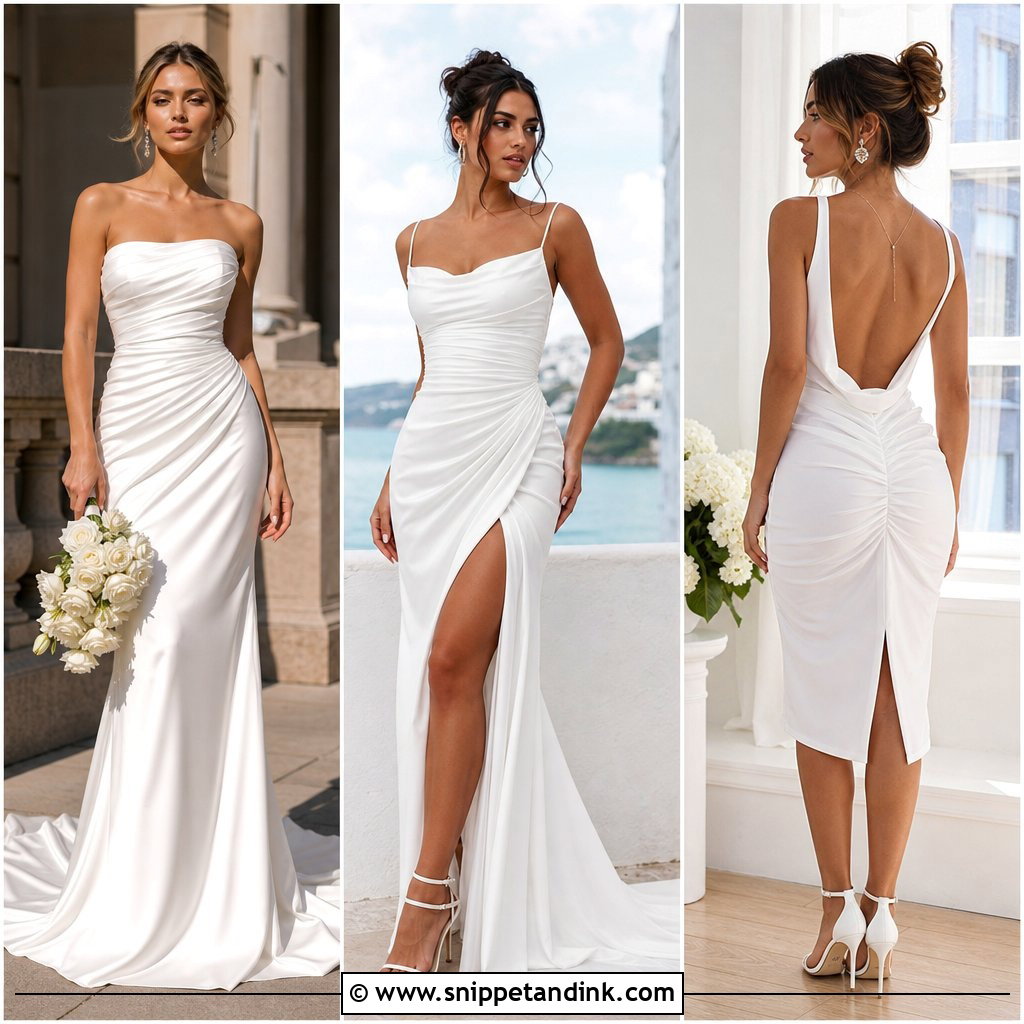


15. Boat-Neck Long-Sleeve Wedding Dress
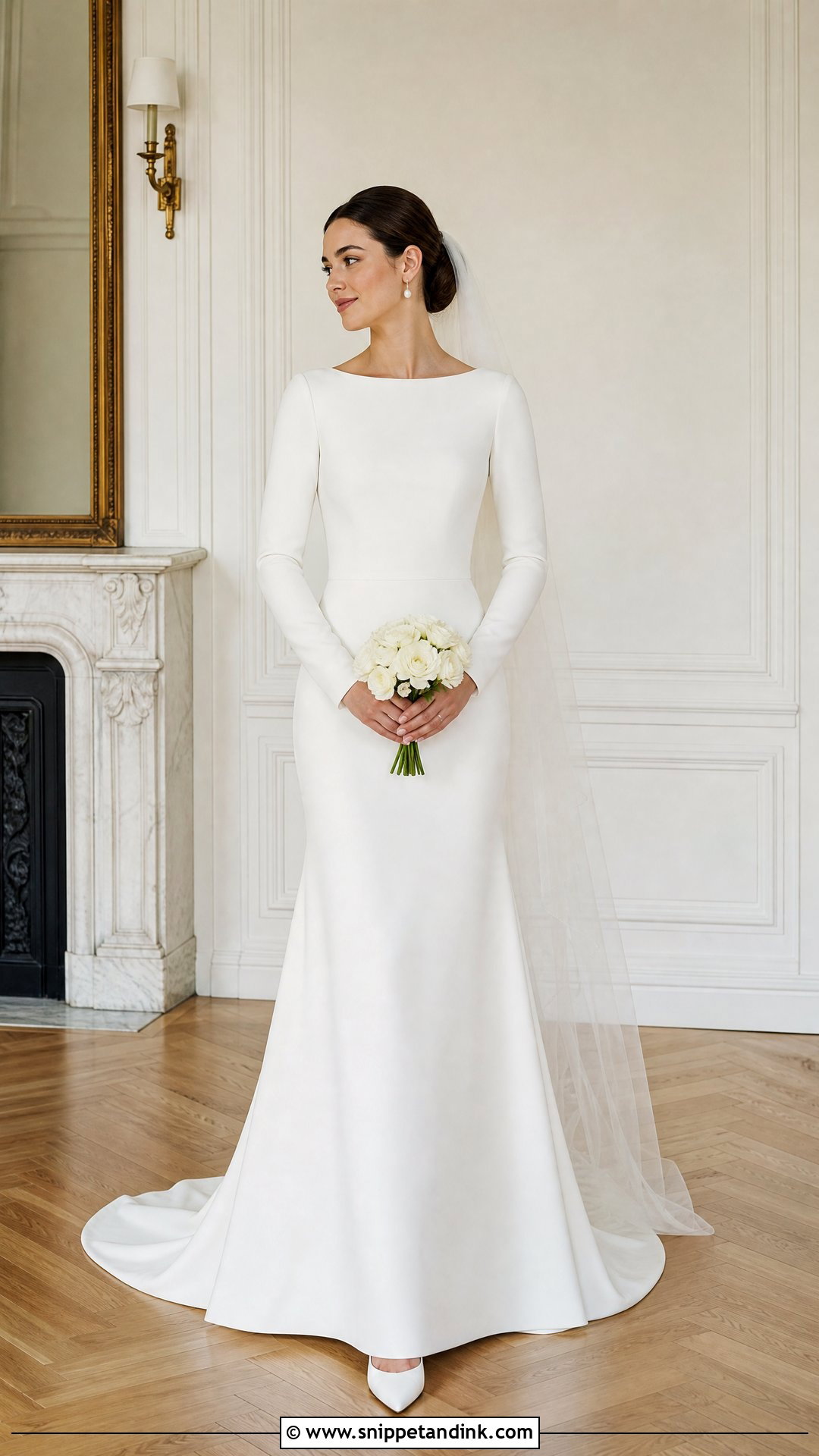
A boat neck runs from shoulder to shoulder, broadening the upper body and putting the collarbones on show. Long sleeves in crepe, satin or lace suit it. A defined natural waist and softly flared skirt stop all that coverage from looking heavy. Covered buttons or a shallow V at the back add detail behind. This neckline tends to rise and pull when you lift your arms, so turn your head and reach forward in the fitting. Careful shoulder alterations stop the fabric bunching across the chest and upper back.
16. Cap-Sleeve Tea-Length Wedding Dress
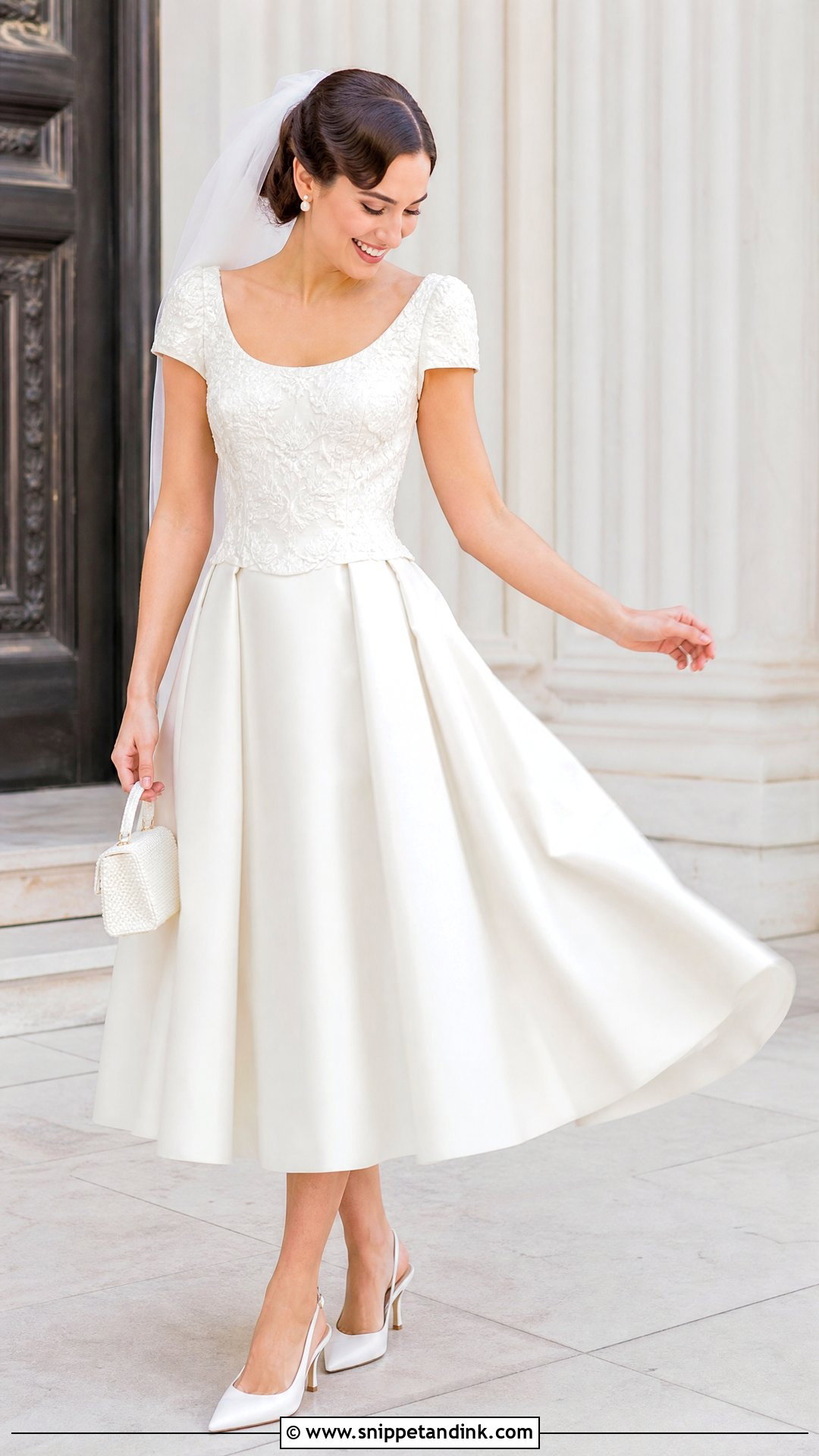
Cap sleeves add a touch of width at the shoulders, and paired with a scoop or modest V-neck they shape a small chest without exposing much. A fitted bodice with lace, pearls or embroidered flowers adds dimension. The full skirt, ending between knee and ankle, has a vintage feel and puts your shoes on show, so choose them before the hem appointment. I’d confirm two measurements at the fitting: hem length against your height, and the waist seam sitting right at your natural waist. Both shift the whole balance of a short dress. Courthouse ceremonies and daytime receptions suit it.
17. Deep V-Neck Tulle Ball Gown Wedding Dress
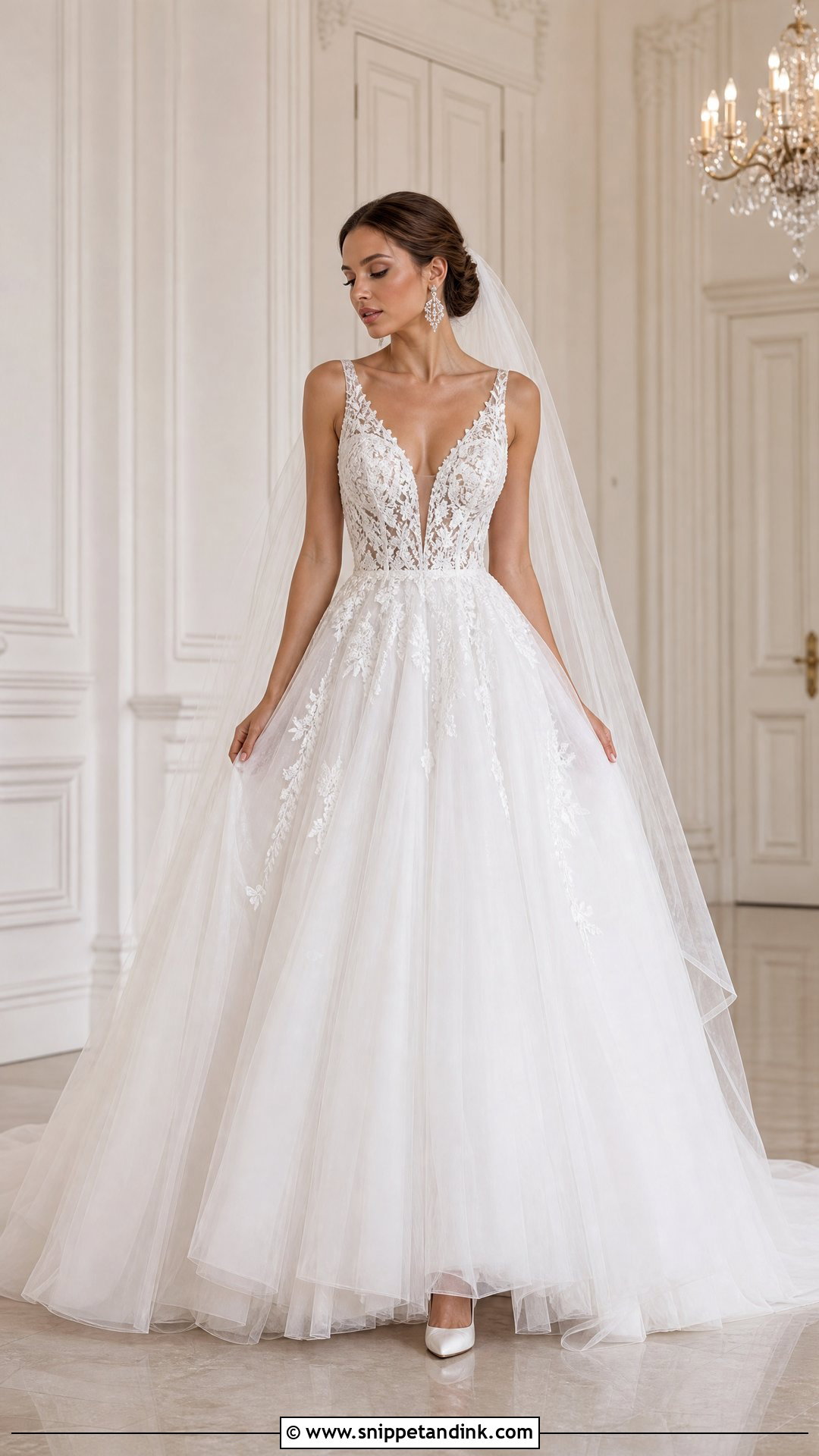
A deep V on a full tulle ball gown pairs a daring neckline with a traditional skirt. A small chest can usually wear the plunge with little support, although illusion mesh and fashion tape still make it secure. Symmetrical lace appliqués or light beading frame the V. Chandelier earrings and a neat updo suit it; a necklace breaks the line. Before final alterations, I look at the bride side-on as well as straight on. From the side you can see whether the cups lie close to the body or stand away from it, which is where most deep Vs go wrong.
18. Draped Asymmetrical Wedding Dress
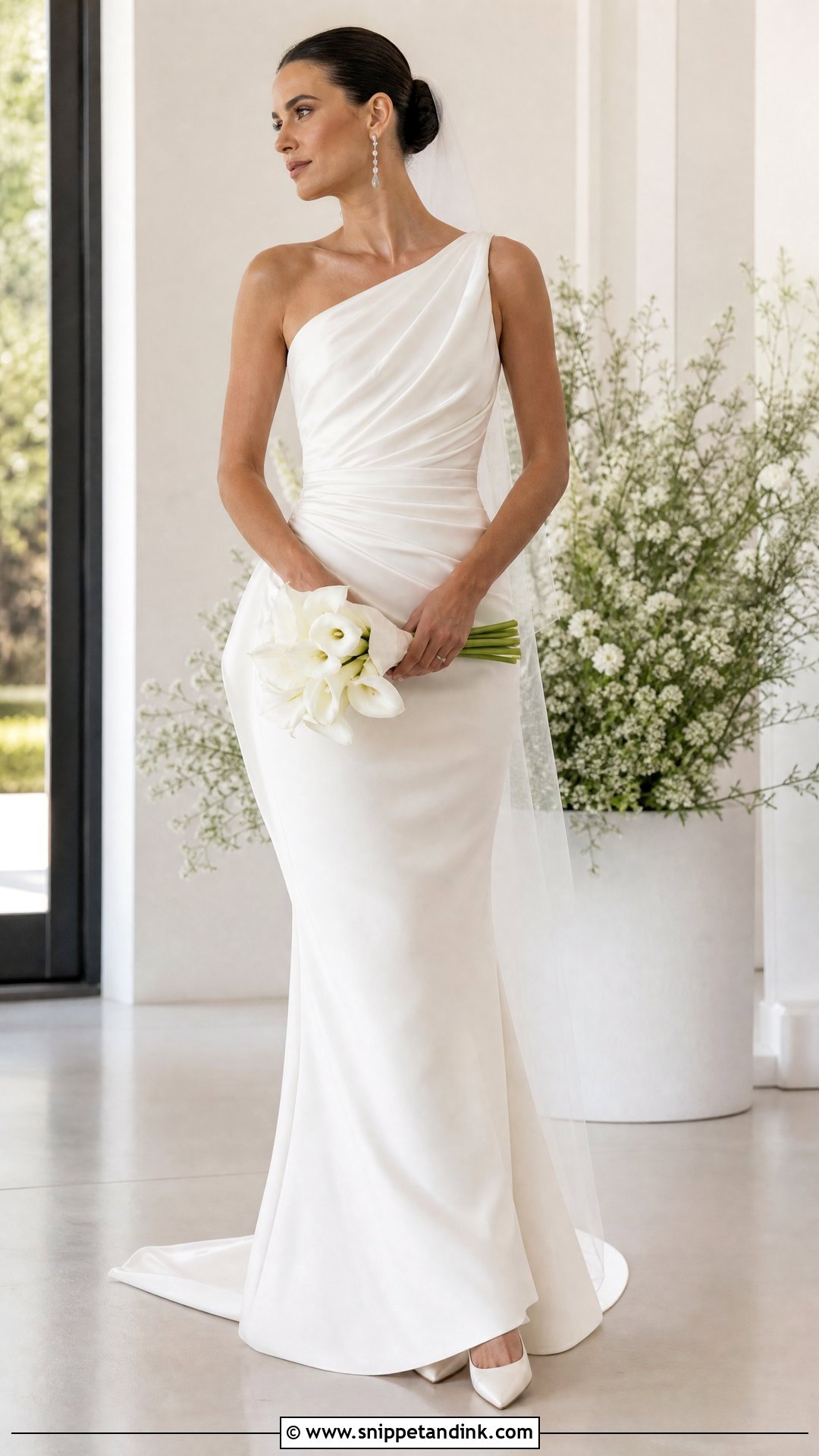
Draped fabric creates shape without stiffness. An asymmetrical gown gathered across the bust and waist pulls the eye on a diagonal and adds dimension that looks natural. Satin, crepe or silk with some weight holds the folds neatly; thin fabric lets them flop. A fitted hip and gently flared skirt continue the sculpted line. Look at the draping from every angle in the fitting room. Each fold should look intentional, and the neckline should stay against your chest while you walk, bend and sit.
19. Beaded Fit-and-Flare Wedding Dress
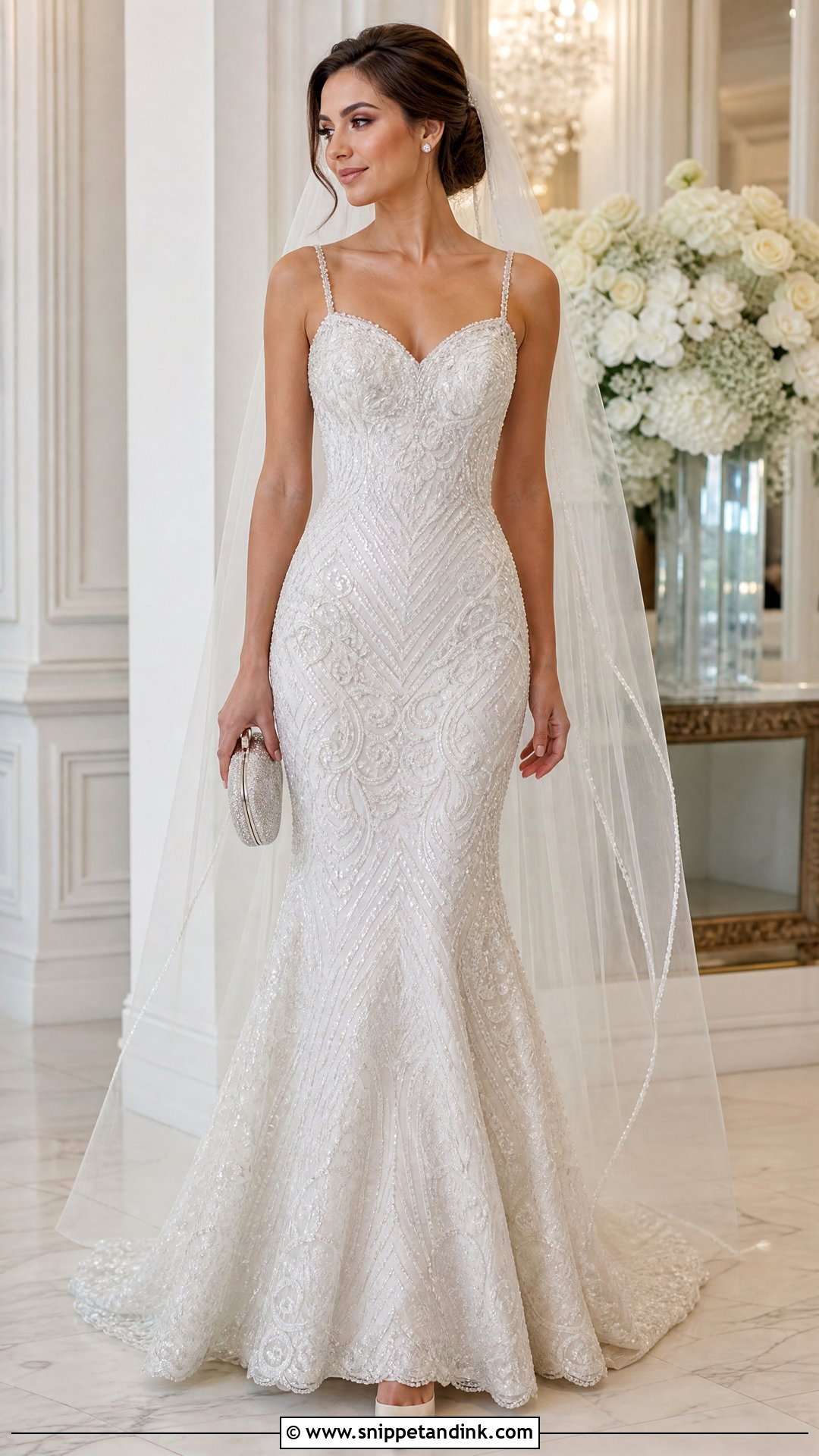
Beading on the bodice adds depth and shape to a smaller chest, and in a fit-and-flare that detail runs into a close waist and hip before the skirt opens at the thigh or knee. Curved, floral or geometric patterns work better than heavy horizontal bands, which flatten the chest. A scoop, sweetheart or narrow V finishes the top. Beaded fabric is heavy, so the internal structure needs to be solid. Ask before altering whether taking in the side seams will cut through the pattern, and check that the beads near your arms won’t scratch.
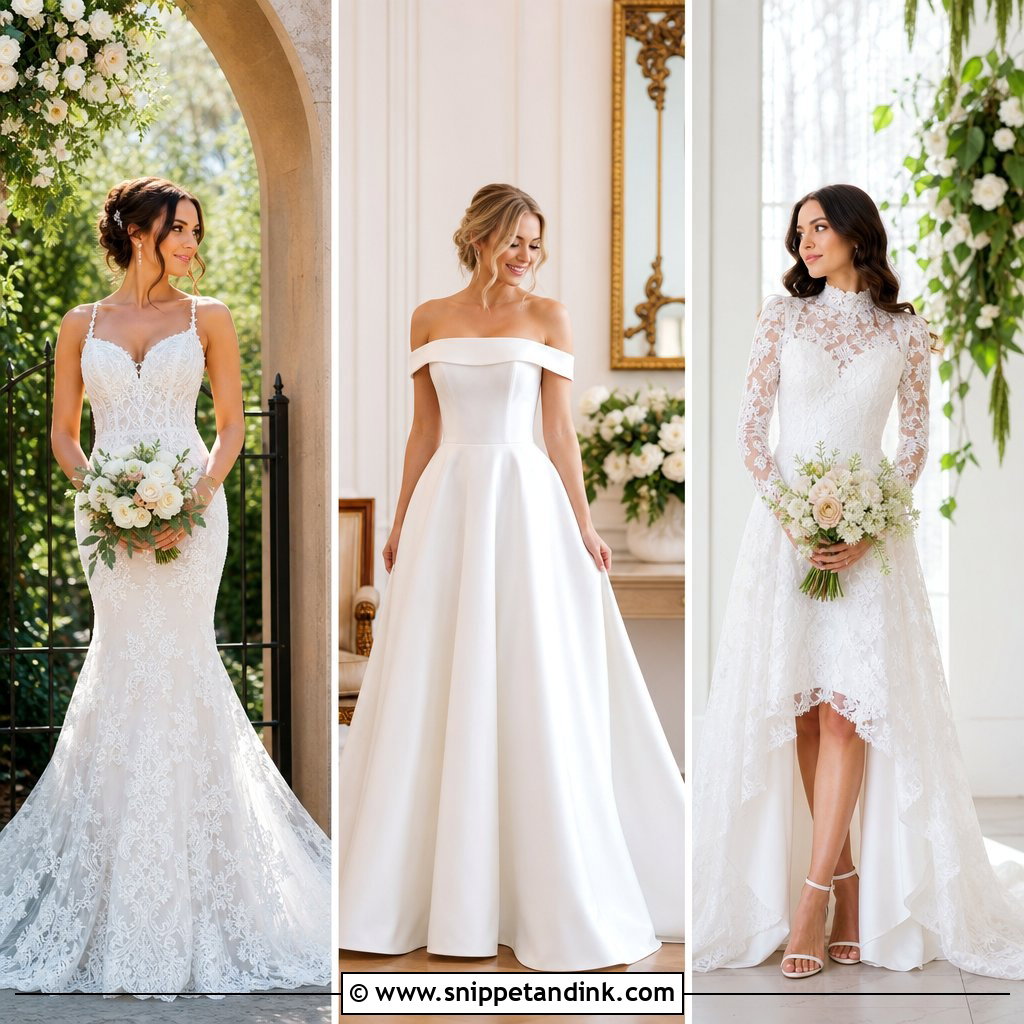
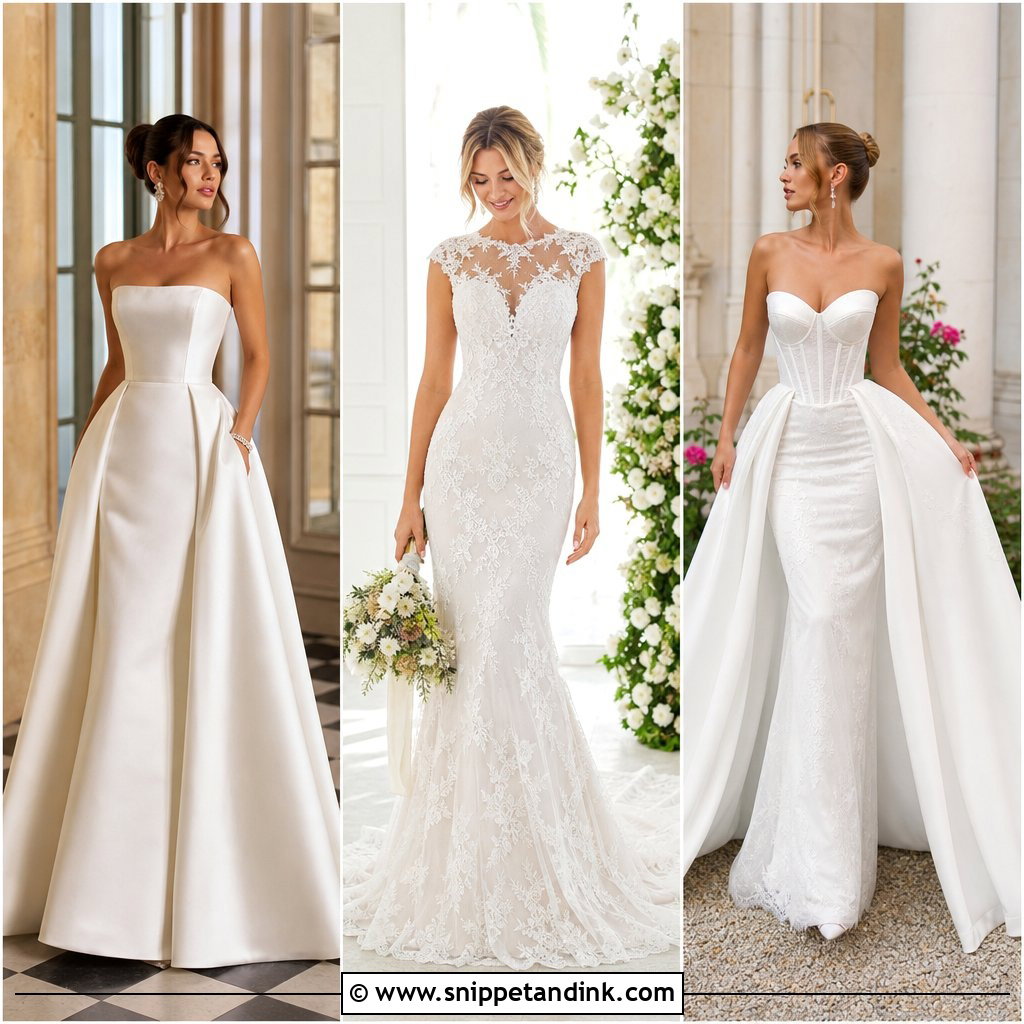

20. Bustier Wedding Dress With Detachable Overskirt
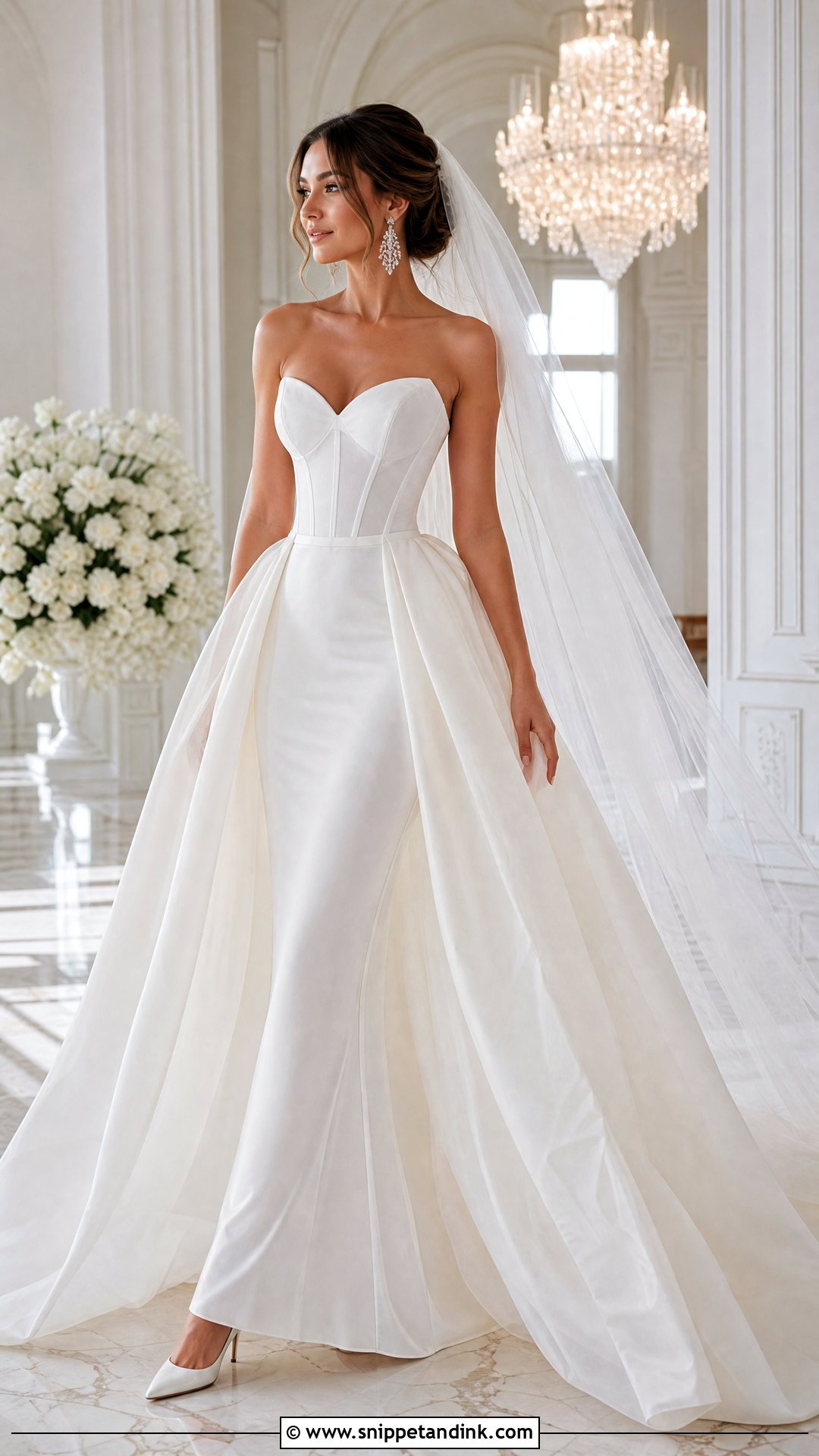
A bustier wedding dress with a detachable overskirt gives you two looks in one outfit. Shaped cups, visible seams and boning define a small chest, and a straight or curved neckline keeps it modern. Underneath, a fitted column skirt is the base. Add a full satin or organza overskirt for the ceremony, then take it off for dancing. Statement earrings and a polished updo work for both halves. When you try it, check where the overskirt attaches. It should lie flat and not cover the waist detailing on the bustier.
Why the Top Edge Gapes, and the Fixes a Seamstress Uses
Gaping at the top of the bodice is the most common fit problem I see on a smaller bust. Sample dresses and size charts assume a fuller cup, so even when the waist fits perfectly, there’s spare fabric sitting above the chest. The good news is that most of it can be corrected.
- Taking in the princess or side seams over the bust, which removes cup depth while leaving the waist alone.
- Lowering or reshaping the cups inside the lining so the neckline sits on the skin.
- Adding a fine silicone grip strip along the inside top edge, so the bodice holds without being tighter.
- Shortening the straps on styles that have them, which lifts the whole bodice into place.
There are limits. Lace with motifs that cross the seams is harder to take in without the pattern breaking, and heavily beaded bodices need beads removed and resewn along any new seam, which adds cost and time. If you love a dress like that, ask the seamstress for her honest opinion before you buy it.
On the morning itself, keep fashion tape and a couple of safety pins in your kit. A bodice that fitted perfectly at the last appointment can feel looser after a day of nerves and skipped meals.
Your Proportions Aren’t the Problem, a Loose Bodice Is
A small chest suits far more wedding dresses than most brides expect, from corsets and A-lines to slip dresses and ball gowns. What makes the difference is fit at the bodice. Cups should sit against the body, straps should stay put, and the top edge should lie flat without pinching. Take photos from the front and the side at every appointment, and move around in the dress rather than standing still for the mirror. Pick a gown that works with your shape instead of one that tries to change it.
You'll Like These Ideas:









Leave a Reply