
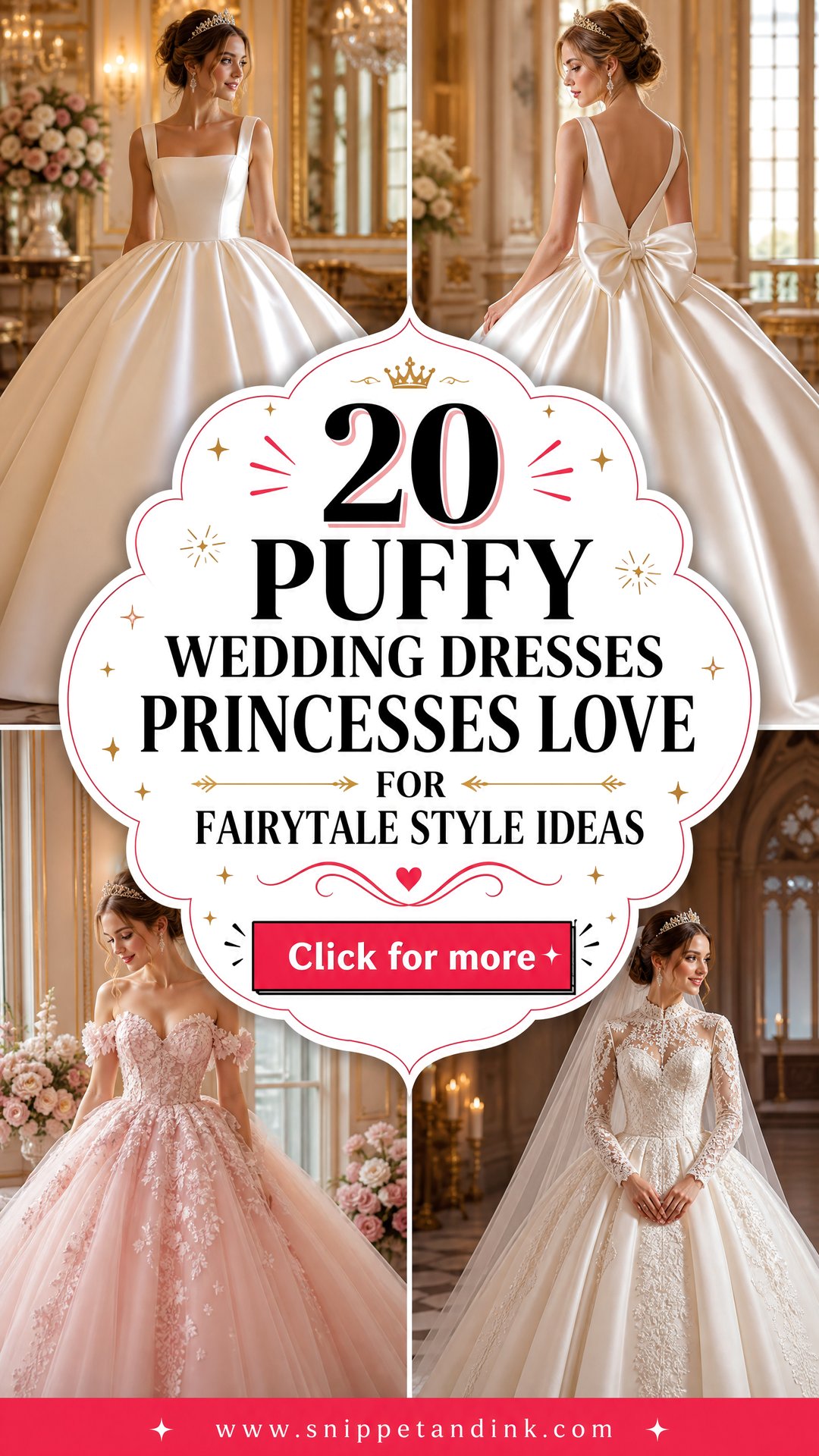
Puffy princess wedding dresses are the gowns brides most often fall for on the hanger and then worry about in the fitting room. Will I disappear in it? Can I get through a doorway? In my experience the answer depends far less on how much skirt there is and far more on what is happening above the waist. A ball gown that fits tightly through the bodice and is anchored at the natural waist carries its volume; one with a loose or badly placed waist gets carried by the bride. Below are twenty versions I would genuinely put a bride in, each with notes on the fabric, the support inside it and the accessories that keep it balanced.
Measuring a Ball Gown Against Your Venue, Aisle and Car
Before you try on a single puffy skirt, it helps to know how much skirt your day can physically hold. I ask brides three questions at the first appointment: how wide is the aisle, how will you travel, and where will you sit for dinner? A full tulle ball gown can easily spread wider than a church aisle between pew ends, and it fills the back seat of a standard car so completely that a second person will not fit beside you.
Volume comes from two places, and they behave differently. Layers of tulle or a stiff petticoat give a soft, rounded shape that compresses when you sit and springs back. A hoop or crinoline gives a crisper bell, but it tips up in front when you lean back in a chair and needs practice on stairs. If you are unsure, ask the shop to pin in a lighter petticoat; most gowns keep their shape with one or two fewer layers, and the dress becomes noticeably lighter to carry.
- Measure the aisle and any narrow doorways you need to pass through before ordering.
- Book a car with a wide rear door or a van, and sit on the skirt rather than bunching it in your lap.
- Check the chair at the head table; armless chairs let the skirt fall naturally on both sides.
- Lift the gown on the hanger in the shop. If it feels heavy now, it will feel heavier at hour eight.
1. Strapless Satin Puffy Princess Wedding Dress
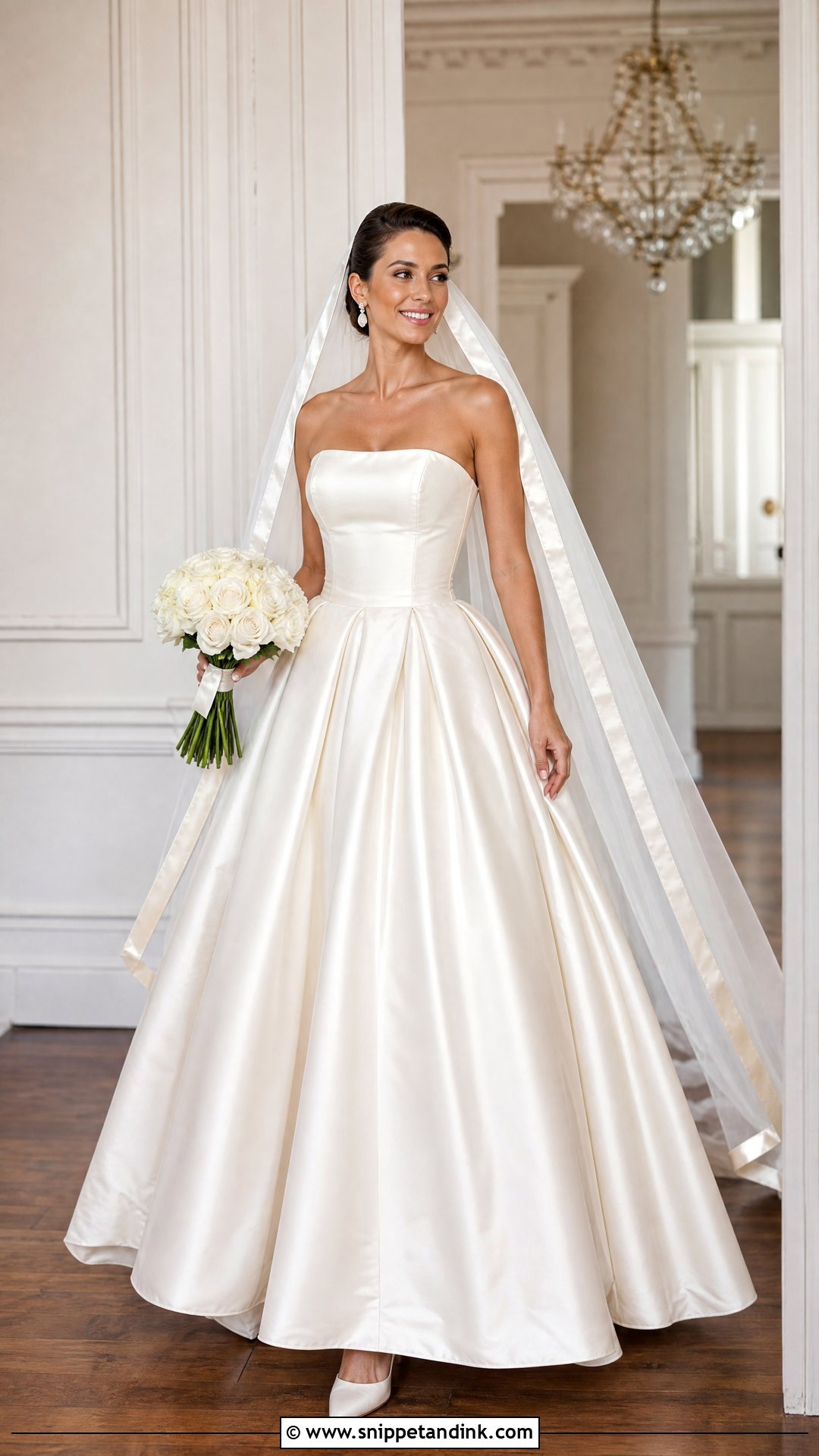
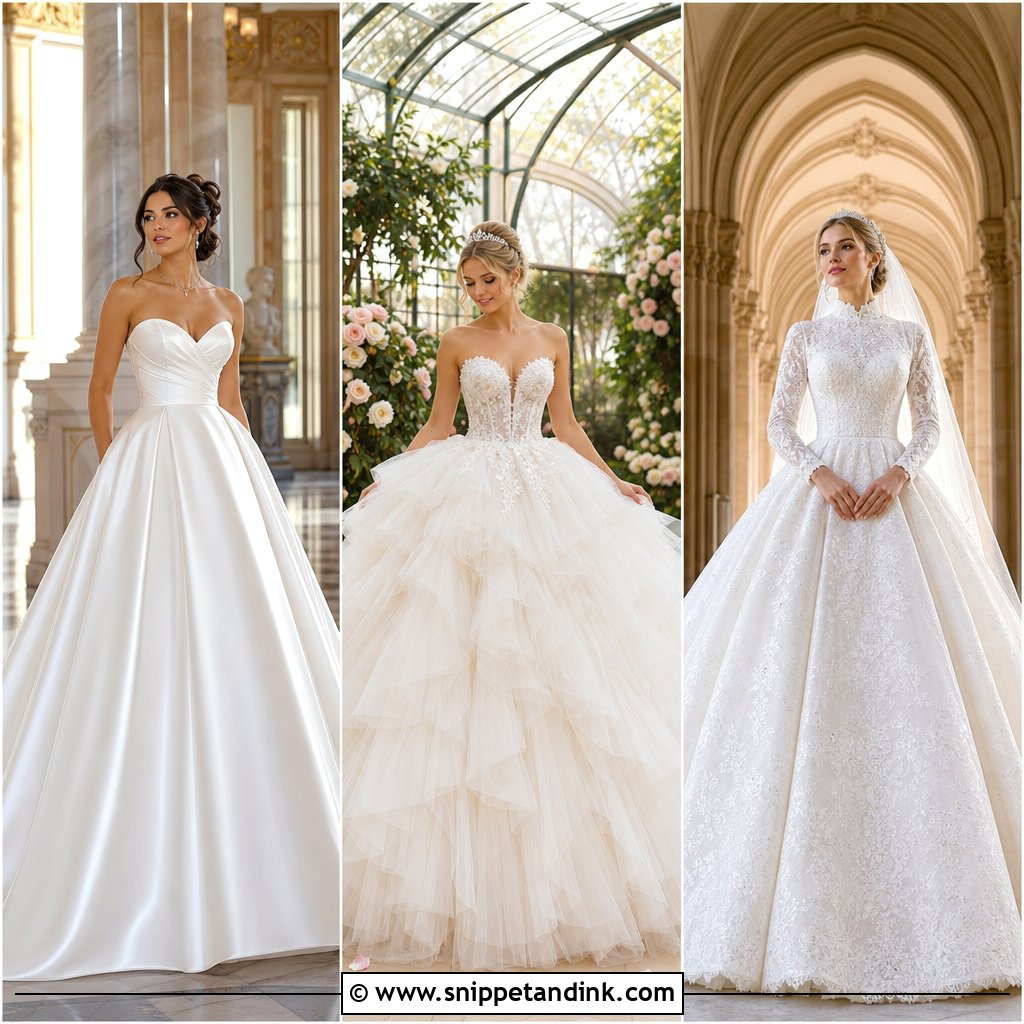
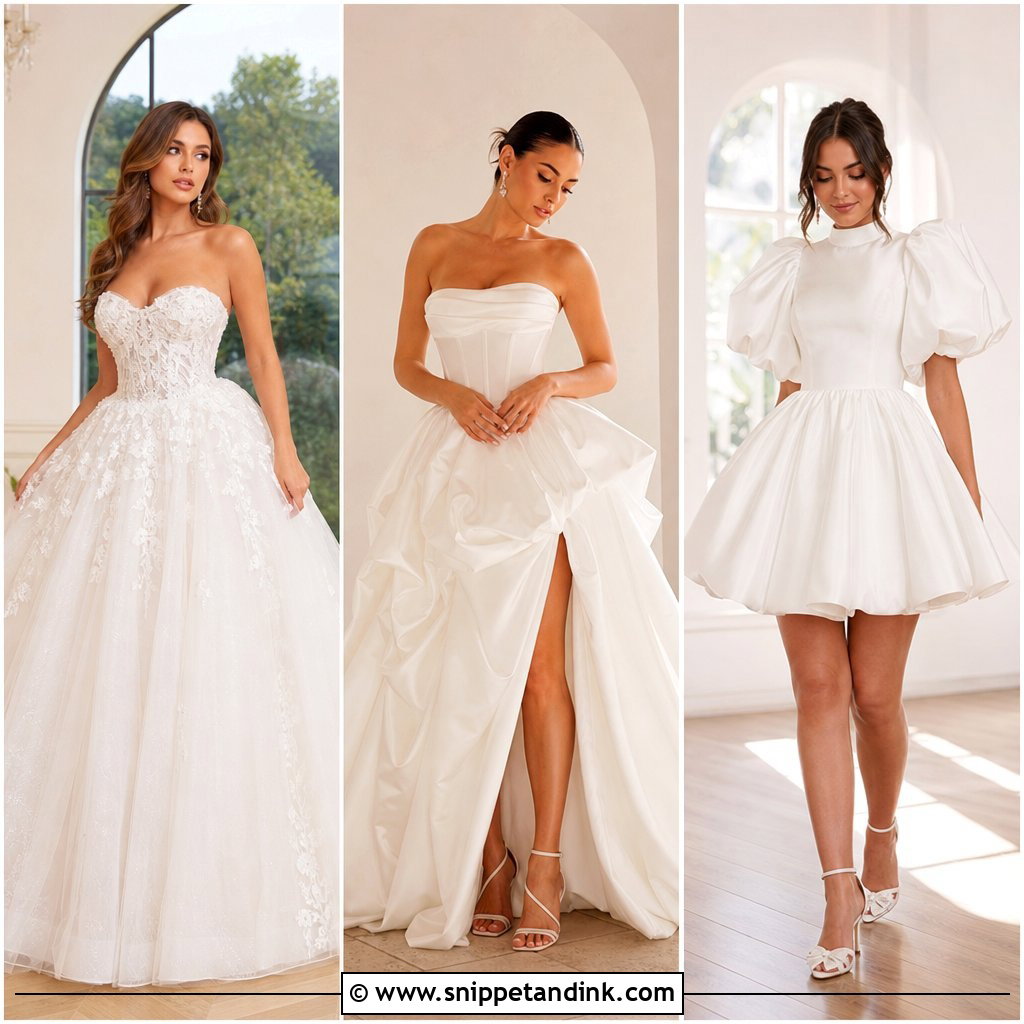
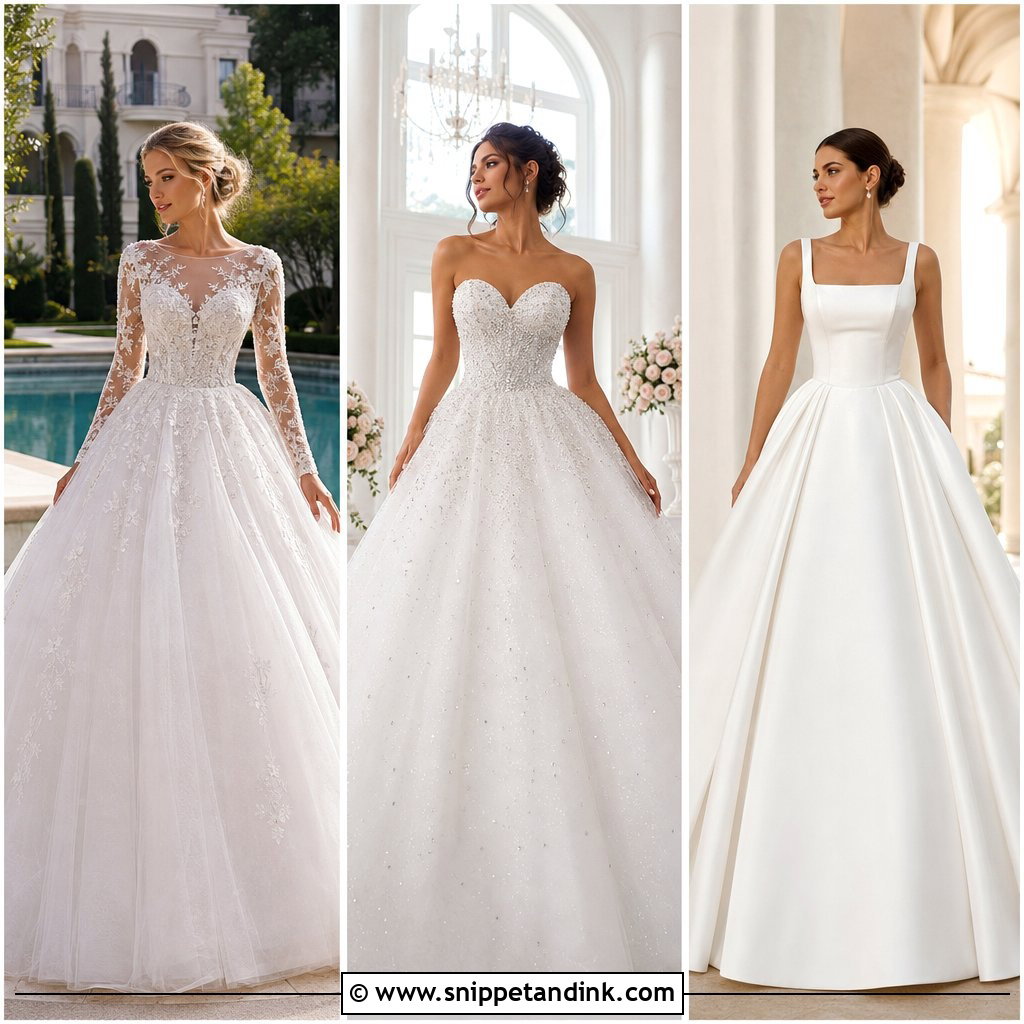
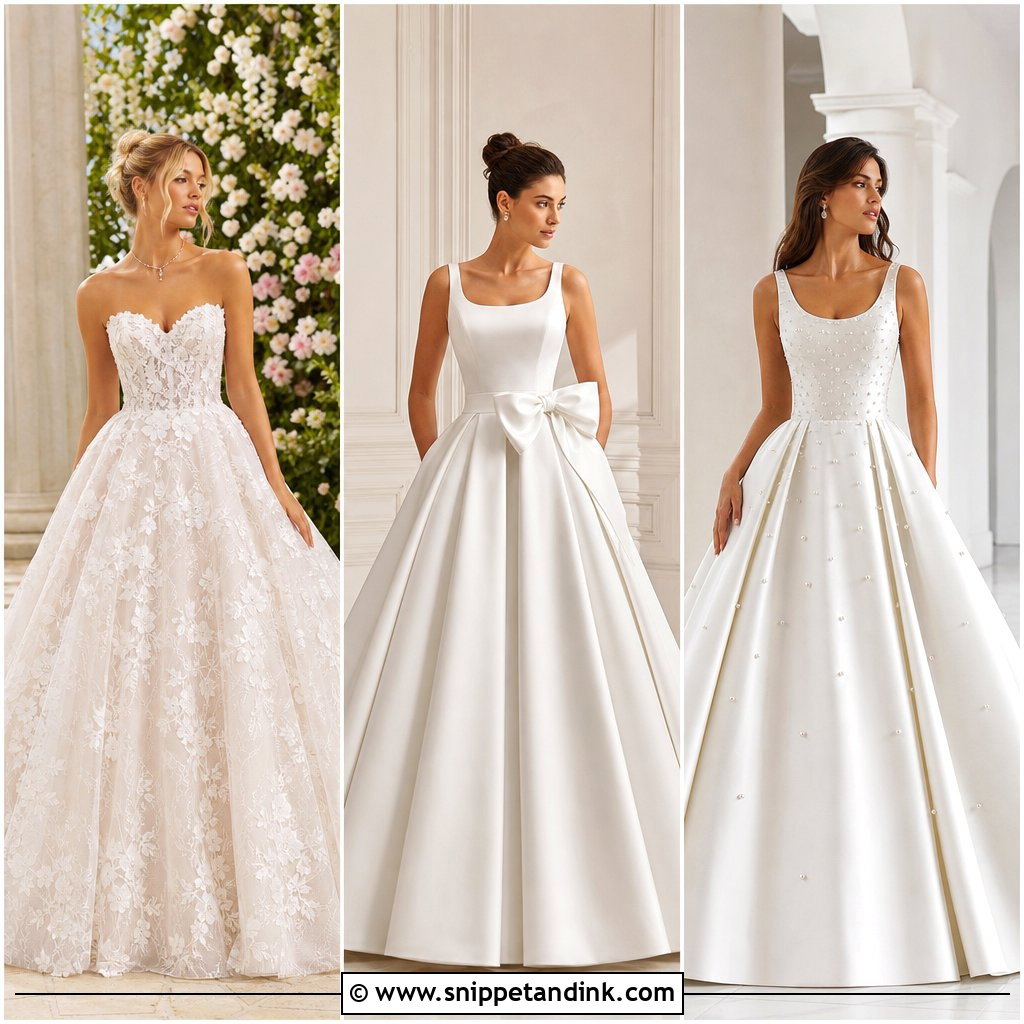
Satin is the least forgiving fabric on this list and the most rewarding when the fit is right. Because it reflects light, any ripple across a strapless bodice shows, so I always check that the boning sits flat against the ribs and the top edge does not gape when the bride breathes in. Box pleats or gathers at the waist give the skirt its body without extra trim. Keep the rest quiet: pearl drops, a low bun and a long veil finished with a narrow satin ribbon. Pointed ivory pumps and a compact bundle of white roses suit it, and it really comes into its own in a ballroom or grand hotel. Ask whether pockets can go into the side seams; on satin they disappear completely if the seamstress sets them low enough.
2. Off Shoulder Lace Puffy Princess Wedding Dress
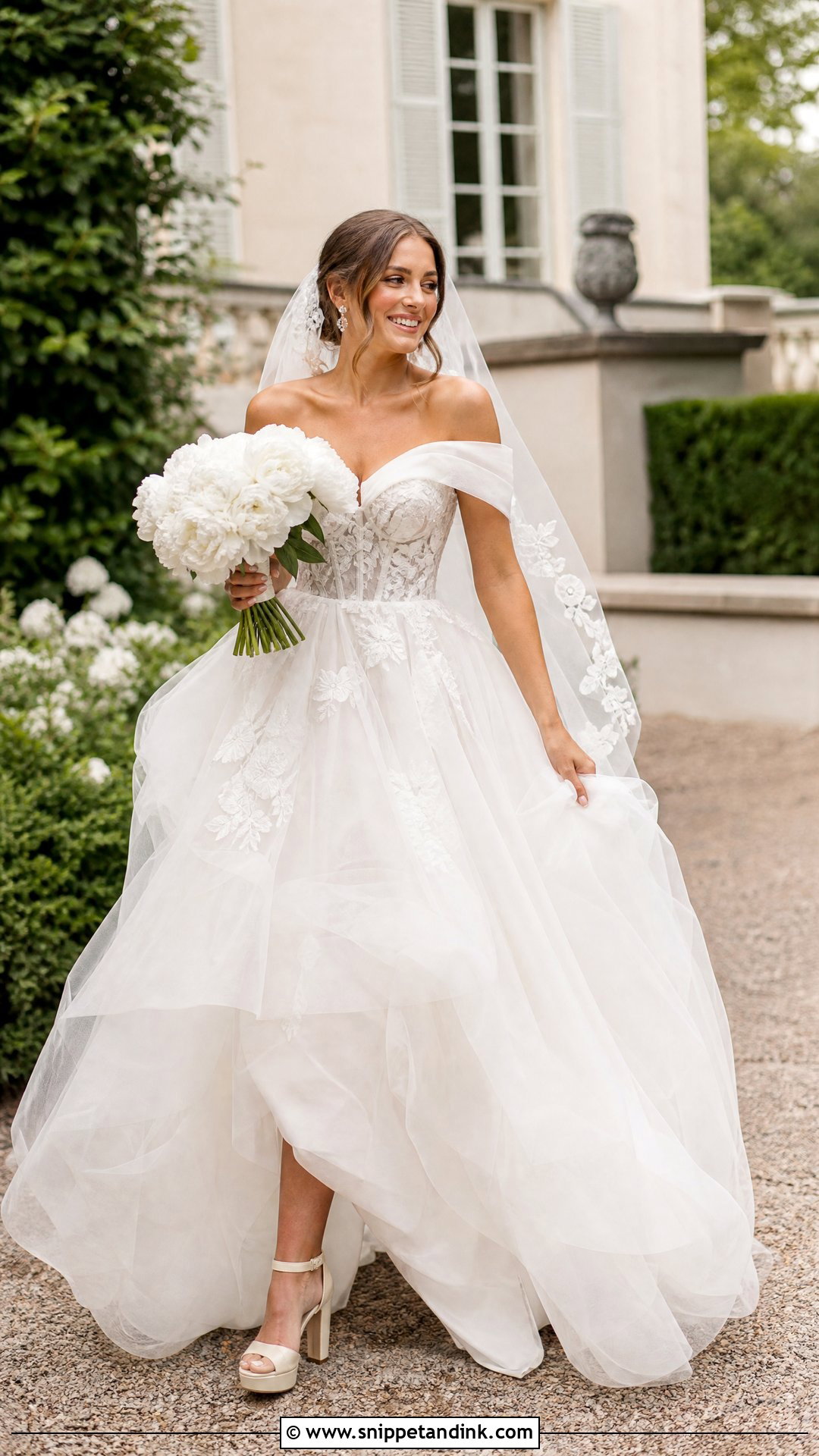
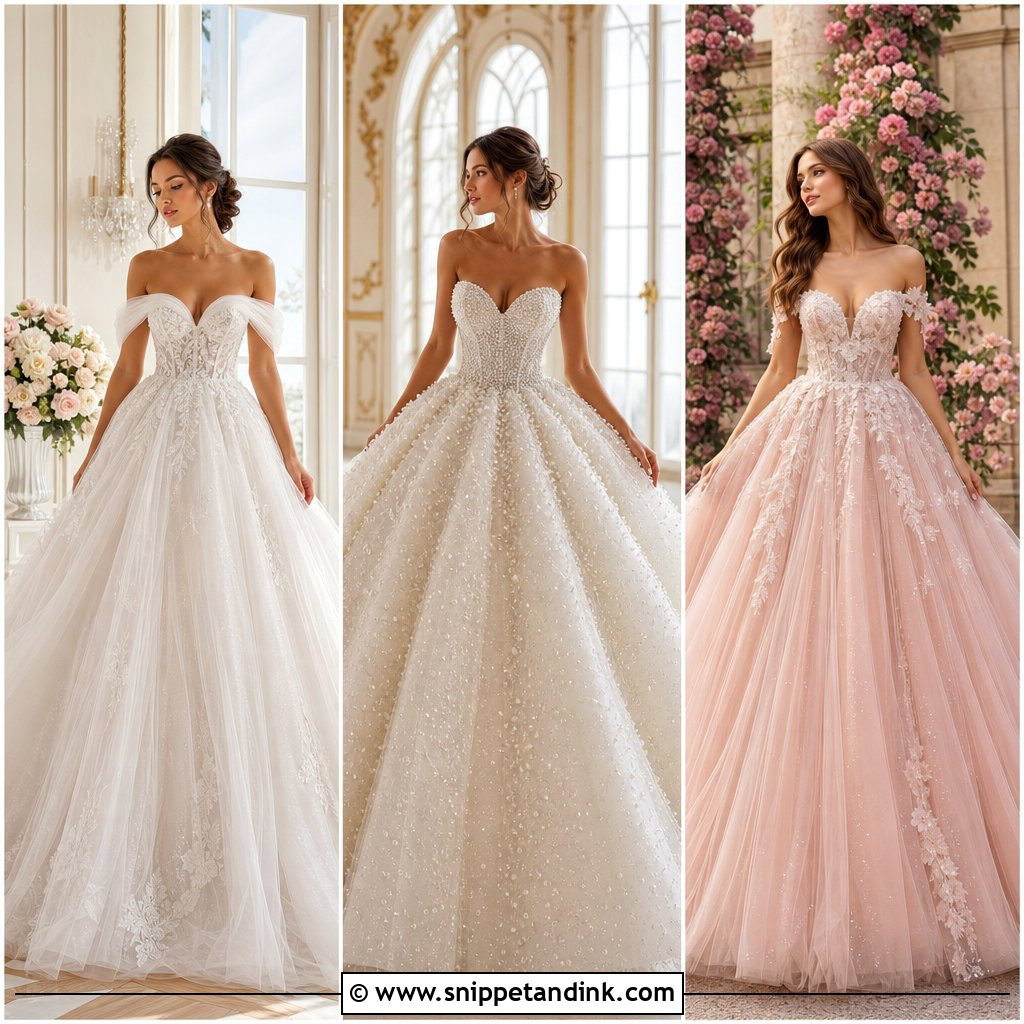
Lace and a dropped shoulder take the formality down a notch. The detail I watch at fittings is the sleeve band: if it sits too tight on the upper arm, the bride cannot lift her arms to hug anyone, and the bodice gets dragged down every time she tries. A corset base covered in floral lace that trails lightly onto the skirt, with a layered tulle underskirt, gives you the princess shape at a weight you can dance in. I pair it with a loose chignon, small crystal studs and a fingertip veil with a few scattered appliques. Block heels in ivory will keep you steadier than stilettos on a garden path, and white peonies with a little greenery suit the lace well.
3. Long Sleeve Tulle Puffy Princess Wedding Dress
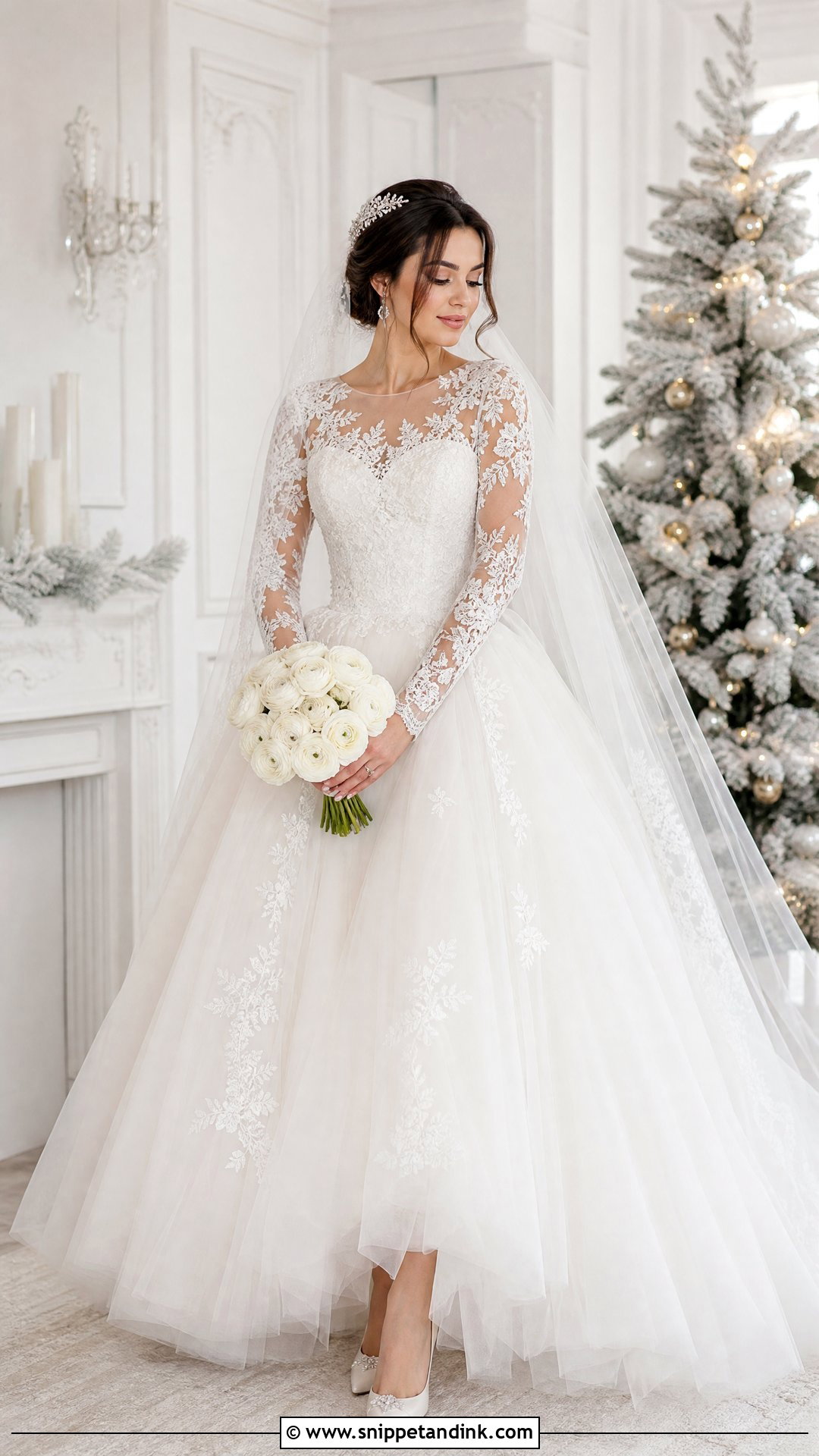
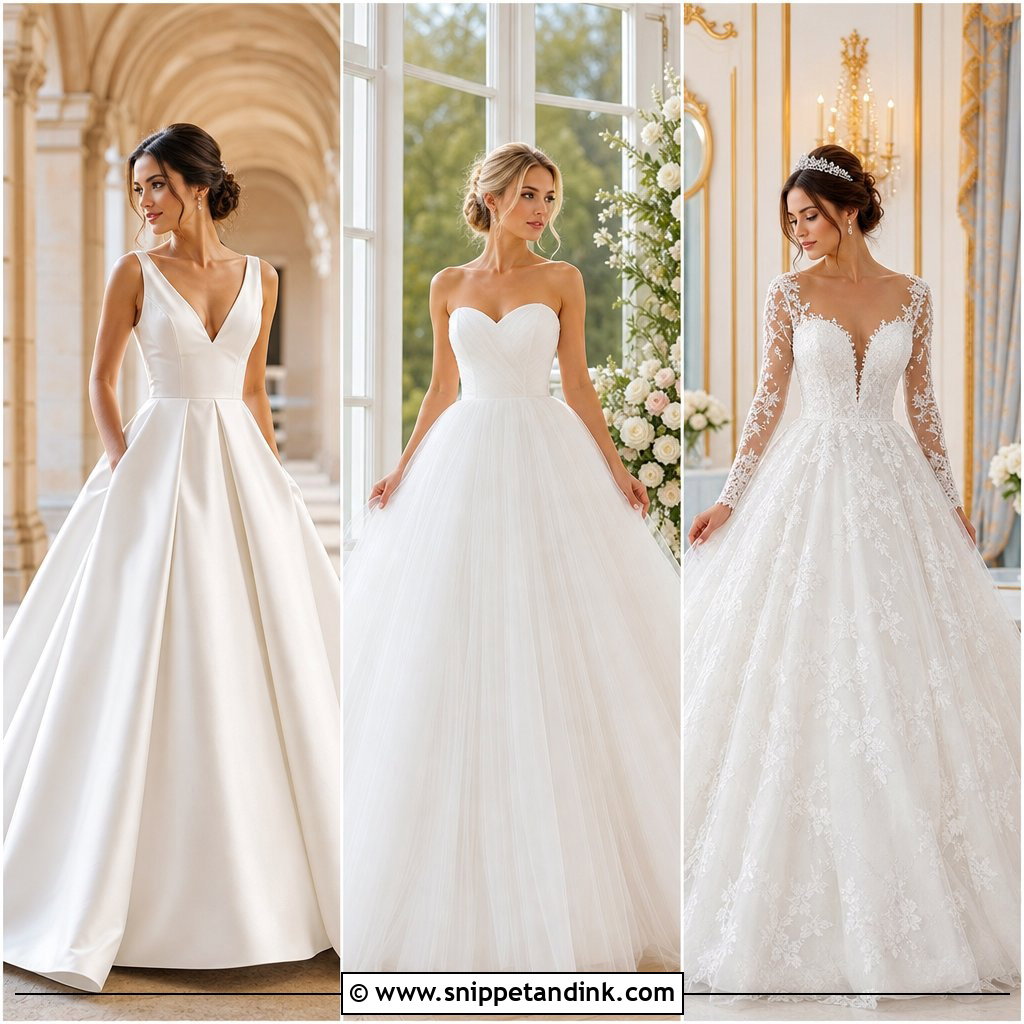
Sheer sleeves are the answer I give most often for a cold-weather ball gown, because they give coverage without the heaviness of a full jacket. Lace cuffs finish the wrist neatly, but check that the sleeve has a little ease at the elbow; tulle has almost no stretch and will strain at the seam when you raise a glass. Soft layered tulle builds the skirt without stiffness. Keep the hair to a polished low bun with a crystal comb and let a chapel veil fall behind it. Closed satin heels and simple studs leave the sleeves in charge, and white ranunculus with pale greenery round it off for a winter or early spring date.
4. Sweetheart Corset Puffy Princess Wedding Dress
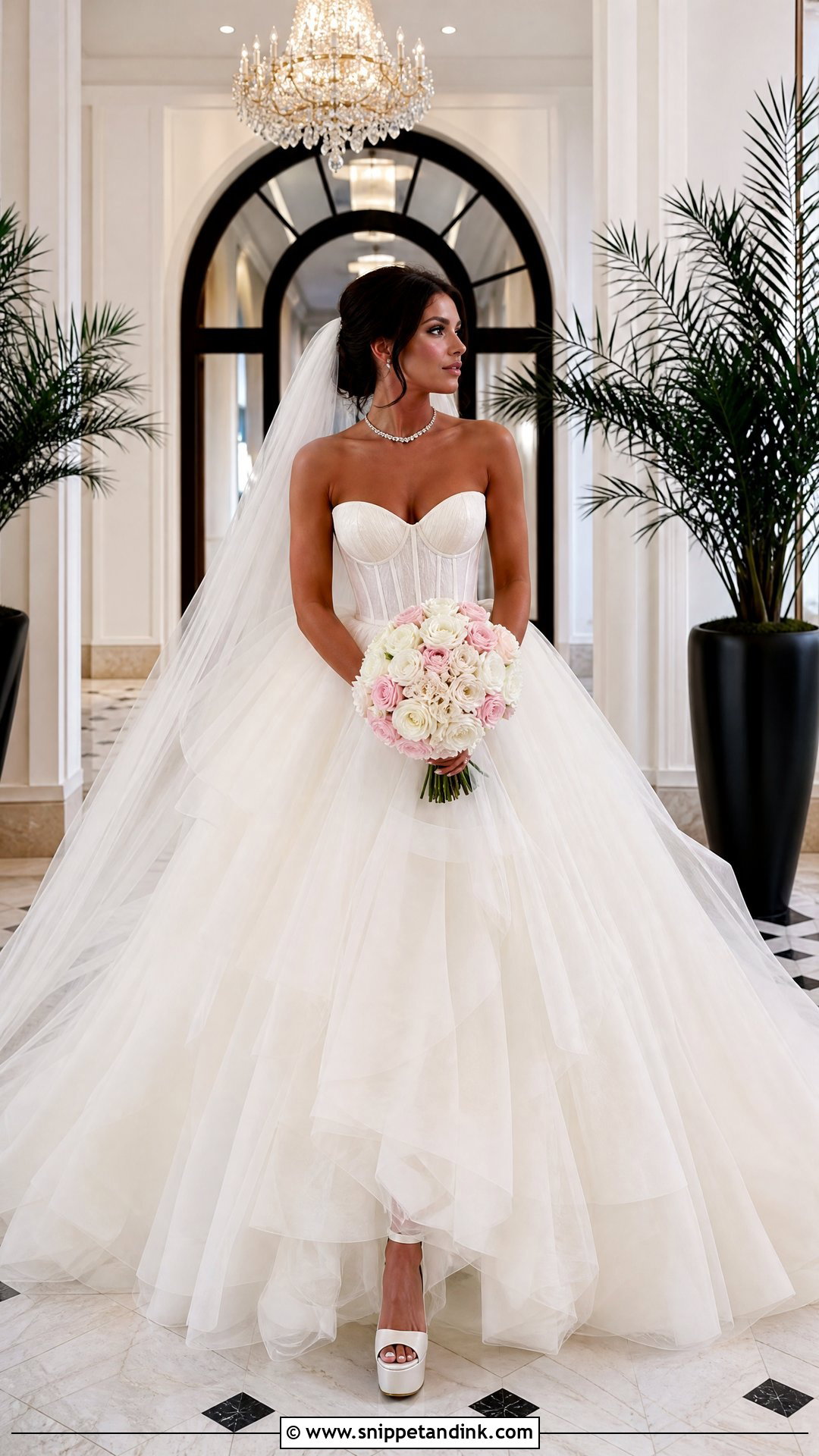
Sweetheart corsets are where I spend the most fitting time. The curve of the neckline has to follow the bust exactly, and visible boning, which gives this gown its modern edge, will show every bit of pull if the cups are in the wrong place. Layered tulle or organza in the skirt adds swing when you walk. If you are fuller-busted, ask for detachable straps; many brides wear them for the long reception and remove them for portraits. Style it with a cathedral veil, soft waves and a fine tennis necklace. Platform heels hide under the skirt and add height without pitching you forward, and a rounded bouquet of ivory and pale pink roses suits the curve of the neckline.
5. Square Neck Mikado Puffy Princess Wedding Dress
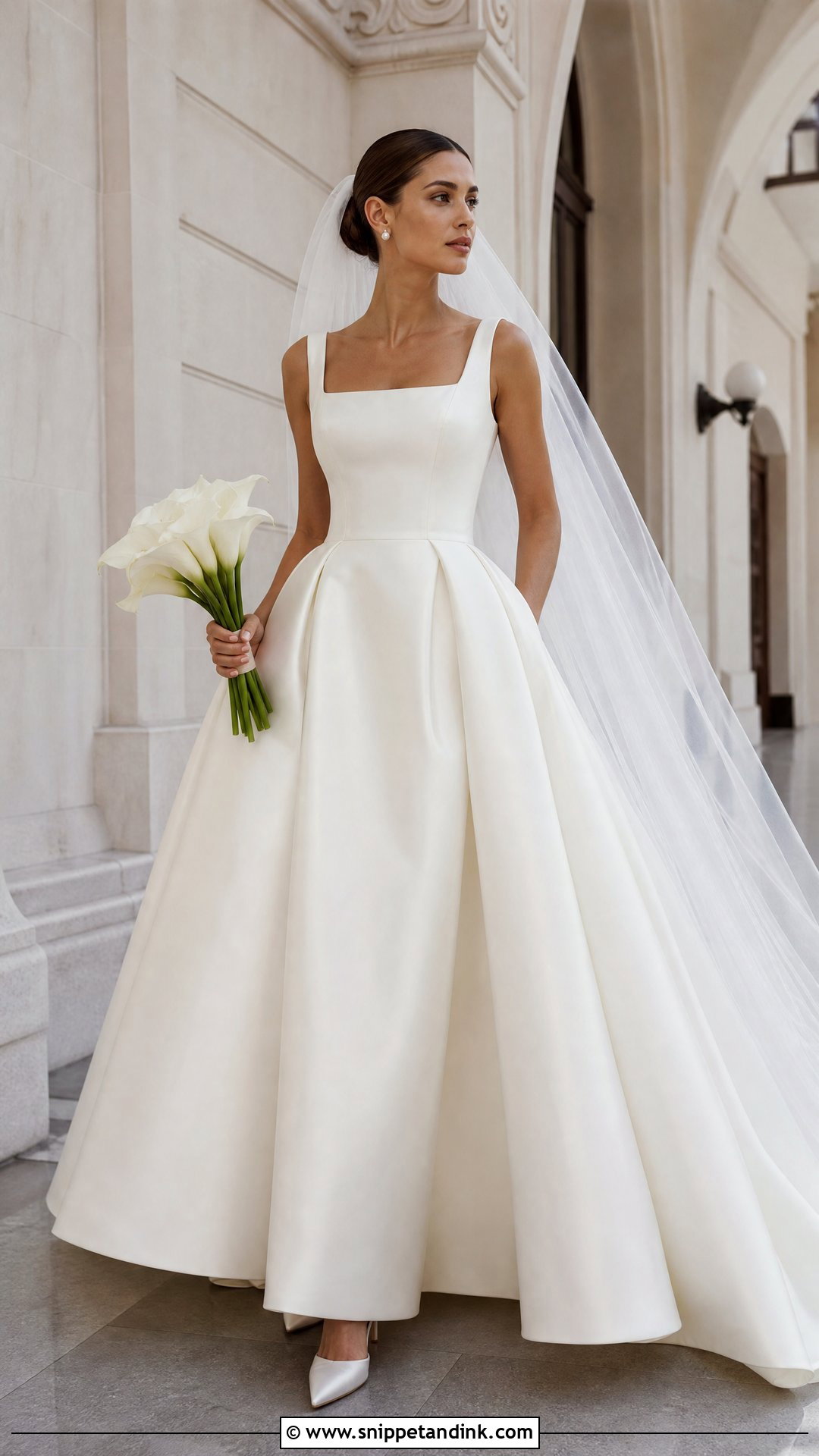
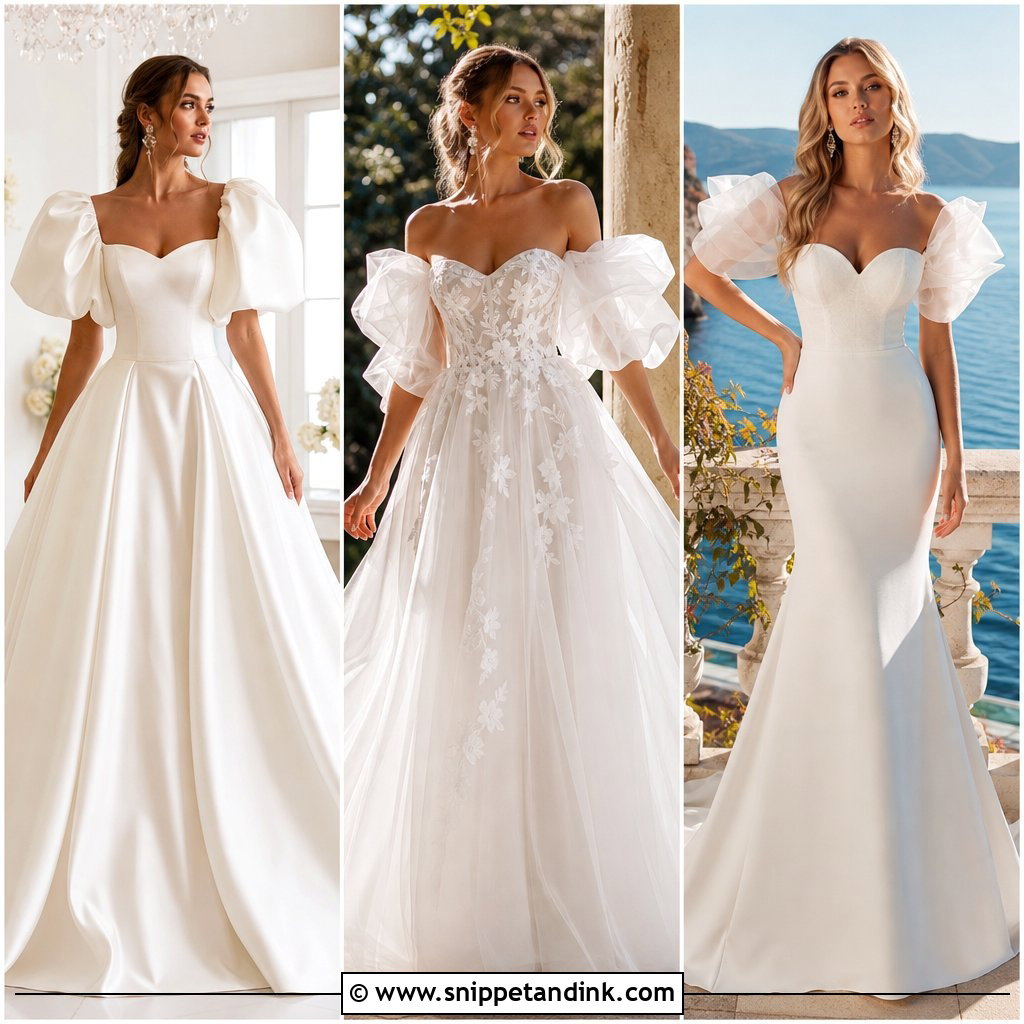
Mikado holds its shape all day, which is exactly why I suggest it to brides who want volume without a crinoline full of tulle. It is a heavier silk blend with a slight sheen, and deep pleats at the waist do the work that petticoats would otherwise do. The square neckline frames the collarbone, and wide straps give real support. One honest caution: mikado creases where you sit, so expect a soft crease line across the lap by the speeches. Pearl button earrings, a smooth cathedral veil and pointed satin heels keep the lines clean. A neat bun or a tidy half-up style both work, as does a small hand-tied bunch of calla lilies or white tulips in a modern ballroom.
6. Floral Applique Puffy Princess Wedding Dress
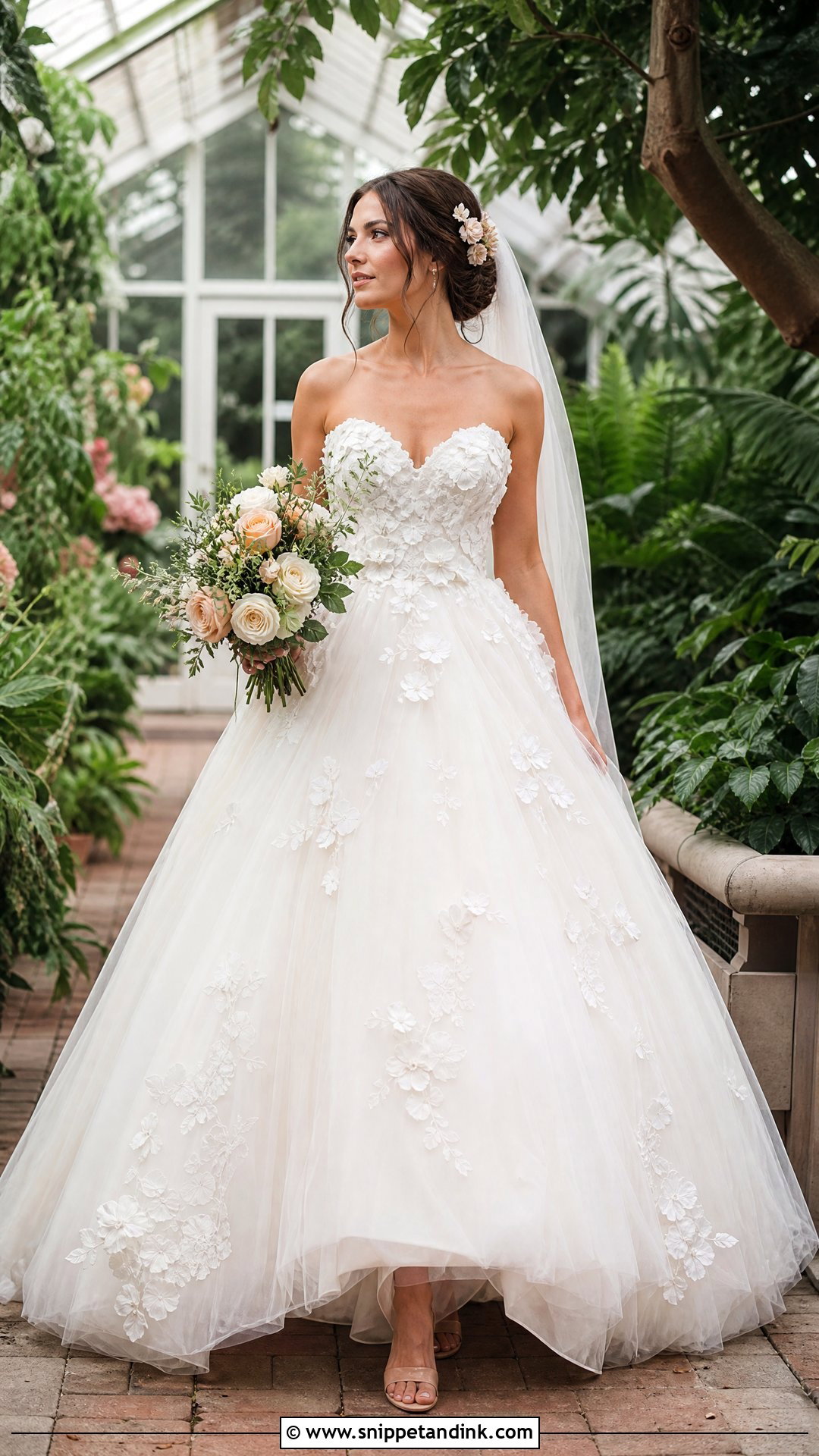
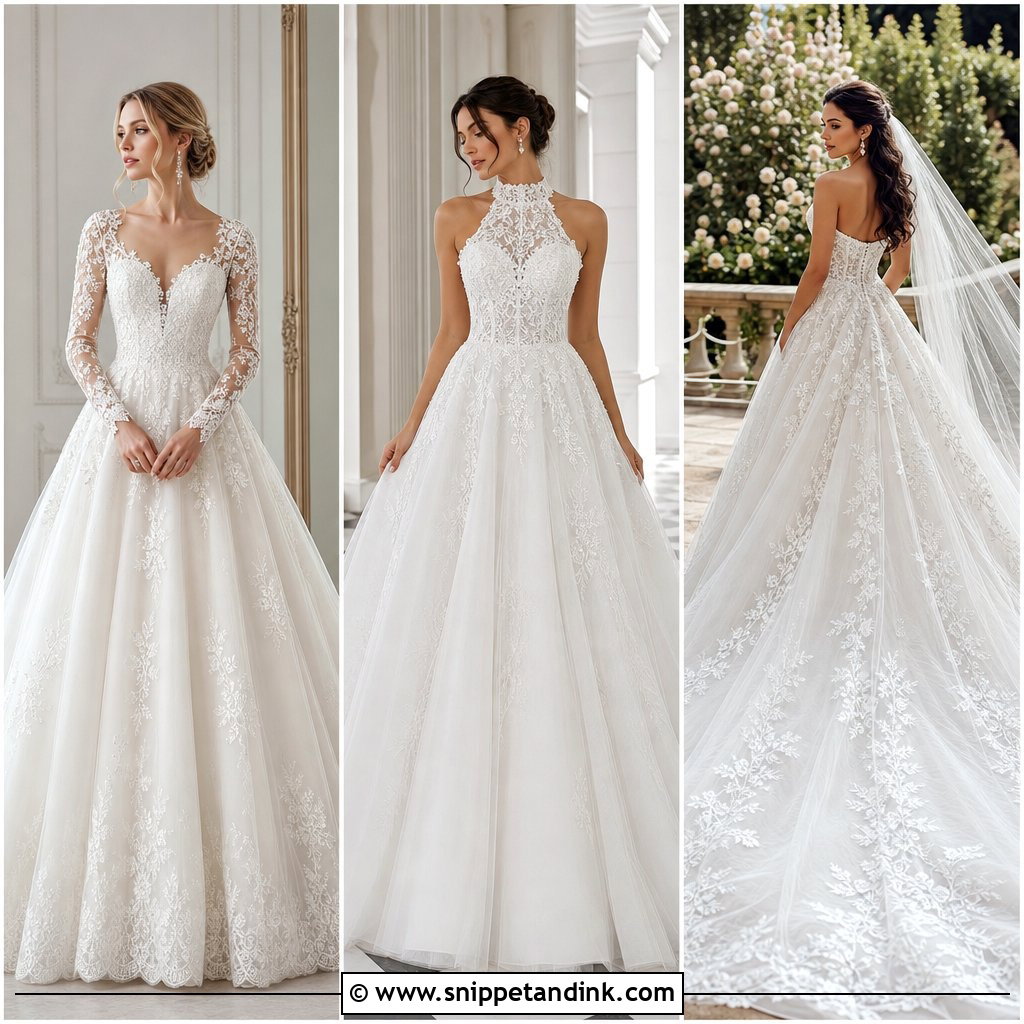
Raised floral appliques look best when they thin out as they travel down the skirt. Dense flowers at the bodice that scatter into the tulle define the waist and keep the lower half airy; appliques evenly spread from top to hem tend to flatten the shape. A sweetheart or gently scooped neckline gives the botanical texture room. Because the gown is busy, the veil should be plain and the earrings small, with a couple of floral pins in the hair if you want to echo the motif. On a lawn, nude or ivory block heels stop you sinking. Before an outdoor ceremony, check the hem: appliques sewn near the floor catch on grass and gravel.
7. Pearl Beaded Puffy Princess Wedding Dress
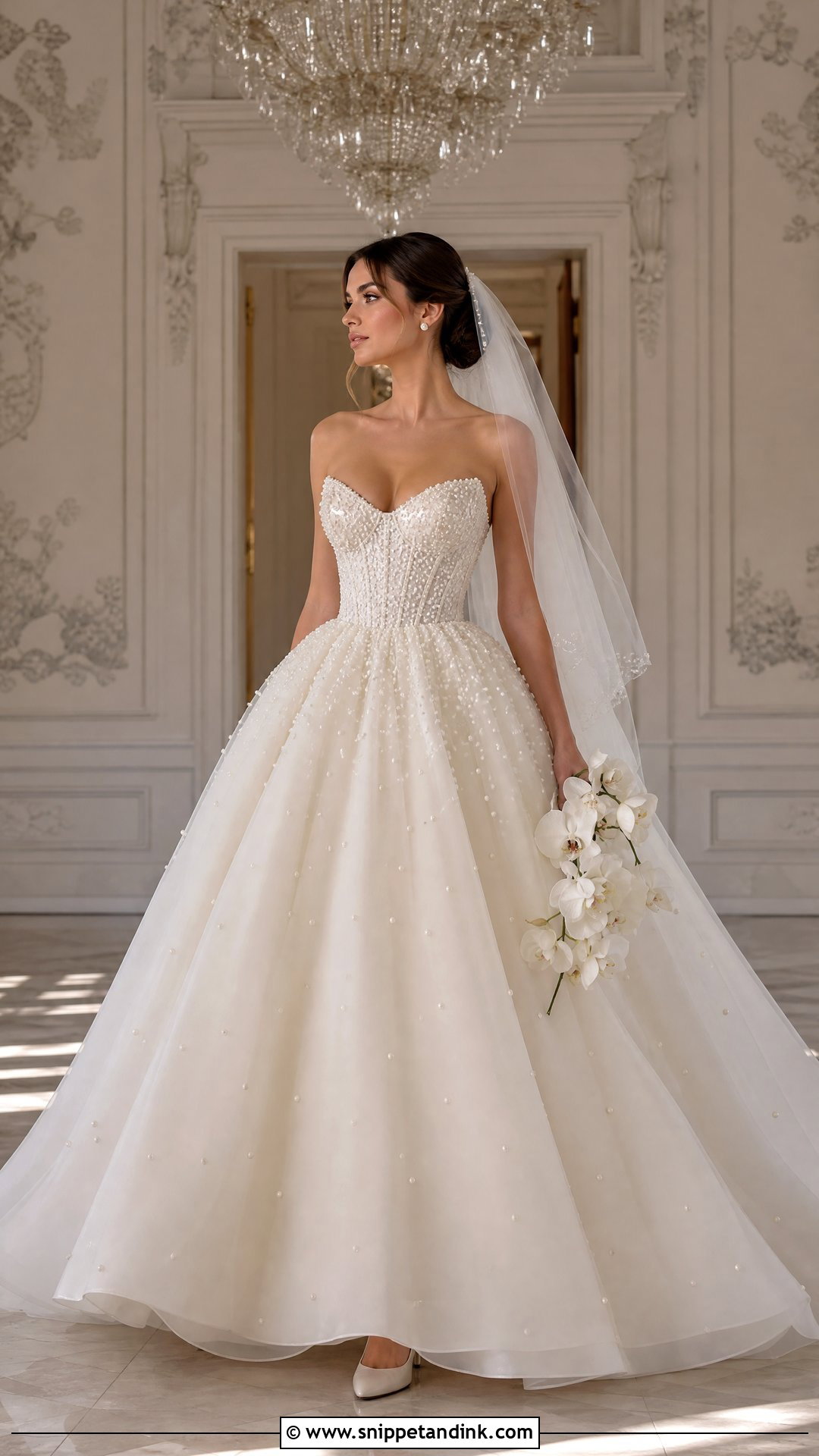
Pearls give a softer glow than crystals, which I find suits daylight ceremonies better because they do not flash white in photos. The nicest versions cluster pearls on the bodice and let them thin out down the tulle. Keep the neckline straight or gently curved and skip the necklace altogether; the bodice already holds the eye. Pearl studs, a smooth bun and a light chapel veil are all you need. One practical point: pearl beading adds weight unevenly, so make sure the bodice is boned well enough that the heavier front does not tip forward. A low satin block heel and a white orchid bouquet give it a modern edge.
8. Sparkly Tulle Puffy Princess Wedding Dress
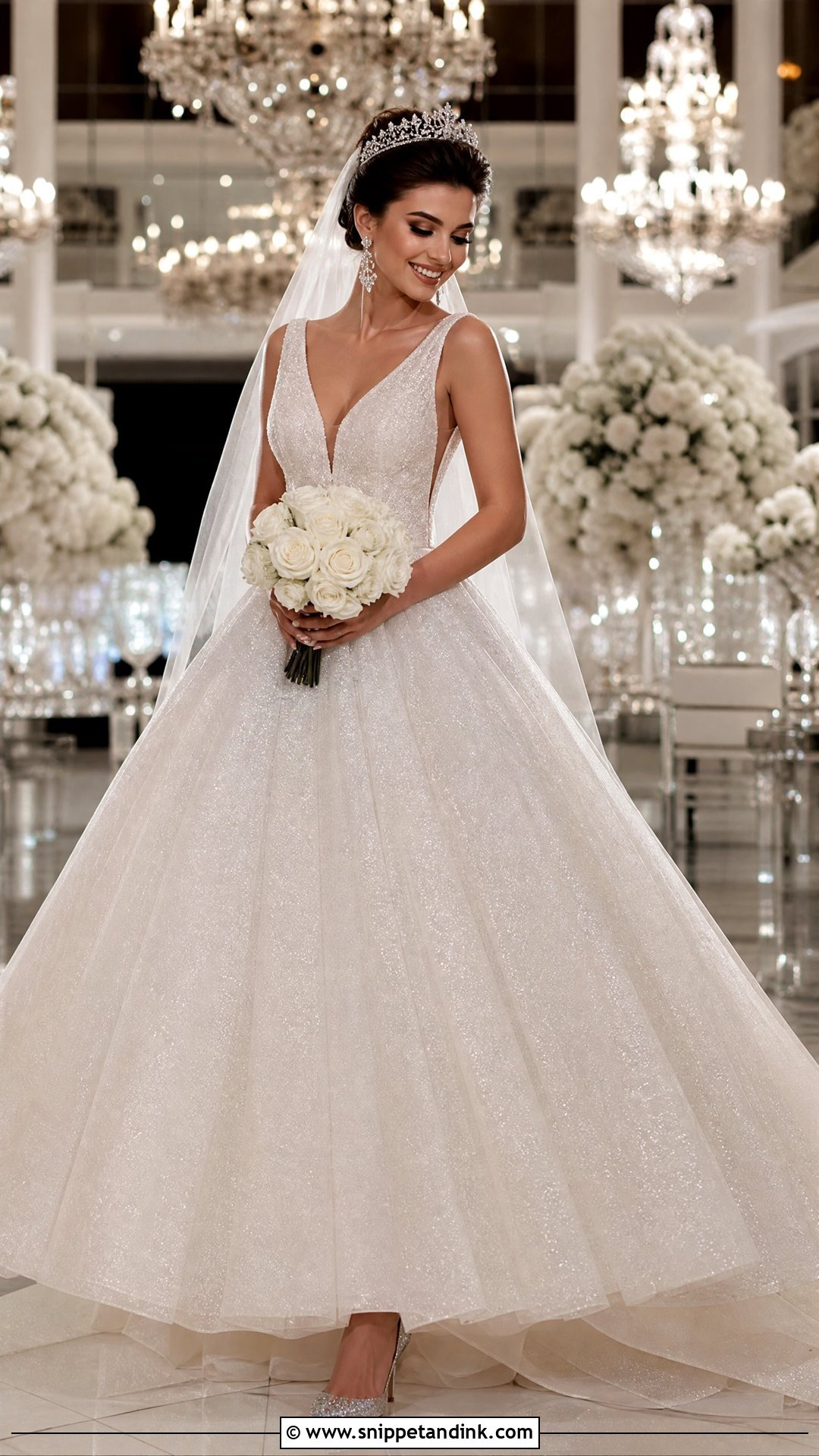
Glitter tulle can tip into costume quickly, so I keep the sparkle in the skirt and the bodice clean. Clean seams or very restrained beading on top, and a V or sweetheart neckline to open up the chest, stop the gown from looking heavy. Under chandeliers at an evening reception the skirt does the work on its own. Go for a sheer veil with no added glitter, crystal drops, and a slim tiara if you want one. Silver or ivory heels sit nicely with the shine. Glitter tulle sheds a little, especially in the first hours; I tell brides to expect a few flecks on the groom’s jacket and not to panic.
9. Basque Waist Puffy Princess Wedding Dress
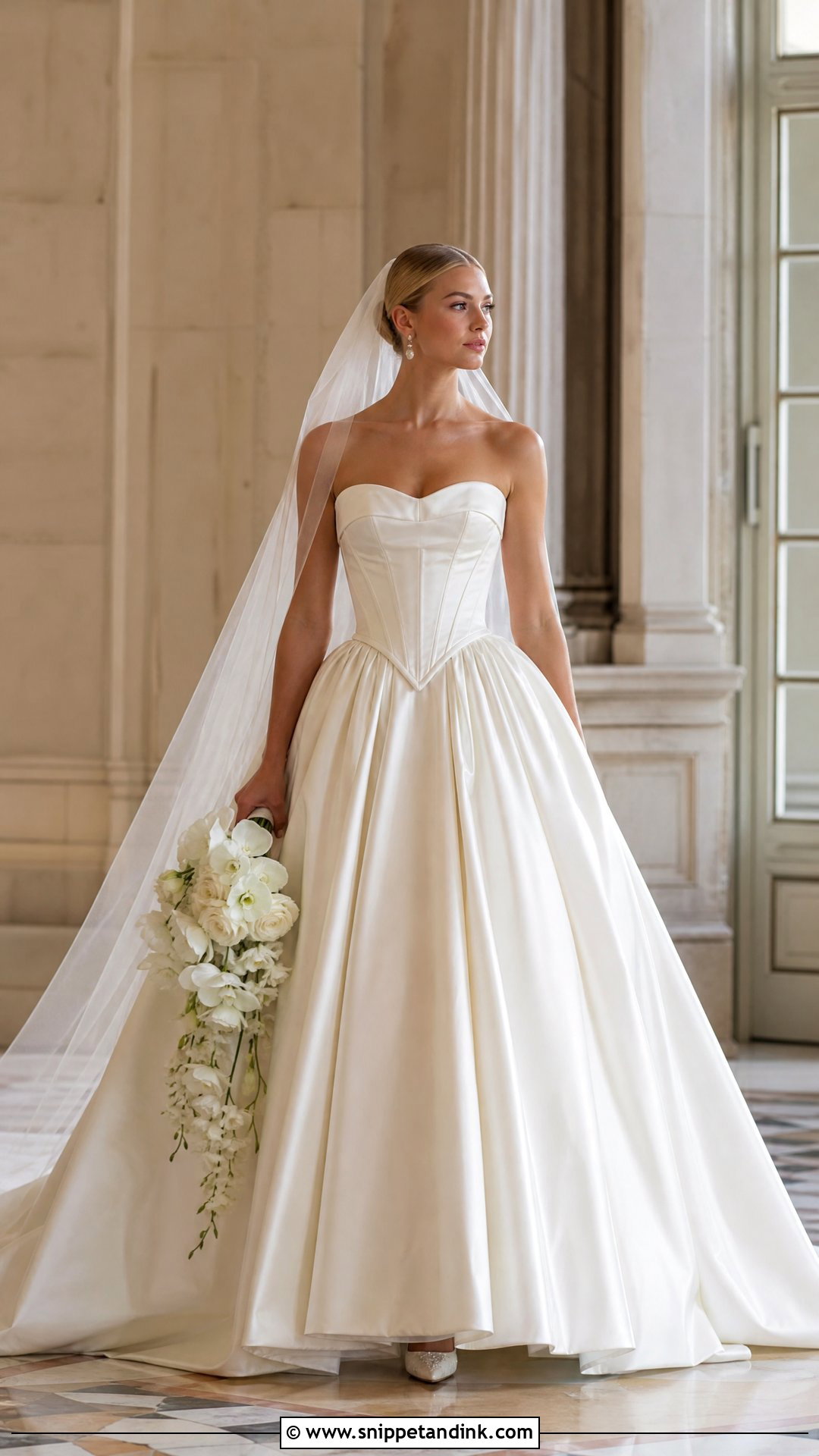
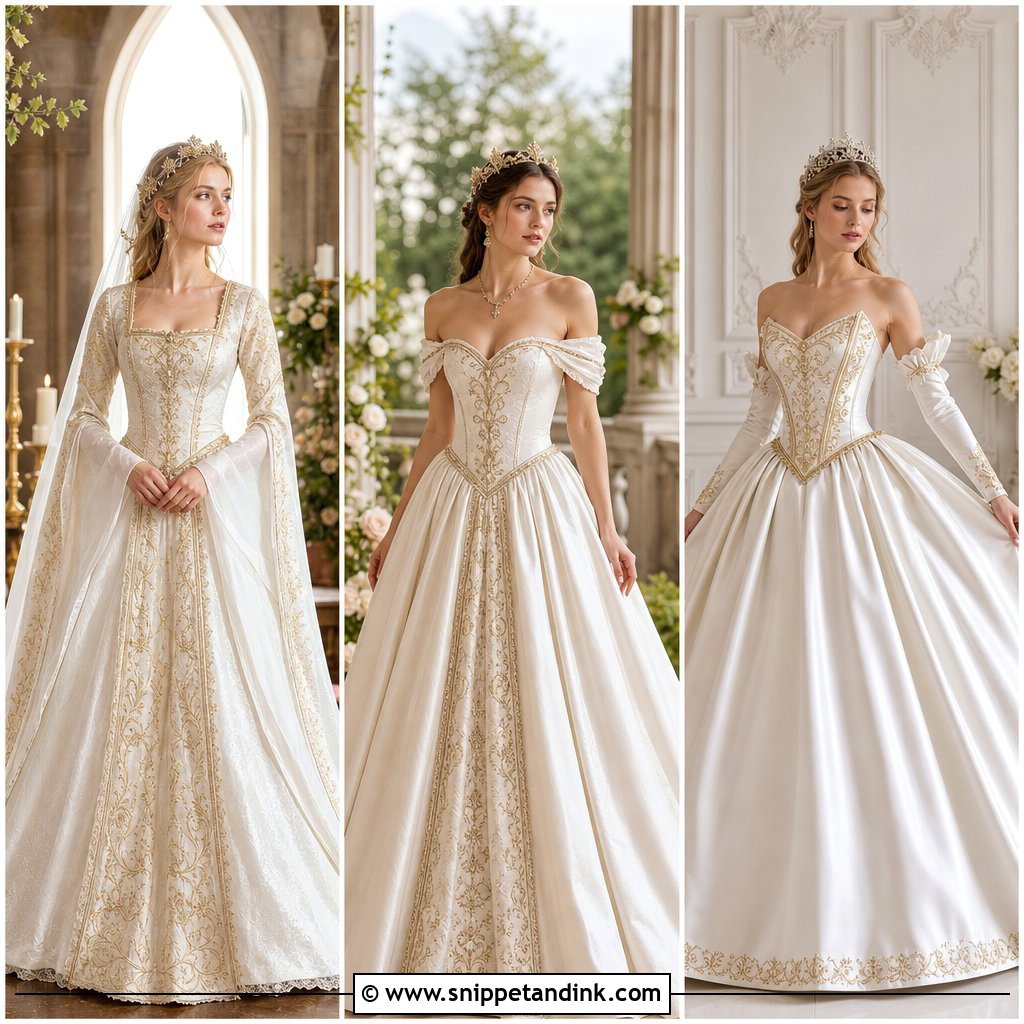
A Basque waist dips into a gentle point below the natural waistline, which lengthens the bodice before the skirt opens out. It is one of the most flattering shapes for a voluminous satin or tulle ball gown because the point draws the eye down and makes the torso look longer. The catch is that it only works if the point lands in the right place on your body; too low and sitting down becomes uncomfortable. Ask for a corset-style top with proper boning. A long plain veil leaves the waistline visible, and a polished updo with drop earrings keeps the line clean. Put cushioned insoles in pointed shoes, and consider a cascading bouquet that repeats the downward point.
10. High Neck Lace Puffy Princess Wedding Dress
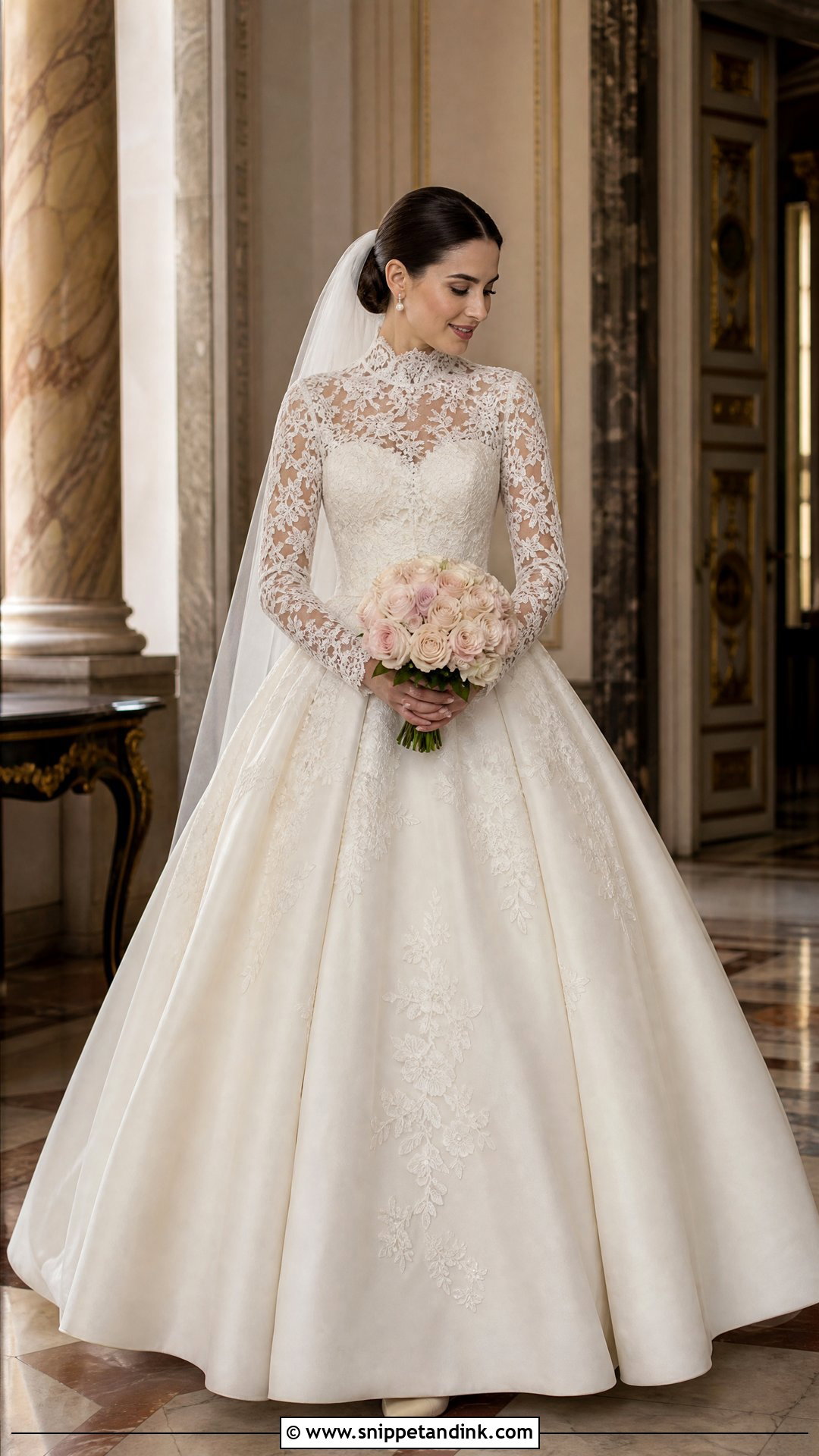
High necklines change how the whole gown reads, so I treat the illusion panel as the most important part of the fitting. Sheer mesh across the upper chest should lie flat with no bubbling, and the lace placed around the neck and sleeves needs to sit symmetrically, because the camera will catch any lean. A defined waist keeps the skirt from swallowing the figure. Skip the necklace. A low bun lets the veil comb slide in beneath it, and small pearl earrings are enough. Closed pumps and a compact posy of white roses suit a historic venue or a cool-season date, and the overall effect reads traditional rather than costume.
11. Puff Sleeve Organza Princess Wedding Dress
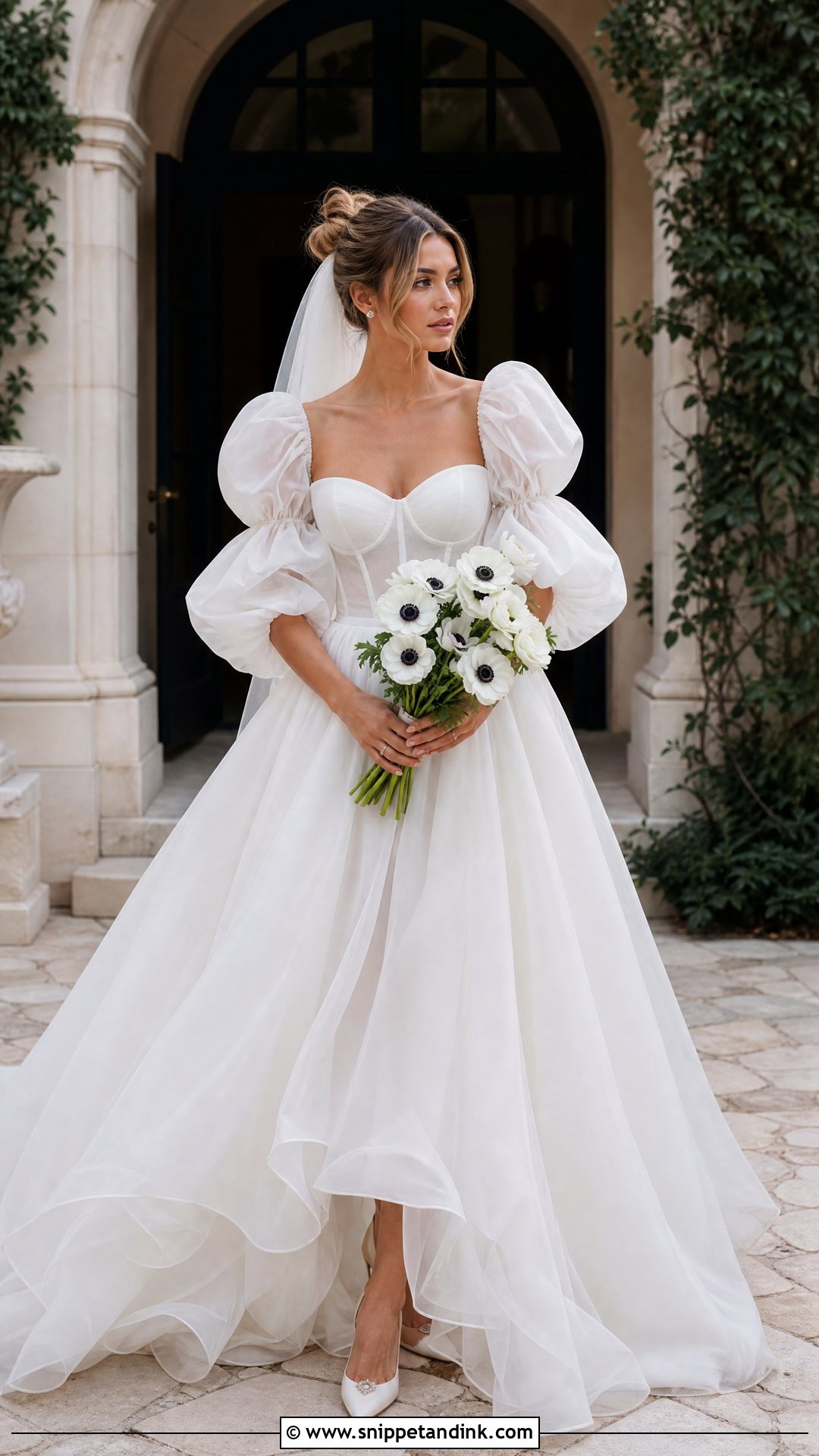
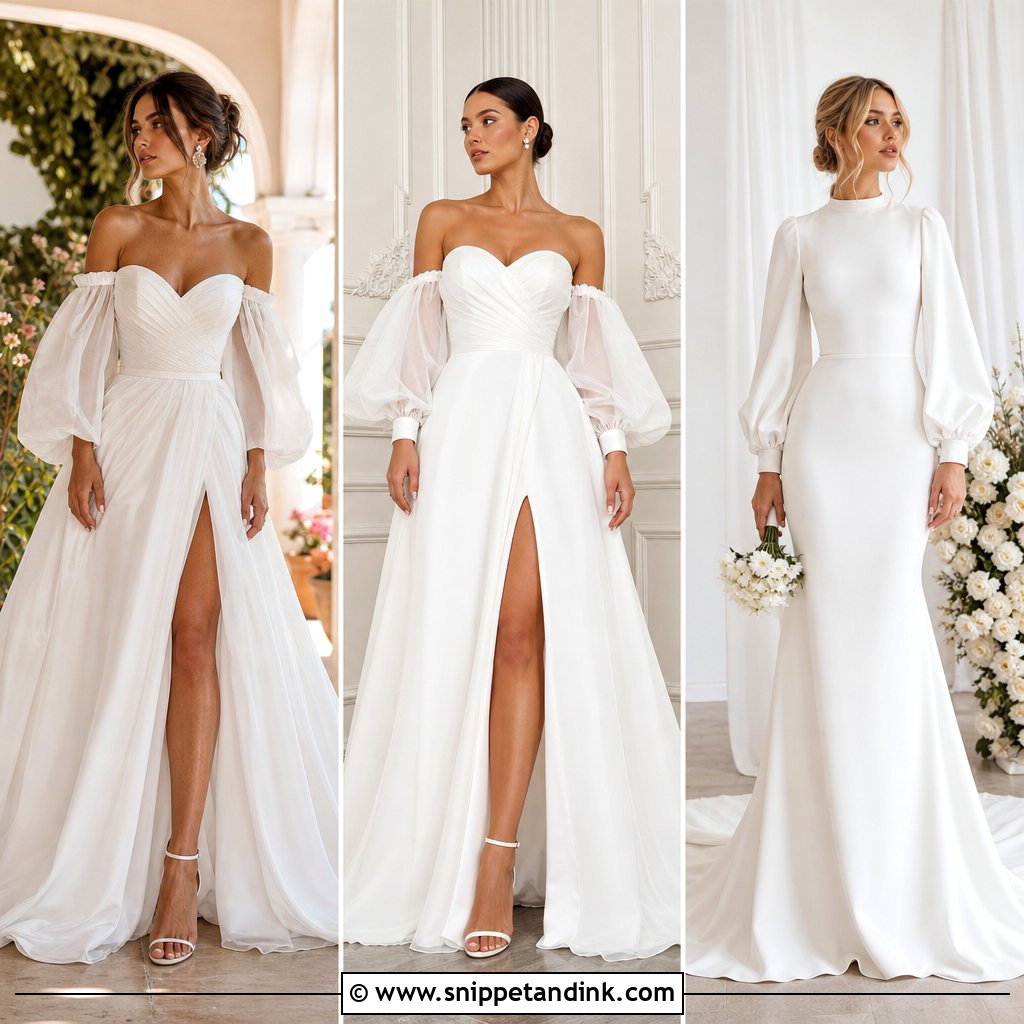
Statement puff sleeves on an organza ball gown are fun, but the sleeve and the skirt can end up competing. The fix is in the proportion: full at the shoulder, gathered or fitted at the cuff, with a plain corset bodice between them. Organza is crisp, so the puff holds its shape all day without wilting. Sweep the hair back so it does not crush the sleeve tops, and set the veil comb behind the shoulders rather than over them. Small crystal studs, pointed ivory shoes and a few white anemones keep everything else simple. If the sleeves detach, take them off before the first dance; they limit how high you can lift your arms.
12. Detachable Sleeve Puffy Princess Wedding Dress
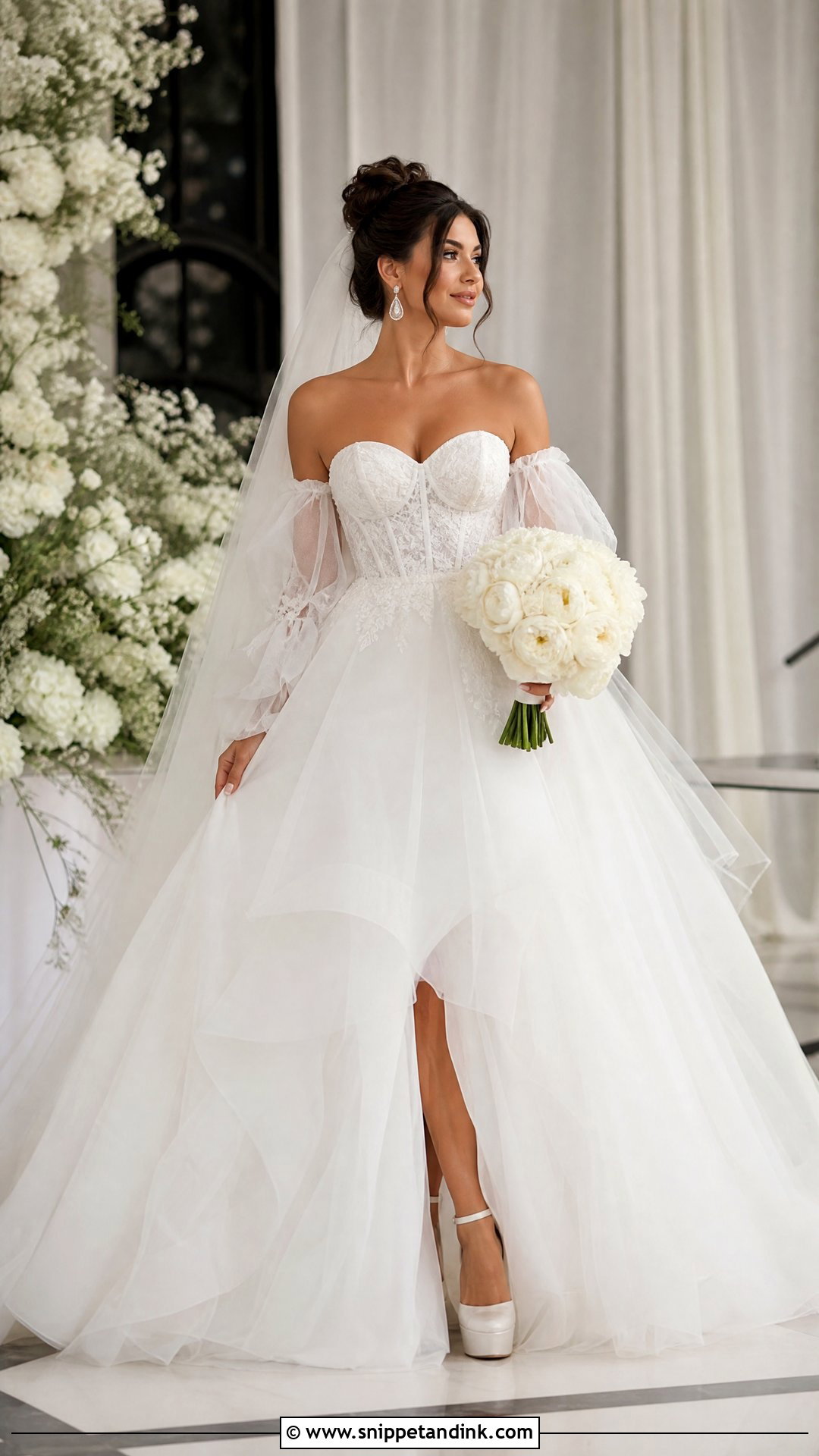
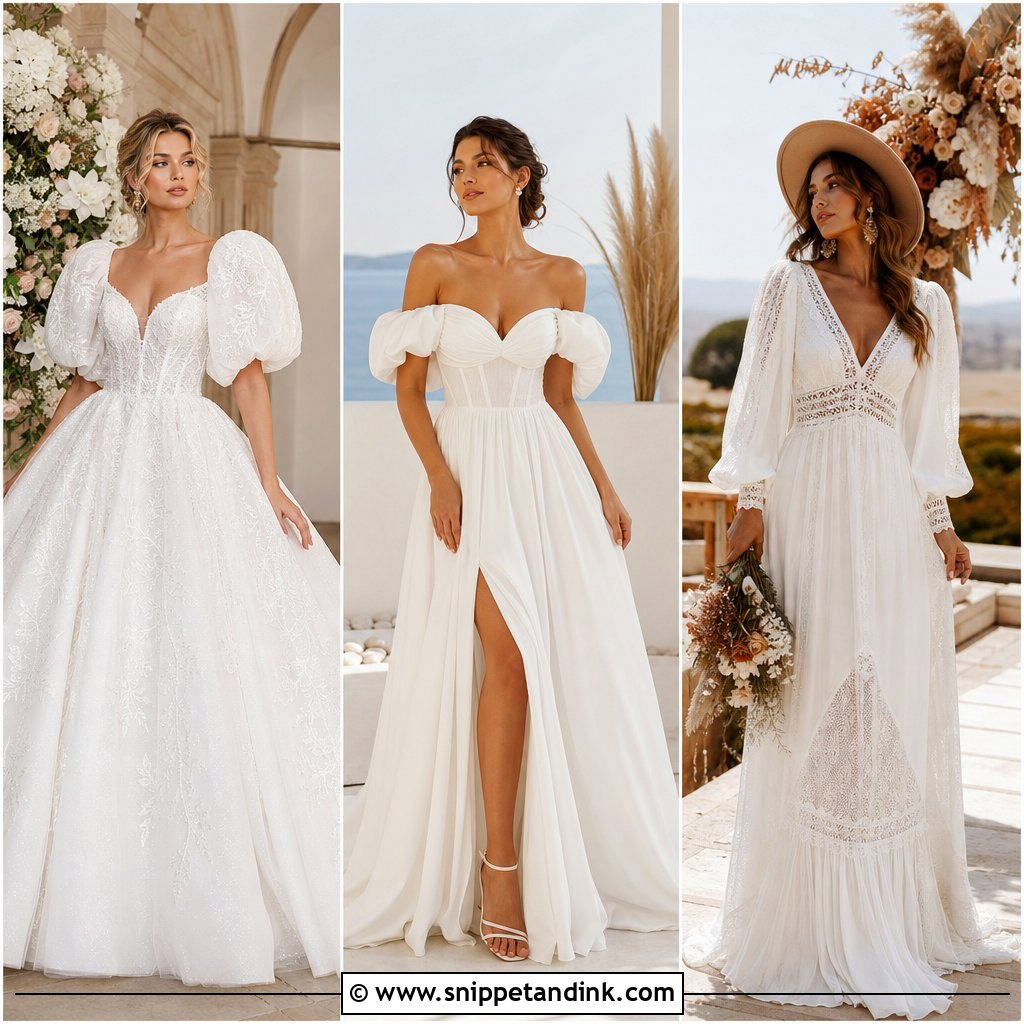
Detachable sleeves are the most practical way I know to get two looks from one gown. For the ceremony, off-shoulder tulle or fitted lace sleeves clip onto the corset; for the reception they come off to leave a clean strapless neckline. Ask how they attach. Snaps or hidden hooks are quick, but sleeves stitched in for the fitting and released later need a seamstress or a very steady bridesmaid. The full skirt keeps the princess shape in both versions. A long veil, drop earrings and a smooth half-up style bridge both looks. Wear platform heels for the ceremony and keep a pair of embellished flats for dancing.
13. Ruffled Organza Puffy Princess Wedding Dress
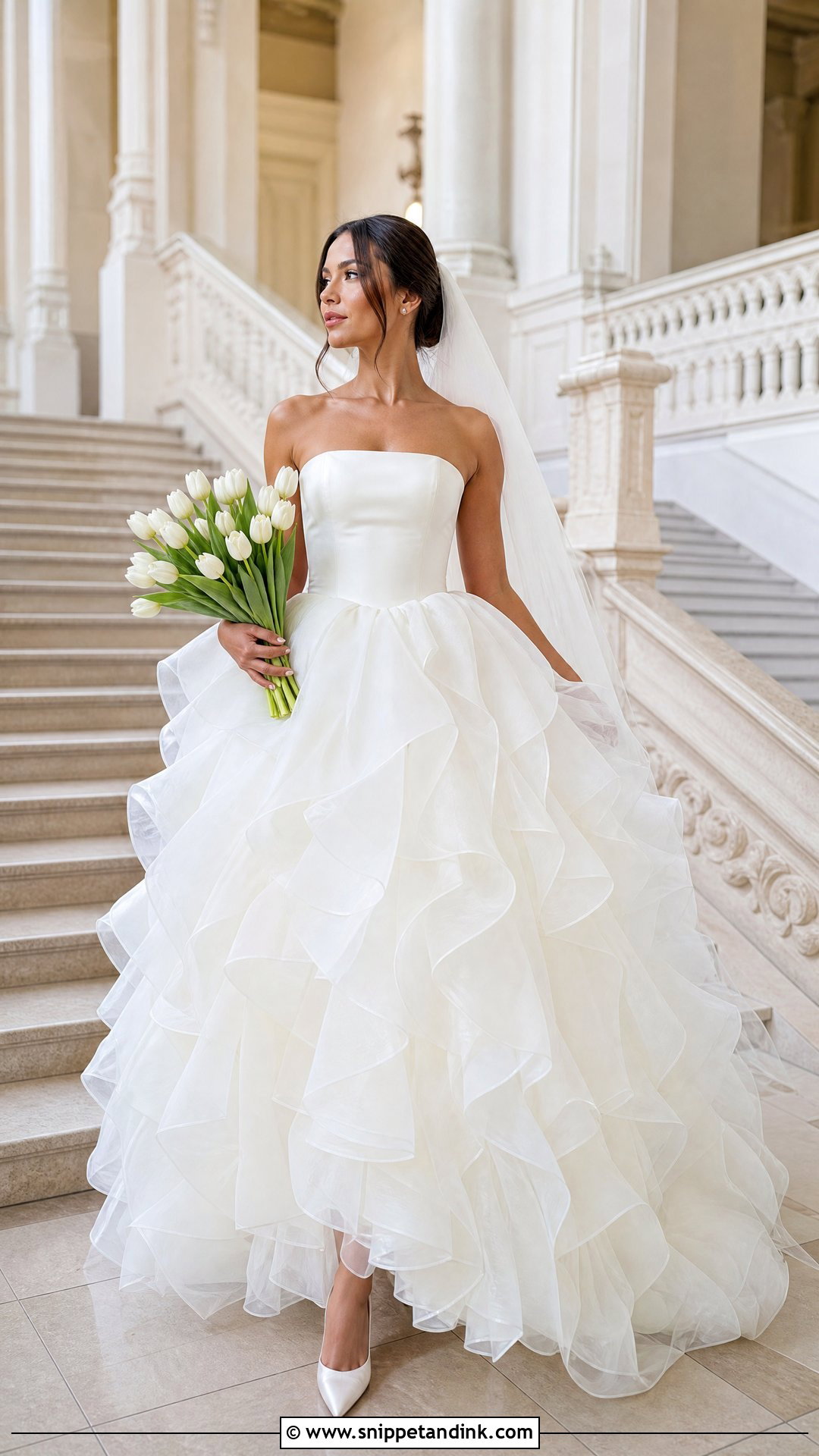
Ruffled organza has the most movement of any skirt here, and it needs a calm bodice to work. Streamlined, defined at the waist and with almost no embellishment. The best ruffle skirts are cut in cascading tiers rather than evenly stacked rows, so they swing when you walk instead of bouncing. Organza is lightweight but it does crush: if the gown travels folded, ask your shop to steam it the morning of the wedding. A plain fingertip veil, a loose low bun and tiny studs are all it needs. A small bouquet of white tulips or roses gives a clean contrast, and a staircase or wide aisle shows the ruffles at their best.
14. Bow Back Satin Puffy Princess Wedding Dress
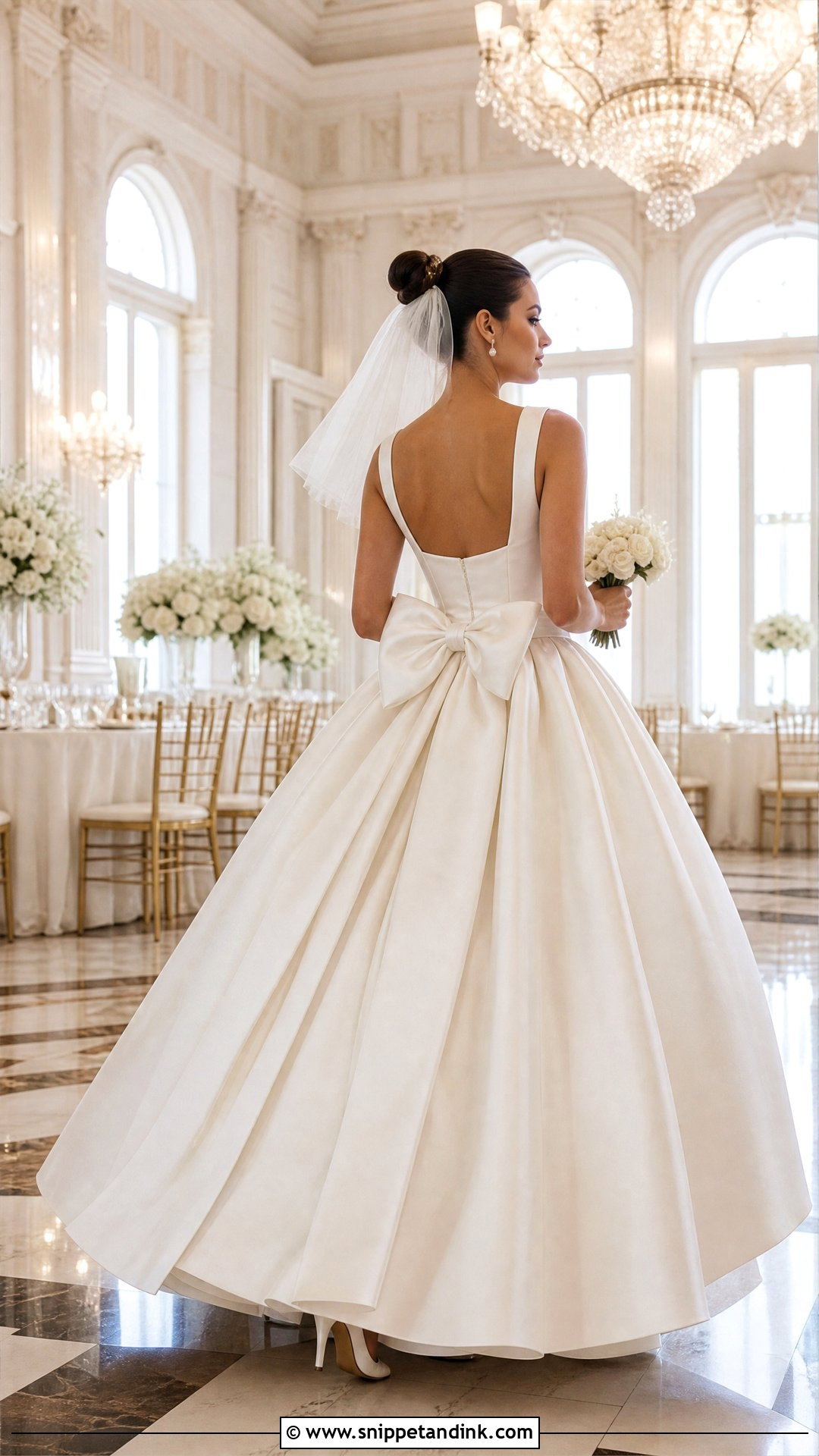
A big bow at the back keeps the front simple and gives guests something to look at during the ceremony, which is the angle they see most. The bow can sit at the waist or lower, just above the train; lower bows catch more drama but can be crushed when you sit, so check the placement on a chair at your fitting. Pair it with a structured strapless or square-neck bodice and a smooth pleated skirt. The veil should either stop above the bow or run well past the train; a veil that ends on the bow hides it. Keep the jewelry to pearl studs, a sleek bun and satin pumps.
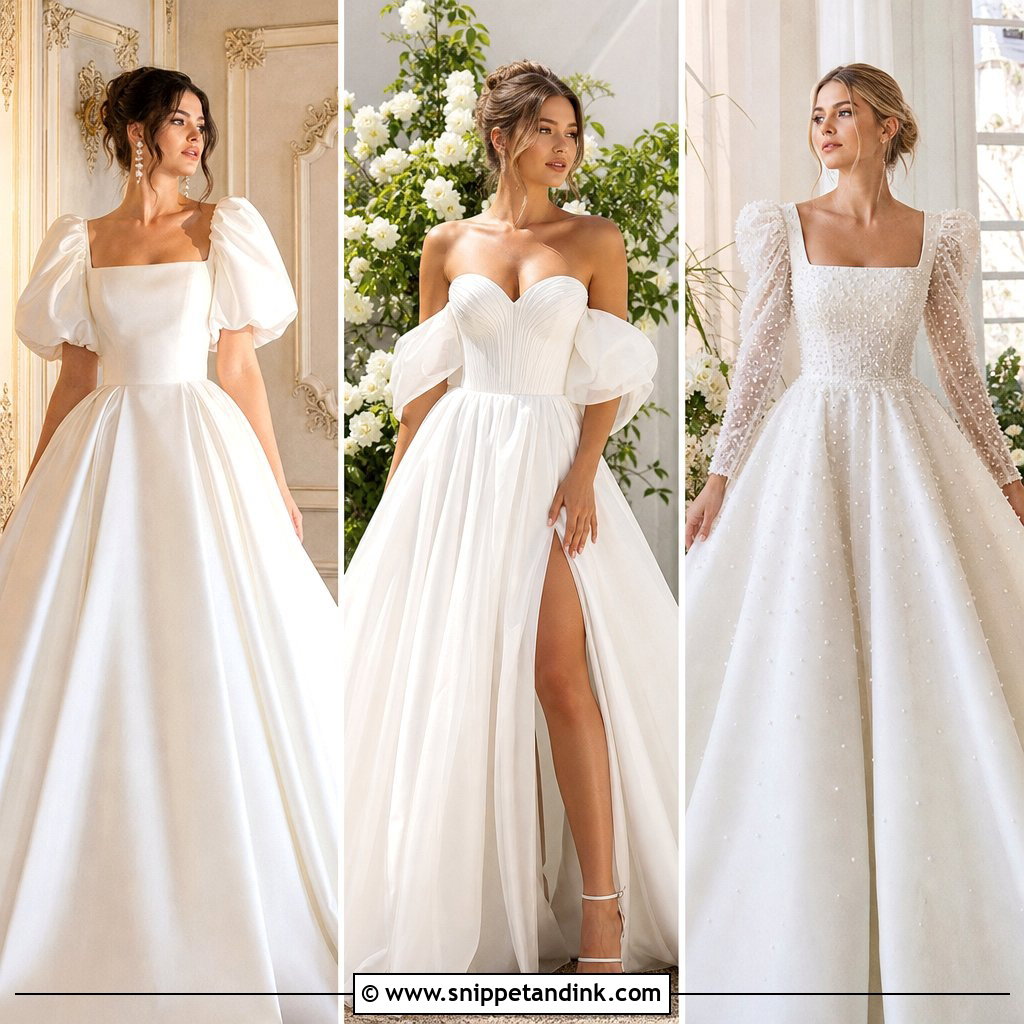

15. Cathedral Train Puffy Princess Wedding Dress
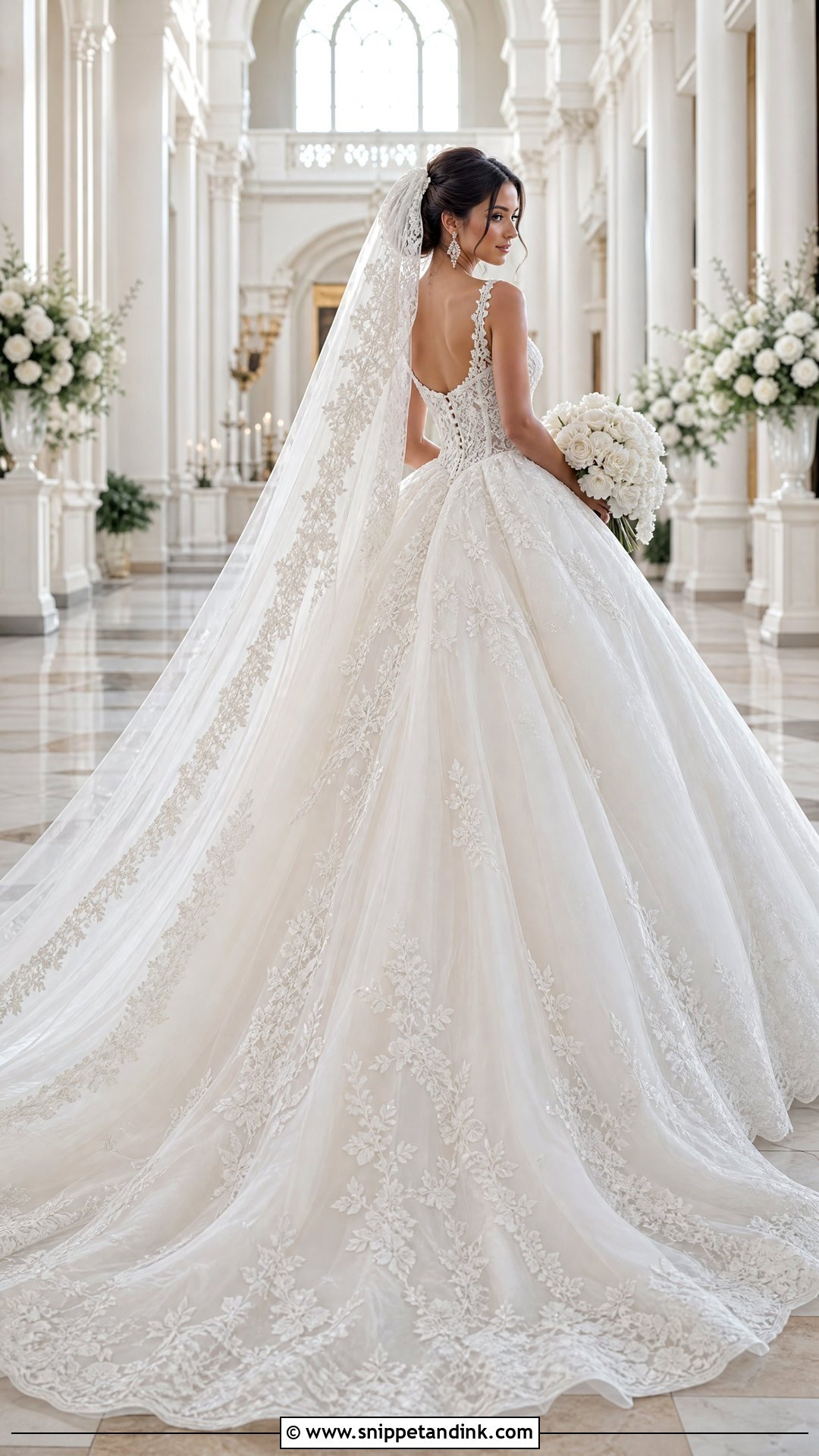
A cathedral train turns any entrance into an event, but it adds weight that pulls backward on the bodice, so the fit up top has to be secure. Lace appliques around the edge look rich; plain satin looks cleaner and is easier to bustle. If you add a cathedral veil, keep it plain when the train is detailed. An updo leaves the neckline visible and stops the hair from tangling in the veil. The most important conversation is the bustle. I ask for it to be tested at the final fitting with the bride walking and turning, because a train this long hooked up with too few points will drop halfway through the dancing.
16. Minimalist Satin Puffy Princess Wedding Dress
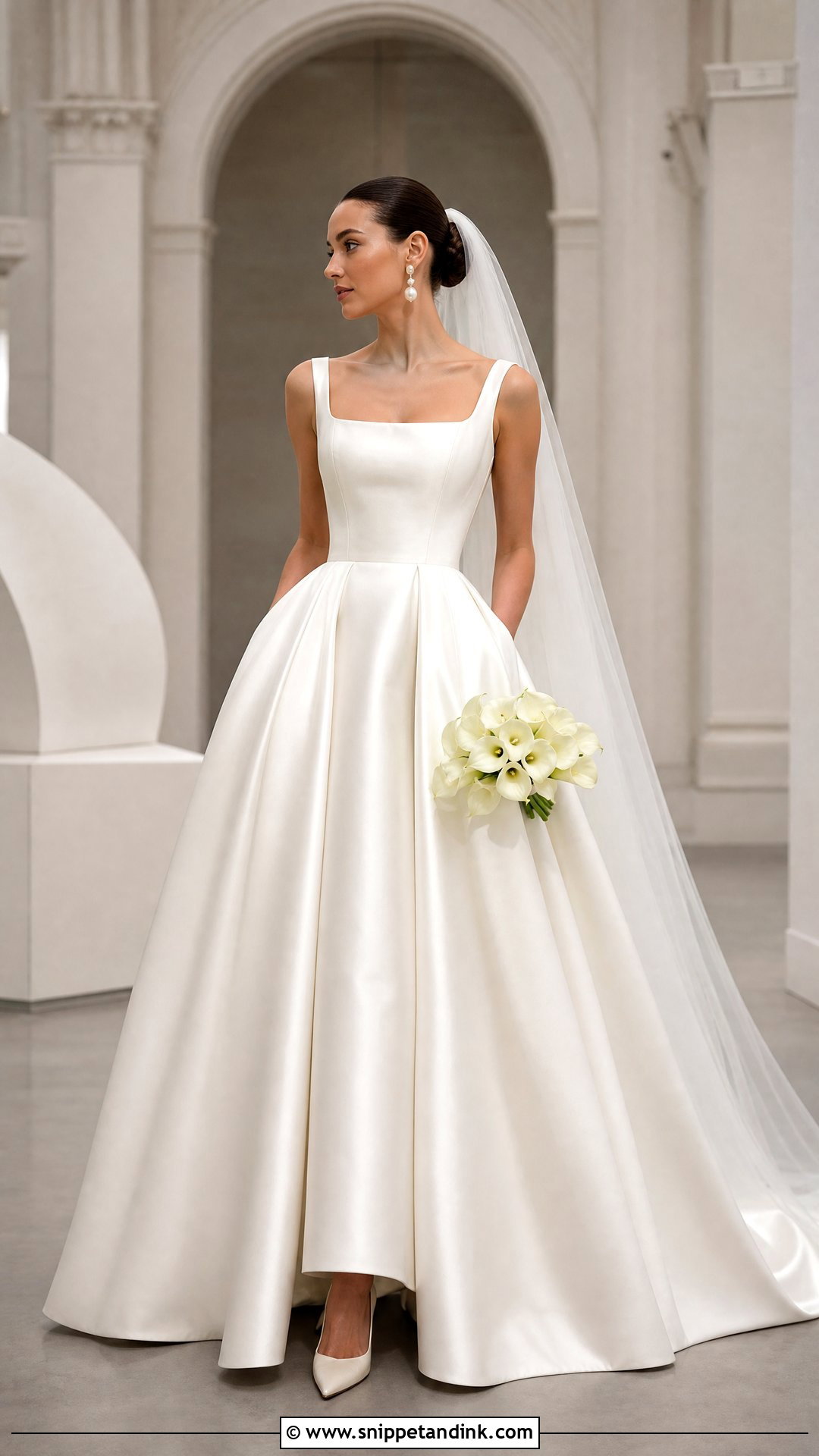
A minimalist princess gown proves that drama does not need lace or beading. It does need precision: with nothing to distract the eye, every seam, pleat and dart is on show, so it is worth paying for a really good fit. Choose smooth satin, a crisp bodice and a skirt shaped by carefully placed pleats. A straight, square or gently scooped neckline all read modern. Sculptural pearl earrings and a sleek bun suit it, with a long unembellished veil. Pointed satin pumps continue the clean line and calla lilies look quietly sophisticated in a hotel, gallery or architectural space.
17. Blush Pink Puffy Princess Wedding Dress
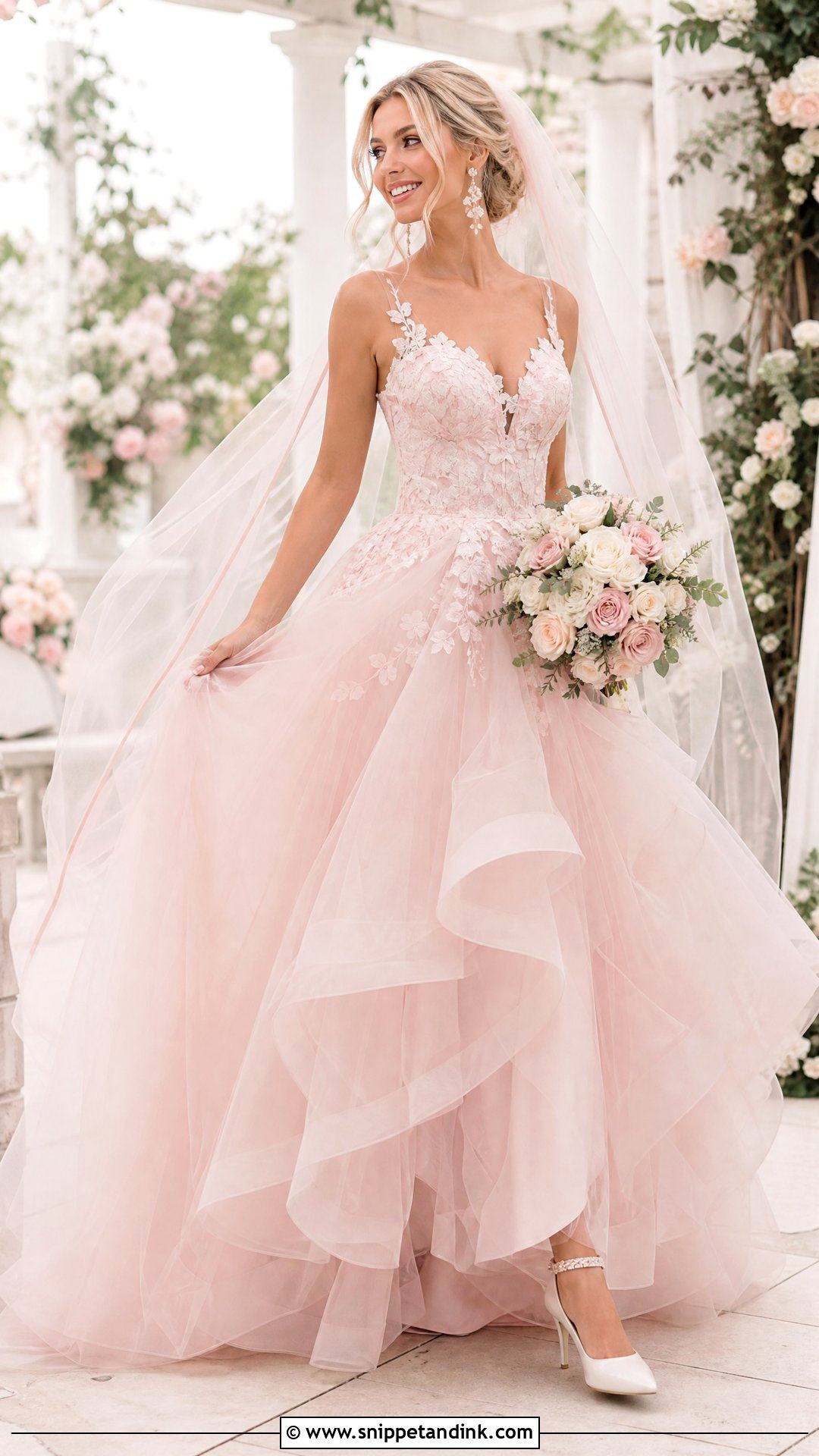
Blush is a gentle step away from white, but the shade has to be chosen in the light you will marry in. Some blush tulles look peach under warm indoor bulbs and almost grey in shade, so I ask brides to see the gown by a window and under the venue’s lighting if possible. Layers of pale tulle over a slightly deeper lining give the skirt depth instead of one flat color. A fitted floral bodice, delicate straps or an off-shoulder neckline all suit it. Rose-gold earrings, ivory heels and a sheer veil with a faint blush edge tie it together, and a bouquet of cream and pale pink roses suits a pastel scheme.
18. Plus Size Corset Puffy Princess Wedding Dress
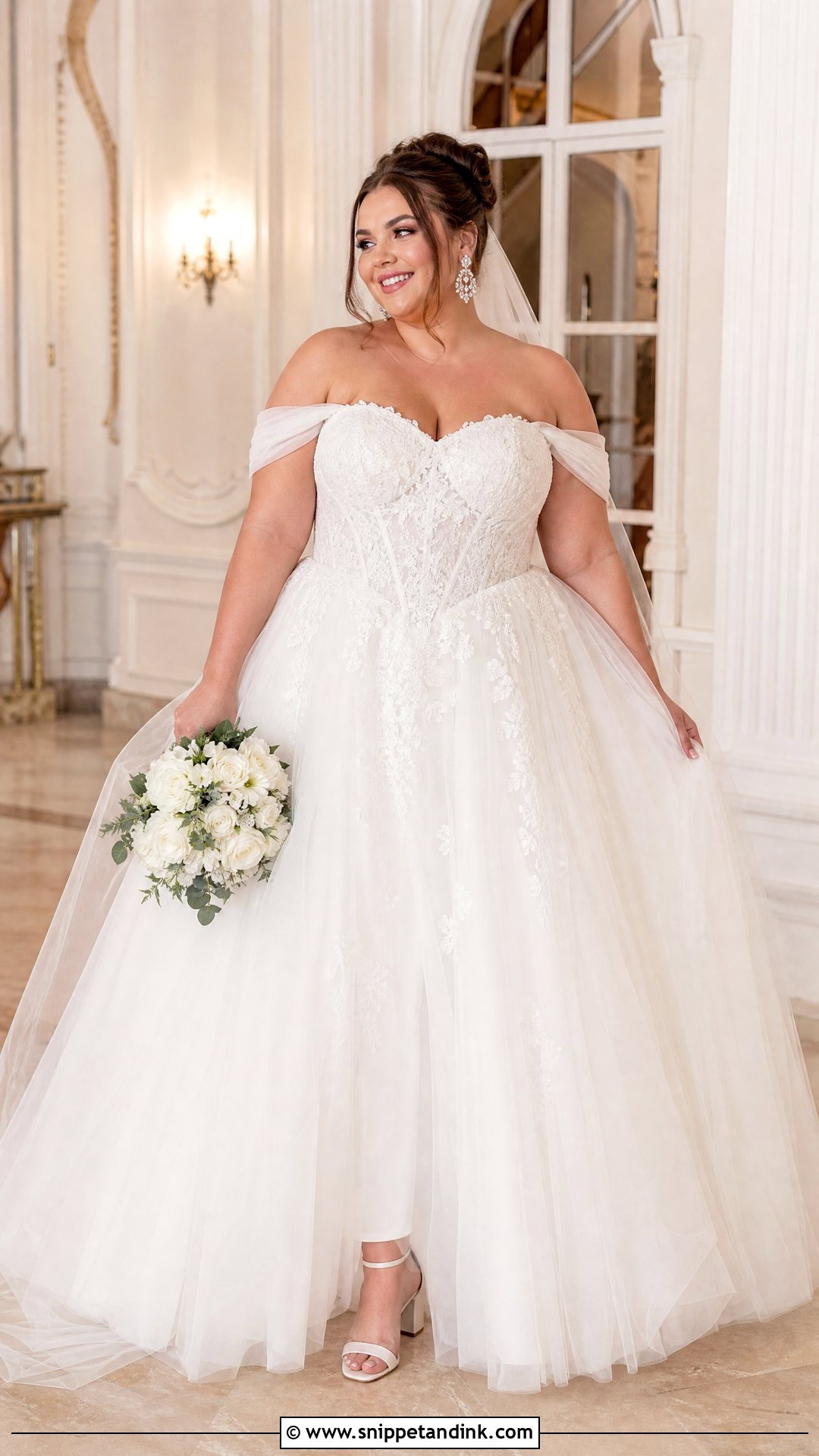
A well-made corset is the most supportive bodice you can wear, and for fuller figures it does more than any built-in bra. Look for flexible boning, adjustable lacing and cups placed for your body, not for the size on the label; I always order by the largest measurement and alter down. A Basque or natural waist leads into lightweight tulle so the skirt does not add pounds you do not need. Supportive block heels, statement earrings and a chapel veil suit it, and an updo or side-swept hairstyle frames the neckline. Bring your actual underwear and shoes to every alteration appointment, because the hem and the cup position both depend on them.
19. Petite Soft Tulle Puffy Princess Wedding Dress
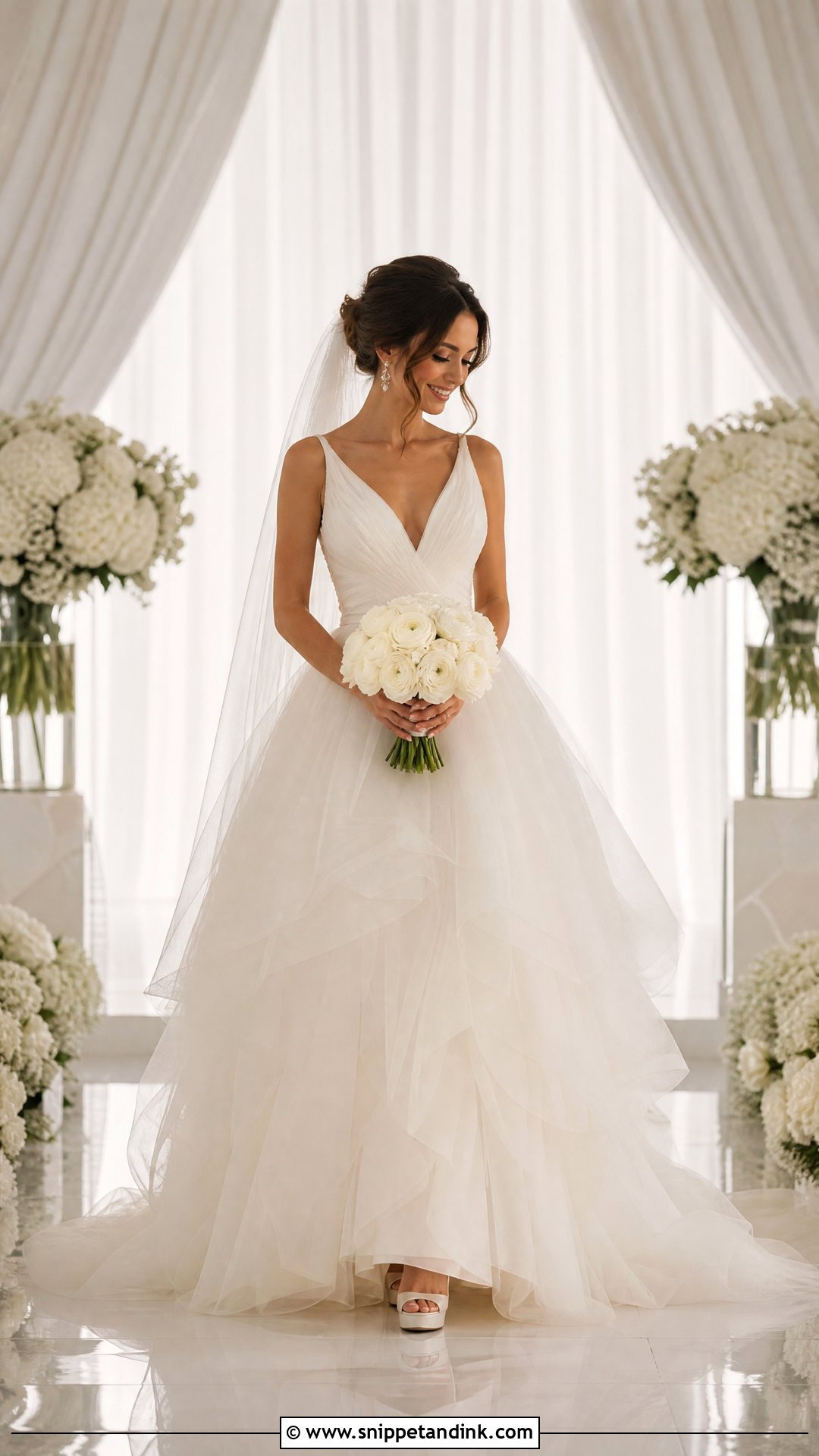
Petite brides can carry a ball gown when the scale is adjusted rather than simply shortened. Soft tulle reads lighter than stiff layers, and a natural or slightly raised waist lengthens the leg line. A V-neck or vertical seaming adds height through the bodice. Keep the train moderate; a cathedral length on a small frame makes the gown look like it is wearing you. Comfortable platforms, small drops and a narrow veil keep the width in check. The hem matters more than anything: an extra inch of fabric pooling at the floor hides the silhouette, so have it hemmed in the shoes you will actually wear.
20. Modest Long Sleeve Puffy Princess Wedding Dress
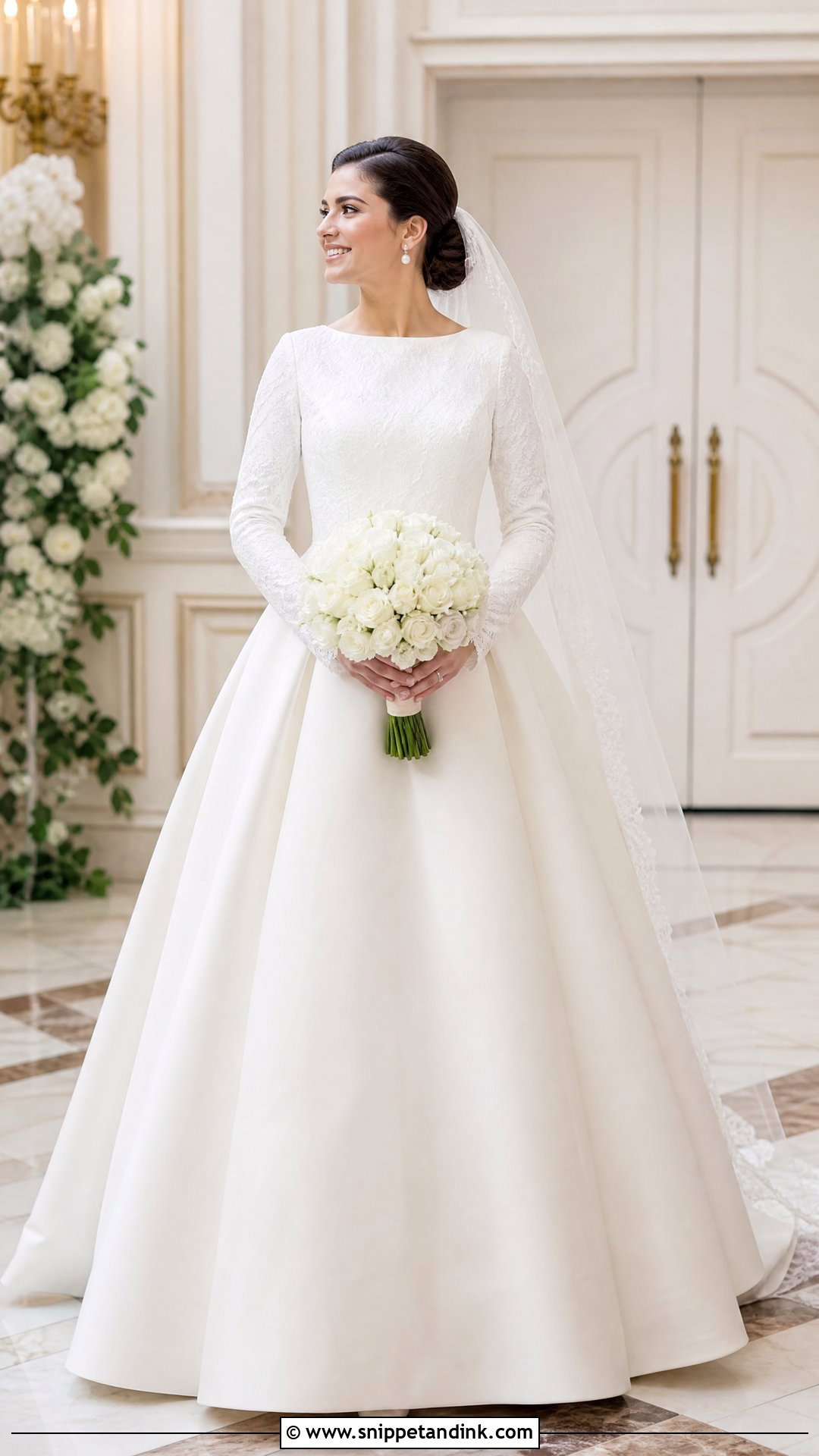
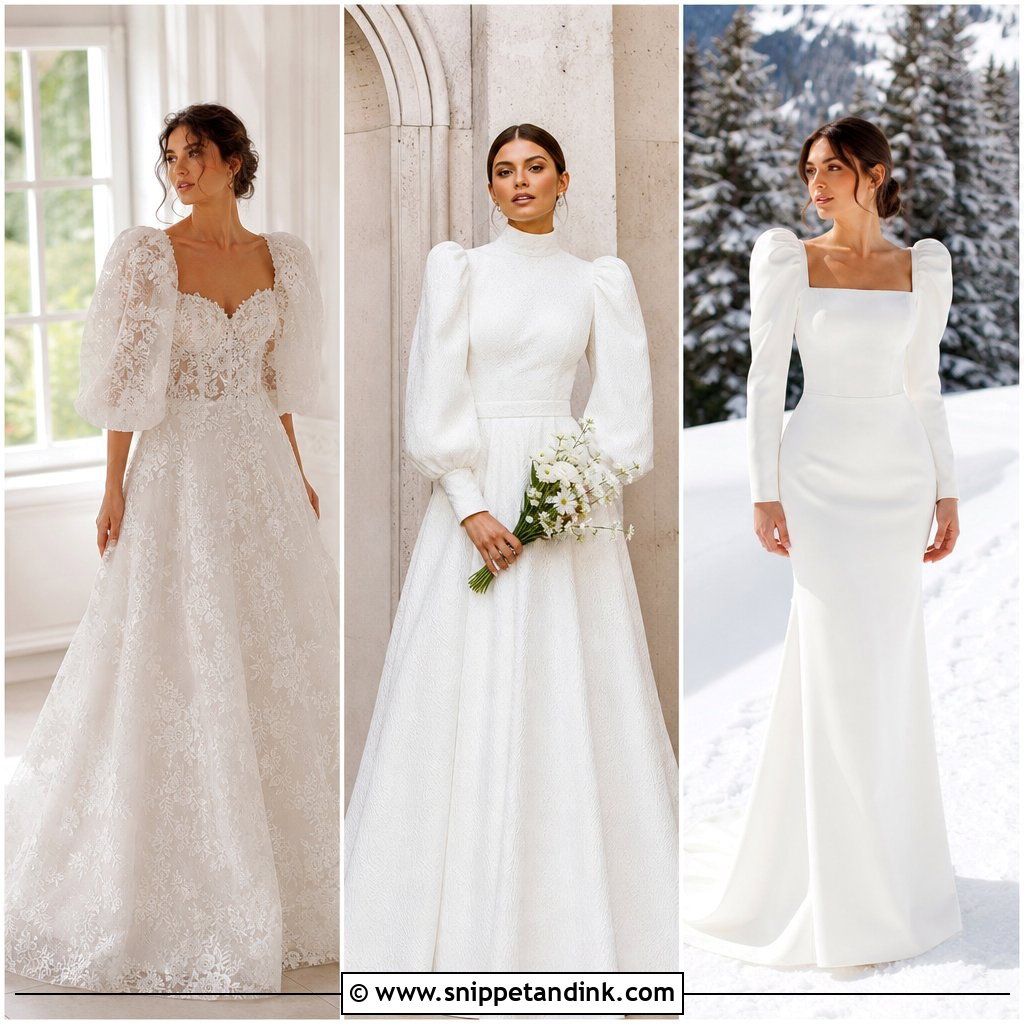
A modest puffy wedding gown can cover fully and still feel light. A lined bodice with a jewel or bateau neckline, fitted long sleeves and a defined waist gives it structure. Lace sleeves bring texture; crepe or satin sleeves look cleaner and are cooler to wear in summer. A full tulle or mikado skirt supplies the volume. I usually advise against heavy embellishment everywhere; with so much fabric covered, a scattering of detail reads better than solid beading. Pearl earrings, a low bun, a veil falling past the waist, closed heels and a structured white bouquet finish it.
Bathroom Trips, Bustles and Steam on the Morning Itself
The questions brides are shy to ask are the ones that matter most in a ball gown. The bathroom is the big one. The easiest method is to step into the stall facing the toilet, gather the skirt up from the hem into your arms, then turn and sit, with the whole skirt bundled in front of you. A bridesmaid can hold the back layers if the train is long. Practice once at home in the full gown and petticoat, because it feels very different with the real weight.
Over Bustle or French Bustle
A bustle lifts the train off the floor for the reception, and there are two common styles. An over bustle hooks the train up onto buttons at the back of the waist; an under, or French, bustle tucks it underneath with ribbon ties. Satin and mikado usually look neat with an over bustle, while layered tulle often hangs more naturally tucked under. Whichever you choose, ask your seamstress to color-code the ties and teach two people how to do it, not just one.
Steam the gown the morning of the wedding, not the night before; tulle and organza drop their creases easily but will crush again in a cramped garment bag overnight. Hang it from a high door frame so the hem clears the floor, and steam from the inside of the skirt outward. Satin needs more care: keep the steamer moving and a few inches away, because water spots can mark it.
Volume Is the Easy Part of a Princess Gown
Narrowing twenty gowns down comes back to structure and proportion. Satin gives polished drama; tulle and organza move more lightly; lace, pearls, sleeves and trains set the mood. Try every shortlisted gown with your real shoes, underwear and veil, and test the bustle before you decide. Sit, walk, turn and raise your arms in the fitting room. A dress has to support movement as well as photographs, and whether you lean toward minimalist satin or layered fairytale sparkle, the right princess gown feels secure from the first step to the last dance.
You'll Like These Ideas:






Leave a Reply