
Ordering a Ball Gown Early Enough for Proper Alterations
Princess gowns take longer than people expect, because most are made to order and then need more alteration than a slim sheath. Timings vary by designer and shop, but this is how I plan a bride’s calendar.
- Start trying on around nine to twelve months out. Bring the underwear and a pair of shoes with the heel height you expect to wear, since both change how a bodice and hem look.
- Order as soon as you’ve decided. Made-to-order gowns commonly take several months to arrive, and rush fees are expensive when they’re even possible.
- Book the first alteration appointment for roughly two to three months before the wedding. Full skirts, bustles and boned bodices usually need two or three fittings.
- Bring your actual shoes from the second fitting onward, plus anyone who’ll be bustling the train or lacing the back.
If your date is closer than that, I’d look at off-the-rack or sample gowns first. A gown already in the shop still needs alterations, but you skip the production wait.
1. Classic Satin Princess Wedding Dress
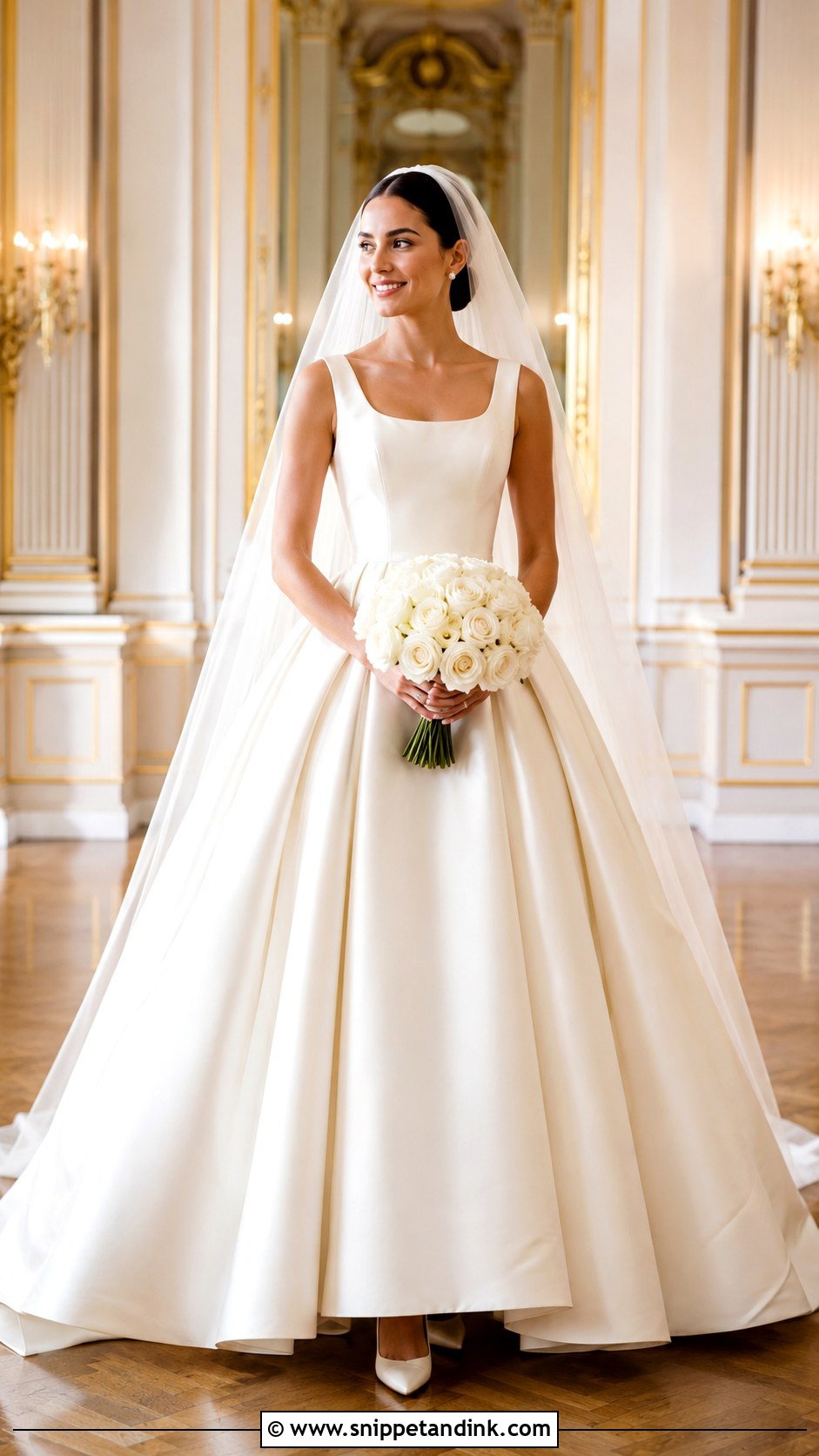
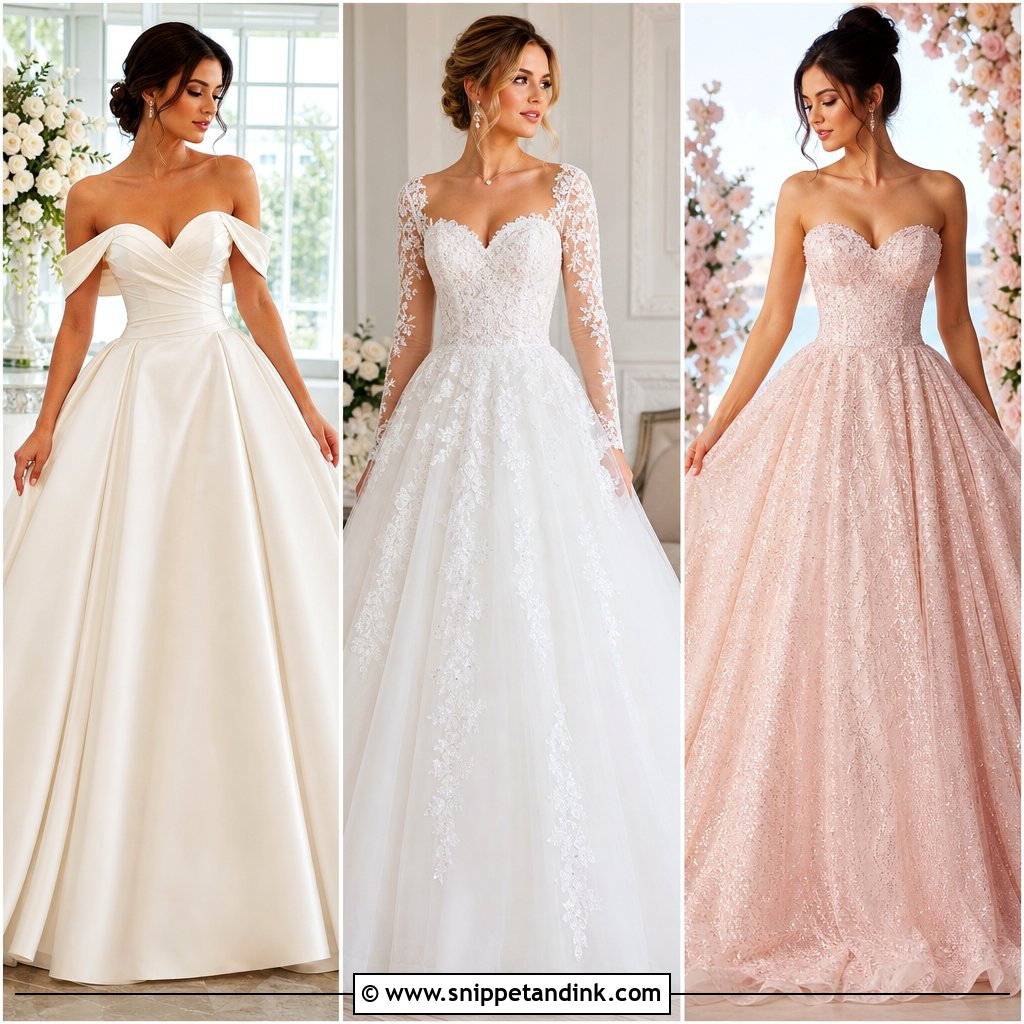
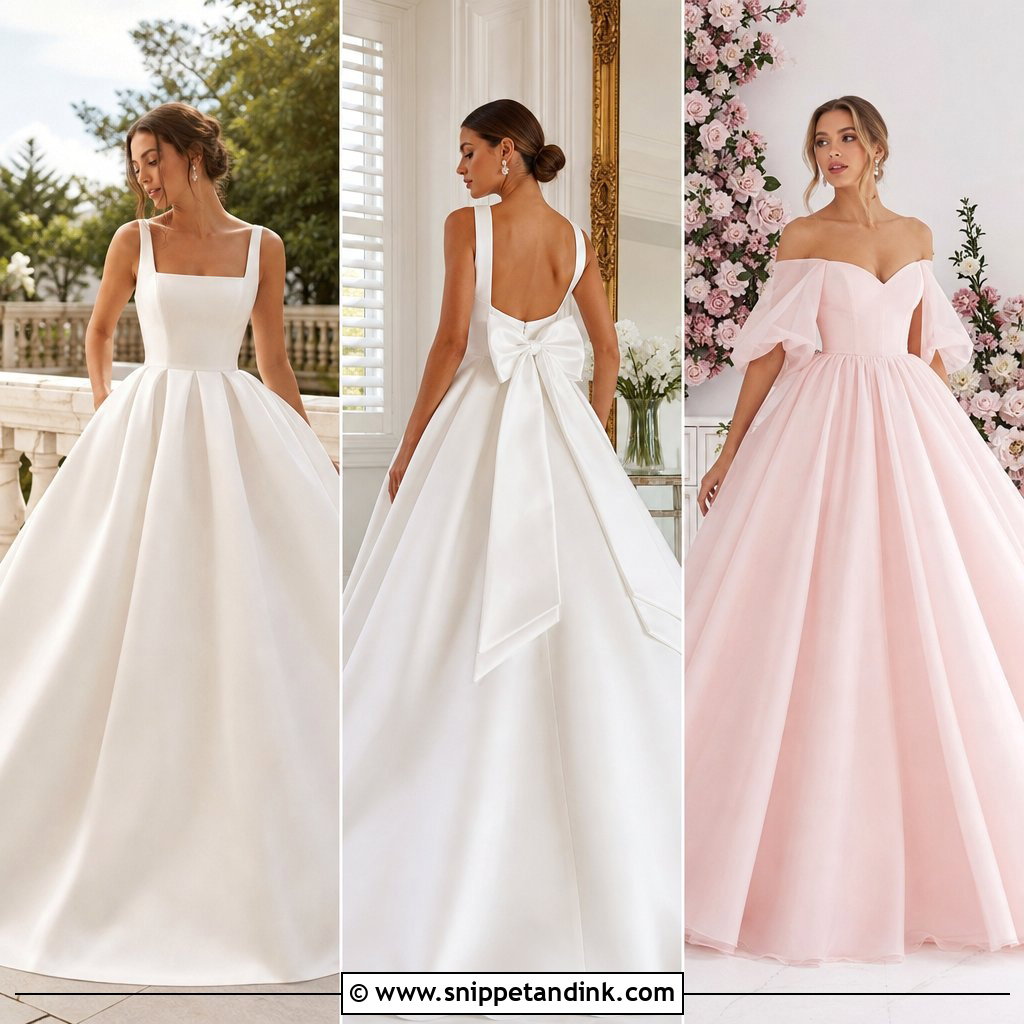
A classic satin princess wedding dress relies on cut, not decoration. I look for a structured bodice with a softly curved neckline and a skirt with enough body that it holds its bell shape without a stiff hoop. A natural or slightly dropped waist keeps it smooth. Satin is honest about fit, so any pull across the bust or ripple at the zip shows immediately; this is the gown where I’d budget most carefully for alterations. Pearl studs, pointed ivory pumps and a long plain veil with a narrow edge keep it clean. Pockets can usually be added at the side seams without spoiling the line.
2. Sweetheart Neckline Tulle Princess Wedding Dress
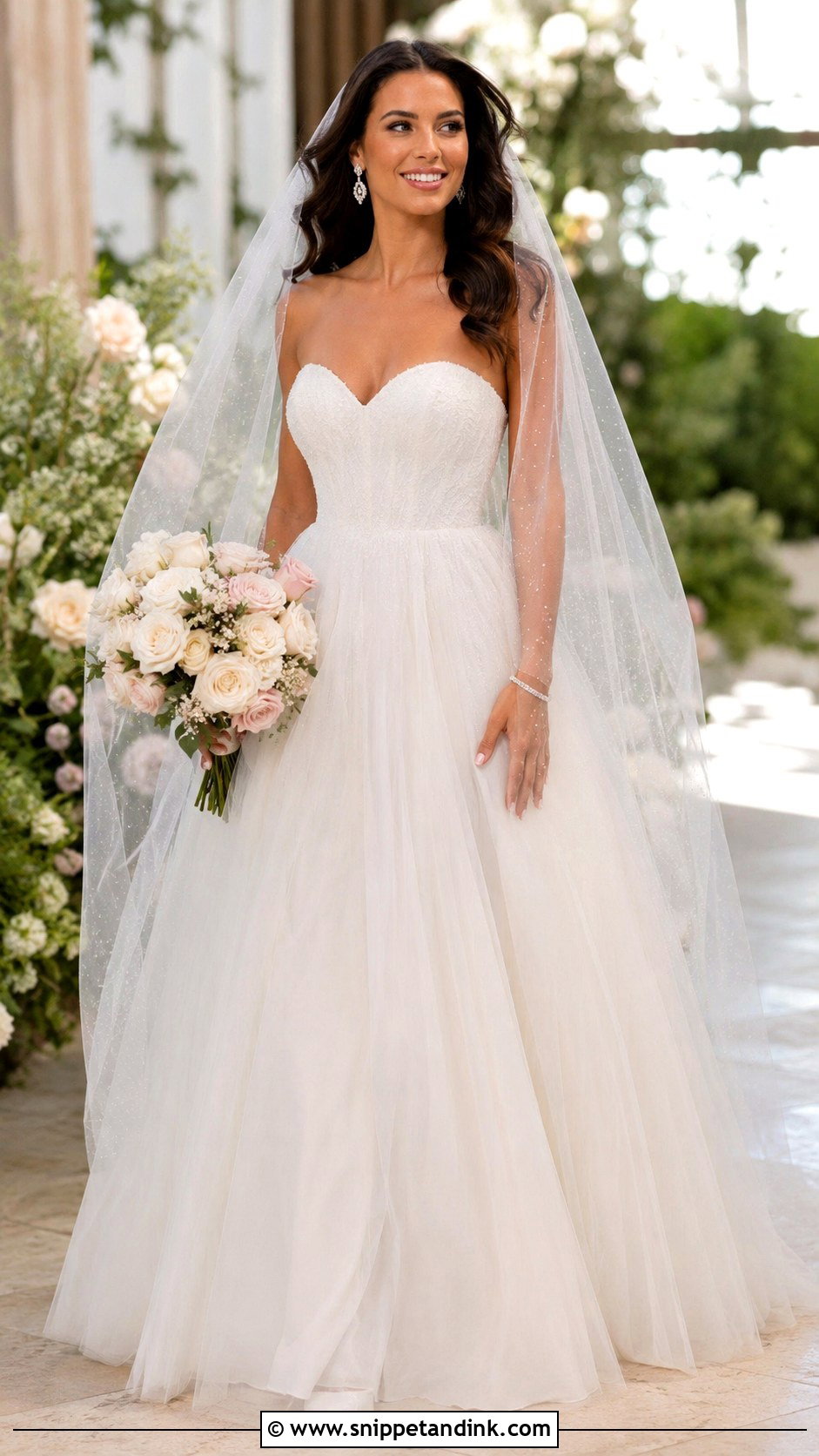
Tulle and a sweetheart neckline are the softest pairing on this list. The curve draws attention to the collarbones, the fitted bodice defines the waist, and the skirt opens into air. What I check first is the inner construction: a sweetheart bodice without proper boning or a waist stay slides down during the reception, and you’ll spend the night hitching it up. Crystal drops, a slim tennis bracelet and a fingertip veil with a little scattered sparkle suit the texture. Loose waves and a peony bouquet keep it gentle.
3. Long Sleeve Lace Princess Wedding Dress
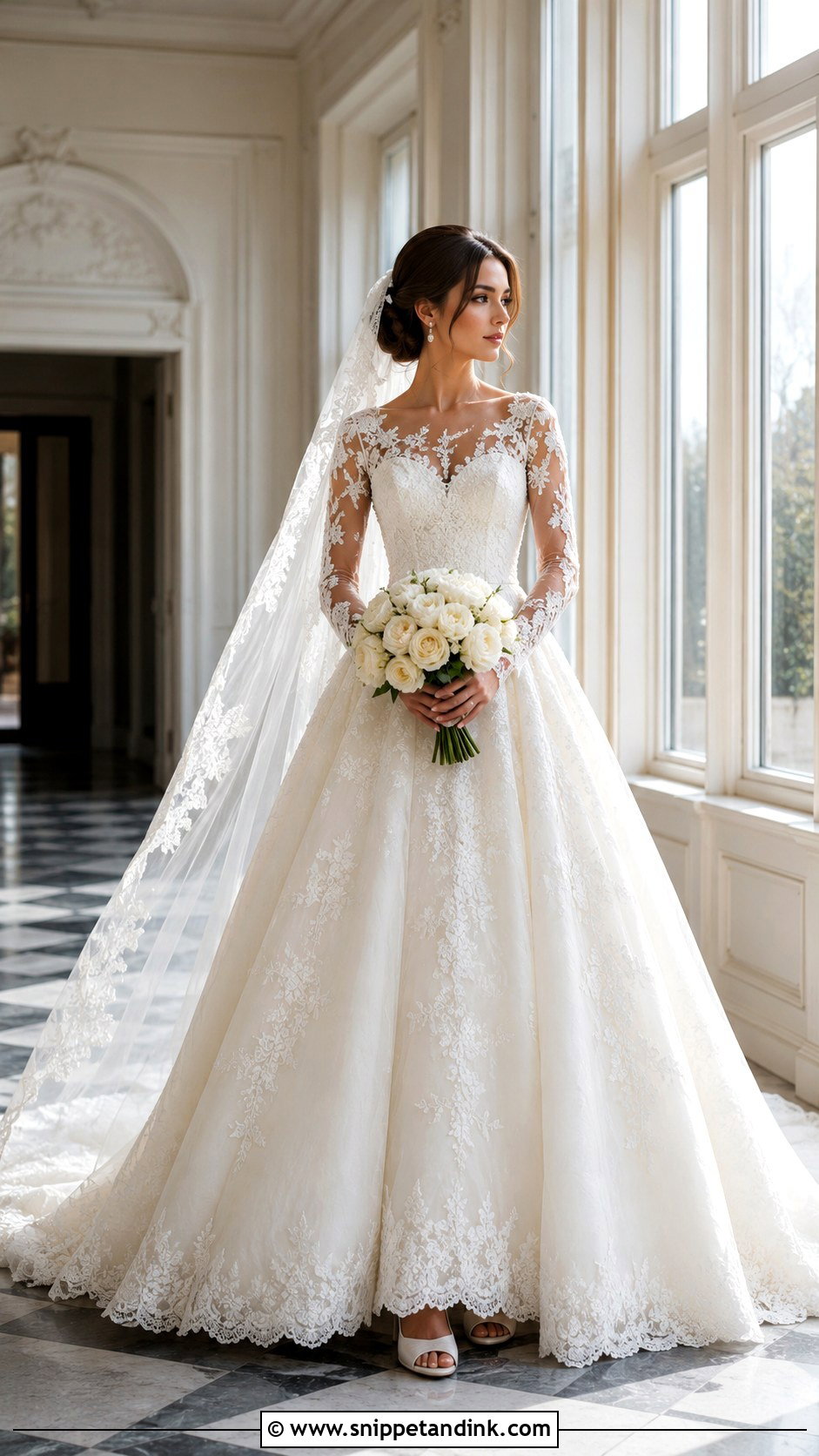
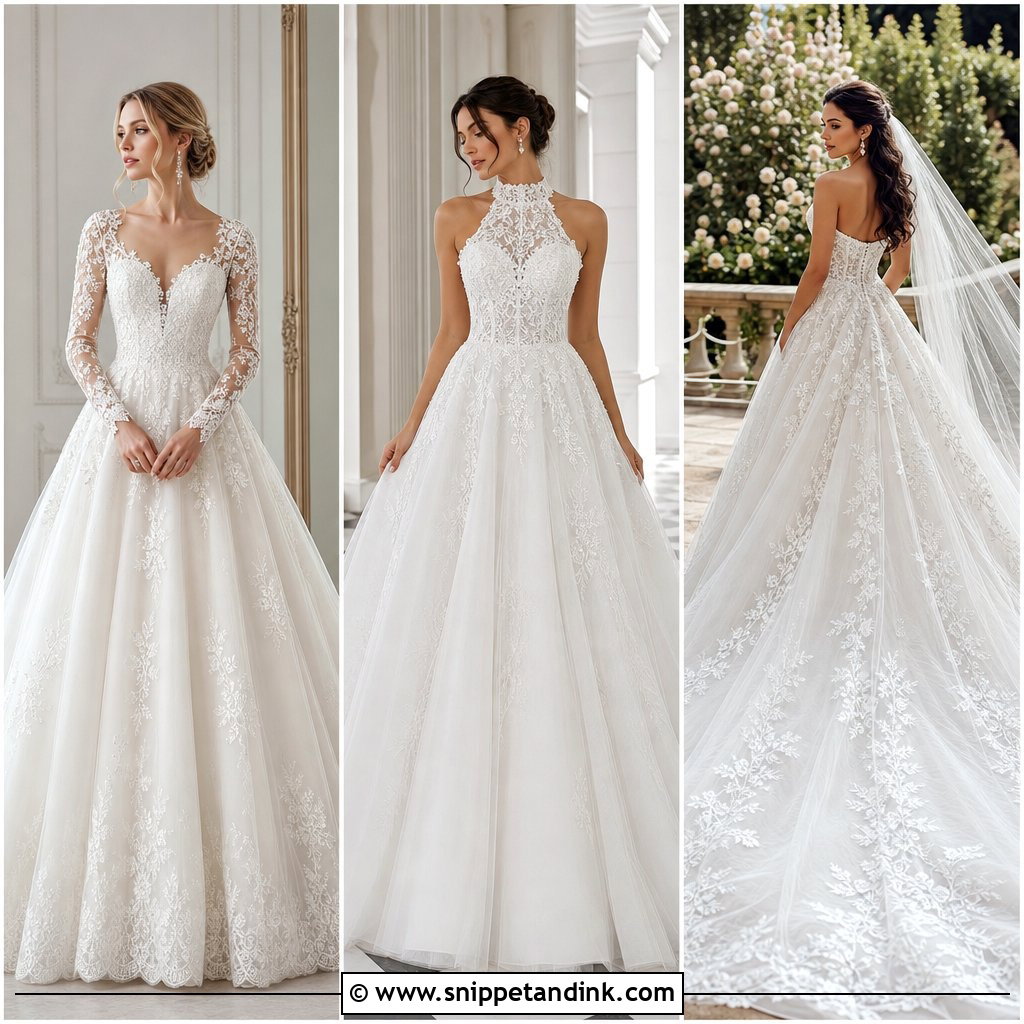
Lace sleeves give coverage and still look light. Sheer sleeves feel airy; lined ones suit cooler weather or a more modest preference. Pair a fitted lace bodice with a full tulle or satin skirt. When the veil is trimmed in lace too, I ask the bridal shop for a sample of the gown’s lace so the motifs match; two different lace patterns side by side look busy in close-up photos. Keep the hair in a smooth low bun so it doesn’t hide the sleeve detail, and the bouquet to white garden roses and greenery.
4. Off Shoulder Princess Wedding Dress
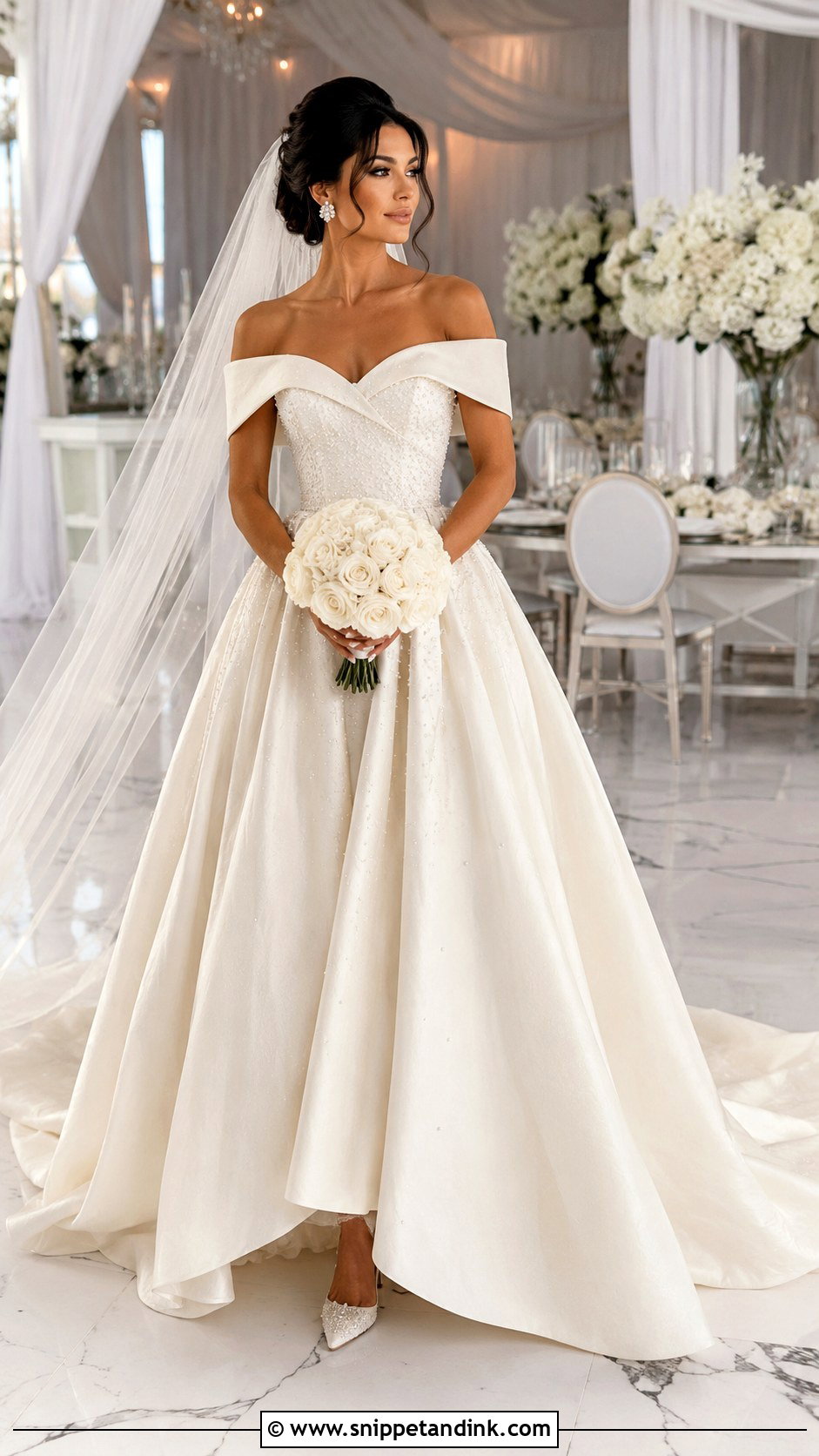
Off-the-shoulder sleeves frame the neckline and soften a dramatic skirt. Structured fold-over sleeves look modern; lace or tulle ones are gentler. The neckline already does the work, so I’d wear a short pendant or none at all, with sparkling studs and an updo. Attach the veil beneath the bun so it doesn’t fight the shoulders. The one test I insist on at fittings: lift your arms as if hugging someone and sit down. Off-shoulder sleeves that are cut too tight pin your arms to your sides all day.
5. Corset Bodice Princess Wedding Dress
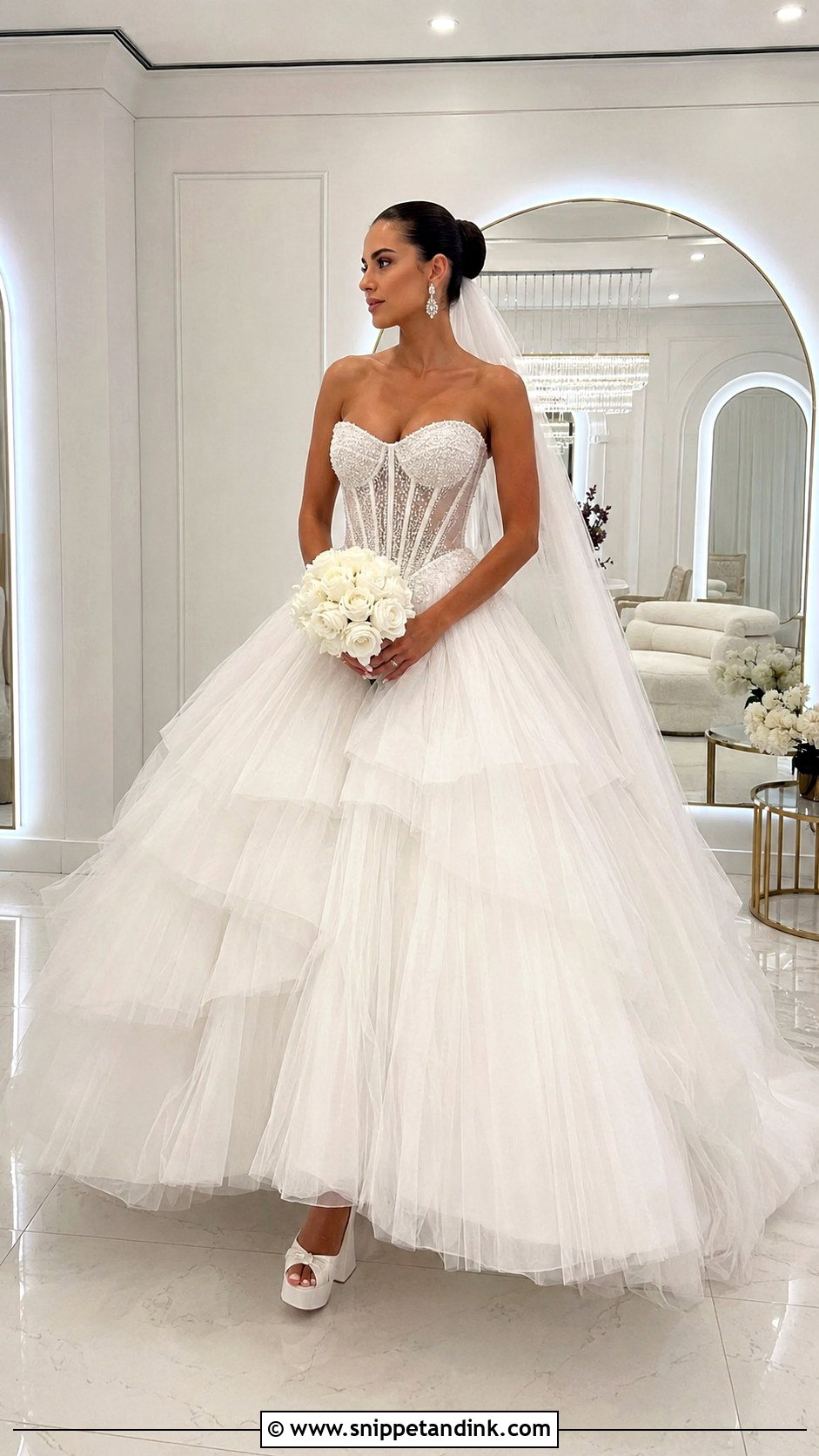
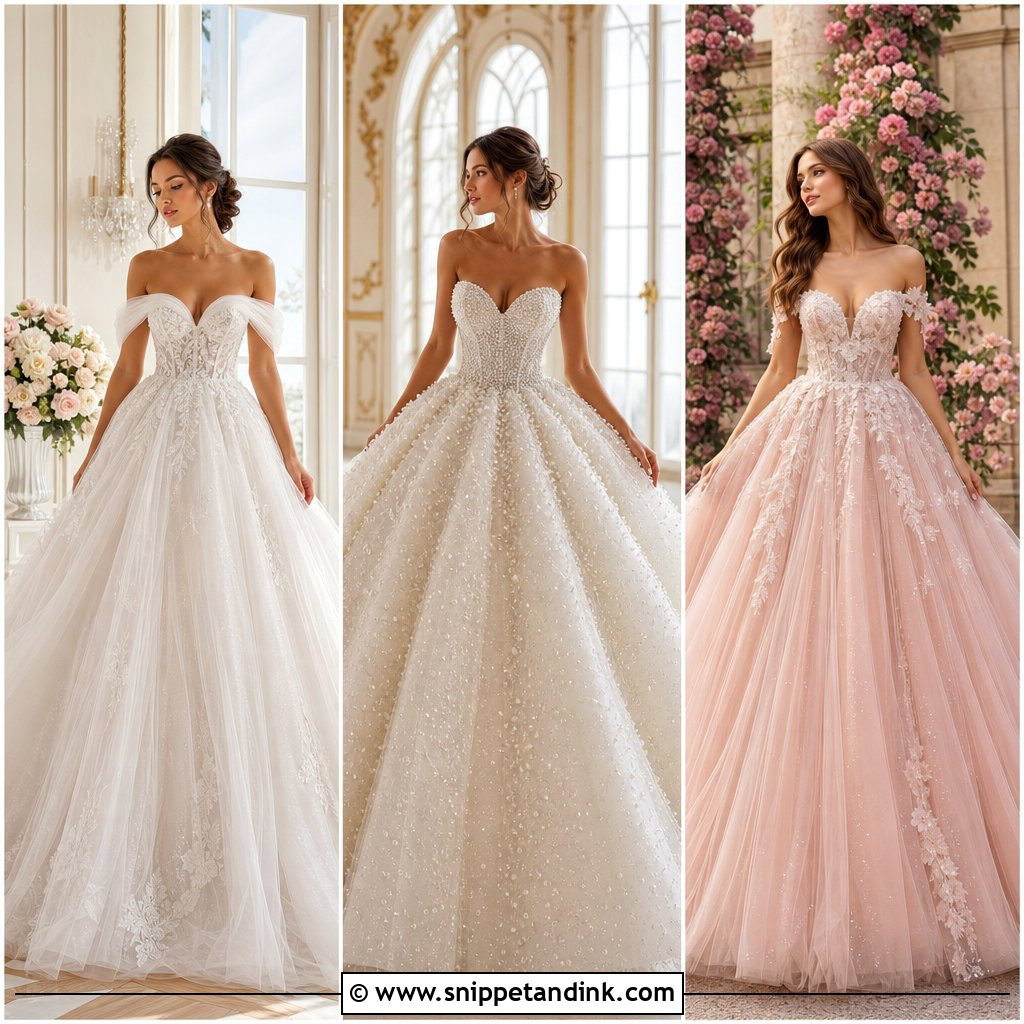
A corset bodice gives the strongest waist definition against a big skirt. Exposed boning reads contemporary, covered boning more traditional. Secure cups and professional alterations are non-negotiable, because a corset that’s even slightly too big gaps at the top edge when you lean forward to sign the register. A layered tulle skirt, crystal earrings and a sheer veil that lets the boning show keep it balanced. If the bodice is beaded or embroidered, skip the necklace. Platform heels add height and stay hidden under the hem.
6. Basque Waist Princess Wedding Dress
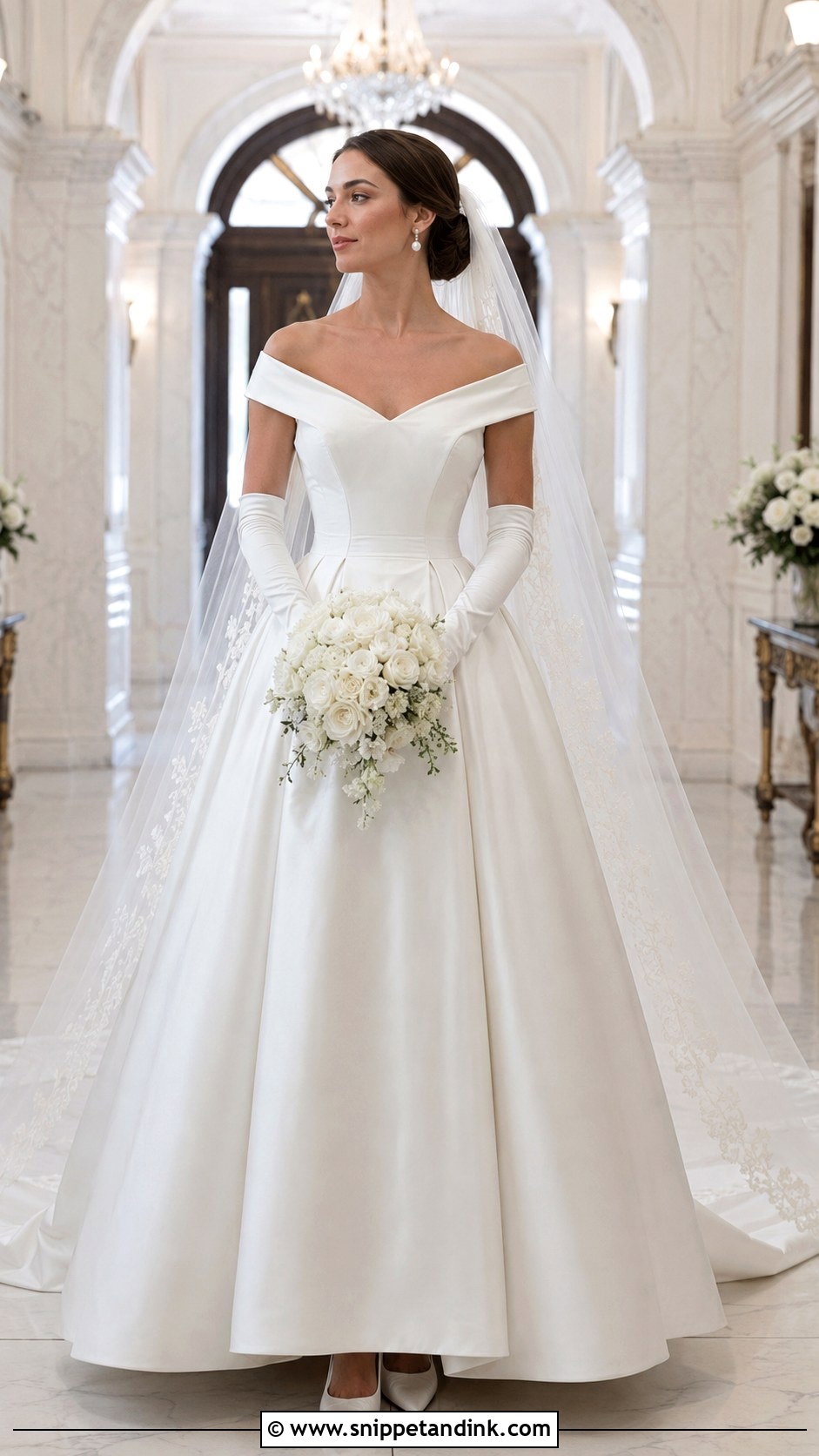
The pointed V of a Basque waist princess wedding dress creates a dramatic join between bodice and skirt, and it lends an old-world feel to satin, lace or textured fabrics. It also lengthens the torso, which flatters most figures. Keep the neckline plain, strapless, scoop or off the shoulder, so the waist stays the focus. The fitting check is specific: sit down and look at the point. If it folds or juts out, the bodice needs reshaping, because that crease will show in every seated photo. Elbow gloves or pearl earrings, and a center-parted bun, suit its symmetry.
7. Square Neck Princess Wedding Dress
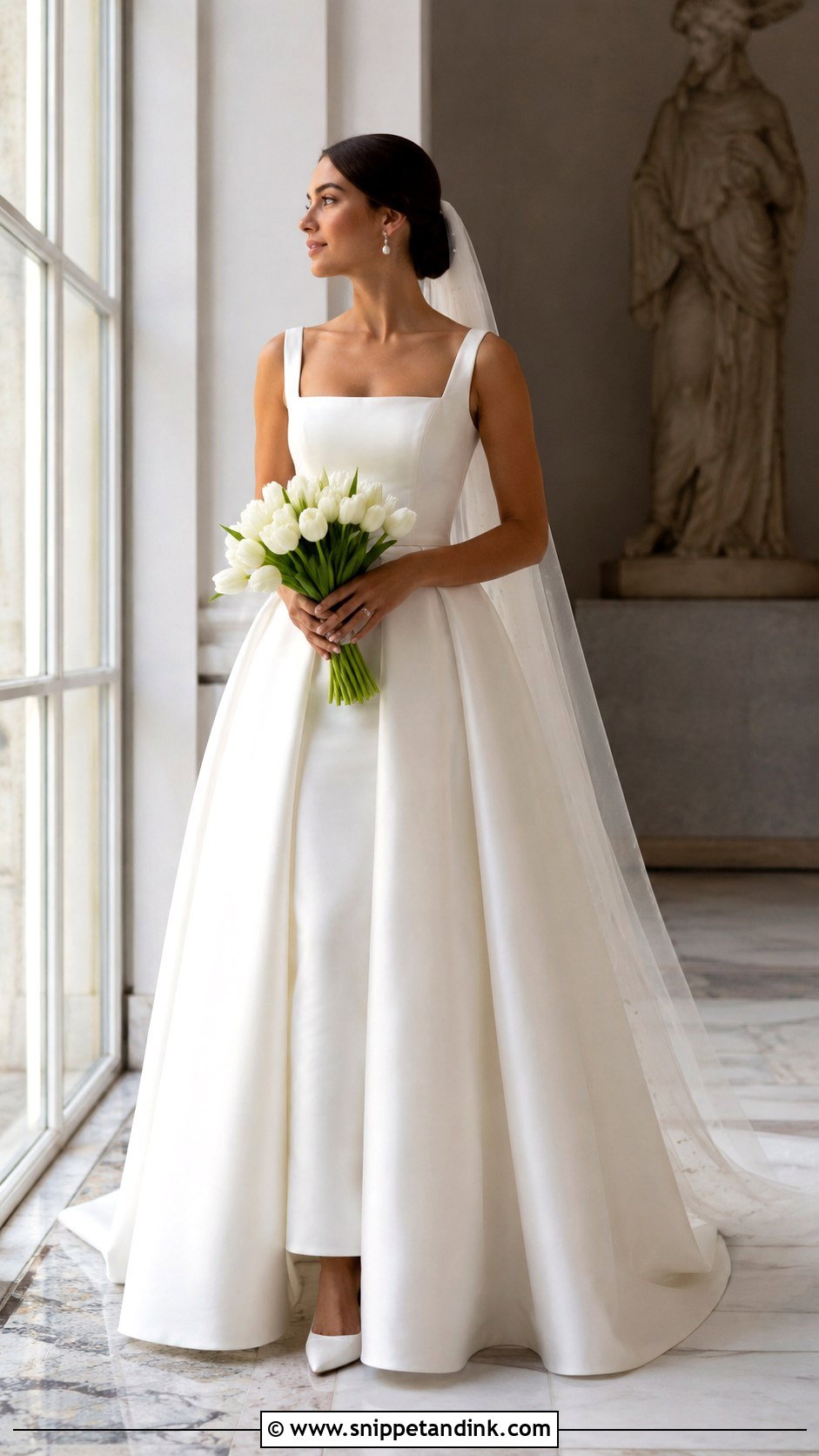
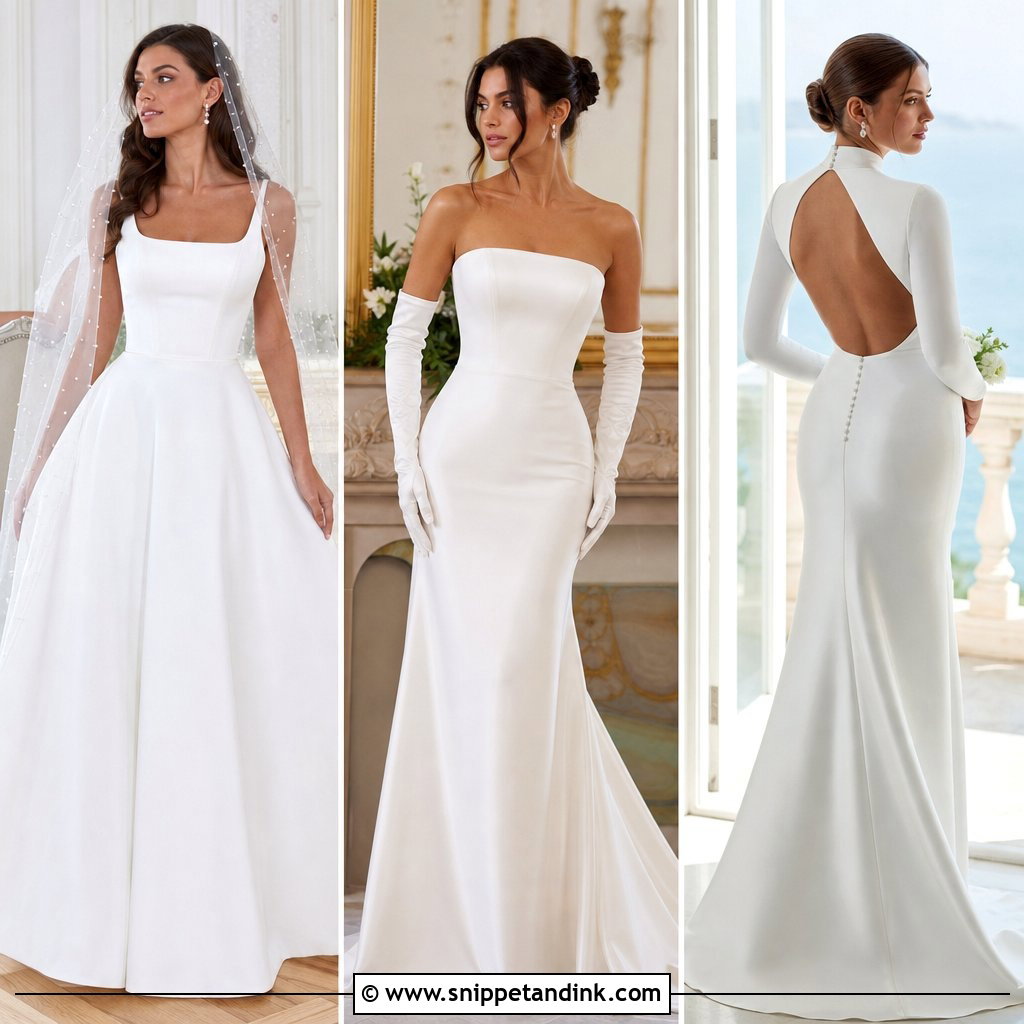
The square neckline frames the collarbones with straight lines, which balances a soft, full skirt. Wide straps give dependable support; sheer lace sleeves give more coverage. I like it in smooth satin or Mikado, where the angles stay crisp. A necklace either sits clearly above the neckline or doesn’t happen at all, since a pendant crossing the straight edge looks off. Pearl drops, a low bun with a long veil from the crown, ivory pumps and a compact tulip bouquet keep it streamlined.
8. High Neck Princess Wedding Dress
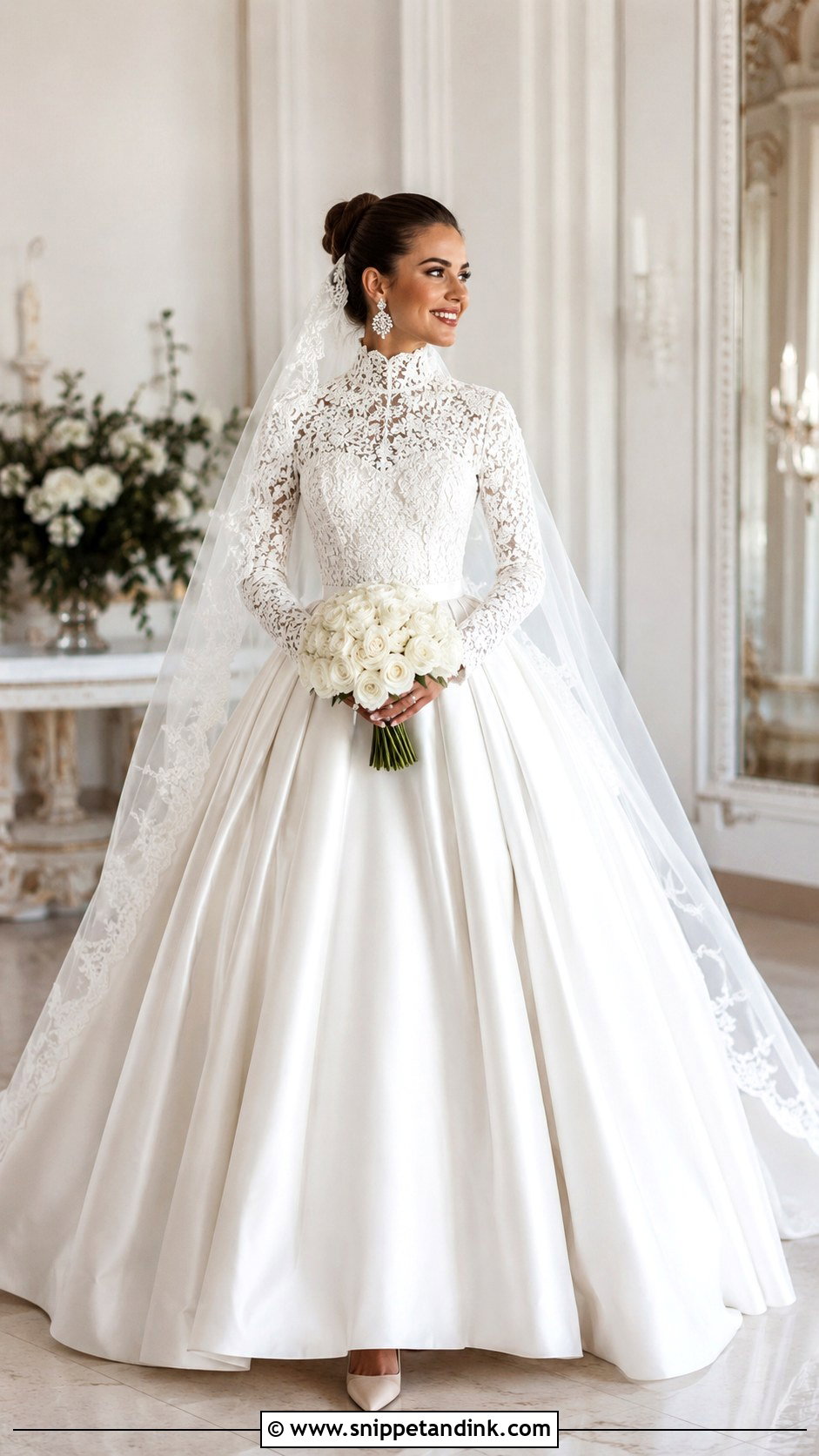
A high neck gives coverage without losing the grandeur of a full skirt. Sheer lace at the neck feels romantic, a structured satin collar more modern. Skip the necklace and wear statement earrings. Turn your head both ways in the mirror when you try one on: a collar that’s too snug rubs, and a lace collar with a scratchy edge will bother you within an hour. A polished bun, a lace-edged veil and a small, tidy bouquet that doesn’t hide the bodice in photos complete it.
9. Floral Applique Princess Wedding Dress
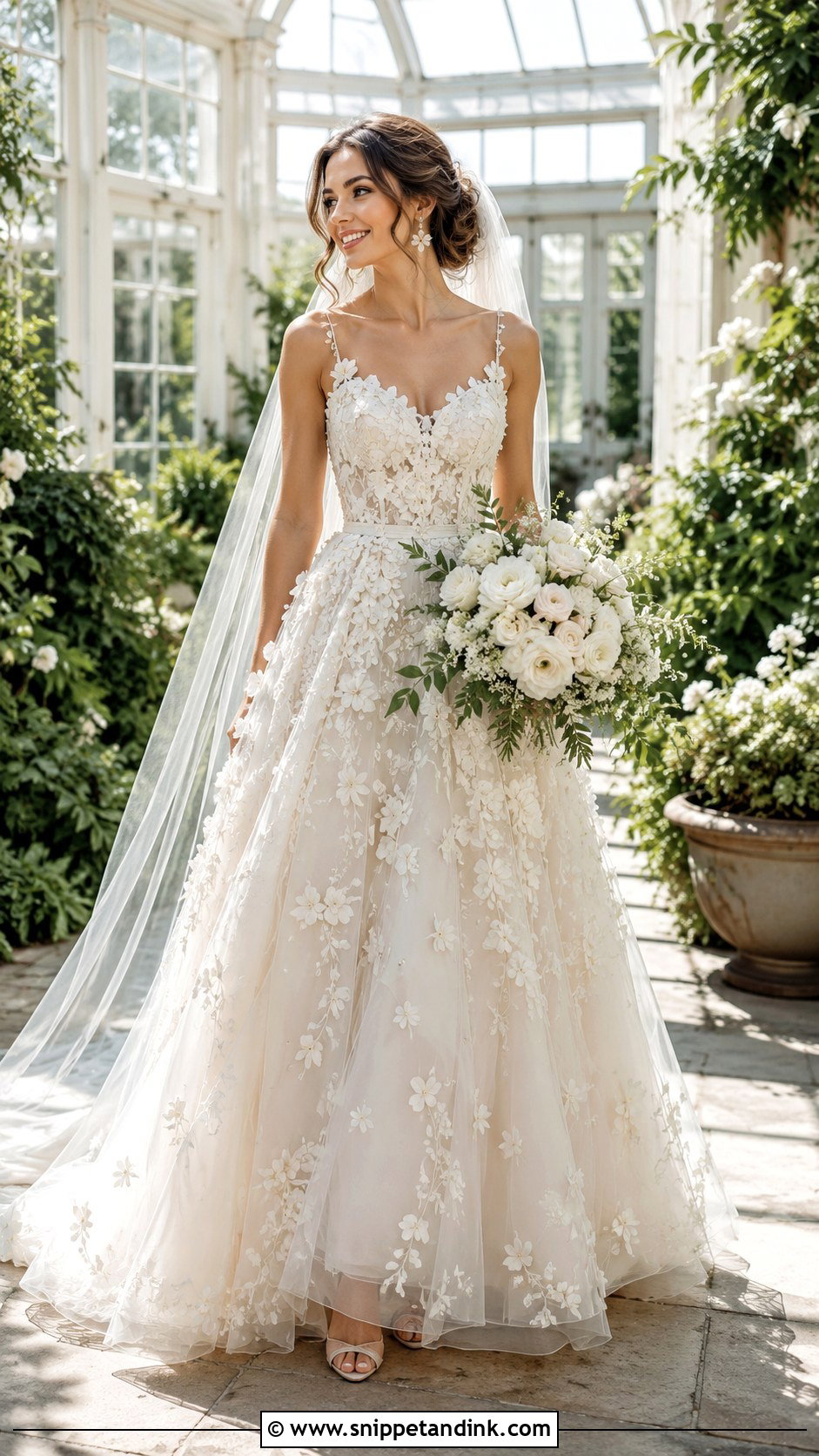
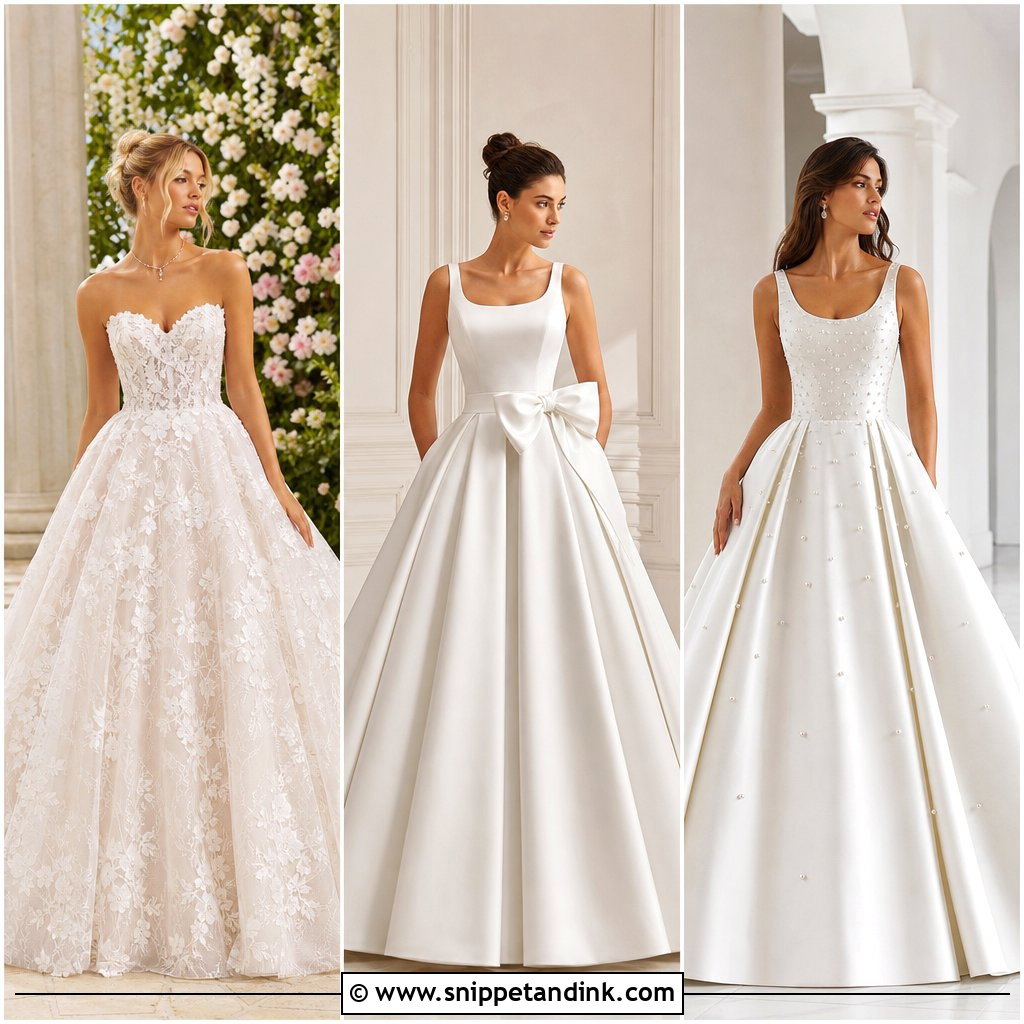
Floral appliqués give a garden feeling to the princess shape. I prefer them concentrated on the bodice and thinning out across the skirt, which looks more natural than an even scatter. A sheer or lightly lined base lets the flowers stand out at whatever coverage you want. Because the dress is busy, the veil should be plain and the earrings small. With the bouquet, echo the scale or color of the appliqués but don’t copy them exactly, or the flowers in your hands disappear against the dress. Conservatories and courtyards suit it.
10. Beaded Sparkle Princess Wedding Dress
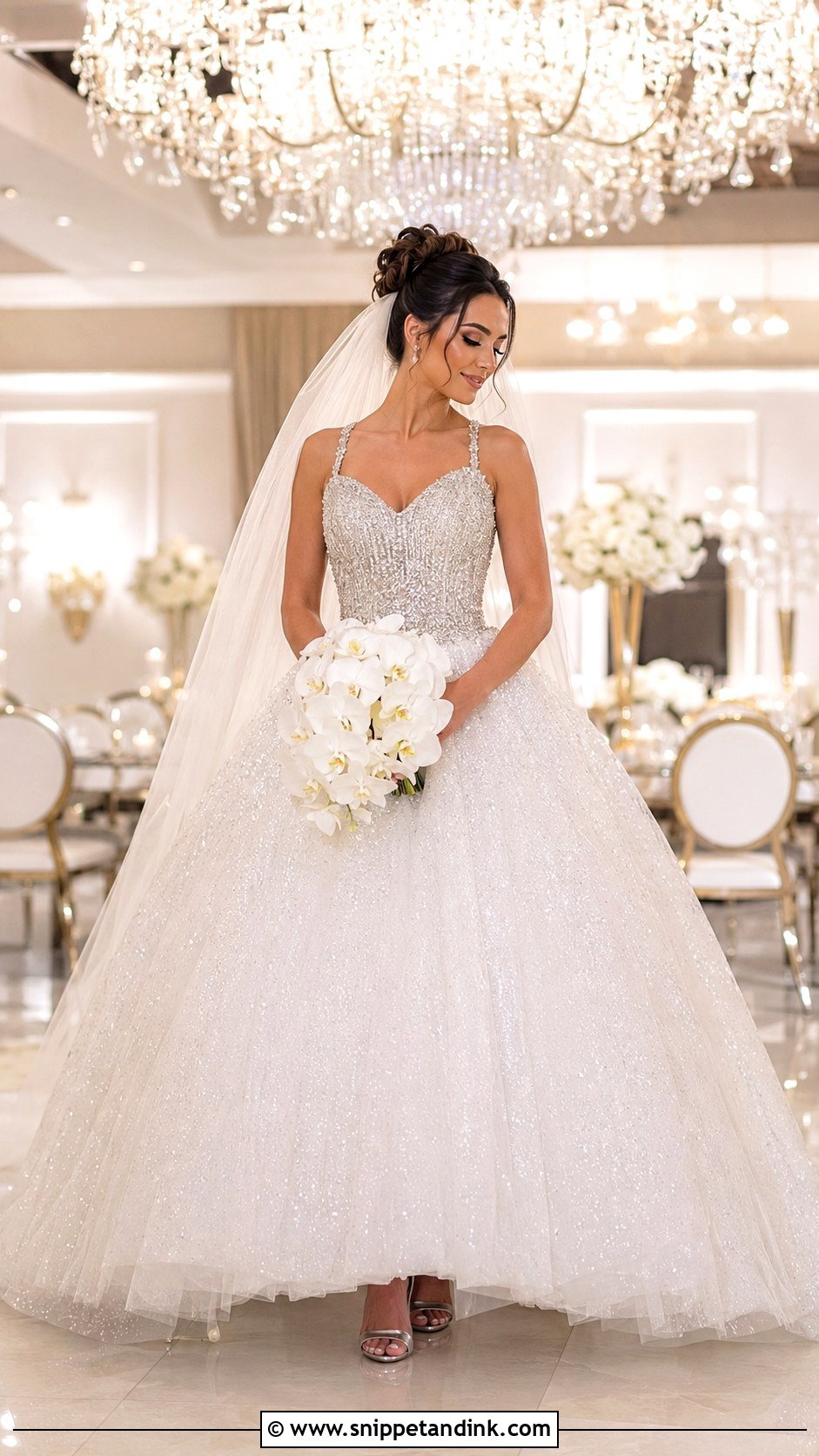
Beading makes the gown catch light from every angle. Concentrate it on the bodice and keep the skirt lighter, otherwise the dress gets heavy and the sparkle has no focus. Silver-toned crystals read cool and bright; pearls and clear beads are softer. Before buying, sit and move in it, paying attention to the inner arms: rough beadwork along the side seams can rub skin raw by the end of the evening. Crystal studs, a polished updo, a sheer veil and silver or ivory heels keep everything else quiet.
11. Pearl Embellished Princess Wedding Dress
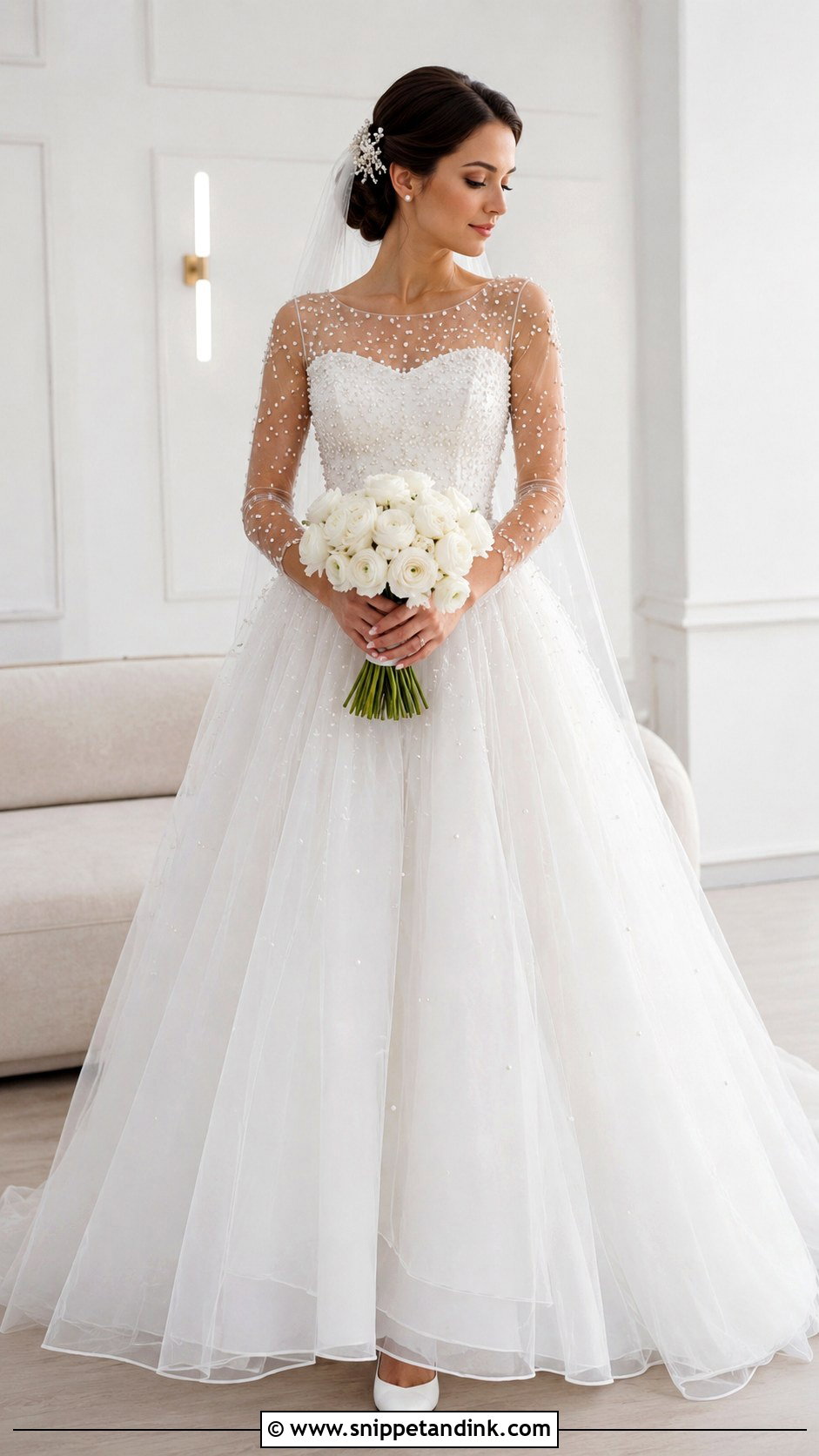
Tiny pearls add texture without loud sparkle. They can sit across sheer sleeves, along a corset bodice or lightly through a tulle skirt. Repeat them once or twice in the accessories, studs or a hair comb, but not everywhere at once. At fittings I tug gently at the pearls around the waist and underarms, because those are the ones that work loose first, and I ask the shop for a few spares sewn inside the seam allowance. Ivory satin pumps and a low twisted bun complete it.
12. Bow Back Princess Wedding Dress
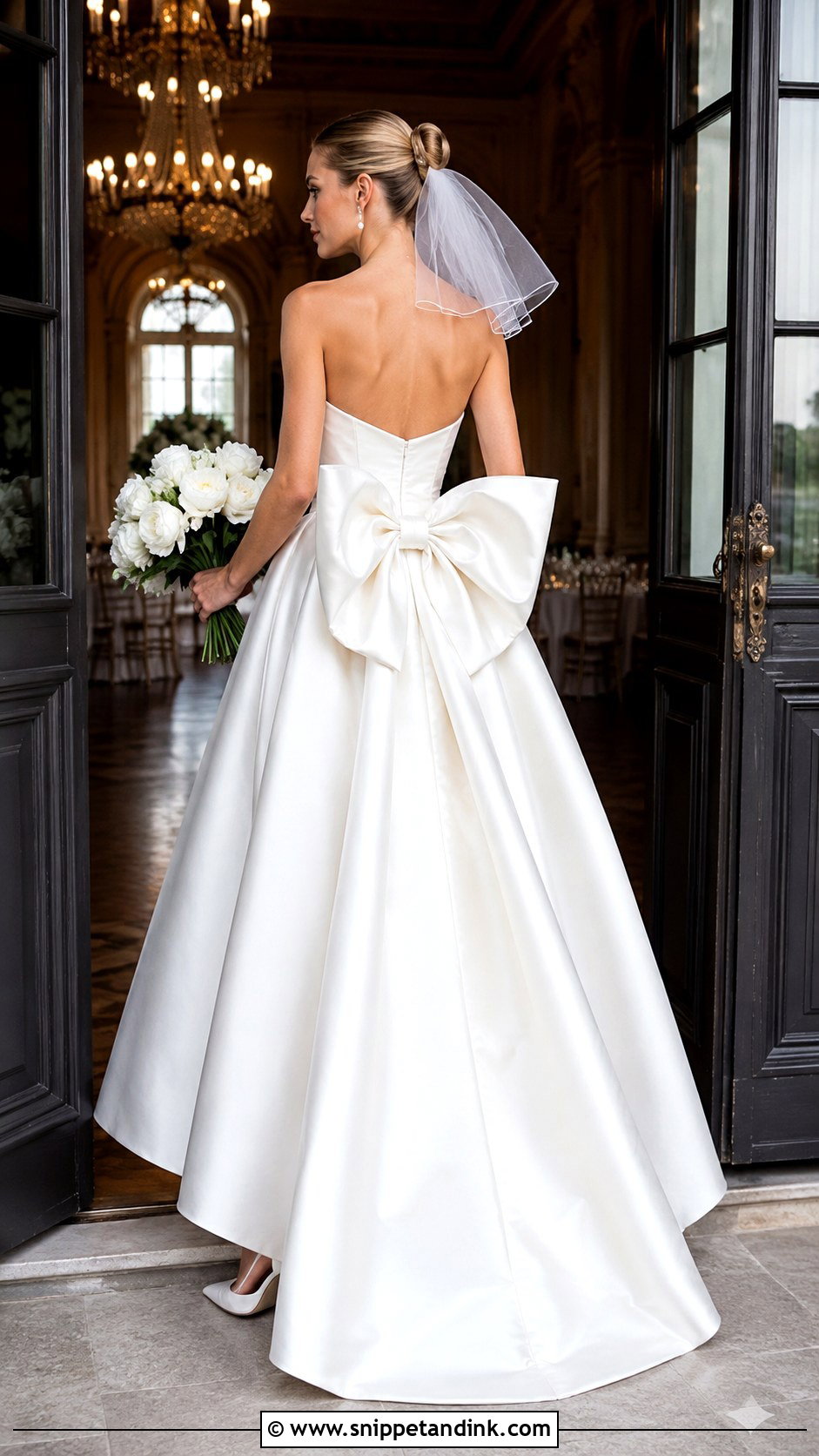
A bow back princess wedding dress saves its moment for when you turn around, which means the ceremony exit and the walk away from the altar. A structured satin bow is bold; organza moves more. Keep the front fairly simple so the back stays the feature. The veil is the tricky part: either it ends above the bow, or it’s sheer enough for the bow to show through, never a heavy lace veil laid over it. A detachable bow lets you sit back comfortably later in the evening.
13. Tiered Tulle Princess Wedding Dress
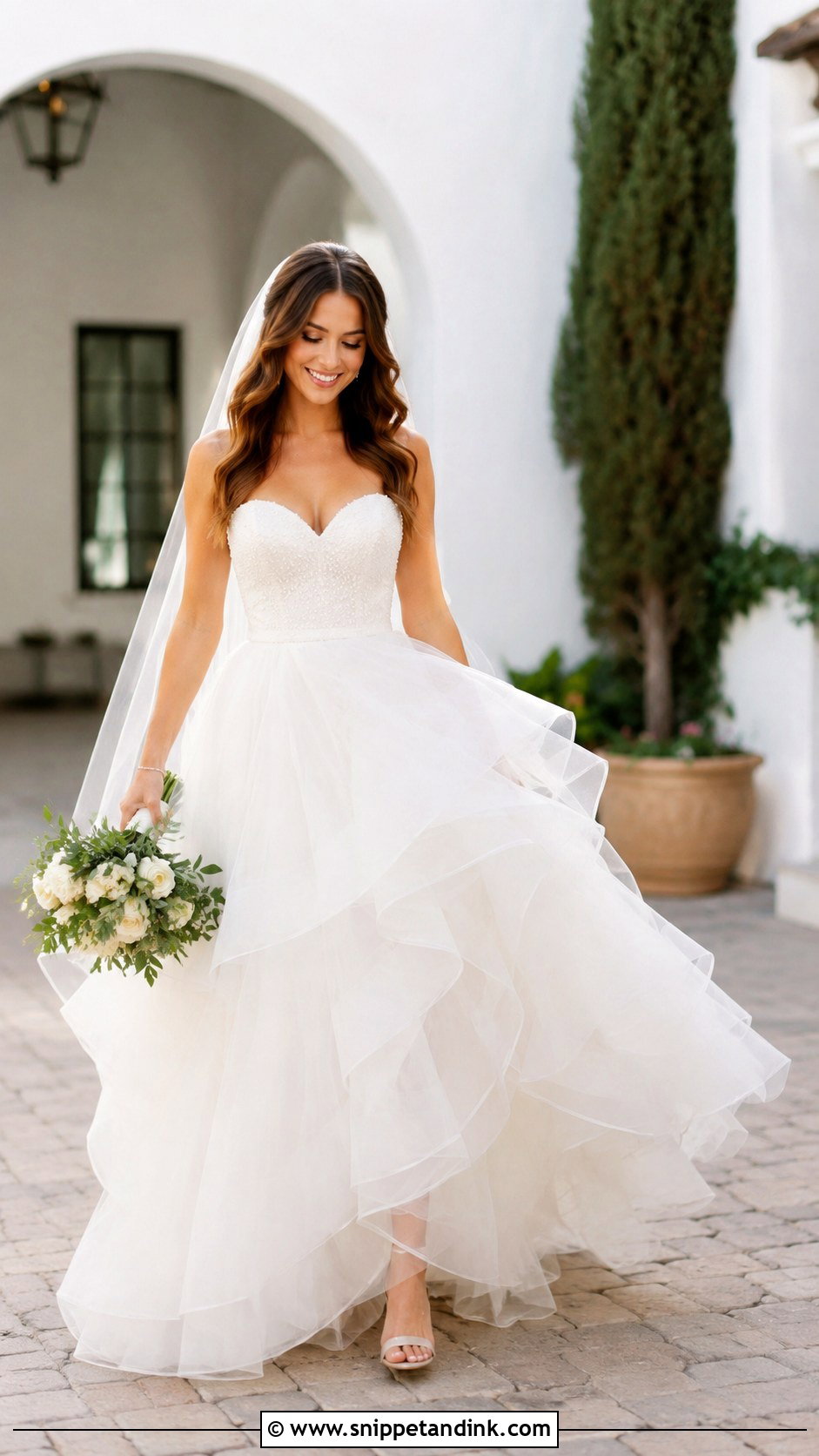
A tiered tulle princess wedding dress gives the most volume and movement here. Horizontal tiers look playful, diagonal layers softer. Pair it with a clean fitted bodice, strapless sweetheart or a simple scoop. I’d keep the veil at fingertip length; a cathedral veil over tiered tulle adds yet another layer and tends to catch on the ruffles. Practise walking in it before the day, especially up steps, because tiers spread wider than you expect. Soft waves and a loose bouquet keep it light.
14. Ruffled Organza Princess Wedding Dress
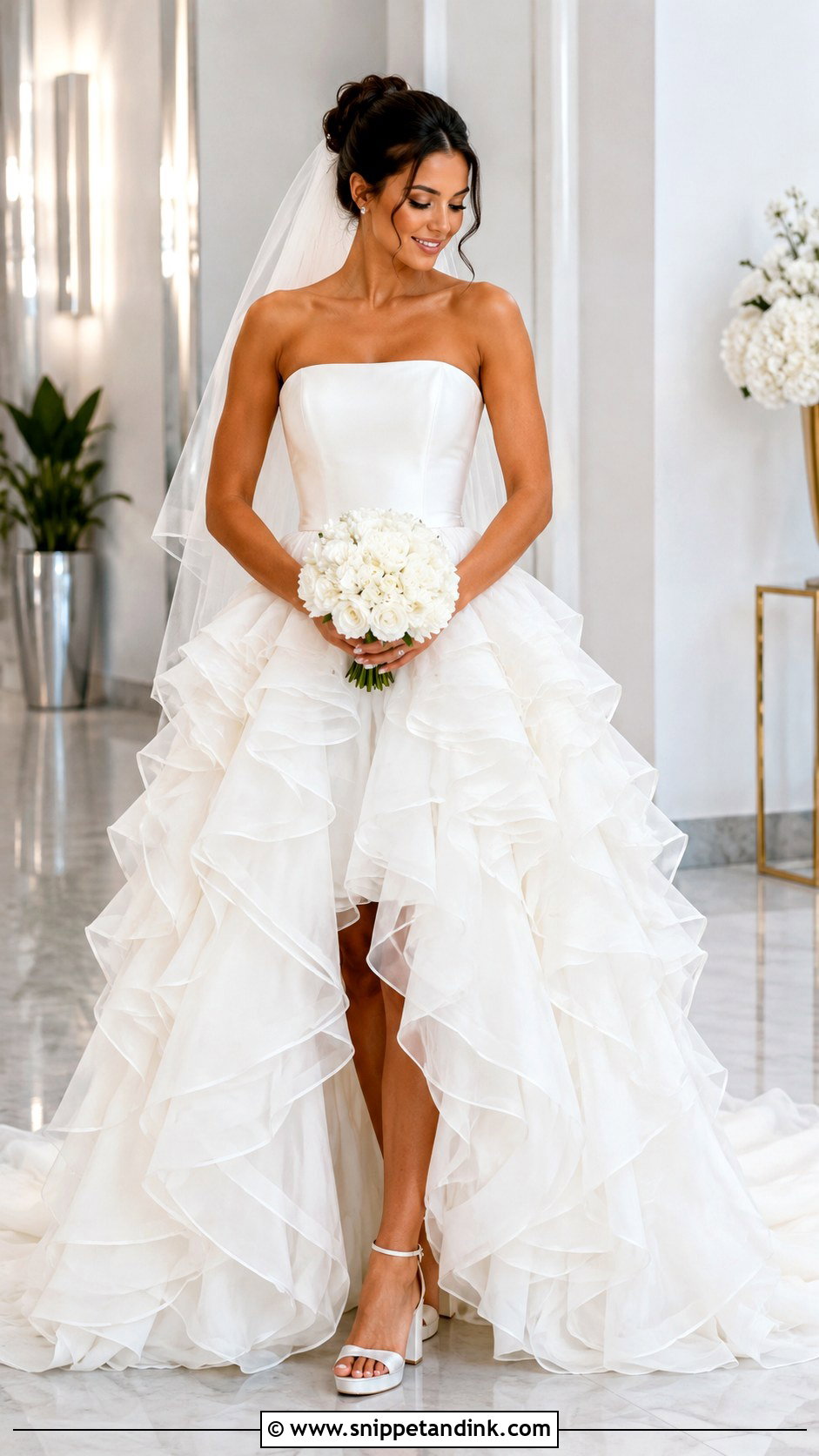
Organza ruffles look dramatic but stay lighter than tulle tiers, because the fabric is crisp rather than dense. Sculpted ruffles feel editorial; cascading ones are more romantic. A smooth strapless bodice balances the texture best. The hem is where ruffled skirts go wrong: if the ruffles are unevenly set, the skirt drags on one side, so ask your seamstress to hem it with you standing in your wedding shoes. Small studs, a neat updo, a medium veil and satin block heels keep it in proportion.
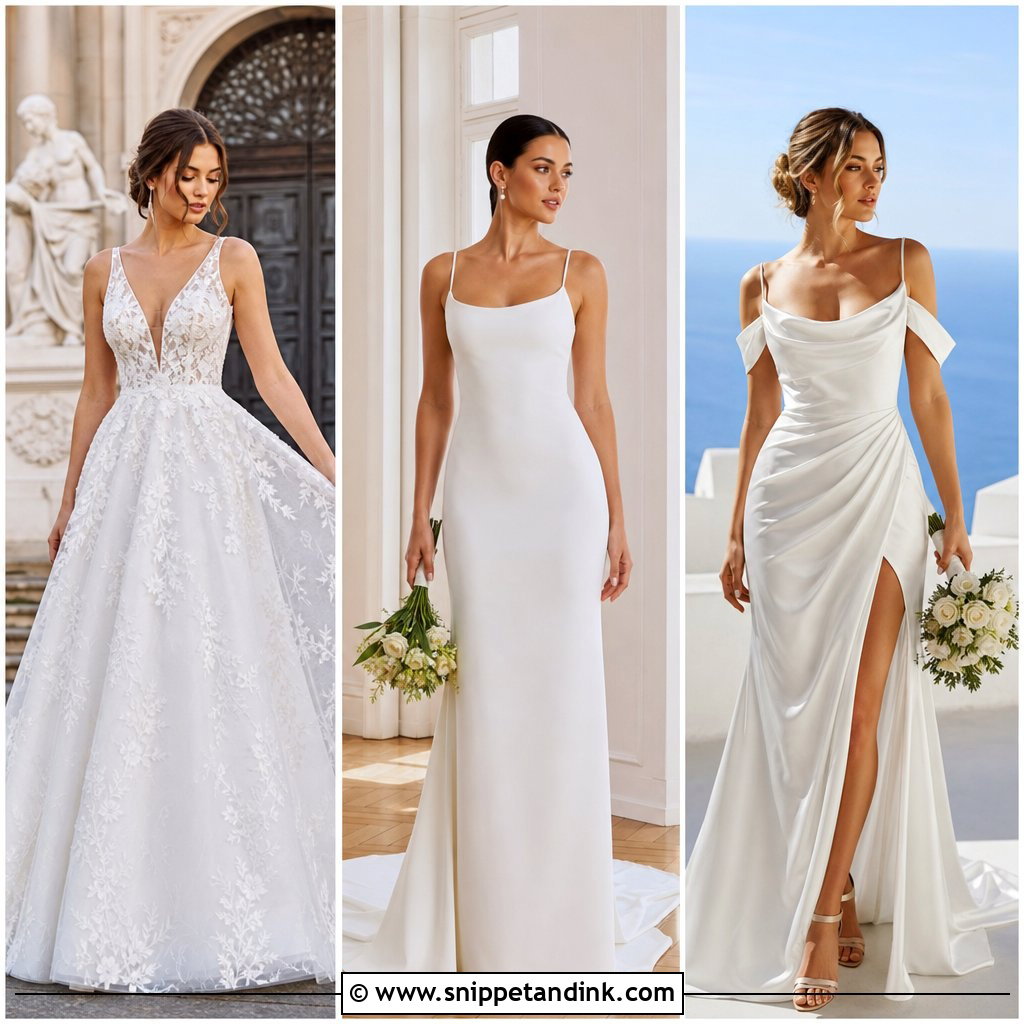


15. Mikado Princess Wedding Dress
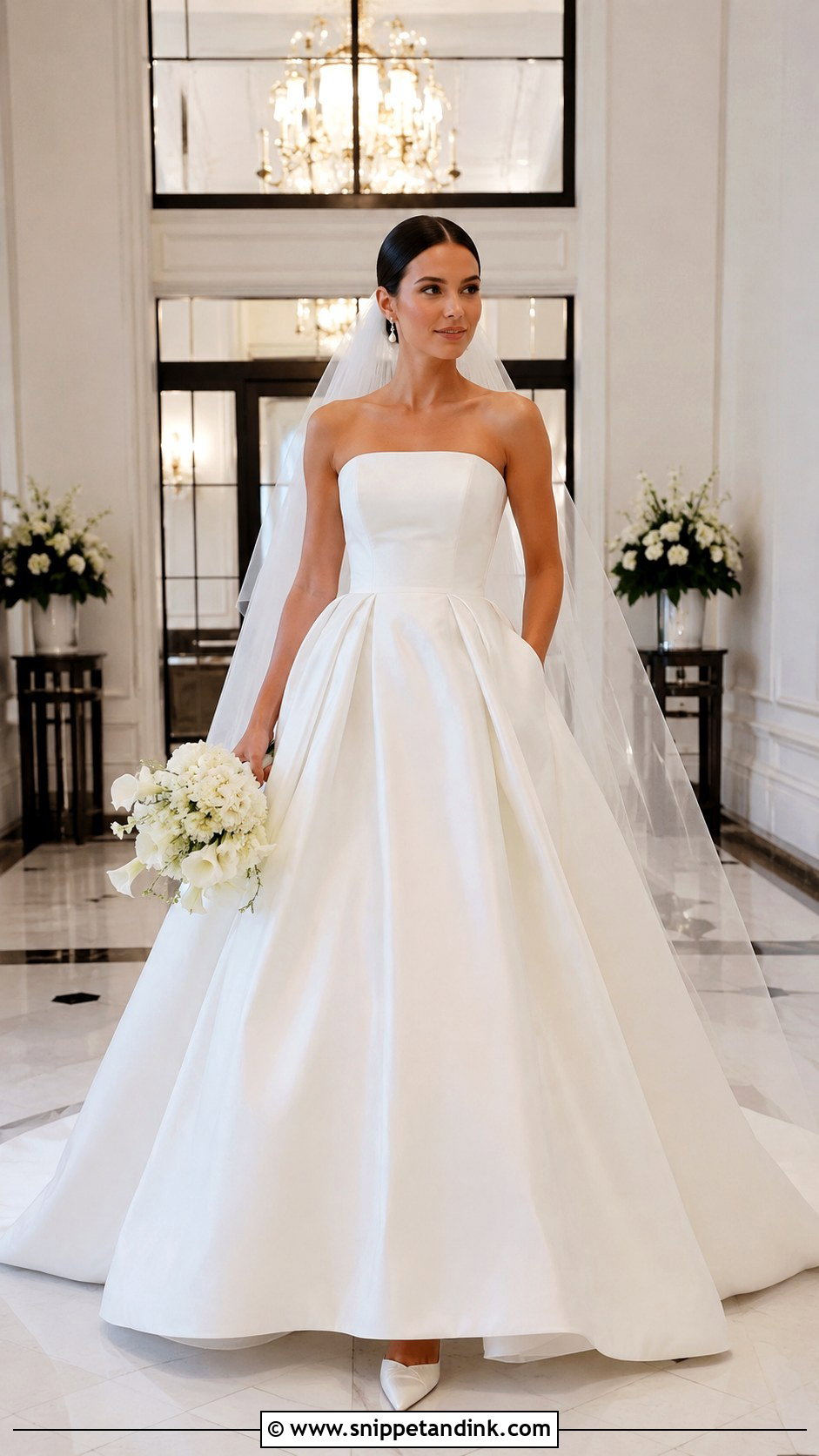
Mikado is a heavy silk-blend weave that holds a fold, so a Mikado princess wedding dress gives crisp volume with box pleats and a sweeping train. Strapless keeps it classic, wide straps add support. The fabric doesn’t forgive a poor fit, and it creases sharply if you sit on it carelessly, so I teach brides to smooth the skirt under them as they sit. Pearl drops, a sleek chignon, a long plain veil and a structured bouquet suit its polish, and pockets slip into the side seams without spoiling the line.
16. Detachable Sleeve Princess Wedding Dress
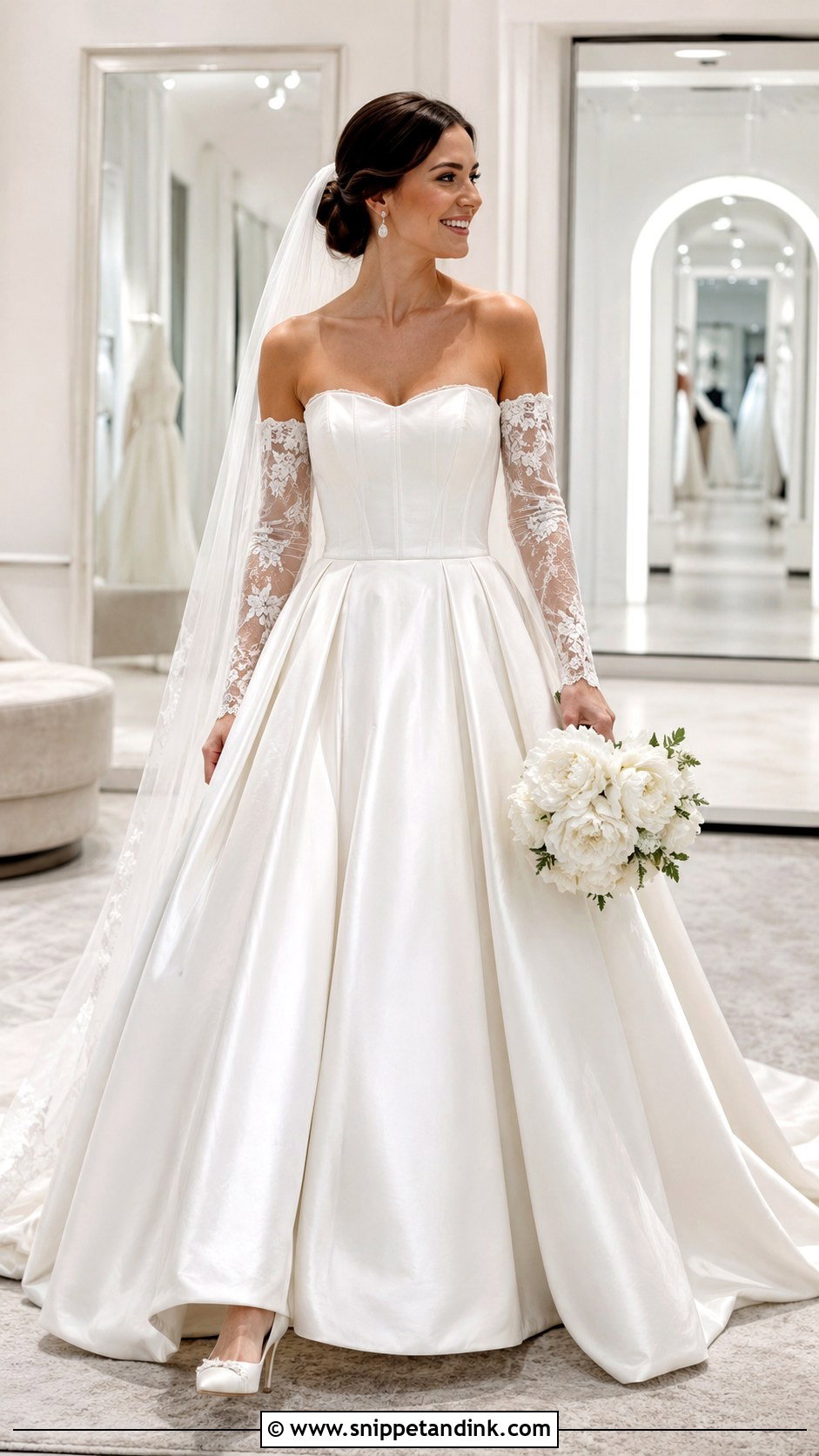
Detachable sleeves give you two looks from one gown: lace sleeves for the ceremony, then a strapless or sleeveless bodice for dancing. Puff sleeves change the look most; sheer off-shoulder ones make a softer switch. Test the attachments during fittings by raising your arms and hugging someone. Hooks and snaps hold better than ribbon ties. Choose one veil that suits both versions, and give the removed sleeves to a bridesmaid in a labelled pouch so they don’t end up crushed under a chair.
17. Cathedral Train Princess Wedding Dress
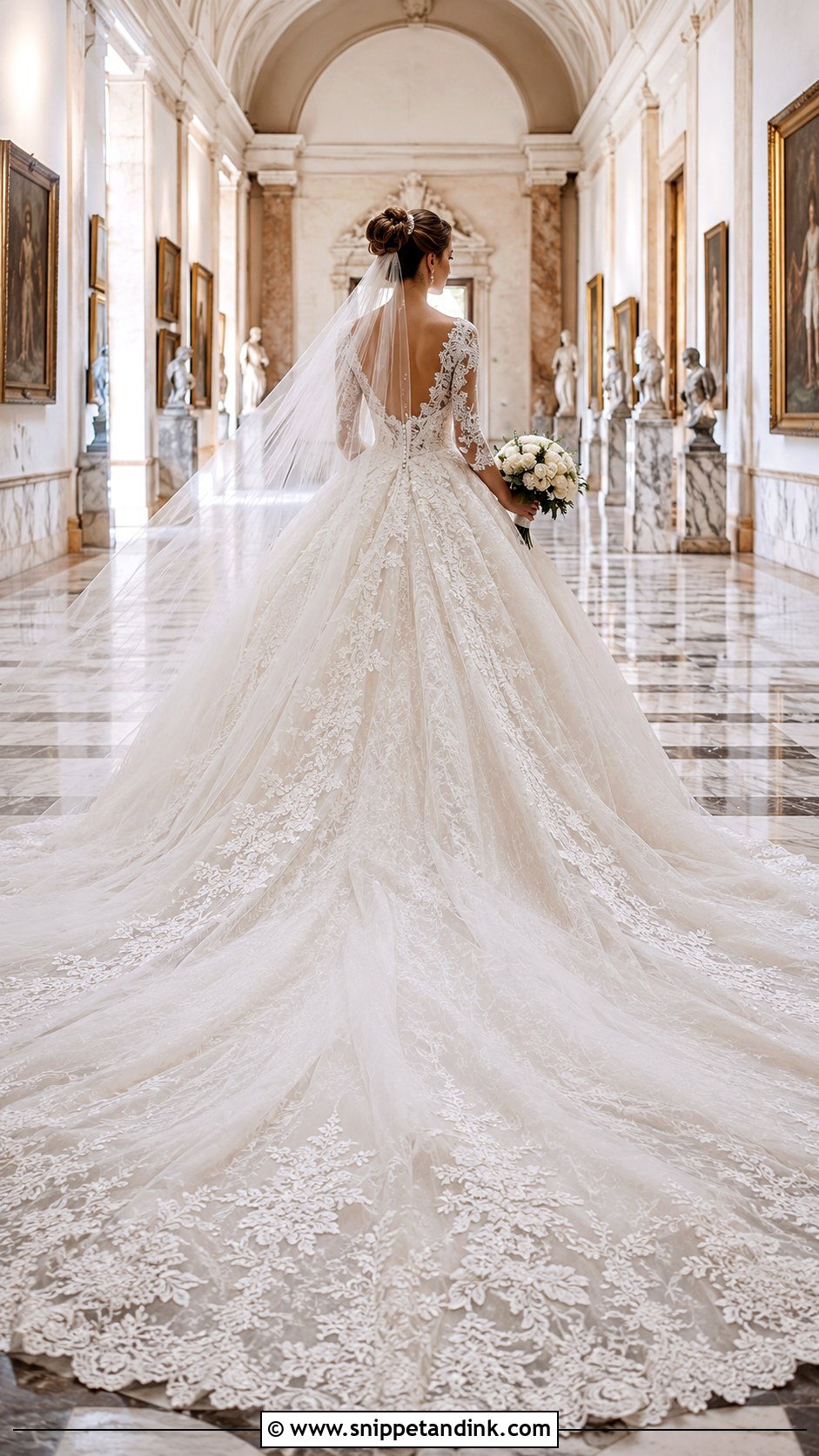
A cathedral train gives the grandest entrance a ball gown can have. Satin shows clean drama, lace shows detail and tulle stays lighter. Pair it with a cathedral veil that doesn’t hide the train’s detail. The bustle is the part brides forget: ask your seamstress for a strong one, with sturdy hooks or ribbon loops, and have your helper practise it at the final fitting. A rushed bustle on the day often ends with a torn loop and a train dragging through the reception.
18. Modest Princess Wedding Dress
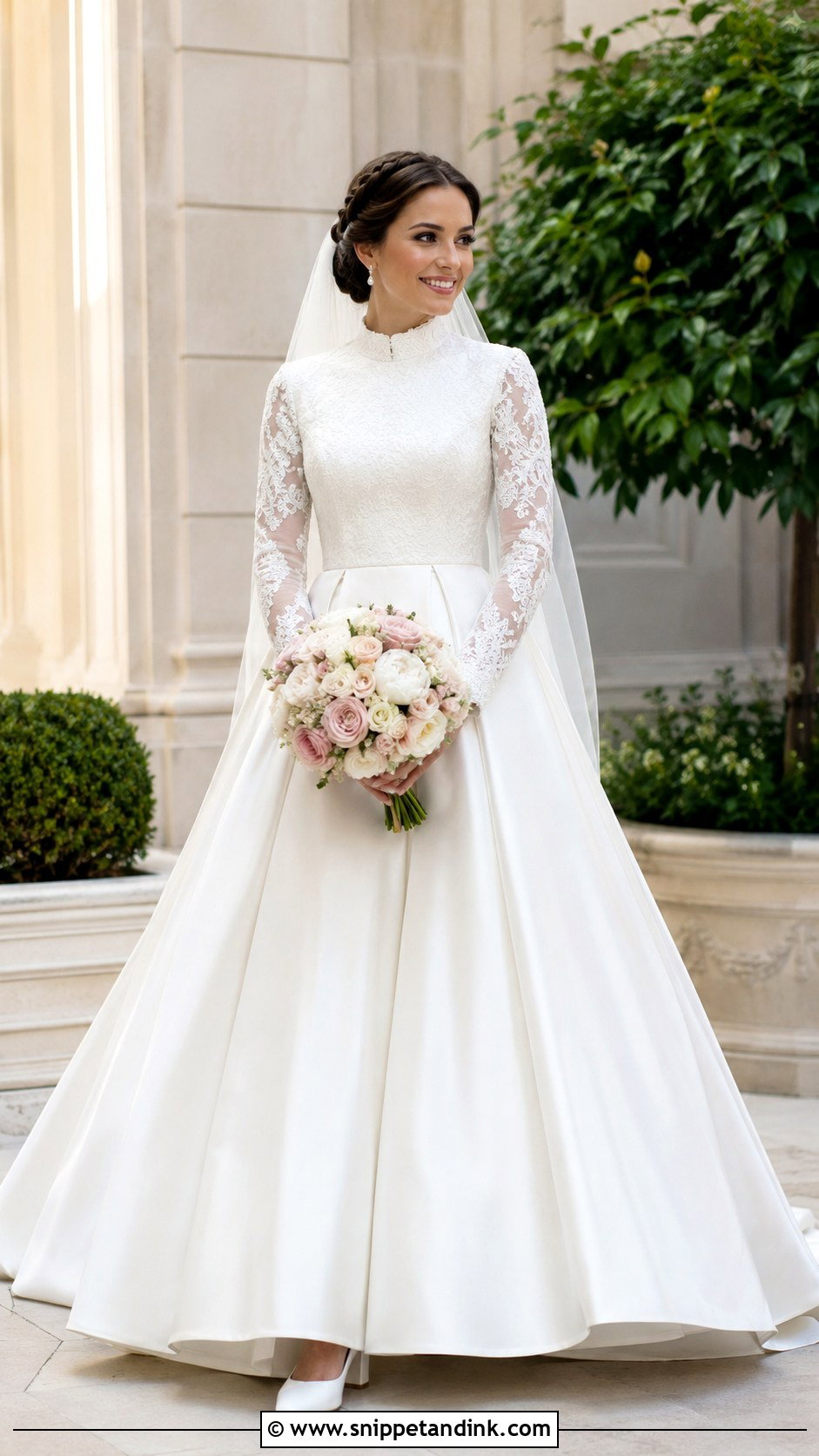
A modest princess gown keeps a defined waist and full skirt with long sleeves, a higher neckline, an opaque bodice and a fully lined back. Satin, crepe or lace all work. The risk is bulk, and careful tailoring at the waist and sleeves is what keeps a covered silhouette looking elegant. Covered buttons, lace cuffs or subtle embroidery add interest without exposure. Pearl earrings, a classic veil and closed-toe block heels finish it, with a braided bun that sits below the neckline.
19. Plus Size Princess Wedding Dress
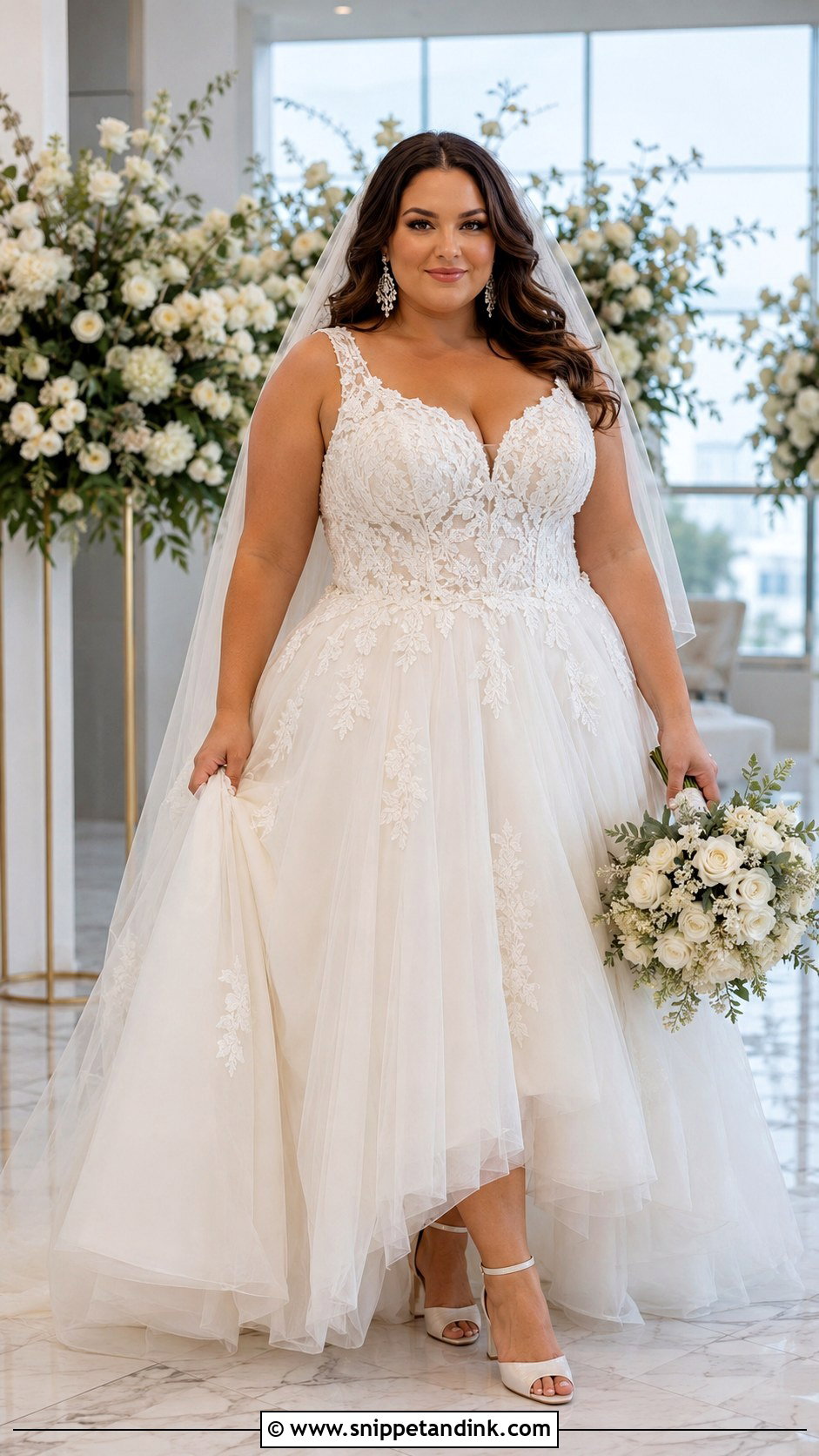
For a plus size princess gown, support comes first, then shape. I look for secure internal construction, either a lace-up back that adjusts during alterations or straps if you prefer them. A defined waist with a full skirt gives a dramatic shape, and lighter layers keep the skirt from feeling heavy by evening. Samples in shops often come in only a few sizes, so judge the style on clips and pins and trust the alterations. Shoes are chosen for comfort first. A veil from the crown suits updos, curls and natural textured hair alike.





20. Blush Princess Wedding Dress
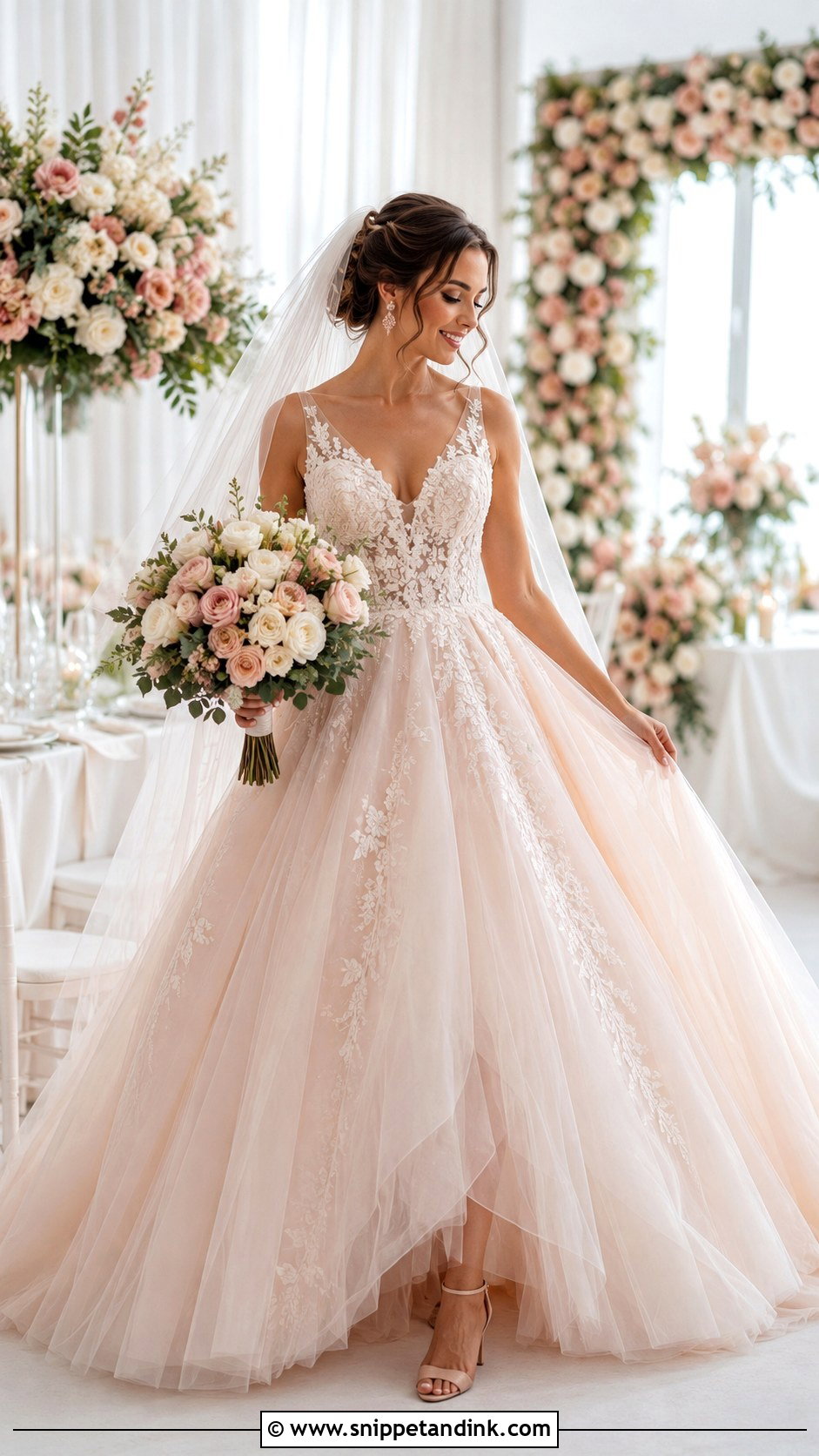
Blush offers a soft alternative to white or ivory. Pale pink, champagne blush and barely-there rose all still read as bridal. Tulle looks airy, satin polished, floral embroidery more dimensional. The color can shift a lot between daylight, warm indoor bulbs and the camera, so take unfiltered phone photos in both kinds of light at your appointment. Rose-gold earrings, blush heels, a sheer ivory veil and a bouquet of cream and pale pink flowers keep it coordinated without matching too closely.
A Full Skirt in the Car, the Bathroom and the First Dance
The parts of the day nobody photographs are where a big skirt gets tricky. I plan for them with every bride wearing a ball gown.
In the car, get in bottom first, then lift your legs, and have someone gather the skirt and train in after you. A larger vehicle saves a lot of crushing. Sit on the skirt’s lining rather than the outer fabric where you can, which keeps satin and Mikado from creasing across the back.
For the bathroom, the easiest method is facing the toilet, with a bridesmaid holding the skirt up from behind. A slip-style petticoat that lifts with the skirt helps, and so does skipping shapewear that’s hard to pull down.
Before the first dance, bustle the train and check that your shoes don’t catch the hem when you step backward. If the dress has a hoop or stiff petticoat, rehearse a turn at home; a big skirt keeps swinging after you stop moving.
The Fitting-Room Test That Matters More Than the Skirt
A princess gown is about more than the fullest skirt. Neckline, fabric, waist placement, train length and embellishment all change how the dress looks and how it feels by evening. Start with the silhouette you’re comfortable in, then let the veil, shoes, jewelry, bouquet and hair support its strongest feature instead of adding new ones. At every fitting, sit, walk, turn and raise your arms. Those few minutes in the fitting room save you hours of tugging and adjusting on the day itself.
You'll Like These Ideas:





Leave a Reply