
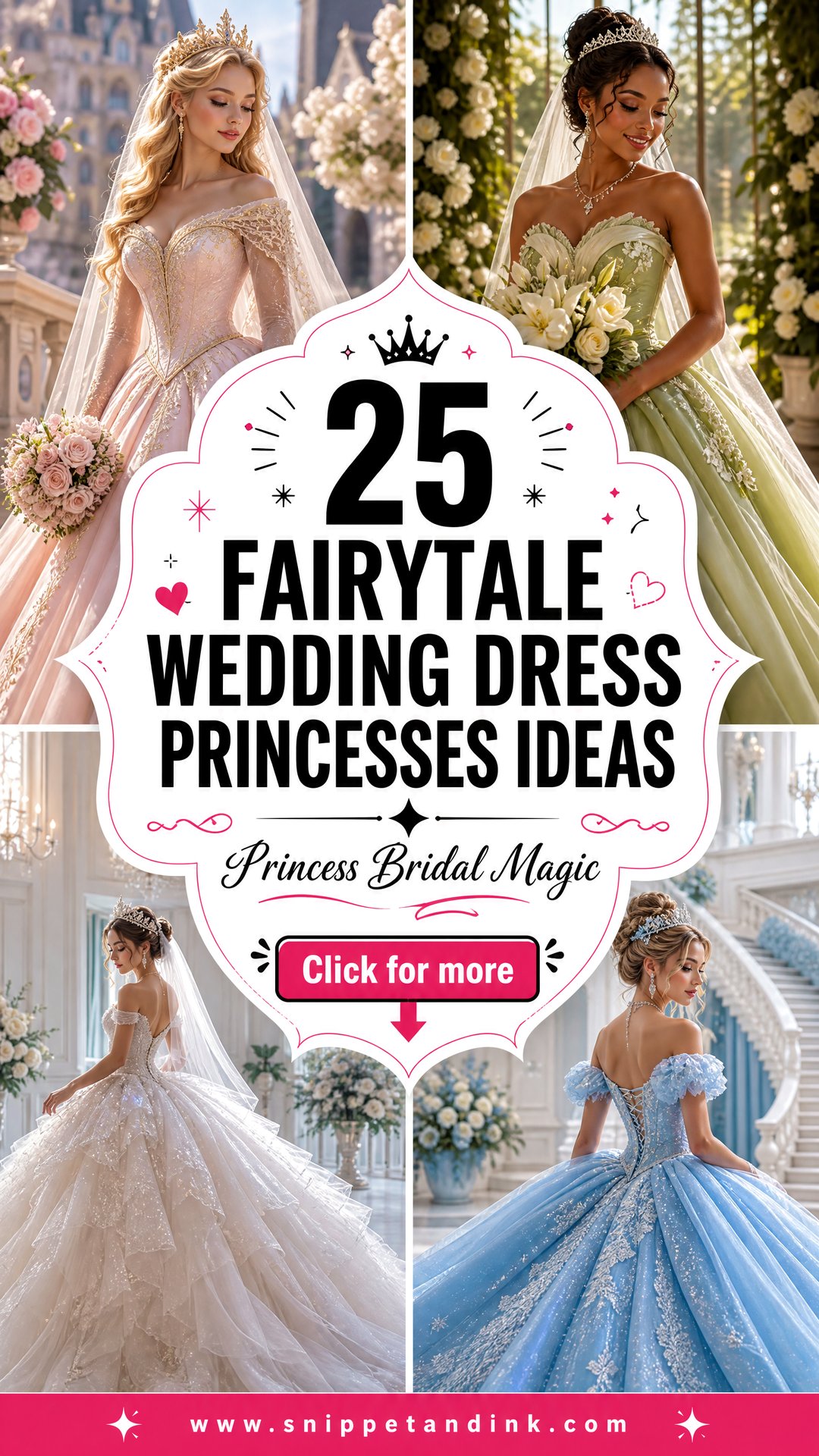
Most brides who tell me they want a fairytale dress are picturing a moment rather than a fabric: the doors opening and the skirt filling the aisle behind them. The good princess wedding dresses today reach that moment in more ways than the classic ball gown, through corseted bodices, layered tulle, pearl work, pastel tints and overskirts that come off after dinner. Below are 25 directions I’d genuinely put in front of a bride, with the accessories I’d style around each and the practical catch I’d warn her about. Read them with your venue and your own comfort in mind, because a skirt that looks right on a showroom podium still has to survive a car, a long dinner and a dance floor.
The Weight and Width Nobody Mentions at the Bridal Shop
A full skirt photographs like air, but it doesn’t behave like air. A layered satin or Mikado ball gown can be surprisingly heavy, and almost all of that weight hangs from your waist. Tulle is far lighter, though once you add a hoop or several petticoats the width becomes the issue instead: doorways, car doors, narrow aisles between dinner tables and the bathroom stall all have to accommodate it.
Hoop or petticoat underneath?
A hoop gives the cleanest bell shape and keeps fabric off your legs, which helps in heat, but it swings when you turn and it tips up at the back when you sit. A layered net petticoat is softer, sits better in a chair and packs more easily, though it adds warmth. I usually let the venue decide: hoops for grand rooms with space to move, petticoats for anything involving cars, stairs or a long seated dinner.
Five things I make every bride do in the fitting room
- Sit on an armless chair for a few minutes, then stand without help.
- Walk up three or four steps holding the skirt in one hand and an imaginary bouquet in the other.
- Raise both arms above shoulder height as if hugging someone taller.
- Turn quickly on the spot to feel how far the skirt swings.
- Ask how the bustle works and whether it can carry the train for a full evening.
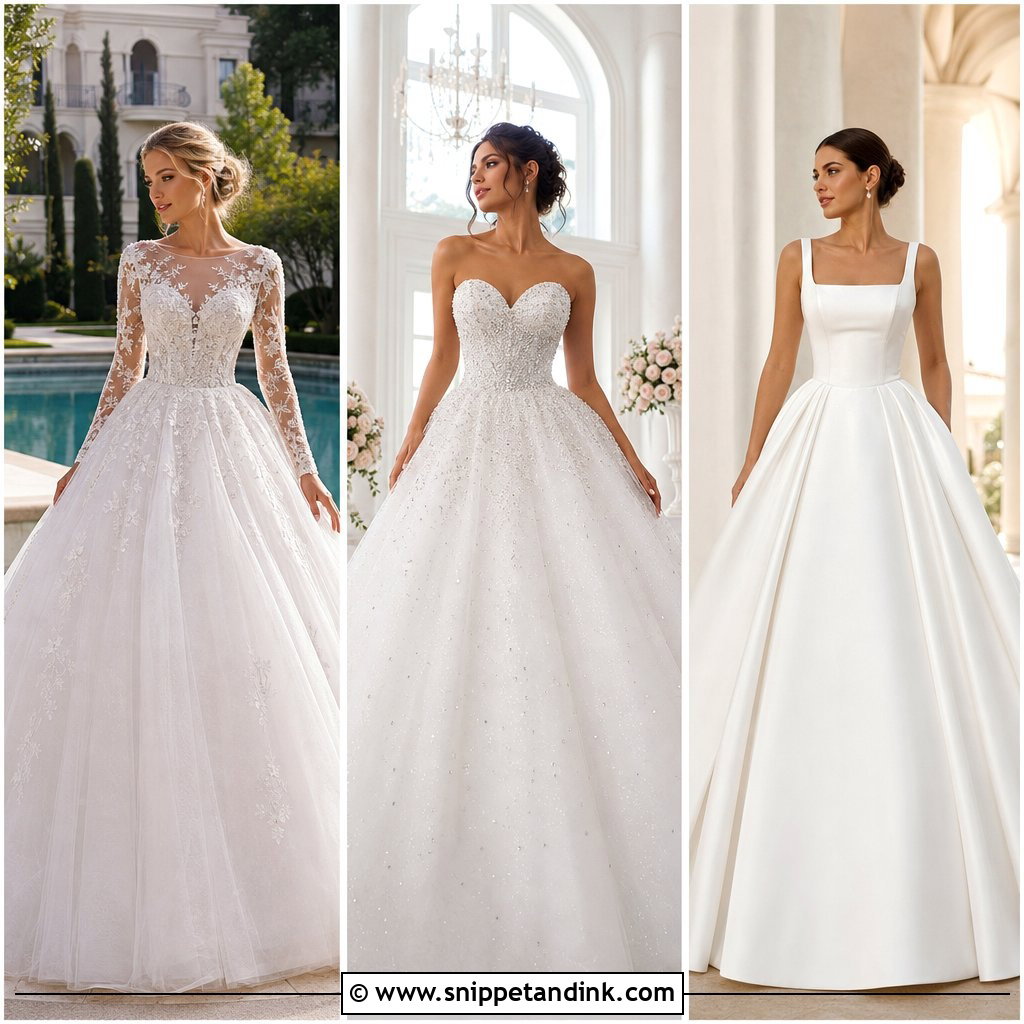
1. Princess Ball Gown Wedding Dress
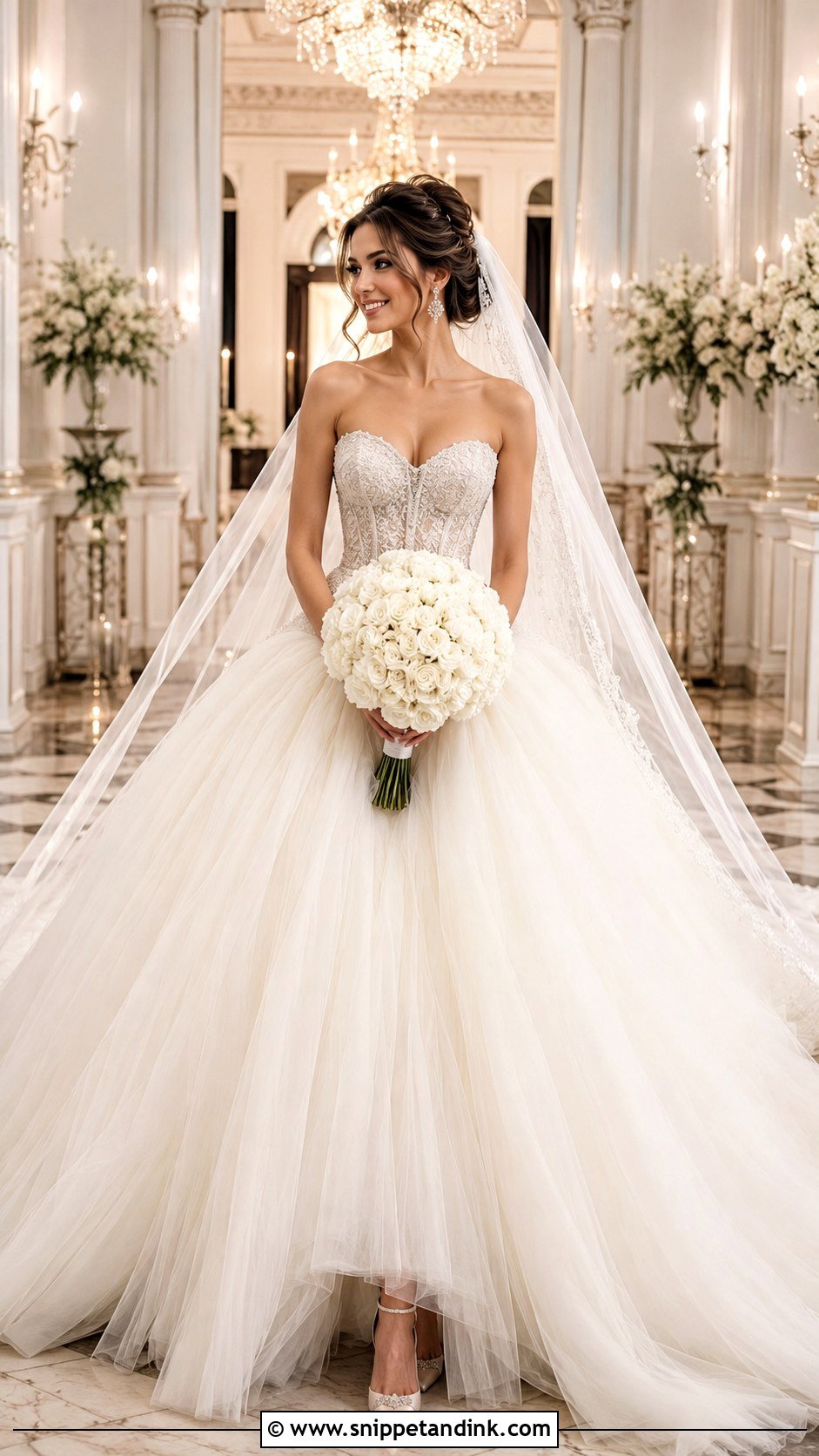
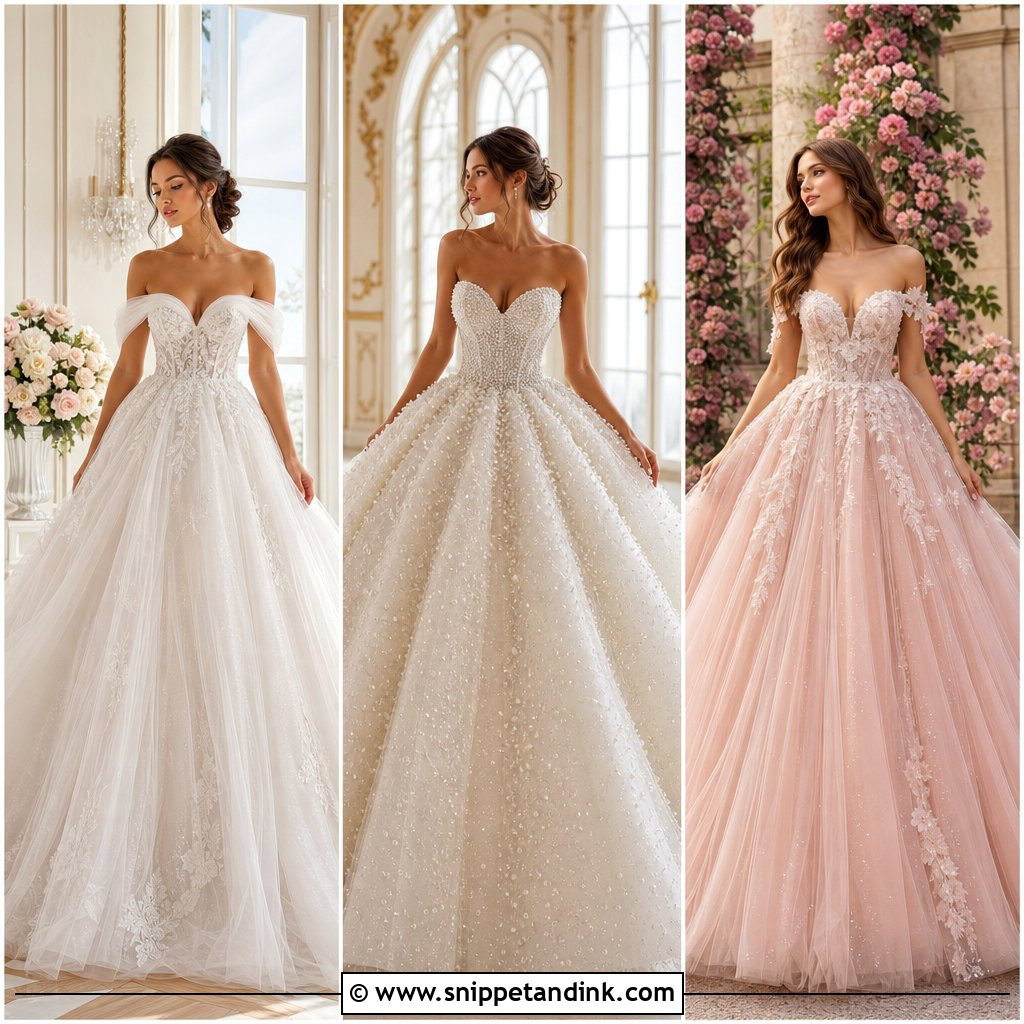
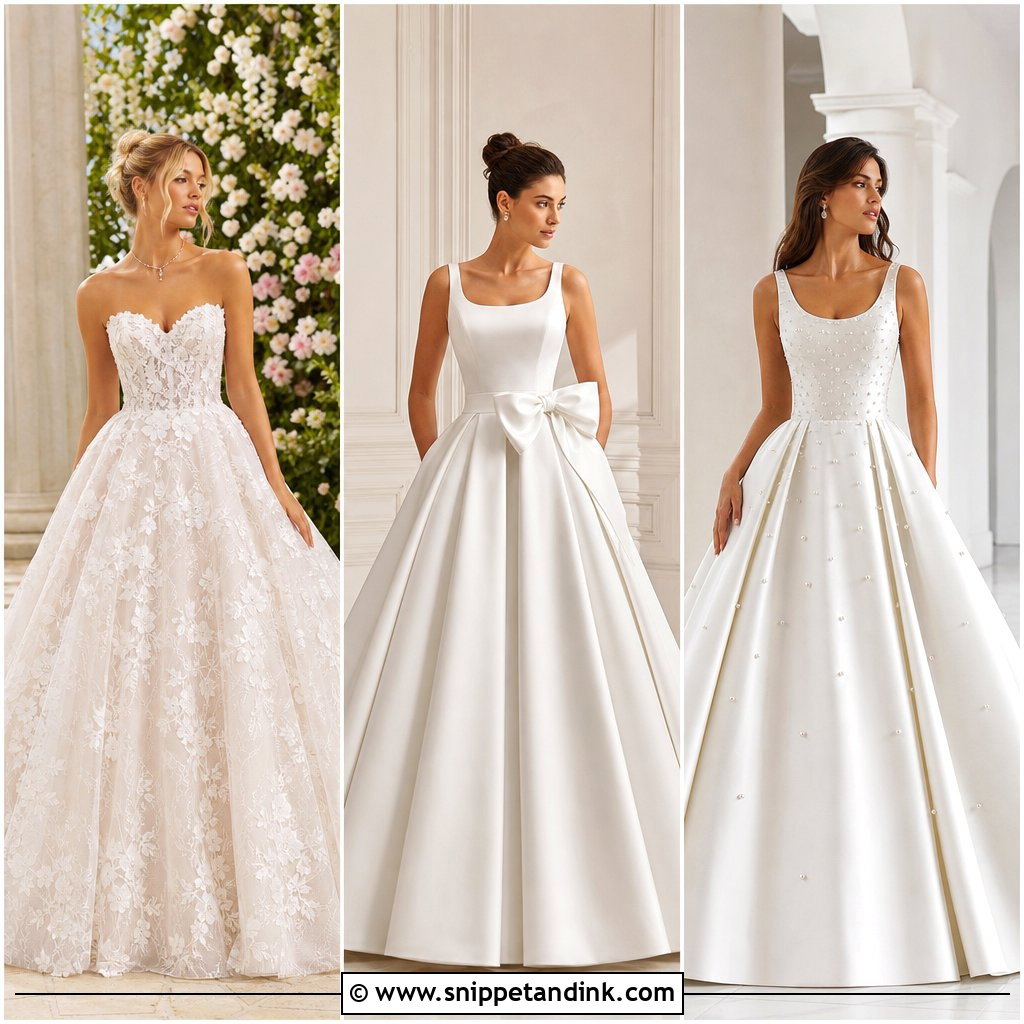
This is the shape I’m asked for most, and it lives or dies on the waist seam. A princess ball gown wedding dress should sit exactly at your natural waist, because a seam that drops even slightly makes the skirt look as if it’s dragging you down. Tulle, organza, satin and Mikado all hold the silhouette, but they weigh very different amounts, and layered satin over a hoop can feel heavy by the reception. On petite brides I thin the layers so the skirt doesn’t swallow her; taller brides can carry more volume and a longer train. I finish it with a cathedral veil, crystal drops, pointed satin heels and a rounded bouquet of roses, ranunculus or peonies.
2. Cinderella Wedding Dress
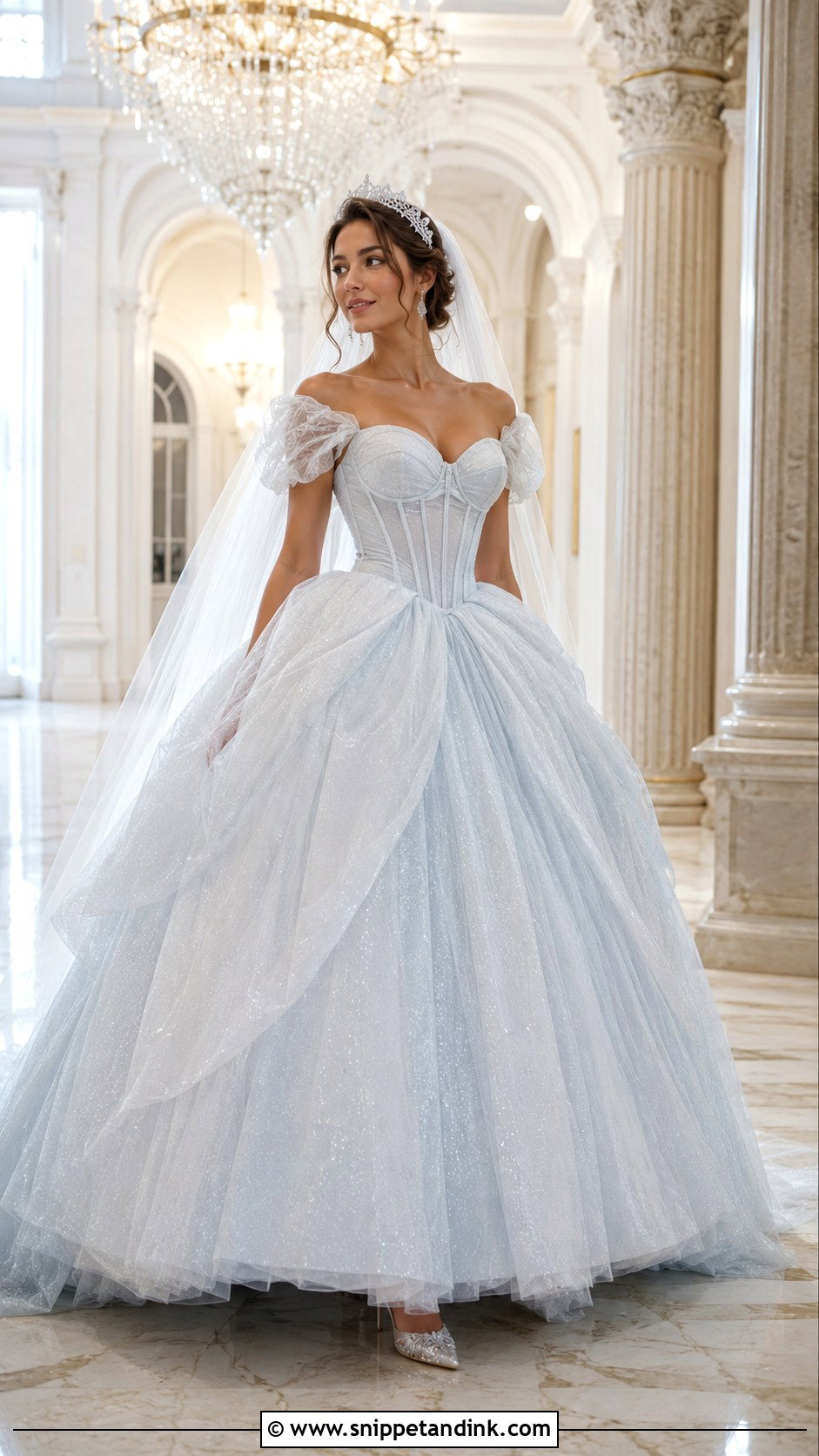
The line between bridal and costume is thin with this one, and pale blue is usually where it tips over. I prefer the blue as a whisper in the tulle, or I swap it out for ivory or champagne with fine crystal embroidery and let the corset bodice and wide, light skirt carry the reference. Glass-slipper heels and a small tiara are enough cues; add a third obvious one and guests start wondering about a theme. Ballrooms, estates and grand hotels give this skirt the floor space it needs, and luminous skin with a little shimmer on the lid keeps the face fresh.
3. Belle Wedding Dress
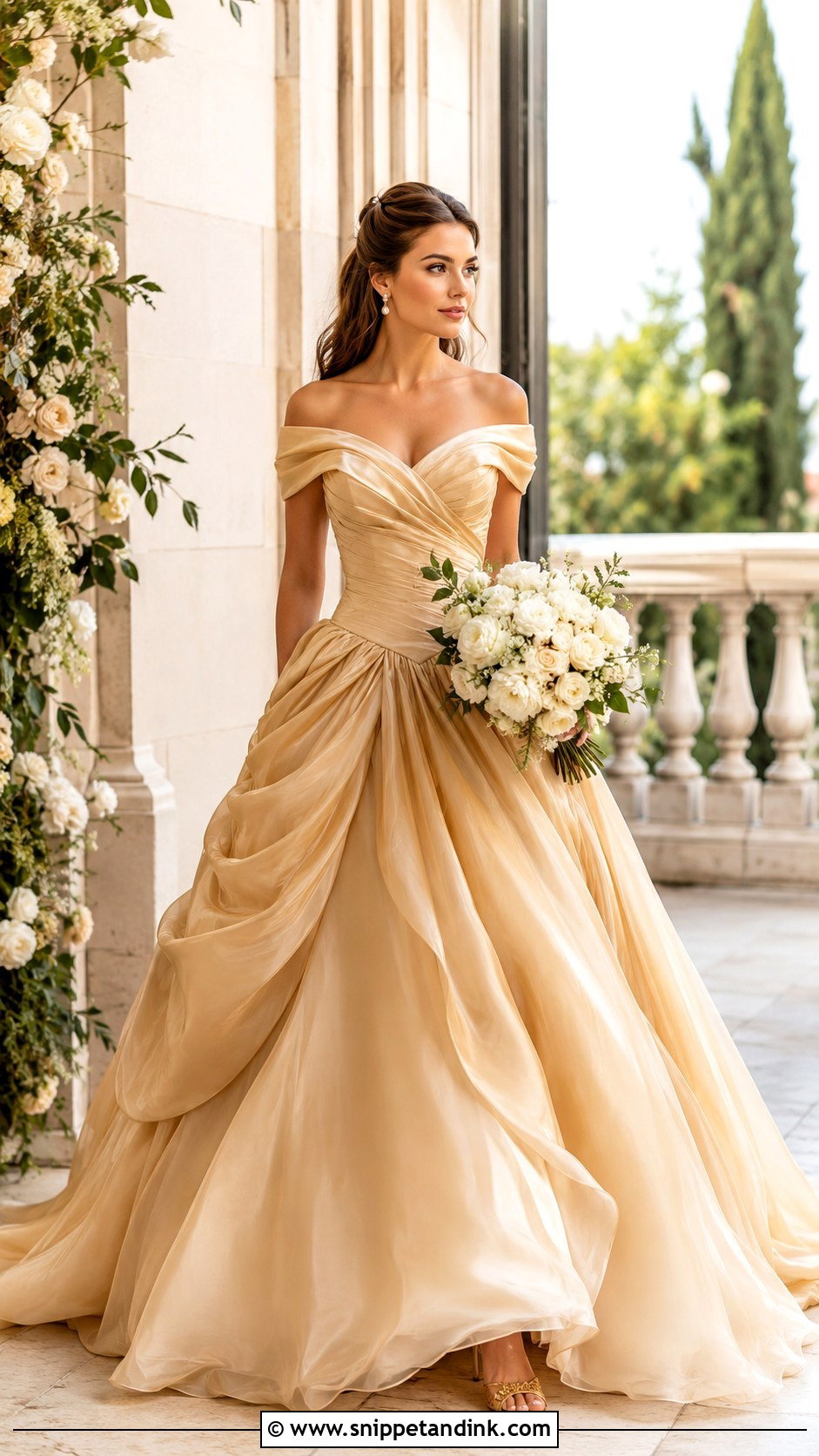
Yellow is the trap here. I almost always translate it into ivory, champagne, honey beige or pale gold, which keeps the warmth without making the bride look like a guest in a colored gown. A draped off-the-shoulder neckline over a corset waist and a layered skirt reads as a Belle wedding dress without anyone needing the reference spelled out, and gathered tulle or organza gives the skirt more swing as you walk. Pearl earrings, a low curled bun and gold-toned heels suit it. Candlelit ballrooms and old houses flatter these warm shades far more than flat midday sun does.
4. Aurora Wedding Dress
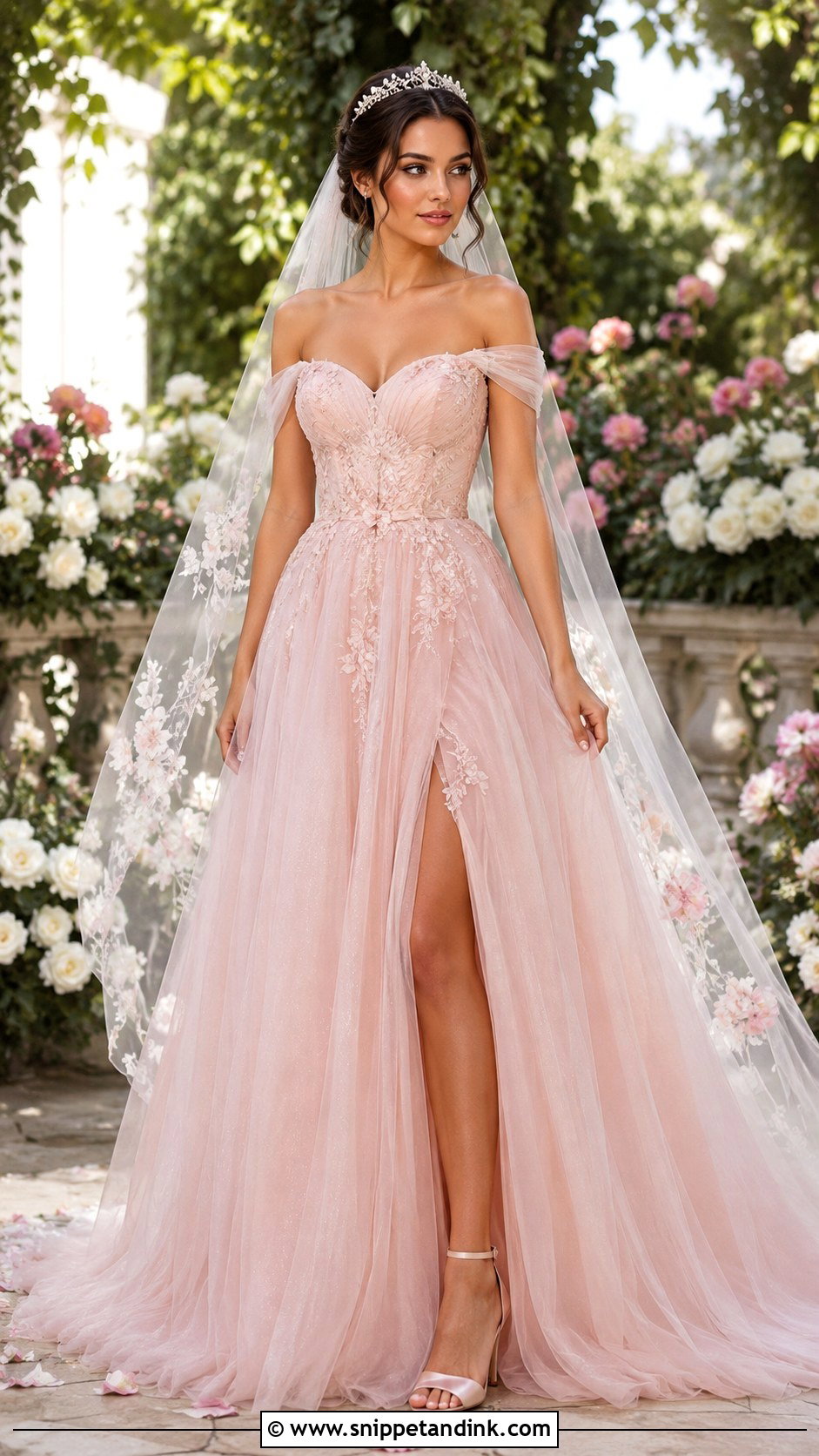
Blush is the color I’d always test in person, because the same pink can look rosy on one skin tone and washed out on another. For this look I pull ivory or petal-toned gowns with a sweetheart neckline, off-the-shoulder straps or fine floral embroidery, set over a full tulle skirt. A pearl tiara, soft pink satin heels and a sheer veil with tiny appliqués are all it needs. Hair and makeup stay fresh: soft waves, rosy lips, skin that glows rather than shines.
5. Ariel Wedding Dress
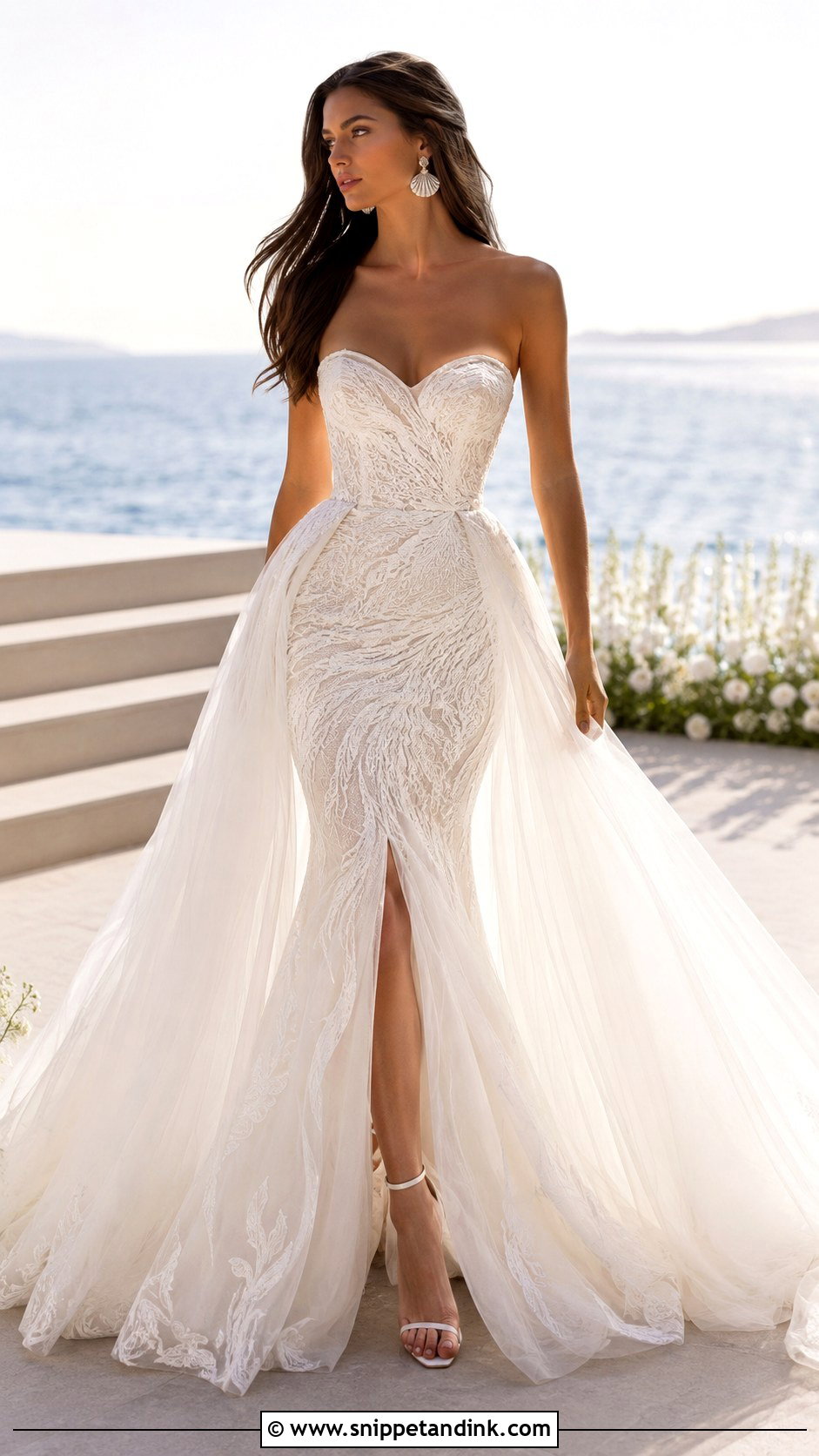
Here the princess reference comes from shape instead of volume. A mermaid, fit-and-flare or soft trumpet gown with pearl beading, wave-patterned lace or shimmer tulle makes the ocean nod quietly in ivory, champagne, pearl white or a faint seafoam undertone. The honest catch is the knee: a true mermaid flares low, so I have every bride walk the length of the salon and sit down before she says yes, and a trumpet is kinder if she plans to dance hard. Shell-inspired earrings, loose waves and strappy heels finish it, and a detachable overskirt gives you a full skirt for the vows and freedom afterward.
6. Rapunzel Wedding Dress
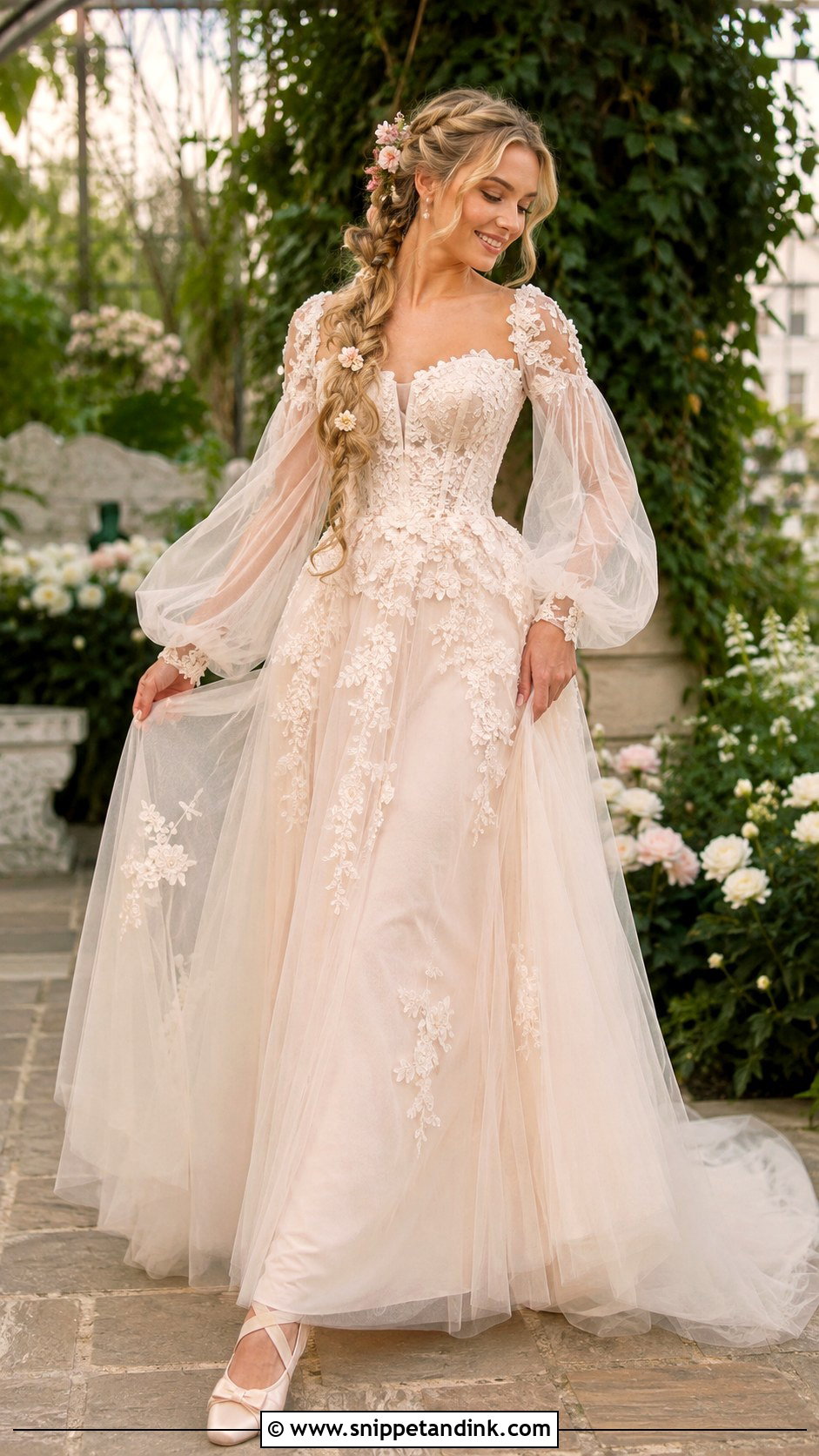
Texture does the storytelling: floral appliqués, lace sleeves, corset lacing and airy tulle. The risk is clutter, so I let one of those lead and keep the rest quiet. Ivory, blush, lavender-tinted white and soft champagne all suit it. A braid with a floral hair vine is the natural pairing, and I’d have the stylist weave the vine into the braid rather than lay it on top, since a loose vine slides the moment the veil goes in. A long veil with scattered flowers and a loose bouquet with trailing ribbon belong in a garden or castle-style venue full of greenery.
7. Tiana Wedding Dress
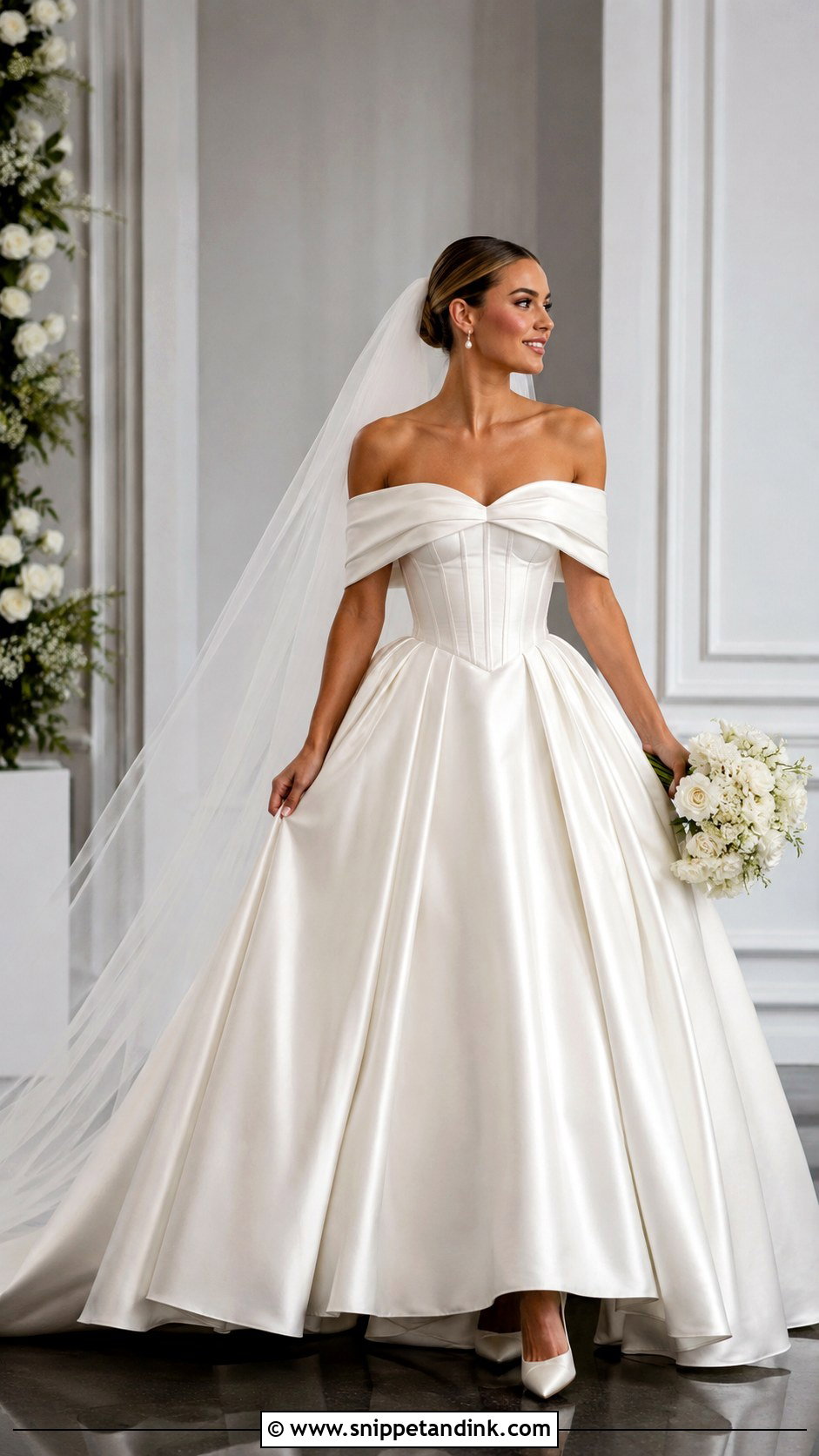
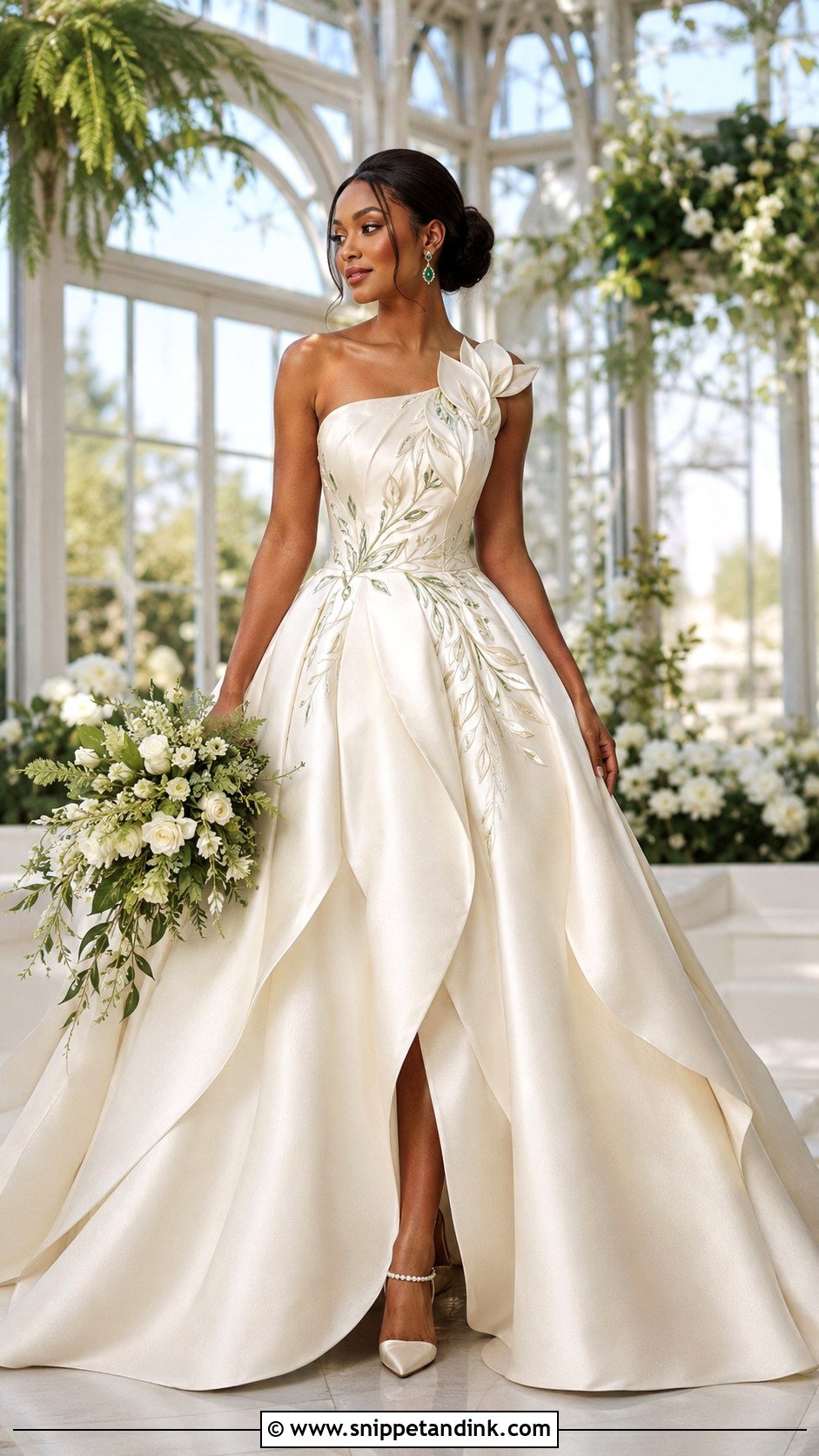
Green on a wedding dress is a hard sell to most families, so I usually keep it as an undertone or move it into the jewelry. An ivory gown with botanical lace plus emerald earrings gets you there with no visible color in the dress at all. If you do want the petal-shaped skirt or soft green satin, a strapless or one-shoulder bodice keeps it polished, worn with pearl heels and a sleek updo. Conservatories and garden venues suit this, and a bouquet of white blooms and fresh greenery repeats the color where it’s safest.
8. Snow White Wedding Dress
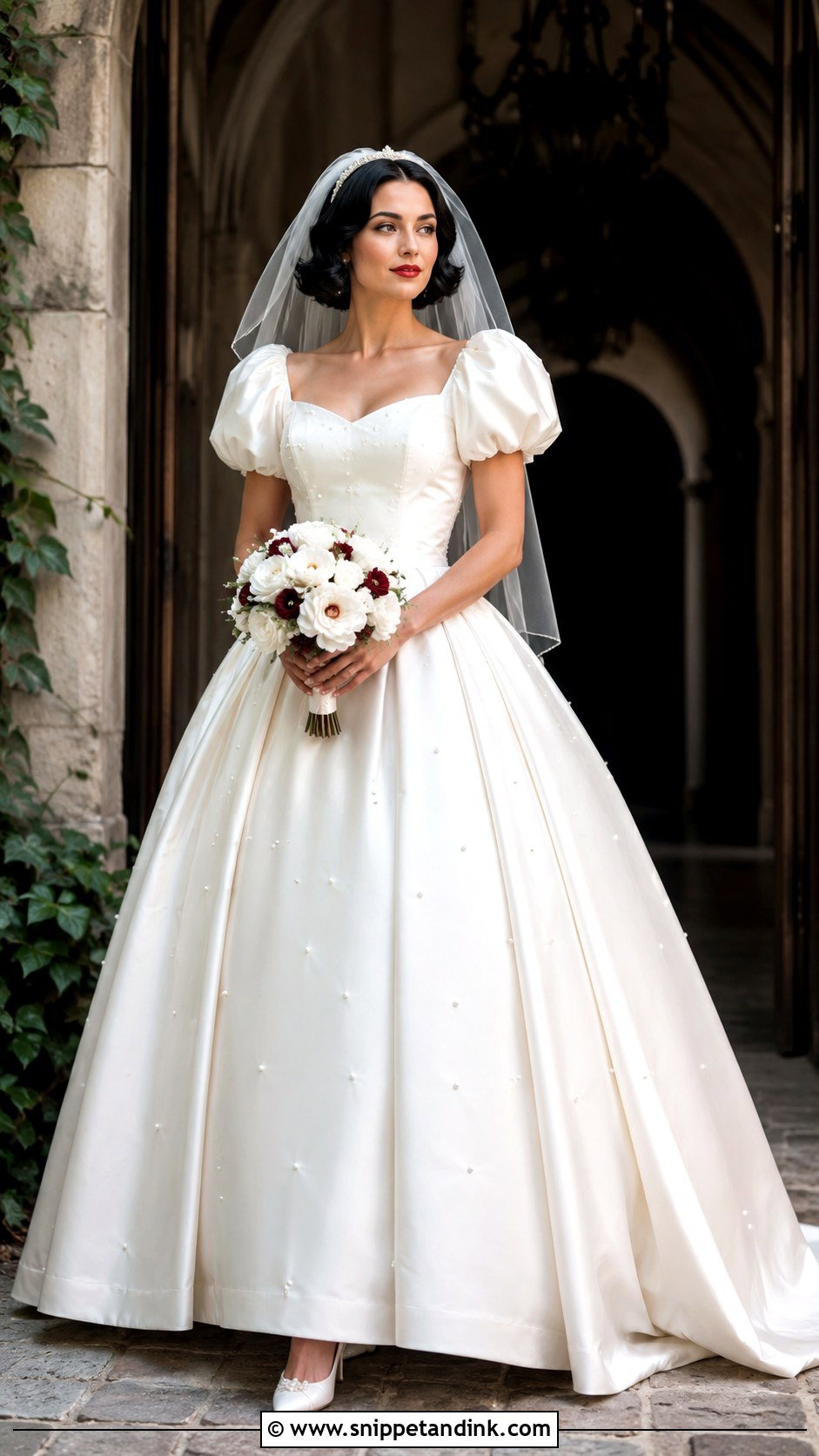
Structure is what keeps this one bridal instead of fancy dress. Look for satin with clean seams, a high neckline or lace illusion, and puff sleeves cut small; oversized puffs are exactly where it turns into a costume. Bright white and ivory both work against berry or red-toned flowers. A red lip suits the reference, but I keep eyes and skin soft so the face doesn’t harden in photos. Pearl studs, a neat veil and satin pumps belong at a historic venue or a formal church ceremony.
9. Jasmine Wedding Dress
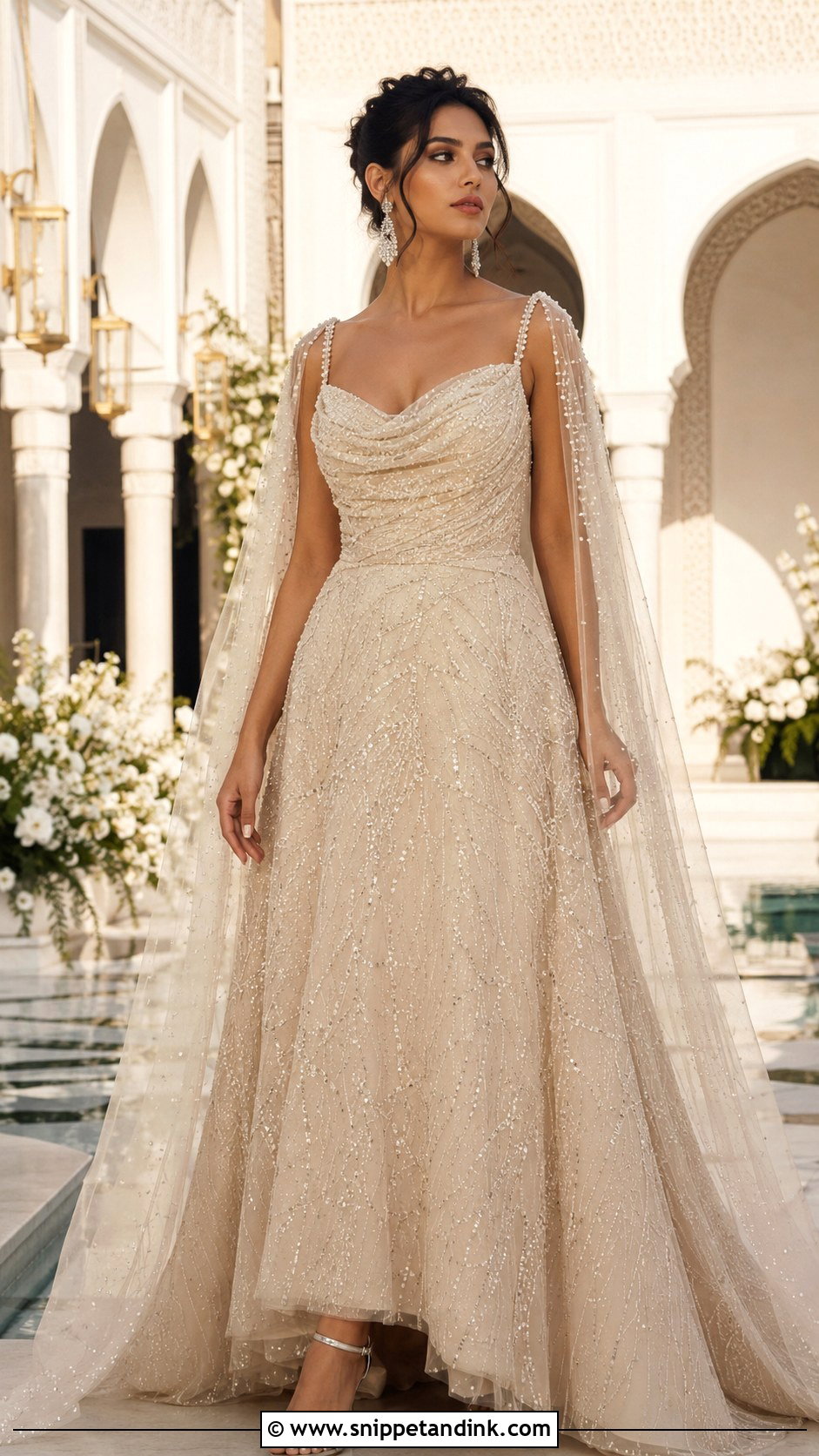
If a ball gown isn’t you, this is the princess idea that needs no volume. A beaded A-line, draped bodice, pearl-embellished straps or soft metallic embroidery feels regal in ivory, champagne, gold or pale blue. At the first fitting I check how heavy the beadwork is on the straps, because dense beading drags straps outward over a long day. A smooth low ponytail, statement earrings, metallic heels and a sheer cape veil complete it, and long illusion sleeves with beading add coverage without dulling the shine.
10. Off The Shoulder Princess Wedding Dress
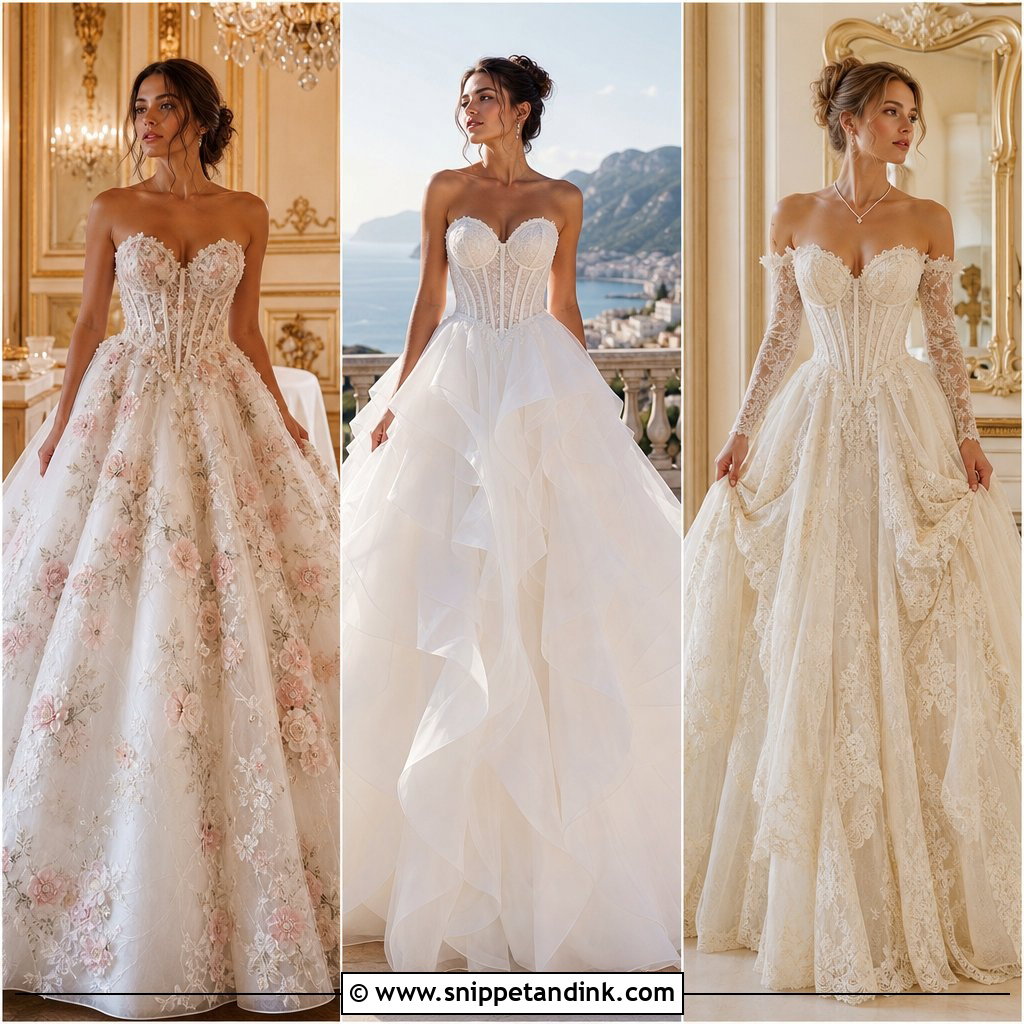
I rate this neckline highly for how it frames the collarbone, but the fit has to be right: an off the shoulder princess wedding dress needs a corset bodice built to hold itself up, because the sleeves can’t. If it hasn’t been anchored properly you’ll be hitching it all night and unable to raise your arms to hug anyone. Lace makes it romantic; satin or Mikado makes it royal. I leave the neck bare, add pearl drops and a low bun so the shoulders stay open, and finish with satin heels and a long veil. Drawing the eye upward while defining the waist suits a wide range of figures.
11. Long Sleeve Princess Wedding Dress
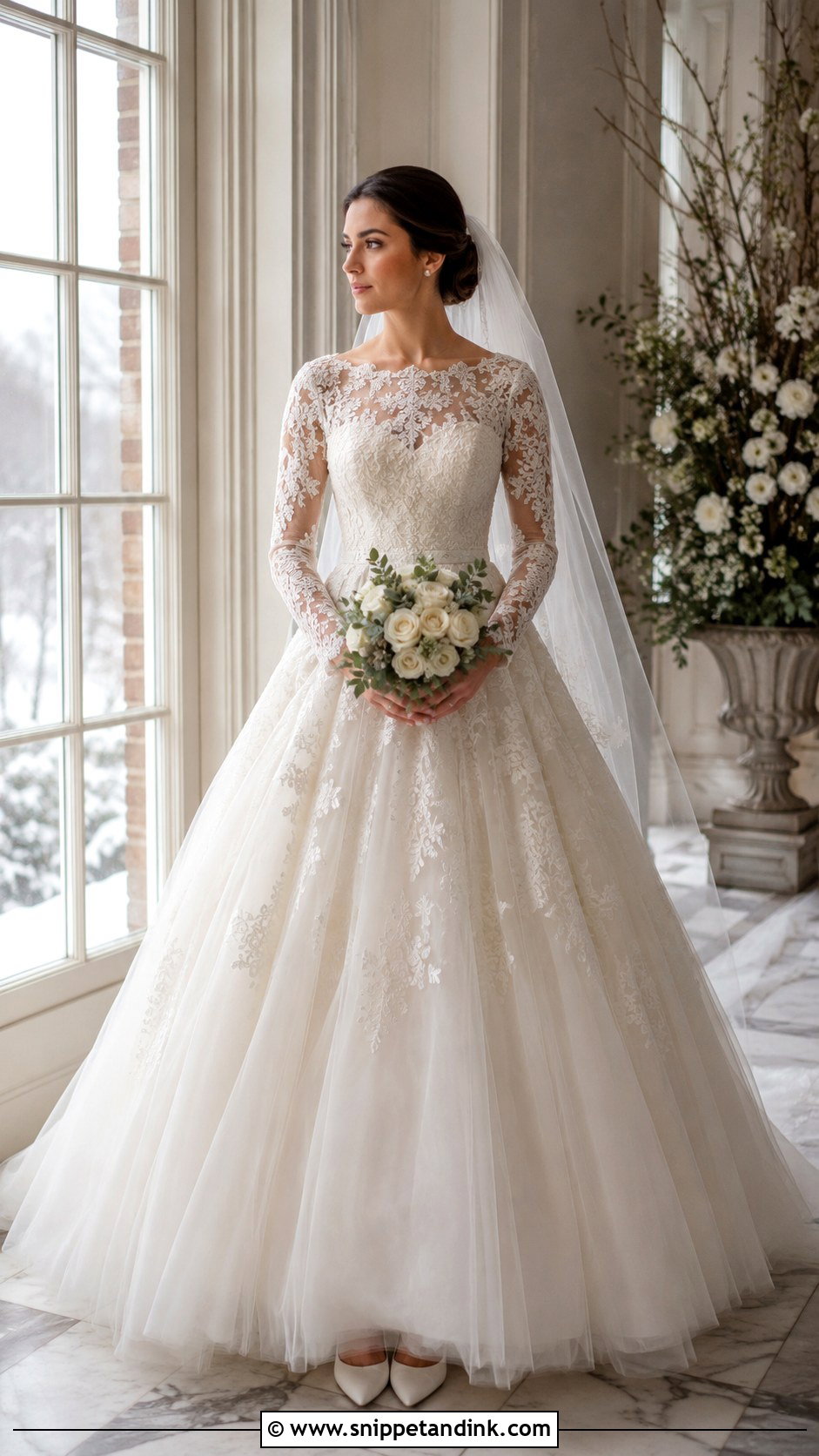
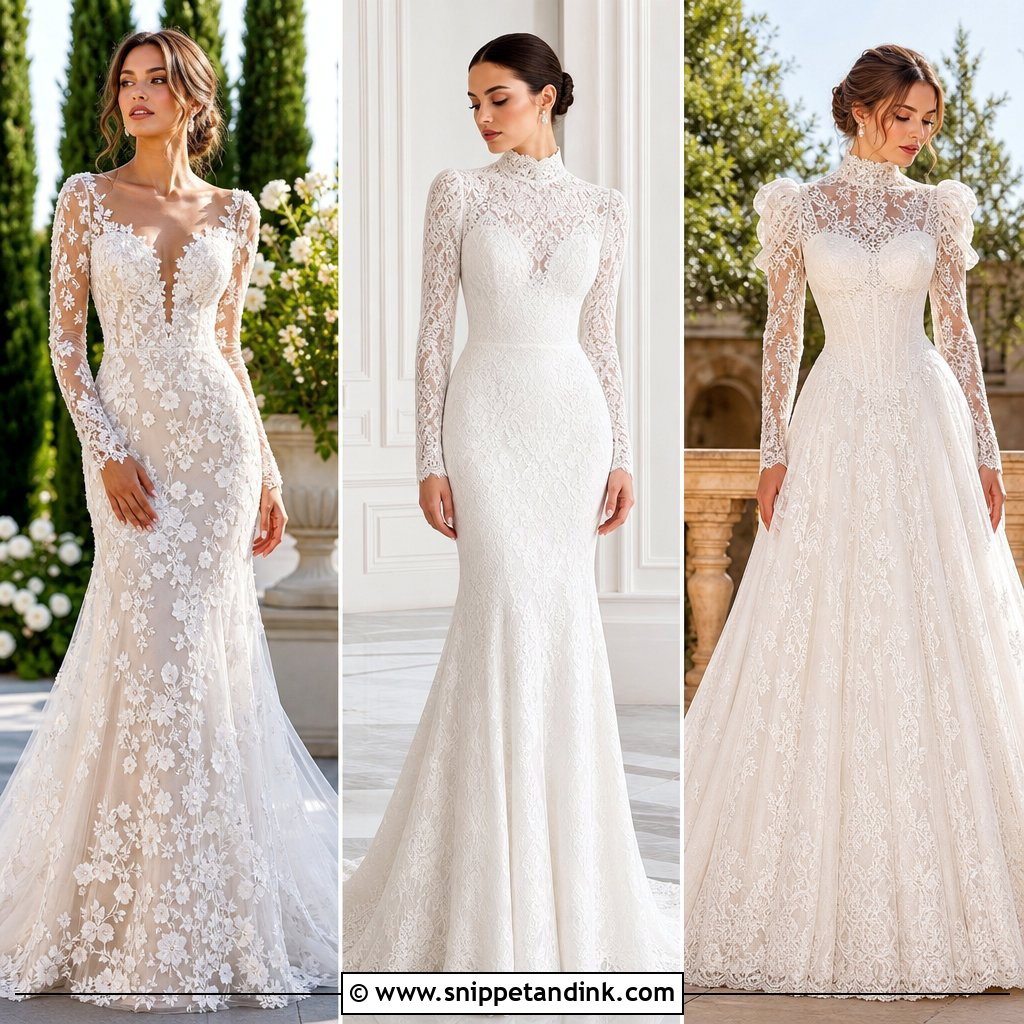
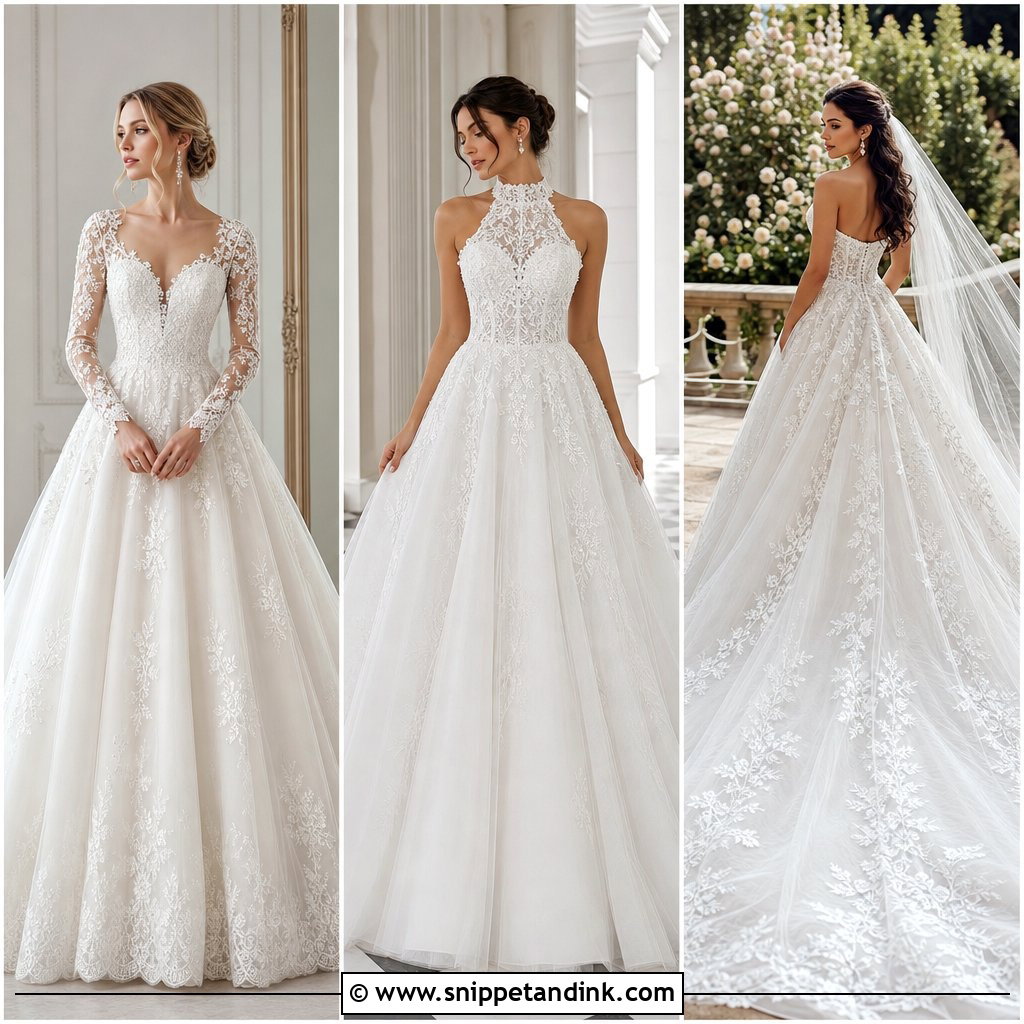
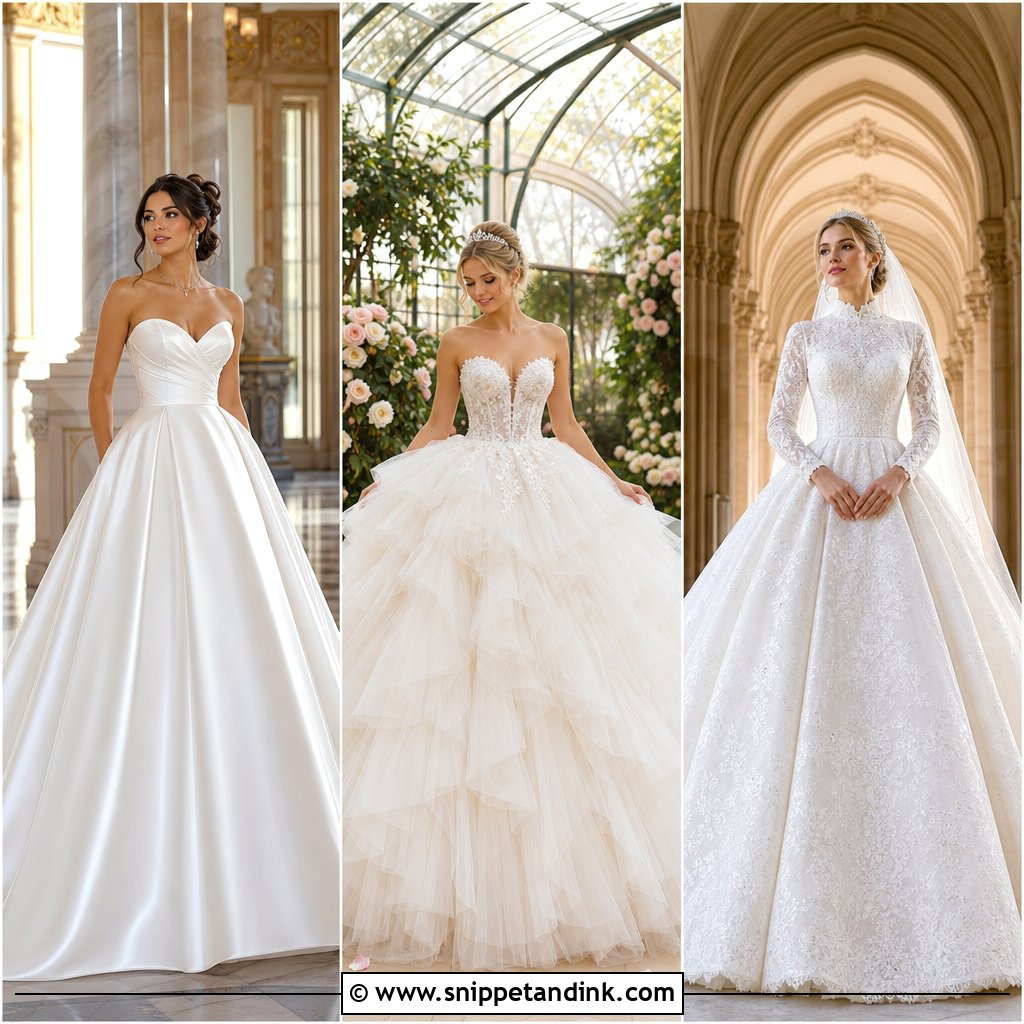
Sleeves change how a long sleeve princess wedding dress reads more than any other detail: lace leans romantic, satin leans royal, sheer embroidery feels lighter and more current. What I check first is the armhole. Cut low, it pins your arms to your sides; cut high and close, you can lift your hands for a first dance. With detailed sleeves I keep jewelry to small earrings or a fine bracelet and add a simple veil and closed-toe heels. Heavier sleeves suit autumn, winter or formal indoor weddings, while illusion sleeves work year round.
12. Corset Princess Wedding Dress
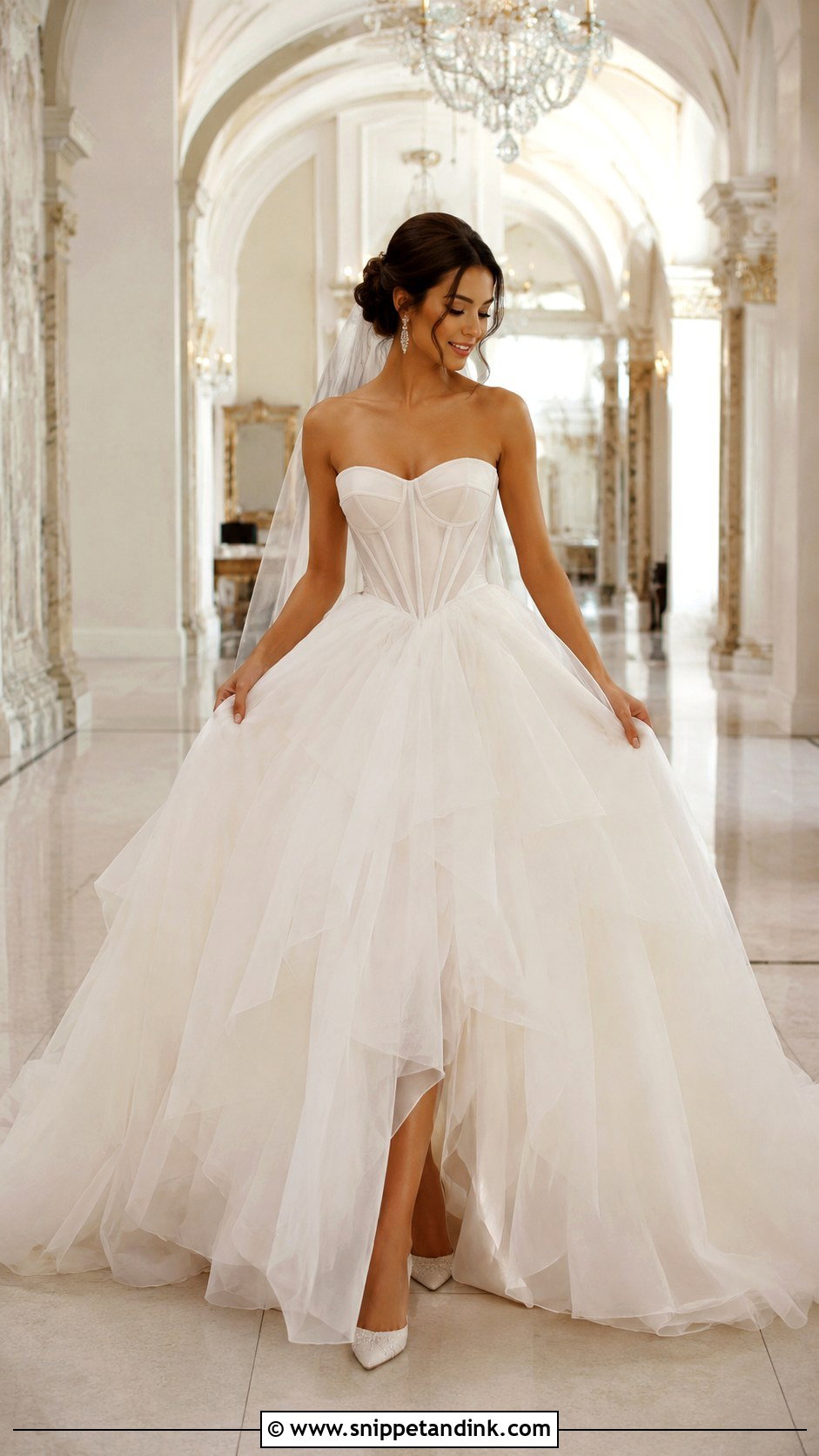
A corset bodice does real work. It supports, shapes the waist and in most cases lets you skip a separate bra. Lace keeps it romantic, plain satin modern, and visible sheer boning over layered tulle dramatic. The comfort test I give every bride is to sit, lean forward as if signing the register, and take a full breath; if any of that pinches, the boning or lacing gets adjusted at the next fitting, not on the morning. Keep the veil simple and the earrings small so the bodice stays the focus.
13. Lace Princess Wedding Dress
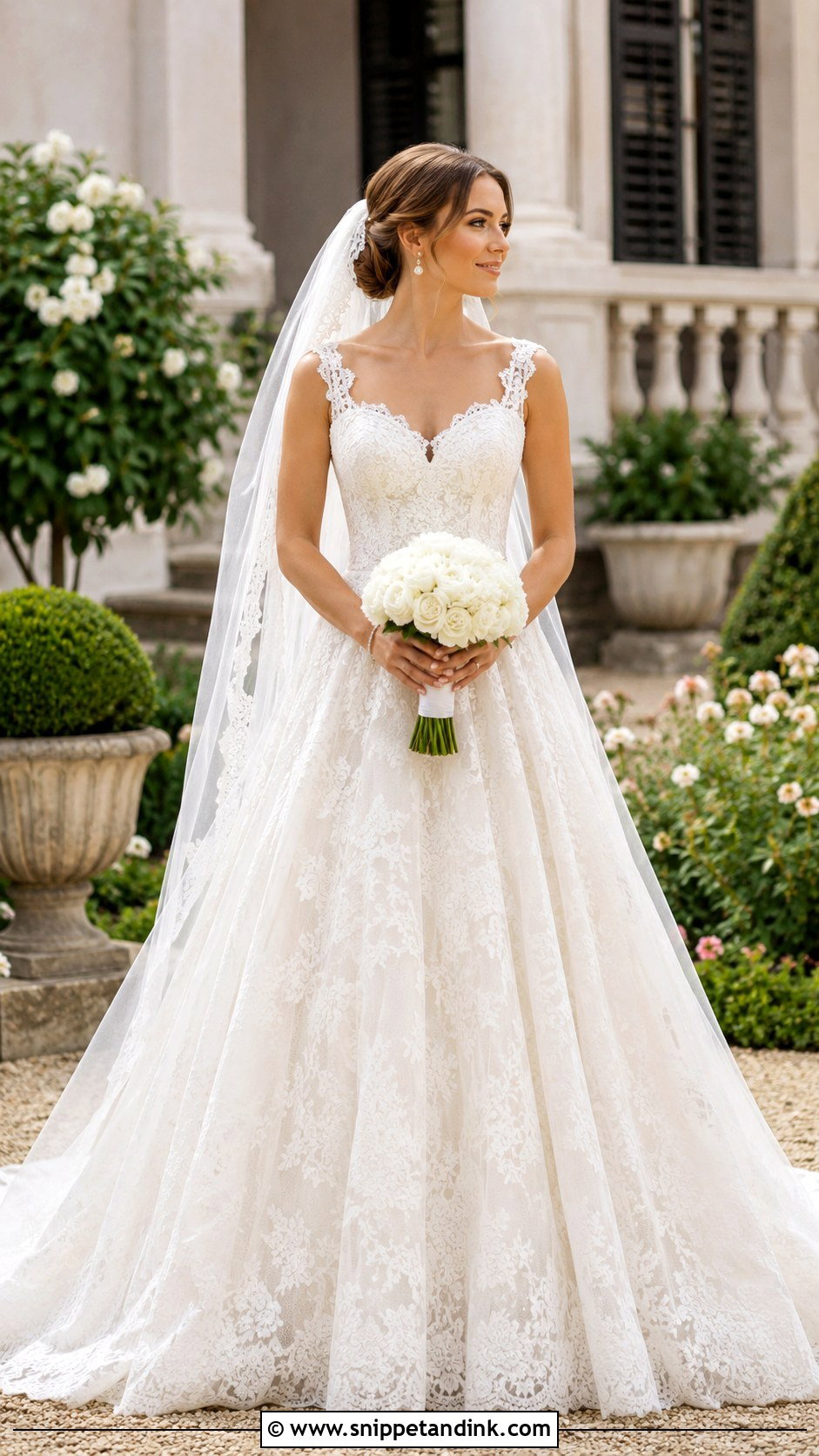
Lace changes character with its base. All-over lace on a structured gown looks regal, while appliqués floating on tulle look lighter and more whimsical. A fitted bodice, soft A-line or full ball gown all take it, so decide on the level of drama first. One warning I always give: lace catches on beaded bracelets, bouquet wire and rough stone walls, so I keep jewelry smooth and ask the florist to wrap stems completely. Pearl earrings, a lace-trimmed veil and ivory heels suit it, and a simple white or blush bouquet stops a busy lace from competing.
14. Tulle Princess Wedding Dress
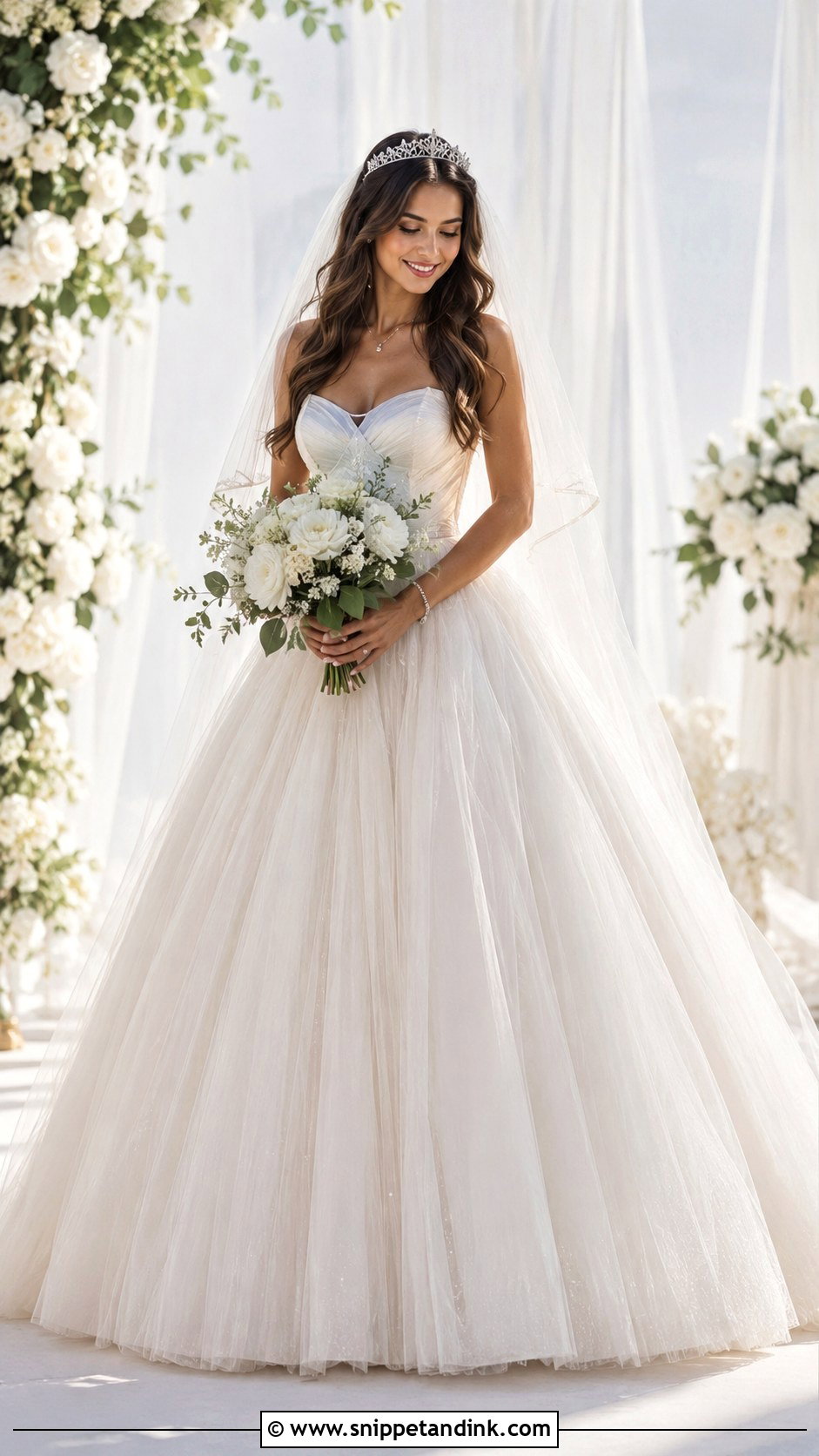
Tulle gives the floating volume most people picture without the weight of satin or Mikado, which is why I reach for it for summer weddings and for anyone planning to move a lot. The bodice can be plain satin, floral lace or a sparkling corset. Its weaknesses are snagging and crushing: it catches on thorns and heel buckles, and it creases badly if you sit in the car without fanning the skirt out first. A sheer veil, a small tiara and comfortable heels hidden underneath are plenty, with loose waves or a soft updo to keep the whole thing airy.
15. Satin Princess Wedding Dress
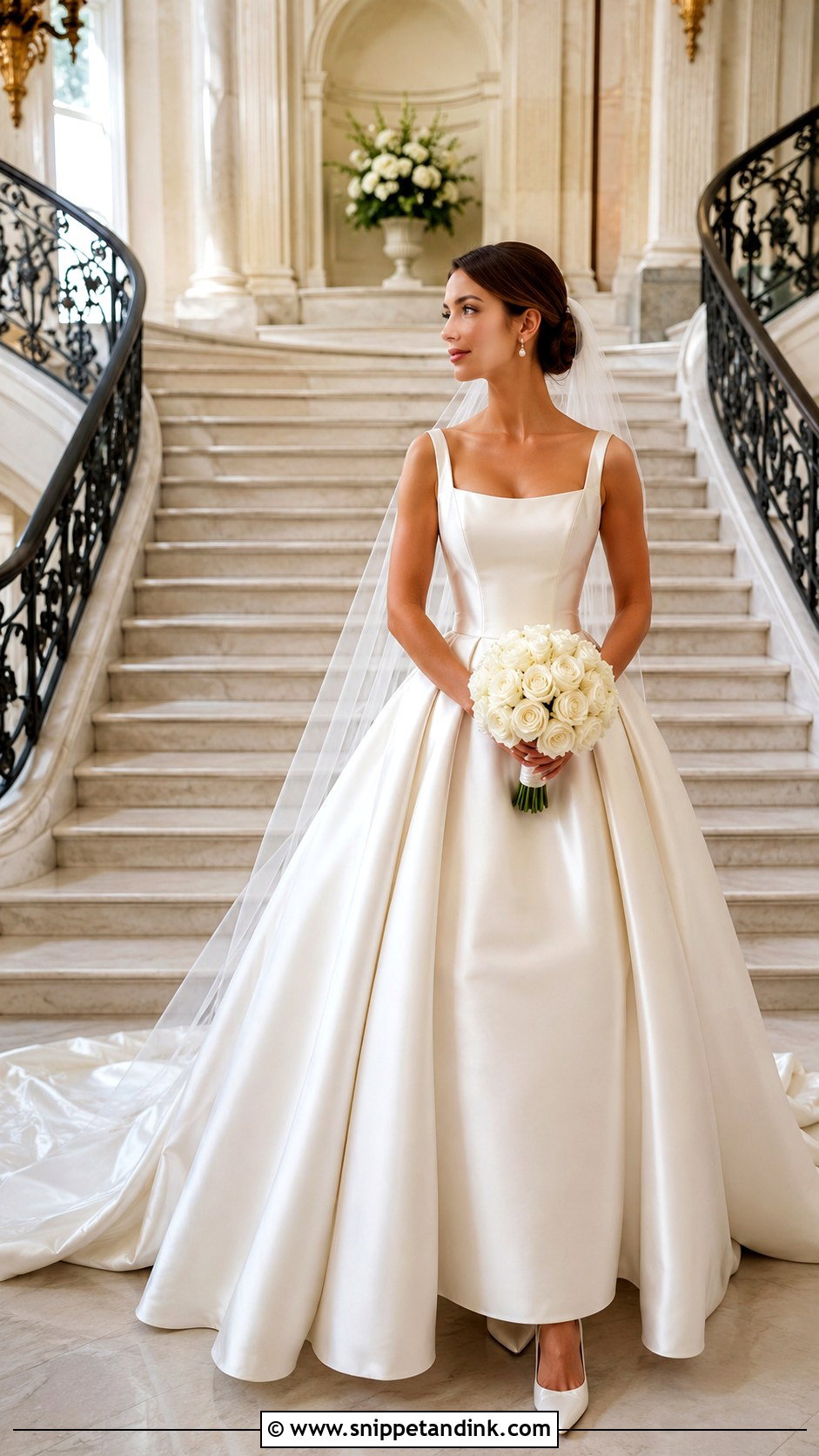
Satin is what I’d choose for a bride who wants to look expensive with no sparkle at all. Its sheen does the embellishment’s job, so everything else stays quiet: pearl earrings, a sleek veil, satin pumps and a structured bouquet of white roses or calla lilies. Know that satin shows every crease and every alteration seam, and the skirt will mark when you sit. A thorough steam before the ceremony and a quick smoothing from your attendant before portraits fixes most of it. Grand staircases and black-tie receptions are its natural setting.
16. Sparkly Princess Wedding Dress
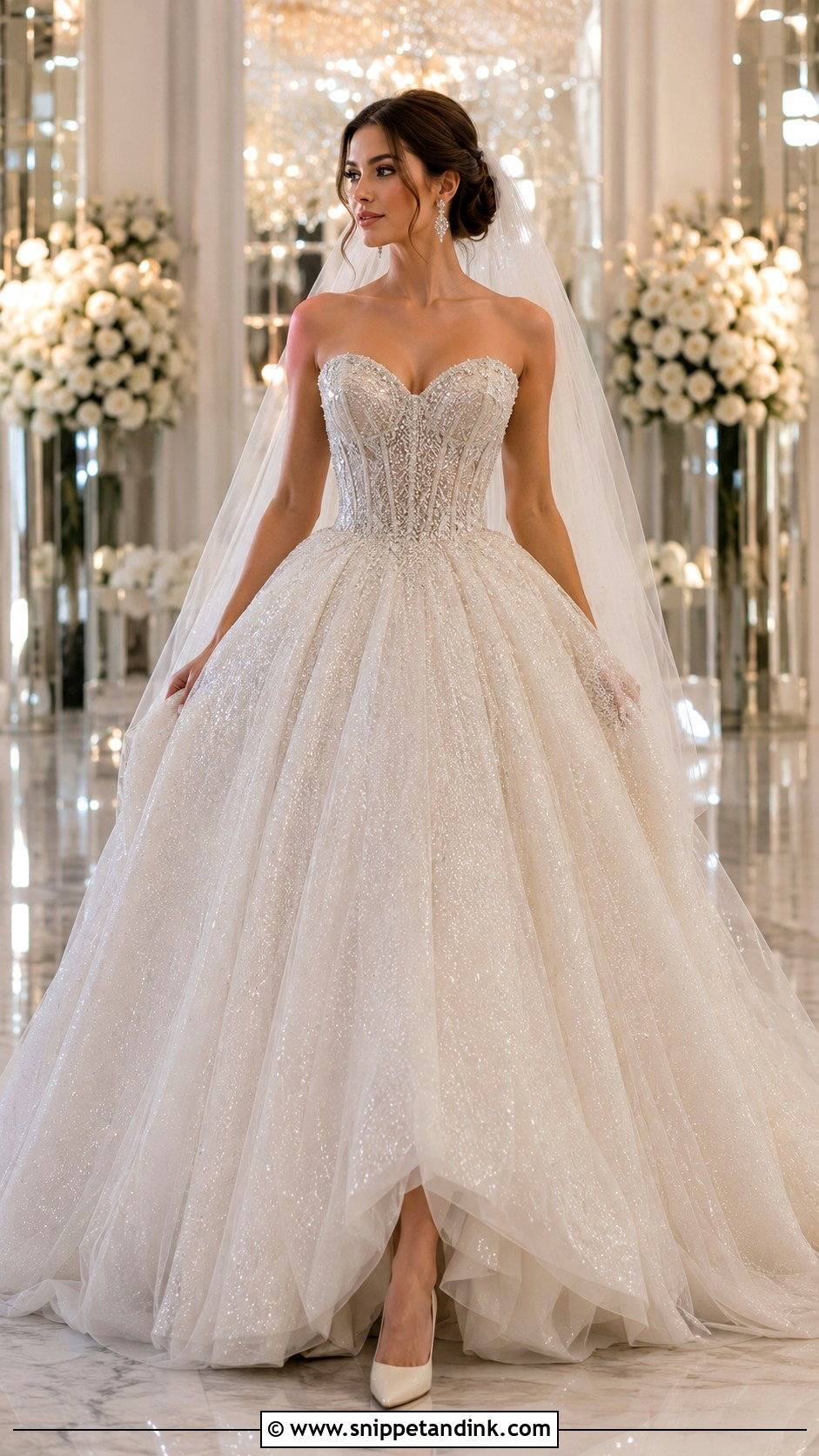
Glitter tulle, crystal beading, sequins and shimmer embroidery all catch ceremony lighting, but I’d pick one, not all four. My favorite balance is a corset bodice with glitter tulle over the skirt. At a fitting, check the inside of your arms: sequins and beading along the side seams can rub skin raw by midnight. Crystal earrings, simple heels and a clean veil leave the dress to do the work, and evening ballrooms let it glow properly.
17. Floral Princess Wedding Dress
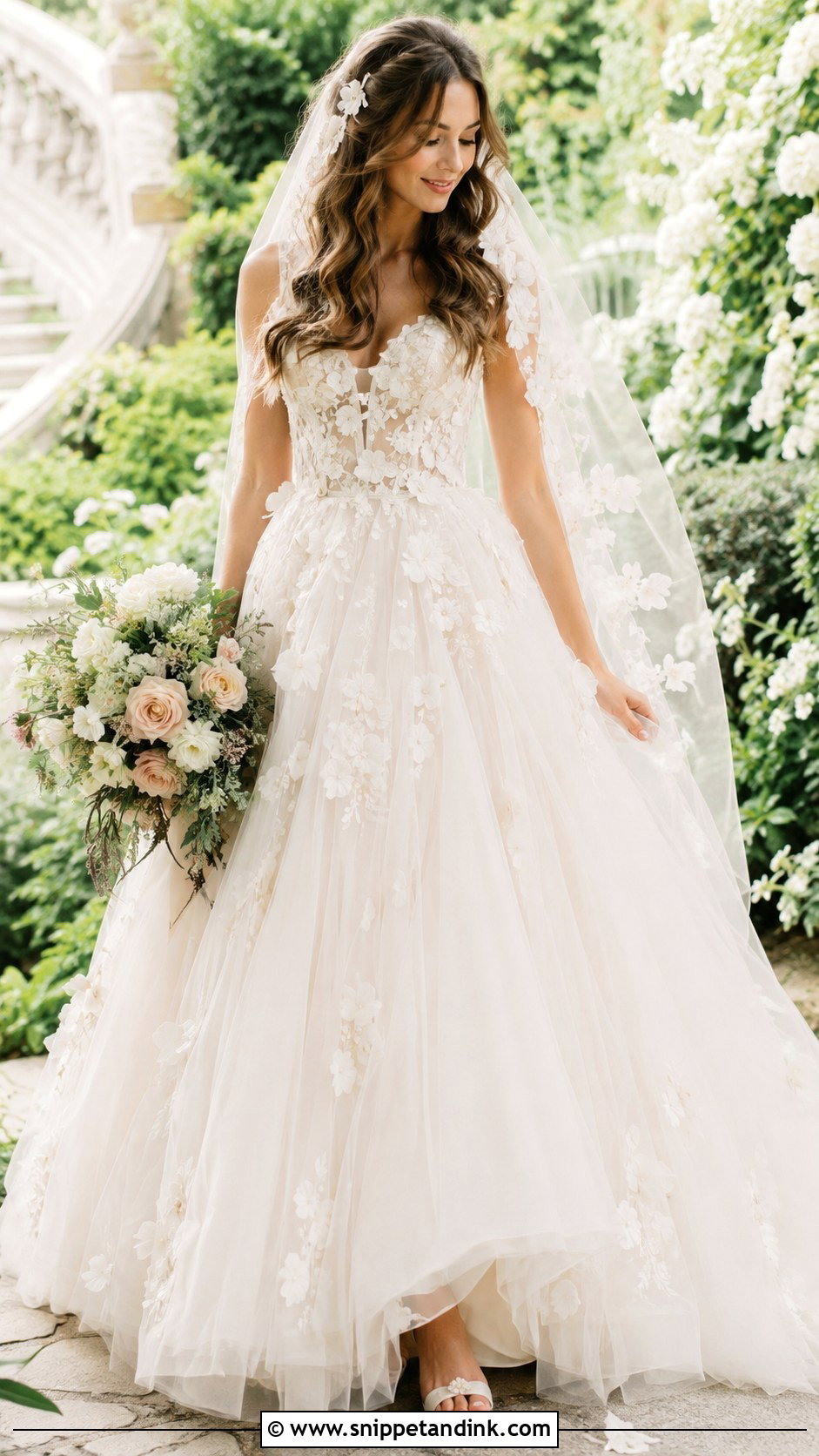
Three-dimensional flowers are the detail I worry about most in transit. They crush in garment bags, so I ask the shop how they pack the dress and plan time to fluff each bloom before the ceremony. Ivory keeps it classic, blush makes it softer. Floral hair pins, soft curls, delicate heels and a veil with a few scattered appliqués tie it together. The bouquet should be loose and textured rather than a tight dome that fights the bodice, and spring gardens or a greenhouse venue suit it naturally.
18. Pearl Princess Wedding Dress
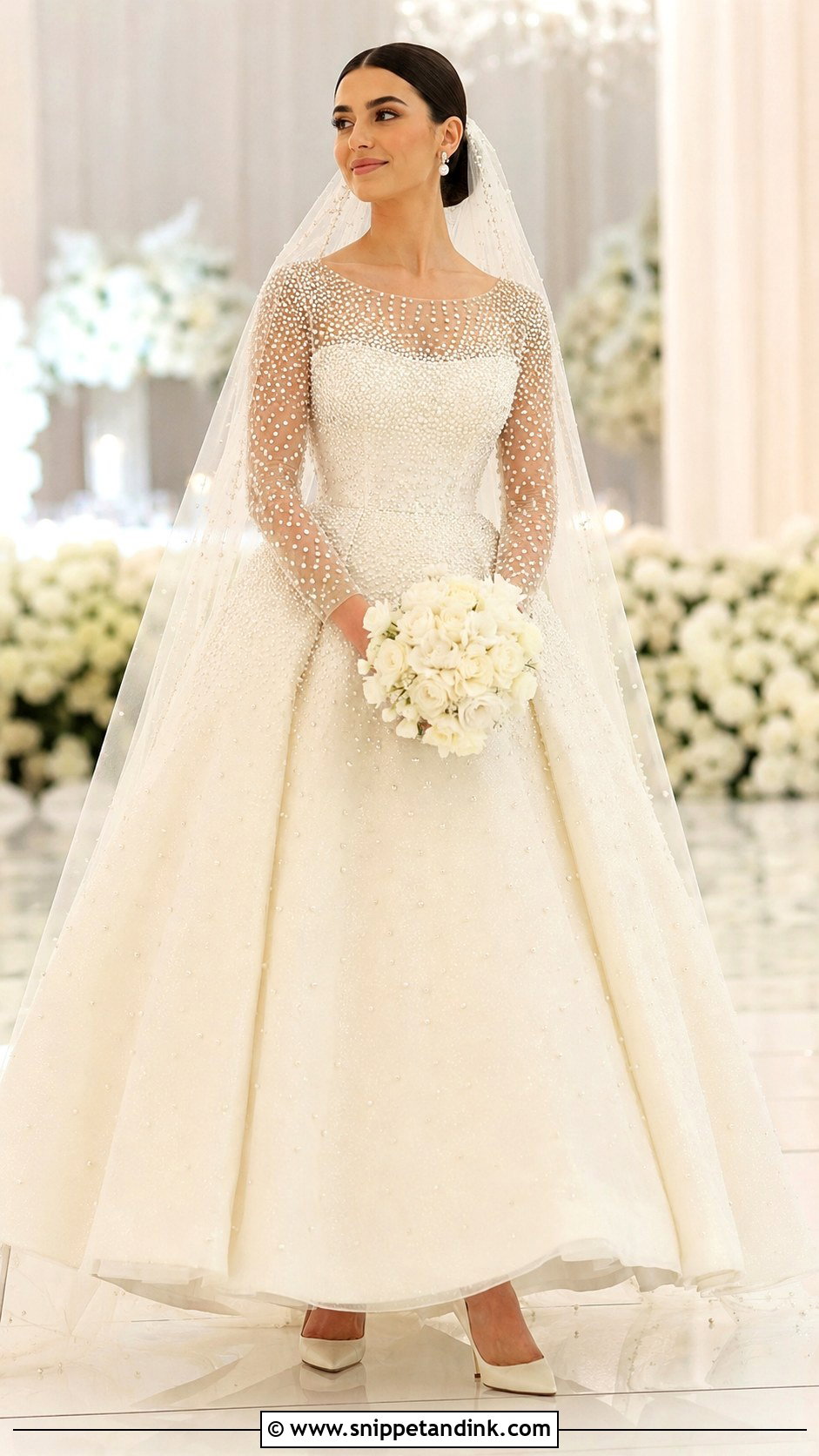
Pearls glow instead of sparkling, which makes them easier to style than crystal. They can sit on the bodice, sleeves, veil, gloves or shoes, though I’d limit them to two of those places so the look doesn’t become a pattern. A plain ball gown with pearl detailing, pearl drops, a pearl-trim veil and ivory heels is plenty. Hand-sewn pearls do work loose with wear, so a needle and matching thread live in my emergency kit. A smooth low bun or polished waves keeps the head clean against all that detail.
19. Blush Princess Wedding Dress
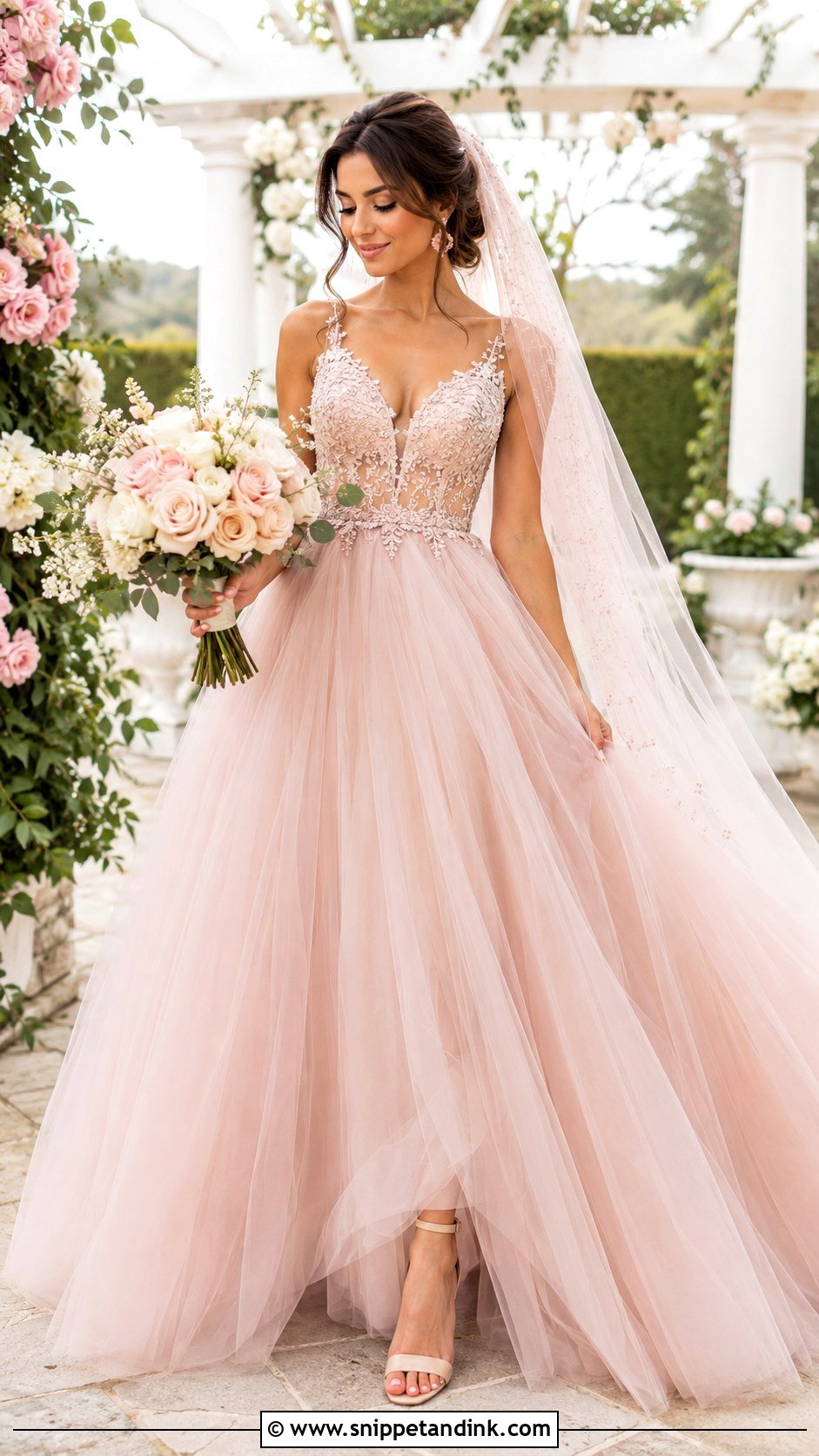
Color is the reason brides come to this one, and undertone is where it goes wrong. Nude blush, soft pink and rose ivory suit many skin tones, but I hold the fabric against the bride’s face in daylight before anyone decides. The veil has to match the gown’s undertone; a stark white veil makes a blush skirt look grubby beside it. Tulle or organza carries the color lightly, and rose gold earrings, nude heels and a cream, blush and peach bouquet pick it up.
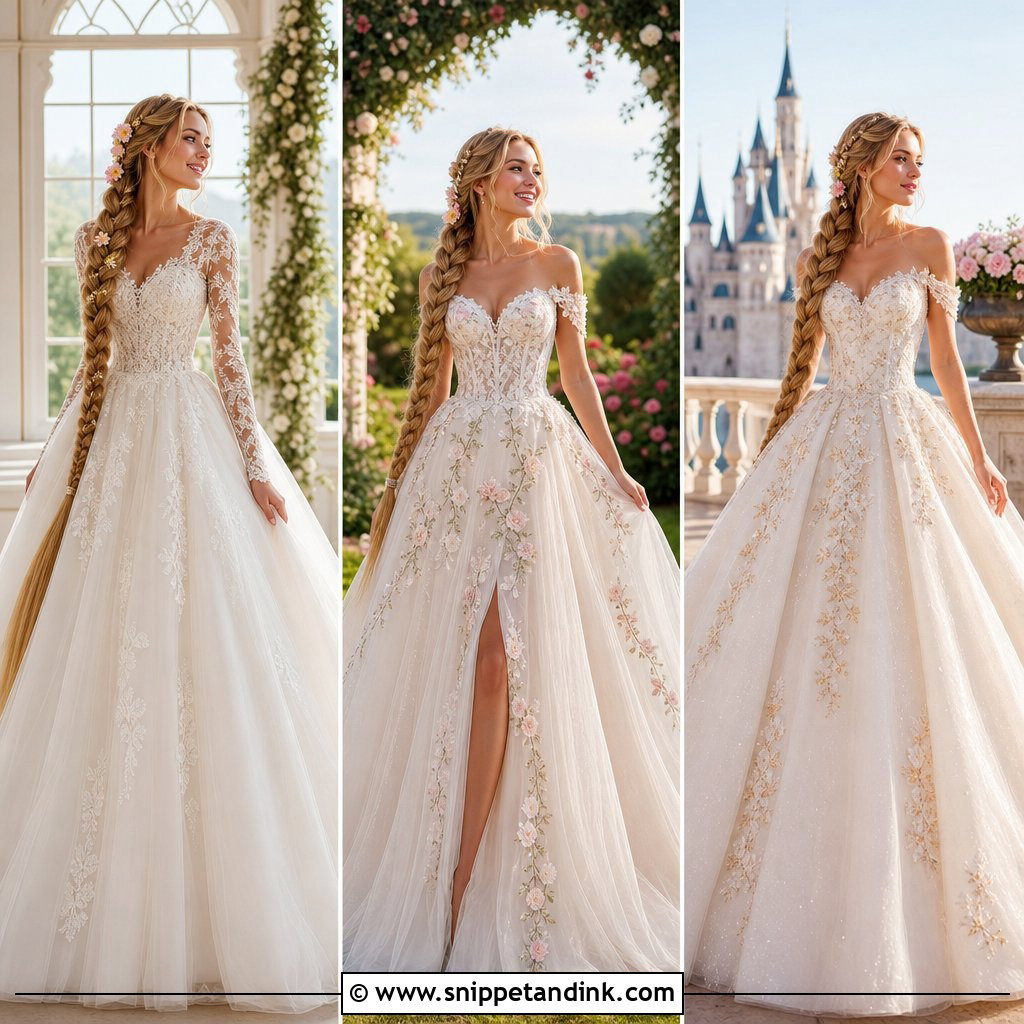
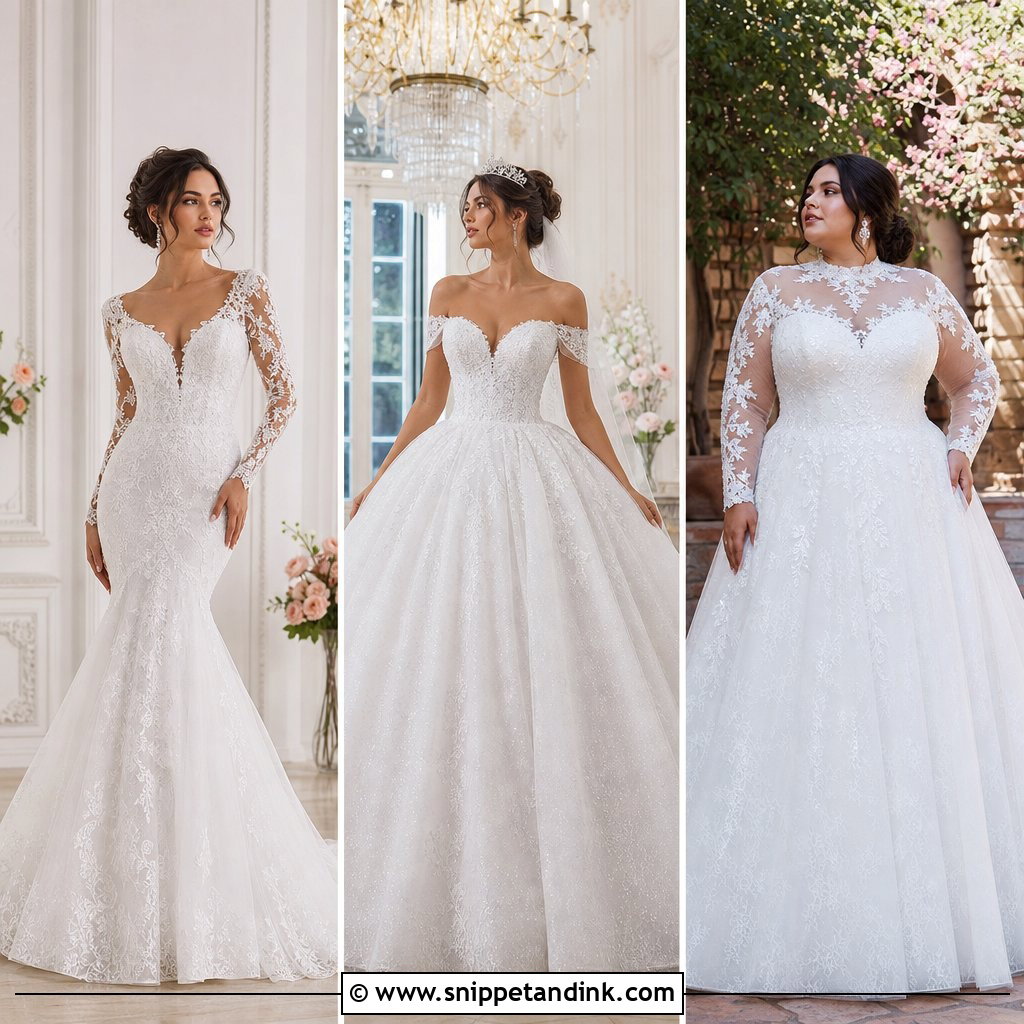
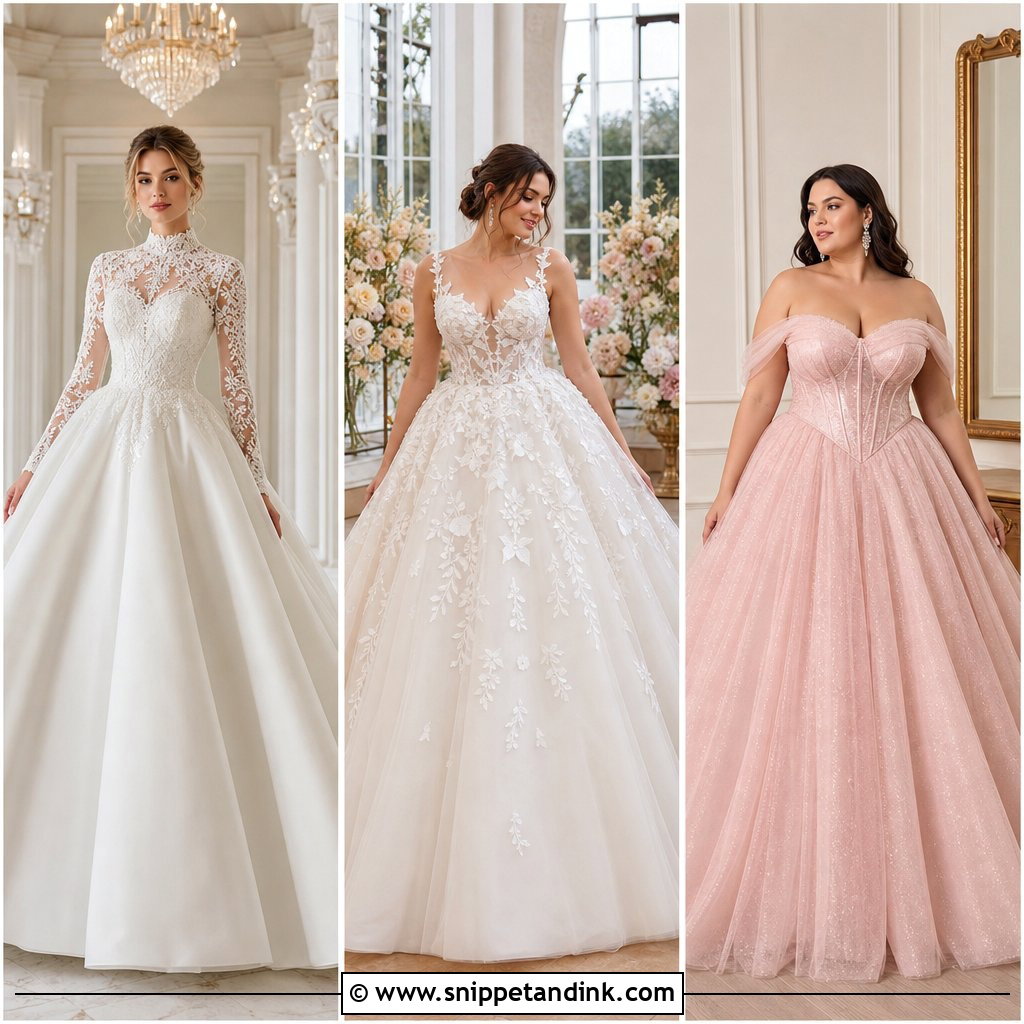
20. Champagne Princess Wedding Dress
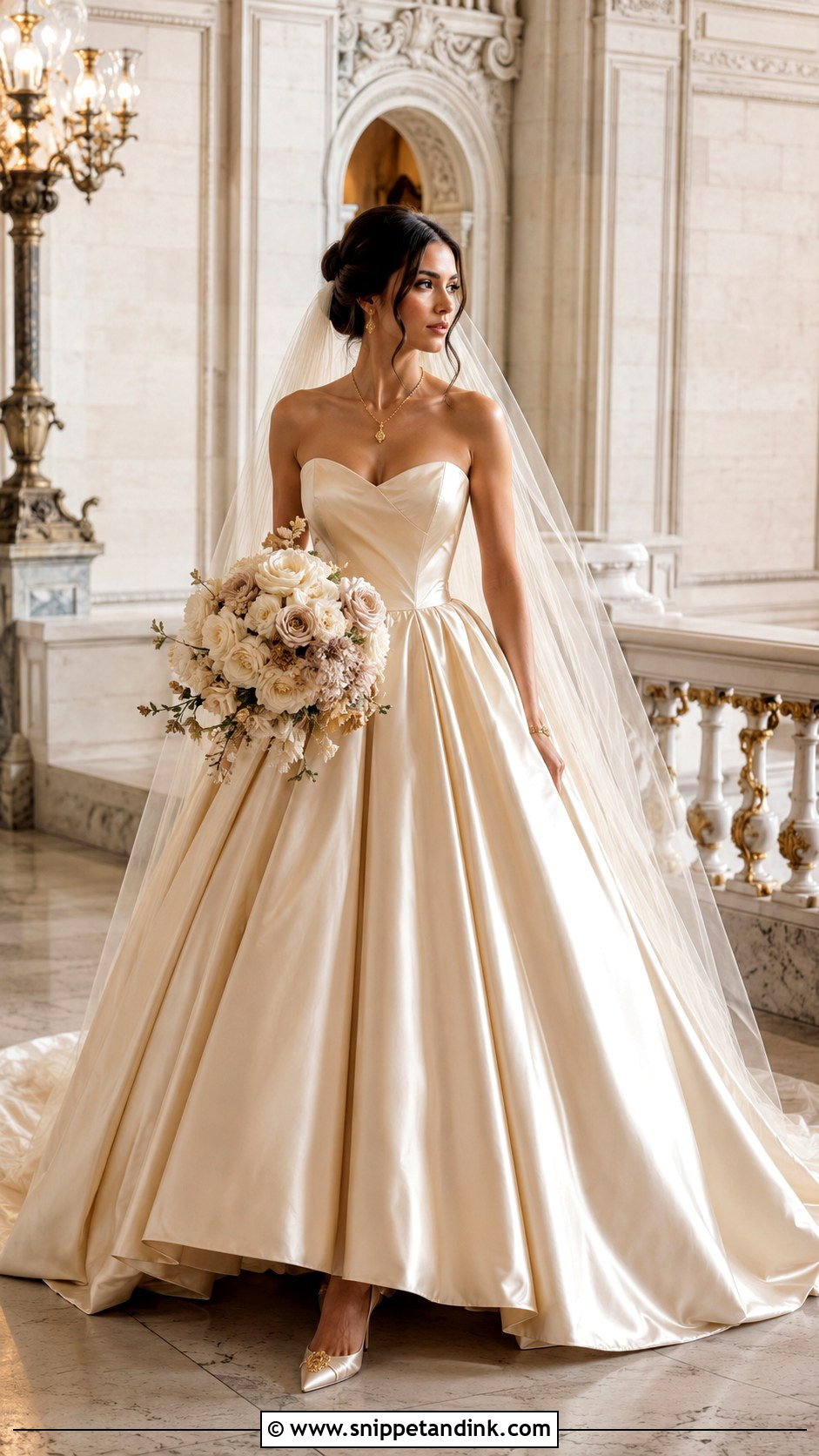
Champagne is the shade I suggest when bright white drains a bride’s skin. It reads warm and rich in satin, lace, tulle or beading. Ask what the underlay is, since many champagne gowns are ivory lace over a nude or gold lining, and that lining decides how the dress looks in photos. Gold jewelry, ivory heels and a veil in champagne or soft ivory keep the palette warm, along with a cream, beige and blush bouquet. Evening receptions and historic venues with warm light flatter it most.
21. Blue Princess Wedding Dress
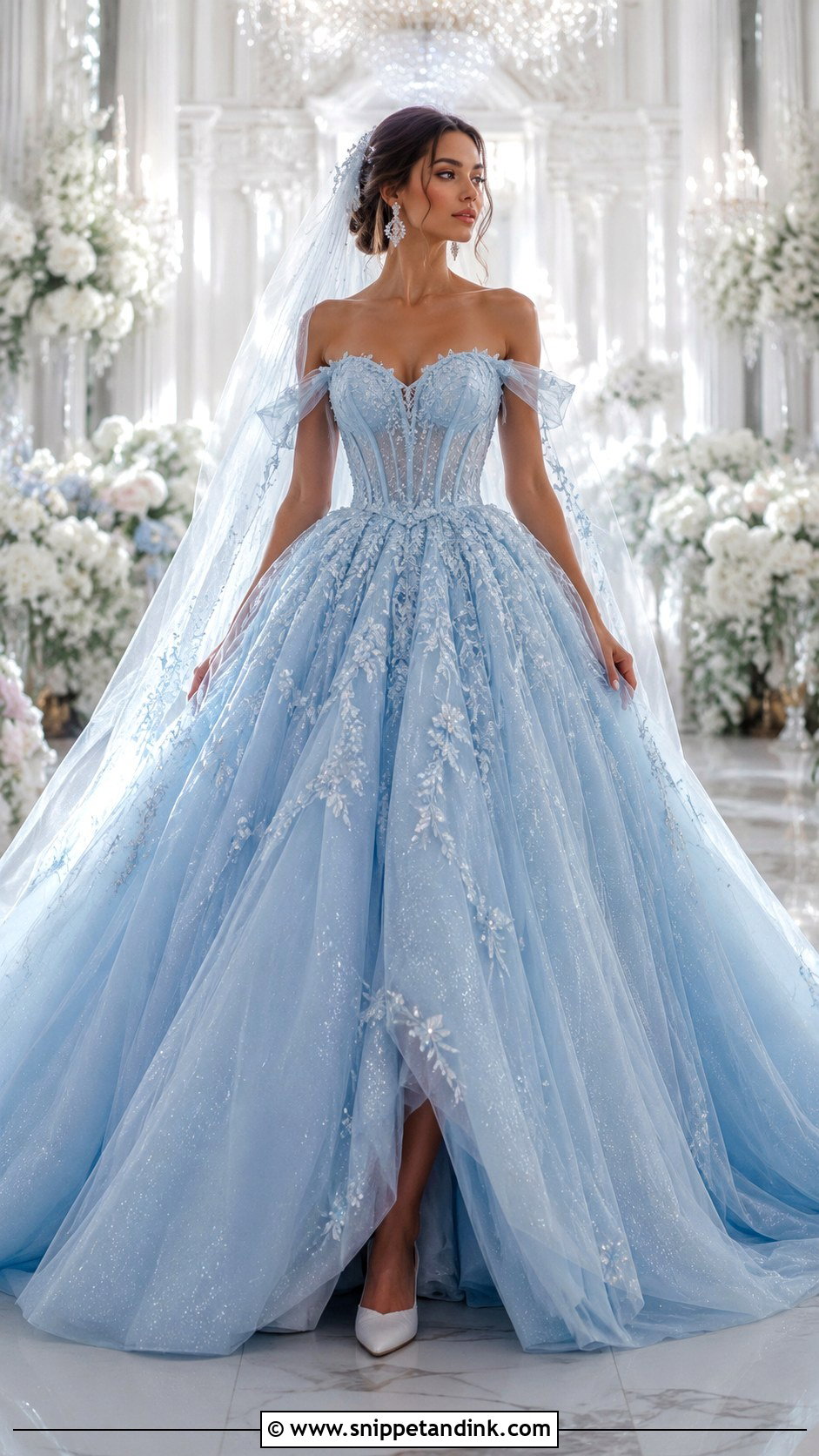
Pale blue, ice blue and blue-gray work best in fabrics that move, where the color looks like light rather than dye; tulle and organza do this far better than heavy satin. Keep the shape bridal with a fitted bodice, full skirt and soft train. If a fully blue dress feels like too much, a white gown with blue embroidery or a pale blue underskirt gives you a hint that only shows as you walk. Silver earrings, white heels and a sheer veil keep it cool-toned, which suits winter venues and evening ceremonies.
22. Princess Wedding Dress With Cape
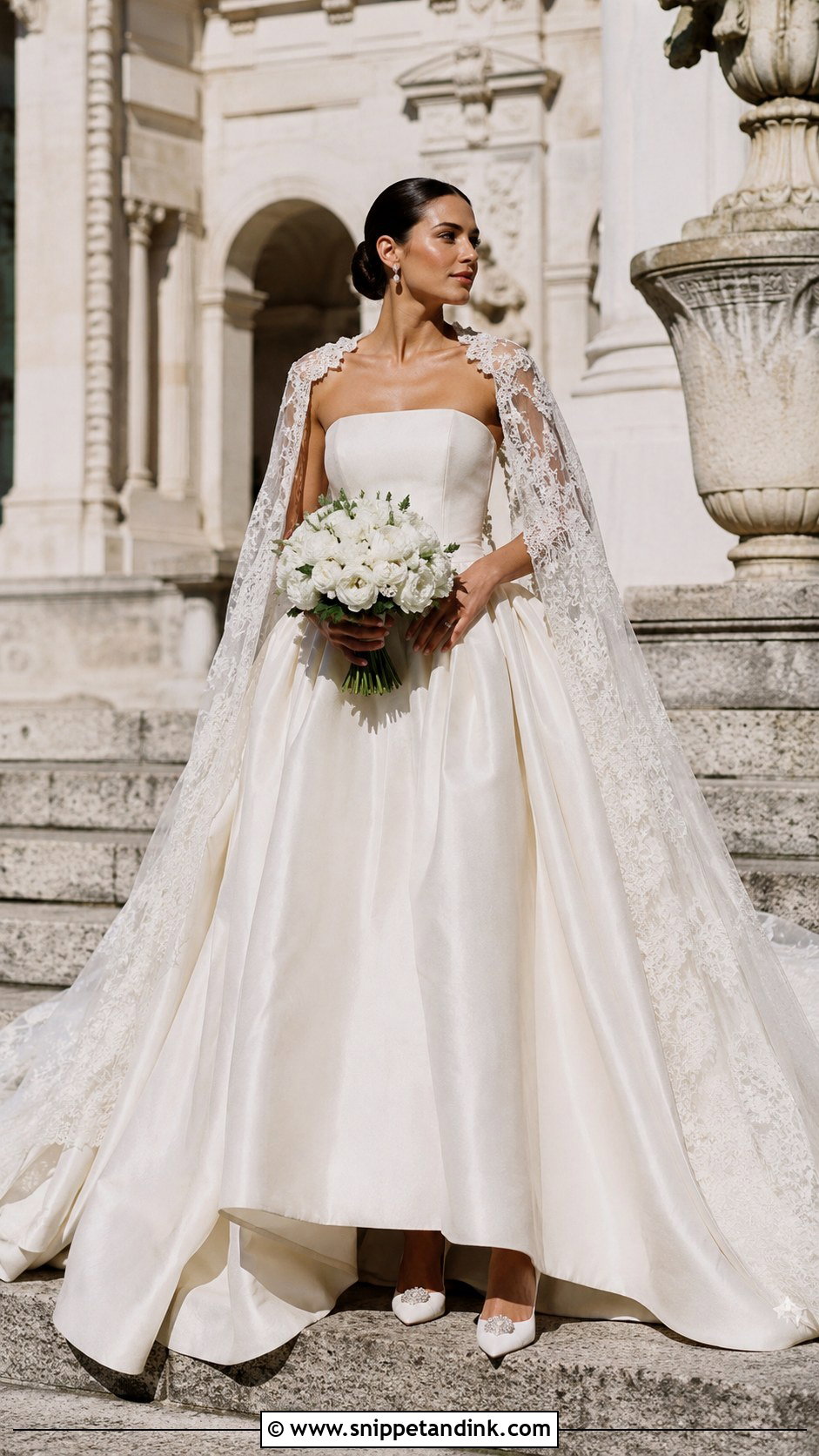
A cape can replace the veil or go over one, and it solves the coverage question for a religious ceremony without committing you to sleeves all night. Sheer tulle reads soft, lace romantic, satin regal. I always check how it attaches: a cape fixed with hidden buttons or hooks at the shoulder comes off after photos in a minute, while one sewn into the seams stays for the night. Pair it with a structured ball gown, pointed heels and simple earrings so the silhouette stays clean. Outdoors, a long cape catches the wind, so give an attendant the job of managing it.
23. Princess Wedding Dress With Detachable Overskirt
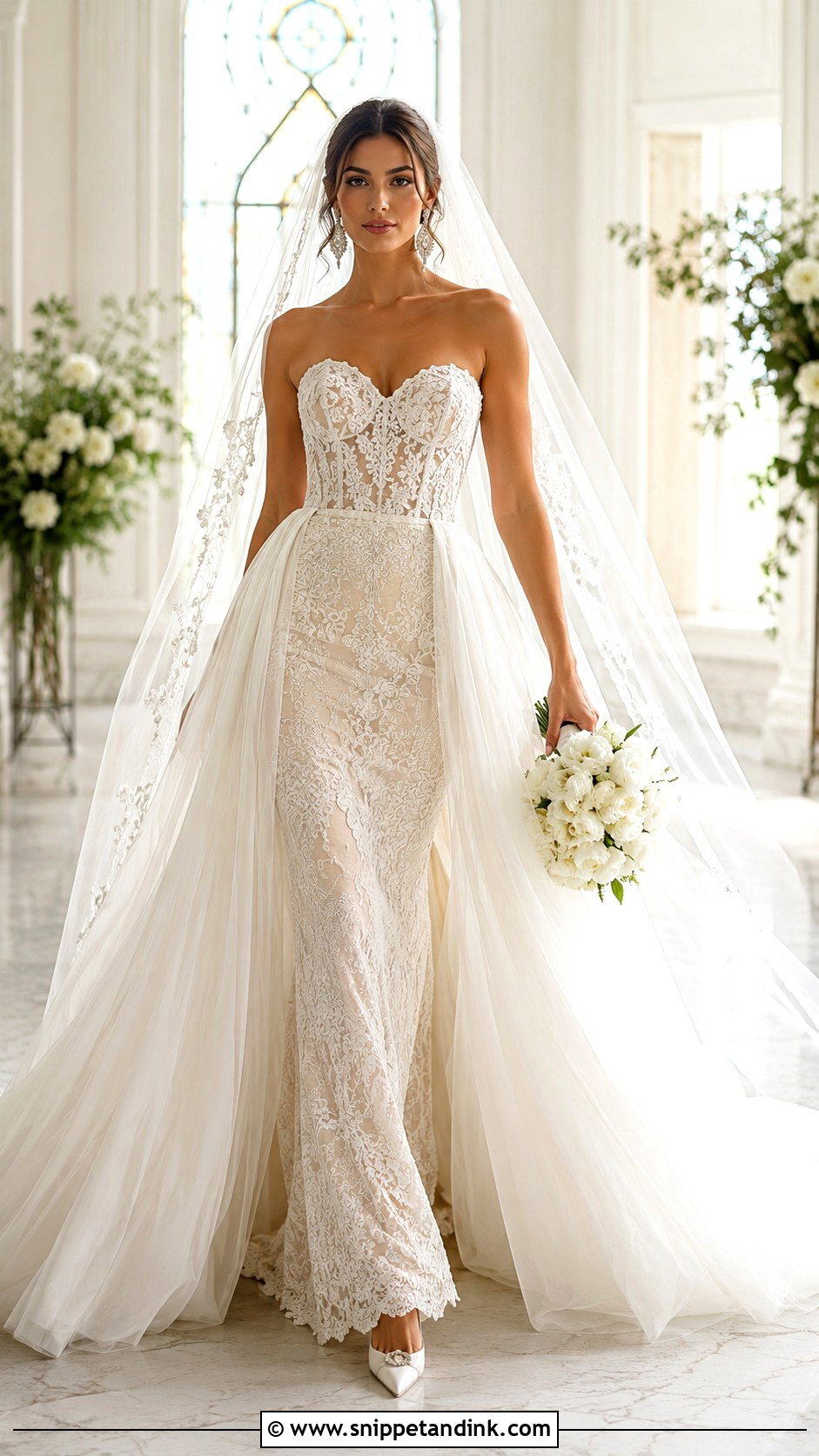
Two looks from one dress is the whole point. The overskirt gives a full ball gown shape for the ceremony, and taking it off reveals a slimmer dress you can actually dance in, whether that’s a mermaid, sheath, A-line or fit-and-flare base. Matching fabric hides the join best; sheer tulle keeps it lighter. Practise unfastening the detachable overskirt with whoever is helping you, because the hooks or snaps sit at your back where you can’t see them. After the change, I’d swap the long veil for a shorter one or a hair accessory.
24. Princess Wedding Dress With Bow
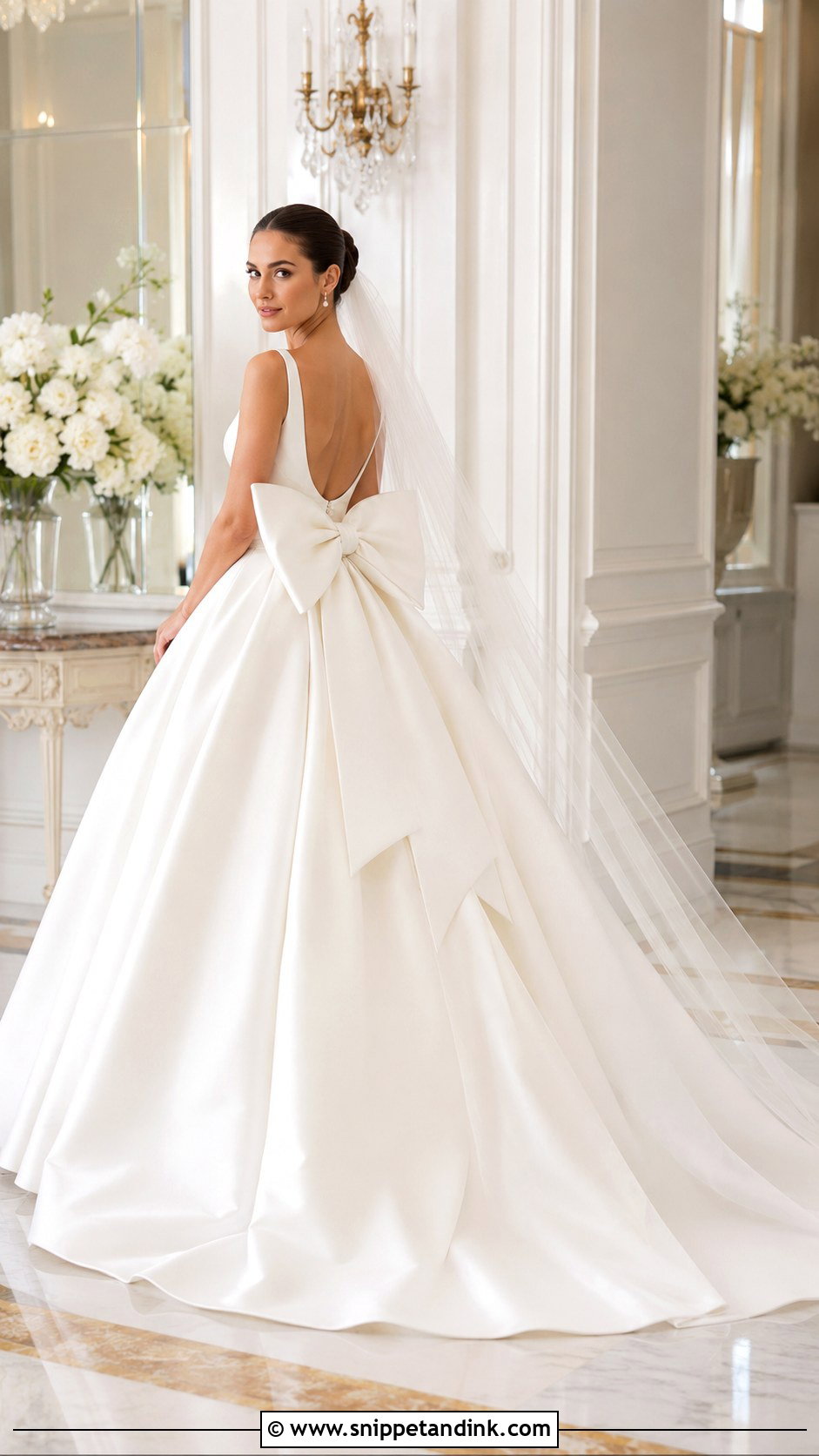
Proportion decides whether a bow looks sweet or childish. A large back bow suits a tall frame and a long torso; on a petite bride I scale it down or move it to the shoulder. Satin and Mikado bows hold their shape all day, but tulle bows flatten after a few hours of leaning against a chair, so I fluff them before the reception entrance. Keep jewelry minimal and choose a smooth updo or half-up style so the bow stays visible from behind.
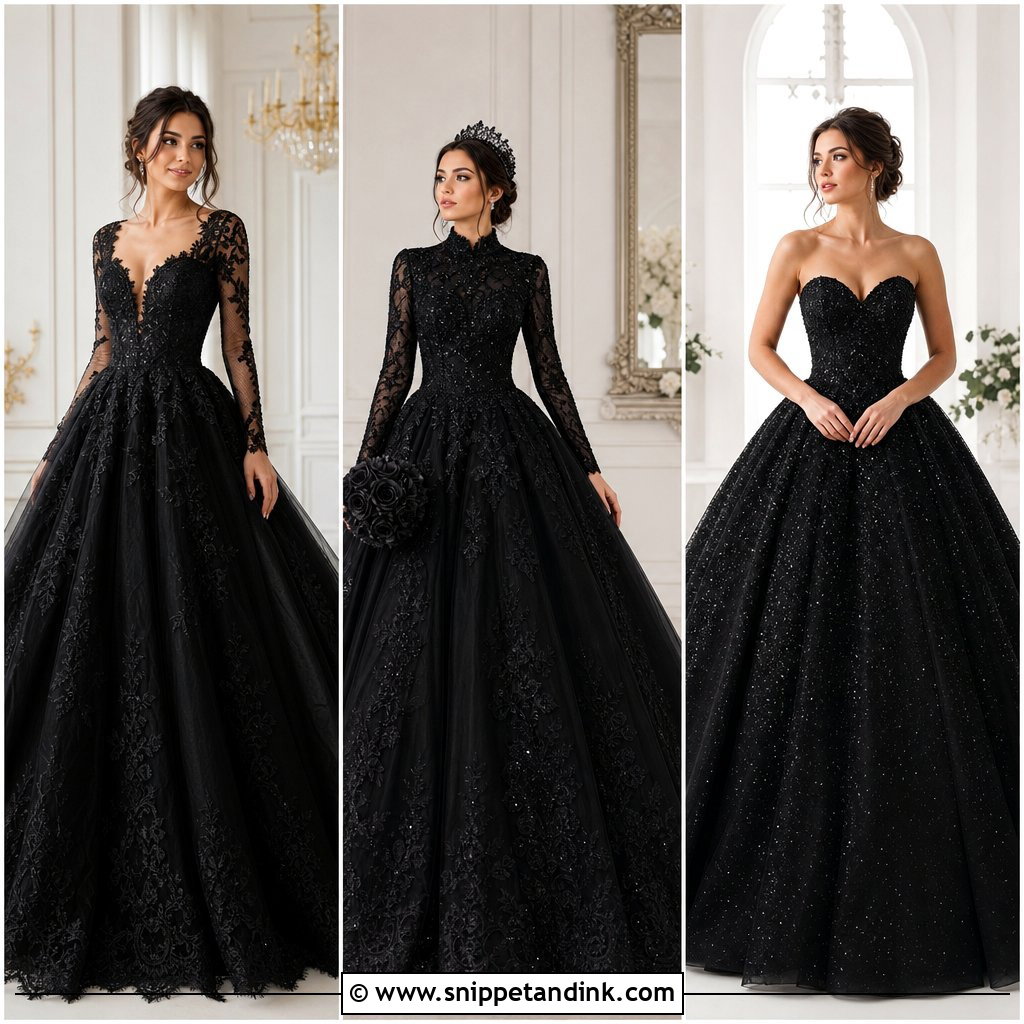
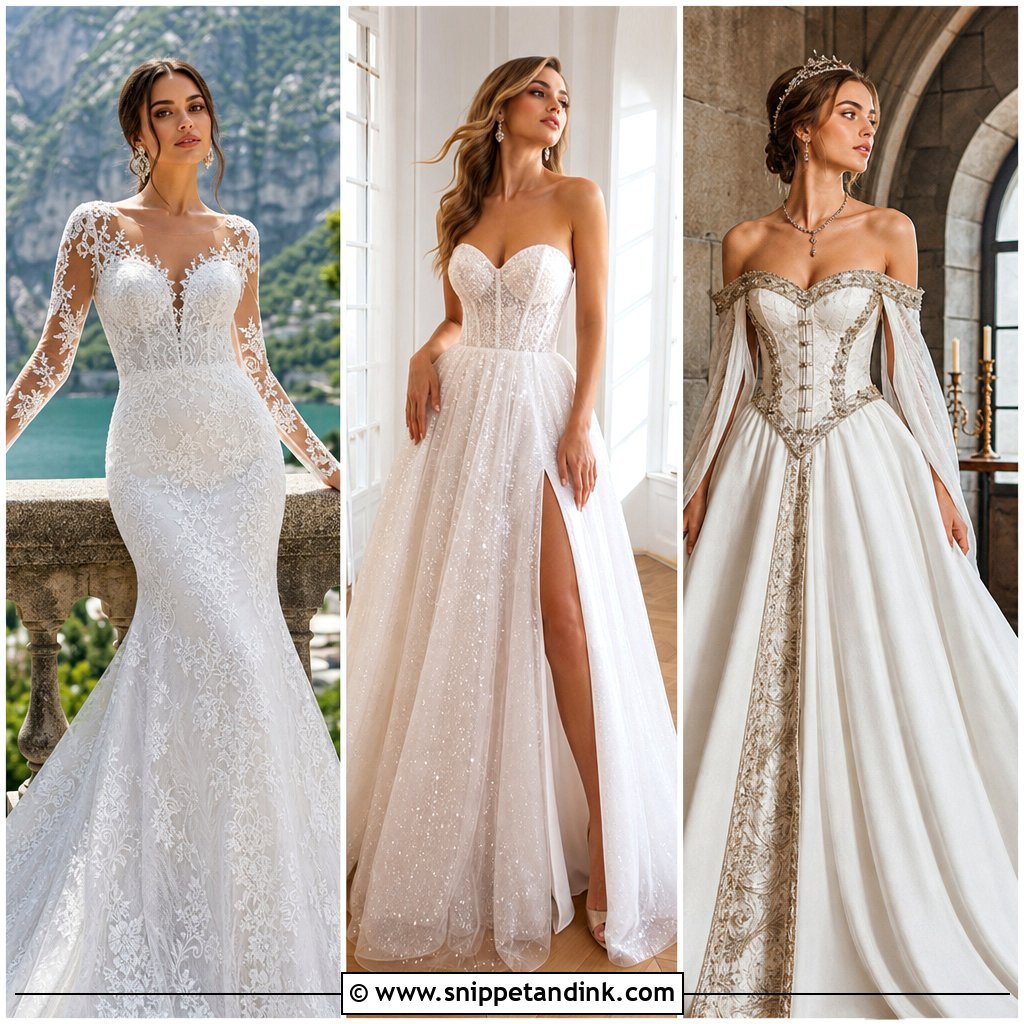
25. Modern Princess Wedding Dress
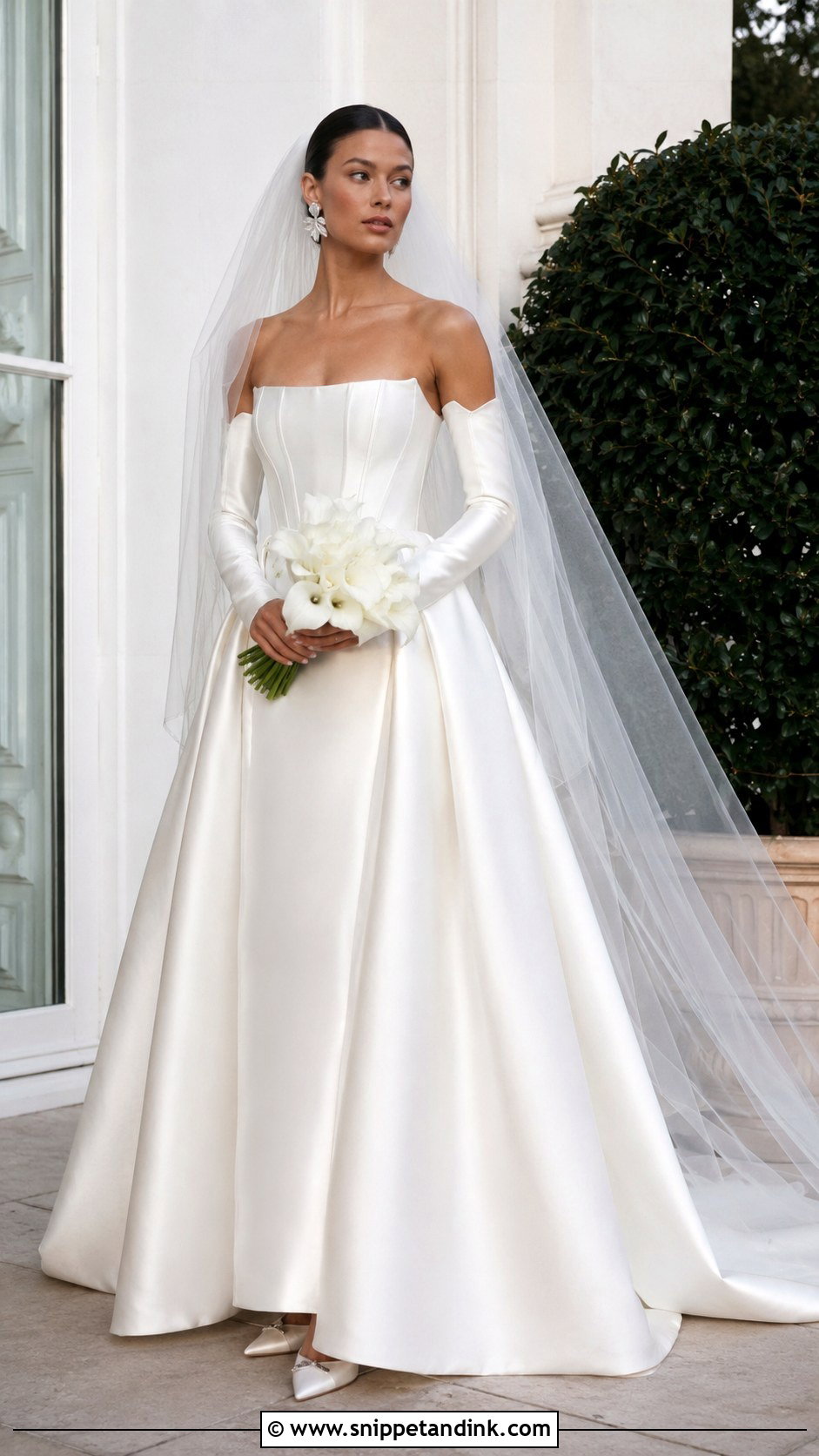
Fairytale scale with clean, current lines: a sleek corset bodice, square neckline, smooth satin skirt, perhaps detachable sleeves, and nothing heavy on top. This is where I steer brides who like royal proportions but not traditional embellishment. With no lace or beading to hide behind, the fit must be exact, because a ripple at the waist seam will show in every photo. Sculptural earrings, a long veil, pointed heels and a clean white bouquet suit city venues, modern estates and minimal ballrooms.
A Ball Gown Calendar, Working Back From the Aisle
Made-to-order gowns commonly take several months to arrive, and ornate princess styles with hand-sewn lace or beading often take longer, so I like brides to order roughly eight to ten months out when they can. Alterations usually begin two to three months before the wedding and run over two or three fittings. Bring your real shoes and undergarments to every one, because a heel change of even an inch alters the hem.
At the last fitting, have the person who will bustle you on the day watch and practise it twice. Ball gown bustles can have a dozen or more ties or hooks, and a reception that starts with a frantic search for ribbon loops is avoidable. Collect the dress a week or so before, hang it by the hanger loops rather than the straps, and book a professional steam or allow time for a careful one at the venue.
Caring for All That Tulle After the Last Dance
Have the gown cleaned within a few weeks, even if it looks spotless. Spilled champagne and sugary drinks dry invisibly and turn brown over time, and the hem will be carrying grass and dust. For long-term storage I prefer a full skirt laid in a breathable box with acid-free tissue between the folds; a heavy gown left hanging for years stretches at the shoulders and waist seam, and plastic bags trap moisture that yellows ivory fabric.
The Princess Dress You Forget You’re Wearing by the Speeches
A princess dress is only half the look. The neckline, skirt shape, veil, shoes, jewelry, bouquet and hair all have to agree with each other, and the gown has to let you breathe, sit and hug people for the whole day. Go to fittings in the shoes and underwear you’ll actually wear, move in the dress more than feels necessary, and trust the version that still feels like you after an hour in it. Grand and sparkling or soft and floral, the right fairytale gown is the one you stop noticing by the time the toasts begin.
You'll Like These Ideas:







Leave a Reply