
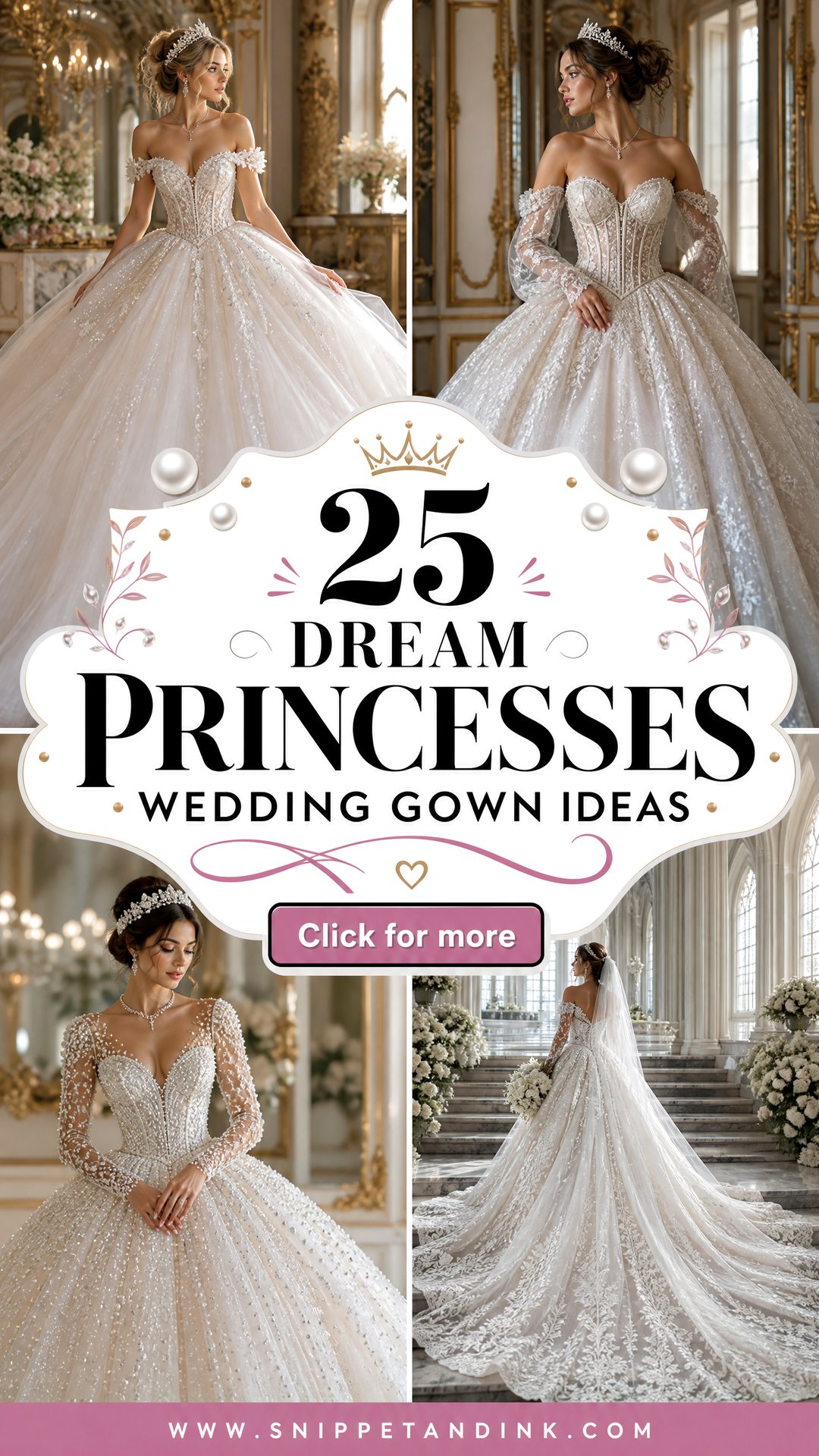
Most brides who ask me for a princess gown are really asking for a feeling: the moment the doors open and the skirt fills the aisle. The shape itself is simple, a fitted bodice and a wide skirt from the waist, and it doesn’t have to look old-fashioned. Satin, tulle, flowers, beading, a hint of color and removable pieces all change its mood. What I care about more is how it behaves once you’re inside it, walking, sitting at dinner and dancing with your arms up. Accessories come last and should support the dress, not crowd it. With that in mind, here are 25 Dream Princesses Wedding Gown Ideas, each with the note I’d give you at the fitting.
Sample Gowns Lie About Size and Volume
Most bridal shops carry one sample of each gown, usually in a single size, and the consultant clips or pins it to fit you. That’s normal, but it means the dress in the mirror is an approximation. A clipped bodice won’t sit exactly as a fitted one will, and a sample that has been tried on many times may have flattened layers.
To read a princess gown properly in the shop, I ask brides to do three things.
- Ask whether a petticoat is already underneath, and try the skirt with and without it. Much of the volume you fall for can come from the underskirt, which may be sold separately.
- Walk the length of the shop and back, then sit on a normal chair. A gown you can’t sit in comfortably will feel twice as heavy by the speeches.
- Bring a photo of your ceremony space. A skirt that looks perfect in a large salon can fill a small chapel aisle completely.
Order from the designer’s size chart using your current measurements, not the size you usually buy. Bridal sizing often runs smaller than high street sizing, and taking a gown in is far easier than letting it out.
1. Satin Princess Wedding Gown
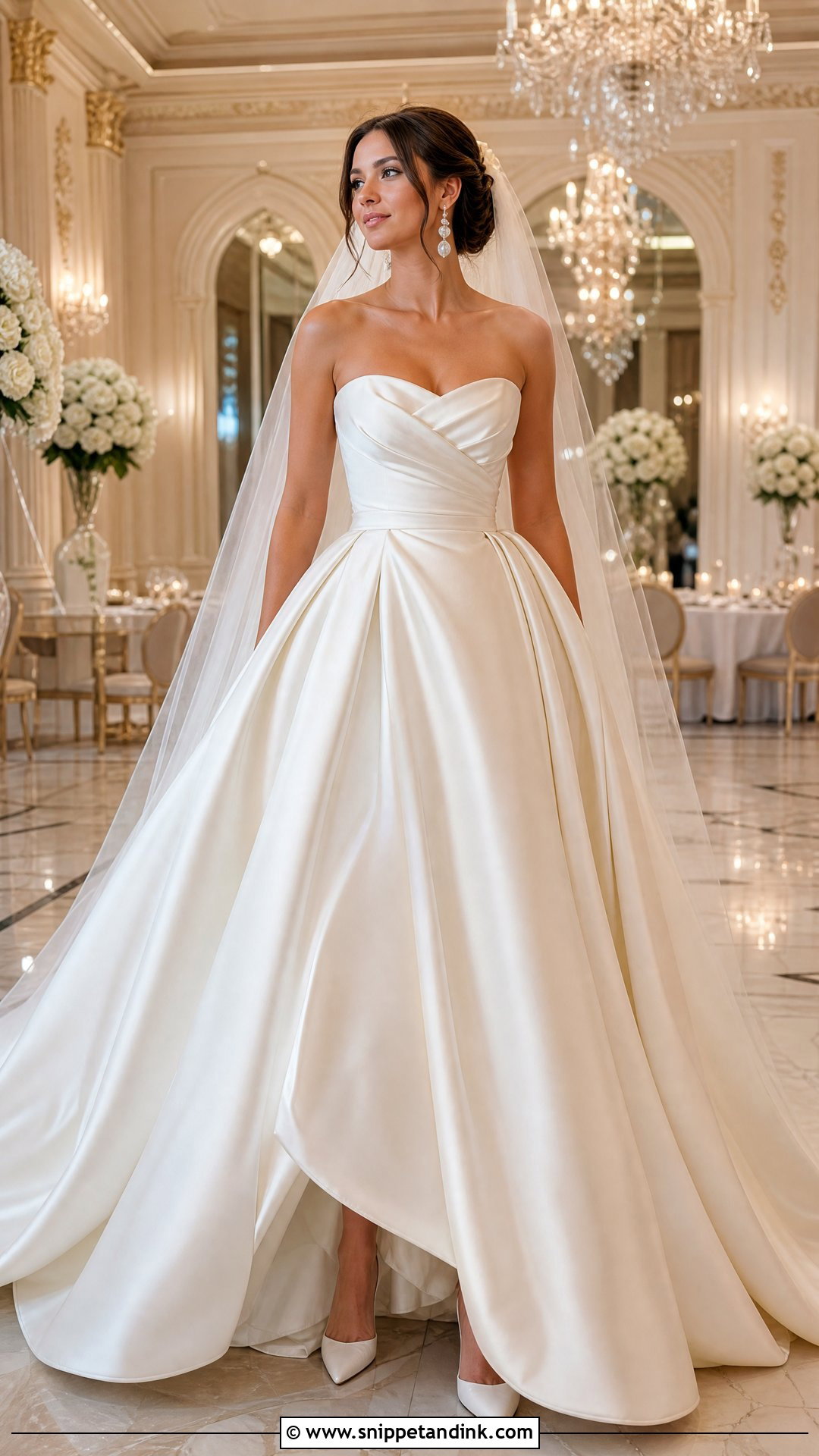
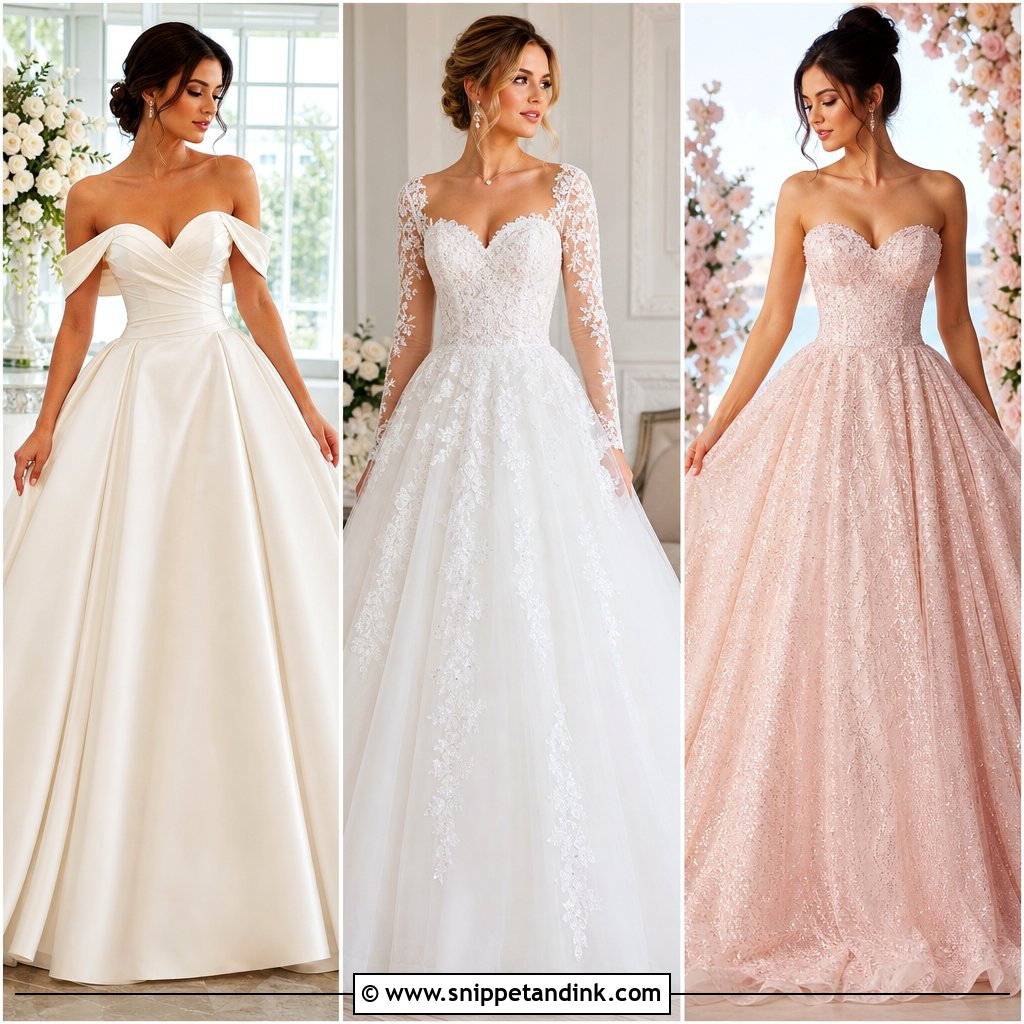
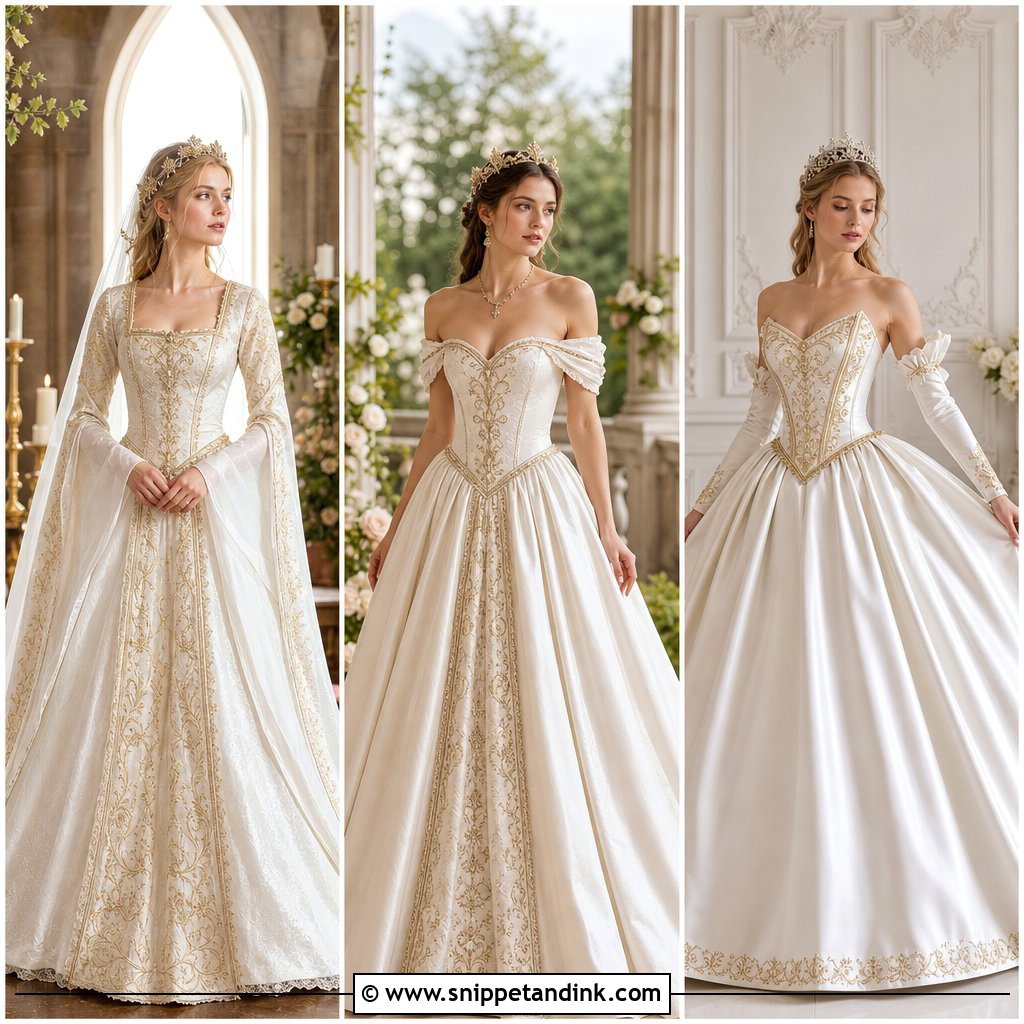
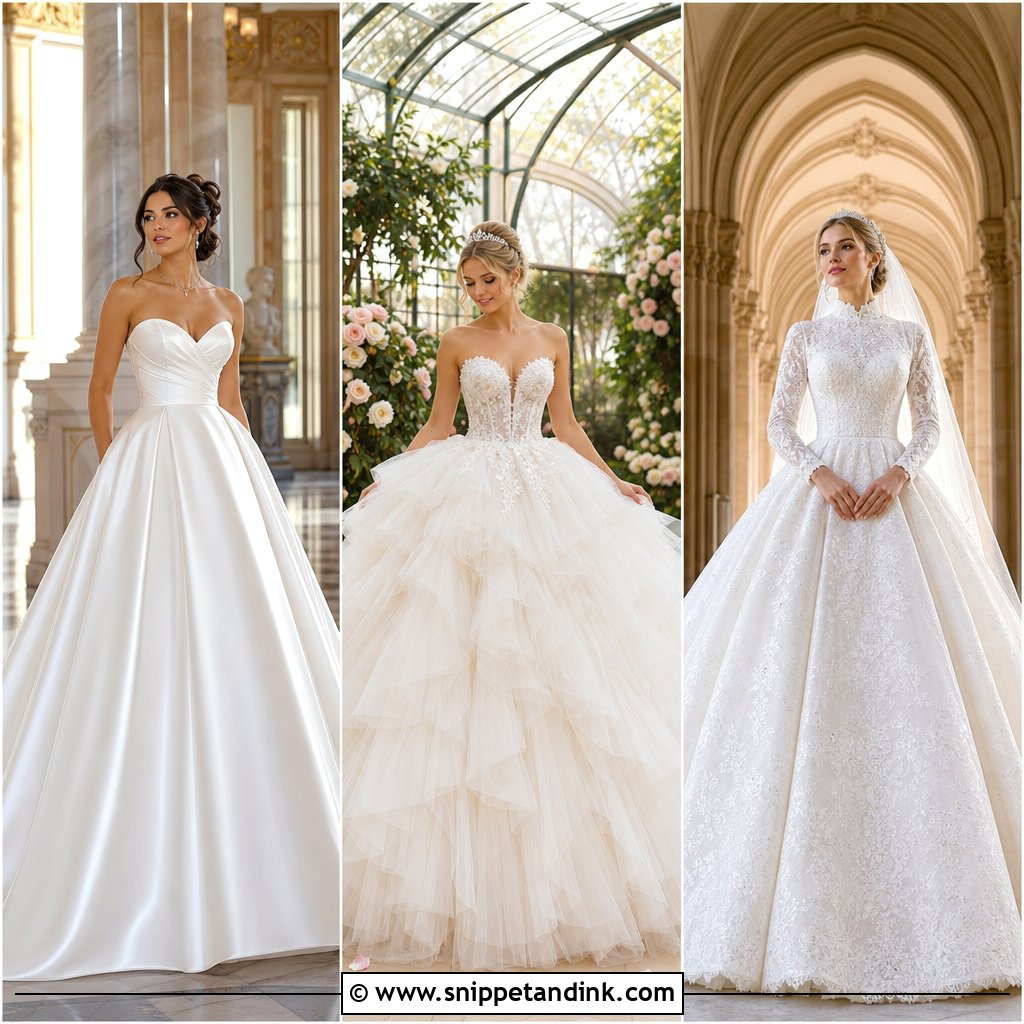
Plain satin is the purest version of the shape. A strapless, structured ball gown in ivory or diamond white, maybe with soft draping across the bodice, needs almost nothing added. I’d go with pearl drops, a smooth cathedral veil and pointed satin pumps. Here’s the thing about satin, though: it shows every flaw in the tailoring, so this is where your alterations budget should go rather than into embellishment. A low bun or soft waves keep the neckline clear. Grand ballrooms and formal hotels give it the entrance it was cut for.
2. Lace Princess Wedding Gown
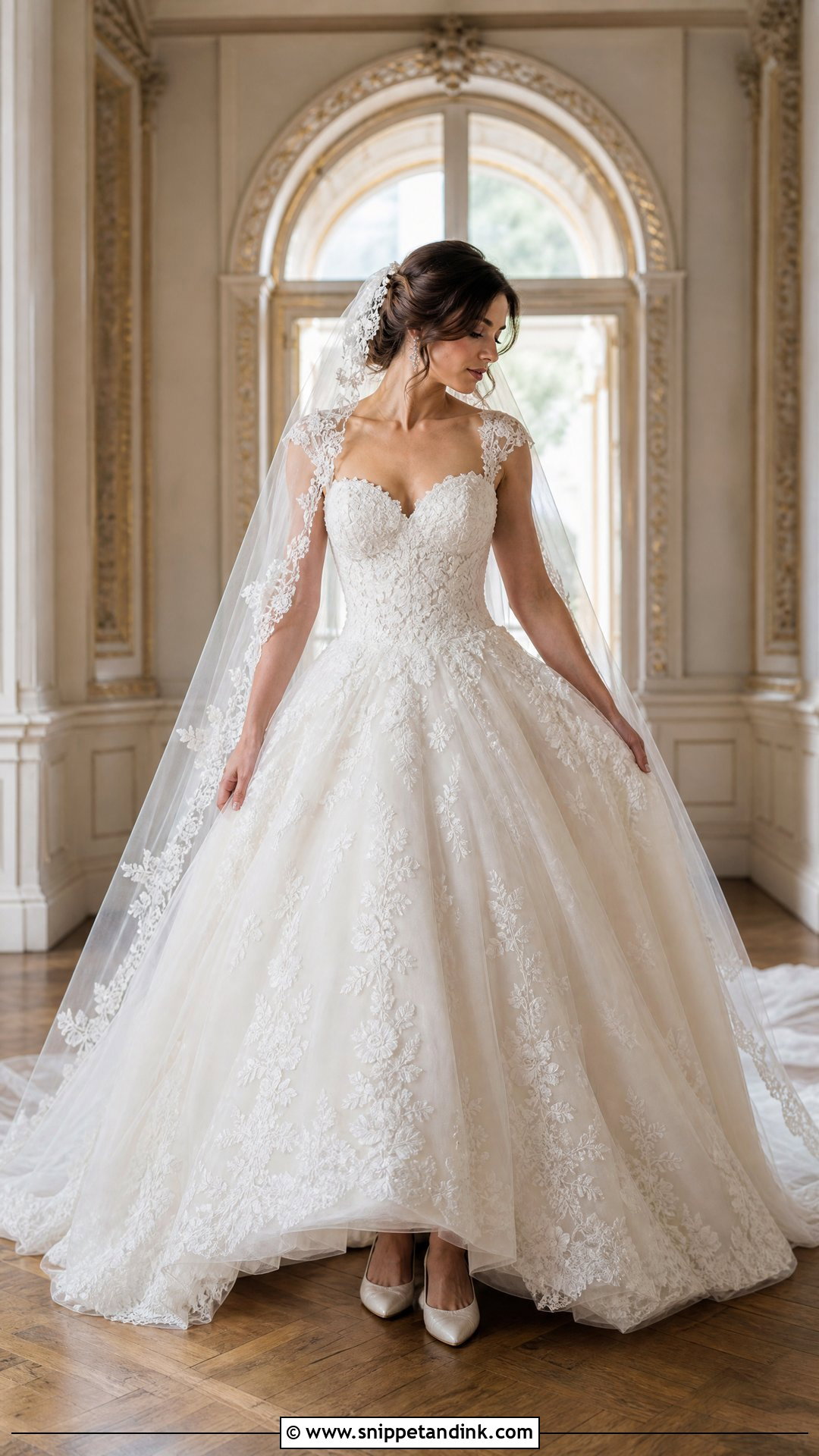
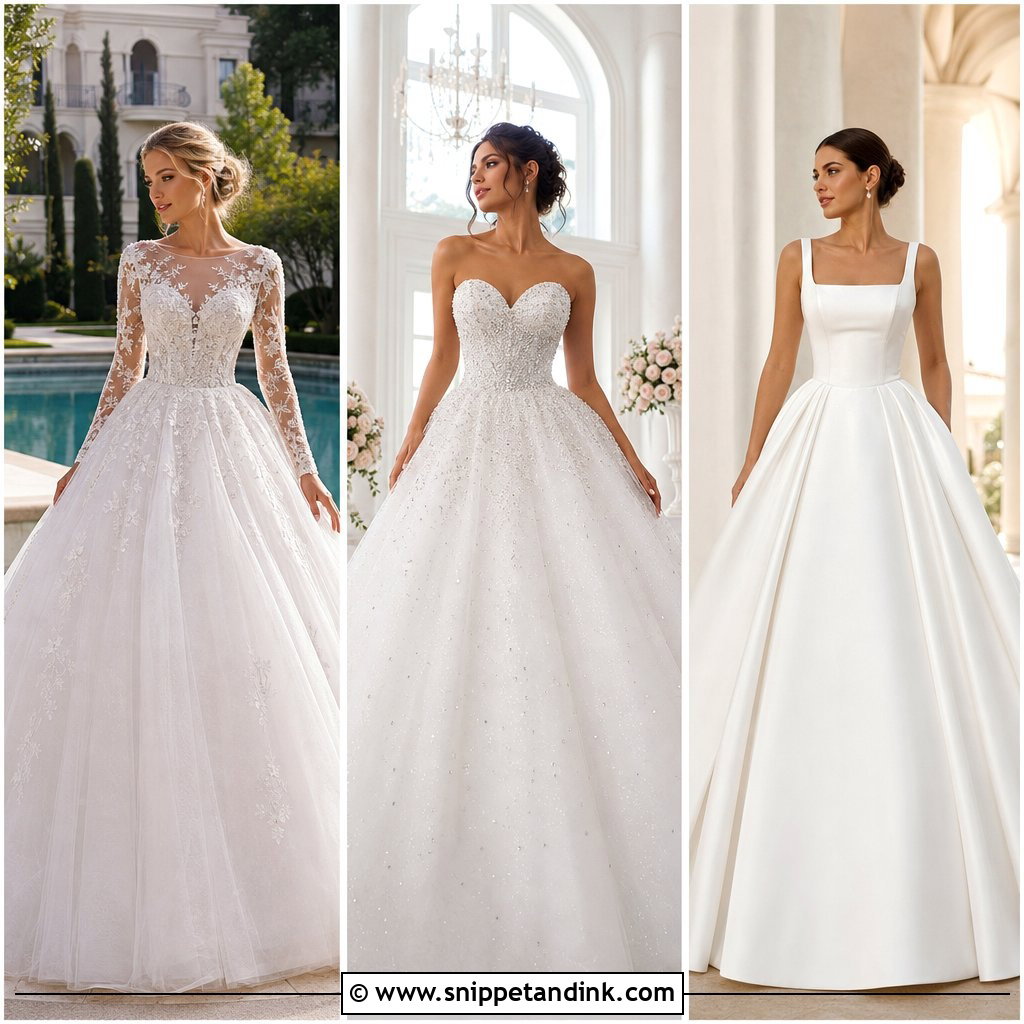
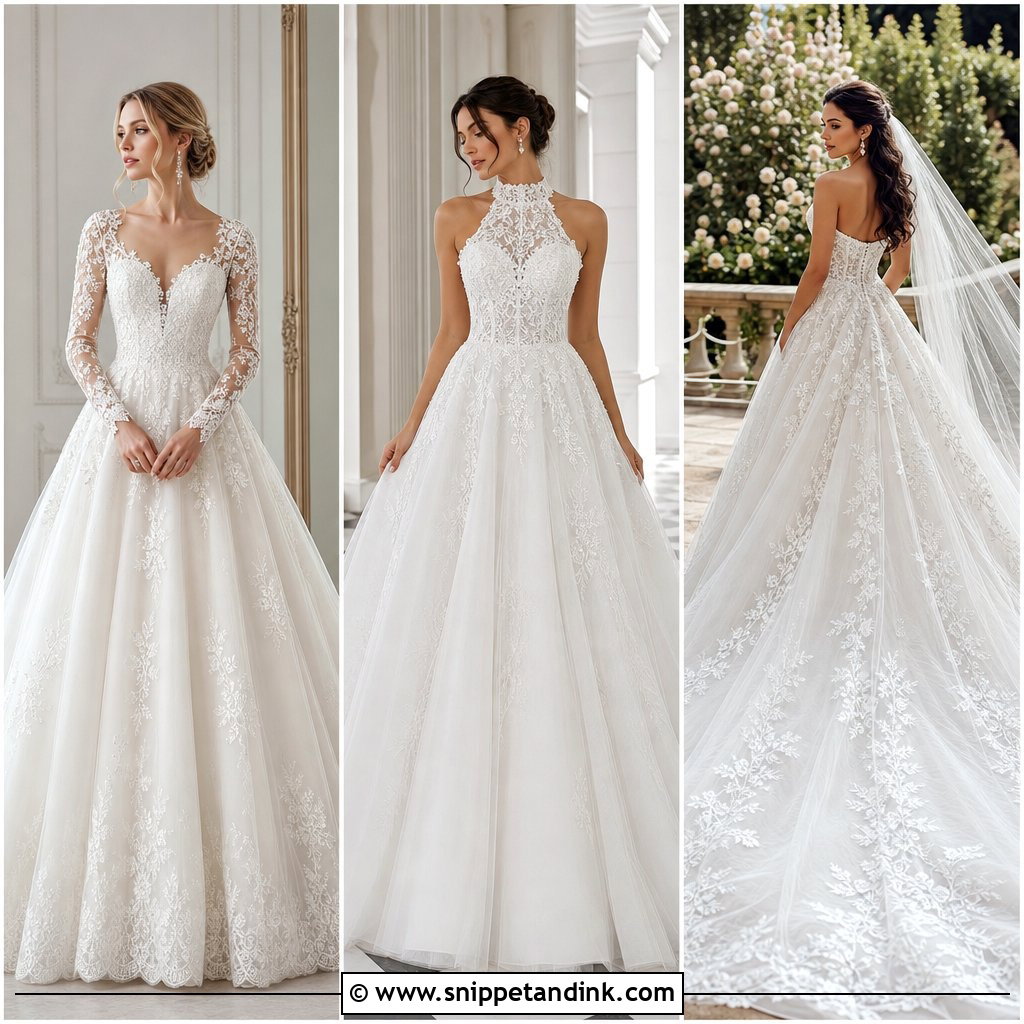
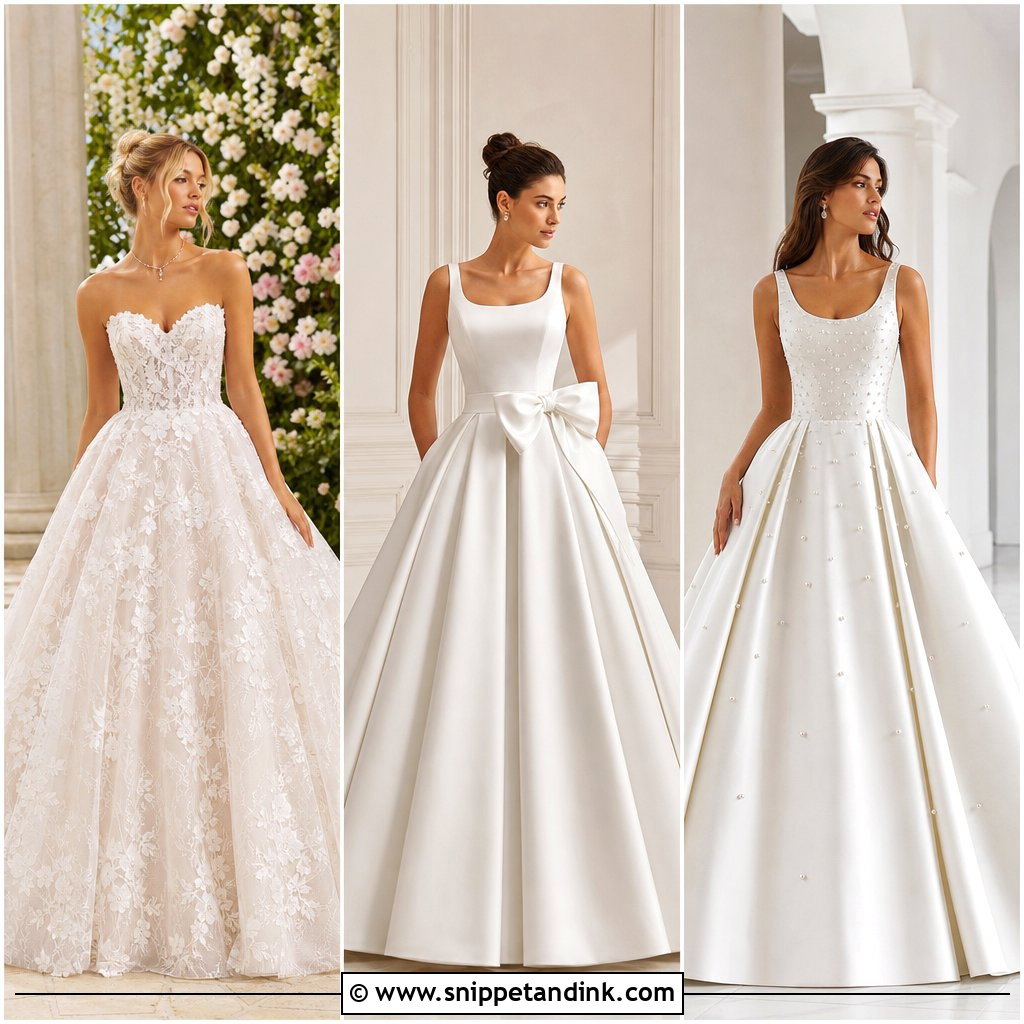
Lace adds texture and a more traditional romance to a full princess silhouette. The detail I look for is lace that flows unbroken from bodice to skirt, because a motif that stops sharply at the waist cuts the body in half. A sweetheart neckline with illusion straps or sheer sleeves adds coverage without bulk. Keep the veil edge in the same lace family, or plain, never a different pattern. A loose chignon, crystal studs and closed-toe heels finish it for garden estates and old houses.
3. Tulle Princess Wedding Gown
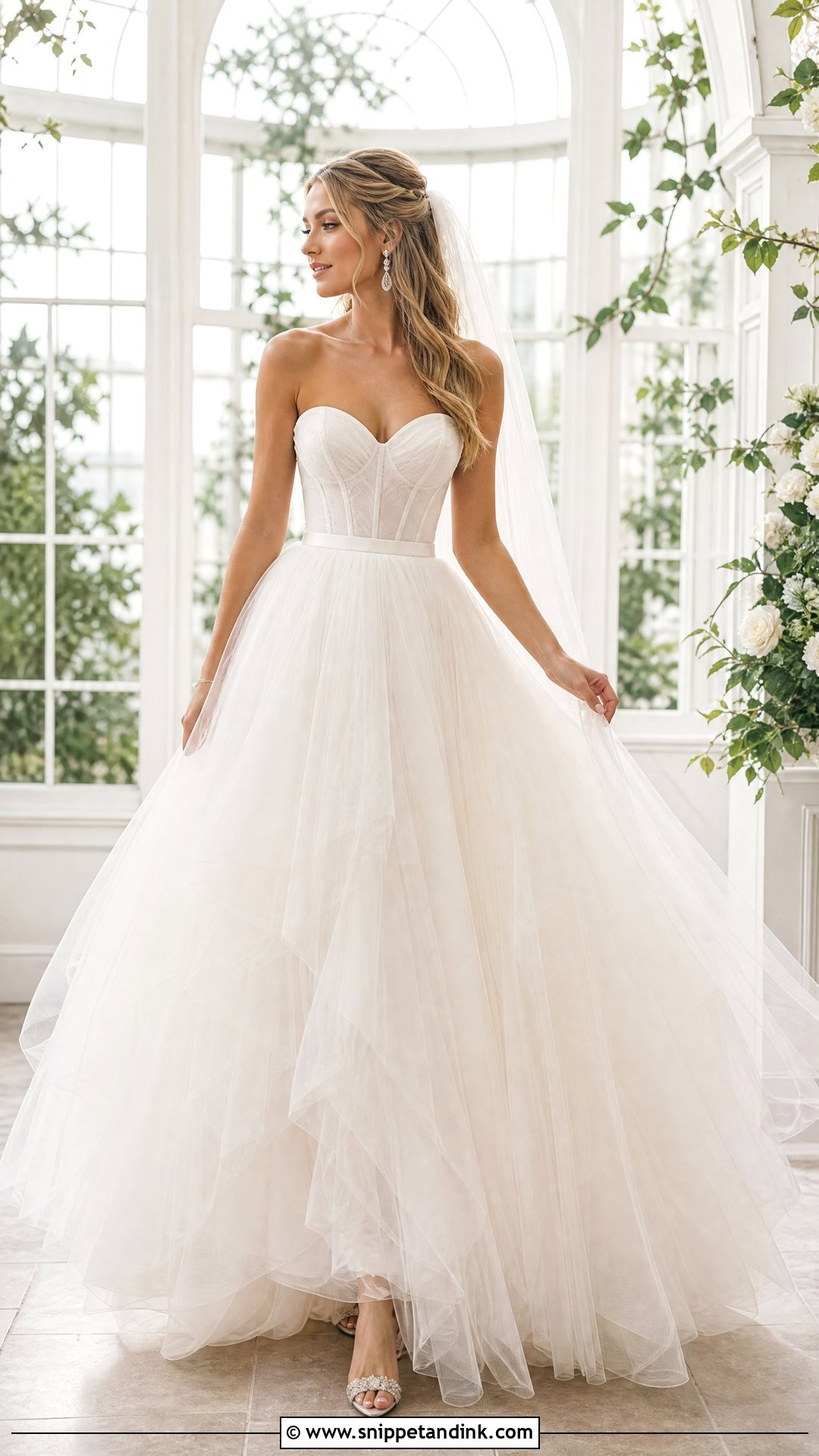
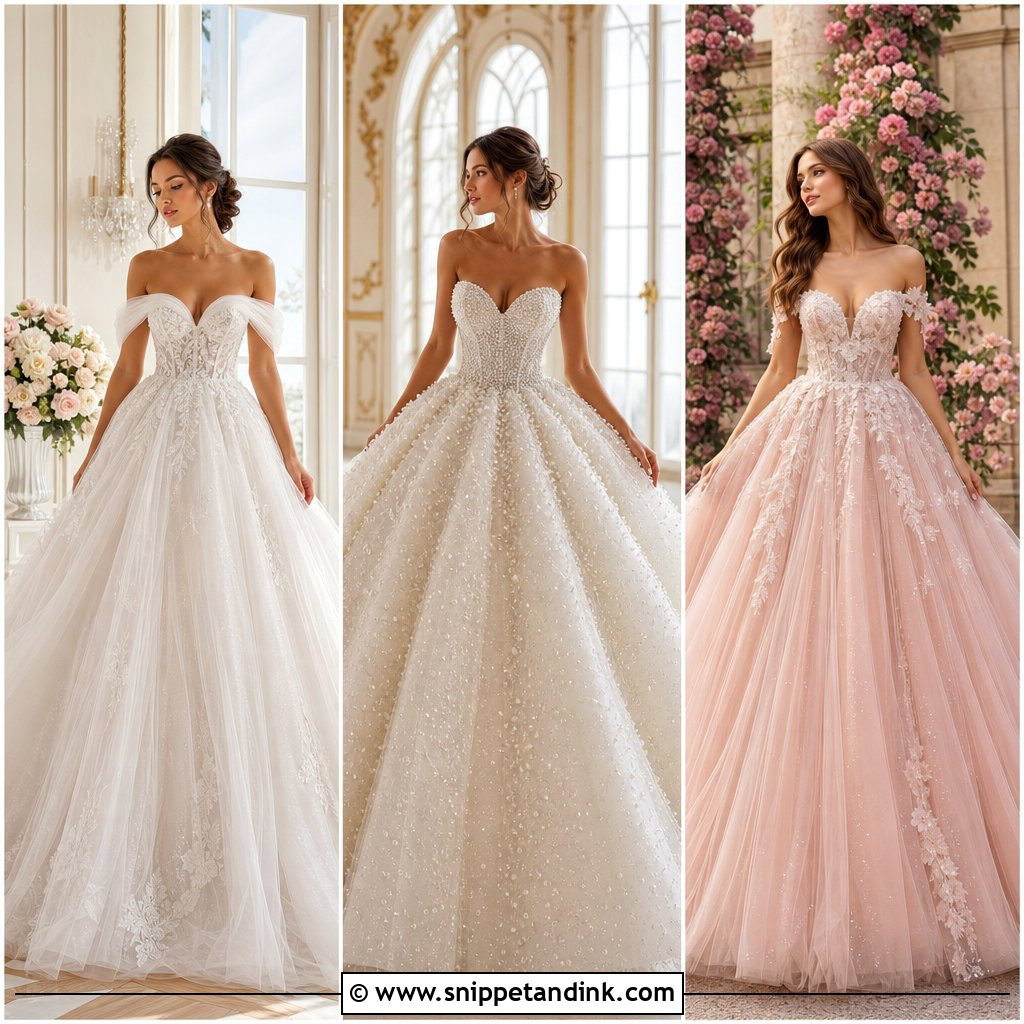
Tulle gives drama without weight, which is why brides who try on satin first often feel lighter the moment they step into it. A fitted bodice with gentle boning and a narrow satin waistband keeps the shape defined so the layers don’t swamp you. The honest drawback is snagging. I steer brides away from textured bracelets and rhinestone shoe straps with this one. Crystal heels, a fingertip veil and small drop earrings suit it. Spring weddings and bright conservatories, where the skirt has room to move, show it at its best.
4. Off Shoulder Princess Wedding Gown
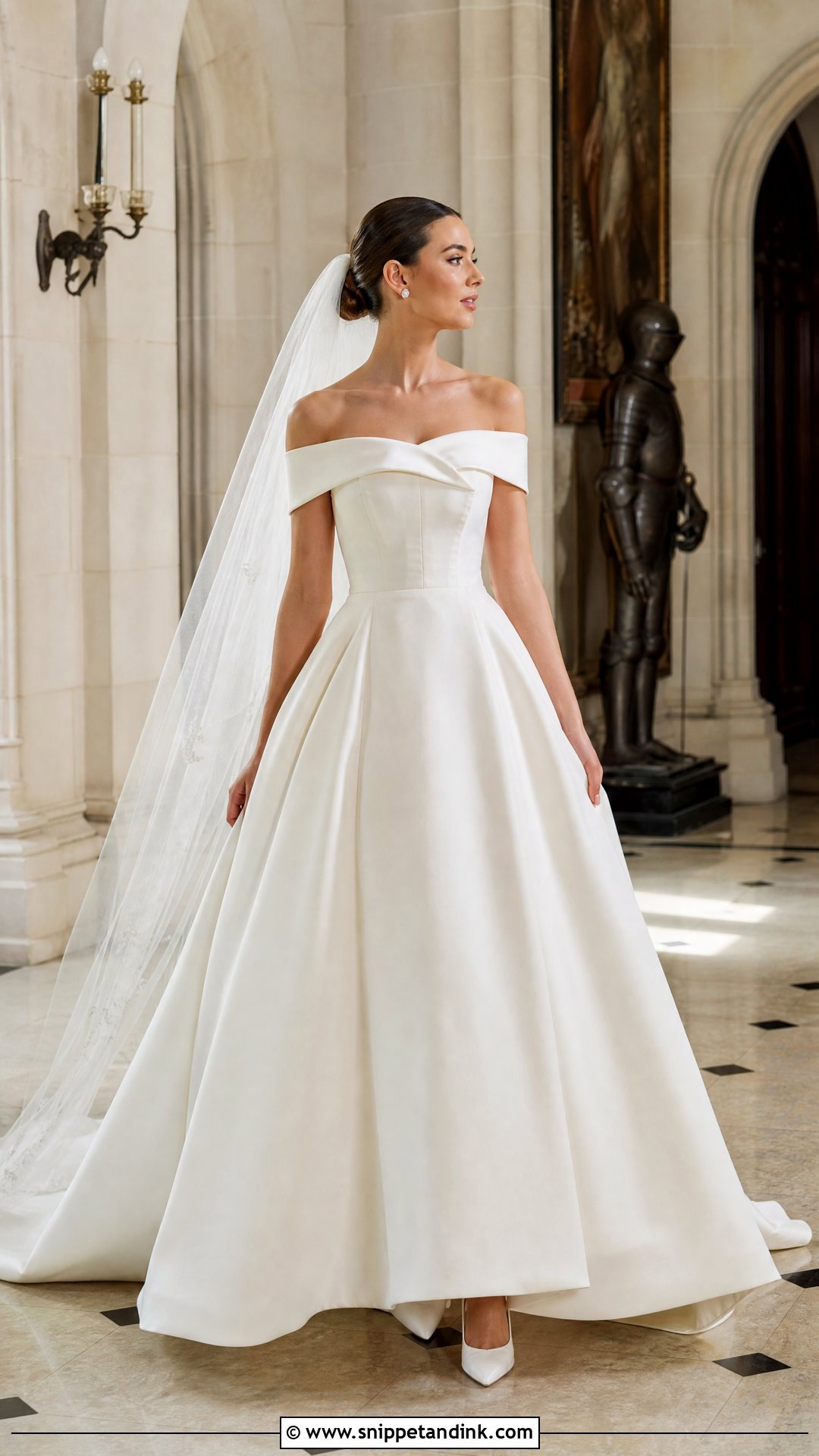
A folded satin band or soft tulle straps sitting just below the shoulders frame the collarbone while the ball gown keeps its scale. At the fitting I ask the bride to hug me. If the band rides up or digs into her arms, the bodice is doing too little of the holding and needs tightening. A natural waist balances the wide skirt. A fine pendant, sparkling studs, a long veil tucked under a polished updo and pointed ivory heels finish it. It suits candlelit evening ceremonies and venues with old stone and wood.
5. Long Sleeve Princess Wedding Gown
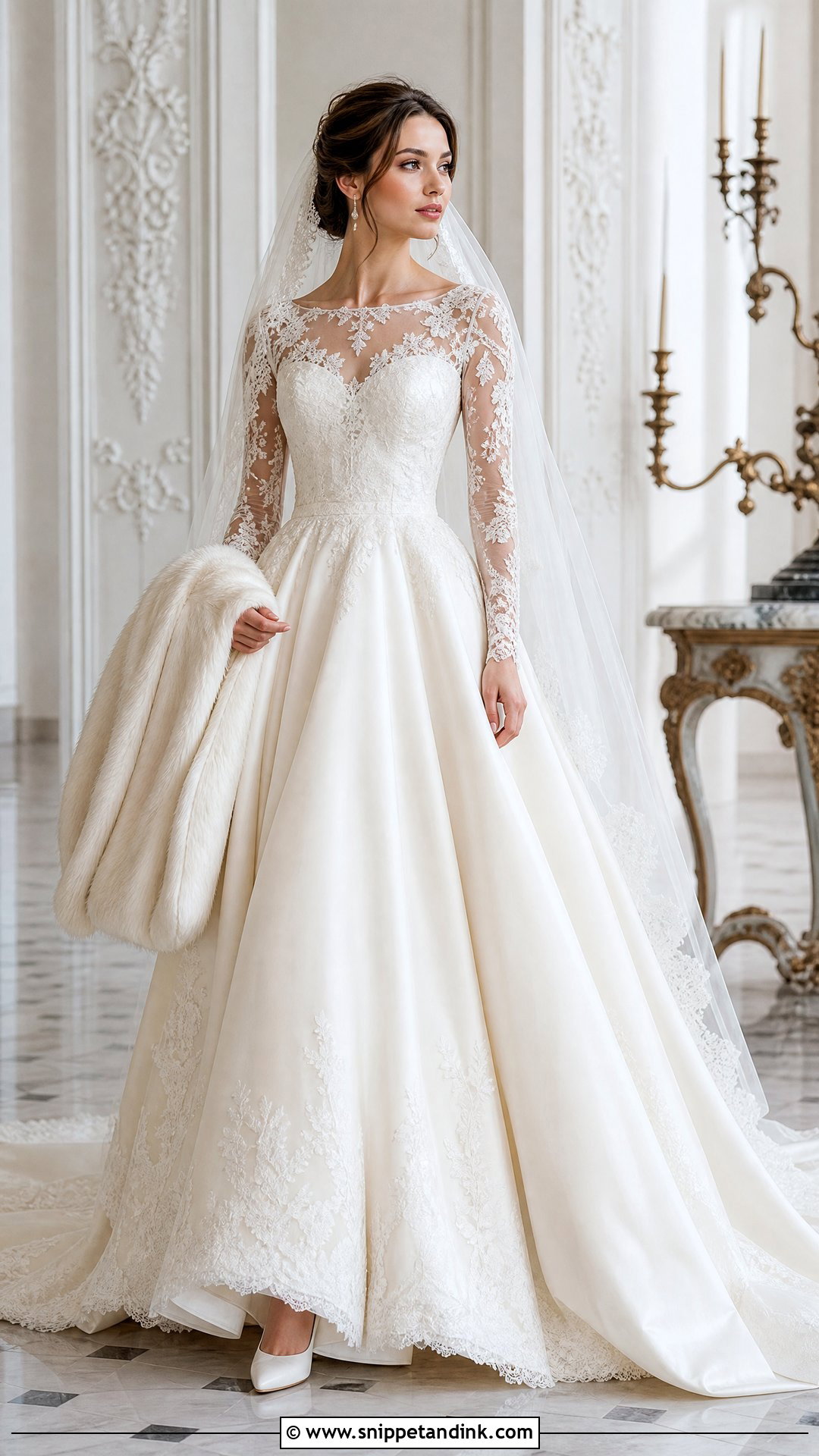
Sleeves change how a princess gown reads, from party dress to occasion. Sheer lace feels light; fitted satin sleeves look cleaner and more structured. I always check the length at the wrist with the bride’s arms bent, because a sleeve that’s perfect hanging straight can ride up when she holds her bouquet. A low twisted bun, pearl earrings and a chapel veil edged in matching lace keep the look calm. In cold weather, a faux-fur wrap for outdoor photos is worth having. Historic venues and formal ballrooms suit it.
6. Sweetheart Princess Wedding Gown
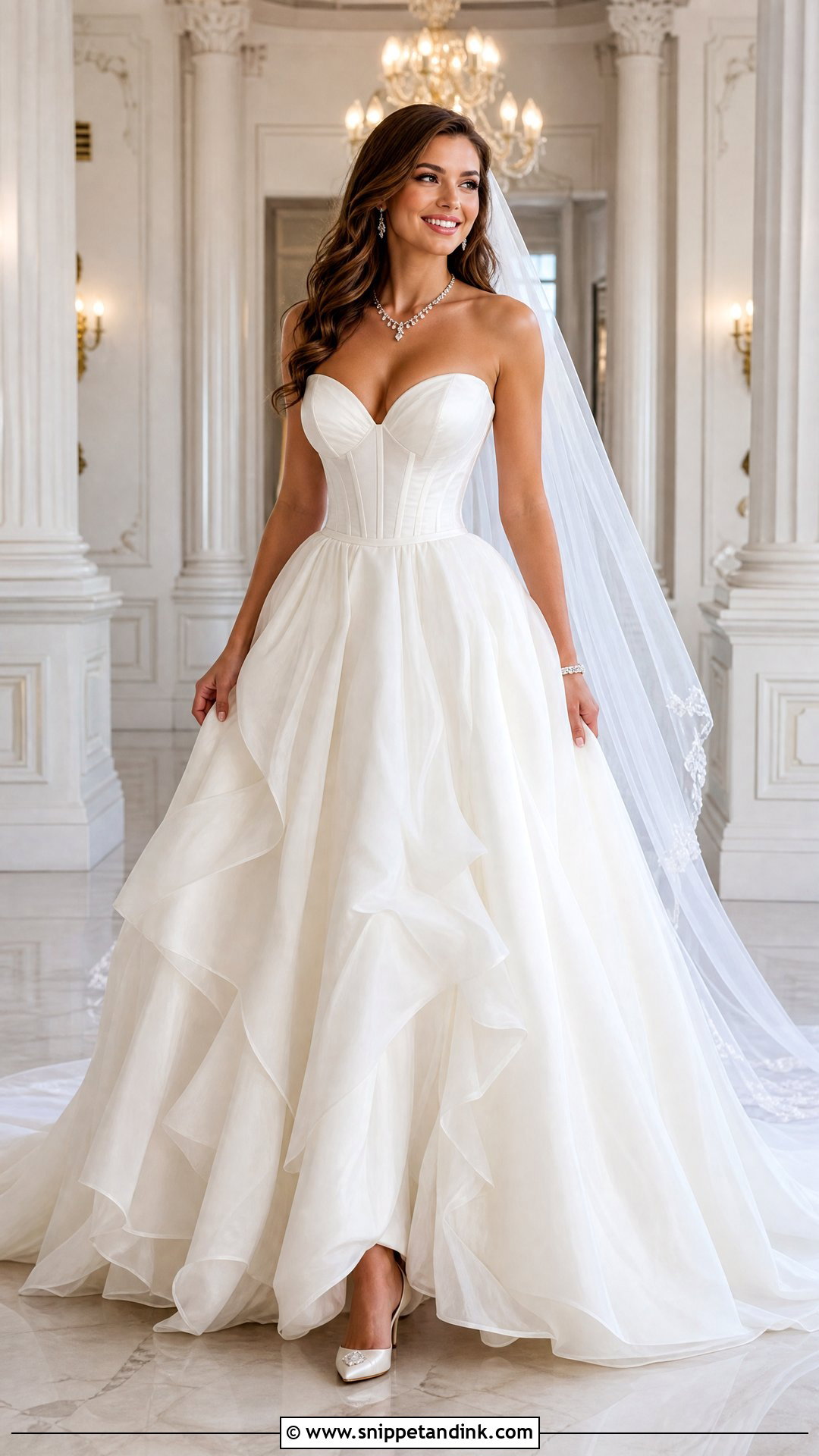
The curve of a sweetheart softens a structured bodice and pulls the eye up to the face. It needs a proper corset-style foundation inside, with boning that keeps the top edge flat against the body. Sit down during your fitting and lean forward. If you can see a gap, that’s what the photographer will see too. A satin, organza or tulle skirt all balance it. A fine crystal necklace with matching earrings, soft waves for a relaxed finish or an updo for a more formal one, and a shoulder or cathedral veil depending on the room.
7. Square Neck Princess Wedding Gown
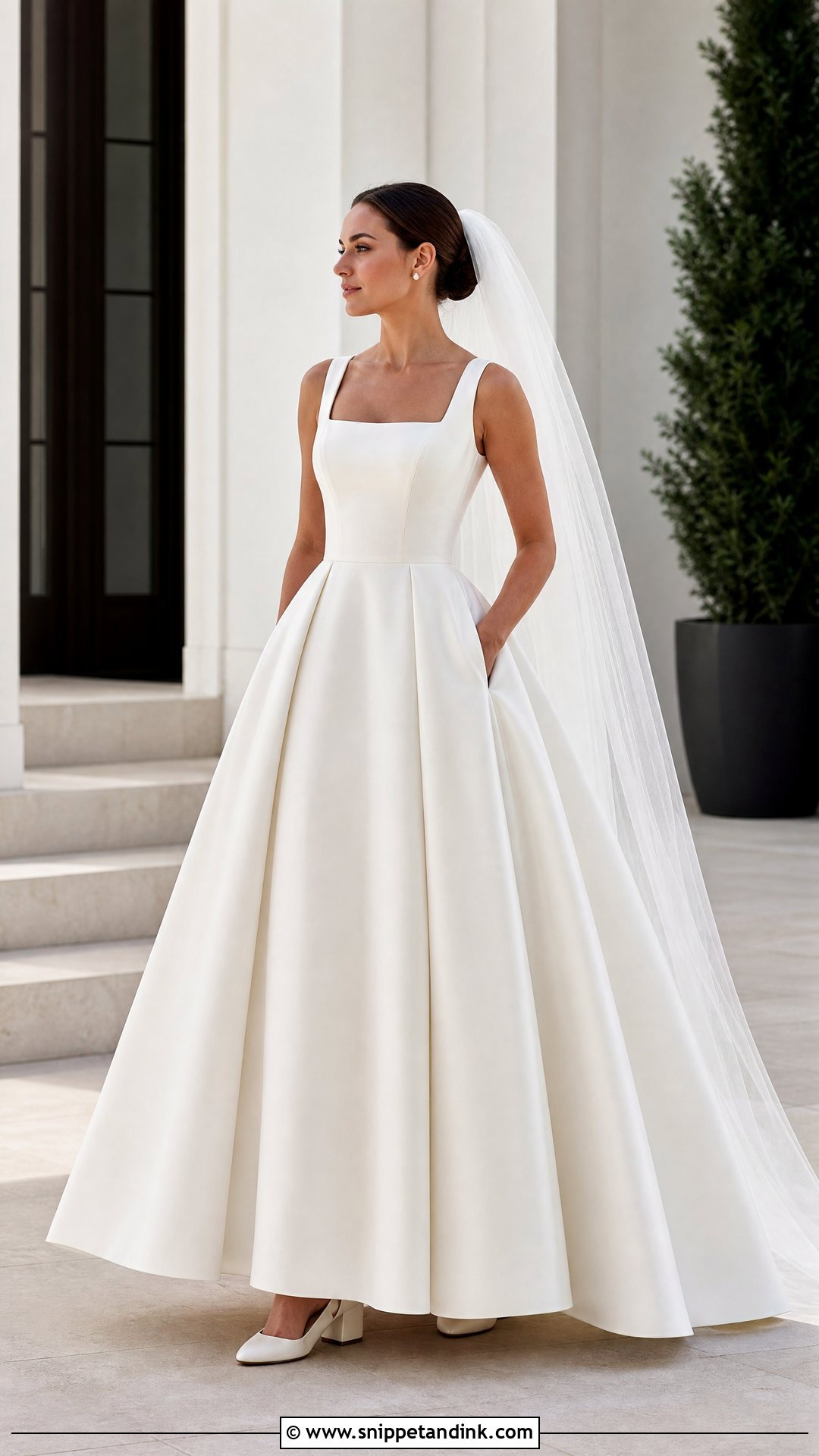
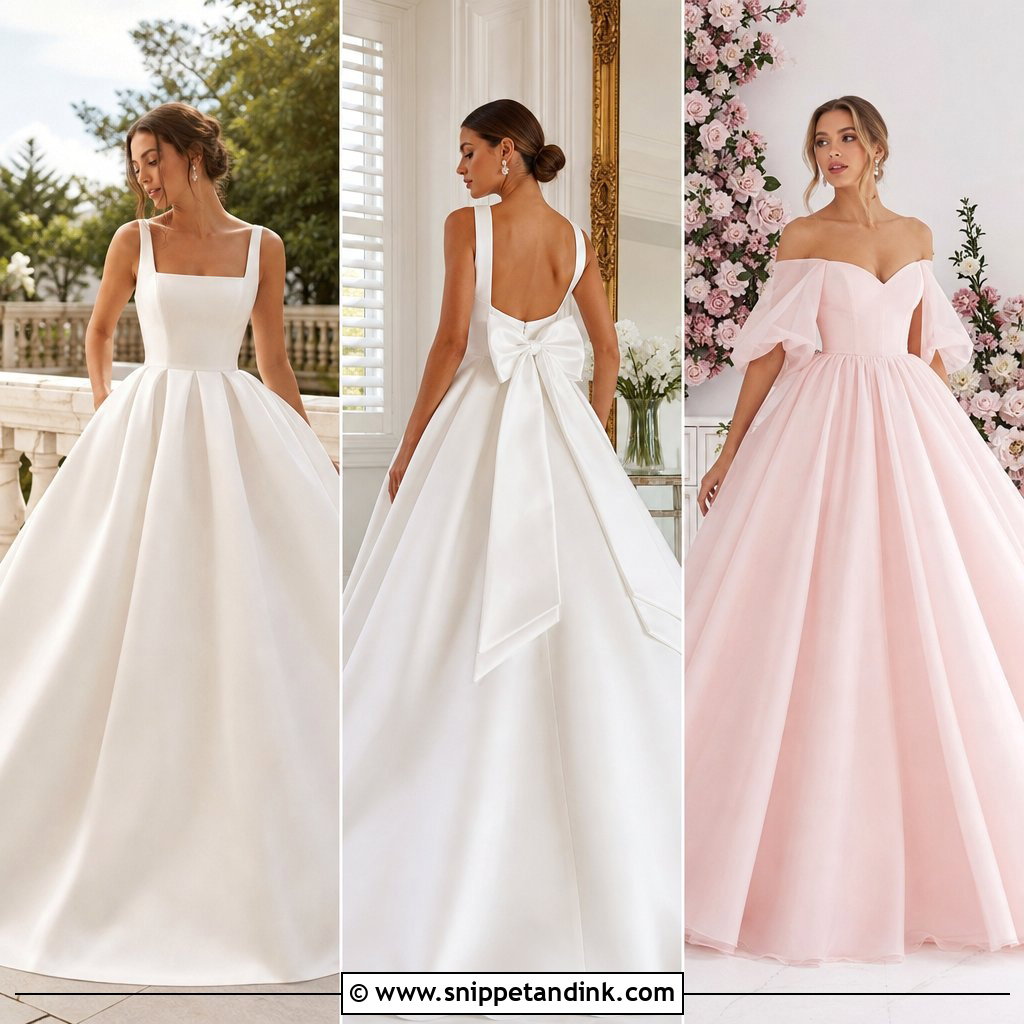
A square neck princess wedding gown pairs full volume with a crisp, modern line. Wide straps and clean seams give it real support, which makes it a good pick for brides who don’t trust strapless. Smooth satin or mikado shows off the architecture, or a little restrained lace at the edge softens it. Pearl studs, a sleek bun, a plain cathedral veil and block heels suit the clean lines. Ask your seamstress about adding pockets. On a skirt this full, they’re invisible and you’ll use them all day.
8. Corset Princess Wedding Gown
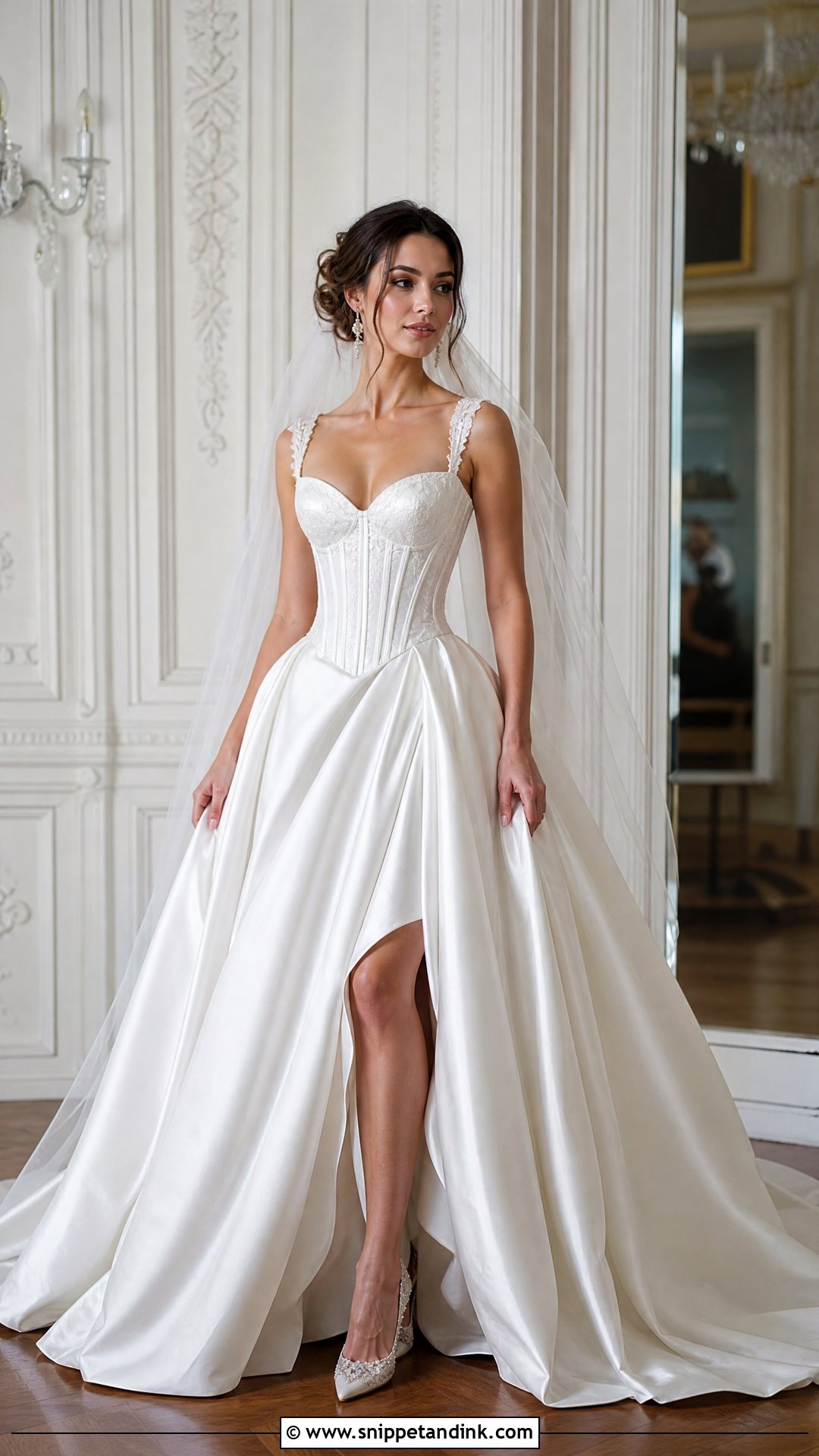
Corsetry can be visible boning, a lace-up back or structure hidden under satin or lace. Whichever you choose, the fit decides everything. It should hold you securely, not squeeze. I tell brides to sit, eat something and take a deep breath at the final fitting, because a bodice that’s fine standing in a mirror can be hard work through a three-course dinner. A generous skirt balances the narrow waist. Long drop earrings, a sheer veil and a softly pinned updo keep the corset back visible during the ceremony.
9. Basque Waist Princess Wedding Gown
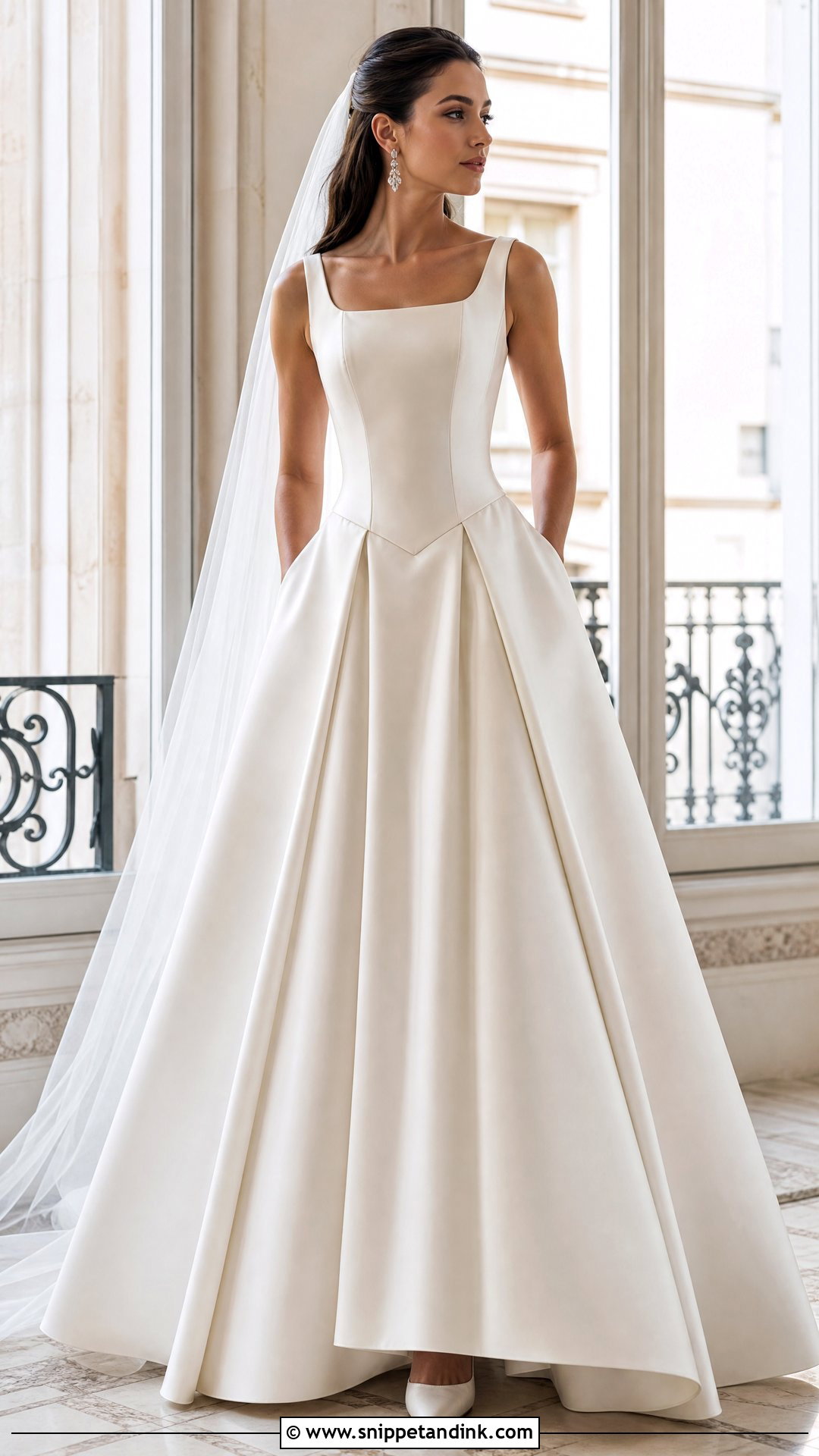
The bodice dips into a soft V below the natural waist, which lengthens the torso and makes a dramatic break into the skirt. Structured satin keeps the point sharp; embroidered fabric makes it more decorative. Never put a belt across a Basque waist. It cuts straight through the line that makes the dress special. I also look at it from the side at fittings, because the point should lie flat against the body rather than poke outward when you sit. A simple veil, crystal earrings and ivory pumps finish it.
10. Floral Princess Wedding Gown
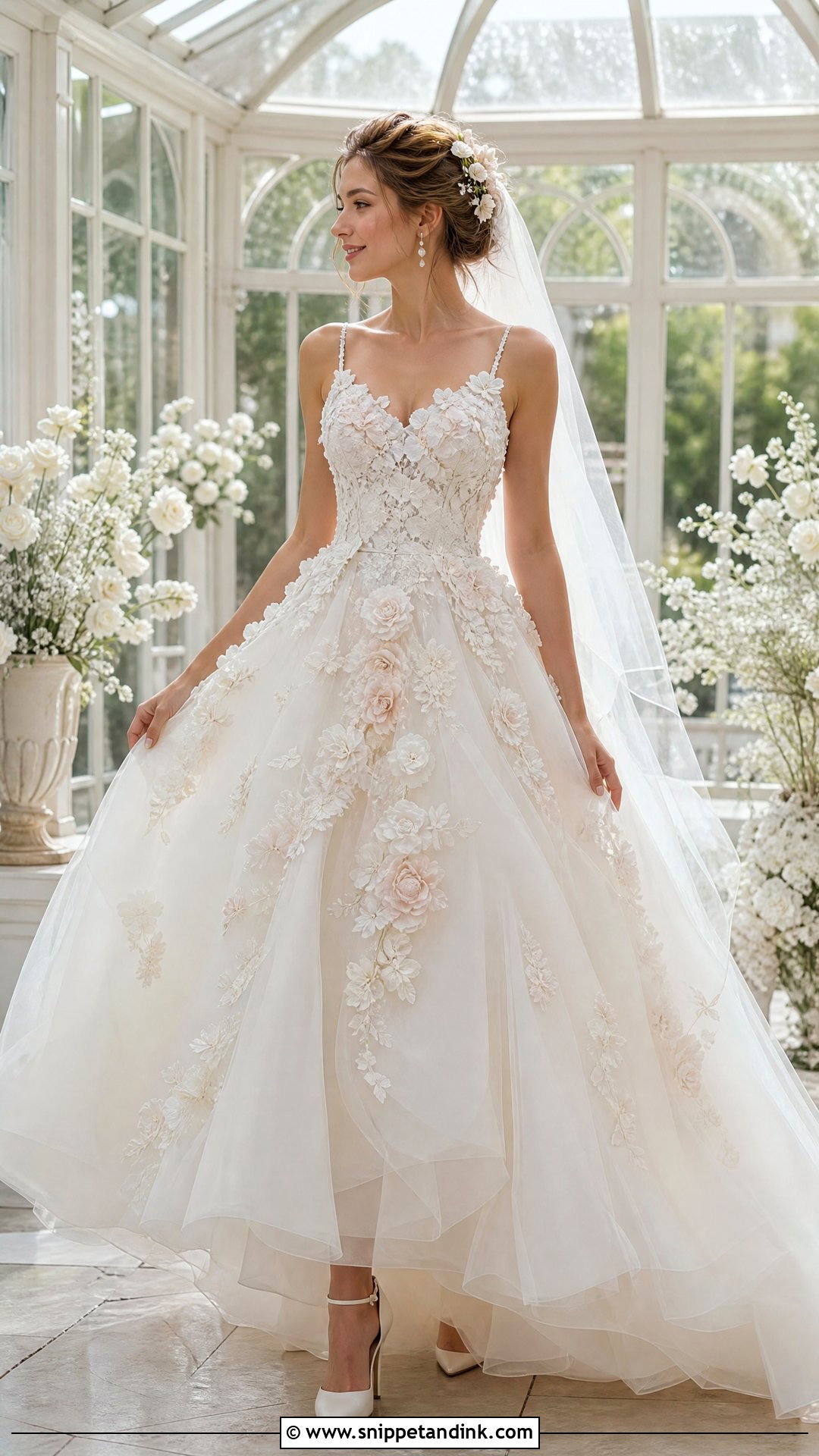
Three-dimensional flowers turn the gown itself into the decoration. Placement is what separates a good one from a busy one: dense around the bodice, then scattering out across the skirt so the eye travels downward. Ivory petals give quiet texture, while pale blush or blue centers add color. Because the dress is so detailed, I keep the bouquet small and loose so it doesn’t compete. Floral pins, small pearl earrings, a plain tulle veil and plain satin heels round it out for gardens and conservatories.
11. Beaded Princess Wedding Gown
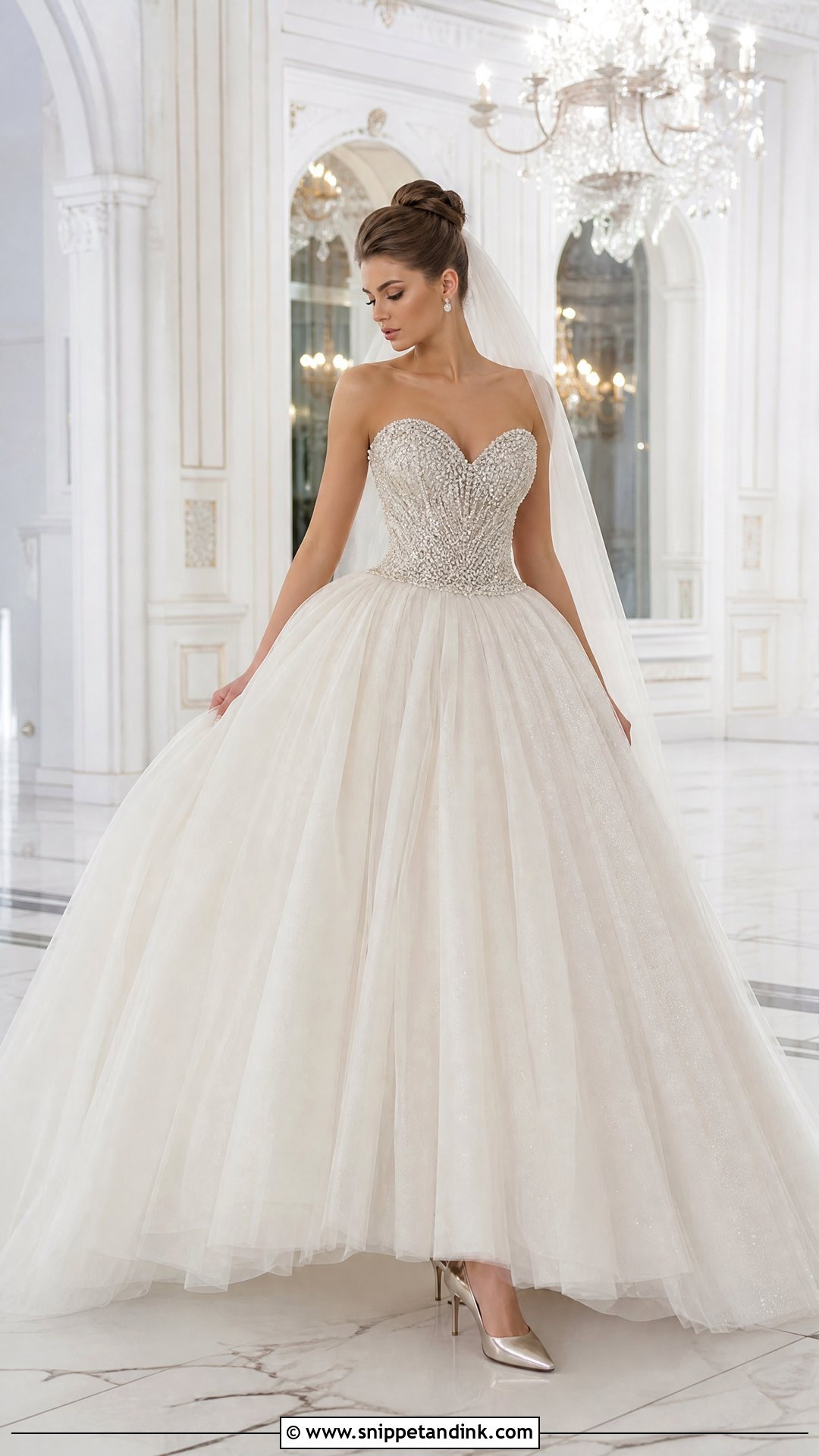
Beadwork that’s dense on the bodice and fades toward the hem gives sparkle without making the whole silhouette busy. Crystal, pearl and silver beads all sit well on ivory tulle or satin. Two fitting checks matter here. Lift your arms and feel the inside of each arm, because raised beads at the underarm can rub raw over a long day. And wear your hair up, since loose hair catches on beading. Simple earrings, metallic pumps and an unembellished veil are enough. It belongs to evening receptions under bright light.
12. Pearl Princess Wedding Gown
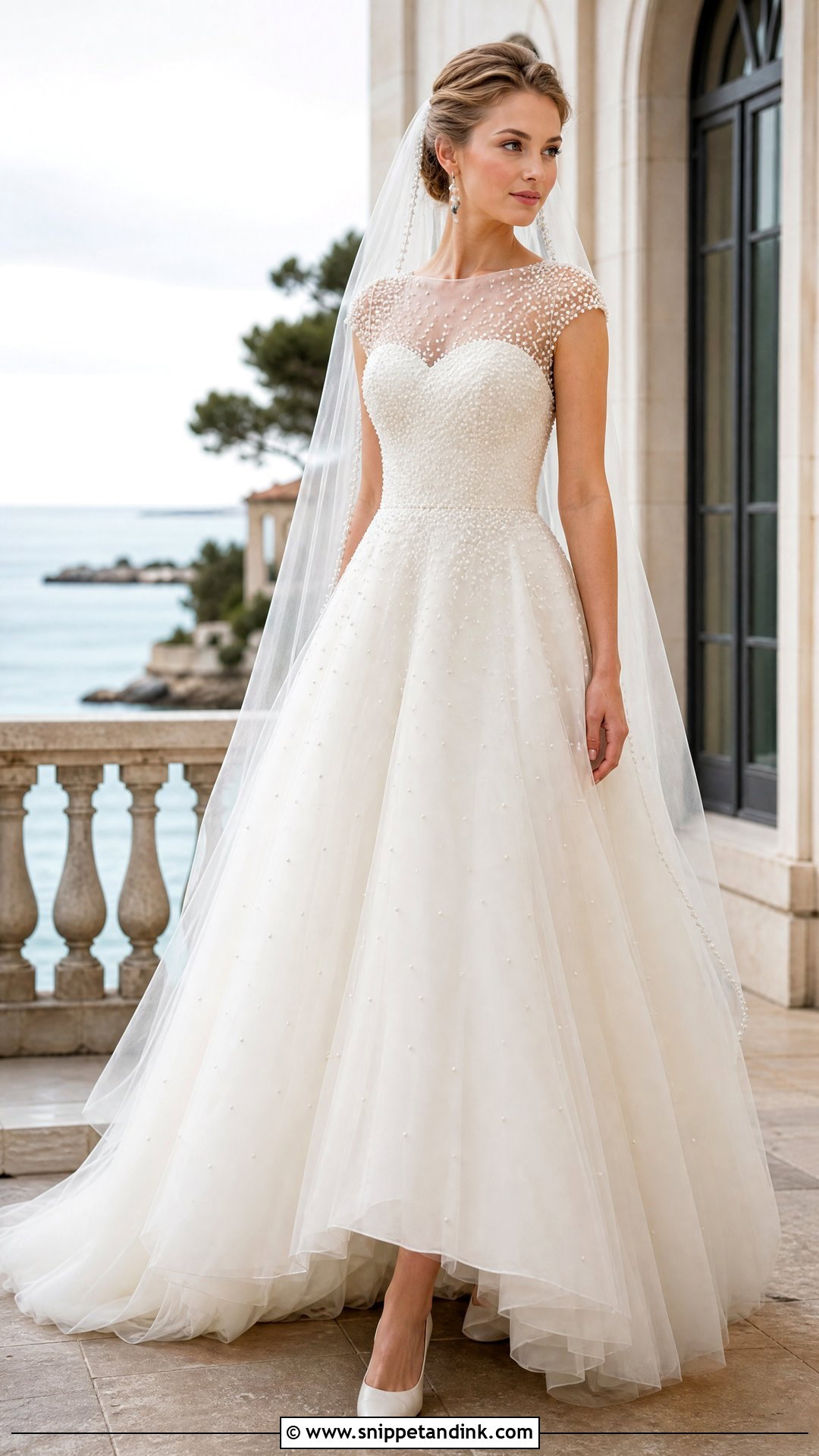
Pearls glow rather than glitter, which makes them the softer route to embellishment. Scattered across an illusion neckline, a corset bodice or a tulle skirt, mixed sizes give depth. I’d limit yourself to one or two pearl accessories, maybe drop earrings and a pearl-edged veil, otherwise the look tips into theme. Run your hand over the bodice at the fitting to check every pearl is secure and nothing scratches. A polished low bun or French twist suits it, and daylight venues show pearls best.
13. Bow Princess Wedding Gown
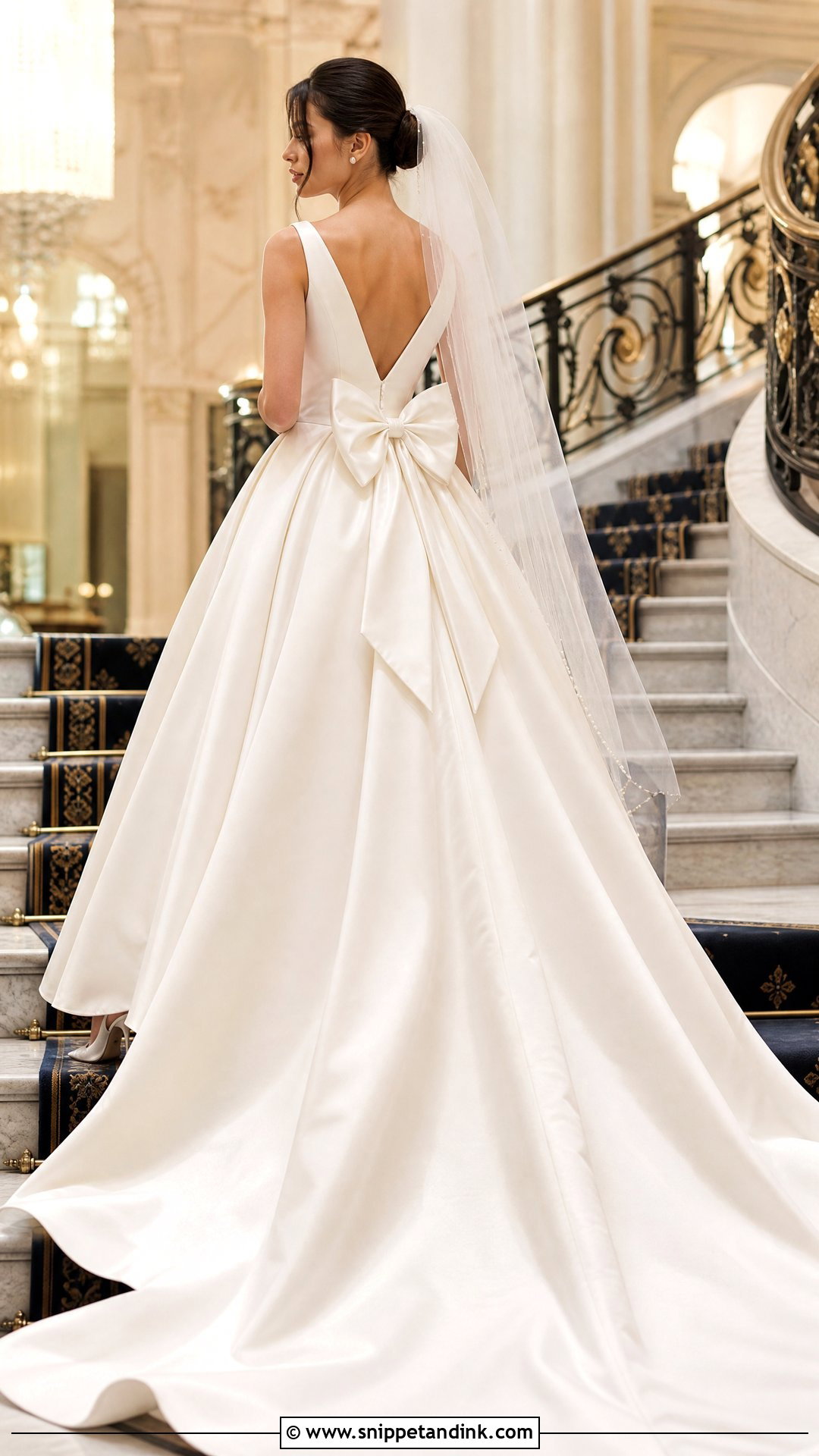
One structured satin bow, not several, is how this works. A large back bow frames the train during the ceremony, and some are detachable, which I recommend if you plan to sit for a long dinner, because a big bow sits right where your chair back is. A long draped bow with trailing ends reads softer. Keep the bodice clean and the hair up so the bow stays visible, with a fingertip veil, pearl studs and satin pumps. It’s the back view guests see during the vows, so it earns its place.
14. Cape Princess Wedding Gown
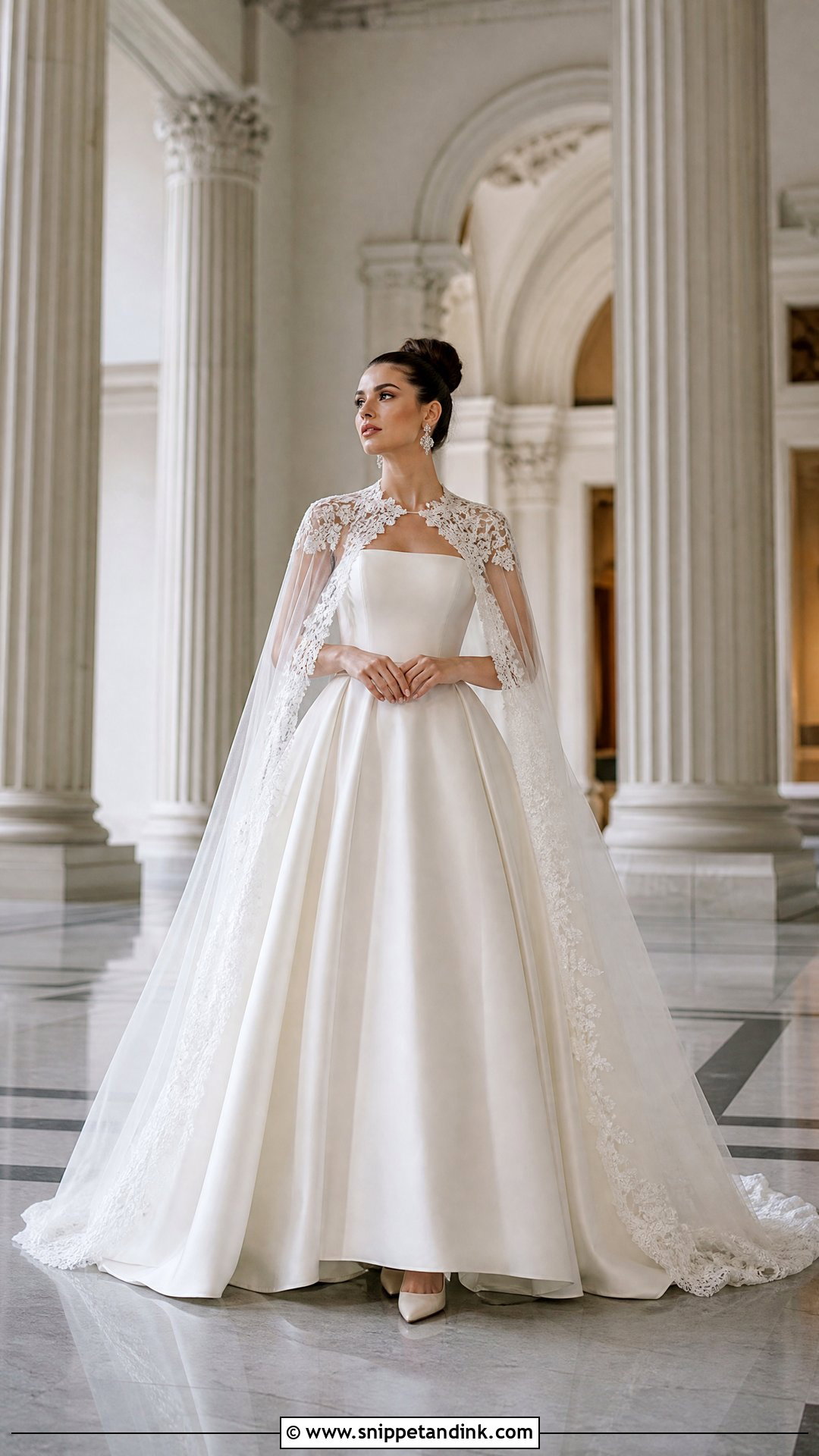
A sheer, floor-length cape attached at the shoulders can replace the veil entirely. Over a structured satin or lace gown, a lightly embellished edge frames the outfit, while a plain cape looks more modern. Length matters more than brides expect. It should reach the train or stop a little short, never end mid-skirt, where it creates an odd double hem. Pick a removable one for dinner and dancing, skip the necklace if the fastening is decorated, and add crystal earrings with a polished updo. In cool weather it gives a little extra warmth too.


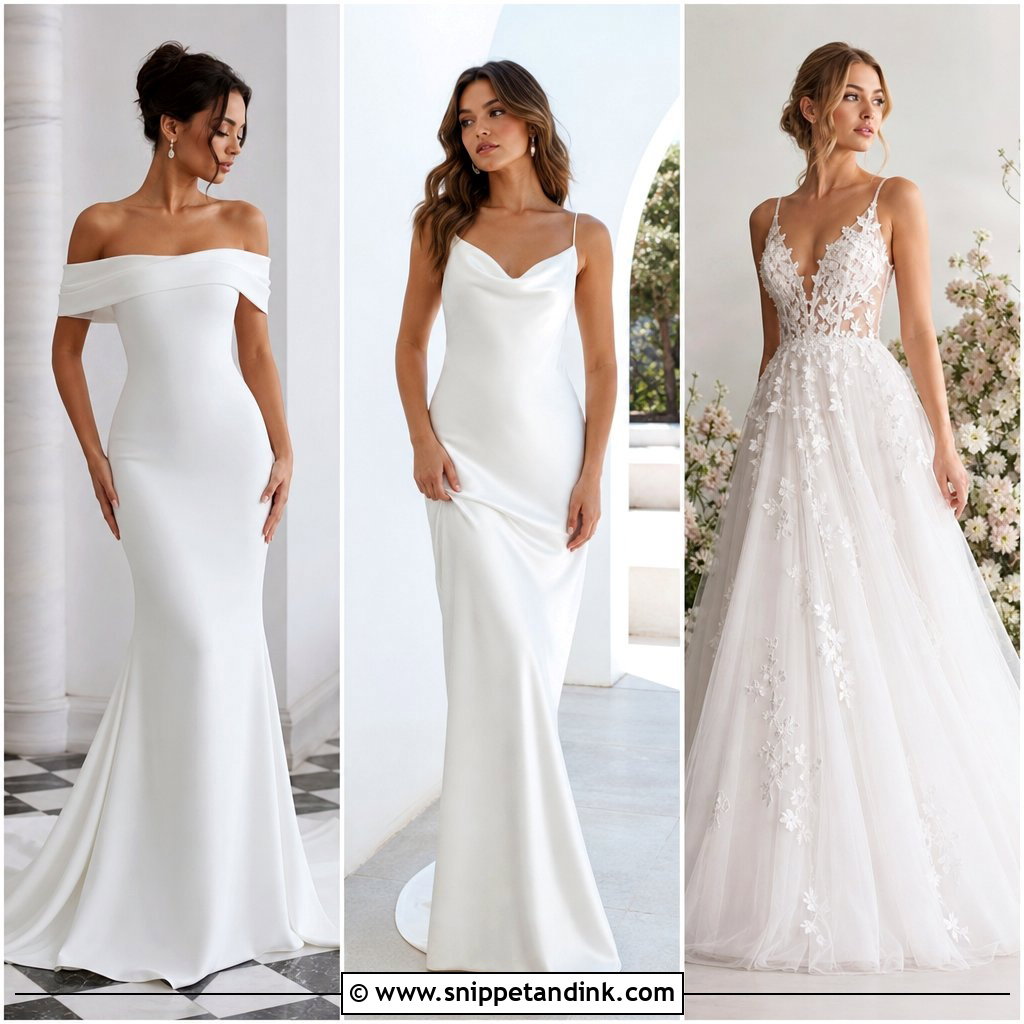
15. Detachable Sleeve Princess Wedding Gown
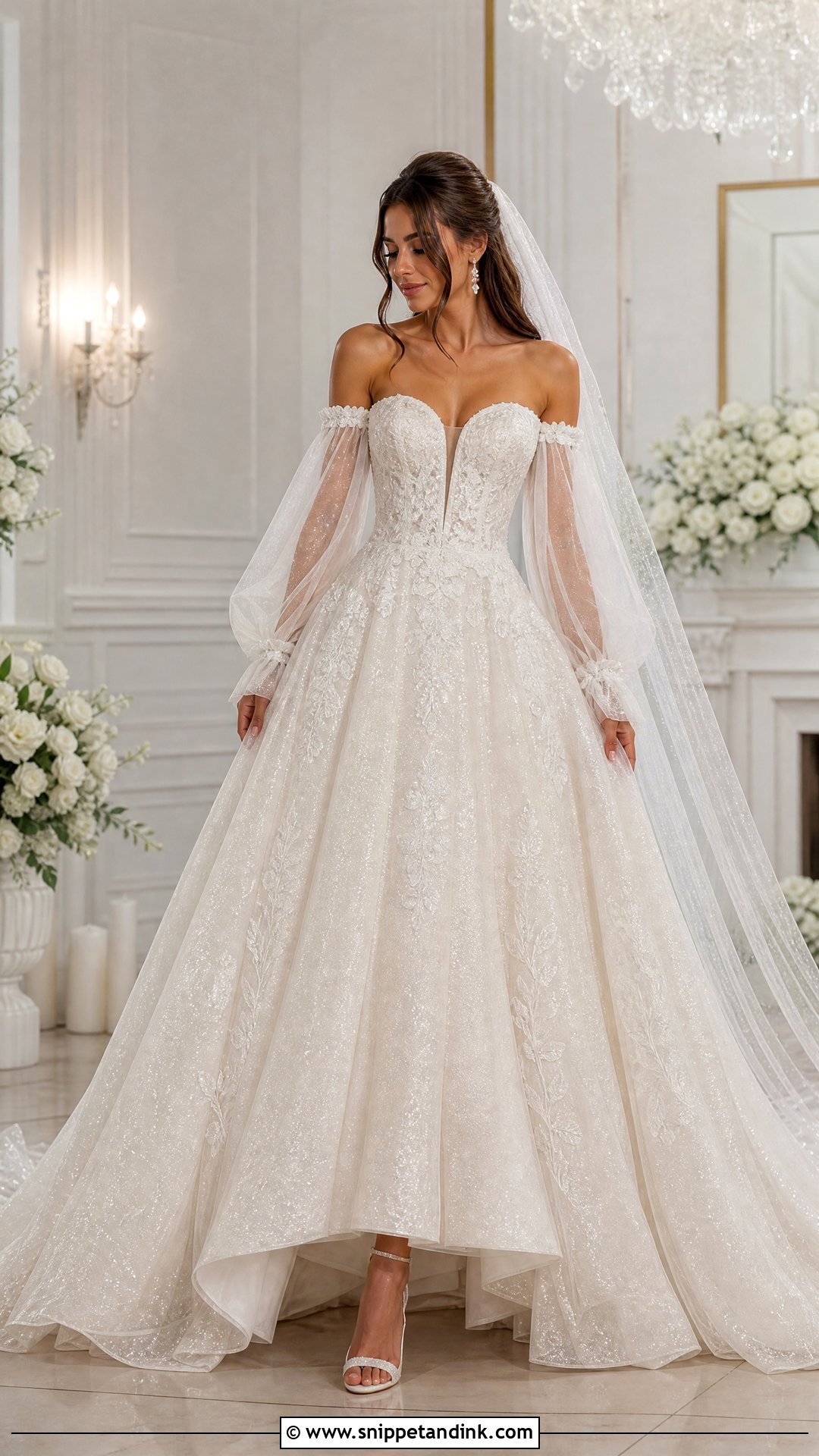
Removable sleeves give you two looks from one gown: lace sleeves, off-the-shoulder drapes or puff sleeves for the ceremony, then a clean strapless or sleeveless neckline for the party. A half-up hairstyle works with both, which saves a restyle mid-evening. The fabric needs to match the bodice exactly or contrast on purpose; near-misses look like mistakes. Test the fastenings at the last fitting by swinging your arms, since sleeves that slip down are worse than none. A cathedral veil, drop earrings and supportive heels complete the ceremony version.
16. Blush Princess Wedding Gown
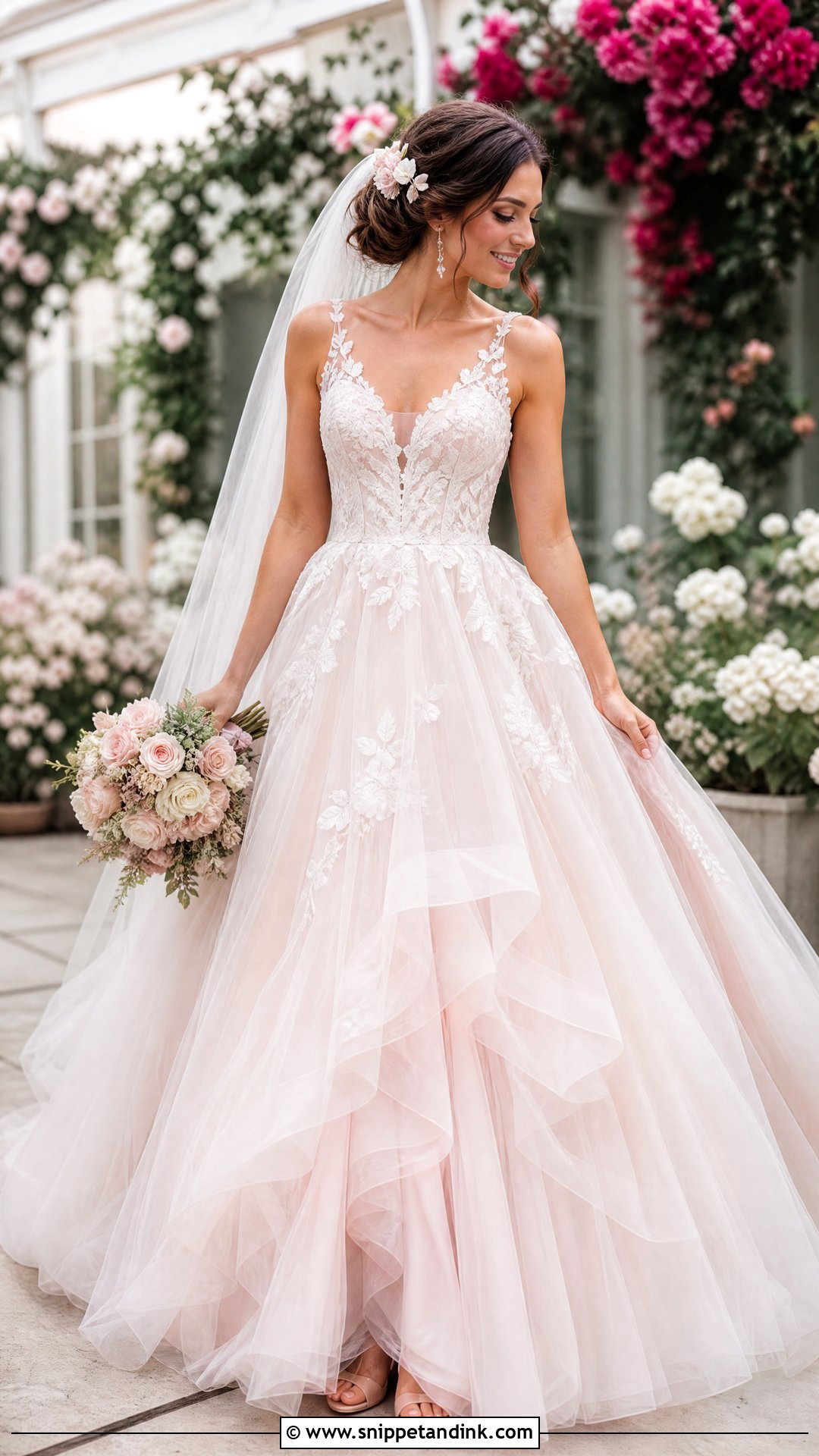
A pale pink underlayer beneath ivory tulle or lace gives the softest kind of color. The bodice and skirt keep the classic shape, so the tint is the only change. My main warning is about mixing pinks. Rose-gold earrings, blush heels and a pink bouquet in three slightly different shades will look mismatched in photos. Pick one blush and repeat it once, in the bouquet or a hairpiece. Keep the veil light ivory so the color underneath shows through. Spring gardens and pale ballrooms suit it.
17. Blue Princess Wedding Gown
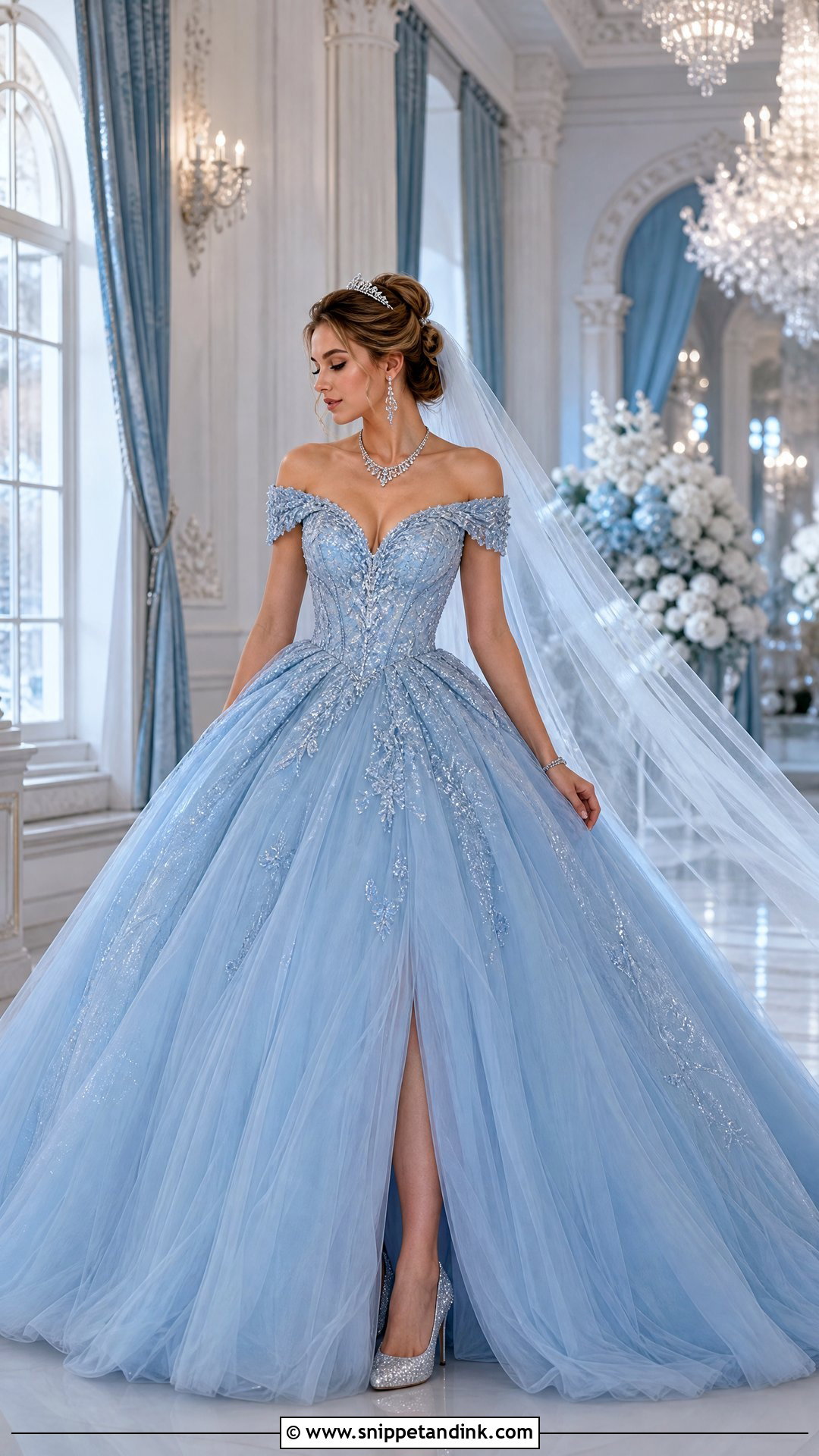
Powder blue tulle over a neutral lining, or ivory with blue embroidery, gives a softer alternative to white that still reads as bridal. Blue is the shade I’m most careful with, because it shifts more than any other between shop lighting, daylight and a camera’s white balance. Look at swatches outside before you commit. Silver jewelry, crystal heels and a sheer pale blue veil keep the palette cool, with a mostly white bouquet and a few blue flowers. A soft updo with crystal pins adds a little sparkle for winter or coastal weddings.
18. Gold Princess Wedding Gown
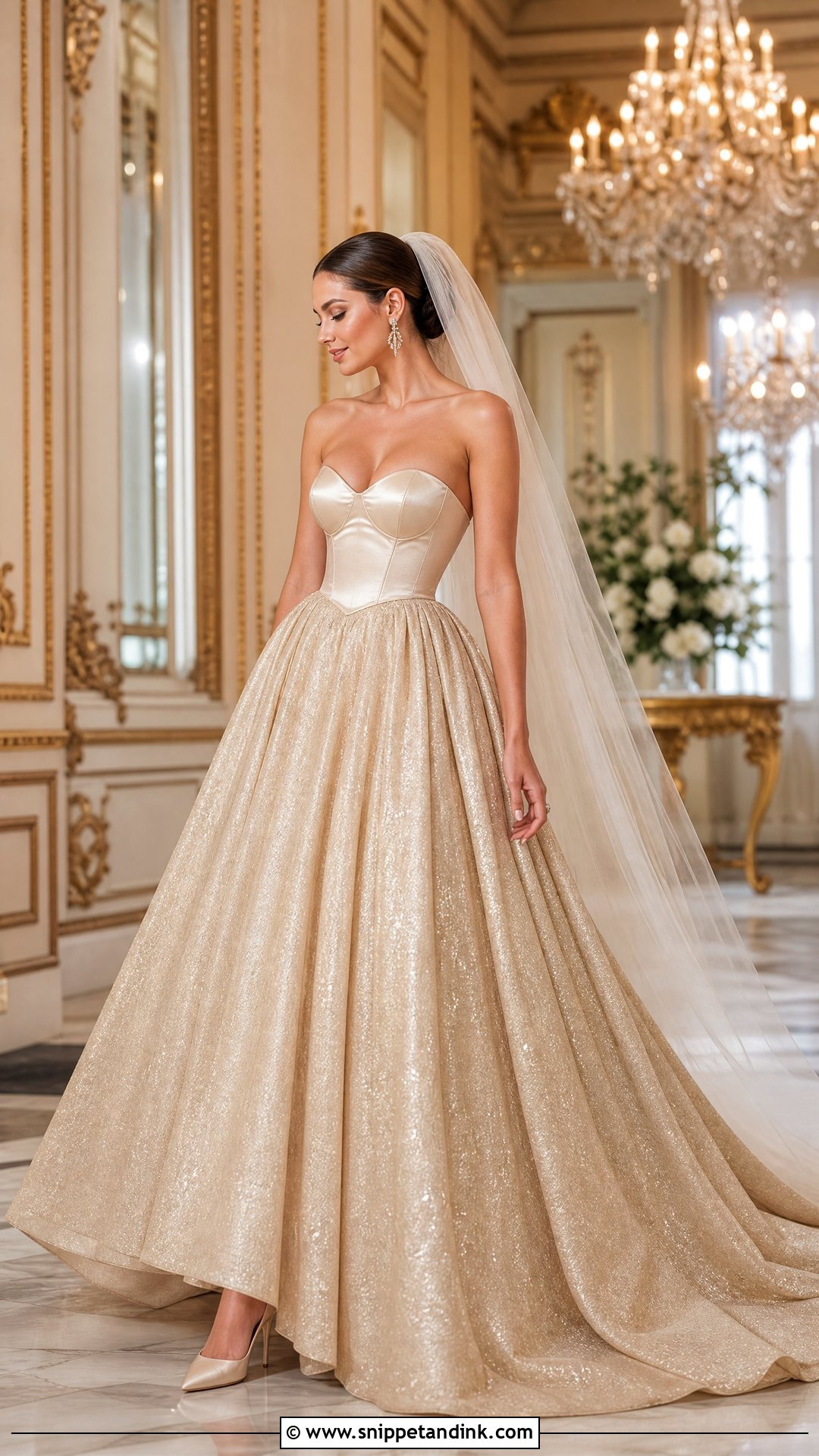
Champagne and pale gold add warmth, but the finish needs care. Luminous satin, metallic embroidery or a lightly glittered overlay looks rich; a truly reflective fabric can look costume-like up close. Metallic tones change a lot under different lighting, so view the dress under conditions close to your venue’s before ordering. Warm crystal earrings, champagne pumps and an ivory veil suit it. With heavy gold embellishment, drop the necklace and keep the bouquet simple. Ornate ballrooms and evening receptions are its setting.
19. High Neck Princess Wedding Gown
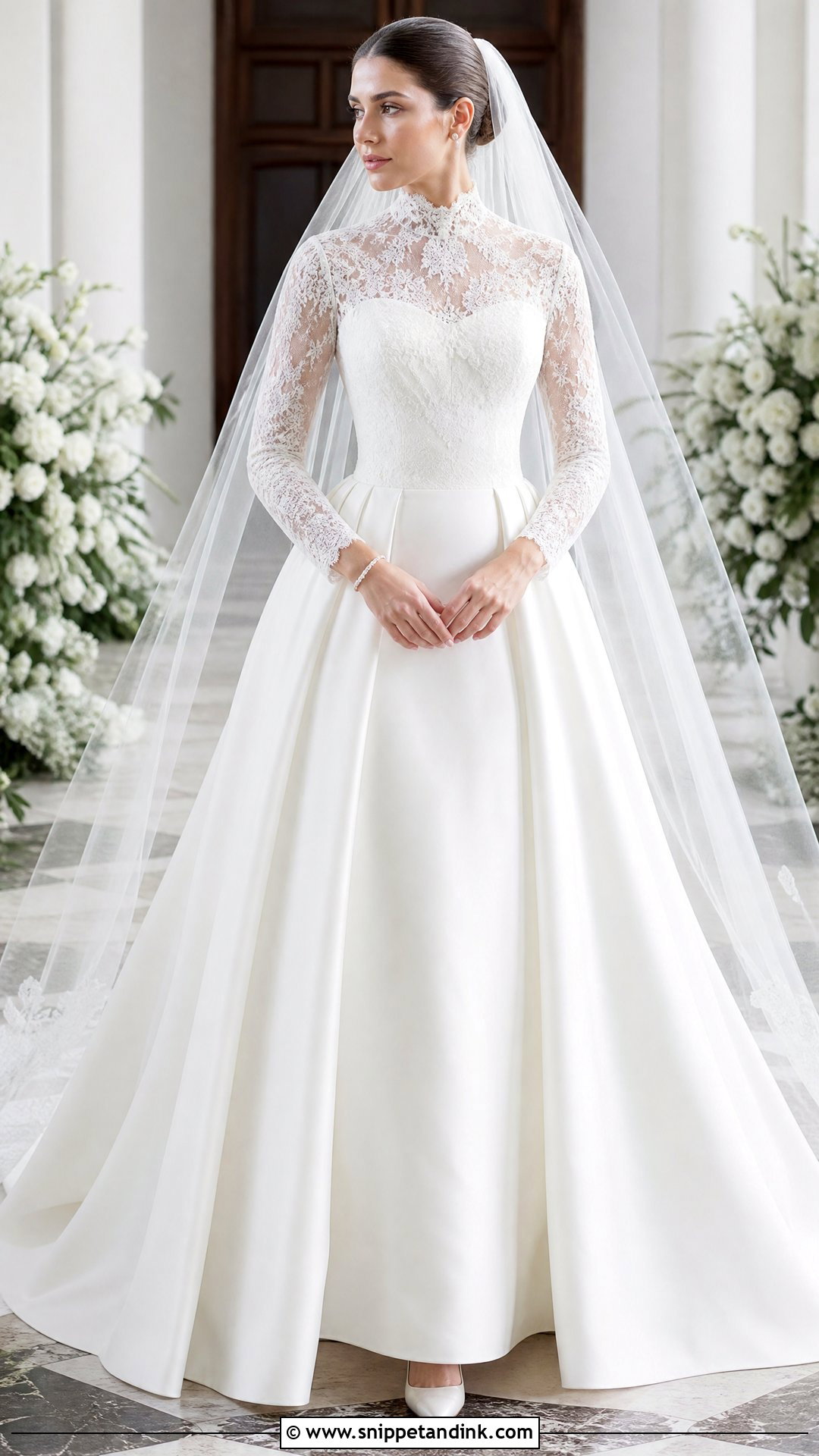
A high neck draws attention to the face and gives coverage. A sheer lace collar over a fitted bodice feels delicate; a clean satin collar feels modern. Because the top is busy, keep the skirt fairly plain. Skip the necklace and wear small earrings and a bracelet instead. If the back is detailed, choose a short veil or a sheer cathedral one so you don’t hide it. The tailoring around the neck and shoulders is fiddly, so allow a fitting just for that; a collar that pulls when you turn your head will bother you all day.



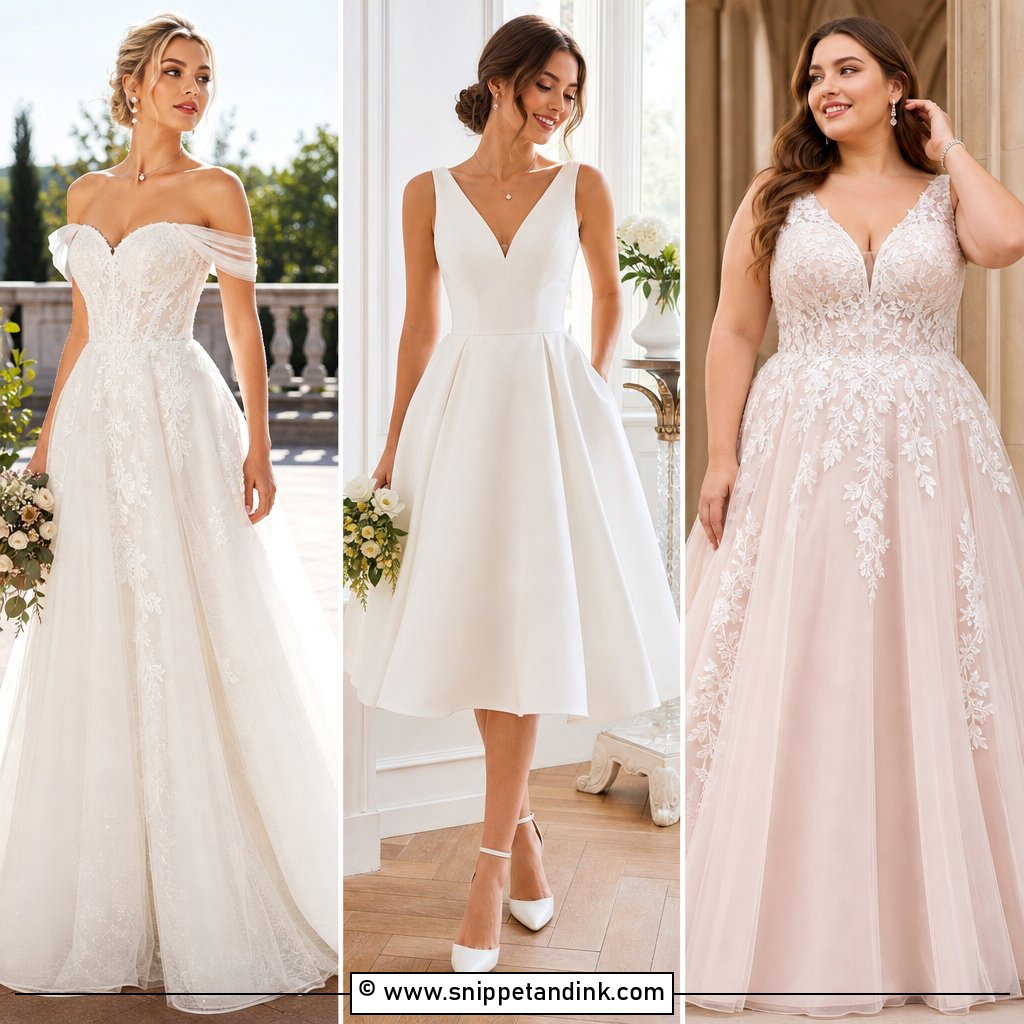
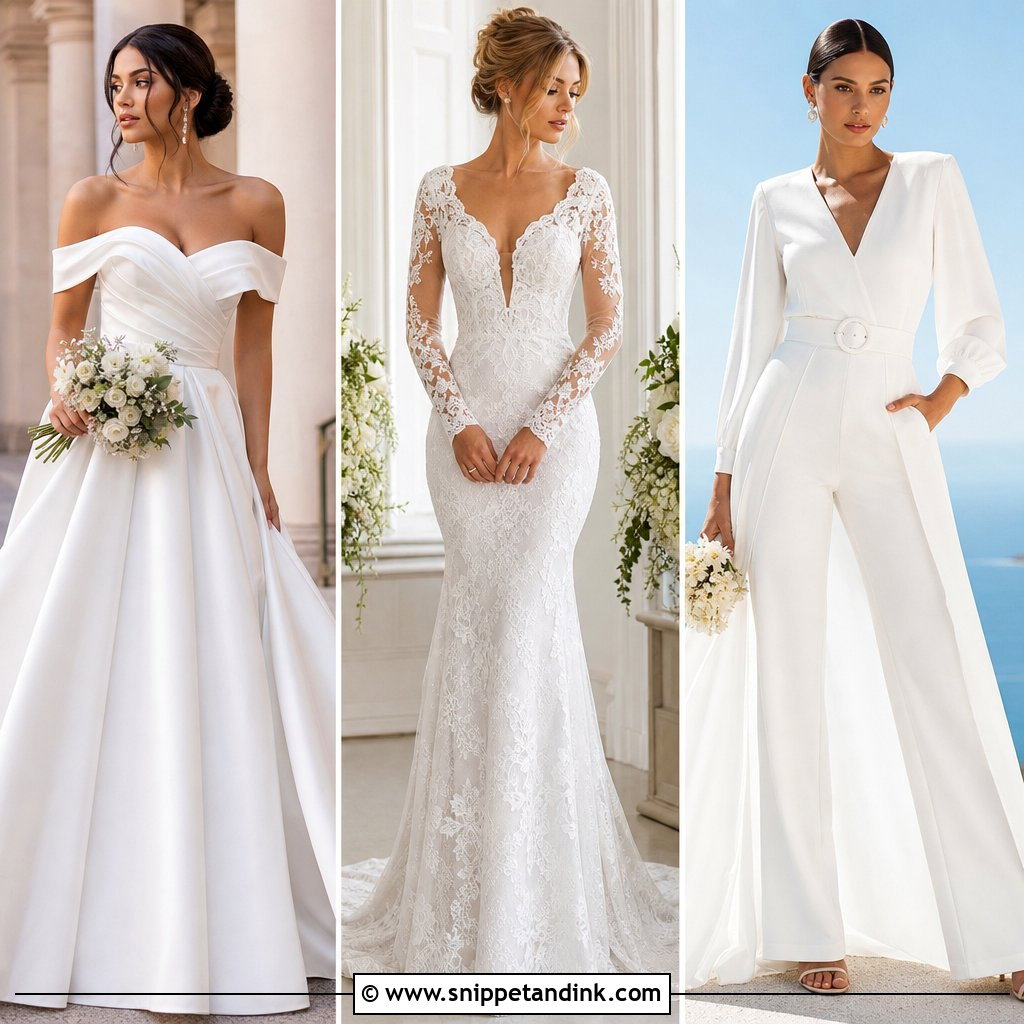
20. Modest Princess Wedding Gown
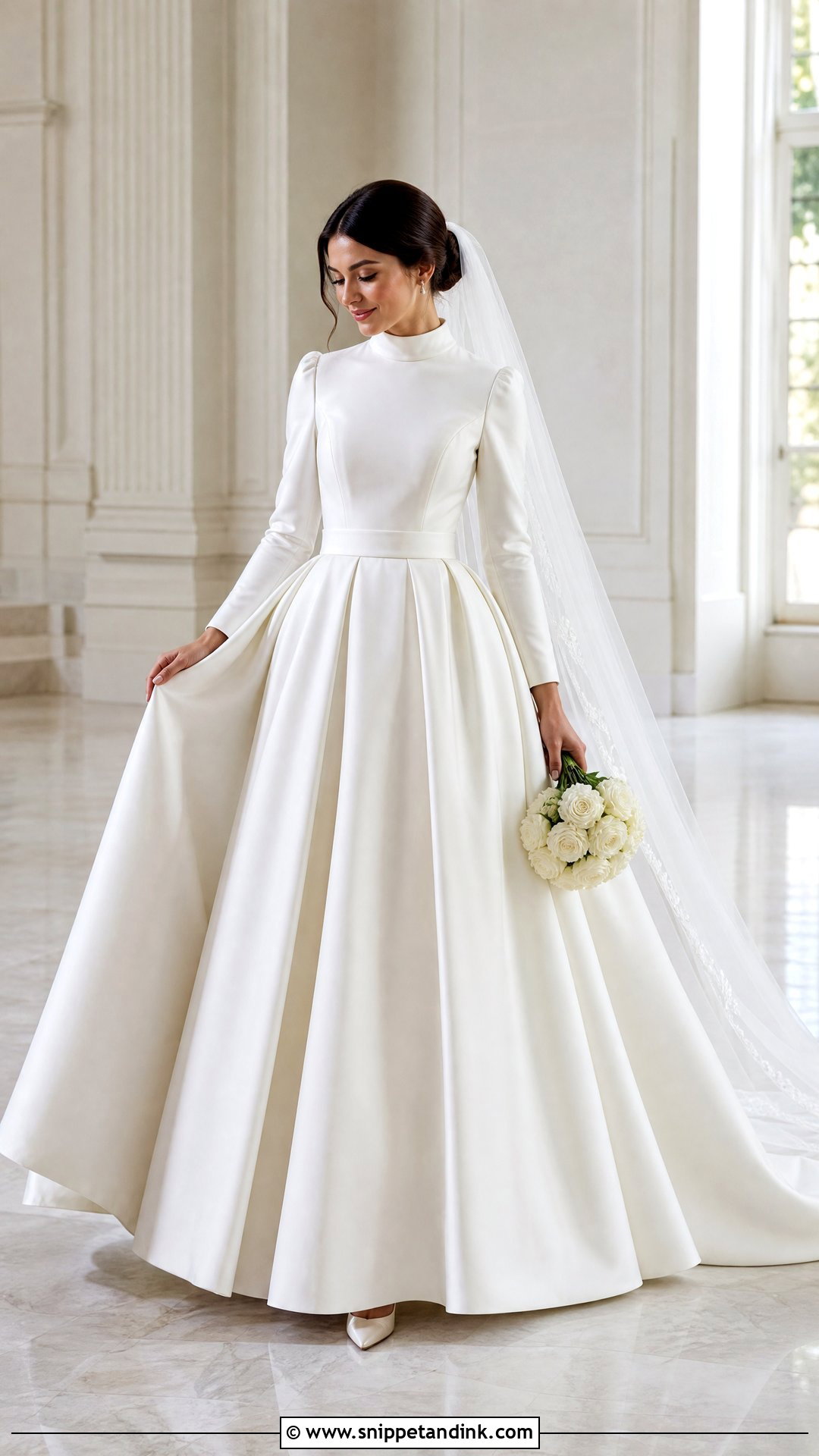
Full coverage and drama can live in the same gown. Long sleeves, an opaque bodice, a higher neckline and a floor-length skirt make the base, with seaming or a defined waist so the silhouette doesn’t turn shapeless. If you love a gown with an illusion bodice, ask your seamstress about adding a lining behind it rather than giving it up. Breathable fabric matters here, especially with sleeves, so I avoid heavy polyester satin for warm months. Pearl earrings, closed-toe heels, a long coordinated veil and a smooth low bun keep the neckline clear.
21. Plus Size Princess Wedding Gown
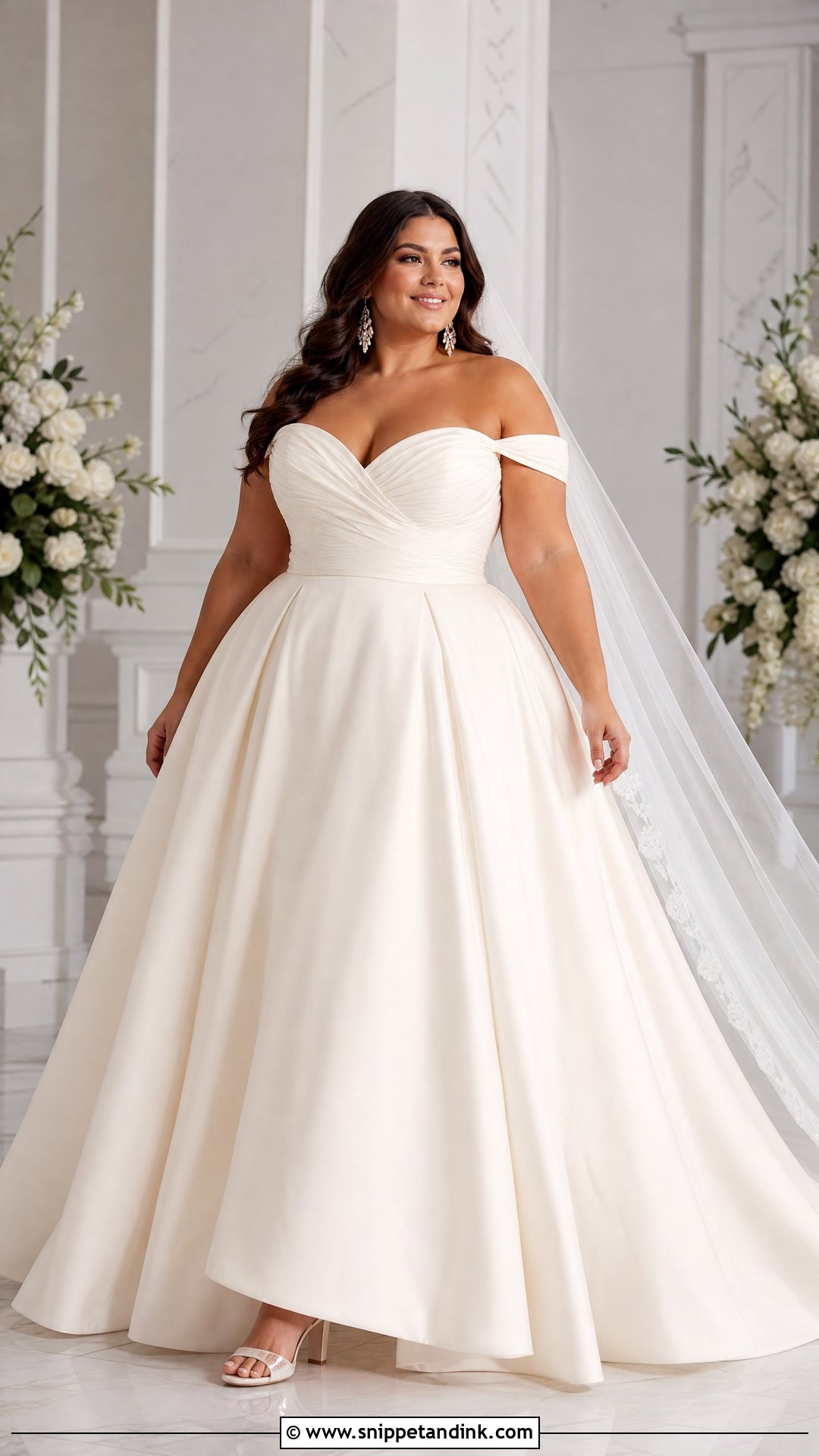
Princess gowns come in every size, and the fit rules are the same: a structured bodice, wider straps or supportive sleeves, and a skirt that flows smoothly from the waist. Scoop, sweetheart and off-the-shoulder necklines all frame the face well. I always choose undergarments after the gown, never before, because the bodice construction decides what you need underneath. Stable block heels, statement earrings and a light veil keep the look balanced. At every fitting, sit, walk and raise your arms. If it holds through all three, it’ll hold all night.
22. Petite Princess Wedding Gown
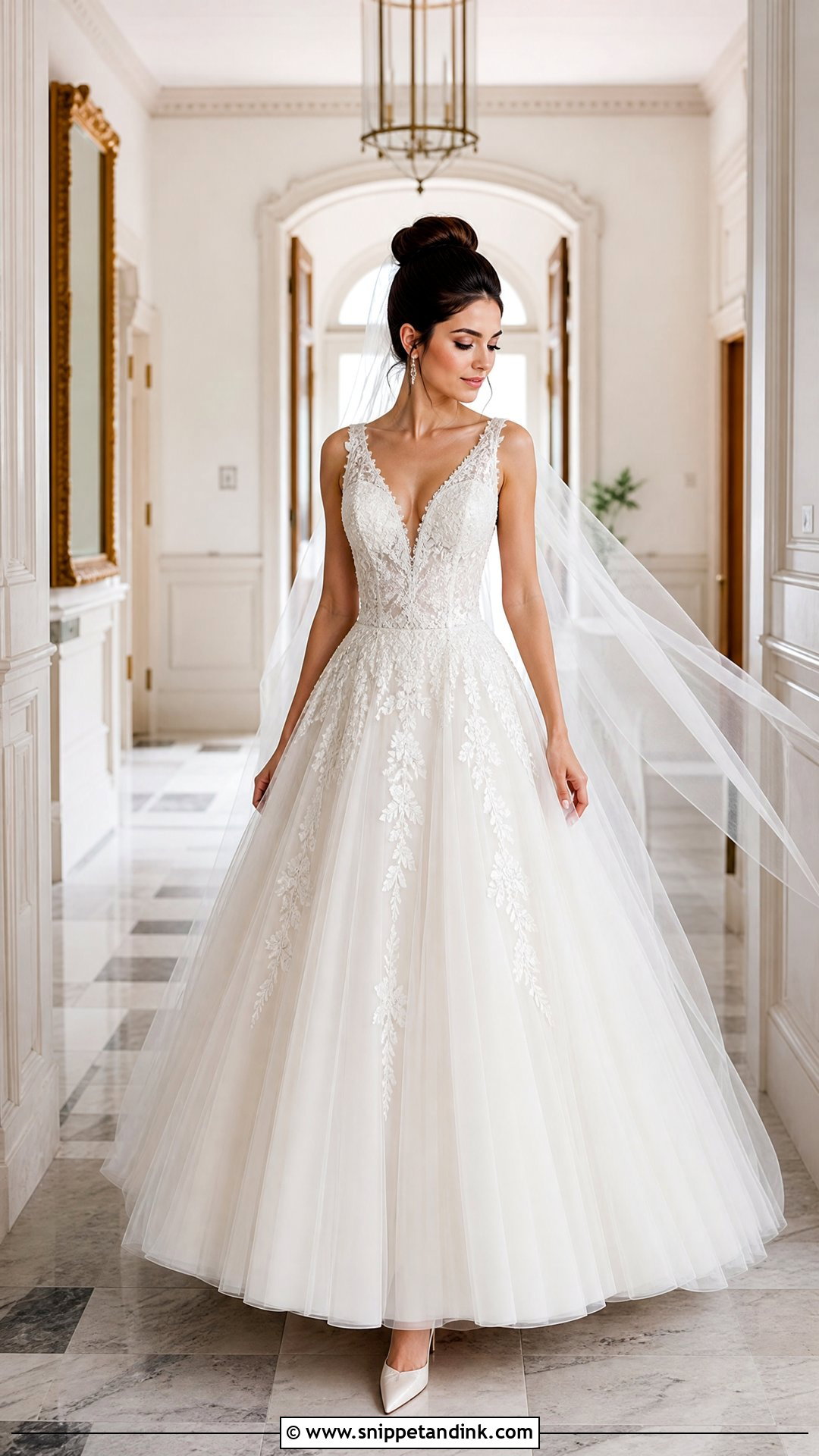
A petite bride can absolutely wear a full princess wedding gown; it just needs scaling. I look for a natural or slightly raised waist and a skirt with volume rather than extreme width. Vertical seams and a V waist lengthen the line. The mistake I see most is simply chopping the hem, which leaves appliqués and lace bands sitting in the wrong place. Ask the seamstress to rebalance the bodice, hem and appliqué placement together. Pointed heels, a narrow veil, delicate jewelry and a high bun add height without fuss.
23. Mikado Princess Wedding Gown
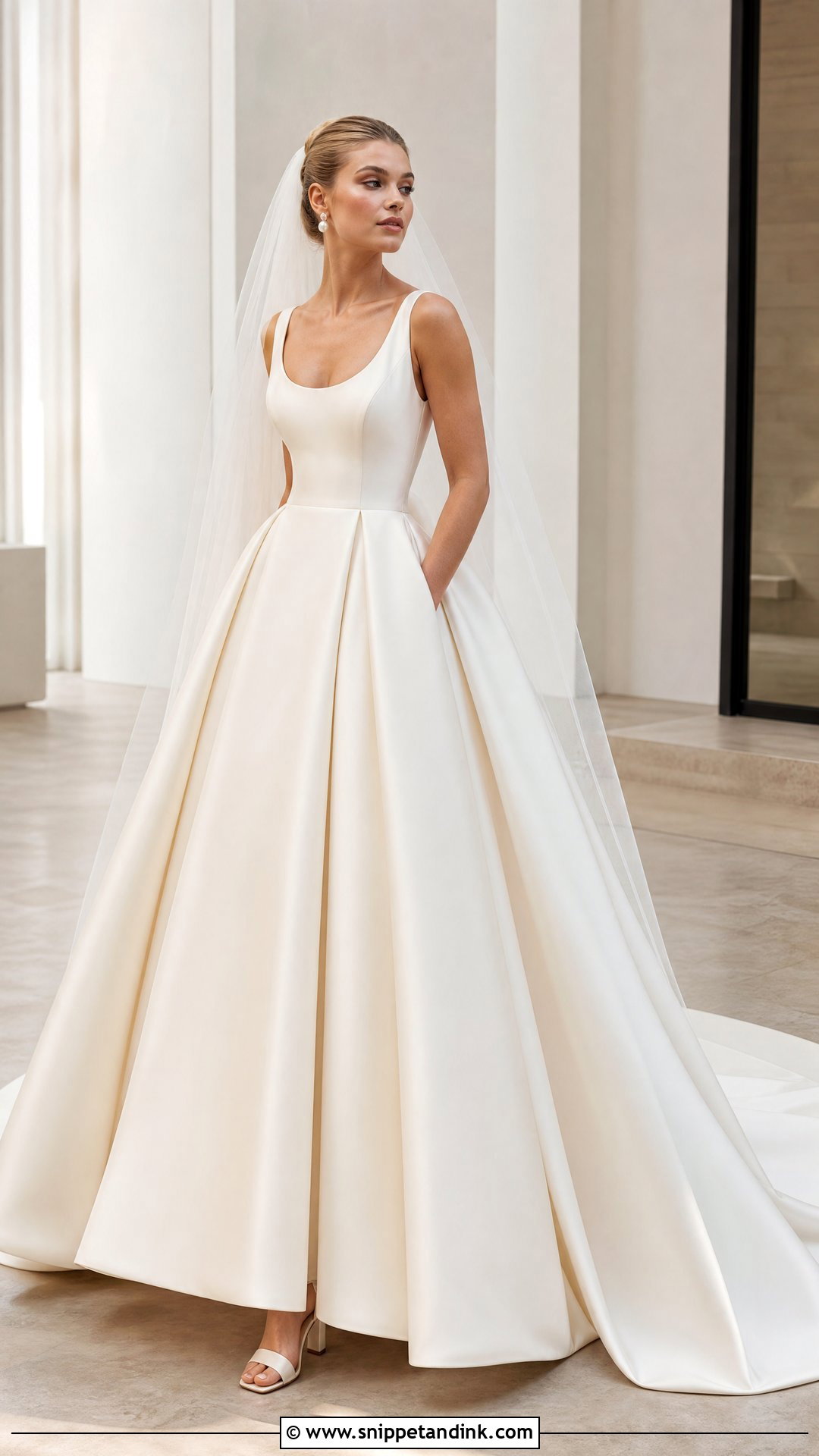
Mikado gives a princess wedding gown crisp structure and a smooth surface with a quiet sheen. Its weight supports pleats and wide skirts with very little underneath. Because the fabric holds its own shape, it won’t forgive a loose waist or bust, so alterations there need to be precise. A straight, scoop or sweetheart neckline works, and hidden pockets fit easily into the skirt. Pearl earrings, a plain cathedral veil, satin block heels and a sleek updo keep it architectural. Minimalist venues and formal hotels suit it.
24. Ruffle Princess Wedding Gown
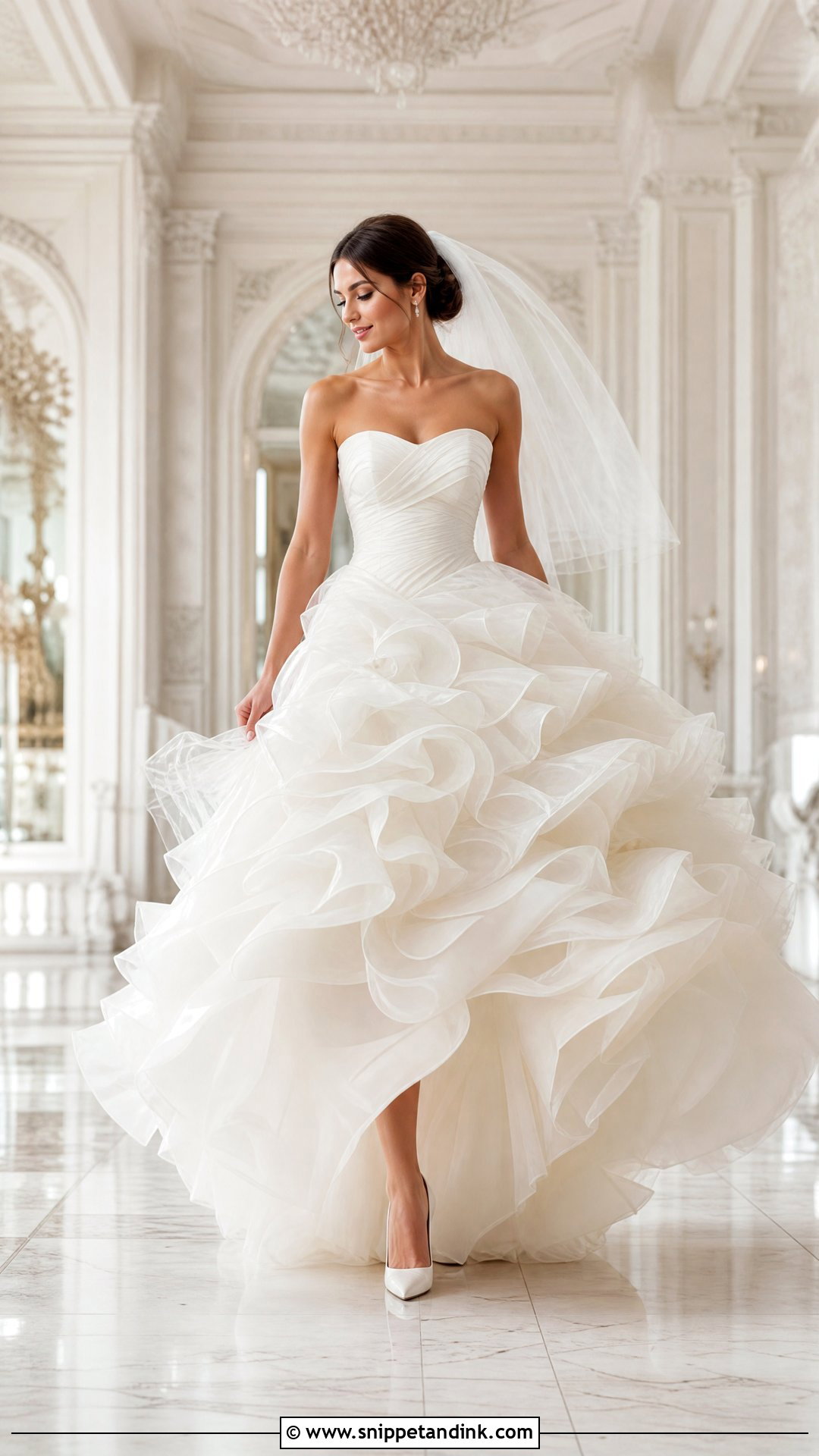
Cascading organza, gathered tulle or a few oversized ruffles give the skirt movement with every step. The bodice should stay fitted and simple, or the dress loses its proportions. Before the wedding, walk the actual route if you can, stairs and narrow paths included, because a ruffled skirt takes up far more room than the mirror suggests. Understated earrings, smooth ivory pumps and a plain veil let the layers lead. A high or low bun keeps the top half clean. Large ballrooms give it the space it needs.


25. Cathedral Train Princess Wedding Gown
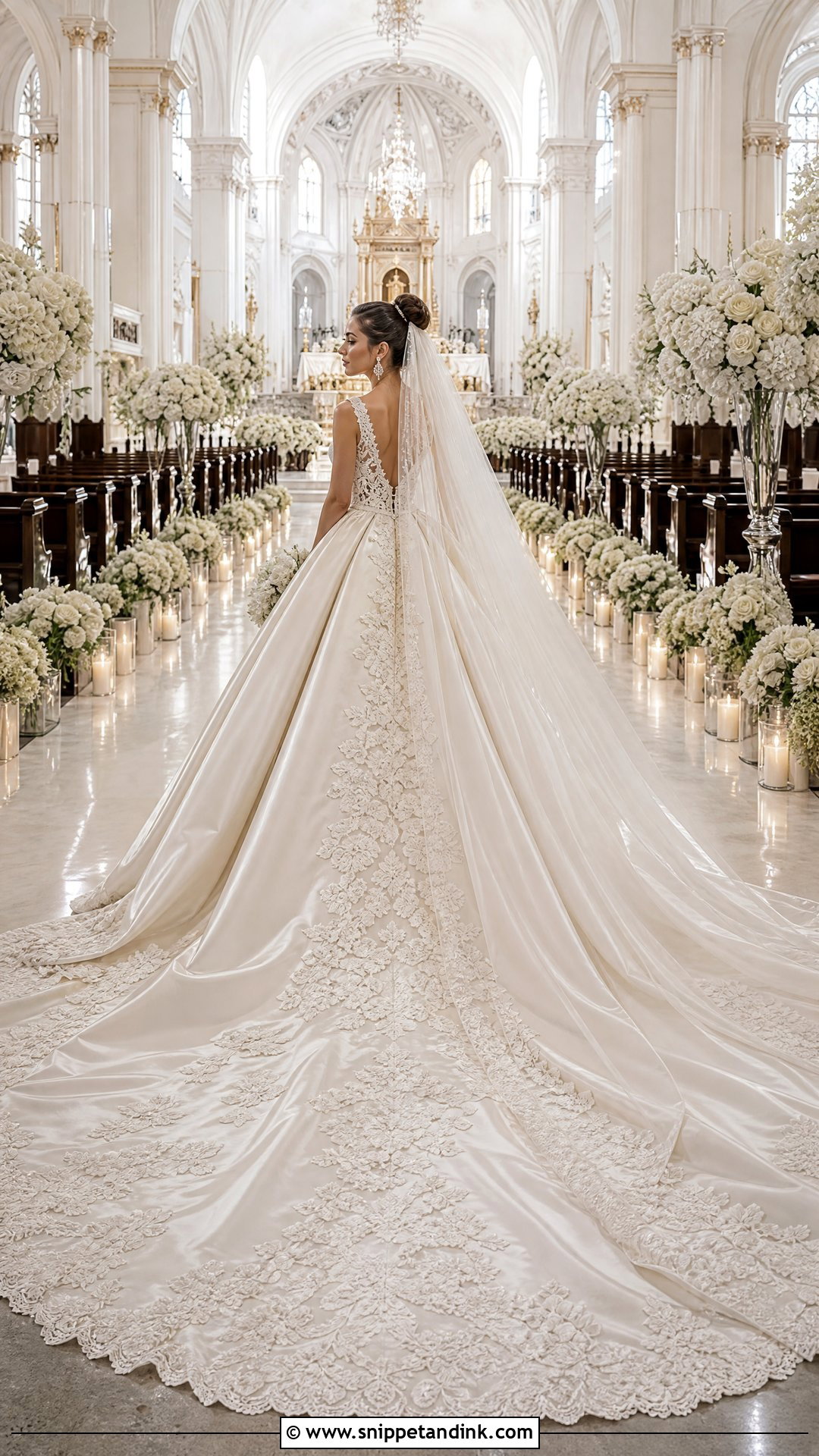
A cathedral train should grow out of the skirt, not look like a separate piece added on. Satin gives a smooth sweep; lace appliqués make the back view as interesting as the front. Ask your seamstress for a strong bustle and have whoever will do it practice at the final fitting. Practice turning too, with someone helping position the train, since a cathedral length can’t simply be spun on. A formal updo, refined earrings and secure block heels hidden under the skirt finish it. You need a wide aisle and a big ceremony space for it to make sense.
Cleaning and Storing All That Tulle Once It’s Over
A full princess gown deserves better than a plastic bag on the back of a door. Get it to a cleaner who specializes in wedding dresses within a few weeks. Spilled champagne, sugar and sweat can be invisible at first, then oxidize into brown marks months later, and they’re much harder to lift once they’ve set.
Storage That Protects the Fabric
- Store it folded in a box lined with acid-free tissue, with tissue between the folds so creases don’t set permanently.
- Avoid plastic garment bags for long-term storage; they trap moisture, and that can yellow ivory fabric.
- Keep the box somewhere cool, dark and dry. Attics and basements swing too much in temperature and humidity.
- If you do hang it, use the inner hanging loops, never the straps, because a heavy skirt will slowly stretch the bodice out of shape.
Take the gown out once a year or so, check for spots, and refold it along slightly different lines. It’s a small job, and it keeps the dress ready if a daughter, niece or friend ever wants to wear it.
What the Mirror Should Tell You at Your Last Fitting
The best princess gown is not the biggest or the most detailed. It’s the one that holds you securely and still lets you be yourself. Start with a silhouette that suits your body and venue, then decide on fabric, neckline, color, sleeves and embellishment in that order. Accessories should support the dress rather than compete with it. And don’t leave the practical parts to the last week: supportive shoes, fastenings that someone else knows how to work, and a bustle that’s been tested. Get those right, and from classic satin to blue tulle to a cathedral train, the fairytale part takes care of itself.
You'll Like These Ideas:





Leave a Reply