
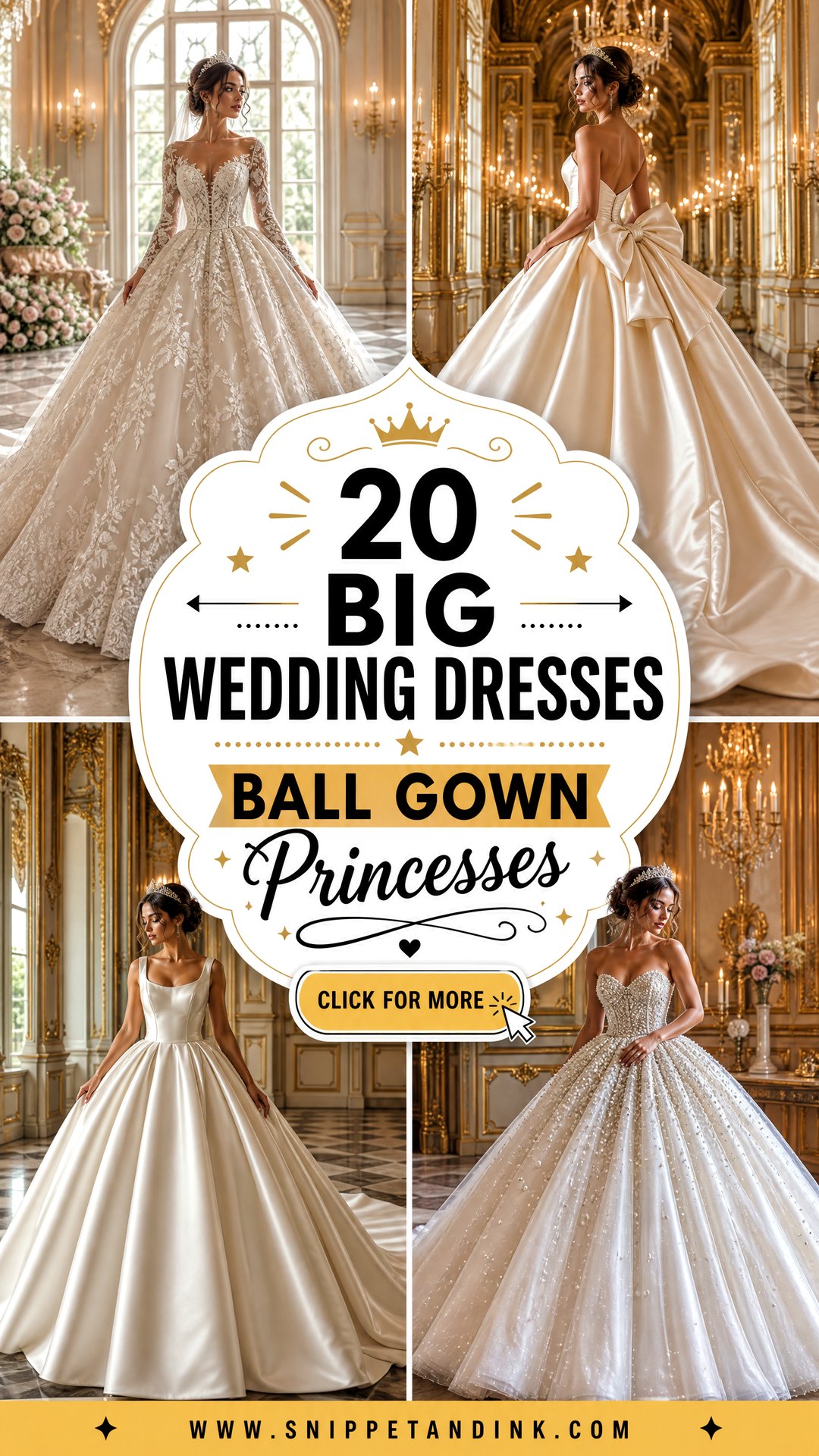
Brides who ask me for a princess gown almost always mean the same shape: a fitted bodice, a defined waist and a skirt wide enough to fill the aisle. That volume comes from layers of tulle, organza or a crinoline underneath, and how it is built decides how the dress feels by the end of the night. Below are twenty variations I’d happily put a bride in, from plain satin and floral lace to sparkle tulle, detachable sleeves and a royal-length train, each with the shoes, veil and jewellery I’d pair with it and the fitting detail I’d watch. Start with the neckline you keep coming back to, then go and find your dream silhouette in the shop.
How Far Ahead a Princess Gown Needs Ordering
Big gowns are rarely sitting on a rail in your size. Most are made to order after you choose, and the volume, boning and hand-finished details all add production time. Every designer and shop is different, so treat these as rough markers and ask for the exact dates in writing.
- Start trying on roughly nine to twelve months out. That leaves room for the order, delivery and fittings without paying rush fees.
- Expect production of around four to six months for many made-to-order gowns, longer for heavy beading or custom changes.
- Book the first alteration appointment about two to three months before the wedding. Ball gowns often need two or three fittings.
- Have the final fitting a couple of weeks out, with your shoes, underwear and the person who will bustle you.
If you’re inside six months, tell the consultant straight away. Some gowns can be rushed, some samples can be bought off the rail, and some simply can’t be made in time. It’s better to know that before you fall for one.
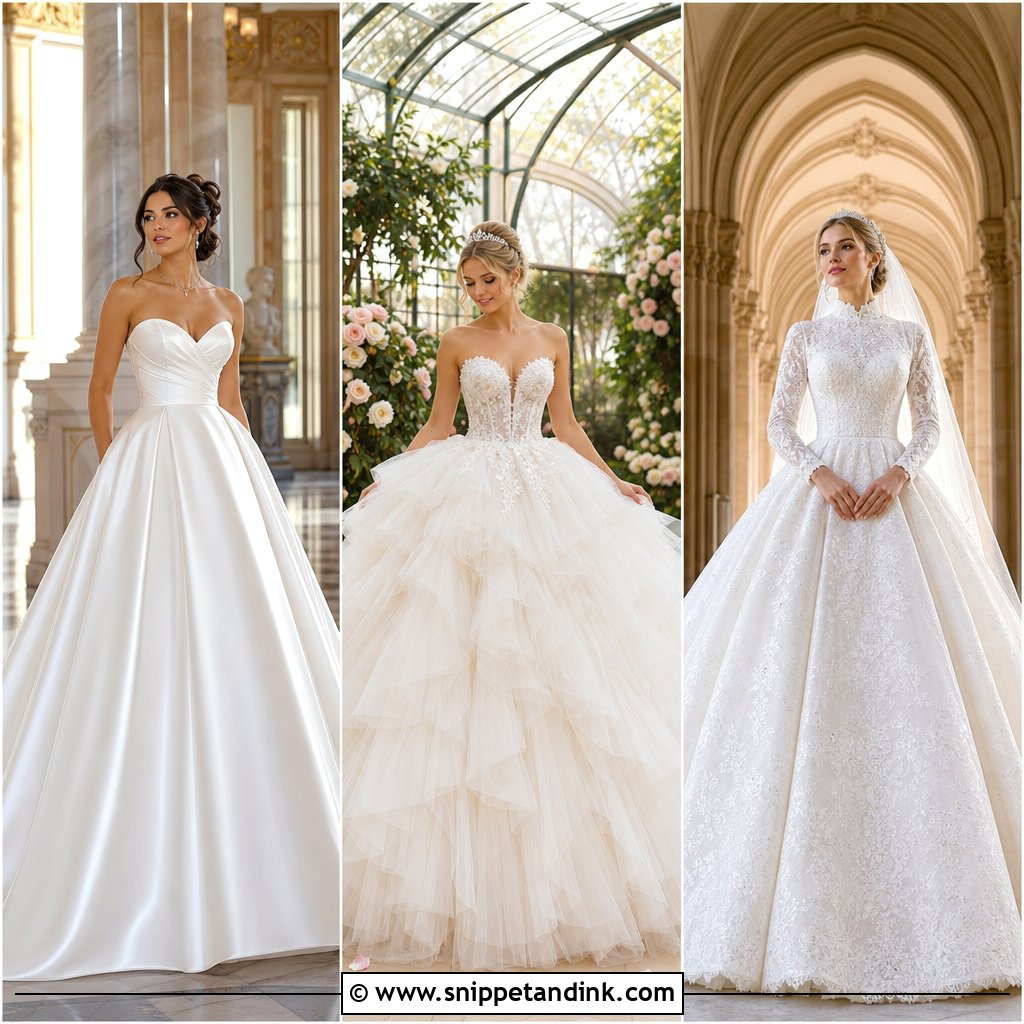
1. Strapless Satin Ball Gown Wedding Dress
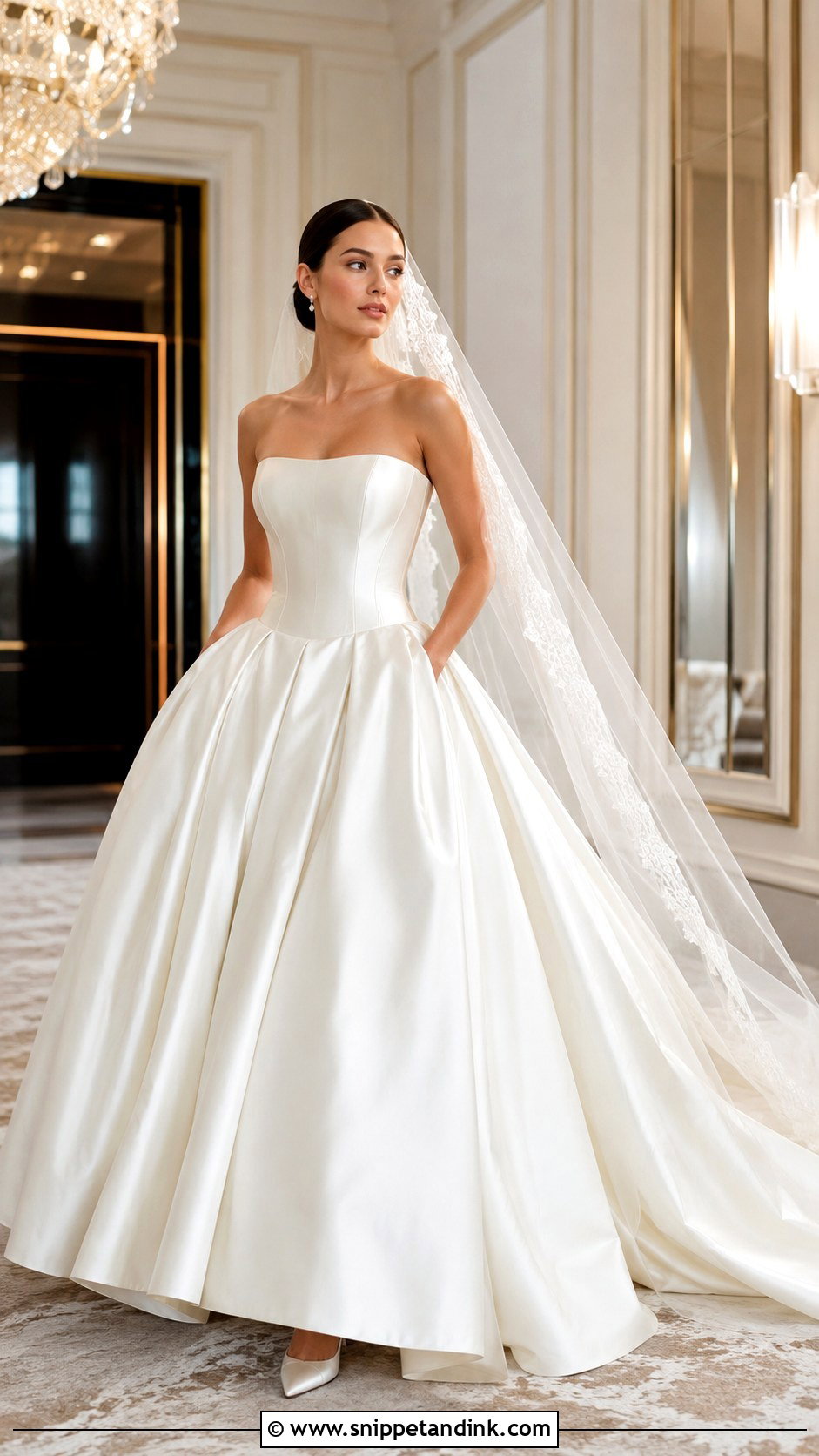
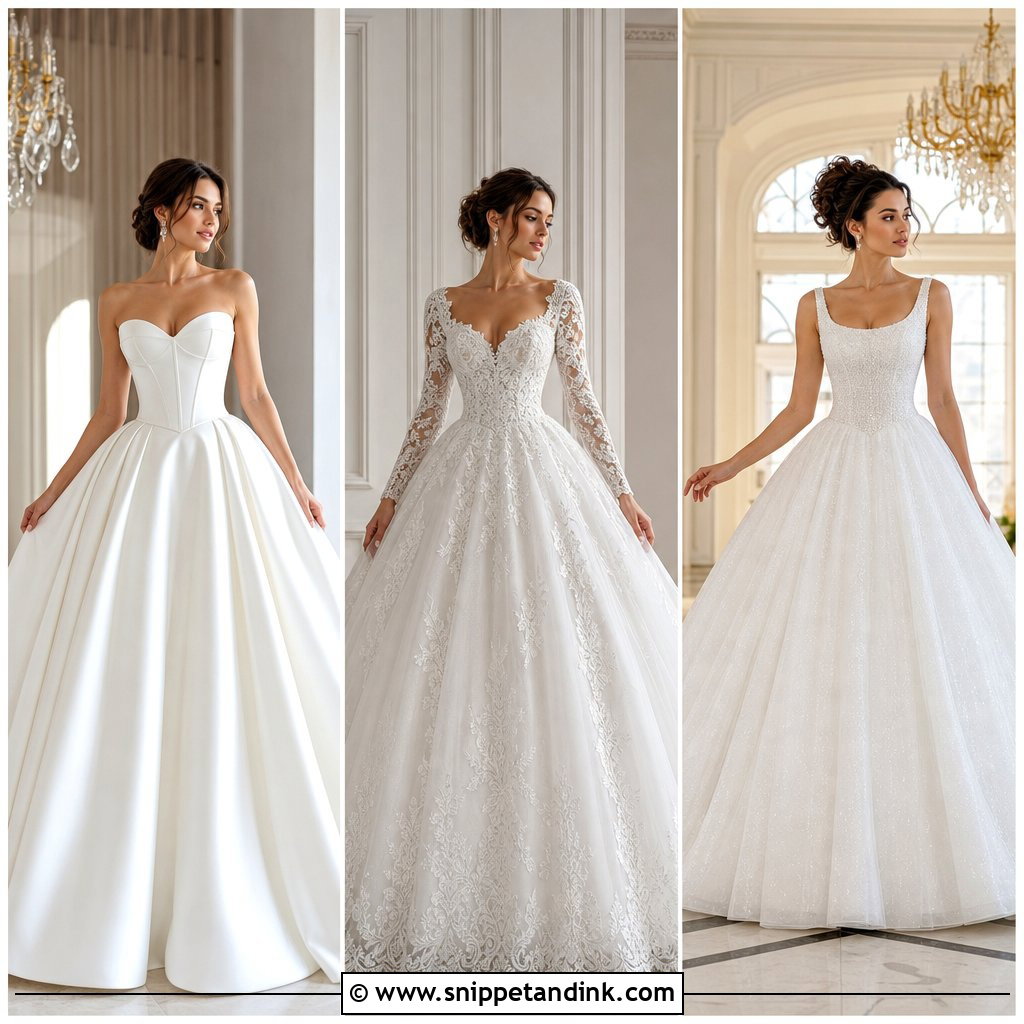
Plain satin lets the shape do the work. A structured strapless bodice, a natural waist and deep pleats are the whole recipe, and a shallow Basque point at the front will lengthen a shorter torso. The heavy skirt is the risk: if the waist isn’t fitted snugly, its weight hangs from the bodice and you spend the day tugging it up. I check this by having the bride twist side to side. Pointed ivory pumps, pearl drops, a raw-edge cathedral veil and a sleek low bun suit a ballroom or museum, and the bun leaves space for a fine necklace if you want one.
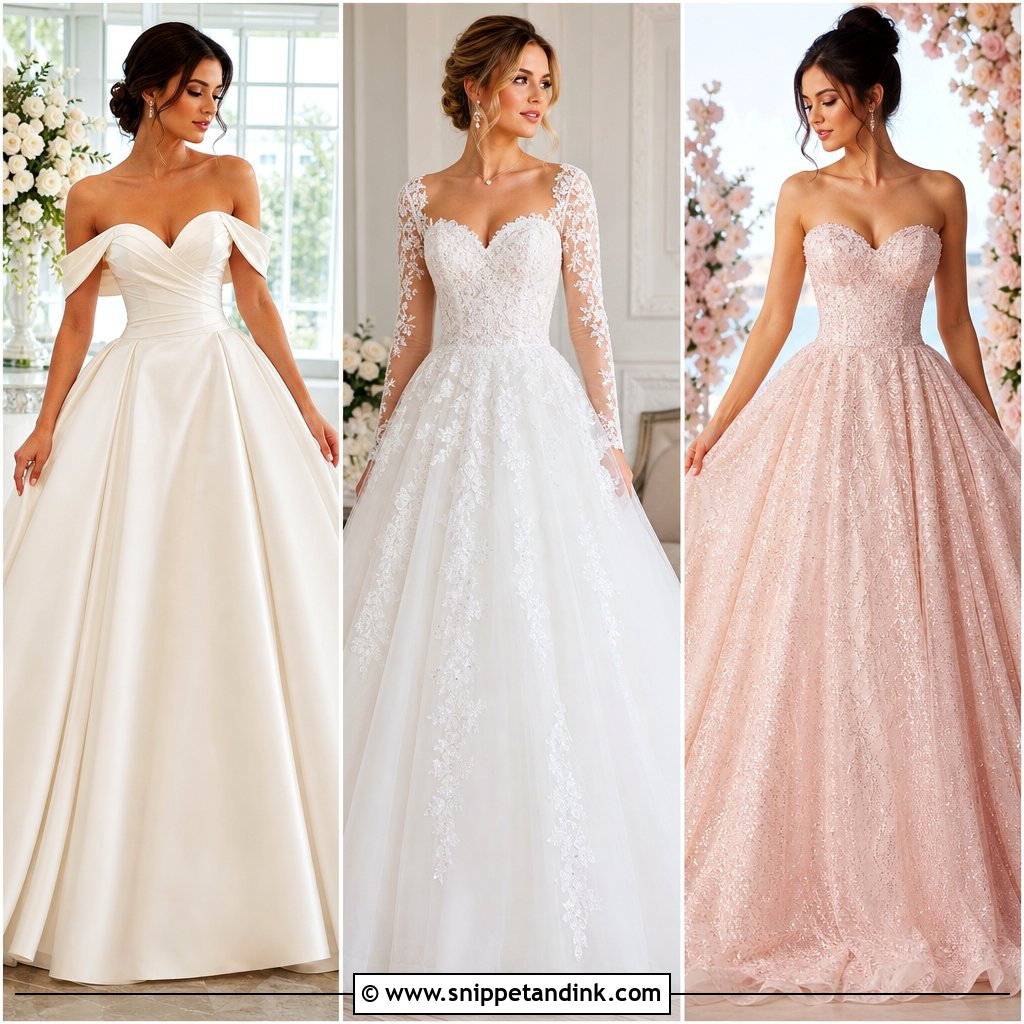
2. Lace Long Sleeve Ball Gown Wedding Dress
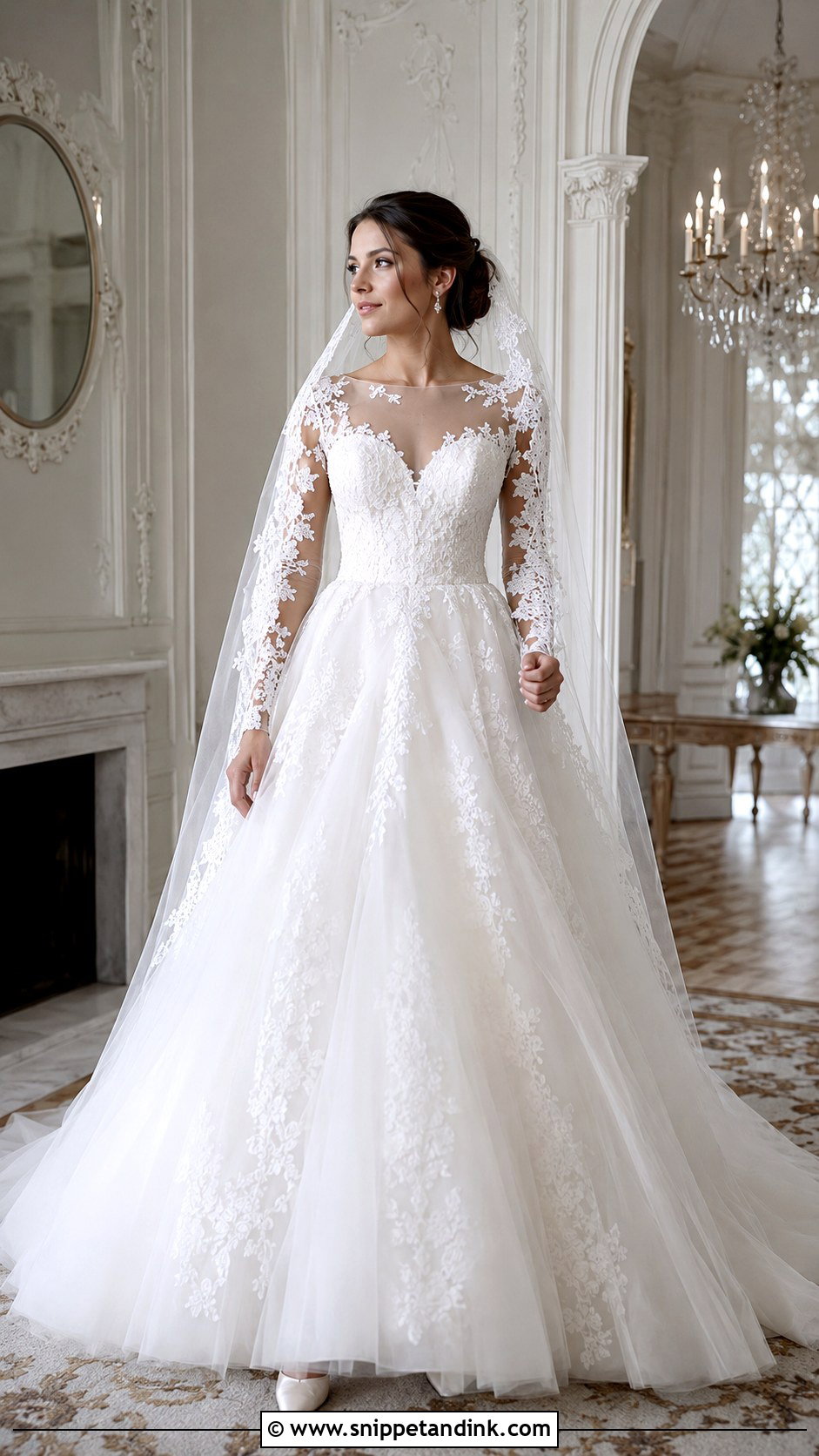
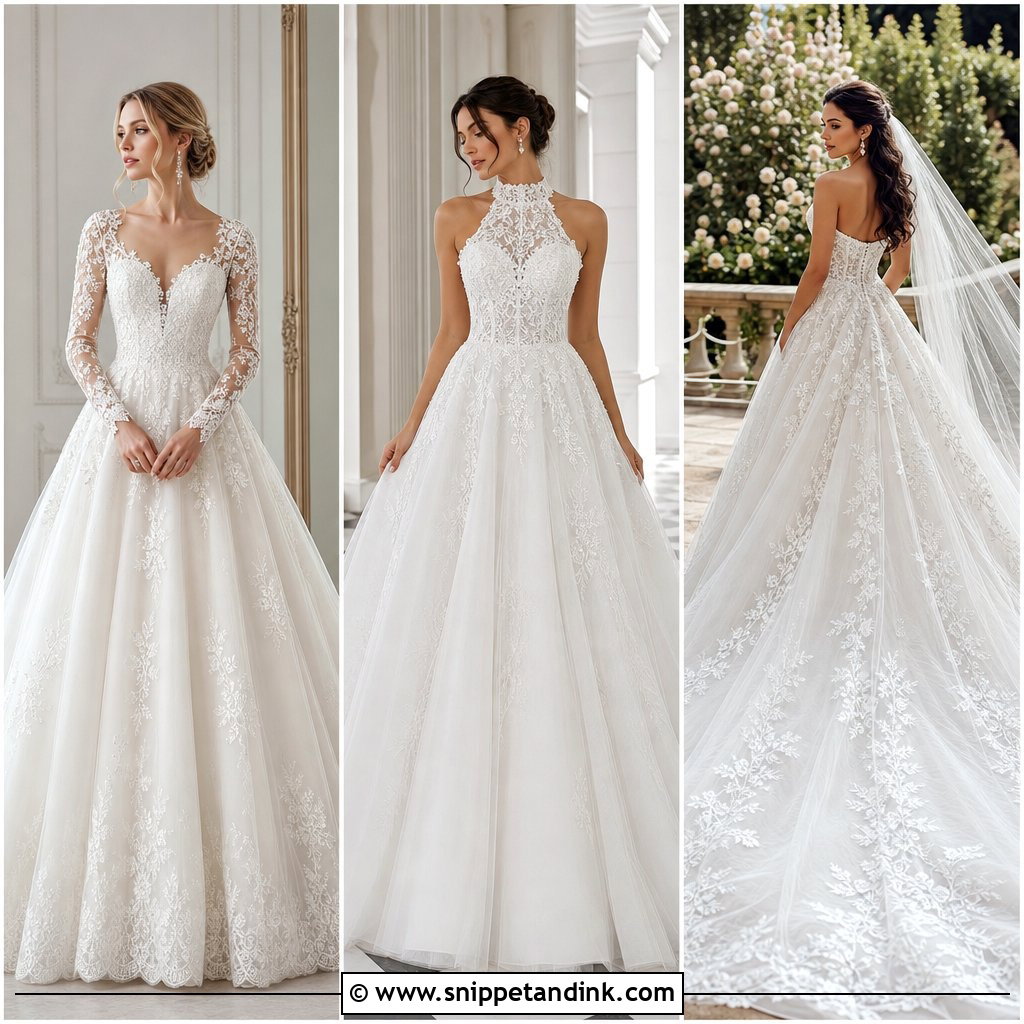
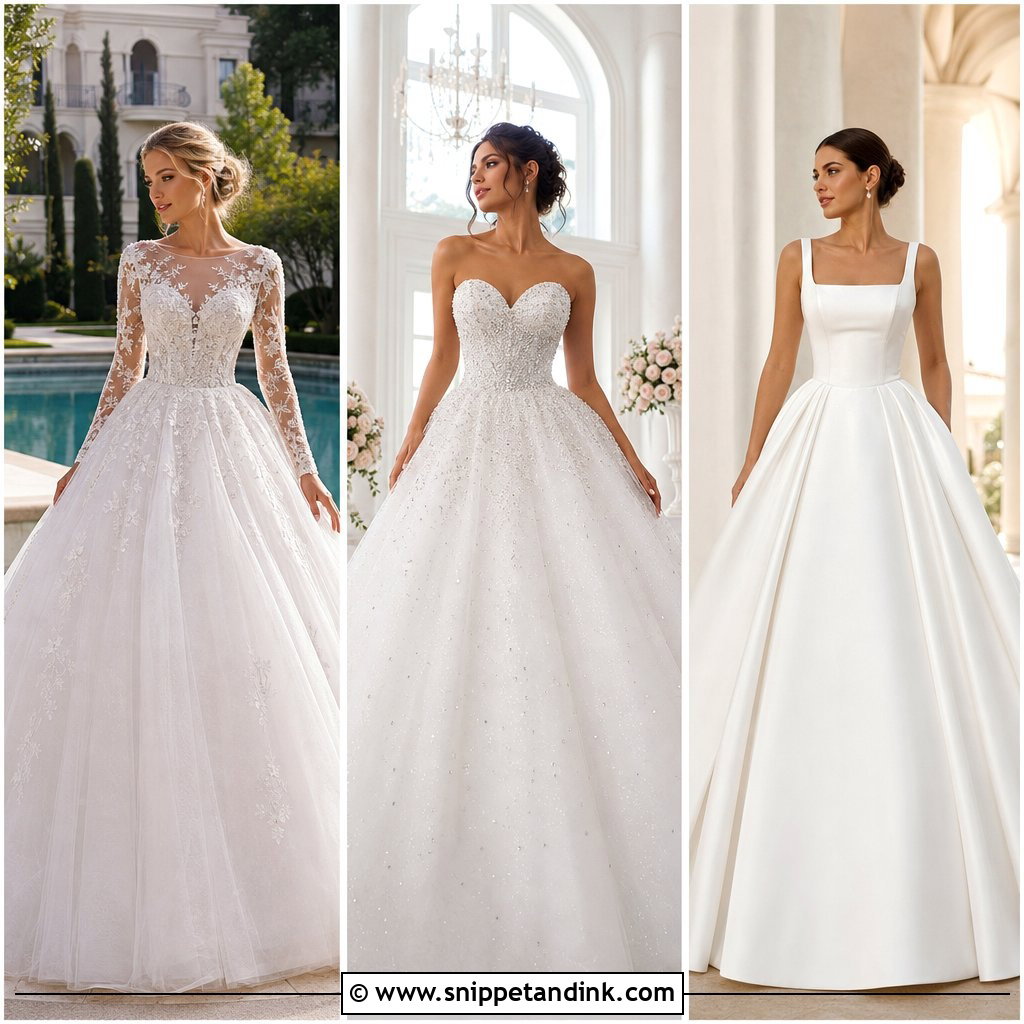
Long lace sleeves suit an autumn, winter or early spring ceremony in an older building, where bare shoulders can feel out of place and the room is often cold. The best of these gowns have a lined sweetheart bodice beneath illusion lace, so the structure is hidden and the top half still looks light. Before alterations are finished, bend your elbows and reach forward. Lace sleeves cut too slim will pull at the shoulder seam every time you hug someone. A lace-edged veil should carry a quieter pattern than the gown, and a softly twisted updo shows off the sleeve and the back.
3. Off The Shoulder Princess Wedding Dress
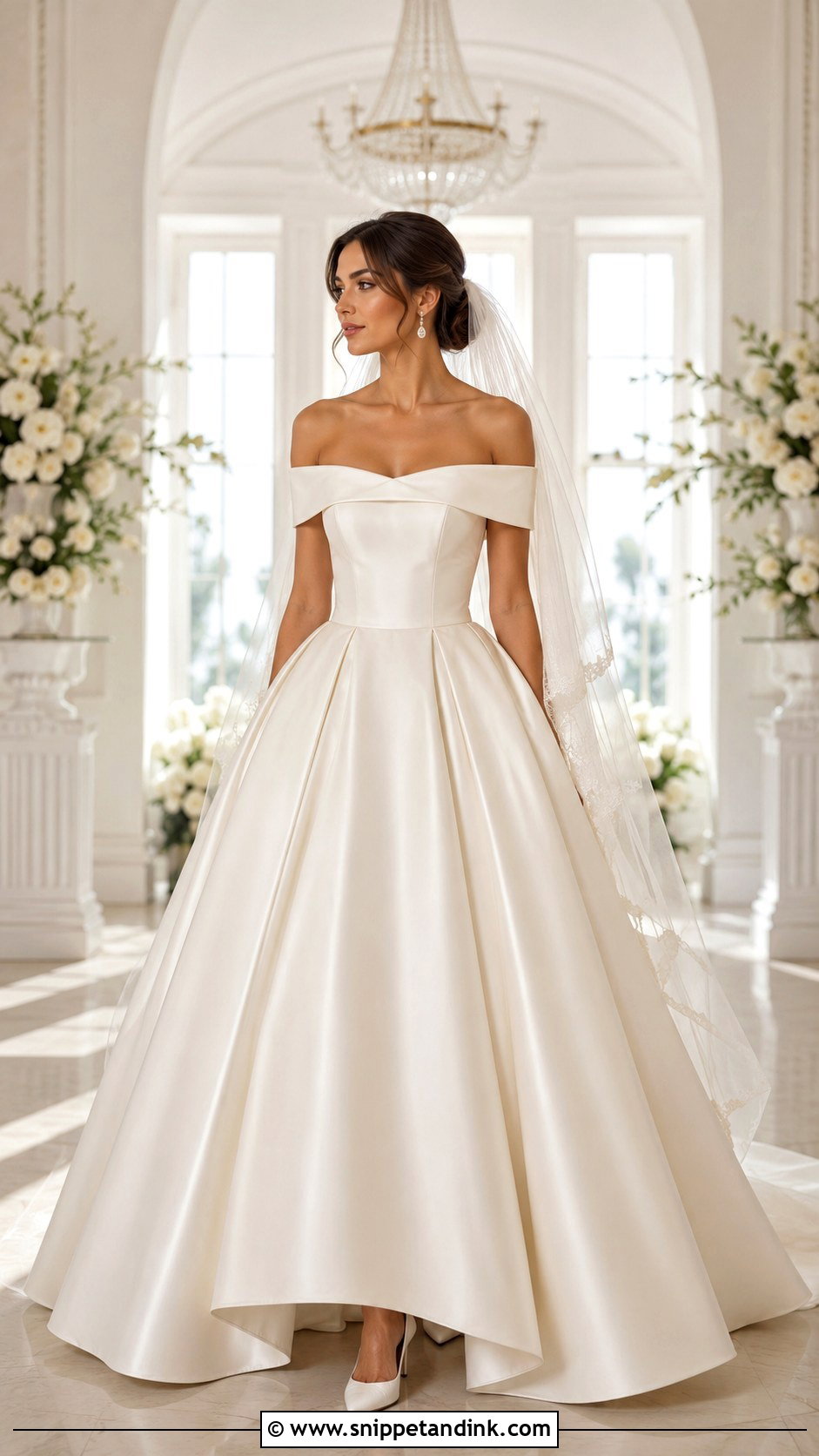
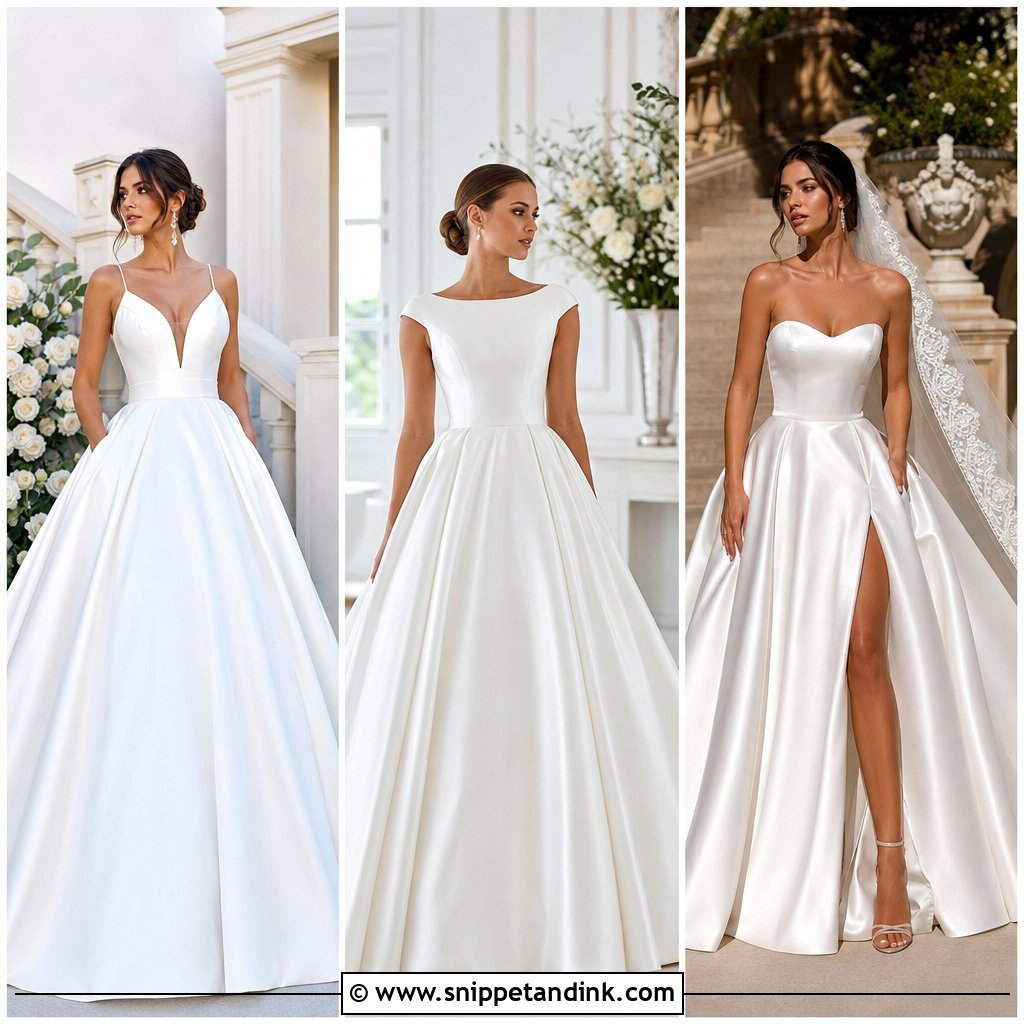
Folded satin bands across the shoulders are what make this neckline look regal instead of casual, but they need internal support to stay put. The first thing I watch at a fitting is whether the bands creep up toward the neck when the bride raises her arms. If they do, the bodice needs taking in, not the bands. Pair it with teardrop earrings, a polished updo and a fingertip veil pinned under the hair. Choose block heels for stone paths and grass; a stiletto sinks, and a heavy skirt makes every stumble worse.
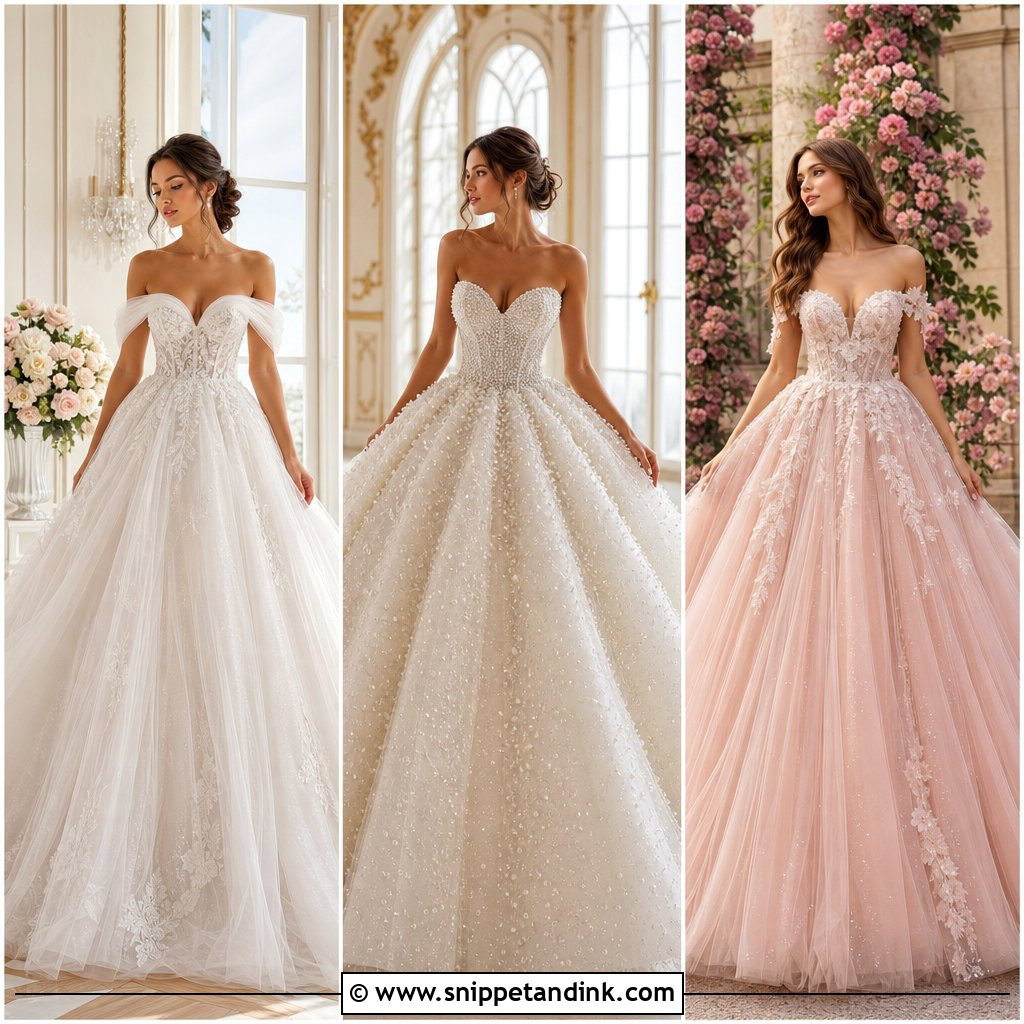
4. Sparkly Tulle Ball Gown Wedding Dress
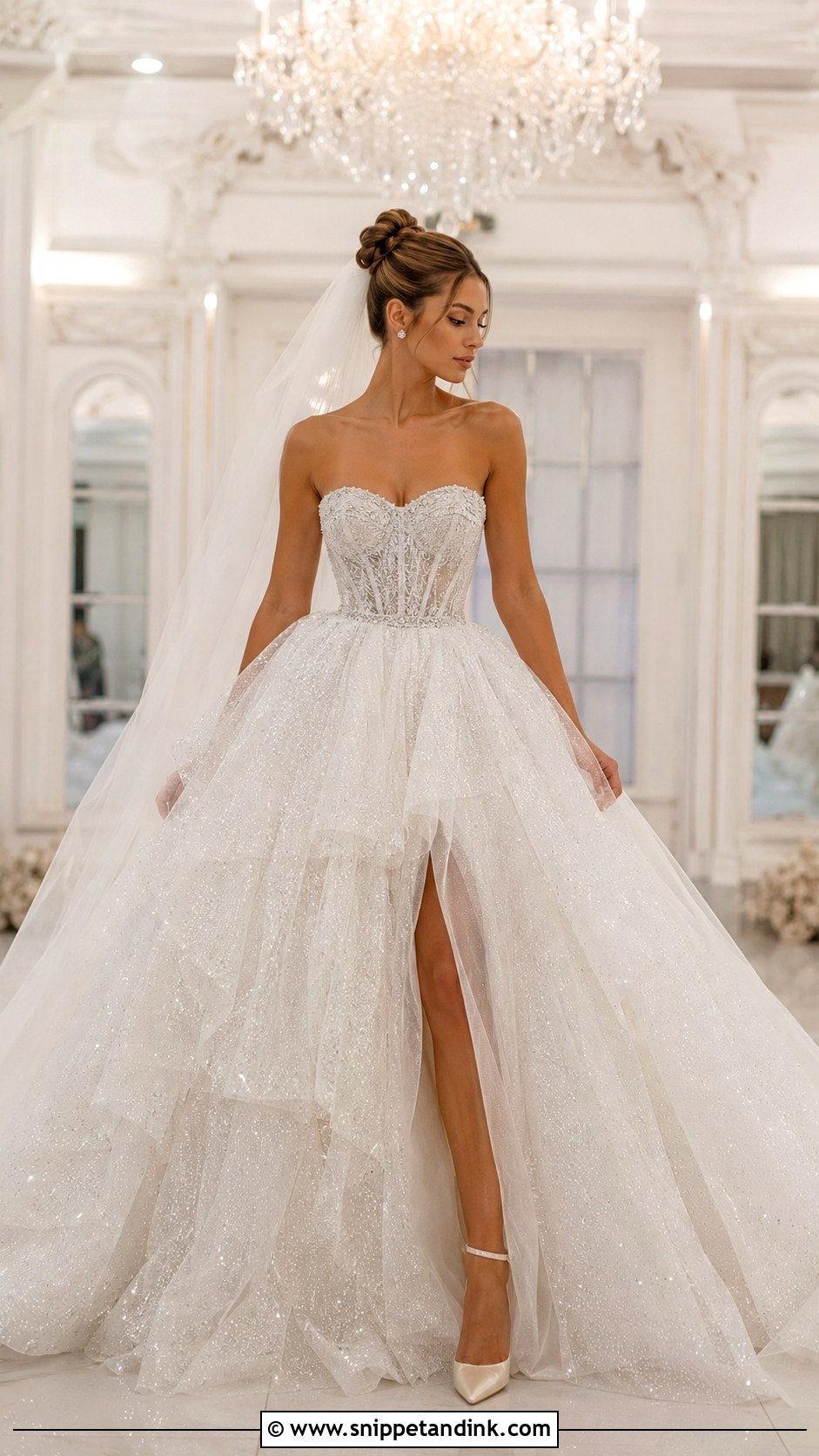
Glitter tulle does in daylight what a necklace does at night, so you can keep the jewellery minimal. Look for a fitted corset, layered sparkle tulle and a few crystals concentrated at the waist. Ask one question before you buy: is the glitter woven into the net or printed on the surface? Surface glitter sheds onto the groom’s suit, the chairs and your own arms, and it never stops. Crystal earrings, metallic ivory heels, a plain cathedral veil and a smooth high bun suit a ballroom under bright overhead light, which is where this fabric looks its best.
5. Floral Lace Ball Gown Wedding Dress
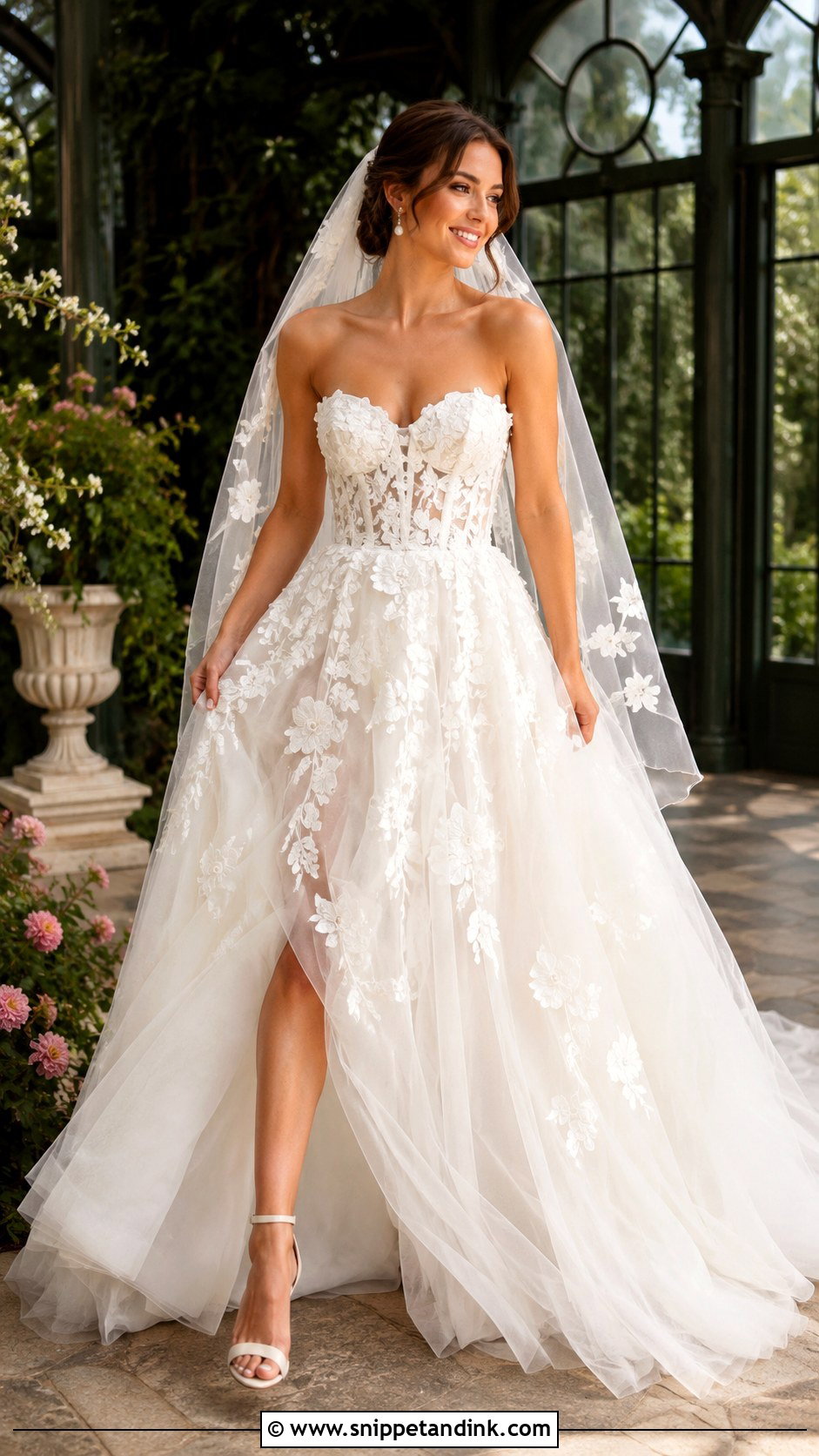
Floral lace appliqués should start on the bodice and drift down onto the tulle skirt, thinning as they go. That gradual spread looks natural; a hard line of flowers at the waist looks stuck on. A corset back gives you adjustable support if your weight shifts before the wedding, which it often does. I keep the accessories pared back: pearl earrings, ankle-strap heels, a veil with a few matching flowers near the hem, and a low bun with one or two floral pins. Keep the bouquet simple too. Two layers of flowers, one real and one lace, start to fight in photos.
6. Square Neck Ball Gown Wedding Dress
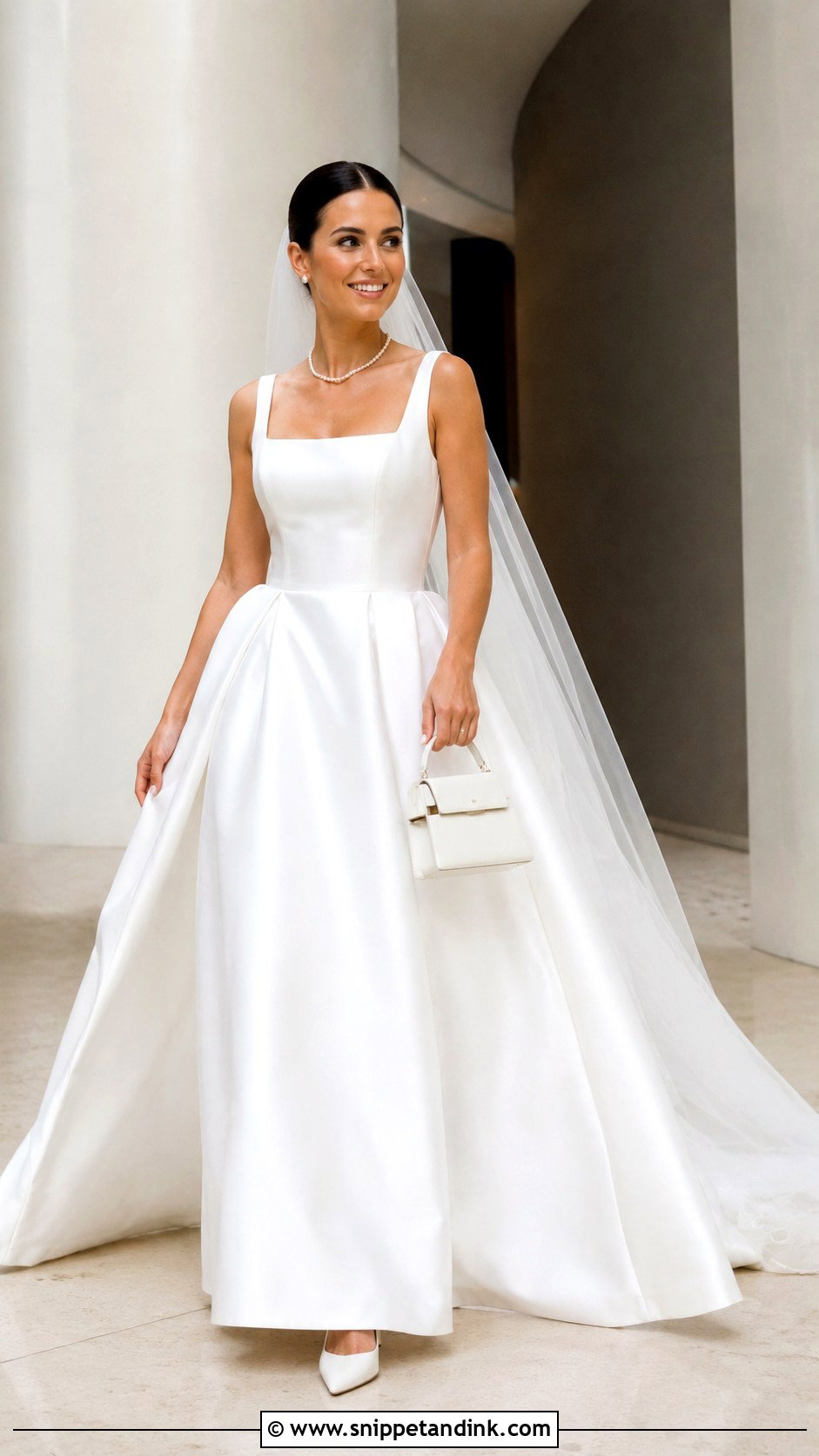
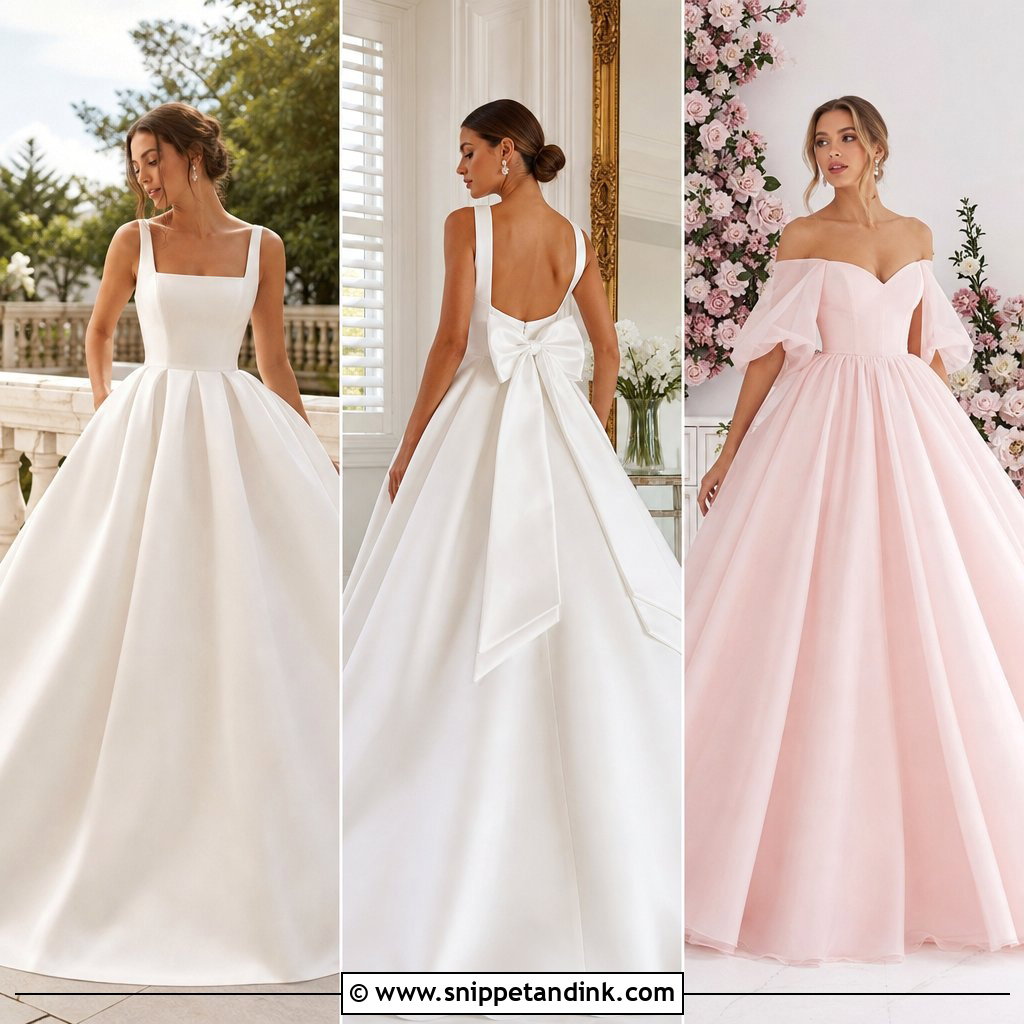
Wide straps, a square neck and a crisp satin or Mikado skirt from the natural waist give a ball gown a modern, architectural feel. The broad neckline balances wider hips, which is why I often suggest it for pear-shaped figures, and the straps add security. Choose a short pearl necklace or bold drop earrings; wearing both crowds the neckline. A centre-parted bun and long plain veil finish it. Ask your seamstress to check the armholes as you swing your arms, because a square bodice that sits slightly forward will rub as you walk.
7. Sweetheart Corset Ball Gown Wedding Dress
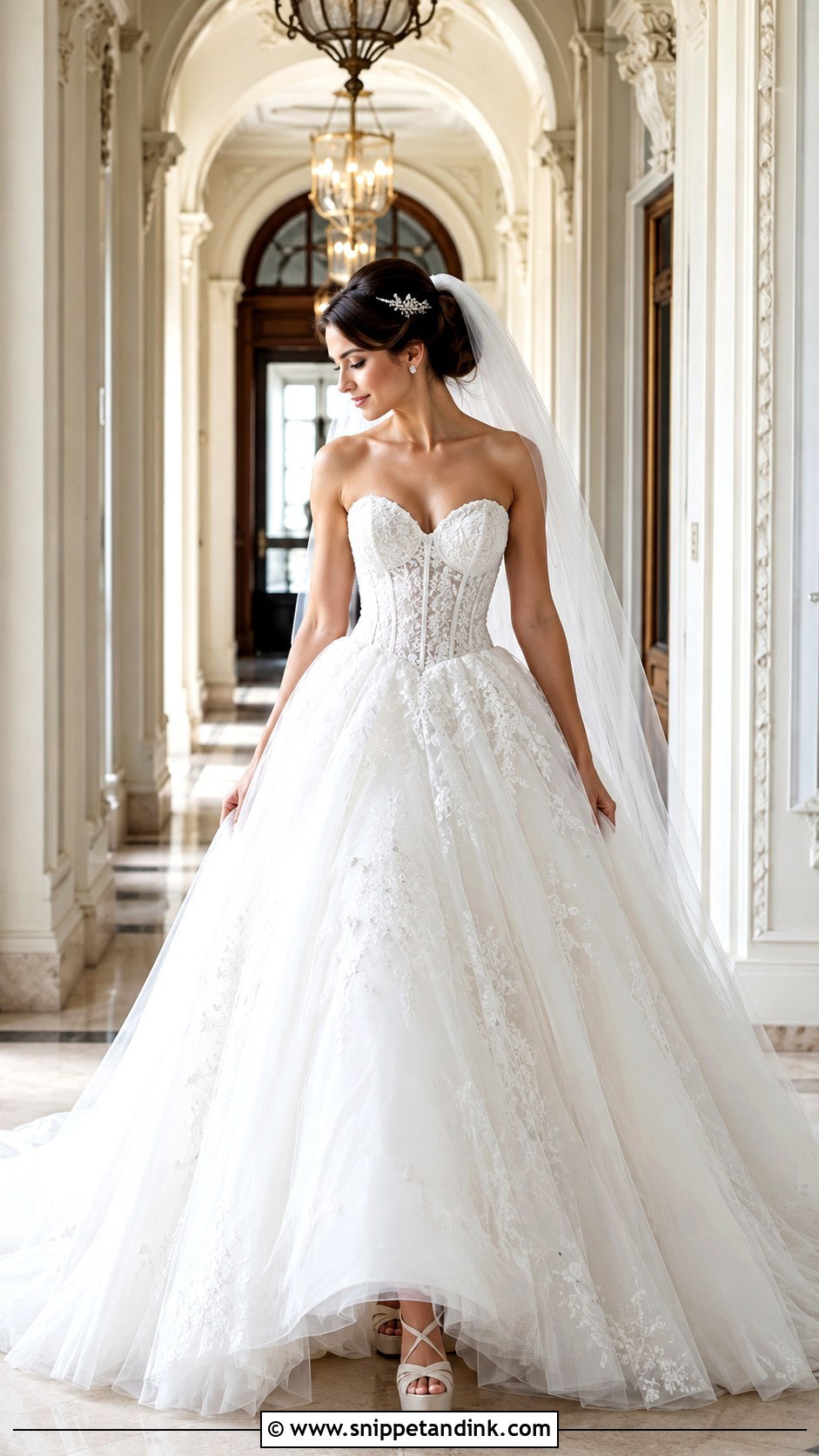
Visible boning, supportive cups and a lace-up back are what give a sweetheart corset its sculpted waist, and they are also what makes it adjustable through alterations for most body shapes. Sit down in it. If a bone digs into your ribs while seated, it will be all you think about at dinner, and it can usually be shortened or moved. Balance the hard bodice with a softer tulle, satin or organza skirt. A sparkling comb in a half-up style, small studs and platform heels are enough, and if the corset is beaded or lace-covered, skip the necklace.
8. Mikado Ball Gown Wedding Dress With Bow
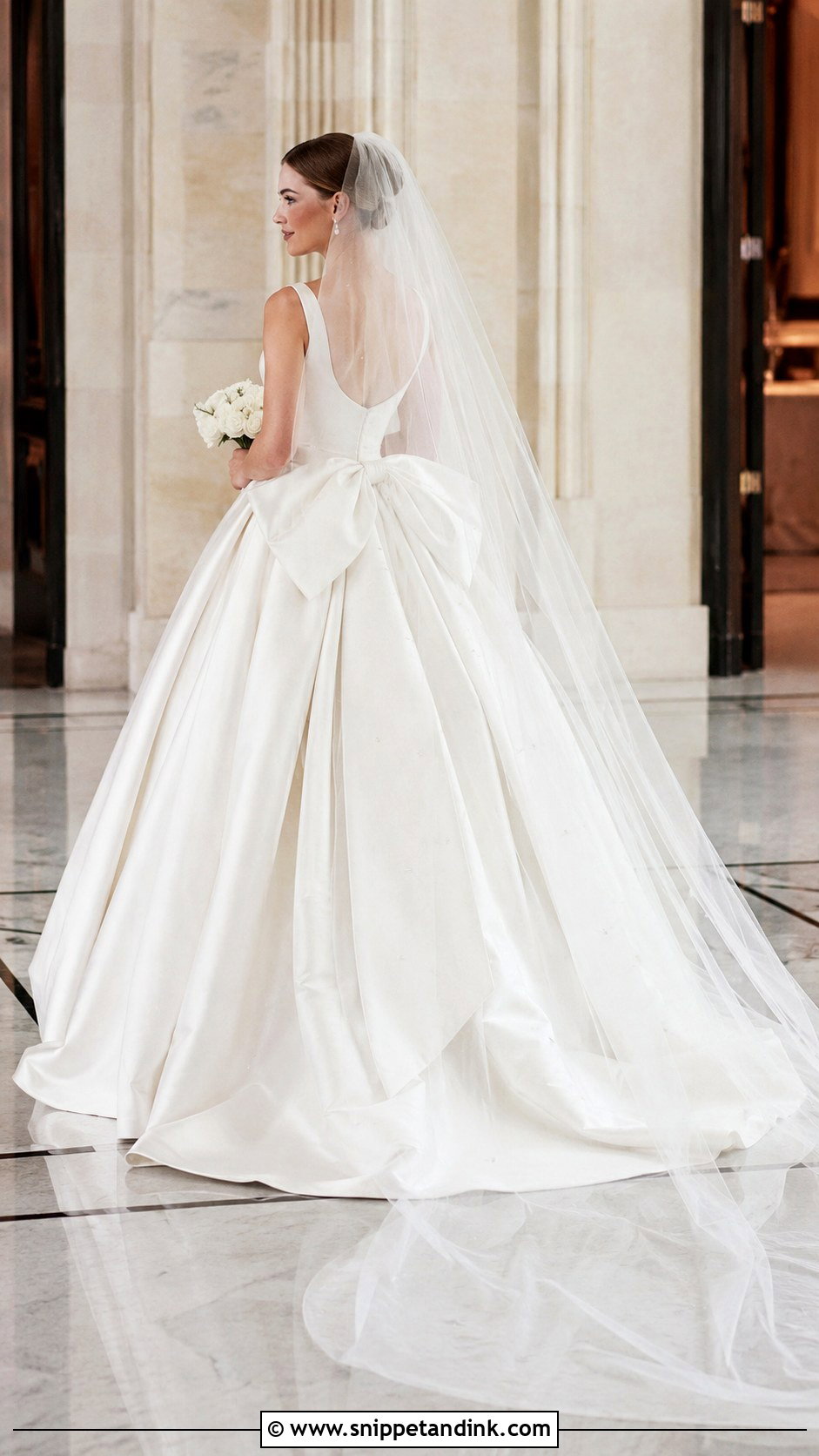
Mikado is stiff enough to give a big back bow a sharp, crisp shape, which is why the two belong together. Look for a box-pleated skirt and a bow that detaches, so you can take it off for dancing. My one warning is scale. On a petite bride an oversized bow can swallow the waist, so check it from the side and back in a full-length mirror, not just from the front. Pearl button earrings, ivory pumps, a long veil that falls past the train and a smooth chignon keep it formal for a grand hotel or architectural venue.
9. High Neck Lace Ball Gown Wedding Dress
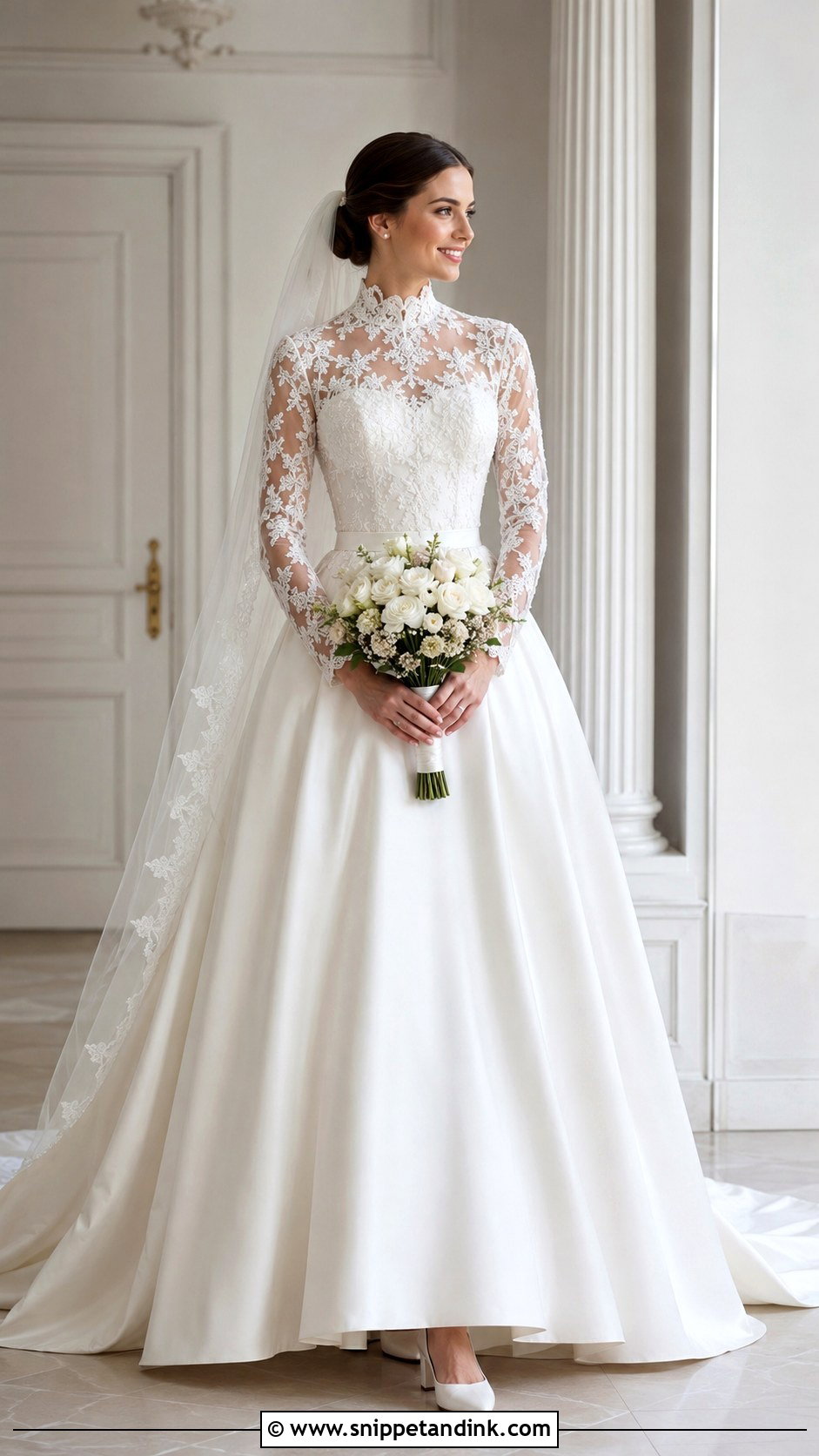
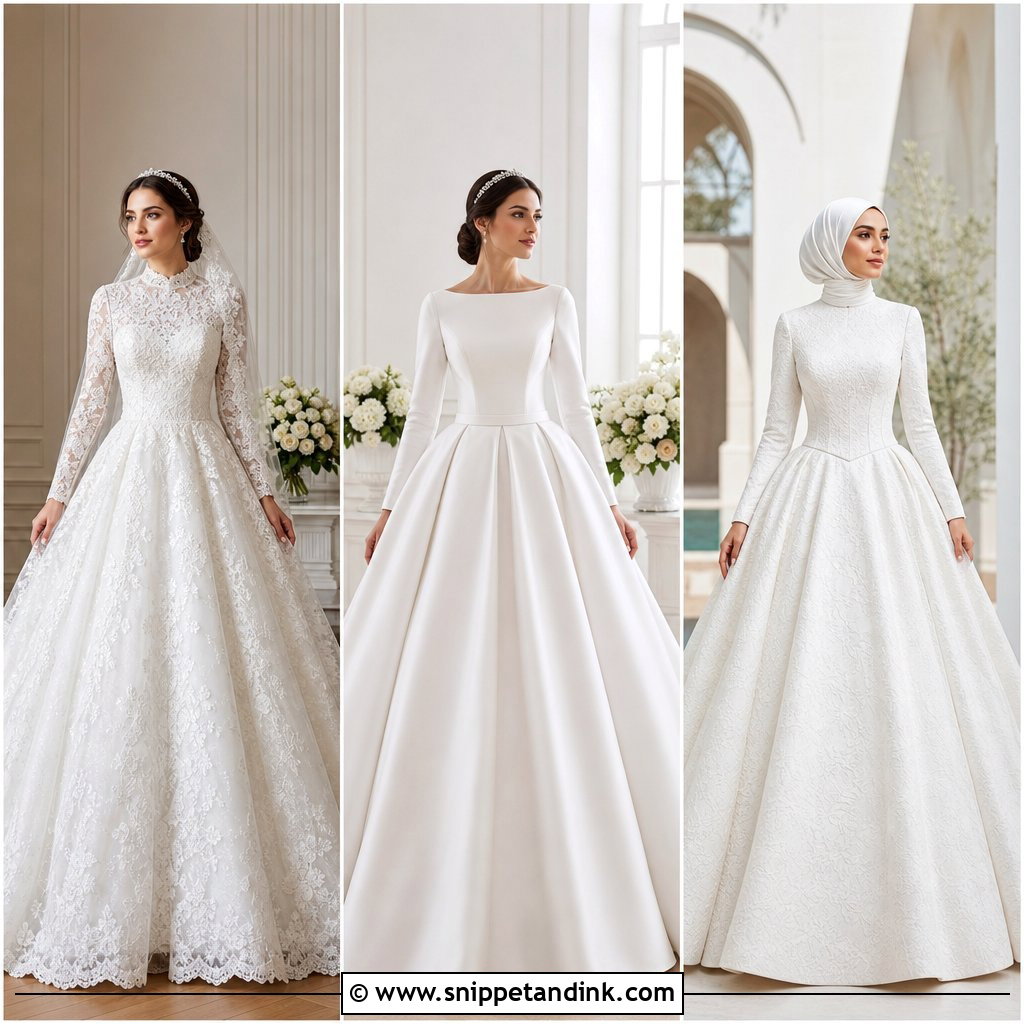
A high lace neck gives coverage across the chest and shoulders while keeping a full princess skirt. An illusion yoke keeps it from feeling heavy. I always have the bride turn her head fully left and right and then talk for a minute, because a high neckline that is even slightly tight becomes very noticeable during speeches and dinner. Pin the veil under a low bun so the neck stays visible, wear pearl studs and closed-toe block heels, and carry a streamlined bouquet. There is enough lace already; skip the necklace.
10. Ruffled Organza Ball Gown Wedding Dress
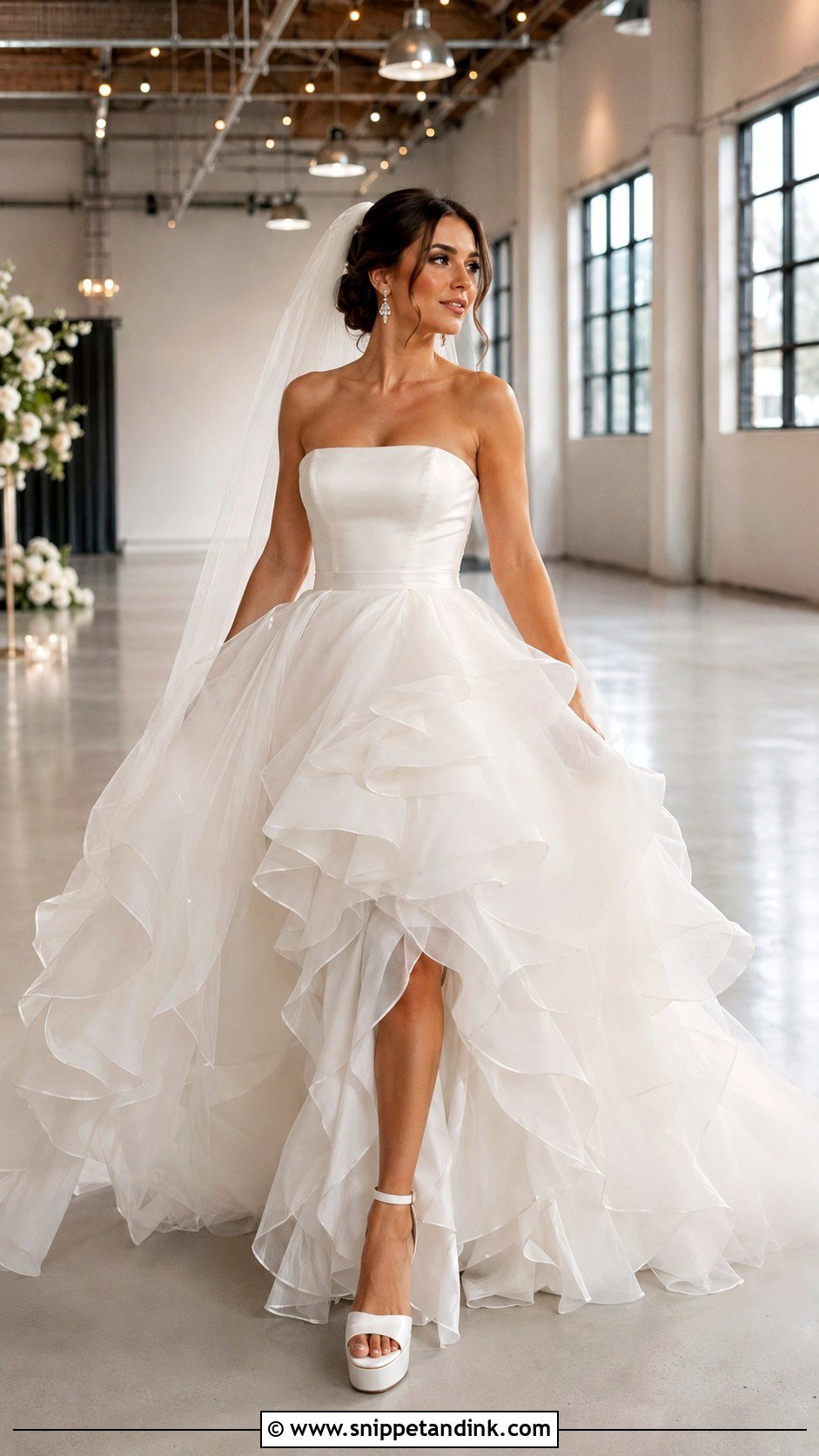
Organza ruffles give big volume without looking dense, but they take up real space. This gown belongs in a large room. Keep the bodice clean and the accessories restrained: small crystal earrings, satin platforms, a plain fingertip veil and a sleek ponytail or sculpted bun. Carry a compact bouquet. The front hem is the fitting detail that matters most, since layered organza cut a fraction too long catches under the toe of your shoe on stairs. Practise a staircase at the final fitting if your venue has one.
11. Beaded Princess Ball Gown Wedding Dress
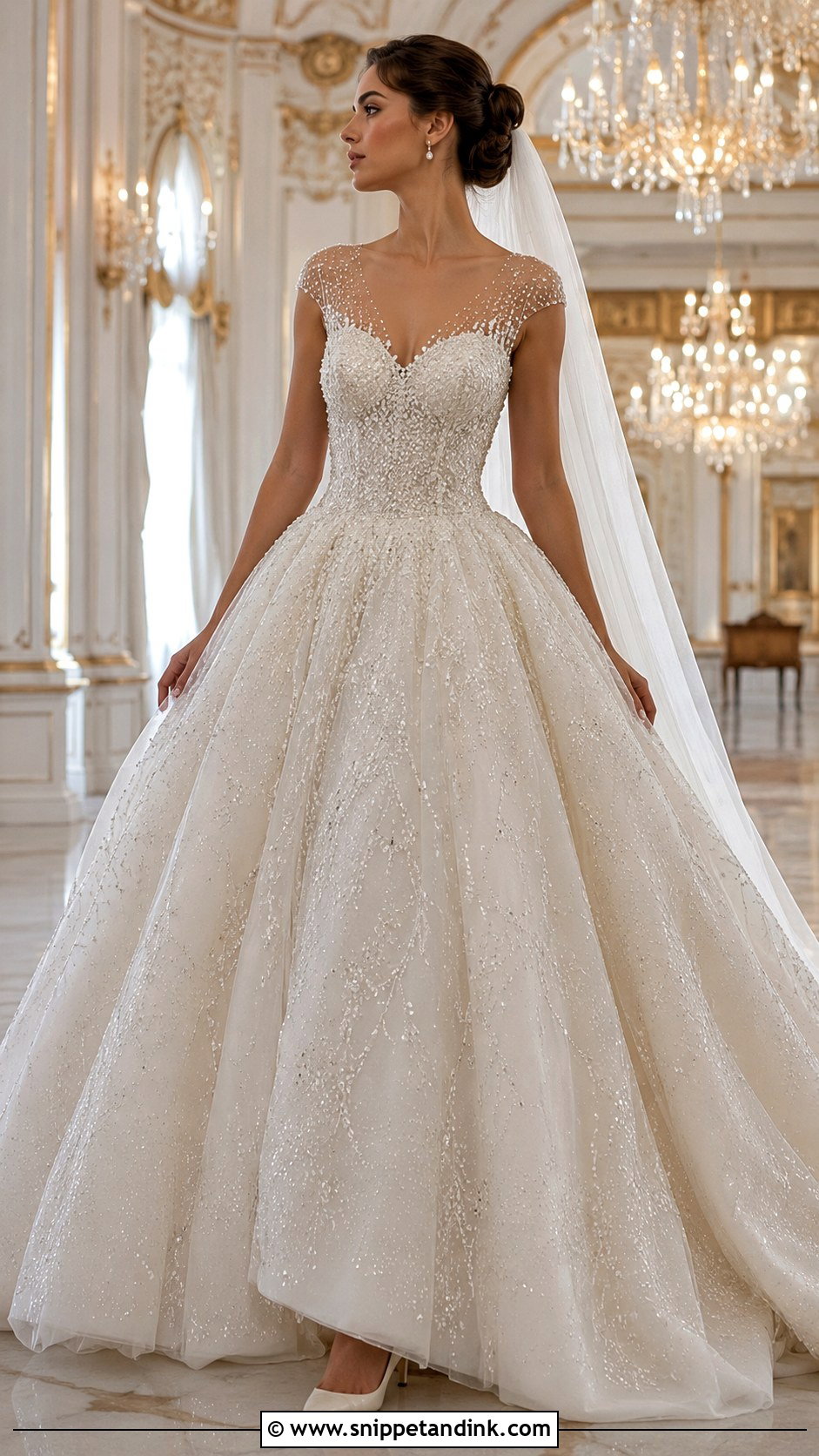
Beading concentrated on the bodice and fading into the skirt defines the waist without making the whole gown equally heavy. That gradient is what to look for. Beaded gowns weigh more than you’d think, so ask whether there is an inner waistband; it lets the weight rest on your hips instead of pulling on your shoulders. I check every bead near the neckline for loose threads, since they snag veils and earrings. Pearl studs, a smooth cathedral veil, ivory pumps and a low twisted bun keep the beading in focus. A soft satin wrap helps for a cold ceremony.
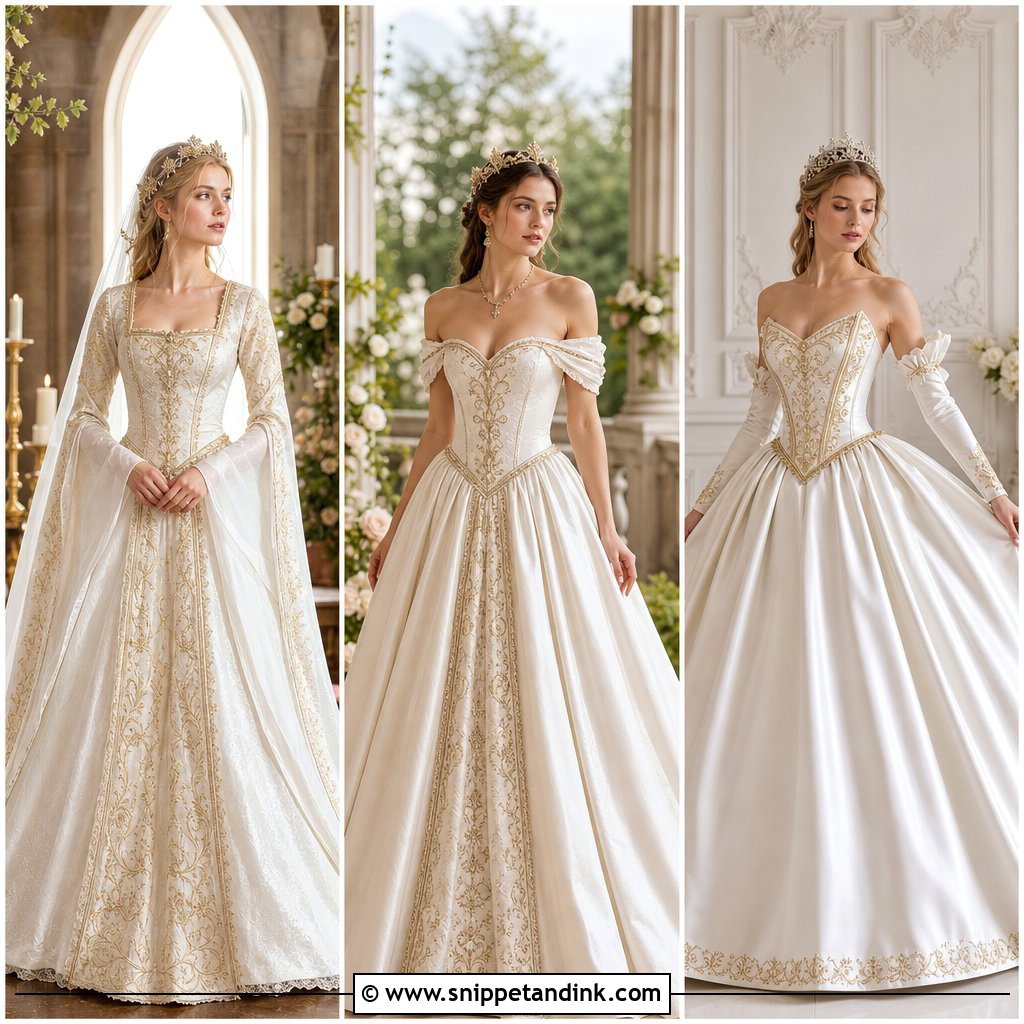
12. Basque Waist Ball Gown Wedding Dress
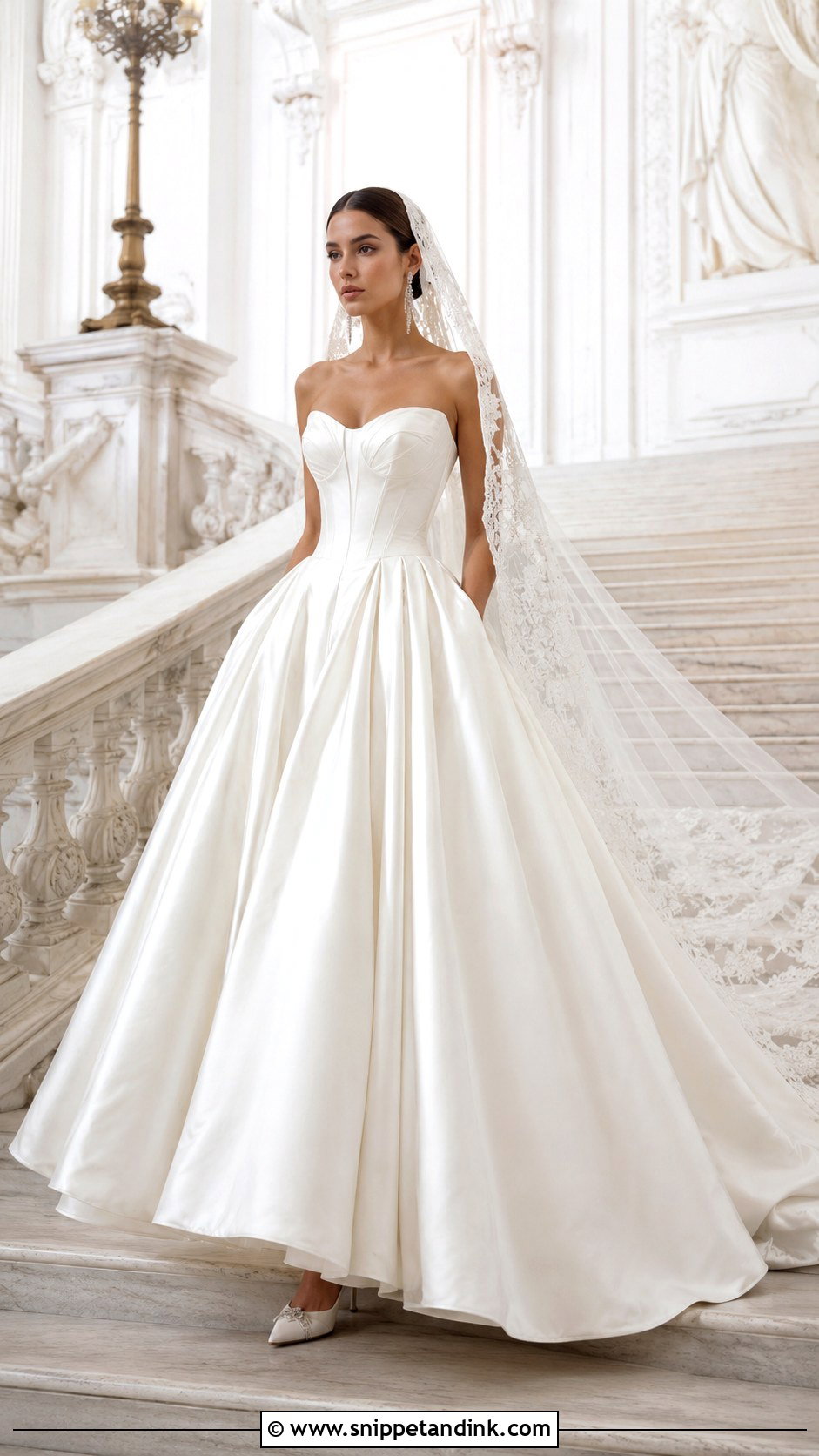
The point of a Basque waist draws the eye down and lengthens the torso, which is a large part of why it reads as royal. Depth is the decision. Brides with shorter torsos usually look better in a shallow point; taller brides can carry a deep one. A corseted satin bodice, long drop earrings, pointed heels and a cathedral veil turn it into a traditional princess outfit, and a clean updo keeps the line visible. At the final fitting, walk and sit several times. A point that folds across your lap when seated needs the bodice shortened.
13. Detachable Sleeve Ball Gown Wedding Dress
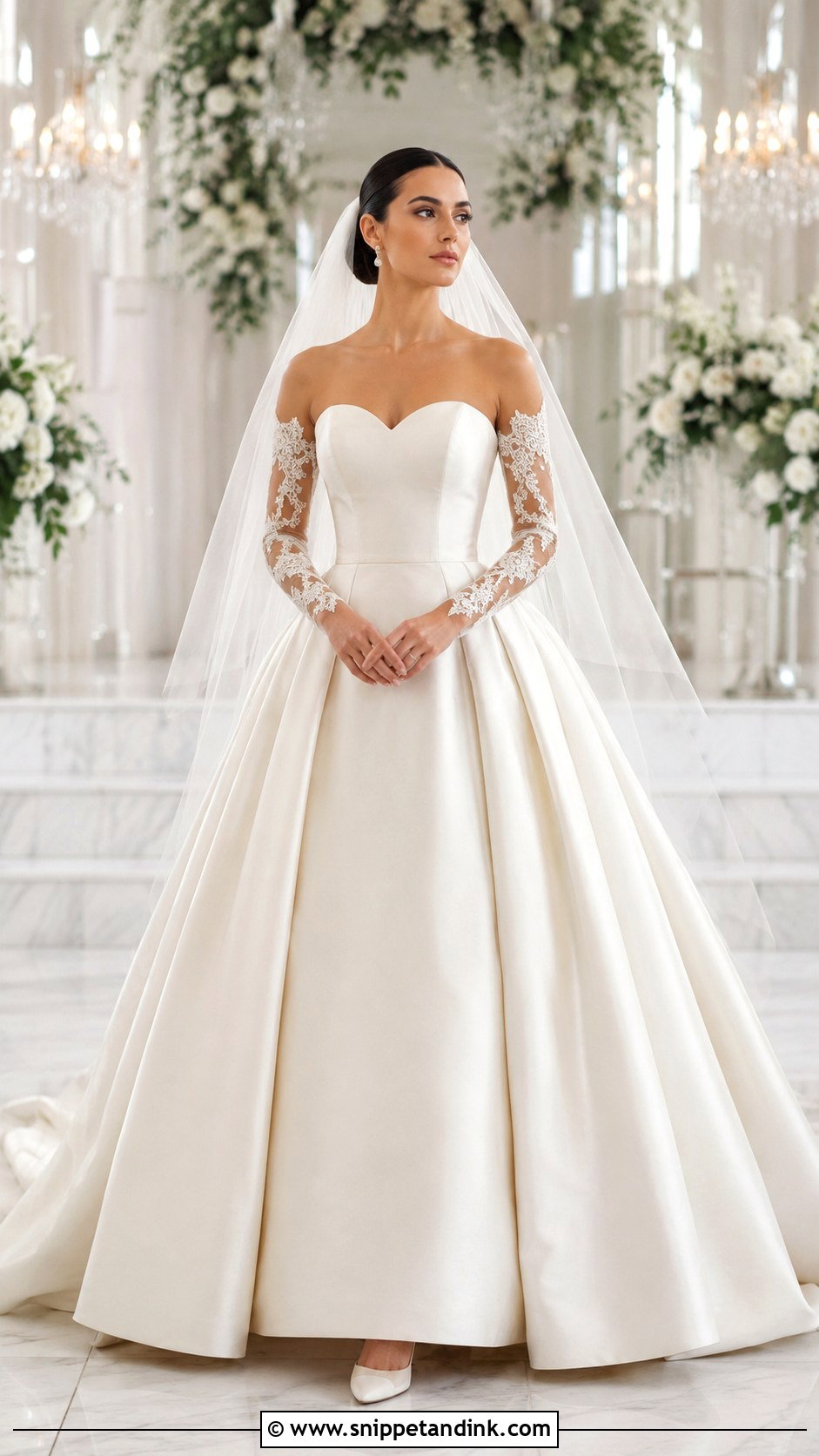
Detachable lace, tulle or gathered organza sleeves let you walk the aisle covered and dance without them. They should match the gown’s own fabrics, or the swap looks like a separate garment. Test every fastening at your fitting and look at the attachment points in photos taken from the side; that’s where hooks show. For the reception, remove the sleeves and veil, swap pearl earrings for statement ones, and loosen the hair or add an embellished clip. The bodice underneath must hold up by itself.
14. Scoop Neck Satin Ball Gown Wedding Dress
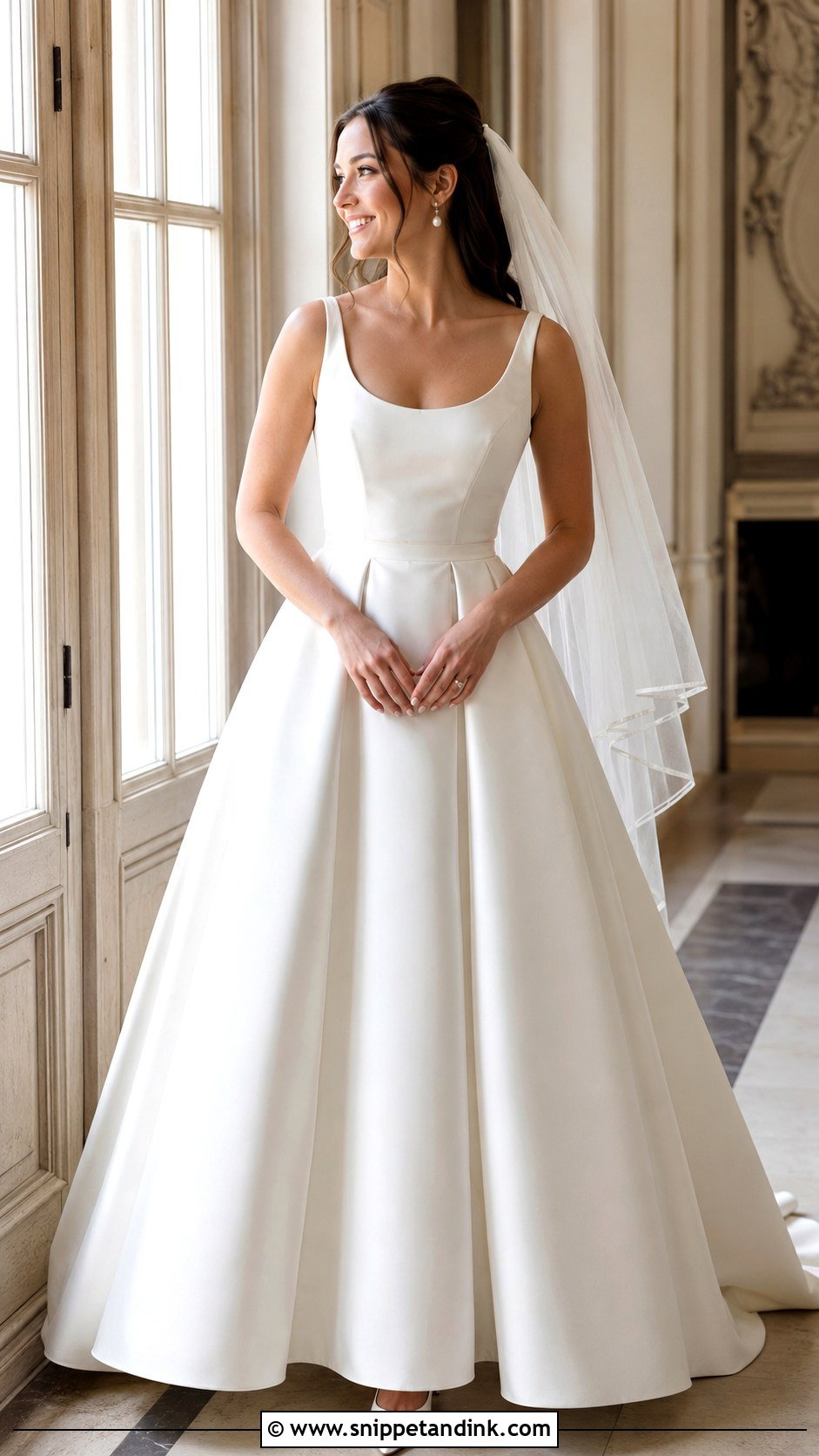
A scoop neckline is the quiet option here, softer than a square or sweetheart and the most forgiving for heirloom jewellery. Pick the depth that suits your comfort; a higher scoop keeps the princess shape and adds coverage. Supportive straps should sit flat and hide the construction underneath, which I check by having the bride roll her shoulders forward. A pleated satin skirt gives the volume without decoration. Pearl drop earrings, a fine bracelet, pointed pumps and a long veil with a narrow satin edge suit it, along with a half-up style that keeps hair off the neckline.


15. Tiered Tulle Princess Wedding Dress
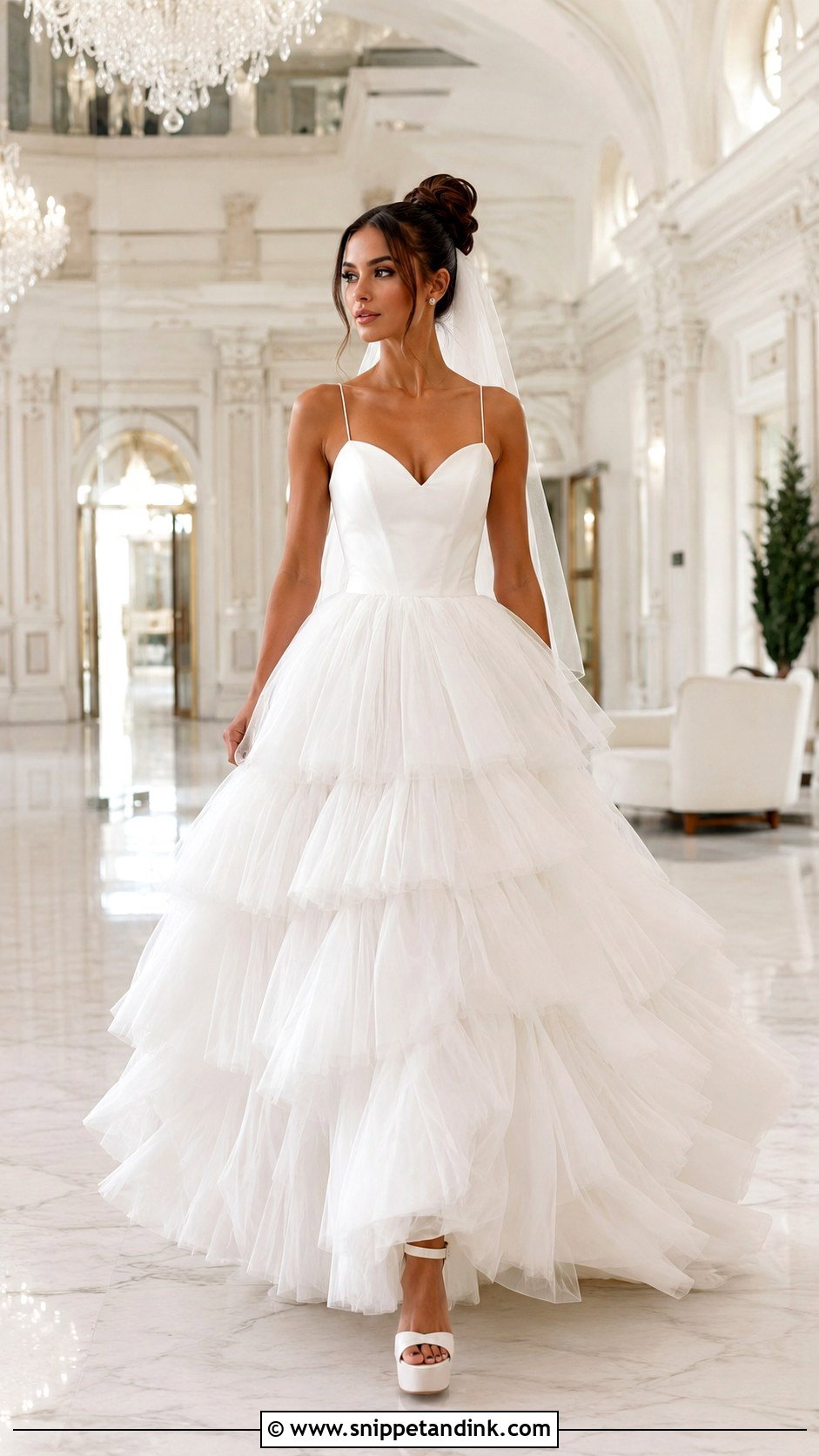
Wide, soft tiers move in layers when you walk, and each one swings a little after the one above it. That’s why this skirt looks so alive in motion. Avoid narrow ruffled tiers, which look fussy. A tiered tulle gown can feel lighter than a satin ball gown of the same size, depending on the underskirt. Pair it with crystal studs, platform sandals, a veil that ends above the lowest tier and a high bun. Compressed tulle needs time to recover after travel, so leave space in the morning schedule for a careful steam, tier by tier.
16. Pearl Embellished Ball Gown Wedding Dress
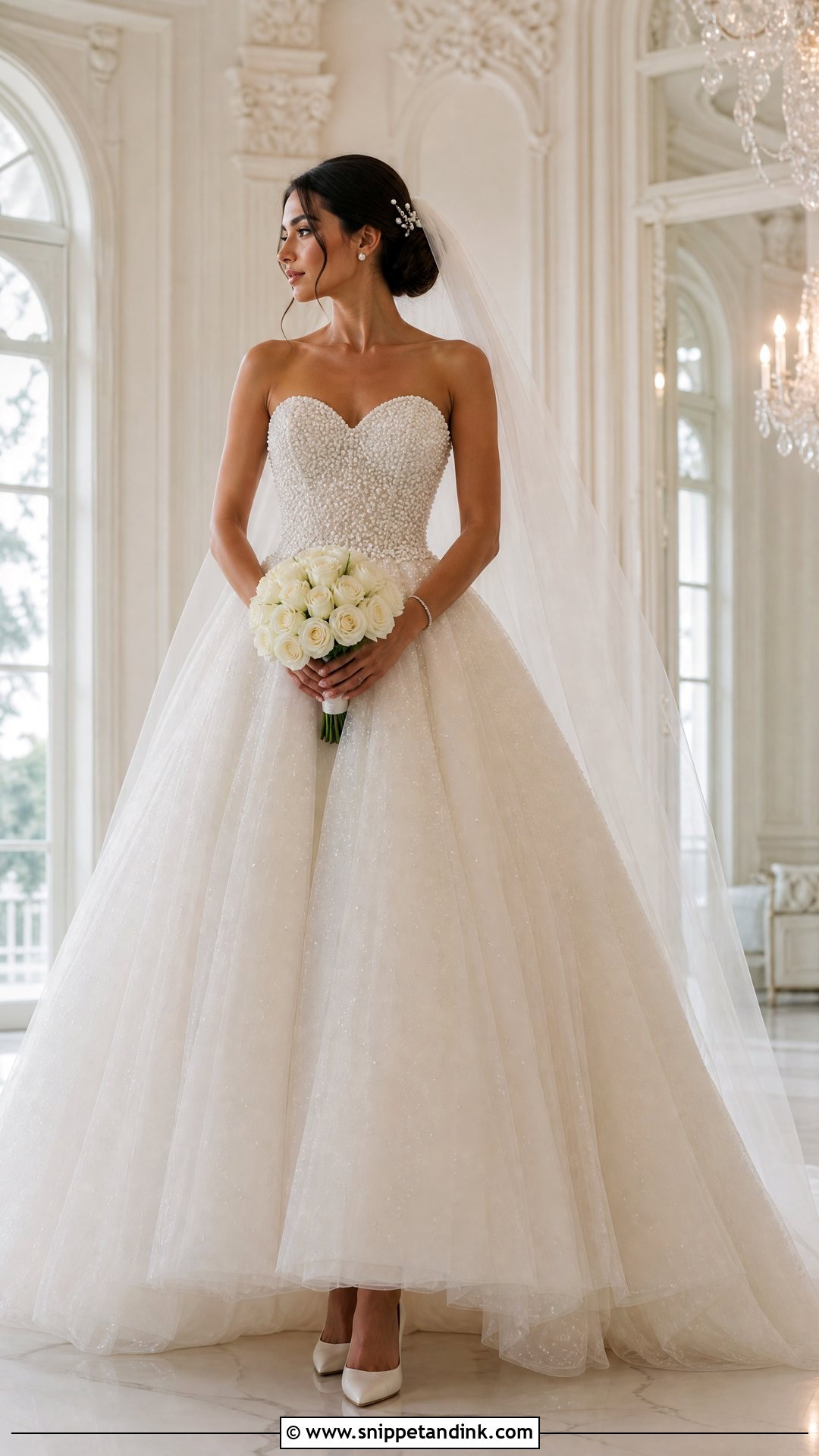
Pearls add soft dimension rather than glitter, and they work in daylight as well as at night. Scattered pearls on the bodice, fewer on the skirt near the waist, and a full tulle skirt is the balance I look for. Check two things: that every pearl is firmly sewn, and that none sit near the underarm, where hours of movement rub them against skin. Pearl earrings, satin heels, a plain veil and a sleek bun with a few pearl pins tie it together. If the pearls continue onto the straps, skip the necklace.
17. Colored Princess Ball Gown Wedding Dress
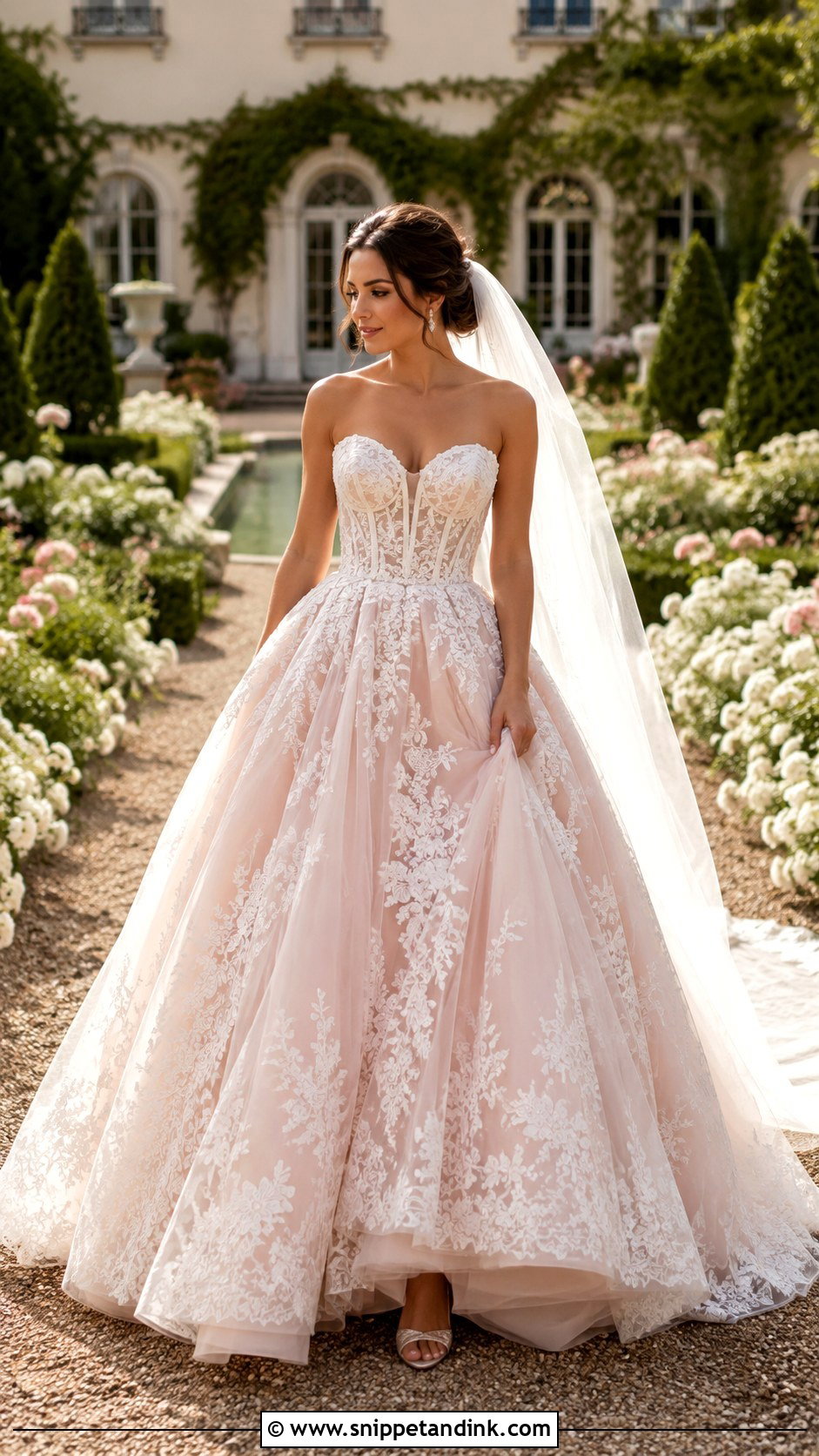
Could a soft colour feel more personal than bright white? Blush, champagne, pale blue or a subtle lavender ball gown stays bridal while being unmistakably yours. You can go fully coloured, or put a tinted underlayer beneath ivory lace, which also makes the lace pattern show up better in photos. Pale shades shift under different light. I always ask brides to take the swatch outside and then into a warmly lit room, because champagne can look grey or peach depending on the bulbs. Neutral metallic heels, coordinated earrings, a sheer ivory veil and a tight bouquet palette keep it deliberate.
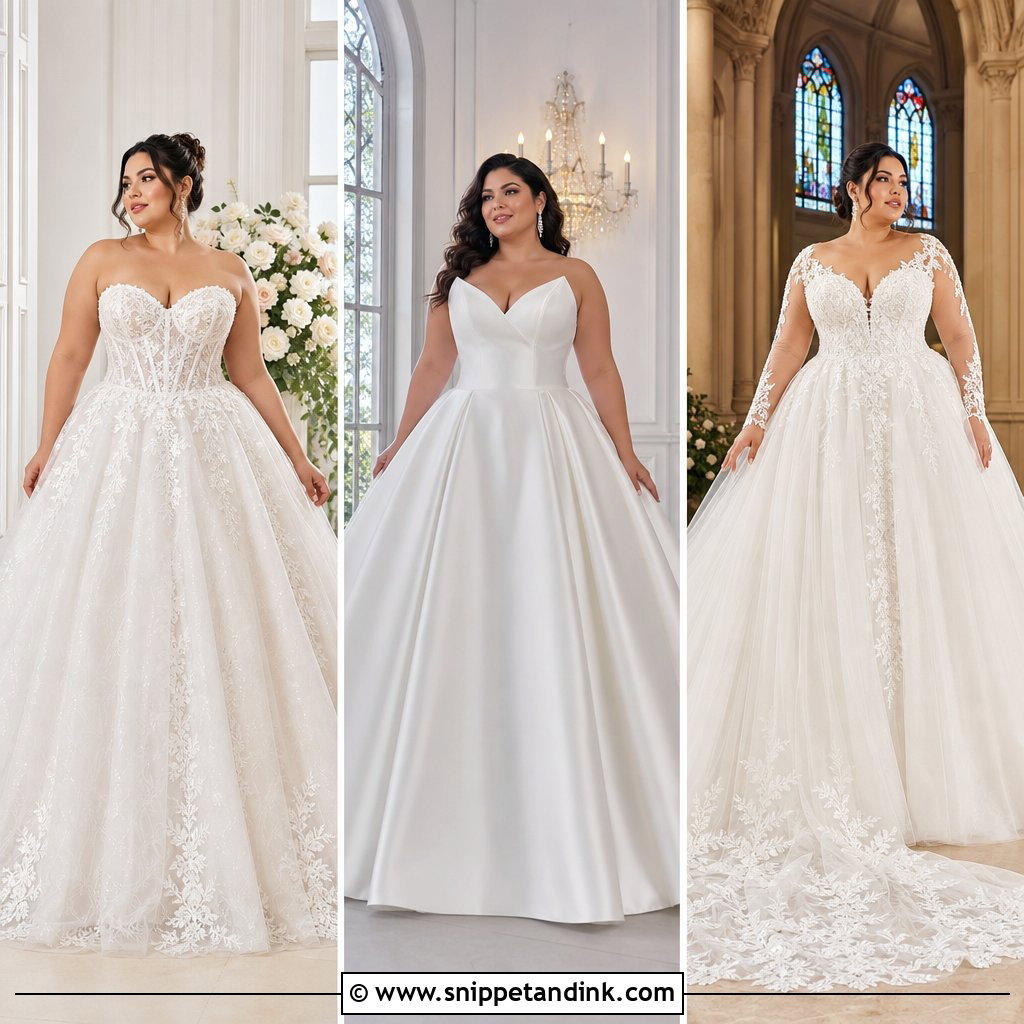
18. Plus Size Princess Ball Gown Wedding Dress
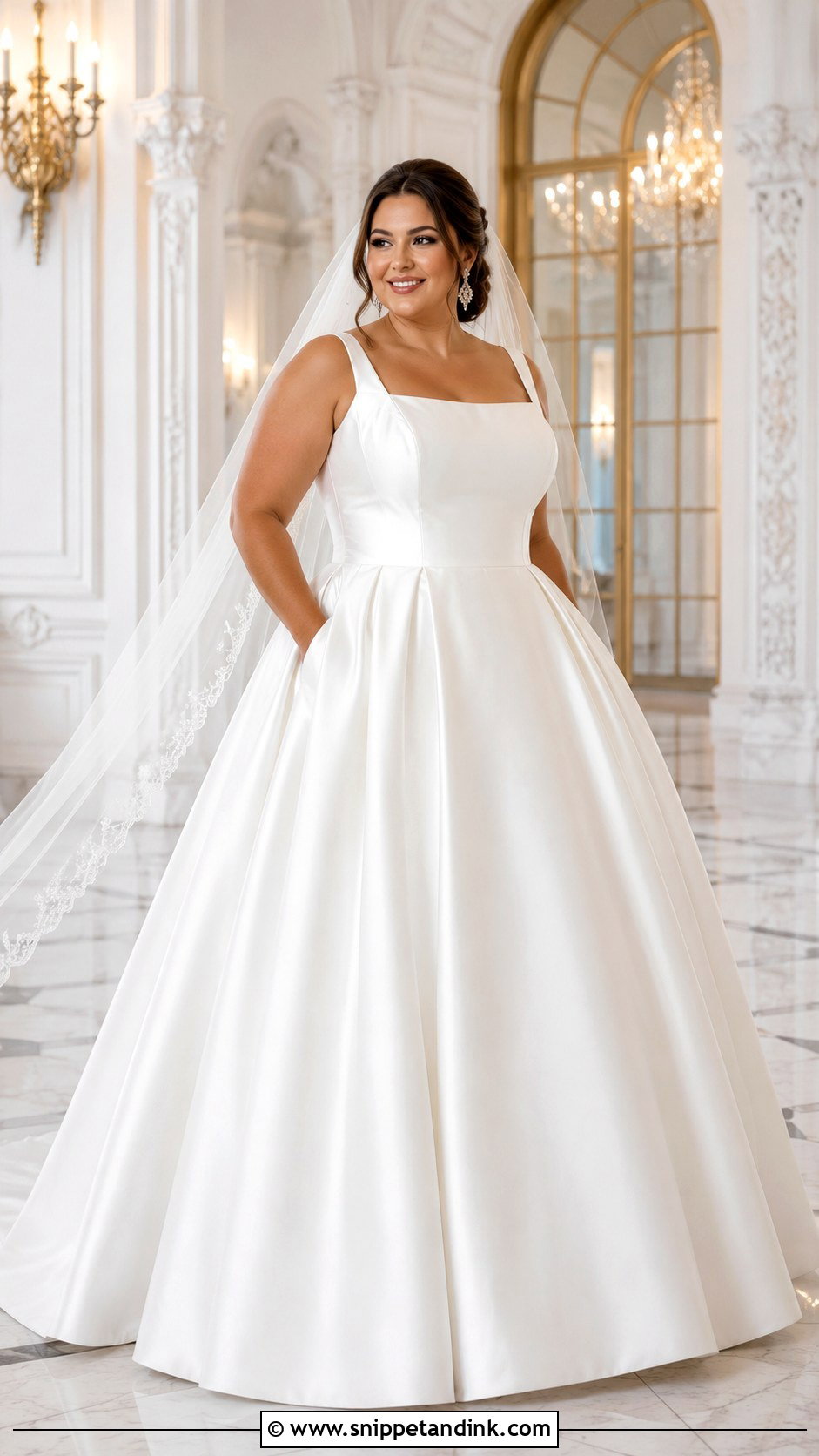
For curvier brides, a well-built ball gown is one of the most supportive shapes there is. Look for secure straps or sleeves, an internal waistband, and boning that’s part of the gown’s structure rather than decoration. A natural or slightly dropped waist gives a smooth line into the skirt. Pick the neckline you feel best in; there’s no rule against sweetheart or off-the-shoulder for any size. Find a seamstress who regularly works on boned bridal bodices, because ordinary alterations shops sometimes don’t. You should be able to breathe, sit and dance without thinking about the dress, whatever the label says.
19. Minimalist Ball Gown Wedding Dress
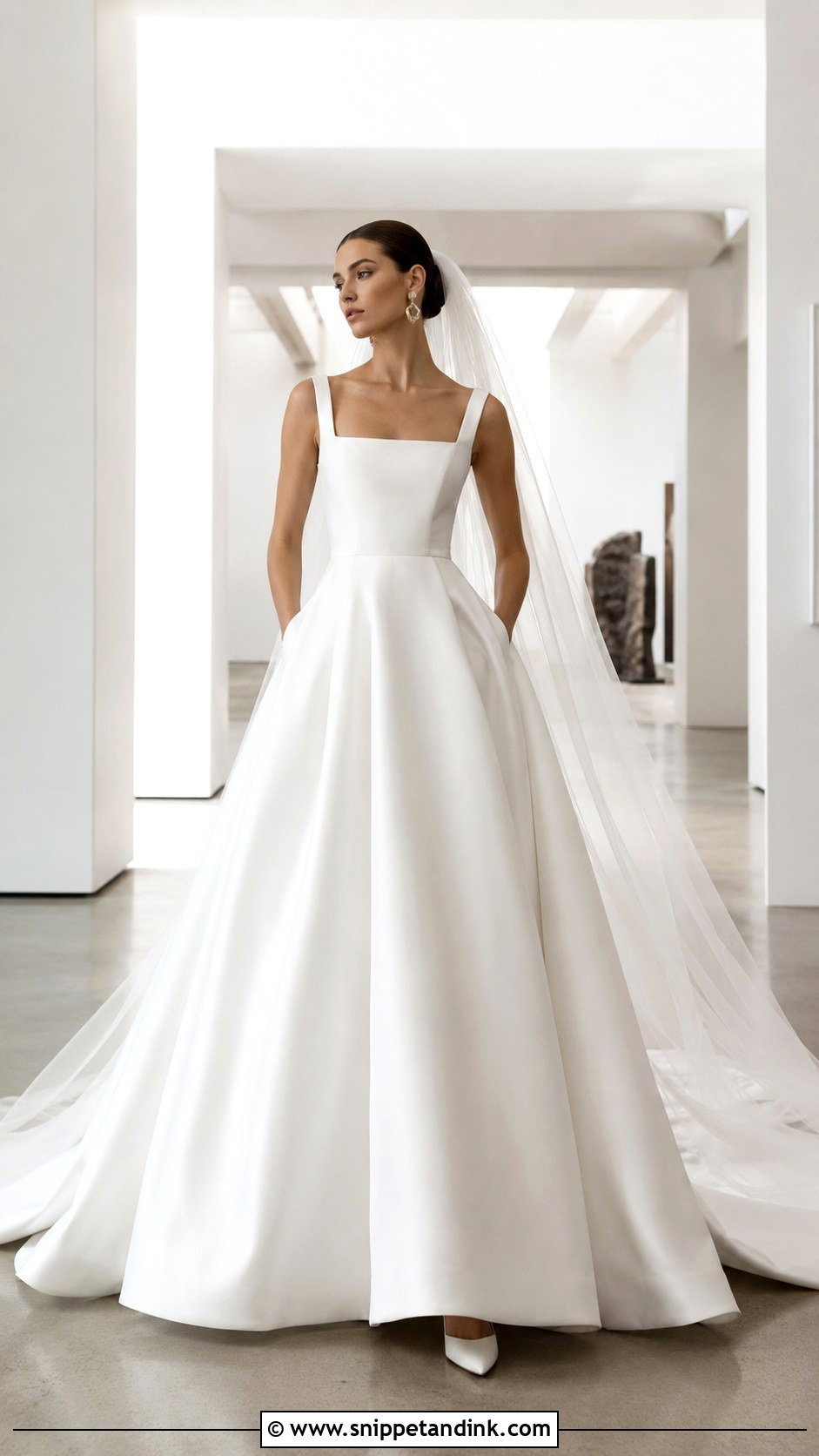
Simple doesn’t have to mean small. A minimalist ball gown relies on construction, fabric quality and proportion, with no lace or beading to hide behind. That makes tailoring essential, and I check the seams, hem, waist placement and fabric finish in natural light before I’d let a bride sign off. A clean strapless or square neck, a wide satin skirt and a long train look right in galleries and bright city hotels. Sculptural earrings, pointed pumps, a plain cathedral veil and a single-flower bouquet complete it.



20. Royal Train Ball Gown Wedding Dress
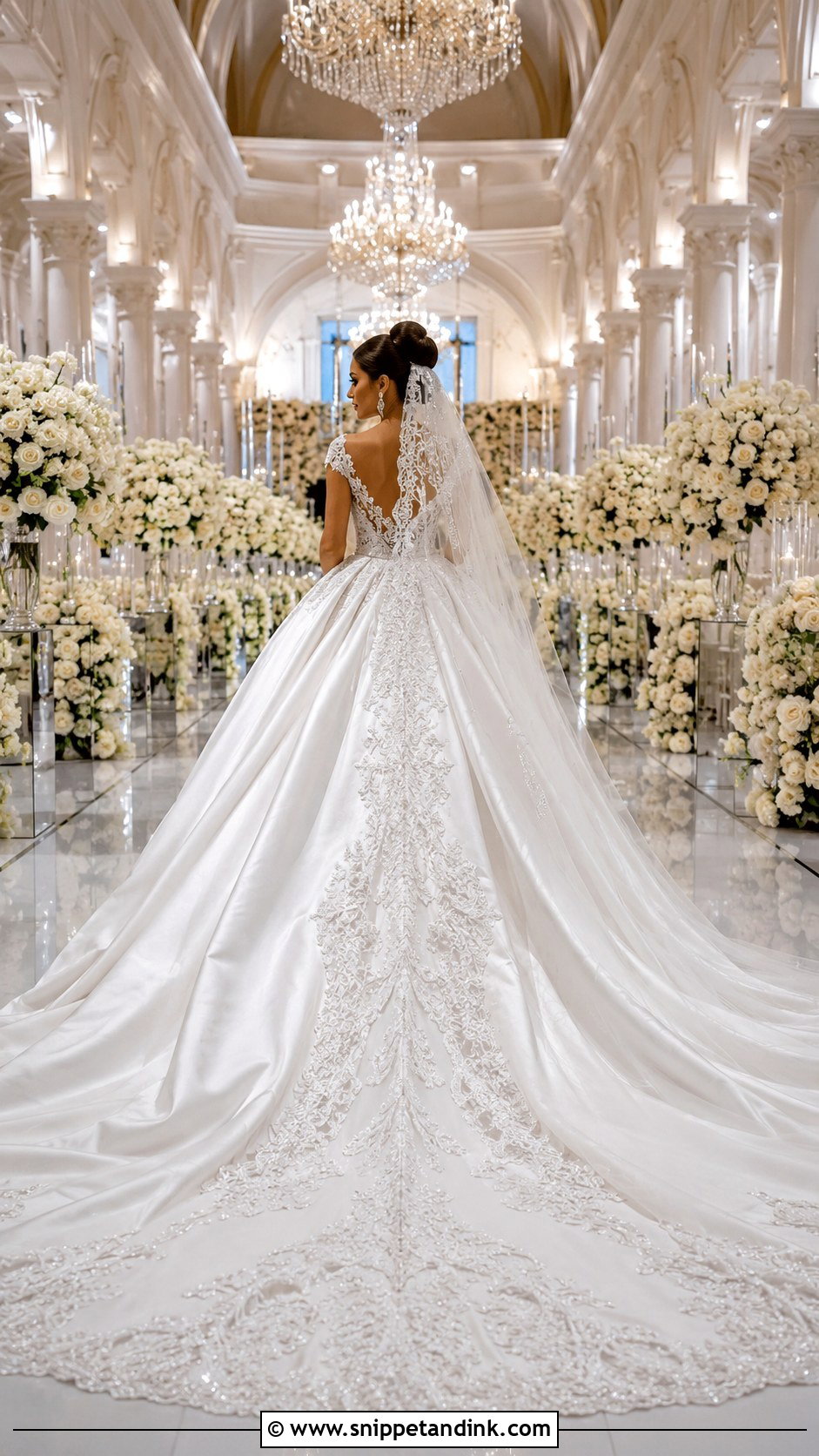
A royal-length train needs a skirt fabric strong enough to carry it without collapsing, so this isn’t the moment for flimsy tulle. Lace appliqués, covered buttons or a decorative border give guests something to look at from behind, which is why I’d wear the hair up. Measure your aisle before committing: a train this long needs a wide, smooth route with no sharp turns. Secure platform heels, statement earrings and a cathedral veil reaching near the train finish the look. For the reception, plan a strong multi-point bustle and teach one attendant to fasten it before the day.
Does Your Venue Have Room for This Skirt?
I ask every princess-gown bride for photos of her venue before the first fitting. A skirt that looks perfect in a bridal shop can feel very different in a narrow church aisle or a stone staircase.
Aisles, stairs and doorways
Walk the route if you can. Look for tight turns, steps without a handrail and doors you’ll be photographed coming through. On a narrow aisle, the people sitting at the ends of the rows will end up with tulle in their laps; a slightly smaller skirt or a hoop that can be removed after the ceremony solves this.
Religious and historic buildings
Some places of worship ask brides to cover their shoulders during the service. Check before you buy a strapless gown. A matching bolero, a lace jacket or detachable sleeves keep the same dress and satisfy the rule. Historic venues may also ban confetti or glitter, which matters if your gown sheds.
Outdoor ground
Grass stains a hem quickly and damp lawns wick up into tulle. If part of the day is outdoors, have the hem cut to just clear the ground in your shoes, and keep a lint roller and a clean towel in the getting-ready kit.
One Clear Look, From Neckline to Hem
A princess gown works when everything points the same way: neckline, waist placement, fabric, train, shoes, veil and hair. Satin brings structure, tulle and organza bring lighter movement, and lace, pearls, flowers or crystals add personality without every accessory shouting. Above all, put your budget into skilled alterations and proper internal support. If you can breathe, sit, walk and dance in it, the drama of the skirt takes care of itself.
You'll Like These Ideas:






Leave a Reply