
No single look rules bridal right now, and that’s good news. Ball gowns sit next to clean columns, vintage lace next to soft floral embroidery, and plenty of modern gowns with removable layers. Basque and dropped waists are everywhere, statement sleeves and subtle color are growing, and lace has come back bolder, from fine appliqués to raised, crochet-like textures. For each gown below I’ve added what I’d pair it with and the one thing I’d check before buying it.
Ivory, Diamond White or Blush Against Your Skin
Bridal white comes in more shades than most people expect, and the name on the tag changes from one designer to the next. In the fitting room I hold swatches against the bride’s face in daylight before she falls for a silhouette.
- Bright or optic white is the coolest shade. It suits deeper and cool-toned skin, but can make fair, rosy skin look red.
- Diamond or soft white has a tiny warmth and flatters almost everyone.
- Ivory has a yellow or cream base and looks warm and rich, especially in satin and silk.
- Champagne and blush sit under ivory tulle or lace and add color you see from up close more than from across the room.
Check the gown’s color against your veil and shoes too. Two whites side by side never quite match, and a bright veil over an ivory gown makes the dress look dingy. I order the veil only after seeing it held against the actual gown.
1. Basque Waist Wedding Gown
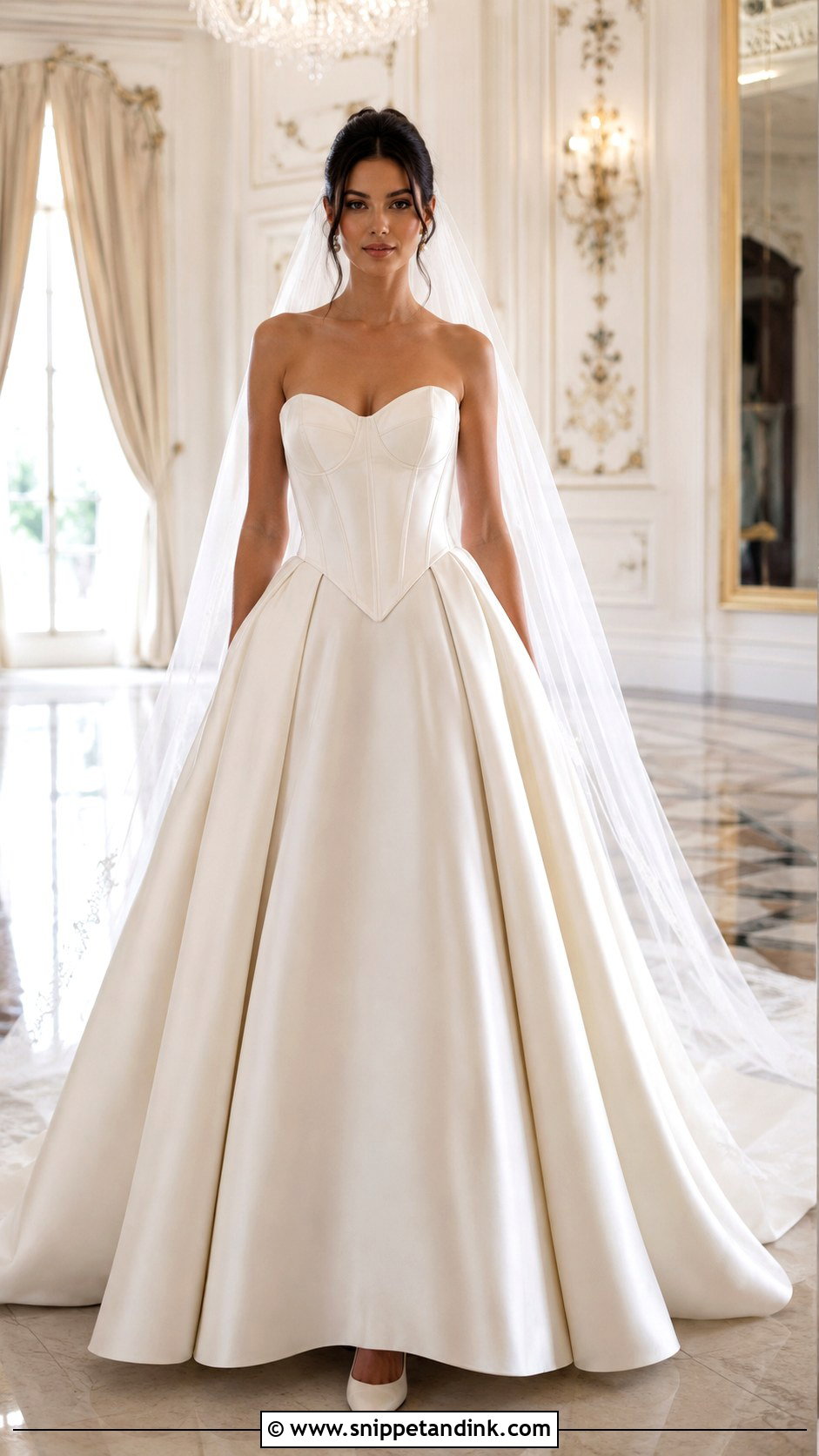
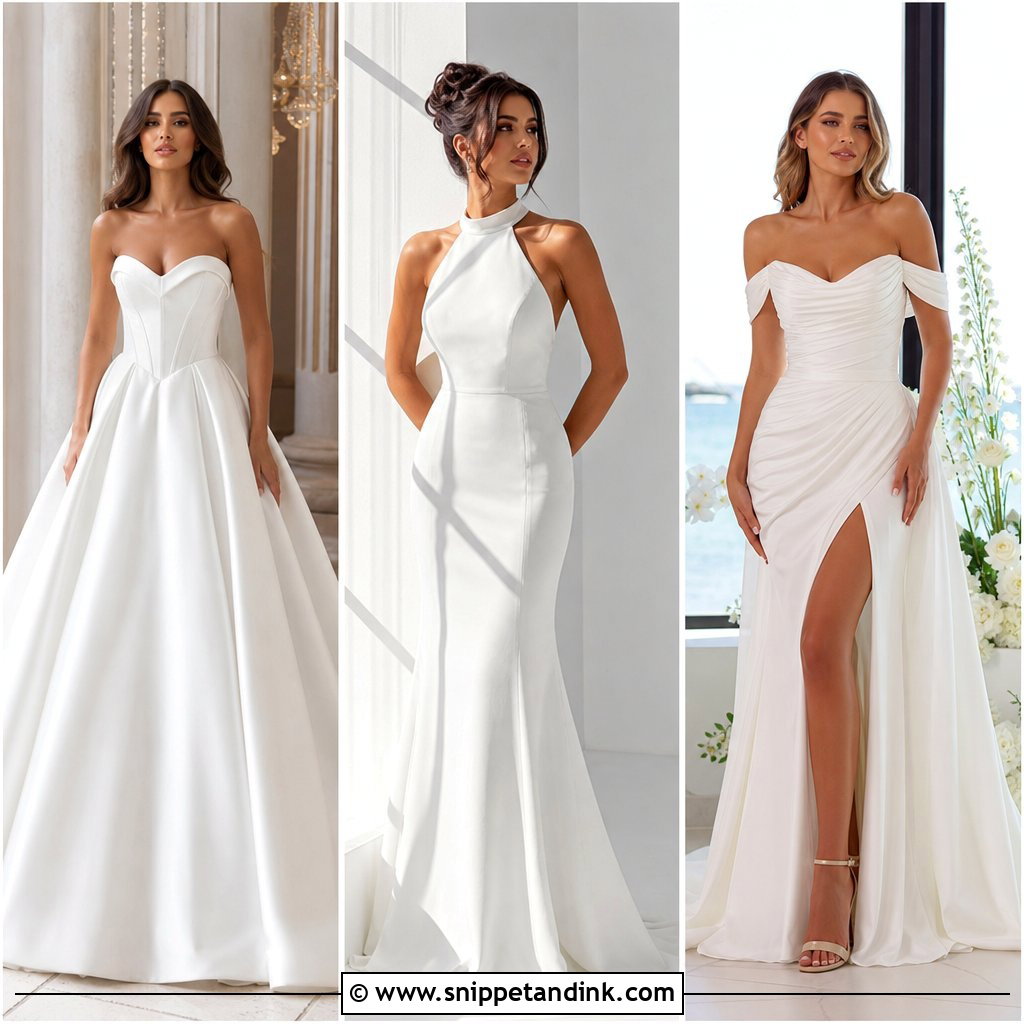
The Basque waist dips below the natural waistline in a soft V, and on a structured corset over a full satin or mikado skirt it looks regal. It also lengthens the torso, which helps brides with a shorter body. The catch: the point of the V has to sit centered and flat. If the boning is too long for your torso, the point pokes out when you sit, so I always fit this one seated as well as standing. Pearl drops, a smooth cathedral veil and satin pumps are all it needs. Detachable off-the-shoulder straps add coverage if you want it.
2. Drop Waist Wedding Gown
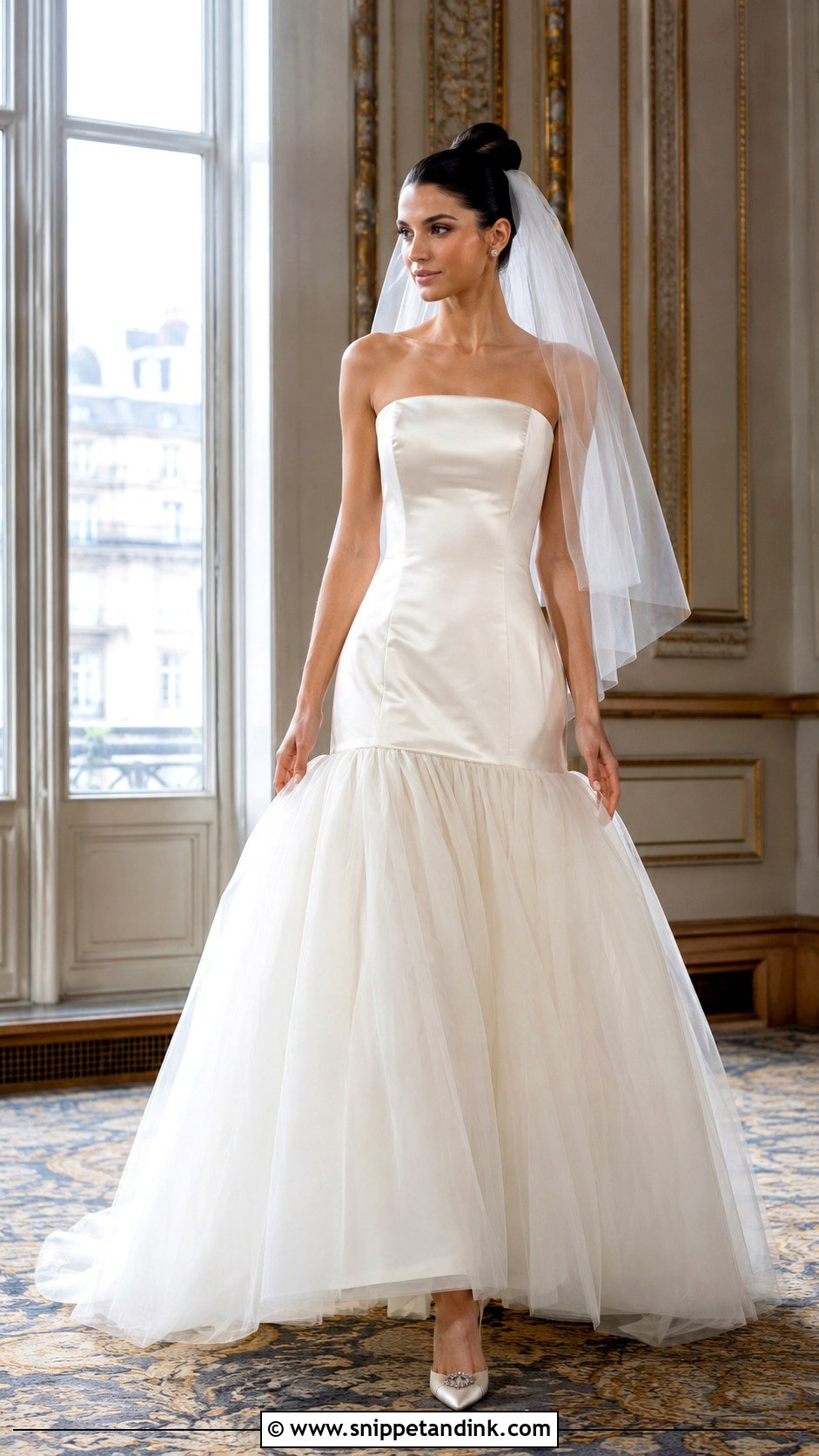
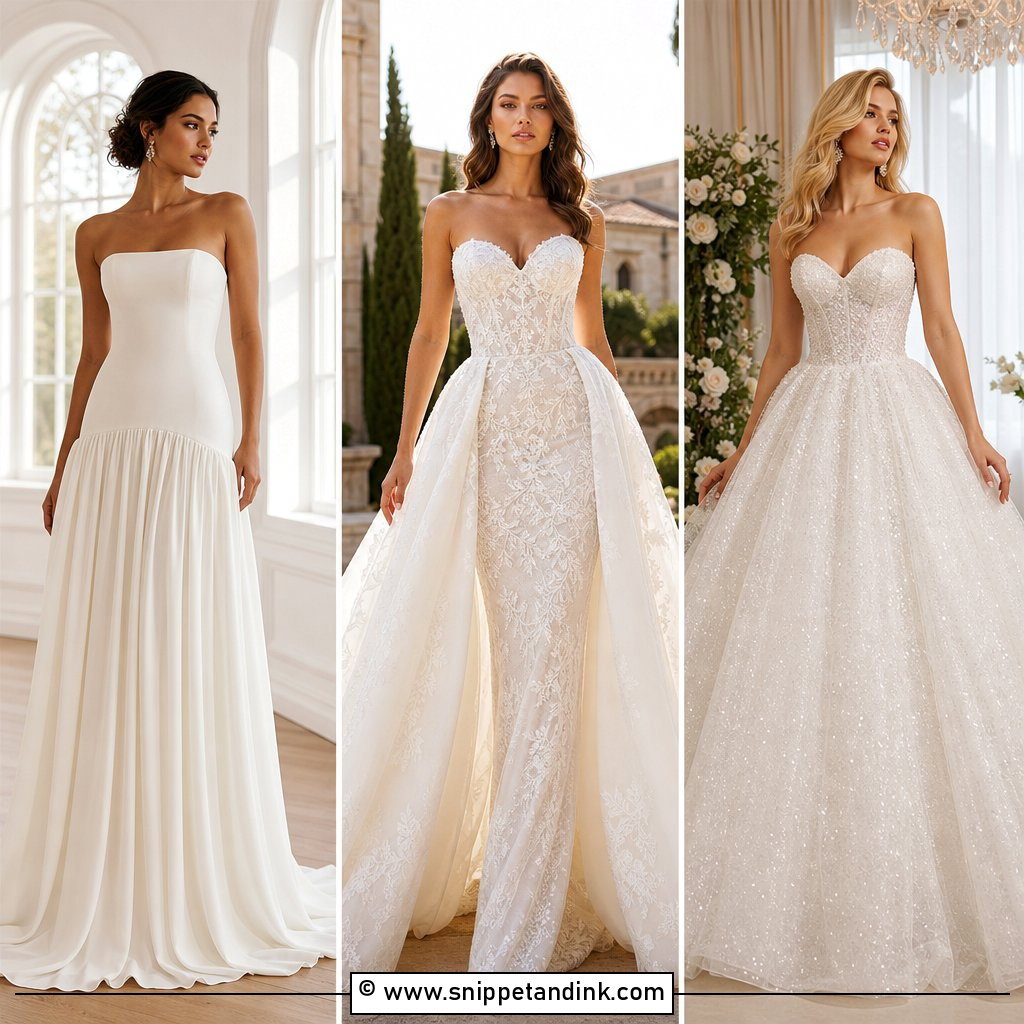
A drop waist runs a long, lean bodice down to the hips before the skirt opens, a shape borrowed from old evening wear. Crisp satin looks architectural; layered tulle moves more. With a silhouette this strong, I keep accessories small: diamond studs, a narrow bracelet, a fingertip veil without heavy edging. A softly waved bob or low ponytail suits it. Expect to spend a fitting on where the seam sits. Even an inch too low and the skirt starts below the hip, which cuts the leg short.
3. Lace A-Line Wedding Gown
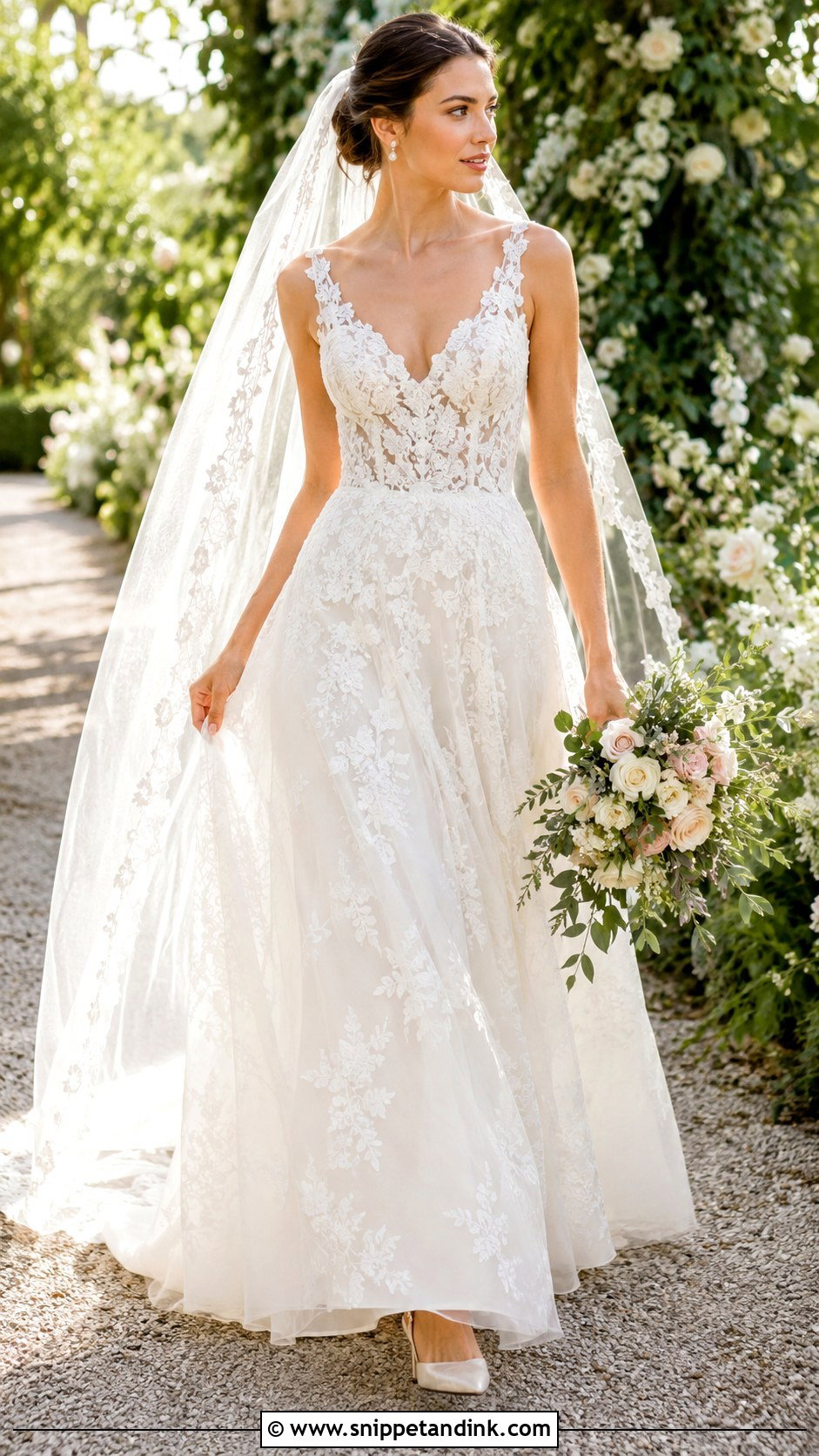
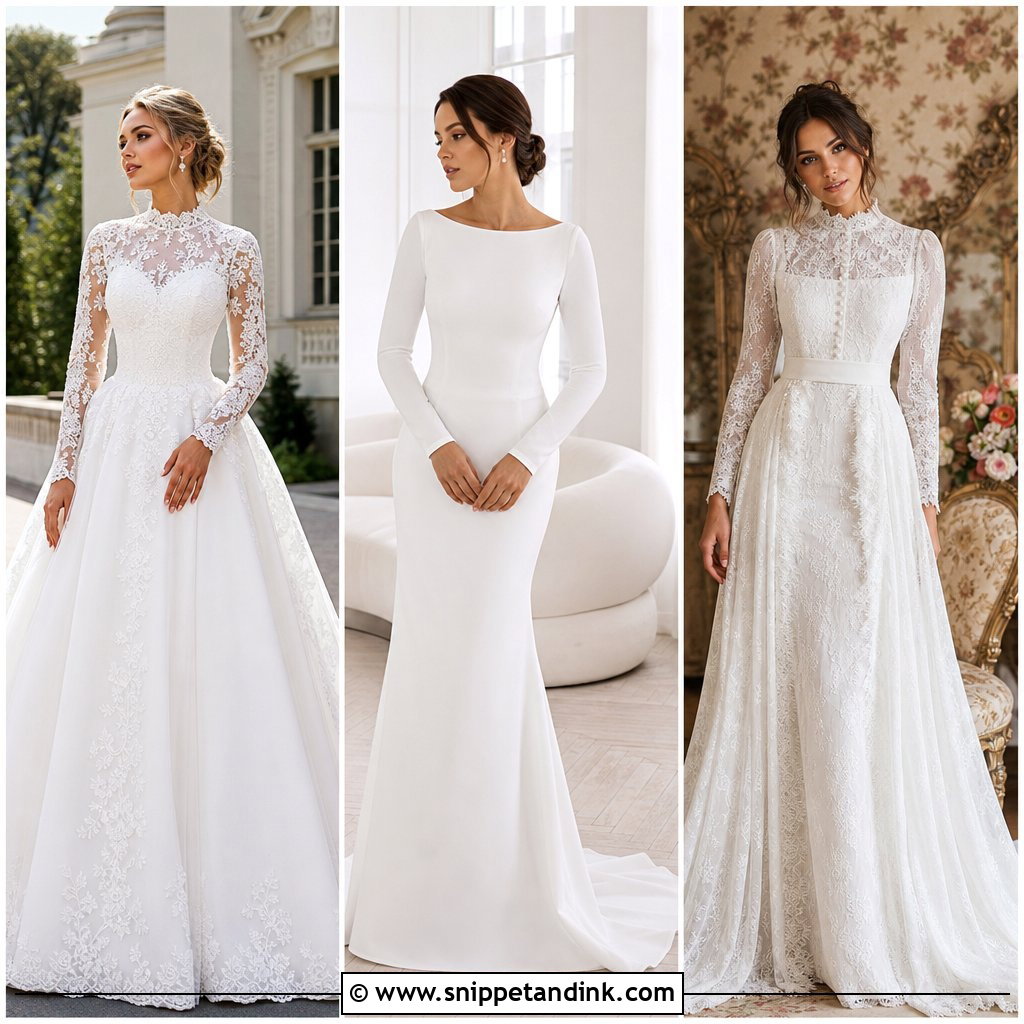
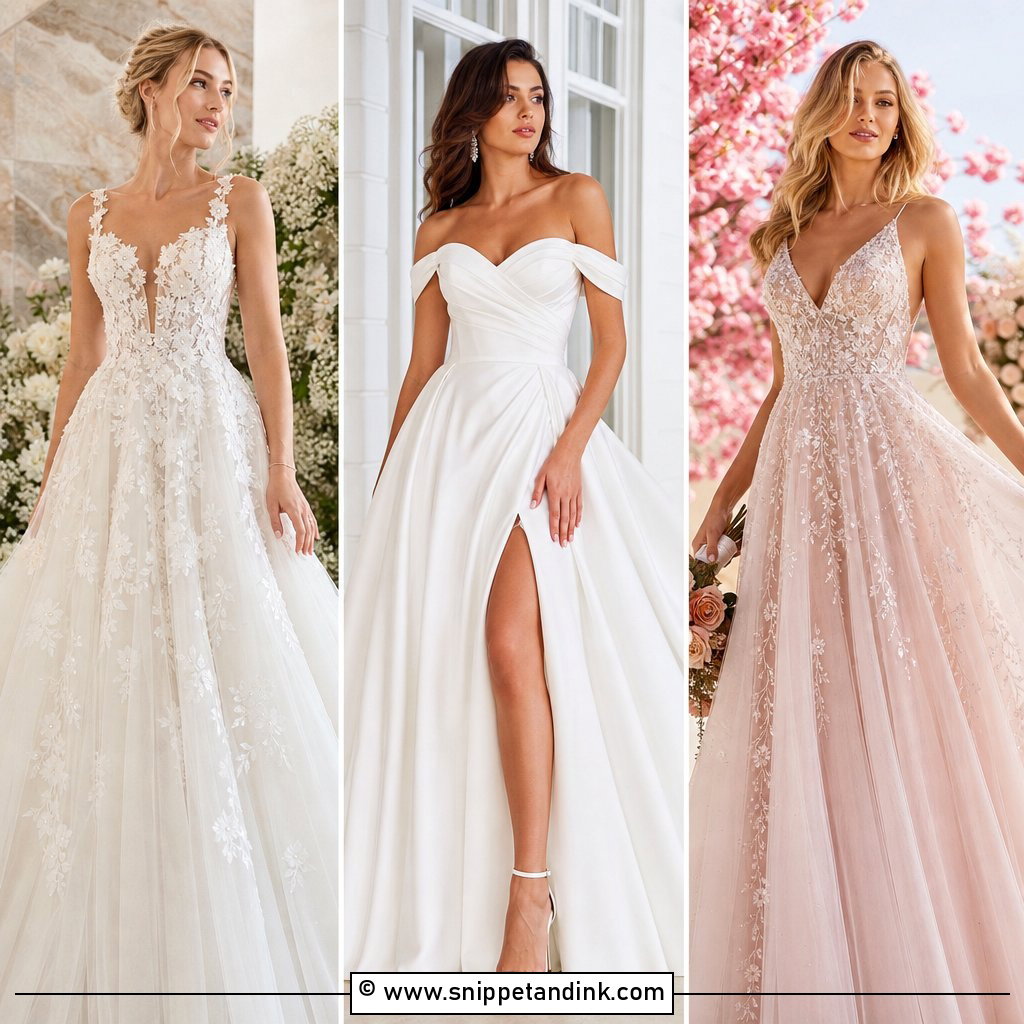
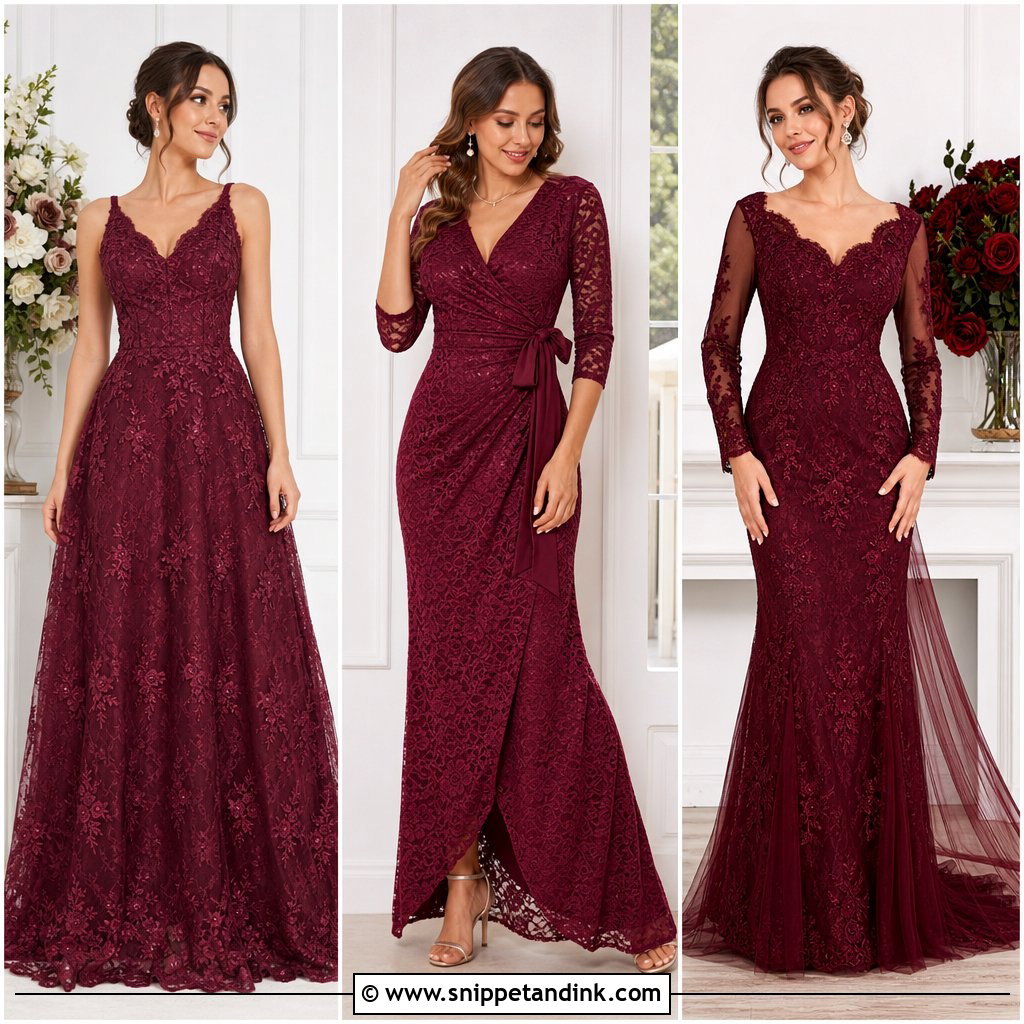
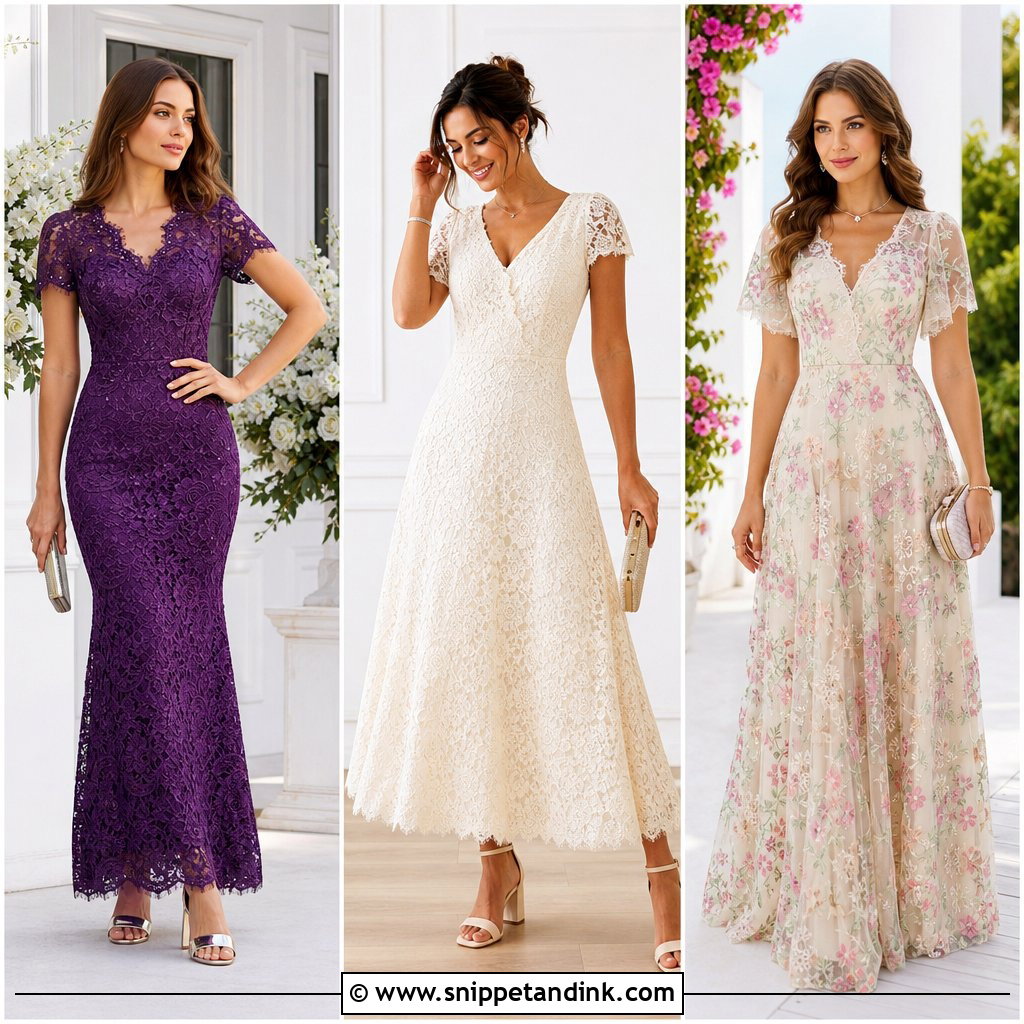
Lace and an A-line together are hard to get wrong. A fitted bodice, a gently defined waist and a skirt that widens gradually toward the floor suit gardens, estates, coastal venues and ballrooms alike. Chantilly is the fine, flat lace and feels light; raised floral appliqués and corded laces like Alençon give dimension. Lace is being used more boldly now too, in heavier patterns, crochet-style surfaces and unexpected placements. Finish with pearl earrings, ivory slingbacks and a veil with a narrow matching lace edge. Loose waves or a low textured bun keep it relaxed.
4. Floral Appliqué Wedding Gown
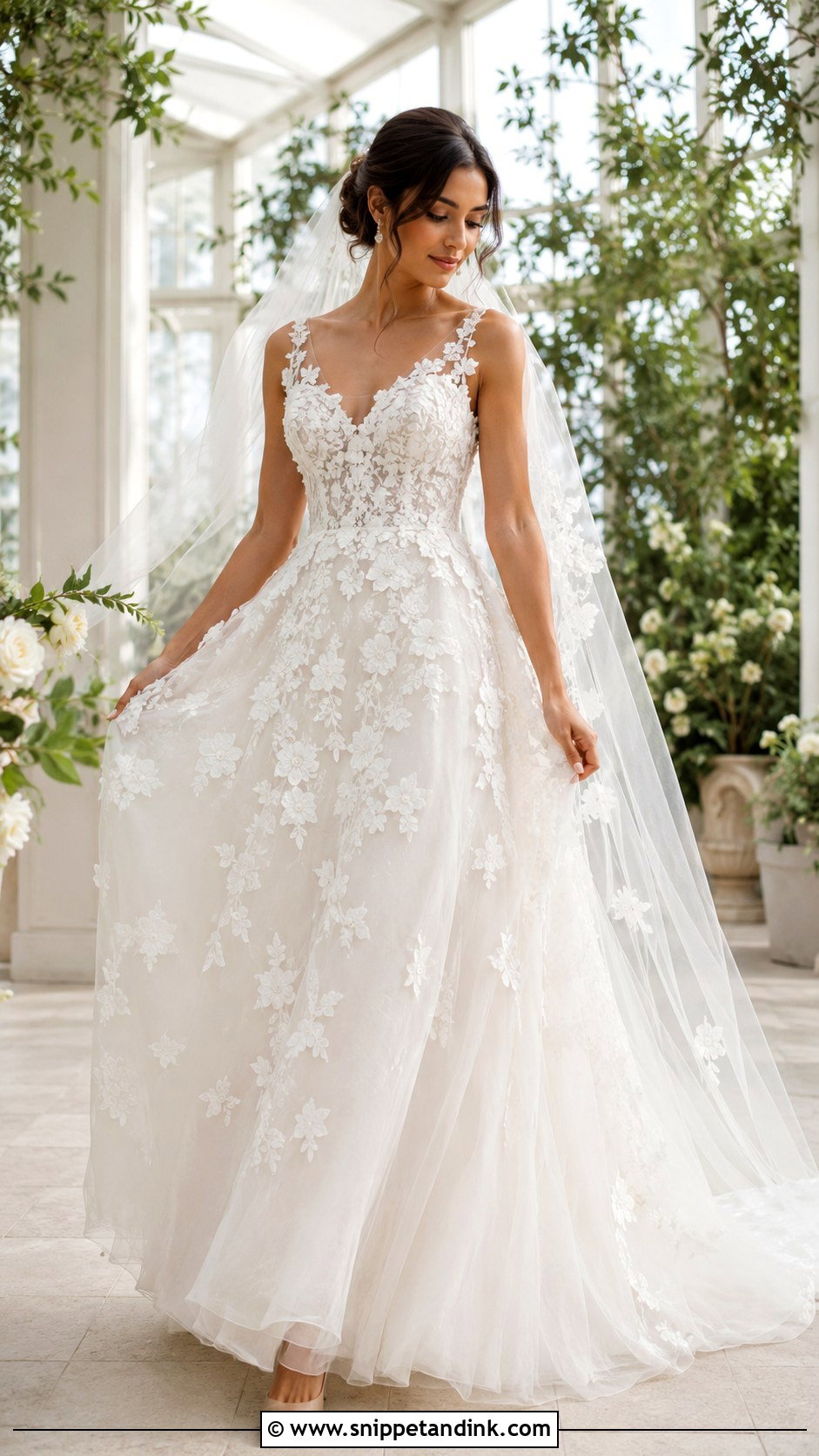
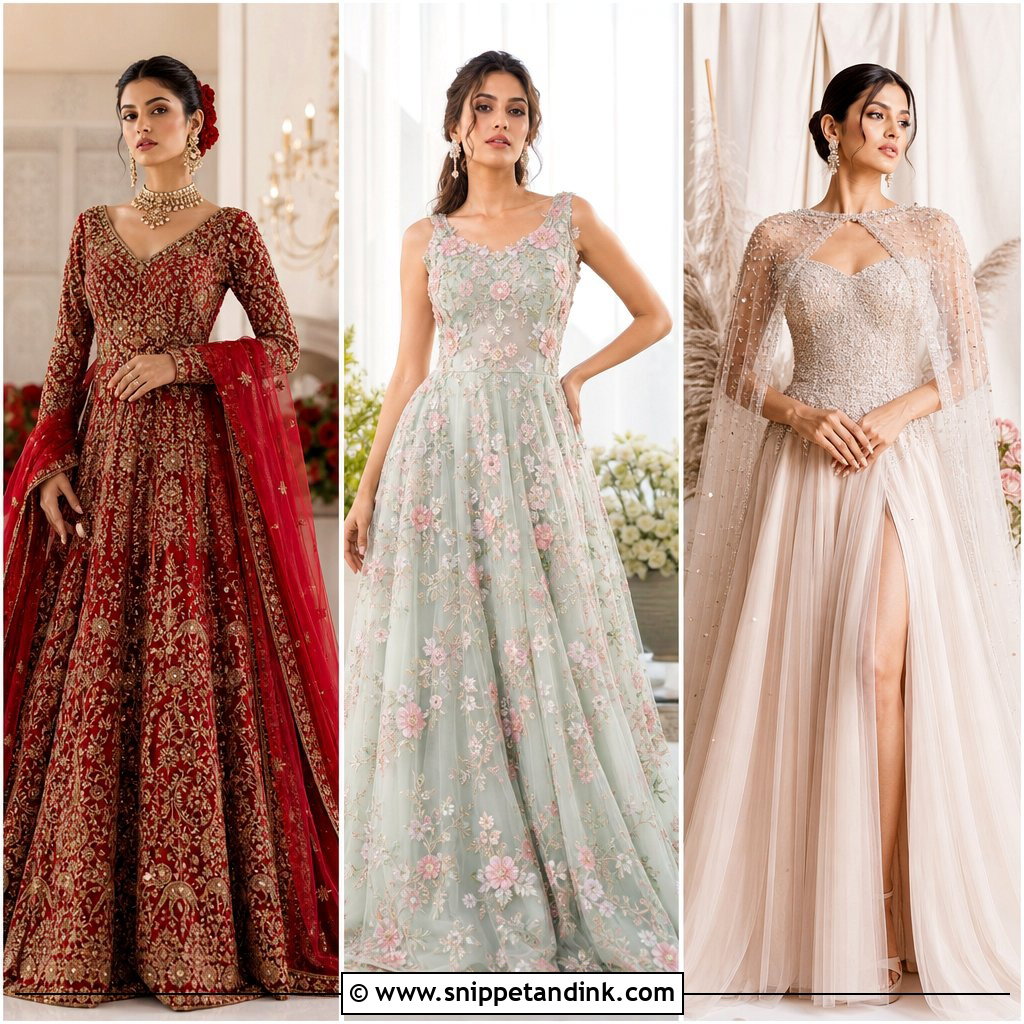
Appliqué means the flowers are cut out and stitched on, not printed, so they cast real shadows. Embroidered petals, layered lace or hand-cut fabric blooms over a fitted top and flowing tulle skirt give the gown its texture. My preference is flowers clustered at the neckline and fading down the skirt, which keeps the eye near the face. Keep the bouquet simple, maybe white roses or a single variety. A sheer veil with a few scattered flowers, crystal earrings and neutral heels complete it.
5. Draped Satin Wedding Gown
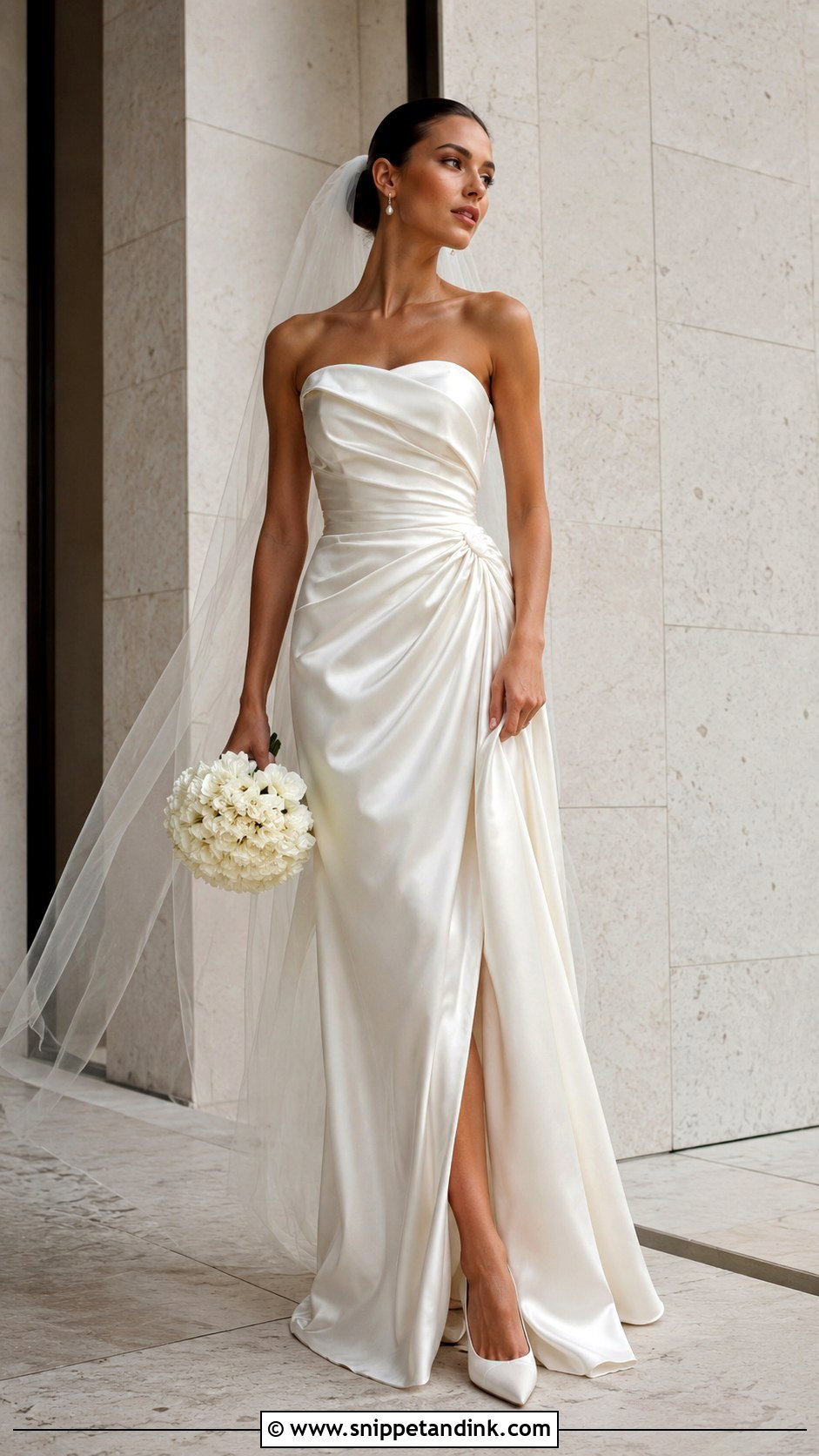
Draping makes satin far more forgiving. Gathered folds across the torso, a wrap-style skirt or fabric falling from one hip soften the shine and skim the body. That only works if the fit is right, though. Satin shows strain lines the moment it’s pulled tight, so I’d rather have it a fraction loose than stretched. Pearl or metallic earrings, ivory pumps and a light tulle veil, with a sleek bun or side-parted waves. City weddings, restaurants and galleries suit this quieter kind of luxury.
6. Strapless Ball Gown Wedding Dress
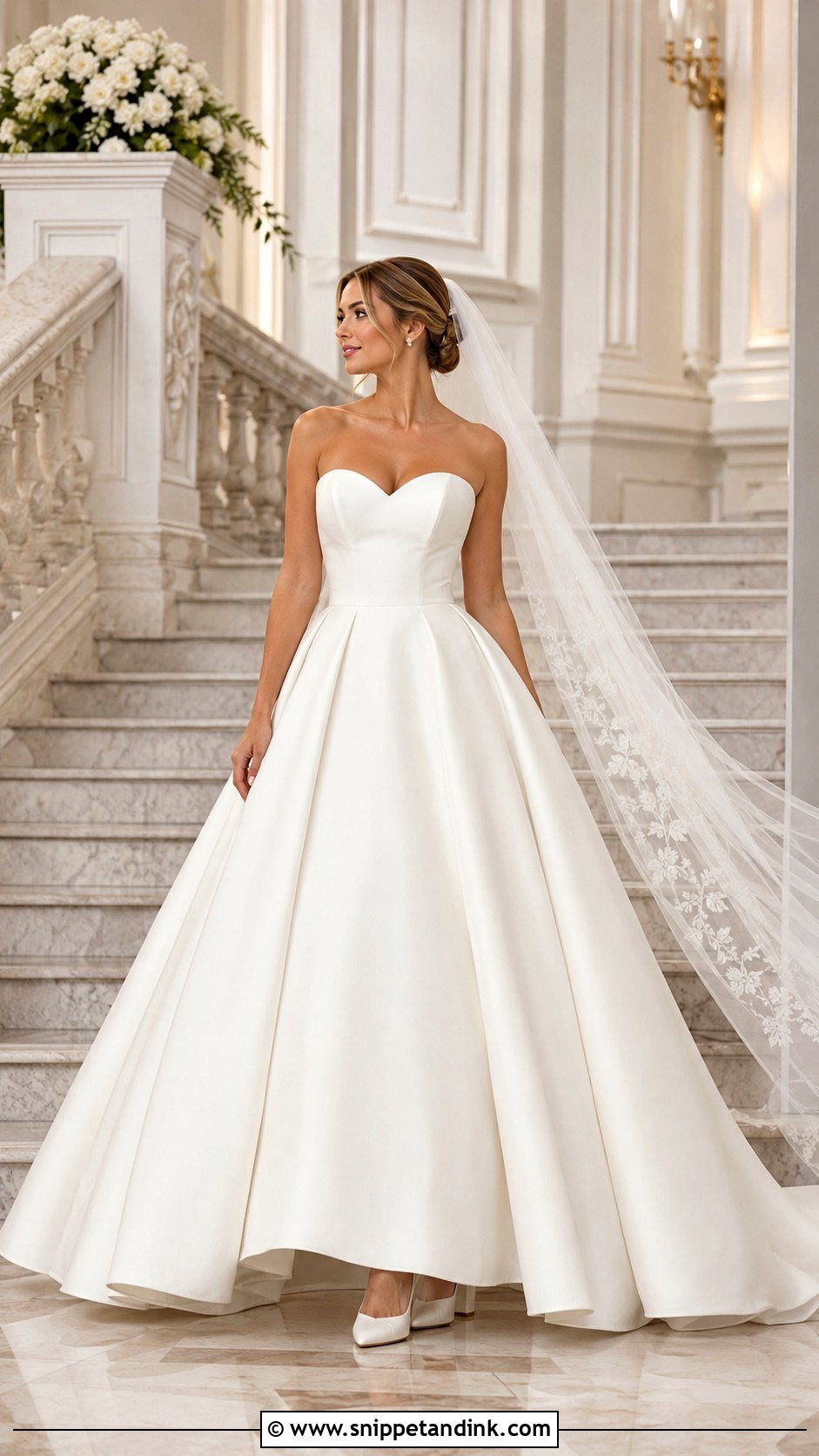
A strapless ball gown gets its impact from fabric, not decoration. Mikado, duchess satin and layered organza hold the skirt’s shape on their own. Pick the neckline by how much structure you want: straight, curved or a soft sweetheart. Strapless bodices stay up because of boning and a snug fit at the ribs, not the bust, and that’s what I check first. Block-heel pumps hidden under the hem save your feet. Removable straps help at the reception. Leave the neck bare and let the cathedral veil do the work.
7. Off Shoulder Wedding Gown
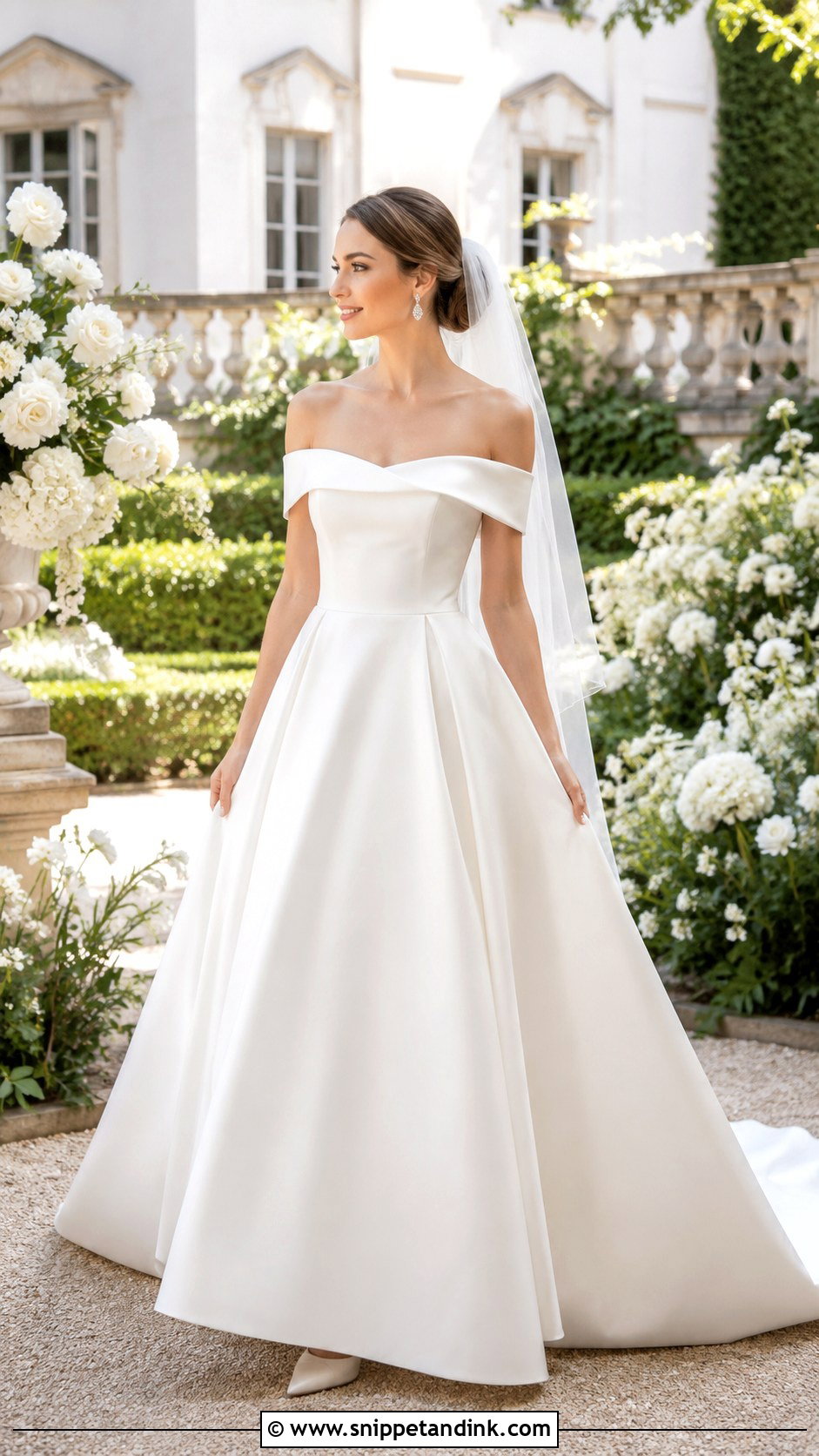
Off-the-shoulder necklines frame the collarbone with a little more cover than strapless. The band can be draped, folded or trimmed in lace, with a fitted bodice over an A-line or a closer skirt. Here’s the honest drawback: a band that sits on the upper arm limits how high you can lift it. Hug someone and raise your arms in the shop. If that feels trapped, detachable straps give the same look with freedom later. A delicate pendant, drop earrings and a veil tucked beneath a low bun.
8. Square Neck Wedding Gown
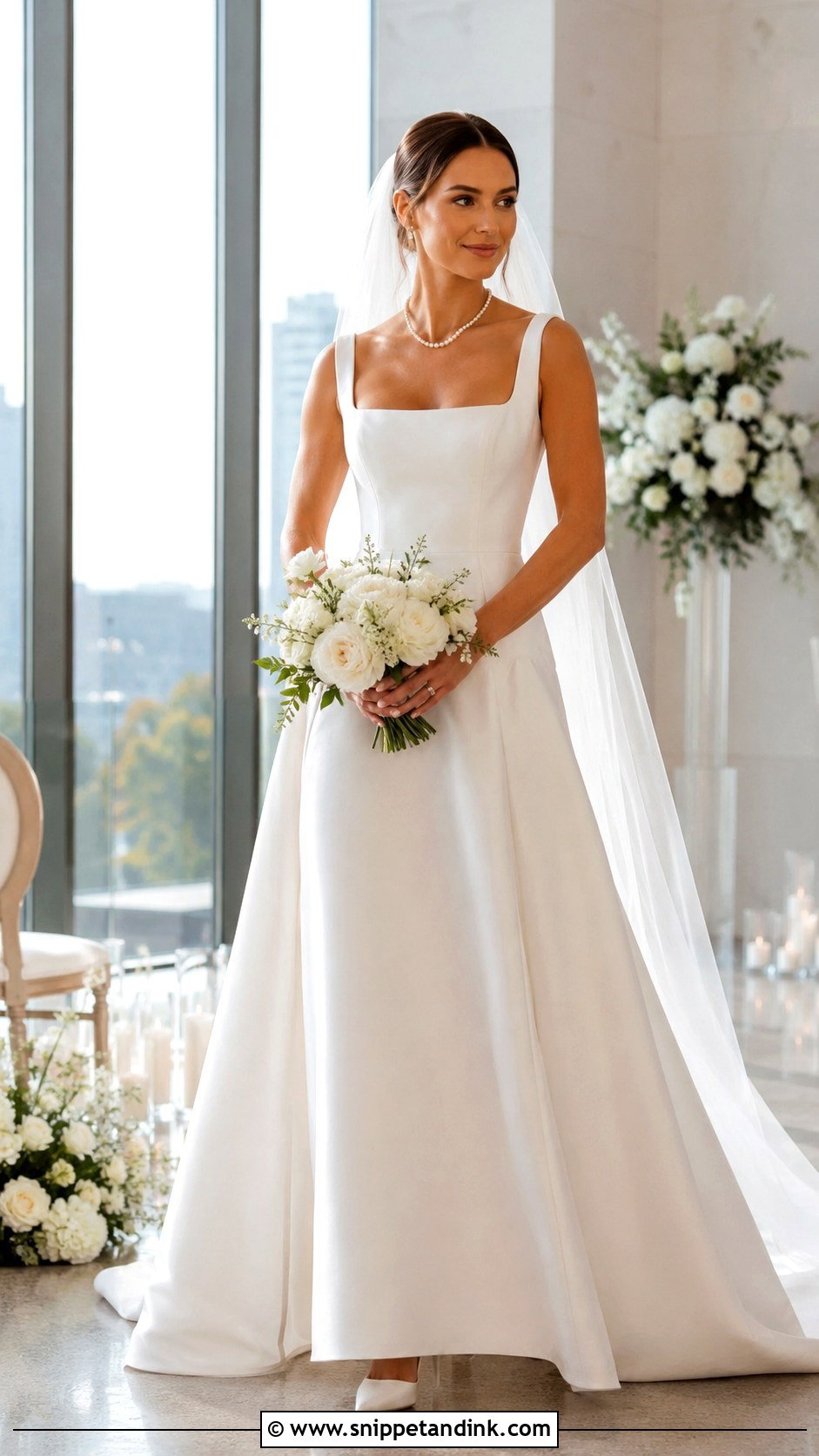
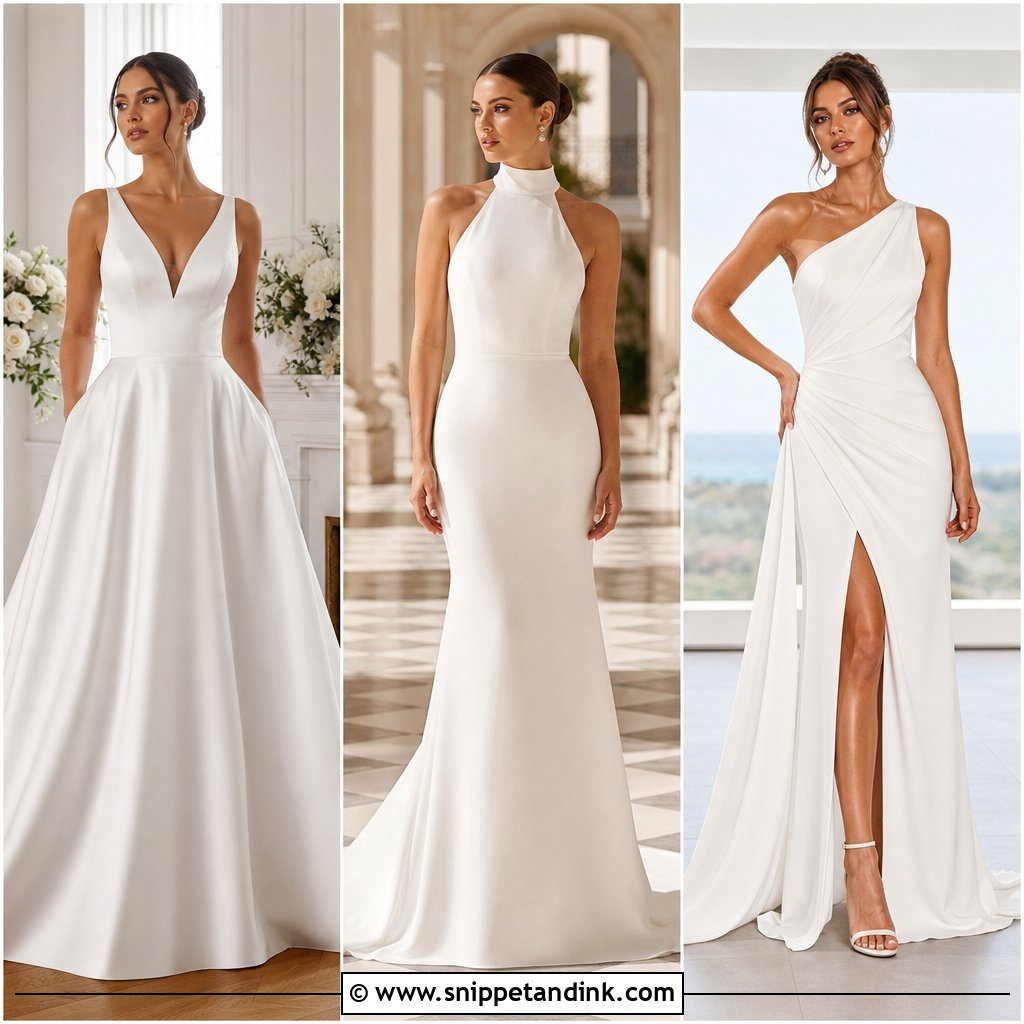
Square necks frame the face and collarbone with a hint of vintage. They suit wide straps, fitted long sleeves or a structured sleeveless bodice, over an A-line, column or full skirt, so the neckline adapts to most bodies and venues. Matte crepe is minimal, satin more formal. The corners are what I watch at fittings. A square neck that gapes at the corners when you turn needs a small dart or stay tape inside. Add a short pearl necklace and a low chignon.
9. Long Sleeve Lace Wedding Gown
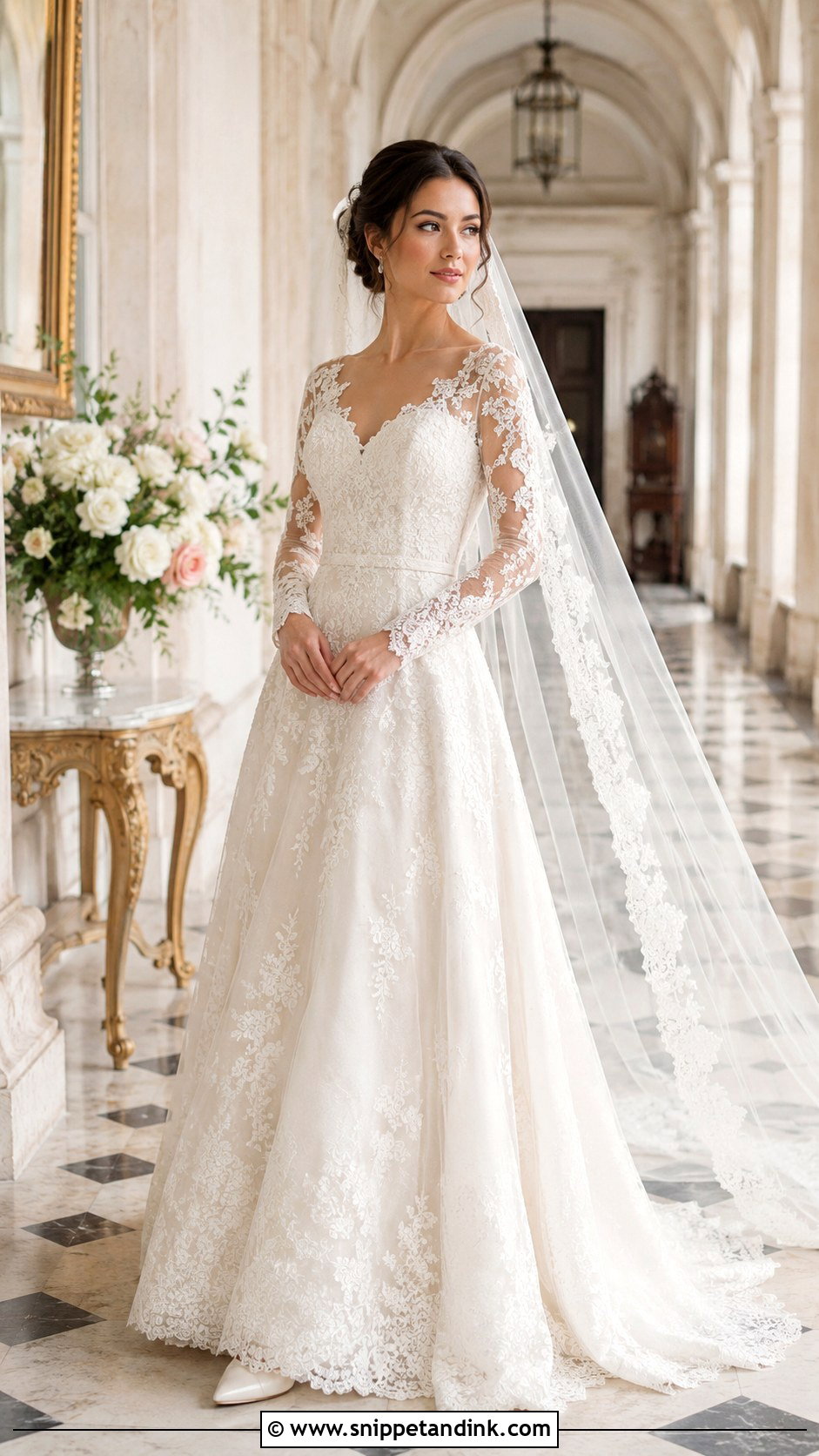
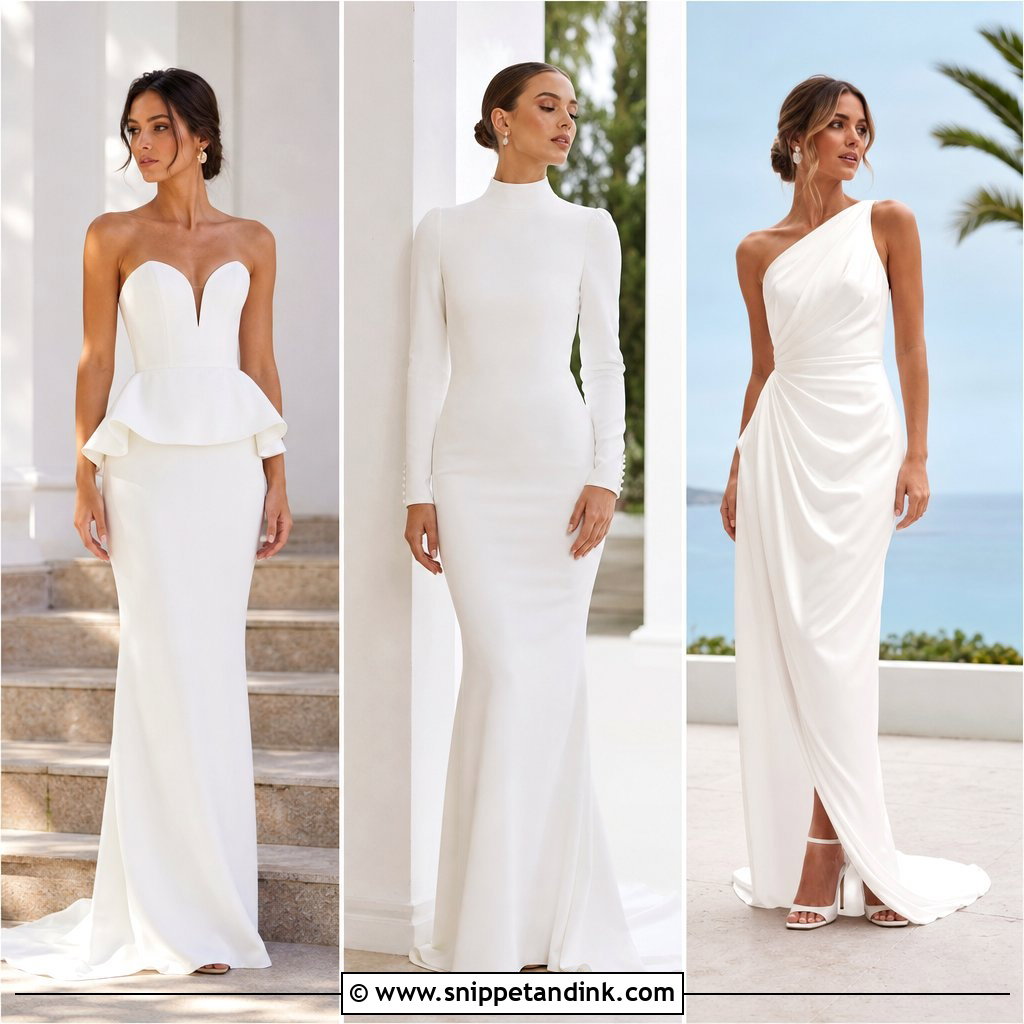
Long lace sleeves give coverage and texture together. Sheer sleeves stay light; lined ones feel modest and more structured. Lace sleeves are the hardest alteration in bridal: lace doesn’t stretch much, so a sleeve fitted too close restricts reaching, while one too loose wrinkles at the elbow. I fit them with the arm bent. Pearl buttons, closed-toe heels, a lace-edged veil and small earrings suit this gown, and a tailored ivory coat or faux-fur wrap helps for winter photos outside.
10. Minimalist Column Wedding Gown
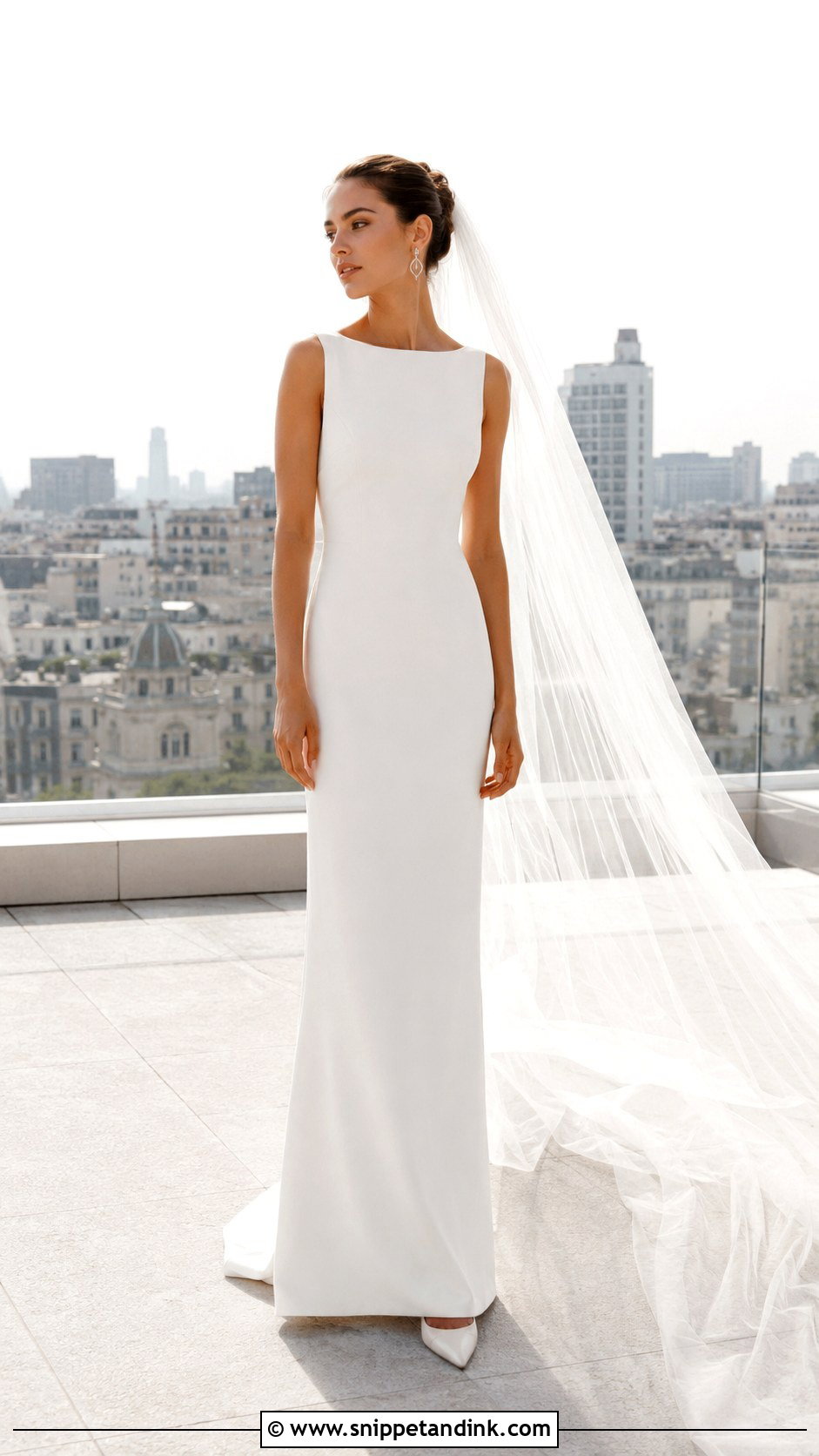
A column follows the body without volume, usually in silk crepe, satin or another fluid fabric. A boat neck, high neck or plain strapless top keeps it uncluttered, and architectural earrings and a long sheer veil give contrast. Plain fabric shows every seam and line underneath, so careful tailoring and the right underwear matter more than with any other gown. A cape for the ceremony that comes off for the reception adds a second look. It suits courthouses, rooftops and small city weddings.
11. Corset Bodice Wedding Gown
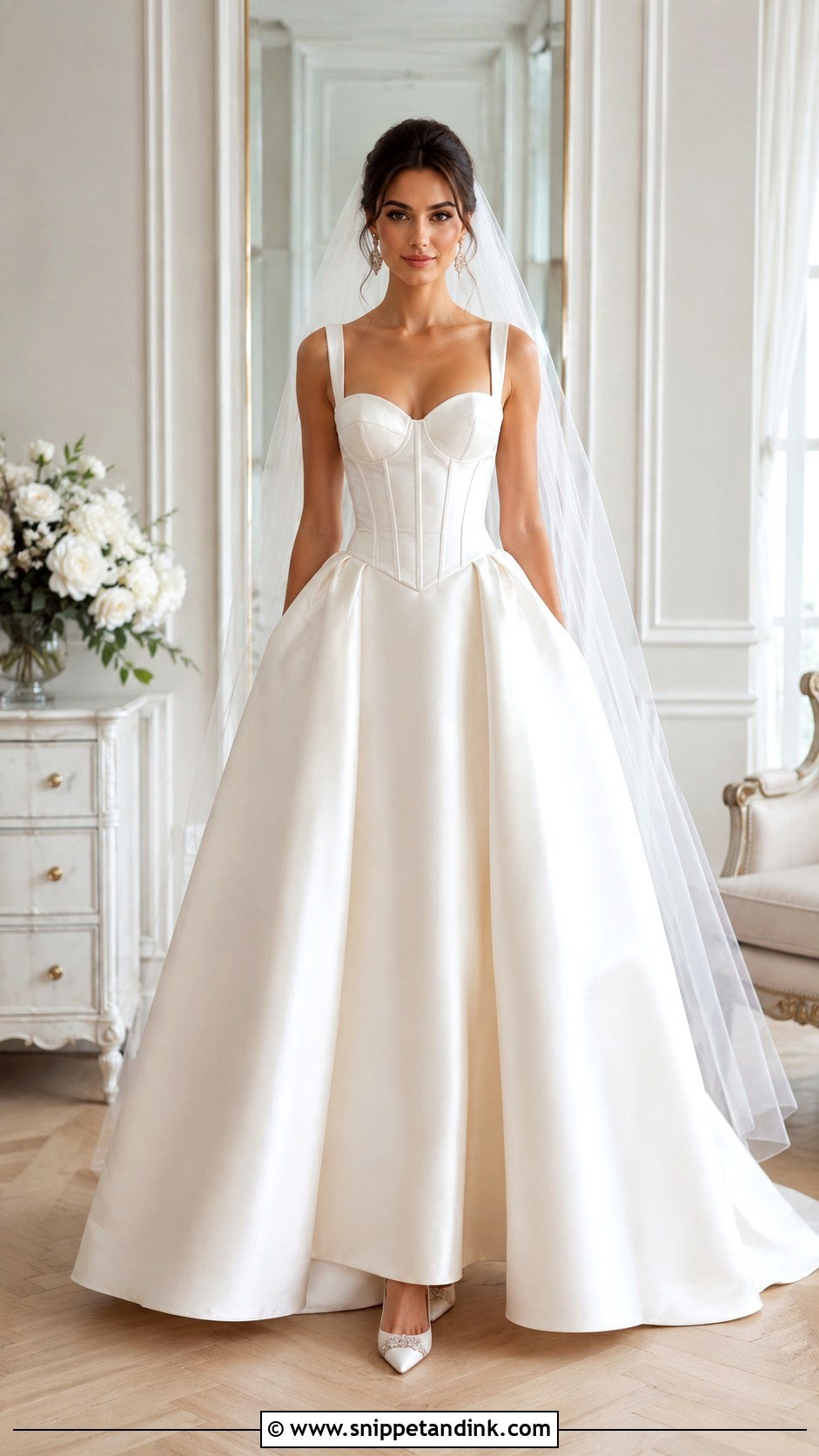
Corset bodices now show their structure on purpose, with exposed boning, sheer panels, lace overlays or smooth satin. A flowing A-line or full ball skirt balances the fitted top, and soft curls or a polished updo stop it feeling severe. I check two things: you should be able to take a full breath, and the top edge should stay flat when you sit down. If either fails, the fit needs work. Removable straps or a matching bolero add coverage for the ceremony. Keep the veil plain and the bouquet tidy.
12. Halter Neck Wedding Gown
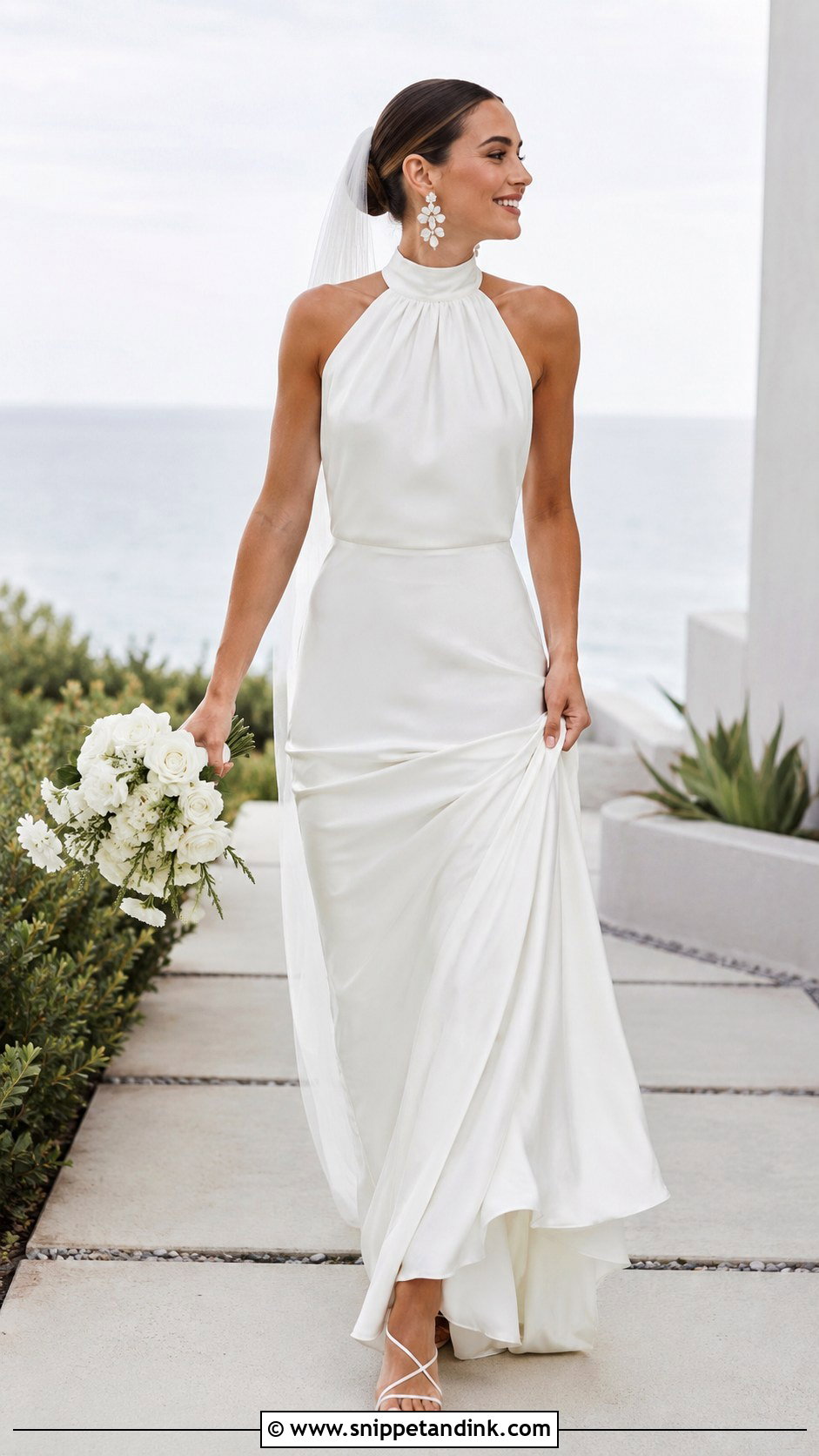
A halter neck wedding gown shows off the shoulders and upper back. A high neckline looks sleek; a gathered one moves more softly. Satin, crepe and silk keep the line clean. Halters hang from the neck, so the weight of the skirt matters; a heavy one pulls the strap and you’ll feel it by the evening. Statement earrings instead of a necklace, a low bun and strappy heels. A column skirt feels like evening wear, an A-line softer. Beaches, destination weddings and modern hotels suit it.
13. One Shoulder Wedding Gown
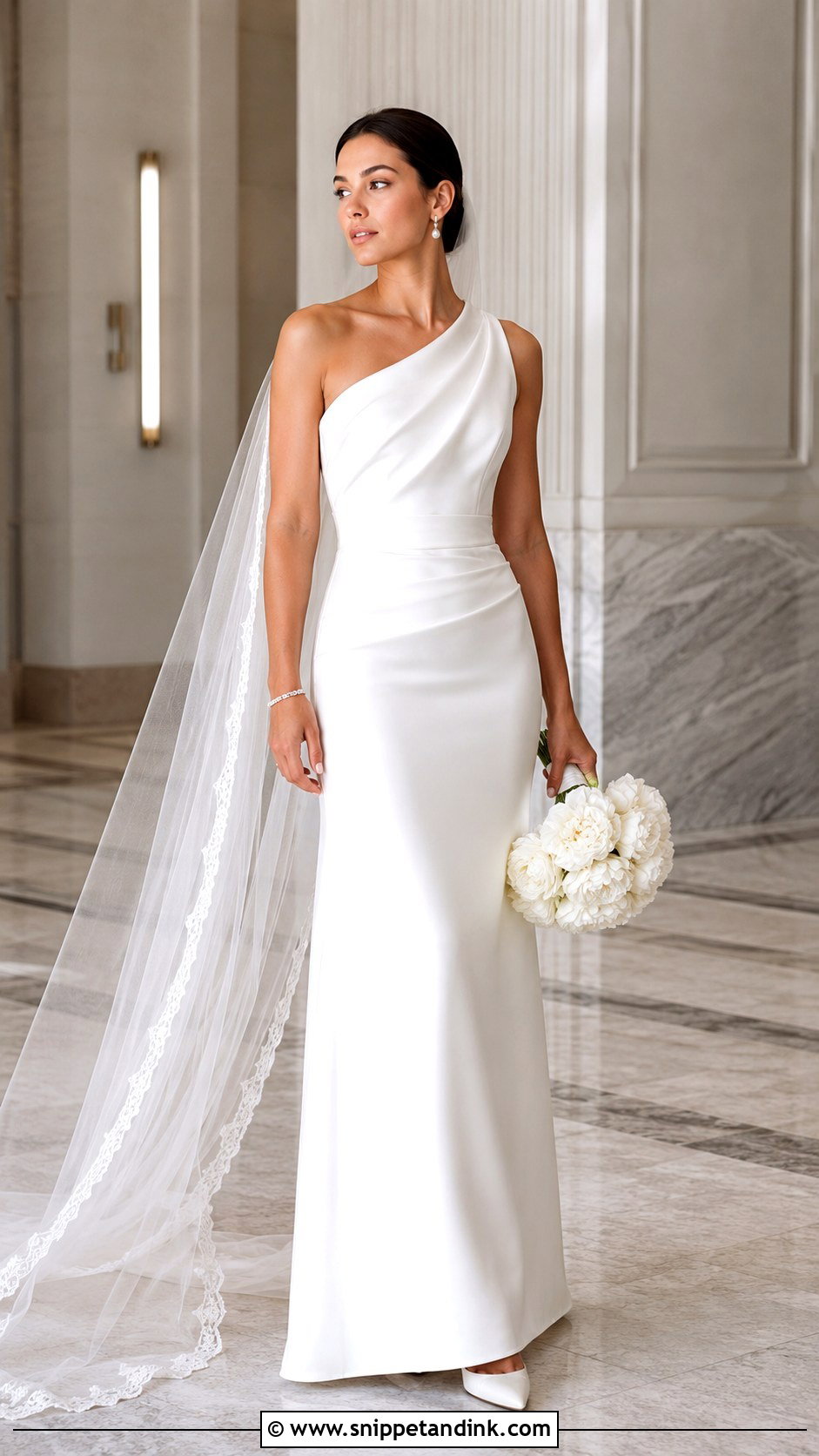
One shoulder, one strap, and an instant fashion edge. The strap can be plain, bowed, flowered or draped, over a fitted waist with a column or fuller skirt. Sweep your hair to the bare side so the neckline reads clearly. One sculptural earring or a pair of small drops is enough. Asymmetric bodices rely on internal structure on the strapless side, so move both arms at the fitting and check that side stays put. It should feel supported, never tight.
14. Detachable Overskirt Wedding Gown
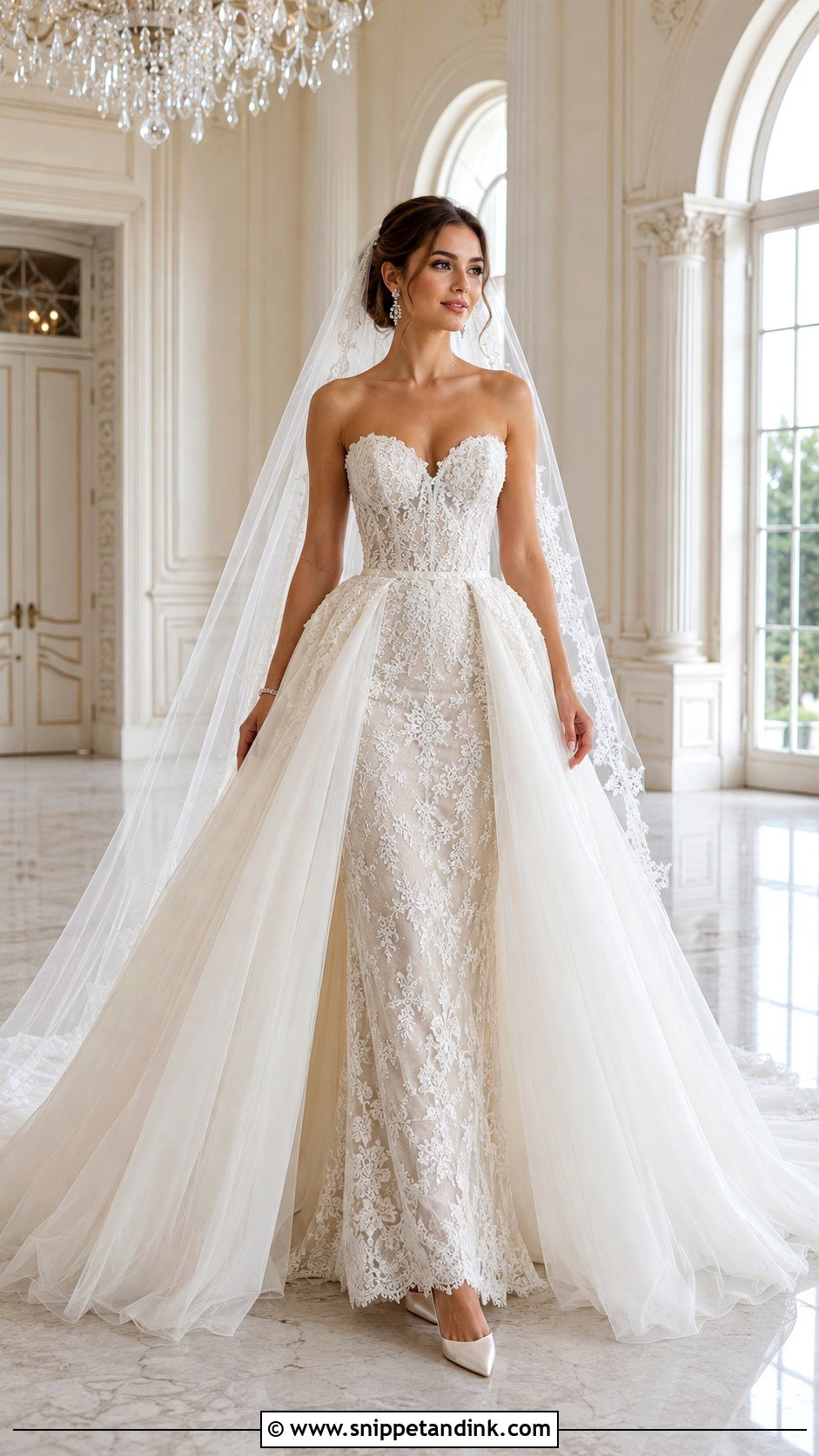
A detachable overskirt turns one dress into two. A full tulle, satin or organza layer makes a ball gown for the ceremony, then comes off to reveal a slim column, mermaid or even a mini underneath. Keep the same earrings and shoes through both, and swap the long veil for a bow or decorative comb. The attachment at the waist is the thing to test: it needs to sit flat and stay secure through a whole ceremony. Convertible pieces keep appearing because brides want to dance freely later.
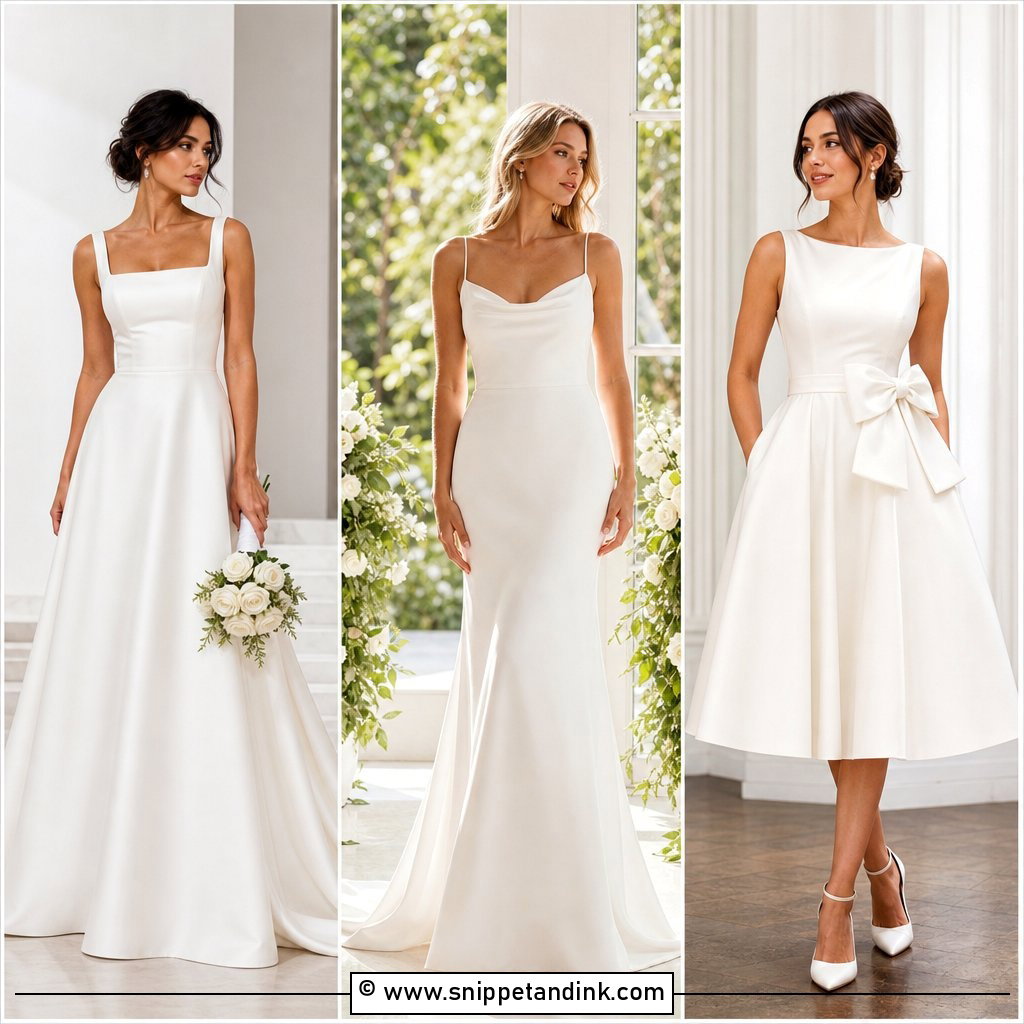
15. Cape Sleeve Wedding Gown
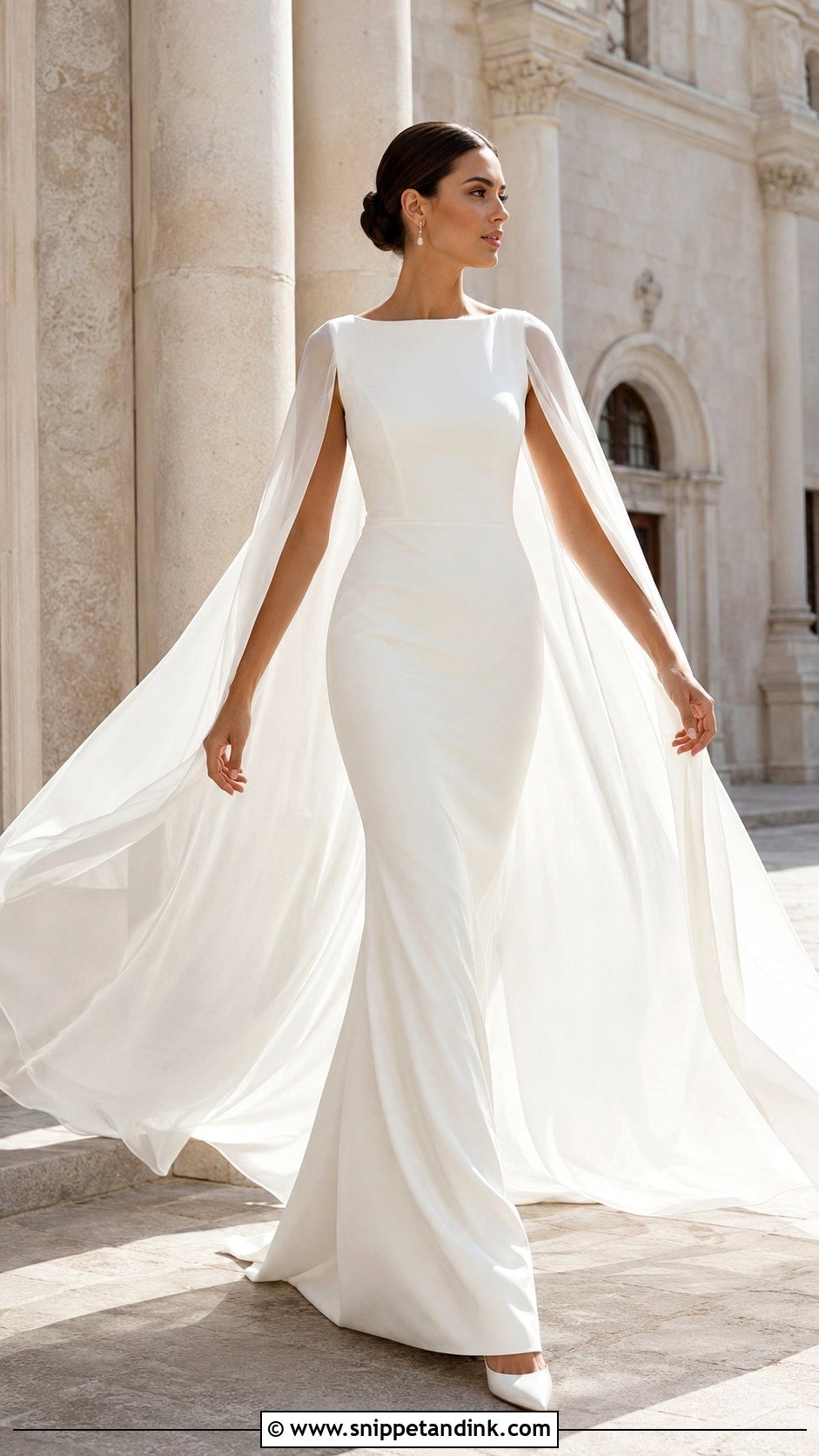
Cape sleeves give coverage without the snug feel of fitted sleeves. The cape can fall from the shoulders, attach at the neck or run into a floor-length train. Under it, a plain crepe or satin gown lets the movement show. Chiffon floats; structured organza holds an architectural shape. I’d skip the veil and wear a sleek updo. Large ceremony spaces and outdoor settings let the fabric move. Walk in heels with the cape at your fitting, since a long one can catch underfoot, especially on steps.
16. Bow Detail Wedding Gown
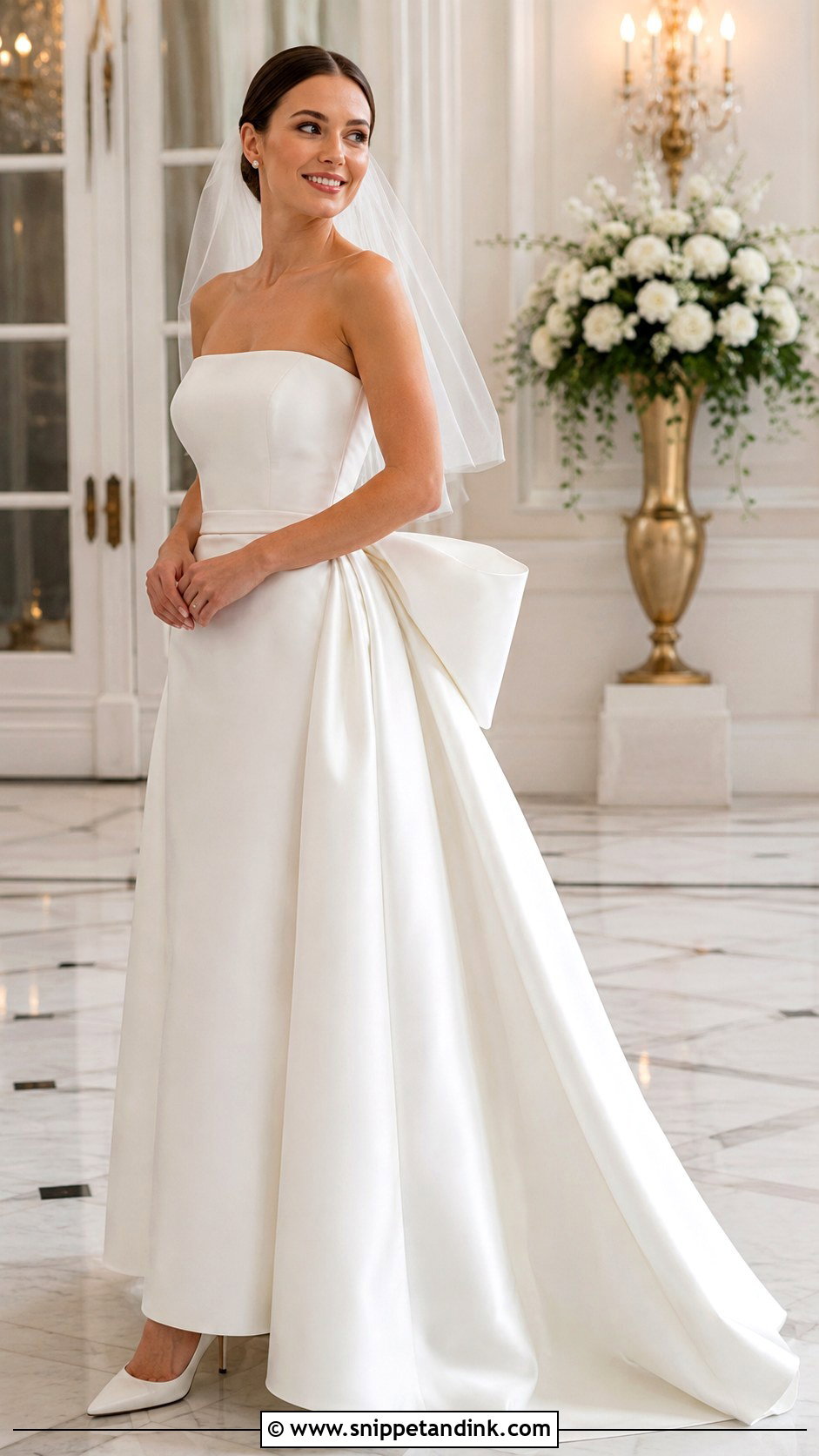
Size and placement decide what a bow says. A small one at the shoulder is delicate; an oversized back bow gives guests something to look at during the ceremony. Keep the gown simple in smooth satin, mikado or crepe. The veil should end above or below the bow, not cover it, and a neat bun keeps the line structured. Large bows add weight at the back, which can pull a strapless bodice backward. Check at the fitting that the bodice stays level with the bow attached.
17. Beaded Sheer Wedding Gown
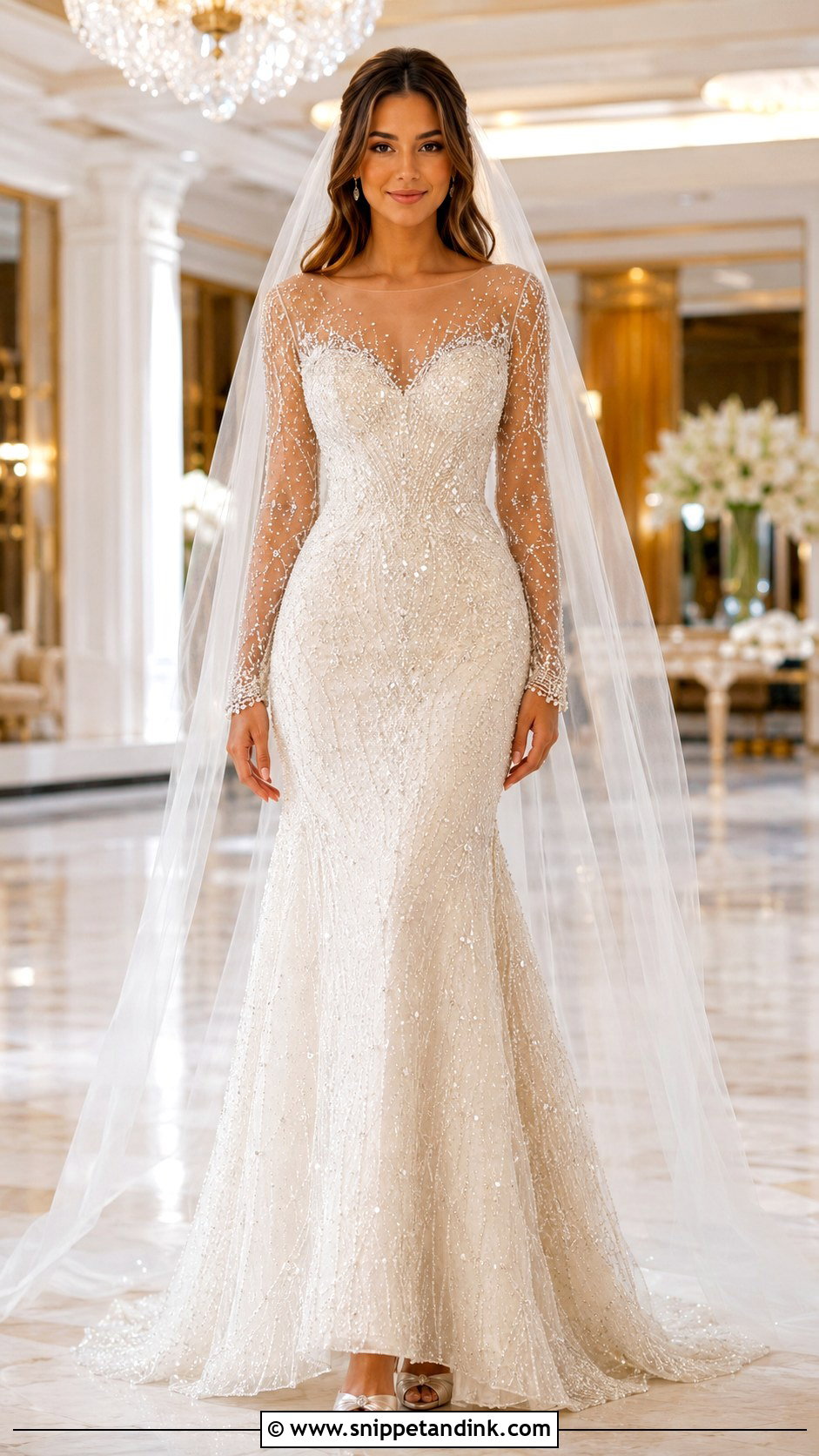
Crystals, pearls, sequins or embroidery over a lined bodice and skirt give a beaded sheer gown its glow. Strategic lining keeps you covered while the outer layer stays airy. Beadwork snags on everything: veil combs, bracelets and especially the wire or pins in a bouquet wrap. I test each accessory against the fabric before the day and ask the florist to finish the bouquet handle in smooth ribbon. Keep jewelry minimal and the veil plain tulle. A smooth wrap protects the beading at the reception.
18. Blush Floral Wedding Gown
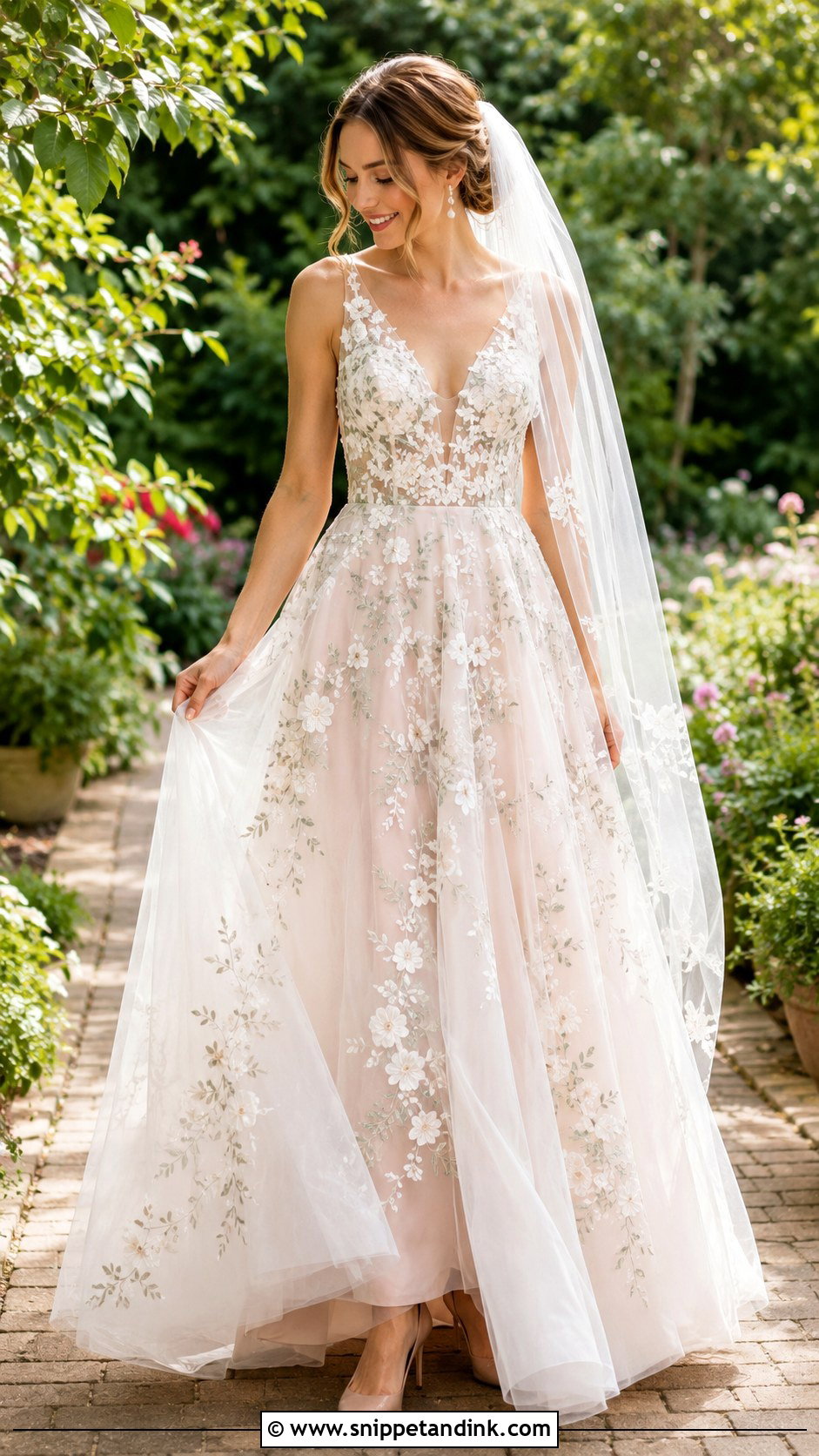
Blush gives a romantic alternative to bright white while still reading as bridal. An A-line or ball gown with a pale blush underlayer, ivory tulle and floral embroidery in white, green or muted pastels is the classic version, and understated color and botanical work, even hand-painted flowers, are showing up more often. Blush can turn peachy or grey depending on skin tone and light, so look at it near a window as well as under shop lights. Champagne shoes, pearl earrings and a light ivory veil. Keep the bouquet in the same muted palette.
19. Tea Length Wedding Gown
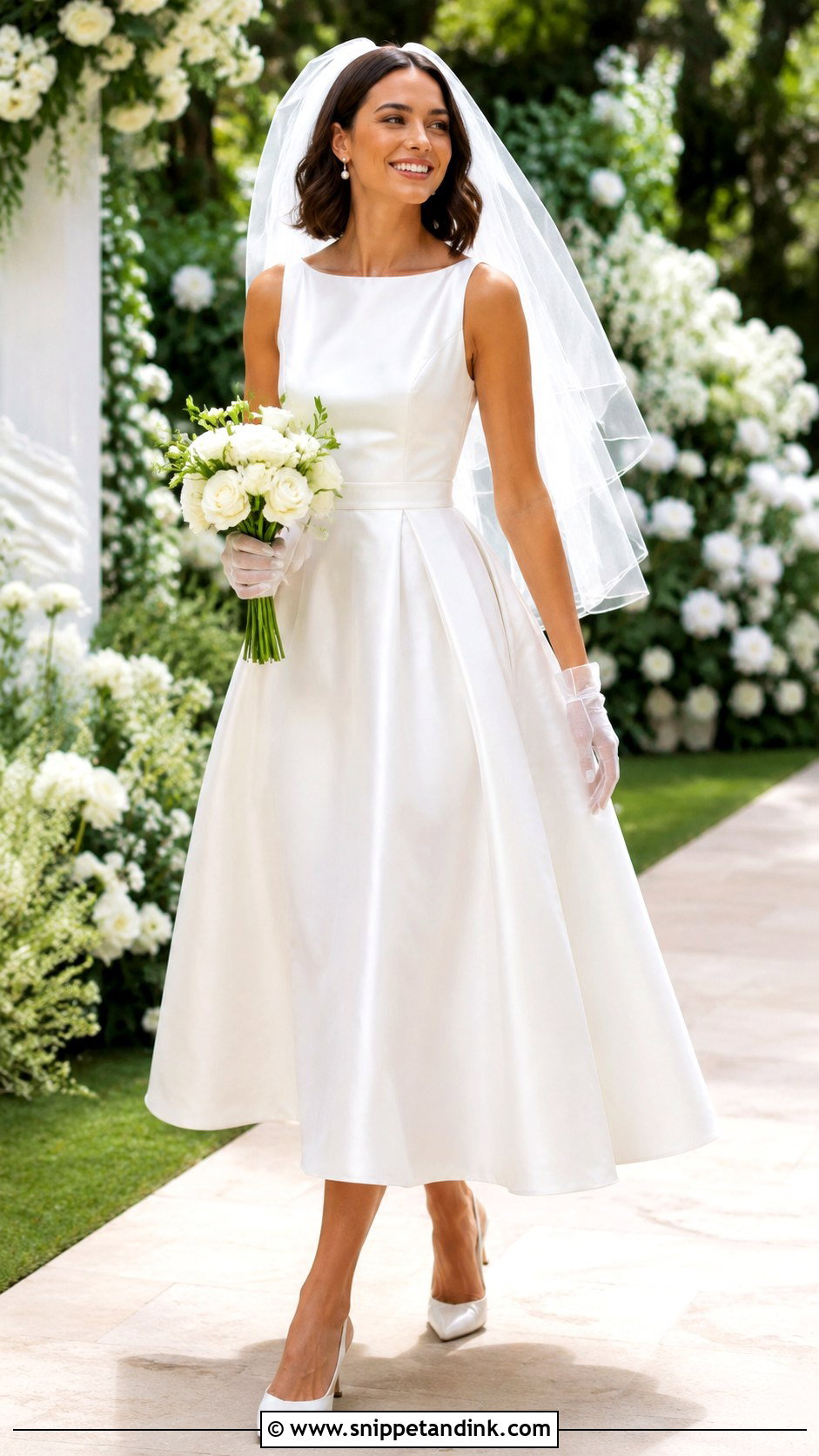
Tea length lands between the knee and ankle, so your shoes become part of the outfit. A fitted bodice with a flared satin or tulle skirt keeps it classic. Pointed slingbacks, pearl earrings, short gloves and a shoulder-length veil or structured bow finish the look, and a bright bouquet adds modern contrast. Shorter hems, from tea length to mini, have grown alongside the trend for a second reception outfit. Courthouse ceremonies, garden parties and brunch weddings are where this length shines.
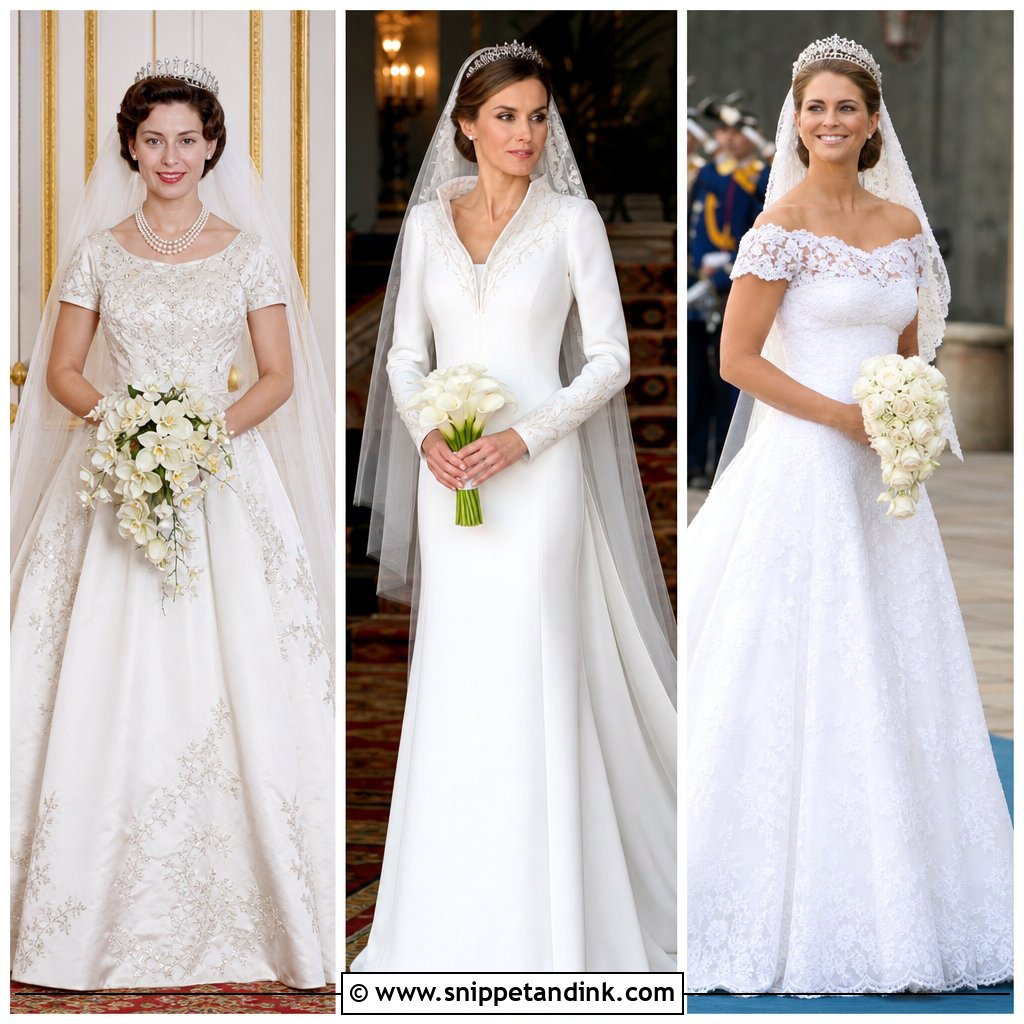

20. Mermaid Wedding Gown With Detachable Train
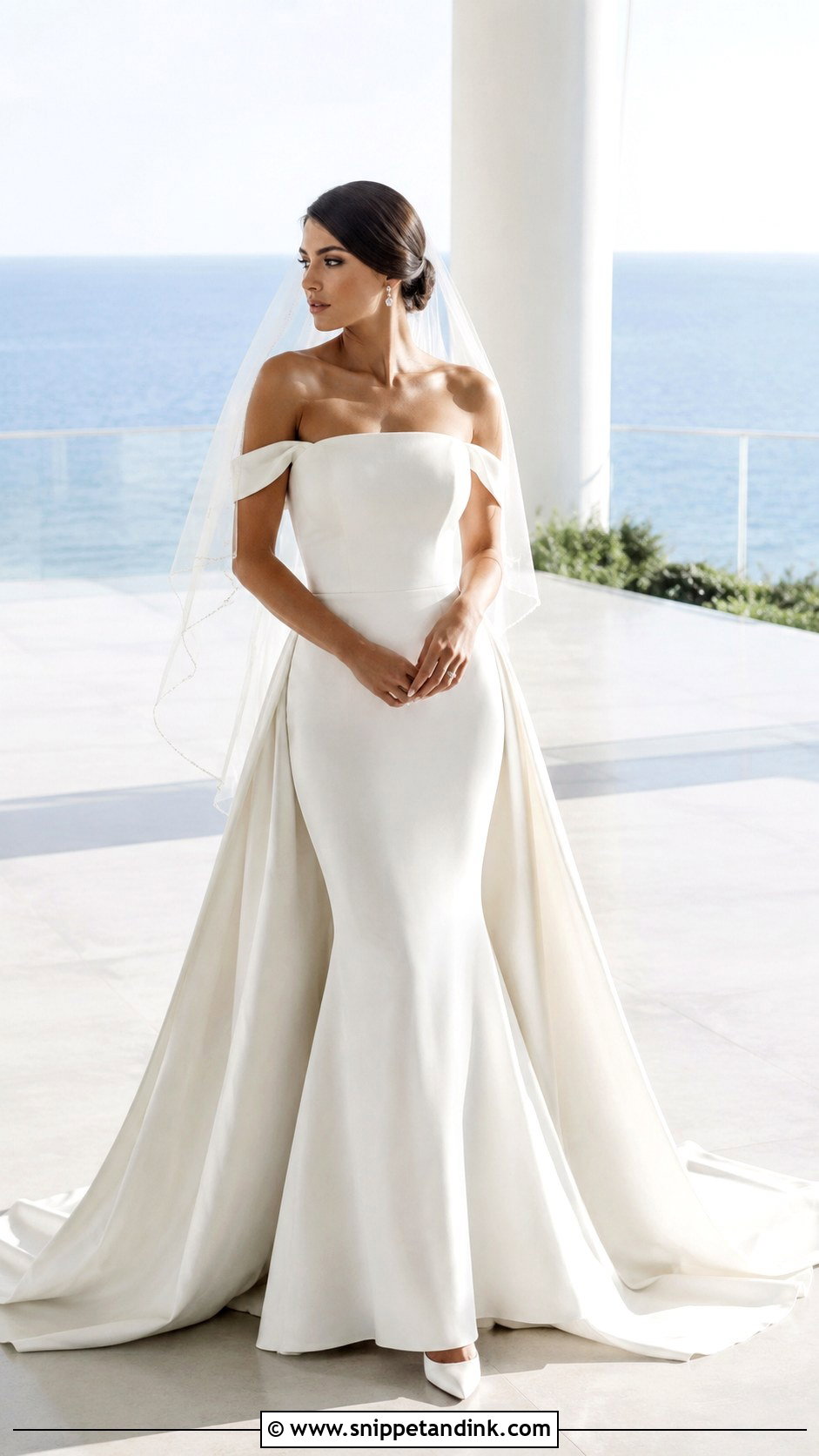
Mermaid gowns fit through the bodice, waist and hips and flare near the knee. Add a detachable train and you get ceremony drama plus an easier evening. Stretch crepe moves best, while lace and satin hold more structure. The flare point matters: set too high and it looks dated; too low and you can’t take a normal step. I have brides climb a few stairs at the fitting. Drop earrings, pointed pumps, a fingertip veil and a low side-parted bun.
Buying Off the Rack Without Regretting It
Sample sales and off-the-rack gowns can save time and money, since you leave with the dress the same day rather than waiting months for an order. They come with a few honest trade-offs.
- Inspect the hem, the underarms and the back zip. Samples are tried on many times, and these are the places that show wear, makeup marks and loose beads.
- Ask whether the price includes cleaning. Most marks lift with professional cleaning, but deep makeup stains on silk can be stubborn.
- Budget for alterations. A gown can be taken in quite a lot but let out very little, so buy one that fits your largest measurement.
- Check that missing beads or lace can be replaced. A good seamstress can borrow from the hem allowance or an inner seam.
The morning-of steam
Whatever you buy, it will crease in transport. I steam from the inside of satin and silk, keep the steamer moving, and never let it spit water, because water spots on satin can leave a mark. Tulle can be steamed from a distance and fluffed with your hands.
A Gown That Still Feels Like You at Midnight
Bridal fashion has never offered more range. Structured Basque waists and dramatic ball gowns still give classic ceremony impact, while columns, halters and one-shoulder shapes offer cleaner lines. Lace, appliqué, blush, bows and beadwork bring texture, and overskirts, capes, detachable trains and shorter hems let one look change through the day. A trend is a starting point. The gown that works is the one that fits comfortably, suits the venue and still feels like you after a long day.
You'll Like These Ideas:








Leave a Reply