
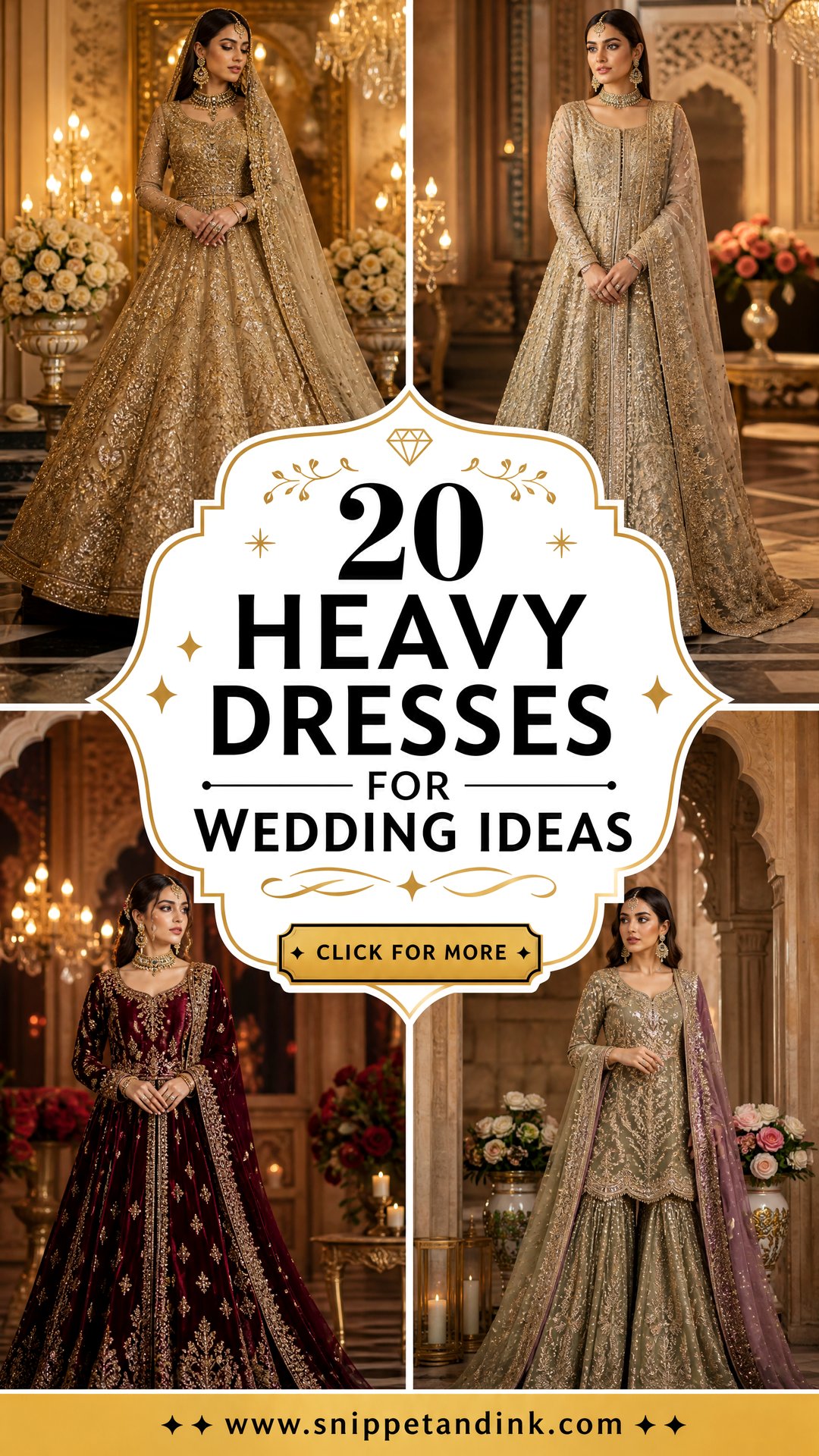
A heavy wedding outfit is heavy in two senses: it carries a lot of handwork, and you physically carry it for hours. When I dress someone in zardozi or brocade, I spend as much time on how she’ll walk, sit and eat in it as on how it looks. Lehengas, silk sarees, Anarkalis, shararas and fusion gowns can all handle rich embroidery at a South Asian wedding, but how much decoration is right depends on your role (bride, family or guest), and on the venue and season. Guests in particular should stay a clear step below bridal. Below are twenty heavy looks, each with the fit and comfort notes I’d give you at a fitting.
Where the Weight Actually Sits on Your Body
An embroidered lehenga can weigh several kilos once metallic work, a lining and a stiffened underlayer are added. Almost all of that hangs from the waistband, and a heavy dupatta pinned to the head adds a pull on the hairline and neck. Knowing this changes how you shop.
- Ask for a wide waistband with hooks and a side zip. A thin drawstring digs in under real weight.
- Check the inner layers. A cotton or canvas lining under the skirt gives it body more comfortably than several layers of stiff can-can net.
- Lift the skirt with one hand at the shop. If it feels heavy now, it will feel much heavier after six hours.
- For a heavy head dupatta, plan the hair first. A firm bun or braid gives the pins something to grip.
Wear the complete outfit at home for an hour before the wedding, with your jewellery and shoes. Sit on a sofa, climb a few stairs and walk around. Sore shoulders or a waistband that has slipped down tell you exactly what to fix.
1. Heavy Red Bridal Lehenga Dress
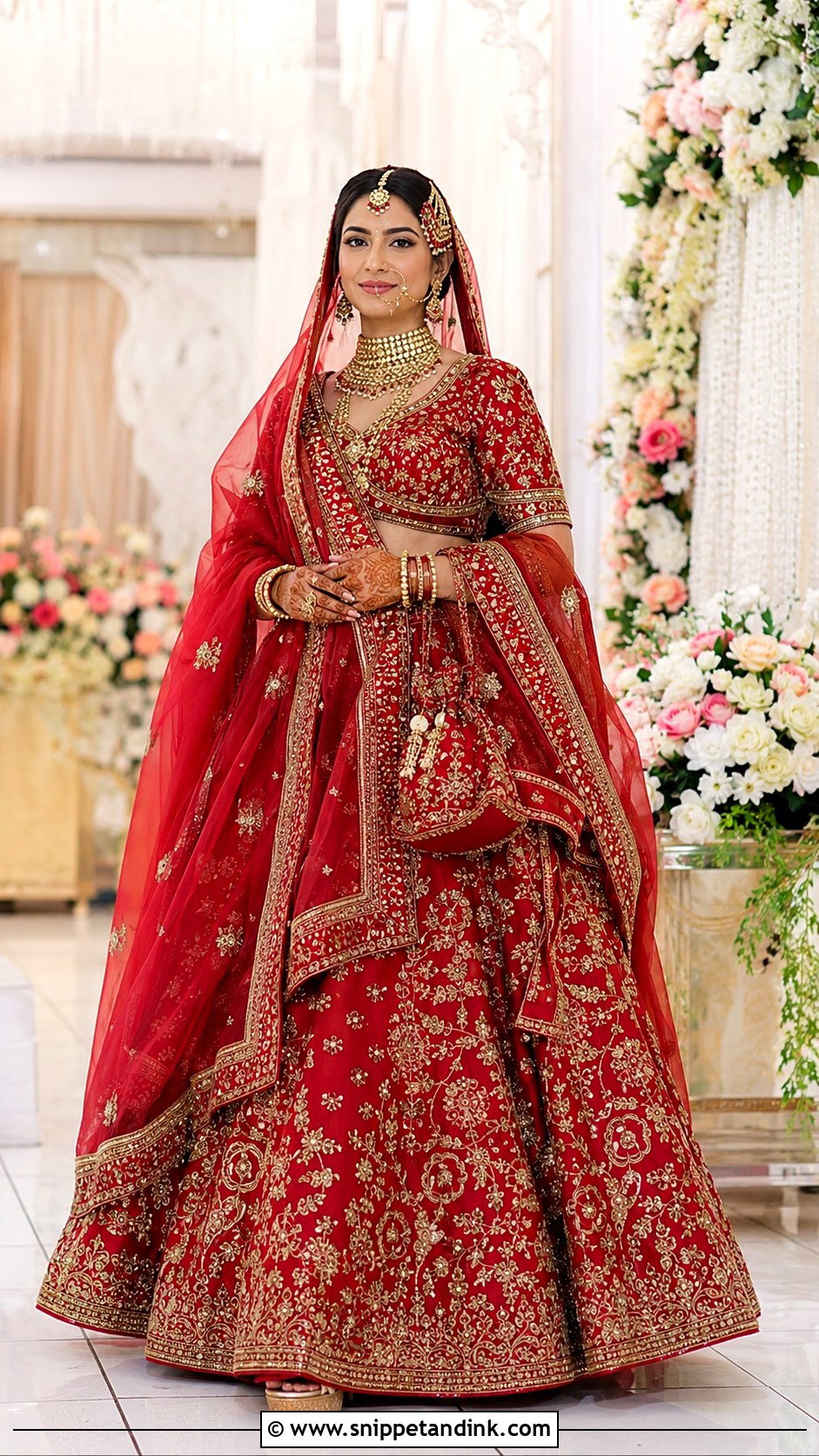
The traditional red bridal lehenga is where heavy work is expected, so zardozi, dabka, sequins and fine threadwork can cover the whole raw silk skirt. All that metal sits on your waist, which is why I insist on a properly constructed blouse and a wide, firmly hooked waistband rather than a thin drawstring. Two dupattas are standard: an embroidered one over the head and a lighter one across the shoulder for movement. Wear cushioned platforms or wedges you’ve broken in. Guests, check the dress code before choosing red; in many communities it belongs to the bride alone.
2. Heavy Maroon Velvet Lehenga Dress
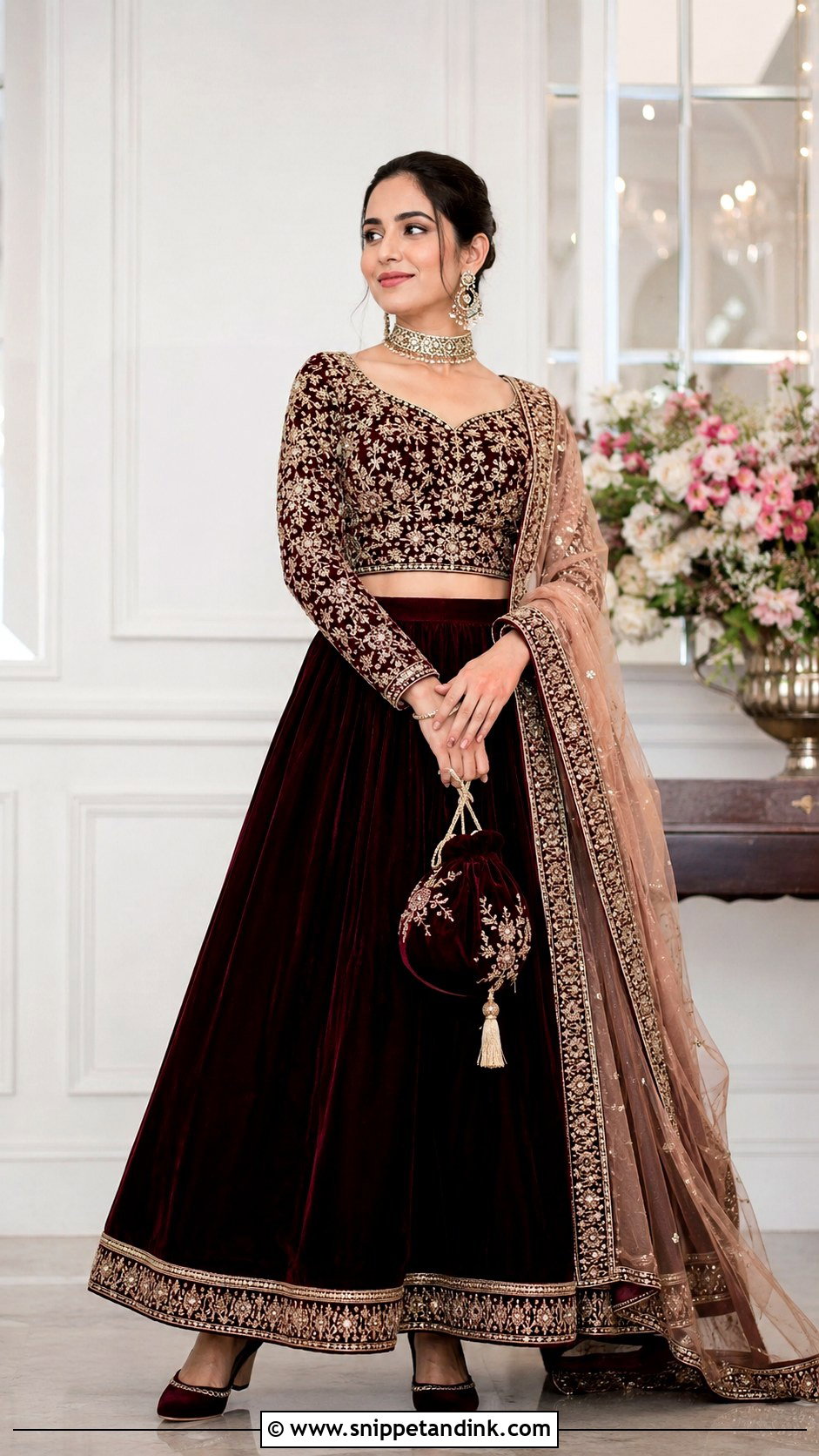
Deep maroon velvet already looks rich before any needle touches it, so the cleverest lehengas in it put embroidery only on the waistband, hem, blouse and dupatta border. All-over work on velvet gets extremely heavy and warm. A soft net dupatta lightens the whole outfit. Pair an antique gold choker, drop earrings and closed-toe block heels, which are kinder in winter. Velvet marks when crushed, so sit carefully and don’t fold the skirt under you. Brides and close family can go dense; guests should keep the work lighter.
3. Heavy Gold Zardozi Lehenga Dress
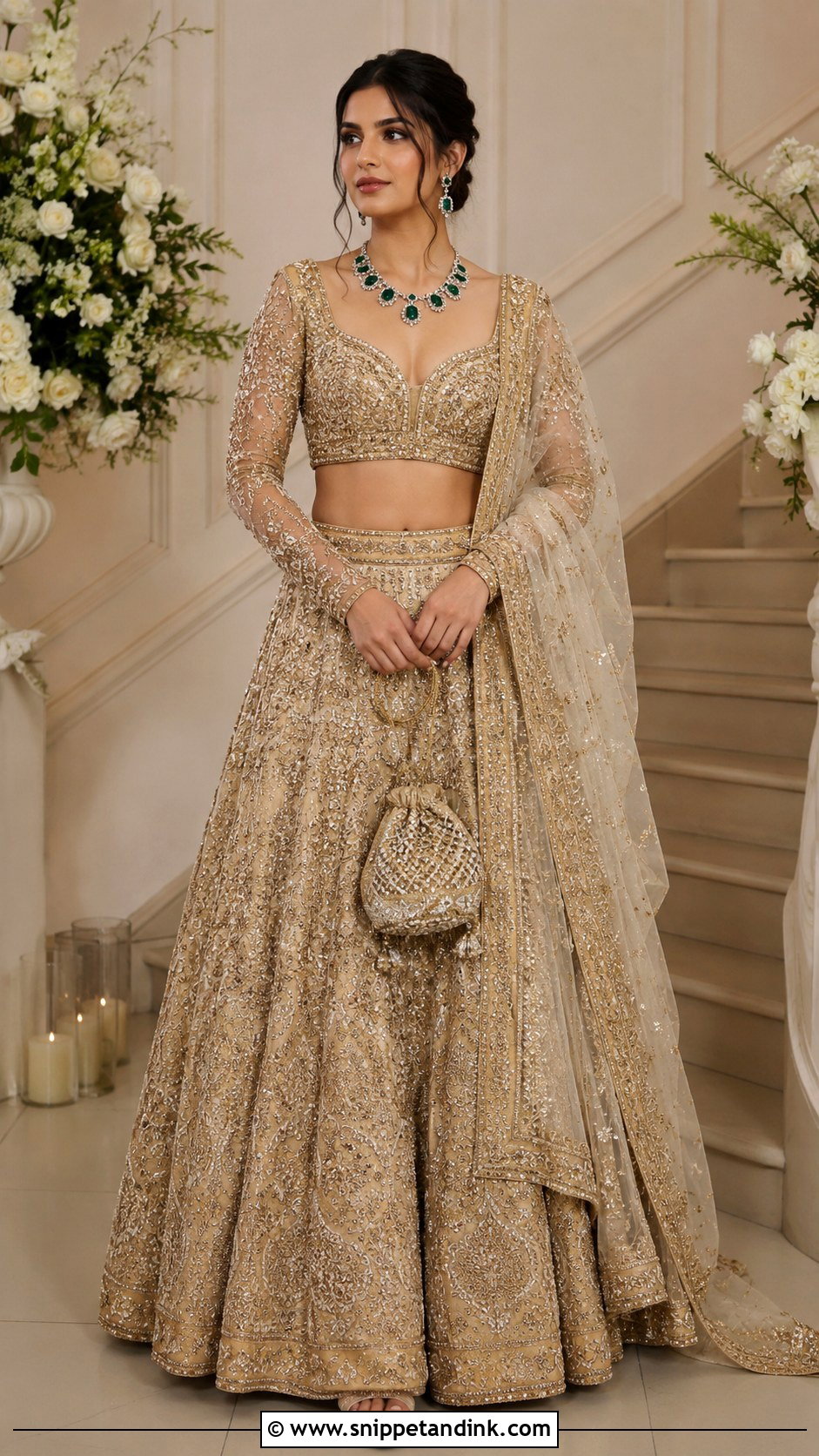
Under evening lights, gold zardozi does what no other embroidery can. I’d choose a champagne, muted gold or antique beige base over a bright yellow-gold, because the softer ground lets the metallic work, pearls and sequins read clearly instead of blending into one glare. Emerald, ruby or mixed stone jewellery gives contrast. A sheer dupatta with a wide embroidered border keeps the top half light. Brides can take a dense skirt with a short train; guests should look for spaced motifs, a modest neckline and one statement piece.
4. Heavy Pastel Pink Bridal Lehenga Dress
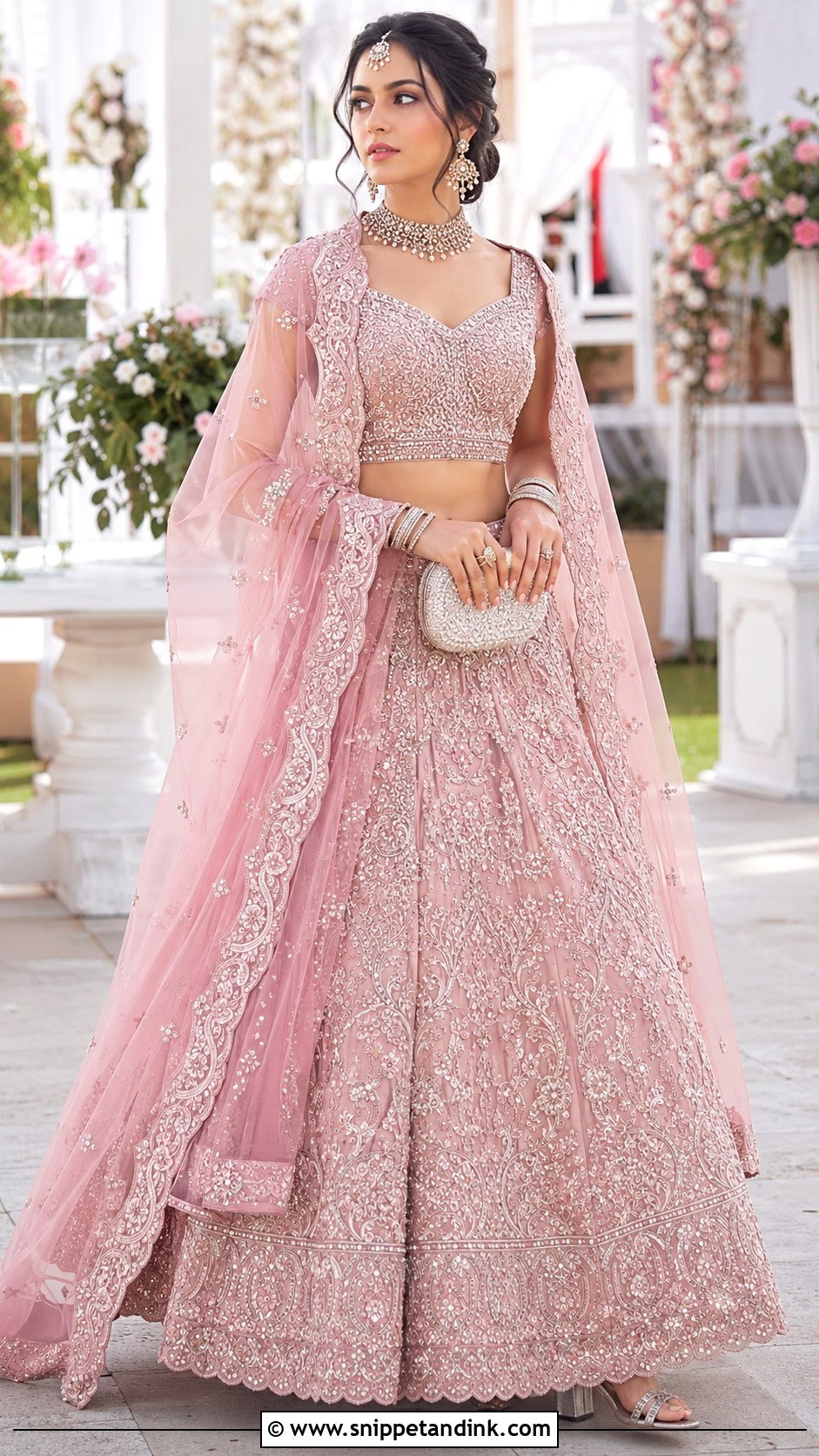
Pink needs texture to feel wedding-weight, so look for dimensional work: silver thread, pearls, crystals or pale gold on blush, rose or dusty pink. Fine detail on pale fabric is easy to lose in dim halls, which is why I steer pastel lehengas toward daytime ceremonies, gardens and bright rooms. A square or sweetheart blouse gives the skirt shape. Diamond-style jewellery and rose gold bangles keep the palette delicate. One practical point: pale pink shows makeup and food marks quickly, so keep a stain pen in your clutch.
5. Heavy Emerald Green Lehenga Dress
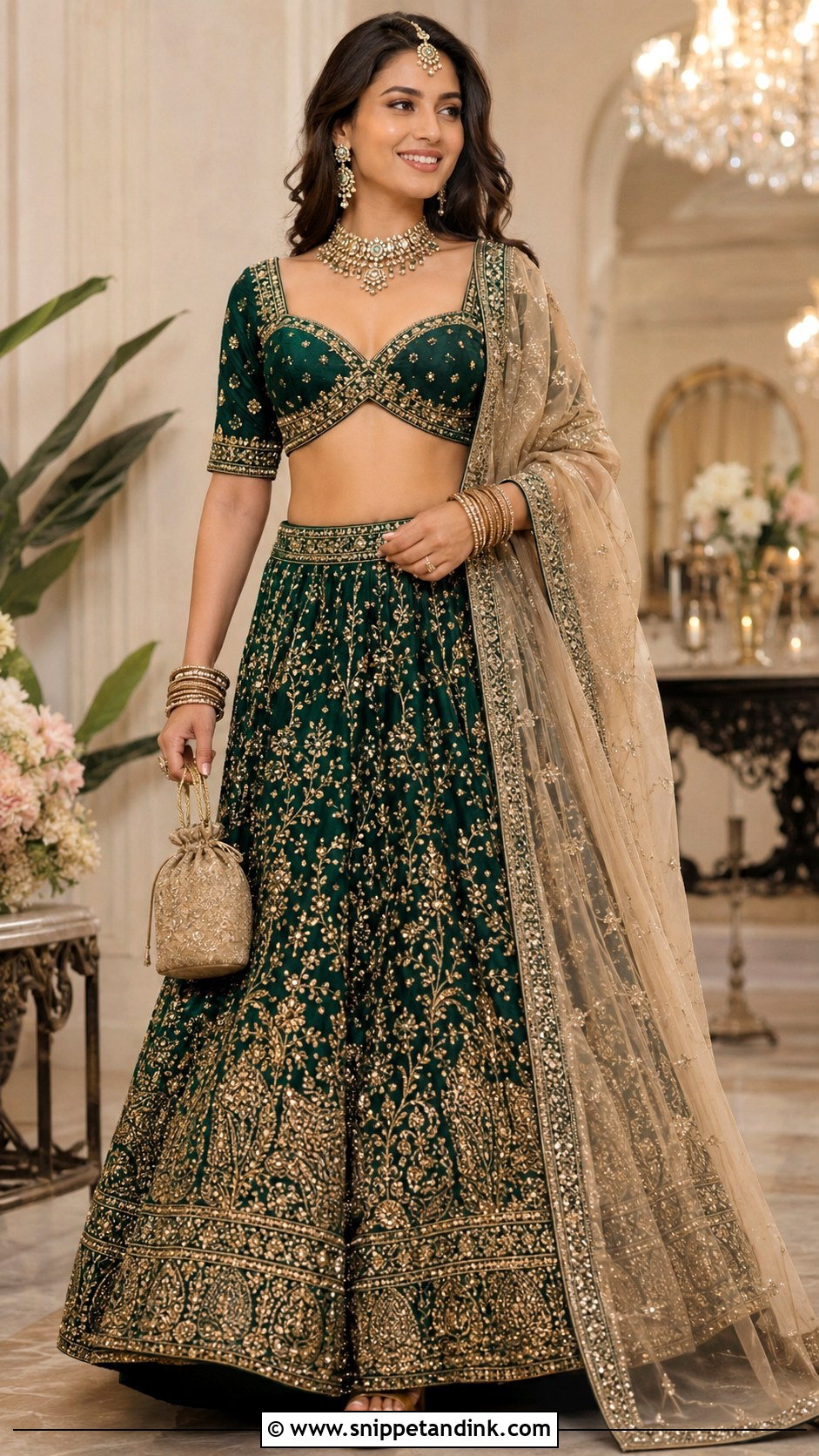
Emerald with antique gold embroidery is one of the strongest alternatives to red and pink I know, and it holds its depth under evening lighting. Choose silk or velvet with floral motifs and a deep border. A champagne or muted gold dupatta stops a matching emerald set from looking flat. Kundan jewellery suits it. Gold wedges help, because a heavy skirt is easier to manage with a broad, stable heel than with a narrow one. Brides can layer necklaces and add a head dupatta; guests should simplify the blouse, dupatta and jewellery.
6. Heavy Royal Blue Lehenga Dress
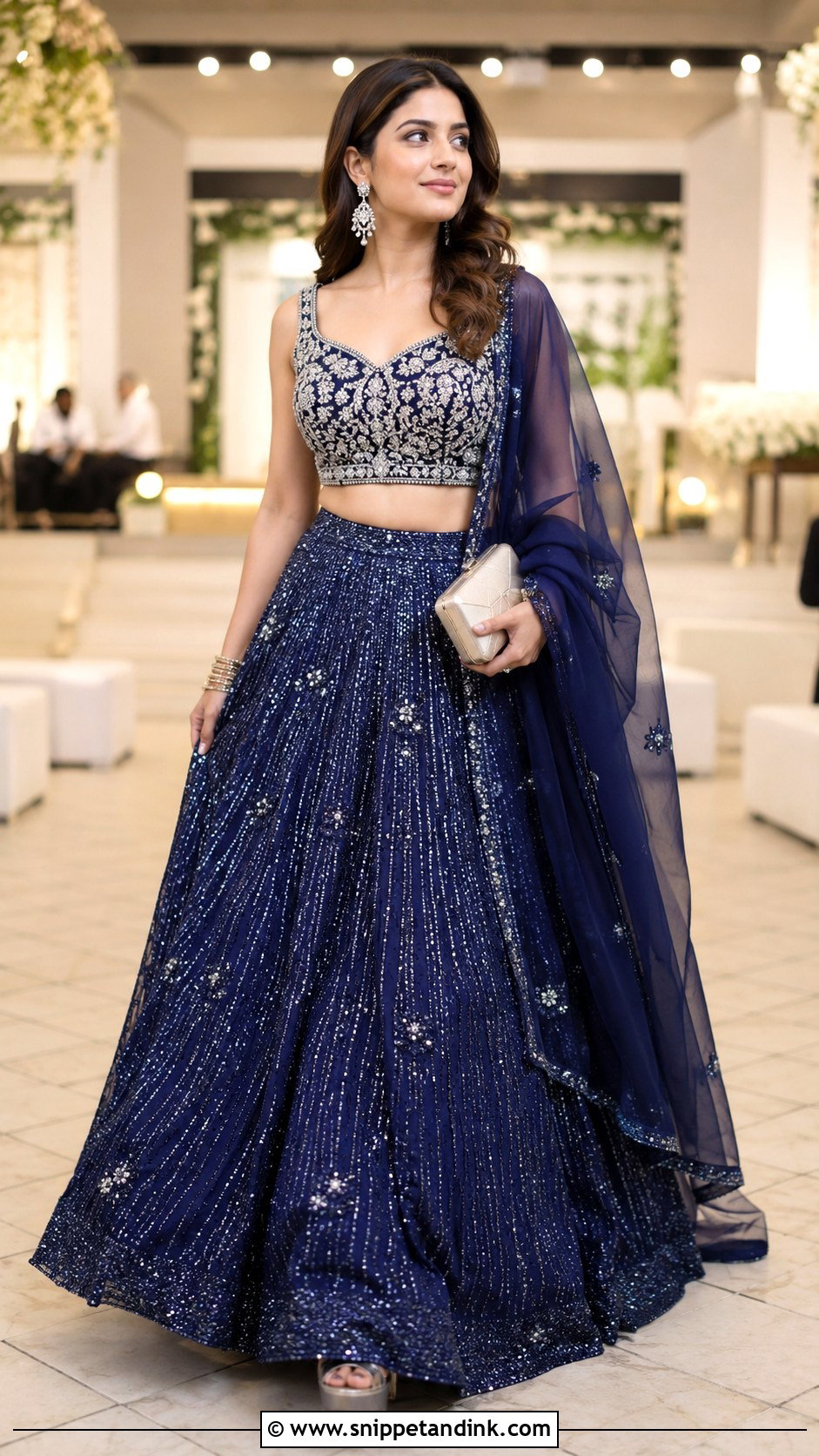
Royal blue is bold without borrowing bridal colours. In silk, brocade or net, it takes silver sequins and crystal work especially well, and it suits the sangeet or reception, where reflective detail looks festive. Repeat the skirt’s embellishment on the blouse so the pieces read as one. A pale blue, silver or matching dupatta keeps it coordinated. Under a heavy skirt, narrow stilettos sink into carpet and wobble on stairs, so I always choose platforms or embellished block heels here.
7. Heavy Banarasi Silk Saree Dress
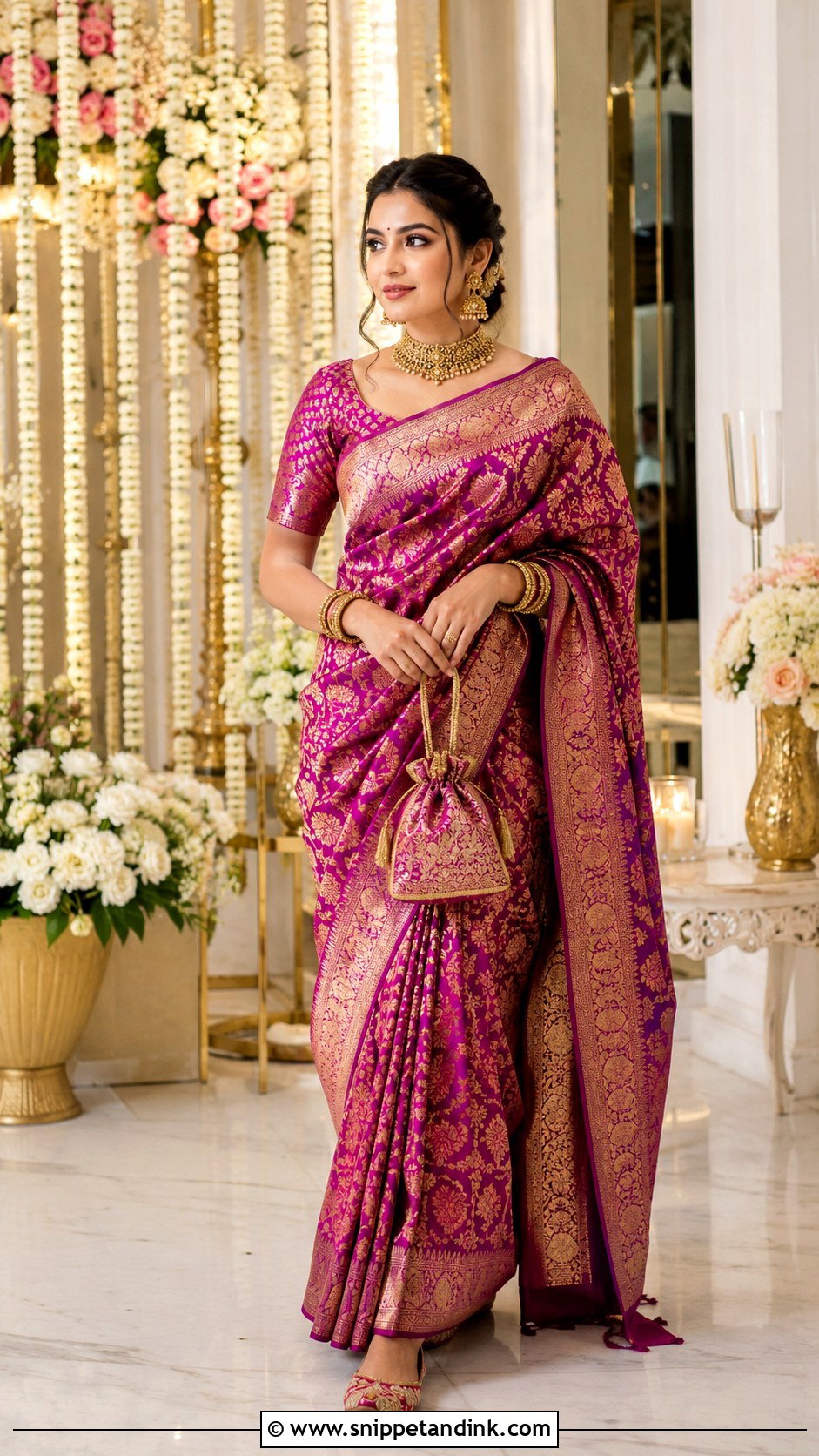
A Banarasi silk saree gets its weight from woven zari rather than surface embroidery, so the drape is heavier and stiffer than a georgette saree. That stiffness is helpful: pleats stay crisp once set. Choose magenta, green, purple or deep blue and a structured brocade blouse that fits securely at the shoulders. Pin the pleats at the waist and the pallu at the shoulder; a heavy pallu pulls the whole drape backward if it isn’t anchored. Juttis or low block heels avoid altering the saree length. A gold choker and jhumkas are enough for guests.
8. Heavy Kanjivaram Silk Saree Dress
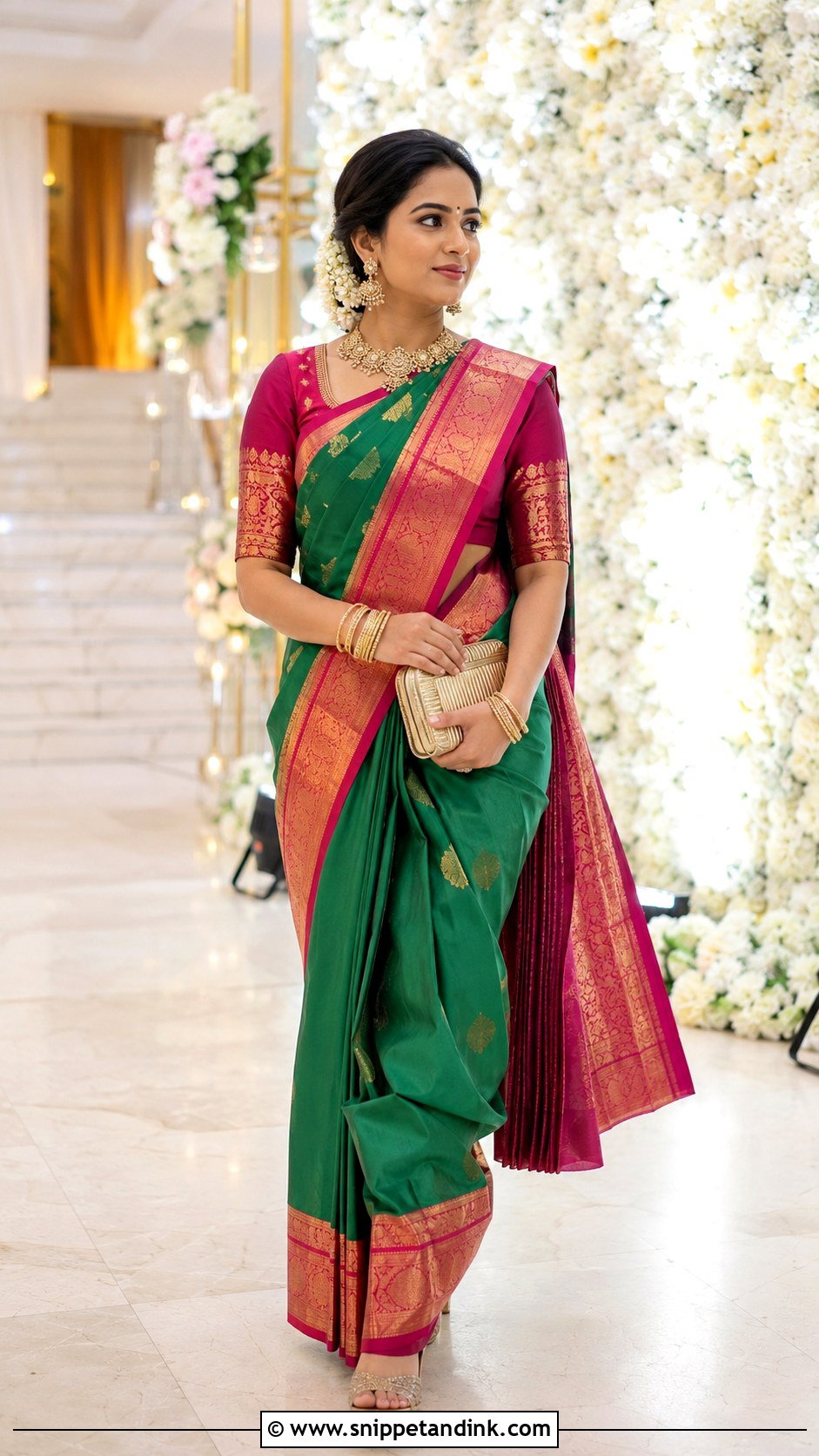
Kanjivaram silk is woven with a dense body and a contrasting border, often with zari, which gives it that crisp, formal fall. Emerald, fuchsia, mustard, teal and purple all suit it. A blouse in the border colour defines the look. Proportion is worth thinking about: petite women look best in a narrower border, while taller women carry wide borders and large motifs. Temple-style jewellery and a decorative hair accessory suit its traditional character. Pin the pleats and pallu firmly, because the silk is heavy enough to drag the drape out of place over a long ceremony.
9. Heavy Embroidered Anarkali Dress
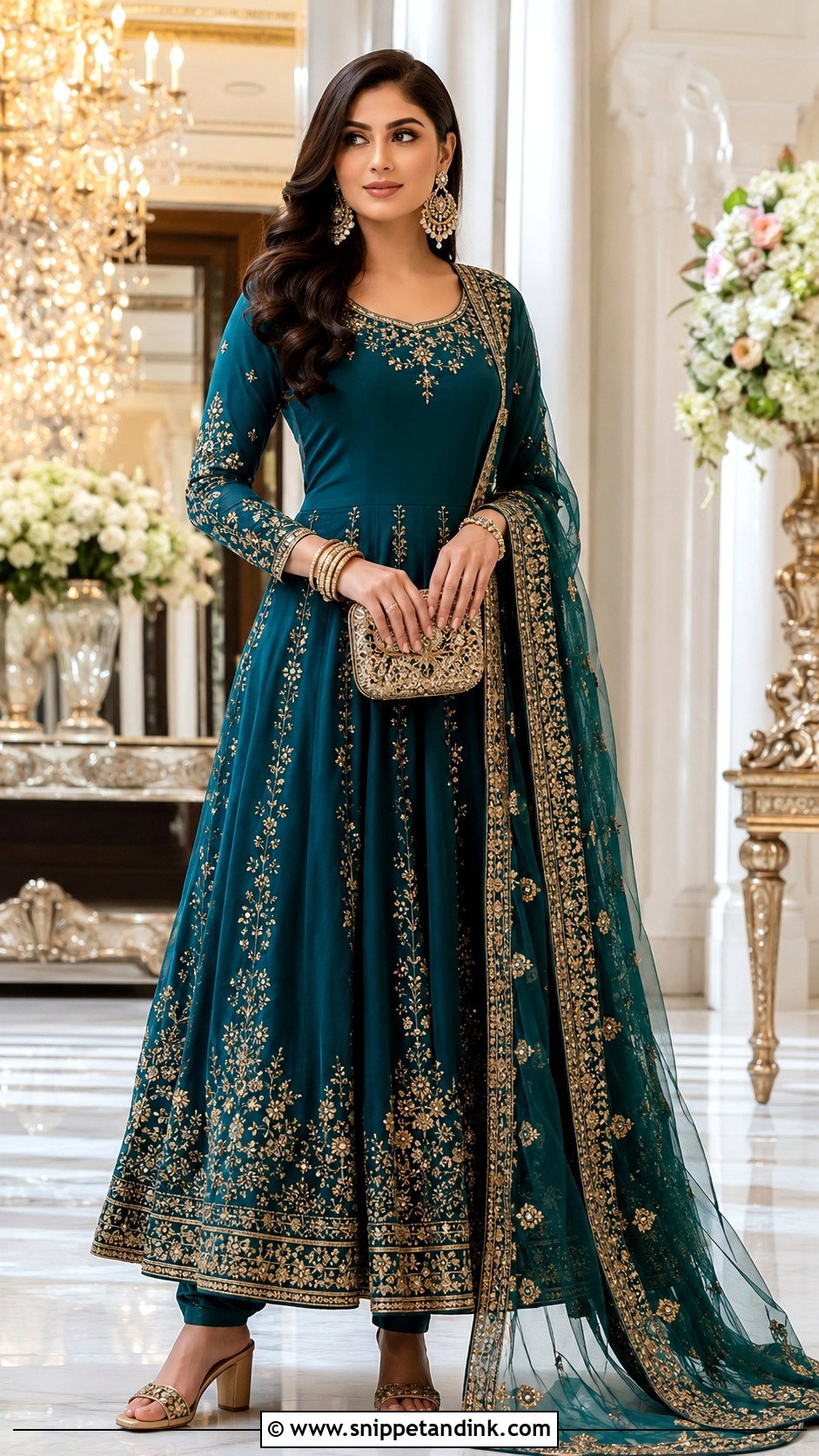
A floor-length embroidered Anarkali gives a gown’s grandeur with suit-level comfort. The construction trick I look for is graduated embroidery: rich at the neckline, waist, sleeves and hem, lighter across the skirt panels, so the flare still moves. Silk, georgette or layered net all work. Churidar underneath, a matching dupatta with a finished border, chandelier earrings and a delicate maang tikka complete it. Block heels give height while staying steady under the long hem. The shaped bodice and smooth flare suit a wide range of figures.
10. Heavy Velvet Anarkali Dress
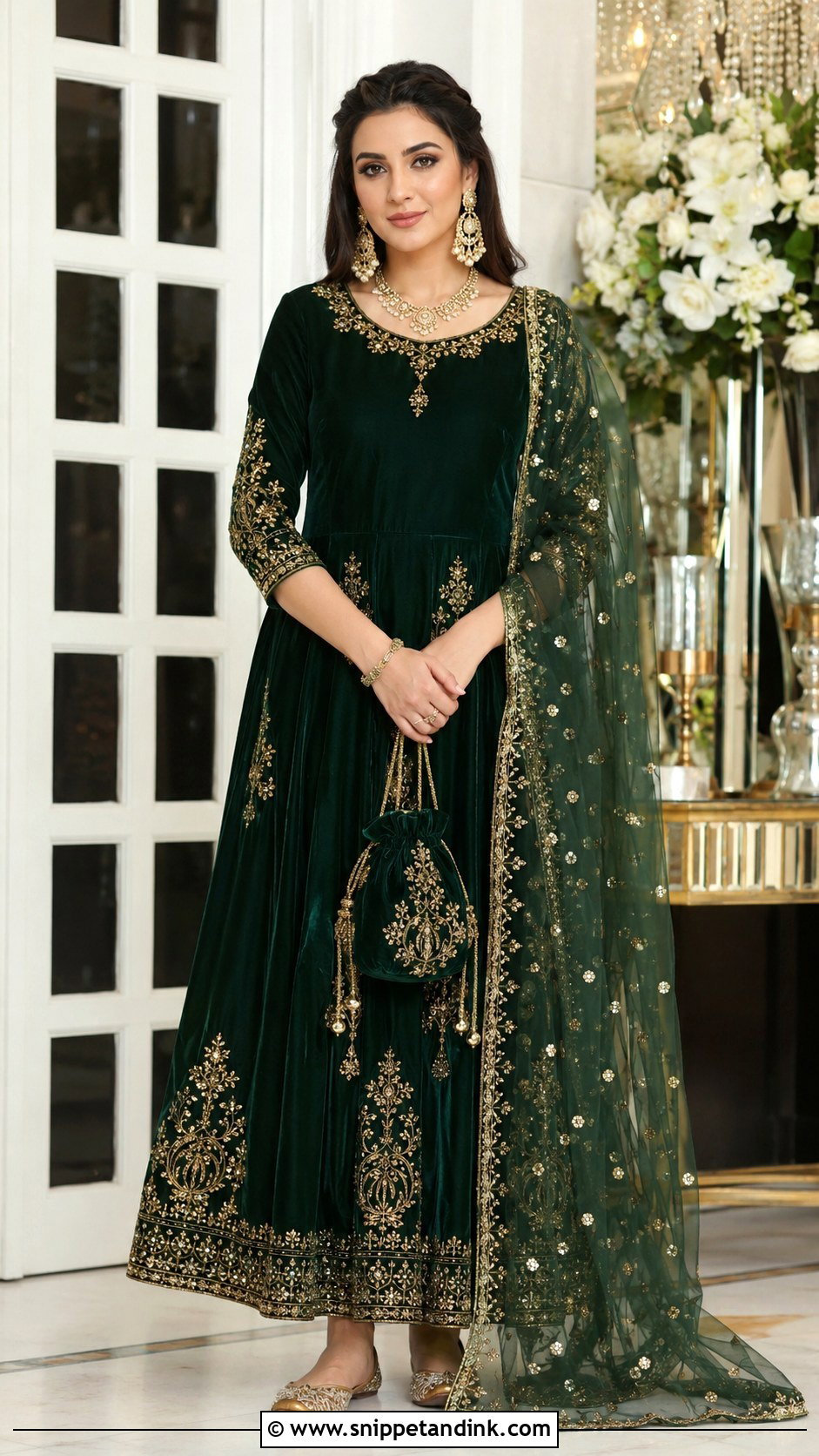
Velvet Anarkalis are winter clothing, full stop. Deep navy, burgundy, forest green or plum with gold work at the neckline, cuffs, waist and hem looks rich without needing much else. Ask for a controlled flare; velvet is already heavy, and a full circle of it pulls on the shoulders by evening. A sheer net or organza dupatta adds lightness, and three-quarter sleeves give coverage. Antique gold earrings and closed-toe heels or juttis suit cold venues. Don’t layer a shawl and a heavy dupatta on top; you’ll fight the fabric every time you sit.
11. Heavy Sharara Suit Dress
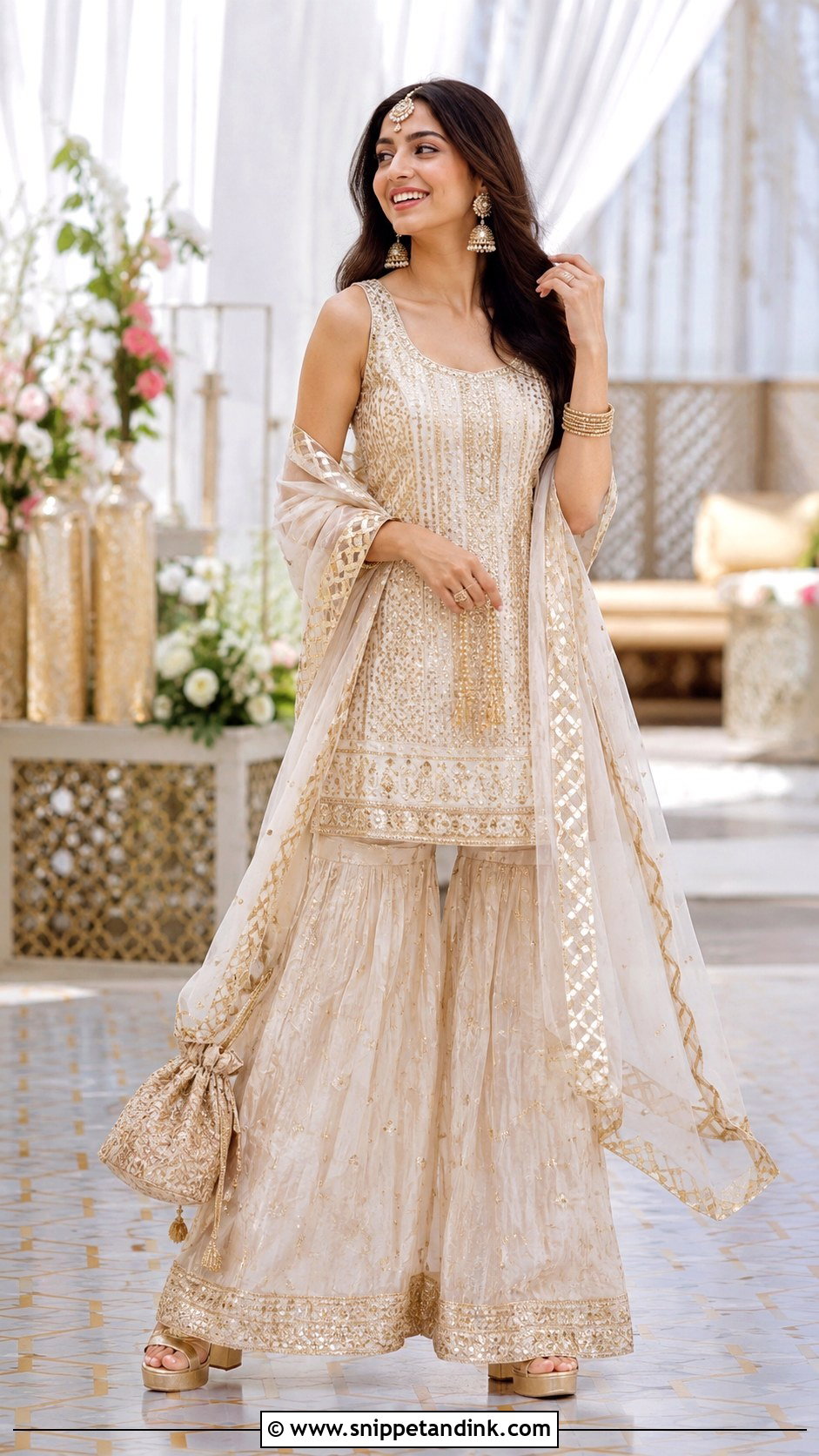
Of all the heavy outfits here, a sharara lets you dance most freely. Wide georgette, silk or organza pants with a short or mid-length embroidered kurta give plenty of detail without the rigid structure of a lehenga. The kurta must fit neatly at the shoulders, or the volume below swamps you. A light dupatta with gota patti or sequins, jhumkas and a maang tikka make it festive. Platform sandals help keep the wide hems off the floor. I’d save this for the sangeet, mehndi or reception rather than the main ceremony.
12. Heavy Gharara Suit Dress
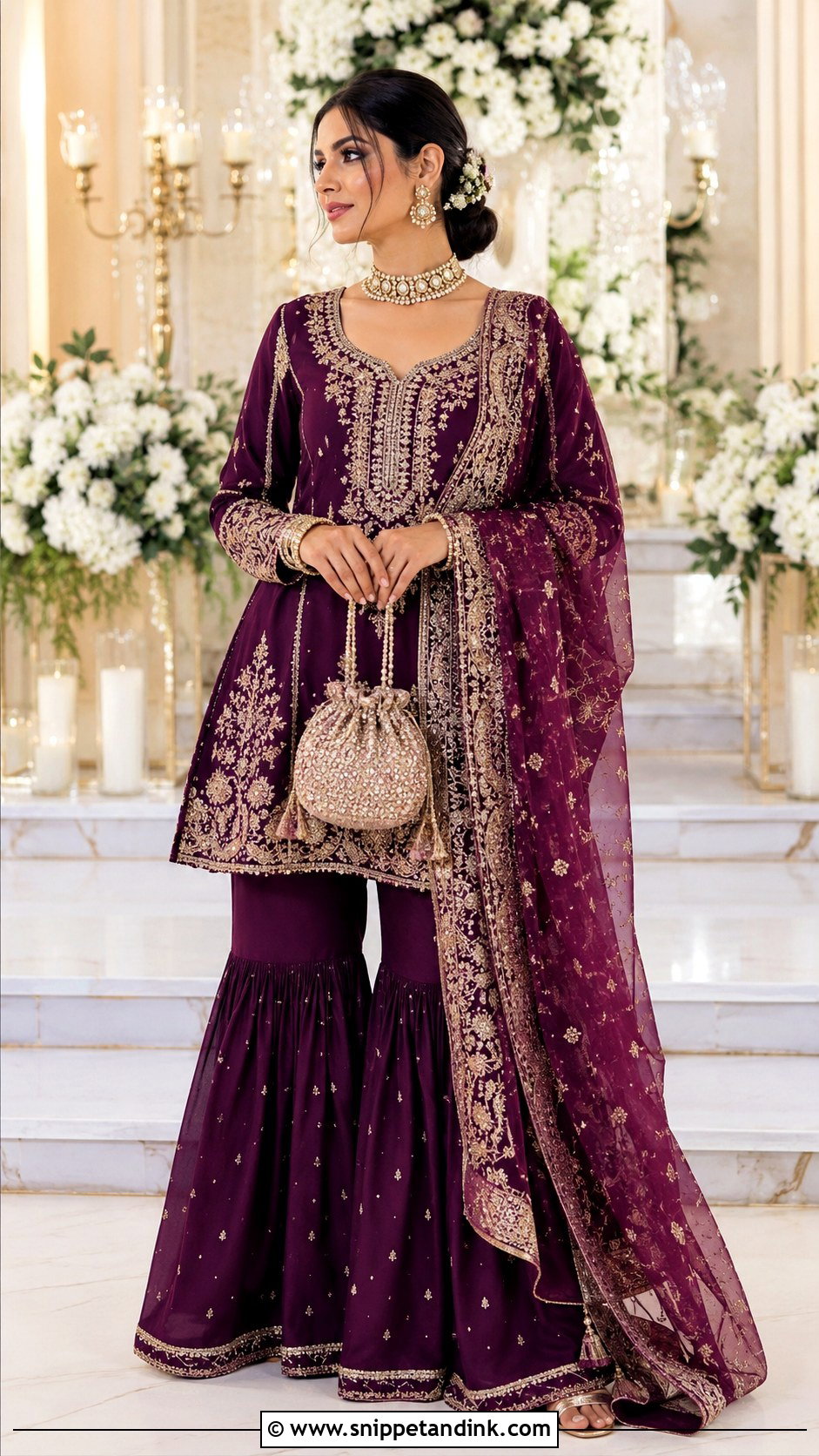
A gharara fits close through the thigh and gathers into a dramatic flare at the knee, where a decorative band usually sits. That shape needs a short, tailored kurti above it, or the knee detail gets hidden. Brocade, silk and organza with zari, gota patti or beadwork all suit it. Drape the dupatta over one shoulder, or across both arms for formal portraits. Walking takes a little practice because the flare starts low; take smaller steps on stairs. A kundan choker and juttis or low block heels finish a traditional family look.
13. Heavy Pakistani Maxi Dress
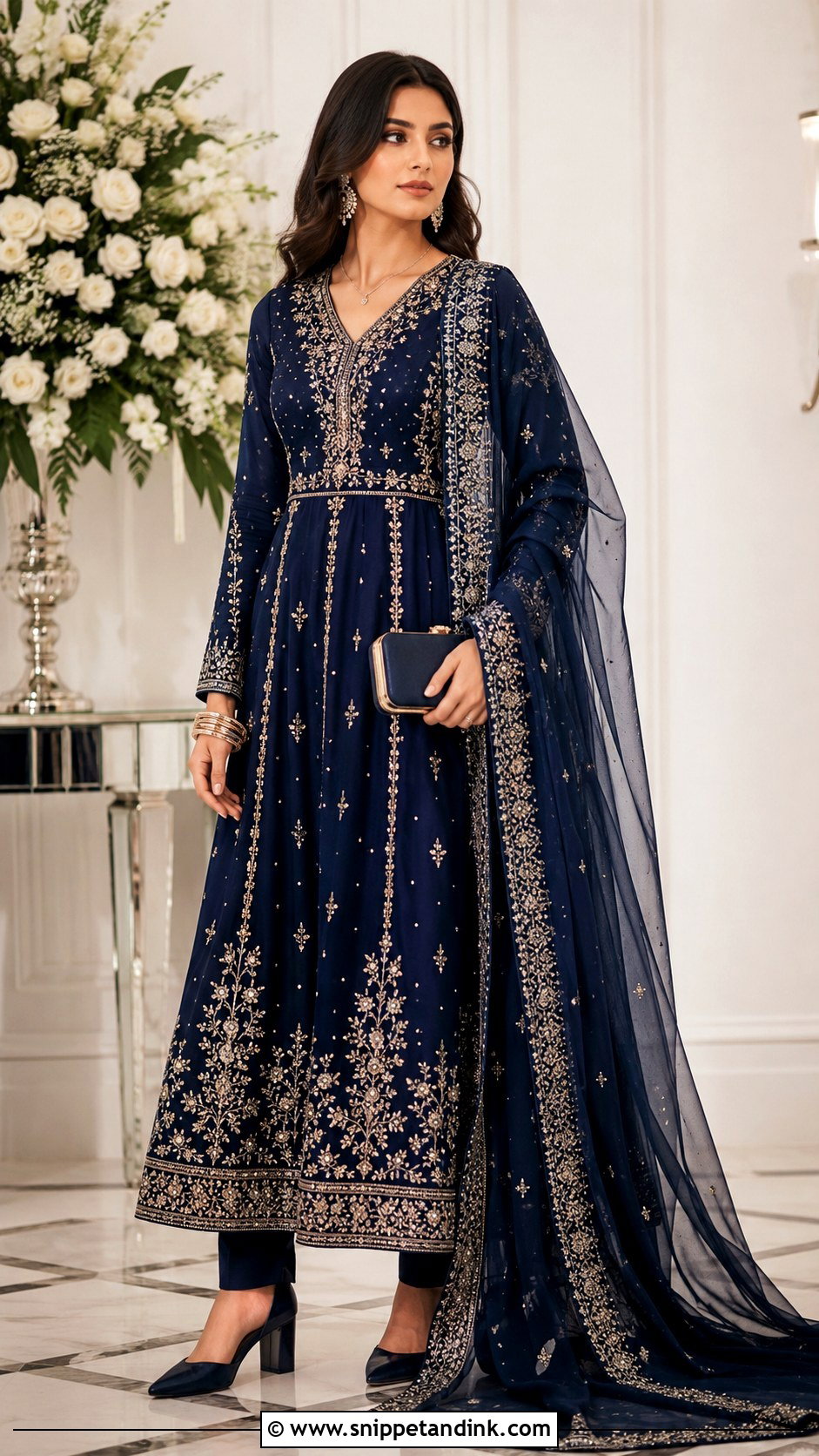
A heavily embroidered Pakistani maxi dress gives long, graceful coverage without a separate skirt to manage. Layered net, chiffon, organza or silk over a comfortable lining takes zari, sequins, pearls and threadwork well. Check the lining fabric as carefully as the outer layer; a scratchy or synthetic lining is what makes these uncomfortable after a few hours. Straight pants, a long dupatta over one shoulder, pointed flats or stable block heels and a structured clutch suit formal receptions and evening weddings.
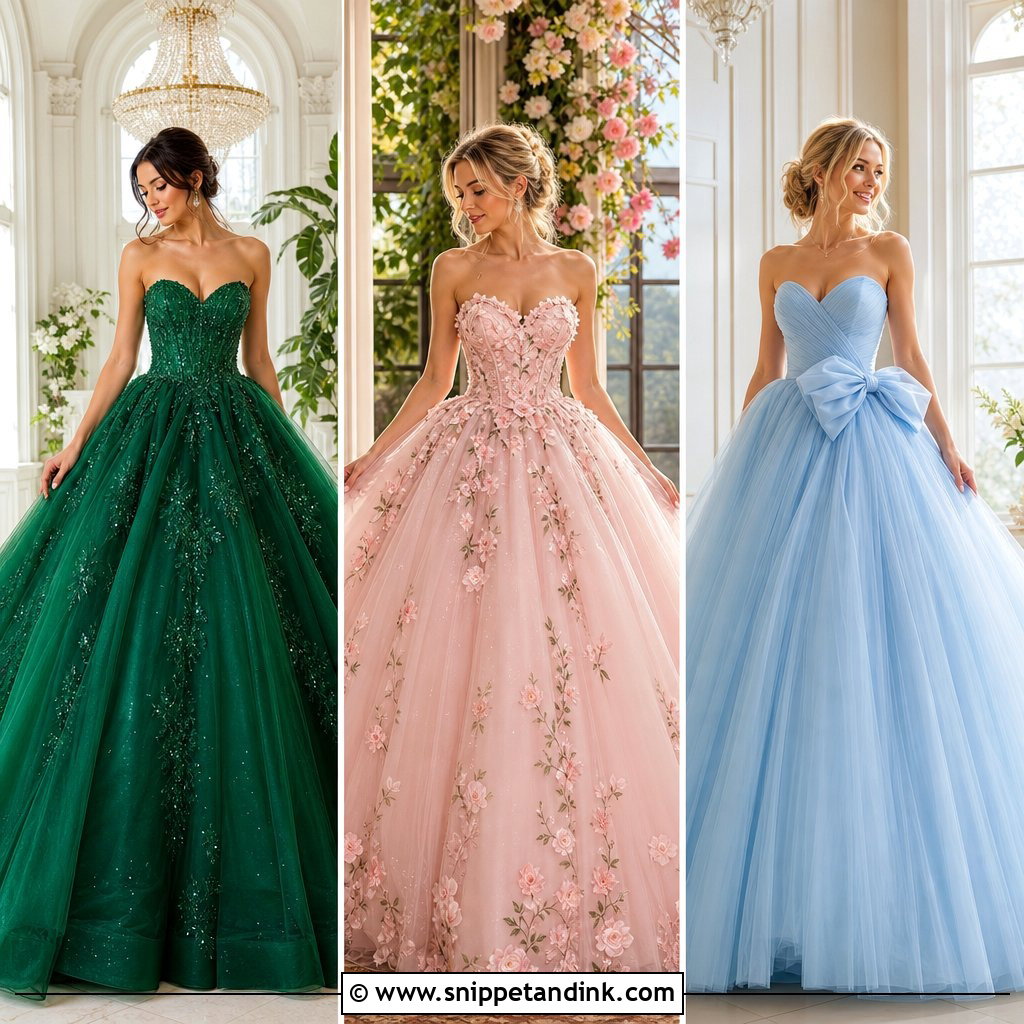
14. Heavy Floor-Length Wedding Gown
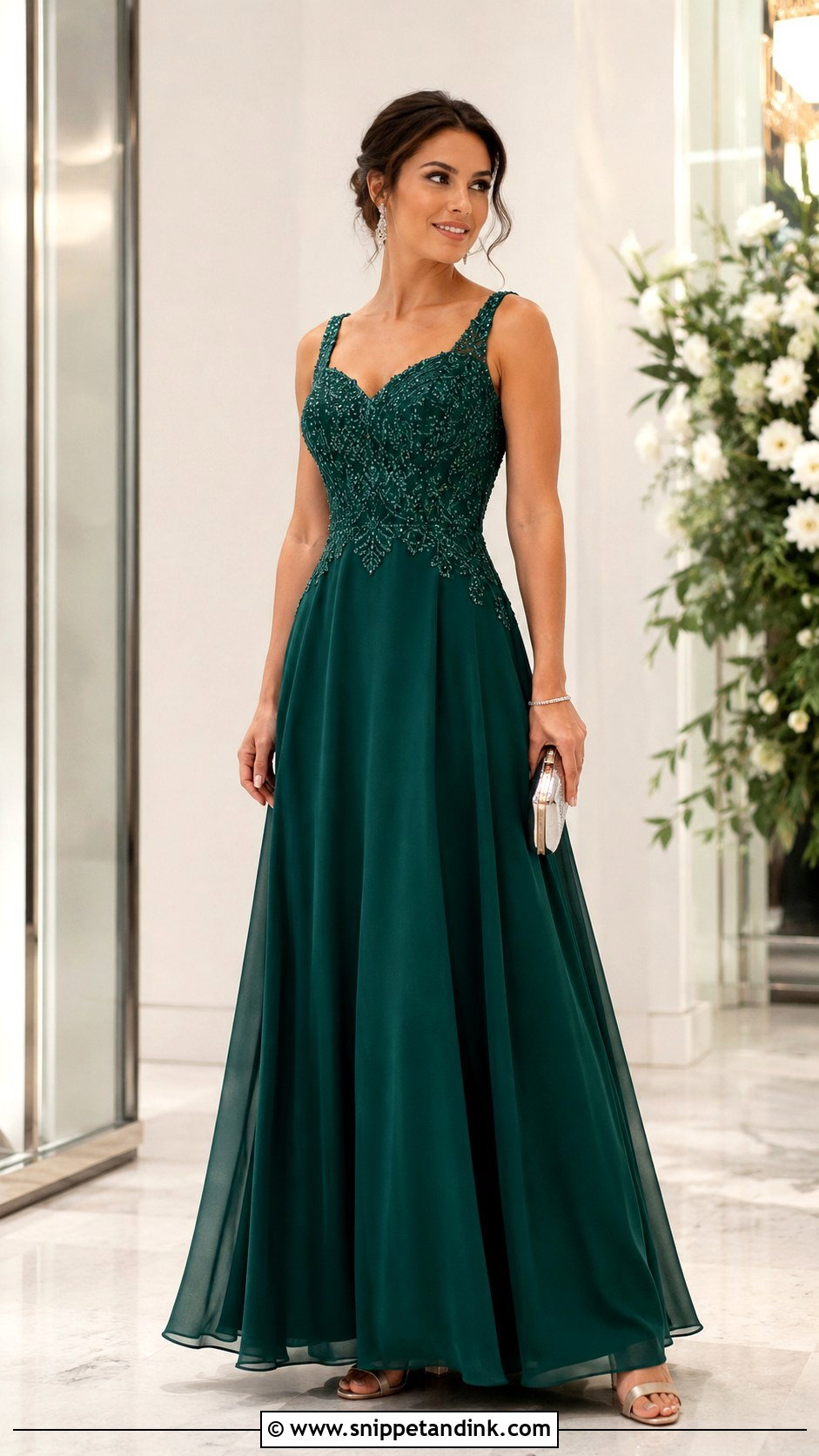
A beaded or sequinned gown suits receptions and multicultural celebrations. A structured bodice with an A-line or softly flared skirt in jewel tones, midnight blue, champagne, mauve or emerald carries the embellishment best. Heavily beaded gowns have real weight, and most of it hangs from the shoulders and bodice, so internal boning and a well-anchored waist stay are worth checking. If the neckline is decorated, skip the necklace. A light cape or dupatta adds coverage, and the hem must be tailored to your exact shoes.
15. Heavy Cape Lehenga Dress
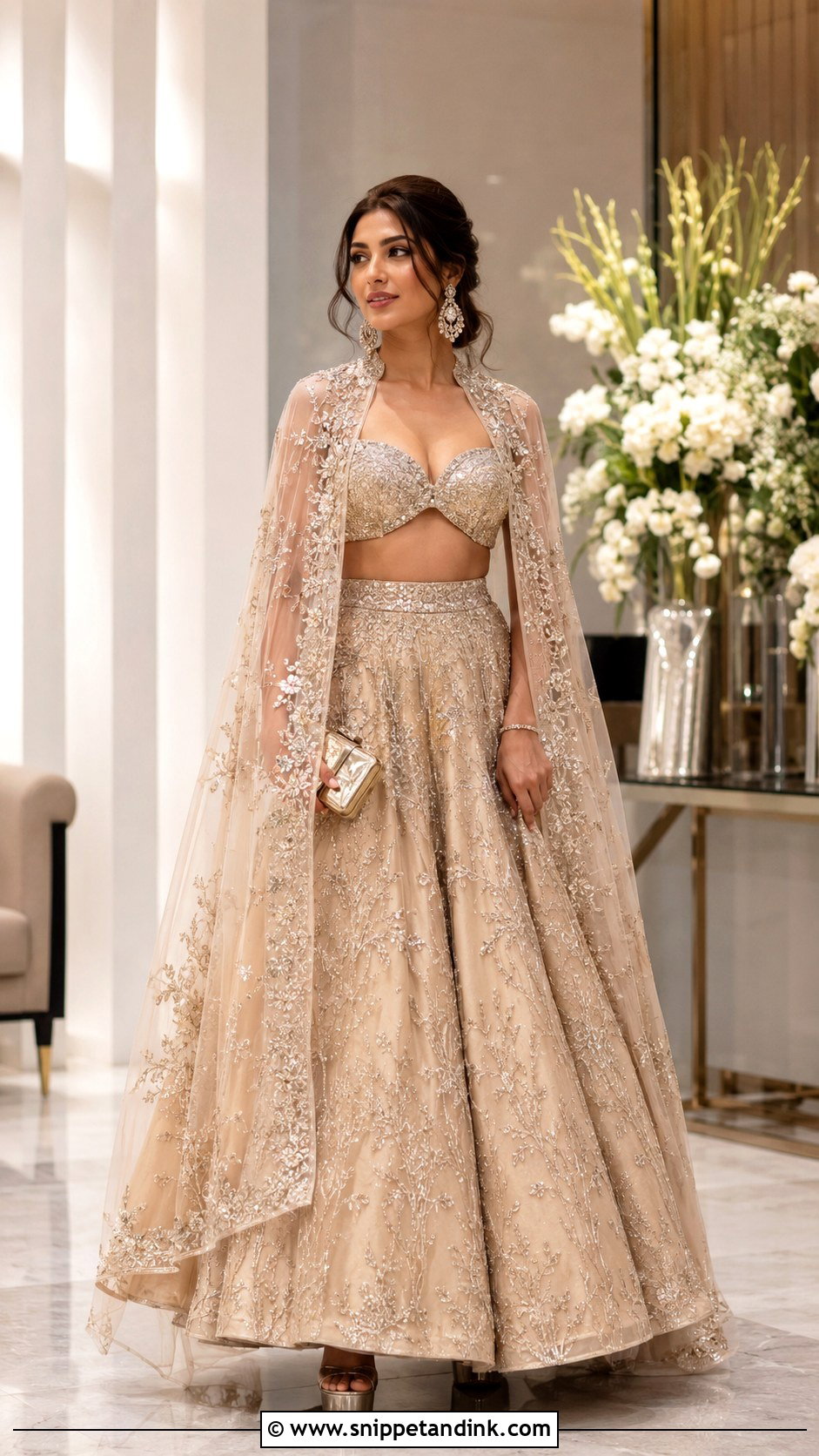
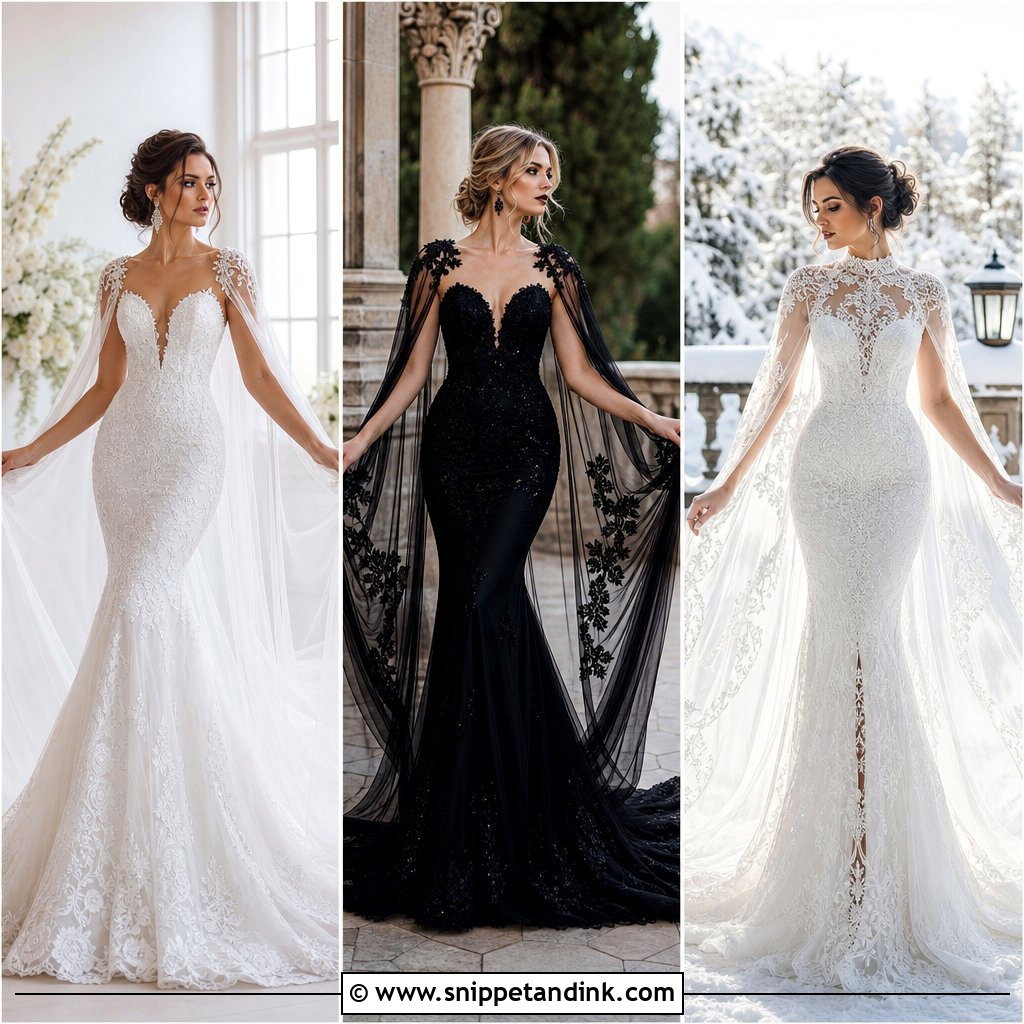
A cape replaces the dupatta, which takes a lot of hassle out of a heavy outfit. Pair a high-waisted skirt in silk, organza or layered net with a fitted blouse and a sheer embellished cape, keeping the beadwork or embroidery consistent across all three. Because the cape already frames the neckline, I keep necklaces minimal or skip them. Statement earrings and platform heels suit it. Receptions and sangeets are its natural home, since the outer layer adds movement without any draping to redo.
16. Heavy Jacket Lehenga Dress
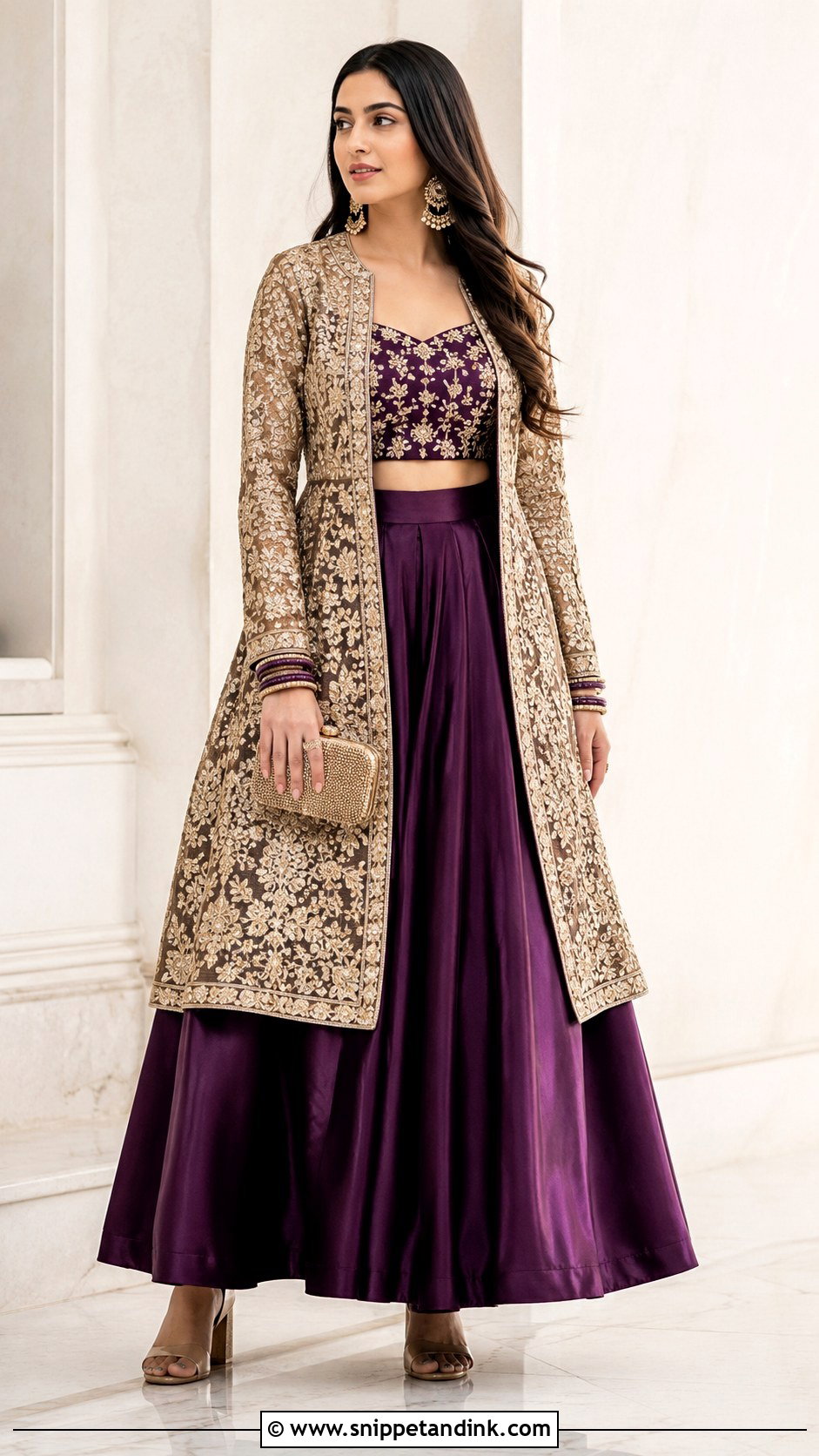
Put the weight in the jacket and keep the skirt plain or lightly worked. A long jacket with zari, sequins, velvet panels or brocade turns a classic lehenga into something regal, and it’s the practical choice for cooler weddings. Wear a fitted blouse or modest crop top underneath, and leave the jacket open to show the waist or close it for more coverage. Skip the dupatta unless the ceremony calls for one. Afterward you can rewear the jacket over a simple dress and the skirt with a lighter top, which makes the spend easier to justify.
17. Heavy Saree Gown Dress
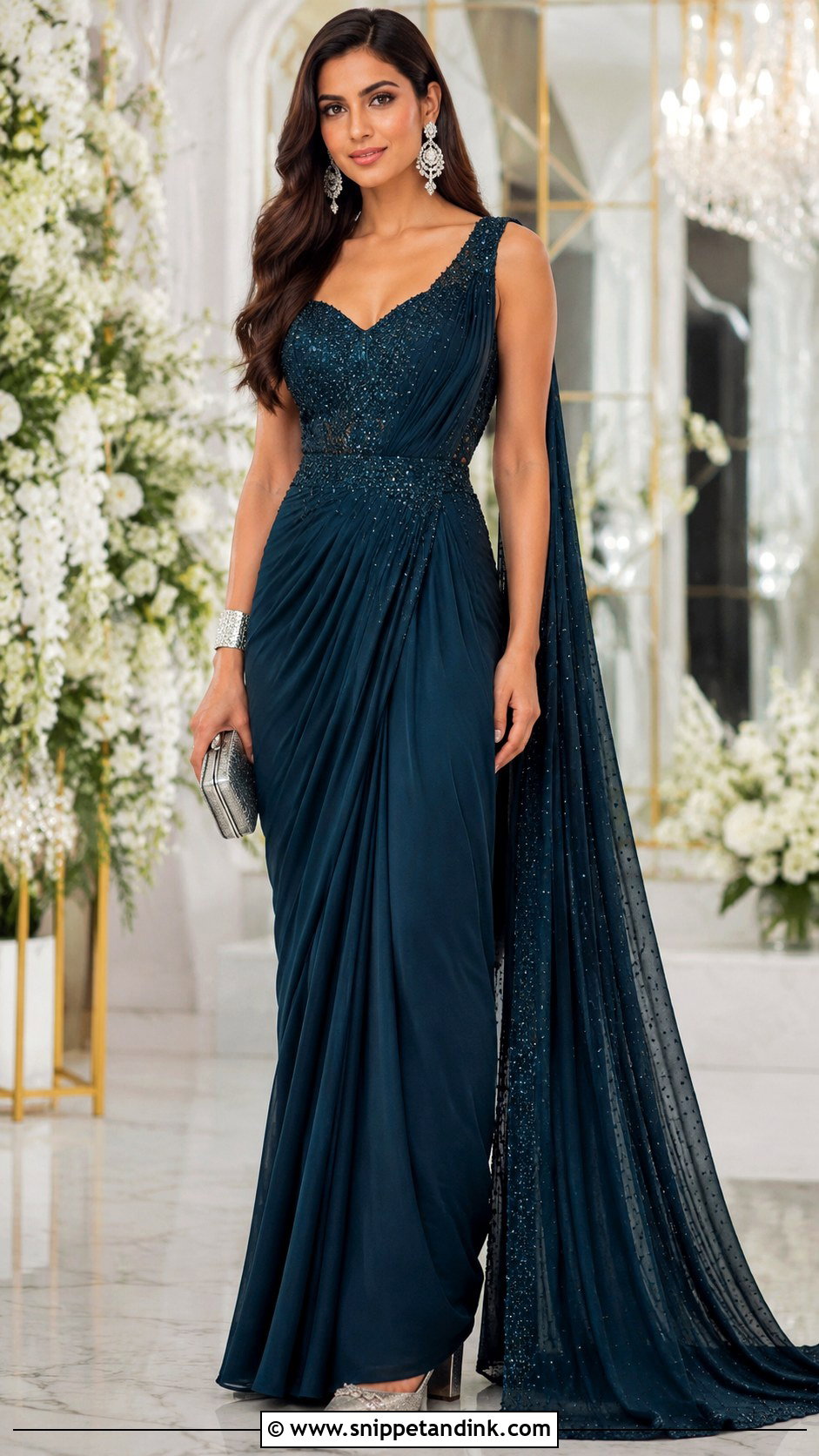
Saree gowns come with stitched pleats and an attached pallu, so the drape is fixed and you only need to zip in. That convenience depends entirely on tailoring: if the waist sits even slightly wrong, the pleats twist and the pallu hangs off-line, and there’s no redraping to fix it. Deep teal, wine, navy, plum and champagne suit a reception, especially with sequin or crystal work on the bodice. A sleek hairstyle keeps the shoulder drape visible. Statement earrings, a cuff and pointed block heels complete it.
18. Heavy Peplum Lehenga Dress
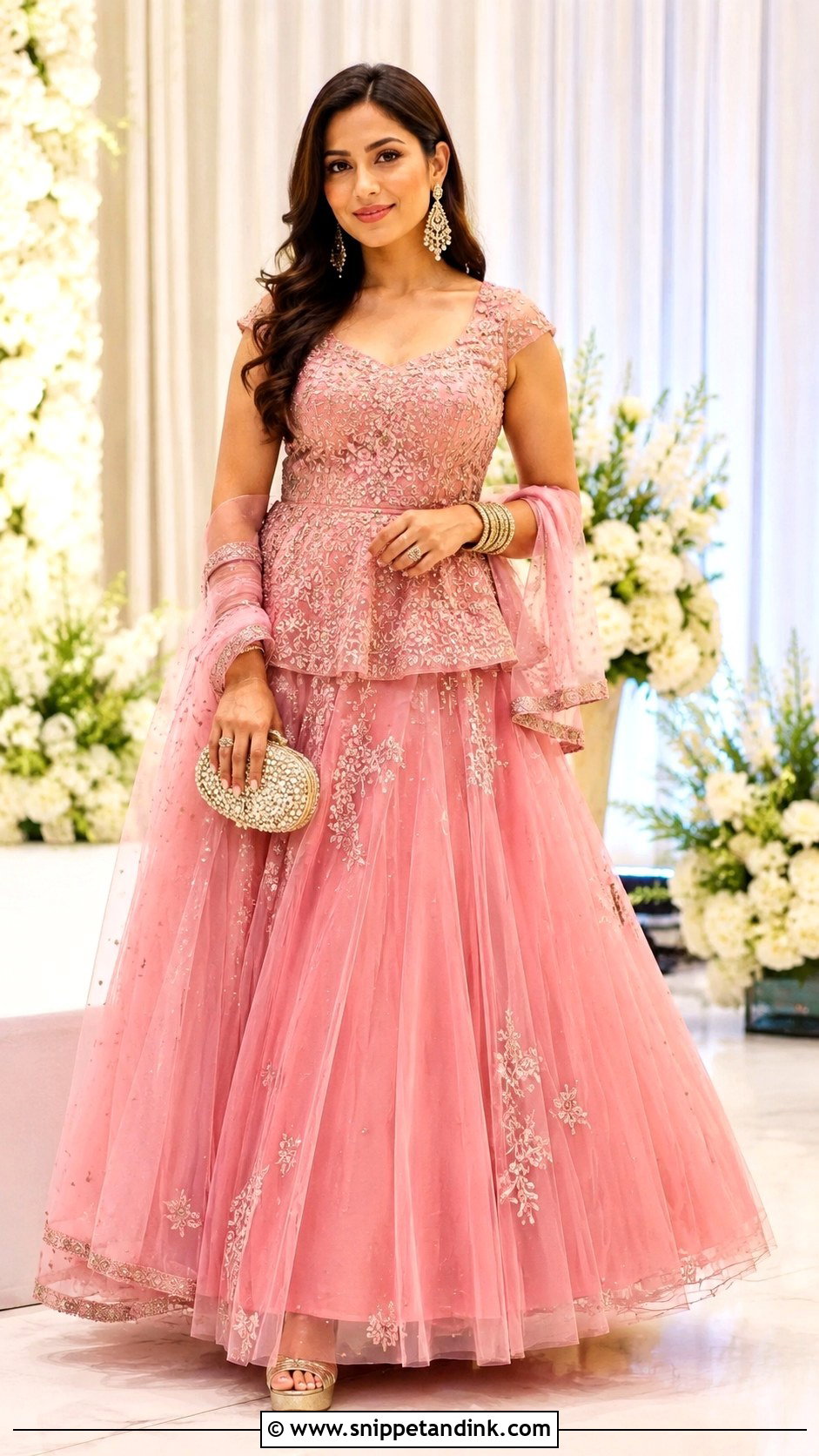
A peplum ending just below the waist gives more coverage than a short blouse while still defining your shape. Pair it with a flared silk or net skirt and match the threadwork, sequins or gota on both pieces so they read as one outfit. Length is critical: a peplum ending at the widest point of the hips adds visual width, so I mark the hem at the fitting rather than accepting the stock length. Add a light dupatta or skip it for a cleaner reception look. Chandelier earrings and platform sandals complete it.
19. Heavy Trail Lehenga Dress
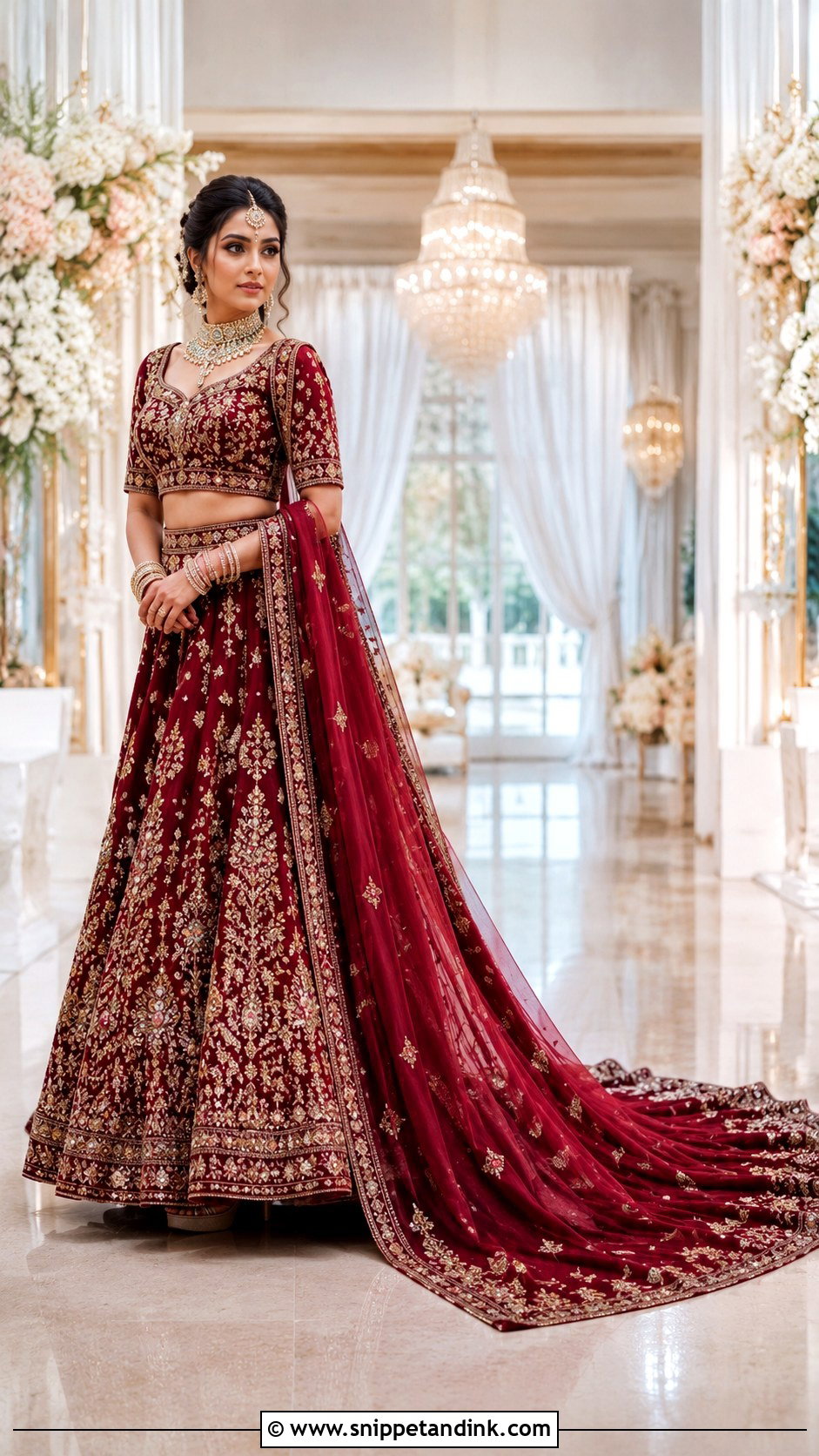
A trail lehenga makes the grandest entrance on this list, and it’s also the one that needs rehearsal. I’d keep the trail modest, extending slightly behind you rather than metres along the floor, and place the heaviest embroidery on the front panels and border. Raw silk, satin or layered net hold the shape best. Position the dupatta so it doesn’t hide the back line. Practise walking, turning and sitting in the full outfit before the day, and ask your tailor to sew a hidden wrist loop so you can lift the trail through crowds.
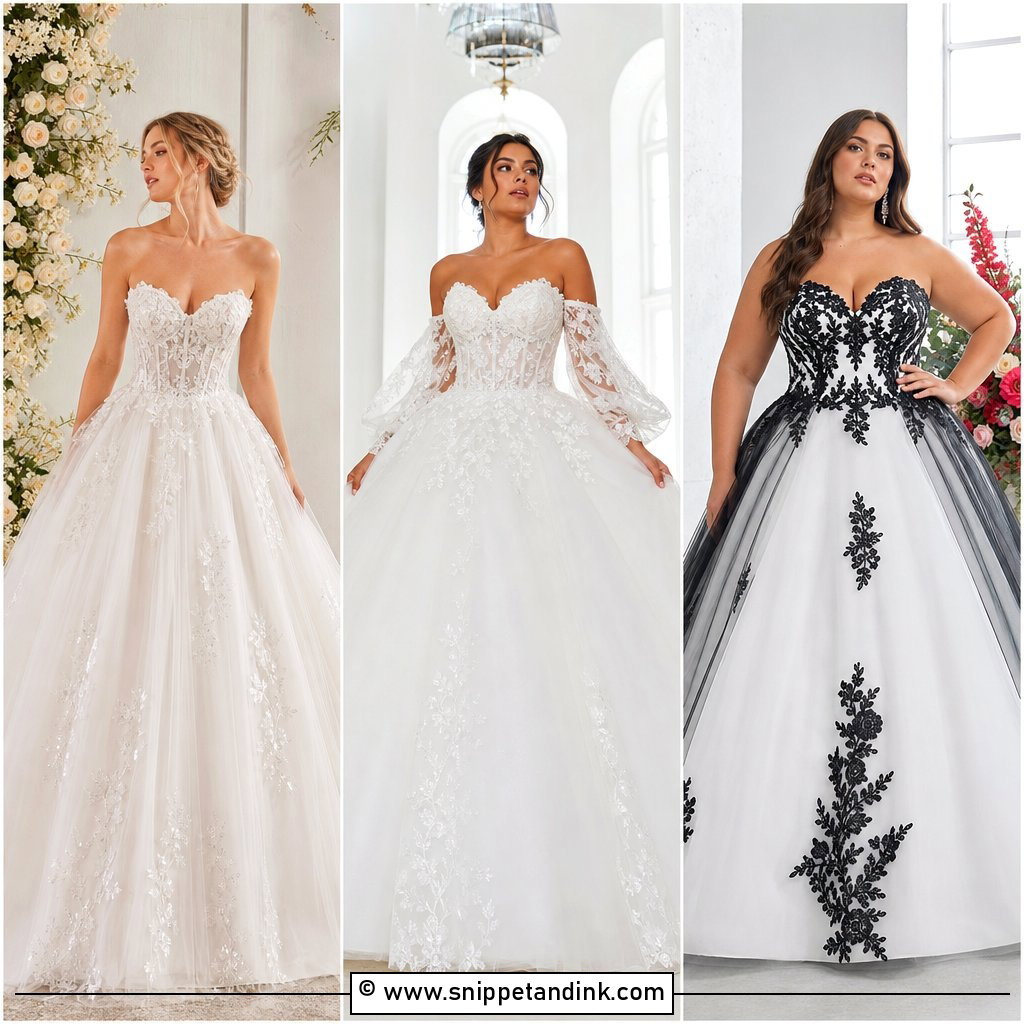
20. Heavy Plus-Size Wedding Dress
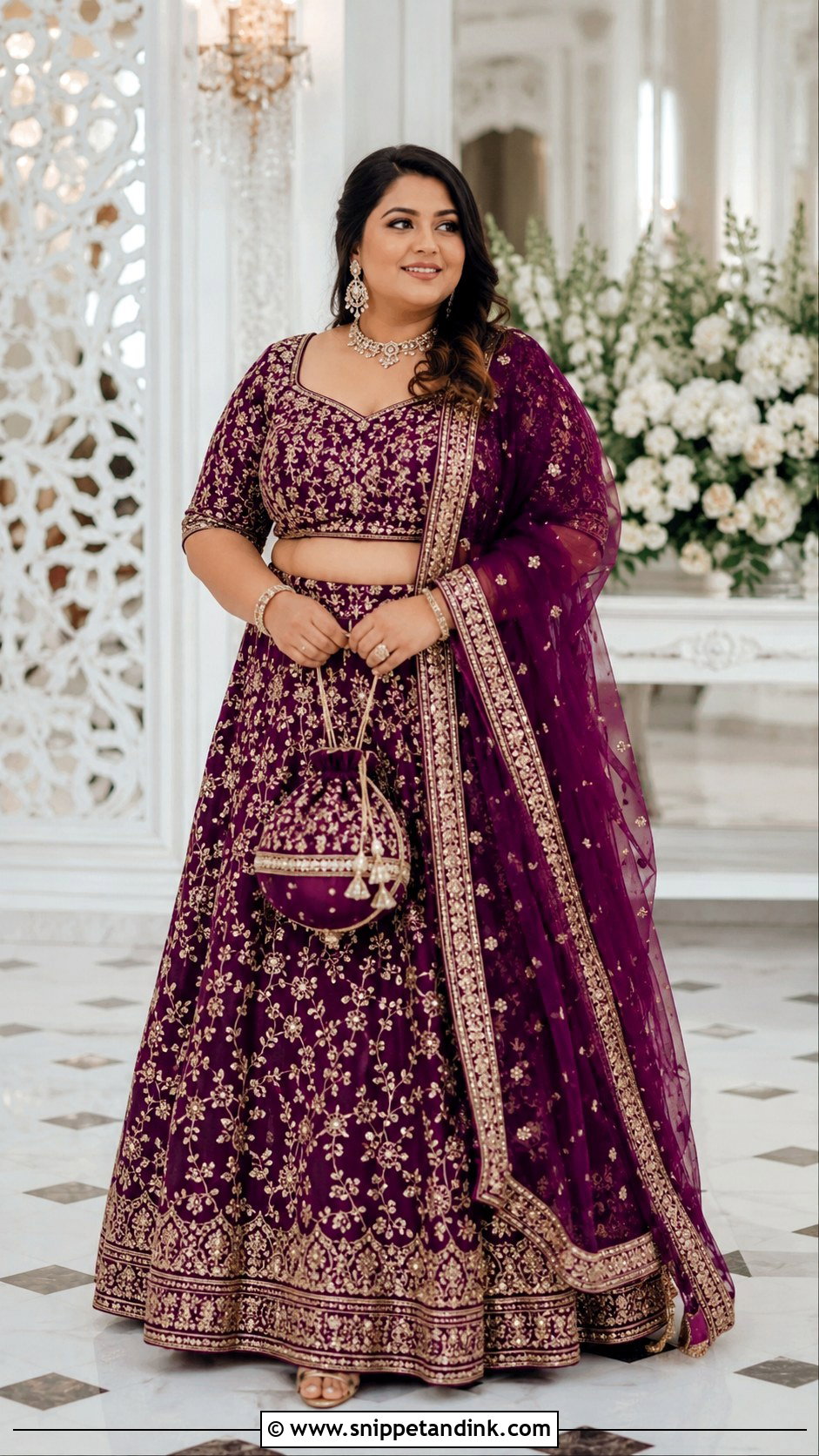
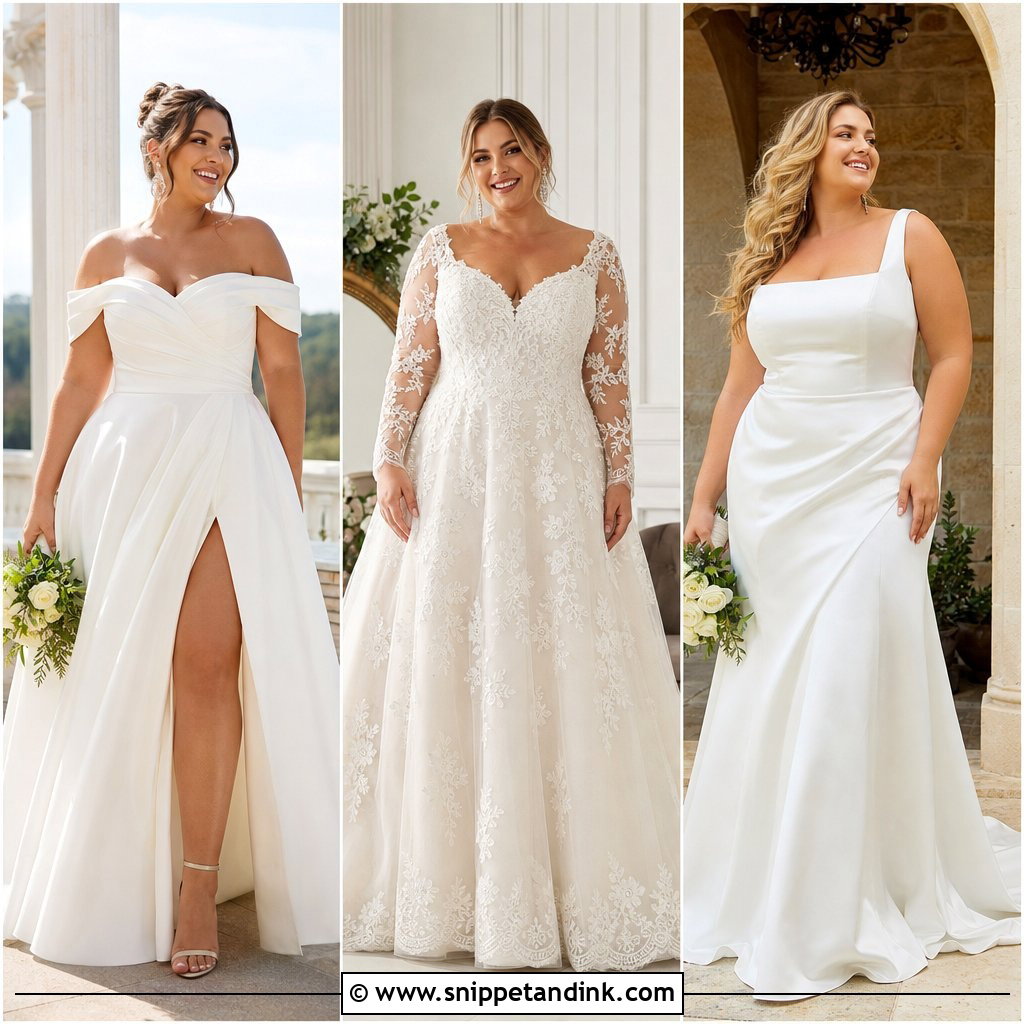
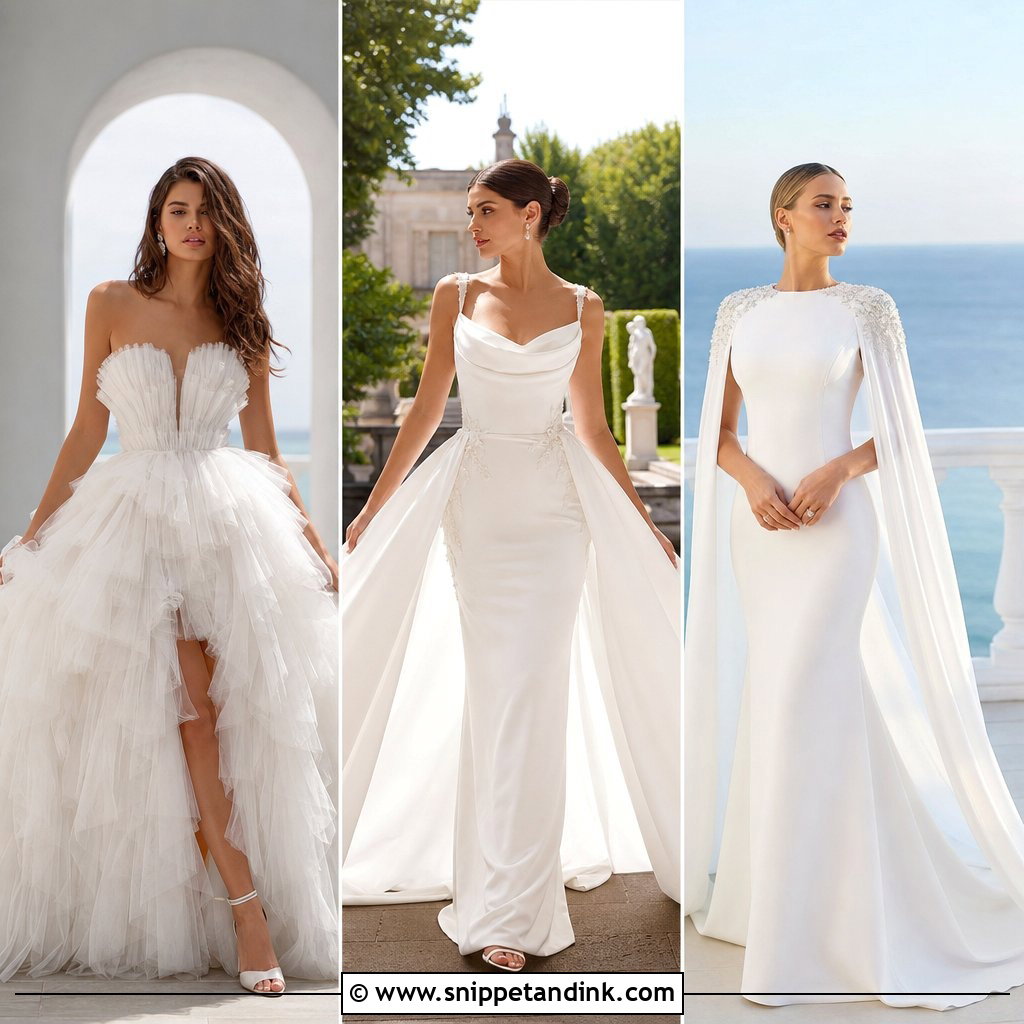
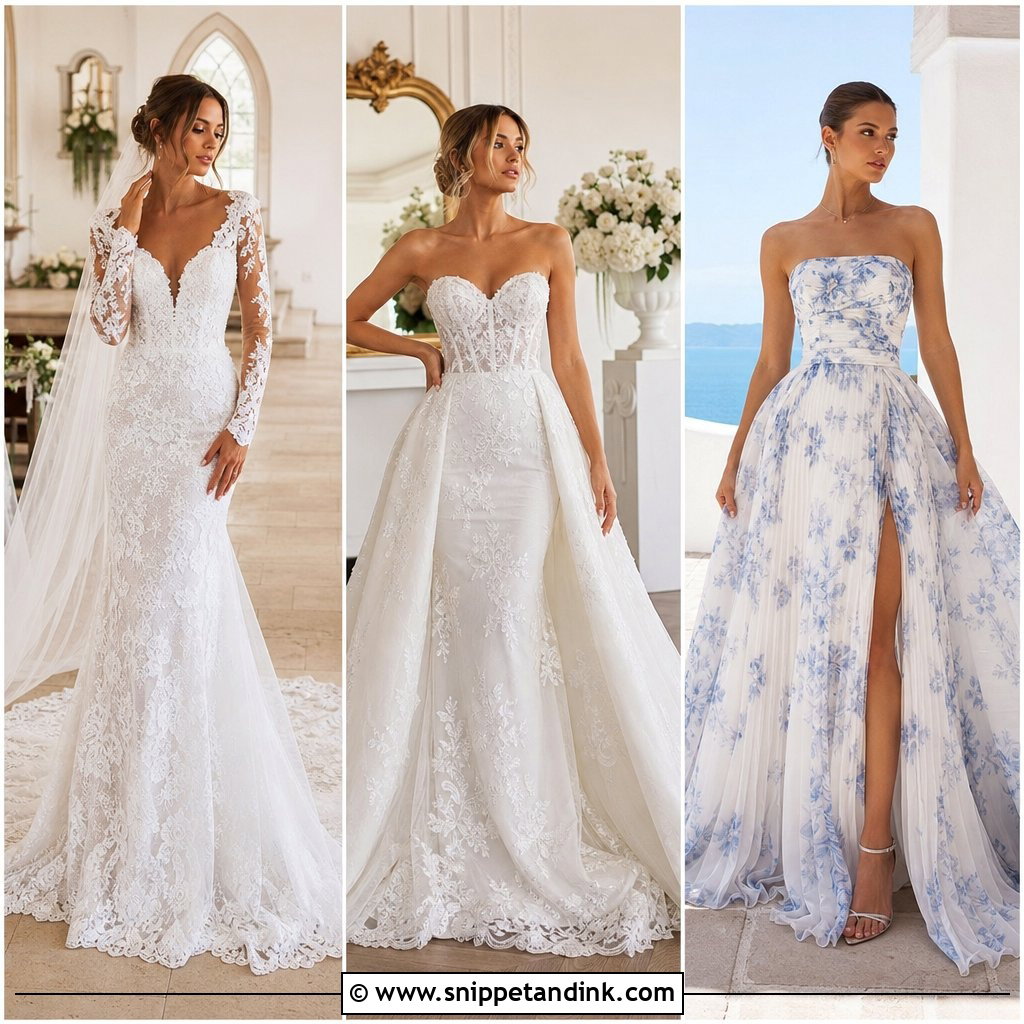
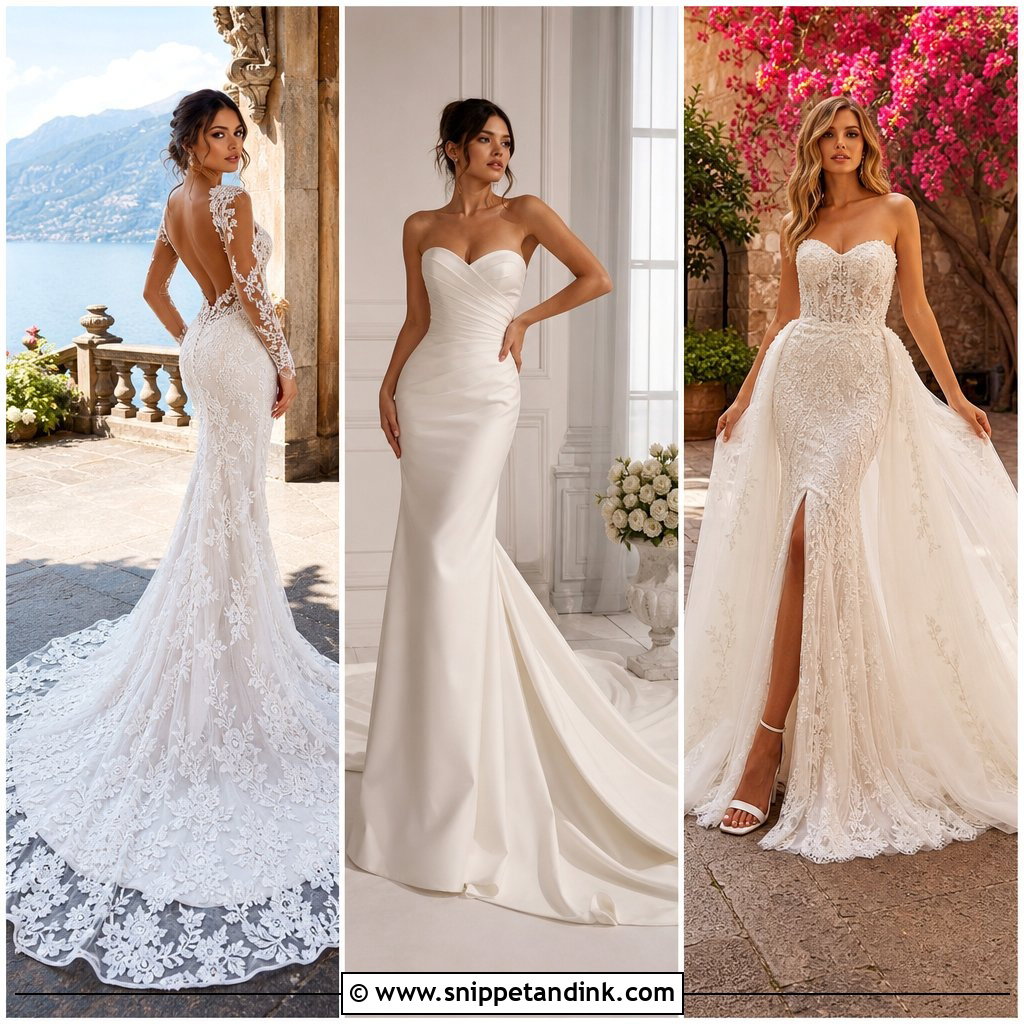
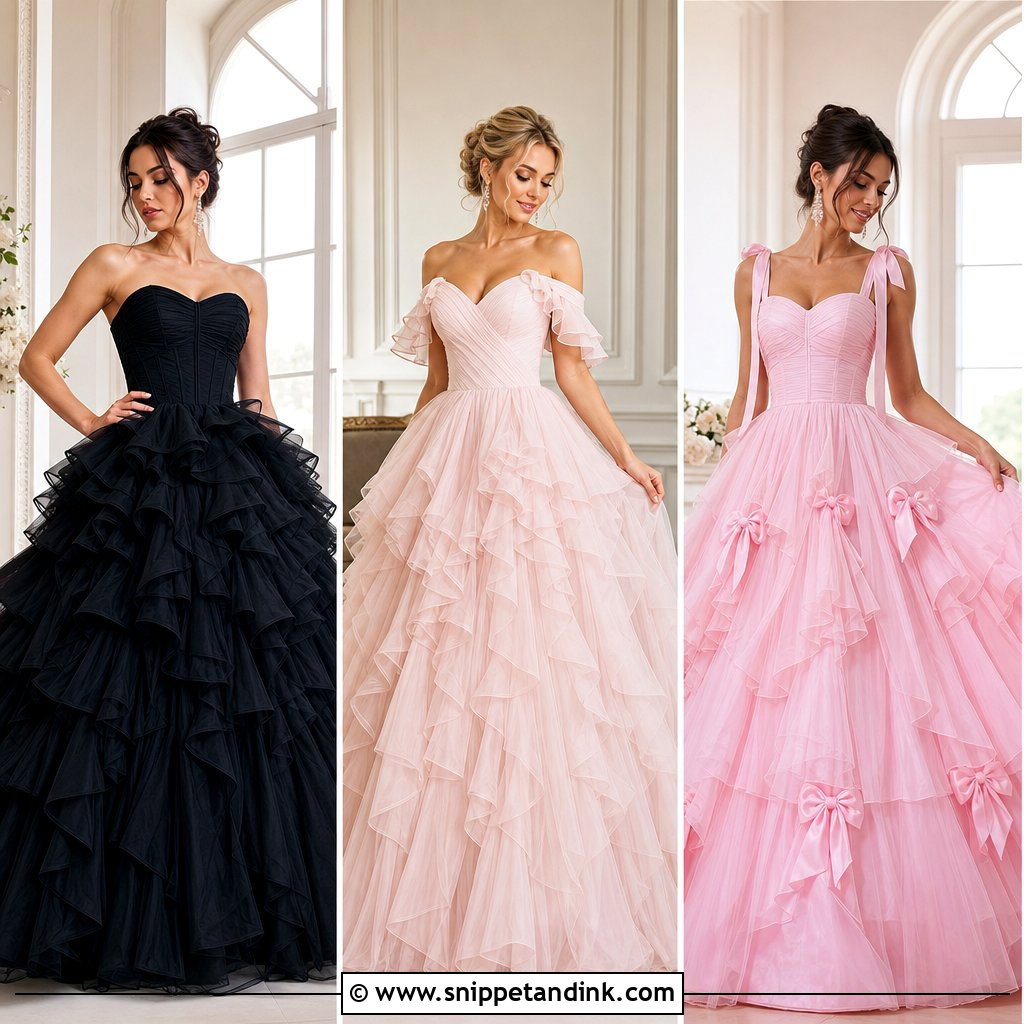
For a plus-size heavy outfit, support and proportion matter far more than volume. A-line lehengas, floor-length Anarkalis, structured saree gowns and peplum sets with a defined waist all work well. Spread the embroidery across neckline, sleeves, waist and hem rather than concentrating it in one area, and choose a breathable lining. A well-fitted blouse with wide straps or sleeves carries a heavy skirt’s dupatta and jewellery far better than thin straps. Jewel tones and monochrome sets give a long, unbroken line. Book alterations early; shoulder placement, sleeve width and waist fit make the biggest difference.
Storing Zari and Zardozi So They Last
Metallic embroidery is the part of a heavy outfit that ages worst if it’s stored badly. Zari threads tarnish in damp air, and heavy work stretches thin fabric if it hangs for months.
- Air the outfit for a day after the wedding before putting it away, so sweat and moisture can dry.
- Fold heavy skirts flat rather than hanging them by the waistband, and wrap them in soft white cotton or muslin.
- Avoid plastic covers for long storage. They trap moisture, which tarnishes metal thread.
- Refold along different lines every few months so creases don’t wear into the silk.
- Send embroidered pieces for professional dry cleaning only, and point out any stains.
Keep perfume and hairspray away from metallic work on the day itself. Spray them before you dress, because alcohol-based sprays can dull zari and mark silk.
If you plan to pass a lehenga down or rent it out later, photograph the embroidery up close before storing it. Loose sequins and lifting threads are easy to repair early and hard to match once more of the work has come away.
How Heavy Is Too Heavy for Your Role at the Wedding?
The right amount of embroidery depends on who you are at the wedding. Brides can wear the full weight of zardozi and a trail. Close family sit just below that, and guests should stay clearly lighter. Lehengas and sarees carry the most traditional grandeur, while Anarkalis, shararas, ghararas and maxi dresses give coverage and easier movement. Capes, jackets and saree gowns suit receptions. Whichever you choose, check the dress code, think about the venue and season, and get the fit and footwear right first. A heavy outfit that fits well is far easier to wear than a lighter one that fits badly.
You'll Like These Ideas:


Leave a Reply