
Your guests spend most of the ceremony looking at your back, which is the honest reason low back gowns are worth the extra fitting work. The cut can read sleek in satin or crepe, or textured once lace, pearls, bows and appliqué come in. I’m also seeing open backs paired with Basque waists, corsetry and draped necklines more and more, alongside the plain A-line. What makes any of them wearable is hidden: the support inside, the alterations, and what you wear underneath. Below are 25 complete looks, with the fit checks I’d run on each one.
Bras, Cups and Tape Under an Open Back
The first question I ask about any low back gown is what you’ll wear under it. Settle that before you order, because the answer can rule out a dress.
Sewn-in cups
My first choice for most brides. Your seamstress stitches molded cups into the bodice, so nothing can shift or show. They work best when the bodice already has boning to hold them.
Low-back bras and convertible bodysuits
These swap the usual band for one that wraps low around the waist. That hides it under a back that ends a little above the waistline, but a back cut down to the waist or lower will show the band, so measure where your opening stops before buying one.
Adhesive cups and body tape
Fine for smaller busts and short, cool events. Heat, dancing and lotion all weaken the grip, so I wouldn’t trust them alone for a long summer reception. Skip body moisturiser on the day where adhesive goes, and test it for a few hours at home first.
1. Simple Satin Low Back Wedding Dress
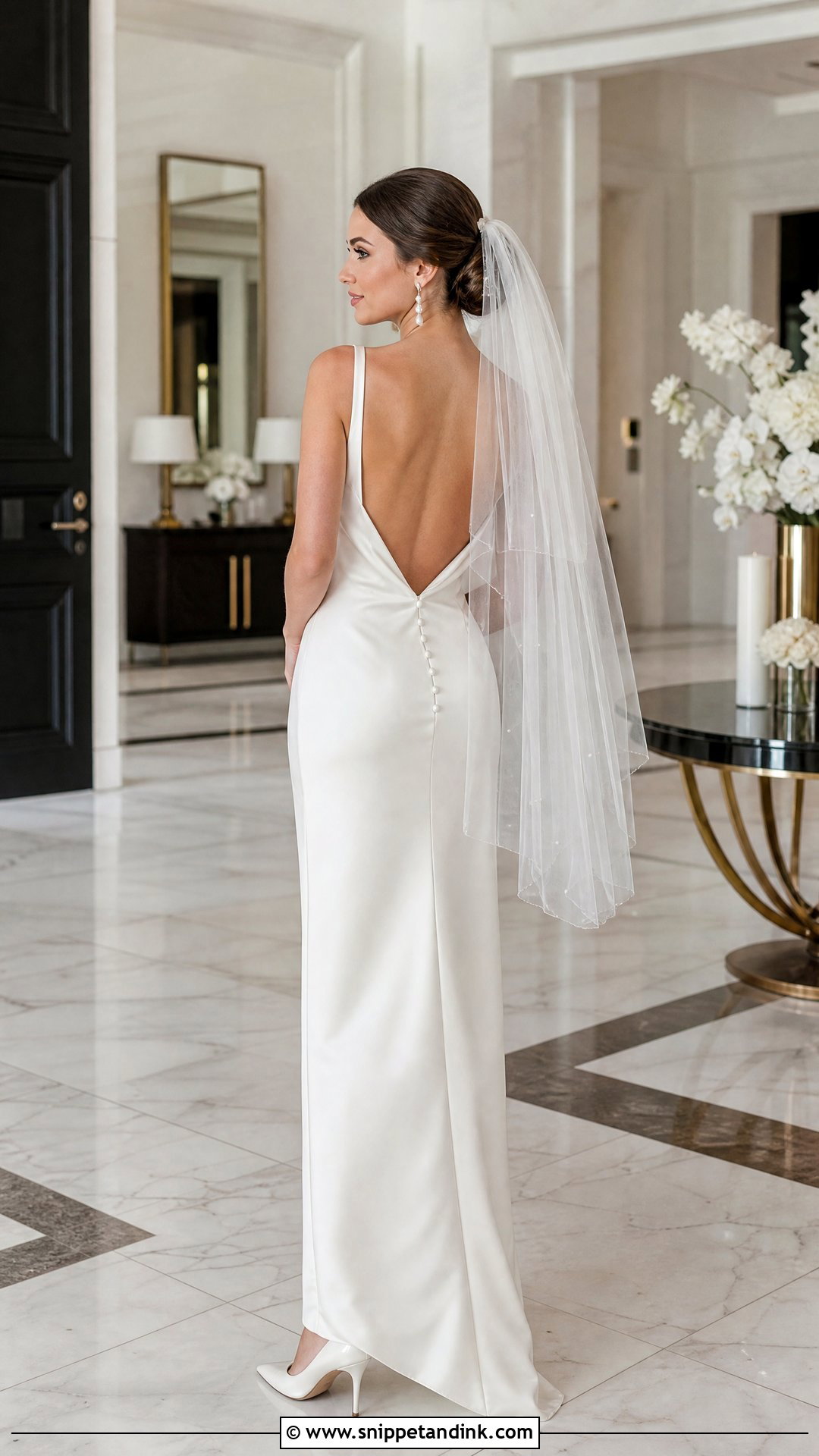
Satin shows every seam, so a simple open-back satin gown is really a test of your tailor. Wide straps and a clean scoop back give dependable support on a column or soft flare. When I fit this dress, I watch the back edge while the bride walks and sits. If it lifts away from the skin as she moves, the straps need shortening a touch. Pearl drops, pointed ivory pumps and a low chignon placed above the neckline are all it needs, with a fingertip veil short enough to keep the back in view.
2. Lace Mermaid Low Back Wedding Dress
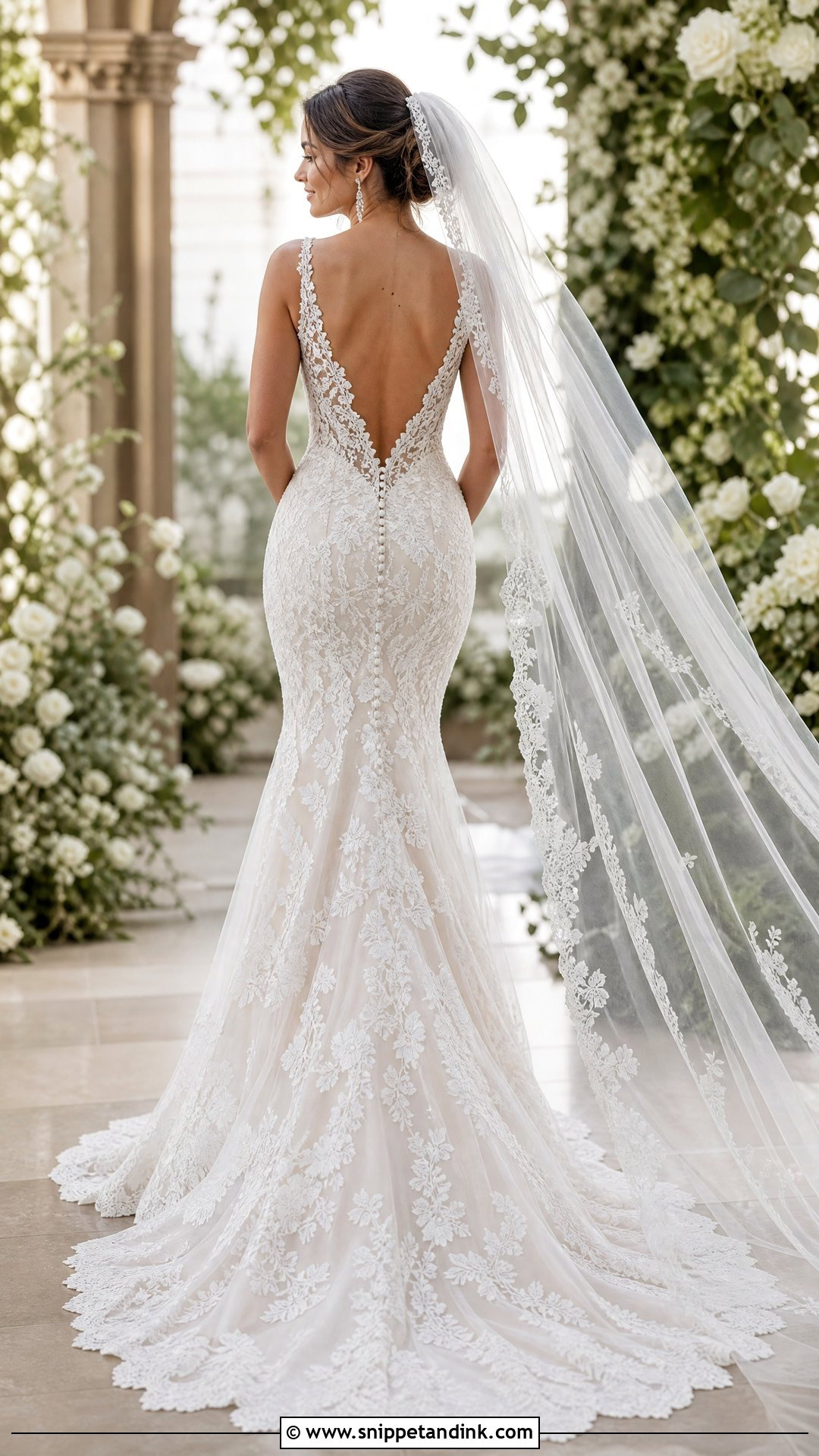
A lace mermaid with a scalloped V-back looks dramatic from behind, and covered buttons running down the skirt add an old-fashioned touch. The scallops are where I start: they should frame the opening evenly on both sides, which sometimes means the lace is hand-moved during alterations. A lace-edged cathedral veil can echo the pattern without hiding it. Finish with crystal earrings and ivory platform sandals. Practise stairs and sitting at fittings, because the bustle and hem have to work without spoiling the mermaid line.
3. Crepe Fit And Flare Low Back Wedding Dress
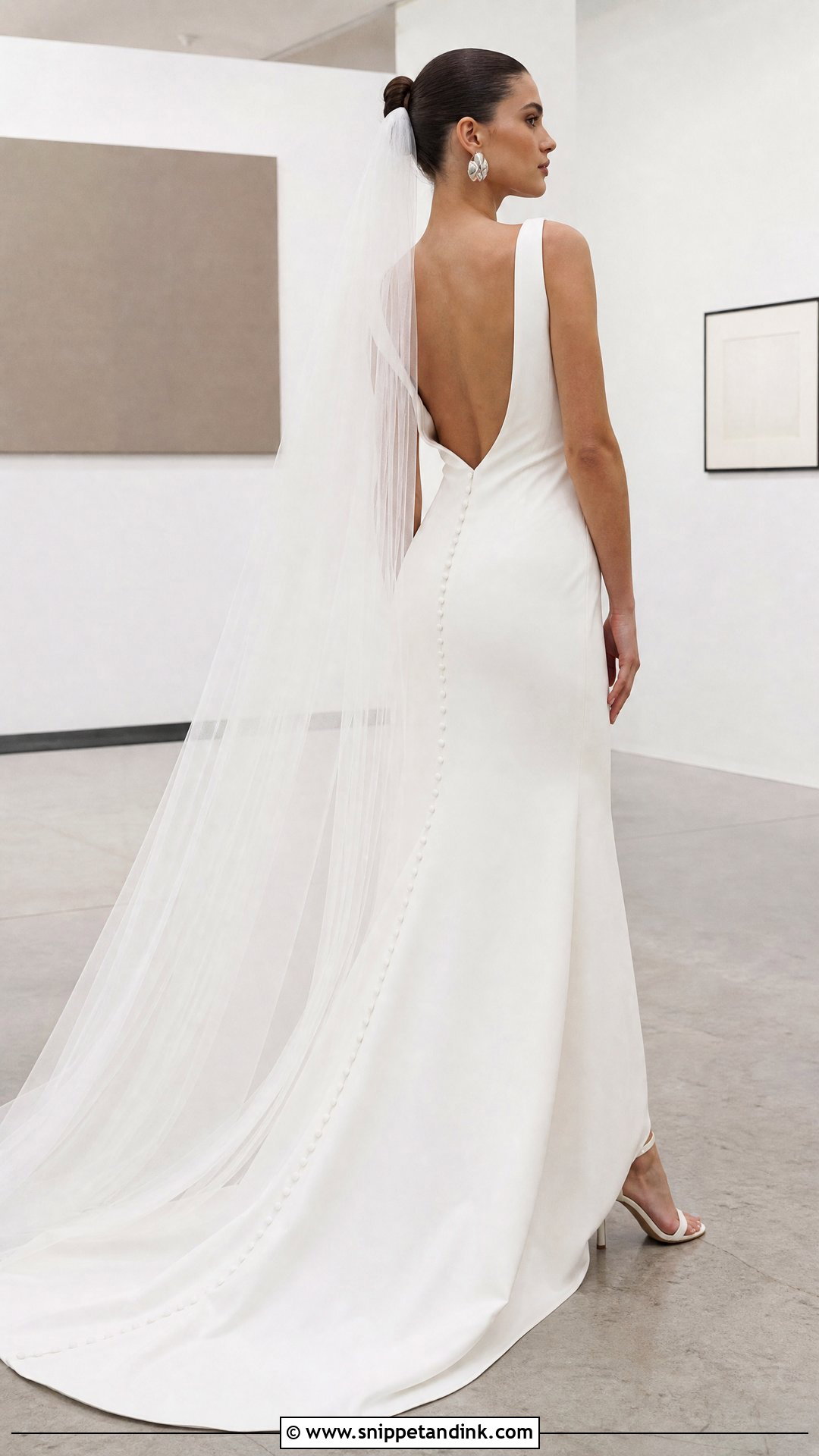
Matte crepe hides nothing, which is both its charm and its challenge on a deep open back. Princess seams and interior boning give it shape without decoration. The thing that catches brides out is shapewear. Most of it finishes at bra-band height, well above where this back ends, so look for low-back styles and test them at the final fitting while you move. Slingback heels, sculptural earrings and a cathedral veil attached beneath a polished bun keep the look clean. Covered buttons from the back down to the train add a quiet detail.
4. Silk Slip Low Back Wedding Dress
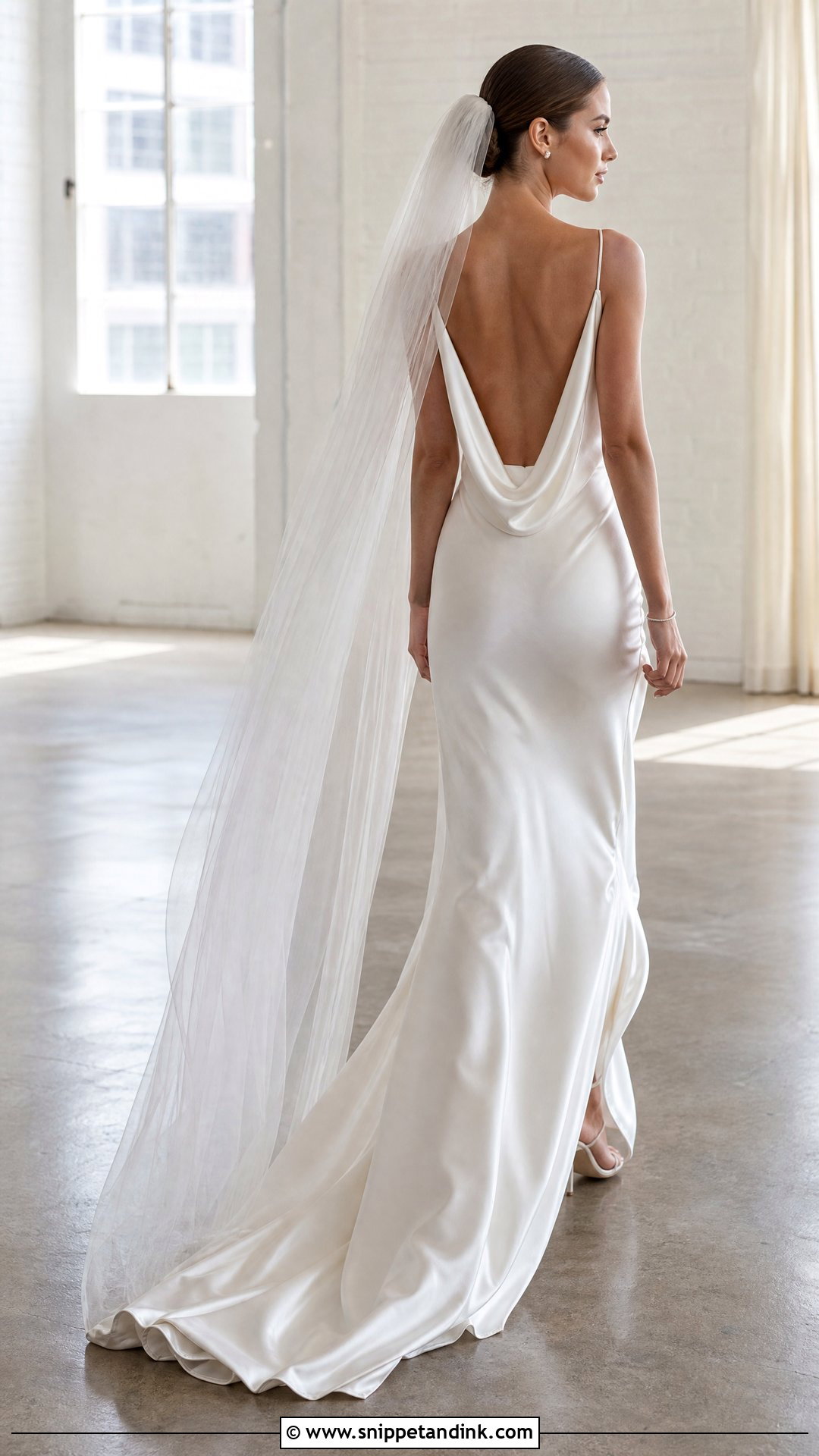
A silk slip is the most relaxed gown on this list, and the low cowl back lets the fabric pool softly instead of sitting stiff. Slender straps and a draped front keep it fluid. Silk also shows everything, from steaming marks to the outline of a cup, so I test adhesive cups or a sewn-in solution at alterations rather than on the morning. Loose waves suit it, but pin them to one side for back portraits. A sheer chapel veil adds ceremony without weighing the dress down.
5. A-Line Low Back Wedding Dress
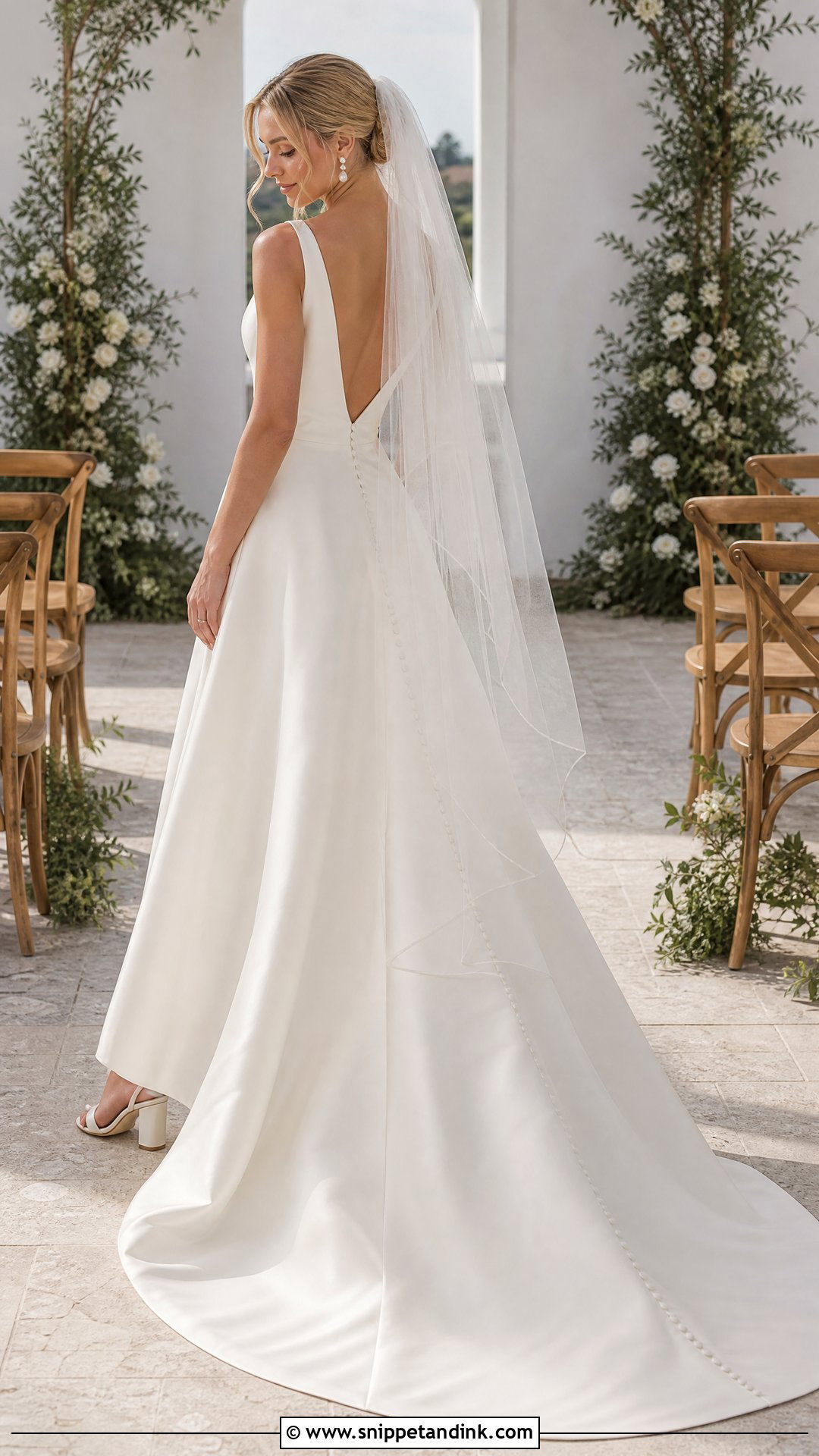
A-line is the safest open-back shape to start with. The fitted bodice holds the waist, and the skirt widens without ball-gown bulk. If you’re nervous about a deep back, choose a V with substantial straps; it looks open but holds you in. Fabric changes the mood: tulle is softer, Mikado and organza crisper. I always check at the last fitting that the bustle lifts every layer cleanly, since an underlayer that drops will drag behind you all evening. A chapel veil you can remove after the ceremony keeps the back on show.
6. Ball Gown Low Back Wedding Dress
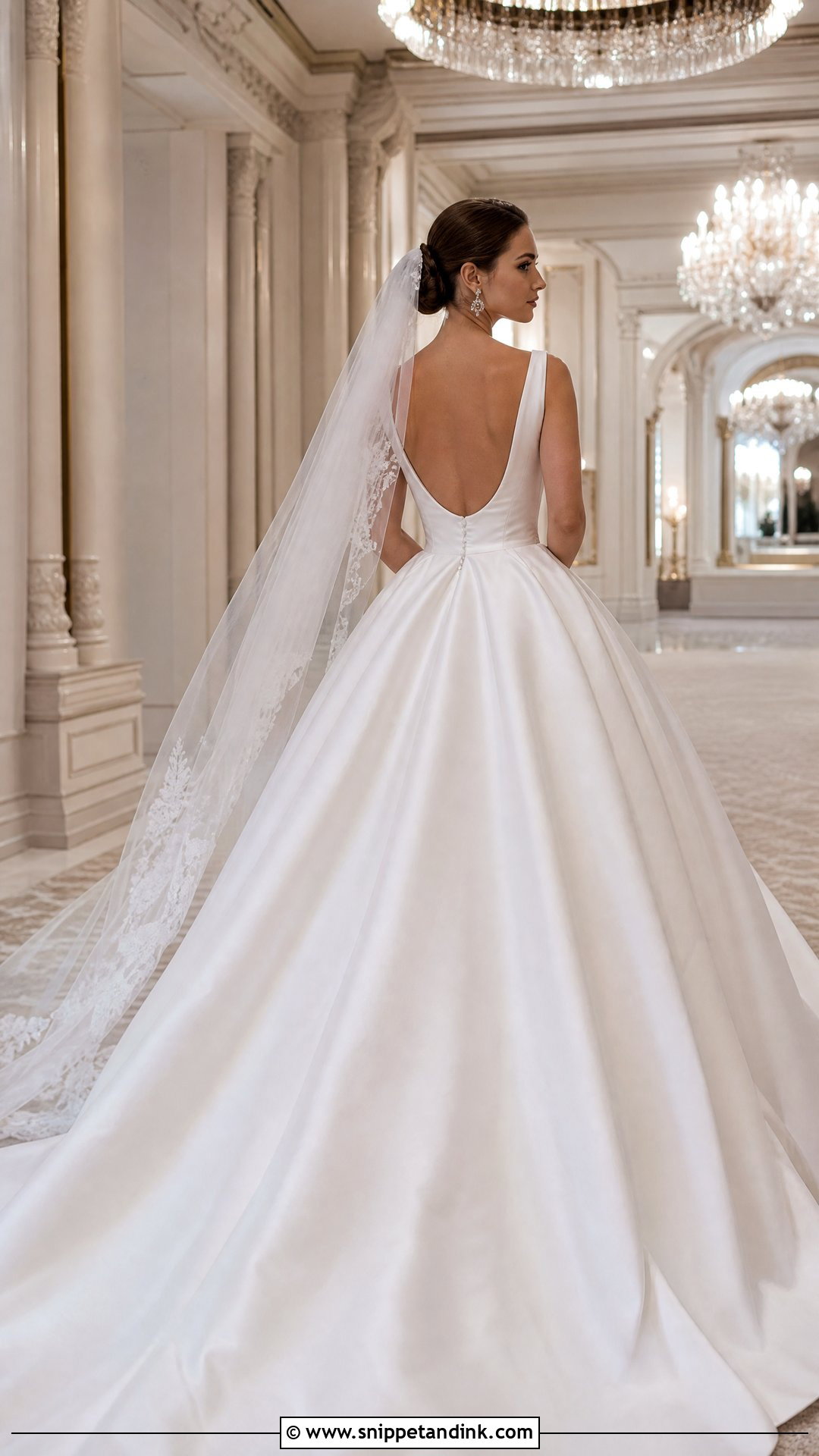
An open back makes a voluminous ball gown feel lighter, but it also takes away the back panel that would normally anchor all that skirt weight. That’s why internal corsetry and a waist stay matter so much on this one. A waist stay is a grosgrain band sewn inside that fastens around your waist and carries the skirt, so the bodice doesn’t sag. Ask about it if the back is cut below the natural waist. Keep the neck bare, the bun high and the shoes sturdy under the hem.
7. Long Sleeve Lace Low Back Wedding Dress
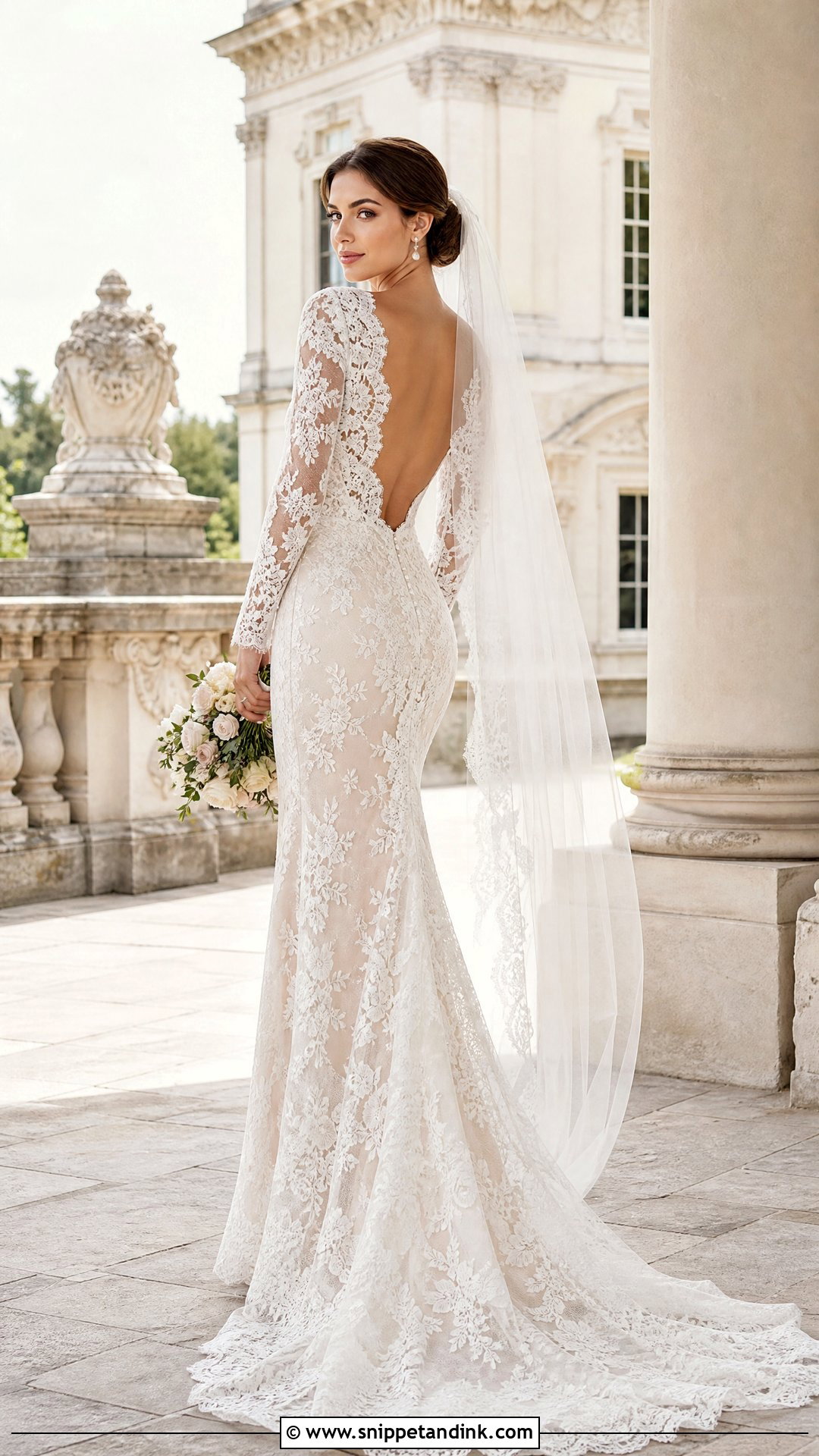
Lace sleeves with an open back give you covered arms and a bare back, a combination that suits cooler months and historic venues. Scalloped lace framing the opening looks finished without heavy beading. The fit issue is that sleeves and back pull against each other. When you raise your arms, the sleeves tug the back edge outward. I have the tailor fit shoulders, sleeves and back together, and I ask the bride to hug someone in the fitting room. Skip bracelets, which snag lace, and wear a low twisted bun with the veil above it.
8. Square Neck Low Back Wedding Dress
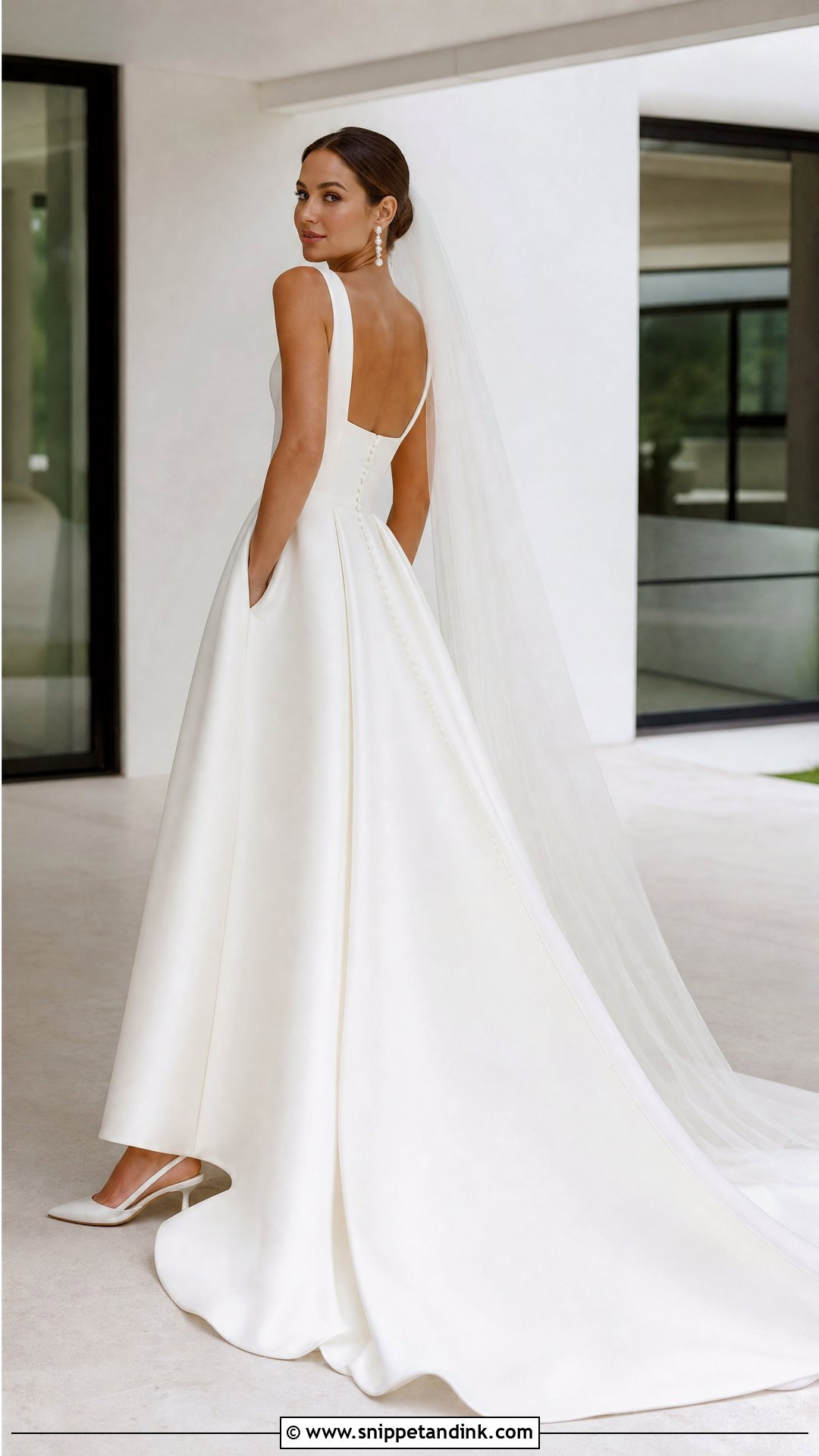
Repeating a square neckline with a square back gives you straight lines front and rear, and satin, Mikado or structured crepe hold that geometry best. Wide straps help. The problem I check for is gaping. A flat back edge needs precise strap length, so test the fit sitting upright and again leaning forward to sign the register. Geometric pearl earrings and slingbacks echo the shape, and a veil with no border keeps it clean. A loose bouquet of rounded white flowers softens all those angles.
9. Halter Low Back Wedding Dress
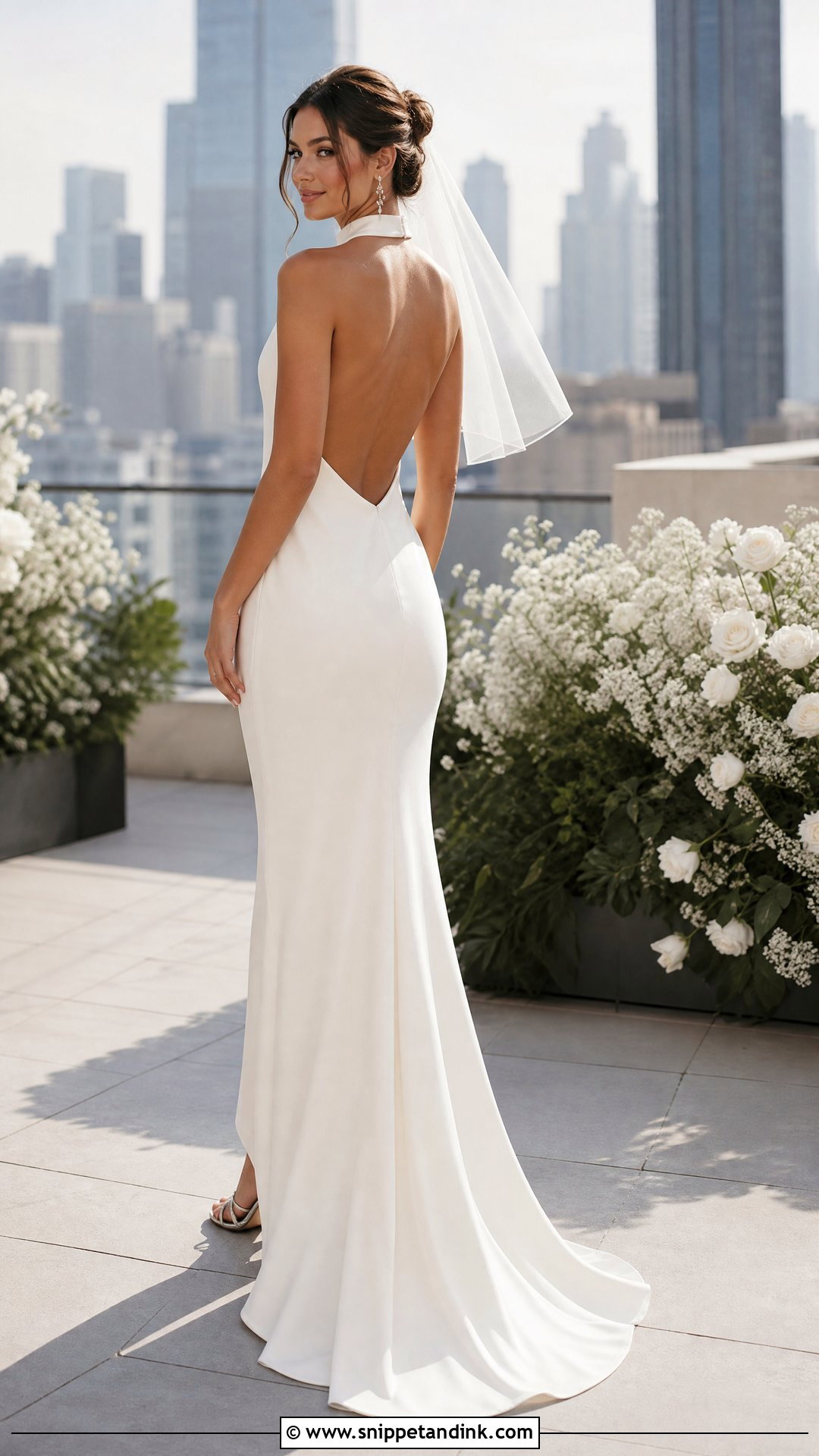
A halter puts every bit of weight onto the neck tie unless the bodice is built to carry it. That’s my first question on any halter gown: is the dress supported through the torso, or hanging from the closure? A high front, narrow tie or button at the neck, and a back open toward the waist is the classic version. Wear a bracelet rather than a necklace, and a textured bun so the halter shape shows from every side. A short veil or detachable tulle cape keeps the outfit uncluttered.
10. Cowl Back Low Back Wedding Dress
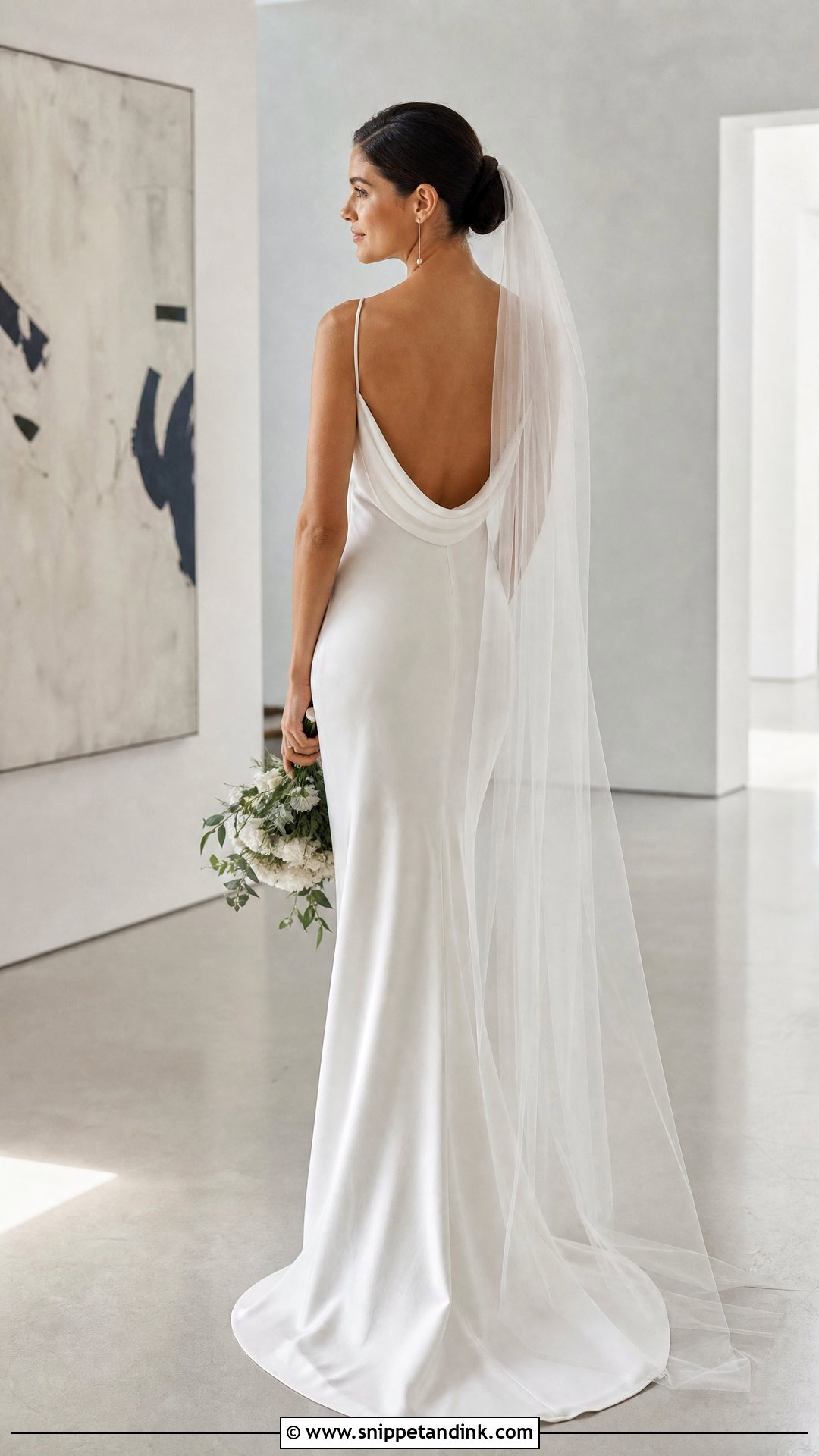
Cowl backs drape in soft folds, and only fabrics with real fluidity, satin and silk, fall properly. On a column or bias-cut gown it looks liquid. In fittings I look at the cowl from the side and from above, because a cowl that hangs unevenly can show adhesive cups, closures or the top of shapewear when you bend. Wear your bun above the folds, not resting in them. Remove the veil for portraits so the drape stands out, and avoid back necklaces that tangle in the fabric.
11. Illusion Lace Low Back Wedding Dress
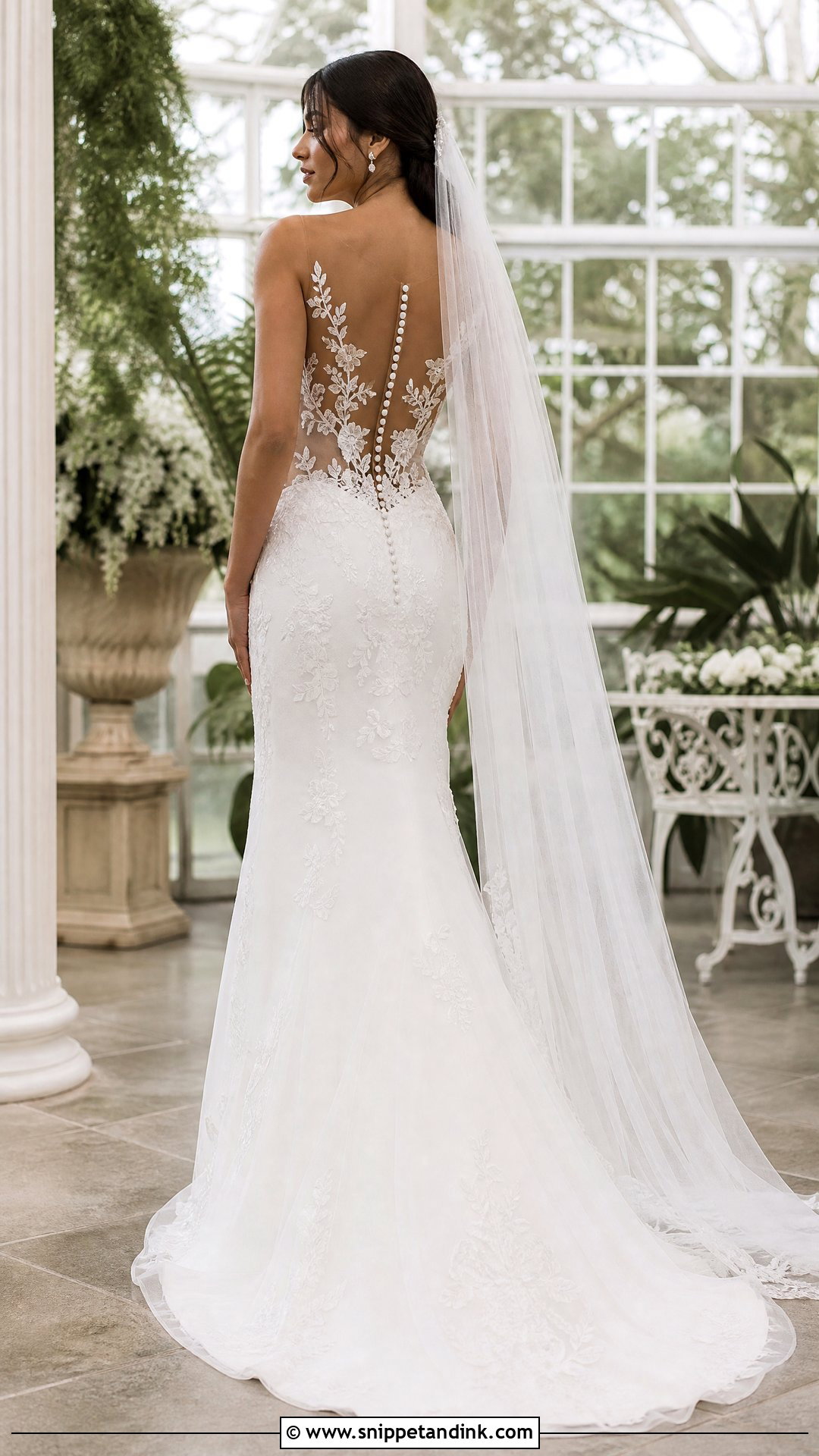
An illusion lace back gives the look of an open gown with structure underneath. The mesh carries appliqués, buttons or beadwork and keeps the bodice in place. The detail I’m strictest about is mesh colour. It should disappear against your skin in daylight and under camera flash, so hold swatches against your back in natural light. Tailoring around the shoulders and side seams stops wrinkles forming across the panel. A plain tulle veil and a high chignon keep the lace visible.
12. Bow Back Low Back Wedding Dress
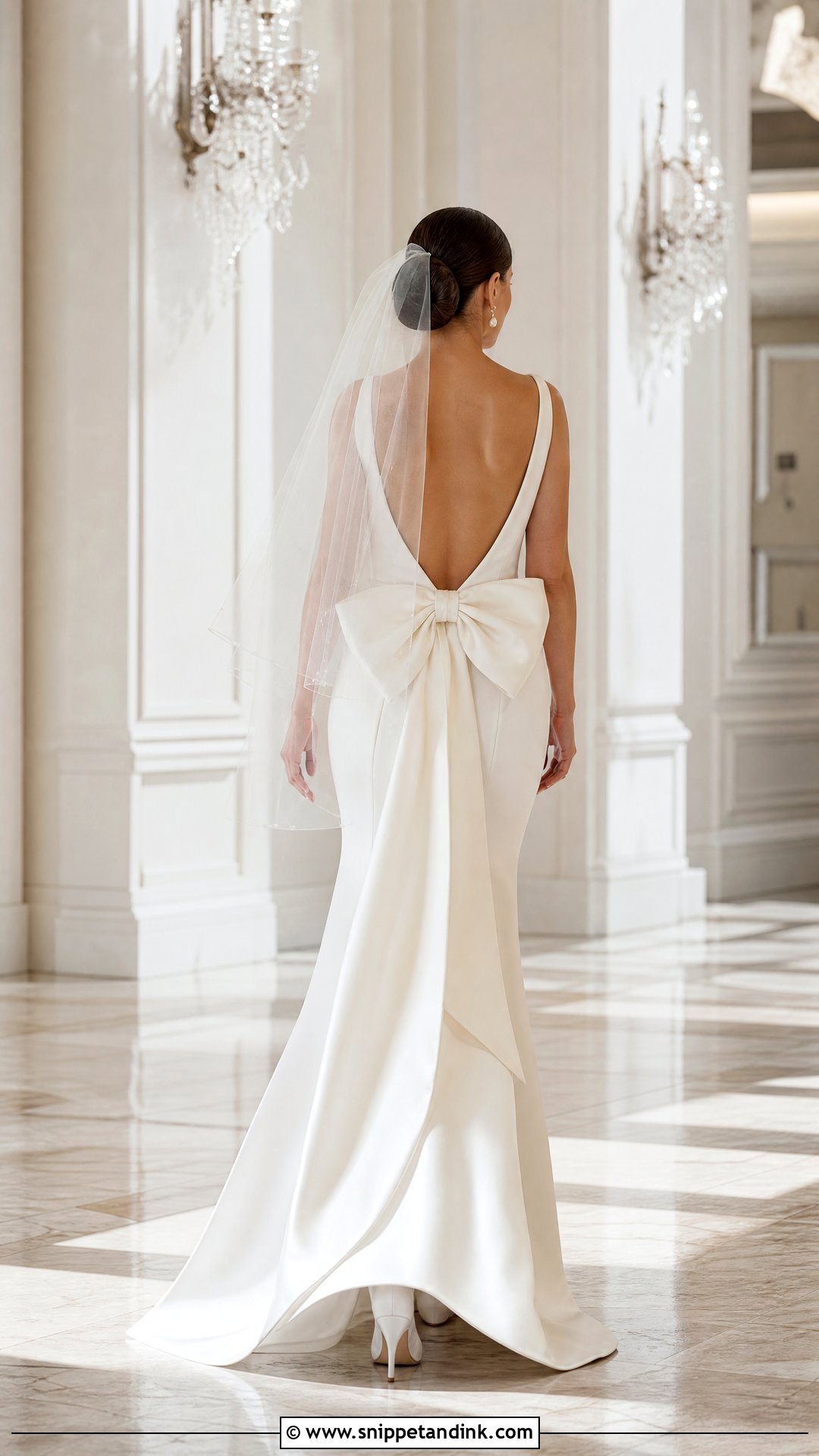
A bow at the top or base of an open back gives a plain satin gown one strong focal point. If you’d like a different look later, ask for it to be removable. Long bow tails need managing: I have the tailor arrange them so they fall evenly and don’t tangle with the train or the bustle. Small pearl earrings, pointed pumps and a clean fingertip veil keep the rest controlled. A polished bun stops the hair competing with the bow.
13. Pearl Back Low Back Wedding Dress
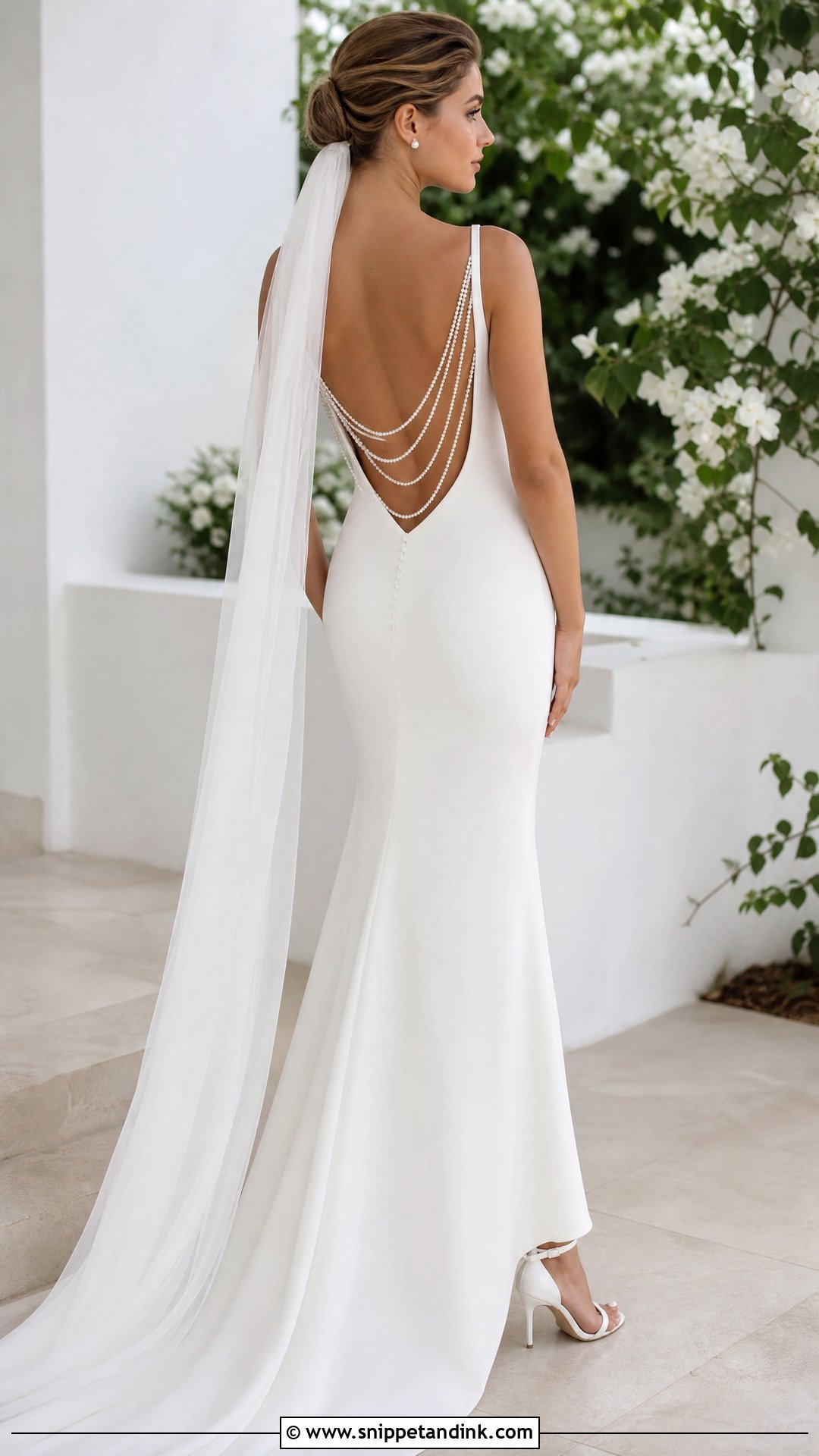
Pearl strands across an open back read like jewelry built into the dress. They show best on plain crepe, chiffon or satin with a gently fitted line and a low V. The questions I ask the salon are about attachment and length. Strands should be stitched to survive sitting, hugging and dancing; too loose and they droop, too tight and they pull the bodice up. Skip any back necklace, which will tangle. Pearl studs and ankle-strap heels finish it quietly.
14. Beaded Low Back Wedding Dress
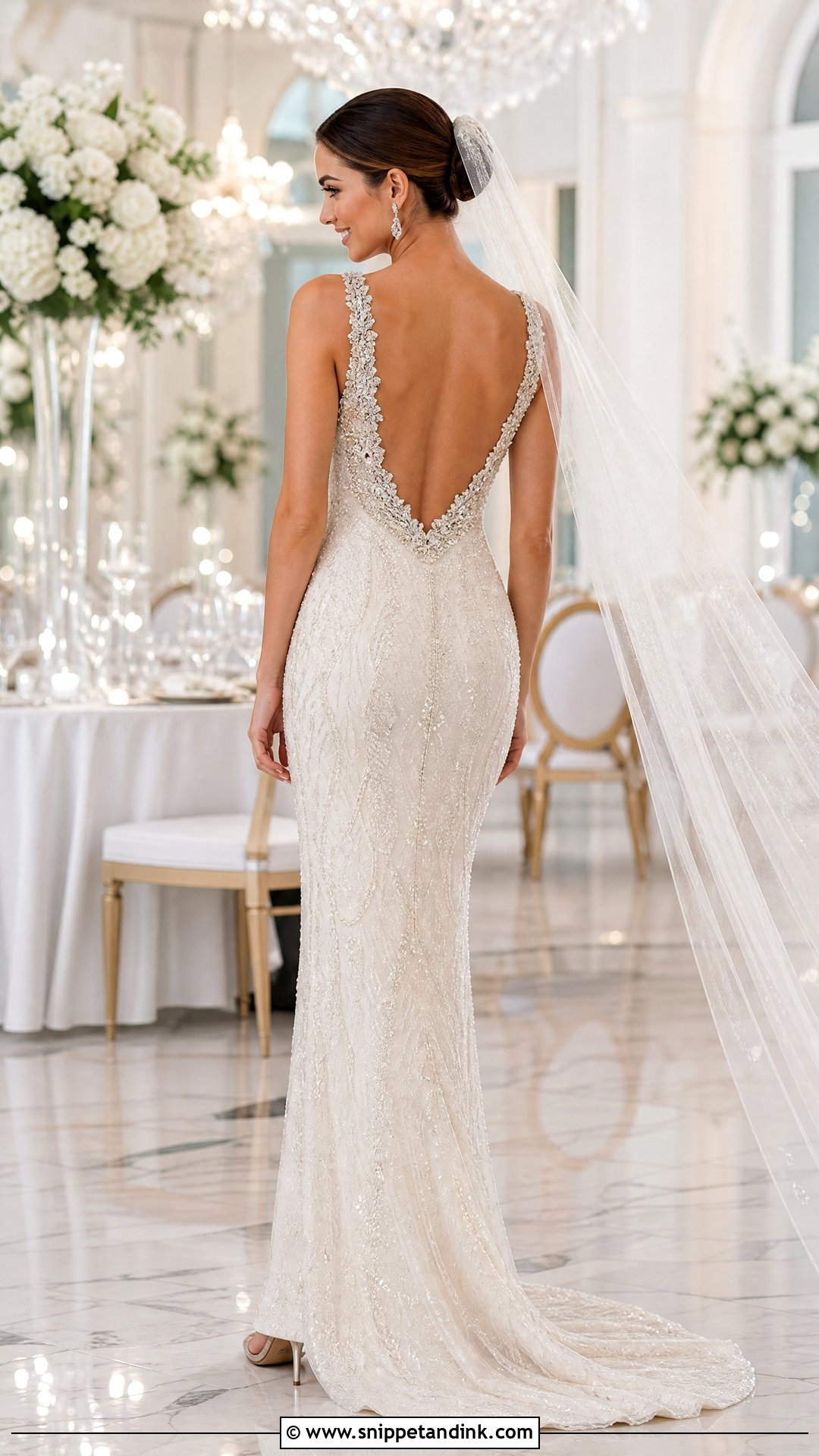
Beading lights up under reception lighting, but on an open back the beads around the edge sit against bare skin. Run your hand along the inside of the opening before you buy. If it feels rough, ask for a discreet lining strip. Concentrated beadwork on the straps, waist and back outline is easier to wear than an all-over beaded gown, which can be heavy. Walk, sit and lift your arms at the appointment. A tucked chignon keeps hair from snagging, and a secure bustle carries the beaded train.
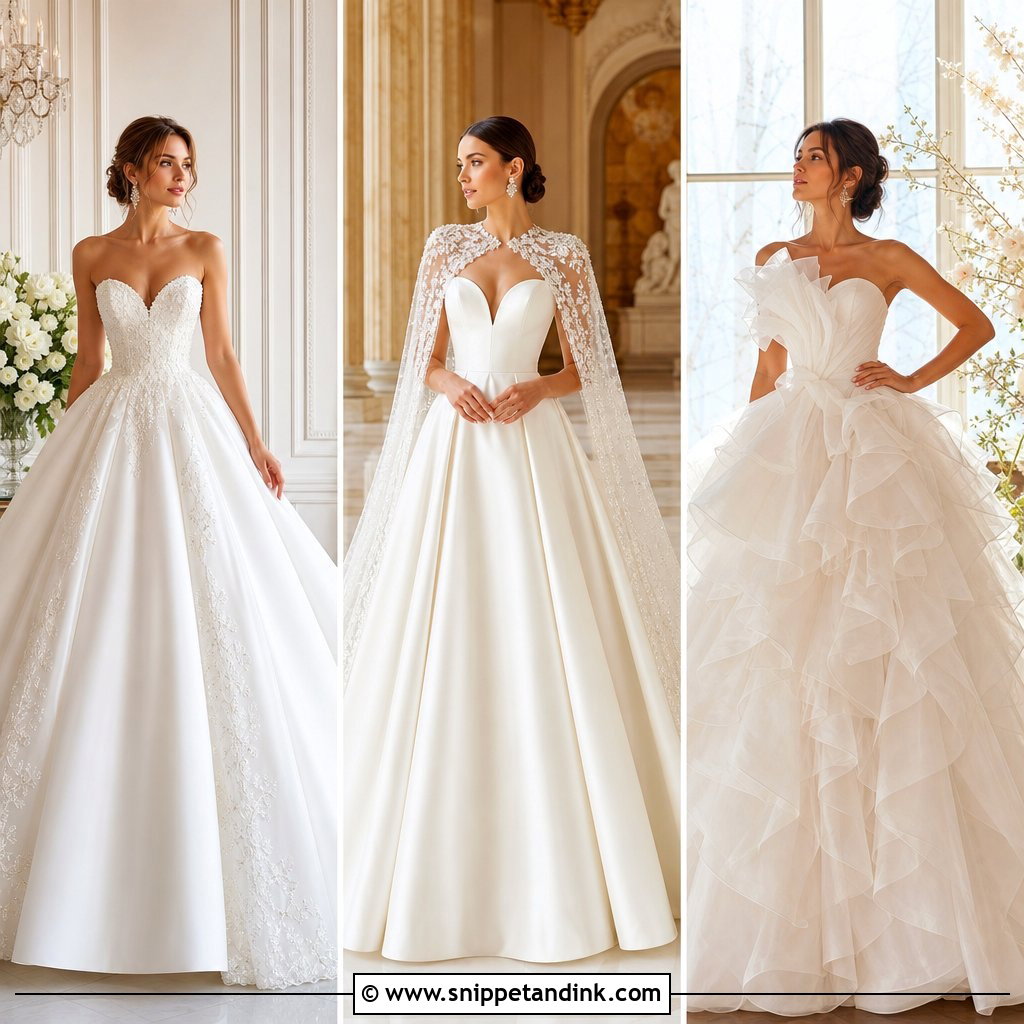
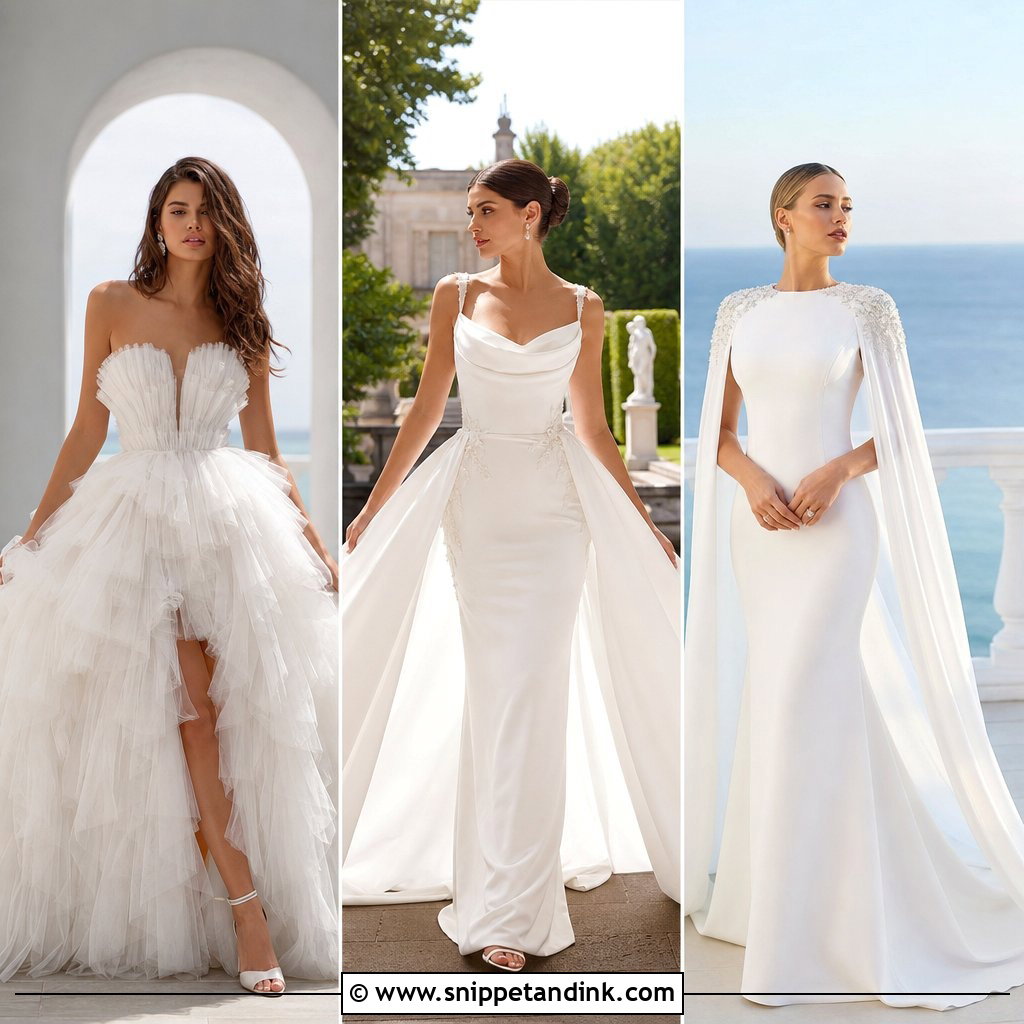
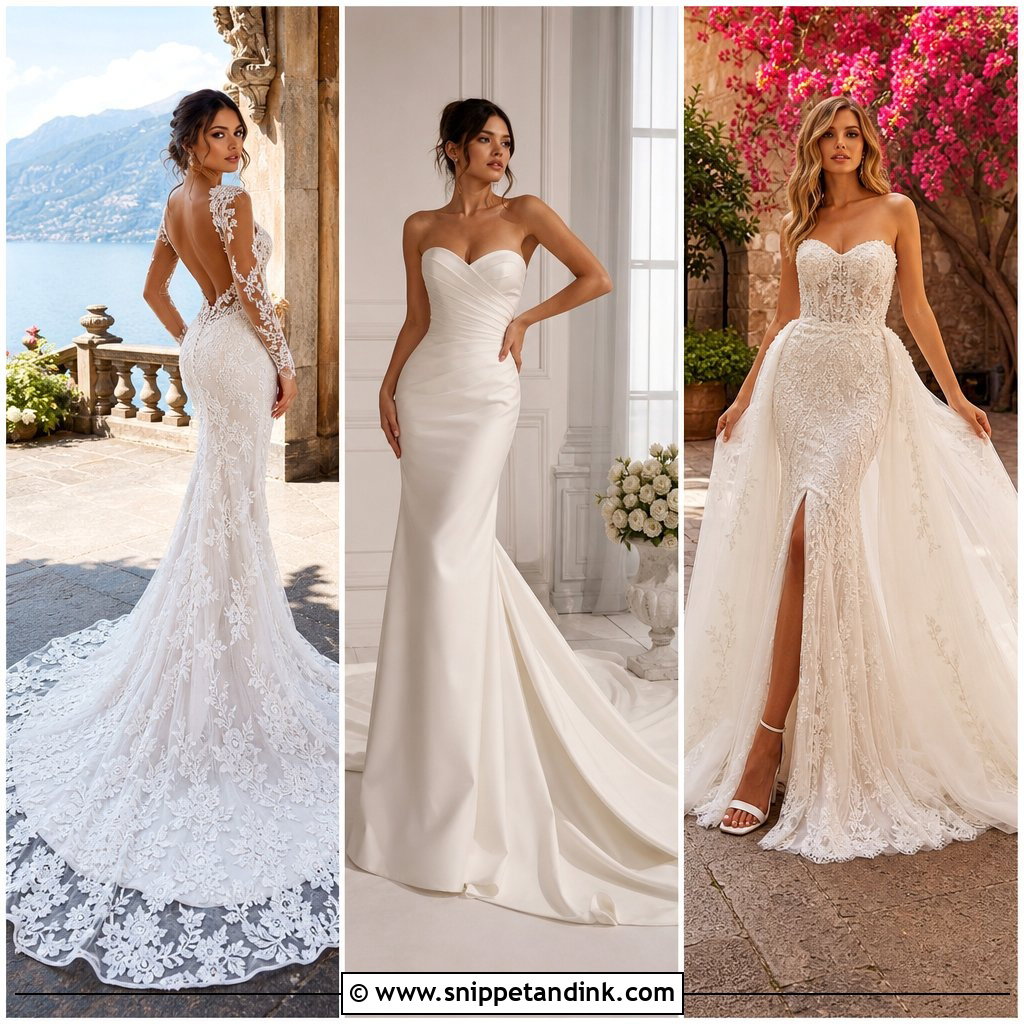
15. Floral Appliqué Low Back Wedding Dress
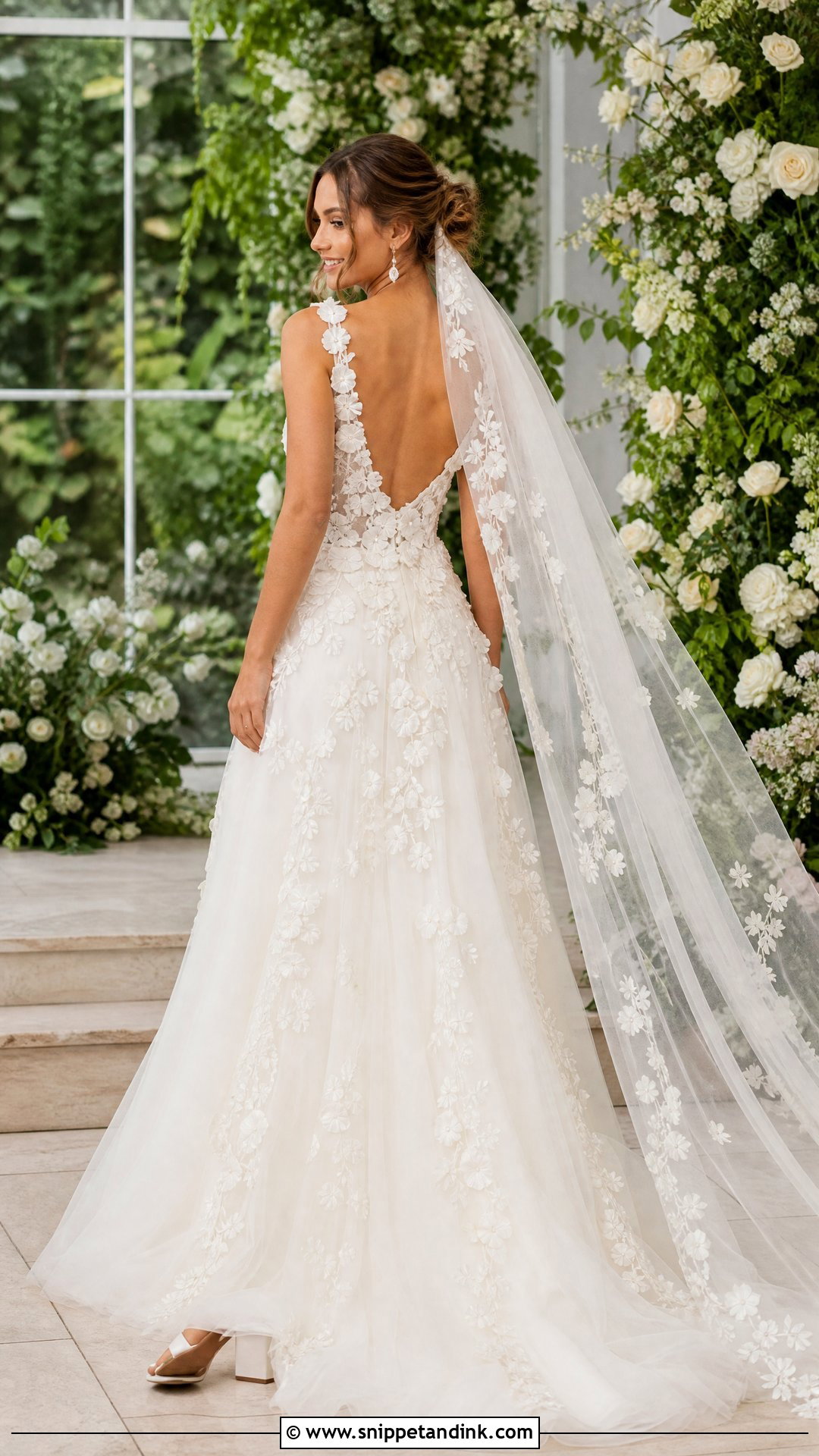
Three-dimensional flowers framing the straps and drifting across the skirt add depth without sparkle. A deep V-back keeps the design airy, and a chapel train finishes it. During alterations, I check every appliqué near the zipper and the bustle points, because flowers that fold or catch there look messy in back photos. A veil with a few matching appliqués ties things together; a bouquet with restrained greenery stops the outfit from becoming a garden.
16. Basque Waist Low Back Wedding Dress
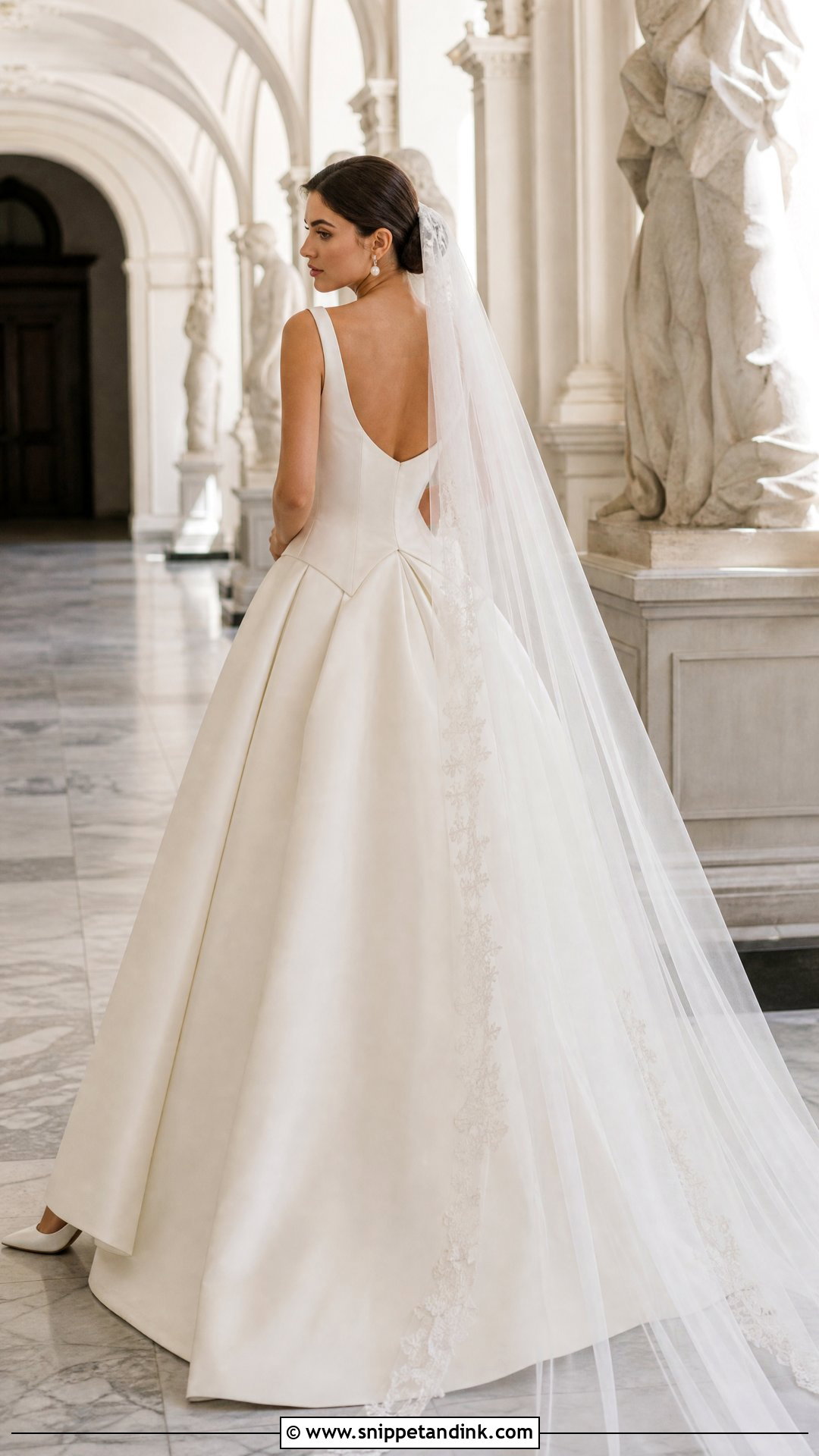
A Basque waist dips below the natural waistline, and paired with a low back it gives a sculpted, historical line. It needs structured satin or Mikado and a corset that’s built into the bodice. The point of the waist must sit where it’s meant to, not pressing into your hips when you sit. Opera gloves suit the formality, kept plain if the bodice already has visible seams. I ask the tailor to look at corset support, back opening and skirt weight together, since changing one shifts the others.
17. Drop Waist Low Back Wedding Dress
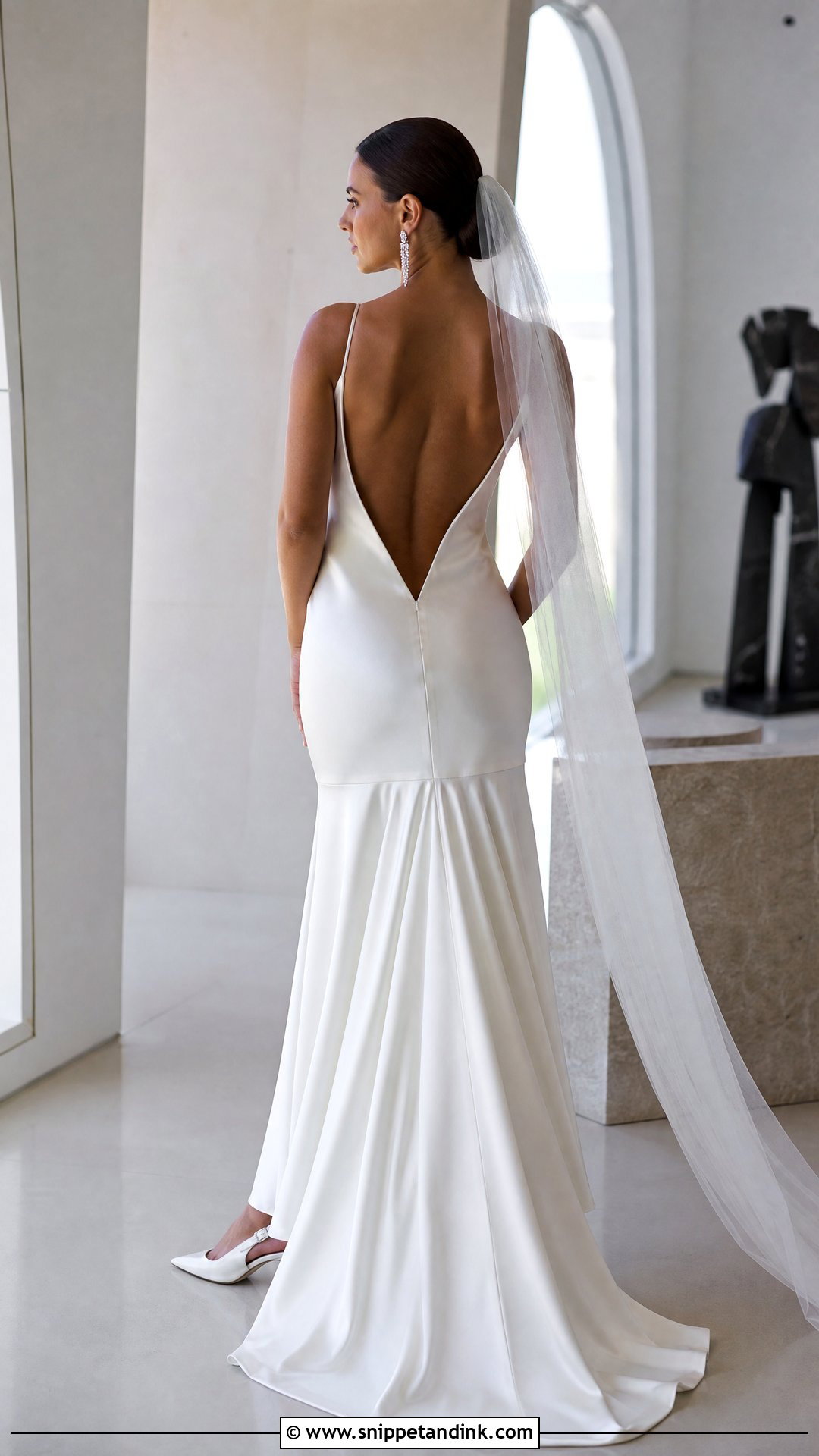
A drop waist runs the bodice past the natural waist before the skirt starts, which stretches the torso visually. With a clean scoop or V-back it looks modern. Satin defines it; organza softens it. The skirt begins nearer the hips, so take a long stride and sit down at the fitting. Where that seam falls should suit your proportions, not a trend. Precise alterations keep horizontal creases from forming across the lower back. A high bun supports all the vertical lines.
18. Corset Low Back Wedding Dress
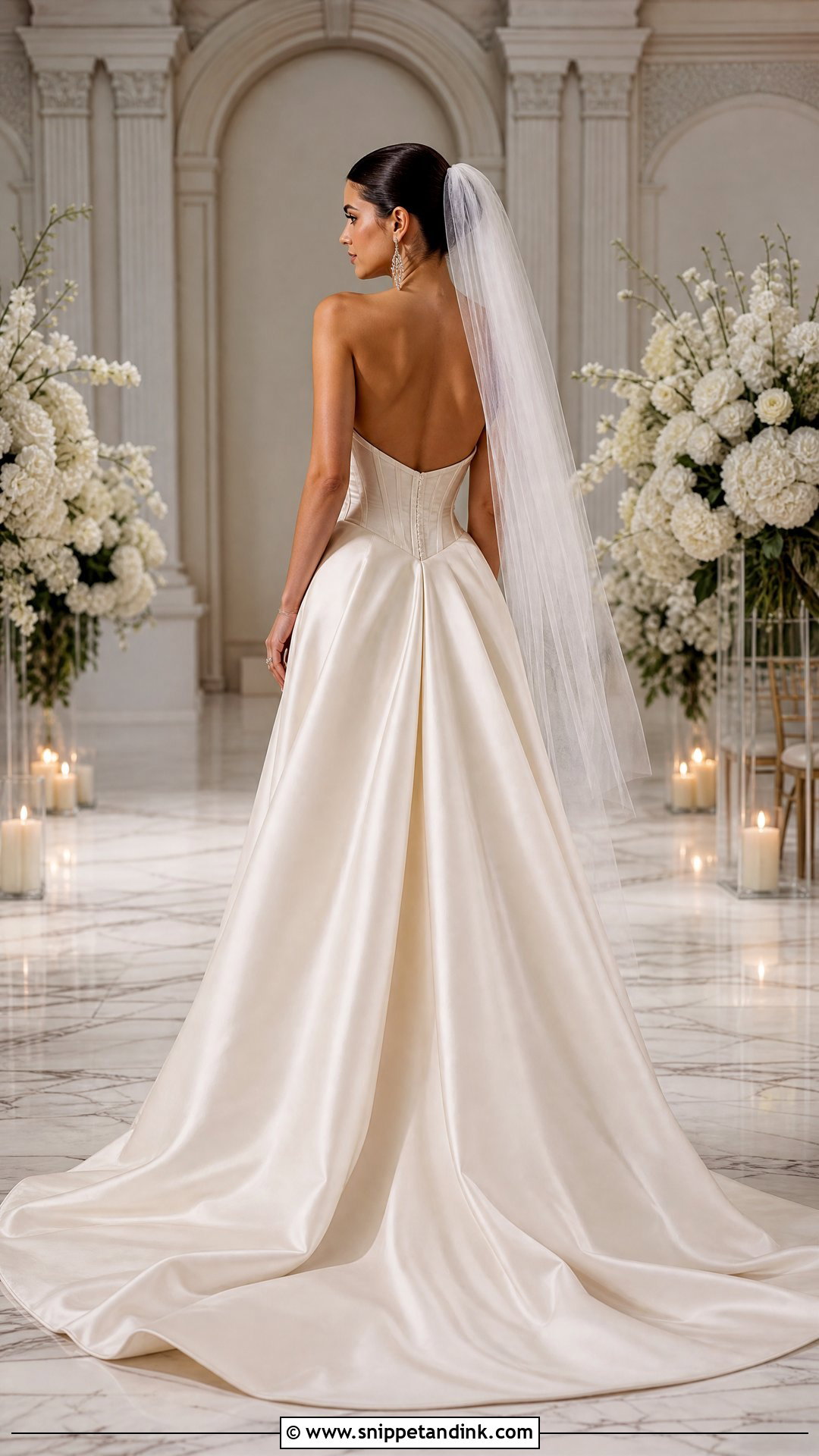
Corsets and open backs seem to contradict each other, since a traditional corset closes at the back. The good ones solve it with supportive cups, side boning and a back waist cut lower, rather than relying on tight lacing. At fittings I have brides breathe deeply, sit and swing their arms. Ask whether the cups can be adjusted or more support sewn in. A full satin skirt suits a formal room; fitted crepe is sleeker. Wear your hair up so the corset lines and the opening both show.
19. Off Shoulder Low Back Wedding Dress
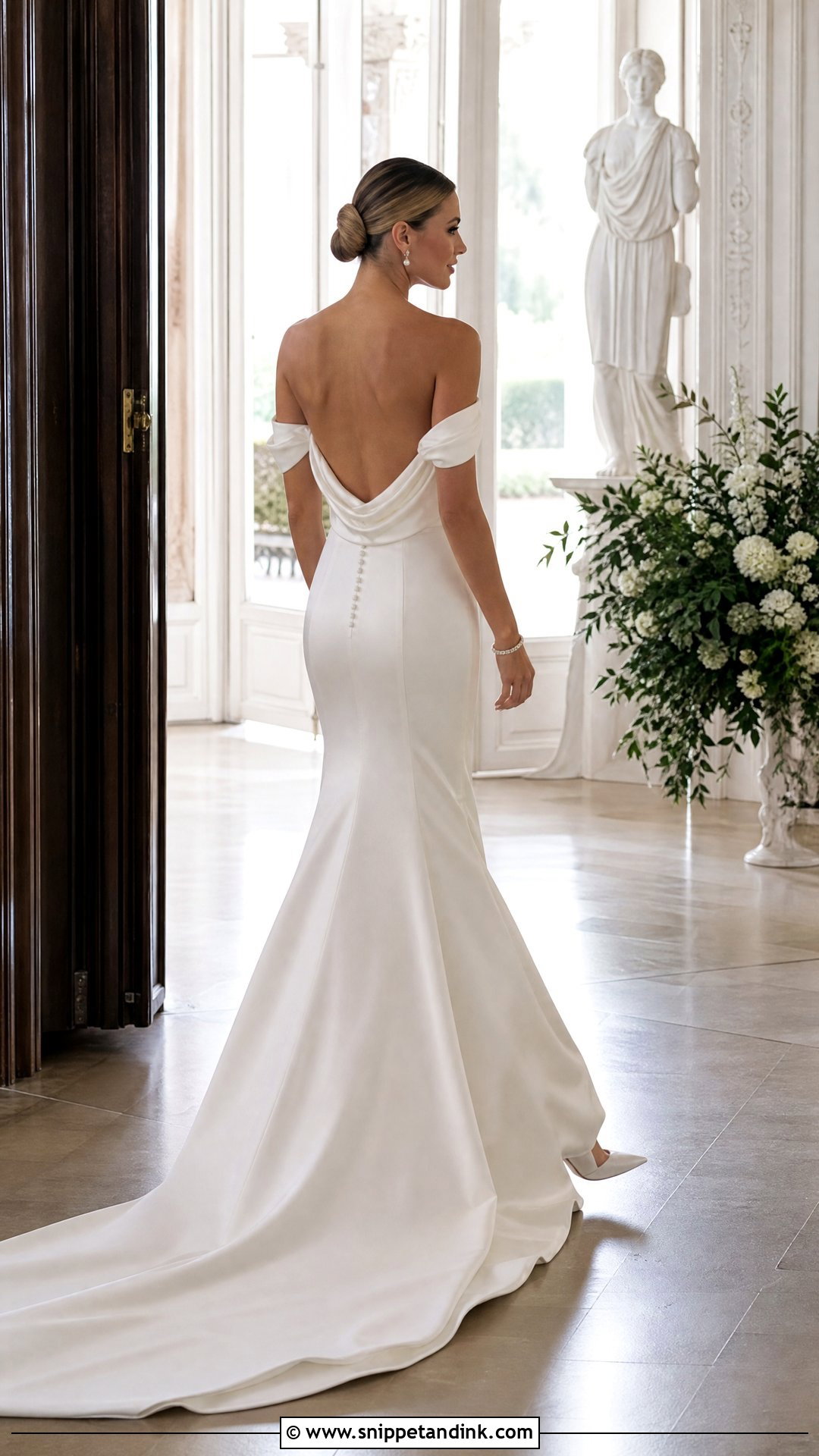
Off-the-shoulder bands frame the collarbones while the low back continues the open line behind. The fitting challenge is that the bands, any internal straps and the bodice all work as one system. Tighten one and the others shift. Your tailor should adjust them together, and you should be able to move your arms freely rather than holding them at your sides. A satin fit-and-flare reads clean; a lace A-line is softer. Skip the necklace unless it’s very fine.
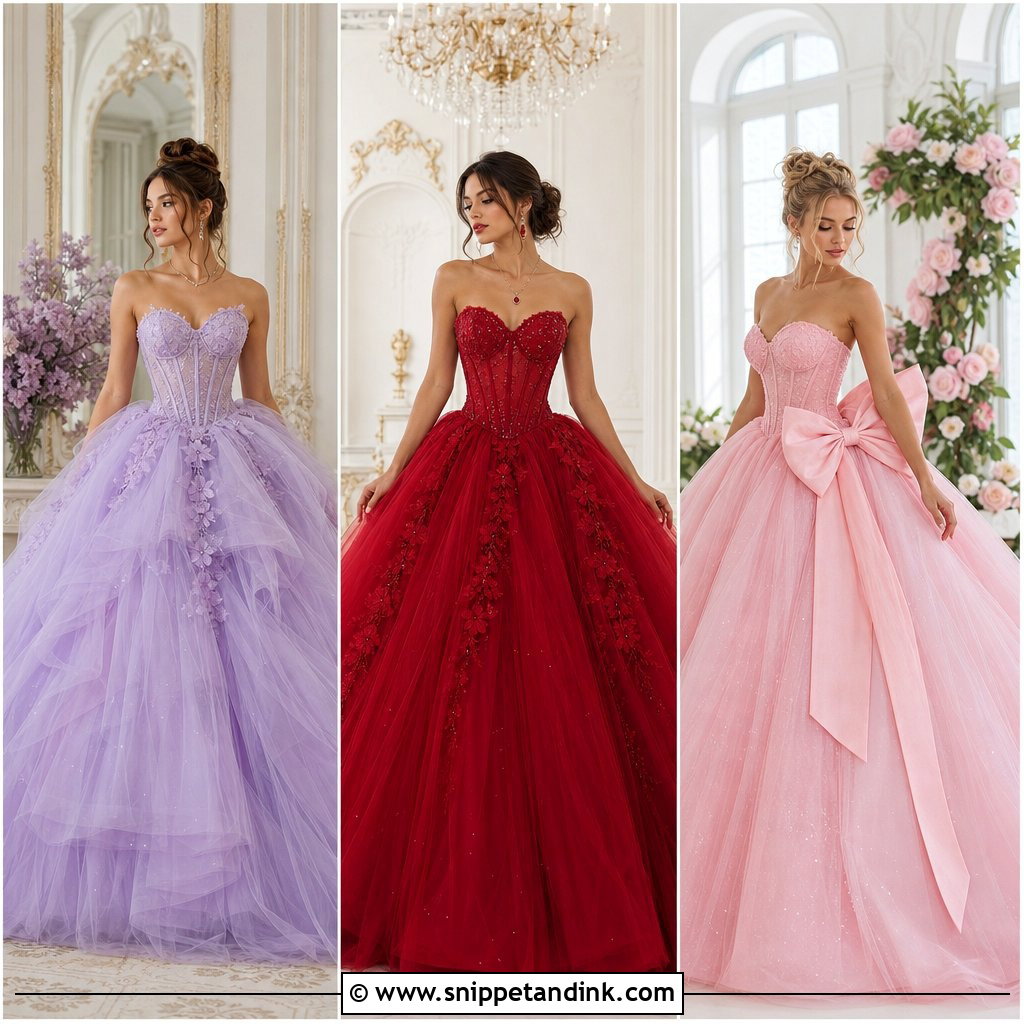
20. Spaghetti Strap Low Back Wedding Dress
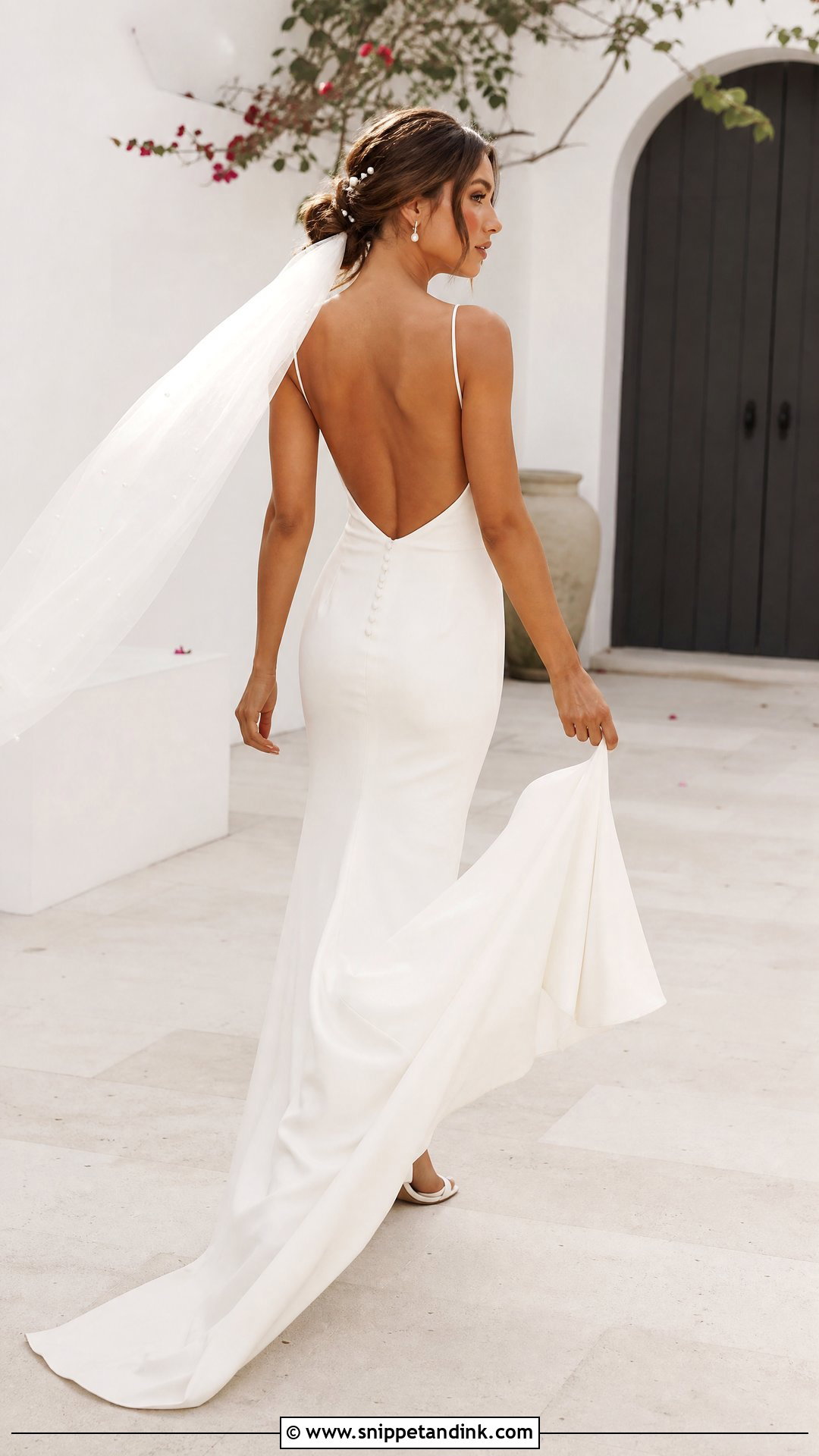
Thin straps make a low back feel weightless, but they carry the whole bodice, so I always want them adjustable or professionally fitted. Too long and the back gapes; too short and they dig. If you need bust support, ask for discreet cups sewn in. On a very minimal dress, add texture with a pleated veil or pearl hairpins rather than piling on jewelry. Watch the side seams at the final fitting. Any pulling there breaks the clean line the dress depends on.
21. Cap Sleeve Low Back Wedding Dress
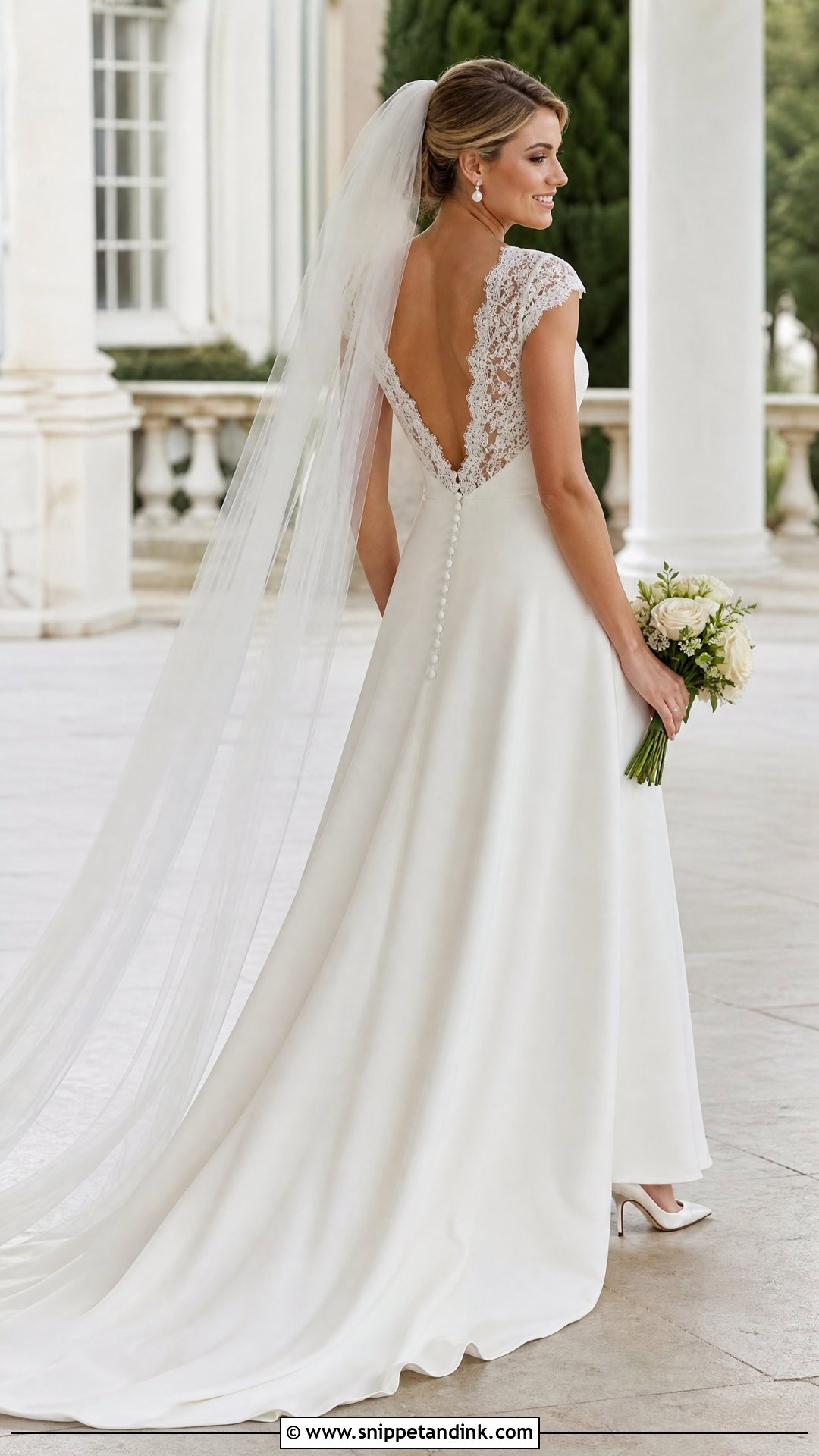
Cap sleeves add light coverage while the open back still does the talking. Lace caps feel romantic and satin caps more tailored. An A-line with a V-back and covered buttons balances comfort with detail. The armhole is my main concern: tight caps restrict reaching and can pull the back opening out of place. Reach forward and hug someone at the fitting. Careful tailoring across the shoulders, bust and upper back keeps the bodice stable from ceremony to last dance.
22. Plus Size Low Back Wedding Dress
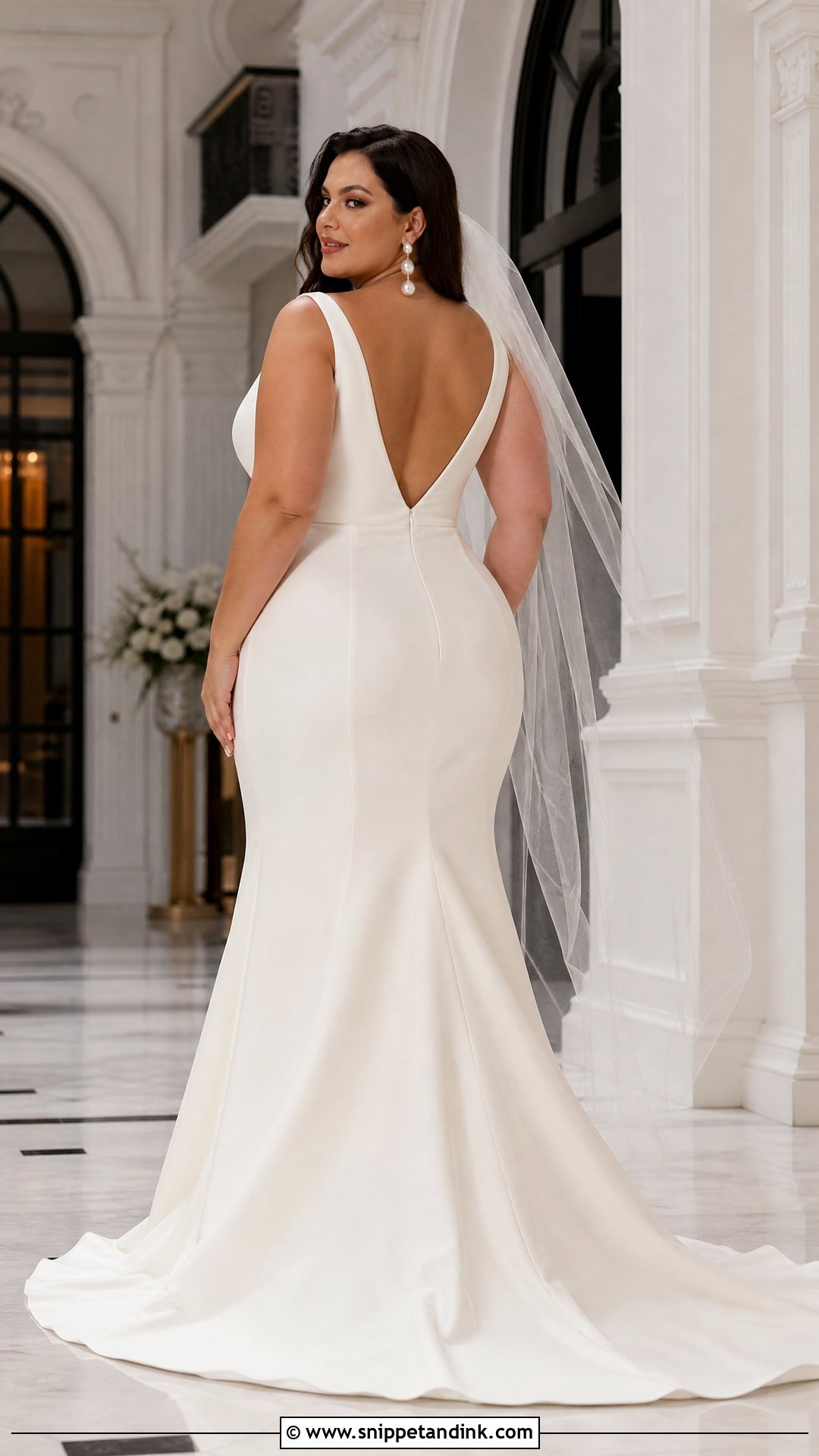
Plus-size brides can absolutely wear a deep back; it just has to be engineered. Wide straps, strong side panels, molded cups and boning in an A-line or fit-and-flare do the work. A medium or deep V-back lengthens the line. I’d look for a boutique that carries samples close to your size so you can judge the support honestly, rather than imagining it from a clipped sample. Good pattern scaling keeps the design’s proportions intact. Talk through back depth, cup placement, shapewear and bustle construction with an experienced alterations specialist.
23. Petite Low Back Wedding Dress
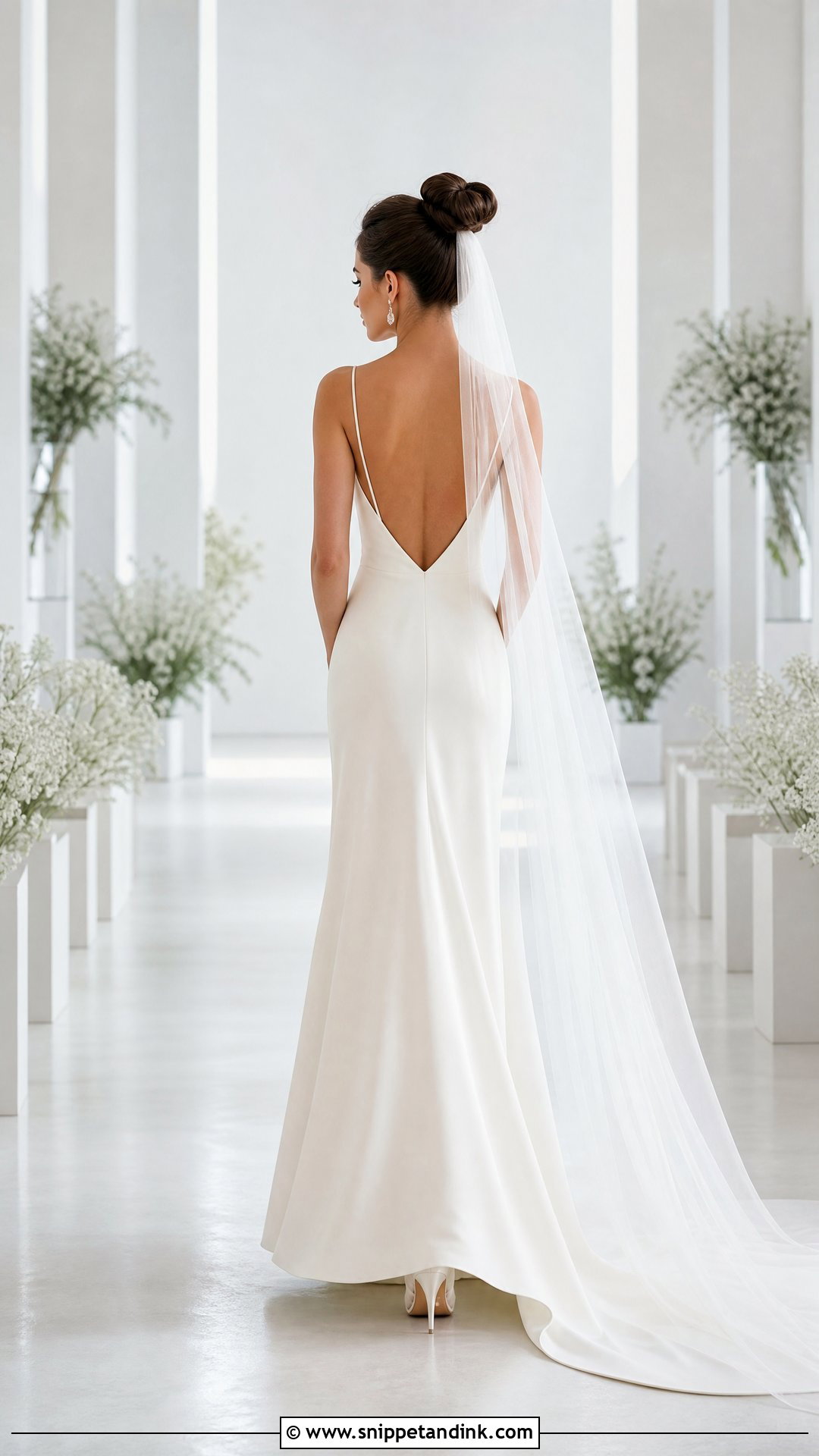
On a petite frame, an open back and well-placed seams build one long uninterrupted line. A sheath, narrow A-line or fit-and-flare without bulky waist layers works best, and a low V-back lengthens the torso. The fitting trap is that straps, waist and skirt flare are drafted for a taller body. Hemming alone won’t fix that, so ask whether the gown can be ordered in petite proportions or shortened through the pattern. A narrow veil and a bun placed slightly higher add a little height.
24. Beach Low Back Wedding Dress
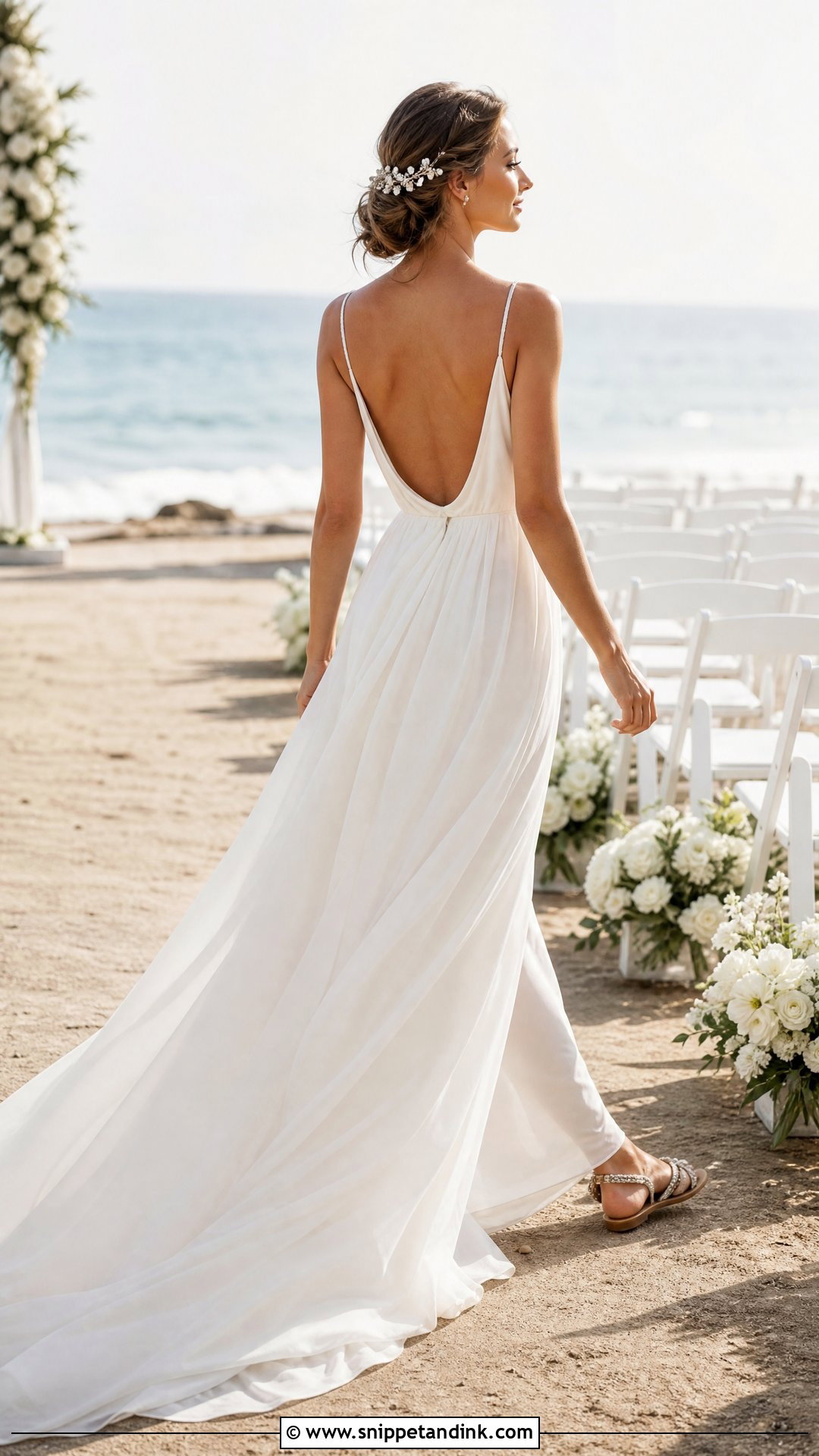
Sand, wind and heat change everything about a beach gown. Choose chiffon, silk or light crepe with a low scoop back and a train short enough to drag over sand without filling with it. Embellished flat sandals beat stilettos, which sink. A textured bun stands up to the breeze better than loose hair. If you’d like ceremony drama, a detachable overskirt gives it without carrying the fabric all evening. Ask your tailor for a simple wrist loop or practical bustle, and check the lining feels comfortable in humid air.
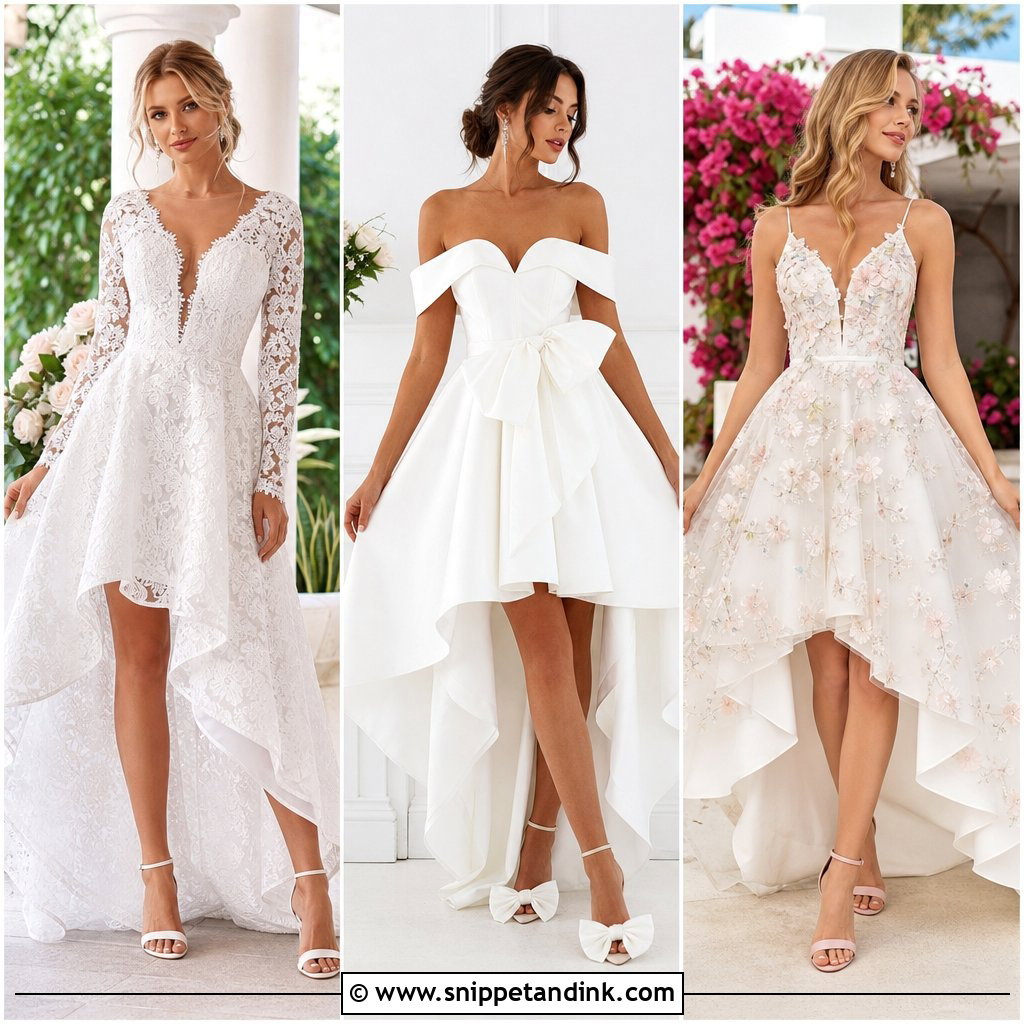

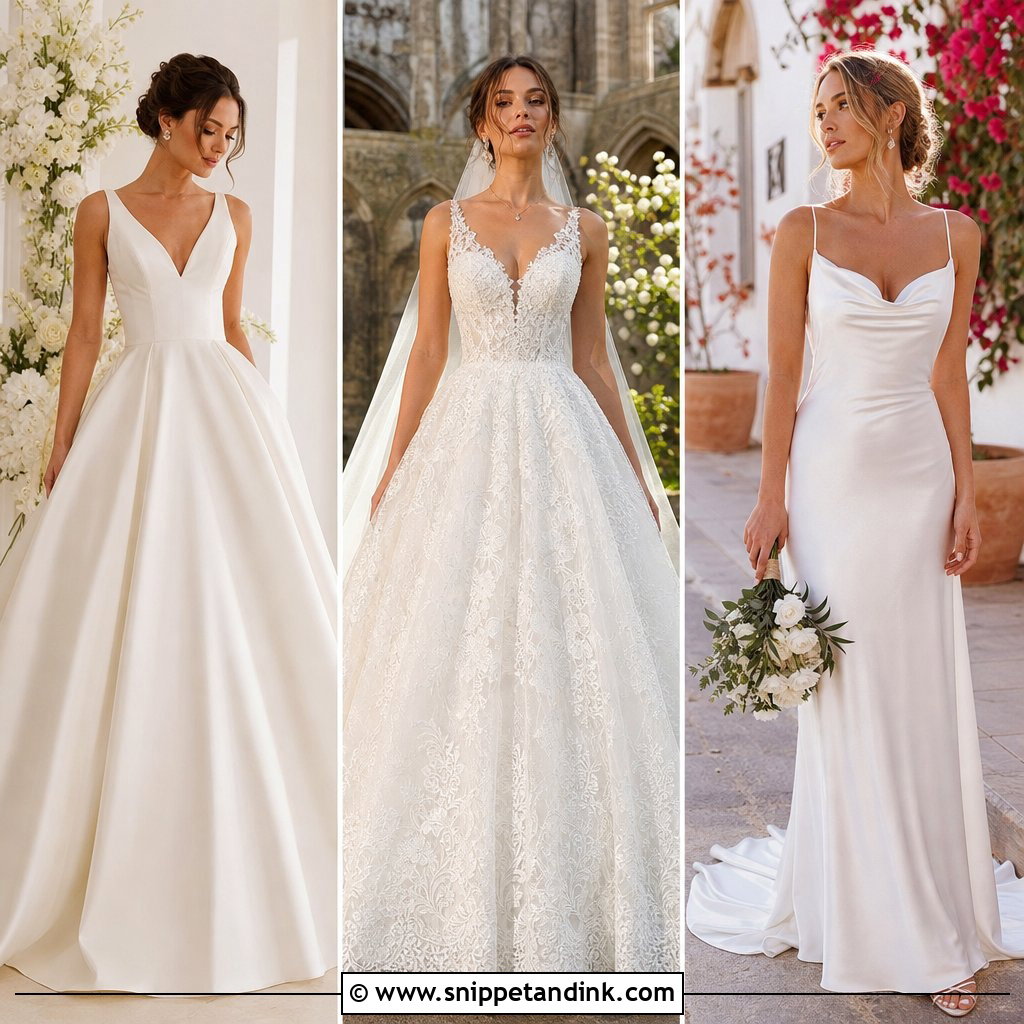

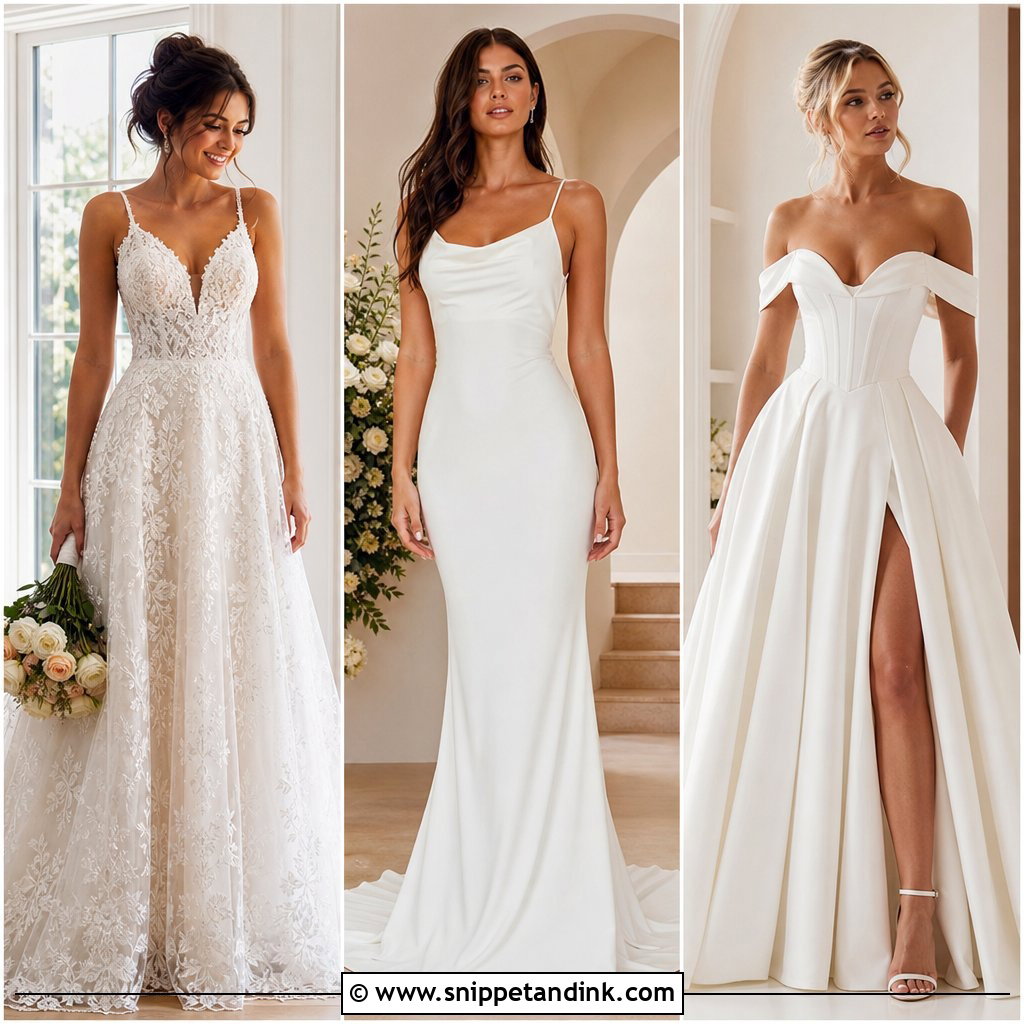
25. Courthouse Midi Low Back Wedding Dress
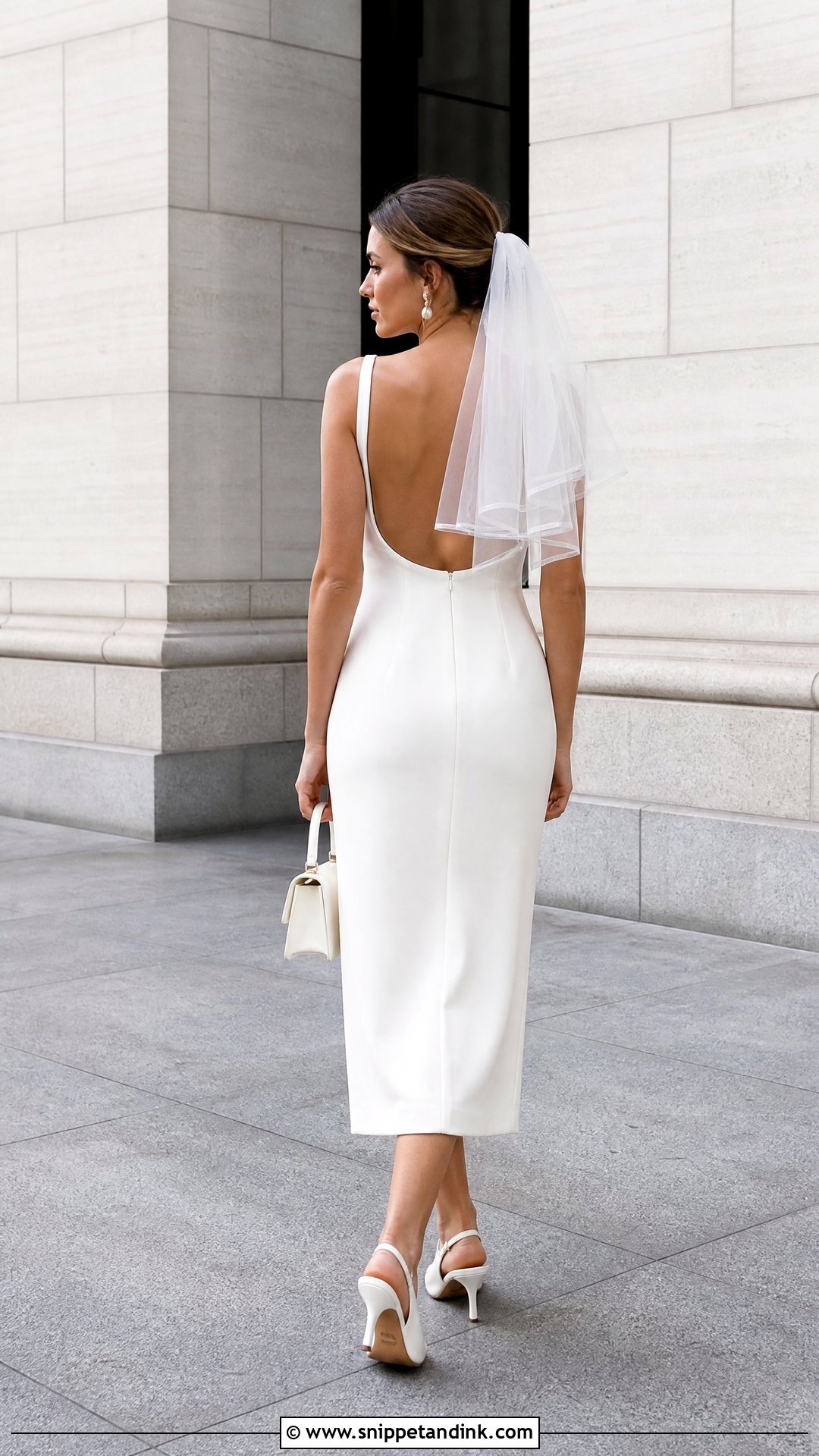
A low-back midi works for a courthouse ceremony, a small wedding or a reception change. Choose a clean crepe column, satin slip or structured A-line ending between knee and ankle. With a shorter hem, shoes carry more weight, so slingbacks, bow-trimmed pumps or refined block heels matter. A shorter dress still reads bridal when the fabric and tailoring are good. I check the back fit seated, because courthouse ceremonies and restaurant dinners mean much more sitting than a traditional reception. Keep your hair up so the back stays visible.
Getting Your Back Ready for Rear-View Photos
With a back this visible, a few weeks of preparation pays off in the photos.
- Watch your strap lines. A summer of racerback tops leaves tan lines that a low back shows clearly, so cover up or match your swimwear to the dress in the months before.
- Exfoliate gently once or twice a week in the run-up, and stop harsh scrubs a few days before so skin isn’t irritated.
- If you’re getting a spray tan, have it a couple of days ahead and wear the dress only once it has fully set. Fresh tan can transfer onto ivory lining.
- Ask your makeup artist to blend body makeup or a light shimmer over the shoulders if you want the back to match your face in photos.
- Practise standing tall. Slouching folds the skin at the base of an open back, and that crease is the first thing a back-view photo catches.
How Low Is Too Low for Your Back and Your Day?
Low back gowns range from sleek and simple to heavily textured, and the depth of the back is only the starting point. What makes one wearable is the support built into the bodice, careful alterations, and accessories that frame the opening instead of covering it. Think about how the fabric moves, how the gown feels when you sit, and whether the bustle will stay put. Plan your hair and veil around the back too. Try several back depths before deciding. The right one will feel secure enough that you forget about it.
You'll Like These Ideas:







Leave a Reply