
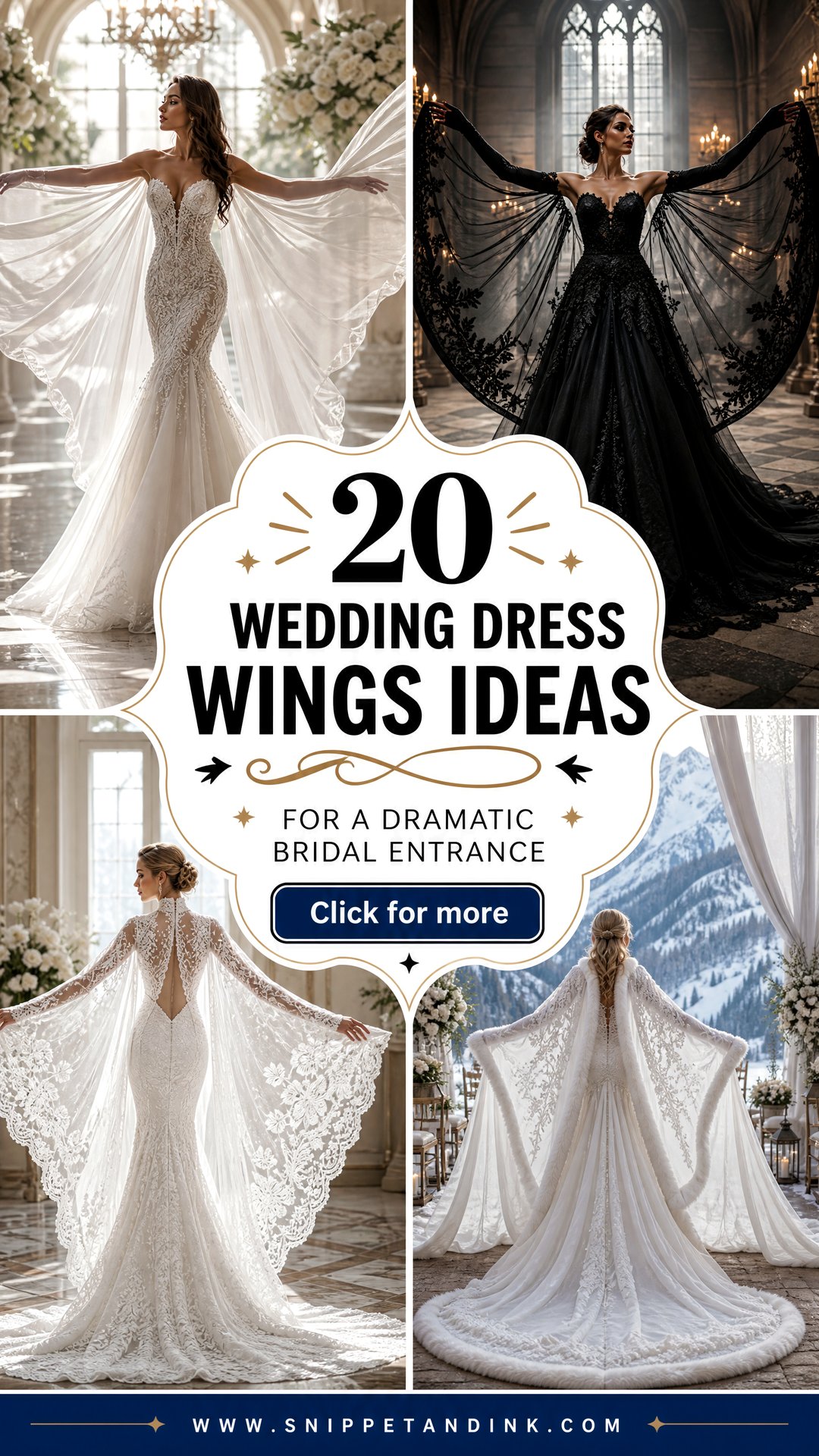
Wedding dress wings move like a veil but hang from the shoulders, framing the gown all the way down. They aren’t a cape: most split at the back or link to the wrists, so they open out when the bride lifts her arms. Many are detachable, which gives you a ceremony look and a lighter evening one from a single dress. They come in plain chiffon, lace, pearl-scattered net, feathers, floral embroidery and cathedral-length tulle. I start every wing conversation from the gown, not the wings: its fabric, its shade, its shape, and how much movement the venue allows. The twenty looks below run from classic to unconventional.
How Wings Attach, and Why It Matters More Than the Fabric
Brides tend to choose wings from a photo of the fabric. I look first at how they’ll be fixed to the gown, because that decides whether they stay put, whether they pull the neckline, and how quickly they come off.
- Sewn in: the most secure and the neatest, but permanent. Only right if you’ll keep them on all day.
- Hidden snaps or hooks inside the strap or bodice edge: the usual choice for detachable wings. A seamstress can add them to most gowns.
- Thread loops and small buttons: quieter than snaps and easy for a bridesmaid to undo, but slower.
- Clip-on or ribbon-tied panels: fine for light chiffon, not strong enough for long or beaded wings.
- Wrist or finger loops: optional, for holding the fabric out in photos. They shouldn’t be tight enough to tug the shoulders.
Bring the actual wings to every fitting. Placement is set with them on, pinned and moving, not measured from a sketch.
1. Simple Satin Wedding Dress With Tulle Wings
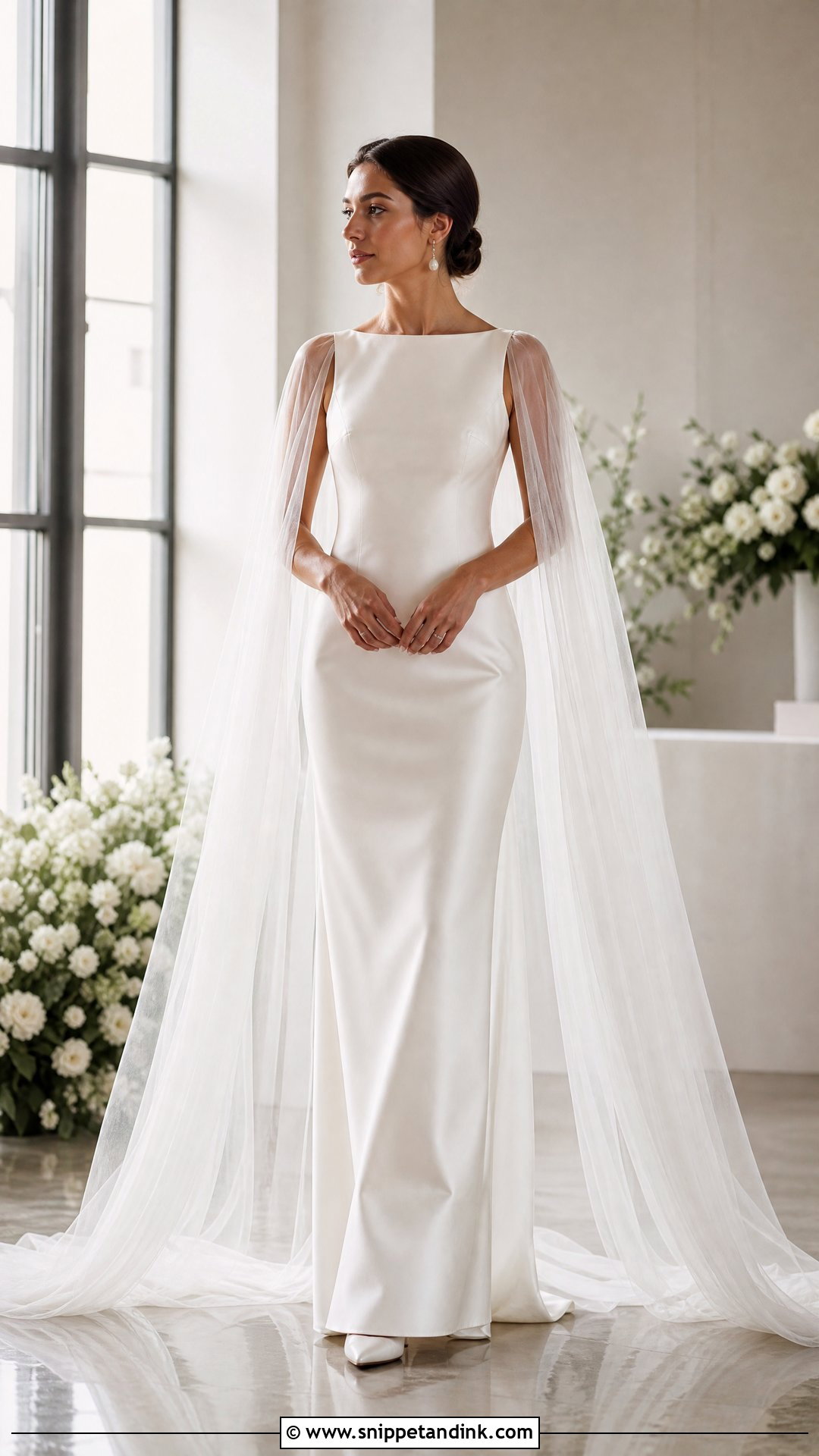
Plain satin gives wings the stage. A fitted column, a gentle A-line or a draped slip with almost no decoration lets long tulle panels do the talking. Attach each one at the back of the strap or shoulder so they fall separately rather than joining into a cape. Ivory pumps, pearl drops and a sleek low bun. Chapel or cathedral length gives real movement on the aisle. The detail that gets missed most is undertone: tulle bought separately in plain “ivory” can look grey or yellow next to satin, so hold the two together in daylight before you commit.
2. Lace A-Line Wedding Dress With Matching Wings
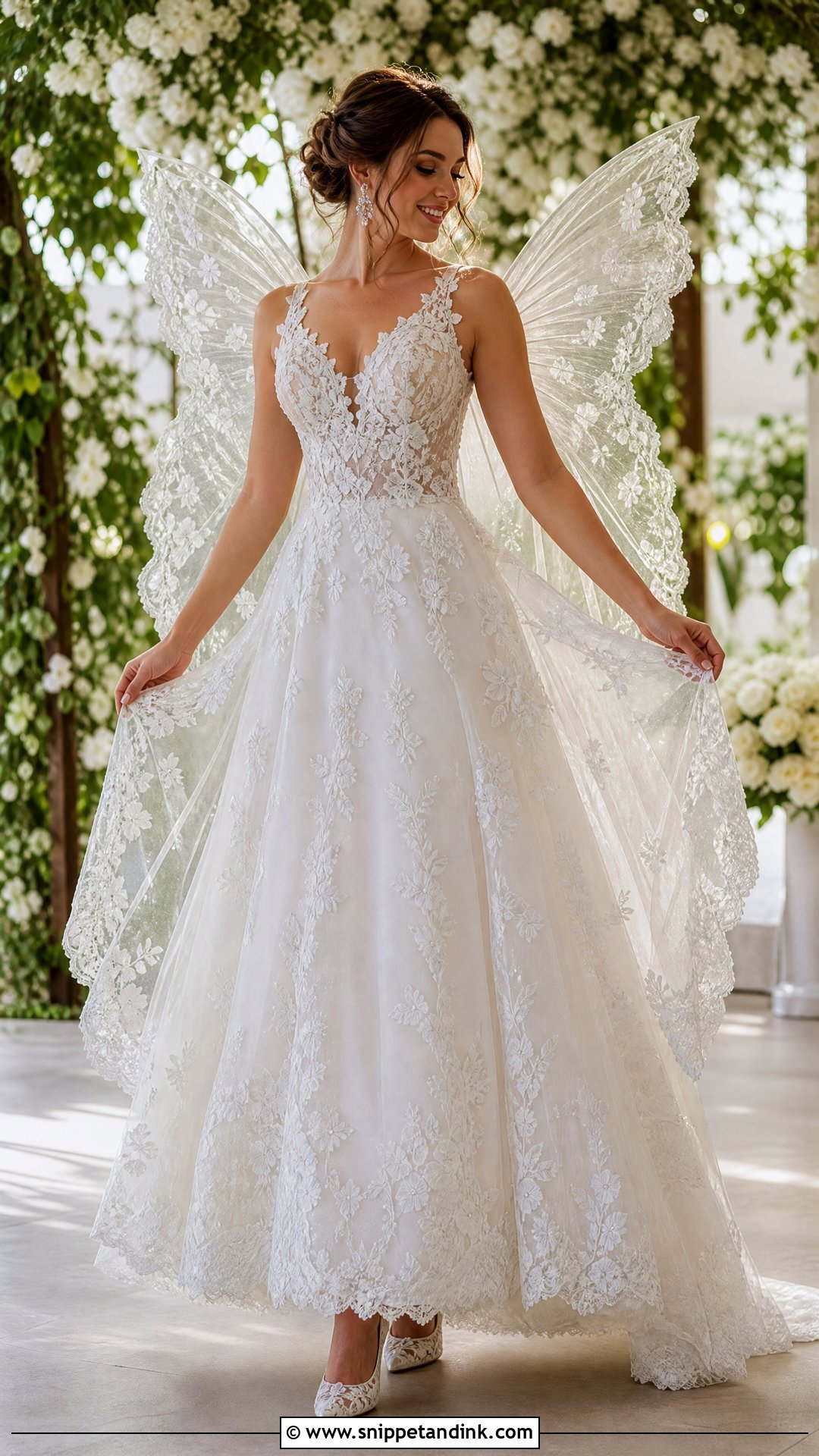
Lace wings work best when they borrow the gown’s own motifs: the same appliqués, scallops or embroidery, gathered near the shoulder and thinning toward the hem. That way they look like part of the dress rather than an add-on. A lightly lined skirt keeps the whole outfit from getting heavy. Lace-covered pumps, a fine comb, small crystal earrings, and a chignon or half-up style that shows the neckline. If the gown already has lace sleeves, I’d choose sheer wings with only a few scattered appliqués. Two dense lace layers on the arms look crowded in photos.
3. Strapless Ball Gown With Cathedral Wings
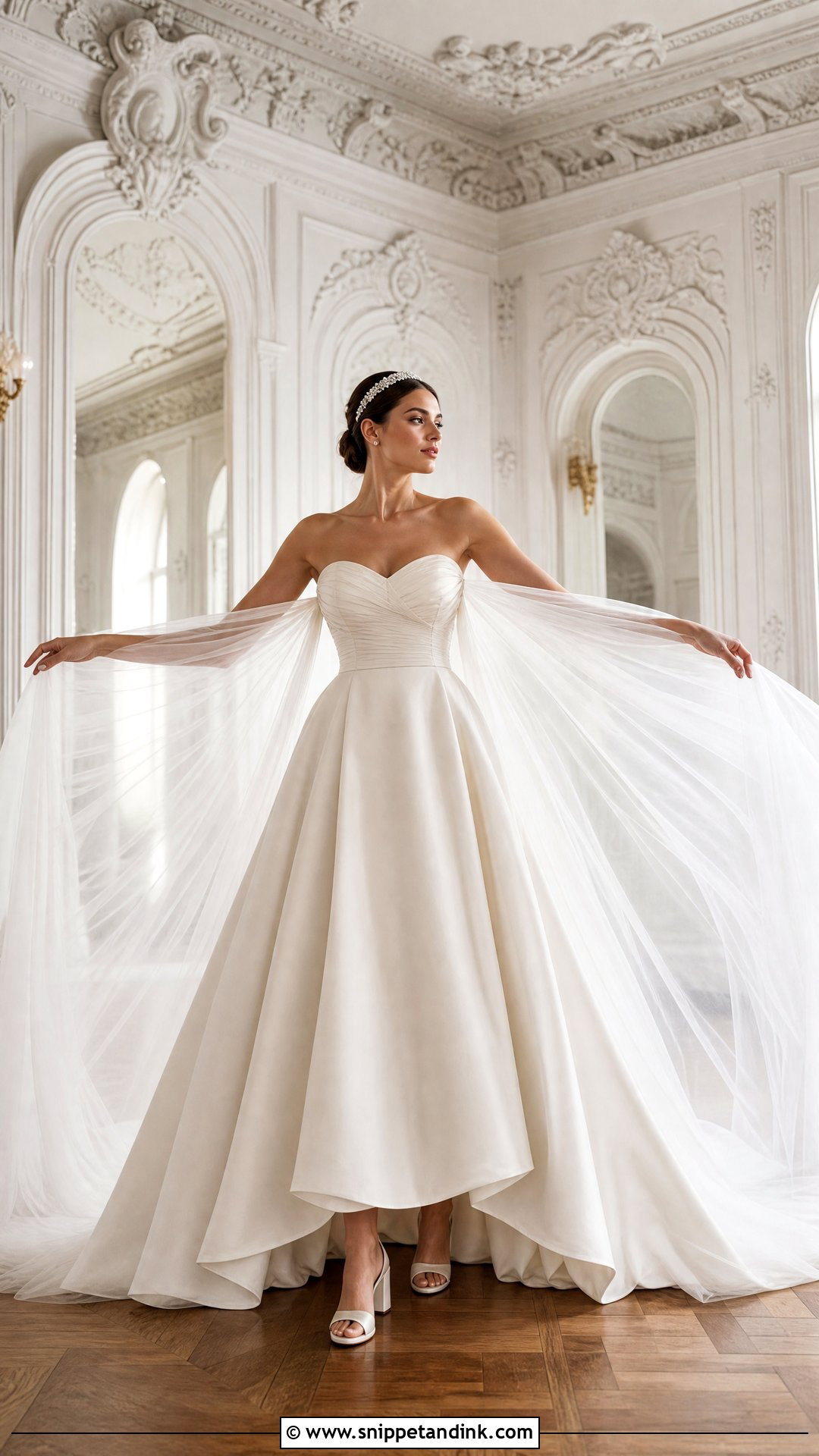
Strapless ball gown, cathedral-length tulle behind it. The pairing gives volume and ceremony without an additional overskirt or a traditional veil. The engineering problem is obvious: with no straps, there’s nothing natural to hang the wings from. A bridal tailor can sew discreet loops or snaps into the top of the bodice, or make a narrow detachable shoulder piece. Wings this long are heavy, and if they hang from the bodice edge they’ll drag the neckline down over the evening, so test the placement with the full weight on. A sparkling headband, studs, block heels and no necklace.
4. Mermaid Wedding Dress With Chiffon Wings
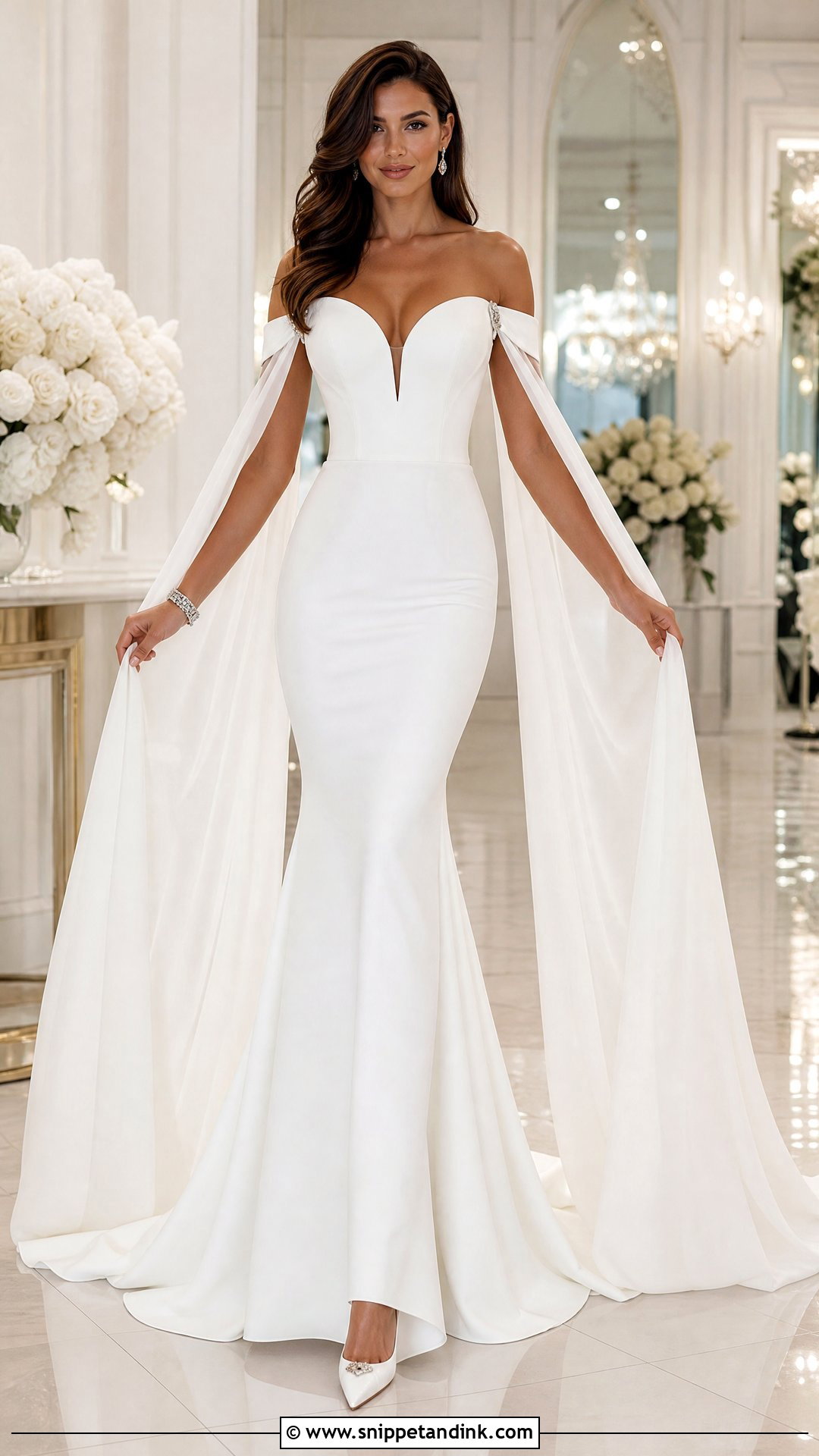
Chiffon softens a mermaid’s hard lines and adds motion without hiding the flare at the knee. Pick smooth crepe or stretch satin for the gown, with wide straps, cap sleeves or a bateau neck to give the wings an anchor. Pointed heels, a slim crystal bracelet and Hollywood waves pushed behind one shoulder. Wings a little longer than the train look dramatic but stay manageable. Outdoors, I’d shorten them to chapel length: on grass or gravel, long chiffon catches on everything, and a mermaid skirt doesn’t let you step around it easily.
5. Boho Wedding Dress With Floral Wings
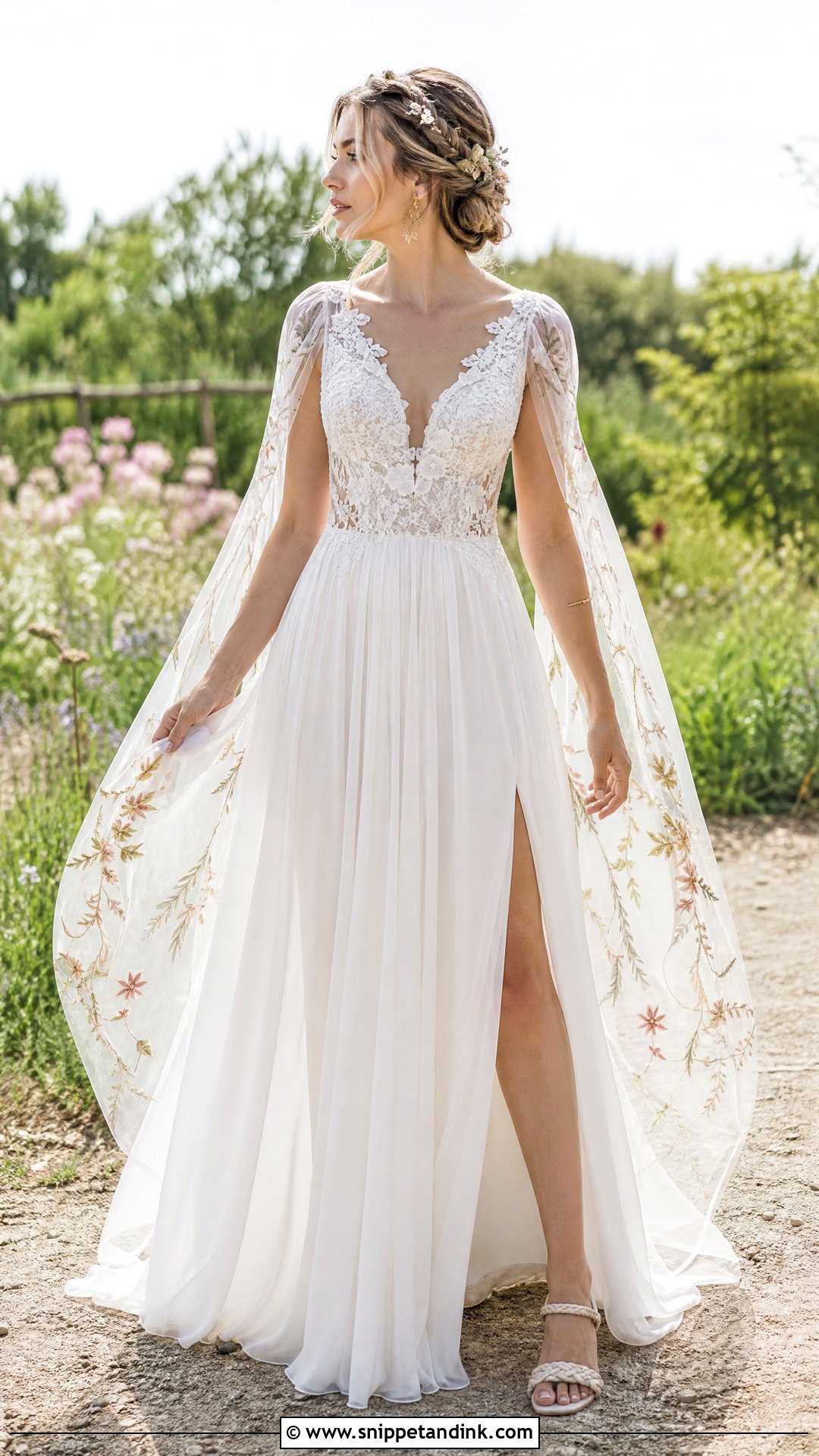
Boho gowns are usually relaxed, so the wings can carry the detail. Start with a soft A-line with a comfortable lace bodice and a fluid skirt, then add sheer wings embroidered with ivory vines or muted wildflowers around the shoulders and edges. The embroidery should echo the gown’s pattern, not compete with it. Woven sandals, small gold earrings, a loose braided updo and a few floral pins. Dimensional petals look romantic but snag on branches in a garden or woodland; flat embroidery travels through greenery far better. Keep everything else natural and quiet.
6. Long Sleeve Wedding Dress With Sheer Wings
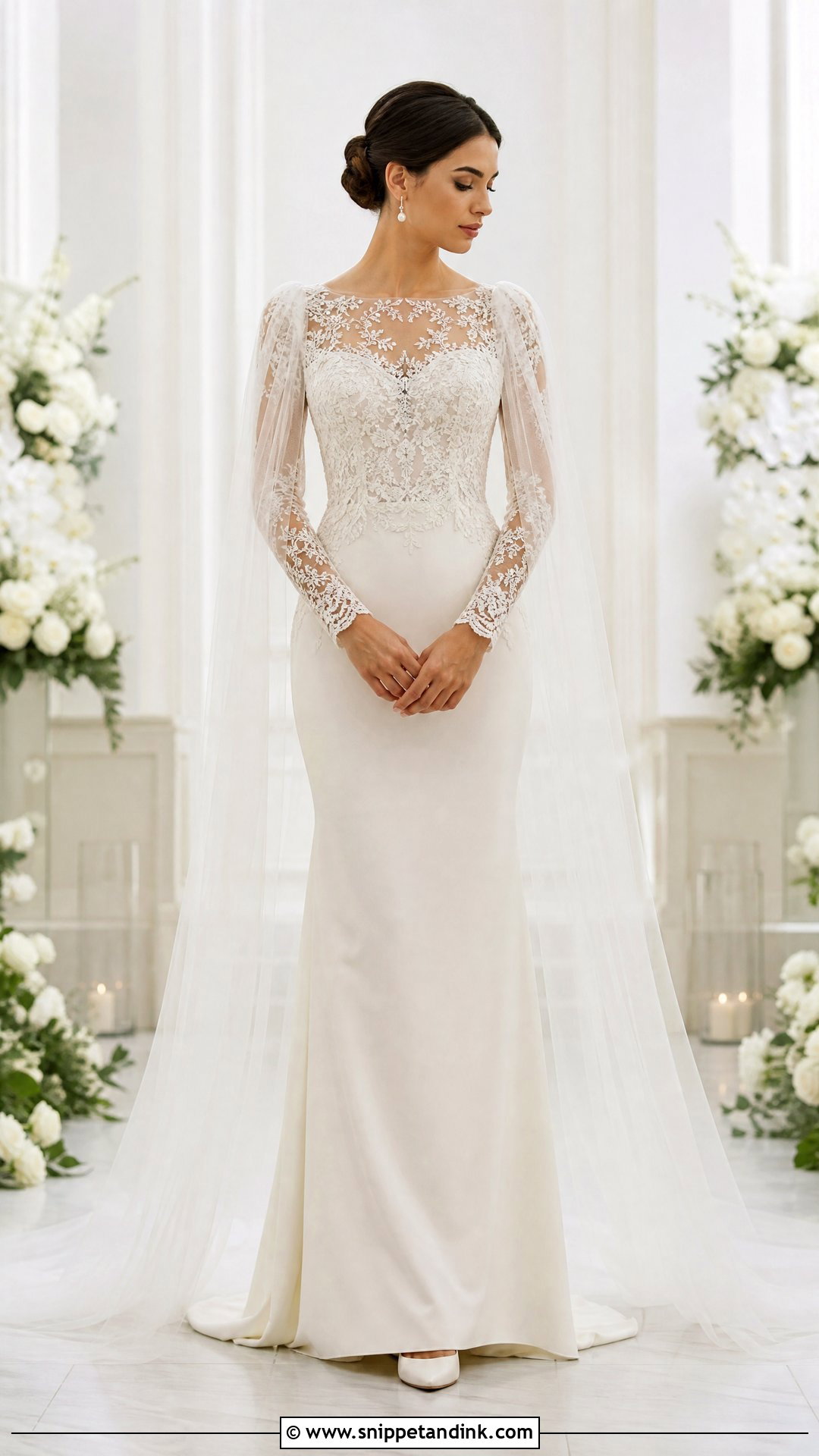
Can wings go with long sleeves? Yes, if both are light and sheer. A fitted gown with illusion lace sleeves and a slim skirt takes plain tulle or chiffon wings, attached at the back of the shoulder above the sleeve seam. Lower than that, the wing fabric bunches over the sleeve every time you move your arm. Closed pumps, slim pearl earrings and a low bun. Skip beaded wrist loops, which catch on lace cuffs. Let the panels hang free, or add small finger loops you slip on only for a few photographs.
7. Minimalist Column Wedding Dress With Split Wings
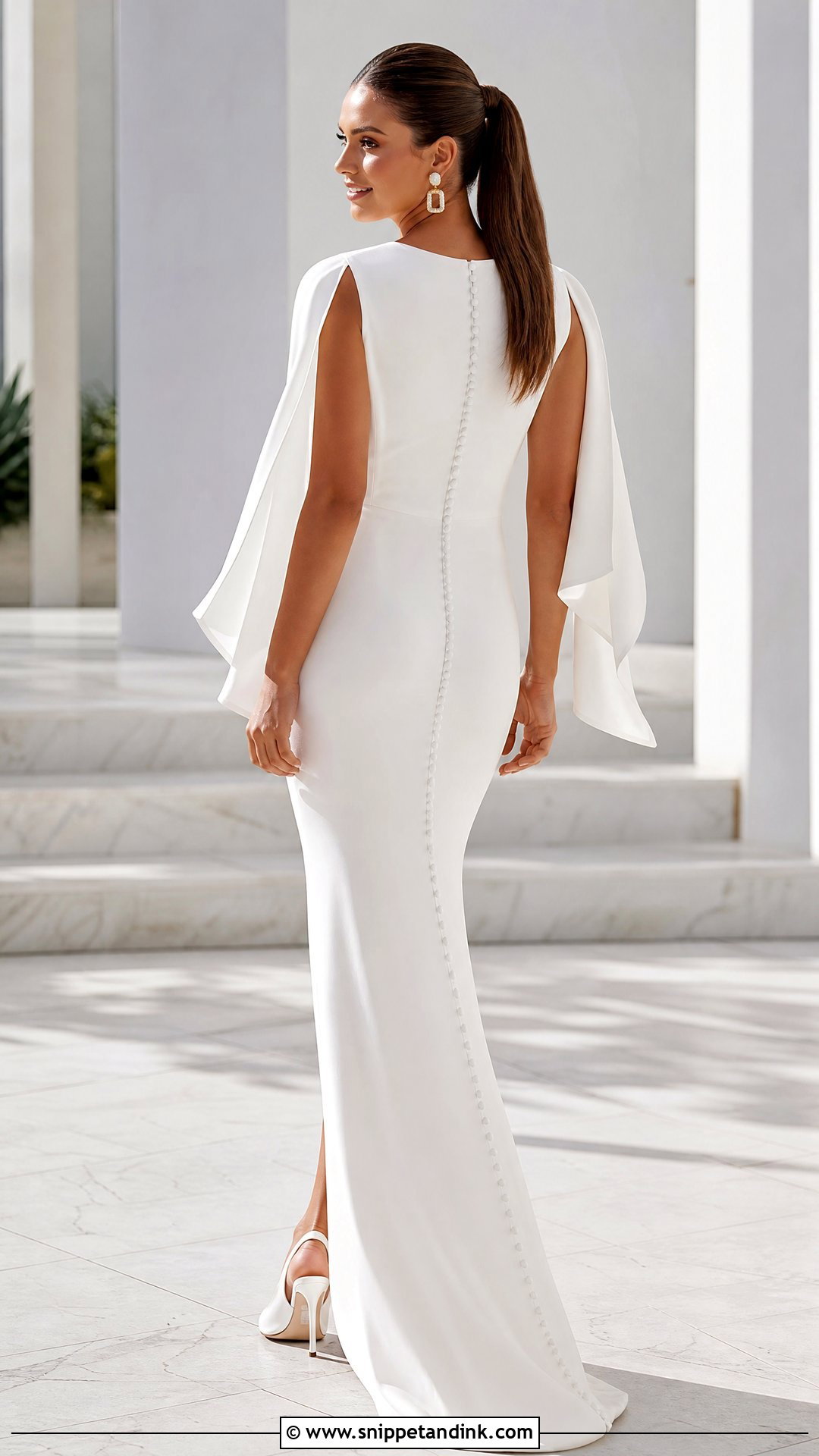
Split wings on a column dress look sharp and modern. Choose matte crepe, silk or satin with clean seams and a straight or softly fitted skirt. Two separate panels fall from the shoulders and leave the center back open, so covered buttons, a low back or a shaped waist stay on show. A sleek ponytail or smooth bun, pointed slingbacks and geometric earrings. Plain wings suit this best, with at most a narrow satin edge. Match them roughly to the train’s length; wings that stop well short of a long train make the back look cut in half.
8. Pearl Wedding Dress With Beaded Wings
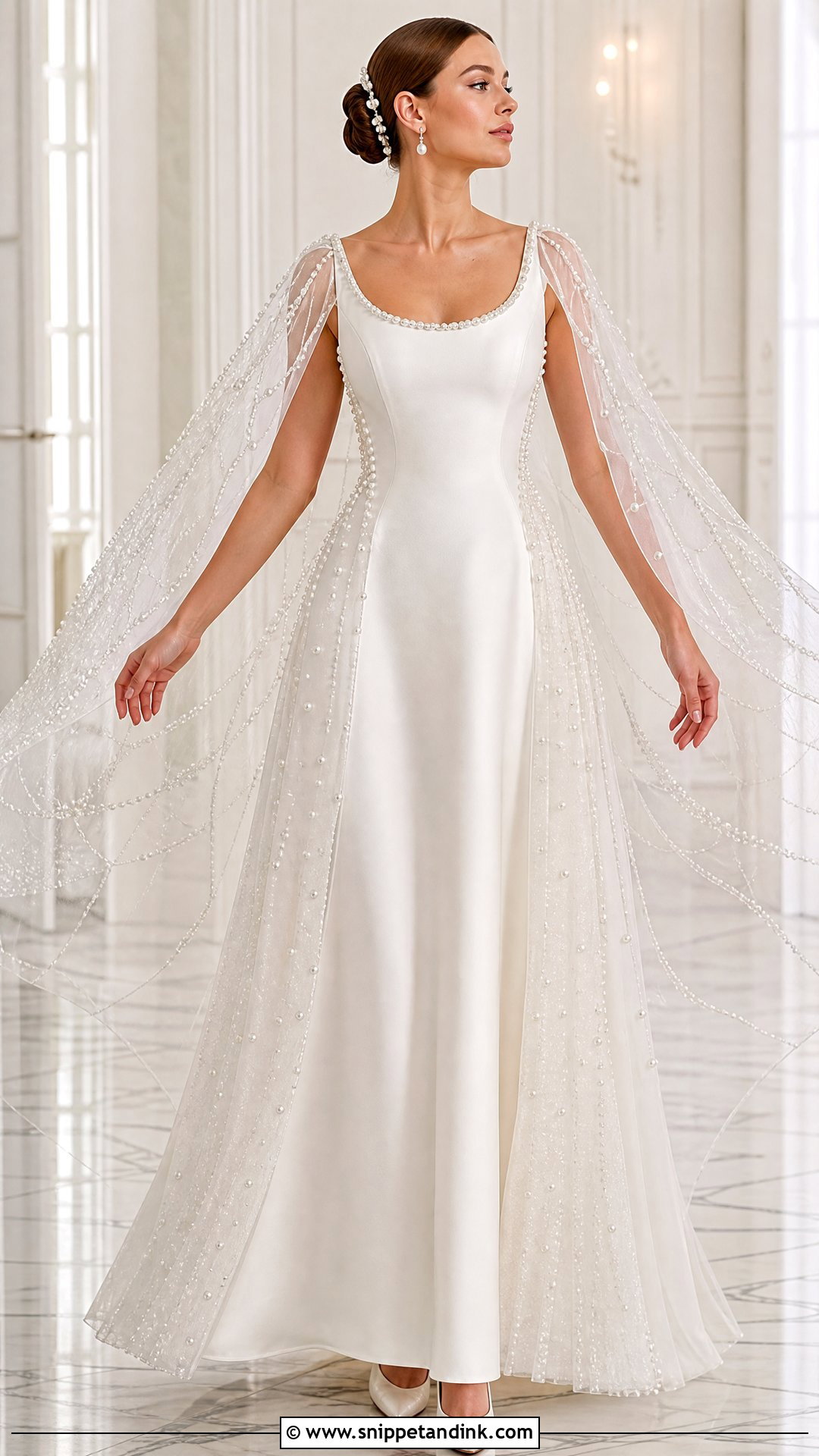
Pearls give a soft glow rather than sparkle. Start with a simple gown with a pearl-trimmed neckline or pearl buttons, then add sheer wings with pearls spaced more widely as they go down. Weight is why: pearls are heavy compared with tulle, and a hem crusted with them pulls the panel straight and stops it floating. Pearl earrings, ivory heels and a chignon with pearl pins, and leave the necklace off. At the fitting, swing your arms; beads near the shoulder shouldn’t rub bare skin or snag the bodice.
9. Off Shoulder Wedding Dress With Cape Wings
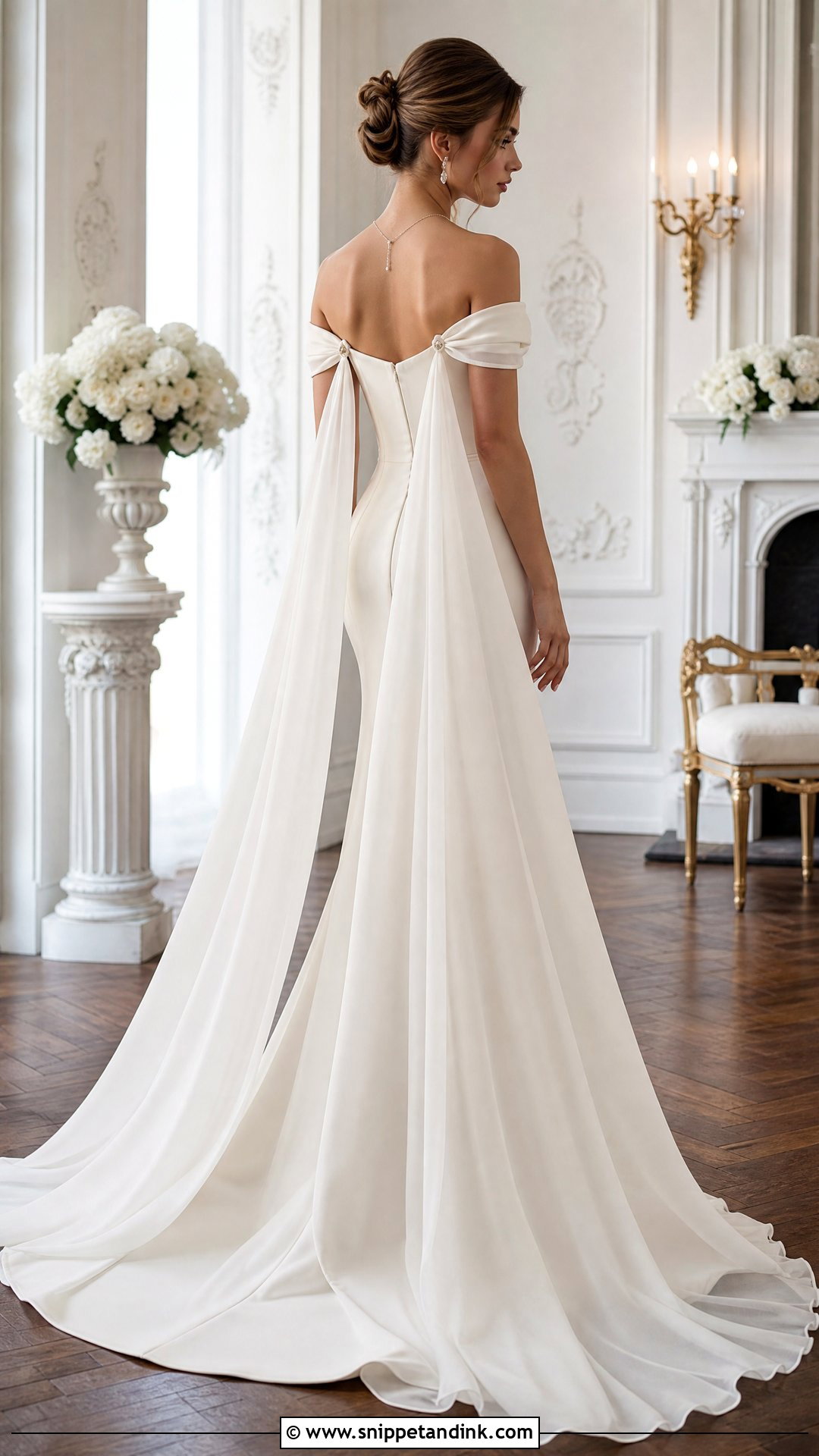
Off-shoulder gowns already create a long line across the collarbone, and cape wings can start at the back neckline and split below the shoulders without covering it. Chiffon falls softly; tulle floats with more shape. A fine pendant, drop earrings, an updo and pointed or embellished heels. The point I always raise with the tailor: wings must hang from the bodice structure, not the decorative off-shoulder band. That band is designed to sit lightly on the arms, and adding weight to it slides the whole neckline down.
10. Square Neck Wedding Dress With Shoulder Wings
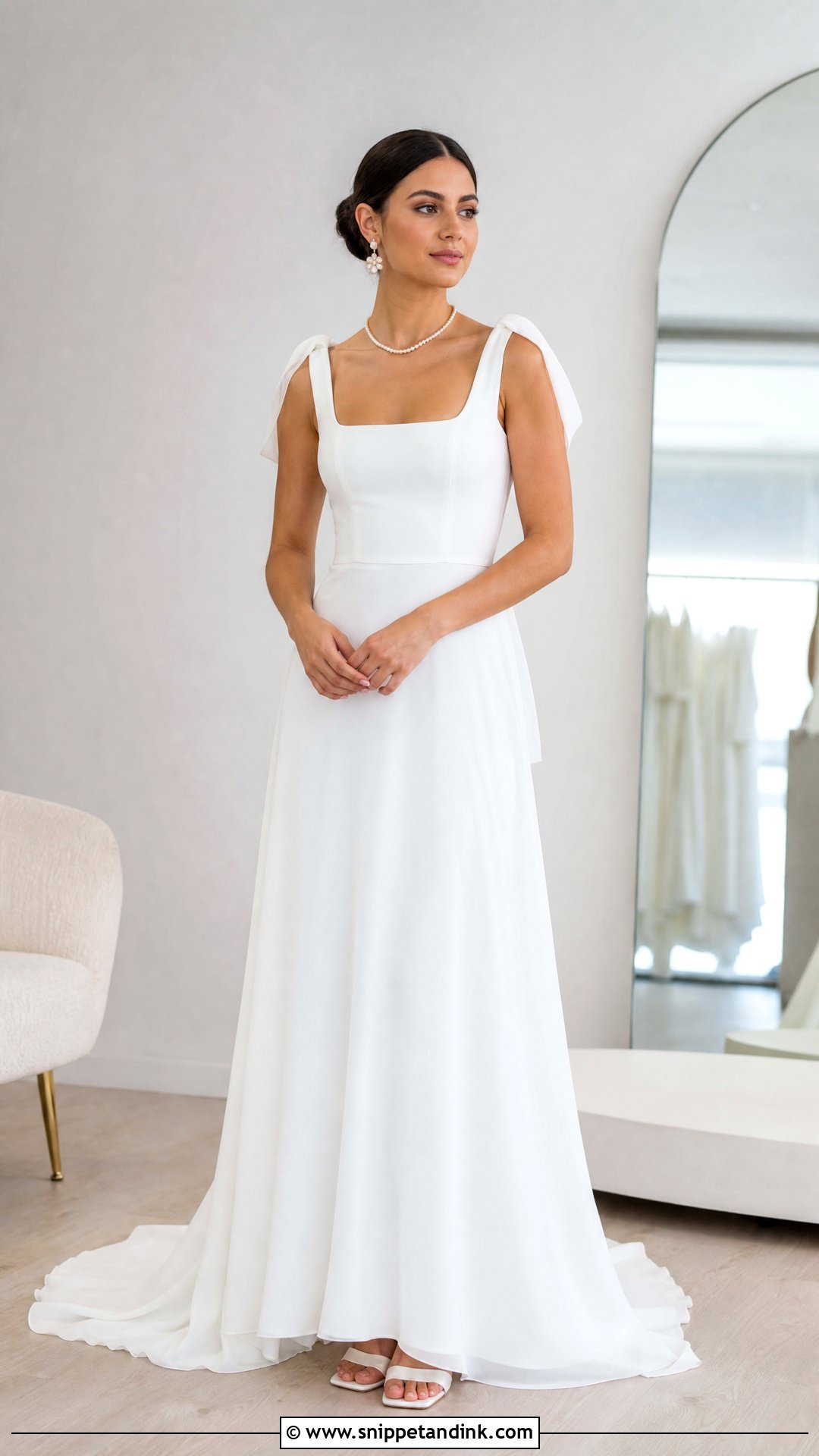
Square necks have clean lines, and wings hung from the straps keep them clean. A fitted bodice, firm straps and an A-line or straight skirt. Plain chiffon keeps the geometry; lightly embroidered tulle softens it. Square-toe heels, a low bun and small statement earrings, maybe a short pearl strand. Set the attachment at the back edge of each strap so the wings fall behind the arms. Attached at the center of the strap, they swing forward over the bodice every time you turn.
11. Plus Size Wedding Dress With Soft Tulle Wings
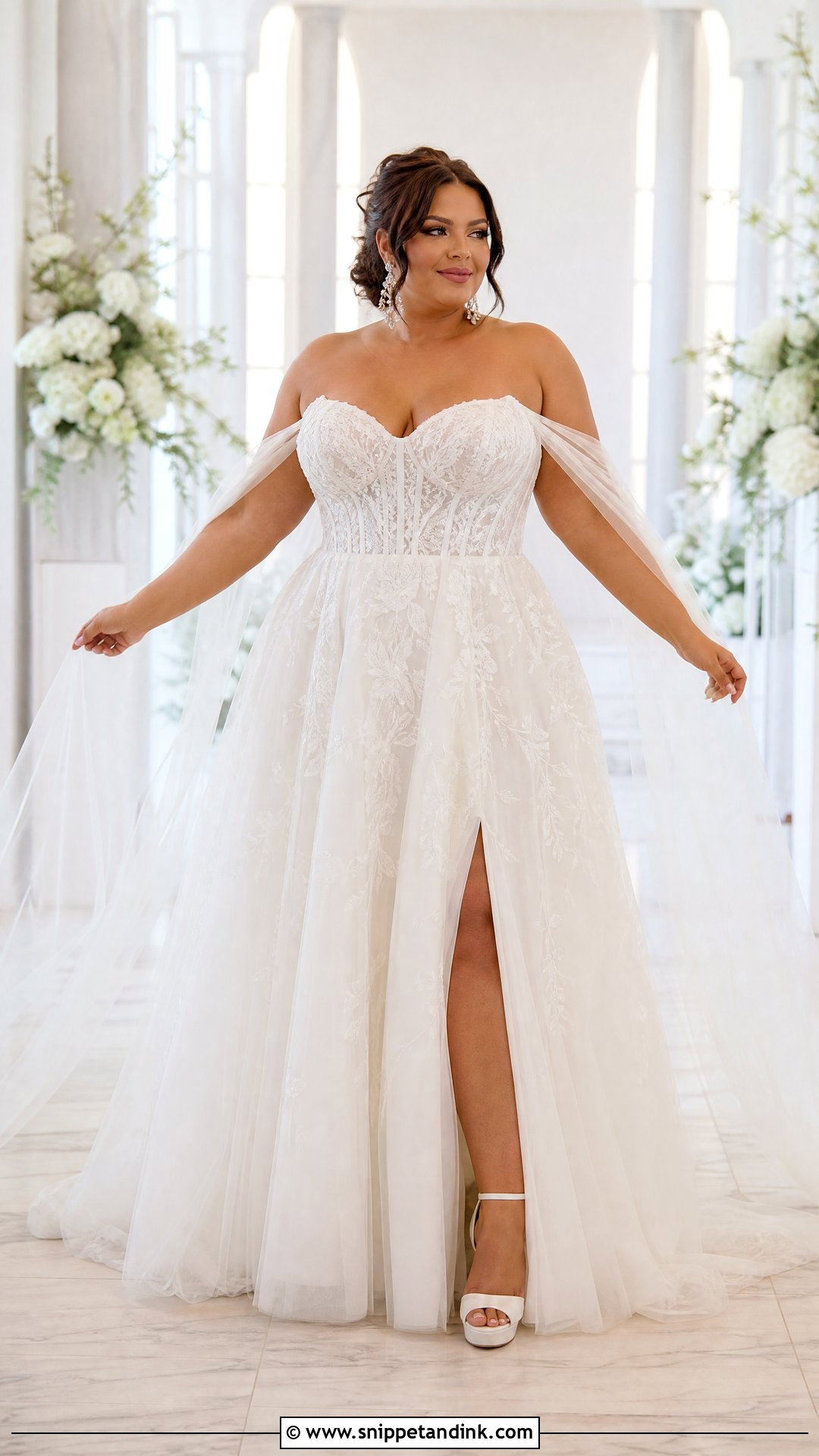
On a plus-size bride, I place wings at the outer shoulder so they frame the body rather than drape straight down the center back. Begin with a supportive A-line, fit-and-flare or corset gown that defines the waist and feels secure through the bust. Sheer, plain fabric gives movement without bulk. Block heels, statement earrings and hair lifted off the shoulders. Have the wings measured for your height and your train; off-the-shelf lengths are cut for a sample size and often end up too short at the back or too long at the sides.
12. Petite Wedding Dress With Chapel Wings
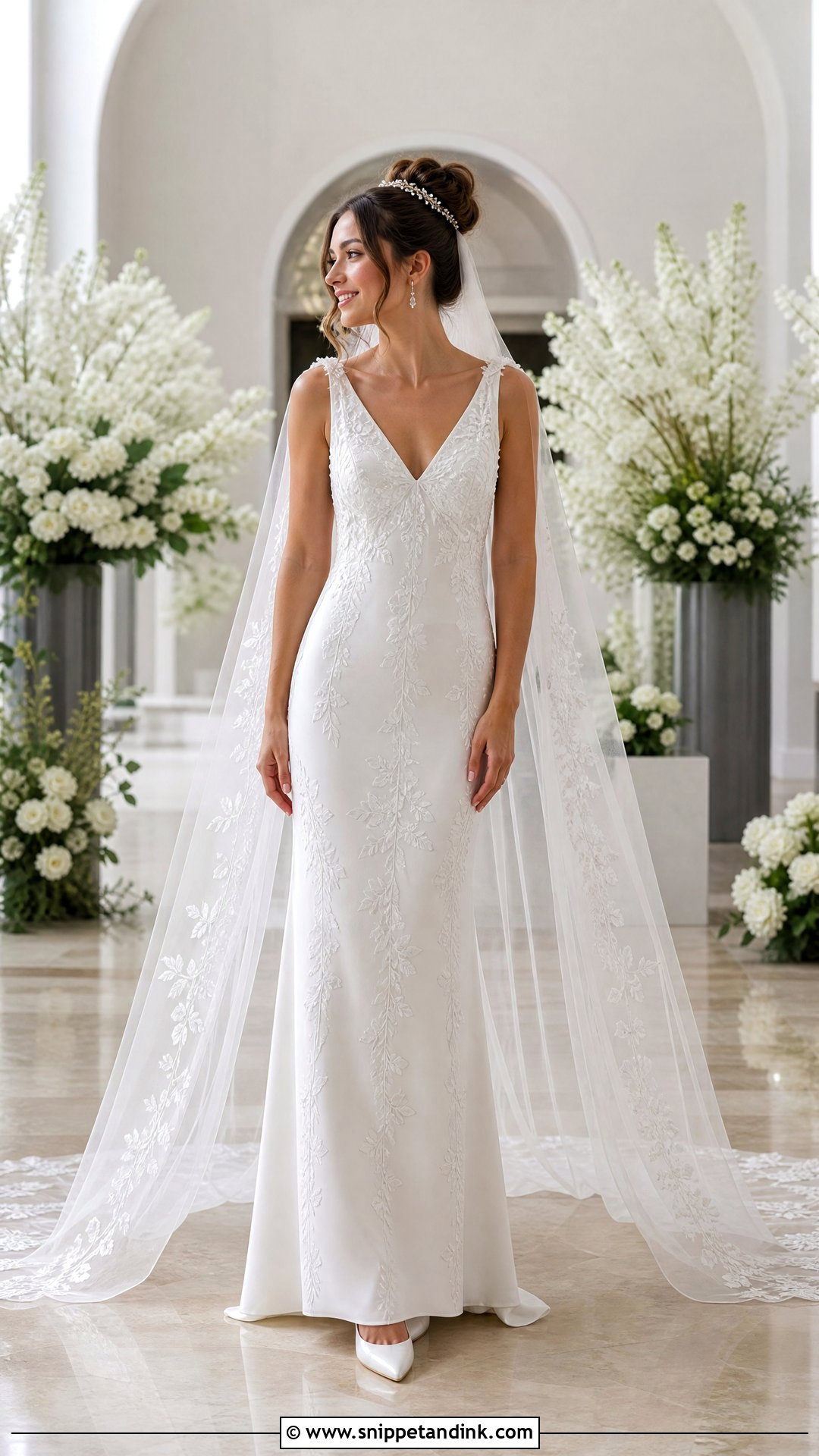
Petite brides can wear wings; the length and width just need control. Pair a fitted A-line or slim sheath with chapel-length tulle that runs a little past the hem. Very wide panels, dense embroidery and heavy borders swamp a small frame. Vertical floral motifs or a few scattered crystals add length instead. Pointed heels, a slim comb, drop earrings and a high bun. Ask the tailor to attach the wings high, right at the shoulders. Set lower down the back, they start at a point that visually shortens you.
13. Blush Wedding Dress With Embroidered Wings
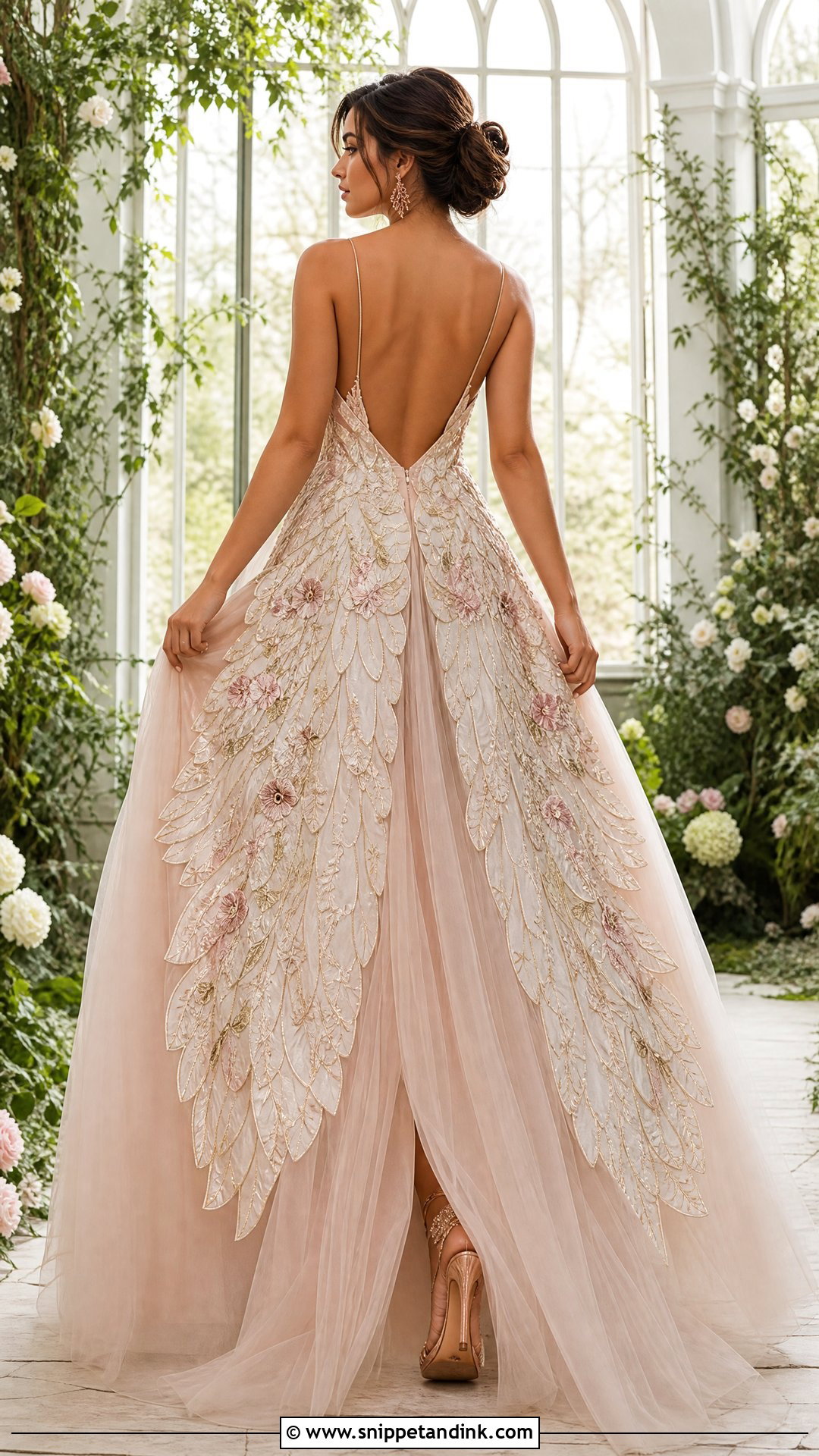
A blush wedding dress works well with wings embroidered in ivory, champagne and muted pink. Look for blush lining under neutral tulle, so the color reads as a glow rather than full pink. Embroidered wings can repeat that undertone at the shoulders and train. Champagne heels, rose-gold earrings and a textured low bun, with the bouquet and hair pieces held to the same narrow palette. Blush varies enormously between makers, from peach to lilac, so compare swatches in daylight before ordering wings from anywhere other than the gown’s designer.
14. Black Wedding Dress With Sheer Wings
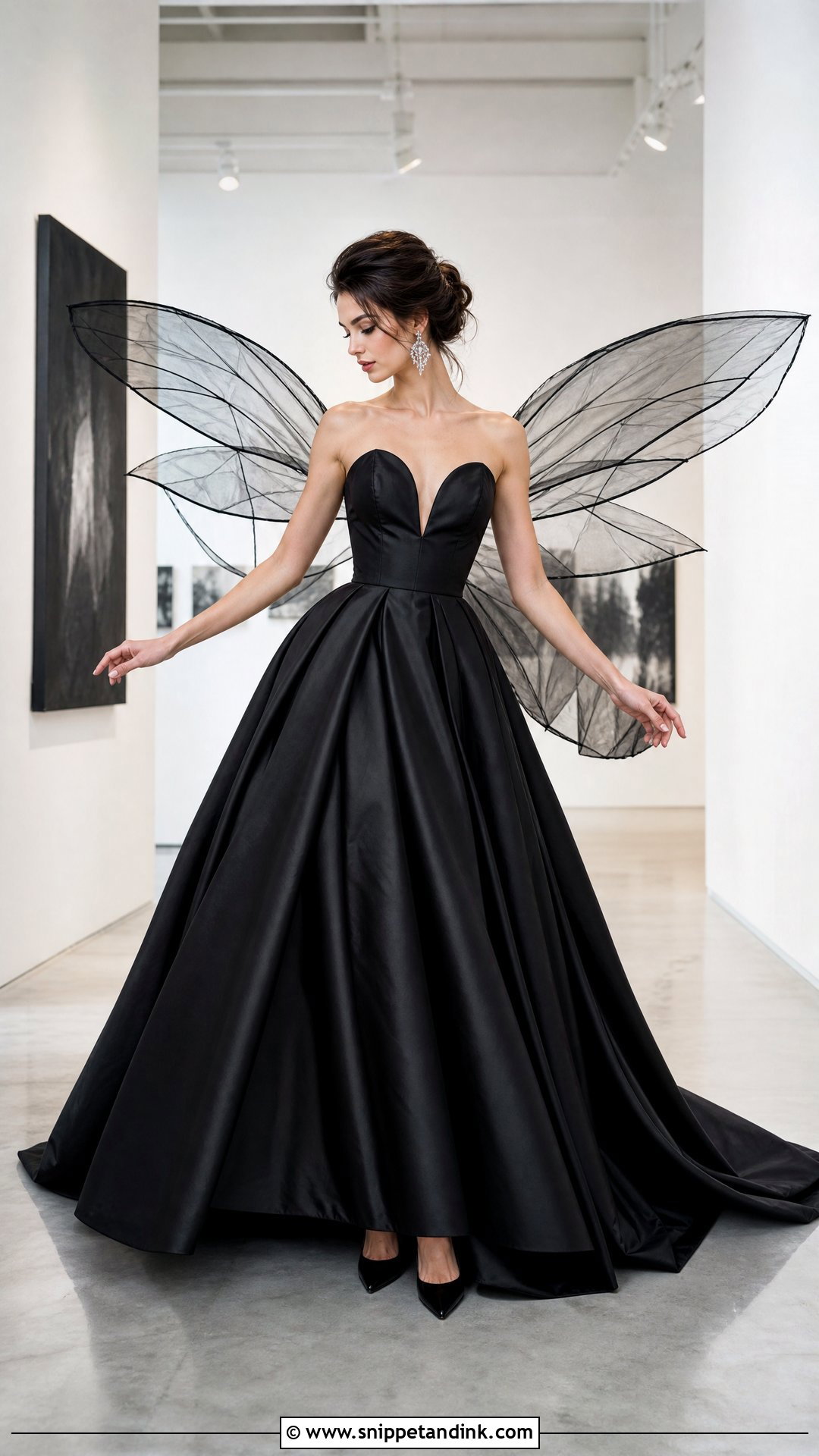
Black is a bold choice, and wings exaggerate it. A structured ball gown, a fitted mermaid or a clean A-line in matte satin or layered tulle all work. Sheer black wings give one unbroken dark line; smoky grey ones soften it. Black pointed heels, silver or crystal earrings and a sculpted updo, and nothing more. Fine beading along the wing edges catches light without changing the mood. Black net is also less sheer than it looks in a shop, so check from a few steps back that the back details and waist still show through.

15. Short Wedding Dress With Detachable Wings
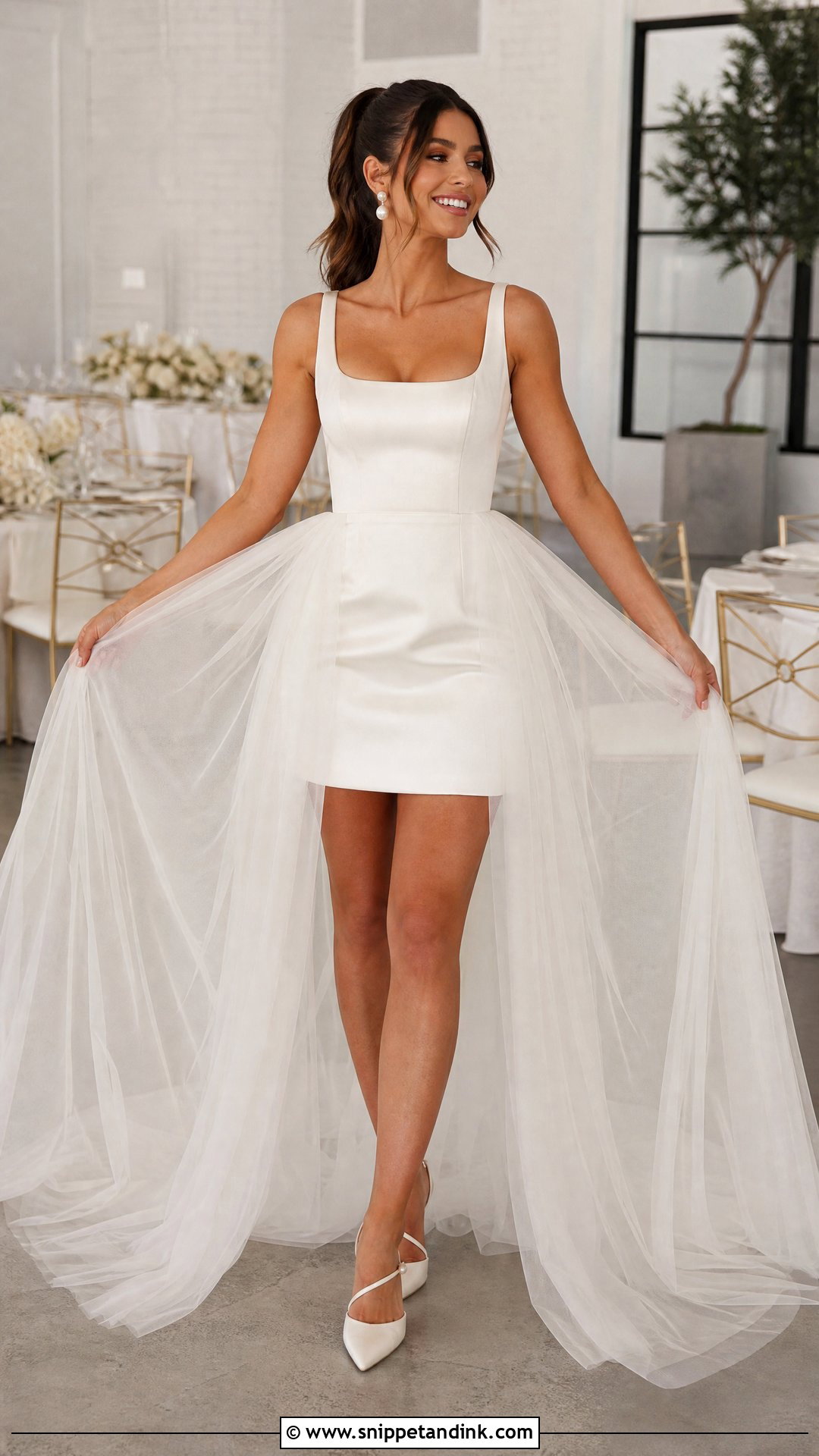
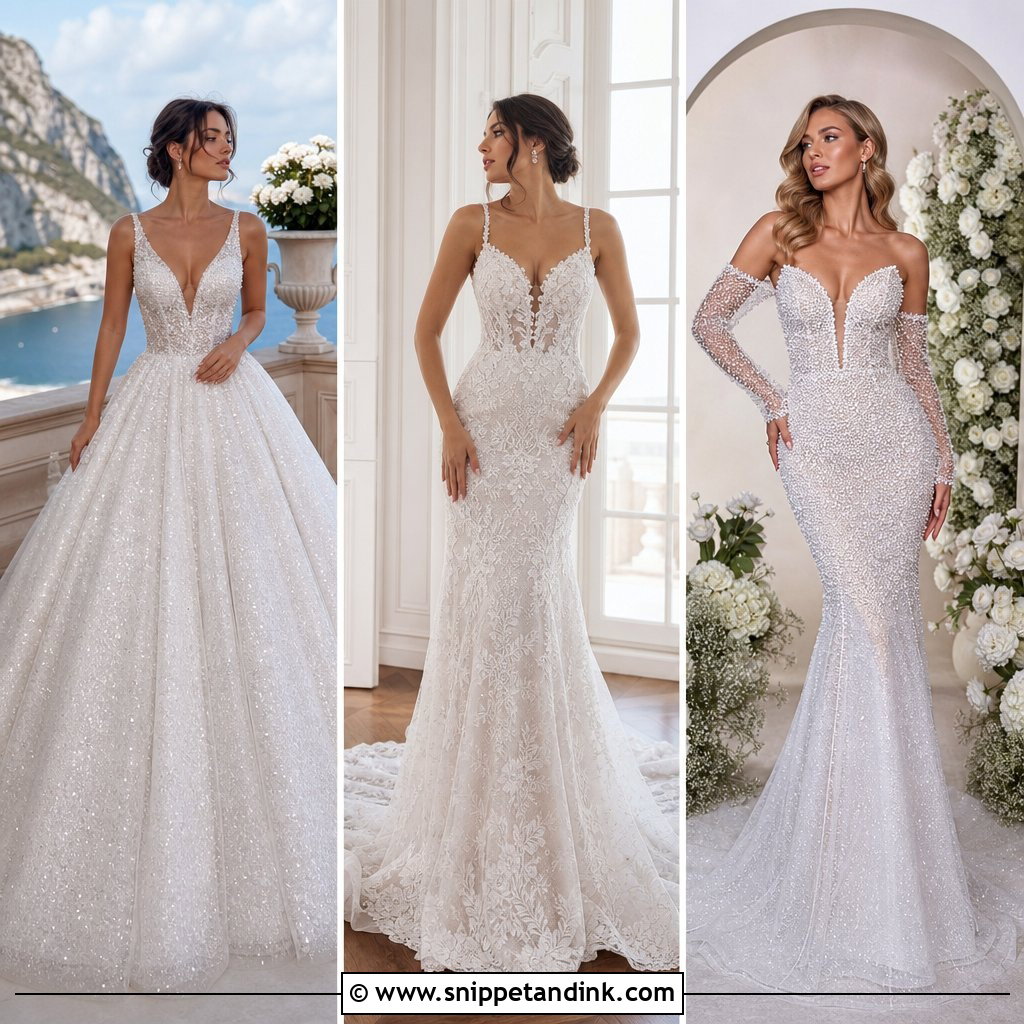
Floor-length detachable wings on a short dress give you ceremony drama and a reception dress you can dance in. The mini or tea-length dress needs a fitted waist and enough structure at the shoulders to take the attachments. Sheer tulle contrasts well with the short hem. Pointed slingbacks, pearl earrings and a polished ponytail. Check the wing length with the actual shoes on the venue’s floor, since a short dress leaves nothing to hide a dragging hem. Narrow panels suit a mini better than wide cathedral ones, and you’ll still get a memorable entrance.
16. High Neck Wedding Dress With Lace Wings
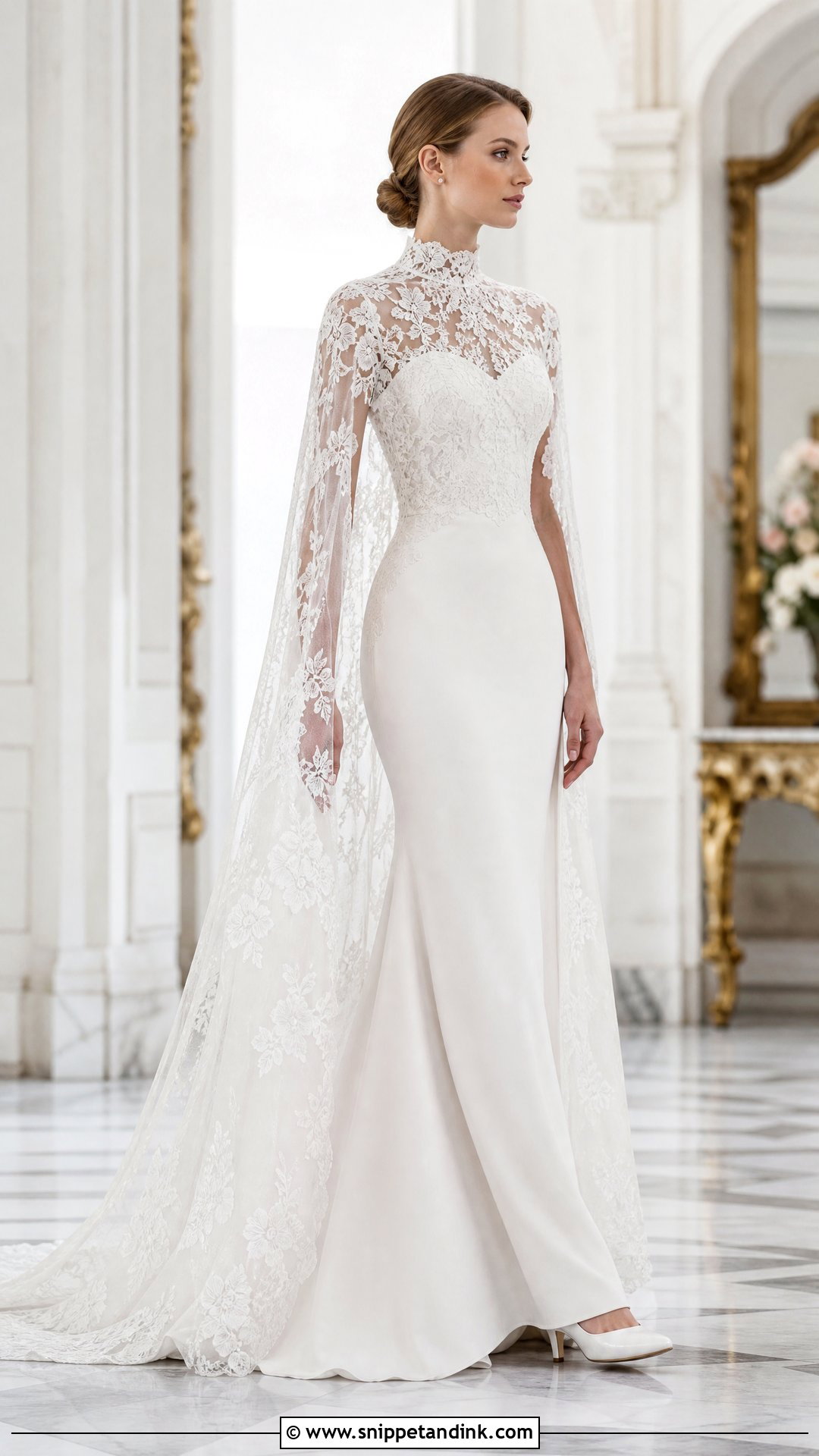
High necks and lace wings make a covered look with plenty of detail. Choose an illusion neckline, a fitted bodice and a smooth skirt to balance the texture at the shoulders. Wings can start under the collar or along the outer shoulder seams, in lace that matches the bodice. Closed satin heels, small pearl studs and a low bun set under the collar; no necklace. If the bodice lace is heavy, keep the wings narrow and lighter toward the hem. Otherwise the upper body becomes one solid block of pattern.
17. Corset Wedding Dress With Sparkle Wings
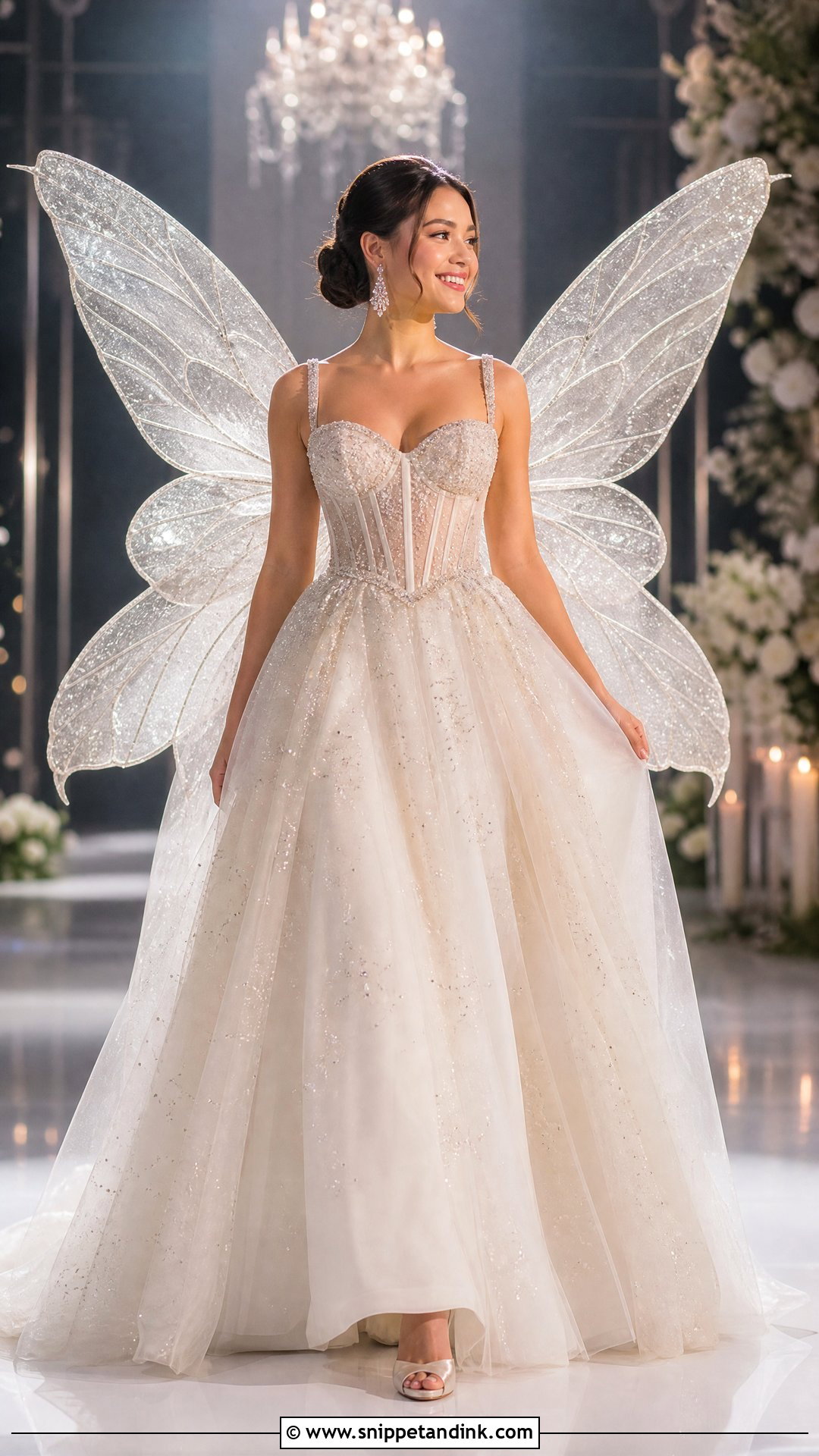
A boned corset is strong enough to carry sparkle. Pair it with a soft A-line or ball gown skirt and sheer wings scattered with crystals, sequins or tiny reflective beads, kept mostly near the shoulders and outer edges so the middle stays flexible. Crystal earrings, satin heels and a clean updo, with no large necklace. Attach the wings to reinforced bodice seams, never to illusion mesh, which tears under the weight. Under reception lights, a little sparkle goes a long way; a lot can flare out in flash photos.
18. Beach Wedding Dress With Chiffon Wings
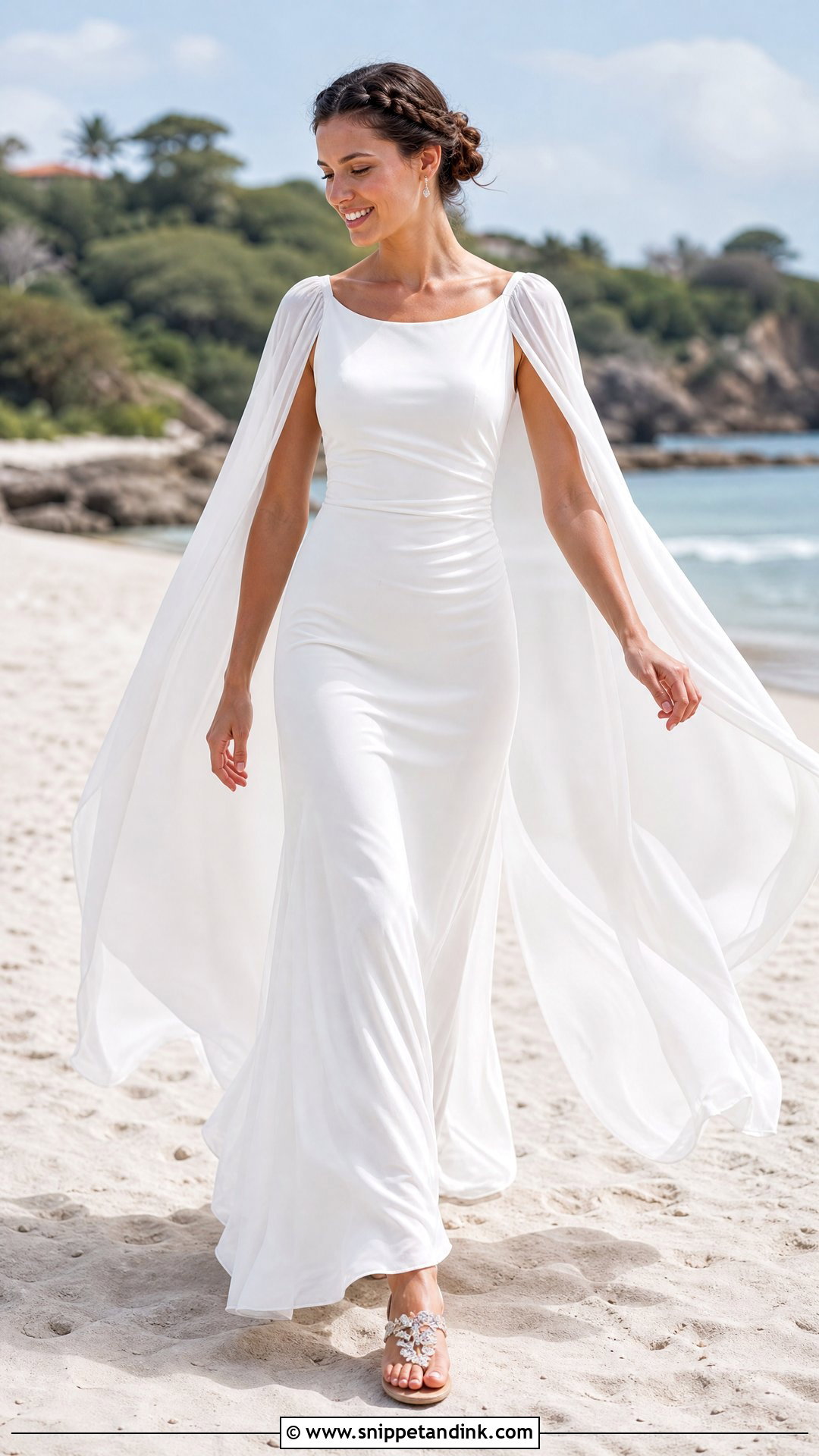
Beach weddings need wings that weigh almost nothing, so chiffon over dense lace every time. Pair them with a fluid sheath, an empire waist or a relaxed A-line, and keep the train short. Wings should reach the ankle or just skim the sand. Flat sandals, simple earrings and a braided bun pinned firmly enough for the wind. Loose wrist loops let you lift the fabric while walking on sand. Wind is the real issue: even chiffon wings can wrap around you or blow into your face on an open beach. Ask the photographer to time the wide shots for calmer moments.
19. Winter Wedding Dress With Velvet Trim Wings
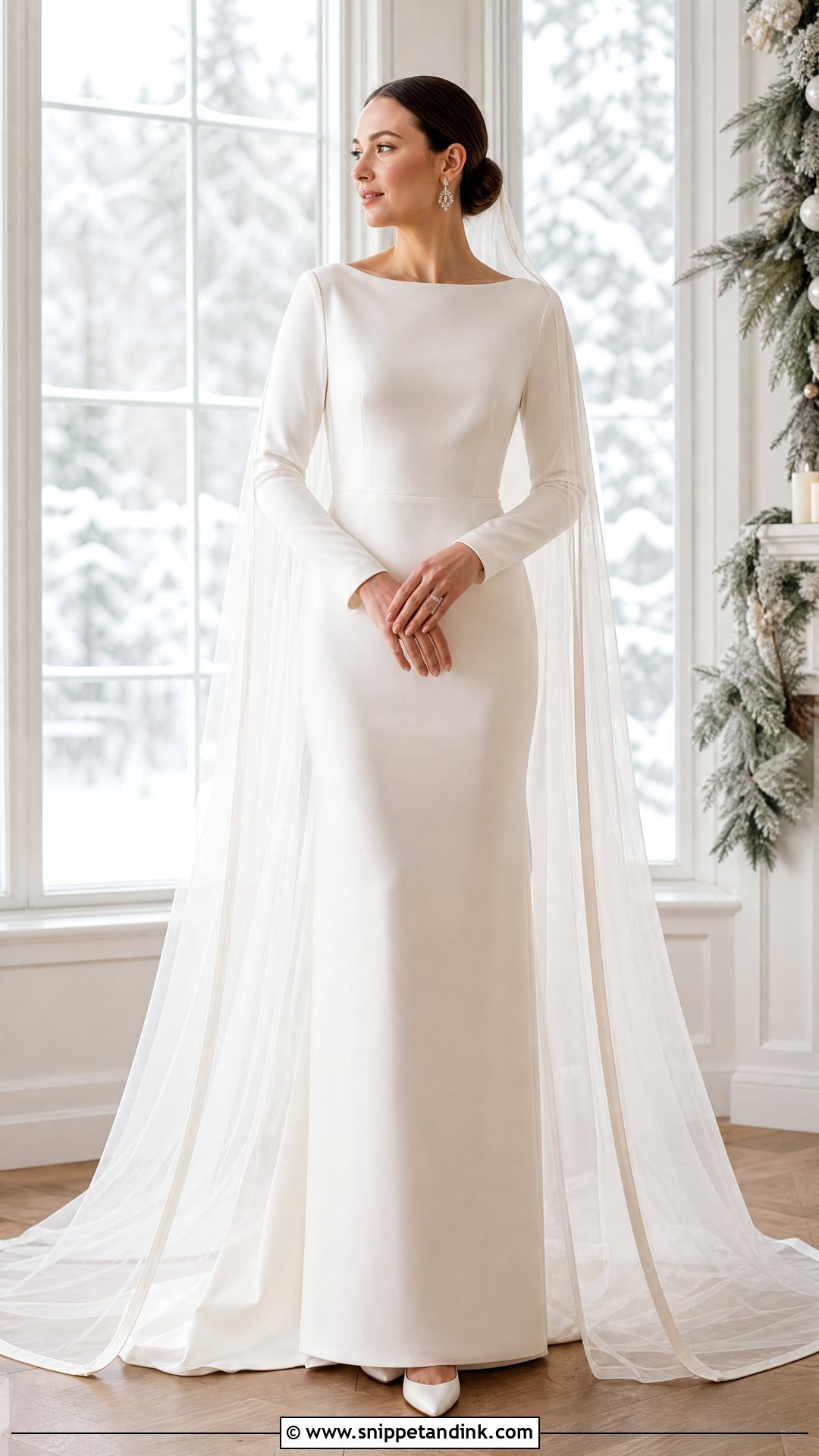
Velvet trim gives wings a winter feel. Start with a long-sleeve satin or crepe gown, then add tulle or chiffon wings edged in narrow ivory velvet. A winter wedding dress with closed pumps, crystal earrings and a smooth low bun is plenty. Wear a faux-fur wrap outdoors and attach the wings once it’s off, so nothing bulks up at the shoulders. Keep the velvet slim, because a wide band is heavy and stops the tulle moving. Chapel length is easier on wet or snowy ground, where a long hem soaks up water quickly.
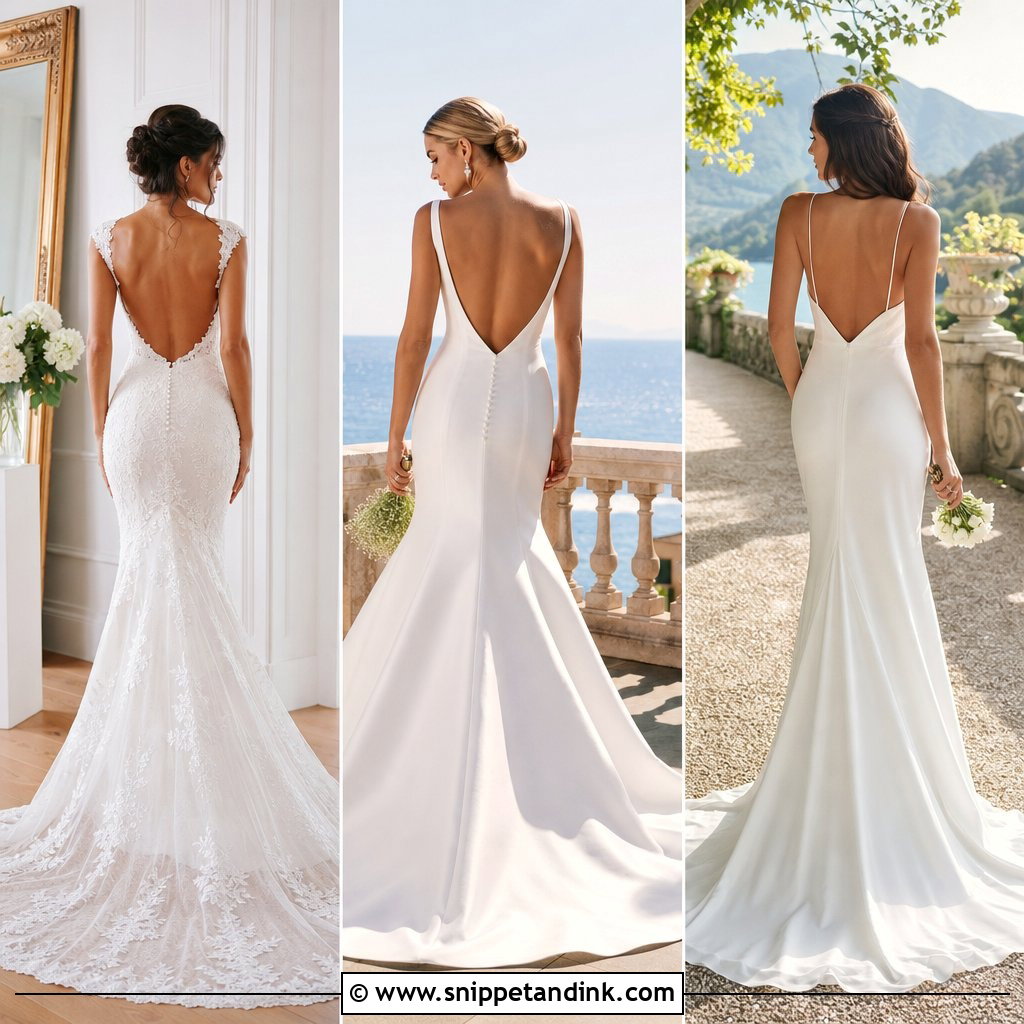
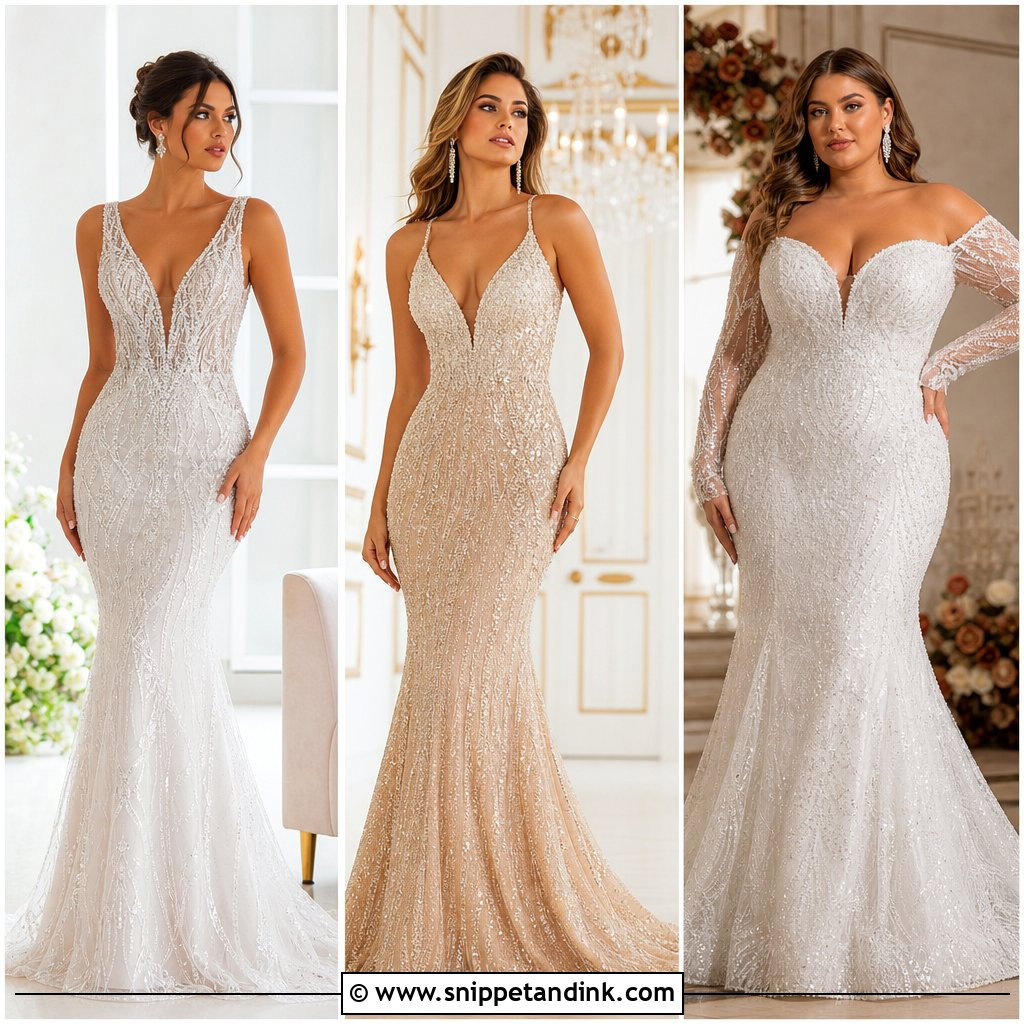


20. Reception Wedding Dress With Feather Wings
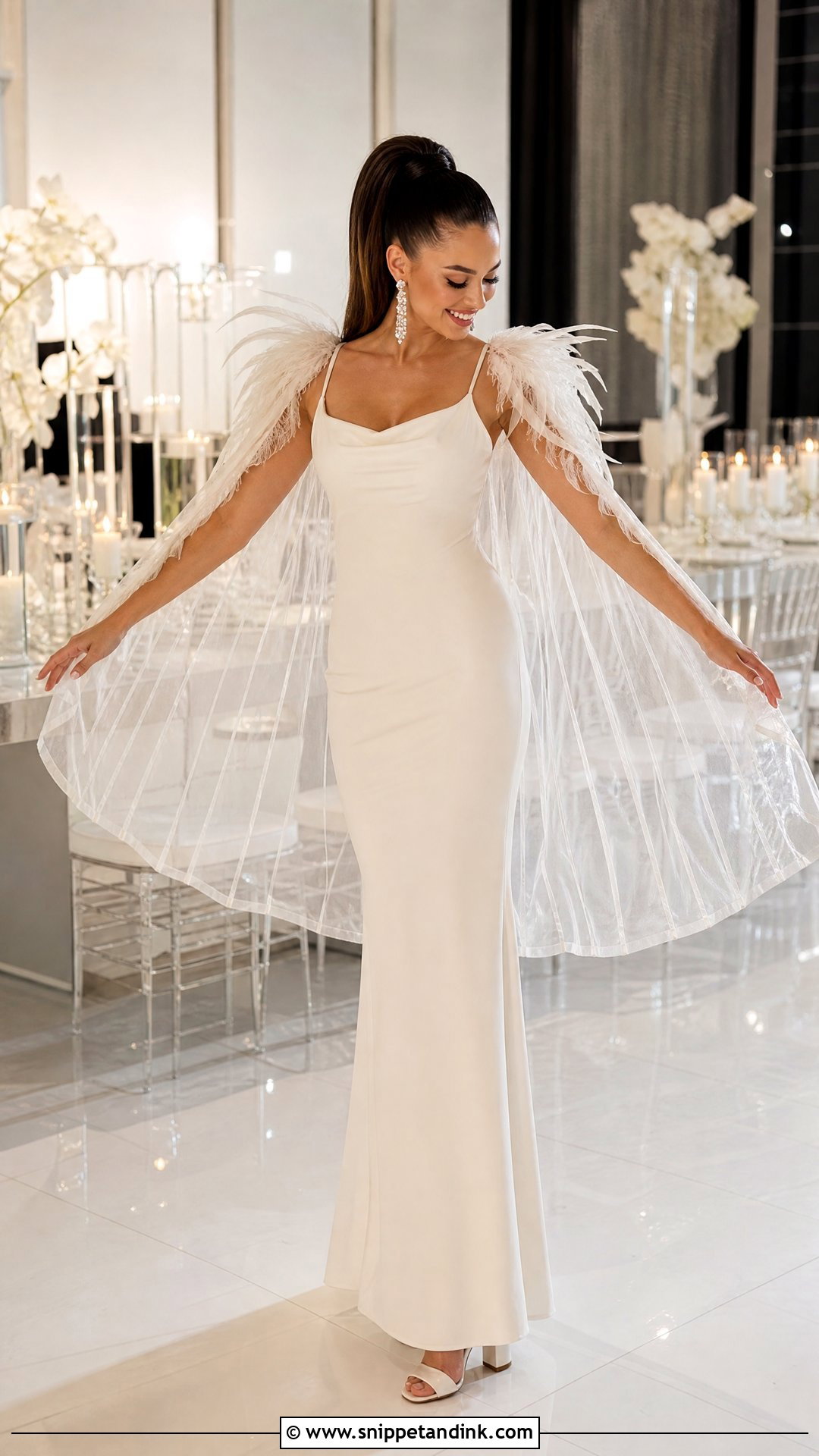
Feather wings are a fun reception change. Put them on a sleek column, trumpet or ankle-length dress with a strong neckline and little surface decoration; feathered shoulders or a narrow feather border on sheer panels is enough. Block heels, sparkling earrings and a high ponytail. Ask how the feathers are attached: sewn ostrich or marabou in good condition sheds very little, but cheap glued feathers leave a trail across the dance floor. Short wings suit walking and dancing; full-length ones can be worn for the entrance and taken off afterward.
Living With Wings From the Aisle to the Last Dance
Wings look weightless in a still photo, and they take some handling in real life. These are the questions I make every bride answer before the day.
Who takes them off, and when?
Decide whether they come off after photos, before dinner, or before the first dance, and pick one person to do it. Show her the fastenings at the last fitting so she isn’t working it out in a bathroom with guests waiting.
What happens when you sit down?
Long wings end up underneath you on a chair. Either gather them to one side as you sit or have them off before the meal. Sitting on tulle for an hour crushes it, and the creases show in the evening photos.
Can you walk without stepping on them?
Practice at home in your wedding shoes with a sheet pinned to your shoulders if the real wings aren’t ready. Walk forward, turn, and go up and down a step. Wings longer than your train will catch under your heel on stairs, which is usually the first sign they need shortening.
Outdoors, add one more test: stand in a breeze. If the panels wrap around your legs, small weights sewn into the hem corners can help.
Let the Gown Decide How Far the Wings Go
Wings should frame the gown, not cover the parts you chose it for. Start from the dress, then pick length, width, fabric and decoration that support it. Plain tulle suits minimal gowns; lace, pearls, embroidery, feathers or velvet push toward a particular mood. Strapless bodices, delicate sleeves and heavy panels all need secure attachments and a tailor’s eye. Practice walking, turning, sitting and lifting your arms before the day. From petite chapel panels to dramatic cathedral trains, proportion is what makes wings look right.
You'll Like These Ideas:




Leave a Reply