
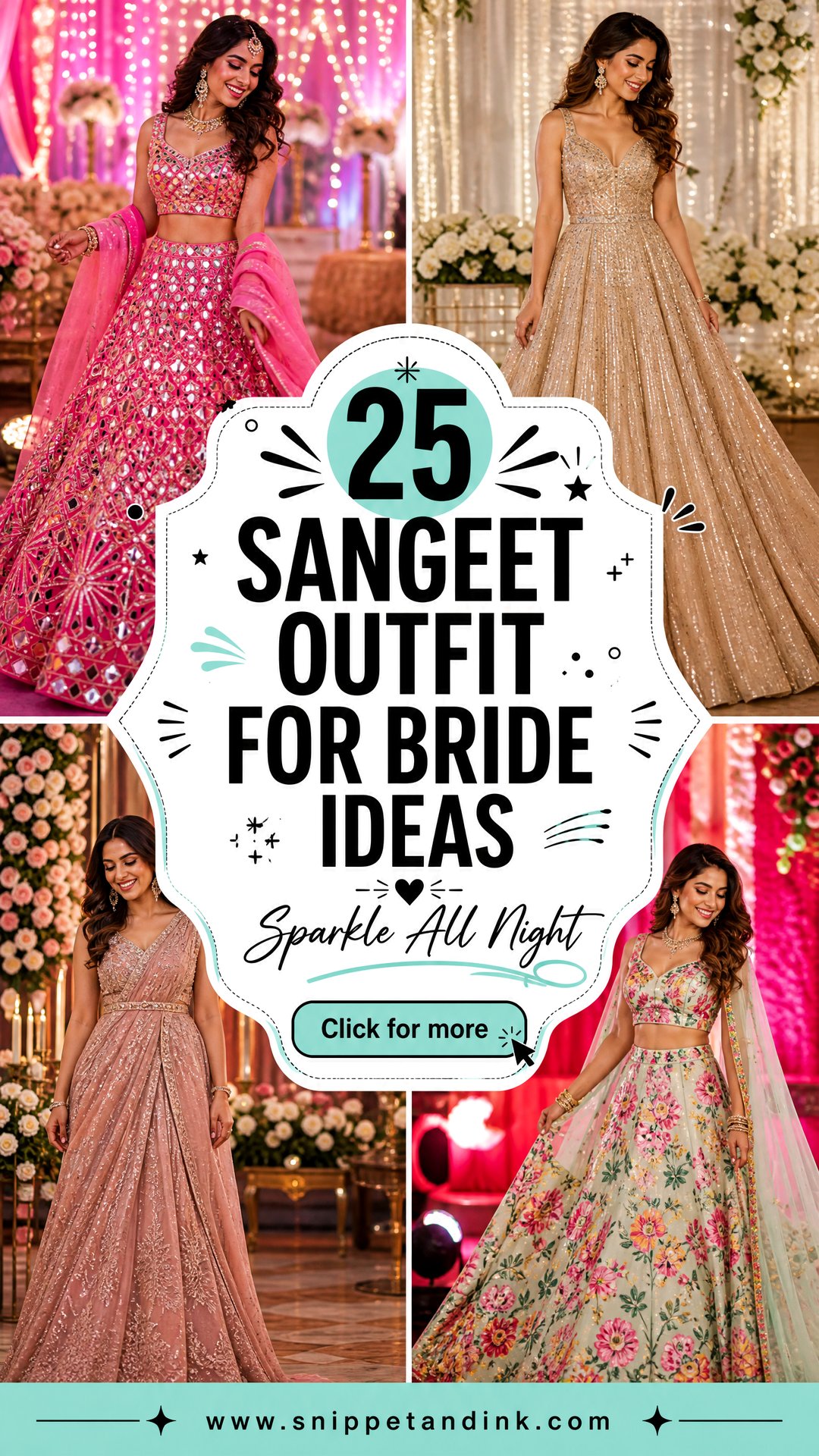
The sangeet is the one wedding night where the bride has to perform, not just appear. You will dance, sit on the floor with cousins, hug every aunt and probably do a choreographed number under bright lights. So the outfit has a different job from the wedding lehenga: it should be lighter, freer at the arms and secure enough that you stop thinking about it. Lighter lehengas, pre-draped sarees, sharara sets, capes, mirror work, sequins and Indo-western cuts all qualify. I judge every sangeet outfit by one test: can the bride do her full routine in it without holding anything in place? Here are twenty-five that pass, and what to watch for in each.
Rehearse the Choreography in the Real Outfit
Most sangeet wardrobe problems show up only when the bride does her routine, and by then it is too late to alter anything. I ask brides to bring their choreographer’s video to the final fitting and run the whole number in the outfit, shoes included.
- Raise both arms fully above your head. If the blouse rides up or digs into the underarm, the armhole needs adjusting.
- Do your fastest spin. A skirt with heavy embroidery at the hem keeps swinging after you stop, which can throw your balance.
- Sit on the floor and stand up without help. Floor seating is common at sangeets, and a tight skirt or stiff can-can makes this awkward.
- Wear the exact shoes. Practice in trainers hides the fact that your heels slip on a polished stage.
If you are changing for a performance, plan a separate dance outfit rather than forcing the main look to do everything. A lighter lehenga or sharara for the number, then the showpiece for photos, is a common and sensible split.
1. Gold Sequin Lehenga For Bride
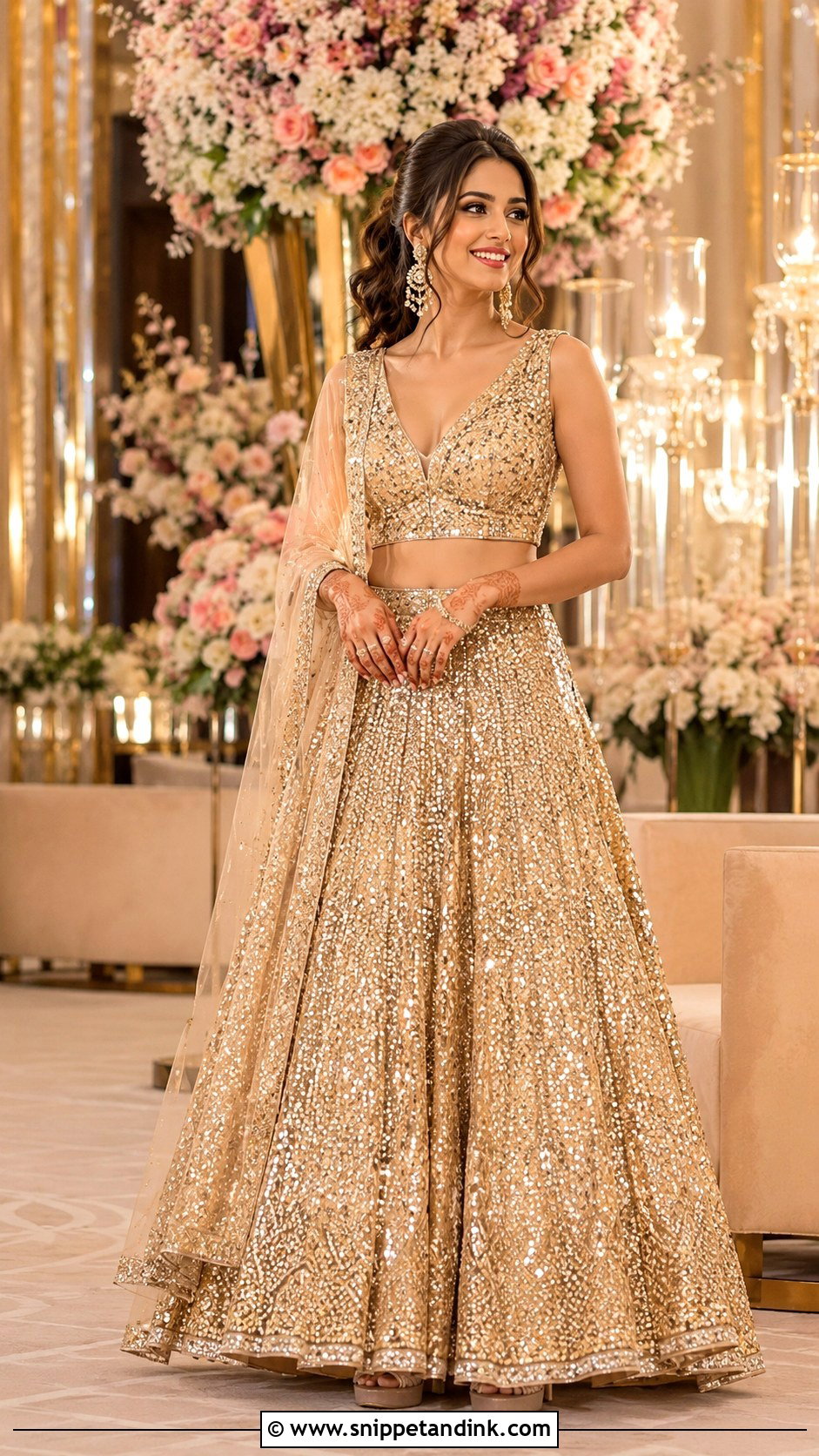
Gold sequins are made for stage lights, and a gold sequin lehenga is the brightest entrance you can make. The skirt is where I focus: a mid-weight skirt with a comfortable flare moves freely, while a heavily sequined skirt can weigh a lot more than it looks and slows every spin. A fitted blouse, a soft net dupatta and statement earrings are enough on top. I’d go with embellished block heels or platforms rather than stilettos. Luminous makeup with bronzed cheeks and a glossy lip suits the shine.
2. Pink Mirror Work Lehenga For Bride
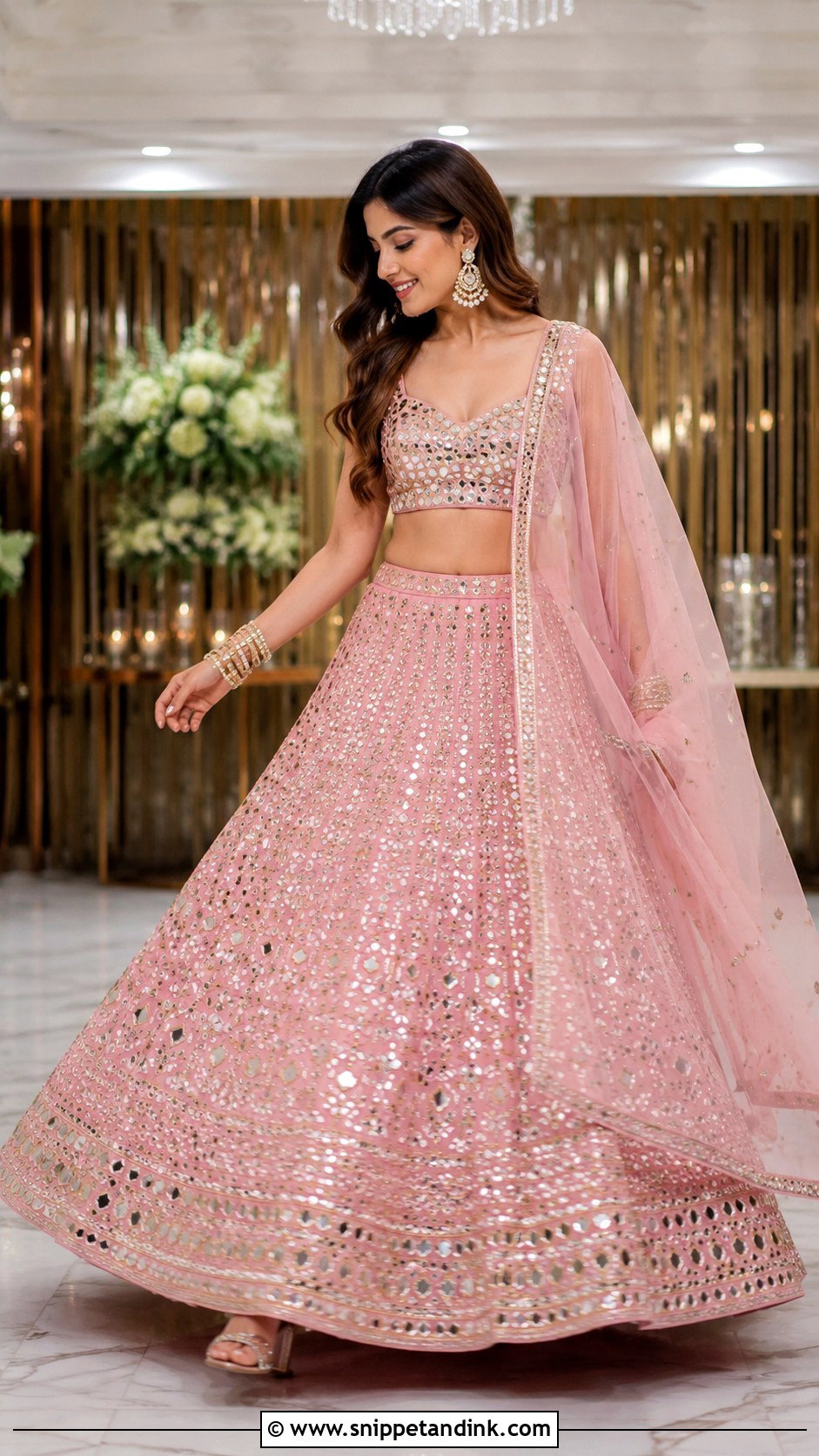
Mirror work catches light in small flashes as you move, which suits a dancing night. Blush pink reads soft, hot pink bold, rose pink sits between. A sleeveless or short-sleeved blouse frees the arms for choreography, and a light dupatta pinned on one shoulder stays put. The thing nobody warns you about: mirrors have hard edges, so a partner’s hand on your waist or a long hug can catch skin or snag fabric. I ask for mirrors to be kept off the inner arm and waist of the blouse. Kundan earrings, stacked bangles and a sleek bun or waves finish it.
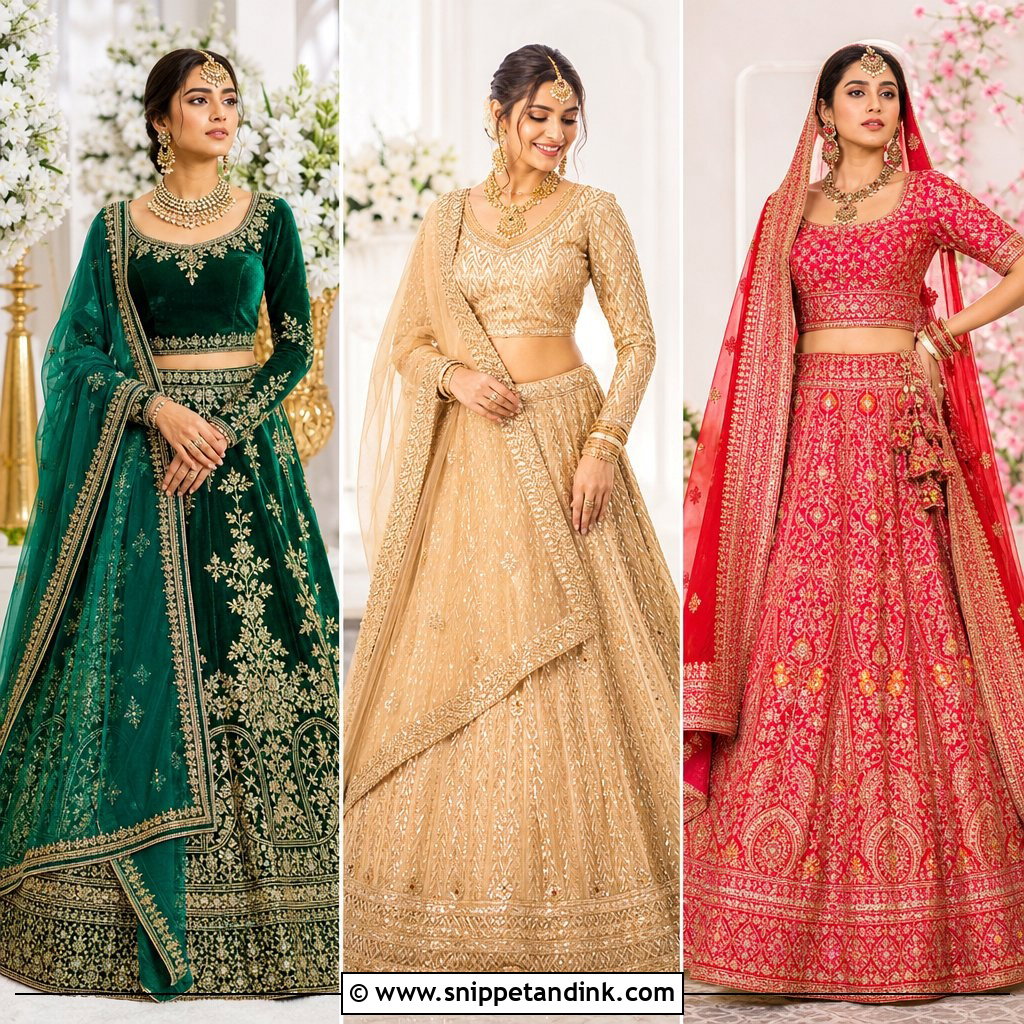
3. Emerald Green Lehenga For Bride
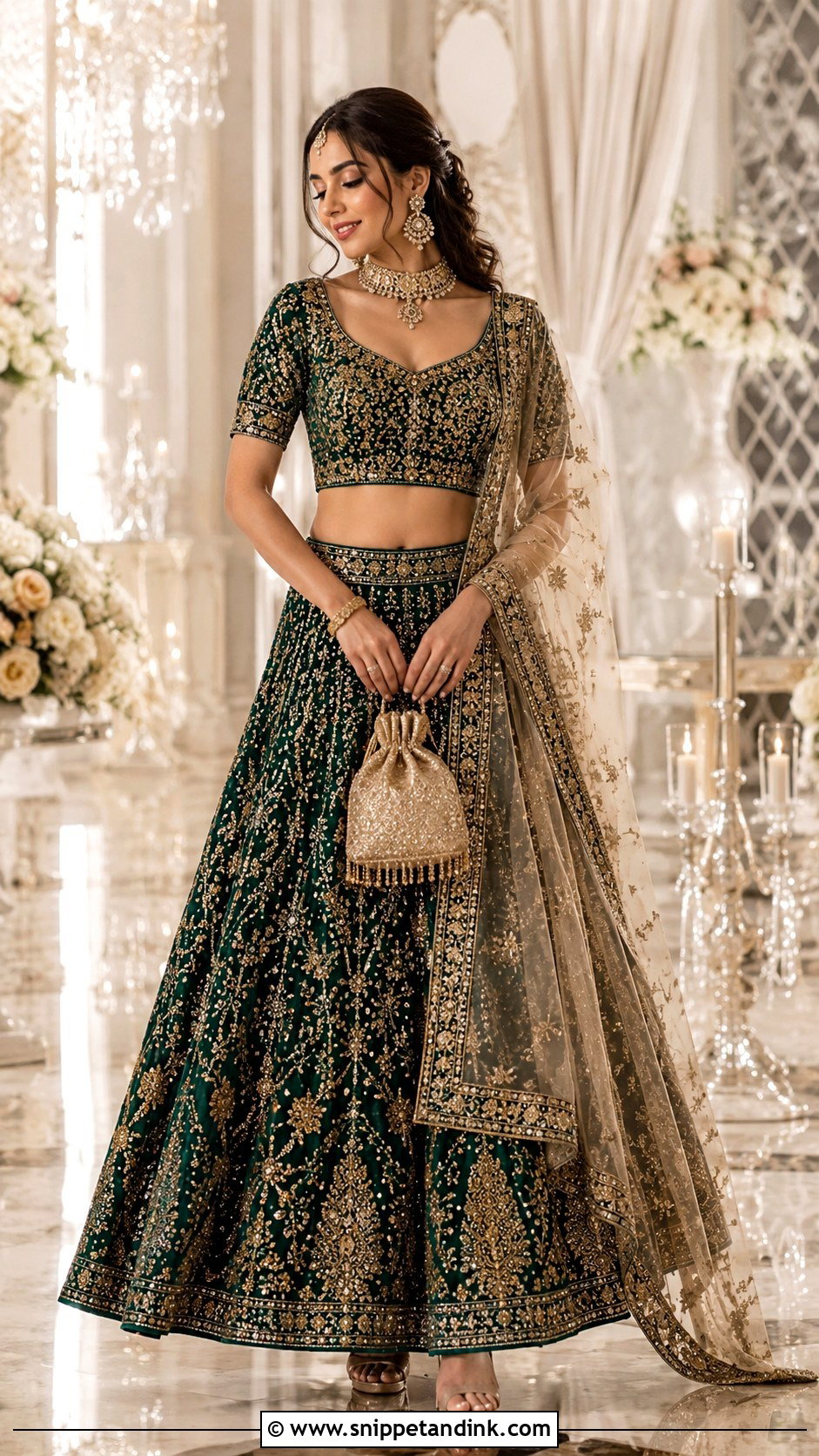
Emerald is my first suggestion when the wedding outfit is red, ivory or pastel, because it gives the sangeet a completely separate identity in the album. The jewel tone suits a wide range of skin tones. Zari, sequins or tonal embroidery add depth without much weight. A matching blouse keeps it polished, and a champagne, gold or soft pink dupatta adds contrast. Polki jewelry, gold heels and a small potli bag complete it; the potli is handy for lipstick and a phone between performances.
4. Silver Lehenga For Bride
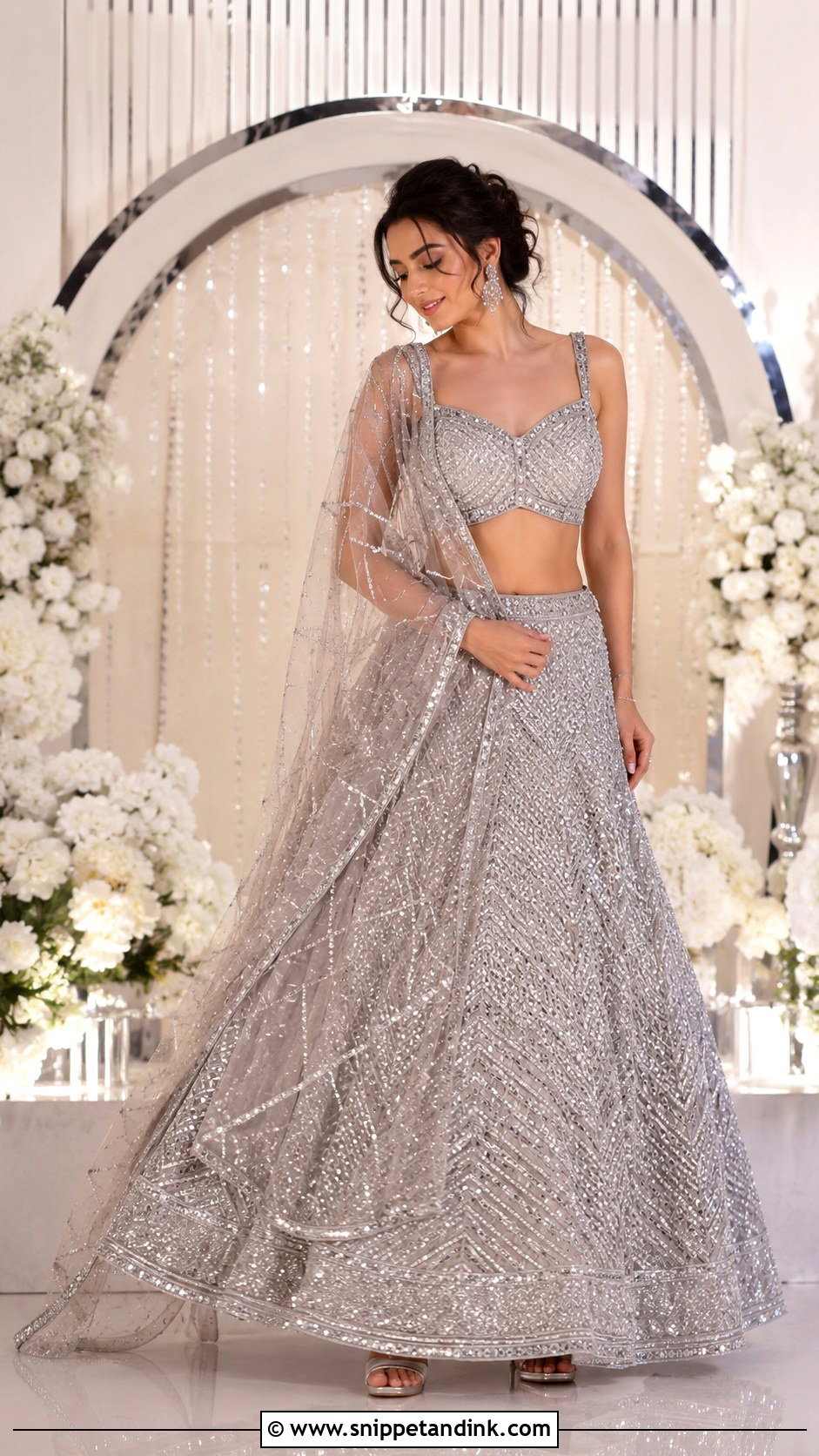
Silver looks sleek and modern under ballroom lighting and is a strong choice for a couple’s performance, since it bounces light back toward the camera. Sequins, crystals or metallic threadwork all work, but check the lining: metallic embroidery has rough reverse stitching, and a scratchy lining becomes unbearable by the third song. A structured blouse and sheer dupatta keep it refined. Diamond-style jewelry, silver heels and a soft smoky eye suit it, and it pairs well with both Indian and Western accessories.
5. Red Ruffle Lehenga For Bride
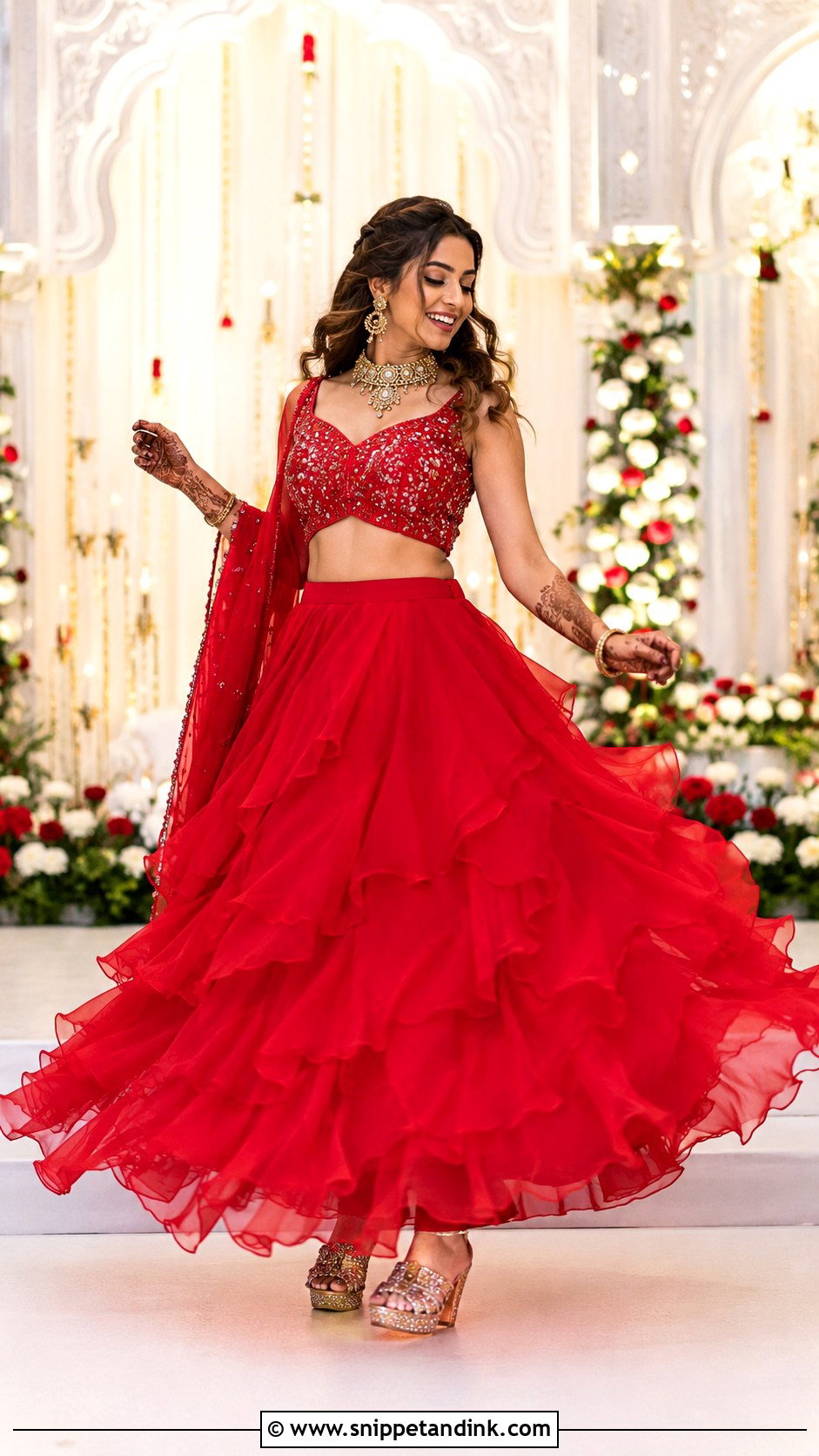
Ruffles add motion every time you turn, which makes a red ruffle lehenga a younger, dance-ready take on bridal red. Fabric matters here: organza, georgette or net keep the volume airy, while heavier silk ruffles get bulky. A fitted embroidered blouse balances the skirt, and a minimal dupatta or cape drape stays out of the way. Gold jewelry, a red lip and soft waves finish it. Ruffles at the hem can catch under your heel when you dance, so the hem should clear the floor in your actual shoes.
6. Lavender Lehenga For Bride
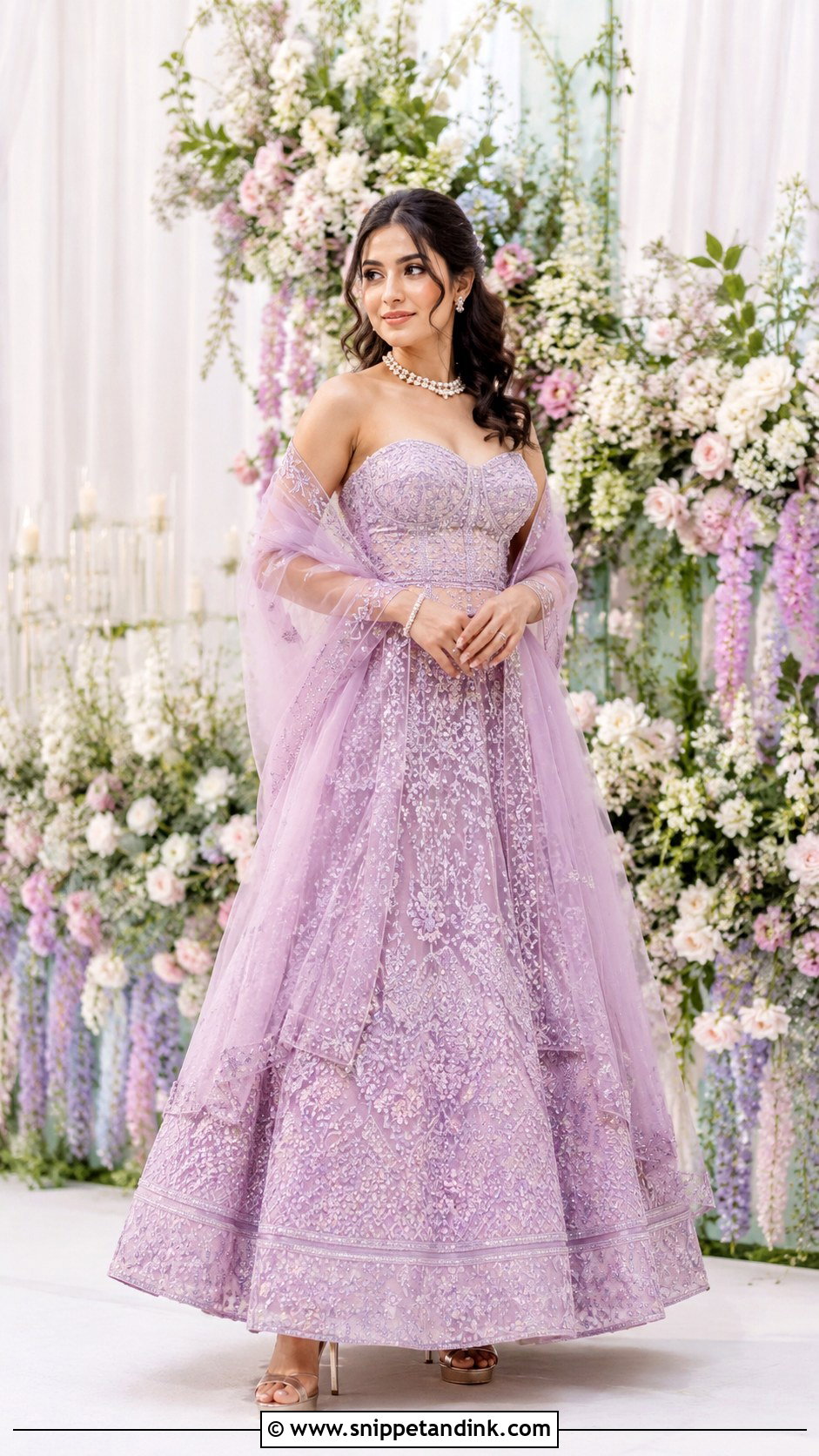
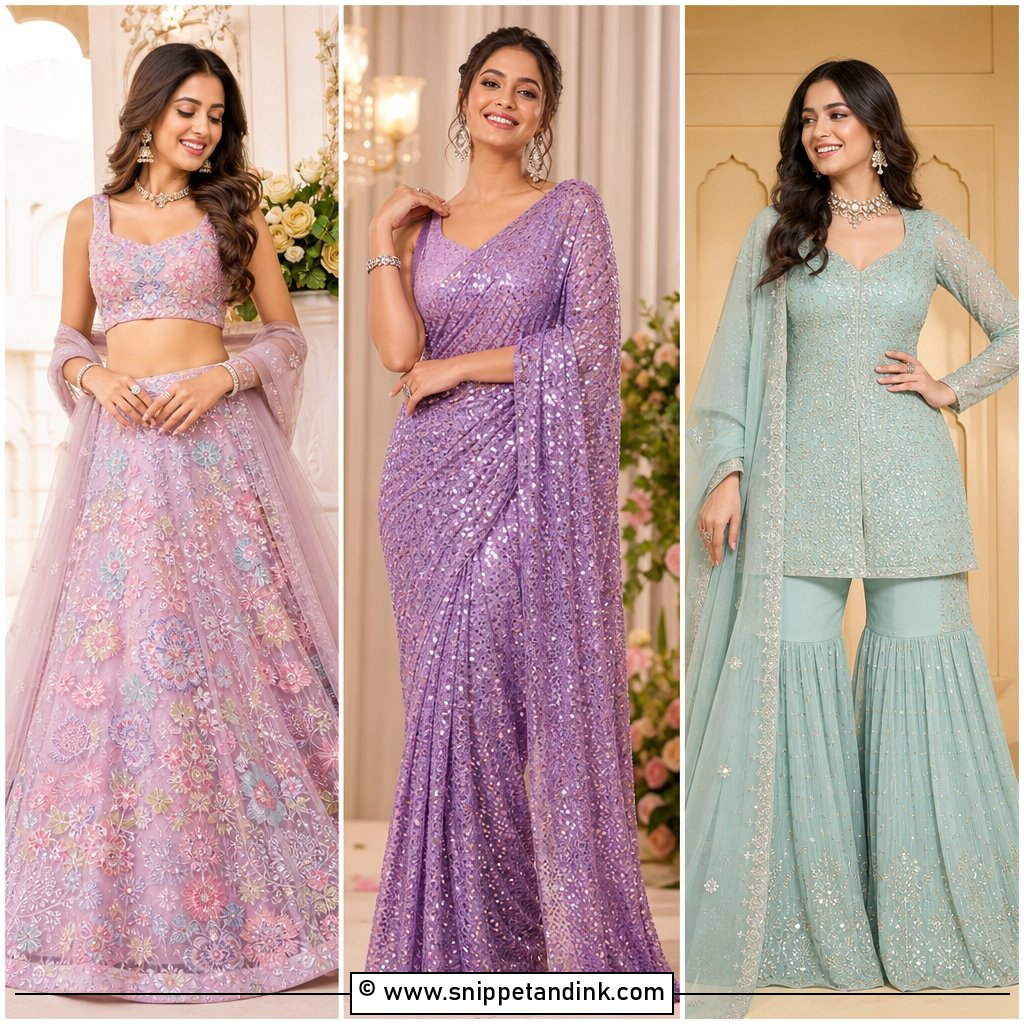
Lavender is a soft colour that still looks festive under evening lighting. Delicate embroidery, shimmer thread, pearls or sequins keep it bridal. A corset-style blouse or sweetheart neckline gives a contemporary line, and a sheer dupatta keeps it light. Silver and pearls suit the cool tone, with dewy makeup. On warmer or deeper skin, I pick a lavender with a little pink in it; the bluer shades can look grey near the face. Metallic heels or embroidered juttis both work.
7. Champagne Gown For Bride
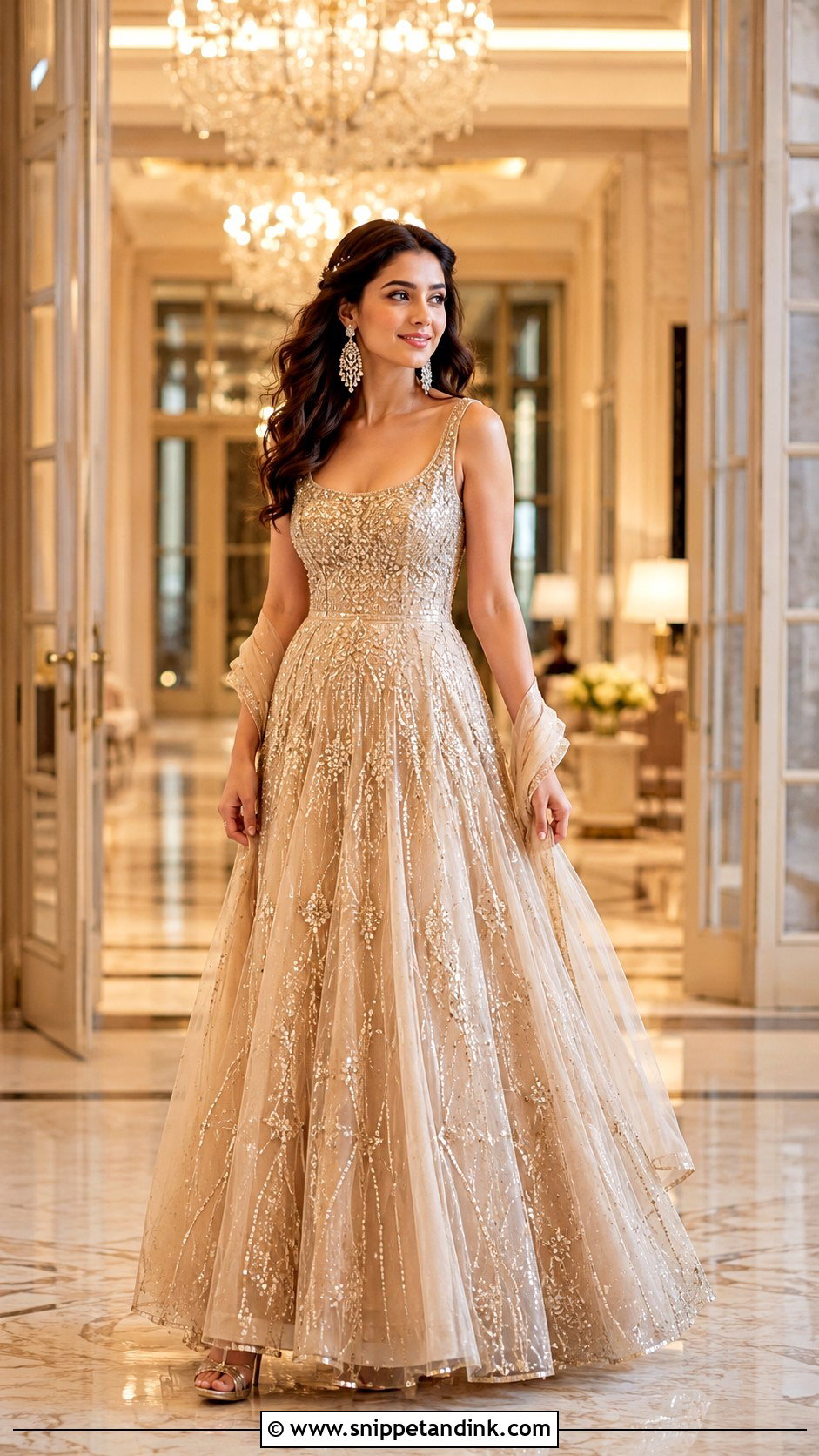
A champagne gown removes the dupatta and the separate skirt entirely, which makes it the easiest outfit here to dance in. A floor-length design with embroidery, sequins or crystals at the bodice gives the bridal weight; a gentle flare or short trail adds drama without tripping you. If it has a trail, ask for a wrist loop so you can lift it for dancing. Chandelier earrings, a slim bracelet and soft waves suit it, with glowing makeup and metallic heels.
8. Cape Lehenga For Bride
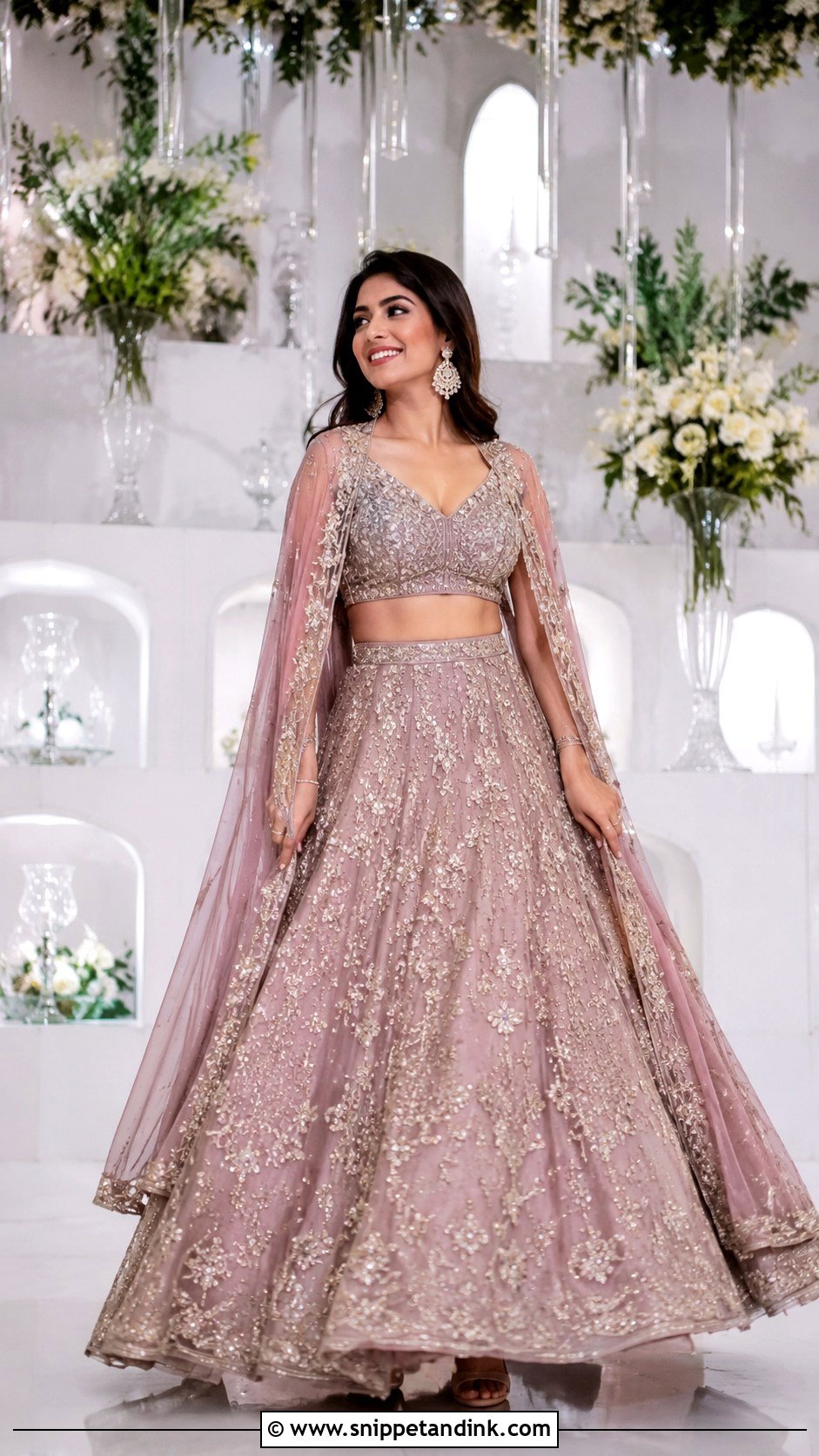
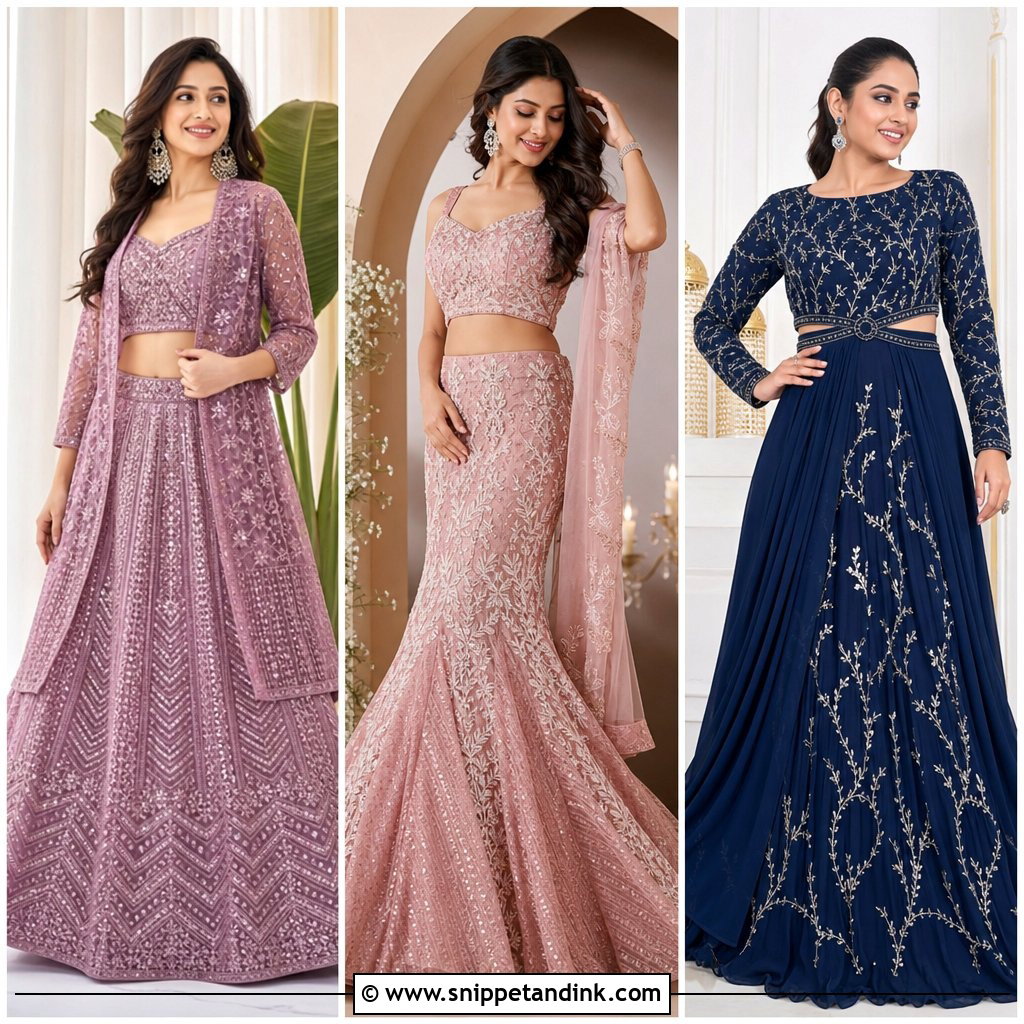
A cape replaces the dupatta and stays put, which frees both arms for choreography. Choose a light cape with beadwork, sequins or embroidery to match the lehenga, over a fitted blouse and a high-waisted skirt. I check where the cape fastens: one tied at the neck pulls on the throat during big arm moves, while a cape stitched to the blouse shoulders moves with you. Statement earrings, soft curls and comfortable heels finish it. It suits brides who want a confident entrance.
9. Sharara Set For Bride
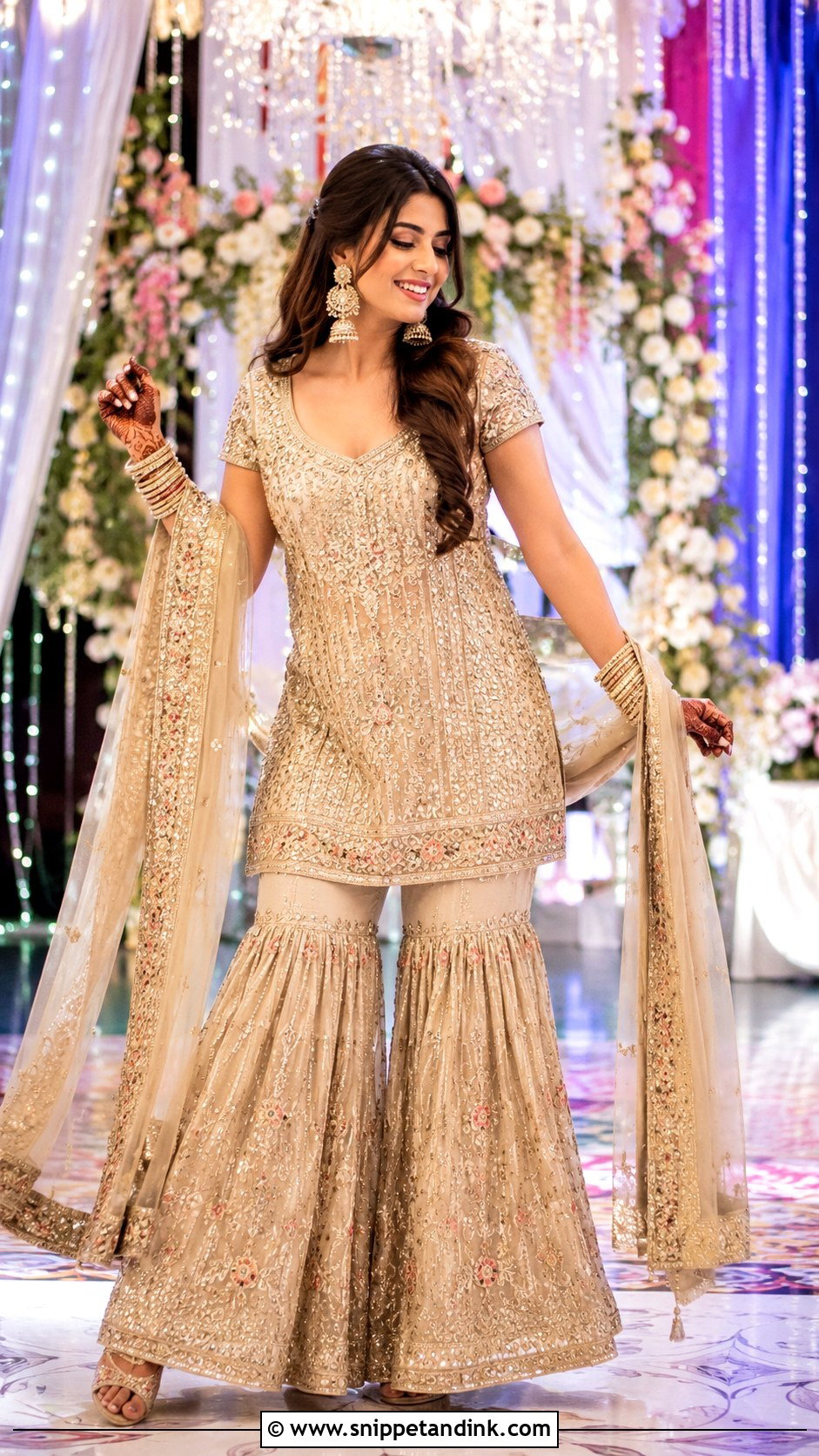
A bridal sharara set gives flowing movement without the weight of a big skirt. Georgette, silk or organza with mirror work, zari or sequins keep it festive. A short kurti or peplum top gives structure, and a light dupatta finishes it. The flare of a sharara starts at the knee, so it swings well in a spin but can catch on a heel during fast footwork; I’d take the hem up slightly. Jhumkas, stacked bangles and embellished heels complete it.
10. Gharara Set For Bride
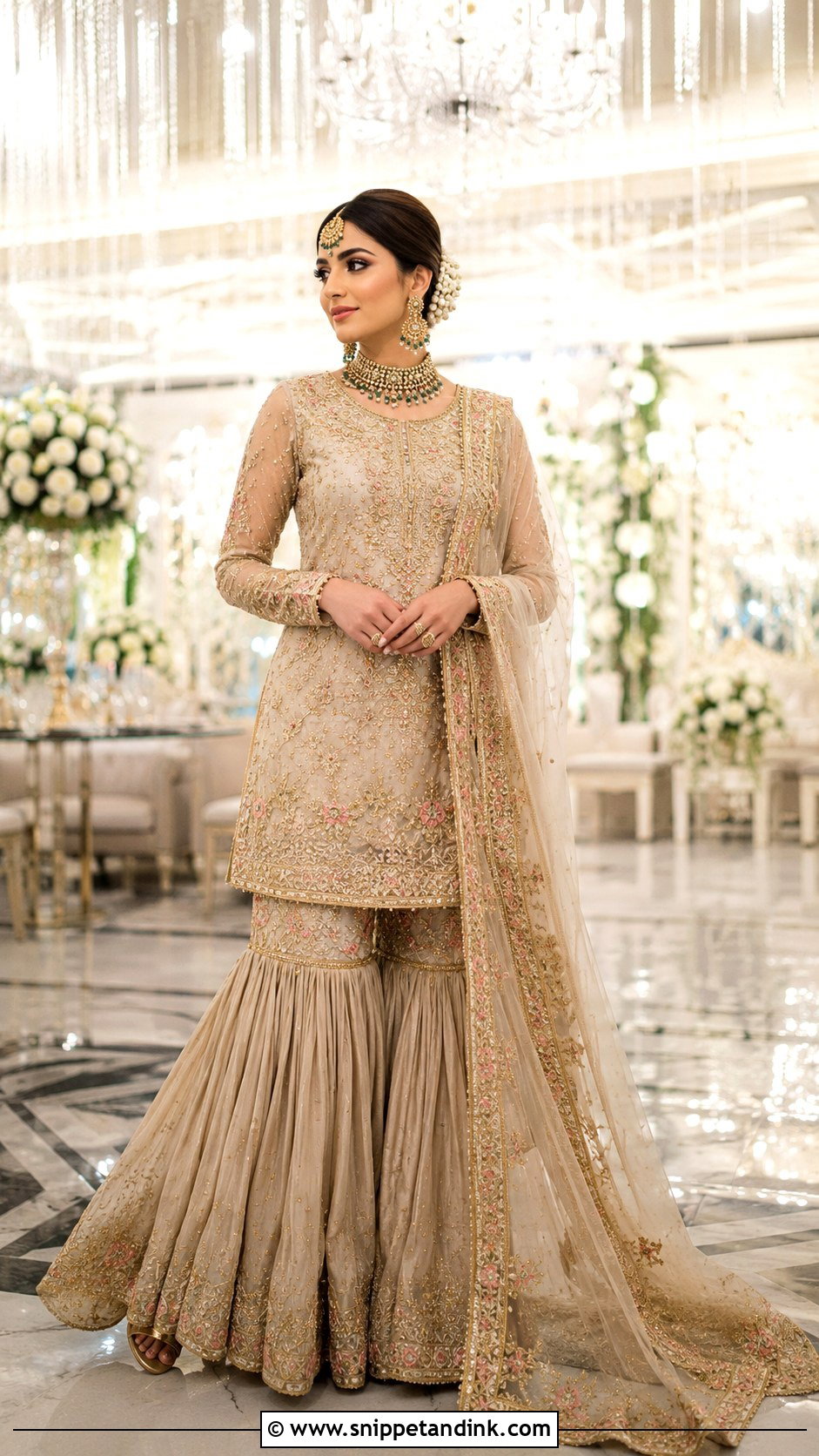
A gharara is fitted to the knee, then flares out, with a joint (the gota band) at the knee that makes the shape. Choose a bridal gharara with gota patti, zardozi, mirror work or fine embroidery, with a short kurta, embellished dupatta and traditional jewelry. Ivory-gold, deep green, pink and rust all work. That fitted upper leg restricts deep lunges and squats, so if your choreography includes them, test them at the fitting. A low bun with a passa or tikka adds old-world charm.
11. Pre Draped Saree For Bride
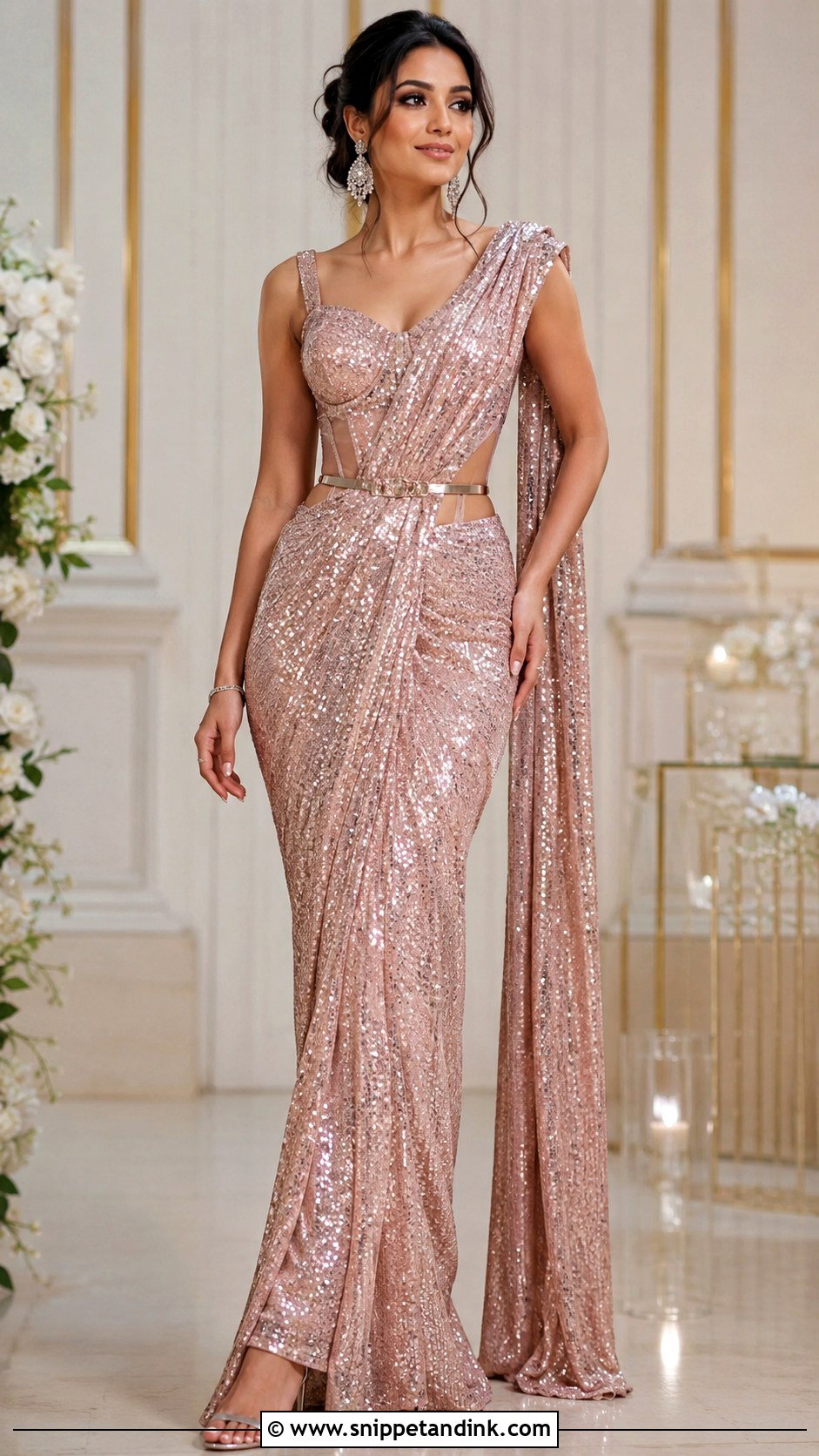
A pre-draped saree gives you the saree silhouette without pleats that loosen mid-dance. Sequins, ruffles, fringe or crystals make it festive at night. A structured blouse, a belt or an attached pallu keeps everything in place and defines the waist. Statement earrings, sleek heels and a small clutch finish it. I always have the bride try a full turn and a sit-down in it at the fitting, since some pre-draped styles are cut too narrow at the knee to dance freely.
12. Saree Gown For Bride
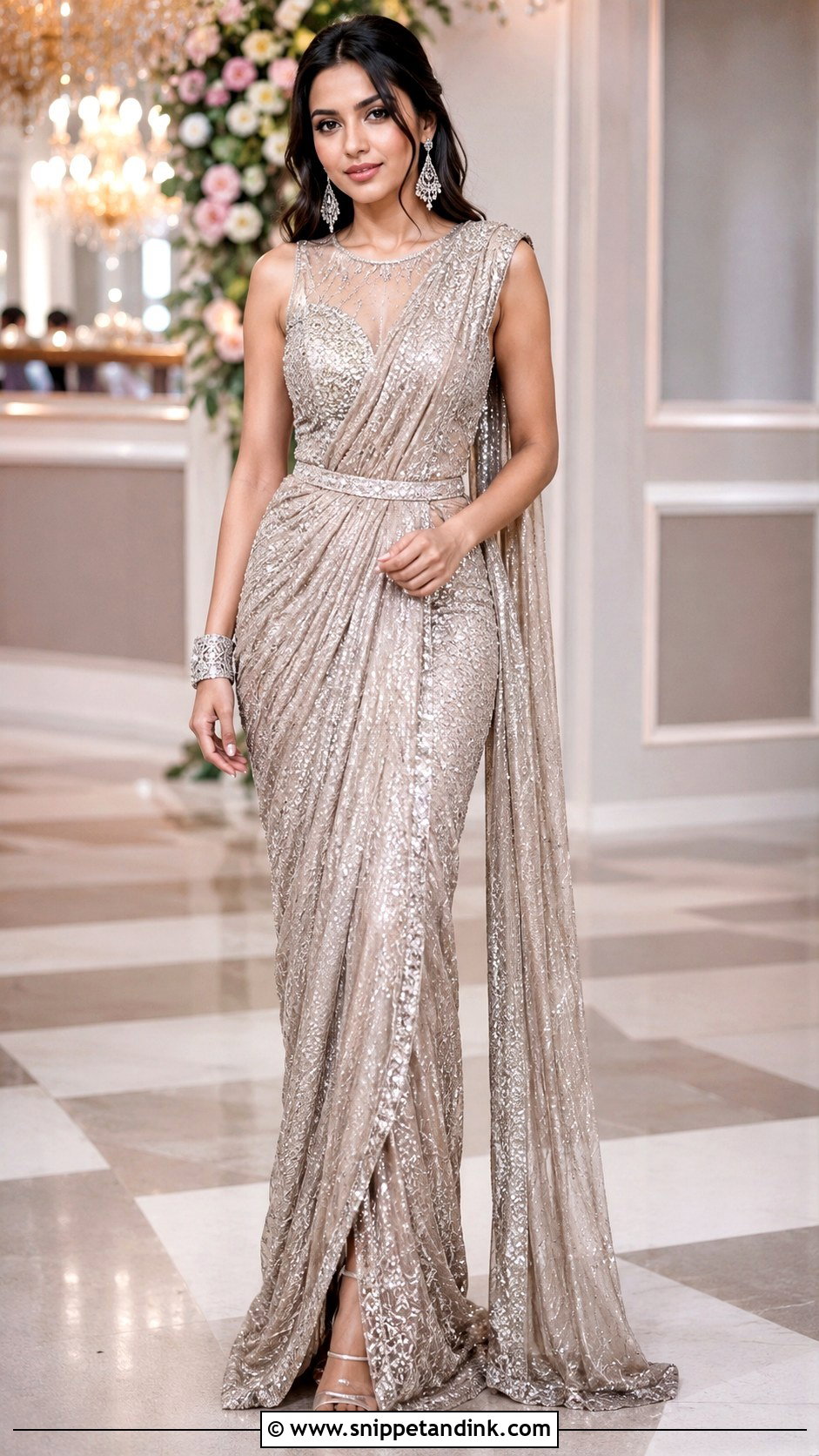
The saree gown is a step further than the pre-draped saree: a one-piece gown with the drape attached. Nothing needs adjusting all night. Look for metallic fabric, beadwork or embroidered panels, a defined waist and a soft shoulder drape. Diamond-style earrings, a cuff bracelet and strappy heels give a contemporary finish. It suits hotel ballrooms and cocktail-style sangeets. If the drape is heavy on one shoulder, check the other side of the bodice is secure, or the neckline can pull sideways.
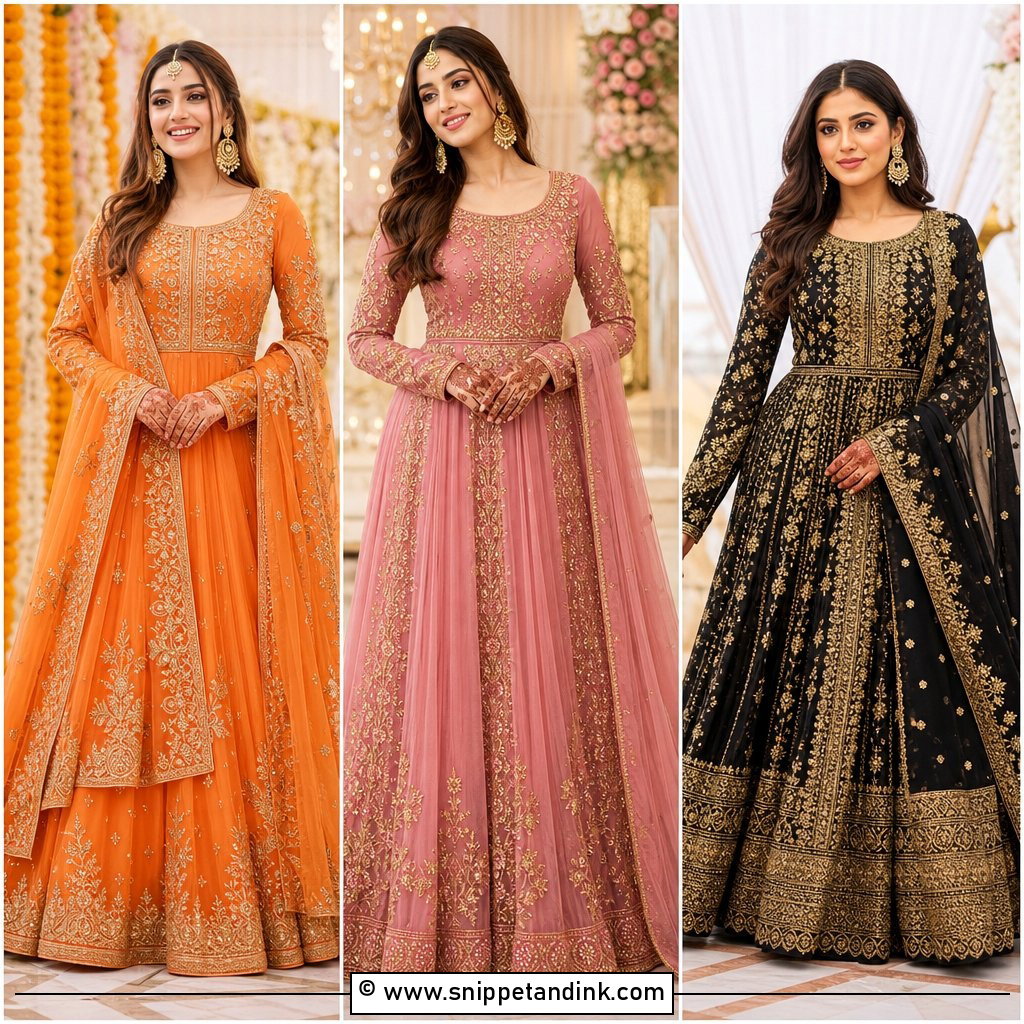
13. Anarkali Gown For Bride
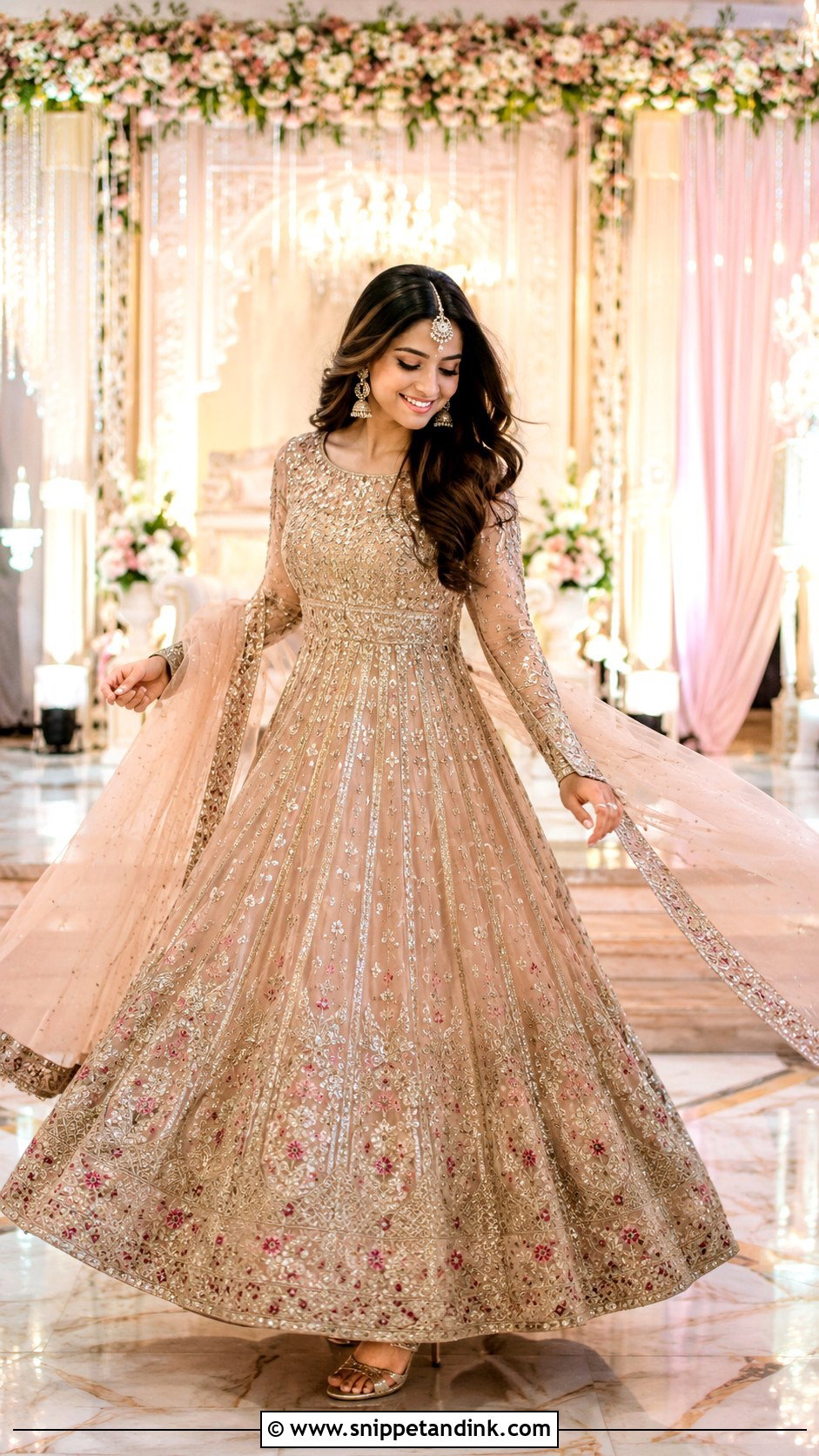
An Anarkali’s long flare swirls well in a dance number without the weight of a lehenga. I’d pair a heavily embroidered bodice with a lighter skirt so the heaviest part sits close to the body and the flare stays free. Georgette, net and silk blends move best. A sheer dupatta, jhumkas and soft curls keep it romantic, and a waist belt or statement tikka adds more bridal detail. Check the armholes: many Anarkalis are cut close at the underarm, which limits raised-arm moves.
14. Jacket Lehenga For Bride
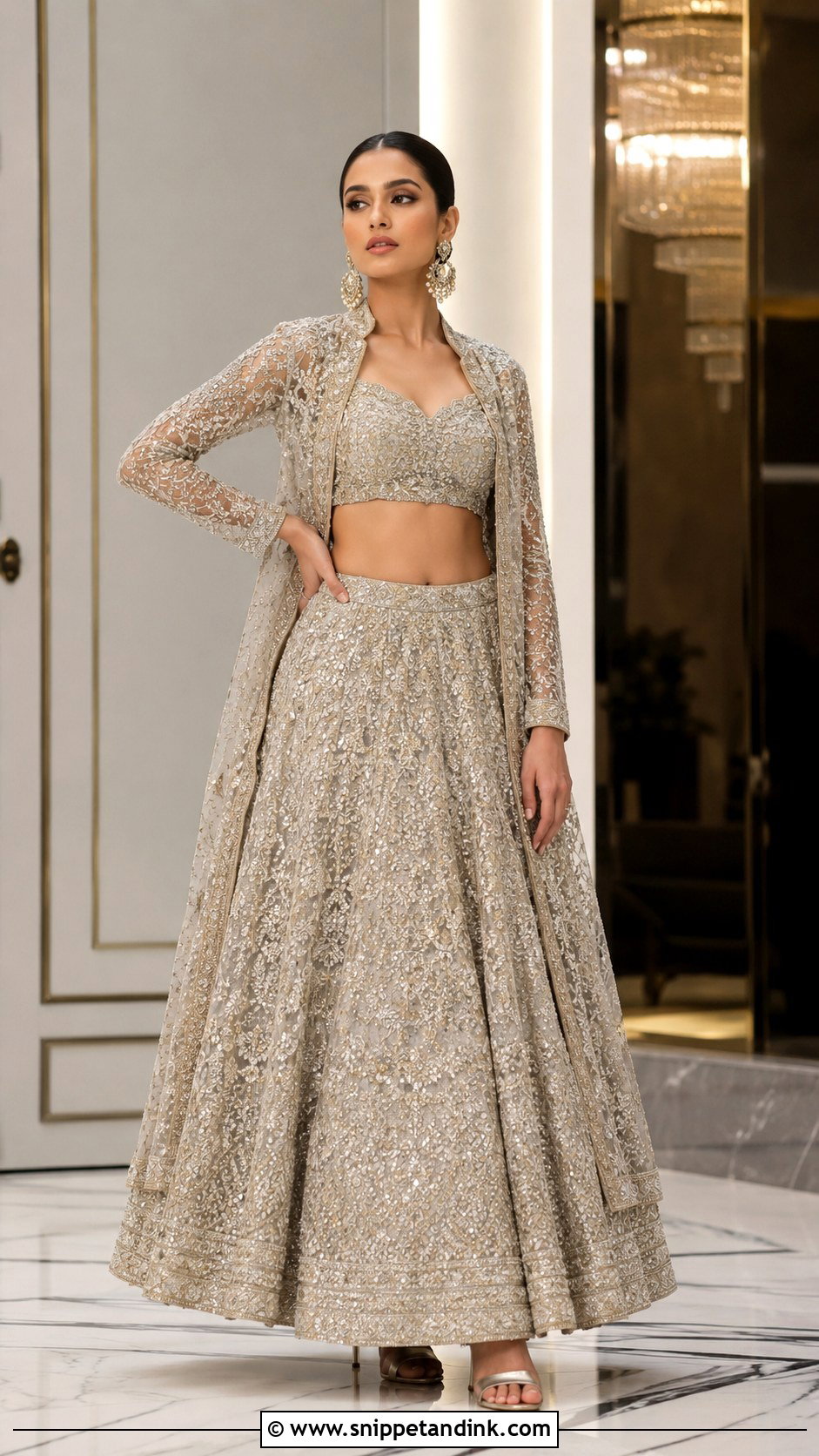
A jacket over a lehenga adds structure and a little coverage, and it means you can skip the dupatta. Short jackets feel youthful; long embellished ones add height and swing. Wear a cropped blouse and flared skirt underneath so the layers don’t bulk up at the waist. Sleek hair, bold earrings and comfortable heels finish it. Jackets get warm under stage lights, so I’d choose a sheer or open-front version for an indoor sangeet and keep the heavier jacket for winter.


15. Indo Western Jumpsuit For Bride
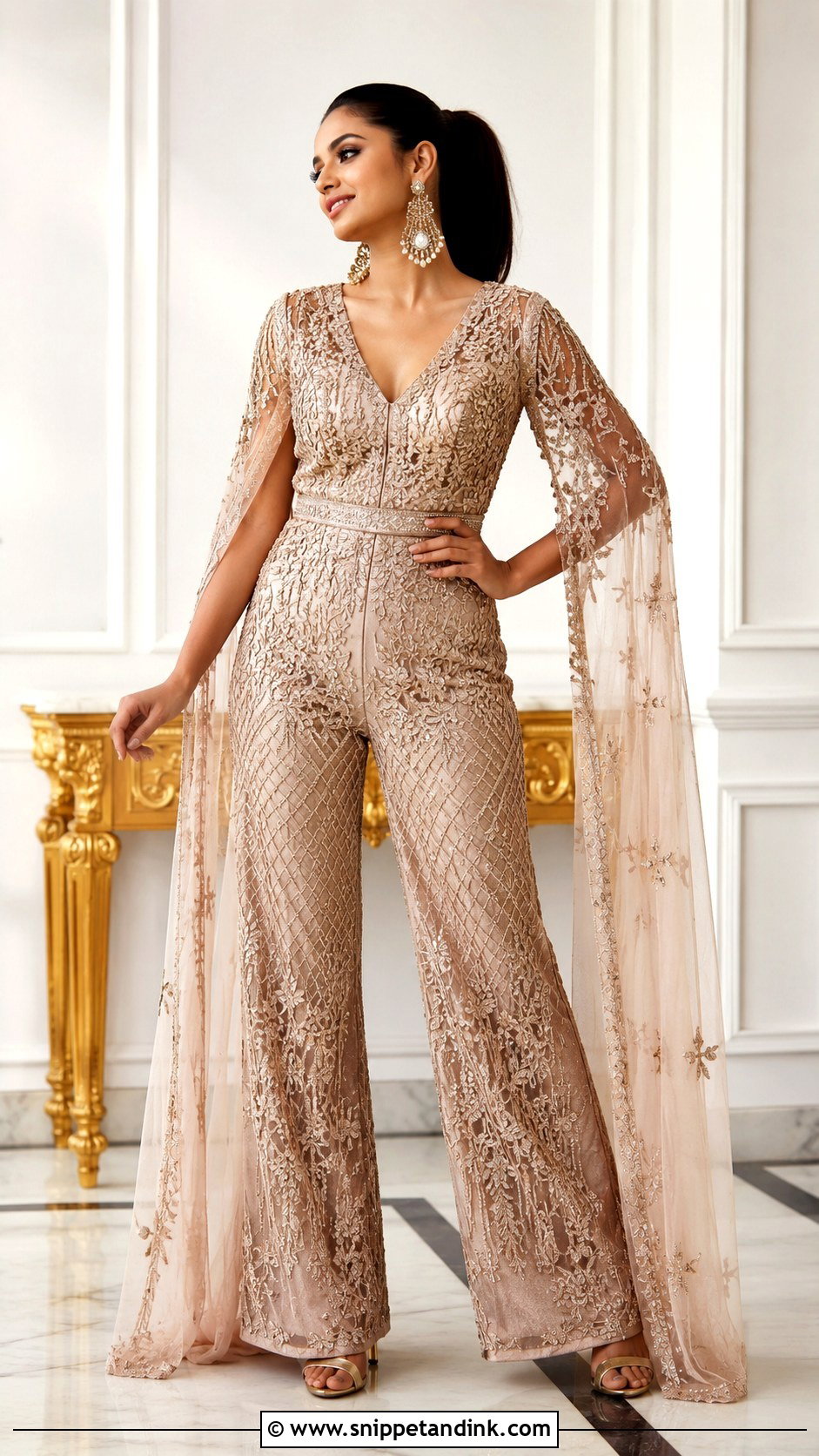
An Indo-western jumpsuit is the most practical outfit for a performance: no skirt, no pleats, no dupatta. Embroidery, sequins, cape sleeves or a detachable overskirt make it bridal, and a defined waist keeps it from looking casual. Statement earrings, metallic heels and a sleek ponytail or bun complete it. The one real drawback is bathroom breaks, which take longer in a jumpsuit, so I’d plan a quick, private changing spot near the stage.
16. Peplum Lehenga For Bride
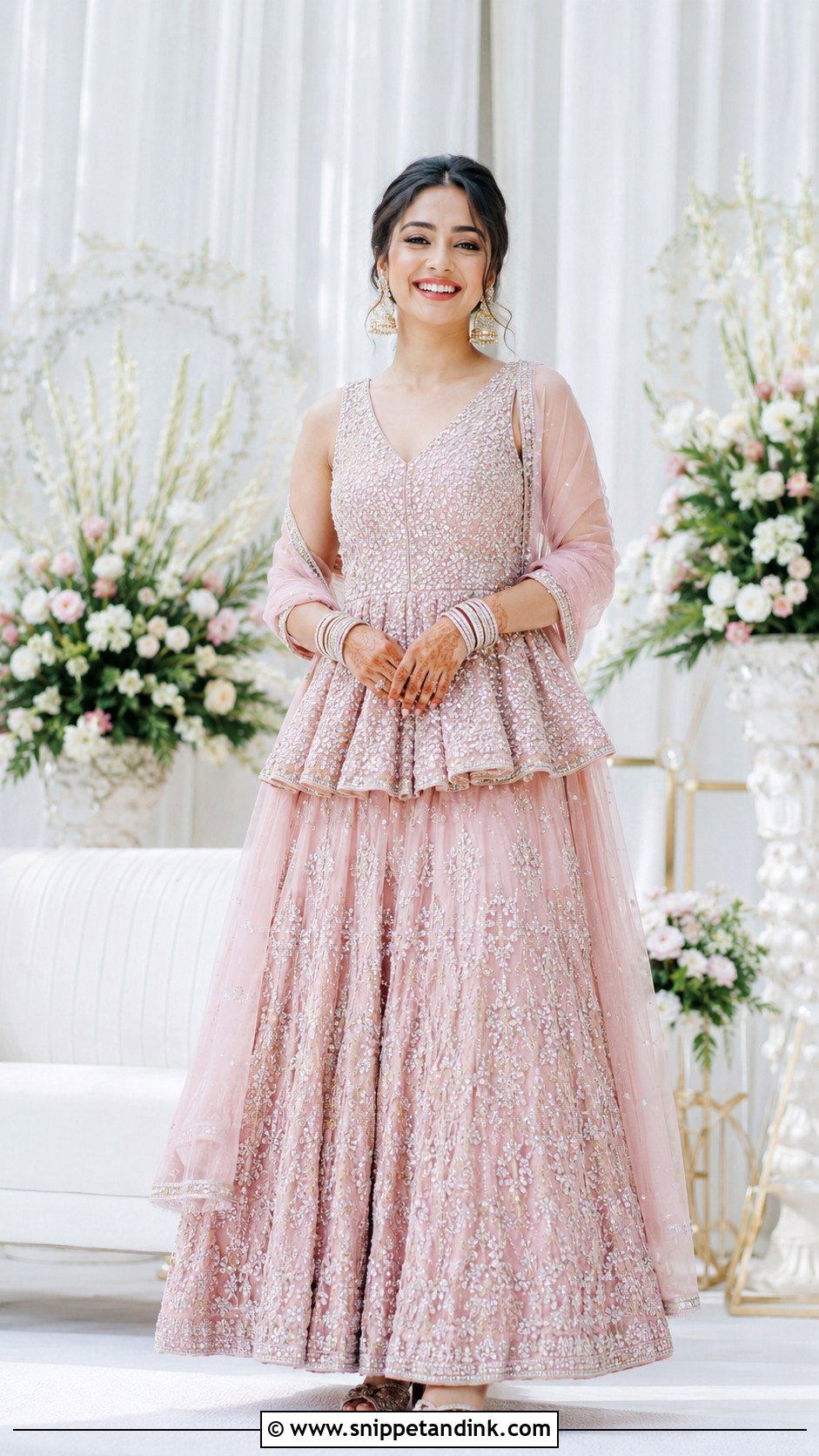
A peplum top flares at the waist, adding shape and a little coverage around the midsection, and it stays in place better than a cropped blouse during dancing. It pairs well with an organza, silk or georgette skirt. Put the embroidery, mirror work or sequins on the top to draw the eye up. A light dupatta can be pinned to one side, or skipped if the top is detailed enough. Jhumkas, bangles and embellished sandals finish it.
17. Floral Lehenga For Bride
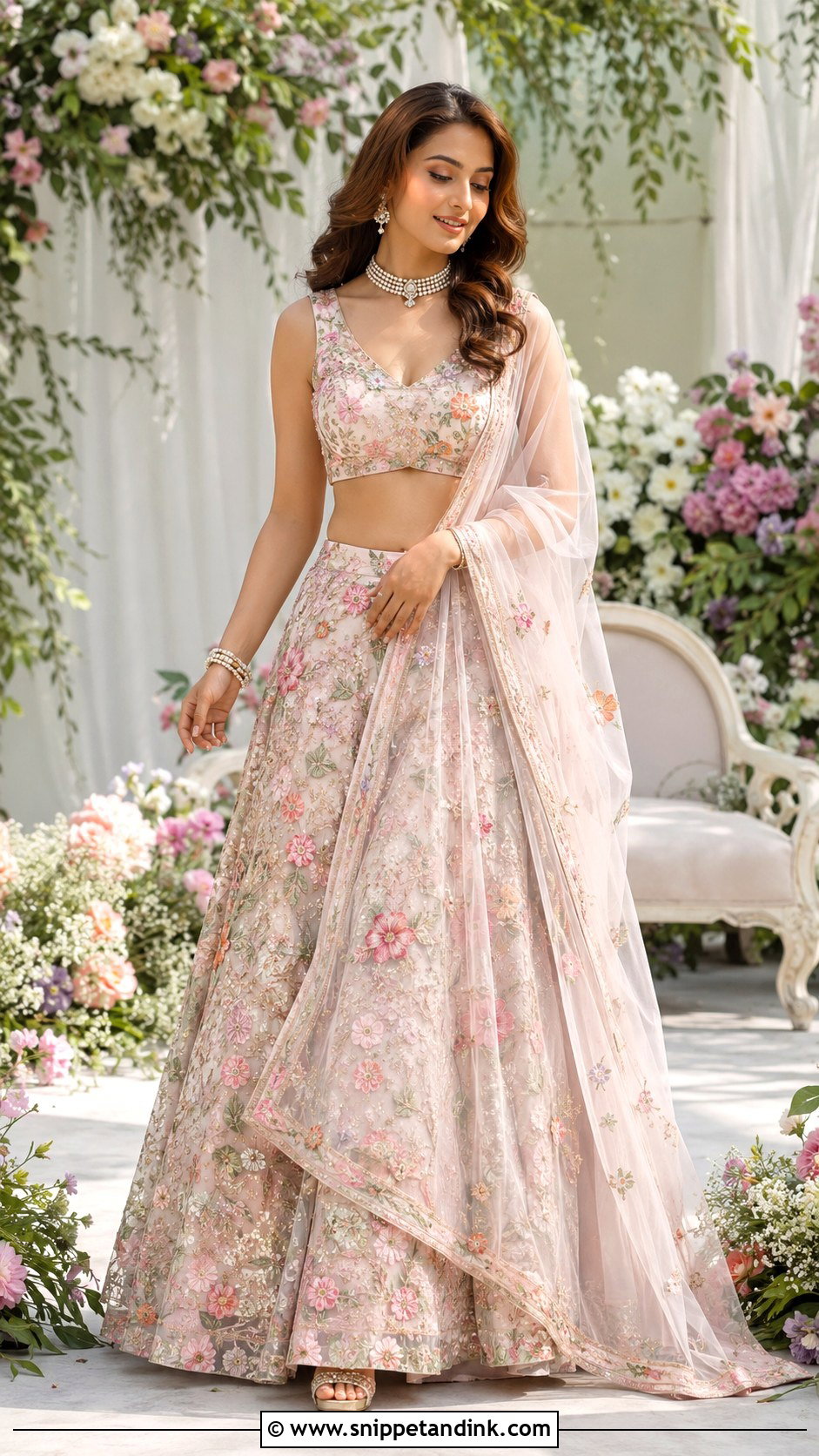
Florals are the fresh alternative to metallic sparkle. Printed florals are lighter and more relaxed; embroidered florals carry more bridal richness. Pastel florals feel soft, jewel-tone florals festive. A matching blouse and sheer dupatta keep it coherent. Fresh makeup, soft waves and pearl or kundan jewelry suit it, and it fits garden venues, resort weddings and daytime sangeets. Under strong evening lighting, a pale print can look flat, so I’d save it for daylight events.
18. Black Lehenga For Bride
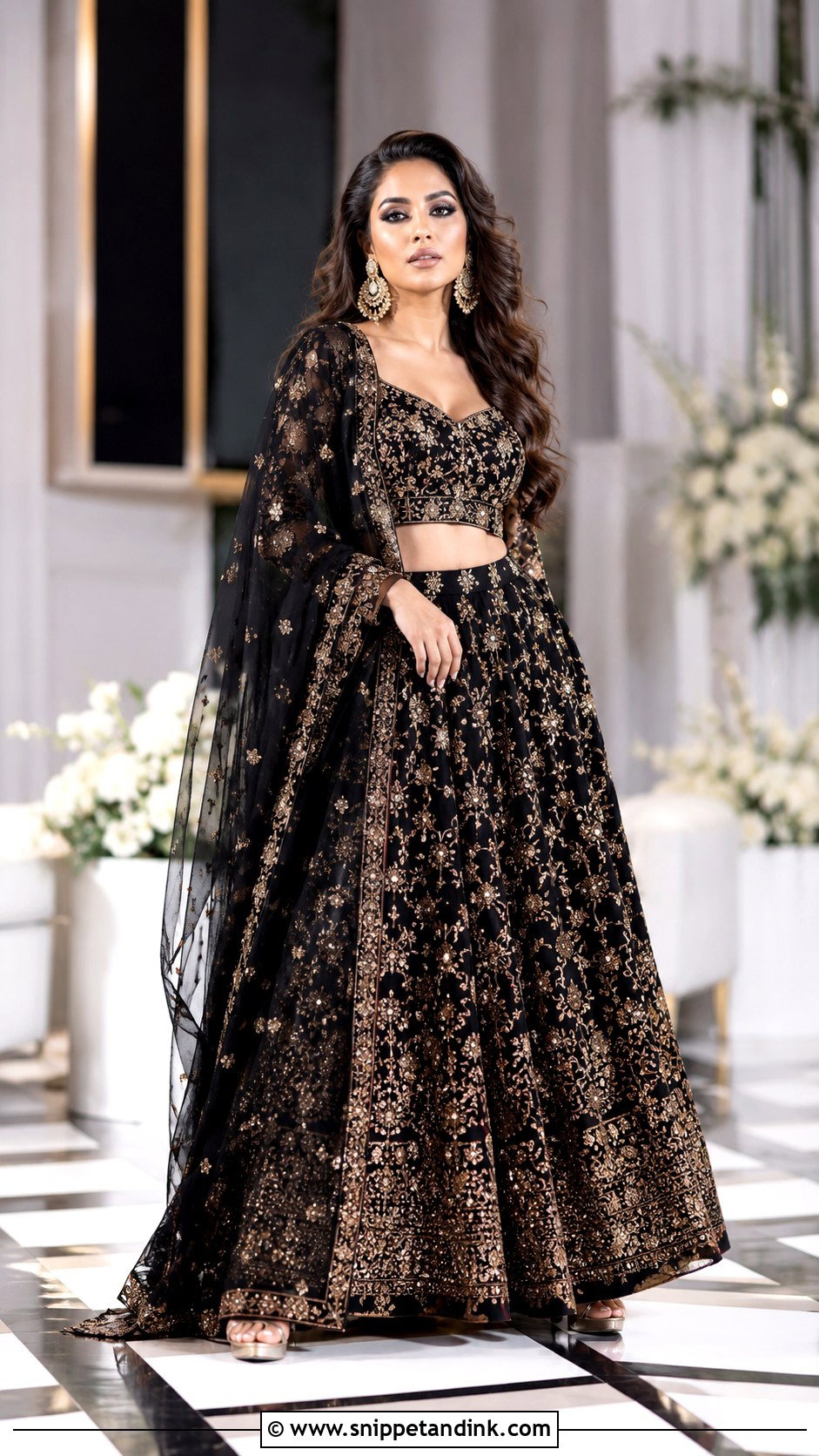
Black can look very chic on a modern sangeet bride, but it is a family conversation first, since some households consider it inauspicious for wedding events. If it is welcome, festive details are what make it work: gold embroidery, mirror work, sequins or crystals. Black with gold feels dramatic; black with silver, sleek. Keep the skirt light and the blouse secure, and don’t over-accessorise. Bold earrings, smoky eyes and metallic heels suit it.
19. White And Gold Lehenga For Bride
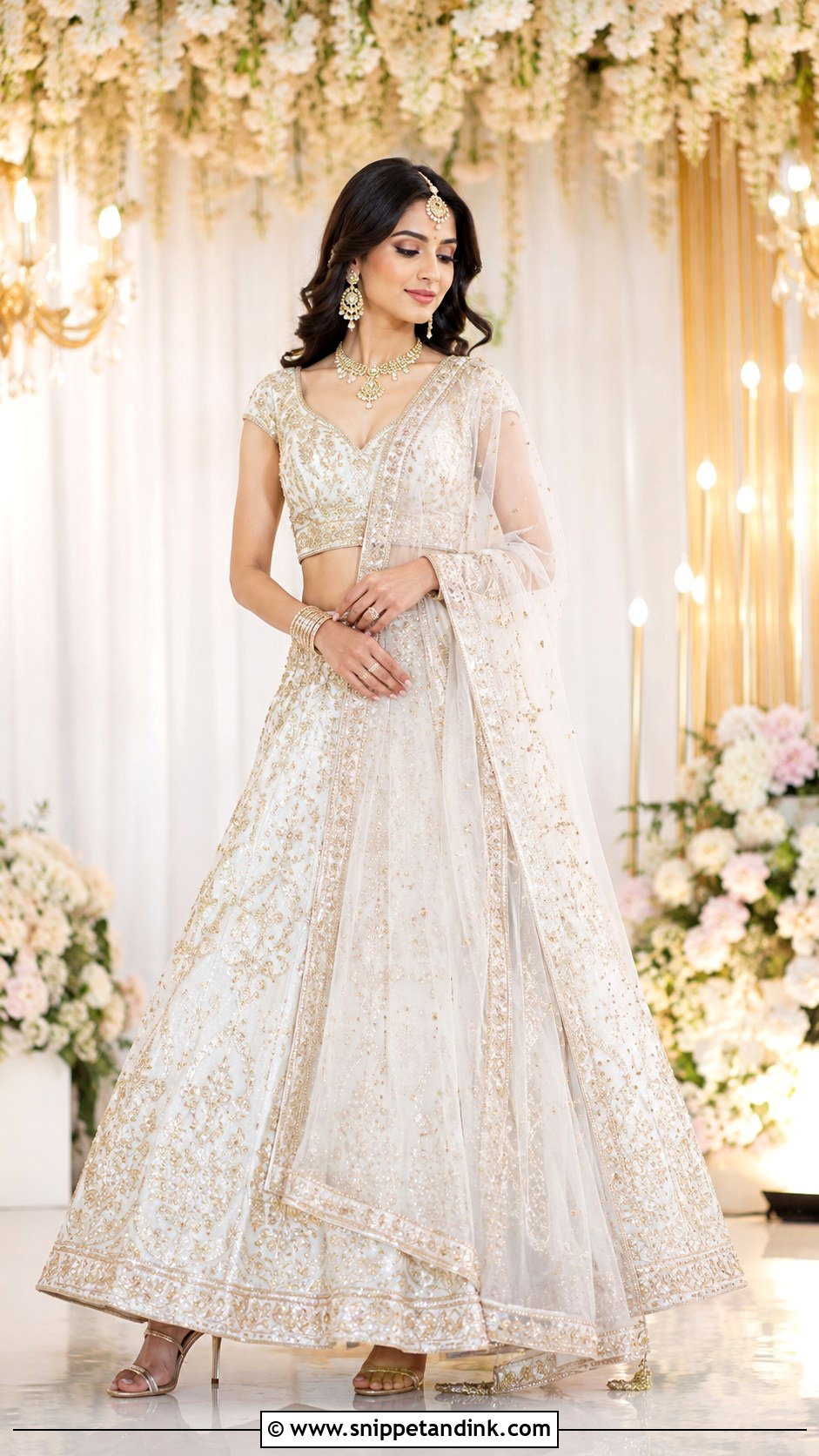
White and gold looks luminous under bright event lighting, and it reads very differently from a red wedding lehenga. Gold zari, sequins, pearls or mirror work keep it festive. A fitted blouse, sheer dupatta and gold jewelry make a balanced traditional set; a square neck, cape sleeves or structured bodice give a modern edge. Soft glam and gold heels finish it. White shows every mark from a dance floor, so I’d keep the hem just off the ground and pack stain wipes.

20. Royal Blue Lehenga For Bride
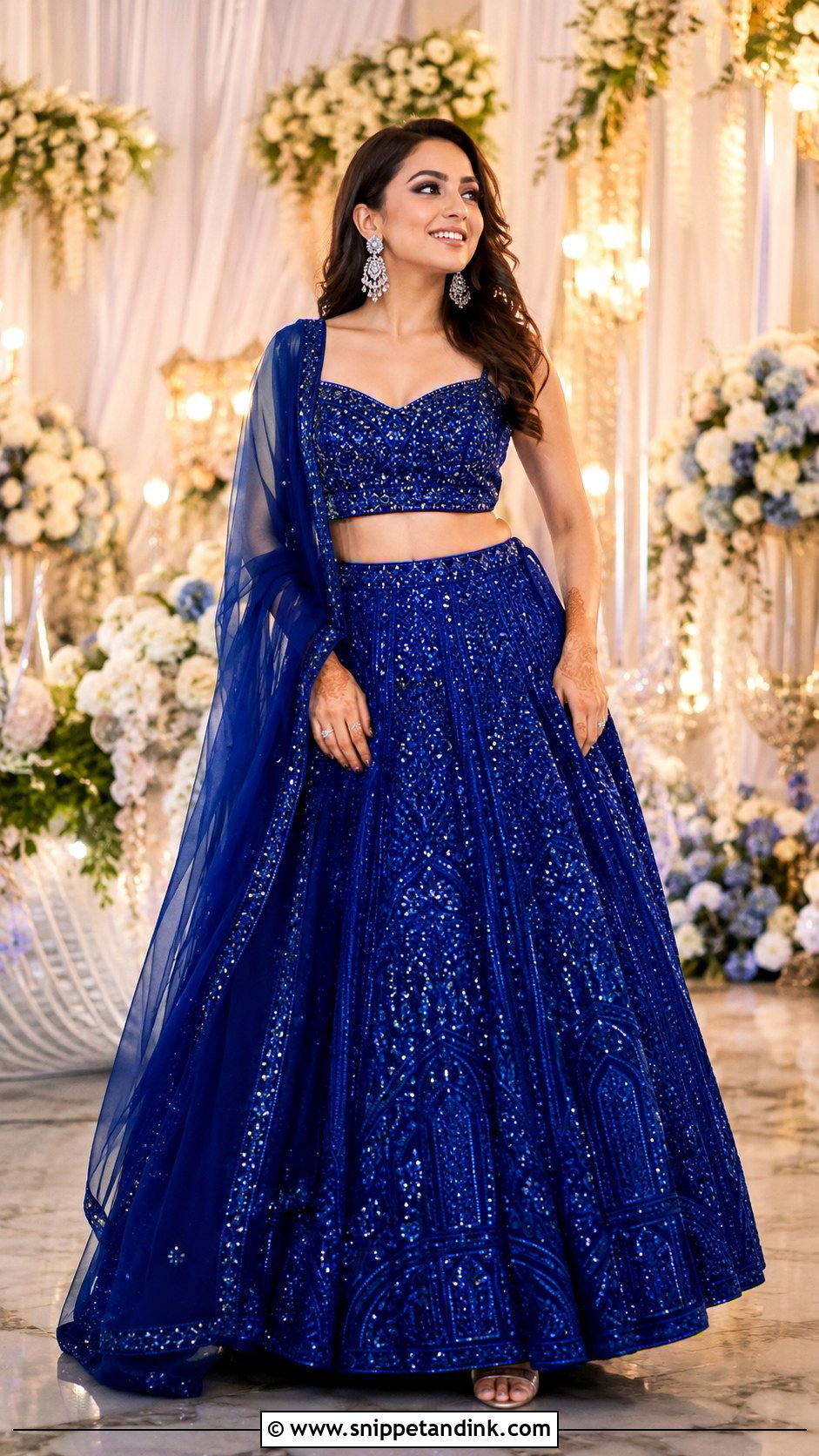
A royal blue lehenga stands out because few brides pick it. The colour is strongest at night, and it pairs with silver, gold or mirror work depending on your jewelry. A flared skirt for movement and a structured blouse for shape keep it bridal. A same-shade sheer dupatta gives a monochrome effect; a metallic dupatta adds contrast. Highlighted eyes, glossy lips and statement earrings suit it. Royal blue can stain light skin if the dye bleeds with sweat, so ask for a colourfast lining.
21. Orange Lehenga For Bride
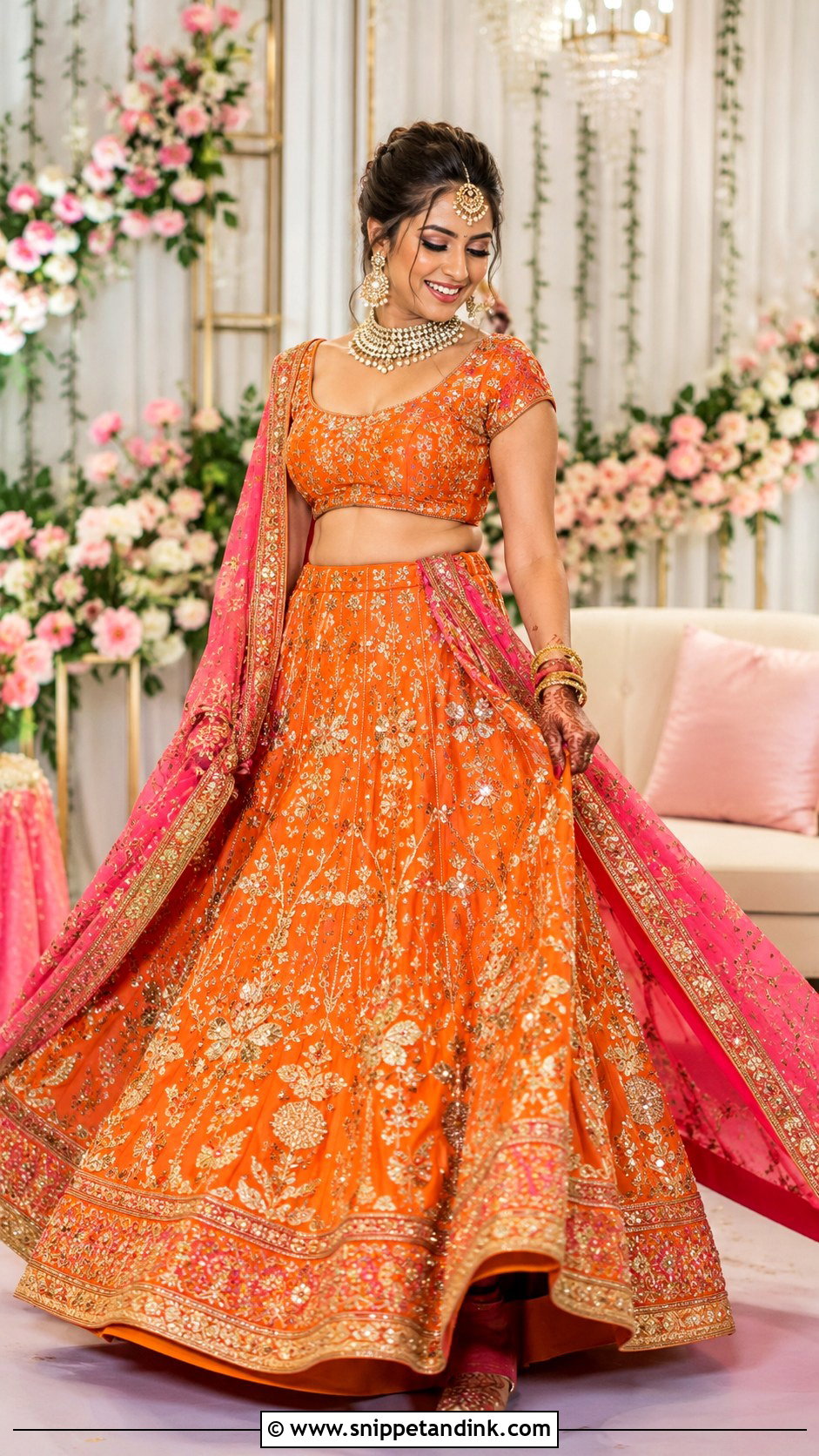
Orange is pure celebration: tangerine, burnt orange, coral or marigold. Mirror work, gota patti or thread embroidery keep it bright and bridal, and a pink, gold or ivory dupatta adds contrast. Traditional jewelry, glowing makeup and comfortable heels or juttis finish it. Orange sits beautifully next to marigold decor, which is common at sangeets and mehndis, but check your decor plan, because an orange outfit against orange drapes can disappear in photos.
22. Pastel Lehenga For Bride
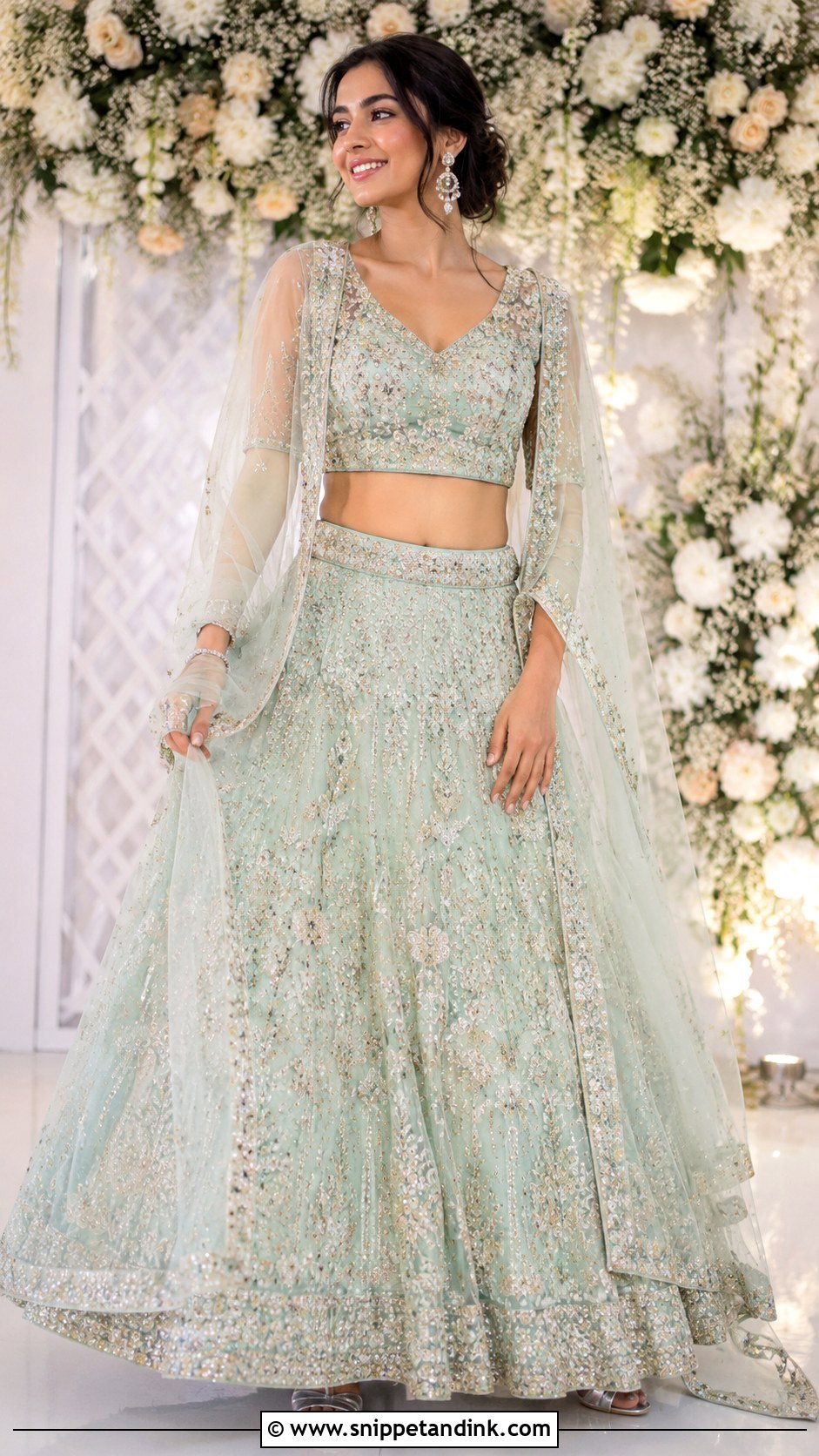
Pastels give a soft, modern sangeet look. Mint, powder blue, blush, peach and lilac all work; detailed embroidery, pearls, sequins or fine crystal work make them bridal. Dewy makeup, soft curls and pearl or diamond-style jewelry suit them, with a light dupatta and metallic heels or embellished flats. Pastels show sweat marks faster than deeper colours, especially at the underarm of a fitted blouse, so I recommend dress shields for a long night of dancing.
23. Velvet Lehenga For Bride
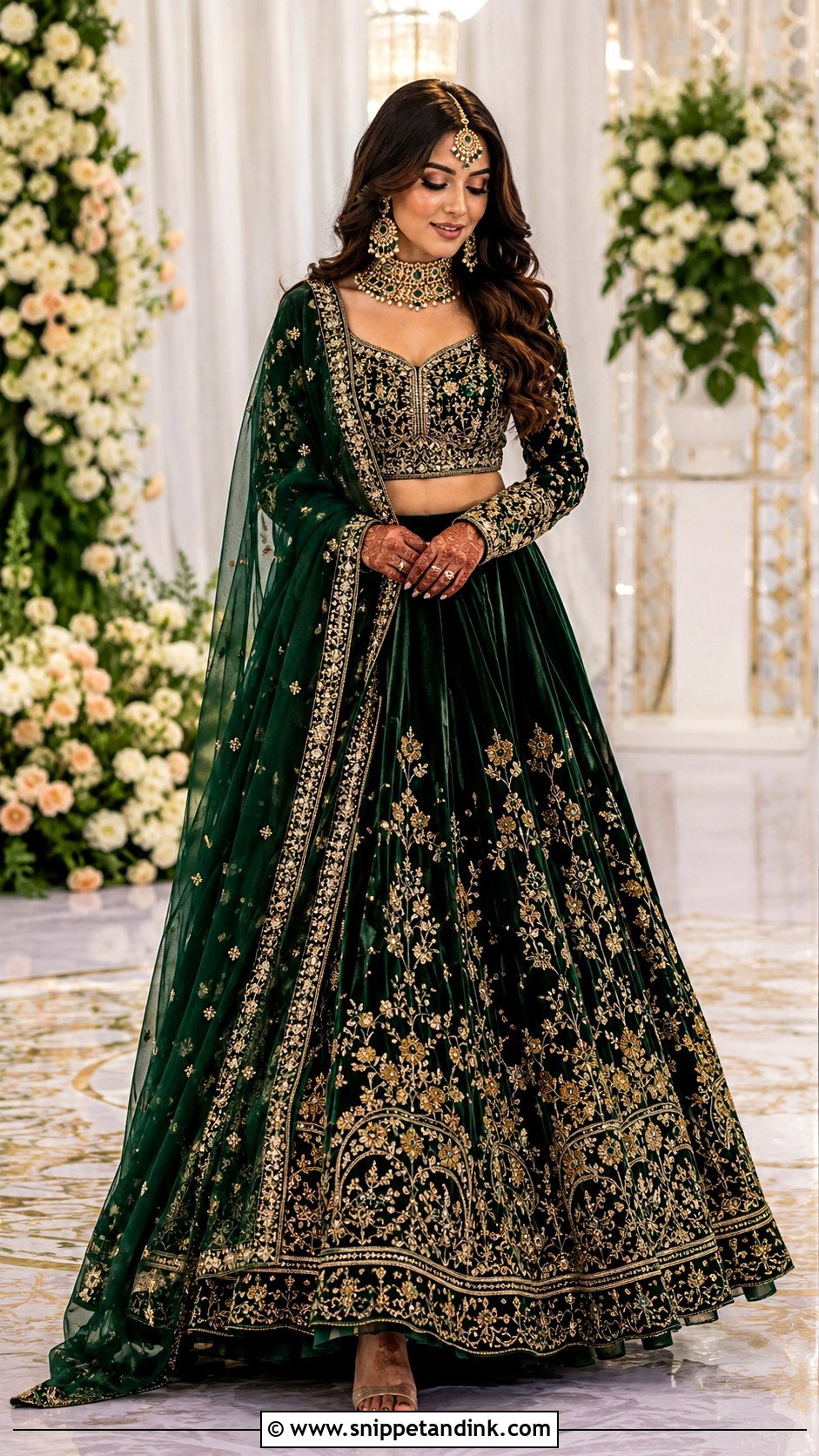
Velvet suits winter sangeets: wine, navy, emerald and maroon all look rich in it. It is heavy, though, and that weight adds up across a skirt, so choose embroidery carefully or wear a velvet blouse with a lighter skirt. Antique gold, soft waves and comfortable heels complete it, with a sheer dupatta for balance. Velvet holds heat, so for an indoor sangeet with a crowded dance floor, I’d only choose it if the venue is properly cooled.
24. Fringe Lehenga For Bride
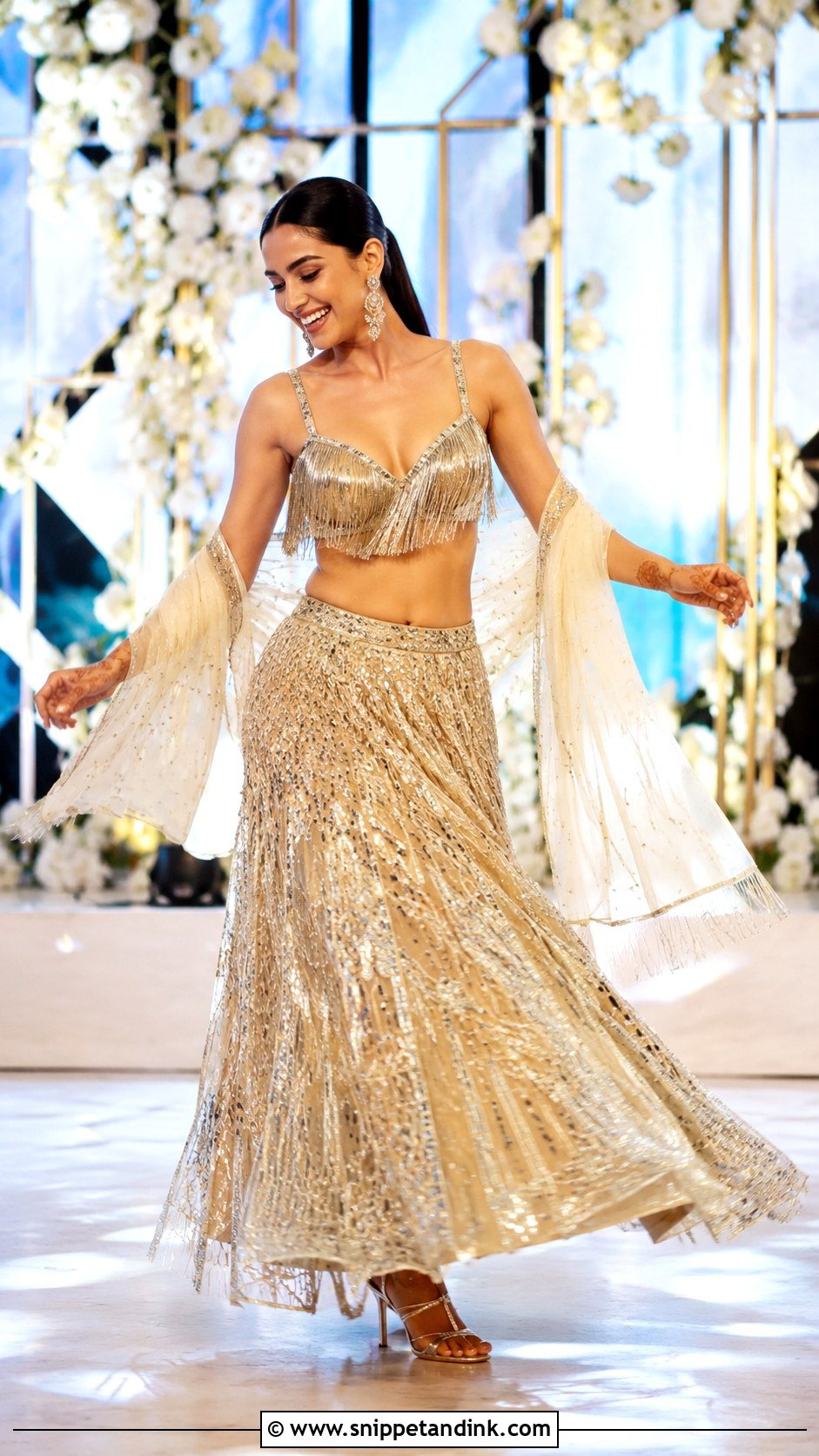
Fringe exists to move, which makes it a natural sangeet choice. It sways with every step and looks great in video. Put it in one or two places, the blouse, dupatta edge, skirt tiers or sleeves, rather than everywhere. Metallics, jewel tones and pastels all suit it. Sleek hair, statement earrings and dance-friendly heels complete it. Fringe tangles with long hair and dangling earrings, so I’d keep the hair up if the blouse is fringed.
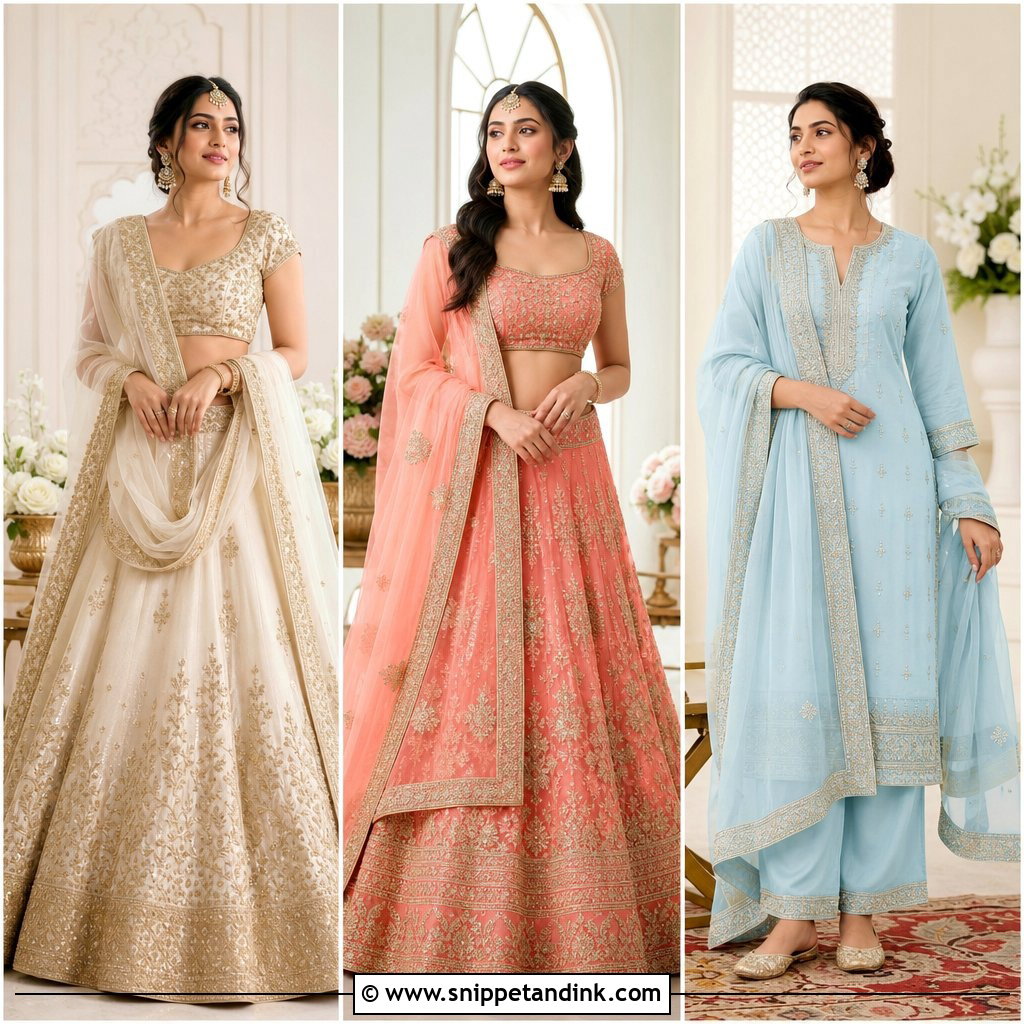
25. Fusion Lehenga Gown For Bride
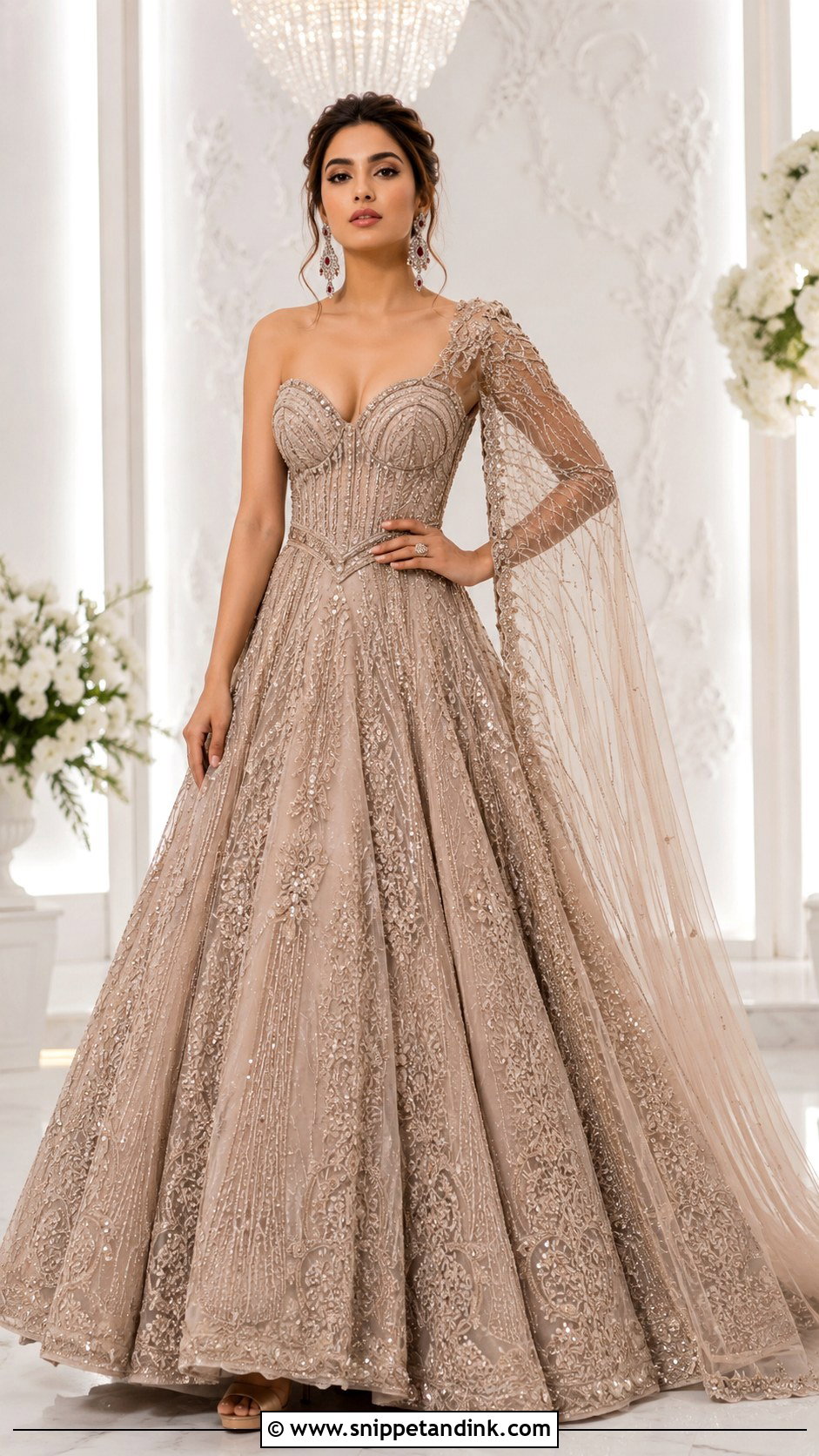
A fusion lehenga gown gives you a lehenga’s volume with a gown’s security, since the skirt and top are joined or built together. Nothing to adjust between songs. Embroidery, sequins or crystals keep it festive, and a cape, draped sleeve or attached dupatta adds grace. Statement earrings, soft glam and supportive heels complete it. Ask how you get in and out of it; some have long back zips that need help, which matters if you plan a quick change.
What Stage Lights Do to Sequins, Mirrors and Velvet
Sangeet lighting is usually coloured, moving and bright, and fabrics react to it very differently. Sequins and crystal work flare under spotlights, which looks great in person but can blow out on video, so a matte blouse under a sequinned skirt gives the camera somewhere to rest. Mirror work flashes in tiny points and photographs well in motion. Velvet and deep matte colours absorb light, so they need a well-lit stage or they look flat in the background of performance shots. If you can, ask your decorator what colour the stage lighting will be; pink or purple washes change pastel outfits more than you would expect.
A Repair Pouch for the Dance Floor
Something always comes loose at a sangeet. I hand a small pouch to whoever is helping the bride that night:
- Safety pins in two sizes and a few U-pins for the hair
- Double-sided fabric tape for a gaping neckline or slipping dupatta
- Needle with thread matching the blouse, for a loose hook or popped sequin row
- Blister plasters and a pair of flat juttis for the last hour
- Stain wipes, blotting papers and the lipstick you are wearing
Dance First, Then Decide on the Sparkle
A sangeet outfit earns its place by how it behaves on the floor. A gold sequin lehenga, a pastel set, a jumpsuit or a velvet skirt can all be right, as long as the fabric weight suits the season, the blouse lets you lift your arms, the drape is secure and the shoes survive the last song. Pick the look that matches your personality, then test it with the actual routine. If you never once reach to fix it during the night, you chose well.
You'll Like These Ideas:







Leave a Reply