
Dressing a petite bride is mostly about proportion, not rules. Where the waist seam sits, how far the neckline drops, how long the train runs and how big the bouquet is all decide whether a dress suits you or swallows you. I’ve never told a short bride she can’t wear a particular silhouette; I’ve told plenty that a silhouette needed reshaping first. The twenty outfits below range from classic satin and lace to tailoring and a playful mini, each with notes on what to alter and how to scale the shoes, veil, jewelry and flowers. Take them to fittings as a working list rather than a set of limits.
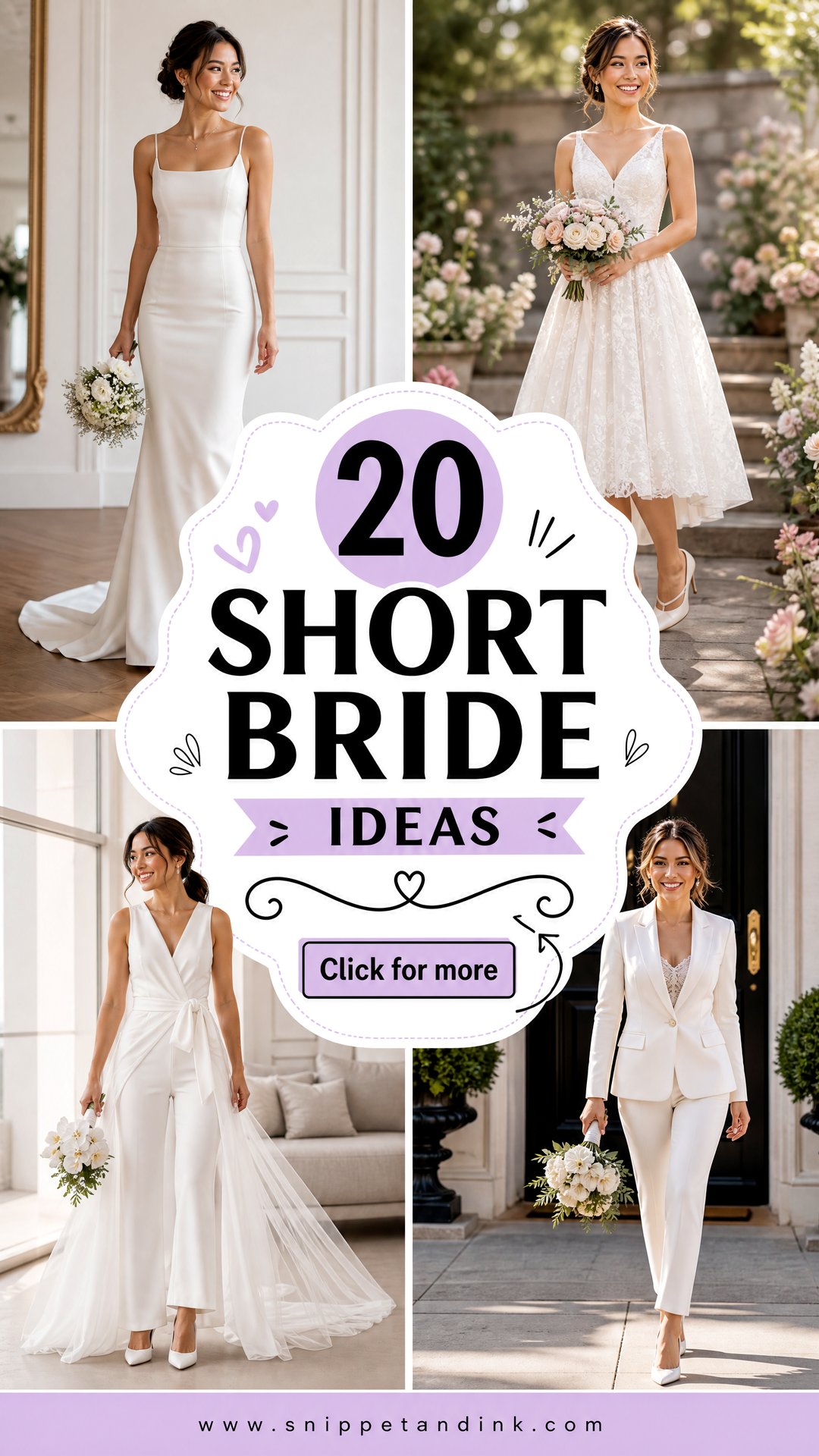
Shortening a Gown Starts at the Shoulder, Not the Hem
Most bridal samples are cut for someone several inches taller than a petite bride, and usually in heels. Hemming the bottom is the obvious fix, but it’s rarely the only one. If the waist seam sits below your natural waist, or the darts point to the wrong place, taking up the hem just makes a shorter version of a dress that still doesn’t fit.
When I go through a petite fitting, I check the body before the length:
- Shoulder and strap length, which moves the bust and waist up to where they belong.
- Bodice length, so the waist seam lands at your natural waist or slightly above.
- Sleeve placement, especially the elbow on long sleeves.
- Only then, the hem, marked in the exact shoes you’ll wear.
Lace hems need extra time because the scalloped edge is usually removed and reattached after shortening, which is skilled handwork. Beaded or horsehair hems also cost more to alter. Ask about this before you buy, and allow room for at least three fittings, with the last one a couple of weeks before the wedding.
1. Petite Bride A-Line Wedding Dress
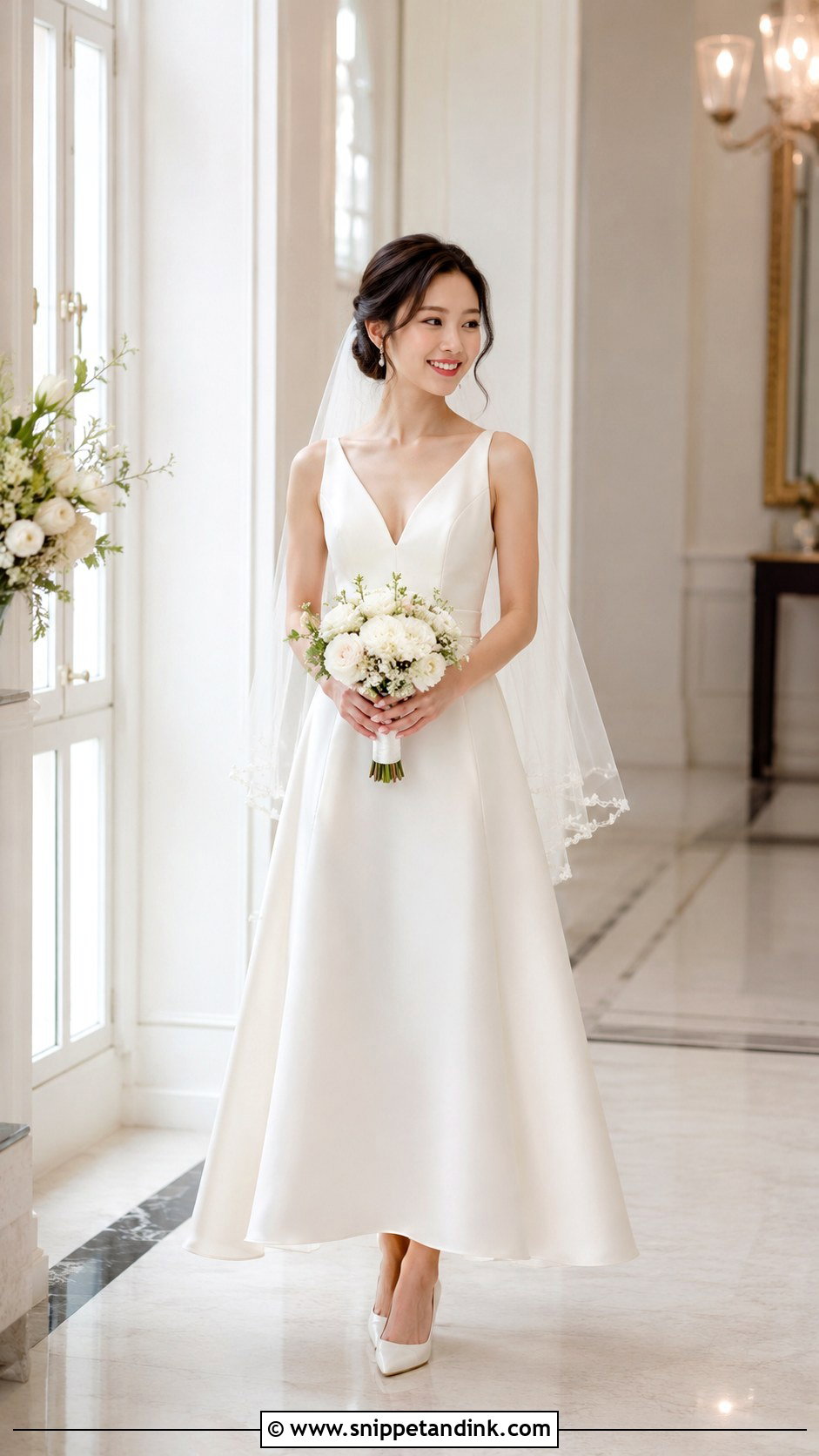
If you’re unsure where to start, start with an A-line. It gives shape without bulk. I’d look for a fitted V-neck bodice, a waist raised a touch above natural and a skirt that falls smoothly to the floor in chiffon, crepe or soft tulle. Pointed ivory pumps, a fingertip veil, pearl drops and a small round bouquet. Keep the train short. The real work is in the alterations: shoulders, waist and hem should each be set for your body, and when they are, the line from shoulder to floor looks long and clean.
2. Petite Bride V-Neck Wedding Dress
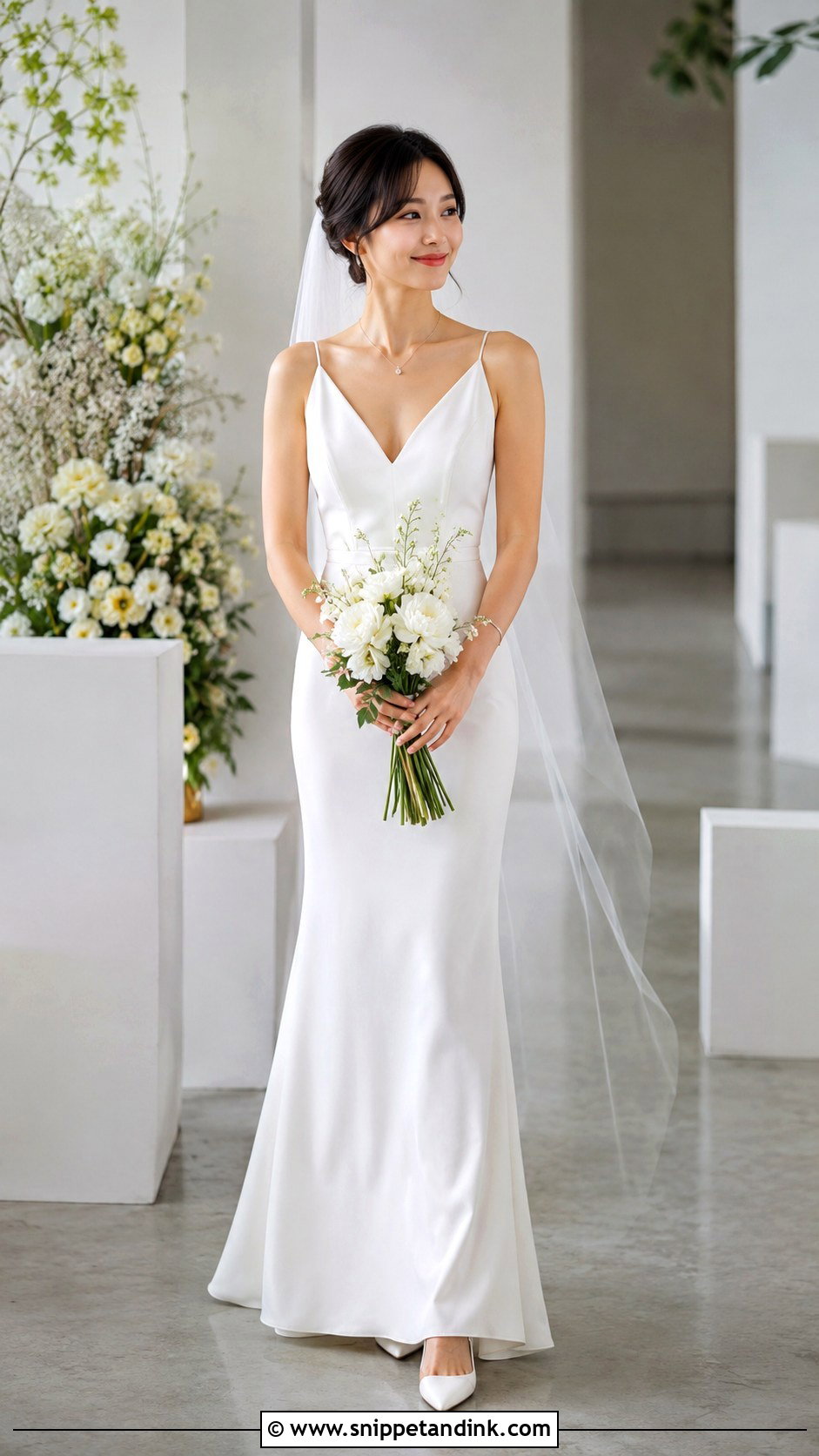
A V-neck pulls the eye down the body, which is why it so often anchors a balanced petite bridal outfit. A fitted crepe gown with narrow straps, a defined waist and a gently flared skirt is the classic version. On a short torso, a V that’s too deep can reach the waist seam and look like a gap, so I’d have the depth pinned at your first fitting. Ivory or nude slingbacks, a fine pendant, a slim bracelet and swept-back hair. A narrow cathedral veil and a compact bouquet with longer stems keep the vertical line going.
3. Petite Bride Sweetheart Wedding Dress
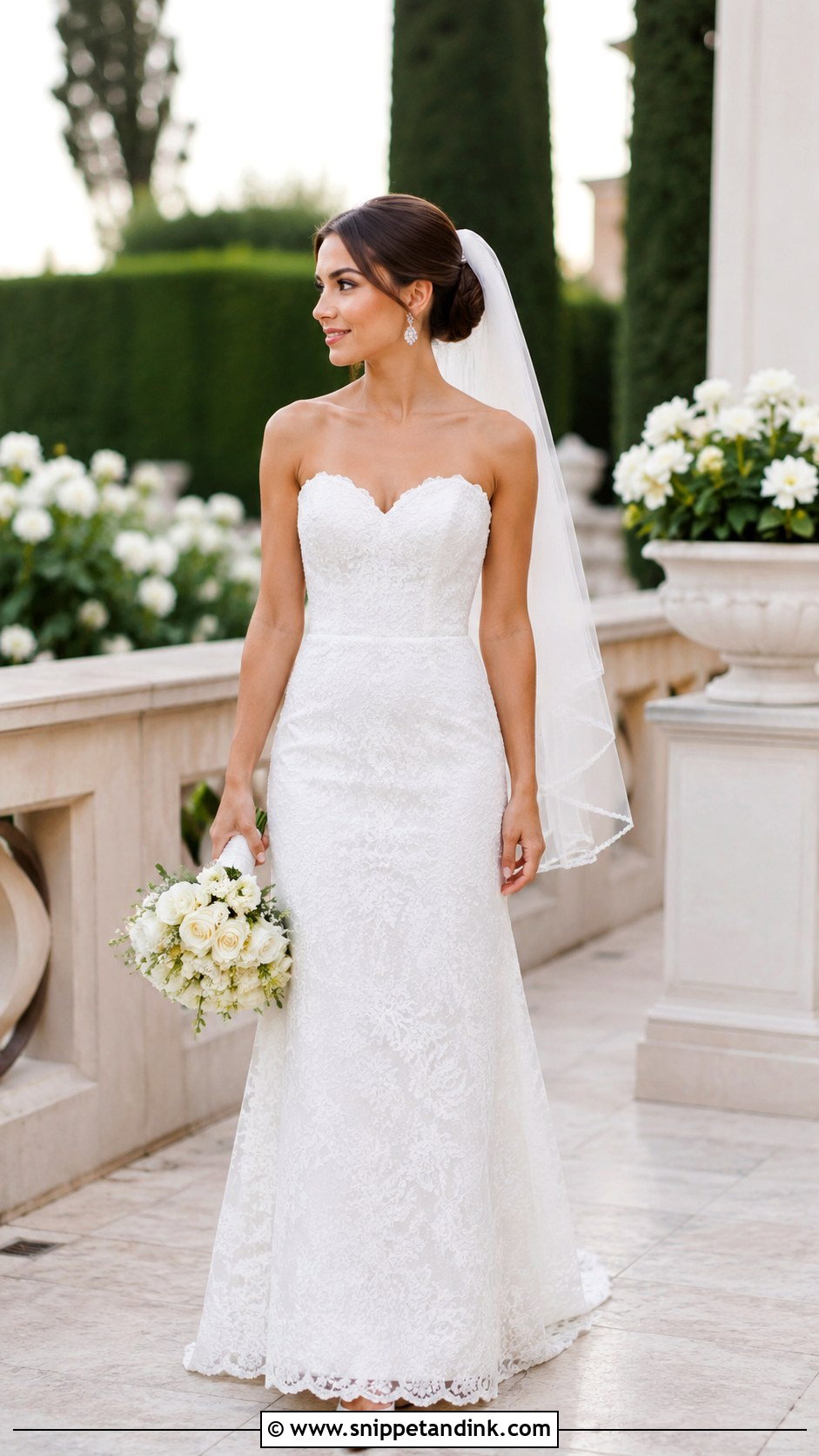
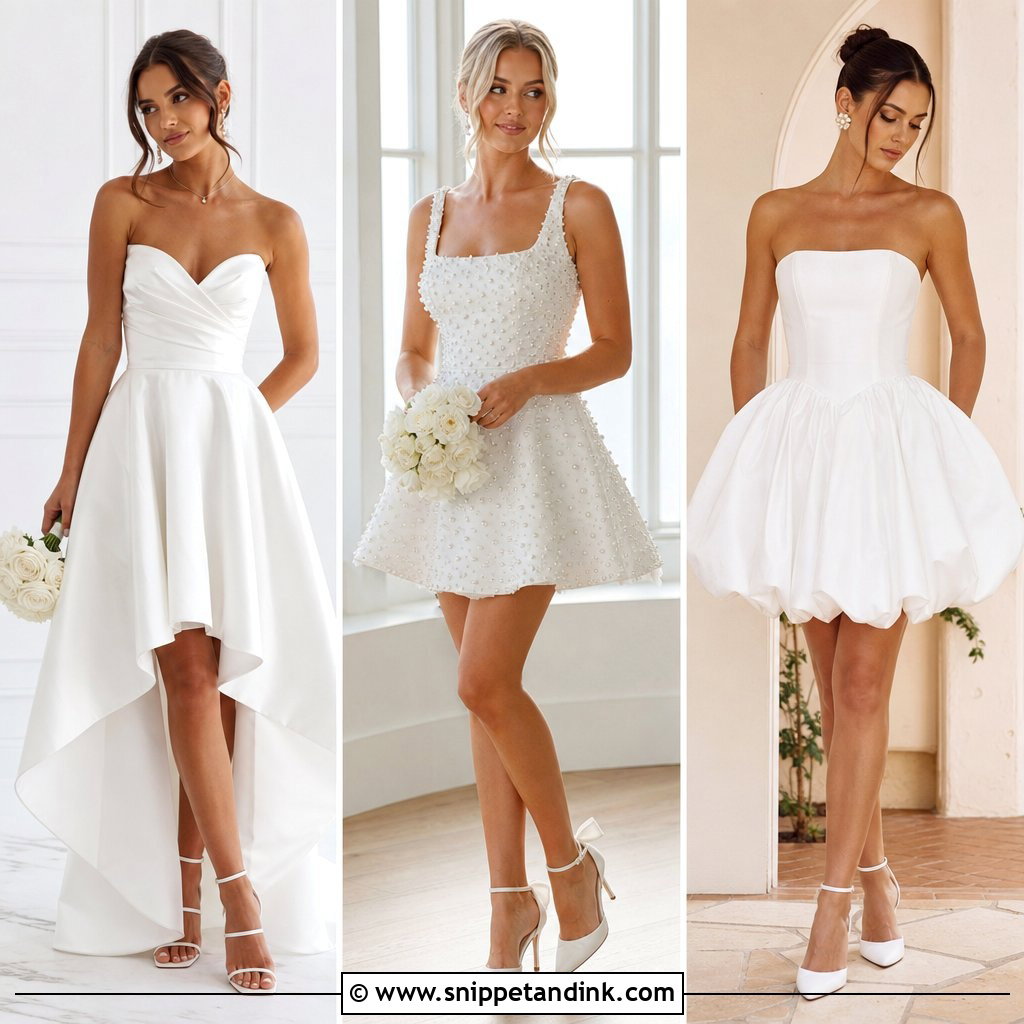
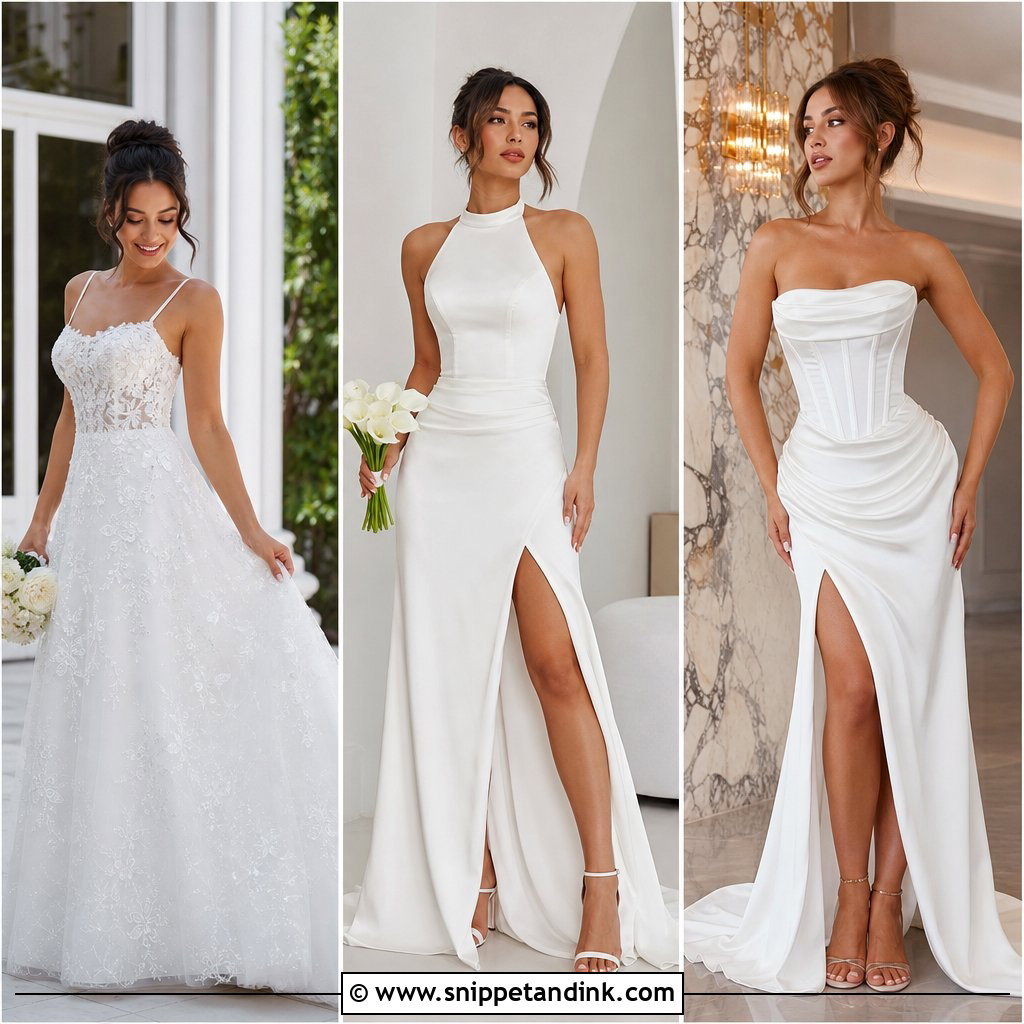
Soft curves at the bust and an open neckline make a sweetheart wedding dress romantic on a small frame. Pair the structured bodice with a narrow A-line or a restrained fit-and-flare, and keep lace appliqué light rather than all-over. Almond-toe heels, a tennis bracelet, small crystal earrings and a waist-length veil. A low bun leaves the neckline clear. Carry a small bouquet, never a wide cascade. Sweetheart cups are often cut for a longer torso, so expect the bodice to need shortening from the top edge.
4. Petite Bride Empire Waist Wedding Dress
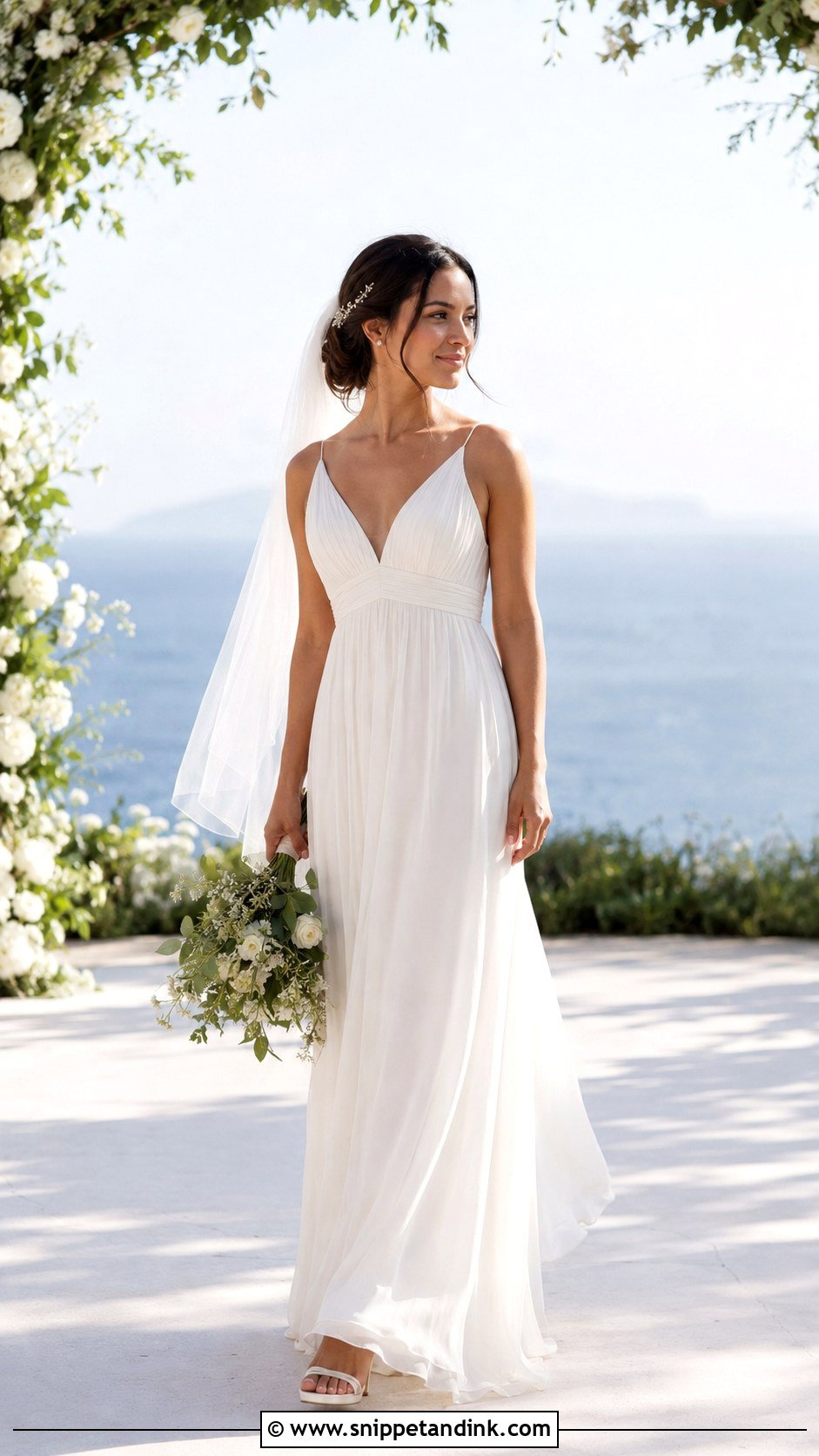
Empire waists put the seam just below the bust and let the skirt fall in one line, which can make a short frame look taller. A light chiffon dress with a narrow V-neck, delicate straps and minimal gathering at the front works best. Block-heel sandals give height you can stand in all day. Pearl studs, a slim comb and a sheer fingertip veil, with a loose bouquet of delicate flowers. The seam position decides everything here; if it drops even an inch below the bust, the proportions flip and the torso looks longer than the legs.
5. Petite Bride Sheath Wedding Dress
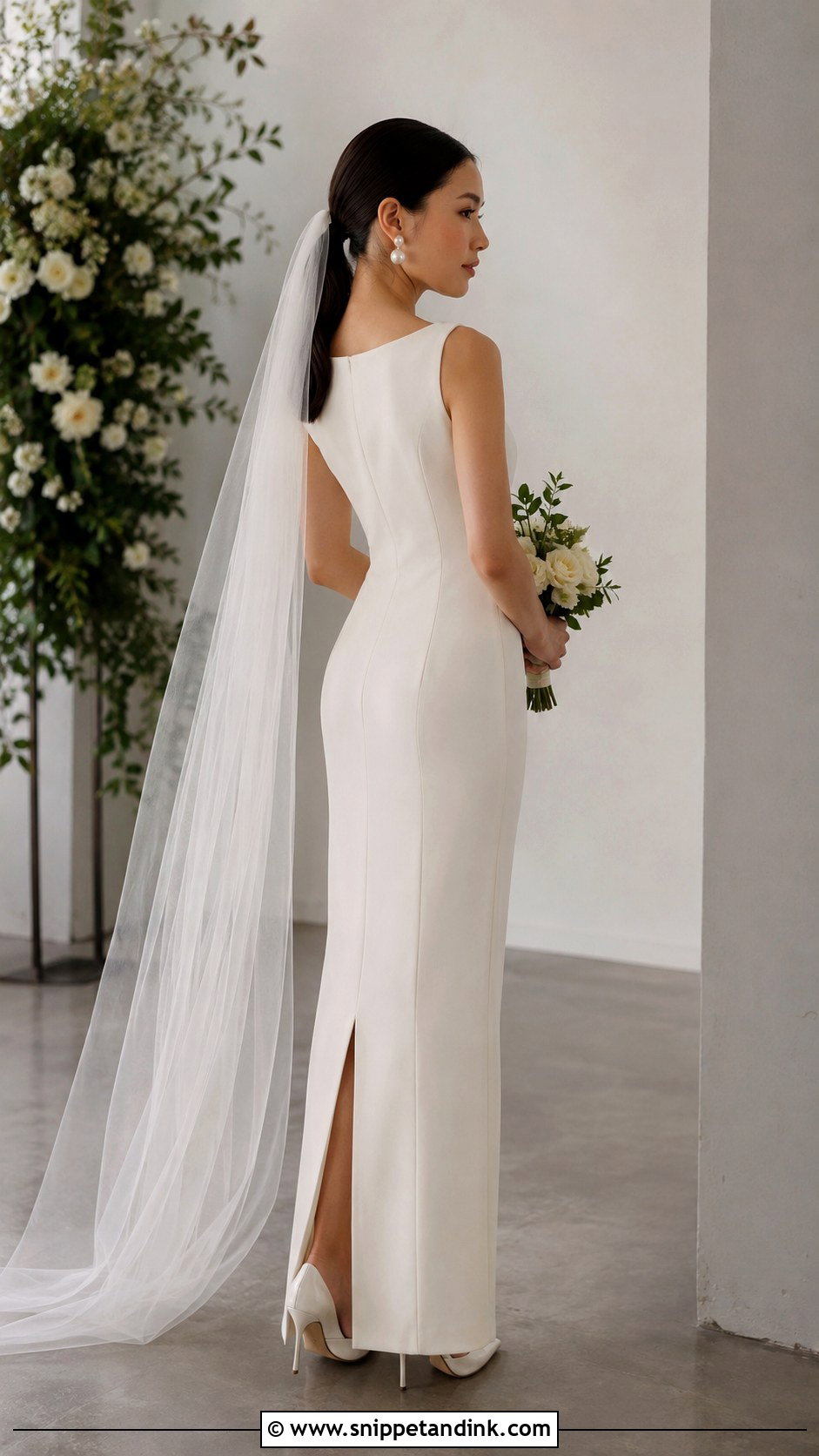
Clean and contemporary, a sheath follows the body without gripping it. Smooth crepe with a scoop or V-neck creates a long, continuous silhouette, and subtle vertical seams help it further. You’ll want a back slit so you can walk. Pointed pumps, sculptural pearl earrings and a sleek low ponytail, with a narrow chapel veil and a small hand-tied bouquet. Spare fabric at the waist or hip is very visible on a sheath, so I’d book an extra fitting to get the side seams right.
6. Petite Bride Fit-And-Flare Wedding Dress
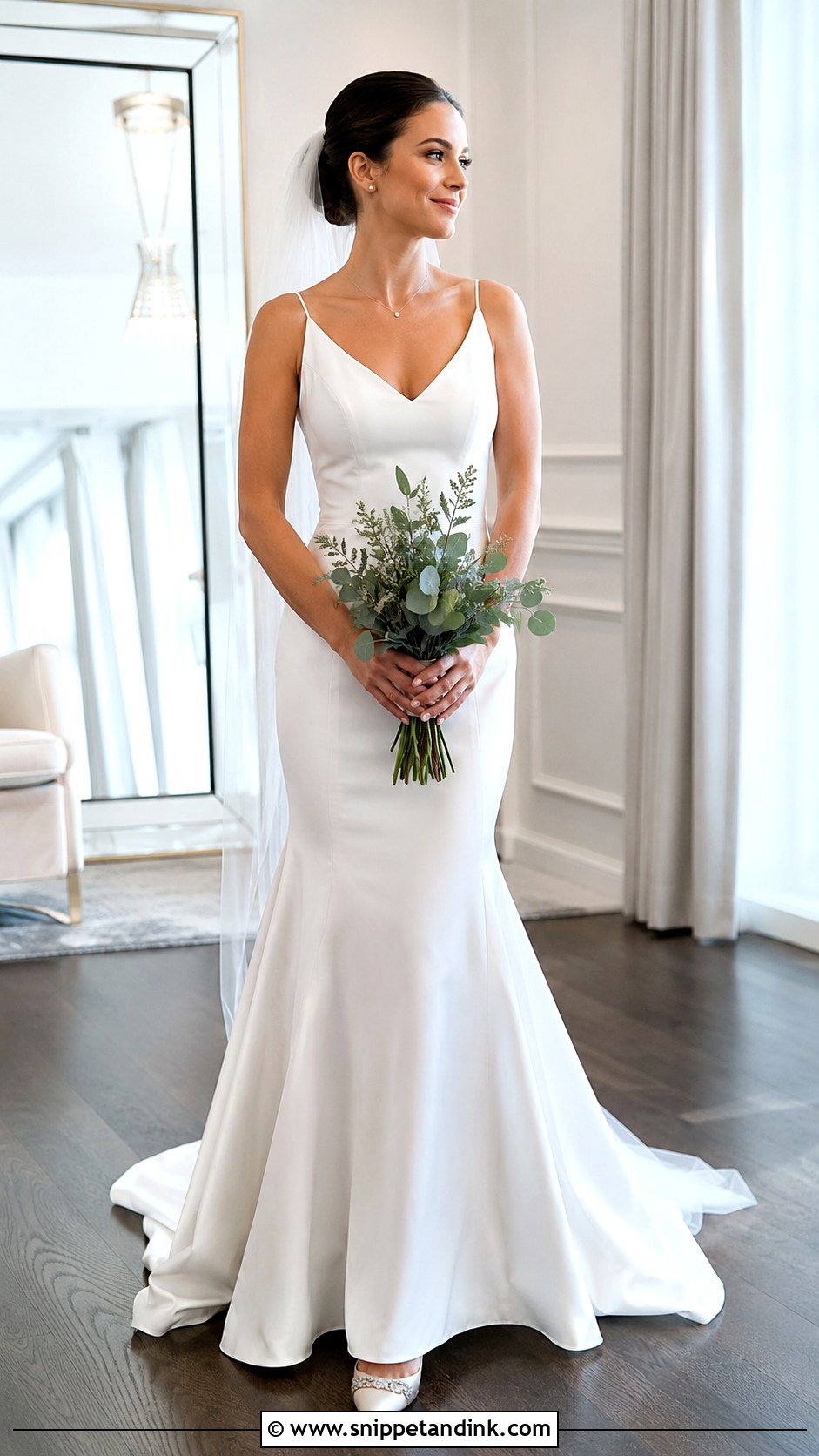
A fit-and-flare gown gives shape and movement without ball-gown volume. On a petite bride, the flare should begin gradually at or just above the knee, never mid-calf. Smooth satin or light crepe with vertical panels keeps the line long. Pointed heels, a simple pendant, studs, and a narrow veil set beneath a polished bun. Keep the train manageable. Most off-the-rack versions flare too low on a shorter leg, which is why I ask the tailor to move the flare up rather than just hemming the bottom.
7. Petite Bride Mermaid Wedding Dress
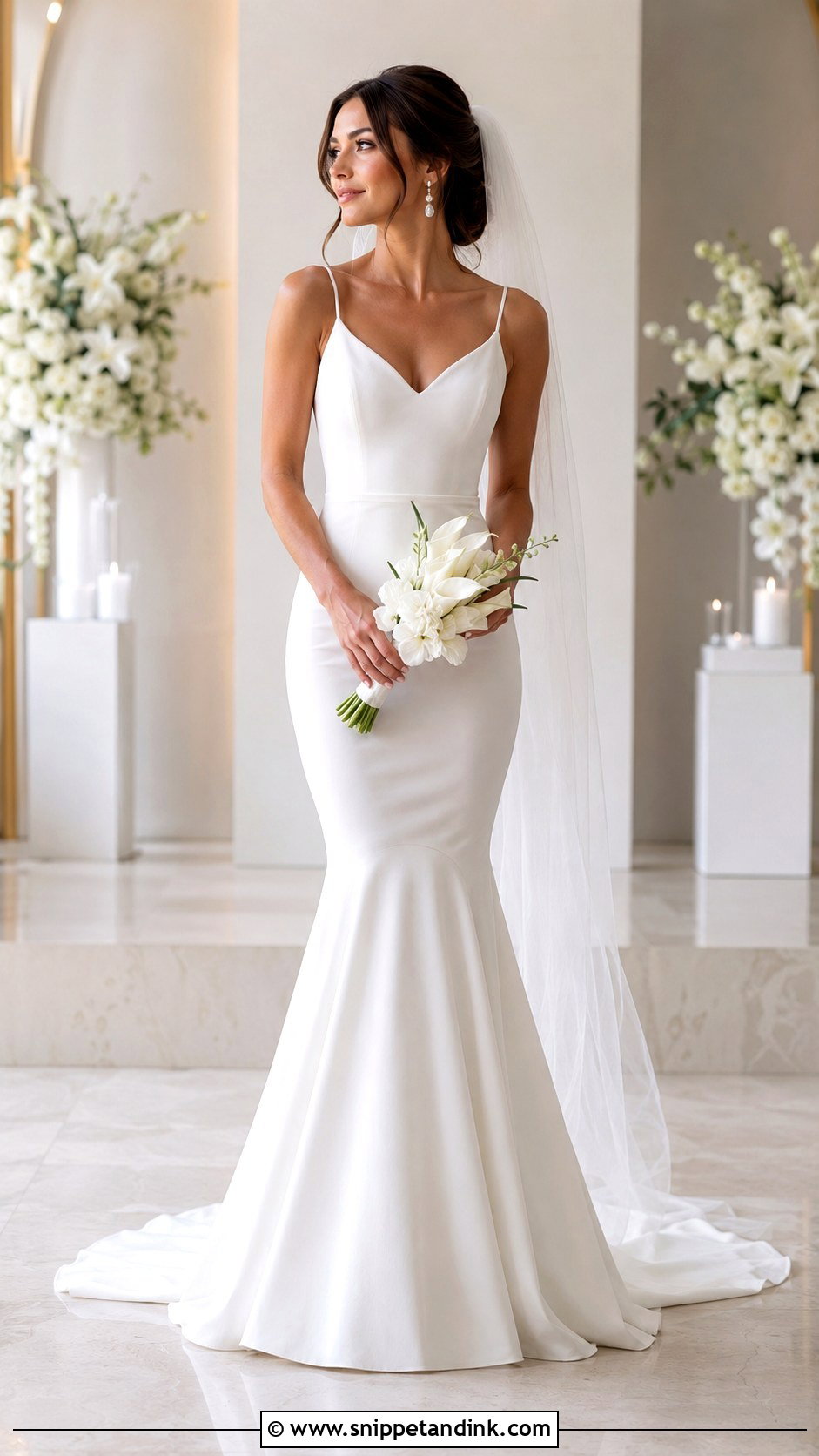
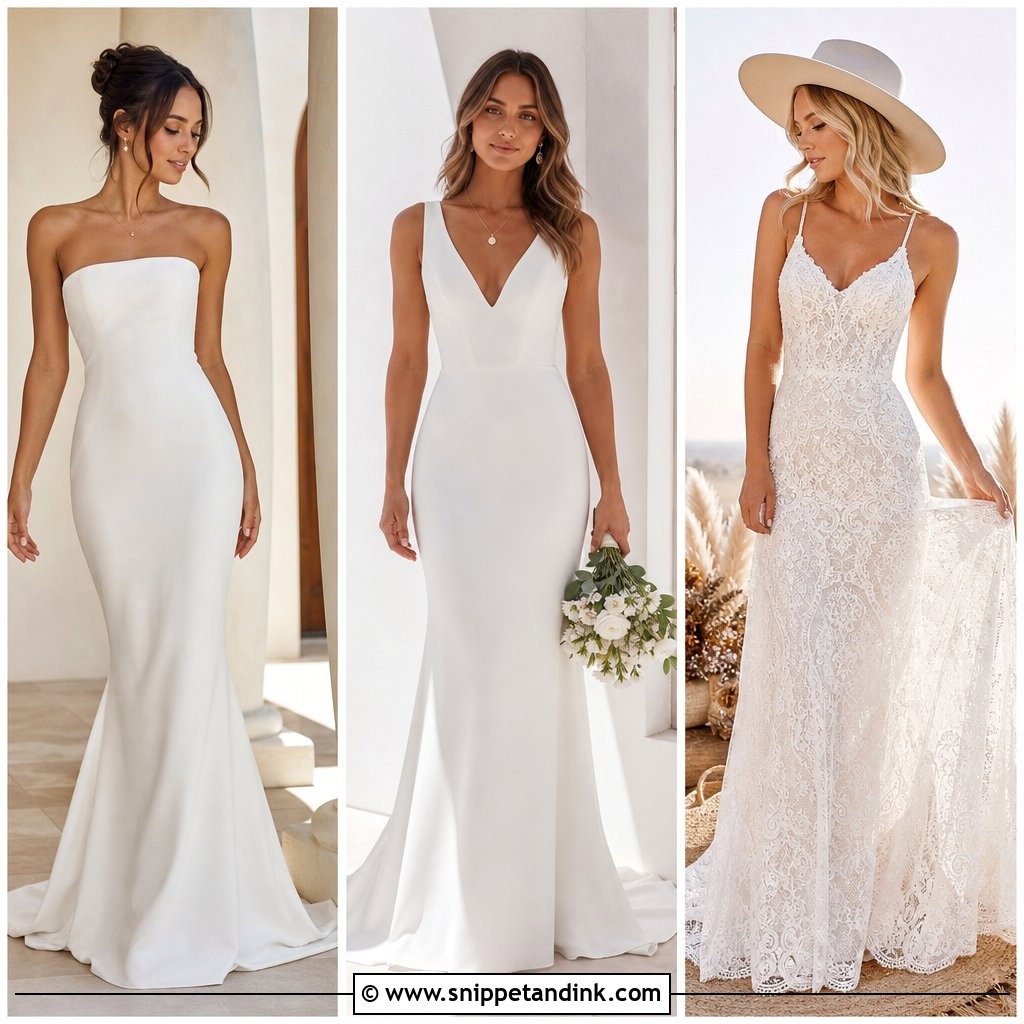
Can a mermaid work on a short bride? Yes, if the flare is scaled and placed carefully. A clean fitted bodice, a slightly raised waist and a skirt opening above the knee keep the legs looking long. Fine lace or smooth crepe suits it; heavy ruffles at the hem overwhelm a small frame. Hidden platform sandals, delicate drops and a simple comb veil, with a narrow bouquet. Walk, sit and turn at every alteration, since a mermaid that’s been shortened can tighten at the knee.
8. Petite Bride Column Wedding Dress
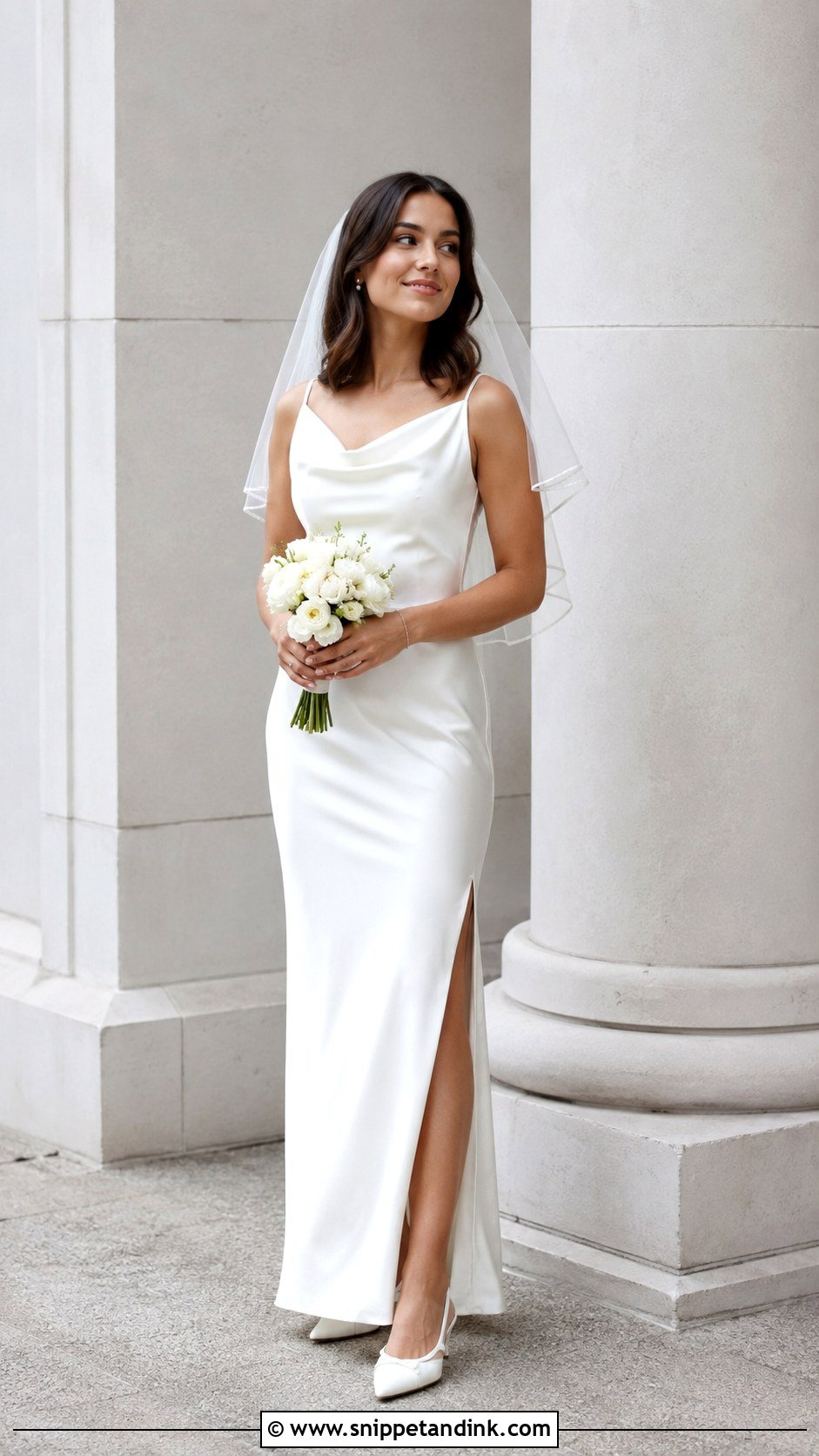
A straight column fall gives an uninterrupted line from shoulder to hem. Choose light satin or crepe with a softly draped neckline and a close but comfortable fit, plus a side slit so it doesn’t look rigid. Pointed kitten heels, a slim metallic bracelet, pearl studs and a shoulder-length veil, or a sheer longer veil without a wide lace border. A compact bouquet of one or two flower varieties. Avoid fabric pooling on the floor, even in heels. Columns rely on a precise hem more than any other shape.
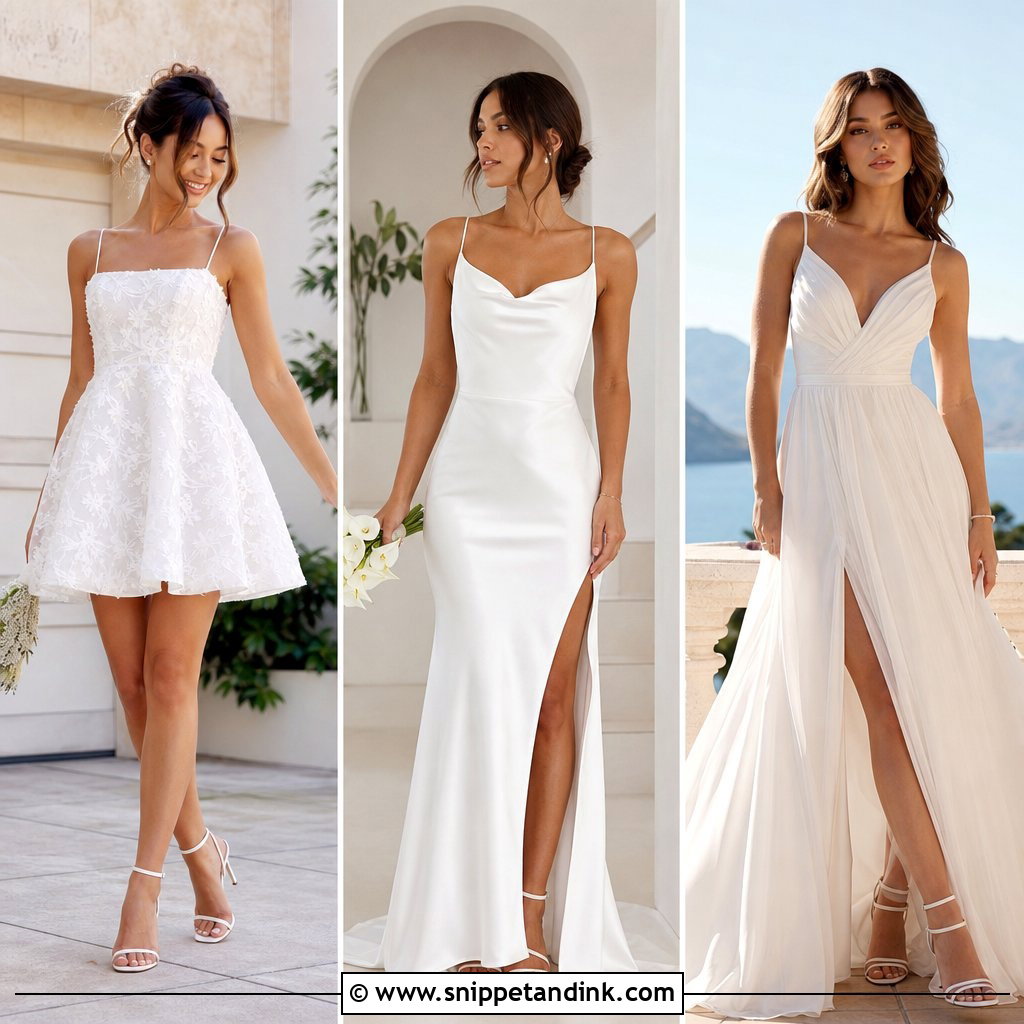
9. Petite Bride High-Slit Wedding Dress
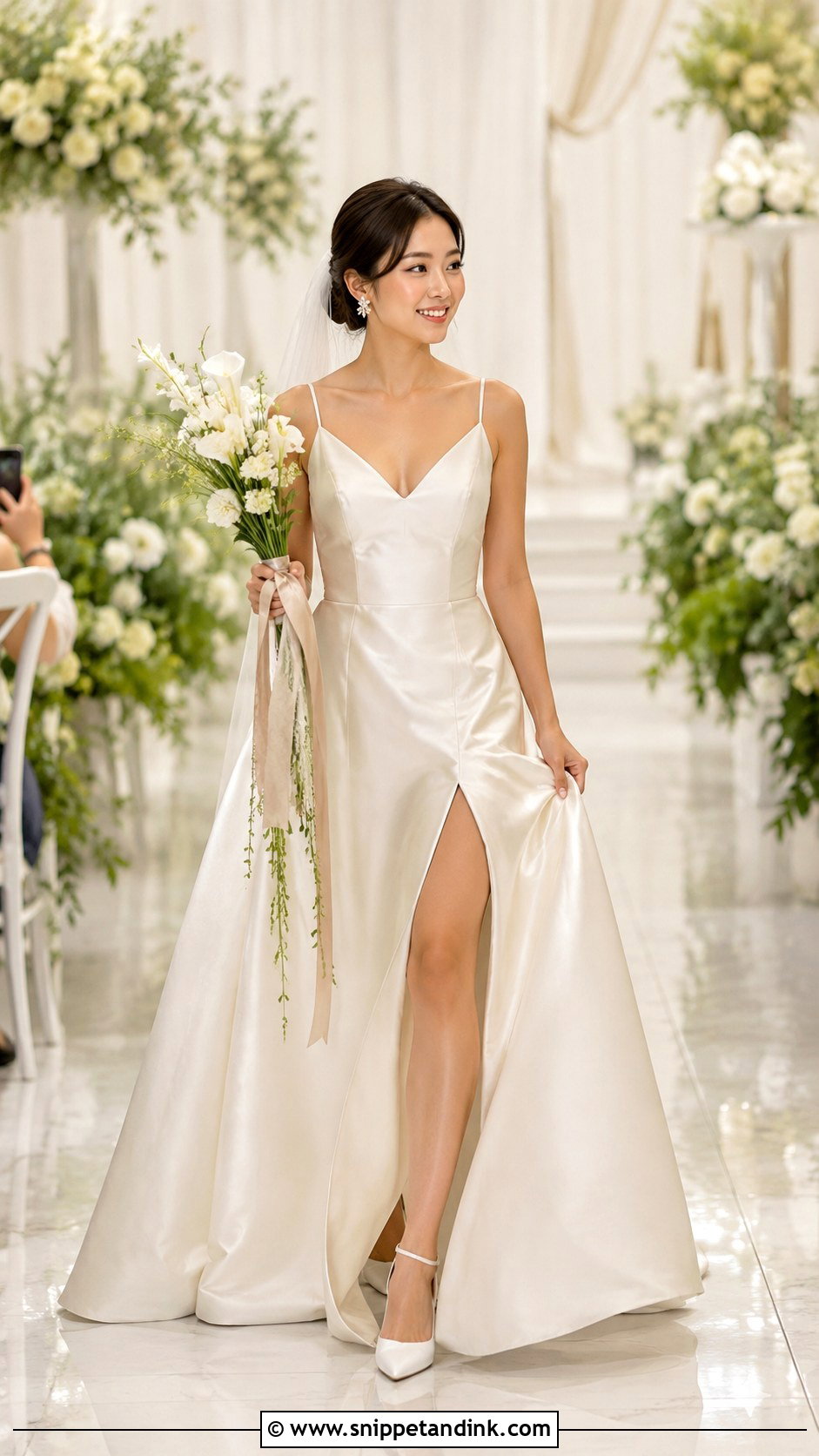
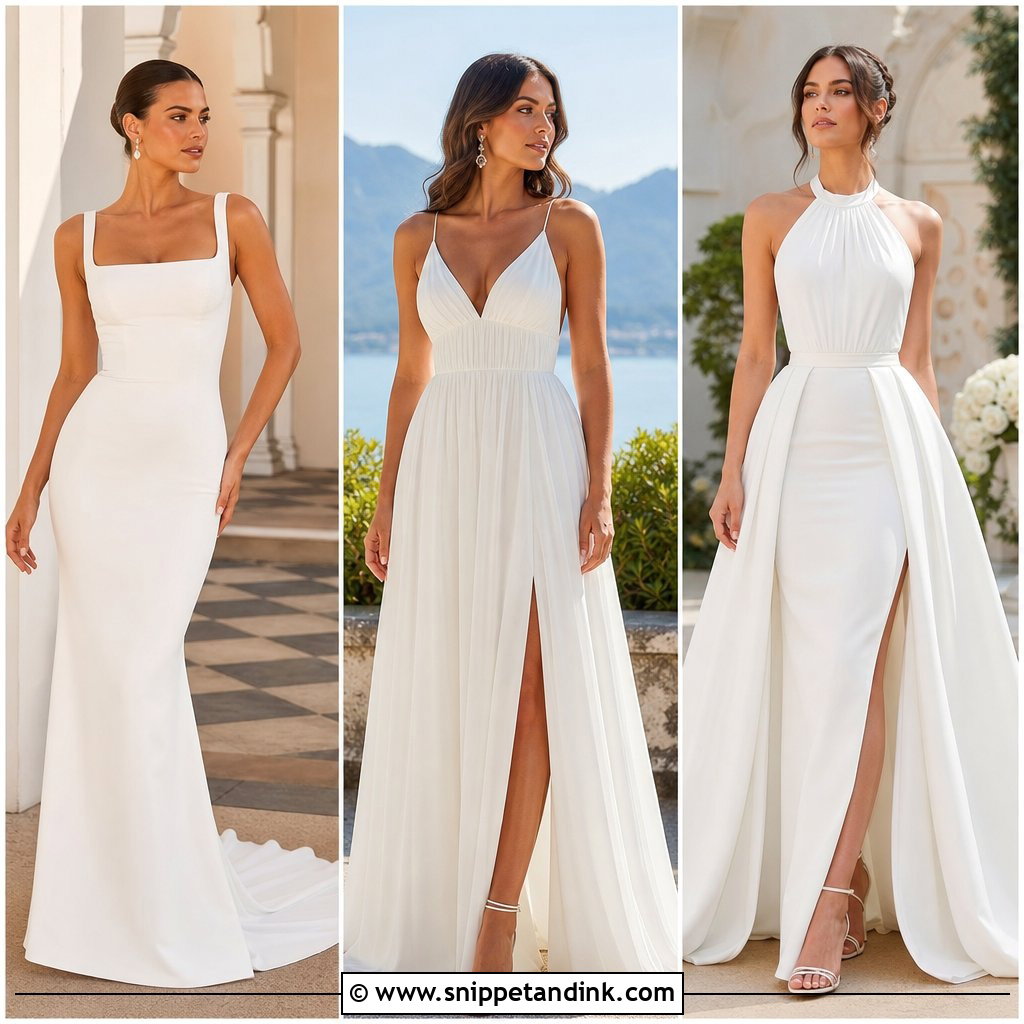
Showing a little leg lightens a long gown, and a well-placed slit does it neatly. Start with a fitted A-line or sheath dress in soft satin, with a secure bodice and a controlled side slit. Pointed pumps or slim ankle-strap sandals that deserve to be seen, small statement earrings, a neat updo and a plain fingertip veil. Skip the necklace. On a shorter leg the slit should usually stop lower than on a sample, so I’d mark it while you’re seated and again while you’re walking.
10. Petite Bride Tea-Length Wedding Dress
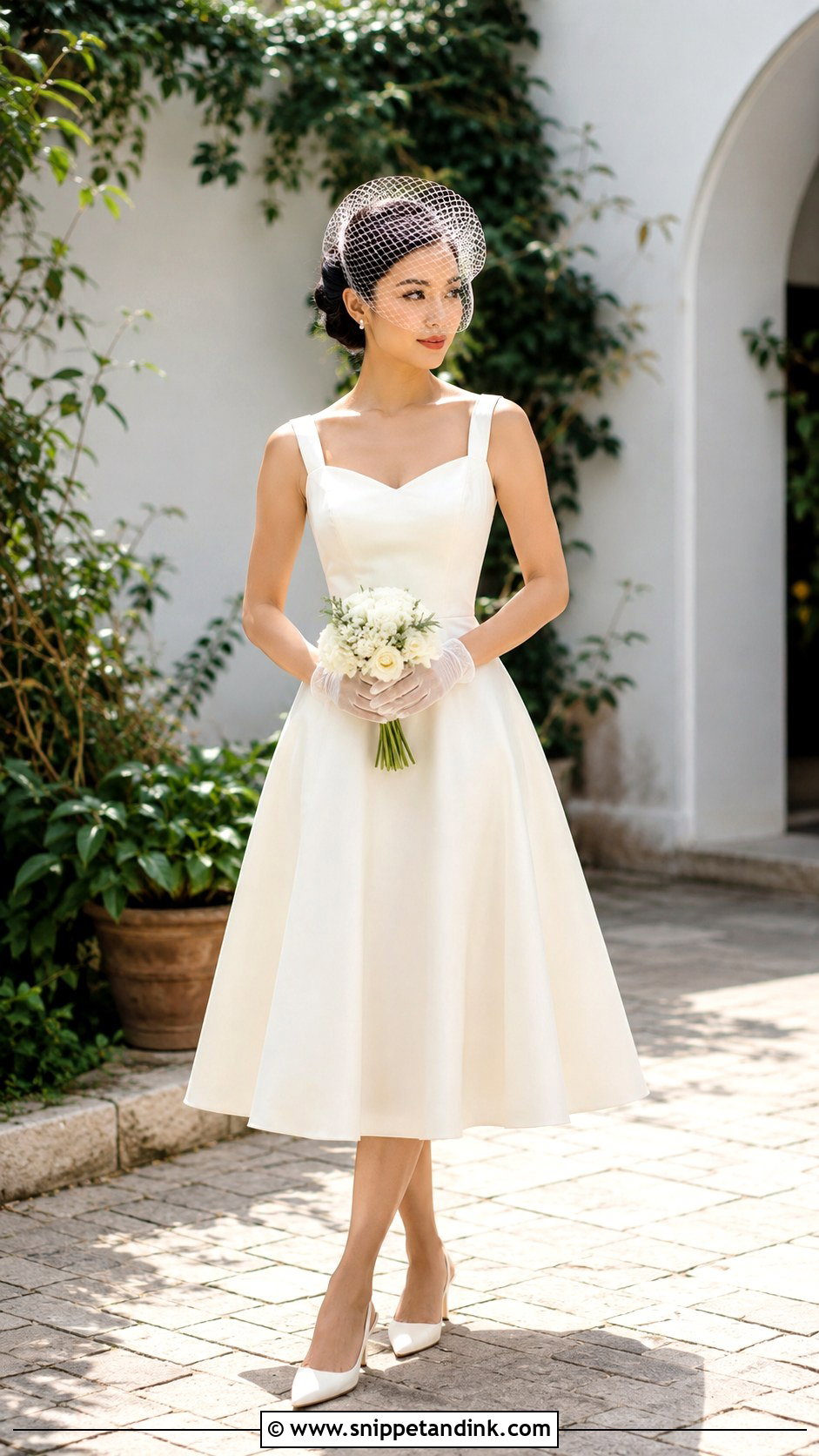
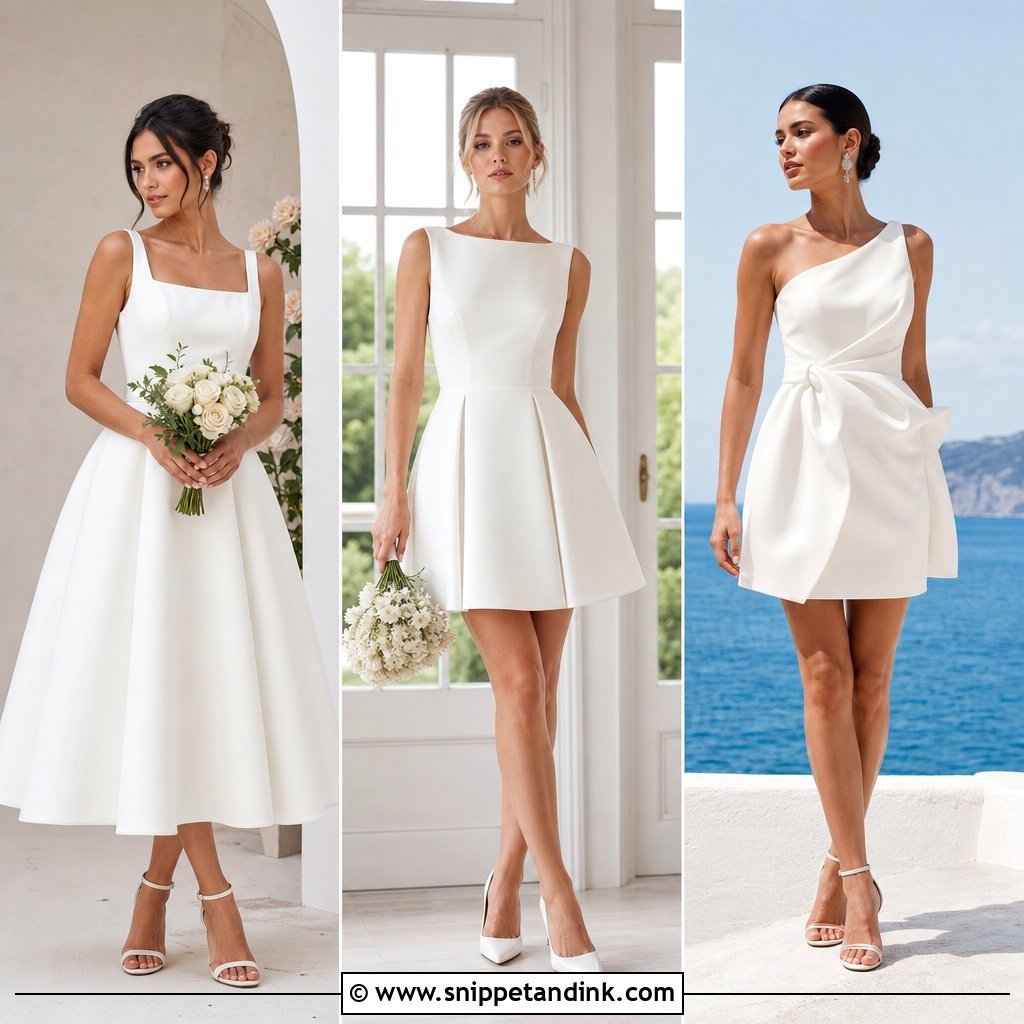
Tea length shows the lower leg and the shoes, which gives a cheerful vintage feel. An ivory dress with a fitted bodice, a defined natural waist and a softly flared skirt ending between knee and ankle. Very full skirts at this length shorten a small frame, so keep the volume moderate. Pointed slingbacks, pearl earrings, short gloves and a birdcage veil or a small bow. The shoes are fully visible, so match their finish to the dress. Courthouses, gardens and relaxed receptions suit it.
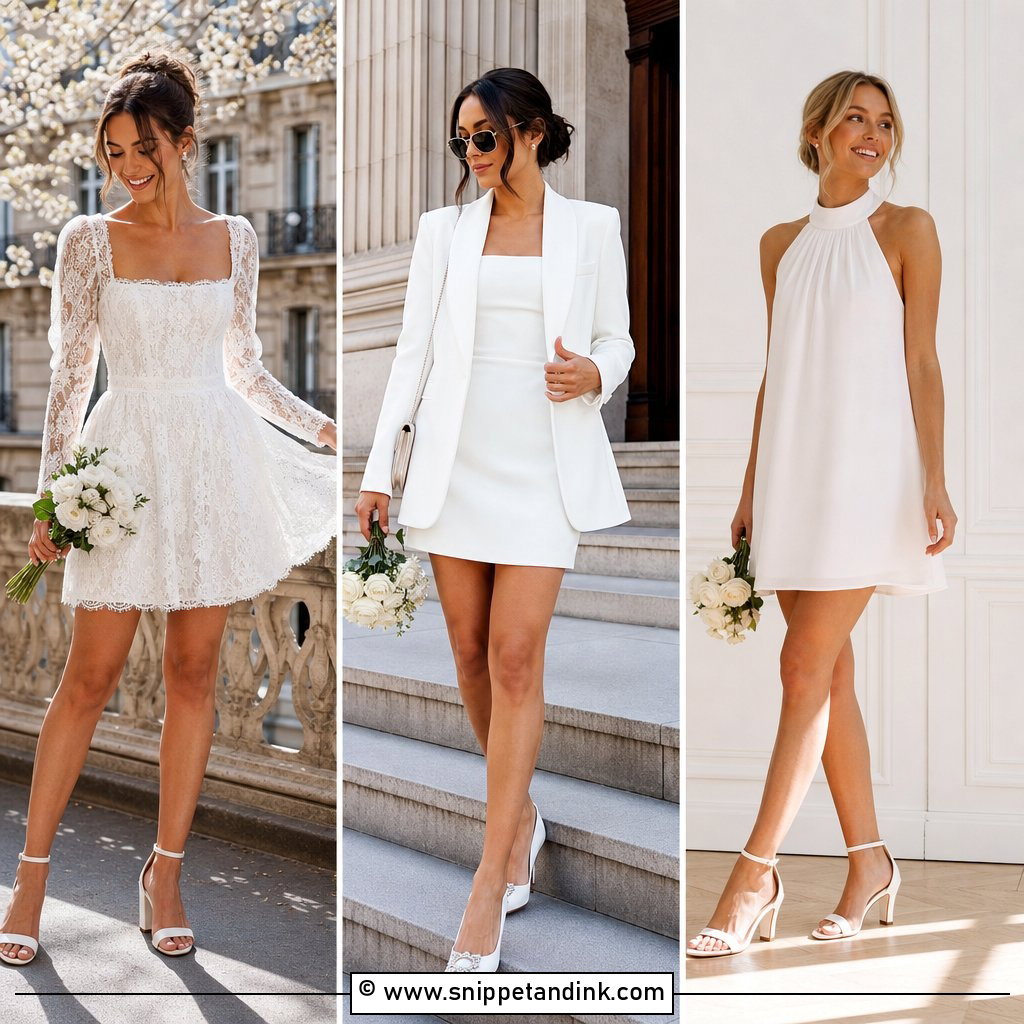
11. Petite Bride Mini Wedding Dress
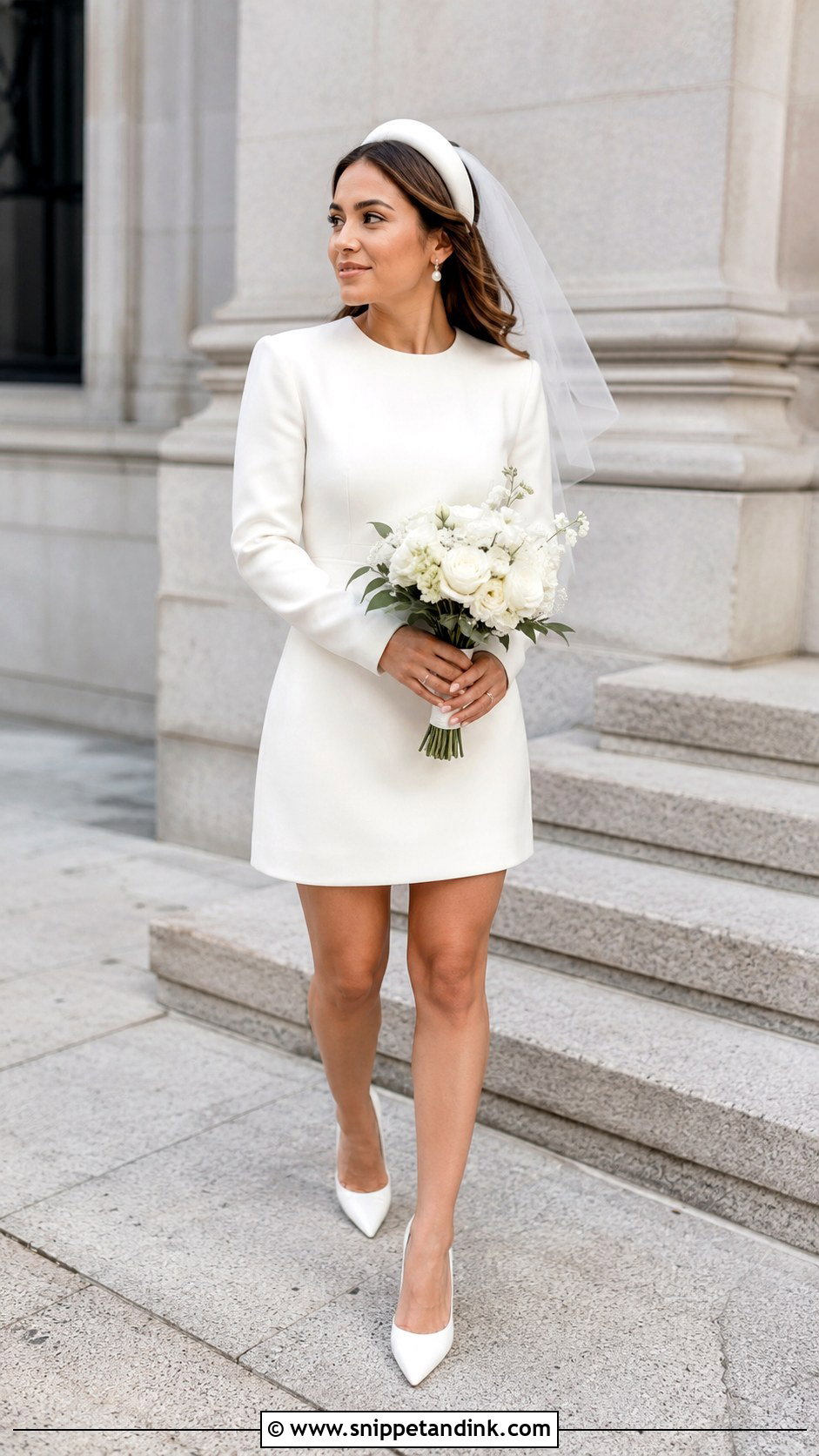
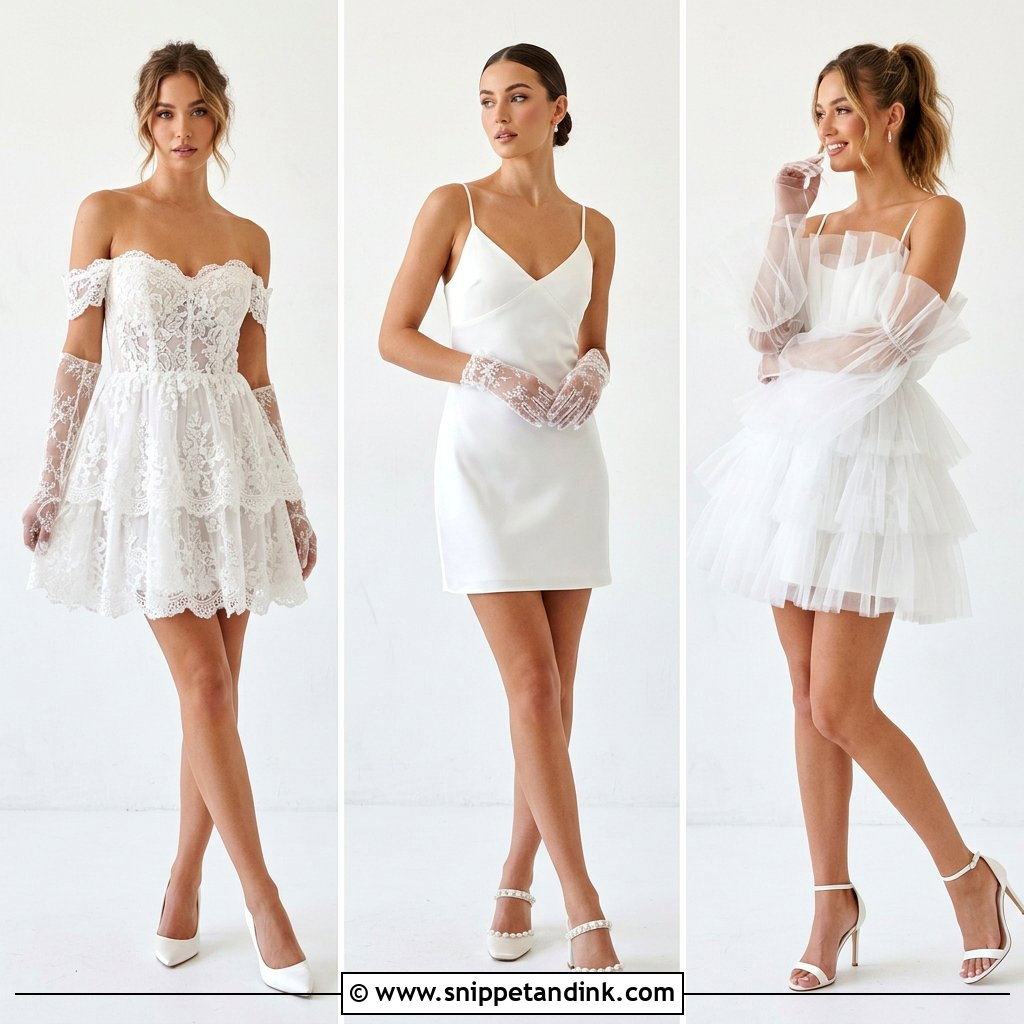
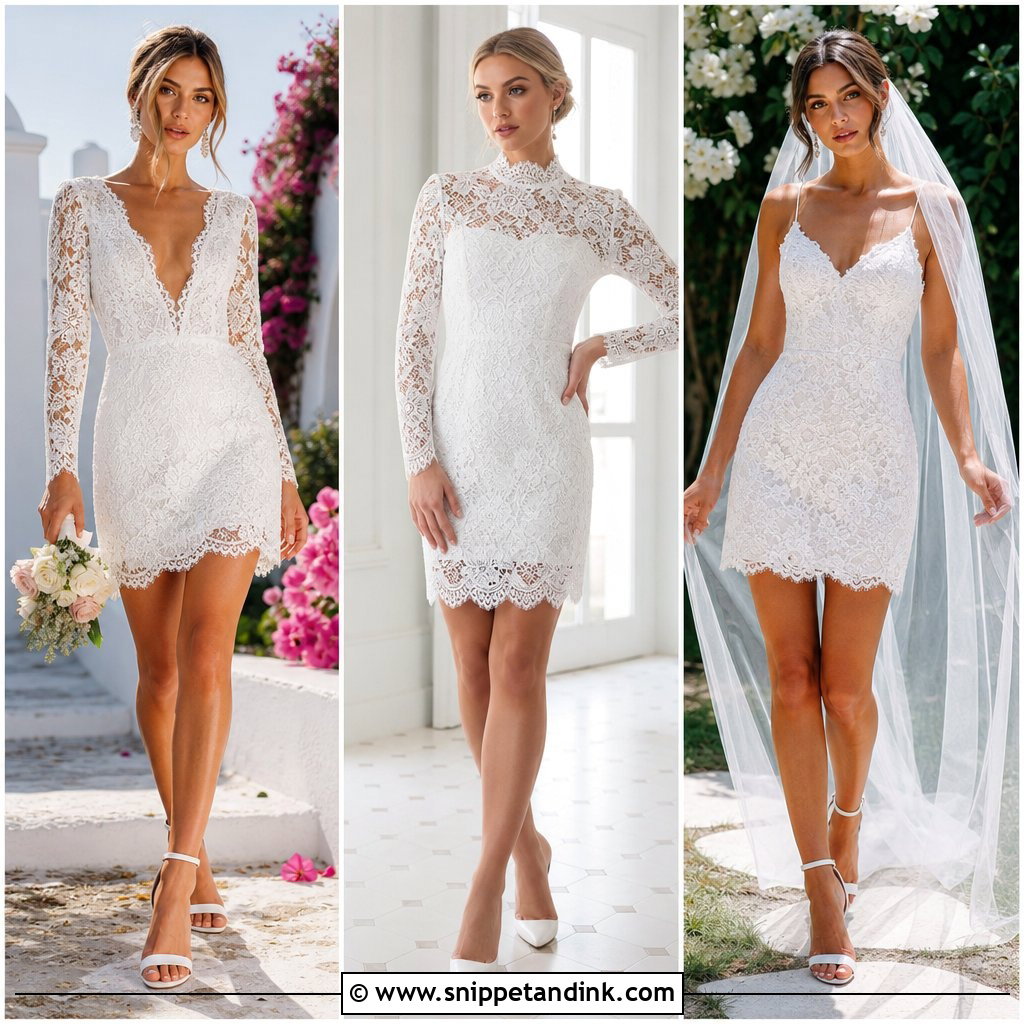
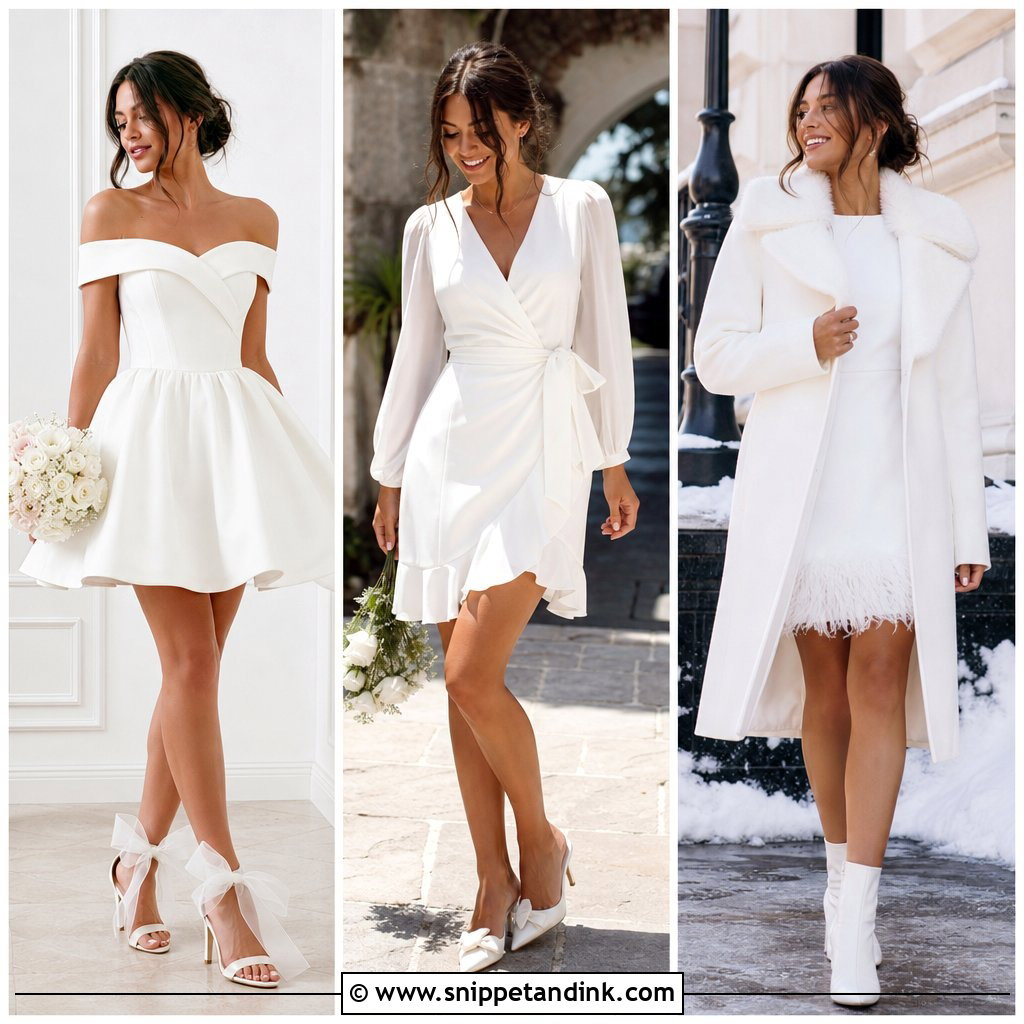
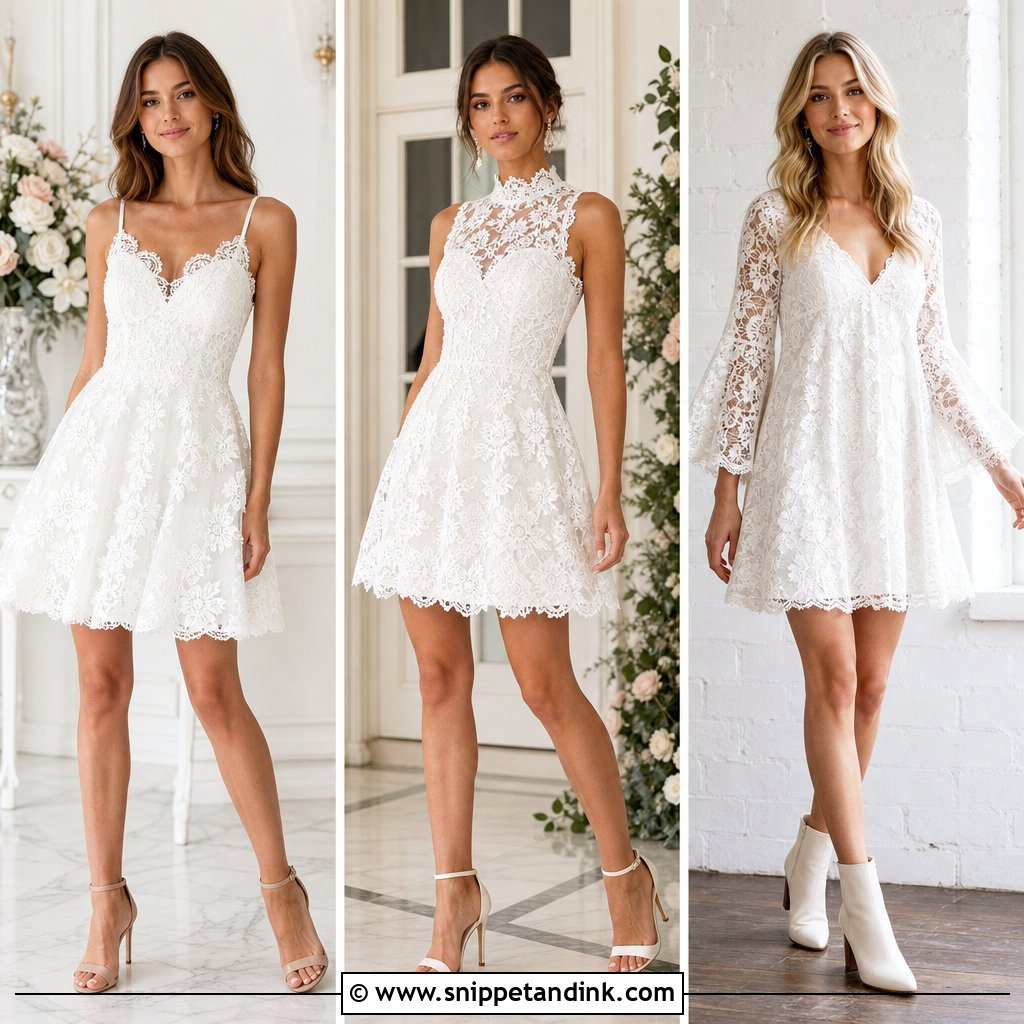
Short hems are often the most flattering length for a short bride. A tailored mini with a clean neckline and shaped waist, long enough to sit in comfortably, works for a ceremony, a courthouse or a second look. Structured crepe with long sleeves reads polished; sleeveless satin reads lighter. Pointed pumps, sheer tights in cooler months, pearl drops, and a short veil or structured headband. A small bouquet keeps the dress visible. Tailoring shows on a mini, so get the hem and side seams exact.
12. Petite Bride Off-Shoulder Wedding Dress
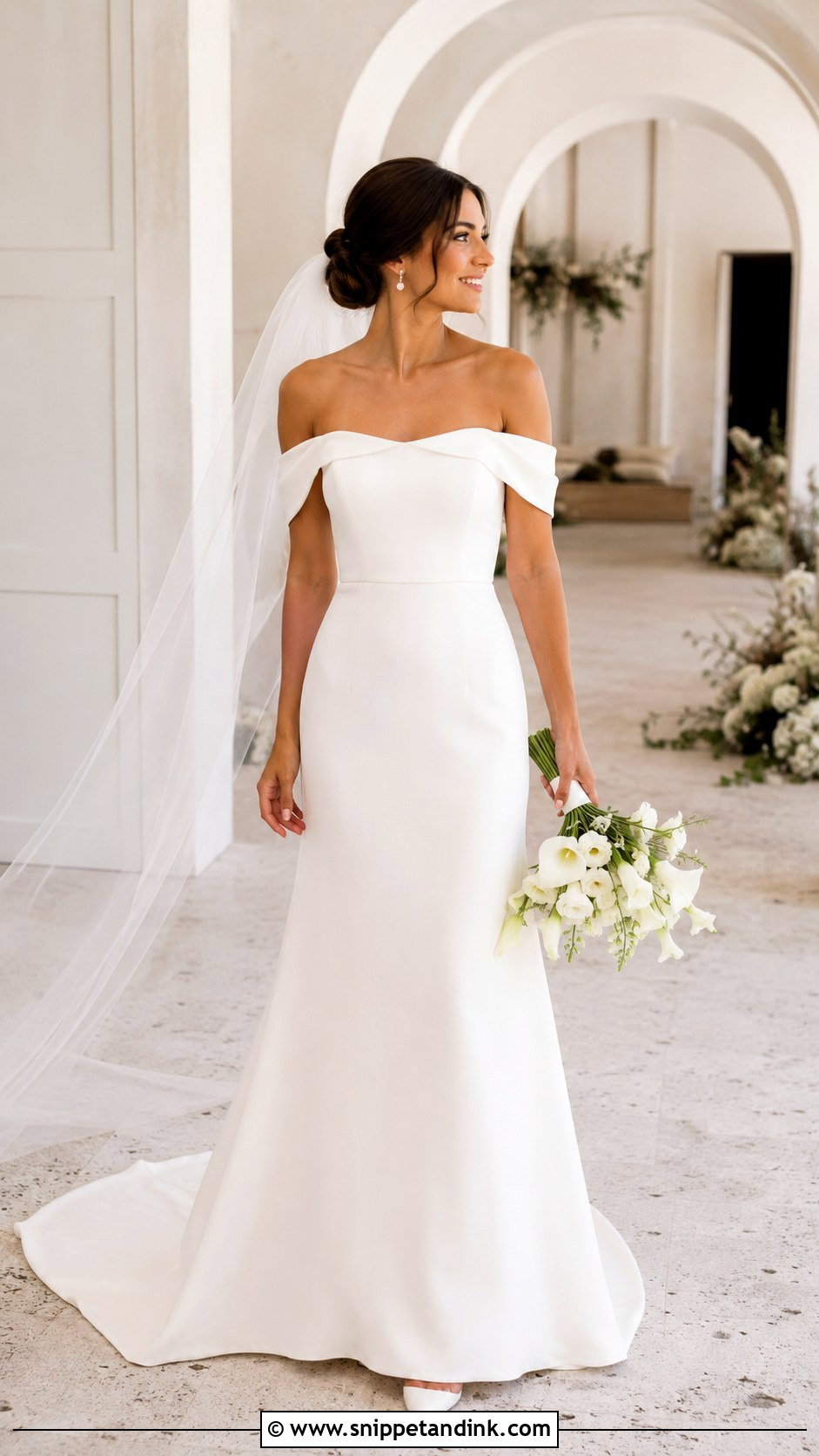
Bare shoulders draw attention up toward the face. The sleeves should be slim folded bands, not wide embellished drapes, which add width at exactly the wrong point. A fitted bodice and narrow A-line balance the open neck. Pointed heels, a collarbone-length necklace or delicate drops, and a soft low bun with a plain fingertip veil placed behind it. Off-shoulder bands are often too long on petite arms and slide, so I’d have them shortened and tested with your arms raised.
13. Petite Bride Square-Neck Wedding Dress
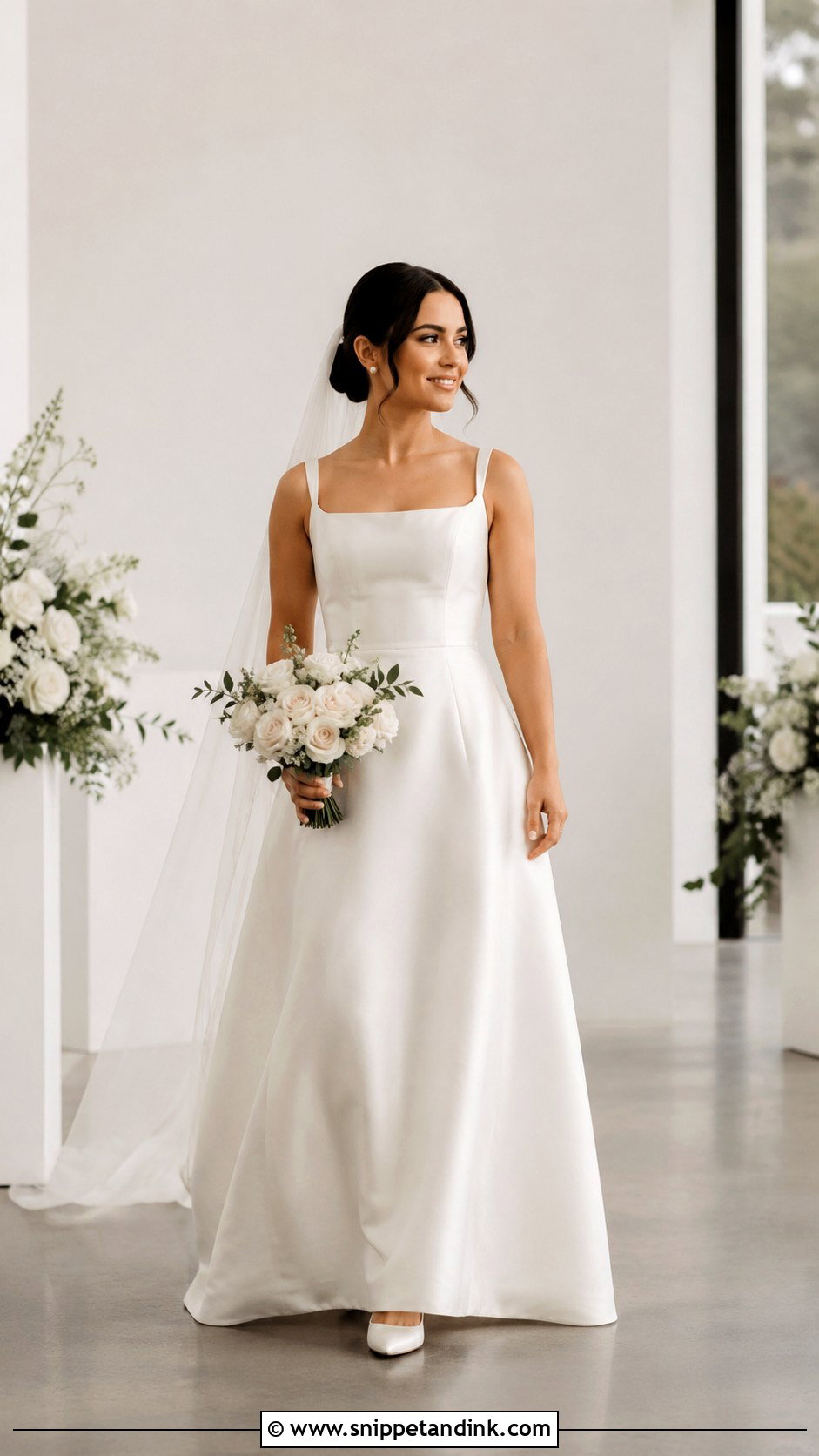
Structure and symmetry are what a square neck gives you. A fitted bodice with narrow straps or slim sleeves, vertical seams and a smooth A-line or column skirt, in satin, mikado or crepe that isn’t too stiff. Almond-toe pumps, pearl studs, a narrow bracelet and a raw-edge veil, with a center-parted low bun. Strap length and bodice depth are the checks: a square neck set too low makes the torso look shorter, while one set right frames the upper body neatly.
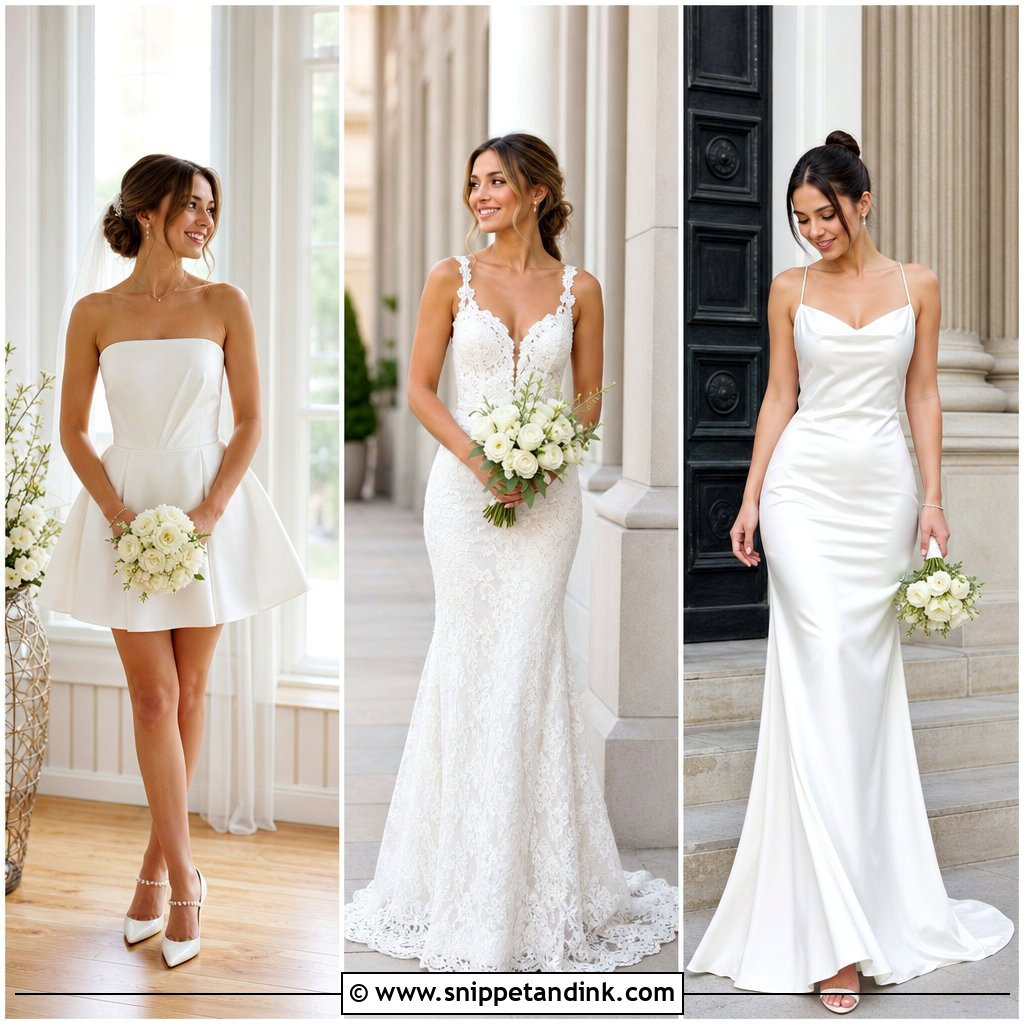
14. Petite Bride Strapless Wedding Dress
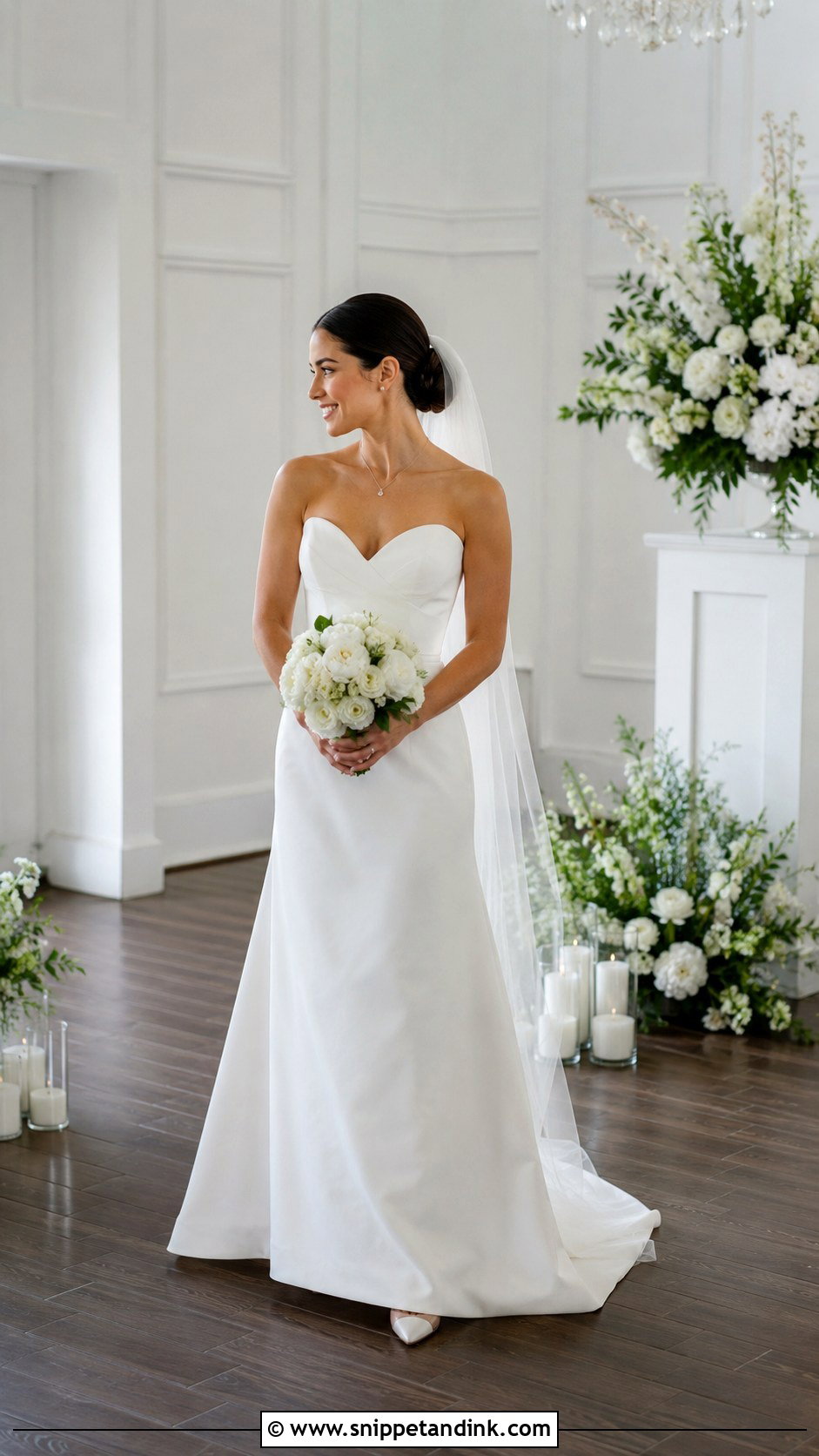
Strapless shows off shoulders and collarbones, which stops a small frame disappearing under fabric. A supportive sweetheart or softly curved bodice over a streamlined A-line. Fine pleats or minimal lace add texture. Watch the bodice height; a tall bodice cut for a longer torso ends up near the underarm, so it often needs lowering. Pointed pumps, a fine necklace, studs and a narrow floor-length veil, with the bouquet held at hip level so it doesn’t hide the waist. Alterations should mean you never tug it up.

15. Petite Bride Long-Sleeve Lace Wedding Dress
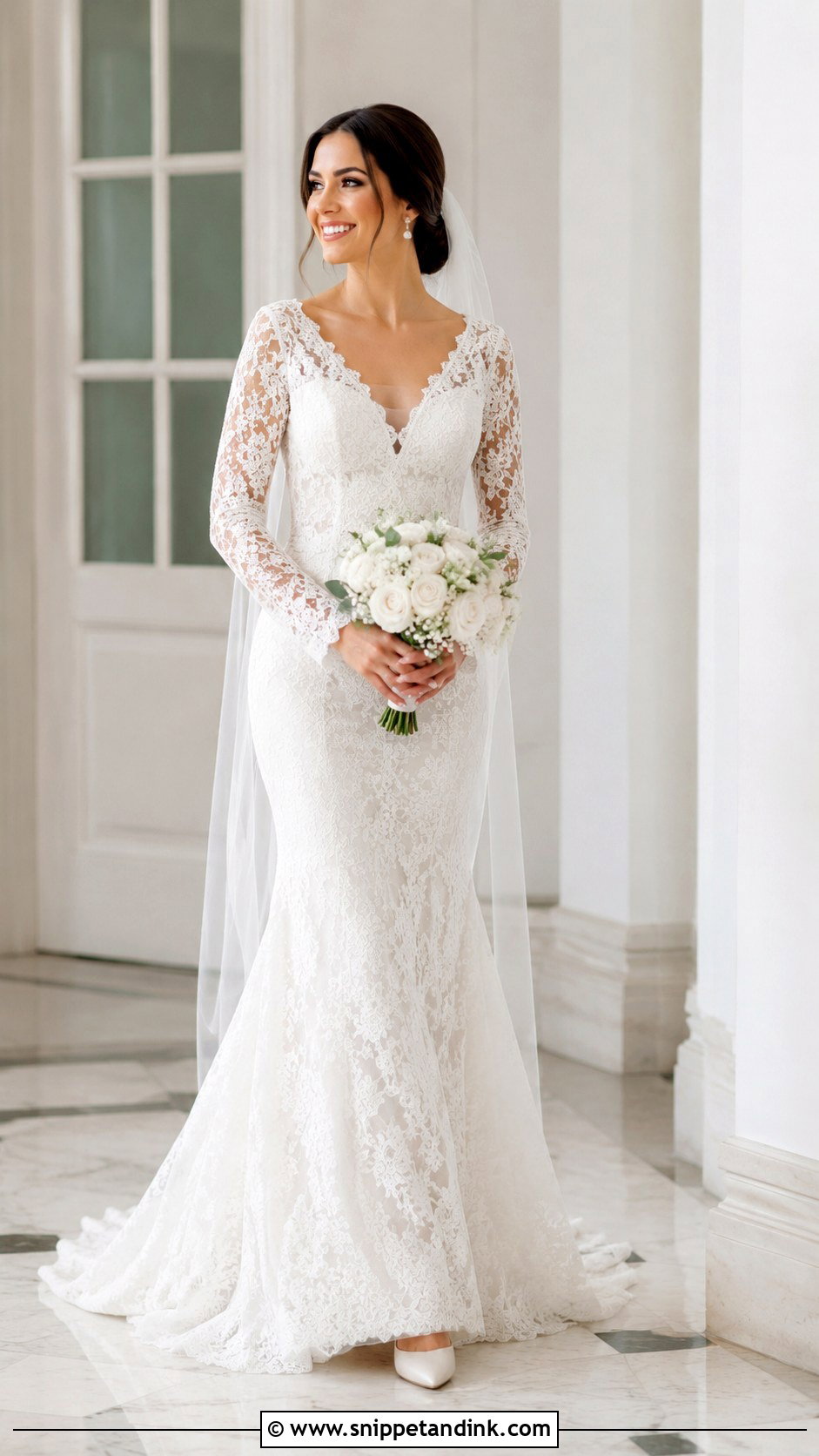
Light, fitted lace makes long sleeves work on a petite bride. A V-neck, narrow sleeves, a defined waist and a soft skirt keep the upper body from looking heavy. Closed pointed heels, pearl earrings and a simple comb above a low chignon, with a sheer chapel veil that has no thick edge. A neat bouquet. Sleeves should be altered at the shoulder, elbow and wrist, not just cut shorter; otherwise the elbow sits in the wrong place and the sleeve twists when you bend.
16. Petite Bride Satin Slip Wedding Dress
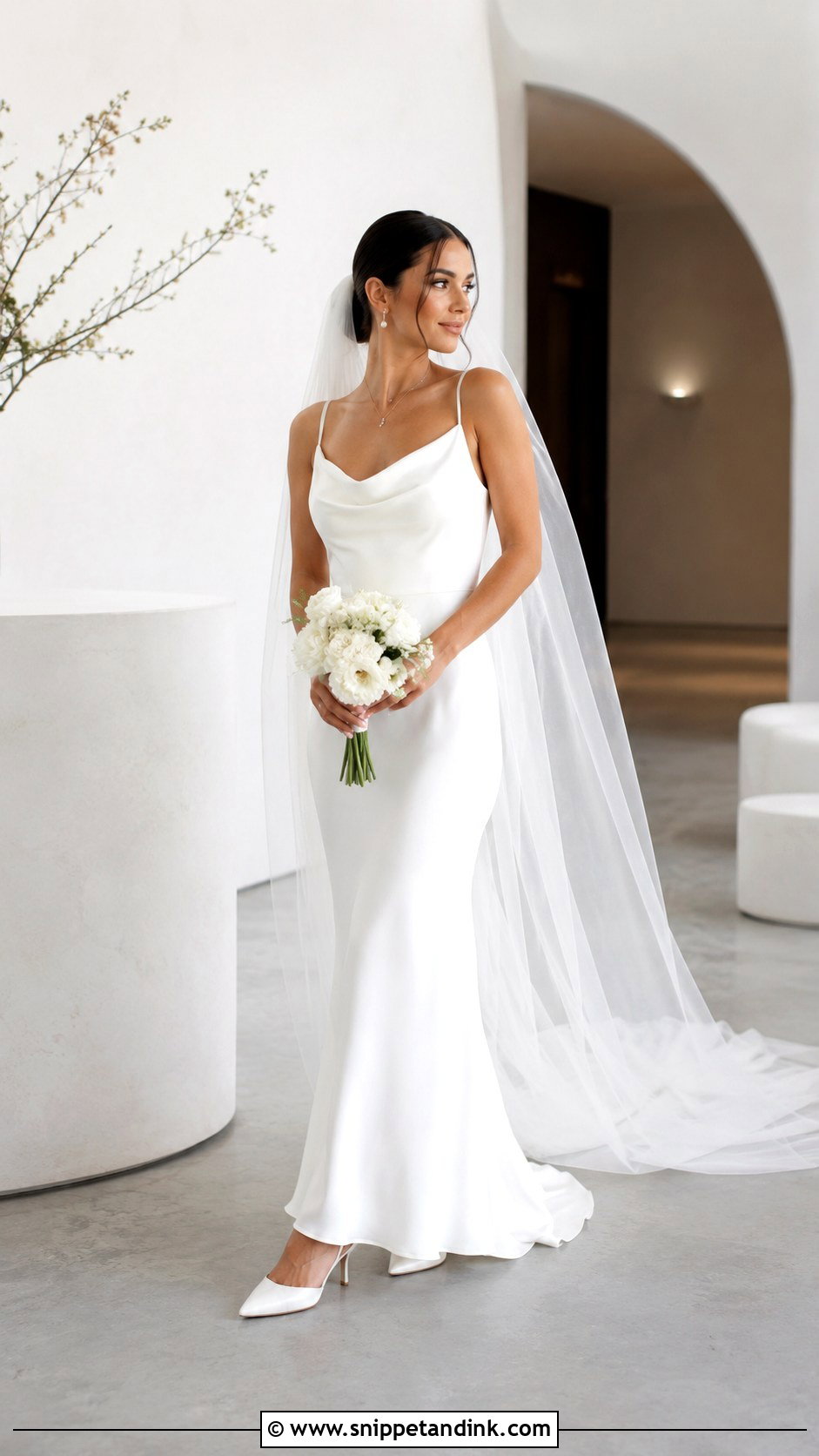
Minimalists will be drawn to a satin slip. A softly draped neckline, adjustable or tailored straps and a bias-cut skirt that skims rather than clings. Pointed kitten heels or heeled sandals, a fine pendant, small drops and a sheer floor-length veil for contrast. A sleek bun and compact bouquet. Satin reflects light and shows every seam and line underneath, so smooth underwear and careful alterations are non-negotiable. Bias-cut hems also drop over time, so have it hemmed after it has hung for a few days.
17. Petite Bride Two-Piece Wedding Outfit
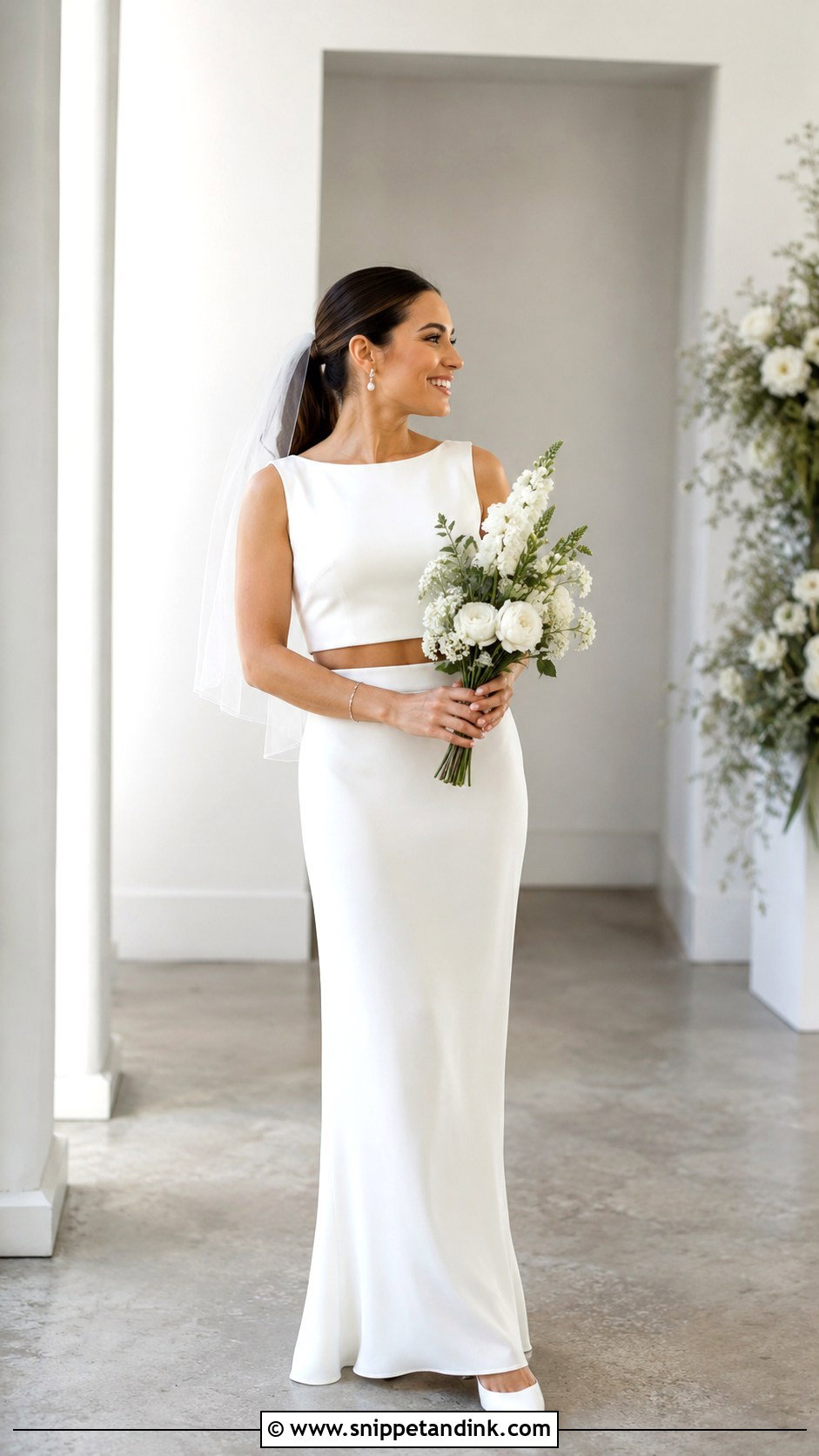
Two matching pieces give clear waist definition and a fresh alternative to a gown. A fitted satin or crepe top with a high-waisted floor-length skirt in the same fabric works best. A small gap of skin is fine, but a closer seam often looks longer on a short frame. Pointed pumps, modern pearl earrings, a slim bracelet and a shoulder-length veil, with a polished ponytail or bun. A small upright bouquet. Hem the skirt for your exact shoes and make sure the top stays put without riding up when you lift your arms.
18. Petite Bride Bridal Jumpsuit
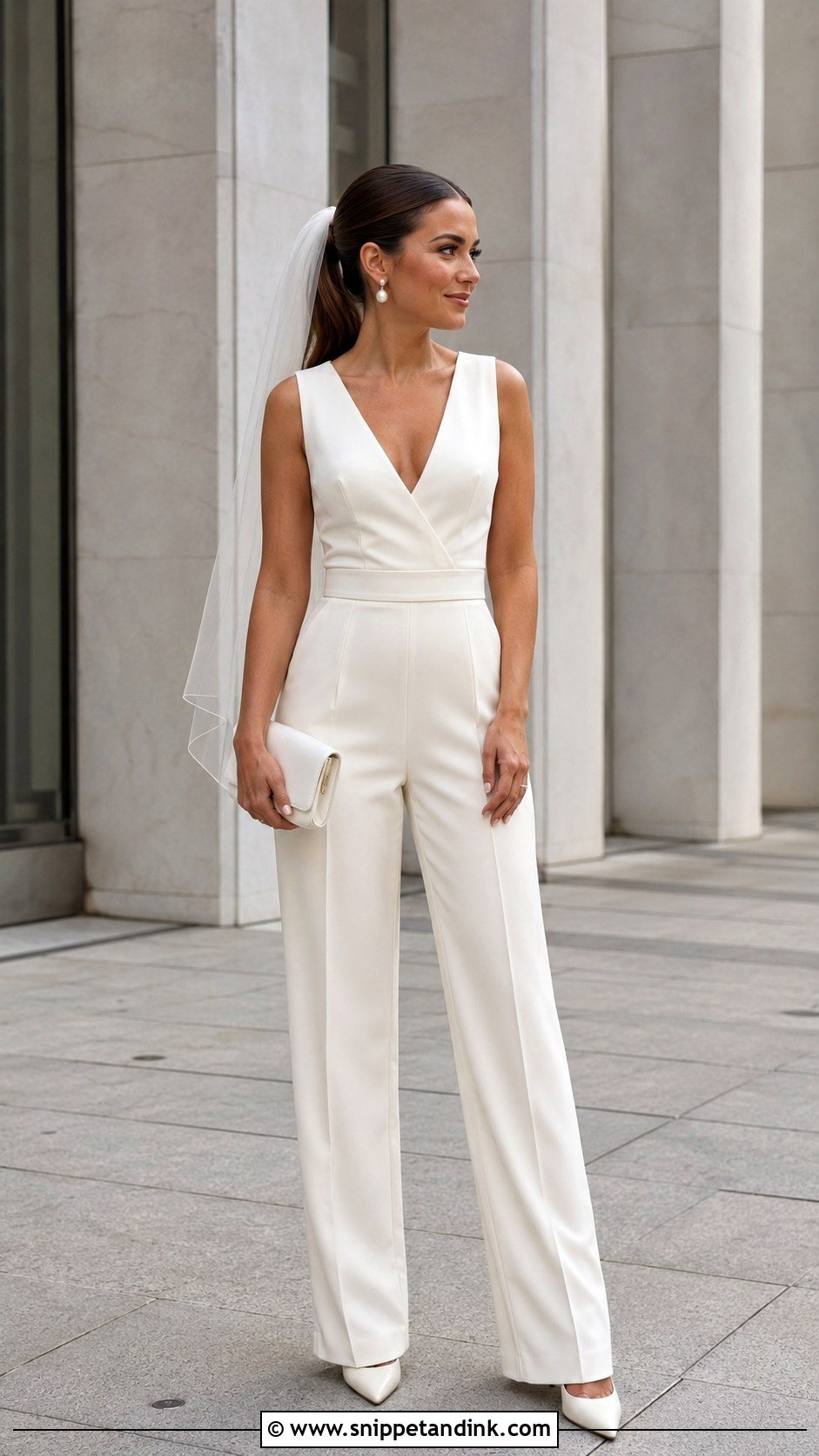
A tailored bridal jumpsuit creates a strong vertical line and real comfort. An ivory design with a V-neck, defined high waist and straight or slightly wide legs suits a petite frame. The trouser hem should almost touch the floor in heels. Pearl earrings, a structured clutch, and a detachable overskirt or narrow veil for a more ceremonial feel. Keep any belt minimal and matched. The rise is the measurement most jumpsuits get wrong on short brides, so ask the tailor to check it before the leg length.
19. Petite Bride Detachable Overskirt Wedding Dress
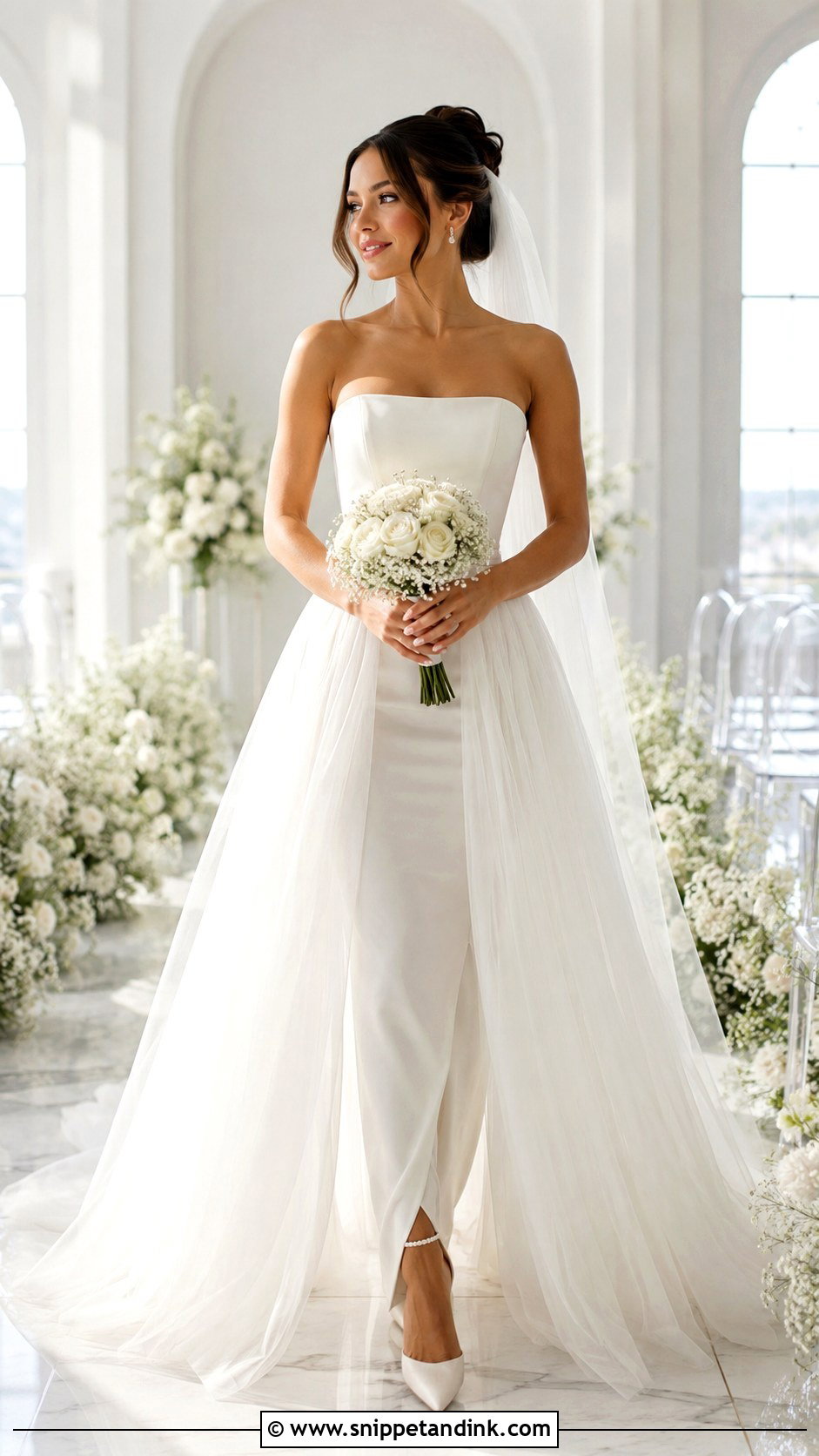
Overskirts let a petite bride have ceremony drama without carrying volume all day. Start with a fitted sheath, column or mini and add a light tulle or organza overskirt at the natural or slightly raised waist. An overskirt that opens at the front, or falls in narrow layers, keeps the base dress visible and stops you looking swamped. Pointed heels, small crystal earrings and a streamlined veil. After the ceremony, remove it for the reception. Match colors carefully, since ivory tulle over ivory crepe rarely looks identical.

20. Petite Bride Wedding Suit
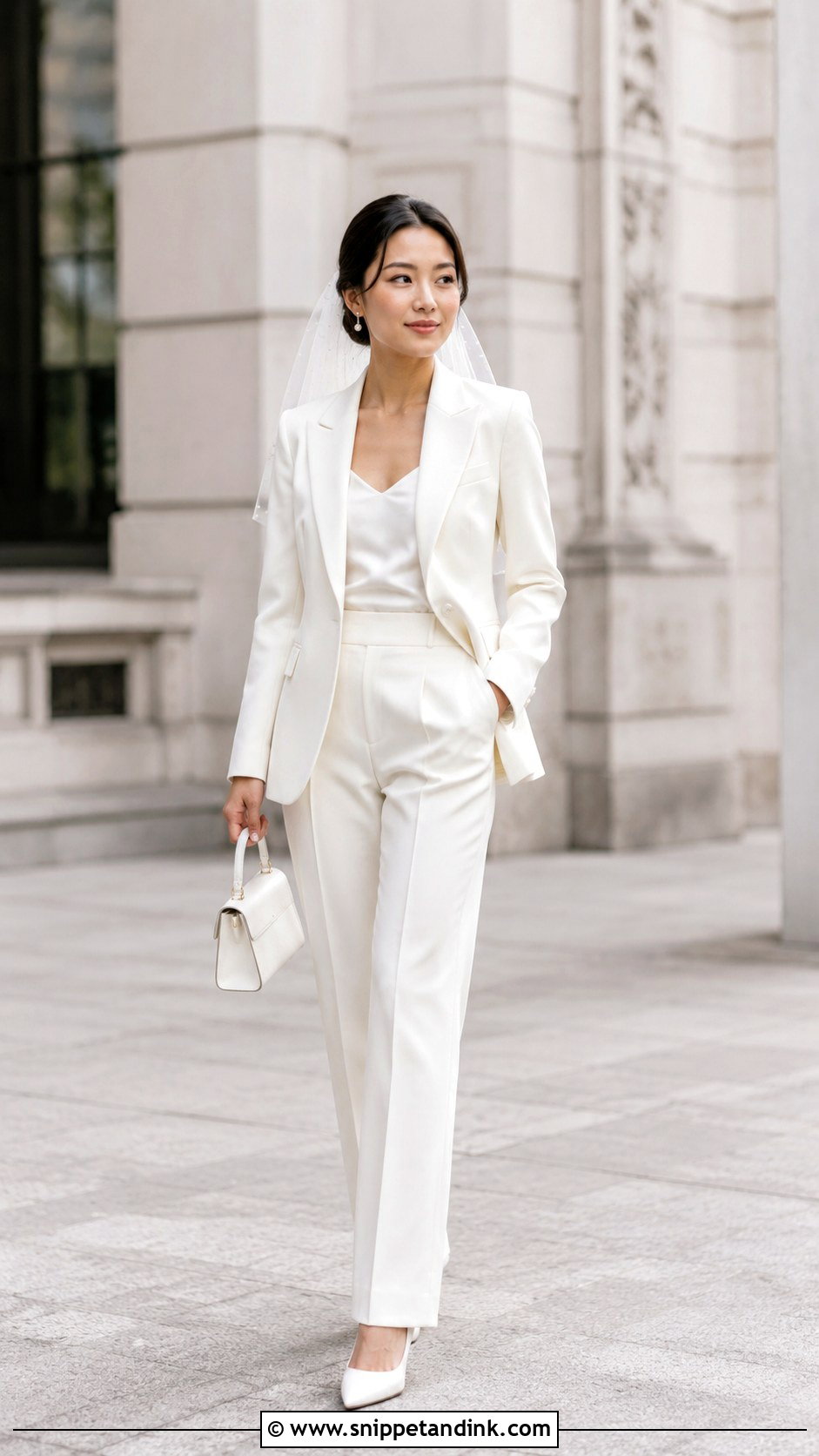
Suits suit petite brides better than people expect, as long as everything fits exactly. A tailored wedding suit starts with a single-breasted ivory blazer with a defined waist and sleeves ending at the wrist. High-rise straight-leg trousers hemmed for pointed pumps, with a silk camisole, fitted shell or lace top underneath. Pearl earrings, a small structured bag and a short veil, bow or headband. Oversized blazers cut the leg line, so I’d stick with a jacket that ends at or just above the hip.
Scaling the Veil, Bouquet and Hair to Your Height
Accessories that look right on a tall model can overwhelm a petite bride in photos. Scale is the thing to watch, more than style.
Veil Length
Veil names describe where the veil ends, but the actual length in inches is set for an average height. On a shorter bride, a fingertip veil can hit the knee and a chapel veil can drag. I’d measure from where the comb will sit to the point you want it to end, and have it cut to that length. Narrow, single-tier veils keep the line longer than wide double-tier ones.
Bouquet Width
Keep the bouquet roughly no wider than your hips and hold it low enough that the waist stays visible. Long stems in a slim hand-tie look taller than a round dome of flowers.
Hair Height
A little lift at the crown adds height without looking dated, and an updo shows the neck and shoulders. Very full, wide curls do the opposite and add width at head level, so I’d keep volume going up rather than out.
Proportion Matters More Than Any Single Rule
What matters most is fit, comfort and feeling like yourself. Thoughtful proportions can make many silhouettes work on a petite frame, from A-lines and mermaids to minis, jumpsuits and suits. Use necklines, waist placement, vertical seams and hem lengths to create balance, but treat none of it as a strict rule. Bring the shoes and underwear you’ll wear on the day to every fitting. Keep the bouquet, veil and jewelry in scale with you, and choose the look that lets you enjoy the whole day.
You'll Like These Ideas:




Leave a Reply