
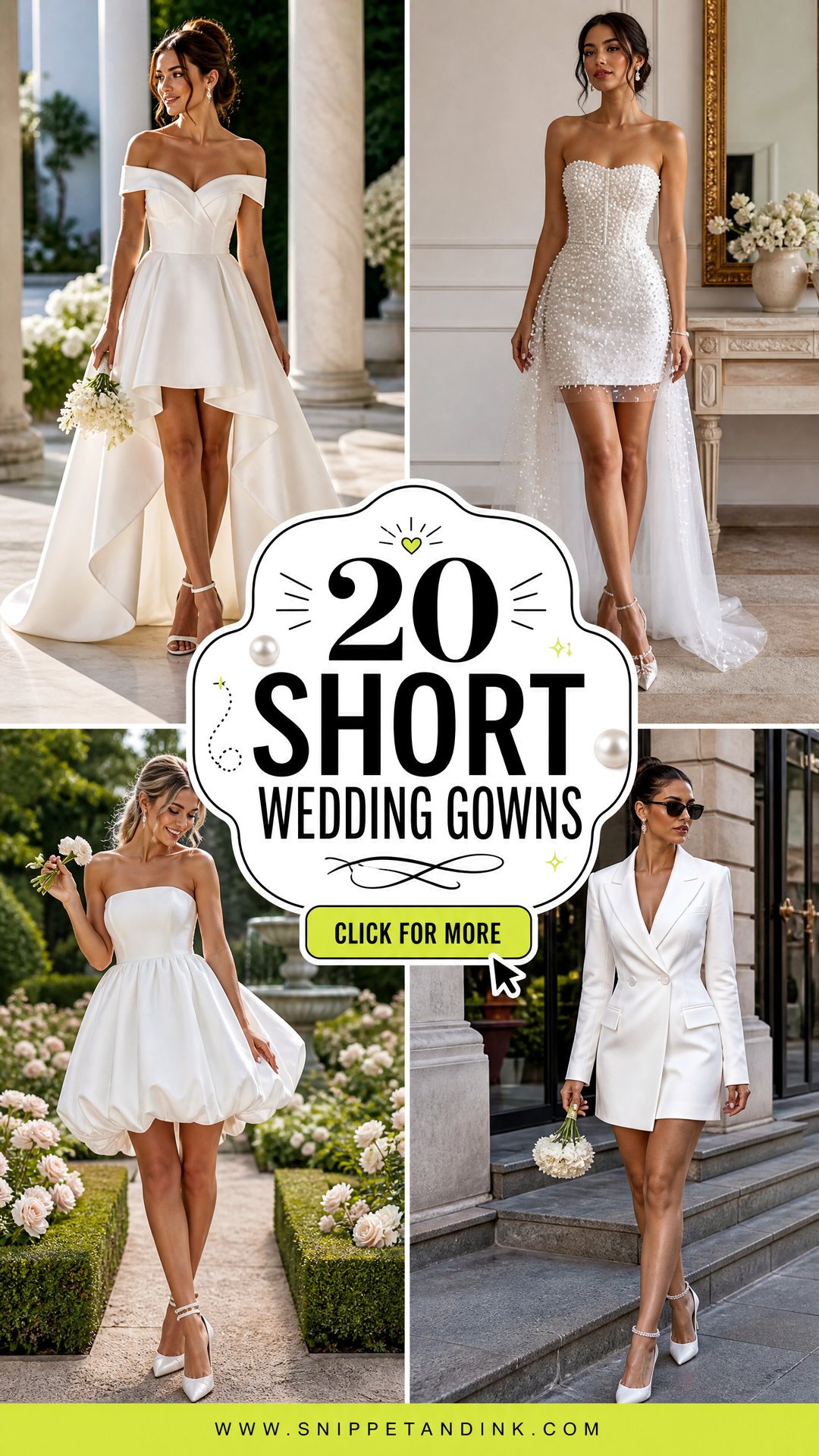
A short gown can be every bit as bridal as a floor-length one; it simply asks more of the details. Ceremonies, civil weddings, receptions, elopements and destination trips all suit a shorter hem. Bridal designers now offer clean satin minis, embellished dresses, bubble hems, midis and gowns with detachable overskirts, so the range is wide. With the legs on show, shoes become part of the outfit in a way they never are under a long skirt. I’ve written each look below with the fit checks and styling I’d use in a real fitting, from romantic lace to sharp tailoring.
Wind, Pews and Dress Codes: Where a Short Hem Gets Tricky
Short gowns are easier to move in, but a few settings work against them. It helps to know where before you fall in love with one.
- Beaches and clifftops. A light, flared mini will lift in a sea breeze. Heavier satin, crepe or a straighter cut behaves better, and a few small weights sewn into the hem help more than you’d think.
- Religious ceremonies. Some churches, temples and mosques expect covered knees and shoulders. Check first; a removable overskirt or a cover-up for the ceremony solves most of it.
- Black-tie evenings. A mini can feel underdressed next to guests in floor-length gowns. A richer fabric, a long veil or a tea length helps it hold its own.
- Cold months. Bare legs in winter photos look chilly, so plan on tights or a coat that suits the dress.
On the other hand, short gowns shine at city halls, restaurants, garden parties, destination trips with lots of walking and anywhere with stairs or uneven ground.
1. Strapless Satin Short Wedding Gown
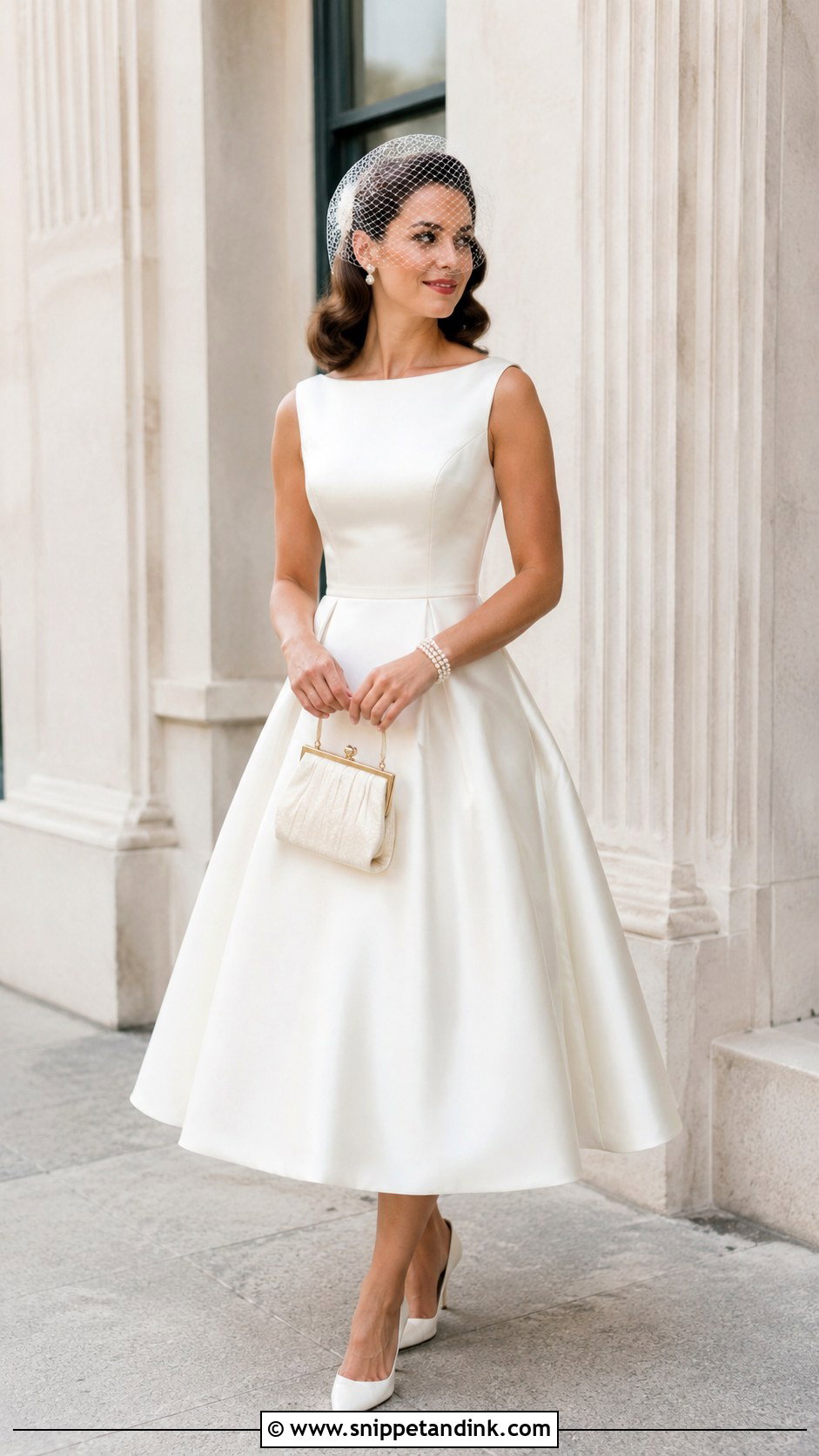
Strapless satin at mini length looks clean and modern without feeling stiff. A structured bodice with internal boning and a gently fitted waist keeps it in place through hugs and dancing, while an A-line or softly flared skirt balances the short hem. Ivory pumps, pearl drops and a small top-handle bag, plus a fingertip veil for the ceremony. On a cold day, a cropped satin jacket over the top looks deliberate. Sleek hair keeps the neckline clear. Satin creases across the lap when you sit in a car, so I’d travel standing the skirt up behind you if you can.
2. Long Sleeve Lace Short Wedding Gown
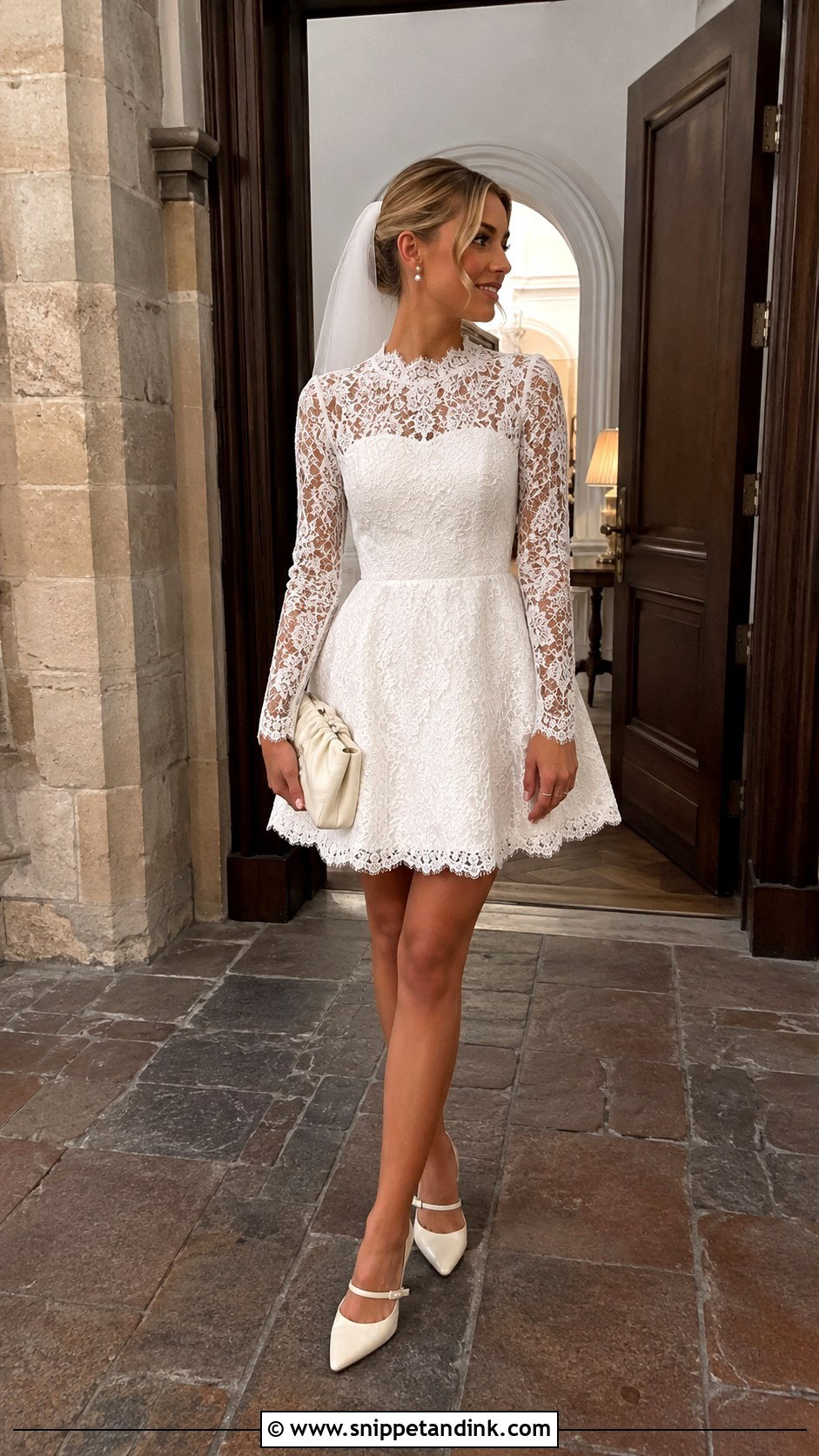
Lace sleeves with a short skirt make a nice contrast: covered on top, playful below. A fitted bodice, defined waist and a lightly flared skirt stop it looking heavy, and sheer lace sleeves show the pattern while giving coverage. Ivory slingbacks, pearl studs, a satin clutch and a short tulle veil or floral headband. For fall and winter, opaque ivory tights and closed shoes. Corded lace holds its shape better on a short dress than soft chantilly, which can sag at the hem after a few hours.
3. Tea Length A-Line Wedding Gown
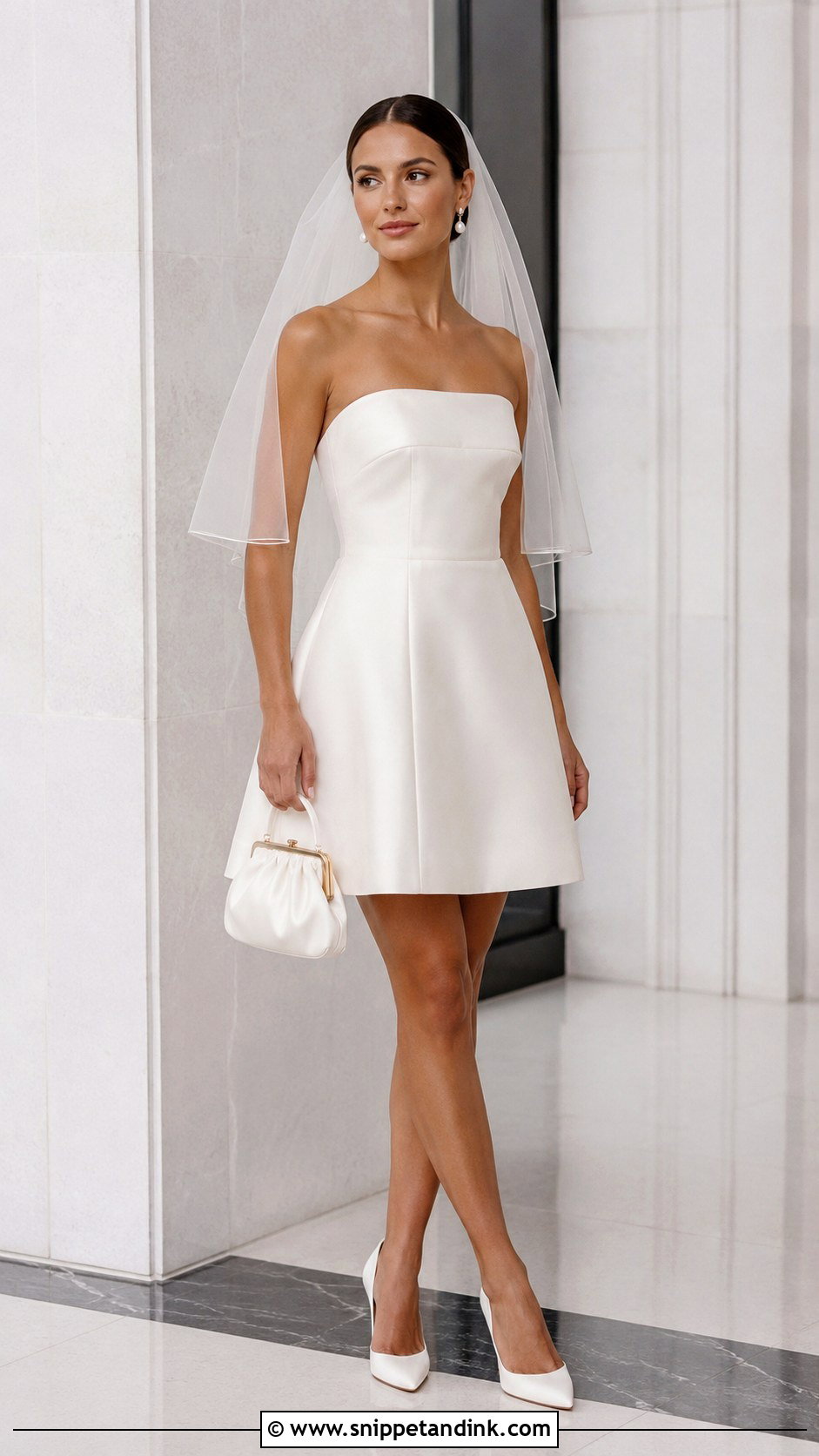
Tea length brings vintage charm with more coverage than a mini. The hem lands between knee and ankle, so your shoes are fully visible and worth choosing carefully. Structured satin, mikado or organza gives gentle volume. Pointed pumps, a pearl bracelet and a small framed bag. A birdcage veil leans retro; a fingertip veil keeps it classic. A narrow satin belt or bow defines the waist, with soft curls and a red or rose lip. Afternoon ceremonies, gardens, city halls and brunch receptions suit it.
4. Square Neck Crepe Short Wedding Gown
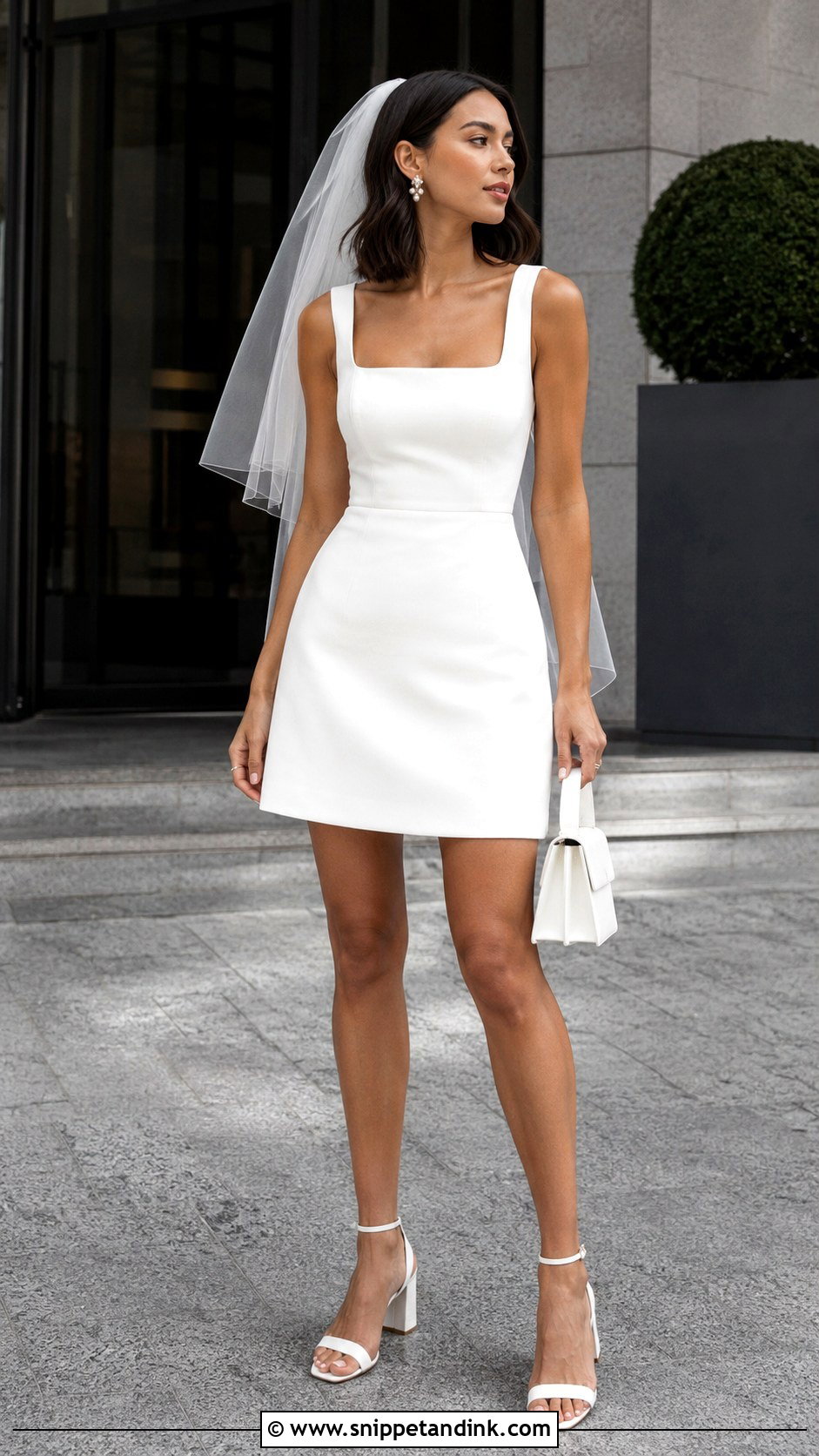
Crepe is the fabric that makes a square neck look crisp. It holds clean lines and doesn’t shine, so the shape does the work. A fitted waist with a straight or A-line skirt keeps it neat, and wider straps cover a supportive bra. Block-heel sandals, a structured ivory bag and sculptural pearl earrings. A sleek ponytail or low chignon, with a shoulder-length veil or headband rather than anything elaborate. A textured, colorful bouquet looks great against plain crepe. One thing I always mention: matte crepe shows lint and pet hair, so keep a lint roller nearby.
5. Off Shoulder Short Wedding Gown
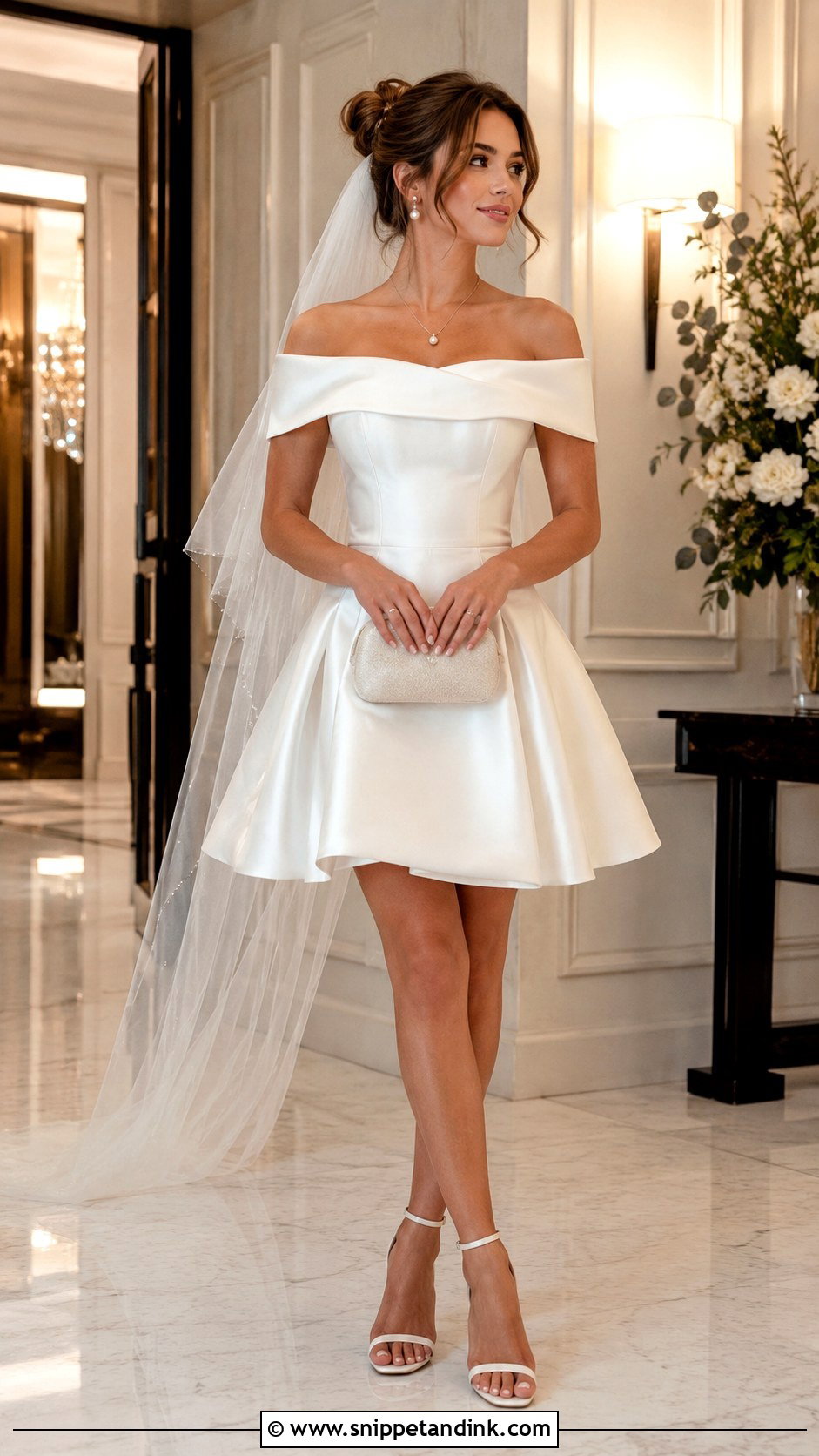
Romantic but not fussy, an off-the-shoulder short gown frames the face and collarbone. A folded satin band looks structured; soft draping looks relaxed. A fitted bodice over a flared mini or midi skirt keeps the balance. Ankle-strap heels, a pearl pendant, a small clutch and a soft updo. A long veil past the short hem gives real drama, or a satin bow or comb keeps it simple. The band should sit firmly on the upper arm; I check this by having you hug someone, since that’s when it rides up.
6. Puff Sleeve Organza Short Wedding Gown
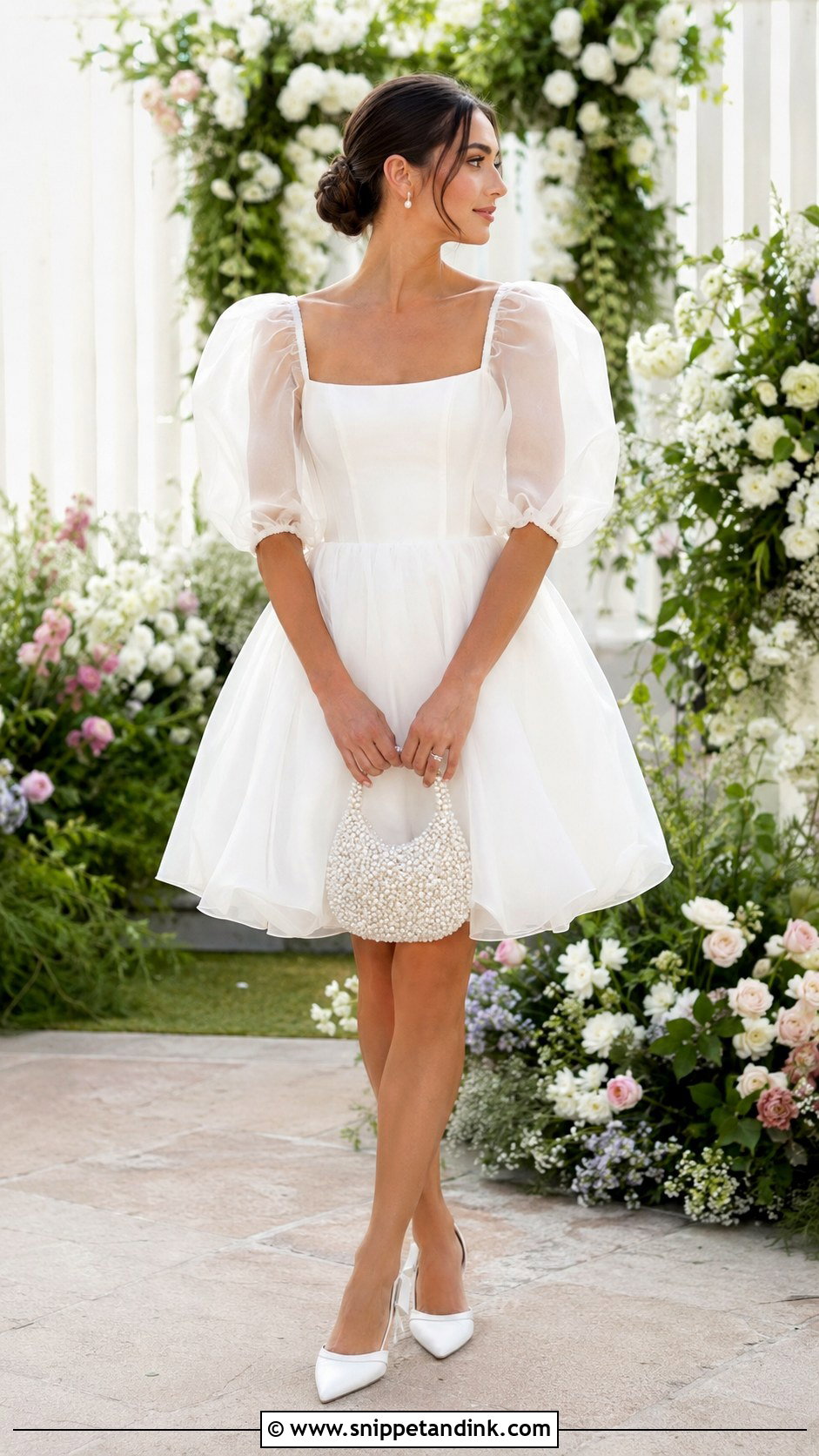
Organza catches the light, which makes puff sleeves look airy rather than heavy. Controlled volume and a defined cuff keep the sleeves fashionable without swamping you. A fitted bodice and natural waist give structure. Pointed slingbacks, a small pearl bag and quiet earrings, with a neat bun or half-up style. Translucent organza needs a smooth lining in the bodice and skirt, or seams and underwear show in sunlight. A narrow plain veil. Spring ceremonies, gardens and lunches suit it.
7. Halter Neck Short Wedding Gown
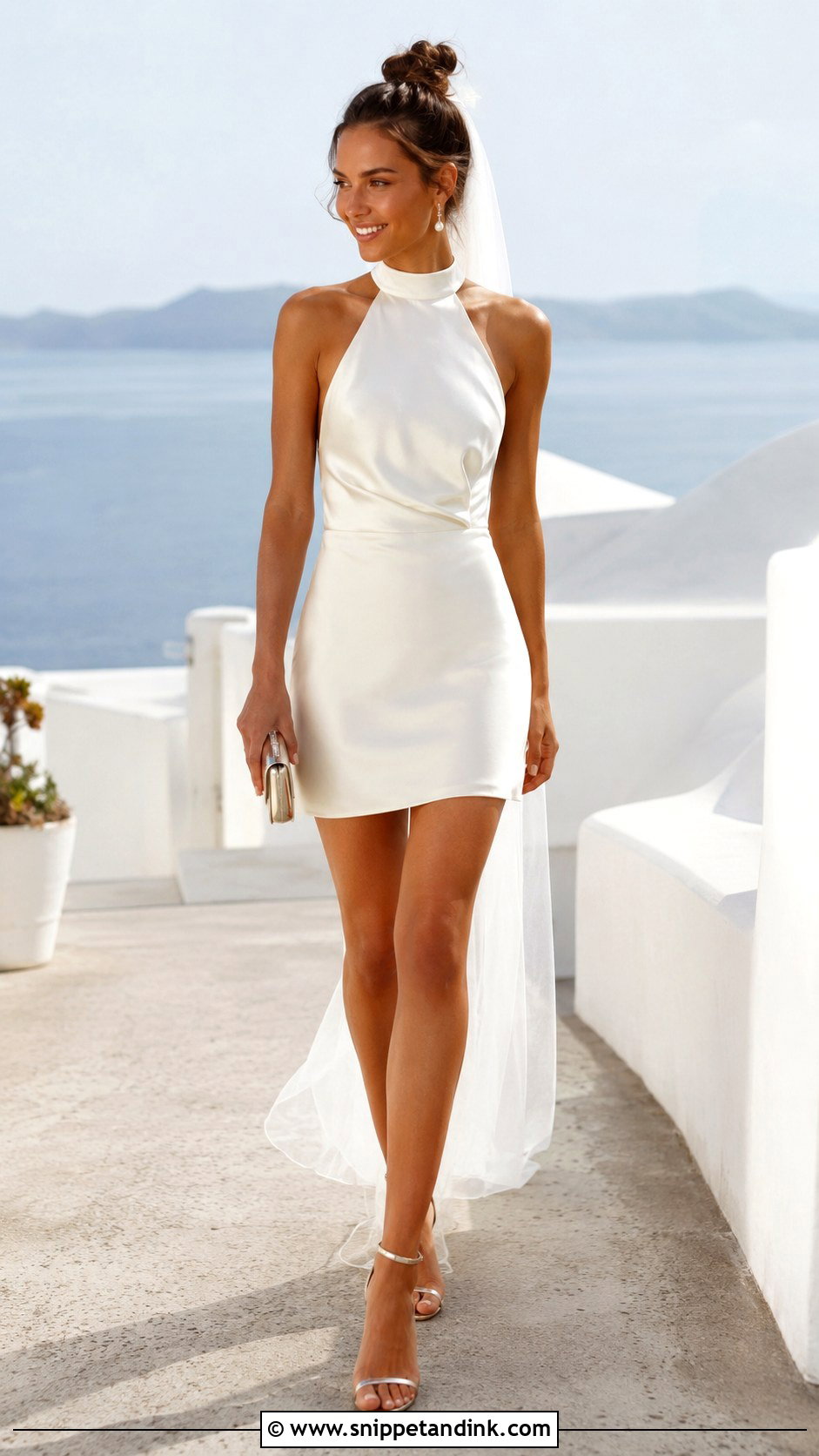
Halters have a subtle retro influence and stay put better than most strapless dresses. Smooth crepe or satin with a softly shaped waist, not heavy gathering. Metallic or ivory sandals, drop earrings and a slim clutch; a bracelet instead of a necklace. A high bun, twisted updo or short hair keeps the halter visible. Add a long narrow veil or a decorative comb. If you have a heavier bust, I’d look for a halter with a built-in bra, because all the support otherwise hangs from the back of your neck.
8. Beaded Fringe Short Wedding Gown
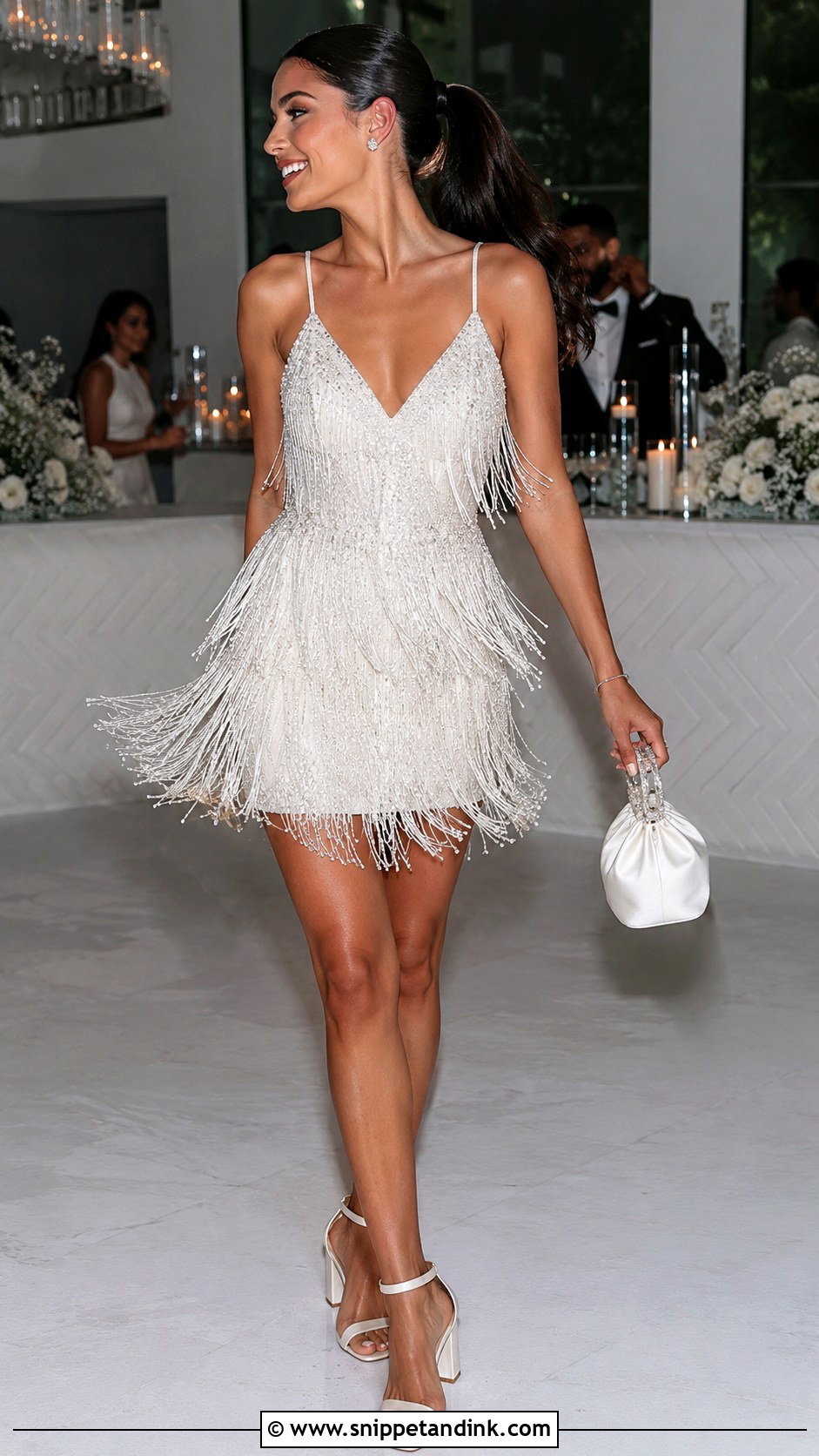
Fringe is meant to move. Beaded fringe turns a reception dress into something that sparkles every time you turn, but it needs secure stitching, a comfortable lining and placement that doesn’t weigh the dress down. A fitted shift or gently shaped cut lets the beads lead. Low block heels or supportive sandals for dancing, crystal studs, a satin mini bag and a sleek ponytail. A short veil for the ceremony, a jeweled clip later. Fringe swings out when you sit and can tangle on chair backs, so test it in a chair before the day.
9. Bow Back Short Wedding Gown
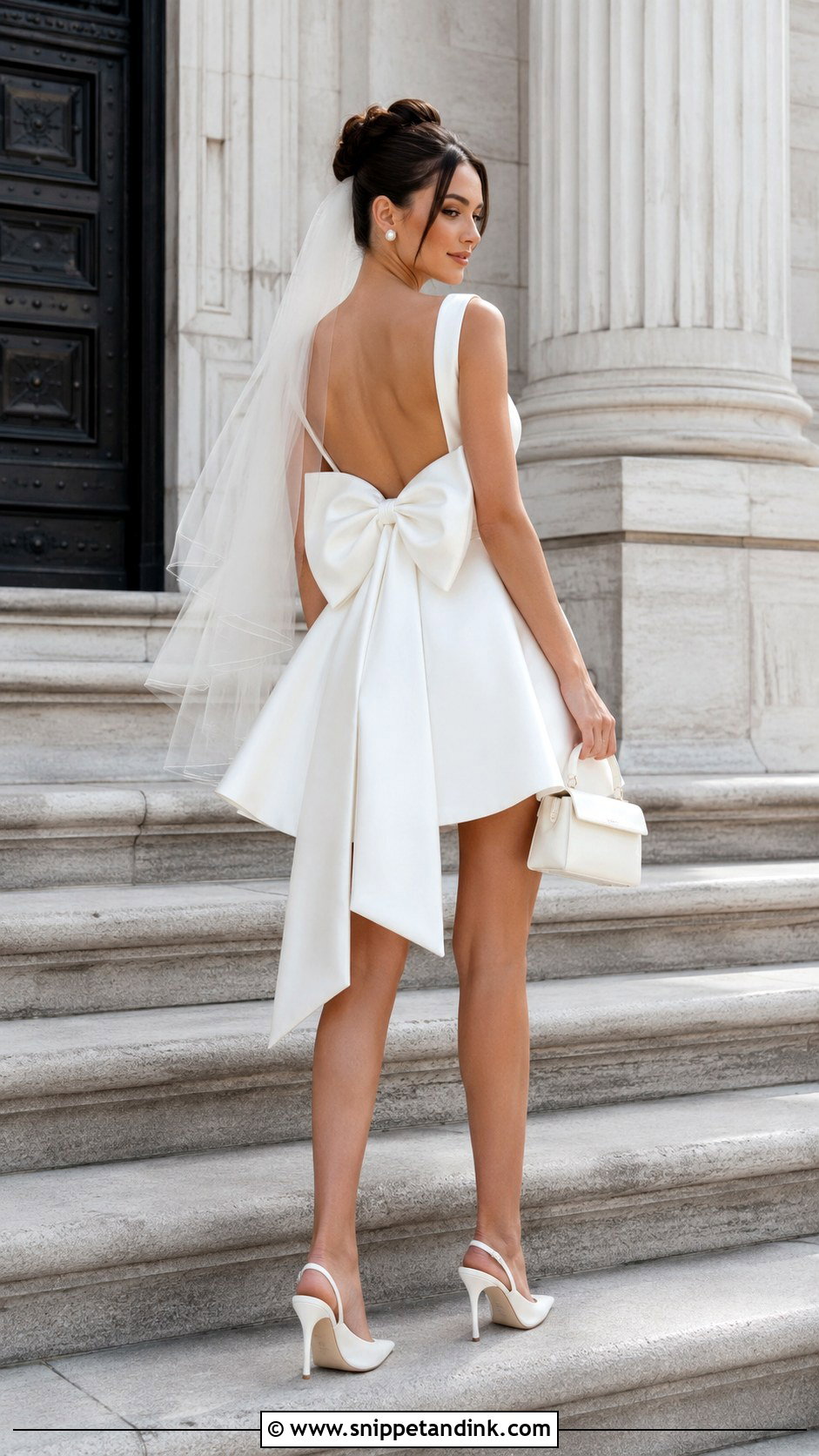
From the front it’s simple. From behind, an oversized bow does all the talking. Choose smooth satin or mikado with a fitted bodice and clean front, and a structured A-line skirt to balance the volume. Pointed heels, pearl earrings and a top-handle bag. Wear your hair up or to the side so the bow shows, and keep the veil sheer and light. A detachable bow is easier for dinner, because a large bow at the back makes leaning back in a chair awkward.
10. Short Wedding Gown With Detachable Overskirt
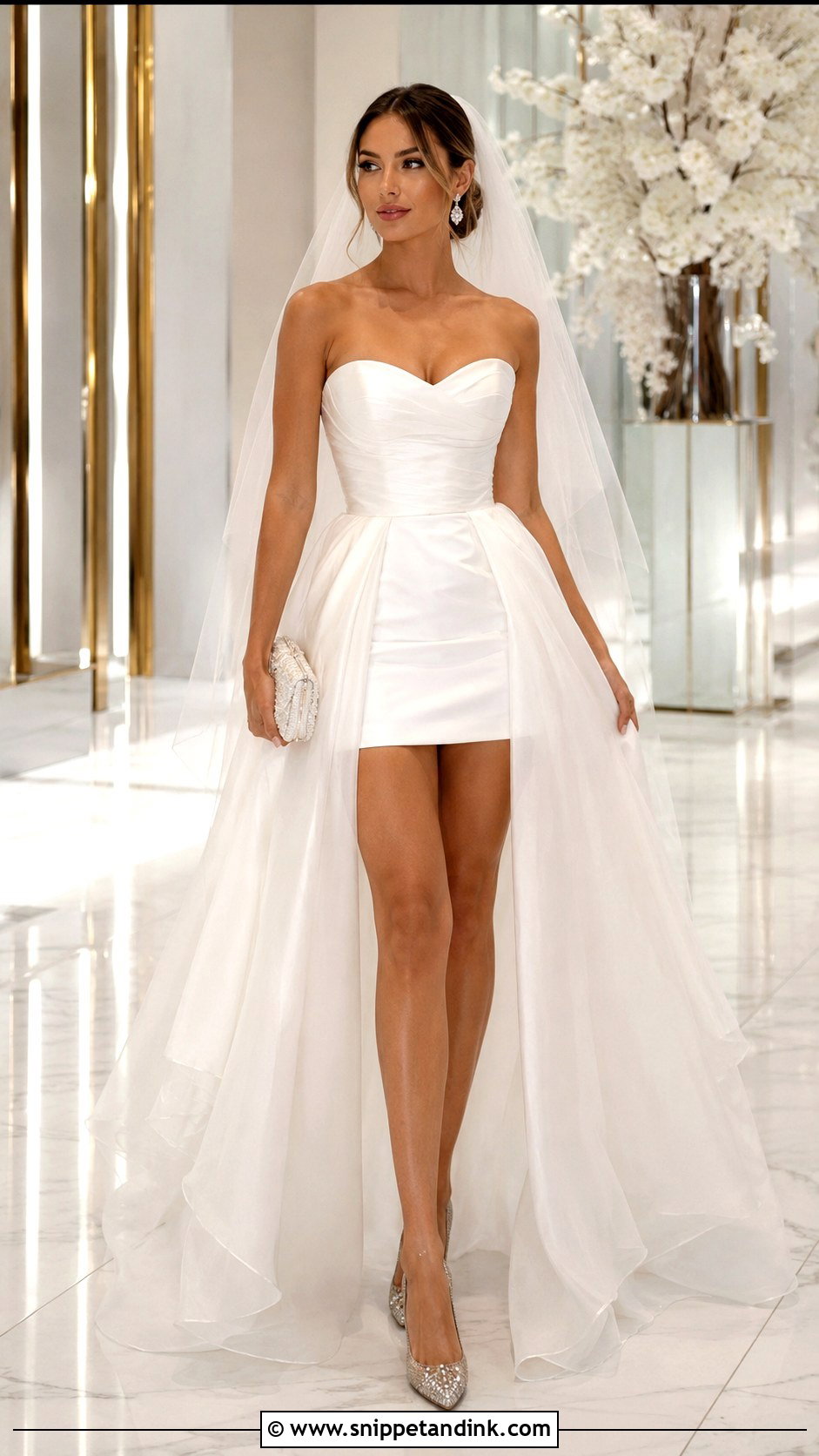
Two looks from one dress: a fitted mini under a long tulle, satin or organza overskirt. The outer layer gives you the aisle walk; take it off and you have a comfortable dress for dancing. Keep both pieces in exactly the same shade. Embellished pumps, a long veil and drop earrings for the ceremony, then switch to a comb or bow. The waistband should close securely and lie flat. Practice the change with whoever will help you, since hidden hooks are harder to find with a crowd waiting.
11. High Low Satin Wedding Gown
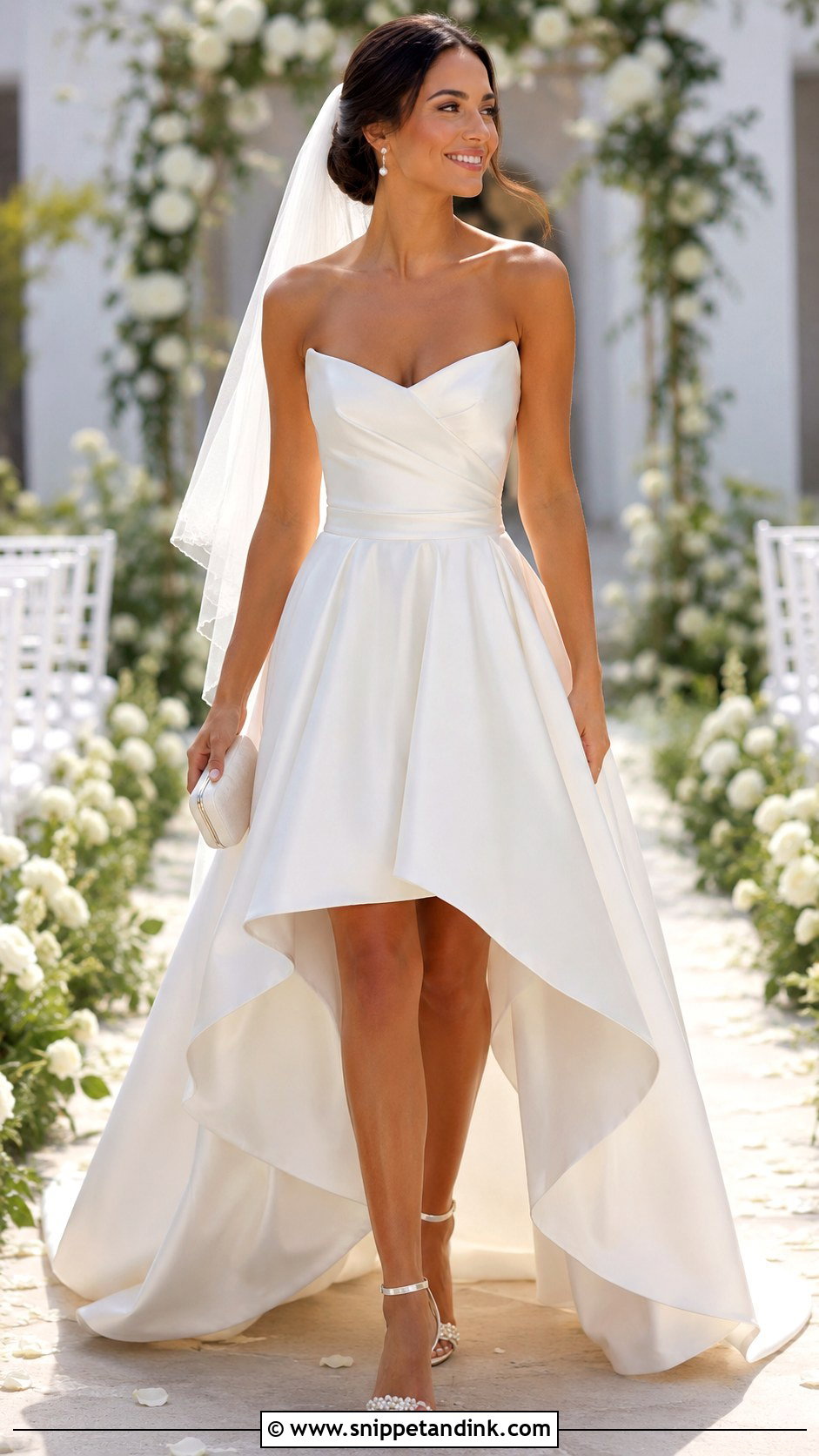
High-low satin gives you a short front and a longer back that moves when you walk. A gentle curve looks balanced; an extreme drop looks dated quickly. Structured satin holds an architectural shape; lighter satin drapes. Shoes stay visible, so polished pumps, embellished sandals or bridal ankle boots, with a simple veil, pearl drops and a small clutch. Test the back length on stairs during alterations; the longer hem is easy to step on when you go down steps.
12. Pearl Embellished Short Wedding Gown
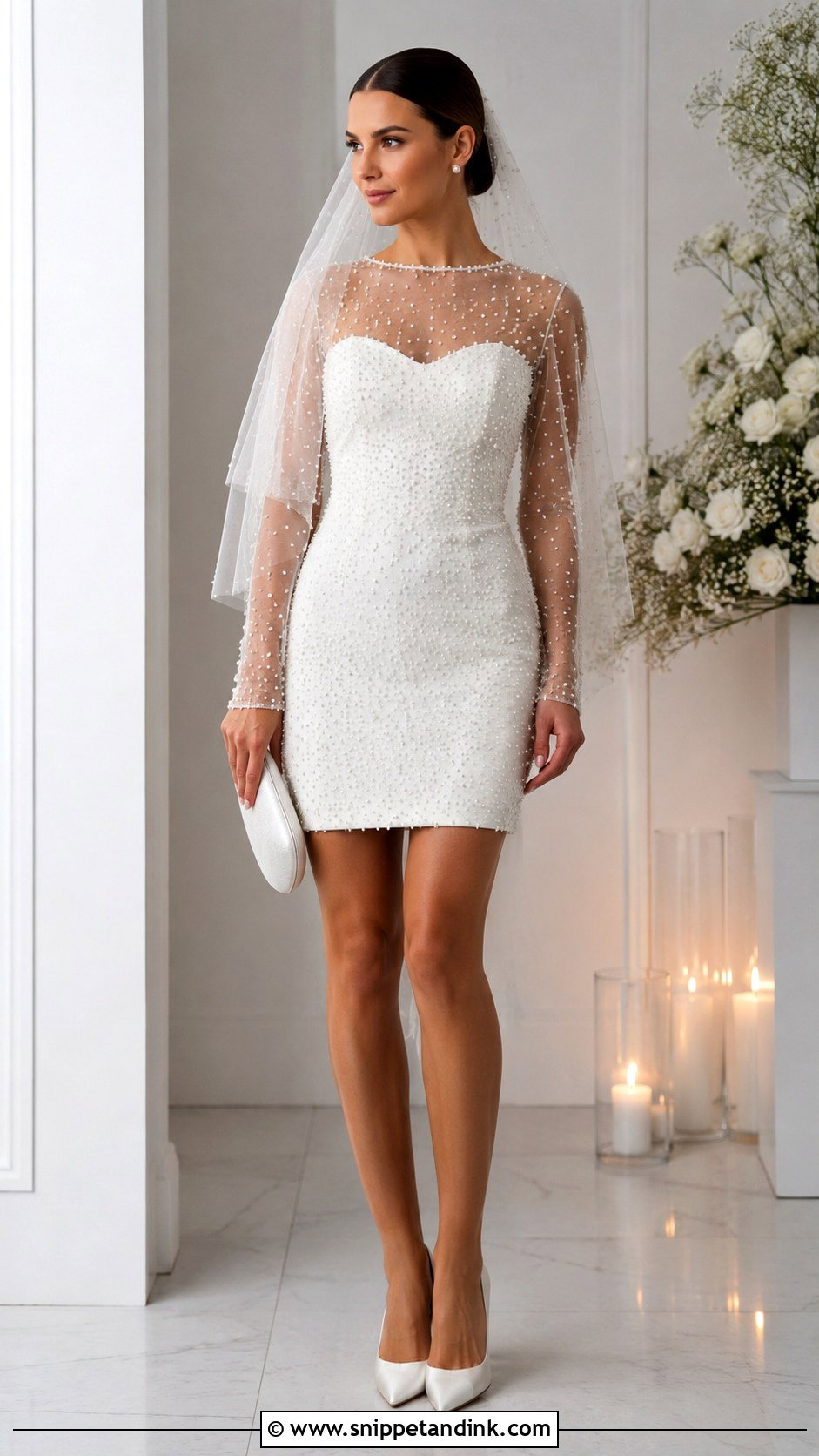
Scattered pearls add texture without the hard flash of crystals. A sheer pearl overlay softens a structured mini, while pearl trim at the neckline is more subtle. Nude or ivory lining lets the pearls show. Satin pumps, pearl studs and a smooth clutch; don’t stack several big pearl pieces on top of a pearl dress. A low bun and sheer fingertip veil. Pearls under the arm and at the waist rub skin and catch fabric, so I’d check those areas for sewn rather than glued pearls.
13. Floral Applique Short Wedding Gown
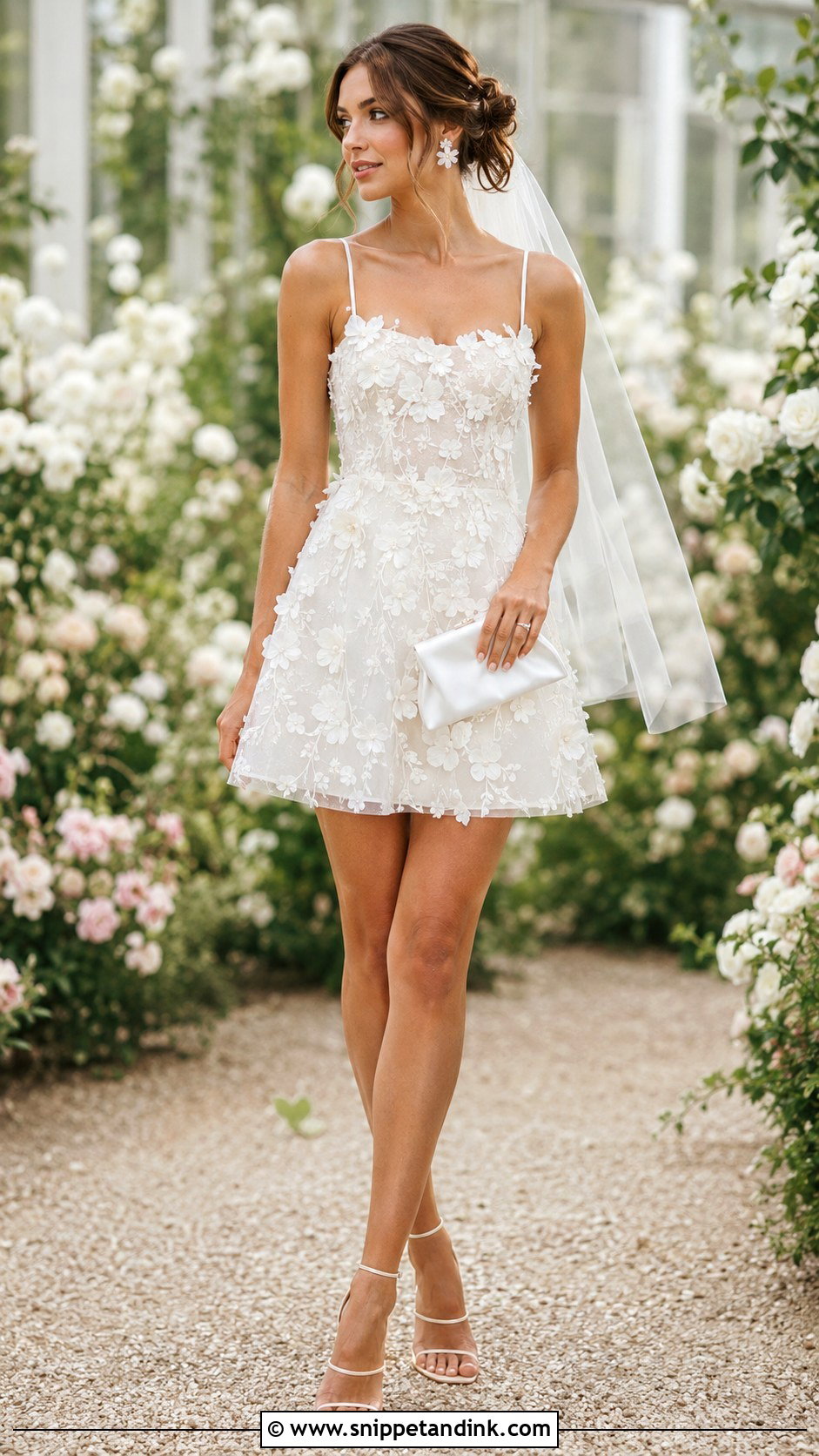
Raised appliqué flowers give a short skirt depth and softness. Keep them concentrated on the bodice or scattered evenly across tulle so the dress doesn’t look crowded. Plain ivory pumps or slim-strap sandals, small floral earrings, a satin clutch and a sheer veil with a plain edge. Soft waves or a relaxed bun. Echo the appliqué shapes in the bouquet rather than matching every flower. A short skirt brushes against hands and bags all day, so the petals near the hem need to be stitched firmly.
14. Cape Sleeve Short Wedding Gown
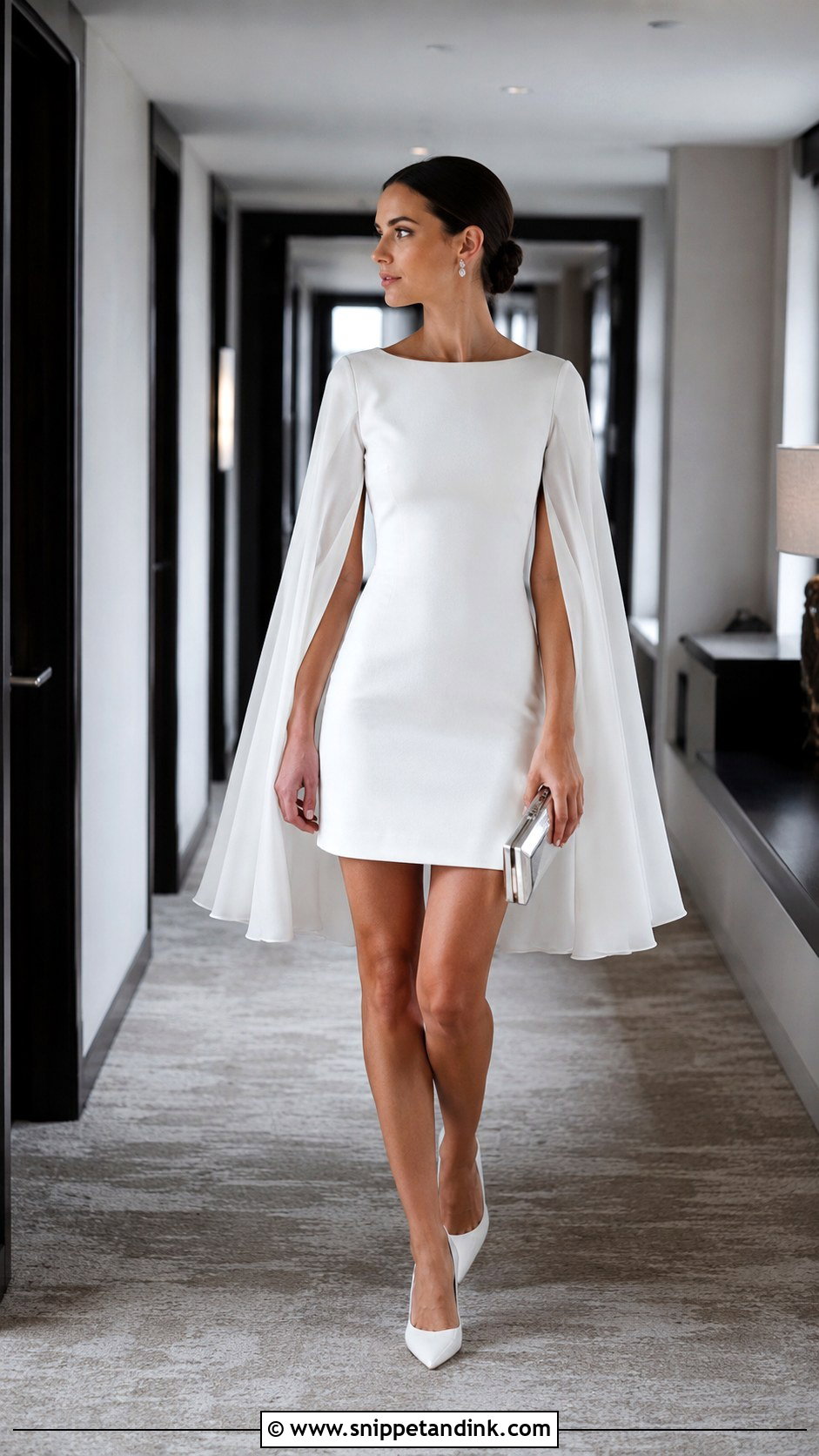
Cape sleeves add movement and coverage to a streamlined mini. The cape should attach at the shoulder or neckline and fall without hiding the waist. Light crepe or chiffon floats; satin makes a stronger shape. Pointed pumps, a metallic clutch and simple earrings that won’t snag. A low bun keeps the cape free. With a cape this dramatic you may skip the veil entirely. Capes slide backward when you hold a bouquet in front of you, so a small snap at each shoulder seam is worth adding.
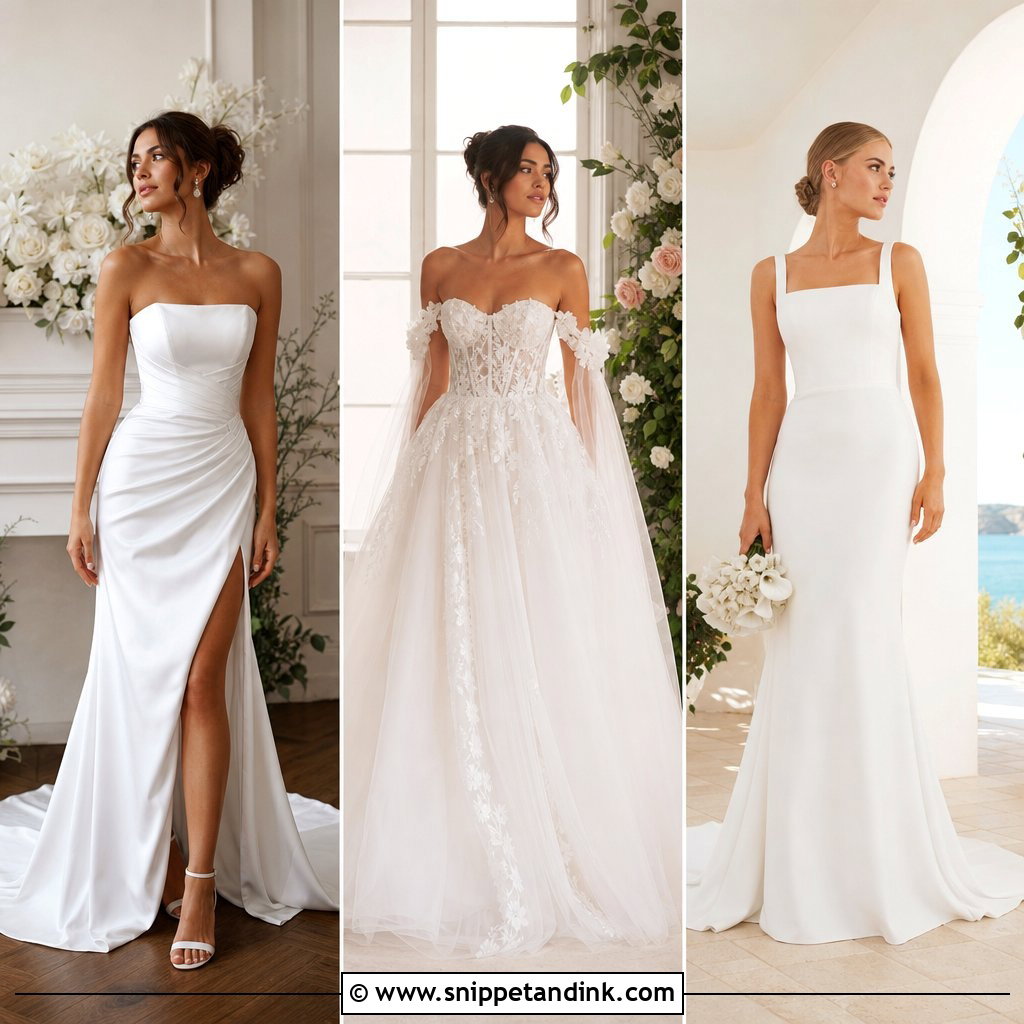

15. Bubble Hem Short Wedding Gown
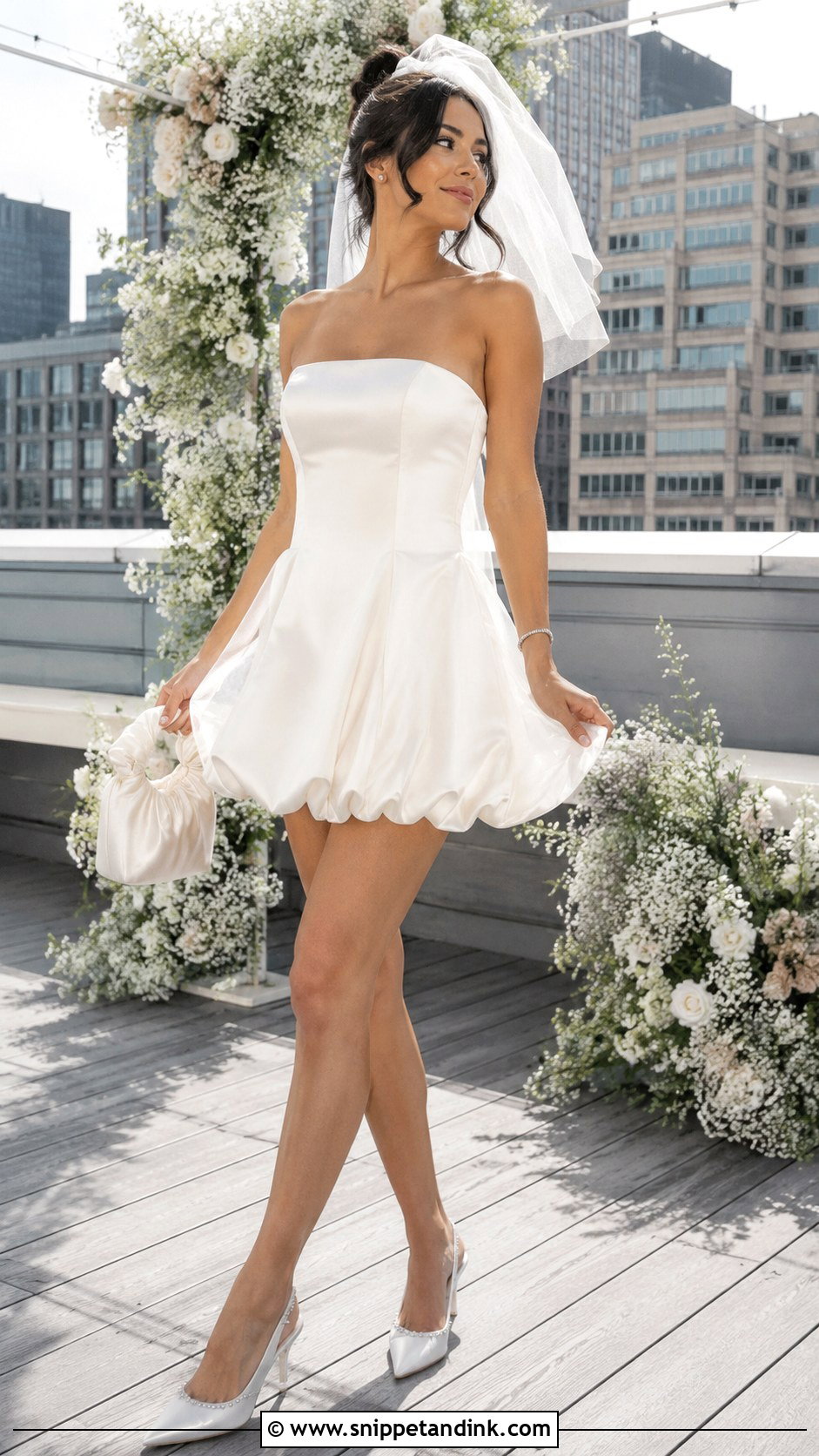
A bubble-hem mini gown gives playful volume, and it needs firm fabric to work. Satin, mikado and structured taffeta hold the rounded hem; soft fabrics collapse. A fitted or corset-style bodice balances the skirt. Slim slingbacks, crystal studs and a small satin bag, with a short veil for a young feel or a long one for contrast. Keep the bouquet small. The inner hem on a bubble skirt is gathered and can scratch the back of your knees, so sit and walk in it at the fitting.
16. Knee Length Fit And Flare Wedding Gown
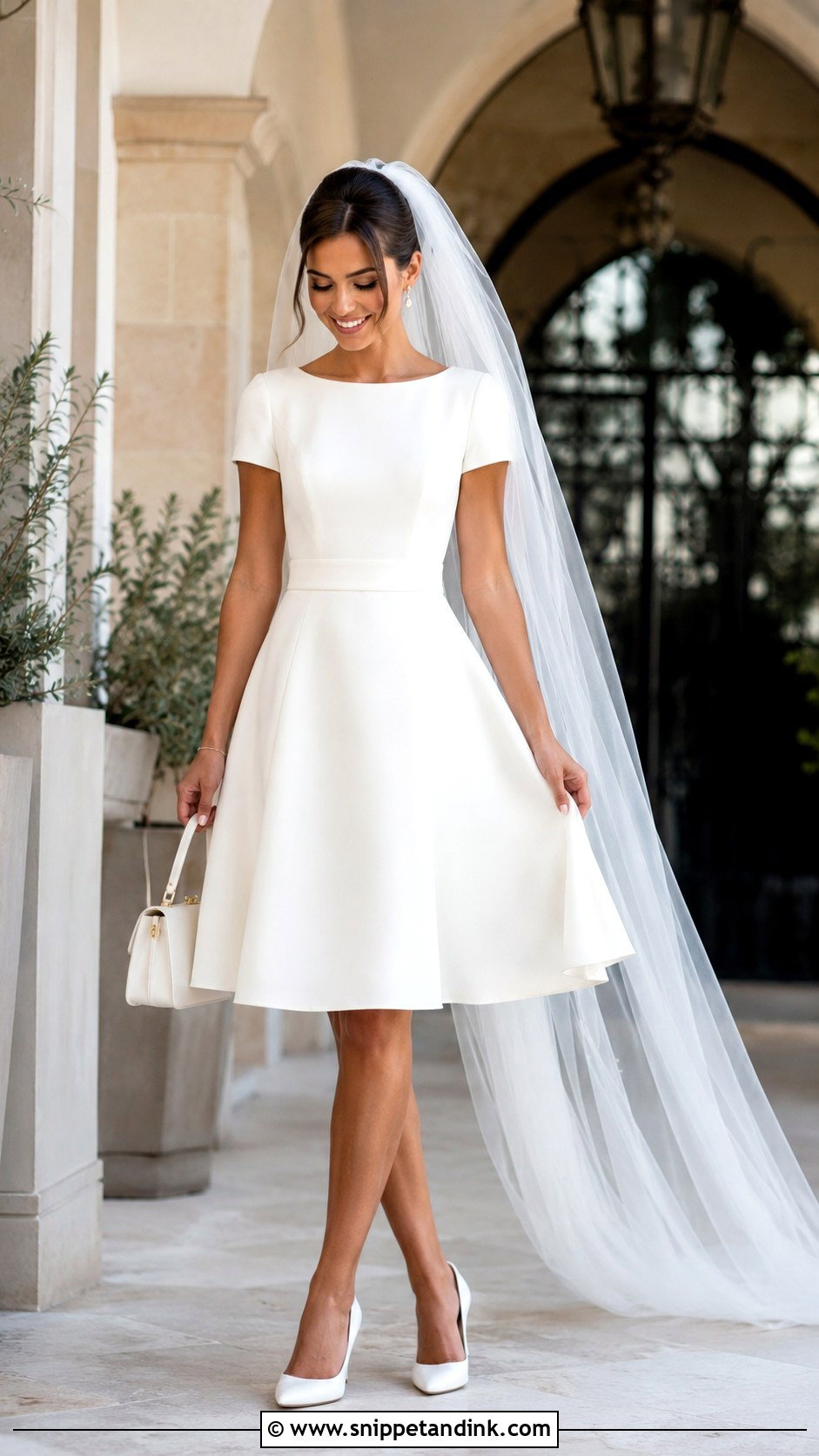
Knee length sits between a mini and tea length, and the fit-and-flare shape gives definition without restricting movement. Crepe for clean lines, lace for romance, satin for a soft sheen. Classic pumps, a structured bag and delicate drops, with a waist-length veil. Short sleeves or an illusion neckline add coverage. Where the flare begins matters: too high and it looks like a skater dress, too low and it shortens the leg. I’d pin the waist and hem together at the same fitting.
17. Corset Tulle Short Wedding Gown
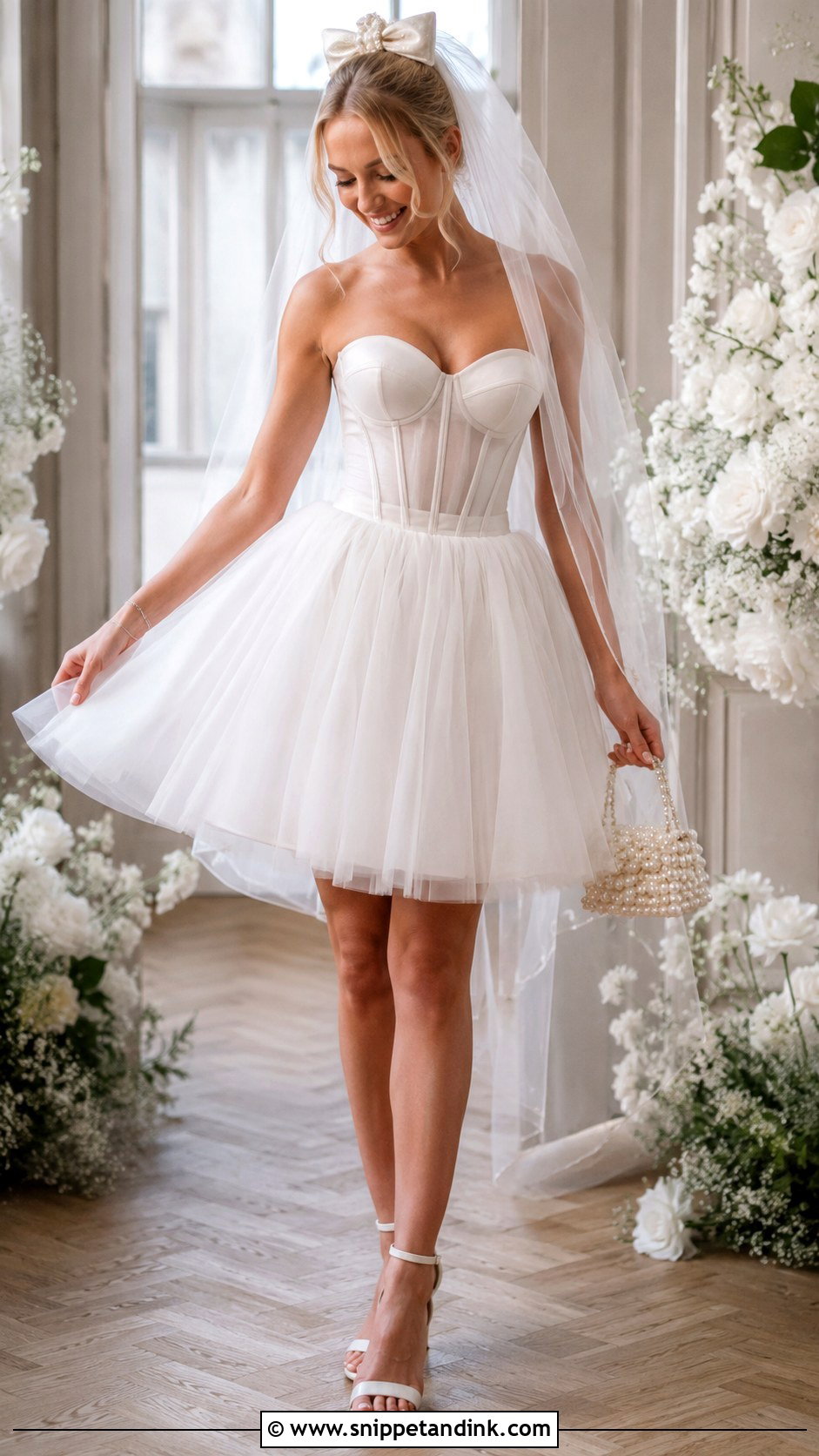
A corset bodice with a short tulle skirt keeps classic bridal elements in a lighter form. The bodice needs real support, smooth lining and well-placed seams, and several soft tulle layers add movement without too much volume. Satin ankle straps, a pearl hair bow and a small beaded bag, with a clean-edged sheer veil. Keep jewelry minimal if the corset shows boning or lace. Check the neckline while sitting and with your arms raised, because a corset can push up uncomfortably when you sit.
18. Tailored Blazer Short Wedding Gown
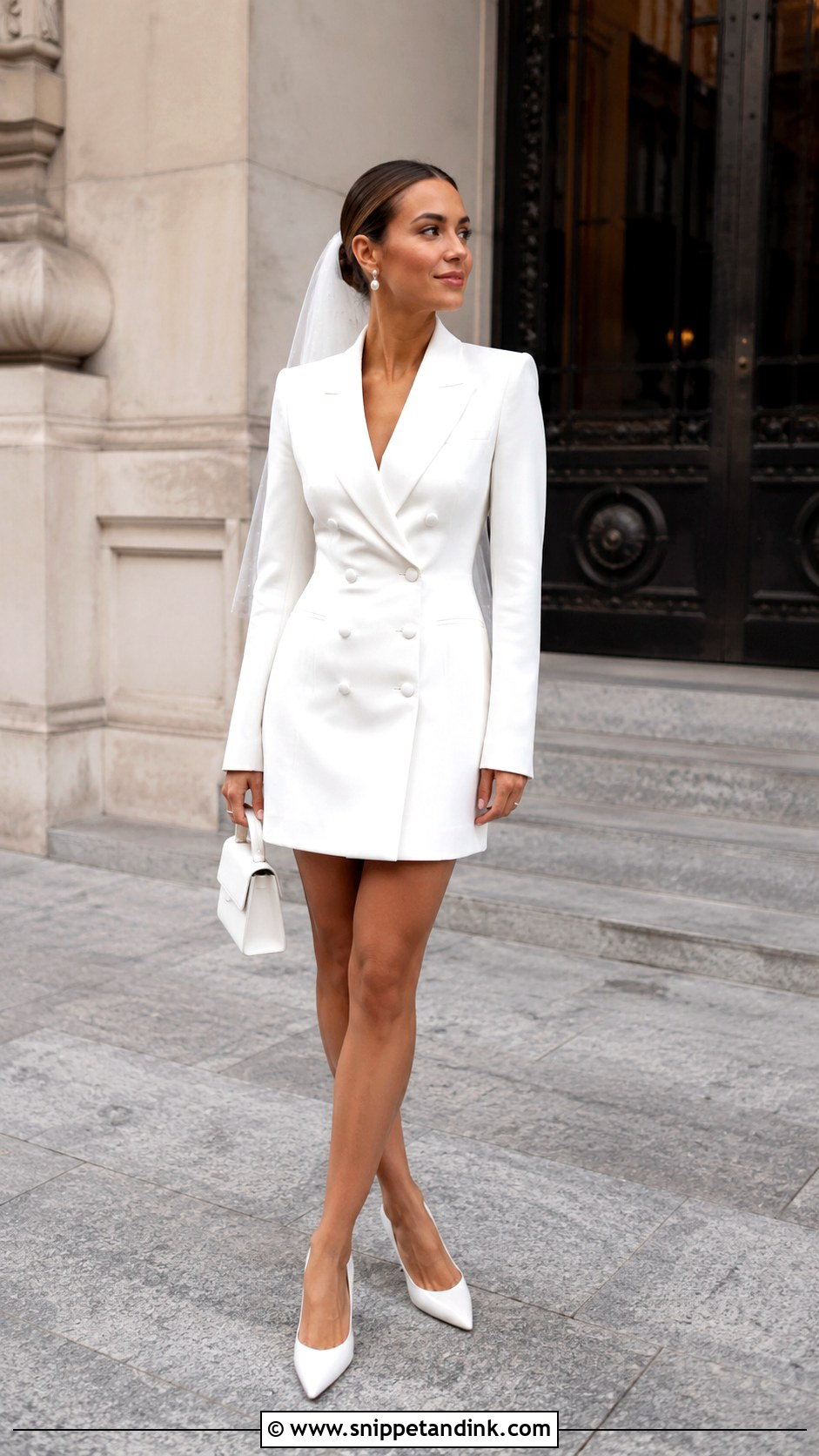
A blazer-inspired mini gown has sharp lines and practical structure. A double-breasted or wrap front with a shaped waist and enough length to sit in comfortably; crepe or suiting fabric with satin-covered buttons. Pointed pumps, a structured mini bag and modern pearl earrings, with a sleek bun and short veil to soften it. Fitted shorts or a smooth bodysuit underneath help with coverage. An oversized cut needs careful tailoring at the shoulders and waist or it looks borrowed.
19. Wrap Midi Short Wedding Gown
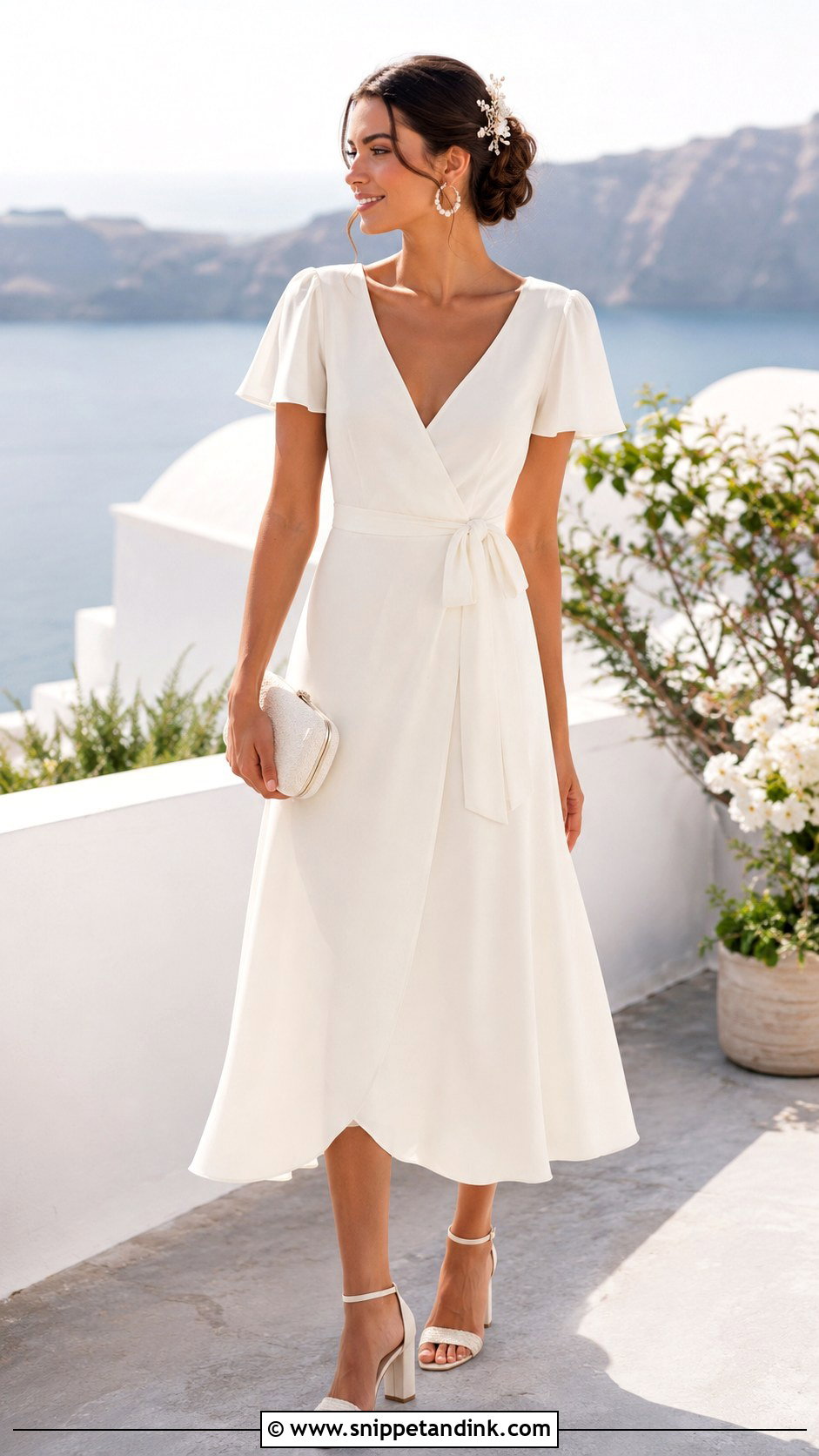
Wrap dresses adjust to your shape and give comfortable coverage. Choose a true wrap with an inner tie or a fixed wrap bodice that won’t loosen. The V-neck lengthens the upper body, and a gently flared skirt is easy to walk in. Block-heel sandals, pearl hoops, a soft ivory clutch, and a waist-length veil or floral comb. Crepe, satin or light jacquard depending on the season. Wrap skirts open in wind and when you sit, so a discreet snap at the overlap is something I’d add every time.

20. Vintage Shift Short Wedding Gown
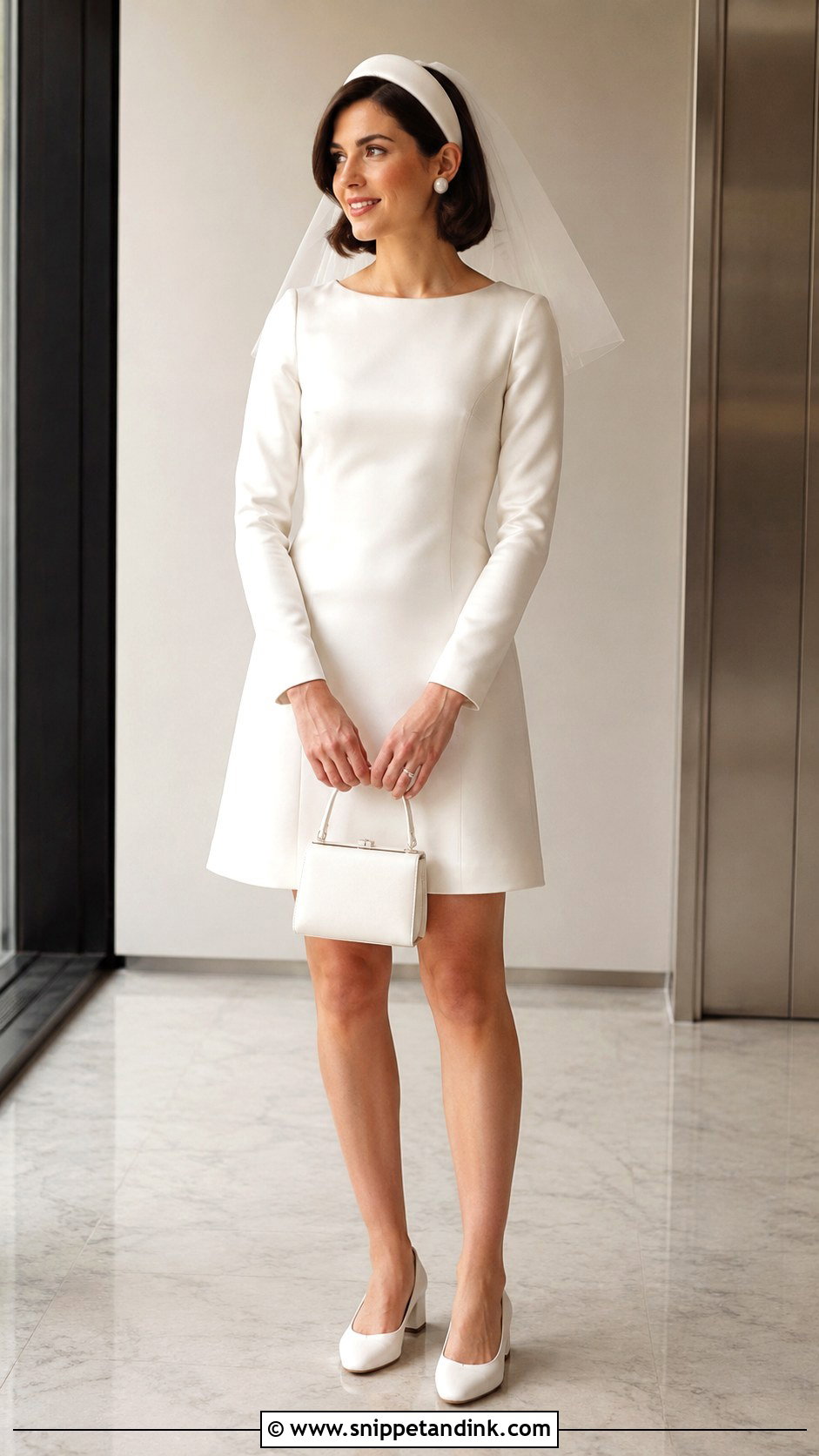
A vintage-inspired shift gown has strong 1960s character in a simple shape. Mini length, a boat neck and structured fabric that skims rather than clings. Long sleeves look mod; sleeveless is lighter for summer. Low block heels, pearl or button earrings and a small top-handle bag, with a short veil, wide headband or bow. Smooth hair: a neat bob, low bun or turned ends. Straight cuts look shapeless if the darts aren’t adjusted to your bust and back, so tailoring matters even though the dress looks simple.
Ready-to-Wear or Made-to-Order? Timing a Short Gown
Short wedding dresses are often sold ready-to-wear, which means you can buy one in your size and walk out with it. That’s a real advantage if your wedding is only a few months away. Made-to-order bridal gowns usually take several months to arrive, and alterations need more time after that, so check the delivery estimate before you order, since timings vary a lot between designers.
Whichever route you take, I’d plan alterations like this:
- First fitting about two months before the wedding, with your shoes and the underwear you’ll wear.
- Second fitting for the hem and any bodice changes, three to four weeks later.
- Final fitting about two weeks out, when you check sitting, dancing and lifting your arms.
A short hem leaves less room for error than a long one. Half an inch either way is visible above the knee, and a hem that looked right standing can ride up when you sit. Mark it in the fitting room chair as well as standing, and pick up the dress early enough to steam it at home before the day.
A Short Hem Still Needs Every Fitting
A short hem can feel romantic, sophisticated and fully right for a meaningful celebration. Let your venue, season and comfort guide the choice. Consider the full outfit, including shoes, jewelry, outer layers, hair accessories and veil length, because all of it shows. Structured satin feels modern; lace, tulle, pearls and appliqué feel softer. Walk, sit and dance in the gown before final alterations. Mini, knee length or tea length, careful styling is what makes it look complete.
You'll Like These Ideas:






Leave a Reply