
Dressing a smaller frame is mostly about where things land on the body: the waist seam, the start of the flare, the depth of a neckline, the hem. Bridal shops tend to call 5’4″ and under petite, though height is only part of it; a 5’6″ bride with a short torso has many of the same fitting questions. The gowns below favour vertical lines, scaled detail and skirts that move without swallowing you. I’ve added the alteration or fitting check that decides each one, since on a petite bride the tailoring matters as much as the silhouette chosen in the shop.
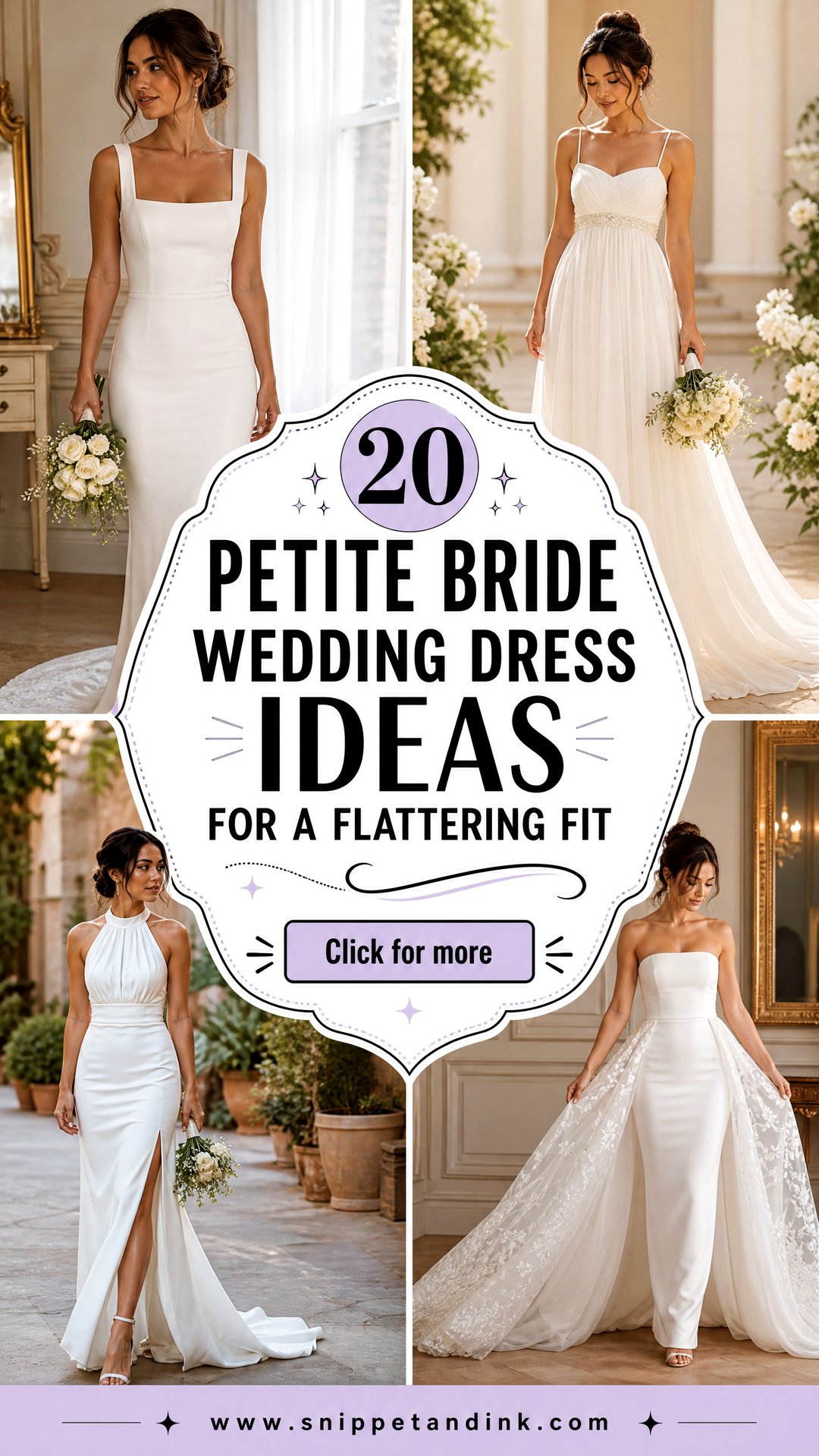
Shop Samples Are Cut for Someone Taller, So Pin Before You Judge
Sample gowns in bridal shops are generally made long, to suit a tall wearer in heels. On a petite bride they pool on the floor, the waist sits low and the flare starts in the wrong place, and many well-made dresses get rejected for problems a seamstress would fix. When I work with a smaller bride in a shop, I ask the consultant to clip the back and pin the hem up roughly, and I have her stand in heels close to the height she plans to wear.
Look past the length and judge three things: whether the neckline depth suits you, whether the waist seam can come up to your natural waist, and whether the skirt shape still works once it’s shorter. If all three are fine, the rest is alteration.
Ask about made-to-measure length
Many designers can make a gown to your hollow-to-hem measurement, taken from the dip at the base of the throat to the floor in your shoes. There’s often a charge for it, and it varies by designer, but it can save a lot of hemming through layers and lace. Ask at the order stage, because it can’t be added once the gown is in production.
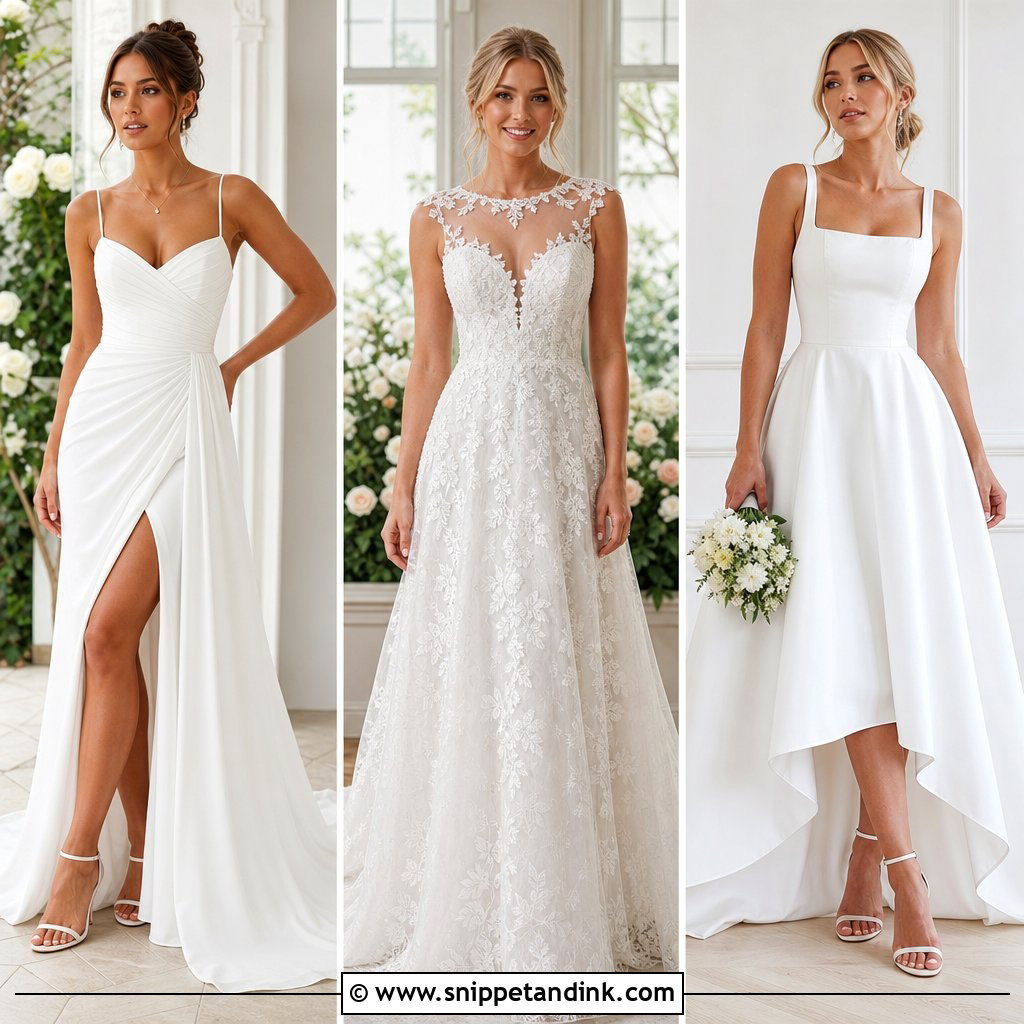
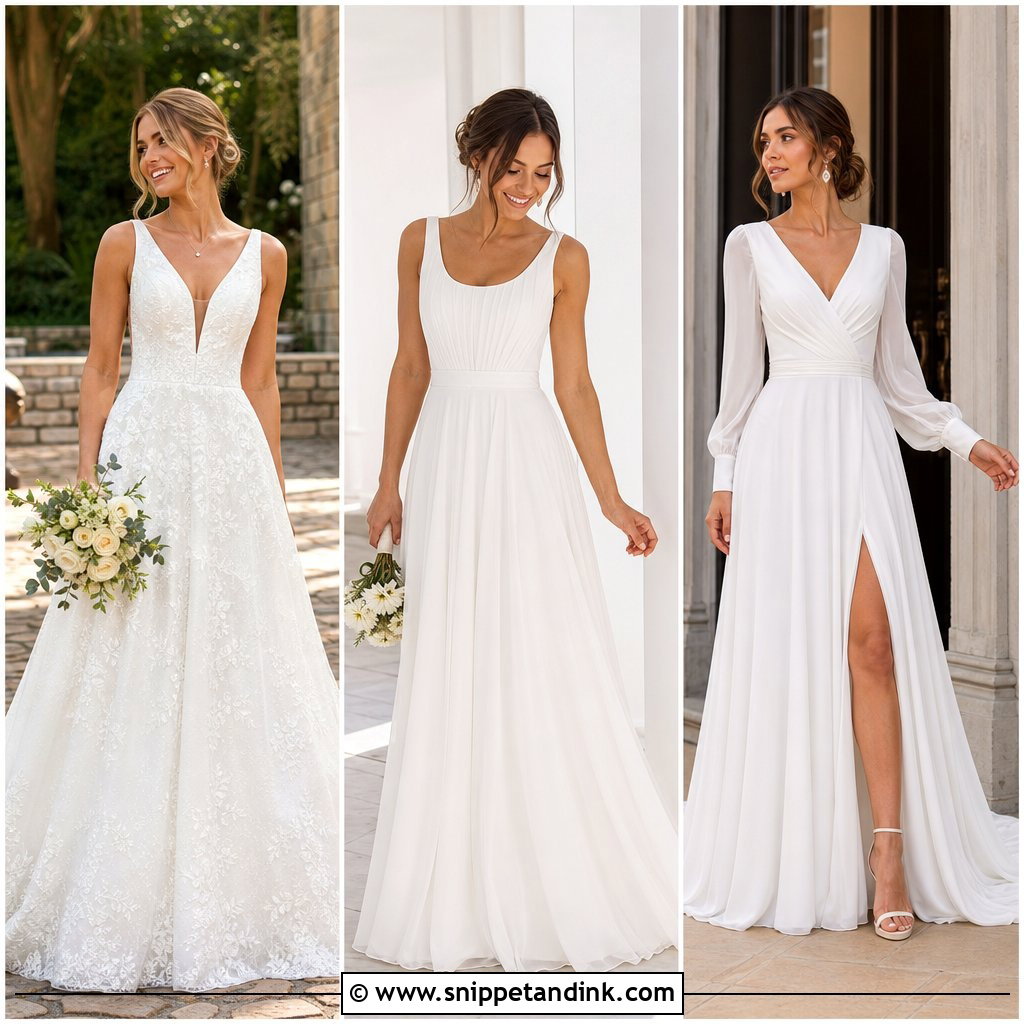
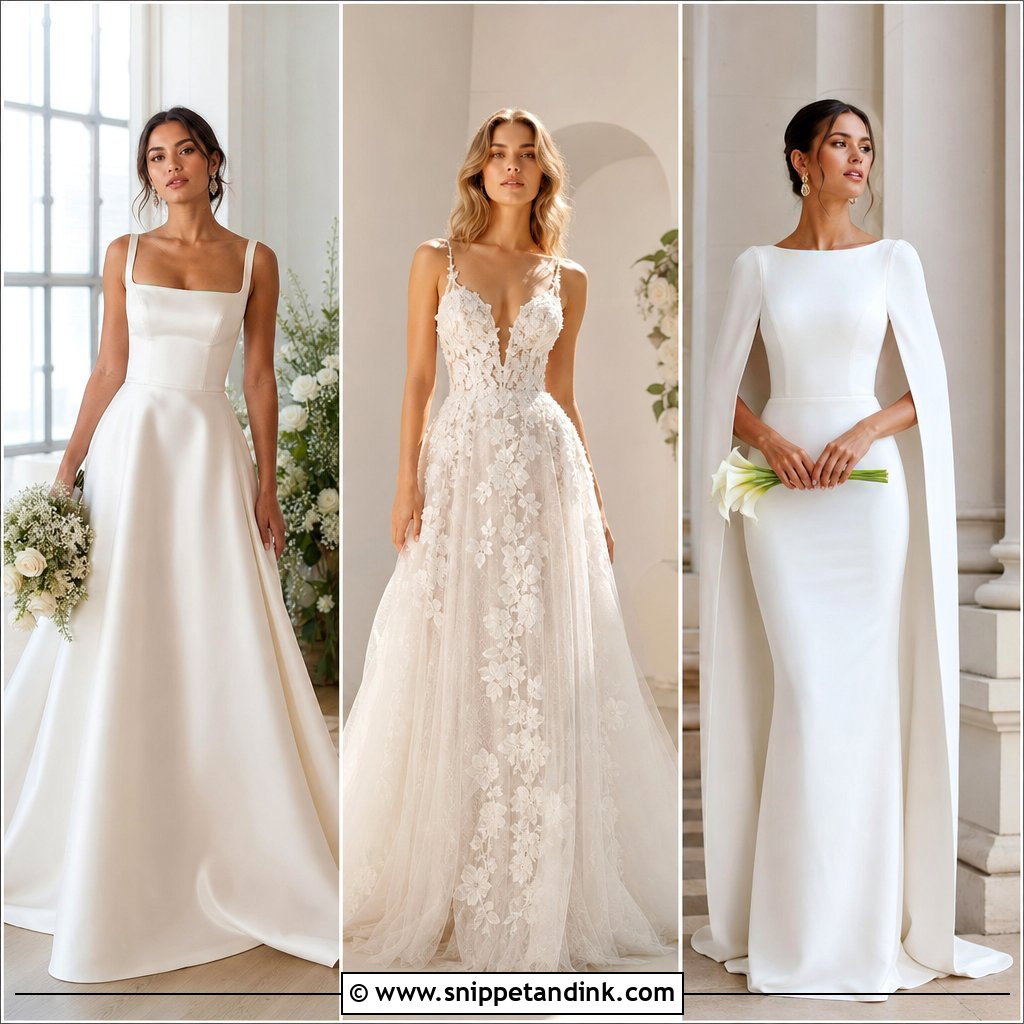
1. A-Line V-Neck Wedding Dress
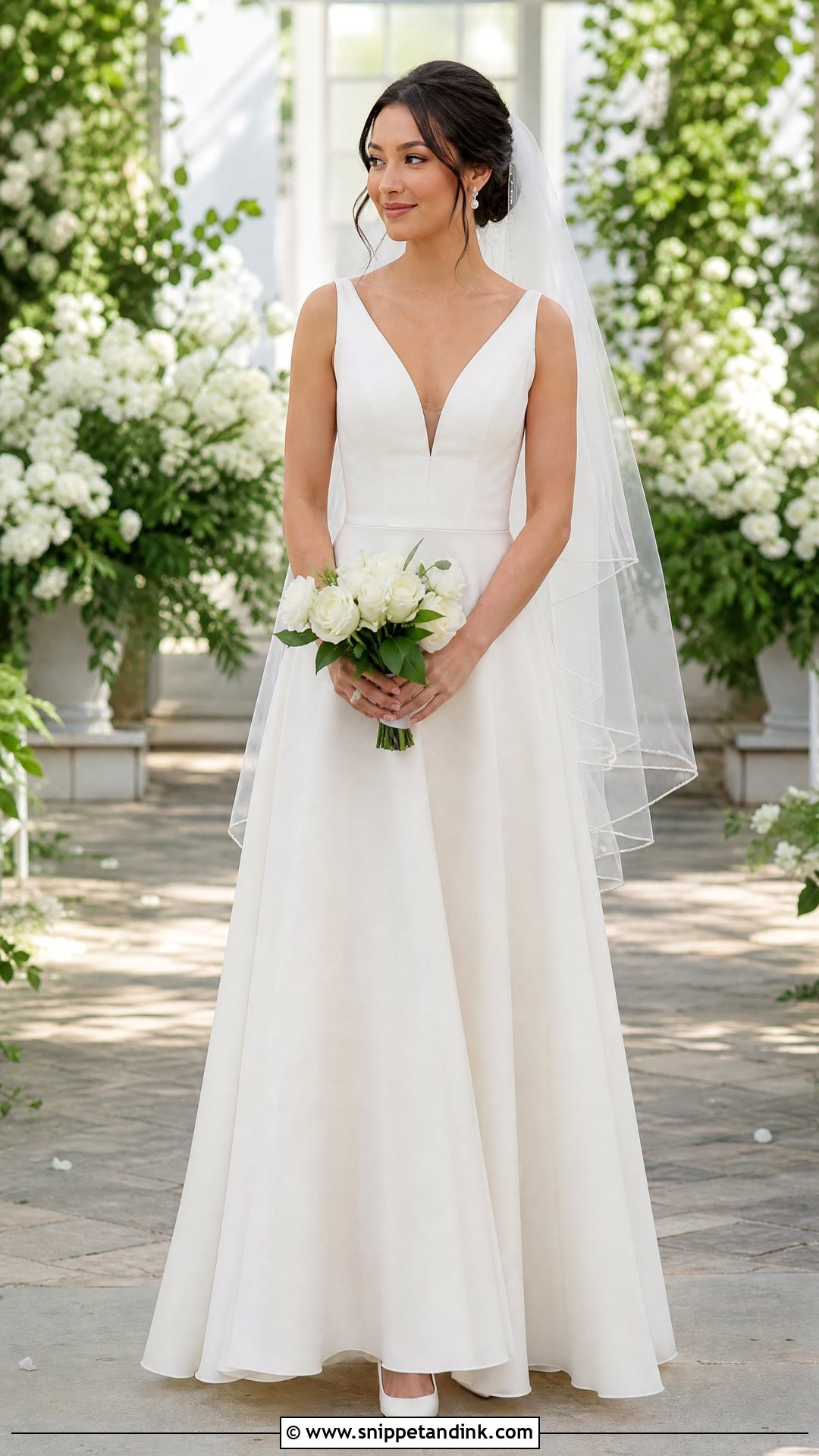
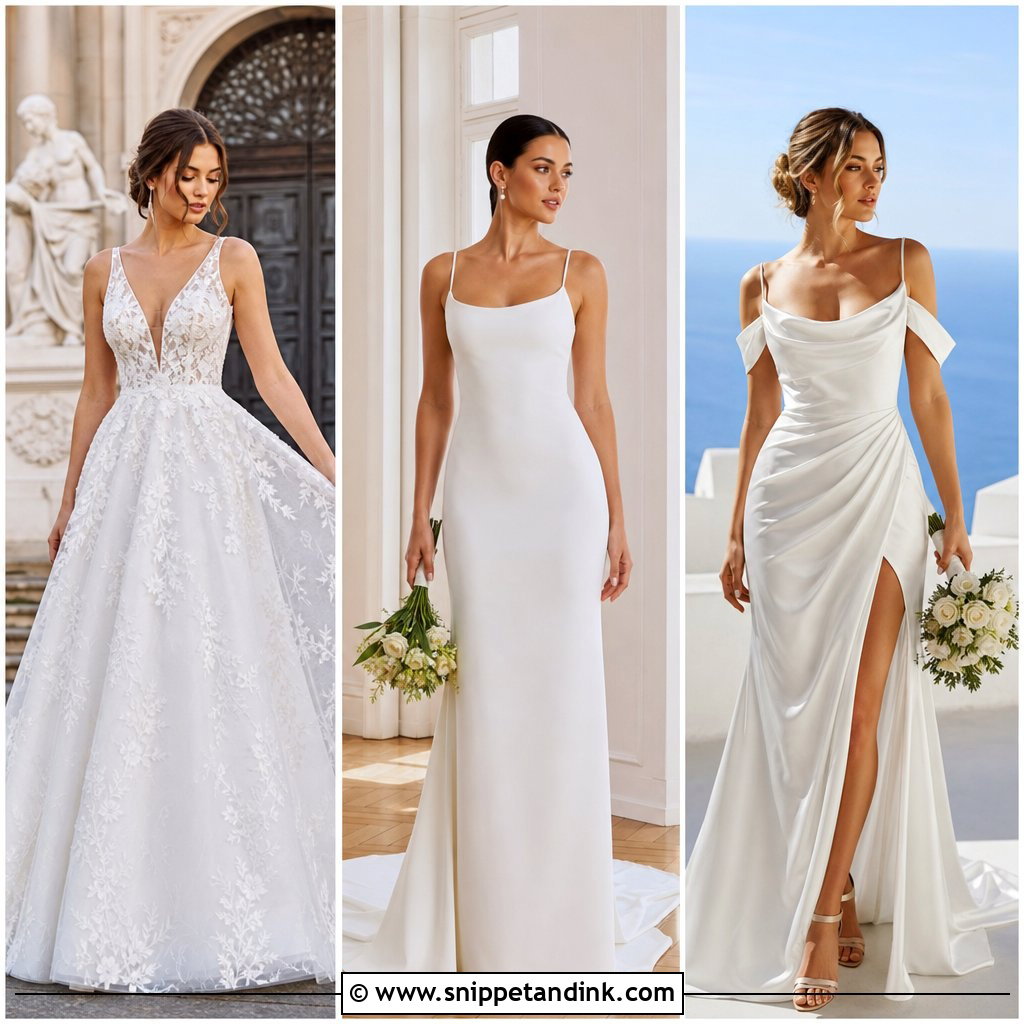
The V-neck A-line is where I’d start most petite brides, simply because so little can go wrong. The V draws the eye down the centre and the skirt widens slowly from the waist instead of jumping out. Look for princess seams and a natural or slightly raised waist. Crepe, chiffon or light satin keep the skirt fluid. If there’s lace, the motifs should be small; large flowers on a small frame look like a print on a cushion. Pointed pumps, a fingertip veil and fine drop earrings suit it. Have the waist checked before the hem, because moving one changes the other.
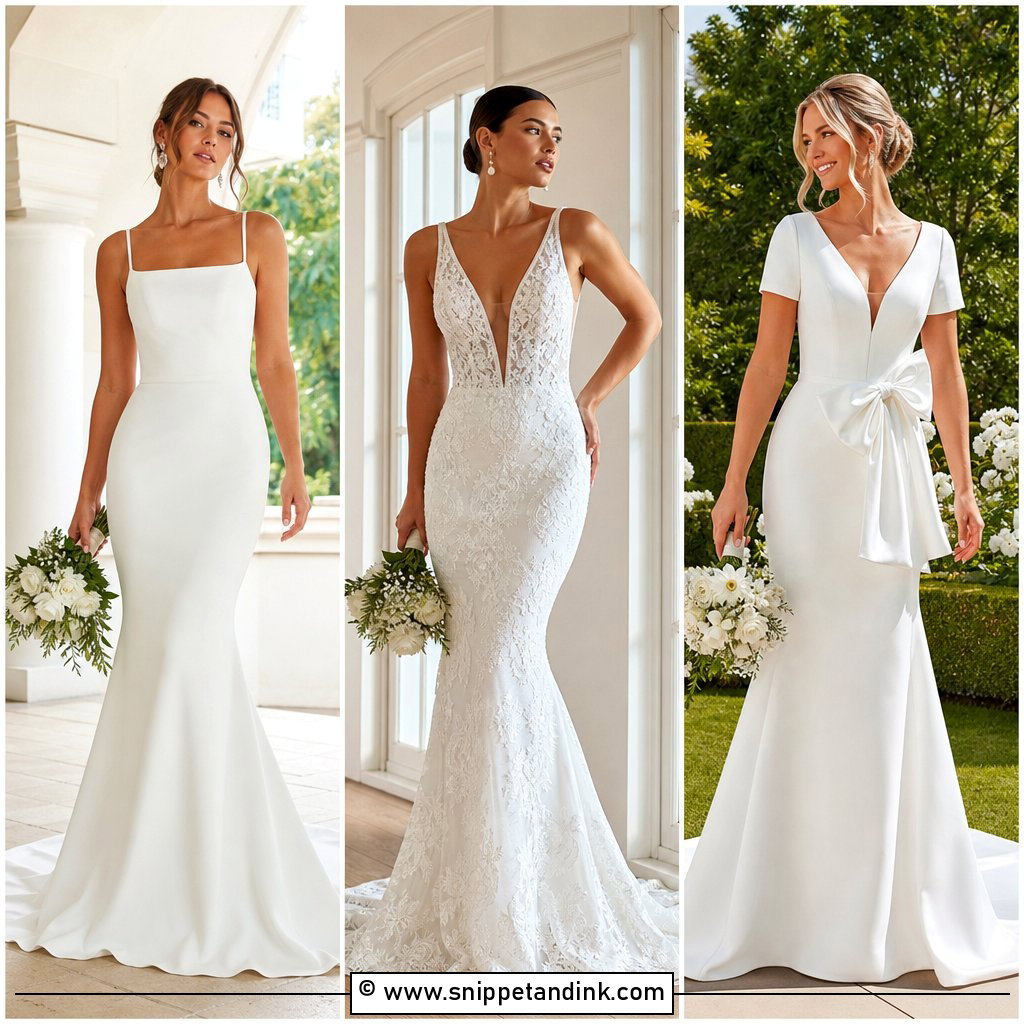
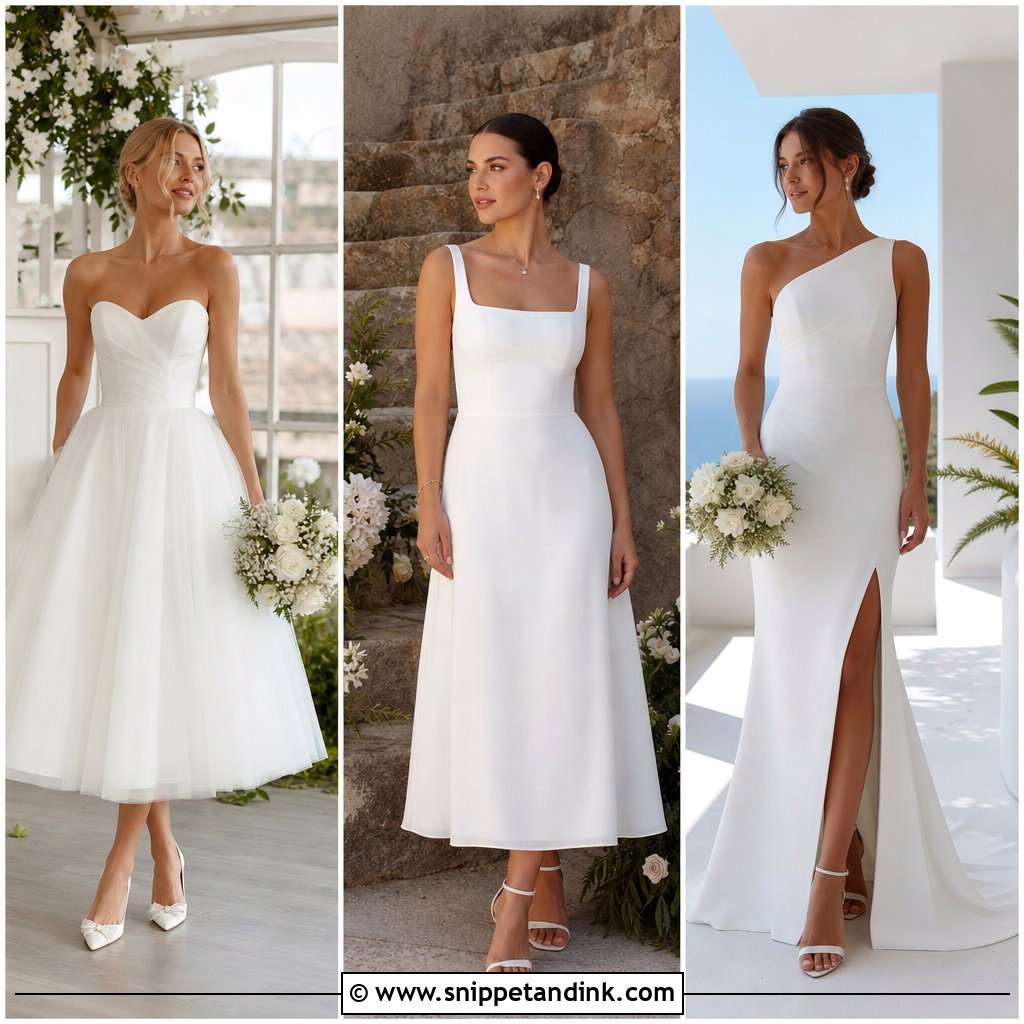
2. Sheath Square-Neck Wedding Dress
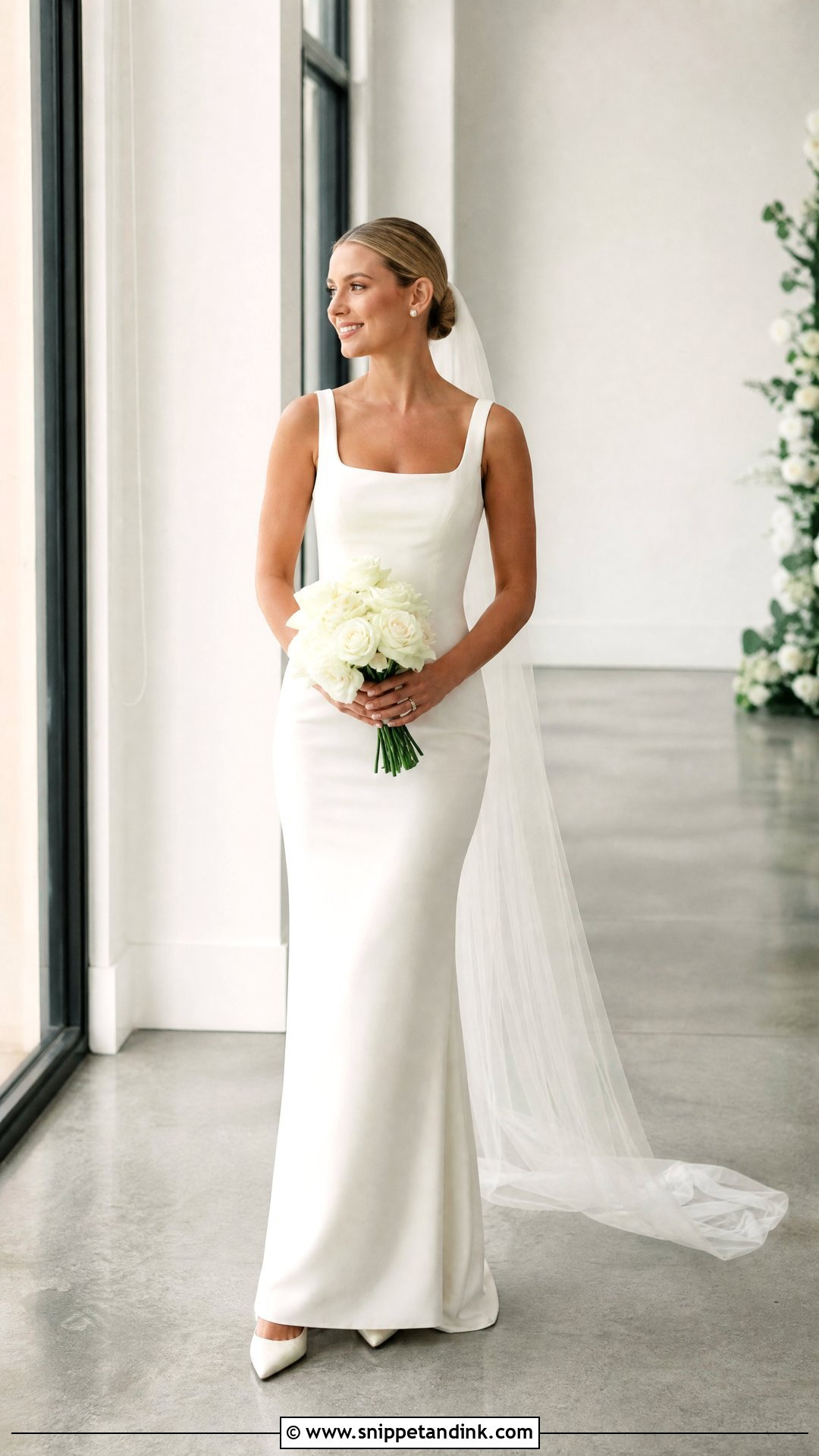
A square-neck sheath gives one long unbroken line, and the straps decide whether it works. On most petite brides, a sheath’s straps need shortening so the neckline, bust darts and waist rise to where your body actually is; skip that and the whole dress sits low. Simple straps or fitted cap sleeves both suit the square neck. Crepe gives soft structure, satin a dressier finish. The skirt should skim the hips without pulling, and a back slit or stretch lining lets you walk. Pointed pumps, a low bun, pearl studs and a narrow chapel veil complete it.
3. Empire Waist Chiffon Wedding Dress
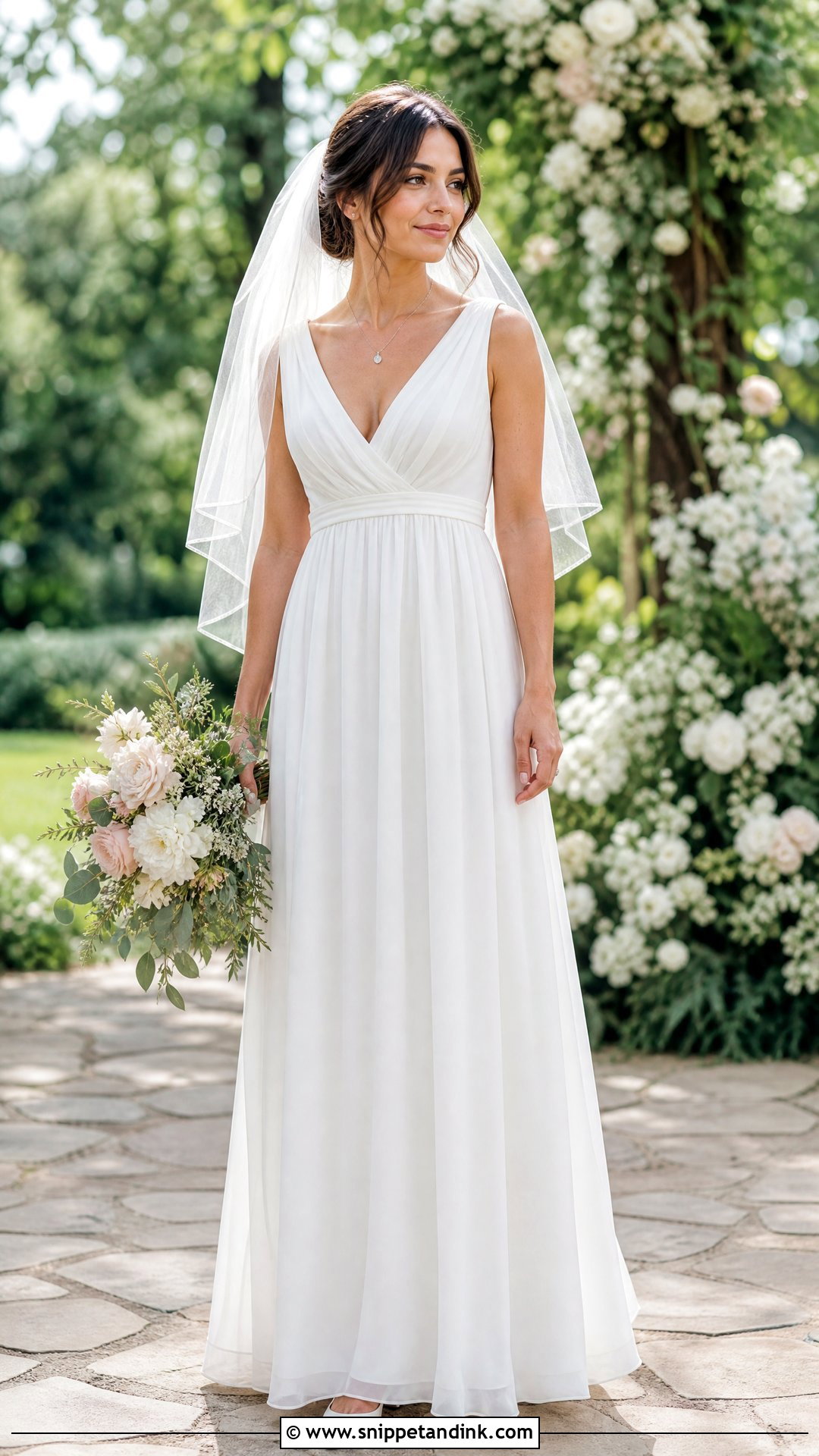
Empire waists lengthen the leg line because the skirt starts under the bust, but they can lose your shape entirely if the bodice is loose. I’d go for a fitted V or a softly draped bodice and a narrow waistband rather than a wide sash, which reads as a horizontal stripe. Chiffon moves well outdoors and suits gardens and beaches. Keep the gathers few and the train short. Low pointed heels, a fine pendant and a shoulder-length veil keep everything in scale.
4. Fit-and-Flare Sweetheart Wedding Dress
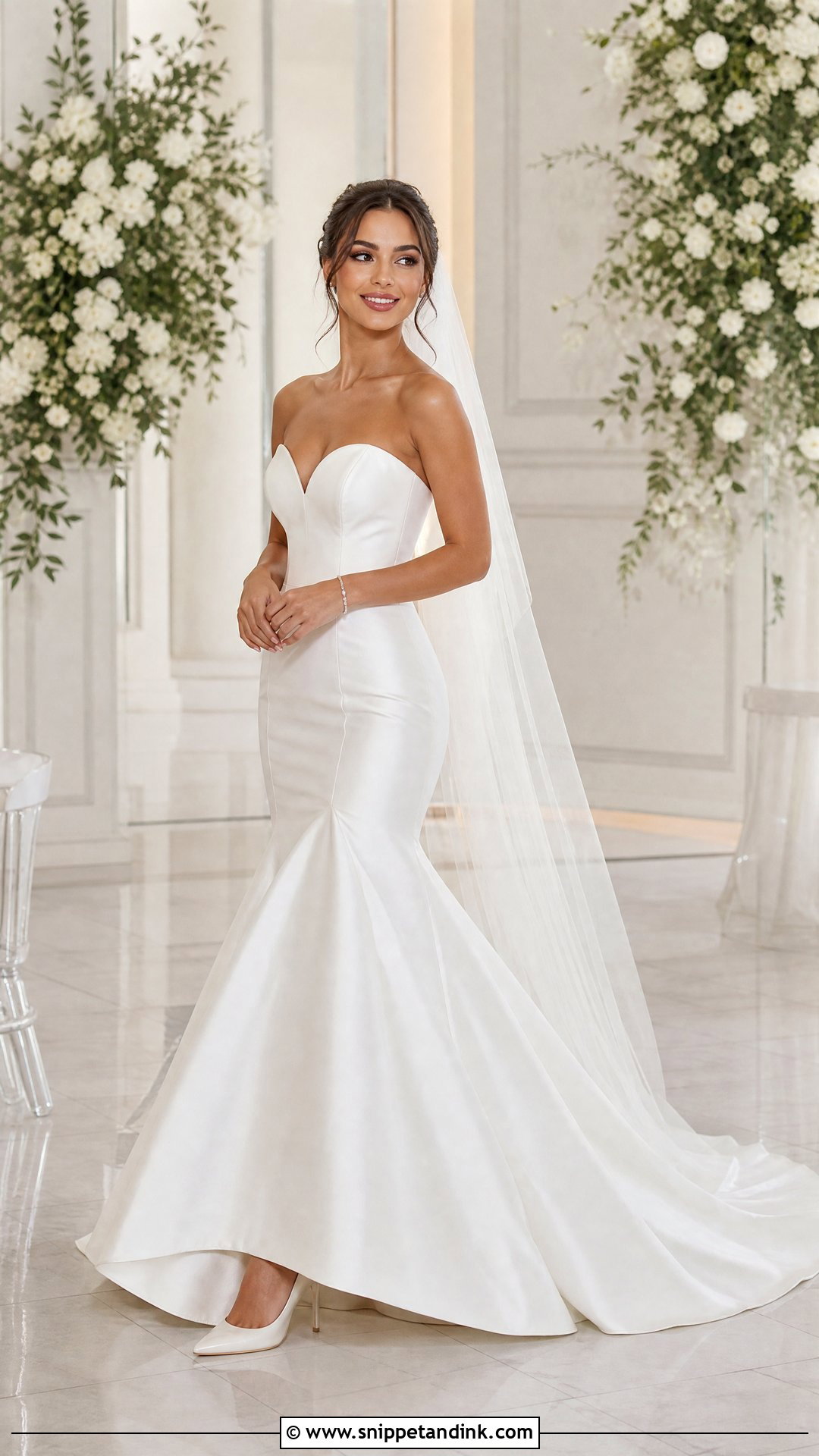
The flare point is the whole fitting conversation with a fit-and-flare. On a petite bride, I want the skirt to release near the upper thigh; if it starts close to the knee, the legs look cut short and walking gets awkward. A sweetheart neckline with real internal support, or removable straps, pairs well. Smooth satin is modern, fine lace softer. Medium pointed pumps, a tennis bracelet and a veil a little longer than the train. Walk and sit at every fitting so you know the fitted section still lets you move.
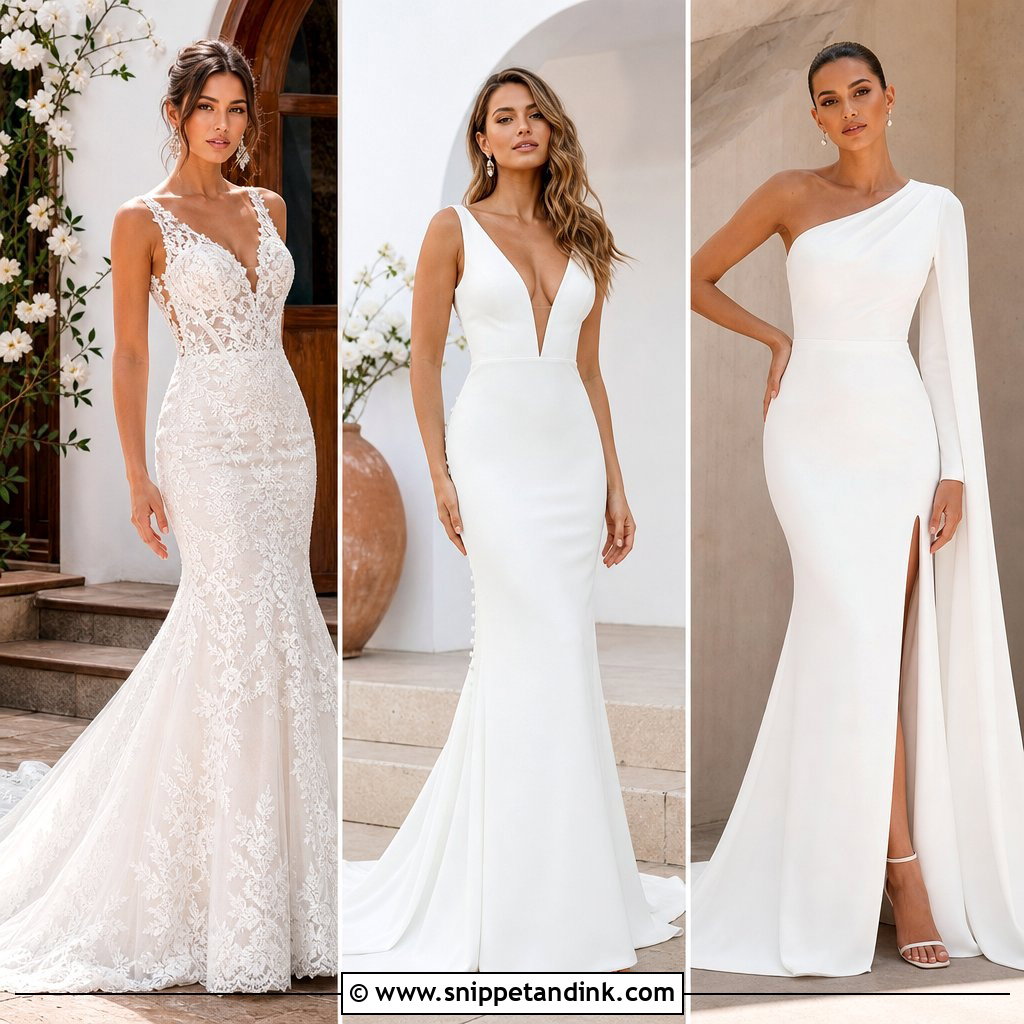
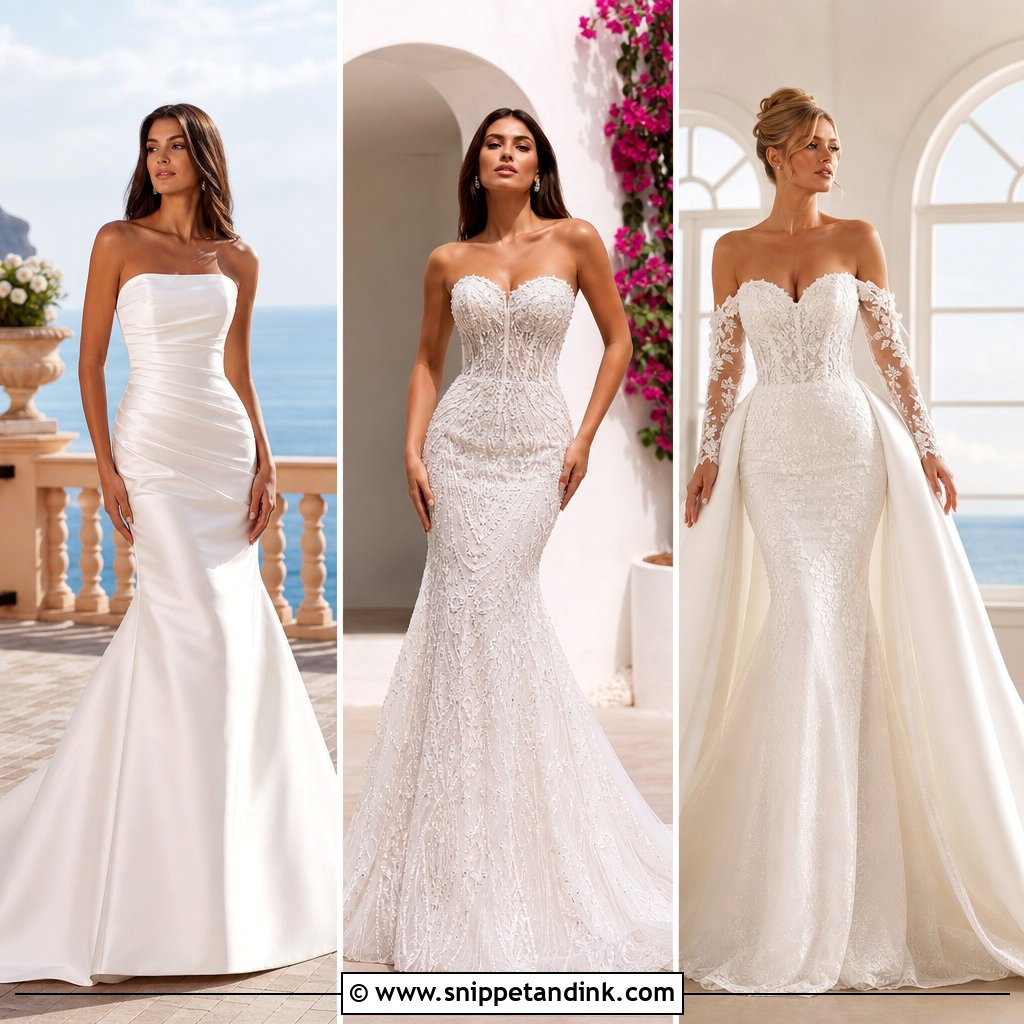
5. Mermaid Off-the-Shoulder Wedding Dress
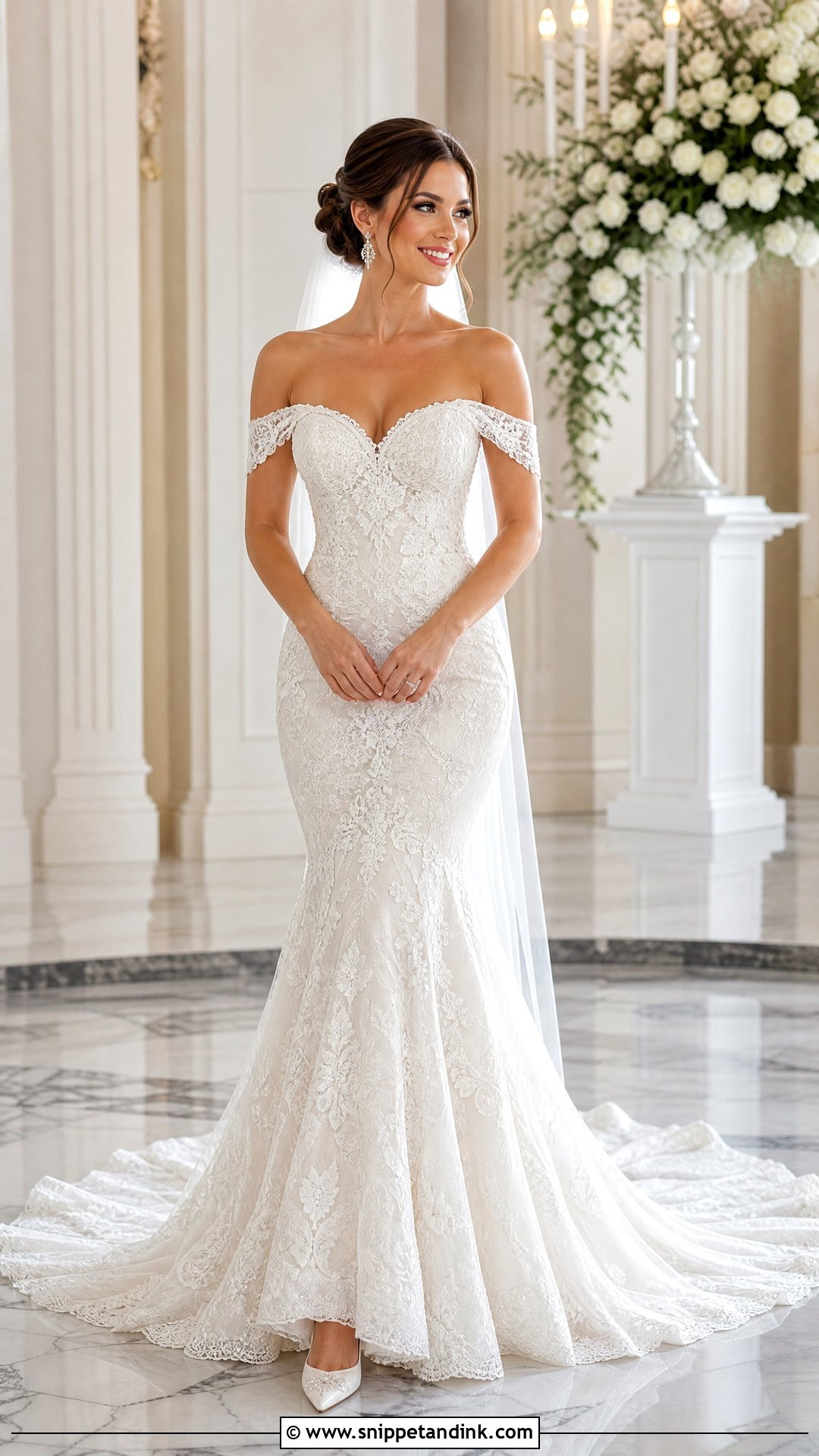
Mermaid gowns can work on a small frame, but rarely straight off the rack. When the flare sits low on a taller sample, shortening the hem just cuts away the flare and leaves a tube. A good seamstress reshapes the flare higher, sometimes from the knee seam, so the fishtail starts above the knee. A raised waist helps too. Off-the-shoulder necklines pull focus up to the collarbones. Choose flexible crepe or light lace over stiff layers, and keep the train narrow. Pointed heels and a narrow veil under a polished updo.
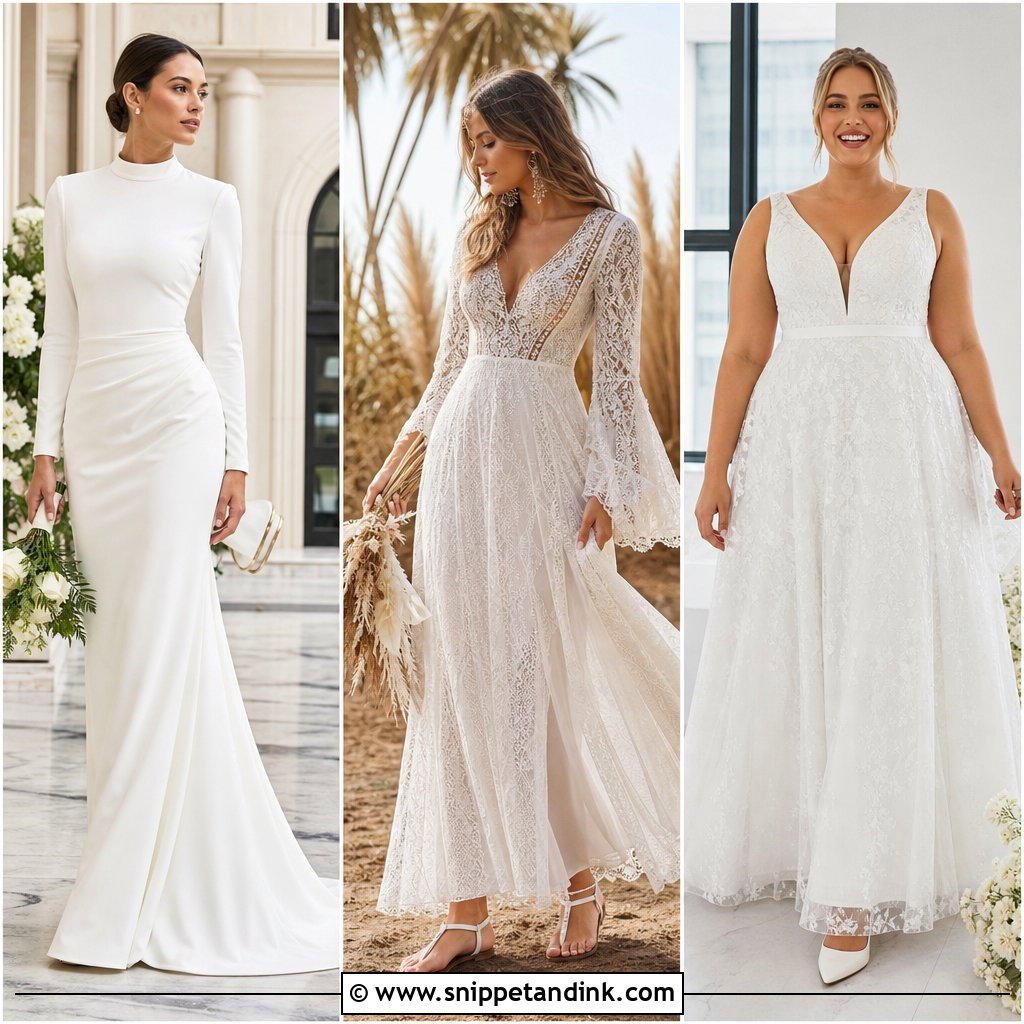
6. Column High-Neck Wedding Dress
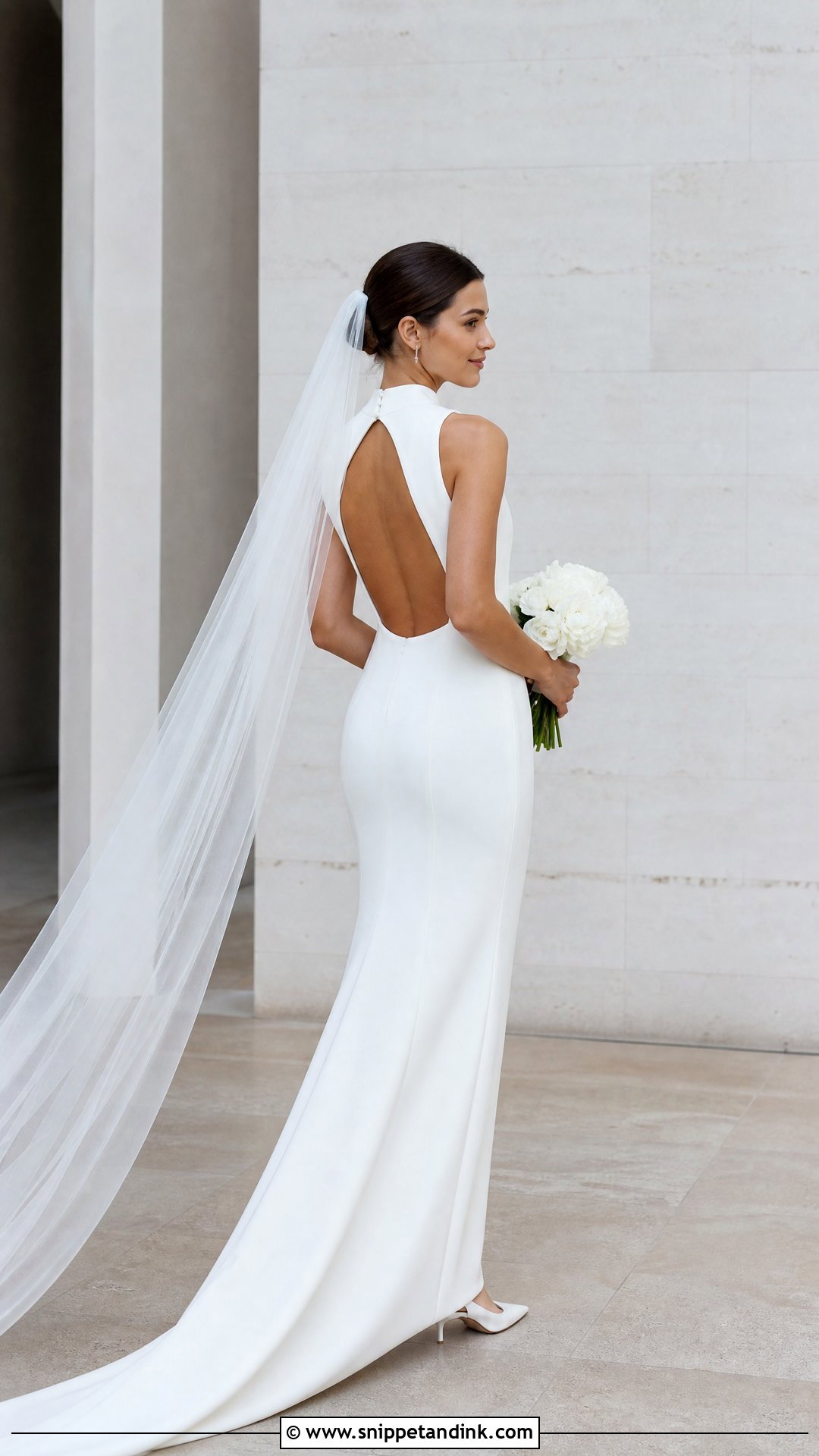
High-neck columns are a lengthening shape that shows every fitting flaw, and that’s the trade-off. Vertical seaming, an open back or sheer shoulder panels keep the bodice from looking heavy on a short torso. Matte crepe drapes; silk satin catches light. A small train at most, or the line breaks. Slim drop earrings, pointed slingbacks, a neat bun and a veil set low at the back. Budget for adjustments at the shoulders, waist, hips and hem, because a column can’t hide any of them.
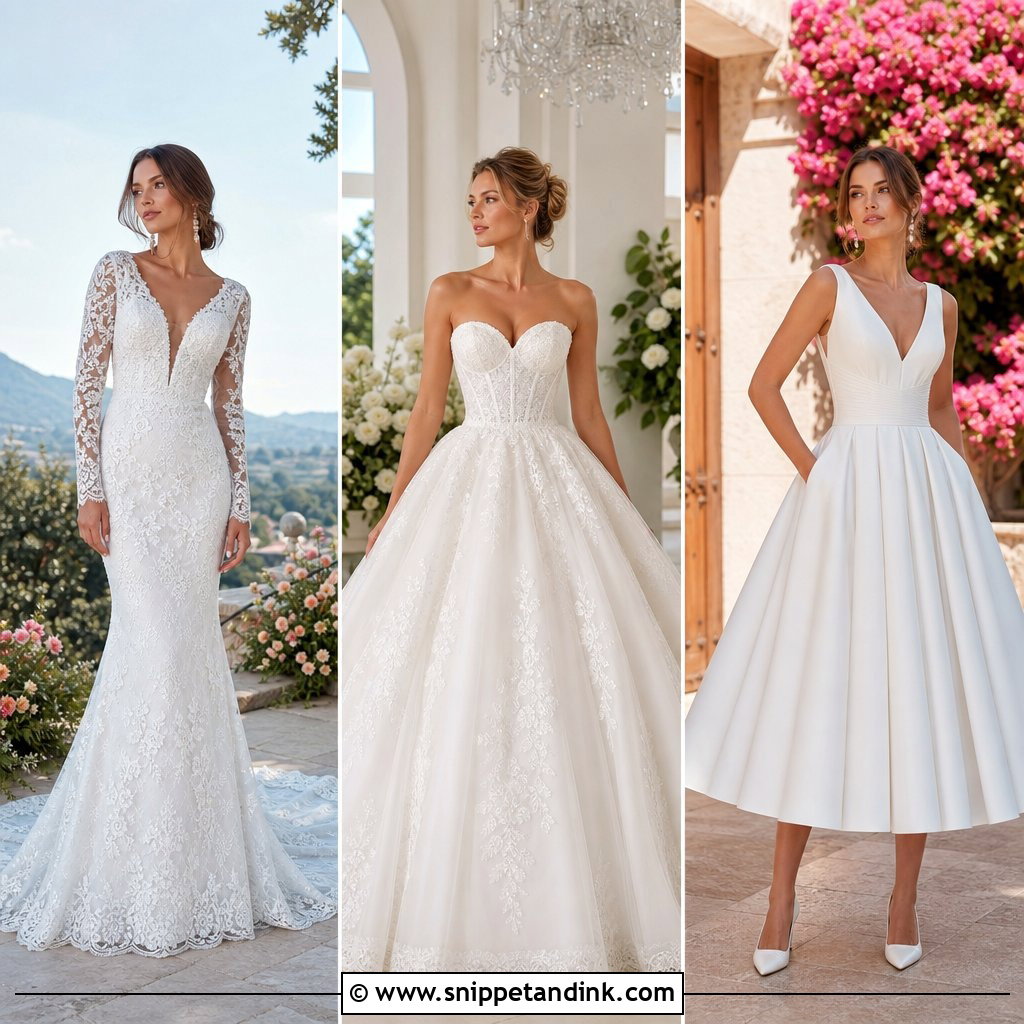
7. Tea-Length A-Line Wedding Dress
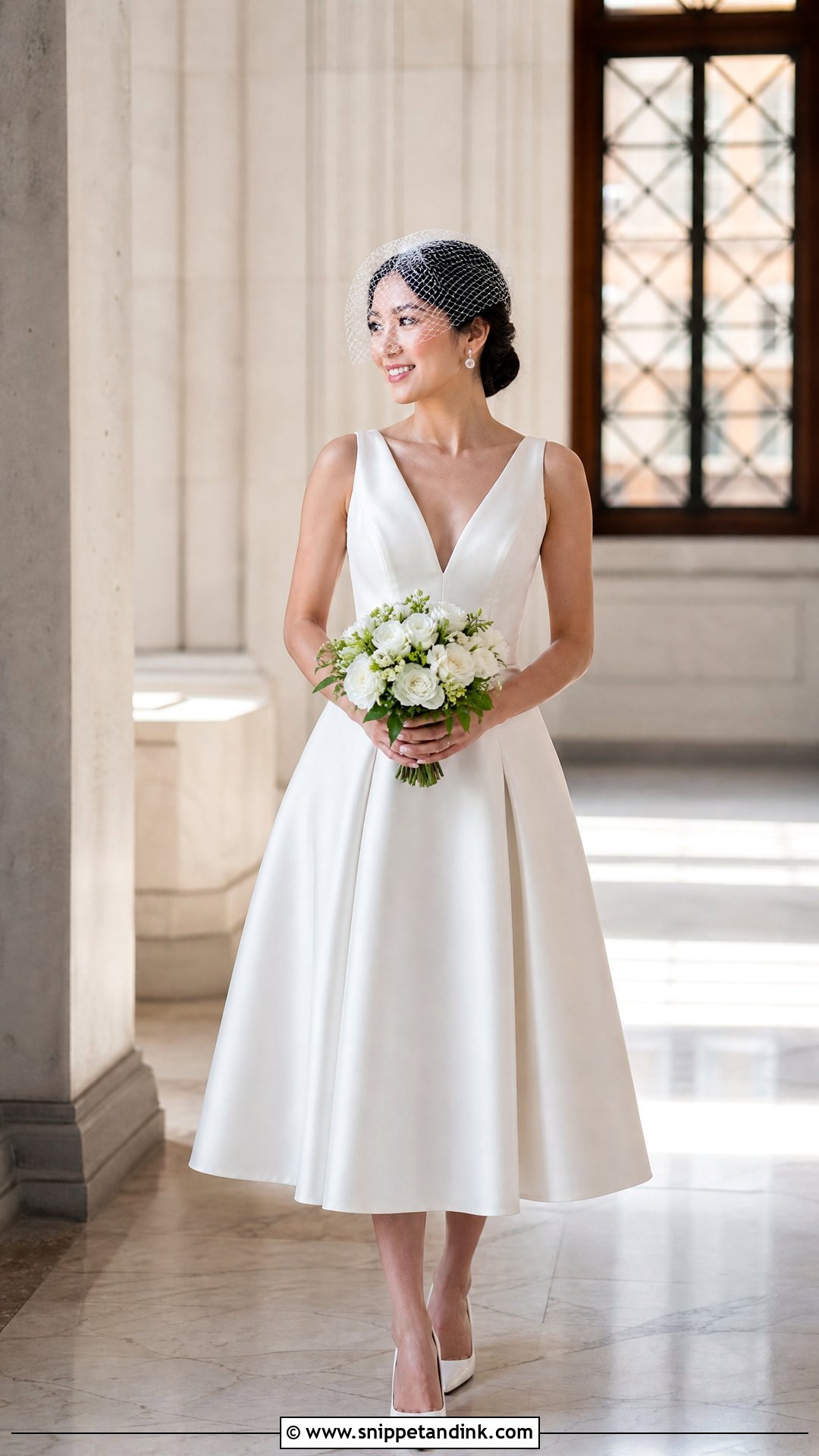
Tea length is unforgiving about where the hem stops. Land it at the widest part of the calf and the leg looks heavier and shorter; land it in the narrow area just below the knee, or just above the ankle, and it lengthens. I test several pin positions with the bride standing in front of a full mirror before we cut. A fitted bodice and V or sweetheart neckline balance the shorter skirt. Mikado, organza or crisp satin hold the shape without piles of petticoat. Skin-tone or dress-colour pumps keep the leg long. Pearl earrings and a birdcage veil suit it.
8. Mini Wedding Dress With Long Sleeves
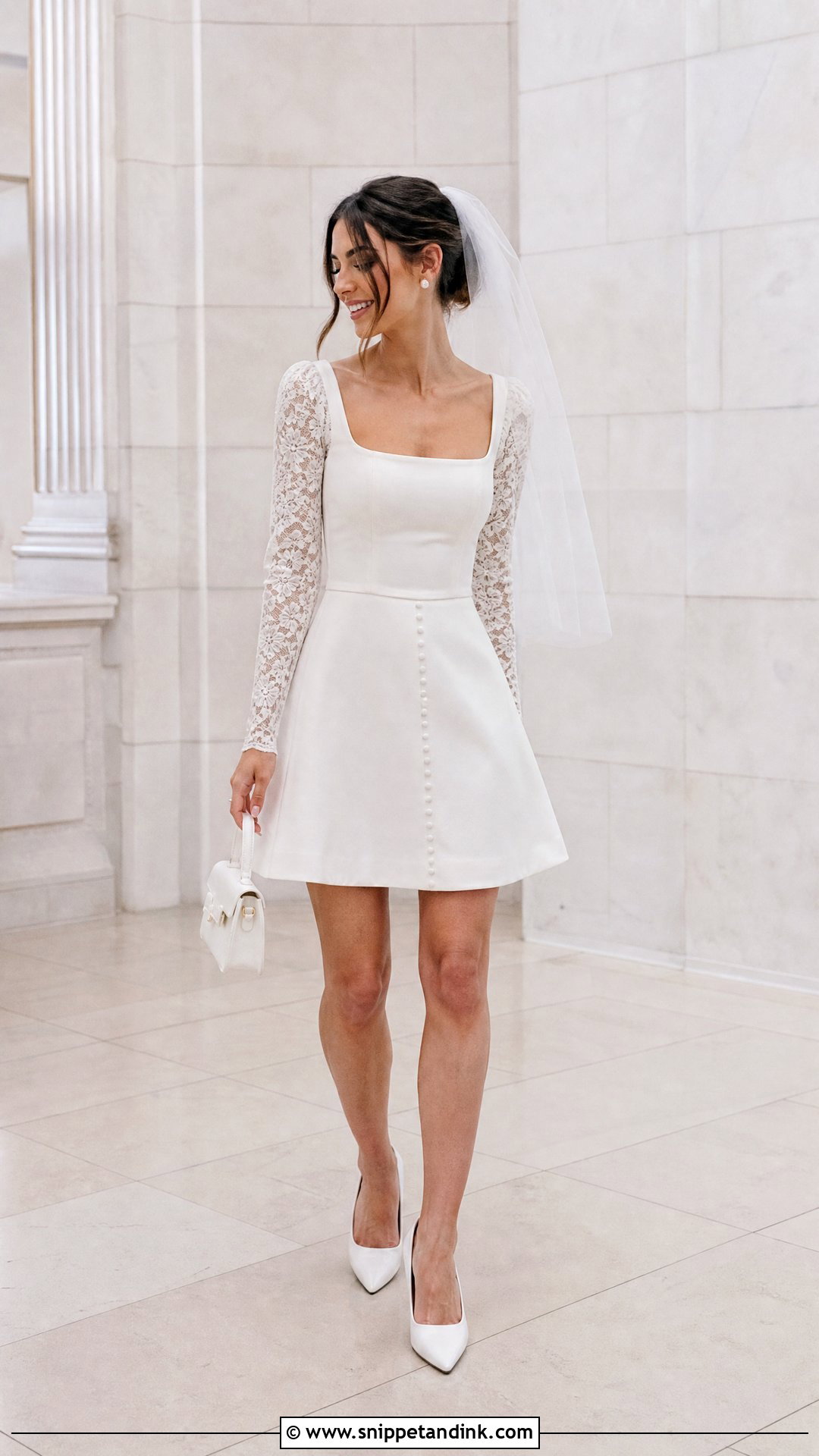
A mini dress is one of the few bridal shapes a petite bride rarely needs hemmed, which makes it a quick, clean option. Balance the short skirt with fitted long sleeves and a clean neck, bateau, square or a modest V. A tailored shift or slight A-line looks sharper than a full skirt. Pointed pumps, sheer tights if you like them, a short veil and a structured mini bag. Pearl buttons or a satin bow add the bridal note. It suits a civil ceremony or a second reception look. Sit down in it before deciding the length.
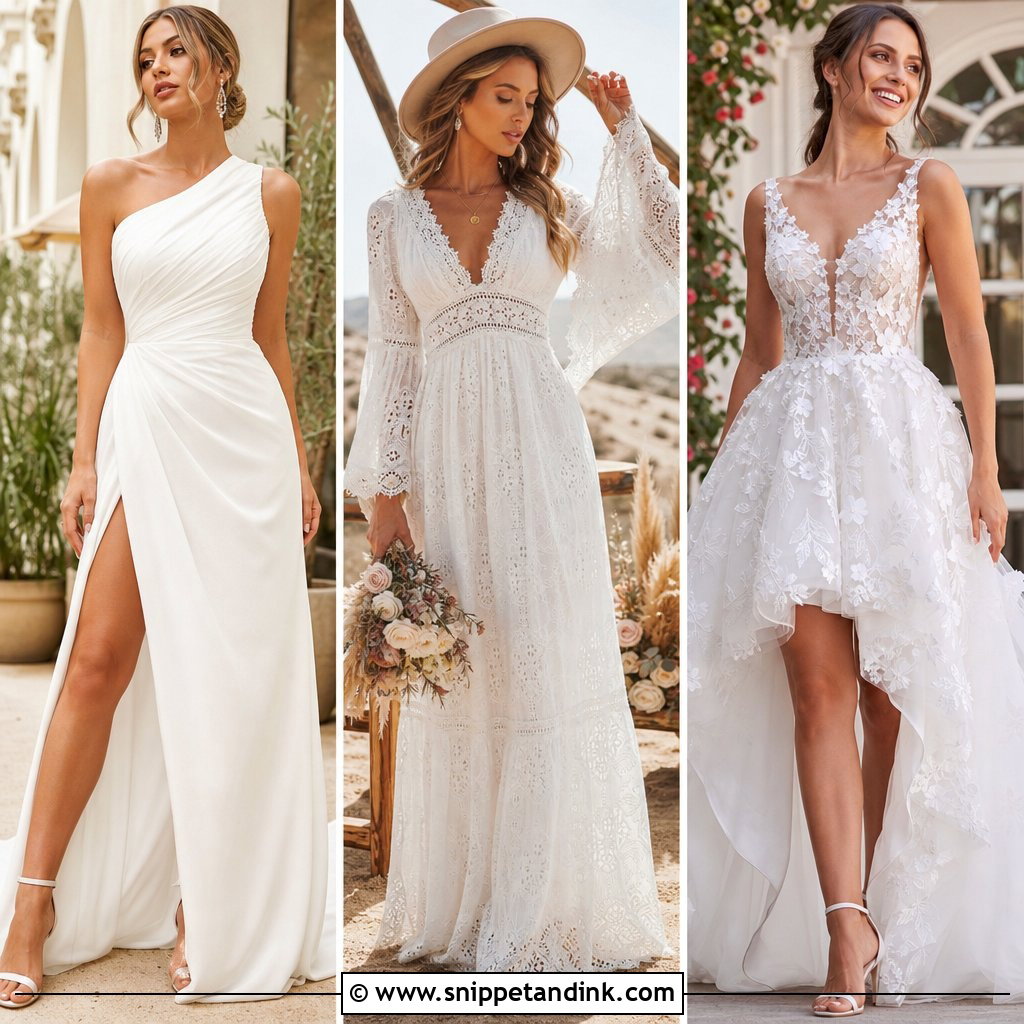
9. High-Low Wedding Dress
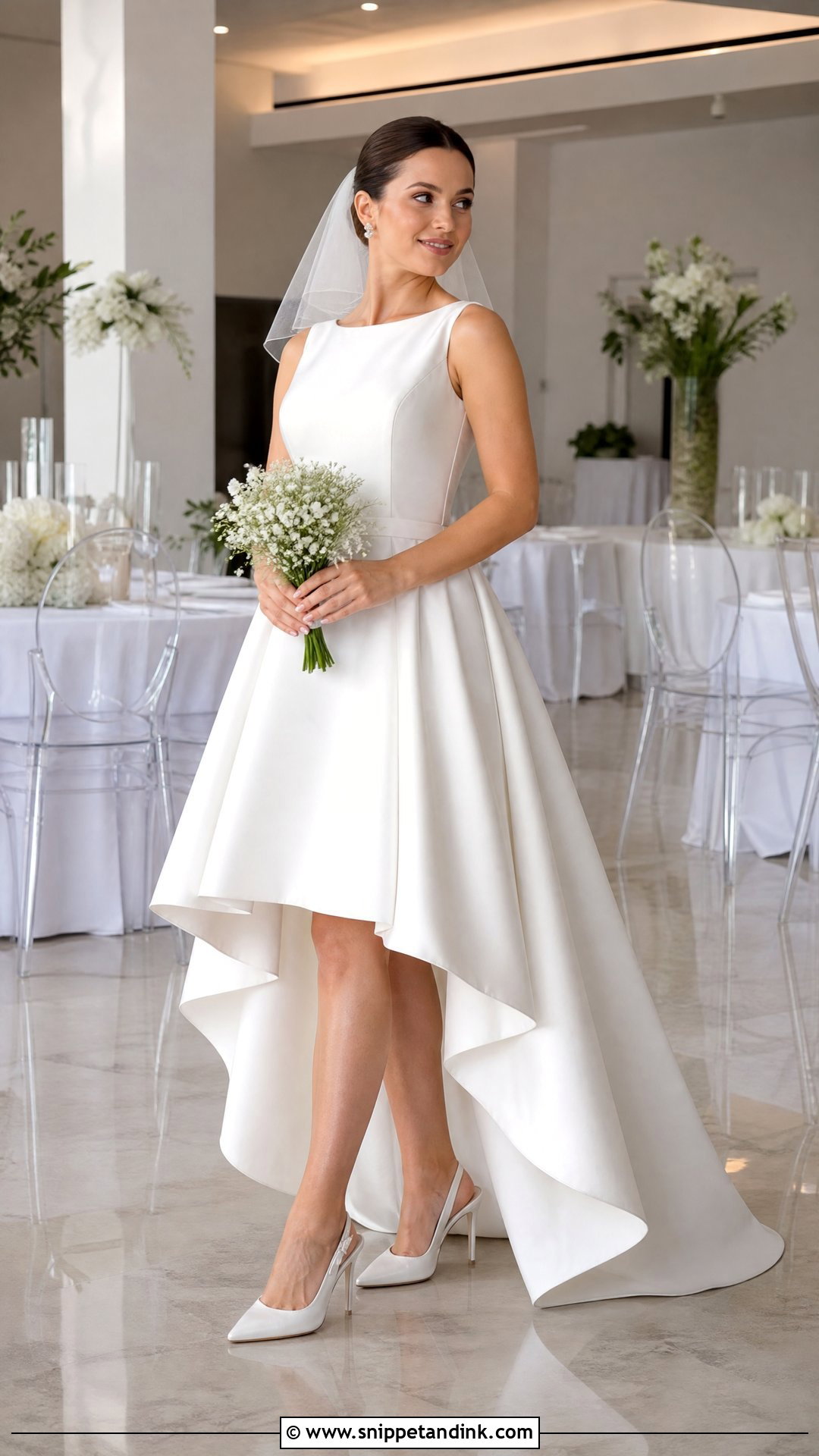
High-low hems show the shoes and ankles, which breaks up a lot of fabric on a small frame. The front hem is the line to get right: just below the knee or just above the ankle, never mid-calf. Keep the skirt a gently structured A-line, not tiers, and the back train narrow. Pointed pumps, slingbacks or fine bridal sandals become part of the outfit here, so choose them before the hem is marked. A short veil and quiet jewellery leave the hem as the feature.
10. Cowl-Neck Slip Wedding Dress
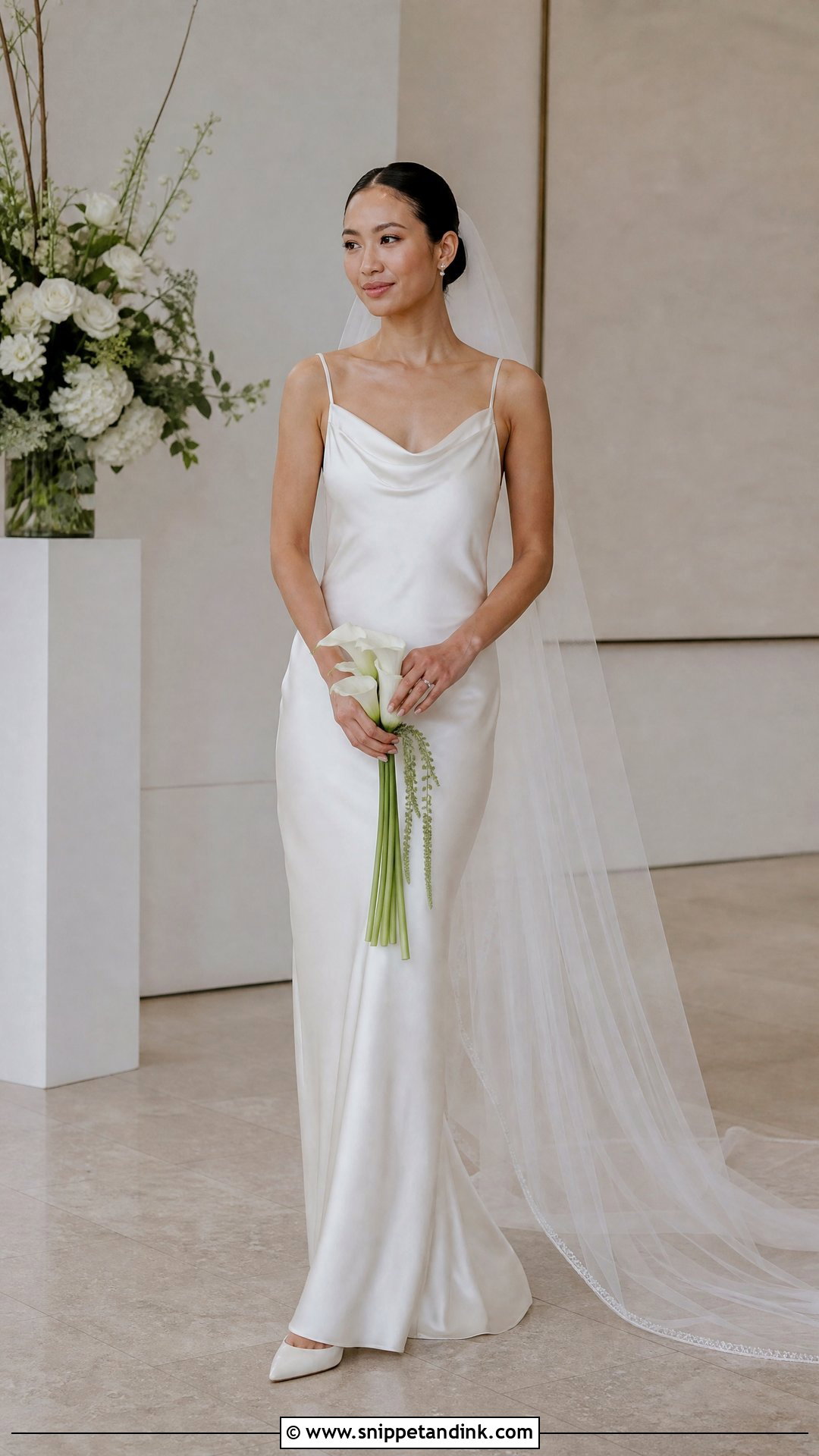
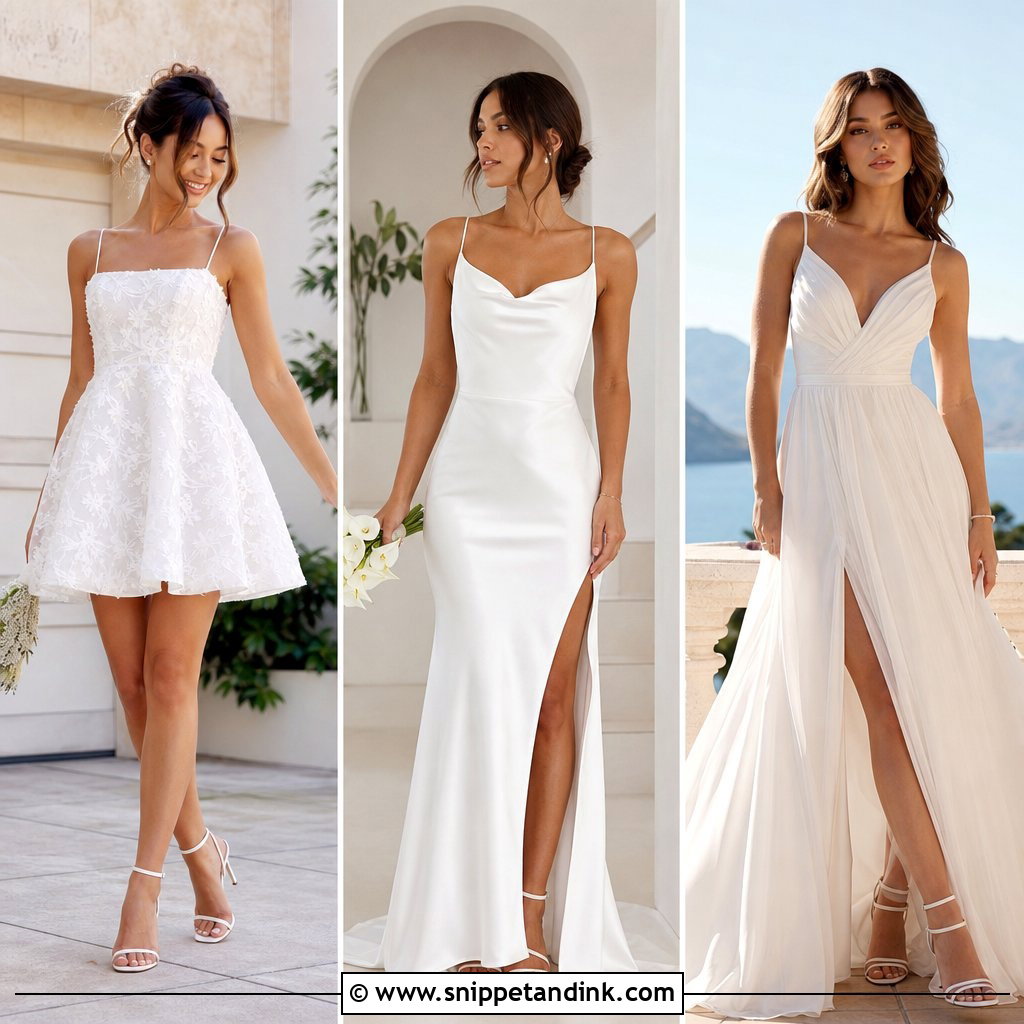
Bias-cut slip dresses cling to everything underneath, so I won’t fit one until the bride brings the exact underwear and shoes. Lined silk or satin skims; unlined, it shows every seam. Slim adjustable straps are a gift on a petite bride because they can be shortened to lift the cowl and waist precisely. The cowl should drape, not fall open. Pointed mules, fine earrings, a sleek bun and a sheer cathedral veil for contrast. A long-stemmed bouquet suits the narrow shape. Leave the belt off.
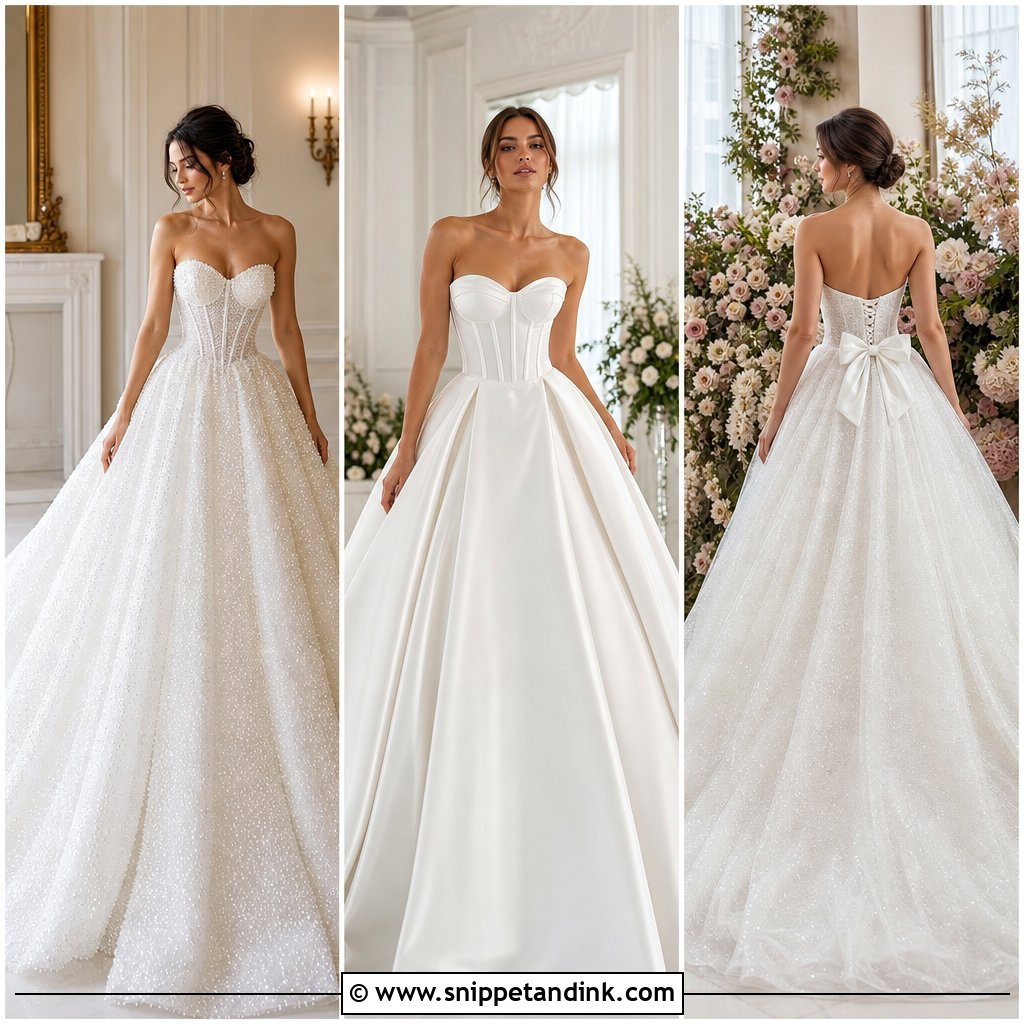
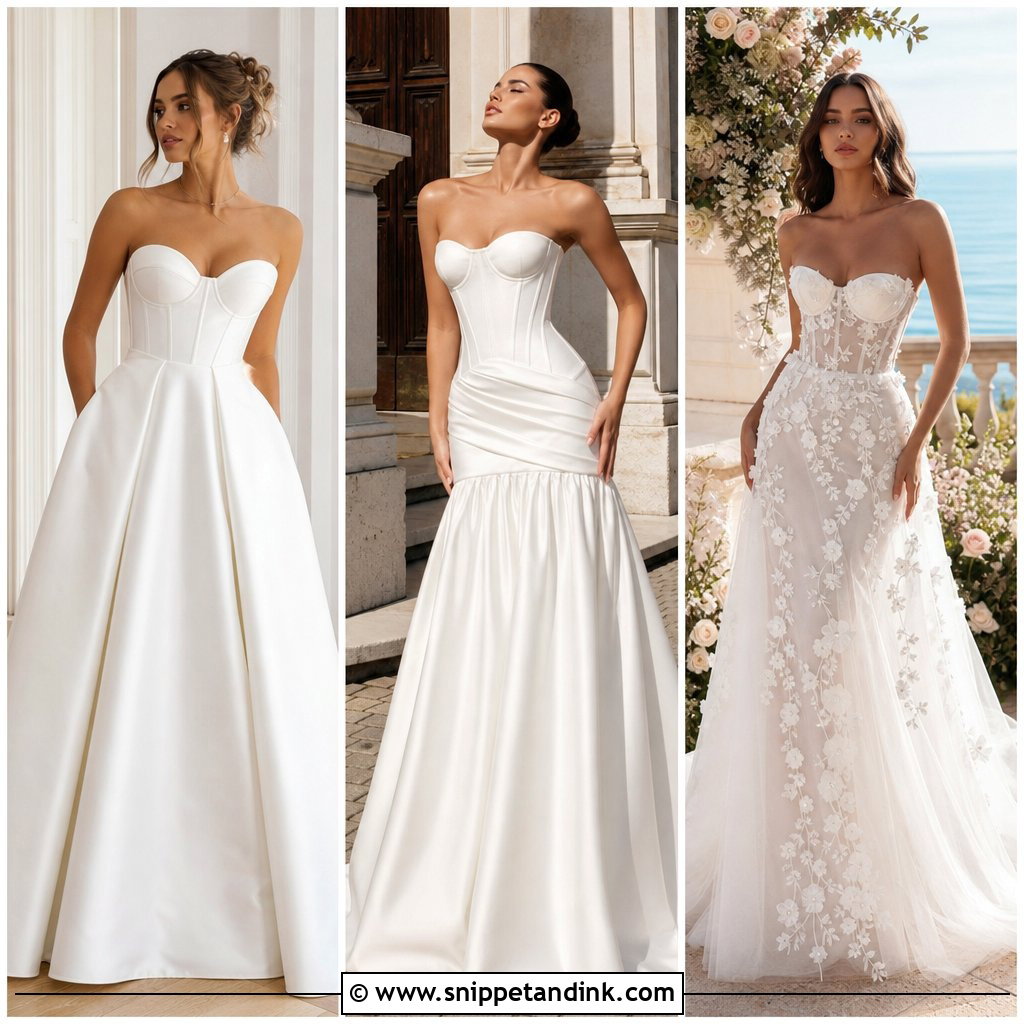
11. Corset A-Line Wedding Dress
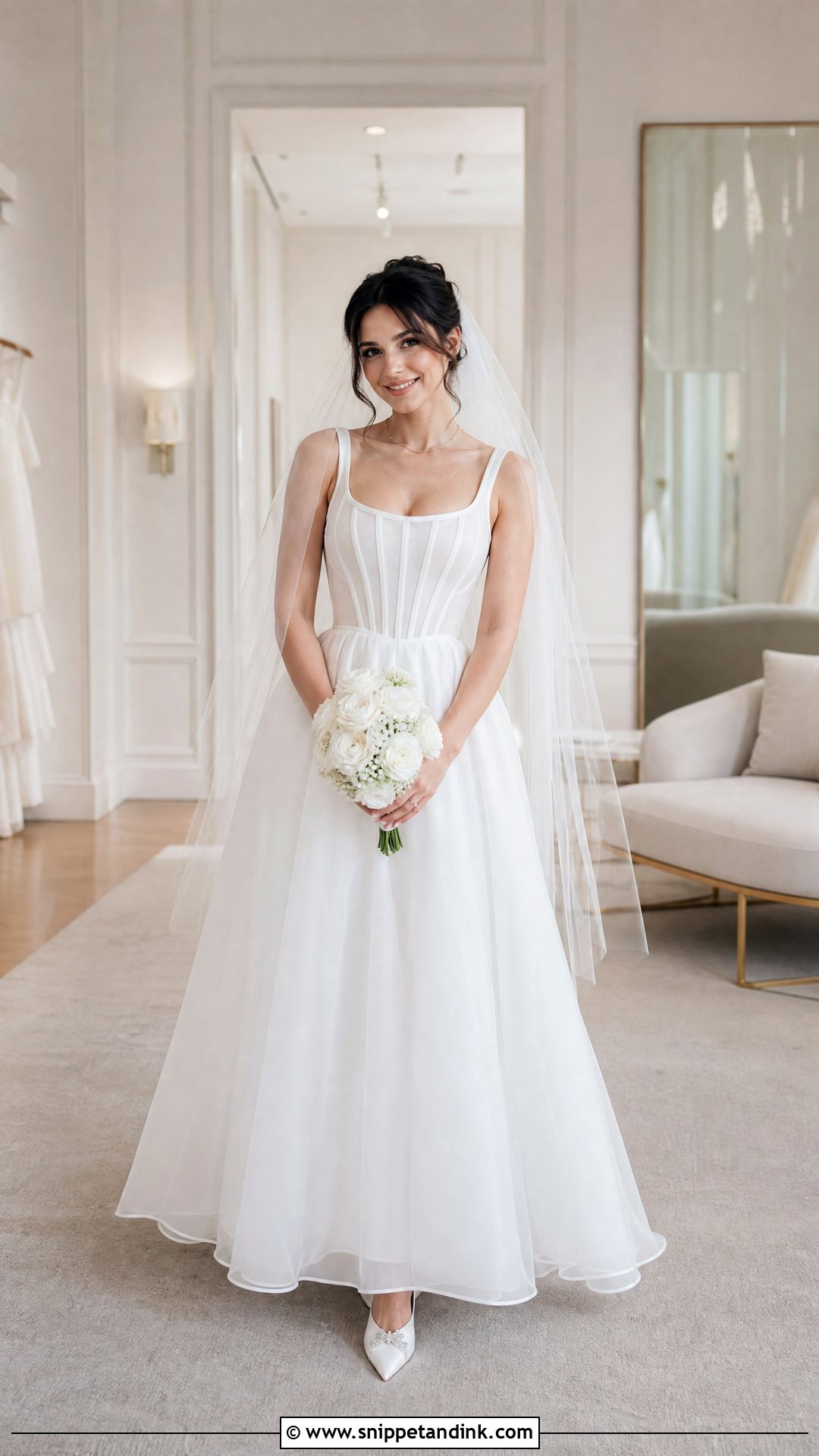
With a corset A-line, the corset length is the thing I check. Many corsets are cut for a longer torso and push the waist seam down below your natural waist, which shortens the legs. A seamstress can shorten the bodice and move the cups, and it’s worth paying for. Narrow boning channels add vertical lines. A scoop, sweetheart, or straight neckline keeps the top balanced. Satin, fine tulle or light organza for the skirt, with as few underlayers as possible. It should support you, not force your posture.
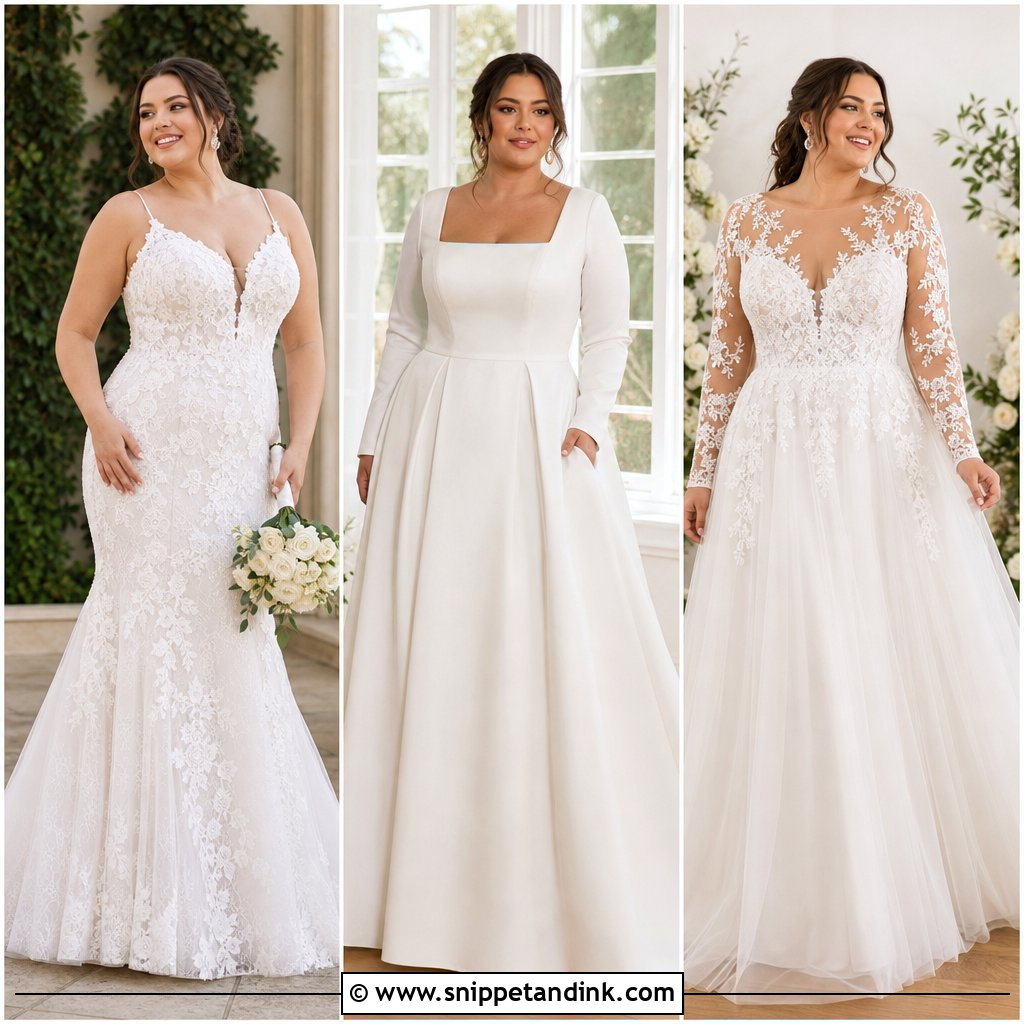
12. Lace Long-Sleeve Wedding Dress
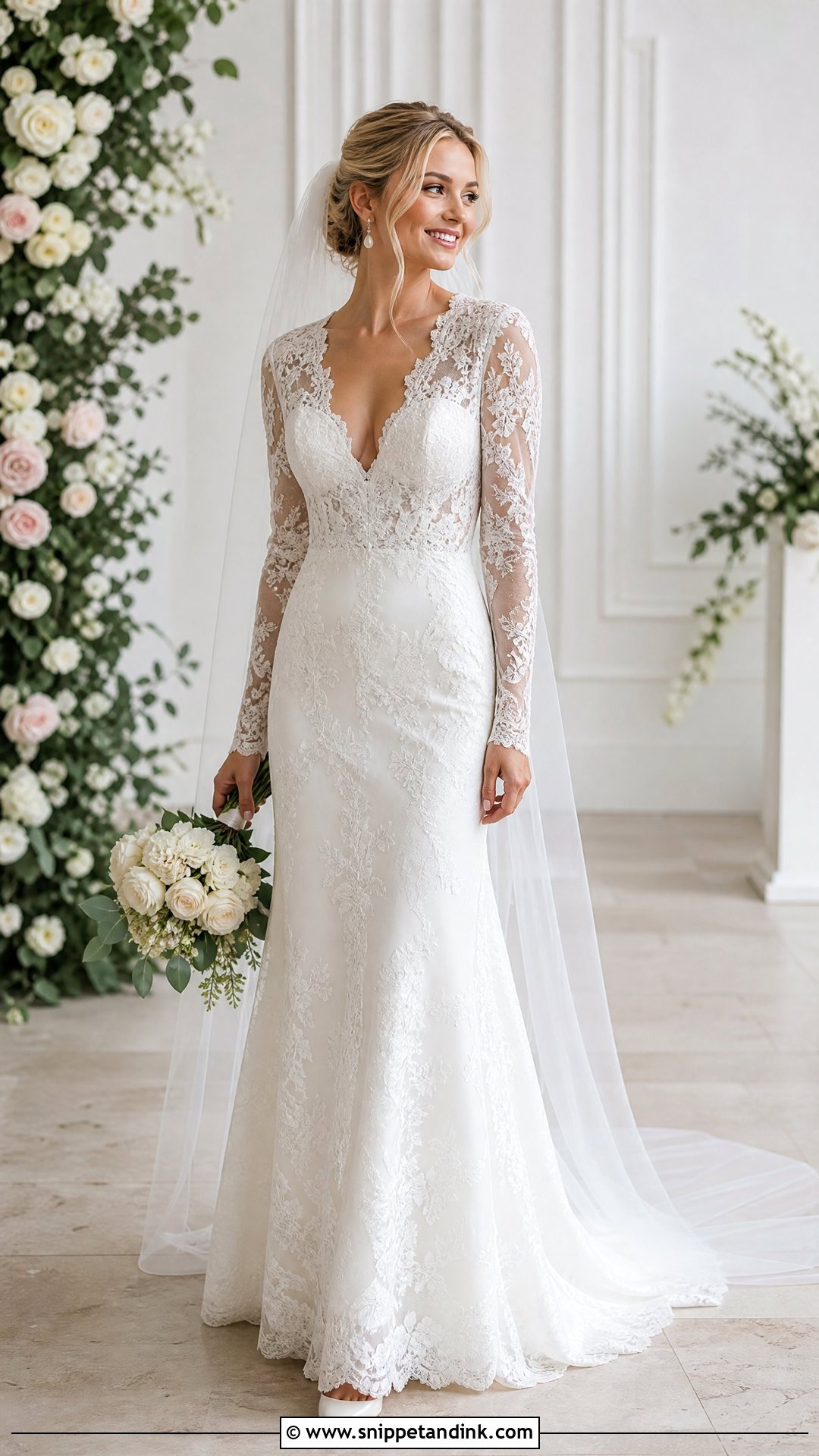
Lace sleeves on a petite frame need small or medium motifs; big lace patterns look out of scale on short arms. Sheer sleeves weigh less visually, and a V-neck or open back gives the upper body some air. The sleeve should end exactly at the wrist bone and the shoulder seam sit on your shoulder. That usually means shortening the sleeve from the shoulder, not just the cuff, so lace motifs aren’t cut through. Ask your seamstress whether the lace can be lifted and reapplied. Pointed pumps, pearl drops and a veil with minimal edging.
13. Strapless Satin Wedding Dress
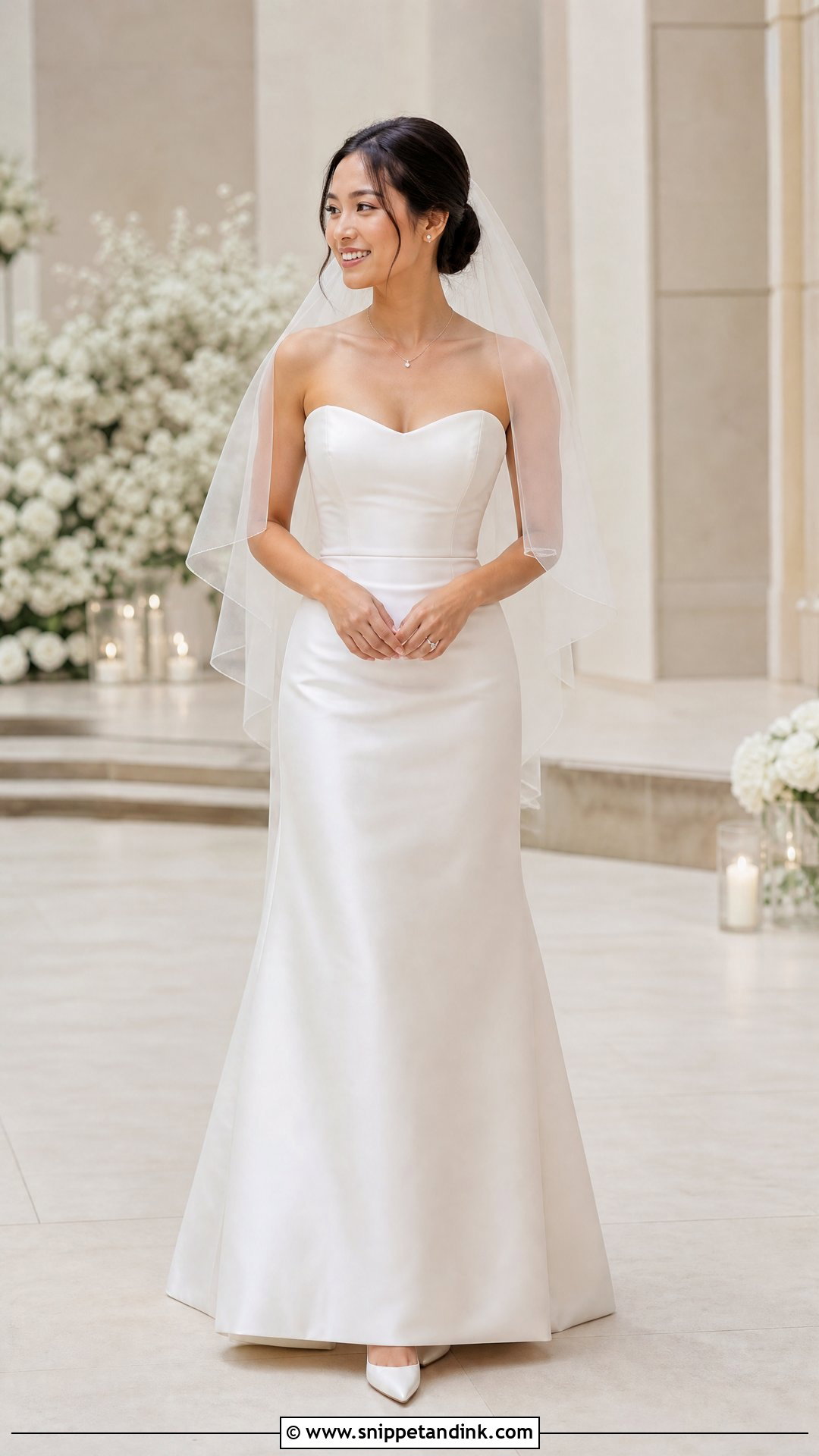
Strapless satin depends entirely on its internal structure. I want boning and a waist stay that hold the bodice up without the bride hitching it every few minutes. On petite brides the bodice is often too long, which makes the top edge gape; shortening it from the waist fixes both. A slim A-line or column suits better than a wide skirt, and a gentle sweetheart frames the upper body without looking oversized. Pointed pumps, a narrow necklace and a fingertip veil with a low bun.
14. One-Shoulder Wedding Dress
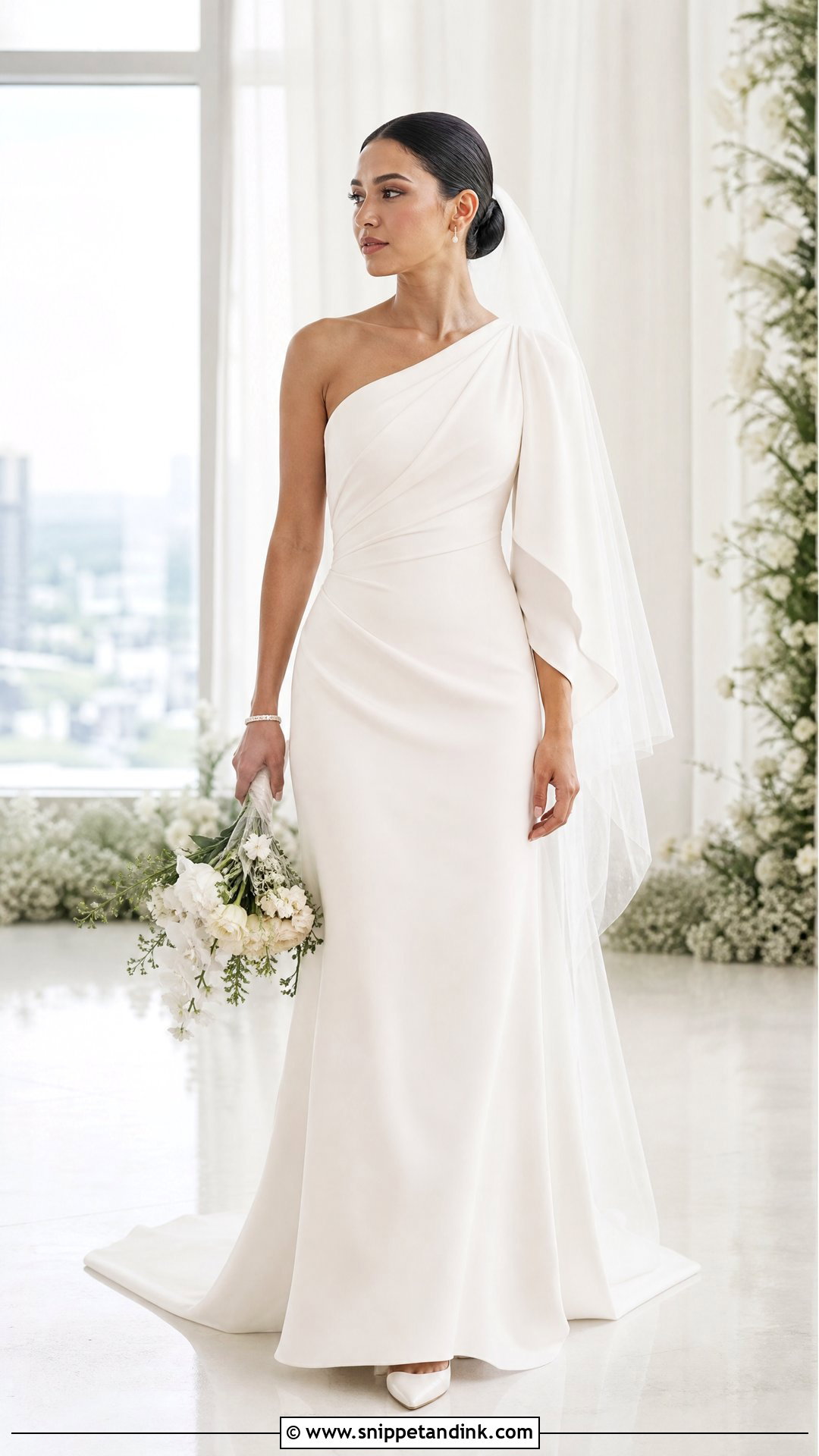
One-shoulder necklines put a diagonal across the body, which pulls the eye up to the face. The thing to check is the bare side: lift your arms and twist, and the bodice edge under the opposite arm should stay flat against you. If there’s a draped sleeve, keep it scaled small so it doesn’t take over the whole upper half. Crepe or fluid satin lets the neckline fall cleanly. A narrow A-line or sheath, a sleek updo, small earrings and one bracelet. No necklace, and set the veil beneath the hairstyle.
15. Halter-Neck Wedding Dress
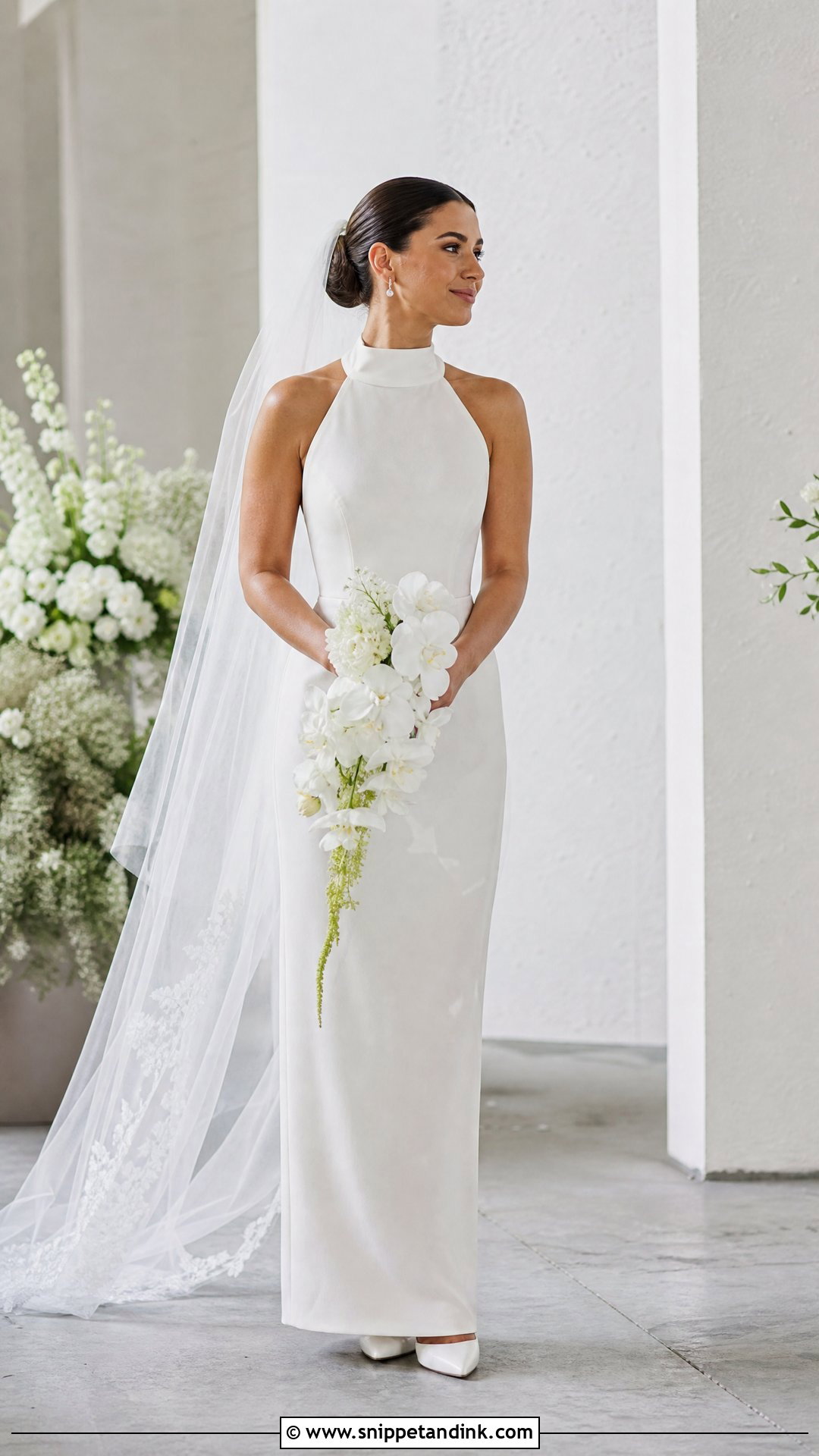
A halter-neck dress makes a strong vertical line through the centre, and a narrow halter with an open back keeps it light on a small frame. Wide or beaded halter necks get heavy fast and the back of the neck aches by evening. Make sure the neckline doesn’t pull and the bust is supported by the bodice, not by the strap. Column, sheath or soft A-line in crepe or satin. Pointed pumps, a polished bun and a long narrow bouquet. Skip the necklace.
16. Plunging V-Neck Wedding Dress
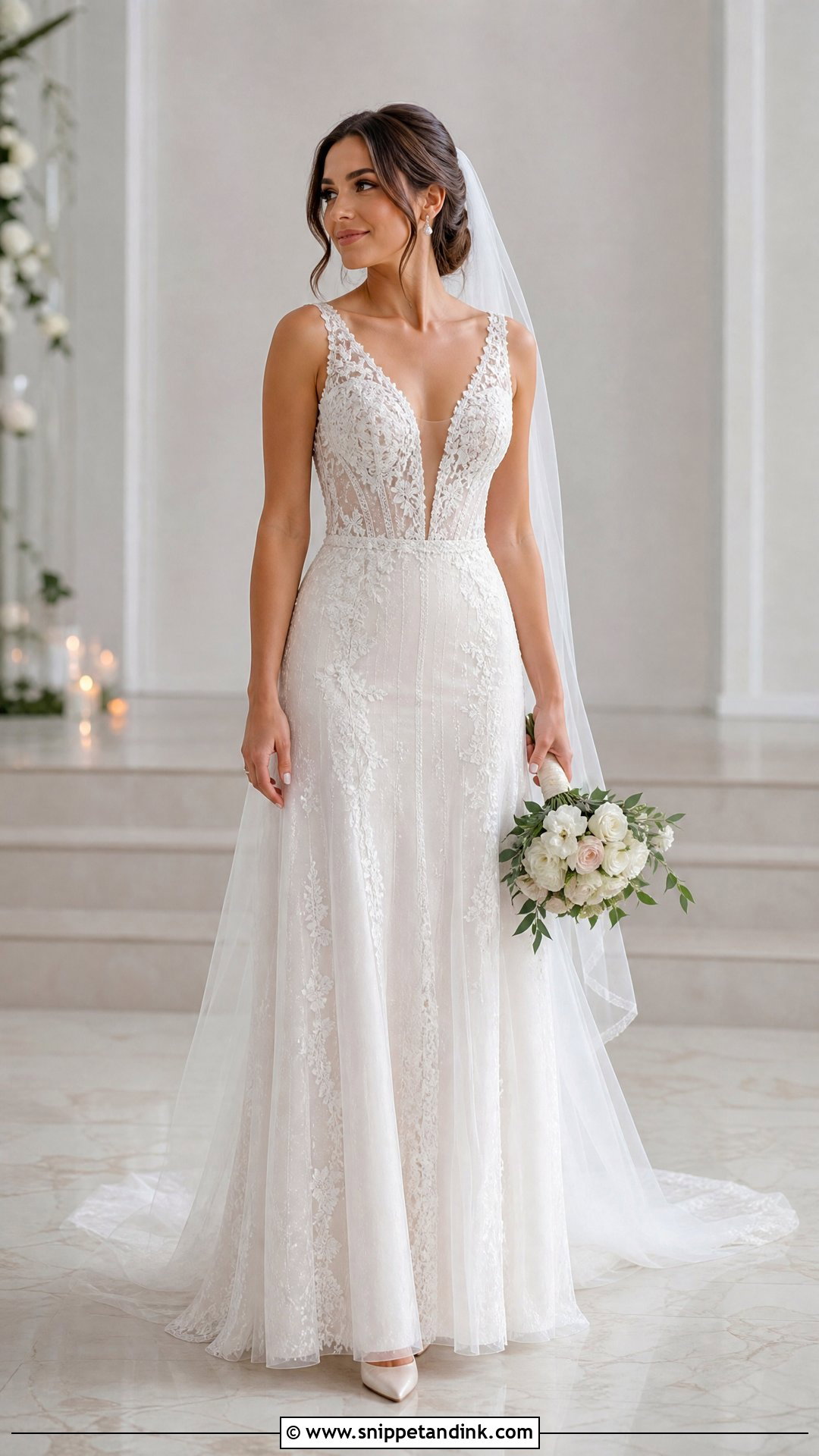
A plunging V-neck lengthens beautifully, but on a short torso the plunge can end up much deeper than intended. Shortening the straps raises the point, so that’s the first adjustment. Illusion mesh gives reliable coverage. In fittings I’d lean forward, sit and lift both arms to check the edges stay put. Keep the skirt controlled: A-line, sheath or a modest fit-and-flare. Vertical lace or princess seams continue the line. Pointed heels and small earrings, no big necklace.
17. Basque Waist Wedding Dress
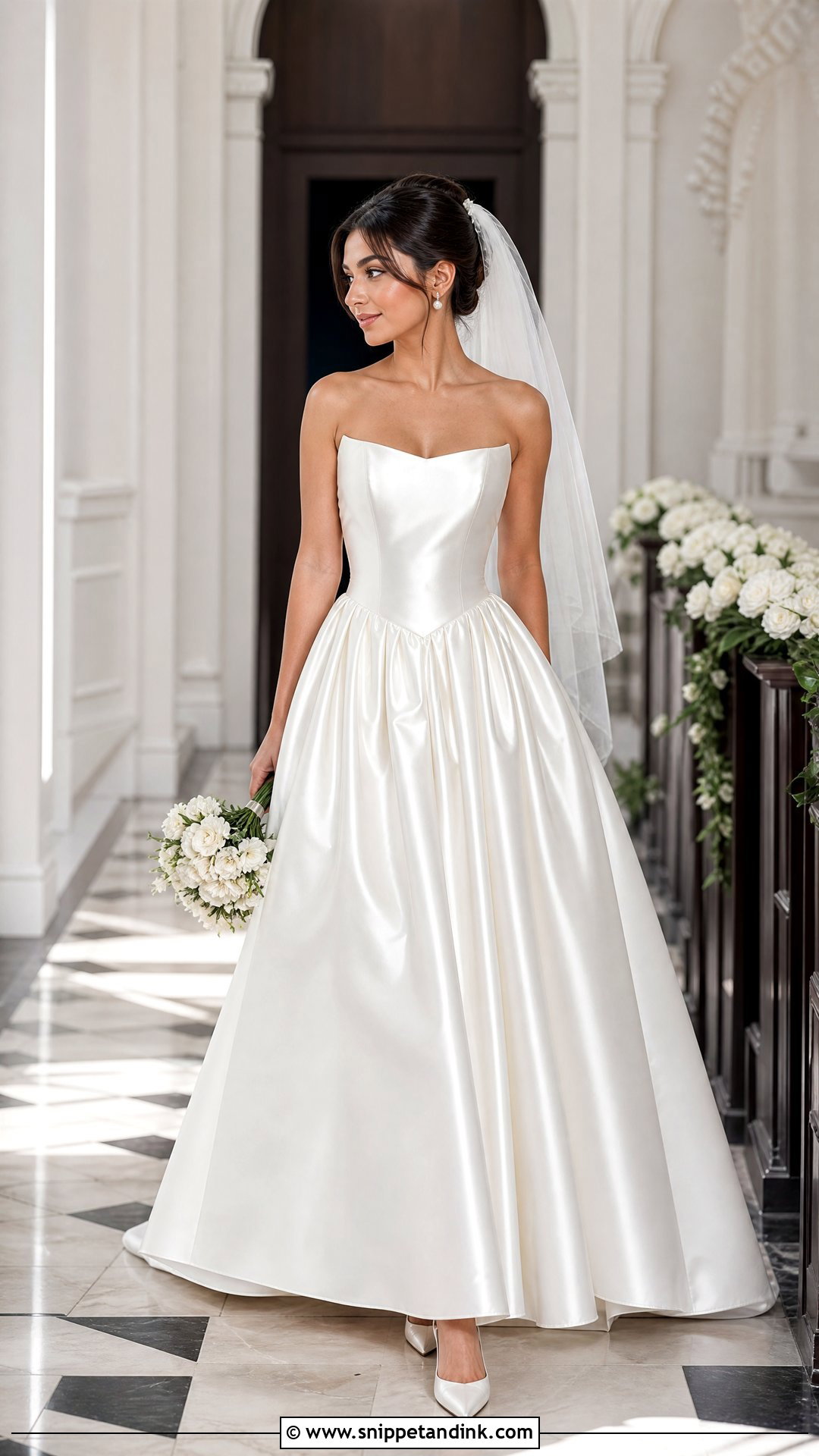
A basque point that’s too deep drags your proportions downward, so on a petite bride I look for a shallow point and a skirt with restrained fullness. Mikado or satin holds the V sharp; tulle softens the skirt. A scoop, straight or strapless neckline balances the structure. The bodice has to be fitted before the skirt is set, since moving the point later means re-attaching everything. Pointed pumps, pearl earrings, a plain veil and a small rounded bouquet.
18. Minimalist Ball Gown Wedding Dress
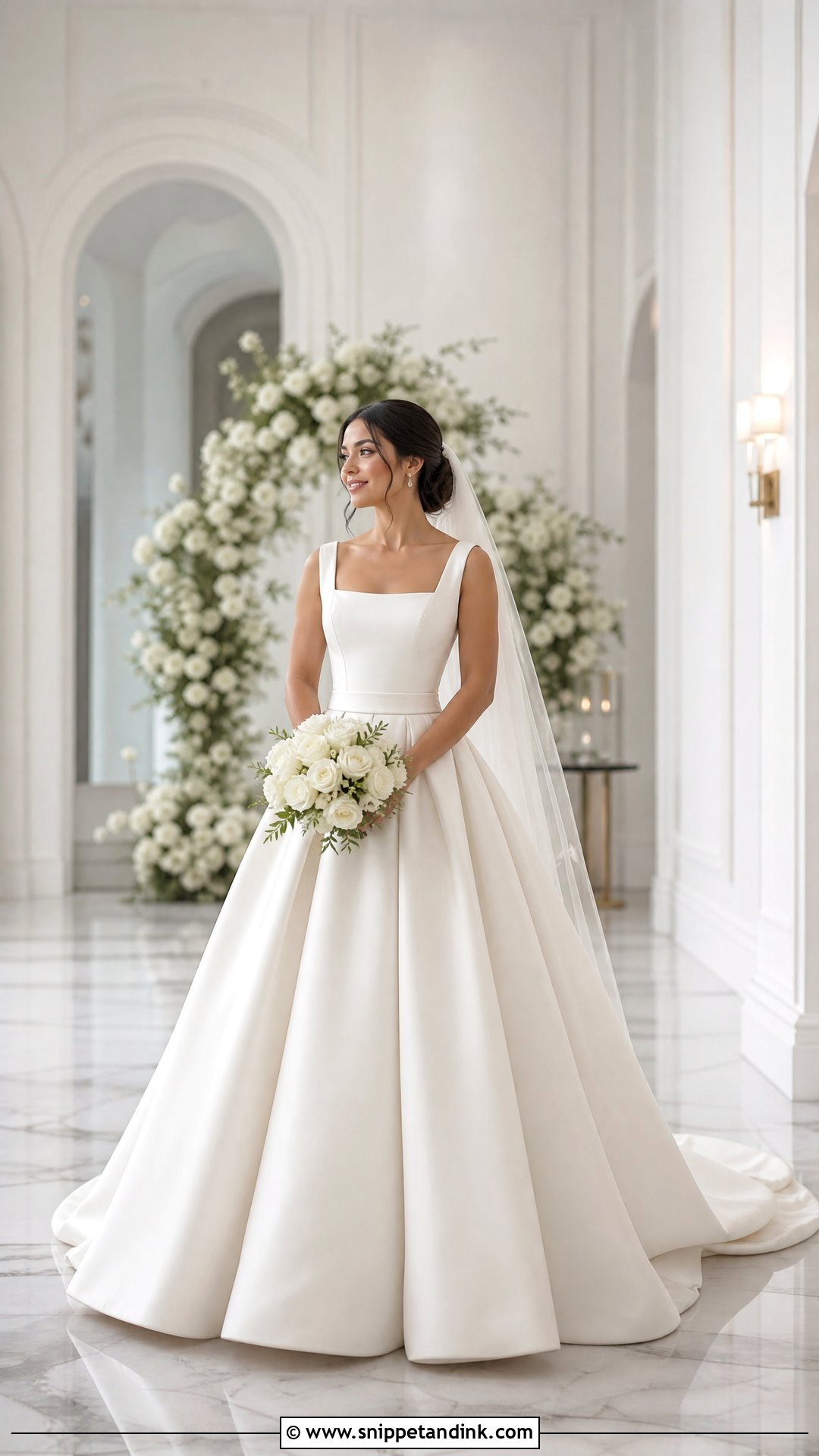
Yes, you can wear a ball gown at 5’1″. Volume is not the enemy; uncontrolled volume is. Clean pleats in satin or Mikado look tidier than layers of ruffles, and a fitted strapless, square or V-neck bodice keeps the upper half defined. Many gowns have several underskirt layers, and some can be removed to shrink the skirt without changing its look, so ask. Hidden platform pumps help, as does a moderate train. Add a narrow cathedral veil and a bouquet that isn’t wide. Fitted well, the bride stays the focus rather than the fabric.
19. Wedding Dress With Detachable Overskirt
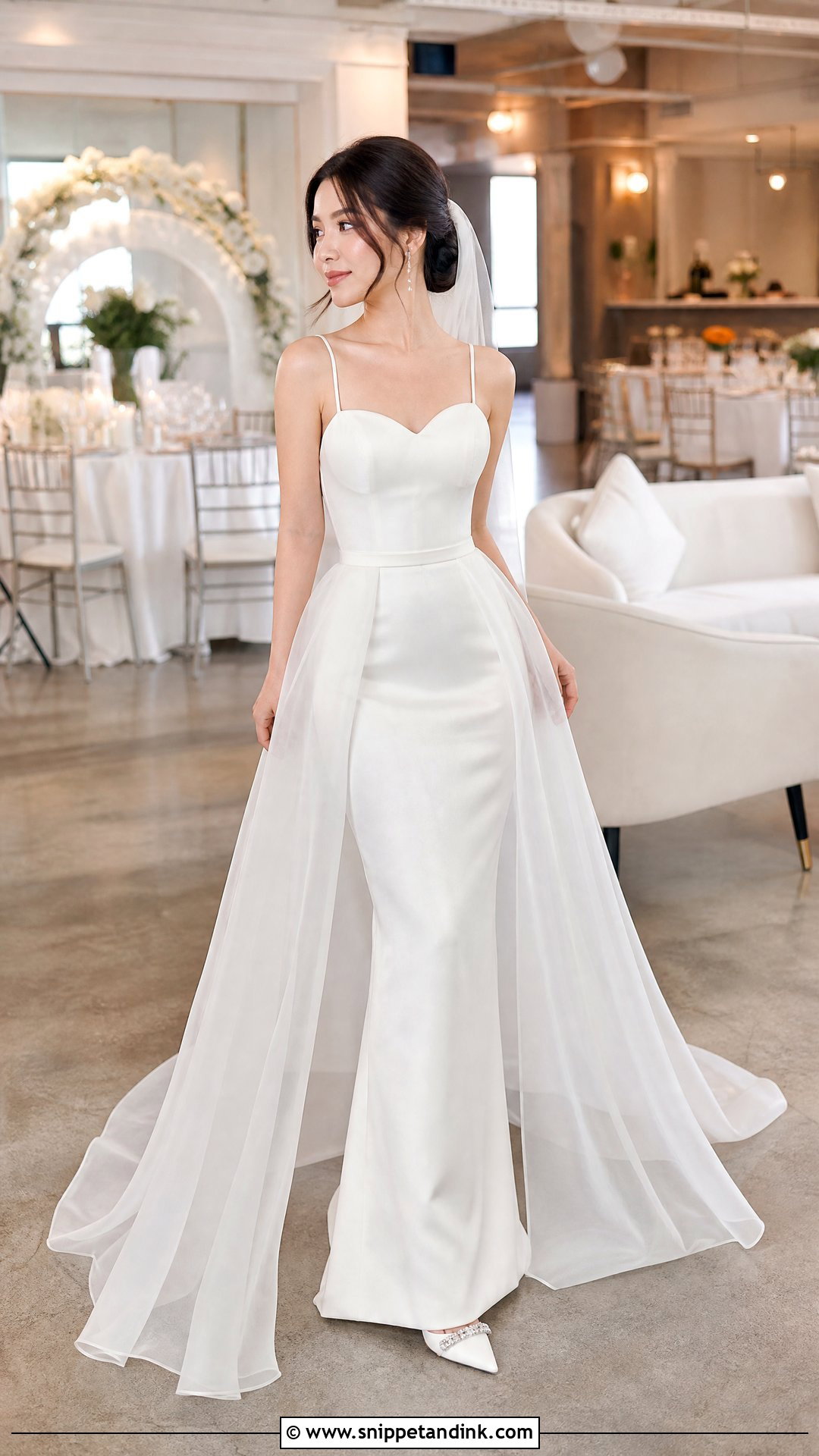
Overskirts on petite brides need the waistband exactly at the natural waist, or the ceremony look and reception look will each sit a little wrong. Start with a fitted sheath, column or mini, then add organza or tulle for the ceremony with limited gathers and a manageable train. Hidden fasteners should lie flat from the front. I’d always fit the base dress and the overskirt together at each appointment, since the hem, waist and train have to agree. Pointed heels, fine earrings and a narrow veil that can come off with the skirt.
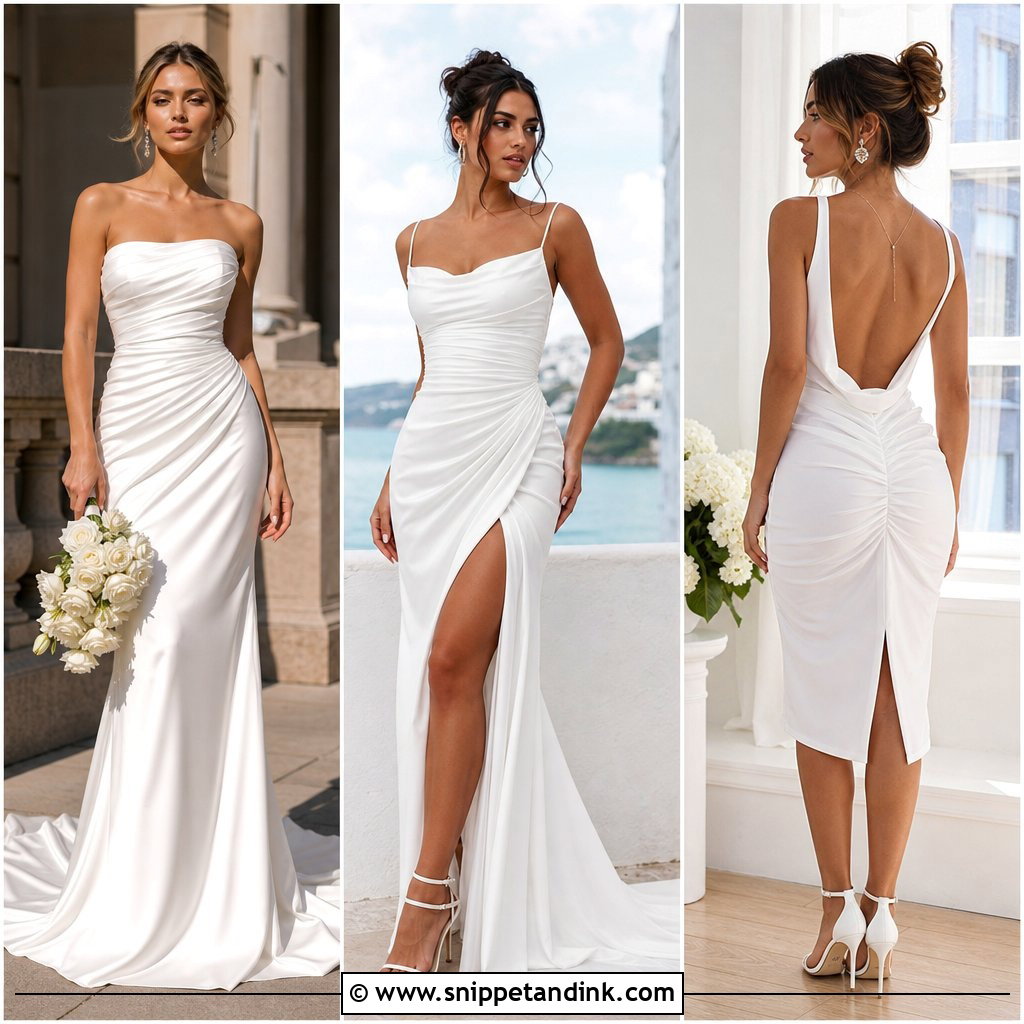
20. Cape-Sleeve Wedding Dress
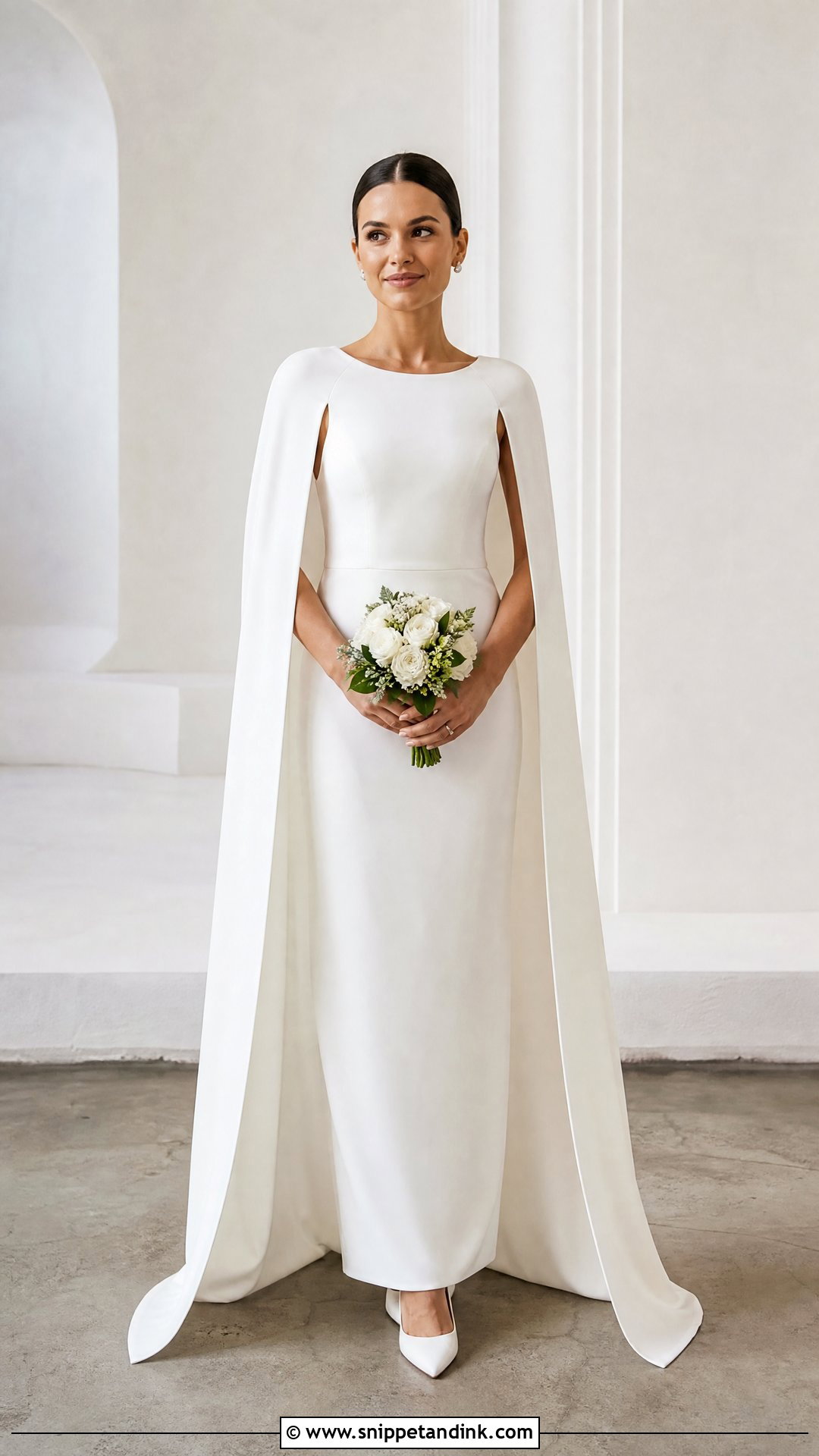
Cape sleeves give movement without wrapping the arms tightly, which suits brides who don’t like fitted sleeves. Keep the cape narrow and the centre front clear so the vertical line stays. The cape can end at the elbow, the wrist or the floor in two panels; on a petite bride, a floor-length cape needs hemming just like the dress. Check that the attachment doesn’t pull the bodice backwards. Pair with a sheath, column or slim A-line in crepe or satin. If the cape trails behind, skip the veil.
Six Inches Off a Wedding Gown Is Rarely Just a Hem
Brides are often surprised by how much a petite alteration involves. A simple crepe sheath can be hemmed quickly. A full gown with lining, two layers of tulle, a horsehair edge and a lace border means each layer is cut and finished separately, and the lace usually has to be lifted off and stitched back on at the new length. That takes time and costs more.
Things I’d ask a seamstress about before buying a gown that needs heavy shortening:
- Can the bodice be shortened at the waist, or only the straps raised? Straps are easy; a shorter bodice is real work.
- Will the lace or beaded hem have to be removed and reapplied?
- Does taking length off cut away part of the train’s shape?
- Can the sleeves be shortened from the shoulder so cuff details survive?
- How many fittings will it need, and when should the first be booked?
Plan on starting alterations two to three months before the wedding, and bring the exact shoes to every appointment. A one-inch heel change after the hem is cut is the most common, avoidable petite problem I see.
A Waist in the Right Place Does Most of the Work
Proportion beats rules. A waist in the right place, vertical details, controlled volume and careful alterations can make almost any silhouette work on a smaller frame, from a slip dress to a full satin ball gown. Try several shapes, look at each one from the side and back as well as the front, and walk around in it. Bring your shoes and underwear to every fitting. Then pick the gown that feels like you; on a good fit, the dress shows you off instead of hiding you under fabric.
You'll Like These Ideas:


Leave a Reply